
animals Crossword Puzzles
Nature & Animals 2026-01-19

Across
- – Vast saltwater body
- – Land surrounded by water
- – Reptile with a hard shell
- – Giant ocean mammal
- – Largest land animal
- – Area filled with trees
- – Tall animal with a long neck
- – Dense tropical forest
- – Nocturnal bird
- – Flowing body of water
- – Playful tree-dwelling primate
Down
- – Falling river water
- – Dry, sandy land
- – Very high landform
- – Sandy shoreline
- – Intelligent sea mammal
- – Inland body of water
- – Bird with sharp eyesight
- – Low land between hills
- – Flightless swimming bird
- – Fast-breeding hopper
- – Legless reptile
- – Jumping amphibian
23 Clues: – Nocturnal bird • – Dry, sandy land • – Sandy shoreline • – Legless reptile • – Jumping amphibian • – Very high landform • – Giant ocean mammal • – Falling river water • – Vast saltwater body • – Largest land animal • – Inland body of water • – Fast-breeding hopper • – Dense tropical forest • – Flowing body of water • – Intelligent sea mammal • – Low land between hills • ...
Animals 3 2026-01-15

Across
- kivi
- erszényes kölyök
- bölény
- denevérhal
- kölyök
- foltos tőkehal
- hörcsög
- daru
- bolha
- dugong
- görény
Down
- koiponty
- víziló
- impala
- bárány
- ló
- kagyló
- lódarázs
- emu
- csuka
- őzgida
21 Clues: ló • emu • kivi • daru • bolha • csuka • víziló • bölény • impala • kölyök • bárány • kagyló • dugong • görény • őzgida • hörcsög • koiponty • lódarázs • denevérhal • foltos tőkehal • erszényes kölyök
Wild animals 2026-01-11

Across
- křídla
- krokodýl
- srst
- nohy
- plavat
- plameňák
- papoušek
- krajta
- drápy
- gorila
- zuby
- zebra
- létat
Down
- vousy
- ruce
- opice
- běhat
- lev
- chlupy
- peří
- šupiny
- šplhat
- ocas
23 Clues: lev • ruce • srst • nohy • peří • zuby • ocas • vousy • opice • běhat • drápy • zebra • létat • křídla • plavat • chlupy • krajta • šupiny • šplhat • gorila • krokodýl • plameňák • papoušek
Obscure Animals 2026-02-12

Across
- Federal Employer ID (abbr.)
- Fuss
- Andean rodent prized for soft fur
- Greek letter
- Flightless parrot (N.Z.)
- And others
- Long-billed wader
- Arctic whale with a spiral tusk
- Cash source (abbr.)
- Primate
- Egg-laying mammal
- Microscopic “water bear,” e.g.
- Compass dir. (abbr.)
- Not even
- Slippery swimmer
- Self(yes precious)
- Metal source
- Shade tree
- “Living fossil” fish
Down
- Funerary vessel
- Lemur hunter
- Salamander retaining juvenile gills
- Rink surface
- Spiny monotreme
- Charged particle
- African antelope
- Constrictor snake
- Venomous snake
- Recipe amt. (abbr.)
- Forest giraffe
- Antelope with a bulbous snout
- Antlered animal
- Jawless fish
- Barnyard bird
- Long stretch of time
- Curve
- Long-haired bovine
- Turf
- Fish eggs
- Highway (abbr.)
- Wild Asian dog
- Pen filler
- Flightless bird
- Zodiac symbol
- Instead
- FROG Translucent amphibian (2 wds.)
- Mountain pass
- Pigpen
48 Clues: Fuss • Turf • Curve • Pigpen • Primate • Instead • Not even • Fish eggs • And others • Pen filler • Shade tree • Lemur hunter • Rink surface • Greek letter • Jawless fish • Metal source • Barnyard bird • Zodiac symbol • Mountain pass • Venomous snake • Forest giraffe • Wild Asian dog • Funerary vessel • Spiny monotreme • Antlered animal • Highway (abbr.) • Flightless bird • Charged particle • African antelope • Slippery swimmer • ...
Austrailia Animals 2026-04-21

Across
- Australian owl species
- venomous snake highly dangerous
- wild dog native to Australia
- large bat species
- shark found in Australian Waters
- large flightless bird
- iconic hopping marsupial
- aquatic bird with long legs
- colorful reef fish
- Famous Pink Lake Region wildlife
- small reef shark
- Mammal that lays eggs
- egg-laying mammal with a bill
Down
- Marine Mammal often seen off coasts
- Australian freshwater crocodile
- large monitor lizard
- seagrass eating marine animal
- tree dwelling marsupial
- laughing bird known for its call
- largest coral reef system
- small insect eating marsupial
- burrowing animal with strong claws
- small hopping marsupial
- nocturnal gliding possum
- Sea creature with a sting
- bird known for mimicking sounds
26 Clues: small reef shark • large bat species • colorful reef fish • large monitor lizard • large flightless bird • Mammal that lays eggs • Australian owl species • tree dwelling marsupial • small hopping marsupial • iconic hopping marsupial • nocturnal gliding possum • largest coral reef system • Sea creature with a sting • aquatic bird with long legs • wild dog native to Australia • ...
Evolution and Classification Crossword 2016-06-30

Across
- A particular environment where an organism lives.
- A type of warm-blooded vertebrate animal that breast feeds their babies and usually has hair.
- A type of carnivore that attack and kill their prey and feed on their bodies.
- All the living and non-living things in a given environment.
- Animals that feed on only plants.
- Animals that feed on both plants and other animals.
- A protective adaptation that enables an organism to visually blend into the environment.
- Water travels up through a plant from the soil through its roots, then its stem and into the leaves. It is lost through tiny openings in the leaves called stomata. This is called t _ _ _ _ _ _ _ _ _ _ _ _.
- Any kind inherited trait (characteristic) that improves the chances of survival and reproduction for an organism.
- Species without a backbone are known as ……………. .
Down
- The science of grouping and naming organisms is …………….
- A gradual process in which plants and animals have adapted to survive in their environment over many years. This may mean that the way they look or behave has changed to help them suit their environment better.
- Random changes in the genes.
- The placing of information or objects into groups based on similarities is …………………….
- Sharks are great swimmers because they have adapted …………… to help them swim.
- Fighting to win or gain something.
- Species with a backbone are known as ……………. .
- An animal that is awake primarily at night.
- Animals that feed on other animals.
- Animals that are hunted by predators.
20 Clues: Random changes in the genes. • Animals that feed on only plants. • Fighting to win or gain something. • Animals that feed on other animals. • Animals that are hunted by predators. • An animal that is awake primarily at night. • Species with a backbone are known as ……………. . • Species without a backbone are known as ……………. . • ...
Ecosystems 2022-11-05

Across
- a living thing that hunts other living things for food
- Chain the path of energy in food from one organism to another
- an animal that only eats plants
- a variety of life in the world or in a particular habitat or ecosystem
- an animal that feeds on the remains of dead animals
- Web the overlapping food chains in a community
- an animal that eats both plants and animals
- a nonliving part of an ecosystem including water soil and temperature
- a living thing that is hunted for food
- the role an organism has in its ecosystem
- plants or animals
- organism that cannot make its own food eats plants or other animals
Down
- an animal that eats other animals
- all the organisms of one species that live in an area at the same time
- organism that produces food and oxygen that animals need
- the process in which plants use the sun’s energy to make food
- is a community of living and nonliving organisms that work together
- Factor anything that controls the growth or survival of an organism or population
- breaks down dead organisms into useful things that enrich soil
- the area in which an organism lives
- a characteristic that helps an organism survive in its environment such as camouflage
- the study of living things in their environment
- a living part of an ecosystem including animals plants and fungi
- Pyramid a diagram showing earth’s food chain from the ground up
- all the populations living in an area
25 Clues: plants or animals • an animal that only eats plants • an animal that eats other animals • the area in which an organism lives • all the populations living in an area • a living thing that is hunted for food • the role an organism has in its ecosystem • an animal that eats both plants and animals • Web the overlapping food chains in a community • ...
Biology 2025-08-20

Across
- The bright, colorful part of a flower that attracts bees and butterflies.
- A place where many animals of the same kind live together, like ants.
- Tiny living things that can only be seen with a microscope and sometimes cause sickness.
- The underground part of a plant that takes in water and minerals from the soil.
- The animals that are eaten by predators.
- An animal that eats both plants and meat.
- The outer covering of an animal’s body, like fur, scales, or feathers.
- Animals that can live both on land and in water, such as frogs.
- The thin tubes in plants that carry water from roots to leaves.
- The process by which green plants use sunlight, water, and air to make their own food.
- Tiny holes on human skin that release sweat.
Down
- Animals that eat only plants, such as cows and rabbits.
- The green substance in plants that helps them capture sunlight for food.
- The big change that turns a caterpillar into a butterfly.
- Animals that feed their babies with milk.
- The small part inside a cell that controls its activities.
- Dioxide The gas from the air that plants take in to make their food.
- The breathing holes on the surface of plant leaves.
- Animals that reproduce by laying eggs, such as birds or reptiles.
- A small insect that makes honey and helps pollinate flowers.
- An animal that hunts other animals for food.
21 Clues: The animals that are eaten by predators. • Animals that feed their babies with milk. • An animal that eats both plants and meat. • An animal that hunts other animals for food. • Tiny holes on human skin that release sweat. • The breathing holes on the surface of plant leaves. • Animals that eat only plants, such as cows and rabbits. • ...
Form 1 Science literacy 2026-05-31

Across
- – A living thing that makes its own food.
- – Living and non-living things working together in one place.
- – A living thing that eats other living things.
- chain – Shows who eats who.
- – An animal that hunts.
- web – Many food chains joined together.
- – A plant that makes its own food.
- – Plants and animals are important in Tongan traditions.
- turtle – A marine animal found in Tongan waters.
- – Eats plants and animals.
- – The home of a plant or animal.
- – Everything around a living thing.
- – Plants give us air to breathe.
- – A large body of salt water.
- – Power that living things get from food.
- – Some plants help people stay healthy.
- – Important animals in the ocean.
- – An animal that eats plants or animals.
- – Plants can provide homes for animals.
Down
- – An animal without a backbone (like insects or crabs).
- – Putting living things into groups.
- reef – A place in the ocean where corals and fish live.
- – Keeping nature stable and healthy.
- – A group of the same kind of living things.
- – Living things depend on each other.
- bat – An animal that helps spread seeds.
- – Plants and animals give us things to eat.
- – An animal that is hunted.
- – Eats animals only.
- – Taking care of plants and animals.
- tree – A tree that gives food, drink, and materials.
- – Trees that grow near the sea and protect the land.
- things – Things that grow, breathe, and reproduce.
- – An animal with a backbone (like fish or birds).
- – Found naturally in Tonga.
- – Eats plants only.
36 Clues: – Eats plants only. • – Eats animals only. • – An animal that hunts. • – Eats plants and animals. • chain – Shows who eats who. • – An animal that is hunted. • – Found naturally in Tonga. • – A large body of salt water. • – The home of a plant or animal. • – Plants give us air to breathe. • – Important animals in the ocean. • – A plant that makes its own food. • ...
Kingdoms Plantae and Animalia 2025-02-01

Across
- An example of insectivorous plant
- The diploid phase of plants lifecycle
- Animals store their reserve food as
- Animals do not have this cell component
- The forms of animals that show elaborate sensory and neuromotor mechanism
- The sexual reproduction occurs by this method in animals
Down
- Animals depend on this source directly or indirectly for food
- Number of distint phases in the life cycle of plants
- Insectivorous plants are partially called so
- An example of parasitic plant
- Kingdom that includes Heterotrophic eukaryotic organisms
- Kingdom includes all eukaryotic chlorophyll containing organisms
- Mode of nutrition in animals
- Ploidy of the gametophytic phase of plant lifecycle
- Cell wall component of plants
15 Clues: Mode of nutrition in animals • An example of parasitic plant • Cell wall component of plants • An example of insectivorous plant • Animals store their reserve food as • The diploid phase of plants lifecycle • Animals do not have this cell component • Insectivorous plants are partially called so • Ploidy of the gametophytic phase of plant lifecycle • ...
science 2022-05-11

Across
- rain
- biggest bunch of species
- bunch of species
- your role
- eats dead things; a fungus or something
- eats dead things; a animal
- one has a bad time
- one doesn't care
Down
- gas > liquid
- animals helping animals
- something like a cow
- meat eater
- both having a blast
- animals eating animals
- they eat whatever they want
15 Clues: rain • your role • meat eater • gas > liquid • bunch of species • one doesn't care • one has a bad time • both having a blast • something like a cow • animals eating animals • animals helping animals • biggest bunch of species • eats dead things; a animal • they eat whatever they want • eats dead things; a fungus or something
science 2022-05-11

Across
- biggest bunch of species
- rain
- one doesn't care
- eats dead things; a animal
- animals helping animals
- one has a bad time
- eats dead things; a fungus or something
- meat eater
- something like a cow
Down
- both having a blast
- gas > liquid
- bunch of species
- they eat whatever they want
- animals eating animals
- your role
15 Clues: rain • your role • meat eater • gas > liquid • bunch of species • one doesn't care • one has a bad time • both having a blast • something like a cow • animals eating animals • animals helping animals • biggest bunch of species • eats dead things; a animal • they eat whatever they want • eats dead things; a fungus or something
VOCABULARY 2023-03-20

Across
- sharp, curved nails on the feet or hands of some animals, used for gripping or tearing
- the foot of an animal, especially one with claws or pads, such as a cat or dog
- a small, flat, overlapping piece that covers the skin of fish, reptiles, and some other animals
- bony structures on the heads of some animals
- a long, pointed tooth, usually found in animals such as elephants, walruses, and boars
- a hard, pointed projection from the head of an animal, such as a bull or rhinoceros
- the flat, feathered part of a bird body.
Down
- to cut with a sharp object
- animals that feed on the carcasses of dead animals
- the long hair on the neck and head of some mammals, such as lions and horses
- the hard, pointed mouthpart of a bird
- the long, flexible nose of some animals used for brea
- the hard, protective outer covering of some animals, such as turtles and snails
- the illegal hunting or capturing of wild animals, often for commercial purposes
14 Clues: to cut with a sharp object • the hard, pointed mouthpart of a bird • the flat, feathered part of a bird body. • bony structures on the heads of some animals • animals that feed on the carcasses of dead animals • the long, flexible nose of some animals used for brea • the long hair on the neck and head of some mammals, such as lions and horses • ...
science puzzle 2021-09-23

Across
- the interaction between animals of the same species
- to travel from one place to another
- a organism that eats other organisms
- a substance that is released by the body and causes another individual of the same species to react in a predictable way
- a period of inactivity in the winter
- an area occupied by one or a group of animals that do not allow other members of there species to enter
- part of an animal that breaks off
- a cell with a nucleus
- a behavior that has been learned from experience
- a period of inactivity in the summer
- animals use clues to find out what time it is
Down
- to commutate through poses
- a biological daily cycle
- behaviors inherited by genes
- the process of cells turning into different cells
- and animal without a backbone
- a group of lions
- a group of tissues that carry out special functions
- fixed objects an animal uses to find its way
- an organism made of many cells
- a transfer of signal or message from one animal to another that results in some type of response
- the behavior animals use to find mates
- an organism in its early stage of development
- a group of cells combined
- animals that eat other animals
- animals that are eaten by predators
- an animal with a backbone
27 Clues: a group of lions • a cell with a nucleus • a biological daily cycle • a group of cells combined • an animal with a backbone • to commutate through poses • behaviors inherited by genes • and animal without a backbone • an organism made of many cells • animals that eat other animals • part of an animal that breaks off • to travel from one place to another • ...
Puzzling Animal Behavior 2022-07-12

Across
- a collection of similar cells in the body
- a cell with a nucleus is _____
- an area occupied by an animal or a group of animals from which other members of the species are excluded
- fixed object an animal uses to find its way
- an organism that eats other organisms
- a period of reduced activity that some animals experience in summer
- special behaviors that an animal uses to find a mate
- a way to send a visual message
- an example of asexual reproduction
- a group of tissues that carry out a special function of the body
- any animal with a backbone
- a behavior that comes from experience or observing other animals
- a period of inactivity that some animals experience in winter
- lions live in groups called _____
- to travel from one place to another in response to the seasons or environmental conditions
Down
- an internal control of natural cycles
- takes place when a signal travels from one animal to another and the receiver of the signal responds
- an animal that is eaten by another animal
- made of many cells
- chemicals that animals produce for communication
- an animal without a backbone
- _____ rhythms are daily cycles
- behavior that is influenced by genes and does not depend on learning or experience
- this type of behavior is the interaction between animals of the same species
- an animal that eats other animals
- an organism in an early stage of development
26 Clues: made of many cells • any animal with a backbone • an animal without a backbone • a cell with a nucleus is _____ • a way to send a visual message • _____ rhythms are daily cycles • lions live in groups called _____ • an animal that eats other animals • an example of asexual reproduction • an internal control of natural cycles • an organism that eats other organisms • ...
Animals in the Roman Empire 2022-05-18

Across
- this animal's webs were placed on wounds to stop bleeding
- For agriculture reasons,this animal worked in mills.They also were used for hunting
- In some parts of the Empire,people used this animal for riding or a pack animal
- Wealthy Romans feasted on exotic creatures such as
- A treatment for female infertility was to eat the eye of a
- Peasant farmers generally kept a range of animal
- For agriculture reasons,these animals pulled plows
- Their position in the sky,direction of flight,and calls was another means of finding out whether the gods were well-disposed or not.
- Transport by land relied on
- In the Roman army,this animal was ridden in battle. These animals were taught to dance and even walk a tightrope
- Associated with Athena
Down
- they used this animals feathers to decorate helmets
- Ordinary people living in the countryside had access to this small game animal
- Helped guard livestock from wolves and other wild animals. Also helped with hunting
- Associated with Bacchus
- Those living by the sea would eat a wide variety of
- This animals wool was a remedy for swelling
- thought to be the guardians of altars, tombs,and houses,and were also associated with Asclepius,the god of healing.
- Associated with Isis
- they used this animals silk for clothing
- Associated with Jupiter
- These animals were kept for catching mice and rats.
22 Clues: Associated with Isis • Associated with Athena • Associated with Bacchus • Associated with Jupiter • Transport by land relied on • they used this animals silk for clothing • This animals wool was a remedy for swelling • Peasant farmers generally kept a range of animal • Wealthy Romans feasted on exotic creatures such as • For agriculture reasons,these animals pulled plows • ...
Nature camp fun' 2023-05-07

Across
- a change or alteration in form or qualities
- the resting state in which some animals pass the winter
- organism that feeds on other organisms for food
- the branch of biology that studies plants
- small organisms that float or drift in water
- the immediate descendants of a person or organism
- animal that feeds chiefly on grass and other plants
- earth science that studies fossil organisms
- animals that are able to maintain a constant body temperature
- animals that have a body temperature that varies with the environment
- small-hard part of a plant from which a new plant can grow
Down
- top of the food chain or web and tend to be the biggest animals in it
- a geographic area where plants, animals, and other organisms, as well as weather and landscape, work together to form a bubble of life.
- animal that eats mostly meat, or the flesh of animals.
- the interconnected feeding relationships in a food chain found in a particular place and time
- remains or traces of plants and animals that live a long time ago.
- the place where living things naturally live and grow.
- animal that can eat and survive on both plant and animal matter.
- organisms that are large enough to be seen with the naked eye and lack a backbone.
- a community of organisms where each member is eaten in turn by another member
- organism caught or hunted for food by another organism
21 Clues: the branch of biology that studies plants • a change or alteration in form or qualities • earth science that studies fossil organisms • small organisms that float or drift in water • organism that feeds on other organisms for food • the immediate descendants of a person or organism • animal that feeds chiefly on grass and other plants • ...
Describing Animals 2022-01-28

Across
- pink and can run fast, lives in farm
- gray and white, lives underwater, very scary
- Can swim, Black and White
- Black and White and can run
- Many colors, red, blue, yellow, and can fly
- King of the Jungle, from Africa, large roar
- Can run very fast and used by warriors
- weird body, lives underwater, many legs (tentacles)
- From Australia and can jump
- has large ears and can hop (jump)
Down
- Long Neck and taller than trees
- Has Feathers and a Green head
- Large ears, very big, tusks, large nose
- Beak, white head, feathers and can fly
- Large Tusk, big body, lives in the cold
- Orange and very fast
- Large White and live in the North
- Black and White, gives milk, slow and lives in Farms
- Large with black stripes on Orange Body
- Frog from Puerto Rico
20 Clues: Orange and very fast • Frog from Puerto Rico • Can swim, Black and White • Black and White and can run • From Australia and can jump • Has Feathers and a Green head • Long Neck and taller than trees • Large White and live in the North • has large ears and can hop (jump) • pink and can run fast, lives in farm • Beak, white head, feathers and can fly • ...
Describing Animals 2022-01-28

Across
- pink and can run fast, lives in farm
- gray and white, lives underwater, very scary
- Can swim, Black and White
- Black and White and can run
- Many colors, red, blue, yellow, and can fly
- King of the Jungle, from Africa, large roar
- Can run very fast and used by warriors
- weird body, lives underwater, many legs (tentacles)
- From Australia and can jump
- has large ears and can hop (jump)
Down
- Long Neck and taller than trees
- Has Feathers and a Green head
- Large ears, very big, tusks, large nose
- Beak, white head, feathers and can fly
- Large Tusk, big body, lives in the cold
- Orange and very fast
- Large White and lives in the North
- Black and White, gives milk, slow and lives in Farms
- Large with black stripes on Orange Body
- Frog from Puerto Rico
20 Clues: Orange and very fast • Frog from Puerto Rico • Can swim, Black and White • Black and White and can run • From Australia and can jump • Has Feathers and a Green head • Long Neck and taller than trees • has large ears and can hop (jump) • Large White and lives in the North • pink and can run fast, lives in farm • Beak, white head, feathers and can fly • ...
Animals(Hayvanlar) 2020-09-25

Across
- Deniz altında yaşarlar, sivri dişi ve kocaman gövdesiyle korkuturlar.
- Dünyanın en hızlı koşan hayvanıdır.
- Kemik yemeyi sever, kuyruğunu sallar oyun oynamak ister.
- Çiçeklere konar,peteğine bal yapar.
- Kedilerden kaçarlar, peynire bayılırlar.
- Kanatları vardır uçamazlar, siyah beyaz renkleriyle buzullarda yaşarlar.
- Kış uykusuna yatarlar, bal yemeyi çok severler.
- Söylediklerimizi tekrarlar evimize neşe katar.
- Ormanların kralıdır, görkemli yelesi vardır.
- Evini sırtında taşır, tehlike anında içine saklanır.
- Uzun boynuyla yetişir ağaçlara.
Down
- Yumurta yumurtlar, yem peşinde koşar.
- uzun gövdelidir, yerlerde sürünür.
- Ayaklarında nallar, pek hızlı koşarlar.
- Ot yerler süt verirler.
- Büyük kulakları vardır.Uzun hortumlarıyla içerler sularını.
- Muz çok sever, ağaçtan ağaca dolanır.
- Tırtıldan dönüşür kanatlanır, ilkbahara çağırır.
- Uzun kulakları ve dişleriyle havucu çok sever
- Küçüktür ama çok çalışkandır.
20 Clues: Ot yerler süt verirler. • Küçüktür ama çok çalışkandır. • Uzun boynuyla yetişir ağaçlara. • uzun gövdelidir, yerlerde sürünür. • Dünyanın en hızlı koşan hayvanıdır. • Çiçeklere konar,peteğine bal yapar. • Yumurta yumurtlar, yem peşinde koşar. • Muz çok sever, ağaçtan ağaca dolanır. • Ayaklarında nallar, pek hızlı koşarlar. • Kedilerden kaçarlar, peynire bayılırlar. • ...
Animals(Hayvanlar) 2020-09-25

Across
- Yumurta yumurtlar, yem peşinde koşar.
- Çiçeklere konar,peteğine bal yapar.
- Uzun boynuyla yetişir ağaçlara.
- Söylediklerimizi tekrarlar evimize neşe katar.
- Ayaklarında nallar, pek hızlı koşarlar.
- Evini sırtında taşır, tehlike anında içine saklanır.
- Ormanların kralıdır, görkemli yelesi vardır.
- Dünyanın en hızlı koşan hayvanıdır.
- Tırtıldan dönüşür kanatlanır, ilkbahara çağırır.
Down
- uzun gövdelidir, yerlerde sürünür.
- Deniz altında yaşarlar, sivri dişi ve kocaman gövdesiyle korkuturlar.
- Kemik yemeyi sever, kuyruğunu sallar oyun oynamak ister.
- Büyük kulakları vardır.Uzun hortumlarıyla içerler sularını.
- Kanatları vardır uçamazlar, siyah beyaz renkleriyle buzullarda yaşarlar.
- Kedilerden kaçarlar, peynire bayılırlar.
- Muz çok sever, ağaçtan ağaca dolanır.
- Ot yerler süt verirler.
- Küçüktür ama çok çalışkandır.
- Kış uykusuna yatarlar, bal yemeyi çok severler.
- Uzun kulakları ve dişleriyle havucu çok sever
20 Clues: Ot yerler süt verirler. • Küçüktür ama çok çalışkandır. • Uzun boynuyla yetişir ağaçlara. • uzun gövdelidir, yerlerde sürünür. • Çiçeklere konar,peteğine bal yapar. • Dünyanın en hızlı koşan hayvanıdır. • Yumurta yumurtlar, yem peşinde koşar. • Muz çok sever, ağaçtan ağaca dolanır. • Ayaklarında nallar, pek hızlı koşarlar. • Kedilerden kaçarlar, peynire bayılırlar. • ...
Marine Animals 2021-11-22

Across
- an animal with a spine/backbone
- in the Cnidaria phylum; is not sessile
- a form of asexual reproduction in which an organism grows directly from its parent
- an animal with no backbone
- a sessile organism; in the phylum Cnidaria
- the characteristic of an animal, having the ability to heat up and conserve heat in the body
- eggs that contain amnion
- the gland in mammals that allows for lactation
- body parts are arranged on opposite sides of a median axis; has two identical halves
- when a crab, for example, sheds its shell it__
- the characteristic of an animal animal that lives on the seafloor
- having both masculine and feminine reproductive organs
Down
- instead of blood, the body circulates water through it.
- connective tissue that holds the limbs and other parts of the body together
- a hard layer of protection possessed by invertebrates
- arrangement of the body based on a central axis
- an organ that develops in the uterus during pregnancy; provides oxygen and nutrients to the unborn child
- absence of symmetry
- the characteristic of an animal, having to rely on an external heat source
- an organ that allows an animal to stay bouyant
20 Clues: absence of symmetry • eggs that contain amnion • an animal with no backbone • an animal with a spine/backbone • in the Cnidaria phylum; is not sessile • a sessile organism; in the phylum Cnidaria • the gland in mammals that allows for lactation • an organ that allows an animal to stay bouyant • when a crab, for example, sheds its shell it__ • ...
animals Crossword 2021-11-20

Across
- which is the animal with the strongest bite?
- the most poisonous snake in the world
- which animal is the king of the jungle?
- what animal winters?
- What fish do bears eat?
- what animal eats nuts?
- which is the animal that camouflages itself?
- which is the fastest land animal?
- which animal produces electricity?
- which is the fastest animal in the air?
- What animal do you use for hunting?
- which is the fastest animal in the water?
- which is the biggest snake?
- which is the animal that lives the longest?
- which animal produces honey?
- what animal plays the role of rocket from Guardians of the Galaxy?
- is the largest animal in the world?
- what is the enemy of dogs?
Down
- which bird has the longest wings?
- it is the most intelligent animal
- the animal represents the united states
- What animal can lift 20 times its own weight?
- which is the bird that flies the highest?
- What is the heaviest land animal in the world?
- What is the largest bird in the world?
- which is the most poisonous spider?
- What animal has 8 arms?
- What animal can turn its head 270 degrees?
- What is the animal that is about to go extinct?
- What is the slowest animal in the world?
30 Clues: what animal winters? • what animal eats nuts? • What fish do bears eat? • What animal has 8 arms? • what is the enemy of dogs? • which is the biggest snake? • which animal produces honey? • which bird has the longest wings? • it is the most intelligent animal • which is the fastest land animal? • which animal produces electricity? • which is the most poisonous spider? • ...
Animals 3 2022-02-07

Across
- wolf
- weasle
- dog
- marten
- wolverine
- rabbit
- beaver
- mouse
Down
- walrus
- seal
- otter
- caribou
- bear
- lynx
- fox
- moose
- porcupine
- mink
- squirrel
- beluga
20 Clues: dog • fox • seal • wolf • bear • lynx • mink • otter • moose • mouse • walrus • weasle • marten • beluga • rabbit • beaver • caribou • squirrel • wolverine • porcupine
ANIMALS RIDDLES 2022-04-05

Across
- I have horns but I can’t beep. I like to bleat but I’m not a sheep. What am I?
- The height of my legs—usually around 6 feet—is taller than most humans. What animal am I?
- I’ve got lumps on my back and I live on the sand. I’m strong and I carry you over the land. What am I?
- I have a mane but I’m not a lion and I wear my shoes to bed. What am I?
- You might be called this animal if someone thinks that you’re afraid. This is something that you might eat, as well as its eggs that it laid. What animal am I?
- I hide my treasure in the ground, my tail is big and fluffy. If you spot me in a tree, please don’t call me scruffy. What am I?
- I’m an animal you might love, but I’m too big to be your pet. I have an extremely long trunk, and it’s said I never forget. What am I?
- I move without wings, between silken strings, I leave as you find, my substance behind. What am I?
- I have two long ears, and I don’t walk, I hop. What am I?
- I wear a tuxedo in the snow and skate on my tummy across the ice. What am I?
- I jump when I walk and sit when I stand. What am I?
Down
- I have wings but I am not a bird. I am small, colorful, and beautiful. I live in gardens and fields and forests. I used to be a caterpillar. What am I?
- I’m spotty and speedy, but not at all greedy. I look like a leopard but don’t try to play me at cards. What am I?
- I live in the woods. I am very big and furry. I like to eat fish and berries. I love honey as much as you do. What am I?
- I have a hole in my back and legs I lack. I live where I can’t breathe and I eat without teeth. What am I?
- I live upside down. I see with my ears and don’t use my eyes, and on Halloween, I’ll give you a big surprise. What am I?
- I live in the ocean and move slowly. I eat clams and have five arms. What am I?
- The alphabet goes from A to Z but I go Z to A. What am I?
- I like to hop around, and I’m a tadpole when I’m young. I am green and I croak and catch flies with my long tongue. What am I?
- I am known as a king, and the jungle’s where I reign. It is hard to tame me, and I have a large mane. What am I?
- I’m an animal you might love, but I’m too big to be your pet. I have an extremely long trunk, and it’s said I never forget. What am I?
- I’m able to turn my head around 270 degrees and I’m noted for being quiet in flight. What bird am I?
22 Clues: I jump when I walk and sit when I stand. What am I? • The alphabet goes from A to Z but I go Z to A. What am I? • I have two long ears, and I don’t walk, I hop. What am I? • I have a mane but I’m not a lion and I wear my shoes to bed. What am I? • I wear a tuxedo in the snow and skate on my tummy across the ice. What am I? • ...
animals/ insects 2013-10-18

Across
- buzzes alot
- Flying mammal
- loves light
- sting and lives in the ocean
- has yellow and black stripes
- moves very slowly
- Large marsupial
- runs on a wheel
- releases ink
- can be green, brown and more colors also jumps really far
Down
- has gills
- hops really fast can be brown, black, gray, white, and black
- flys and likes to suck blood
- Has a trunk
- kangaroos baby
- has a really long neck
- Likes to chase mice
- eats fish
- Man's best friend
- black and white and has milk in it
20 Clues: has gills • eats fish • buzzes alot • loves light • Has a trunk • releases ink • Flying mammal • kangaroos baby • Large marsupial • runs on a wheel • moves very slowly • Man's best friend • Likes to chase mice • has a really long neck • flys and likes to suck blood • sting and lives in the ocean • has yellow and black stripes • black and white and has milk in it • ...
Plants & animals 2014-01-16

Across
- mänd
- põldlõoke
- kastan
- nirk
- kask
- harakas
- saarmas
- siil
- sookurg
- kuusk
Down
- kadakas
- siidisaba
- kuldnokk
- ilves
- mäger
- kobras
- mutt
- pappel
- rästik
- vares
20 Clues: mänd • nirk • kask • mutt • siil • ilves • mäger • vares • kuusk • kastan • kobras • pappel • rästik • kadakas • harakas • saarmas • sookurg • kuldnokk • siidisaba • põldlõoke
animals#2 2013-01-30

Across
- cool
- swims
- flies
- what i am
- Flying mammal
- Large marsupial
- Has a trunk
- disgusting
- sometimes is poisonous and rattles
- pinch
- king of the jungle
Down
- big
- Likes to chase mice
- has a z in it
- slow
- shaped like a star
- taaaaaaalllllllllll!!!!!!!!!
- hopper
- funny
- belly slide
- dirty
- slow
- Man's best friend
23 Clues: big • cool • slow • slow • swims • flies • funny • dirty • pinch • hopper • what i am • disgusting • belly slide • Has a trunk • has a z in it • Flying mammal • Large marsupial • Man's best friend • shaped like a star • king of the jungle • Likes to chase mice • taaaaaaalllllllllll!!!!!!!!! • sometimes is poisonous and rattles
Zoo Animals 2013-02-25

Across
- Means 'Nose horn'
- only comes out at night
- Thier babys are called 'Joeys'
- Largest land-living mammal in the world
- New born calves can stand and walk within 7mins of being born
- Does not shed their horns
- this small animal is known for its craftiness
- Their paws are wide so it distributes their weight better for walking on the snow
- Native in China
- Lives in burrows
- They are black with white stripes
Down
- Biggest species of the cat family
- Can eat their prey under the water
- The male leader is called a 'Silverback'
- Lands of your roof at christmas
- Can be found in Artic
- Found across the ditch
- 7x stronger than men
- Very slow on land but quick underwater
- They have long naps in the winter
- Has short legs,a huge mouth,a body shaped like a barrel
- It's tounge is almost 2feet long
22 Clues: Native in China • Lives in burrows • Means 'Nose horn' • 7x stronger than men • Can be found in Artic • Found across the ditch • only comes out at night • Does not shed their horns • Thier babys are called 'Joeys' • Lands of your roof at christmas • It's tounge is almost 2feet long • Biggest species of the cat family • They have long naps in the winter • ...
Unit5-animals 2014-12-25

Across
- soft toys
- Maus
- lucky number
- trouble doll
- fühlen
- Taschenlampe
- Mineralien
- take away
Down
- Maskottchen/ Talisman
- Kreuz
- Großmutter
- Schildkröte
- dumm
- Krokodil
- bevor
- Pinguin
- Papagai
- Mäuse
- überhaupt
- kindisch
20 Clues: dumm • Maus • Kreuz • bevor • Mäuse • fühlen • Pinguin • Papagai • Krokodil • kindisch • soft toys • überhaupt • take away • Großmutter • Mineralien • Schildkröte • lucky number • trouble doll • Taschenlampe • Maskottchen/ Talisman
Animals (English) 2015-04-05

Across
- biggest ocean swimming mammal
- US national bird
- delivering wool
- Flying mammal
- desease bringing rodent
- Trunk and big ears
- New Zealand's national symbol
- black bird
- Large marsupial
- Man's best friend
- young cat
Down
- producing milk
- playfull ocean swimming mammal
- young dog
- really long neck
- egg laying walking bird
- Has a trunk
- grey with a single horn
- jumping reptile
- reptile without legs
- Likes to chase mice
21 Clues: young dog • young cat • black bird • Has a trunk • Flying mammal • producing milk • delivering wool • jumping reptile • Large marsupial • US national bird • really long neck • Man's best friend • Trunk and big ears • Likes to chase mice • reptile without legs • egg laying walking bird • desease bringing rodent • grey with a single horn • biggest ocean swimming mammal • New Zealand's national symbol • ...
Farm Animals 2015-03-27

Across
- A male pig.
- A male cow.
- A female pig.
- Animal that rhymes with "boat".
- This large animal eats hay and goes neigh.
- A baby horse.
- A baby cow.
- Treat for horses.
- Another name for an animals nose.
- A baby goat.
- Be Careful! A horse might bite you with it's ______.
- Dried grass that animals eat.
Down
- A warm material used in clothes that comes from sheep.
- A female horse.
- Type of meat that comes from cattle.
- Another names for a horses foot.
- liquid that is good for your bones and comes from dairy cows.
- Meat that comes from a pig and is served for breakfast.
- Fed to animals.
- This animal can be used to make meat or milk.
- A baby sheep.
- Made from dairy cows and is usually yellow.
- Where a pig lives.
- This animal makes wool.
- Meat that comes from a pig and is usually put on sandwiches.
25 Clues: A male pig. • A male cow. • A baby cow. • A baby goat. • A female pig. • A baby horse. • A baby sheep. • A female horse. • Fed to animals. • Treat for horses. • Where a pig lives. • This animal makes wool. • Dried grass that animals eat. • Animal that rhymes with "boat". • Another names for a horses foot. • Another name for an animals nose. • Type of meat that comes from cattle. • ...
Japanese animals 2015-01-31

Across
- Ant
- Deer
- Fox
- Dog
- Insect
- Tiger
- Dinosaur
- Eagle
- Hippopotamus
- Pidgeon
- Wolf
- Elephant
- Spider
Down
- Flea
- Rabbit
- Frog
- Monkey
- Rhinoceros
- Cat
- Praying mantis
- Owl
- Eel
- Hawk
- Bear
- Horse
25 Clues: Ant • Cat • Fox • Dog • Owl • Eel • Flea • Frog • Deer • Hawk • Wolf • Bear • Tiger • Eagle • Horse • Rabbit • Monkey • Insect • Spider • Pidgeon • Dinosaur • Elephant • Rhinoceros • Hippopotamus • Praying mantis
kartkówka animals 2015-03-15

Across
- sowa
- wielbłąd
- żyrafa
- ślimak
- sęp
- koza
- leniwiec
- łoś
- żółw
- papuga
- jeleń
- wieloryb
Down
- byk
- łabędź
- wilk
- orzeł
- gepard
- foka
- pancernik
- owca
- gęś
- ropucha
22 Clues: byk • sęp • gęś • łoś • sowa • wilk • foka • koza • owca • żółw • orzeł • jeleń • łabędź • gepard • żyrafa • ślimak • papuga • ropucha • wielbłąd • leniwiec • wieloryb • pancernik
ANIMALS – ÁLLATOK 2015-11-25

Across
- SNAKE
- TURTLE
- KITTY
- HEDGEHOG
- BAT
- CAT
- GIRAFFE
- BEAR
- PARROT
- MOUSE
- SHEEP
- HORSE
Down
- HAMSTER
- SQUIRREL
- GOAT
- DOG
- DEER
- LION
- WOLF
- ELEPHANT
- BIRD
- FISH
- RABBIT
- LIZARD
24 Clues: DOG • BAT • CAT • GOAT • DEER • LION • WOLF • BIRD • BEAR • FISH • SNAKE • KITTY • MOUSE • SHEEP • HORSE • TURTLE • PARROT • RABBIT • LIZARD • HAMSTER • GIRAFFE • SQUIRREL • HEDGEHOG • ELEPHANT
animals, people 2015-06-03
Across
- niski
- popwlny
- pazury
- brudny
- cichy
- skrzydła
- hałaśliwy
- czysty
- szyja
- szybki
Down
- kropki
- ogon
- pióra
- stary
- szczupły
- młody
- dziób
- uszy
- gruby
- wysoki
20 Clues: ogon • uszy • niski • pióra • stary • cichy • młody • dziób • szyja • gruby • kropki • pazury • brudny • czysty • szybki • wysoki • popwlny • szczupły • skrzydła • hałaśliwy
Animals 2 2014-10-14

Across
- mole
- cheetah
- turtle
- chicken
- octopus
- calf
- bull
- frog
- tiger
- otter
- mouse
Down
- pony
- foal
- polar bear
- trout
- shark
- louse
- goose
- bear
- rat
20 Clues: rat • pony • mole • foal • calf • bull • frog • bear • trout • shark • louse • goose • tiger • otter • mouse • turtle • cheetah • chicken • octopus • polar bear
Animals & Clothes 2016-04-13

Across
- a short coat with long sleeves
- a piece of clothing with long sleeves which you wear over your other clothes when you go outside
- a small furry animal with long ears. Rabbits are sometimes kept as pets, or live wild in holes in the ground
- a piece of clothing that you wear on the upper part of your body. They have a collar, sleeves, and buttons down the front
- a piece of cloth that you wear round your neck or head, usually to keep yourself warm
- a head covering, often with a brim round it, which is usually worn out of doors to give protection from the weather
- brightly-coloured insects with long, thin bodies and two sets of wings. They are often found near slow-moving water
- a piece of clothing worn by a woman or girl. It covers her body and part of her legs
- a large animal which people can ride. Some horses are used for pulling ploughs and carts
- a piece of clothing worn by women and girls. It fastens at the waist and hangs down around the legs
- a large, strong wild animal with thick fur and sharp claws
Down
- a piece of clothing that covers the lower part of your body and each leg
- a large reptile which has a thick shell covering its body and which lives in the sea most of the time
- a very large African animal with short legs and thick, hairless skin and live in and near rivers
- an insect with large colourful wings and a thin body
- a large African animal with a very long neck, long legs, and dark patches on its body
- trousers with very short legs, that people wear in hot weather or for taking part in sports
- a large fierce animal belonging to the cat family. They are orange with black stripes
- objects which you wear on your feet. They cover most of your foot and you wear them over socks or stockings
- a large wild member of the cat family that is found in Africa. They have yellowish fur, and male lions have long hair on their head and neck
20 Clues: a short coat with long sleeves • an insect with large colourful wings and a thin body • a large, strong wild animal with thick fur and sharp claws • a piece of clothing that covers the lower part of your body and each leg • a piece of clothing worn by a woman or girl. It covers her body and part of her legs • ...
Comman animals 2023-02-06

Across
- The sneaky guy on dora
- rat with long fluffy tail
- Friendly sea animal with fin
- jumps around with long ears
- an animal that produces milk for humans
- trash panda
- large eared mammal weighs over a ton
- winged caterpillar
- black and white bear
- green animal with hard shell
- wear the food bacon is found
- Smelly if spreaded by it
Down
- polka dot pattern with long neck
- has wings and lives in cage
- roars kind of jungle
- has four legs and neigh
- lives in bowls of water and has gills
- common small household pet with little legs
- lives in a house and barks
- meows and jumps on furniture
- black and white striped horse
- Small rodents that are bad it in your house
- The bad guy animals in the lion king
- Large striped cat
24 Clues: trash panda • Large striped cat • winged caterpillar • roars kind of jungle • black and white bear • The sneaky guy on dora • has four legs and neigh • Smelly if spreaded by it • rat with long fluffy tail • lives in a house and barks • has wings and lives in cage • jumps around with long ears • Friendly sea animal with fin • meows and jumps on furniture • green animal with hard shell • ...
marine animals 2023-03-24

Across
- living venomous snakes in place of hair.
- Eggs type of egg produced by reptiles, birds,
- support and protect the body of some animals,
- Bladder internal gas-filled organ that contributes to the ability of many bony fish
- an organ that develops in your uterus during pregnancy
- both kinds of reproductive organs and can produce both gametes
- bottom of a body of water
- animals with a backbone
- Glands specialized organs that produce milk for feeding offspring in mammals,
- Symmetry body shapes that are mirror images
- Symmetry shape has when it looks the same after some rotation
- System system of canals filled with a fluid consisting of sea-water and certain corpuscles.
Down
- external skeleton that supports and protects an animal's body
- asexual reproduction
- connective tissue forming the skeleton of mammalian embryos
- shed hair, feathers, shell, horns, or an outer layer periodically
- absorbing heat from the surroundings
- having balanced or identical parts or elements.
- without a backbone
- cold-blooded, depend on external sources of heat to regulate their body temperature.
- abnormal clump of cells that grow inside the body.
21 Clues: without a backbone • asexual reproduction • animals with a backbone • bottom of a body of water • absorbing heat from the surroundings • living venomous snakes in place of hair. • support and protect the body of some animals, • Symmetry body shapes that are mirror images • Eggs type of egg produced by reptiles, birds, • having balanced or identical parts or elements. • ...
Marine Animals 2023-03-21

Across
- A structure in the pregnant uterus for nourishing a viviparous fetus with the mother's blood supply
- an organism must produce its own body heat
- an animal without a backbone
- one of two principal body types occurring in members of the invertebrate animal phylum Cnidaria
- a thin-walled sac located inside the body of a fish that is usually filled with gas.
- An air-breathing egg
- an animal that has a spine
- an organism instead relies on external environmental factors to regulate its body temperature,
- a skeleton found within the interior of the body
- the shedding and replacement of horns, hair, skin, and feathers.
- The lack or absence of symmetry
Down
- tiny little animals that are related to anemones and jellyfish.
- a hydraulic system used by echinoderms,
- a single individual has both male and female reproductive organs
- A tough, flexible tissue that lines joints and gives structure
- an animal with no right or left sides, only a top or bottom
- the form of an outgrowth form an organism
- an external skeleton that supports and protects an animal's body
- a body plan in which the body can be divided into mirror images along a central axis.
- the lowest level of a body of water
- milk-producing gland characteristic of all female mammals
21 Clues: An air-breathing egg • an animal that has a spine • an animal without a backbone • The lack or absence of symmetry • the lowest level of a body of water • a hydraulic system used by echinoderms, • the form of an outgrowth form an organism • an organism must produce its own body heat • a skeleton found within the interior of the body • ...
AG Animals 2022-09-30

Across
- a fully grown female cow
- newborn lamb
- female horse
- is a scientific name for a horse
- baby goat
- castrated male pig
- other horses within the family
- relating to or resembling goats
- a young female cow
- giving birth to a lamb
Down
- baby cow
- female sheep
- a female goat
- any wild animal
- giving birth to a goat
- giving birth to a baby cow
- a castrated goat
- male rabbit
- pig or pigs
- female pig
- an uncastrated bovine animal
21 Clues: baby cow • baby goat • female pig • male rabbit • pig or pigs • female sheep • newborn lamb • female horse • a female goat • any wild animal • a castrated goat • castrated male pig • a young female cow • giving birth to a goat • giving birth to a lamb • a fully grown female cow • giving birth to a baby cow • an uncastrated bovine animal • other horses within the family • relating to or resembling goats • ...
Exotic Animals 2022-09-28

Across
- Arctic carnivore & Klondike bar symbol
- North American bison or home of the NFL's Bills
- Mammal with bad eyesight & a hard outer shell or armor
- Tree climber known for hoarding nuts
- Australian marsupials noted for bouncing on their hind legs
- Mammal used for Chinese diplomacy
- A _______ cannot change its spots
- Pepe' Le Pew represents this black & white animal
- Antlered animal on Michigan state flag
- L.E. Fonte's real pronunciation in the animal kingdom
Down
- Burrowing animal or a secret agent
- Punxatawney Phil serves as the ambassador of this animal
- Type of horse used in Budweiser marketing
- Black & white ocean predator
- Tallest land animal
- Camel cousin from the Andes
- Colorful parrot that can repeat what you just said
- Spiky quilled mammal
- Fastest land animal reaching 70 mph in 3 sec
- Egyptian Cobra
- Tibetan pack animal or to casually chat
21 Clues: Egyptian Cobra • Tallest land animal • Spiky quilled mammal • Camel cousin from the Andes • Black & white ocean predator • Mammal used for Chinese diplomacy • A _______ cannot change its spots • Burrowing animal or a secret agent • Tree climber known for hoarding nuts • Arctic carnivore & Klondike bar symbol • Antlered animal on Michigan state flag • ...
Finnish Animals 2022-09-15

Across
- swan
- wolf
- chamois
- brownbear
- wildboar
- woodpecker
- snowyowl
- flyingsquirrel
- polarbear
- puffin
- arcticfox
Down
- lapponianherder
- fallowdeer
- goldenoriole
- ferret
- barnowl
- otter
- moose
- finnishspitz
- ermine
- donkey
- raccoondog
- crow
23 Clues: swan • wolf • crow • otter • moose • ferret • ermine • donkey • puffin • chamois • barnowl • wildboar • snowyowl • brownbear • polarbear • arcticfox • fallowdeer • woodpecker • raccoondog • goldenoriole • finnishspitz • flyingsquirrel • lapponianherder
Summer/Animals 2022-12-05

Across
- lizard
- water
- Fun
- pig
- whale
- snake
- humid
- sunscreen
- humans
- lion
- dog
Down
- goat
- Friends
- zebra
- lunch
- cat
- beach
- freedom
- camp
- games
- sand
- swimming
22 Clues: cat • Fun • pig • dog • goat • camp • sand • lion • zebra • lunch • water • beach • games • whale • snake • humid • lizard • humans • Friends • freedom • swimming • sunscreen
Italian Animals 2023-02-12

Across
- - mouse
- - killer whale
- - pig
- - snail
- - fish
- - dolphin
- - sheep
- - teddy bear
- - turtle
- - cat
- - cockroach
- - rabbit
- - beetle
- - reptile
- - chicken
- - cow
- - hamster
- - lamb
- - elephant
- - parrot
Down
- - zebra
- - bear
- - whale
- - rat
- - bird
- - ferret
- - ant
- - horse
- - wasp
- - kangaroo
- - jaguar
- - turkey
- - snake
- - duck
- - giraffe
- - butterfly
- - hare
- - wolf
- - dog
- - iguana
40 Clues: - rat • - pig • - ant • - cat • - cow • - dog • - bear • - bird • - fish • - wasp • - duck • - hare • - wolf • - lamb • - zebra • - mouse • - whale • - snail • - horse • - sheep • - snake • - ferret • - turtle • - jaguar • - turkey • - rabbit • - beetle • - iguana • - parrot • - dolphin • - giraffe • - reptile • - chicken • - hamster • - kangaroo • - elephant • - cockroach • - butterfly • - teddy bear • - killer whale
NATURE & ANIMALS 2023-02-24

Across
- φθάνω, προσεγγίζω
- θύμα
- αγριόχοιρος
- αποψίλωση
- περιβαλλοντικός
- ολόκληρος
- δραπετεύω
- πλημμύρα
- χωριό
- εξαφάνιση
- αν και
- σεισμός
- συντρίμμια
Down
- καύσωνας
- πυρκαγιά
- κλίμα
- φονικός
- υπάρχοντα
- έλλειψη
- χαυλιόδοντας
- σχεδόν
- μόλυνση
- βασίλειο
- τραγωδία
- ευγνώμων
25 Clues: θύμα • κλίμα • χωριό • σχεδόν • αν και • φονικός • έλλειψη • μόλυνση • σεισμός • καύσωνας • πυρκαγιά • πλημμύρα • βασίλειο • τραγωδία • ευγνώμων • υπάρχοντα • αποψίλωση • ολόκληρος • δραπετεύω • εξαφάνιση • συντρίμμια • αγριόχοιρος • χαυλιόδοντας • περιβαλλοντικός • φθάνω, προσεγγίζω
Farm Animals 2023-04-04

Across
- lehmi lüpsma
- märg silo
- puhas ternespiim
- tervislik silo
- madal temperatuur
- surnud lehm
- lehma päramised
- saba eemaldama
- terav valu
- ühendama süstalt
- joogivesi
- eraldama sigu
- töökindel süstal
Down
- lehmade jälgimine
- pakkuma head ternespiima
- punetus ja piin
- kallis liha
- väike saba
- silo tootmine
- märg siga
- ühendama voolikuid
- tähelepanelik töötaja
- halb tervis
- lehma nibu
- väike siga
- õhku ahmima
- hamba eemaldamine
- soe piim
- märg voolik
- õnnelik lehm
30 Clues: soe piim • märg silo • märg siga • joogivesi • väike saba • lehma nibu • väike siga • terav valu • kallis liha • halb tervis • õhku ahmima • surnud lehm • märg voolik • lehmi lüpsma • õnnelik lehm • silo tootmine • eraldama sigu • tervislik silo • saba eemaldama • punetus ja piin • lehma päramised • puhas ternespiim • ühendama süstalt • töökindel süstal • lehmade jälgimine • madal temperatuur • hamba eemaldamine • ...
Alpine Animals 2023-04-06

Across
- Serpent
- Sanglier
- Lièvre
- Biche
- Gypaète
- Marmot
- Chouette
- Bouquetin
- Renard
Down
- Écureuil
- Loup
- Vautour
- Hérisson
- Vipère
- Aigle
- Ours
- Chamois
- Chauve souris
- Lynx
- Cerf
20 Clues: Loup • Ours • Lynx • Cerf • Biche • Aigle • Lièvre • Vipère • Marmot • Renard • Serpent • Vautour • Chamois • Gypaète • Écureuil • Sanglier • Hérisson • Chouette • Bouquetin • Chauve souris
water animals 2023-04-11

Across
- flatfish
- big crawfish
- long pike that likes shiny things
- similar to rainbow trout and brown trout
- mini lobster
- shark cow shark
- long mean fish
- long green electric snake
- long nose fish
- soft crawfish
- really long dinosaur fish
- big mean fish
- spiky nose fish
Down
- tylers spirt animal
- sideways crawfish
- really big ocean bass
- striped fish
- super tiny shrimp
- blobby fish in freshwater
- chunky fish
- hard shell with pearls
- pointy fish with big fin
- snake legless sea lizard
- really big friendly shark
24 Clues: flatfish • chunky fish • striped fish • big crawfish • mini lobster • soft crawfish • big mean fish • long mean fish • long nose fish • shark cow shark • spiky nose fish • sideways crawfish • super tiny shrimp • tylers spirt animal • really big ocean bass • hard shell with pearls • pointy fish with big fin • snake legless sea lizard • blobby fish in freshwater • long green electric snake • ...
CLEVER ANIMALS 2020-03-17

Across
- толстый
- петь
- говорить
- птица
- голова
- маленький
- прыгать
- паук
- черепаха
- длинный
- тело
Down
- большой
- ходить
- ползать
- хвост
- морской конек
- плавать
- дельфин
- кролик
- короткий
- ноги
- попугай
- худой
- летать
24 Clues: петь • ноги • паук • тело • хвост • птица • худой • ходить • кролик • голова • летать • большой • ползать • толстый • плавать • дельфин • прыгать • попугай • длинный • говорить • короткий • черепаха • маленький • морской конек
ANIMALS UMB 2020-03-17

Across
- starts life as a tadpole.
- king of the jungle.
- man's best friend.
- hopping Australian marsupial.
- large animals with a trunk.
- lives in the ocean and it is considered the biggest mammal.
- fastest land animal.
- it crawls / doesn't have feet and can be poisonous.
- the tallest animal with feathers.
- likes to chase mice.
Down
- the animal with feathers in the Colombian shield.
- tallest land animal.
- likes to roll around in mud.
- large animal with a horn.
- has black and white stripes.
- it loves bananas.
- has eight tentacles and can swim.
- can speak and normally / has colorful feathers.
- it swims / has fins and reacts to blood.
- it is a small animal, it has antennas / the strongest little animal on earth.
20 Clues: it loves bananas. • man's best friend. • king of the jungle. • tallest land animal. • fastest land animal. • likes to chase mice. • starts life as a tadpole. • large animal with a horn. • large animals with a trunk. • likes to roll around in mud. • has black and white stripes. • hopping Australian marsupial. • has eight tentacles and can swim. • the tallest animal with feathers. • ...
Amazing Animals! 2020-04-02

Across
- I look like a robber
- you can hear my roar five miles away
- I swing from tree to tree
- I can pounce high in the air to catch mice
- I'm the biggest animal in the world
- I'm the biggest land mammal
- I'm a big cat but i like to swim
- I could eat grass all day
- I eat bamboo
Down
- I love to chase balls
- I howl at the moon
- I am the fastest animal on the planet
- I can spit
- I have big powerful arms
- I can turn my head all the way around
- I am very fat and blubbery
- I steal your camping food
- Some people call me the water horse
- I sleep upside down
- I like tuna and milk
20 Clues: I can spit • I eat bamboo • I howl at the moon • I sleep upside down • I look like a robber • I like tuna and milk • I love to chase balls • I have big powerful arms • I swing from tree to tree • I steal your camping food • I could eat grass all day • I am very fat and blubbery • I'm the biggest land mammal • I'm a big cat but i like to swim • I'm the biggest animal in the world • ...
JLG animals 2020-04-13

Across
- The phenomenon during which lizards drop their tails when in danger.
- Males of the Malayan Water _______ engage in wrestling matches to impress the female.
- This iconic waterbird stands a metre tall and has a wingspan of 2 metres.
- The _______ Frog can tolerate salt water, which is unusal for frogs.
- Butterflies have wings made up of tiny _______.
- The ________ Pansy butterfly has large eye spots on its hindwings.
- The Painted ________ butterfly has an intense red and yellow colouration.
- A family of this famous mammal species calls Jurong Lake home.
- The ________ is the most commonly butterfly in Jurong Lake Gardens.
- The male Crimson Dropwing dragonfly is the only _____-coloured dragonfly in the gardens.
Down
- The adults of _____ Frogs are only 2.5 cm long!
- _______ Bees carry out buzz pollination and do not have colonies with queens.
- This group of birds are known as birds of prey.
- These insects sometimes raid a honey bee hive for its honey and larvae.
- Damselflies hold their wings _______ and above their abdomen while resting.
- The order that damselflies and dragonflies belong to.
- The _______ Honey Bees are the smallest of the honey bee species.
- The _________ Barbet is the only species of barbet found in Jurong Lake Gardens.
- The calls of this mammal are often mistaken for bird calls.
- The Common Scarlet dragonfly is known for a distinctive dark line along the top of its ________.
- The calls of the Asian _______ (bird) can be heard at any time of the day and are infamously loud and high-pitched.
21 Clues: The adults of _____ Frogs are only 2.5 cm long! • This group of birds are known as birds of prey. • Butterflies have wings made up of tiny _______. • The order that damselflies and dragonflies belong to. • The calls of this mammal are often mistaken for bird calls. • A family of this famous mammal species calls Jurong Lake home. • ...
Animals Galore 2020-05-13

Across
- Skyview, home of the _____
- A large gentle giant who loves bamboo
- One of the most common pet amongst people, a "man's best friend"
- This small animal loves cheese and is featured in the show, "Tom and Jerry"
- QUACK QUACK QUACK
- Large colorful feathers fan out when this bird wants to show off
- It lays eggs on a certain holiday, but other than that is usually caught jumping around
- They may not be able to fly but they sure can swim in very icy water
- They store nuts in their cheeks and have thick, fluffy tails
- They may be seen as lazy for how slow they are but they climb much higher in trees than most animals could
- Often mistaken with an alligator, or visa versa
Down
- A super fast mammal with many black dots
- Intelligent talking birds that live very long and have colorful feathers
- Luckily, this animal has a trunk to use as a straw when thirsty
- Lives in the sea and has many tentacles with no bones
- A baby cat
- This animal grows from a tadpole to jumping around in it's adult body
- This animal is very strong and jumps around on two legs, possibly with a baby in it's pouch
- Throw the _____shoe!
- This mammal can go an extremely long time without water and are usually found in the desert
20 Clues: A baby cat • QUACK QUACK QUACK • Throw the _____shoe! • Skyview, home of the _____ • A large gentle giant who loves bamboo • A super fast mammal with many black dots • Often mistaken with an alligator, or visa versa • Lives in the sea and has many tentacles with no bones • They store nuts in their cheeks and have thick, fluffy tails • ...
African animals 2020-05-08

Across
- mixture between a large armadillo with not armor and a pig
- large-headed pig with defensive tusk
- catlike carnivore in the mongoose family
- King of the jungle
- fastest cat
- black and white stripes
- some of the worlds largest monkeys
- large Barrell-shaped body and short legs
- long neck
Down
- cow like face and shaggy mane
- large hoofed mammal with horns on head
- large cat with light colored fur and black spots
- flat faced monkeys
- large herbivorous mammal with horn on nose
- fast large, flightless bird
- they love peanuts
- monkey with black face and red lips
- mix between a small anteater and a pinecone
- dog-liked carnivore
- medium sized antelope
20 Clues: long neck • fastest cat • they love peanuts • flat faced monkeys • King of the jungle • dog-liked carnivore • medium sized antelope • black and white stripes • fast large, flightless bird • cow like face and shaggy mane • some of the worlds largest monkeys • monkey with black face and red lips • large-headed pig with defensive tusk • large hoofed mammal with horns on head • ...
wild animals 2020-11-11

Across
- feline that has stripes and lives like asia
- huge animal that has a large horn on the front of its head
- feline known as the king of the jungle
- it is a large ocean predator that has a dorsal fin
- canine that lives in North America and is used to pull sleds
- animal similar to a cow but larger in black
- largest mammal in Africa that has a large proboscis
- feline known as a mountain lion that lives in America
- It is the largest mammal on earth and lives in the ocean
- animal that has stripes and lives in Africa
- bird that has a very colorful beak
Down
- largest feline in the amazon
- most common animal in australia
- white animal that lives in the coldest part of the earth
- animal that lives in africa scavenger and is the greatest enemy of lions
- animal that has spots and a very long neck
- He likes to eat bananas and climb trees
- very large reptile that inhabits the Amazon
- animal that makes the character of a bambi
- bird that has many colors and lives in the Amazon
- is the fastest feline in the world
21 Clues: largest feline in the amazon • most common animal in australia • is the fastest feline in the world • feline known as the king of the jungle • He likes to eat bananas and climb trees • bird that has a very colorful beak • animal that has spots and a very long neck • animal that makes the character of a bambi • feline that has stripes and lives like asia • ...
December (Animals) 2020-12-16

Across
- moo
- wings
- meow
- baa
- horse in the sea
- spots
- ruff
- stings
- bird that doesn't fly
- pink
- house on its back
- charlotte
- intelligent
Down
- 8
- hoot
- buzz
- china
- sonic
- pearl
- bunny
- orange
- majestic
- patrick
- ribbit
- also roars
- roar
- horse with a horn
- smelly
- oink
29 Clues: 8 • moo • baa • hoot • buzz • meow • ruff • roar • pink • oink • wings • china • sonic • pearl • bunny • spots • orange • ribbit • stings • smelly • patrick • majestic • charlotte • also roars • intelligent • horse in the sea • house on its back • horse with a horn • bird that doesn't fly
MIRIAM'S ANIMALS 2021-02-07

Across
- I have black and white stripes
- I have a shell and walk real slow
- I am pink and stand on one leg
- I wake everybody up who lives on the farm
- I like bananas
- I have a trunk but don't go on trips
- I am stinky, stinky, stinky
- I am a big cat and run real fast
- I have a long neck and eat leaves from trees
- I go ruff, ruff
Down
- I am soft and fluffy and eat carrots
- I am a big cat with stripes
- The song says I sleep in the jungle
- I am long and slithery
- I am the big, bad ____
- I swim in the sea and have eight legs
- I play with string and say meow
- A dangerous fish
- I am yellow and sing in a cage
- I honk but I'm not a car
20 Clues: I like bananas • I go ruff, ruff • A dangerous fish • I am long and slithery • I am the big, bad ____ • I honk but I'm not a car • I am a big cat with stripes • I am stinky, stinky, stinky • I have black and white stripes • I am pink and stand on one leg • I am yellow and sing in a cage • I play with string and say meow • I am a big cat and run real fast • ...
About animals 2021-04-20

Across
- have a objects dtector
- have a long neck
- can cut off its tail when in danger
- has the hump serve as a food deserve
- have two wings
- can furl her
- has thick torns
- is grey
- has webbed feet
- have a big mounth
- have six legs
- has a long body
Down
- has the shell
- changes its skinn
- has a cula
- is a big animal
- produced strong black ink
- can swim and can't fly
- can make honey
- have tusk
20 Clues: is grey • have tusk • has a cula • can furl her • has the shell • have six legs • have two wings • can make honey • is a big animal • has thick torns • has webbed feet • has a long body • have a long neck • changes its skinn • have a big mounth • can swim and can't fly • have a objects dtector • produced strong black ink • can cut off its tail when in danger • has the hump serve as a food deserve
Nature/ animals 2021-04-27

Across
- 4 leaves for good luck
- bug with 8 legs
- polar region
- rural land and scenery
- piece of land almost entirely surrounded by water
- aquatic larva or immature forms of frogs
- animals in the wild
- edge of land near sea or ocean
- area of relatively high ground
Down
- area of low land between mountains or hills (where we live)
- animal with a backbone
- phase or shape of the moon as it appears in the first or last quarter
- mountain or hill with a crater that erupts lava
- a stream of water that falls from a higher area to a lower area
- the 4 divisions of the year
- area of land that is surrounded completely by water
- clumps of shrub
- being active during the night and sleeping during the day
- plants of a particular area
- a mixture of rain and ice
20 Clues: polar region • bug with 8 legs • clumps of shrub • animals in the wild • animal with a backbone • 4 leaves for good luck • rural land and scenery • a mixture of rain and ice • the 4 divisions of the year • plants of a particular area • edge of land near sea or ocean • area of relatively high ground • aquatic larva or immature forms of frogs • ...
Animals Practice 2021-09-12

Across
- goat
- cow
- lion
- horse
- dolphin
- farm
- hippo
- bear
- seal
- cage
- tree
- tiger
- rhino
- lizard
- zebra
- pond
- bear
- jungle
- monkey
Down
- field
- aquarium
- zoo
- elephant
- frog
- cat
- pig
- gorrila
- giraffe
- whale
- snake
- flamingo
- jaguar
- duck
- shark
- penguin
- dog
- squirrel
- sheep
- rabbit
39 Clues: cow • zoo • cat • pig • dog • goat • lion • frog • farm • bear • seal • cage • duck • tree • pond • bear • field • horse • hippo • whale • snake • shark • tiger • rhino • sheep • zebra • jaguar • lizard • rabbit • jungle • monkey • dolphin • gorrila • giraffe • penguin • aquarium • elephant • flamingo • squirrel
Wild animals 2021-05-14

Across
- / niedźwiedźpolarny
- / pingwin
- / delfin
- / kangur
- / łoś
- / słoń
- / krokodyl
Down
- / niedźwiedź
- / wieloryb
- / panda
- / wąż
- / żyrafa
- / tygrys
- / papuga
- / koń
- / zebra
- / pies
- / żółw
- / foka
- / lew
20 Clues: / wąż • / koń • / łoś • / lew • / pies • / żółw • / foka • / słoń • / panda • / zebra • / żyrafa • / delfin • / tygrys • / papuga • / kangur • / pingwin • / wieloryb • / krokodyl • / niedźwiedź • / niedźwiedźpolarny
Wild animals 2021-05-24

Across
- Aštuonkojis
- Žuvis
- Voras
- Varlė
- Skorpionas
- Katė
- Žiurkė
- Erelis
- Žirafa
- Avis
- Meška
- Krokodilas
- Aligatorius
- Gorila
- Drugelis
- Šikšnosparnis
- Šuo
Down
- Vilkas
- Karvė
- Kalmaras
- Panda
- Gyvatė
- Strutis
- Kupranugaris
- Banginis
- Papūga
- Dramblys
- Triušis
- Beždžionė
- Liūtas
- Tigras
31 Clues: Šuo • Katė • Avis • Karvė • Žuvis • Panda • Voras • Varlė • Meška • Vilkas • Gyvatė • Žiurkė • Erelis • Žirafa • Papūga • Liūtas • Gorila • Tigras • Strutis • Triušis • Kalmaras • Banginis • Dramblys • Drugelis • Beždžionė • Skorpionas • Krokodilas • Aštuonkojis • Aligatorius • Kupranugaris • Šikšnosparnis
Wild animals 2021-05-10

Across
- Varlė
- Meška
- Aštuonkojis
- Krokodilas
- Tigras
- Beždžionė
- Kupranugaris
- Žuvis
- Dramblys
- Gyvatė
- Kalmaras
- Gorila
- Žiurkė
- Žirafa
- Liūtas
Down
- Triušis
- Šikšnosparnis
- Pelė
- Skorpionas
- Vilkas
- Karvė
- Voras
- Erelis
- Katė
- Panda
- Papūga
- Strutis
- Aligatorius
- Šuo
- Banginis
30 Clues: Šuo • Pelė • Katė • Varlė • Meška • Karvė • Voras • Panda • Žuvis • Vilkas • Erelis • Tigras • Papūga • Gyvatė • Gorila • Žiurkė • Žirafa • Liūtas • Triušis • Strutis • Dramblys • Kalmaras • Banginis • Beždžionė • Skorpionas • Krokodilas • Aštuonkojis • Aligatorius • Kupranugaris • Šikšnosparnis
ALL: Animals 2021-06-24

Across
- fläck
- smaka
- smart, klok
- väga
- behöva
- framåt
- förutom
- röra vid
- päls
- två gånger
- pinne
- damm
- även
- vända
- människa
Down
- klaga
- konstig
- farligt
- öken
- rädsla
- en gång
- svans
- hemskt
- jaga
- genom
- mark
26 Clues: öken • väga • päls • jaga • damm • mark • även • klaga • fläck • smaka • svans • pinne • genom • vända • behöva • rädsla • framåt • hemskt • konstig • farligt • en gång • förutom • röra vid • människa • två gånger • smart, klok
ocean animals 2022-05-15

Across
- whale : black and white dangerous whale
- : bivalve marine mollusc
- : the hard protective outer case of a mollusk or crustacean
- : lives in the marine and she look like a star
- whale : the biggest animal in the planet
- : black and white bird and he can not fly but uses his small wings to swim
- : a big fish with a pink flesh
- : carnivorous aquatic mammal (cetacean) whose head extends in shape of a beak armed with teeth
- : he have eight sucker-bearing arms and a jelly body
- white shark : the largest predator in the planet
Down
- : her texture is like a jelly and her head looks like an umbrella.
- : it's an animal that have mustache and long-tusked
- : they have a pairs of pincers
- : a small crustacean with an elongated body
- : a type of cephalopods with elongated bodies, large eyes,eight arms and two tentacles
- : named for the shape of their head, which looks like the head of a tiny horse
- : large marine crustacean with a pair of pincers
- : a large reef of stony substance secreted by marine coelenterate as an external skeleton
- : snake fish with a slender elongated body
- : a large flat , round fish with a long tail that has point poison
20 Clues: : bivalve marine mollusc • : they have a pairs of pincers • : a big fish with a pink flesh • whale : black and white dangerous whale • whale : the biggest animal in the planet • : snake fish with a slender elongated body • : a small crustacean with an elongated body • : lives in the marine and she look like a star • : large marine crustacean with a pair of pincers • ...
Farm Animals 2022-04-27

Across
- control population of prey animals
- You can ride this animal
- used for honey(2 words)
- prevent livestock shortage
- Loves to climb
- used for wool
- have them because some are endangered
- fiber and meat source
- Till rice fields(2 words)
- Gives you eggs
- Just for fun
- Loves attention
Down
- sold as food
- Small farm animal
- for fun (in alaska and maine)
- livestock and food. also mostly in alaska
- used for milk, meat,cheese, and hides (mostly in alaska)
- Gives you milk and/or meat
- herds animals
- catches mice
- used for fiber production
- Very sloppy
- eggs and meat
- pest control and fun to have
- maintain healthy population. also a fun house pet
- endangered
26 Clues: endangered • Very sloppy • sold as food • catches mice • Just for fun • herds animals • used for wool • eggs and meat • Loves to climb • Gives you eggs • Loves attention • Small farm animal • fiber and meat source • used for honey(2 words) • You can ride this animal • used for fiber production • Till rice fields(2 words) • Gives you milk and/or meat • prevent livestock shortage • ...
Baby Animals 2022-05-13
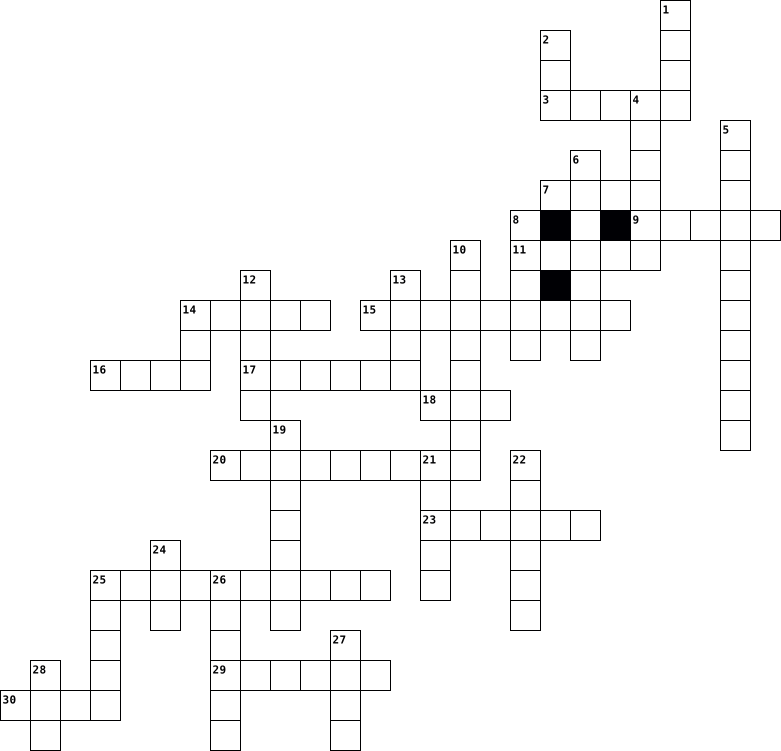
Across
- dog
- horse
- eel
- owl
- chicken
- turtle
- sheep
- cat
- fox
- snake
- fly
- spider
- ant
- beetle
Down
- kangaroo
- wolf
- pig
- butterfly
- goose
- turkey
- duck
- mouse
- deer
- bear
- frog
- dragonfly
- swan
- goat
- pigeon
- eagle
- cow
- fish
32 Clues: dog • pig • eel • owl • cat • fox • fly • cow • ant • wolf • duck • deer • bear • frog • swan • goat • fish • goose • horse • mouse • sheep • snake • eagle • turkey • turtle • spider • pigeon • beetle • chicken • kangaroo • butterfly • dragonfly
Farm animals 2022-05-11

Across
- Lehmad on rohusööjad
- Pullidel on sarved
- peab tähelepanu pöörama
- Nimetatakse mäletsejateks
- Lüpsimasinad
- Kalkun
- Piimaveis
- Karja liikmed
- linnuliha
- ei ole head silmanägemist
- meeldib süüa linnuliha
- On parimad ronijad
- Paabulind
- Nimetatakse karjaks
Down
- Industrialiseeritudpõllumajandus
- juured ja sammal
- Mäletsemine
- Kihvad
- Nooremad on põrsad
- Kodulinnud võivad kriimustada
- Pardipoeg
- Vabapidamisel veised
- elavad metsas
- Villa kasvatama
- korjused
- Kasvatatakse lihaks
- Kaitsta oma vasikaid
- Neli suurt magu
- Nad on kõigesööjad
- pidama lemmikloomana
30 Clues: Kihvad • Kalkun • korjused • Pardipoeg • Piimaveis • linnuliha • Paabulind • Mäletsemine • Lüpsimasinad • elavad metsas • Karja liikmed • Villa kasvatama • Neli suurt magu • juured ja sammal • Pullidel on sarved • Nooremad on põrsad • Nad on kõigesööjad • On parimad ronijad • Kasvatatakse lihaks • Nimetatakse karjaks • Lehmad on rohusööjad • Vabapidamisel veised • Kaitsta oma vasikaid • pidama lemmikloomana • ...
Vera's Animals 2022-05-03

Across
- кролик
- кот
- кенгуру
- лев
- птица
- высокий
- собака
- тигр
- слон
- обезьяна
- мышь
Down
- медведь
- крокодил
- жираф
- тюлень
- паук
- большой
- маленький
- крыса
- лошадь
20 Clues: кот • лев • паук • тигр • слон • мышь • жираф • птица • крыса • кролик • тюлень • собака • лошадь • медведь • кенгуру • большой • высокий • крокодил • обезьяна • маленький
Marine Animals 2022-04-29

Across
- any so-called cold-blooded animal
- a single individual has both male and female reproductive organs at some point in life
- one of two principal body types occurring in members of the invertebrate animal phylum Cnidaria
- a system of canals in echinoderms containing a circulating watery fluid that is used for the movement of the tentacles and tube feet.
- a body plan in which the body can be divided into mirror images along a central axis
- having disproportionate arrangement of parts
- A type of connective tissue that is firm and flexible and having an extracellular matrix comprised mainly of chondroitin sulphate
- located in the body cavity and is derived from an outpocketing of the digestive tube
- one of two principal body forms occurring in members of the animal phylum Cnidaria
- any member of the mammalian group characterized by the presence of a placenta
- an organism must produce its own body heat through metabolism
- a skeleton that consists of hard, mineralized structures located within the soft tissue of organisms
Down
- Animals that lack backbones
- the shedding or casting off of an outer layer or covering and the formation of its replacement.
- vertebrates that live in marine environments
- An air-breathing egg characterized by a shell and extraembryonic membranes.
- an external anatomical feature that supports and protects an animal's body
- epidermal organs derived from modified sweat glands.
- the regular arrangement of body parts around a central axis
- the formation of an outgrowth (bud) from an organism.
- hose marine ecosystems consisting of organisms living on, attached to, or burrowing in the sediment of the ocean floor.
21 Clues: Animals that lack backbones • any so-called cold-blooded animal • vertebrates that live in marine environments • having disproportionate arrangement of parts • epidermal organs derived from modified sweat glands. • the formation of an outgrowth (bud) from an organism. • the regular arrangement of body parts around a central axis • ...
Marine Animals 2022-04-29

Across
- located in the body cavity and is derived from an outpocketing of the digestive tube
- an external anatomical feature that supports and protects an animal's body
- any member of the mammalian group characterized by the presence of a placenta
- a body plan in which the body can be divided into mirror images along a central axis
- the formation of an outgrowth (bud) from an organism.
- A type of connective tissue that is firm and flexible and having an extracellular matrix comprised mainly of chondroitin sulphate
- epidermal organs derived from modified sweat glands.
- An air-breathing egg characterized by a shell and extraembryonic membranes.
- a system of canals in echinoderms containing a circulating watery fluid that is used for the movement of the tentacles and tube feet.
- an organism must produce its own body heat through metabolism
Down
- the shedding or casting off of an outer layer or covering and the formation of its replacement.
- vertebrates that live in marine environments
- Animals that lack backbones
- one of two principal body forms occurring in members of the animal phylum Cnidaria
- any so-called cold-blooded animal
- a single individual has both male and female reproductive organs at some point in life
- one of two principal body types occurring in members of the invertebrate animal phylum Cnidaria
- having disproportionate arrangement of parts
- a skeleton that consists of hard, mineralized structures located within the soft tissue of organisms
- the regular arrangement of body parts around a central axis
- hose marine ecosystems consisting of organisms living on, attached to, or burrowing in the sediment of the ocean floor.
21 Clues: Animals that lack backbones • any so-called cold-blooded animal • vertebrates that live in marine environments • having disproportionate arrangement of parts • epidermal organs derived from modified sweat glands. • the formation of an outgrowth (bud) from an organism. • the regular arrangement of body parts around a central axis • ...
Ocean animals 2022-05-20

Across
- whale black and white dangerous whale
- bivalve marine mollusc
- the hard protective outer case of a mollusk or crustacean
- lives in the marine and she look like a star
- whale the biggest animal in the planet
- black and white bird and he can not fly but uses his small wings to swim
- a big fish with a pink flesh
- carnivorous aquatic mammal (cetacean) whose head extends in shape of a beak armed with teeth
- he have eight sucker-bearing arms and a jelly body
- white shark the largest predator in the planet
Down
- her texture is like a jelly and her head looks like an umbrella.
- it's an animal that have mustache and long-tusked
- they have a pairs of pincers
- a small crustacean with an elongated body
- a type of cephalopods with elongated bodies, large eyes,eight arms and two tentacles
- named for the shape of their head, which looks like the head of a tiny horse
- large marine crustacean with a pair of pincers
- a large reef of stony substance secreted by marine coelenterate as an external skeleton
- snake fish with a slender elongated body
- a large flat , round fish with a long tail that has point poison
20 Clues: bivalve marine mollusc • they have a pairs of pincers • a big fish with a pink flesh • whale black and white dangerous whale • whale the biggest animal in the planet • snake fish with a slender elongated body • a small crustacean with an elongated body • lives in the marine and she look like a star • large marine crustacean with a pair of pincers • ...
animals crossword!! 2022-05-30

Across
- invertibrates from starfish to spiders
- what on earth life in the grasslands
- creatures from the past
- jungle animals
- kangaroos have pouches
- sea monsters
- from tadpole to frog
- mamals pigs to whales
- dinosaur plant eaters
- deadly dinosaurs
Down
- dinosaurs
- hedgehogs
- a giant tree in the rainforest
- animals at war
- birds, parrots to eagles
- who eats who in the rainforest
- whales dolphins and porpoises
- animals and us
- amphibians and reptiles
- birds
20 Clues: birds • dinosaurs • hedgehogs • sea monsters • animals at war • jungle animals • animals and us • deadly dinosaurs • from tadpole to frog • mamals pigs to whales • dinosaur plant eaters • kangaroos have pouches • creatures from the past • amphibians and reptiles • birds, parrots to eagles • whales dolphins and porpoises • a giant tree in the rainforest • who eats who in the rainforest • ...
insects & animals 2022-05-16

Across
- horse
- cow
- grasshopper
- ant
- whale
- dog
- cricket
- bird
- rabbit
- turtle
Down
- jellyfish
- moth
- dolphin
- pig
- lightning bug
- cockroach
- bee
- butterfly
- spider
- fish
- ladybug
- cat
22 Clues: pig • bee • cow • ant • dog • cat • moth • fish • bird • horse • whale • spider • rabbit • turtle • dolphin • cricket • ladybug • jellyfish • cockroach • butterfly • grasshopper • lightning bug
ocean animals 2022-05-17

Across
- they have a pairs of pincers
- a large reef of stony substance secreted by marine coelenterate as an external skeleton
- named for the shape of their head, which looks like the head of a tiny horse
- bivalve marine mollusc
- whale black and white dangerous whale
- a small crustacean with an elongated body
- a big fish with a pink flesh
- the hard protective outer case of a mollusk or crustacean
- it's an animal that have mustache and long-tusked
- a large flat , round fish with a long tail that has point poison
Down
- white shark the largest predator in the planet
- he have eight sucker-bearing arms and a jelly body
- snake fish with a slender elongated body
- a type of cephalopods with elongated bodies, large eyes,eight arms and two tentacles
- lives in the marine and she look like a star
- carnivorous aquatic mammal (cetacean) whose head extends in shape of a beak armed with teeth
- black and white bird and he can not fly but uses his small wings to swim
- whale the biggest animal in the planet
- large marine crustacean with a pair of pincers
- her texture is like a jelly and her head looks like an umbrella.
20 Clues: bivalve marine mollusc • they have a pairs of pincers • a big fish with a pink flesh • whale black and white dangerous whale • whale the biggest animal in the planet • snake fish with a slender elongated body • a small crustacean with an elongated body • lives in the marine and she look like a star • large marine crustacean with a pair of pincers • ...
Animals/Insects 2022-11-07

Across
- fluffy farm animal that people shear
- orange with black stripes
- mostly seen in swamps/ sharp teeth
- pretty wings that are colorful
- giant bird, white brown
- climb trees and eat nuts
- goes moo/ seen in fields
- digs into wood on trees and flies around
- blue/grey jumps out of water lives in ocean
Down
- black and white wit stripes
- is found in a barn and is pink
- lives in the ocean and has big sharp teeth
- had a shell and is green and brown
- has a long neck and is super tall
- is super fast with spots
- whiskers/ meows
- barks and is a common pet
- swims in the ocean/people go catch them
- has a mask and likes to dig in trash
- has eight legs
20 Clues: has eight legs • whiskers/ meows • giant bird, white brown • is super fast with spots • climb trees and eat nuts • goes moo/ seen in fields • orange with black stripes • barks and is a common pet • black and white wit stripes • is found in a barn and is pink • pretty wings that are colorful • has a long neck and is super tall • had a shell and is green and brown • ...
Zoo Animals 2022-11-02

Across
- 10
- 15
- 2
- 4
- 1
- 8
- 13
- 17
- 18
- 14
Down
- 11
- 7
- 6
- 12
- 16
- 19
- 5
- 3
- 20
- 9
20 Clues: 7 • 6 • 5 • 3 • 2 • 4 • 1 • 8 • 9 • 10 • 11 • 12 • 15 • 16 • 19 • 13 • 17 • 18 • 20 • 14
Simple Animals 2022-10-06

Across
- Sponges as adults
- Premature stage of an organism
- One of two principal body types occurring in members of the invertebrate animal phylum Cnidaria
- An organism that have both male and female reproductive system
- Can make sperms and eggs in the same body
- Central opening through which water flows
- A small clump of cells that forms on the lining of the colon
- Free-swimming or crawling larval type common in many species of the phylum Cnidaria
- One of the three kinds of sponge body. Have an extensively branched canal system. It has multiple ostia for water exit, more water can move though the sponge and this is the most common type of sponge
- Having the male and female reproductive organs in separate individuals.
Down
- Anything associated with or occurring on the bottom of a body of water
- Spins to create a current to pull in watter
- Regulate the flow of water,collect excess fluid and excreate nitrogen waste
- New growth occurs on sponge that will eventually detach and grow into a separate sponge – a clone of the original – same DNA
- Feeder- Animals that need water to enter through there pores bringing in food and oxygen from the water
- One of the three kinds of sponge body. It's the simplest form with vase-like body and is the least common type of sponge
- Series of tiny pores all over that bring water in (singular: Ostium)
- Microscopic needle-like spikes that are made of Calcium carbonate (CaCO3) or silica (glass)
- A fibrous protein made of collagen (more flexible)
- Large opening at the top were excess water leaves
- One of the three kinds of sponge body. The sponge wall is folded into canals, and Choanocytes line the radial canals to move water
- An organism that filter feeders feed on. It is an organism that is carried from tides and current easily and cannot swim well
22 Clues: Sponges as adults • Premature stage of an organism • Can make sperms and eggs in the same body • Central opening through which water flows • Spins to create a current to pull in watter • Large opening at the top were excess water leaves • A fibrous protein made of collagen (more flexible) • A small clump of cells that forms on the lining of the colon • ...
Animals 1 2022-08-26

Across
- animal with a long neck living in africa
- the animal closest to a mermaid
- has a beard and can swim
- little bird often kept as a pet
- kind of deer from south america
- reptile that can change color
- large snake that can choke
- cats love to chase them
Down
- black and white striped animal
- they can bee stubborn
- kind of deer living in the mountains
- grey mammal that lives in the water
- black and white whale
- large brown predator
- king of the animals
- sea creature that can change color
- animal that lives in trees and moves really slowly
- can climb trees very fast
- striped very large cat
- butterfly that travels long distances
20 Clues: king of the animals • large brown predator • they can bee stubborn • black and white whale • striped very large cat • cats love to chase them • has a beard and can swim • can climb trees very fast • large snake that can choke • reptile that can change color • black and white striped animal • the animal closest to a mermaid • little bird often kept as a pet • ...
Exotic Animals 2016-12-06

Across
- this rodent’s gestation period is 15-17 days
- this animal is an insectivore with hollow, horn like spines
- more active at night
- a rabbit is not part of the rodent family and instead is known as a
- this rodent has the softest hair on the planet with 70 individual strands of hair to each follicle
- type of Guinea pig with fur that has rosettes and ridges
- low vitamin c in guinea pigs can lead to
- “Red tears” in rodents due to stress or URI is called
- This species can have its tail “de-gloved” if not handled correctly
- disease in rabbits causes respiratory distress and nasal discharge and is caused by Pasturella
Down
- the top shell on a tortoise called
- what is a common name for a trichobezar
- four stages of rodents are pinky, fuzzy, ______, and adult
- term for when a rabbit or rodent’s teeth overgrow
- hamsters are ___ which means they are most active dusk and dawn
- the gap between a rodent’s molars and incisors
- when a dominant rodent licks hair off its subordinate it is known as
- the mouse that lacks a thymus is
- Which rodent has the fastest heart rate at up to 750 beats per minute
- Polecats have to led to the now domesticated
20 Clues: more active at night • the mouse that lacks a thymus is • the top shell on a tortoise called • what is a common name for a trichobezar • low vitamin c in guinea pigs can lead to • this rodent’s gestation period is 15-17 days • Polecats have to led to the now domesticated • the gap between a rodent’s molars and incisors • term for when a rabbit or rodent’s teeth overgrow • ...
Local Animals 2016-10-07

Across
- caribou
- wolf
- moose
- muskrat
- tundrahare/jackrabbit
- fox
- snowshoe hare
- tree squirrel
- porcupine
- beaver
- lynx
- ground squirrel
Down
- black bear
- dog
- landotter
- brown bear
- coyote
- weasel
- marten
- mink
- wolverine
21 Clues: dog • fox • wolf • mink • lynx • moose • coyote • weasel • marten • beaver • caribou • muskrat • landotter • wolverine • porcupine • black bear • brown bear • snowshoe hare • tree squirrel • ground squirrel • tundrahare/jackrabbit
Animals (Champagne) 2016-08-31

Across
- Its has black patches around its eyes ears and around their bodies.
- Its is very smart and it eats bananas
- They have eight legs and poisonous fangs.
- They have 4 arms with suckers on them
- It has black and white stripes on their bodies
- They live in antarctica, their a type of bird that can't fly
- They can hop very high and they have a special pouch on their bodies
- They love carrots and they live in burrows
- Its a type of dog and it can sometimes have brown and blue eyes
- they have long tongues that they use to catch bugs and they have four legs.
Down
- Its is one of the big cats and its got a main around its head
- They live underwater, they have really sharp teeth and they are dangerous
- Its a big animal with big thin ears
- Its an insect and its got colourful wings
- Its a type of owl and you can see it in Franz Josef
- They are mammals, a female is called a vixen and a male is called a dog
- It is legless and its a reptile
- They have white feathers and theres a cartoon called The ____ Princess
- It is a big cat and it has black spots
- Its got black strips and its a big cat
20 Clues: It is legless and its a reptile • Its a big animal with big thin ears • Its is very smart and it eats bananas • They have 4 arms with suckers on them • It is a big cat and it has black spots • Its got black strips and its a big cat • Its an insect and its got colourful wings • They have eight legs and poisonous fangs. • They love carrots and they live in burrows • ...
Australian Animals 2017-10-28

Across
- Second largest living bird
- Swoops during nesting season
- Majority of roadkill
- Banded anteater
- "Native Cat"
- Found in Tasmania
- Sleeps up to 20 hours a day
- Also known as the Australian Crane
- Mr. Walter ________ in Blinky Bill
- Furry marsupial with long ears
- A cross between a Wallaby and a Kangaroo
- Animal on 20 cent coin
Down
- Wild dog
- Animal on 5 cent coin
- Laughs out loud
- It's pink and grey
- Closely related to the Kangaroo
- Found on Rottnest Island
- MMCCPS is on this street
- A sea cow
- An Australian crustacean
21 Clues: Wild dog • A sea cow • "Native Cat" • Laughs out loud • Banded anteater • Found in Tasmania • It's pink and grey • Majority of roadkill • Animal on 5 cent coin • Animal on 20 cent coin • Found on Rottnest Island • MMCCPS is on this street • An Australian crustacean • Second largest living bird • Sleeps up to 20 hours a day • Swoops during nesting season • Furry marsupial with long ears • ...
ANIMALS THEMED 2018-04-27

Across
- A hundred people in a line (4)
- Not his sign of engagement (7)
- Her dress was pink with yellow and black stripes (4)
- Went wrong way up river (4)
- Keep one eye open when in France (6)
- He looked as hard as nails, but was soft inside (5)
- Sounds like pork you say longingly (9)
- Famous swimmer (8)
- Was it her on the roof last night? (5)
- Bad bolster pillows are uncomfortable (7)
- The buzz in the cable went directly to the end (7)
- Cooked looped spaghetti is delicious with curly kale (6)
- Game of backgammon for ten Spanish beauties (5)
- Give bad wines to bad men (5)
- Trying to add up the cost (4)
Down
- Mo used cheese to enhance her signature dish
- Tesco was voted best butcher (3)
- Famous person meets Liz (5)
- Lots of bushes are needed to keep pigs inside (8)
- Raymond got stung when straying off the beaten track (8)
- Winnie the Pooh would like to be human (8)
- Have a look at the scruffy garden (6)
- A waffle and coffee for breakfast(4)
- Holy man needs to enter the tree house (5)
- Buying the wrong item might be a big mistake (4)
- Jim wallows badly in self-pity (6)
- Best to be astute or get caught out (5)
- The author netted the ball and scored the winning goal (6)
- The soldier who went AWOL found refuge in a den (4)
29 Clues: Famous swimmer (8) • Famous person meets Liz (5) • Went wrong way up river (4) • Give bad wines to bad men (5) • Trying to add up the cost (4) • A hundred people in a line (4) • Not his sign of engagement (7) • Tesco was voted best butcher (3) • Jim wallows badly in self-pity (6) • Keep one eye open when in France (6) • A waffle and coffee for breakfast(4) • ...
mystical animals 2018-11-02
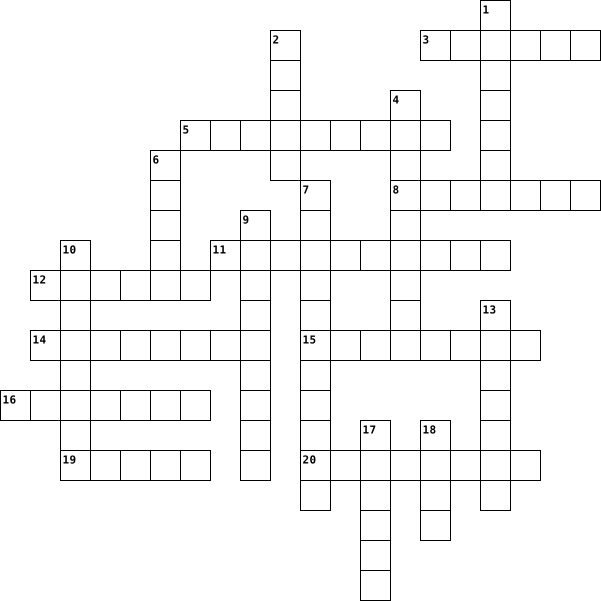
Across
- body of cat and head of a human
- similar to a sea monster but in a serpent like body
- horse with huge feathered wings
- front half of a eagle and hind half of horse
- little red goblins that live in abandon cottages
- upper body of human and legs as a fined tales
- upper body of a human and behind and legs of a horse
- bird full of fire
- little human begins with transparent wings and magical powers
- a horse with a magical horn on its forehead
Down
- body and head of a lion along with a dragon and goat head with dragon wings
- smaller than fairies and party all the time
- snake like creatures that are huge as sky scarpers
- body of a huge reptile and 5 heads of a snake
- upper body of a horse and lower body of a fish tale
- huge creatures that roamed earth a million years ago
- person that turns into a wolf by midnight
- Huge reptilian with huge scaled wings
- relatives of mermaids but there voices are dangerous to our human ears
- Ness Monster creature that has a huge strong body and neck and head of a snake;marine animal
20 Clues: bird full of fire • body of cat and head of a human • horse with huge feathered wings • Huge reptilian with huge scaled wings • person that turns into a wolf by midnight • smaller than fairies and party all the time • a horse with a magical horn on its forehead • body of a huge reptile and 5 heads of a snake • front half of a eagle and hind half of horse • ...
Wild Animals 2019-10-15

Across
- пума
- тигр
- олень
- пантера
- ондатра
- куница
- лев
- заяц
- черепаха (сухопутная)
- еж
- гиена
- лиса
- бегемот
- крокодил
- соболь
- мышь
Down
- крот
- зебра
- жираф
- ягуар
- леопард
- выдра
- обезьяна, мартышка
- козёл
- мангуст
- рысь
- слон
- панда
- носорог
- енот
- белка
- волк
- лось
- норка
34 Clues: еж • лев • пума • крот • тигр • рысь • заяц • слон • енот • лиса • волк • лось • мышь • зебра • жираф • ягуар • олень • выдра • козёл • панда • белка • гиена • норка • куница • соболь • леопард • пантера • ондатра • мангуст • носорог • бегемот • крокодил • обезьяна, мартышка • черепаха (сухопутная)
Wild animals 2019-10-15

Across
- енот
- пума
- черепаха (сухопутная)
- зебра
- мангуст
- крокодил
- ягуар
- заяц
- носорог
- олень
- еж
- лось
- рысь
- ондатра
- куница
- волк
- гиена
Down
- пантера
- мышь
- козёл
- бегемот
- панда
- леопард
- песец
- белка
- крот
- слон
- соболь
- выдра
- тигр
- обезьяна, мартышка
- жираф
- лев
- норка
- лиса
35 Clues: еж • лев • мышь • енот • пума • крот • слон • заяц • тигр • лось • рысь • волк • лиса • козёл • панда • зебра • песец • белка • ягуар • выдра • олень • жираф • норка • гиена • соболь • куница • пантера • бегемот • леопард • мангуст • носорог • ондатра • крокодил • обезьяна, мартышка • черепаха (сухопутная)
Disney animals 2019-04-16

Across
- Which animal is black and big?
- Which animal like to eat honey from bees?
- What for a animal is green and dangerous?
- Which animal is orange and life in the forest?
- Which animal have yellow and brown pelt?
- What for a animal is Bambis mother?
- Which animal is small and grey?
- Which animal can jump high and like to eat carottes?
Down
- Which animal eat acorns?
- What for a animal grunt and is pink?
- From which animal is the dog derived?
- It is red and it is often by the ocean what is this for a animal?
- What for a animal is Mickey Mouse his friend?
- Which animal make the noise meow?
- Which animal bark?
- Which animal is grey and make the noise iaa?
- To which animal does the trunk belong?
- Which animal catch your food with your tongue?
- Which animal has hair around the face and head?
- Which animal don’t like red?
20 Clues: Which animal bark? • Which animal eat acorns? • Which animal don’t like red? • Which animal is black and big? • Which animal is small and grey? • Which animal make the noise meow? • What for a animal grunt and is pink? • What for a animal is Bambis mother? • From which animal is the dog derived? • To which animal does the trunk belong? • ...
ANIMALS CROSSWORD 2023-05-10

Across
- says “moo.”
- barks and wags its tail
- has fur, whiskers, and meows
- lives in the water and swims
- says "kwek-kwek-kwek"
- has a long neck and can reach high leaves
- has black and white stripes and lives in Africa
- has a shell and can swim in the water
- has a mane and roars loudly
- has black and white fur and eats bamboo
- has a long body, flexible body and no legs
Down
- has a long tail and can climb trees
- has a pouch and carries its baby inside it
- has spots and can run very fast
- has a shell and comes out of it
- has a shell, eight legs, and can crawl on land and in the water
- has feathers and can fly
- has a long snout, sharp teeth, and eats meat
- says “ribbit” and jumps
- has a trunk and big ears
20 Clues: says “moo.” • says "kwek-kwek-kwek" • barks and wags its tail • says “ribbit” and jumps • has feathers and can fly • has a trunk and big ears • has a mane and roars loudly • has fur, whiskers, and meows • lives in the water and swims • has spots and can run very fast • has a shell and comes out of it • has a long tail and can climb trees • has a shell and can swim in the water • ...
Africa's Animals 2023-05-16

Across
- Am I black with white stripes, or the other way around?
- This is the tallest animal on Earth
- This animal looks like a cross between a zebra and giraffe
- There is a mountain and lowland version of this massive ape
- This smaller African cat is sometimes found as an exotic pet in America
- I can usually be found laying in mud
- Giant colonies of us are found burrowing across Africa
- This monkey is most famous for inspiring Rafiki in Lion King
- This is the king of the jungle
- Largest animal that lives in Africa
- These massive bovine animals can be found in wet marshy areas
- These monkeys are only found on Madagascar
- This monkey lives in large troops roaming the savannah
- This animal is at fault for the downfall of Mufasa
- Largest flightless bird
Down
- While normally found in Antarctica these little birds can be found in Southern Africa as well
- This large animal spends most of its time in the rivers
- This tiny little animal is often found in the desert, it is know for its large ears
- This saltwater lizard has a toothy smile
- This animal is known for its almost evil laugh
- This animal usually comes first alphabetically
- This is our closest living relative
- These bugs create massive towers for their colonies
- This animal is known for a car made in its name from Chevrolet
- This massive animal has one or two horns adorning its nose
- A smaller version of our closest relative
- Fastest land animal
- These large shelled animals are found in drier areas
- This cat-like animal is only found on Madagascar
- This big cat takes its food into trees to eat it in safety
30 Clues: Fastest land animal • Largest flightless bird • This is the king of the jungle • This is our closest living relative • This is the tallest animal on Earth • Largest animal that lives in Africa • I can usually be found laying in mud • This saltwater lizard has a toothy smile • A smaller version of our closest relative • These monkeys are only found on Madagascar • ...
Wild Animals 2023-05-25

Across
- żółw (lądowy)
- ryś (2)
- nosorożec
- borsuk
- jaszczurka
- bocian
- ćma
- foka
- żbik
- chimp
- gad
- mewa
- szop pracz
- owad
- wieloryb
- płaz
- sęp
- żółw (wodny)
- goryl
- ropucha
- słoń
- aligator
Down
- ośmiornica
- skunks
- łoś (1)
- żaba
- jeleń
- puma
- rekin
- łoś (2)
- sowa
- mors
- hipopotam
- sarna
- mrówka
- rozgwiazda
- ślimak (bez skorupki)
- mammal
- małpa człekokształtna
- ślimak (ze skorupką)
- rosomak
- wróbel
- orzeł
- ryś (1)
44 Clues: ćma • gad • sęp • żaba • puma • sowa • mors • foka • żbik • mewa • owad • płaz • słoń • jeleń • rekin • sarna • chimp • goryl • orzeł • skunks • borsuk • bocian • mrówka • mammal • wróbel • łoś (1) • ryś (2) • łoś (2) • rosomak • ropucha • ryś (1) • wieloryb • aligator • nosorożec • hipopotam • ośmiornica • jaszczurka • rozgwiazda • szop pracz • żółw (wodny) • żółw (lądowy) • ślimak (ze skorupką) • ślimak (bez skorupki) • małpa człekokształtna
Exotic Animals 2023-05-12

Across
- мангуст
- хамелеон
- соболь
- капибара
- зебра
- корелла
- дегу
- шиншилла
- питон
- галаго
- койот
- сервал
Down
- сурикат
- горилла
- аллигатор
- рысь
- хорёк
- енот
- дикобраз
- скунс
- тарантул
- панда
- агути
- аксолотль
- опоссум
25 Clues: рысь • енот • дегу • хорёк • скунс • зебра • панда • агути • питон • койот • соболь • галаго • сервал • сурикат • горилла • мангуст • корелла • опоссум • хамелеон • капибара • дикобраз • тарантул • шиншилла • аллигатор • аксолотль
Encreuat animals 2023-05-18

Across
- Rèptil sense potes.
- Té huit braços.
- Camina de costat.
- Porta la seua casa a totes parts.
- Sembla que està sempre somrient.
- Ix quan plou.
- Té molts colors.
- El més famós du botes.
- El rei.
- Animal marí perillós.
Down
- La rosa és famosa.
- Es camufla pel seu pelatge.
- Ens dona llet.
- Mamífer molt intel·ligent.
- Mamífer amb gran memòria.
- Mamífer rossegador.
- Ens desperta de matí.
- El mamífer més gran.
- La mascota preferida.
- Fabrica la mel.
20 Clues: El rei. • Ix quan plou. • Ens dona llet. • Té huit braços. • Fabrica la mel. • Té molts colors. • Camina de costat. • La rosa és famosa. • Rèptil sense potes. • Mamífer rossegador. • El mamífer més gran. • Ens desperta de matí. • La mascota preferida. • Animal marí perillós. • El més famós du botes. • Mamífer amb gran memòria. • Mamífer molt intel·ligent. • Es camufla pel seu pelatge. • ...
Sea animals 2023-06-05

Across
- the most common type of dolphin
- lives in a shell and has one foot to help dig itself into the sand
- these animals can have many arms as little as 5 and as many as 40 arms
- this type of whale that communicates with bubble
- the most common type of jellyfish that is not very poisonous
- a type of dolphin that sometimes eat whales
- this is a sea creature that lays eggs on land but when it hatches it goes to the water
- has a large flat shell and large pincers
- this fish lives in anemones to protect itself from predators
- the biggest animal on earth
- this type of whale has almost the longest migration of all mammals
Down
- this jellyfish is known to be the most deadly marine animal in the world
- is a type of cephalopod and some can change color or glow
- a type of seahorse that blends in with seaweed
- this animal is very smart and use camouflage to hunt for food
- this type of shark is the 4th largest type of shark and can get up to 18 feet
- the fastest swimming fish is related to a swordfish but not the same
- this is not actually a jellyfish but is sometimes mistaken for one because they are related
- these fish are flat and rely on their noses to find food
- the worlds largest fish
- are related to sea stars and sea urchins and are brown when they are alive
- got its name from two little whisker looking things on the sides of its face
22 Clues: the worlds largest fish • the biggest animal on earth • the most common type of dolphin • has a large flat shell and large pincers • a type of dolphin that sometimes eat whales • a type of seahorse that blends in with seaweed • this type of whale that communicates with bubble • these fish are flat and rely on their noses to find food • ...
Animals holidays 2023-06-04

Across
- a large building or a group of buildings containing a lot of different stores
- a large area of land covered with trees and plants, usually larger than a wood, or the trees and plants themselves
- the sport of climbing on rocks or in mountains, or on specially designed walls inside or outdoors
- a large hole in the side of a hill, cliff, or mountain, or one that is underground
- a raised part of the earth's surface, much larger than a hill, the top of which might be covered in snow
- the activity of travelling in a kayak
- the sport or activity of riding a mountain bike (= a bicycle for riding over hills and rough ground)
- it hasn't got any arms or lges, but it can bite.
Down
- a large area of water surrounded by land and not connected to the sea except by rivers or streams
- the activity of using a Jet Ski to travel across water
- a place where buses start and end their routes
- a theatre where people pay to watch films
- it's yellow and black and it makes honey.
- water, especially from a river or stream, dropping from a higher to a lower point, sometimes from a great height
- it's a big wild dog which lives in groups in forests and mountains.
- a building, room, or organization that has a collection of books, documents, music, and sometimes things such as tools or artwork, for people to borrow, usually without payment
- it has eight legs and it sometimes bites people.
- a very large area of sea
- it's an orange and black cat which lives in Asia.
- a building where objects of historical, scientific, or artistic interest are kept
20 Clues: a very large area of sea • the activity of travelling in a kayak • a theatre where people pay to watch films • it's yellow and black and it makes honey. • a place where buses start and end their routes • it has eight legs and it sometimes bites people. • it hasn't got any arms or lges, but it can bite. • it's an orange and black cat which lives in Asia. • ...
Big Animals 2023-06-26

Across
- tigre
- ovelha
- arara
- papagaio
- camelo
- pantera
- lobo
- urso
- urubu
- lagartixa
- capivara
Down
- coala
- elefante
- lhama
- veado
- cisne
- macaco
- pavão
- anta
- ema
- burro
21 Clues: ema • anta • lobo • urso • coala • tigre • lhama • veado • cisne • arara • pavão • burro • urubu • ovelha • macaco • camelo • pantera • elefante • papagaio • capivara • lagartixa
Forest Animals 2023-08-08

Across
- A medium-sized wild cat native to North America.
- A small mammal covered in spines that curls into a ball for protection.
- A cunning carnivore with a bushy tail, known for its cleverness.
- A small mammal with a bushy tail that collects and stores nuts.
- A small mammal with long ears and a fluffy tail, known for hopping.
- A bird with a strong beak for drumming on trees and finding insects.
- A semiaquatic rodent known for building dams and lodges.
- A small rodent with stripes along its body, often seen scurrying around.
- A rodent covered in quills that it uses for defense.
- A nocturnal bird of prey known for its silent flight and wise reputation.
- A wild cat with tufted ears and distinctive facial ruff.
Down
- A large herbivore with impressive antlers, native to northern regions.
- A burrowing mammal known for its distinctive black and white striped face.
- A large mammal known for its strength and hibernation habits.
- Also known as a cougar or puma, a large cat found in the Americas.
- A small arboreal mammal with a reddish-brown coat and bushy tail.
- A black-and-white mammal known for its foul-smelling spray.
- Graceful mammals often found in forests, known for their antlers.
- A masked mammal with dexterous paws and a ringed tail.
- A carnivorous mammal known for its pack behavior and howling.
20 Clues: A medium-sized wild cat native to North America. • A rodent covered in quills that it uses for defense. • A masked mammal with dexterous paws and a ringed tail. • A semiaquatic rodent known for building dams and lodges. • A wild cat with tufted ears and distinctive facial ruff. • A black-and-white mammal known for its foul-smelling spray. • ...
Jungle Animals 2023-11-28

Across
- Large and furry mammal.
- Black and white bear from China.
- Tropical bird with a large and colorful beak.
- Herbivorous animal with a horn on its nose.
- long neck
- King of the jungle
- Primate endemic to Madagascar.
- It drags and is long
- It moves in trees and has a tail
- Semi-aquatic reptile with strong jaws.
- striped horse
Down
- Nocturnal flying mammal.
- Flying insect with colorful wings.
- Spotted and powerful big cat.
- striped feline
- Large aquatic mammal.
- Arboreal marsupial from Australia.
- Agile and stealthy feline.
- Giant and with a trunk
- Large and strong primate.
20 Clues: long neck • striped horse • striped feline • King of the jungle • It drags and is long • Large aquatic mammal. • Giant and with a trunk • Large and furry mammal. • Nocturnal flying mammal. • Large and strong primate. • Agile and stealthy feline. • Spotted and powerful big cat. • Primate endemic to Madagascar. • Black and white bear from China. • It moves in trees and has a tail • ...