
art Crossword Puzzles
English II final review 2025-06-05

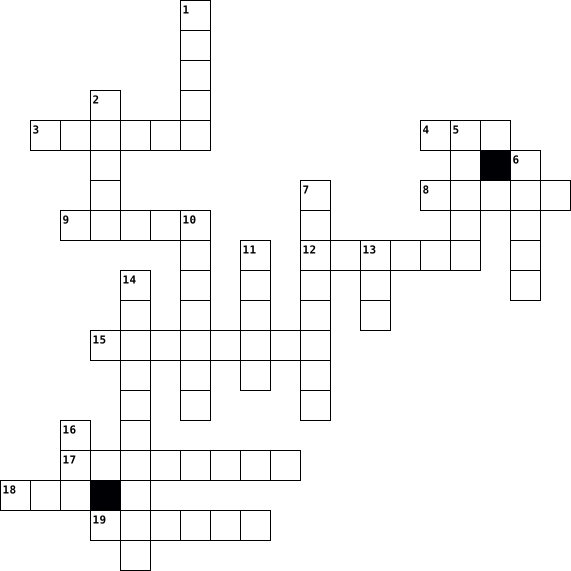
Across
- seemingly contradictory statement that is true
- implied; not directly stated
- where a rebirth of African-American art happened in the 1920's
- repeated words for effect
- extreme exaggeration
- clearly stated
- reference to a famous work of art or literature
- rebirth
- theme of belief in yourself
Down
- theme found in both "Night" and "A Raisin in the Sun"
- literary movement that emphasizes the supernatural and spooky
- theme in "Night" where Elie questioned his beliefs
- comparison between two things
- conflict within a character's heart or mind
- comparison between two things using like or as
- where your family comes from
- art of persuasive speaking or writing
- mood or feeling of a work; emotion evoked
- conflict between a character and something outside of them
- something that stands for something else
20 Clues: rebirth • clearly stated • extreme exaggeration • repeated words for effect • theme of belief in yourself • implied; not directly stated • where your family comes from • comparison between two things • art of persuasive speaking or writing • something that stands for something else • mood or feeling of a work; emotion evoked • conflict within a character's heart or mind • ...
HUM1020 2026-04-24

Across
- - Art based on popular culture
- - Movement where artists started breaking away from tradition
- - Style influenced by dreams and the subconscious
- - Idea that truth depends on perspective
- - Art that does not try to look realistic
- - Famous artist connected to Cubism
- - Use of machines and digital tools
- - Shared beliefs, values, and practices of a group
- - Movement focused on showing strong feelings
- - style that shows objects as shapes or pieces
Down
- - Psychologist who studied the unconscious mind
- - A person’s sense of self
- - Movement that mixes style and questions ideas of truth
- - Spread of ideas and cultures worldwide
- - Breaking something into parts
- - Movement that rejected traditional art and logic
- - Philosopher who questioned traditional beliefs
- - Ways people communicate information
- - Artist known for pop culture artwork
- - Focus on buying and using goods
20 Clues: - A person’s sense of self • - Art based on popular culture • - Breaking something into parts • - Focus on buying and using goods • - Famous artist connected to Cubism • - Use of machines and digital tools • - Ways people communicate information • - Artist known for pop culture artwork • - Spread of ideas and cultures worldwide • - Idea that truth depends on perspective • ...
Chapter 14 and 15 puzzle 2026-04-16

Across
- Artist who created The Migration Series.
- Artist known for reimagining Old Master portraits with Black subjects.
- Artistic movement based on nihilism and irrationalism.
- Rapid cinematic shots are called ______.
- Simone de Beauvoir challenged ______.
- Composer of Einstein on the Beach.
- Guernica represents the ______.
- Jung said the collective unconscious appears in ______.
Down
- Waiting for Godot is ______ theatre.
- Les Demoiselles d'Avignon led to ______.
- Environmentally conscious architecture is called ______ design.
- Technology that revolutionized modern filmmaking.
- Composer of 4'33".
- Pioneer of American Pop art.
- Freud believed civilization resulted from ______.
- After 1945, art production shifted between which two cities?
- Eliot claimed Western knowledge brought people closer to ______.
- Leading action painter of the twentieth century.
- Over the last seven decades, much of the world has entered the ______ Age.
- Fauvist art is known for bold ______.
20 Clues: Composer of 4'33". • Pioneer of American Pop art. • Guernica represents the ______. • Composer of Einstein on the Beach. • Waiting for Godot is ______ theatre. • Simone de Beauvoir challenged ______. • Fauvist art is known for bold ______. • Artist who created The Migration Series. • Les Demoiselles d'Avignon led to ______. • Rapid cinematic shots are called ______. • ...
İngilizce 2025-06-25

Across
- Suistimal Etmek, Kötüye Kullanmak Ebus
- Sanat Art
- Terk Etmek, Bırakmak Ebendın
- Giriş, Erişim, Erişmek Ekses
- Yurt Dışında, Yurtdışı Ebrood
- Bulunmama, Yokluk Ebsıns
- Başarıyla Tamamlamak, Sonuçlandırmak
- Hüner, Beceri, Kabiliyet Ebiliti
- Üstünde, Üzerine Ebov
Down
- Anlaşıldı, Kararlaştırıldı
- Eşlik Etmek Ekompani
- Cevap
- Kabul Etmek Eksept
- Mutlaka, Kesinlikle Ebsulutli
- Mutlak, Salt, Kesin Ebsulut
- Kaza Eksidınt
- Hakkında, Aşağı Yukarı, Üzere Ebaut
- Sonra
18 Clues: Cevap • Sonra • Sanat Art • Kaza Eksidınt • Kabul Etmek Eksept • Eşlik Etmek Ekompani • Üstünde, Üzerine Ebov • Bulunmama, Yokluk Ebsıns • Anlaşıldı, Kararlaştırıldı • Mutlak, Salt, Kesin Ebsulut • Terk Etmek, Bırakmak Ebendın • Giriş, Erişim, Erişmek Ekses • Mutlaka, Kesinlikle Ebsulutli • Yurt Dışında, Yurtdışı Ebrood • Hüner, Beceri, Kabiliyet Ebiliti • Hakkında, Aşağı Yukarı, Üzere Ebaut • ...
LESSONS IN MAPEH 2021-10-26

Across
- , composer of 'Bolero'.
- , presents atonality.
- , variable that affects lifestyle.
- , involves physical effort.
- , it is everything in art.
- , a form of health fraud.
- , the feedback mechanism.
- , involves movement of the body without effort.
- , the one who painted 'persistence of memory'.
- , when did Arnold Schoenberg die?.
Down
- , a particular way of living
- , any idea that we hear from people around us.
- , artist can tap into a whole range of emotions.
- , risk factors associated with lifestyle.
- , refers to late 19th and early-to-mid 20th-century art
- , he was called 'the father of the modern school of composition'.
- , a group of people who participate in a show or encounter a work of art.
- , the one who painted 'the poppies'.
- , purpose and cavent of information.
- , tells about the source
20 Clues: , presents atonality. • , composer of 'Bolero'. • , tells about the source • , a form of health fraud. • , the feedback mechanism. • , it is everything in art. • , involves physical effort. • , a particular way of living • , variable that affects lifestyle. • , when did Arnold Schoenberg die?. • , purpose and cavent of information. • ...
Speak 2023-05-03

Across
- Who is Melinda's Art teacher?
- Which teacher does Melinda hate?
- Is Speak based on a true story? Yes or No?
- What is the title of the novel?
- Who is Melinda's ex-best friend?
- How does Melinda communicate with her parents?
- Who is Melinda's new friend?
- Who did Melinda call at the summer party?
- What city in New York is her school located?
- What does Melinda call her English teacher?
Down
- What school does Melinda attend?
- Who is the author of Speak?
- What is Melinda's art project?
- What literary element is used by the "tree" in Speak?
- Who is "IT"?
- Whose point of view is the book in?
- Who is Melinda's lab partner?
- What state does Melinda live in?
- What was the name of Melinda's old clique?
- Which class is Melinda's favorite?
20 Clues: Who is "IT"? • Who is the author of Speak? • Who is Melinda's new friend? • Who is Melinda's Art teacher? • Who is Melinda's lab partner? • What is Melinda's art project? • What is the title of the novel? • What school does Melinda attend? • Which teacher does Melinda hate? • Who is Melinda's ex-best friend? • What state does Melinda live in? • Which class is Melinda's favorite? • ...
Renaissance/Reformation 2021-01-20

Across
- 95 theses
- HenryVIII second daughter
- Who ended in 1300-1600
- started doing trade along the west coast of Africa
- lessened power
- renaissance meaning
- renaissance is famous for
- gotten burned by pope paul IV
- grew power
- had 6 wives
- moving into Asia
- promoted education for both boys and girls
Down
- what everyone calls desiderius Erasmus
- Calvin's france followers
- has a book called "The praise of folly"
- defeats muslims and takes over indian ocean trade
- killed 60% of the population
- Where it has started
- Who ends in 1453
- lead by Pope paul III ans Pope paul IV
- was impressed with the Renaissance
- art being really good
- classic art
- Wrote the institutes of the christian Religion
- dutch capitol
25 Clues: 95 theses • grew power • classic art • had 6 wives • dutch capitol • lessened power • Who ends in 1453 • moving into Asia • renaissance meaning • Where it has started • art being really good • Who ended in 1300-1600 • Calvin's france followers • HenryVIII second daughter • renaissance is famous for • killed 60% of the population • gotten burned by pope paul IV • was impressed with the Renaissance • ...
puzzle 2023-09-28

Across
- A creative of sorts, not just art
- A calligraphy method
- Uses sprite to be interactive, a tangible thing
- The action of writing the code for games
- Free at times; an example
- An example of what code should be
- Writing the script for a game
- A change of language
- The language the game understands
- When giving an example, "for ________"
Down
- At the same time, the same movements
- A piece of art, and a fizzy drink
- Infinite cycle
- One small square in a piece of art
- Putting a game into other devices
- Movement from one place to another
- Putting things together
- Pleasant melodic sounds
- A piece of the puzzle of animation
- Moving to a side, on an angle
- The name of a popular show ending in "high"
21 Clues: Infinite cycle • A calligraphy method • A change of language • Putting things together • Pleasant melodic sounds • Free at times; an example • Moving to a side, on an angle • Writing the script for a game • A creative of sorts, not just art • A piece of art, and a fizzy drink • Putting a game into other devices • An example of what code should be • The language the game understands • ...
Spanish vocab (ARTE, masculine wording) 2023-12-01

Across
- close to real life
- painted directly to walls
- Who sculpts
- draw life truthfully
- behind foreground
- geometric; African mask art inspired
- Tool for painting
- Product of poets
- Who makes art
- I like to draw in my...
- product of painters
- color arrangement
- to draw onesself
- the arts feeling
- product of potters
- Celebrities; Popular
Down
- to draw on paper
- formed arter WW1
- Three words to describe what artists make
- Who writes poems
- what inspires the artist
- to get better at anatomy, you draw ___ drawings
- product of sculptors
- the arts topic
- Who paints
- present-day art
- to draw from life
- the overall image
- made to honor monumental figures
- to draw a human
- to draw form simply
- Who writes
- 100 years
33 Clues: 100 years • Who paints • Who writes • Who sculpts • Who makes art • the arts topic • present-day art • to draw a human • to draw on paper • formed arter WW1 • Who writes poems • Product of poets • to draw onesself • the arts feeling • behind foreground • Tool for painting • to draw from life • the overall image • color arrangement • close to real life • product of potters • product of painters • ...
Class crossword 3 2026-01-18

Across
- to briefly refer to something
- with pride
- artist’s greatest work
- in an uncomfortable way
- to say you will cause harm
- dream-like art style
- to ask oneself a question
- expression of pleasure when eating
- to have the same opinion
- to greet someone with the hand
- lightness or darkness of a color
- know expression used to involve the listener
- to speak very loudly
- off to display proudly
Down
- to reply sharply
- to say something is not true
- art style focusing on light
- extremely famous artwork
- carved or sculpted figure
- without emotion
- word used to correct or add information
- showing anxiety
- front part of an artwork
- place of purification before Heaven
- arrangement of elements in art
- without politeness
- rough preliminary drawing
- to close one eye quickly
28 Clues: with pride • without emotion • showing anxiety • to reply sharply • without politeness • dream-like art style • to speak very loudly • artist’s greatest work • off to display proudly • in an uncomfortable way • extremely famous artwork • front part of an artwork • to have the same opinion • to close one eye quickly • carved or sculpted figure • to ask oneself a question • ...
Speak 1st Marking Period 2023-11-25

Across
- Merriweather's original mascot
- Melinda's high school
- state Melinda lives in
- the narrator who called cops at a summer party
- Melinda's English teacher
- Merriweather changed mascot to this
- old friend of Melinda who excels at sports
- Melinda's very smart lab partner
Down
- city Melinda lives in
- new student from Ohio; "friend" of Melinda
- Melinda's favorite class
- closet a safe space Melinda found running from Mr. Neck
- Melinda's ex-best friend
- The art teacher who Melinda loves
- holiday right before the end of the first marking period
- a group that crafts and fundraises but are shallow and rude
- Social studies teacher who has his eye on Melinda
- an unknown person Melinda is afraid of
- the focus of Melinda's art project
19 Clues: city Melinda lives in • Melinda's high school • state Melinda lives in • Melinda's favorite class • Melinda's ex-best friend • Melinda's English teacher • Merriweather's original mascot • Melinda's very smart lab partner • The art teacher who Melinda loves • the focus of Melinda's art project • Merriweather changed mascot to this • an unknown person Melinda is afraid of • ...
Chapter 15 Crossword Puzzle 2025-10-15

Across
- The type of music with synthesizers and sampling
- Chinese pop artist, Great Criticism Series
- What minimalism and geometric abstraction emphasize
- What revolutionized movies
- "The world will never be white again"
- What was the high-tech, media filled era
- Post-1945 art hub in the U.S.
- Core tone of Waiting for Godot
- Spoken poetry in hip-hop
- The theory physics quest to unite all forces
- Harlem Renaissance poet with jazz vibes
Down
- Action painter of the 20th century
- Feminist writer who challenged patriarchy
- Pop art pioneer, created the Campbell Soup Art
- Choreographer ignoring music rules
- Painted young black men in old-style portraits
- Composer of Einstein on the Beach
- Composed 4'33"
- What color is the eco-friendly building plan
19 Clues: Composed 4'33" • Spoken poetry in hip-hop • What revolutionized movies • Post-1945 art hub in the U.S. • Core tone of Waiting for Godot • Composer of Einstein on the Beach • Action painter of the 20th century • Choreographer ignoring music rules • "The world will never be white again" • Harlem Renaissance poet with jazz vibes • What was the high-tech, media filled era • ...
Chapter 15 Crossword Puzzle 2025-10-15

Across
- The type of music with synthesizers and sampling
- Chinese pop artist, Great Criticism Series
- What minimalism and geometric abstraction emphasize
- What revolutionized movies
- "The world will never be white again"
- What was the high-tech, media filled era
- Post-1945 art hub in the U.S.
- Core tone of Waiting for Godot
- Spoken poetry in hip-hop
- The theory physics quest to unite all forces
- Harlem Renaissance poet with jazz vibes
Down
- Action painter of the 20th century
- Feminist writer who challenged patriarchy
- Pop art pioneer, created the Campbell Soup Art
- Choreographer ignoring music rules
- Painted young black men in old-style portraits
- Composer of Einstein on the Beach
- Composed 4'33"
- What color is the eco-friendly building plan
19 Clues: Composed 4'33" • Spoken poetry in hip-hop • What revolutionized movies • Post-1945 art hub in the U.S. • Core tone of Waiting for Godot • Composer of Einstein on the Beach • Action painter of the 20th century • Choreographer ignoring music rules • "The world will never be white again" • Harlem Renaissance poet with jazz vibes • What was the high-tech, media filled era • ...
MANITESTO 2025-12-24

Across
- 1960s experimental art texts rejecting art-world seriousness by emphasizing play, instruction, performance, and everyday actions over objects.
- 1848 political and philosophical text by Karl Marx and Friedrich Engels analyzing class struggle and calling for collective ownership and the overthrow of capitalism.
- Contemporary art movement using satire and deliberate provocation to critique sincerity, pretension, and institutional authority within the art world.
- Early 20th-century avant-garde writings rejecting logic, nationalism, and traditional art in response to World War I, embracing absurdity and anti-art gestures.
- Early abstract art text by Kazimir Malevich asserting that pure geometric form and color could express spiritual reality beyond the material world.
- 1919 modernist declaration by Walter Gropius uniting art, craft, and architecture in order to reshape everyday life through functional design.
Down
- Mid-20th-century radical writings critiquing consumer capitalism and the “spectacle,” advocating lived experience, play, and revolutionary everyday life.
- Late 20th-century writings challenging patriarchal art history by centering gender, labor, care, and embodied experience as valid artistic content.
- 1909 avant-garde text by F.T. Marinetti celebrating speed, machines, violence, and modern life while calling for a total break from tradition and the past.
- 1985 feminist theory essay by Donna Haraway arguing that technology dissolves fixed boundaries between human, machine, gender, and identity.
- 1924 text by André Breton promoting dreams, the unconscious, and automatism as revolutionary tools for transforming art and society.
11 Clues: 1924 text by André Breton promoting dreams, the unconscious, and automatism as revolutionary tools for transforming art and society. • 1985 feminist theory essay by Donna Haraway arguing that technology dissolves fixed boundaries between human, machine, gender, and identity. • ...
Rare Arts And Crafts 2024-09-19

Across
- – Art form involving colored glass to create designs
- – Small, intricate mosaic artworks
- – Japanese pottery known for its unique glazing techniques
- – Art carved into ivory or bone
- – Art form involving rolled strips of paper
- – Crafting items using pom-poms
Down
- – Painting technique where the image is painted on glass
- – Art using melted wax as a medium
- – Art created with repeating geometric patterns
- – Japanese ink painting technique
10 Clues: – Art carved into ivory or bone • – Crafting items using pom-poms • – Japanese ink painting technique • – Art using melted wax as a medium • – Small, intricate mosaic artworks • – Art form involving rolled strips of paper • – Art created with repeating geometric patterns • – Art form involving colored glass to create designs • ...
RENAISSANCE ARTISTS 2026-04-14

Across
- Large marble statue made by Michelangelo
- Painted The School of Athens
- Person who paid artists for their work
- Person who creates paintings or sculptures
- Small part that makes art more realistic
- Painting made on wet plaster
- Famous painting with a mysterious smile
- Period of rebirth in art and learning
- Focus on human ideas and achievements
Down
- Created the statue David
- Makes art look three-dimensional
- Painted the Mona Lisa
- Chapel ceiling painted by Michelangelo
- Shows people and objects as they truly appear
- Makes a drawing look lighter or darker
15 Clues: Painted the Mona Lisa • Created the statue David • Painted The School of Athens • Painting made on wet plaster • Makes art look three-dimensional • Period of rebirth in art and learning • Focus on human ideas and achievements • Person who paid artists for their work • Chapel ceiling painted by Michelangelo • Makes a drawing look lighter or darker • ...
ERU1 Review 3 2021-04-29

Across
- time(L)
- sleep(L)
- through, between, across(G)
- tree(L)
- land(L)
- life(G)
- sleep(G)
- star(L)
- stone(G)
- time(G)
- earth(G)
- moom(L)
Down
- beside, along with(G)
- tree(G)
- small(G)
- star(G)
- across, over, through(L)
- live(L)
- year(L)
- between, among, amid(L)
- sun(G)
- rock, stone(G)
- art, skill(L)
- art, skill(G)
- sun(L)
25 Clues: sun(G) • sun(L) • tree(G) • time(L) • star(G) • tree(L) • live(L) • land(L) • year(L) • life(G) • star(L) • time(G) • moom(L) • small(G) • sleep(L) • sleep(G) • stone(G) • earth(G) • art, skill(L) • art, skill(G) • rock, stone(G) • beside, along with(G) • between, among, amid(L) • across, over, through(L) • through, between, across(G)
Chapter 7a and 7b 2019-03-20

Across
- to carve
- protagonist
- rhyme
- painting
- genre
- oil paint
- atmosphere/environment
- watercolor
- poetry/poem
- surface
- still life
- verse
- realistic work of art
- stanza
Down
- story
- to develop
- foreground
- background
- paintbrush
- abstract work of art
- back
- place/setting
- sculpture of wood
- to divide/separate
- chisel
- workshop
- characters
- poet
- ceramic sculpture
- ienzo canvas
- easel
31 Clues: back • poet • story • rhyme • genre • easel • verse • chisel • stanza • surface • to carve • painting • workshop • oil paint • to develop • foreground • background • paintbrush • characters • watercolor • still life • protagonist • poetry/poem • ienzo canvas • place/setting • sculpture of wood • ceramic sculpture • to divide/separate • abstract work of art • realistic work of art • atmosphere/environment
34a 2024-07-11

Across
- Bow and arrow sport
- Ring sport
- Martial art
- Alley sport
- Bike sport
- Hoop sport
- Popular world sport
- Racket sport
- Wind-powered boating
- Stretching exercise
- Mountain walking
- Footrace activity
Down
- Japanese martial art
- River paddling
- Shuttlecock sport
- Board game
- Club and ball sport
- Sword sport
- Pool activity
- Bat and ball sport
- Ice or roller activity
- Bar game
- Boat racing
- Wave riding
- Angling activity
25 Clues: Bar game • Ring sport • Bike sport • Board game • Hoop sport • Martial art • Alley sport • Sword sport • Boat racing • Wave riding • Racket sport • Pool activity • River paddling • Angling activity • Mountain walking • Shuttlecock sport • Footrace activity • Bat and ball sport • Bow and arrow sport • Club and ball sport • Popular world sport • Stretching exercise • Japanese martial art • Wind-powered boating • ...
colors :] 2026-03-04
![colors :] crossword puzzle](/image/19094424.svg?size=30&stroke_width=1)
Across
- this can never be neon
- orange-yellow
- purple-pink
- also a fruit
- light red
- water and sky
- symbolizes anger
- red-orange
- people say not to use this for highlights in art
- american spelling
- fresh and nature-y
Down
- green-yellow
- pink-red
- green-blue
- people say not to use this for shadows in art
- brown-red
- bright and happy!!
- blue-purple, part of ROYGBIV
- british spelling
- royalty
20 Clues: royalty • pink-red • brown-red • light red • green-blue • red-orange • purple-pink • green-yellow • also a fruit • orange-yellow • water and sky • symbolizes anger • british spelling • american spelling • bright and happy!! • fresh and nature-y • this can never be neon • blue-purple, part of ROYGBIV • people say not to use this for shadows in art • people say not to use this for highlights in art
Class 2025-10-23

Across
- aiden
- Charmaine
- arumi
- theodore
- Jiajun
- juwairiyah
- jayden
- anna
- johannes
- crystal
- nikhil
- jingyang
- jiaxuan
- may
- yikchee
- luoqi
- victorie
- grace
- alvin
- yifan
- ashif
- zixin
- ziyi
Down
- jerrel
- cera
- max
- Willard
- enzo
- iman
- astrid
- yuxi
- varic
- axler
- elden
- art
- natalee
- vinxy
- jingpeng
- clarice
- prathosh
- PeiYan
- qiuyuan
42 Clues: max • art • may • cera • enzo • iman • yuxi • anna • ziyi • aiden • arumi • varic • axler • elden • vinxy • luoqi • grace • alvin • yifan • ashif • zixin • jerrel • astrid • Jiajun • jayden • nikhil • PeiYan • Willard • natalee • crystal • clarice • jiaxuan • yikchee • qiuyuan • theodore • johannes • jingpeng • jingyang • prathosh • victorie • Charmaine • juwairiyah
Crossword Puzzle 2 2013-04-11

Across
- to take a stroll/walk
- a spectator (m)
- a musician (m)
- to have a drink
- to be worth it
- entertaining
- an art exhibit opening
- to spread (the word)
- a ticket
- moving (adjective)
Down
- a musical group or band
- a comedy
- to chat
- to propose a toast
- a play (theater)
- an exhibition/art show
- a pair of Bermuda shorts
- to have a good time
- a painting
- sold out
20 Clues: to chat • a comedy • a ticket • sold out • a painting • entertaining • a musician (m) • to be worth it • a spectator (m) • to have a drink • a play (theater) • to propose a toast • moving (adjective) • to have a good time • to spread (the word) • to take a stroll/walk • an exhibition/art show • an art exhibit opening • a musical group or band • a pair of Bermuda shorts
Ed's 65th 2015-01-22

Across
- Singer Stevie
- First family pet
- __________ Centre, Paris (hint modern art)
- Best man, June 1973
- "End of the line" in Calgary
- Seniors benefit (abbr)
- Angler's art
- Songbird diva
- Ferocious feral feline
- Wife of artist John
- Fischer's game
- Nolan _______ Head
Down
- Vi's maiden name
- Water sign
- __________ Course, Kapalua
- Arid BC city
- One over
- One under
- Watercolour technique (3-2-2)
- Grandfather, cousin and nephew
- Fed-by-Ed birds
21 Clues: One over • One under • Water sign • Arid BC city • Angler's art • Singer Stevie • Songbird diva • Fischer's game • Fed-by-Ed birds • Vi's maiden name • First family pet • Nolan _______ Head • Best man, June 1973 • Wife of artist John • Seniors benefit (abbr) • Ferocious feral feline • __________ Course, Kapalua • "End of the line" in Calgary • Watercolour technique (3-2-2) • ...
Pop art and colour 2020-11-14

Across
- mix yellow and red
- buyer
- art movement
- a cool secondary colour
- one colour in different levels of brightness
- a warm primary colour
- a warm primary colour
- Artist second name
- colours red, blue and yellow
- no tone
- eye catching
- contrasting colours
- secondary colour complementary to yellow
- popular culture
Down
- black, white and grey
- harmonious colours
- mix primary colours together
- mix blue and yellow
- artist second name
- famous
- dots
- primary colour that is complementary to orange
- opposite
- method of art making
24 Clues: dots • buyer • famous • no tone • opposite • art movement • eye catching • popular culture • harmonious colours • mix yellow and red • artist second name • Artist second name • mix blue and yellow • contrasting colours • method of art making • black, white and grey • a warm primary colour • a warm primary colour • a cool secondary colour • mix primary colours together • colours red, blue and yellow • ...
37 2024-09-01

Across
- Paper folding art
- Late morning meal
- Face painting
- Educational talk
- Small restaurant
- Strong coffee
- Height or importance
- Mythical bird
- Family treasure
- Outdoor seating area
- Type of paint
- Wildlife expedition
- Small specialty shop
Down
- Building design
- Skilled craftsperson
- Savory pie
- Mixed alcoholic drink
- Place of exhibits
- Marine mammal
- Large public celebration
- Fish eggs delicacy
- Musical performance
- Large sports arena
- Pottery art
- Therapeutic touch
25 Clues: Savory pie • Pottery art • Marine mammal • Face painting • Strong coffee • Mythical bird • Type of paint • Building design • Family treasure • Educational talk • Small restaurant • Paper folding art • Place of exhibits • Late morning meal • Therapeutic touch • Fish eggs delicacy • Large sports arena • Musical performance • Wildlife expedition • Skilled craftsperson • Height or importance • Outdoor seating area • ...
Quick Quiz!! 2021-05-26

Across
- This is your _________ week of art. :(
- There are two kinds of this: geometric and organic
- This style of art is recognizable by it's strange use of proportion, color, and shape. Things may appear unrealistic.(Two examples above Ms. Springer's bookshelf)
- This was our most recent project. (They're hanging in the hallway)
- Your art teacher's name
Down
- This is one of seven elements of art. This is considered a foundation to all art.
- This week we practiced this art fundamental which included drawing lightly, the use of simple shapes, and the attention to perspective.
- You are encouraged to make ____________ choices in this classroom. (Class rule #2)
- I encourage everyone to begin sketching and drawing with one of these.
- If you have completed your classwork you have the option to free draw, _____________, or do homework from another class
- These can be found in the top drawer on the right of our art classroom supplies.
11 Clues: Your art teacher's name • This is your _________ week of art. :( • There are two kinds of this: geometric and organic • This was our most recent project. (They're hanging in the hallway) • I encourage everyone to begin sketching and drawing with one of these. • These can be found in the top drawer on the right of our art classroom supplies. • ...
The Middle Ages- Art, Food, Fashion, Manners 2016-05-21

Across
- Brewed from barley.
- The only sweetener.
- Founder of the renaissance.
- This animal was cooked, and reassembled with its feathers.
- Was famous for statuary work.
- Art that focused on religion and Christianity
Down
- Could be shaped like hearts and other designs.
- Art that had bright colors, dimensions, and perspective
- Art that focused on symbolism
- The lower classes wore this material.
- ___ was divided into three main styles.
11 Clues: Brewed from barley. • The only sweetener. • Founder of the renaissance. • Art that focused on symbolism • Was famous for statuary work. • The lower classes wore this material. • ___ was divided into three main styles. • Art that focused on religion and Christianity • Could be shaped like hearts and other designs. • Art that had bright colors, dimensions, and perspective • ...
STEAM - Scholastic Art 2020-08-01

Across
- artist who creates art from algae
- to divide into sections
- model
- period of invention/discovery-1400-1600
- artwork that invites people to interact
- the way something looks
Down
- scientist/engineer/painted Mona Lisa
- robotic dog created to be a pet
- art that occurs only once;not a lasting object
- imitating nature
- vertical columns
- science, technology, engineering, art, math
- horizontal beams
13 Clues: model • imitating nature • vertical columns • horizontal beams • to divide into sections • the way something looks • robotic dog created to be a pet • artist who creates art from algae • scientist/engineer/painted Mona Lisa • period of invention/discovery-1400-1600 • artwork that invites people to interact • science, technology, engineering, art, math • ...
Culture 2023-06-21

Across
- A skill or activity that involves making things by hand, often for decorative purposes.
- The style of cooking and food associated with a particular culture or region.
- A series of moving images shown on a screen, often telling a story.
- The prevailing style or trend in clothing and accessories.
- The art and practice of designing and constructing buildings.
- Written works, such as novels, poetry, and plays, that are considered as art.
Down
- The traditions, achievements, and artifacts that are passed down through generations.
- A custom or belief that is passed down from generation to generation.
- The art of creating three-dimensional objects by carving, modeling, or casting.
- An object, image, or word that represents a larger idea or concept.
- The art of arranging sounds in a way that is pleasing to the ear.
- A series of rhythmic movements performed to music for entertainment or expression.
- A special event or celebration that is often cultural or religious in nature.
- The expression or application of creative skill and imagination through visual forms.
- A building or outdoor area where plays and other performances are shown.
15 Clues: The prevailing style or trend in clothing and accessories. • The art and practice of designing and constructing buildings. • The art of arranging sounds in a way that is pleasing to the ear. • An object, image, or word that represents a larger idea or concept. • A series of moving images shown on a screen, often telling a story. • ...
Elements of Art and Principles of Design 2021-09-07

Across
- the arrangement of opposite or different elements in close proximity to create visual interest
- how something feels or looks like it feels; can be actual or implied
- This differs from shape because it is three dimensional, can be geometric or organic
- An area enclosed by a line, can be geometric or organic
- an assortment of lines, shapes, colors and other elements to create interest in a work of art
- the distribution of weight by the arrangement of art elements; can be symmetrical, asymmetrical, or radial
- the individual elements that work together to create harmony in art
Down
- planned or random repetition of elements that help create unity and rhythm
- the lightness and darkness of a color
- the hues in an artwork, ex. primary, secondary, warm, cool
- the repetition of elements in a work of art
- the visual path a viewer's eye follows across a work of art
- used when an element is given dominance to stand out
- the illusion of depth in an artwork
- A mark made by a pointed tool
15 Clues: A mark made by a pointed tool • the illusion of depth in an artwork • the lightness and darkness of a color • the repetition of elements in a work of art • used when an element is given dominance to stand out • An area enclosed by a line, can be geometric or organic • the hues in an artwork, ex. primary, secondary, warm, cool • ...
Pop Art Vocabulary 2025-03-05

Across
- A group of artists, writers, and designers who helped start pop art.
- To have an effect on something or inspire new ideas.
- Made in large amounts, like toys, posters, or advertisements.
- Making a copy of something, like printing an artwork instead of painting it by hand.
- A person who creates art, like paintings, drawings, or sculptures.
- Something created by machines instead of by hand.
Down
- The three main colors (red, blue, and yellow) that can be mixed to make other colors.
- Something new or from recent times.
- The ideas, customs, and art of a group of people.
- An artwork made by gluing different pictures or materials together.
- A type of modern art that uses images from everyday life, like comics and advertisements.
- Something old or classic, done the same way for a long time.
- A thick or thin line that goes around the edge of something.
- A picture, video, or message that tries to sell something.
- book A book with stories told through pictures and speech bubbles.
15 Clues: Something new or from recent times. • The ideas, customs, and art of a group of people. • Something created by machines instead of by hand. • To have an effect on something or inspire new ideas. • A picture, video, or message that tries to sell something. • Something old or classic, done the same way for a long time. • ...
Museum 2021-04-22

Across
- A piece of art worthy of a master
- The art of modelling or carving shapes
- A gift to a fund or collection
- A drawing/painting/photo of a person
- Modern (art)
Down
- Large and complete
- To display to the public
- Belonging to the Middle Ages
- Who is in charge of an art exhibition
- A part of the complexion
- Who is skilled at arts
11 Clues: Modern (art) • Large and complete • Who is skilled at arts • To display to the public • A part of the complexion • Belonging to the Middle Ages • A gift to a fund or collection • A piece of art worthy of a master • A drawing/painting/photo of a person • Who is in charge of an art exhibition • The art of modelling or carving shapes
One and Only Ivan Crossword 2015-02-03

Across
- main character, he a gorilla
- Ruby & Stella is this animal
- shes a baby elephant
- Ivan made a ______ with Stella
- where does Ivan live?
- another word for art
- Ivan & Ruby is now in a new place
- shes one of the older elephants
- Julia & Ivan likes to use this to draw
Down
- Ivan likes doing art with his fingers
- he is a dog
- Mack uses this to advertise
- she likes to give Ivan art supplies
- Ivan lives in one (kind of like a cage)
- he's the boss at the mall
15 Clues: he is a dog • shes a baby elephant • another word for art • where does Ivan live? • he's the boss at the mall • Mack uses this to advertise • main character, he a gorilla • Ruby & Stella is this animal • Ivan made a ______ with Stella • shes one of the older elephants • Ivan & Ruby is now in a new place • she likes to give Ivan art supplies • Ivan likes doing art with his fingers • ...
Art and Music 2026-03-16

Across
- instruments that you make
- making or doing something creative
- instruments like drums
- quiet and sad sounding music
- Loud and happy sounding music
- types of music; classical, rock, rap...
- Plug in these instruments to make them loud
Down
- How loud and quiet a song is
- The speed and pattern in music
- Doing something in front of people
- So interested you can't stop doing something
- The steps to do something
- the words of a song
- the art of sound
- Something you make art with or out of
15 Clues: the art of sound • the words of a song • instruments like drums • instruments that you make • The steps to do something • How loud and quiet a song is • quiet and sad sounding music • Loud and happy sounding music • The speed and pattern in music • Doing something in front of people • making or doing something creative • Something you make art with or out of • ...
Crossword #39 2025-11-04

Across
- Classical music ensemble
- Surface used for painting
- Japanese classical dance-drama
- Italian art movement that revived classical ideals
- Large painting on a wall or ceiling
- Ceramic craft shaped by hand or wheel
- Ancient stories explaining traditions or nature
- Decorative wall painting technique
Down
- Musical performance with singing and orchestration
- American music genre with improvisation and swing
- Elegant handwriting style
- Visual art made by assembling small pieces
- Three-dimensional art form carved or moulded
- Stage performance combining acting and dialogue
- Dance form known for grace and technique
15 Clues: Classical music ensemble • Surface used for painting • Elegant handwriting style • Japanese classical dance-drama • Decorative wall painting technique • Large painting on a wall or ceiling • Ceramic craft shaped by hand or wheel • Dance form known for grace and technique • Visual art made by assembling small pieces • Three-dimensional art form carved or moulded • ...
What about Art.... 2024-08-29

Across
- bring your art to life
- a creative mind
- draft start out and make it better
- make a beautiful picture
- made with no eyebrows
- holds an array of colors to use
- originally made of horse hair
- comes in different forms and colors
Down
- make a mess but call it art
- dreamt of a starry night
- draw out your plans on a lightnote
- mix em and make something fun
- made to hold your art to dry or paint
- add some dimension
- a form of intuition to create
15 Clues: a creative mind • add some dimension • made with no eyebrows • bring your art to life • dreamt of a starry night • make a beautiful picture • make a mess but call it art • mix em and make something fun • a form of intuition to create • originally made of horse hair • holds an array of colors to use • draw out your plans on a lightnote • draft start out and make it better • ...
Hobbies 2024-10-21

Across
- Capturing moments with a camera
- Japanese paper-folding art
- A game of strategy with kings and queens
- Shaping clay into bowls and vases
- The art of preparing food
- Casting a line to catch aquatic creatures
- Craft involving needles and yarn
- Observing feathered creatures in the wild
- Tending to plants and flowers outdoors
Down
- Crafting furniture or objects from timber
- Preserving memories in decorated albums
- Creating art with brushes and colors
- Riding a two-wheeled vehicle for leisure
- Exploring nature on foot
- Stitching fabric with needle and thread
15 Clues: Exploring nature on foot • The art of preparing food • Japanese paper-folding art • Capturing moments with a camera • Craft involving needles and yarn • Shaping clay into bowls and vases • Creating art with brushes and colors • Tending to plants and flowers outdoors • Preserving memories in decorated albums • Stitching fabric with needle and thread • ...
AOL Spiritual Crossword Puzzle (July 2013) 2013-07-05
Across
- Who says - 'Choice is yours, blessing is mine':)
- Art of Living course that focuses on doing something new/now
- Friend of knowledge
- Ignorant state
- Number of disciples of Jesus
- 108 sun salutations yoga challenge public event
- Art of living Children's course age 8-13 years
- Life is -----
- City which hosted 30th anniversary celebrations of Art of Living
Down
- Name of tree which Buddha was sitting under at the time of enlightenment
- Life force
- Which entity has lowest prana?
- Penance
- Pain is inevitable, suffering is ---', says Sri Sri Ravishankar
- Om Namah --------
- State which one experiences lethargy
- Faculty which says 'I am'
- Before enlightenment you are a woodcutter, after enlightenment you are a ----
- Sri Sri Ravishankar was born in the month of -------
19 Clues: Penance • Life force • Life is ----- • Ignorant state • Om Namah -------- • Friend of knowledge • Faculty which says 'I am' • Number of disciples of Jesus • Which entity has lowest prana? • State which one experiences lethargy • Art of living Children's course age 8-13 years • 108 sun salutations yoga challenge public event • Who says - 'Choice is yours, blessing is mine':) • ...
Elements and Principles of Design Terminology 2022-10-18

Across
- the value or specialness of a piece of art
- differentiation in content
- Feeling of action guiding the viewer's eye
- the rules to follow to create quality work
- unique elements look different from each other
- the area around or between elements in the art
- 3- dimensional, including height, width, depth
- You cannot tell the size with outplacement next to a smaller or bigger object
- Distribution of elements in a composition
- related to physical surface,and appearance
Down
- placement of repeated elements, repetition
- accent their similarities
- the things we use to make our art
- How light or dark an element looks
- a part or share of a whole
- a repeated decorated design
- Used to generate emotions, create interest
- Geometrical or organic
- a mark between two points
19 Clues: Geometrical or organic • accent their similarities • a mark between two points • differentiation in content • a part or share of a whole • a repeated decorated design • the things we use to make our art • How light or dark an element looks • Distribution of elements in a composition • placement of repeated elements, repetition • the value or specialness of a piece of art • ...
Moriah Elizibeth 2022-01-27

Across
- crazy art book
- silent green dino
- derpy burger dino
- favorite color
- art book
Down
- Newest song
- Girlfriend material
- Pineapple duck
- scariest ghost
- magic toppings
- claymation lump
- old way of saying weird
- Plant bear
- creepy cute cupcake
- Sassy demon cat
15 Clues: art book • Plant bear • Newest song • crazy art book • Pineapple duck • scariest ghost • magic toppings • favorite color • claymation lump • Sassy demon cat • silent green dino • derpy burger dino • Girlfriend material • creepy cute cupcake • old way of saying weird
At The Museum 2025-05-10

Across
- Stories of the past.
- Room for art.
- Place for learning.
- Preserved remains.
- Items shown.
- Needed for entry.
- Traditions and art.
- Prehistoric creature.
Down
- Carved artwork.
- Ancient object.
- Displayed collection.
- Shows locations.
- Stands tall.
- Hung on walls.
- Explains exhibits.
15 Clues: Stands tall. • Items shown. • Room for art. • Hung on walls. • Carved artwork. • Ancient object. • Shows locations. • Needed for entry. • Preserved remains. • Explains exhibits. • Place for learning. • Traditions and art. • Stories of the past. • Displayed collection. • Prehistoric creature.
Miljøutfordringer 2024-02-13

Across
- Typiske planter som vokser i et område
- Planter som kan utføre fotosyntese
- Alle individer som kan forplante seg med hverandre
- Når vi fjerner det naturlige mangfoldet og dyrker bare en art i området
- Trær med blader
- En ikke-levende faktor i økosystemet
- Bakterier, sopp og andre organismer som lever av døde organismer og avfall
- En enkelt organisme
- Spiser og bruker de organiske forbindelsene plantene har produsert
Down
- Alle steder på og nær jorden der det lever organismer
- En del av den levende delen av økosystemet
- Et avgrenset område
- En liten del av næringsnettet
- Flere individer av samme art
- Trær med nåler
- Viser hvem som spiser hvem i et økosystem
- Læren om samspillet i naturen
- Den delen av økosystemet alle arter tilhører
- Jorden vi dyrker
19 Clues: Trær med nåler • Trær med blader • Jorden vi dyrker • Et avgrenset område • En enkelt organisme • Flere individer av samme art • En liten del av næringsnettet • Læren om samspillet i naturen • Planter som kan utføre fotosyntese • En ikke-levende faktor i økosystemet • Typiske planter som vokser i et område • Viser hvem som spiser hvem i et økosystem • ...
UNIT 5 ART TOURS 2025-03-04

Across
- Making shapes from stone, wood, or clay.
- Making pictures with colors on paper or canvas.
- Beautiful writing with special pens.
- Art drawn on the skin with ink.
- Making pots, plates, or cups from clay.
- Funny or simple drawings, often in books or on TV.
- Making art with cut paper, photos, or fabric.
- Designing and making buildings.
- Designing clothes and accessories.
- Acting in a play or performance.
Down
- Taking pictures with a camera.
- Pressing designs onto paper or fabric.
- Making movies or videos.
- Art painted on walls in public places.
- Making sounds with instruments or singing.
- Moving the body to music.
- Making pictures with small pieces of glass or stone.
- Making pictures with a pencil or pen.
- Writing stories, poems, or books.
19 Clues: Making movies or videos. • Moving the body to music. • Taking pictures with a camera. • Art drawn on the skin with ink. • Designing and making buildings. • Acting in a play or performance. • Writing stories, poems, or books. • Designing clothes and accessories. • Beautiful writing with special pens. • Making pictures with a pencil or pen. • ...
Ina's Gallery Puzzle 2021-07-24

Across
- art made with scraps
- the art of taking pictures
- one of the processes to create a sculpture
- type of paint used for paintings
- type of winter hat
- made by inlaying small pieces to form a picture
- coloured glass soldered together
- the term used to join three layers of fabric
Down
- carved out of trees that have died
- way to use yarn with a hook
- sometime used a model
- type of glaze for clay made with yeast in it
- the name of the greeter at Ina's Gallery
- the art of preserving, presenting a history
- type of glaze for clay
- stand to hold a painting
- type of paint used for painting
- way to make a sweater out of yarn
18 Clues: type of winter hat • art made with scraps • sometime used a model • type of glaze for clay • stand to hold a painting • the art of taking pictures • way to use yarn with a hook • type of paint used for painting • type of paint used for paintings • coloured glass soldered together • way to make a sweater out of yarn • carved out of trees that have died • ...
Fudge-a-mania Chapter 14 2021-04-14

Across
- Libby and Shela are ___ in the wedding
- Place where Frank's art will be shown
- Fudge's name for the person carrying the ring
- sheila's last name
- fudge's baby sister
- game played by Big Apfel
- Shila and Libby will wear ___ in the wedding
- the place the rings were lost
- the thing that the ring was carried on
Down
- Grandma and Buzzy fall in love and get married
- peter's baby brother
- peter's last name
- the name of the art series Frank painted
- Peter realizes he is __with Sheila for life
- the name of a wedding event
- food served at the wedding
- peter's not so favorite friend
- the name of the place where the art gallery is
18 Clues: peter's last name • sheila's last name • fudge's baby sister • peter's baby brother • game played by Big Apfel • food served at the wedding • the name of a wedding event • the place the rings were lost • peter's not so favorite friend • Place where Frank's art will be shown • Libby and Shela are ___ in the wedding • the thing that the ring was carried on • ...
Tour 2 Quarter 3 ULFA 2025-01-20

Across
- Music set to sacred Latin text
- Another name for Gregorian Chant
- Symbol of God's existence from beginning to end
- Common subject of early Christian art
- Credited for developing Gregorian chant
- Using images or figures for religious purposes
- Oldest functioning monastery & library in the world
- A symbolic image or figure
- Responsible for most illuminated manuscripts and books
- One feature of Romanesque architecture
- One feature of Gothic style churches
Down
- Christianity was legalized by ___________
- Fixed parts of the Mass which use chant
- An early Christian symbol used in art
- Meaning of early Christian art symbols
- Painting Jesus as a miniature adult and not a child
- Common symbol of Christianity
- Location of St. Catherine's Monastery
18 Clues: A symbolic image or figure • Common symbol of Christianity • Music set to sacred Latin text • Another name for Gregorian Chant • One feature of Gothic style churches • An early Christian symbol used in art • Common subject of early Christian art • Location of St. Catherine's Monastery • Meaning of early Christian art symbols • One feature of Romanesque architecture • ...
ARTA 2023-09-03

Across
- art
- yeah
- title
- one of the 3 things under art appreciation
- we can see this with art
- Art is ...
Down
- example pf art.
- what we give art
- one of the 3 things under art appreciation
- one of the 3 things under art appreciation
10 Clues: art • yeah • title • Art is ... • example pf art. • what we give art • we can see this with art • one of the 3 things under art appreciation • one of the 3 things under art appreciation • one of the 3 things under art appreciation
Romanticism & Realism 2018-12-14

Across
- Sea of Ice romanticism art
- Monk by the Sea romanticism art
- Devouring His Son romanticism art
- above the Sea of Fog romanticism art
- Wordsworth Romanticism Artist
- David Friedrich Romanticism Artist
Down
- Allan Poe Romanticism Artist
- Keats Romanticism Artist
- Delacroix Romanticism Artist
- Goya Romanticism Artist
10 Clues: Goya Romanticism Artist • Keats Romanticism Artist • Sea of Ice romanticism art • Allan Poe Romanticism Artist • Delacroix Romanticism Artist • Wordsworth Romanticism Artist • Monk by the Sea romanticism art • Devouring His Son romanticism art • David Friedrich Romanticism Artist • above the Sea of Fog romanticism art
Art Criticism 2012-12-17

Across
- The second step of Art Criticism
- Theory concerned with an artwork's ability to express emotion.
- The first step in Art Criticism
- Theory that judges work based on its ability to recreate reality
- The _ line is like a work of art's driver's license.
Down
- The third step of Art Criticism
- The Artist's choice of _ is found in the credit line.
- The final step of Art Criticism
- Theory concerned with an artwork's use of the elements of art and principles of design.
- There are 3 different _ theories related to Art Criticism
10 Clues: The third step of Art Criticism • The final step of Art Criticism • The first step in Art Criticism • The second step of Art Criticism • The _ line is like a work of art's driver's license. • The Artist's choice of _ is found in the credit line. • There are 3 different _ theories related to Art Criticism • Theory concerned with an artwork's ability to express emotion. • ...
school crossword 2022-08-11

Across
- getsmart
- career
- Science
- falling
- 5th class period
- food
Down
- math
- feeling
- good people
- clay art
- art
- books
12 Clues: art • math • food • books • career • feeling • Science • falling • getsmart • clay art • good people • 5th class period
Romanticism & Realism 2018-12-14

Across
- Goya Romanticism Artist
- Monk by the Sea romanticism art
- Devouring His Son romanticism art
- Sea of Ice romanticism art
- Delacroix Romanticism Artist
Down
- Wordsworth Romanticism Artist
- above the Sea of Fog romanticism art
- Keats Romanticism Artist
- David Friedrich Romanticism Artist
- Allan Poe Romanticism Artist
10 Clues: Goya Romanticism Artist • Keats Romanticism Artist • Sea of Ice romanticism art • Delacroix Romanticism Artist • Allan Poe Romanticism Artist • Wordsworth Romanticism Artist • Monk by the Sea romanticism art • Devouring His Son romanticism art • David Friedrich Romanticism Artist • above the Sea of Fog romanticism art
Romanticism & Realism 2018-12-14

Across
- Devouring His Son romanticism art
- Goya Romanticism Artist
- Monk by the Sea romanticism art
- Delacroix Romanticism Artist
- Sea of Ice romanticism art
Down
- David Friedrich Romanticism Artist
- above the Sea of Fog romanticism art
- Wordsworth Romanticism Artist
- Keats Romanticism Artist
- Allan Poe Romanticism Artist
10 Clues: Goya Romanticism Artist • Keats Romanticism Artist • Delacroix Romanticism Artist • Allan Poe Romanticism Artist • Wordsworth Romanticism Artist • David Friedrich Romanticism Artist • Devouring His Son romanticism art • Sea of Ice romanticism art • above the Sea of Fog romanticism art • Monk by the Sea romanticism art
Ina's Gallery Puzzle 2021-07-24

Across
- the art of taking pictures
- the term used to join three layers of fabric
- carved out of trees that have died
- way to use yarn with a hook
- type of paint used for paintings
- way to make a sweater out of yarn
- made by inlaying small pieces to form a picture
- art made with scraps
- type of glaze for clay made with yeast in it
- type of glaze for clay
Down
- the art of preserving, presenting a history
- type of winter hat
- stand to hold a painting
- one of the processes to create a sculpture
- coloured glass soldered together
- the name of the greeter at Ina's Gallery
- sometime used a model
- type of paint used for painting
18 Clues: type of winter hat • art made with scraps • sometime used a model • type of glaze for clay • stand to hold a painting • the art of taking pictures • way to use yarn with a hook • type of paint used for painting • coloured glass soldered together • type of paint used for paintings • way to make a sweater out of yarn • carved out of trees that have died • ...
school crossword 2022-08-11

Across
- getsmart
- career
- Science
- falling
- 5th class period
- food
Down
- math
- feeling
- good people
- clay art
- art
- books
12 Clues: art • math • food • books • career • feeling • Science • falling • getsmart • clay art • good people • 5th class period
ARTA 2023-09-03

Across
- art
- yeah
- title
- one of the 3 things under art appreciation
- we can see this with art
- Art is ...
Down
- example pf art.
- what we give art
- one of the 3 things under art appreciation
- one of the 3 things under art appreciation
10 Clues: art • yeah • title • Art is ... • example pf art. • what we give art • we can see this with art • one of the 3 things under art appreciation • one of the 3 things under art appreciation • one of the 3 things under art appreciation
Visual Art 201 2023-12-16

Across
- opinion on art work
- Dry substance mixed with water
- The message of the artist
- Paint,Marker,Pencil,Clay
- Intense color
Down
- Brightness or dullness
- color that can not be made from other colors
- The "what" in a art piece
- Very strong
- Movement
- Important and repeating idea
- Emotions inspired by the art piece
12 Clues: Movement • Very strong • Intense color • opinion on art work • Brightness or dullness • Paint,Marker,Pencil,Clay • The "what" in a art piece • The message of the artist • Important and repeating idea • Dry substance mixed with water • Emotions inspired by the art piece • color that can not be made from other colors
Places in a city 2016-10-18

Across
- A place where people see art
- A building for a mayor
- A big building where people go shopping
- A place where you buy a postcard
- A God's place
- A place where people keep money
- Another word for chemist's
- A thing across the river
Down
- A place on the street where people buy food
- A place where trains are
- A place where queens live
- A place where people see movies and eat popcorn
- Public transport in a city
- A place where people play with children/dogs
- Muslim church
- A place where people see old statues/art
- A place where ill people go
- A place where people see plays
18 Clues: Muslim church • A God's place • A building for a mayor • A place where trains are • A thing across the river • A place where queens live • Public transport in a city • Another word for chemist's • A place where ill people go • A place where people see art • A place where people see plays • A place where people keep money • A place where you buy a postcard • ...
Vocabulary Lessons 1-3 Review 2025-10-08

Across
- the writing about human populations
- unnecessary
- the study of family histories
- writing made by oneself, as in a signature
- the art of public speaking
- to call out
- study of extraterrestrial life
- the art of map making
- the art of writing and breaking secret code
- the written script for a dance sequence
Down
- to move out of one country to another
- the study of different people and their relationships
- go beyond something that is known, to infer
- to declare someone not guilty
- the story of one's life written by oneself
- the study of the origin and development of the universe
- the study of the causes of diseases
- the study of measuring time and the order of events
18 Clues: unnecessary • to call out • the art of map making • the art of public speaking • to declare someone not guilty • the study of family histories • study of extraterrestrial life • the writing about human populations • the study of the causes of diseases • to move out of one country to another • the written script for a dance sequence • writing made by oneself, as in a signature • ...
school crossword 2022-08-11

Across
- getsmart
- career
- Science
- falling
- 5th class period
- food
Down
- math
- feeling
- good people
- clay art
- art
- books
12 Clues: art • math • food • books • career • feeling • Science • falling • getsmart • clay art • good people • 5th class period
school crossword 2022-08-11

Across
- getsmart
- career
- Science
- falling
- 5th class period
- food
Down
- math
- feeling
- good people
- clay art
- art
- books
12 Clues: art • math • food • books • career • feeling • Science • falling • getsmart • clay art • good people • 5th class period
The Elements of Art and Art terms 2023-04-06

Across
- colors next to each other on the color wheel
- positive and negative...
- the use of perspective and overlapping to show deep space on a 2d plane
- style of art that does not show a realistic subject
- term that refers to the artistic object or production
- artworks that are made smaller than life creations
- a skeletal framework or support for a sculpture
- the part of the art that is closest
- viusal pattern or phyiscal touch
Down
- can be organic or geometric
- a dot that moves
- another name for it is hue
- the part of the artwork in between the foreground and background
- the part of the art that is farthest away
- a coloring made from crushed minerals, plants, chemicals held together witha binder
- a scale from light to dark
- a 3d shape
17 Clues: a 3d shape • a dot that moves • positive and negative... • another name for it is hue • a scale from light to dark • can be organic or geometric • viusal pattern or phyiscal touch • the part of the art that is closest • the part of the art that is farthest away • colors next to each other on the color wheel • a skeletal framework or support for a sculpture • ...
Elements of Art 2021-10-17

Across
- A triangle is a type of ________ shape.
- The lightness or darkness of a thing
- If a rectangle got turned into a form, what would it be called?
- If I draw a bumpy line to make dragon scales, is that actual texture or implied texture?
- An element of art that is the 3D version of a shape
- An element of art that is "the mark that exists between two points"
- A type of shape that is wiggly, or looks like something found in nature
- This is a rectangle that has the darkest dark, midtones, and lightest light, that we can use to practice shading
Down
- An element of art that you can feel
- Colors that compliment each other are ______________
- An element of art that is "the area inside and enclosed line"
- An element of art that is made by light hitting the surface of an object, and is being reflected back
- An element of art that is defined by the area of an object, the area around an object, and the distance between objects
13 Clues: An element of art that you can feel • The lightness or darkness of a thing • A triangle is a type of ________ shape. • An element of art that is the 3D version of a shape • Colors that compliment each other are ______________ • An element of art that is "the area inside and enclosed line" • If a rectangle got turned into a form, what would it be called? • ...
Extra Credit: Modernism Crossword 2013-03-28

Across
- / a particular style in language, art, or music
- / a particular fashion or style of art, literature, clothes etc
- / a movement in art and literature in the early 20th century that used technology as its subject
- / the way that light and dark areas create a pattern, especially in drawings and paintings
Down
- / a style of art that shows things in a perfect state
- / the structure of a piece of writing or music or a painting
- / freeform music or art does not obey the usual rules for creating a piece of music or art
- / art, literature, or music that supports political beliefs
- / the method used to make aquatint pictures
- / the way an artist creates effects using a brush
10 Clues: / the method used to make aquatint pictures • / a particular style in language, art, or music • / the way an artist creates effects using a brush • / a style of art that shows things in a perfect state • / art, literature, or music that supports political beliefs • / the structure of a piece of writing or music or a painting • ...
modern 2 2019-01-17

Across
- French, "wild beasts." See Fauvism.
- Patterns or pictures made by embedding small pieces (tesserae) of stone or glass in cement on surfaces such as walls and floors; also, the technique of making such works.
- mixture The visual effect of juxtaposed complementary colors.
- A system of painting devised by the 19th-century French painter Georges Seurat. The artist separates color into its component parts and then applies the component colors to the canvas in tiny dots (points). The image becomes comprehensible only from a distance, when the viewer's eyes optically blend the pigment dots. Sometimes referred to as divisionism.
- A movement in Western art that developed in the second half of the 19th century and sought to capture the images and sensibilities of the age. Modernist art goes beyond simply dealing with the present and involves the artist's critical examination of the premises of art itself.
- A type of art formulated by Kazimir Malevich to convey his belief that the supreme reality in the world is pure feeling, which attaches to no object and thus calls for new, nonobjective forms in artshapes not related to objects in the visible world.
- Greek, "cubes." Tiny stones or pieces of glass cut to desired shape and size to form a mosaic.
- Brücke German, "the bridge." An early-20th-century German Expressionist art movement under the leadership of Ernst Ludwig Kirchner. The group thought of itself as the bridge between the old age and the new.
- l'oeil French, "fools the eye." A form of illusionistic painting that aims to deceive viewers into believing that they are seeing real objects rather than a representation of those objects.
- A successor to Dada, Surrealism incorporated the improvisational nature of its predecessor into its exploration of the ways to express in art the world of dreams and the unconscious. Biomorphic Surrealists, such as Joan Miró, produced largely abstract compositions. Naturalistic Surrealists, notably Salvador Dalí, presented recognizable scenes transformed into a dream or nightmare image.
- A technique in which the artist rubs a crayon or another medium across a sheet of paper placed over a surface with a strong textural pattern.
- The name of a color. See primary colors, secondary colors, and complementary colors.
- Paneling on the lower part of interior walls.
- Nouveau French, "new art." A late-19th- and early-20th-century art movement whose proponents tried to synthesize all the arts in an effort to create art based on natural forms that could be mass produced by technologies of the industrial age. The movement had other names in other countries: Jugendstil in Austria and Germany, Modernismo in Spain, and Floreale in Italy.
- A kind of sculpture, invented by Alexander Calder, combining nonobjective organic forms and motion in balanced structures hanging from rods, wires, and colored, organically shaped plates.
- German, "the blue rider." An early-20th-century German Expressionist art movement founded by Vassily Kandinsky and Franz Marc. The artists selected the whimsical name because of their mutual interest in the color blue and horses.
- colors Orange, green, and purple, obtained by mixing pairs of primary colors (red, yellow, blue).
- In sculpture, figures projecting from a background of which they are part. The degree of relief is designated high, low (bas), or sunken. In the last, the artist cuts the design into the surface so that the highest projecting parts of the image are no higher than the surface itself. See also repoussé.
- (adj. Expressionist) Twentieth-century art that is the result of the artist's unique inner or personal vision and that often has an emotional dimension. Expressionism contrasts with art focused on visually describing the empirical world.
- The incorporation in early-20th-century Western art of stylistic elements from the artifacts of Africa, Oceania, and the native peoples of the Americas.
- contrasts The phenomenon that juxtaposed colors affect the eye's reception of each, as when a painter places dark green next to light green, making the former appear even darker and the latter even lighter. See also successive contrasts.
- contrasts The phenomenon of colored afterimages. When a person looks intently at a color (green, for example) and then shifts to a white area, the fatigued eye momentarily perceives the complementary color (red). See also simultaneous contrasts.
- In sculpture, figures projecting from a background of which they are part. The degree of relief is designated high, low (bas), or sunken. In the last, the artist cuts the design into the surface so that the highest projecting parts of the image are no higher than the surface itself. See also repoussé.
- A powdery paste of pigment and gum used for making crayons; also the pastel crayons themselves.
- The value or tonality of a color is the degree of its lightness or darkness. The intensity or saturation of a color is its purity, its brightness or dullness. See also primary, secondary, and complementary colors.
Down
- In painting, the process of yielding oneself to instinctive motions of the hands after establishing a set of conditions (such as size of paper or medium) within which a work is to be carried out.
- A system of painting devised by the 19th-century French painter Georges Seurat. The artist separates color into its component parts and then applies the component colors to the canvas in tiny dots (points). The image becomes comprehensible only from a distance, when the viewer's eyes optically blend the pigment dots. Sometimes referred to as divisionism.
- color An object's actual color in white light.
- The French fascination with all things Japanese. Japonisme emerged in the second half of the 19th century.
- A late-19th-century movement based on the idea that the artist was not an imitator of nature but a creator who transformed the facts of nature into a symbol of the inner experience of that fact.
- French, "new art." A late-19th- and early-20th-century art movement whose proponents tried to synthesize all the arts in an effort to create art based on natural forms that could be mass produced by technologies of the industrial age. The movement had other names in other countries: Jugendstil in Austria and Germany, Modernismo in Spain, and Floreale in Italy.
- An approach to painting much popular among the Impressionists, in which an artist sketch outdoors to achieve a quick impression of light, air, and color. The artist then takes the sketches to the studio for reworking into more finished works of art.
- An early-20th-century art movement that rejected naturalistic depictions, preferring compositions of shapes and forms abstracted from the conventionally perceived world. See also Analytic Cubism and Synthetic Cubism.
- French, "end of the century." A period in Western cultural history from the end of the 19th century until just before World War I, when decadence and indulgence masked anxiety about an uncertain future.
- A decorative metalwork technique employing cloisons; also, decorative brickwork in later Byzantine architecture.
- French, "advance guard" (in a platoon). Late-19th- and 20th-century artists who emphasized innovation and challenged established convention in their work. Also used as an adjective.
- A form of Cubism developed by the French painter Robert Delaunay in which color plays an important role.
- The term used to describe the stylistically heterogeneous work of the group of late-19th-century painters in France, including van Gogh, Gauguin, Seurat, and Cézanne, who more systematically examined the properties and expressive qualities of line, pattern, form, and color than the Impressionists did.
- The value or tonality of a color is the degree of its lightness or darkness. The intensity or saturation of a color is its purity, its brightness or dullness. See also primary, secondary, and complementary colors.
- Cubism A later phase of Cubism, in which paintings and drawings were constructed from objects and shapes cut from paper or other materials to represent parts of a subject, in order to engage the viewer with pictorial issues, such as figuration, realism, and abstraction.
- A 20th-century American art movement that portrayed American rural life in a clearly readable, realist style. Major Regionalists include Grant Wood and Thomas Hart Benton.
- A middle-class citizen.
- A late-19th-century art movement that sought to capture a fleeting moment, thereby conveying the illusiveness and impermanence of images and conditions.
- Hebrew, "prophet." A group of Symbolist painters influenced by Paul Gauguin.
- Small individual Indian paintings intended to be held in the hand and viewed by one or two individuals at one time.
- An early-20th-century art movement led by Henri Matisse. For the Fauves, color became the formal element most responsible for pictorial coherence and the primary conveyor of meaning.
- A composition made by combining on a flat surface various materials, such as newspaper, wallpaper, printed text and illustrations, photographs, and cloth.
47 Clues: A middle-class citizen. • French, "wild beasts." See Fauvism. • Paneling on the lower part of interior walls. • color An object's actual color in white light. • mixture The visual effect of juxtaposed complementary colors. • Hebrew, "prophet." A group of Symbolist painters influenced by Paul Gauguin. • ...
The Arts 2024-05-20

Across
- the true appearance of people, objects or scenes as seen by the eye
- to create designs and pictures for books or magazines to express what happens in a story
- work of art created by gluing bits of paper, fabric, scraps, photos and other materials to a flat surface
- any work of art showing a person, several people or an animal and usually emphasize the face
- another word for colour
- artistic technique, an artist's special way of creating art
- something that doesn't let light in and cannot be seen through (opposite of transparent)
Down
- the art of writing letters and words in an ornamental style using brushes or pens
- carving, model, or other three-dimensional piece of art
- a large painting that covers a wall or painted directly on to a wall
- another word for style, type, sort, category or kind
- the repetition of shapes, lines or colours in a design
- a style of art in which shapes, designs, textures and colours are represented in a way that may look unrealistic but that emphasizes moods or feelings
13 Clues: another word for colour • another word for style, type, sort, category or kind • the repetition of shapes, lines or colours in a design • carving, model, or other three-dimensional piece of art • artistic technique, an artist's special way of creating art • the true appearance of people, objects or scenes as seen by the eye • ...
Vocab-Brye 2020-08-04

Across
- Wall painting.
- A frame for supporting something.
- An artistic movement that sought to capture a momentary feel, or impression, of the piece they were drawing.
- Difficult to understand.
- A drawing, painting, or photograph of a person, especially the face.
- An object or collection of objects on public display in an art gallery or museum.
- The art or practice of designing and constructing buildings.
Down
- A style of art in which the subject matter is portrayed by geometric forms, especially cubes.
- Relating to the present or recent times as opposed to the remote past
- A room or building for the display or sale of works of art
- A thin board or slab on which an artist lays and mixes colors.
- Statue or other free-standing piece of art made of clay, stone, or other materials.
- a skillful or special way of doing something that may be difficult or complicated
- A set of pieces of creative work collected by someone to display their skills.
14 Clues: Wall painting. • Difficult to understand. • A frame for supporting something. • A room or building for the display or sale of works of art • The art or practice of designing and constructing buildings. • A thin board or slab on which an artist lays and mixes colors. • A drawing, painting, or photograph of a person, especially the face. • ...
Elements and Principles of Design 2020-09-10

Across
- a varied pattern; a pattern with movement
- shape plus value; something that looks/is 3D
- lights (tints) and darks (shades) and everything in between
- the area in between objects that allows the viewer to better understand a piece of art (positive and negative)
- bringing attention to something specific in a piece of art; visual cues to draw your eye to a certain spot
- putting opposing elements beside each other to emphasize difference
- the mark left by a dot moving continuously in space from point A to point B
- the real or rendered characteristics of the feeling of a surface
Down
- an enclosed space; 2D version of a form
- guides the eye throughout a piece of art; adds "life" to a piece, often using LINE
- when everything in a piece of art appears to "belong" together harmoniously
- repeated elements in some kind of order
- when a piece of art feels "stable" (can be symmetrical, asymmetrical, or radial)
- the spectrum of visible light (characterized by hue, intensity, and value)
14 Clues: an enclosed space; 2D version of a form • repeated elements in some kind of order • a varied pattern; a pattern with movement • shape plus value; something that looks/is 3D • lights (tints) and darks (shades) and everything in between • the real or rendered characteristics of the feeling of a surface • ...
best art history 2024-09-22

Across
- art that does not attempt to represent external reality, but seeks to achieve its effect using shapes, forms, colors, and textures.
- artistic work produced during the period extending roughly from the 1860s to the 1970s
- an art form that combines visual art with dramatic performance.
- Strong valuation of color, shapes,lines, and textures. no recognizable
- Refers to a feeling of depth or three dimensions
Down
- Artwork results from the application of painting onto a solid surface.
- The physical feel of something
- Light reflected by an object
- Person having superior skill or ability or who are capable of producing superior.
- A one-dimensional figure, which has length but no width
10 Clues: Light reflected by an object • The physical feel of something • Refers to a feeling of depth or three dimensions • A one-dimensional figure, which has length but no width • an art form that combines visual art with dramatic performance. • Artwork results from the application of painting onto a solid surface. • ...
The Principle of Art 2021-03-29

Across
- a principle of art concerned with blending elements to create a more calm, restful appearance.
- a principle of art concerned with combining one or more elements to create interest by adding slight changes.
- a principle of art concerned with arranging elements so no one part of a work overpowers, or seem heavier than, any other part.
- the principle of art concerned with the relationship of one part to another and to the whole.
- balance, balance two unlike elements seem to carry equal weight.
Down
- balance, balance the two halves are mirror images.
- the principle of art used to create the look and feeling of action and to guide a viewer's eye throughout the work of art.
- balance, occurs when elements or objects in an art work are positioned around the central point.
- making an element in a work stand out.
- the arrangement of element and principles with media to create a feeling of completeness or wholeness.
- the principle of art concerned with repeating an element to make a work seem active or to suggest vibration.
11 Clues: making an element in a work stand out. • balance, balance the two halves are mirror images. • balance, balance two unlike elements seem to carry equal weight. • the principle of art concerned with the relationship of one part to another and to the whole. • a principle of art concerned with blending elements to create a more calm, restful appearance. • ...
photography 2025-12-05

Across
- main word
- What non-representational art emphasizes pattern, shape, and line over visual reality?
- What impact do prior artists or movements have on new creative work?
- What two-dimensional art applies paint to a surface to convey images or emotions?
- What three-dimensional art uses carving, modeling, or assembly in materials like stone?
- What public display showcases artworks by one or multiple artists?
Down
- What part closest to the viewer draws attention and creates depth in paintings?
- What pertains to images, sight, or elements perceived by the eyes?
- What is the art and technique of planning and creating buildings with artistic components?
- What art accompanies text or stories through explanatory images?
- What street art form features inscriptions and drawings on public surfaces?
11 Clues: main word • What art accompanies text or stories through explanatory images? • What pertains to images, sight, or elements perceived by the eyes? • What public display showcases artworks by one or multiple artists? • What impact do prior artists or movements have on new creative work? • What street art form features inscriptions and drawings on public surfaces? • ...
Crossword 1 2012-08-28

Across
- What it means.
- What subject matter is the artist Lorna Simpson most noted for?
- 16th century Mughal ruler,_______ promoted religious tolerance, inviting followers of many different religions to participate in his court.
- The terms naturalistic or realistic art are sometimes used to describe ____ art.
- The representation of the _______ _____ has consistently aroused controversy throughout the history of the Western world?
- Albert Bierstadt’s _______ ______ is a sublime representation of the mountain range that can be seen to encompass the spirit and character of the American West.
- this artist chose to paint his image of the American flag to express his proclivity for things seen but not examined.
- objects that are intended to stimulate a sense of beauty in the viewer are thought to be _______ rather than functional.
- Images of humans traditionally ______ in Islamic art because depicting a human is thought to be competing with the “creator.”
Down
- the Karaori Kimono is more an aesthetic object than a ________one.
- this Artist’s Jean-Marie Tjibaou Cultural Center is an example of “green architecture,” a type of building praised for their self-sufficency.
- ______ is the chief form of Islamic art?
- Means “image breakers.”
- When a work of art such as Kasimir Malevich’s Suprematist Painting, Black Rectangle, Blue Triangle (p. 29) shows no reference to the natural world of images, it is usually called:
- the imagery in Faith Ringgold’s God Bless America was inspired by what movement?
- african masks may have influenced what artist when he created The Women of Avignon?
- The Triumphal Entry page from the Shahnamah manuscript, a sacred text, exemplifies the preference of word over image in _____ art.
- Beatriz Milhazes’ _______is based on the shapes, forms, and bright colors of Brazilian culture.
- Shirin Neshat’s Rebellious Silence depicts a Muslim woman in a black chador, a rifle dividing, and ____ text inscribed over her face.
19 Clues: What it means. • Means “image breakers.” • ______ is the chief form of Islamic art? • What subject matter is the artist Lorna Simpson most noted for? • the Karaori Kimono is more an aesthetic object than a ________one. • the imagery in Faith Ringgold’s God Bless America was inspired by what movement? • ...
Foundations of Art Crossword 2024-04-04

Across
- An art-making process that involves sticking various materials onto a surface
- The environmental movement of keeping our planet healthy, avoiding depletion of natural resources
- African American textile artist known for her colorful and intricate portraits celebrating Black culture
- The perceived physical feeling of an object's surface, or the way something looks like it feels
- American artist known for his unconventional use of plastic in painting to depict workers from around the globe
- The element of art that refers to the lightness or darkness of tones or colors
Down
- Your point of view
- Method of decorating fabric with needle and thread
- Repurposing discarded materials to create new products of higher value
- The organization of elements in an artwork
- An element of art describing dots in sequence that go on forever
- A Mexican artist known for her colorful and patterned yarn portraits
- An element of art, 2D geometric or organic _____
- The element of art that refers to 3D shape, or the illusion of 3D in an artwork
14 Clues: Your point of view • The organization of elements in an artwork • An element of art, 2D geometric or organic _____ • Method of decorating fabric with needle and thread • An element of art describing dots in sequence that go on forever • A Mexican artist known for her colorful and patterned yarn portraits • ...
Tablero de elección de comprensión Crossword!! 2024-09-16

Across
- jose's little brother starts doing this after he hears his criticism of his art
- what Jose's passes, jose's brothers art, and emilial's art all do not have
- what emilia wanted to hear from jose, why she didnt tell him that she was the artist (2 words separated by an underscore)
- emilias _____ caught jose's attention, she had an unforgettable ______
- Jose's brothers portrait is of a ________
- what we would be without fine arts, according to Jose
Down
- a man with a ___ approuches Jose and emilia and compliments her art
- jose spends the night learning to _______ art
- jose wants to _______ emilia at the art gallery
- the day Jose and emilia go to the art gallery
10 Clues: Jose's brothers portrait is of a ________ • jose spends the night learning to _______ art • the day Jose and emilia go to the art gallery • jose wants to _______ emilia at the art gallery • what we would be without fine arts, according to Jose • a man with a ___ approuches Jose and emilia and compliments her art • ...
Principle of Art 2021-03-29

Across
- a principle of art concerned with combining one or more elements to create interest by adding slight changes.
- a principle of art concerned with blending elements to create a more calm, restful appearance.
- balance, balance the two halves are mirror images.
- balance, balance two unlike elements seem to carry equal weight.
- making an element in a work stand out.
- the principle of art concerned with repeating an element to make a work seem active or to suggest vibration.
Down
- the principle of art concerned with the relationship of one part to another and to the whole.
- a principle of art concerned with arranging elements so no one part of a work overpowers, or seem heavier than, any other part.
- the principle of art used to create the look and feeling of action and to guide a viewer's eye throughout the work of art.
- balance, occurs when elements or objects in an art work are positioned around the central point.
- the arrangement of element and principles with media to create a feeling of completeness or wholeness.
11 Clues: making an element in a work stand out. • balance, balance the two halves are mirror images. • balance, balance two unlike elements seem to carry equal weight. • the principle of art concerned with the relationship of one part to another and to the whole. • a principle of art concerned with blending elements to create a more calm, restful appearance. • ...
The Rockwell Museum Collection: Modern Gallery 2020-03-26

Across
- In line for
- St. Leger's mother is...
- Buyer medium
- Dove's middle name
- Sloan's Dark Eyes
- Yosemite medium
- Benton's medium
- Bellows's sport
Down
- soil and...
- what century did Modern art emerge in?
- artist with two works in the gallery
- abstract study artist
- factor in social change
- who is at the Battery
- depression affected art movement
- Latham's spot
- American Gothic artist
- Taos John
- Alexandre last name
19 Clues: Taos John • soil and... • In line for • Buyer medium • Latham's spot • Yosemite medium • Benton's medium • Bellows's sport • Sloan's Dark Eyes • Dove's middle name • Alexandre last name • abstract study artist • who is at the Battery • American Gothic artist • factor in social change • St. Leger's mother is... • depression affected art movement • artist with two works in the gallery • ...
Roy Lichtenstein 2022-05-16

Across
- Another art style explored before Pop Art
- The artist who inspired Lichtenstein's cubist art
- The inspiration for Lichtenstein paintings
- The colour group used exclusively
- The type of dots used in comic print
Down
- An early criticism of Lichtenstein's art
- Roy Lichtenstein was born in the USA
- A creative work designed to make fun of its subject
- Title of most famous painting
- An art movement influenced and inspired by advertising
10 Clues: Title of most famous painting • The colour group used exclusively • Roy Lichtenstein was born in the USA • The type of dots used in comic print • An early criticism of Lichtenstein's art • Another art style explored before Pop Art • The inspiration for Lichtenstein paintings • The artist who inspired Lichtenstein's cubist art • ...
Who Is the Pavement Picasso? 2013-11-25

Across
- Since they are mostly made of ___________, the drawings are easily washed away as soon as it rains.
- These clever "bumps" trick drivers into slowing down in areas where ___________ is problem.
- These days, many cities around the world use 3D pavement art to ___________ traffic.
- Beever wants his art to be enjoyed by as many people as ___________.
- You can find most ___________ pieces of artwork in museums and galleries.
- Since the mid 1990s, Julian Beever, also known as th "Pavement picasso," has been drawing on ___________ all over the world.
- 3D speed bumps are painted on roads to look like real speed ___________.
Down
- That's why he chose the most public ___________ of all-the sidewalk!
- He always takes ___________ of his final products and post them on the Internet so that millions of people in the world can enjoy his pavement art forever.
- He uses colored chalk and crayons to create optical ___________ that trick pedestrians.
- However, British ___________ Julian beever Thinks that art shouldn't be locked away.
- He thinks that art should be for everybody, not just for art ___________ and museum-goers.
- They look so real that people walk around to ___________ falling in!
13 Clues: That's why he chose the most public ___________ of all-the sidewalk! • Beever wants his art to be enjoyed by as many people as ___________. • They look so real that people walk around to ___________ falling in! • 3D speed bumps are painted on roads to look like real speed ___________. • You can find most ___________ pieces of artwork in museums and galleries. • ...
Art 1 Mid-term review 2020-09-28

Across
- a systematic way to conduct art criticism on an artwork or to compare more than one artwork. (two words)
- artwork that tells a story (two words)
- images that are so overused that their meaning or impact is diminished (two words)
- verbal or written feedback on an artwork
- the first step in formal analysis which explains the elements of art and objects that can be seen in the artwork
- _________ dimensional art is flat, like a painting or photograph
- the final step in formal analysis which describes the overall success and quality of the artwork
- these describe how artists use the elements of art in an artwork (balance, emphasis, movement, pattern, repetition, proportion, rhythm, variety, unity (three words)
Down
- the second step in formal analysis which explains how the artwork is organized
- act of looking carefully and noting or recording
- the different pieces (line, shape, color, space, texture, form & value) that come together to make up an artwork (three words)
- an art movement started in the 1960's that was known mostly for sculpture of simple geometric forms, usually devoid of interpretation from the viewer.
- the exclusive legal right, given to an originator or an assignee to print, publish, perform, film, or record literary, artistic, or musical material, and to authorize others to do the same.
- has four basic steps: 1. Inspiration 2. Development 3. Creation 4. Reflection & Presentation (two words)
- the third step in formal analysis which explains the meaning of the artwork
- the practice or technique of reworking images from well-known paintings, photographs, etc. in one's own work.
- A pad of paper where artists record ideas, information, thoughts, and create rough drafts or final draft artworks
- __________ dimensional art has height, width and depth, it can be created by carving, modeling or assembly.
- the practice of taking someone else's work or ideas and passing them off as one's own.
19 Clues: artwork that tells a story (two words) • verbal or written feedback on an artwork • act of looking carefully and noting or recording • _________ dimensional art is flat, like a painting or photograph • the third step in formal analysis which explains the meaning of the artwork • the second step in formal analysis which explains how the artwork is organized • ...
The concept of “historiography of art” 2024-04-17

Across
- is a systematic determination and assessment of a subject's merit, worth and significance, using criteria governed by a set of standards.
- is the discussion or evaluation of visual art. Art critics usually criticize art in the context of aesthetics or the theory of beauty.
- is the branch of philosophy concerned with the nature of beauty and the nature of taste; and functions as the philosophy of art.
- is a detailed description of a person's life.
- is the study of research methods.
- the action of explaining the meaning of something.
- is a period in history and a cultural movement marking the transition from the Middle Ages to modernity.
- is a systematic determination and assessment of a subject's merit, worth and significance, using criteria governed by a set of standards.
- is of or relating to a period (as in art, literature, or civilization) following a classical one.
Down
- an intellectual stance or mode of discourse which challenges worldviews associated with Enlightenment rationality dating back to the 17th century.
- is the process of breaking a complex topic or substance into smaller parts in order to gain a better understanding of it.
- is the quality of being genuine or real.
- is a pastime or an occupation that requires particular skills and knowledge of skilled work.
- art forms such as painting, drawing, printmaking, sculpture, ceramics, photography, video, filmmaking, comics, design, crafts and so on.
- was the intellectual and philosophical movement that occurred in Europe in the 17th and the 18th centuries.
- is the study of the history and methodology of history as a discipline.
- is of or relating to philosophers or philosophy.
- the period in European history from the collapse of Roman civilization in the 5th century CE to the period of the Renaissance .
- was an artistic and intellectual movement that originated in Europe towards the end of the 18th century.
- is ancient times; especially : those before the Middle Ages.
20 Clues: is the study of research methods. • is the quality of being genuine or real. • is a detailed description of a person's life. • is of or relating to philosophers or philosophy. • the action of explaining the meaning of something. • is ancient times; especially : those before the Middle Ages. • is the study of the history and methodology of history as a discipline. • ...
The Art of Graffiti 2023-07-17

Across
- A thin sheet of cardboard, plastic, or metal with a pattern or letters cut out of it, used to produce the cut design on the surface below by the application of ink or paint through the holes.
- A thing installed, in particular a piece of art of a large scale.
- The visual images and symbols used in a work of art or the study or interpretation of these.
- A cultural group within a larger culture, often having beliefs or interests at variance with those of the larger culture.
- The action of making something that was previously illegal permissible by law.
- Writing or drawings scribbled, scratched, or sprayed illicitly on a wall or other surface in a public place.
Down
- Action involving deliberate destruction of or damage to public or private property.
- The process of making known one's thoughts or feelings.
- A substance enclosed under pressure and released as a fine spray by means of a propellant gas.
- In, relating to, or characteristic of a city or town.
- A painting or other work of art executed directly on a wall.
- Visual art created in public locations, usually unsanctioned artwork executed outside of the traditional art venues.
- Belonging to or occurring in the present.
- A person who produces paintings or drawings as a profession or hobby.
- A stylized signature, especially one made by a graffiti artist.
15 Clues: Belonging to or occurring in the present. • In, relating to, or characteristic of a city or town. • The process of making known one's thoughts or feelings. • A painting or other work of art executed directly on a wall. • A stylized signature, especially one made by a graffiti artist. • A thing installed, in particular a piece of art of a large scale. • ...
Tablero de elección de comprensión Crossword!! 2024-09-16

Across
- emilias _____ caught jose's attention, she had an unforgettable ______
- Jose's brothers portrait is of a ________
- what Jose's passes, jose's brothers art, and emilial's art all do not have
- jose spends the night learning to _______ art
- what we would be without fine arts, according to Jose
- jose's little brother starts doing this after he hears his criticism of his art
Down
- a man with a ___ approuches Jose and emilia and compliments her art
- what emilia wanted to hear from jose, why she didnt tell him that she was the artist (2 words separated by an underscore)
- jose wants to _______ emilia at the art gallery
- the day Jose and emilia go to the art gallery
10 Clues: Jose's brothers portrait is of a ________ • the day Jose and emilia go to the art gallery • jose spends the night learning to _______ art • jose wants to _______ emilia at the art gallery • what we would be without fine arts, according to Jose • a man with a ___ approuches Jose and emilia and compliments her art • ...
Tablero de elección de comprensión Crossword!! 2024-09-16

Across
- the day Jose and emilia go to the art gallery
- what Jose's passes, jose's brothers art, and emilial's art all do not have
- Jose's brothers portrait is of a ________
- jose spends the night learning to _______ art
Down
- jose wants to _______ emilia at the art gallery
- what emilia wanted to hear from jose, why she didnt tell him that she was the artist (2 words separated by an underscore)
- what we would be without fine arts, according to Jose
- a man with a ___ approuches Jose and emilia and compliments her art
- emilias _____ caught jose's attention, she had an unforgettable ______
- jose's little brother starts doing this after he hears his criticism of his art
10 Clues: Jose's brothers portrait is of a ________ • the day Jose and emilia go to the art gallery • jose spends the night learning to _______ art • jose wants to _______ emilia at the art gallery • what we would be without fine arts, according to Jose • a man with a ___ approuches Jose and emilia and compliments her art • ...
Principle of Art 2021-03-29

Across
- balance, balance two unlike elements seem to carry equal weight.
- balance, balance the two halves are mirror images.
- making an element in a work stand out.
- a principle of art concerned with combining one or more elements to create interest by adding slight changes.
- the principle of art concerned with the relationship of one part to another and to the whole.
Down
- a principle of art concerned with arranging elements so no one part of a work overpowers, or seem heavier than, any other part.
- the principle of art concerned with repeating an element to make a work seem active or to suggest vibration.
- the principle of art used to create the look and feeling of action and to guide a viewer's eye throughout the work of art.
- balance, occurs when elements or objects in an art work are positioned around the central point.
- the arrangement of element and principles with media to create a feeling of completeness or wholeness.
- a principle of art concerned with blending elements to create a more calm, restful appearance.
11 Clues: making an element in a work stand out. • balance, balance the two halves are mirror images. • balance, balance two unlike elements seem to carry equal weight. • the principle of art concerned with the relationship of one part to another and to the whole. • a principle of art concerned with blending elements to create a more calm, restful appearance. • ...
Crafting Crossword 2022-11-09

Across
- to attach material together using needle and thread
- a tool used to cut paper, yarn, or thread
- small metal tool that holds thread
- cloth used to make clothes or other projects
- a decorative book with photos or other pictures
- to bend something into smaller parts
- the art of folding paper
- a fiber art that uses two needles
- to make something by hand
Down
- thread used for embroidery
- a ball of yarn
- decorative sewing
- thick paper used in scrapbooks
- a fiber art that uses a hook
- uses ink to transfer a design onto paper
- thin string used for sewing
- a lump when string is tied together
17 Clues: a ball of yarn • decorative sewing • the art of folding paper • to make something by hand • thread used for embroidery • thin string used for sewing • a fiber art that uses a hook • thick paper used in scrapbooks • a fiber art that uses two needles • small metal tool that holds thread • a lump when string is tied together • to bend something into smaller parts • ...
Élodie St-Hilaire 2021-04-13

Across
- a Japanese form of self defense and martial art that use locks, hold and throw
- an eclectic korean martial art founded by a young sul choi
- a stiff moderately thick paper
- a customary way of operation or behavior
- the property of being flexible
- a primarily unarmed chinese martial arts resembling karate
Down
- the art of self defense that originated in korea
- fighting between two military forces
- it is the name of the several Japanese martial art
- a traditional Japanese system of unarmed combat
- activity or experience that provides mental or physical training
- complete and wholehearted fidelity
- a sport adapted from jujitsu and similar to wrestling
13 Clues: a stiff moderately thick paper • the property of being flexible • complete and wholehearted fidelity • fighting between two military forces • a customary way of operation or behavior • a traditional Japanese system of unarmed combat • the art of self defense that originated in korea • it is the name of the several Japanese martial art • ...
Spring in the Art Studio 2024-04-25

Across
- "Class! Class!...Yes! Yes!" is an example of this
- A place to work out ideas and practice drawings
- Used in music and art, this can make an art piece more dynamic
- Japanese cut paper harmonies of light and dark
- An unusual material used as paint in cave paintings
- "Good art takes _____."
- The word we use in art to refer to a material
- A technique we used to make multiple copies of the same drawing
- This brand of colored pencils are some of the best
- A drawing or icon that represents something
- A watercolor technique used to make smooth, even color
- The type of paint used in paint pens
- Where we place and mix paint
Down
- A plan or arrangement of colors
- Watercolor technique used to allow watercolor paint to softly spread and blend
- Orange and blue is an example of _________ colors
- We didn't get to work with this last year, but we will this year!
- This kitchen material is placed on top of wet watercolor to create unique designs
18 Clues: "Good art takes _____." • Where we place and mix paint • A plan or arrangement of colors • The type of paint used in paint pens • A drawing or icon that represents something • The word we use in art to refer to a material • Japanese cut paper harmonies of light and dark • A place to work out ideas and practice drawings • "Class! Class!...Yes! Yes!" is an example of this • ...
school subjects 2024-05-07

Across
- sneakers
- science engineering art math
- hola
- foooddddddd
- books
- human body
- instruments
Down
- equation
- digital
- potion
- civil war
- painting
12 Clues: hola • books • potion • digital • sneakers • equation • painting • civil war • human body • foooddddddd • instruments • science engineering art math
Waste to Wonder 2025-12-01

Across
- The process of creating artworks by transferring ink from a prepared surface onto paper.
- A large-scale, often immersive art form combining objects, sound, video, or space.
Down
- A two-dimensional form made using pencils, charcoal, or ink, often highlighting the purity of lines.
- A three-dimensional art form created by carving, modelling, or casting materials.
- ART A time-based art form using moving images, often displayed on screens in museums.
- A traditional art form created on canvas or paper using oil, acrylic, or other pigments.
- An art form that combines multiple mediums such as paint, fabric, paper, or found objects.
- Artworks created using clay, fired to form pottery, sculptures, or decorative pieces.
- An art technique that uses cut or torn materials pasted together to form a composition.
- An art form that captures images using a camera or light-sensitive surface.
10 Clues: An art form that captures images using a camera or light-sensitive surface. • A three-dimensional art form created by carving, modelling, or casting materials. • A large-scale, often immersive art form combining objects, sound, video, or space. • ART A time-based art form using moving images, often displayed on screens in museums. • ...
The Colour Wheel and Elements in Art 2013-03-05

Across
- a word to describe paint, pastels, clay, watercolour, etc
- a mixture of equal amounts of primary and secondary colours
- the illusion of roughness in a work of Art
- colours opposite each other on the colour wheel
- a warm colour
- a colour plus black
- a cool colour
- a secondary colour
- the colour formed by mixing all three primary colours
Down
- a colour plus white
- a mixture of blue and yellow
- the organisation of the elements of Art
- the "building blocks" or "ingredients" of Art
- a mixture of two primary colours
- three basic colours
- three consecutive colours on the colour wheel
- a mixture of red and blue
17 Clues: a warm colour • a cool colour • a secondary colour • a colour plus white • three basic colours • a colour plus black • a mixture of red and blue • a mixture of blue and yellow • a mixture of two primary colours • the organisation of the elements of Art • the illusion of roughness in a work of Art • the "building blocks" or "ingredients" of Art • ...
Begriffe der Ökologie 2015-02-22

Across
- weite ökologische Potenz; großer ökologischer Toleranzbereich
- Gesamtheit aller Umweltfaktoren, die das Überleben einer Art beeinflussen
- Pflanzen, die Wasser in Blättern oder im Stamm speichern können
- Der Lebensraum und die darin lebenden Organismen bilden zusammen ein ....... .
- Zusammenleben zweier Arten auf Kosten von einer Art
- Symbiose zwischen Pilz und Alge
- Faktoren der belebten Umwelt: ....... Faktoren
- Faktoren der unbelebten Umwelt: ....... Faktoren
- Fachwort für Wasserpflanzen
- Lebensgemeinschaft aller Lebewesen eines Lebensraumes
Down
- Schutzschicht der Insekten
- enge ökologische Potenz; kleiner ökologischer Toleranzbereich
- Zusammenleben zweier unterschiedlicher Arten mit beidseitigen Nutzen
- Beispiele dafür sind Bandwürmer, Spulwürmer und die Krätzmilbe
- Konkurrenz innerhalb einer Art: ......... Konkurrenz
- Konkurrenz zwischen unterschiedlicher Arten: .........Konkurrenz
- unbelebter Lebensraum eines Ökosystems
17 Clues: Schutzschicht der Insekten • Fachwort für Wasserpflanzen • Symbiose zwischen Pilz und Alge • unbelebter Lebensraum eines Ökosystems • Faktoren der belebten Umwelt: ....... Faktoren • Faktoren der unbelebten Umwelt: ....... Faktoren • Zusammenleben zweier Arten auf Kosten von einer Art • Konkurrenz innerhalb einer Art: ......... Konkurrenz • ...
PES GLOW Week 9 2021-05-31
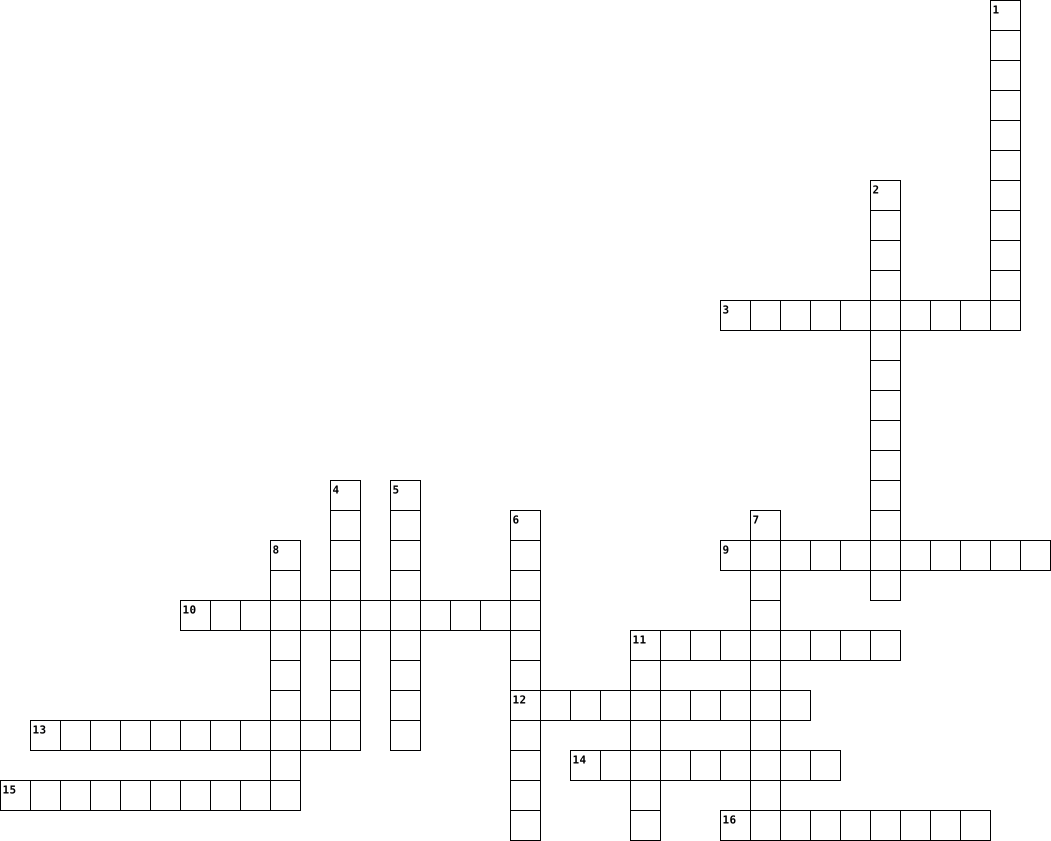
Across
- a study of time (of an event)
- one who performs the study/science of stone
- one who performs the study or science of time
- one who performs the study/science of life
- to write with light
- the art or process of writing with light
- ball of life
- the art or process of sending writing far
- one who performs the study/science of new words
Down
- the study of science of climate
- capable of being written with light
- the study or science of stone
- the study of science of herbs/plants
- ball of light
- ball of stone
- the art/process of writing about a person's life
- the study of science of life
17 Clues: ball of life • ball of light • ball of stone • to write with light • the study of science of life • a study of time (of an event) • the study or science of stone • the study of science of climate • capable of being written with light • the study of science of herbs/plants • the art or process of writing with light • the art or process of sending writing far • ...
African American Art 2024-02-08

Across
- - Collage artist associated with the Harlem Renaissance.
- - Painter and sculptor exploring themes of race and identity.
- - Conceptual and multimedia artist exploring gender and identity.
- - Sculptor and printmaker known for her depictions of African American life.
- - Painter and muralist, part of the WPA Federal Art Project.
- - Neo-expressionist painter in the 1980s New York art scene.
- - Contemporary artist known for silhouette cut-paper works.
- - Realist painter and the first African American to gain international acclaim.
Down
- - Painter, writer, and mixed-media artist known for narrative quilts.
- - Figurative painter addressing African American life and history.
- - Visual artist and muralist with public art installations.
- - Abstract artist influenced by African art and jazz.
- - Migration Series painter during the Harlem Renaissance.
- - Assemblage artist known for her work with found objects.
- - Contemporary multimedia artist known for installations and paintings.
15 Clues: - Abstract artist influenced by African art and jazz. • - Collage artist associated with the Harlem Renaissance. • - Migration Series painter during the Harlem Renaissance. • - Assemblage artist known for her work with found objects. • - Visual artist and muralist with public art installations. • - Contemporary artist known for silhouette cut-paper works. • ...
German 2024-08-20

Across
- Das sagen die Leute, wenn sie gefragt werden, wie es ihnen geht, und sie sind nicht allzu glücklich.
- Eine formelle Art, jemanden am Abend zu begrüßen.
- Normalerweise ein informeller Gruß in Norddeutschland.
- Zweiter Monat des Jahres.
- Wird am Anfang der meisten Sätze gesagt, wenn man über sich selbst spricht.
- Ein beliebter Gruß, der normalerweise mitten am Tag gesagt wird.
- Er sagt, wenn die Sonne scheint, "Es ist...
Down
- Eine informelle und verkürzte Art, sich zu verabschieden, bis später.
- Das sagen die Menschen, wenn ihnen etwas Gutes widerfährt.
- Eine sehr beliebte Art der Begrüßung am Morgen.
- Ein beliebter und informeller Gruß und Abschied in Süddeutschland.
- Ein weiterer sehr verbreiteter informeller Gruß in Ostdeutschland.
- Mitte der Woche.
- Eine informelle Art, sich in der Nähe des Südens zu verabschieden.
- Normalerweise sagt man das, wenn jemand fragt "Wie geht's dir?"
15 Clues: Mitte der Woche. • Zweiter Monat des Jahres. • Er sagt, wenn die Sonne scheint, "Es ist... • Eine sehr beliebte Art der Begrüßung am Morgen. • Eine formelle Art, jemanden am Abend zu begrüßen. • Normalerweise ein informeller Gruß in Norddeutschland. • Das sagen die Menschen, wenn ihnen etwas Gutes widerfährt. • ...
Artist August 2026-08-17

Across
- Nintendo game series where you buy art pieces from a fox
- Type of embroidery that resembles pixel art
- Abbr. Richmond museum with a sculpture garden
- Famous Michelangelo statue that lives in Florence, Italy
- Famous illustrator and lead animator of "Adventure Time"
- Popular artist application for illustration and digital art
Down
- Famous artist known for "Starry Night"
- What artists paint on
- Type of paint that is often described as "opaque watercolor"
- Monthly Richmond event in the Arts District
- Children's TV Channel with famous shows like "Dexter's Laboratory"
- Impressionist Artist with a renowned garden in France
- Abbr. NYC art museum with famous pieces like "Portrait of Madame X"
13 Clues: What artists paint on • Famous artist known for "Starry Night" • Monthly Richmond event in the Arts District • Type of embroidery that resembles pixel art • Abbr. Richmond museum with a sculpture garden • Impressionist Artist with a renowned garden in France • Nintendo game series where you buy art pieces from a fox • ...
New kid 2026-04-20

Across
- - showing kindness
- - a place you learn
- - knowing what’s coming
- - bully
- slate - Art teacher
- - rich kid
- - new person
- - argument
- - type of drawing
- - law enforcement
Down
- - a someone that would lean on you
- - New kid
- - unimportant
- - using like or as
- - Jordan’s friend
15 Clues: - bully • - New kid • - rich kid • - argument • - new person • - unimportant • - Jordan’s friend • - type of drawing • - law enforcement • - showing kindness • - using like or as • - a place you learn • slate - Art teacher • - knowing what’s coming • - a someone that would lean on you
Arianna Powers 2025-01-06

Across
- painting
- novel
- writer
- portrait
- poem
- artist
Down
- painter
- story, tale
- work(of art)
- poet
- poetry
- art;the arts
- exhibit
13 Clues: poet • poem • novel • poetry • writer • artist • painter • exhibit • painting • portrait • story, tale • work(of art) • art;the arts
school subjects 2024-05-07

Across
- sneakers
- science engineering art math
- hola
- foooddddddd
- books
- human body
- instruments
Down
- equation
- digital
- potion
- civil war
- painting
12 Clues: hola • books • potion • digital • sneakers • equation • painting • civil war • human body • foooddddddd • instruments • science engineering art math
school subjects 2024-05-07

Across
- sneakers
- science engineering art math
- hola
- foooddddddd
- books
- human body
- instruments
Down
- equation
- digital
- potion
- civil war
- painting
12 Clues: hola • books • potion • digital • sneakers • equation • painting • civil war • human body • foooddddddd • instruments • science engineering art math
The Mysterious Theft at Artopia 2023-06-14

Across
- Mysterious messages led the detective on a chase through the city
- City where the story takes place
- Fingerprint clue was found on this
- Olivia Bauer planned the theft to become __
- Artwork that disappeared
- Detective Müller brought Olivia Bauer and the Shadow Dancer to __
- Suspicious artist who expressed jealousy
- The painting had rumored __ powers
- Secretive art collector
- Owner of the gallery
- The detective searched the entire gallery for __
Down
- The painting was famous for its __ beauty
- Well-known art thief
- Painting was recovered and displayed in a triumphant __
- Famous art gallery in Berlin
- Detective who investigated the crime
- Mysterious person who wanted the painting for unknown reasons
17 Clues: Well-known art thief • Owner of the gallery • Secretive art collector • Artwork that disappeared • Famous art gallery in Berlin • City where the story takes place • Fingerprint clue was found on this • The painting had rumored __ powers • Detective who investigated the crime • Suspicious artist who expressed jealousy • The painting was famous for its __ beauty • ...
Industrial 2021-03-10

Across
- ubicación de la primer biblioteca que utilizó hierro desde los cimientos hasta la cubierta
- Material más utilizado durante la revolución industrial.
- Conocida como una de las primeras edificaciones con este estilo, casa de las:
- además del hierro que otro material se utilizó en la revolución industrial
- Material que revolucionó la arquitectura.
- Considerado el primer arquitecto en emplear las características del art Nouveau
- significado del termino Art Nouveau
- Uno de los críticos más fervientes del art nouveau
- Donde comenzó el Art Nouveau
Down
- lugar donde comienza a utilizarse el hierro para la construcción de maquinas
- Utiliza materiales como hierro colado o fundido, acero laminado y el cristal.
- apellido del principal arquitecto de la epoca
- Ubicado en el rio severn en Inglaterra.
- Su proyecto estrella es la torre Eiffel
- arquitectura surgida en Europa a finales del siglo XIX
15 Clues: Donde comenzó el Art Nouveau • significado del termino Art Nouveau • Ubicado en el rio severn en Inglaterra. • Su proyecto estrella es la torre Eiffel • Material que revolucionó la arquitectura. • apellido del principal arquitecto de la epoca • Uno de los críticos más fervientes del art nouveau • arquitectura surgida en Europa a finales del siglo XIX • ...