
bill of rights Crossword Puzzles
1st amendment 2021-11-28

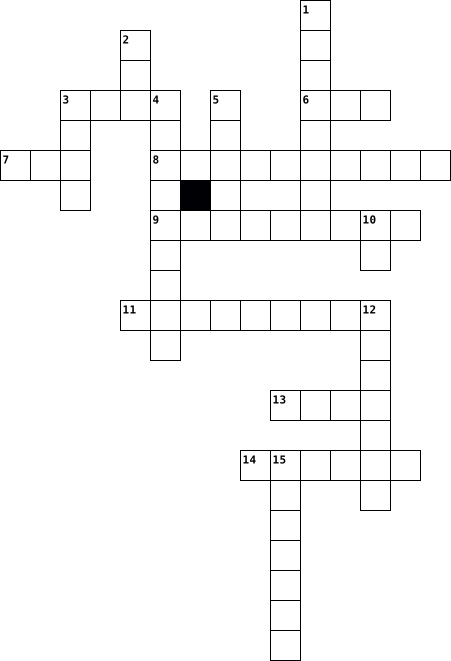
Across
- The act of lying or twisting the truth to hurt someone's reputation or character.
- This freedom allows people to voice their opinions.
- This freedom allows you to worship the way you choose.
- First 10 changes of the Constitution.
- A document that shows the government many people want change.
Down
- People who thought a Bill of Rights was needed in the Constitution to protect people's rights.
- People who thought the Constitution was fair the way it was.
- This freedom allows you to peacefully assemble to show your ideas and aggravation.
- This freedom allows people to publish their opinion to share ideas and hold officials accountable.
9 Clues: First 10 changes of the Constitution. • This freedom allows people to voice their opinions. • This freedom allows you to worship the way you choose. • People who thought the Constitution was fair the way it was. • A document that shows the government many people want change. • The act of lying or twisting the truth to hurt someone's reputation or character. • ...
Ch. 4.1 2019-11-21

Across
- - Taking possession of a borrower's property when the borrower is unable to make debt payments
- shays - Leader of a rebellion that highlighted the weaknesses of the Articles of Confederation and helped convince leaders that the United States needed a stronger federal government
- - Buying or selling goods and services
- territory - Established by the U.S. Congress of Confederation, or Continental Congress, with the passage of the Land Ordinance of 1785. The territory included the land that would become the states of Ohio, Indiana, Michigan, Wisconsin, Illinois, and part of Minnesota
- - When two or more teams or countries team up
- - Written document that describes the structure and powers of a national government or state
- - Law or a legal decree
- - Another word for money
- - Collection of weapons/ place to store weapons
Down
- of rights - Written list of people's rights
- - Organization or alliance of several groups joined together
- - What a branch of a government is named, it is responsible for making laws in a state or nation
- - Region with land and water, it is administered by or under the control of the government
- depression - Major slowdown in the economy
- - Taxes on goods that are brought in for sale
15 Clues: - Law or a legal decree • - Another word for money • - Buying or selling goods and services • depression - Major slowdown in the economy • of rights - Written list of people's rights • - When two or more teams or countries team up • - Taxes on goods that are brought in for sale • - Collection of weapons/ place to store weapons • ...
Law Day 2025-05-01

Across
- What the law protects for people
- To reject a law
- A proposed law
- When someone has broken the law
- Speaks for you in court
Down
- Legal matter in court
- What games and laws both need
- What we do to follow the law
- Something allowed by law
- A day to learn about the law
10 Clues: A proposed law • To reject a law • Legal matter in court • Speaks for you in court • Something allowed by law • What we do to follow the law • A day to learn about the law • What games and laws both need • When someone has broken the law • What the law protects for people
Government Terms 2023-05-02

Across
- Branch of government capable of creating bills
- A strategy employed in the Senate where opponents to legislation abuse the right to unlimited debate
- A 2/3 vote is called this
- Advisory body to the president
- An official population count taken every 10 years
- Rights specifically outlined in the Constitution
- A charge of misconduct against someone who holds office
- A voting member of a community
- Constitutional power of the president to send a bill back to Congress
- Branch of government in charge of the courts
Down
- One who tries to influence legislation on behalf of an interest group
- A legislature divided in two houses
- The division of power between the states and the federal government
- Scandal involving President Nixon
- One of the founding documents, law of the land
- Branch of government capable of vetoing bills
- The individual who already holds office
- Head of the executive branch
- The process by which society selects its leaders
- 45th President of the United States
20 Clues: A 2/3 vote is called this • Head of the executive branch • Advisory body to the president • A voting member of a community • Scandal involving President Nixon • A legislature divided in two houses • 45th President of the United States • The individual who already holds office • Branch of government in charge of the courts • Branch of government capable of vetoing bills • ...
JFK 2023-04-19

Across
- What was Kennedys time in office marked by?
- Campaign program advocated by JFK in the 1960 election.
- An opportunity for Americans to serve their country and world (Created by JFK).
- Kennedys most famous quote was said in what speech?
- What number president was JFK?
- The maximum danger in Kennedys opinion.
- What did Kennedy advise after the second Berlin scare?
- Political party JFK was part of.
- Crisis going at the time of Kennedys presidency.
- What did Kennedy do with the soviets after learning Cuba had missiles?
- President Kennedy's most enduring antipoverty legacy.
- In what year did Kennedy propose a major civil rights bill?
- Where was Kennedy assassinated?
- 10 year aid program for Latin America.
Down
- During JFKs presidency the U.S. escalate its military involvement in this region.
- A secret CIA operation approved by JFK.
- a certain period of time where we were on the brink of a nuclear war.
- What promise was made by Kennedy that intensified the Space Race?
- The youngest president to win a U.S. presidential election.
- A policy that focused on preparing a variety of military responses to international crises.
- Initiative to aid Europe and help rebuild there economy after WWII.
- What was one of Kennedys failed initiatives in the New Frontier agenda?
- A bill signed by JFK.
- Major political event JFK supported as President.
- Kennedy called for this in Cuba which blocked the coast and prevented ships from porting there
25 Clues: A bill signed by JFK. • What number president was JFK? • Where was Kennedy assassinated? • Political party JFK was part of. • 10 year aid program for Latin America. • A secret CIA operation approved by JFK. • The maximum danger in Kennedys opinion. • What was Kennedys time in office marked by? • Crisis going at the time of Kennedys presidency. • ...
Business Law Chapters 1 - 3 Vocabulary Review 2025-03-10

Across
- A prohibition of something from occurring.
- The oldest written set of laws, made by a king of Babylon.
- Processes which must be taken to enforce legal rights and duties.
- Rules based on the current standards or customs of the people.
- The loose charter under which the 13 colonies united.
- The name for amendments 1 - 10 to the US Constitution.
- This is the federal legislative branch, referring to the Senate and House of Representatives together.
- A common abbreviation for the Supreme Court.
- A change or alteration. The US Constitution currently has 27 of these.
- The idea prior court cases are used as a guide for current ones.
- Governmental bodies formed to carry out particular laws.
- Similar to a mediator but with binding actions that can be enforced by court order.
- Rules set by a central authority to prevent disputes and wrongs from occurring.
- Adopted in Philadelphia on July 4th, 1776.
- Exact records of what occurred at a trial.
- Deciding what is right or wrong in a reasoned, impartial manner.
- A document setting forth the framework of a government and its relationship to the people.
- Personal, natural rights guaranteed by the Constitution.
- A widely adopted uniform business law, often abbreviated UCC.
- A governmental forum that administers justice under the law.
- This body of law is created by the judicial branches of government.
Down
- Latin for "let the decision stand". In effect, it means lower couts must follow established case law.
- The idea businesses factor economic, social, and environmental concerns into their business activities, often abbreviated CSR.
- Legislation at the local level.
- This has 435 members, each elected to a 2-year term.
- A neutral party which helps two parties in a dispute reach a compromise. Has non-binding actions.
- The idea law should treat everyone fairly.
- A rule created by society and enforceable by society to regulate behavior.
- This court reviews decisions of lower courts.
- To resolve a dispute in court.
- Rights not explicitly mentioned in the Constitution or Bill of Rights.
- This is issued by SCOTUS when it believes a case is important to be heard by it.
- Laws enacted by a legislative branch.
- An offense against society.
- This has 100 members, 2 from each state. They are elected to 6-year terms.
- This is the first court to hear a dispute. It is original jurisdiction.
- This type of law applies whenever an individual's private rights have been violated by another.
37 Clues: An offense against society. • To resolve a dispute in court. • Legislation at the local level. • Laws enacted by a legislative branch. • A prohibition of something from occurring. • The idea law should treat everyone fairly. • Adopted in Philadelphia on July 4th, 1776. • Exact records of what occurred at a trial. • A common abbreviation for the Supreme Court. • ...
Democracy 2020-02-25

Across
- the power or right to act, speak, or think as one wants
- constitution the rule book of australia
- in a completely red room
- the lowest level of government
- the queens place
Down
- an international association consisting of the UK together with states that were previously part of the British Empire, and dependencies
- the government that over rules all
- the state of being equal, especially in status, rights, or opportunities
- just behaviour or treatment
- an idea passed to the house of representatives
10 Clues: the queens place • in a completely red room • just behaviour or treatment • the lowest level of government • the government that over rules all • constitution the rule book of australia • an idea passed to the house of representatives • the power or right to act, speak, or think as one wants • the state of being equal, especially in status, rights, or opportunities • ...
The Fourth Amendment 2023-01-30

Across
- Allows liberties and freedoms such as freedom of speech and religion
- One of the creators of the Bill Of Rights
- Includes the three branches of government
- The branch that creates laws
- No cruel and unusual ______
- The branch that declares war
Down
- Generally a gathering by which each state sends representatives in reason to discuss over a specific matter
- the amendment by which forbids the quartering of soldiers
- The document that grants the ability to search
- One who gives a decision on an arguable matter
10 Clues: No cruel and unusual ______ • The branch that creates laws • The branch that declares war • One of the creators of the Bill Of Rights • Includes the three branches of government • The document that grants the ability to search • One who gives a decision on an arguable matter • the amendment by which forbids the quartering of soldiers • ...
Librarian Lil 2016-05-18
Across
- Who was the leader of the motorcycle gang
- She was so strong that she could lift up a
- where did Bill go to watch his favorite show
- Lil handed out books in a _________
- Bill became Lil's _________ in the library
- who told Bill that their were no more TVs
- What did Bill agree to do if Lil could move one of their bikes
- Lil carried so many books she became super______
Down
- People started reading books when there was a _______
- she loved to read books and had a wild imagination
- It's said that librarian Lil had a book in her hand when she was
- What career did Lil choose to follow.
- Bill hates these, while Lil always loved them
- Did people come to the library before the blackout
- Lils favorite pastime was
- What day did Bill's favorite TV show come
16 Clues: Lils favorite pastime was • Lil handed out books in a _________ • What career did Lil choose to follow. • Who was the leader of the motorcycle gang • who told Bill that their were no more TVs • What day did Bill's favorite TV show come • She was so strong that she could lift up a • Bill became Lil's _________ in the library • where did Bill go to watch his favorite show • ...
Unit One Honors Government 2021-08-26

Across
- proved how weak the Articles of Conf. were
- a theory that government arose through warfare
- colonies were ignored if they were profitable
- power at the state level/Bill of Rights
- no one is above the law including those who govern
- a theory that governments are ordained by a god
- a theory that gov. are an agreement of parties
- favored small states and equal representation
Down
- a move by the 2nd Cont. Congress to seperate
- first government of the United States
- favored a strong central government
- favored large states and had a bicameral leg.
- a theory that governments morphed out of families
- the division of power between national and states
- a state of disorder due to absence of authority
- a system where one person or group holds all power
- allowed Constitutional Convention to progress
- a loose agreement between states
18 Clues: a loose agreement between states • favored a strong central government • first government of the United States • power at the state level/Bill of Rights • proved how weak the Articles of Conf. were • a move by the 2nd Cont. Congress to seperate • favored large states and had a bicameral leg. • colonies were ignored if they were profitable • ...
Government Terms 2023-05-02

Across
- Scandal involving President Nixon
- A 2/3 vote is called this
- 45th President of the United States
- The process by which society selects its leaders
- Branch of government capable of creating bills
- A strategy employed in the Senate where opponents to legislation abuse the right to unlimited debate
- Constitutional power of the president to send a bill back to Congress
- The individual who already holds office
- A charge of misconduct against someone who holds office
- The division of power between the states and the federal government
Down
- An official population count taken every 10 years
- A voting member of a community
- Branch of government in charge of the courts
- One of the founding documents, law of the land
- Advisory body to the president
- One who tries to influence legislation on behalf of an interest group
- Head of the executive branch
- A legislature divided in two houses
- Rights specifically outlined in the Constitution
- Branch of government capable of vetoing bills
20 Clues: A 2/3 vote is called this • Head of the executive branch • A voting member of a community • Advisory body to the president • Scandal involving President Nixon • 45th President of the United States • A legislature divided in two houses • The individual who already holds office • Branch of government in charge of the courts • Branch of government capable of vetoing bills • ...
Congress 2025-10-15

Across
- a procedure to keep the Senate going during a filibuster in which the disputed bill is shelved temporarily so that the Senate can get on with other business
- a congressional process by which a speaker may send a bill to a second committee after the first is finished acting
- the legislative leader elected by party members holding a minority of seats in the house of the senate
- a congressional voting procedure that consists of members answering "yea" or "nay" when their name gets called
- the legislative leader elected by party members holding the majority of seats in the house or the Senate
- a law making body made of two chambers or parts
- permanently established legislative committees that consider and are responisble for legislation within a certain subject area
- a senator or representatives who helps the party leader stay informed about what party members are thinking
- a congressional voting procedure in which members shout "yea" or "nay" permitting votes to be quick and anonymous
- an expression of opinion without the force of law that requires the approval of both the house and the Senate but not the president
- congressional committees appointed for a limited time a purpose
- a device which any member of the house, after a committee has had the bill for 30 days, may petition to have it brought out the floor
- a congressional process whereby a bill may be referred to several committees
Down
- districts in which incumbents win by margins of 55 percent of more
- political districts in which candidates elected to the HOR win in close elections, typically by less then 55 percent of the vote
- an association of Congress members created to advance a political ideology or a regional, ethnic, or economic interest
- legislation that gives tangible benefits to constituents in several districts or states in the hope of winning their votes in return
- a rule used by the Senate to end or limit debate
- a congressional voting procedure in which members pass between two tellers, the "yeas" are first and the "nays" are second
- the ability of members to mail l;letters to their constituents free of charge by substituting their facsimile signature for postage
- an alliance between republican and conservative democrats
- committees a joint committee appointed to resolve differences in the Senate and house versions of the same bill
- a roll call in either house of Congress to see whether the minimum number of representative required to conduct business is present
- the minimum number of members who muct be present for business to be conducted in congress
- a legislative bill that deals with matters of general concern
- committees on which both senators and representatives serve
- a formal expression of congressional opinion that must be approved by both houses of Congress and by the president; constitutional amendments need not be signed by the president
- an attempt to defeat a bill in the Senate by talking indefinitely, thus preventing the senate from taking action to the bill
- an expression of opinion either in the house or Senate to settle procedural matters in either house
- an order from the house rules committee that sets a time limit on debate; forbuids a bill from being amended on the floor
- a vote in which a majority of democratic legislators oppose a majority of republican legislators
- an order from the house rules committee that permits certain kinda of amendments but not others to be made into a bill on the floor
- an order for the house rules committee that permits certain kinda of amendments but not others to be made into a bill of the floor
- a congressional voting procedure in which members stand and are counted
- a legislative bill that deals only with specific, private, personal, or local matters
35 Clues: a law making body made of two chambers or parts • a rule used by the Senate to end or limit debate • an alliance between republican and conservative democrats • committees on which both senators and representatives serve • a legislative bill that deals with matters of general concern • congressional committees appointed for a limited time a purpose • ...
Government Terms 2023-05-02

Across
- Branch of government capable of creating bills
- A strategy employed in the Senate where opponents to legislation abuse the right to unlimited debate
- A 2/3 vote is called this
- Advisory body to the president
- An official population count taken every 10 years
- Rights specifically outlined in the Constitution
- A charge of misconduct against someone who holds office
- A voting member of a community
- Constitutional power of the president to send a bill back to Congress
- Branch of government in charge of the courts
Down
- One who tries to influence legislation on behalf of an interest group
- A legislature divided in two houses
- The division of power between the states and the federal government
- Scandal involving President Nixon
- One of the founding documents, law of the land
- Branch of government capable of vetoing bills
- The individual who already holds office
- Head of the executive branch
- The process by which society selects its leaders
- 45th President of the United States
20 Clues: A 2/3 vote is called this • Head of the executive branch • Advisory body to the president • A voting member of a community • Scandal involving President Nixon • A legislature divided in two houses • 45th President of the United States • The individual who already holds office • Branch of government in charge of the courts • Branch of government capable of vetoing bills • ...
Nation Crossword Puzzle 2022-09-09

Across
- government an electoral system where citizens vote to elect people to represent their interests and concerns
- the action or process of settling among and establishing control over the indigenous people of an area
- the action of traveling in an unfamiliar area to learn everything about it
- a form of government with a monarch at the land
- the highest legislature, consisting of the sovereign, the House of Lords, and the House of Commons
- a belief in the benefits of profitable trading: commercialism
- the conquerors, and especially the Spanish conquerors of Mexico and Peru in the 16th century
- a person who journeys to a place that is sacred for religious reasons
Down
- people that are sent or authorized to represent other people, in particular elected representatives sent to conference
- a grant by the Spanish Crown to a colonist in America conferring the right to demand tribute and forced labor from the Indian inhabitants of an area
- rights that people supposedly have under natural law
- liberty of those persons who are free from external restraint in the exercise of those rights which are considered to be outside the province of a government to control
- government a political system in which legalized force is restricted through delegated and enumerated powers
- sense good sense and sound judgement in practical matters
- bill of rights an act signed into law in 1689 by William III and Mary II, who became co-rulers in England after the overthrow of King James II
- a group of people who moved to live in a new country or area
16 Clues: a form of government with a monarch at the land • rights that people supposedly have under natural law • sense good sense and sound judgement in practical matters • a group of people who moved to live in a new country or area • a belief in the benefits of profitable trading: commercialism • a person who journeys to a place that is sacred for religious reasons • ...
Constitution Vocabulary 2017-04-07

Across
- president’s official forgiveness of a crime that frees the convicted person
- system of courts that interprets and applies laws.
- advisory leaders of the executive department
- a bill that approves the spending of money
- a union of states
- two house legislature
- continual debating to deny a bill from being voted on in the Senate
- type of jurisdiction in which the authority of a court to be the first court to hold trials in certain kinds of cases
- type of jurisdiction in which the authority of some courts to review decisions made by lower courts.
Down
- refusal to sign a bill by the president
- written agreements between nations oath: promise
- the determination of whether a law is constitutional or not.
- one house legislature
- the art of dealing with foreign nations
- lawmaking branch of government
- plan of government
- official who leads an executive department
- branch of government which enforces or carries out the laws
- judges of the Supreme Court treason: the act of betraying one’s country
- charge an official with misconduct bill: proposed law
20 Clues: a union of states • plan of government • one house legislature • two house legislature • lawmaking branch of government • refusal to sign a bill by the president • the art of dealing with foreign nations • official who leads an executive department • a bill that approves the spending of money • advisory leaders of the executive department • ...
Coach CPs Crazy Puzzle 2023-05-10

Across
- political party that wanted a bill of rights added to the constitution
- man made waterways made for faster transportation
- The mascot of your school
- principle of government when people vote for who represents them
- Occurring within a country
- sport where you throw the pigskin
- time period when the south was being rebuilt
- a crop produced for its commercial value rather than use by grower
- Means voting rights or the right to vote
- Type of farming where only enough is made to meet the basic needs of the farmer
- forcing someone into service, Great Britain and France did this to US Ships
- Occurring outside outside of a country
- An agreement or settlement of a dispute/argument with both sides making concessions (both sides give up something)
- Colonists dressed as natives and threw tea into the boston harbor
Down
- the withdrawal of a state from the union
- political party that wanted the ratification of the Constitution
- branch of government that interprets the laws
- a legislative branch that has to bodies or houses
- branch of government that enforces the laws
- Sport that involves a lot of running with many events
- a large farm where cash crops were grown, especially cotton
- The mascot of Wylie East
- Coach Cps favorite football team (New England)
- Rights that are known as life, liberty and the pursuit of happiness
- a tax on imported goods
- branch of government that makes the laws
- the name of the South during the Civil War
- Coach CPs favorite sport
- a geographic area with similar characteristics
- Last name of our first president of the U.S
- Means the legal ending of slavery
- coach Cps favorite baseball team (New York)
- The college coach CP went to
33 Clues: a tax on imported goods • The mascot of Wylie East • Coach CPs favorite sport • The mascot of your school • Occurring within a country • The college coach CP went to • sport where you throw the pigskin • Means the legal ending of slavery • Occurring outside outside of a country • the withdrawal of a state from the union • branch of government that makes the laws • ...
Lesson 3: Ratifying the Constitution 2023-11-16

Across
- something done or agreed to usually grudgingly in order to reach an agreement or improve a situation
- a basic conceptional structure (as of ideas)
- a person who opposed the adoption of the U.S. Constitution
- to set before someone and especially oneself as an aim or intent
- the act or process of ratifying something (such as a treaty or amendment)
Down
- the process of altering a law or document (such as a constitution) by parliamentary or constitutional procedure
- a reason given for or against a matter under discussion
- of Rights a document containing a formal statement of rights
- a member of a major political party in the early years of the U.S. favoring a strong centralized national government
9 Clues: a basic conceptional structure (as of ideas) • a reason given for or against a matter under discussion • a person who opposed the adoption of the U.S. Constitution • of Rights a document containing a formal statement of rights • to set before someone and especially oneself as an aim or intent • ...
Finals Review 2021-12-09

Across
- secret code during The Children's March
- racist laws in the south
- City desegregated by the Children's March
- means to stop work/school to protest
- FBI Program which unlawfully killed Fred Hampton
Down
- City where Fred Hampton was assassinated & next to Great Lakes
- [blank] of rights
- ocean in the west coast of the U.S.
- What the Little Rock Nine did at the all-white school
9 Clues: [blank] of rights • racist laws in the south • ocean in the west coast of the U.S. • means to stop work/school to protest • secret code during The Children's March • City desegregated by the Children's March • FBI Program which unlawfully killed Fred Hampton • What the Little Rock Nine did at the all-white school • ...
Chapter 29 Lesson 3 2024-04-15

Across
- assassinated MLK|
- encouraged racial pride and creation of African American culture, sometimes calling for societal revolution
- a group of people who rode on buses from Washington DC to the South to make sure the South was upholding the Supreme Court ruling
- created from sit-ins; emphasizing their right to direct their own affairs outside of the NAACP
- the act of protesting by sitting down, commonly used as a method of nonviolent protest
- organized by Dr. King and SCLC to support Kennedy's Civil Rights Bill
- NAACP leader murdered in Jackson, Mississippi on June 11, 1963
- first African American student enrolled at the University of Mississippi
- leader in Nation of Islam that criticized integration and advocated for racial separation
- in the summer of 1964, thousands of Civil Rights workers volunteered to help African Americans register to vote in the South
Down
- Letter MLK wrote while serving his two week jail term
- sent Freedom Riders to test enforcement in the South
- MLKs most famous speech on the steps of the Lincoln Memorial
- called for reforms and armed themselves, leading to clashes with the police
- outlawed discrimination in hiring and ended segregation in public places
- moving between two or more states
- city where MLK was assassinated
17 Clues: assassinated MLK| • city where MLK was assassinated • moving between two or more states • sent Freedom Riders to test enforcement in the South • Letter MLK wrote while serving his two week jail term • MLKs most famous speech on the steps of the Lincoln Memorial • NAACP leader murdered in Jackson, Mississippi on June 11, 1963 • ...
Half Day Scavenger Hunt Crossword 2024-01-11

Across
- This is the other name for the Legislative Branch
- All instructions for Congress can be found in Article ____ of the Constitution.
- This is the first step of how a bill becomes law.
- If a bill makes it through Congress, this is the last person the bill is sent to before approval.
- This the term for a rough draft of a law.
- A bill must be approved by ________ chambers of Congress before it goes onto the next step
- All bills that deal with raising money must start here.
- The Vice President does not get to vote in Congress unless there is a ______.
- Congress is allowed to punish this group of people.
- Congress can call for ________________.
- Congress can declare _______.
- Congress makes these kinds of laws
Down
- This word means "to make laws."
- The name for the upper house of Congress, consisting of two representatives from each state.
- There are 435 of these in Congress
- This person's other job is to be president of the Senate.
- He is the current Speaker of the House
- This word means made up of two chambers
- This who members of the House of Representatives work for/represent.
- Senators must be at least _____ years old.
- This is the state where the current Speaker of the House is from.
- Congress can coin _____________.
22 Clues: Congress can declare _______. • This word means "to make laws." • Congress can coin _____________. • There are 435 of these in Congress • Congress makes these kinds of laws • He is the current Speaker of the House • This word means made up of two chambers • Congress can call for ________________. • This the term for a rough draft of a law. • ...
Constitution Review 2023-09-21

Across
- There are _______ articles in the Constitution.
- To ________ the Constitution means to change it.
- The __________ must be 35 years old.
- The three branches of government are: legislative, executive, and ______.
- Article IV explains _____________.
- Federalism explains the relationship between the national government and the _________.
- The first ten amendments to the Constitution are called the Bill of _____.
Down
- The beginning of the Constitution is called the _________
- The _______ branch has the power to collect taxes.
- The ________ branch has the power to sign treaties.
- A balance of power requires checks and _________.
- Senators stay in office for _____ years at a time.
- There are ____ Senators for each state.
13 Clues: Article IV explains _____________. • The __________ must be 35 years old. • There are ____ Senators for each state. • There are _______ articles in the Constitution. • To ________ the Constitution means to change it. • A balance of power requires checks and _________. • The _______ branch has the power to collect taxes. • ...
Government 2015-10-05

Across
- The person in charge of a meeting. This person directs the discussion of business in a Senate or a House of Commons committee meeting.
- A change that is made to a bill, a motion or a committee report with the intention of improving it.
- A proposal for a law to be considered by Parliament.
- The specific geographic area in Canada that a Member of Parliament represents in the House of Commons. (Synonym: riding or electoral district)
- A king or Queen of a country.
- The government of Canada that acts and speaks for the whole country.
- A group of all Ministers (Mostly from the House of Commons and at least one from the Senate, which makes decisions about the government's priorities and policies, the legislation that will be presented to Parliament, and how to collect and spend money.
- To change or improve something; for example, a law or an Act of Parliament.
Down
- A person who has full political and civil rights in his or her country.
- The leader of the party in power and the Head of Government. The Prime Minister is normally an elected Member of Parliament and represents a constituency.
- One of the three parts of Parliament.
- To pick one person from a group of several people by voting. The person with the most votes is elected.
- A group of Senators, Members of Parliament, or both, selected to study a specific subject or bill and write a report about it.
- Bills that are passed by Parliament.
- A rule for all Canadians made by Senators, Members of Parliament and and the Governor General through discussion and voting.
15 Clues: A king or Queen of a country. • Bills that are passed by Parliament. • One of the three parts of Parliament. • A proposal for a law to be considered by Parliament. • The government of Canada that acts and speaks for the whole country. • A person who has full political and civil rights in his or her country. • ...
13, 14, 15 2023-09-28

Across
- People who wanted to outlaw slavery
- 14th Amendment was used to prevent states from implementing Black Codes
- Amendment made slavery illegal
- Percentage of people living in South in mid-1800s were slaves
Down
- Group that the 14th Amendment say the Bill of Rights applied to
- President issued Emancipation Proclamation
- This war fought in US over the issue of slavery
- Amendment freed slaves
- Group of people who could not hold public office
9 Clues: Amendment freed slaves • Amendment made slavery illegal • People who wanted to outlaw slavery • President issued Emancipation Proclamation • This war fought in US over the issue of slavery • Group of people who could not hold public office • Percentage of people living in South in mid-1800s were slaves • Group that the 14th Amendment say the Bill of Rights applied to • ...
Legislative Branch Voc Puzzle 2021-10-26

Across
- annual series of meetings with the Congress
- elected at the beginning of each Congress by their party members
- presides over the senate and defends the president
- a session at which a committee listens to testimony from people interested in the bill
- a motion placed on bill in senate that alerts party leaders that if unanimous consent were to be sought they would object
- the speakers top assistant. helps plan party's legislative program
- legislative self organization in US Congress
- redrawing district lines after reapportionment has been completed
- a proposed law to authorize spending money
- a paid representative of an interest group who contacts government officials on behalf of interest groups
- elected official who is already in office
- a method of defeating a bill in senate
- procedure that allows each senator to speak only for an hour on a bill under debate
- permanent committee in Congress that oversees bill that deals with certain issues
- an event held before an election at which members of the political party select delegates to send to national party convention
- a motion by all members of senate to set aside formal rules and consider bill from calendar
- helps direct the flow of major legislation
- temporary joint committee set up when House and Senate have passed different versions of same bill
- the minimum number of members who must be present to permit a legislative body to take official action
- to change, alter
- when voting groups try to change voting districts
Down
- the redistribution of seats in the HOR based on changes in population
- a resolution passed in the same form by both houses
- a group of people who share common goals and organize to influence government and policy
- a proposed law
- temporary committee formed to study one specific issue and to report findings in House or Senate
- made of two very different parts of the Congress
- group within a standing committee that specializes in subcategory of its standing committees responsibilities
- a process that involves formal discourse on a particular topic
- a person whom a member of Congress has been elected to represent
- to make direct contact by lobbyists to persuade government officials to support policies their interest groups favor
- the senate member who stands in as president of the senate in absence of vice president
- a vote of formal disapproval of a members actions
- gives members permission to speak on house floor
- the action or process of inheriting a title or office
- rejection of a bill by the president
36 Clues: a proposed law • to change, alter • rejection of a bill by the president • a method of defeating a bill in senate • elected official who is already in office • a proposed law to authorize spending money • helps direct the flow of major legislation • annual series of meetings with the Congress • legislative self organization in US Congress • ...
Government Vocabulary Review 2026-05-12

Across
- The sharing of power between national and state governments
- The national government of the United States
- The legal process by which immigrants become U.S. citizens
- The legislative branch responsible for making federal laws
- A change or addition made to the Constitution
- The power of courts to determine whether laws are constitutional
- The status of being a legal member of a country with rights and responsibilities
- The President’s power to reject a bill passed by Congress
- One of the two parts of Congress with 100 members
- The supreme law of the United States that defines the government and protects citizens’ rights
- The division of government responsibilities among three branches
- The role of the President as leader of the military
- The document that announced American independence from Great Britain
- A system that prevents one branch of government from becoming too powerful
Down
- The right to practice or not practice a religion
- The branch of government that creates laws
- The branch of government responsible for interpreting laws
- The branch of government led by the President that carries out laws
- The war fought between the North and South in the United States
- Abraham Lincoln’s order that freed slaves in Confederate states
- A member of the House of Representatives elected by citizens
- A form of government where citizens participate in choosing leaders
- A group of advisors that assists the President
- A member of the U.S. Senate elected to represent a state
- The meeting where delegates wrote the Constitution in 1787
- The first ten amendments to the Constitution
- The right to express ideas and opinions without government punishment
- Equal rights and treatment under the law for all citizens
- The highest court in the United States
- The principle that everyone, including leaders, must obey the law
30 Clues: The highest court in the United States • The branch of government that creates laws • The national government of the United States • The first ten amendments to the Constitution • A change or addition made to the Constitution • A group of advisors that assists the President • The right to practice or not practice a religion • ...
The Legislative Branch 2024-10-07

Across
- how representation in the House is determined
- branch that interprets laws
- district Columbia is represented by
- the age a person has to be to serve in the Senate
- what the House of Representatives and the Senate is known as together
- branch that makes laws
- each state is divided into these; MO has 8 of these
- term length for a Senate member
- once a bill is passed in both houses/chambers, the bill goes to the
- has the power to impeach
- number of Senate members
- how representation in the Senate is determined
- after a bill is amended in Committee the members will ____ on the bill
- number of House members that represent MO
- years a person has to have lived in their state in order to serve as a House of Representatives member
- if a bill passes in the chamber it was first introduced in then it must go where
- this person has a role in the Executive Branch but also holds the title of President of the Senate
- our Congress has 2 houses making it
- after going through committee, the bill is introduced on the House or Senate _____
Down
- the clause that says Congress has the power to pass laws that will help the country run smoother
- term length for a House member
- number of House of Representatives members
- the age a person has to be to serve in the House
- a bill is refered to a _______; ______amends or revises the bill
- years a person has to have lived in their state in order to serve as a Senator
- powers not written directly in the Constitution
- changing Congressional districts and Representatives based on population
- conducted every 10 years and counts the population of the USA
- what is the leader of the House of Representatives called?
- Congress approves the appointments of these to the Supreme Court
- First step in the law making process
- branch that enforces laws
- powers written directly in the Constitution
- number of senators that represent each state
- drawing district boundaries to benefit a certain party, group, or candidate
- the legislative branch's main job is to make
- Congress can do this with 2/3 vote of support; the Legislative Branch's check on the Executive Branch
37 Clues: branch that makes laws • has the power to impeach • number of Senate members • branch that enforces laws • branch that interprets laws • term length for a House member • term length for a Senate member • district Columbia is represented by • our Congress has 2 houses making it • First step in the law making process • number of House members that represent MO • ...
Important U.S. Figures 2017-05-21

Across
- Set three warnings in his farewell address
- The man who assassinated Abraham Lincoln
- Run away slave and became an abolitionist, writer and social reformer
- Writer of the Star Spangled Banner
- The United States’ first vice president
- Author of The Common Sense
- Founder of Pennsylvania
- Commander of Union army
- Wrote the “Federalist Papers”
- Native american female who helped lead Lewis and Clark on their journey of the westward expansion
- ______v.s. Madison
Down
- JeffersonAuthor of the Declaration of Independance
- Leader of the Underground Railroad
- _______v.s. Stanford
- Chief of the justice supreme court
- Said “Give me liberty or give me death!”
- Commander of confederate army
- Also known as “common man” in between 1829 and 1837
- President during civil war
- Founder of the American Red Cross
- Life, Liberty, Right to own property
- King of Great Britain during the American Revolutionary War
- Leaders of the westward expansion
- Drafted the U.S. constitution and Bill of rights
- Spoke the speech “Ain’t I a woman”
25 Clues: ______v.s. Madison • _______v.s. Stanford • Founder of Pennsylvania • Commander of Union army • President during civil war • Author of The Common Sense • Commander of confederate army • Wrote the “Federalist Papers” • Founder of the American Red Cross • Leaders of the westward expansion • Leader of the Underground Railroad • Chief of the justice supreme court • ...
Crossword #2 2015-10-15

Across
- Charter of Rights and Freedoms: An important part of the Canadian constitution that ensures all people in Canada are guaranteed certain basic human rights and freedoms.
- Government The government of Canada that acts and speaks for the whole country.
- The government's plan for how it will collect and spend money each year.
- The specific geographic area in Canada that a Member of Parliament represents in the House of Commons.
- A person who has full political and civil rights in his or her country
- of the senate The senior official in the Senate, and the main advisor to the Speaker of the Senators regarding the Senate's rues and procedures. The Clerk is also Clerk of the Parliaments and is responsible for all legislation passed by Parliament.
- Monarchy a system in which the powers of the Monarch are limited by the written or unwritten constituiton of the country.
- Block: The Parliament Buildings have three parts (West Block, Centre Block and East Block). The House of Commons and the Senate Chambers are in the Centre Block. It is recognizable by the Peace Tower with the clock.
- A group of Senators, Members of the Parliament, or both, selected to study a specific subject or bill and write a report about it.
- To pick one person from a group of several people by voting.
Down
- The agreement by the provinces to join together to form the nation of Canada and create a federal Parliament. This happened in 1867 with four present-day provinces: Ontario, Quebec, New Brunswick and Nova Scotia.
- A group made up of all Senators and Members of Parliament from the same political party. Caucuses meet regularly.
- A discussion in which the arguements for and against a subject are presented according to specific rules.
- Party The political party that forms the Government because more of its members were elected to the House of Commons.
- A proposal for a law to be considered by Parliament.
- Minister: A person -- normally a Member of Parliament or a Senator -- who is chosen by the Prime Minister, and appointed by the Govern General, to help govern. A Minister is usually the head of a government department. The Government Leader in the Senate is also a member of the Cabinet.
- A person living in an area in Canada represented by a Member of Parliament.
- The set of rules that a country like Canada follows to work as a nation. It includes the Constitution Acts of 1867 and 1893, but is not limited to them.
- The city where a country's legislature is located and the government carries out its business. The capital city of Canada is Ottawa. Each province and territory also has a capital city and a legislature.
19 Clues: A proposal for a law to be considered by Parliament. • To pick one person from a group of several people by voting. • A person who has full political and civil rights in his or her country • The government's plan for how it will collect and spend money each year. • A person living in an area in Canada represented by a Member of Parliament. • ...
Three Branches of the Government 2021-10-25

Across
- change in words or meaning of a law or document
- a government that is elected by the people
- a ticket of piece of paper used to vote in an election
- to charge with conduct
- people elected to listen and speak for others
Down
- length of time a person has an official political office
- a system that prevents one branch from having too much power
- a person who belongs to a country and have rights
- written plans of new laws
- set of rules made by government
10 Clues: to charge with conduct • written plans of new laws • set of rules made by government • a government that is elected by the people • people elected to listen and speak for others • change in words or meaning of a law or document • a person who belongs to a country and have rights • a ticket of piece of paper used to vote in an election • ...
Principles of American Democracy 2025-01-27

Across
- One right from the First Amendment.
- The right to gather peacefully under the First Amendment.
- The total number of amendments in the U.S. Constitution.
- of Rights The first ten amendments to the Constitution.
Down
- A change or addition to the Constitution.
- The First Amendment protects this form of media and journalism.
- A First Amendment right that allows freedom of belief.
- The supreme law of the land.
- The institution that sets up and enforces laws.
- the People The first three words of the Constitution.
10 Clues: The supreme law of the land. • One right from the First Amendment. • A change or addition to the Constitution. • The institution that sets up and enforces laws. • A First Amendment right that allows freedom of belief. • the People The first three words of the Constitution. • The total number of amendments in the U.S. Constitution. • ...
Amendments of the Constituion 2022-05-16

Across
- Rights to Religion, Speech, Press, Assembly, Petition
- no poll tax
- repeal of 18th
- cruel and unusual punishment
- quartering of soldiers
- jury trial
- election of senators
- suits against states
- women's voting rights
- able to vote at 18
- term limit on president
- rights reserved to the states
- self-incrimination and due process
Down
- due process and equal protection
- male voting rights
- district of Columbia's vote
- federal income tax
- Congressional Compensation
- search and seizure
- presidential succession
- election of president and vice president
- abolition of slavery
- prohibition
- non-enumerated rights
- presidential disability and vacancy
- Right to Bear Arms
- Rights of the accused
27 Clues: jury trial • no poll tax • prohibition • repeal of 18th • male voting rights • federal income tax • search and seizure • able to vote at 18 • Right to Bear Arms • abolition of slavery • election of senators • suits against states • non-enumerated rights • women's voting rights • Rights of the accused • quartering of soldiers • presidential succession • term limit on president • ...
The Constitution and Criminal Procedure 2016-04-21

Across
- A set of rules and guidelines that describe how suspected and accused criminals are to be handled and processed by the justice system
- This amendment provides protection from double jeopardy and self-incrimination and for grand jury indictment in serious crimes
- This amendment has been used to incorporate various other rights described in the Bill of Rights
- This perspective of criminal procedure emphasizes individual rights
- This amendment protects from unreasonable search and seizure
Down
- This amendment provides for a speedy and public trial, impartial jury, confrontation, compulsory process, and assistance of counsel
- This perspective of criminal procedure emphasizes public order
- A rule of case law (i.e., a decision by a court) that is binding on all lower courts and the court that issued it
8 Clues: This amendment protects from unreasonable search and seizure • This perspective of criminal procedure emphasizes public order • This perspective of criminal procedure emphasizes individual rights • This amendment has been used to incorporate various other rights described in the Bill of Rights • ...
The Cold War: Truman & Eisenhower! 2022-04-21

Across
- When the Governor of Arkansas prevented nine African American students enrolled in Little Rock Central High School to enter the building.
- A form of government where all property is public and people are given things based on their needs
- A competition between the U.S. and the Soviet Union over who would have the best space program
- The ideological fence created after World War II that separated the Soviet Union and its European allies from the U.S., Western Europe, and other noncommunist areas
- Defense treaty established by the Soviet Union and several other countries in Central and Eastern Europe
- The practice of accusing one of treason/being a Soviet spy or sympathizer, with no regard to evidence
- Promised military or economic aid to any Middle Eastern country that needed help in fighting against communism.
- This act authorized the building of highways throughout the U.S
- Mutual defense pact between the U.S. and and 11 other Western nations to contain possible Soviet aggression against Western Europe
- The decision from this court case forced schools to end segregation
- Government by the people
Down
- Civil rights protest where African Americans refused to ride city buses, in response to segregated seating
- The conflict between the Northern and Southern parts of Korea
- U.S. senator who believed that communist nations had spies all over the U.S. and in the government
- This act authorized the federal government to take legal measures to prevent a citizen from being denied voting rights
- The first U.S. satellite to orbit the Earth, created by NASA.
- The ongoing political rivalry that developed after WWII between the United States, the Soviet Union, and their respective allies
- 34th president of the United States; known for signing the Civil Rights Bill of 1957, signing the Interstate Highway Act of 1956, and ending the Korean War
- Time period in the United States describing the fear and paranoia that there were communists everywhere, out to take over the world
- Economic recovery plan made to help rebuild 17 European countries following WWII
- Leader of the American Civil Rights Movement
- American civil rights activist who refused to give up her seat on a public bus
- The first man-made satellite to orbit the Earth, created by the Soviet Space Program.
- 33rd President of the United States; known for dropping atomic bombs on Japan, major policies and legislation (Marshall Plan, Truman Doctrine), & helping form NATO
- Foreign policy of the United States and its allies to prevent the spread of communism
25 Clues: Government by the people • Leader of the American Civil Rights Movement • The conflict between the Northern and Southern parts of Korea • The first U.S. satellite to orbit the Earth, created by NASA. • This act authorized the building of highways throughout the U.S • The decision from this court case forced schools to end segregation • ...
Legislative Assembly of Alberta 2023-06-21

Across
- What a Bill is called after being granted Royal Assent.
- The impartial presiding officer of the Assembly who maintains order in the Chamber, often referred to as the "referee" of the Assembly.
- An MLA who is selected by the Premier to head a provincial government department.
- The ceremonial staff that symbolizes the authority of the Legislature to make laws on behalf of the people. The Legislative Assembly cannot meet unless it is present.
- A proposed change to a Bill.
- Shorthand for a Member of the Legislative Assembly. They are elected to represent the people within a constituency.
- Collecting signatures as a means for a group of people to appeal to the Legislative Assembly for some kind of action.
- A law-making body of people consisting of the Lieutenant Governor and the Legislative Assembly, also, the name of the building where these people work.
- The room where the Legislative Assembly holds its sittings.
- The Members representing parties other than the governing party. Their role is to question government policies, suggest alternatives, and keep the government accountable.
- The various news outlets who report on what the government is doing. It is also a means by which we consume information.
Down
- When the Legislative Assembly officially sits to have a series of meetings in the Chamber.
- The provincial representative of the monarch and the head of state. This role is both constitutional and ceremonial.
- The head of Government and leader of the party with the most seats in the Assembly.
- A voting district. In Alberta there are 87; each one elects one Member of the Legislative Assembly.
- A process in which constituents vote for a person to represent them.
- A ceremonial baton the Sergeant-at-Arms carries only when escorting the monarch, or their representative such as the Lieutenant Governor, into the Chamber for Speech from the Throne or Royal Assent.
- The supreme law of a country. Within it are rules for how the government functions and what rights its citizens have.
- The official report/transcript of what is said in the Legislative Assembly. Also, the name of the department that makes the report.
- A proposed law.
20 Clues: A proposed law. • A proposed change to a Bill. • What a Bill is called after being granted Royal Assent. • The room where the Legislative Assembly holds its sittings. • A process in which constituents vote for a person to represent them. • An MLA who is selected by the Premier to head a provincial government department. • ...
Rights of Refugees 2019-11-03

Across
- Refugees are entitled to learning opportunities.
- The UNHCR is responsible for ________ refugee applications.
- The majority of refugees in Trinidad and Tobago.
- Refugees are entitled to the right to believe in their faith.
- The practice of not forcing refugees or asylum seekers to return to a country in which they are liable. to be subjected
- The main reason people flee from their countries.
- There is an ongoing crisis in Venezuela
- Trinidad and Tobago is apart of the 1951 Convention by a process.
- Refugees have a _______ to the host state to abide by the laws.
- This community deals with refugees and asylum seekers and is a non-governmental organisation.
Down
- Asylum seekers and refugees who offend national security and safety are at risk of being __________.
- What document governs migrants and immigrants in Trinidad and Tobago?
- The rights of refugees are mainly anchored in ___________ law.
- Syrians fled due to _______.
- Who is entitled to Human Rights?
15 Clues: Syrians fled due to _______. • Who is entitled to Human Rights? • There is an ongoing crisis in Venezuela • Refugees are entitled to learning opportunities. • The majority of refugees in Trinidad and Tobago. • The main reason people flee from their countries. • The UNHCR is responsible for ________ refugee applications. • ...
The Constitution 2025-12-15

Across
- upper house of Congress with equal representation
- The Preamble or opening statement of the Constitution
- The body of people established by the Constitution for electing the President and Vice President. (Two Words)
- The lower house of the U.S. Congress, with representation based on state population.
- a proposed law
- The branch of government headed by the President.
- The first ten amendments to the Constitution, guaranteeing fundamental rights.
- A nickname for the Necessary and Proper Clause, granting Congress flexible powers. (Two Words)
- process by which the Constitution is formally changed.
- A fundamental principle of the Constitution designed to limit the power of each government branch. (Three Words)
- meeting place of the constitutional convention
- considered the "father of the Constitution"
Down
- president's role as the highest authority over the U.S. Armed Forces.
- A formal statement of opinion adopted by both houses of Congress. (Two Words)
- The power of the judicial branch to review and potentially invalidate laws. (Two Words)
- The formal power of the President to reject a bill passed by Congress.
- division of power between the national government and state governments.
- To ask a higher court to review a lower court's decision.
- Powers shared by both the federal government and state governments (e.g., taxation). (Two Words)
- branch of government that interprets laws.
- advisory body to the President, consisting of the heads of the executive departments.
- Term for a legislative body composed of two chambers or houses.
- The current number of Justices serving on the Supreme Court.
23 Clues: a proposed law • branch of government that interprets laws. • considered the "father of the Constitution" • meeting place of the constitutional convention • upper house of Congress with equal representation • The branch of government headed by the President. • The Preamble or opening statement of the Constitution • process by which the Constitution is formally changed. • ...
Citizenship vocabulary 2021-12-08

Across
- is the crime of betraying one's country, especially by attempting to kill the sovereign or overthrow the government.
- is the admittance of a foreigner to the citizenship of a country.
- allows a non-U.S. citizen to gain permanent residence in the United States.
- give up allegiance to any other nation or sovereign and renounce hereditary or noble titles
- an addition or alteration made to a constitution, statute, or legislative bill or resolution.
- loyalty or commitment of a subordinate to a superior or of an individual to a group or cause.
- The United States Bill of Rights comprises the first ten amendments to the United States Constitution.
Down
- Pull factors “pull” people to a new home and include things like better opportunities.
- The Constitution of the United States is the supreme law of the United States of America
- responsibilities are duties or things that we should do
- is the basic document that defines the organization, powers, functions, and essential procedures of the city government
- faithfulness to a person, cause, or belief, demonstrated by continuing loyalty and support.
- a piece of legislation enacted by a municipal authority
- an endorsement made on a passport by
14 Clues: an endorsement made on a passport by • responsibilities are duties or things that we should do • a piece of legislation enacted by a municipal authority • is the admittance of a foreigner to the citizenship of a country. • allows a non-U.S. citizen to gain permanent residence in the United States. • ...
Chapter 16 Vocabulary 2015-12-01

Across
- A spoken statement made to injure a persons character or reputation.
- Good reason.
- A person under 21 years of age.
- A group of people appointed by the court to determine if there is enough evidence exists to issue an indictment.
- The idea that people being prosecuted can be forced to testify against there self.
- The rule established by courts to protect a persons rights.
- A printed or published statement maliciously made to injure a persons character or reputation.
- The amount of money deposited with the court by the accused to guarantee that he or she will appear in court.
Down
- A document that must be presented by law enforcement officer before the officer can legally enter the area and search.
- Of Rights The first 10 amendments of the U.S Constitution.
- People born in the United States or born to parents who are american citizens living outside the country.
- A process by which people from other countries can become U.S citizens.
- Formal charge
13 Clues: Good reason. • Formal charge • A person under 21 years of age. • Of Rights The first 10 amendments of the U.S Constitution. • The rule established by courts to protect a persons rights. • A spoken statement made to injure a persons character or reputation. • A process by which people from other countries can become U.S citizens. • ...
Chapter 16 Vocabulary 2015-12-01

Across
- A person under 21 years of age.
- Of Rights The first 10 amendments of the U.S Constitution.
- A spoken statement made to injure a persons character or reputation.
- The idea that people being prosecuted can be forced to testify against there self.
- The amount of money deposited with the court by the accused to guarantee that he or she will appear in court.
- A group of people appointed by the court to determine if there is enough evidence exists to issue an indictment.
- People born in the United States or born to parents who are american citizens living outside the country.
Down
- Formal charge
- A printed or published statement maliciously made to injure a persons character or reputation.
- The rule established by courts to protect a persons rights.
- A document that must be presented by law enforcement officer before the officer can legally enter the premises and search.
- Good reason.
- A process by which people from other countries can become U.S citizens.
13 Clues: Good reason. • Formal charge • A person under 21 years of age. • Of Rights The first 10 amendments of the U.S Constitution. • The rule established by courts to protect a persons rights. • A spoken statement made to injure a persons character or reputation. • A process by which people from other countries can become U.S citizens. • ...
Chapter 19 vocab 2025-04-24

Across
- A person who advocates for significant change or reform,
- the early 19th century.
- The first President of France and later Emperor, known
- groups or ethnicities.
- and equality, often advocating for social change.
- Male Suffrage: The right for all adult men to vote,
- The capital of Austria, where the Congress of Vienna took place.
- his role in the establishment of the Second French Empire.
- of Intervention: The idea that countries have the right to
- of a nation, establishing the framework of government.
- the Congress of Vienna, aimed at coordinating the economies and
- State: A country that contains multiple distinct
- individuals, often included in a constitution.
- of property ownership or social status.
Down
- A document that outlines the fundamental principles and
- The capital of the Czech Republic, historically significant in
- Congress of Vienna and was a leading figure in European politics
- in a political context.
- A political philosophy that emphasizes tradition,
- of Vienna: A conference held in 1814-1815 to restore order in
- von Metternich: An Austrian diplomat who played a key role in
- in the affairs of other nations to maintain order and
- of Rights: A list of fundamental rights and freedoms guaranteed
- Confederation: A loose association of German states formed
- and maintaining established institutions.
- European political movements.
- after the Napoleonic Wars, aiming to balance power among
- of its members.
- A political ideology that promotes individual freedoms,
29 Clues: of its members. • groups or ethnicities. • the early 19th century. • in a political context. • European political movements. • of property ownership or social status. • and maintaining established institutions. • individuals, often included in a constitution. • State: A country that contains multiple distinct • A political philosophy that emphasizes tradition, • ...
Unit 1 Key Terms 2024-09-03

Across
- forbid any state from denying suffrage on the grounds of race, color, or previous condition of servitude.
- Estblished a few weeks before Lincolns death, its goal was to provide food, clothing, health care, and education for both African American and white refugees in the south.
- Vice President of Abraham Lincoln
- During this era the federal government struggled with how to return the eleven southern states to the Union, rebuild the South's ruined economy, and promote the rights of former slaves.
- It guaranteed equality under the law for all citizens.
- to charge a president with wrongdoing in office
Down
- This measure created federal guarantees of civil rights and superseded any state laws that limited them.
- a bill that required the majority of a state's prewar voters swear loyalty to the Union before the process of restoration could begin.
- Laws that sought to limit the rights of Afro-Americans and keep them as landless workers.
- Republicans insisted that the confederates had committed crimes by enslaving African Americans and by entangling the nation in war.
10 Clues: Vice President of Abraham Lincoln • to charge a president with wrongdoing in office • It guaranteed equality under the law for all citizens. • Laws that sought to limit the rights of Afro-Americans and keep them as landless workers. • This measure created federal guarantees of civil rights and superseded any state laws that limited them. • ...
Federalism: Federal, State, and Local Governments 2016-04-12

Across
- Federal laws and the U.S. Constitution are higher than state and local laws and ordinances.
- Powers shared between the federal, states, and local governments.
- The supreme law of the land. Nothing is higher than the U.S. Constitution; More difficult to amend than state constitutions; Has the Bill of Rights.
- An amendment that explains that powers not delegated to the federal government belong to the states.
Down
- The supreme law in the state of Florida; Cannot conflict with the U.S. Constitution. If it does than the Florida Constitution must change; Easier to amend than the U.S. Constitution; Has the Declaration of Rights.
- Powers belonging to the state.
- Article I, Section 8) Expressed powers only given to Congress and the Federal Government.
- A plan for government that explains procedures, rights, and laws.
- Divides a government's powers between the national, state, and local governments.
9 Clues: Powers belonging to the state. • A plan for government that explains procedures, rights, and laws. • Powers shared between the federal, states, and local governments. • Divides a government's powers between the national, state, and local governments. • Article I, Section 8) Expressed powers only given to Congress and the Federal Government. • ...
Jackson 2023-03-22

Across
- The requirement to have this to vote was done away with
- Winner of the election of 1828
- Party Jackson belonged to
- Issue that caused South Carolina to threaten to leave the Union
- Forced off their land
- The _____ bill would have given Jackson the ability to send in troops to enforce the tariff
Down
- Jackson opposed this institution and sought to destroy it
- Winner of the election of 1824
- Under the spoils systems jobs were given to Jackson's _____.
- cancel a law
- Jackson's VP who supported states' rights and resigned
11 Clues: cancel a law • Forced off their land • Party Jackson belonged to • Winner of the election of 1828 • Winner of the election of 1824 • Jackson's VP who supported states' rights and resigned • The requirement to have this to vote was done away with • Jackson opposed this institution and sought to destroy it • Under the spoils systems jobs were given to Jackson's _____. • ...
Terms that relate to the laws in Canada 2021-09-25

Across
- Gurantees that all laws apply to all people equally no matter who they are
- the way the canadian government can make changes to our constitution is laid out by the __________
- A allotment of time that allows members of the opposition and other parties in parliament to question the laws and policies that the party in power is making
- proposals for law made often by ministers
- Made french the sole language used in Quebec, effectively removing english entriely
- The law that governs things like child custody, accidents, property claims, etc
- The action of intentionally disobeying a law someone deems as unfair in order to send a message to a government
- The PM chooses MP’s and Senators to be apart of the ________
- Law that protects Canadian’s freedoms and rights
- the last step in making a bill law
- Law in BC to protect against discrimination in specific areas
- Provides a second sober thought to the decisions of the Lower House
Down
- The law that governs how to deal with criminal offences committed by youth
- Made up of elected MP’s from ridings around Canada
- Represents the monarch
- The branch of the government that is represented by Canada’s court system
- The supreme law of Canada that is above all
- The branch of government that makes decisions and is composed of the PM, Cabinet, and Governor General.
- The highest court of Canada.
- The type of vote that allows members of Parliament to vote according to their thinking instead of what the party thinks
- Law that defines what criminal offences are and what consequences they have
- The governor general passes a bill into _______
- A person that tries to push the ideas of a specific company (ie. tobacco companies) through connections they have in the government
- People who have gotten together to try and force the government to do something
- Laws passed by a municipal government
- The highest court of our province.
- Canada’s _______ is made up of the House of Commons, Senate, and the Monarch
27 Clues: Represents the monarch • The highest court of Canada. • The highest court of our province. • the last step in making a bill law • Laws passed by a municipal government • proposals for law made often by ministers • The supreme law of Canada that is above all • The governor general passes a bill into _______ • Law that protects Canadian’s freedoms and rights • ...
Unit 1 Crossword 2023-01-27

Across
- The first major battle of the American Revolution
- This country allied with the American colonists, entering the war during the Battle of Saratoga
- The Treaty of _____ ended the War of 1812 when it was signed in 1815
- Signed in 1783, the Treaty of _____ officially ended the American Revolution
- The US bought the ______ Territory from France during Jefferson's presidency
- Along with Lewis, Clark, and Sacagawea, this person also helped explore the Louisiana Territory
- Cornwallis surrendered in October 1781 at the Battle of ______
- This Shawnee chief tried to organize an Indian Confederacy
- This event took place in March 1770 and changed how the American colonists viewed the British
- During the War of 1812, the British attacked Washington, DC, and this major port city in Louisiana
- This pamphlet, written by Thomas Paine, encouraged many to rebel against England
Down
- This state's plan wanted representation to be determined based off of population
- The US Constitution was mainly written by this person
- This person wrote the majority of the Declaration of Independence
- As part of the Articles of Confederation, the states were powerful and the national _____ was weak
- This Enlightenment thinker came up with the idea of natural rights
- The 3/5 Compromise was meant to benefit states in this part of the country
- The Election of 1800 resulted in a tie between Thomas Jefferson and his running mate, _______
- This state's plan wanted equal representation for all states, no matter their size
- the US fought the _____ Royal Navy over maritime trade rights during the war of 1812
- In December 1773, colonists dumped ____ into Boston Harbor in protest of the latest tax on goods
- The first 10 amendments to the US Constitution are known as the Bill of ______
- After the 7 Years War, England raises taxes because they are in ____
23 Clues: The first major battle of the American Revolution • The US Constitution was mainly written by this person • This Shawnee chief tried to organize an Indian Confederacy • Cornwallis surrendered in October 1781 at the Battle of ______ • This person wrote the majority of the Declaration of Independence • ...
Government 2025-12-09

Across
- detention the imprisonment of a person with the aim of preventing them from committing further offenses or of maintaining public order
- of assistance a court order authorizing law enforcement
- of habeas corpus is a court order compelling a custodian.
- jury a group of citizens (typically 16-23) that reviews evidence presented by a prosecutor to decide if there's enough "probable cause"
- cause legal principle preventing the government from using evidence in court that was obtained in violation of a defendant's constitutional rights
- the crime of betraying one's country
- rocess fair treatment through the normal judicial system, especially as a citizen's entitlement.
- punishment the government-sanctioned execution of a person as a punishment for a crime
- servitude Involuntary servitude means being forced to work against your will, without freedom, often through coercion, threats, or abuse, resembling modern-day slavery
- a formal charge or accusation of a serious crime.
- of attainder legislative act that declares a specific person or group guilty of a crime and imposes punishment
- trial a court proceeding where a judge, rather than a jury, hears the evidence, decides the facts, and applies the law to reach a verdict
- post facto laws a law that retroactively changes the legal consequences of a crime that was committed before the law was enacted
Down
- a legal document authorizing a police officer or other official to enter and search premises.
- the unjust or prejudicial treatment of different categories of people
- Rule requires police to inform suspects of their Fifth Amendment rights
- The constitutional requirement (5th & 14th Amendments) that the government must follow fair procedures (notice, hearing, neutral judge) before depriving someone of life, liberty, or property
- Defines rights and obligations
- cause a legal standard requiring law enforcement to have sufficient facts and circumstances
- power the inherent authority of a government to enact laws and regulations to protect the public's health, safety, welfare, and morals
- the temporary release of an accused person
- Jeopardy a legal princople rooted in the fifth amendent
22 Clues: Defines rights and obligations • the crime of betraying one's country • the temporary release of an accused person • a formal charge or accusation of a serious crime. • of assistance a court order authorizing law enforcement • Jeopardy a legal princople rooted in the fifth amendent • of habeas corpus is a court order compelling a custodian. • ...
The American Constitution 2025-05-19

Across
- : Abolishes poll taxes
- : Power of courts to declare laws unconstitutional
- : Limits president to two terms
- : Prohibits voting discrimination by race
- : The introduction to the Constitution
- : Powers not listed but assumed under necessary and proper clause
- : Voting age set at 18
- : Branch that enforces the laws
- : Clause in 14th Amendment ensuring fairness
- : Prevents any one branch of government from becoming too powerful
- : Establishes the judicial branch
- : Rights people have simply for being human
- : Process to remove officials from office
- : Bicameral body made up of House and Senate
- : No cruel and unusual punishment
- : No quartering of soldiers
- : A proposed law
- : A formal change to the Constitution
- : Establishes the executive branch
- : Congress action to defeat a presidential veto
- : Upper chamber of Congress
- : Powers specifically listed in the Constitution
- : Changed presidential inauguration date
- : President's rejection of a bill
- : Limits congressional pay changes
- : Allows Congress to stretch its powers
- : Protects against self-incrimination
- : Legal requirement for fair treatment
- : Right to bear arms
- : Outlines the ratification process
Down
- : Presidential succession rules
- : Body that officially elects the President
- : Rights retained by the people
- : Branch that interprets the laws
- : Describes the amendment process
- : Only crime defined in the Constitution
- : Establishes the Constitution as the supreme law
- : To formally charge a public official with misconduct
- : Allows income tax
- : Protections from discrimination based on characteristics like race or gender
- : Government gets power from the people
- : Repealed Prohibition
- : Division of power between national and state governments
- : Guarantees freedoms like speech and religion
- : Gives D.C. electoral votes
- : The first ten amendments
- : Establishes the legislative branch
- : Lower chamber of Congress
- : Branch that makes the laws
- : Right to a jury in civil cases
- : System where people elect representatives
- : Being tried twice for the same crime
- : Counted slaves as part of the population for representation
- : Approval process for the Constitution or amendments
- : Women's right to vote
- : Prohibition of alcohol
- : Direct election of Senators
- : Created a bicameral legislature with proportional and equal representation
- : States’ rights amendment
- : Abolished slavery
- : Equal protection under the law
- : Freedoms the government cannot infringe upon
- : Guarantees a fair and speedy trial
- : Protection from unreasonable searches
- : Principle dividing government into branches
- : Establishes federal law above state law
- : Part of the First Amendment
- : Minimum number of members needed to conduct business
- : Details state powers and responsibilities
69 Clues: : A proposed law • : Allows income tax • : Abolished slavery • : Right to bear arms • : Abolishes poll taxes • : Voting age set at 18 • : Repealed Prohibition • : Women's right to vote • : Prohibition of alcohol • : The first ten amendments • : States’ rights amendment • : Lower chamber of Congress • : No quartering of soldiers • : Upper chamber of Congress • : Gives D.C. electoral votes • ...
Cablelynx Billing 2026-03-09

Across
- The service was suspended due to no payment of the previous bill?
- The fee applied when a change was made to the account?
- The System generated term to ignore when explaining bill?
- The balance owed at the previous address has now applied to the new address?
- The Percentage applied to the balance after bill has been sent to an outside collection agency?
- The fee printed on the bill for processing a payment?
- The fee added about 15 days after the bill is due and no payment posted?
- The fee applies when the customer exceeds the allotted amount of data?
Down
- The Install fee on the bill, it could also appear for a transfer and a reconnect?
- The payment was posted to the wrong account?
- The fee applied for paper bill and no autopay?
- The amount owed at the present moment?
- The fee applied if a tech comes to the home to resolve anything the customer can complete?
- The payment posted using the interactive Voice Response tool?
- The payment was placed in the drop box at the local office?
- The customer balance was taken via auto pay?
- The date that the bill is due on every month?
- A payment was made and the service was restored?
18 Clues: The amount owed at the present moment? • The payment was posted to the wrong account? • The customer balance was taken via auto pay? • The date that the bill is due on every month? • The fee applied for paper bill and no autopay? • A payment was made and the service was restored? • The fee printed on the bill for processing a payment? • ...
Singapore Government 2023-02-08

Across
- where lawmakers make decisions (10)
- group of ministers in the executive branch (7)
- directs the flow of parliament (7)
- head of state of singapore (9)
- the branch of government which writes the laws (11)
- general elections are to be held every ___ years (4)
- a ___ committee is formed to invite public opinion before some bills are passed (6)
- supreme law of the land (12)
Down
- a draft law, to be passed in parliament (4)
- where laws are published (7)
- political system where everyone can participate equally (9)
- lower tier of singapore courts (5)
- the branch of government which administers the law (9)
- administers public affairs in singapore (8)
- top tier of singapore courts (7)
- the branch of government which interprets the laws (9)
- ___ of parliament, abbrev as MP (6)
- the people in charge of singapore (10)
- a country governed by an electoral system (8)
- ___ minister (the head of government) (5)
- the presidential council for ___ rights (8)
21 Clues: where laws are published (7) • supreme law of the land (12) • head of state of singapore (9) • top tier of singapore courts (7) • lower tier of singapore courts (5) • directs the flow of parliament (7) • where lawmakers make decisions (10) • ___ of parliament, abbrev as MP (6) • the people in charge of singapore (10) • ___ minister (the head of government) (5) • ...
U.S Constitution 2025-05-14

Across
- 2 Right to bear arms
- Cause Allows Congress to stretch its powers as needed
- of Representatives The lower house
- Corpus The right of the accused to see a judge and be told the charges against him/her
- Court Highest court in the land
- the People First three words of the Preamble
- President Becomes president when the president can no longer serve
- Jefferson Wrote the Declaration of Independence
- Record A written record of everything said in both houses of the government
- of Speech A right in the United States
- of Law Everyone must follow the law
- of Rights First 10 amendments of the Constitution
Down
- The supreme law of the land
- 6 Right to a speedy trial by jury and a lawyer
- To enforce the laws
- The upper house
- Changes in the Constitution
- of Powers Stops one branch of government from being too powerful
- To interpret the laws
- Introduction to the Constitution
- To make the laws
21 Clues: The upper house • To make the laws • To enforce the laws • To interpret the laws • The supreme law of the land • Changes in the Constitution • 2 Right to bear arms • Introduction to the Constitution • of Representatives The lower house • Court Highest court in the land • of Law Everyone must follow the law • ...
Thanksgiving Crossword 2024-11-22

Across
- The final document that declared American independence from Great Britain
- The British king (the 3rd) the colonists were rebelling against in the Declaration of Independence
- The U.S. holiday that celebrates the first Thanksgiving
- The bird Benjamin Franklin wanted to be the national symbol
- The parade that features giant balloons and takes place in New York City every Thanksgiving
- One of the main ingredients in a Thanksgiving pie
- A tart, red fruit often served as a side dish at Thanksgiving
- Sport traditionally played on Thanksgiving Day, often watched on TV
- A Native American group who helped early settlers and is remembered on Thanksgiving
Down
- Founding Father who was also a famous inventor and statesman
- Document that established the framework of the U.S. government
- The U.S. Founding Father (first name Patrick) who famously said, “Give me liberty, or give me death!”
- The phrase that begins the Declaration of Independence: "We hold these ___ to be self-evident."
- Philosopher whose ideas about natural rights influenced the Founding Fathers, including Jefferson
- Author of the Declaration of Independence
- Last name of the man who helped draft the Constitution and created the Bill of Rights
- popular Thanksgiving side dish made from mashed or roasted orange root vegetables
- The city where the Constitutional Convention took place.
- First President of the United States
19 Clues: First President of the United States • Author of the Declaration of Independence • One of the main ingredients in a Thanksgiving pie • The U.S. holiday that celebrates the first Thanksgiving • The city where the Constitutional Convention took place. • The bird Benjamin Franklin wanted to be the national symbol • ...
AP Government & Politics 2025-09-26

Across
- of Rights The first 10 amendments that protect people's rights.
- Rights Rights everyone is born with that can’t be taken away.
- of Confederation The first government plan. It gave too much power to the states.
- Congress A two-part Congress made up of the Senate and House of Representatives.
- Democracy People vote for leaders to make decisions for them.
- Contract People give up some freedoms so everyone can be safe and have order.
- of Powers Each branch of government has its own job.
- The official approval of the Constitution.
- Powers Powers shared by both the federal and state governments (like taxing).
- Government The government can't have unlimited power. The Constitution puts limits on what it can do.
- Clause Says national laws are more powerful than state laws.
- Amendment Says powers not given to the federal government go to the states.
- A group of people with the same ideas who want to influence the government.
- No. 1 An essay that says the Constitution gives the federal government too much power.
- Grants Federal money given to states with strict rules on how to spend it.
- A person who wanted a strong national government and supported the Constitution.
Down
- of Independence A paper saying the colonies were breaking away from Britain. Talks about natural rights.
- A type of government where people elect leaders and follow a constitution.
- to the Constitution The intro to the Constitution. Lists the goals of the government.
- A person who wanted strong state governments and didn’t like the Constitution at first.
- A system where the states and federal government share power.
- A change or addition to the Constitution.
- No. 10 An essay that says a big republic helps stop bad groups (factions) from taking over.
- Powers Powers that only the federal government has (like declaring war).
- and Proper Clause Lets Congress make laws it needs to carry out its powers.
- Rules the federal government gives to states that they have to follow.
- The plan that created our current government with more power for the federal government.
- Sovereignty The people have the power. If they don’t like the government, they can change it.
- and Balances Each branch of government can limit what the others do.
- No. 51 An essay about how separating powers and using checks and balances keeps the government from getting too powerful.
- Grants Federal money given to states with few rules on how to spend it.
- Powers Powers saved for the states (like education or driving rules).
32 Clues: A change or addition to the Constitution. • The official approval of the Constitution. • of Powers Each branch of government has its own job. • Clause Says national laws are more powerful than state laws. • Rights Rights everyone is born with that can’t be taken away. • A system where the states and federal government share power. • ...
The 1950s 2023-03-06

Across
- The political act of accusing someone without any good evidence to do so
- A strip of territory receiving a lot of sunlight
- he was an American Medine researcher who developed one of the fist successful Polio vaccines
- Encourages people to buy things saying they will be better off if they do
- He was a 33rd president of the United states and was regarded as one of the best
- this was a bill put out for people who were in the military so they could start normal lives
- White and black people who rode bus trips through the American South in 1961 to protest segregated bus terminals
Down
- He was the 34th President of the United states and he is known for his creation of the highway system
- a couple with their kids regarded as a basic social unit
- The National Aeronautics and Space Administration is an independent agency of the U.S. federal government
- She was an American Activist in the civil rights movement who was best known for the bus boycotts
- He was a civil rights lawyer and he was also the first African-American justice on the supreme court
- He was one of the most prominent civil rights activists until his death in 1968
- Men get back from the war and they want to have kids and when they did those kids are called the baby boomers
- Known as he king of rock and roll
15 Clues: Known as he king of rock and roll • A strip of territory receiving a lot of sunlight • a couple with their kids regarded as a basic social unit • The political act of accusing someone without any good evidence to do so • Encourages people to buy things saying they will be better off if they do • ...
JMUN 2026 - The Guardian Feature Article (UNHRC) 2026-01-13

Across
- Long talks on a set subject.
- Punishment in UN meeting for causing disruption or not following rules.
- Close observation via technology.
- A way to propose a bill or a synonym of movement.
Down
- Representative in UN meetings.
- Synonym of misconduct.
- To give permission to a representative to speak.(Given by head of debate)
- Basic laws on privacy and rights.
- Head of debate and sets the rules in UN conference.
9 Clues: Synonym of misconduct. • Long talks on a set subject. • Representative in UN meetings. • Basic laws on privacy and rights. • Close observation via technology. • A way to propose a bill or a synonym of movement. • Head of debate and sets the rules in UN conference. • Punishment in UN meeting for causing disruption or not following rules. • ...
US Constitution 2025-09-15

Across
- also known as the small state plan
- Articles of Confederation biggest weakness was it could not
- washington's secretary of state. wanted power in the hands of the states
- the articles of confederation were lacking this branch of government designed to enforce laws
- combined the virginia and new jersey plans
- wanted a bill of rights in the Constitution
- under the articles of confederation each state received tis many votes
- Father of the US Constitution
Down
- washington's secretary of the treasury. wanted a strong central government
- favored the constitution as is
- each state gets 2
- based on state population
- Where the Constitutional Convention met in 1787
- first government of the new United States from 1781 to 1787
- counted each enslaved person as 3/5ths of a person
- two chamber legislature
- led by a revolutionary war veteran in 1787. Exposed the weaknesses of the articles of confederation
- also known as the big state plan
- first 10 amendments in the US Constitution
- the presidents advisors
20 Clues: each state gets 2 • two chamber legislature • the presidents advisors • based on state population • Father of the US Constitution • favored the constitution as is • also known as the big state plan • also known as the small state plan • combined the virginia and new jersey plans • first 10 amendments in the US Constitution • wanted a bill of rights in the Constitution • ...
CHAPTER 3 PAGE 2 2021-11-06

Across
- VOLUNTARY PERMISSION GIVEN BY A PATIENT TO ALLOW TOUCHING
- FEDERAL LAW TO PROTECT PRIVACY
- CLINICAL LABORATORY IMPROVEMENT ADMENDMENTS
- ADOPTED A PATIENT'S BILL OF RIGHTS IN 1973
- AMERICAN HOSPITAL ASSOCIATION
- WITNESS WHO HAS EXPERTISE IN CERTAIN AREAS
Down
- ACTS AGAINST THE PUBLIC WELFARE
- UNJUSTIFIABLE DETENTION
8 Clues: UNJUSTIFIABLE DETENTION • AMERICAN HOSPITAL ASSOCIATION • FEDERAL LAW TO PROTECT PRIVACY • ACTS AGAINST THE PUBLIC WELFARE • ADOPTED A PATIENT'S BILL OF RIGHTS IN 1973 • WITNESS WHO HAS EXPERTISE IN CERTAIN AREAS • CLINICAL LABORATORY IMPROVEMENT ADMENDMENTS • VOLUNTARY PERMISSION GIVEN BY A PATIENT TO ALLOW TOUCHING
The Sun Also Rises 2025-03-11

Across
- Georgette will call WW1 The ----- War
- How Jake and Bill get to Burguete
- Often very humorous
- Jake will give ------ money to buy food
- Where the novel starts off
- The nineteen year old bullfighter
- Jake will invite ------ to Spain
- Where Robert moved after his divorce
- Another bullfighter who fights along side Pedro
- A Greek count
- In love with Lady Brett Ashley
Down
- Unwilling to commit to a relationship with Jake
- Jake will have major complications with his relationship because of his
- The main symbol of the novel
- Jake and Bill attend a party in
- Jake will leave this girl alone in a club
- Jake and Bill go on a fishing trip to
- Brett will shove the bulls --- into a drawer
- The sport Robert did at Princeton
- No experience in World War 1
- Insecure about his lack of money
21 Clues: A Greek count • Often very humorous • Where the novel starts off • The main symbol of the novel • No experience in World War 1 • In love with Lady Brett Ashley • Jake and Bill attend a party in • Jake will invite ------ to Spain • Insecure about his lack of money • How Jake and Bill get to Burguete • The nineteen year old bullfighter • The sport Robert did at Princeton • ...
Unit 2 List 3 2023-03-21

Across
- An English document (1215) which limited the power of the King.
- America's second written plan of government (1789) which replaced the Articles of the Confederation
- Jean Jacques ____ was a French philosopher who believed in popular sovereignty or that government should be ruled by the people
- An agreement whereby people permanently surrendered their individual sovereignty to the state in order to obtain peace and order
- Thomas __ was an English philosopher who believed that people created the state by entering into a social contract
Down
- John __ was an English philosopher who believed that all people should have the right to life, liberty and property
- A change to the Constitution
- The __ Compact (1620) was a written agreement composed by the new settlers arriving at New Plymouth outlining self government
- The English ___ (1689)is a document that outlined the rights and liberties of the people
- Baron ____was a French philosopher who believed in dividing government power into three branches
- The Articles of __ was the first constitution of the United States (1781-1789) which did not work as it was too weak
- The Declaration of __ (1776) is a document that stated we were separating from Great Britain
- The first 10 amendments to the Constitution- The _ of Rights (1791) which protects our rights and freedoms
13 Clues: A change to the Constitution • An English document (1215) which limited the power of the King. • The English ___ (1689)is a document that outlined the rights and liberties of the people • The Declaration of __ (1776) is a document that stated we were separating from Great Britain • ...
Revolution 2015-10-23

Across
- America's first public intellectual; a drunk
- "in the beginning of the world was america"
- politeness, grace, taste, learning and character
- First and last name of author of Inventing America
- Father of the Bill of Rights
- First and last name of a slave activist who called Jefferson out for not freeing slaves
- sought to turn the US into a powerful fiscal military state
- political party that sought to promote the Constitution
- Thomas Jefferson's Father
Down
- College later known as Columbia
- Blue collar man who gained extreme popularity and wealth through "Poor Richards Almanac"
- Fraternity of Spectators
- being a gentleman was a prerequisite to this occupation
- spreading of light and knowledge rejecting of Gothic barbarianism
- acronym for the Bank of the United States
- sincerely wanted everyone to be equal; democratic ideals, democratic hopes
- full name of author of "wealth of nations" no spaces
- First President
- political party that didnt believe an aristocracy should rule
- editor of American Statesmen Series
20 Clues: First President • Fraternity of Spectators • Thomas Jefferson's Father • Father of the Bill of Rights • College later known as Columbia • editor of American Statesmen Series • acronym for the Bank of the United States • "in the beginning of the world was america" • America's first public intellectual; a drunk • politeness, grace, taste, learning and character • ...
Legislative Branch 2024-03-19

Across
- a proposed law to authorize spending money
- Two chamber legislature
- a legal order that a person appear or produce requested documents
- a bill dealing with general matters and applying to the entire nation
- a temporary joint committee set up when the House and the Senate have passed different versions of the same bill
- bill a bill that sets up a federal program and specifies how much money many be appropriated for the program
- when a president kills a bill during the last ten days Congress is in session by refusing to act upon it
- willful obstruction of justice
- a procedure that allows each Senator to speak only one hour on a bill under debate
- the minimum number of members who must be present to permit a legislative body to take official action
- a permanent committee in Congress that oversees bills that deal with certain kinds of issues
- the Senate member, elected by the Senate, who stands in as president of the Senate in the absence of the Vice President
- the leader of the majority party who serves as the presiding officer of the House of Representatives
- a committee of the House and the Senate that usually acts as a study group and reports its findings back to the House and Senate
- a temporary committee formed to study one specific issue and report its findings to the Senate or House
- a person whom a member of Congress has been elected to represent
Down
- to draw a district's boundaries to gain an advantage in elections
- lying under oath
- a formal accusation of misconduct in office of a public official
- the money that people and businesses pay to support the activities of the government
- a group within a standing committee that specializes in a subcategory of its standing committee's responsibility
- a vote of formal disapproval of a member's actions
- freedom from prosecution for witnesses whose testimony ties them to illegal acts
- a yearly financial plan for the national government
- a proposed law
- to set up new district lines after reapportionment is complete
- elected official that is already in office
- a required government expenditure that continues from one year to the next
- a method of defeating a bill in the Senate by stalling the legislative process and preventing a vote
- the process of reassigning representation based on population after every census
- a bill dealing with individual people or places
- the Speaker's top assistant whose job is to help plan the majority party's legislative program and to steer important bills through the House
- a law proposed to raise money
33 Clues: a proposed law • lying under oath • Two chamber legislature • a law proposed to raise money • willful obstruction of justice • a proposed law to authorize spending money • elected official that is already in office • a bill dealing with individual people or places • a vote of formal disapproval of a member's actions • a yearly financial plan for the national government • ...
Launching a New Nation 2023-01-05

Across
- executive and legislative branch can be review by judicial branch
- proposed the bill of rights
- first president of the United States
- support of republic government
- policy of avoiding/being apart any interest of any other countries
- counted three-fifths of the slave populations for taxation and representation in government.
- improved text added to a piece of legislation
- person who accepts the U.S. Constitution
- a party of people that come together to contest elections
- being neutral
Down
- A plan introduced by James Madison that wanted each state’s representative to be proportional to the state’s population
- a policy regarding interactions and relationships with other countries
- charge with a crime or misdemeanor for an official that misconducted
- Served as a key negotiator of the Treaty of Paris
- separates power into three branches, executive, legislative, and judicial
- person who opposed the U.S. constitution
- group of President’s heads
- policy regarding only issues and interactions within the states borders
- make a formal/official beginning of
- Father of the Constitution
20 Clues: being neutral • group of President’s heads • Father of the Constitution • proposed the bill of rights • support of republic government • make a formal/official beginning of • first president of the United States • person who opposed the U.S. constitution • person who accepts the U.S. Constitution • improved text added to a piece of legislation • ...
Government & citizenship - agb 2021-04-29

Across
- the group of people that rule a country
- a person who votes instead of you in a legislative assembly
- money collected by the government
- things the government provides for citizens: government ________
- a member of a country or a community with full rights
- the head of the executive branch of government in the United States
- the branch of government that passes laws
- a system of government where citizens vote to elect their leaders
- a document with the basic principles on which a country is governed
- what government needs to prevent anyone from becoming too powerful: ______ and balances
- a gathering of lawmakers
- a proposed law that has not been voted on
- a time when people vote for their government
- citizens must ____ the law
Down
- the high court in the United States: the ______ Court
- a system of government where one person (or a small group of people) has absolute power
- a place where legal disputes are settled
- choose your government
- government at the level of the city
- a system of government where the leader is a hereditary king or queen
- the head of a municipal government
- freedoms and protections that citizens are given
- obligations and duties of citizens
- the branch of government that runs the court systems
- the branch of government that enacts laws that have been passed
- make sure people obey the law: _______ the law
- a rule that a government makes and citizens must obey
27 Clues: choose your government • a gathering of lawmakers • citizens must ____ the law • money collected by the government • the head of a municipal government • obligations and duties of citizens • government at the level of the city • the group of people that rule a country • a place where legal disputes are settled • the branch of government that passes laws • ...
Congress 2023-01-27

Across
- An order from the House Rules Committee that permits a bill to be amended on the floor.
- The minimum number of members who must be present for business to be conducted in Congress.
- A rule used by the Senate to end or limit debate - need 60 votes to end filibuster in Senate.
- A standing committee of the House of Representatives that provides special rules under which specific bills can be debated, amended, and considered by the house.
- the inability of the government to act because rival parties control different parts of the government
- A congressional process whereby a bill may be referred to several important committees.
- relevant, appropriate, apropos, fitting.
- An association of Congress members created to advance a political ideology or a regional, ethnic, or economic interest.
- An order from the House Rules Committee that sets a time limit on debate; forbids a bill from being amended on the floor.
- A joint committee appointed to resolve differences in the Senate and House versions of the same bill. Members are appointed by the party leadership and are drawn from the House and Senate committees that originally considered the bill.
- Power used by Congress to gather information useful for the formation of the legislation, review the operations and budgets of executive departments and independent regulatory agencies.
- Legislators should follow their own judgment (that is, act like a trustee) until the public becomes vocal about a particular matter, at which point they should follow the dictates of constituents
- An attempt to defeat a bill in the Senate by talking indefinitely, thus preventing the Senate from taking action on the bill.
- case that established one man one vote. This decision created guidelines for drying up congressional districts.
- A procedural practice in the Senate whereby a senator temporarily blocks the consideration of the bill or nomination.
- Committees on which both senators and representatives serve. Similar to Select Committees, and often focus public attention on a major issue.
- a session in which committee members offer changes to a bill before it goes to the floor
- The drawing of new electoral district boundary lines in response to population changes.
- The view that an elected represent should represent the opinions of his or her constituents.
Down
- Permanently established legislative committees that consider and are responsible for legislation within a certain subject area.
- Congressional committees appointed for a limited time and purpose. Usually formed to conduct an investigation into a current matter of great public concern.
- advise Congress on the probable consequences of its decisions, forecast revenues, and is a counter wait to the presidents office of management and budget.
- A committee of the United States house of representatives it is in charge of setting this is civic expenditures of money by the government
- The legislative leader elected by party members holding majority of the seats in the House or Senate.
- The process of reallocating seats in the House of Representatives every 10 years on the basis of the results of the census.
- Terms in the constitution describing the US Senate power to review and approve treaties and presidential appointments
- A congressional process by which a Speaker may send a bill to a second committee after the first is finished acting.
- The legislative leader elected by party members holding a minority of seats in the House or Senate.
- An expression of opinion either in the House or Senate to settle procedural matters in either body.
- A device by which any member of the House, after a committee has had the bill for 30 days, may petition to have it brought to the floor.
- A legislative bill that deals only with specific, private, personal or local matters.
- Powers specifically given to Congress in the Constitution; including the power to collect taxes, coin money, regulate foreign and interstate commerce, and declare war.
- A procedure to keep the Senate going during a filibuster in which the disputed bill is shelved temporarily so that the Senate can get on with other business.
- A law making body made up of two chambers or parts
- A senator or representative who helps the party leader stay informed about what party members are thinking.
- A congressional voting procedure in which members shout "yea" in approval or "nay" in disapproval, permitting members to vote quickly or anonymously on bills.
- to set a congressional bill aside in committee without considering it
- The constitutional power of Congress to raise and spend money. Congress can use this as a negative or checking power over the other branches by freezing or cutting their funding.
- NO racial gerrymandering; race cannot be the sole or predominant factor in redrawing legislative boundaries; majority-minority districts
- A provision added to a piece of legislation that is not germane to the bill's purpose. Goal is usually to achieve one of two outcomes: either get president to sign an otherwise objectionable bill or get the president to veto a bill he would otherwise sign.
- A legislative bill that deals with matters of general concern.
41 Clues: relevant, appropriate, apropos, fitting. • A law making body made up of two chambers or parts • A legislative bill that deals with matters of general concern. • to set a congressional bill aside in committee without considering it • A legislative bill that deals only with specific, private, personal or local matters. • ...
Liv Roon 2025-12-03

Across
- This branch makes sure laws are followed
- A change to the Constitution
- This branch is also known as Congress and in Article I of the Constitution
- The beginning of the Consitution
- The idea that we need a strong central government
Down
- The leader of the Exectutive Branch
- What the president does when he say no to a bill becoming a law
- This contains the Senate and House of Representatives
- The list of individual rights
- This branch determines if laws are constitutional
10 Clues: A change to the Constitution • The list of individual rights • The beginning of the Consitution • The leader of the Exectutive Branch • This branch makes sure laws are followed • This branch determines if laws are constitutional • The idea that we need a strong central government • This contains the Senate and House of Representatives • ...
Unit 3 Review 2024-03-06

Across
- Since NC has a lot of farm land, a representative would be well fitted for this committee:
- This is the act of working together across party lines:
- This type of committee is made up of both the House and the Senate:
- The allocation of congressional districts based on state populations is called:
- This concept says that the federal government is the highest government in the country:
- This happens every 10 years where we add up the population of the country and the states:
- The act of drawing unfair congressional districts:
- This person is the president of the STATE senate:
Down
- This person breaks ties in the Senate:
- These are the two chambers of Congress:
- These are powers not directly stated in the constitution:
- This causes the President's party to do poorly in midterm elections:
- Veto Overrides and Impeachment are two examples of this:
- Having 3 different branches of government provides a clear:
- This is the legislature at the state level for NC:
- A tactic used in the Senate to slow down the lawmaking process:
- This is where a committee puts a bill aside and does not act on the bill, essentially killing the bill:
- After a bill is introduced, the bill is sent to a:
- These types of committees are permanent:
19 Clues: This person breaks ties in the Senate: • These are the two chambers of Congress: • These types of committees are permanent: • This person is the president of the STATE senate: • This is the legislature at the state level for NC: • After a bill is introduced, the bill is sent to a: • The act of drawing unfair congressional districts: • ...
The Government of America Crossword 2026-05-13

Across
- America declared independence on __________ 4th, 1776.
- "We the __________"
- No quartering of soldiers is in this amendment to the Constitution.
- The first sentence to the Constitution.
- A rule or a law that covers the whole United States.
- A change to an official document is called an ____________.
- The 6th amendment gives you a right to a __________.
- During the American Revolution, the United States used this country's Navy.
- The ____________ amendment guarantees no cruel and unusual punishment.
- In this part of the Legislative Branch, there are 2 per state.
- No ____________ and seizure is in the 4th amendment.
- The __________ of Rights are the first 10 changes to the Constitution.
- Daniel __________ led a rebellion against the government.
- In the first government of America, they did not want a ______.
- The ___________ amendment gives you basic human rights.
- Another name for a member of the British military.
- The first president of the United States under the Constitution.
Down
- The branch of government that judges laws.
- The Great _______________ helped combine the New Jersey Plan and the Virginia Plan.
- The branch of government that makes the laws.
- The ___________ of Confederation was America's first government.
- Who America declared independence from.
- The branch of government that enforces laws.
- The name of the document that is the current government of the United States.
- The rights to freedom of speech, religion, the press, and more are all in the _________ amendment.
- James ____________ wrote much of the new Constitution.
- This person is head of the Executive Branch.
- When something is fair and doesn't favor one side.
- The right to bear arms is the _________ Amendment to the Constitution.
- In the ________ of Representatives, the number of people each state gets is based on population.
- This amendment to the Constitution gives states the power to make decisions about things.
31 Clues: "We the __________" • The first sentence to the Constitution. • Who America declared independence from. • The branch of government that judges laws. • The branch of government that enforces laws. • This person is head of the Executive Branch. • The branch of government that makes the laws. • When something is fair and doesn't favor one side. • ...
Harrison Hoover 2025-12-03

Across
- When Congress votes to pass a law after the president vetoed it
- A system that makes it so no branch becomes to powerful
- Person elected to represent the USA
- A group scared of tyranny of the government
- When a bill is sent back to congress
- A very specific area
Down
- A lower chamber of the US congress
- A rebellion that almost ruined the USA
- A group scared of tyranny of the mob
- Things that every human is born and can't be taken away
10 Clues: A very specific area • A lower chamber of the US congress • Person elected to represent the USA • A group scared of tyranny of the mob • When a bill is sent back to congress • A rebellion that almost ruined the USA • A group scared of tyranny of the government • Things that every human is born and can't be taken away • ...
AP Gov Final Exam: Congress 2021-01-11

Across
- piece of legislation added to a bill that is not germane to its purpose
- a rule used by the senate to end or limit debate
- type of resolution that establishes rules for operation
- where most bills die
- type of bill in the HOR that determines how money should be spent
- committee held if a bill passes each house with major differences
- committee where tax bills and spending bills are sent
- when a states number of representatives changes due to a change in population
- this amendment required senators to be elected by popular vote
Down
- box in HOR in which bills can be dropped
- minimum number (100) of representatives necessary to conduct business
- a legislature with two chambers is known as _
- allows senate to conduct other business during a filibuster
- besides passing bills congress can pass other actions called _
- type of petition which brings a dead bill back to the floor
- someone who previously held an office and is running for it again
- the upper house of congress
- a less common district in which close elections are common is called __
- what committees do to bills after hearings
- type of resolution used to propose amendments
- a district in which candidates usually win by over 55% of votes
- a talkative technique to try to kill a bill
- type of resolution that establishes housekeeping and procedural matters
- the group of voters represented by someone
- in the HOR all amendments must be relevant to the bill so they must be __
- established by rule 22, this motion allowed a filibuster to be cut off by 2/3 of senate
26 Clues: where most bills die • the upper house of congress • box in HOR in which bills can be dropped • what committees do to bills after hearings • the group of voters represented by someone • a talkative technique to try to kill a bill • a legislature with two chambers is known as _ • type of resolution used to propose amendments • ...
Articles of Confediration-Easton Borgic 2026-03-06

Across
- Responsible for making laws.
- Was a bridge in between the New Jersey and Virginia plans.
- Money that people are asked to give to the government.
- Giving something to get a different thing in return.
- A person that speaks for their state.
- George Washington's first Secretary of State.
- "Father of the Constitution."
- On the 10 dollar bill.
- gave Congress more power of the states and provided for an executive branch of national government.
Down
- Forced people to work (Mostly Black people).
- First President
- A document establishes government.
- gave each state, no matter the size, the same number of representatives in Congress.
- First 10 amendments
- Elected to lead the Confederation Congress.
- Worked hard as an ambassador in France during the Revolutionary War.
- After the Constitution was ratified, he was elected to serve in the House of Representatives in the new Congress
- Wrote the Virginia Declaration of Rights.
18 Clues: First President • First 10 amendments • On the 10 dollar bill. • Responsible for making laws. • "Father of the Constitution." • A document establishes government. • A person that speaks for their state. • Wrote the Virginia Declaration of Rights. • Elected to lead the Confederation Congress. • Forced people to work (Mostly Black people). • ...
Amendments of the Constituion 2022-05-16

Across
- abolition of slavery
- district of Columbia's vote
- Rights to Religion, Speech, Press, Assembly, Petition
- term limit on president
- cruel and unusual punishment
- non-enumerated rights
- prohibition
- male voting rights
- repeal of 18th
- Congressional Compensation
- rights reserved to the states
Down
- no poll tax
- presidential disability and vacancy
- presidential succession
- Right to Bear Arms
- jury trial
- election of senators
- women's voting rights
- able to vote at 18
- due process and equal protection
- federal income tax
- search and seizure
- self-incrimination and due process
- suits against states
- election of president and vice president
- Rights of the accused
- quartering of soldiers
27 Clues: jury trial • no poll tax • prohibition • repeal of 18th • Right to Bear Arms • able to vote at 18 • male voting rights • federal income tax • search and seizure • abolition of slavery • election of senators • suits against states • women's voting rights • non-enumerated rights • Rights of the accused • quartering of soldiers • presidential succession • term limit on president • ...
Medical radiology 2021-05-22

Across
- sympathy, compassion, fidelity
- rules statement of right conduct
- avoiding harm to others
- obligations
- rights individuals or groups rights
- recognizing certain expectations
- belief of a set of moral principles
- standards set by groups or individuals
- doing of good, kindness, charity
- individualism basis of a rights-based theory
- ethics indiv. rights provide protection
- of ethics statements of role morality'
- rights separate from government rights
- outrage violation of human rights
- study or right or wrong
- traits of character
- ethics moral principles as a path
- regulations est. by the government
- justified claims
Down
- char. and virtue form this framework
- ARRT's mandatory standards
- fair treatment, equitable
- not be revealed
- worth of actions deter. by means
- ideals and customs
- principles moral reasoning
- internal control of human values
- belief that actions determine worth
- strict observances of promises or
- publicly displayed ethical conduct
- self-reliance
- set of values
- accepted customs
- dilemmas requiring moral judgment
- duty to tell the truth
- emotional commitment
- abbrev. standards of professional conduct
37 Clues: obligations • self-reliance • set of values • not be revealed • accepted customs • justified claims • ideals and customs • traits of character • emotional commitment • duty to tell the truth • avoiding harm to others • study or right or wrong • fair treatment, equitable • ARRT's mandatory standards • principles moral reasoning • sympathy, compassion, fidelity • rules statement of right conduct • ...
The Legislative Branch 2013-10-24

Across
- a court order that forces people detained by police to be charged
- a wooden box that the House members place documents in
- when expenditures exceed revenue
- petition that forces a bill out of a committee
- leader in the Senate with the most power
- interpretations that are more literal
- The act of a president holding a bill for longer than 10 days so the bill does not become a law
- types of committees that conduct investigations
Down
- keep party members in line
- the number of Representatives needed to legally conduct business
- redistributing House seats fairly
- legal documents requiring a person to testify
- interpretations that allow for interpretation
- years Senators serve
- a 2/3rds vote that can end a debate in the Senate
- a provision added to a bill that does not relate to the bill
16 Clues: years Senators serve • keep party members in line • when expenditures exceed revenue • redistributing House seats fairly • interpretations that are more literal • leader in the Senate with the most power • legal documents requiring a person to testify • interpretations that allow for interpretation • petition that forces a bill out of a committee • ...
History Vocab #1 2022-09-15

Across
- the state of being vested with the rights, privileges, and duties of a citizen.
- The effort to reintegrate the Southern states from the Confederacy and to reintegrate 4 million newly freed African Americans.
- The constitutional guarantee that no person or group will be denied the protection under the law that is enjoyed by similar persons or groups.
- A Northerner who went to the South after the Civil War and became active in Republican politics
- A practice that treats humans like property
- a tenant farmer who pays as rent a share of the crop.
- Any law that had put up by ex-confederate states discriminating against black people.
- Discriminating and separating black people from white people.
- A policy segregating or discriminating against Black people, in public places, public vehicles, or jobs.
- The system of fundamental principles according to which a nation, state, corporation, or the like, or state is governed
Down
- An amendment added to the U.S constitution that abolishes slavery
- An amendment to the U.S. Constitution, ratified in 1870, prohibiting the restriction of voting rights by race, color, or previous condition of servitude.
- An examination to determine whether a person meets the literacy requirements for voting, serving in the armed forces, etc.
- An amendment added to the U.S. Constitution defining national citizenship and forbidding the states to restrict the basic rights of citizens or other persons.
- an alteration of or addition to a motion, bill, constitution, etc.
- An agency of the war department set up in 1865 to assist formerly enslaved people, freed from slavery by emancipation, in obtaining relief, land, jobs, fair treatment, and education.
- An informal, unwritten deal that settled the disputed 1876 U.S. Presidential election
- A tax that the Southern states initiated to try and keep African Americans from voting
18 Clues: A practice that treats humans like property • a tenant farmer who pays as rent a share of the crop. • Discriminating and separating black people from white people. • An amendment added to the U.S constitution that abolishes slavery • an alteration of or addition to a motion, bill, constitution, etc. • ...
ILS Chapters 1-5 2023-10-23

Across
- Law governing relations between society and the state
- Effect of case law from a higher court of the same jurisdiction
- Power under the law should not be used arbitrarily
- Public announcement of formal order of government
- Subordinate legislation
- Observing what is right or wrong
- This signifies the weighing of opposing claims
- Justice where harm is rectified through compensation
- Element of a statute
- Core rights regulating behaviour
- Magna Carta placed limits on this power
- Division of state powers between federal and provincial governments
Down
- Two legal systems in one jurisdiction
- Norms that prohibit certain activities
- Legislative debates
- Part I of the Constitution Act
- The belief of objective truth
- Final statutory interpretation rule
- Rules that allow one to define one's own legal relationship
- The "p" in POGG
- Bill that deals with private matter of the opposition
- Legislature with two houses
- Legislative ________ of Ontario
- This court became Canada's final court of appeal in 1949
24 Clues: The "p" in POGG • Legislative debates • Element of a statute • Subordinate legislation • Legislature with two houses • The belief of objective truth • Part I of the Constitution Act • Legislative ________ of Ontario • Observing what is right or wrong • Core rights regulating behaviour • Final statutory interpretation rule • Two legal systems in one jurisdiction • ...
bill of rights and constitution crossword puzzel 2025-02-03

Across
- protects the right to a jury trial in civil cases
- protects freedom of speech, religion, and the press
- protects people from excessive bail, fines, and cruel and unusual punishment
- protects the right of Americans to keep and bear arms
- the rights listed in the Constitution do not limit the other rights that people have
Down
- what is a formal change to a law,or contract
- protects citizens from self-incrimination, guarantees due process, and protects their property rights
- prohibits the quartering of soldiers in private homes without the owner's consent during peacetime
- protects the rights of people accused of crimes
- any powers not given to the federal government are reserved for the states or the people
- protects citizens from unreasonable searches and seizures by the government
11 Clues: what is a formal change to a law,or contract • protects the rights of people accused of crimes • protects the right to a jury trial in civil cases • protects freedom of speech, religion, and the press • protects the right of Americans to keep and bear arms • protects citizens from unreasonable searches and seizures by the government • ...
Founders Day 2025-02-25

Across
- The first name of the first female faculty member
- Finish the phrase: Non Sibi Sed _____
- The day of the week that Govs was founded on
- The the first American to sail solo around the globe with no stops
- The name of the dining hall
- What teacher/ head of school is the quad in front of Philips named after?
- The current teacher with the longest tenure
- The first-ever headmaster
Down
- The head of school then went on to found the University of California
- The former head of school who helped draft the Bill of Rights
- The origional name of the Parker River
- The current head of school
- The name of the brother of William Dummer
13 Clues: The first-ever headmaster • The current head of school • The name of the dining hall • Finish the phrase: Non Sibi Sed _____ • The origional name of the Parker River • The name of the brother of William Dummer • The current teacher with the longest tenure • The day of the week that Govs was founded on • The first name of the first female faculty member • ...
The Constitution 2020-02-20

Across
- members of the judicial branch of government
- a main job of the executive branch
- the branch of government that contains the Supreme Court
- unanimously voted to be the President of the Constitutional Convention
- the branch of government run by the president
- the number of branches the federal government is divided into
- what the Northwest Ordinance of 1787 made illegal in new territory
Down
- a main job of the legislative branch
- the first written plan for government in the US
- means to change
- the branch of government run by Congress
- the number of amendments in the Bill of Rights
- this part of the Legislative Branch is divided into two houses
- what checks and balances are used to balance
14 Clues: means to change • a main job of the executive branch • a main job of the legislative branch • the branch of government run by Congress • members of the judicial branch of government • what checks and balances are used to balance • the branch of government run by the president • the number of amendments in the Bill of Rights • ...
Congress & the Legislative Branch 2021-02-04

Across
- When two sides give up something in order to agree
- This is a meeting with a committee about a bill where people speak for and against the bill
- A legislative branch made up of two houses (Senate and House of Representatives)
- This branch has the power to make laws
- The official count of the people in the USA
- The political party with fewer senators or representatives
- The leader of the Senate when the vice president isn't there
- This is a discussion where two sides give arguments for or against something
- The political party with more senators or representatives
- Leaders of the Senate and House who carry out the plans of their political parties
Down
- This is a smaller group within a committee
- This is a large permanent committee in the House or Senate
- This is the leader of a committee
- This is job of congress to watch over what government agencies do
- A suggested law
- The leader of the house of representatives
- This is a group in Congress that does a specific job
- This type of committee includes members of both the House and the Senate
- a person who is in charge of trying to get members to vote a certain way
- To give a bill to a committee
- The president can say NO to a bill by using this power
21 Clues: A suggested law • To give a bill to a committee • This is the leader of a committee • This branch has the power to make laws • This is a smaller group within a committee • The leader of the house of representatives • The official count of the people in the USA • When two sides give up something in order to agree • This is a group in Congress that does a specific job • ...
Progressivism & Imperiaism 2023-10-13

Across
- The amendment that gave women rights to vote
- A book that exposed the Chicago Stock Yards
- People can vote on laws
- People could remove corrupt government officials
- A group of Calvary led by Theodore Roosevelt.
- Banning of alcohol
- Expanding your country's military and land to become stronger.
- Creator of "The Jungle"
- The amendment that made senators elected by the people
Down
- The amendment that banned alcohol
- Stated that the Meat Factories could stay open as long as they protected the workers.
- People that exposed the negatives of society
- People can propose a bill
- A progressive who exposed the wrongs of tenements
- People Who were worried for the poor
- People that thought America should stay out of other countries business.
- A territory that is protected by a country but is not part of the country.
- Preserving Lands
18 Clues: Preserving Lands • Banning of alcohol • People can vote on laws • Creator of "The Jungle" • People can propose a bill • The amendment that banned alcohol • People Who were worried for the poor • A book that exposed the Chicago Stock Yards • The amendment that gave women rights to vote • People that exposed the negatives of society • A group of Calvary led by Theodore Roosevelt. • ...
CIVIL RIGHTS ERA - Johnston 7th - Cypress Toman 2026-04-30

Across
- Legalized racial segregation, "separate but equal" doctrine.
- Original SNCC Freedom Rider. popularized "Black Power" phrase. Leader of SNCC and Black Panther Party.
- Black nationalist, theological movement combining elements of Islam with the Black Power movement.
- 1964 civil rights political party that empowered African American voter registration and accelerated the 1965 voting rights act.
- Student Nonviolent Coordinating Comittee, founded by student leaders, leading non-violent direct action. Organized sit-in's, freedom rides, and freedom summer.
- Group of African American students that were the first to integrate into Central High School in Arkansas. After Brown vs. Board ruling.
- Amendment that granted citizenship and Equal protection to African Americans.
- Civil rights org protecting free speech, racial justice, LGBTQ+ rights, voting rights, and reproductive freedom. Protected activists
- Appointed by president Johnson to investigate racial riots.
- Amendment that granted voting rights to African Americans.
Down
- Southern laws that enforced racial segregation. "Separate but equal". Segregation in public places and limited voting rights. Poll taxes and literacy tests.
- First federal civil rights legislation, protected voting rights, U.S. Commison on Civil Rights, response to Brown vs. Board.
- Initiative by African American newspapers for victory against fascism abroad and racism/segregation at home.
- Amendment that abolished slavery.
- Co-founder of Black Power political organization and Black Panther Party.
- Civil rights org directing nonviolent direct action against segregation in the south.
- Civil rights org for nonviolent direct action, founded in Chicago, to coordinate sit-in's and first freedom rides.
- Amendment that prohibited Jim Crow Laws' poll taxes.
- Outlawed segregation in public accommodations. Ended Jim Crow Laws, protected voting rights, established Equal Employment Opportunity Commission.
- Oldest civil rights org fighting to end discrimination through lobbying,legal advocacy and local chapters. Involved in Brown V. Board of Education.
20 Clues: Amendment that abolished slavery. • Amendment that prohibited Jim Crow Laws' poll taxes. • Amendment that granted voting rights to African Americans. • Appointed by president Johnson to investigate racial riots. • Legalized racial segregation, "separate but equal" doctrine. • Co-founder of Black Power political organization and Black Panther Party. • ...
Keeghan Crossword puzzle thingy 2023-10-17

Across
- The amendment that made senators elected by the people
- A group of Calvary led by Theodore Roosevelt.
- Preserving Lands
- People could remove corrupt government officials
- People that thought America should stay out of other countries business.
- A progressive who exposed the wrongs of tenements
- A book that exposed the Chicago Stock Yards
- People that exposed the negatives of society
- The amendment that gave women rights to vote
Down
- Expanding your country's military and land to become stronger.
- People can vote on laws
- People can propose a bill
- Creator of "The Jungle"
- Banning of alcohol
- A territory that is protected by a country but is not part of the country.
- People Who were worried for the poor
- Stated that the Meat Factories could stay open as long as they protected the workers.
- The amendment that banned alcohol
18 Clues: Preserving Lands • Banning of alcohol • People can vote on laws • Creator of "The Jungle" • People can propose a bill • The amendment that banned alcohol • People Who were worried for the poor • A book that exposed the Chicago Stock Yards • People that exposed the negatives of society • The amendment that gave women rights to vote • A group of Calvary led by Theodore Roosevelt. • ...
Brady's History Crossword 2024-12-15

Across
- The Tea Party took place in this city.
- These votes elect the President.
- The first shots during this war were fired on April 19, 1775.
- The beginning of the Constitution.
- The first president was George _______.
- The Constitution was signed in this Hall.
- The first 10 amendments are called The Bill of ______.
- This was the camp for the Continental Army during the Revolutionary War.
Down
- This was signed on September 17, 1787.
- The Battle at this Hill was fought on June 17,1775.
- George Washington crossed this river.
- Congress is made up of the Senate and the House of _________.
- The President serves a term of this many years.
- The 19th one gave women the right to vote.
- This cracked bell is located in Philadelphia.
- The highest court.
- There are this many branches of government.
- Last name of the first vice president.
18 Clues: The highest court. • These votes elect the President. • The beginning of the Constitution. • George Washington crossed this river. • This was signed on September 17, 1787. • The Tea Party took place in this city. • Last name of the first vice president. • The first president was George _______. • The Constitution was signed in this Hall. • ...
Chapter 12 Review 2013-05-29

Across
- your favorite subject in school
- where delegates from all states chose the party's candidate for president
- a "deal" made between Clay and Adams on the Election of 1824
- eight president
- Speaker of the House in 1824
- Jackson's group of unofficial advisers
- use of insults to attack an opponents
- harsh journey that Native Americans took
- Jackson's nickname
- rewarding supporters with government jobs
Down
- the rights of states to limit the power of the federal government
- Jackson stood for this type of American
- Jackson's Vice President turned Senator
- Jackson's party
- the right to vote
- Sixth president of the United States
- dispute over the tariff
- forced 15,00 Cherokees west
- the power of the president to cancel a bill that Congress has approved
- a period when business declines and unemployment rises
- Toured the USA studying prisons and democracy
- head of the Bank of the USA
- Adam's party
- created a system of writing for Native Americans
24 Clues: Adam's party • Jackson's party • eight president • the right to vote • Jackson's nickname • dispute over the tariff • forced 15,00 Cherokees west • head of the Bank of the USA • Speaker of the House in 1824 • your favorite subject in school • Sixth president of the United States • use of insults to attack an opponents • Jackson's group of unofficial advisers • ...
Zinnia's Government Crossword 2025-04-16

Across
- A set of rules and principles that define how a nation is governed.
- The 2nd right of the constitution.
- The electoral college is governed by this level of government.
- This person has the ability to use a VETO.
- This branch of government interprets the laws.
- This branch enforces the laws.
- The governing body of a nation, state, or community.
- Federal, state, local.
- The 3rd amendment of the Bill of Rights.
- The U.S. electing a representative to handle government issues.
Down
- Being a citizen of a country.
- Each branch of the government has the ability to check on the other branches to balance the power.
- The first ten amendments of the constitution.
- The 7th amendment of the constitution.
- A part of the U.S. legislative branch.
- The ability to vote.
- A change or addition to a legal document.
- This branch makes the laws.
- The right to reject a proposal.
- The United States follows this type of government.
20 Clues: The ability to vote. • Federal, state, local. • This branch makes the laws. • Being a citizen of a country. • This branch enforces the laws. • The right to reject a proposal. • The 2nd right of the constitution. • The 7th amendment of the constitution. • A part of the U.S. legislative branch. • The 3rd amendment of the Bill of Rights. • A change or addition to a legal document. • ...
Family Importance 2025-01-22

Across
- What staff should engage in to ensure sibling contact and family involvement.
- Family-centered care provides children with this, improving their emotional well-being.
- California law prioritizes keeping these individuals together in foster care placements.
- This entity may be involved in establishing sibling visitation rights if placement together isn't possible.
- All efforts to maintain sibling contact should be recorded as part of this process.
Down
- WIC 16002 and AB 743 are examples of this ensuring sibling connections.
- If siblings can't be placed together, this must be arranged regularly.
- STRTPs should always explore options for this to keep siblings together.
- The Foster Youth Bill ensures that youth in care are aware of these.
- The most important people in a child's life, according to the family-centered philosophy.
10 Clues: The Foster Youth Bill ensures that youth in care are aware of these. • If siblings can't be placed together, this must be arranged regularly. • WIC 16002 and AB 743 are examples of this ensuring sibling connections. • STRTPs should always explore options for this to keep siblings together. • ...
A Crossword That Didn't Stink 2025-04-09

Across
- The city that started your clan
- Bill sat on this board
- Amico
- A spirit Bill lifted
- Bill frequently gave these on birthdays
Down
- Bill's proudest tree
- Bill's heroes?
- The breeze that took Sean and Bill westward
- The orange and green to the red and blue
- A nightly ritual for Bill
- Kristin's pseudonym to Bill (with proper spelling, of course)
- Possibly Bill's favorite member of the household?
12 Clues: Amico • Bill's heroes? • Bill's proudest tree • A spirit Bill lifted • Bill sat on this board • A nightly ritual for Bill • The city that started your clan • Bill frequently gave these on birthdays • The orange and green to the red and blue • The breeze that took Sean and Bill westward • Possibly Bill's favorite member of the household? • ...
U.S. Government Terms 2021-05-27

Across
- when a President neglects to sign a bill until it is too late for them to do so
- an act, typically a speech, meant to delay the legislative process
- the idea that everyone has the ability to influence power
- a rule issued by the President that has the force of law
- the upper chamber of Congress, whose members serve 6 year terms
- type of election where only registered members of a party can vote for the nomination
- the official statements made by the Supreme Court about their decisions on a case and the legal reasoning behind them
- the amount by which the national debt increases in a given year
- intentional changing of electoral boundaries for one party's benefit
Down
- the title of the President's role as head of the armed forces
- the process by which parts of the Bill of Rights are applied to the states
- the federal government has superior power to the state governments, but any powers not delegated to the federal government are reserved for state governments
- the size of the legislative majority required to override a presidential veto
- legal matters must be resolved through following a set of rules and procedures to ensure fairness
- appointed by the majority party to lead the House of Representatives
- people or organizations that seek to influence public policy with a shared goal
- members of the Electoral College
- one person, one vote
- not specifically stated in the constitution but understood to be necessary for a body of government to carry out their responsibilities
- a legislature made up of two bodies
20 Clues: one person, one vote • members of the Electoral College • a legislature made up of two bodies • a rule issued by the President that has the force of law • the idea that everyone has the ability to influence power • the title of the President's role as head of the armed forces • the upper chamber of Congress, whose members serve 6 year terms • ...
CG2 2024-04-18

Across
- monetary support for state
- taxes on land and homes
- Governnor rejects a Bill
- law that is introduced into the General Assembly to be worked on
- 25 or older
- Special Purpose
- different version of bill
- how state recieves money from its citizens
- make laws
- tax on customer purchases of items in retail stores
- Permanent
Down
- use of money for state
- 21 or older
- most of work done in the General Assembly
- flat tax on corporations
- Lawmaking body of Georgia
- tax on insurance companies
- members from both houses
- taxes on gas, alcohol, tobacco
- tax taken out from money earned from jobs
- "death tax"
21 Clues: make laws • Permanent • 21 or older • 25 or older • "death tax" • Special Purpose • use of money for state • taxes on land and homes • flat tax on corporations • Governnor rejects a Bill • members from both houses • Lawmaking body of Georgia • different version of bill • monetary support for state • tax on insurance companies • taxes on gas, alcohol, tobacco • ...
History Concepts 2017-12-05

Across
- branch that executes laws
- first 10 amendments to the constitution stating fundamental rights
- sharing of powers between national and state governments
- England's law making body
- powers not specifically defined in constitution but intrusted in congress
- powers shared by federal and state governments
- powers that belong only to state governments
- city where constitution was signed
- court of congress based upon equality
- court of congress based upon population
- based on Montesquieu's ideas. Principle by which powers are divided among multiple government branches so not to much power in one person's hand
- government with limited powers strictly defined by law
- Delegates of Constitutional COnvention who shaped the US constitution
- power of court to judge whether or not actions of another are unconstitutional
- supporters of the constitution and a stronger national government
- writer of the constitution
- governments power comes from the people
Down
- studied political sciences and were the people who put their ideas into the constitution
- intro into the constitution stating its goals
- branch that involves court systems
- branch that makes laws
- supreme law of the land
- legislative, executive, judicial
- against ratifying constitution. Wanted bill of rights
- system in which each branch of government limits the others
- famous anti-federalist who refused to sign the constitution
- to approve
- government people rule through elected representatives
- based on ideas ideas of John Locke. Life, liberty, pursuit of happiness.
- an official change or addition to constitution
- created idea of separation of powers
- each side gives up a little for the greater good
- political theory that government is subject to will of the people
- Locke created basic rights and freedoms to which all humans are entitled
- powers that belong only to federal government
- a document that the framers took inspiration from
- movement that promoted the idea that knowledge, reason and science would improve society
37 Clues: to approve • branch that makes laws • supreme law of the land • branch that executes laws • England's law making body • writer of the constitution • legislative, executive, judicial • branch that involves court systems • city where constitution was signed • created idea of separation of powers • court of congress based upon equality • court of congress based upon population • ...
Democracy 2014-01-13

Across
- we use these to elect presidents, etc.
- the first part of the constitution
- the # of states at once
Down
- There are ten of them
- we are allowed to ____
- the amount of bill of rights
6 Clues: There are ten of them • we are allowed to ____ • the # of states at once • the amount of bill of rights • the first part of the constitution • we use these to elect presidents, etc.
articles of confederation 2014-12-18

Across
- Madison/ fourth president signer of the constitution writer of the federalist papers leader of the democratic- republican party
- a group of diverse individuals that formed to oppose the ratification of the new federal constitution in 1787
- de Montesquieu/ one of the most influential and renowned representatives of the enlightenment in France
- compromise/ a disproportionate representative relative to the voters in the north until the civil war
- Hamilton/ a soldier and political leader of the late 18th and early 19th centuries one of the founding fathers of the united states
- of rights/ the first ten amendments to the U.S. constitution ratified in 1791 and guaranteeing such rights as the freedoms of speech assembly and worship
- branch/ the part the united states government that creates laws
- and balances / limits imposed on all branches of a government by vesting in each branch the right to amend or void those acts of another that fall within its purview
- branch/ the branch of federal and state government that is broadly responsible for implementing supporting and enforcing the laws that were made
Down
- branch / the part of the U.S. government that interprets the law and administers justice
- compromise/ an agreement that large and small states reached during the constitutional convention of 1787 that in part defined the legislative structure and represent that each state would have under the united states constitution
- rights/ the rights and powers held by individual U.S. states rather than by the federal government
- of confederation/ the original constitution of the us ratified in 1781 which was replaced by the us constitution in 1789
- a member or supporter of the federalist party
- a condition compared to that of a slave in respect of exhausting labor or restricted freedom
- shays rebellion/ an armed uprising that took place in Massachusetts during 1786 and 1787
- constitution/ a document that embodies the fundamental laws and principles by which the united states is governed
- of powers/ an act of vesting the legislative executive and judicial powers of government in separate bodies
- government/ a political system in which legalized force is restricted through delegated and enumerated powers
- federalist papers/ a collection of 85 articles and essays written by alexander Hamilton James Madison and john jay promoting the ratification of the united states constitution
20 Clues: a member or supporter of the federalist party • branch/ the part the united states government that creates laws • branch / the part of the U.S. government that interprets the law and administers justice • shays rebellion/ an armed uprising that took place in Massachusetts during 1786 and 1787 • ...
Progressive Spirit of Reform 1 2023-12-07

Across
- socialist union whose goal was to overthrow capitalism
- adopt
- bill leader of IWW
- permitted voters to approve or reject a law that had already been proposed or passed by a government body
- reformers worked to improve society
- Founded the Tuskegee Institute in Alabama
- economic system in which private businesses run most industries
- government owns and operates a country's means of production
Down
- organization founded by Elizabeth Cady Stanton and Susan B Anthony
- remove an official before the end of their term
- allowed voters to propose a new law by collecting signatures on a petition
- nickname for journalists
- wrote articles about the unequal education of African American children
- civil rights organization
- founded the National Woman's Party
15 Clues: adopt • bill leader of IWW • nickname for journalists • civil rights organization • founded the National Woman's Party • reformers worked to improve society • Founded the Tuskegee Institute in Alabama • remove an official before the end of their term • socialist union whose goal was to overthrow capitalism • government owns and operates a country's means of production • ...
Final Exam Crossword Alex Papadopoulos 2021-01-14

Across
- A one-chamber legislature.
- The upper house in congress.
- Indicates the House of Representatives on a bill.
- The rule that debate could be cut off if 2/3 of the senators vote to a cloture motion.
- Districts where the election is close.
- A drawn-out speech to delay action in congress.
- The voters represented by someone.
- Districts where the election is won by a wide margin.
- A single voter represented by someone.
- A two-chamber legislature.
- What kind of consent is needed to skip procedures in the House and Senate?
- The lower senator of a state.
- the minimum number of Representatives need to conduct business (Group Name).
- Allows amendment from the floor.
Down
- Allows some amendments but not all.
- What congress can pass besides bills.
- How a bill is introduced into the House of Representatives.
- The name of the committee where tax bills are sent.
- Fraction of both houses needed to override a veto.
- Eliminates an opportunity to amend the bill on the floor.
- A call to find out if the necessary amount of members are present.
- A rule in the Senate used to end or limit debate.
- Indicates the Senate on a bill.
- What holiday is related to a bill that has a lot of riders?
- Already having the job you are running for.
- The upper senator of a state.
26 Clues: A one-chamber legislature. • A two-chamber legislature. • The upper house in congress. • The lower senator of a state. • The upper senator of a state. • Indicates the Senate on a bill. • Allows amendment from the floor. • The voters represented by someone. • Allows some amendments but not all. • What congress can pass besides bills. • Districts where the election is close. • ...
History Concepts 2017-12-05

Across
- first 10 amendments to the constitution stating fundamental rights
- supporters of the constitution and a stronger national government
- powers shared by federal and state governments
- an official change or addition to constitution
- studied political sciences and were the people who put their ideas into the constitution
- government with limited powers strictly defined by law
- to approve
- government people rule through elected representatives
- political theory that government is subject to will of the people
- Locke created basic rights and freedoms to which all humans are entitled
- branch that executes laws
- famous anti-federalist who refused to sign the constitution
- system in which each branch of government limits the others
- sharing of powers between national and state governments
- England's law making body
- power of court to judge whether or not actions of another are unconstitutional
- branch that makes laws
- based on ideas ideas of John Locke. Life, liberty, pursuit of happiness.
- city where constitution was signed
- supreme law of the land
Down
- powers not specifically defined in constitution but intrusted in congress
- legislative, executive, judicial
- powers that belong only to state governments
- court of congress based upon population
- each side gives up a little for the greater good
- based on Montesquieu's ideas. Principle by which powers are divided among multiple government branches so not to much power in one person's hand
- powers that belong only to federal government
- writer of the constitution
- governments power comes from the people
- created idea of separation of powers
- Delegates of Constitutional COnvention who shaped the US constitution
- intro into the constitution stating its goals
- against ratifying constitution. Wanted bill of rights
- a document that the framers took inspiration from
- movement that promoted the idea that knowledge, reason and science would improve society
- court of congress based upon equality
- branch that involves court systems
37 Clues: to approve • branch that makes laws • supreme law of the land • branch that executes laws • England's law making body • writer of the constitution • legislative, executive, judicial • branch that involves court systems • city where constitution was signed • created idea of separation of powers • court of congress based upon equality • court of congress based upon population • ...
A Day in the Life of A Member of Congress 2025-01-15

Across
- The capital city of the United States
- The groups that consider bills and oversee agencies
- Each state has two of these
- The branch of government that makes laws
- The building where Congress meets
Down
- The House committee focused on government spending
- The amount of votes needed for a bill to pass
- The discussion and speeches about a bill
- A proposal for a new law
- A presidential rejection of a bill
- The word used to indicate a "yes" vote on a bill
- The word used to indicate a "no" vote on a bill
12 Clues: A proposal for a new law • Each state has two of these • The building where Congress meets • A presidential rejection of a bill • The capital city of the United States • The discussion and speeches about a bill • The branch of government that makes laws • The amount of votes needed for a bill to pass • The word used to indicate a "no" vote on a bill • ...
Articles of Confederation & Constitution 2024-03-01

Across
- This branch interprets the laws to ensure they follow the rules of the Constitution
- The giving of formal approval
- The AoC had a _____ national government.
- Elected president of the Constitutional Convention
- "Father of the Constitution"
- A system of money in common use in a nation
- The house of Congress based on equality
- The AoC was the first ______________ of the United States.
- This branch makes the laws
- The Bill of Rights are the first ______ Amendments to the Constitution.
- This system of government shares power between the national and state governments.
- This branch enforces (or carries out) the laws
- Congress had no power to ____ under the AoC
- An addition or change to the Constitution
- The 3/5 Compromise perpetuated ___________ in the United States.
Down
- Powers of each branch are limited by powers given to other branches of the government (3 words)
- The name for Congress having 2 houses
- The house of Congress based on population in each state
- Each state had their own _________ under the AoC
- The compromise created to make both large and small states happy with representation
- ___/13 states had to vote in favor of the Constitution for it to become the law of the land.
- This outlined the process for admitting new states.
- The only branch under the AoC
- Each state had ____ vote regardless of size under the AoC
- Wrote the Virginia Declaration of Rights
- Where the Constitution was written
- The first amendment gives citizens ___________ of speech, press, religion, assembly, and petition.
27 Clues: This branch makes the laws • "Father of the Constitution" • The giving of formal approval • The only branch under the AoC • Where the Constitution was written • The name for Congress having 2 houses • The house of Congress based on equality • The AoC had a _____ national government. • Wrote the Virginia Declaration of Rights • An addition or change to the Constitution • ...
US Constitution Ana Beasley 2023-01-17

Across
- The first amendments/ rights that were written for the people
- Enslaved people counted in population as a fraction
- 100 members/ each states have two
- 435 members/ based on population
- Law The main job of the President
- Supreme Court is the main body of this branch
- Opponents of the Constitution
- Main body of the executive branch
- Father of the Constitution
- This is the main job for the Supreme court
- No one branch of government can have too much power because of this
- Divided into two parts/ houses
- This is the main job of the Legislative branch
- A result of farmers not earning enough money to pay taxes and debt and these farmers closed down the courthouse so that they couldn’t take their farms, the Massachusset’s government sent in troops to restore order.
Down
- Deciding to keep a two-house Congress
- Wanted two-house Congress to be equal for this plan
- Supporter of the Constitution
- Anti federalists and believed and the constitution needs the bill of rights
- Court Makes sure laws are constitutional
- This branch enforces the law
- Slaves counted as ⅗ of a person toward this
- Wanted one house in Congress for this plan
- Federalists and believed the constitution was fine the way it was
- This branch of government writes, makes, creates laws
- document that give the people an idea of the government and how the government would work and not over power other branches of government
25 Clues: Father of the Constitution • This branch enforces the law • Supporter of the Constitution • Opponents of the Constitution • Divided into two parts/ houses • 435 members/ based on population • 100 members/ each states have two • Law The main job of the President • Main body of the executive branch • Deciding to keep a two-house Congress • Court Makes sure laws are constitutional • ...
Constitution Vocab 2015-10-16

Across
- The president has the ability to do this to a bill
- Branch of government that interprets laws
- government that is made up of representatives of the people
- Power that is shared by the states and the national government
- Branch of government responsible for making laws
- system of government in which power is split between states and national government
- Power granted to the federal government
- Head of the nation's court system
Down
- Powers that are kept by states and the citizens
- Branch of government responsible for carrying out laws
- Balance of power between the branches of government
- Prevents any branch of government from having to much power
- Rights and freedoms of the people
- Made up of the Senate and House of Representatives
- Vote to put on elected official on trail
15 Clues: Rights and freedoms of the people • Head of the nation's court system • Power granted to the federal government • Vote to put on elected official on trail • Branch of government that interprets laws • Powers that are kept by states and the citizens • Branch of government responsible for making laws • The president has the ability to do this to a bill • ...
Chapter 8 Crossword 2025-10-05

Across
- the branch of government responsible for making laws
- freedoms that are protected by law
- the branch of government responsible for interpreting laws and administering justice
- a proposal for a new law
- a change or addition to a written document
- a form of government in which the people rule, either directly or through elected representatives
Down
- the branch of government responsible for enforcing and carrying out laws
- an introduction that states the purpose of a document
- a written plan for government
- to stop or override an action
10 Clues: a proposal for a new law • a written plan for government • to stop or override an action • freedoms that are protected by law • a change or addition to a written document • the branch of government responsible for making laws • an introduction that states the purpose of a document • the branch of government responsible for enforcing and carrying out laws • ...
Destaney 2018-02-09

Across
- A refusal by the president or government to sign a bill
- bill A bill approving the spending of extra public money
- clause Article 1, Section 8 of the U.S. Constitution; known also as the “necessary and proper” clause that allows Congress to extend is delegated powers
- Consisting of two houses, as in a lawmaking body
- A limit on the debate of a bill in the Senate
- Meetings of Congress
Down
- To be distributed, as in the seats in the House of Representatives
- A method of delaying action on a bill in the Senate by making long speeches
- The process of drawing congressional district lines to favor a political party
- powers Powers not specifically granted to Congress by the U.S. Constitution thats are suggested to be necessary to carry out the powers delegated to Congress under the Constitution
- veto The president can reject a bill, when Congress is not in session, by not signing it
- Proposed law being considered by law making body
- Meetings of party leaders to determine party policy or to choose the party’s candidates for public office
- A law
14 Clues: A law • Meetings of Congress • A limit on the debate of a bill in the Senate • Proposed law being considered by law making body • Consisting of two houses, as in a lawmaking body • A refusal by the president or government to sign a bill • bill A bill approving the spending of extra public money • To be distributed, as in the seats in the House of Representatives • ...