
bill of rights Crossword Puzzles
Revolution! 2025-12-11

Across
- Act that allowed soldiers to enter your home without permission
- Revolution fought against Great Britain
- Both revolutions overthrew this form of government
- Queen of France was accused of ______________ on luxuries
- Leader of France after the revolution; crowned as Emperor
- Act that imposed taxes on paper documents, playing cards.
- Act that taxed glass,lead, paint, paper, and tea
- A bad __________ made people in France hungry, unemployed, and upset.
- _____________ without representation!
Down
- Abuse of power; typically with stealing or doing illegal favors
- Leader of the American Revolution
- The first 10 Amendments to the US Constitution: the Bill of _________
- System destroyed
- France had money problems because of war ______ from helping the Americans
- The 1st Amendment outlines 5 ___________ all Americans have
- Period in France directly after the revolution: the Reign of _________
- System in France that was unfair and divided members into 3 classes.
17 Clues: System destroyed • Leader of the American Revolution • _____________ without representation! • Revolution fought against Great Britain • Act that taxed glass,lead, paint, paper, and tea • Both revolutions overthrew this form of government • Queen of France was accused of ______________ on luxuries • Leader of France after the revolution; crowned as Emperor • ...
Civics Day 5 Vocab Review 2026-03-10

Across
- Courts review laws and executive actions to determine if they are constitutional.
- Organized groups that seek to influence public policy and government decisions.
- Dividing government into three branches: legislative (makes laws), executive (carries out laws), and judicial (interprets laws).
- The highest court in the country; it has the final say on legal questions involving the U.S. Constitution.
- When someone asks a higher court to review and change a decision made by a lower court.
- A system where each branch of government can stop the others from becoming too powerful.
- A system where people elect leaders to make decisions and laws for them.
- The branch of government that makes laws
- Regulations (rules) that govern a local governmental unit.
- Changes to the Constitution, mostly focused on rights.
- The lawmaking body of the US government, made up of the Senate and House of Representatives
- Process during which an accused person appears before a court to enter a plea of guilty or not guilty
- A proposed law that must be approved by the legislature and signed by the governor.
Down
- The branch of government that interprets the laws and makes sure they are fair. It includes the Supreme Court.
- The head of the states’ executive branch who signs or vetoes laws and leads the state government.
- The idea that the people have the power and give the government its authority. The government gets its power from the consent of the governed.
- The government must follow legal procedures and respect individual rights.
- The authority a court has to hear and decide a case.
- The branch of government that carries out (enforces) the laws. It includes the president, vice president, and Cabinet.
- The power of the governor or president to reject a bill, preventing it from becoming a law.
- The state legislature of Virginia, made up of the Senate and House of Delegates.
- A way of sharing power between the national government and the states.
- A group of advisors who help the president make decisions and lead executive departments.
- Proving that the defendant is guilty beyond a reasonable doubt
- A written plan for the government that explains the laws and how the government works
25 Clues: The branch of government that makes laws • The authority a court has to hear and decide a case. • Changes to the Constitution, mostly focused on rights. • Regulations (rules) that govern a local governmental unit. • Proving that the defendant is guilty beyond a reasonable doubt • A way of sharing power between the national government and the states. • ...
City Cast DC Crossword 2025-10-23

Across
- Vietnamese-American strip mall
- Tenant rights bill DC Council just voted on
- The ____ Doo Mansion in Mt. Pleasant
- DC's bike share program
Down
- Currently being demoed
- Adams Morgan ___fest is coming up
- Iconic VA hiking trail
- José Andrés cocktail lab
8 Clues: Currently being demoed • Iconic VA hiking trail • DC's bike share program • José Andrés cocktail lab • Vietnamese-American strip mall • Adams Morgan ___fest is coming up • The ____ Doo Mansion in Mt. Pleasant • Tenant rights bill DC Council just voted on
Jennifer's- Crossword Puzzle 2022-09-29

Across
- General: a general assembly representing the French estates of the realm summoned by Louis XVI to propose solutions to France's financial problems. It ended when the Third Estate formed into a National Assembly, signaling the outbreak of the French Revolution.
- of Exploration: beginning in the 1400s and continuing through the 1600s, it was a period of time when the European nations began “exploring” the world. They identified new routes to India, much of the Far East, and the Americas.
- the rational investigation of the truths and principles of being, knowledge, or conduct.
- government by the people; a form of government in which the supreme power is vested in the people and exercised directly by them or by their elected agents under a free electoral system.
- of rights: Comprises the first ten amendments to the United States Constitution. The first 10 amendments to the Constitution make up the Bill of Rights. James Madison wrote the amendments, which list specific prohibitions on governmental power, in response to calls from several states for greater constitutional protection for individual liberties.
- empire: Transoceanic empires that use the ocean and technological advances that eventually led to the colonization of other land and its people.
- a philosophical movement of the 18th century, characterized by belief in the power of human reason and by innovations in political, religious, and educational doctrine.
- d'etat: the sudden, violent overthrow of an existing government by a small group.
- of Exploration: beginning in the 1400s and continuing through the 1600s, it was a period of time when the European nations began “exploring” the world. They identified new routes to India, much of the Far East, and the Americas.
- Contract: an implicit agreement among the members of a society to cooperate for social benefits, for example by sacrificing some individual freedom for state protection.
- the action or process of settling among and establishing control over the indigenous people of an area.
Down
- rights: rights that cannot be taken away from someone
- sovereignty: the principle that the authority of a state and its government are created and sustained by the consent of its people, through their elected representatives, who are the source of all political power.
- Robespierre: Robespierre led as a dictator and used fear to control the people of France. His rule became known as the Reign of Terror. Robespierre killed anyone who opposed his ideas.
- Bonaparte: A popular general, Napoleon Bonaparte came to power after a coup d'état in 1799. A coupd’état is a sudden seizure and/or shift of power in a country. In this case, Napoleon seized control of France from the Jacobins. He ruled France under a dictatorship.
- of terror: The Reign of Terror, also called the Terror, was a period of state-sanctioned violence and mass executions during the French Revolution. Between Sept. 5, 1793, and July 27, 1794, France's revolutionary government ordered the arrest and execution of thousands of people.
- slave trade: The transatlantic slave trade was an oceanic trade in African men, women, and children which lasted from the mid-sixteenth century until the 1860s. The trafficking was initiated by the Portuguese and Spanish especially after the settlement of sugar plantations in the Americas.
17 Clues: rights: rights that cannot be taken away from someone • d'etat: the sudden, violent overthrow of an existing government by a small group. • the rational investigation of the truths and principles of being, knowledge, or conduct. • the action or process of settling among and establishing control over the indigenous people of an area. • ...
Civics Vocab Teaser 2014-05-22

Across
- / to represent a group in trying to influence legislature
- / the national legislature of the united states.
- / a head of government who has unlimited power
- law / a higher, unchanging set of rules that govern human relations believed by the founders to have come from "Nature and Nature’s God
- / a meeting in which citizens give their views to public officials
- / a set of customs, traditions, rules, and laws that set forth the way a government is organized and operated
- government / another name for our government
- / the introduction to the constitution
- / to enroll one's name officially as a requirement for voting
- / easy for anyone to see
- / a small group within a larger group
- Wade Hood
- / a proposed law given to the legislature for approval
- rights / basic rights and freedoms said to belong to all people everywhere
- state / the modern nation
- / to bring trial a public official accused of committing a crime
- justice / the head of the court
- good / the good of the community as a whole
- / restrictions or boundaries on governmental power
- / newspapers, magazines, television and other news media
- rights / fundamental rights such as life, liberty, and property
Down
- and void / of no legal or binding force, invalid
- / to refuse to buy from or deal with a store or company as an act of protest
- to keep watch over something
- / a government in which single ruler possesses
- / fair treatment according to law
- / a person chosen to act for or represent others
- / one’s personal concern
- / a person of equal standing or rank
- / to formally put an end to.
- / a form of government in which political power is exercised by all citizens.
- / any form of money used in a nation
- action / any organized attempt to influence the political process
- action / attempts by groups or individuals to change society using a variety of means
- / to confirm and approve
- / the right to vote
- power / the authority to carry out
- / an excessive desire for money
- and balances / the distribution and balancing of power among different branches of government so that no one branch is able to dominate the others
- / a tax or customs duty
40 Clues: Wade Hood • / the right to vote • / one’s personal concern • / to confirm and approve • / easy for anyone to see • / a tax or customs duty • state / the modern nation • to keep watch over something • / to formally put an end to. • / an excessive desire for money • justice / the head of the court • / fair treatment according to law • power / the authority to carry out • ...
Chapter 1: Intro to Corrections: Unit 2 Lesson 2 v2023.07 2023-11-25

Across
- probably cause is fair probability or _________ to believe a crime was committed
- Bill of Rights was originally intended to restrict actions of the _____ government only
- prohibits unreasonable search and seizure
- right to speedy and public trial
- prohibits self-incrimination
- type of search
- freedom of speech
- warning providing protection of the 5th amendment
Down
- any unauthorized article or any authorized article in excessive quantities or altered from its intended purpose
- when an officer finds contraband during a search in a correctional setting, the officer has a duty to
- first 10 amendments to the US Constitution
- prohibits excessive bails and fines
- inmates have less of this in a correctional setting regarding privacy
13 Clues: type of search • freedom of speech • prohibits self-incrimination • right to speedy and public trial • prohibits excessive bails and fines • prohibits unreasonable search and seizure • first 10 amendments to the US Constitution • warning providing protection of the 5th amendment • inmates have less of this in a correctional setting regarding privacy • ...
Chapter 12 Crossword Puzzle 2016-02-07

Across
- farmworker chose what crop he would plant and bought his own supplies and then give a share of the crop to the landowner
- made it a federal offense to interfere with a citizen’s right to vote
- farmer paid cash rent to a landowner and then was free to choose and manage his own crop
- created federal guarantees of civil rights and superseded any state laws that limited them
- a time when the federal government tried to get the southern states back to the union
- white men who had been locked out of pre-Civil War politics by their wealthier neighbors
- laws sought to limit the rights of African Americans and keep them landless workers
- forbidding any state from denying suffrage on the grounds of race, color, or previous condition of servitude
Down
- roamed the countryside, especially at night, burning houses, schools, and churches, and beating, maiming, or killing African Americans and their white allies
- a landowner dictated the crop and provided the sharecropper with place to live, as well as seeds and tools, in return for a “share” of the harvested crop
- separation of the races
- guaranteed equality under the law for all citizens
- required that a majority of a state’s prewar voters swear loyalty to the union before the process of restoration could begin
- Removing federal troops from the south in compromise of Rutherford B. Hayes winning the election of 1876
- people in congress that insisted that the confederates had committed crimes
- Southern white who supported the republican party after the civil war
- process of bringing people of different races, religions, and social classes together
- designed to provide food, clothing, health care, and education for both black and white refugees in the south
- accusation against a public official of wrongdoing in office
- politicians who aimed to repair or “redeem” the south in the eyes of congress
20 Clues: separation of the races • guaranteed equality under the law for all citizens • accusation against a public official of wrongdoing in office • made it a federal offense to interfere with a citizen’s right to vote • Southern white who supported the republican party after the civil war • people in congress that insisted that the confederates had committed crimes • ...
The Legislative Branch 2018-04-12

Across
- primary job of the legislative branch
- temporary committees in Congress
- first step in creating a bill
- 100
- this created a bicameral Congress
- Congress can do this to null a presidential veto with 2/3 majority in Congress
- 435
- a bill that is composed of ideas from two different parties to pass Congress
- a bill goes here after passing both houses of Congress
- ratifying treaties, confirms presidential appointments, holding impeachment trial
Down
- President’s power to deny a bill becoming a law
- 30 years old, 9 years U.S. citizen, resides in state represented
- permanent committees in Congress
- distribution of seats in the House
- starts impeachment, money bills, elect president in case of tie
- redrawing district lines to favor a political party
- 25 years old, 7 years U.S. citizen, resides in state represented
- group within Congress organized around a specific issue/topic
18 Clues: 100 • 435 • first step in creating a bill • temporary committees in Congress • permanent committees in Congress • this created a bicameral Congress • distribution of seats in the House • primary job of the legislative branch • President’s power to deny a bill becoming a law • redrawing district lines to favor a political party • ...
American Government Crossword!! 2013-03-12

Across
- No religious connection.
- When a criminal is brought back to the state that the crime was committed in.
- The division of powers among a central government and several regional governments.
- A form of government where the supreme political authority rests with the people.
- The group of delegates who attended the Philadelphia Convention.
- The number of amendments there are in the Constitution.
- The formal approval.
- When something is withdrawn or cancelled.
- The number of amendments that make up the Bill of Rights.
Down
- The advisory body to the President.
- The head of the executive branch.
- The writing of false information.
- The joining of several groups for a common purpose.
- Not a natural citizen of the United States of America.
- A one house body.
- Where the Constitutional Convention took place in 1787.
- A formal agreement between two or more sovereign states.
- Powers that are only delegated to the National Government from the Constitution.
- The changes of the written words of the Constitution.
19 Clues: A one house body. • The formal approval. • No religious connection. • The head of the executive branch. • The writing of false information. • The advisory body to the President. • When something is withdrawn or cancelled. • The joining of several groups for a common purpose. • The changes of the written words of the Constitution. • ...
SPerezTrejo_Revolutionarycrossword, 2022-02-03

Across
- War over British expansion,disputed over Ohio River Valley
- Committee appointed to draft the Declaration of Independence,continental army was created
- Died in 1603,made official church of England Anglican
- Tax on most printed materials in 1765,required a stamp that colonists had to pay for printed items
- mob of colonists in confrontation with the British ending in the British killing 5 colonists
- representatives from each colony met and wrote the declaration of rights and grievances
- Fought Parliament for money,gave a speech to Parliament of "Divine Right"
- British troops were planning to take weapons and ammunition stored by the colonists,met by colonial militia in Lexington,"Shot heard around the world"
- After Cromwell's death Charles II became king and restored the monarchy making this time period known as ___
- Became leader of the revolutionary force, captured and publicly beheaded King Charles I
- Peace talks in Paris from John Adams,John Jay,and Benjamin Franklin, Great Britain recognized the USA's Independence, USA could establish government now
- Protected England's citizens from their government
Down
- Thomas Jefferson wrote the first draft,borrowed ideas from enlightenment thinkers
- Also called the "Bloodless Rebellion", James's daughter and her husband were asked to overthrow her father
- Was catholic and appointed catholics to office which was against English law
- Response to the Boston Tea party from the King,closing the Boston harbor,having military rule,and quartering troops
- Caused by the king forcing one viewpoint onto his entire kingdom, started in 1642 and ended in 1649
- James II daughter and her husband, Parliament made them signed the bill of rights
- Law giving the gave East India Company an advantage in the tea business
- He dissolved parliament,forced his kingdom into one religious view, was publicly beheaded by Oliver Cromwell
- Had the idea of natural rights,people are born with right to life,liberty and property,If a government can't protect these rights people have the right to overthrow it
- Proclamation from the King stating Colonists are prohibited of settling west of the Appalachian mountains to avoid conflict with the Native Americans
- Great Britain taxed the colonies to pay of the ___
- believed in separation of church and state,advocate of religious freedom,freedom of speech,and social/ cultural tolerance
24 Clues: Great Britain taxed the colonies to pay of the ___ • Protected England's citizens from their government • Died in 1603,made official church of England Anglican • War over British expansion,disputed over Ohio River Valley • Law giving the gave East India Company an advantage in the tea business • ...
Obscure terms to know 2023-03-31

Across
- a bill with many riders that has been given the nickname "Christmas tree bill"
- One of the problems with bureaucracy is that some issues are handled by multiple entities, which wastes money
- trading votes to gain support for a bill
- the period of time in the early days of the presidency when the people are just getting to know their president
- when the press secretary works to explain what the president actually meant
- Gradually giving power back to the states
- media's attention grants the president this power. Example: FDR's fireside chats
- The Pendleton Act ushered in this type of system, where promotion was based on ability
Down
- president sets a bill aside and after ten days Congress is no longer in session
- the way to bring a bill out of a slow-moving or reluctant committee
- George W. added these to bills he signed in to law giving his interpretation of the new law and how it will be carried out
- in charge of party discipline in the House
- Latin for "to make more certain"
- states declaring actions of the federal government unconstitutional
- when a committee chair in Congress decides to set a bill aside and debate it at a later time
- what the patronage system was referred to prior to the civil service reforms
- a rule, also known as Rule 22, that can be used to end a filibuster
17 Clues: Latin for "to make more certain" • trading votes to gain support for a bill • Gradually giving power back to the states • in charge of party discipline in the House • the way to bring a bill out of a slow-moving or reluctant committee • states declaring actions of the federal government unconstitutional • ...
Daniel wood revision crossword 2022-08-14

Across
- The branch of government responsible for applying the law. it is made up of the most senior judges is Australia, The high court.
- A person who holds citizenship of the country.
- branch of government is responsible for approving new laws and putting them into action. it is the prime minister, The cabinet and the governor G eneal.
- A set of rules which describe how a country or state is run.
- General The representatives of the monarch in the Australian jurisdiction according to the Australian constitution and so is the head of state.
Down
- is A system of government where people have the power to determine how they will be ruled and elect a parliament to make and implement laws on their behalf.
- is a term used to describe the act or status of a citizen of a society or country.
- government refers to the authority that sets rules for society. types of government include dictatorships and democracies.
- of power refers to the responsibilities under the control of 3 levels of government.
- The Australian parliament is bicameral.
- rights the rights that came from being human. that is, the basic rights and freedom to which all humans are entitled, often held to include the right to life and liberty; freedom of thoughts and expressions; and equality before the law.
- A proposed law.
12 Clues: A proposed law. • The Australian parliament is bicameral. • A person who holds citizenship of the country. • A set of rules which describe how a country or state is run. • is a term used to describe the act or status of a citizen of a society or country. • of power refers to the responsibilities under the control of 3 levels of government. • ...
Chapter 3 Vocabulary 2021-09-28

Across
- A contract to rent something
- A proposal to provide a good or service
- A person is legally able to enter into a binding agreement
- Something of value must be promised in return
- bill of rights Basic exceptions of fair treatment of consumers
Down
- law Regulates how contracts are written,executed, and enforced
- Promoting the welfare of others
- An order to remove or repair unsafe products in a market
- The honesty of a person's actions
- All parties involved must agree to the terms of the contract
- An individual's ideas of what is right and wrong
11 Clues: A contract to rent something • Promoting the welfare of others • The honesty of a person's actions • A proposal to provide a good or service • Something of value must be promised in return • An individual's ideas of what is right and wrong • An order to remove or repair unsafe products in a market • A person is legally able to enter into a binding agreement • ...
Governing a New Nation 2025-11-24

Across
- What plan small states opposed?
- How many states were carved out of Northwest Territory?
- Where did the constitutional convention take place?
- What state included a bill of rights in constitution
- Who could vote until 1807 in New Jersey
- Who served as the state's executive?
- What state didn't send representatives to convention?
Down
- How many states wrote new constitutions?
- How many people took part in the convention?
- How many steps involved in admitting new states?
- Who called the leaders of Shays Rebellion ignorant?
- Who wouldn't let the U.S. send supplies down the Mississippi?
- How many years ships would be able to bring enslaved people?
- Who was in charge of writing the preamble?
- How many branches of government were in the Articles of Confed.
15 Clues: What plan small states opposed? • Who served as the state's executive? • Who could vote until 1807 in New Jersey • How many states wrote new constitutions? • Who was in charge of writing the preamble? • How many people took part in the convention? • How many steps involved in admitting new states? • Where did the constitutional convention take place? • ...
India 2019-07-12

Across
- The mela gathering for this place is even visible from space
- The foreign language for which India has the 2nd largest population speaking it
- Lake in Maharashtra formed by a Meteor
- The game in which India has won all world cups
- Wettest Place on Earth
- Village Without Doors
- India's ranking in terms of Largest Network of Roads in the World
- Officer's Village of India
- City with the Highest Cricket Ground in the World
Down
- World's highest rail bridge
- The hills that Defy Gravity
- Lake to have World's Only Floating Post Office
- It has 9 out of 10 World's Highest Peaks
- One of The Oldest Inhabited Places of the World
- Place having Poll Booth for Single Voter
- First Rocket of India was Transported by a this
- India is the Only Country With a Bill of Rights for this animal
17 Clues: Village Without Doors • Wettest Place on Earth • Officer's Village of India • World's highest rail bridge • The hills that Defy Gravity • Lake in Maharashtra formed by a Meteor • It has 9 out of 10 World's Highest Peaks • Place having Poll Booth for Single Voter • Lake to have World's Only Floating Post Office • The game in which India has won all world cups • ...
KINGS AND QUEENS OF ENGLAND 2013-02-01

Across
- QUEEN Second woman who ascended to the throne. She ruled only nine days.
- KING Separated England from Catholic Church.
- KING AND QUEEN Only husband and wife that ruled equally. They signed the Bill of Rights.
- KING Character of the famous book “The Prince and The Pauper”.
- QUEEN Lost British Empire.
- QUEEN Longest reigning monarch.
Down
- KING He fought in the third Crusade.
- KING Inherited throne from Elizabeth I, united England and Scotland.
- KING Started 100 years war.
- KING Conquered Wales.
- KING First King to have Prime Minister.
- KING Signed Magna Carta.
- KING One of the founders of the British state.
- QUEEN Was the queen of the British tribe who led a rebellion against the Roman Empire.
- QUEEN Laid the seeds of the British Empire.
15 Clues: KING Conquered Wales. • KING Signed Magna Carta. • QUEEN Lost British Empire. • KING Started 100 years war. • QUEEN Longest reigning monarch. • KING He fought in the third Crusade. • KING First King to have Prime Minister. • QUEEN Laid the seeds of the British Empire. • KING Separated England from Catholic Church. • KING One of the founders of the British state. • ...
Courtney & Bill Wedding 2024-06-15

Across
- Where Bill proposed
- The month they started dating
- The street they live on
- The mascot of their high school
- Place of the couples first date
- What city was the bride born in?
- The month they moved in together
- Bride's middle name
- Bride's favorite football team
- The university Courtney graduated from
Down
- Their first trip together
- Courtney's zodiac sign
- The university Bill graduated from
- The sport Bill played in college
- Groom's favorite football team
- Courtney and Bill's matchmaker
- Groom's middle name
- Bill's zodiac sign
18 Clues: Bill's zodiac sign • Where Bill proposed • Groom's middle name • Bride's middle name • Courtney's zodiac sign • The street they live on • Their first trip together • The month they started dating • Groom's favorite football team • Courtney and Bill's matchmaker • Bride's favorite football team • The mascot of their high school • Place of the couples first date • ...
presidents 2021-03-04

Across
- jefferson was the 3 president
- won war of 1812
Down
- wrote the bill of rights
- doctrine
- 2 party system
5 Clues: doctrine • 2 party system • won war of 1812 • wrote the bill of rights • jefferson was the 3 president
presidents 2021-03-04

Across
- jefferson was the 3 president
- won war of 1812
Down
- wrote the bill of rights
- doctrine
- 2 party system
5 Clues: doctrine • 2 party system • won war of 1812 • wrote the bill of rights • jefferson was the 3 president
HASS VOCAB 2019-04-02

Across
- Ability of a state to govern its territory free from control of its internal affairs by other states.
- The law of the states and their localities.
- State court that is responsible for lower level criminal and civil matters.
- An area of authority or control.
- A court of justice.
- People getting involved in their local communities and democracy at all levels.
- Half the number of formal votes received in an election plus one.
- The State's highest court which is responsible for larger criminal and civil matters.
- A proposed law.
- A law that defines crimes against the public order.
- A system of government in which citizens elect representatives, or leaders, to make decisions about the laws for all the people.
- The final word on the law, what government can and can't do, and the foundation on which law is built.
- Having the rights, privileges and duties of a citizen.
Down
- Statutory authorities are bodies that are created by an act of parliament who are given the power to make laws.
- Highest court in Australia and the final court of appeal.
- A system that allows voters to rank order candidates from most to least preferred.
- Laws made by authorities other than parliament, who are delegated the power to do this by an act of parliament.
- State court that is responsible for 'simple offenses' in both criminal and civil matters.
- Understanding one's place in and one's impact on the world is bigger than political or geographical borders.
- The law of the national government.
- Constitutional division of powers among the legislative, executive, and judicial branches.
- A bill which has passed through the various legislative steps required for it and which has become law.
- The level of satisfaction that Australians feel about the way our democracy is run.
- A system in which power is divided between the national and state governments.
- The idea that people should live according to a set of agreed-upon laws.
- The principle of a two-house legislature - the upper and lower house.
- Something that is not asked for/requested.
- To remove from office or power.
- A candidate who does not identify with a political party.
- A law that governs relationships between individuals and defines their legal rights.
- A written law passed by a legislative body.
31 Clues: A proposed law. • A court of justice. • To remove from office or power. • An area of authority or control. • The law of the national government. • Something that is not asked for/requested. • The law of the states and their localities. • A written law passed by a legislative body. • A law that defines crimes against the public order. • ...
AP Gov 2021-01-14

Across
- the procedure for stopping debate and voting
- a role call to see if there are enough representatives present to conduct official business
- where a senator temporarily blocks a bill from being considered
- congress reversing a presidents veto
- when no one rejects a proposal in the house or senate
- when a bill is debated and changes
- the committee that decides how bills are presented
- having a two-house legislature
- the upper chamber of the US congress
- the committee that has control over taxes
- establishes the rules congress operates under
- a count of the population
- where senator refuses to stop talking and delays a vote
Down
- statement of opinion that needs approval from the house and senate
- a bill having to deal with an individual
- where a party has a guaranteed seat
- the amendment that made everyone born in the U.S. a citizen
- assigning the number of congressional seats after a census
- the lower chamber of the US congress
- a group of people in the congress who focus on one subject/category
- current person in office
- the amendment that allowed people to vote for their senators
- a temporary group of representatives and senators that resolve disagreements on a bill
- residents that are represented by someone
- a bill having to do with the general public
25 Clues: current person in office • a count of the population • having a two-house legislature • when a bill is debated and changes • where a party has a guaranteed seat • the lower chamber of the US congress • congress reversing a presidents veto • the upper chamber of the US congress • a bill having to deal with an individual • residents that are represented by someone • ...
Ch 20 Civil Rights 2026-05-05

Across
- an activist who opposed the Equal Rights Amendment
- protests where activists rode interstate buses to challenge segregation laws
- a feminist leader who wrote about women’s roles in society
- a movement emphasizing racial pride, self determination, and political strength
- a feminist leader and writer who promoted gender equality
- a civil rights leader who promoted Black pride and self defense
- the Student Nonviolent Coordinating Committee, a group that organized protests and voter registration drives
- policies that promote opportunities for historically disadvantaged groups
- a Supreme Court case that limited the use of racial quotas in college admissions
- a book that challenged traditional roles of women in the 1950s and 60s
Down
- a term referring to people of Mexican heritage and a movement promoting their rights
- a law requiring equal pay for equal work regardless of gender
- a form of protest where people occupy a place and refuse to leave until demands are met
- a leader who promoted nonviolent civil rights activism
- a 1964 campaign to register African American voters in the South
- labor leader who fought for farmworkers’ rights
- a civil rights leader who helped organize grassroots activism and supported student movements
- the National Organization for Women, a group advocating for women’s rights
- a civil rights leader who advocated for Mexican American rights
- movement a movement for Mexican American civil rights and cultural identity
- the belief in equal rights and opportunities for women
- a union that organized farm laborers to improve working conditions
22 Clues: labor leader who fought for farmworkers’ rights • an activist who opposed the Equal Rights Amendment • a leader who promoted nonviolent civil rights activism • the belief in equal rights and opportunities for women • a feminist leader and writer who promoted gender equality • a feminist leader who wrote about women’s roles in society • ...
Founding Documents and Principles - Quiz Study Guide 2024-01-05

Across
- The document served as a model for the Bill of Rights.
- This document introduced Rule of Law and stated that even a king must follow the law of the land.
- The principle states that people can vote on ALL matters.
- This principle means now one is above the law.
- The principle means people are elected by citizens to govern them.
- This document created a weak central (federal) government.
- The document stated that no one can be forced to worship (believe) in a religion.
Down
- These documents allowed for the founding of Jamestown and stated that colonist had the same rights as Englishmen.
- This principle states that people agree to be governed.
- This document stated that the 13 colonies were free of English rule.
- The principle says that government is not all powerful and can only do what the people allow it to.
11 Clues: This principle means now one is above the law. • The document served as a model for the Bill of Rights. • This principle states that people agree to be governed. • The principle states that people can vote on ALL matters. • This document created a weak central (federal) government. • The principle means people are elected by citizens to govern them. • ...
Civic vocabulary 2026-02-04

Across
- Choosing who your leader is going to be
- People using sites to talk about things
- How many want the person to lead
- The house and Senate in a court type meeting
- What you need to do
- 2 parties agreeing on something even tho they don't usually agree
- People who have the same ideas about something
Down
- groups of people who specialize in different things
- Talking a bill in the Senate to death before it gets passed
- Act of talking about the same thing from different viewpoints
- A resident of a country, state and city.
- What you can do and nothing can take it
- Power to make laws
- favoring a different group/person
- an order of events till something is done
- rules for the people to follow
- Someone who strongly supports something
- what someone thinks about a system
18 Clues: Power to make laws • What you need to do • rules for the people to follow • How many want the person to lead • favoring a different group/person • what someone thinks about a system • Choosing who your leader is going to be • What you can do and nothing can take it • People using sites to talk about things • Someone who strongly supports something • ...
Unit 3 Structures and Principles Review 2025-10-20

Across
- Part of system preventing any branch from becoming too powerful
- Right protected for formerly enslaved people by 15th Amendment
- Three divisions of federal government power
- Power that has constitutional restrictions and limits
- Name for the 13th, 14th, and 15th Amendments collectively
- Status guaranteed to formerly enslaved people by 14th Amendment
- Preamble goal about protecting from external threats
- Constitutional principle dividing government into three branches
- Preamble goal about securing freedom for future generations
- Article VI clause stating federal law overrides state law
- System dividing power between national and state governments
- 14th Amendment clause ensuring equal treatment under law
- Institution with limited and restricted authority under Constitution
Down
- Branch of government that interprets laws (Article III)
- Process of formally approving the Constitution
- Official changes or additions to the Constitution
- System ensuring each branch can limit others' powers
- Preamble goal about maintaining domestic peace
- Preamble goal about fairness in the legal system
- Institution abolished by the 13th Amendment
- Branch of government that enforces laws (Article II)
- Oppressive power the Founders designed the Constitution to prevent
- Seven main sections of the original Constitution
- Individual freedoms protected by the Bill of Rights
- Preamble goal about improving citizens' well being
- Principle that government authority comes from citizen consent
- Judicial power to determine if laws violate the Constitution
- Introduction stating the Constitution's purposes
- Branch of government that makes laws (Article I)
29 Clues: Institution abolished by the 13th Amendment • Three divisions of federal government power • Process of formally approving the Constitution • Preamble goal about maintaining domestic peace • Preamble goal about fairness in the legal system • Seven main sections of the original Constitution • Introduction stating the Constitution's purposes • ...
WITN March 2026-03-22

Across
- U.S. Senator to replace Noem at the head of DHS
- Proposed U.S. legislation focused on election integrity and voting rules
- How to call the diplomatic relationship between the UK and the US
- Formally accused of a crime
- U.S. congresswoman who delivered the reponse speech to the SOTU
- Responsible for one's actions
- Emigration of skilled workers to another country
Down
- The opposite of transformative (for technology)
- Narrow passage of water connecting two seas
- Artificial Intelligence company of Amodei
- Cannot be traken away (rights)
- A single legislative bill that combines multiple measures or topics into one (like the OBBB ACT)
12 Clues: Formally accused of a crime • Responsible for one's actions • Cannot be traken away (rights) • Artificial Intelligence company of Amodei • Narrow passage of water connecting two seas • The opposite of transformative (for technology) • U.S. Senator to replace Noem at the head of DHS • Emigration of skilled workers to another country • ...
American Govt pages 9-12 2017-02-22

Across
- presidential check and balance
- government ruled by 1 person
- an earlier event that serves as a guide
- right to speedy trial
- elects the President of the US
- FBI is part of this branch
- try to pacify a govt or a leader by agreeing to demands
- the 13th did this to the slaves
- number of consecutive terms for the President
- the first 10 amendments are called the Bill of _____
- right to bear arms
- Congress can do this to the President
- quartering soldiers
- clause that states the federal law is supreme
- Freedom of Speech
Down
- a government ruled by a few
- Democratic party
- supreme Court declares laws this
- appointing a member of own party to govt job
- unreasonable search
- Social contract philosopher
- groups like AAARP, NRA, and NAACP
- proposed Great Compromise
- Republican Party
- a tax or duty on imported or exported goods
- try to convince Congress to pass legislation favoring group
- no double jeopardy
27 Clues: Democratic party • Republican Party • Freedom of Speech • right to bear arms • no double jeopardy • unreasonable search • quartering soldiers • right to speedy trial • proposed Great Compromise • FBI is part of this branch • a government ruled by a few • Social contract philosopher • government ruled by 1 person • presidential check and balance • elects the President of the US • ...
Tariff and Nullification Crisis 2023-12-20

Across
- Jackson Seventh President known for opposing nullification
- rights The idea that states can limit federal power
- Tariff of 1833 Proposed tariff to gradually reduce taxes
- A doctrine supporting the right to nullify federal laws
- Bill Authorized the use of force against nullifying states
- The act of withdrawing from the Union
- A tax on imported goods
Down
- Crisis Period during the Nullification Crisis when Secession was threatened
- Webster Senator who opposed nullification and defended the Union
- C. Calhoun Vice President and advocate for nullification
- Clay The Great Compromiser
- Nationalism A policy advocating a strong national economy
- A settlement where each side makes concessions
- Carolina Exposition and Protest Written by John C. Calhoun
- Carolina Ordinance of Nullification Ordinance declaring federal states unconstitutional
15 Clues: A tax on imported goods • Clay The Great Compromiser • The act of withdrawing from the Union • A settlement where each side makes concessions • rights The idea that states can limit federal power • A doctrine supporting the right to nullify federal laws • Tariff of 1833 Proposed tariff to gradually reduce taxes • ...
An Age Of Expansion Crossword 2014-11-07

Across
- System Under this system, each white male counted as a "head" of a family and had the "right" to receive up to 1,000 acres
- One of Georgia's representatives at the Constitutional Convention
- Land Fraud The sale of western land to four land companies after the governor and members of the General Assembly had been bribed
- Constitution The document that set up our current framework for government; written in 1787 and ratified in 1788
- Purchase A transaction in which the United States, at the urging of President Jefferson, bought from France $15 million a huge amount of land stretching from the Mississippi River to the Rocky Mountains
- Roads were called this because they had "pikes" or gates
- Another one of Georgia's representatives at the Constitutional Convention
Down
- Invented the cotton gin which revolutionized cotton separation for workers
- A sharp economic downturn
- Assembly The legislature of the state of Georgia; consists of a senate and a house of representatives
- Georgia's governor who was bribed into passing a bill allowing the land companies to buy the western lands
- of Rights The first 10 amendments to the US Constitution
12 Clues: A sharp economic downturn • of Rights The first 10 amendments to the US Constitution • Roads were called this because they had "pikes" or gates • One of Georgia's representatives at the Constitutional Convention • Another one of Georgia's representatives at the Constitutional Convention • Invented the cotton gin which revolutionized cotton separation for workers • ...
Chapter 10 Sections 3 and 4 2025-12-01

Across
- Made to stand trial twice for the same offense
- Form of due process that requires that government follow certain procedures before punishing a person
- Form of due process that concerns whether the laws themselves are fair and just
- Specific warnings that are a list of certain constitutional rights possessed by those accused of crimes
- What right does the Constitution make no explicit reference to?
- Money pledged by the accused as a guarantee that he or she will return to court for trial
- A formal complaint of criminal wrongdoing
- The system for dealing with crimes and their punishments
- A document that gives police legal authority to search private property
- Which amendment in the Bill of Rights is one of the most heavily debated?
- Conducted by a judge in which he or she alone hears and decides the case
Down
- What is the term for stopping a person, legally speaking?
- Rule that evidence obtained illegally may not be used against a person in court
- The government's ability to regulate behavior for the common good
- What amendment bans cruel and unusual punishments?
- To show this, authorities must explain what evidence they are looking for and why they believe they will find it in that location
- Type of punishment by death
- Covers private disputes between people over property or relationships
- What amendment gives the accused the right to a speedy and public trial?
- What amendment protects the accused from being compelled to be a witness against themself?
20 Clues: Type of punishment by death • A formal complaint of criminal wrongdoing • Made to stand trial twice for the same offense • What amendment bans cruel and unusual punishments? • The system for dealing with crimes and their punishments • What is the term for stopping a person, legally speaking? • What right does the Constitution make no explicit reference to? • ...
US History Trivia 2025-05-09

Across
- Country north of the United States
- The ocean East of the US
- Harriet ________ helped hundreds of enslaved people escape through the Underground Railroad.
- The ________ Tea Party was a protest against British taxes on tea.
- The ________ River is one of the longest rivers in the United States.
- Abraham __________ was the President during the Civil War.
- The Great ___________ was a time of serious economic hardship in the 1930s.
- The _____________ of Independence was signed in 1776.
Down
- This state is known for its French heritage and the city of New Orleans.
- Texas and ___________ were once independent countries.
- Clara ________ founded the American Red Cross.
- This state was the starting point of the Lewis and Clark expedition.
- Alexander _________ was the first Secretary of the Treasury.
- City where the constitution was signed
- The ocean West of the US
- Country that colonized the east coast of the US
- The Bald _____ is the national bird.
- Country that Florida was purchased from
- The Bill of _______ is the first ten amendments to the Constitution.
19 Clues: The ocean East of the US • The ocean West of the US • Country north of the United States • The Bald _____ is the national bird. • City where the constitution was signed • Country that Florida was purchased from • Clara ________ founded the American Red Cross. • Country that colonized the east coast of the US • The _____________ of Independence was signed in 1776. • ...
Chapter 5 Vocabulary Crossword 2023-10-25

Across
- to accuse an officeholder of misconduct
- when a person must give up their seat in Congress
- practice of drawing district lines to favor a political party
- the person in charge of the House of Representatives
- to stop a filibuster and force a vote
- powers that are considered "necessary and proper"
- a type of veto where a president lets the law expire after 10 days
Down
- formal disapproval of a congressmen's actions
- to talk a bill to death
- a proposed law
- this type of bill approves the spending of money
- means we have two houses in our congress
- an act that betrays or endangers one's country
- person in charge of counting votes in Congress
- This clause lets Congress "stretch" their power
- to deny a bill from becoming a law
16 Clues: a proposed law • to talk a bill to death • to deny a bill from becoming a law • to stop a filibuster and force a vote • to accuse an officeholder of misconduct • means we have two houses in our congress • formal disapproval of a congressmen's actions • an act that betrays or endangers one's country • person in charge of counting votes in Congress • ...
history 2021-10-12
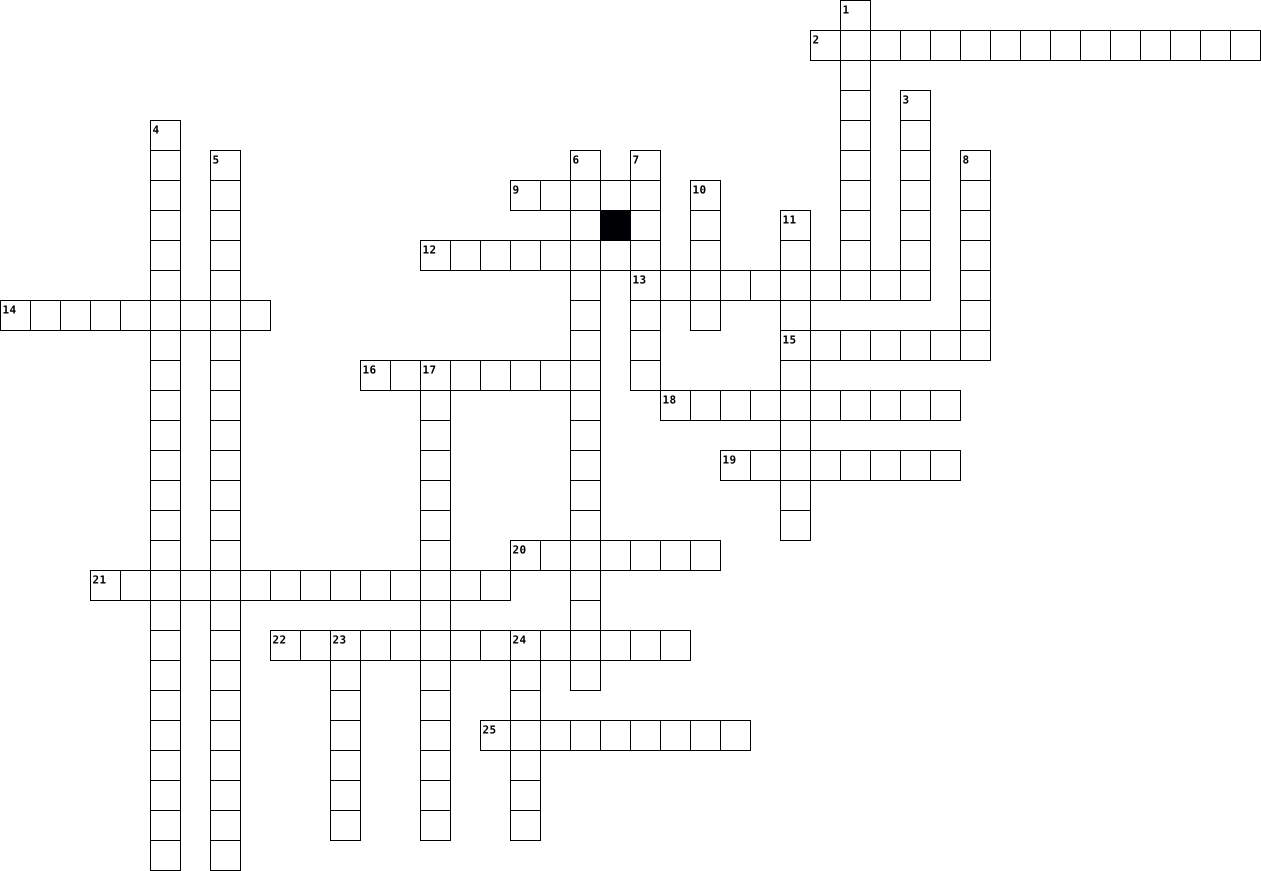
Across
- War that started after a Native's death
- He introduced the telegraph
- Where Jamestown was located
- State the british burned buildings in
- The "engineering marvel of the 19th century"
- He began the Nullification Crisis
- Battle we won in 1781
- Where gold was discovered in 1848
- The man who discovered the "New World"
- The Nat. Bank favored these kinds of people
- Principle established in supreme court
- Street fight between patriot and british
- The ship that brought people to America
Down
- When someone was "possesed by the devil"
- He signed the Indian Removal act law
- Decleration adopted on Jul 4
- of more land for America
- War Washington started in 1754
- 1st state to ratify in Cons. Convention
- He drafted the Bill of Rights
- True/False: African Americans were citizens of US
- Where Women Suffragists met in 1848
- Result of "shot heard round the world"
- Happened with Africans in 1619
- Native American that helped Settlers to live
25 Clues: Battle we won in 1781 • of more land for America • He introduced the telegraph • Where Jamestown was located • Decleration adopted on Jul 4 • He drafted the Bill of Rights • War Washington started in 1754 • Happened with Africans in 1619 • He began the Nullification Crisis • Where gold was discovered in 1848 • Where Women Suffragists met in 1848 • ...
History 2021-10-12

Across
- He began the Nullification Crisis
- Street fight between patriot and british
- Principle established in supreme court
- of more land for America
- The Nat. Bank favored these kinds of people
- State the british burned buildings in
- Where Jamestown was located
- The ship that brought people to America
- Decleration adopted on Jul 4
- Where Women Suffragists met in 1848
Down
- Result of "shot heard round the world"
- He signed the Indian Removal act law
- 1st state to ratify in Cons. Convention
- Where gold was discovered in 1848
- War that started after a Native's death
- The man who discovered the "New World"
- War Washington started in 1754
- The "engineering marvel of the 19th century"
- True/False: African Americans were citizens of US
- When someone was "possesed by the devil"
- Battle we won in 1781
- Native American that helped Settlers to live
- Happened with Africans in 1619
- He drafted the Bill of Rights
- He introduced the telegraph
25 Clues: Battle we won in 1781 • of more land for America • Where Jamestown was located • He introduced the telegraph • Decleration adopted on Jul 4 • He drafted the Bill of Rights • War Washington started in 1754 • Happened with Africans in 1619 • Where gold was discovered in 1848 • He began the Nullification Crisis • Where Women Suffragists met in 1848 • ...
U.S. History Unit 7 Vocab 2024-04-30

Across
- System of racial segregation
- Religious organization advocating for African American rights
- American Indian rights organization
- Nonviolent protest against unjust laws
- White supremacist group
- Civil rights organization
- Civil rights leader and advocate for African American empowerment
- Established by law
- Equal Rights Amendment, in brief
- Civil rights icon who refused to give up her bus seat
- Protest strategy involving occupying spaces
- Lynching victim in Mississippi
- Alabama city where a pivotal march for voting rights occurred
- Campaign to register African American voters in the South
- Union fighting for farmworkers' rights
Down
- Site of massive Civil Rights march and "I have a Dream" Speech
- Laws enforcing racial segregation
- National Organization for Women, for short
- Movement promoting self-determination and pride
- Movement advocating for gender equality
- 13th, 14th, and 15th
- Leader in the civil rights movement
- Political party for self-defense and community service
- Legislation protecting voting rights
- In practice, but not necessarily by law
- Labor leader and advocate for farmworkers
- African American students at an Arkansas high school
- Activists challenging segregation on buses
- Alabama city where the bus boycott took place
29 Clues: Established by law • 13th, 14th, and 15th • White supremacist group • Civil rights organization • System of racial segregation • Lynching victim in Mississippi • Equal Rights Amendment, in brief • Laws enforcing racial segregation • American Indian rights organization • Leader in the civil rights movement • Legislation protecting voting rights • ...
Bill Withers 2023-06-30

Across
- Bill Withers was born in _______Virginia
- Bill Withers's genre of music is known as
- Withers also worked as a reputable music
- Bill Withers's Grammy award-winning song is lovely
- The intro to Lean on Me is played on?
- Los Angeles is also know as the city of
- Aint no Sunshine won what type of prestigious award
Down
- In 2005, Withers was inducted into the Songwriters Hall of?
- Bill Withers is a famous American singer
- Bill Withers moved here to pursue his music career
- Withers first album was called _____ as I am
- Bill Withers served in the______ as an aircraft mechanic
12 Clues: The intro to Lean on Me is played on? • Los Angeles is also know as the city of • Bill Withers was born in _______Virginia • Bill Withers is a famous American singer • Withers also worked as a reputable music • Bill Withers's genre of music is known as • Withers first album was called _____ as I am • Bill Withers moved here to pursue his music career • ...
History 2021-10-12
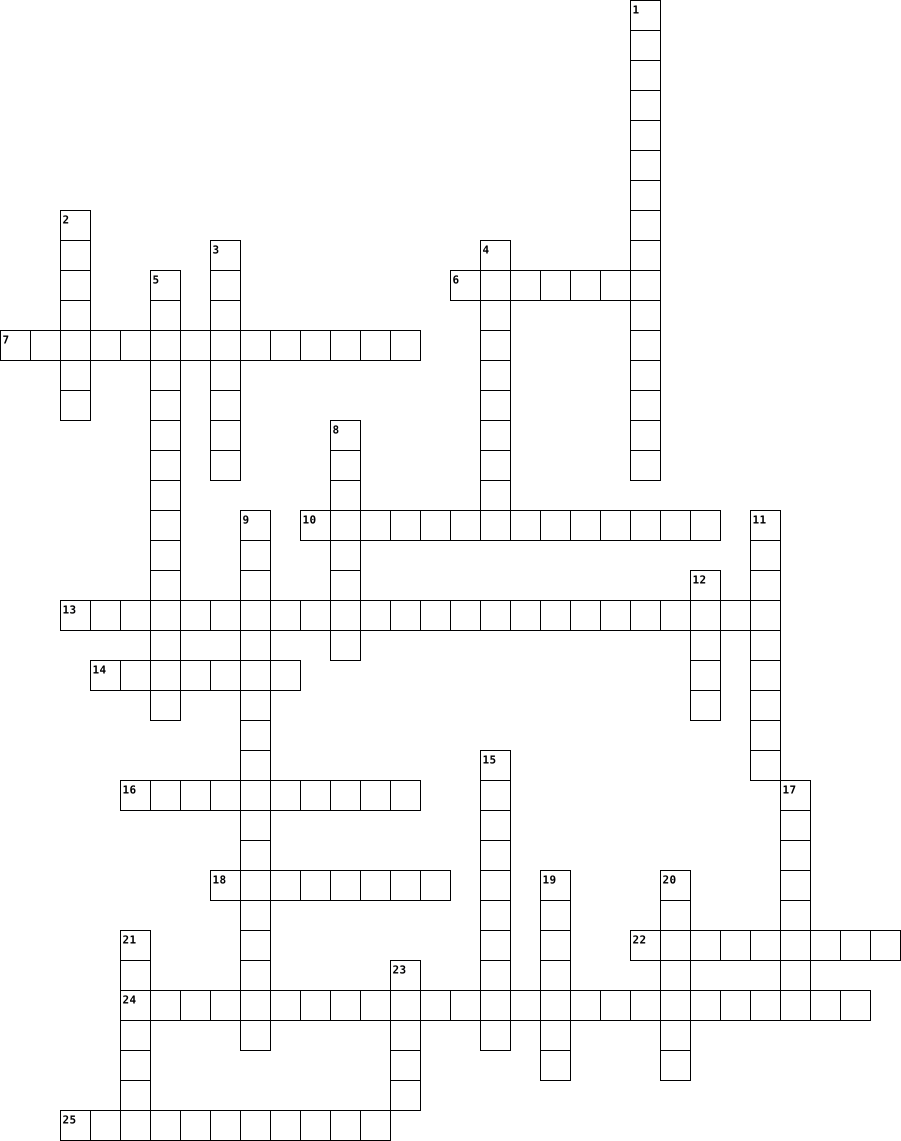
Across
- He began the Nullification Crisis
- Street fight between patriot and british
- Principle established in supreme court
- Purchace of more land for US
- The Nat. Bank favored these kinds of people
- State the british burned buildings in
- Where Jamestown was located
- The ship that brought people to America
- Decleration adopted on Jul 4
- Where Women Suffragists met in 1848
Down
- Result of "shot heard round the world"
- He signed the Indian Removal act law
- 1st state to ratify in Cons. Convention
- The state gold was discovered in 1848
- War that started after a Native's death
- The man who discovered the "New World"
- War Washington started in 1754
- The "engineering marvel of the 19th century"
- True/False: African Americans were citizens of US
- When someone was "possesed by the devil"
- Battle we won in 1781
- Native American that helped Settlers to live
- Happened with Africans in 1619
- He drafted the Bill of Rights
- He introduced the telegraph
25 Clues: Battle we won in 1781 • Where Jamestown was located • He introduced the telegraph • Purchace of more land for US • Decleration adopted on Jul 4 • He drafted the Bill of Rights • War Washington started in 1754 • Happened with Africans in 1619 • He began the Nullification Crisis • Where Women Suffragists met in 1848 • He signed the Indian Removal act law • ...
Crack the Constitution: A Crossword Challenge 2025-02-07

Across
- The system that prevents any one branch from becoming too powerful.
- Being tried twice for the same crime (prohibited by the 5th Amendment).
- The President’s power to reject a bill.
- The branch of government that enforces laws.
- The system used to elect the U.S. President.
- A system where power is divided between state and federal governments.
- The branch of government that interprets laws.
- A formal change to the Constitution.
- The first ten amendments.
Down
- The highest court in the U.S.
- The branch of government that makes laws.
- Rights read to someone when they are arrested.
- A right protected by the First Amendment.
- It gives Congress the power to regulate trade.
- Legal principle ensuring fair treatment under the law.
- The introduction to the Constitution.
- The process of formally approving the Constitution.
- The division of government roles into different branches.
- Protected by the Second Amendment.
- The process of removing a President from office.
20 Clues: The first ten amendments. • The highest court in the U.S. • Protected by the Second Amendment. • A formal change to the Constitution. • The introduction to the Constitution. • The President’s power to reject a bill. • The branch of government that makes laws. • A right protected by the First Amendment. • The branch of government that enforces laws. • ...
Articles/Constitution 2025-09-16

Across
- The senate and the house make up our _________
- The method of resolving disagreements at the Convention
- The __________ Plan favored small states
- Alexander __________ argued for a strong central government
- James __________ is often called the “Father of the Constitution”
- First government in the USA
- System dividing power between state and national governments
- _________ rebellion proved that the Articles were too weak
- Branch that interprets laws
- The federalists called for a ________ federal government
Down
- To approve the Constitution was to __________ it
- The __________ Plan favored large states
- Group of people who needed a Bill of Rights to ratify the Constitution
- Because of the New Jersey plan, each state has two of these
- The __________ Compromise created a two-house legislature
- Branch that makes laws
- Branch that enforces laws
- The __________ Compromise counted enslaved people partially for representation
- The Articles were replaced by this
- What were the farmers involved in Shays Rebellion protesting?
- The Northwest __________ established rules for new states
21 Clues: Branch that makes laws • Branch that enforces laws • First government in the USA • Branch that interprets laws • The Articles were replaced by this • The __________ Plan favored large states • The __________ Plan favored small states • The senate and the house make up our _________ • To approve the Constitution was to __________ it • ...
Bilingual Glossary 2017-01-26

Across
- Video Toll Charge
- Misread Plate
- Enforcement Fee
- Charges on Bill
- Duplicate Billing
- Notice of Failure to Pay
- Transponder Fasteners
- Bankruptcy
- Bill
- Notice of Plate Denial
- Business
- Free Kilometres
Down
- Transponder did not beep
- Account Fee
- ETR Rewards
- Heavy Flat Toll Charge
- Transponder Lease Fee
- Toll
- License Plate
- Missing Payment
- Paperless Billing
21 Clues: Toll • Bill • Business • Bankruptcy • Account Fee • ETR Rewards • Misread Plate • License Plate • Enforcement Fee • Charges on Bill • Missing Payment • Free Kilometres • Video Toll Charge • Duplicate Billing • Paperless Billing • Transponder Lease Fee • Transponder Fasteners • Heavy Flat Toll Charge • Notice of Plate Denial • Transponder did not beep • Notice of Failure to Pay
Tiara walker- Government 2022-05-12

Across
- creates laws and can confirm or reject appointments made by governor
- constitutional boards and commissions
- deals with cases where a citizen is in another disagreement with another citizen
- executive branch
- having three separate branches of government making sure no one has more power over the other branch
- judicial branch
- amendments to constitution
- they organize the law making process and makes the process of reviewing laws more efficient
Down
- deals with cases where a citizen has harmed society such as murder,theft, illegal drugs,etc
- Miscellaneous provisions
- establishes the relationship between the government and its people, the structure and powers of state government are defined by the state constitution
- education
- its a short paragraph that states the purpose of the constitution and states it purpose
- includes these members; governor,lieutenant governor,secretary of state,attorney general,and state treasurer
- counties and municipal corporations
- Bill of rights
- Voting and elections
- legislative branch
- this branch interprets laws that are created by general assembly
- taxation and finance
20 Clues: education • Bill of rights • judicial branch • executive branch • legislative branch • Voting and elections • taxation and finance • Miscellaneous provisions • amendments to constitution • counties and municipal corporations • constitutional boards and commissions • this branch interprets laws that are created by general assembly • ...
Legislative Branch 2021-10-29

Across
- the senate member, elected by the senate in the absence of the Vice President
- the action or process of inheriting a title or office
- is responsible for administering the oath of office to the members of the US House of Representatives.
- a temporary committee formed to study one specific issue and to report its finding to the house or senate
- a motion by all members of the senate who are present to set aside formal rules and to consider a bill from the calendar
- direct contact made by lobbyists to persuade government officials to support the policies their interest group favors
- groups of people who share common goals and organize to influence government and policy
- a paid representative of an interest group who contacts government officials on behalf of these interest groups
- a group within a standing committee that specializes in a subcategory of its standing committee's responsibility
- to draw a district's boundaries to gain an advantage in elections
- a permanent committee in congress that oversees bills that deal with certain kinds of issues
- A two-chamber legislature
- a proposed law to authorize spending money
- to set up new district lines after reapportionment is complete
- a vote of formal disapproval of a member's actions
Down
- a person whom a member of congress has been elected to represent
- the minimum number of members who must be present to permit a legislative body to take official action
- a closed meeting
- session Meeting
- a resolution passed in the same form by both houses
- motions placed on a bill in the senate that alert party leaders that if unanimous consent were to be sought, they would object
- an assistant to the party floor leader in the legislature
- legislative sub organization in the US congress that handles a specific duty.
- elected official who is already in office
- the process of reassigning representation based on population, after every census
- a person to succeed to the presidency to the president upon the death or resignation of a president
- a temporary joint committee set up when the house and the senate have passed different versions of the same bill
- the speakers top assistant whose job is to help plan the majority party's legislative program and to steer important bills through the house.
- a procedure that allows each senator to speak only one hour on a bill under debate
- a proposed law
- rejection of a bill by the president
- congress may do this to the proposed tax bill. to change for the better; improve; to amend one's ways
- a method of defeating a bill in the senate by stalling the legislative process and preventing a vote
- a session at which a committee listens to testimony from people interested in the bill
34 Clues: a proposed law • session Meeting • a closed meeting • A two-chamber legislature • rejection of a bill by the president • elected official who is already in office • a proposed law to authorize spending money • a vote of formal disapproval of a member's actions • a resolution passed in the same form by both houses • the action or process of inheriting a title or office • ...
Enlightenment & Monarchs 2023-12-10

Across
- influenced separation of powers in US government
- Peter the Great made reforms to _________ his country
- Voltaire believed in freedom of ________
- Mary Wollstonecraft argued that men and women should have equal access to _____
- Protestants and ____ had many conflicts in Europe during the age of Absolutism.
- idea that rulers hold absolute power
- broke from the Catholic church to get a divorce
Down
- theory that says absolute rulers get their power from God.
- William & Mary signed the English Bill of Rights that made England a ______ monarchy
- built by Louis XIV to show France's power
- Popular sovereignty and consent of the governed come from this philosopher
- Peter the Great's country
- King John was forced to sign this "Great Charter"
13 Clues: Peter the Great's country • idea that rulers hold absolute power • Voltaire believed in freedom of ________ • built by Louis XIV to show France's power • broke from the Catholic church to get a divorce • influenced separation of powers in US government • King John was forced to sign this "Great Charter" • Peter the Great made reforms to _________ his country • ...
WH2 Unit 3 2025-10-06

Across
- Napoleon's final defeat was at the Battle of _____.
- ______ XVI was monarch in France during the French Revolution.
- William and _____ became the Protestant rulers of England after the Glorious Revolution.
- Country named after Simon Bolivar.
- The Storming of the ____ happened on July 14, 1789.
- Which Estate in France contained the clergy and paid no taxes?
- Toussaint L'Overture led the revolt in the location now called _____.
Down
- First nation to have a bill of rights.
- Led England as a military dictatorship after the civil war.
- Simon Bolivar was born in ______.
- The English Civil Wars were between Charles I and _____________.
- Napoleon was born in the French colony of ______.
- Father Hidalgo led Mexico's revolution against _______.
13 Clues: Simon Bolivar was born in ______. • Country named after Simon Bolivar. • First nation to have a bill of rights. • Napoleon was born in the French colony of ______. • Napoleon's final defeat was at the Battle of _____. • The Storming of the ____ happened on July 14, 1789. • Father Hidalgo led Mexico's revolution against _______. • ...
U.S Constitution Crossword Puzzle 2023-11-06

Across
- “Father of the Constitution”.
- The highest court in the U.S.
- Amendment that granted women the right to vote.
- Having two legislative houses for making laws.
- The power to stop a law from being passed.
- Branch that carries out laws.
- Amendment that protects against unreasonable searches and seizures.
- Branch that evaluates laws.
- Amendment that ensures the right to a fair and speedy trial by an impartial jury and the right to legal counsel.
- Amendment that prohibited the manufacture, sale, or transportation of alcoholic beverages and later got repealed.
- Amendment that protects against cruel and unusual punishment and excessive bail or fines.
- Amendment that prohibits the denial of voting rights on the basis of race, color, or previous servitude.
- Amendment that modified the procedure for electing the President and Vice President, requiring separate ballots for each office.
- Amendment that grants citizenship to all people born or naturalized in the United States and ensures equal protection under the law.
- Amendment that establishes the direct election of U.S. Senators by the people of the state.
- Amendment that reserves powers not delegated to the federal government to the states or the people.
Down
- Amendment that gives Congress the power to levy income taxes.
- Introduction to the U.S. Constitution that expresses the government’s goals.
- Amendment that guarantees the right to a trial by jury in civil cases.
- How many amendments are in the Bill of Rights?
- Amendment that protects the right to bear arms.
- “Lame duck amendment”.
- Amendment that gaurantees freedom of speech, religion, press, petition, and assembly.
- The supreme law of the U.S.
- Amendment that prohibits the government from forcing citizens to house soldiers in peacetime without their consent.
- Amendment that protects states from being sued by citizens of other states or foreign countries in federal court.
- Branch that makes laws
- The system of government where power is divided among the national and state levels.
- Amendment that abolished slavery.
- Amendment that gaurantees the right to remain silent, protection against double jeopardy, and the right to due process of law.
- Amendment that states that the Constitution’s enumeration of certain rights does not deny or disparage other rights retained by the people.
31 Clues: “Lame duck amendment”. • Branch that makes laws • The supreme law of the U.S. • Branch that evaluates laws. • “Father of the Constitution”. • The highest court in the U.S. • Branch that carries out laws. • Amendment that abolished slavery. • The power to stop a law from being passed. • How many amendments are in the Bill of Rights? • ...
All About The DOUGHnuts! 2016-04-07

Across
- / five dollar bill
- / twenty dollar bill
- / one-thousand dollar bill
- / ten-thousand dollar bill
- / two dollar bill
- / one-hundred dollar bill
- / one dollar bill
Down
- / fifty dollar bill
- / ten dollar bill
- / five-hundred dollar bill
- / one-hundred thousand dollar bill
- / five- thousand dollar bill
12 Clues: / ten dollar bill • / two dollar bill • / one dollar bill • / five dollar bill • / fifty dollar bill • / twenty dollar bill • / one-hundred dollar bill • / five-hundred dollar bill • / one-thousand dollar bill • / ten-thousand dollar bill • / five- thousand dollar bill • / one-hundred thousand dollar bill
Parts of the Informed Consent 2026-01-31

Across
- Person overseeing your work (if you are a trainee)
- How you will make money
- Whether you are paneled or only accept private pay
- Acknowledgement that client has read Informed Consent form
- How long you hold on to client files
- Describe potential good things that could happen in therapy
- Information regarding your preference - Texting, phone, or email
- Policy for seeing clients via Zoom
Down
- Describe potential bad things that could happen in therapy
- Keeping your client's privacy
- How clients can see what you've written
- Policy regading "Friend Requests"
- Procedure for how clients should contact you after hours
- Patient bill of rights
14 Clues: Patient bill of rights • How you will make money • Keeping your client's privacy • Policy regading "Friend Requests" • Policy for seeing clients via Zoom • How long you hold on to client files • How clients can see what you've written • Person overseeing your work (if you are a trainee) • Whether you are paneled or only accept private pay • ...
Gideon v. Wainwright 2022-11-09

Across
- what gideon wrote in prison
- the ruling decision the supreme court made
- who the court ruled in favor of
- the precedent gideon v. wainwright overturned
- provisions of the bill of rights have been made applicable to the states on a case by case basis
Down
- the provision gideon v. wainwright falls under
- what gideon was charged with
- gideon had a right to an _________
8 Clues: what gideon wrote in prison • what gideon was charged with • who the court ruled in favor of • gideon had a right to an _________ • the ruling decision the supreme court made • the precedent gideon v. wainwright overturned • the provision gideon v. wainwright falls under • provisions of the bill of rights have been made applicable to the states on a case by case basis
government 2025-10-03

Across
- having a single legislative chamber
- compromise counted slaves as 3/5th of a person for representation
- part of Congress where representation is based on state population
- branch enforces laws; leb by president
Down
- orders rules issued by the president that act like laws
- of rights first ten amendments
- branch makes laws
- powers powers not listed ti carry out other ones
8 Clues: branch makes laws • having a single legislative chamber • of rights first ten amendments • branch enforces laws; leb by president • powers powers not listed ti carry out other ones • orders rules issued by the president that act like laws • part of Congress where representation is based on state population • ...
5 2024-08-26

Across
- First Black pilot
- First Black general
- Nonviolent protest leader
- Civil rights strategist
- Howard University president
- March on Washington singer
- Author of Native Son
- First Black AG
- Freedom rider
- First Black filmmaker
- Suffragist and civil rights leader
Down
- Abolitionist preacher
- Civil rights leader
- Civil rights attorney
- First Black congressman
- Abernathy's partner
- Civil rights leader
- First Black woman banker
- First Black bishop
- Civil rights preacher
- Black history publisher
- Civil rights lawyer
- First Black dermatologist
- Labor leader
- First Black school board president
25 Clues: Labor leader • Freedom rider • First Black AG • First Black pilot • First Black bishop • Civil rights leader • Abernathy's partner • Civil rights leader • First Black general • Civil rights lawyer • Author of Native Son • Abolitionist preacher • Civil rights attorney • Civil rights preacher • First Black filmmaker • First Black congressman • Civil rights strategist • Black history publisher • ...
Legislative Branch 2022-09-16

Across
- You have to be twenty___ to serve in the Georgia House of Representatives
- You have to be a resident of Georgia for ___ years to be a senator or representative in Georgia
- You have to be twenty___ to serve in the Georgia Senate
- Before passing in the chamber where it started, a bill goes up for _____ and voting
- The first place a proposed bill goes after being introduced is a ______ committee
- Most work in the legislature takes place in___
- Property taxes are paid on homes, ______, and business property
- The job of the Legislative Branch is to make ____
- ____taxes come out of your paycheck when you get paid
- The _____ helps make spending decisions for the state
Down
- If both houses can't agree on the same version of a bill, it is sent to a ______ committee
- Revenue is another word for ______
- A ____ details how and where money is spent
- If both chambers pass the bill, it is sent to the Governor for _____
- Committees can create, _____, or
- You have to live in the _____ you represent for at least one year
- A ____ is a proposed law
- ______taxes are paid by consumers when they buy an item
- _____ of Powers in government ensures each branch has its own responsibilities
19 Clues: A ____ is a proposed law • Committees can create, _____, or • Revenue is another word for ______ • A ____ details how and where money is spent • Most work in the legislature takes place in___ • The job of the Legislative Branch is to make ____ • ____taxes come out of your paycheck when you get paid • The _____ helps make spending decisions for the state • ...
Beginnings of a Nation 2022-08-25

Across
- Stamp Act: required the colonists to pay a tax, represented by a stamp, on various forms of papers, documents, and playing cards
- the action or process of settling among and establishing control over the indigenous people of an area
- Tax (Boston Tea Party): a political protest that occurred on December 16, 1773, at Griffin's Wharf in Boston, Massachusetts
- withdraw from commercial or social relations with (a country, organization, or person) as a punishment or protest
- a person who journeys to a sacred place for religious reasons
- without Representation”: a populace that is required to pay taxes to a government authority without having any say in that government's policies.
- Companies: a company whose stock is owned jointly by the shareholders.
- Compact: an agreement to establish a government, entered into by the Pilgrims in the cabin of the Mayflower on November 11, 1620
- Bill of Rights: an act signed into law in 1689 by William III and Mary II.
- revoke or annul
- Liberty:the liberty of those persons who are free from external restraint in the exercise of those rights which are considered to be outside the province of a government to control.
- a ruined village in E Virginia on Jamestown Island
- the highest legislature, consisting of the sovereign, the House of Lords, and the House of Commons.
- Sense: good sense and sound judgment in practical matters.
- of Burgesses: the lower house of the colonial Virginia legislature.
Down
- Columbus: Christopher Columbus was an Italian explorer and navigator who completed four Spanish-based voyages across the Atlantic Ocean.
- belief in the benefits of profitable trading; commercialism.
- the action of traveling in or through an unfamiliar area in order to learn about it.
- Resistance: the mechanism whereby the intestinal microbiota protects itself against incursion by new and often harmful microorganisms
- a grant by the Spanish Crown to a colonist in America conferring the right to demand tribute and forced labor from the Indian inhabitants of an area.
- Government: An electoral system where citizens vote to elect people to represent their interests and concerns.
- a form of government with a monarch at the head
- a conqueror
- Carta: a document constituting a fundamental guarantee of rights and privileges.
- a person sent or authorized to represent others, in particular an elected representative sent to a conference.
- a person who moves with a group of others to live in a new country or area.
- Government: In political philosophy, limited government is the concept of a government limited in power. It is a key concept in the history of liberalism.
- Rights: Rights that people supposedly have under natural law.
28 Clues: a conqueror • revoke or annul • a form of government with a monarch at the head • a ruined village in E Virginia on Jamestown Island • Sense: good sense and sound judgment in practical matters. • belief in the benefits of profitable trading; commercialism. • a person who journeys to a sacred place for religious reasons • ...
Voting Rights 2026-05-19

Across
- Formerly enslaved people gaining new rights
- Pardons given to former Confederates
- Constitutional guarantee under the 14th Amendment
- Federal laws protecting African American voting rights
- Southern white supporter of Reconstruction
- Official vote cast in an election
- Rights guaranteed to all citizens
Down
- To take away someone’s voting rights
- Period of rebuilding the South and expanding rights
- The right to vote
- Process required before voting
- Granted African American men the right to vote
- Allowed voting only if ancestors had voted
- System of racial separation limiting freedoms
- Laws restricting African American rights after the war
- Fee used to block many African Americans from voting
- Legal membership granting rights and duties
- Reading requirement used to prevent Black voters
- Northerner who moved South during Reconstruction
- Group that used violence to suppress Black voting
20 Clues: The right to vote • Process required before voting • Official vote cast in an election • Rights guaranteed to all citizens • To take away someone’s voting rights • Pardons given to former Confederates • Allowed voting only if ancestors had voted • Southern white supporter of Reconstruction • Formerly enslaved people gaining new rights • ...
Post War Crossword 2023-02-05

Across
- Bill A bill that provided veterans with the funds for college education, unemployment insurance, housing
- Dream a dream of equality, justice, and democracy for the nation
- Obsolescence The practice of designing products to break quickly or become obsolete in short to mid-term
- a short-lived segregationist political party in the United States, active primarily in the South
- Society A society in which scarcity of resources is not the predominant condition, and most community members have achieved a general level of economic well-being.
- An economic theory that argues that the interests of consumers should be the most important factor in a business transaction
- Undue dependence on or concern with having an automobile, especially for recreation.
- An area not as densely populated as the city, but more densely populated than the countryside
- The name of seven suburban developments was created in the United States of America by William Levitt.
- The right or license granted to an individual or group to market a company's goods or services in a particular territory
- A member of the Republican Party, who served as a representative and senator from California and was the 36th vice president (1953-1961) under President Dwight D. Eisenhower
Down
- Conservatism A program that emphasized governmental economy and decentralization of Federal projects through cooperation with State and local governments as well as private enterprise
- Highways Highways throughout the nation
- A major corporation that owns a number of smaller companies in unrelated businesses
- Deal A proposal made by President Truman to characterizes the entire domestic agenda of the Truman administration
- Admiral of the Navy
- Salk American physician and medical researcher who developed the first safe and effective vaccine for polio.
- An American military officer and statesman who served as the 34th president of the United States from 1953 to 1961
- The process whereby people change their beliefs, attitudes, actions, or perceptions to more closely match those held by groups to which they belong or want to belong or by groups whose approval they desire
- Man The psychological and social costs of a major trend in American life during the 1950s
- Boom The increases in the birth rate between 1946 and 1964
- Rights Commission An independent, bipartisan agency charged with monitoring federal civil rights enforcement.
- Spock American pediatrician whose books on child-rearing
23 Clues: Admiral of the Navy • Highways Highways throughout the nation • Spock American pediatrician whose books on child-rearing • Boom The increases in the birth rate between 1946 and 1964 • Dream a dream of equality, justice, and democracy for the nation • A major corporation that owns a number of smaller companies in unrelated businesses • ...
Citizenship Crossword Puzzle 2023-05-10

Across
- The first 10 ______ are called the Bill of Rights.
- Kevin _______ is the Speaker of the House of Representatives
- One right or freedom from the First Amendment is ______.
- The _______ War was fought by the United States in the 1900s.
- The ______ is in charge of the executive branch.
- The ______ branch reviews laws.
- The President is the ______ in Chief of the military.
- Benjamin ______ was a U.S. diplomat.
Down
- Amendment 2 gives people the right to keep and bear _______.
- The _______ was written at the Constitutional Convention.
- _______ Day is a U.S. holiday in May.
- One right only for U. S. citizens is to vote in a federal ______.
- Anna Paulina ______ is our U.S. Representative.
13 Clues: The ______ branch reviews laws. • Benjamin ______ was a U.S. diplomat. • _______ Day is a U.S. holiday in May. • Anna Paulina ______ is our U.S. Representative. • The ______ is in charge of the executive branch. • The first 10 ______ are called the Bill of Rights. • The President is the ______ in Chief of the military. • ...
Government- Coming To 'Terms' 2021-01-07

Across
- a representative democracy in which a small group of leaders, elected by the citizens, represents the concerns of the people; the interests of the majority take precedence over the
- first ten amendments to the Constitution, added by the first Congress in 1791; protects the civil rights and liberties of the people
- compromise reached in writing the Constitution to satisfy both small and large states by having one house of Congress with an equal number of representatives for each state and the other house’s membership determined by a state’s population
- French writer who introduced the idea of separation of powers and checks and balances to prevent one part of government from becoming too powerful
- explains the purposes of the Constitution, and defines the powers of the new government as
- Article I, Section 8, Clause 18 of the Constitution that gives Congress the right to pass all laws “necessary and proper” to carry out the other powers listed in Article I
- chosen to preside at the Constitutional Convention; he later became the first president of the United States; he set precedent by stepping down after two terms and initiating a peaceful transition of power
- group of people who feared the new government created by Constitution; gave too much power to the national government at the expense of individual rights
- considered intelligent and decisive, he was a leading supporter of the Constitution and helped write the Federalist Papers
- the people are the only source of power for any and all government actions; government can only govern with the consent of the governed
- and checks and balances
- from the people of the United States
- “Father of the Constitution” and fourth president of the United States; essential to the writing and ratification of the Constitution; he also wrote the first 10 amendments to the Constitution that were ratified as the Bill of Rights
Down
- king/queen controls all aspect of life: social, economic, and political - often times tied to divine right of kings (authority from God)
- supporters of the new Constitution who believed in a strong central government with limited
- each branch of government is subject to a number of constitutional restraints, or checks, by the other branches so no single branch becomes too powerful
- type of democracy based on the protection of individual rights from the tyranny of the majority and on the consent of the governed to establish political authority
- of a few
- first plan of government adopted in the United States after the revolution; it was a loose association of states with no authority to tax, no national army, and no chief executive
- the distribution of power between the national government and the states within a union
- the government is not all powerful; its powers are limited, and the acts of the government are those willed by the people Constitution were written
- belief that monarchs were chosen by God; gave the monarch unlimited authority
- believed in natural rights- life, liberty and property; strongest influence on Thomas Jefferson, who wrote natural rights into the Declaration of Independence
23 Clues: of a few • and checks and balances • from the people of the United States • belief that monarchs were chosen by God; gave the monarch unlimited authority • the distribution of power between the national government and the states within a union • explains the purposes of the Constitution, and defines the powers of the new government as • ...
Chapter 6: The End of the War 2024-03-13

Across
- The bill of rights is a list of ___ freedoms for the citizens of the new country.
- The _____ army was not as strong.
- Last major battle of the war
- Power of leaders was split up between ___ groups of leaders.
- Articles of
Down
- In ______ 1787, the leaders of the colonies signed the Constitution, making it the law.
- of the United States was a set of rules and laws.
- won freedom from Great Britain
- In _______ 1781,the articles of confederation was the first set of rules for the U.S.
- was worked on for two years
10 Clues: Articles of • was worked on for two years • Last major battle of the war • won freedom from Great Britain • The _____ army was not as strong. • of the United States was a set of rules and laws. • Power of leaders was split up between ___ groups of leaders. • The bill of rights is a list of ___ freedoms for the citizens of the new country. • ...
Crossword puzzle government stuff 2026-05-07

Across
- A written plan of government
- A court's authority to hear a case
- A system where citizens participate directly in decision-making
- The highest court in the United States
- A formal agreement between two or more countries
- The person in charge of the executive branchThe person in charge of the executive branch
- A law passed by a legislative body
- Official government spending plan
Down
- A member of the legislative branch who proposes legislation
- The process of redrawing legislative district boundaries
- The branch of government responsible for making laws
- The principle that government derives its power from the consent of the governed
- The process of formally charging a public official with misconduct
- A government ruled by a monarch
- of Rights The term for the first ten amendments to the US Constitution
- An electoral district
- System of government where power is divided between the national and state levels
- The right to vote
- A person appointed to speak on behalf of a larger group
19 Clues: The right to vote • An electoral district • A written plan of government • A government ruled by a monarch • Official government spending plan • A court's authority to hear a case • A law passed by a legislative body • The highest court in the United States • A formal agreement between two or more countries • The branch of government responsible for making laws • ...
Tax Language 2025-07-03

Across
- Evaluation or estimate of the parcel featuring the legal info
- Type of tax, usually includes land
- Where to start search for tax bills online
- Home and land as collateral loan
- Spouse of customer or coapp (name could be on bill)
- Where to clock in and out
- Paid to receive bill
- Home and land loan
Down
- Has had the ok to have loan info shared
- Number county uses that is related to property of interest
- Texas specific school bill
- Home only type of tax
- Where the money comes from to pay the tax bills
- Who to call if you need info about a tax bill
- Who to call if you need info about a mobile home assessment
- Home only loan
16 Clues: Home only loan • Home and land loan • Paid to receive bill • Home only type of tax • Where to clock in and out • Texas specific school bill • Home and land as collateral loan • Type of tax, usually includes land • Has had the ok to have loan info shared • Where to start search for tax bills online • Who to call if you need info about a tax bill • ...
Chapter 3 Review 2020-12-02

Across
- The Canada Elections Act allowed ______ to finally vote in 1918
- Labour ______ protect the rights of workers
- before the Charter most individual rights were decided on by _________ governments
- The ______ act restricted the rights of First Nations people
- These types of rights keep us free from discrimination
- You have the right to vote for a new government every ___ years
- You have the right to a ______ and public trial
- The _______ of Japanese Canadians in World War II was an abuse of human rights
- One major legal right is to be free of _________,search and seizure
- The right to vote and enter/leave Canada are only given to Canadian _______.
- Freedom of _________ means you can join any group you want to...as long as it is legal
Down
- The Charter can be found in Canada's ____________
- The _______ Day Act made it illegal to shop on Sundays in Canada. The Charter knocked this law down.
- These rights define how Canadians travel around
- These rights deal with your ability to vote
- The Charter came into existence in Ninety ______ Two
- A 75 year old cannot be fired from their job based solely on ____.
- __________ freedoms are given to everyone in Canadian society
- Canadians have the freedom to choose their own __________
- This unit focused on the Canadian _____ of Rights and Freedoms
- The Charter protects the ________ rights of Canadians
21 Clues: Labour ______ protect the rights of workers • These rights deal with your ability to vote • These rights define how Canadians travel around • You have the right to a ______ and public trial • The Charter can be found in Canada's ____________ • The Charter came into existence in Ninety ______ Two • The Charter protects the ________ rights of Canadians • ...
Constitutional Principles 2023-02-03

Across
- bicameral legislative branch of USA
- If a presidential _______ is rejected, another candidate is chosen.
- __________ government, protects natural rights.
- Three US presidents have faced _____.
- _______ of powers. 3 diff branches.
- the first 10 Amendments to the Constitution.
Down
- The Supreme Court granted themselves this power in 1803
- The Supreme Court _____ are appointed by the President.
- any action taken by the gov that is not allowed by the Constitution.
- the power the executive branch has to refuse to sign a bill into law.
- All presidential nominations must go through Senate _______.
- Presidential ______ are a check on the judicial branch.
12 Clues: bicameral legislative branch of USA • _______ of powers. 3 diff branches. • Three US presidents have faced _____. • the first 10 Amendments to the Constitution. • __________ government, protects natural rights. • The Supreme Court granted themselves this power in 1803 • The Supreme Court _____ are appointed by the President. • ...
history 2026-03-10

Across
- Dividing government power among three branches: legislative, executive, and judicial.
- The idea that government power comes from the people.
- the leaders who wrote the U.S. Constitution and helped create the U.S. government
- The first ten amendments to the Constitution that protect individual rights.
- A system where power is shared between the national government and the states.
- enslaved people as three-fifths of a person when determining representation in Congress.
- A change or addition made to the United States Constitution.
Down
- a state in the northeastern United States and was one of the original 13 colonies
- A framer of the United States Constitution who helped create the Great Compromise.
- A system where each branch of government can limit the power of the others.
- was the first president of the United States and a leader of the American army during the revaulaniory war
- was an American leader who helped write the Constitution and is known as the “Father of the Constitution
- one of the original 13 colonies
- A series of essays that supported the ratification of the United States Constitution.
- state in the northeastern United States and was one of the original 13 colonies
- An American leader who opposed the Constitution and supported adding a Bill of Rights.
- A small state in the northeastern United States and one of the original 13 colonies.
- People who opposed the Constitution because they feared a strong national government.
- People who supported the Constitution and a stronger national government.
19 Clues: one of the original 13 colonies • The idea that government power comes from the people. • A change or addition made to the United States Constitution. • People who supported the Constitution and a stronger national government. • A system where each branch of government can limit the power of the others. • ...
Government 2015-10-02

Across
- the cabinet is a group of all Ministers (mostly from the House of Commons and at least on from the Senate. The _____ makes decisions about the Government's priorities and policies
- a king or queen of a country
- of two chamber or rooms. Canada's Parliament is made up of two separate Chambers. They are the Senate and the House of Commons
- to change of improve something for example, a law of an Act of Parliament
- the bringing to an end of a Parliament, either at the end of its four year term or if the government is defeated on a motion of non-confidence, by proclamation
- a rule for all Canadians made by Senators, member of Parliament and the Governor General
- The political party with the most members elected to the House of Commons usually forms the Government
- a proposal by a member of either the senate of the House of Commons to do something
- a proposal for a law to be considered by Parliament
- a person who has full political civil rights
- the person in charge of a meeting
Down
- the government's plan for how it will collect and spend money each year
- the city where a country's legislature is located
- Of two chambers or rooms
- Canada's parliament is composed of the Monarch, the Senate and the House of commons.
- a senator of a member of the House of Commons
- A group of Senators, members of Parliament, or both, selected to study a specific subject or bill and write a report about it
- one of two large rooms in the Center Block of the Parliament Buildings
- the pick one person from a group of several people by voting
- a special title given to Senators and Cabinet ministers for life
- a group made up of all Senators and members of Parliament from the same political party. ________ meet regularly
21 Clues: Of two chambers or rooms • a king or queen of a country • the person in charge of a meeting • a person who has full political civil rights • a senator of a member of the House of Commons • the city where a country's legislature is located • a proposal for a law to be considered by Parliament • the pick one person from a group of several people by voting • ...
Civics Chapter 3 Crossword 2023-04-17

Across
- the division between state and national government power
- to formally charge someone of wrongdoing
- you cannot be forced to pay a tax to vote
- the first 10 amendments of the Constitution
- the presidents refusal to approve a bill
- the supreme courts ability to declare the legislative and executive laws unconstitutional
- the division of power amongst the government
- powers not directly stated is given to the states/government
Down
- the right to a request a jury trial if your case is over $20
- gave women the right to vote
- the laws passed by congress are the supreme law of the land
- you're entitled to rights not directly stated in the constitution
- the government is based on what the people want
- to official approve of
- abolished slavery
- the intro/beginning of the constitution
16 Clues: abolished slavery • to official approve of • gave women the right to vote • the intro/beginning of the constitution • to formally charge someone of wrongdoing • the presidents refusal to approve a bill • you cannot be forced to pay a tax to vote • the first 10 amendments of the Constitution • the division of power amongst the government • ...
Federalism 2021-09-28

Across
- The process of returning a fugitive from the state they fled to back to their own state.
- Governmental powers are divided
- believed that a bill of rights was needed to prevent the central government from taking rights away from states and citizens.
- a system of government in which a written constitution divides power of the government (usually between central government and state).
- directs people to frame a proposed state constitution
- Powers that the National & State governments both possess and exercise.
- supported the Constitution as it was written.
Down
- Agreement among states to get together, kind of like an alliance or treaty.
- No state can draw unreasonable distinctions between its own residents and those persons who happen to live in other states.
- Under this, Congress gave an annual share of the huge federal tax revenue to the states and their cities, counties, and townships.
- wanted to limit the power of states.
- States and local governments can apply for these to get money from the government
12 Clues: Governmental powers are divided • wanted to limit the power of states. • supported the Constitution as it was written. • directs people to frame a proposed state constitution • Powers that the National & State governments both possess and exercise. • Agreement among states to get together, kind of like an alliance or treaty. • ...
Legislation Terms 2025-07-01

Across
- term for a bill that has been approved by both legislative houses.
- official record of all legislative actions and debates.
- first step in the legislative process where a bill is introduced.
- official who signs a bill into law or vetoes it.
- process of gathering support for a bill from other legislators.
- place where bills are debated and amended.
- committee that reviews bills related to financial matters.
Down
- final step where a bill becomes law after being signed.
- group of elected officials who review and vote on bills.
- term for when a bill is rejected by the governor.
- period when the legislature meets to discuss and pass bills.
- term for changes made to a bill during the legislative process.
12 Clues: place where bills are debated and amended. • official who signs a bill into law or vetoes it. • term for when a bill is rejected by the governor. • final step where a bill becomes law after being signed. • official record of all legislative actions and debates. • group of elected officials who review and vote on bills. • ...
Chapter 12 2022-12-09

Across
- third phase of passing a bill
- Number of years of unbroken service
- President rejecting vote
- Assigns bills to committees
- How are members put in
- What ends a filibuster
Down
- First phase of passing a bill
- Bill with a lot of riders
- Registering votes again
- second phase of passing a bill
- What type of vote is used
- additions of existing contracts
12 Clues: How are members put in • What ends a filibuster • Registering votes again • President rejecting vote • Bill with a lot of riders • What type of vote is used • Assigns bills to committees • First phase of passing a bill • third phase of passing a bill • second phase of passing a bill • additions of existing contracts • Number of years of unbroken service
Power and the People Review 2021-11-03

Across
- A nasty nickname for King John.
- This was sealed in 1215.
- This man was king during the Peasants Revolt.
- Leader of the Peasants Revolt
- Monetary imposition that Peasants rebelled against.
- This killed approximately half of the British population.
- The Barons wanted this signed in 1258.
- De Montfort wanted two of these from each borough, shire and town.
- John of Gaunt was related to Richard, how?
- This priest preached on the exploitation of the Church.
Down
- This was a war between France and England which led to increased taxation.
- This man is seen as the 'father of parliament'.
- This statute forced peasants back to work on their original farms.
- A type of tax for Knights.
- of Rights The Magna Carta led to the development of this in 1689.
- Wife of Simon de Montfort
- At this battle, de Montfort captured Henry III and his son.
- I This King developed the House of Commons.
- John refused to let this man become Archbishop.
19 Clues: This was sealed in 1215. • Wife of Simon de Montfort • A type of tax for Knights. • Leader of the Peasants Revolt • A nasty nickname for King John. • The Barons wanted this signed in 1258. • John of Gaunt was related to Richard, how? • I This King developed the House of Commons. • This man was king during the Peasants Revolt. • This man is seen as the 'father of parliament'. • ...
Civic Action Crossword 2025-12-05

Across
- A system where citizens elect representatives to make decisions
- The power of courts to declare laws unconstitutional
- A person who attempts to influence legislation
- The process of charging a public official with misconduct
- Legal requirement that the government must respect all rights
- Formal approval of a law or amendment
- Constitutional clause establishing federal law as highest authority
- Division of government responsibilities into three branches
- A complex system of departments and agencies
- The body that formally elects the president
- The principle that government power comes from the people
Down
- A tactic used in the Senate to delay a vote
- A group of presidential advisers who head executive departments
- A change or addition to the Constitution
- The people represented by an elected official
- A system in which power is divided between national and state governments
- System that allows each branch to limit the others
- A current officeholder running for reelection
- Drawing legislative districts to favor one party
- The president’s power to reject a bill
20 Clues: Formal approval of a law or amendment • The president’s power to reject a bill • A change or addition to the Constitution • A tactic used in the Senate to delay a vote • The body that formally elects the president • A complex system of departments and agencies • The people represented by an elected official • A current officeholder running for reelection • ...
Early Statehood of Texas 2023-12-03

Across
- type of cloth or woven fabric
- a line that marks the limits of an area
- of Rights the first 10 Amendments to the Constitution
- Coffee Hayes Worked with the U.S. Army to capture Mexico Cit
- most developed port and trading center in Texas
- a person who comes to live permanently in a foreign country
Down
- gin a machine that cleaned the cotton
- Constitution a guide when writing the Constitution of the State of Texas
- a person sent or authorized to represent others
- caused Irish immigrants to settle in Texas
- of Guadalupe Hidalgo officially ended the U.S.-Mexican War
11 Clues: type of cloth or woven fabric • a line that marks the limits of an area • caused Irish immigrants to settle in Texas • gin a machine that cleaned the cotton • a person sent or authorized to represent others • most developed port and trading center in Texas • of Rights the first 10 Amendments to the Constitution • ...
Government Vocab 2021-01-07

Across
- explains the purposes of the Constitution, and defines the powers of the new government as originating from the people of the United States
- French writer who introduced the idea of separation of powers and checks and balances to prevent one part of government from becoming too powerful
- compromise reached in writing the Constitution to satisfy both small and large states by having one house of Congress with an equal number of representatives for each state and the other house’s membership determined by a state’s population
- chosen to preside at the Constitutional Convention; he later became the first president of the United States; he set precedent by stepping down after two terms and initiating a peaceful transition of power
- belief that monarchs were chosen by God; gave the monarch unlimited authority
- first plan of government adopted in the United States after the revolution; it was a loose association of states with no authority to tax, no national army, and no chief executive
- rights and liberties of the people
- the people are the only source of power for any and all government actions; government can only govern with the consent of the governed
- “Father of the Constitution” and fourth president of the United States; essential to the writing and ratification of the Constitution; he also wrote the first 10 amendments to the Constitution that were ratified as the Bill of Rights
Down
- the distribution of power between the national government and the states within a union
- believed in natural rights- life, liberty and property; strongest influence on Thomas Jefferson, who wrote natural rights into the Declaration of Independence
- group of people who feared the new government created by Constitution; gave too much power to the national government at the expense of individual rights
- king/queen controls all aspect of life: social, economic, and political – often times tied to divine right of kings (authority from God)
- the government is not all powerful; its powers are limited, and the acts of the government are those willed by the people Constitution were written
- considered intelligent and decisive, he was a leading supporter of the Constitution and helped write the Federalist Papers
- and checks and balances
- type of democracy based on the protection of individual rights from the tyranny of the majority and on the consent of the governed to establish political authority
- of a few.
- each branch of government is subject to a number of constitutional restraints, or checks, by the other branches so no single branch becomes too powerful
- a representative democracy in which a small group of leaders, elected by the citizens, represents the concerns of the people; the interests of the majority take precedence over the
- Article I, Section 8, Clause 18 of the Constitution that gives Congress the right to pass all laws “necessary and proper” to carry out the other powers listed in Article I
- supporters of the new Constitution who believed in a strong central government with limited
- first ten amendments to the Constitution, added by the first Congress in 1791; protects the
23 Clues: of a few. • and checks and balances • rights and liberties of the people • belief that monarchs were chosen by God; gave the monarch unlimited authority • the distribution of power between the national government and the states within a union • supporters of the new Constitution who believed in a strong central government with limited • ...
government coming to terms 2021-01-10

Across
- the government is not all powerful; its powers are limited, and the acts of the government are those willed by the people constitution were written
- believed in natural rights- life, liberty and property; strongest influence on Thomas Jefferson, who wrote natural rights into
- first plan of government adopted in the United States after the revolution; it was a loose association of states with no authority to tax, no national army, and no chief executive
- the distribution of power between the national government and the states within a union
- Article I, Section 8, Clause 18 of the Constitution that gives Congress the right to pass all laws “necessary and proper” to
- God)
- French writer who introduced the idea of separation of powers and checks and balances to prevent one part of government from becoming too powerful
- by stepping down after two terms and initiating a peaceful transition of power
- type of democracy based on the protection of individual rights from the tyranny of the majority and on the consent of the governed to establish political authority
- belief that monarchs were chosen by God; gave the monarch unlimited authority
- explains the purposes of the Constitution, and defines the powers of the new government as
- and checks and balances
- supporters of the new Constitution who believed in a strong central government with limited
- from the people of the United States
Down
- group of people who feared the new government created by Constitution; gave too much power to the national government at the expense of individual rights
- chosen to preside at the Constitutional Convention; he later became the first president of the United States; he set
- compromise reached in writing the Constitution to satisfy both small and large states by having one house of Congress
- an equal number of representatives for each state and the other house’s membership determined by a state’s population
- “Father of the Constitution” and fourth president of the United States; essential to the writing and ratification of the Constitution; he also wrote the first 10 amendments to the Constitution that were ratified as the Bill of Rights
- out the other powers listed in Article I
- rights and liberties of the people
- a representative democracy in which a small group of leaders, elected by the citizens, represents the concerns of the people; the interests of the majority take precedence over the interests of a few.
- Declaration of Independence
- considered intelligent and decisive, he was a leading supporter of the Constitution and helped write the Federalist Papers
- king/queen controls all aspect of life: social, economic, and political – often times tied to divine right of kings (authority
- each branch of government is subject to a number of constitutional restraints, or checks, by the other branches so no single branch becomes too powerful
- ten amendments to the Constitution, added by the first Congress in 1791; protects the
- the people are the only source of power for any and all government actions; government can only govern with the consent of the governed
28 Clues: God) • and checks and balances • Declaration of Independence • rights and liberties of the people • from the people of the United States • out the other powers listed in Article I • belief that monarchs were chosen by God; gave the monarch unlimited authority • by stepping down after two terms and initiating a peaceful transition of power • ...
Money (coins and bills) 2023-06-23

Across
- This is a coin in the United States worth 25 cents.
- This is a small, round piece of metal used as money.
- This is a paper bill in the United States worth 1 dollar.
- This is another word for a paper bill or a piece of paper money.
- dollars This is a paper bill in the United States worth 20 dollars.
- This is the smallest coin in the United States, worth 1 cent.
- dollars This is a paper bill in the United States worth 50 dollars.
Down
- This is a coin in the United States worth 10 cents.
- This is money that you set aside and keep in a safe place for the future.
- This is the money you receive back when you pay more than the price of something.
- hundred dollars This is a paper bill in the United States worth 100 dollars.
- This is a coin in the United States worth 5 cents.
- dollars This is a paper bill in the United States worth 10 dollars.
- This is a machine where you can withdraw money from your bank account or check your balance.
- This is a small, flat container used to hold money, cards, and other personal items.
- dollars This is a paper bill in the United States worth 5 dollars.
16 Clues: This is a coin in the United States worth 5 cents. • This is a coin in the United States worth 10 cents. • This is a coin in the United States worth 25 cents. • This is a small, round piece of metal used as money. • This is a paper bill in the United States worth 1 dollar. • This is the smallest coin in the United States, worth 1 cent. • ...
Bill Pay 2024-05-17

Across
- / Client must have a___ to met the criteria to enroll with Bill Pay.
- / Single/Corporate Check: A check is issued against our bill pay service account and is mailed in time to arrive by___.
- / ___for certain types of Bill Pay checks is completed the same way a client would stop for a personal check.
- / Draft Check is processed the same as___.
- / Client must have a_____balance in their account more than $0.
- / (Draft Check) The funds will not debit the client's funding checking account until the___/payee deposits/cashes the check.
- / Bill Pay service does not support___ or external funding accounts at this time.
- / $0.00 for the first___ payments per bill pay statement cycle.
- / To add additional/new funding checking account(s) in Bill Pay contact___.
Down
- / Clients are unable to submit payments to___/foreign payees.
- / Tax payments (local, state, and federal) and court ordered payments are what type of payments?
- / What is the minimum age to enroll for Bill Pay.
- / 3 possible payment types that could be made electronic, single/corporate check, and___.
- / Client must live in___.
- / Single/Corporate Check is like a ____.
- / (Single/Corporate Check) What is the abbreviation for the transaction description?
16 Clues: / Client must live in___. • / Single/Corporate Check is like a ____. • / Draft Check is processed the same as___. • / What is the minimum age to enroll for Bill Pay. • / Clients are unable to submit payments to___/foreign payees. • / Client must have a_____balance in their account more than $0. • / $0.00 for the first___ payments per bill pay statement cycle. • ...
Unit 1 U.S. Government Review 2024-10-10

Across
- A policy that allows public tax dollars to fund students’ tuition at private schools.
- Supporters of the Constitution who favored a strong central government.
- A government whose power is limited and defined by a governing document.
- A change to the Constitution.
- First failed government of the USA, designed to create weak central government.
- Opponents of the Constitution who favored strong state governments and a Bill of Rights.
- First 10 amendments to the Constitution defining individual rights to be protected.
- A government has power to rule because its people have given their permission (through voting).
- (Republicanism) A system of government in which people elect other people to make laws and govern on their behalf.
- Founding document of the USA, which established the country as an independent nation.
- Each branch of the government has the ability to limit the power of the others.
Down
- The power of the government comes from the people.
- A form of democracy in which the executive and legislative branches are separate and voters choose each.
- The plan/rules for the government of the United States.
- Legislative, Executive, Judicial powers are divided into separate parts/branches.
- A system of government where national, state, and local governments share power.
- A form of democracy in which the legislative branch chooses the executive.
- A government with absolute or unlimited power.
- A form of government where the citizens themselves rule and vote on decisions.
19 Clues: A change to the Constitution. • A government with absolute or unlimited power. • The power of the government comes from the people. • The plan/rules for the government of the United States. • Supporters of the Constitution who favored a strong central government. • A government whose power is limited and defined by a governing document. • ...
Bill of Right 2013-04-24

Across
- Freedom of religion, speech, press, and assembly.
- Right to speedy, public, impartial trial with defense counsel, and the right to cross-examine witness.
- Grand Jury indictment required to prosecute a person for a serious crime. No "double jeopardy"--being tried twice for the same offense. Forcing a person to testify against himself of herself prohibited. No loss of life, liberty or property without due process.
- No excessive bail or fines, no cruel and unusual punishments.
- Right to bear arms and maintain state militas.
- Troops may not be quartered in homes in peacetime.
- Unlisted rights are not necessarily denied.
- Powers not delegated to the United States are reserved to the states or to the people.
Down
- What document that give people freedom.
- Jury trials in civil suits where value exceeds 20 dollars.
- No unreasonable searches.
11 Clues: No unreasonable searches. • What document that give people freedom. • Unlisted rights are not necessarily denied. • Right to bear arms and maintain state militas. • Freedom of religion, speech, press, and assembly. • Troops may not be quartered in homes in peacetime. • Jury trials in civil suits where value exceeds 20 dollars. • ...
United States History 2025-05-05

Across
- Madison / The “Father of the Constitution”
- Marshall / The first Black Supreme Court Justice
- War / War fought from 1775-1783 for independence
- Addams / Founded the Hull House for immigrants
- / The ship sunk in 1898 leading to the Spanish-American War
- / The battle that began the American Revolution
- Hamilton / First Secretary of the Treasury
- Compromise / The compromise that admitted Missouri as a slave state
- Destiny / The doctrine that justified westward expansion
- / The movement to ban alcohol
- / The U.S. bought this state from Russia in 1867
- Purchase / Bought from France in 1803, doubled U.S. size
- Act / The act that taxed printed materials in the colonies
- / The system of forced labor in the South before 1865
- Compromise / The compromise that counted enslaved people as part of the population
- / The 19th amendment granted this right to women
- Paine / Author of “Common Sense”
- Washington / The first president of the United States
- / Document that starts with “We the People”
- / The territory added by the Treaty of Guadalupe Hidalgo
Down
- Act / A law requiring colonists to house British soldiers
- Deal / The economic program to end the Great Depression
- Depression / The economic downturn that began in 1929
- Roosevelt / President during the Great Depression and WWII
- Earhart / The first woman to fly solo across the Atlantic
- Doctrine / U.S. policy opposing European colonization in Americas (1823)
- Proclamation / Freed enslaved people in Confederate states
- / The “Trail of __” forced Native Americans west
- Act / Law that made it illegal to criticize the government in 1798
- / The march from Selma to Montgomery fought for this right
- Lincoln / 16th President of the United States
- / Famous abolitionist and former slave, Frederick __
- Tubman / Leader of the Underground Railroad
- Twenties / Nickname for the 1920s in the U.S.
- War / The war with Mexico that added southwestern territory
- v. Ferguson / The Supreme Court case that declared segregation legal (“separate but equal”)
- / The first permanent English settlement in America
- / The ship that carried Pilgrims to America in 1620
- / The right guaranteed by the First Amendment
- / The battle that was the turning point of the Civil War
- Falls / Site of the 1848 women’s rights convention
- of Rights / First 10 amendments to the Constitution
- Jefferson / President who completed the Louisiana Purchase
- Rights / The movement seeking equal rights for all citizens
44 Clues: / The movement to ban alcohol • Paine / Author of “Common Sense” • Madison / The “Father of the Constitution” • Hamilton / First Secretary of the Treasury • Tubman / Leader of the Underground Railroad • / Document that starts with “We the People” • Lincoln / 16th President of the United States • Twenties / Nickname for the 1920s in the U.S. • ...
Constitution 2025-12-09

Across
- The president’s top military role: “Commander in __.”
- What the Legislative branch does — short word for what they make
- The first part of the Constitution that begins “We the People.”
- How many branches are there in our government?
- The highest law in the country.
- The leader of the House of Representatives
- Judges often serve for how long
Down
- The first 10 amendments are called _____ of rights
- Congress has the power to declare war, make laws and ____
- Three parts of the Constitution are the Preamble, Articles, and __.
- How many years is a Senator’s term?
- How many terms can a President serve?
- How many justices are on the Supreme Court?
- Congress has two houses this is called
- The branch of government that makes the laws.
- The Vice President can cast a vote in the Senate when there is a
- The house of congress that has 100 members
17 Clues: The highest law in the country. • Judges often serve for how long • How many years is a Senator’s term? • How many terms can a President serve? • Congress has two houses this is called • The leader of the House of Representatives • The house of congress that has 100 members • How many justices are on the Supreme Court? • The branch of government that makes the laws. • ...
U.S. Government Crossword #1 2023-11-16

Across
- No person shall be a Senator who shall not have attain to the age of _______.
- This power is in the hands of the President.
- Each House shall be the judge of these.
- Electors equal to number of Senators and __________.
- in order to form a more _________ union
Down
- Congress gets to decide the _________ of choosing the electors.
- If the President signs it, it becomes law.
- A citizens right to vote shall not be ________.
- These are the rights of the people.
- to investigate or charge with a crime
- According to Section II, no state may enter into one.
11 Clues: These are the rights of the people. • to investigate or charge with a crime • Each House shall be the judge of these. • in order to form a more _________ union • If the President signs it, it becomes law. • This power is in the hands of the President. • A citizens right to vote shall not be ________. • Electors equal to number of Senators and __________. • ...
The 1800s 2024-03-25

Across
- The Emancipation Proclamation _ _ _ _ _ the slaves in the South.
- There are _ _ _ _ amendments to the Constitution about who can vote.
- The _ _ _ _ _ lost the Civil War.
- The U.S. got Puerto Rico from _ _ _ _ _.
- The U.S. expanded to the _ _ _ _ _ _ _ Ocean in the 1800s.
- A change or addition to the Constitution.
- The Louisiana Territory was bought from _ _ _ _ _ _ in 1803.
- _ _ _ _ _ _ _ was the President during the Civil War.
- The _ _ _ _ _ won the Civil War.
Down
- Citizens must be at least _ _ _ _ _ _ _ _ to vote in a federal election.
- The U.S. got Alaska from _ _ _ _ _ _.
- _ _ _ _ _ _ _ was one problem that led to the Civil War.
- Lincoln saved the _ _ _ _ _.
- The national _ _ _ _ _ _ is the Star-Spangled Banner.
- The Bill of Rights are the first _ _ _ amendments to the Constitution.
- The U.S. got Texas from _ _ _ _ _ _.
- The U.S. won the war of 1812 against _ _ _ _ _ _ _.
- The _ _ _ _ _ War was one war fought in the 1800s.
18 Clues: Lincoln saved the _ _ _ _ _. • The _ _ _ _ _ won the Civil War. • The _ _ _ _ _ lost the Civil War. • The U.S. got Texas from _ _ _ _ _ _. • The U.S. got Alaska from _ _ _ _ _ _. • The U.S. got Puerto Rico from _ _ _ _ _. • A change or addition to the Constitution. • The _ _ _ _ _ War was one war fought in the 1800s. • The U.S. won the war of 1812 against _ _ _ _ _ _ _. • ...
Legislative Branch 2023-03-08

Across
- drawing district lines to the advantage of one party or group
- ____pro tempore: Presides in the absence of the President of the Senate
- _____ Committee: Made up of members from both Houses
- ____of the House: Presiding officer in the Senate
- Two-year period of time during which House of Representatives meets
- two houses
- Issue a formal condemnation
- President rejects a bill
- redistribute seats in the legislature
- Bill that has been approved by both Houses of Congress and signed by the President
- Most of the work done in Congress is done in committee; groups that specialize in specific types of legislation
- _____ Veto: If the president does not sign a bill and Congress is not in session, the bill dies after 10 days
- _____ Committee: Permanent committees that address all bills related to the committees area of expertise
- Person who tries to influence legislator’s vote; represent specific groups or issues
- _____ of the Senate: Presiding officer in the Senate
- Special _____ group:. Groups that represent and promote legislation favorable to their cause
- Proposed law
- ____ Committee: Joint committee created to reconcile the differences between the two House’s version of a bill
- Members who have served in Congress for the longest time get the top assignments
Down
- _____ Committee: Temporary committee set up to address a specific issue
- Holding the floor of the Senate to delay or prevent a vote
- whip Assistant to the floor leader responsible for keeping party members in line
- Members of Congress cannot be charged for actions related to their official duties
- Smallest number of members who must be present to conduct official business
- ______ floor leader: Leader of the party with the largest number of members
- Bills die in committee because they are put aside and not discussed
- Allows members of Congress to send official mail postage-free
- The people an elected official represents
- ___ floor leader: Leader of the party with fewer members
- Period of time during which, each year, Congress meets to do business
30 Clues: two houses • Proposed law • President rejects a bill • Issue a formal condemnation • redistribute seats in the legislature • The people an elected official represents • ____of the House: Presiding officer in the Senate • _____ Committee: Made up of members from both Houses • _____ of the Senate: Presiding officer in the Senate • ...
8-7 Vokabeln 2022-04-26

Across
- tip
- a piece of paper
- keep the change
- bill
- (unfreundlich) Mr. Waiter
- receipt
- past tense to collar the dog
- here is 50 €
- I would like to pay please
Down
- this is how they used to say frau back then
- dog collar
- (past tense) I made
- can I have the bill
- (alt) Mr. Waiter
- (alt) the bill please
- past tense to calculate
- (past tense) to give
- to calculate the total
18 Clues: tip • bill • receipt • dog collar • here is 50 € • keep the change • (alt) Mr. Waiter • a piece of paper • (past tense) I made • can I have the bill • (past tense) to give • (alt) the bill please • to calculate the total • past tense to calculate • (unfreundlich) Mr. Waiter • I would like to pay please • past tense to collar the dog • this is how they used to say frau back then
AP GOV 2026-01-14

Across
- protects religion, speech, press, assembly and petition
- failed amendment
- advertising partially protected
- first ten amendments
- protects through fair legal procedures
- sexual content
- allowed separate but equal
- idea of right to personal, private life
- protects equal protection, due process and citizenship rights
- fixed numbers required for group representation
- affirmed Japanese internment
- equal protection applies to woman
- applies bill of rights to states
- protection from the government
- banned racial discrimination in voting
- based on (positive)social impact
- fee to vote
- portraying a message
- amendment, prohibits denying the right to vote based on race
Down
- separate but equal is inherently unequal
- gov. cannot establish or favor any religion
- required states to provide accommodations
- written defamation
- unwelcome sexual advances
- witness against ones self
- admitting to one crime to lessen sentencing
- gave woman the right to vote
- right to vote
- incorporated free speech protections to the states
- free practice of religion
- equal opportunity
- abolished poll taxes
- all citizens have the same protection under law
- banned under 8th amendment
- "slaves are chattel"
- outlawed discrimination based on color, race, sec, etc.
- abolished slavery in the US
- illegally obtained, not admissible
- gov. preventing speech before it occurs
- protections against discrimination
40 Clues: fee to vote • right to vote • sexual content • failed amendment • equal opportunity • written defamation • first ten amendments • abolished poll taxes • "slaves are chattel" • portraying a message • unwelcome sexual advances • witness against ones self • free practice of religion • allowed separate but equal • banned under 8th amendment • abolished slavery in the US • ...
Civil Rights Movement 2024-03-14

Across
- X - A powerful speaker and leader in the Nation of Islam and Civil Rights Movement.
- Farmer- Co-founder of CORE, a civil rights organization.
- Luther King Jr. Famous for his "I Have a Dream" speech and nonviolent protests.
- Height- Women's rights and civil rights activist, and led the National Council of Negro Women.
- Lou Hamer- Fought for voting rights and co-founded a political party in Mississippi.Ella Baker - Helped organize the March on Washington and mentored young activists.
- - The first Black Supreme Court Justice, fought for school desegregation.
- Abernathy Close associate of MLK and leader in the Civil Rights Movement.
- Chavez - Labor leader who fought for farmworkers' rights.
- Shuttlesworth - Co-founder of the Southern Christian Leadership Conference.
Down
- Meredith - First Black student at the University of Mississippi, faced violence.
- Evers - civil rights activist who fought for voting rights.
- Bates - Played a role in integrating Central High School in Arkansas.
- Clark - Educator and activist known as the "Queen of Civil Rights."
- F. Kennedy - President who supported civil rights legislation and desegregatio
- Parks - Refused to give up her bus seat, starting the Montgomery Bus Boycott.
- Lewis - Fought for voting rights, marched with MLK, and served in Congress.
- Rustin - Organized the March on Washington and was a close advisor to MLK.
- Fitzgerald - Renowned jazz singer who supported civil rights causes.
- Bridges - First Black child to integrate a Southern elementary school.
19 Clues: Farmer- Co-founder of CORE, a civil rights organization. • Chavez - Labor leader who fought for farmworkers' rights. • Evers - civil rights activist who fought for voting rights. • Clark - Educator and activist known as the "Queen of Civil Rights." • Fitzgerald - Renowned jazz singer who supported civil rights causes. • ...
Legislative Branch 2022-09-16

Across
- You have to be twenty___ to serve in the Georgia House of Representatives
- You have to be a resident of Georgia for ___ years to be a senator or representative in Georgia
- You have to be twenty___ to serve in the Georgia Senate
- Before passing in the chamber where it started, a bill goes up for _____ and voting
- The first place a proposed bill goes after being introduced is a ______ committee
- Most work in the legislature takes place in___
- Property taxes are paid on homes, ______, and business property
- The job of the Legislative Branch is to make ____
- ____taxes come out of your paycheck when you get paid
- The _____ helps make spending decisions for the state
Down
- If both houses can't agree on the same version of a bill, it is sent to a ______ committee
- Revenue is another word for ______
- A ____ details how and where money is spent
- If both chambers pass the bill, it is sent to the Governor for _____
- Committees can create, _____, or
- You have to live in the _____ you represent for at least one year
- A ____ is a proposed law
- ______taxes are paid by consumers when they buy an item
- _____ of Powers in government ensures each branch has its own responsibilities
19 Clues: A ____ is a proposed law • Committees can create, _____, or • Revenue is another word for ______ • A ____ details how and where money is spent • Most work in the legislature takes place in___ • The job of the Legislative Branch is to make ____ • ____taxes come out of your paycheck when you get paid • The _____ helps make spending decisions for the state • ...
Constitution vocab 2021-12-06

Across
- Political theory that government is subject to the will of the people ( people have the power )
- Amendment that guarantees no cruel or unusual punishment
- Amendment that guarantees the right to bear arms
- England's lawmaking (legislative) body
- Powers that belong only to the federal government
- Government of the people
- Amendment that guarantees that you wont have to house soldiers
- Delegates of the Constitutional Convention who shaped the Constitution
- Amendment that guarantees the right to a fair trial and no double jeopardy
- Based on Montesquieu powers are divided among different branches of government to make sure no one branch gets too much power
- Legislative, Executive, and Judicial
- An official change or addition to the Constitution
- (republicanism) People rule through elected representatives
- Movement that promoted the idea that knowledge, reason, and science would improve society
- Powers not specifically defined in the Constitution, shall be entrusted to congress
- Powers shared by state and federal governments
- Government with limited powers strictly defined by the law; no person or group is above the law
- Amendment that guarantees the right to a speedy and public trial
Down
- Power of the court to judge whether of not actions of other branches are unconstitutional
- Final and supreme authority of the US, SUMPREME LAW OF THE LAND
- Amendment that states that any powers not stated in the Constitution are reserved for Congress
- Introduction to constitution stating goals
- Law making branch of government ( Congress- Senate and House of Representatives )
- System in which each branch of government checks, or limits, other branches so no one branch gets too much power
- Based on John Locke, basic rights and freedoms all humans are entitled
- Amendment that says you can take someone to court but the value in question must exceed $20
- Amendment that says there are other rights not listed in the constitution
- The sharing of powers between the national and state governments
- Against ratifying constitution, feared power of national government, wanted a Bill of Rights included to protect peoples rights
- Supporters of the Constitution and a strong national government, feared disorder without it
- Executes, or carries out, the law ( president and cabinet )
- Amendment that prevents unreasonable searches or seizures
- Powers that belong only to the state governments
- Amendment that guarantees freedom of speech, religion, and of the press
- Includes the courts that settles disputes and questions of the law ( supreme court and federal courts )
- First 10 amendments to the constitution, stating fundamental rights of citizens
- to approve
37 Clues: to approve • Government of the people • Legislative, Executive, and Judicial • England's lawmaking (legislative) body • Introduction to constitution stating goals • Powers shared by state and federal governments • Amendment that guarantees the right to bear arms • Powers that belong only to the state governments • Powers that belong only to the federal government • ...
Republic Day - Know Your Constitution 2013-01-22

Across
- The framework on ‘Elections’ is mentioned under which section/part of the Indian Constitution?
- What was the name of the committee, on whose recommendation, The Fundamental Duties of citizens were added to the Constitution by the 42nd Amendment?
- Who was the chairman of the Drafting Committee?
- Who was the governor-general of India when India attained Independence as a constitutional monarchy?
- The Commonwealth of India Bill, drafted in 1925 which included demands for seven fundamental rights, was drafted by which president of the Indian National Congress?
- November 26th, 1949 is also known as what day?
- How many schedules does the Indian Constitution have?
Down
- The framework of which aspect does part III of the Indian Constitution talk about?
- How many fundamental rights were originally provided for in the constitution?
- Which government authority unfurls the National Flag during celebrations in the state capitals?
10 Clues: November 26th, 1949 is also known as what day? • Who was the chairman of the Drafting Committee? • How many schedules does the Indian Constitution have? • How many fundamental rights were originally provided for in the constitution? • The framework of which aspect does part III of the Indian Constitution talk about? • ...
SwRI Crossword 2025-07-29

Across
- bill! bill! bill! bill! bill!
- nCan't nsleep? nThat's nthat nSwRI
- Favorite kickin' spoaht of da people a' Bawstun
- Keeps ice slick or keeps slick in the ice
- A very long stroll a very short way east
- A chill(y) metal detector at a pole
- Mint condition guaranteed
- Often has jarring lunch experiences
- Figuratively speaking, this owner's feline is a figment of fig'gin perfection, figures
- The complete cognomen of the most felicitous finnatic
- Far out man!
- Vintage rock bands only
- The clawwww keeper
- The elder of the youngs
Down
- SwRI 4:30 collaboration meeting?
- An expensive pair of shades
- Pilot programmer
- The proper appellation of the perennial pumpkin king
- 5 finger lesson
- T'was the best of times, twas the wurst of times
- The best singer at SwRI
- The name of the child yelled by 2 time emmy winning actress Catherine O'Hara when she starred in the double acadamy award winning 1990 Chris Columbus hit film that features a family on vacation at Christmas time
- Can't sleep? That's that SwRI
- We have cross words about her moving Naurth
- She goes CO to VA back again
- Future frantic stenographer
- The Lorax would probably have something to say about him
- Of course I'm interested in the talk... It's why I'm here
- That's heavy metal, man
- Served at the speed of budget
- etutitsni hcraeser teswhtous
31 Clues: Far out man! • 5 finger lesson • Pilot programmer • The clawwww keeper • The best singer at SwRI • That's heavy metal, man • Vintage rock bands only • The elder of the youngs • Mint condition guaranteed • An expensive pair of shades • Future frantic stenographer • She goes CO to VA back again • etutitsni hcraeser teswhtous • bill! bill! bill! bill! bill! • Can't sleep? That's that SwRI • ...
Foundation Review 2021-10-14

Across
- said that everyone, including a king, needs to follow the law
- the people rule in this style of government
- declared the colonies independence from Great Britain
Down
- established the first form of national government
- begins with "We the people"
- how many amendments there are
- used as a model for the Bill of Rights
7 Clues: begins with "We the people" • how many amendments there are • used as a model for the Bill of Rights • the people rule in this style of government • established the first form of national government • declared the colonies independence from Great Britain • said that everyone, including a king, needs to follow the law
Terms of Congress 2023-04-20

Across
- term to describe the two houses of Congress
- the practice of exchanging favors
- prolongs a debate
- a person sent or authorized to represent others
- one party controls the Legislature, one controls Executive
- a bill that benefits certain individuals and corporations
- Kevin McCarthy
- a local conference
- candidates running for reelection
- person who counts votes in an election
- when parties move towards extremes
- review over the performance of the Executive
- federal law that checked the President as Commander in Chief
- Trump's greatest fear
- temporary joint committee that works out compromises
- a district in which a close election takes place
- you respond "yea" or "nay" to your name
- oldest standing committee in the House
Down
- social work directly concerned with individuals
- used to make or amend rules that apply to both houses
- dictates that members have their choice of committee assignments based on length of service
- conducts committee meetings
- the indirect rejection of a bill
- a veto power that allows the executive to cancel specific parts of a bill
- the use of government funds for projects designed to please voters or legislators
- brings a bill out of committee and to the floor for consideration
- a bill that benefits the public
- the ability of congress to monitor, review, and supervise government agencies
- manipulative redistricting
- an unofficial alliance of members of Congress
- minimum number of members
- legislation that relates to the operations of a single chamber
- an ancillary document that amends or supplements the primary document
- what Congress can do to a veto
- people responsible for counting heads and rounding up party members for votes
- a form or draft of a proposed statute presented to a legislature
- ends a filibuster
- monitors the administration of bankruptcy cases
38 Clues: Kevin McCarthy • prolongs a debate • ends a filibuster • a local conference • Trump's greatest fear • minimum number of members • manipulative redistricting • conducts committee meetings • what Congress can do to a veto • a bill that benefits the public • the indirect rejection of a bill • the practice of exchanging favors • candidates running for reelection • ...
Bill of Lading 2015-09-13

Across
- When you write your name on a document, you _____________ it.
- Written agreement on paper with a stamp.
- The finishing place of a shipment. The place of the reciever.
- Cargo damaged in shipping, the cargo has a problem.
- The reciever is happy with the cargo. The cargo is in _______________
Down
- When freight cost (shipping cost) is paid at destination.
- Legal document for shipping goods.
- The person who signs for cargo at its destination.
- Give money ti buy or recieve something.
- Name of the company moving goods from country to country
- The place of departure or beginning of a shipment.
11 Clues: Legal document for shipping goods. • Give money ti buy or recieve something. • Written agreement on paper with a stamp. • The person who signs for cargo at its destination. • The place of departure or beginning of a shipment. • Cargo damaged in shipping, the cargo has a problem. • Name of the company moving goods from country to country • ...
Bill of rights:rey 2019-02-11

Across
- rights to protest
- you are not forced to testify in court
- all powers belong to the united states
- no once can forced soldiers in your house
- rights to have a speedy trial
- constitution
Down
- rights to sue over 20 dollars
- search and seizure
- freedom of religion
- freedom of press
- right to bear arms
11 Clues: constitution • freedom of press • rights to protest • search and seizure • right to bear arms • freedom of religion • rights to sue over 20 dollars • rights to have a speedy trial • all powers belong to the united states • you are not forced to testify in court • no once can forced soldiers in your house
Enlightenment and the American Revolution 2025-11-05

Across
- Enlightenment idea that government exists only because the people consent to be governed; if the government fails, the people have the right to change or overthrow it.
- the Enlightenment largely brought about the end of this belief that said that monarchs received their power from God
- Britain sent its military to protect the American colonists during this war
- This 1773 British “Act” led to taxes on tea sales in the colonies, which led directly to protest.
- Enlightenment thinker who inspired the US, and most governments in the Americas, to have executive, legislative, and judicial branches
- gathering of angry colonists at a port where they threw all the tea into the harbor to protest its taxation
- A 1215 English document that established the principle that the king's power was not absolute and protected certain rights for English subjects.
Down
- This 1765 British “Act” demanded colonists feed and house the British soldiers sent to protect them
- influential English Enlightenment philosopher whose ideas on natural rights (life, liberty, and property) heavily influenced the Declaration of Independence
- country from which the American colonists wanted independence
- This 1765 British “Act” placed a tax on all printed materials (like newspapers and legal documents) in the colonies, leading to the rallying cry, "No taxation without representation."
- A 1689 document that guaranteed certain rights, such as trial by jury to English subjects and further limited the power of the monarchy.
- Enlightenment thinker whose ideas about freedom of speech inspired colonists to speak against the British government
- country that threatened the safety of American colonists as it completed for territory
- An 18th-century European intellectual movement that emphasized reason, individualism, and liberty.
- these were the things that caused the biggest problems between the colonists and the British, but that were levied by the British to pay off war debts
- Voltaire called for the separation of the state and this.
- “American” colonists were angry that they were not granted this type of a trial as was required by the English Bill of Rights
- the Enlightenment largely brought about an end to this type of monarch
- Enlightenment thinker who proposed the idea of a “Social Contract” inspiring colonists to expect that the government should serve their needs
- Massacre A 1770 confrontation where British soldiers fired into a crowd of colonists, killing five.
21 Clues: Voltaire called for the separation of the state and this. • country from which the American colonists wanted independence • the Enlightenment largely brought about an end to this type of monarch • Britain sent its military to protect the American colonists during this war • country that threatened the safety of American colonists as it completed for territory • ...
History Crossword Logan McCarthy 2022-02-27

Across
- The number of world wars there have been
- The number of U.S presidents that have served in office
- The attack that started WWII
- The number of total representatives in the U.S
- Who the United States fought in WWII
- How long justices serve in the Supreme Court
- The symbol on the Great Seal that represents peace
- The number of branches in the U.S government
- Who won the War of 1812?
- The number of justices in the Supreme Court at one time
- Where the president lives
- The number of amendments in the Bill of Rights
Down
- The current U.S president
- The first president of the United States
- A law making it harder for foreigners to vote, and making it illegal to say and false or mean statement against the government
- The symbol on the Great Seal that represents war
- To encourage to break the law
- The length in years of the president's term in office
- The national seal of the United States
- The number of representatives per state
20 Clues: Who won the War of 1812? • The current U.S president • Where the president lives • The attack that started WWII • To encourage to break the law • Who the United States fought in WWII • The national seal of the United States • The number of representatives per state • The number of world wars there have been • The first president of the United States • ...
unit 6 vocab 2022-11-10

Across
- to have a sound understanding
- the development of industries for the machine production of goods.
- a series of improvements in industrial technology
- separation of the government to make sure they don't have too much power
- Scottish economist and father to capitalism
- an assembly with all three social classes in France there
- leader of the Haitian independence movement
Down
- is when everyone starts moving more towards the city
- a group of social thinkers in France
- land, Labor, and capital
- was a time period when people started using reasons
- a wave of senseless panic through the French countries side
- The queen of France that was guillotined
- the Political and social system that existed before the french revolution
- the first 10 amendments
- the practice that avoids exhausting the soil
- a philosopher stated with an R
- Venezuelan leader of a revolt
- a person who owns their or own business
19 Clues: the first 10 amendments • land, Labor, and capital • to have a sound understanding • Venezuelan leader of a revolt • a philosopher stated with an R • a group of social thinkers in France • a person who owns their or own business • The queen of France that was guillotined • Scottish economist and father to capitalism • leader of the Haitian independence movement • ...
Jennifer's- Crossword Puzzle 2022-09-29

Across
- of rights: Comprises the first ten amendments to the United States Constitution. The first 10 amendments to the Constitution make up the Bill of Rights. James Madison wrote the amendments, which list specific prohibitions on governmental power, in response to calls from several states for greater constitutional protection for individual liberties.
- slave trade: The transatlantic slave trade was an oceanic trade in African men, women, and children which lasted from the mid-sixteenth century until the 1860s. The trafficking was initiated by the Portuguese and Spanish especially after the settlement of sugar plantations in the Americas.
- rights: rights that cannot be taken away from someone
- a philosophical movement of the 18th century, characterized by belief in the power of human reason and by innovations in political, religious, and educational doctrine.
- of terror: The Reign of Terror, also called the Terror, was a period of state-sanctioned violence and mass executions during the French Revolution. Between Sept. 5, 1793, and July 27, 1794, France's revolutionary government ordered the arrest and execution of thousands of people.
- General: a general assembly representing the French estates of the realm summoned by Louis XVI to propose solutions to France's financial problems. It ended when the Third Estate formed into a National Assembly, signaling the outbreak of the French Revolution.
- the rational investigation of the truths and principles of being, knowledge, or conduct.
- d'etat: the sudden, violent overthrow of an existing government by a small group.
- Bonaparte: A popular general, Napoleon Bonaparte came to power after a coup d'état in 1799. A coupd’état is a sudden seizure and/or shift of power in a country. In this case, Napoleon seized control of France from the Jacobins. He ruled France under a dictatorship.
Down
- the action or process of settling among and establishing control over the indigenous people of an area.
- empire: Transoceanic empires that use the ocean and technological advances that eventually led to the colonization of other land and its people.
- Nzinga: the monarch of the Mbundu people, was a resilient leader who fought against the Portuguese and their expanding slave trade in.
- Exchange: The Columbian Exchange refers to the exchange of diseases, ideas, food, crops, and populations between the New World and the Old World following the voyage to the Americas by Christo pher Columbus in 1492.
- government by the people; a form of government in which the supreme power is vested in the people and exercised directly by them or by their elected agents under a free electoral system.
- Robespierre: Robespierre led as a dictator and used fear to control the people of France. His rule became known as the Reign of Terror. Robespierre killed anyone who opposed his ideas.
- of Exploration: beginning in the 1400s and continuing through the 1600s, it was a period of time when the European nations began “exploring” the world. They identified new routes to India, much of the Far East, and the Americas.
- L’Ouverture: born a slave in the French colony of Saint Domingue (later named Haiti), was well educated and skilled in military matters and politics. He led the people of Haiti into revolution against the French.
- sovereignty: the principle that the authority of a state and its government are created and sustained by the consent of its people, through their elected representatives, who are the source of all political power.
- Contract: an implicit agreement among the members of a society to cooperate for social benefits, for example by sacrificing some individual freedom for state protection.
- of Exploration: beginning in the 1400s and continuing through the 1600s, it was a period of time when the European nations began “exploring” the world. They identified new routes to India, much of the Far East, and the Americas.
20 Clues: rights: rights that cannot be taken away from someone • d'etat: the sudden, violent overthrow of an existing government by a small group. • the rational investigation of the truths and principles of being, knowledge, or conduct. • the action or process of settling among and establishing control over the indigenous people of an area. • ...
Spanish/American War-American Occupation 2013-04-08

Across
- Gilmer Outlawed interracial marriages.
- Spain sold the Marshall Islands, Caroline Islands, and?
- Leary Who was the first naval governor of Guam?
- clause What provided the U.S. Congress with board power over Guam?
- Perez The first appointed governor of Guam.
- Mariana Spanish governor of Guam who surrendered to the Americans
Down
- Perez first Chamorro girl to seek education in the U.S.
- Catholic Natives who no longer had a culture and language uniquely their own.
- Harner Who thought that the priests were relics?
- Glass Who captured Guam?
- Who directed the navy to govern Guam?
- Governor who drafted a bill of rights for the chamorros.
- A mixed population with mixed customs and cultural practices.
- Long Who appointed Richard P. Leary as governor of Guam?
- Charleston Captain Glass's flagship.
15 Clues: Glass Who captured Guam? • Charleston Captain Glass's flagship. • Who directed the navy to govern Guam? • Gilmer Outlawed interracial marriages. • Perez The first appointed governor of Guam. • Leary Who was the first naval governor of Guam? • Harner Who thought that the priests were relics? • Perez first Chamorro girl to seek education in the U.S. • ...
3.5-3.6 Ap Gov Review 2023-05-22

Across
- John Locke natural rights: ____, liberty, and property
- Which amendment is usually associated with gun control?
- Amendment that protects citizens from unreasonable search and seizure.
- New York Times Co v United States was a court case that balanced civil liberty and security when it comes to freedom of ____.
- Second amendment guarantees the right to ____ ______
- Wisconsin v Yoder chose citizen’s civil liberties over security to protect the parent’s
- Supreme Court has ruled that the death penalty is _______
- Civil liberties have to be balanced with _____ of the government
- _______ Act changed surveillance laws after 9/11 to make it easier for the government to monitor the average citizen’s phone and email communications
- What event caused attendees at the 1787 Philadelphia Convention to want Congress to maintain a military?
- _______ allows states to choose whether to have the death penalty or not
- ______ rights are rights that citizens are born with and cannot be taken away.
- Court case related to second amendment that determined if individual states could take away a citizen’s right to own a gun.
Down
- Test used by the government to decide if they can regulate a citizen’s freedom of speech, as a result of Schenck v US.
- 9/11 caused security to be a higher or lower priority to the United States?
- Personal freedoms protected by the government.
- In the court case of Schenck versus US, was liberty or security chosen?
- Eighth amendment protects citizens from unreasonable fines, bails, and ___________ punishments
- Which amendment is the death penalty associated with?
- _______ v US was a court case that balanced civil liberty and security when it comes to freedom of speech.
- Legal protections listed in the bill of right
- Who wrote the second treatise of government?
- Was security or liberty chosen in New York Time Co v United States?
- Individual freedoms have to be balanced with public _____
- Second amendment would be considered a ____ ______
25 Clues: Who wrote the second treatise of government? • Legal protections listed in the bill of right • Personal freedoms protected by the government. • Second amendment would be considered a ____ ______ • Second amendment guarantees the right to ____ ______ • Which amendment is the death penalty associated with? • John Locke natural rights: ____, liberty, and property • ...
Legislative Branch 2021-10-28

Across
- Uses to pass a law
- States redraw districts to party's favor
- Is a vote of formal disapproval of a member's action
- Stand or continue to one legislative session to the next
- Talk the bill to death
- Perform most legislative work
- Is the leader of his political party on the floor in the house
- a legislative grant of money to pay for a government program
- In the line to succession to presidency
- Potential voters or donors
- Process of state population determining the number of representatives
- Sessions between changes who serves on congress
- argue about a bill
- temporary committee when House and Senate pass different versions of a bill
- Special in a subcategory of its standing committees responsibilities
- group of people that seek in influence public policy on their common interests
- Members who are already in office win reelection
- Both parties agreed and no one objects
- Plays key role in House law making process
Down
- a paid representative of an interest group who contacts government officials on behalf of these interest group
- study one specific issue and report findings to the House or Senate
- Minimum number of members needed for official legislative action
- process of inheriting a title
- When a committee decides to act on a bill
- Senate elects leader to take over the president absence
- Made of two different parts of congress
- direct contact made by lobbyists to persuade government officials to support the policies their interest group favors
- The Process of redrawing district lines
- Can end filibuster with 60 votes in Senate
- Not yet an agreement
- Majority or minority party spokemen leaders
- The entire house has to approve of speaker
- closed meeting
- to change or modify
- used to correct an error in a earlier law
- How president can reject a bill
36 Clues: closed meeting • Uses to pass a law • argue about a bill • to change or modify • Not yet an agreement • Talk the bill to death • Potential voters or donors • process of inheriting a title • Perform most legislative work • How president can reject a bill • Both parties agreed and no one objects • Made of two different parts of congress • The Process of redrawing district lines • ...
Legislative Branch 2021-10-28

Across
- Uses to pass a law
- States redraw districts to party's favor
- Is a vote of formal disapproval of a member's action
- Stand or continue to one legislative session to the next
- Talk the bill to death
- Perform most legislative work
- Is the leader of his political party on the floor in the house
- a legislative grant of money to pay for a government program
- In the line to succession to presidency
- Potential voters or donors
- Process of state population determining the number of representatives
- Sessions between changes who serves on congress
- argue about a bill
- temporary committee when House and Senate pass different versions of a bill
- Special in a subcategory of its standing committees responsibilities
- group of people that seek in influence public policy on their common interests
- Members who are already in office win reelection
- Both parties agreed and no one objects
- Plays key role in House law making process
Down
- a paid representative of an interest group who contacts government officials on behalf of these interest group
- study one specific issue and report findings to the House or Senate
- Minimum number of members needed for official legislative action
- process of inheriting a title
- When a committee decides to act on a bill
- Senate elects leader to take over the president absence
- Made of two different parts of congress
- direct contact made by lobbyists to persuade government officials to support the policies their interest group favors
- The Process of redrawing district lines
- Can end filibuster with 60 votes in Senate
- Not yet an agreement
- Majority or minority party spokemen leaders
- The entire house has to approve of speaker
- closed meeting
- to change or modify
- used to correct an error in a earlier law
- How president can reject a bill
36 Clues: closed meeting • Uses to pass a law • argue about a bill • to change or modify • Not yet an agreement • Talk the bill to death • Potential voters or donors • process of inheriting a title • Perform most legislative work • How president can reject a bill • Both parties agreed and no one objects • Made of two different parts of congress • The Process of redrawing district lines • ...