
cells Crossword Puzzles
Cell Organelles 2023-11-14

Across
- rounds control center of the cell
- jelly like materials filling the cell
- stores water, salts, proteins, carbs, ect.
- store starch
- conducts photosynthesis
- apparatus packages proteins
- envelope surrounds the nucleus
- digests materials
- pores allows passage of materials
- make proteins
Down
- cells has a large central vacuole
- wall protects and supports the cell
- contain red, yellow, and orange pigments
- cells has no cell wall
- supports cells and allows movement
- found in plant cells
- has a nucleus
- contains enzymes that produce atp
- reticulum membranes that transport materials
- no nucleus
- membrane regulates what enter and leaves the cell
21 Clues: no nucleus • store starch • has a nucleus • make proteins • digests materials • found in plant cells • cells has no cell wall • conducts photosynthesis • apparatus packages proteins • envelope surrounds the nucleus • cells has a large central vacuole • rounds control center of the cell • contains enzymes that produce atp • pores allows passage of materials • ...
Immune system 2022-03-17

Across
- biological substance to
- immune cells that target antigens
- type of white blood cell
- immunity to foreign substances
- protects the body from invaders
- white blood cell kills microorganisms
- nonspecific resistance
- immunity given to the body
- "Natural Killer cells"
Down
- defends the body from infection
- a blood protein
- cells that reside in blood and tissues
- immunity made by the body
- develop from stem cells
- responsible for the humoral immunity
- immune system first line of defence
- not affected by antibiotics
- engulfs and absorbs bacteria
- immunity
19 Clues: immunity • a blood protein • nonspecific resistance • "Natural Killer cells" • biological substance to • develop from stem cells • type of white blood cell • immunity made by the body • immunity given to the body • not affected by antibiotics • engulfs and absorbs bacteria • immunity to foreign substances • defends the body from infection • protects the body from invaders • ...
Stella 6th 2021-11-10

Across
- chemical that controls cell functions
- chromosomes pulled to opposite sides
- the gell in cells split
- regrows missing parts
- chromosomes line up in the middle
- cells become specialized
- cells with nuciei split
Down
- chromosomes form and nucleus disappears
- organism grows tiny versions on it's body
- DNA comes from one organism
- cell grows and copies DNA
- tightly wound DNA
- replace cells or cell parts
- add more cells
- organisms without a nucleus splits
- nucleus reforms and DNA becomes thread-like
16 Clues: add more cells • tightly wound DNA • regrows missing parts • the gell in cells split • cells with nuciei split • cells become specialized • cell grows and copies DNA • DNA comes from one organism • replace cells or cell parts • chromosomes line up in the middle • organisms without a nucleus splits • chromosomes pulled to opposite sides • chemical that controls cell functions • ...
your mom( John) 6th 2021-11-10

Across
- dna comes from one organism
- regrows missing parts
- organism grows tiny versions on its body
- the gel in cells split
- cells become specialized
- organisms without a nucleus splits
- cell grows and copies DNA
- chromosomes line up in the middle
Down
- tightly wound DNA
- chromosomes pulled to opposite sides
- cells with nuclei split
- chromosomes form and nucleus disappears
- add more cells
- chemical that controls cell function
- replace cells or cell parts
- nucleus reforms and DNA becomes thread like
16 Clues: add more cells • tightly wound DNA • regrows missing parts • the gel in cells split • cells with nuclei split • cells become specialized • cell grows and copies DNA • dna comes from one organism • replace cells or cell parts • chromosomes line up in the middle • organisms without a nucleus splits • chromosomes pulled to opposite sides • chemical that controls cell function • ...
Gavens cell division cross word 2021-11-10

Across
- chromosomes pulles to opisie sides
- organism grows tiny verions on its body
- cells with nuclei split
- chromosomes line up in the middle
- regrows missing parts
- copies DNA
Down
- chromosomes form and nucleus disappears
- DNA comes from one organism
- replace cells or cell parts
- orgasms without a nucleus splits
- cemical that controls cell functions
- cells becoome specialzed
- the gel in cells split
- Add more cells
- tightly wound DNA
- nucleus reforms and DNA becomes thred like
16 Clues: copies DNA • Add more cells • tightly wound DNA • regrows missing parts • the gel in cells split • cells with nuclei split • cells becoome specialzed • DNA comes from one organism • replace cells or cell parts • orgasms without a nucleus splits • chromosomes line up in the middle • chromosomes pulles to opisie sides • cemical that controls cell functions • ...
Year 9 2022-07-15

Across
- dioxide gas released when burning fossil fuels
- carbon f___________
- what will the sea level do in the future
- we use this to study cells
- shortest wavelength
- cells with a special function
- measure of species in an environment
Down
- respiration without oxygen
- can effect the rate of photosynthesis(T)
- g______________ gases
- movement of water
- waves that communicate with satellites
- this is melting due to global warming
- s___ cells, undifferentiated cells
- movement of gases/liquids
- what a sperm cells needs to move
16 Clues: movement of water • carbon f___________ • shortest wavelength • g______________ gases • movement of gases/liquids • respiration without oxygen • we use this to study cells • cells with a special function • what a sperm cells needs to move • s___ cells, undifferentiated cells • measure of species in an environment • this is melting due to global warming • ...
Teagan 5 2022-11-10

Across
- regrows missing parts
- DNA comes from one organism
- organism grows tiny versions on its body
- cell grows and copies DNA
- add more cells
- nucleus reforms and DNA becomes thread-like
- the gel in cells split
- replace cells or cell parts
Down
- chromosomes pulled to opposite sides
- organism without a nucleus splits
- cells become specialized
- chromosomes line up in the middle
- chemical that controls cell functions
- cells with nucleus split
- tightly wound DNA
- chromosomes form and nucleus disappears
16 Clues: add more cells • tightly wound DNA • regrows missing parts • the gel in cells split • cells become specialized • cells with nucleus split • cell grows and copies DNA • DNA comes from one organism • replace cells or cell parts • organism without a nucleus splits • chromosomes line up in the middle • chromosomes pulled to opposite sides • chemical that controls cell functions • ...
Cooper7 2023-11-07

Across
- chemical that controls cell functions
- cells with nuclei split
- Fission organism without nucleus splits
- replace cells or cell parts
- regrows missing parts
- DNA comes from one organisim
- cells become specialized
- add more cells
- the gel in cells split
- chromosomes line up in the middle
Down
- organisms grow tiny versions on its body
- cell grows and copies DNA
- chromosomes pulled to opposite sides
- nucleus reforms and DNA becomes thread-like
- chromosomes form and nucleus disappears
- tightly wound DNA
16 Clues: add more cells • tightly wound DNA • regrows missing parts • the gel in cells split • cells with nuclei split • cells become specialized • cell grows and copies DNA • replace cells or cell parts • DNA comes from one organisim • chromosomes line up in the middle • chromosomes pulled to opposite sides • chemical that controls cell functions • Fission organism without nucleus splits • ...
AidenP7 2023-11-07

Across
- cells become specialized
- add more cells
- chromosomes pulled to opposite sides
- nucleus reforms and DNA becomes thread-like
- organisms without a nucleus splits
- tightly wound DNA
- DNA comes from one organism
Down
- organism grow tiny versions on it's body
- copies DNA
- regrows missing parts
- the gel in cells split
- chromosomes line up in the middle
- chemical that controls cell functions
- replace cells or cell parts
- cells with nucleus split
- chromosomes form and nucleus disappears
16 Clues: copies DNA • add more cells • tightly wound DNA • regrows missing parts • the gel in cells split • cells become specialized • cells with nucleus split • replace cells or cell parts • DNA comes from one organism • chromosomes line up in the middle • organisms without a nucleus splits • chromosomes pulled to opposite sides • chemical that controls cell functions • ...
Brianna7 2023-11-07

Across
- regrows missing parts
- DNA comes from one organism
- chromosomes line up in the middle
- organism without a nucleus splits
- chemical that controls cell functions
- the gel in cells split
- add more cells
- nucleus reforms and DNA becomes thread-like
- replace cells or cell parts
- cells become specialized
Down
- tightly wound DNA
- chromosomes pulled to opposite sides
- organisms grows tiny
- chromosomes form and nucleus disappears
- cells with nuclei split
- cell grows and copies DNA
16 Clues: add more cells • tightly wound DNA • organisms grows tiny • regrows missing parts • the gel in cells split • cells with nuclei split • cells become specialized • cell grows and copies DNA • DNA comes from one organism • replace cells or cell parts • chromosomes line up in the middle • organism without a nucleus splits • chromosomes pulled to opposite sides • ...
Cruso P7 2023-11-07

Across
- organisms grow tiny versions on its body
- Nucleus returns and Dna becomes thread-like
- cell grows and copies Dna
- cells with nuclei split
- Chromosomes form and nucleus disappears
- Dna comes from one organism
- fission organism without a nucleus splits
- Tightly wound Dna
- Add more cells
Down
- the gel in cells split
- regrows missing parts
- Chemical that controls cell functions
- Replace cells or cell parts
- Cells become specialized
- Chromosomes line up in the middle
- Chromosomes pulled to opposite sides
16 Clues: Add more cells • Tightly wound Dna • regrows missing parts • the gel in cells split • cells with nuclei split • Cells become specialized • cell grows and copies Dna • Replace cells or cell parts • Dna comes from one organism • Chromosomes line up in the middle • Chromosomes pulled to opposite sides • Chemical that controls cell functions • Chromosomes form and nucleus disappears • ...
Penny 7th hour 2023-11-07

Across
- DNA comes from one organism
- tightly wound dna
- cells with nuclei splint
- chemical that controls cell functions
- organism without a nucleus splits
- nucleus reforms and DNA becomes thread like
- chromosomes form and nucleus disappears
- cell grows and copies DNA
Down
- cells become specialized
- add more cells
- the gel in cells split
- replace cells or cell parts
- organism grow tiny versions on it's body
- chromosomes line up in the middle
- regrows missing parts
- chromosomes pulled to opposite sides
16 Clues: add more cells • tightly wound dna • regrows missing parts • the gel in cells split • cells become specialized • cells with nuclei splint • cell grows and copies DNA • DNA comes from one organism • replace cells or cell parts • chromosomes line up in the middle • organism without a nucleus splits • chromosomes pulled to opposite sides • chemical that controls cell functions • ...
Autumn 5 2023-11-07

Across
- Organism grow tiny versions on its body
- tightly wound DNA
- cells the nuclei split
- chemical that controls cell function
- regeneration missing parts
- chromosome from and nucleus disappears
- chromosome line up in the middle
- Replace cells or cell parts
Down
- the gel in the cell split
- Add more cells
- Cells become specialized
- Fission Organism without a nucleus
- cells growth and copies DNA
- chromosomes pulled to opposite sides
- Nucleus reform and DNA becomes thread like
- DNA come from one organism
16 Clues: Add more cells • tightly wound DNA • cells the nuclei split • Cells become specialized • the gel in the cell split • regeneration missing parts • DNA come from one organism • cells growth and copies DNA • Replace cells or cell parts • chromosome line up in the middle • Fission Organism without a nucleus • chemical that controls cell function • chromosomes pulled to opposite sides • ...
Emma B 5 2023-11-07

Across
- the gel in the cell splits
- regrows missing parts
- dna comes from one organism
- organisms grow tiny versions on its body
- chromosomes pulled to opposite sides
- replace cells or cell parts
- cells with nucleic split
Down
- chromosomes form and nucleus disappears
- tightly wound dna
- cells grow and copies dna
- organism without a nucleus splits
- nucleus reforms and dna becomes thread-like
- cells become specialized
- chromosomes line up in the middle
- chemical that controls cell functions
- add more cells
16 Clues: add more cells • tightly wound dna • regrows missing parts • cells become specialized • cells with nucleic split • cells grow and copies dna • the gel in the cell splits • dna comes from one organism • replace cells or cell parts • organism without a nucleus splits • chromosomes line up in the middle • chromosomes pulled to opposite sides • chemical that controls cell functions • ...
Adeline6 2023-11-07

Across
- Cells become specialized
- Organisms without a nucleus split.
- Cells with a nuclei split .
- Chemical That Controls All Functions.
- Chromosomes form and nucleus disappears
- Add more cells.
- DNA comes from one organisms.
- Regrows missing parts.
Down
- Chromosomes line up in the middle
- The gel In the cells split.
- Tightly wound DNA.
- organisms grow tiny versions on its body
- Cell grows and copies DNA.
- Chromosomes pulled to the opposite sides.
- Nucleus forms and DNA becomes thread like
- replace cells or cell parts.
16 Clues: Add more cells. • Tightly wound DNA. • Regrows missing parts. • Cells become specialized • Cell grows and copies DNA. • The gel In the cells split. • Cells with a nuclei split . • replace cells or cell parts. • DNA comes from one organisms. • Chromosomes line up in the middle • Organisms without a nucleus split. • Chemical That Controls All Functions. • ...
Hailey6 2023-11-07

Across
- chromosomes pulled to opposite sides
- wound DNA
- grows and copies DNA
- more cells
- comes from one organism
- with nucleus split
- gel in the cell split
- become specialized
Down
- form and nucleus disappears
- nucleus reform and DNA becomes thread-like
- regrows missing parts
- grow tiny version on its body
- fission-organism without a nucleus split
- chromosomes line up in the middle
- that controls cell functions
- cells or cell parts
16 Clues: wound DNA • more cells • with nucleus split • become specialized • cells or cell parts • grows and copies DNA • regrows missing parts • gel in the cell split • comes from one organism • form and nucleus disappears • that controls cell functions • grow tiny version on its body • chromosomes line up in the middle • chromosomes pulled to opposite sides • ...
Cell Vocab Crossword 2022-10-04

Across
- Makes food by capturing sunlight using photosynthesis in PLANT cells
- Cell with a nucleus
- Transports materials in the cell
- Makes energy by respiration in eukaryotic cells
- A thing that is made up of only one cell
- A thing that is made up of two or more cells
- Stores water, food, and waste in eukaryotic cells
- A body's internal healthy state of balance
Down
- States that all living things are made of cells, cells are the basic building blocks of life, and living cells only come from other living cells
- "Skin" of cells that lets food and water exit and enter the cell
- Cell with no nucleus
- Protects PLANT cells and gives them shape
- Controls all the cell activities and has the cells DNA
13 Clues: Cell with a nucleus • Cell with no nucleus • Transports materials in the cell • A thing that is made up of only one cell • Protects PLANT cells and gives them shape • A body's internal healthy state of balance • A thing that is made up of two or more cells • Makes energy by respiration in eukaryotic cells • Stores water, food, and waste in eukaryotic cells • ...
Cell Vocab Crossword 2022-10-04

Across
- A thing that is made up of only one cell
- States that all living things are made of cells, cells are the basic building blocks of life, and living cells only come from other living cells
- Protects PLANT cells and gives them shape
- "Skin" of cells that lets food and water exit and enter the cell
- Stores water, food, and waste in eukaryotic cells
- Transports materials in the cell
- Makes food by capturing sunlight using photosynthesis in PLANT cells
- Cell with no nucleus
Down
- Cell with a nucleus
- Makes energy by respiration in eukaryotic cells
- Controls all the cell activities and has the cells DNA
- A thing that is made up of two or more cells
- A body's internal healthy state of balance
13 Clues: Cell with a nucleus • Cell with no nucleus • Transports materials in the cell • A thing that is made up of only one cell • Protects PLANT cells and gives them shape • A body's internal healthy state of balance • A thing that is made up of two or more cells • Makes energy by respiration in eukaryotic cells • Stores water, food, and waste in eukaryotic cells • ...
Ava 5 2022-11-10

Across
- organism grows tiny version on its body
- cells with nuclei split
- Cells become specialized
- nucleus reforms and DNA becomes thread-like
- Organism without a nuclues splits
- chromosomes pulled to opposite sides
- regrows missing part
Down
- tightly wound DNA
- chemical that controls cells functions
- add more cells
- chromosomes line up in the middle
- DNA comes from one organism
- cell grows and copies DNA
- the gel in the calls split
- replace cells or cell parts
- chromosomes form and nucleus disappears
16 Clues: add more cells • tightly wound DNA • regrows missing part • cells with nuclei split • Cells become specialized • cell grows and copies DNA • the gel in the calls split • DNA comes from one organism • replace cells or cell parts • chromosomes line up in the middle • Organism without a nuclues splits • chromosomes pulled to opposite sides • chemical that controls cells functions • ...
Word Wall. 2022-11-10

Across
- that controls cell functions
- cells or cell parts
- more cells
- grows and copies DNA
- become specialized
- gel in the cells split
- grows tiny versions on its body
- line up in the middle
- with nuclei split
Down
- form and nucleus disappears
- pulled to opposite sides
- fission-Organisms without a nucleus splits
- comes from one organism
- reforms and DNA becomes thread-like
- missing parts
- wound DNA
16 Clues: wound DNA • more cells • missing parts • with nuclei split • become specialized • cells or cell parts • grows and copies DNA • line up in the middle • gel in the cells split • comes from one organism • pulled to opposite sides • form and nucleus disappears • that controls cell functions • grows tiny versions on its body • reforms and DNA becomes thread-like • ...
Jeremy 6 2022-11-10

Across
- chemical that controls cell functions
- replace cells or cell parts
- tightly wound DNA
- chromosomes pulled to opposite sides
- regrows missing parts
- cells become specialized
- cells with nuclei split
Down
- organisms without a nucleus splits
- nucleus reforms and DNA becomes thread like
- cell grows and copies DNA
- add more cells
- chromosomes form and nucleus disappears
- chromosomes line up in the middle
- the gel in the cells split
- organism grows tiny versions on its body
- DNA comes from one organism
16 Clues: add more cells • tightly wound DNA • regrows missing parts • cells with nuclei split • cells become specialized • cell grows and copies DNA • the gel in the cells split • replace cells or cell parts • DNA comes from one organism • chromosomes line up in the middle • organisms without a nucleus splits • chromosomes pulled to opposite sides • chemical that controls cell functions • ...
JB6 2022-11-10

Across
- DNA comes from one organism
- Regrows missing parts
- Organism grows tiny versions on it's body
- The gel in cells split
- Cells become specialized
- Organisms without a nucleus splits
- Cell grows and copies DNA
- Chromosomes line up in the middle
Down
- Tightly wound DNA
- Chromosomes pulled to opposite sides
- Cells with nuclei split
- Chromosomes form and nucleus disappears
- Add more cells
- Chemical that controls cell functions
- Replace cells or cell parts
- Nucleus reforms and DNA becomes thread-like
16 Clues: Add more cells • Tightly wound DNA • Regrows missing parts • The gel in cells split • Cells with nuclei split • Cells become specialized • Cell grows and copies DNA • DNA comes from one organism • Replace cells or cell parts • Chromosomes line up in the middle • Organisms without a nucleus splits • Chromosomes pulled to opposite sides • Chemical that controls cell functions • ...
Elle fry 6 2022-11-10

Across
- cells with nucules split
- add more cells
- the gell in the cell splits
- cells become specialized
- chromisom form nucules dipers
- cells grow and complis dna
- chromesomes billed two opisit sides
- nucules reformes and DNA becomes thred like
Down
- orginisomes grow tidy versions onits body
- tightly wound DNA
- chromisom line up the middle
- chemical that controls sell funkshion
- orginisoms without a nucules split
- replas cells or cell parts
- dna comes from orginisom
- regrowes missing parts
16 Clues: add more cells • tightly wound DNA • regrowes missing parts • cells with nucules split • cells become specialized • dna comes from orginisom • replas cells or cell parts • cells grow and complis dna • the gell in the cell splits • chromisom line up the middle • chromisom form nucules dipers • orginisoms without a nucules split • chromesomes billed two opisit sides • ...
Alex wagner 7th 2022-11-10

Across
- nucleus reforms and dna becomes thread like
- chromosomes line up in the middle
- organisms grows tiny version on its body
- the gel in the cells split
- replace cells or cell parts
- Dna comes from one organisms
- cells with nuclei split
- regrows missing parts
Down
- tightly wound Dna
- chromosomes form and nucleus disappears
- Add more cells
- chemical that controls cell functions
- chromosomes pulled to opposite sides
- copies dna
- fission organisms without a nucleus
- cells become specialized
16 Clues: copies dna • Add more cells • tightly wound Dna • regrows missing parts • cells with nuclei split • cells become specialized • the gel in the cells split • replace cells or cell parts • Dna comes from one organisms • chromosomes line up in the middle • fission organisms without a nucleus • chromosomes pulled to opposite sides • chemical that controls cell functions • ...
Bristol 7 2022-11-10

Across
- chemical that controls cell functions
- replace cells or cell parts
- tightly wound dna
- chromosomes pulled to opposite sides
- regrows missing parts
- cells become specialized
- cells with nuclei split
Down
- organisms without a nucleus split
- nucleus reforms and dna becomes thread like
- cell grows and dna is copied
- add more cells
- chromosomes form nucleus disappears
- chromosomes line up in the middle
- the gel in cells split
- organisms grow tiny versions on its body
- dna comes from one organism
16 Clues: add more cells • tightly wound dna • regrows missing parts • the gel in cells split • cells with nuclei split • cells become specialized • replace cells or cell parts • dna comes from one organism • cell grows and dna is copied • organisms without a nucleus split • chromosomes line up in the middle • chromosomes form nucleus disappears • chromosomes pulled to opposite sides • ...
Caleb 1 2021-11-10

Across
- chemical that controls cell functions
- replace cells or cell parts
- tightly wound DNA
- chromosomes pulled to opposite sides
- regrows missing parts
- cells become specialized
- cells with nuclei split
Down
- organisms without a nucleus split
- nucleus reforms and DNA becomes threadlike
- cell grows and copies DNA
- add more cells
- chromosomes form and nucleus disappears
- chromosomes line up in the middle
- the gel in the cells split
- organism grows tiny versions of themselves
- dna comes from one organism
16 Clues: add more cells • tightly wound DNA • regrows missing parts • cells with nuclei split • cells become specialized • cell grows and copies DNA • the gel in the cells split • replace cells or cell parts • dna comes from one organism • organisms without a nucleus split • chromosomes line up in the middle • chromosomes pulled to opposite sides • chemical that controls cell functions • ...
Amelia 7th 2021-11-10

Across
- tightly wound DNA
- nucleus reforms and DNA becomes thread like
- cells become specialized
- organisms without a nucleus splits
- chemical that controlls cell functions
- replace cells or cell parts
Down
- cell grows and copies DNA
- chromosomes line up in the middle
- add more cells
- regrows missing parts
- the gel in the cells split
- chromosomes form and nucleus disapears
- DNA comes from one organism
- organism grows tiny versions on its body
- cells with nuclei split
- chromosomes pulled to opposite sides
16 Clues: add more cells • tightly wound DNA • regrows missing parts • cells with nuclei split • cells become specialized • cell grows and copies DNA • the gel in the cells split • DNA comes from one organism • replace cells or cell parts • chromosomes line up in the middle • organisms without a nucleus splits • chromosomes pulled to opposite sides • chromosomes form and nucleus disapears • ...
Emily 7th 2021-11-10

Across
- the gel in cells split
- regrows missing parts
- DNA comes from one organism
- organism grows tiny versions on its body
- chromosomes pulled to opposite sides
- replace cells or cell parts
- cells with nuclei split
Down
- chromosomes form and nucleus disappears
- tightly wound DNA
- copies DNA
- organisms without a nucleus splits
- nucleus reforms and DNA becomes thread-like
- cells become specialized
- chromosomes line up in the middle
- chemical that controls cell functions
- add more cells
16 Clues: copies DNA • add more cells • tightly wound DNA • regrows missing parts • the gel in cells split • cells with nuclei split • cells become specialized • DNA comes from one organism • replace cells or cell parts • chromosomes line up in the middle • organisms without a nucleus splits • chromosomes pulled to opposite sides • chemical that controls cell functions • ...
Milo7 2021-11-10

Across
- organisms grow tiny versions of itself on its body
- tightly wound DNA
- the gel in the cells split
- copies DNA
- chromosomes form and nucleus disappears
- chromosomes line up in the middle
- add more cells
- chromosomes pulled to opposite sides
Down
- organisms without a split nucleus
- chemicals that controls cell function
- replace cells or cell parts
- DNA comes from one organism
- cells become specialized
- cells with a split nuclei
- re-grows missing parts
- nucleus reforms and DNA becomes thread like
16 Clues: copies DNA • add more cells • tightly wound DNA • re-grows missing parts • cells become specialized • cells with a split nuclei • the gel in the cells split • replace cells or cell parts • DNA comes from one organism • organisms without a split nucleus • chromosomes line up in the middle • chromosomes pulled to opposite sides • chemicals that controls cell function • ...
Diana 7th 2021-11-10

Across
- cells with nuclear split
- replace cells or cell parts
- cells become specialized
- organisms without a nucleus splits
- add more cells
- chromosomes line up in the middle
- the gel in cells
- nucleus reforms and DNA becomes thread-like
- chromosomes form and nucleus disappears
Down
- tightly wound DNA
- chromosomes pulled to opposite sides
- regrows missing parts
- organism grows tiny versions on it's body
- DNA comes from one organism
- cell grows and copies DNA
- chemical that controls cell functions
16 Clues: add more cells • the gel in cells • tightly wound DNA • regrows missing parts • cells with nuclear split • cells become specialized • cell grows and copies DNA • replace cells or cell parts • DNA comes from one organism • chromosomes line up in the middle • organisms without a nucleus splits • chromosomes pulled to opposite sides • chemical that controls cell functions • ...
Bailey 6th 2021-11-10

Across
- organism grows versions on its body
- chromosomes pulled to opposite sides
- cell grows and copies dna
- regrows missing parts
- chromosomes line up in the middle
- cells with nucleus split
- add more cells
- the gel in the cells split
Down
- replace cells or cell parts
- tightly wound DNA
- organism without a nucleus splits
- cells become specialized
- chromosomes form and nucleus disappears
- chemical that controls cell function
- nucleus reforms and dna becomes thread like
- DNA come from one organism
16 Clues: add more cells • tightly wound DNA • regrows missing parts • cells become specialized • cells with nucleus split • cell grows and copies dna • DNA come from one organism • the gel in the cells split • replace cells or cell parts • organism without a nucleus splits • chromosomes line up in the middle • organism grows versions on its body • chromosomes pulled to opposite sides • ...
Remy, P6 2021-11-10

Across
- chromosomes form and nucleus disappears
- chromosomes line up in the middle
- Cell grows and copies DNA
- chromosomes pulled to opposite sides
- nucleus reforms and DNA becomes thread-like
- organism grows tiny versions on its body
- regrows missing parts
Down
- the gell in cells split
- add more cells
- cells become specialized
- cells with nuclei split
- chemical that controls the cell
- organisms without a nucleus splits
- replace cells or cell parts
- DNA comes from one organism
- tightly wound DNA
16 Clues: add more cells • tightly wound DNA • regrows missing parts • the gell in cells split • cells with nuclei split • cells become specialized • Cell grows and copies DNA • replace cells or cell parts • DNA comes from one organism • chemical that controls the cell • chromosomes line up in the middle • organisms without a nucleus splits • chromosomes pulled to opposite sides • ...
Maximus6 2023-11-07

Across
- the gel in the cell splits
- regrows missing parts
- DNA comes from one organism
- organisms have mini me's
- chromosomes pulled to opposite sides
- replaces cells or cell parts
- cells with nuclei split
Down
- chromosomes form and the nucleus disappears
- tightly wound DNA
- cells grow and copy DNA
- organism without a nucleus splits
- nucleus reforms and DNA becomes thread-like
- cells become specialized
- chromosomes line up in the middle
- chemicals that control the cell function
- adds more cells
16 Clues: adds more cells • tightly wound DNA • regrows missing parts • cells grow and copy DNA • cells with nuclei split • organisms have mini me's • cells become specialized • the gel in the cell splits • DNA comes from one organism • replaces cells or cell parts • organism without a nucleus splits • chromosomes line up in the middle • chromosomes pulled to opposite sides • ...
Cruso P7 2023-11-07

Across
- organisms grow tiny versions on its body
- Nucleus returns and Dna becomes thread-like
- cell grows and copies Dna
- cells with nuclei split
- Chromosomes form and nucleus disappears
- Dna comes from one organism
- fission organism without a nucleus splits
- Tightly wound Dna
- Add more cells
Down
- the gel in cells split
- regrows missing parts
- Chemical that controls cell functions
- Replace cells or cell parts
- Cells become specialized
- Chromosomes line up in the middle
- Chromosomes pulled to opposite sides
16 Clues: Add more cells • Tightly wound Dna • regrows missing parts • the gel in cells split • cells with nuclei split • Cells become specialized • cell grows and copies Dna • Replace cells or cell parts • Dna comes from one organism • Chromosomes line up in the middle • Chromosomes pulled to opposite sides • Chemical that controls cell functions • Chromosomes form and nucleus disappears • ...
Autumn 5 2023-11-07

Across
- Organism grow tiny versions on its body
- tightly wound DNA
- cells the nuclei split
- chemical that controls cell function
- regeneration missing parts
- chromosome from and nucleus disappears
- chromosome line up in the middle
- Replace cells or cell parts
Down
- the gel in the cell split
- Add more cells
- Cells become specialized
- Fission Organism without a nucleus
- cells growth and copies DNA
- chromosomes pulled to opposite sides
- Nucleus reform and DNA becomes thread like
- DNA come from one organism
16 Clues: Add more cells • tightly wound DNA • cells the nuclei split • Cells become specialized • the gel in the cell split • regeneration missing parts • DNA come from one organism • cells growth and copies DNA • Replace cells or cell parts • chromosome line up in the middle • Fission Organism without a nucleus • chemical that controls cell function • chromosomes pulled to opposite sides • ...
Cash Period 5 2023-11-07

Across
- add more cells
- cells become specialized
- tightly wound DNA
- Chromosomes pulled to opposite sides
- organisms without a nucleus splits
- chromosome form and nucleus disappears
- cells with nuclei split
- organism grows tiny versions on its own body
Down
- nucleus reforms and DNA becomes thread-like
- the gel in the cells split
- chromosome line up in the middle
- copies DNA
- Chemical that controls function
- regrows missing parts
- replace cells or cell parts
- DNA come from one organism
16 Clues: copies DNA • add more cells • tightly wound DNA • regrows missing parts • cells with nuclei split • cells become specialized • the gel in the cells split • DNA come from one organism • replace cells or cell parts • Chemical that controls function • chromosome line up in the middle • organisms without a nucleus splits • Chromosomes pulled to opposite sides • ...
Cells,microscopes,theory's, and beyond 2016-02-03

Across
- cells come from other cells that already
- the scientist that concluded that every plant is made of cells
- the smallest unit of life in all living things
- an organelle in a cell that receives protein and other newly formed materials from the endoplasmic reticulum, packaged them and distributes them out of the cell
- the magnification written on the ocular lens (eyepiece) is ____x
- consisting of many cells
- membrane a thin flexible barrier that surrounds a cell and controls which substances pass into and out of a cell
- the part you place the slide on top of
- earths first cells
- consisting of one cell
- a large oval organ eel that contains the cells genetic material in the form of DNA that controls all of the cells activities
- the membrane that surrounds the nucleus
- when the microscope is on medium power objective it magnifies __x
- knob you turn this to focus the specimen on low power
- a sac like organelle that stores water,food, and other materials
- the part you place the slide on top of
- you turn this to focus the specimen on high power
- controls the amount of light that reaches the specimen
- an organelle in the cells of plants and some other organisms that captures energy from sunlight and changes it to energy the cell can use to make food
- this should be held when transporting the microscope
- the first scientist to conclude all animals are made up of cells
Down
- reticulum an organelle that forms a maze of passage ways in which proteins and other materials are carried from one part of a cell to another
- three different ones that allow you to change the magnification of the image
- prevent the glass from slipping
- out the number)
- When the microscope is on low power objective it magnifies ____x( write out the number)
- a rigid supporting layer that surrounds the wall of plants and some other animals
- an organelle that contains chemicals that break down large food particles into smaller ones that can be used by the rest of the cell
- where the ribosomes are made
- the first scientist to discover living cells
- one of the most fundamental skills in using a microscope is to be able to____ what you see
- a sac like organelle at stores water food and other materials the cell may need(found only in plants)
- rod shaped organelle that convert energy into food molecules into energy the cell can use to function
- a small shaped organelle in the cytoplasm of a cell that produces protein.
- the first scientist to conclude that new cells are formed only by cells that already exist
- a thread like structure within a cells nucleus that contains DNA that is passed from one generation to the next
- a group of similar cells that work together
- the thick fluid region of a cell located inside of a cell membrane or between the membrane and nucleus
- the abbreviation for endoplasmic reticulum
- the scientist that named cells and the first to discover them
- a way of learning about the natural world
- when the microscope is on medium power objective it magnifies ___x (write out the number)
- tiny cell structures
43 Clues: out the number) • earths first cells • tiny cell structures • consisting of one cell • consisting of many cells • where the ribosomes are made • prevent the glass from slipping • the part you place the slide on top of • the part you place the slide on top of • the membrane that surrounds the nucleus • cells come from other cells that already • ...
Ember's Cell vocabulary 2024-01-25

Across
- Jelly-like substance in the cell containing all the organelles in the cell. It helps to maintain the structure of the cell.
- Organelle that contains digestive chemicals that break down food, cell waste, and foreign particles that enter the cell (i.e. viruses and bacteria). It digests and destroys dead cells and old cell parts and recycles material to make other cells.
- The cell’s packaging, sorting, and distributing organelle. They sort proteins from the Endoplasmic Reticulum and then distribute them to where they need to go.
- Temporary storage bubbles for the cell, storing food, water, or waste.
- Very simple, single-celled bacteria that do not have a membrane-bound nucleus, mitochondria, or organelles.
- In some multicellular animals, the cell uses mitosis and cell division to produce a BUD of cells identical to the parent cell. When the bud is large enough, it can break off and live on its own with the resulting BUD is identical to its parent.
- The cell’s transport organelle, processing and moving materials throughout the cell.
- When one parent organism reproduces alone, resulting in new daughter organisms that are genetically identical to the parent.
- The cell’s “control center”, housing the cell’s chromosomes.
- The ability to regrow lost parts.
- The time where a cell grows and duplicates its chromosomes and organelles in preparation for mitosis.
- The parts of a cell. They process and release energy, destroy and digest materials, and replicate genetic information.
- In plant cells only, they are organelles that produce food. Chlorophyll is a green pigment that makes plants look green and also uses energy from the sun to change water and carbon dioxide into glucose, a simple sugar.
Down
- When 1 cell divides into 2 cells; 2 cells dividing into 4; 4 cells dividing into 8, and so on. So, an entire organism can grow from one cell alone.
- Each cell goes through a life cycle; one complete cell cycle is the time from one cell division to the next. Different cells have different lengths of cycles.
- The cell duplicates its genetic material, then the cell elongates causing the genetic material to split. The cell pinches down in the middle, producing two new daughter cells identical to the parent cell.
- Protein-making factories in a cell.
- A type of cell division that results in two daughter cells each having the same number and kind of chromosomes as the parent nucleus
- A protective double membrane surrounding the nucleus that controls the flow of materials in and out of the nucleus.
- In mitosis a cell divides to form two identical daughter cells. It is important that the daughter cells have a copy of every chromosome, so the process involves copying the chromosomes first and then carefully separating the copies to give each new cell a full set. Before mitosis, the chromosomes are copied.
- The cell’s powerhouse, releasing energy in food by carrying out a reaction with oxygen.
- All organisms are made of cells (one or more);The cell is the basic building block of life (in structure and function);Every cell comes from another existing cell (cells divide to form new cells)
- A cell that is the source of other cells.
23 Clues: The ability to regrow lost parts. • Protein-making factories in a cell. • A cell that is the source of other cells. • The cell’s “control center”, housing the cell’s chromosomes. • Temporary storage bubbles for the cell, storing food, water, or waste. • The cell’s transport organelle, processing and moving materials throughout the cell. • ...
Cell Cycle 2022-04-20

Across
- white blood cells are the main players in fighting ___________.
- ________ acid makes stomach cells renew every two days
- _________ cell death is necessary to control the growth of new cells
- Red Blood Cells live for about 4 _________.
- the thin outer layer on your teeth is called _______.
Down
- cells that make up your ______ are replaced every 2-3 weeks
- this word means to regrow and replace
- ______ cells can make specialized cells as well as copies of themselves.
- New cells from mitosis are called _________ cells.
- _______ cells are like nerve cells because they can't make copies of themselves.
- During mitosis, a ________ cell splits into two new cells.
- ______ cells and bone cells live for about 10 years.
12 Clues: this word means to regrow and replace • Red Blood Cells live for about 4 _________. • New cells from mitosis are called _________ cells. • ______ cells and bone cells live for about 10 years. • the thin outer layer on your teeth is called _______. • ________ acid makes stomach cells renew every two days • During mitosis, a ________ cell splits into two new cells. • ...
Red Blood Cell - Natalie Tijsen 2019-08-07

Across
- The iron-containing molecule within a red blood cell is responsible for the binding of oxygen molecules entering the blood ______ in the lungs
- Collectively, the spleen, liver and _______ are responsible for the removal of damaged or old red blood cells from the circulatory system
- Red blood cells are noted as the most _______ cell type in the blood
- Primary function of red blood cells is to transport _______ to the body cells
- Compared to other cells, the nucleus, ______ and ribosomes are not present in mature red blood cells
- More scientifically/formally red blood cells are called
- Presence or absences of identifiers on red blood cells are responsible for determining blood types, what is the generalised name for these identifiers?
Down
- The hormone produced by the kidneys to stimulate red blood cell production (from low oxygen)
- Due to the shape of a red blood cell, the cell has the ability to maneuver through small vessels known as
- Red blood cells have a shaped described as being
- Carbon Dioxide is_________ by the lungs via the transportation of the red blood cells
- Red blood cell colouration is due to the presence of this protein
- As red blood cells lack other cellular components, they are unable to generate new cells of itself, this cellular process is called:
- The production of red blood cells is within the bone marrow, deriving was what other type of cell?
- The average lifespan of a red blood cell spans _____ months
15 Clues: Red blood cells have a shaped described as being • More scientifically/formally red blood cells are called • The average lifespan of a red blood cell spans _____ months • Red blood cell colouration is due to the presence of this protein • Red blood cells are noted as the most _______ cell type in the blood • ...
Lydia P6 2021-11-10

Across
- Add more cells
- Organisms without a nucleus splits
- Chromosomes line up in the middle
- Organism grows tiny versions on its body
- Cells with nuclei split
- Cells become specialized
- Replace cells or cell parts
- Nucleus reforms and DNA becomes thread-like
- Chromosomes pulled to opposite sides
Down
- Tightly wound DNA
- Chemical that controls cell functions
- The gel in cells split
- DNA comes from one organism
- Regrows missing parts
- Chromosomes form and nucleus disappears
- Cell grows and copies DNA
16 Clues: Add more cells • Tightly wound DNA • Regrows missing parts • The gel in cells split • Cells with nuclei split • Cells become specialized • Cell grows and copies DNA • DNA comes from one organism • Replace cells or cell parts • Chromosomes line up in the middle • Organisms without a nucleus splits • Chromosomes pulled to opposite sides • Chemical that controls cell functions • ...
Coralee 6th 2021-11-10

Across
- chromosomes pulled to opposite sides
- regrows missing parts
- add more cells
- dna comes from one organism
- cells become specialized
- the gel in cells split
- organisms without a nucleus splits
- chromosomes form and nucleus disappears
Down
- chromosomes line up in the middle
- copies dna
- chemical that controls cell functions
- replace cells or cell parts
- nucleus reforms and dna becomes thread-like
- cells with nuclei split
- organism grows tiny versions on it's body
- tightly wound DNA
16 Clues: copies dna • add more cells • tightly wound DNA • regrows missing parts • the gel in cells split • cells with nuclei split • cells become specialized • dna comes from one organism • replace cells or cell parts • chromosomes line up in the middle • organisms without a nucleus splits • chromosomes pulled to opposite sides • chemical that controls cell functions • ...
Bri 6th 2021-11-10

Across
- DNA comes from one organism
- cells with nuclei split
- cells become specialized
- replace cells or cell parts
- chromosomes pulled to oppisite sides
- add more cells
- chemical that controls cell functions
- organism grows tiny versions on it's body
Down
- tightly wound DNA
- nucleus reforms and DNA becomes thread-like
- regrows missing parts
- chromosomes form and nucleus disepears
- organisms without a nucleus splits
- the gel in cells split
- chromosomes line up in the middle
- cell grows and copies DNA
16 Clues: add more cells • tightly wound DNA • regrows missing parts • the gel in cells split • cells with nuclei split • cells become specialized • cell grows and copies DNA • DNA comes from one organism • replace cells or cell parts • chromosomes line up in the middle • organisms without a nucleus splits • chromosomes pulled to oppisite sides • chemical that controls cell functions • ...
Dimitry p6! 2023-11-07

Across
- chemical that controls cell function
- replace cells or cell parts
- tightly wound DNA
- chromosomes pulled to opposite sides
- regrows missing parts
- cells become specialized
- cells with nucleus split
Down
- organism without a nucleus splits
- nucleus reforms and DNA becomes thread-like
- cell grows and copies DNA
- add more cells
- chromosomes form and nucleus disappears
- chromosomes line up in the middle
- the gel in the cells split
- organisms grow tiny versions on its body
- DNA comes from one organism
16 Clues: add more cells • tightly wound DNA • regrows missing parts • cells become specialized • cells with nucleus split • cell grows and copies DNA • the gel in the cells split • replace cells or cell parts • DNA comes from one organism • organism without a nucleus splits • chromosomes line up in the middle • chemical that controls cell function • chromosomes pulled to opposite sides • ...
Cruso P7 2023-11-07

Across
- organisms grow tiny versions on its body
- Nucleus returns and Dna becomes thread-like
- cell grows and copies Dna
- cells with nuclei split
- Chromosomes form and nucleus disappears
- Dna comes from one organism
- fission organism without a nucleus splits
- Tightly wound Dna
- Add more cells
Down
- the gel in cells split
- regrows missing parts
- Chemical that controls cell functions
- Replace cells or cell parts
- Cells become specialized
- Chromosomes line up in the middle
- Chromosomes pulled to opposite sides
16 Clues: Add more cells • Tightly wound Dna • regrows missing parts • the gel in cells split • cells with nuclei split • Cells become specialized • cell grows and copies Dna • Replace cells or cell parts • Dna comes from one organism • Chromosomes line up in the middle • Chromosomes pulled to opposite sides • Chemical that controls cell functions • Chromosomes form and nucleus disappears • ...
Weston5 2022-11-10

Across
- Chromosomes pulled to opposites sides
- replace cells or cell parts
- Chemical that controls cell functions
- organisms without nucleus splits
- Add more cells
- cells become specialized
- Chromosomes line up in in the middle
- Chromosomes form and nucleus disappears
- tightly wound DNA
Down
- regrows missing parts
- the gel in the cells split
- DNA comes from one organism
- organism grows tiny versions on it's body
- Cell grows and copies DNA
- Cells with nuclei split
- Nucleus reforms and DNA becomes thread-like
16 Clues: Add more cells • tightly wound DNA • regrows missing parts • Cells with nuclei split • cells become specialized • Cell grows and copies DNA • the gel in the cells split • DNA comes from one organism • replace cells or cell parts • organisms without nucleus splits • Chromosomes line up in in the middle • Chromosomes pulled to opposites sides • Chemical that controls cell functions • ...
Isabella Wigginton P6 2022-11-10

Across
- Add more cells
- Tightly wound DNA
- organisms without an nucleus splits
- chromosome pulled to opposite sides
- cells become specialized
- regrows missing parts
Down
- Cells with nuclei split
- DNA comes from one organism
- organism grows tiny versions on its body
- chromosomes form and nucleus disappears
- replace cells or cell parts
- chemical that controls cell functions
- chromosomes line up in the middle
- the gel in the cell split
- cells grow and copies DNA
- nucleus reforms and DNA becomes thread like
16 Clues: Add more cells • Tightly wound DNA • regrows missing parts • Cells with nuclei split • cells become specialized • the gel in the cell split • cells grow and copies DNA • DNA comes from one organism • replace cells or cell parts • chromosomes line up in the middle • organisms without an nucleus splits • chromosome pulled to opposite sides • chemical that controls cell functions • ...
Ch. 13 2025-10-28

Across
- The ______ response includes antibodies binding to pathogens and marking them for elimination
- The hepatitis B and COVID vaccine are examples of _______ component vaccines
- presenting B cells, macrophages and dendritic cells are examples of what type of cell?
- Recognition of traits specific to particular pathogens is part of what type of defense?
- cells These types of cells secrete antibody
- A substance that elicits a response from a B or T Cell
- ______ T cells recognize MHC II and express CD4 to detect pathogens and activate other cells
- Who used cowpox to prevent smallpox disease?
Down
- This refers to any immunity gained by inoculation with selected antigens or entire microbes
- ______ T cells recognize MHC I and express CD8 to destroy recognized cells
- what do B cells present to T cells?
- This region of the heavy chains binds to the antigen
- The part of the antigen that binds to the receptor on the cells
- This type of immunity stimulates primary/memory response and is a sustained response
- This type of immunity involves treating with antibodies against a pathogen for immediate effect
15 Clues: what do B cells present to T cells? • cells These types of cells secrete antibody • Who used cowpox to prevent smallpox disease? • This region of the heavy chains binds to the antigen • A substance that elicits a response from a B or T Cell • The part of the antigen that binds to the receptor on the cells • ...
4 – Mitosis 2026-04-18

Across
- reproduction, One parent producing identical offspring.
- Cytoplasm divides.
- Nuclei reform.
- fibres, Move chromosomes.
- cells, Body cells.
- Chromatids separate.
- chromatids, Identical chromosome copies.
Down
- Join chromatids.
- cells, Cells formed after division.
- Cell division producing identical diploid cells.
- Chromosomes align.
- Chromosomes condense.
- Cell fluid.
- Two sets of chromosomes.
14 Clues: Cell fluid. • Nuclei reform. • Join chromatids. • Chromosomes align. • Cytoplasm divides. • cells, Body cells. • Chromatids separate. • Chromosomes condense. • Two sets of chromosomes. • fibres, Move chromosomes. • cells, Cells formed after division. • chromatids, Identical chromosome copies. • Cell division producing identical diploid cells. • ...
Mitosis Review 2023-03-21

Across
- one of the duplicated strands of DNA,sometimes the two strands are referred to sister
- DNA, genetic information, that is bundled and packaged in the cell in preparation for cell division
- 4 phases where cells divide
- 3rd phase of mitosis, the chromosomes separate and move along spindle fibers to opposite ends of the cell
- the splitting of one cell into two, occurs after the phase of mitosis are complete
- structure plant cells form during telophase, beginning of the new cell wall
- the production of genetically identical offspring from a single parent is known as _____
- tiny paired structures where spindles come from to attach to the centromere to
- part of cell cycle where the cell grows, DNA replicates, and the organelles and molecules produced for cell division
Down
- a process of programmed cell death (two ways cells end their life cycle: damage or
- where the duplicated strands of DNA attach
- 1st phase of mitosis, takes the longest, the genetic material inside the nucleus condenses and the duplicated chromosomes become visible
- the products of mitosis are ____ to the parent cells
- a mass of cells
- 4th and final phase of mitosis, the chromosomes, which were distinct and condensed, begin to spread out into a tangle of chromatin
- 2nd phase of mitosis, the centromere of the duplicated chromosomes line up across the center of the cell
- a mass of body cells that do not respond to the signals that regulate the growth of most cells
- process where a cell divides into 2 daughter cells
- ___ furrow where animal cells pinch in to begin splitting
19 Clues: a mass of cells • 4 phases where cells divide • where the duplicated strands of DNA attach • process where a cell divides into 2 daughter cells • the products of mitosis are ____ to the parent cells • ___ furrow where animal cells pinch in to begin splitting • structure plant cells form during telophase, beginning of the new cell wall • ...
Types of Cell Culture 2023-12-05

Across
- Which type of cell culture technique allows for the study of cell behavior under controlled conditions, such as exposure to specific drugs or stimuli?
- What is the term for the culture of cells in a liquid medium without any solid support?
- What is the term for the maintenance of cells in an artificial environment outside of their natural habitat?
- Which type of cell culture technique uses animal-derived components, such as serum, in the growth medium?
- In organotypic culture, cells are grown in a manner that closely mimics ______ conditions.
- What is the term for the technique that involves growing cells from different species together in a single culture?
Down
- Which cell culture technique involves the use of a specialized culture dish with small chambers for individual cell cultures?
- What is the term for the process of transferring cells from one culture vessel to another?
- What is the name of the technique that involves growing cells directly on the surface of a microscope slide?
- Which type of cell culture technique is used when culturing cells that grow slowly or have specific growth requirements?
- What is a technique which involves isolation of cells from animal/plant body ?
- In primary cell culture, cells are derived directly from _______ tissues.
- Which type of cell culture technique involves growing cells in a three-dimensional structure?
- In suspension cell culture, cells are grown freely in a _____.
- Which cell culture technique allows for the growth of multiple cell types in a single culture?
- Which cell culture technique involves growing cells in a single layer on a solid surface?
16 Clues: In suspension cell culture, cells are grown freely in a _____. • In primary cell culture, cells are derived directly from _______ tissues. • What is a technique which involves isolation of cells from animal/plant body ? • What is the term for the culture of cells in a liquid medium without any solid support? • ...
Cell Theory & Scientists Crossword 2024-09-20

Across
- Richard ___________ found that all cells really do come from other cells.
- Robert Hooke discovered the cell by looking at a piece of _________.
- There are three parts to the traditional ___________.
- Cells are the ___________________ of structure and organization in all organisms.
- Matthias Schleiden, a Botanist, discovered that all _______ are made of cells.
- Cells use ____________ to perform their daily functions.
- All cells contain _________ which is the genetic code.
Down
- Robert ___________, an English scientist, is credited for the term "cell."
- All cells are made from the same basic __________.
- All cells come from ______________ cells.
- Theodor Schwann, another German scientist, discovered that all ______ are made up of cells.
- __________ was discovered by Anton von Leeuwenhook.
- All organisms are made up of one or more _________.
13 Clues: All cells come from ______________ cells. • All cells are made from the same basic __________. • __________ was discovered by Anton von Leeuwenhook. • All organisms are made up of one or more _________. • There are three parts to the traditional ___________. • All cells contain _________ which is the genetic code. • ...
Red Blood Cell - Natalie Tijsen 2019-08-07

Across
- As red blood cells lack other cellular components, they are unable to generate new cells of itself, this cellular process is called:
- The average lifespan of a red blood cell spans _____ months
- The hormone produced by the kidneys to stimulate red blood cell production (from low oxygen)
- Primary function of red blood cells is to transport _______ to the body cells
- Due to the shape of a red blood cell, the cell has the ability to maneuver through small vessels known as
- Red blood cell colouration is due to the presence of this protein
- Red blood cells are noted as the most _______ cell type in the blood
- The production of red blood cells is within the bone marrow, deriving was what other type of cell?
- The iron-containing molecule within a red blood cell is responsible for the binding of oxygen molecules entering the blood ______ in the lungs
Down
- Compared to other cells, the nucleus, ______ and ribosomes are not present in mature red blood cells
- Carbon Dioxide is_________ by the lungs via the transportation of the red blood cells
- Collectively, the spleen, liver and _______ are responsible for the removal of damaged or old red blood cells from the circulatory system
- More scientifically/formally red blood cells are called
- Red blood cells have a shaped described as being
- Presence or absences of identifiers on red blood cells are responsible for determining blood types, what is the generalised name for these identifiers?
15 Clues: Red blood cells have a shaped described as being • More scientifically/formally red blood cells are called • The average lifespan of a red blood cell spans _____ months • Red blood cell colouration is due to the presence of this protein • Red blood cells are noted as the most _______ cell type in the blood • ...
Chapter 9 Crossword Puzzle 2021-04-06

Across
- antimicrobial substances that function like locally produced endogenous antibiotics
- immunity in which T cells play a major role and which provides defense against infections by intracellular microbes (no need to write the word ‘immunity’)
- signature cytokine produced by Th1 cells (abbreviation)
- integrin that firmly holds the two cells together, forming an immune synapse into which the CTLs secrete cytotoxic proteins
- cells that are induced in parasitic worm infections and promote IgE-, mast cell- and eosinophil-mediated destruction of the parasites (no need to write the word ‘cells’)
- t cells that are long-lived and functionally inactive and are ready to respond rapidly to repeated exposure to the same microbe.
- ligand present on T cells that helps in activation of macrophages and APCs to secrete more cytokines and express more costimulators
Down
- t cells that are generated after the process of differentiation and their main function is to eliminate microbes
- lymphoid organs where naïve T cells are stimulated by microbial antigens (this is an umbrella term)
- granule protein secreted by CTLs that cleaves and thus activates caspases
- substance secreted by CTLs that disrupts the integrity of the target cell plasma membrane and endosomal membranes
- inhibitory receptor present on T cells
- cytokine that is required for the survival and function of regulatory T cells
- type of macrophage that are activated by Th1 cells (no need for the word ‘macrophage’)
- receptor on T cells that recognize B7 costimulators on APCs (no need to use the word ‘receptor’)
15 Clues: inhibitory receptor present on T cells • signature cytokine produced by Th1 cells (abbreviation) • granule protein secreted by CTLs that cleaves and thus activates caspases • cytokine that is required for the survival and function of regulatory T cells • antimicrobial substances that function like locally produced endogenous antibiotics • ...
Cells, microscopes,theory's, and beyond 2016-02-02

Across
- a group of similar cells that work together
- reticulum an organelle that forms a maze of passage ways in which proteins and other materials are carried from one part of a cell to another
- earths first cells
- three different ones that allow you to change the magnification of the image
- consisting of many cells
- a thread like structure within a cells nucleus that contains DNA that is passed from one generation to the next
- an organelle in the cells of plants and some other organisms that captures energy from sunlight and changes it to energy the cell can use to make food
- the first scientist to conclude all animals are made up of cells
- consisting of one cell
- the first scientist to conclude that new cells are formed only by cells that already exist
- knob you turn this to focus the specimen on low power
- a small shaped organelle in the cytoplasm of a cell that produces protein.
- the smallest unit of life in all living things
- when the microscope is on medium power objective it magnifies ___x (write out the number)
- you turn this to focus the specimen on high power
- an organelle that contains chemicals that break down large food particles into smaller ones that can be used by the rest of the cell
- the thick fluid region of a cell located inside of a cell membrane or between the membrane and nucleus
- a way of learning about the natural world
- the scientist that named cells and the first to discover them
- where the ribosomes are made
- this should be held when transporting the microscope
- one of the most fundamental skills in using a microscope is to be able to____ what you see
- the magnification written on the ocular lens (eyepiece) is ____x
- cells come from other cells that already
Down
- a large oval organ eel that contains the cells genetic material in the form of DNA that controls all of the cells activities
- a sac like organelle at stores water food and other materials the cell may need(found only in plants)
- the abbreviation for endoplasmic reticulum
- membrane a thin flexible barrier that surrounds a cell and controls which substances pass into and out of a cell
- the membrane that surrounds the nucleus
- when the microscope is on medium power objective it magnifies __x
- rod shaped organelle that convert energy into food molecules into energy the cell can use to function
- a sac like organelle that stores water,food, and other materials
- the part you place the slide on top of
- the first scientist to discover living cells
- prevent the glass from slipping
- out the number)
- tiny cell structures
- controls the amount of light that reaches the specimen
- an organelle in a cell that receives protein and other newly formed materials from the endoplasmic reticulum, packaged them and distributes them out of the cell
- When the microscope is on low power objective it magnifies ____x( write out the number)
- a rigid supporting layer that surrounds the wall of plants and some other animals
- the scientist that concluded that every plant is made of cells
42 Clues: out the number) • earths first cells • tiny cell structures • consisting of one cell • consisting of many cells • where the ribosomes are made • prevent the glass from slipping • the part you place the slide on top of • the membrane that surrounds the nucleus • cells come from other cells that already • a way of learning about the natural world • ...
Topic 14: Stem Cell 2024-07-17

Across
- A computational assay that evaluates the gene expression profiles of stem cells to determine the pluripotency of stem cells, particularly human induced pluripotent stem cells.
- During obligatory ___________ replication, each stem cell division results in one daughter cell that retains stem cell properties and one daughter cell that differentiates.
- ___________ cloning refers to the process of creating an organism that is genetically identical to another existing organism in which the developing embryo is implanted into a surrogate mother, where it continues to develop through gestation until birth.
- A technique used to create pluripotent stem cells by reprogramming adult somatic cells to an embryonic stem cell-like state without involving the use of embryos.
- The ability of a single stem cell to divide and produce all the differentiated cells in an organism.
- The differentiation of stem cells can be influenced by different _______ compositions and topographies, in which they can direct stem cell differentiation into specific lineages.
- The offspring resulting from the cross-breeding of two genetically different individuals or species.
Down
- The extracellular matrix plays a critical role in regulating stem cell __________, in which the stiffness and elasticity of the ECM can influence stem cell division rates.
- During _______, the embryo begins to transcribe its newly formed genome and there is a global increase in transcriptional activity, leading to the synthesis of a diverse array of mRNA molecules.
- Fertilization is a complex process involving the fusion of a sperm cell and an egg cell to form a ________, which is the first cell of a new organism, containing a complete set of DNA from both parents.
- The process by which a cell becomes specialized in order to perform a specific function in which this process involves changes in cell morphology, function, and gene expression.
- The embryonic stem cells are typically derived from the inner cell mass of a _________, which is a hollow ball of cells formed around five days after fertilization.
- During fertilization, the binding of _______, the sperm membrane protein and its counterpart oocyte receptor JUNO has been identified as an essential factor for sperm–oocyte interaction and fusion.
- __________ is the situation in which an egg is fertilized by more than a single sperm, this will then lead to an abnormal number of chromosomes, causing developmental defects, and eventually result in non-viable embryos.
- During _________, the zygote undergoes rapid mitotic divisions without an increase in size, resulting in a cluster of cells known as the morula.
- A __________ stem cell can differentiate into almost all cell types of the body from the three primary germ layers: the ectoderm, mesoderm, and endoderm.
- ___________ stem cells are multipotent stem cells which are primarily found in the bone marrow that have the unique ability to self-renew and differentiate into various specialized blood cell types.
- ______ is a crucial technique for cloning and stem cell research, where the nucleus of a somatic cell is transferred into an egg cell (oocyte) that has had its nucleus removed.
- The protein _________ and 5-azacytidine are used to reprogram the human adipocytes into induced multipotent stem cells which can be used to regenerate tissues in without ectopic or neoplastic growth.
- ___________ differentiation is a process in which stem cells make random, probabilistic decisions to either self-renew or differentiate into specific cell types, in order to ensure a balanced population of stem cells and differentiated cells within a tissue.
20 Clues: The ability of a single stem cell to divide and produce all the differentiated cells in an organism. • The offspring resulting from the cross-breeding of two genetically different individuals or species. • During _________, the zygote undergoes rapid mitotic divisions without an increase in size, resulting in a cluster of cells known as the morula. • ...
chp 13 2026-03-24

Across
- is artificial active immunization
- T cells recognize presented via MHC II or MHC I and express CD4/CD8; modulate the immune response
- cells actively secrete antibodies
- Jenner thought to use cowpox to prevent smallpox
- is any immunity obtained by inoculation with selected antigens/parts of a microbe sometimes the entire microbe
- defenses skin, mucous membranes, secretions
Down
- T cells recognize antigen present via MHC I and express CD8;destroy cells they recgonize
- immunization treating a patient w antibodies against a particular pathogen for immediate effect against pathogen
- defenses phagocytic cells, Nk cells, antimicrobial proteins, inflammatory response
- cells "record" info to fight pathogen if it comes back
- immunity recognition of traits specific to particular pathogens, using a vast array of receptors
- T cells recognize antigen presented via MHC II and also express CD4
- response(B cells) antibodies defend against infection in body fluids
- immunity recognition of traits shared by broad ranges of pathogens, using a small set of receptors
- mediated response (T cells) defends against ifection by directly killing or by modulating the immune response against infection in cells
15 Clues: is artificial active immunization • cells actively secrete antibodies • defenses skin, mucous membranes, secretions • Jenner thought to use cowpox to prevent smallpox • cells "record" info to fight pathogen if it comes back • T cells recognize antigen presented via MHC II and also express CD4 • response(B cells) antibodies defend against infection in body fluids • ...
The Immune Suystem (E.A., A. J.) 2023-10-16

Across
- When infected the cytotoxic T cell releases granzymes and ...
- What types of cells have the ability to recognise a foreign particle that was previously encountered producing a faster immune response
- What stimulates cell mediated and humoral immunity by binding to receptors on cytoxic T cells and B cells
- Cell involved in innate immunity with granules in their cytoplasm
- B and T cell responses happen at the ... time
- vaccines are attenuated virus/bacteria that trigger a ... response and memory cells
- There are two types of specific immune responses in mammalian immune system, antibody mediated and ...
- What exposure of the antigen stimulates memory cells?
- A globular protein associated with the immune system
Down
- Cells that play an important role in the adaptive immune system
- Innate immunity is called what response
- What type of T cell (presents antigen) interacts with B cells
- Binding of the antibodies can ... the pathogen in a number of ways
- Cells infected with the pathogen activate what type of T cell
- What shape is an antibody protein
- What is a mix of antibodies that bind to multiple epitopes found in blood serum called?
- B cells have receptors that react directly with antigens in blood this gives rise to ...
17 Clues: What shape is an antibody protein • Innate immunity is called what response • B and T cell responses happen at the ... time • A globular protein associated with the immune system • What exposure of the antigen stimulates memory cells? • When infected the cytotoxic T cell releases granzymes and ... • What type of T cell (presents antigen) interacts with B cells • ...
Immunity Crossword 2022-10-17
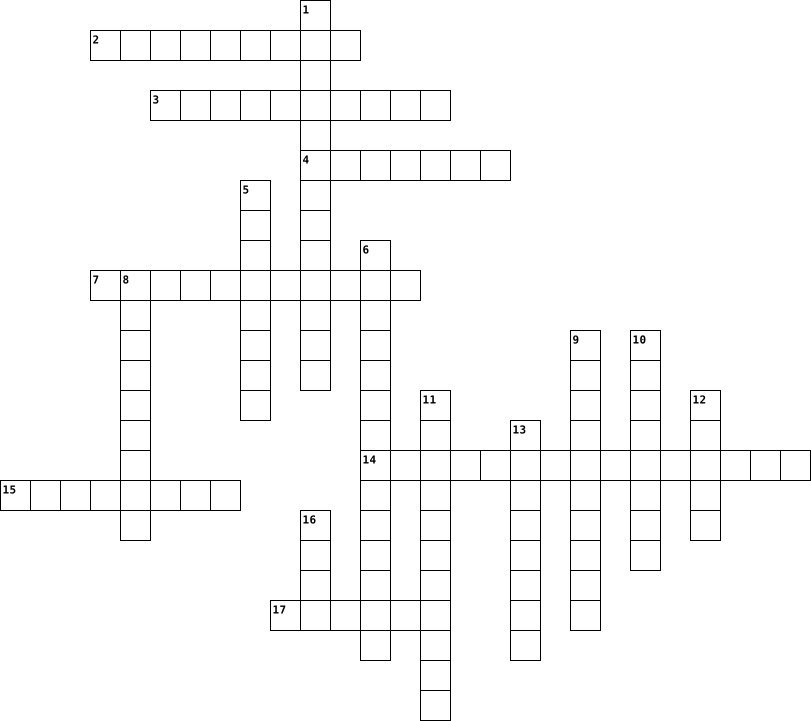
Across
- Cytotoxic T cells release these serine proteases that trigger programmed cell death
- Blood serum will contain what type of antibiodies
- B cells have receptors on their surface that react directly with antigens (pathogens) in blood etc. This gives rise to what biological cell process
- Class 2 MHC proteins s are released by what type of cell
- Antibodies are also called what
- Does antibody concentration increase or decrease after second exposure to a specific antigen?
- A second exposure of the antigen stimulates what cells, resulting in a rapid response to produce plasma cells and cytotoxic t cells
Down
- This type of specific immune response defends against intracellular pathogens and cancers
- Immune system containing 3rd line of defence
- This is the name of pathogen inactivation via antibodies where the antibodies block viral binding sites and coats bacterial toxins
- What type of T cell interacts/ stimulates with B cells
- What type of linkages bind the heavy and light chains of proteins on antibodies together?
- Specific immune response involving B cells is BLANK mediated
- B and T cells are also known as what
- True or false- b and T cell response only occur at different times
- Differentiates into macrophages and dendritic cells
- True or false: Each B cell is specific for a particular antigen
17 Clues: Antibodies are also called what • B and T cells are also known as what • Immune system containing 3rd line of defence • Blood serum will contain what type of antibiodies • Differentiates into macrophages and dendritic cells • What type of T cell interacts/ stimulates with B cells • Class 2 MHC proteins s are released by what type of cell • ...
Untitled4 2024-02-13

Across
- mucosa-associated lymphoid tissue
- An organ that is part of the lymphatic system, in which T lymphocytes grow and multiply.
- dense masses of lymphocytes and macrophages
- A thin tube that carries lymph (lymphatic fluid) and white blood cells through the lymphatic system.
- small lumps of tissue that contain white blood cells, which fight infection
- The clear, yellowish, fluid part of the blood that carries the blood cells.
- an interconnected system of valved, tubular structures that are lined by a combination of epithelial and smooth muscle cells.
- the main vessel of the lymphatic system
Down
- any large lymph vessel that forms from the convergence of many efferent lymph vessels
- tiny vessels found in the tissues of most organs in your body.
- empty lymph fluid into the venous system
- two round, fleshy masses in the back of your throat (pharynx)
- Fluid found in the spaces around cells.
- a clear-to-white fluid made of: White blood cells, especially lymphocytes, the cells that attack bacteria in the blood and body tissues.
- form a single cell layer that lines all blood vessels and regulates exchanges between the bloodstream and the surrounding tissues.
- a bacterium, virus, or other microorganism that can cause disease
- makes lymphocytes, filters the blood, stores blood cells, and destroys old blood cells.
17 Clues: mucosa-associated lymphoid tissue • Fluid found in the spaces around cells. • the main vessel of the lymphatic system • empty lymph fluid into the venous system • dense masses of lymphocytes and macrophages • two round, fleshy masses in the back of your throat (pharynx) • tiny vessels found in the tissues of most organs in your body. • ...
A&PII- Wallings CH.17 2026-01-22

Across
- Decreased WBC count
- Red blood cell
- Cell-to-cell immune signaling proteins
- Plasma protein converted to fibrin
- High platelet count
- Connective tissue composed of cells and plasma
- Yellow pigment from heme breakdown
- Stem cell that gives rise to all blood cells
- Temporary platelet aggregation
- Another term for hematocrit
- Insoluble protein forming the clot mesh
- Oxygen-carrying protein in RBCs
- Protein portion of hemoglobin
- Platelet cells
- Process that stops bleeding
- Iron-storage complex
- Condition marked by low hemoglobin or RBC count
- Movement toward chemical signals
- Large platelet-producing cell
- Final shared portion of the coagulation cascade
- Enzyme that dissolves clots
- Reflex contraction of blood vessels
- Signaling proteins that regulate blood cell production
- Hemoglobin bound to oxygen
- Most abundant plasma protein
- Traveling clot in the bloodstream
- White blood cell
- Formation of blood cells
- White blood cells responsible for antibody production
- Substance that prevents clotting
- Leukocytes that become macrophages
- Blood type that can donate to all
- Coagulation pathway initiated by tissue damage
- Iron-transport protein
- Granulocytes that combat parasites
- Rupture of red blood cells
- Coagulation pathway initiated inside blood
- Cell fragments involved in clotting
- Cancer of blood-forming tissues
- White blood cells that directly attack infected or abnormal body cells
- Most abundant granulocytes
- Antibacterial enzyme in tears and saliva
- Hemoglobin carrying CO₂
- Antibodies found in plasma
- Stem cells forming non-lymphoid blood cells
Down
- Yellowing of skin due to bilirubin
- Hormone that stimulates RBC production
- Cytokines between leukocytes
- Plasma proteins involved in immunity
- Low platelet count
- Excess RBC concentration
- Low blood oxygen level
- Increased WBC count
- Cells and cell fragments of blood
- Movement of WBCs out of blood vessels
- Stem cells giving rise to lymphocytes
- Genetic clotting disorder
- Thin layer of WBCs and platelets after centrifugation
- Clotting factor that starts extrinsic pathway
- Iron-containing pigment of hemoglobin
- Genetic RBC disorder
- Excessive bleeding
- Immature RBC
- Phagocytic immune cell
- Leukocytes involved in allergic responses
- Blood type that can receive from all
- Neutrophils with multilobed nuclei
- Iron-storage protein
- Proteins required for blood coagulation
- Antimicrobial peptides
- Breakdown of fibrin clots
- Red blood cell precursor
- Genetic condition leading to defective hemoglobin synthesis and anemia
- Enzyme that converts fibrinogen to fibrin
- Stem cells capable of developing into any cell type, including embryonic and extraembryonic tissues
- Blood group antigen system
- Hormone stimulating platelet production
- Formation of a clot within a vessel
- Plasma without clotting factors
- Percentage of RBCs in blood
- Clumping of red blood cells due to antibodies
- Testing donor and recipient blood compatibility
- Natural anticoagulant
- Proteins that bind specific antigens
- Anticoagulant protein that inhibits thrombin
- Discoloration caused by blood leaking into tissues
- Cells of adaptive immunity
87 Clues: Immature RBC • Red blood cell • Platelet cells • White blood cell • Low platelet count • Excessive bleeding • Decreased WBC count • High platelet count • Increased WBC count • Genetic RBC disorder • Iron-storage complex • Iron-storage protein • Natural anticoagulant • Low blood oxygen level • Phagocytic immune cell • Antimicrobial peptides • Iron-transport protein • Hemoglobin carrying CO₂ • ...
Adaptive Immunity 2024-03-20

Across
- Blood transfusions can be dangerous if the RBCs are considered _______
- molecule that triggers response
- Build up defense from memory cells
- Response with B Cells
- ______ T Cells that send cytokines
- Cell that recognizes specific antigens
- Bond that structures antibodies
- Proteins made by Plasma cells
Down
- Part of antigen digested
- APC that sounds like a part of a neuron
- Proteins that perforate pathogens in Humoral Response
- _________ lymphoid organs are where lymphocytes become activated
- What organisms have adaptive immune systems?
- Cells that secrete antibodies
- Type of antigens recognized by Cytotoxic T Cells
15 Clues: Response with B Cells • Part of antigen digested • Cells that secrete antibodies • Proteins made by Plasma cells • molecule that triggers response • Bond that structures antibodies • Build up defense from memory cells • ______ T Cells that send cytokines • Cell that recognizes specific antigens • APC that sounds like a part of a neuron • ...
Retina 2025-04-10

Across
- segment segment of rods that contains visual pigment
- where do bipolar, amacrine, ganglion, and inner plexiform cells synapse?
- cell layer absent in fovea
- rpe contains what?
- termination of photoreceptor cells
- myelination of ON starts in lamina_
- the rpe is closest to what layer
Down
- outer-blood retinal barrier
- outermost layer of retina
- off bipolar cells
- external limiting membrane is formed by…
- on bipolar cells
- what cells are mueller cells?
- almost entirely what kind of photoreceptors in fovea
- what arteries forms inner- blood retinal barrier
15 Clues: on bipolar cells • off bipolar cells • rpe contains what? • outermost layer of retina • cell layer absent in fovea • outer-blood retinal barrier • what cells are mueller cells? • the rpe is closest to what layer • termination of photoreceptor cells • myelination of ON starts in lamina_ • external limiting membrane is formed by… • what arteries forms inner- blood retinal barrier • ...
Cellular Organelles 2025-09-15

Across
- Term for any living thing.
- _____ cells do not have cells walls.
- Mitochondria produces ______ within the cell.
- What is in the middle of the nucleus?
- The ______ _______ protects the nucleus.
- Vacuoles mainly store _____ in plant cells.
- _____ cells have cell walls and cell membranes.
- Chloroplasts capture sunligth and us eit as energy; also known as _____
Down
- Protein packing
- Controls what goes in and out of the cell.
- Chef of proteins
- Fluid in the cell-only in plant cells.
- Animal cells do not have a cell wall.
- destroyer
- Control center
15 Clues: destroyer • Control center • Protein packing • Chef of proteins • Term for any living thing. • _____ cells do not have cells walls. • What is in the middle of the nucleus? • Animal cells do not have a cell wall. • Fluid in the cell-only in plant cells. • The ______ _______ protects the nucleus. • Controls what goes in and out of the cell. • ...
Cell Division 2026-05-14

Across
- the longest most active cycle
- the fifth phase of mitosis
- the first stage of mitosis
- cell growth that is the source cancer
- 2nd in interphase
- how many cells are at the ending of mitosis
- the complete separation into 2 daughter cells
Down
- 4 genetically different haploid cells
- the third phase of mitosis
- the second phase of mitosis
- cancer cells go here to die
- how many cells are at the ending of meiosis
- 2 Genetically identical daughter cells
- Main goal during Interphase
- contains only a single set of chromosomes
15 Clues: 2nd in interphase • the third phase of mitosis • the fifth phase of mitosis • the first stage of mitosis • the second phase of mitosis • cancer cells go here to die • Main goal during Interphase • the longest most active cycle • 4 genetically different haploid cells • cell growth that is the source cancer • 2 Genetically identical daughter cells • ...
Cell Crossword 2016-02-03

Across
- This lens should never be used with the coarse adjustment lens.
- Robert Hooke observed this under his microscope and saw cells that were no longer alive.
- All _____________ are composed of cells.
- What is the part you place the slide on?
- _____________ is the thick fluid region of the cell that allows the cell to keep its shape.
- There are three to four that allow you to observe things at different magnification.
- This scientist observed cells first when he looked at some dead bark under his microscope.
- The ______________ is a thin layer that surrounds the nucleus and controls what enters and exits the nucleus.
- This is used to focus the medium and low lenses.
- Located under the stage, brings in light to allow specimen to be observed.
- A widely accepted explanation of the relationship between cells and living things.
- This form the parts of an organism and carry out it's functions.
- This is the lowest setting of magnification used to observe things.
- This is used to focus on something when using the high power lens.
- An organelle that breaks down large pieces of food into smaller pieces.
- Leeuwenhoek named the single celled organisms he observed this, which means little animals.
- This magnification setting can zoom in 100 times.
- ______________ converts energy from food into energy the cell can use to carry out it's functions.
- All cells come from ___________ cells.
- This scientist observed the first living cells under his microscope.
- This organelle produces proteins.
Down
- An organelle found just inside the cell membrane and contains all of our DNA.
- The largest part of a plant cell that stores water, food and other materials is the ______________.
- This organelle prepares and distributes proteins through the cell.
- This scientist concluded that all animals are made up of cells.
- This controls the amount of light that reaches the slide.
- This organelle carries ribosomes from one end of the cell to the other.
- This scientist proposed that all cells come from other previously existing cells.
- This organelle is only found in plant cells and captures energy from sunlight and converts it into energy the cell can use.
- Main controls center of a cell that makes sure all the organelles are properly functioning is the ______________.
- These keep the slide from slipping.
- You should use both ____________ to carry a microscope.
- A thin layer that surrounds plant and animal cells and controls what enters and leaves a cell is called the _____________.
- Cells are the ________________ of structure and function in living things.
- A rigid organelle that surrounds a plant cell is called the __________.
- This part of a microscope rotates so that different lenses can be used to examine the slide.
- This is used to support the whole microscope.
- This is used to carry the microscope, it supports the body tube and stage.
- After much observing this scientist concluded that all plants are made up of cells.
- this part connects the eyepiece and the objective lenses.
40 Clues: This organelle produces proteins. • These keep the slide from slipping. • All cells come from ___________ cells. • All _____________ are composed of cells. • What is the part you place the slide on? • This is used to support the whole microscope. • This is used to focus the medium and low lenses. • This magnification setting can zoom in 100 times. • ...
Cell Crossword 2016-02-04

Across
- This scientist proposed that all cells come from other previously existing cells.
- This magnification setting can zoom in 100 times.
- This is used to carry the microscope, it supports the body tube and stage.
- Cells are the ________________ of structure and function in living things.
- The ______________ is a thin layer that surrounds the nucleus and controls what enters and exits the nucleus.
- _____________ is the thick fluid region of the cell that allows the cell to keep its shape.
- A widely accepted explanation of the relationship between cells and living things.
- This is used to focus the medium and low lenses.
- this part connects the eyepiece and the objective lenses.
- A rigid organelle that surrounds a plant cell is called the __________.
- An organelle that breaks down large pieces of food into smaller pieces.
- This form the parts of an organism and carry out it's functions.
- What is the part you place the slide on?
- This organelle is only found in plant cells and captures energy from sunlight and converts it into energy the cell can use.
- This part of a microscope rotates so that different lenses can be used to examine the slide.
- This lens should never be used with the coarse adjustment lens.
- ______________ converts energy from food into energy the cell can use to carry out it's functions.
- This scientist observed cells first when he looked at some dead bark under his microscope.
- All _____________ are composed of cells.
Down
- An organelle found just inside the cell membrane and contains all of our DNA.
- This controls the amount of light that reaches the slide.
- Robert Hooke observed this under his microscope and saw cells that were no longer alive.
- All cells come from ___________ cells.
- This is used to focus on something when using the high power lens.
- Leeuwenhoek named the single celled organisms he observed this, which means little animals.
- This is used to support the whole microscope.
- There are three to four that allow you to observe things at different magnification.
- Located under the stage, brings in light to allow specimen to be observed.
- This organelle carries ribosomes from one end of the cell to the other.
- This scientist concluded that all animals are made up of cells.
- The largest part of a plant cell that stores water, food and other materials is the ______________.
- A thin layer that surrounds plant and animal cells and controls what enters and leaves a cell is called the _____________.
- This organelle prepares and distributes proteins through the cell.
- These keep the slide from slipping.
- This organelle produces proteins.
- After much observing this scientist concluded that all plants are made up of cells.
- This is the lowest setting of magnification used to observe things.
- This scientist observed the first living cells under his microscope.
- You should use both ____________ to carry a microscope.
- Main controls center of a cell that makes sure all the organelles are properly functioning is the ______________.
40 Clues: This organelle produces proteins. • These keep the slide from slipping. • All cells come from ___________ cells. • What is the part you place the slide on? • All _____________ are composed of cells. • This is used to support the whole microscope. • This is used to focus the medium and low lenses. • This magnification setting can zoom in 100 times. • ...
Cell Vocabulary 2021-09-14

Across
- protective, flexible barrier that controls what goes in and out of cell
- the arrangement of parts in an organism
- deoxyribonucleic acid, a molecule that is present in all living cells and that contains information that determines traits
- describes the basic characteristic of all cells and organisms
- structures within a cell that have special functions to keep the cell working
- an organelle found in plant and algae cells where photosynthesis occurs
- where genetic material are stored and controls the cells growth and reproduction
Down
- one of the structures in the nucleus that are made DNA and protein
- gel like liquid inside a cell; helps cell maintain shape and is about 80% water
- the smallest functional and structural unit of all living things
- the site of cellular respiration, which releases energy for use by the cell
- a fluid filled vesicle food, water and waste. plant cells have a large central vacuole that stores water
- the special, normal or proper activity of an organ or part
- a system of ideas that explains many related observations that is supported by a body of evidence acquired by scientific investigation
- rigid structure that surrounds the cell membrane in plant cells; provide structure and support
- cells with a nucleus
- cells without a defined nucleus; usually smaller than eukaryote cells
17 Clues: cells with a nucleus • the arrangement of parts in an organism • the special, normal or proper activity of an organ or part • describes the basic characteristic of all cells and organisms • the smallest functional and structural unit of all living things • one of the structures in the nucleus that are made DNA and protein • ...
Cell organelle crossword 2017-12-08

Across
- The organelle that creates ribosomes.
- The outer layer of a plant or prokaryotic cell that helps protect the cell.
- Produces proteins for the cell.
- The liquid inside the cell membrane where organelles float in.
- Stores material and vacuums up the dirty things and puts them in a bag. Only in plant cells.
- A part of the cell membrane that helps with attachment.
- This organelle helps with cell division.
- Small circular pieces of DNA. Only in prokaryotic cells.
- Small protein chains that hold the cell together.
- Stores material and vacuums up the dirty things and puts them in a bag. Only in animal cells.
- Network that transports lipids to cell membrane.
Down
- Network that transports proteins.
- A layer on prokaryotic cells that help with attachment, store nutrients, and protect the cell.
- Center of prokaryotic cells. DNA is here.
- Helps capture sunlight for photosynthesis. Only in plant cells.
- Makes lysosomes.Packages proteins and ship them out.
- The DNA is in this organelle
- A whip-like tail that helps the cell move.
- This organelle creates ATP for the cell.
- Breaks down food molecules and dead or injured cells.
- A layer on the cell that lets things in and out the cell.
21 Clues: The DNA is in this organelle • Produces proteins for the cell. • Network that transports proteins. • The organelle that creates ribosomes. • This organelle helps with cell division. • This organelle creates ATP for the cell. • Center of prokaryotic cells. DNA is here. • A whip-like tail that helps the cell move. • Network that transports lipids to cell membrane. • ...
Excel C 2012-12-05

Across
- Keyboard shortcut that copies everything in the excel file
- The size of charecters, measured in points
- Gray box that appears above each worksheet; identifies the column letter
- cell reference that combines both absolute & relitive cell addressing
- Oppisite of the MAX function
- Determines How The Label And Value Look
- The Placement Of Cell Contents In Relation To A Cells Edges
- Combine cells to make one big cell
- 1/72nd of an inch
- The typeface or design of a set of charecters
- Finds the largest number in a range of cells
- Predisigned combinations of formats based on themes that can be applied to selected cells to enhance the cook of the worsheet
- Predesigned combinations of formats
- Automatically resizes the column to accommodate the widest entry in the column
Down
- Does not include a dollar sign but is useful for some types of accounting data
- When applied changes format to data if the data meets the conditions you set
- Adds Dollar Signs And 2 Decimal Places
- Determines the number of cells in a range
- Function that rounds a value to a specified decimal place
- Keyboard shortcut that copies a cell in Excel
- Adds the values in a range of cells then divides by the number of cells
21 Clues: 1/72nd of an inch • Oppisite of the MAX function • Combine cells to make one big cell • Predesigned combinations of formats • Adds Dollar Signs And 2 Decimal Places • Determines How The Label And Value Look • Determines the number of cells in a range • The size of charecters, measured in points • Finds the largest number in a range of cells • ...
Antibody ID Techniques 2014-02-11

Across
- Antigens that are neutralized in serum due to being soluble
- Providing an antibody with its associated antigen in conditions where they will attach
- Type of reaction in autocontrol that can sometimes be seen with recent transfusions
- Type of antibody that reacts with the patient's own cells
- P1 being soluble in pigeon egg whites would be an example of ___________ the antibody
- Mixture of DTT and Ficin/Papain
- For Rh, MNS, Duffy, and Kidd you must have _________ cells to rule them out
- Those pesky_____!
- Type of cells that ALWAYS work to rule out antibodies
- Blood Bank standards organization and major accrediting association
- A chemical that denatures Kell system antigens
- The enzyme used most in the One-stage enzyme treatment
Down
- Antigen group destroyed by trypsin
- Treating antibody-coated cells to disrupt the antigen-antibody bond
- Type of anitbody that reacts with donor cells
- Enzyme used most commonly in treated cells
- How Rh, Lewis, Kidd, P1, I, and ABO antigen reactions are affected by enzymes
- How MNS, Duffy, XGa, and Chido and Rogers antigen reactions are affected by enzymes
- How many positive and negative cells you need to rule out each possible antibody detected
- How Kell, Lutheran, and sometimes s antigens are affected by enzzymes
20 Clues: Those pesky_____! • Mixture of DTT and Ficin/Papain • Antigen group destroyed by trypsin • Enzyme used most commonly in treated cells • Type of anitbody that reacts with donor cells • A chemical that denatures Kell system antigens • Type of cells that ALWAYS work to rule out antibodies • The enzyme used most in the One-stage enzyme treatment • ...
Biology Module 7a 2014-06-25

Across
- A rigid structure on the outside of certain cells, usually plant and bacteria cells
- Non-membrane bounded organelles responsible for protein synthesis
- An organelle composed of an extensive network of folded membranes that performs several tasks within a cell
- The removal of soluble waste materials
- The transport of dissolved substance into cells
- The removal of nonsoluble waste materials
- The semipermeable between the cell contents and either the cell wall or the cell's surroundings
- The release of biosyntesized substances
- The organelle in animal cells responsible for hydrolysis reactions that break down proteins, polysaccharides, disaccharides, and some lipids
- the organelles in which nutrients are converted to energy
- The breakdown of absorbed substances
Down
- The study of cells
- Producing more cells
- Maintaining the status quo
- ER that is dotted with ribosomes
- The breakdown of food molecules with a release of energy
- Organelles that store starches or oils
- Substances in which at least one atom has an imbalance of protons and electrons
- the motion of cytoplasm in a cell that results in a coordinated movement of the cell's contents
- The thin film between the cell walls of adjacent plant cells
- ER that has no ribosomes
- A jellylike fluid inside the cell in which the organelles are suspended
22 Clues: The study of cells • Producing more cells • ER that has no ribosomes • Maintaining the status quo • ER that is dotted with ribosomes • The breakdown of absorbed substances • Organelles that store starches or oils • The removal of soluble waste materials • The release of biosyntesized substances • The removal of nonsoluble waste materials • ...
Organ Functions 2021-10-15

Across
- marrow, manufactures bone marrow stem cells and other substances, which in turn produce blood cells
- helps you inhale and exhale
- controls your metabolism, produces T4 (Thyroxine) & T3 (Triiodothyronine), and tells the body's cells how much energy to use
- protect good bacterias in the gut
- creates enzymes which help break down sugars, fats, and starches
- filters blood
- fights germs in blood, controls blood cells, filters blood, and removes old or damaged red blood cells
- holds and breaks down food
- and Bile ducts, stores bile and allows bile to go from the liver and gallbladder into the small intestine where it helps digest fats in food
- pumps blood
- makes white blood cells called T lymphocytes (T cells) which helps to fight against infections
Down
- air from the lungs
- expand to store urine
- carry food and liquid from your mouth to your stomach
- house and release eggs. It also produces hormones like estrogen, progesterone, and testosterone.
- filters waste and toxic substances out of the body
- intestines, absorb water and salts from the material that has not been digested as food and get rid of any waste products left over
- intestines, breaks down food from the stomach and absorbs much of the nutrients from the food
- helps us breath
- makes sperm
20 Clues: pumps blood • makes sperm • filters blood • helps us breath • air from the lungs • expand to store urine • holds and breaks down food • helps you inhale and exhale • protect good bacterias in the gut • filters waste and toxic substances out of the body • carry food and liquid from your mouth to your stomach • creates enzymes which help break down sugars, fats, and starches • ...
Cell Biology 2022-03-31

Across
- An organelle that makes proteins
- Holds water and juice in plant cells
- The organelle in the cell that holds DNA
- The jellylike materials inside the cell
- The first person to look at cork cells under microscope
- A folded membrane inside the cell with ribosomes on it
- A type of cell that contains a nucleus
- A type of cell without a nucleus
- The flexible boundary around all cells
- The energy source of photosynthesis
- A group of organs working together to perform a function
- Small functional structures inside the cells
- First person to look at small living organisms using a microscope
Down
- Lipid factory of the cell
- Six carbon compounds produced during photosynthesis
- Cell boundary found in plants cells only
- A group of tissues working together to perform a function
- A group of cells working together to perform a function
- Organisms that cannot make their own food
- The only type of sugar cells can use for energy
- A gas produced as a result of photosynthesis
- A pigment used by plants to absorb mostly red and violet wavelengths
- Fats, oils, and waxes
- A gas needed for photosynthesis to occur
- Organelles that with enzyme that destroy cell's garbage
- Organisms that make their own food
26 Clues: Fats, oils, and waxes • Lipid factory of the cell • An organelle that makes proteins • A type of cell without a nucleus • Organisms that make their own food • The energy source of photosynthesis • Holds water and juice in plant cells • A type of cell that contains a nucleus • The flexible boundary around all cells • The jellylike materials inside the cell • ...
Unit 3 Bio Terms 2022-10-19

Across
- an organism or cell having only one complete set of chromosomes
- organism whose cells contain a nucleus
- consists of G1, S, and G2 phases
- division of the cytoplasm
- Process by which a cell divides into two new daughter cells
- type of cell division that results in four daughter cells
- first and longest phase of mitosis
- reproductive cells
- organism or cell having two sets of chromosomes or twice the haploid number
- how many chromosomes does a human skin cell have?
- After the chromosome seperates, the cell seals off, Final Phase of Mitosis.
- disorder in which some of the body's cells lose the ability to control growth
Down
- the two new cells that result from mitosis and cytokinesis
- A complex molecule containing the genetic information that makes up the chromosomes.
- chromosomes line up in the middle of the cell
- A form of asexual reproduction in single-celled organisms by which one cell divides into two cells of the same size
- phase of mitosis in which the chromosomes separate and move to opposite ends of the cell
- Process in which homologous chromosomes exchange portions of their chromatids during meiosis.
- The variety of different types of genes in a species or population.
- division in which the nucleus divides into nuclei containing the same number of chromosomes
20 Clues: reproductive cells • division of the cytoplasm • consists of G1, S, and G2 phases • first and longest phase of mitosis • organism whose cells contain a nucleus • chromosomes line up in the middle of the cell • how many chromosomes does a human skin cell have? • type of cell division that results in four daughter cells • ...
Immunology Terminology 2023-09-29

Across
- general designation of many of the different cytokines
- Membrane attack complex
- Regulatory cells that suppress immune response
- Pattern recognition receptors
- autoimmune disease where autoantibodies form immune complexes
- Human immunodeficiency virus
- White blood cells with multi-lobe nuclei
- Name of MHC gene complex and proteins in humans
- a key transcription factor that is required to bind to the IL-2
- cell wall component of gram negative bacteria
- Immunoglobulin that is expressed on B cell
- A cytokine that is produced by macrophages and T-cells it is highly pro-inflammatory
- Thymus-derived lymphocyte that are comprised of two different subsets
- short DNA sequences flanking Ig and TCR, V, D and J gene segments
- protein family to which antibodies and B-cell receptors belong
Down
- Secreted by plasma cells
- Cluster of differentiation
- The Ag receptor on T cells
- Immunoreceptor tyrosine-based activation motifs
- histocompatibility presentation of peptide antigens to T cells
- Repeating molecular pattern on microbes
- Granular lymphocyte
- Intracellular adhesion molecules-critical in binding lymphocytes
- family name for cytokines that help cells to resist viral infections
- Recognize PAMP and help initiate immune response
- this is an essential gene for Ig and TCR gene rearrangement
26 Clues: Granular lymphocyte • Membrane attack complex • Secreted by plasma cells • Cluster of differentiation • The Ag receptor on T cells • Human immunodeficiency virus • Pattern recognition receptors • Repeating molecular pattern on microbes • White blood cells with multi-lobe nuclei • Immunoglobulin that is expressed on B cell • cell wall component of gram negative bacteria • ...
Digestive System Crossword 2024-05-26

Across
- What kind of cells release digestive enzymes in the pancreas?
- Bile is secreted because of ___________.
- What do D cells secrete?
- Bile __________ fat to help in its digestion.
- How many types of gastric exocrine secretory cells are there?
- The __________ side is towards the capillaries.
- What is the active form of chymotrypsinogen called?
- What kind of cells release sodium bicarbonate in the pancreas?
- The body and the fundus excrete ________ mucosa
- What do ECL cells secrete?
- The breakdown of fats starts in the __________ intestine.
- The biliary system consists of the gallbladder and the...
- The 3 sections of the stomach are the body, antrum, and...
Down
- The small ___________ replaces its lining every 3 days.
- What are the absorbable units of carbohydrates?
- The 2 primary motor activities in the digestive system are segmentation and...
- Where are endocrine secretions secreted into?
- Where does the breakdown of proteins start?
- Where are exocrine secretions secreted into?
- What do G cells secrete?
- What is the active form of trypsinogen called?
- The __________ side is towards the lumen.
- What is the largest segment of the small intestine?
- Where does the breakdown of carbohydrates start?
- What gives feces its brown color?
- What do mucous cells secrete?
26 Clues: What do D cells secrete? • What do G cells secrete? • What do ECL cells secrete? • What do mucous cells secrete? • What gives feces its brown color? • Bile is secreted because of ___________. • The __________ side is towards the lumen. • Where does the breakdown of proteins start? • Where are exocrine secretions secreted into? • Where are endocrine secretions secreted into? • ...
Cell Division Review Quiz 2024-04-17

Across
- nuclei forms in both poles as new nuclear membrane form around the nuclei from the remnants of the parent cell
- union between the egg cell and the sperm cell
- special structures in the centromere where spindle fibers attach to
- allows shuffling or exchange of genetic material and produces variation in offspring
- process by which a single parent cell splits to form new cells, known as daughter cells
- monomers that form the DNA and RNA
- DNA replication happens in this phase
- composed of the G1, S, and G2 phases and is also called the 'resting phase'
- cells that undergo meiosis and are also called sexcells
- duplicated chromosomes separate and move toward the opposite ends
Down
- found inside the cell and are called "little organs"
- genetic material found inside the nucleus that gets replicated
- nuclear envelope breaks down, the nucleolus disappears, and chromatin fibers condense, coil and become shorter and thicker
- chromosomes randomly line up along the equator
- division of the cytoplasm to produce two daughter cells
- cells that undergo mitosis and are also called body cells
- responsible for the formation of gametes - egg and sperm
- ensures that the number of chromosomes is maintained
- cell division that involves body cells
- formation of chromosome pairs where they lie side by side
20 Clues: monomers that form the DNA and RNA • DNA replication happens in this phase • cell division that involves body cells • union between the egg cell and the sperm cell • chromosomes randomly line up along the equator • found inside the cell and are called "little organs" • ensures that the number of chromosomes is maintained • ...
Biology Terms 2024-11-20

Across
- A single set of DNA with no pairs and 23 chromosomes
- Large and complex Cells with a nucleus, often plant and animal cells
- The protective layer of the cell
- A group of three nucleotides
- Some things can cross the membrane, and others can't
- Condensed strands of DNA
- An organism that gets its energy from the sun
- The main pigment used in plants
- Messenger RNA
- A process in cellular respiration that uses oxygen
- the organelle that is responsible for making proteins
- A set of DNA with 23 pairs and 46 chromosomes
- Adenosine Triphosphate, the basic form of energy in living organisms
- Germ, egg and sperm cells
- The process of creating more of the same cells
Down
- Powerhouse of the cell
- The process that converts sunlight into glucose
- Small, simple cells with no nucleus, often bacteria cells
- Sugar that is made during photosynthesis
- A carnivorous organism
- the organelle responsible for photosynthesis
- The process that turns one molecule into two molecules of pyruvate
- Water-loving, in this case, the water-loving part of the phospholipid
- The first part of the process of turning DNA into protein
- A type of reproduction that doesn't require a partner
- Light absorbing molecules in plant cells
26 Clues: Messenger RNA • Powerhouse of the cell • A carnivorous organism • Condensed strands of DNA • Germ, egg and sperm cells • A group of three nucleotides • The main pigment used in plants • The protective layer of the cell • Sugar that is made during photosynthesis • Light absorbing molecules in plant cells • the organelle responsible for photosynthesis • ...
Connective 2020-09-14

Across
- Area of the body that contains elastic cartilage
- Tissue that is tightly packet with collagenous fiber with fibroblasts
- White fibers
- Spaces around cartilage cells
- Type of blood cell that transports oxygen & carbon dioxide
- Fibers that are short: thing and delicate; composed of protein
- Connective tissue with 3 types of cells suspended in plasma
- Area that contains elastic cartilage
- Most common type of cartilage; gristle
- Most rigid connective tissue
- Intracellular material is composed mostly of a ground substance and these
- Root word means to eat or an eater
- area of the body where you find fibrocartilage
- Type of blood cell that fights infection
Down
- Blood cells that aid in clotting
- Material found between connective tissue cells
- Cartilage cells
- Found between the backbone and knee
- Connective tissue that occupies the space within the bone
- made of fibrous connective tissue
- A bone cell
- Cells that engulf foreign substances
- canals found in bones
- Adipose tissue may be found under this organ; largest of the body
- Cells that form various fibers of connective tissue
- Most widely distributed of all connective tissue; AKA areolar
- substance stored by adipose tissue
- A specialized form of loose connective tissue; stores fat
- Yellow fibers; thin
29 Clues: A bone cell • White fibers • Cartilage cells • Yellow fibers; thin • canals found in bones • Most rigid connective tissue • Spaces around cartilage cells • Blood cells that aid in clotting • made of fibrous connective tissue • substance stored by adipose tissue • Root word means to eat or an eater • Found between the backbone and knee • Cells that engulf foreign substances • ...
Classifying Living Things 3.2 2025-09-02

Across
- The full name of DNA.
- The natural home of an organism.
- The science of classifying organisms.
- specialization Cells developing different jobs.
- Tissue that helps with movement.
- The two-name system for naming species.
- Molecules that build and repair body tissues.
- Tissue that covers and protects the body.
- Large molecules like proteins, lipids, and carbohydrates.
- An organism made of only one cell.
- The cell’s “control center.”
- How plants make food using sunlight.
- Plant stem cells that help with growth.
- Changes in the environment that cause a response.
- The jelly-like fluid inside cells.
- Tissue that carries messages in the body.
- Organisms that must eat other things for food.
Down
- The full name of RNA.
- A key used to identify organisms by choosing between two options.
- Cells that can become different types of cells.
- An organism made of many cells.
- Tissue that supports and connects parts of the body.
- The smallest unit of life.
- Molecules that carry genetic information (DNA and RNA).
- Small structures that make proteins.
- Organisms that make their own food.
- Fats and oils used for energy storage.
- The scientist who created binomial nomenclature.
- Keeping the body’s internal balance stable.
- Sugars and starches that provide quick energy.
30 Clues: The full name of RNA. • The full name of DNA. • The smallest unit of life. • The cell’s “control center.” • An organism made of many cells. • The natural home of an organism. • Tissue that helps with movement. • An organism made of only one cell. • The jelly-like fluid inside cells. • Organisms that make their own food. • Small structures that make proteins. • ...
Chapter 4 Extra Credit Paige Allen 2025-10-23

Across
- 1839 discovered plant cells
- smallest unit that can carry out all the processes of life
- 1855 determined cells from pre-existing cells
- lack a nucleus and membrane-bound organelles contain a cell membrane, chromatin (DNA), and ribosomes
- Directs the cell's activities and stores DNA in the form of chromatin
- specialized structure in a cell
- Only the fluid part of the cell
- have a nucleus and a membrane-bound
- 1839 discovered animal cells
- Acts as a barrier between the inside and outside of the cell
- Inner membrane of the mitochondria
- states that the phospholipid bilayer behaves like a fluid than it behaves like a solid
Down
- is a double membrane that surrounds the nucleus
- Hooke 1665 discovered cells in slices of cork
- 1673 fisrt to observe living cells
- Contains three statements about cells
- Harvest energy from organic compounds and transfer it to ATP
- What is the size limited by?
- makes ribosomes and RNA
- Builds lipids, participates in detoxification transports lipids to the Golgi Body
- Fluid inside of mitochondria
- is sometimes free-floating in the cytosol or contained in a nucleus
- Region that includes the fluid, the cytoskeleton, and all of the organelles except the nucleus
23 Clues: makes ribosomes and RNA • 1839 discovered plant cells • What is the size limited by? • Fluid inside of mitochondria • 1839 discovered animal cells • specialized structure in a cell • Only the fluid part of the cell • 1673 fisrt to observe living cells • Inner membrane of the mitochondria • have a nucleus and a membrane-bound • Contains three statements about cells • ...
Sensory Organs 2020-04-08

Across
- cells that synapse with photoreceptors
- gland that secretes oil in the eyelid
- Ear flap made of elastic cartilage.
- collagenous white of the eye
- the optic disc is devoid of - cells, producing a blind spot
- Lingual papillae that do not contain taste buds.
- part of eye that admits light into the eye
- gland that produces tears
- Special microvilli on the apical surface of hair cells in the cochlea
- pigmented layer behind the retina
- Basal ends of olfactory cells project through which bone?
- Lingual papillae that houses most taste buds.
Down
- colored diaphragm that controls pupil size
- Ducts of the vestibular system that only detect angular acceleration
- The vestibule contains the sacule and the -.
- the ligament that supports the iris and lens
- During an ear infection, fluid accumulates in this cavity.
- gelatinous membrane in the inner ear that sits on top of the stereocilia of hair cells
- Olfactory cells specialized neurons that detect odor.
- Sebaceous gland that produces earwax.
- gelatinous membrane in the crista ampulla that holds the hair cells of the vestibular system
- Molecules must be dissolved in - to be tasted.
- The organ of - is the acoustic organ that converts vibrations to nerve impulses
- As The stapes vibrates against the - window as vibrations are collected in the inner ear.
24 Clues: gland that produces tears • collagenous white of the eye • pigmented layer behind the retina • Ear flap made of elastic cartilage. • gland that secretes oil in the eyelid • Sebaceous gland that produces earwax. • cells that synapse with photoreceptors • colored diaphragm that controls pupil size • part of eye that admits light into the eye • ...
Cancer Jumble 2021-09-18

Across
- an illness that someone has for a long time or one that goes away and keeps coming back
- basic building blocks of all living things
- any change in gene
- groups of abnormal cells that form lumps or growths
- the reappearance of cancer after it has been treated
- cancer of the bone marrow which creates blood cells
- take(living tissue or an organ an implant it in another part of the body or in another body
- a condition in which the body has a low number of red blood cells
- the largest organ of the body
Down
- a substance in red blood cells that carries oxygen through the blood to different parts of the body
- cancer that starts in the skin
- the use of drugs to destroy cancer cells
- a physician who specializes in the physical, emotional, and social health of children from birth through adolescence
- a type of cancer that forms from immature nerve cells
- a cancer that forms in the tissues of the retina
- another word for cancerous
- marrow a thick, spongy liquid inside the bones
- a cancer of the lymphatic system, which is part of the body's germ-fighting network
- an artificial limb
- just under your rib cage on the right side of your abdomen
20 Clues: any change in gene • an artificial limb • another word for cancerous • the largest organ of the body • cancer that starts in the skin • the use of drugs to destroy cancer cells • basic building blocks of all living things • marrow a thick, spongy liquid inside the bones • a cancer that forms in the tissues of the retina • groups of abnormal cells that form lumps or growths • ...
Connective 2021-09-18

Across
- Most rigid connective tissue
- substance stored by adipose tissue
- Found between the backbone and knee
- A bone cell
- White fibers
- Cells that form various fibers of connective tissue
- Spaces around cartilage cells
- Outer covering of the bone
- Fibers that are short: thing and delicate; composed of protein
- Adipose tissue may be found under this organ; largest of the body
- Most widely distributed of all connective tissue; AKA areolar
- Most common type of cartilage; gristle
- Type of blood cell that fights infection
- canals found in bones
- Intracellular material is composed mostly of a ground substance and these
- Material found between connective tissue cells
Down
- Yellow fibers; thin
- Blood cells that aid in clotting
- A specialized form of loose connective tissue; stores fat
- Connective tissue with 3 types of cells suspended in plasma
- made of fibrous connective tissue
- Area that contains elastic cartilage
- Root word means to eat or an eater
- Area of the body that contains elastic cartilage
- Cells that engulf foreign substances
- Cartilage cells
- area of the body where you find fibrocartilage
- Connective tissue that occupies the space within the bone
- Tissue that is tightly packet with collagenous fiber with fibroblasts
- Type of blood cell that transports oxygen & carbon dioxide
30 Clues: A bone cell • White fibers • Cartilage cells • Yellow fibers; thin • canals found in bones • Outer covering of the bone • Most rigid connective tissue • Spaces around cartilage cells • Blood cells that aid in clotting • made of fibrous connective tissue • substance stored by adipose tissue • Root word means to eat or an eater • Found between the backbone and knee • ...
Cancer Related Words 2021-09-17

Across
- an artificial limb
- a condition in which the body has a low number of red blood cells
- a cancer of the lymphatic system, which is part of the body's germ-fighting network
- cancer that starts in the skin
- just under your rib cage on the right side of your abdomen
- groups of abnormal cells that form lumps or growths
- take (living tissue or an organ) and implant it in another part of the body or in another body
- a physician who specializes in the physical, emotional, and social ealth of children from birth through adolescene
- a substance in red blood cells that carries oxygen through the blood to different parts of the body
Down
- the use of drugs to destroy cancer cells
- cancer of the bone marrow which creates blood cells
- another word for cancerous
- a type of cancer that forms from immature nerve cells
- any change in a gene
- an illness that someone has for a long time or one that goes away and keeps coming back
- basic building blocks of all living things
- marrow a thick, spongy liquid inside the bones
- the largest organ of the body
- the reappearance of cancer after it has been treated
- a cancer that forms in the tissues of the retina
20 Clues: an artificial limb • any change in a gene • another word for cancerous • the largest organ of the body • cancer that starts in the skin • the use of drugs to destroy cancer cells • basic building blocks of all living things • marrow a thick, spongy liquid inside the bones • a cancer that forms in the tissues of the retina • cancer of the bone marrow which creates blood cells • ...
Anatomy Vocab Ch. 3 Part 1 2016-09-27

Across
- shaped cells
- hairlike and moves debris away from the lungs
- muscle/specialized muscle of the heart
- carries oxygen and nutrients to the cells of the body and removes waste
- in the development of spindle fibers in cell division
- of a cell other than that of the nucleus
- from a high to low gradient without the use of ATP
- or narrow cells
- and protects various parts of the body and makes red and white blood cells
- genetic information in the form of genes
- tissue/fatty tissue
- transport/Movement of a substance against a concentrated gradient and needs ATP
- division/separation of two daughter cells
Down
- Gradient/When particles move from an area with a higher to a lower amount of particles
- mature cartilage cell
- the pore for a gap in junction between the cytoplasm of two adjacent cells
- of protein in the cytoplasm of many living cells which gives them shape
- semi-opaque, connective tissue
- membrane/Membrane of protein fibers separating epithelium from underlying tissue
- surface/The gap in the epithelial tissue
- various organelles are suspended
- structures in the nucleus that carry the hereditary factors
- unit of life
23 Clues: shaped cells • unit of life • or narrow cells • tissue/fatty tissue • mature cartilage cell • semi-opaque, connective tissue • various organelles are suspended • muscle/specialized muscle of the heart • of a cell other than that of the nucleus • surface/The gap in the epithelial tissue • genetic information in the form of genes • division/separation of two daughter cells • ...
Cell Structure 2019-01-15

Across
- The site of protein synthesis
- Controls what enters and leaves the cell
- Found in only plant and bacterial cells and provides strength to the cell
- The only type of cell which does not contain mitochondria
- The site of aerobic respiration that provides energy to the cell
- The only type of cell to contain chloroplasts
- A liquid substance in which chemical reactions occur
- Cells which have a circular strand of DNA not contained in a nucleus
- The structures that make up plant cell walls
- Small rings of DNA that may be found in bacterial cells
- The microscope with the lowest magnification and resolution (so is used to view larger objects)
- The type of electron microscope that produces 3D images
Down
- Cells that have the ability to differentiate throughout their lives
- The process in which cells become specialised for a particular function
- DNA in a cell is stored in this structure
- Contains cell sap to help keep the plant rigid
- The type of microscope used to view smaller objects such as mitochondria, ribosomes, chloroplasts and plasmids
- Cells which have a nucleus containing DNA
- The site of photosynthesis
- The process in which a cell divides to produce two identical daughter cells
- The type of electron microscope that produces 2D images detailing organelles
21 Clues: The site of photosynthesis • The site of protein synthesis • Controls what enters and leaves the cell • DNA in a cell is stored in this structure • Cells which have a nucleus containing DNA • The structures that make up plant cell walls • The only type of cell to contain chloroplasts • Contains cell sap to help keep the plant rigid • ...
CELL TOUR BIO161 2015-04-01

Across
- the region between the plasma membrane and nucleus
- Bacteria and Archaea have this type of cell
- a supporting structure that is formed by microtubules and microfilaments
- responsible of cell respiration (transforms sugars to ATP), has its own DNA
- a sac of digestive enzymes; in animal cells only
- organelle that makes proteins
- (initials) lacks ribosomes on its surface; makes membrane lipids, destroys toxic substances
- American biologist that provided evidence that mitochondria and chloroplasts within cells were at one time free living cells themselves
Down
- plants, animals, fungi and protists have this type of cell
- provide a force perpendicular to the plasma membrane to move the cell
- helps cell into a rowing motion parallel to the plasma membrane
- are the major component of the cell membrane
- regulate the entry and exit of molecules from the nucleus
- semifluid substance inside a cell
- only in animal cells; Help pull chromosome pairs apart to opposite ends of the cell
- Contains enzymes & pigments for Photosynthesis; Never in animal cells
- this region contains the DNA in prokaryotic cells
- carry genes
- contains most of the cell’s genes in eukaryotic cells
- (initials) has ribosomes attached to it; produces new membranes.
- an apparatus that modifies, sorts and packages proteins
21 Clues: carry genes • organelle that makes proteins • semifluid substance inside a cell • Bacteria and Archaea have this type of cell • are the major component of the cell membrane • a sac of digestive enzymes; in animal cells only • this region contains the DNA in prokaryotic cells • the region between the plasma membrane and nucleus • ...
CELL 2024-08-07

Across
- organelle containing digestive enzymes
- cells that have a nucleus and membrane-bound organelles
- kind of cell that does not have a nucleus
- scientist who first describes cells
- dark area inside the nucleus that stores materials that will be used to make ribosomes
- a large vesicle that stores enzymes or liquids
- organelle that break down sugar to produce energy
- sacs that contain materials in a eukaryotic cell
- scientific description of all living things in terms of cells
- a structure performing a specific function within a cell
- the cell of plants and algae have a hard _____ _____ made up of cellulose
- a group of similar cells that perform a common function
- organelles that make proteins
Down
- the cell's delivery system (abbr.)
- describe an organism that exists as a group of cells
- energy-converting organelle found in plant and algae cells
- the world's smallest cells
- the fluid inside a cell
- a combination of two or more tissues working together to perform a specific job in the body
- organelle that packages and transport materials out of the cell
- anything that can live independently
- the chemical control center of a cell
- substance that stores energy released by mitochondria
- a single ______ has everything necessary to carry out life's activities
- SYSTEM groups of organs working together to perform particular jobs in the body
- the cell's hereditary material
- barrier between the inside of a cell and its environment
27 Clues: the fluid inside a cell • the world's smallest cells • organelles that make proteins • the cell's hereditary material • the cell's delivery system (abbr.) • scientist who first describes cells • anything that can live independently • the chemical control center of a cell • organelle containing digestive enzymes • kind of cell that does not have a nucleus • ...
Cell-ebration: A Biochemical Block Party! 2024-09-05

Across
- Large storage organelle, especially prominent in plant cells.
- Organelle that detoxifies harmful substances and breaks down fatty acids.
- Molecule that stores and transfers energy within cells.
- Molecule that carries genetic instructions for the development and functioning of living organisms.
- Gel-like substance inside the cell where organelles are found.
- Biological catalyst that speeds up chemical reactions in cells.
- Structure that synthesizes proteins in the cell.
- Microtubule-organizing center important for cell division.
- Lacks ribosomes and synthesizes lipids.
- Organelle found in plant cells where photosynthesis occurs.
- Network of membranes involved in protein and lipid synthesis.
Down
- Process by which cells engulf large particles or other cells.
- Organelle that modifies, sorts, and packages proteins.
- Semi-permeable barrier that controls what enters and exits the cell.
- The movement of molecules from an area of high concentration to low concentration.
- Network of fibers that provides structural support to the cell.
- Organelle responsible for breaking down waste in the cell.
- Rigid structure surrounding plant cells, providing support and protection.
- Studded with ribosomes and helps in protein synthesis.
- Organelle known as the powerhouse of the cell.
- Organelle that contains the cell's genetic material.
- Diffusion of water through a selectively permeable membrane.
22 Clues: Lacks ribosomes and synthesizes lipids. • Organelle known as the powerhouse of the cell. • Structure that synthesizes proteins in the cell. • Organelle that contains the cell's genetic material. • Organelle that modifies, sorts, and packages proteins. • Studded with ribosomes and helps in protein synthesis. • Molecule that stores and transfers energy within cells. • ...
Cell-ebration: A Biochemical Block Party! 2024-09-05

Across
- Process by which cells engulf large particles or other cells.
- Organelle found in plant cells where photosynthesis occurs.
- Organelle responsible for breaking down waste in the cell.
- Organelle that detoxifies harmful substances and breaks down fatty acids.
- Studded with ribosomes and helps in protein synthesis.
- Structure that synthesizes proteins in the cell.
- Rigid structure surrounding plant cells, providing support and protection.
- Molecule that stores and transfers energy within cells.
- Biological catalyst that speeds up chemical reactions in cells.
- Gel-like substance inside the cell where organelles are found.
- Network of fibers that provides structural support to the cell.
- Diffusion of water through a selectively permeable membrane.
- Large storage organelle, especially prominent in plant cells.
- The movement of molecules from an area of high concentration to low concentration.
- membrane Semi-permeable barrier that controls what enters and exits the cell.
Down
- Organelle known as the powerhouse of the cell.
- Organelle that contains the cell's genetic material.
- Microtubule-organizing center important for cell division.
- Lacks ribosomes and synthesizes lipids.
- apparatus Organelle that modifies, sorts, and packages proteins.
- Network of membranes involved in protein and lipid synthesis.
- Molecule that carries genetic instructions for the development and functioning of living organisms.
22 Clues: Lacks ribosomes and synthesizes lipids. • Organelle known as the powerhouse of the cell. • Structure that synthesizes proteins in the cell. • Organelle that contains the cell's genetic material. • Studded with ribosomes and helps in protein synthesis. • Molecule that stores and transfers energy within cells. • ...
30 Term List Lymphatic System 2024-05-17

Across
- blood cancer in the bone marrow which causes an increase in WBC
- bone marrow disorder which causes an excessive production of RBC
- abnormal enlargement of the spleen
- malignant tumor coming from the soft cinnvective tissue
- infectious disease which causes an increased number of monocytes & lymphocytes
- inflammation of the lymph nodes
- malignant cancer affecting the lymph nodes/lymphatic tissue
- radiation therapy given at a distance
- kills or damages cells
- medication to kill or damage cells
- a yeast infection which can occur in warm/moist areas
- cell fragments that form clots to stop bleeding (platelets)
- red blood cells (RBC)
Down
- physician specializing in diagnosing/treating disorders of the lymphatic system
- nuclear medicine imaging test
- benign tumor formed by abnormal lymphatic vessels
- white blood cells (WBC)
- incident where the covering of the spleen is torn
- swelling of tissues due to an accumulation of fluid in tissues
- malignant tumor in epithelial tissue
- deficiency of red blood cells/hemoglobins
- bacteria that forms irregular groups reassembling grapes body/immune reaction
- protein in blood cells (Hgb)
- any disease process affecting the lymph node(s)
- blood cells production
- acquired immunodeficiency syndrome
- study of anything related to tumors/cancers
27 Clues: red blood cells (RBC) • blood cells production • kills or damages cells • white blood cells (WBC) • protein in blood cells (Hgb) • nuclear medicine imaging test • inflammation of the lymph nodes • abnormal enlargement of the spleen • medication to kill or damage cells • acquired immunodeficiency syndrome • malignant tumor in epithelial tissue • ...
Cell Types and Organelles 2022-11-30

Across
- Control center of the cell
- Hairlike structure
- A cellular structure involved in the process of cell division
- Thread-like structures located inside the nucleus of animal and plant cells
- Major components of the cytoskeleton
- Organelle in which amino acids are hooked together to make proteins
- Basic unit of life
- Material between the cell membrane and the nucleus
- A membrane which bounds the chief vacuole of a plant cell
- Separate the outer cell membranes of the plant cells
- Network of fibres forming the eukaryotic cells, prokaryotic cells and archaeans
- Organelle that breaks down food molecules to make ATP
Down
- Organelle that uses the energy of sunlight to make food
- Membrane-bound organelle occurring in the cytoplasm of eukaryotic cells
- Organelle that stores water and other material
- A membrane-bound cell organelle that contains digestive enzymes
- Solid rods made of globular proteins called actin
- Organelle that digests food particles, wastes, cell parts, and foreign invade
- Paired barrel-shaped organelles located in the cytoplasm of animal cells near the nuclear envelope
- Refers to a mixture of DNA and proteins that form the chromosomes found in the cells of humans and other higher organisms
- A spherical structure found in the cell's nucleus whose primary function is to produce and assemble the cell's ribosomes
21 Clues: Hairlike structure • Basic unit of life • Control center of the cell • Major components of the cytoskeleton • Organelle that stores water and other material • Solid rods made of globular proteins called actin • Material between the cell membrane and the nucleus • Separate the outer cell membranes of the plant cells • Organelle that breaks down food molecules to make ATP • ...
6.2 Cell Cycle and Mitosis 2025-01-08

Across
- plane Centre of the cells where chromosomes align during metaphase
- Process of producing genetically identical organisms using somatic cells
- Mitotic phase when chromosomes align at the centre of the cell
- Substance that strengthens the cell wall
- Small pieces of meristematic tissue used in culturing process
- Ability for body parts to divide by mitosis
- Two identical strands of DNA joined at the centromere of a chromosome
- Asexual reproduction of unicellular organism by mitosis
- Lab grown meat
- Structure that contracts in the middle of animal cells during cytokinesis
Down
- Shape of the cell as plasma membrane constricts in the middle of the cell during cytokinesis in animal cell
- Mitotic phase when sister chromatids separate and move to opposite poles
- Process of producing new plant cells without fertilisation
- Uncondensed form of chromosome
- Longest phase in cell cycle
- Undifferentiated cells that can be stimulated to form a variety of other specialised tissues
- Mass of undifferentiated tissue formed during culturing of plant cells
- Mitotic phase when nucleolus reappears and nuclear membrane reforms
- Structure formed from the vesicles that combine during cytokinesis in plant cell
- Cellular component that produces spindle fibre
- Process that occurs to the chromosomes during S phase
21 Clues: Lab grown meat • Longest phase in cell cycle • Uncondensed form of chromosome • Substance that strengthens the cell wall • Ability for body parts to divide by mitosis • Cellular component that produces spindle fibre • Process that occurs to the chromosomes during S phase • Asexual reproduction of unicellular organism by mitosis • ...
Mitosis Crossword Puzzle 2025-11-06

Across
- The basic unit of life; everything living is made up of these.
- The stage in the cell cycle when the cell grows and DNA is duplicated.
- The process of copying DNA before a cell divides.
- One of the two identical halves of a duplicated chromosome.
- Division of the cell’s cytoplasm at the end of mitosis.
- An organism made up of many cells.
- A living thing made up of one or more cells.
- Increase in size or number of cells, often via mitosis.
- The fiber network that helps separate chromosomes during cell division.
- Thread-like structures in the nucleus that carry genes.
Down
- One of the two cells resulting from mitosis.
- CELL The idea that every cell comes from a cell that already existed.
- MATERIAL The DNA or chromosomes that carry information for the cell.
- A form of cell reproduction in single-celled organisms.
- The region that holds two sister chromatids together.
- A group of similar cells that work together in a multicellular organism.
- The part of a cell that contains the chromosomes.
- The process by which a cell divides into two identical cells.
- The process of fixing or replacing damaged cells.
- The act of a cell splitting into two or more parts.
20 Clues: An organism made up of many cells. • One of the two cells resulting from mitosis. • A living thing made up of one or more cells. • The process of copying DNA before a cell divides. • The part of a cell that contains the chromosomes. • The process of fixing or replacing damaged cells. • The act of a cell splitting into two or more parts. • ...
Vocab 2023-12-08

Across
- refers to the complex of DNA RNA and protiens that make up the genetic material within the nucleus of a cell
- Structures found in the nucleus of cells that contain genetic information
- cells the result of two parent cells going through reproduction
- Cell any cell in the body that is not a reproductive cell
- Refers to the number of chromosomes in a cell
- chromosomes line up along the center of the cell forming a single line called the____________ plate
- The final stage of mitosis
- The sister chromatids of each chromosomes separate and are pulled towards oppisite ends of the cell by the spindle fibers
- Reproduction involes the fusion of specialized cells called gametes from two parents
Down
- Refers to the young or progeny that are produced as a result of reproduction
- Small cylindrical structures found in animal cells that play a role in cell division
- The replicated copies of a chromosome that are held together by a structure called the centromere
- the first stage of mitosis
- The cytoplasm of the cell divides resulting in the formation of two daughter cells
- There is only one set of chromosomes
- Fibers stuctures that form during cell division and play a crucial role in separating the chromosomes
- process where a cell divides to form daughter cells
- Reproduction does not include the fusion of gametes
- cells the orignal cell that undergoes division
19 Clues: the first stage of mitosis • The final stage of mitosis • There is only one set of chromosomes • Refers to the number of chromosomes in a cell • cells the orignal cell that undergoes division • process where a cell divides to form daughter cells • Reproduction does not include the fusion of gametes • Cell any cell in the body that is not a reproductive cell • ...
Cells Crossword Puzzle 2024-10-24

Across
- Structure containing the cell's DNA
- Organelle that converts nutrients to energy, sometimes referred to as "the powerhouse of the cell"
- Used a primitive microscope to discover cells as the smallest unit of life
- Jelly-like substance in the cell allowing organelles to remain in place and maintains the cell's shape
- Discovered bacteria and other prokaryotes, updated the microscope
- Generates energy through photosynthesis in plant cells
- A cell with a clearly defined nucleus
Down
- Proposed that all plant tissues are made up of cells
- Concludes that like plants, animal tissue is also composed of cells
- Semi-permeable phospholipid bilayer regulating what enters or exits the cell
- Formed by Golgi apparatus, these organelles break down and digest waste materials and old or nonfunctioning organelles in the cell
- Observed that cells are produced by other cells
- Scientific theory stating that all living organisms are made of cells, all cells come from pre-existing cells, and the cell in the most basic unit of life
- A cell without a nucleus
- Surrounds the cell membrane and gives the cell its shape in plant cells
15 Clues: A cell without a nucleus • Structure containing the cell's DNA • A cell with a clearly defined nucleus • Observed that cells are produced by other cells • Proposed that all plant tissues are made up of cells • Generates energy through photosynthesis in plant cells • Discovered bacteria and other prokaryotes, updated the microscope • ...
Cells,Cell Specialization Cellular Organization 2024-01-06

Across
- type of tissue helps in transport of substances
- traps mucus and pathogens
- another name for fat
- type of tissue that fills spaces in stems
- type of tissue that makes food in plants
- type of tissue in plants that are made of epidermal cells
- food storage in animals
- a type of tissue comprised of cells surrounded by extracellular material
- this organelle helps with proteinsynthesis
- small regions of dna in bacteria
Down
- cells attain different functions
- unicellular fungus
- also known as egg cell
- small organisms including bacteria,virus protists and fungi
- transport water, mineral and salts in plants
- only plant cells have
- powerhouse/respiration site of cell
- also known as sperm
- also known as nerve cells
- nutrition fungi undergoes
- transport food in plants
- basic unit of all living organisms
22 Clues: unicellular fungus • also known as sperm • another name for fat • only plant cells have • also known as egg cell • food storage in animals • transport food in plants • traps mucus and pathogens • also known as nerve cells • nutrition fungi undergoes • cells attain different functions • small regions of dna in bacteria • basic unit of all living organisms • ...
Review Unit 8 2021-02-16

Across
- separating DNA fragments by size
- stem cells are this
- stem cells that can change into all cells
- what happens to DNA in PCR process
- vector used in a bacterial cell
- cells can break away from tumour
- common hormone that starts transcription
- only one needs to mutate to form cancer
- switching genes on or off (no mutation)
- added or taken away from DNA
Down
- used to replace faulty genes
- when all codons are affected after mutation
- enzyme that cuts specific bases in DNA
- DNA mixed from 2 different organisms
- sudden change in the sequence of DNA
- enzyme that cuts RNA into miRNA
- enzyme that joins DNA together
- non coding part of DNA
- harmful cells of a tumour
- a mutation that stops the polypeptide early
- cloning using a living organism
21 Clues: stem cells are this • non coding part of DNA • harmful cells of a tumour • used to replace faulty genes • added or taken away from DNA • enzyme that joins DNA together • vector used in a bacterial cell • enzyme that cuts RNA into miRNA • cloning using a living organism • separating DNA fragments by size • cells can break away from tumour • what happens to DNA in PCR process • ...