
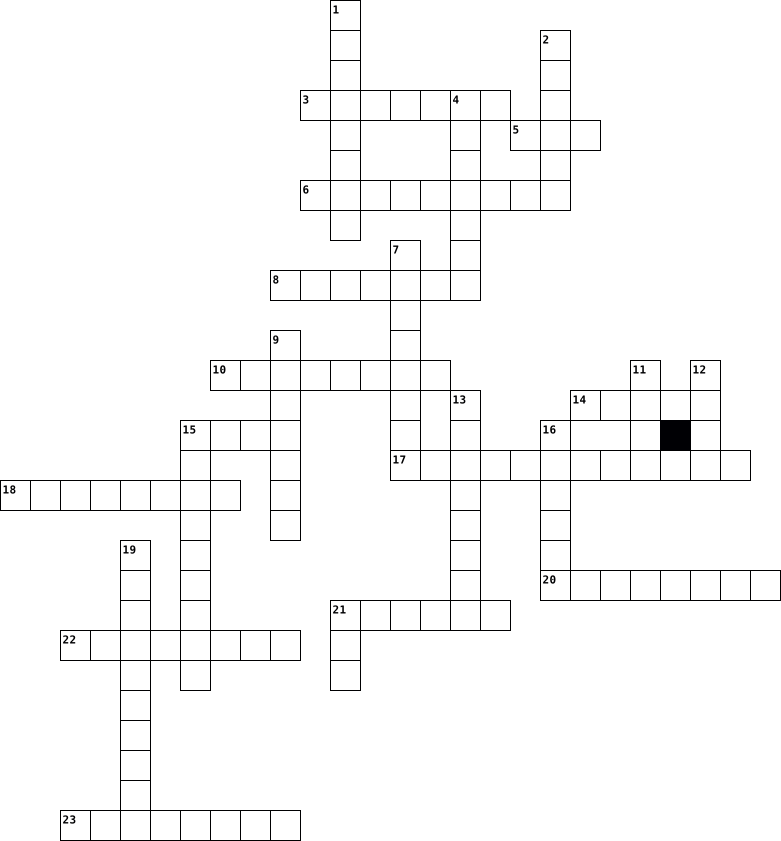
chemical reaction Crossword Puzzles
SCI 120 Week 1 & 2 2025-02-11

Across
- building block of matter
- outer electron shell
- type of reaction; acid + base
- substances that release ions in water
- first & smallest element
- atomic ____ is protons + neutrons
- unequal sharing of electrons
- pH of 7
- bond of shared electrons
- release hydrogen ions in water
Down
- high pH; basic
- element variation due to neutrons
- subatomic, no charge
- charged atom
- bond held by opposite charges
- subatomic, not in nucleus
- atoms joined together
- subatomic, positive
- starting substance of chemical reaction, left side
19 Clues: pH of 7 • charged atom • high pH; basic • subatomic, positive • outer electron shell • subatomic, no charge • atoms joined together • building block of matter • first & smallest element • bond of shared electrons • subatomic, not in nucleus • unequal sharing of electrons • type of reaction; acid + base • bond held by opposite charges • release hydrogen ions in water • ...
Year 8 Chemistry 2025-05-21

Across
- Has 5 protons
- A process in which substances change into new substances
- The substance in which the solute dissolves
- An element that is dull and does not conduct electricity
- A substance made of only one type of atom
- A method used to separate an insoluble solid from a liquid
- A substance with a pH less than 7
- Two or more substances that are not chemically joined
- A space where protons, neutrons, and electrons are found
- The law that states mass is not lost or gained in a chemical reaction
- Has an atomic mass of 14 and makes up most of the air
- A method used to separate mixtures based on boiling points
Down
- Has an atomic mass of 12
- A chemical change that forms new substances
- Has 8 protons
- The substance that dissolves in a solvent
- The type of table that organizes elements by atomic number
- Has 2 protons and is a noble gas
- A method used to separate a dissolved solid from a liquid
- The chemical reaction of iron with oxygen and water
- A substance made when two or more elements chemically combine
- A mixture where a solute is dissolved in a solvent
- A substance with a pH of exactly 7
- A type of element that is shiny and conducts electricity
- A substance with a pH more than 7 and dissolves in water
25 Clues: Has 5 protons • Has 8 protons • Has an atomic mass of 12 • Has 2 protons and is a noble gas • A substance with a pH less than 7 • A substance with a pH of exactly 7 • The substance that dissolves in a solvent • A substance made of only one type of atom • A chemical change that forms new substances • The substance in which the solute dissolves • ...
Chemical Reactions Vocabulary 2026-02-10

Across
- An increase in _____ can cause particles to move faster.
- A _____ forms when two or more atoms bond together.
- Ice reaches its _____ when it changes from a solid into a liquid.
- Cutting paper is a _____ because no new substance is formed.
- In an _____, atoms repeat in a pattern instead of forming separate molecules.
- use _____ to describe whether they are observing tiny particles or larger objects.
- After a chemical reaction, the _____ are the substances that are made.
- A _____ has a specific composition and consistent properties.
- Color, density, and melting point are examples of a _____.
- A _____ uses symbols and numbers to show what elements are in a substance.
- A chemical reaction may release _____ as heat or light.
- A _____ spreads out to fill the entire container it is in.
- A _____ keeps its shape and volume.
- All matter is made of tiny particles called _____.
Down
- The _____ of an object tells how much matter it contains.
- A _____ is present at the start of a chemical reaction.
- A _____ has a fixed volume but takes the shape of its container.
- During a _____, reactants rearrange to create products.
- When a new substance forms, a _____ has taken place.
- Water reaches its _____ when it begins to change from a liquid into a gas.
- A _____ substance can damage or eat away at other materials.
21 Clues: A _____ keeps its shape and volume. • All matter is made of tiny particles called _____. • A _____ forms when two or more atoms bond together. • When a new substance forms, a _____ has taken place. • A _____ is present at the start of a chemical reaction. • During a _____, reactants rearrange to create products. • ...
Chemical Reactions Vocabulary 2026-02-10

Across
- An increase in _____ can cause particles to move faster.
- A _____ has a specific composition and consistent properties.
- When a new substance forms, a _____ has taken place.
- A _____ spreads out to fill the entire container it is in.
- A _____ keeps its shape and volume.
- During a _____, reactants rearrange to create products.
- Water reaches its _____ when it begins to change from a liquid into a gas.
- Scientists use _____ to describe whether they are observing tiny particles or larger objects.
- A chemical reaction may release _____ as heat or light.
- A _____ forms when two or more atoms bond together.
- A _____ is present at the start of a chemical reaction.
Down
- All matter is made of tiny particles called _____.
- In an _____, atoms repeat in a pattern instead of forming separate molecules.
- After a chemical reaction, the _____ are the substances that are made.
- Cutting paper is a _____ because no new substance is formed.
- Ice reaches its _____ when it changes from a solid into a liquid.
- The _____ of an object tells how much matter it contains.
- A _____ uses symbols and numbers to show what elements are in a substance.
- A _____ substance can damage or eat away at other materials.
- A _____ has a fixed volume but takes the shape of its container.
- Color, density, and melting point are examples of a _____.
21 Clues: A _____ keeps its shape and volume. • All matter is made of tiny particles called _____. • A _____ forms when two or more atoms bond together. • When a new substance forms, a _____ has taken place. • During a _____, reactants rearrange to create products. • A chemical reaction may release _____ as heat or light. • ...
Chapter 7 - Atoms and Molecules 2026-01-07

Across
- molecules formed from two or more different elements
- using the pH _____ will tell you if a substance is an acid or a base
- has no charge; located in the nucleus
- a substance that changes color when exposed to acid or base solution
- a reaction between an acid and a base can form a ______
- abbreviations for the names of elements are chemical ____
- the atoms share ______ in a covalent bond
- formed when atoms combine
- chemical _____: process in which different types of atoms join and form a new substance
- reaction in which a compound is broken down into simpler compounds
- protons plus neutrons will give you the atomic ____
- developed the model of the atom
Down
- developed the periodic table of elements
- has a negative charge; travels around the nucleus
- has a positive charge; located in the nucleus
- an atom that has gained or lost electrons
- symbols and numbers abbreviating the names of a compound make a chemical _____
- horizontal rows of the periodic table
- kind of reaction in which molecules combine to form a new substance
- an ionic bond forms when positively and negatively charged ions ____ each other
- atoms bond with other atoms to complete their outer ____
- center part of an atom
- the study of matter
- vertical columns of the periodic table
- smallest piece of an element that can be recognized as that element
25 Clues: the study of matter • center part of an atom • formed when atoms combine • developed the model of the atom • horizontal rows of the periodic table • has no charge; located in the nucleus • vertical columns of the periodic table • developed the periodic table of elements • an atom that has gained or lost electrons • the atoms share ______ in a covalent bond • ...
Science Quiz 2014-03-05

Across
- H2O
- CaCO3
- CO2
- the beginning of a chemical reaction
- the result of a reaction
- bubble bubble
- baking soda
Down
- HCl
- C6H12O6
- changes into something new
- POP
11 Clues: HCl • H2O • POP • CO2 • CaCO3 • C6H12O6 • baking soda • bubble bubble • the result of a reaction • changes into something new • the beginning of a chemical reaction
C1.1 Enzymes SL 2026-01-19

Across
- ability of an enzyme to bind only a particular substrate
- biological catalyst that speeds up chemical reactions
- substance that increases reaction rate without being used up
- explanation that reactions occur when particles collide
- region of an enzyme where the substrate binds
Down
- minimum energy needed to start a chemical reaction
- molecule that binds to the active site
- temporary complex formed during enzyme action
- sum of all chemical reactions in a cell or organism
- loss of enzyme structure due to temperature or pH changes
- metabolic reactions that build complex molecules
- metabolic reactions that break down complex molecules
- change in enzyme and substrate shape during binding
13 Clues: molecule that binds to the active site • temporary complex formed during enzyme action • region of an enzyme where the substrate binds • metabolic reactions that build complex molecules • minimum energy needed to start a chemical reaction • sum of all chemical reactions in a cell or organism • change in enzyme and substrate shape during binding • ...
photosynthesis 2024-03-26

Across
- the vascular plant tissue responsible for the transport and distribution of sugars
- the species formed from chemical reactions
- air we breathe
- a vascular tissue that transports water throughout a plants body
- a chemical reaction in plants
Down
- plant cell organelles that convert light energy
- a clear gas composed of one atom c
- the substances which participate in chemical reaction
- the green pigment in plants
- sugar
10 Clues: sugar • air we breathe • the green pigment in plants • a chemical reaction in plants • a clear gas composed of one atom c • the species formed from chemical reactions • plant cell organelles that convert light energy • the substances which participate in chemical reaction • a vascular tissue that transports water throughout a plants body • ...
science 2025-02-13

Across
- An insoluble solid formed from a chemical reaction
- The process by which one or more substances
- to produce one or more different
- releases heat
- A substance produced during a chemical reaction
- the smallest particle of a chemical element
- a group of atoms bonded together,
Down
- a small, discrete piece of matter or energy
- A substance that takes part in and undergoes
- absorbs heat and energy
- during a chemical reaction
11 Clues: releases heat • absorbs heat and energy • during a chemical reaction • to produce one or more different • a group of atoms bonded together, • a small, discrete piece of matter or energy • The process by which one or more substances • the smallest particle of a chemical element • A substance that takes part in and undergoes • A substance produced during a chemical reaction • ...
Subject specific vocabulary 2025-02-27

Across
- Type of stereoisomerism: molecules which have different arrangement of groups around C=C.
- Type of structural isomerism: Structural isomers that differ by having a different functional group.
- Lone pair acceptor.
- Molecules with the same molecular and structural formulae but a different spatial arrangement of atoms.
- Type of structural isomerism: Structural isomers that differ by having the functional group in a different position.
- Molecule containing no double bonds.
- Molecule containing hydrogen and carbon only.
- chemistry: Study of compounds containing carbon.
- Species with an unpaired electron.
- reaction A reaction where an atom/group replaces another atom/group.
- Lone pair donor.
- Molecule containing double bond(s).
- Addition of water.
- Organic compounds containing C rings (not aromatic rings), also called alicyclic.
- Type of structural isomerism: Structural isomers that differ by having a different carbon chain.
- Organic compounds containing C chains and branches.
Down
- A reaction where a molecule joins to an unsaturated molecule to produce a saturated molecule.
- molecules which are non-superimposable mirror images.
- A reaction involving the breaking of bonds due to reaction with water.
- Molecules with the same molecular formula but different structures.
- Elimination of water.
- A reaction where a molecule is lost from a saturated molecule to form an unsaturated molecule.
- A family of compounds with the same general formula and similar chemical properties. In a series, each member differs by the addition of a CH2 group, and there is a gradual change in physical properties.
- A positive ion with the positive charge on a C atom.
- Organic compounds containing one or more benzene rings.
- Elimination of hydrogen.
- The atom or group of atoms that is responsible for most of the chemical reactions of a molecule.
27 Clues: Lone pair donor. • Addition of water. • Lone pair acceptor. • Elimination of water. • Elimination of hydrogen. • Species with an unpaired electron. • Molecule containing double bond(s). • Molecule containing no double bonds. • Molecule containing hydrogen and carbon only. • chemistry: Study of compounds containing carbon. • Organic compounds containing C chains and branches. • ...
Life's Processes- Vocabulary Work 2025-03-03

Across
- substance(s) produced by a chemical reaction
- chemical reaction that occurs in animal cells
- chemical reaction that occurs in plant cells
Down
- a type of sugar-what carbs brak into
- substance(s) at the begginning of a chemical reaction
- matter cannot be created or destroyed- only changed
- the ability to do something
7 Clues: the ability to do something • a type of sugar-what carbs brak into • substance(s) produced by a chemical reaction • chemical reaction that occurs in plant cells • chemical reaction that occurs in animal cells • matter cannot be created or destroyed- only changed • substance(s) at the begginning of a chemical reaction
Biology 2021-10-21

Across
- see adenosine diphosphate
- fluid that surrounds the grana
- inner mitochondrial that carries out etc
- acid product of fermination
- molecule of glucose is broken down
- bond a chemical reaction
- respiration process of producing atp to break down carbon based molecules
- a membrane that contains chlorophyll
- light is converted to chemical energy
- does not require oxygen
Down
- break down of carbo hydrates,enzyme and bacteria
- see adenosine triphosphate
- process that requires oxygen
- atp is synthesized as an energy source
- transport chain proteins in the thylakoid and mitochondria to aid
- reaction the independent synthesis carbohydrates dependent light transfers energy to the in dependent
- cycle process when a organism uses photosynthesis
- light absorbing pigment molecule
- cycle Pyruvic acid is broken down into carbo dioxide
19 Clues: does not require oxygen • bond a chemical reaction • see adenosine diphosphate • see adenosine triphosphate • acid product of fermination • process that requires oxygen • fluid that surrounds the grana • light absorbing pigment molecule • molecule of glucose is broken down • a membrane that contains chlorophyll • light is converted to chemical energy • ...
Life's Processes- Vocabulary Work 2025-03-03

Across
- substance(s) produced by a chemical reaction
- chemical reaction that occurs in animal cells
- chemical reaction that occurs in plant cells
Down
- a type of sugar-what carbs brak into
- substance(s) at the begginning of a chemical reaction
- matter cannot be created or destroyed- only changed
- the ability to do something
7 Clues: the ability to do something • a type of sugar-what carbs brak into • substance(s) produced by a chemical reaction • chemical reaction that occurs in plant cells • chemical reaction that occurs in animal cells • matter cannot be created or destroyed- only changed • substance(s) at the begginning of a chemical reaction
Yahya's Life Processes Puzzle 2022-11-03

Across
- breaks down things
- to balance all body systems to survive
- carries blood away from the heart
- hormone that increases sugar levels
- controls the sugar in the blood
- smallest type of blood vessel
- a chemical reaction in any organ
- doesn't require oxygen for respiration
- too much thyroxin
Down
- organ that helps digest food
- simple to complex substances
- requires oxygen for respiration
- too little thyroxin
- cell that generates chemical energy
- affects chemical reactions in cells
- another name for lung
- carries oxygen and red blood cells
- lack of iron in the blood
- undigested food
19 Clues: undigested food • too much thyroxin • breaks down things • too little thyroxin • another name for lung • lack of iron in the blood • organ that helps digest food • simple to complex substances • smallest type of blood vessel • requires oxygen for respiration • controls the sugar in the blood • a chemical reaction in any organ • carries blood away from the heart • ...
Michael Laver 2021-12-02

Across
- the outcome of the reactants
- the amount of energy required to pull two atoms apart
- A law that states that no new atoms can be created or destroyed
- when the hydroxide ions are greater than the hydronium ions
- when a reaction and its reverse act at the same rate
- A type of reaction where there is a net gain of energy
- a substance that lowers the activation energy needed for a chemical reaction
Down
- the things that make up the product
- A type of reaction where there is a net loss of energy
- A reaction in which a new chemical is created
10 Clues: the outcome of the reactants • the things that make up the product • A reaction in which a new chemical is created • when a reaction and its reverse act at the same rate • the amount of energy required to pull two atoms apart • A type of reaction where there is a net loss of energy • A type of reaction where there is a net gain of energy • ...
Enzyme terms 2021-03-30

Across
- amino acid produced in the metabolism of glucose used by the body to produce protein
- enzyme which breaks down lactose
- basic sugar unit containing six carbon atoms
- an enzyme found in the stomach
- proteins which control chemical activity in living organisms
- dry powder containing enzymes used to tenderize meat
- substance on which enzymes act
- substance that helps a chemical reaction take place
- foods that have been briefly immersed in boiling water
- enzyme which breaks down sucrose
Down
- energy required to get a chemical or biological reaction started
- part of an enzyme molecule that attached to the substrate
- discoloration in fruits and vegetables produced by enzymes
- heat-stable organic molecule that must be loosely associated with enzyme for it to function
- enzyme found in saliva
- solid formed by the coagulation of milk, used to make cheese
16 Clues: enzyme found in saliva • an enzyme found in the stomach • substance on which enzymes act • enzyme which breaks down lactose • enzyme which breaks down sucrose • basic sugar unit containing six carbon atoms • substance that helps a chemical reaction take place • dry powder containing enzymes used to tenderize meat • foods that have been briefly immersed in boiling water • ...
Vocabulary Cross Word 2023-10-16

Across
- Is the source of energy that is used and stored at the cellular level
- A stable atomic particle that has a negative charge
- Plant cell organelles that convert light into chemical energy through photosynthesis
- The smallest unit of chemical matter, consists of two or more atoms
- A set of chemical reactions performed by plants to reduce carbon dioxide and other compounds into glucose.
- Is what is created by a chemical reaction and is on the right side of the equation
- A structure within a living cell
- The symbolic representation of chemical symbols
Down
- Process through which plant cells use carbon dioxide, water, and sunlight to produce glucose (sugar) molecules and oxygen
- Is the process where cells get energy from glucose
- Is the process by which nutrients are broken down into the form of ATP as part of cellular respiration.
- Is an organelle found inside of cells that generates most of the chemical power that is needed to power chemical reactions.
- The substance that is used during a chemical reaction to create something else, and is on the left side of the equation.
- A molecule that contains carbon, hydrogen, and oxygen and is the source of energy for organisms
- A pigment in all green plants and a few other organisms, it is required for photosynthesis
15 Clues: A structure within a living cell • The symbolic representation of chemical symbols • Is the process where cells get energy from glucose • A stable atomic particle that has a negative charge • The smallest unit of chemical matter, consists of two or more atoms • Is the source of energy that is used and stored at the cellular level • ...
Science Crossword 2023-12-11

Across
- Found on the Left side of the Periodic Table
- Found on the Right side of the Periodic Table
- An atom with more or less Electrons than it normally has
- This reaction gives off Water, carbon dioxide, and heat
- 1 complex substance becomes 2 or more simpler substances
- Mass divided by Volume equals this
- A reaction where heat is given off
- A change that cannot be undone
- The ability for a substance to react with another substance
Down
- What a reaction begins with
- A sub-atomic particle with a positive charge
- A bond between a metal and a nonmetal
- A change that can be undone
- 2 or more simple substances become 1 complex substance
- What is at the end of a reaction
- A sub-atomic particle with a neutral charge
- A bond between 2 nonmetals
- A sub-atomic particle with a negative charge
- A reaction where heat is taken in
- An atom with more or less Neutrons than it normally has
20 Clues: A bond between 2 nonmetals • What a reaction begins with • A change that can be undone • A change that cannot be undone • What is at the end of a reaction • A reaction where heat is taken in • Mass divided by Volume equals this • A reaction where heat is given off • A bond between a metal and a nonmetal • A sub-atomic particle with a neutral charge • ...
enzyme crossword 2026-03-03

Across
- reactions that absorb free energy from the surroundings
- the sum of all chemical reactions that occur in a cell
- minimum energy required to start the chemical reaction
- flexible active site that changes shape or conforms to the substrate
- process of breaking down large molecules into smaller ones
- the active site having a set shape
Down
- process of making large molecules from smaller ones
- reactions that have a net release of free energy
- substrates in a catalyzed reaction
- organic cofactors
- substances formed as a result of the reaction
- molecules that inhibit the activity of enzymes
12 Clues: organic cofactors • substrates in a catalyzed reaction • the active site having a set shape • substances formed as a result of the reaction • molecules that inhibit the activity of enzymes • reactions that have a net release of free energy • process of making large molecules from smaller ones • the sum of all chemical reactions that occur in a cell • ...
Photosynthesis Vocab 2022-10-13

Across
- The atoms and molecules before a chemical reaction.
- Carries water from the roots to the plant.
- The atoms and molecules after a chemical reaction.
- Carries the glucose through the plant.
- Lets oxygen out and carbon dioxide in.
Down
- The stuff that plants make for energy
- Energy from the sun
- Energy used for chemical reactions
- Contains the chlorophyll
- A greenish pigment used to absorb the sun's energy
10 Clues: Energy from the sun • Contains the chlorophyll • Energy used for chemical reactions • The stuff that plants make for energy • Carries the glucose through the plant. • Lets oxygen out and carbon dioxide in. • Carries water from the roots to the plant. • The atoms and molecules after a chemical reaction. • A greenish pigment used to absorb the sun's energy • ...
Chemical equations 2023-03-24

Across
- The weight of an object
- Different number of chemicals on both sides
- Anything with mass and takes up space
- Atoms can't be ______ in a chemical reaction
Down
- Atoms can't be _________ in a chemical reaction
- Right side of the arrow
- A small number that follows the Chemical Symbol
- What makes up everything
- Same number of chemicals on both sides
- Left side of the arrow
10 Clues: Left side of the arrow • The weight of an object • Right side of the arrow • What makes up everything • Anything with mass and takes up space • Same number of chemicals on both sides • Different number of chemicals on both sides • Atoms can't be ______ in a chemical reaction • Atoms can't be _________ in a chemical reaction • A small number that follows the Chemical Symbol
photosynthesis 2024-03-25

Across
- a chemical reaction in plants
- plant cell organelles that convert light energy
- a clear gas composed of one atom of c
- the vascular plant tissue responsible for the transport and distribution of sugars
Down
- the species formed from chemical reactions
- sugar
- a vascular tissue that transports water throughout a plants body
- the substances which participate in chemical reaction
- the green pigment in plants
- air we breathe
10 Clues: sugar • air we breathe • the green pigment in plants • a chemical reaction in plants • a clear gas composed of one atom of c • the species formed from chemical reactions • plant cell organelles that convert light energy • the substances which participate in chemical reaction • a vascular tissue that transports water throughout a plants body • ...
photosynthesis 2024-03-25

Across
- a chemical reaction in plants
- plant cell organelles that convert light energy
- a clear gas composed of one atom of c
- the vascular plant tissue responsible for the transport and distribution of sugars
Down
- the species formed from chemical reactions
- sugar
- a vascular tissue that transports water throughout a plants body
- the substances which participate in chemical reaction
- the green pigment in plants
- air we breathe
10 Clues: sugar • air we breathe • the green pigment in plants • a chemical reaction in plants • a clear gas composed of one atom of c • the species formed from chemical reactions • plant cell organelles that convert light energy • the substances which participate in chemical reaction • a vascular tissue that transports water throughout a plants body • ...
Chemical Reactions - Reactants to Products 2017-05-03

Across
- During an endothermic reaction, energy is taken i___ from the surroundings.
- When we mix two chemicals together, we say that this has occurred.
- The symbol for oxygen is O2. We say that oxygen has two a________ of oxygen.
- These are made from the reactants in a chemical reaction.
Down
- During every chemical reaction, this is given out to or taken in from the surroundings.
- We react two or more of these together to end up with products.
- What holds two atoms of hydrogen (H2) together? Chemical _________.
- When a chemical reaction occurs, old bonds b______ and new bonds are made.
8 Clues: These are made from the reactants in a chemical reaction. • We react two or more of these together to end up with products. • When we mix two chemicals together, we say that this has occurred. • What holds two atoms of hydrogen (H2) together? Chemical _________. • When a chemical reaction occurs, old bonds b______ and new bonds are made. • ...
Enzyme Crossword 2016-01-10

Across
- main hormone produced by the thyroid gland
- blocks the action on an enzyme on it's substrate
- located in the lower part of the neck, below Adam's apple
- a model for enzyme-substrate interaction
- a group of organic compounds, needed for life
- something that bind with the protein molecule
- type of ATP needed for chemical reaction
Down
- something that binds to a protein or other substance during a reaction
- a substance on which an enzyme acts on
- type of enzyme that reduces activity
- a model, enzyme and substrate have a rigid interaction with each other
- process in which proteins lose their shape
- chemical process inside organisms necessary for life
- a protein substance produced in living organism, speeds up reaction
14 Clues: type of enzyme that reduces activity • a substance on which an enzyme acts on • a model for enzyme-substrate interaction • type of ATP needed for chemical reaction • main hormone produced by the thyroid gland • process in which proteins lose their shape • a group of organic compounds, needed for life • something that bind with the protein molecule • ...
Lina 2022-03-22

Across
- - abundance of a constituent divided by the total volume of a mixture
- - a substance that dissolves a solute, resulting in a solution.
- - the process of decreasing the concentration of a solute in a solution, usually simply by mixing with more solvent like adding more water to the solution.
- -the quantity of matter contained in an atom of an element.
- - a property referring to the ability for a given substance, the solute, to dissolve in a solvent.
- -a solution is a special type of homogeneous mixture composed of two or more substances.
Down
- - material or system has the same properties at every point; it is uniform without irregularities.
- - a material made up of two or more different chemical substances which are not chemically bonded
- - the species formed from chemical reactions.
- - consisting of different, distinguishable parts or elements.
- -metallic substance composed of two or more elements, as either a compound or a solution.
- - a substance or compound added to a system to cause a chemical reaction, or added to test if a reaction occurs.
- - a molecule or other entity that can donate a proton or accept an electron pair in reactions.
- - a group of atoms bonded together, representing the smallest fundamental unit of a chemical compound that can take part in a chemical reaction.
- - in chemistry, any substance that in water solution is slippery to the touch, tastes bitter, changes the colour of indicators
15 Clues: - the species formed from chemical reactions. • -the quantity of matter contained in an atom of an element. • - consisting of different, distinguishable parts or elements. • - a substance that dissolves a solute, resulting in a solution. • - abundance of a constituent divided by the total volume of a mixture • ...
Lina 2022-03-22

Across
- - abundance of a constituent divided by the total volume of a mixture
- - a substance that dissolves a solute, resulting in a solution.
- - the process of decreasing the concentration of a solute in a solution, usually simply by mixing with more solvent like adding more water to the solution.
- -the quantity of matter contained in an atom of an element.
- - a property referring to the ability for a given substance, the solute, to dissolve in a solvent.
- -a solution is a special type of homogeneous mixture composed of two or more substances.
Down
- - material or system has the same properties at every point; it is uniform without irregularities.
- - a material made up of two or more different chemical substances which are not chemically bonded
- - the species formed from chemical reactions.
- - consisting of different, distinguishable parts or elements.
- -metallic substance composed of two or more elements, as either a compound or a solution.
- - a substance or compound added to a system to cause a chemical reaction, or added to test if a reaction occurs.
- - a molecule or other entity that can donate a proton or accept an electron pair in reactions.
- - a group of atoms bonded together, representing the smallest fundamental unit of a chemical compound that can take part in a chemical reaction.
- - in chemistry, any substance that in water solution is slippery to the touch, tastes bitter, changes the colour of indicators
15 Clues: - the species formed from chemical reactions. • -the quantity of matter contained in an atom of an element. • - consisting of different, distinguishable parts or elements. • - a substance that dissolves a solute, resulting in a solution. • - abundance of a constituent divided by the total volume of a mixture • ...
Lina 2022-03-22

Across
- - abundance of a constituent divided by the total volume of a mixture
- - a substance that dissolves a solute, resulting in a solution.
- - the process of decreasing the concentration of a solute in a solution, usually simply by mixing with more solvent like adding more water to the solution.
- -the quantity of matter contained in an atom of an element.
- - a property referring to the ability for a given substance, the solute, to dissolve in a solvent.
- -a solution is a special type of homogeneous mixture composed of two or more substances.
Down
- - material or system has the same properties at every point; it is uniform without irregularities.
- - a material made up of two or more different chemical substances which are not chemically bonded
- - the species formed from chemical reactions.
- - consisting of different, distinguishable parts or elements.
- -metallic substance composed of two or more elements, as either a compound or a solution.
- - a substance or compound added to a system to cause a chemical reaction, or added to test if a reaction occurs.
- - a molecule or other entity that can donate a proton or accept an electron pair in reactions.
- - a group of atoms bonded together, representing the smallest fundamental unit of a chemical compound that can take part in a chemical reaction.
- - in chemistry, any substance that in water solution is slippery to the touch, tastes bitter, changes the colour of indicators
15 Clues: - the species formed from chemical reactions. • -the quantity of matter contained in an atom of an element. • - consisting of different, distinguishable parts or elements. • - a substance that dissolves a solute, resulting in a solution. • - abundance of a constituent divided by the total volume of a mixture • ...
Lina Crossword Puzzle 2022-03-22

Across
- - abundance of a constituent divided by the total volume of a mixture
- - a substance that dissolves a solute, resulting in a solution.
- - the process of decreasing the concentration of a solute in a solution, usually simply by mixing with more solvent like adding more water to the solution.
- -the quantity of matter contained in an atom of an element.
- - a property referring to the ability for a given substance, the solute, to dissolve in a solvent.
- -a solution is a special type of homogeneous mixture composed of two or more substances.
Down
- - material or system has the same properties at every point; it is uniform without irregularities.
- - a material made up of two or more different chemical substances which are not chemically bonded
- - the species formed from chemical reactions.
- - consisting of different, distinguishable parts or elements.
- -metallic substance composed of two or more elements, as either a compound or a solution.
- - a substance or compound added to a system to cause a chemical reaction, or added to test if a reaction occurs.
- - a molecule or other entity that can donate a proton or accept an electron pair in reactions.
- - a group of atoms bonded together, representing the smallest fundamental unit of a chemical compound that can take part in a chemical reaction.
- - in chemistry, any substance that in water solution is slippery to the touch, tastes bitter, changes the colour of indicators
15 Clues: - the species formed from chemical reactions. • -the quantity of matter contained in an atom of an element. • - consisting of different, distinguishable parts or elements. • - a substance that dissolves a solute, resulting in a solution. • - abundance of a constituent divided by the total volume of a mixture • ...
Science Crossword 2023-01-13

Across
- a distinctive smell, especially an unpleasant one.
- a substance that increases the rate of a chemical reaction without itself undergoing any permanent chemical change.
- power derived from the utilization of physical or chemical resources, especially to provide light and heat or to work machines.
- (of a reaction or process) accompanied by the release of heat.
- relating to things perceived through the senses as opposed to the mind; tangible or concrete.
- a reaction in which a compound breaks down into two or more simpler substances.
Down
- (of a reaction or process) accompanied by or requiring the absorption of heat.
- the joining together of two reactants, or compounds, to produce a complex product, also called a compound.
- a compound or substance that has been purified or prepared, especially artificially.
- cause (a substance) to be deposited in solid form from a solution.
10 Clues: a distinctive smell, especially an unpleasant one. • (of a reaction or process) accompanied by the release of heat. • cause (a substance) to be deposited in solid form from a solution. • (of a reaction or process) accompanied by or requiring the absorption of heat. • a reaction in which a compound breaks down into two or more simpler substances. • ...
Materials Science Crossword 2020-12-16

Across
- If a material absorbs a lot of water, it is an ............... material.
- Mixing bicarbonate of soda with vinegar is a .............reaction and gas is produced.
- When water turns into water vapour it.........
- A chemical reaction is ................ - you can't get the original materials back.
- Small grains of sugar dissolve .......... than large grains of sugar.
Down
- This kind of reaction is reversible.
- Salt and sugar are ...............in water.
- This material can be rigid or flexible.
- Sugar .............. in water.
- Burning is a ..........reaction.
- water vapour is a kind of ......
- When you only change one variable an experiment is ......
- When ice turns to water it ......
13 Clues: Sugar .............. in water. • Burning is a ..........reaction. • water vapour is a kind of ...... • When ice turns to water it ...... • This kind of reaction is reversible. • This material can be rigid or flexible. • Salt and sugar are ...............in water. • When water turns into water vapour it......... • When you only change one variable an experiment is ...... • ...
Materials Science Crossword 2020-12-16

Across
- If a material absorbs a lot of water, it is an ............... material.
- Mixing bicarbonate of soda with vinegar is a .............reaction and gas is produced.
- When water turns into water vapour, it.........
- A chemical reaction is ................ - you can't get the original materials back.
- Small grains of sugar dissolve .......... than large grains of sugar.
Down
- This kind of reaction is reversible.
- Salt and sugar are ...............in water.
- This material can be rigid or flexible.
- Sugar .............. in water.
- Burning is a ..........reaction.
- Water vapour is a kind of ......
- When you only change one variable an experiment is ......
- When ice turns to water, it ......
13 Clues: Sugar .............. in water. • Burning is a ..........reaction. • Water vapour is a kind of ...... • When ice turns to water, it ...... • This kind of reaction is reversible. • This material can be rigid or flexible. • Salt and sugar are ...............in water. • When water turns into water vapour, it......... • When you only change one variable an experiment is ...... • ...
Andrey. C Oxidation 2022-01-18

Across
- indicates if you are cold or hot
- is the result of a process
- is something that has a reaction
- is the result of a chemical process or physical change
- is a component that can cause a reaction
Down
- It is a symbolic representation of a chemical reaction.
- It is what keeps living things alive.
- it is a process in which objects are degraded by time or lack of care.
- is a transformation
- is something that has a transformation
- is composed of various elements in a system to have products or consequences
- is something that has a relationship between two things
12 Clues: is a transformation • is the result of a process • indicates if you are cold or hot • is something that has a reaction • It is what keeps living things alive. • is something that has a transformation • is a component that can cause a reaction • is the result of a chemical process or physical change • It is a symbolic representation of a chemical reaction. • ...
fire, walk with me (it's a clue lol) 2023-01-05

Across
- (2 words) the temperature at which a substance changes from the liquid phase to the gas phase
- During a chemical reaction, atoms rearrange to form ______ groups of atoms.
- During a chemical reaction, atoms do not ______ from one type to another.
- The Law of Conservation is not ______
- The atoms found in the products of a chemical reaction must have been present in the ______ as well.
Down
- (2 words) We know a chemical reaction has occurred when we can observe
- ______ vary in the type or number of atoms that make up the group.
- (2 words) a 1990s TV show in which an FBI agent tries to solve a murder case, set in a small Washington State town where the owls are not what they seem
- (2 words) letters and numbers showing the types and number of atoms that repeat to make up a substance
- ______ are similar to and different from what they represent in important ways.
- Substances have different properties because they are made of different groups of ______
11 Clues: The Law of Conservation is not ______ • ______ vary in the type or number of atoms that make up the group. • (2 words) We know a chemical reaction has occurred when we can observe • During a chemical reaction, atoms do not ______ from one type to another. • During a chemical reaction, atoms rearrange to form ______ groups of atoms. • ...
Avery's puzzle 2022-03-11

Across
- the amount of something that is produced in a chemical reaction
- gas to solid
- the minimum amount of energy required for a collision to be successful.
- a reaction in which two molecules combine to form a larger molecule, also eliminating a smaller molecule such as water.
- when water is not present
Down
- a regular array of particles
- the liquid that comes through the filter paper
- property which allows metal to be shaped easily
- molecules which can join up to form a polymer
- alcohol and carboxylic acid make...
- a chemical reaction in which one molecule adds to another, to form a single product
- cool name for bubbles
- when you have more than enough of a reactant
- a molecule that contains two atoms
14 Clues: gas to solid • cool name for bubbles • when water is not present • a regular array of particles • a molecule that contains two atoms • alcohol and carboxylic acid make... • when you have more than enough of a reactant • molecules which can join up to form a polymer • the liquid that comes through the filter paper • property which allows metal to be shaped easily • ...
109 2025-08-21

Across
- Bond formed by shared electrons
- Rate at which work is done
- Ability to store electric charge
- Distance between wave peaks
- Energy transfer by waves
- Basic on the pH scale
- Upthrust in a fluid
- Semiconductor switching device
- Allows current in one direction
- Height of a wave
- Mass per unit volume
- Opposition in an AC circuit
- Bending of waves around edges
- Measured addition to find concentration
- Reaction that absorbs heat
- Material with zero electrical resistance
- Intermediate electrical conductor
Down
- Property opposing change in current
- Heat transfer by fluid motion
- Material’s opposition to current
- Gain of electrons in a reaction
- Acceleration of a chemical reaction
- Emission of electrons by light
- Mass times velocity
- Loss of electrons in a reaction
- Separation by boiling point
- Band of colors or frequencies
- Same protons, different neutrons
- Number of cycles per second
- Heat transfer through contact
- Reaction that releases heat
- Resistance to change in motion
- Force over distance
33 Clues: Height of a wave • Mass times velocity • Upthrust in a fluid • Force over distance • Mass per unit volume • Basic on the pH scale • Energy transfer by waves • Rate at which work is done • Reaction that absorbs heat • Distance between wave peaks • Separation by boiling point • Number of cycles per second • Reaction that releases heat • Opposition in an AC circuit • ...
The Brain 2024-09-24

Across
- Controls complex decision making
- Stores memories and locations
- Controls hearing and facial recognition
- Chemical that helps movement and memory
- Nerves that transmit voluntary movement signals from your brain
- Processes sensory things
- Chemical that improves memory
- Controls fear responses
- Information pathway
- Controls sleeping and dreaming
- Controls hormone release
- Controls vision
- Movement control center
- Receives information and controls impulses
- Controls breathing and heartbeat
- Cell's life support
Down
- Controls breathing, swallowing, gagging, ect.
- Chemical that controls pain
- Where all information is stored
- Fatty protective substance
- Bridge that holds the brain together
- Chemical that regulates mood
- Controls hunger, emotions, body temperature, ect.
- Calming down, decreased heart rate and blood sugar
- Calming chemical
- Takes information from one neuron to another
- Brain's relay station
- Bridge of the neuron
- Chemical that responds to danger
- Automatic actions like the fight or flight reaction
- Storage of Neurotransmitters
- Involuntary and unconscious actions
- Pleasure chemical
33 Clues: Controls vision • Calming chemical • Pleasure chemical • Information pathway • Cell's life support • Bridge of the neuron • Brain's relay station • Controls fear responses • Movement control center • Processes sensory things • Controls hormone release • Fatty protective substance • Chemical that controls pain • Chemical that regulates mood • Storage of Neurotransmitters • ...
Proteins and Enzymes 2023-10-05

Across
- contains the instructions to make proteins
- a chemical that speeds up a chemical reaction
- the specific reactants that an enzyme acts on
- a biological catalyst
- one of the shapes formed at the secondary level of protein structure
- one of the components of an amino acid
- the ending in 99% of enzyme names
- a substance that can impeded an enzyme by blocking active sites
Down
- the order of amino acids in a protein
- the monomer of proteins
- the energy needed for a chemical reaction to start
- one of the shapes formed at the secondary level of protein structure
- site the location on an enzyme where the substrate fits
- the number of amino acids in nature
- the level of protein folding that involves the bonding of multiple polypeptides
- what happens when a protein unfolds
- a change to DNA that can cause a protein to fold incorrectly
17 Clues: a biological catalyst • the monomer of proteins • the ending in 99% of enzyme names • the number of amino acids in nature • what happens when a protein unfolds • the order of amino acids in a protein • one of the components of an amino acid • contains the instructions to make proteins • a chemical that speeds up a chemical reaction • ...
Energy Flow in a System 2022-05-08

Across
- state in which opposing forces or influences are balanced.
- states that in any chemical or physical process, energy is neither created nor destroyed
- when a system gains energy as the surroundings lose energy.
- a chemical reaction that releases energy; there's more energy in the reactants than in the products.
- ______ always flows from high to low
- A form of energy that an object or particle has by reason of its motion.
Down
- these include everything else in the universe that's not part of a system.
- energy that's available to do work.
- a chemical reaction that absorbs energy; there's more energy in the products than in the reactants
- The transfer of energy in physical structures
- of a substance.
- energy that transfers from one object to another because of a temperature difference between them.
- Energy is the______for doing work or supplying heat.
- is the formula to find the amount of energy in a system.
- the energy stored in the chemical
- when a system loses energy as the surroundings gain energy.
- the part of the universe on which you focus your attention.
- The unit used to measure energy.
- the energy required to move an object against a force
19 Clues: of a substance. • The unit used to measure energy. • the energy stored in the chemical • energy that's available to do work. • ______ always flows from high to low • The transfer of energy in physical structures • Energy is the______for doing work or supplying heat. • the energy required to move an object against a force • ...
Energy Enzymes 2025-02-17

Across
- Reactions that require energy input
- Term for a reaction where products have less free energy than reactants
- The law stating energy cannot be created or destroyed
- Energy associated with movement
- A form of electromagnetic radiation visible to the eye
- The ability to promote change or do work
- An agent that speeds up the rate of a chemical reaction
- The energy in molecular bonds, a form of potential energy
Down
- A protein catalyst in living cells
- The unusable energy that increases when energy is transferred
- The energy possessed by an object due to its motion or position relative to other objects
- Releases heat energy
- Potential energy stored in the electrons of molecules
- The initial energy input to start a reaction
14 Clues: Releases heat energy • Energy associated with movement • A protein catalyst in living cells • Reactions that require energy input • The ability to promote change or do work • The initial energy input to start a reaction • Potential energy stored in the electrons of molecules • The law stating energy cannot be created or destroyed • ...
Lina 2022-03-22

Across
- - abundance of a constituent divided by the total volume of a mixture
- - a substance that dissolves a solute, resulting in a solution.
- - the process of decreasing the concentration of a solute in a solution, usually simply by mixing with more solvent like adding more water to the solution.
- -the quantity of matter contained in an atom of an element.
- - a property referring to the ability for a given substance, the solute, to dissolve in a solvent.
- -a solution is a special type of homogeneous mixture composed of two or more substances.
Down
- - material or system has the same properties at every point; it is uniform without irregularities.
- - a material made up of two or more different chemical substances which are not chemically bonded
- - the species formed from chemical reactions.
- - consisting of different, distinguishable parts or elements.
- -metallic substance composed of two or more elements, as either a compound or a solution.
- - a substance or compound added to a system to cause a chemical reaction, or added to test if a reaction occurs.
- - a molecule or other entity that can donate a proton or accept an electron pair in reactions.
- - a group of atoms bonded together, representing the smallest fundamental unit of a chemical compound that can take part in a chemical reaction.
- - in chemistry, any substance that in water solution is slippery to the touch, tastes bitter, changes the colour of indicators
15 Clues: - the species formed from chemical reactions. • -the quantity of matter contained in an atom of an element. • - consisting of different, distinguishable parts or elements. • - a substance that dissolves a solute, resulting in a solution. • - abundance of a constituent divided by the total volume of a mixture • ...
Lina Crossword Puzzle 2022-03-22

Across
- - abundance of a constituent divided by the total volume of a mixture
- - a substance that dissolves a solute, resulting in a solution.
- - the process of decreasing the concentration of a solute in a solution, usually simply by mixing with more solvent like adding more water to the solution.
- -the quantity of matter contained in an atom of an element.
- - a property referring to the ability for a given substance, the solute, to dissolve in a solvent.
- -a solution is a special type of homogeneous mixture composed of two or more substances.
Down
- - material or system has the same properties at every point; it is uniform without irregularities.
- - a material made up of two or more different chemical substances which are not chemically bonded
- - the species formed from chemical reactions.
- - consisting of different, distinguishable parts or elements.
- -metallic substance composed of two or more elements, as either a compound or a solution.
- - a substance or compound added to a system to cause a chemical reaction, or added to test if a reaction occurs.
- - a molecule or other entity that can donate a proton or accept an electron pair in reactions.
- - a group of atoms bonded together, representing the smallest fundamental unit of a chemical compound that can take part in a chemical reaction.
- - in chemistry, any substance that in water solution is slippery to the touch, tastes bitter, changes the colour of indicators
15 Clues: - the species formed from chemical reactions. • -the quantity of matter contained in an atom of an element. • - consisting of different, distinguishable parts or elements. • - a substance that dissolves a solute, resulting in a solution. • - abundance of a constituent divided by the total volume of a mixture • ...
Rate of Reaction Crossworrd 2024-04-02

Across
- the minimum amount of energy required to initiate a chemical reaction
- the step-by-step sequence of elementary reactions by which overall chemical changes occur
- a substance that increases the rate of a chemical reaction without undergoing a chemical change itself
- the total area of exposed surfaces of a solid, which can affect the rate of reactions occurring at a solid surface
Down
- the amount of a substance present in a given volume of solution, which can affect the rate of reaction
- the measure of average kinetic energy
- the slowest step in a reaction mechanism that determines the overall rate of the reaction
- the theory that explains how chemical reactions occur and why rates differ
8 Clues: the measure of average kinetic energy • the minimum amount of energy required to initiate a chemical reaction • the theory that explains how chemical reactions occur and why rates differ • the slowest step in a reaction mechanism that determines the overall rate of the reaction • ...
Chemistry HHW 2022-06-26

Across
- The reactions in which oxidation and reduction considered together as complementary processes.
- Which type of reaction is this Fe + CuSO4 → FeSO4 + Cu.
- What type of reaction is this - CH4 + O2 → CO2 + H2O + Heat?
- An equation for a chemical reaction in which the number of atoms for each element in the reaction and the total charge is the.
- The process of increasing the rate of a chemical reaction by adding a substance.
Down
- During a chemical reaction reactants are transformed into?
- the process or result of oxidizing or being oxidized.
- A reaction where two or more elements or compounds combine to form a single compound.
8 Clues: the process or result of oxidizing or being oxidized. • Which type of reaction is this Fe + CuSO4 → FeSO4 + Cu. • During a chemical reaction reactants are transformed into? • What type of reaction is this - CH4 + O2 → CO2 + H2O + Heat? • The process of increasing the rate of a chemical reaction by adding a substance. • ...
Science crossword puzzel 2017-03-20

Across
- Electron electrons on the outermost energy level of an atom that determine the reactivity of the atom.
- Reaction A chemical reaction in which heat is released and usually feels warm when the heat is released from the reaction.
- vertical column of elements on the Periodic Table that have similar physical and chemical properties.
- elements that have some properties of metals and non-metals and are found along the zigzag on the Periodic Table.
Down
- Reaction A chemical reaction that requires an input of energy and usually feels cold when it absorbs heat in the reaction.
- horizontal row of elements on the Periodic Table that have the same number of electron shells.
- Bond an interaction that holds atoms together.
- of Conservation of Mass states that matter is neither created nor destroyed in ordinary chemical and physical changes.
8 Clues: Bond an interaction that holds atoms together. • horizontal row of elements on the Periodic Table that have the same number of electron shells. • vertical column of elements on the Periodic Table that have similar physical and chemical properties. • Electron electrons on the outermost energy level of an atom that determine the reactivity of the atom. • ...
Vocab 6B 2017-03-24

Across
- Horizontal row of elements on the Periodic Table that have the same number of electron shells
- of conservation of mass States that matter is neither created nor destroyed in ordinary chemical and physical changes
- reaction A chemical reaction that requires an input of energy and usually feels cold when it absorbs heat in the reaction
- bond an interaction that holds atoms together
Down
- Vertical column of elements on the Periodic Table that have similar physical and chemical properties
- reaction A chemical reaction in which heat is released and usually feels warm when the heat is released from the reaction
- electron Electrons on the outermost energy level of an atom that determine the reactivity of the atom
- Elements that have some properties of metals and non-metals and are found along the zigzag on the Periodic Table
8 Clues: bond an interaction that holds atoms together • Horizontal row of elements on the Periodic Table that have the same number of electron shells • Vertical column of elements on the Periodic Table that have similar physical and chemical properties • electron Electrons on the outermost energy level of an atom that determine the reactivity of the atom • ...
Yeah 2017-03-23

Across
- of Conservation of Mass- states that matter is neither created nor destroyed in ordinary chemical and physical changes.
- Reaction- A chemical reaction in which heat is released and usually feels warm when the heat is released from the reaction.
- Bond- an interaction that holds atoms together.
- Reaction- A chemical reaction that requires an input of energy and usually feels cold when it absorbs heat in the reaction.
- vertical column of elements on the Periodic Table that have similar physical and chemical properties.
Down
- Electron- electrons on the outermost energy level of an atom that determine the reactivity of the atom.
- elements that have some properties of metals and non-metals and are found along the zigzag on the Periodic Table.
- horizontal row of elements on the Periodic Table that have the same number of electron shells.
8 Clues: Bond- an interaction that holds atoms together. • horizontal row of elements on the Periodic Table that have the same number of electron shells. • vertical column of elements on the Periodic Table that have similar physical and chemical properties. • Electron- electrons on the outermost energy level of an atom that determine the reactivity of the atom. • ...
Types Of Chemical Reactions 2021-12-12

Across
- is a processes in which chemical species break up into simpler parts
- a reaction in which one element is substituted for another element in a compound
- a representation of a chemical reaction using symbols of the elements to indicate the amount of substance
Down
- a reaction in which two reactants combine to form one product.
- a chemical reaction between substances, usually including oxygen and usually accompanied by the generation of heat and light in the form of flame.
- a type of chemical reaction where two compounds react, and positive ions (cation) and the negative ions (anion) of the two reactants switch places, forming two new compounds or products
- a substance obtained from another substance through chemical change.
- a substance that takes part in and undergoes change during a reaction
8 Clues: a reaction in which two reactants combine to form one product. • a substance obtained from another substance through chemical change. • is a processes in which chemical species break up into simpler parts • a substance that takes part in and undergoes change during a reaction • a reaction in which one element is substituted for another element in a compound • ...
59 2025-11-30

Across
- AI predicting chemical properties
- Enzyme used in chemical reactions
- Reactions in solvents at high temperature and pressure
- Minimizing hazardous substance use
- Study of fluid flow in small channels
- Synthesis driven by electricity
- eutectic Mixture of solids forming liquid at low temperature
- Reactions using light and electron transfer
- Organic molecule catalyzing reaction
Down
- Combining quantum and molecular mechanics
- Salt in liquid state at room temperature
- Using data for chemical research
- Water-based high-pressure synthesis method
- Acceleration of reactions without consumption
- First-principles computational method
- Random sampling simulation in chemistry
- Continuous flow reactions in reactors
- Acid stronger than 100% sulfuric acid
- Miniaturized chemical lab on small device
- Density functional theory for electron distribution
20 Clues: Synthesis driven by electricity • Using data for chemical research • AI predicting chemical properties • Enzyme used in chemical reactions • Minimizing hazardous substance use • Organic molecule catalyzing reaction • First-principles computational method • Study of fluid flow in small channels • Continuous flow reactions in reactors • Acid stronger than 100% sulfuric acid • ...
6B 2017-03-31

Across
- Electron- electrons on the outermost energy level of an atom that determine the reactivity of the atom.
- horizontal row of elements on the Periodic Table that have the same number of electron shells.
- Reaction- A chemical reaction in which heat is released and usually feels warm when the heat is released from the reaction.
- elements that have some properties of metals and non-metals and are found along the zigzag on the Periodic Table.
Down
- of Conservation of Mass- states that matter is neither created nor destroyed in ordinary chemical and physical changes.
- Reaction- A chemical reaction that requires an input of energy and usually feels cold when it absorbs heat in the reaction.
- Bond- an interaction that holds atoms together.
- vertical column of elements on the Periodic Table that have similar physical and chemical properties.
8 Clues: Bond- an interaction that holds atoms together. • horizontal row of elements on the Periodic Table that have the same number of electron shells. • vertical column of elements on the Periodic Table that have similar physical and chemical properties. • Electron- electrons on the outermost energy level of an atom that determine the reactivity of the atom. • ...
Adnan mufleh vocab 2017-03-31

Across
- Reaction- A chemical reaction that requires an input of energy and usually feels cold when it absorbs heat in the reaction.
- horizontal row of elements on the Periodic Table that have the same number of electron shells.
- Electron- electrons on the outermost energy level of an atom that determine the reactivity of the atom.
- of Conservation of Mass- states that matter is neither created nor destroyed in ordinary chemical and physical changes.
Down
- Reaction- A chemical reaction in which heat is released and usually feels warm when the heat is released from the reaction.
- vertical column of elements on the Periodic Table that have similar physical and chemical properties.
- elements that have some properties of metals and non-metals and are found along the zigzag on the Periodic Table.
- Bond- an interaction that holds atoms together.
8 Clues: Bond- an interaction that holds atoms together. • horizontal row of elements on the Periodic Table that have the same number of electron shells. • vertical column of elements on the Periodic Table that have similar physical and chemical properties. • Electron- electrons on the outermost energy level of an atom that determine the reactivity of the atom. • ...
Types Of Chemical Reactions 2021-12-11

Across
- a type of chemical reaction where two compounds react, and positive ions (cation) and the negative ions (anion) of the two reactants switch places, forming two new compounds or products
- a substance that takes part in and undergoes change during a reaction
- is a processes in which chemical species break up into simpler parts
- a representation of a chemical reaction using symbols of the elements to indicate the amount of substance
- a chemical reaction between substances, usually including oxygen and usually accompanied by the generation of heat and light in the form of flame.
Down
- a reaction in which one element is substituted for another element in a compound
- a substance obtained from another substance through chemical change.
- a reaction in which two reactants combine to form one product.
8 Clues: a reaction in which two reactants combine to form one product. • a substance obtained from another substance through chemical change. • is a processes in which chemical species break up into simpler parts • a substance that takes part in and undergoes change during a reaction • a reaction in which one element is substituted for another element in a compound • ...
Chemistry Crossword by VISHAK 2022-06-13

Across
- to make the number of atoms the same on both the reactants and products side.
- a reaction in which two reactants combine to form one product.
- A chemical reaction in which a more reactive element is displaced by the less reactive element from its compound.
Down
- the loss of electrons or an increase in the oxidation state of a chemical or atoms within it.
- a substance that is formed as the result of a chemical reaction.
- a substance that speeds up a chemical reaction, or lowers the temperature or pressure needed to start one, without itself being consumed during the reaction.
- a reaction in which energy is released in the form of light or heat.
- oxidation-reduction chemical reactions in which the reactants undergo a change in their oxidation states.
8 Clues: a reaction in which two reactants combine to form one product. • a substance that is formed as the result of a chemical reaction. • a reaction in which energy is released in the form of light or heat. • to make the number of atoms the same on both the reactants and products side. • ...
Unit 1 Review 2017-10-24

Across
- single units used to build polymers
- macromolecule made of C,H and O
- carbohydrate polymer that plants use for energy storage
- molecule enzyme reacts with
- carbons not bonded to most hydrogen posible
- carbohydrate polymer used for plant structure
- one enzyme specific for one molecule model
- removal of water from 2 monomers to make a polymer
- 2 nucleic acids
- macromolecule made from glycerol and 3 fatty acids
- protein catalyst
Down
- chemical that speeds up a reaction
- carbohydrate monomer
- protein use
- all carbons bonded to most hydrogen posible
- contain carbon and hydrogen atoms
- macromolecules containing nitrogen
- part of enzyme where substrate fits
- long term glucose storage in animals
- large molecules made from monomers
- chemical reaction of water splitting polymers into monomers
- macromolecule made of amino acid monomers
- carbohydrate use
23 Clues: protein use • 2 nucleic acids • carbohydrate use • protein catalyst • carbohydrate monomer • molecule enzyme reacts with • macromolecule made of C,H and O • contain carbon and hydrogen atoms • chemical that speeds up a reaction • macromolecules containing nitrogen • large molecules made from monomers • single units used to build polymers • part of enzyme where substrate fits • ...
Know your members... 2013-08-29

Across
- The alternate healing
- Dress you up
- The biological edge
- The young doc of the club
- Joins everything including broken hearts
- Flavours in your life
- Power lines that keep you charged
- The cool chemical reaction
- We shall guide you all the way
- The new father
- The oxygen for your life
- The solar e-communication
- For all your domestic needs
- Your official four wheels
- The greasy stuff
Down
- The man of all seasons
- Another cool chemical reaction
- Amdavaad no rickshaw waalo
- Keep your ears open
- The solar chemicals
- Hmmm.... Got it??
- Did you get yourself insured?
- Trin trin...
- The "Pees" and "Bees"
- The shopping haven
- Let not your blood boil
- The only one
- The solution to sour throats
- Bejewelled and decked up
- Mazaa ayega
30 Clues: Mazaa ayega • Dress you up • Trin trin... • The only one • The new father • The greasy stuff • Hmmm.... Got it?? • The shopping haven • The biological edge • Keep your ears open • The solar chemicals • The alternate healing • Flavours in your life • The "Pees" and "Bees" • The man of all seasons • Let not your blood boil • The oxygen for your life • Bejewelled and decked up • The young doc of the club • ...
Biology Chapter 2 2023-11-17

Across
- the same number of protons
- two or more elements chemically combined and can't be separated
- type of bond that one element gives electrons to another element
- mass weight of the element
- affects polar bonds
- 20-25% of the 92 natural elements are
- element with the correct number of protons but more neutrons
- electron electron found in the outermost shell
- positively charged ion
Down
- Atomic number is subtracted from the atomic mass
- can't be broken down any further
- have a positive charge
- type of bond that one element shares electrons with another element
- negatively charged ion
- a material resulting from the chemical reaction
- the starting material in a chemical reaction
- two or more elements physically combined and can be separated
- the dissolving agent
- substance dissolved in a solution
- smallest unit of matter
20 Clues: affects polar bonds • the dissolving agent • have a positive charge • negatively charged ion • positively charged ion • smallest unit of matter • the same number of protons • mass weight of the element • can't be broken down any further • substance dissolved in a solution • 20-25% of the 92 natural elements are • the starting material in a chemical reaction • ...
science term 2 2022-06-28
Across
- Br is the symbol for ___
- atomic number of carbon
- 4th element on the periodic table
- rows on the periodic table
- a ___ shell around an atom
- h20 is commonly called ___
- compound of sodium and chloride
- single and double ___
- atomic number nine on periodic table
- an electron has a ___ charge
- humans breathe it
- ___ reaction
- a table of elements
Down
- first element on the periodic table
- 2nd element on the periodic table
- the centre of an atom
- a combination of elements is
- a neutron has a ___ charge
- everything is made up of me
- Fe is the symbol for ___
- a proton has a ___ charge
- a type of chemical reaction
- inorganic acids do not contain ___
- amount of metals on periodic table
- atomic number of hydrogen
25 Clues: ___ reaction • humans breathe it • a table of elements • the centre of an atom • single and double ___ • atomic number of carbon • Br is the symbol for ___ • Fe is the symbol for ___ • a proton has a ___ charge • atomic number of hydrogen • rows on the periodic table • a neutron has a ___ charge • a ___ shell around an atom • h20 is commonly called ___ • everything is made up of me • ...
photosynthesis 2025-01-16

Across
- change sunlight into chemical energy
- one billionth of a meter
- produce energy from sunlight
- dependent reactions convert light energy into chemical energy atp
- a stack of thylakoids
- open up the stroma during the day and go through the calvin cycle
- carry the energy to the calvin cycle that occurs the absence of light
- when photosynthesis occur
- cycle occurs in the stroma naph is used in the calvin cycle
- change energy of the sun into sugar
- tiny pores in their stroma used with sunlight and water
Down
- produce 02 and glucose
- used by the light dependent reaction
- colors by the human light dependent reaction
- makes its own food
- clear jelly like fluid inside
- electron transport chain
- don't go through the calvin cycle
- pigment that makes the plant
- help the plants survive
20 Clues: makes its own food • a stack of thylakoids • produce 02 and glucose • help the plants survive • one billionth of a meter • electron transport chain • when photosynthesis occur • produce energy from sunlight • pigment that makes the plant • clear jelly like fluid inside • don't go through the calvin cycle • change energy of the sun into sugar • used by the light dependent reaction • ...
ADNAN MUFLEH VOCAB 6B 2017-03-24

Across
- Reaction- A chemical reaction in which heat is released and usually feels warm when the heat is released from the reaction.
- Reaction- A chemical reaction that requires an input of energy and usually feels cold when it absorbs heat in the reaction.
- of Conservation of Mass- states that matter is neither created nor destroyed in ordinary chemical and physical changes.
- horizontal row of elements on the Periodic Table that have the same number of electron shells.
Down
- Electron- electrons on the outermost energy level of an atom that determine the reactivity of the atom.
- elements that have some properties of metals and non-metals and are found along the zigzag on the Periodic Table.
- Bond- an interaction that holds atoms together.
- vertical column of elements on the Periodic Table that have similar physical and chemical properties.
8 Clues: Bond- an interaction that holds atoms together. • horizontal row of elements on the Periodic Table that have the same number of electron shells. • vertical column of elements on the Periodic Table that have similar physical and chemical properties. • Electron- electrons on the outermost energy level of an atom that determine the reactivity of the atom. • ...
ADNAN MUFLEH VOCAB 6B 2017-03-24

Across
- Reaction- A chemical reaction that requires an input of energy and usually feels cold when it absorbs heat in the reaction.
- vertical column of elements on the Periodic Table that have similar physical and chemical properties.
- Bond- an interaction that holds atoms together.
Down
- Electron- electrons on the outermost energy level of an atom that determine the reactivity of the atom.
- horizontal row of elements on the Periodic Table that have the same number of electron shells.
- Reaction- A chemical reaction in which heat is released and usually feels warm when the heat is released from the reaction.
- elements that have some properties of metals and non-metals and are found along the zigzag on the Periodic Table.
- of Conservation of Mass- states that matter is neither created nor destroyed in ordinary chemical and physical changes.
8 Clues: Bond- an interaction that holds atoms together. • horizontal row of elements on the Periodic Table that have the same number of electron shells. • vertical column of elements on the Periodic Table that have similar physical and chemical properties. • Electron- electrons on the outermost energy level of an atom that determine the reactivity of the atom. • ...
Types Of Chemical Reactions 2021-12-11

Across
- a type of chemical reaction where two compounds react, and positive ions (cation) and the negative ions (anion) of the two reactants switch places, forming two new compounds or products
- a substance that takes part in and undergoes change during a reaction
- is a processes in which chemical species break up into simpler parts
- a representation of a chemical reaction using symbols of the elements to indicate the amount of substance
- a chemical reaction between substances, usually including oxygen and usually accompanied by the generation of heat and light in the form of flame.
Down
- a reaction in which one element is substituted for another element in a compound
- a substance obtained from another substance through chemical change.
- a reaction in which two reactants combine to form one product.
8 Clues: a reaction in which two reactants combine to form one product. • a substance obtained from another substance through chemical change. • is a processes in which chemical species break up into simpler parts • a substance that takes part in and undergoes change during a reaction • a reaction in which one element is substituted for another element in a compound • ...
Vocab 6b 2017-03-21

Across
- of Conservation of Mass- states that matter is neither created nor destroyed in ordinary chemical and physical changes.
- Reaction- A chemical reaction that requires an input of energy and usually feels cold when it absorbs heat in the reaction.
- vertical column of elements on the Periodic Table that have similar physical and chemical properties.
- Bond- an interaction that holds atoms together.
Down
- Electron- electrons on the outermost energy level of an atom that determine the reactivity of the atom.
- horizontal row of elements on the Periodic Table that have the same number of electron shells.
- elements that have some properties of metals and non-metals and are found along the zigzag on the Periodic Table.
- Reaction- A chemical reaction in which heat is released and usually feels warm when the heat is released from the reaction.
8 Clues: Bond- an interaction that holds atoms together. • horizontal row of elements on the Periodic Table that have the same number of electron shells. • vertical column of elements on the Periodic Table that have similar physical and chemical properties. • Electron- electrons on the outermost energy level of an atom that determine the reactivity of the atom. • ...
6B 2017-03-31

Across
- Electron- electrons on the outermost energy level of an atom that determine the reactivity of the atom.
- horizontal row of elements on the Periodic Table that have the same number of electron shells.
- Reaction- A chemical reaction in which heat is released and usually feels warm when the heat is released from the reaction.
- elements that have some properties of metals and non-metals and are found along the zigzag on the Periodic Table.
Down
- of Conservation of Mass- states that matter is neither created nor destroyed in ordinary chemical and physical changes.
- Reaction- A chemical reaction that requires an input of energy and usually feels cold when it absorbs heat in the reaction.
- Bond- an interaction that holds atoms together.
- vertical column of elements on the Periodic Table that have similar physical and chemical properties.
8 Clues: Bond- an interaction that holds atoms together. • horizontal row of elements on the Periodic Table that have the same number of electron shells. • vertical column of elements on the Periodic Table that have similar physical and chemical properties. • Electron- electrons on the outermost energy level of an atom that determine the reactivity of the atom. • ...
Vocabulary 5 Review 2021-11-15

Across
- a person who takes part in a crime
- refute
- yield
- causes a chemical reaction
- babble
- made of brass
- destroy completely
- hidden
- important
Down
- unreasonable
- beyond control
- dense
- slavery
- assist
- gloomy
- active
- scold
- inactive
- careless
- flight
20 Clues: dense • yield • scold • refute • assist • gloomy • active • babble • hidden • flight • slavery • inactive • careless • important • unreasonable • made of brass • beyond control • destroy completely • causes a chemical reaction • a person who takes part in a crime
Reactions 2020-10-21

Across
- this is conserved during a reaction
- reaction where the temperature decreases
- type of reaction that is irreversible
- type of reaction that is reversible
Down
- burning fuels is an example of this
- substances that are made during a reaction
- the ______ of mass law
- reaction where the temperature increases
- a result that doesn't fit the pattern
- substances at the start of a reaction
10 Clues: the ______ of mass law • burning fuels is an example of this • this is conserved during a reaction • type of reaction that is reversible • a result that doesn't fit the pattern • substances at the start of a reaction • type of reaction that is irreversible • reaction where the temperature increases • reaction where the temperature decreases • ...
science term 2 2022-06-28
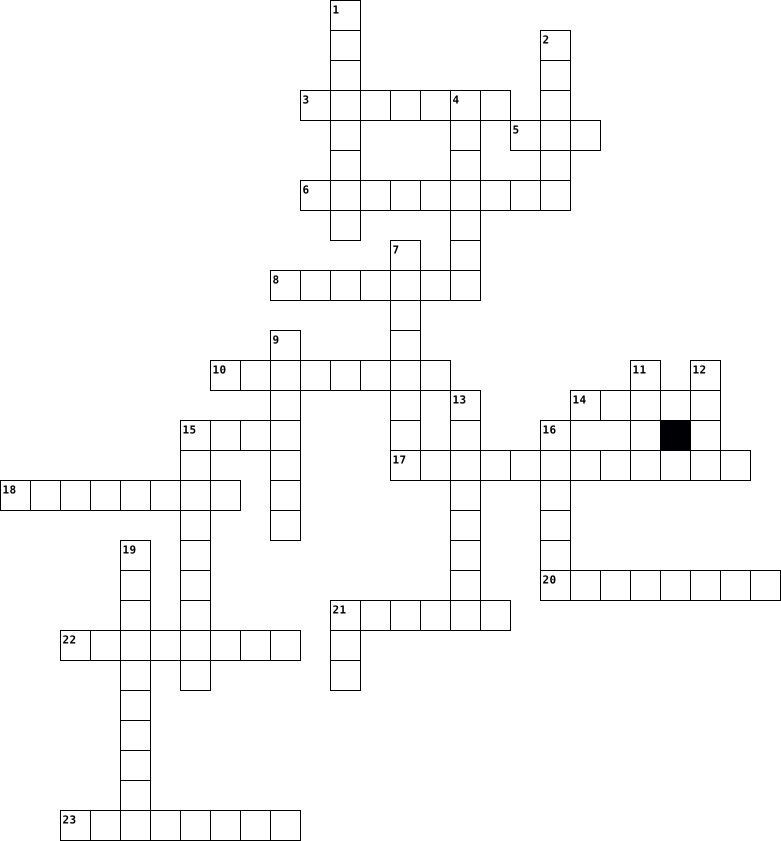
Across
- Br is the symbol for ___
- atomic number of carbon
- 4th element on the periodic table
- rows on the periodic table
- a ___ shell around an atom
- h20 is commonly called ___
- compound of sodium and chloride
- single and double ___
- atomic number nine on periodic table
- an electron has a ___ charge
- humans breathe it
- ___ reaction
- a table of elements
Down
- first element on the periodic table
- 2nd element on the periodic table
- the centre of an atom
- a combination of elements is
- a neutron has a ___ charge
- everything is made up of me
- Fe is the symbol for ___
- a proton has a ___ charge
- a type of chemical reaction
- inorganic acids do not contain ___
- amount of metals on periodic table
- atomic number of hydrogen
25 Clues: ___ reaction • humans breathe it • a table of elements • the centre of an atom • single and double ___ • atomic number of carbon • Br is the symbol for ___ • Fe is the symbol for ___ • a proton has a ___ charge • atomic number of hydrogen • rows on the periodic table • a neutron has a ___ charge • a ___ shell around an atom • h20 is commonly called ___ • everything is made up of me • ...
Unit 1 Review 2017-10-24

Across
- macromolecules containing nitrogen
- protein use
- 2 nucleic acids
- large molecules made from monomers
- carbohydrate use
- carbons not bonded to most hydrogen posible
- long term glucose storage in animals
- chemical reaction of water splitting polymers into monomers
- macromolecule made of amino acid monomers
- carbohydrate monomer
- removal of water from 2 monomers to make a polymer
Down
- protein catalyst
- carbohydrate polymer used for plant structure
- molecule enzyme reacts with
- macromolecule made of C,H and O
- part of enzyme where substrate fits
- contain carbon and hydrogen atoms
- macromolecule made from glycerol and 3 fatty acids
- one enzyme specific for one molecule model
- single units used to build polymers
- all carbons bonded to most hydrogen posible
- chemical that speeds up a reaction
- carbohydrate polymer that plants use for energy storage
23 Clues: protein use • 2 nucleic acids • protein catalyst • carbohydrate use • carbohydrate monomer • molecule enzyme reacts with • macromolecule made of C,H and O • contain carbon and hydrogen atoms • macromolecules containing nitrogen • large molecules made from monomers • chemical that speeds up a reaction • part of enzyme where substrate fits • single units used to build polymers • ...
Crossword Puzzle Biology 2022-04-18

Across
- The system with cells, tissues and organs.
- Another way we respond
- We used it to work and move.
- What it feels like outside?
- Your skin is apart of this system
- What do we breathe?
- The system that has your metabolism.
- The system with your bones.
- Slows down or prevents a particular chemical reaction
- What is a proteins, carbohydrates, lipids, and nucleic acids?
- Relating to or consisting of living cells?
Down
- A group of various species in the same location
- Speeds up digestion and metabolism.
- Where your impulse is in the system
- System with your mouth, stomach and pharynx.
- A sugar derived from ribose?
- The body system with blood and veins
- The system were offspring can be born
- Zinc and helium are?
- Tundra and forest are a?
20 Clues: What do we breathe? • Zinc and helium are? • Another way we respond • Tundra and forest are a? • What it feels like outside? • The system with your bones. • We used it to work and move. • A sugar derived from ribose? • Your skin is apart of this system • Speeds up digestion and metabolism. • Where your impulse is in the system • The system that has your metabolism. • ...
Journeys choice board 2023-10-03

Across
- organism that eats other organisms to survive
- all the Earth's living things
- pigment in chloroplasts used to trap sunlight energy
- third step in aerobic respiration
- all the Earths rocks and soil
- describes a situation in which oxygen in present
- substances at the beginning of a chemical reaction
- adenosine triphosphate, charged energy storage
Down
- second step of photosynthesis
- anything that takes up space
- all the Earth's water
- all the Earth's gasses
- site of steps 2 and 3 of cellular respiration
- substance made from a chemical reaction
- process of using light energy to make glucose
- organism that makes its own food
- process of breaking down glucose to make ATP
- describes a situation in which oxygen is not present
- first step of photosynthesis
- site of photosynthesis
20 Clues: all the Earth's water • all the Earth's gasses • site of photosynthesis • anything that takes up space • first step of photosynthesis • second step of photosynthesis • all the Earth's living things • all the Earths rocks and soil • organism that makes its own food • third step in aerobic respiration • substance made from a chemical reaction • ...
BalancingChemicalEquations 2022-02-16

Across
- the products before a chemical reaction
- reactions things that are combined to make a new substance
- the person who created the law of
- anything that has mass and takes up space
- things that are not balanced
Down
- the building blocks of life
- nothing can be created or destroyed
- shows that no mass was created or destroyed
- the substance after a chemical reaction
- things equal
10 Clues: things equal • the building blocks of life • things that are not balanced • the person who created the law of • nothing can be created or destroyed • the products before a chemical reaction • the substance after a chemical reaction • anything that has mass and takes up space • shows that no mass was created or destroyed • ...
Chemistry 2026-03-31

Across
- Group of atoms bonded together composed of a single element or a single compound
- The smallest particle of matter that has distinct properties because of its nucleus which contains protons and neutrons and an electron cloud
- Describes a chemical reaction by showing how atoms in the reactants are rearranged to form new substances in the products
- A letter abbreviation of an element name
- Consists of multiple different substances that are evenly distributed so each sample of mixture may have different proportions of components
- A set of chemical symbols and subscripts showing which elements are bonded together to form a molecule
Down
- Mass stays the same during a reaction the total mass of the reactants is equal to the total mass of the products
- Substance formed as a result of a chemical reaction (right side)
- During a reaction a new substance is made when atoms of the original substance are rearranged to make something new
- The small number behind the element indicates the number of atoms for that element
- The starting materials found in a chemical equation (left side) that will react together
- Consists of multiple different substances that are evenly distributed so each sample will have the same proportion of components
- A pure substance that is made up of only one type of atom
- The big number in front of a formula that indicates how many molecule groups
- is made up of 2 or more different elements bonded together
15 Clues: A letter abbreviation of an element name • A pure substance that is made up of only one type of atom • is made up of 2 or more different elements bonded together • Substance formed as a result of a chemical reaction (right side) • The big number in front of a formula that indicates how many molecule groups • ...
BalancingChemicalEquations 2022-02-16

Across
- the products before a chemical reaction
- reactions things that are combined to make a new substance
- the person who created the law of
- anything that has mass and takes up space
- things that are not balanced
Down
- the building blocks of life
- nothing can be created or destroyed
- shows that no mass was created or destroyed
- the substance after a chemical reaction
- things equal
10 Clues: things equal • the building blocks of life • things that are not balanced • the person who created the law of • nothing can be created or destroyed • the products before a chemical reaction • the substance after a chemical reaction • anything that has mass and takes up space • shows that no mass was created or destroyed • ...
Crossword Science 3.2 2021-10-06

Across
- Can happen both during a physical and chemical change
- Ice
- Leaves changing
- Evaporation from boiling water
- Lemonade mix mixing into water
- This cannot be created nor destroyed
- Ice melting in the hot sun to water
- _________ sugar into water.
- mix together or put together
- Most chemical changes cannot be________.
- Example of a chemical change and sometimes happens when its too dry in a forest
Down
- States that the total mass is the same before and after a chemical reaction
- A hot physical change
- Changing the shape of clay
- Example of a physical property
- Liquid, solid, gas
- Fireworks
- Made up of many sugar molecules
- A solid that sometimes forms when two liquids combine
- Water
20 Clues: Ice • Water • Fireworks • Leaves changing • Liquid, solid, gas • A hot physical change • Changing the shape of clay • _________ sugar into water. • mix together or put together • Example of a physical property • Evaporation from boiling water • Lemonade mix mixing into water • Made up of many sugar molecules • Ice melting in the hot sun to water • This cannot be created nor destroyed • ...
Sofi flores 2022-01-17

Across
- the minimum energy required for a chemical reaction to occur
- characterizes something or someone
- molecule on which an enzyme acts.
- complex proteins that produce a chemical.
Down
- change of molecular structure
- body or component of a thing
- formed by units called amino acids.
- changes the rate of a chemical reaction.
- involves two or more components joined by a chemical bond type
9 Clues: body or component of a thing • change of molecular structure • molecule on which an enzyme acts. • characterizes something or someone • formed by units called amino acids. • changes the rate of a chemical reaction. • complex proteins that produce a chemical. • the minimum energy required for a chemical reaction to occur • ...
Science puzzle 2024-10-07

Across
- A substance that is made with two or more elements
- two words
- Chemical process using electricity to break down compounds
- The smallest unit of matter
Down
- The amount of substance in a chemical reaction
- Outcomes of a chemical reaction
- A substance that only has one atom
- The amount of atoms in a molecule
- Group of atoms bonded together
- Amount of matter in an object
10 Clues: two words • The smallest unit of matter • Amount of matter in an object • Group of atoms bonded together • Outcomes of a chemical reaction • The amount of atoms in a molecule • A substance that only has one atom • The amount of substance in a chemical reaction • A substance that is made with two or more elements • Chemical process using electricity to break down compounds
2.5 Enzymes 2015-01-20

Across
- A biological catalyst made of protein
- Enzymes lower the energy of _____
- Increasing this denatures an enzyme
- Changes could affect the rate of enzyme reactions
- Some enzymes are _____ to be used in industry
- What binds with an enzyme?
Down
- A site of an enzyme that attaches to the substrate
- Products of this enzyme are galactose and glucose
- A process of changing of the shape of an enzyme so that it can no longer speed up a reaction
- The totality of an organism chemical process
- Decomposition of a chemical compound by reaction with water
- A substance which speeds up a reaction
12 Clues: What binds with an enzyme? • Enzymes lower the energy of _____ • Increasing this denatures an enzyme • A biological catalyst made of protein • A substance which speeds up a reaction • The totality of an organism chemical process • Some enzymes are _____ to be used in industry • Products of this enzyme are galactose and glucose • ...
Chapter 4 2025-07-28

Across
- A change that cannot be undone
- A reaction that happens when you cook food
- The gas produced when vinegar and baking soda react
- A type of sweet crystal you can grow at home
- A common kitchen ingredient that reacts with vinegar
- What you see rising when wood burns
Down
- The opposite of freezing—when ice turns to water
- A change that can be reversed, like freezing water
- The reaction when vinegar and baking soda meet
- The blackened result of burning toast
- A sign of a chemical reaction
- Something new formed after a chemical change
12 Clues: A sign of a chemical reaction • A change that cannot be undone • What you see rising when wood burns • The blackened result of burning toast • A reaction that happens when you cook food • A type of sweet crystal you can grow at home • Something new formed after a chemical change • The reaction when vinegar and baking soda meet • ...
Science vocabulary 8th grade unit 2 2024-09-16

Across
- reaction – a change caused by the interaction of two or more substances (reactants) resulting in the formation of new substances (products)
- – combined atoms of the same element (e.g., O2)
- – a substance made of two or more elements
- equation – a representation of a chemical reaction by symbols and numbers
- – the formation of solids from a solution
- – the number placed in front of a chemical formula in a chemical equation; represents the number of molecules of that substance
- of conservation of mass – matter is not created or destroyed; only rearranged
Down
- formula – a representation of a molecule or compound in which the elements are represented by their symbols and subscripts represent the number of atoms of each element
- – the number written to the right and slightly below an element in a chemical formula; represents the number of atoms of an element present in a chemical formula
- – substance(s) resulting from a chemical reaction
- – substances that are combined and changed during a chemical reaction
- change – the formation of a new substance with different properties; cannot be undone by physical means
12 Clues: – the formation of solids from a solution • – a substance made of two or more elements • – combined atoms of the same element (e.g., O2) • – substance(s) resulting from a chemical reaction • – substances that are combined and changed during a chemical reaction • equation – a representation of a chemical reaction by symbols and numbers • ...
Chemistry Crossword 2020-05-04

Across
- for example rusting of iron.
- chemical reaction in which two soluble salts in aqueous solution combine and one of the products is an insoluble salt .
- replacement of one reactor with another.
- quantitative reaction of an acid and a base.
- accompanied by loss of electrons.
- eg.NaOH+HCL.
- NH4Cl ⇌ 2NO2.
- a reaction where the reactants and products react together to give the reactants back
Down
- Oxygen and Hallogens are more likely to undergo this reaction.
- plants undergo this type of reaction.
- eg Cracking of alkanes.
- 2KClO3 —->[heat]2KCl+3o2.
- 'enzymes' are one of its types.
- eg Zn(s) + 2H+(aq) → Zn2+(aq) + H2(g) .
- accompanied by the passage of an electric current.
15 Clues: eg.NaOH+HCL. • NH4Cl ⇌ 2NO2. • eg Cracking of alkanes. • 2KClO3 —->[heat]2KCl+3o2. • for example rusting of iron. • 'enzymes' are one of its types. • accompanied by loss of electrons. • plants undergo this type of reaction. • replacement of one reactor with another. • eg Zn(s) + 2H+(aq) → Zn2+(aq) + H2(g) . • quantitative reaction of an acid and a base. • ...
Bonding & Chemical Reactions 2024-09-17

Across
- ionic bonds _______ electrons
- bond formed when 2 non metals react
- the law of __________ of matter states that the mass of the reactants has to be the same as the mass of the products
- substances produced in a chemical reaction
Down
- forms when chlorine and sodium react
- can be produced when a chemical reaction occurs
- substances needed for a chemical reaction to occur
- bond formed between a metal and a nonmetal
- covalent bonds ______ electrons
9 Clues: ionic bonds _______ electrons • covalent bonds ______ electrons • bond formed when 2 non metals react • forms when chlorine and sodium react • bond formed between a metal and a nonmetal • substances produced in a chemical reaction • can be produced when a chemical reaction occurs • substances needed for a chemical reaction to occur • ...
Stoichiometry Crossword Puzzle 2022-11-29

Across
- the mass in grams of 1 mole of a substance
- a substance that cannot be separated into its different components by physical means
- atom or group of atoms that have a charge other than zero
- the relationship between the relative quantities of substances taking part in a reaction or forming a compound
- the chemical formula of a compound that gives the proportions of the elements present instead of the actual numbers or arrangement
- tells us the mass by mass what percent of each element is present in a compound
Down
- numbers used to change one set of units to another
- the number of units in one mole of any substance; 6.02214076 x 10^23
- the chemical formula of an ionic compound that lists the ions in the lowest ratio that equals a neutral electrical charge
- the smallest unit of ordinary matter that has the properties of a chemical element
- a substance that contains water molecules within its structure
- reaction in which the number of atoms is the same for both the reactants and products
- a representation of a molecule that uses chemical symbols to indicate the types of atoms and number of atoms present
- the quantitative relation between the number of moles of various products and reactants in a chemical reaction
- the standard scientific unit for measuring large quantities of very small entities
- process that involves rearrangement of the molecular or ionic structure of a substance
16 Clues: the mass in grams of 1 mole of a substance • numbers used to change one set of units to another • atom or group of atoms that have a charge other than zero • a substance that contains water molecules within its structure • the number of units in one mole of any substance; 6.02214076 x 10^23 • ...
Lina 2022-03-22

Across
- - abundance of a constituent divided by the total volume of a mixture
- - a substance that dissolves a solute, resulting in a solution.
- - the process of decreasing the concentration of a solute in a solution, usually simply by mixing with more solvent like adding more water to the solution.
- -the quantity of matter contained in an atom of an element.
- - a property referring to the ability for a given substance, the solute, to dissolve in a solvent.
- -a solution is a special type of homogeneous mixture composed of two or more substances.
Down
- - material or system has the same properties at every point; it is uniform without irregularities.
- - a material made up of two or more different chemical substances which are not chemically bonded
- - the species formed from chemical reactions.
- - consisting of different, distinguishable parts or elements.
- -metallic substance composed of two or more elements, as either a compound or a solution.
- - a substance or compound added to a system to cause a chemical reaction, or added to test if a reaction occurs.
- - a molecule or other entity that can donate a proton or accept an electron pair in reactions.
- - a group of atoms bonded together, representing the smallest fundamental unit of a chemical compound that can take part in a chemical reaction.
- - in chemistry, any substance that in water solution is slippery to the touch, tastes bitter, changes the colour of indicators
15 Clues: - the species formed from chemical reactions. • -the quantity of matter contained in an atom of an element. • - consisting of different, distinguishable parts or elements. • - a substance that dissolves a solute, resulting in a solution. • - abundance of a constituent divided by the total volume of a mixture • ...
Crossword puzzle 2025-07-20

Across
- phenomenon of light bouncing back after striking a surface
- powerhouse of the cell is called ____
- A substance that gives oxygen or removes Hydrogen in a chemical reaction
- green pigment in plants that captures sunlight for Photosynthesis
- Muscular pipe that connects mouth to stomach
- In this reaction a more reactive element replaces a less reactive one
Down
- Type of reaction where 2 or more reactants form a single product
- Process of breaking down glucose to release energy in cells
- Type of lens that converges light rays and is thicker in the middle
- bending of light when it passes from one medium to another
- Type of image that cannot be obtained on a screen and is formed by plane mirrors
- A chemical reaction that absorbs heat
- wave like movement in the alimentary canal that pushes food down
- Point on the principal axis where parallel rays converge or appear to diverge after Reflection/Refraction
- Gas evolved when a metal reacts with dilute acid
15 Clues: powerhouse of the cell is called ____ • A chemical reaction that absorbs heat • Muscular pipe that connects mouth to stomach • Gas evolved when a metal reacts with dilute acid • phenomenon of light bouncing back after striking a surface • bending of light when it passes from one medium to another • Process of breaking down glucose to release energy in cells • ...
Science Unit B 2017-11-08

Across
- symbol O
- symbol H
- the state of a substance that keeps the shape of the container
- symbol Cu
- a element the is named after a well known scientist
- when the chemical starts to dissolve
- the substance that the reactants create
- the state of our air
- a reaction that produces heat
- the ability to roll into sheets
- a compound with a metal and a non metal
- that stated of a substance were it keeps its shape
- the smallest part of a element
Down
- the chemicals that when combine create a reaction
- a element named after a country below us
- when the substance disappears or blows up
- symbol Ag
- when to chemicals combined and make a
- a reaction that absorbs heat
- symbol B
- the center of the atom
- a substance that speeds up the reaction rate
- a compound with two non metals
- symbol Fe
- symbol Au
25 Clues: symbol O • symbol H • symbol B • symbol Ag • symbol Cu • symbol Fe • symbol Au • the state of our air • the center of the atom • a reaction that absorbs heat • a reaction that produces heat • a compound with two non metals • the smallest part of a element • the ability to roll into sheets • when the chemical starts to dissolve • when to chemicals combined and make a • ...
Photosynthesis 2020-11-18

Across
- stack of thylakoids
- series of chemical reactions occurring within a cell
- splits water to create high energy molecules
- ion used to make ATP
- protein where chemiosmosis is performed
- thin coin that collects light
- location of cellular repiration
- organelle that does photosynthesis
- donates electrons in the light dependent reaction
- byproduct(waste) of the light dependent reaction
- energy molecule made by chemiosmosis
- acronym for visible light
- process of making ATP
Down
- fixes carbon to create high energy organic molecules
- pigment that is able to absorb green light
- inorganic reactant of the Calvin Cycle
- using light to split water
- high energy molecule made in the light dependent reaction
- location of the light dependent reaction
- location of the Calvin Cycle
- green pigment that absorbs red light the best
- green pigment that absorbs blue light the best
- multi step process that makes glucose
- energy used to excite electrons in the light dependent reaction
- C6H12O6
25 Clues: C6H12O6 • stack of thylakoids • ion used to make ATP • process of making ATP • acronym for visible light • using light to split water • location of the Calvin Cycle • thin coin that collects light • location of cellular repiration • organelle that does photosynthesis • energy molecule made by chemiosmosis • multi step process that makes glucose • ...
Grade 10 Chemistry Review 2025-08-25

Across
- sharing of electrons between atoms (2words)
- group of elements with 7 valence electrons
- elements between metals and nonmetals on periodic table
- group of stable elements (2words)
- reaction which breaks down a substance
- number of protons atom has (2words)
- end result of a reaction
- reaction in which an element replaces another element in compund (2words)
- reaction between acids and bases
- burning of substance using oxygen gas
- substances that undergo change in a reaction
Down
- atom that has gained electrons (2words)
- law of ___________ of mass
- where electrons are found
- chemical name of NaCl (2words)
- name of diagram that uses dots
- 2 reactants produce 1 product
- feel slippery
- taste sour
- solution that conducts electricity
- 2 or more atoms bonded together
- force of attraction between ions of opposite charge (2words)
- horizontal row on periodic table
- outermost electrons in an atom
- measures the strength of acids and bases
- protons plus neutrons (2words)
- location of protons in an atom
27 Clues: taste sour • feel slippery • end result of a reaction • where electrons are found • law of ___________ of mass • 2 reactants produce 1 product • chemical name of NaCl (2words) • name of diagram that uses dots • outermost electrons in an atom • protons plus neutrons (2words) • location of protons in an atom • 2 or more atoms bonded together • horizontal row on periodic table • ...
U4 Vocabulary: Chemical Reactions 2021-10-14

Across
- / chemical reactions in which the reactants absorb heat energy from the surroundings to form products.
- / a substance that enters into
- / where two compounds react
Down
- / a chemical reaction where one reactant is exchanged for one ion of a second reactant
- / chemical reaction in which less energy is needed to break bonds
- / type of reaction in which multiple reactants combine to form a single product
- /when one reactant breaks down into two or more products
- / an important number that characterizes some physical property of a technical or scientific object
- / formed from chemical reactions
9 Clues: / where two compounds react • / a substance that enters into • / formed from chemical reactions • /when one reactant breaks down into two or more products • / chemical reaction in which less energy is needed to break bonds • / type of reaction in which multiple reactants combine to form a single product • ...
Chemical Basis of Life 2014-02-04

Across
- The control centre of the cell
- A pure substance that cannot be broken down into simpler substances
- A reaction in which complex chemical structures are broken down into simpler molecules
- A bond between two or more atoms where electrons are shared
- A negatively charged atom formed by the gaining of one or more electrons
- A bond between a metal and a non-metal where electrons are transferred
- Is formed when two or more elements are joined by chemical bonds
- An atom with the same number of protons, but a different number of neutrons
- The material of which things are made
- The amount of matter in an object
Down
- The smallest unit of life
- A reaction in which simple substances are combined to form complex chemical structures
- The ability to do work, measured in joules(J)
- Two or more atoms bonded together
- A positively charged atom formed by the loss of one or more electrons
- The sum of all chemical reactions that occur within cells
- The atomic number of an atom represents the amount of this
- Electrons are found in this
- The smallest particle of matter
19 Clues: The smallest unit of life • Electrons are found in this • The control centre of the cell • The smallest particle of matter • Two or more atoms bonded together • The amount of matter in an object • The material of which things are made • The ability to do work, measured in joules(J) • The sum of all chemical reactions that occur within cells • ...
Stoichiometry 2022-02-09

Across
- can be found on the left side of a chemical equation
- properties of reactants and products used in a chemical equation
- symbolic representation of a chemical reaction
- mass of a given substance
Down
- Avogadro's number
- there is an equal number of atoms on each side of a chemical reaction
- relationship between quantities of substances in a chemical equation
- can be found on the right side of a formula
- metric unit represented by the number 22.4 which is equal to mole
- can also be known as a coefficient
10 Clues: Avogadro's number • mass of a given substance • can also be known as a coefficient • can be found on the right side of a formula • symbolic representation of a chemical reaction • can be found on the left side of a chemical equation • properties of reactants and products used in a chemical equation • metric unit represented by the number 22.4 which is equal to mole • ...
Photosynthesis 2025-11-24

Across
- A producer that uses water and carbon dioxide to make its own food and oxygen
- generates energy Molecules through cellular respiration
- the process that turns light energy into chemical energy
- Substances present at the start of a chemical reaction
- Provides the electrons and hydrogen ions needed for photosynthesis
Down
- Substances present at the end of a chemical reaction
- The pigment that absorbs light energy from the sun and converts it to chemical energy
- Main product in photosynthesis
- Captures light energy
- The organelle that converts light energy into chemical energy
10 Clues: Captures light energy • Main product in photosynthesis • Substances present at the end of a chemical reaction • Substances present at the start of a chemical reaction • generates energy Molecules through cellular respiration • the process that turns light energy into chemical energy • The organelle that converts light energy into chemical energy • ...
chem cross 2022-02-10

Across
- how well an atom attracts shared/bonded electrons towards its nucleus.
- electrons, the electrons an atom has on its outermost (highest) energy level.
- number, the total of the number of neutrons and protons in an atomic nucleus.
- theory, theory that all things are made of tiny (smaller than microscopic) particles.
- compounds, Composed of cations and anions (must have metal and non-metal).
- reactions, the process in which chemical bonds are broken and/or formed
- A subatomic particle that has no charge and that is found in the nucleus of an atom. glue together protons in the nucleus.
- number, Number of protons in an atom. identifies the element. periodic table is organized by this mass
- A substance made up of atoms of two or more different elements joined by chemical bonds.
- A negatively charged particle that is found outside the nucleus of an atom. bonding & reactions & releases energy.
- bonds, element with much higher electroneg ends up stealing e-
Down
- A homogeneous mixture of two or more substances.
- radius, Describes the size of an atom.
- energy being released (feel hot).
- energy absorbed (feel cold).
- area, When the surface area of the reacting particles is increased, the number of collisions is increased, which intern causes a reaction rate increase.
- bond, atoms that share the same amount of electrons.
- energy, energy required to initiate a chemical reaction.
- A subatomic particle that has a positive charge and that is found in the nucleus of an atom. identifies element (atomic number)
- An increase in temperature increases the average kinetic energy of the particles, which causes more collisions and ultimately an increase in the rate of reaction.
- charged particle that result from gaining or losing electrons.
21 Clues: energy absorbed (feel cold). • energy being released (feel hot). • radius, Describes the size of an atom. • A homogeneous mixture of two or more substances. • bond, atoms that share the same amount of electrons. • energy, energy required to initiate a chemical reaction. • bonds, element with much higher electroneg ends up stealing e- • ...
mixtures and solution Hunter 2017-10-31

Across
- a substance that is formed by the chemical combination of two or more elements and that acts like a single substance
- a physical combination of two or more substances that are blended together without forming a new substance
- an original substance at the beginning of a chemical reaction
- change a change of matter in size, shape, or state without any change in identity
- point the particular temperature for a substance at which it changed state from a solid to a liquid
- the process of changing directly from a solid to a gas without first becoming a liquid
- the process of separating parts of a mixture by evaporation and condensation
Down
- a substance at the end of a chemical reaction
- a mixture of substances that are blended so completely that the mixture looks the same everywhere
- a substance that dissolves one or more other substances to form a solution
- change a change of matter that occurs when atoms link together in a new way, creating a new substance different from the original
- a solid formed by the chemical reaction of two solutions
- point the particular temperature for a substance at which it changes state from a liquid to a gas
- the maximum amount of a substance that can be dissolved by another substance
- point the temperature at which a substance changes state from a liquid to a solid
- a substance that is dissolved by another substance to form a solution
16 Clues: a substance at the end of a chemical reaction • a solid formed by the chemical reaction of two solutions • an original substance at the beginning of a chemical reaction • a substance that is dissolved by another substance to form a solution • a substance that dissolves one or more other substances to form a solution • ...
Lina 2022-03-22

Across
- - abundance of a constituent divided by the total volume of a mixture
- - a substance that dissolves a solute, resulting in a solution.
- - the process of decreasing the concentration of a solute in a solution, usually simply by mixing with more solvent like adding more water to the solution.
- -the quantity of matter contained in an atom of an element.
- - a property referring to the ability for a given substance, the solute, to dissolve in a solvent.
- -a solution is a special type of homogeneous mixture composed of two or more substances.
Down
- - material or system has the same properties at every point; it is uniform without irregularities.
- - a material made up of two or more different chemical substances which are not chemically bonded
- - the species formed from chemical reactions.
- - consisting of different, distinguishable parts or elements.
- -metallic substance composed of two or more elements, as either a compound or a solution.
- - a substance or compound added to a system to cause a chemical reaction, or added to test if a reaction occurs.
- - a molecule or other entity that can donate a proton or accept an electron pair in reactions.
- - a group of atoms bonded together, representing the smallest fundamental unit of a chemical compound that can take part in a chemical reaction.
- - in chemistry, any substance that in water solution is slippery to the touch, tastes bitter, changes the colour of indicators
15 Clues: - the species formed from chemical reactions. • -the quantity of matter contained in an atom of an element. • - consisting of different, distinguishable parts or elements. • - a substance that dissolves a solute, resulting in a solution. • - abundance of a constituent divided by the total volume of a mixture • ...
Lina Crossword Puzzle 2022-03-22

Across
- - abundance of a constituent divided by the total volume of a mixture
- - a substance that dissolves a solute, resulting in a solution.
- - the process of decreasing the concentration of a solute in a solution, usually simply by mixing with more solvent like adding more water to the solution.
- -the quantity of matter contained in an atom of an element.
- - a property referring to the ability for a given substance, the solute, to dissolve in a solvent.
- -a solution is a special type of homogeneous mixture composed of two or more substances.
Down
- - material or system has the same properties at every point; it is uniform without irregularities.
- - a material made up of two or more different chemical substances which are not chemically bonded
- - the species formed from chemical reactions.
- - consisting of different, distinguishable parts or elements.
- -metallic substance composed of two or more elements, as either a compound or a solution.
- - a substance or compound added to a system to cause a chemical reaction, or added to test if a reaction occurs.
- - a molecule or other entity that can donate a proton or accept an electron pair in reactions.
- - a group of atoms bonded together, representing the smallest fundamental unit of a chemical compound that can take part in a chemical reaction.
- - in chemistry, any substance that in water solution is slippery to the touch, tastes bitter, changes the colour of indicators
15 Clues: - the species formed from chemical reactions. • -the quantity of matter contained in an atom of an element. • - consisting of different, distinguishable parts or elements. • - a substance that dissolves a solute, resulting in a solution. • - abundance of a constituent divided by the total volume of a mixture • ...
Lina Crossword Puzzle 2022-03-22

Across
- - abundance of a constituent divided by the total volume of a mixture
- - a substance that dissolves a solute, resulting in a solution.
- - the process of decreasing the concentration of a solute in a solution, usually simply by mixing with more solvent like adding more water to the solution.
- -the quantity of matter contained in an atom of an element.
- - a property referring to the ability for a given substance, the solute, to dissolve in a solvent.
- -a solution is a special type of homogeneous mixture composed of two or more substances.
Down
- - material or system has the same properties at every point; it is uniform without irregularities.
- - a material made up of two or more different chemical substances which are not chemically bonded
- - the species formed from chemical reactions.
- - consisting of different, distinguishable parts or elements.
- -metallic substance composed of two or more elements, as either a compound or a solution.
- - a substance or compound added to a system to cause a chemical reaction, or added to test if a reaction occurs.
- - a molecule or other entity that can donate a proton or accept an electron pair in reactions.
- - a group of atoms bonded together, representing the smallest fundamental unit of a chemical compound that can take part in a chemical reaction.
- - in chemistry, any substance that in water solution is slippery to the touch, tastes bitter, changes the colour of indicators
15 Clues: - the species formed from chemical reactions. • -the quantity of matter contained in an atom of an element. • - consisting of different, distinguishable parts or elements. • - a substance that dissolves a solute, resulting in a solution. • - abundance of a constituent divided by the total volume of a mixture • ...
Lina Crossword Puzzle 2022-03-22

Across
- - abundance of a constituent divided by the total volume of a mixture
- - a substance that dissolves a solute, resulting in a solution.
- - the process of decreasing the concentration of a solute in a solution, usually simply by mixing with more solvent like adding more water to the solution.
- -the quantity of matter contained in an atom of an element.
- - a property referring to the ability for a given substance, the solute, to dissolve in a solvent.
- -a solution is a special type of homogeneous mixture composed of two or more substances.
Down
- - material or system has the same properties at every point; it is uniform without irregularities.
- - a material made up of two or more different chemical substances which are not chemically bonded
- - the species formed from chemical reactions.
- - consisting of different, distinguishable parts or elements.
- -metallic substance composed of two or more elements, as either a compound or a solution.
- - a substance or compound added to a system to cause a chemical reaction, or added to test if a reaction occurs.
- - a molecule or other entity that can donate a proton or accept an electron pair in reactions.
- - a group of atoms bonded together, representing the smallest fundamental unit of a chemical compound that can take part in a chemical reaction.
- - in chemistry, any substance that in water solution is slippery to the touch, tastes bitter, changes the colour of indicators
15 Clues: - the species formed from chemical reactions. • -the quantity of matter contained in an atom of an element. • - consisting of different, distinguishable parts or elements. • - a substance that dissolves a solute, resulting in a solution. • - abundance of a constituent divided by the total volume of a mixture • ...
Chemical Bonds 2022-10-26

Across
- ________ electrons are the electrons in the outermost shell.
- A ______ reaction occurs when chemical bonds give off heat.
- Groups of atoms held together with chemical bonds.
- A ______ can occur when chemical bonds are built or broken.
- shows the number and types of atoms presented in an atom, using atomic symbols and numerical subscripts.
- formed with oppositely charged ions.
Down
- The sharing of two or more electrons.
- A _______ reaction occurs when chemical bonds absorb heat.
- when one chemical substance is transformed into one or more different substances.
- An ______ contains three basic particles - protons, neutrons, and electrons.
10 Clues: formed with oppositely charged ions. • The sharing of two or more electrons. • Groups of atoms held together with chemical bonds. • A _______ reaction occurs when chemical bonds absorb heat. • A ______ reaction occurs when chemical bonds give off heat. • A ______ can occur when chemical bonds are built or broken. • ...
Science rules 2017-09-26

Across
- / sugar molecule
- / substances that are formed, from a chemical reaction.
- RESPIRATION / process by which oxygen reacts with glucose to form carbon dioxide, water and energy in the form of ATP.
- / Process by which plants make their own sugar, by reacting carbon dioxide with water, in the presence of sunlight to produce sugar and oxygen
- / in water
- / type of long chain sugar molecule that is found in plants.
Down
- / structure in the intestine, which enables the absorption of nutrients into the blood.
- / plant cell organelle, where photosynthesis occurs
- / enzyme which breaks down carbohydrate, and long sugar molecules into glucose
- / substances that will interact with each other during a chemical reaction
- / Organelle found inside a cell. It is the site of cellular respiration.
- REACTION / type of reaction that requires energy to start the reaction. The energy is absorbed from its surroundings.
12 Clues: / in water • / sugar molecule • / plant cell organelle, where photosynthesis occurs • / substances that are formed, from a chemical reaction. • / type of long chain sugar molecule that is found in plants. • / Organelle found inside a cell. It is the site of cellular respiration. • / substances that will interact with each other during a chemical reaction • ...
Unit 6B Vocab 2017-04-04

Across
- Result of a chemical reaction.
- Symbolic representation of a chemical reaction in the form of symbols and formulas.
- A way of expressing information about the proportions of atoms that make up a particular chemical compound.
- A group of odorless, colorless, monatomic gases with very low chemical reactivity.
- A substance that takes part in and undergoes change during a reaction.
Down
- Occurs when objects or substances are changed through the physical form of a composition, but not through its chemical composition.
- Electrons from the outer shell of an atom that can participate in forming chemical bonds with other atoms.
- States that for any system closed to all transfers of matter and energy, the mass of the system must remain constant, as system mass cannot change quantity if it is not added or removed.
- Occurs when a substance combines with another to form a new substance, called synthesis, or, alternatively, decompose into two or more different substances.
- A lasting attraction between atoms that enables the formation of chemical compounds.
- A group of elements on the periodic table that are all found on the first column and are extremely reactive.
11 Clues: Result of a chemical reaction. • A substance that takes part in and undergoes change during a reaction. • A group of odorless, colorless, monatomic gases with very low chemical reactivity. • Symbolic representation of a chemical reaction in the form of symbols and formulas. • A lasting attraction between atoms that enables the formation of chemical compounds. • ...
Vocabulary 2014-06-05

Across
- Heat required to raise the temp
- When a reaction absorbs heat
- The study of energy transfer in the form of heat during chemical reactions and physical changes
- Energy due to motion
- Stored energy
- Energy contained in Chemical bonds of various matter
- SI Unit of work or energy
- The ability to do work
Down
- Energy and mass are related
- Energy that can be transferred due to the molecular movement
- When a reaction measures heat
- Two units of heated energy
- A measure of molecule movement
13 Clues: Stored energy • Energy due to motion • The ability to do work • SI Unit of work or energy • Two units of heated energy • Energy and mass are related • When a reaction absorbs heat • When a reaction measures heat • A measure of molecule movement • Heat required to raise the temp • Energy contained in Chemical bonds of various matter • ...