
civil war Crossword Puzzles
American Civil War 2021-06-01

Across
- Lincoln's assassin
- Word for when a state left the Union
- Another name for "Black Independence Day"
- ____ Theater, and a popular car brand
- Union general who became president
- State where 7 Across happened
- Territory battles prior to the war
- Ole "___sides" battleship
Down
- Beginning of the Civil War
- Color of Union uniforms
- Famous cemetery speech
- "_____'s March to the Sea" in Georgia
- Abolitionist who participated in 14 Across
- __________ Proclamation
- Surrendered at Appomattox
- Battle of Bull ___
- Color of Confederate uniforms
- President of the Confederacy
18 Clues: Lincoln's assassin • Battle of Bull ___ • Famous cemetery speech • Color of Union uniforms • __________ Proclamation • Surrendered at Appomattox • Ole "___sides" battleship • Beginning of the Civil War • President of the Confederacy • Color of Confederate uniforms • State where 7 Across happened • Union general who became president • Territory battles prior to the war • ...
Civil War Test 2022-05-06

Across
- first major battle
- winning the first half of war
- assassinated lincoln
- Had more $$$, weapons, factories, soldiers
- Had motivation, experience, better generals
- Famous Speech
- freed the slaves in the south
- Number of Union States.
- bloodiest battle of the war
Down
- President of the USA
- General of CSA
- What kind of war did Gen Sherman unleash
- turning point of war
- first battle
- Number of border states
- General of USA
- Number of Confederate States
- President of the CSA
- who won the war
- Where did lee surrender at
20 Clues: first battle • Famous Speech • General of CSA • General of USA • who won the war • first major battle • President of the USA • assassinated lincoln • turning point of war • President of the CSA • Number of border states • Number of Union States. • Where did lee surrender at • bloodiest battle of the war • Number of Confederate States • winning the first half of war • ...
The Civil War 2013-04-04

Across
- composed legislative executive,an judical branch
- the effect of the Fort Summter attack
- to put an end
- people that were against slavery and wanted it to end
- political power belongs to the people
- a protection against unlawful imprisonment
- stating california would be a free state in the union
- first word used in new york times
Down
- crime to help fleeing slaves & right to arrest freed slaves
- public decloration
- to go with a sections intrest and ignore the country
- a law letting voter choose whether or not to have slavery
- wanted to abolish slavery,helped lincoln with slaves
- leader of the union army
- helped free more than 3,000 slaves & served as cook & nurse
- the start of the civil war
- to escape from the hold of the union
- attacked causing the seven day battles
18 Clues: to put an end • public decloration • leader of the union army • the start of the civil war • first word used in new york times • to escape from the hold of the union • the effect of the Fort Summter attack • political power belongs to the people • attacked causing the seven day battles • a protection against unlawful imprisonment • ...
The Civil War 2013-04-04

Across
- political power belongs to the people
- was attacked by the confederate troops
- slaves couldn't runaway people couldn't kidnapfree slaves
- a general who has no problems with him
- famous underground conducter
- stating your opinion clearly
- commander or general
- allowed people to decide over slavery
Down
- made a state into a free state
- a network were slaves escaped
- people who oppose to slavery
- people who oppose abolition
- favoring one section for your whole country
- to separate apart
- to oppose or fight against
- protection against lawful inprisonment
- between the north and the south
- another former slave
18 Clues: to separate apart • commander or general • another former slave • to oppose or fight against • people who oppose abolition • people who oppose to slavery • famous underground conducter • stating your opinion clearly • a network were slaves escaped • made a state into a free state • between the north and the south • political power belongs to the people • ...
Civil War Era 2023-10-23

Across
- Violent abolitionist.
- Last name of the author of the book "Uncle Tom's Cabin".
- Political party established to resist the aggression of those that support slavery and promote popular sovereignty.
- 1st presidential candidate to run as a Republican.
- Location of the military arsenal where John Brown was arrested.
- First state to secede from the United States.
- Last name of the Supreme Court Chief Justice that presided over the Dred Scott case.
Down
- Voter in a territory are allowed to choose whether to allow slavery or not.
- Laws passed by states that directly violated the agreements of the Compromise of 1850.
- Attacked Charles Sumner on the floor of the Senate because of anti-slavery remarks.
- Most famous conductor of the Underground Railroad
- Neither slavery not involuntary servitude shall exist in any lands acquired from Mexico.
- President elected in 1856. (last name only)
- Political party that originated from the ashes of the Whig Party.
- Abraham Lincoln gained national attention due to running against Stephen Douglas for this office.
- Slave that filed a law suit in an attempt to gain his freedom.
- Political party that dissolved as a result of the Compromise of 1850.
- Action of breaking away from an organization
18 Clues: Violent abolitionist. • President elected in 1856. (last name only) • Action of breaking away from an organization • First state to secede from the United States. • Most famous conductor of the Underground Railroad • 1st presidential candidate to run as a Republican. • Last name of the author of the book "Uncle Tom's Cabin". • ...
Civil War Era 2023-11-02

Across
- the northern states
- amendment that gave blacks right to vote
- organization to help newly freed blacks and poor whites
- to withdraw from membership in the Union
- document that freed the slaves
- amendment that abolished slavery
- era in the south after civil war
- the southern states
Down
- man that assasinated Lincoln
- woman that fought against lynchings of blacks
- court case that said separate but equal
- era that separated blacks and whites
- amendment that made everybody a citizen
- President of the Confederacy
- period before war
- laws passed to restrict blacks
- domestic terrorist organization
- won the election of 1860
- period of rebuilding south after the Civil War
19 Clues: period before war • the northern states • the southern states • won the election of 1860 • man that assasinated Lincoln • President of the Confederacy • laws passed to restrict blacks • document that freed the slaves • domestic terrorist organization • amendment that abolished slavery • era in the south after civil war • era that separated blacks and whites • ...
Civil War crossword 2023-02-22

Across
- side of the war that wanted to brake off
- what battle had the most casualties in the civil war
- the name the Confederates gave their ¨new country¨ abbreviated
- the president of the union during the war
- The proclamation declared that all slaves are in rebellious states are free
- the state that was the fist to secede
- to brake away and or to leave
- how many years was the war
Down
- what kind of war did the Confederates fight
- who won the war?
- the president of the Confederates during the war
- side of the war that wanted to stop slavery
- a person that wants to abolish slavery
- military strategy used by the union to block in the Confederates/ a naval blockade
- first battle of the war
- led troops through the Confederate state of Georgia and destroyed Confederates chance war
- first battle with casualties
- battle of Antietam is also known as?
- black soldiers could fight for this side
- why the wars battles go by 2 different names
20 Clues: who won the war? • first battle of the war • how many years was the war • first battle with casualties • to brake away and or to leave • battle of Antietam is also known as? • the state that was the fist to secede • a person that wants to abolish slavery • side of the war that wanted to brake off • black soldiers could fight for this side • ...
Civil War Crossword 2024-05-10

Across
- the practice of turning raw materials into manufactured goods
- the fusing of northern states that opposed the seceding of presidential states
- to reach an agreement between 2 or more sides
- someone who wants to get rid of slavery
- that practice of farming
- alliance of states that left the Union
- to officially leave a country
- favoring one section or part of a country rather that the whole country
- showing support for ones country
- Rights rights held by individual states
Down
- System economy that is based on agriculture worked on by slaves and/or laborers
- taxes of imported or exported goods
- power given out
- prevent access for goods on travel
- the political party that wanted to contain slavery in the south and not let it spread
- the practice of forced labor and restricted liberty
- relating between citizens of the same country
- the political party that has split on the issue of slavery
18 Clues: power given out • that practice of farming • to officially leave a country • showing support for ones country • prevent access for goods on travel • taxes of imported or exported goods • alliance of states that left the Union • someone who wants to get rid of slavery • Rights rights held by individual states • to reach an agreement between 2 or more sides • ...
THE CIVIL WAR 2023-01-18

Across
- Cut off supplies
- How people interact
- Forced enlistment
- Movement to end slavery
- Manufacturing Factory production
- Not having enough
- Forgive without punishment
- Grant freedom
- My area is more important
- To separate
Down
- Earth features
- Better than
- Government stuff
- Give up
- Get rid of
- Document outlining govt
- money jobs resources
- Farming
18 Clues: Give up • Farming • Get rid of • Better than • To separate • Grant freedom • Earth features • Government stuff • Cut off supplies • Forced enlistment • Not having enough • How people interact • money jobs resources • Document outlining govt • Movement to end slavery • My area is more important • Forgive without punishment • Manufacturing Factory production
Civil War Crossword 2025-09-30

Across
- Sherman's March went through this state
- Lincoln’s famous speech in 1863
- Lincoln's 1863 proclamation
- Group of seceding Southern states
- Top Union General and future President
- Most deadly war in US History
- Founded the American Red Cross
- President of the Confederacy
Down
- Where Lee surrendered in 1865
- Abolished slavery in the U.S.
- Most famous Confederate General
- Bloodiest single-day battle
- Turning point battle in Pennsylvania
- What Southern states did to leave the Union
- Assassinated President Lincoln
- President of the United States
- Northern states during the Civil War
- Battle of...
18 Clues: Battle of... • Bloodiest single-day battle • Lincoln's 1863 proclamation • President of the Confederacy • Where Lee surrendered in 1865 • Abolished slavery in the U.S. • Most deadly war in US History • Assassinated President Lincoln • President of the United States • Founded the American Red Cross • Most famous Confederate General • Lincoln’s famous speech in 1863 • ...
The civil war weapons and weapon vocabulary 2019-05-17

Across
- The thing that shoot projectiles in the air.
- The only machine gun used in the civil war.
- Mostly on boats in on the union side of the war.
- Most Common generic weapon in the civil war.
- A explosive hand device.
- A explosive trap usually placed ahead of a battle.
Down
- Most used rifle in the civil war.
- A platform allowing a cannon ,etc.to be fired over a wall but protect a person.
- A weapon that automatic and shoot till something stops it from shooting.
9 Clues: A explosive hand device. • Most used rifle in the civil war. • The only machine gun used in the civil war. • The thing that shoot projectiles in the air. • Most Common generic weapon in the civil war. • Mostly on boats in on the union side of the war. • A explosive trap usually placed ahead of a battle. • ...
Civil War Crossword- Over 10 Interesting Facts! 2016-05-29

Across
- A proclamation made to free Confederate slaves issued on January 1, 1863.
- It was said that only one soldier died from _______.
- During the __________ _________ men could pay $300 to not be in the military.
- The Civil War was the ________ battle in the history of the United States.
- The battle which stopped Lee's plan of seizing the North.
- The main cause of death for soldiers was caused by _______.
Down
- The war began in the state of ________ ________.
- The number of years the war lasted.
- The location where Lee surrendered and the war ended.
- The number of Americans that fought in the Civil War.
- The date the war ended was _____ 9, 1865.
11 Clues: The number of years the war lasted. • The date the war ended was _____ 9, 1865. • The war began in the state of ________ ________. • It was said that only one soldier died from _______. • The location where Lee surrendered and the war ended. • The number of Americans that fought in the Civil War. • The battle which stopped Lee's plan of seizing the North. • ...
The Civil War 2024-04-29

Across
- The day that is celebrated for all slaves being free
- 16th president
- the confederate general
- A plant that led to the Civil War
- The country you live in
- land claimed by the USA but not statehood
- A place where Lincoln dedicated
- the location where John Brown attacked an artillery
- a faster way to connect the east to the west
Down
- The location of the end of the war
- the north
- union and confederacy both had these
- A courtcase where a freed slave was being placed back into slavery
- The name of the south
- the was a strength of the north
- the freedom of slaves
- The Union General
- one human being was owned by another
18 Clues: the north • 16th president • The Union General • The name of the south • the freedom of slaves • the confederate general • The country you live in • the was a strength of the north • A place where Lincoln dedicated • A plant that led to the Civil War • The location of the end of the war • union and confederacy both had these • one human being was owned by another • ...
Civil War Review 2025-03-07

Across
- Southern states that seceded, fought for independence and slavery
- Movement to end slavery, gained strength in the North before the war
- Fort in South Carolina where the Civil War began in April 1861
- To withdraw from a group, Southern states left Union to form Confederacy
- Large farm often using slave labor, common in Southern states
- Idea that states should have more power than federal government
- 16th President of the United States, led during Civil War, issued Emancipation Proclamation
- Farming and growing crops, main economic activity in the South
- Loyalty to a region, differences between North and South led to conflict
Down
- Important Mississippi River city, Union siege in 1863 split Confederacy
- Commander of the Union Army, later 18th President, led Union to victory
- Bloodiest single-day battle, fought in Maryland in 1862, changed war's course
- Crops grown to be sold, cotton was major Southern cash crop
- Commander of the Confederate Army, skilled military leader from Virginia
- Manufacturing and production, more developed in the North before war
- Military tactic of surrounding a place to force surrender, used at Vicksburg
- Major battle in Pennsylvania in 1863, turning point, site of famous Address
- Northern states that fought to preserve country and end slavery
18 Clues: Crops grown to be sold, cotton was major Southern cash crop • Large farm often using slave labor, common in Southern states • Fort in South Carolina where the Civil War began in April 1861 • Farming and growing crops, main economic activity in the South • Northern states that fought to preserve country and end slavery • ...
Civil War Practice 2023-01-20

Across
- a large gun
- a person killed because of their beliefs
- to leave or withdraw
- the act of joining
- to make sacred
- extreme loyalty to your section of the country
- the way buildings are used in a town
- reb name for a southern soldier
- a collection of weapons
Down
- killed, wounded, captured or missing
- sovereignty people power
- rights states have more power than the government
- strained relationship
- to be freed
- league of alliances
- union soldier
- to agree
- having to do with farming
18 Clues: to agree • a large gun • to be freed • union soldier • to make sacred • the act of joining • league of alliances • to leave or withdraw • strained relationship • a collection of weapons • sovereignty people power • having to do with farming • reb name for a southern soldier • killed, wounded, captured or missing • the way buildings are used in a town • a person killed because of their beliefs • ...
The Civil War 2026-02-19

Across
- States Northern states where slavery was not allowed.
- The Union General who defeated the Southern army to win the war.
- The first major battle of the Civil War; it took place near Manassas, Virginia.
- The man who led a revolt against plantation owners in Virginia in 1831.
- The courthouse location where Robert E. Lee surrendered to Ulysses S. Grant.
- The 16th President of the United States who wanted to keep the Union together.
- An economy based on farming, like the South.
- A brave woman who led many enslaved people to freedom on the Underground Railroad.
- To have formally withdrawn or broken away from the Union.
Down
- An abolitionist who led a raid on the Harper’s Ferry arsenal to start a slave rebellion.
- The Virginian General who led the Confederate Army of Northern Virginia.
- An economy based on factories and manufacturing, like the North.
- The capital city of the Confederacy during the Civil War.
- The nickname given to General Thomas Jackson at the Battle of Bull Run.
- People who worked and campaigned to end slavery.
- The Confederate ironclad ship (renamed the Virginia) that fought the Monitor.
- states Southern states where slavery was legal.
- The state that was created because people in the western counties did not want to leave the Union.
18 Clues: An economy based on farming, like the South. • states Southern states where slavery was legal. • People who worked and campaigned to end slavery. • States Northern states where slavery was not allowed. • The capital city of the Confederacy during the Civil War. • To have formally withdrawn or broken away from the Union. • ...
The Civil War 2021-02-08

Across
- Fighting off any Union invasions was part of that strategy
- The 2nd major battle of the civil war where the union took over the harbor of port royal
- This ethnic group faced discrimination and slavery in the 1800´s; Some became freed people or became soldiers for the Union Army.
- A term that is used when an army or an individual or group of them (ex: Union army) sneak into homes, buildings, or other property (ex: plantations) to break people, or a person out of there for freedom (ex: African Americans)
- This was the last memento the Ballou family had of their father/husband
- She was the wife of a union officer who sent her and their sons the last letteer from him before his death
- This was New York´s daily paper during the Civil War before it shut down
- This was the first draft given in the north where men between 20 at 45 were to serve in the military unless he pays $300 or has a substitute in the North
- This was the daily newspaper people read in Charleston to get the information on the civil war and what´s going on
- Was one of the three cities in America where most Union soldiers came from
Down
- This was a town in Port Royal named after a general who gave the idea to give former slaves a chance to experience to live how free people did
- An unfair treatment towards African Americans even after they were given their freedom
- Was one of the three cities in America where most Union soldiers came from
- This was the strategy the Union used once war began
- Was one of the three cities in America where most Union soldiers came from
- This was the first battle and marked the beginning of the civil war
- This submarine was used to spy on the union and attack their ships
- The year,day, and month The Attack on Fort Wagner began
- This was a nickname given to women that sewed uniforms for soldiers in both the North and South
- Created by the South in order to get more men in the army between ages 18 to 35, later ages between 17 and 50
20 Clues: This was the strategy the Union used once war began • The year,day, and month The Attack on Fort Wagner began • Fighting off any Union invasions was part of that strategy • This submarine was used to spy on the union and attack their ships • This was the first battle and marked the beginning of the civil war • ...
Civil War Crossword 2014-11-22

Across
- work conducted free from restraint
- depicts the south's peculiar institution
- provided voters with unionist choice
- protects runaway slaves by compromise
- Mexican- American war hero nominated by the Whigs
- antislavery whigs and democrats founded
- transcontinental railroad to California
- no violation of rights to non- citizens due to the
Down
- gave republicans ammunition against slave-power
- northern men who could support southern causes
- tried to calm fears of Lincolns election
- official American party was called this
- put Lincoln into the spotlight
- signed into law by Fillmore
- divided Nebraska and Kansas in two
- called for "one grand Northern party of Freedom"
- helped slaves get north secretly
- people in territories could decide slaveries fate
18 Clues: signed into law by Fillmore • put Lincoln into the spotlight • helped slaves get north secretly • work conducted free from restraint • divided Nebraska and Kansas in two • provided voters with unionist choice • protects runaway slaves by compromise • official American party was called this • antislavery whigs and democrats founded • transcontinental railroad to California • ...
Civil War Crossword 2022-05-04

Across
- Cash payment, where men were paid to serve in their army
- Ones who supported the elimination of slavery
- Considered the bloodiest battle of the war; September 17, 1862
- The draft
- Northern Democrats who favored peace with the South
- The act of being freed; liberated
- The prevention of goods or people in and out of an area
- Soldiers on horseback
- The Southern states that supported slavery
Down
- A town where one of the bloodiest battles happened; lasted July 1, 1863 - July 3
- The Northern states that opposed slavery
- The surrounding of an area by an army in order to capture it
- The new paper currency established after the war
- Warships covered with iron
- The court house where Confederate general Robert E. Lee surrendered
- The main source of labor in the South was...
- A gun with a grooved barrel that causes the bullet to spin through the air
- Withdraw
18 Clues: Withdraw • The draft • Soldiers on horseback • Warships covered with iron • The act of being freed; liberated • The Northern states that opposed slavery • The Southern states that supported slavery • The main source of labor in the South was... • Ones who supported the elimination of slavery • The new paper currency established after the war • ...
Civil War Vocabulary 2024-10-23

Across
- unfriendly feeling directed against an individual, a group, or a race
- Putting the South back into the Union
- laws passed to limit the rights of former slaves
- fake name
- the states between the North and the South
- To murder a usually important person
- The Southern States– The South
- cutting off an area by means of troops or warships to stop the coming in or going out of people or supplies.
- to deliver a formal speech
- a military person lost( by death or capture) during war times.
- Person who wanted to end slavery
- the separation or isolation of a race class or group.
Down
- A secret network for helping slaves escape from the South to the North or Canada
- State where slavery was illegal
- the announcement made by President Lincoln during the Civil War on September 22, 1862, Freeing all slaves in states still engaged in rebellion against the Union
- A war fought within a country between its people
- an act of going away, especially from something difficult or dangerous
- pull away from
18 Clues: fake name • pull away from • to deliver a formal speech • The Southern States– The South • State where slavery was illegal • Person who wanted to end slavery • To murder a usually important person • Putting the South back into the Union • the states between the North and the South • laws passed to limit the rights of former slaves • ...
Unit 9 Vocab 2025-04-24

Across
- a system that keeps different groups separate from each other, normally through social pressures and/or laws
- the period of rebuilding social, economic, and political systems after the Civil War
- a white southerner who collaborated with northern republicans during reconstruction often for personal profit
- a law passed in 1867 that limited the power of the president to remove certain federal officials
- a term in the 14th amendment requiring that states guarantee the same rights privileges, and protections to all people
- defined us citizen, which receives due process and equal protection under the law
- the right to vote
- abolished slavery
Down
- rising to an important position
- the rights of all people to social, economic and political freedom and equality
- the right of a citizen to be treated fairly by the government when laws are made and enforced
- a republican favoring drastic and usually repressive measures against the southern states in the period following the Civil War
- a system of beliefs and practices in which white people are considered to be superior to people of other racial backgrounds that is maintained through discrimination
- laws that enforced racial segregation in the untied states from the post civil war era until the 1960
- a person from the northern states who went to the south after the civil war to profit from the reconstruction
- to reject; to refuse a law made by legislature
- agreement between southern democrats and the republicans to settle the result of the 1876 presidential election and marked the end of the reconstruction era
- murder, usually a secret attack for political reasons
- a fixed sum tax levied o all persons
- the status of being a legal citizen of a country and entitled to certain rights
- a proposal by president abraham lincoln to readmit confederate states to the union the plan was based on the idea that 10% of a 1860 voters must swear loyalty to the union
- males could vote regardless of color
22 Clues: the right to vote • abolished slavery • rising to an important position • a fixed sum tax levied o all persons • males could vote regardless of color • to reject; to refuse a law made by legislature • murder, usually a secret attack for political reasons • the rights of all people to social, economic and political freedom and equality • ...
American Civil War 2025-11-22

Across
- Fort considered the first battle of the Civil War
- One of the four border states
- The South's lead general
- State created due to the war (two words)
- His "March to the Sea"
- Plan to squeeze the South into surrender
- Union general fired by Lincoln
- The North's lead general
- Bloodiest one-day battle
- Lincoln assassinator
- Turning point of the war in Pennsylvania
Down
- Turning point of the war in Mississippi
- Southern Army
- Proclamation that freed the slaves
- Sherman's Christmas gift to Lincoln
- Place of surrender
- Northern army
17 Clues: Southern Army • Northern army • Place of surrender • Lincoln assassinator • His "March to the Sea" • The South's lead general • The North's lead general • Bloodiest one-day battle • One of the four border states • Union general fired by Lincoln • Proclamation that freed the slaves • Sherman's Christmas gift to Lincoln • Turning point of the war in Mississippi • ...
Unraveling the Causes of the American Civil War: Crossword Puzzles 2024-08-09

Across
- What was the name of the agreement that tried to resolve the issue of slavery in the new territories?
- What was the result of the Dred Scott decision?
- What was the central issue of the Lincoln-Douglas debates?
- Which act allowed settlers in Kansas and Nebraska to decide on the legality of slavery?
- What was the purpose of the Fugitive Slave Act?
- Which state was the first to secede from the Union?
- Which state’s admission to the Union as a free state was a key issue in the Missouri Compromise?
- What was the title of the influential anti-slavery book by Harriet Beecher Stowe?
- Who wrote “The Impending Crisis of the South”?
- What was the primary economic system in the Southern states before the Civil War?
Down
- What did the term “states’ rights” refer to in the pre-Civil War era?
- Who was the President of the United States when the Southern states began to secede?
- What was the main political party opposing the expansion of slavery in the 1850s?
- Which Supreme Court decision declared that African Americans could not be citizens?
- What was the main focus of the abolitionist movement?
- What was the primary source of tension between the North and South regarding state powers?
- What did the Kansas-Nebraska Act allow settlers to decide?
- What was the main reason for the Southern states' secession from the Union?
- Who was the president of the Confederate States during the Civil War?
- What issue did the Compromise of 1850 address?
- What was the name of the Southern states’ political alliance before the Civil War?
- What economic factor contributed to the South’s desire to maintain slavery?
- What was the primary goal of the movement to end slavery?
- What did the term “Bleeding Kansas” refer to?
24 Clues: What did the term “Bleeding Kansas” refer to? • What issue did the Compromise of 1850 address? • Who wrote “The Impending Crisis of the South”? • What was the result of the Dred Scott decision? • What was the purpose of the Fugitive Slave Act? • Which state was the first to secede from the Union? • What was the main focus of the abolitionist movement? • ...
Civil War Crossword Puzzle -Ahanna, Evelin, Kabura, Heba 2023-02-22

Across
- Citizens who opposed the state's secession from the union prior to and during the civil war.
- An exaggerated devotion to the interests of a region over those of a country as a whole.
- What were slaves considered?
- How much did the population grow between 1825-1860
- Who's unit was known as Hood's Texas Brigade?
Down
- Which battle made the confederate governors intervene to stop the fighting?
- Which battle did a small union fleet overtook confederate defenses?
- Who did John bell hood fight under?
- Which president was against slavery?
- Who won the Civil War?
- The action of withdrawing formally from membership of a federation or body of a federation or body.
- Where the last battle of Civil War take place?(State)
12 Clues: Who won the Civil War? • What were slaves considered? • Who did John bell hood fight under? • Which president was against slavery? • Who's unit was known as Hood's Texas Brigade? • How much did the population grow between 1825-1860 • Where the last battle of Civil War take place?(State) • Which battle did a small union fleet overtook confederate defenses? • ...
2학년 교과서 4단원 2022-07-07

Across
- 치료하다
- 계산서
- 운, 재산
- 헌신하다
- 자선의, 자선단체의
- 서약
- war 내전
- 불행히
- 인류애, 인간성
- 소금기 있는, 짠
- 담수
Down
- (물위에)뜨다
- 기대치를 높이다
- 주장하다, 고집하다
- 사해
- 사치의
- 자원봉사자
- 기부하다
- ~로부터 고통받다
19 Clues: 사해 • 서약 • 담수 • 계산서 • 사치의 • 불행히 • 치료하다 • 헌신하다 • 기부하다 • 운, 재산 • 자원봉사자 • war 내전 • (물위에)뜨다 • 기대치를 높이다 • 인류애, 인간성 • 소금기 있는, 짠 • ~로부터 고통받다 • 주장하다, 고집하다 • 자선의, 자선단체의
Ancient China Crossword 2024-02-02

Across
- Who unififed the civil war
- Civil War
- Trade route
- People are born bad
- Ideas of respect
- Also known as the yellow river
Down
- Gods pick the ruler
- A barrier to protect
- Basic questions on human life
- Dividing land to smaller parts
10 Clues: Civil War • Trade route • Ideas of respect • Gods pick the ruler • People are born bad • A barrier to protect • Who unififed the civil war • Basic questions on human life • Dividing land to smaller parts • Also known as the yellow river
Lincoln 2025-04-04

Across
- Capital of the United States
- Turning point in the Civil War
- Sixteenth president of the United States
- Nickname for the Union
- Abraham Lincoln's wife
Down
- CSA president
- Mathew Brady
- First submarine
- Nickname for the Confederates
- Deadliest battle of the Civil War
10 Clues: Mathew Brady • CSA president • First submarine • Nickname for the Union • Abraham Lincoln's wife • Capital of the United States • Nickname for the Confederates • Turning point in the Civil War • Deadliest battle of the Civil War • Sixteenth president of the United States
Reconstruction 2024-12-14

Across
- A law granting African Americans the same legal rights as white Americans.
- A group of Congressmen who pushed for harsh penalties on Southern states and equal rights for African Americans.
- The period after the Civil War during which the Southern states were rebuilt and reintegrated into the Union.
- Laws enforcing racial segregation in the South after Reconstruction.
- A fee required to vote, aimed at disenfranchising African Americans and poor whites.
- Reading and writing requirements used to prevent African Americans from voting.
- The political agreement that ended Reconstruction by removing federal troops from the South in exchange for Rutherford B. Hayes becoming president.
- A federal agency created to assist freed slaves and poor whites with food, education, and legal matters.
- Abraham Lincoln’s proposal offering amnesty to Southerners if 10% of voters pledged loyalty to the Union and accepted the end of slavery.
- A law that allowed people to bypass literacy tests if their ancestors had voted before Reconstruction, excluding African Americans.
- The constitutional amendment that abolished slavery throughout the United States.
- A secret society that used terror to oppose African American civil rights and Reconstruction efforts.
Down
- Southern Democrats who sought to end Reconstruction reforms and restore white supremacy.
- A stricter Congressional plan for Reconstruction requiring Southern voters to swear they had never supported the Confederacy.
- Laws passed in the South to restrict the rights and freedoms of African Americans after the Civil War.
- Granted citizenship to anyone born in the U.S., provided equal protection under the law, and extended federal authority over civil rights.
- A severe economic crisis caused by railroad bankruptcy, contributing to the end of Reconstruction.
- Granted African American men the right to vote, increasing the political participation of freedmen.
- Northern Republicans who moved to the South after the Civil War to participate in Reconstruction.
- A Supreme Court case upholding "separate but equal" racial segregation.
20 Clues: Laws enforcing racial segregation in the South after Reconstruction. • A Supreme Court case upholding "separate but equal" racial segregation. • A law granting African Americans the same legal rights as white Americans. • Reading and writing requirements used to prevent African Americans from voting. • ...
VA Studies Unit 7 Civil War 2026-02-02

Across
- at Harper’s Ferry — An 1859 attack led by John Brown on a federal armory in Harper’s Ferry, Virginia (now West Virginia) intended to start a revolt to free enslaved people; the raid heightened tensions between North and South.
- Crisis (Virginia division / creation of West Virginia) — The controversy and conflict within Virginia where some regions opposed leaving the Union; this disagreement led to the western counties breaking away and forming West Virginia in 1863.
- (Civil War leaders from Virginia) — The role of commanding, guiding, or directing military troops or civic efforts; Virginia leaders such as Robert E. Lee and “Stonewall” Jackson influenced strategy, morale, and local history.
- Railroad — A secret network of people, routes, and safe houses that helped enslaved people escape to freedom in the North and Canada; it relied on risky, organized cooperation.
- “Stonewall” Jackson — A Confederate general known for his strong and steady leadership in battle; his tactics and reputation made him one of the war’s most famous figures.
- Brown — An abolitionist who believed in using force if necessary to end slavery; his raid at Harper’s Ferry made him a polarizing figure and accelerated the nation’s move toward Civil War.
- — A person who worked to end slavery in the United States; abolitionists used speech, writing, and sometimes direct action to stop the institution of slavery.
Down
- (major battles in Virginia) — A large military fight between armies; Virginia was the site of many important Civil War battles that affected the war’s direction and local communities.
- E. Lee — A prominent Confederate general from Virginia who commanded the Army of Northern Virginia and whose military decisions had major effects on the war’s events in the state.
- — The act of a state formally leaving the United States; Southern states seceded in the 1860s largely because of disagreements over slavery and states’ rights.
- Black — A Black person who was not enslaved and lived with legal freedom before or during the Civil War; free Black people contributed to their communities and the war effort in varied and significant ways.
- of Slavery — The system in which people were treated as property and forced to work without pay; slavery was the central cause of the Civil War.
- Spies (Elizabeth Van Lew and Mary Bowser) — The practice of secretly gathering information for a government or military. Elizabeth Van Lew and Mary Bowser were involved in spying for the Union in Richmond, providing intelligence that helped the Union cause.
- Tubman — A formerly enslaved person who escaped and then returned many times to lead others to freedom via the Underground Railroad; she also served as a scout and spy for the Union during the Civil War.
- People — People who were forced to work without pay and were legally owned by others; their labor and resistance were central to the economy and the conflict that led to the Civil War.
15 Clues: of Slavery — The system in which people were treated as property and forced to work without pay; slavery was the central cause of the Civil War. • — A person who worked to end slavery in the United States; abolitionists used speech, writing, and sometimes direct action to stop the institution of slavery. • ...
American Civil War Thonbo 2024-05-13

Across
- Changes in the law
- Removal
- The South
- Reason for war?
- The period 1865-1877
- Freedom
Down
- Victims
- Announcement
- President
- Type of war?
- Against Slavery
- Law
12 Clues: Law • Victims • Removal • Freedom • President • The South • Announcement • Type of war? • Against Slavery • Reason for war? • Changes in the law • The period 1865-1877
Cold War 2015-01-07

Across
- Island off of Mainland China where Chaing Kai-Shek and his followers created a new government after they lost the Chinese Civil War
- an economic system based on Free Enterprise motivated by profit. The means and materials of production are privately owned and operated. (US type of economic system)
- Meeting of the major leaders at the end of WWII in which the first signs of conflict between the US and the Soviet Union were evident. Leaders argued over self-determination in nations at the end of the war. It was here that they decided to divide Germany into four zones.
- stated that the US would provide money to countries (ex. Greece) threatened by communist expansion.
- The Soviet Union (USSR) and its allies during the Cold War.
- Cold war conflict that lasted 5 days, when the US (JFK) discovered nuclear missiles in Cuba, JFK issued an ultimatum to the Soviet Union requiring them to remove the missiles. The world was on the brink of nuclear war for 5 days until the Soviet Union finally agreed to dismantle the missiles.
- The term coined by Winston Churchill that symbolized the division between communist Eastern Europe and democratic western Europe.
- Communist revolutionary in China who won the Chinese civil war and established communism in China.
- the “puppet” nations of the Soviet Union during the Cold War. Mostly these were located in Eastern Europe.
- Communist revolutionary in Vietnam who hoped to establish a unified communist Vietnam.
- a state of tension and (icy relationship) between the US that began after WWII and lasted until 1989. There was no direct military action but these two superpowers fought each other indirectly through economic and political means.
Down
- Cold War conflict between North Korea (helped by China) and South Korea (helped by the US) over establishing communism in the entire nation. The war ended with a stalemate that divided that nation at the 38th Parallel. North Korea is still communist today.
- The US and its allies during the Cold War. They pledged to protect each other.
- an economic system based on communal ownership of property. The means and materials of production are controlled by the government. (USSR type of economic system)
- (1960s-1970s) Cold War conflict between North Vietnamese forces led by Ho Chi Minh and south Vietnamese forces (aided by the US) over establishing communism in the entire nation. The US got involved with this war because of containment and the domino theory.
- Civil war between Chaing Kai-Shek and Mao Zedong in the 1940s in which Mao Zedong defeated Chaing Kai-Shek. China became communist, the nationalist government of Chaing Kai-Shek set up their own government in Taiwan.
- US policy introduced by Harry Truman that intended to stop the spread of communism further by giving monetary aid to weak nations after WWII.
- avoidance of nuclear war—both US and USSR had nuclear weapons but did not want to use them for fear of retribution by the other side. Instead, both sides practiced a policy of nuclear deterrence during the Cold War.
- Term first used by Winston Churchill to describe the division between Communist Eastern Europe and the rest of the world. It would be used as a symbol of the cold war for decades.
- Nationalist leader who was defeated in the Chinese civil War by Mao Zedong. He established his own government in Taiwan.
- Wall constructed by Soviet Forces in East Berlin (German capital) to prevent people from the East from fleeing to democratic West Berlin-the other side of the city. This wall was torn down in 1989, signaling the end of the Cold War.
21 Clues: The Soviet Union (USSR) and its allies during the Cold War. • The US and its allies during the Cold War. They pledged to protect each other. • Communist revolutionary in Vietnam who hoped to establish a unified communist Vietnam. • Communist revolutionary in China who won the Chinese civil war and established communism in China. • ...
The civil war weapons and vocabulary 2019-05-17

Across
- Most used rifle in the civil war
- A weapon that automatic and shoot till something stops it from shoting
- A explosive hand device.
- The only machine gun used in the civil war
- The thing that shoot projectiles in the air.
Down
- a platform allowing a cannon ,etc.to be fired over a wall but protect a person
- most Common generic weapon in the civil war
- Mostly on boats in on the union side of the war
- A explosive trap usually placed ahead of a battle
9 Clues: A explosive hand device. • Most used rifle in the civil war • The only machine gun used in the civil war • most Common generic weapon in the civil war • The thing that shoot projectiles in the air. • Mostly on boats in on the union side of the war • A explosive trap usually placed ahead of a battle • ...
Civil War Crossword 2025-01-16

Across
- The new foundation created after the civil war.
- The first battle of the civil war.
- Who won the first battle?
- A new bullet of destruction.
- The southern general.
- Who created the "total war" concept?
Down
- where did the bull run battle take place?
- The last name of the famous female nurse.
- The fastest way to relay a message.
- A deadly infection that killed 2642 men.
- The president of the United States.
11 Clues: The southern general. • Who won the first battle? • A new bullet of destruction. • The first battle of the civil war. • The fastest way to relay a message. • The president of the United States. • Who created the "total war" concept? • A deadly infection that killed 2642 men. • where did the bull run battle take place? • The last name of the famous female nurse. • ...
Indiana and The Civil War 2022-01-26

Across
- The Missouri _________ divided the free and slave states
- the only Indiana Civil War battle was in _________
- The Underground Railroad was a secret _________ to allow slaves to escape the South
- In 1865, the __________ surrendered to the North
Down
- the end of slavery
- most civil war battles took place in the _______
- Indiana was a _______ state in terms of slavery
- The _________ Proclamation promised to free all slaves when the Union took back control of the South
- this battle was an important turning point for the North in the Civil War
- elected in 1860 to presidency
- what Southern states did to separate and become the Confederacy
11 Clues: the end of slavery • elected in 1860 to presidency • Indiana was a _______ state in terms of slavery • most civil war battles took place in the _______ • In 1865, the __________ surrendered to the North • the only Indiana Civil War battle was in _________ • The Missouri _________ divided the free and slave states • ...
The Confederates Statues William, Tiphaine and Morgane 2021-12-16

Across
- I am the president of United States during the Civil War, I am....
- I am the place of the United States Congress
- I am the president who intrude the confederate memorial in Arlington cemetery.
- I am a former soldier of confederacy
- I am a great battle of the Civil War.
- We are the United.....of the confederacy
Down
- I have a statue in.....cemetery.
- The Civil War fight against....
- I am the goddess on the confederate memorial of Arlington.
- I am the black woman figure who refused to let my sit in a bus
- I am the president of Confederate States, I am...
11 Clues: The Civil War fight against.... • I have a statue in.....cemetery. • I am a former soldier of confederacy • I am a great battle of the Civil War. • We are the United.....of the confederacy • I am the place of the United States Congress • I am the president of Confederate States, I am... • I am the goddess on the confederate memorial of Arlington. • ...
civil war review 2025-05-12

Across
- what was the first battle of the civil war?
- witch of the following helped to carry out the Anaconda plan?
- what was the first major battle of the civil war?
- what was in charge of the union army?
- what state did the confederates surrender in?
- witch side won at the 1st and 2nd Manassas/Bull Run battles?
- who killed Abraham lincoln?
Down
- name the Southern military strategy deployed during the Civil War?
- name the plan designed to use economic pressure to enlist support of Europe for the Confederacy.
- witch part of Tennessee was consistently against secession?
- true or False: The Emancipation Proclamation freed all the enslaved people in the?
11 Clues: who killed Abraham lincoln? • what was in charge of the union army? • what was the first battle of the civil war? • what state did the confederates surrender in? • what was the first major battle of the civil war? • witch part of Tennessee was consistently against secession? • witch side won at the 1st and 2nd Manassas/Bull Run battles? • ...
UNIT 9 CROSSWORD 2025-04-24

Across
- a person from the northern states who went south after the civil war to profit from reconstruction
- a white southern who collaborated with northern republicans during reconstruction, often for personal profit
- to reject, refuse a law made by legislature
- rising to an important position
- agreement between southern democrats and the repubicans to settle the result of the 1876 presidential election and marked the end of the reconstruction era
- A proposal by Abraham Lincoln tthe o readmit Confederate States to the union
- the status of being a legal citizen of a country and entitled to certain rights
- laws passed in the south to limit the rights of formerly enslaved people
- a term in the 14th amendment requiring that states guarantee the same rights, privlages, and protections to all people
- laws that enforced racial segregation in the United States from the post civil war era until the 1960s
Down
- a law passed in 1867 that limited the power of the president to remove certain federal officials
- the right to vote
- a system of beliefs and practices in which white people are considered to be superior to people of other races
- Abolished Slavery
- The period of rebuilding social, economic, and political systems after the Civil War
- a system that keeps different groups separate from each other
- a republican favoring drastic and usually repressive measures against the South following the Civil War
- the rights of all people to social, economic, and political freedom and equality
- the right of a citizen to be treated fairly by the government when laws are made and enforced
- defined U.S citizen, which receives due process and equal protection under the law
- a fixed sum tax levied on all persons
- murder usually under secret attack for political reasons
- Males that could vote regardless of race,(gave voting rights to African Americans)
23 Clues: the right to vote • Abolished Slavery • rising to an important position • a fixed sum tax levied on all persons • to reject, refuse a law made by legislature • murder usually under secret attack for political reasons • a system that keeps different groups separate from each other • laws passed in the south to limit the rights of formerly enslaved people • ...
The Battle of Gettysburg 2013-05-20

Across
- What month?
- Lee's second invasion of the north _____?
- There were 51,112 ______?
- North's general?
Down
- The _____ attacked from the southwest.
- Where?
- What was it?
- It is perhaps the most ______ battle in the civil war
- South's General?
- The _______ battle of the civil war
10 Clues: Where? • What month? • What was it? • South's General? • North's general? • There were 51,112 ______? • The _______ battle of the civil war • The _____ attacked from the southwest. • Lee's second invasion of the north _____? • It is perhaps the most ______ battle in the civil war
Civil War Vocabulary B 2021-12-01

Across
- point to point messaging device
- civil unrest by women
- time after 1865
- Anti-slavery novel by Stowe
- Union General at surrender
- freed slaves,rebellious states
Down
- First major battle of War
- Rail line across the US
- Civil War began here
- Confederate commander
10 Clues: time after 1865 • Civil War began here • civil unrest by women • Confederate commander • Rail line across the US • First major battle of War • Union General at surrender • Anti-slavery novel by Stowe • freed slaves,rebellious states • point to point messaging device
Civil War 2019-01-21

Across
- the man who was the Union general during the Battle of Nashville
- people who were sentenced to the servitude of white plantation owners
- a name for the south during the Civil War
- the document that released our country from British rule and stated us as independent
- the man who founded the original U.S Secret Service
- the Confederate capital
Down
- president of the United States during the Civil War
- in what did Henry Brown travel in to escape slavery?
- the woman who wrote Uncle Tom's Cabin
- a man who was a slave and was freed after someone bought his freedom
- a name for the north during the Civil War
11 Clues: the Confederate capital • the woman who wrote Uncle Tom's Cabin • a name for the south during the Civil War • a name for the north during the Civil War • president of the United States during the Civil War • the man who founded the original U.S Secret Service • in what did Henry Brown travel in to escape slavery? • ...
Vocabulary Civil War 2024-05-29

Across
- / A person from northern states who went south after the civil war to profit from the reconstruction.
- / A league or alliance, especially of confederate states.
- / A colony.
- / The Northern side of the civil war.
Down
- / Soldiers marching or fighting on foot; foot soldiers collectively.
- / Large-caliber guns used in warfare on land.
- / Emergency paper currency issued by the US during the Civil War.
- / A 19th-century warship with armor plating.
- / A course stout leather shoe reaching to the ankle.
- / A small, sturdy bag carried on the back or over the shoulder, used especially by soldiers and hikers.
- / A person who favors the abolition of a practice or institution.
11 Clues: / A colony. • / The Northern side of the civil war. • / A 19th-century warship with armor plating. • / Large-caliber guns used in warfare on land. • / A course stout leather shoe reaching to the ankle. • / A league or alliance, especially of confederate states. • / Emergency paper currency issued by the US during the Civil War. • ...
Preston's Vocab Puzzle 2025-12-10

Across
- showy; pompous
- ancient
- an event that precedes
- foremost position, esp. an army
- life's predetermined
- after death
- first in importance
Down
- rule of conduct
- future generations
- take position of something first
- warning in advance
- at the back
- ahead of the times
- fundamental; original
- coming before
- first in rank; chief; to prep
- before war, usually Civil War
- absurd
- archbishop or monkey
19 Clues: absurd • ancient • at the back • after death • coming before • showy; pompous • rule of conduct • future generations • warning in advance • ahead of the times • first in importance • life's predetermined • archbishop or monkey • fundamental; original • an event that precedes • first in rank; chief; to prep • before war, usually Civil War • foremost position, esp. an army • ...
Reconstruction 2015-01-15

Across
- former president of the southern confederate states
- this principle states that all authority of the government relies on the consent of the people
- individual in favor of getting rid of a practice, such as capital punishment, or formerly, slavery
- abolished slavery within the United States
- southern states of the U.S. that fought for the right for slavery
- republican in favor in the emancipation of slaves
- laws put in place after reconstruction in the south to discriminate against African Americans
- granted citizenship to those born in the U.S., as well as freed slaves
- secret group in the south aimed at suppressing newly freed blacks, active several strong years after the civil war
Down
- segregation enforced by law
- legal case in which sought his freedom under the Missouri Compromise
- compromise that abolished slave trade in Washington D.C.
- granted the right for African American men to vote
- established in 1865 to aide former slaves and poor whites after the civil war
- 16th president of the United States
- era after the civil war when laws and policies were reconstructed
- 17th President of the United States
- process in which an official is prosecuted of something unjust, in which this is individual is removed from office
- machine that separates cotton from seeds
19 Clues: segregation enforced by law • 16th president of the United States • 17th President of the United States • machine that separates cotton from seeds • abolished slavery within the United States • republican in favor in the emancipation of slaves • granted the right for African American men to vote • former president of the southern confederate states • ...
Chap 11 Crossword puzzle 2021-06-10

Across
- Right that states that a person cannot be detained without being charged with a specific crime
- The Civil War began with the fall of
- A Union military plan for defeating the South by blocking seaports and controlling the Mississippi River
- Profession that grew substantially with women's participation during the Civil War
- established that slaves in states rebelling against the U.S. were free
Down
- he first all African-American regiment in the U.S. army
- General Sherman's 250 mile march to capture Savannah Georgia
- Nurse who started the American branch of the Red Cross
- Successful general who became the leader of the Union Army
- leader of the Confederate Army
- believed that slavery was morally wrong and wanted to end it
- Sherman used this technique during the March to the Sea campaign
- Battle considered the turning point in the Civil War
13 Clues: leader of the Confederate Army • The Civil War began with the fall of • Battle considered the turning point in the Civil War • Nurse who started the American branch of the Red Cross • he first all African-American regiment in the U.S. army • Successful general who became the leader of the Union Army • General Sherman's 250 mile march to capture Savannah Georgia • ...
The role of women in England and the changes in their role in society overtime 2012-07-23

Across
- / Tempted Adam with the forbidden fruit
- Mary / Mary Tudors nickname
- / Mary Tudor executed people of this faith for heresy
- / Women entitled to an education
- / (of authority or an office, or someone holding it) Superior to all others
- / Faith of England under the rule of Mary Tudor
- / The authority under which girls were placed in early English society
- Armada / Elizabeth I defeated who in 1588?
Down
- / a radical group on the Parliamentarian side during the Civil War that advocated republicanism, freedom of worship, etc.
- Elizabeth Dowdall / Defended her castle during Civil War
- / What was one of the tasks performed by women on the battlefield during the Civil War?
- / Women primarily assumed the role of housework and another task
- / the community of people living in a particular region and having shared customs, laws and organizations
13 Clues: Mary / Mary Tudors nickname • / Women entitled to an education • / Tempted Adam with the forbidden fruit • Armada / Elizabeth I defeated who in 1588? • / Faith of England under the rule of Mary Tudor • / Mary Tudor executed people of this faith for heresy • Elizabeth Dowdall / Defended her castle during Civil War • ...
Janessa Martinez 2025-05-16

Across
- changing from creating products by hand to machines
- the place where Abraham Lincoln was shot at
- A war between citizens in the same country
- The amendment that abolished slavery
- leader of the south in the Civil War
- a person who wants to stop slavery
- The 16th president of United States.
- declared that all enslaved people were now forever free
Down
- underground routes that helped enslaved people escape
- A machine for separating cotton
- a sea fort in Charleston Harbor
- the 7th president of the United States
- a period of rebuilding the south after the civil war
- A speech from Abraham Lincoln for the soldiers who died at Battle
- it provided things like schooling and clothing for newly freed people
15 Clues: A machine for separating cotton • a sea fort in Charleston Harbor • a person who wants to stop slavery • The amendment that abolished slavery • leader of the south in the Civil War • The 16th president of United States. • the 7th president of the United States • A war between citizens in the same country • the place where Abraham Lincoln was shot at • ...
Sectionalism and Civil War 2026-01-14

Across
- A law calling for the ban of slavery in Mexican territories
- President of the United States
- War against everything that supports an enemy
- 1850 agreement that allowed California to join the Union
- Became a slave state and Maine a free state
- Slave states that remained in the Union
- First major battle of the Civil War
- Amendment that outlawed slavery
Down
- 11 Southern states who left the Union
- First Southern state to secede
- Bloodiest single day in American history
- Location of the Confederate surrender on April 9, 1865
- Led a charge into an onslaught of Union fire
- Battle that ended any hope of the Confederacy invading the North
- Sight of the beginning of the Civil War
15 Clues: First Southern state to secede • President of the United States • Amendment that outlawed slavery • First major battle of the Civil War • 11 Southern states who left the Union • Sight of the beginning of the Civil War • Slave states that remained in the Union • Bloodiest single day in American history • Became a slave state and Maine a free state • ...
VAHistory:Chapter4-Reconstruction 2013-11-17

Across
- gave all people equal voting rights
- turning point of the war for the north
- Period of rebuilding after the civil war
- General Robert.E.Lee surrendered here
- Southerners who moved north after the war
Down
- starting point of the civil war
- Group that donated food, shelter and clothing
- prevented denial of rights to any citizens
- Northerners who moved south after the war
9 Clues: starting point of the civil war • gave all people equal voting rights • General Robert.E.Lee surrendered here • turning point of the war for the north • Period of rebuilding after the civil war • Northerners who moved south after the war • Southerners who moved north after the war • prevented denial of rights to any citizens • Group that donated food, shelter and clothing
The American Civil War 2017-12-11

Across
- Jackson A major leader for the Confederacy. Nickname was Stonewall
- A warship with iron sheets for protection
- Davis President of the Confederacy
- War A strategy of bringing an entire society into a war rather that just the military.
- The 16th president of the United States who was also the president during the Civil war.
- A stream or smaller river that feeds into a larger river.
- A person who is running away from legal authority
- withdraw
Down
- The main cause of the Civil War.
- "The South" under the leadership of Jefferson Davis
- When soldiers are killed, injured, captured, or missing in battle.
- A nickname for the Confederates.
- "The North," under the leadership of the and President Lincoln
- Corpus A legal order that insures prisoner the right to speak in court.
14 Clues: withdraw • The main cause of the Civil War. • A nickname for the Confederates. • Davis President of the Confederacy • A warship with iron sheets for protection • A person who is running away from legal authority • "The South" under the leadership of Jefferson Davis • A stream or smaller river that feeds into a larger river. • ...
The American Civil War 2017-12-06

Across
- A person who is running away from legal authority
- withdraw
- A nickname for the Confederates.
- "The South" under the leadership of Jefferson Davis
- Jackson A major leader for the Confederacy. Nickname was Stonewall
- War A strategy of bringing an entire society into a war rather that just the military.
- When soldiers are killed, injured, captured, or missing in battle.
- Corpus A legal order that insures prisoner the right to speak in court.
- A warship with iron sheets for protection
Down
- north," under the leadership of the and President Lincoln
- Davis President of the Confederacy
- A stream or smaller river that feeds into a larger river.
- The 16th president of the United States who was also the president during the Civil war.
- The main cause of the Civil War.
- The 16th president of the United States who was also the president during the Civil war.
15 Clues: withdraw • A nickname for the Confederates. • The main cause of the Civil War. • Davis President of the Confederacy • A warship with iron sheets for protection • A person who is running away from legal authority • "The South" under the leadership of Jefferson Davis • north," under the leadership of the and President Lincoln • ...
Reconstruction Review 2022-09-02

Across
- Name of bill issued by Radical Republicans that was vetoed by Lincoln
- Term the government used to readmit the South into the Union
- President after Lincoln who thought "Only white men should rule the South"
- Name of the plan issued by President Lincoln
- Group of domestic terrorists who used fear tactics to harass and abuse African Americans
- Other name for the South during the Civil War
- Other name for the North during the Civil War
- Lincoln wanted to bring the South back with _______ towards none
Down
- People who moved from the North for Economic Opportunities and to exploit poor Southerners
- Name for group of people within Lincoln's party who thought he was going too easy on Confederates
- This Amendment officially made slavery illegal in the US
- President who lead the nation through the Civil War and was assassinated before his plan could be completed
- Percentage required by the Radical Republicans to swear oath to Union
- People who sided with Republicans and were viewed as traitors to other Southerners
- Johnson pardoned this former Confederate President
- This proclamation freed slaves in states that secede
16 Clues: Name of the plan issued by President Lincoln • Other name for the South during the Civil War • Other name for the North during the Civil War • Johnson pardoned this former Confederate President • This proclamation freed slaves in states that secede • This Amendment officially made slavery illegal in the US • ...
Period 8 & 9 2024-05-03

Across
- cuban leader during the bay of pigs
- gary powers
- Soviet Union and satellite countries allegiance
- building up of nuclear weapons between superpowers
- if one country falls to communism then they all will
- watergate president
- lessening of civil rights after 9/11
- conflict around the 38th parallel
- best friends with Gorbachev
- civil rights leader
- couple executed for spying
- Teenager wrongfully murdered in the South
- increased openness in the Soviet Union
Down
- separate but equal laws
- President Bush retaliation against 9/11
- stopping the spread of communism
- laws to protect the enviroment
- senator responsible for the red scare
- eliminating poll taxes
- Supreme court justice responsible for major civil rights advancement
- rebuilding of European countries after WWII
- figurative separation of western and eastern Europe
- bringing supplies when blockaded
- first satellite into space
- exiles attempt to take Cuba back
- easing of tensions during the cold war
- going to the edge of war
- attack one you attack all
- moving out of the city
29 Clues: gary powers • watergate president • civil rights leader • eliminating poll taxes • moving out of the city • separate but equal laws • going to the edge of war • attack one you attack all • first satellite into space • couple executed for spying • best friends with Gorbachev • laws to protect the enviroment • stopping the spread of communism • bringing supplies when blockaded • ...
1860 events 2023-04-28

Across
- The "Extraordinary Summons" of habeas corpus may be a crucial right within the Structure that ensures against illegal and uncertain detainment. Deciphered from Latin it implies "appear to me the body." Habeas corpus has verifiably been a vital instrument to protect personal flexibility against self-assertive official control.
- The man who shot Abraham Lincoln
- Stonewall Jackson, He was a general In the Confederate army.
- Located in Atlanta and there was a battle there In charleston, first battle of the American Civil war.
- William Tecumseh Sherman was a general with the Union, people say he was oe of the most ablest generals In the Civil War.
- Andersonville could be a neighborhood in Chicago, Illinois with a populace of 6,857. Andersonville is in Cook District and is one of the leading places to live in Illinois. Living in Andersonville offers inhabitants an urban rural blend feel and most inhabitants lease their homes.
Down
- Ulysses S. Grant was the 18th president of the US and led to victory during the Civil War with the Confederacy stuff.
- A speech Abraham Lincoln gave
- Who was the 16th president of the United States
- Robert E. Lee was a Confederate general during the Civil War, he was commander of the Confederate Sates Army.
- The Emancipation Proclamation was a Proclamation ordered issued by Abraham Lincoln during the Civil War.
- Antietam, the deadliest one-day fight in American military history, appeared that the Union may stand against the Accomplice armed force within the Eastern theater. It moreover gave President Abraham Lincoln the certainty to issue the preparatory Liberation Announcement at a moment of quality instead of edginess.
- The Anaconda Plan was an outline for suppressing the Confederacy.
- The Fight of Shiloh (too known as the Fight of Pittsburgh Landing) was a significant triumph for the Union amid the Gracious War. On April 7, 1862, the GraciousWar's Fight of Shiloh finished with a Joined together States (Union) triumph over Accomplice powers in Pittsburg Landing, Tennessee.
14 Clues: A speech Abraham Lincoln gave • The man who shot Abraham Lincoln • Who was the 16th president of the United States • Stonewall Jackson, He was a general In the Confederate army. • The Anaconda Plan was an outline for suppressing the Confederacy. • Located in Atlanta and there was a battle there In charleston, first battle of the American Civil war. • ...
Confrontation in Spain (1931-1939) 2026-03-16

Across
- Basic institutional norm of the autonomous communities that contains, at least, the name and territorial delimitation of the community, the name, organization and headquarters of the autonomous institutions themselves, and the powers assumed within the framework established by the Constitution.
- It is a political system based on a very powerful leader, state control, and being extremely proud of the country and race, and in which political opposition is not allowed.
- Spanish electoral coalition created in January 1936 by the main left-wing parties and which won the last elections of the Second Republic before the coup d'état that would trigger the civil war.
- Mostly air intervention force that the German Third Reich sent to help Franco's forces to fight in the Spanish Civil War. Their bombers and fighters were responsible for the destruction of Gernika.
- Spanish military officer active during the first third of the 20th century who led a failed coup in August 1932 and was scheduled to be the commander-in-chief of the rebel side at the start of the 1936 rebellion.
- It was an international organization created by the Treaty of Versailles, in June 1919, to establish the bases for peace and the reorganization of international relations once the First World War ended. It is considered the predecessor of the United Nations (UN).
- A government or a social situation where one person makes all the rules and decisions without input from anyone else (implies absolute power).
- Military groups or forces composed only of citizens who have no prior training and who do not receive a salary in exchange for this task. In the Spanish Civil War its components, militiamen and militiamen, came from the unions and fought in defense of the Republic.
Down
- Military units composed of foreign volunteers (about 35,000) from more than fifty countries that participated in the Spanish civil war (1936-1939) together with the Republican Army.
- Spanish political party of fascist ideology led by José Antonio Primo de Rivera and founded in 1933 with the support of reactionary forces to the Republic and right-wing parties that use it as a shock force against left-wing parties.
- A war between organized groups within the same state (or country). The aim of one side may be to take control of the country or a region, to achieve independence for a region, or to change government policies.
- Spanish physician and politician, president of the Government during the Second Republic from 1937 to 1939.
- Organization created in 1936 at the proposal of France and supported by the United Kingdom with the objective of verifying the degree of compliance with the Non-Intervention Pact, which sought to avoid foreign intervention in the Spanish Civil War and the internationalization of the conflict at a time of maximum tension between democracies and dictatorships in Europe.
- The Confederación Española de Derechas Autónomas was a Spanish coalition of Catholic and right-wing parties presented as the alternative to the Government and the republican-socialist coalitions during the Second Republic.
- Basque population that houses the sacred oak under which the Hispanic monarchs since Isabel la Católica swore allegiance to the Basque charters. 85% of the population was destroyed in a German bombing during the Civil War to frighten the Basques and precipitate their surrender.
- Spanish military officer and dictator, member of the military leadership that staged the 1936 coup against the democratic government of the Second Republic, leading to the Spanish Civil War.
16 Clues: Spanish physician and politician, president of the Government during the Second Republic from 1937 to 1939. • A government or a social situation where one person makes all the rules and decisions without input from anyone else (implies absolute power). • ...
Reconstruction Era 2023-05-23

Across
- 17th President of the United States, A Southerner from Tennessee, He was Vice President with Lincoln. He became president when Lincoln was killed. He opposed radical Republicans who passed Reconstruction Acts over his veto. The first U.S. president to be impeached, he survived the Senate removal by only one vote.
- diehard Confederates from the war. They wanted life in the south to change as little as possible from how it was before the war. They wanted to give African-Americans as little power as possible.
- A system used on southern farms after the Civil War in which farmers worked land owned by someone else in return for a small portion of the crops.
- Laws denying most legal rights to newly freed slaves; passed by southern states following the Civil War.
- Abolished slavery except if someone has been convicted of a crime.
- a 1896 Supreme Court decision which legalized state ordered segregation so long as the facilities for blacks and whites were equal. Made the phrase "separate but equal' popular.
- 19th president. Ended reconstruction. He was famous for being part of the Hayes-Tilden election in which electoral votes were contested in 4 states, most corrupt election in US history.
- A secret organization that used terrorist tactics in an attempt to restore white supremacy in the South after the Civil War. They wore white robes and hoods to hide their identities.
- the period after the Civil War in the United States when the southern states were reorganized and reintegrated into the Union. Literally means: rebuilding of the south after the Civil War.
- Elected president in 1868 after Johnson. He was elected because most of the Southern states had re-joined the Union and were forced to let African-Americans vote.
- States cannot deny any person the right to vote because of race, color, or religion. But still only men would vote.
- Ended reconstruction because neither candidate had an electoral majority. Hayes was elected, and then ended reconstruction as he secretly promised.
- assassinated Lincoln on April 14, 1865
- Agency set up to aid former slaves in adjusting themselves to freedom.
- An action by the House of Representatives to accuse the president, vice president, or other civil officers of the United States of committing "Treason, Bribery, or other high Crimes and Misdemeanors." This does not cause the president to have to leave office. They need to be convicted by the senate.
Down
- State laws in the South that legalized segregation. Came into practice after 1877.
- this rival plan to Lincoln's set out these terms for reconstruction as:1)a Majority of white Southern men had to swear loyalty and 2)anyone who volunteered to fight for the Confederate army could not vote or serve in the government.
- A requirement that citizens pay a tax in order to register to vote. Limited the ability of poor African-Americans to afford to vote.
- Method used to deny African-Americans the vote in the South that tested a person's ability to read and write - they were done very unfairly so even though most African-Americans who could read and write, would fail.
- allowed people to vote if their father or grandfather had voted before Reconstruction
- A derogatory term for Southerners who were working with the North to buy up land from desperate Southerners
- Declares that all persons born in the U.S. are citizens and are guaranteed equal protection of the laws.
- Became a senator in 1874 -- the only black to be elected to a full term until Edward Brooke in 1966.
- Passed in 1872, law which granted civil rights to ex-confederates and so set the stage for them to regain control of the south
- a general pardon for an offense against a government; in general, any act of forgiveness or absolution
- First African American elected to the United States Senate in 1870.
- After the Civil War, this was a group that believed the South should be harshly punished and thought that Lincoln was sometimes too compassionate towards the South. They also supported African Americans getting the right to vote and gaining other rights.
- Separation of people based on racial, ethnic, or other differences. Became legal in the South in 1877.
28 Clues: assassinated Lincoln on April 14, 1865 • Abolished slavery except if someone has been convicted of a crime. • First African American elected to the United States Senate in 1870. • Agency set up to aid former slaves in adjusting themselves to freedom. • State laws in the South that legalized segregation. Came into practice after 1877. • ...
African Wars - Maddie Woods 2024-05-17

Across
- non-governmental organizations
- The Uganda National Liberation Army- The accompanying military wing to the UNLF.
- The agreement that ended the Second Congo War.
- Indigenous People of Biafra and the Movement for the Actualization of the Sovereign State of Biafra
- Who lead the Nigerian government during the Nigerian Civil War of 1967-1970
- Somalia war of 1977–1978
- Diamonds mined in a war zone and sold to fund conflict.
- The overthrow of Patrice Lumumba shortly after independence and the rise to power of Joseph-Désiré Mobutu as a dictator following a series of civil wars and Cold War proxy conflicts in 1960-1965.
- A concert organized in 1985 to raise funds for famine relief in Ethiopia and other African countries.
- 500,000 to 800,000 people of the Tutsi minority ethnic group slaughtered by Rwanda's Hutu majority in 1994.
- An extremist group which took advantage of the power vacuum in the country to take control of regions and implement extreme Islamic laws.
- Tigray People's Liberation Front
- People's Democratic Republic of Ethiopia
Down
- Leader of the NRA.
- Eritrean People's Liberation Front
- An operation created by the UN security council to create peace in Somalia led by a US task force who fought against militia groups there for two years.
- people who reside in southeastern Nigeria
- Opposition groups to President of Uganda Milton Obote who claimed the election was rigged. These groups united under the rule of Yoweri Museveni.
- What event resulted in severe food shortages and famine in Biafra
- Leader of the LRA and he claimed he was the spokesperson of God and a spiritual medium.
- An authoritarian regime that can be traced to the start of the Somali Civil War. The regime is characterized by abuse of human rights, authoritarian rule, and oppression of different clans and regions.
- The Marxist-Leninist military dictatorship during the Ethiopian Civil War of 1974-1991
- Somalia _____.
- His government was intensely anti-imperialist with an ideology that he claimed was "neither left nor right, nor even center”. He used his power to gain a massive personal fortune through exploitation and corruption and built up a cult of personality around his own image as a leader.
- The Uganda National Liberation Front- One of the most powerful anti-Amin groups, a political group formed by exiled Ugandans opposed to the rule of military dictator Idi Amin.
25 Clues: Somalia _____. • Leader of the NRA. • Somalia war of 1977–1978 • non-governmental organizations • Tigray People's Liberation Front • Eritrean People's Liberation Front • People's Democratic Republic of Ethiopia • people who reside in southeastern Nigeria • The agreement that ended the Second Congo War. • Diamonds mined in a war zone and sold to fund conflict. • ...
Civil War 2024-05-17

Across
- Last name of the most known Confederate General
- The most powerful weapon in the war
- Last name of the man Known as "Stone Wall"
- The weapon most used for close range that was on the end of guns.
- The animal that was used for generals to ride on
- The Most common gun used during the war
Down
- Last name of the president during the civil war
- Last name of the most known Union General.
- The reason the war started
- Most known Civil war battle.
10 Clues: The reason the war started • Most known Civil war battle. • The most powerful weapon in the war • The Most common gun used during the war • Last name of the most known Union General. • Last name of the man Known as "Stone Wall" • Last name of the most known Confederate General • Last name of the president during the civil war • ...
Unit 8 Vocabulary Crossword 2025-04-23

Across
- Military historians consider the battle Even so, the Union kept confederates confined and enabled President Lincol to release the Emancipation Proclamation on September 22, 1862
- The union would use naval forces to strangle the South by blockading imports of military supplies and exporting cotton
- The confederate surrender at this battle occurred just a day after the Gettysburg surrender
- President of the Confederate states of America
- A union naval officer that led various naval blockades
- The confederate victory gave the South a surge of confidence and shocked many in the North, who realized the war would not be won as easily as they had hoped
- issued on January 1st,
- led virginias Confederate army upon its secession from the Union, became the commander of the entire confederate Army
Down
- Lasting forever
- a speech given by a president when they take office
- This Union victory ended any hopes any hopes the Confederates had of blocking the Union advance into northern Mississippi
- worked his way up the union ranks during the civil war. president lincoln elevated him to the rank of lieutenant general
- The battle was a defeat for the Confederacy and halted the Confederate invasion of the North. This was the dealiest battle of the war, with over 50,000 casualties
- a collection of souther states that seceded from the United States during the American Civil War
- President of the Union during the civil war
- the United States
- Confederate, earned the nickname "stonewall" because he refused to back down
- The state of lasting forever
18 Clues: Lasting forever • the United States • issued on January 1st, • The state of lasting forever • President of the Union during the civil war • President of the Confederate states of America • a speech given by a president when they take office • A union naval officer that led various naval blockades • ...
Unit 4 Crossword puzzle 2024-11-19

Across
- Deadliest one-day battle in US history. Motivated the Emancipation Proclamation.
- One of the last forts within seceding states to be under Federal control. First battle of the Civil War.
- Amendment which gave all male citizens suffrage.
- Election in which Rutherford Hayes won despite not winning popular vote.
- Confederate general who commanded the Army of Northern Virginia.
- Union general who led US to victory in Shiloh, Vicksburg, and Chattanooga.
- War Deadliest battle of the Civil War wherein the Union emerged victorious by gaining high ground.
- Robert Lee's best general who aided the Confederates in the Battle of Chancellorsville.
Down
- Codes which restricted the rights of black people in land-ownership, enterprising, and public travel.
- President of the Confederacy during the Civil War.
- Amendment which made anyone born in the US a citizen (including former slaves).
- Amendment which declared slavery illegal.
- Battle which allowed the Union to gain control of the Mississippi. The Union used control of the river to cut off Confederate supplies.
- Union general who commanded the Army of Potomac.
14 Clues: Amendment which declared slavery illegal. • Amendment which gave all male citizens suffrage. • Union general who commanded the Army of Potomac. • President of the Confederacy during the Civil War. • Confederate general who commanded the Army of Northern Virginia. • Election in which Rutherford Hayes won despite not winning popular vote. • ...
Angola Civil War Crossword Puzzle 2022-12-04

Across
- Broke off the FNLA
- the month and year that the Angolan Civil War started
- Controlled Angola before Independence
Down
- Sent over a _______ slaves to Brazil
- granted Angolan Independence
- The month and year the Angolan Civil War ended
- Supported by Zaire and the US
- Won the Angolan Civil War
8 Clues: Broke off the FNLA • Won the Angolan Civil War • granted Angolan Independence • Supported by Zaire and the US • Sent over a _______ slaves to Brazil • Controlled Angola before Independence • The month and year the Angolan Civil War ended • the month and year that the Angolan Civil War started
Racism 2021-11-08

Across
- The Civil War was the first war to use ____ weapons.
- Abraham Lincoln was assassinated ___ days after the Civil War ended.
- The act of mistreating or excluding people of a certain group.
- To have negative opinions or thoughts towards a certain group.
- A white supremacist group characterized by their white cloaks and cross burnings.
Down
- An oversimplified and widely held idea or image of a group.
- The President during the time of the Civil War
- Slavery was especially prevalent in the S__ states
- Before America received its name
- Harriet __ was a proactive black woman who fought for the freedom and rights of the enslaved.
10 Clues: Before America received its name • The President during the time of the Civil War • Slavery was especially prevalent in the S__ states • The Civil War was the first war to use ____ weapons. • An oversimplified and widely held idea or image of a group. • The act of mistreating or excluding people of a certain group. • ...
Civil War and Reconstruction 2024-01-04

Across
- passed by Congress following a wave of KKK violence, banned clan membership
- Constitutional amendment that ended slavery
- Union general in command of the Union army from 1861-2862
- created to aid newly emancipated slaves
- Northern Democrats who obstructed the war effort by attacking Abraham Lincoln, the draft, and emancipation
- declared all slaves in rebelling states to be free
Down
- Constitutional amendment that extended civil rights to freedmen
- Landmark battle in the Civil War that essentially ended in a draw but it gave Lincoln the opportunity to declare emancipation
- first major battle of the war that dispelled northern illusions of a swift victory
- introduced by President Lincoln, it proposed that a state be readmitted to the Union once 10% of its voters had pledged loyalty to the United States
- bloodiest battle of the Civil War which took place in July of 1863
- Confederate General in command of the Confederate army
- passed in 1866 over Andrew Johnson's veto, the bill aimed to counteract the black codes by conferring citizenship on African Americans
13 Clues: created to aid newly emancipated slaves • Constitutional amendment that ended slavery • declared all slaves in rebelling states to be free • Confederate General in command of the Confederate army • Union general in command of the Union army from 1861-2862 • Constitutional amendment that extended civil rights to freedmen • ...
The American Civil War 2024-08-07

Across
- A network of trains throughout the country to carry goods, people and supplies.
- The Northern strategy of surrounding the South to cut off trade and supply lines.
- Order issued by Abraham Lincoln freeing all slaves in areas in active rebellion.
- A war fought between people within the same country
- General of the Army of Northern Virginia, the largest Confederate army.
- Compulsory enlistment into the military.
Down
- A system of secret routes used by escaping slaves to reach freedom in the North or in Canada.
- The site where Confederate general Robert E. Lee surrendered to Union general Ulysses S. Grant, ending the Civil War.
- President of the Confederate States of America.
- general who commanded all Union troops.
- 16th President of the United States of America.
- The largest battle of the Civil War fought in June of 1863; considered to be the turning point of the Civil War in favor of the Union.
- A network of wires that lets people across the country send and receive messages using Morse code.
13 Clues: general who commanded all Union troops. • Compulsory enlistment into the military. • President of the Confederate States of America. • 16th President of the United States of America. • A war fought between people within the same country • General of the Army of Northern Virginia, the largest Confederate army. • ...
Civil War and Reconstruction 2021-12-08

Across
- Sherman targeted this population in order to defeat Georgia quickly
- Sharecroppers _______ on the landowner for everything they needed.
- 14th Amendment declares African Americans are ______ of the U.S.
- This group of republicans believed the Presidential plans failed to punish the South
- The Removal of Georgia's African American legislators happened mainly because white leaders wanted to limit the power and ______ of African Americans.
- The Union Blockade _____ goods from coming or going out of the Confederacy
- These issues brought up questions regarding the power of the federal and state governments
- In this crisis South Carolina rejected the federal tariffs imposed in 1828 and 1890
- The South's economy was based on __________.
- This organization used intimidation and violence to suppress African American rights
- ____________ over slavery occurred in 1820 and 1850
- Another word for secession
- Southerners _______ that as President, Lincoln would abolish slavery
- The outcome of this case stated that he was not a citizen and therefore had no right to sue for freedom
- The time period before the Civil War
- The Emancipation Proclamation did not _____ end slavery.
- Georgia secedes from the _______ after Lincoln is elected
- This group argued states should have more power and that the federal should have less.
- Lincoln and Johnson were responsible with these plans for Reconstruction
- Sharecropping kept laborers in constant _____.
- 13th Amendment ______ slavery
- The U.S. Congress would not ______ Georgia since African Americans were removed from their elected offices.
- The Civil War was caused by this specific states' rights issue
Down
- This was an infamous Confederate POW camp during the Civil War
- ______ Cotton Diplomacy was the southern war strategy
- the 14th Amendment protect this specific group's rights
- Lincoln and the ________ view of slavery was that it should not expand.
- Georgia's economy began to _____ after the Civil War which is why textile mills increased throughout the state.
- This occurred immediately after the Presidential Election of 1860
- Lincoln and Johnson wanted to unite the country ______.
- Georgia Textile mills _________ after the Civil War.
- This battle in Georgia was the last major Confederate win!
- The North's economy was based on ________.
- ________ was the northern war strategy
- Sharecroppers gave a certain percentage of their _____ to the landowner as payment for living on the land.
- 15th Amendment protected African American right to ____
- The Emancipation Proclamation paved the way for the 13th ______.
- The Georgia _________ stated that Georgia would comply with the Compromise of 1850 as long as the Fugitive Slave Act was enforced
- Tenant farmers _______ their own tools.
- Congress wanted radical ______ changes in the South.
- This city had more railroads and was more industrialized than any other Confederate state
- The U.S. _______ disapproved of African American legislator expulsion in Georgia.
- The U.S. Congress deemed Georgia _______ after the expulsion of Georgia's African American legislators.
- The most success the Freedmen's Bureau had was in ______.
44 Clues: Another word for secession • 13th Amendment ______ slavery • The time period before the Civil War • ________ was the northern war strategy • Tenant farmers _______ their own tools. • The North's economy was based on ________. • The South's economy was based on __________. • Sharecropping kept laborers in constant _____. • ...
Vocab 2 2026-02-16

Across
- social reform effort, primarily in the U.S. and UK, aimed at curbing or prohibiting the consumption of alcohol
- a historic town pivotal to American history as the site of John Brown’s 1859 abolitionist raid, which catalyzed the Civil War
- a league or alliance, especially of confederate states
- a roughly 2,000-mile, heavily used overland emigration route in U.S. history
- a 1861 Union strategy proposed by General-in-Chief Winfield Scott to win the Civil War by strangling the Confederacy
- the action or process of reconstructing or being reconstructed
- a legal right that protects against unlawful imprisonment, demanding that a person being held must be brought before a judge to determine if their detention is legal
- laws passed at different periods in the southern United States to enforce racial segregation and curtail the power of Black voters
- the principle granting local governments the authority to manage their own affairs
- the policy of protecting the interests of native-born or established inhabitants against those of immigrants
- American nurse, teacher, and humanitarian who founded the American Red Cross
- a rebellion by Texian (Anglo-American) and Tejano (Hispanic Texan) settlers against the centralist government of Mexico
- charge (the holder of a public office) with misconduct
Down
- American belief that the United States was divinely ordained to expand its dominion, democracy, and capitalism across the entire North American continent, from the Atlantic to the Pacific
- an American religious leader who founded the Latter Day Saint movement
- occurring or existing before a particular war, especially the American Civil War
- a derogatory nickname for white Southerners who supported the Republican Party during the Reconstruction era
- the 16th U.S. President (1861–1865), leading the nation through the Civil War and ending slavery
- the act of officially ending or stopping something
- an American Republican politician, minister, and educator who made history as the first African American to serve in the U.S. Congress
- an enslaved African American man who sued for his freedom
- pioneering 19th-century American social reformer, author, and teacher who revolutionized care for the mentally ill
- (of a tenant farmer) cultivate (farmland) giving a part of each crop as rent
- a vocal faction of Northern Democrats (Peace Democrats) during the American Civil War (1861–1865) who strongly opposed the war
- the bloodiest single-day engagement in American history, with over 22,000 casualties
- a radical American abolitionist who believed in armed insurrection to overthrow the institution of slavery
- the formal, often unilateral, withdrawal of a state, region, or group from a larger political entity to become independent or join another entity
- Ku Klux Klan (KKK) is an American white supremacist hate group, established in 1865
- an American educator, Whig politician, and abolitionist known as the "Father of the Common School" for spearheading the 19th-century public education reform movement
- append or add as an extra or subordinate part, especially to a document
30 Clues: the act of officially ending or stopping something • a league or alliance, especially of confederate states • charge (the holder of a public office) with misconduct • an enslaved African American man who sued for his freedom • the action or process of reconstructing or being reconstructed • an American religious leader who founded the Latter Day Saint movement • ...
The Civil War 2023-05-15

Across
- having limbs
- the United States
- the region of the United States lying to the south of the Mason-Dixon line
- of or occurring between or among citizens of the state
- the region of the United States lying to the north of the Mason-Dixon line
- a member of the Union Army during the American Civil War
- not producing an intended consequence
- a war between factions in the same country
Down
- a statement that is emphatic and explicit
- he act of governing or exercising authority
- of a government with central and regional authorities
- any entry into an area not previously occupied
- impossible to split into parts
- a war between citizens of the same country.
- indicate by signs
15 Clues: having limbs • the United States • indicate by signs • impossible to split into parts • not producing an intended consequence • a statement that is emphatic and explicit • a war between factions in the same country • he act of governing or exercising authority • a war between citizens of the same country. • any entry into an area not previously occupied • ...
Jack Bullard Cold War and Globalization Vocabulary 2023-04-26

Across
- This was Mao Zedong’s plan to remove any political opponents and beliefs from China. This caused the large population of China to be brainwashed by communist beliefs.
- The major tyrant of the Soviet Union. He was the communist leader of the USSR until his death in 1953. He majorly industrialized Russia.
- The fight between Muslims and Jews for the Israeli state.
- He rose to power in North Vietnam and ruled a communist government.
- All the countries that the USSR ruled over in Eastern Europe. This represented the whole Communist idealistic empire.
- Chinese communist leader. He created the People’s Republic of China.
- He was a strong figure in the Cuban Revolution. He brought a combination of Marxist and his own theories to Cuba and South America.
- Civil reforms that led to more civil rights in Soviet Russia.
- The group that fought against the USA in the Vietnam War.
- The Wall that separated the East and West. It symbolized the Cold War and the difference between Communism and Capitalism.
- A bank created by the governments of many nations to send loans to countries in need.
- The plan to Industrialize China in the 1950’s and 1960’s.
- This is the site of the massacre of a small protest against the Chinese government.
Down
- These were very unstable countries in South America who the US exploited for profit. They were economically dependent on the US, allowing the US to profit off of their fruit farming industry.
- This was the most tense and dangerous moment of the Cold War. The USSR had put nuclear weaponry in Cuba.
- The group in South Africa that advocated for black civil rights and ending apartheid.
- He led the Cuban revolution and he ruled Cuba from 1959-2008.
- A group in India that advocated for civil reforms during the British colonial rule.
- He led the movement against the Apartheid. He also served as the first black president of South Africa.
- The plan that the United States secretary of state created to aid European countries after World War II.
- He was the final leader of the USSR. He put Glasnost and Perestroika into effect.
- The United States’ involvement in this war was very controversial. The war lasted 8 years
- This was the first major proxy war between the US and USSR.
- He led the civil rights movement for black people in the US.
- The alliance of North American and European countries against the Soviet Union.
- The line that divides North and South Korea.
- An anti black policy in South Africa.
- This is a term used to describe Communist states.
- He led the peaceful protest in India against the British Colonial rule.
- The treaty that connected the USSR and the nations surrounding it under Soviet communist rule.
30 Clues: An anti black policy in South Africa. • The line that divides North and South Korea. • This is a term used to describe Communist states. • The fight between Muslims and Jews for the Israeli state. • The group that fought against the USA in the Vietnam War. • The plan to Industrialize China in the 1950’s and 1960’s. • ...
Historyyyyyyyyyyy 2020-06-08

Across
- a three letter word in numbers in the past
- a place with a bunch of people living there
- war a war
- a foot long
- power by people
- 1st month of the year
- like a pyramid
Down
- bunch of people in one
- pizza
- 4 digit number
- fighting
- leaders of rome
- romans enemy
- people owned
14 Clues: pizza • fighting • war a war • a foot long • romans enemy • people owned • 4 digit number • like a pyramid • power by people • leaders of rome • 1st month of the year • bunch of people in one • a three letter word in numbers in the past • a place with a bunch of people living there
Studying for the Midterm Exam #1: Civil War 2023-01-19

Across
- President of the USA during the Civil War
- When the South left the US they called themselves the ____ States of America
- This happened to Lincoln 6 days after the end of the war
Down
- What was the North called during the Civil War?
- Who was the top general at the end of the Civil War for the US?
- What invention made harvesting cotton quicker and cheaper?
- What was the South fighting to keep and the North fighting to end during the Civil War?
- This means to leave, like the South left the United States
8 Clues: President of the USA during the Civil War • What was the North called during the Civil War? • This happened to Lincoln 6 days after the end of the war • What invention made harvesting cotton quicker and cheaper? • This means to leave, like the South left the United States • Who was the top general at the end of the Civil War for the US? • ...
Louis XIV 2024-09-04

Across
- What was name of the civil war that happened in Louis XIV's youth??
- France lost Franche-Comté in the War of _____.
- Who was the advisor of Louis XIV's regent?
- What was the name of the palace to where the government was moved to in 1682?
- What was the surname of Louis XIV's finance minister?
- Who was named the heir of the Spanish throne in Charles II's will?
- What did Louis XIV die because of?
- What was Louis XIV also known as?
Down
- Who was Louis XIV's only regent?
- Who did Louis XIV's grandson become after Charles II of Spain's death?
- Who briefly gained power during the civil war?
- What scandal was one of Louis XIV's mistresses involved in?
- Who succeeded Louis XIV?
- The Treaty of _____ ended the Franco-Dutch War.
14 Clues: Who succeeded Louis XIV? • Who was Louis XIV's only regent? • What was Louis XIV also known as? • What did Louis XIV die because of? • Who was the advisor of Louis XIV's regent? • Who briefly gained power during the civil war? • France lost Franche-Comté in the War of _____. • The Treaty of _____ ended the Franco-Dutch War. • ...
American Literature 2 2021-09-26

Across
- Story wrote by Howells
- Author famous for writing stories about the Civil War
- A story about traveler Leonidas W. Smiley
- Author who wrote for the Ohio State Journal
- War story by Mark Twain
- Author that wrote A New England Nun
Down
- Sequeal to the Cadian Ball
- The movement that happened following the Civil War
- American Author whos real name is Samuel L. Clemens
- Story about a little boy that saw the effects of war first hand
- Story wrote by Henry James
- Story about depression
- Author who wrote At The Cadian Ball
- A story that takes place in Rural Maine
14 Clues: Story wrote by Howells • Story about depression • War story by Mark Twain • Sequeal to the Cadian Ball • Story wrote by Henry James • Author who wrote At The Cadian Ball • Author that wrote A New England Nun • A story that takes place in Rural Maine • A story about traveler Leonidas W. Smiley • Author who wrote for the Ohio State Journal • ...
1st Nine Week Exam REVIEW 2022-12-12

Across
- invention that contributed to most change in attitude toward slavery in south before Civil War
- translator for James Oglethorpe
- seperates piedmont and coastal plains regions
- made Atlanta transportation hub of South
- Individual ____ tax provides most imp. source of income for Georgia
Down
- laws that protect citizens from criminals
- laws that help people settle disputes
- river that provides water for Augusta residents
- led Patriot militia at Battle of Kettle Creek
- hemisphere Georgia is located in
- first major battle of Civil War in Georgia
11 Clues: translator for James Oglethorpe • hemisphere Georgia is located in • laws that help people settle disputes • made Atlanta transportation hub of South • laws that protect citizens from criminals • first major battle of Civil War in Georgia • led Patriot militia at Battle of Kettle Creek • seperates piedmont and coastal plains regions • ...
Political Conflict in Middle East - Cross Word 2023-03-26

Across
- What extraction in Iraq impacts the environment(Iraq War)
- The Syrian citizens want __________ of the president, by the protest (Syrian Civil War)
- What government did the Syrian president keep during the Syrian Civil War?
- A Declaration that supports the construction of a Jewish state in Palestine (Israeli-Palestinian Conflict)
- Which country withdrew in 2011, the end of the Iraq war
Down
- Name of the plan that the UN tried to stop the Israeli-Palestinian Conflict
- A Declaration that supports the establishment of an Arab state in Palestine (Israeli-Palestinian Conflict)
- The US and UK invaded Iraq, under the pretense of destroying alleged weapons of ____ ___________ (Iraq War)
- The original name for Palestine (Israeli-Palestinian Conflict)
- The name of the protest that Syrian citizens proceeded for democracy (Syrian Civil War)
10 Clues: Which country withdrew in 2011, the end of the Iraq war • What extraction in Iraq impacts the environment(Iraq War) • The original name for Palestine (Israeli-Palestinian Conflict) • What government did the Syrian president keep during the Syrian Civil War? • Name of the plan that the UN tried to stop the Israeli-Palestinian Conflict • ...
Unit 5 Review 2024-02-08

Across
- protected Northern factories
- to put back together again
- to leave
- to make an agreement
- 14th Amendment
- occurred from 1861-1865
- money that is owed
- 15th Amendment
- economy of the South
Down
- President of the US during Civil War
- deny freedmen civil rights
- emancipated slaves
- celebration of last slaves being free
- cycle of poverty
- battle where blockade took place
- 13th Amendment
- to prevent imports or exports at sea
- colleges created for African Americans
- benefit to one's region
19 Clues: to leave • 13th Amendment • 14th Amendment • 15th Amendment • cycle of poverty • emancipated slaves • money that is owed • to make an agreement • economy of the South • benefit to one's region • occurred from 1861-1865 • deny freedmen civil rights • to put back together again • protected Northern factories • battle where blockade took place • President of the US during Civil War • ...
Chapter 12 2023-12-07

Across
- was the president after Abraham Lincoln
- When a farmer lends land to someone and splits profit of the grown crop
- were senators who wanted to punish the south after the civil war
- stated no one can be kept from voting because of race, color, or previous condition of servitude
- provided a constitutional basis for the civil rights act
- Northerners who moved to the south after the war
- provide food, shelter, clothing, medical services and land to displaced Southerners including newly freed African Americans
Down
- Stated that the congress be responsible for reconstruction not the president
- Southerners who joined the republican party
- was a period of time where the united states began to rebuild after the civil war
- first African American to be a senator
- to formally change him with misconduct in office
- restricted African Americans lives
13 Clues: restricted African Americans lives • first African American to be a senator • was the president after Abraham Lincoln • Southerners who joined the republican party • to formally change him with misconduct in office • Northerners who moved to the south after the war • provided a constitutional basis for the civil rights act • ...
Cuttin' Cane Ain't All We Do-Slavery to Civil Rights 2020-05-28

Across
- laws preventing Freedmen from enjoying full constitutional rights
- means by which whites & blacks were brought together in the South
- means of keeping people apart based on race or skin color
- device used to prevent African Americans from voting in many southern states
- large scale farm specializing in cash crops
- to stop buying or using the services of a company
Down
- secret escape route from enslaved South to free North
- period of rebuilding the South after the Civil War
- era before the Civil War
- method of payment used by plantation owners after the Civil War
- doctrine established as a result of the Supreme Court's ruling in Plessy vs. Ferguson
11 Clues: era before the Civil War • large scale farm specializing in cash crops • to stop buying or using the services of a company • period of rebuilding the South after the Civil War • secret escape route from enslaved South to free North • means of keeping people apart based on race or skin color • method of payment used by plantation owners after the Civil War • ...
Civil War 2024-05-15

Across
- to formally separate from a country or group
- first officail land battle of the Civil War
- Abraham Lincoln's speech given in Gettysburg, Pennsylvania
- person who worked to end slavery
- former slave who sued for his freedom in the Surpreme Court
- first state to secede
Down
- federal fort in the harbor of Charleston, South Carolina; the Confederate attack on this fort marked the start of the Civil War
- camps where escaped slaves stayed during the Civil War
- to free from slavery
- the states on the border between the Union and the Confederacy that did not secede but did have slavery
- the sing bloodiest battle in American History
11 Clues: to free from slavery • first state to secede • person who worked to end slavery • first officail land battle of the Civil War • to formally separate from a country or group • the sing bloodiest battle in American History • camps where escaped slaves stayed during the Civil War • Abraham Lincoln's speech given in Gettysburg, Pennsylvania • ...
BHM 2024-02-29
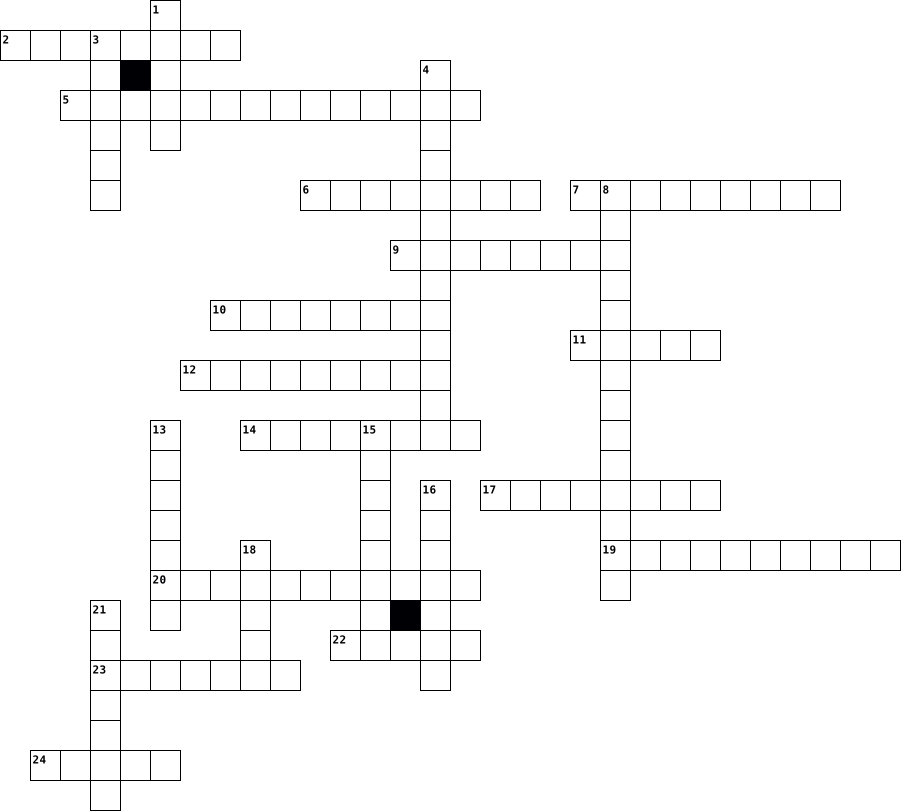
Across
- Triumph
- Triumph
- BHM
- education
- Niceness
- volunteer
- Rights
- Prejudice
- Activism
- Ethnicity
- Oppression
- Opportunity
- Non war
- Non freedom
- Walking
Down
- Pride
- Hatred of races
- Non exclusiveness
- racism
- Non slavery
- Physical hatred
- Non freedom
- Control
- Old events
24 Clues: BHM • Pride • racism • Rights • Triumph • Triumph • Control • Non war • Walking • Niceness • Activism • education • volunteer • Prejudice • Ethnicity • Oppression • Old events • Non slavery • Non freedom • Opportunity • Non freedom • Hatred of races • Physical hatred • Non exclusiveness
English civil war 2016-02-25

Across
- to plunge suddenly under the water and out again
- any Christian not belonging to Roman Catholic or eastern orthodox church
- the great charter that guarantees English civil rights
- king or queen
- the rights of a citizen
- a person given special treatment
- king or queen, emperor or empress with unlimited power
- control of land
- a government that is controlled by the people that live under it
- careless and lavish spreading
Down
- to settle a dispute, with both sides giving up a part of what they demand
- the legislative body in England
- long war
- a follower of the teaching of John Calvin
- legal and military customs that ordered society in medieval Europe
- a payment of one-tenth of a persons earnings
- Spanish fleet
- a ruler who uses power unjustly
18 Clues: long war • king or queen • Spanish fleet • control of land • the rights of a citizen • careless and lavish spreading • the legislative body in England • a ruler who uses power unjustly • a person given special treatment • a follower of the teaching of John Calvin • a payment of one-tenth of a persons earnings • to plunge suddenly under the water and out again • ...
Civil War Crossword 2024-05-24

Across
- General before Grant
- The Union gained control over the Mississippi because of this battle
- Who won the war
- Who seceded first
- How many days did they think the war would last (write out the number)
- What did they use to blockade
- What most soldiers died from
- Confederate capital
- Last name of the final Union general
- Why the South seceded
- How the union cut off the Souths trade
Down
- Declared all slaves in the rebel states were free
- Last name of the Confederate president
- Based on the general Burnside, what is the hair on the side of your faced called
- First general in the Union army
- Which general was immoral
- Plan the Union came up with to "choke" the South
- The battle that had the highest deaths
18 Clues: Who won the war • Who seceded first • Confederate capital • General before Grant • Why the South seceded • Which general was immoral • What most soldiers died from • What did they use to blockade • First general in the Union army • Last name of the final Union general • Last name of the Confederate president • The battle that had the highest deaths • ...
Civil War People 2023-05-23

Across
- One of the most prominent politicians of the mid-19th century.
- Author of "Uncle Tom's Cabin"
- Diarist who wrote "A Diary from Dixie"
- First African American teacher to publicly teach African Americans at only 14 years old
- Union General
- Given the nickname "Stonewall" due to his stubborn nature in battle
- 30th Governor of Rhode Island
- Formerly Enslaved person who helped Abe Lincoln in the Civil War
- Dressed as a man to join the war
Down
- Commanding general, led the Union Armies to victory
- Female Surgeon who was captured by the Confederacy
- Abolitionist and Women's rights activist who created Swarthmore college
- First African America Field officer in the US Army
- Famous for their successful bayonet charge in the Battle of Gettysburg
- Confederate General
- Female Confederate Spy
- First and only president of the Confederate states
- Female nurse who started American Red Cross
18 Clues: Union General • Confederate General • Female Confederate Spy • Author of "Uncle Tom's Cabin" • 30th Governor of Rhode Island • Dressed as a man to join the war • Diarist who wrote "A Diary from Dixie" • Female nurse who started American Red Cross • Female Surgeon who was captured by the Confederacy • First African America Field officer in the US Army • ...
Civil War Crossword 2021-09-28

Across
- sea fort built on an artificial island protecting Charleston, South Carolina.
- 1860 nominee for election
- repealed the Missouri Compromise, created two new territories, and allowed for popular sovereignty
- effort to preserve the balance of power in Congress between slave and free states
- act required that slaves be returned to their owners, even if they were in a free state
- harpers ferry
- presidential proclamation and executive order issued by United States President Abraham Lincoln on September 22, 1862, during the Civil War.
- borough and town in the U.S. state of Pennsylvania.
Down
- abolitionist slave who escaped and started a movement
- an American politician who served as the president of the Confederate States from 1861 to 1865. As a member of the Democratic Party, he represented Mississippi in the United States Senate and the House of Representatives before the American Civil War.
- five laws passed in September of 1850 that dealt with the issue of slavery and territorial expansion
- is the withdrawal of a group from a larger entity, especially a political entity, but also from any organization, union or military alliance.
- an African American who had been a slave and moved by his master to a state
- a political party fromed in 1854, majority supported the end to slavery (abolitionists).
- people who want to abolish slavery
- Confederate General Robert E. Lee surrendered to Union General Ulysses S. Grant to effectively end the American Civil War.
- people who express loyalty to thier region
- battle of vicks____
18 Clues: harpers ferry • battle of vicks____ • 1860 nominee for election • people who want to abolish slavery • people who express loyalty to thier region • borough and town in the U.S. state of Pennsylvania. • abolitionist slave who escaped and started a movement • an African American who had been a slave and moved by his master to a state • ...
American Civil War 2025-02-25

Across
- gotten rid of
- a crop grown for sale to others
- having to do with farming
- the owning of a person by another person
- northern states that stayed under a single government
- simple, or not developed
- truth
- to affect directly
- having to do with the southern states that separated from the United States, or Union
- material that is created by someone who did not witness an event in history but learned information about the event
Down
- to break away
- to do hard work
- having to do with farming
- having to do with the activities of people who are members of a country
- the process of getting someone to join a group
- to join; to sign up to serve in the military
- material that is created by someone who witnessed an event in history
- one's general manner of viewing things; their attitude towards something
- the system of making money and producing items
19 Clues: truth • to break away • gotten rid of • to do hard work • to affect directly • simple, or not developed • having to do with farming • having to do with farming • a crop grown for sale to others • the owning of a person by another person • to join; to sign up to serve in the military • the process of getting someone to join a group • the system of making money and producing items • ...
Civil War & Recontruction 2024-09-27

Across
- This term means to eliminate slavery. It was a Movement too.
- The name of the court case that said "Separate but Equal" is legal
- The name of the laws that separated/segregated African Americans from society
- Helped slaves escape to the North
- What part of the country did not have slaves?
- This book started the Abolition Movement
- What was the name of the states that left the union called?
- the name of the war between the North and South fighting over Slavery
- What Amendment gave anyone born in the U.S. citizenship
- Name of Laws that were not equal to African Americans
- Who became president after Abraham Lincoln got assassinated?
Down
- What Amendment ended Slavery
- What Amendment gave African Americans the right to vote
- What terror group was created to stop African American men from voting and to terrorize them?
- What invention increased the demand for slavery. Made white owners extremely rich.
- Who was the 16th president
- This means to rebuild or fix
- What part of the country had slaves?
18 Clues: Who was the 16th president • What Amendment ended Slavery • This means to rebuild or fix • Helped slaves escape to the North • What part of the country had slaves? • This book started the Abolition Movement • What part of the country did not have slaves? • Name of Laws that were not equal to African Americans • What Amendment gave African Americans the right to vote • ...
The Civil War 2024-10-24

Across
- Famous speech given by Lincoln in November 1863
- The Confederate general killed by friendly fire at Chancellorsville
- President of the Confederate States of America
- This proclamation, issued by Lincoln, freed slaves in rebellious states
- Escaped slave and leading abolitionist, advisor to Lincoln
- Abolitionist who led a raid at Harpers Ferry
- The law that required Northerners to return runaway slaves
- General who led the Confederate Army of Northern Virginia
Down
- The 1863 battle often seen as the turning point of the Civil War
- The 1857 Supreme Court decision that ruled slaves were property
- Site of a significant Union victory in Mississippi
- The act that allowed people in Kansas and Nebraska to decide slavery by vote
- Where the first shots of the Civil War were fired
- Union general known for his "March to the Sea"
- Georgia city that was captured by Union forces in 1864
- The bloody single-day battle in Maryland, 1862
- General who led the Union army to victory at Gettysburg
- Missouri Political compromise in 1820 that tried to balance free and slave states
18 Clues: Abolitionist who led a raid at Harpers Ferry • Union general known for his "March to the Sea" • The bloody single-day battle in Maryland, 1862 • President of the Confederate States of America • Famous speech given by Lincoln in November 1863 • Where the first shots of the Civil War were fired • Site of a significant Union victory in Mississippi • ...
Civil War 2024-11-22

Across
- the northern states
- the southern states
- adress Lincolns famous speech about the civil war
- people captured in the civil war and held against their will
Down
- the president at the time of the civil war
- when humans were owning other humans and putting them to labor
- the invention that Lincoln used to communicate with his troops
- Breaking apart or leaving
- fasted transportation that the union had more of an advantage with
9 Clues: the northern states • the southern states • Breaking apart or leaving • the president at the time of the civil war • adress Lincolns famous speech about the civil war • people captured in the civil war and held against their will • when humans were owning other humans and putting them to labor • the invention that Lincoln used to communicate with his troops • ...
reconstruction era 2022-04-08

Across
- helped provide shelter and food, etc.
- one goal is to readmit the southern states back to the U.S.
- restricted black people to own homes
- this amendment lets anyone vote
- who was the president after abraham lincoln
- which amendment grants citizenship to african americans
- one goal they had is to grant and protect civil rights for black people
- the president during the civil war
- this governing body can propose plans
Down
- a system of agriculture where they share their land without being forced
- what else could the congress do
- someone who suppored the federal plan for reconstruction
- what was the plan that had a model for the reinstatement
- someone who gets in the political industry where they have no connections
- what book did abraham lincoln write
- a broken promise to african americans
- they were formed by a group of confederate veterans
- a system of agriculture where former slavers worked for land owners
- the time period after the civil war
- one goal they had is to restore southern economy
20 Clues: what else could the congress do • this amendment lets anyone vote • the president during the civil war • what book did abraham lincoln write • the time period after the civil war • restricted black people to own homes • helped provide shelter and food, etc. • a broken promise to african americans • this governing body can propose plans • ...
Reconstruction 2023-03-13

Across
- Crow Laws- Laws designed to enforce segregation of blacks from whites
- the right to vote
- A system used on southern farms after the Civil War in which farmers worked land owned by someone else in return for a small portion of the crops.
- To accuse government officials of misconduct in office
- Separation of people based on racial, ethnic, or other differences
- Southern whites who supported Republican policy through reconstruction
- Codes - Laws denying most legal rights to newly freed slaves; passed by southern states following the Civil War
Down
- -to deprive of the right to vote
- tax A requirement that citizens pay a tax in order to register to vote
- A period of low economic activity and rising unemployment
- A northerner who went to the South immediately after the Civil War; especially one who tried to gain political advantage or other advantages from the disorganized situation in southern states
- After the Civil War, a group that believed the South should be harshly punished and thought that Lincoln was sometimes too compassionate towards the South.
12 Clues: the right to vote • -to deprive of the right to vote • To accuse government officials of misconduct in office • A period of low economic activity and rising unemployment • Separation of people based on racial, ethnic, or other differences • Southern whites who supported Republican policy through reconstruction • ...
coldwar2 2023-10-18

Across
- Mutually Assured Destruction doctrine.
- Fear of communism in the United States.
- A powerful nuclear weapon.
- Closest the Cold War came to nuclear war.
- Nations that didn't align with either superpower.
- WWII conference leading to Cold War tensions.
- Indirect conflicts fought by superpower support.
- Failed CIA operation in Cuba.
Down
- Policy of openness in the USSR.
- Civil defense drill during the Cold War.
- War fought in the 1950s.
- Airlift city during the Cold War.
- Strategic Arms Limitation Talks.
- Conflict where the U.S. fought against communism.
- The use of spies during the Cold War.
15 Clues: War fought in the 1950s. • A powerful nuclear weapon. • Failed CIA operation in Cuba. • Policy of openness in the USSR. • Strategic Arms Limitation Talks. • Airlift city during the Cold War. • The use of spies during the Cold War. • Mutually Assured Destruction doctrine. • Fear of communism in the United States. • Civil defense drill during the Cold War. • ...
US History Final Crossword 2022-05-26

Across
- women suffrage
- Revolutionary War Hero
- treaty that ended WWI
- surrendered to Grant at Appomatox Courthouse
- Johnson/ became President after JFK was assassinated
- Cong/ communists in South Vietnam
- Truman fired this General during the Korean War
- Nations/ peace keeping body formed after WWII
- ban on alcohol
- disobedience/ includes boycotts, sit-ins, peaceful protests
- type of fencing ended the open range
- Union/ its collapse marked the end of the Cold War
- market/ crashed Oct, 29, 1929
Down
- dropped atomic bombs on Japan to end WWII
- Wrote Declaration of Independence
- put a little money down, pay the rest later
- Scopes/ tried for teaching evolution
- telegram brought U.S. into WWI
- abolished slavery
- X/ believed in violent protests
- of Rights/ first 10 amendments
- President during U.S. Civil War
- Deal/ FDR's plan to get America out of the Depression
- the goal of the hippies was to create this type of society
- Powers/ Germany, Italy, and Japan in WWII
- President blamed for the Great Depression
- Wall/ torn down in 1989
- Russia put missiles in this country in 1962
- scandal that forced Nixon to resign
- Harbor/ event brought U.S. into WWII
30 Clues: women suffrage • ban on alcohol • abolished slavery • treaty that ended WWI • Revolutionary War Hero • Wall/ torn down in 1989 • market/ crashed Oct, 29, 1929 • telegram brought U.S. into WWI • of Rights/ first 10 amendments • X/ believed in violent protests • President during U.S. Civil War • Wrote Declaration of Independence • Cong/ communists in South Vietnam • ...
Causes and Impacts on Civil War 2024-04-11

Across
- This person had a court case to decide if he was free or slave
- Impacted daily lives of all people in South Carolina
- This was the union capital of Virginia
- rights This led to the result of the Civil War
- many wealthy slave owners served as officers on this side
- to decide if Kansas was free or a slave state
- This person was a republican and won the election of 1860
- Worked on plantations to make plantation owners more wealthy
- This wanted to be build in the Kansas Nebraska act and needed souths support
Down
- a protective tariff that was placed on imported goods
- Resulted of the civil war
- This percent of SC men who fought died
- Allowed California to be a free state
- This state was a new free slave state
- This state became a free state during the compromise of 1850
- Plantation owners became wealthy off of this crop
- Many of these were destroyed during the War
- Some women served this role during the war
- Candidates such as Lincoln was involved in this election
- 10 year old boys who enlisted in the army served as this role
20 Clues: Resulted of the civil war • Allowed California to be a free state • This state was a new free slave state • This percent of SC men who fought died • This was the union capital of Virginia • Some women served this role during the war • Many of these were destroyed during the War • to decide if Kansas was free or a slave state • ...
Causes and Impacts on Civil War 2024-04-11

Across
- This person had a court case to decide if he was free or slave
- Impacted daily lives of all people in South Carolina
- This was the union capital of Virginia
- rights This led to the result of the Civil War
- many wealthy slave owners served as officers on this side
- to decide if Kansas was free or a slave state
- This person was a republican and won the election of 1860
- Worked on plantations to make plantation owners more wealthy
- This wanted to be build in the Kansas Nebraska act and needed souths support
Down
- a protective tariff that was placed on imported goods
- Resulted of the civil war
- This percent of SC men who fought died
- Allowed California to be a free state
- This state was a new free slave state
- This state became a free state during the compromise of 1850
- Plantation owners became wealthy off of this crop
- Many of these were destroyed during the War
- Some women served this role during the war
- Candidates such as Lincoln was involved in this election
- 10 year old boys who enlisted in the army served as this role
20 Clues: Resulted of the civil war • Allowed California to be a free state • This state was a new free slave state • This percent of SC men who fought died • This was the union capital of Virginia • Some women served this role during the war • Many of these were destroyed during the War • to decide if Kansas was free or a slave state • ...
Chicago 7 Crossword 2023-03-13

Across
- This controversial civil rights leader initially advocated for black separatism and the use of violence in the struggle for civil rights before later embracing a more moderate stance.
- This police officer was involved in the shooting of Black Panther Party leader Fred Hampton in 1969
- This judge presided over the infamous trial of the Chicago Seven and was criticized for his handling of the case.
- This period of social and political upheaval in China during the 1960s and 70s had a profound impact on the global civil rights movement, inspiring activists around the world.
- This political activist and member of the Chicago Seven was known for his pacifist beliefs and his opposition to the Vietnam War.
- This activist co-founded the Black Panther Party and served as its chairman during the Civil Rights era.
- This militant civil rights organization advocated for black empowerment, self-defense, and community organizing in the face of racial discrimination and police brutality.
Down
- This federal court system played a key role in many civil rights cases during the 1960s and 70s, including the Chicago Seven trial and the desegregation of public schools.
- This lawyer was known for his work defending civil rights activists, including the Freedom Riders, the Chicago Seven, and members of the Black Panther Party.
- This philosophy, espoused by civil rights leaders such as Martin Luther King Jr., emphasized peaceful protest and resistance to achieve change.
- This lawyer represented many civil rights activists and political dissidents during the 1960s and 70s, including the Chicago Seven.
- This political activist and writer was a founder of Students for a Democratic Society and played a key role in the anti-war and civil rights movements of the 1960s.
- This prosecutor was a key figure in the trial of the Chicago Seven and was criticized for his handling of the case.
- This political activist and member of the Chicago Seven was known for his theatrical protests and countercultural antics during the 1960s and 70s.
- This federal agency played a key role in enforcing civil rights laws and investigating cases of discrimination during the Civil Rights era.
- This political party was instrumental in the passage of major civil rights legislation during the 1960s, including the Civil Rights Act of 1964 and the Voting Rights Act of 1965.
- This member of the Chicago Seven was charged with conspiracy and incitement to riot during the 1968 Democratic National Convention.
- This politician was a champion of civil rights and served as Vice President under Lyndon B. Johnson during the passage of major civil rights legislation.
18 Clues: This police officer was involved in the shooting of Black Panther Party leader Fred Hampton in 1969 • This activist co-founded the Black Panther Party and served as its chairman during the Civil Rights era. • This judge presided over the infamous trial of the Chicago Seven and was criticized for his handling of the case. • ...
Jefferson Davis 2019-05-18

Across
- How many years did Davis serve in prison?
- Who was the president of the Union during the Civil War?
- What president appointed Davis secretary of war?
- What battle started the Civil War?
- What position was Davis in in the Confederacy?
- What state was the capital of the Confederacy in?
- Who did Davis appoint commander of the Confederate army?
- What state was Davis captured in?
Down
- What was the name of his brother?
- What political party was Jefferson Davis in?
- What charge was Davis under when he went to jail?
- What state was Jefferson Davis senator in?
- Where was Davis born?
- What did Davis support and try to push into other states?
- What city did the Union army surround when Davis fled?
15 Clues: Where was Davis born? • What was the name of his brother? • What state was Davis captured in? • What battle started the Civil War? • How many years did Davis serve in prison? • What state was Jefferson Davis senator in? • What political party was Jefferson Davis in? • What position was Davis in in the Confederacy? • What president appointed Davis secretary of war? • ...
American Civil War 2025-02-07

Across
- First state to secede from the USA
- Crazy man who led the Pottawatomie Creek Massacre
- Slave who sued for his own freedom
- Vanilla president elected in 1856
- Senator famous for participating in a series of 7 debates on slavery with Abraham Lincoln
- Lincoln's home state
- Location of General Lee's surrender
Down
- Battle that is the turning point of the Civil War
- State that paid $10 million dollars for a tiny piece of Mexican territory
- Lincoln's Vice President
- Northerners that came down to take the political offices of the South
- Capital of Confederacy during the war
- Party that had almost total control of the government after the Civil War
- Winner of the Election of 1864
- Senator famous for being caned
15 Clues: Lincoln's home state • Lincoln's Vice President • Winner of the Election of 1864 • Senator famous for being caned • Vanilla president elected in 1856 • First state to secede from the USA • Slave who sued for his own freedom • Location of General Lee's surrender • Capital of Confederacy during the war • Battle that is the turning point of the Civil War • ...
civil war and reconstruction 2025-05-16

Across
- the man who was an actor who played in the play Lincoln was at who shot him (three words)
- the place which Lincoln was shot
- the area which gunshots were exchanged and the beginning of the civil war(two words)
- the corrupt deal that the president made with the KKK to have us soldiers moved out of KKK territory(three words)
- the general of the south (two words)
- the speech lincoln gave to the people and honoring the fallen soldiers(two words)
- laws that restricted the freedom of the freedom slaves(two words)
Down
- the event that took place after the civil war which fixed america
- the war of 1861 between America(two words)
- people who wanted black people freedom before the war
- a machine used before the war for slaves(two word)
- the general of the north(two words)
- one of the first metal ships
- the southerners ______d out of the country
14 Clues: one of the first metal ships • the place which Lincoln was shot • the general of the north(two words) • the general of the south (two words) • the war of 1861 between America(two words) • the southerners ______d out of the country • a machine used before the war for slaves(two word) • people who wanted black people freedom before the war • ...
Indochinese Wars Revision 2023-10-24

Across
- General Secretary of Vietnam Communist Party, influential in post-war reunification and reconstruction.
- North Atlantic Treaty Organization, Western military alliance (founded 1949).
- Charismatic U.S. President, faced Cuban Missile Crisis, assassinated in 1963.
- Strategy to prevent communist expansion through diplomatic and military means.
- Geopolitical tension and rivalry between the USA and USSR (1947-1991).
- Southeast Asian nation, site of major Cold War conflict (1955-1975).
- Opposition to communist ideology and influence on a global scale.
- 36th U.S. President, signed Civil Rights Act, escalated Vietnam War, faced domestic unrest.
- Decisive 1954 battle led to French withdrawal from Vietnam.
Down
- Military alliance of Eastern Bloc countries led by the USSR.
- Soviet leader, transformed USSR, played a key role in World War II.
- Belief that if one country falls to communism, neighboring nations follow.
- WWII hero, 34th U.S. President, promoted civil rights, launched the interstate highway system.
- Naval incidents in 1964 escalated U.S. involvement in Vietnam.
- Indirect conflict between superpowers using local allies as surrogates.
- Communist leader of North Vietnam, key figure in Vietnam's struggle for independence.
- South Vietnam's first president, faced controversy, assassinated during Vietnam War.
- U.S. President (1945-1953), oversaw the end of WWII, ordered atomic bombings on Japan.
18 Clues: Decisive 1954 battle led to French withdrawal from Vietnam. • Military alliance of Eastern Bloc countries led by the USSR. • Naval incidents in 1964 escalated U.S. involvement in Vietnam. • Opposition to communist ideology and influence on a global scale. • Soviet leader, transformed USSR, played a key role in World War II. • ...
Civil war vocabulary 2024-05-17

Across
- A heavy shoe
- an estate on which crops such as coffee, sugar, and tobacco are cultivated by resident labor.
- a Northerner in the South after the American Civil War usually seeking private gain under the Reconstruction a Northerner in the South after the American Civil War usually seeking private gain under the Reconstruction
- a dollar bill
- a league or alliance
- an apparatus for communication at a distance by coded signals.
- the action or fact of joining or being joined, especially in a political context.
- Large bore mounted firearms
Down
- a 19th-century warship with armor plating.
- a small, sturdy bag carried on the back or over the shoulder, used especially by soldiers and hikers
- a branch of an army made up of soldiers trained, armed, and equipped to fight on foot.
- a person who favors the aboltion of a practice or institution Abolitionist- a person who favors the aboltion of a practice or institution
- to withdraw from an organization (such as a religious communion or political party or federation)
- war a war between citizens of the same country
- to free from restraint, control, or the power of another
15 Clues: A heavy shoe • a dollar bill • a league or alliance • Large bore mounted firearms • a 19th-century warship with armor plating. • war a war between citizens of the same country • to free from restraint, control, or the power of another • an apparatus for communication at a distance by coded signals. • ...
2nd semester crossword word bank 2025-05-13

Across
- machine that separates cotton fibers from their seeds.
- estrictive laws passed in the former Confederate states after the Civil War.
- played a significant role in the history of the United States, with millions emigrating from Ireland.
- addresses citizenship,equal protection under the law.
- federal agency established in 1865 to aid former slaves and poor whites
- he effort to reunite the country following the American Civil War.
- he was the 16th President of the United States, known for leading the Union through the Civil War.
Down
- He was born in 1838 and died in 1865.
- to officially withdraw from a political alliance, federation, or group.
- also known as the Wormley Agreement, the Tilden-Hayes Compromise,
- abolished slavery and involuntary servitude,except as punishment for a crime.
- authorized the forced relocation of Native American tribes from their ancestral lands east of the Mississippi River.
- he was known for his military victories, particularly the Battle of New Orleans during the War of 1812, which catapulted him to national fame and the presidency
- prohibits the federal and state governments from denying a citizen the right to vote based on "race, color."
- a conflict fought between the United States and the Confederate States of America
15 Clues: He was born in 1838 and died in 1865. • addresses citizenship,equal protection under the law. • machine that separates cotton fibers from their seeds. • also known as the Wormley Agreement, the Tilden-Hayes Compromise, • he effort to reunite the country following the American Civil War. • to officially withdraw from a political alliance, federation, or group. • ...
The Civil War (J. Taitano) Mangilao 2017-02-13

Across
- site of confederate massacre of more than 200 African american war orisoners
- union ironclad ship
- union general
- union general
- site of the confederate surrender
- union victory
- commander of the union navy
- union nurse
- three-part union strategy to win the civil war
- union fort in charleston, sorth carolina
- confederate general
- confederate ironclad ship
- union victory in Mississippi
Down
- commander of union troops in georgia and south carolina
- confederate general
- important speech by President Lincoln
- confederate victory in Virginia
- union victory
- Confederate war camp
- tax that takes a percentage of an individuals income
- battle won by the confederates
- most decisive battle of the war
22 Clues: union nurse • union general • union general • union victory • union victory • confederate general • union ironclad ship • confederate general • Confederate war camp • confederate ironclad ship • commander of the union navy • union victory in Mississippi • battle won by the confederates • confederate victory in Virginia • most decisive battle of the war • site of the confederate surrender • ...