
civil war Crossword Puzzles
Civil war 2023-02-15

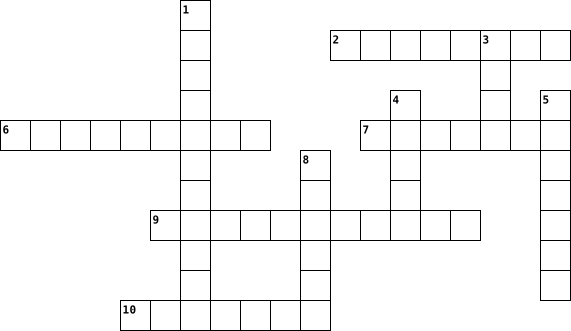
Across
- northern states
- blocking of ports
- make up 71% of US population
- the south
- created by scott winefield
Down
- southern states
- better agriculture
- the confederacy
- more factories
- the union was
10 Clues: the south • the union was • more factories • southern states • northern states • the confederacy • blocking of ports • better agriculture • created by scott winefield • make up 71% of US population
Civil war 2023-02-15

Across
- allowed the union to ship soldiers at a very fast rate
- a new kind of bullet produced
- allowed Lincoln to communicate to his soldiers in seconds
- held 86% of factories
- created the anaconda plan
Down
- a kind of infection that is usually caused by amputation
- made the 13th 14th and 15th amendment
- what the south wanted to keep
- the last name of the man who assassinated Lincoln
- held 99% of cotton
10 Clues: held 99% of cotton • held 86% of factories • created the anaconda plan • what the south wanted to keep • a new kind of bullet produced • made the 13th 14th and 15th amendment • the last name of the man who assassinated Lincoln • allowed the union to ship soldiers at a very fast rate • a kind of infection that is usually caused by amputation • ...
Civil War 2023-02-21

Across
- a coarse, loosely woven, homemade fabric
- to isolate a particular enemy area(as a harbor) by warring nation using troops or warring nation using troops or warships to prevent the passage of supplies and people
- the position that the federal government should not interfere with the stats exercise of their constitutional power
- the state of being free from outside control; self governing
- a citizen who acts as an unauthorized police power for an area
Down
- the forced enrollment of people into military service
- withdraw
- a person who supported the Union cause (United States) during the Civil war era
- focus on the interests of one's region
- a drug used for fighting malaria and other fevers
10 Clues: withdraw • focus on the interests of one's region • a coarse, loosely woven, homemade fabric • a drug used for fighting malaria and other fevers • the forced enrollment of people into military service • the state of being free from outside control; self governing • a citizen who acts as an unauthorized police power for an area • ...
Civil War 2023-02-15

Across
- technology the north had
- the souths general
- blockade
Down
- smaller population
- both used this projectile
- the north had more of this
- north’s president
- both used this weapon
- the south needed this to stay in the war
- more money
10 Clues: blockade • more money • north’s president • smaller population • the souths general • both used this weapon • technology the north had • both used this projectile • the north had more of this • the south needed this to stay in the war
Civil war 2023-02-15

Across
- a way of getting goods around
- to create a blockade where people ca to get in or out
- a man who lead the south
- made people of color do things for the whites
- better army
- weapon used by the soldiers
- more money
Down
- a gun weapon made by the south
- a way of transportation
- a machine that allows you to talk to people from anywhere
10 Clues: more money • better army • a way of transportation • a man who lead the south • weapon used by the soldiers • a way of getting goods around • a gun weapon made by the south • made people of color do things for the whites • to create a blockade where people ca to get in or out • a machine that allows you to talk to people from anywhere
Civil war 2023-02-16

Across
- one interest
- block/block
- self-rule
- help sickness
- homemade fabric
Down
- supported united states
- rights 10th amendment
- forced enrollment in military
- self-appointed police
- take away
10 Clues: self-rule • take away • block/block • one interest • help sickness • homemade fabric • self-appointed police • rights 10th amendment • supported united states • forced enrollment in military
civil war 2023-02-16

Across
- interest of ones region
- blocking supplies and pepole
- free
- fighting fevers
- homemade
Down
- supported union cause
- rights federal goverment should not interfere with states
- forced enrollment
- citizen an unauthorized police power
- withdraw
10 Clues: free • withdraw • homemade • fighting fevers • forced enrollment • supported union cause • interest of ones region • blocking supplies and pepole • citizen an unauthorized police power • rights federal goverment should not interfere with states
Civil War 2023-04-25

Across
- - A place where slaves could go to escape their owners
- - A war between the americas in the late 1850's and early 1860's
- - A slave who escaped his owners and went to court
- - A person forced to serve for a living with no pay
- - Writer of Uncle Tom's Cabin
Down
- - The U.S president who served during the Civil War.
- - Allowing people to vote and then going with the majority of the vote
- - Loudest proponent of popular sovereingnty
- - Only liking things that fit your needs or wants; not accepting other things
- - Terrorist who fought to get rid of slavery
10 Clues: - Writer of Uncle Tom's Cabin • - Loudest proponent of popular sovereingnty • - Terrorist who fought to get rid of slavery • - A slave who escaped his owners and went to court • - A person forced to serve for a living with no pay • - The U.S president who served during the Civil War. • - A place where slaves could go to escape their owners • ...
civil war 2023-05-25

Across
- death
- unprotected
- weather
- common treatment
- only treatment
- place for care
Down
- disease
- most dangerous
- biggest killer
- painkiller
10 Clues: death • disease • weather • painkiller • unprotected • most dangerous • biggest killer • only treatment • place for care • common treatment
civil war 2023-05-21

Across
- a speech given by President Abraham Lincoln on November 19, 1863,
- the south
- the president
- the north
Down
- what the north used as instead of slaves
- the country was
- a weapon they used
- freedom for slaves
- there were about 1.5 million to 2 million
- reason of civil war
10 Clues: the south • the north • the president • the country was • a weapon they used • freedom for slaves • reason of civil war • what the north used as instead of slaves • there were about 1.5 million to 2 million • a speech given by President Abraham Lincoln on November 19, 1863,
Civil War 2021-10-13

Across
- the time in America during the government's formation until the start of the civil war.
- Commanding officer of the Northern Union States.
- The document that officially ended the Civil War.
- Famous speech by Lincoln after the battle which reminds Americans that the war was being fought for liberty, equality, and democracy.
- A collection of 11 states that seceded from the United States in 1860 following the election of President Abraham Lincoln.
Down
- War between the succeeded Confederacy and the Union fought over slavery.
- The major political party in America most sympathetic to states rights and willing to tolerate the spread of slavery to the territories.
- A political party created in the 1850s to prevent the spread of slavery to the territories.
- A collection of states that did not divide from the United States in 1860 following the election of President Abraham Lincoln.
- Commanding officer of the Southern Confederate States.
10 Clues: Commanding officer of the Northern Union States. • The document that officially ended the Civil War. • Commanding officer of the Southern Confederate States. • War between the succeeded Confederacy and the Union fought over slavery. • the time in America during the government's formation until the start of the civil war. • ...
Civil War 2021-09-28

Across
- president of the confederacy
- tried to attack harpers ferry
- a secret system and routes to get slaves out of the south
- first state to secede
- said that slaves could not sue as they were property, not us citizens
Down
- replaced Missouri compromise
- person who is against slavery
- the president of the union
- abolitionist from Virginia, leader of the confederate army
- The book that started the civil war
10 Clues: first state to secede • the president of the union • replaced Missouri compromise • president of the confederacy • person who is against slavery • tried to attack harpers ferry • The book that started the civil war • a secret system and routes to get slaves out of the south • abolitionist from Virginia, leader of the confederate army • ...
Civil War 2021-09-28

Across
- Fought for their "rights"
- Leader of the confederates
- Confederate general
- Union General
Down
- Main strategy of the union
- Fought to free slaves
- Final battle of the civil war
- nickname for confederates
- Main strategy of the confederacy
- Leader of the union
10 Clues: Union General • Leader of the union • Confederate general • Fought to free slaves • nickname for confederates • Fought for their "rights" • Main strategy of the union • Leader of the confederates • Final battle of the civil war • Main strategy of the confederacy
civil war 2022-02-24

Across
- a battleground for union and confederate states
- 16th president
- the group that supported slavery
- where fort sumter is located
- where the war started
Down
- the war against ourselves
- the slave states
- the leader of the anaconda plan
- the plan that was led by general scott
- the people opposed to slavery
10 Clues: 16th president • the slave states • where the war started • the war against ourselves • where fort sumter is located • the people opposed to slavery • the leader of the anaconda plan • the group that supported slavery • the plan that was led by general scott • a battleground for union and confederate states
Civil War 2022-02-16
Across
- What is the creature that haunts the Hogwarts in the second part of the harry potter series?
- A children's song overtook this video to become the most watched video of all time. Which video was surpassed ?
- The Debut movie of Shah Rukh Khan
- In 2016, a Pizza Hut in Dar es Salaam delivered to the top of what mountain, thus setting a record for the highest-elevation pizza delivery?
- What princess was traditionally called Badr al-Budur before Disney renamed her?
Down
- Although it freed itself from the United States in 1946, what nation’s Independence Day celebrates its declaration of independence from Spain in 1898?
- What international retail chain got its start in Älmhult, Sweden, and runs a museum dedicated to its history there?
- In order to address the carbon crisis that the world is facing and the global fleet of billions of cars, which company has opened all its patents to help towards creating a sustainable environment?
- What was Google initially called ?
- Which European country technically shares a border with Brazil, because one of its “overseas departments” does?
10 Clues: The Debut movie of Shah Rukh Khan • What was Google initially called ? • What princess was traditionally called Badr al-Budur before Disney renamed her? • What is the creature that haunts the Hogwarts in the second part of the harry potter series? • A children's song overtook this video to become the most watched video of all time. Which video was surpassed ? • ...
Civil War 2022-05-13

Across
- two sides fight against or for something
- important river
- general for the confederate side
- place where slaves were aloud
- place where slaves worked the most
Down
- writer of uncle Tom's Cabin
- written by Harriet Beecher Stowe
- Gun used in the civil war
- place where slaves were banned from being owned
- owned by someone else
10 Clues: important river • owned by someone else • Gun used in the civil war • writer of uncle Tom's Cabin • place where slaves were aloud • written by Harriet Beecher Stowe • general for the confederate side • place where slaves worked the most • two sides fight against or for something • place where slaves were banned from being owned
Civil War 2022-05-17

Across
- Location of first attack of the civil war
- Two thirds of soldiers died from
- Bloodiest battle of the war
- Woman American Abolitionist
- side of the war against slavery
Down
- Which side had more men and materials
- Lincoln first name
- This document was altered after the war
- Bloodiest General of the war
- General demoted for insanity
10 Clues: Lincoln first name • Bloodiest battle of the war • Woman American Abolitionist • Bloodiest General of the war • General demoted for insanity • side of the war against slavery • Two thirds of soldiers died from • Which side had more men and materials • This document was altered after the war • Location of first attack of the civil war
Civil War 2022-05-17

Across
- the____had better shooters that were experts and better horse back riders
- the____wanted to fight a defensive war
- the battle of______ was the first union victory(Tie)
- the_____ was to surround the south and cut off all its trades
Down
- Robert E.Lee surrender to Ulysses S. Grant at the Appomattox_____ in Virginia
- Abraham Lincoln was ______
- Lincoln issued the emancipation _____ Gettysburg the union won the battle of _____ in PA when lee tried to invade the north
- the____had more people,money, factories
- Abraham Lincoln ran for ____ in 1846
- President_______Won election of 1860
10 Clues: Abraham Lincoln was ______ • Abraham Lincoln ran for ____ in 1846 • President_______Won election of 1860 • the____wanted to fight a defensive war • the____had more people,money, factories • the battle of______ was the first union victory(Tie) • the_____ was to surround the south and cut off all its trades • ...
Civil War 2025-01-06

Across
- The state where Gettysburg is located
- The Southern states’ army
- Northern states’ army
Down
- Another name for leaving or breaking away as south carolina and the southern states did.
- Document that freed enslaved people __________ Proclamation
- The war’s main cause
- The first battle of the Civil War, Fort ___________
- The president during the Civil War (last name)
- Union general who accepted Lee’s surrender (last name)
- Southern general who surrendered (Last Name)
10 Clues: The war’s main cause • Northern states’ army • The Southern states’ army • The state where Gettysburg is located • Southern general who surrendered (Last Name) • The president during the Civil War (last name) • The first battle of the Civil War, Fort ___________ • Union general who accepted Lee’s surrender (last name) • ...
Civil War 2024-09-12

Across
- Also known as the North or Federals
- Man that was the leader of the North
- Soldiers who fought on horses
- Most infamous battle during the war
- A person who is considered property of another
Down
- The side that left the union to form there own country
- Large caliber guns during a war.
- Someone who is against slavery
- Leaving the Union
- Sealing off a place so nobody can get in
10 Clues: Leaving the Union • Soldiers who fought on horses • Someone who is against slavery • Large caliber guns during a war. • Also known as the North or Federals • Most infamous battle during the war • Man that was the leader of the North • Sealing off a place so nobody can get in • A person who is considered property of another • ...
Civil War 2025-03-06

Across
- The balance between the free and slave states affected this power in congress.
- The south wanted to leave this after Lincoln won the presidency.
- This side was against slavery and tried to help those that escaped.
- These states were for slavery.
- _________ Slave Act forced enslaved people to return to their owners.
Down
- To reach an agreement by giving up something in order to find common ground.
- Abraham
- This side for slavery.
- The war between the North and the South.
- These states were against slavery.
10 Clues: Abraham • This side for slavery. • These states were for slavery. • These states were against slavery. • The war between the North and the South. • The south wanted to leave this after Lincoln won the presidency. • This side was against slavery and tried to help those that escaped. • _________ Slave Act forced enslaved people to return to their owners. • ...
Civil War 2025-03-02

Across
- The Union fought against the ______
- How many amendments were passed after the war?
- Where did the general surrender?
- What was the Emancipation Proclamation?
- Who was the 16th president of the USA?
- Which General surrendered?
Down
- What kind of economy did the Union have?
- What did the 13th amendment abolish?
- How many states did the Union originally have?
- Who was the leading general of the Union Army?
10 Clues: Which General surrendered? • Where did the general surrender? • The Union fought against the ______ • What did the 13th amendment abolish? • Who was the 16th president of the USA? • What was the Emancipation Proclamation? • What kind of economy did the Union have? • How many amendments were passed after the war? • How many states did the Union originally have? • ...
Civil War 2023-11-10

Across
- replealed the missouri compromise
- admitted missouri to the union
- measures proposed by the U.S. senator
- the action of a state
- a novel by a us wrtiter
Down
- assault by an armed band
- the act of a national crisis
- the rights and powers of the law
- an enslaved person who sued for his freedom
- the election of 1860
10 Clues: the election of 1860 • the action of a state • a novel by a us wrtiter • assault by an armed band • the act of a national crisis • admitted missouri to the union • the rights and powers of the law • replealed the missouri compromise • measures proposed by the U.S. senator • an enslaved person who sued for his freedom
civil war 2023-11-10

Across
- Compromise as a final resolution of the sectional slavery issues
- injustices of slavery
- right to not follow fed laws
- repealed the Missouri Compromise, created two new territories, and allowed for popular sovereignty
- powers not delegated to the United States by the Constitution, nor prohibited by it to the States
- act to make California a free state
Down
- most vote were from north
- sued for freedom
- captured prominent citizens and seized the federal armory and arsenal.
- top free bottom slave
10 Clues: sued for freedom • injustices of slavery • top free bottom slave • most vote were from north • right to not follow fed laws • act to make California a free state • Compromise as a final resolution of the sectional slavery issues • captured prominent citizens and seized the federal armory and arsenal. • ...
Civil War 2024-01-23

Across
- Stonewall _______
- Most in North less in South
- First battle location
- The leader of the North
Down
- You run with the cows
- number of drinks before Jackson got up
- A general and a dessert
- a large weapon
- baseball team name
- country versus country
10 Clues: a large weapon • Stonewall _______ • baseball team name • You run with the cows • First battle location • country versus country • A general and a dessert • The leader of the North • Most in North less in South • number of drinks before Jackson got up
Civil War 2025-05-15

Across
- Who wanted to keep slavery going?
- What word refers to citizens or ordinary people.
- The Northern side of the US.
- What was the bloodies battle in history?
Down
- The Southern side of the US.
- What was the biggest issue during the Civil war?
- Who won the election?
- What was the major turning point in the war?
- Royalty to one's own region or section of the country, rather than to the country as a whole.
- A major Union victory that gave them control of the Mississippi River?
10 Clues: Who won the election? • The Southern side of the US. • The Northern side of the US. • Who wanted to keep slavery going? • What was the bloodies battle in history? • What was the major turning point in the war? • What was the biggest issue during the Civil war? • What word refers to citizens or ordinary people. • ...
Civil war 2022-03-04

Across
- an emancipated slave
- was against secession
- one of the deadliest war in american history
- ships that continued to bring much needed supplies for Texas and the confederacy into Galveston.
- The confederate guns at fort griffin opened fire on the union gunboats.
Down
- was one of the states that seceded texas
- the confedracy controlled this place 2 times
- president of the texas succession
- A person who wanted to eliminate or "abolish" slavery.
- idea that slaves have the right to limit the power of the federal government
10 Clues: an emancipated slave • was against secession • president of the texas succession • was one of the states that seceded texas • the confedracy controlled this place 2 times • one of the deadliest war in american history • A person who wanted to eliminate or "abolish" slavery. • The confederate guns at fort griffin opened fire on the union gunboats. • ...
Civil War 2022-03-04

Across
- the act of entering a place by force
- moving forward
- to gather crops at the end of the season
- moved away or moved back where you came from
- agree to stop fighting because you will not win
Down
- the city where the state or country's government
- someone who is elected to work in government
- the most important leader, or person in charge
- a win
- talked about and expressed different opinions
10 Clues: a win • moving forward • the act of entering a place by force • to gather crops at the end of the season • someone who is elected to work in government • moved away or moved back where you came from • talked about and expressed different opinions • the most important leader, or person in charge • agree to stop fighting because you will not win • ...
civil war 2022-03-04

Across
- legal property of someone
- try to keep the nation together
- primary industry
- the 16th president
Down
- loyalty to another person's region
- to declare legally void inoperative
- stopping people enter and leaving
- tax imposed by a government
- kanas and Nevada joined it
- break away from
10 Clues: break away from • primary industry • the 16th president • legal property of someone • kanas and Nevada joined it • tax imposed by a government • try to keep the nation together • stopping people enter and leaving • loyalty to another person's region • to declare legally void inoperative
Civil War 2022-03-07

Across
- Someone that supported the union
- A battle that happened in a river between Texas and Louisiana.
- free from outside control
- States have control
- President during the Civil War
Down
- Was once a slave and know is free
- held back African Americans from doing things.
- The union took over Galveston and the confederate fought back.
- Deadliest battle of the civil war
- One region has wory about different things.
10 Clues: States have control • free from outside control • President during the Civil War • Someone that supported the union • Was once a slave and know is free • Deadliest battle of the civil war • One region has wory about different things. • held back African Americans from doing things. • The union took over Galveston and the confederate fought back. • ...
Civil war 2022-03-07

Across
- an emancipated slave.
- Why did the Union want to take control of Fort Griffin? gain access to TX
- A member of the North
- Who built the fortification along the coast?
- a supreme ruler, especially a monarch
Down
- a naval and land battle of the American Civil War, when Confederate forces under Major Gen
- How many times did the Confederacy control Brownsville?
- The person who stopped leading Texas before the civil war
- 600 soldiers and officers left
- The rights and powers held by individual US states rather than by the federal government
10 Clues: an emancipated slave. • A member of the North • 600 soldiers and officers left • a supreme ruler, especially a monarch • Who built the fortification along the coast? • How many times did the Confederacy control Brownsville? • The person who stopped leading Texas before the civil war • Why did the Union want to take control of Fort Griffin? gain access to TX • ...
Civil War 2022-10-06

Across
- eli whitney invented this
- bleeding ******
- ran against Lincoln in 1860 election
- won 1860 election
- what state in the west became free
- amendment that ends slavery
- the network that helped slaves escape to freedom
Down
- amendment that allows votes for all races
- what party was leading the party against slavery
- he tried to get slaves to revolt
10 Clues: bleeding ****** • won 1860 election • eli whitney invented this • amendment that ends slavery • he tried to get slaves to revolt • what state in the west became free • ran against Lincoln in 1860 election • amendment that allows votes for all races • what party was leading the party against slavery • the network that helped slaves escape to freedom
Civil War 2022-09-19

Across
- troops trained to fight on horsebacks
- a person opposing slavery
- southern states of American loyal to the Confederacy
- a person serving in an army for military purposes
Down
- a battle fought in Sharpsburg, Maryland in 1862
- 16th U.S. President
- a commanding leader of the union army
- a nick for the northerners
- successful defeat of enemies
- northern states of America loyal to the Federal
10 Clues: 16th U.S. President • a person opposing slavery • a nick for the northerners • successful defeat of enemies • troops trained to fight on horsebacks • a commanding leader of the union army • a battle fought in Sharpsburg, Maryland in 1862 • northern states of America loyal to the Federal • a person serving in an army for military purposes • ...
civil war 2022-02-11

Across
- the nickname for the people from the south
- the person who invaded a town to kill fugitives
- the nickname for people who where trying to get rid of slavery
- What the northerners were trying to abolish
- those who believe in slavery where shooting those who did not, it was called
- the people who where mostly enslaved
Down
- The president of the confederate states of america
- the last name of a fugitive slave who was captured
- the president who gave the gettysburg address
- the illness that jefferson davis and his wife got sick with
10 Clues: the people who where mostly enslaved • the nickname for the people from the south • What the northerners were trying to abolish • the president who gave the gettysburg address • the person who invaded a town to kill fugitives • The president of the confederate states of america • the last name of a fugitive slave who was captured • ...
Civil War 2022-04-20

Across
- those who buy goods and services
- earnings, money made
- a range many to choose from
- an economic system based on choice
- quickly
Down
- those who sell goods and services
- having to do with money
- work or ran (business sense)
- the want or need for items
- Foundation or Root
10 Clues: quickly • Foundation or Root • earnings, money made • having to do with money • the want or need for items • a range many to choose from • work or ran (business sense) • those who buy goods and services • those who sell goods and services • an economic system based on choice
Civil War 2023-01-18

Across
- The act required that slaves be returned to their owners, even if they were in a free state.
- a self-taught lawyer, legislator and vocal opponent of slavery, was elected 16th president of the United States in November 1860
- It pitted a politically divided and militarily unprepared Mexico against the expansionist-minded administration of U.S. President James K. Polk
- indicating the economic and political importance of cotton production.
- a network of routes, places, and people that helped enslaved people in the American South escape to the North.
Down
- one candidate speaking for 60 minutes, then the other candidate would speak for 90 minutes and then the first candidate would have a 30-minute repute.
- the acts called for the admission of California as a "free state"
- This legislation admitted Missouri as a slave state and Maine as a non-slave state at the same time
- the political rights and powers granted to the states of the United States by the U.S. Constitution.
- Abraham Lincoln (Republican) won the presidential election of 1860 in a four-way contest.
10 Clues: the acts called for the admission of California as a "free state" • indicating the economic and political importance of cotton production. • Abraham Lincoln (Republican) won the presidential election of 1860 in a four-way contest. • The act required that slaves be returned to their owners, even if they were in a free state. • ...
Civil War 2023-01-17

Across
- the way people spend money and the way people make money
- cave in
- is a person who supported the union
- central importance
- the civilian world in wartime
- closing off a place from the other person
Down
- homemade fabric
- a drug used for fighting malaria
- is a person that kills people
- people forced into the military
10 Clues: cave in • homemade fabric • central importance • is a person that kills people • the civilian world in wartime • people forced into the military • a drug used for fighting malaria • is a person who supported the union • closing off a place from the other person • the way people spend money and the way people make money
Civil War 2023-01-11

Across
- Sovereignty, This doctrine was prominent during the debate over slavery in the territories. Popular-sovereignty said that the people of each territory should be able to decide for themselves if slavery should be allowed in their territory when it became a state.
- state, a state where slavery was permitted
- Also called the North or the United States, the Union was the portion of the country that remained loyal to the Federal government during the Civil War. Union states were: Connecticut, Delaware, Illinois, Indiana, Iowa, Kansas, Maine, Massachusetts, Michigan, Minnesota, Missouri, New Hampshire, New Jersey, New York, Ohio, Pennsylvania, Rhode Island, Vermont, and Wisconsin. West Virginia became a Northern state in 1863 and California and Oregon were also officially Northern but they had little direct involvement in the War.
- state, a state that did not allow slavery
- Party, The major political party in America most sympathetic to states rights and willing to tolerate the spread of slavery to the territories. Democrats opposed a strong Federal government. Most Southern men were Democrats before the War.
- Also called the South or the Confederate States of America, the Confederacy incorporated the states that seceded from the United States of America to form their own nation. Confederate states were: Alabama, Arkansas, Florida, Georgia, Louisiana, Mississippi, North Carolina, South Carolina, Tennessee, Texas, and Virginia.
- A state of bondage in which African Americans (and some Native Americans) were owned by other people, usually white, and forced to labor on their behalf.
Down
- States, The states of Maryland, Delaware, Kentucky, and Missouri. Although these states did not officially join the Confederacy, many of their citizens supported the South.
- Someone who wishes to abolish or get rid of slavery
- to give up control of
10 Clues: to give up control of • state, a state that did not allow slavery • state, a state where slavery was permitted • Someone who wishes to abolish or get rid of slavery • A state of bondage in which African Americans (and some Native Americans) were owned by other people, usually white, and forced to labor on their behalf. • ...
civil war 2023-01-10

Across
- dfv
- fgj
- df
- vb
- .
Down
- xcm
- d
- dc
- xc
- fg
10 Clues: d • . • dc • xc • fg • df • vb • dfv • xcm • fgj
civil war 2023-01-24

Across
- a crop which was grown to be sold for cash
- a soldier who was wounded, killed, missing
- to draft someone into the military service
- cannon or other large caliber
- each state should decide for themselve
- a northerner who fought for the union
- southern states that did not secede union
Down
- a branch of the military mounted on horseback
- to destroy homes and crops on enemy grounds
- the act of killing an important person
10 Clues: cannon or other large caliber • a northerner who fought for the union • the act of killing an important person • each state should decide for themselve • southern states that did not secede union • a crop which was grown to be sold for cash • a soldier who was wounded, killed, missing • to draft someone into the military service • ...
Civil War 2023-01-24

Across
- A branch of military mounted on horseback.
- Armies conducting total war destroyed homes and crops to demoralize and undermine the civilian base of enemy's war effort.
- Each state should decide for themselves through voting.
- A northerner who fought for the Union.
- To draft someone into military service.
Down
- A soldier who was wounded, killed, or missing in action.
- A crop such as tobacco or cotton which was grown to be sold for cash --not grown for food like corn or wheat.
- Cannon or other large caliber firearms.
- The act of killing an important person for political or religious reasons.
- The southern states that did not secede from the Union to join the Confederacy.
10 Clues: A northerner who fought for the Union. • Cannon or other large caliber firearms. • To draft someone into military service. • A branch of military mounted on horseback. • Each state should decide for themselves through voting. • A soldier who was wounded, killed, or missing in action. • The act of killing an important person for political or religious reasons. • ...
CIVIL WAR 2022-09-15

Across
- President of the confederacy
- nickname given to those that were for leaving the Union
- The year the Civil War began
- a nickname for people from the North
- A person opposed to slavery
Down
- condition in which one human being is owned by another
- The southern states leaving the Union
- Lincoln's nickname
- The bloodiest battle in the Civil War
- 16th President of the United States of America
10 Clues: Lincoln's nickname • A person opposed to slavery • President of the confederacy • The year the Civil War began • a nickname for people from the North • The southern states leaving the Union • The bloodiest battle in the Civil War • 16th President of the United States of America • condition in which one human being is owned by another • ...
Civil War 2023-02-01

Across
- statement of beliefs.
- Republican presidential Candidate in 1856.
- an issue in which issues are decided by the citizenry or voters.
- dedicated to stopping the expansion of slavery
- Political party organized in 1834 to oppose the policies of Andrew Jackson.
Down
- first president of the confederate states of America.
- federal arsenal in virgina; captured in 1859 during an antislavery revolt.
- political party formed in 1854 by opponents of slavery.
- idea that the states have certain rights that the federal government cannot overrule
- to withdraw
10 Clues: to withdraw • statement of beliefs. • Republican presidential Candidate in 1856. • dedicated to stopping the expansion of slavery • first president of the confederate states of America. • political party formed in 1854 by opponents of slavery. • an issue in which issues are decided by the citizenry or voters. • ...
Civil War 2023-01-27

Across
- The biggest southern candidate
- killed in 100 gun salute at Fort Sumter
- stood his ground at Manassas
- The united north's party
Down
- won 1860 election
- only president of the Confederacy
- would be foolish
- Lincoln blocking off southern trade
- Bloodiest battle of the war
- bloodiest single day of the war
10 Clues: would be foolish • won 1860 election • The united north's party • Bloodiest battle of the war • stood his ground at Manassas • The biggest southern candidate • bloodiest single day of the war • only president of the Confederacy • Lincoln blocking off southern trade • killed in 100 gun salute at Fort Sumter
civil war 2025-06-16

Across
- President _________ was the president in the north and a abolishonist
- the________wanted to end or abolish slavery
- The north used there ships to create ________'s which stopped the south from getting important supplies
- the_______believed in slavery
- a_______was a black person southern whites thought they owned
- He led _________'s march to the sea for the north
Down
- He was the south's general
- was The first southern to secede
- _____ war was Sherman's plan to destroy everything
- the south believed in ______ rights
10 Clues: He was the south's general • the_______believed in slavery • was The first southern to secede • the south believed in ______ rights • the________wanted to end or abolish slavery • He led _________'s march to the sea for the north • _____ war was Sherman's plan to destroy everything • a_______was a black person southern whites thought they owned • ...
Civil War 2025-06-06

Across
- Three day battle
- Leader of safe slave spots
- Assassinated during the war
- The main issue of the war
- against slavery
Down
- Major South state
- Safe ground for escaped slaves
- Major North state
- The North In The Civil War
- Name of the war
10 Clues: Name of the war • against slavery • Three day battle • Major South state • Major North state • The main issue of the war • Leader of safe slave spots • The North In The Civil War • Assassinated during the war • Safe ground for escaped slaves
The Causes and Course of the Civil War 2023-12-03

Across
- The 1857 ruling of the Supreme Court in the case Scott v. Sandford that legalized slavery in the territories and declared the Missouri Compromise unconstitutional.
- Resulted in Lee fighting a defensive war and not attack the North again.
- Those who supported the Constitution and a stronger national public.
- The Union laid siege on this city for 6 weeks until the city surrendered.
- Believed if national government is too strong, then states would lose power.
- The proclamation declared "that all persons held as slaves" within the rebellious states" are, and henceforward shall be free".
- Strong concern for local interests.
- In an inspirational speech at Gettysburg, Pennsylvania, President Abraham Lincoln praised Union soldiers who sacrificed their lives to uphold the ideal of freedom.
- Congress enacted measures to grant California freedom, divide Southwest into New Mexico and Utah territories, ban slavery in Washington, D.C., and strengthen fugitives laws.
- Described the rationale for the United States to purchase Cuba from Spain while implying the U.S. should declare war if Spain refused.
- Lincoln and Scott's Civil War strategy involved Union forces establishing a naval blockade of southern ports and controlling the Mississippi River to invade and defeat the South.
- The Underground Railroad's most renowned conductor, who risked her life to guide 70 enslaved people north to new freedoms before the Civil War.
Down
- Before the Civil War, the United States had a political practice where newly organized territories allowed residents to vote on slavery's acceptance.
- Southern States union.
- Provided for the admission of Maine to the United States as a free state along with Missouri's a slave state.
- Union General William Tecumseh Sherman led a devastating total war military campaign, marching 60,000 troops through Georgia from Atlanta to Savannah, destroying everything along the way.
- It determined that three out of every five slaves was counted when determining a state's total population for legislative representation and taxation.
- David Wilmot introduced an amendment banning slavery in U.S. territories, ending the Guadalupe Hidalgo war, but ceding 55% of Mexico's territory.
- Abraham Lincoln won the election with less than 40% of the votes. Caused the Southern to leave the Union.
- Texas was admitted to the Union as the 28th state on December 29, 1845.
- A law passed by Congress in 1854 to establish Kansas and Nebraska as territories with popular sovereignty.
- The Union war effort expanded to include not only reunification, but also the abolition of slavery.
22 Clues: Southern States union. • Strong concern for local interests. • Those who supported the Constitution and a stronger national public. • Texas was admitted to the Union as the 28th state on December 29, 1845. • Resulted in Lee fighting a defensive war and not attack the North again. • The Union laid siege on this city for 6 weeks until the city surrendered. • ...
The Reconstruction 2024-04-11

Across
- Northerner who moved south
- This stated that anyone of color could vote
- Senators who wanted to punish the South after the Civil War
- Formally charging the president with misconduct
- Provides a constitutional basis for the Civil Rights Act
Down
- This stated that Congress would be responsible for the reconstruction
- The restriction of an African American life
- A period in which the United States would work to rebuild itself after the Civil War
- This assisted the former slaves and poor whites by distributing clothes and food
- Land owners divided and gave Land to workers(blacks or poor whites) along with tools and crops
- The first African American Senator
- White Southerners who joined the Republican party
- The president after Lincoln who was also a former slave owner
13 Clues: Northerner who moved south • The first African American Senator • The restriction of an African American life • This stated that anyone of color could vote • Formally charging the president with misconduct • White Southerners who joined the Republican party • Provides a constitutional basis for the Civil Rights Act • ...
Unit 1 Vocabulary - Causes of Civil War (15/20) 2023-11-26

Across
- a state that allowed slavery.
- a person who fought against slavery.
- laws that denied slaves their basic human rights.
- name given to the southern states who fought the northern states in the American Civil War.
- a state that did not allow slavery.
- is a settlement of differences.
- a law that provided for the capture and return of escaped enslaved persons to their owners.
Down
- a famous conductor on the Underground Railroad leading other slaves to freedom.
- The Underground Railroad was a network of people, offering shelter and aid to escaped enslaved people
- an exaggerated devotion to the interests of a region over those of a country as a whole.
- allowed Missouri to join the union as a slave state and outlawed slavery in any territories north of Missouri ’s southern border.
- allowed California to enter the Union as a free state & allowed Utah & New Mexico to decide for themselves.
- 16th President of the United States; saved the Union during the American Civil War and emancipated the slaves
- a rise in rebellion.
- Also called the North or the United States, the Union was the portion of the country that remained loyal to the Federal government during the Civil War.
15 Clues: a rise in rebellion. • a state that allowed slavery. • is a settlement of differences. • a state that did not allow slavery. • a person who fought against slavery. • laws that denied slaves their basic human rights. • a famous conductor on the Underground Railroad leading other slaves to freedom. • ...
The Civil War 2023-01-30

Across
- Nothern States
- president of the confederacy
- Southern States
- the first state to secede
- the president of the us during civil war
Down
- freed many slaves
- General Winfeild Scott's plan
- when the Civil War took place
- Thomas Jackson was given this nickname in the battle of bull run
9 Clues: Nothern States • Southern States • freed many slaves • the first state to secede • president of the confederacy • General Winfeild Scott's plan • when the Civil War took place • the president of the us during civil war • Thomas Jackson was given this nickname in the battle of bull run
The Civil War 2023-01-30

Across
- Nothern States
- president of the confederacy
- Southern States
- the first state to secede
- the president of the us during civil war
Down
- freed many slaves
- General Winfeild Scott's plan
- when the Civil War took place
- Thomas Jackson was given this nickname in the battle of bull run
9 Clues: Nothern States • Southern States • freed many slaves • the first state to secede • president of the confederacy • General Winfeild Scott's plan • when the Civil War took place • the president of the us during civil war • Thomas Jackson was given this nickname in the battle of bull run
Post war America 2024-02-02

Across
- 34th president
- first mass produced housing
- psychological and social cost
- boom increase in birth rate
- standing ovations
- federal civil rights enforcemnt
- happy us citzens
- joint venture
- american pediatricain
- prosperity and peace
- automoblie for recreation
- southern democrats
- federal projects
Down
- goods and services
- ended the vietnam war
- desighing products
- corporation
- main roads of us
- opportunity's for veterans coming back from war
- american physican
- homes in towns
- US. naval commander
- deal housing and full employment
- separate but equal
24 Clues: corporation • joint venture • 34th president • homes in towns • main roads of us • happy us citzens • federal projects • american physican • standing ovations • goods and services • desighing products • southern democrats • separate but equal • US. naval commander • prosperity and peace • ended the vietnam war • american pediatricain • automoblie for recreation • first mass produced housing • ...
Citizenship Review Crossword 2025-11-18

Across
- Year that the stock market crashed
- 34th president of the United States
- Was assassinated during the Civil War and was the 16th President
- Longest economic recession in modern history
- Last name of the president during the Great Depression
- War that resulted in the burning of the White House
- Writer of the Declaration of Independence
- What the Emancipation Proclamation did
- Amendment that introduced birthright citizenship
- Wrote the most Federalist Papers
- Led the underground railroad
Down
- Amendment that gave women the right to vote
- Father of the Constitution
- Harbor that Japan bombed, sending America into World War II
- The state territory the United States buy from the French in 1803 War in the 1800's fought by Americans against Americans
- War between the North and the South and caused the end of slavery
- First global war
- Ship that Germany sunk that sent Americans into World War I
- Amendment that gave all men the right to vote
19 Clues: First global war • Father of the Constitution • Led the underground railroad • Wrote the most Federalist Papers • Year that the stock market crashed • 34th president of the United States • What the Emancipation Proclamation did • Writer of the Declaration of Independence • Amendment that gave women the right to vote • Longest economic recession in modern history • ...
Crossword puzzle history 2022-10-11

Across
- communist
- Germany, Austria and their allies in world war 1
- glorification of everything to do with military
- sole rulership
- state with one party that has all the power
- race for the strongest
- dug hallways in which soldiers protect themselves against the enemy
- making the army combat ready for war.
Down
- war in which many peoples in a large part of the world participate
- group of people that governs some thing
- when two countries work together
- war in which is fought in two areas at the same time
- area with the same time
- government with many civil servants and rules
- army of communist Russia
15 Clues: communist • sole rulership • race for the strongest • area with the same time • army of communist Russia • when two countries work together • making the army combat ready for war. • group of people that governs some thing • state with one party that has all the power • government with many civil servants and rules • glorification of everything to do with military • ...
TYRANT'S FOE (620) 2020-06-28

Across
- Large knife that can be attached to a musket.
- A line of trees chopped down with branches toward the enemy used to strengthen a fortification.
- Name given to the 1857 12pounder howitzer.
- Draftee
- First introduced by the Army of the Potomac during the Peninsula Campaign made aerial reconnaissance possible.
- Attack in South Carolina spearheaded by the 54th Massachusetts Infantry
- Served both armies as musicians, hospital aides, surgical assistants, encampment assistants and couriers
- A favorite candy of Union Soldiers
- Term used for a Northernor who opposed the war effort.
- Guerrilla warfare
- The nom-de-guerre given to Confederate General Thomas Jackson.
- Legal tender, "Paper Money", backed by the credibility of the U.S. government and not gold nor silver
- Promotion given for gallantry in the field without the immediate consent of Congress.
- To formally enlist in the army.
- Burned on the way to Savannah during Sherman's "March to the Sea".
- Flag identifying a regiment or army.
- Term used to describe the U.S. of A prior to the Civil War.
- Soldier standing guard.
- Bloodiest battle of the Civil War
- Shoe of an infantryman.
Down
- Last battle of the CSS Alabama.
- As a pet, made sure General Lee always had breakfast
- Ranging between 50 and 100 men.
- small sewing kit soldiers used to repair their clothing.
- Battle of Manassas
- AKA "Worm Castles"
- Temporary soldier encampment assembled quickly of branches and what is nearby by soldiers who often sleep outside.
- A long, continuous drum call which commanded a regiment to assemble for battle.
- Name for a Union soldier
- Lee's horse
- Name for a Confederate soldier
- part(s) of the army which were withheld from fighting during a battle but ready and available if needed.
- To live off of the land.
- Used to carry a soldier's mess kit and keepsakes.
- Southern slang term for peanut.
- 10 companies consisting of 100 men in each
- This ration item is mentioned more in soldier diaries than, "War", "bullet", "cannon", "slavery" and even "mother"
- Used to send messages back to Lincoln in Washington D.C.
- Bloodiest day of fighting of the Civil War
- Notorious prisoner of war camp in Georgia
- Abbreviation given to Union "colored" troops
- Blue flag with a white 5-point star in the middle used by the Confederacy
- Lee's War Horse
- Lock, Stock & Barrel
- Common disease among prisoners of war due to malnutrition.
45 Clues: Draftee • Lee's horse • Lee's War Horse • Guerrilla warfare • Battle of Manassas • AKA "Worm Castles" • Lock, Stock & Barrel • Soldier standing guard. • Shoe of an infantryman. • Name for a Union soldier • To live off of the land. • Name for a Confederate soldier • Last battle of the CSS Alabama. • Ranging between 50 and 100 men. • Southern slang term for peanut. • ...
Crossword 2020-12-10

Across
- A man who proposed congress be in charge of reconstruction rather than the president
- A disrespectful word towards republicans and democrats
- Provides a constitutional basis for the civil rights act
- To formally charge the president with misconduct
- The first african american senator
- Allowed any citizen regardless of race or color to vote
Down
- Senators who wanted to punish the south after the civil war
- Helped to assist former slaves and poor whites by providing clothes and food
- Discriminatory laws against african americans
- A former slave owner who believed in abolishing slavery
- a small piece of luggage made of carpeting
- A period of time after the civil war when the confederate states reunited with the union
- Landowners who offer a share of their crops for work
13 Clues: The first african american senator • a small piece of luggage made of carpeting • Discriminatory laws against african americans • To formally charge the president with misconduct • Landowners who offer a share of their crops for work • A disrespectful word towards republicans and democrats • A former slave owner who believed in abolishing slavery • ...
Confederate Crossword 2025-05-27

Across
- A high pitched yell used to strike fear in the hearts of the enemy
- The Confederate capital.
- The first state to secede.
- Nickname was "stonewall".
Down
- The confederate president.
- The bloodiest battle of the Civil War.
- The first battle of the Civil War.
- Also known as the First Battle of Manassas
- The crop the South makes the most.
- The best Confederate general.
10 Clues: The Confederate capital. • Nickname was "stonewall". • The confederate president. • The first state to secede. • The best Confederate general. • The first battle of the Civil War. • The crop the South makes the most. • The bloodiest battle of the Civil War. • Also known as the First Battle of Manassas • A high pitched yell used to strike fear in the hearts of the enemy
Last Names of President 2026-01-16

Across
- Last name of two presidents
- Only president to resign from office
- Author of the Declaration of Independence
- President who proposed the League of Nation
- Supreme Allied Commander before becoming president
Down
- First president
- Union general who became president after the Civil War
- Youngest elected US president
- Ordered the use of atomic bombs in WWII
- President during the Civil War
10 Clues: First president • Last name of two presidents • Youngest elected US president • President during the Civil War • Only president to resign from office • Ordered the use of atomic bombs in WWII • Author of the Declaration of Independence • President who proposed the League of Nation • Supreme Allied Commander before becoming president • ...
jalvarado_Revolutionarycrossword 2022-02-03

Across
- signed by King George III
- versatile n prolific writer
- direct tax on the British
- King of England,Scotland
- events of 1688–89
- meeting of delegates
- tea cheaper than other tea
- first Stuart king of England
- first U.S institution w chart
- English philosopher n physici
- boundary marked in the mts
- payments made after a war
Down
- punitivelaws passedby british
- killed three peoplein a crowd
- war in 1754
- zero priors paradox
- July 4, 1776
- meeting of the 13 colonies
- 1865–77
- series of civil wars
- english general
- act signed into law in 1689
- first battlethe revolut war
- queen of englend
- King of England n Ireland
25 Clues: 1865–77 • war in 1754 • July 4, 1776 • english general • queen of englend • events of 1688–89 • zero priors paradox • series of civil wars • meeting of delegates • King of England,Scotland • signed by King George III • direct tax on the British • King of England n Ireland • payments made after a war • meeting of the 13 colonies • tea cheaper than other tea • boundary marked in the mts • ...
jalvarado_Revolutionarycrossword 2022-02-03

Across
- signed by King George III
- versatile n prolific writer
- direct tax on the British
- King of England,Scotland
- events of 1688–89
- meeting of delegates
- tea cheaper than other tea
- first Stuart king of England
- first U.S institution w chart
- English philosopher n physici
- boundary marked in the mts
- payments made after a war
Down
- punitivelaws passedby british
- killed three peoplein a crowd
- war in 1754
- zero priors paradox
- July 4, 1776
- meeting of the 13 colonies
- 1865–77
- series of civil wars
- english general
- act signed into law in 1689
- first battlethe revolut war
- queen of englend
- King of England n Ireland
25 Clues: 1865–77 • war in 1754 • July 4, 1776 • english general • queen of englend • events of 1688–89 • zero priors paradox • series of civil wars • meeting of delegates • King of England,Scotland • signed by King George III • direct tax on the British • King of England n Ireland • payments made after a war • meeting of the 13 colonies • tea cheaper than other tea • boundary marked in the mts • ...
Civil War Crossword Puzzle 2016-12-14

Across
- didnt want slavery
- The Union suffered big__________
- Was the Month the war ended
- Wore a top hat
- Was a secret passage way for slaves
- wanted slavery
- Was the commander of the union army
- First major battle of the civil war
Down
- Was the Unions Battle ship
- Was Located in fredricksburg
- Over 50,000 soldiers died
- battle between 2 ships
- Abe Lincoln said this after battle of Gettysburg
- Burning of__________
- Was the confederates battle ship
- Was the commander of the Confederate army
- Was the year the war started
- He killed Plantation owners and their families
- South Carolina________ From the union
- Got Hanged for breaking into a weapon arsenal
20 Clues: Wore a top hat • wanted slavery • didnt want slavery • Burning of__________ • battle between 2 ships • Over 50,000 soldiers died • Was the Unions Battle ship • Was the Month the war ended • Was Located in fredricksburg • Was the year the war started • The Union suffered big__________ • Was the confederates battle ship • Was a secret passage way for slaves • ...
African Wars Crossword Lucy 2024-05-20

Across
- An armed uprising against Obote's government in the West Nile region of Uganda in 1980
- Tigray people's liberation front
- A war also known as the Great War of Africa
- A humanitarian organization that provides medical assistance to civilians in war-torn regions
- Ethiopian red terror using scorched-earth tactics, including forced resettlement, mass executions, and chemical weapons against civilians
- The US led task force that lasted for two years and involved heavy fighting with local militias in Somalia
- An ethnic group found mostly in Northern Nigeria
- The leader of Libya and ally Idi Amin
- The slaughter of between 500,000 to 800,000 people of the Tutsi ethnic group by the Hutu majority in 1994
- A Congolese rebel leader who replaced Mobutu as leader of the newly renamed Democratic Republic of the Congo
- An independence struggle rooted in the decline of Western imperialism that began in 1961 and would last until 1991
- The overthrow of Patrice Lumumba shortly after independence and the rise to power of Joseph-Désiré Mobutu as a dictator following a series of civil wars and Cold War proxy conflicts
- A war between Somalia and Ethiopia over a disputed border region
Down
- A term referring to diamonds mined in a war zone and sold to fund conflict
- The president of Uganda from 1962-1971
- The largest battle of the Uganda-Tanzania war where the Tanzanians and Ugandan rebels defeated a combined Ugandan-Libyan-Palestinian forces
- An ethnic group from Southeastern Nigeria
- American reluctance to increase its involvement in Somalia and other regions
- The treaty that ended the Second Congo War
- A civil war and international military conflict nicknamed Africa's Frist World War
- A militant islamist and jihadist rebel group in Nigeria
- A Ugandan military dictator who is considered to be one of the most brutal dictators in modern world history
- Eritrean people's liberation front
- A concert organized in 1985 with some of the biggest music celebrities to raise money for famine relief in Ethiopia and other African countries
- International non-governmental organizations
25 Clues: Tigray people's liberation front • Eritrean people's liberation front • The leader of Libya and ally Idi Amin • The president of Uganda from 1962-1971 • An ethnic group from Southeastern Nigeria • The treaty that ended the Second Congo War • A war also known as the Great War of Africa • International non-governmental organizations • ...
11.3 2021-04-01

Across
- Antony
- river
- war
- and Gaius
- of Actium
Down
- calendar
- Caesar
- triumvirate
- of March
- Augustas
- and Cassius
- Triumvirate
- Lepidus
13 Clues: war • river • Antony • Caesar • Lepidus • calendar • of March • Augustas • and Gaius • of Actium • triumvirate • and Cassius • Triumvirate
Civil War 2025-05-14

Across
- A soldier who was trained to fight on horseback.
- Someone who wants to end slavery.
- A group that fought in the Civil War
- A basic unit of artillery
Down
- Where one of the major battles were fought in the Civil War.
- A branch of an army made up of cannons
- A knife that was fixed to the end of a rifle
- A group that fought in the Civil War.
8 Clues: A basic unit of artillery • Someone who wants to end slavery. • A group that fought in the Civil War • A group that fought in the Civil War. • A branch of an army made up of cannons • A knife that was fixed to the end of a rifle • A soldier who was trained to fight on horseback. • Where one of the major battles were fought in the Civil War.
American History part 2 2024-06-27

Across
- In which city can you find the Empire State Building?
- Which United States of America Armed Force did John Fitzgerald Kennedy serve in?
- Who was the President of the United States during the American Civil War? 2 words
- Who was the first president to declare war?
- How many original British colonies existed in America?
- Which side won the American Civil War, the north or the south?
- What is the name of the oldest national park, which was founded in 1872?
- On a clear day, how many states can you see from the top of the Empire State Building?
- Which President was the first to live in the White House?
- What state produces about 95% of the bourbon in the world?
Down
- Which famous Founding Father was also a scientist who contributed to Physics with his studies in Electricity? 2 words
- The infamous Tea Party which protested Taxation without Representation happened on the harbour of which American city?
- Which state became the 50th state of the United States?
- In 2005, which online video streaming platform was launched?
- Who refused to give up her bus seat, sparking national civil rights protests?
- How many people are considered by many the Founding Fathers?
- How many stars does the American Flag have?
- What state’s name is derived from the Ojibwe word for “great or large lake”?
- From which country did the United States purchase the Louisiana Territory?
19 Clues: How many stars does the American Flag have? • Who was the first president to declare war? • In which city can you find the Empire State Building? • How many original British colonies existed in America? • Which state became the 50th state of the United States? • Which President was the first to live in the White House? • ...
Crossword Puzzle 2022-03-04

Across
- What was First Battle of the Civil War?
- Was in charge of confederate army?
- Who was against Slavery?
- What was most popular in the south?
- Who had assassinated Abraham Lincoln?
- What battle the changed the Civil War?
Down
- The North relied on what?
- What was Powered by steam?
- The South was counting on who for stuff?
- Was in charge of union army?
10 Clues: Who was against Slavery? • The North relied on what? • What was Powered by steam? • Was in charge of union army? • Was in charge of confederate army? • What was most popular in the south? • Who had assassinated Abraham Lincoln? • What battle the changed the Civil War? • What was First Battle of the Civil War? • The South was counting on who for stuff?
Epic Civil War Words!!!!!!!!!!!!!!! 2020-04-20

Across
- soldiers who fought on horses
- to give up
- to seal off an area so people cant get in or out
- the north part in the civil war who didnt like slavery
- a long muzzled gun
- soldiers marching
Down
- to run away from a battle
- to withdraw from a union
- the south part in the civil war who supported slavery
- to take control
10 Clues: to give up • to take control • soldiers marching • a long muzzled gun • to withdraw from a union • to run away from a battle • soldiers who fought on horses • to seal off an area so people cant get in or out • the south part in the civil war who supported slavery • the north part in the civil war who didnt like slavery
crossword puzzle 2023-11-30

Across
- western united states
- civil war battle of the nueces
- Expansion grasshopper hill
- north america
- by the gulf of mexico
- battle in 1847
- 19th century expansion
- giving up rights
- agreement between two countries
- president
- separating two political areas
- act of obtaining to have something
Down
- possession taken of piece of land or country
- agreement between Mexico and united states
- revolt represents the independence in California
- invading in a country
- was a hero in the Mexican american war
- mexican us border
- Mexican American war 1846 - 1848
- southern western us
- transfer ownership of real estate
- united states army hero
- fought against spain
23 Clues: president • north america • battle in 1847 • giving up rights • mexican us border • southern western us • fought against spain • western united states • invading in a country • by the gulf of mexico • 19th century expansion • united states army hero • Expansion grasshopper hill • civil war battle of the nueces • separating two political areas • agreement between two countries • ...
Reconstruction Crossword 2023-08-22

Across
- Those who favored taking drastic measures against the Southern states after the Civil War.
- Laws passed by Southern states to restrict African Americans' freedoms and opportunities.
- To charge a politician with misconduct or crimes.
- Abraham Linoln's reconstruction plan which stated that a Southern state could rejoin the Union if 10% of its voters took a vow of loyalty.
- The legal separation of races.
- A farmer who rents a piece of land from the owner and pays back with a portion of their harvest.
Down
- A reading test given that had to be passed in order to vote. This was used to prevent ex-slaves who hadn't attended school from voting.
- A secret society of white southerners who threatened violence against newly freed African Americans.
- The time period when the United States was rebuilt after the Civil War.
- A recently freed slave.
- A Northern person who went to the South to profit off of Reconstruction.
- An office established after the Civil War to help newly freed slaves and poor whites adjust to life after the war.
- A tax that had to be paid in order to vote. They were used during Reconstruction to keep poor African Americans from voting.
- Racial segregation laws passed between 1876 and 1965 in certain states, preventing African Americans from using certain facilities.
14 Clues: A recently freed slave. • The legal separation of races. • To charge a politician with misconduct or crimes. • The time period when the United States was rebuilt after the Civil War. • A Northern person who went to the South to profit off of Reconstruction. • Laws passed by Southern states to restrict African Americans' freedoms and opportunities. • ...
U.S. Civil War 2024-06-10

Across
- Where the Civil War began
- The __________ Proclamation legally freed all enslaved people in the South
- Site of one of the most decisive battles in the Civil War
- Nearly 200,000 African Americans _____ the Union army and navy
- Nickname for Confederate General Thomas Jackson
- Women on both sides served as ______.
- Nickname for Confederate soldiers
Down
- Thousands of women on both sides served as _____.
- President of the Confederacy
- General Grant accepted Lee's surrender at _________ Court House.
- Nickname for Union Soldiers
- Commander of all Confederate armies
- President of the Union
- This Union General led a March to the Sea which left a trail of destruction in the South
14 Clues: President of the Union • Where the Civil War began • Nickname for Union Soldiers • President of the Confederacy • Nickname for Confederate soldiers • Commander of all Confederate armies • Women on both sides served as ______. • Nickname for Confederate General Thomas Jackson • Thousands of women on both sides served as _____. • ...
Reconstruction 2022-11-18

Across
- gave citizenship to the former slaves.
- freed the slaves.
- Southern laws that limited African American rights after the Civil War.
- Had to pay a tax in order to vote.
- Unflattering nickname for Northerners who moved to the South during Reconstruction to take advantage of struggling Southerners in order to make money.
- 1867 act which divided the South into five military districts. States had to approve the 14th Amendment and give blacks suffrage.
- Designed to allow illiterate whites. to vote while preventing illiterate African Americans from voting.
- Secret Society formed in the South after the Civil War to reestablish white superiority.
Down
- Supreme Court Case that legalized segregation and said "separate but equal" is fair.
- right to vote for former slaves (men only).
- Lincoln's plan for Reconstruction that allowed state governments in the South to form a new government if ten percent of the population swore loyalty to the United States.
- Laws that enforced segregation between blacks and whites.
- Government agency during Reconstruction with the goal of helping freedmen.
- Time period after the Civil War when the South worked to rebuild and the US government worked to reunite the country.
- had to pass a test in order to vote.
- Men and women who had previously been slaves.
- Members of Congress who helped freedmen gain rights during Reconstruction.
- Person who rents a plot of land and farms it and pays the person a share of their crop as rent.
- Legally Separated people by race.
19 Clues: freed the slaves. • Legally Separated people by race. • Had to pay a tax in order to vote. • had to pass a test in order to vote. • gave citizenship to the former slaves. • right to vote for former slaves (men only). • Men and women who had previously been slaves. • Laws that enforced segregation between blacks and whites. • ...
The Civil War 2023-01-30

Across
- Nothern States
- president of the confederacy
- Southern States
- the first state to secede
- the president of the us during civil war
Down
- freed many slaves
- General Winfeild Scott's plan
- when the Civil War took place
- Thomas Jackson was given this nickname in the battle of bull run
9 Clues: Nothern States • Southern States • freed many slaves • the first state to secede • president of the confederacy • General Winfeild Scott's plan • when the Civil War took place • the president of the us during civil war • Thomas Jackson was given this nickname in the battle of bull run
Causes of the Civil War 2021-10-05

Across
- The site/island of the first attack and shots of the Civil War.
- This party opposed the expansion of slavery.
- This presidential election caused many conflicts and led to the Civil War.
- A policy where voters in a state can decide if they wanted slavery or not.
- A book written by Harriet Beecher Stowe that influenced how many people viewed slavery.
- An enslaved African-American man in the US who unsuccessfully sued for his freedom in the Supreme Court.
- When pro- and anti-slavery forces flooded to this new state to vote on whether they wanted slavery or not.
- States which left the Union and bound together.
Down
- The portion of the country that remained loyal to the Federal government during the Civil War.
- A person who is owned by another and has to work without being paid.
- A person sought to abolish slavery.
- An organized division of a country that is not yet admitted to the full rights of a state.
- They favoured slavery and made living from plantations.
- The withdrawal of 11 Southern states.
- There were seven of these between the Republican Party candidate and the Democratic Party candidate.
15 Clues: A person sought to abolish slavery. • The withdrawal of 11 Southern states. • This party opposed the expansion of slavery. • States which left the Union and bound together. • They favoured slavery and made living from plantations. • The site/island of the first attack and shots of the Civil War. • A person who is owned by another and has to work without being paid. • ...
U.S History Chapter 1 2026-01-20

Across
- A federal agency set up to help former slaves after the Civil War
- Discriminatory laws passed throughout the post-Civil-War which severely restricted African Americans
- To formally charge an official with misconduct in office, The House of Representatives have the power to enact this
- The period of rebuilding that followed the civil war,during which the confederate states were admitted into the union
- This amendment gave equal protection of the law to all U.S citizens
- One of the congressional republicans who, after the civil war, wanted to destroy the political power of former slaveholders and to give African Americans full citizenship and the right to vote
Down
- This amendment made it illegal to own slaves
- This amendment gave voting protections to the newly freed African Americans
- assed in 1864, would have given congress control of Reconstruction, is pocket vetoed by Lincoln
9 Clues: This amendment made it illegal to own slaves • A federal agency set up to help former slaves after the Civil War • This amendment gave equal protection of the law to all U.S citizens • This amendment gave voting protections to the newly freed African Americans • assed in 1864, would have given congress control of Reconstruction, is pocket vetoed by Lincoln • ...
The Civil War 2020-02-20

Across
- Sumter, first battle of the Civil War in 1861
- a league or alliance especially of confederate states.
- relating to or characteristic of soldiers or armed forces.
- battle in which the Union gained control over the Mississippi River Valley
- Run, first major battle in which the Confederates won
- bloodiest single-day battle of the Civil War
Down
- army of 100000 soldier assembled by the general
- largest battle of the Civil War
8 Clues: largest battle of the Civil War • bloodiest single-day battle of the Civil War • Sumter, first battle of the Civil War in 1861 • army of 100000 soldier assembled by the general • Run, first major battle in which the Confederates won • a league or alliance especially of confederate states. • relating to or characteristic of soldiers or armed forces. • ...
The Civil War 2023-01-30

Across
- Nothern States
- president of the confederacy
- Southern States
- the first state to secede
- the president of the us during civil war
Down
- freed many slaves
- General Winfeild Scott's plan
- when the Civil War took place
- Thomas Jackson was given this nickname in the battle of bull run
9 Clues: Nothern States • Southern States • freed many slaves • the first state to secede • president of the confederacy • General Winfeild Scott's plan • when the Civil War took place • the president of the us during civil war • Thomas Jackson was given this nickname in the battle of bull run
Presidential Scavenger Hunt 2021-11-29

Across
- Franklin Roosevelt, was Governor of what state
- 25th President
- # of pairs of presidents with same last name
- 40th President
- Guided nation through Civil War
- 10th President
- First name of the First, First Lady
- 35th President
- Guided nation through War of 1812
- First President to ever Resign
Down
- Ended WWII by dropping Atomic Bomb
- Only President to be president twice
- 15th President
- He died of pneumonia, shortest term ever
- 5th President
- 45th President
- 30th President
- 1st president
- 20th President
- Ended WWI with Treaty of Versailles
20 Clues: 5th President • 1st president • 25th President • 15th President • 40th President • 10th President • 45th President • 30th President • 35th President • 20th President • First President to ever Resign • Guided nation through Civil War • Guided nation through War of 1812 • Ended WWII by dropping Atomic Bomb • First name of the First, First Lady • Ended WWI with Treaty of Versailles • ...
Presidential Scavenger Hunt 2021-11-29

Across
- 40th President
- 35th President
- 20th President
- 25th President
- First President to ever Resign
- 15th President
- First name of the First, First Lady
- 10th President
- 45th President
- He died of pneumonia, shortest term ever
Down
- 30th President
- Ended WWI with Treaty of Versailles
- Only President to be president twice
- Franklin Roosevelt, was Governor of what state
- 1st president
- # of pairs of presidents with same last name
- Guided nation through Civil War
- 5th President
- Guided nation through War of 1812
- Ended WWII by dropping Atomic Bomb
20 Clues: 1st president • 5th President • 30th President • 40th President • 35th President • 20th President • 25th President • 15th President • 10th President • 45th President • First President to ever Resign • Guided nation through Civil War • Guided nation through War of 1812 • Ended WWII by dropping Atomic Bomb • Ended WWI with Treaty of Versailles • First name of the First, First Lady • ...
AP US History crossword puzzle 2022-05-16

Across
- US Attack Germany
- Supreme court judicial
- We out
- Machine
- Economic revolution
- Don't mess with the US
- No Food
- Germany contacting Mexico
- Transport system
- attempt at consitution
Down
- Nixon is Bad
- counting of slaves as part
- Terrible state of the US
- Transfer of Slaves
- separate unconstitutional
- war over slavery
- 1930s programs
- Worst US president ever
- Japanese attack on US
- Cool air
20 Clues: We out • Machine • No Food • Cool air • Nixon is Bad • 1930s programs • war over slavery • Transport system • US Attack Germany • Transfer of Slaves • Economic revolution • Japanese attack on US • Supreme court judicial • Don't mess with the US • attempt at consitution • Worst US president ever • Terrible state of the US • separate unconstitutional • Germany contacting Mexico • counting of slaves as part
AP US history crossword puzzle 2022-05-16

Across
- US Attack Germany
- Supreme court judicial
- We out
- Machine
- Economic revolution
- Don't mess with the US
- No Food
- Germany contacting Mexico
- Transport system
- attempt at consitution
Down
- Nixon is Bad
- counting of slaves as part
- Terrible state of the US
- Transfer of Slaves
- separate unconstitutional
- war over slavery
- 1930s programs
- Worst US president ever
- Japanese attack on US
- Cool air
20 Clues: We out • Machine • No Food • Cool air • Nixon is Bad • 1930s programs • war over slavery • Transport system • US Attack Germany • Transfer of Slaves • Economic revolution • Japanese attack on US • Supreme court judicial • Don't mess with the US • attempt at consitution • Worst US president ever • Terrible state of the US • separate unconstitutional • Germany contacting Mexico • counting of slaves as part
Louis XIV 2024-09-04

Across
- Who was the advisor of Louis XIV's regent?
- France lost Franche-Comté in the War of _____.
- The Treaty of _____ made France and England allies against the Dutch.
- What was the name of Louis XIV's grandson that became King of Spain?
- Who succeeded Louis XIV?
- What was name of the civil war that happened in Louis XIV's youth??
- What was Louis XIV also known as?
- Who briefly gained power during the civil war?
- What did Louis XIV die because of?
Down
- What was the surname of Louis XIV's finance minister?
- Who was Louis XIV's only regent?
- Who overthrew James II of England?
- Which of Louis XIV's mistresses was part of the Affair of Poisons
- What was the name of the palace to where the government was moved to in 1682?
- What was the surname of the heir of the Spanish throne in Charles II's will?
15 Clues: Who succeeded Louis XIV? • Who was Louis XIV's only regent? • What was Louis XIV also known as? • Who overthrew James II of England? • What did Louis XIV die because of? • Who was the advisor of Louis XIV's regent? • France lost Franche-Comté in the War of _____. • Who briefly gained power during the civil war? • What was the surname of Louis XIV's finance minister? • ...
Louis XIV 2024-09-04

Across
- What was the name of Louis XIV's grandson that became King of Spain?
- Who briefly gained power during the civil war?
- What was name of the civil war that happened in Louis XIV's youth??
- Which of Louis XIV's mistresses was part of the Affair of Poisons
- What did Louis XIV die because of?
- What was Louis XIV also known as?
- France lost Franche-Comté in the War of _____.
- The Treaty of _____ made France and England allies against the Dutch.
Down
- Who overthrew James II of England?
- What was the surname of Louis XIV's finance minister?
- Who was the advisor of Louis XIV's regent?
- Who was Louis XIV's only regent?
- What was the surname of the heir of the Spanish throne in Charles II's will?
- What was the name of the palace to where the government was moved to in 1682?
- Who succeeded Louis XIV?
15 Clues: Who succeeded Louis XIV? • Who was Louis XIV's only regent? • What was Louis XIV also known as? • Who overthrew James II of England? • What did Louis XIV die because of? • Who was the advisor of Louis XIV's regent? • Who briefly gained power during the civil war? • France lost Franche-Comté in the War of _____. • What was the surname of Louis XIV's finance minister? • ...
Civil War Crossword 2025-04-15

Across
- Union General who later became a president
- Abolished in the U.S after the 13th amendment was passed
- The first state to secede from the U.S
- To leave a nation or federal body
- City in Maryland where a battle took place
- Where the deadliest 3-day battle of the Civil war took place
- ______ states were slave states that were not part of the CSA
- River that the Union wanted to take control of as a part of the Anaconda Plan
Down
- Most famous, main Confederate general
- President of the Union during the civil war
- President of the CSA
- Soldier who is wounded or killed during battle
- A strategy of battle in which all supplies are blocked from coming in and out
- The main cause of deaths during the war
- When the value of money goes down but the price of things goes up
15 Clues: President of the CSA • To leave a nation or federal body • Most famous, main Confederate general • The first state to secede from the U.S • The main cause of deaths during the war • Union General who later became a president • City in Maryland where a battle took place • President of the Union during the civil war • Soldier who is wounded or killed during battle • ...
Civil War and Reconstruction 2012-11-19

Across
- The North during the Civil War
- Person in favor of freeing the slaves
- The place where the South surrendered
- The 16th President of the United States
- Southerners who supported Reconstruction
- The South during the Civil War
Down
- Lincoln's assassin
- Freed the slaves
- Laws put in place due to residual racism that still existed in the South, even after slavery was outlawed
- Took over after Lincoln's assassination
- General of the Confederate Armed Forces
11 Clues: Freed the slaves • Lincoln's assassin • The North during the Civil War • The South during the Civil War • Person in favor of freeing the slaves • The place where the South surrendered • Took over after Lincoln's assassination • The 16th President of the United States • General of the Confederate Armed Forces • Southerners who supported Reconstruction • ...
Chapter 18 Alexis Stevens 2026-02-25

Across
- someone who came from the south after the civil war
- to pay in order to vote
- African American who fled to Kansas in 1880s
- separating groups of people
- focused on re-establishing the south
- laws placed to control African Americans
- act of holding onto something as in a job
Down
- only vote if your father and grandfather had voted
- A African American who joined the army after the civil war
- an office that provides specific information
- Open up to all
- was popular for African Americans to share with whites to farm
- Confederate whites who supported Republican Reconstruction
- guarantee freedom and equality for all citizens
14 Clues: Open up to all • to pay in order to vote • separating groups of people • focused on re-establishing the south • laws placed to control African Americans • act of holding onto something as in a job • an office that provides specific information • African American who fled to Kansas in 1880s • guarantee freedom and equality for all citizens • ...
civil war crossword 2022-11-04

Across
- a wooden boat covered in metal plates.
- a weapon used in the civil war.
- relinquish possession or control over
- the southern states that seceded from the United States in 1861
- the United States
- related operations aimed at achieving a particular goal
- a war measure isolating an area of importance to the enemy
- put down by force or authority
- a statement that is emphatic and explicit united being or joined into a single entity
Down
- a region where a battle is being (or has been) fought
- a metal ball that is fired out of a cannon.
- a black powder used in muskets.
- any of the southern states in which slavery was legal prior to the American Civil War
13 Clues: the United States • put down by force or authority • a weapon used in the civil war. • a black powder used in muskets. • relinquish possession or control over • a wooden boat covered in metal plates. • a metal ball that is fired out of a cannon. • a region where a battle is being (or has been) fought • related operations aimed at achieving a particular goal • ...
Units 1-2 Word Search 2023-01-12

Across
- __________ of 1763, restricted the colonists from expanding west
- The main source of labor in the South before the Civil War
- The form of government where citizens have a vote
- The settlers in New England
- One industry of the New England colonies
- The location where the British surrendered during the Revolutionary War
Down
- The main cash crop of the South before the Civil War
- English nobility that received land from the King of England
- Group of colonists that wanted independence from England
- Group of colonists that wanted to stay loyal to England
- The first permanent English settlement in the New World
- This European group colonized South America and treated the Natives terribly
- The biggest killer of the Native Americans
13 Clues: The settlers in New England • One industry of the New England colonies • The biggest killer of the Native Americans • The form of government where citizens have a vote • The main cash crop of the South before the Civil War • Group of colonists that wanted to stay loyal to England • The first permanent English settlement in the New World • ...
Sherman's March to the Sea and Surrender 2025-11-12

Across
- Sherman's goal was to destroy Confederate...
- The states that remained loyal to the central government in the Civil War
- Sherman wanted to spare __ lives
- "Total War" was a __ used by Sherman
- Once captured Sherman presented it to the president as a "Christmas gift"
Down
- The states that broke away from the central government in the Civil War
- Sherman's mach started here
- The soldiers lived on the march by ___ (hint: living off the land)
- It was hard to maintain among the troops on the march
- The month Savannah was captured
- Confederate troops ___ before Sherman arrived in Savannah
- The troops freed many of them as they were marching
- The Confederacy were forced to divert ___ away from other fronts
13 Clues: Sherman's mach started here • The month Savannah was captured • Sherman wanted to spare __ lives • "Total War" was a __ used by Sherman • Sherman's goal was to destroy Confederate... • The troops freed many of them as they were marching • It was hard to maintain among the troops on the march • Confederate troops ___ before Sherman arrived in Savannah • ...
A Long Way Gone Crossword 2013-04-30

Across
- /Weapon used to shoot someone.
- War /The even Ishmael suffered through.
- Leone /Country Ishmael grew up in.
- /Author and main character of the book.
- /Somewhere where Ishmael spent lots of nights alone.
- /Drug Ishmael got addicted too.
- /Something Ishmael saw a lot of and then did a lot of
- York City /Where Ishmael moved after war.
- /Game Ishmael loved.
- /Type of music that Ishmael loved.
- /Continent in which Sierra Leone is found.
- /Ishmaels age when the war hit him.
Down
- /Ishmael's older brother.
- /Small Town.
- /Innocent Bystander.
- /Mix of cacaine and gunpowder.
- /Something Ishmael missed.
- Jong /City in Sierra Leone.
- /Rebels in Sierra Leone.
- /Word for Sneakers.
20 Clues: /Small Town. • /Word for Sneakers. • /Innocent Bystander. • /Game Ishmael loved. • /Rebels in Sierra Leone. • /Ishmael's older brother. • /Something Ishmael missed. • Jong /City in Sierra Leone. • /Weapon used to shoot someone. • /Mix of cacaine and gunpowder. • /Drug Ishmael got addicted too. • Leone /Country Ishmael grew up in. • /Type of music that Ishmael loved. • ...
Black History Crossword 2022-02-22

Across
- Laws denying most legal rights to newly freed slaves
- Gives all black people the right to vote
- A holiday celebrated in June and is a day when all black people were freed
- unfair treatment of a person or group based on the basis of prejudice
- Gives all black people equal civil rights
- this was issued by President Abraham Lincoln and was used to free all slaves of the confederate states
- having the same conditions and opportunities as everybody else
- The right to act, think, or speak as one wants to without punishment
- a network of people who offered shelter and aid to escaped enslaved people
- Texas ______ the reconstruction amendments in order to join the union
- war between Americans in the north and Americans in the south
- The act of using unpaid African Americans to farm, work, etc.
- the rights of citizens
Down
- Frees all black people
- period after the civil war where the US tried to create a free and equal society for all people
- slaves were treated in the most _____ way possible
- an opinion formed without careful thought or regard to the facts
- the selling of human beings as slaves
- a militant African American group that fought for radical means
- African Americans were _____ from restaurants because of the way they look
- Someone who favors the abolition of slavery
- the act of setting someone apart from other people
- to kill, usually by hanging
- the application of the law
- A secret society created by white southerners used to keep freedmen from obtaining their civil rights
- a group of people that gave water, food, and shelter to the freed African Americans
- the belief that one racial group is superior to another
- a form of protest in which demonstrators refuse to leave until their demands are met
- Enslaved people who had been freed by the war
- many Civil Rights _____ happened while slaves started to rebel
30 Clues: Frees all black people • the rights of citizens • the application of the law • to kill, usually by hanging • the selling of human beings as slaves • Gives all black people the right to vote • Gives all black people equal civil rights • Someone who favors the abolition of slavery • Enslaved people who had been freed by the war • ...
Unit 7 Review 2013-06-16

Across
- the southern states' army led by Lee
- African Americans can fight for the Union
- the northern states' army led by Grant
- first battle on Union soil, was the single bloodiest day of the civil war
- an order issued by lincoln that freed slaves in states of rebellion
- the two European countries the confederates wanted to win recognition for in the civil war
- military leader for the union army
- the final battle before Lee surrendered to Grant
Down
- battle that provided a decisive victory for the union, and ended Lee's motivation to enter the North
- military general for the confederate army
- Missouri, Delaware, Kentucky, and Maryland
- speech made by Lincoln after the battle of Gettysburg
- military strategy for the union to win the war
- man who assassinated Abraham Lincoln
- when Lincoln states that he cannot interfere with slavery where it already exists
15 Clues: military leader for the union army • the southern states' army led by Lee • man who assassinated Abraham Lincoln • the northern states' army led by Grant • military general for the confederate army • African Americans can fight for the Union • Missouri, Delaware, Kentucky, and Maryland • military strategy for the union to win the war • ...
Atlantic Slave trade 2022-05-31

Across
- A rebellion against authority
- The name given to the northern states in the American Civil War
- A person whose job it was to make slaves work
- The name of the ocean that the triangular trade ships sailed on
- A type of drink that would be exported from Europe to Africa and traded for slaves
- To set someone or something free
- The name given to the southern slave states in the American Civil War
- What shape did the atlantic slave trade go in?
Down
- A person who is (anti) against slavery
- The name given to the voyage that carried African slaves to America
- To end or stop something
- When a country is at war with itself
- To attack or fight back
- A good produced in America and sent to Europe to be used to produce rum
- What sort of fields did the slaves work in?
15 Clues: To attack or fight back • To end or stop something • A rebellion against authority • To set someone or something free • When a country is at war with itself • A person who is (anti) against slavery • What sort of fields did the slaves work in? • A person whose job it was to make slaves work • What shape did the atlantic slave trade go in? • ...
vietnam 2023-05-11

Across
- what empire was vietnam apart of before WW2
- The conflict in Vietnam that developed following the French defeat can best be described as this type of War.
- who invaded vietnam during WW2
- who was jfk helping
- what was the belief that if one country fell to communism the others would too
- who was helping the south vietnam government
- Who was the leader of the communist Vietnamese resistance movement?
- who was the secretary of defense
Down
- who attacked the south during the civil war
- Which President sent a half a million US combat troops to Vietnam?
- What was the first Asian Nation to fall to Communism?
- Describe the type of military force President Kennedy sent to Vietnam.
- was a corrupt leader in south vietnam
- what destroyer was attacked in 1964
- who was against ho chi minh in the civil war
15 Clues: who was jfk helping • who invaded vietnam during WW2 • who was the secretary of defense • what destroyer was attacked in 1964 • was a corrupt leader in south vietnam • who attacked the south during the civil war • what empire was vietnam apart of before WW2 • who was against ho chi minh in the civil war • who was helping the south vietnam government • ...
Civil War Review 2025-05-13

Across
- When did the Civil War start?
- Which southern Democratic candidate in the Election of 1860 wanted to expand slavery in new territories?
- This Tennessee battle saw many casualties and opened up the Mississippi? River Valley to the Union
- Which of the following helped to carry out the Anaconda plan?
Down
- Where did Robert E Lee surrender to Ulysses S Grant?
- Which battle is considered the turning point of the Civil War?
- Which Illinois candidate in the Election of 1860 supported popular sovereignty to determine the future of slavery?
- Which part of Tennessee was consistently against secession?
- Which all black regiment was stationed in Nashville during the Civil War?
- Who was the president of the Union?
10 Clues: When did the Civil War start? • Who was the president of the Union? • Where did Robert E Lee surrender to Ulysses S Grant? • Which part of Tennessee was consistently against secession? • Which of the following helped to carry out the Anaconda plan? • Which battle is considered the turning point of the Civil War? • ...
TAOTAF Seasons 2020-06-10
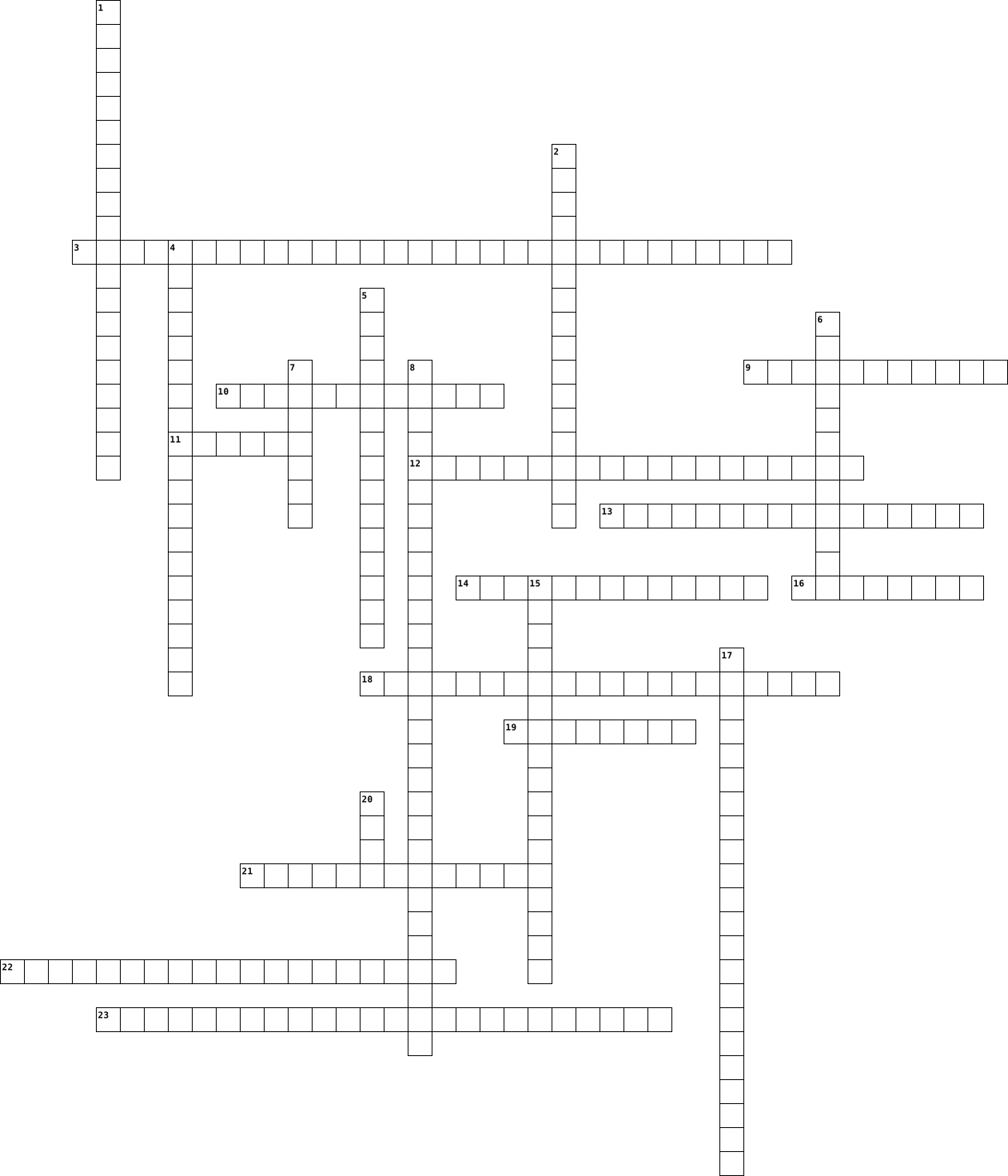
Across
- / Captain America: The Winter Solider
- / The Avengers
- / Thor: Ragnarok
- / Ant-Man
- / Avengers: Infinity War
- / Ant-Man and the Wasp
- / Captain Marvel
- / Iron Man 3
- / Guardians of the Galaxy
- / Iron Man 2
- / Doctor Strange
- / Spider-Man: Homecoming
- / Guardians of the Galaxy Vol. 2
Down
- / Spider-Man: Far From Home
- / Thor: The Dark World
- / Avengers: Age of Ultron
- / Avengers: Endgame
- / Black Panther
- / Iron Man
- / Captain America: The First Avenger
- / The Incredible Hulk
- / Captain America: Civil War
- / Thor
23 Clues: / Thor • / Ant-Man • / Iron Man • / Iron Man 3 • / Iron Man 2 • / The Avengers • / Black Panther • / Thor: Ragnarok • / Captain Marvel • / Doctor Strange • / Avengers: Endgame • / The Incredible Hulk • / Thor: The Dark World • / Ant-Man and the Wasp • / Avengers: Infinity War • / Spider-Man: Homecoming • / Avengers: Age of Ultron • / Guardians of the Galaxy • / Spider-Man: Far From Home • ...
Unit 3 Crossword 2024-05-02

Across
- Era of rebuilding the South after the Civil War
- Guide created to help African American travelers in Jim Crow America
- One of the first Black regiments in the Civil War
- First HBCU
- Abolished Slavery
Down
- Provided citizenship/equal protection
- Prevented African Americans from voting
- Provided all men the right to vote
- First African American elected to senate
- Laws that enforced segregation
10 Clues: First HBCU • Abolished Slavery • Laws that enforced segregation • Provided all men the right to vote • Provided citizenship/equal protection • Prevented African Americans from voting • First African American elected to senate • Era of rebuilding the South after the Civil War • One of the first Black regiments in the Civil War • ...
Unit 3 Crossword 2023-03-20

Across
- Came up with anaconda plan
- Amendment that allowed black men the right to vote
- First shots fired during Civil War
- 17th president of the US
- White supremacist group during reconstruction
Down
- 16th president of the US
- Laws that kept black and white people separated
- Amendment that abolished slavery
- Turning point of the Civil War
- Freedmen´s Bureau´s biggest success
10 Clues: 16th president of the US • 17th president of the US • Came up with anaconda plan • Turning point of the Civil War • Amendment that abolished slavery • First shots fired during Civil War • Freedmen´s Bureau´s biggest success • White supremacist group during reconstruction • Laws that kept black and white people separated • Amendment that allowed black men the right to vote
Civil War Landon Taylor 2023-03-29

Across
- recaptured galveston from Union forces
- sacrificed political future for good of his state
- commander of the confederate army
- general of the union army
- Governer of Texas, first governer of the confederacy
- Served as union president during civil war
Down
- Black woman who helped free slaves
- served as brigaider general for confederacy
- Confederate president during the civil war
- commanded the Hood's Texas Brigade
10 Clues: general of the union army • commander of the confederate army • Black woman who helped free slaves • commanded the Hood's Texas Brigade • recaptured galveston from Union forces • Confederate president during the civil war • Served as union president during civil war • served as brigaider general for confederacy • sacrificed political future for good of his state • ...
ELA/SS Crossword 2023-06-13

Across
- President of the Confederacy during the Civil War
- Who attempted to murder Secretary of State Seward?
- Who was assassinated in Ford's Theater?
- Receiver of Memory
- The first battle of the Civil War
Down
- Who gave memories to Jonas?
- Who assassinated President Lincoln?
- Who wrote the Liberator newspaper?
- Who killed Alexander Hamilton in a duel?
- First state to secede from the Union
10 Clues: Receiver of Memory • Who gave memories to Jonas? • The first battle of the Civil War • Who wrote the Liberator newspaper? • Who assassinated President Lincoln? • First state to secede from the Union • Who was assassinated in Ford's Theater? • Who killed Alexander Hamilton in a duel? • President of the Confederacy during the Civil War • ...
ELA/SS Crossword 2023-06-13

Across
- President of the Confederacy during the Civil War
- Who attempted to murder Secretary of State Seward?
- Who was assassinated in Ford's Theater?
- Receiver of Memory
- The first battle of the Civil War
Down
- Who gave memories to Jonas?
- Who assassinated President Lincoln?
- Who wrote the Liberator newspaper?
- Who killed Alexander Hamilton in a duel?
- First state to secede from the Union
10 Clues: Receiver of Memory • Who gave memories to Jonas? • The first battle of the Civil War • Who wrote the Liberator newspaper? • Who assassinated President Lincoln? • First state to secede from the Union • Who was assassinated in Ford's Theater? • Who killed Alexander Hamilton in a duel? • President of the Confederacy during the Civil War • ...