
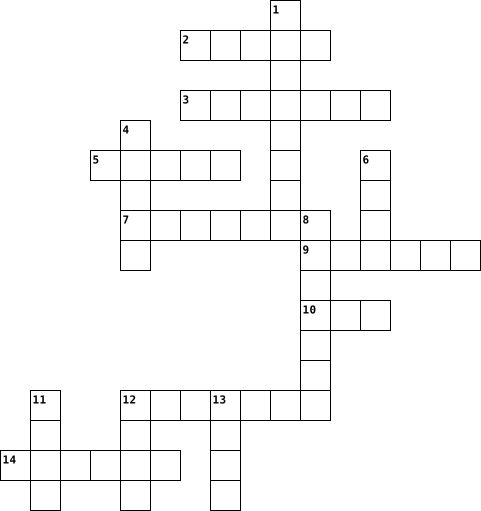
clay rich soil crossword Crossword Puzzles
LAND 2024-11-11

Across
- natural source of nitrogen
- original rock that forms soil
- alive or was once alive
- decomposed organic matter
- nutrient for flowering
- nutrient for plant growth
- larger than sand
- broken up pieces of rock
- trash-to-________
Down
- layer of soil
- ______fill
- where some trash is dumped
- to make some trash into something else
- open hole in the ground
- organic mater in soil
- layer that contains humus
- aka trash or garbage
- smallest soil particle
- nutrient for health
- banana ______
- dirt with humus
21 Clues: ______fill • layer of soil • banana ______ • dirt with humus • larger than sand • trash-to-________ • nutrient for health • aka trash or garbage • organic mater in soil • smallest soil particle • nutrient for flowering • open hole in the ground • alive or was once alive • broken up pieces of rock • layer that contains humus • decomposed organic matter • nutrient for plant growth • ...
Unit-III-Environmental Pollution & Current Environmental issues 2022-10-05

Across
- Disease which is caused by drinking contaminated water.
- Use should be banned to avoid soil pollution.
- Produced on incomplete combustion of fuels.
- This type of soil can hold very little water.
- Type of soil used for making pottery.
Down
- Pollutant which was used in refrigerators and air conditioners.
- This layer protects us from harmful ultraviolet rays.
- Living organism in the soil.
- River which is famous in India and sustains most of the northern, central and eastern Indian population.
- Collective name for layers of soil.
- Plantation prevents it.
- It is essential for combustion.
- Clay and loam are suitable for cereals like.
- In desert soil erosion occurs through.
- This chemical protects our crops and is washed into water bodies from the field.
15 Clues: Plantation prevents it. • Living organism in the soil. • It is essential for combustion. • Collective name for layers of soil. • Type of soil used for making pottery. • In desert soil erosion occurs through. • Produced on incomplete combustion of fuels. • Clay and loam are suitable for cereals like. • Use should be banned to avoid soil pollution. • ...
Soil Choice 2024-11-13

Across
- a fertile soil of clay and sand containing humus.
- refers to the large source of carbon-based compounds found within natural and engineered enviornmnets
- organism that breaks down dead organic material
- fine sand, soil, or mud which is carried along by a rive
- a mineral soil horizon characterized by a build-up of clay, aluminum, iron, salts or organic material translocated from upper horizons
- the process of eroding or being eroded by wind, water, or other natural agents.
- the process of a solute becoming detached or extracted from its carrier substance by way of a solvent.
- breakdown of rocks, by the action of rainwater, extremes of temperature, and biological activity.
- dead plant material that has fallen to the ground
Down
- a layer of mineral soil that has a defined soil structure, and it is mostly made up of humus
- The pore space of soil contains the liquid and gas phases of soil
- the process of soil genesis as regulated by the effects of place, environment, and history
- any material of natural or synthetic origin that is applied to soil or to plant tissues to supply plant nutrients.
- a granular material composed of finely divided mineral particles.
- the arrangement of the natural and artificial physical features of an area.
- an earthy material that is sticky and easily molded when wet and hard when baked
- a substance that provides nourishment essential for growth and the maintenance of life.
17 Clues: organism that breaks down dead organic material • a fertile soil of clay and sand containing humus. • dead plant material that has fallen to the ground • fine sand, soil, or mud which is carried along by a rive • The pore space of soil contains the liquid and gas phases of soil • a granular material composed of finely divided mineral particles. • ...
Soil 2022-04-29

Across
- the minerals that make up the largest portion of most soils
- The layer of soil right below the topsoil
- the top layer of soil
- The smallest soil particle
- the largest soil particle
- the process of eroding rock over time, primarily through the action of rainfall and snowfall.
Down
- also referred to as C-layer
- the layer of soil right below the topsoil
- The underlying soil material that gives rise to the subsoil and topsoil
- the wearing away of soil by wind or water
- The top layer of the soil horizon
- soil that contains approximately 40% sand, 40% silt, and 20% clay.
- A layer of organic matter
- the fine, relatively inert soil particles carried by running water and deposited as a sediment
- material composed of decomposing and decomposed living organisms
15 Clues: the top layer of soil • A layer of organic matter • the largest soil particle • The smallest soil particle • also referred to as C-layer • The top layer of the soil horizon • the layer of soil right below the topsoil • the wearing away of soil by wind or water • The layer of soil right below the topsoil • the minerals that make up the largest portion of most soils • ...
Soil 2025-01-13

Across
- Measure of Hydrogen ion and concentration indicating the availability of other nutrients in soil
- refers to the way water moves through soil
- large impermeable area where plant roots and water cannot pass through it
- how the features of the Earth's surface are arranges, including slope and elevation
- how sand, silt, and clay particles are arranged in the soil
- decaying material of organisms such as plants and animals
- process of perforating soil to create more pore space to allow gas to enter and exit the soil
- refers to the amount of pore space between each particle of soil
- refers to nutrients being dissolved or washed away from the soil by water
- layer of soil which has distinct properties from those above or below it
- prevailing temperature and precipitation conditions in an area
Down
- lack of nutrients causing a variety of symptoms in plants
- any material which is eroded and weathered mechanically or chemically over time to create smaller soil particles
- nutrient elements required in large amounts
- all the living organisms and decaying matter in the soil
- refers to the proportion of sand, silt, and clay particles in the soil
- nutrient elements required in small amounts
- natural body consisting of layers of minerals and organic matter of variable thickness
18 Clues: refers to the way water moves through soil • nutrient elements required in large amounts • nutrient elements required in small amounts • all the living organisms and decaying matter in the soil • lack of nutrients causing a variety of symptoms in plants • decaying material of organisms such as plants and animals • ...
Soils 2022-02-24

Across
- Is determined by fine, lose or the proportion of the soil
- chemical elements of hydrogen and oxygen together to form a liquid, gas, or solid
- Tiny fragments of broken down rock
- an fill soil pores as water drains or is removed from a soil pore by evaporation or root absorption Water that fills the voids of soil
- Soil that is comprised of very fine mineral particles and not much organic material
- The water stored in the soil
- An important part of the growth to plant using nitrogen, oxygen and pottasium
- Dark, organic material that forms in soil when plant and animal matter decays
- The thin layer of material covering the earth's surface
- The top layer of soil that is high in organic matter and nutrient
- Soil made with a balance of the three main types of soil
- A solid, dust-like sediment that water, ice, and wind transport and deposi
Down
- The fraction of the total soil volume that is taken up
- Very rough types of soil
- The breaking down or dissolving of rocks and minerals on Earths surface
- The hard, solid rock beneath surface materials such as soil and gravel
- Organic matter decay, and harvest of high-yielding crops
- The way individual particles of sand, silt, and clay are assembled
- bacteria, actinomycetes, fungi, protozoa and nematodes are all needed to boost plant life
- The different sizes of soils
- Generaly this soil drains quickly, meaning they don't hold on to water and nutrients as long as other soil types
- very small, irregular pieces of rock and stone
- The soil lying immediately under the surface soil
- Made up of sand, silt, and clay
- Composed primarily of plant materials
25 Clues: Very rough types of soil • The different sizes of soils • The water stored in the soil • Made up of sand, silt, and clay • Tiny fragments of broken down rock • Composed primarily of plant materials • very small, irregular pieces of rock and stone • The soil lying immediately under the surface soil • The fraction of the total soil volume that is taken up • ...
NRE Lesson 2.1 Vocab Crossword 2024-10-11

Across
- – In soil science, a group of textural classes in which the particles are finer than gravel but coarser than silt, ranging in size from 2.00 to 0.5 millimeters in diameter. It is the textural class of any soil that contains 85 percent or more of sand and not more than 10 percent of clay.
- – A layer of soil, approximately parallel to the surface, having distinct characteristics produced by soil-forming processes
- – Any igneous, sedimentary, or metamorphic rock that is represented as a unit in geological mapping.
- – The horizon of weathered rock or partially weathered soil material from which the soil is formed.
- – Movement of soil constituents (organic or mineral) within the profile and/or between horizons. Over time, this process is one of the more visibly noticeable as alterations in color, texture, and structure become apparent
- – The mineral and organic surface of the Earth capable of supporting upland plants. It has been (and is being) formed by the active factors of climate and biosphere exerting their influence on passive parent material and topography over neutral time
- – A size term denoting particles, regardless of mineral composition, with diameter less than two microns.
- – The many soil particles held together in a small mass.
- – Any vegetation that grows close to the ground, producing protection for the soil.
- – A vertical section of a soil. The section, or face of an exposure made by a cut, may exhibit with depth a succession of separate layers although these may not be separated by sharp lines of demarcation.
- – Atmospheric action on rock surfaces producing decomposition, disintegration, or alteration of rock
- – Unweathered hard rock that lies directly beneath the soil layers or beneath superficial geological deposits, such as glacial drift
- – Accumulation of water-worn pebbles larger than two millimeters in diameter
- – The percolation of rainwater through the soil
- – The capacity of soil or rock for transmitting a fluid. Degree of permeability depends upon the size and shape of the pores, the size, and shape of their interconnections, and the extent of the latter
- – The relative degree of downward movement of water in a soil. Also called permeability
- – Through the movement of wind or water, or uptake by plants, soil particles (sand, silt, clay, and OM) or chemical compounds can be eroded, leached, or harvested from the soil, altering the chemical and physical makeup of the soil
Down
- – The chemical weathering of sand and formation of clay minerals, transformation of coarse OM into decay resistant organic compounds (humus).
- – The artificial application of water to soil for the purpose of increasing plant production.
- – Inorganic compound that occurs naturally in the Earth and has a distinctive structure
- – Any living individual whether plant or animal
- – Slope of the land and the position on the landscape, such as the top of a hill, a hillside, or the foot of a slope
- – The surface layer of soil, containing relatively high percentages of decomposed and partially decomposed organic matter
- – Matter found in, or produced by, living animals and plants, which contains carbon, hydrogen, oxygen, and often nitrogen and sulfur
- – The arrangement of primary soil particles into compound particles or aggregates that are separated from adjoining aggregates. Size, shape, and distinctness are used to describe soil structure. Farmers often describe soil structure with words, such as crumbly or cloddy
- – An elongated depression between uplands, hills, or mountains
- – The relative proportion in a soil of the various size groups of individual soil grains
- – Materials added to the soil, such as decomposing vegetation and organisms (organic matter--OM), or new mineral materials deposited by wind or water.
- – The science of classification of organisms and other objects and their arrangement into systematic groups, such as species, genus, family, and order
- – Refers to the extent of voids or openings in the soil that exist between soil particles and soil peds or clods. These pores hold water and air for absorption by plant roots. A porosity of 50% is excellent for plant growth
- – The change in elevation for a given horizontal distance of the surface of the Earth, often expressed as a percentage.
- – A unit of soil structure such as an aggregate, crumb, prism, block, or granule, formed by natural processes (in contrast with a clod, which is formed artificially by compression of a wet clay soil).
- – The process by which water on the ground surface enters the soil
- – Soil that consists of less than 52 percent sand, 28 to 50 percent silt, and 7 to 27 percent clay, resulting in a soil texture ideal for gardening
- – The group of processes whereby Earth or rock material is worn away, loosened, or dissolved and removed from any part of the Earth’s surface
- – The long-term average weather conditions
- – The group of processes whereby Earth or rock material is worn away, loosened, or dissolved and removed from any part of the Earth’s surface
- – Mineral matter of variable composition, consolidated or unconsolidated, assembled in masses or considerable quantities in nature
38 Clues: – The long-term average weather conditions • – Any living individual whether plant or animal • – The percolation of rainwater through the soil • – The many soil particles held together in a small mass. • – An elongated depression between uplands, hills, or mountains • – The process by which water on the ground surface enters the soil • ...
32 2024-08-20

Across
- essential trace elements
- crop erosion control
- farming natural methods
- primary nutrients
- root fungi
- carbon-rich soil
- fruit growth
- test nutrient analysis
- soil aerator
- nutrient loss
- slow watering
- blanket protective layer
- stabilizes pH
Down
- soil preparation
- bin organic breakdown
- high pH
- soil loss
- soil enhancer
- organic recycling
- low pH
- minimizes disturbance
- bed contained garden
- pH acidity measure
- root growth
- soil amendment
25 Clues: low pH • high pH • soil loss • root fungi • root growth • fruit growth • soil aerator • soil enhancer • nutrient loss • slow watering • stabilizes pH • soil amendment • soil preparation • carbon-rich soil • primary nutrients • organic recycling • pH acidity measure • crop erosion control • bed contained garden • bin organic breakdown • minimizes disturbance • test nutrient analysis • farming natural methods • ...
soil crossword 2022-08-26

Across
- they help you scoop out dirt
- the main thing
- its a combination of sand, soil and clay
- the little creatures that are garden pests
- you can plant things there even if the plant is not in season
- a soil with very small particles
- little creatures you will find
- they protect you from snails
Down
- they are the things you actually grow
- they help keep the plants get consistent water
- something that almost everything needs including humans
- its the material applied to the surface of soil
- where all of the planting actually happens
- they keep your hands clean
- what transforms sterile dirt into fertile soil so plants can grow
15 Clues: the main thing • they keep your hands clean • they help you scoop out dirt • they protect you from snails • little creatures you will find • a soil with very small particles • they are the things you actually grow • its a combination of sand, soil and clay • the little creatures that are garden pests • where all of the planting actually happens • ...
Intro to Soils Vocab 2024-01-22

Across
- - A soil type with a balanced mix of sand, silt, and clay, ideal for plant growth.
- - The measure of space between soil particles, affecting water and air movement.
- - The feel and composition of soil based on the size of its particles.
- - Coarse particles that create a loose, well-drained soil texture.
- - Very fine particles that hold water well but can lead to poor drainage.
Down
- - Clusters of soil particles that improve soil structure and aeration.
- - Fine particles, smaller than sand but larger than clay, contributing to soil fertility.
- - The characteristic of soil that determines how easily air and water can pass through it.
- - A diagram used to classify soil types based on sand, silt, and clay proportions.
- - The ability of soil to allow water to flow through, important for plant health.
10 Clues: - Coarse particles that create a loose, well-drained soil texture. • - Clusters of soil particles that improve soil structure and aeration. • - The feel and composition of soil based on the size of its particles. • - Very fine particles that hold water well but can lead to poor drainage. • ...
Land Subtopic 5.1 2025-10-26

Across
- A system that releases more carbon than it absorbs.
- Soil made up mostly of intermediate-sized particles, 0.002–0.05 mm in diameter.
- matter Substances derived from living organisms, such as plant debris, faeces, or other carbon-based compounds.
- A symbiotic relationship where both species benefit.
- A state of very low biological activity, as in inactive seeds.
- Movement of water into the soil from the surface.
- The upper organic layer of soil rich in decomposing plant material.
- Produced by or originating from human action.
- Breakdown of organic molecules by living cells to release energy; can be aerobic or anaerobic.
- Diffusion of gases into and out of soil, often increased by ploughing or burrowing animals.
- Chemical reactions between rock minerals and water, oxygen, or acids.
- Conversion of organic matter (humus) into mineral nutrients usable by plants.
- A space between soil particles where air or water may be found.
- A natural store of viable but dormant seeds within the soil.
- A clump of soil formed when mineral particles stick together.
- The subsoil, where materials like clay and minerals accumulate from above.
- Thin, branching, thread-like structures of fungi.
- Fungi forming mutualistic relationships with plant roots, exchanging minerals and water for sugars.
- A cycle involving the movement and transformation of chemical elements through Earth’s systems.
- The vertical section of soil showing all horizons and their characteristics.
- An animal that eats detritus, breaking it into smaller pieces.
- Movement of water through the soil layers.
- A substance required by plants in small quantities, such as iron or zinc.
Down
- A substance required by plants in large quantities, e.g., nitrogen, phosphorus, potassium.
- Permanently frozen layer of soil that stores large amounts of organic carbon.
- The process of salt accumulation in soil, usually due to excessive irrigation.
- Soil made up of particles of various sizes and containing a significant percentage of organic matter.
- Breakdown of rock by organisms such as lichens or plant roots.
- matter Substances not derived from living organisms, usually from bedrock, air, or water.
- A fluid secreted by a living organism, such as sugars or amino acids from plant roots.
- The topsoil or mixed layer beneath the O horizon, rich in minerals and humus.
- Biological breakdown of organic material into simpler substances.
- Fully decomposed organic matter forming a dark, sticky material coating mineral particles.
- Soil made up mostly of very fine particles, less than 0.002 mm in diameter.
- The process of rocks breaking into smaller fragments by water, dissolved substances, organisms, or temperature changes.
- Physical breakdown of rocks by freezing, thawing, heating, or abrasion.
- Fine, wind-blown deposits of silt forming fertile soils in some regions.
- A microorganism that breaks down organic matter by secreting enzymes and absorbing the products.
- The rock that is broken down to provide the mineral components of a particular soil.
- Partially decomposed organic matter.
- The addition of harmful substances or pollutants to soil, intentionally or accidentally.
- A symbiotic relationship where one species benefits and the other is harmed.
- Involving or requiring oxygen; produces carbon dioxide.
- A system that absorbs more carbon than it releases.
- Occurring without oxygen; produces methane.
- The lowest layer of soil, composed mainly of weathered parent material.
- Downward movement of dissolved substances through soil with percolating water.
- Partially decomposed organic matter accumulating in waterlogged soils.
- Stony or rocky particles in soil larger than 2.0 mm in diameter.
- Soil made up mostly of relatively large particles, from 0.05 to 2.0 mm in diameter.
- Movement of broken-down rock particles from one place to another by agents like wind or water.
51 Clues: Partially decomposed organic matter. • Movement of water through the soil layers. • Occurring without oxygen; produces methane. • Produced by or originating from human action. • Movement of water into the soil from the surface. • Thin, branching, thread-like structures of fungi. • A system that releases more carbon than it absorbs. • ...
unit 4 2023-04-19

Across
- the amount of water that can be absorbed
- the solid, flexible outer layer of mantle, beneath the lithosphere
- layer where charged gas molecules glow under intense solar radiation producing northern lights
- outer layer of earth
- soil type with equal parts silt, clay, and sand
- type of tectonic plates that move away from eachother
- this is characterized by cooler water, nutrient rich water colder winter temperatures in northwest and warmer in southeast
Down
- geologic material from which soil horizons form.
- outermost layer made up of the crust and upper mantle
- type of soil that drains water too quickly for roots and dries out
- exposure to sun's rays
- the large ocean circulation patterns due to global wind
- process where earth is worn away by water, air, and other plants
- this soil horizon is composed of mainly minerals with little to no organic matter
- mixture of molten and semi-molten rock found beneath the surface of the Earth
15 Clues: outer layer of earth • exposure to sun's rays • the amount of water that can be absorbed • soil type with equal parts silt, clay, and sand • geologic material from which soil horizons form. • outermost layer made up of the crust and upper mantle • type of tectonic plates that move away from eachother • the large ocean circulation patterns due to global wind • ...
Soil 2022-04-01

Across
- - largest particles in soil
- - different levels of soil
- - topmost part of soil with organic matter
- - second largest particles in soil
- - smallest particles in soil
Down
- - grass, leaves, and other living things
- - a layer of stones under the soil
- - mixture of sand, silt and clay
- - things that help plants grow
- - potential hydrogen
10 Clues: - potential hydrogen • - different levels of soil • - largest particles in soil • - smallest particles in soil • - things that help plants grow • - mixture of sand, silt and clay • - a layer of stones under the soil • - second largest particles in soil • - grass, leaves, and other living things • - topmost part of soil with organic matter
Puzzle 27: Soil and Erosion 2025-09-07

Across
- – Water that flows over the land surface
- – Fertile soil made of sand, silt, and clay
- – Fine-grained soil that holds water well
- – Process of sediments settling after erosion
- – Small channel formed by flowing water in soil
- – Layers of soil seen in a soil profile
- – Very fine soil particles carried by water
Down
- – A large channel formed by water erosion
- – Breaking down of rocks into smaller pieces
- – Methods used to prevent soil erosion (like terraces or cover crops)
- – The upper layer of earth where plants grow
- – Large-grained soil particle often found in deserts
12 Clues: – Layers of soil seen in a soil profile • – Water that flows over the land surface • – A large channel formed by water erosion • – Fine-grained soil that holds water well • – Fertile soil made of sand, silt, and clay • – Very fine soil particles carried by water • – Breaking down of rocks into smaller pieces • – The upper layer of earth where plants grow • ...
Chapter 2 2014-01-31

Across
- is grass roots and soil
- chemical change where a substance mixes with oxygen and forms rust
- to prevent soil loss it plows along the curves of a slope
- a geological principle that operated in the past and is used today that changed earth's surface
- the differ in elevation from one line to the other
- a line that connects points of equal elevation
- a type of weathering that breaks down rocks with chemical changes
- a process at which it makes ice,water,wind,or gravity move weathered rock and soil
- the process which is chemical or physical that breaks rock down at earth's surface
- shows the elevation from an above view
- which is a method that has dead stalks of the previous year to hold the soil in place
- solid layer of a rock beneath the soil
- weathered material that is loose on earth's surface that can grow plants
- grinding way of rock that carries in water,ice,or wind into rock particles
- planting different crops to maintain the soil
- is beneath the top soil and is made up of clay and other minerals
- is an area in the Great Plains which was loss of soil
Down
- is the topmost soil and is made of clay,mixture of humus,and other minerals that form crumbly
- a process that splits rocks when water goes in and then freezes and expands
- prevents destruction of soil
- a type of weathering where the rock breaks into smaller pieces
- is a soil organism that breaks down remains of other organisms
- layer of soil that has different color and texture than from above or below it
- is in soil that is organic and dark colored
- the dead plants and stems that are loose on the earth's surface
- characteristic that has tiny air spaces at which water seeps through
- anything that is human use in an environment
- a line that is labeled with the elevation of that line in round units
- fertile soil that is made up of sand,clay and silt that is in equal parts
- a measure which watches how soil supports plant growth
30 Clues: is grass roots and soil • prevents destruction of soil • shows the elevation from an above view • solid layer of a rock beneath the soil • is in soil that is organic and dark colored • anything that is human use in an environment • planting different crops to maintain the soil • a line that connects points of equal elevation • ...
gard2 2024-06-18

Across
- Related to plant science
- Underground plant storage
- Dense soil type
- Machine for soil preparation
- Supplying water to plants
- Soilless plant growth
- Ideal garden soil mix
- Gathering ripe crops
- Person who tends gardens
- Joining plant parts
- Loose soil type
Down
- Plants that grow well together
- Reducing light exposure
- Structure for plant growth
- Art of garden cultivation
- Container for growing plants
- Portable garden
- Animal waste fertilizer
- Supporting tall plants
- Water removal system
20 Clues: Dense soil type • Portable garden • Loose soil type • Joining plant parts • Gathering ripe crops • Water removal system • Soilless plant growth • Ideal garden soil mix • Supporting tall plants • Reducing light exposure • Animal waste fertilizer • Related to plant science • Person who tends gardens • Underground plant storage • Art of garden cultivation • Supplying water to plants • ...
science 1 term 2 2023-03-05

Across
- the air we breath all the way to space
- this layer of soil is above bedrock
- rain, snow, sleet, hail
- plants sweating water
- living material
- the middle size particle of soil
- this soil is below topsoil
- the smallest particle of soil
- dirt, earth
- how soil is made over 1000s of years
Down
- will disappear over time in nature
- the layer of air where we live
- water becomes vapour when heated
- the layer of air where aeroplanes usually fly
- water flowing over the land
- soil under the organic layer
- layer of air with ozone
- the process of water that repeats
- makes the world dirty
- the largest particle of soil
20 Clues: dirt, earth • living material • makes the world dirty • plants sweating water • layer of air with ozone • rain, snow, sleet, hail • this soil is below topsoil • water flowing over the land • soil under the organic layer • the largest particle of soil • the smallest particle of soil • the layer of air where we live • water becomes vapour when heated • the middle size particle of soil • ...
soil 2015-10-05

Across
- weathering process
- drains water quick
- weathering process such as heating and cooling
- property of soil
- rock
- electrical charges
- mixture of soil types
- space between particles of solid matter
- soil type
Down
- stable end product of organic matter decay
- like a skin around each particle of soil
- breakdown of rock
- component of soil
- where individual soil particles aggregate well
- texture of sand
- texture of silt
16 Clues: rock • soil type • texture of sand • texture of silt • property of soil • breakdown of rock • component of soil • weathering process • drains water quick • electrical charges • mixture of soil types • space between particles of solid matter • like a skin around each particle of soil • stable end product of organic matter decay • weathering process such as heating and cooling • ...
Year 11 Agriculture Soils 2025-10-19

Across
- A type of production system used for producing crops and livestock. Examples: agricultural eg wool dairy lamb or horticultural eg fruit or vegetables
- Larger pores that allow for nutrient, air and water movement.
- Water that is required for photosynthesis and therefore plant growth.
- a medium size soil mineral.
- A value of showing hospitality, generosity, care and giving
- Small pores that serve as a source of nutrients and water.
- Soil organisms that enhance soil structure (through burrowing) and fertility (breakdown of organic matter).
- A process used to improve compacted soil and benefit plant growth.
- an dense covering of short grass
- the soil quality that is based on the proportions of soil particles: sand, silt and clay
- Material that is a source of nutrients for the soil.
- Material applied to the soil surface to prevent water loss.
- A practice used to manage nutrient levels in the soil by changing the crop type each season.
- Living entities in the soil that improve plant growth such as microbes and worms.
- drain formed by pulling a bullet-shaped cylinder through clay soil.
- a farm tool having one or more heavy blades to break the soil and cut a furrow prior to sowing
- The process by which cells break down glucose with oxygen to release energy.
- A soil mineral that has the smallest size. Soil that retains water and can swell.
- is a Māori concept of guardianship and stewardship, encompassing the ethical and practical protection of the natural environment and its resources for future generations
- Essential elements like nitrogen (N), phosphorus (P), and potassium (K) needed for plants.
- a nutrient that aids in overall plant health and disease resistance
- spreader a tractor attachment which is a way for fertiliser powder to be spread onto paddocks
- A procedure to analyze soil properties and nutrient levels.
- a nutrient that promotes leaf and stem growth
Down
- A soil property such as texture, structure, and density that affect soil temperature.
- small microscopic living things that contribute to nutrient cycling in the soil.
- a small, usually enclosed field for animals to access pasture.
- A way of supplying water to an area of land
- Air that is required for respiration and therefore plant growth.
- the process by which clay-size particles join together into clumps when lime is added to soil.
- A soil property related to the chemical composition and pH of the soil.
- A management practice that removes excess water to enhance plant growth.
- Soil that can hold no more water.
- Plants use the sun's energy to convert water and carbon dioxide into glucose.
- A shallow ditch which help collect and remove excess overland water flow.
- The three main types of minerals found in soil.
- Liquid waste that can be used as a nutrient source in soil.
- requirements Water, Oxygen, Warmth
- A soil property related to the presence and activity of living organisms in the soil.
- Decomposed organic matter used to enrich soil.
- soil texture _________: a chart used to classify the makeup of various soils
- Substances added to soil to supply essential nutrients.
- Moisture level at which plants cannot extract water
- a plastic pipe with holes in it is placed in a trench with gravel to improve drainage
- a nutrient that supports root and flower development
- the process of adding calcium carbonate to the soil to increase soil pH
- Methods used to assess the nutrient content of soil.
- A soil mineral that has the largest size. Soil that is good for drainage and creating macropores.
- an implement consisting essentially of a series of rotating hoe wheels each having many sharp curved steel prongs used for cultivation
49 Clues: a medium size soil mineral. • an dense covering of short grass • Soil that can hold no more water. • requirements Water, Oxygen, Warmth • A way of supplying water to an area of land • a nutrient that promotes leaf and stem growth • Decomposed organic matter used to enrich soil. • The three main types of minerals found in soil. • ...
Soil Review - Environmental Science 2024-01-21

Across
- the thing that is changed thanks to erosion and weathering
- a nutrient-rich type of dirt that shares a name with a middle eastern chickpea dish.
- How easily water can move through soil
- A technique that plants trees in between large, flat fields to prevent wind erosion.
- What is done with corn and soybeans to keep nutrients in the soil; a sustainable farming practice that prevents soil damage
- a 3D art medium and the smallest particle type found in soil
- a type of fertilizer made from feces and decayed plants and animals that adds nutrients to soil
- the process that removes weathered material via wind or water
- the process that breaks down rocks into smaller pieces that are moved via erosion
- The amount or percent of space between particles in soil
- the second layer of dirt that contains decayed and living organisms and roots; topsoil
Down
- the perfect mix of all three particle sizes that is very good for plant growth
- the process in which humans, animals, or machinery push down soil, compressing the layers
- Unsustainable _______ practices can damage and destroy soil.
- something humans and soil needs and is found in our atmosphere
- Topsoil is a ______ resource but that doesn't mean we should misuse it!
- the process where water removes nutrients from soil and into other bodies of water or lower horizons of soil
- the largest of the particles that holds no water and no nutrients
- called "subsoil" and is below the topsoil. Nutrients from above are leached down into this layer.
- the mix of different sizes of particles in a soil sample
- the bedrock at the very bottom of all layers
- the middle of the three particle sizes that holds a decent amount of water and nutrients
- the first layer of soil that is mostly leaf litter and organic material
23 Clues: How easily water can move through soil • the bedrock at the very bottom of all layers • the mix of different sizes of particles in a soil sample • The amount or percent of space between particles in soil • the thing that is changed thanks to erosion and weathering • Unsustainable _______ practices can damage and destroy soil. • ...
How Does Your Garden Grow? 2023-03-16

Across
- Smallest particles
- Almost humus
- Small rocks
- Larger particles than sand but smaller than clay
- Not very good soil
- Has a long name
- We do in fact breathe it
- Very hard rock
Down
- Almost Co2
- Organic Matter
- Ground Cover
- Best kind of soil
- Fungi and Worms
13 Clues: Almost Co2 • Small rocks • Almost humus • Ground Cover • Organic Matter • Very hard rock • Fungi and Worms • Has a long name • Best kind of soil • Smallest particles • Not very good soil • We do in fact breathe it • Larger particles than sand but smaller than clay
Rocks, Minerals and Soil 2025-09-20

Across
- A natural, solid substance with its own chemical makeup.
- A small piece or chunk of rock.
- Soil that is dark, spongy, and rich in decayed plants.
- A solid material made of one or more minerals.
- Soil made up mostly of sand grains, dry and gritty.
Down
- A type of rock formed when heat and pressure change other rocks.
- A type of rock made from layers of sand, mud, or small pieces of other rocks.
- A type of rock formed when melted rock (magma or lava) cools and hardens.
- Soil with very fine particles, smoother than sand but not sticky.
- Soil with very tiny particles that hold water and feel sticky.
10 Clues: A small piece or chunk of rock. • A solid material made of one or more minerals. • Soil made up mostly of sand grains, dry and gritty. • Soil that is dark, spongy, and rich in decayed plants. • A natural, solid substance with its own chemical makeup. • Soil with very tiny particles that hold water and feel sticky. • ...
Soil Crossword Puzzle 2023-01-05

Across
- Which type of weathering occurs when you hummer rocks to turn it into powder?
- This type of soil hold much water.
- This type of soil is Rich in nutrients and can hold minimal amount of water.
- The process of breaking rocks to form soil is called.
- This type of soil is loose and coarse. It does not hold water for long.
Down
- What do you call the results of adding unwanted substances or garbage into the soil?
- It is made up of decayed plants and animals matter that make the soil fertile.
- This soil is a combination of all soil types which makes it the best soil for gardening.
- Which type of weathering occurs when iron conataining rocks starts to become brittle because of the formation of rust?
- What do you call the act of keeping the soil healthy and in place?
10 Clues: This type of soil hold much water. • The process of breaking rocks to form soil is called. • What do you call the act of keeping the soil healthy and in place? • This type of soil is loose and coarse. It does not hold water for long. • This type of soil is Rich in nutrients and can hold minimal amount of water. • ...
Soil Crossword 2025-12-09

Across
- material made of organic matter,minerals,air and water
- soil made of small to medium particles
- Organisms that breaks down organic material
- chart used to determine soil texture with the % of clay, silt, and sand in a sample.
- an element that must be fixed by bacteria living in soil before plants can use it.
Down
- The soil layer with the most organic matter in it; easiest to lose.
- Perfect mix of clay, silt, sand and humus; plants grow best in this soil type.
- Smallest soil particles; holds water
- layers of soil
- soil made of large gritty particles; drains quickly.
10 Clues: layers of soil • Smallest soil particles; holds water • soil made of small to medium particles • Organisms that breaks down organic material • soil made of large gritty particles; drains quickly. • material made of organic matter,minerals,air and water • The soil layer with the most organic matter in it; easiest to lose. • ...
#023 Thursday, Feb. 17th Soil Vocabulary Create a Crossword Puzzle (on paper) 2022-02-28

Across
- the soil lying immediately under the topsoil
- a loose granular material composed of finely divided rock and mineral particles
- a chemical reaction that breaks a rock down
- a granular material of a size between sand and clay and composed mostly of broken grains of quartz
- loss of thin uniform layers of soil over a full field
- channels or depressions that form in the same place year after year
- soil is moving through the air
- carbon-based compounds found within natural environments
- the upper, outermost layer of soil
Down
- channels or rills forming runoff, randomly located
- large channels not able to be fixed by tilling of fields
- erosion of the sides of a stream over time
- breaking the rock down into smaller pieces
- the original rock from which younger rock or soil is formed
- the precipitation of salts in soils
- a form of soil made up of very small particles of aluminum silicate, smaller than sand and silt.
- the exertion of force on something so that it becomes more dense
- small soil particles rolling or sliding while maintaining contact with the ground
- the geological process in which earthen materials are worn away and transported by natural forces such as wind or water
- grains of soil bouncing across the ground
20 Clues: soil is moving through the air • the upper, outermost layer of soil • the precipitation of salts in soils • grains of soil bouncing across the ground • erosion of the sides of a stream over time • breaking the rock down into smaller pieces • a chemical reaction that breaks a rock down • the soil lying immediately under the topsoil • ...
Soil vocabulary list 2022-02-18

Across
- - small soil particles rolling or sliding while maintaining contact with the ground
- - loss of thin uniform layers of soil over a full field
- a granular material of a size between sand and clay and composed mostly of broken grains of quartz
- - channels or depressions that form in the same place year after year
- - soil is moving through the air
- - a chemical reaction that breaks a rock down
- - channels or rills forming runoff, randomly located
- - erosion of the sides of a stream over time
- - the soil lying immediately under the topsoil
Down
- - carbon-based compounds found within natural environments
- - the upper, outermost layer of soil
- - the original rock from which younger rock or soil is formed
- - the geological process in which earthen materials are worn away and transported by natural forces such as wind or water
- - the exertion of force on something so that it becomes more dense
- - a loose granular material composed of finely divided rock and mineral particles
- - the precipitation of salts in soils
- - a form of soil made up of very small particles of aluminum silicate, smaller than sand and silt.
- - breaking the rock down into smaller pieces
- - large channels not able to be fixed by tilling of fields
- - grains of soil bouncing across the ground
20 Clues: - soil is moving through the air • - the upper, outermost layer of soil • - the precipitation of salts in soils • - grains of soil bouncing across the ground • - breaking the rock down into smaller pieces • - erosion of the sides of a stream over time • - a chemical reaction that breaks a rock down • - the soil lying immediately under the topsoil • ...
Paulina's crossword 2022-02-18

Across
- - grains of soil bouncing across the ground
- - soil is moving through the air
- - erosion of the sides of a stream over time
- - the exertion of force on something so that it becomes more dense
- - large channels not able to be fixed by tilling of fields
- weathering - a chemical reaction that breaks a rock down
- - loss of thin uniform layers of soil over a full field
- - the soil lying immediately under the topsoil
- rock - the original rock from which younger rock or soil is formed
- a granular material of a size between sand and clay and composed mostly of broken grains of quartz
- - a form of soil made up of very small particles of aluminum silicate, smaller than sand and silt.
- - a loose granular material composed of finely divided rock and mineral particles
Down
- - channels or rills forming runoff, randomly located
- - the upper, outermost layer of soil
- - the geological process in which earthen materials are worn away and transported by natural forces such as wind or water
- matter - carbon-based compounds found within natural environments
- weathering - breaking the rock down into smaller pieces
- - small soil particles rolling or sliding while maintaining contact with the ground
- - the precipitation of salts in soils
- - channels or depressions that form in the same place year after year
20 Clues: - soil is moving through the air • - the upper, outermost layer of soil • - the precipitation of salts in soils • - grains of soil bouncing across the ground • - erosion of the sides of a stream over time • - the soil lying immediately under the topsoil • - channels or rills forming runoff, randomly located • weathering - breaking the rock down into smaller pieces • ...
Soil Vocabulary 2022-02-18

Across
- the precipitation of salts in soils
- the exertion of force on something so that it becomes more dense
- channels or depressions that form in the same place year after year
- the original rock from which younger rock or soil is formed
- the soil lying immediately under the topsoil
- the upper, outermost layer of soil
- small soil particles rolling or sliding while maintaining contact with the ground
- loss of thin uniform layers of soil over a full field
- erosion of the sides of a stream over time
- the geological process in which earthen materials are worn away and transported by natural forces such as wind or water
Down
- carbon-based compounds found within natural environments
- a chemical reaction that breaks a rock down
- a form of soil made up of very small particles of aluminum silicate, smaller than sand and silt.
- breaking the rock down into smaller pieces
- large channels not able to be fixed by tilling of fields
- soil is moving through the air
- a granular material of a size between sand and clay and composed mostly of broken grains of quartz
- grains of soil bouncing across the ground
- a loose granular material composed of finely divided rock and mineral particles
- channels or rills forming runoff, randomly located
20 Clues: soil is moving through the air • the upper, outermost layer of soil • the precipitation of salts in soils • grains of soil bouncing across the ground • breaking the rock down into smaller pieces • erosion of the sides of a stream over time • a chemical reaction that breaks a rock down • the soil lying immediately under the topsoil • ...
Soil Types 2022-08-26
Across
- provides moisture for plants
- the solid rock layer at the bottom of a garden bed
- the outcome of decomposition
- is used to add nutrients to soil
- trees produce this after taking in carbon dioxide
- provides light for plants
- sand, silt and clay that have not been fully broken down
- material rock that has been slightly weathered down
Down
- organic matter in the process of decaying
- is placed on top of soil to kill weeds
- Has the smallest particles
- the layer of soil under the humus
- Ideal for growing plants
- Has the biggest soil particles
- Has medium-sized particles
15 Clues: Ideal for growing plants • provides light for plants • Has the smallest particles • Has medium-sized particles • provides moisture for plants • the outcome of decomposition • Has the biggest soil particles • is used to add nutrients to soil • the layer of soil under the humus • is placed on top of soil to kill weeds • organic matter in the process of decaying • ...
How Soil Forms 2021-09-29

Across
- plants shed leaves and forms a loose layer.
- reacts strongly with some metals and changes blue litmus paper red.
- equal parts clay, sand, and silt.
- layer of soil that differs in color and texture from other layers.
- consists of clay and other particles.
- dark colored substance that forms as plant and animal remains decay.
Down
- measure of how well the soil supports plant growth.
- solid layer of rock beneath the soil.
- organisms that break the remains of dead organisms into pieces and digest them with chemicals.
- substance that changes red litmus paper blue.
- crumbly dark brown soil that is a mixture of humus, clay, and other minerals.
- loose weathered material on earth's surface
12 Clues: equal parts clay, sand, and silt. • solid layer of rock beneath the soil. • consists of clay and other particles. • plants shed leaves and forms a loose layer. • loose weathered material on earth's surface • substance that changes red litmus paper blue. • measure of how well the soil supports plant growth. • ...
soil 2023-11-07

Across
- weathered rock
- decaying plant and animal
- very small grains
- the size of particles
- the remains of plans and animals that lived long ago
Down
- rich in nutrients
- sediments pressed together
7 Clues: weathered rock • rich in nutrients • very small grains • the size of particles • decaying plant and animal • sediments pressed together • the remains of plans and animals that lived long ago
Soil crossword 2021-11-25

Across
- Soil in this area comes from the slow build-up of alluvium at a low elevation
- A thick, reddish soil that has lots of nutrients and is often used to make bricks and pottery
- Soil in this area comes from a slow build-up of alluvium at a medium elevation
Down
- A mix of clay, sand, silt, and gravel carried somewhere by a river or stream
- Soil in this area is rich in minerals and is good for agriculture and pasture-based farming
- Soil in this area comes from decomposed rocks and minerals
- Soil in this area is full of water and organic matter and, for that reason, is not good for agriculture. It is also called "bog soil."
7 Clues: Soil in this area comes from decomposed rocks and minerals • A mix of clay, sand, silt, and gravel carried somewhere by a river or stream • Soil in this area comes from the slow build-up of alluvium at a low elevation • Soil in this area comes from a slow build-up of alluvium at a medium elevation • ...
Soil Types and Soil Health 2025-07-08

Across
- community of living organisms
- process of removing excess water
- process where soil and rock are worn down by natural forces
- able to be maintained
- balanced soil composition, ideal for plant growth
Down
- substance that provides nourishment
- act of keeping or placing things
- fine soil, with more clay than sand and silt, very dense
- action of filtering
- coarse soil, with more sand than silt and clay
10 Clues: action of filtering • able to be maintained • community of living organisms • act of keeping or placing things • process of removing excess water • substance that provides nourishment • coarse soil, with more sand than silt and clay • balanced soil composition, ideal for plant growth • fine soil, with more clay than sand and silt, very dense • ...
Ceramics 2023-02-26

Across
- The condition of clay when most of the moisture has evaporated, but is still soft enough to work with.
- Impress a pattern or mark using an object pressed into clay.
- A flat sheet of clay used to make an object or sculpt with.
- A machine with a horizontal rotating disk in which clay can be shaped into round objects.
- Clay that has dried beyond its natural state.
- Creating forms with clay using hands, fingers, and simple tools.
- Made of clay and hardened by heat
- Marking, engraving, decorating an unfired clay surface by carving or scraping.
- Clay that has been heated one time, but not to maturity.
- Fine-grained natural soil material containing clay minerals.
Down
- The surface quality of a material.
- A glass-like coating, fusion bonded to a ceramic surface by heat.
- Unfired, air-dried clay objects.
- Scratching the surface of clay to prepare for joining two or more pieces together.
- The process of heating clay or glaze to a specific temperature.
- To use the pottery wheel to make forms from plastic clay by hand.
- Liquified clay used as glue over scored areas to attach or join pieces together.
- A furnace or oven for heating ceramic objects.
- Rolling out clay in a long thin form like a snake.
19 Clues: Unfired, air-dried clay objects. • Made of clay and hardened by heat • The surface quality of a material. • Clay that has dried beyond its natural state. • A furnace or oven for heating ceramic objects. • Rolling out clay in a long thin form like a snake. • Clay that has been heated one time, but not to maturity. • ...
Soil 2022-08-18

Across
- small rocks
- we breath this
- these live in the soil
- these live in the garden
- we make pots with this
- the third layer of soil
- it is a liquid
- what you grow plants in
Down
- the bottom layer of soil
- the top layer of soil
- we grow in garden beds
- the second layer of soil
- nothing could live without it
- made from weathered rock
- this helps the plants
- it's at the beach
- this is were plants start growing
17 Clues: small rocks • we breath this • it is a liquid • it's at the beach • the top layer of soil • this helps the plants • we grow in garden beds • these live in the soil • we make pots with this • the third layer of soil • what you grow plants in • the bottom layer of soil • the second layer of soil • made from weathered rock • these live in the garden • nothing could live without it • ...
Clay Soil 2023-11-09

Across
- 8
- 6
- 2
- 4
Down
- 3
- 1
- 5
- 7
8 Clues: 3 • 1 • 5 • 7 • 8 • 6 • 2 • 4
Soil 2021-12-08

Across
- The process whereby pore spaces in well-drained sandy soil are filled with air
- The proportion of clay, silt and sand contribute to which property of soil?
- This provides plant nutrients, food for soil biota and increases water retention (4,7,6)
- This can occur when rainfall is heavy or prolonged (7,6)
- Whereby a field is divided with a criss-cross pattern of intersecting ridges (4,7)
- The excessive use of heavy machinery can cause this
- This occurs when livestock density is too high
- Fertile layer of soil (3,4)
- The primary force which enables soil to retain water (9,6)
- The process whereby more than one crop is grown in a field at the same time
- A series of narrow fields bordered by retaining walls and found on sloping land
- Ploughing at 90 degrees to the slope angle (7,9)
Down
- The name given to the living organisms found in soil (4,5)
- This can be used to estimate soil losses and assess the impacts of changes in farming techniques
- Soil particles form aggregates called what?
- A common feature of clay soils
- Examples of these include worms, millipedes, woodlice and slugs
- Another name for the pore spaces between soil particles (12,6)
- This increases the fertility of soil where water is a limiting factor
- Bacteria and fungi responsible for the breakdown of dead organic matter
- This method minimises soil disturbance (4,7)
- This can reduce the rate of soil erosion
- Acidic soils can increase this, reducing the fertility
- The name given to the expansion of deserts due to the erosion of soil
24 Clues: Fertile layer of soil (3,4) • A common feature of clay soils • This can reduce the rate of soil erosion • Soil particles form aggregates called what? • This method minimises soil disturbance (4,7) • This occurs when livestock density is too high • Ploughing at 90 degrees to the slope angle (7,9) • The excessive use of heavy machinery can cause this • ...
PS Properties of Soil 2024-09-06

Across
- – Refers to the extent of voids or openings in the soil that exist between soil particles and soil peds or clods. These pores hold water and air for absorption by plant roots. About half of soil volume which is in a good physical condition for plant growth is pore space.
- – The arrangement of primary soil particles into compound particles or aggregates that are separated from adjoining aggregates.
- – Unweathered hard rock that lies directly beneath the soil layers or beneath superficial geological deposits, such as glacial drift.
- – The relative proportion in a soil of the various size groups of individual soil grains.
- – Mineral matter of variable composition, consolidated or unconsolidated, assembled in masses or considerable quantities in nature.
- – The mineral and organic surface of the earth capable of supporting upland plants. It has been (and is being) formed by the active factors of climate and biosphere exerting their influence on passive parent material and topography over neutral time.
- – Microscopic, wormlike, transparent organisms that can attack plant roots or stems to cause stunted or unhealthy growth.
- – Soil that consists of less than 52 percent sand, 28 to 50 percent silt, and 7 to 27 percent clay, resulting in a soil texture ideal for gardening.
- – Matter found in or produced by, living animals and plants, which contains carbon, hydrogen, oxygen, and often nitrogen and sulfur.
- – The artificial application of water to soil for the purpose of increasing plant production.
- – Plantlike organisms that have no chlorophyll; they get their nourishment from living or decaying organic matter.
- – Any living individual, whether plant or animal.
- – The capacity of soil or rock for transmitting a fluid. The degree of permeability depends upon the size and shape of the pores, the size, and shape of their interconnections, and the extent of the latter.
Down
- – Accumulation of water-worn pebbles larger than two millimeters in diameter.
- – Any vegetation that grows close to the ground, producing protection for the soil.
- – A textural class of soils containing 80 percent or more of silt and less than 12 percent clay.
- – An organism so small that it cannot be seen clearly without the use of a microscope, a microscopic or submicroscopic organism.
- – The horizon of weathered rock or partially weathered soil material from which the soil is formed.
- – The relative degree of downward movement of water in a soil. Also called permeability.
- – A layer of soil, approximately parallel to the surface, having distinct characteristics produced by soil-forming processes.
- – The removal of soluble constituents from soils or other materials by percolating water.
- – A phylum or division of the animal kingdom; includes insects, spiders, and Crustacea; characterized by a coating which serves as an external skeleton and by legs with distinct movable segments or joints.
- – A vertical section of a soil. The section, or face of an exposure made by a cut, may exhibit with depth a succession of separate layers, although these may not be separated by sharp lines of demarcation.
- – Color difference on a mass of moderately poorly drained soil.
- – Single-celled microorganisms; some cause human, animal, or plant diseases; others are beneficial.
- – A vertical section of a soil. The section, or face of an exposure made by a cut, may exhibit with depth a succession of separate layers.
- – A size term denoting particles, regardless of mineral composition, with a diameter less than two microns.
- – In soil science, a group of textural classes in which the particles are finer than gravel but coarser than silt, ranging in size from 2.00 to 0.5 millimeters in diameter. It is the textural class of any soil that contains 85 percent or more of sand and not more than 10 percent of clay.
- – A unit of soil structure such as an aggregate, crumb, prism, block, or granule, formed by natural processes (in contrast with a clod, which is formed artificially by compression of a wet clay soil).
29 Clues: – Any living individual, whether plant or animal. • – Color difference on a mass of moderately poorly drained soil. • – Accumulation of water-worn pebbles larger than two millimeters in diameter. • – Any vegetation that grows close to the ground, producing protection for the soil. • ...
sus ag crossword 2023-08-28

Across
- water or other liquid diffused in a small quantity as vapor, within a solid, or condensed on a surface.
- the smallest sized particles.
- catalysts in decomposition, releasing nutrients from plants in the soil, play a role in nutrient cycling
- the rate at which water moves through the soil.
- the amount of air space between soil particles.
- Soil pH is a measure of the acidity or alkalinity of soils.
- almost equal parts of sand, silt and clay.
- medium sized particles
Down
- needed in very small quantities
- lower the pH value in soils (make the soil more acidic).
- raise the pH value in soils (make the soil less acidic).
- form of inorganic nitrogen found naturally in the soil, plays a role in nutrition of plants
- measure of acidity or alkalinity in a soil
- usually found in soils as the result of slow decomposition of organic matter
- density indicator of soil compaction, weight of the soil in a given volume.
15 Clues: medium sized particles • the smallest sized particles. • needed in very small quantities • measure of acidity or alkalinity in a soil • almost equal parts of sand, silt and clay. • the rate at which water moves through the soil. • the amount of air space between soil particles. • lower the pH value in soils (make the soil more acidic). • ...
sustainable crossword puzzle 2023-08-28

Across
- blocky structure
- equal parts
- are horizons
- erosion and flooding
- catalysts
- organic matter
Down
- granular soil structure
- soil minerals
- inorganic nitrogen
- loose soil structure
- largest particles
- medium sized particles
- smallest sized particles
- acidity
14 Clues: acidity • catalysts • equal parts • are horizons • soil minerals • organic matter • blocky structure • largest particles • inorganic nitrogen • loose soil structure • erosion and flooding • medium sized particles • granular soil structure • smallest sized particles
NRE 2.1 Vocab 2023-11-08

Across
- The percolation of rainwater through the soil.
- Slope of the land and the position on the landscape, such as the top of a hill, a hillside, or the foot of a slope.
- The arrangement of primary soil particles into compound particles or aggregates that are separated from adjoining aggregates. Size, shape, and distinctness are used to describe soil structure. Farmers often describe soil structure with words, such as crumbly or cloddy.
- The change in elevation for a given horizontal distance of the surface of the Earth, often expressed as a percentage.
- The capacity of soil or rock for transmitting a fluid. Degree of permeability depends upon the size and shape of the pores, the size, and shape of their interconnections, and the extent of the latter.
- The process by which water on the ground surface enters the soil.
- Matter found in, or produced by, living animals and plants, which contains carbon, hydrogen, oxygen, and often nitrogen and sulfur.
- Refers to the extent of voids or openings in the soil that exist between soil particles and soil peds or clods. These pores hold water and air for absorption by plant roots. A porosity of 50% is excellent for plant growth.
- The group of processes whereby Earth or rock material is worn away, loosened, or dissolved and removed from any part of the Earth’s surface.
- The many soil particles held together in a small mass.
- Through the movement of wind or water, or uptake by plants, soil particles (sand, silt, clay, and OM) or chemical compounds can be eroded, leached, or harvested from the soil, altering the chemical and physical makeup of the soil.
- Soil that consists of less than 52 percent sand, 28 to 50 percent silt, and 7 to 27 percent clay, resulting in a soil texture ideal for gardening.
Down
- The long-term average weather conditions.
- The relative proportion in a soil of the various size groups of individual soil grains.
- A layer of soil, approximately parallel to the surface, having distinct characteristics produced by soil-forming processes.
- The horizon of weathered rock or partially weathered soil material from which the soil is formed.
- Atmospheric action on rock surfaces producing decomposition, disintegration, or alteration of rock.
- Unweathered hard rock that lies directly beneath the soil layers or beneath superficial geological deposits, such as glacial drift.
- A size term denoting particles, regardless of mineral composition, with diameter less than two microns.
- Materials added to the soil, such as decomposing vegetation and organisms (organic matter--OM), or new mineral materials deposited by wind or water.
20 Clues: The long-term average weather conditions. • The percolation of rainwater through the soil. • The many soil particles held together in a small mass. • The process by which water on the ground surface enters the soil. • The relative proportion in a soil of the various size groups of individual soil grains. • ...
Soil Mechanics Wk 9 2024-04-10

Across
- (Adj) _______ soil layers or discontinuities can affect the stability of excavations and slopes.
- (Adj) A _______ wall is a structure used to hold back soil and prevent erosion.
- (N) The _______ of soil slopes and foundations is crucial for the safety of structures built on them.
- (N) _______ between soil particles influences the shear strength of soil and affects slope stability.
- (N) The field of soil _______ deals with the behavior of earth materials under various conditions.
- (Adj) The _______ depth of the soil layer may affect the stability of foundations.
- (Adj) Certain soil particles, such as clay minerals, may have a _______ shape under a microscope.
- (Adj) Some soil particles have an _______ arrangement, providing stability to the soil structure.
- (N) A soil _______ is a single grain or fragment of mineral material.
Down
- (N) _______ is a phenomenon in which saturated soil loses its strength and behaves like a liquid during seismic events.
- (N) The load-bearing _______ of soil refers to its ability to support structures without excessive settlement.
- (Adj) Soil with a low density may exhibit _______ behavior, causing it to float in water.
- (N) Theories and models in soil _______ provide simplified representations of complex geotechnical phenomena.
- (N) Soil _______ can occur due to excessive loads, poor drainage, or other factors leading to instability.
- (N) The _______ of clay soils is a result of their high water content and cohesive properties.
- (Adj) _______ engineering focuses on the study of soil and rock behavior for civil engineering projects.
- (N) The _______ of soil refers to its ability to stick together and resist shearing forces.
- (Adj) The retaining wall showed signs of _______ due to lateral pressure exerted by the soil.
- (V) Frost action can cause the soil to _______ upwards, leading to damage to pavements and structures.
- (Adj) Soil is composed of _______ matter, including mineral grains, organic materials, and water.
20 Clues: (N) A soil _______ is a single grain or fragment of mineral material. • (Adj) A _______ wall is a structure used to hold back soil and prevent erosion. • (Adj) The _______ depth of the soil layer may affect the stability of foundations. • (Adj) Soil with a low density may exhibit _______ behavior, causing it to float in water. • ...
CROSSWORD: SOIL MECHANICS TERMS 2025-11-06

Across
- 12
- 2
- 26
- 19
- 27
- 24
- 5
- 30
- 23
- 20
- 28
- 1
- 25
- 13
- 15
- 21
Down
- 17
- 6
- 29
- 10
- 9
- 4
- 8
- 14
- 11
- 16
- 22
- 28
- 3
- 7
- 18
31 Clues: 6 • 2 • 9 • 4 • 8 • 5 • 1 • 3 • 7 • 17 • 12 • 29 • 10 • 26 • 19 • 27 • 24 • 14 • 30 • 11 • 23 • 20 • 16 • 28 • 22 • 28 • 25 • 13 • 15 • 18 • 21
Soil by Lilly and Clara 2016-03-01

Across
- tiny pieces of rock that water passes through easily
- soil that is found on the top layer
- to break down or rot
- a thing plants need in order to grow
- this soil is under topsoil
Down
- has many minerals and other nutrients
- the layers that the soil is organized into
- materials that plants grow in
- it makes new soil
- soil that has humus, sand, silt, and clay
- water passes slowly in this
11 Clues: it makes new soil • to break down or rot • this soil is under topsoil • water passes slowly in this • materials that plants grow in • soil that is found on the top layer • a thing plants need in order to grow • has many minerals and other nutrients • soil that has humus, sand, silt, and clay • the layers that the soil is organized into • ...
4B Crossword #6 2025-07-24

Across
- a small river
- smooth and bright
- a nonliving part of the Earth; what all rocks are made with
- low land between hills or mountains
- the soil where most plants grow
- not bright and shiny
- very small
Down
- land that is very high above other land
- water water that is not salty; water that animals can drink
- to be all around something
- how big or small something is
- flat land with no hills or mountains
- where most plants grow
- soil very wet soil, bowls and other things can be made with clay
14 Clues: very small • a small river • smooth and bright • not bright and shiny • where most plants grow • to be all around something • how big or small something is • the soil where most plants grow • low land between hills or mountains • flat land with no hills or mountains • land that is very high above other land • water water that is not salty; water that animals can drink • ...
Chapters 7&8 2019-02-14

Across
- accumulation zone
- a layer of broken unconsolidated rock fragments
- reaction with O2
- study of rocks
- nutrient-rich soil layer
- molten rock
- fertile land becomes desert land
- describes the transformation of existing rock
- soil type found in dry or semi-arid climates
- when a rock goes through chemical change
- plowing; increases soil erosion
- soggiest soil type found in tropical and sub-tropical climates
- structure of Earth's crust
- caused by salt crystal growth
- takes place after materials are deposited
- reaction with H2O
- leaching zone
- a release of internal rock pressure from erosion and outer rock layers fall off
- draining away of water
Down
- some weathering of bedrock
- individual band with its own specific characteristics
- decomposition
- rock that changed due to heat or pressure
- how geologist describe rock textures
- soil type found in wetter enviornments
- Layering a horizontal layer of material
- a change in a rock; not chemical
- as more sediments pile up,weight and pressure increase
- when rocks are carried to a certain place or weathered
- compaction,cementation, recrystallization, and chemical changes
- rock unit
- a layer parallel to soil surface
- similar to strip farming but the land is shaped as well
- mapping of land contours and physical features of an area
- wear away the structure of something
- wood chips, manure, straw, leaves and decomposed organic matter
- loosed particulate matter such as clay, gravel, sand etc .
- another word for clastic
- visual study of rocks
- from lava or magma
40 Clues: rock unit • molten rock • decomposition • leaching zone • study of rocks • reaction with O2 • accumulation zone • reaction with H2O • from lava or magma • visual study of rocks • draining away of water • nutrient-rich soil layer • another word for clastic • some weathering of bedrock • structure of Earth's crust • caused by salt crystal growth • plowing; increases soil erosion • ...
Chapters 7&8 2019-02-14

Across
- accumulation zone
- as more sediments pile up,weight and pressure increase
- visual study of rocks
- fertile land becomes desert land
- draining away of water
- reaction with H2O
- a release of internal rock pressure from erosion and outer rock layers fall off
- a change in a rock; not chemical
- compaction,cementation, recrystallization, and chemical changes
- a layer of broken unconsolidated rock fragments
- a layer parallel to soil surface
- describes the transformation of existing rock
- decomposition
- plowing; increases soil erosion
- nutrient-rich soil layer
- caused by salt crystal growth
- another word for clastic
- Layering a horizontal layer of material
- when rocks are carried to a certain place or weathered
- from lava or magma
Down
- reaction with O2
- wear away the structure of something
- rock that changed due to heat or pressure
- soil type found in wetter enviornments
- how geologist describe rock textures
- rock unit
- loosed particulate matter such as clay, gravel, sand etc .
- mapping of land contours and physical features of an area
- soil type found in dry or semi-arid climates
- molten rock
- study of rocks
- structure of Earth's crust
- takes place after materials are deposited
- soggiest soil type found in tropical and sub-tropical climates
- when a rock goes through chemical change
- leaching zone
- wood chips, manure, straw, leaves and decomposed organic matter
- some weathering of bedrock
- individual band with its own specific characteristics
- similar to strip farming but the land is shaped as well
40 Clues: rock unit • molten rock • leaching zone • decomposition • study of rocks • reaction with O2 • accumulation zone • reaction with H2O • from lava or magma • visual study of rocks • draining away of water • nutrient-rich soil layer • another word for clastic • structure of Earth's crust • some weathering of bedrock • caused by salt crystal growth • plowing; increases soil erosion • ...
SOIL 2023-09-11

Across
- the layer under humus that provides support and nutrients to plants.
- the middle layer of soil which is a combination of soil and rocks.
- the layer of large rocks below the soil.
- soil with the largest particles.
- the top layer of soil made up of broken down pieces of dead plants and animals.
Down
- soil made up of very small broken pieces of rock.
- material found on the surface of the earth consisting of a mixture of rock, sand, clay, dead plants, and animal remains.
- soil that is a mixture of sand, silt, and clay.
- materials that plants and animals need to grow.
- soil with the smallest particles
10 Clues: soil with the smallest particles • soil with the largest particles. • the layer of large rocks below the soil. • soil that is a mixture of sand, silt, and clay. • materials that plants and animals need to grow. • soil made up of very small broken pieces of rock. • the middle layer of soil which is a combination of soil and rocks. • ...
Soil Crossword Puzzle 2025-11-05

Across
- Best used on farms and in gardens to grow fruits and vegetables
- Pieces of broken rock that are bigger than sand, but smaller than clay
- This plant is grown in clay soil because it can hold the most water
- True or False: All soil is the same
- has many nutrients that can be shaped when wet to make brick houses
Down
- Made of leaves, sticks, small animals or other decayed substances
- Solid and made of minerals
- These particles are small pieces of rock that have been broken down over thousands of years
- True or False: Many plants grow in loamy soil
- This plant is grown in sandy soil because it does not need much water
- Rock particles that don't hold water or have many nutrients
- The number of components of soil
12 Clues: Solid and made of minerals • The number of components of soil • True or False: All soil is the same • True or False: Many plants grow in loamy soil • Rock particles that don't hold water or have many nutrients • Best used on farms and in gardens to grow fruits and vegetables • Made of leaves, sticks, small animals or other decayed substances • ...
Soil 2021-05-07

Across
- organic matter that provides nutrients
- known as topsoil
- layer of soil where no roots are grown
- digging the soil for minerals
- found between the bedrock and the subsoil
Down
- Plant roots stop at which layer
- largest grain size consists of broken rock
- layer of soil composed of organic matter
- What does the parent layer add to soil
- soil that holds water well
- soil that is nearly equal parts of clay, silt, sand
11 Clues: known as topsoil • soil that holds water well • digging the soil for minerals • Plant roots stop at which layer • organic matter that provides nutrients • layer of soil where no roots are grown • What does the parent layer add to soil • layer of soil composed of organic matter • found between the bedrock and the subsoil • largest grain size consists of broken rock • ...
Plant Agriculture - Ethan V. 2025-09-15

Across
- largest particle size
- partially decomposed plants & animals
- humus layer
- movement & filtering of water as it moves through soil
- layer of rock
- intermediate size
- parent material layer
- physical breakdown of rock
- bedrock layer
Down
- greatest ecological disaster in US
- subsoil layer
- bedrock from which the soil was formed
- molecular nature of rock is changed
- topsoil layer
- process of loosening and mixing soil
- plants gather energy by absorbing ____
- smallest particle size
- _____ is obtained from 2 sources
- part of plant that absorbs nutrients & water from soil
- forms as rock undergoes the process of weathering
20 Clues: humus layer • subsoil layer • topsoil layer • layer of rock • bedrock layer • intermediate size • largest particle size • parent material layer • smallest particle size • physical breakdown of rock • _____ is obtained from 2 sources • greatest ecological disaster in US • molecular nature of rock is changed • process of loosening and mixing soil • partially decomposed plants & animals • ...
Lesson 2.1 Vocab 2024-02-20

Across
- Refers to the extent of voids or openings in the soil that exist between soil particles and soil peds or clods. These pores hold water and air for absorption by plant roots. About half of soil volume which is in a good physical condition for plant growth is pore space.
- The arrangement of primary soil particles into compound particles or aggregates that are separated from adjoining aggregates.
- Unweathered hard rock that lies directly beneath the soil layers or beneath superficial geologicaldeposits, such as glacial drift.
- The relative proportion in a soil of the various size groups of individual soil grains.
- Mineral matter of variable composition, consolidated or unconsolidated, assembled in masses or considerable quantities in nature.
- The mineral and organic surface of the earth capable of supporting upland plants. It has been (and is being) formed by the active factors of climate and biosphere exerting their influence on passive parent material and topography over neutral time.
- Microscopic, wormlike, transparent organisms that can attack plant roots or stems to cause stunted or unhealthy growth.
- Soil that consists of less than 52 percent sand, 28 to 50 percent silt, and 7 to 27 percent clay, resulting in a soil texture ideal for gardening.
- Matter found in or produced by, living animals and plants, which contains carbon, hydrogen, oxygen, and often nitrogen and sulfur.
- The artificial application of water to soil for the purpose of increasing plant production.
- Plantlike organisms that have no chlorophyll; they get their nourishment from living or decaying Organic matter.
- Any living individual, whether plant or animal.
- The capacity of soil or rock for transmitting a fluid. The degree of permeability depends upon the size and shape of the pores, the size, and shape of their interconnections, and the extent of the latter.
Down
- Accumulation of water-worn pebbles larger than two millimeters in diameter.
- Any vegetation that grows close to the ground, producing protection for the soil.
- A textural class of soils containing 80 percent or more of silt and less than 12 percent clay.
- An organism so small that it cannot be seen clearly without the use of a microscope, a microscopic or submicroscopic organism.
- The horizon of weathered rock or partially weathered soil material from which the soil is formed.
- The relative degree of downward movement of water in a soil. Also called permeability.
- A layer of soil, approximately parallel to the surface, having distinct characteristics produced by soilforming processes.
- The removal of soluble constituents from soils or other materials by percolating water.
- A phylum or division of the animal kingdom; includes insects, spiders, and Crustacea; characterized by a coating which serves as an external skeleton and by legs with distinct movable segments or joints.
- A vertical section of a soil. The section, or face of an exposure made by a cut, may exhibit with depth a succession of separate layers, although these may not be separated by sharp lines of demarcation.
- Color difference on a mass of moderately poorly drained soil.
- Single-celled microorganisms; some cause human, animal, or plant diseases; others are beneficial.
- A vertical section of a soil. The section, or face of an exposure made by a cut, may exhibit with depth a succession of separate layers.
- A size term denoting particles, regardless of mineral composition, with a diameter less than two microns.
- In soil science, a group of textural classes in which the particles are finer than gravel but coarser than silt, ranging in size from 2.00 to 0.5 millimeters in diameter. It is the textural class of any soil that contains 85 percent or more of sand and not more than 10 percent of clay.
- A unit of soil structure such as an aggregate, crumb, prism, block, or granule, formed by natural processes (in contrast with a clod, which is formed artificially by compression of a wet clay soil).
29 Clues: Any living individual, whether plant or animal. • Color difference on a mass of moderately poorly drained soil. • Accumulation of water-worn pebbles larger than two millimeters in diameter. • Any vegetation that grows close to the ground, producing protection for the soil. • The relative degree of downward movement of water in a soil. Also called permeability. • ...
My side of the Mountian By:Andrea Farmer 2013-01-09

Across
- slang,food,grubber
- an ancestor
- brought together into a group or crowed
- a small pocketknife
- an evergreen tree
- a person employed to watch for something to happen
- you carve something with a knife
- a loop formed in a cord or rope by means of a slipknot
Down
- portable bridge for boarding or leaving vessel
- a rich soil consisting of a mixture of sand, clay, and decaying organic materials
- deep ravine
- something that is covered up
- sudden and strong
- a spot that has been worn away by abrasion or erosion
14 Clues: deep ravine • an ancestor • sudden and strong • an evergreen tree • slang,food,grubber • a small pocketknife • something that is covered up • you carve something with a knife • brought together into a group or crowed • portable bridge for boarding or leaving vessel • a person employed to watch for something to happen • a spot that has been worn away by abrasion or erosion • ...
Term 3 Revision Crossword 2023-09-27

Across
- and lower course
- Red or green plants growing on rocks, breaking them down slowly through chemical weathering.
- Forces - Natural physical processes contributing to weathering.
- Natural mounds on riverbanks.
- The movement of weathered materials by agents such as water, wind, or ice.
- Course - Characterized by steep terrain and vertical erosion.
- Contamination of soil by chemicals or pollutants, often resulting from industrial or mining activities.
- Agents: Wind, water, and ice.
- Formed where rivers flow into seas, involving deposition and the splitting of the river into smaller channels.
- A chemical reaction occurring in silicate-rich rocks like granite and sandstone, turning them into clay when exposed to water.
- Formed when increased water speed increases downward erosion.
- Activities like burrowing/digging weaken soil and expose rocks to various weathering processes.
- The process of clearing large areas of forests, often for purposes such as agriculture, construction, or logging, which exposes the underlying soil.
- Deep valleys formed by downward erosion.
Down
- Sudden drops in river gradient.
- Chemical reaction involving carbon dioxide (CO₂) dissolving in rainwater, forming carbonic acid (H₂CO₃) and changing the composition of rocks.
- Faster-flowing sections without a sudden drop in height.
- The process of breaking down rocks and soil by natural forces.
- A farming practice where a single crop is grown continuously in the same area, leading to the depletion of specific nutrients in the soil and increased soil erosion risk.
- A farming method that involves planting different crops in a specific order or cycle to maintain soil fertility and reduce erosion.
- Forces - Weathering caused by plants, animals, and human activities.
- The settling of eroded materials in new locations.
- Activities like construction, mining, and agriculture impact land and can increase weathering.
- Common in dry areas with extreme day-night temperature differences, causing the outer layers of rocks to peel away.
- Forces - Chemical reactions that weaken and break down rocks.
- The materials (e.g., sand, stone, silt) carried by a river.
- The excessive feeding of animals on a particular area of land, leading to the removal of vegetation and soil vulnerability.
- The weathering reaction in iron-rich rocks, leading to the formation of reddish iron oxide (rust).
- Thaw Action
- The path of a river, including upper, middle, and lower sections.
30 Clues: Thaw Action • and lower course • Natural mounds on riverbanks. • Agents: Wind, water, and ice. • Sudden drops in river gradient. • Deep valleys formed by downward erosion. • The settling of eroded materials in new locations. • Faster-flowing sections without a sudden drop in height. • The materials (e.g., sand, stone, silt) carried by a river. • ...
NATIONAL OKLAHOMA DAY 2023-06-06

Across
- Capital buzzing with energy.
- Clay-colored soil inspires artistic expression.
Down
- Vibrant city with artistic flair.
- Wide open spaces beckon exploration.
- Iconic figures of Western heritage.
- Harnessing nature's power sustainably.
- Land of diverse landscapes and cultures.
- Indigenous people with rich traditions.
8 Clues: Capital buzzing with energy. • Vibrant city with artistic flair. • Iconic figures of Western heritage. • Wide open spaces beckon exploration. • Harnessing nature's power sustainably. • Indigenous people with rich traditions. • Land of diverse landscapes and cultures. • Clay-colored soil inspires artistic expression.
My side of the Mountian By:Andrea Farmer 2013-01-09

Across
- a rich soil consisting of a mixture of sand, clay, and decaying organic materials
- sudden and strong
- a person employed to watch for something to happen
- brought together into a group or crowed
- a small pocketknife
- an evergreen tree
- slang,food,grubber
Down
- a loop formed in a cord or rope by means of a slipknot
- an ancestor
- something that is covered up
- you carve something with a knife
- deep ravine
- portable bridge for boarding or leaving vessel
- a spot that has been worn away by abrasion or erosion
14 Clues: an ancestor • deep ravine • sudden and strong • an evergreen tree • slang,food,grubber • a small pocketknife • something that is covered up • you carve something with a knife • brought together into a group or crowed • portable bridge for boarding or leaving vessel • a person employed to watch for something to happen • a spot that has been worn away by abrasion or erosion • ...
Weathering and Soil Crossword 2025-12-02

Across
- carbon dioxide in rainwater mixes with minerals in rock to create carbonic acid
- water softens minerals in rock
- organisms that break the remains of dead organisms into smaller pieces and digest them with chemicals
- horizon c is made of mostly this
- falling rocks or debris break rocks
- rapidly moving water, glaciers, or wind scraping at surface of rock
- the process that splits rock when water seeps into cracks, then freezes and expands.
- the area of the Great Plains where wind erosion caused soil loss during the 1930's.
- soil that is made up of about equal parts of clay, sand, and silt.
- dark-colored organic substance that forms as plant and animal remains decay.
- also known as horizon A; made of crumbly, dark brown soil that is a mixture of humus, clay, and other minerals.
- rock changing from cold to hot causing expansion and contraction which breaks rock
Down
- a type of weathering in which rock is physically broken into smaller pieces.
- solid layer of rock beneath the soil.
- also known as horizon B ; consists mostly of clay and other particles.
- the process that breaks down rock through chemical changes.
- plants growing into cracks expanding and breaking the rock
- loose weathered material on Earth's surface in which plants can grow.
- this occurs when iron combines with oxygen in the presence of water.
- animals dig into soil and rock
- the process that breaks down rock and other substances at Earth's surface.
21 Clues: water softens minerals in rock • animals dig into soil and rock • horizon c is made of mostly this • falling rocks or debris break rocks • solid layer of rock beneath the soil. • plants growing into cracks expanding and breaking the rock • the process that breaks down rock through chemical changes. • soil that is made up of about equal parts of clay, sand, and silt. • ...
Natural resources 2024-05-08

Across
- acronym that forms sedimentary rock
- second smallest particles (soil)
- formed from swamp plants
- plant that forms coal
- pressure that forms sedimentary rock
- depositing sediments
- biggest particles (soil)
- three agents of weathering, erosion, and deposition
- liquid fossil fuel
- broken pieces of rock
Down
- moving sediments
- rock formed of sediments
- smallest particles (soil)
- mineral glues rock
- second biggest particles (soil)
- breaking rock
- gas formed in the ocean
- where coal is formed
- where oil and natural gas are formed
19 Clues: breaking rock • moving sediments • mineral glues rock • liquid fossil fuel • depositing sediments • where coal is formed • plant that forms coal • broken pieces of rock • gas formed in the ocean • rock formed of sediments • formed from swamp plants • biggest particles (soil) • smallest particles (soil) • second biggest particles (soil) • second smallest particles (soil) • ...
Golem 2023-09-02

Across
- Grow
- Created
- Knead
- Mimic
- It comes for us all
- Sign
- Metal
- Golem
- A soil that is powdery
- What water and dirt make
- A soil that clings
Down
- Without speech
- Imperfect
- Slave
- Magic
- Literal
- Opposite of truth
- Capital of Greece
- Companion
- Papyrus is a form of it
20 Clues: Grow • Sign • Slave • Magic • Knead • Mimic • Metal • Golem • Created • Literal • Imperfect • Companion • Without speech • Opposite of truth • Capital of Greece • A soil that clings • It comes for us all • A soil that is powdery • Papyrus is a form of it • What water and dirt make
CLAY 2022 2022-02-28

Across
- scratching designs on pottery
- property of clay that makes it workable
- a ball of clay is pressed, pulled, pinched into a shape with the hands
- crack formed when two pieces of clay are joined
- fine earthly grain material that is plastic when wet and hard when fired
- the property of clay that makes it reduce in size under firing or drying
- first firing at lower temperature
- used for joining pieces of clay
- very fine cracks which appear in a glaze when it’s not fitted properly
- making marks on the edges of two clay pieces before joining with slip
- a special furnace that reaches high temperatures used for firing clay products
- ware unfired but dried clay pieces
Down
- unfired clay that is free of water only contains the amount of moisture in atmosphere
- this is carried away from their origin by agents of soil erosion to places of decomposition
- this is found near the source or the parent rock
- enclosed air spaces within clay
- pottery pieces in raw, bisque or glazed states
- time and temperature needed to completely fire a glaze or clay object
- property of clay that makes it able to liquids
- measuring tool for checking symmetry and fitting lids to pots
- tool used for smoothing and removing excess water
21 Clues: scratching designs on pottery • enclosed air spaces within clay • used for joining pieces of clay • first firing at lower temperature • ware unfired but dried clay pieces • property of clay that makes it workable • pottery pieces in raw, bisque or glazed states • property of clay that makes it able to liquids • crack formed when two pieces of clay are joined • ...
Soil 2022-08-26

Across
- Is a garden planted on the wall.
- Is a garden bed above ground.
- Is made of H2O.
- A type of soil that has big particles.
- A type of soil that has small particles.
- A soil that is a mixture of silt, clay, and sand.
- A type of soil that has medium sized particles.
Down
- Sits on top of the soil.
- Is a garden bed in the ground.
- Decomposed organic matter.
- Plants and natural things.
- Is made of CO2 and O.
- Is a garden bed where you don't dig.
13 Clues: Is made of H2O. • Is made of CO2 and O. • Sits on top of the soil. • Decomposed organic matter. • Plants and natural things. • Is a garden bed above ground. • Is a garden bed in the ground. • Is a garden planted on the wall. • Is a garden bed where you don't dig. • A type of soil that has big particles. • A type of soil that has small particles. • ...
Soil 2022-08-18

Across
- the last and solid rock layer in a garden bed
- animals that make passageways for water to come through the soil
- something that is bad in your body, but good for soil
- colourless, odourless gas which is all around us
- second layer down, made of minerals and decaying plants and animals
- hard substance that is in soil and your body
Down
- mix of sand, silt and clay
- grainy material found at the beach
- liquid that is the best way to keep soil healthy, and drenched!
- material
- third layer down made from sand, silt and clay
- matter anything alive or broken down (dead) in the soil
- the top layer of soil on a garden bed
- weathered rock
14 Clues: material • weathered rock • mix of sand, silt and clay • grainy material found at the beach • the top layer of soil on a garden bed • hard substance that is in soil and your body • the last and solid rock layer in a garden bed • third layer down made from sand, silt and clay • colourless, odourless gas which is all around us • ...
Soil 2022-08-18

Across
- the last and solid rock layer in a garden bed
- animals that make passageways for water to come through the soil
- something that is bad in your body, but good for soil
- colourless, odourless gas which is all around us
- second layer down, made of minerals and decaying plants and animals
- hard substance that is in soil and your body
Down
- mix of sand, silt and clay
- grainy material found at the beach
- liquid that is the best way to keep soil healthy, and drenched!
- material
- third layer down made from sand, silt and clay
- matter anything alive or broken down (dead) in the soil
- the top layer of soil on a garden bed
- weathered rock
14 Clues: material • weathered rock • mix of sand, silt and clay • grainy material found at the beach • the top layer of soil on a garden bed • hard substance that is in soil and your body • the last and solid rock layer in a garden bed • third layer down made from sand, silt and clay • colourless, odourless gas which is all around us • ...
Soils introduction 2025-03-04

Across
- a blend of sand, silt,and clay
- mountains, valleys influence soil creation
- hot and cold ____ cause weathering
- soil that is in the wrong place
Down
- term for the living stuff in soil
- takes a lot of this to make soil. millenia!
- breakdown of soil due to water,temperature etc.
- smallest particles in soil
- the material that soil is made up of
- The largest particles in soil
10 Clues: smallest particles in soil • The largest particles in soil • a blend of sand, silt,and clay • soil that is in the wrong place • term for the living stuff in soil • hot and cold ____ cause weathering • the material that soil is made up of • mountains, valleys influence soil creation • takes a lot of this to make soil. millenia! • ...
Mr. O'Hayer's Homework 10! 2025-09-08

Across
- A region that receives only a small amount of rainfall each year.
- Rich, fertile soil left behind after a river floods.
- Materials found in the environment that people use to meet their needs.
- Flat land near a river that is easily flooded and often has very fertile soil.
- The second major river of Mesopotamia, running parallel to the Tigris.
- A system of bringing water to crops through canals or channels.
- A self-governing city and the land around it, acting like an independent country.
Down
- a rich, curved area of land in the Middle East where farming first began
- Land between the Tigris and Euphrates rivers where early civilizations began.
- Extra amounts of food or materials beyond what is needed.
- The first known civilization in Mesopotamia, made up of several city-states.
- The world’s first system of writing using wedge-shaped marks on clay tablets.
- A long period with little or no rainfall.
- A river flowing through Mesopotamia, providing water for crops and transportation.
14 Clues: A long period with little or no rainfall. • Rich, fertile soil left behind after a river floods. • Extra amounts of food or materials beyond what is needed. • A system of bringing water to crops through canals or channels. • A region that receives only a small amount of rainfall each year. • The second major river of Mesopotamia, running parallel to the Tigris. • ...
garden 2022-08-18

Across
- the top of the layers
- insects
- surface material that you need in a garden
- soil horizon form
- surface soil
Down
- a long and breaks stuff down in the garden
- under the topsoil
- at the bottom of the layers
- rough and gritty
- something that holds silt clay and sand in it
- very smooth
- holds a lot of nutrients
12 Clues: insects • very smooth • surface soil • rough and gritty • under the topsoil • soil horizon form • the top of the layers • holds a lot of nutrients • at the bottom of the layers • a long and breaks stuff down in the garden • surface material that you need in a garden • something that holds silt clay and sand in it
Ch. 13 Soil Analysis 2023-03-31

Across
- C-based material derived from living thing
- made of decaying remains of plants and animals
- soil that has settled after transportation
- the finest soil that can absorb and hold water
- a grain of sand composed of just one mineral
- coarser than clay and finer than sand
Down
- formation of soil through action of wind/water
- cross section of horizontal layers or horizons
- a grain of sand composed of two or more minerals
- the study of soil and rocks
- naturally occurring crystalline solid
- mixture of minerals, water, gases and remains
- granules of fine rock particles
13 Clues: the study of soil and rocks • granules of fine rock particles • naturally occurring crystalline solid • coarser than clay and finer than sand • C-based material derived from living thing • soil that has settled after transportation • a grain of sand composed of just one mineral • mixture of minerals, water, gases and remains • ...
Ancient china 2021-03-23

Across
- philosophy belives in respect
- offical agreement
- members of a tribe with no fixed home
- rich soil thats good for farming
- lived in clay huts & used bone and stone
- when a family rules over time
- a period of human development
- belif system of respect
- belived that people are bad and authority
Down
- small river that goes into a large river
- an area thats flat wiht gentle slopes
- to bring water to crops
- poor farmer
- control of land by the nobles
- longest river in asia
- trade route that traded cultual ideas
- easy to take down tent like structure
- called yellow river and often floods
- belived in harmony and yin and yang
- chinese society that grew plants
20 Clues: poor farmer • offical agreement • longest river in asia • to bring water to crops • belif system of respect • philosophy belives in respect • control of land by the nobles • when a family rules over time • a period of human development • rich soil thats good for farming • chinese society that grew plants • belived in harmony and yin and yang • called yellow river and often floods • ...
Lainey's Crossword Puzzle 2016-02-28

Across
- soil feels rough and gritty
- is the top layer
- is the middle soil
- is the thin layer of loose material
- releases things plants need to grow
Down
- are needed for plants to grow
- soil is a mixture of sand, silt, and clay
- particles are the smallest
- soil is closely packed together
- is the bottom soil
10 Clues: is the top layer • is the middle soil • is the bottom soil • particles are the smallest • soil feels rough and gritty • are needed for plants to grow • soil is closely packed together • is the thin layer of loose material • releases things plants need to grow • soil is a mixture of sand, silt, and clay
Soil 2013-01-14

Across
- Which particle of soil doesn't air or water through very well?
- Soils on mountain and hillsides can wash away, making the topsoil _______.
- Acids from ______ break down rocks.
- What soil contributor recycles organic matter and releases nutrients?
- Parent ______ determines if soil is acid or basic.
- Silt, sand, and clay are all soil ______
Down
- Do higher temperatures make faster or slower breakdown and release of nutrients?
- Which soil particle is smooth and powdery?
- Organisms create ______ for water and roots.
- The two most important climatic influences are rainfall and ______.
- A negative human influence to soil is cutting down rainforests and cultivation on steep slopes. What does this cause?
- Over time, rocks break down because of snow, rainfall, freezing and thawing. These pieces then breakdown even more and become ______.
- Cultivating and farming = ______ topsoil.
- Which particle of soil is largest?
14 Clues: Which particle of soil is largest? • Acids from ______ break down rocks. • Silt, sand, and clay are all soil ______ • Cultivating and farming = ______ topsoil. • Which soil particle is smooth and powdery? • Organisms create ______ for water and roots. • Parent ______ determines if soil is acid or basic. • Which particle of soil doesn't air or water through very well? • ...
Importance of Soil 2023-01-30

Across
- Collective name for layers of soil.
- Use should be banned to avoid soil pollution.
- Living organisn in the soil.
- Plants look for it in the soil.
Down
- Type of soil used for making pottery.
- Plantation Prevents it.
- this type of soil can hold very little water.
- Clay and loam are suitable for cereals like.
- Most important material in the soil.
- In desert soil erosion occurs through.
10 Clues: Plantation Prevents it. • Living organisn in the soil. • Plants look for it in the soil. • Collective name for layers of soil. • Most important material in the soil. • Type of soil used for making pottery. • In desert soil erosion occurs through. • Clay and loam are suitable for cereals like. • this type of soil can hold very little water. • ...
science tic tac toe 2023-10-31

Across
- management of soil to prevent its destruction
- soil organism that breaks down the remains of organisms and digests them
- loose weathered material on earth’s surface where plants grow
- area of the great plains where wind erosion caused soil loss during the 1930s
- process that splits rock when water seeps into cracks then freezes and expands
- geologic principle that the same geologic processes that operate today operated in the past to change Earth’s surface
- planting of different crops in a field each year to maintain the soil’s fertility
- anything in the environment that humans use
- measure of how well soil supports plant growth
- layer of soil beneath the topsoil that contains mostly clay and other minerals
Down
- grinding away of rock by other rock particles carried in water, ice or wind
- loose layer of dead plant leaves and stems on the surface of the soil
- chemical and physical processes that break down rock at Earth’s surface
- layer of soil that differs in color & texture from the layers above or below it
- thick mass of grass roots and soil
- process by which water, ice, wind or gravity moves weathered rock or soil
- characteristic of material that is full of tiny, connected air spaces that water can seep through
- mixture of humus, clay and other minerals that forms crumbly, topmost layer of soil
- solid layer of rock beneath the soil
- plowing fields along the curves of a slope to prevent soil loss
- chemical change in which a substance combines with oxygen, as when iron oxidizes forming rust
- dark colored organic material in soil
22 Clues: thick mass of grass roots and soil • solid layer of rock beneath the soil • dark colored organic material in soil • anything in the environment that humans use • management of soil to prevent its destruction • measure of how well soil supports plant growth • loose weathered material on earth’s surface where plants grow • ...
Science 2020-12-31

Across
- Supports protects the body
- Type of soil used for making pottery
- Type of energy that comes from the sun
- In the desert, soil erosion occurs through
- This makes windmill turn
- Clay and loam are suitable for cereals like
- 70% of the earth is made up of
- Use should be banned to avoid soil pollution
- Lungs belongs to this type of system
- An opening in the earth's crust which throws hot gases, magma and ashes
- Biological mass
- Earth has 3 layers; the crust, the core, and this
- Plantation prevents it
Down
- A kind of energy we get from the sun
- Weather tool is used to measure air pressure
- The amount of moisture in the air
- Earths atmosphere is made up of 78% ________ and 21% oxygen
- Any kind of power
- This layer protects the earth from harmful solar radiation
- A living organism in the soil
- The collective name for layers of soil
- Something in the air, water, land that makes it dirty
- The part of a plant that produces most of its food
23 Clues: Biological mass • Any kind of power • Plantation prevents it • This makes windmill turn • Supports protects the body • A living organism in the soil • 70% of the earth is made up of • The amount of moisture in the air • A kind of energy we get from the sun • Type of soil used for making pottery • Lungs belongs to this type of system • Type of energy that comes from the sun • ...
Soil and Natural Resources Study 2025-04-29

Across
- Preventing a resource from being exploited
- The main component of a healthy soil
- Affects soil due to presence of living things
- Material that prevents erosion and hold moisture in soil
- The tiniest mineral
- A macronutrient of soil
- Example of nonrenewable resource
- Affects soil based on starting material
- A horizon
- pH greater than 7
Down
- Affect soil formation due to moisture and temperature
- B horizon
- R horizon
- Rules to help conserve natural resources
- A resource that does not replenish
- Affects soil due to shape of land
- Affects soil based on how long it has been around
- E horizon
18 Clues: B horizon • R horizon • A horizon • E horizon • pH greater than 7 • The tiniest mineral • A macronutrient of soil • Example of nonrenewable resource • Affects soil due to shape of land • A resource that does not replenish • The main component of a healthy soil • Affects soil based on starting material • Rules to help conserve natural resources • ...
soil 2015-05-19

Across
- The best soil for growing plants
- The breaking down of rocks into smaller pieces by natural forces
- Large scale cutting of tree
- Type of soil used for making pottery
- The gradual movement of water through the spaces in the soil
- The completely decomposed product of plants and animals
- It contains a lot of humus
- Plantation prevents it
- This type of soil can hold very little water
- Upper most layer of the earth's crust
Down
- Large scale planting of trees for commercial use
- It contains no organic matter
- In desert soil erosion occurs through
- Contamination of soil with undesirable substance
- Soil containing small stones
- Excreta of earthworm along with pulverized soil
- Collective name for layers of soil
- clayey soil is good for crop
- Nature's ploughman
- It lies under the layer of topsoil
20 Clues: Nature's ploughman • Plantation prevents it • It contains a lot of humus • Large scale cutting of tree • Soil containing small stones • clayey soil is good for crop • It contains no organic matter • The best soil for growing plants • Collective name for layers of soil • It lies under the layer of topsoil • Type of soil used for making pottery • ...
Common Assessment #3 Review 2025-12-03

Across
- What type of energy comes from the sun
- Top organic layer of soil
- Renewable energy from plant and animal materials
- Layer made of clay and minerals
- Layer where plants grow
- Energy from heat inside the earth
- Fossil fuel used for cooking and heating
- Moving air that creates renewable energy
- Resources that take millions of years to form
- Orderly atomic arrangement in minerals
- Resources that can be replaced quickly
- Smallest soil particle type
Down
- Metal used as fuel in nuclear plants
- Ancient organic materials used for energy
- Power generated by flowing water
- Rocks formed from cooled magma/lava
- Solid fossil fuel formed from dead plants
- Rocks changed by heat and pressure
- Rocks formed by layers of sediment
- Naturally occurring inorganic solid
- Color of mineral when powdered
- Liquid fossil fuel used for transportation
- Solid rock layer beneath soil
- How a mineral reflects light
- Property measured on Mohs scale
- Energy from atomic reactions
- Ocean energy from waves and currents
- Largest soil particle type
- Best soil for growing plants
29 Clues: Layer where plants grow • Top organic layer of soil • Largest soil particle type • Smallest soil particle type • How a mineral reflects light • Energy from atomic reactions • Best soil for growing plants • Solid rock layer beneath soil • Color of mineral when powdered • Layer made of clay and minerals • Property measured on Mohs scale • Power generated by flowing water • ...
6th Grade Unit 1 2020-2021 2020-10-28

Across
- how the natural physical features of the land is arranged
- the breaking up and movement of rock or soil
- the measurement of distance of Earth either east or west of the Prime Meridian
- soil composed mostly of sand, silt, and a smaller amount of clay
- the lay of the land
- to gather together or to build up
- a river follows a curved path
- when water dissolves part of a mineral or other material and is is removed from the rock strata
Down
- the passing of water through a solid material
- how much a solid object can hold a liquid, usually water
- the distance of Earth either north or south of the equator
- the once living part of soil that makes it very nutrient rich
- the science and art of map making
- the placement of sediments carried by wind or water
- a dry area
- the movement of large amounts of Earth material down slope due to gravity
16 Clues: a dry area • the lay of the land • a river follows a curved path • the science and art of map making • to gather together or to build up • the breaking up and movement of rock or soil • the passing of water through a solid material • the placement of sediments carried by wind or water • how much a solid object can hold a liquid, usually water • ...
Soil 2023-08-15

Across
- Process by which air is circulated through soil
- ability of water to flow through the soil
- Soil texture that contains relatively equivalent portions of sand, silt, and clay
- material placed on soil surface to protect from erosion, conserve moisture, and suppress weeds
- Has the smallest particle size and feels sticky
- state of extreme dryness or process of extreme drying
- Nutrient category that includes hydrogen, oxygen, and carbon
- process of converting light energy to chemical energy by plants
Down
- any natural or manufactured materials which are applied to soil to supply essential nutrients
- Organic product of wastewater treatment which is high in nutrients
- compound capable of counteracting the effects of acidic soil
- Light, porous rock used in soil to lighten soil and aid in plant growth
- This size of growing area would only require 5 to 7 soil core samples
- Nutrients needed in large amounts by the plant
14 Clues: ability of water to flow through the soil • Nutrients needed in large amounts by the plant • Process by which air is circulated through soil • Has the smallest particle size and feels sticky • state of extreme dryness or process of extreme drying • compound capable of counteracting the effects of acidic soil • ...
Soil Examination Vocab 2022-03-31

Across
- A mixture of minerals, water, gases, and the remains of dead organisms that covers the Earth’s surface
- Granules of fine rock particles
- The smallest type of soil particles that have the capacity to absorb and hold water
- Formation of soil through the action of wind and water on rock
- The removal of minerals and clay as water drips through the soil
- A type of soil whose particles are larger than clay and smaller than sand
Down
- A naturally occurring, crystalline solid formed over time on Earth
- A cross section of horizontal layers, or horizons, in the soil that have distinct compositions and properties
- Material in the upper layers of soil made up of the decaying remains of plants and animals
- The study of soil and rocks
- A hard substance made up of minerals
11 Clues: The study of soil and rocks • Granules of fine rock particles • A hard substance made up of minerals • Formation of soil through the action of wind and water on rock • The removal of minerals and clay as water drips through the soil • A naturally occurring, crystalline solid formed over time on Earth • ...
Soil Examination vocab 2024-02-02

Across
- s cross section of horizontal layers, or horizons in the soil that have distinct compositions and properties
- a mixture of minerals, water, gases and the remains of dead organisms that covers the Earths surfaces
- the study of soil and rocks
- material in the upper layers of soil made up of the decaying remains of plants and animals
- a naturally occuring, crystalline solid formed over time on Earth
Down
- formation of soil through the action of wind and water on rock
- the smallest type of soil particles that have the capacity to absorb and hold water
- granules of fine rock particles
- the removal of minerals and clay as water drips through the soil
- a type of soil whose particles are larger than clay and smaller than
- a hard substance made up of minerals
11 Clues: the study of soil and rocks • granules of fine rock particles • a hard substance made up of minerals • formation of soil through the action of wind and water on rock • the removal of minerals and clay as water drips through the soil • a naturally occuring, crystalline solid formed over time on Earth • ...
Soil Vocabulary 2024-01-25

Across
- a type of soil made of tiny pieces of broken rocks
- the maximum amount that can be contained, such as water in soil
- the top layer of soil, often the richest in nutrients for plant growth
- a type of soil made of dust-like, fine-grained sediment that retains water and circulates air well
- Soil formed from equal parts of sand, silt, clay, and humus
- To keep or stay behind
- a mixture of air, water, minerals, and organic matter
- How something feels
- Small, loose rock particles
Down
- a substance that is necessary for healthy growth and development
- dimension of a single grain, normally average diameter
- Small particles of rock, soil, sand, or shell deposited by water, wind, or ice
- Organic matter found in soil (decaying plants and animals)
- A type of soil with very fine particles that retains water well
14 Clues: How something feels • To keep or stay behind • Small, loose rock particles • a type of soil made of tiny pieces of broken rocks • a mixture of air, water, minerals, and organic matter • dimension of a single grain, normally average diameter • Organic matter found in soil (decaying plants and animals) • Soil formed from equal parts of sand, silt, clay, and humus • ...
Soil Formation and Properties 2025-03-10

Across
- The binding together of soil particles into aggregates called peds.
- The spaces between soil particles that are filled with either water or air. The size and amount of these spaces are essential to healthy soil.
- The process in which water dissolves minerals and moves them deeper within the soil profile.
- The underlying soil material that gives rise to the subsoil and topsoil. This material may be made of sedimentary rock, other types of rock, or mud deposited by a river. Also referred to as the “C” layer.
- Material composed of decomposing and decomposed living organisms, including their waste products.
- A crop planted primarily to manage soil erosion. A crop that is planted in the fall after the previous growing season’s crop has been harvested.
- The layer of soil right below the topsoil. It is usually lighter in color, contains less organic matter, and is more responsible for drainage and aeration than the topsoil. Also referred to as the “B” layer.
- The smallest soil particle. It is chemically active, has a negative electrical charge, and holds valuable plant nutrients.
- The buildup of salts in soil that occurs with the frequent use of irrigation.
- When all pore spaces of soil are filled with water.
- A planting method in which the farmer minimally tills the soil, often with a machine that minimizes the disturbance of the soil surface. Farmers may leave some or a crop’s entire residue on the surface of the soil.
- the determination of the suitability of land for different cropping systems.
- The wearing of soil by wind or water.
- A method of planting in which the farmer does not plow or disk the soil, but plants a new crop in the remnants of the previous year’s crop.
- The minerals (sand, silt, and clay) that make up the largest portion (40%–50%) of most soils.
Down
- The top layer of soil. It is usually the most fertile and darkest in color. Also referred to as the “A” layer.
- Subsoil horizon, clearly different from the Topsoil.
- Topsoil,usually darkest in color, indicating high organic matter.
- A view of the different soil layers made possible with a vertical slice down into the ground.
- the horizon made of parent material.
- The process of eroding rock over time, primarily through the action of rainfall and snowfall.
- Soil erosion that occurs when many small streams of water form and are running across the surface of the soil.
- is known as the organic layer, only occurs in woodlands and grasslands on top of topsoil.
- The amount of sand, silt, and clay present in a given soil.
- The compression or elimination of pore spaces in soil due to frequent heavy pressures, as with the heavy farm machinery.
- The layer of soil found on top of the topsoil. This layer has the highest organic matter content of any soil layer. Also referred to as the “O” layer.
- Soil erosion that occurs when many streams of water come together and form a larger stream, often in the valleys or low areas of a field.
- The minerals that affect the acidity of the soil.
- A method of turning the soil in crop fields.
- The fine, relatively inert soil particles carried by running water and deposited as a sediment.
- The largest soil particle. It is inert and does not affect soil fertility, but is important for drainage and aeration.
- The aggregates formed by the binding of soil particles.
- The general condition of the soil with respect to texture, moisture content, aeration, and drainage.
- Row of trees planted on the western edge of a field that creates a natural barrier to slow the flow of wind and minimize wind erosion.
- Soil that contains approximately 40% sand, 40% silt, and 20% clay; holds more nutrients and moisture and contains more organic matter than sandy soils.
- Another name for organic matter
36 Clues: Another name for organic matter • the horizon made of parent material. • The wearing of soil by wind or water. • A method of turning the soil in crop fields. • The minerals that affect the acidity of the soil. • When all pore spaces of soil are filled with water. • Subsoil horizon, clearly different from the Topsoil. • ...
Turf and Landscape 2023-04-26

Across
- textures = soil with no dominance of sand, silt, or clay
- = the process of using equipment to extract soil cores or to pierce the soil to allow more oxygen to enter the soil
- = the percent of soil volume devoted to pore space
- density = the weight of dry soil per unit of volume
- Evaluation = A soil test is the best way to evaluate nutrient needs in plants
Down
- textures = soil with more clay than sand or silt
- = the ability to allow water to move freely through the soil
- = the percent of sand, silt, and clay that makes up the mineral portion of soil
- Gardens = A soil sample should be used to guide amendments
- capacity = the amount of water a soil can hold
10 Clues: capacity = the amount of water a soil can hold • textures = soil with more clay than sand or silt • = the percent of soil volume devoted to pore space • density = the weight of dry soil per unit of volume • textures = soil with no dominance of sand, silt, or clay • Gardens = A soil sample should be used to guide amendments • ...
Ceramic Vocabulary 2016-09-15

Across
- a coated, glassy surfaces that bonded to the ceramic surface.
- roughing the area of clay.
- a matte coat or raw appearance of glaze on the ceramic surface.
- clay being fired for the first time.
- most of the moisture evaporated and the clay can be carved into.
- 99% of moisture evaporated out of the clay.
Down
- flattening the clay to a specific thickness to cut shapes.
- fired clay.
- working the air bubbles out of the clay by throwing it or kneading it.
- unfired clay.
- glaze is heated up to melt and form a glass appearance.
- bubble a pocket of air inside the clay.
- the oldest technique to hand build a pot by using the pressure of your fingers.
- a mixture of water and clay that acts like glue.
- thick, heavy soil that is amiable when wet.
- roiling the clay with your hands to create a long thing cylinder shape.
16 Clues: fired clay. • unfired clay. • roughing the area of clay. • clay being fired for the first time. • bubble a pocket of air inside the clay. • thick, heavy soil that is amiable when wet. • 99% of moisture evaporated out of the clay. • a mixture of water and clay that acts like glue. • glaze is heated up to melt and form a glass appearance. • ...
Soil & Water Conserv. 2022-10-07

Across
- The Mississippi River is a large watershed. Of over more than 1 million square miles –From Montana to New Orleans
- a body of rock and/or sediment that holds groundwater. Groundwater is precipitation that has seeped through (infiltrated) the soil beyond the surface and collected in empty spaces underground.
- A chemical or natural substance added to soil or land to increase its fertility
- Contour plowing is the farming practice of plowing and/or planting along a slope
- a material of the earth made up of particles that are somewhere in between the sizes of sand and clay, often found at the bottom of rivers and bays. Such sediment with particles smaller than sand and larger than clay. earthy matter, fine sand, or the like carried by moving or running water and deposited as a sediment.
- Wildlife habitat is the area necessary to provide breeding or nesting habitat, shelter, food and water for any animal species
- partially decomposed and broken down plant remains that have been preserved under conditions of incomplete aeration (Exposure to air) and high water content.
- a type of fine-grained natural soil material. Clays becomes slick and sticky when wet, because of a thin film of water surrounding the clay particles, but become hard, brittle and non–plastic upon drying
- the process by which a liquid turns into a gas. It is also one of the three main steps in the global water cycle.
Down
- grazing by livestock or wildlife to the point where the grass cover is depleted, leaving bare, unprotected patches of soil.
- Wildlife habitat is the area necessary to provide breeding or nesting habitat, shelter, food and water for any animal species
- A drainage basin is any area of land where precipitation collects and drains off into a common outlet, such as into a river, bay, or other body of water.
- Is any product of the condensation of atmospheric water vapor that falls under effects of gravity from clouds. The main forms of precipitation include drizzling, rain, sleet, snow, ice pellets, graupel and hail.
- the natural process in which the topsoil of a field is carried away by wind and water and left elsewhere.
- The release of water from plant leaves Plants put down roots into the soil to draw water and nutrients up into the stems and leaves. Some of this water is returned to the air by transpiration.
- a mixture of ingredients used to fertilize and improve the soil. The resulting mixture is rich in plant nutrients and beneficial organisms, such as worms and fungus
- a granular material composed of finely divided rock and mineral particles. Sand grains are smaller than gravel and coarser than silt.
17 Clues: A chemical or natural substance added to soil or land to increase its fertility • Contour plowing is the farming practice of plowing and/or planting along a slope • the natural process in which the topsoil of a field is carried away by wind and water and left elsewhere. • ...
Mesopatamia Vocabulary 2022-12-20

Across
- goods or services created in a country and sold outside the country
- one river in Mesopotamia
- a payment made to a higher power
- rich soil
- soldiers who fight on horses
Down
- belief in more than one god
- an import for Phoencia
- a form of writing with symbols on clay
- first civilization
- a carved stone or pillar that stands on one end
10 Clues: rich soil • first civilization • an import for Phoencia • one river in Mesopotamia • belief in more than one god • soldiers who fight on horses • a payment made to a higher power • a form of writing with symbols on clay • a carved stone or pillar that stands on one end • goods or services created in a country and sold outside the country
MY SIDE OF THE MOUNTAIN BY MOLLY HOLCOMB 2013-01-17

Across
- A RICH SOIL OF CLAY AND SAND
- BROUGHT TOGTHER IN A GROUP/CROUD
- A deep narrow passage with steep rocky sides; a ravine
- SUDDEN AND/OR STRONG
Down
- AN EVERGREEN TREE
- SOMETHING THAT IS COVERD
- PORTABLE BRIDGE FOR BOARDING OR LEAVING VESSEL
- A ANCESTOR
- SLANG, FOOD OR GRUBB WHITTLED A CANE TO CARVE WITH A KNIFE
- Lively and playful; frisky.
10 Clues: A ANCESTOR • AN EVERGREEN TREE • SUDDEN AND/OR STRONG • SOMETHING THAT IS COVERD • Lively and playful; frisky. • A RICH SOIL OF CLAY AND SAND • BROUGHT TOGTHER IN A GROUP/CROUD • PORTABLE BRIDGE FOR BOARDING OR LEAVING VESSEL • A deep narrow passage with steep rocky sides; a ravine • SLANG, FOOD OR GRUBB WHITTLED A CANE TO CARVE WITH A KNIFE
SOIL VOCABULARY 2022-09-20

Across
- the layer under humus that provides support and nutrients to plants
- the middle layer of soil which is a combination of soil and rocks
- the layer of large rocks below the surface
- soil with the largest particles
- the top layer of soil made up of broken down pieces of dead plants and animals
Down
- soil made up of very small broken pieces of rock
- material found on the surface of the earth consisting of a mixture of rock, sand, clay, dead plants, and animal remains
- soil that is a mixture of sand, silt, and clay
- materials that plants and animals need to grow
- soil with the smallest particles
10 Clues: soil with the largest particles • soil with the smallest particles • the layer of large rocks below the surface • soil that is a mixture of sand, silt, and clay • materials that plants and animals need to grow • soil made up of very small broken pieces of rock • the middle layer of soil which is a combination of soil and rocks • ...
soil 2025-11-16

Across
- the layer where plants grow.
- Material made of decayed plants and animals, adds nutrients to soil.
Down
- Process by which soil loses its top layer due to wind or water.
- Soil that is dark, rich, and good for growing plants.
- Soil that is sticky and holds water.
- Tiny particles of rock in soil.
6 Clues: the layer where plants grow. • Tiny particles of rock in soil. • Soil that is sticky and holds water. • Soil that is dark, rich, and good for growing plants. • Process by which soil loses its top layer due to wind or water. • Material made of decayed plants and animals, adds nutrients to soil.
Soil (3) 2024-02-03

Across
- pottery
- clay
- non-ecofriendly
- quality-of-soil
- loam
- shifting-cropping
Down
- growing-plants
- sandy
- building-things
- chemical
10 Clues: clay • loam • sandy • pottery • chemical • growing-plants • building-things • non-ecofriendly • quality-of-soil • shifting-cropping
What's in Soil? 2021-04-19

Across
- allows organisms in the soil to breath
- organisms like bacteria that break down organic matter
- sand is made of __ sized particles
- __ is very good at holding onto nutrients and retaining water
- help aerate the soil and break things down
- sandy soil is not good at holding onto __
Down
- silt is made of __ sized particles
- air in the soil creates space for __ to grow
- necessary for photosynthesis
- releases nutrients slowly as it rots(2 words no space)
- provides drainage
- holds onto limited nutrients and water
- clay is made of __ sized particles
13 Clues: provides drainage • necessary for photosynthesis • silt is made of __ sized particles • sand is made of __ sized particles • clay is made of __ sized particles • allows organisms in the soil to breath • holds onto limited nutrients and water • sandy soil is not good at holding onto __ • help aerate the soil and break things down • air in the soil creates space for __ to grow • ...
Earth Systems 2025-10-27

Across
- A measure of how much open space exists in soil or rock to hold water.
- A dry region on the downwind side of a mountain due to air losing moisture on the windward side.
- A plate boundary where two tectonic plates move toward each other, often forming mountains or subduction zones.
- The buildup of salt in soil due to irrigation or evaporation, reducing agricultural productivity.
- The movement of cold, nutrient-rich water from the deep ocean to the surface, supporting high productivity.
- Niña A periodic cooling of Pacific Ocean waters that typically causes opposite climate effects of El Niño.
- The semi-molten layer beneath the lithosphere where convection drives plate motion.
- Niño A periodic warming of surface waters in the Pacific Ocean that disrupts global weather patterns.
- A location where magma rises through the mantle outside of plate boundaries, forming volcanic islands like Hawaii.
- A large circular ocean current system formed by global wind patterns and Earth’s rotation.
- The dark, nutrient-rich organic material in soil formed from decomposed plant and animal matter.
Down
- A plate boundary where tectonic plates move apart, creating new crust such as mid-ocean ridges.
- The process in which one tectonic plate sinks beneath another into the mantle.
- The movement of sediment or rock fragments by wind, water, ice, or gravity.
- A soil texture ideal for plant growth, containing a balanced mixture of sand, silt, and clay.
- A groundwater storage area in permeable rock or sediment that supplies wells and springs.
- The rigid outer layer of Earth made up of the crust and upper mantle.
- The breaking down of rock into smaller pieces by physical, chemical, or biological processes.
- The land area that drains all precipitation to a single stream or river system.
- The ability of soil or rock to allow water to flow through it.
20 Clues: The ability of soil or rock to allow water to flow through it. • The rigid outer layer of Earth made up of the crust and upper mantle. • A measure of how much open space exists in soil or rock to hold water. • The movement of sediment or rock fragments by wind, water, ice, or gravity. • ...
Unit 1 Lesson 1 Review 2022-09-12

Across
- a small natural region in southern Ohio where much of the soil had been washed away
- the type of weather a place has most often
- an area of land with similar natural features
- the continent that Ohio is on
- the area in the United States where Ohio is located
- an area of low flat land
- a mixture of sand, clay, and rock that makes soil very rich
Down
- an area of high flat land
- the country that Ohio is on
- a natural region in Ohio that had the Great Black Swamp in the west and Lake Erie in the North
- one of Earth's seven largest land areas
- a natural region in Ohio that has great soil for farming from the till left from the glaciers
- a huge sheet of ice
- water that falls to Earth as rain, snow, sleet, or hail
14 Clues: a huge sheet of ice • an area of low flat land • an area of high flat land • the country that Ohio is on • the continent that Ohio is on • one of Earth's seven largest land areas • the type of weather a place has most often • an area of land with similar natural features • the area in the United States where Ohio is located • ...
M2 EARTH SCIENCE MEGAWORD 2024-02-08

Across
- A type of weathering caused by carbon dioxide in aqueous solution.
- The soil horizons when viewed from the side.
- Decomposed plant material and other organics makes up this component of soil.
- Describes substances not made by living things (eg. rocks)
- The A horizon. The most humus rich soil horizon.
- A soil containing 50% clay and 50% sand is called a...
- Without plant roots to hold it together, soil will do this.
- Break it!
- Half of a healthy soil sample is this.
- Most plants like a soil with a neutral or ... pH.
- For most plants, this is the perfect soil.
- Move it!
- The zone that lies beneath the water table.
- Measured by taking the volume of water added to a soil sample and dividing it by the total volume of the sample.
- The zone that lies above the water table.
- Most of the freshwater on Earth takes this form.
- Layer that makes up about 70% of the Earth's mass.
- Add this to a clayey soil to make it more permeable.
- The largest sediment size found in soil
- Water that does not infiltrate and instead collects on or moves across the surface.
- The only truly liquid layer of the Earth (not counting oceans). (5,4)
- The thin outer layer of solid rock covering its surface.
- Element with the symbol K.
- Describes a soil with poor drainage and a sticky consistency.
- The smallest sediment size found in soil
- An element found abundantly in the mantel but less so in the crust.
- Metal that comprises much of the core.
- A white powder (Ca(OH)2) that can be added to soil to make it more alkaline.
Down
- Ammonia and nitrate contain this element.
- Element with the symbol P.
- Molten rock which cools to make igneous rock.
- A process by which nutrients and tiny micronutrients get washed down from the topsoil into the subsoil.
- Underground layer of porous and permeable rock that stores and transmits groundwater.
- The process by which water moves through soil and rock underground.
- Removal of all the trees. Very bad way to treat a soil.
- An element found in all rocks. Always combined with oxygen.
- Ice wedging belongs to this class of weathering.
- A type of rock that is made of layers of weathered rock and contains fossils.
- A yellow element that can be added to soil to make it more acidic.
- Drop it!
- The water found beneath the Earth's surface within soil and rock layers.
- Describes substances made by living things
- Decomposed plant material or animal droppings added to soil as humus.
- Lava before it reaches the Earth's surface
- The opposite of acidic.
- Another name for the R horizon.
- Of a material that does not allow water to pass.
- The B horizon is referred to as this. It is low in organic matter.
- A cone of ... occurs when groundwater is removed and the Earth above it sinks.
- Describes nutrients that plants need in large amounts, such as C, H, O, N.
50 Clues: Drop it! • Move it! • Break it! • The opposite of acidic. • Element with the symbol P. • Element with the symbol K. • Another name for the R horizon. • Half of a healthy soil sample is this. • Metal that comprises much of the core. • The largest sediment size found in soil • The smallest sediment size found in soil • Ammonia and nitrate contain this element. • ...
Soils 2024-01-11

Across
- A mountain or hill that erupts and deposits rock, ash and lava.
- What takes up 45% of soil?
- What is Dwayne Johnson's nickname?
- Study of forms and features of land surfaces.
- layer R of the soil horizon.
- What are the rocks in soil called that helped form it?
- Weathering of rocks
- what takes up 25% of soil?
- Layer Layer O of the soil horizon.
- Layer E of the soil horizon.
- Layer A of the soil horizon.
Down
- What is a map of all different kinds of soil in all parts of the land?
- what takes up a quarter of soil?
- A clastic silt-sized windblown sediment.
- Layer C of the soil horizon.
- what takes up 5% of soil?
- Matter that is broken down by weathering and transported by means of deposition.
- The action of depositing something.
- Layer B of the soil horizon.
- Sediment with particles smaller than silt.
20 Clues: Weathering of rocks • what takes up 5% of soil? • What takes up 45% of soil? • what takes up 25% of soil? • Layer C of the soil horizon. • layer R of the soil horizon. • Layer B of the soil horizon. • Layer E of the soil horizon. • Layer A of the soil horizon. • what takes up a quarter of soil? • What is Dwayne Johnson's nickname? • Layer Layer O of the soil horizon. • ...
Soils 2024-08-23

Across
- A substance with a pH less than 7
- The capacity of soil or rock for transmitting water
- Soil that is a mixture of sand, silt, and clay.
- A substance with a pH greater than 7
- Refers to the extent of voids or openings in the soil that exist between soil particles and soil peds or clods.
Down
- The quantity of saltiness in seawater or freshwater, most commonly expressed in parts of dissolved
- To supply the necessary mineral and organic nutrients to soil or water to aid the growth and development of plants
- per 1,000 parts of water.
- The artificial application of water to soil for the purpose of increasing plant production.
- The largest soil particle
- A layer of soil produced by soil forming processes
- Smallest Soil Particle
- A numerical measure of acidity or hydrogen ion activity of a substance such as food or soil
13 Clues: Smallest Soil Particle • per 1,000 parts of water. • The largest soil particle • A substance with a pH less than 7 • A substance with a pH greater than 7 • Soil that is a mixture of sand, silt, and clay. • A layer of soil produced by soil forming processes • The capacity of soil or rock for transmitting water • ...
CROSS WORD CLASS 7th. 2016-12-15

Across
- Collective name for layers of soil.
- The layer just under the B-horizon.
- Plantation prevents it.
- In desert soil erosion occurs through.
- Type of soil used for making pottery.
Down
- Use should be banned to avoid soil pollution.
- Fertile soil which contains all types of soil particles.
- Living organism in the soil.
- Clay and loam are suitable for cereals like.
- This type of soil can hold very little water.
10 Clues: Plantation prevents it. • Living organism in the soil. • Collective name for layers of soil. • The layer just under the B-horizon. • Type of soil used for making pottery. • In desert soil erosion occurs through. • Clay and loam are suitable for cereals like. • Use should be banned to avoid soil pollution. • This type of soil can hold very little water. • ...
Soil 2014-06-23

Across
- broken down or rotted material
- soil that is a mix of sand, silt, and clay
- a mix of dirt, rock, organic material, decayed matter, air, and water
- the top layer of the soil where plants grow
- a burrowing creature that helps decompose organic materials to make soil
- smooth, sticky soil with the smallest bits of rock
- the layer of soil under the topsoil
Down
- break down into dirt
- powdery soil with medium-sized bits of rock
- living - plants and animals
- gritty soil with large bits of rock
11 Clues: break down into dirt • living - plants and animals • broken down or rotted material • the layer of soil under the topsoil • gritty soil with large bits of rock • soil that is a mix of sand, silt, and clay • powdery soil with medium-sized bits of rock • the top layer of the soil where plants grow • smooth, sticky soil with the smallest bits of rock • ...
Biology - 9th grade 2023-01-30

Across
- In a desert, soil erosion occurs through
- In hilly areas, erosion is minimized by
- Use should be banned to avoid soil
- Living organism in the soil
- Plantation prevents it
- Type of soil used for making pottery
Down
- Clay and loam are suitable for cereals like
- This type of soil can hold very little
- Soil erosion can be prevented by
- The collective name for layers of soil
10 Clues: Plantation prevents it • Living organism in the soil • Soil erosion can be prevented by • Use should be banned to avoid soil • Type of soil used for making pottery • This type of soil can hold very little • The collective name for layers of soil • In hilly areas, erosion is minimized by • In a desert, soil erosion occurs through • Clay and loam are suitable for cereals like
The Hunger Games week 2 2020-10-30

Across
- a wise and trusted guide and advisor
- fall suddenly; collapse
- a holding device attached to a workbench
- extremely painful or unpleasant
- any foodstuff made by combining different ingredients
- wet through and through; thoroughly wet
- old and twisted and covered in lines
- foolish gibberish
- worn and broken down by hard use
Down
- the act of yielding
- large deep serving dish with a cover
- the way a person behaves toward other people
- strike with a club
- the act of protesting
- wander from a direct or straight course
- a rich soil consisting of sand, clay and organic materials
- excuse, overlook, or make allowances for
- thin and tattered with age
18 Clues: foolish gibberish • strike with a club • the act of yielding • the act of protesting • fall suddenly; collapse • thin and tattered with age • extremely painful or unpleasant • worn and broken down by hard use • a wise and trusted guide and advisor • large deep serving dish with a cover • old and twisted and covered in lines • wander from a direct or straight course • ...