
divergent Crossword Puzzles
AFoster crossword 2023-02-01

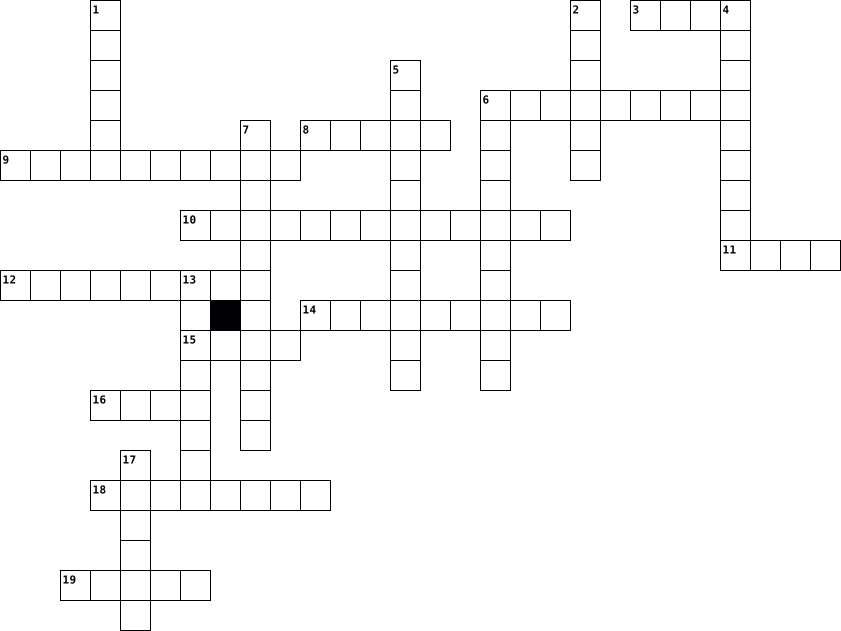
Across
- Vibrations in the Earth's crust and mantle
- A weak area in Earth's crust can form islands
- The rise of warmer material and the fall of cooler material
- The theory for which all contemporary understanding of tectonic plates is based
- To bend
- Magnetic sphere surrounding the Earth
- Zone of charged particles
- The thickest layer of the earth under the crust
- When continental tectonic plates collide
- The outer most and thinnest layer of the Earth
Down
- When two tectonic plates move past each other horizontally
- The process of sorting different materials based upon density.
- When tectonic plates push each other apart
- When continental crust and oceanic crust collide and the denser plate subducts
- Formed from volcanic activity
- 1000 meters
- Ions from the sun
- Rock formed by heat and pressure
- Rocks formed from sediment
- The inner most layer of the Earth
- Study of the Earth's crust
- A device that measures seismic activity
22 Clues: To bend • 1000 meters • Ions from the sun • Zone of charged particles • Rocks formed from sediment • Study of the Earth's crust • Formed from volcanic activity • Rock formed by heat and pressure • The inner most layer of the Earth • Magnetic sphere surrounding the Earth • A device that measures seismic activity • When continental tectonic plates collide • ...
Landforms 2023-01-23

Across
- Layer of melted iron and nickel
- Most earthquakes and volcanoes are here
- Rock made by heat, pressure, and mineral rich liquids
- iron and nickel thought to be solid because of pressure
- This is where the rocks moved by erosion is deposited
- These happen when two plates push against each other
- Causes mountains on land.
- This prosses breaks down rocks
- An example is Lemonade
- The scientific theory that Earth’s crust is divided up into massive plates that float on top of the mantle and can move around
- Earths first layer
Down
- the thickest layer
- Proposed the idea that continents sat on large crustal plates
- Causes Earthquakes also called slip and slide boundary's
- most form on ocean floors, causing magma to rise up, cool and form ridges
- Cooling magma becomes rock
- Is most commonly found in sedimentary rock
- This prosses moves broken down rocks
- Rock made by sediment under immense pressure
- An example is Salt and pepper
20 Clues: the thickest layer • Earths first layer • An example is Lemonade • Causes mountains on land. • Cooling magma becomes rock • An example is Salt and pepper • This prosses breaks down rocks • Layer of melted iron and nickel • This prosses moves broken down rocks • Most earthquakes and volcanoes are here • Is most commonly found in sedimentary rock • ...
vocab 2023-03-02

Across
- evolution from pre-existing species
- similar anatomical structures that do the same jobs
- the study of the structures of organisms
- Meteor and the dinosaurs
- species arise from one common ancestor
- structures with little or no function to the organism
- the genes in an population
- evolution that occurs primarily through short bursts of intense speciation
- two species evolving to form a specialized relationship
- the study of pre-historic populations
- consisting of similar individuals capable of reproduction
- death due to climate change
Down
- unrelated species evolving similar structures
- Peacocks mate like this
- remains of plants or animals that contribute to paleontology
- characteristics from common ancestry that serve different functions
- the environment determines fitness
- Migration
- genes change randomly
- evolution on a slow gradual scale
- species within the same area
- species changing over time
- a trait that allows an organism to better survive
23 Clues: Migration • genes change randomly • Peacocks mate like this • Meteor and the dinosaurs • the genes in an population • species changing over time • death due to climate change • species within the same area • evolution on a slow gradual scale • the environment determines fitness • evolution from pre-existing species • the study of pre-historic populations • ...
Plate Tectonics Terms 2023-03-14

Across
- The oldest rocks of the plate are about 50 million years old
- The biggest plate
- Landmass made up of most or all of Earth's land
- Violent shaking of the ground
- Layer inside a planetary body bounded
- The third biggest plate
- Roughly rhomboid, extending between 50°S 70°W and 63°S 20°W
- Where two plates move toward from each other
- lies beneath the Philippine Sea, to the east of the Philippines
- The denser, weaker layer beneath the lithospheric mantle
Down
- Includes much of the continent of Africa, and adjacent oceanic
- Published two articles about a concept called continental drift
- Mostly oceanic tectonic plate underlying Central America
- Outermost solid shell of a rocky planet
- The earth's crust and the large-scale processes
- Minor tectonic plate in the Northern and Eastern Hemispheres
- Vent through which lava, rock fragments
- The solid, outer part of Earth
- Earth's fifth-largest tectonic plate
- Where two plates move away from each other
20 Clues: The biggest plate • The third biggest plate • Violent shaking of the ground • The solid, outer part of Earth • Earth's fifth-largest tectonic plate • Layer inside a planetary body bounded • Outermost solid shell of a rocky planet • Vent through which lava, rock fragments • Where two plates move away from each other • Where two plates move toward from each other • ...
p50 2023-04-18

Across
- Lacking interest or excitement; dull
- Having a meaning that is mysterious or obscure
- Tending to be different or develop in different directions
- Put an end to, typically by the use of force
- The state of being unaware or unconscious of what is happening
- Consign or dismiss to an inferior rank or position
- Relating to deep inward feelings rather than to the intellect
- Difficult to find, catch, or achieve
- Most noticeable or important
- Hazy, vague, or illdefined
- Cheerful and friendly
- A typical example or pattern of something; a model
Down
- The quality of being thankful; readiness to show appreciation for and to return kindness
- Characterized by strong and turbulent or conflicting emotion
- Present, appearing, or found everywhere
- Lacking significance through having been overused; unoriginal and trite
- Intense and passionate feeling
- A person who attacks or criticizes cherished beliefs or institutions
- Relating to or resulting from motion
- Feeling a lack of energy or enthusiasm; sluggish
20 Clues: Cheerful and friendly • Hazy, vague, or illdefined • Most noticeable or important • Intense and passionate feeling • Lacking interest or excitement; dull • Relating to or resulting from motion • Difficult to find, catch, or achieve • Present, appearing, or found everywhere • Put an end to, typically by the use of force • Having a meaning that is mysterious or obscure • ...
plate tectonics 2012-12-05

Across
- is magma older or younger away from the mid ocean ridge?
- when plates move past each other.
- is magma older or younger toward the mid ocean ridge?
- beneath this layer is a plastic like substance.
- where 2 oceanic plates collide.
- when earth's plates collide they form volcanoes and_.
- differences in the rock in the asthenosphere.
- the great rift valley in africa is _.
- where is the asthenosphere located.
- what is hawaii made of?
- composed of the crust and a part of the upper mantle.
Down
- the crust and upper mantle.
- the result of plate movement can be seen at.
- active volcanoes are most likely found at _ plates.
- an example of a transform boundary.
- magma's cycle of heating, rising, cooling, and sinking.
- in order to complete a convection current the rising material must_ back into earth.
- when oceanic plates collide what landforms are made.
- what is magma called after it explodes out of the volcano.
- what was the big continent called.
20 Clues: what is hawaii made of? • the crust and upper mantle. • where 2 oceanic plates collide. • when plates move past each other. • what was the big continent called. • an example of a transform boundary. • where is the asthenosphere located. • the great rift valley in africa is _. • the result of plate movement can be seen at. • differences in the rock in the asthenosphere. • ...
The Earth's Interior and Plate Tectonics 2013-03-04

Across
- located directly below the crust
- the way earths plates move
- the crust that holds the oceans
- movement of the continents
- the sphere that holds our continents and oceans
- a scientist who came up with the idea of continental drift
- the planet that we live on
- super continent
- the layer of the earth we live on
- an extremely hot solid sphere at the center of the earth
- when two plates run into each other
- mount Everest is a ________
Down
- is the result of a sudden release of energy in the Earth's crust
- the zone when the old oceanic crust goes back into the mantel
- when two plates go away from each other
- a zone in the upper mantel directly below the lithosphere
- they hold the continents and oceans
- holds the continents
- mostly made out of iron and nickel just before the inner core
- when two plates rub up against each other
20 Clues: super continent • holds the continents • the way earths plates move • movement of the continents • the planet that we live on • mount Everest is a ________ • the crust that holds the oceans • located directly below the crust • the layer of the earth we live on • they hold the continents and oceans • when two plates run into each other • when two plates go away from each other • ...
Plate Tectonics By:Mathew Rodriguez 2013-02-21

Across
- stress that squeezes or pushes rock together
- a layer of weak or soft mantle
- any place where gas, ash, or melted rock come out of the ground.
- when 2 plates collide
- plce in earth
- extends below the mantle to the center of the earth
- the lithosphere divided into different parts
- pulls rock apart
- Liquid layer of earths crust
- 2 plates slide against each other.
Down
- All the continents put together
- 2 plates that move away from eachother
- describes large scale movements of earths lithosphere
- located between the core and the crust
- Where 2 or more tectonic plates meet
- rock layers bend under stress
- quakes 2 pltes move suddenly releasing energy
- center of our planet
- magnetic patterns of sea floor rock
- the outer most layer of earth.
- stress that pushes rock in a parralell position
- lower part of the mantle
22 Clues: plce in earth • pulls rock apart • center of our planet • when 2 plates collide • lower part of the mantle • Liquid layer of earths crust • rock layers bend under stress • a layer of weak or soft mantle • the outer most layer of earth. • All the continents put together • 2 plates slide against each other. • magnetic patterns of sea floor rock • Where 2 or more tectonic plates meet • ...
our restless earth by lauren 2014-05-02

Across
- pulls apart
- a mountain that when its active lava flows out
- a flat area of land
- a kind of volcano. the biggest kind
- the two sub-layers of the earth's crust (lithosphere) that move, float, and sometimes fracture
- a giant water wave
- a landscape that has land next to a sea
- this is where most of the volcanoes are located
- an area covered by trees,shrubs and plants
- how many types of volcanoes is there
Down
- a kind of volcano. shaped like a sphere
- coming together
- a landscape made by the earth not humans
- what is the biggest mountain in the whole solar system
- a landform that has a trunck supporting branches and leaves
- a tectonic event that causes the ground to crack and rise and buildings to fall
- formed through tectonic forces or volcanism. it comes to a peak up the top
- used to measure earthquakes
- the tallest mountain
- how many types of mountain are there
20 Clues: pulls apart • coming together • a giant water wave • a flat area of land • the tallest mountain • used to measure earthquakes • a kind of volcano. the biggest kind • how many types of mountain are there • how many types of volcanoes is there • a kind of volcano. shaped like a sphere • a landscape that has land next to a sea • a landscape made by the earth not humans • ...
our restless earth by lauren 2014-05-02

Across
- how many types of volcanoes is there
- a landscape that has land next to a sea
- a giant water wave
- this is where most of the volcanoes are located
- a kind of volcano. the biggest kind
- a tectonic event that causes the ground to crack and rise and buildings to fall
- a landscape made by the earth not humans
- a landform that has a trunck supporting branches and leaves
- what is the biggest mountain in the whole solar system
- coming together
Down
- formed through tectonic forces or volcanism. it comes to a peak up the top
- the two sub-layers of the earth's crust (lithosphere) that move, float, and sometimes fracture
- how many types of mountain are there
- pulls apart
- the tallest mountain
- a flat area of land
- used to measure earthquakes
- a kind of volcano. shaped like a half a sphere
- a mountain that when its active lava flows out
- an area covered by trees,shrubs and plants
20 Clues: pulls apart • coming together • a giant water wave • a flat area of land • the tallest mountain • used to measure earthquakes • a kind of volcano. the biggest kind • how many types of volcanoes is there • how many types of mountain are there • a landscape that has land next to a sea • a landscape made by the earth not humans • an area covered by trees,shrubs and plants • ...
Our Restless Earth 2014-05-04

Across
- Volcanoes carry very hot ...?
- The plate boundaries that are sliding against one another.
- Every ... year Mt Everest grows by about 4mm
- A major volcano?
- How many primary tectonic plates are there?
- How many secondary tectonic plates are there?
- The plate boundaries that are crashing against each other.
- A volcano is on a mountain or a ...?
- The middle part of the earth?
- A earthquake is a sudden movement of the ...?
- One of the ways of measuring a earthquake is the richter
Down
- Tectonic plates are on top of the molten rock and moving around the planet whilst.
- What rock is the tectonic plates floating on?
- What map can you see a landform on?
- What is the fourth landform plateous, plains and ice sheets?
- How many different types of mountains are there?
- How many different types of volcanoes are there?
- The plate boundaries that are moving away from each other.
- Are tectonic plates moving?
- What is the tallest mountain in the world?
20 Clues: A major volcano? • Are tectonic plates moving? • Volcanoes carry very hot ...? • The middle part of the earth? • What map can you see a landform on? • A volcano is on a mountain or a ...? • What is the tallest mountain in the world? • How many primary tectonic plates are there? • Every ... year Mt Everest grows by about 4mm • What rock is the tectonic plates floating on? • ...
Latin Vocab~ Peter Yim 2015-02-16

Across
- break, burst
- warn
- Insurgent is part of a _ of books in Divergent.
- foot
- Humans have 2 legs. They are a _.
- tight
- grasp
- backward
- When Peter came to class and gave everyone cookies, they all showed their _ by giving him 100 dollars each.
- Two friends are away from each other. They call each other to keep in _.
- apart
- under
- Ghost can't be touched. They are _.
- death
- speak, talk
- half
Down
- step, walk, go
- in place of
- Peter fell off a roof and after falling, he went to the hospital to _.
- At school, there is usually a _ to keep kids safe in the hall.
- again
- through, thoroughly
- To bring out a disk from a console you press _.
- forward
- When driving, people who are not watching the road may hit a _.
- The woods is filled with trees it is _.
- across, through
- away, from
- send
- commit
30 Clues: warn • foot • send • half • again • tight • grasp • apart • under • death • commit • forward • backward • away, from • in place of • speak, talk • break, burst • step, walk, go • across, through • through, thoroughly • Humans have 2 legs. They are a _. • Ghost can't be touched. They are _. • The woods is filled with trees it is _. • To bring out a disk from a console you press _. • ...
Latin Lesson 13-15 Vocab Part 1 2016-12-04

Across
- To bend forward
- Toward, on, or coming from the side
- Sleep walking
- To fight against something
- Being different from the standards
- To change words from one language to another
- To come together in a group for a meeting
- Lying down
Down
- The quality or state of being happy or excited
- A treatment to help improve the health of one's hands and fingernails
- Used to describe something that exist but can not be seen
- North or south of the equator
- Able to move from one place to another
- More than is usual, necessary, or proper
- Close or near
- To replace something
- Excellent; of the highest quality
- Moving from one place to another different times of the year
- To move or back away
- Behaving wrongly
- To speak or write about something that is different from the main subject being discussed
- Running away from being captured
- Done or made quickly
23 Clues: Lying down • Close or near • Sleep walking • To bend forward • Behaving wrongly • To replace something • To move or back away • Done or made quickly • To fight against something • North or south of the equator • Running away from being captured • Excellent; of the highest quality • Being different from the standards • Toward, on, or coming from the side • ...
Plate Tectonics 2016-01-26

Across
- liquid layer of the Earth's core
- outermost, rigid layer of the Earth
- layer between the crust and the core
- new lithosphere is created here
- outermost layer of the Earth
- theory that continents drift apart
- solid, dense center of the Earth
- piece of the lithosphere that moves on the asthenosphere
- the bending of rock layers
Down
- soft layer of the mantle
- a pulling force
- a squeezing force
- boundary between two colliding plates
- A chain of mountains on the ocean floor where the sea floor is spreading.
- a region where a an oceanic plate sinks down into the athenosphere
- a break in the Earth's crust
- The pathway along which energy travels through a fluid
- boundary between two plates moving away from each other
- boundary between two plates that are sliding past each other
- A supercontinent that existed about 200 million years ago but broke apart into several continents.
20 Clues: a pulling force • a squeezing force • soft layer of the mantle • the bending of rock layers • a break in the Earth's crust • outermost layer of the Earth • new lithosphere is created here • liquid layer of the Earth's core • solid, dense center of the Earth • theory that continents drift apart • outermost, rigid layer of the Earth • layer between the crust and the core • ...
Geology 2016-02-03

Across
- A sudden violent shaking of the ground
- A mountain with a crater or vent in which lava comes out
- The lowest layer of the atmosphere
- The number of tectonic plates
- A rock formed from compaction and cementation
- A tool used to locate earthquakes
- A solid inorganic substance
- When plates slide past each other
- A process that breaks rocks into smaller pieces through wind,rain, and ice
- The study of Earth
Down
- Hot fluid within the Earth's crust
- The coldest layer of the atmosphere
- The way light interacts with the surface of a crystal, rock, or mineral
- A tool used to find the magnitude of an earthquake
- When plates move toward each other
- A rock formed from heat and pressure
- A process when sediments are carried from one place to another
- The act of cleaving or splitting a rock
- A rock formed from the cooling of magma
- When plates move apart
20 Clues: The study of Earth • When plates move apart • A solid inorganic substance • The number of tectonic plates • A tool used to locate earthquakes • When plates slide past each other • Hot fluid within the Earth's crust • The lowest layer of the atmosphere • When plates move toward each other • The coldest layer of the atmosphere • A rock formed from heat and pressure • ...
Earth Science 2017-01-28

Across
- melted rock from the mantle
- narrow deep ocean floor
- underwater mountain range
- zone where one plate moves under another plate
- level ocean floor
- plastic layer in the upper mantle
- rigid layer composed of rust and upper mantle
- plate boundary in which the plates move horizontally along the boundary
- the edge of a plate
- solid center of the earth
- hot, deformable layer of the earth
- plate boundary in which the plates move toward each other
- continental margin far from a plate boundary
Down
- The earth's lithosphere is composed of 8 large (and many small) _____.
- shallow seafloor surrounding continents
- plate boundary in which the plates move away from each other
- plume of rising magma not on a plate boundary
- molten inner layer of the earth
- weather patterns of the ancient past
- solid outer layer of the earth
- Meteorologist who first proposed continental drift theory
- continental margin on a plate boundary
22 Clues: level ocean floor • the edge of a plate • narrow deep ocean floor • underwater mountain range • solid center of the earth • melted rock from the mantle • solid outer layer of the earth • molten inner layer of the earth • plastic layer in the upper mantle • hot, deformable layer of the earth • weather patterns of the ancient past • continental margin on a plate boundary • ...
Midterm Madness 2021-12-09

Across
- Shows elevation of the line
- Most reactive side on the periodic table
- The mass of both protons and nuetrons
- Is equal to a new element
- Evidence of change in color,gas,light, temperature,and precipitate
- "Matter is neither created nor destroyed"
- If they have more of these they are more stable
- Number of mistakes
- Landform of divergent oceanic-oceanic
Down
- New substance created by the reactant
- Known as the super continent
- Stated the continents were constantly in motion and move apart over time
- one plate slides underneath the other while the other goes back to the mantle
- 3H2O is an example of
- Change in size,shape,or state of matter
- North,west,up,down,away,and towards are examples of
- Change in speed,direction,or both
- Speed is not changing but remaining the same
- Total of all the forces acting
- Plates crash into one another
- What the electrons are arranged on
21 Clues: Number of mistakes • 3H2O is an example of • Is equal to a new element • Shows elevation of the line • Known as the super continent • Plates crash into one another • Total of all the forces acting • Change in speed,direction,or both • What the electrons are arranged on • New substance created by the reactant • The mass of both protons and nuetrons • ...
Jaya's Puzzel 2021-12-17

Across
- An idea that is implied or suggested
- A thought
- A person who has an exceptional interest and admiration of themselves
- the state of feeling forgotten or feeling disregarded
- Unperplexed, unplayful, serious (antonym clue)
- A lavish manner, an expression,
- The state of being unknown
- Confident, attention, stylishness
- Good taste, beauty, carrying about looks
- Ambulare (etymology clue)
- A male singing voice with high tones
- In a characteristic manner
- A section of a legal document
Down
- A person who is attached to an institution
- The history of a word
- The student with the best grades
- Walk in an exaggerated way
- Rich and superior in quality
- Someone who is a rebel
- A second-year undergraduate
- An agreement, calm, harmony (antonym clue)
- A difficult problem
- A formal curse preformed by the church or the pope
- Stick to firmly
- Distance, remoteness, farness (antonym clue)
- Moving apart in different directions
26 Clues: A thought • Stick to firmly • A difficult problem • The history of a word • Someone who is a rebel • Ambulare (etymology clue) • Walk in an exaggerated way • The state of being unknown • In a characteristic manner • A second-year undergraduate • Rich and superior in quality • A section of a legal document • A lavish manner, an expression, • The student with the best grades • ...
Plate Tectonics 2022-01-03

Across
- Inner layer
- the remains or impression of a prehistoric plant or animal
- the rigid outer part of the earth
- a long high sea wave caused by an earthquake
- a slab of solid rock
- moving closer together
- make a marked change
- layer between crust and core
- moving away
- a long narrow natural elevation or striation
- the sideways and downward movement of the edge of a plate of the earth's crust into the mantle beneath another plate
Down
- soft layer of the mantle
- the bending of rock layers
- an opening in Earths crust where lava or volcanic ash can escape
- outermost solid layer
- a large natural elevation of the earth's surface
- a supercontinent that incorporated almost all the landmasses on Earth
- a sudden violent shaking in the ground
- a long, narrow ditch
- any of the world's main continuous expanses of land
- Earth's lithosphere pulls apart to form long, narrow, faulted rift valleys and rift zones
21 Clues: Inner layer • moving away • a slab of solid rock • a long, narrow ditch • make a marked change • outermost solid layer • moving closer together • soft layer of the mantle • the bending of rock layers • layer between crust and core • the rigid outer part of the earth • a sudden violent shaking in the ground • a long high sea wave caused by an earthquake • ...
MCA Science - Earth Science 2022-04-29

Across
- The minerals a rock is made up of
- Way a surface reflects light
- Rock type formed from heat and pressure
- Name for water falling out of a cloud
- Protects Earth from the ultraviolet rays of the sun
- Plate boundary where the plates come together
- Main source of energy for the Earth
- Main element found in the atmosphere
- The breaking apart of rocks into sediments
- ______________ ____________ is the longest day of the year
Down
- Oldest sedimentary rocks on the bottom
- Lowest layer in the atmosphere where the weather takes place
- Plate boundary where the plates slide past
- Plate boundary where the plates pull apart
- Minerals resistance to being scratched
- The test of a mineral's powder color
- Colder air moving in and overtaking warmer air
- Age of a rock layer compared to other layers
- Winds appear to curve due to the rotation of the earth
- Rock type formed from melting and crystallization
- Rocks formed from weathering, erosion, deposition, compaction, and cementation
21 Clues: Way a surface reflects light • The minerals a rock is made up of • Main source of energy for the Earth • The test of a mineral's powder color • Main element found in the atmosphere • Name for water falling out of a cloud • Oldest sedimentary rocks on the bottom • Minerals resistance to being scratched • Rock type formed from heat and pressure • ...
APES Crossword Puzzle Review :) 2022-05-07

Across
- hides from others
- a species that does not belong
- variety of species in an ecosystem
- is the build-up of pollutants or a substance up a food chain
- a layer of soil
- a group of organisms that interact in an environment
- deposit at the mouth of a river (triangle)
- comes from natural and replenishable resources
- exceeds carrying capacity
- types of plates that move away from each other
- outermost shell of the atmosphere
- benefits one not the other
- a type of species that serves as a warning for a damaged ecosystem
- makes its own food
Down
- produces glucose from CO2 and water
- is a mineral used in insolation that causes respiratory issues
- nitrates into nitrogen gas
- humans lions and whales
- is a widespread source of pollution
- gaseous mass surrounding the Earth
- finest soil
- degrading of land due to human actions
- living
- preys on others
- status of an organism within its community
25 Clues: living • finest soil • a layer of soil • preys on others • hides from others • makes its own food • humans lions and whales • exceeds carrying capacity • nitrates into nitrogen gas • benefits one not the other • a species that does not belong • outermost shell of the atmosphere • variety of species in an ecosystem • gaseous mass surrounding the Earth • produces glucose from CO2 and water • ...
Plate Tectonics 2023-10-05

Across
- Name for a volcanos mouth
- the result of sudden movemnt of materials within the earth
- second layer of the earth
- Plate boundary were plates slide against eachother
- young oceanic tectonic plate beneath the pacific ocean
- Fourth layer of earth
- cracks on the earth's crust where there is movement
- plate boundary where one plate goes under the other
- top layer of the earth
- name of the super continent
Down
- an instrument that responds to ground noises and shaking such as caused by quakes, volcanic eruptions, and explosions
- the plates the move under the earth
- the sting of earthquakes and volcanoes around the edges of the pacific ocean
- geological process in which the oceanic lithosphere and some continental lithosphere is recycled into the Earth's mantle at convergent boundaries
- third layer of the earth
- plate boundary where plates separate
- the real shape of the earth
- another word for volcano
- stuff that comes out of volcano
- violent shaking of the ground
20 Clues: Fourth layer of earth • top layer of the earth • third layer of the earth • another word for volcano • Name for a volcanos mouth • second layer of the earth • the real shape of the earth • name of the super continent • violent shaking of the ground • stuff that comes out of volcano • the plates the move under the earth • plate boundary where plates separate • ...
Plate tectonics 2023-09-25

Across
- the reason the Lower mantle does not melt
- Weak layer of the mantle that is partially melted
- heat transferred by contact
- Ocean basins form at this
- the name of the super continent
- Mass per unit volume
- uppermost layer of the Earth
- heat transferred without contact
- what is in the center of the Earth?
Down
- the theory that all the Earth's land was once joined into a super continent.
- cool and rigid outer layer of the mantle
- The type of waves that move along the Earth's surface
- the lose of energy through radiation
- waves that are useful in analyzing the Earth's interior surface
- when ocean and continent come together at this boundary
- these plate boundaries slide past each other
- the reason boats float on top of the water and doesn't sink
- Layer of the mantle that does not melt
- the second layer of the Earth
- the crust that is made up of mostly basalt
- the crust made up of mostly granite
21 Clues: Mass per unit volume • Ocean basins form at this • heat transferred by contact • uppermost layer of the Earth • the second layer of the Earth • the name of the super continent • heat transferred without contact • the crust made up of mostly granite • what is in the center of the Earth? • the lose of energy through radiation • Layer of the mantle that does not melt • ...
Plate Tectonics 2023-10-12

Across
- Natural feature of the earths surface
- Caused by friction of tectonic plates disrupting the earth
- Caused by plate diverging and cracking
- The outer most layers of the earth
- Plate that covers the Continent of Antarctica and some of the Southern Ocean
- Super Continent
- Plate that covers South America, part of the Atlantic Ocean and boundary at Africa
- Plate that covers most of North American, Cuba and the Bahamas
- Plates move away from each other
- Plate bounded by North American Plate and
Down
- Solid outer part of the earth
- There are 7 of these in the world
- Caused by the movement of plates
- Plate that lies deep in the Ocean on the West side of North America
- Largest water masses
- American Plate
- Plates move toward each other
- They shift and move together, apart, and past
- Movement of the continents from tectonic plates
- Plates move past each other
- Circular hot rocks that rise from deep in the mantel
21 Clues: American Plate • Super Continent • Largest water masses • Plates move past each other • Solid outer part of the earth • Plates move toward each other • Caused by the movement of plates • Plates move away from each other • There are 7 of these in the world • The outer most layers of the earth • Natural feature of the earths surface • Caused by plate diverging and cracking • ...
Geology - the study of Rock 2024-01-30

Across
- The study of rock
- the pushing out of something like lava from a volcano
- to examine in well detail for a specific reason
- earths main continuous areas of land, like Africa Asia and North America
- the solidification of magma deep in the earth
- the very center core of the earth
- matter that settles at the bottom of liquid
- an object, diagram, or computer program that helps us understand something
- a feature that forms on the surface of a planet
- the sudden vibrating of Earth
- the outer layer of earth
Down
- an extinct reptile crocodile thingy
- tho force that causes planets to pull things to its center
- hot boiling fluids
- something we observe to be similar repetitively
- moving toward the same place
- a planet in which we live on
- a solid substance having a geometrically, rock like glass
- a piece from the past that is fossilized
- separating into separate directions
- a natural spring that sprays hot water out of the earth
21 Clues: The study of rock • hot boiling fluids • the outer layer of earth • moving toward the same place • a planet in which we live on • the sudden vibrating of Earth • the very center core of the earth • an extinct reptile crocodile thingy • separating into separate directions • a piece from the past that is fossilized • matter that settles at the bottom of liquid • ...
Vocab Crossword 2023-12-12

Across
- Blah blah blah, jibber jab
- Control group
- A QB phase in the first 5 years of their career
- AI currently
- The words one uses in their language
- Training required for a carpenter, per se
- A smart way to be while in an alley
- Class coursework
- A lone cat in a room filled with dogs
- Elders should always be shown this
- Mean, egregious people to me
- Rock Canyon High School for 21+
- Bear: the animal vs. bear: the verb
Down
- Broccolii, traffic, a bad smell, etc.
- The paper that encapsulates your cumulative knowledge
- Terms like real, bruh, and nah
- Not term GPA but
- An old professor would typically have this underlying tone in their speech
- How all surprise parties are planned
- Dance, prance, ants, lance, etc.
- A rubric, SAT Scores, grades
- One partner moving away from the other
- Mental processes
- "Here lies.. 1940-2023"
- What to do when you don't read on time
25 Clues: AI currently • Control group • Not term GPA but • Mental processes • Class coursework • "Here lies.. 1940-2023" • Blah blah blah, jibber jab • A rubric, SAT Scores, grades • Mean, egregious people to me • Terms like real, bruh, and nah • Rock Canyon High School for 21+ • Dance, prance, ants, lance, etc. • Elders should always be shown this • A smart way to be while in an alley • ...
Tyler swanson crossword 2024-01-30

Across
- layer of soft solid rock under earths plates
- a sudden shaking of earths surface
- evidence from life from the past
- an extinct reptile that lived 300 million years ago
- outermost layer of hard solid rock
- how often or fast something happens
- one of the very large sections of solid rock on earths surface
- moving toward the same place
- hot liquid rock on the surface of earth
- to examine in detail for a purpose
Down
- moving apart in different directions
- Africa, Asia, and North America are all…
- a diagram that shows the inside of something
- the sudden lava pushing out of a volcano
- a smaller and simpler version of something
- the place where tow plates meet
- the slow moving apart of land that is caused by plate movement
- a hole in the ground that shoots hot water and steam
- hot liquid rock below earth's surface
- over and over again in the same way
20 Clues: moving toward the same place • the place where tow plates meet • evidence from life from the past • a sudden shaking of earths surface • outermost layer of hard solid rock • to examine in detail for a purpose • how often or fast something happens • over and over again in the same way • moving apart in different directions • hot liquid rock below earth's surface • ...
Plate Tectonics of Fun 2024-03-05

Across
- This planet
- When two plates move towards each other
- What Wegener trained in
- Piece of the Earth's crust that are lands and oceans rest on
- One of the effects of two plates colliding
- Who made continental drift
- A specialist who the history of the earth through the study of rock
- Molten and semi- molten rock found beneath the surface of the earth
- The ancient supercontinent
- The movement of the edge if one tectonic plate under another
Down
- Another effect of two plates colliding
- When two plates move away from each other
- The largest layer of the earth lies between the crust and the outer core
- The brittle crust and uppermost mantle layer of earth
- The theory the Earth's continents moving over time
- The innermost layer of a plant
- A fracture between two blocks of rocks
- The outermost layer of a plant
- The layer of the earth that provides lubrication for plate tectonics
- When two plates slide against each other
20 Clues: This planet • What Wegener trained in • Who made continental drift • The ancient supercontinent • The innermost layer of a plant • The outermost layer of a plant • Another effect of two plates colliding • A fracture between two blocks of rocks • When two plates move towards each other • When two plates slide against each other • When two plates move away from each other • ...
Types of thinking 2025-01-27

Across
- Thinking – Generating new ideas and innovative solutions.
- Theory – Robert Sternberg's model emphasizing analytical, creative, and practical intelligence.
- Intelligence – Solving new problems without relying on past knowledge.
- – Using senses to gather information.
- – Drawing conclusions based on evidence and reasoning.
- Intelligence – Using knowledge and experience.
- Thinking – Generating multiple solutions or ideas.
- Thinking – Evaluating past experiences to guide future actions.
- Thinking – Solving problems through indirect and creative approaches.
Down
- Intelligence – The ability to navigate social environments effectively.
- Thinking – Breaking complex issues into smaller components.
- Thinking – Analyzing facts to form a judgment.
- Thinking – Narrowing down multiple ideas to find one solution.
- Intelligence – The ability to recognize and manage emotions.
- Intelligences – Howard Gardner's theory of various types of intelligence, such as linguistic and spatial.
- Load Theory – Understanding how working memory processes information.
- Thinking – Understanding concepts that aren't physically present.
- – Choosing a course of action among alternatives.
- Thinking – Reasoning systematically and clearly.
- – Thinking about one’s own thought processes.
20 Clues: – Using senses to gather information. • – Thinking about one’s own thought processes. • Thinking – Analyzing facts to form a judgment. • Intelligence – Using knowledge and experience. • Thinking – Reasoning systematically and clearly. • – Choosing a course of action among alternatives. • Thinking – Generating multiple solutions or ideas. • ...
Vocab Words 3.0 2025-01-29

Across
- comparison highlighting similarities
- to agree silently or reluctantly
- standard or principal for judgment
- something misplaced in time
- measure of performance against a standard
- structured course of study
- tending to be different, or unique
- mental processes of understanding
- multiple possible meanings or uncertainty
- direct opposite or contract
- word with opposite meaning
- used as informal, street, or everyday language
- artificially formed or forced
Down
- lengthy, formal research paper
- increasing or growing in quantity
- to generate ideas in a free-flowing way
- to work together on a project
- humble respectful submission regard
- abbreviation formed from initials
- to express clearly or effectively
- repeated vowel sounds in words
- difficult problem or puzzle
- relationship between two variables
- extremely bad or shocking
- unwilling to take risks, cautions
- secret or covert
- regional variation of language
- implied or emotional meaning
- intend to tech or instruct
- word choice, style and phasing
30 Clues: secret or covert • extremely bad or shocking • structured course of study • intend to tech or instruct • word with opposite meaning • difficult problem or puzzle • something misplaced in time • direct opposite or contract • implied or emotional meaning • to work together on a project • artificially formed or forced • lengthy, formal research paper • repeated vowel sounds in words • ...
Plate Tectonics 2025-03-13

Across
- Material closer to crust —-> cools —-> density increases —-> _____
- The primary driving force for movement of tectonic plates
- Super continent containing all of the existing continents
- A chain of volcanic islands
- elevated areas of the seafloor characterized by high heat flow and volcanism
- How many lithospheric plates does earth have in total
- How many segments is earths lithosphere broken up into
- Material heated —-> density lowers —-> _____
- Boundary Two plates pull apart
- processes that deform earths crust to create major features
- A narrow, Elongated depression of the sea
Down
- Seven plates account for what percent of earths surface
- A deep canyon like structure
- Hypothesis that suggests that all continents were once a supercontinent
- German meteorologist and geophysicist
- The largest plate
- Boundary Two plates move together
- What way is heat continuously flowing from earths core
- A continuous elevated zone on the floor of all major ocean basins
- Plate boundary Two plates slide past one another
20 Clues: The largest plate • A chain of volcanic islands • A deep canyon like structure • Boundary Two plates pull apart • Boundary Two plates move together • German meteorologist and geophysicist • A narrow, Elongated depression of the sea • Material heated —-> density lowers —-> _____ • Plate boundary Two plates slide past one another • ...
Plate Tectonics 2025-10-21

Across
- Melted rock that erupts onto the surface.
- The Earth’s outermost solid layer.
- Boundary where plates slide past each other.
- The ancient “supercontinent” that broke apart.
- Relating to structure and movement of Earth’s crust.
- A crack in the crust where movement occurs.
- The thick layer of hot rock beneath the crust.
- Deep valley in the ocean floor formed by subduction.
- Boundary where two plates move apart.
- ridge Underwater mountain chain formed by diverging plates.
- The Earth’s center, made mostly of iron and nickel.
Down
- Melted rock found beneath Earth’s surface.
- The soft, flowing layer beneath the lithosphere.
- When one plate sinks beneath another.
- Sudden shaking of the ground from plate movement.
- A large ocean wave caused by an underwater earthquake.
- A large section of Earth’s crust that moves.
- Boundary where two plates collide.
- The rigid outer part of the Earth (crust + upper mantle).
- A mountain where lava, ash, and gas erupt.
20 Clues: The Earth’s outermost solid layer. • Boundary where two plates collide. • When one plate sinks beneath another. • Boundary where two plates move apart. • Melted rock that erupts onto the surface. • Melted rock found beneath Earth’s surface. • A mountain where lava, ash, and gas erupt. • A crack in the crust where movement occurs. • ...
Plate Tectonics 2023-09-28

Across
- string of volcanoes, or seismic activity around the edges of the pacific ocean
- result of plates releasing stress
- A crack or fracture in Earth's crust where two tectonic plates grind past each other in a horizontal
- result of magma from the earth making its way to the surface
- Plates that come together
- Plate located under South America
- theory explaining the structure of the earth's crust
- plate located under North America
- The name given to the supercontinent that existed more than 225 million years ago, in which the present day continents were joined together
- Melted rock beneath the Earth's surface
Down
- Plates that spread apart
- Plate located under Europe and Asia
- Plate located under Africa
- outer most layer of the Earth
- symbolizes the edge of the plates
- plate located under the pacific ocean
- Plate located under India and Oceania
- part of the earth's crust that moves
- big wave because of release of energy in the earth's crust
- melted rock on the Earth's surface
20 Clues: Plates that spread apart • Plates that come together • Plate located under Africa • outer most layer of the Earth • result of plates releasing stress • symbolizes the edge of the plates • Plate located under South America • plate located under North America • melted rock on the Earth's surface • Plate located under Europe and Asia • part of the earth's crust that moves • ...
WED Crossword 2024-12-18

Across
- the dropping of rock by wind or moving water
- the boundary between tectonic plates colliding
- magnitude of an earthquake on a scale of 1-10
- the boundary between tectonic plates moving AWAY
- the process of rock breaking apart
- natural land shape or feature
- thick layer of Earth beneath the crust
- a place where hot gases, smoke, and melted rock come out of the ground
- a break in the Earth’s crust
- scientist that studies earthquakes
Down
- moving weathered rock from one place to another
- the point directly above the focus of an earthquake
- the boundary between tectonic plates sliding horizontally
- Earth’s center (Metallic)
- the thin outer layer of Earth
- is the molten rock that erupts from the volcano
- very small pieces of rock
- the strength of an earthquake
- a shaking of Earth’s surface
- the liquid rock below Earth’s crust
- the theory that Earth’s crust is divided into plates
- scientist that studies volcanoes
22 Clues: Earth’s center (Metallic) • very small pieces of rock • a shaking of Earth’s surface • a break in the Earth’s crust • the thin outer layer of Earth • the strength of an earthquake • natural land shape or feature • scientist that studies volcanoes • the process of rock breaking apart • scientist that studies earthquakes • the liquid rock below Earth’s crust • ...
Plate Tectonics and Continental Drift 2025-01-02

Across
- One piece of evidence for continental drift
- Where tectonic plates meet and interact
- Side effect / result of divergent boundary
- Happens to the sea floor; makes new crust
- Type of current where hot, less dense items rise and cooler, more dense items sink
- Composed of the crust and upper mantle
- The mantle is full of this molten rock
- Side effect / result of convergent boundary
- Scientist in 1912 that proposed Continental Drift
- Large pieces of the crust that fit together like puzzle pieces
- Geologist in 1960s who came up with Sea Floor Spreading
Down
- When a less dense piece of crust plunges below a more dense piece of crust
- Coolest layer with the least pressure
- State of the rock in the lithosphere
- The speed at which tectonic movement happens
- Side effect / result of a transform boundary
- The once massive super continent
- Hottest layer with the most pressure
- State of the rock in the mantle
- Largest layer of Earth where convection currents happen
20 Clues: State of the rock in the mantle • The once massive super continent • State of the rock in the lithosphere • Hottest layer with the most pressure • Coolest layer with the least pressure • Composed of the crust and upper mantle • The mantle is full of this molten rock • Where tectonic plates meet and interact • Happens to the sea floor; makes new crust • ...
Earth/life science crossword 2025-01-22

Across
- the most basic unit of life
- when plates move apart
- this breaks down rock into sediment
- this spews lava and forms rocks
- nonliving factors in an ecosystem
- this kingdom of life holds all organisms that can't be classified
- a structure inside a cell containing its DNA and instructions for life
- this natural disaster is caused when plates move and shake the ground
- this rock is made from magma and lots of pressure
Down
- when plates move together
- outermost layer of earth
- a cell without a defined nucleus
- this kingdom of life includes spores
- this boundary is when plates slide past each other
- living factors in an ecosystem
- cats are in this kingdom of life!
- this rock is formed through crystallization, heat and pressure
- this is the 2nd outermost layer of earth
- the ability to do work or cause a change
- a cell with a defined nucleus
- this rock is made from small bits of other rock and other material
21 Clues: when plates move apart • outermost layer of earth • when plates move together • the most basic unit of life • a cell with a defined nucleus • living factors in an ecosystem • this spews lava and forms rocks • a cell without a defined nucleus • nonliving factors in an ecosystem • cats are in this kingdom of life! • this breaks down rock into sediment • ...
Lesson Thirty-Four 2024-11-10

Across
- Australian native animal.
- Number of factions in the Divergent series.
- The capability of computer systems or algorithms to imitate intelligent human behaviour: __________ Intelligence.
- Fictional Genre
- Defining quality of a Ravenclaw.
- Purposeful contrast for effect.
- Harry’s Christmas present: an ________ cloak.
- Discrimination or prejudice based on race.
- Existent or operative everywhere or under all conditions; applicable to all cases.
- Famous piece of Russian architecture: St. __________ Cathedral.
- ‘Beneficial’ synonym.
- An imagined world or society in which people lead dehumanised, fearful lives.
Down
- Withdrawing one’s support for someone or something publicly and especially on social media.
- Harry Potter’s school nemesis: _______ Malfoy.
- Hogwart’s’ game-keeper.
- Effect of the Philosopher’s Stone’s ‘Elixir of Life’.
- Form of government in which one person (or a small group)possesses absolute power without constitutional limitations.
- Social and economic situation where people are driven to buy and own more goods and services than what they need for survival.
- Number of books in the Harry Potter series.
- New Zealand national mens rugby team.
20 Clues: Fictional Genre • ‘Beneficial’ synonym. • Hogwart’s’ game-keeper. • Australian native animal. • Purposeful contrast for effect. • Defining quality of a Ravenclaw. • New Zealand national mens rugby team. • Discrimination or prejudice based on race. • Number of factions in the Divergent series. • Number of books in the Harry Potter series. • ...
The Secret to Raising Smart Kids 2024-11-01

Across
- a companion or associate; a group or company
- to speak damagingly of; criticize in a derogatory manner
- incapable of producing any result; ineffective; useless
- intending to correct or improve
- made up of disparate or separate parts or elements; compound
- adaptable or tractable
- a lack or shortage; deficiency; disadvantage
- to take pains to avoid or keep away from
- existing in one from birth; inherent in the essential character of something
- to mention or suggest for the first time
- length or duration of service, tenure, etc.; seniority
Down
- to produce, cause, or give rise to
- to regard as resulting from a specified cause; a quality, character, characteristic, or property
- to praise or extol
- to hold back; hinder; impede
- a foundation or basis
- to meditate or muse; ponder
- characterized by lack of development, advancement, or progressive movement
- unquestioning or unreserved; implied, rather than expressly stated
- differing; deviating
- to make more acute or effective; improve; perfect
21 Clues: to praise or extol • differing; deviating • a foundation or basis • adaptable or tractable • to meditate or muse; ponder • to hold back; hinder; impede • intending to correct or improve • to produce, cause, or give rise to • to take pains to avoid or keep away from • to mention or suggest for the first time • a companion or associate; a group or company • ...
plate tectonic crossword 2025-10-29

Across
- molten mixture
- shaking from the movement of rock beneath earth
- boundary were two plates move away from earth other
- area were magma from deep within the mantle melts
- a break in Earth's crust along which rocks move
- boundary were two plates move toward each other
- term used to describe a volcano that is currently no active
- boundary where two plates move past each other
- vibrations that travel through earth
- giant wave
Down
- process by which molten material adds new oceanic crust to the ocean floor
- stress that pushes masses of rock in opposite directions
- measurement of an earthquake's strength
- term used to describe a volcano that is likely not going to erupt again
- under sea valley that represents one of the deepest parts of the ocean
- process by which oceanic crust sinks beneath a deep ocean trench
- layer of rock that forms Earth's outer surface
- stress that stretches rock
- liquid magma that reaches the surface
- hot solid material between earth's crust and core
20 Clues: giant wave • molten mixture • stress that stretches rock • vibrations that travel through earth • liquid magma that reaches the surface • measurement of an earthquake's strength • layer of rock that forms Earth's outer surface • boundary where two plates move past each other • a break in Earth's crust along which rocks move • boundary were two plates move toward each other • ...
Science 2025-08-24

Across
- commonly called as the moho
- who proposed the seafloor spreading theory?
- the continent of south america was formed from which large landmass?
- means all earth
- which plate boundary occurs when two plates slide toward eachother?
- it is underneath the lithosphere
- means all seas.
- they travel through the inner layers of the planet
- first to be felt on the earth's surface
Down
- refers to the movement of faults along the angle of the fault line
- caused by the rising of heat from the core
- did do not travel through liquids
- refers to the process of forming mountains and mountain ranges
- who proposed the theory of continental drift?
- are cracks on the earth's surface
- which plate boundary is created when two plates move away from each other?
- the only travel on the surface
- prefers to the shaking of the earth
- is divided into four major layers: crust, mantle, outer core and inner core
- takes place when a subducting slab sinks into the hot mantle
20 Clues: means all earth • means all seas. • commonly called as the moho • the only travel on the surface • it is underneath the lithosphere • did do not travel through liquids • are cracks on the earth's surface • prefers to the shaking of the earth • first to be felt on the earth's surface • caused by the rising of heat from the core • who proposed the seafloor spreading theory? • ...
Geosphere - Unit 6 Review 2025-11-12

Across
- smallest soil particle size
- the movement of sediment and soil
- The ability of a mineral to resist scratching
- Where most of Earth’s volcanoes and earthquakes occur
- the least reliable way to identify a mineral
- forms in layers through compaction and lithification
- One tectonic plate being pulled below another plate
- A layer of soil that is dry and void of nutrients
- this is type of plate boundary is most likely to cause earthquakes
- Mountains form at this plate boundary
Down
- ________ won ore is found in the ocean
- Heat from the core of the earth causes the mantle to move with _____________ currents
- the inner core of the earth is __________
- breaking rock into smaller pieces
- Rift Valleys form at these plate boundaries
- The point inside the Earth where an earthquake originates
- The location an earthquake occurs on the crust of the Earth
- cooled magma creates this rock
- formed through intense heat and pressure
- _________ won ore is found underground
20 Clues: smallest soil particle size • cooled magma creates this rock • the movement of sediment and soil • breaking rock into smaller pieces • Mountains form at this plate boundary • ________ won ore is found in the ocean • _________ won ore is found underground • formed through intense heat and pressure • the inner core of the earth is __________ • ...
PUZZLING EARTH 2024-01-09

Across
- Crust Lithosphere Asthenosphere Mesosphere
- Core Seismic Waves Meteorite Convection Current
Down
- Crust Outer Core Mantle Radioactive Decay
- Boundary Divergent Boundary Plate Tectonics Transform Boundary
- Isotope Daughter Isotope Geoneutrino Radiometric Dating
5 Clues: Boundary Divergent Boundary Plate Tectonics Transform Boundary • Crust Lithosphere Asthenosphere Mesosphere • Isotope Daughter Isotope Geoneutrino Radiometric Dating • ...
vocob 2024-12-04

Across
- Crust Lithosphere Asthenosphere Mesosphere
- Core Seismic Waves Meteorite Convection Current
Down
- Crust Outer Core Mantle Radioactive Decay
- Boundary Divergent Boundary Tectonic Plates Transform Boundary
- Isotope Daughter Isotope Geoneutrino Radiometric Dating
5 Clues: Boundary Divergent Boundary Tectonic Plates Transform Boundary • Crust Lithosphere Asthenosphere Mesosphere • Isotope Daughter Isotope Geoneutrino Radiometric Dating • ...
first block word puzzle 2021-08-31

Across
- to move apart
- a place that is constently active with earth quakes and valcanos
Down
- to push together
- large land masses the move under the earth
- to be pushed down
5 Clues: to move apart • to push together • to be pushed down • large land masses the move under the earth • a place that is constently active with earth quakes and valcanos
Earthquake Revision 2018-06-19

Across
- Tectonic plates that grind against each other
- Shaking of the ground when tectonic plates move
- Cracks between tectonic plates are called ____ lines
- The study of earthquakes
- The thickest tectonic plates
- Tectonic plates that separate from each other
- The thinnest tectonic plates
- The scale that measures the damage an earthquake causes
- The name of the continent when all land on Earth was together
Down
- Tectonic plates that crush together
- The centre of an earthquake
- A tool used to measure the size and location of earthquakes
- The Earth is more than 4.5 _____ years old
- These are often found in the same regions as earthquakes
- The crust is broken into large pieces called _____ plates
- The large landmass originally made from Australia, South America, Africa and Antarctica
- The centre layer of the Earth
- The scale that measures the energy of an earthquake
- The solid outer layer of the Earth that tectonic plates are made from
- The liquid layer of the Earth that moves tectonic plates
20 Clues: The study of earthquakes • The centre of an earthquake • The thickest tectonic plates • The thinnest tectonic plates • The centre layer of the Earth • Tectonic plates that crush together • The Earth is more than 4.5 _____ years old • Tectonic plates that grind against each other • Tectonic plates that separate from each other • Shaking of the ground when tectonic plates move • ...
plate tectonics 2017-10-20

Across
- layer of rock on earth's outer skin
- coarse grains with a light color
- Boundary plates come together
- a group of crust and the uppermost mantle in a single layer
- dark, fine, rock
- Boundary plates move apart
- a supercontinent
- Floor Spreading mid ocean ridges add new material all the time and it spreads
- an ancient organism that has been preserved in rock
- a layer of hot rock
Down
- Core molten metal around the inner core
- Core dense ball of hard metal
- the upper layer of the earth's mantle, below the lithosphere
- Drift movement of the continents across the earth's surface
- a break in earths crust where rocks go past each other
- locating objects underwater and measuring the water's depth by sound
- Ocean Ridge mountain ranges
- Boundary plates slip past each other
- Valley pieces of earths crust come together to form a deep valley
- Ocean Trench ocean floor goes into the floor into underwater canyons
20 Clues: dark, fine, rock • a supercontinent • a layer of hot rock • Boundary plates move apart • Ocean Ridge mountain ranges • Core dense ball of hard metal • Boundary plates come together • coarse grains with a light color • layer of rock on earth's outer skin • Boundary plates slip past each other • Core molten metal around the inner core • ...
Plate Tectonics 2017-03-25
Across
- Zone When the ocean floor is spreading
- When continental crusts push inward and up
- tectonics How the earth has been shaped
- Tectonic plates that slide under each other
- A thick liquid and made mostly of silicate minerals
- When things cool off they become ____ dense
- ridge Oceanic crust also known as ____
- When plates move away from each other
- of Fire Area around the Pacific ocean
- Warm things become ____ dense
- poles Changed locations several times in earth’s history
- Crust Lithosphere or ____ is made of basalt
Down
- Wegener A meteorologist that developed the theory of continental drift
- How many plates make up the earth's surface
- When plates are sliding beside each other
- Plate tectonics are made of what part of the earth
- When plates move toward each other
- Crust Lithosphere or ____ is made of granite
- plate The plate that India slammed into 50 million years ago
- When all the plates were together it made a place called...
20 Clues: Warm things become ____ dense • When plates move toward each other • When plates move away from each other • of Fire Area around the Pacific ocean • Zone When the ocean floor is spreading • ridge Oceanic crust also known as ____ • tectonics How the earth has been shaped • When plates are sliding beside each other • When continental crusts push inward and up • ...
science project 2021-12-16

Across
- the layer on the mantle that the lithosphere floats on
- a split in the lithosphere
- a plate boundary where two plates spread apart
- the landmass that broke apart 25 million years ago
- the cycle that drive sea floor spreading
- a deep canyon in the ocean floor
- the larger of the core layers
- Theory that pieces of the Earth's lithosphere are in motion
- the innermost layer of the Earth
- a plate boundary where two plates slide past each other
- the largest layer of the Earth
Down
- Alfred Wegener's theory that continents drifted apart
- sea floor spreading apart along ridges
- a large ridge in the ocean that seafloor spreads from
- the thinnest layer of the Earth
- the german scientist who developed the theory of plate tectonics
- the brittle layer including the upper mantle and crust
- a convergent boundary where one plate slides under the other
- a boundary where two plates push together
- a deep valley on a divergent boundary
20 Clues: a split in the lithosphere • the larger of the core layers • the largest layer of the Earth • the thinnest layer of the Earth • a deep canyon in the ocean floor • the innermost layer of the Earth • a deep valley on a divergent boundary • sea floor spreading apart along ridges • the cycle that drive sea floor spreading • a boundary where two plates push together • ...
science project 2021-12-16

Across
- the layer on the mantle that the lithosphere floats on
- a split in the lithosphere
- a plate boundary where two plates spread apart
- the landmass that broke apart 25 million years ago
- the cycle that drive sea floor spreading
- a deep canyon in the ocean floor
- the larger of the core layers
- Theory that pieces of the Earth's lithosphere are in motion
- the innermost layer of the Earth
- a plate boundary where two plates slide past each other
- the largest layer of the Earth
Down
- Alfred Wegener's theory that continents drifted apart
- sea floor spreading apart along ridges
- a large ridge in the ocean that seafloor spreads from
- the thinnest layer of the Earth
- the german scientist who developed the theory of plate tectonics
- the brittle layer including the upper mantle and crust
- a convergent boundary where one plate slides under the other
- a boundary where two plates push together
- a deep valley on a divergent boundary
20 Clues: a split in the lithosphere • the larger of the core layers • the largest layer of the Earth • the thinnest layer of the Earth • a deep canyon in the ocean floor • the innermost layer of the Earth • a deep valley on a divergent boundary • sea floor spreading apart along ridges • the cycle that drive sea floor spreading • a boundary where two plates push together • ...
Unit 3 Vocabulary 2022-02-23

Across
- Rain, Snow, Sleet, Hail
- Waves of energy that travel through Earth's layers
- Part of Earth's interior below the crust and above the core
- 2 tectonic plates that are moving away from each other
- Uppermost layer of the plate tectonic that makes up the oceans.
- Water vapor turning into liquid
- Innermost geological layer of the Earth
- Water absorbing into soil
- Water flowing on the surface of land
- Geological uplift of Earth's surface
- layer of the plate tectonic that makes up the oceans.
Down
- Where plates slide sideways past each other
- When one plate eventually slides beneath the other
- Scientific theory that considers earths lithosphere which have been slowly moving.
- The Water Cycle
- Liquid changing states to a gas
- The transfer of heat from one place to another
- Process that occurs at mid ocean ridges where new oceanic crust is formed through volcanic activity
- When 2 continental plates collide
- Liquid and is 1300 miles thick
- Plants are needed
21 Clues: The Water Cycle • Plants are needed • Rain, Snow, Sleet, Hail • Water absorbing into soil • Liquid and is 1300 miles thick • Liquid changing states to a gas • Water vapor turning into liquid • When 2 continental plates collide • Water flowing on the surface of land • Geological uplift of Earth's surface • Innermost geological layer of the Earth • ...
Plate Tectonics 2022-03-10

Across
- a tectonic plate covering most of North America
- made from transform plate boundaries
- a tectonic plate containing the continent of Antarctica
- the crust and the uppermost mantle into a rigid layer
- Forms when two plates separate
- forms where 2 plates collide
- the denser plate sinks below the other plate
- made from convergent plate boundaries
- forms where two plates slide past each other
- Earths surface, made of rigid slabs of rocks or plates.
Down
- a tectonic plate which includes most of the continent of Eurasia
- plastic layer in the mantle
- a major tectonic plate in the eastern and, largely, southern hemispheres.
- made of lithosphere and asthenosphere
- formed by divergent plate boundaries
- an oceanic tectonic plate that lies beneath the Pacific Ocean.
- a major tectonic plate which includes the continent of South America
- a major tectonic plate straddling the Equator as well as the prime meridian.
- As a slab sinks, it pulls on the rest of the plate with a force
- The least dense layer
20 Clues: The least dense layer • plastic layer in the mantle • forms where 2 plates collide • Forms when two plates separate • made from transform plate boundaries • formed by divergent plate boundaries • made of lithosphere and asthenosphere • made from convergent plate boundaries • the denser plate sinks below the other plate • forms where two plates slide past each other • ...
Tectonic Plate Crossword 2022-02-16

Across
- Lies above the inner core
- Area of Earth between core and thin crust
- Deep ridge under the surface of the ocean
- Innermost layer of planet Earth
- Plates come together
- Plates spread apart
- Theory that all the continents were one large land mass
- Going back into the mantle
- Process that occurs at mid-ocean ridges where new oceanic crust is formed through volcanic activity
Down
- Area where there is motion of one plate next to each other
- Crust broken into large pieces called tectonic plates
- Uppermost layer of the oceanic portion of tectonic plates
- Plates slide past each other
- Located along mid-ocean ridges formed by divergent boundaries
- Region of earth's atmosphere above stratosphere and below thermosphere
- Seafloor mountain formed by plate tectonics
- Theory that explains how continents shift position
- Number of continental plates
- Earth's lithosphere comprised by a number of large tectonic plates that slowly move
- Upper layer of Earth's mantle, below lithosphere
20 Clues: Plates spread apart • Plates come together • Lies above the inner core • Going back into the mantle • Plates slide past each other • Number of continental plates • Innermost layer of planet Earth • Area of Earth between core and thin crust • Deep ridge under the surface of the ocean • Seafloor mountain formed by plate tectonics • Upper layer of Earth's mantle, below lithosphere • ...
Plate tectonics 2021-11-30

Across
- when two plates slide past each other
- the largest measurement of time
- the preserved remains of an organism
- when the faults halves move away from each other
- when scientists measure the levels of an isotopic element in an object
- The large supercontinent that was made up of all our contienets
- The theory that all the continents used to be together
- the area with active volcanoes being common,
- footprints, claw marks
- the principle that states that the newer rock layers will be on the top
Down
- when halves of a fault move towards each other
- when the faults halves slide past each other
- happens in the asthenosphere below the surface
- every fossil we have discovered
- when two plates move towards one another
- old seafloor in destroyed in a
- seafloor spreading begins at
- an animal that appeared for a short time but was widespread
- WHen two plates move away from each other
- the time scale that is smaller that periods era and eons
20 Clues: footprints, claw marks • seafloor spreading begins at • old seafloor in destroyed in a • every fossil we have discovered • the largest measurement of time • the preserved remains of an organism • when two plates slide past each other • when two plates move towards one another • WHen two plates move away from each other • when the faults halves slide past each other • ...
Plate Tectonics 2021-12-02

Across
- plates slide past each other in opposite directions
- Name of the giant supercontinent
- normal faults occur when rocks are
- The Hawaiian Islands formed over a
- The name of the fault in Missouri
- The process by which new ocean crust is being formed
- Sea Floor Spreading begins at
- Reverse faults occur when rocks are
- Plates spread apart at what boundaries
- Who created the theory of continental drift
Down
- The driving force behind plate tectonics
- Plates collide at what boundaries
- The theory that the plates were once a large landmass that has moved to where they are now
- old ocean floor gets destroyed in
- A break in the Earth’s crust
- Can form at convergent boundaries
- Whats happening to the size of the Pacific ocean
- What can occur from earthquakes in the ocean
- The area around the Pacific Ocean plate known for its volcanic activity is the
- What caused the Mississippi river to flow backwards
20 Clues: A break in the Earth’s crust • Sea Floor Spreading begins at • Name of the giant supercontinent • Plates collide at what boundaries • old ocean floor gets destroyed in • Can form at convergent boundaries • The name of the fault in Missouri • normal faults occur when rocks are • The Hawaiian Islands formed over a • Reverse faults occur when rocks are • ...
lily 2012-11-20

Across
- i love your costume lily! umm, thanks? you were dressed as a ...
- your dads name
- our la teacher last year who loves us!
- where we go to school
- your bffs full name
- what you convinced me to do on usc-ucla day
- the acronym you couldnt figure out until the end of it
- where we are going to lunch today
- my dads name(i dont think you know this...)
- what we were going to be
- tris is... a great book!
- our fav sport!
- your sister
- he lied to us about schedueles," its thursday caroline"
- the hardest xc course or race ever!!
Down
- what class i hate!!!!!!
- so, are you going to ... this friday?
- what we were this year
- describes us, ari calls me it
- my new obsession :)
- your name
- your lover boy
- our... were troop leaders together
- my aunts nickname who went to a dance with your dad
- my sister
25 Clues: your name • my sister • your sister • your dads name • your lover boy • our fav sport! • my new obsession :) • your bffs full name • where we go to school • what we were this year • what class i hate!!!!!! • what we were going to be • tris is... a great book! • describes us, ari calls me it • where we are going to lunch today • our... were troop leaders together • ...
The Science Brain Game 2014-11-14

Across
- solid,rigid part of the earth's crust and the upper mantle
- a small extremely hot region within the mantle
- large underground pools of molten magma
- slow moving currents of magma within the mantle
- the thickest layer of the earth
- proposed the theory of continental drift
- no longer active or erupting, but capable of erupting one day
- where two plates slide past one another
- where oceanic plates converge and the older, more dense plate is subducted
- fractures that form where the crust is stretched apart
- waves that earthquakes produce
- valley that forms where continental crust is stretched and becomes thin
- name of a large landmass
Down
- where two plates move away from each other
- pliable, dense, upper part of the mantle
- layer of earth that is a solid and has extreme pressure
- where two plates collide
- the process of an older oceanic plate being pulled under another plate
- underwater mountain range produced by a divergent plate boundary
- proposed the theory of seafloor spreading
20 Clues: where two plates collide • name of a large landmass • waves that earthquakes produce • the thickest layer of the earth • large underground pools of molten magma • where two plates slide past one another • pliable, dense, upper part of the mantle • proposed the theory of continental drift • proposed the theory of seafloor spreading • where two plates move away from each other • ...
Year 8 Geography Test Revision 2015-09-01

Across
- A plate boundary where two plates move apart
- The movement of people from rural to urban areas
- A mixture of hot gas and rocks ___ flow
- The 'D' in CBD
- A city with more than 10 million people
- The type of migration that student visas fall under
- A mountain which forms when two plates converge together
- A main contributor of Urban Sprawl
- Type of landscape where Inselbergs and Oasis' are found
Down
- The area of a city where Shopping Centres area
- The plate Australia sits on
- A formation that hangs from the ceiling of a cave
- A plate boundary where two plates slide past each other
- The type of migration that Humanitarian visas fall under
- The area of a city where people live
- A plate boundary where two plates move together
- The outer layer of the Earth
- A type of landscape where Beaches and Stacks are found
- The continent with the most megacities
- The scale which earthquakes are measured on
20 Clues: The 'D' in CBD • The plate Australia sits on • The outer layer of the Earth • A main contributor of Urban Sprawl • The area of a city where people live • The continent with the most megacities • A mixture of hot gas and rocks ___ flow • A city with more than 10 million people • The scale which earthquakes are measured on • A plate boundary where two plates move apart • ...
The Biosphere & Tectonic Plates 2014-09-25

Across
- What are tectonic plates made of?
- The tundra, the rainforest, and the desert are all examples of what?
- Tecttonic plates can raise what?
- Tectonic plates can alter what?
- What is the theory that sugests there used to be one large supercontinent that separated over time?
- What do you call the plate boundary where new crust is formed as the plates pull away from each other?
- How often do they move?
- What is special about the Earth's surface?
Down
- Tectonic plates can create what?
- What do we call this proposed supercontinent?
- Tectonic plates fit together like a what?
- What kind of planet is Earth?
- What do you call a plate on land?
- What do you call the plate boundary where crust is destroyed as one plate slips under the other?
- What do you call a plate submerged in water?
- Who first proposed the Continental Drift Theory?
- How do we measure earthquakes?
- What does "subduct" mean?
- What is the biopshere?
- How do they move?
20 Clues: How do they move? • What is the biopshere? • How often do they move? • What does "subduct" mean? • What kind of planet is Earth? • How do we measure earthquakes? • Tectonic plates can alter what? • Tectonic plates can create what? • Tecttonic plates can raise what? • What are tectonic plates made of? • What do you call a plate on land? • Tectonic plates fit together like a what? • ...
Crazy Crossword 2016-08-05

Across
- Divergent is all about who?
- Red and Yellow mixed
- Zootopia's 1st Rabbit Police Officer
- Home of the Eiffel Tower
- "Gotta Catch 'em All"
- The actress that plays Katniss Everdeen
- Writer of the BFG
- Who stole Christmas?
- A compass points this way
- "Cloudy with a chance of ?"
- Double of Thirty
- A colour and a singer
- The Kart-racing game in Wreck-it-Ralph
- "Lions and Tigers and ?, OH MY!"
- Sponge-bob's Boss
Down
- Meat-eater
- Marge Simpson's hair colour
- Thirty days hath...
- ? Meyer The writer of the Twilight Series
- Paris's favourite chocolate bar
- Nemo's Dad
- Your body is made up of 70% of this
- The name of Rapunzels pet Chameleon in "Tangled"
- Black and white and read all over
- "One, Two, Buckle my ?"
- How many kidneys a human has.
- The fourth day of the week
- Mary had a little one
- Paris's Birthday month
- Married to Kanye
30 Clues: Meat-eater • Nemo's Dad • Double of Thirty • Married to Kanye • Writer of the BFG • Sponge-bob's Boss • Thirty days hath... • Red and Yellow mixed • Who stole Christmas? • "Gotta Catch 'em All" • A colour and a singer • Mary had a little one • Paris's Birthday month • "One, Two, Buckle my ?" • Home of the Eiffel Tower • A compass points this way • The fourth day of the week • ...
Plate Tectonics-Keaton Tsepas Bucciero Pick a Project 2016-01-22

Across
- Convection in the __________ (what layer) causes the plates to move around.
- A well known island arc in the Pacific Ocean.
- Form from colliding ocean plate boundaries.
- The layer below the lithosphere.
- The ocean where most subduction zones are found.
- Mid-Atlantic
- Well known example of a fault at the California coast
- Currents located in the mantle that drive plate movement.
- Gravity pulls a plate under another
- When two continental plates collide, these form.
Down
- type of plate that pushes together
- Where sea-floor spreading occurs.
- Areas where the crust/lithosphere feeds back into the mantle at ocean trenches.
- type of reptile fossil have they found in different places; helps to support Continental drift
- type of plate that moves apart
- type of plates that move horizontally past each other
- An area where large numbers of earthquakes and volcanic eruptions occur in the basin of the Pacific Ocean.
- layer that contains plates
- Heat transfer through fluids in a circular motion.
- Often form along a subducted slab.
20 Clues: Mid-Atlantic • layer that contains plates • type of plate that moves apart • The layer below the lithosphere. • Where sea-floor spreading occurs. • type of plate that pushes together • Often form along a subducted slab. • Gravity pulls a plate under another • Form from colliding ocean plate boundaries. • A well known island arc in the Pacific Ocean. • ...
tectonic plates 2022-09-29

Across
- an elevated body part or structure.
- Crust ‐A layer of the earth's crust that lies land
- name given to the supercontinent before continental drift
- A crack or fracture in Earth's crust where two tectonic plates rub past each
- A trembling and shaking of the earth's surface
- when two plates push together
- The point of origin of an earthquake
- ‐ melted rock on Earth’s surface.
- A dropped zone where two tectonic plates are pulling apart.
- earth's thinnest layer
Down
- The place where one plate is getting bent under the edge of another plate.
- Any of various instruments for measuring the vibrations of earthquakes
- The point on earth’s surface that is straight above the focus
- A transference of energy
- melted rock beneath Earth’s surface
- a large piece of the lithosphere that moves on the asthenosphere.
- an area where two or more tectonic plates meet
- two plates slide past each other.
- when two plate pull apart
- earths thickest layer
20 Clues: earths thickest layer • earth's thinnest layer • A transference of energy • when two plate pull apart • when two plates push together • two plates slide past each other. • ‐ melted rock on Earth’s surface. • an elevated body part or structure. • melted rock beneath Earth’s surface • The point of origin of an earthquake • an area where two or more tectonic plates meet • ...
English Society Crossword Puzzle (easy) 2022-08-30

Across
- Vision (5)
- Smart (6)
- Practical joke (5)
- Santa's helpers (3)
- Not win
- mass starvation (6)
- A unit of measurement for temperature (7)
- the name of the series the committees are based on (9)
- Precise (8)
- The lost committee member (4,2)
- Murderer (6)
- The name of the female recreational (6)
- The former English President (7)
Down
- The opposite of sweet (6)
- Mix of blue and red (6)
- To talk with (4)
- Courageous (5)
- The powerful council of English Society (9)
- Horned horse (7)
- Emit light (4)
- Paradise afterlife (6)
- Easy to break (7)
- Jail (6)
- The race of the current president (6)
- Price (4)
- mass killing (8)
- The common joke in English Society for the best committee member, biggest animal etc.(4,3)
- Can be eaten (6)
- Natural skill (6)
- Anger (4)
- Trash (7)
- To pass on knowledge/instruct (5)
32 Clues: Not win • Jail (6) • Smart (6) • Price (4) • Anger (4) • Trash (7) • Vision (5) • Precise (8) • Murderer (6) • Courageous (5) • Emit light (4) • To talk with (4) • Horned horse (7) • mass killing (8) • Can be eaten (6) • Easy to break (7) • Natural skill (6) • Practical joke (5) • Santa's helpers (3) • mass starvation (6) • Paradise afterlife (6) • Mix of blue and red (6) • The opposite of sweet (6) • ...
Plate Tectonics 2022-10-04

Across
- Knowledge on which to base belief
- The bottom of a sea or ocean
- Cause to change; make different
- Plates that pull apart
- Zones where mass of the crust is moving under another
- A single thickness of some substance or material
- The branch of geology studying the folding and faulting of the earth's crust
- Area of land that existed 245 million years ago
- A large continuous extent of land
- One of the large landmasses of the earth
Down
- a specialist in the history of the Earth recorded in rocks
- A scientist devoted to systematic investigation
- Crash together with violent impact
- Pertaining to the structure or movement of the earth's crust
- Long narrow depression on the sea floor
- Incapable of or resistant to bending
- Plates that push together
- Of or relating to or characteristic of the crust of the earth or moon
- Pushes magma up through a thin hole
- Caused by an earthquake or earth vibration
20 Clues: Plates that pull apart • Plates that push together • The bottom of a sea or ocean • Cause to change; make different • Knowledge on which to base belief • A large continuous extent of land • Crash together with violent impact • Pushes magma up through a thin hole • Incapable of or resistant to bending • Long narrow depression on the sea floor • ...
n 2022-12-13

Across
- a hypothesis
- conclusions
- The thermometer is used to measure temperature.
- Plates move apart at divergent boundaries.
- the hypothesis
- a scientist has tested her hypothesis, the next step in scientific inquiry is to
- data
- and record
- List the 3 ways in which movement of two blocks of rock along a fault causes an
- a problem
- an experiment
Down
- A vast, underwater mountain chain is called a mid ocean ridge.
- Drift.
- The point in Earth's interior where the energy release of an earthquake occurs is the focus.
- to occur
- slip
- What process takes rock to the inside of Earth? subduction
- and record.
- A scientific law describes a pattern in nature.
- The hypothesis that continents have slowly moved to their current locations is called
- The primary waves are the first to reach a seismograph after an earthquake.
- List the 7 steps of the scientific method in order R F D T O A D
22 Clues: slip • data • Drift. • to occur • a problem • and record • conclusions • and record. • a hypothesis • an experiment • the hypothesis • Plates move apart at divergent boundaries. • The thermometer is used to measure temperature. • A scientific law describes a pattern in nature. • What process takes rock to the inside of Earth? subduction • ...
The Core: Plate Tectonic 2017-05-05

Across
- outermost layer of the Earth
- core: liquid layer of the Earth's core
- soft layer of the mantle
- outermost, rigid layer of the Earth
- spreading: new lithosphere is created here
- the bending of rock layers
- boundary: boundary between two colliding plates
- bits of rock or solified lava dropped from the air
- boundary: boundary between two plates that are sliding past each other
- layer between the crust and the core
Down
- zone: a region where a an oceanic plate sinks down into the athenosphere
- core: solid, dense center of the Earth
- drift :theory that continents drift apart
- a squeezing force
- vibrations caused by breaking rocks along faults
- remains or traces of a once living organism reserved by rock
- a break in the Earth's crust
- boundary: boundary between two plates moving away from each other
- plate: piece of the lithosphere that moves on the asthenosphere
- a pulling force
- super continent
21 Clues: a pulling force • super continent • a squeezing force • soft layer of the mantle • the bending of rock layers • outermost layer of the Earth • a break in the Earth's crust • outermost, rigid layer of the Earth • layer between the crust and the core • core: solid, dense center of the Earth • core: liquid layer of the Earth's core • drift :theory that continents drift apart • ...
Plate Tectonics 2020-02-02

Across
- When two plates collide at a convergent boundary, and one plate is driven beneath the other back into the Earth’s interior
- This forms at the place when the plates collide
- Which state is the San Andreas fault located in
- Close to the mantle
- Split apart
- Continental Drift ______
- Plates slip sideways past each other creating...
- Oceanic is mainly made out of this rock
- Hard rock that makes up the Continental crust
- The _____ is the second layer of the Earth
Down
- This crust is very young
- Oceanic and Continental and two types of
- The top of the mantle
- Mountains are created at this type of boundary
- Two continental crusts diverge and create a ____ Valley
- This crust is very old
- The Rift Valley is located in the continent of ______
- This mountain range is located in Asia and was created by convergence
- Moving sideways causing earthquakes
- The most famous transform boundary is the San _______ fault in California
20 Clues: Split apart • Close to the mantle • The top of the mantle • This crust is very old • This crust is very young • Continental Drift ______ • Moving sideways causing earthquakes • Oceanic is mainly made out of this rock • Oceanic and Continental and two types of • The _____ is the second layer of the Earth • Hard rock that makes up the Continental crust • ...
Plate tectonics 2020-04-25

Across
- Pacific _____ __ ______. Zone of volcanically active mountain chains resulting from subduction on margins of Pacific Ocean.
- Plate ___________.
- Scientist who formalized theory of seafloor spreading.
- Section of the Earth below the crust.
- Seafloor __________.
- Hawaiian Islands were formed by a stationary ___ _______.
- Places where new seafloor is created.
- where two plates move forward
Down
- Largest plate.
- The Earth's ___________ field reverses from time to time.
- ___________ are formed via the process of collision.
- where two plates move apart
- where one plate slips laterally past another
- Scientist who first proposed the theory that the continents drifted.
- Fold in crust with an arch-like ridge.
- Earth's supercontinent 300 million years ago.
- ___________ continental margin does not coincide with a plate boundary.
- Solid plastic layer of the mantle beneath the lithosphere.
- Paleontologists noticed that these were the same on different continents even though the continents were separated by oceans.
- ___________ zones. Places where the seafloor is forced under continental plates.
20 Clues: Largest plate. • Plate ___________. • Seafloor __________. • where two plates move apart • where two plates move forward • Section of the Earth below the crust. • Places where new seafloor is created. • Fold in crust with an arch-like ridge. • where one plate slips laterally past another • Earth's supercontinent 300 million years ago. • ...
Volcanoes 2021-03-05

Across
- volcanic activity where plates pull apart
- this is where the magma is stored under the surface of the volcano
- magma below the ground
- particles that escape from volcanoes eruptions
- accumulation of fluid basaltic lava
- the opening where the magma escapes
- a substance's resistance to flow
- landform made of magma that is hardened in the volcanos pipe
Down
- a large symmetrical volcanic mountain formed by layers of lava and pyroclastic depression
- volcanic activity within a plate
- ejected lava fragments that harden form this
- long belt of volcanoes in Pacific Ocean
- lava that erupts from the volcanoes
- huge cliffs made up of layers of volcanic rock
- hot solid mantle rock that rises when it becomes less dense.
- occurs when water-soaked volcanic ash and rock slide rapidly downhill
- a depression in the ground in the summit of many volcanoes
- depression in a volcanic mountain
- all volcanic eruptions also emit large amounts of this as well as lava flows or pyroclastic material
- a mountain that erupts lava
20 Clues: magma below the ground • a mountain that erupts lava • volcanic activity within a plate • a substance's resistance to flow • depression in a volcanic mountain • lava that erupts from the volcanoes • accumulation of fluid basaltic lava • the opening where the magma escapes • long belt of volcanoes in Pacific Ocean • volcanic activity where plates pull apart • ...
PTS FISIKA VII - ALBINAA 2021-03-12

Across
- molekul yang tersusun dari 3 atom oksigen
- benda yang memiliki massa jenis 900 J/kgoC
- salah satu konduktor terbaik
- pengukur tekanan udara
- gerakan lempeng saling menjauh
- perpindahan kalor disertai dengan gerak partikel penyusunnya
- salah satu contoh isolator
- kalor untuk mengubah wujud benda
- tabrakan antar lempeng
- energi ketika diam
- zat yang memiliki titik lebur 0 oC
- perpindahan energi panas dari benda bersuhu lebih tinggi ke rendah
- perpindahan kalor tanpa disertai pergerakan partikel penyusunnya
- penyebab pemanasan global
Down
- patahan terpanjang di bumi
- lapisan dimana gelombang radio merambat
- salah satu sumber CFC
- dataran bumi purba yang luas menurut Wegener
- perpindahan kalor tanpa medium perantara
- zat yang memiliki titik didih -195,8oC
- satuan SI kalor
- atmosfer yang dilalui pesawat
- atmosfer terdekat
- satuan kalor dalam dunia makanan
- salah satu lapisan bumi
- aplikasi energi matahari
- energi ketika bergerak
- penyebab kanker kulit
- kemampuan untuk melakukan kerja/usaha
- penyusun atmosfer terbanyak kedua
30 Clues: satuan SI kalor • atmosfer terdekat • energi ketika diam • salah satu sumber CFC • penyebab kanker kulit • pengukur tekanan udara • energi ketika bergerak • tabrakan antar lempeng • salah satu lapisan bumi • aplikasi energi matahari • penyebab pemanasan global • patahan terpanjang di bumi • salah satu contoh isolator • salah satu konduktor terbaik • atmosfer yang dilalui pesawat • ...
FLO+CAB #6 2021-05-06

Across
- (n.) - lack of harmony or agreement
- (adj.) – varied
- (adj.) - lacking energy, weakened, exhausted
- (n.) - a meaning or association suggested by a word beyond its definition
- (n.) - a dignified and formal speech
- (v.) - to improve, to make better
- (v.) - to diversify
- (adj.) - causing conflict, opposition
- (adj.) - abrupt, short, brief
- (v.) - to criticize, degrade, belittle
- (adj.) - separate, distinct, individual
- (v.) - to put next to each other
- (n.) - total devastation, the end of the world
- - abundant, plentiful
- (adj.) - overly sweet
- (n.) - a hole
Down
- (v.) - to combine into one
- (n.) - moral attitudes
- (v.) - to distinguish, to make different
- (n.) - a great amount or frequency
- (adj.) - cheery, optimistic, hopeful
- (n.) - a convergence, a coming together
- (adj.) – sentimental
- (adj.) - different, deviating, contrary
- (n.) - a union, a merger
- (adj.) - unable to be penetrated, unaffected
- (n.) - a conspiracy, a secret agreement
- (adj.) - critical, urgent
- (v.) - to emphasize, to highlight
- (n.) - noise, discordant sound
30 Clues: (n.) - a hole • (adj.) – varied • (v.) - to diversify • (adj.) – sentimental • - abundant, plentiful • (adj.) - overly sweet • (n.) - moral attitudes • (n.) - a union, a merger • (adj.) - critical, urgent • (v.) - to combine into one • (adj.) - abrupt, short, brief • (n.) - noise, discordant sound • (v.) - to put next to each other • (v.) - to improve, to make better • ...
6th grade 2022-05-24

Across
- plate boundary that moves towards each other and can cause uplift
- directs cell and passes traits
- government funded agency devoted to space exploration
- cause day and night
- observation using descriptive details
- base unit used to measure distance
- grouping of items based on a trait
- pathway that each planet takes around the Sun
- measurement taken indicating amount of energy Earth released from earthquake
- living fluid in cell
- wave that moves left to right releasing energy
Down
- produces 1 stem/stalk from seed
- earthquake that can cause a wave of energy
- break in the Earth's crust/ plate boundary
- based unit used to measure volume
- assumption of cause using perhaps/maybe
- causes 1 calendar year on Earth
- small, close to Sun, hotter temperature planets
- can represent data in either line or bar
- plate boundary that moves in opposite directions
- uses if then in an educated guess
- observation using measurements
- protective waxy coat that plants have
- process that equals out water concentration levels
24 Clues: cause day and night • living fluid in cell • directs cell and passes traits • observation using measurements • produces 1 stem/stalk from seed • causes 1 calendar year on Earth • based unit used to measure volume • uses if then in an educated guess • base unit used to measure distance • grouping of items based on a trait • observation using descriptive details • ...
Plate Tectonics Vocabulary 2022-11-09

Across
- Solid iorn rich zone in the Earth
- A scientific theory that explains how
- landforms were created
- Plates pushing together
- Heat curents in the magma causes a
- Plates sliping side by side
- Solid rockey layer in the Earth
- What rises from the hot spots in the
- The solid outer part of the Earth
- of the Earth's crust
- A large scale processes affecting the
- to push through
- The lighter outer skin of the Earth
- The molten metallic layer of the
- The hypothesis that the Earth's
Down
- plate and slides beneath
- When an oceanic plate runs into a
- A ring of volcanos
- have moved
- When all of Earth's landmasses
- The relatively thin partof the Earth's
- A device that can monitor the Earth's
- of the crust, while lava is
- The upper layer of the Earth's mantle
- Plates pulling apart
- which underlies the ocean basins
- A natural feature of the Earth's
- together to form one
28 Clues: have moved • to push through • A ring of volcanos • Plates pulling apart • of the Earth's crust • together to form one • landforms were created • Plates pushing together • plate and slides beneath • Plates sliping side by side • of the crust, while lava is • When all of Earth's landmasses • Solid rockey layer in the Earth • The hypothesis that the Earth's • The molten metallic layer of the • ...
Reviewer 2022-10-25

Across
- This is where seafloor spreading happens.
- It means all sea.
- Plates colliding.
- It means all lands.
- One of the evidence that proves the continental drift theory.
- It is the violent shaking of the ground.
- It is found in India, Antarctica and Africa.
- There is no subduction happening in this types of convergent boundary.
- It is the method scientists used to determine where the earthquake was.
- It is found under the ocean floor.
- Known as a sliding plate force.
- It is found under land masses.
- The hot, soft rock rises, cools, and sinks, then is heated and rises again.
Down
- The edge of the continents is described as
- Other term for convergent.
- It was proposed by Harry Hess and Robert Dietz.
- Plates sliding by.
- The outermost layer of the earth.
- It's a process where an old plate sinks and new plate rides on.
- It drags the rest of the plate along with it causing tectonic plate movement.
20 Clues: It means all sea. • Plates colliding. • Plates sliding by. • It means all lands. • Other term for convergent. • It is found under land masses. • Known as a sliding plate force. • The outermost layer of the earth. • It is found under the ocean floor. • It is the violent shaking of the ground. • This is where seafloor spreading happens. • The edge of the continents is described as • ...
Reviewer 2022-10-25

Across
- It's a process where an old plate sinks and new plate rides on.
- It is the method scientists used to determine where the earthquake was.
- The hot, soft rock rises, cools, and sinks, then is heated and rises again.
- It is found under the ocean floor.
- It was proposed by Harry Hess and Robert Dietz.
- It is found under land masses.
- One of the evidence that proves the continental drift theory.
- It means all sea.
- Other term for convergent.
- There is no subduction happening in this types of convergent boundary.
- The edge of the continents is described as
Down
- It is found in India, Antarctica and Africa.
- It means all lands.
- This is where seafloor spreading happens.
- The outermost layer of the earth.
- Plates sliding by.
- Known as a sliding plate force.
- It drags the rest of the plate along with it causing tectonic plate movement.
- Plates colliding.
- It is the violent shaking of the ground.
20 Clues: Plates colliding. • It means all sea. • Plates sliding by. • It means all lands. • Other term for convergent. • It is found under land masses. • Known as a sliding plate force. • The outermost layer of the earth. • It is found under the ocean floor. • It is the violent shaking of the ground. • This is where seafloor spreading happens. • The edge of the continents is described as • ...
Science Review Puzzle 2022-11-17

Across
- cryo- means this
- the plate boundary where plates spread apart
- bio- means this
- geo- means this
- heat transfer where hot things rise and cool things fall
- lichen growth and rusting are examples of this type of weathering
- the movement of sediment
- rocks formed by intense heat and pressure
- the plate boundary where plates come together
- hydro- means this
- the dropping off or building up of sediment
Down
- heat transfer due to electromagnetic waves
- the variable that scientist change on purpose
- rocks formed by sediments cemented and compacted
- frost wedging and abrasion are examples of this type of weathering
- the breaking down of rock
- heat transfer due to direct touch
- the variable that you are measuring
- the plate boundary where plates slide past each other
- atmo- means this
- the thing that is kept the same in an experiment
- rocks that are formed by cooling of lava or magma
22 Clues: bio- means this • geo- means this • cryo- means this • atmo- means this • hydro- means this • the movement of sediment • the breaking down of rock • heat transfer due to direct touch • the variable that you are measuring • rocks formed by intense heat and pressure • heat transfer due to electromagnetic waves • the dropping off or building up of sediment • ...
Earth Science 2017-01-28

Across
- the edge of a plate
- plate boundary in which the plates move toward each other
- continental margin far from a plate boundary
- rigid layer composed of rust and upper mantle
- solid outer layer of the earth
- zone where one plate moves under another plate
- level ocean floor
- plastic layer in the upper mantle
- The earth's lithosphere is composed of 8 large (and many small) _____.
Down
- melted rock from the mantle
- molten inner layer of the earth
- shallow seafloor surrounding continents
- underwater mountain range
- narrow deep ocean floor
- weather patterns of the ancient past
- plume of rising magma not on a plate boundary
- plate boundary in which the plates move away from each other
- solid center of the earth
- hot, deformable layer of the earth
- continental margin on a plate boundary
- plate boundary in which the plates move horizontally along the boundary
- Meteorologist who first proposed continental drift theory
22 Clues: level ocean floor • the edge of a plate • narrow deep ocean floor • underwater mountain range • solid center of the earth • melted rock from the mantle • solid outer layer of the earth • molten inner layer of the earth • plastic layer in the upper mantle • hot, deformable layer of the earth • weather patterns of the ancient past • continental margin on a plate boundary • ...
oceanfloor crossword by arianaharris 2017-01-13

Across
- mountains under the ocean:these grow to become volcanic islans
- 55.0 percent of the ocean
- 30.6 percent of the ocean
- ocean south of pacific
- the gentle slopping section of the continental margin located between the shoreline and the continental slop
- has a fault in the middle of ocean
- third largest ocean
- end of slop at the bottom
- a large elongated depression with steep walls formed by the downward displacement of a block of the earths surface between nearly parallel faults or fault systems
Down
- plain a large flat almost level area of the deep ocean basin
- sound navigation and ranging also used to map oceans
- the deep section of the ocean
- steep sloping area
- chain of mountains made from the same magma
- occurring at convergent boundary destroying of crust
- ocean north of pacific
- boundary when two plates converge
- sea mounts above the water
- the largest ocean in the world
- boundary when two plates spread apart
20 Clues: steep sloping area • third largest ocean • ocean south of pacific • ocean north of pacific • 55.0 percent of the ocean • 30.6 percent of the ocean • end of slop at the bottom • sea mounts above the water • the deep section of the ocean • the largest ocean in the world • boundary when two plates converge • has a fault in the middle of ocean • boundary when two plates spread apart • ...
Science Crossword (By: Group 2) 2018-07-11

Across
- A person who studies the evolution of the layers of the Earth
- A type of wave.
- When 2 plates moves away each other
- Theory One of the earliest theories.
- waves Wave that moves.
- Rocks That make up the whole oceanic crust
- All seas.
- Pull Takes place when a subducting slab sinks into the hot mantle because of a difference in temp.
- Detects seismic waves
- Composed of Asia, North America, Europe.
- Property shown by the asthenosphere
- oceanic ridges Refers to mountain ranges under water
Down
- Composed of Africa, Antarctica, South America, Australia and India.
- Belt A region of deformed rocks
- The most common element in the crust
- rocks That makes up the continental crust
- 2 plates collides
- Ultima The last super continent.
- When 2 plates slides
- A person who maps Earth's surface
- waves A wave named after a geophysicist.
- Records seismic waves
- A type of wave.
- The most common compound in the crust
24 Clues: All seas. • A type of wave. • A type of wave. • 2 plates collides • When 2 plates slides • Records seismic waves • Detects seismic waves • waves Wave that moves. • Belt A region of deformed rocks • Ultima The last super continent. • A person who maps Earth's surface • When 2 plates moves away each other • Property shown by the asthenosphere • The most common element in the crust • ...
Science Crossword (By: Group 2) 2018-07-11

Across
- Records seismic waves
- rocks That makes up the continental crust
- Belt A region of deformed rocks
- 2 plates collides
- A type of wave.
- Composed of Asia, North America, Europe.
- Theory One of the earliest theories.
- A person who maps Earth's surface
- Rocks That make up the whole oceanic crust
Down
- Detects seismic waves
- waves Wave that moves.
- The most common element in the crust
- The most common compound in the crust
- Composed of Africa, Antarctica, South America, Australia and India.
- oceanic ridges Refers to mountain ranges under water
- All seas.
- A person who studies the evolution of the layers of the Earth
- When 2 plates moves away each other
- Pull Takes place when a subducting slab sinks into the hot mantle because of a difference in temp.
- Property shown by the asthenosphere
- Ultima The last super continent.
- A type of wave.
- When 2 plates slides
- waves A wave named after a geophysicist.
24 Clues: All seas. • A type of wave. • A type of wave. • 2 plates collides • When 2 plates slides • Detects seismic waves • Records seismic waves • waves Wave that moves. • Belt A region of deformed rocks • Ultima The last super continent. • A person who maps Earth's surface • When 2 plates moves away each other • Property shown by the asthenosphere • The most common element in the crust • ...
Books and Literary 2023-08-08

Across
- / Site of Da Vinci Code Murder
- / A word that represents a sound
- / A fictious name
- / Number of novels penned by Austen
- / The fear of running out of books
- / Author considered to be the father of modern fantasy
- / A photo of one's own bookshelf
- / Horror King's first
- / Surname of siblings Anthony, Benedict, Colin, Daphne, Eloise, Francesca, Gregory and Hyacinth
- / Unresolved ending
- / An extra chapter after 'the end'
Down
- / Shakespeare's theater
- / Type of novel that tells a story through illustrations
- / Followed the white rabbit
- / Agatha Christie Detective
- / Iliad Author
- / Best Selling Genre
- / Ancient Japanese form of poetry
- / His fans call him 'Uncle Rick'
- / Morally ambiguous character
- / Delivers mail at Hogwarts
- / Number of ghosts that visit Ebenezer
- / Oldest March Sister
- / Common device that establishes character or scenario
- / This country celebrates "Christmas Book Flood" on December 24
- / An unusual, amusing or charming first encounter between characters leading to romance
- / Divergent City
27 Clues: / Iliad Author • / Divergent City • / A fictious name • / Unresolved ending • / Best Selling Genre • / Oldest March Sister • / Horror King's first • / Shakespeare's theater • / Followed the white rabbit • / Agatha Christie Detective • / Delivers mail at Hogwarts • / Morally ambiguous character • / Site of Da Vinci Code Murder • / A word that represents a sound • ...
Plate tectonic 2023-09-27

Across
- The area where two tectonic plates meet
- the process by which Earth's crust breaks apart
- occurs at the mid ocean ridges
- the physical layer of Earth made of solid rock and soil
- this in the mantle causes plates to move
- The most outer solid portion of the planet Earth
- type of plate boundary where two plates separate or move apart
- When Two Continental plates collide and create
- The boundary where two plates collide
- crack or when the surface along rocks break
Down
- credited with the theory of Continental Drift
- Type of crust that is thinner and contains basalt.
- The layer just below the lithosphere
- Supercontinent that existed 250 million years ago
- The deepest parts of the oceans.
- these are associated with transform boundaries
- layer of the Earth that is liquid
- Earths thickest layer
- When one tectonic plate moves underneath another one
- The boundary where two plates slide past one another
20 Clues: Earths thickest layer • occurs at the mid ocean ridges • The deepest parts of the oceans. • layer of the Earth that is liquid • The layer just below the lithosphere • The boundary where two plates collide • The area where two tectonic plates meet • this in the mantle causes plates to move • crack or when the surface along rocks break • ...
Geology crossword puzzle by Hazel 2024-01-30

Across
- the slow pulling apart of land that is caused by plate movement
- to examine in detail for a purpose
- any of earths main continuous areas of land
- a sudden shake of earths surface
- a dinosaur who’s fossils has been found in two continents
- something we observe to be simpler over and over again
- moving apart in different directions
- hot liquid rock
- beneath this thick soil is a thick layer of ____
Down
- moving towards the same place
- A long deep indentation in the ocean floor
- the soft layer of soil and rocks under earths plates
- one of the large sections of hard solid rock
- how often or fast something happens
- also known as dirt
- a natural spring that sends water into the air
- the sudden pushing out of something
- organisms that were covered by dust and debris hundreds of years
- a feature that forms on a surface of a planet
- every time you walk outside, you are in contact with earth’s _____
- melting rocks
21 Clues: melting rocks • hot liquid rock • also known as dirt • moving towards the same place • a sudden shake of earths surface • to examine in detail for a purpose • how often or fast something happens • the sudden pushing out of something • moving apart in different directions • A long deep indentation in the ocean floor • any of earths main continuous areas of land • ...
Earth and Atmosphere 2024-08-05

Across
- The movement of tectonic plates
- A device used to measure rainfall
- A break in the Earth's crust where magma comes to the surface
- The average weather conditions in a place over a long period
- A type of climate found near the equator
- A device used to measure atmospheric pressure
- A sudden and violent shaking of the Earth's surface
- A device used to measure humidity
- change. A gradual increase in the Earth's temperature
- A long period of dry weather
- A large body of water
- A boundary where tectonic plates collide
Down
- A boundary where tectonic plates move apart
- A violent storm with strong winds and rain
- A large, flat area of land
- The outer layer of the Earth
- A large, cone-shaped mass of earth and rock formed by molten material
- A device used to measure wind speed
- The process of water vapor turning into liquid water
- A measure of how hot or cold something is
- The layer of gases surrounding the Earth
- A type of climate with extreme temperatures and little rainfall
22 Clues: A large body of water • A large, flat area of land • The outer layer of the Earth • A long period of dry weather • The movement of tectonic plates • A device used to measure rainfall • A device used to measure humidity • A device used to measure wind speed • A type of climate found near the equator • The layer of gases surrounding the Earth • ...
Plate Tectonics 2024-02-08

Across
- Solid outer layer that consists of the crust.
- The center of the Earth and is mostly made up of iron and nickel.
- zone The sinking of regions.
- core The inner most layer of our planet
- Plate A block of lithosphere that consists of the crust.
- The soft plastic layer.
- The thinnest layer on Earth.
- Spreading The process by which thee new oceanic lithosphere forms.
- A break in the Earth's crust.
- Stress that occurs when the forces act to squeeze.
- Drift The thinking that states that the continents moved once.
Down
- The nature of something's ingredient or constituents.
- Properties Properties that involve a reaction.
- Boundary Where Tectonic Plates slide past each other.
- core The only liquid layer of the planet.
- Boundary Where Tectonic Plates drift apart.
- The strong lower part of the mantle.
- Tectonic Theory The theory that explains how large pieces of the Earth's crust move.
- Boundary Where Tectonic Plates collide.
- The biggest layer and the middle layer of the Earth.
20 Clues: The soft plastic layer. • The thinnest layer on Earth. • A break in the Earth's crust. • zone The sinking of regions. • The strong lower part of the mantle. • core The inner most layer of our planet • Boundary Where Tectonic Plates collide. • core The only liquid layer of the planet. • Solid outer layer that consists of the crust. • ...
Plate Motion Choice Project 2024-10-28

Across
- Lava is a this kind of activity
- Two plates meet here
- How fast plates move
- A large section of hard solid rock
- A long deep thing in the ocean floor
- Number of Earth's layers
- This boundary is when plates move away from each other
- Second layer of the Earth
- Something that helps us understand by making it easier to see
- First layer of the Earth
- Something observed to similar over and over
Down
- This boundary is when plates move toward each other
- To examine in detail for a purpose
- A set of interacting parts forming a whole
- An example is Asia, North America, South America or Europe
- Dating scientists use to rock layers to find the age
- Based on evidence gathered by scientists over time
- This core is the fourth layer of the Earth
- This core is the third layer of the Earth
- How often or fast something happens
20 Clues: Two plates meet here • How fast plates move • Number of Earth's layers • First layer of the Earth • Second layer of the Earth • Lava is a this kind of activity • To examine in detail for a purpose • A large section of hard solid rock • How often or fast something happens • A long deep thing in the ocean floor • This core is the third layer of the Earth • ...
Plate tiontic 2024-10-24

Across
- The movement is in the ——————————
- The girl who helped the plate tectonic theory
- The plates move a couple ——————— per year
- the layer of soft solid rock underneath the plates
- The boy who helped the plate tectonic theory
- moves together
- who came up with the continental drift theory
- made out of hard solid rock made up of earths outer layer
- Are the plates still moving today
- the outer layer of earth
- a long indentation in the ocean floor formed when two plates moved
Down
- When to plates move against each other
- a sudden shaking observe to be similar surface
- the body of water that surrounded super continent
- earth outermost layer of hard solid rock that is underneath the soil
- the original name of the super continent
- to examine in for detail for a purpose
- a diagram that is showing what is inside of something look like
- moves apart
- something we observe to be similar over and over again
20 Clues: moves apart • moves together • the outer layer of earth • The movement is in the —————————— • Are the plates still moving today • When to plates move against each other • to examine in for detail for a purpose • the original name of the super continent • The plates move a couple ——————— per year • The boy who helped the plate tectonic theory • ...
Entrepreneurial mindset 2024-11-27

Across
- A presentation to secure support for an idea
- Someone who continuously grows and adapts
- Type of thinking needed to solve problems and make informed judgments
- Potential challenges that need to be managed
- The stage of generating and developing ideas
- An early sample or model of a product
- Limitations that may restrict creativity
- Being flexible and able to adjust to new conditions
- Problems seen as potential solutions for new products or services
- A financial plan for a project or venture
Down
- Information used to improve ideas or performance
- The ability to take charge and act independently
- Turning ideas into action to meet needs
- To express ideas effectively
- The stage of analyzing and improving ideas
- Type of thinking that involves generating many ideas
- A way of thinking that enables identifying opportunities and overcoming adversity
- To work together with others to achieve a goal
- Being oriented towards thinking about and planning for this
- The stage of presenting ideas to secure support
20 Clues: To express ideas effectively • An early sample or model of a product • Turning ideas into action to meet needs • Limitations that may restrict creativity • Someone who continuously grows and adapts • A financial plan for a project or venture • The stage of analyzing and improving ideas • A presentation to secure support for an idea • ...
Plate Motion 2024-11-01

Across
- to examine in detail for a purpose
- True or false, it takes a long time for earths plates to travel
- True or false, we can feel the plates moving
- a plate boundary where the plates slide past each other
- another name for a tectonic plate
- Plate tectonics results in ______
- this plate boundary causes volcanoes and earthquakes
- in what layer do meteors start to burn up in
- the inside of Earths Geosphere
Down
- the plates move _______ over time
- theory that Earth's lithosphere comprises a number of large tectonic plates
- A diagram that shows the inside of an object
- most plates move less than a ______ every day
- Earths crust is as thick as ________ miles
- how often or fast something happens
- this boundary causes Mid-ocean ridges
- what was the earth called before it split
- what is earths outer layer called
- Earths _____ is made of hard, solid rock
- which plate is moving the fastest
20 Clues: the inside of Earths Geosphere • the plates move _______ over time • what is earths outer layer called • another name for a tectonic plate • Plate tectonics results in ______ • which plate is moving the fastest • to examine in detail for a purpose • how often or fast something happens • this boundary causes Mid-ocean ridges • Earths _____ is made of hard, solid rock • ...
Mountain Review 2025-03-20

Across
- the opposite of a dome
- the height of a mountain above sea level
- a system of mountains in the same region
- the highest mountain in North America
- the official name for mountain building
- caused by divergent boundaries
- when rock layers fold up
- the longest mountain chain in the world
- tall spires of rock
- a European mountain range
- the overall view of a land's terrain
- and uprise made of magma
- the highest point on a mountain
- what layers of rock are called
Down
- small flat topped hills
- the tallest mountain above sea level
- when rock layers are folded down
- what wind, rain and gravity do to mountains
- parts include till and moraines
- the mountain range in South America
- these mountains come from folded rocks
- the biggest mountain in the world
- the balance of the mantle push on the land above
- erosional mountains left by a magma chamber
- broad flat undisturbed sediments
25 Clues: tall spires of rock • the opposite of a dome • small flat topped hills • when rock layers fold up • and uprise made of magma • a European mountain range • caused by divergent boundaries • what layers of rock are called • parts include till and moraines • the highest point on a mountain • when rock layers are folded down • broad flat undisturbed sediments • ...
Seismic Waves 2025-01-22

Across
- waves are taken in by the medium they enter and do not get through
- S waves are known as
- made of the middle mantle
- S waves travel in this pattern
- P waves are known as
- crust that is thinner but more dense
- a process in the mantle that drives the movement of the plates
- crust that is thicker but less dense
- place on the surface of the Earth above the focus of the earthquake
- happens near a subduction zone
- cannot travel through liquid
- happens at a divergent boundary
Down
- happens at a convergent boundary
- happens at a transform boundary
- can travel through liquid
- when two plates slip alongside each other and cause an earthquake
- P waves travel in this pattern
- happens to waves when they travel through different densities
- a place where certain waves cannot travel
- happens when plates converge and one slides beneath the other
- made of the crust and upper mantle
- waves produced by an earthquake
22 Clues: S waves are known as • P waves are known as • can travel through liquid • made of the middle mantle • cannot travel through liquid • P waves travel in this pattern • S waves travel in this pattern • happens near a subduction zone • happens at a transform boundary • waves produced by an earthquake • happens at a divergent boundary • happens at a convergent boundary • ...
Plate Boundaries 2025-03-13

Across
- mountains formed by oceanic-continental
- continental crust collides with oceanic crust
- a boundary in which two plates move apart
- supercontinent containing all existing continents
- a narrow, elongated depression of the seafloor
- divergent boundaries that may cause landmass to split into two or more segments
- occurs when igneous rocks melt over a temp range
- linear zones of irregular topography on deep-ocean floor
- elevated areas of sea floor characterized by high heat
- a boundary in which two plates move together
Down
- chain of volcanic islands generally located by oceanic-oceanic
- largest tectonic plate
- two oceanic slabs converge
- proposing Earth’s outer shell consists of individual plates that interact in various ways
- hypothesis proposed by Harry Hess
- processes that deform Earth’s crust to create structural features
- Primary driving force for movement of tectonic plates
- continuous elevated zone on the floor of all major ocean basins
- hypothesis suggested all present continents once existed as one supercontinent
- a boundary in which two plates slide past one another
20 Clues: largest tectonic plate • two oceanic slabs converge • hypothesis proposed by Harry Hess • mountains formed by oceanic-continental • a boundary in which two plates move apart • a boundary in which two plates move together • continental crust collides with oceanic crust • a narrow, elongated depression of the seafloor • occurs when igneous rocks melt over a temp range • ...
CCHS Library Crossword 2025-08-27

Across
- The sequence of events in a story.
- Shakespeare’s tragic lover.
- The person who writes a book.
- The time and place of a story.
- A genre of fiction that explores a frightening or degraded society.
- A comparison of two unlike things without using "like" or "as."
- A long work of fiction, usually with complex characters and plot.
- A reference to another work of literature, person, or event.
- The title character of Fitzgerald’s Jazz Age novel.
- A story created from imagination, not presented as fact.
- A contrast between expectation and reality.
Down
- The voice that tells the story.
- Shakespeare’s indecisive Danish prince.
- A literary form that uses rhythm, meter, and often rhyme.
- Small creature at the heart of Tolkien’s classic fantasy.
- A play for theater, radio, or television.
- YA dystopian novel by Veronica Roth set in faction-based Chicago.
- An object or image that represents a larger idea.
- The symbolic bird in Harper Lee’s classic novel.
- A struggle between opposing forces in a story.
20 Clues: Shakespeare’s tragic lover. • The person who writes a book. • The time and place of a story. • The voice that tells the story. • The sequence of events in a story. • Shakespeare’s indecisive Danish prince. • A play for theater, radio, or television. • A contrast between expectation and reality. • A struggle between opposing forces in a story. • ...
Calculus BC Final Project 2025-05-26

Across
- Reciprocal of sin
- A calculator mode
- All the Swifties love this type of series
- A byproduct, often giving you the velocity of a particle
- Touches the curve at only one point
- An S-shaped curve
- A famous mathematician that sounds like a Canadian Hockey team
- As you approach a number, you take the ___
- A trilogy, or an infinite sum
- Its about the journey, not the destination
- So close but yet so far
Down
- A bed that is uncomfortable to sleep in
- Never interrupted
- This trig function requires going to the beach
- Really important, pronounced differently
- From the Greek for "many" and "part"
- One-eighty six thousand four hundredths of a day
- Originally from Adam and Eve, but also a trig function
- Dystopian story by Neil Burger that does not exist
- Sum-things are named after him
- Like a living space for "x"
- Love begets love, sin begets ___
- "You" will need to change what x is
23 Clues: Reciprocal of sin • Never interrupted • A calculator mode • An S-shaped curve • So close but yet so far • Like a living space for "x" • A trilogy, or an infinite sum • Sum-things are named after him • Love begets love, sin begets ___ • Touches the curve at only one point • "You" will need to change what x is • From the Greek for "many" and "part" • ...
Volcano Crossword puzzle 2025-07-26

Across
- - Molten rock beneath Earth's surface
- - Broad doomed volcano with gentle slopes
- - Chemical compound affecting lava viscosity
- - Active volcano in Hawaii
- - Volcanic activity away from plate boundaries
- - Active volcano in Italy
- - Crack through which lava flows out
- - Cone shaped volcano formed from pyroclastic material
- of fire - Volcanically active zone surrounding the Pacific ocean
- - Plate boundary where new crust forms
- - Opening through which volcanic material erupts
- - Magma that reaches Earths surface
- - Volcano built of alternating layers of lava and ash
- - Most explosive type of volcanic eruption
Down
- - Volcanic island on the Mid Atlantic Ridge
- - Rough jagged lava which moves slowly
- - Fine particles of volcano rock falling from the air
- - Smooth ropy lava which is common in Hawaii
- - Bowl shaped depression at a volcano's summit
- - Volcanic mudflow which is mixed with water
- - Scientist who studies volcanoes
- - Process where one tectonic plate slides under aother
- Fragmented material which is ejected during an eruption
- - Fast hot flow of gas and rock fragments
24 Clues: - Active volcano in Italy • - Active volcano in Hawaii • - Scientist who studies volcanoes • - Magma that reaches Earths surface • - Crack through which lava flows out • - Molten rock beneath Earth's surface • - Rough jagged lava which moves slowly • - Plate boundary where new crust forms • - Broad doomed volcano with gentle slopes • - Fast hot flow of gas and rock fragments • ...
Igneous Rocks 2026-02-03

Across
- A hard, clear-to-white mineral found in granite.
- The coarse-grained, intrusive equivalent of basalt.
- Another term for extrusive igneous rock.
- Olive-green mineral common in mafic rocks.
- Frothy, light rock that can float on water.
- A common feldspar mineral found in most igneous rocks.
- Scientist who described the mineral cooling sequence.
- Molten rock that breaks through to the surface.
- Rocks formed from magma cooling underground.
- ridge formed at spreading center
- Another term for intrusive igneous rock.
- The fine-grained, volcanic equivalent of granite.
Down
- Molten rock beneath the Earth's surface.
- Common coarse-grained rock used in countertops.
- elevator pipe for diamonds
- Volcanic glass formed by rapid cooling.
- Dark rocks rich in magnesium and iron.
- plate boundary at spreading center
- Rocks formed from lava cooling on the surface.
- A solid with a regular, repeating geometric shape.
- Dark, fine-grained rock; makes up ocean floors.
- Light-colored rocks rich in silica and feldspar.
22 Clues: elevator pipe for diamonds • ridge formed at spreading center • plate boundary at spreading center • Dark rocks rich in magnesium and iron. • Volcanic glass formed by rapid cooling. • Molten rock beneath the Earth's surface. • Another term for extrusive igneous rock. • Another term for intrusive igneous rock. • Olive-green mineral common in mafic rocks. • ...
Tectonic Plates 2026-03-12

Across
- most famous fault in California
- solid plastic layer of the mantle beneath the lithosphere
- formed when tectonic plates crash head on and push the land up
- study of the alignment of magnetic minerals in rock
- scientist who proposed continental drift
- the deepest part of Earth in the Ocean
- process in which sea floor forms as magma rises
- process by which Earth's crust breaks apart
- the boundary that means plates are pulling away from each other
- outer layer of the Earth
Down
- break up of the planets is called
- the single large ocean that once covered Earth's surface
- a long undersea mountain
- large pieces of the lithosphere that move and crash into eachother
- supercontinent
- solid outer layer of earth that consists of crust and upper part of mantle
- the boundary that means plates are crashing head on
- inner part of the Earth
- middle part of the Earth
- the boundary that means plates are sliding past each other
20 Clues: supercontinent • inner part of the Earth • a long undersea mountain • middle part of the Earth • outer layer of the Earth • most famous fault in California • break up of the planets is called • the deepest part of Earth in the Ocean • scientist who proposed continental drift • process by which Earth's crust breaks apart • process in which sea floor forms as magma rises • ...
Planet Earth 2026-03-17

Across
- a mineral containing silicon and oxygen.
- relating to the side; sideways movement or position.
- an imaginary line around Earth dividing it into the Northern and Southern Hemispheres.
- material laid down by natural processes (e.g., sediment).
- thick and sticky; resists flowing easily.
- a large quantity or plentiful amount.
- moving apart (e.g., tectonic plates separating).
- a 3D shape similar to a sphere but slightly flattened or stretched.
- flattened at the poles and bulging at the equator.
- rock rock formed from cooled magma or lava.
Down
- containing salt.
- next to or close to something.
- a crack in Earth’s crust where movement occurs.
- relating to Earth or land.
- all water on Earth (oceans, rivers, ice, etc.).
- a long period with little or no rainfall.
- to refill or restore something used up.
- the thick layer of Earth between the crust and the core.
- organisms that require oxygen to live.
- vapour water in its gaseous state.
20 Clues: containing salt. • relating to Earth or land. • next to or close to something. • vapour water in its gaseous state. • a large quantity or plentiful amount. • organisms that require oxygen to live. • to refill or restore something used up. • a mineral containing silicon and oxygen. • a long period with little or no rainfall. • thick and sticky; resists flowing easily. • ...
divergent spilts apart 2022-11-01

Across
- Large marsupial
- Likes to chase mice
Down
- Has a trunk
- Flying mammal
- Man's best friend
5 Clues: Has a trunk • Flying mammal • Large marsupial • Man's best friend • Likes to chase mice
Plate Tectonics 2021-11-16

Across
- the closer to the epicenter of the earthquake, the more intense the shaking
- a crack in the Earth's crust
- a vibration of the Earth that is produced by a quick release of energy
- machine used to measure the seismic waves
- causes subduction, earthquakes, formation of trenches and mountains
- where inside the Earth that the earthquake occurred
- study of the large scale motion of the plates that make up the Earth's lithosphere
Down
- where on the Earth's surface (directly above the focus) that the earthquake occurred
- the measure of the earthquake remains unchanged despite the distance from the epicenter
- wave that makes the ground shake and roll
- causes seafloor spreading, mid-ocean ridges, earthquakes and rift valleys
- causes major earthquake
- wave that compresses and expands
- earth consists of ___ major plates
- tectonic plates are ____________ moving
- the data that is collected from earthquakes
- wave that vibrates side to side or up and down
17 Clues: causes major earthquake • a crack in the Earth's crust • wave that compresses and expands • earth consists of ___ major plates • tectonic plates are ____________ moving • wave that makes the ground shake and roll • machine used to measure the seismic waves • the data that is collected from earthquakes • wave that vibrates side to side or up and down • ...
Science Vocab Crossword Puzzle 2021-12-10

Across
- one plate going under another plate
- A mountain that errupts magma, ash, and gas.
- Plates that move away from eachother.
- Hot liquid above the earth.
- A rare kind of hot spring that is under pressure and erupts, sending jets of water and steam into the air.
- A sudden and sometimes violent shaking of the ground.
- Types of rock that are formed by sediments compacting.
- The action or process of changing in shape or distorting.
Down
- Rock reated by heat and pressure.
- Plates that move towards each other.
- The relationship between the mass of the substance and how much space it takes up .
- The layer of the Earth between the crust and the core.
- A large volcanic crater.
- Hot liquid under the earth.
- A Supercontnent of a plate.
- Plates moving past each other/rubbing up against each other
- A cooling of rock from magma.
17 Clues: A large volcanic crater. • Hot liquid under the earth. • A Supercontnent of a plate. • Hot liquid above the earth. • A cooling of rock from magma. • Rock reated by heat and pressure. • one plate going under another plate • Plates that move towards each other. • Plates that move away from eachother. • A mountain that errupts magma, ash, and gas. • ...