
earth day Crossword Puzzles
Examen 2019-06-18

Across
- Without light.
- The upper Atmosphere that is around the Earth.
- To produce a bright light.
- The air around the Earth.
- Star that provides light and warmth to the Earth
Down
- With a strong shining light.
- The period of time when it is light outside.
- The time when it is dark and most people are sleeping.
- The planet where we live.
- It revolves around the Earth
- A bright point in the sky
11 Clues: Without light. • The planet where we live. • The air around the Earth. • A bright point in the sky • To produce a bright light. • With a strong shining light. • It revolves around the Earth • The period of time when it is light outside. • The upper Atmosphere that is around the Earth. • Star that provides light and warmth to the Earth • ...
Inner Planets Crossword 2017-05-24

Across
- The average daily temperature on this planet is 465 degrees celsius
- The moons of Mars are _____________ and Deimos
- the surface of the earth is broken into _________ plates that move around
- 5800 degrees Kelvin is the temperature of the ___________ of the sun
- The length of a _____ on the sun varies from the poles to the equators
- The temperature of the core of the sun is ____ million degrees Kelvin
- The nickname for Earth is the Big Blue _____________
- The outermost layer of the sun
- Mars is the ______ planet from the sun
- This layer of mars is 65 km thick on Earth side and 150 km on the far side
Down
- The Red planet
- The longer nickname for the sun
- 77% of Earth's atmosphere is made of ______________
- 100 here on earth would be 90 on Venus
- The nighttime temperature of this planet is -173 degrees C
- The layer of Earth that is made of liquid iron and nickel
- The first spacecraft to visit Venus was the _____________ 2
- The length of a _______ on Mercury is 87.9 Earth days
- The core of Earth and most of the inner planets is composted mostly of iron and _______
- most of the inner planets have three layers, the crust, _______ and core
- The main reason life can exist on Earth
- The surface of Earth is mainly ____________ and other silicates
- The nickname for mercury is the ________ planet
- Made of 70% Hydrogen and 28% Helium, provides energy for solar system
24 Clues: The Red planet • The outermost layer of the sun • The longer nickname for the sun • 100 here on earth would be 90 on Venus • Mars is the ______ planet from the sun • The main reason life can exist on Earth • The moons of Mars are _____________ and Deimos • The nickname for mercury is the ________ planet • 77% of Earth's atmosphere is made of ______________ • ...
In the Beginning 2024-02-04

Across
- The location God planted for the man to work and keep.
- Creatures that fly above the earth across the expanse of the sky.
- Creatures that fill the seas.
- Humanity's role over the fish, birds, and every living thing.
- The garden where God placed the man he had formed.
- God's first creation, separating day from night.
- Emerged from the waters at God's command.
- God used this part of Adam to create Eve.
- The expanse God called "heaven."
- Livestock, creatures that move along the ground, and wild animals.
- Plants and trees were created to bear fruit.
- Specifically, the knowledge of good and evil located in Eden.
- God made a space to separate the waters from the waters.
- Lights in the expanse of the sky to mark seasons.
- The first woman, made from a man.
Down
- The seventh day, blessed and made holy by God.
- Enables plants to reproduce according to their kinds.
- What God decided the man needed, leading to the creation of woman.
- The lesser light to govern the night.
- The yielding of plants on the third day.
- A period of light, created before the sun.
- The first man, and also means "mankind."
- God formed man out of this material from the ground.
- God breathed this into man's nostrils to give life.
- Gathered waters named by God.
- The pinnacle of creation, made in God's image.
- A period of darkness, opposite of day.
- In God's likeness, how humanity was created.
- The greater light to govern the day.
- The earth was without form and empty.
30 Clues: Creatures that fill the seas. • Gathered waters named by God. • The expanse God called "heaven." • The first woman, made from a man. • The greater light to govern the day. • The lesser light to govern the night. • The earth was without form and empty. • A period of darkness, opposite of day. • The yielding of plants on the third day. • ...
the topic Equinox 2023-12-07

Across
- - Equal duration with the day.
- - Type of equinox in spring.
- - Seasonal change.
- - Type of equinox in fall.
- - Imaginary line at 0 degrees latitude.
- - Another celestial event.
- - Length matches the night during this event.
Down
- - Tilt of Earth's axis.
- - Equal day and night.
- - Apparent movement in the sky during the equinox.
- - Sun's highest point during the equinox.
- - Related to the sky or heavens.
- - Month of the vernal equinox.
- - Study of celestial events like equinoxes.
- - Orbital position influences the __ equinox.
15 Clues: - Seasonal change. • - Equal day and night. • - Tilt of Earth's axis. • - Type of equinox in fall. • - Another celestial event. • - Type of equinox in spring. • - Equal duration with the day. • - Month of the vernal equinox. • - Related to the sky or heavens. • - Imaginary line at 0 degrees latitude. • - Sun's highest point during the equinox. • ...
Mechanism Of Plate movement 2025-07-09

Across
- a Theory Proposed by Alfred Wegener
- waves that only pass through solids
- the two supercontinent, the precursor to Asia
- the final layer of the earth
- a resistance force that resists movement of lithospheric plates
- waves that only travel through the inner layers
- Earth's first supercontinent
Down
- the third layer of the earth
- A geologist who proposed the seafloor spreading theory
- the first layer of the earth
- waves that pass through liquid and solid
- waves that only travel on the surface
- the second layer of the earth
- the two supercontinent, which is present-Day Africa
14 Clues: the third layer of the earth • the first layer of the earth • the final layer of the earth • Earth's first supercontinent • the second layer of the earth • a Theory Proposed by Alfred Wegener • waves that only pass through solids • waves that only travel on the surface • waves that pass through liquid and solid • the two supercontinent, the precursor to Asia • ...
Vocab Part 1 2024-02-15

Across
- Spring tides happen just after every full moon and new moon, when the sun, moon and Earth are in line
- The path that a Earth follows as it travels around another body in space. The path that the Earth follows around the sun is called an orbit
- Imaginary lines that run east and west to measure the distance north and south of the equator
- To move in a circle about/around a central axis.
- An imaginary line around which Earth rotates
- The time/date when both day and night are at an equal time; happens twice a year
- The state of the atmosphere at a given time and place.
- The force that draws objects towards each other.
- A period of the year characterized by particular conditions of weather, and tempurature
Down
- A measure of the intensity of light hitting Earth's surface.
- The spinning on Earth on its axis. Every day the Earth Rotates or spins on its axis
- A natural object that exists outside the Earth's atmosphere. Examples include stars, planets, asteroids, comets and meteorids
- Tides are very long period waves that moved through the ocean in response to the forces exerted by the moon and sun
- A period of moderate tides when the sun and moon are at right angles against each other
- A measure of how hot or cold something is
- Either of the two times in the year, the summer solstice and the winter solstice, when the sun reaches its highest and lowest point in the sky at noon, marked by the longest and shortest days
- The imaginary line of latitude that divides Earth into two equal hemispheres
17 Clues: A measure of how hot or cold something is • An imaginary line around which Earth rotates • To move in a circle about/around a central axis. • The force that draws objects towards each other. • The state of the atmosphere at a given time and place. • A measure of the intensity of light hitting Earth's surface. • ...
VOCABULARY 2015-03-15

Across
- measurement for temperature
- water that falls to earth
- a storm with lots of snow and wind
- blowing air outside
- electrical flash between a cloud and the ground
- a band of colours found in the sky after a rainfall
- water in the sky that appears as a white or grey mass
- common expression used to describe a very cold day
- slippery because of ice
- frozen water that warms slightly as it falls to earth
- common expression for describing a very hot day
- temperature less than 0 degrees Celsius
- temperature in between warm and cold
- there is a strong wind and heavy rain.
Down
- moisture in the air
- no sun is visible
- raining slightly
- the gassy star that warms the earth
- cold
- light wind
- a dangerous slide of snow down a mountain
- an appliance that cools down the air in a place
- overflow of rain water
- a tropical storm with very strong wind and rain
- when the sky is blue because no clouds are blocking the sun
- thick water vapor that blocks one's vision
- the expected weather for the future
- temperature that is warmer than average(in a cold season)
28 Clues: cold • light wind • raining slightly • no sun is visible • moisture in the air • blowing air outside • overflow of rain water • slippery because of ice • water that falls to earth • measurement for temperature • a storm with lots of snow and wind • the gassy star that warms the earth • the expected weather for the future • temperature in between warm and cold • ...
U4 Xword CH 12 Climate Change Weather/Climate 2026-01-05

Across
- Lowest atmospheric layer where weather occurs
- VAPOR Most abundant greenhouse gas
- All water on Earth in any form
- Short-term climate event that warms the Pacific
- Energy emitted from the Sun reaching Earth
- Process where a system’s output influences itself
- Loop that reduces or stabilizes changes
- Fraction of sunlight reflected by a surface
- Large masses of ice storing freshwater and affecting albedo
- Major greenhouse gas from human activity
- Powerful greenhouse gas released by agriculture and wetlands
- Day-to-day atmospheric conditions
- Layer of gases surrounding Earth
- How much heat a substance can absorb before warming
- Heat transfer through moving fluids or air
Down
- Layer containing the ozone shield
- Transfer of energy through electromagnetic waves
- Tiny particles in the atmosphere that reflect sunlight
- Short-term climate event that cools the Pacific
- Gas that traps infrared radiation
- Loop that amplifies climate changes
- Rising of cold, nutrient-rich water from deep layers
- Long-term patterns of temperature and precipitation
- Removal of trees that increases atmospheric CO₂
- LEVEL Height of the ocean surface relative to land
- Large-scale water movements that redistribute heat
- Earth’s solid rocky layer
- Heat transfer by direct contact
28 Clues: Earth’s solid rocky layer • All water on Earth in any form • Heat transfer by direct contact • Layer of gases surrounding Earth • Layer containing the ozone shield • Gas that traps infrared radiation • Day-to-day atmospheric conditions • VAPOR Most abundant greenhouse gas • Loop that amplifies climate changes • Loop that reduces or stabilizes changes • ...
Sun-Earth-Moon System 2022-03-07

Across
- One orbit of the Earth around the Sun
- One orbit of the moon around Earth
- Imaginary vertical line that cuts through the center of Earth around which Earth spins
- Sunlight that shines in a straight path from the source
- The partial or total blocking of light of one celestial object by another
- Describes phase that occur after a full moon as the visible lighted side of the Moon grows smaller
- Earth tilted away from the sun and receiving indirect light
- Earth tilted to the side and receiving equal amounts of light
- Occurs when Earth's shadow falls on the Moon
- Earth tilted towards the sun and receiving direct light
- Two days of the year where there is an equal amount of daylight and darkness (December 21 and June 21)
- Caused by the tilt of Earth's axis as the Earth travel around the Sun
- Thin silver of the moon
- Describes phase following a new moon, as more of the Moon's lighted side becomes visible
Down
- spinning of Earth on its imaginary axis
- Curved path followed by a celestial body as it revolves around an object
- The alternate rising and falling of the sea due to the attraction of the moon and sun
- Occurs when the Moon pauses directly between the Sun and Earth and cast a shadow over part of Earth
- Moon phase that occurs when the Moon is between Earth and the Sun
- Occurs when the Moon pauses directly between the Sun and Earth and cast a shadow over part of Earth
- Moon phase that occurs when all of the Moon's surface facing Earth reflects light
- Scattered sunlight that reaches the Earth’s surface after being dispersed in the atmosphere
- Two days of the year where there is the most daylight or the most darkness (around March 21
- Eight different shapes of the Moon as viewed from Earth during a months’ time
- One rotation of Earth’s axis
25 Clues: Thin silver of the moon • One rotation of Earth’s axis • One orbit of the moon around Earth • One orbit of the Earth around the Sun • spinning of Earth on its imaginary axis • Occurs when Earth's shadow falls on the Moon • Sunlight that shines in a straight path from the source • Earth tilted towards the sun and receiving direct light • ...
Seasons Crossword Puzzle 2023-11-08

Across
- The action of moving around an axis or center.
- The force that keeps the earth orbiting around the sun.
- An imaginary line around the middle of our planet.
- The sun's direct rays cross Earth's equator into the Southern Hemisphere.
- The time of the longest day of the year, it falls on June, 21.
- The shortest day of the year, it falls on December, 21.
- The half of earth that lies north of the equator.
Down
- The half of earth that lies south of the equator.
- The sun's direct rays cross Earth's equator into the Northern Hemisphere.
- A sloping position
- The earths path around the sun.
- An imaginary line about which a body rotates.
- The four divisions of the year, marked by particular weather patterns.
- The star that the earths axis is pointed to.
- The earths source of energy.
15 Clues: A sloping position • The earths source of energy. • The earths path around the sun. • The star that the earths axis is pointed to. • An imaginary line about which a body rotates. • The action of moving around an axis or center. • The half of earth that lies south of the equator. • The half of earth that lies north of the equator. • ...
Afrikaans les 2021-10-24

Across
- DAD
- EARTH
- FORK
- HOUSE
- HAT
- FEET
- FLOUR
- DAY
- FOOD
- KING
- GIRL
- ISLAND
- FAMILY
- GROUP
- COW
- FIRE
Down
- HAND
- DRESS
- FRUIT
- FENCE
- DOOR
- FARM
- FISH
- FLOWER
- DOG
- FACE
- EAT
- HAMMER
- EYES
- HORSE
30 Clues: DAD • HAT • DAY • DOG • EAT • COW • HAND • FORK • DOOR • FARM • FEET • FISH • FOOD • KING • FACE • GIRL • EYES • FIRE • EARTH • DRESS • FRUIT • HOUSE • FENCE • FLOUR • GROUP • HORSE • FLOWER • HAMMER • ISLAND • FAMILY
French Beginners 2022-05-03

Across
- Chien
- Boy
- Love
- Only
- Very
- Hello
- Big
- Beautiful
- Red
- Girl
- Time
- Tuesday
Down
- Day
- In
- Strong
- Chat
- Man
- With
- Yes
- Earth
- Good
- Small
- Think
- Three
- Good Evening
- Handsome
- The
- Woman
- Thanks
- Where
30 Clues: In • Day • Man • Boy • Yes • Big • The • Red • Chat • With • Good • Love • Only • Very • Girl • Time • Chien • Earth • Small • Think • Three • Hello • Woman • Where • Strong • Thanks • Tuesday • Handsome • Beautiful • Good Evening
Dia de la tierra 2026-04-20

Across
- Water Conservation
- Garbage
- Ozone Layer
- Pollution
- Reuse
- Wind Energy
- Landfill
- Recycle Bin
- Apple Core
- Egg Shell
Down
- Solar Energy
- Organic
- Banana Peel
- Overfishing
- Carbon Footprint
- Recycle
- Reduce
- Climate Change
- Electric Vehicles
- Earth Day
- Biodiversity
- Eco Friendly
- Deforestation
- Compost
24 Clues: Reuse • Reduce • Organic • Garbage • Recycle • Compost • Landfill • Pollution • Earth Day • Egg Shell • Apple Core • Banana Peel • Overfishing • Ozone Layer • Wind Energy • Recycle Bin • Solar Energy • Biodiversity • Eco Friendly • Deforestation • Climate Change • Carbon Footprint • Electric Vehicles • Water Conservation
Science crossword Atmosphere & Weather 2013-01-07

Across
- clouds that form at or near the ground
- raindrops that fall through layers of air that are below 30 degrees
- rain falls and lands on cold surfaces and freezes
- a breeze coming from land toward the sea
- a breeze coming from the sea toward the land
- the force of gases pressing down on the surface of the earth
- occurs whe water vapor condenses directly onto a surface
- the amount of water vapor in the air
Down
- an instrument used to measure air pressure
- circulations of warm and cold ocean waters in convection patterns
- the layer of te atmosphere closest to the earth all weather occurs here
- energy that comes to earth directly from the sun
- lines on weather map that connect areas of equal temperature readings
- the process of changing a liquid to a gas ;water enters the atmosphere
- the day-to-day conditions of the atmoshere
15 Clues: the amount of water vapor in the air • clouds that form at or near the ground • a breeze coming from land toward the sea • an instrument used to measure air pressure • the day-to-day conditions of the atmoshere • a breeze coming from the sea toward the land • energy that comes to earth directly from the sun • rain falls and lands on cold surfaces and freezes • ...
T. Tyrianna's Crossword 2022-01-28

Across
- kitchen staff
- largest mammal on earth
- beautiful weather; symbol for gay pride
- flightless arctic bird
- educates the youth
- last month of the year
- She has something I want. I feel _______.
- month of Songkran
- water hobby
Down
- long-necked animal
- art with pencil and paper
- holiday for trick-or-treating
- human coffee maker
- house pet; enemy of dogs
- Today is the perfect beach day. It's _____.
- person who cares for sick animals
- hospital worker
- first day of the school week
- feeling of exhaustion
- 7-11 employee
20 Clues: water hobby • kitchen staff • 7-11 employee • hospital worker • month of Songkran • long-necked animal • human coffee maker • educates the youth • feeling of exhaustion • flightless arctic bird • last month of the year • largest mammal on earth • house pet; enemy of dogs • art with pencil and paper • first day of the school week • holiday for trick-or-treating • person who cares for sick animals • ...
Genesis Chapter 1 2023-04-03

Across
- The day God created water creatures and flying creatures.
- The lesser light referred to in Genesis chapter one.
- In the beginning God created the ______ and the earth.
- Where God created the first non-plant life.
- The day God created the stars.
Down
- What divided the waters from the waters.
- The day God created land animals and man.
- What God called the gathering together of waters.
- What God called the darkness.
- What God called the dry land.
10 Clues: What God called the darkness. • What God called the dry land. • The day God created the stars. • What divided the waters from the waters. • The day God created land animals and man. • Where God created the first non-plant life. • What God called the gathering together of waters. • The lesser light referred to in Genesis chapter one. • ...
Earth, Moon, Sun System 2025-03-14

Across
- the movement of the Earth around the sun
- type of light received in the summer that is more intense and brighter
- occurs on the side of Earth facing towards the sun
- when the moon is in Earth's shadow and appears dark or red/orange
- the movement of Earth as it spins on its axis
- phase after a waxing crescent
- the reason for the seasons
- type of light received in the winter that is less intense and less bright
- term used to describe the moon when it appears to be getting larger
Down
- phase that occurs after the third quarter phase
- phase that occurs when the left half of the moon appears lit up from Earth's perspective
- term used to describe the moon when it appears to be getting smaller
- when the sun is obscured by the moon from the perspective of Earth
- term used to describe the moon when a majority of the light side is visible from Earth
- phase that occurs after the first quarter phase
- phase that occurs when the moon is between the Earth and sun
- occurs on the side of the Earth facing away from the sun
- the southern hemisphere experiences this season when tilted away from the sun
- term used to describe the moon when a sliver of the light side is visible from Earth
- the northern hemisphere experiences this season when tilted towards the sun
- phase that occurs when the Earth is between the sun and moon
21 Clues: the reason for the seasons • phase after a waxing crescent • the movement of the Earth around the sun • the movement of Earth as it spins on its axis • phase that occurs after the third quarter phase • phase that occurs after the first quarter phase • occurs on the side of Earth facing towards the sun • occurs on the side of the Earth facing away from the sun • ...
El Padrenuestro 2026-03-16

Across
- the prayer (1pt)
- Thy name (2pts)
- daily ("of every day") (3pts)
- Thy kingdom (2pts)
- Father (1pt)
- as it is (2pts)
- the Earth (1pt)
- holy/hallowed be (2pts)
- give us (2pts)
- today ("this day") (1pt)
- of the Lord (2pts)
Down
- "Who art" (lit. "that your are") (1 pt)
- Thy will (2pts)
- come to us (3pts)
- "The Our Father" (1 pt)
- our bread (2pts)
- the heaven (1pt)
- our (1pt)
- be done (from "Thy will be done") (2pts)
- in/on/at (1pt)
20 Clues: our (1pt) • Father (1pt) • in/on/at (1pt) • Thy will (2pts) • Thy name (2pts) • the Earth (1pt) • give us (2pts) • the prayer (1pt) • our bread (2pts) • the heaven (1pt) • as it is (2pts) • come to us (3pts) • Thy kingdom (2pts) • of the Lord (2pts) • "The Our Father" (1 pt) • holy/hallowed be (2pts) • today ("this day") (1pt) • daily ("of every day") (3pts) • ...
Spheres of the Earth 2022-03-04

Across
- Life sphere
- Local/day-to-day changes
- Air/gas sphere
- Rock/earth sphere
- Carried away
- Deposited somewhere else
- Large area/ long periods
Down
- water sphere
- outer layer of atmosphere
- Layer that has weather
- Broken Down
- Makes tunes excellently
12 Clues: Life sphere • Broken Down • water sphere • Carried away • Air/gas sphere • Rock/earth sphere • Layer that has weather • Makes tunes excellently • Local/day-to-day changes • Deposited somewhere else • Large area/ long periods • outer layer of atmosphere
Movement around the sun. 2019-10-14

Across
- The imaginary line that goes through the middle of the earth from top to bottom.
- The inbetween season that occurs after summer.
- The movement of an object around another object.
- An object that orbits a planet.
- The direction that the earth is rotating.
- The fixed path in which the earth moves around the sun.
- The sun and all the objects that orbit the sun.
- The inbetween season that occurs after winter.
- The name of the dwarf planet that exists in the Kuiper belt.
- The season that the southern hemisphere experience when it is tilted less towards the sun.
Down
- The part of the earth that faces the sun.
- That which is between Mars and Jupiter.
- The imaginary line that goes around the earth which divides it into two halves.
- The earth's closest star.
- An object that orbits a star.
- The turning movement of an object around its own axis.
- The amount of planets in our solar system.
- The tilting of the earth causes this phenomenon to occur.
- The season that the southern hemisphere experience when it is tilted more towards the sun.
- The shape of an orbit.
20 Clues: The shape of an orbit. • The earth's closest star. • An object that orbits a star. • An object that orbits a planet. • That which is between Mars and Jupiter. • The part of the earth that faces the sun. • The direction that the earth is rotating. • The amount of planets in our solar system. • The inbetween season that occurs after summer. • ...
Astronomy One 2020-02-09

Across
- hottest part of the Sun
- smallest planet
- like a gas but composed of ions
- spring ___ marks the end of winter
- "backward" motion of planets as seen from Earth
- hottest planet
- the longest or shortest day of the year
- "fourth rock from the Sun"
- best known dwarf planet
- having the Sun at the centre
- force that holds the Sun together
- largest planet
- the North Star
- element discovered on the Sun
Down
- type of telescope used to see a black hole
- planet with the largest orbit
- an event where the Sun, Earth and Moon line up
- huge ball of hot plasma
- "shooting stars"
- the Earth ___ around the Sun
- rotates on its axis every 27 days
- having the earth at the centre
- farthest planet visible with the naked eye
- the Sun is mostly made of ___
- shape of planetary orbits
- astronomical ___ is the Earth-Sun distance
- the Earth ___ on its axis
- nuclear ___ powers the Sun
- our star
- path the Sun traces out through the stars
- the phase of the moon during a solar eclipse
31 Clues: our star • hottest planet • largest planet • the North Star • smallest planet • "shooting stars" • hottest part of the Sun • huge ball of hot plasma • best known dwarf planet • shape of planetary orbits • the Earth ___ on its axis • "fourth rock from the Sun" • nuclear ___ powers the Sun • the Earth ___ around the Sun • having the Sun at the centre • planet with the largest orbit • ...
Special Orbit Types 2025-03-19

Across
- altitude of geostationary orbits
- what geostationary satellites are mainly used for
- projection of a satellite's orbit onto the Earth
- why Russian created Molniya orbit
- groups of orbits that work together to accomplish a mission
- use polar orbits to gather information on most of the Earth
- satellites with a 24 hour period and non-zero inclination
- inclination of geostationary orbits
- largest diameter of an ellipse
- satellite remains over one location on Earth in a special orbit where period exactly equals one day
- when the inclination of an orbit is 90 degrees
- the point in an orbit that is closest to Earth
Down
- the shape of an ellipse in terms of how wide it is
- smallest diameter of an ellipse
- length of period for geostationary orbits
- two-dimensional shape that is produced by a plane intersecting a cone
- small geo orbit adjustment burns
- type of orbit created by Russia to allow long term communications
- closed path around which a satellite travels
- degrees equal to the northern and southern limits of a ground trace
- low earth orbit
- the point in an orbit that is farthest from Earth
22 Clues: low earth orbit • largest diameter of an ellipse • smallest diameter of an ellipse • altitude of geostationary orbits • small geo orbit adjustment burns • why Russian created Molniya orbit • inclination of geostationary orbits • length of period for geostationary orbits • closed path around which a satellite travels • when the inclination of an orbit is 90 degrees • ...
Cells and Buddy Systems 2026-03-04

Across
- time of year when day and nigh are of equal length
- amount of time it takes for the earth to make one rotation
- three-dimensional model of earth
- imaginary line that passes through Earth's North and south poles
- of the year characterized by particular conditions of weather and temperature
- spinning of an object on its axis
- experienced when the earth is facing away from the sun
Down
- imaginary circle around the middle if the earth, halfway between the north pole and south pole
- Orbit shape of earth's orbit as it travels around the sun
- movement of an object around another object
10 Clues: three-dimensional model of earth • spinning of an object on its axis • movement of an object around another object • time of year when day and nigh are of equal length • experienced when the earth is facing away from the sun • amount of time it takes for the earth to make one rotation • Orbit shape of earth's orbit as it travels around the sun • ...
Dia de Los Muertos 2022-11-21

Across
- People usually decorate with this and put them on the altar.
- Family members put ____ on the altar in memory their ancestors.
- Some people dress up as this on Day of the Dead.
- The month it is celebrated in.
- How long does day of the dead last for?
- The first day is celebrated for only ____.
- A sweet treat people eat on day of the dead.
Down
- A traditional Mexican dish people eat.
- A traditional Mexican paper craft used to decorate.
- A table to make offerings to the spirits.
- Day of the Dead flower.
- The souls that come back to Earth for their yearly visit.
- The second day is celebrated for only ___.
- Day of the Dead is usually very ____.
- In the streets, there is usually a ____.
15 Clues: Day of the Dead flower. • The month it is celebrated in. • Day of the Dead is usually very ____. • A traditional Mexican dish people eat. • How long does day of the dead last for? • In the streets, there is usually a ____. • A table to make offerings to the spirits. • The second day is celebrated for only ___. • The first day is celebrated for only ____. • ...
Creation 2023-07-04

Across
- Lights to rule over the day - Day Four
- God created this on the Day Two
- animals and man God created _________ on Day Six.
- God made these bushes on Day Three for food.
- God made these trees on Day Three for food.
- Lights to rule over the day and night - Day Four
Down
- Lights to rule over the night - Day Four
- Day Five - God created _____creatures that fly.
- Day Five - God created _____creatures for the ocean.
- God said, "Let there be _________ on Day One. on the first day of creation
- God made these on Day Three to cover the earth.
- God designed Day Seven for this.
12 Clues: God created this on the Day Two • God designed Day Seven for this. • Lights to rule over the day - Day Four • Lights to rule over the night - Day Four • God made these trees on Day Three for food. • God made these bushes on Day Three for food. • Day Five - God created _____creatures that fly. • God made these on Day Three to cover the earth. • ...
Stars, Space & Beyond 2023-12-05

Across
- very great size
- Telescope launched into Earth orbit
- Earth's natural satellite
- To write quickly and in a hurry
- Largest planet in our solar system
- light rain falling in very fine drops
- A popular type of coffee
- A long-tailed rodent
- Milky Way, Andromeda, etc.
Down
- First man on the moon
- Knows two languages
- Not day
- A red planet
- Opposite of 'stop'
- Fruit often found in New York
- A common pet that purrs
- _____ & Groom
- One who travels to space
- Hardest metal on Earth
19 Clues: Not day • A red planet • _____ & Groom • very great size • Opposite of 'stop' • Knows two languages • A long-tailed rodent • First man on the moon • Hardest metal on Earth • A common pet that purrs • A popular type of coffee • One who travels to space • Earth's natural satellite • Milky Way, Andromeda, etc. • Fruit often found in New York • To write quickly and in a hurry • ...
THE SEASONS 2024-10-18

Across
- Time of gathering crops in autumn.
- Popular autumn vegetable, often used for Halloween.
- The longest or shortest day of the year.
- Season of blooming flowers and new beginnings.
- Day when day and night are equal in length.
- Warm clothing worn in autumn and winter.
- The coldest season with snow in many places.
- Springtime when trees and flowers bloom.
- Winter sport on snow.
- Leaves change color in this season.
Down
- Autumn holiday celebrated with a big meal.
- Popular summer destination by the sea.
- Common weather in spring.
- They bloom in spring.
- Outdoor cooking, popular in summer.
- Frosty figure built in winter.
- Often seen during summer festivals.
- The closest star to earth, which provides light and heat during the day.
- The hottest season of the year.
- SKATING Gliding on ice, a popular winter activity.
20 Clues: They bloom in spring. • Winter sport on snow. • Common weather in spring. • Frosty figure built in winter. • The hottest season of the year. • Time of gathering crops in autumn. • Outdoor cooking, popular in summer. • Often seen during summer festivals. • Leaves change color in this season. • Popular summer destination by the sea. • The longest or shortest day of the year. • ...
Rotation & Revolution 2024-10-12

Across
- Four different times of the year
- What we experience when earth rotates once
- Imaginary line an object spins on
- Big ball of energy
- Spinning motion of earth around its axis
- Our planet
Down
- The movement of earth around the sun
- Period of time the earth takes to revolve around the sun
- Time when the opposite side of earth faces the sun
- Apx 23.5 degrees
10 Clues: Our planet • Apx 23.5 degrees • Big ball of energy • Four different times of the year • Imaginary line an object spins on • The movement of earth around the sun • Spinning motion of earth around its axis • What we experience when earth rotates once • Time when the opposite side of earth faces the sun • Period of time the earth takes to revolve around the sun
Ecology 2022-04-27

Across
- save it, turn your lights off
- Color of earth day
- environment where animals live
- we plant them on earth day
- long term relationship between two organisms
- - poison
Down
- use less
- different spices that live together
- an organisms or animal that is eaten by another organism or animal
- the study of interaction between organisms and environment
10 Clues: use less • - poison • Color of earth day • we plant them on earth day • save it, turn your lights off • environment where animals live • different spices that live together • long term relationship between two organisms • the study of interaction between organisms and environment • an organisms or animal that is eaten by another organism or animal
THE SEASONS 2024-10-18

Across
- They bloom in spring.
- Warm clothing worn in autumn and winter.
- Common weather in spring.
- Frosty figure built in winter.
- Springtime when trees and flowers bloom.
- Time of gathering crops in autumn.
- SKATING Gliding on ice, a popular winter activity.
- Popular autumn vegetable, often used for Halloween.
- Outdoor cooking, popular in summer.
- Autumn holiday celebrated with a big meal.
Down
- Often seen during summer festivals.
- Winter sport on snow.
- The closest star to earth, which provides light and heat during the day.
- The hottest season of the year.
- The longest or shortest day of the year.
- The coldest season with snow in many places.
- Day when day and night are equal in length.
- Season of blooming flowers and new beginnings.
- Leaves change color in this season.
- Popular summer destination by the sea.
20 Clues: They bloom in spring. • Winter sport on snow. • Common weather in spring. • Frosty figure built in winter. • The hottest season of the year. • Time of gathering crops in autumn. • Often seen during summer festivals. • Leaves change color in this season. • Outdoor cooking, popular in summer. • Popular summer destination by the sea. • Warm clothing worn in autumn and winter. • ...
VOCABULARY UNIT 2 2025-11-13

Across
- Subject about money and work
- Subject about maps, countries and our Earth
- The second day of the week
- The meal you eat in the morning.
- The fourth day of the week
- The third day of the week
Down
- Subject about how different elements and chemicals
- Subject you learn with teacher Rebeka
- The sixth day of the week
- 15 minutes is a ____________
- Subject about people and events in the past
- The meal you eat in the evening.
- Subject about forces, movement and energy
- The meal you eat in the afternoon.
- Subject about living things: plants and animals
15 Clues: The sixth day of the week • The third day of the week • The second day of the week • The fourth day of the week • Subject about money and work • 15 minutes is a ____________ • The meal you eat in the evening. • The meal you eat in the morning. • The meal you eat in the afternoon. • Subject you learn with teacher Rebeka • Subject about forces, movement and energy • ...
Revolution and Rotation 2022-06-14

Across
- Responsible for day and night
- Two days are —————.
- The imaginary line in which earth rotates in
- the star in which the earth rotates in
Down
- 1 year is ————————————.
- This plays a important role in the season
- The heavenly body which rotates around earth
- One day is —————— .
8 Clues: One day is —————— . • Two days are —————. • 1 year is ————————————. • Responsible for day and night • the star in which the earth rotates in • This plays a important role in the season • The heavenly body which rotates around earth • The imaginary line in which earth rotates in
Earth 2026-01-21

Across
- tough outer part of earth
- sun reaches most north and south excursion
- boundary making earth less dense
- thick layer of silicate rock
- ferromagnetic transition metal
- circular movement of object around axis
- sun crosses celestial equator
- marks first day of summer
Down
- daytime starts becoming longer
- imaginary line drawn around earth
- speed object needs break celestial gravity
- orbital motion of one body around another
- successive meridian transits of the sun
- thick layer of molten iron and nickel
- time between two consecutive transits
- curved path an object takes due to gravity
16 Clues: tough outer part of earth • marks first day of summer • thick layer of silicate rock • sun crosses celestial equator • daytime starts becoming longer • ferromagnetic transition metal • boundary making earth less dense • imaginary line drawn around earth • thick layer of molten iron and nickel • time between two consecutive transits • successive meridian transits of the sun • ...
Genesis Chapter 1 2023-03-17

Across
- The day God created water creatures and flying creatures.
- The lesser light referred to in Genesis chapter one.
- What divided the waters from the waters.
- The day God created land animals and man.
- What God called the gathering together of waters.
Down
- Where God created the first non-plant life.
- What God called the darkness.
- The day God created the stars.
- What God called the dry land.
- In the beginning God created the_ and the earth.
10 Clues: What God called the darkness. • What God called the dry land. • The day God created the stars. • What divided the waters from the waters. • The day God created land animals and man. • Where God created the first non-plant life. • In the beginning God created the_ and the earth. • What God called the gathering together of waters. • ...
Genesis Chapter 1 2023-04-03

Across
- The day God created water creatures and flying creatures.
- The lesser light referred to in Genesis chapter one.
- In the beginning God created the_ and the earth.
- Where God created the first non-plant life.
- The day God created the stars.
Down
- What divided the waters from the waters.
- The day God created land animals and man.
- What God called the gathering together of waters.
- What God called the darkness.
- What God called the dry land.
10 Clues: What God called the darkness. • What God called the dry land. • The day God created the stars. • What divided the waters from the waters. • The day God created land animals and man. • Where God created the first non-plant life. • In the beginning God created the_ and the earth. • What God called the gathering together of waters. • ...
초등영단어(2.26.) 2025-02-26

Across
- 예시
- 시험
- 딸
- 낮
- 돌고래
- 동쪽
- 왕관
- 코끼리
- 사실
- 저녁식사
- 일기
- 저녁
- 농장
- 알
- 문화
Down
- 책상
- 지우개
- 의사
- 커튼
- 접시
- 공장
- 치과의사
- 죽음
- 지구
- 꿈
- 운동
- 출구
- 엔진
- 부채
- 오리
30 Clues: 딸 • 낮 • 꿈 • 알 • 책상 • 예시 • 의사 • 커튼 • 시험 • 접시 • 공장 • 죽음 • 동쪽 • 왕관 • 지구 • 운동 • 출구 • 엔진 • 사실 • 일기 • 저녁 • 농장 • 부채 • 오리 • 문화 • 지우개 • 돌고래 • 코끼리 • 치과의사 • 저녁식사
Unit 4 (Earth-Sun-Moon) 2022-03-25

Across
- a division of the year that is determined by Earth's tilt relative to the sun and Earth's position in its orbit around the sun
- the difference in water level between a high tide and a low tide
- term used to describe Earth's 24-hour rotationary period
- term used to describe a moon phase that is getting larger (i.e., more lit)
- the longest or shortest night of the year; occurs on approximately June 21 and December 21
- day with an equal twelve hours each of light and darkness; occurs on approximately March 21 and September 21
- shape of the moon where we see the majority of it lit
- the very darkest part of the moon's shadow
- a force of attraction between objects that is due to their masses; what keeps the Sun, Earth, and Moon connected to each other
- the path of an object as it revolves around another object in space
- The movement of an object around another object
- the state of the tide when at its highest level.
- term used to describe a moon phase that is getting smaller (i.e., less lit)
- less-variable tide that occurs when the Sun and Moon pull at right angles
- occurs when the Earth casts a shadow on the Moon
Down
- moon phase that occurs when the Moon cannot be seen because its lighted half is facing the Sun and its dark side faces Earth.
- the state of the tide when at its lowest level.
- occurs when the Moon casts a shadow on the Earth
- moon phase in which the moon is getting bigger and the right half of the Moon can be seen
- an imaginary line that passes through Earth's center and the North and South poles, about which Earth rotates
- cyclical rise and fall of water caused by the pull of the Sun and Moon
- the spinning motion of an object on its axis
- highly-variable tide that occurs when the Sun and Moon pull in the same direction
- moon phase in which the moon is getting smaller and the left half of the Moon can be seen
- cyclical variation in the appearance of the Moon based on its location in reference to the Earth and Sun
- shape of the moon where we see just a little of it lit
- moon phase when the entire side facing Earth is illuminated, and the dark side faces away from Earth
- the lighter part of a shadow where light is partially blocked
- term used to describe Earth's 365-day revolutionary period
29 Clues: the very darkest part of the moon's shadow • the spinning motion of an object on its axis • the state of the tide when at its lowest level. • The movement of an object around another object • occurs when the Moon casts a shadow on the Earth • the state of the tide when at its highest level. • occurs when the Earth casts a shadow on the Moon • ...
Guia 2019-06-18

Across
- The time when it is dark and most people are sleeping.
- The air around the Earth.
- A bright point in the sky
- To produce a bright light.
- Without light.
Down
- With a strong shining light.
- The planet where we live.
- It revolves around the Earth
- Star that provides light and warmth to the Earth
- The upper Atmosphere that is around the Earth.
- The period of time when it is light outside.
11 Clues: Without light. • The planet where we live. • The air around the Earth. • A bright point in the sky • To produce a bright light. • With a strong shining light. • It revolves around the Earth • The period of time when it is light outside. • The upper Atmosphere that is around the Earth. • Star that provides light and warmth to the Earth • ...
Science Crossword 2022-10-18

Across
- Earth _____ everyday
- _______ pulls you down on earth
- ___ is a constellation Month The moon takes about a ____ to orbit around earth
- Earth orbits around the ___
- When half of the earth faces the sun
Down
- When stars can be seen
- Earth takes about ___ to spin around
- Gravity pulls you ____
- Our sun is the closes _____ to earth
9 Clues: Earth _____ everyday • When stars can be seen • Gravity pulls you ____ • Earth orbits around the ___ • _______ pulls you down on earth • Earth takes about ___ to spin around • Our sun is the closes _____ to earth • When half of the earth faces the sun • ___ is a constellation Month The moon takes about a ____ to orbit around earth
Guia 2019-06-18

Across
- Star that provides light and warmth to the Earth
- The period of time when it is light outside.
- With a strong shining light.
- It revolves around the Earth
- A bright point in the sky
- The time when it is dark and most people are sleeping.
- The planet where we live.
Down
- The upper Atmosphere that is around the Earth.
- Without light.
- The air around the Earth.
- To produce a bright light.
11 Clues: Without light. • The air around the Earth. • A bright point in the sky • The planet where we live. • To produce a bright light. • With a strong shining light. • It revolves around the Earth • The period of time when it is light outside. • The upper Atmosphere that is around the Earth. • Star that provides light and warmth to the Earth • ...
Guia 2019-06-18

Across
- Without light.
- The upper Atmosphere that is around the Earth.
- To produce a bright light.
- The air around the Earth.
- Star that provides light and warmth to the Earth
Down
- With a strong shining light.
- The period of time when it is light outside.
- The time when it is dark and most people are sleeping.
- The planet where we live.
- It revolves around the Earth
- A bright point in the sky
11 Clues: Without light. • The planet where we live. • The air around the Earth. • A bright point in the sky • To produce a bright light. • With a strong shining light. • It revolves around the Earth • The period of time when it is light outside. • The upper Atmosphere that is around the Earth. • Star that provides light and warmth to the Earth • ...
Climate change Vocab 2022-02-24

Across
- natural gases
- shift in long term temperatures
- the day to day state of the atmosphere
- peoples carbon usage
- gases that get trapped in the atmosphere
- the average weather over a span of years
- energy sources that cannot be depleted
Down
- the heating of the earth due to gases
- heating of the earth
- the most abundant greenhouse gas
10 Clues: natural gases • heating of the earth • peoples carbon usage • shift in long term temperatures • the most abundant greenhouse gas • the heating of the earth due to gases • the day to day state of the atmosphere • energy sources that cannot be depleted • gases that get trapped in the atmosphere • the average weather over a span of years
Creation 2024-09-06

Across
- what we live on right now
- what God created on the first day
- A person who saves other people
- the creator of heaven and earth
Down
- When everything is quiet and nice
- what God created on the fourth day
- Someone who looks out for people
- what we are
- What God created
- What we are doing right now
10 Clues: what we are • What God created • what we live on right now • What we are doing right now • A person who saves other people • the creator of heaven and earth • Someone who looks out for people • When everything is quiet and nice • what God created on the first day • what God created on the fourth day
Creation 2024-09-06

Across
- what we live on right now
- what God created on the first day
- A person who saves other people
- the creator of heaven and earth
Down
- When everything is quiet and nice
- what God created on the fourth day
- Someone who looks out for people
- what we are
- What God created
- What we are doing right now
10 Clues: what we are • What God created • what we live on right now • What we are doing right now • A person who saves other people • the creator of heaven and earth • Someone who looks out for people • When everything is quiet and nice • what God created on the first day • what God created on the fourth day
Planets crossword 2015-04-27

Across
- Smallest planet in our 'updated' solar system
- The idea that planets orbit around the sun
- One day on this planet equals 17.24 earth hours
- The planet that has rings around it
- Invented the telescope and proved that the heavens are not perfect
Down
- Has the shortest day
- The galaxy that contains our solar system
- The hottest planet
- Proposed the idea of the sun-centered model
- The coldest planet
- After earth it is the most habitable planet
- National Aeronautics and Space Administration
12 Clues: The hottest planet • The coldest planet • Has the shortest day • The planet that has rings around it • The galaxy that contains our solar system • The idea that planets orbit around the sun • Proposed the idea of the sun-centered model • After earth it is the most habitable planet • Smallest planet in our 'updated' solar system • National Aeronautics and Space Administration • ...
Seasons 2020-11-13

Across
- the imaginary line from the north pole to the south pole going through the center of the earth
- measure in degrees of earth's tilt on its axis
- imaginary line that runs east and west (horizontally) on maps and tells the location of places on the earth
- amount of sunlight at the equator all year round
- four divisions of the year (spring, summer, fall, and winter) marked by general weather patterns and daylight hours.
- the season when the earth is tilted away from the sun
- imaginary lines that run north and south (vertically) on maps and tells the location of places on the earth
- imaginary line on maps around the middle of the Earth
- the _____ of the Earth's axis is what is responsible for the earth's seasons
- season of the year between winter and summer during which temperatures gradually increase.
- the latitude of the equator (in degrees)
Down
- the _________ hemisphere or half of the earth has summer in December, January, February
- sunlight that is striking the earth at an angle
- season of the year between summer and winter during which temperatures gradually decrease.
- time required to cycle through all four seasons
- sunlight that is bright and intense
- the _________ hemisphere or half of the earth has summer in June, July, August
- time it takes for earth to make one complete spin or rotation on its axis
- the season when the earth is tilted toward the sun
- temperature and rainfall in a given area on a given day
20 Clues: sunlight that is bright and intense • the latitude of the equator (in degrees) • measure in degrees of earth's tilt on its axis • sunlight that is striking the earth at an angle • time required to cycle through all four seasons • amount of sunlight at the equator all year round • the season when the earth is tilted toward the sun • ...
Our Place in Space 2013-10-29

Across
- the regular rise and fall of the water level f the ocean
- when the earth spins so that the southern hemisphere faces away from the sun leaving us only guided by the light of the moon and stars
- we live in the southern ....
- a line dividing the northern and southern hemispheres
- around the world there are 24 ....
- when the sun shines on earth lighting up the morning signalling a new day
- when the new moon begins to appear, it gets larger everyday
- the full moon is a .... of the moon
- what you see in the sky at night, the only ever see one side of it
- an illuminated ball that makes daytime
Down
- the earth does this around the sun
- a horizontal measurement on a globe
- a vertical measurement on a globe
- a weaker high and low tide
- the prime meridian passes through here
- a very high tide that occurs when there is a new or full moon
- the turning of the earth about its own axis
- the planet we live on
- the moons appearance between a full moon and the following new moon
- the earth rotates on its....
20 Clues: the planet we live on • a weaker high and low tide • we live in the southern .... • the earth rotates on its.... • a vertical measurement on a globe • the earth does this around the sun • around the world there are 24 .... • a horizontal measurement on a globe • the full moon is a .... of the moon • the prime meridian passes through here • an illuminated ball that makes daytime • ...
The Day the Earth moved 2014-10-12

Across
- To do something with hard difficulties, to fight with that, _______ to cope.
- To become greater or larger, the fastest ________ in temperature.
- To hold onto something or someone very tightly, To ________ to the rope to keep from falling.
- To hit someone/something in a forceful way, lightening _________.
- Having lost all hope, A _______ cry for help.
- Fragments of broken stones, bricks, etc.
- To be unsuccessful, To ______ the test.
- Strength or energy, The ______ of explosions.
- An extremely effective in a destructive way, A _______ war.
Down
- The pieces that are left after something has been destroyed, After the earthquake, rescuers began digging through the _______ in search of survivors.
- An intimation, threat, or sign of impending danger or evil. ______ words/lights
- the most important, The _______ road.
- The point of the earth's surface directly above the focus of an earthquake. ________ of an earthquake.
- To be be higher than something, to go beyond the limit of something, The river _______ its banks.
- A destructive fire, The ______ of the desert sun.
- Brave, fearless, manly person, She was a _______ woman who wasn't afraid to support unpopular causes.
- The process of moving any person who is under threat, wounded, injured, or ill, To _______ people from the epicenter.
- A release of mechanical, chemical, or nuclear energy. An ______ of rage.
18 Clues: the most important, The _______ road. • To be unsuccessful, To ______ the test. • Fragments of broken stones, bricks, etc. • Having lost all hope, A _______ cry for help. • Strength or energy, The ______ of explosions. • A destructive fire, The ______ of the desert sun. • An extremely effective in a destructive way, A _______ war. • ...
The Winna-Crossword: Earth Day 2023-04-10

Across
- Relating to the sun; a type of energy
- Abbreviation for environmental class at WHS
- Production of gas or radiation
- A branch of science relating to life
- Place to dispose of waste
- To maintain in original state
- To contaminate
- Natural home of an animal or plant
- Vanished or no longer living
- Toxic gas
Down
- A club offered at WHS relating to Earth
- Relating to living matter
- To reuse
- Decayed material used as plant fertilizer
- Energy not depleted by use like water
- Surroundings in which we live
- Trash in a public place
- Envelope of gases surrounding the Earth
18 Clues: To reuse • Toxic gas • To contaminate • Trash in a public place • Relating to living matter • Place to dispose of waste • Vanished or no longer living • Surroundings in which we live • To maintain in original state • Production of gas or radiation • Natural home of an animal or plant • A branch of science relating to life • Relating to the sun; a type of energy • ...
Astronomy 2021-08-29

Across
- What two things are responsible for the seasons changing on Earth?
- night On what day(s) are day and night an equal about of hours?
- nearest star
- How many solstices are there?
- winter
- Middle of north and south hemisphere
Down
- Takes 365.24
- September 22
- when the northern hemisphere is tilted toward the sun
- June 21
10 Clues: winter • June 21 • Takes 365.24 • September 22 • nearest star • How many solstices are there? • Middle of north and south hemisphere • when the northern hemisphere is tilted toward the sun • night On what day(s) are day and night an equal about of hours? • What two things are responsible for the seasons changing on Earth?
THE SEASONS 2024-11-12

Across
- Winter sport on snow
- Autumn holiday celebrated with a big meal
- Outdoor cooking popular in summer
- Common weather in spring
- Often seen during summer festivals
- They bloom in spring
- Springtime when trees and flowers bloom
- The longest or shortest day of the year
- Leaves change color in this season
- Popular summer destination by the sea
- The coldest season with snow in many places
Down
- Time of gathering crops in autumn
- Frosty figure built in winter
- Popular autumn vegetable often used for Halloween
- Day when day and night are equal in length
- The closest star to earth which provides light and heat during the day
- Gliding on ice a popular winter activity
- Warm clothing worn in autumn and winter
- The hottest season of the year
- Season of blooming flowers and new beginnings
20 Clues: Winter sport on snow • They bloom in spring • Common weather in spring • Frosty figure built in winter • The hottest season of the year • Time of gathering crops in autumn • Outdoor cooking popular in summer • Often seen during summer festivals • Leaves change color in this season • Popular summer destination by the sea • Springtime when trees and flowers bloom • ...
Chapter 1 earth science 2023-08-24

Across
- smallest continent on earth
- when the sun is not shining
- the spinning of earth on its axis
- the imaginary line the earth spins on
Down
- Largest ocean on earth
- when the sun shines, 24 complete hours
- largest continent on earth
- not perfect, but the shape of the earth
- smallest ocean on earth
9 Clues: Largest ocean on earth • smallest ocean on earth • largest continent on earth • smallest continent on earth • when the sun is not shining • the spinning of earth on its axis • the imaginary line the earth spins on • when the sun shines, 24 complete hours • not perfect, but the shape of the earth
Earth-Sun-Moon System 2021-04-12

Across
- Day with an equal twelve hours each of light and darkness; occurs on approximately March 21 and September 21
- Cyclical rise and fall of water caused by the pull of the Sun and Moon
- a force of attraction between objects that is due to their masses; what keeps the Sun, Earth, and Moon connected to each other
- the very darkest part of the moon's shadow
- moon phase in which the moon is getting bigger and the right half of the Moon can be seen
- the path of an object as it revolves around another object in space
- moon phase that occurs when the Moon cannot be seen because its lighted half is facing the Sun and its dark side faces Earth.
- the lighter part of a shadow where light is partially blocked
- moon moon phase when the entire side facing Earth is illuminated, and the dark side faces away from Earth
- The longest or shortest night of the year; occurs on approximately June 21 and December 21
- a division of the year that is determined by Earth's tilt relative to the sun and Earth's position in its orbit around the sun
- the state of the tide when at its highest level.
- the difference in water level between a high tide and a low tide
- an imaginary line that passes through Earth's center and the North and South poles, about which Earth rotates
- Shape of the moon where we see just a little of it lit
Down
- term used to describe a moon phase that is getting smaller (i.e., less lit)
- term used to describe a moon phase that is getting larger (i.e., more lit)
- the state of the tide when at its lowest level.
- Less-variable tide that occurs when the Sun and Moon pull at right angles
- moon phase in which the moon is getting smaller and the left half of the Moon can be seen
- term used to describe Earth's 365-day revolutionary period
- Shape of the moon where we see the majority of it lit
- Cyclical variation in the appearance of the Moon based on its location in reference to the Earth and Sun
- The movement of an object around another object
- Occurs when the Earth casts a shadow on the Moon
- Occurs when the Moon casts a shadow on the Earth
- the spinning motion of an object on its axis
- Highly-variable tide that occurs when the Sun and Moon pull in the same direction
- term used to describe Earth's 24-hour rotationary period
29 Clues: the very darkest part of the moon's shadow • the spinning motion of an object on its axis • the state of the tide when at its lowest level. • The movement of an object around another object • Occurs when the Earth casts a shadow on the Moon • Occurs when the Moon casts a shadow on the Earth • the state of the tide when at its highest level. • ...
Chapter One Vocabulary 2026-03-30

Across
- Large round pits.
- The amount of matter in an object.
- Chunks of rock or dust from space.
- An object that orbits the sun, is large enough to have become rounded by its own gravity and has clear the area of its orbit.
- The movement of one object around another.
- The tendency of an object to resist a change in motion.
- A force that attracts all objects toward each other.
- The rise and fall of the oceans water that occurs every 12.5 hours or so.
- Occurs at a full moon when Earth is directly between the moon and the sun.
- A body that orbits a planet.
- When an object in space comes between the sun and a third object, casting a shadow on that object.
- The measure of the force of gravity on an object.
- A giant ball of hot gas, mainly composed of hydrogen and helium.
Down
- Earth's path around the sun which is slightly elongated.
- The imaginary line that passes through Earth's center and the North and South poles.
- Dark, flat areas of hardened rock formed from huge lava flows that occurred 3-4 billion years ago.
- The very darkest part of the moon's shadow that strikes Earth.
- The sun's pull is at right angles to the moon's pull - producing a tide that is the least difference between consecutive low and high tides.
- Occurs when the moon passes directly between Earth and the sun, blocking sunlight from Earth.
- The noon sun is directly overheard at the equator. Means equal night. Day and night are about 12 hours each.
- A long cold mixture of dust and ice that gives up a long trail of light as it approaches the sun.
- The spinning of Earth on its axis. Causes day and night.
- A streak of light produced when a small object burns up entering Earth's atmosphere.
- A pattern or group of stars that people imagined to represent a figure, animal or object.
- The sun appears farthest north of the equator once each year and farthest south once each year. Aligns with shortest and longest day of the year.
- The combined forces of the sun and moon produces a tide with a greatest difference between consecutive low and high tides.
- The different shapes of the moon seen from Earth - caused by the motions of the moon around Earth.
- The less dark, larger part of the moon's shadow that strikes Earth.
- A system of organizing time that defines the beginning, length and divisions of a year.
29 Clues: Large round pits. • A body that orbits a planet. • The amount of matter in an object. • Chunks of rock or dust from space. • The movement of one object around another. • The measure of the force of gravity on an object. • A force that attracts all objects toward each other. • The tendency of an object to resist a change in motion. • ...
We’d Be puzzled Without Mrs. Spedafino 2023-05-07

Across
- 1st Grade Play
- Alex’s Best Friend
- Your hidden talent
- Last years Halloween costume
- Where you Work
- Happiest place on earth
- Coolest grade to teach
- Favorite color
- School Family App to share student journal
- Your favorite school subject
- This years Halloween Costume
- Trunk or Treat Costume
- Magical SPED Co-Teacher
- Family Vacay 2023
- What you love to do
Down
- 2nd F Day Special
- Your Dream Vacation
- E Day Special
- White Plains Mascot
- The best First Name!
- Current Ridgeway Principal
- Your favorite food
- Your favorite sports team
- Hudson River Museum & Greenburgh Nature Center
- Best Teaching Assistant Ever
- Kindergarten Bestie
- Student Teacher
- How many years you’ve worked at Ridgeway
- A Day Special
- Husky Cheerleader
- C Day Special
31 Clues: E Day Special • A Day Special • C Day Special • 1st Grade Play • Where you Work • Favorite color • Student Teacher • 2nd F Day Special • Family Vacay 2023 • Husky Cheerleader • Alex’s Best Friend • Your hidden talent • Your favorite food • Your Dream Vacation • White Plains Mascot • Kindergarten Bestie • What you love to do • The best First Name! • Coolest grade to teach • Trunk or Treat Costume • ...
Revolution and Rotation 2022-06-14

Across
- Responsible for day and night
- Two days are —————.
- The imaginary line in which earth rotates in
- the star in which the earth rotates in
Down
- 1 year is ————————————.
- This plays a important role in the season
- The heavenly body which rotates around earth
- One day is —————— .
8 Clues: One day is —————— . • Two days are —————. • 1 year is ————————————. • Responsible for day and night • the star in which the earth rotates in • This plays a important role in the season • The heavenly body which rotates around earth • The imaginary line in which earth rotates in
Crossword! 2022-01-26

Across
- What day is it today?
- An ongoing virus that we all hate!
- This animal has as a trunk
- The day Santa comes to give presents!
- The first day of the week
- Opposite of cheap
Down
- names a person place or thing (we learned it today!)
- The current weather!
- A man's best friend!
- The planet we live in!
- A yellow fruit that is very sour.
- This animal likes to chase mice
- You wash your hair with this
- What we need to wear every day on our faces!
- The first color that comes in a rainbow
15 Clues: Opposite of cheap • The current weather! • A man's best friend! • What day is it today? • The planet we live in! • The first day of the week • This animal has as a trunk • You wash your hair with this • This animal likes to chase mice • A yellow fruit that is very sour. • An ongoing virus that we all hate! • The day Santa comes to give presents! • ...
earth 2023-04-14

Across
- how much it weighs.
- the thickest layer of the planet.
- how much matter is in a certain space.
- how big it is.
- heat moving to something it is touching.
- the thinnest layer of the earth.
- the center of the earth.
- what the continents are.
- heat moving through a conduit.
- the circulation of heat through a conduit.
Down
- crust under the continents.
- the rock beneath the ocean.
- what the lithosphere lays on.
- the rock beneath the continents.
- crust under the ocean.
- the only liquid layer of the earth.
- the effect of an earthquake.
- heat moving through a vacuum.
18 Clues: how big it is. • how much it weighs. • crust under the ocean. • the center of the earth. • what the continents are. • crust under the continents. • the rock beneath the ocean. • the effect of an earthquake. • what the lithosphere lays on. • heat moving through a vacuum. • heat moving through a conduit. • the rock beneath the continents. • the thinnest layer of the earth. • ...
Earth Day 2015-04-20

Across
- A word to describe the senator
- will die If you don't help the Earth___ (three words)
- Don't do this...
- The senator who started Earth Day in the first place (two words)
Down
- How many millions of Americans who participated in the first Earth Day
- This is toxic
6 Clues: This is toxic • Don't do this... • A word to describe the senator • will die If you don't help the Earth___ (three words) • The senator who started Earth Day in the first place (two words) • How many millions of Americans who participated in the first Earth Day
Earth day 2023-04-21

Across
- takes years to decompose
- our home
- nature’s night light
Down
- a large body of water
- it warms us up
- cleans the air that we breathe
6 Clues: our home • it warms us up • nature’s night light • a large body of water • takes years to decompose • cleans the air that we breathe
Earth Day 2021-04-22

Across
- To keep safe.
- To make something new out of something used.
Down
- To make unclean.
- The planet where we live.
- To use again
- To use less.
6 Clues: To use again • To use less. • To keep safe. • To make unclean. • The planet where we live. • To make something new out of something used.
Earth day 2025-04-23

Across
- footprint
- warming
- change
Down
- icecap
- fuel
- gases
- dioxide
7 Clues: fuel • gases • icecap • change • warming • dioxide • footprint
earth day 2022-04-26

Across
- they give us oxygen
- when a spieces dies out
- our planet
- H2O
Down
- to use something again
- a place with a lot of trees
6 Clues: H2O • our planet • they give us oxygen • to use something again • when a spieces dies out • a place with a lot of trees
Seasons 2021-10-01

Across
- the imaginary line from the north pole to the south pole going through the center of the earth
- measure in degrees of earth's tilt on its axis
- imaginary line that runs east and west (horizontally) on maps and tells the location of places on the earth
- amount of sunlight at the equator all year round
- four divisions of the year (spring, summer, fall, and winter) marked by general weather patterns and daylight hours.
- the season when the earth is tilted away from the sun
- imaginary lines that run north and south (vertically) on maps and tells the location of places on the earth
- imaginary line on maps around the middle of the Earth
- the _____ of the Earth's axis is what is responsible for the earth's seasons
- season of the year between winter and summer during which temperatures gradually increase.
- the latitude of the equator (in degrees)
Down
- the _________ hemisphere or half of the earth has summer in December, January, February
- sunlight that is striking the earth at an angle
- season of the year between summer and winter during which temperatures gradually decrease.
- time required to cycle through all four seasons
- sunlight that is bright and intense
- the _________ hemisphere or half of the earth has summer in June, July, August
- time it takes for earth to make one complete spin or rotation on its axis
- the season when the earth is tilted toward the sun
- temperature and rainfall in a given area on a given day
20 Clues: sunlight that is bright and intense • the latitude of the equator (in degrees) • measure in degrees of earth's tilt on its axis • sunlight that is striking the earth at an angle • time required to cycle through all four seasons • amount of sunlight at the equator all year round • the season when the earth is tilted toward the sun • ...
Solar system and space 2023-11-30

Across
- All of space and all the matter in it
- The natural satellite of the Earth
- A big gassy,light blue planet that spins on its side
- Imaginary line on which the earth rotates or spins
- The hottest planet in the solar system
- The smallest planet in the Solar System
- Causes day and night
- How long it takes the earth to complete a revolution
- System The sun and planets with their moons in orbit around the sun
- An object made of ice and dust that forms a tail when near the sun
Down
- A giant planet with large rings made of dust and gas
- A person who is trained to travel in a spacecraft
- A system of billions of stars, planets and gas
- The biggest planet in the solar system
- A tool used to view far away objects in space
- The star that the Earth and other planets orbit
- Movement of the earth around the sun
- Huge balls of burning gases
- A planet that has 70% of its surface covered with liquid water
- A red planet with volcanoes and very high mountains
20 Clues: Causes day and night • Huge balls of burning gases • The natural satellite of the Earth • Movement of the earth around the sun • All of space and all the matter in it • The biggest planet in the solar system • The hottest planet in the solar system • The smallest planet in the Solar System • A tool used to view far away objects in space • ...
Space 2026-01-19

Across
- The red planet, fourth from the Sun.
- The angle of the Earth’s axis that causes seasons.
- The closest planet to the Sun.
- The time it takes for the Earth to rotate once on its axis.
- The hottest planet in the Solar System.
- Our home planet, the third from the Sun.
- The largest planet in the Solar System.
- The Sun and all the objects that orbit it.
- The value that shows how strong gravity is at a location.
- The force of gravity acting on an object’s mass.
Down
- The amount of matter in an object, not affected by gravity.
- The planet famous for its rings.
- The natural satellite that orbits the Earth.
- The time it takes for the Earth to orbit the Sun once.
- The shape of the Earth.
- The yearly cycle of weather changes caused by the tilt of the Earth.
- The curved path of a planet or moon around a star or planet.
- A luminous sphere of gas, like the Sun.
- The force that pulls objects toward each other.
- A huge collection of stars, gas, and dust bound together by gravity.
- All of space and everything in it, including galaxies.
21 Clues: The shape of the Earth. • The closest planet to the Sun. • The planet famous for its rings. • The red planet, fourth from the Sun. • The hottest planet in the Solar System. • The largest planet in the Solar System. • A luminous sphere of gas, like the Sun. • Our home planet, the third from the Sun. • The Sun and all the objects that orbit it. • ...
God's Creation crossword 2022-08-24

Across
- God created _
- God made these on the 4th and 5th day
- Adam and _
- The beginning is in the book_
- Eve and _
Down
- Gift of _
- God asks us to _ for earth
- _ created earth
- The saint of animals
- everything god created is _
10 Clues: Gift of _ • Eve and _ • Adam and _ • God created _ • _ created earth • The saint of animals • God asks us to _ for earth • everything god created is _ • The beginning is in the book_ • God made these on the 4th and 5th day
happy anniversary, love! 2024-07-10

Across
- my favorite call sign
- your favorite color
- my favorite color
- the first time i said i love you to you
- the song you sung on january 1 bcos of ur hangover
- the month we made it official?
- it was your graduation day
- our first call sign
- my birthday
Down
- our favorite mitski song!
- our favorite wave to earth song!
- our cat baby
- the day i allow u to court me
- our first baby (hamster)
- the first day you dmed me
- your favorite call sign
- my favorite part of your face
17 Clues: my birthday • our cat baby • my favorite color • your favorite color • our first call sign • my favorite call sign • your favorite call sign • our first baby (hamster) • our favorite mitski song! • the first day you dmed me • it was your graduation day • the day i allow u to court me • my favorite part of your face • the month we made it official? • our favorite wave to earth song! • ...
Earth Moon Sun DMS 2025 2025-12-03

Across
- the Earth does this around the sun once every 365 days
- this is the center of our solar system
- another word that means revolves
- the Earth spins on this imaginary pole
- what hemisphere on Earth is South America or Australia in
- an object that orbits a larger object
Down
- this is Earth's only natural satellite
- another word that means rotates
- the Earth does this on its imaginary axis causing day and night
- the Earth being tilted on its axis as it revolves around the sun causes this
- the Earth is ___________ and this causes seasons as it revolves around the sun
- what hemisphere on Earth do we live
12 Clues: another word that means rotates • another word that means revolves • what hemisphere on Earth do we live • an object that orbits a larger object • this is Earth's only natural satellite • this is the center of our solar system • the Earth spins on this imaginary pole • the Earth does this around the sun once every 365 days • ...
Days and Years 2013-09-29

Across
- When it is summer in the N. Hemisphere, it's winter in the S. Hemisphere? (True / False)
- There are _____ days in a week. (words)
- The moon has an _____ around the earth.
- The amount of days in a year.
- If you were born on leap year, would you age every four years? (True / False)
- How many minutes are in a hour?
- The two days of the year on which neither hemisphere is tilted toward or away from the sun.
- The imaginary line that passes through Earth's center.
Down
- A leap year occurs every _ years. (words)
- The amount of days in a leap year.
- How many months in a year?
- The _____ pole and the _____ pole are the connectors of the magnetic field on Earth.
- The day when the noon sun is directly overhead at 23.5 degrees north or 23.5 degrees south.
- How many years are in a millennium?
- The amount of hours in a day.
- The movement of one object around another object.
- How many weeks in a year?.
- The amount of time it takes for the earth to revolve around the sun.
18 Clues: How many months in a year? • How many weeks in a year?. • The amount of days in a year. • The amount of hours in a day. • How many minutes are in a hour? • The amount of days in a leap year. • How many years are in a millennium? • There are _____ days in a week. (words) • The moon has an _____ around the earth. • A leap year occurs every _ years. (words) • ...
5th grade review of all concepts 2023-05-15

Across
- Earth takes 365 days to complete one of these
- this sphere contains all living things
- this sphere contains all of Earth's water
- this type of eclipse is when Earth is between the Sun and Moon
- water that falls to Earth from the clouds
- the track that all planets in the solar system follow
- sand or small pieces of rock broken down by weathering and erosion
- the living and nonliving things in an environment
Down
- this sphere contains all of Earth's rocks and soil
- Earth is approximately 97% this type of water
- Earth spinning around on its axis
- this sphere provides water to the hydrosphere and air to the biosphere
- this type of climate is moderate or mild
- when water from the oceans and lakes enters the atmosphere
- this tool uses the sun to determine the time of day
- a small body of freshwater that flows into a river
- the science or business of growing crops, cultivating soil, and raising livestock
- the invisible gas form of water
- when water changes from a liquid to a gas
- these make up about 71% of water on Earth
20 Clues: the invisible gas form of water • Earth spinning around on its axis • this sphere contains all living things • this type of climate is moderate or mild • this sphere contains all of Earth's water • water that falls to Earth from the clouds • when water changes from a liquid to a gas • these make up about 71% of water on Earth • ...
Astronomy study guide 2023-10-17

Across
- this keeps planets in motion around the sun
- named the rocky planet
- the eighth planet from the sun
- _______ are the result of the gravitational pull of the moon and sun on the surface waters of Earth
- The _______ of the Earth causes day and night
- like dirty snowballs
- the seventh planet from the sun
- sometimes called a shooting star
- the sixth plant from the sun
- The _______ of the moon are the result of the position the sun, the moon, and Earth are in relation to each other
Down
- the fifth planet for the sun
- large space rock that orbits the sun
- The _______ of the Earth causes the angle that sunlight hits the surface to vary during the year
- the closest planet to the sun
- these planets are Farther from the sun, very large, and made of gas
- the third planet from the sun
- these planets are Closer to the sun, small, and rocky
- this is the center of out solar system
- the forth planet from the sun
- Invention of the _______ provided powerful and confounding observations that challenged the Earth-centered model
- the second closest planet to the sun
21 Clues: like dirty snowballs • named the rocky planet • the fifth planet for the sun • the sixth plant from the sun • the closest planet to the sun • the third planet from the sun • the forth planet from the sun • the eighth planet from the sun • the seventh planet from the sun • sometimes called a shooting star • large space rock that orbits the sun • the second closest planet to the sun • ...
Earth Sun and Moon 2025-10-27

Across
- A ___________ crescent and __________ gibbous have moonlight on the left side.
- ___________ is another word for orbits.
- A __________ crescent and __________ gibbous have moonlight on the right side.
- When the sun is higher in the sky our shadows are ________.
- The earth orbits the sun one time every ____.
- A moon that is a full circle.
- A moon where no light can be seen. The beginning of the moon cycle.
- _______ light, bright light, next night.
- A moon that is less than a semicircle.
Down
- When the moon moves ________ from the sun then the moonlight gets brighter.
- The force that causes the earth to orbit the sun and the moon to orbit the earth.
- When the moon moves _________ to the sun then the moonlight gets dimmer The earth rotates on its axis one time every ______.
- _________ is another word for rotates.
- The earth rotates on its axis one time every ____.
- A moon that is bigger than a semicircle but less than a full moon.
- When the sun is lower in the sky our shadows are ______.
- The moon __________ light from the sun.
- A moon that is equal to a semicircle.
- The moon orbits the earth about one time every ______.
- ________ light, less light, next night.
20 Clues: A moon that is a full circle. • A moon that is equal to a semicircle. • _________ is another word for rotates. • A moon that is less than a semicircle. • ___________ is another word for orbits. • The moon __________ light from the sun. • ________ light, less light, next night. • _______ light, bright light, next night. • The earth orbits the sun one time every ____. • ...
Crazy Cow Crunch Crossword 2025-01-29

Across
- What comes out of cows?
- What type of meat comes from cow?
- The Earth has one, Jupiter has 95.
- What does the animal mascot like to eat?
- What is the mascot for this cereal?
- Another word for cow.
- The moon controls these on Earth.
Down
- Number of oceans (mostly) recognized
- Where do farmers keep some animals?
- Number of planets in our solar system.
- The activity you are currently doing.
- What do cows and sheep enjoy doing day to day?
12 Clues: Another word for cow. • What comes out of cows? • What type of meat comes from cow? • The moon controls these on Earth. • The Earth has one, Jupiter has 95. • Where do farmers keep some animals? • What is the mascot for this cereal? • Number of oceans (mostly) recognized • The activity you are currently doing. • Number of planets in our solar system. • ...
The Planet Earth 2021-09-12

Across
- The imaginary line through the center of Earth.
- When your part of Earth faces away from sun.
- White seen from space around planet Earth.
- When your part of Earth faces the sun.
- Blue seen from space on planet Earth.
- The strong pull from the center of Earth.
Down
- Air that covers Earth.
- To spin.
- The planet we live on.
9 Clues: To spin. • Air that covers Earth. • The planet we live on. • Blue seen from space on planet Earth. • When your part of Earth faces the sun. • The strong pull from the center of Earth. • White seen from space around planet Earth. • When your part of Earth faces away from sun. • The imaginary line through the center of Earth.
Earth, Moon, Sun and the Solar System 2017-03-08

Across
- This is an average sized star that is 4.6 billion years old
- Ptolemy and _______ believed in an Earth-centered model
- The Earth and moon both have this type of surface
- The first scientist to believe a sun-centered model
- Earth __________ around the sun to cause the seasons
- This planet travels around the sun faster than all the others
- Earth ______ to cause day and night
Down
- How long it takes for the moon to revolve around the earth (two words)
- The moon phase that comes after waxing crescent (two words)
- The first scientist to use a telescope to study space
- Earth's tilt on its axis causes and revolution causes -
- The sister planet to Earth because they are similar in size
- How long it takes for Earth to revolve around the sun (two words)
- The only planet that has a constantly changing surface
14 Clues: Earth ______ to cause day and night • The Earth and moon both have this type of surface • The first scientist to believe a sun-centered model • Earth __________ around the sun to cause the seasons • The first scientist to use a telescope to study space • The only planet that has a constantly changing surface • Earth's tilt on its axis causes and revolution causes - • ...
**Earth, Sun and Moon** 2017-08-27

Across
- When the moon passes between the sun and earth
- The equal hours of day and night that occurs on March 20 and September 22 each year
- The stuff that keeps us from floating away
- The planet that we live on
- The opposite of night
Down
- A phase of moon that comes after full and before first quarter
- It is a branch of science dealing with space
- The earth spins on it
- A group of stars and planets
- The opposite of light
10 Clues: The earth spins on it • The opposite of night • The opposite of light • The planet that we live on • A group of stars and planets • The stuff that keeps us from floating away • It is a branch of science dealing with space • When the moon passes between the sun and earth • A phase of moon that comes after full and before first quarter • ...
Subject 2022-12-11

Across
- the radius of a circle
- high score
- you don't learn at home but you get mark 10
- Why is there an extra day every 4 years (earth spin around sun is a year)
- what does the Japan flag looks like
Down
- how long does it take for the earth to spin around itself 360°
- how does the earth spin
- who is the first to invent the lightbulb?
- how to make nothing
- what will you have if you do something every day?
10 Clues: high score • how to make nothing • the radius of a circle • how does the earth spin • what does the Japan flag looks like • who is the first to invent the lightbulb? • you don't learn at home but you get mark 10 • what will you have if you do something every day? • how long does it take for the earth to spin around itself 360° • ...
God's Creation crossword 2022-08-24

Across
- God created _
- God made these on the 4th and 5th day
- Adam and _
- The beginning is in the book_
- Eve and _
Down
- Gift of _
- God asks us to _ for earth
- _ created earth
- The saint of animals
- everything god created is _
10 Clues: Gift of _ • Eve and _ • Adam and _ • God created _ • _ created earth • The saint of animals • God asks us to _ for earth • everything god created is _ • The beginning is in the book_ • God made these on the 4th and 5th day
Week 18 Words 2014-04-22

Across
- a triangle has 3 _________
- after third
- pertaining to geometry
- a female
- opposite of wrong
- a natural raised part of the earth, large hill
- past tense of wear; exhausted
Down
- The sky is _________ the earth.
- sharp-pointed, severe
- a battle or fight
- the beginning of a day
- occasionally
- an animal that you can ride
- "Sam I Am, ____ me be!"
- not sharp, dull
- past tense of pour
16 Clues: a female • after third • occasionally • not sharp, dull • a battle or fight • opposite of wrong • past tense of pour • sharp-pointed, severe • the beginning of a day • pertaining to geometry • "Sam I Am, ____ me be!" • a triangle has 3 _________ • an animal that you can ride • past tense of wear; exhausted • The sky is _________ the earth. • a natural raised part of the earth, large hill
planets 2020-05-23
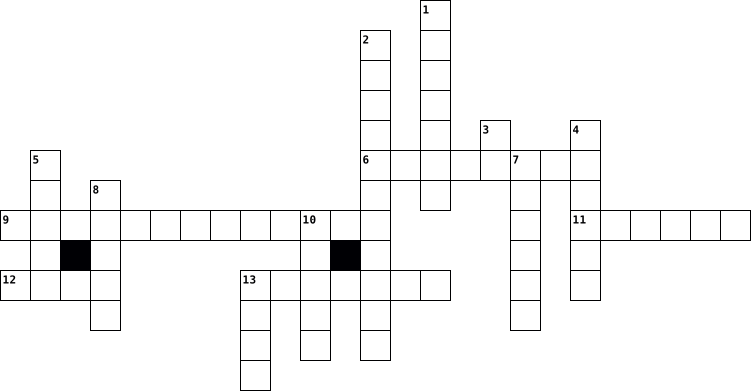
Across
- Maori name for Neptune
- maori name for Jupiter
- 1 day is 17 h and 14 m
- maori name for venus
- has an atmosphere of helium and oxygen
Down
- has a surface temperature of -201 c
- maori name for earth
- Maori name for a sun
- has the most moons
- Maori names for mercury
- Maori name for uranus
- third from the sun and has no moons
- spins on an axis
- 687 earth days in a year
14 Clues: spins on an axis • has the most moons • maori name for earth • Maori name for a sun • maori name for venus • Maori name for uranus • Maori name for Neptune • maori name for Jupiter • 1 day is 17 h and 14 m • Maori names for mercury • 687 earth days in a year • has a surface temperature of -201 c • third from the sun and has no moons • has an atmosphere of helium and oxygen
Motions of the earth 2017-11-22

Across
- The movement of the Earth in its own orbit.
- The layer of the Earth with air.
- The layer of the Earth consisting of water.
- A year consisting of 366 days.
- Closest to the sun.
Down
- The time of a year when a day and night have equal length.
- Either of the two times of the Earth.
- The layer of the Earth made up of rocks and soil.
- The layer of the Earth with all three components.
- The movement of the Earth around the sun.
- Farthest from the sun.
11 Clues: Closest to the sun. • Farthest from the sun. • A year consisting of 366 days. • The layer of the Earth with air. • Either of the two times of the Earth. • The movement of the Earth around the sun. • The movement of the Earth in its own orbit. • The layer of the Earth consisting of water. • The layer of the Earth made up of rocks and soil. • ...
Chapter 2 Puzzle Madness 2023-10-30

Across
- force of attraction that exists between all objects in the Universe
- ability for a solid to flow
- a mission to the moon in 1969
- location where a day begins
- network of American satellites in a polar orbit
- a Yugoslavian scientist
- boundary between the crust and the mantle
- March 20 or 21
- movement of the Earth around the Sun
- "about" Latin
- two-thirds of Earth's mass
- measures the height and shape of the land
- "biological clock"
- Denver-based geologist
- satellite that is the farthest from the Earth
- the amount of matter in a an object
- an imaginary line that connects North and South poles
- Earth is closest to the Sun
- Earth is the farthest from the Sun
- develeloped the law of gravitation
- technician that develops instruments for earth scientists
- center of the Earth
- vibrations that travel through the Earth
- orbit staying over the same point above the equator
Down
- atmosphere affected by Earth's magnetic field
- December 21 or 22
- the study of origin of Earth's surface features
- any object in orbit around another body with a larger mass
- solid portion of mantle and the crust
- wobbling motion of the Earth
- a thick blanket of gases
- satillites closest to the Earth
- orbit over the North and South pole with each pass
- all of the Earth's water
- solid outer most layer covering the Earth
- measure of the strength of the pull of gravity
- moving clock forward an hour
- no P or S waves
- shape of the Earth
- "equal night"
- June 21 or June 22
- launched in 1978 and mapped unknown features of ocean floor
- spinning motion of the Earth
43 Clues: "about" Latin • "equal night" • March 20 or 21 • no P or S waves • December 21 or 22 • shape of the Earth • "biological clock" • June 21 or June 22 • center of the Earth • Denver-based geologist • a Yugoslavian scientist • a thick blanket of gases • all of the Earth's water • two-thirds of Earth's mass • ability for a solid to flow • location where a day begins • Earth is closest to the Sun • ...
Liam 6 2020-10-20

Across
- nonexistence
- a person or thing that is different
- the warmest season
- what a year is divided into
- cash
- abundance
- to do something
- beneath
Down
- midday meal
- the point in space at which a journey, motion, or action starts begins
- comparable
- the day after Sunday
- female parent
- position directly ahead of someone or something
- the day after saturday
- the star the Earth orbits
16 Clues: cash • beneath • abundance • comparable • midday meal • nonexistence • female parent • to do something • the warmest season • the day after Sunday • the day after saturday • the star the Earth orbits • what a year is divided into • a person or thing that is different • position directly ahead of someone or something • the point in space at which a journey, motion, or action starts begins
Liam 6 2020-10-20

Across
- to do something
- the day after Sunday
- female parent
- midday meal
- the day after saturday
- what a year is divided into
- beneath
- the warmest season
Down
- comparable
- cash
- nonexistence
- position directly ahead of someone or something
- abundance
- a person or thing that is different
- the point in space at which a journey, motion, or action starts begins
- the star the Earth orbits
16 Clues: cash • beneath • abundance • comparable • midday meal • nonexistence • female parent • to do something • the warmest season • the day after Sunday • the day after saturday • the star the Earth orbits • what a year is divided into • a person or thing that is different • position directly ahead of someone or something • the point in space at which a journey, motion, or action starts begins
sun 2025-04-29

Across
- A condition in which an object (like the Moon) always shows the same face to the object it orbits because its rotation and orbit take the same amount of time.
- A stage in the Moon’s cycle where different amounts of the Moon’s sunlit side are visible from Earth.
- The time when one hemisphere is tilted most directly toward or away from the Sun, creating the longest (summer) or shortest (winter) day of the year.
- – The spinning of Earth (or another object) around its axis, which causes day and night.
- The process of growth or increase by the gradual accumulation of additional layers or matter, such as the way Earth and the Moon formed.
- A tide with the least difference between high and low water, occurring when the Sun and Moon are at right angles relative to Earth.
- An imaginary line running through the North and South Poles of Earth; Earth rotates around this line.
Down
- The regular rise and fall of sea levels caused mainly by the gravitational pull of the Moon (and to a lesser extent, the Sun).
- The movement of Earth in an orbit around the Sun, taking about 365.25 days to complete.
- A tide with the greatest difference between high and low water levels, caused when the Sun and Moon’s gravitational forces align.
- The time of year when both hemispheres receive equal sunlight and day and night are nearly equal in length.
- An event in which one celestial object moves into the shadow of another, blocking light.
12 Clues: The movement of Earth in an orbit around the Sun, taking about 365.25 days to complete. • – The spinning of Earth (or another object) around its axis, which causes day and night. • An event in which one celestial object moves into the shadow of another, blocking light. • ...
Physics Crossword 2013-02-20

Across
- Almost total darkness
- the imaginary sphere that surrounds the earth
- a motion where Mars appears to wander through the sky
- a lens where light is bent inwards
- Total darkness
Down
- the splitting of light into a spectrum
- second planet from the sun
- groupings of stars that can be seen in the sky. Traditionally used for navigation.
- The appearance of the moon in its 28 day orbit of earth
- day the amount of time it takes for the earth to rotate 360
10 Clues: Total darkness • Almost total darkness • second planet from the sun • a lens where light is bent inwards • the splitting of light into a spectrum • the imaginary sphere that surrounds the earth • a motion where Mars appears to wander through the sky • The appearance of the moon in its 28 day orbit of earth • day the amount of time it takes for the earth to rotate 360 • ...
The Sun and Planets Vocabulary 2014-05-12

Across
- All of Earth's light and heat come from the _______
- It takes Earth 24 hours to _________ one time.
- Moonlight is really __________
- The ________ revolves around the Earth
- It takes 365 days or 1 year for the Earth to ________ around the Sun
- A ________ is a 3D circle
- Earth moves in an orbit around the _______
Down
- The lighted shape of the moon that we see from Earth
- Night and day on Earth is caused by Earth's __________ around the Sun
- Eight _________ revolve around the Sun
- The name of our planet is ________
- An _______ is the path Earth or another object takes in space as it revolves
- During each month the moon's _________ or shape changes
13 Clues: A ________ is a 3D circle • Moonlight is really __________ • The name of our planet is ________ • Eight _________ revolve around the Sun • The ________ revolves around the Earth • Earth moves in an orbit around the _______ • It takes Earth 24 hours to _________ one time. • All of Earth's light and heat come from the _______ • ...
Motions of the earth 2017-11-22

Across
- The movement of the Earth in its own orbit.
- Closest to the sun.
- The layer of the Earth made up of rocks and soil.
- A year consisting of 366 days.
- The movement of the Earth around the sun.
Down
- The layer of the Earth with all three components.
- The layer of the Earth with air.
- Either of the two times of the Earth.
- The layer of the Earth consisting of water.
- Farthest from the sun.
- The time of a year when a day and night have equal length.
11 Clues: Closest to the sun. • Farthest from the sun. • A year consisting of 366 days. • The layer of the Earth with air. • Either of the two times of the Earth. • The movement of the Earth around the sun. • The movement of the Earth in its own orbit. • The layer of the Earth consisting of water. • The layer of the Earth with all three components. • ...
Mother Earth 2025-08-20

Across
- — The world’s largest ocean
- — Gas needed for breathing
- — The solid part of Earth
- - Mountain that erupts lava
- — Environment day on April 22
- - Layer where wheather occurs
- — Act of planting trees
Down
- — Continuous water movement
- — Huge moving ice mass
- — Home of living creatures
- — Large area of trees
- - Energy from th sun
- — Blanket of air around Earth
- — Vast salt water body
- — Fertile top layer of soil
- — Shaking of Earth’s crust
16 Clues: - Energy from th sun • — Large area of trees • — Huge moving ice mass • — Vast salt water body • — Act of planting trees • — The solid part of Earth • — Gas needed for breathing • — Home of living creatures • — Shaking of Earth’s crust • — Continuous water movement • — The world’s largest ocean • - Mountain that erupts lava • — Fertile top layer of soil • — Environment day on April 22 • ...
Seasons, moons and tides, oh my! 2017-06-07

Across
- Describes the phases following a new moon where more of the moon is illuminated by the sun
- The ________ side of the moon always faces the Earth
- The moon is a _________ of the Earth- an object in space that orbits around another object
- During this phase we cannot see the moon from earth because the sunlit side faces away from us
- During this phase the entire sunlit side of the moon faces the earth
- When the moon passes directly between the Earth and sun, casting a shadow in the Earth
- When the moon appears smaller than half but more than a new moon
- When the moon appears larger than half but less than full
- Describes the phases following a full moon where less of the moon is illuminated by the sun
Down
- The path an object takes as it revolves around another object
- The different shapes of the moon you see from Earth
- The Earth rotates on it's _________, which is the imaginary line that passes through Earth's center and the North and South poles
- The moon's _________ causes tides
- The days of the year when there is equal amounts of sunlight and darkness
- The moon __________ around the Earth
- When the moon is directly behind the Earth and Earth blocks sunlight from illuminating the moon
- The longest or shortest day in the year for sunlight; When one hemisphere is tilted completely towards or away from the sun
- The light from this illuminates the moon
18 Clues: The moon's _________ causes tides • The moon __________ around the Earth • The light from this illuminates the moon • The different shapes of the moon you see from Earth • The ________ side of the moon always faces the Earth • When the moon appears larger than half but less than full • The path an object takes as it revolves around another object • ...
SPACE 2020-05-20

Across
- milky way shape
- the star of the most earth like planet
- a galaxy that looks like a Mexican hat
- something that can escape a black hole
- coldest recorded temperature planet
- the twin galaxy of milkyway
- where are stars born
- largest satellite
Down
- which planet's day is longer than a year
- comet went past earth in 1986
- the pilot of appolo 11
- a dwarf planet that lies between mars and Jupiter
- sun's dying stage called as
- the brightest star
- planet with lowest gravity
- total number of dwarf planets in our solar system
- planet that has volcano 3 times the Everest
- once a part of earth
18 Clues: milky way shape • largest satellite • the brightest star • once a part of earth • where are stars born • the pilot of appolo 11 • planet with lowest gravity • sun's dying stage called as • the twin galaxy of milkyway • comet went past earth in 1986 • coldest recorded temperature planet • the star of the most earth like planet • a galaxy that looks like a Mexican hat • ...
Space 2021-07-09

Across
- Known as the Red Planet
- It is the smallest planet of our solar system
- Name of a device launched into space and orbits around the earth
- What device can we use to see the stars
- Name of our Solar System
- what is a meteor that reaches the ground called
- Known as the Ice Giant planet
- It is the largest planet of our solar system
- The star that warms us every day
- It's the Most Distant Planet
Down
- What is the most famous comet
- No longer considered a planet
- Name of the first person on the moon
- 71% of this planet's surface is covered in water
- Is the only planet that spins clockwise
- What is the earth's natural satellite
- Named after the day of the week Saturday
17 Clues: Known as the Red Planet • Name of our Solar System • It's the Most Distant Planet • What is the most famous comet • No longer considered a planet • Known as the Ice Giant planet • The star that warms us every day • Name of the first person on the moon • What is the earth's natural satellite • What device can we use to see the stars • Is the only planet that spins clockwise • ...
Physics Crossword 2013-02-20

Across
- motion where Mars appears to wander through the sky
- second planet from the sun
- Cycle The appearance of the moon in its 28 day orbit of earth
- the splitting of light into a spectrum
- day the amount of time it takes for the earth to rotate 360
Down
- Sphere the imaginary sphere that surrounds the earth
- lens a lens where light is bent inwards
- groupings of stars that can be seen in the sky. Traditionally used for navigation.
- Total darkness
- Almost total darkness
10 Clues: Total darkness • Almost total darkness • second planet from the sun • the splitting of light into a spectrum • lens a lens where light is bent inwards • motion where Mars appears to wander through the sky • Sphere the imaginary sphere that surrounds the earth • day the amount of time it takes for the earth to rotate 360 • ...
WHAT'S IN A WORD 2017-07-02

Across
- MURDERED BY HIS BROTHER
- WIFE OF NABAL AND LATER DAVID
- SON OF KING DAVID
- WASHINGTON LEGACY OF LOVE FOUNDER
- CREATIONS NAME OF NCMBC's KITCHEN
- DEACON AND DEACONESSES
Down
- BASIC INSTRUCTIONS BEFORE LEAVING EARTH
- SR RECOGNITION DAY
- EATEN WITH UNLEAVENED BREAD
- SPIRIT COMFORTER
- THROWN IN THE FIREY FURNACE
- CREATOR OF EVERYTHING
- FIRST MAN ON EARTH
- DIED FOR OUR SINS
- BROTHER OF MOSES
- HENRY SHEPHERD OF NCMBC's FLOCK
16 Clues: SPIRIT COMFORTER • BROTHER OF MOSES • SON OF KING DAVID • DIED FOR OUR SINS • SR RECOGNITION DAY • FIRST MAN ON EARTH • CREATOR OF EVERYTHING • DEACON AND DEACONESSES • MURDERED BY HIS BROTHER • EATEN WITH UNLEAVENED BREAD • THROWN IN THE FIREY FURNACE • WIFE OF NABAL AND LATER DAVID • CREATIONS NAME OF NCMBC's KITCHEN • HENRY SHEPHERD OF NCMBC's FLOCK • ...
Physics Crossword 2013-02-20

Across
- second planet from the sun
- the imaginary sphere that surrounds the earth
- the splitting of light into a spectrum
- Total darkness
Down
- groupings of stars that can be seen in the sky. Traditionally used for navigation.
- a lens where light is bent inwards
- The appearance of the moon in its 28 day orbit of earth
- a motion where Mars appears to wander through the sky
- Almost total darkness
- day the amount of time it takes for the earth to rotate 360
10 Clues: Total darkness • Almost total darkness • second planet from the sun • a lens where light is bent inwards • the splitting of light into a spectrum • the imaginary sphere that surrounds the earth • a motion where Mars appears to wander through the sky • The appearance of the moon in its 28 day orbit of earth • day the amount of time it takes for the earth to rotate 360 • ...
CREATION 2020-08-24

Across
- On the seventh day, God _______________ (Genesis 2).
- On the fourth day, God created the _______________, which fill the night sky (Genesis 1).
- The second person God created was a woman named _______________ (Genesis 2).
- On the second day, God created the _______________ to separate the water underneath (that is, the sea) from the water above (that is, the clouds) (Genesis 1).
- _______________ created the heavens and the earth (Genesis 1).
- On the fourth day, God created the _______________ to rule over the night (Genesis 1).
- God saw that everything he had created was very _______________ (Genesis 1).
- On the first day, God created _______________ and separated it from darkness (Genesis 1).
- God created the man and the woman in his own _______________ (Genesis 1).
- On the third day, God separated the _______________ from the sea (Genesis 1).
Down
- On the fifth day, God filled the air with _______________ (Genesis 1).
- God blessed the seventh day and made it _______________ (Genesis 2).
- On the sixth day, God filled the land with living creatures, including _______________ (Genesis 1).
- On the third day, God created _______________ , in other words, plants and trees (Genesis 1).
- On the fourth day, God created the _______________ to rule over the day (Genesis 1).
- On the sixth day, God created two _______________ (Genesis 1).
- On the fifth day, God filled the sea with living creatures, including _______________ (Genesis 1).
- God placed the man and the woman in a _______________ (Genesis 2).
- The first person God created was a man named _______________ (Genesis 2).
19 Clues: On the seventh day, God _______________ (Genesis 2). • _______________ created the heavens and the earth (Genesis 1). • On the sixth day, God created two _______________ (Genesis 1). • God placed the man and the woman in a _______________ (Genesis 2). • On the fifth day, God filled the air with _______________ (Genesis 1). • ...
STEM 2025-05-12

Across
- The day we have STEM
- the closest star to Earth
- The most abundant source of water on Earth
- If you do not finish class work it may become________
- The S in STEM
- The name of our school's saint
- The life cycle of this, begins with a seed
Down
- Earth is one of the eight _______
- The E in STEM
- The M in STEM
- Your STEM teacher
- The T in STEM
- The principal
13 Clues: The E in STEM • The M in STEM • The T in STEM • The S in STEM • The principal • Your STEM teacher • The day we have STEM • the closest star to Earth • The name of our school's saint • Earth is one of the eight _______ • The most abundant source of water on Earth • The life cycle of this, begins with a seed • If you do not finish class work it may become________
Revision paper 2 2022-05-14

Across
- Found between Mars and Jupiter.
- Movement of Earth around the sun.
- Movement of Earth on its axis.
- The bouncing of light on a smooth and shiny surface.
- Keeps planets in their orbits.
Down
- Happens when light touches dark surfaces.
- The farthest planet from the sun.
- Hottest planet in the solar system.
- Movement of Earth in its orbit causes _________.
- South pole is winter, North pole is ______.
- Study of the universe.
- Earth completes a rotation in a ______.
12 Clues: Study of the universe. • Movement of Earth on its axis. • Keeps planets in their orbits. • Found between Mars and Jupiter. • The farthest planet from the sun. • Movement of Earth around the sun. • Hottest planet in the solar system. • Earth completes a rotation in a ______. • Happens when light touches dark surfaces. • South pole is winter, North pole is ______. • ...
Social Science crossword 2021-10-19

Across
- the earth has_____types of motions
- ______is the movement of the earth on its axis.
- In the month of ______ the North Pole is tilted towards the Sun.
- The portion facing the sun experiences day
Down
- the movement of the earth around the sun in a fixed path or orbit is called__________
- day and night on the Earth are caused by the ______ of the Earth.
- The earth receives light from the_______
- The period of rotation is known as the________
8 Clues: the earth has_____types of motions • The earth receives light from the_______ • The portion facing the sun experiences day • The period of rotation is known as the________ • ______is the movement of the earth on its axis. • In the month of ______ the North Pole is tilted towards the Sun. • day and night on the Earth are caused by the ______ of the Earth. • ...