
enlightenment Crossword Puzzles
Colonial America 2025-05-16

Across
- name of the US army during the Revolution
- refusing to buy certain goods
- Americans ally during the Revolutionary war
- declaration of _____
- wants to separate from England
- commander of the Continental army
- author of the Declaration
- contracted, on the job training/education
- disputed territory during the French and Indian War
- Colonies known for good fishing and cold winters
- sons of ________
- questioned traditions with logic and reason
- Middle colonies were known as the ___ colonies
- "The ______ are coming"
- Spy ring based out of New York
- sent to France to get support for the war
- volunteer army
- slave trade that forced slaves to the Americas
Down
- a slave that ran away
- Colonial Capital
- Colonies where slavery was prominent
- Traitor
- average family had seven to _____ kids
- 90% of people were ____ in Colonial America
- Battles of _______ & Concord
- act that forced soldiers into your house
- Winter encampment
- number of British colonies
- won the French and Indian War
- Petition to reconcile with the king
- placed a tax on paper products
- rod invented by Franklin
- German soldiers
- wants to stay with England
- only book that most families owned
- a slave that was freed
- __________schools, where kids were educated
37 Clues: Traitor • volunteer army • German soldiers • Colonial Capital • sons of ________ • Winter encampment • declaration of _____ • a slave that ran away • a slave that was freed • "The ______ are coming" • rod invented by Franklin • author of the Declaration • number of British colonies • wants to stay with England • Battles of _______ & Concord • refusing to buy certain goods • ...
Gothic Novels: Frankestein 2023-01-09

Across
- Frankestein was dedicated by Mary Shelley to
- the eyes of the monster
- the complexion of the monster
- the setting is the opposite of modern
- supernatural being often used in gothic novels
- sensitive and honorable characters
- is a key setting
- it was on a dreary night of...
- it shows the insignificance of mankind in front of nature
- man shaped but not quite human
- the word Gothic was used to describe literature and ...
- form of literature that aims to arouse horror
- the author of frankestein
- how does Dr Frankestein feels after he created the monster
- a negative feeling
- his skin was
- it gave life to the monster
Down
- the body of a dead man
- smt that doesn't follow the rules of nature
- word used to describe the motion of the monster
- period of time that determined the development of Gothic novels
- powerful element that creates an atmosphere of mystery and gloom
- the opposite of a dream
- uncertainty and obscurity
- male characters that can't control their impulses
- plots are usually
- it makes humans look insignificant and powerless
- an historical event that influenced Gothic novels
- Strawberry Hill Castle
- the doctor
- one of the most famous gothic novel
31 Clues: the doctor • his skin was • is a key setting • plots are usually • a negative feeling • the body of a dead man • Strawberry Hill Castle • the eyes of the monster • the opposite of a dream • uncertainty and obscurity • the author of frankestein • it gave life to the monster • the complexion of the monster • it was on a dreary night of... • man shaped but not quite human • ...
Ancient Greece Vocabulary 2025-03-03

Across
- the territory governed by an official known as a satrap.
- a gathering place, marketplace in ancient Greece.
- a Greek city-state.
- enslaved people in ancient Sparta.
- Democracy: a form of democracy in which citizens elect officials to govern on their behalf.
- Democracy: a form of democracy in which all citizens can participate firsthand in the decision-making process.
- a group of armed foot soldiers in ancient Greece arranged close together in rows.
- the system in a country that involves making, buying, and selling goods.
- a piece of land nearly surrounded by water.
- the governor of a province in ancient Persia.
Down
- someone who writes or performs epic poems or stories about hereos and their deeds.
- a Persian religion based on the belief of one god.
- a person who searches for wisdom or enlightenment.
- a government in which a small group has control.
- to control or influence something or someone.
- a high-ranked government official in Sparta who was elected by the council of elders.
- an absolute ruler unrestrained by law.
- a group of people living in a new territory who have ties to their homeland.
- a government where it is ruled by a king/queen.
- a government by the people.
20 Clues: a Greek city-state. • a government by the people. • enslaved people in ancient Sparta. • an absolute ruler unrestrained by law. • a piece of land nearly surrounded by water. • to control or influence something or someone. • the governor of a province in ancient Persia. • a government where it is ruled by a king/queen. • a government in which a small group has control. • ...
History, Level 4, Nicolò 2024-11-24

Across
- The era marked by the rise of factories and machines
- Supreme power or authority
- A medieval system of lords, vassals, and serfs
- A court of justice in historical settings
- An object made by humans, often of historical interest
- A period of cultural rebirth in Europe
- A sequence of rulers from the same family
- A government led by a king or queen
- A series of religious wars during the Middle Ages
- The study of human history through excavation
- A territory controlled by another country
- A group of states or countries under a single supreme authority
- A religious movement to reform the Catholic Church
- A formal agreement between nations
Down
- A complex human society with culture and technology
- A policy of extending a country’s power through colonization
- A strong identification with one’s nation
- Someone who advocates for or participates in a revolution
- A forcible overthrow of a government or social order
- The renewed interest in culture or learning
- A member of a Christian church founded during the Reformation
- The practice of acquiring and exploiting colonies
- A European intellectual movement emphasizing reason
- A system of government with many departments and officials
- A union or association formed for mutual benefit
25 Clues: Supreme power or authority • A formal agreement between nations • A government led by a king or queen • A period of cultural rebirth in Europe • A strong identification with one’s nation • A court of justice in historical settings • A sequence of rulers from the same family • A territory controlled by another country • The renewed interest in culture or learning • ...
Ancient India 2024-11-14

Across
- - The belief in being reborn after death.
- - The social system that divided people into groups based on birth and occupation.
- - The universal spirit worshipped in Hinduism.
- - A group at the bottom of the caste system with few social rights.
- - Ancient Hindu texts that contain hymns and spiritual knowledge.
- - The belief that a person's actions affect their future.
- - The ancient language of India, used in many religious texts.
- - The birth name of Buddha before he attained enlightenment.
- - A major religion that began in India, known for beliefs in karma and reincarnation.
- - A famous emperor who spread Buddhism throughout India.
- - A physical and mental practice that originated in ancient India.
- - The duty or moral law in Hinduism and Buddhism.
Down
- - One of the largest cities of the Indus Valley civilization.
- - The founder of the Maurya Empire and one of India's first rulers.
- - An important mathematical concept developed in ancient India.
- - The ultimate goal in Buddhism, representing freedom from the cycle of rebirth.
- - A sacred river in India, considered holy in Hinduism.
- - Seasonal winds that brought heavy rains to India each year.
- - Siddhartha Gautama, who founded Buddhism.
- - A major river that helped ancient Indian civilization to thrive.
- - The mountain range to the north of India, home to Mount Everest.
21 Clues: - The belief in being reborn after death. • - Siddhartha Gautama, who founded Buddhism. • - The universal spirit worshipped in Hinduism. • - The duty or moral law in Hinduism and Buddhism. • - A sacred river in India, considered holy in Hinduism. • - A famous emperor who spread Buddhism throughout India. • - The belief that a person's actions affect their future. • ...
American Republic Ch. 4 2025-10-20

Across
- followed the teachings of John Huss
- career most early colleges were created to train for
- schools organized by villages to teach children were called ______ schools
- philosophical movement that emphasized science and reason
- the first college in America
- individuals who gained passage in return for labor were ______ servants
- preached the sermon "Sinners in the Hands of an Angry God"
- trained young men for ministry in Log College
- the _____ colonies had the most religious diversity
Down
- the first Africans arrived here in 1619
- led the Great Awakening in the South
- how young people learned a trade
- after God created the world, He walked away and no longer intervenese in human affairs
- majority of New England Puritan churches
- ministered to the Indians but died at age 29
- German religious group who got their name through the way they baptized
- preached thousands of sermons, traveled to America 7 times
- during the _____ Witch Trials, over 150 people were accused of witchcraft
- founded because Puritans felt Harvard had drifted from religious teachings
- schools taught by widows or single women were called ______ school
- wrote "The Selling of Joseph" in which he criticized slavery
- board that looked like a paddle and had a printed sheet
22 Clues: the first college in America • how young people learned a trade • followed the teachings of John Huss • led the Great Awakening in the South • the first Africans arrived here in 1619 • majority of New England Puritan churches • ministered to the Indians but died at age 29 • trained young men for ministry in Log College • the _____ colonies had the most religious diversity • ...
Chapter 3 and 4 vocab 2025-10-31

Across
- A period of transformation in agriculture within the Muslim world
- Temple that reflects a powerful empire
- A historic city in Mali, West Africa
- Ruler of Mali who gained wealth by controlling the trade of gold
- Major hub for trade and religious ceremonies
- Powerful Buddhist kingdom in the 8th and 9th century
- Philosophical and ethical system in China that was adopted by the Mongol Empure
- Crucial animal to trade in the Arabian Peninsula
- Traveler that also wrote about different countries
Down
- Language that was deeply influenced by Indian Ocean Trade
- Ming dynasty admiral who commanded massive fleets in the navy
- Type of Buddhism favored by Mongolians that are centered on a different leader
- System of paper currency in China. The idea spread to Mongol empire and facilitated trade.
- Allows monks to collect food and eat because they are not allowed to store their own food.
- Hereditary class of professional West African storytellers, musicians, and oral historians
- Indian landmark and victory tower built by the first Sultan of Delhi
- Type of ship that facilitated traded.
- Communities that have dispersed and settled around the world
- Roadside inns that were for travelers. They aided in communication and trade networks.
- School of Buddhism that emphasizes reaching enlightenment
20 Clues: A historic city in Mali, West Africa • Type of ship that facilitated traded. • Temple that reflects a powerful empire • Major hub for trade and religious ceremonies • Crucial animal to trade in the Arabian Peninsula • Traveler that also wrote about different countries • Powerful Buddhist kingdom in the 8th and 9th century • ...
FCFS IT TCE Guy, Banganapalli & FBBS Kanna: A Crossword Puzzle 2025-10-29

Across
- Sockalingam's sobriquet
- 2km radius around Muthu’s home in Chennai
- His Highness is generally invited to bless us with his presence along with ___
- Token of friendship
- Shreeram asked for a refund on these but Muthu had to intervene
- Degree of friendship generally used after not being called to cafe or non connect week zone
- Sockalingam whenever he pulls one of his clown moves
- The girl keeping Socka up till 3 everyday,
- A title Sockalingam earned after fixing Angular layout issues in our Capstone project
- The right way to say okay is to put your thumb __
- Degree of friendship generally used after the sentence “it’s been good knowing you”
Down
- A highly nuanced score designed to quantify the relative mental and emotional maturity of an individual at any given instance
- What did Sockalingam do on the 4th of January 2025
- Socka transcends into a ___ whenever he sees Thrivikram in office
- A game Muthu and Sockalingam put too much effort into
- The colour Sockalingam did not have the fortune of knowing until Muthu's divine enlightenment
- Workplace of MA’s fictional bf and Socka’s fictional gf
- Muthu exploits this entity for unpaid labour
- A group that Muthu usually threatens to remove Sockalingam from
- Two legged reminder
20 Clues: Token of friendship • Two legged reminder • Sockalingam's sobriquet • 2km radius around Muthu’s home in Chennai • The girl keeping Socka up till 3 everyday, • Muthu exploits this entity for unpaid labour • The right way to say okay is to put your thumb __ • What did Sockalingam do on the 4th of January 2025 • Sockalingam whenever he pulls one of his clown moves • ...
Atlantic Revolution 2026-03-04

Across
- – A territory settled and ruled by people from another country
- – A political partnership between nations
- – A system in which people are treated as property and forced to work
- – A group of representatives who meet to make laws
- – Basic rights, such as life and liberty, that all people are born with
- – The power of self-government
- – A government without a king or queen, where citizens have power
- – The prison in Paris that was stormed in 1789
- – Freedom from outside control
- – To officially end a system, practice, or law
- – A formal statement announcing beliefs or independence
- – The three social classes in pre-revolutionary France
Down
- – An intellectual movement that emphasized reason and inspired revolutions
- – A written plan that explains how a government works
- – A person chosen to speak or act for others
- – A system of government where people vote for leaders or laws
- – A dramatic change in government or society
- – An economic system where peasants worked land they could not own
- – A formal agreement between countries
- – A group of territories ruled by one powerful nation
- – Freedom
- – A large farm that grows cash crops, often using enslaved labor
- – The traditional ruling class
- – Money collected by the government from citizens
24 Clues: – Freedom • – The power of self-government • – The traditional ruling class • – Freedom from outside control • – A formal agreement between countries • – A political partnership between nations • – A person chosen to speak or act for others • – A dramatic change in government or society • – The prison in Paris that was stormed in 1789 • ...
World War I Crossword 2018-12-17

Across
- where you have international relations is called ____ affairs
- an act of violence against the opposing country’s public
- national relations also known as ____ affairs
- when you feel pride for your country
- this plan was going against the two front war called ____ plan
- the countries in which got into world War One and its causes
- what country was in the Two Front War
- The countries, germany, Austria-Hungary, and Italy are apart of this triple ____
- Germany and France got in a war where this place was the prize
- a territory that is under political control
- Powder Keg of Europe was known as the _____ region
- Interest when you want the best for your country
- Who got assassinated arch duke _______
- start of World War 1 is ____ 1914
Down
- when you add more land to country
- getting ready for attack, troops, weapons ext
- the London treaty (a peace treaty)
- wanting to build up your army to be strong
- an age where people were thinking for themselves (against the crown )
- when you want to govern yourself (starts with S)
- The man that assassinated Archduke Ferdinand
- building these with other countries/nations will strengthen your power
- State a geographical area separated by borders (a country)
- Where arch duke and his wife was killed
24 Clues: when you add more land to country • start of World War 1 is ____ 1914 • the London treaty (a peace treaty) • when you feel pride for your country • what country was in the Two Front War • Who got assassinated arch duke _______ • Where arch duke and his wife was killed • wanting to build up your army to be strong • a territory that is under political control • ...
French Revolution 2022-01-20

Across
- Married to King Louis XVI.
- When extremist politicians gained control of the assembly and encouraged blood thirst among people.
- Former King of France during the French Revolution.
- Invention used to behead people.
- a movement to overthrow the government or in favor of a new system.
- A group of mostly Third Estate representatives that brought together their Enlightenment ideas about liberty and government based on natural laws and had the power to govern France.
- Dues A payment that the lower estates had to make to the higher estates.
- When rumors went around that Louis XVI’s army was attacking the Third Estate retaliation so many nobles became emigres.
- The Nobility and privileged class.
- A group of hyper-revolutionaries that wanted France to be a republic.
Down
- A group of 5 men who held executive power in France.
- The unprivileged class.
- Also known as the Second Estate.
- High Ranking members of the Church and privileged class.
- Palace where King Louis XVI lived.
- President of National Convention and on Committee of Public Safety
- French general of the French Revolution.
- A state of armed conflict between different nations or states.
- Where the French Revolution took place.
- The French government before the French Revolution.
20 Clues: The unprivileged class. • Married to King Louis XVI. • Also known as the Second Estate. • Invention used to behead people. • Palace where King Louis XVI lived. • The Nobility and privileged class. • Where the French Revolution took place. • French general of the French Revolution. • Former King of France during the French Revolution. • ...
All Things Buddhism 2020-06-01

Across
- They're ceremonies that involve prayer, meditation and offerings
- Also known as suffering
- Someone who postpones reaching Nirvana to teach others
- The third of the Five Aggregates, which allows us to distinguish multiple objects between each other
- Buildings that house monks and nuns
- The ultimate laws and teachings of Buddhism
- Another word for the Five Aggregates
- What is known as loving-kindness
- What is known as 'anicca'
- Having no fixed self
- A state of peace and calm
Down
- Someone who has attained Nirvana in ... Buddhism
- A sequence of words/syllables that are chanted during a form of meditation
- The older of the two variations of Buddhism, found in Sri Lanka
- The Buddha achieved this when he reached Nirvana
- Parinirvana Day is celebrated for the achievement of Nirvana of the ...
- The inability to see things as they are, and it's on of the Three Poisons
- They're a prayer aid (and just some beads on a string)
- A type of meditation that enables an understanding of the true of nature of things
- The main form of meditation in Zen schools involving being sat cross-legged
- The name given for celebration of the Buddhist's birth
- The type of Buddhism that uses the Six Perfections
22 Clues: Having no fixed self • Also known as suffering • What is known as 'anicca' • A state of peace and calm • What is known as loving-kindness • Buildings that house monks and nuns • Another word for the Five Aggregates • The ultimate laws and teachings of Buddhism • Someone who has attained Nirvana in ... Buddhism • The Buddha achieved this when he reached Nirvana • ...
Shayla's Crossword Puzzle for Summative Assessment 2021-10-21

Across
- During this time period new ideas spread throughout Europe and into places like Latin America
- A leader in the Hatian Revolution
- This continent homes many countries whose primary languages are Spanish and Portuguese
- This man united the Germans under Prussia
- This man ordered the remaining white people in Haiti to be killed
- This specific purchase made the USA double in size
- This country gained their independence in 1821
- The Spanish name for white people born in Portugal or Spain
- A name referring to a place in the world
- A powerful leader in France during the French Revolution
- The Peninsulares used this harsh system to control crop production
- A large sum of people who inhabit a country and share things like history and culture
Down
- France told Haiti to pay this in order for Haiti to trade with them
- "I am the mother country! You shall and will only trade with me and no one else!"
- Haiti was the world's leading producer of this item
- "I want to be in charge of myself, no foreign rulers!"
- This either unified or divided countries
- He was one of the Founding Fathers of Italy and was referred to as "The Brain"
- Descendants of Peninsulares
- The first African-enslaved country to successfully gain their independence
20 Clues: Descendants of Peninsulares • A leader in the Hatian Revolution • This either unified or divided countries • A name referring to a place in the world • This man united the Germans under Prussia • This country gained their independence in 1821 • This specific purchase made the USA double in size • Haiti was the world's leading producer of this item • ...
Unit One - Religions 2021-11-20

Across
- The idea that people try to convert others to their religion
- The name of the group of religions that all believe in the same god (Islam, Judaism, Christianity)
- The division of something into two contrasting aspects
- A religion based on the Buddha and meditation
- In Hinduism, the soul that gets reincarnated
- A term used to describe all lands under Islamic rule
- A Hindu class system
- When a religion splinters into two separate groups
- A philosophy about the teachings of the Chinese philosopher Confucius
- The belief in more than one god
- The idea that a person's actions determine what happens in the next life
- When a quality of two or more cultures blends into a new idea
- System of government where the political rule is vested in the church
Down
- A religion based on a class system and the Brahman
- A religion based around the idea of good and evil
- Three most holy cities for Muslims (in alphabetical order)
- In Islam: Faith, prayer, alms, fasting, and hajj
- The saving of the soul from sin and consequences
- "Inherited reality"
- Buddha's teachings
- The belief in one god
- The release of the soul after achieving enlightenment
- Thought of as the first truly monotheistic religion
- A religion based on the teachings of Muhammad
24 Clues: Buddha's teachings • "Inherited reality" • A Hindu class system • The belief in one god • The belief in more than one god • In Hinduism, the soul that gets reincarnated • A religion based on the Buddha and meditation • A religion based on the teachings of Muhammad • In Islam: Faith, prayer, alms, fasting, and hajj • The saving of the soul from sin and consequences • ...
Chapter 4 History 8 grade 2021-12-03

Across
- Or sell aboard, More goods then
- Before the bill of rights there was a huge Revolution named
- enslaved people used this passage and it was called
- Connecticut and Rhode Island Where a Charter
- by middle of 1700s There was a in school
- what did the New England study about farming
- selling wheat with other good crops
- How many people came to Philadelphia in 1760 after the cash crops
- It was a trade with a huge routes that follow it
- where both Preachers with strong faith in Massachusett
Down
- there is 8 different states and they were a Royal
- how many people came to New York in 1760s
- what happened between 1651 to 1673
- It was invented by farmers servants
- Then bought from foreign Markets
- This is a theory states that as a nation’s trade grows is called
- who signed the English bills of rights
- in 1750 New England had a high level of
- When you sell thing not legal
- A English Peacher Named
- Around the 1720s and 1740s there was a Great
- By the early 1700s some of the colony had a code over slaves what was it called
- Some colonies had to cross a island called
- Delaware,Maryland,and pennsylvania Where a Proprietary
24 Clues: A English Peacher Named • When you sell thing not legal • Or sell aboard, More goods then • Then bought from foreign Markets • what happened between 1651 to 1673 • It was invented by farmers servants • selling wheat with other good crops • who signed the English bills of rights • in 1750 New England had a high level of • by middle of 1700s There was a in school • ...
Unit 2 Vocabulary 2014-11-07

Across
- the Jewish holy book
- Hebrew name for God
- bringing good or bad onto oneself
- branches of government public service; firefighters, ambulance workers, police officers
- government where one person has unlimited powe
- person sent to spread a religion
- total enlightenment; Buddhism
- directions from Yahweh given to Moses
- belonging to an empire
- process of adapting to a culture
- rebirth of the soul into a new body
- rigid set of social distinctions in Hindu beliefs
- an extreme scarcity of food
Down
- organization of government staffed with people given their own job
- perfect understanding/ freedom from the mortal world; Hinduism
- sacred writings of the Aryan people
- the story of the departure of the Hebrews from Egypt
- extreme state of commotion or confusion
- banishment or expulsion from one's native land
- the doctrines of Buddha: all life is suffering, the cause of suffering is ignorant desire, this desire can be destroyed, the means to this is the Eightfold Path
- time of great prosperity, peace, and harmony
- a monotheistic Persian religion in which the founder was the prophet Zoroaster
- Canaan, since Yahweh promised it to the Hebrews
- the eight pursuits of one seeking Nirvana
- an agreement between Yahweh and people
- The belief in only one god
26 Clues: Hebrew name for God • the Jewish holy book • belonging to an empire • The belief in only one god • an extreme scarcity of food • total enlightenment; Buddhism • person sent to spread a religion • process of adapting to a culture • bringing good or bad onto oneself • sacred writings of the Aryan people • rebirth of the soul into a new body • directions from Yahweh given to Moses • ...
fye2ndmidtermquiz 2023-03-17

Across
- could be loosely translated as price
- could be fresh breeze from the mountain top , justification for the modernizarion
- black or dark brown rock
- Indio middlemen planters during the Spanish period
- the Philippines main export during the Spanish and American colonial period
- tax on an imported good
- a mutual help society
- careful watching or observation to social media accounts , for example
- What Jenny did to her toy top
- purpose for which chlorox is used
- 'blew off ________as when one is angry '
- genetically modified organisms
- general purpose vehicle
- February 29 could be because of a _______?
- eighteen wheeler
- Board game during the Medieval times
Down
- cool clothing
- the learned men of the French Enlightenment , Filosofo Tasyo
- Korean board game
- constitution or by laws . _________change Philippine style
- what Honda first built
- Spanish word for 'light'
- region or country that bore the brunt of Stalin's policies
- club or guild , worker;s protection
- the PUVs
- better or reshape ?
- China's premier leader after Mao
- weighing , fish or economic
- the ability to read and write
- European town
- the maximum price
- liner or vessel
- machine where material is ground or crushed into liquid or powder
- young , zealous supporters of Chairman Mao
34 Clues: the PUVs • cool clothing • European town • liner or vessel • eighteen wheeler • Korean board game • the maximum price • better or reshape ? • a mutual help society • what Honda first built • tax on an imported good • general purpose vehicle • black or dark brown rock • Spanish word for 'light' • weighing , fish or economic • the ability to read and write • What Jenny did to her toy top • ...
U.S. History 2022-09-14

Across
- invented bi-focals, the Franklin stove and published Poor Richards Almatic
- the toughest part of the Triangular Trade
- a 3 part system in which were brought to the colonies
- a religious revival moment of the 1700's
- grown mostly on plantations and was meant to sell for profit
- Places taxes on imports to the colonies
- Men from the colonies who fought for Great Britain
- was Great Britain's biggest rival in North America
- the 2nd largest ethnic group in the colonies, mostly slaves
- This covered the area from southern Maine to Northern New Jersey
- were meant to punish the colonists for illegal smuggling of good
Down
- attacked the French in the Ohio River Valley and this led to the French and Indian War
- Andros named by King James II to rule over the Dominion of New England
- came to the colonies from Europe to be apprentices with families and learn trade
- was a large farm in the southern colonies
- was a theory to help enrich Great Britain
- was the governing body of Great Britain
- an 18th century intellectual movement that emphasized reason and the scientific method
- when Great Britain relaxed its restrictions on the colonies
- a slave uprising in the colonies
20 Clues: a slave uprising in the colonies • was the governing body of Great Britain • Places taxes on imports to the colonies • a religious revival moment of the 1700's • the toughest part of the Triangular Trade • was a large farm in the southern colonies • was a theory to help enrich Great Britain • Men from the colonies who fought for Great Britain • ...
Mr Spooner’s S5 History jumbo Christmas Crossword 2022-12-11

Across
- Hobbes wrote this book.
- Who said ‘all people have natural rights’?
- Argued for the separation of powers: legislature, executive and judiciary.
- Name for imperial British soldiers.
- Boston is in which American state?
- Wife of Louix XVI, known for her extravagance and ‘let them eat cake’ quote (5,10).
- Original number of American colonies ruled by the British.
- Stick to represent sovereign power.
- Those who fought for an independent America.
- Another word for the Age of Reason.
- No taxation without _____________.
Down
- The _______ right of kings.
- Scientist and part of an English breakfast.
- Absolute monarch of Russia.
- Symbolises religious power.
- The three __________.
- Sons of _______.
- When you refuse to buy products from a certain country or shop.
- Those who supported the British during the war of independence.
- Palace in France where all the nobles went.
- Very strong supporter of freedom of speech.
- Any law passed by the British parliament.
- Sits on top of the monarch’s head.
- Famous royal prison in Paris which was stormed in the French Revolution 1789.
- Over 90 percent of the population belonged to this estate.
- The name for Church Tax.
- Louis XIV’s nickname (3,4).
- Author of the Social Contract.
- Symbolises military power.
- Important commodity enjoyed by British and colonists alike.
30 Clues: Sons of _______. • The three __________. • Hobbes wrote this book. • The name for Church Tax. • Symbolises military power. • The _______ right of kings. • Absolute monarch of Russia. • Symbolises religious power. • Louis XIV’s nickname (3,4). • Author of the Social Contract. • Boston is in which American state? • Sits on top of the monarch’s head. • No taxation without _____________. • ...
Hinduism 2023-01-13

Across
- Age The end of the Vedas and Vedic beliefs
- someone dies they are __________ into something else
- The duties in life that a hindu has to do to have good karma
- A set of scriptures that held the Hindu beliefs.
- What Hindus call rebirth
- Valley A large ancient civilization in northern India and Pakistan named after the river it was near
- A type of train that would lead Hindus to be one with Brahman
- A priest that is at the top of the social pyramid.
- A place where a large group of people work together to survive and prosper
- a religion that is a code of life
- A thing that determines if you go up in your class or down in the next life
- a way to describe something very holy
Down
- The writings that explain how to leave Samsara through moksha
- The end goal for a true Hindu. Ultimate _____________
- The noble that arrived in Northwest India that were the first to teach about Hinduism
- a table set up to worship different things.
- The spiritual part of a being that is immortal.
- Thing people do when they worship something
- a building where people worship
- vishnu and Shiva are examples of Hindu ____
20 Clues: What Hindus call rebirth • a building where people worship • a religion that is a code of life • a way to describe something very holy • Age The end of the Vedas and Vedic beliefs • a table set up to worship different things. • Thing people do when they worship something • vishnu and Shiva are examples of Hindu ____ • The spiritual part of a being that is immortal. • ...
Clues and Cues for Unit 2 2020-10-21

Across
- The power to act and think without restraints
- One of the three founding fathers of Italy aka The Brain
- Haiti is a ____ that is surrounded by water
- The people of Germany and Italy were together as a single nation
- Half-breed of Europe and native people in colonial Latin America.
- Large sea shortcut that allows ships to get to the other side faster.
- He got caught when discussing agreement
- Half-breed of white and black in colonial Latin America
- Financial burden that caused Haiti to suffer for years
Down
- The Austrian Empire was split into many nations
- During this time period/era France exploited Haiti
- A group of people in colonial Latin America, but also a language
- The man with a spike helmet who unified Germany
- A sense of loyalty to one’s own country
- Second self-proclaimed emperor in Latin America who learned after Napoleon
- A deal between you and your mother country in that you can only trade between each other
- These places- Mexico, Central America, South America- make up this region…
- A French colony that had that most sugar plantation
- What Haiti gained after its revolution
- The power of _____ from enlightenment ideas led Haitian slaves to revolt
20 Clues: What Haiti gained after its revolution • A sense of loyalty to one’s own country • He got caught when discussing agreement • Haiti is a ____ that is surrounded by water • The power to act and think without restraints • The Austrian Empire was split into many nations • The man with a spike helmet who unified Germany • During this time period/era France exploited Haiti • ...
Global 2020-10-20

Across
- Most Latin America was controlled by _____
- Spain and _____ share a peninsula known as the Iberian peninsula
- _____ river is the second longest river located in Brazil
- Both Latin America and European history were influenced by _____ ideas
- In 1820, Haiti became a _____ republic
- The Europeans controlled _____ for more than 300 years since their arrival in the late 1400s
- Toussaint L’Ouverture freed all enslaved people and created a _____
- Early civilizations in Mexico include _____, Aztec and Inca
- people with both native and white parent
- _____ broke old empires apart and create new nation with their own culture
- Father Miguel Hidalgo was a Creole _____ who led an army that fought against Peninsulares
- someone from a different nation (outsiders)
- Group of white people with Peninsular parents and were born in Latin America
Down
- People with both African and white parent
- _____ is Located in between Pacific Ocean and the Andes Mountains consider as one of the driest places
- Group of white people who were born in Spain
- An area of land surrounded by water on three sides
- Saint Domingue also known as Haiti was located on the _____ in the Caribbean
- Dom Pedro I was King of Portugal’s son who wanted independence for _____
- Most Hanitians were _____ African men and women and work as plantation laborers
20 Clues: In 1820, Haiti became a _____ republic • people with both native and white parent • People with both African and white parent • Most Latin America was controlled by _____ • someone from a different nation (outsiders) • Group of white people who were born in Spain • An area of land surrounded by water on three sides • ...
Stamped 2020-12-09

Across
- relating or devoted to the study of things
- the study of human societies and cultures and their development.
- a confusing and difficult problem or question.
- or institution,
- a combination of statements
- the act of setting someone free from imprisonment
- the state of being enlightened.
- children were capering about the room
- unjustly inflicting hardship
- persuasion as opposed to force or compulsion.
- an important quality or feature
- preservation or deliverance from harm
- prove (a statement or theory) to be wrong or false; disprove.
- a male priest, minister, or religious
- believing that people are motivated by self-interest
- immoral or wicked behavior.
- showing a skillful use of underhanded tactics to achieve goals.
Down
- a person who favors the abolition of a
- a related series of events
- relating to or advocating the policy of enforced separation of different racial groups.
- (of a person) clever, original, and inventive.
- the action or process of settling among and establishing control
- economic disparities between two hills
- a name. "his real moniker is Jay"
- well known and admired for achievements
- a violent uprising against an authority or government.
- making a hypocritical display of virtue.
- impossible to deny or disprove.
- ridiculous; implausible.
- in a very unhappy or unfortunate state.
30 Clues: or institution, • ridiculous; implausible. • a related series of events • a combination of statements • immoral or wicked behavior. • unjustly inflicting hardship • the state of being enlightened. • impossible to deny or disprove. • an important quality or feature • a name. "his real moniker is Jay" • children were capering about the room • preservation or deliverance from harm • ...
Stamped 2020-12-10

Across
- relating or devoted to the study of things
- the study of human societies and cultures and their development.
- a confusing and difficult problem or question.
- or institution,
- a combination of statements
- the act of setting someone free from imprisonment
- the state of being enlightened.
- children were capering about the room
- unjustly inflicting hardship
- persuasion as opposed to force or compulsion.
- an important quality or feature
- preservation or deliverance from harm
- prove (a statement or theory) to be wrong or false; disprove.
- a male priest, minister, or religious
- believing that people are motivated by self-interest
- immoral or wicked behavior.
- showing a skillful use of underhanded tactics to achieve goals.
Down
- a person who favors the abolition of a
- a related series of events
- relating to or advocating the policy of enforced separation of different racial groups.
- (of a person) clever, original, and inventive.
- the action or process of settling among and establishing control
- economic disparities between two hills
- a name. "his real moniker is Jay"
- well known and admired for achievements
- a violent uprising against an authority or government.
- making a hypocritical display of virtue.
- impossible to deny or disprove.
- ridiculous; implausible.
- in a very unhappy or unfortunate state.
30 Clues: or institution, • ridiculous; implausible. • a related series of events • a combination of statements • immoral or wicked behavior. • unjustly inflicting hardship • the state of being enlightened. • impossible to deny or disprove. • an important quality or feature • a name. "his real moniker is Jay" • children were capering about the room • preservation or deliverance from harm • ...
Sweet and Low 2021-02-23

Across
- had a tax-supported church with license minister.
- trying to "purify" the established church.
- sent 20 humans and two dog to their death.
- throne was restored to.....
- Narragansett Metacomet led a guerrilla war against the whites.
- sailed to America on the ship The Mayflower in 1620.
- event or a situation that makes everyone equal whatever their age, importance, etc.
- sells Pennsylvania to a.......
- war,When the religious friction between puritans and establishment exploded.
- meant that he believe in a sort of abstract god, not a bearded Jehovah in the sky.
Down
- written agreement to abide by the rules of the colony.
- person who supported Parliament against the King in the English Civil War.
- civil war erupted when government Berkeley tried to stop farmers from removing Indians.
- first black slaves war...
- a haven of religious freedom.
- and government regulated.
- america's democratic institutions began in the same year as slavery which Virginia tax payers organised.
- press,A type of press used to extract the juice from apples to make cider.
- enlightenment,More that a change of century, it was a change of mind....
- America the trend could be summed up in two words.
20 Clues: first black slaves war... • and government regulated. • throne was restored to..... • a haven of religious freedom. • sells Pennsylvania to a....... • trying to "purify" the established church. • sent 20 humans and two dog to their death. • had a tax-supported church with license minister. • America the trend could be summed up in two words. • ...
Voc crossword 2021-03-01

Across
- able to be maintained at a certain rate or level.
- Give a synonym for 'ambition'
- the number or amount of one thing when compared to another.
- a strong desire or impulse
- symbolization of strength, enlightenment, intelligence, and intuition.
- current account at a bank.
- a large amount of money that one country or organization owes to another and which they find very difficult to repay.
- an agreement that allows you to borrow money from a bank, especially in order to buy a house.
- Also, it will be necessary to encourage interested people to continue … these rare animals.
- a temporary show of dissatisfaction by employees to protest against bad working conditions
- Give a synonym of 'collect'
- the distance above the sea level.
Down
- to give advance thought, discussion, or treatment to …
- the dying out of a species
- this machine makes it easier … the bomb.
- The deforestation of the Amazon forest … to the extinction of many species.
- an economic measure for the balance of payments
- designed to make economical use of electricity, gas, or other forms of energy.
- the act of taking money out of an account.
- If you belong to the same family, you are …
20 Clues: the dying out of a species • a strong desire or impulse • current account at a bank. • Give a synonym of 'collect' • Give a synonym for 'ambition' • the distance above the sea level. • this machine makes it easier … the bomb. • the act of taking money out of an account. • If you belong to the same family, you are … • an economic measure for the balance of payments • ...
French Revolution 2021-03-11

Across
- Wife of the ruler of a monarchy
- People from the USA
- Someone that was born in PAris
- Top of the social class
- A person who purchases goods
- Bottom of the social class
- Representative government created by the lower class
- Not Equal
- scarcity of food
- The duke of the king
- A government system in which there is a king
- An old fortress used as an armory and prison
- Purpose was to draft a constitution for France
- Another name for the middle class
Down
- The wealth and resource of a country
- To dislike, or to be angry with
- A philosophical movement in which the scientific revolution took place in
- Las name of one of the people most quoted by Revolutionary leaders
- Social system of France
- Tax
- The basic laws of a nation
- not employed
- Rebellion against a government
- A tenant farmer being bound to a piece of land by the will of the landlord
- People in the middle class
- Ruler in a monarchy
- People from the UK
- King of France
- Where the King of France lived
- The amount of money that someone can spend, but doesn’t wanna go over
30 Clues: Tax • Not Equal • not employed • King of France • scarcity of food • People from the UK • People from the USA • Ruler in a monarchy • The duke of the king • Top of the social class • Social system of France • The basic laws of a nation • Bottom of the social class • People in the middle class • A person who purchases goods • Someone that was born in PAris • Rebellion against a government • ...
Unit 1 U.S. History Review 2021-09-23

Across
- This plan had two houses based on population.
- The Anti-federalists opposed the Constitution because this was not included.
- Laws causing African Americans to suffer political and economic oppression.
- Lincoln and Johnson both wanted the South to return the Union __________.
- This plan had one house with equal representation.
- The Civil war the _________ federal government.
- Implied powers in the Constitution shows the framers knew these needed to be protected.
- The American Revolution was founded on this Enlightenment idea.
- Lincoln's reason for the Civil War.
- This gave colonists a moral reason to oppose Britain.
Down
- This is the idea that all power comes from the people.
- If government does not protect basic rights it may be overthrown, is expressed in which document.
- This ended slavery.
- Established to help freed slaves access to an education, training, and social services.
- The earliest from of representative government.
- Gave freed slaves the right to vote.
- Law put into place to restrict the rights of former slaves.
- Compromise setting up representation for the legislative branch.
- The British felt they could tax the colonists after the French and Indian War because of the ___________ they incurred.
- The goal of the Constitutional convention was to _________ the Articles of Confederation.
20 Clues: This ended slavery. • Lincoln's reason for the Civil War. • Gave freed slaves the right to vote. • This plan had two houses based on population. • The earliest from of representative government. • The Civil war the _________ federal government. • This plan had one house with equal representation. • This gave colonists a moral reason to oppose Britain. • ...
absolutism 2021-10-07

Across
- of westphillia/recognized the full territorial sovereignty of the member states of the empire
- dominant political family of Europe during the renaissance
- of nantes/ french royal decree establishing tolerations for huguenots
- sun king or the king of france
- the terrible/ the first moscow ruler who declared himself tsar of all russia
- 130-ship naval fleet dispachted by spain
- ruler of russia
- person who can think critiacly and methodicaly
- ruler who has absolute power
- of spanish succession/an early 18th century european war
Down
- right of sovereign to rule as set forth by
- the great/ruled the tsardom of russia and later leader of the russian empire
- of praque/killed seven city councilors by throwing them out of the window of hte new town hall
- european dynasty with french origin
- first among the catholic monarch
- religious minority brutally presected by the roman catholic church
- over spain in the enlightenment period
- years war/first global conflict in history and was a strugle for world supremacy between great britian and france
- years wars/a conflict fought largely within the holy roman empire from 1618-1648
- shogunate/the feudal military government of japan during the edo period from 1603-1808.
20 Clues: ruler of russia • ruler who has absolute power • sun king or the king of france • first among the catholic monarch • european dynasty with french origin • over spain in the enlightenment period • 130-ship naval fleet dispachted by spain • right of sovereign to rule as set forth by • person who can think critiacly and methodicaly • ...
The Fresh Start in Ruling 2022-10-18

Across
- believed people are born with 3 natural rights.
- the first European to begin trade india.
- discovered Aztecs in Mexico.
- Treaty that ended the French and Indian War.
- was against Britain in the seven years' war.
- country that Martin Luther was from.
- Henry the eight's first wife
- the idea that colonies make the mother country stronger.
- system where Native Americans were forced to work for the Spaniards.
- The Idea that people give up their rights to be protected by the government.
- John Calvin preached the doctrine of..
- The first constitution of America.
- killed most Native Americans in the 16th century.
Down
- England's first colony(1607)
- believed that there should be three branches of government and separation of power.
- Holy Roman emperor whom Martin Luther was summoned to see in the city of Worms.
- Tactic used by the American colonists during the American revolution.
- Number of colonies England had in America(1600s).
- first argued the social contract.
- or Queen Mary I.
- Treaty that gave Spain territory west of the Atlantic.
- name of the part of America colonized by france in the 1600s.
- Enlightenment thinkers are called?
- established French colony in 1608.
- kidnapped and killed the Incan Emperor.
- the idea you can buy your way into heaven
26 Clues: or Queen Mary I. • England's first colony(1607) • discovered Aztecs in Mexico. • Henry the eight's first wife • first argued the social contract. • Enlightenment thinkers are called? • The first constitution of America. • established French colony in 1608. • country that Martin Luther was from. • John Calvin preached the doctrine of.. • kidnapped and killed the Incan Emperor. • ...
History Crossword 2016-12-11

Across
- This means to shine a light on.
- This man is the son of King Mongkut who rebelled against Siam.
- This event was when the radicals started killing people during the French Revolution.
- This woman believed in women rights.
- This war was caused by weak leadership under King Louis XVI's command.
- This place is where people who weren't able to support themselves go to.
- dickens This man was an english novelist and the first social critic.
Down
- This man wrote the famous book Candide.
- This king had 6 wives and wanted nothing but a son.
- This man invented the Spinning Mule.
- This man believed the best form of democracy was direct democracy.
- This nation was the one to take over most of Africa and Asia in Europe.
- This man believed in separate government powers.
- This man was able to overthrow the monarchs in France.
- This man was the one to create the Jury System in 1154.
- This document was one of the most influential documents in England signed on 1215.
- This event was when the peasants started burning public record buildings.
- This disease is caused by long exposure to coal dust usually children were the ones affected the most.
- These people were often called the lovers of wisdom.
- This man proposed Natural Rights.
20 Clues: This means to shine a light on. • This man proposed Natural Rights. • This man invented the Spinning Mule. • This woman believed in women rights. • This man wrote the famous book Candide. • This man believed in separate government powers. • This king had 6 wives and wanted nothing but a son. • These people were often called the lovers of wisdom. • ...
History Crossword 2016-12-11

Across
- This man was the one to create the Jury System in 1154.
- This woman believed in women rights.
- This means to shine a light on.
- These people were often called the lovers of wisdom.
- This man was able to overthrow the monarchs in France.
- This war was caused by weak leadership under King Louis XVI's command.
- This nation was the one to take over most of Africa and Asia in Europe.
- This man invented the Spinning Mule.
- This man wrote the famous book Candide.
Down
- This man believed the best form of democracy was direct democracy.
- This man proposed Natural Rights.
- This disease is caused by long exposure to coal dust usually children were the ones affected the most.
- This place is where people who weren't able to support themselves go to.
- This man was an english novelist and the first social critic.
- This man believed in separate government powers.
- This man is the son of King Mongkut who rebelled against Siam.
- This event was when the radicals started killing people during the French Revolution.
- This king had 6 wives and wanted nothing but a son.
- This event was when the peasants started burning public record buildings.
- This document was one of the most influential documents in England signed on 1215.
20 Clues: This means to shine a light on. • This man proposed Natural Rights. • This woman believed in women rights. • This man invented the Spinning Mule. • This man wrote the famous book Candide. • This man believed in separate government powers. • This king had 6 wives and wanted nothing but a son. • These people were often called the lovers of wisdom. • ...
World History Review 2017-01-12

Across
- middle ages is also known as the
- a ship carrying 937 jewish refugees from germany to cuba
- treat of.. ?
- also know as "the night of broken glass"
- the strategic arms limitation treaty
- A war where no one was killed.
- the wright brothers invented the first ..
- One true god, pray 5 times,give to the poor, ect. are part of the.
- One of the keys to the future from the enlightenment that we still use today
- korea would be divided along the ..
- helps allies gain entry into manland europe
- all productive resources are gov't owned and operated.
- this person thought all men were good
Down
- those deemed healthy would be force into labor
- "i think therefore i am" was said by who
- largest and most infemous of the death camps
- submission to the will of god.
- this was posted on the church wall
- another word for renaissance
- this age was divided into classes
- this leader committed suiced with his wife
- all productive resources are privately owned and operated.
- hitler hoped to split allied forces
- this man thought all men were selfish.
- in some wars the hid in these
- Who was the founder of islam
- this gas in now banned now from wars
27 Clues: treat of.. ? • another word for renaissance • Who was the founder of islam • in some wars the hid in these • submission to the will of god. • A war where no one was killed. • middle ages is also known as the • this age was divided into classes • this was posted on the church wall • hitler hoped to split allied forces • korea would be divided along the .. • ...
27 Sept 2019 2019-09-27

Across
- Shade of blue
- Omission of the final sound or sounds of a word, e.g, sado (sadistic), MacDo (MacDonalds)
- Chemical substance secreted externally by certain animals, such as insects, affecting the behaviour or physiology of another specifies detrimentally
- Excessive patriotism, eagerness for national superiority; Unwarranted bias, favoritism, or devotion to one's own particular group, cause, or idea
- Characteristic of a prophet
- Accepted level or standard
- Compelled, obliged to; well-pleased, eager
- High and thin in tone
- Teaching and ethics of ancestor worship, reverence for parents, love for humanity
- Action intended to deceive; trick; doubling back
- Insinuation
Down
- Declared law giving way to military government and suspending ordinary law
- Gang of thugs
- Adjective to describe a shortened word
- Chemical produced by some animals and insects which affect the behaviour of other animals and insects of the same type, for example by attracting them sexually.
- Improvement, instruction, or enlightenment, esp when morally or spiritually uplifting
- The state of being in someone's power or of having great power over someone.
- Buddhist religion or philosophy concerned with obtaining long life and good fortune
- Edge - border
- Flashing or dazzling like lightning
- Soldiers marching on foot
- Islamic call to prayer
- Worm-like larva of an insect
23 Clues: Insinuation • Shade of blue • Gang of thugs • Edge - border • High and thin in tone • Islamic call to prayer • Soldiers marching on foot • Accepted level or standard • Characteristic of a prophet • Worm-like larva of an insect • Flashing or dazzling like lightning • Adjective to describe a shortened word • Compelled, obliged to; well-pleased, eager • ...
Crossword Puzzle Classes 6-9 2023-05-09

Across
- having a serious attitude or quality
- well organized socially with a very developed culture and way of life
- mannered having or showing good manners
- the quality or state of being sensitive
- showing or having good manners, upbringing and education
- the ability to understand and to think in an intelligent way
- the ability to aquire and apply knowledge and skills
- exceptional talent or intelligence
- the quality of being graceful and attractive in appearance or behaviour
- impressive
- fame or honour that you get for acieving something
- a deep understanding what somebody/ something is like
- the ability to make sensible decisions and judgements because of your knowledge or experience
Down
- the showing of politeness in one's attitude in behaviour towards other
- respect you
- the state of having knowledge and understanding Hospitable friendly and welcoming to guests
- the quality of being easy to understand
- having a great deal of worldly experience and knowledge of fahion andculture
- behaving in a calm, serious way that makes other
- having a smooth, attractive movement or form
- greatness;power
- a good moral quality in a person
- experiencing great pleasure in doing somthing
- extraordinary fine or admirable
- the ability to see, hear or become aware of something through the senses
25 Clues: impressive • respect you • greatness;power • extraordinary fine or admirable • a good moral quality in a person • exceptional talent or intelligence • having a serious attitude or quality • the quality of being easy to understand • mannered having or showing good manners • the quality or state of being sensitive • having a smooth, attractive movement or form • ...
world history 2023-06-06

Across
- sixth king of the Amorite First Dynasty of Babylon
- Has a trunk
- granting or withholding of respect, status, honor, attention
- Large marsupial
- dependence on moral law rather than on personal religious faith
- he started Judaism
- a group of people folling
- resreprecations of your actions
- believe in many gods
- where islam originated
- war between England and France
- the action of buying and selling goods and services
- someone ruling an empire
- Flying mammal
Down
- the period of rigorous scientific, political and philosophical discourse that characterised European society
- another word to trade
- a metal
- where all the gods lived
- the new era
- originated by mohammed
- leader of the mongols
- the stage of human social and cultural development and organization that is considered most advanced
- where you go to pray in mecca
- first monotheistic religion
- Likes to chase mice
- a system of government in which most of the important decisions are made by state officials rather than by elected representatives
- a ruler in ancient Egypt
- an act, statement, or gift that is intended to show gratitude, respect, or admiration
- Man's best friend
- a member of a people having no permanent abode, and who travel from place to place to find fresh pasture for their livestock
30 Clues: a metal • the new era • Has a trunk • Flying mammal • Large marsupial • Man's best friend • he started Judaism • Likes to chase mice • believe in many gods • another word to trade • leader of the mongols • originated by mohammed • where islam originated • where all the gods lived • a ruler in ancient Egypt • someone ruling an empire • a group of people folling • first monotheistic religion • ...
Unit 5, Part 1 Vocabulary Crossword 2023-12-04

Across
- a person's good or bad actions in one life determine his or her position, wealth, & social class in the next life
- ultimate state of enlightenment, happiness, & peace; Hindu belief
- a group of people who share a belief system
- follower of Buddhism
- ancient religion that began in India; dominant religion in India today
- belief in more than one god
- ethnic group from the Philippines
- enlightened one; S. Gautama
- built to help worship ancestors believed to have become kami after death
- ancient Chinese philosophy; foundation of modern Chinese culture
- follower of Hinduism
- a social & class order system followed by Hindus
- Hindu & Buddhist belief; cycle of birth, death, & rebirth
Down
- founder of Buddhism
- goal of Hindus; peace & freedom from the cycle of reincarnation
- Shinto belief; spirit of a god
- the study of the basic ideas about knowledge, right & wrong, reasoning, & the value of things
- Hindu sacred text
- holy book of Buddhism
- mark the separation between the human world & the world of kami
- ethnic group from Vietnam
- founder of Confucianism
- ethnic group from Indonesia
- 4th largest religion in the world
- belief system that is unique to Japan
- a group of people who share common characteristics such as language, physical appearance, customs, & traditions
26 Clues: Hindu sacred text • founder of Buddhism • follower of Buddhism • follower of Hinduism • holy book of Buddhism • founder of Confucianism • ethnic group from Vietnam • belief in more than one god • ethnic group from Indonesia • enlightened one; S. Gautama • Shinto belief; spirit of a god • ethnic group from the Philippines • 4th largest religion in the world • ...
APUSH Crossword #2 2023-12-14

Across
- Battle that was the turning point of the American Revolution
- House of _____; first legislative body in colonial America
- invented the first steamboat
- proclamation by Lincoln that freed all slaves in rebellion states
- the amendment that freed all slaves
- people such as Henry David Thoreau
- "father of the factory system"; invented the cotton mill
- laws in the south during reconstruction that limited rights of freedmen
- a tax on imports
Down
- the era of US history directly after the Civil War
- a devotion to one's region over one's nation
- type of company in early colonies where many people held small shares to limit risk
- president who had something called a "kitchen cabinet"
- the power the president holds to deny the passage of a law by Congress
- religion created during the enlightenment; believed that God created the world but allowed people to run it
- derogatory term for white northerners who moved to the south during reconstruction
- belief by a group of people opposed to immigrants
- union military leader who was in charge of the "march to the sea"
- ____ compact; first agreement of self-government in America
- member of the Supreme Court; member of major decisions such as Marbury v. Madison
20 Clues: a tax on imports • invented the first steamboat • people such as Henry David Thoreau • the amendment that freed all slaves • a devotion to one's region over one's nation • belief by a group of people opposed to immigrants • the era of US history directly after the Civil War • president who had something called a "kitchen cabinet" • ...
Greece Crossword 2023-12-15

Across
- a military formation that was close knit
- a period of history considered to be a peak, a time of prosperity for a certain place or people
- a time when greek culture fused with those of the near east
- small kingdom along the Aegean sea and conquered many lands
- political system with a singular ruler or monarch who is in charge of the government
- a piece of land surrounded by water on three sides
- system of government where the power is held by select few people aristocrats or the most qualified to rule
- one who seeks wisdom or enlightenment through thought
Down
- a temple built in ancient Greece for Athena
- a conflict within a country
- an alliance between greek city-states to defend each other when attacked by Persia
- system of government where power is held by a small group of people
- an economy based on currency
- an oppressive leader who in ancient Greece seized their power through inheritance
- the region in Europe where Greece is located, bordered by the Mediterranean sea
- a system of government where the power comes from the people
- a league led by sparta during the Peloponnesian war
- capital city of Greece
- an economic system based on trading goods and services
- an ancient greek community of citizens, city-state
20 Clues: capital city of Greece • a conflict within a country • an economy based on currency • a military formation that was close knit • a temple built in ancient Greece for Athena • a piece of land surrounded by water on three sides • an ancient greek community of citizens, city-state • a league led by sparta during the Peloponnesian war • ...
foundations of goverment 2024-02-12

Across
- The constitution is the law of the land
- introduction to the highest law of the land
- The part of the constitution about the Executive branch
- How to amend the constitution
- What legislation led to the Boston Tea party?
- Relations between states
- Powers that although not directly stated in the constitution, are implied to be available based on previously stated powers
- The part of the constitution about the Judicial branch
- Those that are not specifically granted to the national government
Down
- Approval or government by the state
- Signed by the pilgrims in 1620, pilgrims leaders set up rules to first
- Established the idea of representative democracy, limited government, and constitutional
- Mode of gov that combines a general gov, with a regional one, dividing the powers between the two
- Brought secular thought to Europe and reshaped the way people understood issues such as liberty, equality, and individual right
- Movement that opposed the creation of a stronger U.S federal government
- States required to ratify the constitution
- The part of the constitution about the Legislative branch
- the powers of the national government explictiy listed in the constitution
- First legislative body in the colonies
- A formal or official change made to a law
20 Clues: Relations between states • How to amend the constitution • Approval or government by the state • First legislative body in the colonies • The constitution is the law of the land • A formal or official change made to a law • States required to ratify the constitution • introduction to the highest law of the land • What legislation led to the Boston Tea party? • ...
The Asian World 2023-10-27

Across
- Under his leadership, the Great Canal was built
- The clan that held too much power during the Nara period
- The name of the samurai code
- Official religion in Japan
- The number of years that Wu Zhao was empress
- This was a foreign religion in China that received a lot of backlash
- The spiritual world in neo-Confucianism
- Was empress of China
- The political and economic elite in China were called this
- The emperor during the Nara period was nicknamed this
- The name for spirits in the Shinto religion
Down
- The percentage of Japan that was farmable
- The heads of the families are called this
- Pieces of territory that were divided up and given to each of Genghis Khan's sons
- The route that China used to trade most of their goods
- Money, valuables, and property that are given to the husband's family
- Li Bo and this person were the most popular authors in China
- Primary leader of the Mongols; was dedicated to conquest
- Achieving this gave people enlightenment
- The belief system that the civil service exam is based on in China
- This was molded clay that was heated to make beautiful pottery
- The northern invaders who conquered much of Asia
- Hired warriors
- This civil war lasted 10 years
24 Clues: Hired warriors • Was empress of China • Official religion in Japan • The name of the samurai code • This civil war lasted 10 years • The spiritual world in neo-Confucianism • Achieving this gave people enlightenment • The percentage of Japan that was farmable • The heads of the families are called this • The name for spirits in the Shinto religion • ...
Week Five Crossword 2024-09-14

Across
- First ten amendments to the Constitution.
- Period of rebuilding and integrating the Southern states after the Civil War.
- Supporters of a strong central government.
- People who fought to end slavery.
- The state of being free from outside control.
- Thinker who advocated for the separation of powers.
- The Southern states that seceded from the Union.
- The supreme law of the United States.
- Opponents of a strong central government.
- Site of a major Civil War battle in 1863.
- System of forced labor that was a key issue leading to the Civil War.
- Changes or additions to the Constitution.
Down
- The act of withdrawing from the Union.
- Philosopher who wrote about the social contract.
- Conflict between the North and South from 1861 to 1865.
- President who led the U.S. during the Civil War.
- System of government where power is divided between national and state governments.
- Former slaves who were freed after the Civil War.
- Philosopher known for the idea of natural rights.
- The act of freeing enslaved people.
- The Northern states during the Civil War.
- Intellectual movement influencing democratic ideas.
- Explorer who reached the Americas in 1492.
- Document asserting American independence from Britain.
- President who never own slaves but did not fully support abolitionism.
25 Clues: People who fought to end slavery. • The act of freeing enslaved people. • The supreme law of the United States. • The act of withdrawing from the Union. • First ten amendments to the Constitution. • The Northern states during the Civil War. • Opponents of a strong central government. • Site of a major Civil War battle in 1863. • Changes or additions to the Constitution. • ...
French Revolution and Napoleon 2024-09-23

Across
- - Britain's best defense against Napoleon was its strong _________.
- - Napoleon's final defeat came here
- - Weapon used on supposed traitors during the reign of terror
- - the opposite of moderate; wanting major changes
- - members of the First Estate
- - one of France's three main social classes before the Revolution
- - movement in Europe that spread ideas about individual rights, logic, reason
- - belief that people deserve freedom and individual rights
- - led the Committee of Public Safety
- - Reign of ___________, the most radical period of the revolution
- - Loyalty to one's nation above all else
Down
- - French for "middle class" - lawyers, office workers, property owners etc.
- - Radicals who wanted the King to be executed
- Title of Napoleon's main law code (2 words)
- - This is what Napoleon died of
- St. _______ - location of Napoleon's second exile
- - Marie _______, executed in 1793 as a traitor to France
- General who became First Consul and later Emperor of France
- - Napoleon tried to unite Europe to create a ____________ system.
- - "Liberty, _________, Fraternity!"
- - belief in tradition, order, obedience to authority
- - title Napoleon gave himself in 1804
- Location of Napoleon's first exile
- Location of an 1815 meeting where a new balance of power was set in Europe
- - Last king of France before the revolution (include the Roman numerals!)
- - Moderate faction during the early revolution
26 Clues: - members of the First Estate • - This is what Napoleon died of • Location of Napoleon's first exile • - Napoleon's final defeat came here • - "Liberty, _________, Fraternity!" • - led the Committee of Public Safety • - title Napoleon gave himself in 1804 • - Loyalty to one's nation above all else • Title of Napoleon's main law code (2 words) • ...
The Social Contract 2024-09-10

Across
- the ones who benefit from war
- to renounce freedom is to renounce one's __________
- the author believes all power comes from this
- the author
- __________ who do not meet the people's needs can be removed, using force if necessary
- the era the book was written in, known for changes in social and political thinking
- "__________ made the first slaves"
- the oldest and only natural society: the __________
- the leader of a family, according to the author
- another philosopher who believed in the idea of a "social contract"
Down
- the book largely argues against __________ governments
- the author does not believe in the idea that "might makes __________"
- metaphor for people's willingness to be governed; what makes a government's authority legitimate
- a diplomat and philosopher referenced often in book 1
- the author argues that __________ ownership of property is more "secure and irrevocable"
- men are not naturally __________
- people's collective interests
- "man was born free, and he is everywhere in __________"
- another word for 'tyrant'
- an ideal social pact should create __________
- the form of government that best represents the will of the people
- an arbitrary and unfair form of government that was once common
- the subject of the book, the nature of __________
- the author's home country
- the author believes he lives in a __________ state
25 Clues: the author • another word for 'tyrant' • the author's home country • the ones who benefit from war • people's collective interests • men are not naturally __________ • "__________ made the first slaves" • the author believes all power comes from this • an ideal social pact should create __________ • the leader of a family, according to the author • ...
communication across the world, Anders, Pd.3 2024-10-20

Across
- a dynasty, emerging in Java at the end of the eighth century
- a time period where giant leaps in progress towards agricultural growth were made
- a giant temple used as both a hindu temple and a buhddist temple
- bowls used by Buddhist monks to get food
- a ship with lateen sails and shallow draft hulls
- a Muslim explorer who greatly expanded the economic reach of China
- the richest man in history, also the king of mali
- an iconic monument built byQutb-ud-din Aibak
- early type of paper money in china
- an animal that helped travelers get across the dessert with there payloads
Down
- Bantu
- people who have been dispersed to different religions while still keeping there religions
- a religion combining multiple strands of confucianism
- a tradition to revive the buhdda's pure land
- an important trade and social center
- a tribal storyteller and a musician
- an inn for travelers and merchants
- gaining enlightenment through inner peace
- a scientist who wrote one of the world's most famous travel logs, the Riḥlah
- Chinese a chinease ship with projecting bow and can cary up to five masts
20 Clues: Bantu • an inn for travelers and merchants • early type of paper money in china • a tribal storyteller and a musician • an important trade and social center • bowls used by Buddhist monks to get food • gaining enlightenment through inner peace • a tradition to revive the buhdda's pure land • an iconic monument built byQutb-ud-din Aibak • ...
Symbols 2024-10-02

Across
- A symbol of intelligence, victory over evil, and the defence of religious doctrine.
- The eternal relevance of Buddha's teachings and sermons.
- Explains the process of death and rebirth.
- An animal with mental strength on the path toward enlightenment.
- This colour represents purity and sincerity.
- Structures that house relics.
- first syllable of "Praise to the Jewel in the Lotus"
- It can appear on a cloud or surrounded by flames, or atop a staff.
Down
- Heart-shaped and exudes a bright and lilting energy.
- Water spirits who live in wells, rivers, and lakes,
- Fearlessness to teach the truth of the Dharma.
- This colour symbolizes the letting go of desires, renunciation, and detachment.
- This colour represents the three poisons of hate, attachment, and ignorance.
- Used to call upon the heavenly deities for protection and to ward off evil spirits.
- It supports the throne of Buddha Amitabha.
- Recitation beads.
- It has three meanings: durable, luminous, and able to cut.
- They serve as guardians, represented in pairs at the entrance of shrines, temples, and monasteries.
- Blooms profusely in every aspect of Buddhist art and literature in all cultures.
- A symbol of royalty and protection.
- A visual expression of the Heart Sutra.
- This animal symbolizes harmony, peace as well as longevity.
22 Clues: Recitation beads. • Structures that house relics. • A symbol of royalty and protection. • A visual expression of the Heart Sutra. • It supports the throne of Buddha Amitabha. • Explains the process of death and rebirth. • This colour represents purity and sincerity. • Fearlessness to teach the truth of the Dharma. • Water spirits who live in wells, rivers, and lakes, • ...
HISTORY 2024-11-21

Across
- Years of troubles from 1783-1789
- Was sent to London to negotiate with the British, made Jay's Treaty
- Placed taxes on lead, glass, tea, paint, and paper imported from Britain.
- People who wanted to make changes to the Church of England
- Exchange of diseases, ideas, food, crops, and populations between New World and Old World
- The intro to a deed that states its purpose and aims.
- French aristocrat who served as a commanding general in the colonial army
- Founded the Georgia Colony for debtors and criminals
- Large state plan that created House of Representatives
- A European intellectual movement emphasizing reason and individualism rather than tradition
- This guy invented the cotton gin in 1793.
- One of America's first planned cities.
Down
- Overemphasized political, economic, and social loyalty to a region of a country.
- People who persuaded congress to support a declaration of war against Britain
- American congressional minister and author who became the most celebrated of all New England puritans.
- Life, Liberty, and the pursuit of happiness(property)
- Makes the laws
- Wrote the pamphlet "Common Sense" to convince colonists to join patriot cause
- This enslaved African American in Virginia, served as a spy for the continental army
- Tax imposed on a particular class of imports or exports
20 Clues: Makes the laws • Years of troubles from 1783-1789 • One of America's first planned cities. • This guy invented the cotton gin in 1793. • Founded the Georgia Colony for debtors and criminals • Life, Liberty, and the pursuit of happiness(property) • The intro to a deed that states its purpose and aims. • Large state plan that created House of Representatives • ...
Midterm Key Terms 2024-11-26

Across
- This tall building allowed cities to become more dense.
- A system of farming in the South that kept many African Americans in debt.
- Replaced the Articles of Confederation.
- The type of integration where you own all aspects of production.
- A disease that saw outbreaks in apartments due to poor sanitation.
- The name of the Plan that Madison proposed, it featured a president and a stronger central gov't.
- Last name of the first US President.
- A term used for colonists who supported the King and Britain.
- Primary author of the Declaration of Independence
- The number of the Amendment that made slavery unconstitutional.
- The complete control of a product or service.
Down
- The type of integration where you take out all other competitors around you.
- _____ and Indian War, it served as a cause of the Revolutionary War.
- Intellectual movement the was a cause of the Revolutionary War
- _____ Republicans, they passed many of the laws during Reconstruction.
- An agreement between business to keep limited stock to have high prices.
- Last name of the President that signed the Emancipation Proclamation.
- Last name of the Steel Tycoon who formed a monopoly.
- Last name of the "Father of the Constitution"
- Last name of the man who invented the lightbulb.
20 Clues: Last name of the first US President. • Replaced the Articles of Confederation. • Last name of the "Father of the Constitution" • The complete control of a product or service. • Last name of the man who invented the lightbulb. • Primary author of the Declaration of Independence • Last name of the Steel Tycoon who formed a monopoly. • ...
Chapter 6 Crossword Puzzle: German Jews to 1939 2024-12-06

Across
- Ordered the attack on the Jews leading to the events called Kristallnacht (full name)
- Wrote Wenn Ich Kaiser Wer (full name)
- Name of the ID card all Jews were required to carry
- Word meaning "Th Final Solution"
- Historians who believed the destruction of the Jews was outlined in Mein Kampf
- One of two events that helped isolate the Jews (two words; happened in 1941)
- Series of laws to clarify the position of the Jews in Germany
- The German Plato (last name only)
- Events considered the start of the Holocaust
- Name for one of a mixed-race
- The word for Austria's forced union with Germany
Down
- Country the Kindertransports sent 10,000 Jewish children to (two words)
- They wanted to reestablish a Jewish nation in the Holy Lands
- Law for the _________ of German Blood
- Credited with writing the Nuremberg Laws (full name)
- Coined the term Kristallnacht (full name)
- Word meaning "Germany cleansed of Jews"
- 18th century Enlightenment writers who questioned anti-Jewish prejudices
- Started the Christian Social Workmen's Party (last name only)
- Used the shooting of Ernst vom Rath to start a pogrom against the Jews (last name only)
- Architect of German unification in 1871 (last name only)
- Shot Ernst vom Rath in Paris (last name only)
22 Clues: Name for one of a mixed-race • Word meaning "Th Final Solution" • The German Plato (last name only) • Law for the _________ of German Blood • Wrote Wenn Ich Kaiser Wer (full name) • Word meaning "Germany cleansed of Jews" • Coined the term Kristallnacht (full name) • Events considered the start of the Holocaust • Shot Ernst vom Rath in Paris (last name only) • ...
Kyoto 2025-01-03

Across
- Rock & San Gardens
- Built in 1603 As Warning to Kyoto Court & Aristocrats
- Wind Deity
- Sub-Temple Where Garden of the Cross is Located
- Main Hall of Buddhist Temple
- 1st Great Unifier of Japan
- Great Battle in 1600 Between East & West
- Site of Oda Nobunaga Grave
- Buddhist Hand Gestures
- Commissioned Sanjusangendo
- Another Name for Kyoto
- Area Named by Portuguese Traders
- 2nd Great Unifier of Japan
- Evil From Northeast Direction
- Ear & Nose Mound
- Protector of Kyoto in Northeast
- Direction of the Green Dragon
Down
- Official Name for Sanjusangendo
- Actual Name of Gold Pavilion
- Founder of Shingon Sect of Buddhism
- First Novel Ever Written
- Name of Region Around Kyoto & Osaka
- Thunder Deity
- Large Rinzai Sect Buddhist Temple
- Goddess of Mercy
- Kyoto Professional Entertainers in Training
- Emperor Who Founded Kyoto in 794
- End of Tokaido Highway in Kyoto
- Lecture Hall of Buddhist Temple
- rchery Contest at Sanjusangendo
- Direction of the White Tiger
- Master 12th century Sculptor
- The Healing Buddha
- Buddhas Who Have Put Off Enlightenment
- 3rd Ashigaga Shogun
- Site of Tallest Pagoda in Japan
- Way of Tea
- Temple of mandarin Ducks
- Third Great Unifier of Japan
39 Clues: Wind Deity • Way of Tea • Thunder Deity • Goddess of Mercy • Ear & Nose Mound • Rock & San Gardens • The Healing Buddha • 3rd Ashigaga Shogun • Buddhist Hand Gestures • Another Name for Kyoto • First Novel Ever Written • Temple of mandarin Ducks • 1st Great Unifier of Japan • Site of Oda Nobunaga Grave • Commissioned Sanjusangendo • 2nd Great Unifier of Japan • Main Hall of Buddhist Temple • ...
Re crossword 2025-08-13

Across
- devotional rituals and ceremonies, often involving offerings, prayers, and expressions of respect towards the Buddha
- Christian’s son of god
- Payers preformed by Muslim
- a central concept referring to suffering, unsatisfactoriness, or the inherent imperfection of existence
- a future Jewish leader, believed to be a descendant of King David
- a central Christian doctrine that describes God as one being existing
- refers to a fourfold division of society
- being saved or protected from harm and danger for Christian’s
- a Hindus universal law of cause and effect that dictates the cycle of rebirth.
- refers to the teachings of the Buddha
Down
- an acronym of the Arabic phrase حركة المقاومة الإسلامية
- includes the first five books of the Hebrew Bible: Genesis, Exodus, Leviticus, Numbers, and Deuteronomy
- a spiritual teacher or guide who provides wisdom and direction on the path to enlightenment.
- a cabinet or receptacle within a synagogue that houses the Torah scrolls.
- represents the traditionalist branch of contemporary Judaism, emphasizing strict adherence to Jewish law
- giving food and other necessities to Buddhist monks and nuns, who in turn rely on this support for their sustenance
- the Islamic declaration of faith
- Muslims word for god
- Christin’s ancient writings
- the primary sacred language of Hinduism
20 Clues: Muslims word for god • Christian’s son of god • Payers preformed by Muslim • Christin’s ancient writings • the Islamic declaration of faith • refers to the teachings of the Buddha • the primary sacred language of Hinduism • refers to a fourfold division of society • an acronym of the Arabic phrase حركة المقاومة الإسلامية • ...
Unit 2: Foundations of Government 2025-08-18

Across
- Idea that government should make decisions that benefit most people
- Membership in a nation that includes rights and responsibilities
- Formal agreement between nations
- The United States’ first constitution, which created a weak central government
- Freedoms protected by law, such as speech and religion
- Dividing government into three branches with different responsibilities
- System where each branch limits the power of the others
- The branch of government that enforces the laws
- Movement that emphasized reason, natural rights, and influenced the Founders
- Idea that government only has the powers the people give it
- The branch of government that makes the laws
Down
- 1689 document that protected the rights of English citizens and influenced the U.S.
- Duties like voting, serving on juries, and obeying laws
- The branch of government that interprets the laws
- Document written in 1776 announcing the colonies’ separation from Britain
- Thinker such as John Locke or Montesquieu who influenced the Constitution
- 1215 English document that first limited the king’s power
- Principle that government gets its power from the people
- Form of government where people have power through voting
- The introduction to the U.S. Constitution that begins “We the People”
- The written plan of government for the United States
- Division of power between national and state governments
22 Clues: Formal agreement between nations • The branch of government that makes the laws • The branch of government that enforces the laws • The branch of government that interprets the laws • The written plan of government for the United States • Freedoms protected by law, such as speech and religion • Duties like voting, serving on juries, and obeying laws • ...
American Studies 2025-09-08

Across
- what king james II created that covered Southern Maine to Northern New Jersey
- when Britain relaxed its restrictions on the colonies
- the 2nd largest ethnic group in the colonies, who were mostly slaves'
- men from the colony who fought Great Britain
- a goal to enrich Great Britain
- a slave uprising in the colonies
- a religious revival movement of the 1700's
- an 18th century intellectual movement that emphasized reason and the scientific method
- grown on plantations for profit
- a 3 part system in which slaves were brought to the colonies
Down
- Attacked the Frech in the Ohio River Valley and this led to the french and inidan war
- places taxes on imports to the colonies
- a governing body of Great Britain
- came to the colonies from Europe to be apprentices with families and learn a trade
- a large farm in the southern colonies
- a punishment towards colonists for illegal smuggling of goods
- invented bi-focals, the franklin stove and published poor richards almanac
- Great Britans biggest rival
- was the toughest part of the triangular trade
- named by King James II to rule over the Dominion of New England
20 Clues: Great Britans biggest rival • a goal to enrich Great Britain • grown on plantations for profit • a slave uprising in the colonies • a governing body of Great Britain • a large farm in the southern colonies • places taxes on imports to the colonies • a religious revival movement of the 1700's • men from the colony who fought Great Britain • ...
8M - Japan under the Shoguns 2025-11-03

Across
- Where most people in feudal Japan lived and worked.
- Craftspeople who made goods like swords and pottery.
- The military ruler who held real power in feudal Japan.
- A luxury item often traded with other nations.
- Protective clothing worn by samurai in battle.
- Popular drink central to Japanese culture.
- Philosophy teaching respect and social harmony.
- Spirits or gods worshipped in Shinto.
- Landforms that cover most of Japan.
- The “way of the warrior,” samurai code of honour.
- Powerful lords who ruled large areas of land.
- Ritual suicide to restore honour.
- A chain of islands, like Japan.
- A key value in the samurai code.
- A short form of Japanese poetry.
Down
- The spiritual leader at the top of Japan’s social order.
- Farmers who worked the land and produced food.
- The only Europeans allowed limited trade during sakoku.
- Skilled warriors who served their daimyo.
- The curved sword of the samurai.
- Traders considered lowest in feudal society.
- Traditional Japanese clothing.
- Japan’s traditional religion focused on nature and spirits.
- The ocean surrounding Japan.
- Main food crop and form of wealth in feudal Japan.
- Port city where limited foreign trade occurred.
- Religion from India focusing on peace and enlightenment.
- Japan’s “locked country” isolation policy.
28 Clues: The ocean surrounding Japan. • Traditional Japanese clothing. • A chain of islands, like Japan. • The curved sword of the samurai. • A key value in the samurai code. • A short form of Japanese poetry. • Ritual suicide to restore honour. • Landforms that cover most of Japan. • Spirits or gods worshipped in Shinto. • Skilled warriors who served their daimyo. • ...
History 2014-02-23

Across
- / Polish native, first to publish a sun-centered conception of the universe.
- / king of France (1774-1792. In 1789 he summoned the Estates-General, but he did not grant the reforms that were demanded and revolution followed.
- / In the French Revolution, a radical group made up of Parisian wage-earners, and small shopkeepers who wanted a greater voice in government, lower prices, and an end of food shortages.
- / Proved that the heart is the beginning point of the circulation.
- / Creator of the Scientific method.
Down
- / The Intellectuals of the Enlightenment are called...
- / created a system for naming the chemical elements.
- / a machine for beheading people, used as a means of execution during the French Revolution.
- / sudden violent overthrow of a government.
- / Delicate art style, which is based on charm, grace and gentle action.
10 Clues: / Creator of the Scientific method. • / sudden violent overthrow of a government. • / created a system for naming the chemical elements. • / The Intellectuals of the Enlightenment are called... • / Proved that the heart is the beginning point of the circulation. • / Delicate art style, which is based on charm, grace and gentle action. • ...
chapter 6- 3 + 4 shelby pepin 2021-01-04

Across
- characterized by grandeur of scale, simplicity of geometric forms, Greek especially Doric or Roman detail
- authoritarian leader who exercises his political power according to the principles of the Enlightenment. Historically they were monarchs
- a peace treaty created by the 13 colonies
Down
- the first 10 Amendments to the Constitution It guarantees civil rights and liberties to the individual—like freedom of speech, press, and religion
- divides the powers of government between the nationalgovernment and state and local governments
- large drawing rooms, social events might happen
- the country's longest-ruling female leader
- ounterbalancing influences by which an organization or system is regulated
- served as the third us president, founding father
- relating to or denoting a style of European architecture, music, and art of the 17th and 18th centuries
10 Clues: a peace treaty created by the 13 colonies • the country's longest-ruling female leader • large drawing rooms, social events might happen • served as the third us president, founding father • ounterbalancing influences by which an organization or system is regulated • divides the powers of government between the nationalgovernment and state and local governments • ...
Iei No2 Electric Boogaloo 2020-11-25

Across
- Allegro, Arabesque, Avant en. Her dance will melt her opponent's bodies.
- Wrath beyond instinct, 2 beings but one is practically invisible.
- A will and body that will never yield, icon of a movement, ideal of a resistance.
- a sword of confession. my will transcends the limits of the throne.
Down
- My amusement gathers cruelty, My amusement is unforgivable, My amusement would never harm the future. Who am I?
- Roar my friend, My power.
- An ability beyond sanity, depiction of a disaster, the very essence of nature discerned.
- Art of the Altar. 6 dozen beings that once dedicated their life to you.
- His charisma is useless, his hunt cannot have any allies.
- Enlightenment through the sea of death, my treasure shall be the final nail in your coffin.
10 Clues: Roar my friend, My power. • His charisma is useless, his hunt cannot have any allies. • Wrath beyond instinct, 2 beings but one is practically invisible. • a sword of confession. my will transcends the limits of the throne. • Art of the Altar. 6 dozen beings that once dedicated their life to you. • ...
Scienctific Revolution 2017-01-18

Across
- Theory earth is at the centre of the universe
- Theory planets go around sun
- shift Rare, radical changes in thought or scientific views.
- an opinion different from accepted belief; the denial of an idea that is generally held sacred
- of Wisdom Combination library, academy, and translation center in Baghdad established in the 800s.
Down
- medical practice and advice based on observation and experience in ignorance of scientific findings
- movement during the 1700's that spread the idea that knowledge, reason, and science could improve society
- device that produces magnified images of structures that are too small to see with the unaided eye
- a device built to observe distant objects by making them appear closer
- Rights the idea that all humans are born with rights: life, liberty, property
10 Clues: Theory planets go around sun • Theory earth is at the centre of the universe • shift Rare, radical changes in thought or scientific views. • a device built to observe distant objects by making them appear closer • Rights the idea that all humans are born with rights: life, liberty, property • ...
Aspects of Liberalism 2021-03-24

Across
- Liberalism type of liberalism that advocates economic and civil freedom
- a reactionary who believed in rule by limited electorate
- high rate of inflation while economic growth is slow and unemployment rate is steadily high
- hostility or discrimination against Jewish people as a religious or racial group
- War the ongoing political conflict between the US and the Soviet Union after World War II
- Age of Reason, recognition of individualism
Down
- believed the only role of the government was to protect life, liberty and property
- Action introduced by Kennedy to address discrimination to allow everyone to enjoy the same opportunities
- Depression the reason for the shift from classical to modern liberalism
- Curtain a line in Europe separating self-governing countries in the West and communist countries in the East
10 Clues: Age of Reason, recognition of individualism • a reactionary who believed in rule by limited electorate • Liberalism type of liberalism that advocates economic and civil freedom • Depression the reason for the shift from classical to modern liberalism • hostility or discrimination against Jewish people as a religious or racial group • ...
unit 1 - Lydia 2024-05-13

Across
- an English settlement in Virginia founded in 1607
- system in which goods and slaves were traded among the Americas, Britain, and Africa
- laws to control slaves
- a legal contract male passengers on the Mayflower signed agreeing to have fair laws to protect the general good
- a religious group that believed in the equality of men and women before God; supported nonviolence and religious tolerance
- a Separatist group that cut all ties with the Church of England and left England to escape persecution
Down
- movement during the 1700s that spread the idea that reason and logic could improve society
- religious movement in the colonies during the 1730s and 1740s
- a Quaker leader who founded the Pennsylvania colony
- Puritan woman who disagreed on religious ideas, was tried, and forced to leave the Massachusetts Bay Colony
10 Clues: laws to control slaves • an English settlement in Virginia founded in 1607 • a Quaker leader who founded the Pennsylvania colony • religious movement in the colonies during the 1730s and 1740s • system in which goods and slaves were traded among the Americas, Britain, and Africa • ...
Scientific Revolution Crossword 2025-03-14

Across
- Pioneer of the heliocentric model of the solar system
- The belief that the Earth is the center of the universe
- The philosophical belief that reason is the primary source of knowledge.
- The scientific study of celestial objects, space, and the universe as a whole.
Down
- Developed the laws of motion and universal gravitation, a cornerstone of modern physics.
- The theory that the sun, not the Earth, is at the center of the solar system
- Astronomer and physicist who championed the heliocentric view and made significant telescopic observations.
- A theory of knowledge that asserts that knowledge comes primarily from sensory experience and observation
- A systematic approach to scientific inquiry that involves observation, experimentation, and the formulation of hypotheses and theories.
- An 18th-century intellectual movement that emphasized reason and scientific inquiry
10 Clues: Pioneer of the heliocentric model of the solar system • The belief that the Earth is the center of the universe • The philosophical belief that reason is the primary source of knowledge. • The theory that the sun, not the Earth, is at the center of the solar system • The scientific study of celestial objects, space, and the universe as a whole. • ...
Anceint India terms cross word 2024-02-02

Across
- focus on achieving enlightenment a state of inner peace and wisdom
- a shift in winds that often causes a very rainy season or a very dry season
- he belief in a single all-powerful god
Down
- Age advances in science and emphasis on classical Indian art and literature
- advocates equality, social justice, service to humanity, and tolerance for other religions
- a collection of the religion, culture, and philosophy of ancient India
- a profoundly wise person; a person famed for wisdom
- a state of peace
- the belief in, and often worship of, multiple deities or spirits, which are usually assembled into a pantheon of gods and goddesses, along with their own religious sects and rituals
- any filament, fibre, or yarn that can be made into fabric or cloth, and the resulting material itself
10 Clues: a state of peace • he belief in a single all-powerful god • a profoundly wise person; a person famed for wisdom • focus on achieving enlightenment a state of inner peace and wisdom • a collection of the religion, culture, and philosophy of ancient India • Age advances in science and emphasis on classical Indian art and literature • ...
Anceint India terms cross word 2024-02-02

Across
- focus on achieving enlightenment a state of inner peace and wisdom
- a shift in winds that often causes a very rainy season or a very dry season
- he belief in a single all-powerful god
Down
- Age advances in science and emphasis on classical Indian art and literature
- advocates equality, social justice, service to humanity, and tolerance for other religions
- a collection of the religion, culture, and philosophy of ancient India
- a profoundly wise person; a person famed for wisdom
- a state of peace
- the belief in, and often worship of, multiple deities or spirits, which are usually assembled into a pantheon of gods and goddesses, along with their own religious sects and rituals
- any filament, fibre, or yarn that can be made into fabric or cloth, and the resulting material itself
10 Clues: a state of peace • he belief in a single all-powerful god • a profoundly wise person; a person famed for wisdom • focus on achieving enlightenment a state of inner peace and wisdom • a collection of the religion, culture, and philosophy of ancient India • Age advances in science and emphasis on classical Indian art and literature • ...
10 interesting facts about Asia 2022-03-27

Across
- actively engaged or occupied
- an individual who has assets or a net worth of at least one billion currency units such as dollars, euros, or pounds
- a large natural elevation of the earth's surface rising abruptly from the surrounding level; a large steep hill
- a measure of a person's reasoning ability
- they believe that the human life is one of suffering, and that meditation, spiritual and physical labor, and good behavior are the ways to achieve enlightenment, or nirvana
- a mainland contrasted with islands.
Down
- is all the different kinds of life you'll find in one area
- a structure with a roof and walls, such as a house, school, store, or factory
- force (cooked potatoes or other vegetables) through a sieve or ricer
- all the inhabitants of a particular town, area, or country.
10 Clues: actively engaged or occupied • a mainland contrasted with islands. • a measure of a person's reasoning ability • is all the different kinds of life you'll find in one area • all the inhabitants of a particular town, area, or country. • force (cooked potatoes or other vegetables) through a sieve or ricer • ...
crossword hm 2023-01-05

Across
- makes laws, Bicameral (House, Senate).
- 1800s belief that Americans had the right to spread across the continent.
- The transformation from producing goods by hand to producing goods by machine.
- Protecting and preserving natural resources and the environment.
Down
- An American foreign policy opposing interference in the western hemisphere from outside powers.
- Ideas from the 18th century that influenced our Declaration and Constitution.
- Few business leaders were wealthy, many workers lived in poverty.
- 1787 law that set up a government for the northwest territory and served as a model for other new territories and as a plan for admitting new states to the Union.
- Branch of government that decides if laws are carried out fairly, Interprets the laws.
- Carries out laws, Enforces laws, President elected for 4 yrs.
10 Clues: makes laws, Bicameral (House, Senate). • Carries out laws, Enforces laws, President elected for 4 yrs. • Protecting and preserving natural resources and the environment. • Few business leaders were wealthy, many workers lived in poverty. • 1800s belief that Americans had the right to spread across the continent. • ...
Rococo 2025-09-22

Across
- Rich, reddish-brown hardwood popular in 18th-century furniture making.
- Soft, chalky art medium often used for delicate tones and portraits.
- Ornate and playful 18th-century art style known for light colors, curves, and decorative elegance.
- The range of colors used by an artist—or the board they mix them on.
- Lack of identical parts on either side of a central line; common in Rococo design.
Down
- Considered the highest genre in academic art, depicting scenes from the Bible, mythology, or historical events.
- Art movement inspired by ancient Greece and Rome, emphasizing order, harmony, and restraint.
- Gracefully curving line or form, often used in Baroque and Rococo aesthetics.
- Manner Idealized style of portraiture that elevates the subject through classical poses and settings.
- 18th-century intellectual movement that emphasized reason, science, and progress.
10 Clues: Soft, chalky art medium often used for delicate tones and portraits. • The range of colors used by an artist—or the board they mix them on. • Rich, reddish-brown hardwood popular in 18th-century furniture making. • Gracefully curving line or form, often used in Baroque and Rococo aesthetics. • ...
US History Crossword Puzzle 2022-11-03

Across
- A 3 part system in which slaves were brought to the colonies.
- Great Britain's biggest rival in North America.
- The toughest part of the Triangular Trade.
- Men from the colonies who fought for Great Britain.
- A large farm in the southern colonies.
- Placed taxes on imports to the colonies.
- The governing body of Great Britain.
- Came to the colonies from Europe to be apprentices with families and learn a trade.
- invented bi-focals, the Franklin stove and published Poor Richard's Almanac.
- Attacked the French in the Ohio River Valley and led to the French and Indian war.
Down
- Created by King James II and was covered area from southern Maine to Northern New Jersey.
- Named by King James II to rule over the Dominion of New England.
- Theory in the colonies was a goal to enrich Great Britain
- A slave uprising in the colonies.
- An 18th century movement that emphasized reason and the scientific method.
- The 2nd largest ethnic group in the colonies, most of them being slaves.
- A religious revival movement of the 1700's.
- To punish the colonists for illegal acts
- When Britain relaxed its restrictions on the colonies.
- Mostly grown on plantations and was meant to sell for profit.
20 Clues: A slave uprising in the colonies. • The governing body of Great Britain. • A large farm in the southern colonies. • To punish the colonists for illegal acts • Placed taxes on imports to the colonies. • The toughest part of the Triangular Trade. • A religious revival movement of the 1700's. • Great Britain's biggest rival in North America. • ...
WHII.9 Review 2022-10-12

Across
- America expanded from the Atlantic to the ___ from 1776-1900
- Society of Righteous and Harmonious Fists who rebelled in China
- Monroe Doctrine acknowledged Latin American countries to be _____
- Revolutions in America and _____ inspired Latin American independence
- Location of Boxer Rebellion, where spheres of influence were common
- US declaration that Western Hemisphere was no longer open to colonization
- Revolution that turned the US into an economic power & major player in world politics
- Country whose rebellion was led by Toussaint L'Ouverture
- Pacific _____ were needed for refueling and supplies on the way to Asia
- Desire for independence in response to imperialism
- Western Hemisphere country that is NOT considered part of Latin America
Down
- Territories with a government imposed on it by a controlling outside power
- Britain called it the "lifeline of the empire"
- Muslim League was a nationalist party in this country
- Helped win independence for Venezuela, Panama, Ecuador, Bolivia, and New Granada
- Brazil won their independence from this European power
- These ideals inspired Latin American independence movement
- One major reason Europeans colonized Africa and Asia was _____ resources
- largest piece of territory purchased by the United States
- Country with its own government, but is overseen by an outside power
- Began as a penal colony for Britain
- Opened to trade by United States
22 Clues: Opened to trade by United States • Began as a penal colony for Britain • Britain called it the "lifeline of the empire" • Desire for independence in response to imperialism • Muslim League was a nationalist party in this country • Brazil won their independence from this European power • Country whose rebellion was led by Toussaint L'Ouverture • ...
AP World History Crossword 2017-05-14

Across
- The spread of Chinese influence in Asia.
- Occurred in 1054 with the split of the Catholic Church.
- Founder of the Mauryan Empire in Europe.
- Exchange of diseases and plants that occurred after the discovery of the Americas.
- Creator of Communism
- Charlemagne was the first emperor of this empire.
- Institutionalized form of racism in South Africa.
- Concept of "non-doing" that was created in Daoism.
- Mandatory labor system used by the Inca.
- Relationship between the serfs and their landowning lords.
- Known as the "First Emperor"
- Indian troops serving for the British.
- The empire that fell to the Romans after the last Punic War.
Down
- The Pope to call the first holy Crusade in the Middle East.
- A type of arch that flourished during the Medieval period in Europe.
- Intellectual movement in Europe that began the concept of liberty in the Renaissance.
- Buddhist monuments erected in India.
- He sailed the ocean blue in 1492.
- Islamic trading ships used in the Indian Ocean.
- Commonly referred to as the "New Stone Age."
- Anti-malaria medication that allowed further European Imperialism.
- Chief administrative official in the Islamic caliphates.
- Infamous Viking torture tactic.
- Release from the cycle of rebirth in Hinduism.
- Persian governors during the Achaemenid Empire.
25 Clues: Creator of Communism • Known as the "First Emperor" • Infamous Viking torture tactic. • He sailed the ocean blue in 1492. • Buddhist monuments erected in India. • Indian troops serving for the British. • The spread of Chinese influence in Asia. • Founder of the Mauryan Empire in Europe. • Mandatory labor system used by the Inca. • Commonly referred to as the "New Stone Age." • ...
Renaisans dan Aufklarung 2019-10-15

Across
- Lukisan Leonardo da Vinci yang terkenal pada masa Renaisans adalah lukisan
- Suatu paham yang menjunjung tinggi kebebasan/persamaaan hak individu dalam berbagai aspek kehidupan, baik di bidang ekonomi, politik, sosial, agama, dan hal lainnya yang menyangkut harkat hidup orang banyak adalah
- Salah satu pengaruh Aufklarung bagi masyarakat Indonesia dapat kita lihat dari pelaksanaan
- Paham yang menganggap bahwa manusia berhak dan bertanggung jawab atas pilihan hidup mereka disebut
- Salah satu pengaruh aufklarung seperti pelaksanan politik etis di Negara
- Suatu aturan-aturan kepercayaan yang dipegang oleh sebuah agama atau organisasi yang tidak boleh dirubah oleh adanya akal rasio atau pendapat/ide-ide manusia disebut
- Semboyan yang terkenal pada zaman Renaisans dan Aufklarung
Down
- Contoh perkembangan Renaisans dalam bidang kesenian
- Voltaire merupakan tokoh filsuf dari kota
- Aliran yang mengkritisi ajaran agama disebut
- Tokoh dari Inggris yang berpengaruh pada zaman Aufklarung yang disebut sebagai “Bapak Liberalisme”adalah
- Francis Bacon merupakan tokoh dari
- Teori yang ditemukan oleh Sir Issac Newton pada zaman Aufklarung adalah
- Dalam bahasa Inggris Aufklarung dikenal dengan sebutan
- Re berasal dari Bahasa Latin yang artinya
- Aufklarung berasal dari bahasa Jerman yang artinya
- Pengetahuan mengenai ketuhanan disebut
- Naitre berasal dari Bahasa Latin yang artinya
- Kelahiran kembali kebudayaan kuno Yunani dan Romawi disebut
- Immanuel Kant adalah tokoh yang berpengaruh dikota
20 Clues: Francis Bacon merupakan tokoh dari • Pengetahuan mengenai ketuhanan disebut • Voltaire merupakan tokoh filsuf dari kota • Re berasal dari Bahasa Latin yang artinya • Aliran yang mengkritisi ajaran agama disebut • Naitre berasal dari Bahasa Latin yang artinya • Aufklarung berasal dari bahasa Jerman yang artinya • Immanuel Kant adalah tokoh yang berpengaruh dikota • ...
Allie Polchito - Prologue 2020-09-14

Across
- intellectual movement
- controlled foreign and financial policies, advised consuls
- government divided into 3 separate branches
- citizens have power to elect the leaders
- reflected customs and principles established over time
- rebirth of art and literature
- written code of laws from God
- fair treatment, cannot be punished
- powerful institution developed by Roman Christianity
- international organization
- makes the rules, controls the society
- ruled by a few powerful people
- name of religion founded by Jesus
- citizens make ruels directly
- religious reform movement, began 16th century
- the powers of the ruler are restricted by constitution and laws of the country
Down
- citizens elect representatives to make laws and policies
- kings power from God
- religion of Isrealites and Jews
- powers of government divided by central, or local government
- ruled by a small group of noble, land-owning families
- englands national legislature
- a royal charter of rights between the king and nobles of england
- a turning point in english constitutional history
- teachings of muhammed
- agreement among members of a society
- formal summary of rights and liberties essential to the people
- a single person(king or monarch) rules
- the right to life, liberty, and property
- citizens make rules directly
30 Clues: kings power from God • intellectual movement • teachings of muhammed • international organization • citizens make ruels directly • citizens make rules directly • englands national legislature • rebirth of art and literature • written code of laws from God • ruled by a few powerful people • religion of Isrealites and Jews • name of religion founded by Jesus • ...
Global 2020-10-20

Across
- Saint Domingue also known as Haiti was located on the _____ in the Caribbean
- _____ river is the second longest river located in Brazil
- Both Latin America and European history were influenced by _____ ideas
- America The Europeans controlled _____ for more than 300 years since their arrival in the late 1400s
- Early civilizations include _____, Aztec and Inca
- _____ broke old empires apart and create new nation with their own culture
- Group of white people with Peninsular parents and were born in Latin America
- Dom Pedro I was the King of Portugal who wanted independence for _____
- In 1820, Haiti became a _____ republic
- Toussaint L’Ouverture freed all enslaved people and created a _____
Down
- An area of land surrounded by water on three sides
- _____ is Located in between Pacific Ocean and the Andes Mountains consider as one of the driest places
- Most Latin America was controlled by _____
- Group of white people who were born in Spain
- Most Hanitians were _____ African men and women and work as plantation laborers
- Father Miguel Hidalgo was a Creole _____ who led an army that fought against Peninsulares
- Citizens of Haiti are called _____
- someone from a different nation (outsiders)
- people with both native and white parent
- People with both African and white parent
20 Clues: Citizens of Haiti are called _____ • In 1820, Haiti became a _____ republic • people with both native and white parent • People with both African and white parent • Most Latin America was controlled by _____ • someone from a different nation (outsiders) • Group of white people who were born in Spain • Early civilizations include _____, Aztec and Inca • ...
Skylar Bloom- Prologue 2020-09-16

Across
- the ruler´s power is limited to the laws of the country
- work for world peace and the betterment of humanity
- you can only be punished if you broke the law
- govern. where a king or queen rule
- branch of republican government
- an intellectual movement
- laws for religion
- religion based on the teachings of Muhammad
- people vote for their leaders
- dividing a government into three branches
- new interests in culture
- the rights of life,liberty, and property
- a list of demands to the king
- the people elect the people who make the laws
Down
- the religion founded by Jesus
- an agreement between the members of society
- a development of Roman Christianity
- people rule the people directly
- the belief that the kings power came from god
- a system used to control large populations
- the religion of Jewish people
- land-owning families rule the people
- customs made over time
- rights believed essential to the people
- the people rule the people through rep.
- a few powerful people rule the people
- division of the federal,central,and state governments
- England´s national legislature
- a turning point in constitutional history
- reform movement of religion
30 Clues: laws for religion • customs made over time • an intellectual movement • new interests in culture • reform movement of religion • the religion founded by Jesus • the religion of Jewish people • people vote for their leaders • a list of demands to the king • England´s national legislature • people rule the people directly • branch of republican government • ...
Religion :) 2021-09-23

Across
- Holy land of 3 major religions that we have learned about
- The belief in many gods/goddesses
- Holiday that translates to the festival of lights
- Religions that do not belief in any gods/goddesses
- Place of worship for Jewish people
- Religion who's prophet is Jesus Christ
- The founder of Buddhism
- The prophet of Islam
- The belief that if you do good, good will come back to you
Down
- People of this religion consider the Koran their sacred book
- People who practice Islam
- Place of worship for both Hindus and Buddhists
- The belief in only one god
- Place of worship in Christianity
- The belief that after the body dies, the soul is reborn again in another body
- The sacred book of Christianity
- The sacred book of Hinduism
- The religion that believes in many gods
- The sacred book of Buddhism
- The sacred book of Judaism
- The prophet of Judaism
- Holiday where people celebrate the resurrection of Jesus Christ
- In Islam, people believe in the 5 ______ of Islam
- Place of worship in Islamic faith
- The only non-theistic religion we are learning about
- Holiday where people fast for a month to show devotion to their religion
- The final stage of enlightenment
27 Clues: The prophet of Islam • The prophet of Judaism • The founder of Buddhism • People who practice Islam • The belief in only one god • The sacred book of Judaism • The sacred book of Hinduism • The sacred book of Buddhism • The sacred book of Christianity • Place of worship in Christianity • The final stage of enlightenment • The belief in many gods/goddesses • ...
Vocabulary Crossword Puzzle 2021-09-16

Across
- same letter
- the occurrence of the same letter
- gives human qualities to objects
- lower your
- regard with disgust
- choice and use of words and phrases
- persuade people by appealing to their emotion
- very weak or slight
- agreement
- people spectating or listening
- feeling of sorrow and compassion
- perceive or recognize
- characteristic way
- night time
- not being able to see through
- picture
- very bad or unpleasant
- Perfect world
- memory
Down
- nice religious immigrates
- a feeling of done wrong
- sharpen a blade
- compares two things
- activates our ideas through words
- an abundance of something
- mean religious immigrates
- luxury
- relieve or satisfy
- being rescued or set free
- sun is farthest from earth
- to succeed in persuading someone to do
- first governor of M. bay colony
- comparison of one thing with another thing
- using words that imitate sounds.
- You need _ in a story
- attribute to a particular person or period
- lessening of something that causes suffering
- make someone very angry
- Represents something
- exaggerated statements
- college name after
- intent for writing
- speak
- hostility to someone or something
- take by force
- above all
- Killed because of their religious beliefs
- inform
- when your scared
49 Clues: speak • luxury • inform • memory • picture • agreement • above all • lower your • night time • same letter • take by force • Perfect world • sharpen a blade • when your scared • relieve or satisfy • college name after • intent for writing • characteristic way • compares two things • regard with disgust • very weak or slight • Represents something • You need _ in a story • perceive or recognize • exaggerated statements • ...
French Revolution 2021-03-11

Across
- A tenant farmer being bound to a piece of land by the will of the landlord
- Representative government created by the lower class
- A government system in which there is a king
- scarcity of food
- Where the King of France lived
- The duke of the king
- Tax
- Social system of France
- Rebellion against a government
- Ruler in a monarchy
- People from the USA
- The basic laws of a nation
- Wife of the ruler of a monarchy
- An old fortress used as an armory and prison
- The wealth and resource of a country
- The amount of money that someone can spend, but doesn’t wanna go over
Down
- Purpose was to draft a constitution for France
- People from the UK
- A person who purchases goods
- People in the middle class
- Bottom of the social class
- Not Equal
- To dislike, or to be angry with
- Someone that was born in PAris
- Las name of one of the people most quoted by Revolutionary leaders
- Another name for the middle class
- A philosophical movement in which the scientific revolution took place in
- King of France
- not employed
- Top of the social class
30 Clues: Tax • Not Equal • not employed • King of France • scarcity of food • People from the UK • Ruler in a monarchy • People from the USA • The duke of the king • Social system of France • Top of the social class • People in the middle class • Bottom of the social class • The basic laws of a nation • A person who purchases goods • Where the King of France lived • Someone that was born in PAris • ...
French Revolution 2021-03-11

Across
- Representative government created by the lower class
- People from the USA
- Rebellion against a government
- Another name for the middle class
- scarcity of food
- The duke of the king
- Wife of the ruler of a monarchy
- A person who purchases goods
- People from the UK
- Where the King of France lived
- The wealth and resource of a country
- Ruler in a monarchy
- Top of the social class
- Bottom of the social class
Down
- Someone that was born in PAris
- Social system of France
- Not Equal
- Tax
- People in the middle class
- Purpose was to draft a constitution for France
- Las name of one of the people most quoted by Revolutionary leaders
- A tenant farmer being bound to a piece of land by the will of the landlord
- The amount of money that someone can spend, but doesn’t wanna go over
- A philosophical movement in which the scientific revolution took place in
- King of France
- A government system in which there is a king
- not employed
- To dislike, or to be angry with
- The basic laws of a nation
- An old fortress used as an armory and prison
30 Clues: Tax • Not Equal • not employed • King of France • scarcity of food • People from the UK • People from the USA • Ruler in a monarchy • The duke of the king • Social system of France • Top of the social class • People in the middle class • The basic laws of a nation • Bottom of the social class • A person who purchases goods • Someone that was born in PAris • Rebellion against a government • ...
Global crossword 2021-10-23

Across
- Prominent figure in Brazil's independence movement
- The name given to a place in the world usually defined by common characteristics
- Brazil was once controlled by this place
- Prominent leader in Haitian revolution
- The period of time when European countries colonized Latin America
- Most of Latin America was controlled by this place
- System that divides people into categories based on social factors
- The very top of the Spanish Feudal system
- An economic system set up for the benefit of the mother country only
- An idea of how a group view themselves, and those different from them that can be both unifying, dividing, and building
Down
- These ideas spread to Latin America giving people inspiration, thus creating the spanish
- Self proclaimed Emperor of Haiti
- When something wrong is done, and something is given to make up for it
- Creoles who continued in support of the Spanish king
- Germanic state that fought for power with Austria-Hungary
- A country Nationalism unified after Napoleon sparked the idea
- Group of people that felt entitled to more power, and felt disconnected to their mother country
- The panama canal is located across the ( ) in panama
- A large group of people sharing something common like descent/culture
- Feudal system that benefited white people born in the Iberian Peninsula
20 Clues: Self proclaimed Emperor of Haiti • Prominent leader in Haitian revolution • Brazil was once controlled by this place • The very top of the Spanish Feudal system • Prominent figure in Brazil's independence movement • Most of Latin America was controlled by this place • Creoles who continued in support of the Spanish king • ...
ALUSH CROSSWORD UNITS 1-3 2021-05-15

Across
- Conflict within the United States started by the issue of states rights
- industrialists who utilized corrupt practices during the Gilded Age
- religious Evangelical revival movement
- Americans concern over the rise in socialism and anarchism during the early 1900s
- a transfer of plants, animals, and diseases between the Americas, Europe, and West Africa
- a time of pride for America after the War of 1812
- a gap in society based on regional differences
- period of reform and activism
- African American moved from the South to urban Northeast, Midwest and West
- Americans belief that it is their god-given duty to expand within North America
- factories began to replace smaller businesses during this time
Down
- de facto laws that discriminated against African Americans
- an attempt to recover and integrate freed people into society
- during the industrial age where political and economic corruption occurred
- labor system enforced by the Spanish that enslaved Native Americans
- recovery from wartime devastation caused by the economic growth
- European Philosophers influenced Americans ideologies and led to the American Revolution
- era when economies expanded into large factories and and manufacturing
- George Washington’s speech warning Americans over the issues of foreign affairs, sectionalism, and partisanship
- separation of people on the basis of race
20 Clues: period of reform and activism • religious Evangelical revival movement • separation of people on the basis of race • a gap in society based on regional differences • a time of pride for America after the War of 1812 • de facto laws that discriminated against African Americans • an attempt to recover and integrate freed people into society • ...
Academic Vocab 1 2023-02-03

Across
- a statement that the values of two mathematical expressions are equal
- having two different alleles of a particular gene
- an expression containing a square root
- establishing control of native people
- a noun or pronoun
- process by which biological systems tend to maintain stability while adjusting to conditions that are optimal for survival.
- a whole number, not a fraction
- a large farm where crops are grown using many people for labor
Down
- having two identical alleles of a particular gene
- a type of cell division that results in two daughter cells each having the same number and kind of chromosomes as the parent
- not a complete sentence. Missing a subject or a predicate
- a set of values that satisfies an equation
- a verb
- the economic theory that trade generates wealth
- a European intellectual movement of the late 17th and 18th centuries emphasizing reason and individualism rather than tradition.
- a number to which a number is to be raised
- A special form of cell division in which each daughter cell receives half the amount of DNA as the parent cell
- A group of sentences (preferably at least 5 sentences), that have a common theme.
- Must have a subject and a predicate
- a movement to convince people to not drink any alcohol
20 Clues: a verb • a noun or pronoun • a whole number, not a fraction • Must have a subject and a predicate • establishing control of native people • an expression containing a square root • a set of values that satisfies an equation • a number to which a number is to be raised • the economic theory that trade generates wealth • having two identical alleles of a particular gene • ...
George's Secret Key 2023-01-26

Across
- essential, basic
- to change or modify
- unable to support human settlement
- Tool or piece of equipment
- a noisy disturbance
- interested and curious
- automatically
- coming together, to pour or blend
- to call together
- a false image or idea
- A collection of stars, dust, and gas bound together by gravity
- alter, redirect
- to support
- irate, showing anger
- large and heavy
- threatening, alarming
- absolute, extreme
- what is left over, remainders
- feeling or appearing troubled or nervous, disturbed
- came into view, appeared
- confused, baffled, very puzzled
- created or invented on the spur of the moment
- great destruction; chaos
- necessary or essential to life
- uncooperative, rebellious
Down
- taking advantage of
- an act of asking for information
- gives off
- to swallow up, consume
- strangely, differently than normal
- hurt the feelings of someone, insulted
- gaining, finding
- threatening, dangerous
- insight, wisdom
- followed a circular path; went around and around
- encouragement
- intentionally, on purpose
- expressed a feeling of disapproval
- to speed up
- causing harm or damage
- walk or move at a slow, relaxed pace
- done with power, force or energy
- continued, endured
- twisted out of shape
44 Clues: gives off • to support • to speed up • automatically • encouragement • insight, wisdom • alter, redirect • large and heavy • essential, basic • gaining, finding • to call together • absolute, extreme • continued, endured • taking advantage of • to change or modify • a noisy disturbance • irate, showing anger • twisted out of shape • a false image or idea • threatening, alarming • to swallow up, consume • ...
Crossword Review (Mariam) 2023-06-05

Across
- method of protest used by Gandhi
- segregation by race
- took power during October revolution, Russia
- the process in which fertile land becomes dry
- first president of South Africa
- “free markets, not people” (3words)
- perpetrator of Holodomor
- a military ruler in Japan
- place in Beijing, where series of student-led protest occurred
- a forced march of prisoners of war where they are left to die along the way (2words)
- the poorest section of the cities conquered by germans during WWII
- Competition of two superpowers (2words)
- first city targeted by a nuclear weapon (destroyed in WWI)
Down
- a system of government that is centralised and has total control over citizens
- a period of British rule over India (2 words)
- reconstruction of Soviet economic and political systems
- an economic system based on making profit
- westernising and industrialising Japan (2words)
- countries bot aligned with with any major powers
- place where European nation gathered to discuss the division of the African continent
- System, hierarchy, where nobility held land with vassals living and working there
- enlightenment thinker and “father of liberalism” (2words)
- nonviolent march, act of civil disobedience led by Gandhi (2words)
- prison destroyed in French Revolution
- a theory of the biological evolution where all species develop through natural selection
25 Clues: segregation by race • perpetrator of Holodomor • a military ruler in Japan • first president of South Africa • method of protest used by Gandhi • “free markets, not people” (3words) • prison destroyed in French Revolution • Competition of two superpowers (2words) • an economic system based on making profit • took power during October revolution, Russia • ...
History Crossword 2016-12-11

Across
- These people were often called the lovers of wisdom.
- This woman believed in women rights.
- This event was when the peasants started burning public record buildings.
- This document was one of the most influential documents in England signed on 1215.
- This man wrote the famous book Candide.
- This war was caused by weak leadership under King Louis XVI's command.
- This man was the one to create the Jury System in 1154.
- This nation was the one to take over most of Africa and Asia in Europe.
- This man believed in separate government powers.
Down
- This man believed the best form of democracy was direct democracy.
- This man was able to overthrow the monarchs in France.
- This disease is caused by long exposure to coal dust usually children were the ones affected the most.
- This place is where people who weren't able to support themselves go to.
- This event was when the radicals started killing people during the French Revolution.
- This king had 6 wives and wanted nothing but a son.
- This man proposed Natural Rights.
- This man is the son of King Mongkut who rebelled against Siam.
- This man invented the Spinning Mule.
- This means to shine a light on.
- This man was an english novelist and the first social critic.
20 Clues: This means to shine a light on. • This man proposed Natural Rights. • This woman believed in women rights. • This man invented the Spinning Mule. • This man wrote the famous book Candide. • This man believed in separate government powers. • This king had 6 wives and wanted nothing but a son. • These people were often called the lovers of wisdom. • ...
Unit 4 Crossword 2018-10-23

Across
- A group of advisers to the president.
- the branch of government that carries out laws
- A council of representatives
- the branch of government that interprets laws
- Secretary of Treasury
- Constitutional division of powers among the legislative, executive, and judicial branches, with the legislative branch making law, the executive applying and enforcing the law, and the judiciary interpreting the law
- President of the Senate
- 1794 protest against the government's tax on whiskey by backcountry farmers
- 1st President of the United States and commander-in-chief of the Continental Army during the American Revolution
- the legislature of the United States government
Down
- Introduction to the Constitution
- To accuse government officials of misconduct in office
- used to keep the government from getting too powerful in one branch
- the lower legislative house of the United States Congress
- Two house legislature
- the branch of government that makes the laws
- people who opposed the Constitution
- a movement that emphasized science and reason as guides to help see the world more clearly
- Wrote the Declaration of Independence
- A document which spells out the principles by which a government runs and the fundamental laws that govern a society
- supporters of the Constitution
- Head of the Executive Branch
- First 10 amendments to the Constitution
23 Clues: Two house legislature • Secretary of Treasury • President of the Senate • A council of representatives • Head of the Executive Branch • supporters of the Constitution • Introduction to the Constitution • people who opposed the Constitution • A group of advisers to the president. • Wrote the Declaration of Independence • First 10 amendments to the Constitution • ...
World War I Crossword 2018-12-17

Across
- State a geographical area separated by borders (a country)
- Germany and France got in a war where this place was the prize
- Interest when you want the best for your country
- start of World War 1 is ____ 1914
- the countries in which got into world War One and its causes
- Who got assassinated arch duke _______
- wanting to build up your army to be strong
- Where arch duke and his wife was killed
- where you have international relations is called ____ affairs
- building these with other countries/nations will strengthen your power
- this plan was going against the two front war called ____ plan
- Powder Keg of Europe was known as the _____ region
Down
- national relations also known as ____ affairs
- what country was in the Two Front War
- The man that assassinated Archduke Ferdinand
- a territory that is under political control
- an age where people were thinking for themselves (against the crown )
- when you feel pride for your country
- The countries, germany, Austria-Hungary, and Italy are apart of this triple ____
- the London treaty (a peace treaty)
- an act of violence against the opposing country’s public
- when you want to govern yourself (starts with S)
- getting ready for attack, troops, weapons ext
- when you add more land to country
24 Clues: start of World War 1 is ____ 1914 • when you add more land to country • the London treaty (a peace treaty) • when you feel pride for your country • what country was in the Two Front War • Who got assassinated arch duke _______ • Where arch duke and his wife was killed • wanting to build up your army to be strong • a territory that is under political control • ...
Era 6 Vocabulary 2022-03-28

Across
- the improvement of wrong or bad conditions
- promoting political equality
- the right to vote in a political election
- the practice of a foreign government exercising political or economic control of another community
- the production of goods and services by industry
- the process of updating or redesigning something to make it look new or contemporary
- the process of producing a large quantity of products, often from raw materials, using machines and human labor
- a person who fought for the end of slavery
- basic rights, such as life and liberty
Down
- the exchange of goods or services for money
- the opinion that a certain race or races of people, usually one's own, are superior to others
- something owed to another, such as money or services
- a massive upheaval in ideas
- movement that emphasized the use of reason
- one who purchases goods or services
- the policy of extending the rule or authority of one nation over others usually by taking control of their territory or through economic or political dominance
- a person belonging by birth to a nation
- the state of being in a condition of bondage
- concern for or devotion to one's nation's independence
- a building where products are manufactured
20 Clues: a massive upheaval in ideas • promoting political equality • one who purchases goods or services • basic rights, such as life and liberty • a person belonging by birth to a nation • the right to vote in a political election • the improvement of wrong or bad conditions • movement that emphasized the use of reason • a person who fought for the end of slavery • ...
Enlightment 2022-04-05

Across
- Political idea that states that the only legitimate government is one in which the power is derived from its citizens.
- a collectively held will that aims at the common good or common interest.
- English philosopher who developed political and economic theories during the Enlightenment
- Belief that the truth can be discovered through reasoning and rational thinking
- He led Prussia through numerous wars in Austria
- Agreement by which people define and limit their individual rights
- introduced a social contract theory
- Who was the last reigning Empress Regnant of Russia?
- English philosopher and scientist
- A period that had new way of thinking about the natural world
- An influential French writer who devoted himself to the study of political liberty.
- The rights given to all humans
- François Marie Arouet's pen name
Down
- The division of the powers between the 3 branches of government
- The right that is supposedly given to a king or queen by God to rule a country.
- The right to practice your own religion
- The time where someone can determine right from wrong
- Organized gatherings hosted in private homes
- The social critics in France during Enlightment
- A person, e.g., a king or queen, who has complete power
- Philosophe who passionately committed to individual freedom.
21 Clues: The rights given to all humans • François Marie Arouet's pen name • English philosopher and scientist • introduced a social contract theory • The right to practice your own religion • Organized gatherings hosted in private homes • He led Prussia through numerous wars in Austria • The social critics in France during Enlightment • ...
Unit 2 Crossword Puzzle 2022-01-24

Across
- Unification the Italian movement that united the Italian states in the 19th century.
- people choosing and setting their own goals
- "Road of the fountain"
- a radical change in the established order
- a native or inhabitant of the region of Latin America.
- a group that controls an organization and is divided into different levels
- someone who supports their country's royal family
- a speech made by Otto von Bismarck given on 30 September 1862
- the act or means of enlightening
- economic practice by which governments used their economies to augment state power at the expense
Down
- the founder and first ruler of the Empire of Brazil
- an estate of land and the inhabiting American Indians formerly granted to Spanish colonists or adventurers in America for purposes of tribute
- Catalanized form of Basque Bolibar,
- of southern and eastern Spain
- habitational name from any of the numerous places so named for a local shrine or church dedicated to St. Martin.
- the belief that your own country is better than all others
- a levy on a defeated country forcing it to pay some of the war costs of the winning countries
- a hereditary noble or, in the later Middle Ages
- island Española (...) meaning “little Spain.”
- (River or Rainforest)
20 Clues: (River or Rainforest) • "Road of the fountain" • of southern and eastern Spain • the act or means of enlightening • Catalanized form of Basque Bolibar, • a radical change in the established order • people choosing and setting their own goals • island Española (...) meaning “little Spain.” • a hereditary noble or, in the later Middle Ages • ...
Chapter 7 Vocab Words 2022-02-03

Across
- of or relating to soldiers, amr, or war
- the governor of a province in ancient Persia
- the territory governed by an official knows as a satrap
- a traditional story that explains the practices or beliefs of people or something in the natural world
- a sacred shrine where a priest or priestess spoke for a good or goddess
- a government by the people
- a Greek city-state
- The hilltop that a fort stood on
- a piece of land nearly surrounded by water
- a gathering place; marketplace in ancient Greece
- a form of democracy in which all citizens can participate firsthand in the decision-making process
- a Persian religion based on the belief of one God
- a group of armed foot soldiers in ancient Greece arranged close together in rows
Down
- an absolute ruler unrestrained by law
- a form of democracy in which citizens elect officials to govern on their behalf
- a person who searches for wisdom or enlightenment
- words or actions that are part of a religious ceremony
- a high-ranked government official in Sparta who was elected by the council of elders
- a government in which a small group has control
- enslaved person in ancient sparta
- a long poem that records the deeds of a legendary or real hero
21 Clues: a Greek city-state • a government by the people • The hilltop that a fort stood on • enslaved person in ancient sparta • an absolute ruler unrestrained by law • of or relating to soldiers, amr, or war • a piece of land nearly surrounded by water • the governor of a province in ancient Persia • a government in which a small group has control • ...
CNadeau_RevolutionaryCrossword 2022-02-02

Across
- war within Britain over absolute rule
- natural rights and right to overthrow malicious government
- defended religious freedom and freedom of speech
- drafted by Thomas Jefferson and borrowed ideas from enlightenment thinkers
- Great Britain began taxing Colonies because of this
- time of restored monarchy under King Charles II
- first meeting of colonist revolutionaries
- captured and beheaded King Charles I
- asked to overthrow James II
- protected citizens from government and created a constitutional monarchy
- colonists could only buy team from East India Company; resulted in Boston Tea Party
- tax on all printed materials in Colonies
- promoted Catholicism
- war over British expansion into Ohio River Valley
- at war with Spain and France and believed in divine right
Down
- first confrontation between colonial militia and British army; "shot heard around the world"
- prohibition of colonists settling west of Appalachian mountains
- called the bloodless revolution
- British gov closed Boston harbor and quartered troops in colonies
- second colonist revolutionist meeting; drafted Declaration of Independence
- end of Revolutionary War where Britain recognized USA as a country and allowed for expansion
- Stuart family took over after death
- killing of five colonists including Crispus Attucks
- began as a republic but became a dictatorship
- fought parliament and authorized new bible
25 Clues: promoted Catholicism • asked to overthrow James II • called the bloodless revolution • Stuart family took over after death • captured and beheaded King Charles I • war within Britain over absolute rule • tax on all printed materials in Colonies • first meeting of colonist revolutionaries • fought parliament and authorized new bible • ...
The French Revolution 2023-11-30

Across
- the last Bourbon king
- Made up of clergy, didn't pay taxes
- The name of the revolution that ended the Bourbon dynasty
- Louis XVI's little brother, became King in 1814 after Napoleon's exile
- The King of France when revolution broke out
- Made up of nobles, didn't pay taxes
- Didn't believe in democracy because of the idiocy of the masses
- The island of Napoleon's first exile
- The amount of times Napoleon was exiled
- The name of the prison destroyed early in the revolution
- The amount of time Napoleon came back to power in France in 1815
- Period of time when many philosophical thinkers were calling for government change
- The Queen of France when revolution broke out
Down
- The new invention that sped up the process of beheading
- The revolution that inspired the French
- The piece of jewelry the Queen or a cardinal or just somebody was supposed to pay for
- The name of the royal family of France
- The period of time where the Committee for Public Safety beheaded thousands of French citizens
- 99% of the French Population, paid taxes
- "Let them eat _________"
- The country Napoleon tried to invade in the winter
- The man who took power after Robespierre's death, started a French Empire
22 Clues: the last Bourbon king • "Let them eat _________" • Made up of clergy, didn't pay taxes • Made up of nobles, didn't pay taxes • The island of Napoleon's first exile • The name of the royal family of France • The revolution that inspired the French • The amount of times Napoleon was exiled • 99% of the French Population, paid taxes • ...
History Ancient India Crossword Puzzle 2023-12-01

Across
- Ruler of the Mauryan Empire in Ancient India
- The Buddhist belief in a state of complete enlightenment where a person has peace and freedom
- "Enlightened One"
- Written language belonging to the Aryans
- A symbol or picture used in early writing to represent a word
- Prince, chief, or ruler in India
- Divine being of Hinduism believed to be the cause and material of creation
- Wind that reverses the direction with the change of the season
- Strict social class a person is born into
- Anyone from outside the group of the Hindu caste system
Down
- Nomads believed to have moved into the Indus Vally
- The Hindu belief that a person's good or bad deeds determine his state in reincarnation
- City chosen by Chandragupta to be the capital of the Mauryan Empire
- Major Indian religion based on Vedic religious beliefs
- Collections of sacred hymn texts of Hinduism
- Religious duties of a Hindu or a Buddhist
- The belief that after a person dies, he/she comes back in another form
- Having received knowledge or understanding
- Dome-shaped Buddhist shrine
- Religion founded by Siddharatha Gautama
- Sister city of Mohenjo-Daro
- Belief that everything in the universe is part of a supreme being
- Sister city of Harappa
- Scholar who studies languages
24 Clues: "Enlightened One" • Sister city of Harappa • Dome-shaped Buddhist shrine • Sister city of Mohenjo-Daro • Scholar who studies languages • Prince, chief, or ruler in India • Religion founded by Siddharatha Gautama • Written language belonging to the Aryans • Religious duties of a Hindu or a Buddhist • Strict social class a person is born into • ...
Chapter 4 Vocab 2024-01-31

Across
- secluded religious community
- Person under the rule of a monarch
- someone who tries to convert others to a particular religion
- Seasonal wind that brings rain to the Indian subcontinent during parts of the year.
- rebirth of a soul in a new body
- in Hinduism, the effect of a person’s actions in this and in previous lives
- Symbol used to represent a number
- a person’s duty or what is right for him or her
- Occupation-based caste.
- each of the four Hindu castes, Brahman, Kshatriya, Vaishya, and Shudra
- A science that deals with extracting metal from ore and making useful things
- the position or status of being a citizen of a particular country.
- Fixed social class into which a person is born.
Down
- A large landmass that is set apart from the rest of the continent.
- A territory that is under control of a larger country
- thinker or teacher
- To move from one region to another in order to live there.
- a state of blissful peace without desire or suffering
- in Hinduism, the supreme cosmic consciousness, spiritual force, or God
- avoiding doing harm to any living thing
- Collection of hundreds of sacred hymns composed by the Aryans of Ancient India.
- in Buddhism, a state of perfect wisdom
22 Clues: thinker or teacher • Occupation-based caste. • secluded religious community • rebirth of a soul in a new body • Symbol used to represent a number • Person under the rule of a monarch • in Buddhism, a state of perfect wisdom • avoiding doing harm to any living thing • a person’s duty or what is right for him or her • Fixed social class into which a person is born. • ...
Unit one words 2023-09-07

Across
- One god
- a state awakening understanding
- state in which supreme power is held by the people and their elected representatives
- People of the church
- search widely for food or provisions.
- Ruler with total power over anyone
- Exchange of goods or food
- building or buildings occupied by a community of monks living under religious vows.
- the process of farming and crops
- Providence or god
- a member of a religious community of men typically living under vows of poverty, chastity, and obedience.
- Merging of religious groups and or practices
Down
- a major political unit having a territory of great extent or a number of territories or peoples under a single sovereign authority
- a member of a community or tribe not belonging to one of the great civilizations (Greek, Roman, Christian).
- a system of society or government in which the father or eldest male is head of the family and descent is traced through the male line.
- relating to or believing in the principle that all people are equal and deserve equal rights and opportunities.
- Individuals journey to or country
- the area of jurisdiction or geographic boundaries
- Men above women
- Multiple gods
- person regarded as an inspired teacher or proclaimer of the will of God.
21 Clues: One god • Multiple gods • Men above women • Providence or god • People of the church • Exchange of goods or food • a state awakening understanding • the process of farming and crops • Individuals journey to or country • Ruler with total power over anyone • search widely for food or provisions. • Merging of religious groups and or practices • ...
Theater 2024-03-22

Across
- this is widely considered to represent the highest level of commercial theater
- the main events of a play
- a play characterized by its humorous or satirical tone
- a term coming from the Greek word meaning “action"
- a person who writes plays
- one of the most popular playwrights during Ancient period
- a painted cloth hung at the back of a theater stage as part of the scenery
- the age of enlightenment
- one who sang or recited lyrics or heroic poetry to a musical
- behavior in keeping with good taste and propriety depiction of amusing people
- one of the famous plays in Greek theater
- characterized by a regard for the classical ideals of reason
- three individual works ultimately triumph over adversity
- a two - wheeled vehicle drawn by horses
- the city where Broadway can be located
Down
- genre of Romantic Theater
- the appearance of one or more performers on stage after a performance to acknowledge the audience’s applause
- an art form accompanied by an orchestra or smaller musical ensemble
- genre of Roman Theater
- famous actor and playwright in Renaissance theater
- they are not allowed to perform in Greek theater
- genre of Greek Theater
- viewing place on slope of a hill
- this time Queen Elizabeth supported theater
- the sacrament of the Eucharist or the Mass
- a member of a nomadic
26 Clues: a member of a nomadic • genre of Roman Theater • genre of Greek Theater • the age of enlightenment • genre of Romantic Theater • the main events of a play • a person who writes plays • viewing place on slope of a hill • the city where Broadway can be located • a two - wheeled vehicle drawn by horses • one of the famous plays in Greek theater • ...
History Crossword #3 2024-03-25

Across
- relating to issues within a country
- a group of people or things with obvious differences among them
- a difference between two statements or situations that means they cannot both be true
- payment given to someone to offset, or make up for, a loss or injury
- the “Age of Reason” in 17th- and 18th-century Europe
- a country governed by elected representatives
Down
- the part of government, consisting of the Supreme Court and lower federal courts, that interprets the laws
- an order from a judge that authorizes police or other officials to take a certain action, such as searching someone’s property
- a strong disagreement
- to treat a person or group unfairly
- a person who is required to defend himself or herself in a legal action
- the constitutional system that shares power between the national and state governments
- to agree or pledge to support someone or something
- an especially original, intelligent, or clever idea
- a basic set of ideas used to develop a larger plan
- the use or purpose of something
- a written plan that provides the basic framework of a government
- supporting ideas of freedom, change, and progress
- to formally approve a plan or an agreement
- to withhold or take away something
20 Clues: a strong disagreement • the use or purpose of something • to withhold or take away something • to treat a person or group unfairly • relating to issues within a country • to formally approve a plan or an agreement • a country governed by elected representatives • supporting ideas of freedom, change, and progress • to agree or pledge to support someone or something • ...
The father of history who is the father of 2018-01-18
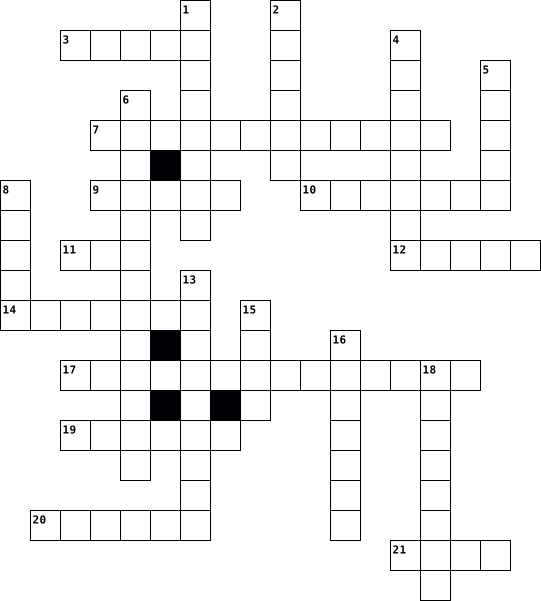
Across
- Writing history as progressing to an "end point"
- 12 down claimed to only want to write about history "to show what actually ..."
- To see an educative purpose in studying history is ...
- Co-founder of the Annales journal, Marc ...
- Has a trunk
- Most common authors of 15 across
- Empirical methods for studying history were proposed by Leopold von ...
- Large marsupial
- The Enlightenment is sometimes called the "Age of ... "
- Records of yearly events written in the Middle Ages
- Author of Mediterranean, the foremost work of Annales history
- Hill, Hobsbawm and Thompson were all ... Marxist historians
- Wrote A History of the Decline and Fall of the Roman Empire, 18th Century
Down
- Period between ancient and modern history
- Thomas Macaulay was a proponent of ... history
- Flying mammal
- Annales history is all about writing "... history"
- The study of how history is written
- Thucydides wrote a history of the ... War
- According to Marx, all history is the history of ... conflict
- "The father of history"
- Likes to chase mice
- Annales history became dominant in France after World War ...
- Wrote Ecclesiastical History of the English People, 8th Century
- Empirical history is seen as treating history as a ...
- Man's best friend
26 Clues: Has a trunk • Flying mammal • Large marsupial • Man's best friend • Likes to chase mice • "The father of history" • Most common authors of 15 across • The study of how history is written • Period between ancient and modern history • Thucydides wrote a history of the ... War • Co-founder of the Annales journal, Marc ... • Thomas Macaulay was a proponent of ... history • ...
From Socrates to the Scientific Method 2025-10-06

Across
- A proposed explanation made on the basis of limited evidence as a starting point for investigation.
- An 18th-century European movement emphasizing reason and individualism.
- An intensifier used to mean "truly" or "in effect," often for a metaphor.
- Present, appearing, or found everywhere.
- Just beginning to exist and showing signs of future potential.
- The detailed examination of the elements or structure of something.
- The power of the mind to think, understand, and form judgments logically.
- Relating to a method of questioning to stimulate critical thinking.
- A belief that goes against established, orthodox opinion.
- The act of asking for information; an official investigation.
Down
- Based on observation or experience rather than pure theory.
- The line of descent or ancestry, often of an idea.
- Forward or onward movement toward a destination or a more advanced state.
- A well-substantiated explanation of some aspect of the natural world.
- A set of beliefs laid down by an authority as unchallengeably true.
- A doubting attitude or a questioning of knowledge claims.
- The "rebirth" of art and learning in Europe from the 14th to the 16th centuries.
- An action carried out with minimum effort or reflection.
- The principles of correct reasoning.
- A person who annoys others to provoke them into thought or action.
20 Clues: The principles of correct reasoning. • Present, appearing, or found everywhere. • The line of descent or ancestry, often of an idea. • An action carried out with minimum effort or reflection. • A doubting attitude or a questioning of knowledge claims. • A belief that goes against established, orthodox opinion. • ...
Medieval Japan 2026-03-11

Across
- chain of islands such as Japan
- literature in medieval Japan was often produced by-
- Also referred to as the Sea of Japan
- Japanese drama used large, wooden masks to depict comedy or dramatic stories using exaggerated movements
- Major religion diffused through China & Korea & influenced Japan
- introduced new ideas about suffering & enlightenment
- religion in Japan focused on meditation & self-discipline to achieve enlightenment & influence samurai culture
- person best known for accepting ideas of Taoism & Confucianism into government & social life
- concept influenced Prince Shotoku in shaping ideas about the divine ruler of Japan
- elegant handwriting
- handscrolls with paintings & test
- the real power in decision-making in feudal rests on this military dictator
Down
- paintings focused on landscapes & literature
- amount of main home islands in Japan
- focuses on ancestor worship
- popular religion in Japan because it was simple & accessible to ordinary people by allowing them to seek rebirth through faith & prayer
- much of Japan is mountainous, most people live—
- the sun goddess, emperor is believed to be descended from
- social class in feudal Japan followed the moral code known at Bushido
- encourages a person practicing Buddhism to live morally & think wisely
- main goal of Buddhism is to achieve—
- The Tale of __________ is significant in Japanese history due to it being an early novel
22 Clues: elegant handwriting • focuses on ancestor worship • chain of islands such as Japan • handscrolls with paintings & test • amount of main home islands in Japan • Also referred to as the Sea of Japan • main goal of Buddhism is to achieve— • paintings focused on landscapes & literature • much of Japan is mountainous, most people live— • ...
Causes of the Revolution Crossword 2026-01-30

Across
- Local governments weakened by British authority
- British agents who enforced trade laws
- Punitive laws passed to punish Massachusetts
- Military rule imposed in Massachusetts
- Permanent British troops stationed in the colonies
- Colonists who remained loyal to the British Crown
- Ultimate goal of the American colonies
- tea party Colonial protest where tea was dumped into Boston Harbor
- Financial burden Britain faced after the French and Indian War
- 1765 law that taxed printed materials in the colonies
- Issue raised by the phrase “no taxation without representation”
- acts Laws placing duties on imported goods like tea and glass
- empire Global power that controlled the American colonies
- Colonial opposition to British control
- Conflict that left Britain deeply in debt
- British limits placed on colonial commerce
- Law that gave the British East India Company control of tea sales
Down
- Colonists who opposed British rule
- Colonial strategy of refusing to buy British goods
- Exclusive control granted to the East India Company
- Illegal trade used to avoid British taxes
- Public demonstrations against British policies
- Policy of charging money to the colonies to raise revenue
- Law requiring colonists to house British soldiers
- Movement promoting natural rights and self-government
- British lawmaking body that governed the colonies
26 Clues: Colonists who opposed British rule • British agents who enforced trade laws • Military rule imposed in Massachusetts • Ultimate goal of the American colonies • Colonial opposition to British control • Illegal trade used to avoid British taxes • Conflict that left Britain deeply in debt • British limits placed on colonial commerce • ...