
environment Crossword Puzzles
Canada Geography & Environment 2021-01-14

Across
- _____ Territory borders the U.S. Alaska
- ocean to the west
- The St. Lawrence river, nicknamed the ____ Lawrence River by Mr. McSwain
- big gulf in the middle of Canada
- ____ mountains are 2,000 miles long
- The largest Great Lake
- the ___ ___ are 5 water sources that border the US and Canada
- northern territory with LOTS of islands
- ocean to the east
- _____west territory
Down
- ocean to the north
- You might spot "Big Foot" here
- large, mostly uninhabitable area loaded with natural resources
- albertasaurus bones have been found here
- Most canadians live in ______ern Canada
- the "E" in HOMES
- New ______ has a population of around 750,000 people
- Which prince has a little island named after him?
18 Clues: the "E" in HOMES • ocean to the west • ocean to the east • ocean to the north • _____west territory • The largest Great Lake • You might spot "Big Foot" here • big gulf in the middle of Canada • ____ mountains are 2,000 miles long • _____ Territory borders the U.S. Alaska • Most canadians live in ______ern Canada • northern territory with LOTS of islands • ...
Environment 2021-02-10

Across
- a layer of gases in the sky that prevents harmful radiation from the sun from reaching the Earth
- rain that contains harmful acid which can damage the environment and is caused by chemicals in the air, for example from cars or factories
- the gradual warming of the air surrounding the Earth
- a general increase in world temperatures caused by increased amounts of carbon dioxide around the Earth
Down
- the process of making air, water, soil etc dangerously dirty and not suitable for people to use
- the air, water, and land in which people, animals, and plants live
- the cutting or burning down of all the trees in an area
7 Clues: the gradual warming of the air surrounding the Earth • the cutting or burning down of all the trees in an area • the air, water, and land in which people, animals, and plants live • the process of making air, water, soil etc dangerously dirty and not suitable for people to use • ...
environment 2021-04-26

Across
- most water bottles are?
- to bring down to a smaller extent, size, amount, number.
- made from trees.
- the process of converting waste materials into new materials.
Down
- organic waste that can compost.
- very strong.
- the act of taking old items that you might consider throwing away and finding a new use for them.
7 Clues: very strong. • made from trees. • most water bottles are? • organic waste that can compost. • to bring down to a smaller extent, size, amount, number. • the process of converting waste materials into new materials. • the act of taking old items that you might consider throwing away and finding a new use for them.
Environment 2021-12-06

Across
- not showing a proper sense of responsibility
- a prolonged period of abnormally low rainfall
- the production and discharge of something
- Change in state from solid to liquid
Down
- seriously at risk of extinction
- existing in or caused by nature
- Find new ways to use a product
7 Clues: Find new ways to use a product • seriously at risk of extinction • existing in or caused by nature • Change in state from solid to liquid • the production and discharge of something • not showing a proper sense of responsibility • a prolonged period of abnormally low rainfall
Environment 2021-07-08

Across
- a large amount of water covers an area which is usually dry
- a biological community of interacting organisms and their physical environment
- a gas, liquid, or solid from natural sources
Down
- Not eating or using any animal products
- Bad for forests
- all the animals, plants and other things
- a prolonged period of abnormally hot weather
7 Clues: Bad for forests • Not eating or using any animal products • all the animals, plants and other things • a prolonged period of abnormally hot weather • a gas, liquid, or solid from natural sources • a large amount of water covers an area which is usually dry • a biological community of interacting organisms and their physical environment
Environment 2021-06-24

Across
- The world of non living elements
- Example of Abiotic
- Thin layer of atmosphere
- one of the example of Lithosphere
Down
- This is one of the components of Environment.
- Example of Biotic
- Referred as water
7 Clues: Example of Biotic • Referred as water • Example of Abiotic • Thin layer of atmosphere • The world of non living elements • one of the example of Lithosphere • This is one of the components of Environment.
Environment 2023-12-05

Across
- The beauty that surrounds us.
- An item that is useless in its original form.
- The reason glaciers melt causing sea levels to rise and the reason the planet is overheating.
- A good smelling plant that is very beautiful.
Down
- Something that grows on land, is big and produces fruits or flowers or only leaves.
- The smartest living organism on earth.
- The harmful gas that we inhale near factories.
7 Clues: The beauty that surrounds us. • The smartest living organism on earth. • An item that is useless in its original form. • A good smelling plant that is very beautiful. • The harmful gas that we inhale near factories. • Something that grows on land, is big and produces fruits or flowers or only leaves. • ...
ENVIRONMENT 2024-01-03

Across
- Undomesticated animal species
- A verb that means destroyed or spoiled.
- An environmental problem
- Not harmful to the environment
- A noun that means the air, land, and water where people and animals live.
Down
- Seriously at risk of extinction
- A verb that talks about a solution.
7 Clues: An environmental problem • Undomesticated animal species • Not harmful to the environment • Seriously at risk of extinction • A verb that talks about a solution. • A verb that means destroyed or spoiled. • A noun that means the air, land, and water where people and animals live.
environment 2023-11-30

Across
- when there is a lot of water
- that's what bottles do
- a lot of dirt
Down
- it can be used once
- animals and many plants live the
- we walk on it it's brown
- they throw garbage there
7 Clues: a lot of dirt • it can be used once • that's what bottles do • we walk on it it's brown • they throw garbage there • when there is a lot of water • animals and many plants live the
environment 2023-11-30

Across
- many things are made from this material, for example:bottle
- the place where animals live
- you can use thing only one time
- person that want to protect the environment
Down
- when cars are standing
- because of it difficult to breathe
- how we can call animals that can disappear?
7 Clues: when cars are standing • the place where animals live • you can use thing only one time • because of it difficult to breathe • how we can call animals that can disappear? • person that want to protect the environment • many things are made from this material, for example:bottle
Environment 2024-01-19

Across
- daily need
- field
- living organisms
- shelter
Down
- fire
- home of animals
- monsoon
7 Clues: fire • field • monsoon • shelter • daily need • home of animals • living organisms
Environment 2024-02-27

Across
- Green
- is blue and no more a limit
- Such energy production is dangerous
- Avoid doing that!
Down
- Reduce Recycle Reuse
- reuse materials
- No fossil fuel energy
7 Clues: Green • reuse materials • Avoid doing that! • Reduce Recycle Reuse • No fossil fuel energy • is blue and no more a limit • Such energy production is dangerous
ENVIRONMENT 2024-04-12

Across
- living organisms
- the domain of air
- : the domain of land
Down
- the domain of water
- non - living organisms
- - things created by nature
- made : things created by humans
7 Clues: living organisms • the domain of air • the domain of water • : the domain of land • non - living organisms • - things created by nature • made : things created by humans
ENVIRONMENT 2024-04-18

Across
- Top layer of Earth for plants.
- Earth's protective layer of gases.
- Living organisms in an ecosystem.
- Earth's water domain.
- Earth's solid surface layer.
Down
- Non-living environmental elements.
- Earth's solid surface layer.
- Life-supporting zone of Earth.
8 Clues: Earth's water domain. • Earth's solid surface layer. • Earth's solid surface layer. • Top layer of Earth for plants. • Life-supporting zone of Earth. • Living organisms in an ecosystem. • Non-living environmental elements. • Earth's protective layer of gases.
Environment 2022-05-22

Across
- cutting trees
- temperatures rising
- trash or garbage
Down
- shifts in temperatures
- garbage in the water
- hunting animals illegaly
- harmful substances in the air
7 Clues: cutting trees • trash or garbage • temperatures rising • garbage in the water • shifts in temperatures • hunting animals illegaly • harmful substances in the air
Environment 2025-04-15

Across
- The introduction to the Constitution
- Many different cultures and identities
- Treating someone unfairly because of their identity)
Down
- Opposite of discrimination
- The book of rules for a country
- Members of a country
- Government by the people
7 Clues: Members of a country • Government by the people • Opposite of discrimination • The book of rules for a country • The introduction to the Constitution • Many different cultures and identities • Treating someone unfairly because of their identity)
Environment 2025-09-28

Across
- space of classroom is designed and laid out both inside and outside includes the learning centers/areas furniture and equipment materials
- print found every day in everyday life such as signs,labels,and logos used as a learning tool in the classroom
- guidelines and expectations of behavior that help create positive and productive learning environment
- classroom setting that ensures the physical and emotional safety of all students
Down
- flow of time in early learning spaces including the timing sequence and length of routines and activities throughout the day
- interactions and relationships between children, teachers, and family members within early learning spaces
- setting in which children learn including the classroom setup, materials, and interactions with teachers and peers
7 Clues: classroom setting that ensures the physical and emotional safety of all students • guidelines and expectations of behavior that help create positive and productive learning environment • interactions and relationships between children, teachers, and family members within early learning spaces • ...
Geography Terms and Definitions 2020-04-06

Across
- complex community made up of living organisms that interact with each other and with their environment, made up of biotic and abiotic components
- process by which radiation from a planet's atmosphere warms the planet's surface to a temperature above what it would be without this atmosphere
- what happens to all species after a long time
- nonliving components of an environment
- a natural event that causes much damage on plant and animal life
- the transformation of fertile land into relatively dry desert
- measure of the amount of salt present in the soil
- variety of living organisms found in an environment
- removal of trees and other plant life form
- plant, animal or other organism that is not native to an area, and whose introduction has negative effects on its new environment
Down
- a particular philosophy of life or conception of the world.
- process that removes soil, rocks, sand and transports it somewhere else
- key concept in geography: the ongoing capacity of Earth to maintain all life
- very small pieces of plastic that pollute the environment
- series of processes by which carbon compounds are interconverted in the environment
- human-caused rise of the average temperature of the Earth's climate system
- movement of tectonic plates
- condensation, precipitation, runoff, evaporation
- process in which sediments, soil and rocks are added to a landform or land mass
- a large naturally occurring community of flora and fauna occupying a major habitat
- any substance that is released into the environment that causes damage
- barrier that stops or restricts the flow of water or underground streams
22 Clues: movement of tectonic plates • nonliving components of an environment • removal of trees and other plant life form • what happens to all species after a long time • condensation, precipitation, runoff, evaporation • measure of the amount of salt present in the soil • variety of living organisms found in an environment • ...
Geography crossword puzzle 2022-07-04

Across
- What is the number of people living in a unit area of land called?
- What is a built up area called?
- What is the pollution caused by an increase in LED usage?
- What is a physical area on the earth’s surface called?
- What are the advantages of going to a city called?
- What is a physical area on the Earth’ surface called?
- Refers to our surroundings and can either be physical or human.
- What is the increase in the proportion of people living in urban areas called?
- What are the disadvantages of going to a city called?
- What is a multicultural society with many people from diverse cultural backgrounds called?
- What is the area of the earth’s surface that holds special meaning for people?
- What is the pollution caused by leakage fuel storage tanks into rivers?
- What is poor air quality affecting half the world’s urban population called?
Down
- What is the pollution primarily caused by the burning of fuelwood and paraffin for cooking and heating?
- Consist of living and non-living things that are found naturally.
- What job opportunities are called?
- up areas What is an area with dense transport networks and densely packed buildings called
- What is the environment that has not been affected by people?
- What is the environment where people live on farms and villages called?
- What is the movement of people from rural to urban areas called?
- Refers to surface runoff that results from melting snow.
- What is the pollution related to and primarily caused by unnecessary honking called?
22 Clues: What is a built up area called? • What job opportunities are called? • What are the advantages of going to a city called? • What is a physical area on the Earth’ surface called? • What are the disadvantages of going to a city called? • What is a physical area on the earth’s surface called? • Refers to surface runoff that results from melting snow. • ...
U3 - THE WONDERS OF NATURE 2014-11-17

Across
- death of a species
- synonym of animal
- huge, very big
- the protection of the natural environment
- happen
- synonym of worried
- 1.000.000.000.000
- when you ruin something
Down
- synonym of rule
- what humans do to destroy the environment
- synonym of ruin
- important
- great, amazing
- synonym of build
- the way you feel, smell, see, hear, touch
- the natural world
- stay alive
- thing
18 Clues: thing • happen • important • stay alive • great, amazing • huge, very big • synonym of rule • synonym of ruin • synonym of build • synonym of animal • the natural world • 1.000.000.000.000 • death of a species • synonym of worried • when you ruin something • what humans do to destroy the environment • the way you feel, smell, see, hear, touch • the protection of the natural environment
Geography crossword puzzle 2022-07-04

Across
- What is the number of people living in a unit area of land called?
- What is a built up area called?
- What is the pollution caused by an increase in LED usage?
- What is a physical area on the earth’s surface called?
- What are the advantages of going to a city called?
- What is a physical area on the Earth’ surface called?
- Refers to our surroundings and can either be physical or human.
- What is the increase in the proportion of people living in urban areas called?
- What are the disadvantages of going to a city called?
- What is a multicultural society with many people from diverse cultural backgrounds called?
- What is the area of the earth’s surface that holds special meaning for people?
- What is the pollution caused by leakage fuel storage tanks into rivers?
- What is poor air quality affecting half the world’s urban population called?
Down
- What is the pollution primarily caused by the burning of fuelwood and paraffin for cooking and heating?
- Consist of living and non-living things that are found naturally.
- What job opportunities are called?
- up areas What is an area with dense transport networks and densely packed buildings called
- What is the environment that has not been affected by people?
- What is the environment where people live on farms and villages called?
- What is the movement of people from rural to urban areas called?
- Refers to surface runoff that results from melting snow.
- What is the pollution related to and primarily caused by unnecessary honking called?
22 Clues: What is a built up area called? • What job opportunities are called? • What are the advantages of going to a city called? • What is a physical area on the Earth’ surface called? • What are the disadvantages of going to a city called? • What is a physical area on the earth’s surface called? • Refers to surface runoff that results from melting snow. • ...
Geography crossword puzzle 2022-07-04

Across
- What is the number of people living in a unit area of land called?
- What is a built up area called?
- What is the pollution caused by an increase in LED usage?
- What is a physical area on the earth’s surface called?
- What are the advantages of going to a city called?
- What is a physical area on the Earth’ surface called?
- Refers to our surroundings and can either be physical or human.
- What is the increase in the proportion of people living in urban areas called?
- What are the disadvantages of going to a city called?
- What is a multicultural society with many people from diverse cultural backgrounds called?
- What is the area of the earth’s surface that holds special meaning for people?
- What is the pollution caused by leakage fuel storage tanks into rivers?
- What is poor air quality affecting half the world’s urban population called?
Down
- What is the pollution primarily caused by the burning of fuelwood and paraffin for cooking and heating?
- Consist of living and non-living things that are found naturally.
- What job opportunities are called?
- up areas What is an area with dense transport networks and densely packed buildings called
- What is the environment that has not been affected by people?
- What is the environment where people live on farms and villages called?
- What is the movement of people from rural to urban areas called?
- Refers to surface runoff that results from melting snow.
- What is the pollution related to and primarily caused by unnecessary honking called?
22 Clues: What is a built up area called? • What job opportunities are called? • What are the advantages of going to a city called? • What is a physical area on the Earth’ surface called? • What are the disadvantages of going to a city called? • What is a physical area on the earth’s surface called? • Refers to surface runoff that results from melting snow. • ...
Environment 2023-03-22

Across
- litter
- disposal site
- using less energy
Down
- reusing
- natural
- converts sunlight into power
- rubbish
7 Clues: litter • reusing • natural • rubbish • disposal site • using less energy • converts sunlight into power
Environment 2022-09-27

Across
- the main source of life
- beautiful and adorable plant
- aliving organism
Down
- a mix of oxygen and carbon dioxide and other gases
- the main source of oxygen
- a layer of the Earth
- environment
7 Clues: environment • aliving organism • a layer of the Earth • the main source of life • the main source of oxygen • beautiful and adorable plant • a mix of oxygen and carbon dioxide and other gases
Environment 2022-09-27

Across
- is a symbol of beauty
- is a living organism
- a big plant
- a space surrounding of us
Down
- is layer of the earth
- is the main source of life
- is a oxygen
7 Clues: is a oxygen • a big plant • is a living organism • is layer of the earth • is a symbol of beauty • a space surrounding of us • is the main source of life
ENVIRONMENT 2020-12-19

Across
- _______ effect
- _______ power
- _______ waste
- _______ fuels
Down
- environmental ________
- _______ energy
- _______ fumes
7 Clues: _______ fumes • _______ power • _______ waste • _______ fuels • _______ energy • _______ effect • environmental ________
environment 2021-03-22

Across
- Mother ...needs help
- your friend to recycle
- The enviromental ... is bad
Down
- ... pollute the environment
- Cars emit...
- Rubbish goes to...
- Area or...
7 Clues: Area or... • Cars emit... • Rubbish goes to... • Mother ...needs help • your friend to recycle • ... pollute the environment • The enviromental ... is bad
environment 2021-04-26

Across
- most water bottles are?
- to bring down to a smaller extent, size, amount, number.
- made from trees.
- the process of converting waste materials into new materials.
Down
- organic waste that can compost.
- very strong.
- the act of taking old items that you might consider throwing away and finding a new use for them.
7 Clues: very strong. • made from trees. • most water bottles are? • organic waste that can compost. • to bring down to a smaller extent, size, amount, number. • the process of converting waste materials into new materials. • the act of taking old items that you might consider throwing away and finding a new use for them.
Environment 2022-09-11

Across
- To use something again
- To collect and treat used objects and materials that are ready to be thrown out in order to produce materials that can be used again
- Damage caused to water, air by dangerous substances
- To put a plant into the ground or into a container of soil so that it will grow
- To make a tree or other plant fall to the ground by cutting it near the bottom
Down
- A container for waste that will be recycled, for example, paper or glass
- Small pieces of rubbish that have been left lying on the ground in public places
7 Clues: To use something again • Damage caused to water, air by dangerous substances • A container for waste that will be recycled, for example, paper or glass • To make a tree or other plant fall to the ground by cutting it near the bottom • To put a plant into the ground or into a container of soil so that it will grow • ...
Environment 2024-03-12

Across
- an instrument used to see the wind direction
- The removal of soil
- Blanket covering Earth
Down
- The cutting of trees
- Instrument used to measure wind speed
- is the outermost layer of the earth atmosphere called
- The warming of Earth due to carbon dioxide/green house gas
7 Clues: The removal of soil • The cutting of trees • Blanket covering Earth • Instrument used to measure wind speed • an instrument used to see the wind direction • is the outermost layer of the earth atmosphere called • The warming of Earth due to carbon dioxide/green house gas
Environment 2023-10-17

Across
- very dangerous and big
- water everywhere
- you can play with it
Down
- Storm, better be at home
- perfect to go out with friends
- we need an umbrella
- you can feel it in your face
7 Clues: water everywhere • we need an umbrella • you can play with it • very dangerous and big • Storm, better be at home • you can feel it in your face • perfect to go out with friends
Environment 2025-04-23

Across
- changing waste into new reusable objects
- Things found in the wild
- The amazon has the biggest one
Down
- Bees love them
- restoration of the environment and of wildlife
- A stream of water
- They grow out the ground
7 Clues: Bees love them • A stream of water • They grow out the ground • Things found in the wild • The amazon has the biggest one • changing waste into new reusable objects • restoration of the environment and of wildlife
Ecology B 2012-12-29

Across
- The zone of life on Earth; sum total of all ecosystems on Earth.
- A system composed of organisms and nonliving components of an environment.
- The total surroundings of an organism or a group of organisms.
- A process in which energy changes from one form to another form while some of the energy is lost to the environment.
- The artificial cultivation of food, fiber, and other goods by the systematic growing and harvesting of various organisms.
- An organism associated with a water environment.
- A large area or geographical region with distinct plant and animal groups adapted to that environment.
- Chemical or physical factor that limits the existence, growth, abundance, or distribution of an individual organism or a population.
Down
- A series of predictable and orderly changes within an ecosystem over time.
- The movement of abiotic factors between the living and nonliving components within ecosystems; also known as nutrient cycles (i.e., water cycle, carbon cycle, oxygen cycle, and nitrogen cycle).
- A set of interacting or interdependent components, real or abstract, that form an integrated whole. An open system is able to interact with its environment. A closed system is isolated from its environment.
- A term that describes an organism associated with a land environment.
- The study of the relationships between organisms and their interactions with the environment.
- Nonliving factor in an ecosystem.
- A term that describes a living or once‐living organism in an ecosystem.
- An area that provides an organism with its basic needs for survival.
16 Clues: Nonliving factor in an ecosystem. • An organism associated with a water environment. • The total surroundings of an organism or a group of organisms. • The zone of life on Earth; sum total of all ecosystems on Earth. • An area that provides an organism with its basic needs for survival. • A term that describes an organism associated with a land environment. • ...
Science Vocabulary 2023-08-24

Across
- something we can do without harming the environment
- a garbage dump or a big hole in the ground where garbage is stored
- air pollution caused by burning fossil fuels in cars, homes,factories
- combination of living and non-living things in an area
- anything to do with factories and using machines to process or produce things
- has to do with the sun
- layer of the atmosphere that protects us from UV rays
Down
- to use or buy something
- substance that causes cancer
- energy released by breaking up an atom
- product can rot or turn back into the earth
- protecting the environment and living things in an environment
- ideal environment for a certain creature
- human created waste that damages the environment
- moved from one location ro another.
- product means that it is environmentally-friendly or not harmful to the environment
16 Clues: has to do with the sun • to use or buy something • substance that causes cancer • moved from one location ro another. • energy released by breaking up an atom • ideal environment for a certain creature • product can rot or turn back into the earth • human created waste that damages the environment • something we can do without harming the environment • ...
Ecology Unit 2021-05-10

Across
- organisms that feed on both meat and autotrophs
- autotrophs
- a species' average population size in a particular habitat
- relationship where both organism benefit
- progressive changes in the composition of an ecological community over time
- one path of energy flow in an environment
- the position organisms appear on a food chain
- regions on around the Earth with similar climates, plants, and animals
- biotic and abiotic factors in an area
- organisms that feed on dead organic material
- organisms that eat other foods
- include disease, competition, and predation
- organisms that hunt their food
- nonliving factors in an environment
Down
- all possible feeding relationships in an ecosystem
- includes, forest fires, unusual weather, flooding
- the place in which organisms lives out its life
- close interactions between species
- biotic and abiotic factors that restrict the existence of organisms in a specific environment
- organisms that only feed on meat
- the study of interactions between organisms and their environment
- species first to colonize an environment that has been disrupted
- organisms that only feed on autotrophs
- the variety of life in the world or in a particular habitat or ecosystem
- biological material derived from living or nonliving organisms
- different species that live together in a habitat
- relationship where one organism benefits and the other is harmed
- living factors in an environment
- graphic model of energy flow in a community
- relationship where one organism benefits and the other neither harmed or benefited
- role an organisms play in an environment
31 Clues: autotrophs • organisms that eat other foods • organisms that hunt their food • organisms that only feed on meat • living factors in an environment • close interactions between species • nonliving factors in an environment • biotic and abiotic factors in an area • organisms that only feed on autotrophs • relationship where both organism benefit • ...
Ecology crossword 2013-04-22

Across
- The part of the earth where life exist
- Nonliving factors in the environment
- An organism that gets energy by breaking down the remains of dead organisms
- The study of interaction between organisms and their environment
- The environment where an organism lives
- Organisms that eat producers or other organisms for energy
- An organism that feeds on another living creature, usually without killing it
- A consumer that eats plants
- An organisms' way of life
Down
- An organism that is eaten by another organism
- A close, long term relationship between two or more species
- Living factors in the environment
- Organisms that use sunlight directly to make sugar
- All of the populations of different species that live and interact in an area
- A consumer that eats animals
- A community of organisms and their nonliving environment
- A group of individuals of the same species
- An animal that feeds on dead animals
18 Clues: An organisms' way of life • A consumer that eats plants • A consumer that eats animals • Living factors in the environment • Nonliving factors in the environment • An animal that feeds on dead animals • The part of the earth where life exist • The environment where an organism lives • A group of individuals of the same species • An organism that is eaten by another organism • ...
environment 2021-03-21

Across
- emit fumes
- environmental pollution is bad
- goes to landfill
- your friend to recycle
Down
- pollute the environment
- nature needs help
- or region
7 Clues: or region • emit fumes • goes to landfill • nature needs help • your friend to recycle • pollute the environment • environmental pollution is bad
environment 2021-03-21

Across
- rubbish goes to the...
- ...your friend to recycle
- Area or...
Down
- The environmental ...is bad
- pollute the environment
- Mother ...needs help
- Cars emit ...
7 Clues: Area or... • Cars emit ... • Mother ...needs help • rubbish goes to the... • pollute the environment • ...your friend to recycle • The environmental ...is bad
Environment 2022-03-22

Across
- all the waters on the earth's surface
- fog or haze intensified by smoke or other atmospheric pollutants
- refuge or safety from pursuit, persecution, or other danger
- forest clearance is the removal of a forest
Down
- prevention of wasteful use of a resource
- the presence in or introduction into the environment of a substance which has harmful or poisonous effects
- capable of being renewed
7 Clues: capable of being renewed • all the waters on the earth's surface • prevention of wasteful use of a resource • forest clearance is the removal of a forest • refuge or safety from pursuit, persecution, or other danger • fog or haze intensified by smoke or other atmospheric pollutants • ...
environment 2022-03-23

Across
- Fahrgemeinschaft
- (Umwelt)Verschmutzung
- Dürre
- beschädigen
Down
- reduzieren
- Gift
- Heizkörper
7 Clues: Gift • Dürre • reduzieren • Heizkörper • beschädigen • Fahrgemeinschaft • (Umwelt)Verschmutzung
Environment 2022-03-24

Across
- takecareof
- reduce
- change
Down
- putinthebin
- makeextinct
- handle
- becomeextinct
7 Clues: handle • reduce • change • takecareof • putinthebin • makeextinct • becomeextinct
Environment 2022-02-17

Across
- you find lots of sand here
- people leave it on the beaches
- the water by the beach
- water bottles are made out of this
Down
- where plants and animals live
- where you should put your rubbish
- turtles or birds or fish or monkeys
7 Clues: the water by the beach • you find lots of sand here • where plants and animals live • people leave it on the beaches • where you should put your rubbish • water bottles are made out of this • turtles or birds or fish or monkeys
Environment 2021-06-24

Across
- tropical areas with consistently heavy rainfall
- harmful for the environment
- other word for rubbish
- large body of water
- buying organic food or using renewable energy are great ways to live more…
Down
- by dividing your trash you are…
- the discharge of something, e.g. gas
7 Clues: large body of water • other word for rubbish • harmful for the environment • by dividing your trash you are… • the discharge of something, e.g. gas • tropical areas with consistently heavy rainfall • buying organic food or using renewable energy are great ways to live more…
Environment 2022-09-27

Across
- the creature of nature
- and beautiful plant
- surroundings
Down
- the liner of earth
- main source of heydrogen
- main source of life
- oxygen
7 Clues: oxygen • surroundings • the liner of earth • and beautiful plant • main source of life • the creature of nature • main source of heydrogen
Environment 2022-09-27

Across
- is a symbol of beauty
- is a living organism
- a big plant
- a space surrounding of us
Down
- is layer of the earth
- is the main source of life
- is a oxygen
7 Clues: is a oxygen • a big plant • is a living organism • is layer of the earth • is a symbol of beauty • a space surrounding of us • is the main source of life
Environment 2023-11-30

Across
- pollution(It is happens when land bring dirty?)
- is synonim of spend)
- fuels(Oil and coal are what?)
- wants to protect the environment?)
- happens when trees cut down?)
Down
- is a synonim of glitter,trash)
- emmit from factories?)
7 Clues: is synonim of spend) • emmit from factories?) • fuels(Oil and coal are what?) • happens when trees cut down?) • is a synonim of glitter,trash) • wants to protect the environment?) • pollution(It is happens when land bring dirty?)
environment 2024-03-24

Across
- The forced movement of people from their homes or communities due to various factors, including environmental disasters such as flooding, droughts, or sea level rise.
- The degree to which a person, community, or ecosystem is susceptible to harm, damage, or disruption from external stresses or disturbances, such as climate change.
- The process of adjusting to changing environmental conditions or circumstances to minimize negative impacts and maximize opportunities for resilience and sustainability.
Down
- The ability to meet the needs of the present generation without compromising the ability of future generations to meet their own needs, ensuring the balance between economic, social, and environmental factors.
- The capacity of individuals, communities, or ecosystems to withstand and recover from the adverse effects of environmental changes or disasters, while maintaining essential functions and structures.
- The variety and variability of life forms on Earth, including species diversity, genetic diversity, and ecosystem diversity, which play crucial roles in maintaining ecosystem functions and services.
- Actions taken to reduce or prevent the emission of greenhouse gases and other pollutants into the atmosphere, thereby mitigating the impacts of climate change on the environment and society.
7 Clues: The degree to which a person, community, or ecosystem is susceptible to harm, damage, or disruption from external stresses or disturbances, such as climate change. • The forced movement of people from their homes or communities due to various factors, including environmental disasters such as flooding, droughts, or sea level rise. • ...
Environment 2024-06-01

Across
- reuse something
- something that you mustn't do
- plastic bags
Down
- work without pay
- people protesting
- it attracts the animals
- animales and plants
7 Clues: plastic bags • reuse something • work without pay • people protesting • animales and plants • it attracts the animals • something that you mustn't do
environment 2023-07-04

Across
- The process of catching too many fish, depleting the population.
- Changes in long-term weather patterns on Earth.
- Materials that are discarded as no longer useful or required.
- The discharge of gases, especially from vehicles or factories.
Down
- Permanent destruction of forests for other land uses.
- The release of harmful substances into the environment.
- A species at risk of becoming extinct.
7 Clues: A species at risk of becoming extinct. • Changes in long-term weather patterns on Earth. • Permanent destruction of forests for other land uses. • The release of harmful substances into the environment. • Materials that are discarded as no longer useful or required. • The discharge of gases, especially from vehicles or factories. • ...
Environment 2023-03-21

Across
- A violently rotating column of air touching the ground
- Large animal that lives in ocean
- A mountain or hill having a crater or vent through which lava erupts
- Flightless bird that lives in Antarctica
Down
- Having too many people for the amount of food, materials and space
- The branch of science concerned with the processes of the atmosphere
- A low area of land between hills or mountains with a river or stream flowing through it
7 Clues: Large animal that lives in ocean • Flightless bird that lives in Antarctica • A violently rotating column of air touching the ground • Having too many people for the amount of food, materials and space • The branch of science concerned with the processes of the atmosphere • A mountain or hill having a crater or vent through which lava erupts • ...
Environment 2024-11-27

Across
- footprint The act of cutting down or clearing forests, often causing environmental harm.
- change A long-term alteration in Earth's weather patterns, often linked to human activities like burning fossil fuels.
- The variety of life in the world or in a particular habitat often considered important for ecosystems
Down
- Energy that comes from sources that are naturally replenished, such as solar, wind, or hydropower.
- The total amount of greenhouse gases emitted directly or indirectly by an individual or organization.
- energy The release of harmful substances into the environment, especially from human activities.
- The practice of using natural resources responsibly to ensure they are available for future generations.
7 Clues: footprint The act of cutting down or clearing forests, often causing environmental harm. • energy The release of harmful substances into the environment, especially from human activities. • Energy that comes from sources that are naturally replenished, such as solar, wind, or hydropower. • ...
Environment 2025-03-07

Across
- waste don't eat everything that you are given
- the place we grow vegetables, plants or flowers
- trash, leftovers...
- use a material more then once
Down
- something we need to live healthy
- something we need to see
- the most important drink to our life
- turn materials into new products
8 Clues: trash, leftovers... • something we need to see • use a material more then once • turn materials into new products • something we need to live healthy • the most important drink to our life • waste don't eat everything that you are given • the place we grow vegetables, plants or flowers
environment 2023-05-11

Across
- waste material or things that are no longer wanted or needed
- damage caused to water, air, etc. by harmful substances or waste
- earth planet that humans live
- the invisible gaseous substance surrounding the earth,
Down
- an important topic or problem for debate or discussion
- the action or process of converting waste into reusable material.
- a container, typically made of glass or plastic and with a narrow neck, used for storing drinks or other liquids
7 Clues: earth planet that humans live • an important topic or problem for debate or discussion • the invisible gaseous substance surrounding the earth, • waste material or things that are no longer wanted or needed • damage caused to water, air, etc. by harmful substances or waste • the action or process of converting waste into reusable material. • ...
Environment 2025-10-04

Across
- release gas or radiation — EMIT
- help cause something — CONTRIBUTE
- to be replaced naturally — RENEWABLE
- from heat inside the Earth — GEOTHERMAL
Down
- use up all of something — RUN OUT O Gases that trap heat in the atmosphere — GREENHOUSE GASES
- chimneys releasing industrial fumes — SMOKESTACKS
- limits; not infinite — FINITE
- that converts air movement into electricity — WIND TURBINE
- average temperatures on Earth — GLOBAL WARMING
9 Clues: limits; not infinite — FINITE • release gas or radiation — EMIT • help cause something — CONTRIBUTE • to be replaced naturally — RENEWABLE • from heat inside the Earth — GEOTHERMAL • average temperatures on Earth — GLOBAL WARMING • chimneys releasing industrial fumes — SMOKESTACKS • that converts air movement into electricity — WIND TURBINE • ...
Environment 2025-10-17

Across
- – Home to trees, animals, and adventure.
- Reef – Colorful underwater world.
- – Hot, sandy, and mostly dry.
- – Smaller than a mountain, still majestic.
Down
- – Water falling beautifully from a height.
- – Tall, rocky, and hard to climb
- – Sandy shore by the sea.
7 Clues: – Sandy shore by the sea. • – Hot, sandy, and mostly dry. • – Tall, rocky, and hard to climb • Reef – Colorful underwater world. • – Home to trees, animals, and adventure. • – Water falling beautifully from a height. • – Smaller than a mountain, still majestic.
Climate Change 2015-07-29

Across
- No water in an environment at all
- Get you better when you are unwell
- Massive blocks of ice from the ice age
- An environment animals depend on for survival
- Water rushing over houses and animal inhabited areas
- The gaseous envelope around the earth
- The weather
- A strong breeze
- Demolition of plants, habitats or man made architecture
- Used in science
- The climate of the sky around
- The striking of one thing against another
Down
- Not the present or the future
- Often alight; sometimes just coals
- Bad chemicals into the environment
- Otherwise refered to as heat waves
- A particular animal specie wiped out for good
- Could be hot or cold
- Covers physics, chemistry, biology etc.
- Getting used to another environment
20 Clues: The weather • A strong breeze • Used in science • Could be hot or cold • Not the present or the future • The climate of the sky around • No water in an environment at all • Often alight; sometimes just coals • Bad chemicals into the environment • Otherwise refered to as heat waves • Get you better when you are unwell • Getting used to another environment • ...
bio+ ecology 2024-04-05

Across
- hunter
- looks for food
- living things that shape the environment
- Flying mammal
- organisms that make food
- a group of living things
- Has a trunk
- surrounding environment
- who eats who
- goes through photosynthesis
- position of an organism on the food chain
- eats only vegetables
- wherever organisms are able to live
- eats
Down
- eats plant for energy
- harmful
- breaks down dead organisms
- hunted
- a living thing
- Large marsupial
- non living things that shape the environment
- the relationship between organisms and their environment
- Likes to chase mice
- a group of living things
- eats meat and vegetables
- surroundings
- all the food chain in an ecosystem
- an organism that parasites attach to
- eats only meat
- Man's best friend
30 Clues: eats • hunter • hunted • harmful • Has a trunk • surroundings • who eats who • Flying mammal • a living thing • looks for food • eats only meat • Large marsupial • Man's best friend • Likes to chase mice • eats only vegetables • eats plant for energy • surrounding environment • organisms that make food • a group of living things • a group of living things • eats meat and vegetables • breaks down dead organisms • ...
sustainability SSB Danny 2019-05-08

Across
- plants
- p.e
- sunflower
- caring for the environment
- drive
- school yard
- patterns suburb
- rockets
- chair
- building
- nose
Down
- writing
- NAPLAN
- fence
- life and nature
- air
- things that change
- cactus
- learning
- sunny
- friend
21 Clues: p.e • air • nose • fence • drive • sunny • chair • plants • NAPLAN • cactus • friend • writing • rockets • learning • building • sunflower • school yard • life and nature • patterns suburb • things that change • caring for the environment
Geography crossword puzzle 2022-07-04

Across
- What is the pollution related to and primarily caused by unnecessary honking called?
- What is the pollution primarily caused by the burning of fuelwood and paraffin for cooking and heating?
- What is the environment that has not been affected by people?
- What is a physical area on the earth’s surface called?
- area What is an area with dense transport networks and densely packed buildings called
- Refers to our surroundings and can either be physical or human.
- What is the pollution caused by leakage fuel storage tanks into rivers?
- What job opportunities are called?
- What is the pollution caused by an increase in LED usage?
- What is the environment where people live on farms and villages called?
- Consist of living and non-living things that are found naturally.
Down
- What is the number of people living in a unit area of land called?
- What is a built up area called?
- What are the disadvantages of going to a city called?
- What is the movement of people from rural to urban areas called?
- What is a physical area on the Earth’ surface called?
- What is the increase in the proportion of people living in urban areas called?
- Refers to surface runoff that results from melting snow.
- What is the area of the earth’s surface that holds special meaning for people?
- What is a multicultural society with many people from diverse cultural backgrounds called?
- What are the advantages of going to a city called?
- What is poor air quality affecting half the world’s urban population called?
22 Clues: What is a built up area called? • What job opportunities are called? • What are the advantages of going to a city called? • What are the disadvantages of going to a city called? • What is a physical area on the Earth’ surface called? • What is a physical area on the earth’s surface called? • Refers to surface runoff that results from melting snow. • ...
Environmental Change and Management 2026-02-12

Across
- Biomes that are managed so they can be used long term without damage.
- A sequence showing how energy moves from one organism to another.
- Using resources in a way that meets present needs without harming future generations.
- Environmental change caused by human activities.
- The layer of gases surrounding the Earth.
- The solid outer layer of the Earth (crust and upper mantle).
- The study of landforms and how they are formed.
- A community of living things interacting with each other and their environment.
- A species that is native to and found only in one specific place.
- How the living and non-living parts of an ecosystem work together.
Down
- Actions taken to protect and sustainably use the environment.
- The links between people, places and environments.
- A species that is at risk of extinction.
- Natural processes in the physical environment, such as erosion or the water cycle.
- A feature or behaviour that helps an organism survive in its environment.
- The planning and control of resources or activities.
- Natural parts of the Earth’s surface, such as mountains and rivers.
- A variety of different living things in an area.
- The amount of land and water needed to support a person’s lifestyle.
- The surroundings and conditions in which living things exist.
- Changes to the environment over time.
- The study of water and how it moves through the environment.
- All the water on Earth, including oceans, rivers and groundwater.
- Landforms and environmental elements that occur naturally.
- All living organisms on Earth and the areas where they live.
25 Clues: Changes to the environment over time. • A species that is at risk of extinction. • The layer of gases surrounding the Earth. • The study of landforms and how they are formed. • Environmental change caused by human activities. • A variety of different living things in an area. • The links between people, places and environments. • ...
Environment 2021-06-24

Across
- The world of non living elements
- Example of Abiotic
- Thin layer of air
- one of the example of Lithosphere
Down
- This is one of the components of Environment.
- Example of Biotic
- Referred as water
7 Clues: Example of Biotic • Referred as water • Thin layer of air • Example of Abiotic • The world of non living elements • one of the example of Lithosphere • This is one of the components of Environment.
Environment 2021-07-16

Across
- celulares viejos, pilas, baterías, cargadores en desuso
- cajas, tubos de papel higiénico/de cocina
- latas de gaseosa, recipientes de conservas
- botellas, sorbetes, utensilios descartables, tapitas
Down
- cascara de huevos/de frutas, yerba, sobrantes de verduras, saquito de té
- lamparitas, botellas, utensilios rotos, frascos
- envoltorios, diarios, revistas
7 Clues: envoltorios, diarios, revistas • cajas, tubos de papel higiénico/de cocina • latas de gaseosa, recipientes de conservas • lamparitas, botellas, utensilios rotos, frascos • botellas, sorbetes, utensilios descartables, tapitas • celulares viejos, pilas, baterías, cargadores en desuso • cascara de huevos/de frutas, yerba, sobrantes de verduras, saquito de té
Environment 2019-04-18

Across
- /the increased levels of atmospheric carbon dioxide produced by the use of fossil fuels
- / can be used again after they have been treated using a special industrial process
- / able to be maintained at a certain rate or level
Down
- / not depleted when used
- being decomposed by bacteria or other living organisms
- / the color between blue and yellow in the spectrum
- / not harmful to the environment
7 Clues: / not depleted when used • / not harmful to the environment • / able to be maintained at a certain rate or level • / the color between blue and yellow in the spectrum • being decomposed by bacteria or other living organisms • / can be used again after they have been treated using a special industrial process • ...
Environment 2021-09-10

Across
- the world around us
- an individual animal, plant, or single-celled life form
- plants considered collectively, especially those found in a particular area or habitat.
- Tall plants
Down
- a plain grassy area
- another word for 'area'
- creatures that live in the environment
7 Clues: Tall plants • a plain grassy area • the world around us • another word for 'area' • creatures that live in the environment • an individual animal, plant, or single-celled life form • plants considered collectively, especially those found in a particular area or habitat.
Environment 2021-09-15

Across
- Is made of wood
- To much rain that causes the water level to rise
- To make less rubbish
- To leave your rubbish behind
Down
- Dirty water or air
- Trees getting cut down
- to reuse something
7 Clues: Is made of wood • Dirty water or air • to reuse something • To make less rubbish • Trees getting cut down • To leave your rubbish behind • To much rain that causes the water level to rise
environment 2021-03-21

Across
- environmental... is bad
- or...
- pollute the environment
- goes to ... .
Down
- ... needs help
- your friend to recycle
- emit ...
7 Clues: or... • emit ... • goes to ... . • ... needs help • your friend to recycle • environmental... is bad • pollute the environment
Environment 2021-04-25

Across
- effect
- rain
- rise
- energy
Down
- layer
- warming
- species
7 Clues: rain • rise • layer • effect • energy • warming • species
Environment 2017-07-08

Across
- if you know sth. well in advance
- the.....of carbon dioxide into the air contributes to global warming
Down
- syn for susceptible
- a system of electric wires or pipes carrying gas, for sending power over a large area
- a substance that pollutes sth, especially air and water
- the outer edge of an area or a group
- a place, person or thing that you get sth. from
7 Clues: syn for susceptible • if you know sth. well in advance • the outer edge of an area or a group • a place, person or thing that you get sth. from • a substance that pollutes sth, especially air and water • the.....of carbon dioxide into the air contributes to global warming • a system of electric wires or pipes carrying gas, for sending power over a large area
Environment 2021-12-03

Across
- Plants produce/release this gas
- damage to environment caused by motor vehicles
- Converting Trash into new products or goods
- this layer protects us from harmful rays of sun
Down
- Energy drawn from Sun
- source of flowing fresh water
- Amount of carbon dioxide we produce in our daily life
7 Clues: Energy drawn from Sun • source of flowing fresh water • Plants produce/release this gas • Converting Trash into new products or goods • damage to environment caused by motor vehicles • this layer protects us from harmful rays of sun • Amount of carbon dioxide we produce in our daily life
Environment 2021-11-22

Across
- the phenomena of the physical world collectively, including plants, animals, the landscape,
- Find new ways to use a product
- an overflowing of a large amount of water beyond its normal confines, especially over what is normally dry land.
Down
- Plants and animals
- Change in state from solid to liquid
- a large floating mass of ice detached from a glacier or ice sheet and carried out to sea.
- existing in or caused by nature; not made or caused by humankind
7 Clues: Plants and animals • Find new ways to use a product • Change in state from solid to liquid • existing in or caused by nature; not made or caused by humankind • a large floating mass of ice detached from a glacier or ice sheet and carried out to sea. • the phenomena of the physical world collectively, including plants, animals, the landscape, • ...
Environment 2021-11-22

Across
- the phenomena of the physical world collectively, including plants, animals, the landscape,
- Find new ways to use a product
- an overflowing of a large amount of water beyond its normal confines, especially over what is normally dry land.
Down
- Plants and animals
- Change in state from solid to liquid
- a large floating mass of ice detached from a glacier or ice sheet and carried out to sea.
- existing in or caused by nature; not made or caused by humankind
7 Clues: Plants and animals • Find new ways to use a product • Change in state from solid to liquid • existing in or caused by nature; not made or caused by humankind • a large floating mass of ice detached from a glacier or ice sheet and carried out to sea. • the phenomena of the physical world collectively, including plants, animals, the landscape, • ...
Environment 2025-10-17

Across
- – Mountain that can erupt with lava.
- – Land surrounded by water.
- – Dark space in rocks to explore.
Down
- – Open land with grass and flowers.
- – Low area between mountains.
- – High, steep rock face.
- – Slow-moving river of ice.
7 Clues: – High, steep rock face. • – Slow-moving river of ice. • – Land surrounded by water. • – Low area between mountains. • – Dark space in rocks to explore. • – Open land with grass and flowers. • – Mountain that can erupt with lava.
Environment 2024-05-31

Across
- global variation in weather
- ____
- a rise in Earth's temperature
- ____
Down
- animals and plants in risk of extinction
- the contamination of water
- the destruction of trees and rainforest
- the protection of natural environment
8 Clues: ____ • ____ • the contamination of water • global variation in weather • a rise in Earth's temperature • the protection of natural environment • the destruction of trees and rainforest • animals and plants in risk of extinction
Environment 2024-05-08

Across
- A permanent change in the Earth’s weather conditions
- Power obtained by the energy of the wind
- The action of planting seeds
- The process of making air, water, land etc dangerously dirty and not suitable for people to use
Down
- A general increase in world temperatures caused by increased amounts of carbon dioxide around the Earth
- The cutting or burning down of all the trees in an area
- The process of treating used objects or materials so that they can be used again
7 Clues: The action of planting seeds • Power obtained by the energy of the wind • A permanent change in the Earth’s weather conditions • The cutting or burning down of all the trees in an area • The process of treating used objects or materials so that they can be used again • The process of making air, water, land etc dangerously dirty and not suitable for people to use • ...
Environment 2025-02-11

Across
- green, good for the environment
- trash, garbage (n) - or to use more than you need (v)
- deciding how to best use water resources without harming the planet or wasting water
- a task or situation which tests your abilities
Down
- to change waste into usable material
- a source of power that does not pollute the planet
- a job in which someone builds and designs buildings, machines, etc.
7 Clues: green, good for the environment • to change waste into usable material • a task or situation which tests your abilities • a source of power that does not pollute the planet • trash, garbage (n) - or to use more than you need (v) • a job in which someone builds and designs buildings, machines, etc. • ...
Geo crossword 2022-07-09

Across
- areas What is an area with dense transport networks and densely packed buildings called
- Consist of living and non-living things that are found naturally.
- What is a physical area on the Earth’ surface called?
- What is the movement of people from rural to urban areas called?
- What is the pollution caused by an increase in LED usage?
- What is the pollution related to and primarily caused by unnecessary honking called?
- What is the environment where people live on farms and villages called?
- What is poor air quality affecting half the world’s urban population called?
- What is the increase in the proportion of people living in urban areas called?
- What is the number of people living in a unit area of land called?
- What is a built up area called?
Down
- What is the environment that has not been affected by people?
- What is the pollution primarily caused by the burning of fuelwood and paraffin for cooking and heating?
- What is a multicultural society with many people from diverse cultural backgrounds called?
- What are the advantages of going to a city called?
- What is a physical area on the earth’s surface called?
- What are the disadvantages of going to a city called?
- What is the pollution caused by leakage fuel storage tanks into rivers?
- What job opportunities are called?
- to our surroundings and can either be physical or human.
- What is the area of the earth’s surface that holds special meaning for people?
21 Clues: What is a built up area called? • What job opportunities are called? • What are the advantages of going to a city called? • What is a physical area on the Earth’ surface called? • What are the disadvantages of going to a city called? • What is a physical area on the earth’s surface called? • to our surroundings and can either be physical or human. • ...
Geo crossword 2022-07-09

Across
- What is a physical area on the earth’s surface called?
- What is the environment where people live on farms and villages called?
- What are the advantages of going to a city called?
- areas What is an area with dense transport networks and densely packed buildings called
- What is the number of people living in a unit area of land called?
- What is a physical area on the Earth’ surface called?
- What is a built up area called?
- What is the area of the earth’s surface that holds special meaning for people?
- What job opportunities are called?
- What is the pollution primarily caused by the burning of fuelwood and paraffin for cooking and heating?
- What is the pollution caused by leakage fuel storage tanks into rivers?
Down
- Consist of living and non-living things that are found naturally.
- What is the movement of people from rural to urban areas called?
- What is the increase in the proportion of people living in urban areas called?
- What is the pollution related to and primarily caused by unnecessary honking called?
- What are the disadvantages of going to a city called?
- What is poor air quality affecting half the world’s urban population called?
- What is the pollution caused by an increase in LED usage?
- What is a multicultural society with many people from diverse cultural backgrounds called?
- What is the environment that has not been affected by people?
- refer to our surroundings and can either be physical or human.
21 Clues: What is a built up area called? • What job opportunities are called? • What are the advantages of going to a city called? • What are the disadvantages of going to a city called? • What is a physical area on the Earth’ surface called? • What is a physical area on the earth’s surface called? • What is the pollution caused by an increase in LED usage? • ...
Ecology 2016-08-31

Across
- Organisms that eat producers or other organisms for energy
- Living factors in the environment
- A community of organisms and their nonliving environment
- A group of individuals of the same species
- The study of interaction between organisms and their environment
- Nonliving factors in the environment
- The part of the earth where life exists
- An organism that feeds on another living creature, usually without killing it
- A close, long term relationship between two or more species
Down
- An organism that is eaten by another organism
- All of the populations of different species that live and interact in an area
- A consumer that eats animals
- Organisms that use sunlight directly to make sugar
- An organism that gets energy by breaking down the remains of dead organisms
- A consumer that eats plants
- A consumer that eats a variety of organisms
- An organism's way of life
- The environment where an organism lives
18 Clues: An organism's way of life • A consumer that eats plants • A consumer that eats animals • Living factors in the environment • Nonliving factors in the environment • The part of the earth where life exists • The environment where an organism lives • A group of individuals of the same species • A consumer that eats a variety of organisms • ...
Ecology Review Crossword 2024-05-08

Across
- Maximum individuals an environment can support.
- Makes own food, uses sunlight.
- Non-living parts of nature.
- Hunts and eats other animals.
- Eats other living things for energy.
- Where an organism lives.
- Living things in an environment.
- Eats only other animals.
- Eats dead animals, cleans environment.
- Number of people (or animals) in an area.
- Population change over time.
- Babies born in an area over time.
- Eats only plants.
Down
- Changes helping survival.
- Breaks down dead matter.
- Relationship between living things.
- Eats plants and animals.
- Controls on population size.
- Total mass of living things.
- Animals hunted and eaten by others.
- Interconnected food chains.
- Rivalry for resources.
- Deaths in an area over time.
- Organism's role in environment.
24 Clues: Eats only plants. • Rivalry for resources. • Breaks down dead matter. • Eats plants and animals. • Where an organism lives. • Eats only other animals. • Changes helping survival. • Non-living parts of nature. • Interconnected food chains. • Controls on population size. • Total mass of living things. • Deaths in an area over time. • Population change over time. • ...
Ecology cross word 2014-04-29

Across
- Both living and non living surroundings of an organism
- Living thing
- Groups of similar individuals that can produce fertile offspring
- Group of organisms of the same species in the same area at the same time
- Large regional system characterised by major vegetation-region of earth with similar ecosystems
- Place where organisms live
- environment An environment mainly existing in water
Down
- Non-living feature-physical and chemical
- Study of the relationships living organisms have with each other
- environment An environment on land
- Any environment containing organisms interacting with each other and the non-living parts
- Place of a species within a community involving relationships
- Groups of different populations in an area or habitat
- The sphere of earth which contains all living things
- Living features within an ecosystem
15 Clues: Living thing • Place where organisms live • environment An environment on land • Living features within an ecosystem • Non-living feature-physical and chemical • environment An environment mainly existing in water • The sphere of earth which contains all living things • Groups of different populations in an area or habitat • ...
Geography crossword puzzle 2022-07-04

Across
- What is the pollution related to and primarily caused by unnecessary honking called?
- What is the pollution primarily caused by the burning of fuelwood and paraffin for cooking and heating?
- What is the environment that has not been affected by people?
- What is a physical area on the earth’s surface called?
- area What is an area with dense transport networks and densely packed buildings called
- Refers to our surroundings and can either be physical or human.
- What is the pollution caused by leakage fuel storage tanks into rivers?
- What job opportunities are called?
- What is the pollution caused by an increase in LED usage?
- What is the environment where people live on farms and villages called?
- Consist of living and non-living things that are found naturally.
Down
- What is the number of people living in a unit area of land called?
- What is a built up area called?
- What are the disadvantages of going to a city called?
- What is the movement of people from rural to urban areas called?
- What is a physical area on the Earth’ surface called?
- What is the increase in the proportion of people living in urban areas called?
- Refers to surface runoff that results from melting snow.
- What is the area of the earth’s surface that holds special meaning for people?
- What is a multicultural society with many people from diverse cultural backgrounds called?
- What are the advantages of going to a city called?
- What is poor air quality affecting half the world’s urban population called?
22 Clues: What is a built up area called? • What job opportunities are called? • What are the advantages of going to a city called? • What are the disadvantages of going to a city called? • What is a physical area on the Earth’ surface called? • What is a physical area on the earth’s surface called? • Refers to surface runoff that results from melting snow. • ...
wa 2023-01-23

Across
- accessible
- history
- decisions
- manipulate
- lifestyles
- social-media
- perception
- involved
- compliance
Down
- behavioral
- perceptions
- inherited
- relationships
- risky-behavior
- technology
- socially-spread
- chronic
- acceptance
- isolation
- traditional
- environment
- genetics
22 Clues: history • chronic • involved • genetics • inherited • decisions • isolation • behavioral • accessible • technology • acceptance • manipulate • lifestyles • perception • compliance • perceptions • traditional • environment • social-media • relationships • risky-behavior • socially-spread
Vocabulary - Unit 8 2014-04-15

Across
- dump
- available
- recharge
- carboard
- varnish
- leftover_food
- environment
- cartridge
- ground_water
- resources
- bin
- ink
- waste
- rubbish
- landfill
- glass
- reuse
Down
- escape
- waste_collector
- disposable
- pollution
- light_bulb
- asbestos
- disaster
- wildlife
25 Clues: bin • ink • dump • waste • glass • reuse • escape • varnish • rubbish • recharge • carboard • asbestos • disaster • wildlife • landfill • available • pollution • cartridge • resources • disposable • light_bulb • environment • ground_water • leftover_food • waste_collector
Unit One Ap human Geography 2022-01-20

Across
- Landscape Fashioning of a natural landscape by a cultural group.
- The method or action used in order to reach a specific pattern.
- the number of people who live in a defined land area
- Determinism A philosophy of geography that stated that human behaviors are a direct result of the surrounding environment.
- the absolute position of something on the surface of the earth and its relative proximity to other related things.
- Ecology Geographic approach that emphasizes the human-environment relationships
- Of Place state of mind derived through the infusion of a place with meaning and emotion by remembering important events
- the relationship between the portion of Earth being studied and Earth as a whole.
- the arrangement of features in a space
- Observation process of observing and collecting data about people, cultures, and natural environment.
Down
- Analysis a process of studying and describing a landscape.
- he name given to a place on Earth.
- the amount of space between two things, regions, or land masses.
- Data The way things are arranged and organized on earth
- Photography taking of photographs of the ground from an elevated position off Earth's surface.
- the geometric or regular arrangement of something in an area.
- Environment Interaction the effect that humans have on their environment and the effect that the environment has on humans.
- the degree to which things are similarly arranged over space.
- The theory that the physical environment may set limits on human actions.
- Environment the tangible human creation on the landscape.
20 Clues: he name given to a place on Earth. • the arrangement of features in a space • the number of people who live in a defined land area • Data The way things are arranged and organized on earth • Environment the tangible human creation on the landscape. • Analysis a process of studying and describing a landscape. • ...
S2B 2014-10-27

Across
- pointless
- exhausted
- naturalresources
- brain
- getbored
- allow
- getready
- onfoot
Down
- overcrowded
- careabout
- haveashower
- environment
- carefully
- suggest
- weak
- might
- afford
17 Clues: weak • brain • allow • might • afford • onfoot • suggest • getbored • getready • pointless • careabout • exhausted • carefully • overcrowded • haveashower • environment • naturalresources
Spelling Test 2022-12-06

Across
- historian
- iceberg
- clues
- passenger
- shipwreck
- hurricane
- titanic
- search
Down
- ticket
- voyage
- drown
- explorer
- environment
- sank
- museum
- underwater
- atocha
17 Clues: sank • drown • clues • ticket • voyage • museum • atocha • search • iceberg • titanic • explorer • historian • passenger • shipwreck • hurricane • underwater • environment
Health 2021-09-21

Across
- cultural
- wellness
- communication
- mind
- interpersonal
- conflict
- risk
- reliable
- refusal
Down
- cumulative
- heredity
- advocacy
- environment
- health
- connection
- evaluate
- stress
17 Clues: mind • risk • health • stress • refusal • cultural • heredity • advocacy • wellness • evaluate • conflict • reliable • cumulative • connection • environment • communication • interpersonal
Env Science - Climate Change 2025-05-05

Across
- the most abundant of greenhouse gases
- can be used for by humans over and over again
- chemicals released into the atmosphere from industry, automobiles, etc
- the circular pathway of carbon in the environment
- practices that do not deplete natural resources to a high degree
- the current environmental conditions in a small area
- behavior that keeps the environment in mind, that are not harmful
Down
- everything around us, living and nonliving
- practices that are good for the environment or do not harm it
- another greenhouse gas produce by many different processes
- the amount of carbon a person used in a given amount of time
- changes in the overall conditions on Earth
- changes in the average temperature on Earth
- in the atmosphere, keep the earth at a certain temperature
- materials that are easily broken down in our environment
- the gas layer surrounding the Earth
- act of using resources sustainably
- overall environmental conditions in a large area
- energy sources such as oil, natural gas and coal
19 Clues: act of using resources sustainably • the gas layer surrounding the Earth • the most abundant of greenhouse gases • everything around us, living and nonliving • changes in the overall conditions on Earth • changes in the average temperature on Earth • can be used for by humans over and over again • overall environmental conditions in a large area • ...
Vision and Light 2022-10-30
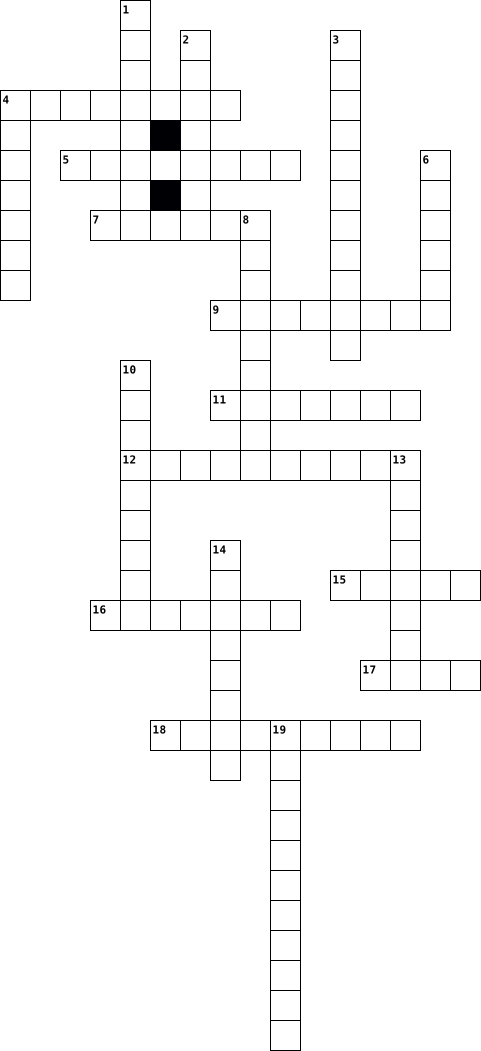
Across
- senses in Spanish
- environment in Spanish
- how an animal gets information about its environment
- what something can do
- function in Spanish
- the Spanish word for "to stay alive"
- prey in Spanish
- to cause light to bounce off a material
- an animal that is hunted and eaten by other animals
- a structure that responds to information from the environment
Down
- something that can change in an investigation
- to change information from one form to another
- how strongly something responds to information
- to stay alive
- the ability to see
- the way something is shaped
- responding to small amounts of information
- reflect in Spanish
- an animal that hunts and eats other animals
- all the living and nonliving things in an area
20 Clues: to stay alive • prey in Spanish • senses in Spanish • the ability to see • reflect in Spanish • function in Spanish • what something can do • environment in Spanish • the way something is shaped • the Spanish word for "to stay alive" • to cause light to bounce off a material • responding to small amounts of information • an animal that hunts and eats other animals • ...
Ecosystem Crossword Terms 2025-10-28

Across
- A resource that can be used up or depleted, like oil, coal, or minerals.
- Using resources in a way that meets current needs without harming future generations’ ability to meet theirs.
- A worldview that values all species and ecosystems equally, believing humans must protect and preserve nature.
- Damage to the environment through resource depletion, pollution, or destruction of ecosystems.
- The natural world and all living and nonliving things that interact within it.
- The amount of land and resources needed to support a person’s or population’s lifestyle.
- A community of living organisms and the nonliving parts of their environment interacting together.
- Pollution that comes from a single, identifiable source, such as a factory pipe or sewage outlet.
- A worldview that emphasizes the value of all living things and their right to exist, not just humans.
- The introduction of harmful substances or products into the environment.
- Materials or energy sources found in nature that humans use for survival and development.
Down
- A worldview that sees humans as the most important species and the environment as a resource for human use.
- Resource A resource that will never run out, such as sunlight or wind.
- A resource that can be replaced naturally in a short period of time, such as trees or freshwater.
- The study of how humans interact with the environment and how to solve environmental problems.
- A resource that forms very slowly and cannot be replaced easily, such as fossil fuels or metals.
- A social movement focused on protecting the natural environment.
- A person’s beliefs about how humans relate to the environment.
- When a population grows faster and faster as it increases in size, often shown as a J-shaped curve.
- Pollution that comes from many diffuse sources, such as runoff from farms or city streets.
- The study of relationships between living organisms and their surroundings.
21 Clues: A person’s beliefs about how humans relate to the environment. • A social movement focused on protecting the natural environment. • Resource A resource that will never run out, such as sunlight or wind. • A resource that can be used up or depleted, like oil, coal, or minerals. • The introduction of harmful substances or products into the environment. • ...
Ecology Vocabulary Crossword 2016-03-10

Across
- nonliving factors in an environment
- an animal that feeds on dead animals
- all of the populations of different species that live and interact in an area
- the part of the earth where all life exists
- an organism's way of life
- a group of individuals of the same species
- a community of organisms and their nonliving environment
- a consumer who eats plants
- an organism that hunts another organism for its food source
- the study of interactions between organisms and their environment
Down
- the environment where an organism lives
- organisms that eat producers or organisms for energy
- an organism that gets energy by breaking down the remains of dead organisms
- a close, long term relationship between two or more species
- a consumer that only eats animals
- organisms that directly use sunlight to make sugar
- a consumer who eats a variety of organisms
- an organism that is eaten by another organism
- living factors in the environment
19 Clues: an organism's way of life • a consumer who eats plants • a consumer that only eats animals • living factors in the environment • nonliving factors in an environment • an animal that feeds on dead animals • the environment where an organism lives • a group of individuals of the same species • a consumer who eats a variety of organisms • ...
Crossword English Activivity 1 2018-02-18

Across
- to navigate in the classroom
- and evaluation environment
- environment
- syllabus English Level II
- 2.3. At the supermarket
- badgesCourse badges
- Management environment
Down
- Agenda
- general forum
- learning environment
- 1.3. What's the weather like?
- learning environment
- information
- and conditions for course development.
- 1 - Giving advice
15 Clues: Agenda • environment • information • general forum • 1 - Giving advice • badgesCourse badges • learning environment • learning environment • Management environment • 2.3. At the supermarket • syllabus English Level II • and evaluation environment • to navigate in the classroom • 1.3. What's the weather like? • and conditions for course development.
Crossword English Activivity 1 2018-02-18

Across
- badgesCourse badges
- 1.3. What's the weather like?
- to navigate in the classroom
- syllabus English Level II
- general forum
- 2.5. What's on the news?
- and evaluation environment
- learning environment
- environment
Down
- 1 - Giving advice
- Agenda
- and conditions for course development.
- learning environment
- Management environment
- information
15 Clues: Agenda • information • environment • general forum • 1 - Giving advice • badgesCourse badges • learning environment • learning environment • Management environment • 2.5. What's on the news? • syllabus English Level II • and evaluation environment • to navigate in the classroom • 1.3. What's the weather like? • and conditions for course development.
Intro to Ecology Vocabulary 2014-01-17

Across
- study of interactions between organisms and the environment
- lands with water and above water plants
- upper part of water with light penetration
- species that originated or evolved in an area
- nonliving parts of the environment
- lower region of water with no light
- small ecosystems or environmental conditions
- nutrient rich, shallow and warm lake
- distribution of species
- daily conditions in the environment
- large ecosystems with similar climates
- living organisms
- average weather conditions for a period of time
Down
- lake with nutrients between poor and rich
- accidentally or purposefully place in a new environment
- shallows, most of organisms present
- bottom of ocean
- nutrient poor, very deep, very cold lake
- temperature gradients or layers in a body of water
19 Clues: bottom of ocean • living organisms • distribution of species • nonliving parts of the environment • shallows, most of organisms present • lower region of water with no light • daily conditions in the environment • nutrient rich, shallow and warm lake • large ecosystems with similar climates • lands with water and above water plants • nutrient poor, very deep, very cold lake • ...
Environmental interaction 2023-04-05

Across
- a community interact with environment components
- the physical, chemical and Abiotic condition surrounding an organism
- an example of meat-eater
- Meat-eaters
- An example of Plant-eater
- an example of decomposer
- a group of a same species of living things
- a large scale of ecosystem
- all the non living things which support the biotics
Down
- a world scale of living things
- Plant-eaters
- a group of various species of living things
- the living things surrounding the environment
- feed from the remain of other living things
- the physical environment in which an organism lives
- Can't produce their own food / depend on other living things
- Various-eaters
- Produce their own food
- a kind of species of living thing
19 Clues: Meat-eaters • Plant-eaters • Various-eaters • Produce their own food • an example of meat-eater • an example of decomposer • An example of Plant-eater • a large scale of ecosystem • a world scale of living things • a kind of species of living thing • a group of a same species of living things • a group of various species of living things • feed from the remain of other living things • ...
Ecology Crossword 2021-02-08

Across
- a consumer that eats plants
- living factors of the environment
- an organism that feeds on another living creature, usually without killing it
- organisms that wat producers or other organisms for energy
- the study of interaction between organisms and their environment
- a community of organisms and their nonliving environment
- an organism that is eaten by another organism
- the part of the earth where life exists
- organisms that use sunlight directly to make sugar
- a group of individuals of the same species
- a consumer that eats animals
Down
- non-living factors of the environment
- an organisms way of life
- a consumer that eats a variety of organisms
- an animal that feeds on dead animals
- an organism that gets energy by breaking down the remains of dead organisms
- a close, long term relationship between two or more species
- the environment where an organism lives
- all of the populations of different species that life and interact in that area
19 Clues: an organisms way of life • a consumer that eats plants • a consumer that eats animals • living factors of the environment • an animal that feeds on dead animals • non-living factors of the environment • the part of the earth where life exists • the environment where an organism lives • a group of individuals of the same species • a consumer that eats a variety of organisms • ...
The Environment 2016-06-21

Across
- We all need to ______________ our environment as the future generations will need it as well.
- ________________ such as coal and oil cannot be replaced. One day they will run out.
- We have to ____________ our natural resources as they won’t last forever.
- People should be fined for ______________. So much rubbish on the floor and in rivers is bad for the environment.
- If you want to _______________ your rubbish, you should put it in the bin, not on the floor.
- There are many ways you can ____________, such as recycling, planting trees and throwing your rubbish in the bin.
Down
- It is possible to _____________ paper and cardboard and make new paper.
- The price was _____________ from R50 to R25.
- It’s everyone’s responsibility to protect the natural ________________.
- Don’t throw that bottle away! You can ____________ it.
- The water is not safe to drink due to all the ________________ in it.
11 Clues: The price was _____________ from R50 to R25. • Don’t throw that bottle away! You can ____________ it. • The water is not safe to drink due to all the ________________ in it. • It is possible to _____________ paper and cardboard and make new paper. • It’s everyone’s responsibility to protect the natural ________________. • ...
environment wsb 2020-11-07

Across
- ....development- development of industry that does not threaten the environment
- period without rain
- prophets of doom and ....
- ....species- types of animals which are in danger of no longer existing
- green ..... - reputation for positive support of the environment
Down
- - destruction of forests
- ....fields-fields planted with rice growing in water
- ......environments - untouched/clean areas
- trees that are evergreen and produce cones
- ......effect - warming of the Earth's surface cause by pollution
- shrinking.....is a place where animals live and which are decresing in size
11 Clues: period without rain • - destruction of forests • prophets of doom and .... • ......environments - untouched/clean areas • trees that are evergreen and produce cones • ....fields-fields planted with rice growing in water • ......effect - warming of the Earth's surface cause by pollution • green ..... - reputation for positive support of the environment • ...
environment wsb 2020-11-07

Across
- ....development- development of industry that does not threaten the environment
- period without rain
- prophets of doom and ....
- ....species- types of animals which are in danger of no longer existing
- green ..... - reputation for positive support of the environment
Down
- - destruction of forests
- ....fields-fields planted with rice growing in water
- ......environments - untouched/clean areas
- trees that are evergreen and produce cones
- ......effect - warming of the Earth's surface cause by pollution
- shrinking.....is a place where animals live and which is decresing in size
11 Clues: period without rain • - destruction of forests • prophets of doom and .... • ......environments - untouched/clean areas • trees that are evergreen and produce cones • ....fields-fields planted with rice growing in water • ......effect - warming of the Earth's surface cause by pollution • green ..... - reputation for positive support of the environment • ...
The Environment 2021-05-09

Across
- réchauffement climatique
- écologique
- décharge
- gaspillage
Down
- recycler
- sauvegarder
- poubelle
- climate
- contaminer
- déchets, ordure
- polluer
11 Clues: climate • polluer • recycler • poubelle • décharge • écologique • contaminer • gaspillage • sauvegarder • déchets, ordure • réchauffement climatique