
environment Crossword Puzzles
Philo 2025-09-22

Across
- the scientists who proposed the GAIA HYPOTHESIS
- an idea proposed by scientist James Lovelock in the 1970s.
- philosophical views that believes maintaining order in the environment will bring out the natural beauty of the surroundings and contribute to the well-being of the people and other organisms living in it.
- believes that nature has value (not just for human use) and that humans are only one part of the larger natural world.
- refers to the fair distribution of environmental benefits, as well as the burden of meeting environmental challenges, and the practical and political application of climate ethics.
- Some philosophies (like deep ecology) say nature has value, while others focus on its value for human life alone.
- As rational beings, humans have a moral duty to care for and protect the environment.
- It is a demand that we use our natural resources in such a manner that these are conserved so that the next generation will be able to use them.
- Philosophy teaches that a goof life means living in harmony with the natural world, not exploiting it without limits.
- a branch of applied ethics that studies the moral responsibilities of individuals,
- It is the ability to regulate one’s actions and behavior, Carefulness and wise decision making.
- a branch of philosophy that is concerned with the natural environment and humanity’s place in it.
- Conserving electricity at home by turning off unused appliances or switching to solar.
- the permanent removal of forests to clear land for non-forest uses, such as agriculture, cattle ranching, mining, and urban development.
- EMISSIONS emissions stemming from the burning of fossil fuels and the manufacture of cement.
- believes that humans are not the only significant species on the planet, and that all organisms have inherent value and should be protected.
- this concept focuses on reconciling human activities and economic
Down
- Humans are not separate from nature but part of it.
- refers to prudence in decision-making regarding the use of resources to ensure that there is minimum to zero waste.
- and governments in relation to climate change.
- This is a philosophical view from Environmentalism, a moral approach that analyzes the relationship between humans and the environment, it also discusses environmental problems caused by human activities and social issues that impact the environment.
- person who works to protect, preserve, and manage natural resources and the environment for future generations.
- This perspective advocates to address the growing environmental problems.
- a long-term change in the average weather patterns that have come to define Earth's local, regional and global climates.
- It refers to maintaining the state of the environment
- with the protection of the environment.
- It applies an ecological and ethical approach in analyzing society, and sees a relationship between social problems and environmental problems.
- focuses on the significant role of humankind in the world and considers nature as how humans can meet their needs and
- is being thrifty with the use of one’s resources, avoiding waste by sing only what is needed and reusing resources whenever possible.
- Creating green spaces, reducing car dependency, and improving public transport for cleaner air and healthier living.
- the person who said “No man is an island, entire of itself: every man is a piece of the continent, a part of the main”
- This view places great value on ecosystems and biological communities.
32 Clues: with the protection of the environment. • and governments in relation to climate change. • the scientists who proposed the GAIA HYPOTHESIS • Humans are not separate from nature but part of it. • It refers to maintaining the state of the environment • an idea proposed by scientist James Lovelock in the 1970s. • ...
Chapter 5 Crossword 2026-05-01

Across
- a physical adaptation where an organism blends in with its surroundings to hide from predators or sneak up on prey
- traits or behaviors that help animals protect themselves from predators such as camouflage mimicry and toxins
- all the individuals of the same species living in the same area at the same time
- a group of similar organisms that are able to reproduce
- harmful substances introduced into the environment by human activities that damage habitats
- a response to a stimulus that an animal was taught by a parent or through experience
- a characteristic that an organism develops during its lifetime and cannot be passed on through genes
- an animal that is hunted and eaten by a predator
- a characteristic passed from parent to offspring through genes
- a characteristic of an organism such as eye color height or fur pattern
- a trait that helps an organism survive and reproduce in its environment
- nonliving, a nonliving thing such as a rock or sunlight
- a group of different organisms living together in the same environment
- an individual living thing
- the destruction or major change of a habitat
- something an animal does in response to a stimulus to survive
- a species not native to an ecosystem that causes harm by outcompeting native species
- a condition where too many organisms live in one area using the same resources
- a behavior an animal is born knowing how to do
- a form of adaptation where one species competes with another for survival
- to produce offspring and pass on genes and traits
Down
- a trait that does not help an organism survive in its current environment
- special body parts that help an organism survive in an environment
- all of the biotic and abiotic factors in an area
- a species whose population is so low it is at risk of becoming extinct
- the removal of trees from a large area often caused by human activities
- the death of all organisms in a species once gone forever
- the passing of genetic information from parents to offspring
- a small section of dna that carries instructions for a specific trait in a living organism
- selection the process where organisms best suited to their environment survive, reproduce, and pass on their traits to offspring
- the idea that organisms best suited to their environment are most likely to survive and reproduce
- the differences among members of the same species
- a type of dormancy where animals become inactive during cold weather to conserve energy
- the natural environment where an organism lives, finds food, water, and shelter
- a state of rest where bodily functions slow down to conserve energy
- a short term state where an animal slows its body down to save energy
- a type of dormancy where an animal enters a deep sleep like state during winter
- when an organism looks like another organism to help it survive
- the young produced by a parent or parents
- a genetic change that produces something different and leads to variation
- the global ecosystem made of all living and nonliving things on earth
- the movement of animals from one place to another in search of better conditions; can be triggered by seasonal changes or environmental changes
- a special skill that helps an organism survive or reproduce
- an animal that hunts and eats other animals
- living, a living thing
45 Clues: living, a living thing • an individual living thing • the young produced by a parent or parents • an animal that hunts and eats other animals • the destruction or major change of a habitat • a behavior an animal is born knowing how to do • all of the biotic and abiotic factors in an area • an animal that is hunted and eaten by a predator • ...
Earth Day 2024-06-24

Across
- to cycle the waste material
- essential for our life
- protect something of environment
- month of earth day
- to decrease waste material
- surrounding we live in
- what is earth
Down
- a colorful plant thing
- to using waste material again
- something that pollutes things
- waste material
- made of plant waste
- color of leafs
- fully grown plant
- planet which we live on
15 Clues: what is earth • waste material • color of leafs • fully grown plant • month of earth day • made of plant waste • a colorful plant thing • essential for our life • surrounding we live in • planet which we live on • to decrease waste material • to cycle the waste material • to using waste material again • something that pollutes things • protect something of environment
Geography & Native Cultures Vocabulary by Mrs. Castillo 2020-08-20

Across
- Native to the land
- Stay in one place
- To change yourself for the environment
- Distance from sea level
Down
- Large Flat Land
- People with something in common
- Area of land that sticks out of a larger area
- Sudden change in elevation
- To change the environment environment for you
- Move
10 Clues: Move • Large Flat Land • Stay in one place • Native to the land • Distance from sea level • Sudden change in elevation • People with something in common • To change yourself for the environment • Area of land that sticks out of a larger area • To change the environment environment for you
Geography & Native Cultures Vocabulary by Mrs. Castillo 2020-08-21

Across
- Native to the land
- Stay in one place
- To change yourself for the environment
- Distance from sea level
Down
- Large Flat Land
- People with something in common
- Area of land that sticks out of a larger area
- Sudden change in elevation
- To change the environment environment for you
- Move
10 Clues: Move • Large Flat Land • Stay in one place • Native to the land • Distance from sea level • Sudden change in elevation • People with something in common • To change yourself for the environment • Area of land that sticks out of a larger area • To change the environment environment for you
Ecosystems Quiz 1 Review 2012-01-26

Across
- An example of an abiotic factor an in ecosystem is _______.
- All the members of a species living together, like all of the deer..
- The study of the ecosystem and interactions of living and nonliving organisms to each otther and their environment.
- Someone who studies ecology.
- The interaction of the living organisms and their physical environment.
- This word means "life."
- The nonliving things in an environment are called ____ factors.
Down
- An example of a biotic factor in an ecosystem is _______.
- Living and nonliving things in an ecosystem ________ on each other to survive.
- Organisms depend on other biotic factors for food, shelter, _______, and reproduction.
- All of the populations in an ecosystem make up a _______.
- he living things in an environment.
12 Clues: This word means "life." • Someone who studies ecology. • he living things in an environment. • An example of a biotic factor in an ecosystem is _______. • All of the populations in an ecosystem make up a _______. • An example of an abiotic factor an in ecosystem is _______. • The nonliving things in an environment are called ____ factors. • ...
Water Crossword 2023-04-11

Across
- Deep hole to collect water
- Sucks up water
- A small narrow river
- Latin for water
- Ingesting liquids
- Take the resource from environment
- Water vehicle
- Where your toilet empties to
- Corporate water thief(iced tea)
Down
- Container to hold liquid
- Hot water shooting out of the ground
- Waste in the environment
- Canada's water supply
- Water cascading
- A body of water
- Habitat for frogs and lily pads
16 Clues: Water vehicle • Sucks up water • Water cascading • A body of water • Latin for water • Ingesting liquids • A small narrow river • Canada's water supply • Container to hold liquid • Waste in the environment • Deep hole to collect water • Where your toilet empties to • Habitat for frogs and lily pads • Corporate water thief(iced tea) • Take the resource from environment • ...
Chapter 5 glossary review 2021-08-23

Across
- area along the banks of rivers and streams that is flooded when water levels are high
- organisms that get the energy they need by breaking down dead matter and waste products
- a consumer that only eats other animals
- depending on each other for survival
- All life exists including the earth and its atmosphere
- the flow of energy from organism to organism in a series of feeding relationships
- someone who studies the growing of plants
- when to species interact and one benefits but the other one is not harmed or benefits.
- two species that live in the same environment and have the same diet.
Down
- the chemical that in plants that traps the heat from the sun and gives the plant a green colour
- in the environment that are nonliving
- native vegetation that remains unchanged when surrounding areas have been changed by activities such as grazing or forestry
- species that are close to extinction but very few of them remain.
- another name for interdependence
- the term used to describe all the conditions that affect a plant or animal in its habitat
- part of the stem, root or leaf that is able to grow into a new plant
- a raised bank to prevent water reaching buildings
- scientists who study the interactions between living things and their environment
- active or hunting at night
- species that has low numbers, often spread out over a large area; the population is not decreasing
20 Clues: active or hunting at night • another name for interdependence • depending on each other for survival • in the environment that are nonliving • a consumer that only eats other animals • someone who studies the growing of plants • a raised bank to prevent water reaching buildings • All life exists including the earth and its atmosphere • ...
Chapter 5 Science Quiz 2021-08-25

Across
- a scientist who studies the growing of plants
- native vegetation that remains unchanged when surroundings areas have been changed by activities such as grazing or forestry
- a consumer that eats only other animals
- the place where all life exists; consists of Earth and its atmosphere
- the process of mating one breed of plant or animal with another breed of the plant or animal
- term used to describe a species that has not been seen in the wild for over 50 years, and of which is the last known individual has died
- an animal that eats only plants
- raised bank built to prevent water reaching buildings
- scientists who study the interactions between living things and their environment
- characteristics that help an organism to survive in its environment
- a consumer that eats a producer
Down
- times of the year when fires are most likely to come
- species that is experiencing a rapid population decline and is in danger of becoming extinct if the drop in numbers continues
- part of the stem, root or leaf that is able to grow into a new plant
- species that are close to extinction and very small numbers remain
- individuals that are exactly the same as each other
- species that has low numbers, often spread out over a large area; the population is not decreasing
- a method of controlling unwanted pests by using a natural predator or disease
- living factors in the environment
- non-living things in the environment
20 Clues: an animal that eats only plants • a consumer that eats a producer • living factors in the environment • non-living things in the environment • a consumer that eats only other animals • a scientist who studies the growing of plants • individuals that are exactly the same as each other • times of the year when fires are most likely to come • ...
Claire Batten 2015-04-16

Across
- consume the soft tissue of dead animals
- a symbiotic relationship in which one species benefits while the other species is harmed
- a relationship in which members of one species consume members of another
- a symbiotic relationship in which one species benefits while the other species is not affected
- the environment in which a species lives and to which it is adapted
- Two different species cannot occupy the same niche in the same place for very long
- the feeding positions in a food chain or web
- the study of how living things interact with each other and with their environment
- consumes producers such as plants or algae
- communes animals
- breaks down the remains and other wastes
- a symbiotic relationship in which both species benefit
Down
- the area disturbed from the first species to colonize
- the final step in decomposition; they feed on any remaining organic matter that is left after other decomposers do their work
- occurs when competing species evolve different adaptations
- refers to the role of a species in ifs ecosystem
- use energy from sunlight to make food by photosynthesis
- organism harmed during parasitism
- the nonliving aspects of the environment
- eats dead debris. Considered to be earthworms, millipedes, and dung beetles
- consumes both plants and animals
- the numbers and types of species that live in them generally change through time
- a predator's target
- the living aspects of the environment
- the total mass of organisms at tropic level
25 Clues: communes animals • a predator's target • consumes both plants and animals • organism harmed during parasitism • the living aspects of the environment • consume the soft tissue of dead animals • the nonliving aspects of the environment • breaks down the remains and other wastes • consumes producers such as plants or algae • the total mass of organisms at tropic level • ...
Level 3 Section 1 Unit 6 2023-03-29

Across
- when something looks ugly
- impacts Possible adverse effects caused by a development, industrial, or infrastructural project or by the release of a substance in the environment. negative impact that was not caused intentionally
- using energy without waste
- waste gases from an industrial operation
- when a pipe is damaged, oil leaks come from the pipe
- the result of human-made chemicals or other alteration in the natural soil environment
- find a solution to the problem
- wearing away of surface soil by water and wind
- The view that people should be responsible managers of the Earth and its resources
- secondary effects of industrial operation
- land where there has been an adverse environmental impact
- Possible adverse effects caused by a development, industrial, or infrastructural project or by the release of a substance in the environment.
Down
- practices and technologies that aim to integrate the management of land, water, and other environmental resources to meet human needs while ensuring long-term sustainability, ecosystem services, biodiversity, and livelihoods.
- the variety of life in the world or in a particular habitat or ecosystem.
- Material which is eliminated or discarded as no longer useful or required.
- make sure that the environment is not damaged
- Gases such as carbon dioxide, methane, nitrous oxide, water vapor, and ozone in the atmosphere which are involved in the greenhouse effect.
- when oil is lost from a tanker or pipe
- extremely important
- a process where waste gas is burnt
- using materials again
21 Clues: extremely important • using materials again • when something looks ugly • using energy without waste • find a solution to the problem • a process where waste gas is burnt • when oil is lost from a tanker or pipe • waste gases from an industrial operation • secondary effects of industrial operation • make sure that the environment is not damaged • ...
Ecology Part 1 Crossword 2024-02-23

Across
- the number of organisms a system can hold or support
- when energy is passed in an ecosystem from one trophic level to the next, only ten percent of the energy will be passed on
- the natural home or environment of an animal, plant, and other organisms
- an animal that preys on other animals
- the diversity of living things in specific area
- organisms that consume other organisms to obtain their energy
- a hierarchical series of organisms each dependent on the next as a source of food
- the living & nonliving components of an area and how they interact with one another
- a species introduced to an environment that becomes overpopulated and harms the environment
- the natural connection of food chains
- species a species in which other species in an ecosystem largely depend
Down
- the range of different inherited traits within one species
- ecosystems are organized is a state of stability where species coexist with other species and with their environment
- organisms that acquire their energy from sunlight and materials from nonliving sources
- living and nonliving components that make up an ecosystem
- a factor where more of it can support a larger population and less of it can support a smaller population
- an organism that decomposes organic material
- the total quantity or weight of organisms in a given area
- two species competing for the same limited resources
- an animal that is hunted by another animal for food
20 Clues: an animal that preys on other animals • the natural connection of food chains • an organism that decomposes organic material • the diversity of living things in specific area • an animal that is hunted by another animal for food • the number of organisms a system can hold or support • two species competing for the same limited resources • ...
Unit 6 Crossowrd 2024-04-30

Across
- Expansion of arid conditions due to human activities
- Nutrient-rich layer supporting plant growth and ecosystem
- Money sent by migrants to families in home countries
- Uncontrolled expansion of urban areas into surrounding regions
- Tax on imported or exported goods for regulation
- Regions with lower economic development and infrastructure
- Ensuring the well-being of people and the planet
- Concentration of economic activity in specific geographic areas
- Relocating business activities to foreign countries for efficiency
- Clearing of forests for agricultural or urban purposes
- Socially constructed roles, behaviors, and expectations attributed
- Interdependent community of living organisms and their environment
- Solid outer layer of Earth's surface, including continents
- Unique natural area with specific plants and animals
Down
- Dispersal of industries to alleviate congestion and costs
- Responsible travel promoting conservation and community engagement
- Interconnected web of living organisms and their environment
- Air around Earth, essential for living organisms
- Preserved areas surrounding cities to limit urban sprawl
- farming aquatic organisms for food and resources
- Underground layer of rock that holds groundwater
- Allowing land to rest to restore fertility naturally
- Cultivation of different crops in successive seasons
- Mass production system characterized by assembly-line manufacturing
- Tools and innovations shaping human interactions with geography
- Human actions shape environment, overcoming natural constraints
- Life-sustaining layer encompassing Earth's ecosystems and environments
- Surroundings comprising natural and human-made elements
- Shaping land into steps for agriculture on slopes
- old industrial site needing cleanup for new use
30 Clues: old industrial site needing cleanup for new use • Air around Earth, essential for living organisms • farming aquatic organisms for food and resources • Underground layer of rock that holds groundwater • Tax on imported or exported goods for regulation • Ensuring the well-being of people and the planet • Shaping land into steps for agriculture on slopes • ...
animals and science 2024-10-20

Across
- hair that doesn't stop growing
- animals that eat both plants and meat
- animals that hunt and eat other animals
- hair that stops growing after reaching a specific length
- animals that sleep during the night and are active during the day
- a physical or behavioral feature of an animal that helps them better survive in their habitat
- a hard shell that both holds a body together and protects it
- animals without backbones
- the natural home or environment where an animal, plant or other organism lives
- animals with backbones
- animals that are hunted and eaten by bigger animals
- animals that are most active at dawn and dusk
Down
- the ability to maintain or support a process continuously over time
- a community of organisms - plants and animals- and their physical environment interacting together
- an animals disguise that allows them to blend in with their surroundings
- variety of life on earth
- animals that only eat plants
- the scientific study of the relationships between living organisms and their habitats
- overlapping layers of skin that have different inner and outer coatings
- flat appendages consisting of a hollow shaft fringed by panes or barbs
- animals that cannot maintain a constant body temperature and instead have a similar temperature to their environment
- animals that sleep during the day and are active at night
- animals that can maintain a constant body temperature even if their environment temperature changes
- animals that only eat meat
24 Clues: animals with backbones • variety of life on earth • animals without backbones • animals that only eat meat • animals that only eat plants • hair that doesn't stop growing • animals that eat both plants and meat • animals that hunt and eat other animals • animals that are most active at dawn and dusk • animals that are hunted and eaten by bigger animals • ...
Species & Ecology Vocabulary Crossword 2022-12-05

Across
- organisms interacting with their physical environment
- of or relating to living organisms
- the total amount of living matter in a given unit of area
- a group of organisms of the same species inhabiting an area
- the act of preying by an animal that kills and eats the prey
- that which has mass and occupies space
- group of interdependent organisms living in the same region
- an animal that feeds on both animal and vegetable substances
- the assimilation of atmospheric nitrogen by soil bacteria and its release for plant use on the death of the bacteria
- an organism that feeds on complex organic substances
- the regions of the Earth where living organisms exist
- a terrestrial or aquatic flesh-eating mammal
Down
- the relation of two interdependent species of organisms
- when one organism benefits from another without damaging it
- when one organism benefits from another by causing damage
- a major ecological community with distinct climate and flora
- community of organisms where each member is eaten by another
- any animal that feeds chiefly on grass and other plants
- an organism capable of synthesizing its own food
- study of the relations of organisms to their environment
- status or place of an organism within its environment
- the type of environment in which an organism normally lives
- the relation between two organisms that benefit each other
- any substance that can be metabolized to give energy
- community of organisms with several interrelated food chains
25 Clues: of or relating to living organisms • that which has mass and occupies space • a terrestrial or aquatic flesh-eating mammal • an organism capable of synthesizing its own food • any substance that can be metabolized to give energy • an organism that feeds on complex organic substances • organisms interacting with their physical environment • ...
DHI2 Eco-Week 2024-10-22

Across
- Series of stages through which a product passes from creation to disposal.
- Tiny plastic particles that pollute the environment.
- Energy derived from the sun.
- Variety of life in a particular habitat or ecosystem.
- Protection and management of natural resources.
- Contamination of the environment by harmful substances.
- Type of gas that traps heat in the atmosphere.
- Process of converting waste into reusable material.
- Organic material used to enrich soil.
- Community of living organisms and their environment.
- Underground layer of water-bearing rock.
- The large-scale removal of trees from forests.
Down
- Sustainable farming method that imitates natural ecosystems.
- Site for the disposal of waste materials.
- Adjustments made to mitigate the effects of climate change.
- Method of growing plants without soil, using nutrient-rich water.
- Type of energy that can be replenished naturally.
- Farming method that avoids synthetic chemicals.
- Fast-growing plant often used as a sustainable material.
- Footprint Total greenhouse gas emissions caused by an individual or organization.
- Transforming waste materials into new products of better quality.
- Capable of being maintained without depletion of resources.
- The process of obtaining materials sustainably.
- Misleading claims about the environmental benefits of a product.
- Trade Trading partnership that aims for equity in international trade.
- Relating to the relationship between living organisms and their environment.
- The global sum of all ecosystems on Earth.
- Sources of energy that are naturally replenished.
- Element central to climate change, often found in fossil fuels.
29 Clues: Energy derived from the sun. • Organic material used to enrich soil. • Underground layer of water-bearing rock. • Site for the disposal of waste materials. • The global sum of all ecosystems on Earth. • Type of gas that traps heat in the atmosphere. • The large-scale removal of trees from forests. • Farming method that avoids synthetic chemicals. • ...
science vocab 2024-11-14

Across
- chain a linear pathway of energy transfer as a result of the feeding patterns of a series of organisms
- a relationship between two species where both species benefit
- a relationship between two organisms in which one organism benefits and the other is harmed
- living factors within an environment
- this is an organism that is killed and eaten by another organism
- a relationship between two organisms where one organism benefits and the other is unaffected
- an organism that eats both plants and animals
- the study of the interactions of living organisms with one another and their environment.
- and animal that eats animal
- the part of Earth where life exists
Down
- when a long term change takes place in two species because of their close interaction with one another. This makes the relationship more beneficial to both species.
- this consists of all the populations within a specific area that live and interact with each other
- two organisms that have a close short or long term association with each other
- capacity the largest population that an environment can support at any given time
- an organism that only eats plants
- this is an organism that kills and eats part or all of another organism
- a community interaction with each other and also their abiotic environments
- non-living factors within an environment
- web a diagram that shows the feeding relationships between organisms in an ecosystem
- a group of organisms of the same species that live in a specific geographical area
- pyramid a triangular diagram that shows an ecosystems loss of energy
21 Clues: and animal that eats animal • an organism that only eats plants • the part of Earth where life exists • living factors within an environment • non-living factors within an environment • an organism that eats both plants and animals • a relationship between two species where both species benefit • this is an organism that is killed and eaten by another organism • ...
Toxicology 2025-04-21

Across
- The emission or transmission of energy in the form of waves or particles
- A molecule composed of three oxygen atoms that exist in the atmosphere
- an organism's ability to withstand the concentrations of toxins in its environment
- inspects and regulates toxins that could be considered harmful to both humans and the environment
- Microscopic solid or liquid particles suspended in air or water
- include toxic chemicals that remain in the environment for a very long time
- the presence of an impurity, or some other undesirable element that renders something unsuitable, unfit or harmful for physical body, natural environment
- disease caused by a pathogen
- how chemical concentration in animal tissue increases moving through the food chain
Down
- Any substance used to get rid of unwanted organisms
- are substances, agents and exposures that cause can cancer
- Microorganisms like viruses, bacteria, and fungi that can cause diseases
- originates from a combination of sources like runoff from urban areas
- A human carcinogen in the form of a mineral fiber
- originates from a single, identifiable source, like a factory
- tiny pieces of plastic, less than 5 mm long
- metals include lead, mercury, arsenic, cadmium, and thallium
- pollution the sudden change in temperature to a natural body of water altering the waters chemistry
- The combined effect of two or more chemicals being greater than the sum of their individual effects
- gradient shows the gradual changes in the atmosphere
- pollution any disturbing sound that affects human health and organisms
21 Clues: disease caused by a pathogen • tiny pieces of plastic, less than 5 mm long • A human carcinogen in the form of a mineral fiber • Any substance used to get rid of unwanted organisms • gradient shows the gradual changes in the atmosphere • are substances, agents and exposures that cause can cancer • metals include lead, mercury, arsenic, cadmium, and thallium • ...
Ecosystems 2025-11-06

Across
- When two or more organisms struggle for the same limited resource.
- A species naturally found in a region but also present elsewhere.
- A non-native species that spreads quickly and harms local ecosystems.
- Water habitats like valleys or springs with low salt content.
- A living or once-living part of the environment, like plants or animals. _____ factor
- A coastal habitat formed by wind-blown sand, often stabilised by plants. Sand _____.
- An area dominated by trees and undergrowth.
- Dense, evergreen vegetation with tall shrubs and small trees.
- A dry, rocky habitat with low, aromatic shrubs, common in Malta.
- A species found only in a specific geographic area, such as the Maltese Islands.
Down
- Areas open to strong wind, sun, or sea spray, with little protection.
- A non-living environmental element, such as sunlight or temperature. _______ factor
- All the different populations living together in one area.
- All individuals of one species living in the same area at the same time.
- A species introduced by humans, intentionally or accidentally, from another area.
- The role or job of an organism in its environment, including how it gets food and shelter.
- The natural home or environment where an organism lives.
- A system formed by living organisms interacting with each other and their physical environment.
- An interaction where one organism hunts and eats another.
- Woody plants smaller than trees, often found in maquis and garigue.
20 Clues: An area dominated by trees and undergrowth. • The natural home or environment where an organism lives. • An interaction where one organism hunts and eats another. • All the different populations living together in one area. • Water habitats like valleys or springs with low salt content. • Dense, evergreen vegetation with tall shrubs and small trees. • ...
Intro and Ecology Crossword 2026-01-09

Across
- A group of similar organisms that can breed and produce fertile offspring.
- An organisms that gets its energy from eating other organisms
- factor: An environmental factor that prevents a population from increasing
- a group of interbreeding organisms living in the same area (all of the deer in the forest)
- An area with similar climate and ecosystems
- An organism that gets its energy from breaking down dead organisms
- relationship: The relationship between two species that live in close association with eac
- one organism, a single living thing
- An organism that gets its energy from the sun
- non-living factors in the environment
- A symbiotic relationship in which the health of one organism benefits and the health of the other
- the study of the interaction between organisms and the environment
Down
- all the organisms living in the same area AND their nonliving environment
- A type of consumer that eats only other animals
- A type of consumer that eats only plants
- harmed
- any plant or animal
- living factors in the environment
- all the organisms of all types living in the same area
- Anything that has mass and takes up space
- the struggle between organisms to survive in a habitat with limited resources
- capacity: The largest population that an area can support
- A type of consumer that eats both plants and animals
- ecosystem
- web: network of complex interactions formed by the feeding relationships among the various organisms
25 Clues: harmed • ecosystem • any plant or animal • living factors in the environment • one organism, a single living thing • non-living factors in the environment • A type of consumer that eats only plants • Anything that has mass and takes up space • An area with similar climate and ecosystems • An organism that gets its energy from the sun • ...
7th Grade Science Review #8 (Interdependence) 2025-05-18

Across
- non-living factors in an environment such as sunlight, temperature, and water.
- the natural process of change in the types of species in an ecosystem over time.
- an organism that is hunted and eaten by predators.
- a living thing, such as a plant, animal, or microbe.
- the process by which plants make their own food using sunlight, carbon dioxide, and water.
- Capacity the maximum number of organisms an environment can support.
- an organism that obtains energy by eating other organisms.
- Consumer an organism that eats primary consumers (usually carnivores or omnivores).
- Species a species that has a major impact on its ecosystem.
- a symbiotic relationship where one organism benefits and the other is unaffected.
- the variety of life in a particular habitat or ecosystem.
- a symbiotic relationship where one organism benefits and the other is harmed.
- Pyramid a diagram showing energy flow from producers to top predators in an ecosystem.
- Consumer an organism that eats secondary consumers (top predator).
- the protection and preservation of natural environments and resources.
- Web a network of interconnected food chains showing energy flow in an ecosystem.
- an organism that breaks down dead or decaying organisms and returns nutrients to the soil.
- Consumer an organism that eats producers (usually herbivores).
- the struggle between organisms for the same resources in an environment.
- an animal that feeds on dead animals.
- an organism that lives in or on another organism and benefits by harming it.
- living components in an ecosystem such as plants, animals, and bacteria.
- the role or function of an organism in its environment.
- Resource a resource that cannot be replaced within a human lifetime.
- the process of land development into cities that can affect ecosystems.
- an organism, like a plant, that makes its own food through photosynthesis.
- Factor an environmental condition that restricts the growth, abundance, or distribution of a population.
Down
- an animal that eats only other animals.
- a close and long-term relationship between two different species.
- an animal that eats only plants.
- all members of the same species living in a specific area.
- a symbiotic relationship where both organisms benefit.
- an organism that hunts and eats other organisms.
- an organism that gets its energy by consuming other organisms.
- Species a non-native species that spreads and causes harm to native species and ecosystems.
- Level a level in a food chain or food web based on how an organism gets its energy.
- the natural home or environment of an organism.
- a community of living and nonliving things that interact in an environment.
- a characteristic that helps an organism survive and reproduce in its environment.
- related to land environments.
- all the living and nonliving things that surround and affect an organism.
- Species a species that naturally occurs in a specific region or ecosystem.
- Chain a sequence of organisms where each is a source of food for the next.
- a group of similar organisms that can reproduce and have fertile offspring.
- an organism that feeds on dead plant and animal material.
- Density the number of individuals per unit area or volume.
- Resource a natural resource that can be replenished naturally over time.
- an animal that eats both plants and animals.
- an organism that a parasite lives in or on and often harms.
49 Clues: related to land environments. • an animal that eats only plants. • an animal that feeds on dead animals. • an animal that eats only other animals. • an animal that eats both plants and animals. • the natural home or environment of an organism. • an organism that hunts and eats other organisms. • an organism that is hunted and eaten by predators. • ...
Intro to Philosophy 2025-09-22

Across
- Some philosophies (like deep ecology) say nature has value, while others focus on its value for human life alone.
- is being thrifty with the use of one’s resources, avoiding waste by sing only what is needed and reusing resources whenever possible.
- the person who said “No man is an island, entire of itself: every man is a piece of the continent, a part of the main”
- Humans are not separate from nature but part of it.
- This is a philosophical view from Environmentalism, a moral approach that analyzes the relationship between humans and the environment, it also discusses environmental problems caused by human activities and social issues that impact the environment.
- This view places great value on ecosystems and biological communities.
- philosophical views that believes maintaining order in the environment will bring out the natural beauty of the surroundings and contribute to the well-being of the people and other organisms living in it.
- refers to the fair distribution of environmental benefits, as well as the burden of meeting environmental challenges, and the practical and political application of climate ethics.
- a branch of philosophy that is concerned with the natural environment and humanity’s place in it.
- It applies an ecological and ethical approach in analyzing society, and sees a relationship between social problems and environmental problems.
- this concept focuses on reconciling human activities and economic development with the protection of the environment.
- Creating green spaces, reducing car dependency, and improving public transport for cleaner air and healthier living.
- Conserving electricity at home by turning off unused appliances or switching to solar.
- This perspective advocates to address the growing environmental problems.
- It is the ability to regulate one’s actions and behavior, Carefulness and wise decision making.
Down
- the permanent removal of forests to clear land for non-forest uses, such as agriculture, cattle ranching, mining, and urban development.
- It refers to maintaining the state of the environment
- It is a demand that we use our natural resources in such a manner that these are conserved so that the next generation will be able to use them.
- believes that nature has value (not just for human use) and that humans are only one part of the larger natural world.
- a long-term change in the average weather patterns that have come to define Earth's local, regional and global climates.
- an idea proposed by scientist James Lovelock in the 1970s.
- As rational beings, humans have a moral duty to care for and protect the environment.
- the scientists who proposed the GAIA HYPOTHESIS
- believes that humans are not the only significant species on the planet, and that all organisms have inherent value and should be protected.
- emissions stemming from the burning of fossil fuels and the manufacture of cement.
- focuses on the significant role of humankind in the world and considers nature as how humans can meet their needs and survive.
- person who works to protect, preserve, and manage natural resources and the environment for future generations.
- refers to prudence in decision-making regarding the use of resources to ensure that there is minimum to zero waste.
- Philosophy teaches that a goof life means living in harmony with the natural world, not exploiting it without limits.
- a branch of applied ethics that studies the moral responsibilities of individuals, societies, and governments in relation to climate change.
30 Clues: the scientists who proposed the GAIA HYPOTHESIS • Humans are not separate from nature but part of it. • It refers to maintaining the state of the environment • an idea proposed by scientist James Lovelock in the 1970s. • This view places great value on ecosystems and biological communities. • ...
Unit 3 Review 2022-11-29

Across
- a small tool within the cell that supports the cell so that it can function
- provides structure and support to a plant cell
- releases the energy (ATP) from food
- receptor used to jump in response to the noise produced by the fire alarm
- when all levels of the body work together to help maintain and healthy, functioning environment
- made of one cell
Down
- receptors used when a bright light shines in my eyes
- receptor used to smell baking cookies
- a change in the environment
- is made of multiple types of tissues
- protects the cell by controlling what can enter and exit it
- made of many different types of organs
- made of many cells
- location in plants where photosynthesis occurs
- made up of many types of cells
- structures that allow us to sense and respond to changes in the environment
- smallest unit of living things
- contains the cells DNA (instructions)
- makes proteins to build and repair body structures
19 Clues: made of one cell • made of many cells • a change in the environment • made up of many types of cells • smallest unit of living things • releases the energy (ATP) from food • is made of multiple types of tissues • receptor used to smell baking cookies • contains the cells DNA (instructions) • made of many different types of organs • provides structure and support to a plant cell • ...
bitl 2025-01-16

Across
- the action or state of going regularly to or being present at a place or event.
- If a school environment was clean, student can ... at their study
- A person who smokes
- Doing something constantly
- A person who is traveling in an automobile, bus, train, airplane, or other conveyance, especially one who is not the driver, pilot, or the lik
- In the first reasons , healty schools help to reduce...
- Concerned with the protection of the natural world of land, sea, air, plants, and animals.
- Act of throwing trash carelessly
- A part of a road intended for vehicles
Down
- Synonym of etiquete
- Synonym of vessel and holder
- a substance that pollutes something, especially water or the atmosphere.
- What is one impact of an unhealthy school environment on students?
- A clean environment also help reduce ..
- relating to education and scholarship.
- Synonym of litter, trash, garbage
- A person who is walking, especially in an area where vehicles go
- Driver of an automobile
- Synonym of idle
19 Clues: Synonym of idle • Synonym of etiquete • A person who smokes • Driver of an automobile • Doing something constantly • Synonym of vessel and holder • Act of throwing trash carelessly • Synonym of litter, trash, garbage • relating to education and scholarship. • A part of a road intended for vehicles • A clean environment also help reduce .. • ...
ECOLOGY LINGO 2014-08-27

Across
- Non-living parts
- A group of populations living in the same area
- Water component of the Earth
- Organisms that can breed to produce offspring
- Layer of gases that surround the Earth
- All living and non-living parts of an environment
Down
- A group of the same species that live in the same area
- Living or once living
- Zone on Earth that supports life
- Rocky outer shell of the Earth
- The environment that an organism lives in
- The study of living things and their environment
12 Clues: Non-living parts • Living or once living • Water component of the Earth • Rocky outer shell of the Earth • Zone on Earth that supports life • Layer of gases that surround the Earth • The environment that an organism lives in • Organisms that can breed to produce offspring • A group of populations living in the same area • The study of living things and their environment • ...
Sustainability crossword 2020-04-28

Across
- destruction caused from natural resources.
- protection of animals, plants and natural resources.
- green plant turn water and carbon dioxide into food.
- a living bacteria, mould.
- animals living in a particular time and environment.
- use without completely wasting or destroying.
Down
- a land area covered with shallow water.
- all things existing in a particular environment.
- plants living in a particular time and environment.
- land covered with grass and soft plants.
- activities to produce a particular result.
- the air that surrounds Earth
12 Clues: a living bacteria, mould. • the air that surrounds Earth • a land area covered with shallow water. • land covered with grass and soft plants. • destruction caused from natural resources. • activities to produce a particular result. • use without completely wasting or destroying. • all things existing in a particular environment. • ...
Earth Science Vocabulary!! 2024-09-19

Across
- Concern about a particular situation or developement
- Purposeful clearing of forested land
- Pollution or environmental change caused by humans
- All water on Earth
- The impact of the environment from human activity
- Economical __, environmental __, and social __
- An educated guess
- A gas compound released into the atmosphere, associated with climate change
Down
- All living and non-living elements
- All rocks, sediments, and soil on Earth
- The prevention of wasteful use of resources
- The presence in the environment of a thing that has harmful effects
12 Clues: An educated guess • All water on Earth • All living and non-living elements • Purposeful clearing of forested land • All rocks, sediments, and soil on Earth • The prevention of wasteful use of resources • Economical __, environmental __, and social __ • The impact of the environment from human activity • Pollution or environmental change caused by humans • ...
Marine Debris Crossword 2025-04-30

Across
- Process of turning waste into reusable material
- Alabama’s port city on the bay
- To contaminate the environment
- Community of organisms and their environment
- Tiny plastic pieces less than 5mm wide
- Area of land that drains into one water body
Down
- Tiny pollutants once found in face wash
- Common single-use item polluting oceans
- Word for garbage, often ends up in the sea
- A small tube often found in beach cleanups
- Where fresh and saltwater mix
- Responsible care of the environment
12 Clues: Where fresh and saltwater mix • Alabama’s port city on the bay • To contaminate the environment • Responsible care of the environment • Tiny plastic pieces less than 5mm wide • Tiny pollutants once found in face wash • Common single-use item polluting oceans • Word for garbage, often ends up in the sea • A small tube often found in beach cleanups • ...
Crossword - Geo 2023-02-01

Across
- The natural environment of a given organism
- Sustainable energy for all
- The envelope of gases surrounding the earth
- Taking action to combat climate change
- The solid, outer layer of the earth
- The variety of life in the world/ecosystem
- Describes a species that no longer exists
- Release of bad things into the environment
Down
- Hazardous waste causing danger from chemicals
- Doing things without affecting the future
- All water on earth
- The surroundings in which a being lives
12 Clues: All water on earth • Sustainable energy for all • The solid, outer layer of the earth • Taking action to combat climate change • The surroundings in which a being lives • Doing things without affecting the future • Describes a species that no longer exists • The variety of life in the world/ecosystem • Release of bad things into the environment • ...
KINDNESS 2021-07-02

Across
- fluctuation from summer to winter
- a color that embrace the environment
- most important for human survival
- Tallest mountain
- blanket of air
Down
- gift of plants which embraces nature
- a offering to the environment
- the subject related to the environment
- basic necessity to survive
- place where birds build nest
10 Clues: blanket of air • Tallest mountain • basic necessity to survive • place where birds build nest • a offering to the environment • fluctuation from summer to winter • most important for human survival • gift of plants which embraces nature • a color that embrace the environment • the subject related to the environment
Crossword - Geo 2023-02-01

Across
- The natural environment of a given organism
- Sustainable energy for all
- The envelope of gases surrounding the earth
- Taking action to combat climate change
- The solid, outer layer of the earth
- The variety of life in the world/ecosystem
- Describes a species that no longer exists
- Release of bad things into the environment
Down
- Hazardous waste causing danger from chemicals
- Doing things without affecting the future
- All water on earth
- The surroundings in which a being lives
12 Clues: All water on earth • Sustainable energy for all • The solid, outer layer of the earth • Taking action to combat climate change • The surroundings in which a being lives • Doing things without affecting the future • Describes a species that no longer exists • The variety of life in the world/ecosystem • Release of bad things into the environment • ...
Unit 2 Vocabulary Crossword 2021-09-18

Across
- smallest unit of life
- change in an organism's environment that causes a response
- made of one cell
- living parts of the environment
- organism that cannot make its own food
- something that has all the characteristics of life
- mistaken idea that living things come from nonliving things
Down
- change that occurs during an organism's lifetime to make it more complex
- organism that makes its own food
- made of many cells
- nonliving parts of the environment
- ability to maintain a steady internal condition
12 Clues: made of one cell • made of many cells • smallest unit of life • living parts of the environment • organism that makes its own food • nonliving parts of the environment • organism that cannot make its own food • ability to maintain a steady internal condition • something that has all the characteristics of life • change in an organism's environment that causes a response • ...
Technology and sustainability 2024-12-08

Across
- /ˌrɑː məˈtɪəriəl/
- /ˈfɑːsl fjuːəl/
- /ˌkɑːbən ˈfʊtprɪnt/
- eliminated or discarded as no longer useful
- the practice of marketing a company or organisation so they appear more environmentally friendly or more ecological when in practice its activities pollute the environment.
Down
- /səˌsteɪnəˈbɪləti/
- /ˈwɪnd tɜːbaɪn/
- /ɪnˈvaɪrənmənt/
- energy that comes from renewable, zero emission sources
- the presence in or introduction into the environment of a substance which has harmful or poisonous effects.
- convert (waste) into reusable material.
- device that converts sunlight into electricity by using photovoltaic (PV) cells.
12 Clues: /ˈwɪnd tɜːbaɪn/ • /ɪnˈvaɪrənmənt/ • /ˈfɑːsl fjuːəl/ • /ˌrɑː məˈtɪəriəl/ • /səˌsteɪnəˈbɪləti/ • /ˌkɑːbən ˈfʊtprɪnt/ • convert (waste) into reusable material. • eliminated or discarded as no longer useful • energy that comes from renewable, zero emission sources • device that converts sunlight into electricity by using photovoltaic (PV) cells. • ...
gag 2020-11-24

Across
- the number and types of plants and animals that exist in a particular area or in the world
- a long period when there is little or no rain
- all the living things in an area and the way they affect each other and the environment
- to make something less pure or make it poisonous
- a poisonous substance
- the natural world, as a whole or in a particular geographical area, especially as affected by human activity
- causing little or no damage to the environment and therefore able to continue for a long time
- the weakening or damage done to something by a series of gradual losses of parts of it
Down
- natural environment of an organism, the type of place in which it is natural for it to live and grow
- permanent removal of trees to make room for something besides forest
- an amount of a substance that is produced and sent out into the air that is harmful to the environment
- the weather conditions prevailing in an area in general or over a long period.
- damage caused to water, air, etc. by harmful substances or waste
- unwanted matter or material of any type, especially what is left after useful substances or parts have been removed
14 Clues: a poisonous substance • a long period when there is little or no rain • to make something less pure or make it poisonous • damage caused to water, air, etc. by harmful substances or waste • permanent removal of trees to make room for something besides forest • the weather conditions prevailing in an area in general or over a long period. • ...
introduction to ecology 2025-10-09

Across
- factor – A non-living part of the environment (like sunlight or water).
- – One single organism.
- – All the living and non-living things in an area and how they interact.
Down
- – A group of the same species living in the same area.
- – The place where an organism lives.
- – All parts of Earth where life exists.
- factor – A living part of the environment (like plants or animals).
- – A group of similar organisms that can reproduce together.
- – All the different populations living together in an area.
- – The study of how living things interact with each other and their environment.
- – The role or job of an organism in its environment.
- – A large region with a specific climate, plants, and animals (like a desert or rainforest).
12 Clues: – One single organism. • – The place where an organism lives. • – All parts of Earth where life exists. • – The role or job of an organism in its environment. • – A group of the same species living in the same area. • – A group of similar organisms that can reproduce together. • – All the different populations living together in an area. • ...
Introduction to Ecology 2025-10-09

Across
- factor – A non-living part of the environment (like sunlight or water).
- – One single organism.
- – All the living and non-living things in an area and how they interact.
Down
- – A group of the same species living in the same area.
- – The place where an organism lives.
- – All parts of Earth where life exists.
- factor – A living part of the environment (like plants or animals).
- – A group of similar organisms that can reproduce together.
- – All the different populations living together in an area.
- – The study of how living things interact with each other and their environment.
- – The role or job of an organism in its environment.
- – A large region with a specific climate, plants, and animals (like a desert or rainforest).
12 Clues: – One single organism. • – The place where an organism lives. • – All parts of Earth where life exists. • – The role or job of an organism in its environment. • – A group of the same species living in the same area. • – A group of similar organisms that can reproduce together. • – All the different populations living together in an area. • ...
NURSE WORD PUZZLE 2022-12-13

Across
- the way a person responds as a physical being to stimuli from the environment
- vary according to culture and gender
- coping mechanism from close relationship which results to giving and receiving of love, respect and value.
- refers to unity and harmony within the mind, body and soul
- promotes helping behavior that calls for a nurturing response.
- primary, secondary and tertiary roles that a person performs in the society.
- Essential to both carative and curative processes
- most immediately confronting the person; attracts the most attention.
- patient is a person (individual/groups) who “uses coping skills to deal
- behaviors that attempts to control the environment.
- behaviors concerned with self-defense and self-preservation
- any change in the internal and external environment that induces a response in the adaptive system
- is the primary method of data collection used to evaluate the client’s response the intervention.
- set towards the disorganization of the system
- strengthens the effect of the focal stimulus.
- The ability to share in the person’s experience
- establishes sturctures, values & daily activities
- Used to attain balance within the continuum of health.
- being unhealthy, but rather explored the human experience of illness
- “has to do with when, how, what, how much, and under what conditions we eat.”
- job or financial concerns
- stressors”
- set towards stability
Down
- Takes place in the environment that affects the client and involves taking action to modify that environment
- Predominantly described a passive patient but whenever self-care is possible, the nurse should ask about the patient's preference.
- assist him in his recovery
- excretion of waste products
- – “the processes and outcome whereby thinking and feeling persons as individuals or groups, USE CONSCIOUS AWARENESS and CHOICE to create HUMAN and ENVIRONMENTAL INTEGRATION”
- the malignant phase of dispairful “not caring” and apathetic indifference
- Based on the effect of the changes in the environment on the client’s ability to regain his health at the least expense of energy
- Ask the client what is needed or wanted Observation
- “ a reparative process that nature instituted from a want of attention”
- works with other parts of its body and environment
- Outcome or produced results of certain stressors and actions of the line of resistance
- sensitivity to one’s self and to others
- determination of how best to assist the person in attaining the established goals.
- the desire to gain an end or accomplish a goal combined with some degree of expectation that what is desired or sought is attainable
- a set of expectations about how a person occupying a position behaves towards a person in another position.
- emotional & cognitive strategies that allow a person to change to higher levels of potential
- in nursing conveys physical acts but embraces the mind-body-spirit as it reclaims the embodied spirit as its focus of attention
- is not observable. A unique experience. Pain is a lonely experience that is difficult to communicate fully to another individual.
- affects the focal stimulus but the effects are unclear
- The act of utilizing the environment of a patient
43 Clues: stressors” • set towards stability • job or financial concerns • assist him in his recovery • excretion of waste products • vary according to culture and gender • sensitivity to one’s self and to others • set towards the disorganization of the system • strengthens the effect of the focal stimulus. • The ability to share in the person’s experience • ...
Rhone's Crossword 2024-03-19

Across
- , the study of organisms and how they interact with the environment around them.
- factor , living things within an ecosystem
- factor , a non-living part of an ecosystem that affects the environment.
- , the practice of living as a parasite in or on another organism.
- species , an organism that has a disproportionately large effect on its environment relative to its abundance, and is critical to the survival of other species in an ecosystem.
- level , the position of an organism in a food chain or food web
- , an organism that cannot produce its own food and must eat other plants and/or animals to get energy.
- web , a system of interlocking and interdependent food chains.
- , when chemicals, particles, or other materials are released into the environment, harming the organisms there.
- , the process of organisms leaving a population and moving to a different habitat.
- , an organism that eats other plants or animals for energy and nutrients.
- resource , a natural substance that is not replenished with the speed at which it is consumed.
- curve , a graph that measures the proportion of individuals in a given species that are alive at different ages.
- succession , a type of ecological succession that occurs when organisms colonize a new area for the first time.
- , the variety of life in the world or in a particular habitat or ecosystem.
- , the community of plants and animals that occur naturally in an area, often sharing common characteristics specific to that area
- , when an organism moves to a new area and establishes a permanent home.
- resource , energy that comes from a source that won't run out.
- capacity , is the maximum number of organisms of a species that can survive in a specific environment, given the available resources
Down
- niche , the role and position of a species in its environment.
- , a mutually beneficial relationship between different people or groups.
- , the long-term, predictable atmospheric conditions of a specific area.
- , is the process by which substances, such as pesticides or heavy metals, increase in concentration as they move up the food chain
- , an association between two organisms in which one benefits and the other derives neither benefit nor harm.
- , a type of symbiotic relationship where all species involved benefit from their interactions.
- species , species that are the first to colonize newly created environments or recently disturbed environments during the processes of primary succession and secondary succession, respectively.
- , an organism that creates its own food or energy.
- footprint , a measure that indicates how much resources from the environment are required to support a specific way of life or business.
- , the natural home or environment of an animal, plant, or other organism
- succession , a previously occupied area is re-colonized following a disturbance that kills much or all of its community.
- , the total quantity or weight of organisms in a given area or volume.
- , a biological community of interacting organisms and their physical environment.
- cycle , the natural process by which chemical elements and compounds move between living organisms, the atmosphere, and the Earth's crust.
- density , the average number of individuals in a population per unit of area or volume.
- pyramid , is a diagram that shows the flow of energy
- , a group of different species that live together in a common location and interact with each other.
- factor , anything that constrains a population's size and slows or stops it from growing.
- an ecosystem's trophic levels
- , organism that breaks down dead organic material.
- , an organism that can produce its own food using light, water, carbon dioxide, or other chemicals.
40 Clues: an ecosystem's trophic levels • factor , living things within an ecosystem • , organism that breaks down dead organic material. • , an organism that creates its own food or energy. • pyramid , is a diagram that shows the flow of energy • niche , the role and position of a species in its environment. • web , a system of interlocking and interdependent food chains. • ...
Geography & Native Cultures Vocabulary by Mrs. Castillo 2020-08-21

Across
- Native to the land
- Stay in one place
- To change yourself for the environment
- Distance from sea level
Down
- Large Flat Land
- People with something in common
- Area of land that sticks out of a larger area
- Sudden change in elevation
- To change the environment environment for you
- Move
10 Clues: Move • Large Flat Land • Stay in one place • Native to the land • Distance from sea level • Sudden change in elevation • People with something in common • To change yourself for the environment • Area of land that sticks out of a larger area • To change the environment environment for you
Geography & Native Cultures Vocabulary by Mrs. Castillo 2020-08-20

Across
- Native to the land
- Stay in one place
- To change yourself for the environment
- Distance from sea level
Down
- Large Flat Land
- People with something in common
- Area of land that sticks out of a larger area
- Sudden change in elevation
- To change the environment environment for you
- Move
10 Clues: Move • Large Flat Land • Stay in one place • Native to the land • Distance from sea level • Sudden change in elevation • People with something in common • To change yourself for the environment • Area of land that sticks out of a larger area • To change the environment environment for you
Science Variations and Inheritance 2021-01-06

Across
- the same
- changing to fit your environment
- remains of a dead body
- difference
- your surroundings
Down
- not the same
- features
- what you _ _ _ _ _ _ _ from someone
- changing characteristics over time
- characteristics you have
- children
- mum/dad
12 Clues: mum/dad • features • the same • children • difference • not the same • your surroundings • remains of a dead body • characteristics you have • changing to fit your environment • changing characteristics over time • what you _ _ _ _ _ _ _ from someone
Water Systems Crossword 2021-03-27

Across
- An area in the environment where a living thing can grow and survive
- Non living parts of environment
- Living parts of environment
- The average Canadian's daily water foot print is over ____ thousand liters
Down
- You can reduce, reuse, and recycle this to help the environment
- _____ is essential for life on Earth
- This is a huge cause of pollution in the environment when it's spilled
- If the water is too _____ coral and shellfish can have a hard time surviving
- Animals can use water to keep _____ when it's hot!
9 Clues: Living parts of environment • Non living parts of environment • _____ is essential for life on Earth • Animals can use water to keep _____ when it's hot! • You can reduce, reuse, and recycle this to help the environment • An area in the environment where a living thing can grow and survive • This is a huge cause of pollution in the environment when it's spilled • ...
Chapter 10 Crossword 2014-04-08

Across
- Living things in the environment.
- Things organisms need to live and reproduce.
- Certain groups which relate and allow for interbreeding.
- Organisms that live together in an environment.
- Nonliving things in the environment.
- Feeding
Down
- Needed for Photosynthesis.
- The organisms doing the eating and hunting.
- The place in which the organism lives.
- Things that nourish all living organisms.
- The things being eaten and hunted.
11 Clues: Feeding • Needed for Photosynthesis. • Living things in the environment. • The things being eaten and hunted. • Nonliving things in the environment. • The place in which the organism lives. • Things that nourish all living organisms. • The organisms doing the eating and hunting. • Things organisms need to live and reproduce. • Organisms that live together in an environment. • ...
Human-Environment Interaction 2019-10-10

Across
- Waste that makes the air, soil, or water less clean
- Residential area on the edge of a city or large town
- Movement of new settlers and their culture to an area
- A resource that Earth or people can replace
- The loss of forest cover in a region
- The variety of living things in a region or ecosystem
Down
- Nonrenewable resources formed over millions of years from the remains of plants and animals
- A resource that cannot be replaced in a relatively short period of time
- An effect on someone or something not involved in an activity
- Development of machine-powered production and manufacturing
- A useful material found in the environment
11 Clues: The loss of forest cover in a region • A useful material found in the environment • A resource that Earth or people can replace • Waste that makes the air, soil, or water less clean • Residential area on the edge of a city or large town • Movement of new settlers and their culture to an area • The variety of living things in a region or ecosystem • ...
HELP THE ENVIRONMENT 2021-01-13

Across
- I should __ __ all the appliances of my home when going out of town.
- I should help SRPMIC's superhero,_____ spread environmental awareness.
- I should turn off the ____ when I leave the room.
- I should _____ any plastic bags as trash bags o find a place to recycle them.
- I should ______ my incandescent light bulbs for more efficient energy-saving ones.
- I should use fans instead of ___ ______.
- I should take _____ _____ to conserve water.
Down
- I should use ______ transportation to reduce car emissions.
- I should be conscious and reduce the _____ I create from the daily items I use/consume.
- I should ______ ______ that are made of plastic, glass, and cardboard when possible.
- I should ____ __ ____ with me when I am done camping or having a park picnic.
11 Clues: I should use fans instead of ___ ______. • I should take _____ _____ to conserve water. • I should turn off the ____ when I leave the room. • I should use ______ transportation to reduce car emissions. • I should __ __ all the appliances of my home when going out of town. • I should help SRPMIC's superhero,_____ spread environmental awareness. • ...
The environment- Revision 2021-06-10

Across
- A THICK FOREST WITH TALL TREES IN TROPICAL AREAS WITH A LOT OF RAIN
- AN ANIMAL THAT COULD DISAPPEAR BECAUSE THERE ARE VERY FEW OF THEM
- the unpleasant and unhealthy smoke and gases that are produced by fires or by things such as chemicals, fuel, or cooking in factories
- THE ACT OF CUTTING DOWN TREES IN FORESTS
Down
- THE INCREASE IN THE EARTH'S TEMPERATURE CAUSED BY HIGH LEVELS OF CARBON DIOXIDE
- A RISE IN THE TEMPERATURE OF THE EARTH'S ATMOSPHERE CAUSED BY INCREASED QUANTITIES OF GASES SUCH AS CARBON DIOXIDE
- RUBBISH SUCH AS PAPER, CANS AND BOTTLES LEFT LYING IN AN OPEN OR PUBLIC SPACE
- SOMEHTING THAT DECAYS NATURALLY WITHOUT CAUSING POLLUTION
- A LONG PERIOD OF TIME WHEN NO RAIN FALLS
- SEPARATING RUBBISH SO IT CAN BE USED AGAIN
- THE POISONOUS SUBSTANCES THAT ARE MAKING THE LAND, WATER AND AIR DIRTY
11 Clues: A LONG PERIOD OF TIME WHEN NO RAIN FALLS • THE ACT OF CUTTING DOWN TREES IN FORESTS • SEPARATING RUBBISH SO IT CAN BE USED AGAIN • SOMEHTING THAT DECAYS NATURALLY WITHOUT CAUSING POLLUTION • AN ANIMAL THAT COULD DISAPPEAR BECAUSE THERE ARE VERY FEW OF THEM • A THICK FOREST WITH TALL TREES IN TROPICAL AREAS WITH A LOT OF RAIN • ...
Organisms and Environment 2023-03-03

Across
- living and nonliving in an environment
- rocks, dirt, soil, sunlight, air, water
- where this omnivore eats
- plant and meat eater
- meat eater
- any living thing
Down
- animals, fish, reptiles, bird, insects
- plant eater
- source of energy for the water cycle and food chains/webs
- living depends on nonliving for survival
- makes their own food(plants)
11 Clues: meat eater • plant eater • any living thing • plant and meat eater • where this omnivore eats • makes their own food(plants) • animals, fish, reptiles, bird, insects • living and nonliving in an environment • rocks, dirt, soil, sunlight, air, water • living depends on nonliving for survival • source of energy for the water cycle and food chains/webs
Health and environment 2025-11-10

Across
- practices that keep you and your surroundings and clean.
- the natural home of a plant or animal.
- a sickness that affects the body or mind.
- a medicine that helps prevent diseases.
- the process of turning waste into new products.
- the process of getting the food needed for health and growth.
Down
- a large area covered with trees.
- clear liquid essential for all living things.
- things that are no longer useful or needed.
- physical activitythat keeps your body fit and healthy.
- contamination of the air, water or land.
11 Clues: a large area covered with trees. • the natural home of a plant or animal. • a medicine that helps prevent diseases. • contamination of the air, water or land. • a sickness that affects the body or mind. • things that are no longer useful or needed. • clear liquid essential for all living things. • the process of turning waste into new products. • ...
17-environment-sm 2025-09-08

Across
- lumimyrsky
- lumivyöry
- kierrättää
- hedelmällinen
- elinalue
Down
- maisema
- maanjäristys
- laakso
- lannoite
- alanko
- eroosio
11 Clues: laakso • alanko • maisema • eroosio • lannoite • elinalue • lumivyöry • lumimyrsky • kierrättää • maanjäristys • hedelmällinen
Exterior learning environment 2026-06-03

Across
- This type of zone must be cushioned by a GSL approved material
- Our outdoor area has a fence that makes sure our play space is completely *this*
- In the winter we shovel our sidewalks so the path can remain *this*
- Making sure to stand in the right position outside helps to ensure appropriate *this*
- Counting our kids helps us to make sure we are in an appropriate student to teacher *this*
Down
- Fall zones must be free of *this* type of item
- Our outdoor learning environment is permitted by the state to have this amount of hazardous items
- Outdoor learning materials must be well maintained, in safe working order, and *this*
- Outdoor learning environments should be free of this type of hazard that can make you fall down and go boom
- This can be found above each exterior classroom door
- For security, there are these noise producing devices on exterior gates
11 Clues: Fall zones must be free of *this* type of item • This can be found above each exterior classroom door • This type of zone must be cushioned by a GSL approved material • In the winter we shovel our sidewalks so the path can remain *this* • For security, there are these noise producing devices on exterior gates • ...
Exterior learning environment 2026-06-03

Across
- For security, there are these noise producing devices on exterior gates
- This type of zone must be cushioned by a GSL approved material
- Outdoor learning environments should be free of this type of hazard that can make you fall down and go boom
- Our outdoor area has a fence that makes sure our play space is completely *this*
- Making sure to stand in the right position outside helps to ensure appropriate *this*
- This can be found above each exterior classroom door
- Our outdoor learning environment is permitted by the state to have this amount of hazardous items
Down
- Outdoor learning materials must be well maintained, in safe working order, and *this*
- Fall zones must be free of *this* type of item
- In the winter we shovel our sidewalks so the path can remain *this*
- Counting our kids helps us to make sure we are in an appropriate student to teacher *this*
11 Clues: Fall zones must be free of *this* type of item • This can be found above each exterior classroom door • This type of zone must be cushioned by a GSL approved material • In the winter we shovel our sidewalks so the path can remain *this* • For security, there are these noise producing devices on exterior gates • ...
Concepts in Geography 2021-09-09

Across
- where something is found
- A recognisable formation. Can be either spatial - i.e. on the earth's surface - or temporal - i.e. through time.
- A two-way relationship where each element of an environment affects the other.
- how easy or difficult it is to reach a place
- The way that a person sees the environment. It can affect the way they interact with the environment.
Down
- A part of the earth's surface that shares certain features or characteristics, can be natural or cultural.
- Using an environment in a way that means it can continue to be used in that way in the future.
- A change within an environment that happens step-by-step, rather than all at once.
- Any modification to an environment, usually as a result of a natural or cultural process.
9 Clues: where something is found • how easy or difficult it is to reach a place • A two-way relationship where each element of an environment affects the other. • A change within an environment that happens step-by-step, rather than all at once. • Any modification to an environment, usually as a result of a natural or cultural process. • ...
Endangered Species Vocabulary 2016-01-18

Across
- Water based
- Scientists who study ecosystems
- Very simple plants that have no stems or leaves
- crops Crops farmers grow to sell, not for them
- Plant life of a place
- A risk of being wiped out
- A form of tourism that tries to minimize damage to environment
- Reduce the number of a species by killing some
Down
- A species of plant or animal that once existed but has died out
- Animal life of a place
- Animals that can live both in water and on land
- All the plants and animals that depend on one another and their environment for food and shelter
- The natural environment of a plant or animal
- Rotting flesh of dead animal
- Tiny marine animal similar to shrimp
15 Clues: Water based • Plant life of a place • Animal life of a place • A risk of being wiped out • Rotting flesh of dead animal • Scientists who study ecosystems • Tiny marine animal similar to shrimp • The natural environment of a plant or animal • crops Crops farmers grow to sell, not for them • Reduce the number of a species by killing some • ...
Life crossword puzzle 2019-03-07

Across
- collection of all organisms that live in a environment
- the place where Darwin studied for evolution
- subdivisions on the geological scale
- unit of time which are are subdivided
- process where chemical energy is used to make carbohydrates
- scientific study of organisms interacting with other organisms and its environment
- change in a kind of organism over time
Down
- a group of heterotrophs that break down organic matter
- organisms that get their energy from the sun
- scientist who studies fossil
- an organisms ability to survive and reproduce in its environment
- feeding relationships among organisms in an ecosystem
- chemical substance that an organism needs to live
- preserved remains of ancient organisms
- organisms that get their energy from other organisms
15 Clues: scientist who studies fossil • subdivisions on the geological scale • unit of time which are are subdivided • preserved remains of ancient organisms • change in a kind of organism over time • organisms that get their energy from the sun • the place where Darwin studied for evolution • chemical substance that an organism needs to live • ...
Life crossword puzzle 2019-03-07

Across
- organisms that get their energy from the sun
- scientific study of organisms interacting with other organisms and its environment
- scientist who studies fossil
- chemical substance that an organism needs to live
- an organisms ability to survive and reproduce in its environment
- collection of all organisms that live in a environment
- subdivisions on the geological scale
Down
- the place where Darwin studied for evolution
- organisms that get their energy from other organisms
- unit of time which are are subdivided
- process where chemical energy is used to make carbohydrates
- change in a kind of organism over time
- a group of heterotrophs that break down organic matter
- feeding relationships among organisms in an ecosystem
- preserved remains of ancient organisms
15 Clues: scientist who studies fossil • subdivisions on the geological scale • unit of time which are are subdivided • change in a kind of organism over time • preserved remains of ancient organisms • the place where Darwin studied for evolution • organisms that get their energy from the sun • chemical substance that an organism needs to live • ...
Lionfish: Ocean Predator 2024-10-21

Across
- Practices that help maintain ecological balance.
- A community of living organisms and their environment.
- Tiny marine animals that build reefs.
- Equipment that allows divers to breathe underwater.
- To go underwater for exploration.
- The natural environment where an organism lives.
Down
- The variety of life in a particular habitat.
- An animal that hunts other animals for food.
- Organs fish use to breathe underwater.
- A marine animal often found in coral reefs, home to clownfish.
- A structure formed by coral in the ocean.
- A close relationship between two different species.
- The ability of an animal to blend in with its environment.
- Tiny organisms that drift in ocean currents, forming the base of the food chain.
- A colorful fish known for its venomous spines.
15 Clues: To go underwater for exploration. • Tiny marine animals that build reefs. • Organs fish use to breathe underwater. • A structure formed by coral in the ocean. • The variety of life in a particular habitat. • An animal that hunts other animals for food. • A colorful fish known for its venomous spines. • Practices that help maintain ecological balance. • ...
Life crossword puzzle 2019-03-07

Across
- the place where Darwin studied for evolution
- process where chemical energy is used to make carbohydrates
- change in a kind of organism over time
- a group of heterotrophs that break down organic matter
- chemical substance that an organism needs to live
- organisms that get their energy from other organisms
- unit of time which are are subdivided
Down
- an organisms ability to survive and reproduce in its environment
- preserved remains of ancient organisms
- scientist who studies fossil
- collection of all organisms that live in a environment
- feeding relationships among organisms in an ecosystem
- organisms that get their energy from the sun
- subdivisions on the geological scale
- scientific study of organisms interacting with other organisms and its environment
15 Clues: scientist who studies fossil • subdivisions on the geological scale • unit of time which are are subdivided • preserved remains of ancient organisms • change in a kind of organism over time • the place where Darwin studied for evolution • organisms that get their energy from the sun • chemical substance that an organism needs to live • ...
Life crossword puzzle 2019-03-07

Across
- an organisms ability to survive and reproduce in its environment
- subdivisions on the geological scale
- change in a kind of organism over time
- process where chemical energy is used to make carbohydrates
- organisms that get their energy from other organisms
- the place where Darwin studied for evolution
- collection of all organisms that live in a environment
Down
- preserved remains of ancient organisms
- chemical substance that an organism needs to live
- scientist who studies fossil
- organisms that get their energy from the sun
- feeding relationships among organisms in an ecosystem
- a group of heterotrophs that break down organic matter
- scientific study of organisms interacting with other organisms and its environment
- unit of time which are are subdivided
15 Clues: scientist who studies fossil • subdivisions on the geological scale • unit of time which are are subdivided • preserved remains of ancient organisms • change in a kind of organism over time • organisms that get their energy from the sun • the place where Darwin studied for evolution • chemical substance that an organism needs to live • ...
Evolution! 2022-03-09

Across
- A group of organisms that are able to breed with each other
- An unborn and developing organism
- A trait developed due to it fitting an environment
- The measure of the variety of organisms in an area
- A type of selection where the selection is done by humans
- Differential survival of different phenotypes due to the environment
- The petrified remains of an organism
- Structures which are similar
Down
- The complete annihilation of a species
- Excessive nutrients in a body of water
- An organ which was once used, but not anymore
- Change in phenotypes over time
- The ability for an organism to survive and reproduce in an environment
- What once was a supercontinent
- Structures which are dissimilar, but similar in function
15 Clues: Structures which are similar • Change in phenotypes over time • What once was a supercontinent • An unborn and developing organism • The petrified remains of an organism • The complete annihilation of a species • Excessive nutrients in a body of water • An organ which was once used, but not anymore • A trait developed due to it fitting an environment • ...
people and the environment 2014-02-12

Across
- is anything that is not longer needed in the environment
- living creatures that walk with four or more feet
- with small green leaves
- The plants of an area or a region
- a white pillow flying in the air
- when irrupts lava is visual
- is the transfer of pollen grains from the anther to the stigma of a flower
Down
- birds make a nest in it
- something that is edible and grows in trees
- the environment of an animal or person
- has a transparent color in liquid form
- is the getting rid of materials
- the moisture that falls from the sky
- treat or process (used or waste materials) so as to make suitable
- the natural environment that cause adverse change.
15 Clues: birds make a nest in it • with small green leaves • when irrupts lava is visual • is the getting rid of materials • a white pillow flying in the air • The plants of an area or a region • the moisture that falls from the sky • the environment of an animal or person • has a transparent color in liquid form • something that is edible and grows in trees • ...
Don't be mean, GO GREEN!! 2022-09-09
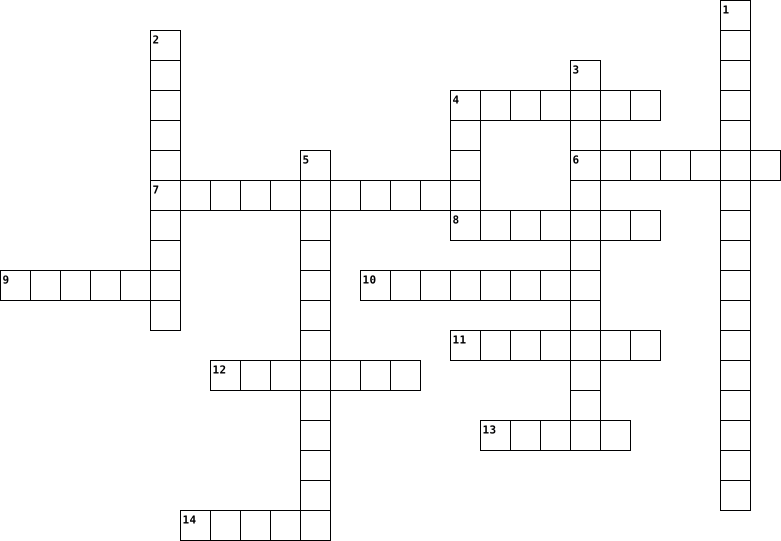
Across
- Waste and other trash (7)
- Where we "bin" our trash (7)
- Viable, doesn't harm the environment (11)
- Highest waste-generating city, Big Apple (7)
- Recycling helps reduce our ______ footprint (6)
- Place where all trash "lands" up (8)
- Synthetic material recycled in the yellow bin (7)
- Category of waste that includes mobile phones, batteries, computers, etc. (7)
- Highest waste-generating country (5)
- World generates 11B tonnes of this annually (5)
Down
- Waste which harms the environment and is very hard to decompose (17)
- Popular way to recycle food waste (10)
- This type of pollution is mainly caused by landfills (13)
- Clean India, _____ India, Color (5)
- Waste which decomposes and doesn't harm the environment (13)
15 Clues: Waste and other trash (7) • Where we "bin" our trash (7) • Clean India, _____ India, Color (5) • Place where all trash "lands" up (8) • Highest waste-generating country (5) • Popular way to recycle food waste (10) • Viable, doesn't harm the environment (11) • Highest waste-generating city, Big Apple (7) • Recycling helps reduce our ______ footprint (6) • ...
Evolution 2023-02-07

Across
- the remains of a plant or animal from a past geological age
- a process in which organisms evolve to adapt to environment
- A process which something passes to a different stage
- a living thing that can act or function independently
- group of genetically related organisms in a line of descent
- noticeable variety
- process to adjust to an environment
Down
- the number of people in a territory or state.
- Darwin Scientist who formulates the theory of evolution
- the immediate descendants of a person or organisms
- the totality of surrounding conditions
- sequence of events involved in the development of a species
- a change of altercation in form or qualities
- Material that carries the information in a cell
- undergo development
15 Clues: noticeable variety • undergo development • process to adjust to an environment • the totality of surrounding conditions • a change of altercation in form or qualities • the number of people in a territory or state. • Material that carries the information in a cell • the immediate descendants of a person or organisms • A process which something passes to a different stage • ...
Earth Day 2024-04-16

Across
- Turning off lights helps conserve __________.
- The study of the relationship between organisms and their environment.
- Polluted precipitation that can damage the environment. (Two words.)
- Turns fruit and vegetable waste into rich soil for gardening.
- Please put your trash in the trash can. Don't __________.
- To use less.
- April 22 (two words)
- Resources that can be replenished or replaced through careful management.
- To use again.
Down
- To process waste in such a way as to reclaim raw material for future use.
- Planned management of natural resources to prevent waste, exploitation, or destruction.
- Raw materials supplied by nature. (Two words.)
- A place where garbage is hauled and burned.
- To contaminate the environment with man-made waste.
- Many People plant these on Earth Day
15 Clues: To use less. • To use again. • April 22 (two words) • Many People plant these on Earth Day • A place where garbage is hauled and burned. • Turning off lights helps conserve __________. • Raw materials supplied by nature. (Two words.) • To contaminate the environment with man-made waste. • Please put your trash in the trash can. Don't __________. • ...
Vocabulary 4 2025-11-11

Across
- The natural environment of an animal or plant
- A specific environment and the living things in the environment
- Giving off light naturally by certain kinds of insects, fish, or bacteria
- Explains the photographs or illustrations
- An animal being hunted, caught, or eaten by another animal
- A special style of letter when typing on a computer (ex. Bold or italics)
Down
- Helps you understand the parts of something
- A range of life forms in a stated location
- To look at closely
- A group of living things that are the same in many important ways
- Something you notice from watching closely
- To meet face-to-face
- Violent
- A secret or something not understood
- An animal that hunts other animals for food
15 Clues: Violent • To look at closely • To meet face-to-face • A secret or something not understood • Explains the photographs or illustrations • A range of life forms in a stated location • Something you notice from watching closely • Helps you understand the parts of something • An animal that hunts other animals for food • The natural environment of an animal or plant • ...
IELTS Enviroment Vocab 2026-07-07

Across
- species Organisms facing a very high risk of extinction.
- The richness and variety of life within an environment.
- The natural environment suited to a particular species.
- balance The stable relationship between living organisms and their environment.
- An interconnected network of organisms and their surroundings.
- Take measures to ensure continued protection.
- Repair environmental damage and return an area to good health.
- Easily affected by threats or environmental change.
Down
- Unlawful exploitation of wildlife for profit.
- The responsible use and protection of natural resources.
- A protected refuge for wildlife.
- Capable of meeting present needs without limiting future generations.
- Keep something in its existing state and prevent deterioration.
- The large-scale replacement of lost woodland.
- Collect information over time to observe changes.
15 Clues: A protected refuge for wildlife. • Unlawful exploitation of wildlife for profit. • The large-scale replacement of lost woodland. • Take measures to ensure continued protection. • Collect information over time to observe changes. • Easily affected by threats or environmental change. • The richness and variety of life within an environment. • ...
Ecosystem Monitoring 2025-02-24

Across
- The presence of harmful substances in the environment
- Things that show or tell you about the environment
- The variety of life in the world or a particular habitat
- Chemicals used to kill pests
Down
- Animals like frogs and salamanders that live both in water and on land
- A community of living organisms and their environment
- The place where animals live
- The process of studying the environment and its changes
- A group of similar organisms that can breed and produce offspring
- Rain Harmful rain caused by pollution
10 Clues: The place where animals live • Chemicals used to kill pests • Rain Harmful rain caused by pollution • Things that show or tell you about the environment • A community of living organisms and their environment • The presence of harmful substances in the environment • The process of studying the environment and its changes • ...
Fun Cross Word 2021-11-12

Across
- animals that eat both plants and animals
- full of saltwater and many forms of life
- a dry hot place
- the predator that from our story that stays above ground
- It creates food for others in the environment
- animals that eat only other animals
Down
- animals that eat only plants.
- It eats things in its environment that are dead.
- a place full of trees
- a community of both plants and animals
- It consumes things in its environment
- The predator that burrows below ground
12 Clues: a dry hot place • a place full of trees • animals that eat only plants. • animals that eat only other animals • It consumes things in its environment • a community of both plants and animals • The predator that burrows below ground • animals that eat both plants and animals • full of saltwater and many forms of life • It creates food for others in the environment • ...
Crossword - Geo 2023-02-01

Across
- The solid, outer layer of the earth
- Sustainable energy for all
- The envelope of gases surrounding the earth
- The variety of life in the world/ecosystem
- Describes a species that no longer exists
Down
- The surroundings in which a being lives
- Taking action to combat climate change
- The natural environment of a given organism
- Release of bad things into the environment
- Doing things without affecting the future
- Hazardous waste causing danger from chemicals
- All water on earth
12 Clues: All water on earth • Sustainable energy for all • The solid, outer layer of the earth • Taking action to combat climate change • The surroundings in which a being lives • Doing things without affecting the future • Describes a species that no longer exists • Release of bad things into the environment • The variety of life in the world/ecosystem • ...
Chapter 1--All About Plants 2014-12-03

Across
- type of plant that grows in a marsh
- colorful part of the plant that makes seeds
- to spread out
- all the living and nonliving things around a plant
- a sunny and hot environment
- part of the plant that carries water to the leaves
Down
- a place with a lot of grass but not many trees
- food and water for the plant
- part of a plant that grows down into the soil
- how maple seeds travel
- to change
- a very wet environment
12 Clues: to change • to spread out • how maple seeds travel • a very wet environment • a sunny and hot environment • food and water for the plant • type of plant that grows in a marsh • colorful part of the plant that makes seeds • part of a plant that grows down into the soil • a place with a lot of grass but not many trees • all the living and nonliving things around a plant • ...
You, the Consumer 2022-05-17

Across
- materials produced by nature
- a substance used for destroying insects
- treatment that removes harmful chemicals from water
- a harmful material that enters the environment
- a resource that does not regenerate quickly
- a person who buys and uses products
- compensation for a wrong
Down
- a resource that regenerates quickly
- anything that is thrown away
- solid, liquid, or gas wastes that can be harmful to humans and the environment
- able to keep in existence, or to maintain
- the world around one
12 Clues: the world around one • compensation for a wrong • materials produced by nature • anything that is thrown away • a resource that regenerates quickly • a person who buys and uses products • a substance used for destroying insects • able to keep in existence, or to maintain • a resource that does not regenerate quickly • a harmful material that enters the environment • ...
Margared Pari-Unit 1 crossword 2025-09-22

Across
- (1.7)body of water receives an excessive nutrient load
- (1.4)development that meets present needs naturally
- (1.1)human centered
- (1.6)maximum number of people an environment can sustain indefinitely
- (1.1)technology centered
- (1.4)natural replacement of resources exploited
- (1.1)nature centered
Down
- (1.6)impact someone or a group of people have on their environment
- (1.7)addition of harmful substance into environment
- (1.1)worldview on environmental issues
- (1.6)amount of resources the Earth can produce
- (1.4)assesses possible impacts of a project
12 Clues: (1.1)human centered • (1.1)nature centered • (1.1)technology centered • (1.1)worldview on environmental issues • (1.4)assesses possible impacts of a project • (1.6)amount of resources the Earth can produce • (1.4)natural replacement of resources exploited • (1.7)addition of harmful substance into environment • (1.4)development that meets present needs naturally • ...
Academic Word List Sub 3 2018-06-08

Across
- That which tends to prove or disprove something
- Blueprint
- Climate
- Action
- Authorize
- Aspect
Down
- Transport
- Conspicuous
- Concerned about and action aimed at protecting the environment
- Banking
- Appraisal
11 Clues: Action • Aspect • Banking • Climate • Transport • Blueprint • Authorize • Appraisal • Conspicuous • That which tends to prove or disprove something • Concerned about and action aimed at protecting the environment
Virtual Learning Enviroments 2018-02-16

Across
- where are the units of the course
- the environment where the agenda is
- the environment where you work with other colleagues is
- the environment where the FUS
Down
- study modality
- they are seen by camera
- the environment where the tests are carried out is
- the environment where the doubts are written
8 Clues: study modality • they are seen by camera • the environment where the FUS • where are the units of the course • the environment where the agenda is • the environment where the doubts are written • the environment where the tests are carried out is • the environment where you work with other colleagues is
Geography & Native Cultures Vocabulary by Mrs. Castillo 2020-08-20

Across
- Native to the land
- Stay in one place
- To change yourself for the environment
- Distance from sea level
Down
- Large Flat Land
- People with something in common
- Area of land that sticks out of a larger area
- Sudden change in elevation
- To change the environment environment for you
- Move
10 Clues: Move • Large Flat Land • Stay in one place • Native to the land • Distance from sea level • Sudden change in elevation • People with something in common • To change yourself for the environment • Area of land that sticks out of a larger area • To change the environment environment for you
Geography & Native Cultures Vocabulary by Mrs. Castillo 2020-08-21

Across
- Native to the land
- Stay in one place
- To change yourself for the environment
- Distance from sea level
Down
- Large Flat Land
- People with something in common
- Area of land that sticks out of a larger area
- Sudden change in elevation
- To change the environment environment for you
- Move
10 Clues: Move • Large Flat Land • Stay in one place • Native to the land • Distance from sea level • Sudden change in elevation • People with something in common • To change yourself for the environment • Area of land that sticks out of a larger area • To change the environment environment for you
Quality Area 3 2024-06-27

Across
- The service promotes ______
- the environment supports play - based ______
- Learning ____ are provided for all children
- Furniture and equipment must be kept well _____
- Educators support _________
- The physical environment promotes _______
Down
- Educators ensure the ______ is safe
- Children are encourage to environmentally _____
- Indoor and Outdoor areas are fit for _______
- Educators plan ______ that support children
10 Clues: The service promotes ______ • Educators support _________ • Educators ensure the ______ is safe • The physical environment promotes _______ • Learning ____ are provided for all children • Educators plan ______ that support children • the environment supports play - based ______ • Indoor and Outdoor areas are fit for _______ • ...
Intro to Philosophy 2025-09-22

Across
- Some philosophies (like deep ecology) say nature has value, while others focus on its value for human life alone.
- is being thrifty with the use of one’s resources, avoiding waste by sing only what is needed and reusing resources whenever possible.
- the person who said “No man is an island, entire of itself: every man is a piece of the continent, a part of the main”
- Humans are not separate from nature but part of it.
- This is a philosophical view from Environmentalism, a moral approach that analyzes the relationship between humans and the environment, it also discusses environmental problems caused by human activities and social issues that impact the environment.
- This view places great value on ecosystems and biological communities.
- philosophical views that believes maintaining order in the environment will bring out the natural beauty of the surroundings and contribute to the well-being of the people and other organisms living in it.
- refers to the fair distribution of environmental benefits, as well as the burden of meeting environmental challenges, and the practical and political application of climate ethics.
- a branch of philosophy that is concerned with the natural environment and humanity’s place in it.
- It applies an ecological and ethical approach in analyzing society, and sees a relationship between social problems and environmental problems.
- this concept focuses on reconciling human activities and economic development with the protection of the environment.
- Creating green spaces, reducing car dependency, and improving public transport for cleaner air and healthier living.
- Conserving electricity at home by turning off unused appliances or switching to solar.
- This perspective advocates to address the growing environmental problems.
- It is the ability to regulate one’s actions and behavior, Carefulness and wise decision making.
Down
- the permanent removal of forests to clear land for non-forest uses, such as agriculture, cattle ranching, mining, and urban development.
- It refers to maintaining the state of the environment
- It is a demand that we use our natural resources in such a manner that these are conserved so that the next generation will be able to use them.
- believes that nature has value (not just for human use) and that humans are only one part of the larger natural world.
- a long-term change in the average weather patterns that have come to define Earth's local, regional and global climates.
- an idea proposed by scientist James Lovelock in the 1970s.
- As rational beings, humans have a moral duty to care for and protect the environment.
- the scientists who proposed the GAIA HYPOTHESIS
- believes that humans are not the only significant species on the planet, and that all organisms have inherent value and should be protected.
- emissions stemming from the burning of fossil fuels and the manufacture of cement.
- focuses on the significant role of humankind in the world and considers nature as how humans can meet their needs and survive.
- person who works to protect, preserve, and manage natural resources and the environment for future generations.
- refers to prudence in decision-making regarding the use of resources to ensure that there is minimum to zero waste.
- Philosophy teaches that a goof life means living in harmony with the natural world, not exploiting it without limits.
- a branch of applied ethics that studies the moral responsibilities of individuals, societies, and governments in relation to climate change.
30 Clues: the scientists who proposed the GAIA HYPOTHESIS • Humans are not separate from nature but part of it. • It refers to maintaining the state of the environment • an idea proposed by scientist James Lovelock in the 1970s. • This view places great value on ecosystems and biological communities. • ...
Endangered Species Vocabulary 2016-01-18

Across
- Plant life of a place
- The natural environment of a plant or animal
- A risk of being wiped out
- Water based
- Animals that can live both in water and on land
- Tiny marine animal similar to shrimp
Down
- Animal life of a place
- A species of plant or animal that once existed but has died out
- Very simple plants that have no stems or leaves
- All the plants and animals that depend on one another and their environment for food and shelter
- A form of tourism that tries to minimize damage to environment
- crops Crops farmers grow to sell, not for them
- Reduce the number of a species by killing some
- Scientists who study ecosystems
- Rotting flesh of dead animal
15 Clues: Water based • Plant life of a place • Animal life of a place • A risk of being wiped out • Rotting flesh of dead animal • Scientists who study ecosystems • Tiny marine animal similar to shrimp • The natural environment of a plant or animal • crops Crops farmers grow to sell, not for them • Reduce the number of a species by killing some • ...
Endangered Species Vocabulary 2016-01-18

Across
- Water based
- Scientists who study ecosystems
- Very simple plants that have no stems or leaves
- crops Crops farmers grow to sell, not for them
- Plant life of a place
- A risk of being wiped out
- A form of tourism that tries to minimize damage to environment
- Reduce the number of a species by killing some
Down
- A species of plant or animal that once existed but has died out
- Animal life of a place
- Animals that can live both in water and on land
- All the plants and animals that depend on one another and their environment for food and shelter
- The natural environment of a plant or animal
- Rotting flesh of dead animal
- Tiny marine animal similar to shrimp
15 Clues: Water based • Plant life of a place • Animal life of a place • A risk of being wiped out • Rotting flesh of dead animal • Scientists who study ecosystems • Tiny marine animal similar to shrimp • The natural environment of a plant or animal • crops Crops farmers grow to sell, not for them • Reduce the number of a species by killing some • ...
Protonephridia 2022-04-28

Across
- External opening that releases some wastes and all excess water
- Function of protonephridia, releases dilute fluid
- Nitrogenous wastes can also be eliminated through the ______ cavity in protonephridia.
- The environment of protonephridia
- Protonephridia is found in what organism
Down
- Nitrogenous wastes can be eliminated across thin body ______ in protonephridia
- Second of the two actions of an excretory system that protonephridia display
- Protonephridia is a network of _____, branching tubules
- In a hypotonic environment, the organisms body has ___ water than the environment.
- What reabsorbs most solutes
- Interstitial fluid is filtered through _____.
- Flame cells contain _____.
- Protonephridia is the _______ filtration mechanism
- One of two actions of an excretory system that protonephridia display
- Action of cilia to filter interstitial fluid
15 Clues: Flame cells contain _____. • What reabsorbs most solutes • The environment of protonephridia • Protonephridia is found in what organism • Action of cilia to filter interstitial fluid • Interstitial fluid is filtered through _____. • Function of protonephridia, releases dilute fluid • Protonephridia is the _______ filtration mechanism • ...
Geography CrossWord 2024-01-12

Across
- An example of physical characteristics include ____ and landforms.
- A person who make maps and coordinates.
- characteristics is created by the natural environment.
- ____ is when people move from one place to another.
- can be described with either absolute or relative.
- how we describe what a location looks like.
- Human ____ are how humans change the environment
Down
- how people, resources, and ideas move.
- An example of Human Characteristics include ____ and cultures.
- ____ ____ Interaction is the relationship between people and the environment.
- ____ location is: I live at 123 Main Street.
- is an area that has similar characteristics.
- Absolute location uses measurements like ____ and coordinates.
- ____is the study of Earth and its people.
- An example of ____ location is: I live near the post office.
15 Clues: how people, resources, and ideas move. • A person who make maps and coordinates. • ____is the study of Earth and its people. • how we describe what a location looks like. • ____ location is: I live at 123 Main Street. • is an area that has similar characteristics. • Human ____ are how humans change the environment • can be described with either absolute or relative. • ...
ecology 2023-05-08

Across
- an organism capable of synthesizing its food
- any animal that feeds chiefly on grass and other plants
- to break down
- when one organism benefits from another without damaging it
- the area in which something exists or lives
- a terrestrial or aquatic flesh-eating mammal
- an animal or plant that lives in or on a host
Down
- an organism that feeds on complex organic substances
- the relation between two organisms that benefit each other
- the variety of plant and animal life in a habitat
- someone who manufactures something
- organisms interacting with their physical environment
- an animal that feeds on both animal and vegetable substances
- major ecological community with distinct climate and flora
- study of the relations of organisms to their environment
15 Clues: to break down • someone who manufactures something • the area in which something exists or lives • an organism capable of synthesizing its food • a terrestrial or aquatic flesh-eating mammal • an animal or plant that lives in or on a host • the variety of plant and animal life in a habitat • an organism that feeds on complex organic substances • ...
Occupational Adaptation Model 2019-09-17

Across
- People’s good use of available resources in the occupational environment
- When a person meets challenges by responding and adapting to the environment
- Characterized by constant desire, demand and press for mastery within an occupational environment; Main objective is to achieve mastery over environment
- The extent to which people are content with their occupational performance and the congruence between occupational participation and performance expectations
Down
- Overall goal is to improve adaptiveness through the use of desire, demand, and press for mastery of the occupational environment
- Participation in occupations is determined based on how well people achieve the goals of occupational engagement and participation
- The person’s ability to perceive the need to change, modify, or refine a variety of responses to occupational challenges in the environment
- Three components are efficiency, effectiveness, and satisfaction
- Where the person develops
- Determines how to perform an occupation with a level of mastery and competence through the use of configuring the amount and level of cognitive capacities, sensory and motor abilities, and psychological functioning
- Demands that a person needs to fulfill
11 Clues: Where the person develops • Demands that a person needs to fulfill • Three components are efficiency, effectiveness, and satisfaction • People’s good use of available resources in the occupational environment • When a person meets challenges by responding and adapting to the environment • ...
Key Concepts 2020-08-25

Across
- international ong
- color that has to do with the environment what surrounds us
- series of rules that have to be followed
- living matter composition
- make people know something
- set of principles an individual has
- different living organisms
- where we live
- activities that have to do with cultivating
- how something evolutions
- process in which something is changed
- since that studies environment
Down
- involved in movement
- when things go sideways
- characteristics about something
- primal matter
- hurts all alive ecosystems in earth
17 Clues: where we live • primal matter • international ong • involved in movement • when things go sideways • how something evolutions • living matter composition • make people know something • different living organisms • since that studies environment • characteristics about something • set of principles an individual has • hurts all alive ecosystems in earth • ...
Linus 2021-06-08

Across
- Can resist water or liquids
- Energy of something bright
- Looking out for the environment
- The energy that is caused by a hot object
- An object which is stretched or squashed
- Can be transparent or opaque
Down
- Is carried by electricity
- Materials that allow electrons to flow freely
- When we hurt/destroy our environment
- There are some energy resources that will not run out
- The surroundings we live in
- Because of us animals and plants are losing it
- An object that is warm or hot giving its energy into its surroundings
- Can be used to make important things used to build houses
- this material is very fragile and needs a lot of heat to be made
15 Clues: Is carried by electricity • Energy of something bright • Can resist water or liquids • The surroundings we live in • Can be transparent or opaque • Looking out for the environment • When we hurt/destroy our environment • An object which is stretched or squashed • The energy that is caused by a hot object • Materials that allow electrons to flow freely • ...
7 Characteristics Of Life 2017-09-12

Across
- many cells
- Living things have different levels of this.
- The cells of all living things contain the molecule Deoxyribonucleic acid commonly called(- - -)
- The chemical reactions to get and use energy are called _______.
- Organisms respond to this, A ____ is anything that causes a reaction or change in an organism
- All living things do this.
- Through cell division, adding more cells
- Living things _______ to their environment
Down
- Forming offspring that differ genetically from both parents
- Change To existing structures, adding new functions
- Is the maintenance of a constant stable internal state in a changing environment
- one cell
- All things are made of cells, living things have different levels of complexity
- Forming offspring identical to the parent
- Living things get this from their environment.
15 Clues: one cell • many cells • All living things do this. • Through cell division, adding more cells • Forming offspring identical to the parent • Living things _______ to their environment • Living things have different levels of this. • Living things get this from their environment. • Change To existing structures, adding new functions • ...
Ecology Basics 2025-02-06

Across
- an area classified according to the species that live in that location
- non living
- kinds of living things that are in danger of dying out
- living or once-living
- any living thing
- organisms that obtain food by eating other organisms
- place where an organisms live
Down
- organisms that breaks down the wastes or remains of other organisms
- trait of living thing that helps it live in its environment
- group of the same kind of organisms living in a certain place
- describes how energy and nutrients move through an ecosystem
- everything that surrounds a living thing
- all populations that live in a certain place
- living and nonliving things in an environment, together with their interactions
- organism's role, or job, in its habitat
15 Clues: non living • any living thing • living or once-living • place where an organisms live • organism's role, or job, in its habitat • everything that surrounds a living thing • all populations that live in a certain place • organisms that obtain food by eating other organisms • kinds of living things that are in danger of dying out • ...
Crossword 2024-11-01

Across
- Show features of the earth that humans created.
- Show the natural features of the earth; Aspects of mother nature.
- How far across the earth a person, product or an idea travels.
- Defined by a limited number of related characteristics.
- The amount of time it takes an idea, person or product to travel.
- People using what the environment offers them.
Down
- Show levels of elevation.
- The way people view distances.
- Exact.
- People alter their environment.
- Not exact.
- Where people perceive or see the characteristics of the region in the same way.
- A map in which information has been substituted for land area or distance.
- Due to a set of interactions and connections between places.
- How humans depend on the environment.
15 Clues: Exact. • Not exact. • Show levels of elevation. • The way people view distances. • People alter their environment. • How humans depend on the environment. • People using what the environment offers them. • Show features of the earth that humans created. • Defined by a limited number of related characteristics. • Due to a set of interactions and connections between places. • ...
physical science 2025-12-02

Across
- all water on, above, and below earths surface
- breaks down rocks over time
- water vapor cools to liquid forming clouds
- gasses surrounding the earth
- movement of water across earths surface
- downward movement of water into soil and rock layers
- storage location for compounds
Down
- any process, location, or system that releases a substance or energy into the environment, adding it to a cycle
- solid parts of the earth
- Movement of elements through living organisms and the environment
- rain, snow, sleet, hail, returning water to earth
- Natural reservoir that stores carbon
- liquid water changes into a vapor
- Any process, location, or system that absorbs or stores energy from the environment removing it from a cycle
- All liking things are considered
15 Clues: solid parts of the earth • breaks down rocks over time • gasses surrounding the earth • storage location for compounds • All liking things are considered • liquid water changes into a vapor • Natural reservoir that stores carbon • movement of water across earths surface • water vapor cools to liquid forming clouds • all water on, above, and below earths surface • ...
Ecology 2014-07-20

Across
- describes organisms that live in water
- describes all living and non-living parts of an organism's surroundings
- the living things in an environment
- organisms which are found living together in a particular place
- how an organism fits into it's ecosystem
Down
- the non-living things in an environment
- community of living things that interact with each other and the environment in which they live
- describes organisms that live on land
- a scientist who studies ecology
- where an organism lives
10 Clues: where an organism lives • a scientist who studies ecology • the living things in an environment • describes organisms that live on land • describes organisms that live in water • the non-living things in an environment • how an organism fits into it's ecosystem • organisms which are found living together in a particular place • ...
Perfect 10 2022-04-07

Across
- the study of how living things interact with each other and the environment
- a non-living part of environment
- an animal that preys on other animals
- the living organism of an ecosystem
- the living an non-living things that interact in one environment
- an animal that is hunted and killed for food by predators
Down
- region with similar climate, types of plants, and animals
- an organism that eats other organism for energy
- a living part of the environment
- an organism that produces organic nutrients for itself
10 Clues: a living part of the environment • a non-living part of environment • the living organism of an ecosystem • an animal that preys on other animals • an organism that eats other organism for energy • an organism that produces organic nutrients for itself • region with similar climate, types of plants, and animals • ...
India Crossword 2014-11-19

Across
- gross national product excluding payments on foreign investments
- the natural wealth of a country, consisting of land, forests, mineral deposits, water, etc
- the introduction of harmful substances or products into the environment
- the state or condition of being subject to death; mortal character, nature, or existence
- the breakdown of an organic compound
- any combustible organic material, as oil, coal, or natural gas, derived from the remains of former life
- diversity among and within plant and animal species in an environment
- Economic growth is the increase in the market value of the goods and services produced by an economy over time
- a system formed by the interaction of a community of organisms with their environment
Down
- the development and application of sanitary measures for the sake of cleanliness, protecting health, etc.
- a subcontinent is South West Asia
- using your resources wisely
- the aggregate of surrounding things, conditions, or influences
- a disordered or incorrectly functioning organ, part, structure, or system of the body
- Also, hygienics. the science that deals with the preservation of health
15 Clues: using your resources wisely • a subcontinent is South West Asia • the breakdown of an organic compound • the aggregate of surrounding things, conditions, or influences • gross national product excluding payments on foreign investments • diversity among and within plant and animal species in an environment • ...
Ecosystems 2016-01-11

Across
- an organism that receives its energy by consuming other organisms
- a tree or shrub that sheds its leaves annually
- plant that has leaves throughout the year, always green.
- contaminants in the natural environment
- a process used by plants and other organisms to convert light from the Sun, into energy to fuel the organisms' activities
- a particular section, group, or type of people or animals living in an area
Down
- the natural home or environment of an animal, plant, or other organism
- organisms that break down dead or decaying organisms
- the organism which the predator eats
- a process used by the cells in an organism’s body to convert food into energy to fuel the organisms' activities
- an organism that preys upon or eats other organisms
- a biological community of interacting organisms and their physical environment
- the act of preserving and protecting the natural environment and our natural resources
- a group of organisms living in the same place or having a particular characteristic in common
- an organism able to make its own energy and is a source of food and energy to other organisms.
15 Clues: the organism which the predator eats • contaminants in the natural environment • a tree or shrub that sheds its leaves annually • an organism that preys upon or eats other organisms • organisms that break down dead or decaying organisms • plant that has leaves throughout the year, always green. • an organism that receives its energy by consuming other organisms • ...
Puzzle 1 2025-05-07

Across
- Doxey’s (BLANK) model tracking changes in local attitudes toward increasing tourism (nickname).
- (BLANK) Tourism: Large-scale, standardised tourism often linked to environmental and cultural damage.
- (BLANK) Tourism: Responsible travel to natural areas that conserves the environment and supports locals.
- A sustainability framework balancing people, planet, and profit.
- (BLANK) Tourism: Visiting places in a way that respects people, culture, and the environment. (Blank Tourism)
- (BLANK)Tourism: Where visitors experience agricultural life, like farm stays or harvest tours.
- The type of impact tourism has on local communities and cultural practices.
Down
- A complex tourism issue with no simple solution and many interlinked factors.
- The effects tourism has on a destination’s economy, society, and environment.
- (BLANK)capacity: The maximum number of visitors a site can handle without negative effects.
- When a destination is overwhelmed by visitors, harming environment and locals.
- Individuals or groups with an interest or investment in tourism development.
- (Abbrv.)Butler’s model showing how tourism destinations evolve over time (abbreviation).
- The ability to meet present needs without compromising future generations.
- (Abbrv.)A business approach that includes ethical and environmental responsibility (abbreviation).
15 Clues: A sustainability framework balancing people, planet, and profit. • The ability to meet present needs without compromising future generations. • The type of impact tourism has on local communities and cultural practices. • Individuals or groups with an interest or investment in tourism development. • ...
Natural Selection 2025-08-26

Across
- To grow or develop well or vigorously; to prosper.
- The biological process through which new individual organisms are produced.
- The gradual change in species over time through processes like natural selection.
- Differences in traits among individuals in a population.
- The strength and vitality required for sustained physical or mental activity.
- A change in an organism that makes it better suited to its environment.
- The ability to continue living or existing, especially in challenging conditions.
- The surrounding conditions in which an organism lives, including climate, food, and other living things.
Down
- An animal that hunts and eats other animals for food.
- A group of individuals of the same species living in a certain area.
- A group of organisms that can interbreed and produce fertile offspring.
- A distinguishing characteristic or quality, especially of one’s personal nature.
- Selection: The process where organisms better adapted to their environment tend to survive and produce more offspring.
- A community of living organisms and their physical environment interacting as a system.
- The act of lying in the sun to absorb heat and energy.
15 Clues: To grow or develop well or vigorously; to prosper. • An animal that hunts and eats other animals for food. • The act of lying in the sun to absorb heat and energy. • Differences in traits among individuals in a population. • A group of individuals of the same species living in a certain area. • ...
Key words Islam Ethics 2015-01-07

Across
- Someone who looks after something for someone else
- A painless death
- Reusing substances to save waste or help the environment
- Protecting animals & looking after the environment
- The deliberate ending of a pregnancy
Down
- The duty to look after the environment (steward)
- Methods used to prevent pregnancy
- Islamic Law
- The act of harming or contaminating the environment
9 Clues: Islamic Law • A painless death • Methods used to prevent pregnancy • The deliberate ending of a pregnancy • The duty to look after the environment (steward) • Someone who looks after something for someone else • Protecting animals & looking after the environment • The act of harming or contaminating the environment • ...
Food webs and Food Chains 2022-02-08

Across
- a living creature
- where organisms live
- chain: flow of energy goes one direction
- study of the relationship between organisms and their environment
- the relationship between and organism that eat another organism
Down
- organisms benefit from interaction with each other
- organisms depending on other organisms ad their environment
- web: shows the transfer of energy going in multiple directions
- a group of organisms
- organisms and their environment
10 Clues: a living creature • where organisms live • a group of organisms • organisms and their environment • chain: flow of energy goes one direction • organisms benefit from interaction with each other • organisms depending on other organisms ad their environment • web: shows the transfer of energy going in multiple directions • ...
ecosystem 2024-02-02

Across
- Living things in the environment are called ______
- The topmost area of rainforest
- Non-living and living things interact in an environment
- Layer where decomposers are present
Down
- Ecosystem where there are many trees present in layers
- Nonliving things in the environment are called ______
- Ecosystem where it is very hot
- They clean the environment
- Ecosystem in water
9 Clues: Ecosystem in water • They clean the environment • Ecosystem where it is very hot • The topmost area of rainforest • Layer where decomposers are present • Living things in the environment are called ______ • Nonliving things in the environment are called ______ • Ecosystem where there are many trees present in layers • ...
Evolution 2016-05-05

Across
- Permit the organism has to perform special functions
- A process in the breeding of animals and in the cultivation of plants by which the breeder chooses to perpetuate only those forms having certain desirable inheritable characteristics
- the case in which one species looks similar to another species
- The movement of population, groups or individuals
- Physical features of an organism that change due to its environment
- Change over time
- structures that have little to no use anymore
- a change in DNA
- the ability of an individual to survive and reproduce in its specific environment
Down
- Natural coloring of an animal that enables it to blend in with its surroundings
- The action or process of adapting or being adapted
- structures on animals that are similar but are not from the same ancestors.
- When the environment can’t support unlimited population growth, causing many individuals not to be able to reproduce to their full potential
- Frequency of alleles with the same fitness may change at random through time
- The process where organisms better adapted to their environment tend to survive and produce more offspring`
15 Clues: a change in DNA • Change over time • structures that have little to no use anymore • The movement of population, groups or individuals • The action or process of adapting or being adapted • Permit the organism has to perform special functions • the case in which one species looks similar to another species • ...
Ecology Vocabulary Part 1 2023-03-16

Across
- the strength and vitality required for sustained physical or mental activity.
- needs something to help it be complete
- the number of a living species in that area
- Factor a living organism that shapes its environment
- A group of something based on similarity of things in that area
- the natural home or environment of an animal, plant, or other organism.
- an area classified according to the species that live in that location.
- classification comprising related organisms that share common characteristics and are capable of interbreeding.Energy
Down
- an organism that cannot produce its own food and must eat other plants and/or animals to get energy.
- an organism that makes its own food.
- a biological community of interacting organisms and their physical environment.
- the branch of biology that deals with the relations of organisms to one another and to their physical surroundings
- factor a non-living part of an ecosystem that shapes its environment.
- made up of the parts of Earth where life exists—all ecosystems
- the match of a species to a specific environmental condition
15 Clues: an organism that makes its own food. • needs something to help it be complete • the number of a living species in that area • Factor a living organism that shapes its environment • the match of a species to a specific environmental condition • made up of the parts of Earth where life exists—all ecosystems • ...