
irregular verbs Crossword Puzzles
IRREGULAR VERBS IN PAST 2023-08-08

Across
- FORGET
- BRING
- DRINK
- HOLD
- WRITE
- IS
- ARE
- HEAR
- LOSE
- SEND
- FLY
- GO
- MAKE
- STAND
Down
- CHOOSE
- CATCH
- FIND
- DRIVE
- THINK
- COME
- KNOW
- BREAK
- DRAW
- TAKE
- READ
- SPEND
- STEAL
- RIDE
- SWIM
- DO
30 Clues: IS • GO • DO • ARE • FLY • FIND • COME • KNOW • HOLD • DRAW • TAKE • READ • HEAR • RIDE • LOSE • SEND • SWIM • MAKE • CATCH • DRIVE • THINK • BRING • DRINK • BREAK • WRITE • SPEND • STEAL • STAND • CHOOSE • FORGET
Irregular Verbs (Past Simple) 2023-09-26

Across
- sındırmaq
- yıxılmaq, düşmək
- satın almaq
- seçmək
- olmaq
- vermək
- tapmaq
- sahib olmaq, malik olmaq
- tutmaq, yaxalamaq
- əldə etmək
- dişləmək
Down
- uçmaq
- maşın sürmək
- getmək
- yemək
- başlamaq
- asmaq
- gəlmək
- döyüşmək
- içmək
- unutmaq
- gətirmək
22 Clues: uçmaq • yemək • asmaq • olmaq • içmək • getmək • seçmək • gəlmək • vermək • tapmaq • unutmaq • başlamaq • döyüşmək • gətirmək • dişləmək • sındırmaq • əldə etmək • satın almaq • maşın sürmək • yıxılmaq, düşmək • tutmaq, yaxalamaq • sahib olmaq, malik olmaq
Irregular Verbs: Past Participle 2023-11-20

Across
- Buy
- Be
- Feel
- Grow
- Eat
- Find
- Think
- Speak
- See
- Let
- Understand
- Choose
- Sing
- Know
- Take
- Hear
- Meet
- Run
- Lie
- Send
- Say
- Put
- Catch
- Lead
- Give
- Hold
Down
- Build
- Wear
- Mean
- Leave
- Go
- Write
- Become
- Begin
- Stand
- Tell
- Show
- Rise
- Spend
- Get
- Bring
- Drink
- Make
- Pay
- Lose
- Keep
- Sit
- Come
- Drive
- Read
50 Clues: Be • Go • Buy • Eat • See • Let • Get • Run • Pay • Lie • Sit • Say • Put • Wear • Mean • Feel • Grow • Find • Tell • Show • Rise • Sing • Know • Take • Hear • Meet • Make • Lose • Keep • Send • Come • Lead • Read • Give • Hold • Build • Leave • Write • Begin • Think • Stand • Speak • Spend • Bring • Drink • Catch • Drive • Become • Choose • Understand
irregular verbs + vocabulary words 2023-11-24

Across
- платить 1 форма
- купить 1 форма
- включать (в себя)
- одолжить 1 форма
- посещать (мероприятие)
- драться 2,3 форма
- отправить 1 форма
- покидать, оставлять 1 форма
- драться, сражаться 1 форма
- одолжить 2,3 форма
- принести 1 форма
- тонуть 1 форма
- отправить на рассмотрение/проверку
- строить 2 форма
- тонуть 2 форма
- покидать, оставлять 2,3 форма
- встретить 2,3 форма
- встретить 1 форма
- платить 2,3 форма
Down
- вложить, прикрепить
- строить 1 форма
- купить 2,3 форма
- потратить(деньги, время) провести (время) 2,3 форма
- думать 2,3 форма
- расширение, увеличение сроков
- чувствовать 2,3 форма
- чувствовать 1 форма
- тонуть 3 форма
- принести 2 форма
- думать 1 форма
- отправить 2,3 форма
- потратить(деньги, время) провести (время) 1 форма
32 Clues: купить 1 форма • тонуть 3 форма • думать 1 форма • тонуть 1 форма • тонуть 2 форма • платить 1 форма • строить 1 форма • строить 2 форма • купить 2,3 форма • одолжить 1 форма • думать 2,3 форма • принести 2 форма • принести 1 форма • включать (в себя) • драться 2,3 форма • отправить 1 форма • встретить 1 форма • платить 2,3 форма • одолжить 2,3 форма • вложить, прикрепить • чувствовать 1 форма • ...
Lenka - Irregular verbs (2) 2024-02-26

Across
- - CZYTAĆ(I)
- - WSTAWAĆ(II)
- - OPUSZCZAĆ(I)
- - CHODZIĆ/JEŻDZIĆ(I)
- - KŁAŚĆ(II)
- - MIEĆ(I)
- - CHODZIĆ/JEŻDZIĆ(II)
- - DOSTAWAĆ(I)
- - SPOTYKAĆ(II)
- - OPUSZCZAĆ(II)
- - SŁYSZEĆ(II)
- - WIEDZIEĆ/ZNAĆ(I)
Down
- - MIEĆ(II)
- - WSTAWAĆ(I)
- - PRZEGRYWAĆ/GUBIĆ(I)
- - BIEGAĆ(II)
- - PRZEGRYWAĆ/GUBIĆ(II)
- - WIEDZIEĆ/ZNAĆ(II)
- - DAWAĆ(II)
- - KŁAŚĆ(I)
- - DOSTAWAĆ(II)
- - SPOTYKAĆ(I)
- - DAWAĆ(I)
- - CZYTAĆ(II)
- - SŁYSZEĆ(I)
- - BIEGAĆ(I)
26 Clues: - MIEĆ(I) • - MIEĆ(II) • - KŁAŚĆ(I) • - DAWAĆ(I) • - CZYTAĆ(I) • - DAWAĆ(II) • - KŁAŚĆ(II) • - BIEGAĆ(I) • - WSTAWAĆ(I) • - BIEGAĆ(II) • - CZYTAĆ(II) • - SŁYSZEĆ(I) • - WSTAWAĆ(II) • - DOSTAWAĆ(I) • - SPOTYKAĆ(I) • - SŁYSZEĆ(II) • - OPUSZCZAĆ(I) • - DOSTAWAĆ(II) • - SPOTYKAĆ(II) • - OPUSZCZAĆ(II) • - WIEDZIEĆ/ZNAĆ(I) • - WIEDZIEĆ/ZNAĆ(II) • - CHODZIĆ/JEŻDZIĆ(I) • - PRZEGRYWAĆ/GUBIĆ(I) • - CHODZIĆ/JEŻDZIĆ(II) • ...
Irregular verbs - Past simple 2023-12-17

Across
- keep
- find
- Bet
- give
- write
- know
- speak
- swim
- sleep
- shoot
- bring
Down
- catch
- read
- teach
- feel
- begin
- drink
- see
- spend
- forget
- sit
21 Clues: Bet • see • sit • read • keep • find • feel • give • know • swim • catch • teach • begin • drink • write • speak • spend • sleep • shoot • bring • forget
Past simple irregular verbs 2023-09-17

Across
- to bite
- to drink
- to lie
- to ride
- to catch
- to spend
- to wake
- to feel
- to say
- can
Down
- to forget
- to burn
- to hurt
- to flee
- to find
- to keep
- to be
- to cost
- to lay
- to shut
20 Clues: can • to be • to lie • to lay • to say • to bite • to burn • to hurt • to flee • to find • to keep • to ride • to cost • to wake • to feel • to shut • to drink • to catch • to spend • to forget
Simple Past (irregular verbs) 2024-03-01

Across
- sing
- speak
- make
- think
- swim
- feel
- bring
- spend
- find
- sell
- forget
- ate
- wake
- lend
- sweep
- teach
- hold
- hear
- tell
- drive
- spread
- know
Down
- run
- steal
- see
- shut
- choose
- mean
- begin
- set
- fall
- ride
- shake
- cost
- drink
- deal
- fly
- hurt
- keep
- stand
- give
- hide
- let
- do
- sit
- feel
- lose
- read
- write
- wear
50 Clues: do • run • see • set • fly • ate • let • sit • sing • shut • make • mean • swim • fall • feel • ride • cost • find • sell • deal • hurt • keep • wake • lend • give • hold • hide • feel • hear • tell • lose • read • know • wear • steal • speak • think • begin • bring • spend • shake • drink • sweep • stand • teach • drive • write • choose • forget • spread
IRREGULAR VERBS part 2 2024-03-05

Across
- COST
- GET
- BUILD
- EAT
- THINK
- SAY
- BREAK
- LOSE
- GIVE
- UNDERSTAND
- HEAR
Down
- PUT
- BUY
- BEGIN
- MEET
- GET
- CHOOSE
- DO
- KNOW
- LEAVE
- WIN
- READ
- DRINK
23 Clues: DO • PUT • BUY • GET • EAT • GET • SAY • WIN • COST • MEET • KNOW • LOSE • GIVE • READ • HEAR • BUILD • BEGIN • THINK • BREAK • LEAVE • DRINK • CHOOSE • UNDERSTAND
IRREGULAR VERBS - PAST SIMPLE 2024-03-11

Across
- - TO SPEAK PAST SIMPLE
- - TO WATE PAST SIMPLE
- - TO GET PAST SIMPLE
- - TO MEET PAST SIMPLE
- - TO WIN PAST SIMPLE
- - TO GIVE PAST SIMPLE
- - TO DO PAST SIMPLE
- - TO EAT PAST SIMPLE
- - TO SLEEP PAST SIMPLE
- - TO HAVE PAST SIMPLE
- - TO GO PAST SIMPLE
Down
- - TO SEE PAST SIMPLE
- - TO BUY PAST SIMPLE
- - TO LEAVE PAST SIMPLE
- - TO SEND PAST SIMPLE
- - TO HANG PAST SIMPLE
- - TO MAKE PAST SIMPLE
- - TO COME PAST SIMPLE
- - TO WRITE PAST SIMPLE
- - TO HEAR PAST SIMPLE
- - TO DRINK PAST SIMPLE
- - TO BE PAST SIMPLE
22 Clues: - TO DO PAST SIMPLE • - TO GO PAST SIMPLE • - TO BE PAST SIMPLE • - TO SEE PAST SIMPLE • - TO BUY PAST SIMPLE • - TO GET PAST SIMPLE • - TO WIN PAST SIMPLE • - TO EAT PAST SIMPLE • - TO SEND PAST SIMPLE • - TO WATE PAST SIMPLE • - TO HANG PAST SIMPLE • - TO MEET PAST SIMPLE • - TO MAKE PAST SIMPLE • - TO COME PAST SIMPLE • - TO HEAR PAST SIMPLE • - TO GIVE PAST SIMPLE • - TO HAVE PAST SIMPLE • ...
Irregular Verbs part 02 2024-03-12

Across
- speak
- leave
- sleep
- let
- win
- throw
- pay
- understand
- set
- steal
- take
- sing
- meet
- mean
- think
- lay
- say
Down
- shut
- know
- spend
- lead
- show
- wear
- read
- stand
- stick
- write
- put
- teach
- send
- lose
- ring
- make
- sell
- sit
- tell
- see
37 Clues: let • win • pay • put • set • sit • lay • see • say • shut • know • lead • show • wear • read • send • lose • take • ring • sing • meet • make • mean • sell • tell • speak • spend • leave • sleep • stand • stick • throw • write • teach • steal • think • understand
IRREGULAR VERBS 2nd TEST 2024-03-20

Across
- RIDE
- SWIM
- CHOOSE
- BREAK
- WRITE
- SWING
- STEAL
- TAKE
- FORGIVE
- DRIVE
- BEGIN
Down
- GIVE
- RISE
- DRINK
- SHAKE
- FORGET
- FALL
- WAKE
- SPEAK
- SING
- FREEZE
- HIDE
- EAT
- RING
- BITE
25 Clues: EAT • GIVE • RIDE • RISE • SWIM • FALL • WAKE • SING • TAKE • HIDE • RING • BITE • DRINK • SHAKE • BREAK • WRITE • SWING • STEAL • SPEAK • DRIVE • BEGIN • CHOOSE • FORGET • FREEZE • FORGIVE
Irregular verbs Past Participle 2023-10-31

Across
- fall
- break
- speak
- bring
- draw
- write
- put
- mean
- forgive
- tear
Down
- see
- wear
- read
- swim
- understand
- build
- win
- hurt
- think
- lay
20 Clues: see • win • lay • put • wear • fall • read • swim • draw • hurt • mean • tear • break • speak • bring • build • write • think • forgive • understand
Irregular Verbs - Infinitives Only 2024-01-31

Across
- Yo SOY muy alta. (inf)
- No ENTIENDO (inf) la tarea de ingles.
- I ____ my test scores to my parents.
- To watch.
- To be (temporarily)
- I ______ from work very late tonight.
- Something you’re supposed to get 8 hours of every night.
- To begin or to start.
- To want or to love ❤️
- I ____ badminton after school every day.
- Midday mealtime for most people.
Down
- To commit to memory.
- Infinitive form of piensas.
- What are you trying TO SAY? (inf)
- I can’t ____ my glasses!!!
- I _____ the door before I leave.
- Yo TENGO (inf) catorce años.
- I ____ sheep before I go to bed.
- Infinitive form of PREFIRIMOS.
- The Chiefs are going to ____ the Super Bowl.
- To come.
- I GO to the store on Fridays.
22 Clues: To come. • To watch. • To be (temporarily) • To commit to memory. • To begin or to start. • To want or to love ❤️ • Yo SOY muy alta. (inf) • I can’t ____ my glasses!!! • Infinitive form of piensas. • Yo TENGO (inf) catorce años. • I GO to the store on Fridays. • Infinitive form of PREFIRIMOS. • I _____ the door before I leave. • I ____ sheep before I go to bed. • ...
Irregular verbs (Variant 2) 2025-03-12

Across
- feel
- smell
- cost
- think
- stand
- teach
- say
- put
- bring
- learn
- sit
Down
- fight
- cut
- buy
- meet
- let
- send
- pay
- hear
- catch
- keep
- spend
- read
23 Clues: cut • buy • let • pay • say • put • sit • feel • meet • cost • send • hear • keep • read • fight • smell • think • stand • teach • catch • spend • bring • learn
PAST PARTICIPLE IRREGULAR VERBS 2025-02-18

Across
- win
- hit
- know
- buy
- put
- swim
- think
- pay
- run
- feed
- write
- let
- forget
- sell
- catch
- find
- send
- give
- begin
- read
- have
- eat
- get
- make
Down
- show
- build
- lose
- keep
- come
- see
- hear
- understand
- write
- drive
- break
- fall
- speak
- choose
- do
- bring
- go
- ride
- feel
- tell
44 Clues: do • go • win • hit • buy • put • see • pay • run • let • eat • get • show • lose • know • keep • come • swim • hear • feed • fall • sell • find • send • give • read • ride • have • feel • tell • make • build • think • write • drive • break • write • speak • catch • bring • begin • forget • choose • understand
Irregular Verbs Crossword Puzzle 2025-02-19

Across
- cry
- bring
- freeze
- are
- give
- take
- ate
- sing
- fall
- can
- say
- leave
- draw
- buy
- put
- hide
Down
- go
- catch
- choose
- feel
- meet
- begin
- hit
- know
- pay
- sleep
- give
- cut
- do
- see
- fight
- run
- have
33 Clues: go • do • cry • hit • are • ate • pay • can • cut • say • see • run • buy • put • feel • meet • give • take • know • sing • give • fall • draw • have • hide • catch • bring • begin • sleep • leave • fight • choose • freeze
Irregular Past Tense Verbs 2025-01-17

Across
- fall
- catch
- steal
- draw
- lay
- drink
- cost
- stick
- quit
- put
- kept
- win
- see
- wake
- make
- dream
- fly
- let
- shrink
- hear
- ride
- rise
- bend
- forgive
- run
- be (is)
- understand
- tear
- say
- seek
- bring
- has/have
- withdraw
- set
- hide
- lend
- light
- cut
- throw
- drive
- tell
- sing
- feel
- sink
- bite
- sleep
- hide
- teach
Down
- send
- blow
- eat
- find
- sell
- break
- come
- fit
- lose
- forget
- become
- spend
- choose
- begin
- upset
- knit
- feed
- grow
- be (are)
- slide
- meet
- wear
- give
- stand
- swear
- mean
- dig
- know
- ring
- shut
- speak
- buy
- think
- fight
- awake
- hold
- freeze
- shoot
- swim
- strike
- hurt
- write
- spread
- do
- sit
- lead
- take
- go
- leave
- read
- build
- get
- pay
- hit
- shake
103 Clues: do • go • eat • fit • lay • put • win • see • fly • let • dig • buy • run • say • set • sit • cut • get • pay • hit • send • blow • fall • find • sell • draw • come • lose • cost • quit • kept • knit • feed • grow • wake • make • meet • wear • give • mean • hear • know • ride • rise • ring • shut • bend • hold • swim • tear • seek • hurt • hide • lend • lead • take • tell • read • sing • feel • sink • bite • hide • catch • steal • break • drink • spend • stick • begin • upset • slide • dream • stand • swear • speak • think • fight • awake • shoot • bring • write • light • throw • drive • leave • build • ...
Irregular verbs (arise-->forget) 2025-03-11

Across
- elejir
- volar
- doblar
- bite
- vencer/golpear
- sentir
- tratar/negociar
- feed
- be
- fall
- burn
- forget
- dig
Down
- llegar a ser / convertirse en
- transmitir x ondas del aire
- comprar
- drink
- cut
- construir
- prohibir
- blow
- bring
- comer
- begin
- sangrar
- atraer/dibujar
26 Clues: be • cut • dig • blow • bite • feed • fall • burn • drink • volar • bring • comer • begin • elejir • doblar • sentir • forget • comprar • sangrar • prohibir • construir • vencer/golpear • atraer/dibujar • tratar/negociar • transmitir x ondas del aire • llegar a ser / convertirse en
Irregular Past Tense Verbs 2025-03-17

Across
- Past tense of "beat"
- Past tense of "cut"
- Past tense of "steal"
- Past tense of "bring"
- Past tense of "learn"
- Past tense of "tear"
- Past tense of "light"
- Past tense of "hurt"
- Past tense of "leap"
- Past tense of "set"
- Past tense of "hit"
Down
- Past tense of "burn"
- Past tense of "dream"
- Past tense of "mean"
- Past tense of "begin"
- Past tense of "catch"
- Past tense of "shake"
- Past tense of "bend"
- Past tense of "let"
- Past tense of "ring"
- Past tense of "stick"
- Past tense of "rise"
- Past tense of "lend"
- Past tense of "put"
- Past tense of "slide"
25 Clues: Past tense of "cut" • Past tense of "let" • Past tense of "put" • Past tense of "set" • Past tense of "hit" • Past tense of "burn" • Past tense of "mean" • Past tense of "beat" • Past tense of "bend" • Past tense of "ring" • Past tense of "tear" • Past tense of "rise" • Past tense of "lend" • Past tense of "hurt" • Past tense of "leap" • Past tense of "dream" • Past tense of "begin" • ...
IRREGULAR VERBS FINAL SOUNDS 2025-10-01

Across
- Something you do when you see something funny or hear a good joke.
- What you do with your fingernails when they get too long.
- To do really well in an exam and get A+.
- To look for something that you lost.
- An easy way to eat an ice-cream.
- An activity you do on your computer as you look at many websites.
- A correct answer gets this, a wrong answer gets a cross!
- To sleep for a short period of time.
- To repair something ripped or has a hole.
- Something you do as a sign of love.
- When you miss eating a meal.
Down
- The time when you finish your exams and about to leave high-school.
- When a tree branch breaks into 2 pieces.
- An activity that keeps your teeth clean and healthy.
- A way to cut vegetables into very small pieces.
- People say good things to you on the good things you did.
- Something you did when you heard your favorite song.
- When you cannot escape or be free.
- To trim or reduce the size of a photograph on your computer.
- When you need to be quiet and not talk loudly.
20 Clues: When you miss eating a meal. • An easy way to eat an ice-cream. • When you cannot escape or be free. • Something you do as a sign of love. • To look for something that you lost. • To sleep for a short period of time. • To do really well in an exam and get A+. • When a tree branch breaks into 2 pieces. • To repair something ripped or has a hole. • ...
PAST PARTICIPLE IRREGULAR VERBS 2025-10-01

Across
- Swum
- Driven
- Spoken
- Sung
- Been
- Taken
- Written
- Forgiven
Down
- Given
- Drunk
- Begun
- Seen
- Known
- Gone
- Stolen
- Broken
- Found
- Eaten
- Done
- Fallen
20 Clues: Swum • Seen • Sung • Gone • Been • Done • Given • Drunk • Begun • Known • Found • Taken • Eaten • Driven • Spoken • Stolen • Broken • Fallen • Written • Forgiven
past simple irregular verbs 2025-09-04

Across
- find
- spend
- choose
- bring
- go
- think
- know
- drive
- read
- are
Down
- catch
- make
- forget
- fly
- send
- take
- hold
- break
- stand
- draw
20 Clues: go • fly • are • make • find • send • take • hold • draw • know • read • catch • spend • bring • break • stand • think • drive • forget • choose
Irregular Verbs Past Tense 2025-09-05

Across
- read
- sing
- stand
- choose
- get
- have
- know
- come
- win
- pay
- go
- make
- buy
- feel
- eat
- think
- sleep
- ride
- drink
- leave
- build
Down
- begin
- say
- wear
- speak
- drive
- give
- keep
- do
- write
- draw
- hit
- teach
- cut
- take
- see
- pay
- run
- break
- lose
- find
41 Clues: do • go • say • get • win • pay • buy • hit • cut • eat • see • pay • run • read • sing • wear • have • give • know • keep • come • make • draw • feel • take • ride • lose • find • begin • stand • speak • drive • write • teach • think • sleep • break • drink • leave • build • choose
Irregular verbs p.1 2024-04-08

Across
- preterit de "attraper"
- infinitif de "poser à plat"
- infinitif de "chanter"
- infinitif de "mener"
- participe passé de "blesser"
- preterit de "construire"
- participe passé de "signifier"
- participe passé de "envoyer"
- preterit de "boire"
- preterit de "enseigner"
- infinitif de "garder"
- infinitif de "dépenser"
- "sleep" en français
- "bet" en français
- preterit de "déchirer"
- participe passé de "commencer"
- participe passé de "porter un vêtement"
Down
- preterit de "acheter"
- infinitif de "brûler"
- preterit de "coûter"
- preterit de "penser"
- preterit de "prêter"
- "swim" en français
- infinitif de "laisser"
- preterit de "dire"
- participe passé de "partir"
- "swear" en français
- "bring" en français
- infinitif de "nourrir"
- participe passé de "sonner"
30 Clues: "bet" en français • "swim" en français • preterit de "dire" • "swear" en français • preterit de "boire" • "bring" en français • "sleep" en français • preterit de "coûter" • preterit de "penser" • preterit de "prêter" • infinitif de "mener" • preterit de "acheter" • infinitif de "brûler" • infinitif de "garder" • preterit de "attraper" • infinitif de "chanter" • infinitif de "laisser" • ...
regular and irregular verbs 2024-09-26

Across
- Begin
- Cry
- Understand
- Speak
- Give
- Take
- Try
- Drink
- Like
- Meet
- Forget
- Put
- Finish
- Buy
- Happen
- Become
- Write
- Walk
- Visit
- Remember
- Ask
- Go
- Call
- Wait
- Look
- Read
- Die
- Open
- Find
- Want
Down
- Learn
- Help
- Enjoy
- Come
- Close
- Choose
- Use
- Talk
- Arrive
- Say
- Answer
- Think
- Touch
- Stay
- Get
- Run
- Play
- Do
- Study
- Work
- Dress
- Sell
- Believe
- Eat
- Tell
- Follow
- See
57 Clues: Do • Go • Cry • Use • Say • Try • Get • Put • Run • Buy • Ask • Eat • Die • See • Help • Come • Talk • Give • Take • Stay • Like • Meet • Play • Work • Walk • Sell • Tell • Call • Wait • Look • Read • Open • Find • Want • Learn • Begin • Enjoy • Close • Speak • Think • Touch • Drink • Study • Write • Dress • Visit • Choose • Arrive • Answer • Forget • Finish • Happen • Become • Follow • Believe • Remember • Understand
regular and irregular verbs 2024-09-26

Across
- Meet
- Get
- Buy
- Run
- Open
- Think
- Write
- Call
- Sell
- Begin
- Drink
- Want
- Talk
- Follow
- Speak
- Finish
- cut
- Tell
- Say
- Study
- Walk
- Like
- Help
- Become
- Enjoy
- Play
Down
- Learn
- Forget
- Try
- Work
- Dress
- Cry
- Happen
- Use
- See
- Close
- Answer
- Go
- Touch
- Wait
- Visit
- Ask
- Take
- Eat
- Come
- Do
- Look
- Read
- Believe
49 Clues: Go • Do • Get • Buy • Try • Run • Cry • Use • See • cut • Ask • Say • Eat • Meet • Work • Open • Call • Sell • Want • Talk • Wait • Take • Tell • Come • Walk • Like • Look • Help • Read • Play • Learn • Dress • Think • Write • Close • Begin • Drink • Touch • Speak • Visit • Study • Enjoy • Forget • Happen • Answer • Follow • Finish • Become • Believe
Regular and irregular verbs 2024-08-14

Across
- leer
- alcanzar
- pasar,suceder
- crrer
- cambiar
- crecer
- ganar
- pagar
- conseguir
- pedir, preguntar
- matar, asesinar
- sugerir
- esperar
- perder
- tomar,agarrar
- necesitar
- enviar
- abrir
- hacer,fabricar
- mostrar
- tener
- venir
- comprar
- construir
- morir
- gustar
- caer
Down
- repetir
- traer
- encontrar
- pensar
- ayudar
- escribir
- empezar, comenzar
- levantar
- querer, desear
- dar
- aprender
- quedarse,permanecer
- trabajar
- hablar
- sumar, añadir
- recordar
- ver, observar
- hacer
- creer
- mover, mudar(se)
- decir
- jugar
- llamar
50 Clues: dar • leer • caer • traer • crrer • ganar • pagar • hacer • creer • abrir • decir • jugar • tener • venir • morir • pensar • ayudar • crecer • hablar • perder • enviar • llamar • gustar • repetir • cambiar • sugerir • esperar • mostrar • comprar • alcanzar • escribir • levantar • aprender • trabajar • recordar • encontrar • conseguir • necesitar • construir • pasar,suceder • tomar,agarrar • sumar, añadir • ver, observar • querer, desear • hacer,fabricar • matar, asesinar • ...
Irregular verbs - simple past 2025-06-03

Across
- spread
- shoot
- win
- cost
- put
- lead
- cut
- say
- feed
- read
- find
- meet
- bleed
Down
- hurt
- sit
- stand
- shut
- set
- pay
- let
- understand
- hold
- sell
23 Clues: sit • win • set • put • pay • let • cut • say • hurt • shut • cost • lead • hold • sell • feed • read • find • meet • stand • shoot • bleed • spread • understand
Irregular verbs past tense 2025-12-19

Across
- Past of run
- Past of get
- Past of are
- Past of eat
- Past of do
- Past of take
- Past of see
- Past of come
- Past of have
- Past of think
Down
- Past of give
- Past of find
- Past of make
- Past of go
- Past of know
- Past of buy
- Past of say
- Past of am / is
- Past of feel
- Past of put
20 Clues: Past of go • Past of do • Past of run • Past of get • Past of are • Past of eat • Past of buy • Past of see • Past of say • Past of put • Past of give • Past of find • Past of make • Past of take • Past of know • Past of feel • Past of come • Past of have • Past of think • Past of am / is
Irregular verbs: Past Simple 2026-01-13

Across
- flew
- felt
- lost
- left
- grew
- sent
- forgot
- spoke
- took
- held
- broke
Down
- bit
- fell
- felt
- shook
- spent
- got
- wore
- saw
- took
- sank
- stole
- drank
- tore
24 Clues: bit • got • saw • flew • fell • felt • felt • lost • left • grew • wore • sent • took • sank • took • held • tore • shook • spent • spoke • stole • drank • broke • forgot
Regular and Irregular Verbs 2025-08-04

Across
- pointed
- lived
- sit
- speak
- drive
- laughed
- leave
- work
- brought
Down
- fill
- use
- came
- washed
- talked
- bought
- took
- met
- read
- cried
- forgot
20 Clues: use • sit • met • fill • came • took • read • work • lived • speak • drive • cried • leave • washed • talked • bought • forgot • pointed • laughed • brought
irregular verbs in past 2025-06-26

Across
- said
- found
- became
- brought
- told
- got
- showed
- kept
Down
- made
- knew
- came
- felt
- began
- bled
- took
- left
- gave
- thought
- went
- saw
20 Clues: got • saw • made • said • knew • came • felt • bled • told • took • left • gave • went • kept • found • began • became • showed • brought • thought
Irregular Past Tense Verbs 2026-03-04

Across
- Past tense of build (They ___ a fort.)
- Past tense of read (I ___ a big book.)
- Past tense of drink (I ___ some milk.)
- Past tense of fly (The jet ___ fast.)
- Past tense of draw (I ___ a bird.)
- Past tense of go (We ___ to the park.)
- Past tense of put (I ___ it away.)
- Past tense of hear (I ___ a noise.)
- Past tense of bring (I ___ my lunch.)
- Past tense of sleep (I ___ all night.)
Down
- Past tense of find (I ___ my shoe.)
- Past tense of tell (She ___ a story.)
- Past tense of eat (We ___ cake.)
- Past tense of say (He ___ hello.)
- Past tense of win (They ___ the game.)
- Past tense of teach (He ___ us math.)
- Past tense of see (We ___ a movie.)
- Past tense of rise (The sun ___.)
- Past tense of sing (She ___ a song.)
- Past tense of throw (He ___ the ball.)
20 Clues: Past tense of eat (We ___ cake.) • Past tense of say (He ___ hello.) • Past tense of rise (The sun ___.) • Past tense of draw (I ___ a bird.) • Past tense of put (I ___ it away.) • Past tense of find (I ___ my shoe.) • Past tense of see (We ___ a movie.) • Past tense of hear (I ___ a noise.) • Past tense of sing (She ___ a song.) • Past tense of tell (She ___ a story.) • ...
Past Simple Irregular Verbs". 2026-03-09

Across
- - Volar
- - Obtener
- - Dar
- - Perder.
- - Empezar
- - Beber
- - Conducir
- - Romper
- - Ocultar
- - Dejar / Salir
- - Oír
- - Olvidar
- - Ir
- - Saber / Conocer
Down
- - Perdonar
- - Comprar
- - Encontrar
- - Traer / Llevar
- - Crecer
- - Despertarse
- - Surgir / Levantarse
- - Caer
- - Sentir
- - Elegir
- - Comer
25 Clues: - Ir • - Dar • - Oír • - Caer • - Volar • - Beber • - Comer • - Crecer • - Romper • - Sentir • - Elegir • - Comprar • - Obtener • - Perder. • - Empezar • - Ocultar • - Olvidar • - Perdonar • - Conducir • - Encontrar • - Despertarse • - Dejar / Salir • - Traer / Llevar • - Saber / Conocer • - Surgir / Levantarse
Irregular Verbs Past Form 2026-02-07

Across
- buy
- take
- see
- sing
- hold
- spend
- put
- go
- pay
- wake
- run
- eat
- give
- understood
Down
- bring
- make
- sleep
- fly
- drive
- swim
- think
- drink
- read
- do
24 Clues: go • do • buy • see • fly • put • pay • run • eat • take • make • sing • hold • swim • wake • read • give • bring • sleep • drive • spend • think • drink • understood
Regular and irregular verbs 2026-02-02

Across
- förlora
- lämna
- tog
- skrev
- fångade
- undvek
- betalade
- nickade
- anlände
- lyssnade
- köpte
- förlorade
- lämnade
- lärde sig
- besökte
- hörde
- lade märke till
- mötte
- körde
- hittade
- misstänkte
- kysste
- pratade
- sade
- gick/åkte
- åt
Down
- sov
- talade
- flög
- gav
- tittade
- önskade
- välja
- berättade
- frågade
- svarade
- skrattade
- målade
- gjorde/tillverkade
- återvände
- ätit
- bröt
- klättrade
- väntade
- började
- kasta
- kom
- öppnade
- såg
- försökte
- drack
- tänkte
- visste
53 Clues: åt • sov • gav • tog • kom • såg • flög • ätit • bröt • sade • lämna • skrev • välja • köpte • kasta • hörde • mötte • körde • drack • talade • undvek • målade • kysste • tänkte • visste • förlora • tittade • önskade • frågade • fångade • svarade • nickade • anlände • väntade • lämnade • började • besökte • hittade • öppnade • pratade • betalade • lyssnade • försökte • berättade • skrattade • återvände • klättrade • förlorade • lärde sig • gick/åkte • misstänkte • lade märke till • gjorde/tillverkade
Irregular verbs b-g 2026-01-20

Across
- encontrar
- comprar
- dibujar
- empezar
- alimentar
- sentir
- atrapar
- beber
- construir
- convertirse
- costar
Down
- escoger
- volar
- soñar
- traer
- romper
- venir
- caerse
- pelear
- comer
- poder
- conducir
- hacer
- ser o estar
- soplar
- cortar
26 Clues: volar • soñar • traer • venir • comer • poder • beber • hacer • romper • caerse • sentir • pelear • soplar • cortar • costar • escoger • comprar • dibujar • empezar • atrapar • conducir • encontrar • alimentar • construir • ser o estar • convertirse
REGULAR AND IRREGULAR VERBS 2026-01-17

Across
- receive or obtain
- create or produce
- perform an action
- be aware of something
- move toward
- notice with the eyes
- hand to someone
- move fast on foot
- make an effort
- do a job
- exist
Down
- speak words
- give information
- discover
- move from one place to another
- use the mind
- possess
- go away
- phone someone
- grab or carry
20 Clues: exist • possess • go away • discover • do a job • speak words • move toward • use the mind • phone someone • grab or carry • make an effort • hand to someone • give information • receive or obtain • create or produce • perform an action • move fast on foot • notice with the eyes • be aware of something • move from one place to another
Irregular verbs - past participles 2026-01-25

Across
- mít
- držet
- krmit
- foukat
- zranit
- jíst
- skrýt se
- stát (peníze)
- běžet
- střílet
- zlomit, rozbít
- prasknout
- postavit
- půjčit
- zaplatit
- chytit
- zapomenout
- jednat, zabývat se
- dát
- položit, klást
- sedět
- cítit
- poslat
- nastavit
- mrznout
- jet (na kole, koni)
- hodit
- vědět, znát
- znamenat
- prodat
- říct
- hodit (očarovat, nahodit udici)
- odejít, opustit
- porodit, nést
- jít, jet
- dostat
- krvácet
- vyhrát
- svítit
- přijít, přijet
- bít, porazit
- vzít
- snít
- ukrást
- hledat
- řezat, stříhat, krájet
- rozumět
- potopit se
- svázat
Down
- slyšet
- číst
- spadnout
- ohnout
- bojovat
- vstát, stoupat
- učit
- dělat
- utratit, trávit (čas)
- zakázat
- přinést
- zavřít
- spát
- dát, položit
- plížit se
- držet se pevně, lpět
- najít
- psát
- odpustit
- zvonit
- potkat
- utéct
- ztratit
- ležet
- lepit, držet
- přísahat, nadávat
- vidět
- nosit (oblečení)
- hořet, pálit
- probudit (se)
- kreslit, táhnout
- zpívat
- kopat
- mluvit
- říct
- vybrat (si)
- být
- řídit
- stát se
- držet, uchovat
- třást
- udělat, vyrobit
- myslet
- vést
- dovolit
- udeřit
- růst, pěstovat
- začít
- stát
98 Clues: mít • dát • být • číst • jíst • učit • spát • psát • říct • říct • vést • vzít • snít • stát • držet • krmit • dělat • běžet • najít • utéct • ležet • sedět • cítit • vidět • hodit • kopat • řídit • třást • začít • slyšet • ohnout • foukat • zranit • zavřít • půjčit • zvonit • chytit • potkat • poslat • prodat • zpívat • mluvit • dostat • vyhrát • svítit • myslet • ukrást • udeřit • hledat • svázat • bojovat • zakázat • přinést • střílet • ztratit • mrznout • krvácet • stát se • dovolit • rozumět • spadnout • skrýt se • postavit • ...
REGULAR AND IRREGULAR VERBS 2024-05-09

Across
- play
- give
- know
- call
- go
- bring
- jump
- cry
- send
- work
Down
- open
- walk
- read
- sleep
- wait
- get
- stop
- run
- sing
- take
20 Clues: go • get • cry • run • open • walk • play • give • read • know • call • wait • stop • jump • send • sing • take • work • sleep • bring
Irregular Present Tense Verbs 2024-05-10

Across
- there is/are
- you familiar want
- they go
- she knows
- he likes
- we feel
- I translate
- I know
- we prefer
- we follow/continue
- you all familiar give
Down
- you formal can
- they bring
- we give
- it bores them
- we do/make
- he is (estar)
- we see
- he has
- you familiar are (ser)
- you familiar say/tell
- you familiar hear
22 Clues: we see • he has • I know • we give • they go • we feel • he likes • she knows • we prefer • they bring • we do/make • I translate • there is/are • it bores them • he is (estar) • you formal can • you familiar want • you familiar hear • we follow/continue • you familiar say/tell • you all familiar give • you familiar are (ser)
Irregular Past Tense Verbs 2024-05-21

Across
- bought
- slept
- knew
- saw
- taught
- gave
- ate
- felt
- met
- went
- drank
Down
- understand
- lost
- took
- put
- wrote
- spent
- had
- got
- found
- ran
21 Clues: put • saw • had • got • ate • met • ran • lost • took • knew • gave • felt • went • slept • wrote • spent • found • drank • bought • taught • understand
Irregular verbs past simple 2024-05-23

Across
- pay
- meet
- leave
- understand
- write
- lose
- have
- begin
- take
- cost
- know
Down
- come
- build
- make
- find
- eat
- ride
- forget
- feel
- get
- drink
- go
- break
23 Clues: go • pay • eat • get • come • meet • make • find • ride • feel • lose • have • take • cost • know • build • leave • drink • write • begin • break • forget • understand
Irregular Verbs 21-40 2024-06-12

Across
- have
- get
- feed
- give
- fall
- go
- fight
- forgive
- drive
- grow
Down
- do
- eat
- forget
- fly
- drink
- find
- freeze
- feel
- hang
- draw
20 Clues: do • go • eat • get • fly • have • feed • find • give • fall • feel • hang • draw • grow • drink • fight • drive • forget • freeze • forgive
Irregular Verbs - Page 153 2024-11-24

Across
- put
- sleep
- give
- leave
- sit
- hear
- get
- be
- drink
- read
- write
- go
- send
- swim
- stand
- have
- say
- meet
- hang
- ride
- come
- think
Down
- buy
- sing
- build
- feel
- choose
- pay
- speak
- do
- teach
- wear
- know
- see
- run
- draw
- lose
- become
- sell
- make
- spend
- drive
- win
- eat
- take
- hold
46 Clues: do • be • go • buy • put • pay • sit • get • see • run • win • say • eat • sing • feel • give • hear • wear • know • read • draw • lose • send • swim • sell • make • have • meet • take • hang • hold • ride • come • sleep • build • leave • speak • teach • drink • write • stand • spend • drive • think • choose • become
Past Simple - Irregular Verbs 2024-05-02

Across
- To swim
- To find
- To keep
- To forget
- To go
- To have
- To lose
- To say
- To ride
- To come
- To make
Down
- To write
- To bring
- To know
- To take
- To tell
- To give
- To sleep
- To read
- To do
20 Clues: To go • To do • To say • To swim • To find • To keep • To know • To take • To tell • To have • To give • To lose • To ride • To read • To come • To make • To write • To bring • To sleep • To forget
Irregular verbs Past Participle 2024-11-27

Across
- Participle of build
- Participle of win
- Participle of sit
- Participle of make
- Participle of break
- Participle of go
- Participle of choose
- Participle of read
- Participle of eat
- Participle of give
Down
- Participle of forget
- Participle of fly
- Participle of upset
- Participle of swim
- Participle of see
- Participle of know
- Participle of come
- Participle of catch
- Participle of did
- Participle of ride
20 Clues: Participle of go • Participle of fly • Participle of win • Participle of sit • Participle of see • Participle of did • Participle of eat • Participle of swim • Participle of make • Participle of know • Participle of come • Participle of ride • Participle of read • Participle of give • Participle of build • Participle of upset • Participle of break • Participle of catch • Participle of forget • ...
IRREGULAR VERBS S-W 2025-02-24

Across
- past simple of WRITE
- past simple of SPEAK
- past simple and participle of STICK
- past participle of SHOW
- past simple and participle of SHOOT
- past simple and participle of UNDERSTAND
- past participle of SING
- past participle of SWIM
- past simple of WAKE UP
- past participle of WRITE
- past participle of TEAR
- past participle of WAKE UP
- past simple and participle of THINK
- past simple and participle of TELL
- past simple of THROW
- past simple of SHOW
- past simple of STEAL
- past simple and participle of SPELL
- past simple and participle of SMELL (irregular version)
- past simple and participle of SHUT
Down
- past participle of THROW
- past simple of WEAR
- past simple of TAKE
- past simple of SINK
- past simple and participle of STING
- past participle of SPEAK
- past simple of SWIM
- past simple of SING
- past simple and participle of SHINE
- past simple and participle of SIT
- past simple and participle of WIN
- past simple of TEAR
- past simple and participle of TEACH
- past participle of SINK
- past participle of STEAL
- past participle of WEAR
- past simple and participle of SWEEP
- past participle of TAKE
- past simple and participle of SPEND
- past simple and participle of SLEEP
40 Clues: past simple of WEAR • past simple of TAKE • past simple of SINK • past simple of SWIM • past simple of SING • past simple of TEAR • past simple of SHOW • past simple of WRITE • past simple of SPEAK • past simple of THROW • past simple of STEAL • past simple of WAKE UP • past participle of SHOW • past participle of SING • past participle of SWIM • past participle of TEAR • past participle of SINK • ...
Irregular Verbs 1.a 2025-04-21

Across
- build
- choose
- drink
- find
- draw
- break
- feed
- forget
- bleed
- buy
- are
Down
- eat
- become
- come
- do
- cut
- feel
- is
- bring
- fall
- drive
21 Clues: do • is • eat • cut • buy • are • come • find • feel • draw • feed • fall • build • drink • break • bring • bleed • drive • become • choose • forget
Irregular Verbs 1st part 2025-03-24

Across
- build
- begin
- do
- cost
- up wake up
- become
- be
- show
- keep
- catch
- buy
- see
- say
- throw
- bring
- hurt
- ride
- sleep
- feel
- feed
- get
- meet
- run
- tell
- write
- sell
- hide
- sing
- leave
- hold
- spend
- teach
- send
- go
Down
- eat
- understand
- lie
- come
- drive
- drink
- read
- swim
- ring
- stick
- put
- cut
- grow
- win
- hear
- speak
- wear
- steal
- break
- hit
- pay
- find
- take
- fly
- choose
- know
- think
- make
- have/has
- lose
- light
- sink
- give
- sit
68 Clues: do • be • go • eat • lie • put • cut • win • buy • see • say • hit • pay • fly • get • run • sit • come • cost • read • swim • ring • show • keep • grow • hear • wear • hurt • ride • feel • find • take • feed • know • meet • tell • sell • make • hide • sing • lose • hold • sink • give • send • build • begin • drive • drink • stick • catch • speak • throw • steal • bring • break • sleep • write • think • leave • light • spend • teach • become • choose • have/has • understand • up wake up
Irregular verbs pt 1 2025-03-26

Across
- begin
- forget
- can
- bring
- choose
- do
- drink
- keep
- come
- fall
- break
- hear
Down
- go
- give
- find
- build
- cut
- drive
- become
- have
- cost
- eat
- fly
- buy
- draw
25 Clues: go • do • can • cut • eat • fly • buy • give • find • have • cost • keep • come • fall • draw • hear • begin • build • drive • bring • drink • break • forget • become • choose
Irregular verbs - Past simple 2025-04-07

Across
- To creep
- To fight
- To feed
- To drive
- To bring
- To begin
- To break
- To cost
- To bite
- To bleed
- To be
- To buy
- To eat
Down
- To cut
- To fall
- To catch
- To choose
- To do
- To break
- To feel
- To come
- To drink
- To become
- To build
- To beat
- To deal
26 Clues: To do • To be • To cut • To buy • To eat • To fall • To feed • To feel • To come • To cost • To bite • To beat • To deal • To creep • To catch • To fight • To break • To drive • To drink • To bring • To begin • To break • To build • To bleed • To choose • To become
Irregular verbs (page 1) 2025-04-08

Across
- feel
- congelar
- surgir
- drink
- drive
- ir
- dormir
- bring
- feed
- begin
- montar
- crecer
- bleed
- transmitir x aire
- doblar
- romper
- volar
- get
- read
Down
- do
- bite
- esconder
- choose
- perdonar
- draw
- find
- hit
- decir
- cut
- build
- fly
- see
- atrapar
- comer
- fall
- sangrar
- ver
- comprar
- saber/conocer
- moverse sigilosamente
40 Clues: do • ir • hit • cut • fly • see • ver • get • bite • feel • draw • find • feed • fall • read • drink • drive • decir • bring • build • begin • bleed • comer • volar • choose • surgir • dormir • montar • crecer • doblar • romper • atrapar • sangrar • comprar • esconder • perdonar • congelar • saber/conocer • transmitir x aire • moverse sigilosamente
Grammar crossword- Irregular verbs 2025-05-06

Across
- be
- understand
- drive
- make
- find
- draw
- read
- think
- catch
- take
- break
- come
Down
- send
- fly
- write
- know
- bring
- do
- ride
- go
- forget
- drink
- lose
- choose
24 Clues: be • do • go • fly • send • know • make • ride • find • draw • read • lose • take • come • write • bring • drive • drink • think • catch • break • forget • choose • understand
Irregular verbs (2nd column) 2024-10-14

Across
- fly
- put
- bring
- show
- learn
- choose
- run
- sing
- be
- catch
- think
- take
- drink
- drive
- do
- dream
- buy
- lose
- begin
- sleep
- speak
- make
- hear
- cut
Down
- fight
- know
- fall
- feel
- give
- brake
- spend
- forget
- cost
- win
- pay
- read
- burn
- get
- go
- eat
- build
- have
- to must
- leave
- understand
- say
- come
- teach
- can
- see
50 Clues: be • go • do • fly • put • win • pay • run • get • eat • buy • say • can • see • cut • know • fall • feel • give • show • cost • read • burn • sing • have • take • lose • come • make • hear • fight • bring • brake • spend • learn • build • catch • think • drink • drive • leave • dream • begin • sleep • teach • speak • forget • choose • understand • to must
Irregular Verbs Past Participle 2024-10-10

Across
- sleep
- fight
- buy
- become
- sing
- give
- eat
- hit
- throw
- let
- forget
- teach
- keep
- wear
- write
- draw
- drive
- think
- build
- ride
- speak
- lend
- find
- bite
Down
- wake up
- feel
- do
- forgive
- hide
- be
- catch
- meet
- see
- choose
- go
- leave
- get
- steal
- fly
- hurt
- fall
- freeze
- take
- drink
- sell
- know
- put
47 Clues: do • be • go • buy • see • eat • hit • let • get • fly • put • feel • hide • meet • sing • give • hurt • keep • wear • fall • take • draw • ride • sell • know • lend • find • bite • sleep • fight • catch • throw • leave • steal • teach • write • drink • drive • think • build • speak • become • choose • forget • freeze • wake up • forgive
Past Participle (Irregular Verbs) 2024-10-02

Across
- build
- lose
- make
- find
- eat
- steal
- sleep
- be
- send
- buy
- drink
- leave
- write
- do
- pay
- show
Down
- sell
- break
- catch
- wake
- see
- spend
- take
- keep
- bring
- choose
- get
- give
- drive
29 Clues: be • do • eat • see • buy • get • pay • sell • lose • make • wake • find • take • keep • send • give • show • build • break • catch • steal • sleep • spend • bring • drink • leave • write • drive • choose
Simple Past Irregular Verbs 2024-10-02

Across
- get
- begin
- feel
- take
- meet
- hold
- think
- spend
- give
- know
- have
- come
- buy
- sell
- do
- go
- cut
- tell
- find
- lose
- break
- be
- understand
- win
- eat
Down
- speak
- mean
- set
- bring
- lead
- keep
- choose
- put
- send
- hear
- teach
- wear
- cost
- make
- pay
- stand
- leave
- drive
- write
- draw
- say
- run
- sit
- build
- let
- see
51 Clues: do • go • be • get • set • put • pay • buy • cut • say • run • sit • let • see • win • eat • mean • feel • lead • take • keep • meet • hold • send • hear • give • know • wear • have • cost • come • make • sell • tell • draw • find • lose • speak • begin • bring • think • teach • spend • stand • leave • drive • write • break • build • choose • understand
Past Tense: Irregular Verbs 2024-10-07

Across
- think
- swim
- wear
- drink
- eat
- buy
- fall
- feel
- come
- understand
- say
- know
Down
- choose
- tell
- bring
- meet
- make
- ride
- read
- find
- see
- have
22 Clues: eat • buy • see • say • tell • swim • meet • make • wear • ride • fall • read • feel • find • come • have • know • think • bring • drink • choose • understand
Regular and Irregular verbs 2024-06-13

Across
- Taylor Swift _______ for almost three hours in the last concert.
- I was cooking and I _______ my finger with a knife
- I _______ to Brazil last year.
- Last night I was sleeping, and I _________ from the bed and broke my nose.
- I asked the teacher a question, but he didn't _________
- My mom _______ a new car. It's beautiful.
- I ________ to buy a new PS5 game, but I didn't have money.
- Yesterday I ______ my arm. I can't write.
- infinitive form of "remembered"
- My dad _______ for three years in his last job.
- I had English test yesterday. I ____ all night.
- Yesterday my bus didn't stop. I ________ home.
Down
- simple past of "start"
- Yesterday it rained all day and I _____ at home watching movies.
- My wife loves flowers. Yesterday, she _______ 4 of them in the garden.
- I couldn't enter into my house, I ________ my keys.
- My brother ______ me a letter. He's in Canada.
- simple past of "empezar"
- My sister ___________ chicken and rice for lunch.
- simple past of "romper"
- I ______ to stop her, but she did it anyway.
- last month, I ______ on plane for the first time.
- The house _______ down with the fire.
- I _______ the most incredible news in the morning.
24 Clues: simple past of "start" • simple past of "romper" • simple past of "empezar" • I _______ to Brazil last year. • infinitive form of "remembered" • The house _______ down with the fire. • My mom _______ a new car. It's beautiful. • Yesterday I ______ my arm. I can't write. • I ______ to stop her, but she did it anyway. • My brother ______ me a letter. He's in Canada. • ...
Regular and Irregular verbs 2024-06-30

Across
- close
- undestand
- marry
- work
- sleep
- write
- like
- see
- cook
- talk
- go
Down
- have
- try
- wake
- take
- play
- need
- speak
- drive
- ate
- swim
- loved
- is
- drank
- win
25 Clues: is • go • try • ate • see • win • have • wake • take • play • need • work • swim • like • cook • talk • close • speak • marry • drive • sleep • write • loved • drank • undestand
Irregular verbs - past simple 2024-09-09

Across
- cost
- see
- write
- swim
- speak
- ring
- know
- leave
- study
- lose
- be
- begin
- do
Down
- find
- try
- start
- be
- travel
- work
- go
- play
- solve
- enter
- share
25 Clues: be • go • be • do • try • see • find • cost • work • swim • ring • play • know • lose • start • write • print • speak • leave • study • solve • enter • share • begin • travel
PAST TENSE (IRREGULAR VERBS) 2024-10-22

Across
- Syifa ______(make)a cake for my birthday.
- We ______ (forget) to turn off the lights.
- We ____(drink) a glass of water.
- She ____(came) to visit me.
- Sri _____(eat) a sandwich for lunch.
- She _____ (bring) a cake to the party.
- I _____ (think) about you yesterday.
- Diana _____(draw) a picture of a cat.
- Indah ______(swim) across the river.
- She ____(drive) her new car.
- They ____(are) tired after a long day.
- I'll ______(send) you a text later.
- Titi ______(find) a lost wallet.
- I ______ (know) she was lying.
Down
- Desi _____(loss) my keys.
- She _____ (take) a book from the shelf.
- Lala _____(do) the laundry.
- I _____(catch) a fish.
- She _____(is) happy.
- I _____(read) a great book last weekend.
- Feni _____(keep) the secret.
- He ______ (break) the vase when it fell to the floor.
- I ___(hear) a noise.
- She ______ (choose) the blue dress.
- Neni _____(stand) in line for tickets.
- We _____(fly) to Paris last summer.
- He _____(ride) a bike to school.
- Shanum _____(write) a letter to my friend.
- Lisa _____(spend) all her money on a new video game.
- The robber _____(steal) the jewels
- They ______ (go) to the movies after dinner.
31 Clues: She _____(is) happy. • I ___(hear) a noise. • I _____(catch) a fish. • Desi _____(loss) my keys. • Lala _____(do) the laundry. • She ____(came) to visit me. • Feni _____(keep) the secret. • She ____(drive) her new car. • I ______ (know) she was lying. • We ____(drink) a glass of water. • He _____(ride) a bike to school. • Titi ______(find) a lost wallet. • ...
Regular and Irregular Verbs 2024-11-14

Across
- kiss
- sell
- sleep
- see
- have
- eat
- hit
- drink
- finish
- buy
- clean
Down
- speak
- read
- swim
- invite
- write
- drive
- cry
- dance
- close
20 Clues: see • eat • hit • cry • buy • read • kiss • sell • swim • have • speak • sleep • write • drive • drink • dance • close • clean • invite • finish
Irregular verbs (2nd form) 2025-11-12

Across
- see
- meet
- speak
- throw
- find
- wear
- lose
- make
- break
- eat
- hear
- give
- think
- know
- grow
- sleep
- send
- build
- hide
- feed
- say
Down
- feel
- come
- set
- sell
- write
- fall
- read
- take
- mean
- begin
- choose
- teach
- sing
- drive
- sit
- pay
- stand
- become
- drink
40 Clues: see • set • eat • sit • pay • say • feel • come • sell • meet • find • fall • wear • read • lose • take • make • mean • sing • hear • give • know • grow • send • hide • feed • speak • throw • write • break • begin • teach • drive • think • sleep • stand • build • drink • choose • become
Past Simple irregular verbs 2025-11-04

Across
- To flee
- To Hit
- To have
- To fly
- To give
- To feel
- To drink
- To drive
- To grow
- To fight
- To Hide
Down
- To feed
- To hang
- To eat
- To fall
- To go
- To forget
- To draw
- To find
- To get
- To freeze
- To hear
22 Clues: To go • To Hit • To eat • To fly • To get • To flee • To feed • To hang • To have • To fall • To give • To feel • To draw • To find • To grow • To hear • To Hide • To drink • To drive • To fight • To forget • To freeze
Irregular Past Tense Verbs 2025-09-23

Across
- go
- find
- hear
- fight
- draw
- get
- choose
- feel
- drive
- do
- build
- forgive
- eat
Down
- begin
- forget
- buy
- come
- bring
- am
- give
- have
- feed
- drink
- break
- bend
- fall
26 Clues: go • am • do • buy • get • eat • find • come • hear • draw • give • have • feel • feed • bend • fall • begin • bring • fight • drive • drink • break • build • forget • choose • forgive
irregular verbs - part I 2025-11-21

Across
- forget
- go
- put
- think
- say
- write
- have
- drink
- do
- come
Down
- buy
- send
- eat
- get
- take
- pay
- see
- hear
- speak
- read
- make
21 Clues: go • do • buy • eat • get • put • pay • see • say • send • take • hear • read • have • make • come • think • speak • write • drink • forget
Regular and irregular verbs 2025-09-15

Across
- förstod
- lämnade
- tog
- kastade
- ge
- köpte
- sett
- åkte
- bodde
- åt
- sjöng
- började
- byggde
- känt
- betalade
- körde
- bestämde
- stal
- sade
- tagit
Down
- hittade
- klättrade
- tänkte
- bar
- lärt ut/undervisat
- försökte
- skrev
- sov
- fångade
- druckit
- sprang
- lärde sig
- besökte
- stannande
- köpa
- tog med
- läsa
- simmade
- ätit
- frågade
40 Clues: ge • åt • bar • tog • sov • sett • åkte • köpa • känt • läsa • stal • ätit • sade • skrev • köpte • bodde • sjöng • körde • tagit • tänkte • sprang • byggde • hittade • förstod • lämnade • kastade • fångade • druckit • besökte • började • tog med • simmade • frågade • försökte • betalade • bestämde • klättrade • lärde sig • stannande • lärt ut/undervisat
Past Simple - Irregular verbs 2025-11-11

Across
- We ________ new shoes yesterday.
- The movie ________ at eight o’clock.
- The teacher ________ us a new song.
- We ________ a shooting star last night.
- I ________ a postcard from Paris.
- I ________ a wonderful time at the party.
- I ________ the test was easy.
- He ________ a sandwich for lunch.
- We ________ to the zoo last weekend.
- She ________ a famous singer after the competition.
- I ________ the blue T-shirt because it was my favorite.
- He ________ his homework after dinner.
Down
- My mom ________ a cake for my birthday.
- She ________ her books on the table.
- Our team ________ the game!
- She ________ a nice present for her birthday.
- The plants ________ very fast in the garden.
- She ________ a letter to her grandmother.
- He ________ the ball to his friend.
- I ________ a glass of milk before bed.
- My dad ________ me a lift to school.
- They ________ all the cookies in the jar!
- My friends ________ to my house last Saturday.
- They ________ their old car last month.
24 Clues: Our team ________ the game! • I ________ the test was easy. • We ________ new shoes yesterday. • I ________ a postcard from Paris. • He ________ a sandwich for lunch. • The teacher ________ us a new song. • He ________ the ball to his friend. • She ________ her books on the table. • The movie ________ at eight o’clock. • My dad ________ me a lift to school. • ...
Irregular verbs set 3 2025-12-12

Across
- engage in combat
- past tense of drive
- past tense of give
- travel in air
- past tense of eat
- past tense of get
- past participle of fall
- operate a vehicle
- past participle of forget
- past participle of fight
- sense something
- past tense of fight
- past tense of fall
- past tense of feel
- past participle of drive
Down
- discover something
- present something
- past tense of forget
- past participle of eat
- obtain something
- past tense of find
- past participle of fly
- past participle of feel
- past participle of find
- past participle of get
- past tense of fly
- consume food
- drop down
- past participle of give
- not remember
30 Clues: drop down • consume food • not remember • travel in air • sense something • engage in combat • obtain something • present something • past tense of eat • past tense of get • operate a vehicle • past tense of fly • discover something • past tense of give • past tense of find • past tense of fall • past tense of feel • past tense of drive • past tense of fight • past tense of forget • past participle of eat • ...
Past simple irregular verbs 2026-03-23

Across
- past simple van 'bijten'
- Vertaal:geschaafd
- Vertaal: orkest
- Vertaal: zalfje
- past simple van 'hebben'
- past simple van 'hangen'
- Vertaal: ijzel
- past simple van 'zien'
- vertaal: sfeer
- past simple van 'to sell'
- Vertaal:ritme
- past simple van 'to take'
- past simple van 'verliezen'
- past simple van 'to become'
- Vertaal:songtekst
- past simple van 'to sleep'
- Vertaal:gedicht
- Vertaal: motregen
- Vertaal:onvoorspelbaar
- Vertaal: duim
- past simple van 'to pay'
Down
- past simple van 'to teach'
- past simple van 'geven'
- Vertaal: stortbui
- past simple van 'vergeten'
- past simple van 'tekenen'
- past simple van 'to drive'
- past simple van 'eten'
- Vertaal: spier
- past simple van 'vangen'
- past simple van 'kiezen'
- past simple van 'zwemmen'
- past simple van 'to be'
- Vertaal:ziekte
- past simple van 'to write'
- past simple van 'to stand'
- past simple van 'to make'
- past simple van 'to freeze'
- past simple van 'to cut'
- past simple van 'to rise'
- past simple van 'zingen'
- past simple van 'ontmoeten'
- Vertaal: verwonding
- past simple van 'lezen'
- past simple van 'doen'
- past simple van 'denken'
46 Clues: Vertaal:ritme • Vertaal: duim • Vertaal: spier • Vertaal: ijzel • Vertaal:ziekte • vertaal: sfeer • Vertaal: orkest • Vertaal: zalfje • Vertaal:gedicht • Vertaal: stortbui • Vertaal:geschaafd • Vertaal:songtekst • Vertaal: motregen • Vertaal: verwonding • past simple van 'eten' • past simple van 'zien' • Vertaal:onvoorspelbaar • past simple van 'doen' • past simple van 'geven' • past simple van 'to be' • ...
Irregular Verbs (61-80) 2026-03-26

Across
- Shoot
- Run
- Shine
- Say
- Set
- Seek
- Speak
- Send
- Ride
- Shut
Down
- Shake
- Sing
- Sell
- Read
- Smell
- Quit
- Spell
- Rise
- Sleep
- See
20 Clues: Run • Say • Set • See • Sing • Sell • Read • Quit • Seek • Rise • Send • Ride • Shut • Shake • Shoot • Shine • Smell • Spell • Speak • Sleep
Past Simple: Irregular verbs 2026-04-22

Across
- catch
- sell
- speak
- wear
- buy
- cut
- put
- eat
- teach
- lie
- get
- hurt
- leave
- meet
- understand
- know
- say
- go
Down
- have
- think
- sleep
- draw
- shine
- bring
- build
- send
- begin
- tell
- steal
- ring
- drive
- fly
- make
- sing
34 Clues: go • buy • cut • put • eat • lie • get • fly • say • have • sell • draw • wear • send • tell • hurt • ring • meet • make • know • sing • catch • think • sleep • speak • shine • bring • build • begin • teach • steal • drive • leave • understand
Irregular verbs part 1 2026-04-18

Across
- Expressed ideas using words
- Possessed or experienced something
- Rested your body on a chair or surface
- Moved from one place to another in the past
- Took something to a place in the past
- Past form of "be" for he/she/it
- Removed or captured something
- Comprehended meaning or information
- Started something
- Completed or finished something
- Used money or time
- Arrived somewhere in the past
- Finished a meal
- Provided something to someone
Down
- Had clothes or accessories on your body
- Paid money to get something
- Consumed a liquid
- Perceived with your eyes before now
- Past form of "be" for you/we/they
- Selected from options carefully
- Left a place and not here anymore
- Removed or carried something with you
- Consumed too much alcohol
- Remained on your feet
- Gave something temporarily expecting return
- Experienced visiting a place
- Created or produced something
- Transferred a message or object to someone
- Consumed food
- Completed an action or task
30 Clues: Consumed food • Finished a meal • Consumed a liquid • Started something • Used money or time • Remained on your feet • Consumed too much alcohol • Paid money to get something • Expressed ideas using words • Completed an action or task • Experienced visiting a place • Removed or captured something • Created or produced something • Arrived somewhere in the past • ...
IRREGULAR VERBS F:7 2026-05-27

Across
- saama midagi(3)
- kinni püüdma(2)
- haiget tegema(1)
- jooma(2)
- panema, asetama(3)
- lahkuma(1)
- olema(2)
- valima(1)
- unustama(3)
- pidama(2)
- andestama(3)
- omama(2)
- kukkuma(3)
- saama kellekski(2)
Down
- unustama(1)
- algama(3)
- sõitma(3)
- peitma(3)
- joonistama(2)
- jooma(3)
- valima(2)
- maksma, väärt olema(3)
- andestama(2)
- katki tegema(3)
- tegema(2)
- kukkuma(2)
- panema, asetama(1)
27 Clues: jooma(2) • jooma(3) • olema(2) • omama(2) • algama(3) • sõitma(3) • peitma(3) • valima(2) • valima(1) • tegema(2) • pidama(2) • lahkuma(1) • kukkuma(2) • kukkuma(3) • unustama(1) • unustama(3) • andestama(2) • andestama(3) • joonistama(2) • saama midagi(3) • kinni püüdma(2) • katki tegema(3) • haiget tegema(1) • panema, asetama(3) • panema, asetama(1) • saama kellekski(2) • maksma, väärt olema(3)
Past P Irregular Verbs 2026-06-08

Across
- past part of buy
- past part of draw
- past part of catch
- past part of bring
- past part of eat
- past part of find
- past part of forget
- past part of build
- past part of break
- past part of feed
- past part of fly
Down
- past part of give
- past part of drink
- past part of cut
- past part of get
- past part of fight
- past part of do
- past part of be
- past part of come
- past part of drive
- past part of fall
21 Clues: past part of do • past part of be • past part of buy • past part of cut • past part of get • past part of eat • past part of fly • past part of give • past part of draw • past part of find • past part of come • past part of feed • past part of fall • past part of drink • past part of catch • past part of bring • past part of fight • past part of build • past part of break • past part of drive • ...
Visible and Invisible Challenge Crossword 2022-04-20

Across
- I look at
- ___________ verbs are actions you can't see.
- I prepare
- I work
- I carry
Down
- I sail
- ____________ verbs are actions you CAN see.
- I live in
- I judge
- I adore
- I love
11 Clues: I sail • I work • I love • I judge • I adore • I carry • I live in • I look at • I prepare • ____________ verbs are actions you CAN see. • ___________ verbs are actions you can't see.
MYP5 Unit 1 Why Travel? 2024-10-07

Across
- One of the Persuasive Appeals that focuses on logic, reason, or rational thinking.
- Escape. (Definition)
- City x Rural
- Goal x Beginning
- Register x Check out (Phrasal Verbs)
- Physical x Insensitive
- Start a journey. (Phrasal Verbs)
- Reporting. (Definition) The act of telling a story or describing events, usually in news.
- Engaging x Detached
- Point of view. (Definition) A particular way of seeing or thinking about something.
- Discovery x Inactivity
- Sarcasm x Sincerity
- Adjustment. (Definition) The process of becoming used to new surroundings or situations.
- Historical travel. (Two words) Visiting places connected to death or tragedy.
- Leave x Land (Phrasal Verbs)
- Plan or the course of the trip.
Down
- One of the Persuasive Appeals that focuses on emotions and feelings
- Trip x Stay
- Roam x Stay
- Very Clear and bright x Dull
- Notable place x Unimportant spot
- Thrill x Bore
- Tradition x Ignorance
- Find x Lose
- Travel x Staying at home
- One of the Persuasive Appeals that focuses on building credibility
- Legacy or it can refer to practices or characteristics that are passed down through the years, from one generation to the next
- The plan or the course of a journey or a trip.
- Trip. (Definition) A short journey or outing for pleasure or learning.
- Anticipate or wait yearn for something. (Used in emails a lot) (Phrasal Verbs)
- Flyer x Book
- (Definition) Being led or shown by someone knowledgeable.
- Steer x Drift
- Lost (The word is a name of a movie for Shailene Woodley)
- (Definition) A small booklet giving information about a product or place.
35 Clues: Trip x Stay • Roam x Stay • Find x Lose • City x Rural • Flyer x Book • Thrill x Bore • Steer x Drift • Goal x Beginning • Engaging x Detached • Sarcasm x Sincerity • Escape. (Definition) • Tradition x Ignorance • Physical x Insensitive • Discovery x Inactivity • Travel x Staying at home • Very Clear and bright x Dull • Leave x Land (Phrasal Verbs) • Plan or the course of the trip. • ...
Regular or Irregular Verbs 2012-11-13

Across
- / run
- / have
- / catch
- / type
- / kiss
- / listen
- /watch
- / open
- / spend
- / try
- / play
- / buy
- / rent
- Large marsupial
- / go
- / hit
Down
- / break
- / sing
- / hear
- decide
- / enter
- / study
- / miss
- / paint
- / create
- / tell
- / fix
- / look
- / swim
- / think
- / drive
- / keep
32 Clues: / go • / run • / fix • / try • / buy • / hit • / sing • / hear • / have • decide • / type • / miss • / kiss • /watch • / open • / tell • / play • / look • / swim • / rent • / keep • / break • / enter • / study • / catch • / paint • / spend • / think • / drive • / listen • / create • Large marsupial
Irregular Verbs class 6 2013-02-11

Across
- קנה
- נפל
- ישב
- בא
- להיות
- קח
- שתה
- חשב
- שילם
- למצוא
- השאיל
- ידע
- איבד
- ראה
Down
- בחר
- אכל
- הפך
- תס
- הבין
- נתן
- דיבר
- הלך
- לימד
- נהג
- לבש
- עזב
- סיפר
- שחה
28 Clues: תס • בא • קח • בחר • אכל • קנה • הפך • נפל • ישב • נתן • הלך • שתה • נהג • חשב • לבש • עזב • ידע • שחה • ראה • הבין • דיבר • לימד • שילם • סיפר • איבד • להיות • למצוא • השאיל
Irregular Verbs class 6 2013-02-11

Across
- איבד
- עזב
- קנה
- חשב
- שתה
- נהג
- נפל
- להיות
- בחר
- דיבר
- הלך
- בא
- למצוא
- שילם
- ידע
Down
- אכל
- השאיל
- שחה
- לימד
- ישב
- הבין
- נתן
- הפך
- קח
- תס
- סיפר
- לבש
- ראה
28 Clues: קח • תס • בא • אכל • שחה • עזב • קנה • ישב • חשב • נתן • שתה • נהג • הפך • נפל • בחר • הלך • לבש • ראה • ידע • איבד • לימד • הבין • דיבר • סיפר • שילם • השאיל • להיות • למצוא
Irregular verbs Page 1 2013-04-24

Across
- The man ___ the car for the path
- Alexia ____5€ against Bayern Munich
- VERBS * PAGE1
- The frog ______ a prince
- The murderer___________ from the police
- My brother and I _____ in a supermarket
- The building was_____ last week
- The grandpa ___ the meaning of the problem
- His dog ____ home with my family
- Her father _____ my pencil because he’s very angry
- I ____ to USA last summer
- My friend’s arms____ after the accident
- We haven't ___ any pet
Down
- He ___ with the scissors, and he was careful
- My aunt ____ slowly because the card was taken out recently
- I ___ a bad girl when I was 8
- The teacher _____ the student copying in the exam
- My grandmother _______ me a t-shirt from Brazil
- The baby ___ her brother during a fight
- I had a strange _____
- He _____ the red watch in the shop
- In September 2012 the new school course __________
- They ____ students at Vedruna School
- I _____ a Nestea on Marta’s party
- My friend ____my secret. She’s a very good friend
- The dog ___ the child in the arm in the park
26 Clues: VERBS * PAGE1 • I had a strange _____ • We haven't ___ any pet • The frog ______ a prince • I ____ to USA last summer • I ___ a bad girl when I was 8 • The building was_____ last week • The man ___ the car for the path • His dog ____ home with my family • I _____ a Nestea on Marta’s party • He _____ the red watch in the shop • Alexia ____5€ against Bayern Munich • ...
Irregular Verbs page 1 2013-04-24

Across
- I _______ a carrot.
- We ______ the key.
- I _________ a examen.
- I __________ a tresor.
- I _______ in this.
- She ______a bag.
- I _____ macaroni.
- She ________ the trousers.
- I ______ a house.
- I _________ milk.
- I ______ the apple.
- He ______ in swimming pool
- I ___________ a flower.
- My plants ________ every year.
Down
- I ______ to Londres.
- I ________ the T-shirt.
- My brother _______ the plate.
- I _________ the exercise.
- My sister ___________me a T-shirt from London.
- The worm ________ in a butterfly boy.
- I __________ my brother.
- I ______ the T-shirt.
- I __________ candles.
- I ______ the tourists.
24 Clues: She ______a bag. • I _____ macaroni. • I ______ a house. • I _________ milk. • We ______ the key. • I _______ in this. • I _______ a carrot. • I ______ the apple. • I ______ to Londres. • I _________ a examen. • I ______ the T-shirt. • I __________ candles. • I __________ a tresor. • I ______ the tourists. • I ________ the T-shirt. • I ___________ a flower. • I __________ my brother. • ...
Irregular Verbs page 104 2013-04-24

Across
- / My sister was angry then _____ under the bed.
- / My cousin _______ a Ferrari.
- / I___________ a pirate treasure with my friend.
- / My father ____________ food at the supermarket.
- / Last week my brother __________ school (P-3).
- / I _________ a coffee.
- / I went to the snow and I ________for cold.
- / I __________ my friend for revealing my secret.
- / Yesterday I _______ down the stairs.
- / My brother ______ ice-cream yesterday.
- / I _____ Barça would win 3-0 against Madrid.
- / My family ______ to Menorca.
Down
- / My sister _____ that there's a new sweet shop in Gràcia.
- / In the Art class I ________a girl.
- / They ________ the house.
- / My father _______the cheese because I needed some for my sandwich
- / I______ to go to the restaurant with my family.
- / My mother ________ the T-shirt form NYC.
- / My uncles _____ to my house.
- / Last night I __________that I was famous.
- / I _______ the questions in the exam.
- / The bird _______ with large wings.
- / The plants in the garden ________ very fast.
- / My brother ______ my friend.
24 Clues: / I _________ a coffee. • / They ________ the house. • / My cousin _______ a Ferrari. • / My uncles _____ to my house. • / My family ______ to Menorca. • / My brother ______ my friend. • / In the Art class I ________a girl. • / The bird _______ with large wings. • / I _______ the questions in the exam. • / My brother ______ ice-cream yesterday. • ...
Irregular Verbs page 104 2013-04-24

Across
- / They ________ the house.
- / My family ______ to Menorca.
- / Last night I __________that I was famous.
- / In the Art class I ________a girl.
- / My mother ________ the T-shirt form NYC.
- / My uncles _____ to my house.
- / I _____ Barça would win 3-0 against Madrid.
- / My sister _____ that there's a new sweet shop in Gràcia.
- / I___________ a pirate treasure with my friend.
- / I went to the snow and I ________for cold.
- / My brother ______ ice-cream yesterday.
Down
- / My father ____________ food at the supermarket.
- / The bird _______ with large wings.
- / I______ to go to the restaurant with my family.
- / I _________ a coffee.
- / I _______ the questions in the exam.
- / I __________ my friend for revealing my secret.
- / Last week my brother __________ school (P-3).
- / The plants in the garden ________ very fast.
- / My father _______the cheese because I needed some for my sandwich
- / My brother ______ my friend.
- / My sister was angry then _____ under the bed.
- / My cousin _______ a Ferrari.
- / Yesterday I _______ down the stairs.
24 Clues: / I _________ a coffee. • / They ________ the house. • / My family ______ to Menorca. • / My uncles _____ to my house. • / My cousin _______ a Ferrari. • / My brother ______ my friend. • / The bird _______ with large wings. • / In the Art class I ________a girl. • / I _______ the questions in the exam. • / My brother ______ ice-cream yesterday. • ...
IRREGULAR VERBS PAGE 104 2013-04-24

Across
- Alexia ____5€ against Bayern Munich
- The frog ______ a prince
- I _____ a Nestea on Marta’s party
- Her father _____ my pencil because he’s very angry
- My aunt ____ slowly because the card was taken out recently
- My grandmother _______ me a t-shirt from Brazil
- He ___ with the scissors, and he was careful
- The murderer___________ from the police
- The building was_____ last week
- I ___ a bad girl when I was 8
- I ____ to USA last summer
- The grandpa ___ the meaning of the problem
- The baby ___ her brother during a fight
Down
- The dog ___ the child in the arm in the park
- My friend’s arms____ after the accident
- He _____ the red watch in the shop
- I had a strange _____
- The teacher _____ the student copying in the exam
- We haven't ___ any pet
- My brother and I _____ in a supermarket
- In September 2012 the new school course __________
- The man ___ the car for the path
- They ____ students at Vedruna School
- My friend ____my secret. She’s a very good friend
24 Clues: I had a strange _____ • We haven't ___ any pet • The frog ______ a prince • I ____ to USA last summer • I ___ a bad girl when I was 8 • The building was_____ last week • The man ___ the car for the path • I _____ a Nestea on Marta’s party • He _____ the red watch in the shop • Alexia ____5€ against Bayern Munich • They ____ students at Vedruna School • ...
IRREGULAR VERBS PAGE 1 2013-04-25
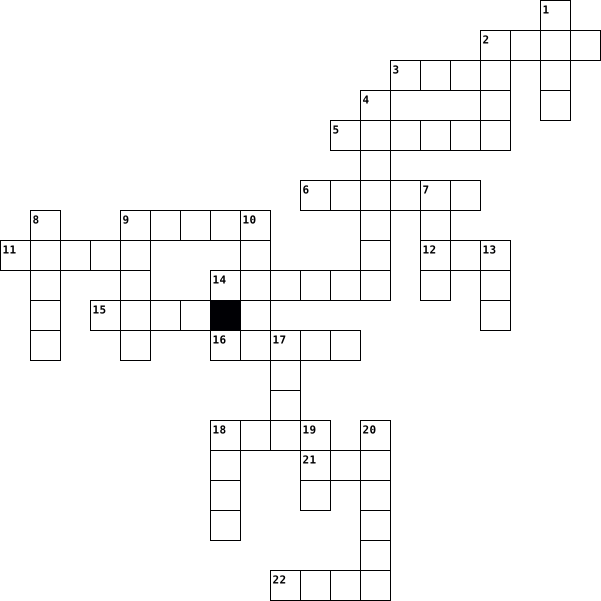
Across
- / When I was 8 I................. the multiplication tables
- / Before yesterday in the park a boy was _____ a cat
- / Yesterday I ________ about you.
- / The police _______the thief
- / Last summer I ________a treasure in the sand.
- / In winter the lake ______
- / My dog ____ a hole in the garden and hid a bone
- / I ______ my homework at school
- / When the bird was small it didn’t _____
- / I ______ the English homework at 3 but I haven’t finished
- / Before yesterday I _____a Picture of a dog
- / Yesterday I ____ham for dinner
- / She ______ first in the race
Down
- / The other day I _____ indignant
- / I ___ calm & passed this test
- / In the morning,my mum go to the supermarket to _________food
- She ____good marks at english
- / I _______water ten minutes ago .
- My grandmother ____ in the street
- / My father ________ a truck .
- / He ____ what he wanted: chrome
- / I ______ my pensil case to Laia
- I ___ my homework yesterday.
- / I ____a baby wen I was born
- / The frog ______into a prince.
25 Clues: / In winter the lake ______ • I ___ my homework yesterday. • / The police _______the thief • She ____good marks at english • / My father ________ a truck . • / I ____a baby wen I was born • / She ______ first in the race • / The frog ______into a prince. • / I ___ calm & passed this test • / He ____ what he wanted: chrome • / The other day I _____ indignant • ...
IRREGULAR VERBS PAGE 1 2013-04-25

Across
- ____ she go to school?
- I ________ Coca Cola.
- He ________ a shirt in the shopping centre.
- The people ____ because the vampire bit their neck.
- Yesterday I ________ a finger with my scissors.
- My mather ____ a present for my birthday.
- The birds _____.
- Ana ______ to his house.
- We ___ five euros if Barça wins.
- The shirt ____ 30 euros.
- I _______ a good person.
- I ____ a boy.
- Rachel`s brother _____ him unintentionally.
Down
- I ____ to a blind man on the street.
- complete the song: we ______ love in a hopeless place...
- I _______ that i marry a Prince.
- The girl ______ if I wanted a T-shirt or a skirt.
- I ____ calm because I’m nervous.
- Unintentionally gave me _____ with the table.
- He _____ to the shopping centre
- She ______ pizza.
- I _______ born in Barcelona.
- I _____ a balloon.
- Josh ______ the competition.
- I ______a ball in baseball
25 Clues: I ____ a boy. • The birds _____. • She ______ pizza. • I _____ a balloon. • I ________ Coca Cola. • ____ she go to school? • Ana ______ to his house. • The shirt ____ 30 euros. • I _______ a good person. • I ______a ball in baseball • I _______ born in Barcelona. • Josh ______ the competition. • He _____ to the shopping centre • I _______ that i marry a Prince. • ...
Irregular Verbs pg 104 2013-04-25

Across
- I … my cat yesterday morning.
- Yesterday, my father …. me a rose for Sant Jordi.
- Yesterday the bird .... through the sky.
- The last year, she …… my birthday and she don’t came to my Birthday Party.
- The last week I ....... of unicorns and Pegasus.
- Cory Monteith ... a drug problem and has now fallen.
- The last Wednesday I ..... lot of money on the street.
- Yesterday my sister …… a vampiress and now she drinks blood.
- The last year my sister ..... a plate.
- Yesterday he ….. the howl of a wolf.
- I …. her secret until she died.
- Michael Jackson .... to his house before die.
Down
- Last week my father … a hole.
- Last Monday the bird …. from the ski.
- The ice-cream ….. last night inside the freezer.
- Darren Criss … born on 5th February 1987.
- The last month I ……. Maria, because she insulted me.
- The last year I never ….. Coca-Cola because I didn’t like it.
- Yesterday I … a steak for lunch.
- The dress …. 90 dollars.
- Lea Michele ..... acting on Broadway when she was nine years old.
- In 1999, the architect ….. the building.
- My grandfather ……. tomatoes in Almería.
- Yesterday I …. a unicorn in my notebook.
- Yesterday I ... onions for dinner.
25 Clues: The dress …. 90 dollars. • Last week my father … a hole. • I … my cat yesterday morning. • I …. her secret until she died. • Yesterday I … a steak for lunch. • Yesterday I ... onions for dinner. • Yesterday he ….. the howl of a wolf. • Last Monday the bird …. from the ski. • The last year my sister ..... a plate. • Yesterday the bird .... through the sky. • ...
Irregular verbs page 1 2013-04-25

Across
- i ___ the ice cream.
- they ____ to Paris.
- she ____ Coca Cola.
- my mom _____ vegetables.
- my baby ____ very quickly.
- he ____ about me, because I am his girlfriend.
- we ____ on a plane.
- i ____ in love last year.
- my best friend ___ a nice dog.
- I ____ chocolate cake on my birthday.
- my grandma ___ a lot of homework when she went to school.
- my brother ____ rabbits.
Down
- my sister_____ the candles.
- i ____ my favorite toy when I was young.
- my friend ____ the paper with scissors
- i ___ the bag in the school.
- my father _____ a hole to find a treasure.
- i _____ my best friend because I love him.
- he ______ in a good person.
- my cousin _____ my favorite toy.
- my grandpa ____ his car very well.
- my grandma ____ very bad.
- i ____ the pencils on the table.
- my family ____ me a present.
- my brother and I ___ when we played “pilla-pilla”.
25 Clues: they ____ to Paris. • she ____ Coca Cola. • we ____ on a plane. • i ___ the ice cream. • my mom _____ vegetables. • my brother ____ rabbits. • he ______ in a good person. • my baby ____ very quickly. • my grandma ____ very bad. • i ____ in love last year. • my sister_____ the candles. • i ___ the bag in the school. • my family ____ me a present. • ...
irregular preterite/ imperfect verbs 2013-03-22

Across
- you informal saw yesterday
- he used to see
- you informal went last week
- we had
- we always went
- you informal always went
- they were estar for 2 hours
- we used to see
- you informal put
- she was ser yesterday
- they put
- I put
- you informal were able to
- we went this morning
- she had
- we used to be
- they used to be
Down
- you all used to see
- I had
- you informal used to see
- we were able to
- we saw last week
- you all had
- she always went
- I saw this morning
- we were estar last week
- I was estar yesterday
- I was ser last night
- we put
- you all always went
- he was estar yesterday
- you formal were able to
- they were ser last week
- you formal saw last night
- she used to be
35 Clues: I had • I put • we had • we put • she had • they put • you all had • we used to be • he used to see • we always went • we used to see • she used to be • we were able to • she always went • they used to be • we saw last week • you informal put • I saw this morning • you all used to see • you all always went • I was ser last night • we went this morning • I was estar yesterday • she was ser yesterday • ...
IRREGULAR VERBS PAGE 1 2013-04-22

Across
- / I liked the experience of the last holidays, ____ with helicopter.
- / The company _____ a building last year.
- / I went to ____ eggs for my mother.
- / Last week, in the middle of a presentetion he ____ his information
- / She ____ me a present for my birthday.
- / He ____ a car when he was only 16 years old
- / The race _____ at 10 o’clock and finished at 11 o’clock.
- / Last weekend we ____ a city with pencils of different colours.
- / He ____ me with his insults.
- / The throusers ____ 20€ and now 15€.
- / Last year I ____ sad because my grandad was die.
- / When my brother was 5 years old he ____ judo.
Down
- / Last Saturday we ____ meat with chips.
- / Yesterday she ___ a new object for her collection.
- / The house ____ because the people of the house didn't close the gas.
- / Last Friday the Police ____ the thief.
- / Yesterday I ____ a bone and I went to hospital.
- / My finger ____ when I cut it with the knife.
- / They ____ a dog, but he died.
- / Last month I lost my glasses and I ____ it yesterday!
- / I am from Barcelona and I ____ to France last week.
- / She ____ my secrets when we studed in the school .
- / She ____ his brother last week because she was angry with him.
- The guide ___ them around the museum that we visited last Christmas.
24 Clues: / He ____ me with his insults. • / They ____ a dog, but he died. • / I went to ____ eggs for my mother. • / The throusers ____ 20€ and now 15€. • / Last Saturday we ____ meat with chips. • / Last Friday the Police ____ the thief. • / She ____ me a present for my birthday. • / The company _____ a building last year. • / He ____ a car when he was only 16 years old • ...
irregular verbs page 1 2013-04-29

Across
- i______ the candles on my cake.
- The new skirt _____90$.
- Berta _____marc because Marc called Berta names.
- The last week I _____ 50 $ on the street.
- In 2008, the architect ____ the building.
- Yesterday he _____ the howl of a wolf.
- Yesterday my dad_______ carrots in the supermarker .
- I _______ to L.A. to see Hollywood.
- The last night I ______ I was a superhero.
- I left the juice in the freezer for too long and it _______
- Cris ___all the resposts in the exam.
Down
- she _____ an elefant in her notebook.
- My dog ___ me in accident.
- I_______ the fruit in small pieces
- my dog _____ when he do bad things.
- two boys wanted to marry with the same girl and they________ for her.
- The last month I_____ Inés, because she insulted me.
- I ______ Coca-Cola every day.
- I _____ a a pacifier when I was little.
- Cameron Diaz_______ acting on Broadway when she was eleven years old.
- The plane ____ in the sky
21 Clues: The new skirt _____90$. • The plane ____ in the sky • My dog ___ me in accident. • I ______ Coca-Cola every day. • i______ the candles on my cake. • I_______ the fruit in small pieces • my dog _____ when he do bad things. • I _______ to L.A. to see Hollywood. • she _____ an elefant in her notebook. • Cris ___all the resposts in the exam. • Yesterday he _____ the howl of a wolf. • ...
French 6 Irregular Verbs 2013-04-16

Across
- je (aller)
- tu (faire)
- to have
- to go
- vous (faire)
- nous (faire)
- vous (avoir)
- vous (etre)
- il (etre)
- nous (venir)
- tu (etre)
- je (etre)
- elle (venir)
- ils (avoir)
- il (faire)
- to come
- elles (aller)
Down
- tu (aller)
- to make
- vous (aller)
- ils (venir)
- je (avoir)
- nous (aller)
- nous (etre)
- tu (avoir)
- to be
- nous (avoir)
- je (venir)
- elles (etre)
- vous(venir)
- elles (faire)
31 Clues: to go • to be • to make • to have • to come • il (etre) • tu (etre) • je (etre) • je (aller) • tu (aller) • tu (faire) • je (avoir) • tu (avoir) • je (venir) • il (faire) • ils (venir) • nous (etre) • vous (etre) • vous(venir) • ils (avoir) • vous (aller) • vous (faire) • nous (faire) • nous (aller) • vous (avoir) • nous (avoir) • nous (venir) • elles (etre) • elle (venir) • elles (faire) • elles (aller)
Spanish Irregular Preterite Verbs 2014-03-03

Across
- we made/did
- to come
- we drove
- to make/do
- they/ you all(formal)came
- to walk
- you said/told
- to say/tell
- to go
- you saw
- to be
Down
- I went/I was
- to drive
- to see
- he/she/it/you(formal) put/placed
- you walked
- you all gave
- to bring
- to put/place
- to give
- I bought
21 Clues: to go • to be • to see • to come • to walk • to give • you saw • to drive • to bring • we drove • I bought • you walked • to make/do • we made/did • to say/tell • I went/I was • you all gave • to put/place • you said/told • they/ you all(formal)came • he/she/it/you(formal) put/placed
german irregular verbs 2 2014-11-10

Across
- to tear
- to glide
- to solicit
- to seize
- to dwindle
- to equal
- to fling
- to spoil
- to create
- to stroke
Down
- to blow
- to urge or insist
- to quarrel
- to force
- to roast
- to polish
- to recover
- to pinch
- to succeed
- to sneak
20 Clues: to blow • to tear • to glide • to force • to roast • to seize • to pinch • to equal • to sneak • to fling • to spoil • to polish • to create • to stroke • to quarrel • to solicit • to recover • to succeed • to dwindle • to urge or insist
irregular verbs - part 4 2015-03-16

Across
- write
- steal
- throw
- tear
- think
- speak
- stand
- stick
- take
- wear
Down
- sweep
- swim
- win
- understand
- tell
- spend
- teach
- smell
- spell
- wake
20 Clues: win • swim • tell • tear • wake • take • wear • sweep • write • steal • spend • throw • teach • smell • think • speak • stand • stick • spell • understand
Crossword about irregular verbs 2015-05-29

Across
- Ring
- Draw
- Stand
- Shoot
- Read
- Shine
- Wake
- Throw
- Lie
- Cut
- Lend
- Ride
- Understand
- Fly
- Lose
- Hear
- Mean
- Run
- Get
- Break
- Do
- Speak
- Hold
Down
- Sing
- Give
- Write
- Swim
- Steal
- Drink
- Cost
- Forget
- Begin
- Tear
- Light
- Choose
- Become
- Leave
- Rise
- Win
- Let
- Drive
- Make
- Eat
- Bite
- Sell
- Hide
46 Clues: Do • Lie • Cut • Fly • Win • Let • Run • Eat • Get • Sing • Give • Ring • Draw • Swim • Read • Cost • Wake • Tear • Lend • Ride • Rise • Lose • Hear • Mean • Make • Bite • Sell • Hold • Hide • Write • Stand • Steal • Drink • Shoot • Begin • Shine • Throw • Light • Leave • Drive • Break • Speak • Forget • Choose • Become • Understand