
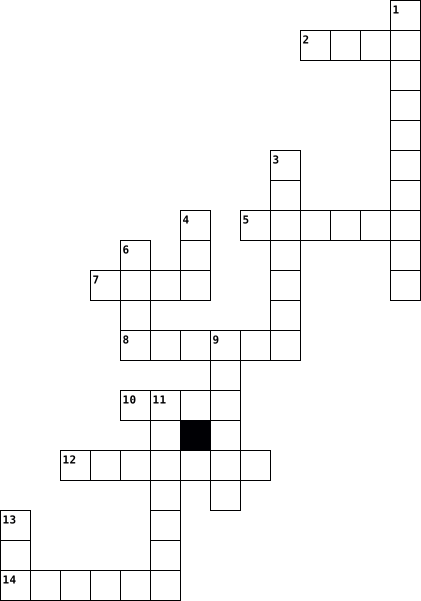
irregular verbs Crossword Puzzles
IRREGULAR VERBS: BERNAL,LANCHEROS & VELASQUEZ. 2020-07-21

Across
- start to happen
- to go somewhere or cross something in an aircraft
- obtain something that you want
- to put or take food into the mouth, chew it, crush it with the teeth, and swallow it.
- to believe something or have an opinion or idea
- the action of using a vehicle to transport
- to remove something, especially without permission
- to discover, especially where a thing or person is, either unexpectedly or by searching
- to make a picture of something or someone with a pencil or pen
- to move through water by moving the body or parts of the body
- to make marks that represent letters, words, or numbers on a surface, such as paper or a computer screen.
Down
- to give someone knowledge or to train someone; to instruct
- wind cause something to move
- move or travel towards a place thought of as near
- to experience something physical or emotional
- you lower its temperature below 0°C, causing it to become cold and often hard
- own something of their own
- the meaning can be make something
- to have information in your mind about a specific topic
- to travel or move to another place
20 Clues: start to happen • own something of their own • wind cause something to move • obtain something that you want • the meaning can be make something • to travel or move to another place • the action of using a vehicle to transport • to experience something physical or emotional • to believe something or have an opinion or idea • move or travel towards a place thought of as near • ...
Irregular verbs Varón y Fernández 2020-07-22

Across
- is the accion that the person does to offer a product o service
- is when a person appropiates something that is not his
- is one of the actions that does for clean the house
- what make one of the fundamental elements of the earth
- accion that person or animals does for the hydration
- is the accion that you does in the school and university
- is one of the sense that the people have
- is the accion that the people does when make a letter
Down
- when a person take a desciticon about to one of a two things
- is when the person dosent say what happened
- accion that some birds does
- is the accion that the person does to understand a book or text
- is to get someone to a place
- is the function that flashlights perform
- accion that the person does when need food, clotes, etc
- is the accion that the person exerts her strength
- is when the person possess of something
- is the consciousness that the person have about something
- is when a person stop having something or feeling
- is when the person get a achivement
20 Clues: accion that some birds does • is to get someone to a place • is when the person get a achivement • is when the person possess of something • is the function that flashlights perform • is one of the sense that the people have • is when the person dosent say what happened • is the accion that the person exerts her strength • is when a person stop having something or feeling • ...
IRREGULAR VERBS THIRD FORM ENRICHED 2020-06-21

Across
- fly
- swim
- lay
- catch
- hide
- begin
- think
- grow
- shake
- sink
- lie
- buy
- eat
- wake
Down
- fall
- sing
- draw
- hold
- feel
- hang
- drink
- teach
- shine
- ring
- smell
- fight
- choose
27 Clues: fly • lay • lie • buy • eat • fall • swim • sing • draw • hold • feel • hang • hide • grow • ring • sink • wake • catch • drink • teach • begin • shine • think • shake • smell • fight • choose
Irregular Verbs - Simple Past 2 2021-05-14

Across
- Verb to Foreget
- Verb to Hang
- Verb to Give
- Verb to Go
- Verb to Feed
- Verb to Hurt
- Verb to Feel
- Verb to Learn
- Verb to Knelt
- Verb to Hit
- Verb to Lead
- Verb to Hold
- Verb to Lay
Down
- Verb to Freez
- Verb to Forbit
- Verb to Fight
- Verb to Grow
- Verb to Find
- Verb to Get
- Verb to Hear
- Verb to Foregive
- Verb to Hide
- Verb to Forget
- Verb to Keep
- Verb to Fall
- Verb to Know
- Verb to Have
27 Clues: Verb to Go • Verb to Get • Verb to Hit • Verb to Lay • Verb to Hang • Verb to Grow • Verb to Find • Verb to Give • Verb to Hear • Verb to Feed • Verb to Hurt • Verb to Hide • Verb to Feel • Verb to Keep • Verb to Fall • Verb to Know • Verb to Lead • Verb to Hold • Verb to Have • Verb to Freez • Verb to Fight • Verb to Learn • Verb to Knelt • Verb to Forbit • Verb to Forget • Verb to Foreget • Verb to Foregive
Irregular verbs prt.2 Y.Y. 2022-02-04

Across
- ver
- enseñar
- leer
- saber
- correr
- poner en order
- decir
- escuchar
- nadar
- robar-hurtar
- tomar-agarrar-coger
- abandonar
- dar-regalar
- pensar
- guardar-mantener
- perder
- ir
- crecer
Down
- concocer
- hacer
- ocultar- esconder
- sonar-timbrar
- escribir
- entender
- jugar
- subir-asender
- vender
- cantar
- dormir
- tener
- hablar
- decir
- lanzar-arrojar
- vestir
34 Clues: ir • ver • leer • hacer • saber • jugar • decir • tener • nadar • decir • correr • vender • cantar • dormir • hablar • pensar • vestir • perder • crecer • enseñar • concocer • escribir • entender • escuchar • abandonar • dar-regalar • robar-hurtar • sonar-timbrar • subir-asender • poner en order • lanzar-arrojar • guardar-mantener • ocultar- esconder • tomar-agarrar-coger
Simple past: Irregular verbs (cruzadinha) 2021-08-16

Across
- buy
- write
- give
- bring
- have
- go
- catch
- drink
- see
- say
Down
- ride
- think
- fall
- come
- be no plural
- teach
- drive
- do
- be (no singular para I,he,she e it)
- pay
- eat
21 Clues: do • go • buy • pay • see • say • eat • ride • fall • come • give • have • think • write • teach • drive • bring • catch • drink • be no plural • be (no singular para I,he,she e it)
Past Participles for Irregular Verbs 2018-03-06

Across
- Past Participle of draw
- Past Participle of bite
- Past Participle of swim
- Past Participle of throw
- Past Participle of make
- Past Participle of fall
- Past Participle of forget
- Past Participle of dig
- Past Participle of buy
- Past Participle of drink
- Past Participle of hold
- Past Participle of bring
- Past Participle of do
- Past Participle of run
- Past Participle of speak
- Past Participle of pay
- Past Participle of burn
- Past Participle of eat
- Past Participle of forgive
- Past Participle of beat
- Past Participle of say
- Past Participle of find
- Past Participle of sell
- Past Participle of go
- Past Participle of begin
- Past Participle of sing
- Past Participle of bend
- Past Participle of win
- Past Participle of leave
- Past Participle of hurt
Down
- Past Participle of get
- Past Participle of sit
- Past Participle of know
- Past Participle of dream
- Past Participle of meet
- Past Participle of think
- Past Participle of write
- Past Participle of catch
- Past Participle of hear
- Past Participle of fight
- Past Participle of understand
- Past Participle of build
- Past Participle of wake
- Past Participle of cost
- Past Participle of break
- Past Participle of keep
- Past Participle of have
- Past Participle of become
- Past Participle of drive
- Past Participle of teach
- Past Participle of read
- Past Participle of tell
- Past Participle of fly
- Past Participle of take
- Past Participle of give
- Past Participle of see
- Past Participle of send
- Past Participle of spend
- Past Participle of blow
- Past Participle of feel
- Past Participle of cut
61 Clues: Past Participle of do • Past Participle of go • Past Participle of get • Past Participle of sit • Past Participle of dig • Past Participle of buy • Past Participle of run • Past Participle of pay • Past Participle of eat • Past Participle of fly • Past Participle of say • Past Participle of see • Past Participle of win • Past Participle of cut • Past Participle of know • ...
Simple Past - Regular & Irregular Verbs 2017-10-05

Across
- To see
- To fall
- To shine
- To take
- To cry
- To break
- To carry
- To come
- To forget
- To get
- To eat
Down
- To go
- To win
- To hear
- To fry
- To speak
- To write
- To bring
- To drink
- To begin
- To buy
21 Clues: To go • To see • To win • To fry • To cry • To buy • To get • To eat • To hear • To fall • To take • To come • To shine • To speak • To write • To break • To bring • To carry • To drink • To begin • To forget
irregular verbs -simple past- 2 2017-10-19

Across
- hang(simple past)
- hide(simple past)
- fly(simple past)
- let(simple past)
- know(simple past)
- learn(simple past)
- held(simple past)
- keep(simple past)
- get(simple past)
Down
- have(simple past)
- give(simple past)
- hit(simple past)
- forget(simple past)
- go(simple past)
- lie(simple past)
- hear(simple past)
- grow(simple past)
- hurt(simple past)
- lose(simple past)
- leave(simple past)
20 Clues: go(simple past) • hit(simple past) • fly(simple past) • let(simple past) • lie(simple past) • get(simple past) • hang(simple past) • have(simple past) • give(simple past) • hide(simple past) • know(simple past) • hear(simple past) • grow(simple past) • held(simple past) • hurt(simple past) • lose(simple past) • keep(simple past) • learn(simple past) • leave(simple past) • forget(simple past)
Past Tense Irregular Verbs 6 2017-11-06

Across
- The dress ___ when she fell down the stairs. (tear)
- She ___ in the back of the closet during the game of Hide and Seek. (hide)
- The girl put on a movie and __ her favorite candle, she was ready for a relaxing evening. (light)
- The girl took her bow and arrow, aimed, and ____ at the target. (shoot)
- Ryan accepted the book, glanced at it, and ___ it into the ocean. (fling)
- She ___ her horse every week for two years. (ride)
- Tommy ___ down the slide at recess. (Slide)
- The girl ___ because she couldn't go on the trip. (weep)
- The carnival ride ___ the people around until they were sick. (spin)
- The ship ___ after it hit an iceberg. (sink)
- The air ___ of smoke after the fire. (smell)
- The baseball player ____ the bat and hit a home run. (swing)
- Cinderella needed to leave the ball when the clock ____ midnight. (strike)
- The clock needed to be ___ again after daylight savings time. (wind)
Down
- The sun ___ at exactly 6:54 am on the morning of the big test. (rise)
- The knife severed an artery and he ___ to death. (bleed)
- It was only November 1st, but Jamie had already ___ her Christmas decorations. (hang)
- She ___ a long blue gown to her senior prom. (wear)
- The kitten ___ onto the tree for dear life. (cling)
- My mom ___ the lasagna so that she could bring it home and eat it later. (freeze)
- Amy __ her sisters favorite jacket to wear to the party. (steal)
- Taylor Swift ___ songs from her new album on Good Morning America. (sing)
- The bee ___ the little boy on the playground. (sting)
- The sweater ___ when it was washed. (shrink)
- The ground ___ violently during the earthquake. (shake)
25 Clues: Tommy ___ down the slide at recess. (Slide) • The ship ___ after it hit an iceberg. (sink) • The air ___ of smoke after the fire. (smell) • The sweater ___ when it was washed. (shrink) • She ___ her horse every week for two years. (ride) • The dress ___ when she fell down the stairs. (tear) • She ___ a long blue gown to her senior prom. (wear) • ...
Irregular Verbs in Past Tense 2016-11-01

Across
- build
- begin
- do
- give
- bet
- creep
- become
- find
- come
- bring
- be
- buy
- feel
- dream
- feed
Down
- cling
- bleed
- deal
- break
- freeze
- catch
- forget
- draw
- cast
- forgive
- flee
- bite
- eat
28 Clues: do • be • bet • buy • eat • deal • give • find • draw • come • cast • flee • bite • feel • feed • cling • build • bleed • begin • break • creep • catch • bring • dream • freeze • become • forget • forgive
Simple Past Tense - Irregular Verbs 2019-04-13

Across
- past form of the verb find
- past form of the verb ride
- past form of the verb eat
- past form of the verb fly
- past form of the verb bring
- past form of the verb ring
- past form of the verb have
- past form of the verb go
- past form of the verb sing
- past form of the verb make
Down
- past form of the verb win
- past form of the verb drive
- past form of the verb think
- past form of the verb write
- past form of the verb buy
- past form of the verb give
- past form of the verb drink
- past form the verb wear
- past form of the verb read
- past form of the verb swim
20 Clues: past form the verb wear • past form of the verb go • past form of the verb win • past form of the verb eat • past form of the verb fly • past form of the verb buy • past form of the verb find • past form of the verb ride • past form of the verb give • past form of the verb ring • past form of the verb have • past form of the verb read • past form of the verb sing • ...
Amsfort - Irregular verbs - Past tense 2020-01-19

Across
- weave
- tear
- sink
- grow
- light
- flee
- shake
- hear
- throw
- cut
- hold
- burst
- spend
- set
- shrink
- speak
- beat
- sweep
- make
- forget
- saw
- hang
- lay
- freeze
- come
- stand
- get
- wear
- bring
- lend
- swim
- drive
- fight
- bite
- be
- catch
- do
- prove
- think
- creep
- broadcast
- send
- fly
- begin
- build
- bet
- drink
- mean
- hurt
- rise
- sell
- spit
Down
- wake
- meet
- take
- run
- pay
- put
- keep
- bleed
- give
- lose
- choose
- lie
- stink
- know
- write
- burn
- cost
- draw
- sit
- shine
- read
- steal
- leave
- show
- dream
- hide
- spoil
- dig
- hit
- find
- fall
- teach
- weep
- win
- become
- understand
- buy
- tell
- slide
- feel
- sing
- break
- forbid
- have
- ring
- blow
- shut
- feed
- bind
- learn
- go
- ride
- say
- shoot
- let
- see
- eat
109 Clues: be • do • go • run • pay • put • lie • cut • sit • set • saw • dig • hit • lay • get • win • buy • fly • bet • say • let • see • eat • wake • meet • tear • take • sink • keep • grow • give • lose • flee • know • hear • burn • cost • hold • draw • read • show • beat • make • hide • hang • find • fall • come • wear • weep • lend • tell • swim • bite • feel • sing • have • ring • blow • send • shut • feed • bind • mean • hurt • ride • rise • sell • spit • weave • bleed • light • stink • shake • throw • write • burst • spend • shine • steal • leave • speak • sweep • dream • spoil • stand • teach • bring • slide • ...
Past simple tense Irregular verbs 2013-03-06

Across
- build
- fight
- meet
- steal
- win
- understand
- give
- spend
- wake
- cost
- grow
- pay
Down
- lend
- begin
- feel
- hit
- forget
- mean
- choose
- sing
- become
- make
- drink
- stand
- wear
- ring
26 Clues: hit • win • pay • lend • feel • meet • mean • sing • make • give • wake • wear • cost • grow • ring • build • begin • fight • steal • drink • spend • stand • forget • choose • become • understand
Past simple tense: Irregular verbs 2013-03-06

Across
- cut
- wear
- begin
- make
- cost
- pay
- stand
- fight
- mean
- hit
- learn
- give
- forget
- win
- drink
Down
- ring
- become
- sing
- feel
- build
- lend
- choose
- understand
- steal
- meet
- spend
- grow
- wake
- run
29 Clues: cut • pay • hit • win • run • ring • sing • feel • wear • lend • make • cost • mean • meet • give • grow • wake • begin • build • stand • fight • steal • spend • learn • drink • become • choose • forget • understand
Irregular -ar verbs. Past tense 2015-03-18

Across
- Yo ___________ el juego. (Ganar: to win)
- Ustedes _____________ por el telefono. (hablar: to talk)
- Natalia y Mark __________ a Sur America. (viajar: to travel)
- Ellas ____________ a sus hijos. (Besar: to kiss)
- Tu_________ a la escuela tarde. (llegar: to arrive)
- Yo_______ un carro. (comprar: to buy)
- No nos ______________ de la tarea. (Acordar: to remember)
- Tu ____________ el deporte. (practicar: to practice)
- Nosotros ______________ para el examen. (estudiar: to study)
- El y ella ____________ el cesped. (Cortar: to cut)
- Nosotros ________________ los platos. (lavar: to wash)
- Yo ___________ el museo. (Visitar: to visit)
- Tu ______________ de las escaleras. (Bajar: to go down)
- Mi Hermana _____________ a su novio. (Llamar: to call)
Down
- Ella no le__________ la comida. (Gustar: to like)
- El ____________ videojuegos. (Jugar: to play)
- El, ella y yo nos _______________ los dulces. (acabar: to finish)
- El ___________ a su abuela. (Abrazar: to hug)
- Yo _____________ el taxi. (esperar: to wait)
- Nosotros____________ con nuestra abuela. (Almorzar: to have lunch)
- Tu no _________________ el premio. (aceptar: to accept)
- Tu ____________ la musica. (escuchar: to listen)
- Yo y el ___________ la cocina. (Limpiar: to clean)
- La maestra _____________ la tarea. (Explicar: to explain)
- Tu _____________ con la pelicula. (Llorar: to cry)
- Ella______ a su Hermana. (ayudar: to help)
26 Clues: Yo_______ un carro. (comprar: to buy) • Yo ___________ el juego. (Ganar: to win) • Ella______ a su Hermana. (ayudar: to help) • Yo _____________ el taxi. (esperar: to wait) • Yo ___________ el museo. (Visitar: to visit) • El ____________ videojuegos. (Jugar: to play) • El ___________ a su abuela. (Abrazar: to hug) • Ellas ____________ a sus hijos. (Besar: to kiss) • ...
Irregular Verbs: Simple Past Tense 2015-02-09

Across
- sat
- bought
- slept
- went
- brought
- wrote
- drank
- ate
- heard
- did
- grew
- met
- sent
- ran
Down
- caught
- came
- said
- blew
- swam
- began
- gave
- got
- drew
- knew
- took
- read
- saw
- made
- threw
- sang
30 Clues: sat • got • ate • did • saw • met • ran • came • said • blew • swam • went • gave • drew • knew • took • grew • read • made • sent • sang • slept • began • wrote • drank • heard • threw • caught • bought • brought
REGULAR AND IRREGULAR VERBS REVIEW 2023-11-09

Across
- PAST OF PLAY
- PAST OF SWIM
- PAST OF HIT
- PAST OF CHOP
- PAST OF TELL
- PAST OF STUDY
- PAST OF SAY
- PAST OF WRITE
- PAST OF SEE
- PAST OF PUT
- PAST OF TEACH
- PAST OF THINK
- PAST OF ARE (VERB TO BE)
- PAST OF TAKE
- PAST OF CANCEL
- PAST OF FRY
- PAST OF READ
- PAST OF PAY
- PAST OF SELL
- PAST OF BLOW
Down
- PAST OF COME
- PAST OF ADMIT
- PAST OF RUB
- PAST OF RUN
- PAST OF SHOP
- PAST OF DRAW
- PAST OF SLEEP
- PAST OF BUY
- PAST OF MAKE
- PAST OF EAT
- PAST OF CUT
- PAST OF STOP
- PAST OF TRY
- PAST OF IS AND AM (VERB TO BE)
- PAST OF WALK
- PAST OF CRY
- PAST OF HOLD
- PAST OF DRINK
- PAST OF DRIVE
39 Clues: PAST OF RUB • PAST OF RUN • PAST OF HIT • PAST OF SAY • PAST OF BUY • PAST OF EAT • PAST OF CUT • PAST OF SEE • PAST OF PUT • PAST OF TRY • PAST OF CRY • PAST OF FRY • PAST OF PAY • PAST OF COME • PAST OF PLAY • PAST OF SWIM • PAST OF SHOP • PAST OF CHOP • PAST OF TELL • PAST OF DRAW • PAST OF MAKE • PAST OF STOP • PAST OF WALK • PAST OF TAKE • PAST OF HOLD • PAST OF READ • PAST OF SELL • PAST OF BLOW • PAST OF ADMIT • PAST OF STUDY • ...
Irregular verbs 1 to 55 2023-11-23

Across
- Ouch, I have ________ (to hurt) my knee.
- My dad _______ (to find) my phone in the washing machine.
- I have never ______ (to given) it any thought.
- I have not _______ (to eat) anything for hours.
- We were _______ (to beat) by the opposing team.
- Can we get out of here? My hand are __________ (to freeze).
- He had ________ (to hide)himself behind a tree, so I couldn't find him.
- The past participle of to go
- The spy had already ________ (to flee) the country when the police arrived at the crime scene.
- When I arrived, they had already _______ (to begin) eating.
- When my mum came home, she found out that the cat had _______ (to break) her antique vase.
- The past simple of to hold
- He had never _______ (to deal) with such a difficult case before.
- The past simple of to go
Down
- I told you this was _______ (to bind) to happen!
- I have never _______ (hit) anyone in my life.
- The past participle of to forgive.
- He ______ (to keep) complaining without suggesting a solution.
- I have always _______ (to know) he kept things from me.
- _______ caught caught
- This church ______ (to burn) to the ground in 1962.
- I _________ (to chose) to take a gap year.
- The past participle of to forbid.
- What have you _______ (to do)?
- Sorry I didn't call you back, I have ______ (to feel) horrible for days.
- The infinitive of to hear
- During the prohibition people _______ (to be) not allowed to drink alcohol.
- Let's relax and do nothing! I have ________ (to bring) snacks!
- Last night, I ________ (to dream) that I was able to fly.
- The journalist had ________ (to dig) up some dirt on the mayor.
- The past simple of to lay
31 Clues: _______ caught caught • The past simple of to go • The infinitive of to hear • The past simple of to lay • The past simple of to hold • The past participle of to go • What have you _______ (to do)? • The past participle of to forbid. • The past participle of to forgive. • Ouch, I have ________ (to hurt) my knee. • I _________ (to chose) to take a gap year. • ...
IRREGULAR VERBS (1) - PAST SIMPLE 2024-01-16

Across
- Bet
- Lay
- Beat
- Burn
- Come
- Find
- Build
- Feed
- Give
- Be (You/We/They)
- Fight
- Deal
- Blow
- Do
- Choose
- Go
- Get
- Catch
- Hang
- Bring
- Hold
- Feel
- Break
- Have
- Lead
Down
- Become
- Keep
- Dream
- Know
- Be (I/He/She/It)
- Bleed
- Dig
- Hit
- Fall
- Drive
- Bite
- Forget
- Hide
- Grow
- Drink
- Eat
- Forgive
- Begin
- Cut
- Buy
- Cost
- Freeze
- Hear
- Hurt
- Draw
- Fly
51 Clues: Do • Go • Bet • Lay • Dig • Hit • Eat • Cut • Get • Buy • Fly • Keep • Know • Beat • Burn • Come • Find • Fall • Bite • Feed • Give • Hide • Grow • Deal • Blow • Cost • Hang • Hear • Hold • Hurt • Draw • Feel • Have • Lead • Dream • Bleed • Drive • Build • Fight • Drink • Begin • Catch • Bring • Break • Become • Forget • Choose • Freeze • Forgive • Be (I/He/She/It) • Be (You/We/They)
Irregular verbs (Part 1-2) 2023-02-23

Across
- fall
- hear
- feel
- come
- break
- bring
- eat
- forget
- draw
- grow
- keep
- drive
- hold
- cost
- fly
Down
- build
- catch
- become
- hurt
- leave
- find
- drink
- know
- hit
- begin
- give
- buy
- choose
28 Clues: hit • eat • buy • fly • fall • hear • hurt • feel • find • come • know • give • draw • grow • keep • hold • cost • build • catch • leave • drink • break • bring • begin • drive • become • forget • choose
Irregular Verbs-Past Participle Forms 2023-03-30

Across
- speak
- cut
- build
- fight
- run
- hear
- grow
- do
- choose
- make
- break
- wear
- sleep
- meet
- get
- tell
- send
- sit
- wake
- ride
- keep
- say
- hit
- stand
- lose
- give
- read
- learn
- eat
- drive
Down
- come
- bring
- catch
- buy
- win
- fall
- drink
- swim
- understand
- go
- write
- know
- sing
- cost
- find
- put
- fly
- forget
- say
- spend
- have
- think
- shut
- steal
- take
- sell
- begin
- pay
58 Clues: go • do • cut • buy • win • run • put • fly • get • say • sit • say • hit • pay • eat • come • fall • swim • hear • grow • know • sing • cost • make • find • wear • meet • tell • send • have • wake • ride • keep • shut • take • sell • lose • give • read • bring • speak • catch • build • fight • drink • write • break • sleep • spend • think • steal • stand • begin • learn • drive • choose • forget • understand
Irregular Verbs in the Preterite 2024-05-10

Across
- you all (informal) had
- She loved
- I was (emotional)
- They put or placed.
- It was (as in a good day)
- you inf. plural wanted
- we wanted
- I saw
- He was (location)
- They found out
- They did
- You came
- She could
- we said
- She said
Down
- Me would go in front for I put on
- We could
- I said
- they had
- We brought
- they brought
- I went
- we were (origin)
- I knew.
- they went
- They saw
- they placed
- they came
- he gave
- I gave
- She made
- I was able to or could
32 Clues: I saw • I said • I went • I gave • I knew. • he gave • we said • We could • they had • They saw • They did • You came • She made • She said • She loved • they went • we wanted • they came • She could • We brought • they placed • they brought • They found out • we were (origin) • I was (emotional) • He was (location) • They put or placed. • you all (informal) had • you inf. plural wanted • I was able to or could • ...
Irregular verbs Lesson 43-57 2024-05-13

Across
- ratsutama, sõitma (min)
- teadma (min)
- puhuma (min)
- haigeks jääma (min)
- kinni püüdma (min)
- jutustama (min)
- abielluma (min)
- tundma (min)
- aru saama (min)
- hoidma (min)
- mõtlema (min)
Down
- teada saama (min)
- armuma (min)
- lugema (min)
- lendama (min)
- kuulma (min)
- lahkuma (min)
- suureks kasvama (min)
- kirjutama (min)
- lööma (min)
- lõikama (min)
- laulma (min)
22 Clues: lööma (min) • armuma (min) • teadma (min) • puhuma (min) • lugema (min) • kuulma (min) • tundma (min) • laulma (min) • hoidma (min) • lendama (min) • lahkuma (min) • lõikama (min) • mõtlema (min) • jutustama (min) • kirjutama (min) • abielluma (min) • aru saama (min) • teada saama (min) • kinni püüdma (min) • haigeks jääma (min) • suureks kasvama (min) • ratsutama, sõitma (min)
Irregular verbs 1 begin > lose 2024-07-01

Across
- buy
- eat
- build
- fly
- lose
- find
- fall
- catch
- leave
- give
- drink
- begin
Down
- break
- know
- get
- have
- bring
- forget
- hear
- go
- come
- do
22 Clues: go • do • buy • eat • get • fly • know • lose • have • find • hear • fall • come • give • break • build • bring • catch • leave • drink • begin • forget
Crossword Irregular verbs Part 1 2024-10-15

Across
- participe passé de 'bite'
- participe passé de 'write'
- participe passé de 'blow'
- participe passé de 'speak'
- traduction de 'supporter'
- prétérit de 'give'
- prétérit de 'wear'
- traduction de 'jeter'
- participe passé de 'see'
- prétérit de 'draw'
Down
- participe passé de 'begin'
- prétérit de 'swear'
- prétérit de 'fall'
- traduction de 'grandir'
- prétérit de 'go'
- prétérit de 'shake'
- participe passé de 'take'
- participe passé de 'be'
- traduction de 'conduire'
- prétérit de 'drink'
20 Clues: prétérit de 'go' • prétérit de 'fall' • prétérit de 'give' • prétérit de 'wear' • prétérit de 'draw' • prétérit de 'swear' • prétérit de 'shake' • prétérit de 'drink' • traduction de 'jeter' • traduction de 'grandir' • participe passé de 'be' • traduction de 'conduire' • participe passé de 'see' • participe passé de 'bite' • participe passé de 'blow' • participe passé de 'take' • ...
PAST PARTICIPLE OF IRREGULAR VERBS 2023-05-11

Across
- SPEND
- SWIM
- SHOW
- BLOW
- THROW
- SEEM
- FLY
- TAKE
- BREAK
- FIND
Down
- KEEP
- GROW
- UNDERSTAND
- FALL
- MEAN
- WEAR
- HIDE
- GET
- MAKE
- TELL
20 Clues: GET • FLY • KEEP • GROW • FALL • SWIM • MEAN • WEAR • SHOW • BLOW • HIDE • SEEM • MAKE • TAKE • TELL • FIND • SPEND • THROW • BREAK • UNDERSTAND
SIMPLE PAST TENSE: IRREGULAR VERBS 2023-07-18

Across
- brought
- ate
- felt
- slept
- kept
- got
- chose
- held
- went
- caught
- spent
- understood
Down
- found
- bought
- gave
- sold
- took
- taught
- threw
- fell
- spoke
- knew
- thought
- drank
- said
- heard
- sent
- did
28 Clues: ate • got • did • gave • sold • took • felt • fell • kept • knew • held • went • said • sent • found • threw • slept • spoke • chose • drank • spent • heard • bought • taught • caught • brought • thought • understood
PAST SIMPLE TENSE: IRREGULAR VERBS 2023-07-16

Across
- begin
- taught
- bring
- sing
- break
- throw
- feel
- run
- drive
- become
- write
- win
- fall
- tell
- think
- keep
- pay
- do
- fly
- find
- catch
Down
- speak
- give
- meet
- take
- choose
- come
- bite
- wear
- send
- make
- eat
- drink
- lose
- go
- leave
- get
- blow
- sell
- draw
- have
- fight
- forget
- say
44 Clues: go • do • eat • run • get • win • pay • fly • say • give • meet • take • come • sing • bite • wear • send • make • lose • feel • blow • sell • fall • tell • draw • have • keep • find • speak • begin • bring • break • drink • throw • leave • drive • write • think • fight • catch • taught • choose • become • forget
Irregular verbs 1-50-A 2022-12-11

Across
- unustama-3
- riputama-1
- murdma-1
- jätma; lahkuma-2
- kukkuma-2
- ostma-1
- tundma-3
- kuulma-2
- püüdma-3
- külmuma-3
- jooma-1
- muutuma-1
- hammustama-3
- teadma-1
Down
- kasvama-2
- andestama-2
- vigastama-1
- juhtima-1
- lööma, peksma-3
- puhuma-1
- võitlema-2
- pidama; hoidma-2
- algama-2
- panema, asetama-1
- valima-3
- andma-1
- lendama-3
- sööma-3
- joonistama-2
- peitma-2
30 Clues: ostma-1 • andma-1 • sööma-3 • jooma-1 • murdma-1 • puhuma-1 • tundma-3 • algama-2 • kuulma-2 • püüdma-3 • valima-3 • peitma-2 • teadma-1 • kasvama-2 • juhtima-1 • kukkuma-2 • külmuma-3 • lendama-3 • muutuma-1 • unustama-3 • riputama-1 • võitlema-2 • andestama-2 • vigastama-1 • joonistama-2 • hammustama-3 • lööma, peksma-3 • jätma; lahkuma-2 • pidama; hoidma-2 • panema, asetama-1
Present Tense Irregular YO Verbs 2022-09-15

Across
- to fit
- to leave
- to come
- to recognize
- to hear
- to fall
- to say / to tell
- to choose
- to be
- to follow / to continue
- to see
Down
- to detain
- to produce
- to have
- to bring
- to know
- to put
- to do / to make
- to direct
- to pretend
- to drive
21 Clues: to be • to fit • to put • to see • to have • to come • to know • to hear • to fall • to leave • to bring • to drive • to detain • to direct • to choose • to produce • to pretend • to recognize • to do / to make • to say / to tell • to follow / to continue
ENGLISH WELL : regular irregular verbs 2023-09-09

Across
- menghilangnya
- racun
- mempengaruhi
- menyalahkan
- mendengar (v2/v3)
- meningkat
- bayangkan
- selain/di samping
- buah
- membuat
- ketidak aturan
- menciptakan
- disebut/dipanggil (v2/v3)
- memindahkan/mengirim
Down
- menyelamatkan
- iklim/cuaca
- sayuran
- bergantung
- donasi
- kehancuran
- menyerbuki
- sarang
- mendengung
- rasa/aroma
- penelitian
- kurangnya
- meningkatkan/menaikkan
- terburuk
28 Clues: buah • racun • donasi • sarang • sayuran • membuat • terburuk • meningkat • bayangkan • kurangnya • bergantung • kehancuran • menyerbuki • mendengung • rasa/aroma • penelitian • iklim/cuaca • menyalahkan • menciptakan • mempengaruhi • menghilangnya • menyelamatkan • ketidak aturan • mendengar (v2/v3) • selain/di samping • memindahkan/mengirim • meningkatkan/menaikkan • disebut/dipanggil (v2/v3)
Irregular verbs in Past Simple 2024-09-17

Across
- past of drink
- past of fall
- past of draw
- past of think
- past of lend
- past of hear
- past of bring
- past of write
- past of sink
Down
- past of choose
- past of grow
- past of do
- past of leave
- past of ring
- past of tell
- past of know
- past of shake
- past of sing
- past of bite
- past of win
20 Clues: past of do • past of win • past of grow • past of fall • past of draw • past of ring • past of tell • past of know • past of sing • past of lend • past of hear • past of bite • past of sink • past of drink • past of leave • past of think • past of shake • past of bring • past of write • past of choose
PAST SIMPLE OF IRREGULAR VERBS 2025-02-06

Across
- SPEAK
- RUN
- SPEND
- TEACH
- WEAR
- FIND
- GET
- FORGET
- MEET
- GIVE
- GO
- READ
- SAY
- EAT
- WIN
- TAKE
Down
- SING
- KNOW
- SEE
- THINK
- TELL
- LEAVE
- BUY
- DRINK
- COME
- FEEL
- MAKE
- DO
- SLEEP
- WRITE
30 Clues: GO • DO • RUN • SEE • BUY • GET • SAY • EAT • WIN • SING • KNOW • TELL • WEAR • FIND • COME • FEEL • MEET • MAKE • GIVE • READ • TAKE • SPEAK • SPEND • THINK • TEACH • LEAVE • DRINK • SLEEP • WRITE • FORGET
Irregular Preterite (Past Tense) Verbs 2025-02-11

Across
- Means "he/she/it/you (formal) had"
- Means "I was" USED FOR TEMPORARY SITUATIONS
- Means "we were" USED FOR TEMPORARY SITUATIONS
- Means "I could/was able to"
- Means "they did" or "y'all did"
- Means "you were" USED FOR TEMPORARY SITUATIONS
- Means "we could/were able to"
- Means "to be" used for more PERMANENT things
- Means ""he/she/it/you (formal)could/was able to"
- Means "to have"
- Means "to do" or "to make"
- Means "We did"
Down
- Means "they had" or "y'all had"
- Means "I did"
- Means "we had"
- Means "I had"
- Means "you could/were able to"
- Means "they were" or "y'all were" USED FOR TEMPORARY SITUATIONS
- Means "you did"
- Means "to go"
- Means "they could/were able to" or "y'all could/were able to"
- Means "he/she/it/you (formal) did"
- Means to "be able to"
- Means "You had"
- Means "to be" used for TEMPORARY things
- Means "he/she/it you (formal) was/were" USED FOR TEMPORARY SITUATIONS
26 Clues: Means "I did" • Means "I had" • Means "to go" • Means "we had" • Means "We did" • Means "you did" • Means "to have" • Means "You had" • Means to "be able to" • Means "to do" or "to make" • Means "I could/was able to" • Means "we could/were able to" • Means "you could/were able to" • Means "they had" or "y'all had" • Means "they did" or "y'all did" • Means "he/she/it/you (formal) had" • ...
50 Most Common Irregular Verbs 2025-04-09

Across
- She _______ to class late because she missed the bus.
- He _______ the entire book in one night.
- I _______ a letter to my friend and told her all about my new job.
- She _______ her friend a beautiful necklace for her birthday.
- She _______ her dog outside to play in the yard.
- I _______ a loud noise coming from the garage.
- They _______ in the lake on a hot summer day.
- I _______ to bring my lunch to school today, now I will be hungry.
- The baby _______ through the entire night.
- She _______ a great artist over the years.
- He _______ a beautiful song at the talent show.
- I _______ the car crash with my own eyes.
- He _______ a funny story that made everyone laugh.
- He _______ off the bike and hurt his leg.
- He _______ a new job that he really enjoys.
- He _______ the blue shirt over the red shirt.
- She _______ her younger brother how to ride a bike.
- I _______ my phone on the table next to me.
- He _______ the party early because he was tired.
- She _______ the lesson after the teacher explained it.
- They _______ a wonderful time at the concert last night.
- I _______ my book to my neighbor but she forgot to give it back.
- She _______ the answer to the question in class.
- She _______ her car to the beach.
- I _______ my best friend in high school.
- He _______ a glass of water after his workout.
Down
- He _______ hello to everyone when he entered the room.
- She _______ a letter to her friend when she was on vacation.
- She _______ cookies to the party for everyone to enjoy.
- He _______ a delicious cake for the party.
- I _______ my wallet while shopping at the mall.
- She _______ on the bench while she waited for the bus.
- I _______ my homework before dinner.
- The _______ at 10:00 AM yesterday.
- We _______ dinner together as a family last night.
- She _______ on the treadmill to lose weight.
- She _______ the bill at the restaurant.
- She _______ happy when she received the surprise gift.
- I _______ a new book from the store yesterday.
- They _______ their old car for a good price.
- I _______ my missing keys under the chair.
- He _______ a funny hat to the party.
- He _______ his promise to help me with my studying.
- I _______ about what to say before speaking.
- He _______ in line to get in the store.
- They _______ to Mexico for their vacation; it was a long flight.
- She _______ to her doctor on the phone.
- We _______ to the zoo and saw many animals.
- I _______ a picture of the sunset at the beach.
49 Clues: She _______ her car to the beach. • The _______ at 10:00 AM yesterday. • I _______ my homework before dinner. • He _______ a funny hat to the party. • She _______ the bill at the restaurant. • He _______ in line to get in the store. • She _______ to her doctor on the phone. • He _______ the entire book in one night. • I _______ my best friend in high school. • ...
25 Biform Irregular Verbs 1 2024-11-07

Across
- lutar;brigar
- deixar; sair; partir
- sangrar
- negociar; tratar
- cavar
- comprar
- ouvir
- queimar
- guiar; conduzir
- pegar; segurar
- achar; encontrar
- guardar; conservar
- ter
- arrastar-se; rastejar
Down
- sentir
- alimentar; suprir
- construir
- tornar-se; ficar
- trazer;conduzir
- criar; gerar
- aprender
- apanhar; pegar
- predizer
- sonhar
- vir; chegar
25 Clues: ter • cavar • ouvir • sentir • sonhar • sangrar • comprar • queimar • aprender • predizer • construir • vir; chegar • lutar;brigar • criar; gerar • pegar; segurar • apanhar; pegar • trazer;conduzir • guiar; conduzir • tornar-se; ficar • negociar; tratar • achar; encontrar • alimentar; suprir • guardar; conservar • deixar; sair; partir • arrastar-se; rastejar
Irregular Verbs Criss Cross Game 2024-11-11

Across
- to choose اختار
- to learn تعلم
- to grow كبر
- to become أصبح
- to do فعل
- to written كتب
- to be كان
- to know عرف
- to have ملك
- to quit ترك، استقال، تخلى
- to leave تخلى
- to lose خسر
- to take أخذ
- to tell أخبر
Down
- to spend قضى
- to show أظهر
- to hold أمسك، احتفظ، أبقى
- to come أتى
- to ride ساق )دراجة - حصان(
- to lead قاد
- to drive ساق، قاد
- to make جعل، صنع
- to begin بدأ
- to go ذهب
- to build بنى
- to win فاز
- to fight حارب
- to find وجد
28 Clues: to do فعل • to be كان • to go ذهب • to win فاز • to come أتى • to grow كبر • to lead قاد • to know عرف • to have ملك • to lose خسر • to find وجد • to take أخذ • to spend قضى • to show أظهر • to begin بدأ • to build بنى • to tell أخبر • to learn تعلم • to leave تخلى • to fight حارب • to become أصبح • to written كتب • to choose اختار • to make جعل، صنع • to drive ساق، قاد • to hold أمسك، احتفظ، أبقى • to quit ترك، استقال، تخلى • ...
Irregular verbs 1 (Be-keep) 2024-12-01

Across
- come
- forget
- eat
- fly
- break
- catch
- hold
- have
- keep
- go
- choose
- grow
- drink
- buy
- do
- fall
Down
- feel
- cut
- give
- find
- become
- fight
- hide
- begin
- be
- hear
- bring
- drive
- build
- draw
30 Clues: go • be • do • cut • eat • fly • buy • feel • come • give • find • hide • hold • have • keep • hear • grow • draw • fall • fight • break • catch • begin • bring • drink • drive • build • forget • become • choose
words + irregular verbs Unit 4 2025-05-08

Across
- verwarring
- go (past)
- oefenen
- optreden
- tell (past)
- carry (past)
- meteen
- annoy (past)
- gevonden
Down
- lepel
- think (past)
- plankenkoorts
- write (past)
- take (past)
- vooral
- knoeien
- kans
- try (past)
- sell (past)
- read (past)
- fantastisch
- betekenisvol
22 Clues: kans • lepel • vooral • meteen • knoeien • oefenen • optreden • gevonden • go (past) • verwarring • try (past) • take (past) • tell (past) • sell (past) • read (past) • fantastisch • think (past) • write (past) • carry (past) • betekenisvol • annoy (past) • plankenkoorts
Irregular verbs 1 - Past participle 2024-11-04

Across
- do
- fall
- dream
- bleed
- burn
- bring
- catch
- break
- become
- beat
- find
- drink
- choose
Down
- buy
- feel
- build
- begin
- feed
- bend
- fly
- dig
- bet
- bite
- come
- drive
- cost
- blow
- eat
- cut
- fight
- draw
31 Clues: do • buy • fly • dig • bet • eat • cut • feel • fall • feed • bend • burn • bite • come • cost • blow • beat • find • draw • build • begin • dream • bleed • bring • catch • drive • break • fight • drink • become • choose
Irregular verbs - simple past 2 2025-06-03

Across
- pay
- sit
- feel
- buy
- smell
- do
- hear
- stand
- go
- run
Down
- lead
- come
- catch
- teach
- ride
- sell
- dream
- feed
- shoot
- become
20 Clues: do • go • pay • sit • buy • run • lead • come • feel • ride • sell • feed • hear • catch • teach • smell • dream • stand • shoot • become
Irregular verbs - simple past 2 2025-06-03

Across
- stand
- become
- do
- sit
- teach
- feed
- feel
- run
- catch
- shoot
- pay
Down
- ride
- smell
- lead
- buy
- come
- hear
- dream
- go
- sell
20 Clues: do • go • buy • sit • run • pay • ride • lead • come • hear • feed • feel • sell • stand • smell • teach • dream • catch • shoot • become
Irregular Verbs – Simple Past Crossword 2025-06-24

Across
- The past of make
- The past of find
- The past of go
- The past of get
- The past of take
- The past of feel
- The past of read (same spelling, different pronunciation)
- The past of run
- The past of say
- The past of come
Down
- The past of leave
- The past of buy
- The past of have
- The past of eat
- The past of write
- The past of know
- The past of stand
- The past of drink
- The past of give
- The past of see
20 Clues: The past of go • The past of buy • The past of eat • The past of get • The past of run • The past of say • The past of see • The past of have • The past of make • The past of find • The past of take • The past of know • The past of feel • The past of give • The past of come • The past of leave • The past of write • The past of stand • The past of drink • ...
Past Simple Tense-Irregular Verbs 2025-01-21

Across
- Past tense of FIND
- Past tense of FALL
- Past tense of DRAW
- Past tense of BRING
- Past tense of BITE
- Past tense of DRIVE
- Past tense of FEEL
- Past tense of GIVE
- Past tense of KNOW
- Past tense of COME
- Past tense of EAT
- Past tense of GO
- Past tense of GET
- Past tense of CUT
Down
- Past tense of BUY
- Past tense of DO
- Past tense of LEAVE
- Past tense of BREAK
- Past tense of DRINK
- Past tense of BUILD
- Past tense of HAVE
- Past tense of BEGIN
- Past tense of FLY
- Past tense of GROW
- Past tense of CATCH
- Past tense of KEEP
- Past tense of BE
27 Clues: Past tense of DO • Past tense of BE • Past tense of GO • Past tense of BUY • Past tense of FLY • Past tense of EAT • Past tense of GET • Past tense of CUT • Past tense of FIND • Past tense of FALL • Past tense of DRAW • Past tense of HAVE • Past tense of BITE • Past tense of FEEL • Past tense of GROW • Past tense of GIVE • Past tense of KEEP • Past tense of KNOW • Past tense of COME • Past tense of LEAVE • ...
Irregular Past Tense Verbs 2 2025-09-23

Across
- run
- tell
- speak
- spend
- know
- sit
- wake
- send
- make
- leave
- pay
- wear
Down
- write
- lose
- meet
- sleep
- hold
- ride
- keep
- say
- sell
- see
- take
- mean
24 Clues: run • sit • say • see • pay • tell • lose • meet • hold • ride • know • keep • wake • send • sell • make • take • mean • wear • write • speak • sleep • spend • leave
EWS Crossword 25 irregular verbs 2025-06-26

Across
- How you’ve moved a car or vehicle
- What your eyes have observed
- What you’ve done with money to acquire something.
- Having dropped or descended from a higher position
- The state of an action that is finished or completed
- How an emotion or a texture has been perceived
- What your ears have perceived
- What you’ve done when you’ve discovered something after searching
- What you’ve put down on paper with words
- What you’ve done with a book or text
- What has been presented or handed over to someone
Down
- Having moved quickly on foot, or managed something
- Having traveled on a horse, bike, or in a vehicle
- What an artist has done with a pencil to create an image
- Having arrived at a place
- What a vocalist has done with a song
- Having understood or been familiar with something
- Having departed from a location
- What you’ve possessed or experienced
- What you’ve picked up or seized
- What you’ve created or constructed
- What your mind has done when considering an idea
- What you’ve done with money to settle a bill or debt
- The state of something that’s not longer whole; shattered
- What you’ve done with food at mealtime
25 Clues: Having arrived at a place • What your eyes have observed • What your ears have perceived • Having departed from a location • What you’ve picked up or seized • How you’ve moved a car or vehicle • What you’ve created or constructed • What a vocalist has done with a song • What you’ve possessed or experienced • What you’ve done with a book or text • ...
Irregular Verbs in Past Participle 2025-06-26

Across
- Have
- Come
- Fall
- Know
- Meet
- Give
- Hear
- Bring
- Done
- be
- Eat
- Find
- Gotten
- Build
- fly
Down
- Drink
- forget
- Feel
- Buy
- Become
- Make
- Begin
- Go
- Catch
- Break
25 Clues: Go • be • Buy • Eat • fly • Have • Feel • Come • Fall • Know • Meet • Make • Give • Hear • Done • Find • Drink • Bring • Begin • Catch • Break • Build • forget • Become • Gotten
Irregular Verbs in Past Participle 2025-06-26

Across
- Grow
- Hold
- Hear
- Fight
- Drive
- Stand
- Eat
- Bite
- Draw
- Forgive
- Forget
- Spend
- Sink
- See
Down
- Find
- Choose
- Light
- Ride
- Teach
- Begin
- Drink
- Wrote
- Give
- Fall
- Rise
25 Clues: Eat • See • Find • Grow • Hold • Hear • Ride • Bite • Draw • Give • Fall • Rise • Sink • Light • Fight • Drive • Stand • Teach • Begin • Drink • Wrote • Spend • Choose • Forget • Forgive
Irregular verbs in past participle 2025-06-26

Across
- caught
- frozen
- found
- flown
- drunk
- had
- broken
- done
- said
- gone
- written
- driven
- made
Down
- left
- begun
- fallen
- forgotten
- given
- chosen
- bought
- known
- swam
- thought
- been
- eaten
25 Clues: had • left • done • said • swam • gone • been • made • begun • found • flown • given • drunk • known • eaten • caught • frozen • fallen • chosen • broken • bought • driven • written • thought • forgotten
Irregular verbs in past simple 2025-06-26

Across
- came
- blew
- did
- caught
- broke
- built
- beat
- ate
- drove
- brought
Down
- drew
- chose
- became
- fell
- cost
- cut
- was
- drank
- began
- bought
20 Clues: did • cut • was • ate • drew • came • blew • fell • cost • beat • chose • broke • built • drank • began • drove • became • caught • bought • brought
20 most common irregular verbs 2025-09-30

Across
- went
- came
- felt
- left
- began
- put
- thought
- knew
- made
- saw
Down
- became
- gave
- told
- found
- brought
- got
- showed
- took
- kept
- said
20 Clues: got • put • saw • went • gave • came • told • felt • left • took • knew • made • kept • said • found • began • became • showed • brought • thought
Simple Past Tense - Irregular Verbs 2026-03-16

Across
- Simple Past of buy
- Simple Past of is
- Simple Past of put
- Simple Past of see
- Simple Past of cut
- Simple Past of make
- Simple Past of are
- Simple Past of give
- Simple Past of go
- Simple Past of do
- Simple Past of say
- Simple Past of take
- Simple Past of run
Down
- Simple Past of begin
- Simple Past of cost
- Simple Past of eat
- Simple Past of speak
- Simple Past of swim
- Simple Past of sit
- Simple Past of come
- Simple Past of drive
- Simple Past of write
- Simple Past of read
- Simple Past of get
- Simple Past of drink
- Simple Past of have
- Simple Past of find
27 Clues: Simple Past of is • Simple Past of go • Simple Past of do • Simple Past of eat • Simple Past of buy • Simple Past of put • Simple Past of see • Simple Past of cut • Simple Past of are • Simple Past of get • Simple Past of say • Simple Past of run • Simple Past of cost • Simple Past of swim • Simple Past of sit • Simple Past of come • Simple Past of make • Simple Past of read • Simple Past of give • ...
Stem Changer/Irregular Yo Verbs 2025-10-07

Across
- you (formal) follow
- I translate
- the team loses
- the plant dies
- I can
- you (inf.) order
- the boys play
- we understand
- it snows
- he knows facts
Down
- we close
- I show
- it rains
- I fall
- you all eat lunch
- the teacher counts
- Marta prefers
- she thinks
- Elisa puts
- the shirts cost
20 Clues: I can • I show • I fall • we close • it rains • it snows • she thinks • Elisa puts • I translate • Marta prefers • the boys play • we understand • the team loses • the plant dies • he knows facts • the shirts cost • you (inf.) order • you all eat lunch • the teacher counts • you (formal) follow
IRREGULAR VERBS SIMPLE PAST TENSE 2026-03-25

Across
- dream
- choose
- find
- have/has
- get
- cut
- begin
- feed
- eat
- drink
- buy
Down
- go
- fall
- draw
- catch
- forget
- dig
- come
- brake
- feel
- do
- bite
22 Clues: go • do • dig • get • cut • eat • buy • fall • draw • find • come • feed • feel • bite • dream • catch • begin • brake • drink • choose • forget • have/has
IRREGULAR VERBS- PAST SIMPLE FORMS 2025-11-11

Across
- begin
- draw
- swim
- catch
- meet
- drink
- eat
- choose
- pay
- feel
- give
- write
- see
- sleep
- leave
- win
- send
Down
- build
- read
- speak
- come
- cut
- make
- wake
- keep
- do
- buy
- throw
- break
- lose
- fall
- run
- go
- find
- sing
35 Clues: do • go • cut • buy • eat • pay • run • see • win • draw • read • swim • come • make • meet • wake • keep • feel • lose • give • fall • find • send • sing • begin • build • speak • catch • drink • throw • break • write • sleep • leave • choose
Class 6 Irregular verbs I. 2026-01-13

Across
- érzett
- vásárolt
- valamivé vált
- ivott
- szerzett
- elkezdett
- küzdött
- rajzolt
- elrejtett
- elhagyott
- valamibe került
- vezetett
- épített
- ment
- kézben tartott
Down
- adott
- vágott
- megtalált
- evett
- elkapott
- tartott
- futott
- hozott
- növekedett
- elfelejtett
- megbánt
- esett
- voltak
- csinált
- repült
- képes volt
- ismert, tudott
32 Clues: ment • adott • evett • ivott • esett • vágott • érzett • futott • hozott • voltak • repült • tartott • küzdött • megbánt • rajzolt • csinált • épített • elkapott • vásárolt • szerzett • vezetett • megtalált • elkezdett • elrejtett • elhagyott • növekedett • képes volt • elfelejtett • valamivé vált • ismert, tudott • kézben tartott • valamibe került
Simple Past of Irregular Verbs 2026-02-28

Across
- run
- is
- are
- forget
- eat
- find
- give
- sit
- swim
- do
- fly
Down
- speak
- drive
- sing
- get
- read
- think
- see
- make
- draw
20 Clues: is • do • run • get • are • eat • sit • see • fly • sing • read • find • give • swim • make • draw • speak • drive • think • forget
Irregular "Yo" Verbs (Acc A) 2026-04-17

Across
- to leave, to go out
- to say, to tell
- I give
- We hear
- to put, to place
- I come
- to bring
- You (formal) make
- He hears
- They come
- to hear
- to do, to make
- You (familiar) bring
- I see, I watch
- to give
- We place
Down
- I hear
- I leave, I go out
- to have
- I say, I tell
- I have
- It leaves
- I put, I place
- I bring
- to come from
- We have
- to see, to watch
- I do, I make
- You (plural) see
- You (fam) give
30 Clues: I hear • I give • I have • I come • to have • We hear • I bring • We have • to hear • to give • to bring • He hears • We place • It leaves • They come • to come from • I do, I make • I say, I tell • I put, I place • to do, to make • I see, I watch • You (fam) give • to say, to tell • to put, to place • to see, to watch • You (plural) see • I leave, I go out • You (formal) make • to leave, to go out • You (familiar) bring
IRREGULAR VERBS IN SIMPLE PAST 2026-02-25

Across
- swim
- forget
- come
- think
- fly
- buy
- steal
- sleep
- take
- drive
- eat
Down
- give
- sweep
- drink
- lose
- sing
- ride
- write
- break
- speak
- teach
21 Clues: fly • buy • eat • give • swim • lose • sing • come • ride • take • sweep • drink • think • write • break • steal • sleep • speak • teach • drive • forget
Irregular verbs 5th grade puzzle 2026-06-04

Across
- ➡️ The cardboard package was carefully ________ open with safety scissors.
- ➡️ The heavy pirate ship was ________ to the bottom of the ocean.
- ➡️ The legendary battle was ________ by brave soldiers long ago.
- ➡️ The highest test score was ________ by the quietest student in class.
- ➡️ The racecar was ________ down the track at an incredible velocity.
- ➡️ My favorite sweater was accidentally ________ in the hot washing machine.
- ➡️ The hungry puppy was ________ a bowl of warm food.
- ➡️ The bedtime story was ________ aloud by my mom.
- ➡️ The winning basketball point was ________ right at the buzzer.
- ➡️ The watermelon seeds were ________ out into the grass during the picnic.
- ➡️ The mistake was easily ________ by my best friend.
- ➡️ The colorful kite was ________ high above the windy beach.
- ➡️ A shooting star was ________ in the night sky last night.
- ➡️ The restaurant bill was ________ by my grandfather.
- ➡️ The lost keys were finally ________ under the living room couch.
- ➡️ The sun had already ________ by the time we woke up.
- ➡️ The bank robbers had ________ the scene before the police arrived.
- ➡️ The student realized his lunchbox was ________ at home.
- ➡️ The school bell was ________ at exactly 3:00 PM.
- ➡️ The heavy box was slowly ________ across the wooden floor.
- ➡️ The soft brown armchair was ________ on by the lazy cat all afternoon.
Down
- ➡️ The soccer game was ________ by the team when it started pouring rain.
- ➡️ A beautiful web was slowly ________ by the tiny spider in the corner.
- ➡️ The books were ________ away on the shelf after reading time.
- ➡️ English was ________ by almost everyone at the international camp.
- ➡️ The lake water was completely ________ during the coldest week of winter.
- ➡️ The new bicycle was ________ all around the neighborhood.
- ➡️ The classroom windows were tightly ________ before the big storm.
- ➡️ A funny movie was ________ to the students on Friday afternoon.
- ➡️ Every drop of the chocolate milk was ________ by my little brother.
- ➡️ The yellow school bus was ________ safely down the road.
- ➡️ The dark bedroom was peacefully ________ in until late morning.
- ➡️ A sweet goodbye was ________ by the children to their teacher.
- ➡️ The autumn leaves had ________ all over the green grass.
- ➡️ All of my allowance money was ________ at the comic book shop.
- ➡️ A sudden tremor of excitement was ________ by the entire class.
- ➡️ The national anthem was beautifully ________ before the baseball game.
- ➡️ The puzzle piece was perfectly ________ into the last empty space.
- ➡️ Chewing bubblegum in class was strictly ________ by the principal.
- ➡️ The school marathon was ________ by over a hundred students.
- ➡️ The flashlight was ________ into the dark cave to look for bats.
- ➡️ The last slice of birthday cake was ________ during recess.
42 Clues: ➡️ The bedtime story was ________ aloud by my mom. • ➡️ The school bell was ________ at exactly 3:00 PM. • ➡️ The hungry puppy was ________ a bowl of warm food. • ➡️ The mistake was easily ________ by my best friend. • ➡️ The restaurant bill was ________ by my grandfather. • ➡️ The sun had already ________ by the time we woke up. • ...
Simple Past of Irregular Verbs 2026-05-21

Across
- to get something by paying money for it
- to create or produce something
- to start
- to get, carry, or move something from one place to another
- to receive, obtain, or become
- to have information, understanding, or familiarity
- to look at and understand written words
- to discover or locate something
- to take food into the body through the mouth
- to move toward a person or place
- to use the mind to consider ideas or form opinions
- to speak words
Down
- to carry or take something to a person or place
- to begin to be something
- to exist; to have a particular identity, quality, or state
- to provide or hand something to someone
- to form letters, words, or symbols on a surface
- to move quickly on foot
- to take liquid into the body through the mouth
- to move from one place to another
- to experience an emotion or physical sensation
- to perform an action or activity
- to notice something with the eyes
- to own, possess, or experience something
- to notice sound through the ears
25 Clues: to start • to speak words • to move quickly on foot • to begin to be something • to receive, obtain, or become • to create or produce something • to discover or locate something • to perform an action or activity • to move toward a person or place • to notice sound through the ears • to move from one place to another • to notice something with the eyes • ...
Verbs Review 2022-11-21

Across
- verb that means to place something in a position
- voice where the subject is receiver of action
- voice where subject is the doer of action
- this has no receiver of the action
- verbs used with another verb
Down
- transitive verb has to have this
- verb that means to lift something
- formed by adding d or ed to present tense
- past participle of choose
- action goes from doer to receiver
- verb that means to put or place something
- these express action, being or state of being
- verb that means to rest or recline
13 Clues: past participle of choose • verbs used with another verb • transitive verb has to have this • verb that means to lift something • action goes from doer to receiver • this has no receiver of the action • verb that means to rest or recline • formed by adding d or ed to present tense • voice where subject is the doer of action • verb that means to put or place something • ...
Crucigrama-Unidad 2-Lección 2 2023-03-04

Across
- nail
- to be
- to wake up
- to be in a hurry
- generally
- to take a bath
- wrist
- shoulder
- finally
- to get up
Down
- to take a shower
- to be sleepy
- routine
- to shave oneself
- to turn off the light
- used to express reflexive verbs
- sometimes
- toothbrush
- towel
- first
20 Clues: nail • to be • towel • wrist • first • routine • finally • shoulder • sometimes • generally • to get up • to wake up • toothbrush • to be sleepy • to take a bath • to take a shower • to shave oneself • to be in a hurry • to turn off the light • used to express reflexive verbs
Regular and irregular verbs. 2020-07-07
Across
- make
- buy
- leave
- turn
- give
- start
- work
Down
- celebrate
- stop
- put
- go
- need
- arrive
- see
14 Clues: go • put • buy • see • make • stop • turn • need • give • work • leave • start • arrive • celebrate
IRREGULAR VERBS PART 2 2018-05-29

Across
- INDOSSARE (PAST SIMPLE)
- CANTARE (PAST SIMPLE)
- PRENDERE (PAST SIMPLE)
- CAPIRE (PRESENT SIMPLE)
- SCRIVERE (PAST SIMPLE)
- LANCIARE (PAST SIMPLE)
- DORMIRE (PAST SIMPLE)
Down
- CORRERE (PAST SIMPLE)
- INVIARE (PRESENT SIMPLE)
- FARE (PAST SIMPLE)
- LANCIARE (PRESENT SIMPLE)
- METTERE (PRESENT SIMPLE AND PAST SIMPLE)
- PENSARE (PAST SIMPLE)
- RACCONTARE (PRESENT SIMPLE)
14 Clues: FARE (PAST SIMPLE) • CORRERE (PAST SIMPLE) • CANTARE (PAST SIMPLE) • PENSARE (PAST SIMPLE) • DORMIRE (PAST SIMPLE) • PRENDERE (PAST SIMPLE) • SCRIVERE (PAST SIMPLE) • LANCIARE (PAST SIMPLE) • INDOSSARE (PAST SIMPLE) • CAPIRE (PRESENT SIMPLE) • INVIARE (PRESENT SIMPLE) • LANCIARE (PRESENT SIMPLE) • RACCONTARE (PRESENT SIMPLE) • METTERE (PRESENT SIMPLE AND PAST SIMPLE)
Irregular verbs (past simple) 2021-05-25

Across
- Buy
- Drive
- Catch
- Become
- Deal
- Bear
- Cling
- Fight
Down
- Forget
- Bend
- Arise
- Feed
- Bring
- Blow
14 Clues: Buy • Bend • Feed • Blow • Deal • Bear • Drive • Catch • Arise • Bring • Cling • Fight • Forget • Become
Past Simple Irregular Verbs 2021-04-13

Across
- have
- make
- eat
- understand
- take
- call
- to be
- go
Down
- come
- read
- meet
- leave
- do
- see
- come
15 Clues: do • go • eat • see • come • read • have • make • meet • take • call • come • leave • to be • understand
Irregular verbs Past participle 2021-08-09

Across
- chose
- forget
- speak
- write
- eat
- know
Down
- make
- throw
- build
- take
- buy
- see
- break
- steal
14 Clues: buy • see • eat • make • take • know • throw • build • chose • speak • break • steal • write • forget
Past simple irregular verbs 2023-09-05

Across
- I didn't ... to the cinema yesterday
- we ... up very early this morning to go to school
- You .... lots of emails two days ago
- I ... breakfast this morning for my family
- Luckily I ... my pen. Probably I lost it in the computer lab.
- past simple verb "to go"
- What kind of movie ... you like whatching when you were a child?
- you ... my sister last year for the first time
Down
- My dad ... a new car. It was very expensive!
- My brother ... me when I was 7. It was painful!
- Our teacher ... us homework last summer.
- What time did the train leave? It ... 3 minutes ago!
- Who ... the competition last years?
- My classmates ... mind doing their homework
14 Clues: past simple verb "to go" • Who ... the competition last years? • I didn't ... to the cinema yesterday • You .... lots of emails two days ago • Our teacher ... us homework last summer. • I ... breakfast this morning for my family • My classmates ... mind doing their homework • My dad ... a new car. It was very expensive! • you ... my sister last year for the first time • ...
Irregular verbs - past simple 2023-09-21

Across
- wear
- sleep
- fly
- eat
- spend
- buy
- hide
- take
Down
- fall
- sit
- teach
- feel
- wear
- sink
- sell
15 Clues: sit • fly • eat • buy • fall • wear • feel • wear • sink • sell • hide • take • sleep • teach • spend
PAST SIMPLE-Irregular verbs 2024-02-12

Across
- Past Simple of the verb "see"
- Past Simple of the verb "keep"
- Past Simple of the verb "break"
- Past Simple of the verb "hide"
- Past Simple of the verb "wake"
- Past Simple of the verb "do"
- Past Simple of the verb "give"
- Past Simple of the verb "buy"
Down
- Past Simple of the verb "lead"
- Past Simple of the verb "write"
- Past Simple of the verb "read"
- Past Simple of the verb "bring"
- Past Simple of the verb "have"
- Past Simple of the verb "forget"
14 Clues: Past Simple of the verb "do" • Past Simple of the verb "see" • Past Simple of the verb "buy" • Past Simple of the verb "lead" • Past Simple of the verb "keep" • Past Simple of the verb "read" • Past Simple of the verb "hide" • Past Simple of the verb "have" • Past Simple of the verb "wake" • Past Simple of the verb "give" • Past Simple of the verb "write" • ...
Past Tense Verbs: Irregular 2023-05-02

Across
- past tense of take
- past tense of have
- past tense of catch
- past tense of send
- past tense of make
- past tense of takeoff
Down
- past tense of fight
- past tense of buy
- past tense of do
- past tense of come
- past tense of hang
- past tense of read
- past tense of set
- past tense of feed
14 Clues: past tense of do • past tense of buy • past tense of set • past tense of take • past tense of have • past tense of come • past tense of hang • past tense of read • past tense of send • past tense of make • past tense of feed • past tense of fight • past tense of catch • past tense of takeoff
Verbs with Irregular Stems 2023-05-23

Across
- he did
- we knew
- I was
- i gave
- they had
- you were (informal)
- we put
Down
- you said
- i wanted
- i put
- i did
- he was able to
- i said
- we had
14 Clues: i put • i did • I was • he did • i gave • i said • we had • we put • we knew • you said • i wanted • they had • he was able to • you were (informal)
Irregular verbs -past simple 2023-05-31

Across
- past simple form of run
- past simple form of teach
- past simple form of lay
- past simple form of sell
- past simple form of ride
- past simple form of read
- past simple form of begin
Down
- past simple form of forget
- past simple form of catch
- past simple form of understand
- past simple form of lie (in bed)
- past simple form of lie (not tell the truth)
- past simple form of write
- past simple form of give
14 Clues: past simple form of run • past simple form of lay • past simple form of sell • past simple form of ride • past simple form of read • past simple form of give • past simple form of catch • past simple form of teach • past simple form of write • past simple form of begin • past simple form of forget • past simple form of understand • past simple form of lie (in bed) • ...
Irregular Verbs (week 1) 2022-03-01

Across
- Past of correr
- Past participle of crecer
- Past participle of comenzar
- Present of comprar
- Present of barrer
- Present of comprender
- Past of conocer
Down
- Past of comer
- Past of conocer
- Past participle of dar
- Present of convertirse
- Past participle of cachar
- Past of cantar
- Past participle of cortar
- Present of conseguir
15 Clues: Past of comer • Past of correr • Past of cantar • Past of conocer • Past of conocer • Present of barrer • Present of comprar • Present of conseguir • Present of comprender • Past participle of dar • Present of convertirse • Past participle of crecer • Past participle of cachar • Past participle of cortar • Past participle of comenzar
Irregular Verbs Set 3 2025-02-13

Across
- pay
- forget
- cut
- shut
- read
- send
- let
- put
Down
- keep
- hit
- bring
- sleep
- understand
- cost
14 Clues: hit • pay • cut • let • put • keep • shut • cost • read • send • bring • sleep • forget • understand
Irregular Past Tense Verbs 2023-11-01

Across
- Past tense of find
- Past tense of make
- Past tense of give
- Past tense of think
- Past tense of say
- Past tense of go
Down
- Past tense of come
- Past tense of know
- Past tense of leave
- Past tense of feel
- Past tense of tell
- Past tense of get
- Past tense of see
- Past tense of take
14 Clues: Past tense of go • Past tense of get • Past tense of say • Past tense of see • Past tense of come • Past tense of know • Past tense of find • Past tense of feel • Past tense of make • Past tense of give • Past tense of tell • Past tense of take • Past tense of leave • Past tense of think
Irregular Verbs in Roblox 2024-11-30

Across
- The giant ____ the house in one move! (break)
- I ____ my sword in the lava last night (lose)
- The monkey ____ the highest tree in the jungle game (spend)
- Yesterday, the dragon ____ away from the battle (run)
- My team ____ the treasure first (find)
- The game ____ available yesterday (become)
- He ____ me the rules of the new game (tell)
Down
- Last week, I ____ a new tool for mining (buy)
- We ____ our team to victory in the Obby (lead)
- I ____ Robux on a new item yesterday (spend)
- He ____ his favorite pet in Adopt Me (choose)
- I ____ my avatar to look like a superhero (make)
- My friend ____ me to his server (bring)
- The developer ____ a new skin last night (make)
- We ____ a new base together in the game (build)
15 Clues: My team ____ the treasure first (find) • My friend ____ me to his server (bring) • The game ____ available yesterday (become) • He ____ me the rules of the new game (tell) • I ____ Robux on a new item yesterday (spend) • Last week, I ____ a new tool for mining (buy) • The giant ____ the house in one move! (break) • I ____ my sword in the lava last night (lose) • ...
Regular and irregular verbs 2021-09-07

Across
- come
- think
- play
- see
- order
- remember
- done
Down
- teach
- cut
- enjoy
- brought
- listen
- believe
- love
- read
15 Clues: cut • see • come • play • love • read • done • teach • enjoy • think • order • listen • brought • believe • remember
Irregular Verbs Quiz 2 2023-02-06

Across
- The race didn’t _______ until all the racers had arrived.
- Yesterday I _______ my sister’s favorite pair of jeans.
- I have never ______ a whale that big before.
- Laura _______ how to solve the math problem.
- I just remembered I need to _____ an email to my teacher.
- Silvia has ______ all the halloween candy home.
- She didn’t understand what she had ______ wrong.
Down
- The test _______ ten minutes ago.
- My father had ______ a large package to my grandmother for christmas.
- Luis needs to _____ what he’d like to eat before dinner stars.
- Jaime didn’t have his glasses on so he couldn’t see what was on the board.
- My mom taught me how to ______ pasta.
- I didn’t ______ how to make a paper airplane.
- How ______ you know about the surprise birthday party?
14 Clues: The test _______ ten minutes ago. • My mom taught me how to ______ pasta. • I have never ______ a whale that big before. • Laura _______ how to solve the math problem. • I didn’t ______ how to make a paper airplane. • Silvia has ______ all the halloween candy home. • She didn’t understand what she had ______ wrong. • ...
Irregular and regular verbs 2026-02-10

Across
- Forget
- Run
- See
- Start
- Visit
- Speak
- Make
Down
- Find
- Buy
- Play
- Drive
- Study
- Wear
- Eat
14 Clues: Buy • Run • See • Eat • Find • Play • Wear • Make • Drive • Study • Start • Visit • Speak • Forget
Irregular verbs in English 2026-06-05

Across
- bring
- steal
- draw
- blow
- cut
- think
Down
- catch
- dig
- break
- drunk
- write
- leave
- be
- choose
14 Clues: be • dig • cut • draw • blow • catch • bring • break • steal • drunk • write • leave • think • choose
Find the techniques! 2025-02-11

Across
- animalistic verbs used to exaggerate
- comparing using like or as
- when a line runs onto the next line in poetry with no punctuation
- a full stop in the middle of a line of poetry
- when words sound like what they are describing
Down
- exaggeration
- instructional verbs that tell someone what to do
- language when single syllable words are used
- couplet when pairs of lines rhyme
- pentameter 10 syllables (beats) per line
- giving an inanimate object human characteristics
- when repeated vowel sounds are used
- when a character speaks to the audience but other characters cannot hear
13 Clues: exaggeration • comparing using like or as • when repeated vowel sounds are used • animalistic verbs used to exaggerate • couplet when pairs of lines rhyme • a full stop in the middle of a line of poetry • when words sound like what they are describing • language when single syllable words are used • pentameter 10 syllables (beats) per line • ...
Word Formation 2020-05-26

Across
- The process in which nouns and verbs become grammatical markers (affixes, prepositions, etc.)It creates function words as opposed to content words.
- Words borrowed from other languages that don't usually get altered (e.g. pizza, bungalow, sushi)
- An abbreviation in which we use the initial letters of two or more words to create a new one (e.g. RAM - Random Access Memory)
- A linguistic process that alters word forms that are irregular, making them regular (abide by common rules, e.g. 'help' used to have the preiterite forms 'holp' and holpen' but now conform to the regular/weak form 'helped' with an '-ed' ending).
- Used to change a word from one class to another (e.g. Zoom > to Zoom, change from noun to verb)
- We add these after the stem of the word, they show what class of word it is (e.g.natural + ly = naturally, etc)
Down
- We remove a part of the word - usually a suffix. Commonly done when turning nouns into verbs (e.g. 'to enthuse', which comes from 'enthusiasm')
- When the meaning of a word becomes negative or over a period of time (e.g. 'silly', from Middle English 'seely', meaning 'blessed', or 'innocent', now means 'showing a lack of good sense', or 'frivolous.'
- The linking together of two or more bases to make a new word (e.g. bird + cage = birdcage)
- An abbreviation in which we shorten one or more syllable from a word (e.g. lab, instead of laboratory)
- When the meaning of a word is elevated that is when a word with a negative sense develops a positive one (e.g. In 1300 approx. 'nice' meant someone who was foolish, silly, simple; ignorant, senseless, or absurd.)
- An abbreviation in which we combine parts of existing words to form new ones(e.g. breakfast + lunch = brunch)
- Changing society gives us many opportunities for these (e.g. emergence of the Internet and digital media created e-commerce and e-books)
- We add these before the stem of a word (e.g. un + usual = unsual)
14 Clues: We add these before the stem of a word (e.g. un + usual = unsual) • The linking together of two or more bases to make a new word (e.g. bird + cage = birdcage) • Used to change a word from one class to another (e.g. Zoom > to Zoom, change from noun to verb) • Words borrowed from other languages that don't usually get altered (e.g. pizza, bungalow, sushi) • ...
Final Prep - Comp 2023-03-22
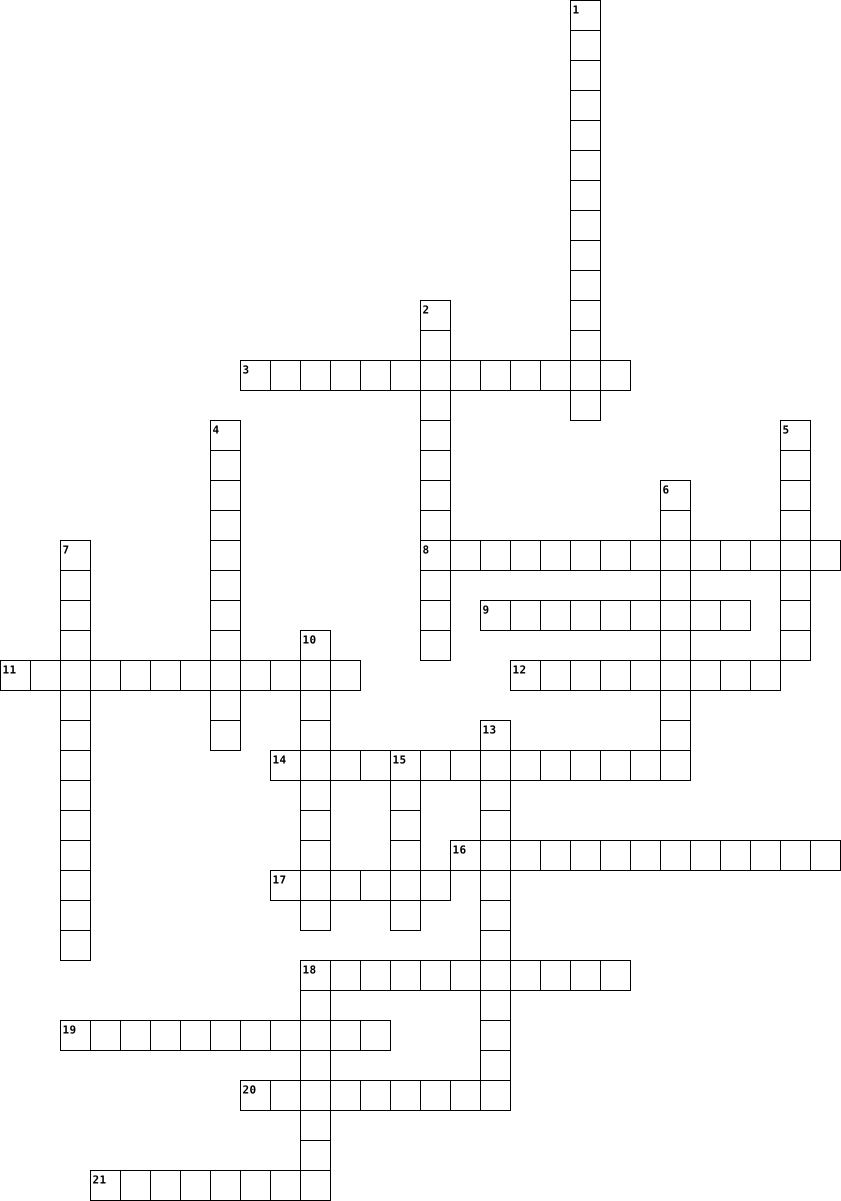
Across
- join equivalent structures, such as two or more nouns, pronouns, verbs, adjectives, adverbs, prepositions, conjunctions, phrases, or clauses
- express surprise or emotions and they often stand alone
- take the place of nouns or other words functioning as nouns so you don’t have to repeat words that have already been mentioned
- join equal elements and they come in pairs
- introduce dependent clauses and relate the dependent clause to the rest of the sentence
- (this, that, these, those) identify specific nouns
- connect words or groups of words to each other and tell something about the relationship between these words
- move the meaning of a sentence along by showing action, occurrence, or being
- modify nouns and pronouns, usually describing, identifying, or quantifying those words
- personal pronouns that indicate ownership
- refer to specific persons or things
- is a group of words that lacks a subject or predicate or both
Down
- introduce adverb clauses and signal the relationship between the adverb clause and another clause
- adverbs, connect independent clauses and often act as transitional expressions
- do not refer to specific persons or things
- are groups of words containing a subject and a predicate
- have the same form as reflexive pronouns but might emphasize a noun or another pronoun
- used to ask questions
- refer to the subject of the sentence or clause in which they appear
- express relationships in space, time, or other senses, between nouns or pronouns and other words in a sentence
- names persons, places, things, or concepts
- modify verbs, adjectives, or other adverbs or entire clauses
22 Clues: used to ask questions • refer to specific persons or things • personal pronouns that indicate ownership • do not refer to specific persons or things • join equal elements and they come in pairs • names persons, places, things, or concepts • (this, that, these, those) identify specific nouns • express surprise or emotions and they often stand alone • ...
Irregular Verbs 2 Natalia Martinez 2016-08-31

Across
- found
- fallen
- hurt
- forgotten
- heard
- kept
- felt
- had
- held
Down
- known
- flown
- fought
- given
- grown
- gone
- frozen
- got
- hit
- fed
- hidden
20 Clues: got • hit • fed • had • gone • hurt • kept • felt • held • known • found • flown • given • grown • heard • fallen • fought • frozen • hidden • forgotten
IRREGULAR VERBS (REVISION)AND ATLANTIS 2017-01-29

Across
- STOP THE SUPPLY OF STH
- DISAPPOINT
- TRY TO EXPLAIN
- CANCEL
- START SUDDENLY (A STORM)
- TRY TO FIND INFORMATION IN A BOOK OR LIST
- BECOME POPULAR OR FASHIONABLE
- REGISTER AT A HOTEL/AIRPORT
- LEAVE A HOTEL
- LIKE (SPORTS)
- REPAIR/PAINT
- DEPEND ON STH HAPPENING
- ADMIRE AND RESPECT
- ASK FOR NWES ABOUT...
- FIND STH OR MEET SB BY CHANCE
- DEVELOP FROM/BECOME TOO BIG FOR
- USE ALL OF/FINISH
- FOLLOW SB/STH QUICKLY IN ORDER TO CATCH THEM (THE POLICE)
- STOP MAKING AN EFFORT TO ACHIEVE STH DIFFICULT
- LIVE WITHOUT
- SUCCEED (A JOKE)
- GET RID OF
- BECOME OLDER
- ADD INFORMATION IN THE SPACES ON A DOCUMENT
- THINK THAT YOU ARE BETTER THAN
- TURN AND LOOK AT THE PAGES QUICKLY
- OFFER HELP OR INFORMATION
- PERFORM AN EXPERIMENT
- STOP OPERATING (FOR COMPANIES)
- DRAW A LINE THROUGH STH WRITTEN
- PARTICIPATE,TAKE PART
- PUT ON FANCY CLOTHES
Down
- COME BACK
- RECOVER FROM (AN ILLNESS)
- DISCOVER INFORMATION
- NEED/DEMAND (MONEY,HELP)
- SEE,HEAR OR UNDERSTAND SB OR STH WITH DIFFICULTY
- START DISCUSSING A SUBJECT/LOOK AFTER A CHILD UNTIL HE BECOMES AN ADULT
- INVESTIGATE
- REMOVE FROM A COMPETITION/MAKE UNCONSCIOUS (BOXING MATCH)
- BE CAREFUL
- RELY ON/TRUST
- CONTINUE DOING STH
- GIVE FREE OF CHARGE/REVEAL STH YOU'RE TRYING TO HIDE
- ACCEPT STH AND TRY TO DEAL WITH
- COPE WITH
- STOP WORKING (A COMPUTER)/LOSE CONTROL...
- THINK OF (AN IDEA)
- START (AFTER PLANNING TO DO STH FOR A LONG TIME)
- GET/PUT INTO LINES
- STOP DEMANDING ST
- FALL ASLEEP/LET SB GET OUT OF A VEHICLE
- PRODUCE STH SUCH AS HEAT OR A SMELL
- HAVE AN ARGUMENT WITH AND STOP BEING FRIENDS
- VISIT UNEXPECTEDLY
- FALL IN LOVE WITH/BELIEVE
- CHANGE THE DATE OF AN EVENT SO IT STARTS EARLIER
- BE NO LONGER FRESH/EXPLODE/STOP LIKING
- TAKE CARE OF
- STOP DOING STH YOU DO REGULARLY
- GIVE THINGS TO PEOPLE IN A GROUP
- DO LESS OF STH/REDUCE AN AMOUNT OF
- NOT INCLUDE
- CONTINUE
- BECOME BRIGHTER AND BETTER (THE SKY)
- GO ON HOLIDAY
66 Clues: CANCEL • CONTINUE • COME BACK • COPE WITH • DISAPPOINT • BE CAREFUL • GET RID OF • INVESTIGATE • NOT INCLUDE • REPAIR/PAINT • LIVE WITHOUT • TAKE CARE OF • BECOME OLDER • RELY ON/TRUST • LEAVE A HOTEL • LIKE (SPORTS) • GO ON HOLIDAY • TRY TO EXPLAIN • SUCCEED (A JOKE) • STOP DEMANDING ST • USE ALL OF/FINISH • CONTINUE DOING STH • ADMIRE AND RESPECT • THINK OF (AN IDEA) • GET/PUT INTO LINES • VISIT UNEXPECTEDLY • ...
elementary teen irregular verbs part1 2017-11-22

Across
- past simple of can
- past simple of bite
- zaczynać
- past simple of choose
- przynieść
- translation of catch
- 3rd form of choose
- łapać
- past simple of bring
- past simple of be
- kupić
- translation of can
- translation of begin
- 3rd form of bite
- translation of bite
- łamać
- gryźć
- być
- budować
- umieć
Down
- translation of buy
- 3rd form of build
- wybrać
- past simple of begin
- past simple of buy
- translation of break
- 3rd form of break
- 3rd form of catch
- translation of build
- translation of choose
- translation of be
- translation of bring
- past simple of break
- 3rd form of begin
- 3rd form of be
35 Clues: być • łapać • kupić • łamać • gryźć • umieć • wybrać • budować • zaczynać • przynieść • 3rd form of be • 3rd form of bite • 3rd form of build • 3rd form of break • 3rd form of catch • past simple of be • translation of be • 3rd form of begin • translation of buy • past simple of can • past simple of buy • 3rd form of choose • translation of can • past simple of bite • translation of bite • past simple of begin • ...
project 3 irregular verbs III 2017-04-17

Across
- vidět
- říct
- vědět
- přijít
- zlomit
- odejít, opustit
- začít
- sedět
- napsat
- vzít
Down
- být
- mluvit (jazykem)
- odejít
- poslat
- dělat
- koupit
- řídit
- ztratit
- pít
- stříhat
20 Clues: být • pít • říct • vzít • vidět • dělat • vědět • řídit • začít • sedět • odejít • poslat • přijít • koupit • zlomit • napsat • ztratit • stříhat • odejít, opustit • mluvit (jazykem)
Irregular Verbs - Simple Past 1 2018-11-01

Across
- The Simple Past of "keep"
- The Simple Past of "lend"
- The Simple Past of "say"
- The Simple Past of "give"
- The Simple Past of "wear"
- The Simple Past of "drive"
- The Simple Past of "understand"
- The Simple Past of "begin"
- The Simple Past of "feel"
Down
- The Simple Past of "tell"
- The Simple Past of "meet"
- The Simple Past of "make"
- The Simple Past of "be"
- The Simple Past of "hold"
- The Simple Past of "come"
- The Simple Past of "see"
- The Simple Past of "write"
- The Simple Past of "read"
- The Simple Past of "teach"
- The Simple Past of "blow"
20 Clues: The Simple Past of "be" • The Simple Past of "see" • The Simple Past of "say" • The Simple Past of "keep" • The Simple Past of "tell" • The Simple Past of "meet" • The Simple Past of "make" • The Simple Past of "lend" • The Simple Past of "hold" • The Simple Past of "come" • The Simple Past of "give" • The Simple Past of "wear" • The Simple Past of "read" • The Simple Past of "blow" • ...
MOUNT RUSHMORE 2018 IRREGULAR VERBS 2018-11-14

Across
- prétérit de raconter
- prétérit de se rencontrer
- préterit de se tenir debout
- prétérit de gagner
- prétérit de penser
- prétérit de passer le temps
- prétérit de apprendre
- prétérit de garder
- prétérit de tenir
- infinitif de coller
- infinitif de vendre
Down
- prétérit de vendre
- prétérit de signifier
- participe passé de se battre
- prétérit de tirer
- prétérit de enseigner
- infinitif de tirer
- infinitif de enseigner
- prétérit de quitter
- infinitif de perdre
20 Clues: prétérit de tirer • prétérit de tenir • prétérit de vendre • prétérit de gagner • prétérit de penser • infinitif de tirer • prétérit de garder • prétérit de quitter • infinitif de perdre • infinitif de coller • infinitif de vendre • prétérit de raconter • prétérit de signifier • prétérit de enseigner • prétérit de apprendre • infinitif de enseigner • prétérit de se rencontrer • ...
Irregular Verbs in Past Simple 2013-03-19

Across
- Give
- Hide
- Know
- Become
- Burn
- Throw
- Hear
- Leave
- Pay
- Draw
Down
- Feed
- Choose
- Speak
- Grow
- Catch
- Build
- Drive
- Mean
- Ride
- Fly
20 Clues: Fly • Pay • Feed • Give • Grow • Hide • Know • Mean • Burn • Hear • Ride • Draw • Speak • Catch • Build • Drive • Throw • Leave • Choose • Become
F5 U9-11 Irregular Verbs 2013-01-24

Across
- tundma Ipv
- andma Ipv
- istuma Ipv
- saama IIpv
- sööma IIpv
- joonistama IIpv
- jooksma IIpv
- kinni püüdma Ipv
- ütlema Ipv
- tegema Ipv
- kohtama Ipv
- alustama Ipv
- sööma Ipv
- valmistama IIpv
- tooma IIpv
- leidma Ipv
- muutuma,saama,hakkama IIpv
- minema IIpv
- tegema IIpv
- kohtama Ipv
- nägema Ipv
- minema Ipv
Down
- andma IIpv
- tundma IIpv
- ütlema IIpv
- võtma, viima Ipv
- saama Ipv
- kirjutama Ipv
- kinni püüdma IIpv
- omama Ipv
- tulema Ip
- istuma IIpv
- panema IIpv
- valmistama Ipv
- kirjutama IIpv
- alustama IIpv
- jooksma Ipv
- muutuma, saama, hakkama Ipv
- leidma IIpv
- joonistama Ipv
- tooma Ipv
- omama IIpv
- tulema IIpv
- võtma, viima IIpv
- nägema IIpv
45 Clues: andma Ipv • saama Ipv • omama Ipv • tulema Ip • sööma Ipv • tooma Ipv • andma IIpv • tundma Ipv • istuma Ipv • saama IIpv • sööma IIpv • ütlema Ipv • tegema Ipv • tooma IIpv • leidma Ipv • omama IIpv • nägema Ipv • minema Ipv • tundma IIpv • ütlema IIpv • istuma IIpv • panema IIpv • kohtama Ipv • jooksma Ipv • leidma IIpv • tulema IIpv • minema IIpv • tegema IIpv • kohtama Ipv • nägema IIpv • jooksma IIpv • alustama Ipv • kirjutama Ipv • ...
Master Irregular Verbs! (p.30) 2013-01-19

Across
- to put seeds into the ground so that they will grow into plants / (씨를) 뿌리다, (농작물을) 심다
- to get a wrong idea or impression about something / 오해하다
- to use long needles and wool to make clothes / 털실을 ~을 뜨다, 짜다
- to say what is likely to happen / 예상하다
- to take money out of a bank account / (예금을) 인출하다
- to put in a great deal of effort and work; to struggle against / 노력하다, 애쓰다
- to build something again after it has been destroyed / 다시 만들다
- to walk with long steps / 성큼 성큼 걷다
- to pay back money which you have borrowed / (돈을) 돌려주다; 물어주다
- not to allow something / 금지하다
Down
- to catch something up or pass them in the same direction / 따라잡다, 만회하다
- to tie something up or tie them together / ~으로 묶다
- to prosper; to grow strongly / 번성하다
- to agree or promise to do something / (일, 책임을)맡다, 약속하다, 착수하다
- to oppose something with force; to resist successfully / 저항하다; 잘 견디다
- to send out a program over radio or television / 방송하다, 방영하다
- to beg someone to do something / 간청하다 호소하다
- to crush something into powder / 갈아 (가루로) 만들다
- to experience; to go through / (변동 등을) 겪다; (고난을) 견디다
- to express a wish or greeting / ~라고 말하다; (값을) 매기다
20 Clues: not to allow something / 금지하다 • to walk with long steps / 성큼 성큼 걷다 • to prosper; to grow strongly / 번성하다 • to say what is likely to happen / 예상하다 • to beg someone to do something / 간청하다 호소하다 • to crush something into powder / 갈아 (가루로) 만들다 • to take money out of a bank account / (예금을) 인출하다 • to tie something up or tie them together / ~으로 묶다 • ...
irregular verbs 1 tm 45 2014-09-08

Across
- to hide - .... - hidden = verbergen
- to grow - grew - .... = groeien
- to hurt - hurt - .... = pijn doen
- to .... - was/were - been = zijn, worden
- to choose -chose - chosen = ....
- to eat - .... - eaten = eten
- to bet - bet - bet = ....
- to know - .... - known = weten, kennen
- to cut - cut - .... = snijden
- to build - built - .... = bouwen
- to hang - hung - hung = ....
Down
- to give - gave - .... = geven
- to forbid - forbade - .... = verbieden
- to get - .... - got = krijgen
- to find - found - found = ....
- to .... - heard - heard = horen
- to bite - bit - .... = bijten
- to go - .... - gone = gaan
- to .... - caught - caught = vangen
- to .... - bought - bought = kopen
20 Clues: to bet - bet - bet = .... • to go - .... - gone = gaan • to eat - .... - eaten = eten • to hang - hung - hung = .... • to give - gave - .... = geven • to get - .... - got = krijgen • to bite - bit - .... = bijten • to cut - cut - .... = snijden • to find - found - found = .... • to grow - grew - .... = groeien • to .... - heard - heard = horen • to choose -chose - chosen = .... • ...
The ultimate irregular verbs quiz! 2021-03-01

Across
- English infinitive for "crescere"
- English infinitive for "sparare"
- Past participle of "stare in piedi"
- Past participle of the verb "break"
- Italian translation for "spell"
- Past participle of "leave"
- Italian infinitive for "feed"
- Past simple of "bring"
- English infinitive for "versare"
- Past simple of "draw"
- Past participle of "ride"
Down
- Past simple of the verb "beat"
- Past simple of "write"
- past participle of "throw"
- Simple past of "shine"
- English infinitive for "macinare"
- English infinitive for "odorare"
- Italian translation of the verb "zappare/scavare"
- Past simple of "wake"
- Italian infinitive for "lead"
- Simple past of "sit"
- English infinitive form of "laid"
- English infinitive for "strappare"
- Past participle of the verb "blow"
- Past participle of "win"
25 Clues: Simple past of "sit" • Past simple of "wake" • Past simple of "draw" • Past simple of "write" • Simple past of "shine" • Past simple of "bring" • Past participle of "win" • Past participle of "ride" • past participle of "throw" • Past participle of "leave" • Italian infinitive for "lead" • Italian infinitive for "feed" • Past simple of the verb "beat" • Italian translation for "spell" • ...
Irregular Verbs in the Present 2021-01-25

Across
- Yo _____ practicando verbos ahora. (to be)
- Yo nunca me _____ de mi caballo. (to fall)
- Yo siempre _____ la verdad. (to say)
- A veces tú _____ el teléfono celular. (to hear)
- Yo le ____ tres dólares dólares a Carlos. (to give)
- Yo _____ un pastel para su cumpleaños. (to make)
- Roberto siempre ______ tarde. (to come)
- ¿Quién ____ con nosotros? (to go)
- Yo creo que ______ a tus abuelos. (to know)
- ¿_____ Ud. nadar? (to know)
- Ellos _____ mucho dinero. (to have)
Down
- Yo no _____ cómo esquiar. (to know)
- Yo _____ las carpetas en mi mochila. (to put)
- Luis y yo ______ a las tres y media, (to leave)
- ¿No _____ tú a mi familia? (to know)
- José y Omar _____ cómicos y divertidos. (to be)
- Cada noche, yo _____ música. (to hear)
- ¿_____ Uds. ejercicios todos los días? (to do)
- Normalmente, yo _____ mi cargador. (to bring)
- Después de la escuela, yo ____ a mi casa) (to go)
- Yo no ____ las estrellas esta noche. (to see)
21 Clues: ¿_____ Ud. nadar? (to know) • ¿Quién ____ con nosotros? (to go) • Yo no _____ cómo esquiar. (to know) • Ellos _____ mucho dinero. (to have) • ¿No _____ tú a mi familia? (to know) • Yo siempre _____ la verdad. (to say) • Cada noche, yo _____ música. (to hear) • Roberto siempre ______ tarde. (to come) • Yo _____ practicando verbos ahora. (to be) • ...
Past Tense of Irregular Verbs 2022-04-13

Across
- LEND
- GIVE
- SHAKE
- BECAME
- GO
- BLOW
- SPLIT
- BE (PLURAL)
- EAT
- THINK
- TEACH
- HURT
Down
- FLEE
- AWAKE
- KNOW
- MAKE
- BITE
- SWEEP
- SEE
- LEAVE
- FORGET
- GET
- RISE
23 Clues: GO • SEE • EAT • GET • FLEE • LEND • GIVE • KNOW • MAKE • BLOW • BITE • HURT • RISE • AWAKE • SHAKE • SWEEP • SPLIT • LEAVE • THINK • TEACH • BECAME • FORGET • BE (PLURAL)
Irregular Preterite Verbs (Part 1) 2021-11-28

Across
- I went/I was
- I did/I made
- they went/they were
- we did/made
- you saw
- they came
- we wanted
- we saw
- he/she saw
- I gave
- they gave
- they saw
- I came
- you (informal) did/you (informal) made
Down
- we went/we were
- I wanted
- he/she went/was
- you (informal) went/you (informal) were
- you (informal) wanted
- he/she gave
- you (informal) gave
- you (informal) came
- they wanted
- he/she did/made
- he/she came
- they did/made
- I saw
- we gave
- we came
- he/she wanted
30 Clues: I saw • we saw • I gave • I came • you saw • we gave • we came • I wanted • they saw • they came • we wanted • they gave • he/she saw • he/she gave • we did/made • they wanted • he/she came • I went/I was • I did/I made • they did/made • he/she wanted • we went/we were • he/she went/was • he/she did/made • they went/they were • you (informal) gave • you (informal) came • you (informal) wanted • ...