
mesopotamia Crossword Puzzles
Vocabulary 2021-09-13

Across
- one of the first cities in Mesopotamia
- past of 'found'
- a nation that is ruled by an emperor
- exchange (goods or services) for other goods or services without using money
- verb of origin
- disappear
- noun of 'devote'
- middle ages
- invade
- the doctrine or belief that there is only one God
- mention or royal residence
- conventional
- dig out
- ancient Egyptian system of writing
- a person who copies out documents
- kingdom
- noun of 'believe'
- impact
- plural of 'millennium'
- noun of 'achieve'
- a name of the Indus Valley people
- past of 'rise'
- your teacher's family name
- verb of 'weak'
- native
- mummification
- verb of 'fertile'
- huge
Down
- participate
- widespread
- noun of 'bury'
- opposite of fertile
- vanished
- cuts or carves on a hard surface
- the land between two rivers
- opposite of 'obedience'
- silent letters in 'drought'
- a Sumerian invention
- ability to read and write
- predecessors
- peak
- tomb
- opposite of 'few'
- any attribute or immaterial possession that is inherited from ancestors
- noun of 'preserve'
- decode
- past of ‘seek’
- ancient
- hundreds of years
- a science which deals with celestial objects, space and the physical universe as a whole
- verb of 'rich'
51 Clues: peak • tomb • huge • invade • decode • impact • native • dig out • kingdom • ancient • vanished • disappear • widespread • participate • middle ages • predecessors • conventional • mummification • noun of 'bury' • verb of origin • past of ‘seek’ • past of 'rise' • verb of 'weak' • verb of 'rich' • past of 'found' • noun of 'devote' • opposite of 'few' • noun of 'believe' • hundreds of years • noun of 'achieve' • verb of 'fertile' • ...
World I Units 1-4 Review 2023-11-21

Across
- preserved for the afterlife
- school attended by boys and men in Sparta
- In the Indus Valley, known for its sewer system
- half man, half bull, eats people
- first dynasty of unified China
- Greek historian
- civilization on the island of Crete
- Sea that is shared by Greece, Egypt, and Mesopotamia
- Spartan military formation
- govern by the Golden Mean
- rigid socioeconomic class system
- Persian War battle, remembered as legendary
- south-north river
- practice started by Siddhartha Gautama
- strict rules and harsh punishment in China
- strong wind storm, influenced life in Indus Valley
- god-like ruler of Egypt
- protected Ying Zheng in the afterlife
Down
- practice that believes in reincarnation and moksha
- Mesopotamian city-state that became an empire
- using regional lords to govern a kingdom
- afterlife home of the pharaohs
- created an early written law code
- paleolithic advancement used for protection and heat
- north of Greece, home of Alexander the Great
- philosophy that advocates being your "best self"
- system of writing in ancient Mesopotamia
- military strength above all else
- system of written language in Indus Valley
- era that followed the agricultural revolution
- using artifacts to learn about the past
- civilization south of Egypt
- city-state that practiced democracy
- person who is not living in a settled community
- truth and knowledge is drawn out through questioning
35 Clues: Greek historian • south-north river • god-like ruler of Egypt • govern by the Golden Mean • Spartan military formation • preserved for the afterlife • civilization south of Egypt • afterlife home of the pharaohs • first dynasty of unified China • half man, half bull, eats people • military strength above all else • rigid socioeconomic class system • created an early written law code • ...
Check For Understanding - World History Vocabulary 2023-09-21

Across
- A self-governing city and its surrounding territory.
- An ancient region between the Tigris and Euphrates rivers.
- A prolonged period of abnormally low rainfall.
- Individuals who recorded information in writing.
- A system of writing using wedge-shaped characters.
- An advanced society with complex culture and institutions.
- Source Materials that interpret primary sources.
- Belief in multiple gods or deities.
- Systems for ruling and organizing a society.
- A stepped pyramid temple in ancient Mesopotamia.
- The artificial watering of land for farming.
- Fine particles of soil and sediment.
- Belief systems and worship practices.
- Pictures or symbols representing words or ideas.
- Tools and inventions used to accomplish tasks to make life easier and more conveniet.
Down
- The act of moving from one region to another.
- An excess of resources beyond what is needed.
- The cultivation of crops and the raising of livestock.
- Able to produce abundant crops or offspring.
- Source Original historical documents or records.
- The flat land beside a river prone to flooding.
- Dry with little rainfall.
- People who move from place to place in search of resources.
- Early human societies that relied on hunting and collecting food.
- Skilled craftsmen who create goods by hand.
- Tamed or trained for human use.
- Class A division of society based on wealth and status.
- A male monarch who rules a kingdom.
28 Clues: Dry with little rainfall. • Tamed or trained for human use. • Belief in multiple gods or deities. • A male monarch who rules a kingdom. • Fine particles of soil and sediment. • Belief systems and worship practices. • Skilled craftsmen who create goods by hand. • Able to produce abundant crops or offspring. • Systems for ruling and organizing a society. • ...
B.Perkembangan Kerja Sama Dunia 2025-03-09

Across
- Lembaga yang didirikan pada tanggal 24 Oktober 1945 sebagai kelanjutan dari piagam Atlantik adalah lembaga...
- Prinsip Utama dalam kerja sama internasional...
- Lembah sungai di negara Mesir adalah...
- Indonesia sebagai negara besar ikut aktif dalam kerja sama regional di...
- Badan khusus yang menangani bidang pendidikan dan kebudayaan. Badan PBB tersebut dinamakan...
- Jalur perdagangan klasik yang sangat ramai dilewati para pedagang yang dikenal dengan nama jalur...
- Negara dengan ekonomi terbesar di ASEAN adalah...
- The Group of Twenty yang biasa dikenal dengan...
- Segel sharkalisharri berasal dari kekaisaran...
Down
- United Nations (UN) Atau Perserikatan Bangsa-bangsa (PBB) merupakan kerja sama...
- Wilayah yang mengalami perkembangan populasi yang sangat pesat sehingga menciptakan kelas sosial yang lebih kompleks adalah wilayah...
- Kerja sama yang dilakukan oleh dua negara.kerja sama ini dilandasi oleh hubungan baik dan manfaat yang saling menguntungkan. Teks tersebut adalah pengertian dari...
- Lembaga kerja sama internasional yang bekerja sama dengan 10 negara adalah...
- Peradaban Mesopotamia berkembang di lembah sungai...
- Badan khusus yang menangani bidang pemberdayaan anak anak yang membutuhkan bantuan. Badan PBB tersebut dinamakan...
- Negara yang menggabungkan diri di ASEAN pada tanggal 29-30 juli 1995 adalah negara...
- Badan khusus yang menangani bidang kesehatan. Badan PBB tersebut dinamakan...
- Negara yang menggabungkan diri di ASEAN pada tanggal 30 April 1999 adalah negara...
- Lembah sungai di negara Tiongkok adalah...
- Organisasi kerja sama ekonomi Asia-Pasifik adalah...
20 Clues: Lembah sungai di negara Mesir adalah... • Lembah sungai di negara Tiongkok adalah... • Prinsip Utama dalam kerja sama internasional... • The Group of Twenty yang biasa dikenal dengan... • Segel sharkalisharri berasal dari kekaisaran... • Negara dengan ekonomi terbesar di ASEAN adalah... • Peradaban Mesopotamia berkembang di lembah sungai... • ...
B.Perkembangan Kerja Sama Dunia 2025-03-09

Across
- Lembaga yang didirikan pada tanggal 24 Oktober 1945 sebagai kelanjutan dari piagam Atlantik adalah lembaga...
- Prinsip Utama dalam kerja sama internasional...
- Lembah sungai di negara Mesir adalah...
- Indonesia sebagai negara besar ikut aktif dalam kerja sama regional di...
- Badan khusus yang menangani bidang pendidikan dan kebudayaan. Badan PBB tersebut dinamakan...
- Jalur perdagangan klasik yang sangat ramai dilewati para pedagang yang dikenal dengan nama jalur...
- Negara dengan ekonomi terbesar di ASEAN adalah...
- The Group of Twenty yang biasa dikenal dengan...
- Segel sharkalisharri berasal dari kekaisaran...
Down
- United Nations (UN) Atau Perserikatan Bangsa-bangsa (PBB) merupakan kerja sama...
- Wilayah yang mengalami perkembangan populasi yang sangat pesat sehingga menciptakan kelas sosial yang lebih kompleks adalah wilayah...
- Kerja sama yang dilakukan oleh dua negara.kerja sama ini dilandasi oleh hubungan baik dan manfaat yang saling menguntungkan. Teks tersebut adalah pengertian dari...
- Lembaga kerja sama internasional yang bekerja sama dengan 10 negara adalah...
- Peradaban Mesopotamia berkembang di lembah sungai...
- Badan khusus yang menangani bidang pemberdayaan anak anak yang membutuhkan bantuan. Badan PBB tersebut dinamakan...
- Negara yang menggabungkan diri di ASEAN pada tanggal 29-30 juli 1995 adalah negara...
- Badan khusus yang menangani bidang kesehatan. Badan PBB tersebut dinamakan...
- Negara yang menggabungkan diri di ASEAN pada tanggal 30 April 1999 adalah negara...
- Lembah sungai di negara Tiongkok adalah...
- Organisasi kerja sama ekonomi Asia-Pasifik adalah...
20 Clues: Lembah sungai di negara Mesir adalah... • Lembah sungai di negara Tiongkok adalah... • Prinsip Utama dalam kerja sama internasional... • The Group of Twenty yang biasa dikenal dengan... • Segel sharkalisharri berasal dari kekaisaran... • Negara dengan ekonomi terbesar di ASEAN adalah... • Peradaban Mesopotamia berkembang di lembah sungai... • ...
Mesopotamia 2022-09-07

Across
- Mesopotamia is by this sea
- also known as the "Fertile Crescent"
Down
- fertile soil left behind by flooding
- the rivers flooded, so they made a(n)___ system
- efficient farming led to a ________ of food
- this tool helped early people dig into the soil
6 Clues: Mesopotamia is by this sea • fertile soil left behind by flooding • also known as the "Fertile Crescent" • efficient farming led to a ________ of food • the rivers flooded, so they made a(n)___ system • this tool helped early people dig into the soil
Social studies puzzle. 2022-01-22

Across
- move a lot
- old days
- city of people with a shared identity
- language
- image
Down
- hunter-gatherer
- image
- old days
- a lot of people
- dont move
- a long time ago
11 Clues: image • image • old days • old days • language • dont move • move a lot • hunter-gatherer • a lot of people • a long time ago • city of people with a shared identity
Verde 2022-01-19

Across
- elemento architettonico in pietra delle mastabe
- tecnica scultorea
- monumento commemorativo
- strutture religiose diffuse in Mesopotamia
- area geografica situata nel alto Egitto
- ambiente della tomba
Down
- raccolta di formule
- reperto archeologico sumero
- figure rappresentative
- pietra scheggiata
10 Clues: tecnica scultorea • pietra scheggiata • raccolta di formule • ambiente della tomba • figure rappresentative • monumento commemorativo • reperto archeologico sumero • area geografica situata nel alto Egitto • strutture religiose diffuse in Mesopotamia • elemento architettonico in pietra delle mastabe
Civiltà fluviali-by i Mesopotamici 2023-11-20

Across
- Gigantesche sculture assire.
- Terra tra 2 fiumi.
- Tipo di scrittura sumera.
- Re che ha portato il massimo splendore in Babilonia.
- Collega terra e cielo.
- Cassetta di legno intarsiata.
- Abili guerrieri.
Down
- Fabbricati con l' argilla.
- Gli inventano gli Assiri.
- Grande porta dei Babilonesi.
- Creata con colori "piatti".
- Si trova la grande porta dei Babilonesi.
- Materiale facilmente reperibile e modellabile.
- Statue sumere.
- Chi inventa la scrittura.
15 Clues: Statue sumere. • Abili guerrieri. • Terra tra 2 fiumi. • Collega terra e cielo. • Gli inventano gli Assiri. • Tipo di scrittura sumera. • Chi inventa la scrittura. • Fabbricati con l' argilla. • Creata con colori "piatti". • Grande porta dei Babilonesi. • Gigantesche sculture assire. • Cassetta di legno intarsiata. • Si trova la grande porta dei Babilonesi. • ...
Veronica e Giacomo 2025-05-09

Across
- vuol dire tra due fiumi
- era il giudice supremo,gestiva la città
- dio dell'acqua
- era costretto a versare tributi
- sapevano leggere e scrivere
- costruzione dove si celebravano i riti religiosi
- dea della fertilità e dell'amore
- la scrittura Sumera
Down
- dea della luna
- aiutavano il re ad amministrare le città
- dio del vento
- andavano in guerra
- non avevano diritti
- la principale città-stato
- dio del cielo
15 Clues: dio del vento • dio del cielo • dea della luna • dio dell'acqua • andavano in guerra • non avevano diritti • la scrittura Sumera • vuol dire tra due fiumi • la principale città-stato • sapevano leggere e scrivere • era costretto a versare tributi • dea della fertilità e dell'amore • era il giudice supremo,gestiva la città • aiutavano il re ad amministrare le città • ...
Judaism 2024-11-19

Across
- most sacred text
- started Judaism
- received Ten Commandments from God
- where Abraham left
- helped in Exodus by Moses
- scattering of Jewish people
Down
- belief in many gods
- holiday that celebrates being allowed to keep their religion
- the Holy Land
- religious teachers
- guidelines for daily life and prayer
- being king and fair
- religious food law
13 Clues: the Holy Land • started Judaism • most sacred text • religious teachers • where Abraham left • religious food law • belief in many gods • being king and fair • helped in Exodus by Moses • scattering of Jewish people • received Ten Commandments from God • guidelines for daily life and prayer • holiday that celebrates being allowed to keep their religion
Vocabulary 2021-09-13

Across
- plural of 'millennium'
- predecessors
- ancient Egyptian system of writing
- impact
- exchange (goods or services) for other goods or services without using money
- disappear
- noun of 'bury'
- mummification
- tomb
- participate
- peak
- verb of 'rich'
- one of the first cities in Mesopotamia
- verb of 'weak'
- a name of the Indus Valley people
- a person who copies out documents
- dig out
- a science which deals with celestial objects, space and the physical universe as a whole
- a nation that is ruled by an emperor
- middle ages
- native
- widespread
- verb of 'fertile'
- mention or royal residence
- past of 'found'
- noun of 'devote'
- huge
- past of ‘seek’
- a Sumerian invention
Down
- the land between two rivers
- opposite of 'few'
- silent letters in 'drought'
- invade
- your teacher's name
- kingdom
- noun of 'preserve'
- the doctrine or belief that there is only one God
- hundreds of years
- opposite of 'obedience'
- cuts or carves on a hard surface
- decode
- noun of 'achieve'
- vanished
- any attribute or immaterial possession that is inherited from ancestors
- past of 'rise'
- verb of origin
- opposite of fertile
- noun of 'believe'
- conventional
- ability to read and write
- ancient
51 Clues: tomb • peak • huge • invade • impact • decode • native • kingdom • dig out • ancient • vanished • disappear • widespread • participate • middle ages • predecessors • conventional • mummification • noun of 'bury' • verb of 'rich' • verb of 'weak' • past of 'rise' • verb of origin • past of ‘seek’ • past of 'found' • noun of 'devote' • opposite of 'few' • hundreds of years • noun of 'achieve' • noun of 'believe' • verb of 'fertile' • ...
Unit 1 Review 2015-08-19

Across
- During the Vedic period members played specific societal roles
- used by the Shang to ask ancestors for advice
- taught that love and respect were important
- introduction of items made from copper and tin
- legal code that was more forgiving than Hammurabi's
- allowed new rulers to justify overthrowing a ruler
- developed large trading network due to lack of raw materials
- system of Sumerian writing
- most able seafarers of early Mediterranean
- river valley that had Harappa and Mohenjo Daro
- Persian king who was tolerant of others customs
- India depended on these to bring rain for crops
- Akkadian ruler who took control of N. and S. Mesopotamia
- The Egyptian god of the sun was Amon-___.
Down
- sacred writings about Aryan history and society
- group that was most brutal in dealing with opposition
- unique way of life of a group of people
- granite slab used by historians to decode hieroglyphics
- Akhenaten introduced this to Egypt
- new religion in Persia in which people believed in dualism
- site of the world's first known civilization
- Kush expanded to rule this after the Middle Kingdom collapsed
- Egyptian pictures that stand for ideas and sounds.
- Most valuable product of Meroe
- became first king of Egypt
- built to foster communication within the empire
- made a uniform code of laws that unified his empire
27 Clues: became first king of Egypt • system of Sumerian writing • Most valuable product of Meroe • Akhenaten introduced this to Egypt • unique way of life of a group of people • The Egyptian god of the sun was Amon-___. • most able seafarers of early Mediterranean • taught that love and respect were important • site of the world's first known civilization • ...
Archaeology and the Bible 2025-02-03

Across
- Also known as the Israel Stele or the Stele of Merneptah
- King King Writer of InscriptionInsription
- Contains translations of Aramaic, Greek, and Hebrew
- Large sea found west of Israel, North of Egypt, and Greece is in it
- Known as the largest Neolithic settlement in the world along the Jordan River
- Early forms of writing that use simple pictures to represent objects or ideas
- Paper made in Ancient Egypt; made from the papyrus plant
Down
- Area in the modern-day Middle East where a majority of the ancient civilizations began
- Found in 11 caves around the Dead Sea
- Country found in the Middle East; Used to be Mesopotamia
- One of the earliest civilizations: found in between the Tigris and Euphrates rivers
- Oldest city in the world and considered the first walled city in the world
- Also known as the Moabite Stone and was made by King Mesha of Moab
- The study of the past through artifacts
- One of the main rivers that was used for trade in Ancient Time
- One of the earliest languages; starts with an H
- Language found on the Rosetta Stone; starts with a G
- A system of writing using pictorial symbols that represent words or sounds
- Language Jesus spoke
- The Promised Land
20 Clues: The Promised Land • Language Jesus spoke • Found in 11 caves around the Dead Sea • The study of the past through artifacts • King King Writer of InscriptionInsription • One of the earliest languages; starts with an H • Contains translations of Aramaic, Greek, and Hebrew • Language found on the Rosetta Stone; starts with a G • ...
River Valley Civilizations 2025-08-20

Across
- → The oldest monotheistic religion is __________.
- → Seasonal heavy rains in India were called __________.
- → Civilization along the Huang He & Yangtze was __________.
- → Rivers were important because __________ enriched soil.
- → The divine right to rule was the __________ of Heaven.
- → With no barrier in the north, China built the __________.
- → Buddhism appealed to the __________ castes.
- → A tomb in Egypt was a __________.
- → The rise and fall of dynasties was the __________ Cycle.
- → Agricultural Revolution included __________ of plants/animals.
- → Egyptians believed in many gods; their religion was __________.
- → The first written law code was created by __________.
- → Farming caused __________ growth.
- → Religion founded by Siddhartha is __________.
- → A unique accomplishment of India was __________.
- → The sacred book of Islam is the __________.
Down
- → Civilization along the Tigris & Euphrates was __________.
- → The ruler of Egypt was the __________.
- → The Indian social system was the __________ system.
- → Hammurabi’s Code treated people __________.
- → All three monotheistic religions began in the __________.
- → Egyptians wrote in __________.
- → The goal of Buddhism is reaching __________.
- → Muslims follow the __________ Pillars
- → The caste system was part of __________ religion.
- → Mesopotamians wrote in __________.
- → Farming led to permanent __________.
- → Civilization along the Nile was __________.
- → Religion founded by Muhammad is __________.
- → All early civilizations formed near __________.
- → A temple in Mesopotamia was a __________.
- → Belief in one god is __________.
- → A negative of Mesopotamia’s geography was constant __________.
- → Egypt was protected by deserts and natural __________.
34 Clues: → Egyptians wrote in __________. • → Belief in one god is __________. • → A tomb in Egypt was a __________. • → Farming caused __________ growth. • → Mesopotamians wrote in __________. • → Farming led to permanent __________. • → Muslims follow the __________ Pillars • → The ruler of Egypt was the __________. • → A temple in Mesopotamia was a __________. • ...
Confusion is Occuring 2025-02-12

Across
- controls the sea
- These ponies love clouds
- Fastest bird in the desert
- Use a rope when climbing
- the headmaster and powerful wizard
Down
- The first civilization
- A beautiful flower
- Not a planet
- Not a triangular prism
- Largest bear
- A flower; message(Enola Holmes)
11 Clues: Not a planet • Largest bear • controls the sea • A beautiful flower • The first civilization • Not a triangular prism • These ponies love clouds • Use a rope when climbing • Fastest bird in the desert • A flower; message(Enola Holmes) • the headmaster and powerful wizard
Unit 2 Vocab Crossword 2024-08-29

Across
- The kind of housing or shelter people had after the Neolithic Revolution
- Region (mostly the Arabian Peninsula) with hot, dry, desert climate - but also containing Mesopotamia
- Part of the Stone Age before the invention of farming
- River Valley civilization location on the border of modern Pakistan and India
- government by religious leaders
- Belief in only one God - incredibly rare in ancient world
- Main result of Neolithic Revolution that allowed some people to do some jobs other than farming
- When Egyptians adopted the idea of a written language from the Sumerians, that was an example of _________ __________
- fertile land in between the Tigris and Euphrates
- Access to this was necessary for early civilizations, meaning most grew up alongside rivers
Down
- Favorable geography for founding civilizations because of easy access to water; most of the first civilizations were founded in these
- Belief in many gods - held by nearly all ancient religions
- Stone Age time when farming was invented
- first written legal code (established in ancient Babylon)
- The Sumerian written language - earliest developed
- A group of people who share means of communication, government,specialized work, religion, art, etc.
- People who study the past by investigating ancient artifacts
- River along which Egyptian Civilization grew up
18 Clues: government by religious leaders • Stone Age time when farming was invented • River along which Egyptian Civilization grew up • fertile land in between the Tigris and Euphrates • The Sumerian written language - earliest developed • Part of the Stone Age before the invention of farming • first written legal code (established in ancient Babylon) • ...
Mesopotamia vocabulary crossword 2021-11-16

Across
- m
- An ancient Samarian writing system of wedge shaped markings
- A politician unit with a city and nearby farmland
- A set of written rules for people to obey
- A period of little rainfall and warm temperatures
- An ancient region of southern Mesopotamia
- A group of people with similar customs, backgrounds, trading, and income
- A person who specializes in writing as record keeper
Down
- Flat land bordering a river
- The ruler of the Babylonian empire for 42 years and expanded the empire
- A human society with an advanced level of development
- A group of territories and people brought together under one supreme ruler
- A picture or drawing that represents a word/idea
- Having little rainfall and warm temperatures
- A sharpened reed used to make markings on clay tablets
15 Clues: m • Flat land bordering a river • A set of written rules for people to obey • An ancient region of southern Mesopotamia • Having little rainfall and warm temperatures • A picture or drawing that represents a word/idea • A politician unit with a city and nearby farmland • A period of little rainfall and warm temperatures • ...
Mesopotamia vocabulary crossword 2021-11-16

Across
- A set of written rules for people to obey
- A sharpened reed used to make markings on clay tablets
- A group of territories and people brought together under one supreme ruler
- m
- A period of little rainfall, and growing crops is difficult
- Flat land bordering a river
- A human society with an advanced level of development
- A politician unit with a city and nearby farmland
- An ancient Samarian writing system of wedge shaped markings
- The ruler of the Babylonian empire for 42 years and expanded the empire
Down
- A picture or drawing that represents a word/idea
- An ancient region of southern Mesopotamia
- Having little rainfall and warm temperatures
- A person who specializes in writing as record keeper
- A group of people with similar customs, backgrounds, trading, and income
15 Clues: m • Flat land bordering a river • A set of written rules for people to obey • An ancient region of southern Mesopotamia • Having little rainfall and warm temperatures • A picture or drawing that represents a word/idea • A politician unit with a city and nearby farmland • A person who specializes in writing as record keeper • ...
Ancient Mesopotamia crossword 2023-12-05

Across
- A Demi-God that possessed super human strength. Oldest piece of epic western literature.
- A group of states under a single authority.
- The sun is the center of the solar system and the planets rotate around the sun.
- A temple where Sumerians believed gods and goddesses ruled the city.
- A government where priests rule in the name of a god or gods.
- The land between 2 rivers.
- To worship multiple gods or deities.
Down
- An area of fertile land in the Middle East, located by the Tigris and Euphrates Rivers.
- A strict and harsh set of laws in ancient Mesopotamian times.
- A wanderer, someone who travels place to place without a permanent residence.
- Wedge-shaped writing on clay tablets.
- A society controlled by men, or a society that favors men.
- A small area surrounding a large city.
- A small stringed instrument similar to a lute or mandolin.
- An embankment built to prevent the overflow of a river.
15 Clues: The land between 2 rivers. • To worship multiple gods or deities. • Wedge-shaped writing on clay tablets. • A small area surrounding a large city. • A group of states under a single authority. • An embankment built to prevent the overflow of a river. • A society controlled by men, or a society that favors men. • ...
Farming in Mesopotamia 2012-12-07

Across
- Chinese people make a tone of this to eat the other food with
- They invented this and we use it all the time
- Root vegetable
- From the tigris and euphrates river
- We use these all the time in the winter
- A teachers fruit
- This fruit you can turn this into a drink
- A grain used in soups
Down
- Ground into flour used in bread
- Used for bread and cereal
- These are used in cooking, baking, and cars
- A fruit with hundreds of seeds to eat
- This food brings tears to your eyes
- Constant cause of problems in the irrigation systems they made
- A large concentration of this...
15 Clues: Root vegetable • A teachers fruit • A grain used in soups • Used for bread and cereal • Ground into flour used in bread • A large concentration of this... • From the tigris and euphrates river • This food brings tears to your eyes • A fruit with hundreds of seeds to eat • We use these all the time in the winter • This fruit you can turn this into a drink • ...
Farming in Mesopotamia 2012-12-14

Across
- Caused many problems with the man-made irrigation systems.
- Barley could be made into flour for bread,made into ____, or fermented and turned into beer.
- Water from these didn't help the crops grow
- Most common crop grown in Mesopotamia
- When irrigation ditches were not maintained, a large ____ shortage would ensure.
- The farmers produced extra crops and this allowed for growth of cities, towns, and ____________.
- This form of writing was first used when farmers recorded farm surpluses.
- This was inside of the Tigris and Euphrates Rivers and made it hard for the plants to grow.
Down
- Timing of these were in the late spring or early summer.
- These did not reach into the soil because of the small amount of rainfall.
- Farmer grew most of their plants here
- Silt is a mixture of tiny bits of soil and rock carried and _________ by a river.
- These caused difficulty in growing crops.
- In Mesopotamia when farming the farmers needed to know _____(number) important thing to keep their crops alive.
- A system of supplying (land) with water by means of artificial canals, ditches, especially to promote the growth of food crops
15 Clues: Farmer grew most of their plants here • Most common crop grown in Mesopotamia • These caused difficulty in growing crops. • Water from these didn't help the crops grow • Timing of these were in the late spring or early summer. • Caused many problems with the man-made irrigation systems. • This form of writing was first used when farmers recorded farm surpluses. • ...
MESOPOTAMIA CROSSWORD PUZZLE!! 2023-12-05

Across
- to believe in more than 1 god
- the world first system of writing
- the system to move water created by the Sumerians
- territories under the rule of 1 person.
- Very cruel king who created the hanging gardens
- trained people who wrote cuneiform
- a huge temple made to worship gods
Down
- rich soil that helped farmers grow their crops better
- of laws Had 282 and kept the people in order
- the people who created and sold purple dye
- in between 2 rivers
- the king of Babylon
- class-Kings and priest on top,scribes traders, and merchants in the middle, and slaves and farmers on the bottom
- the world first civilization
- ruler who created the first empire
15 Clues: in between 2 rivers • the king of Babylon • the world first civilization • to believe in more than 1 god • the world first system of writing • trained people who wrote cuneiform • ruler who created the first empire • a huge temple made to worship gods • territories under the rule of 1 person. • the people who created and sold purple dye • ...
Empires of Mesopotamia 2022-11-18

Across
- a gift given in acknowledgment of gratitude or an enforced payment or contribution.
- a person who shoots with a bow and arrow
- to disassemble or pull down; take apart
- a large territory where groups of people are ruled by a single leader or government
- The surrounding and blockading of a city, town, or fortress by an army attempting to capture it.
- a plan or method for obtaining a specific goal or result
- brilliant or gorgeous appearance, coloring, etc.; magnificence
- to gain the victory; to win in war
Down
- without pity or compassion; cruel; merciless
- a sculpture in which the figures project or stick out slightly from the background.
- to grow or develop with energy and force
- an arrangement of soldiers, as in rows, columns, squares, etc.
- an upright stone slab or pillar bearing an inscription or design and serving as a monument or marker
- an ancient military device with a heavy horizontal ram for smashing down walls, gates, etc.
- to resist or rise against some authority, control, or tradition.
15 Clues: to gain the victory; to win in war • to disassemble or pull down; take apart • to grow or develop with energy and force • a person who shoots with a bow and arrow • without pity or compassion; cruel; merciless • a plan or method for obtaining a specific goal or result • an arrangement of soldiers, as in rows, columns, squares, etc. • ...
Mesopotamia River Civilization 2023-09-28

Across
- between the rivers
- belief in one god
- spreading of a culture
- large pyramid-like temple in city's center
- society, culture and a way of life in a particular area
- crescent, land around the Tigris and Euphrates Rivers
- group of states, countries or city-state under one supreme ruler
- exchange of goods or services for other good or services
- line of a family of rulers
Down
- belief in many gods
- person who writes documents
- skilled worker who makes items by hand
- pictograph writing system
- religious leaders who also lead the government
- state, independent city that rules over a territory
15 Clues: belief in one god • between the rivers • belief in many gods • spreading of a culture • pictograph writing system • line of a family of rulers • person who writes documents • skilled worker who makes items by hand • large pyramid-like temple in city's center • religious leaders who also lead the government • state, independent city that rules over a territory • ...
mesopotamia crossword puzzle 2024-10-14

Across
- place for farming
- landmass with water around it
- set of rules
Down
- dividing class
- to move water
- more than enough
- used for farming
- type of writing
- place to worship
9 Clues: set of rules • to move water • dividing class • type of writing • more than enough • used for farming • place to worship • place for farming • landmass with water around it
DSP 2023-08-31

Across
- a group of states or territories controlled by one ruler
- Ruling family
- the way of life of a society, which is handed down from one generation to the next by learning and experience
- region within the Fertile Crescent that lies between the Tigris and Euphrates rivers.
- system of writing in which pictures called hieroglyphs represent objects, concepts, or sounds
- a complex, highly organized social order
- to arrange or set down in writing
Down
- (1792 B.C.–1750 B.C.) Hammurabi became the first king of the Babylonian empire. He inherited the power from his father, who extended Babylon’s control across Mesopotamia. Hammurabi is known for writing the first code of law in recorded history.
- believing in one god
- believing in many gods
- a political unit that includes a city and its surrounding lands and villages
- the era of prehistory that lasted from at least 2 million b.c. to about 9000 b.c.; also called the Old Stone Age
- title of the rulers of ancient Egypt
- the final era of prehistory, which began about 9000.b.c.; also called the New Stone Age
- person who moves from place to place in search of food
- system of ranking groups
16 Clues: Ruling family • believing in one god • believing in many gods • system of ranking groups • to arrange or set down in writing • title of the rulers of ancient Egypt • a complex, highly organized social order • person who moves from place to place in search of food • a group of states or territories controlled by one ruler • ...
Origins of Civilization Vocab by Mauricio Mendoza 2023-09-02

Across
- to arrange or set down in writing
- system of writing in which pictures called hieroglyphs represent objects, concepts, or sounds
- region within the Fertile Crescent that lies between the Tigris and Euphrates rivers.
- the way of life of a society, which is handed down from one generation to the next by learning and experience
- title of the rulers of ancient Egypt
- person who moves from place to place in search of food
- (1792 B.C.–1750 B.C.) Hammurabi became the first king of the Babylonian empire. He inherited the power from his father, who extended Babylon’s control across Mesopotamia. Hammurabi is known for writing the first code of law in recorded history
- believing in one god
Down
- system of ranking groups
- believing in many gods
- Period the era of prehistory that lasted from at least 2 million b.c. to about 9000 b.c.; also called the Old Stone Age
- a complex, highly organized social order
- ruling family
- a political unit that includes a city and its surrounding lands and villages
- a group of states or territories controlled by one ruler
- Period the final era of prehistory, which began about 9000.b.c.; also called the New Stone Age
16 Clues: ruling family • believing in one god • believing in many gods • system of ranking groups • to arrange or set down in writing • title of the rulers of ancient Egypt • a complex, highly organized social order • person who moves from place to place in search of food • a group of states or territories controlled by one ruler • ...
Ancient Mesopotamia Crossword 2022-03-22

Across
- of Hammurabi. Oldest written book of law in the world.
- Hanging Garden of Babylon. Built by Nebuchadnezzar for the enjoyment of his wife.
- crescent, land located between the Tigris and Euphrates Rivers.
- A agricultural area walled city in the center of the region, ruled by its own government led by a king.
- One of the worlds first city-states.
- Empire, founded by Hammurabi in 1792 BCE, the Babylonian were the first to form an empire that would encompass all of Mesopotamia.
- He was a king of the Babylonian empire who constructed Hanging garden of Babylon and Jerusalem's temple.
- King of the Babylonian gods
Down
- Written language that evolved from pictographs to phonograms.
- A social order ruled by a king. Demigod, The belief that king were part man and part god.
- Epic of Gilgamesh. One of the oldest and most famous stories about demigod.
- the belief that kings were part man and part god.
- Large Temples found in the middle of a town.
- Religious belief in more than one god.
- Empire, The Assyrians were one of the major peoples to live in Mesopotamia during ancient times. Fertile Crescent, Land located between the Tigris and Euphrates Rivers.
- Important king who developed an overarching set laws for all citizens to follow.
16 Clues: King of the Babylonian gods • One of the worlds first city-states. • Religious belief in more than one god. • Large Temples found in the middle of a town. • the belief that kings were part man and part god. • of Hammurabi. Oldest written book of law in the world. • Written language that evolved from pictographs to phonograms. • ...
Neolitico e Mesopotamia 2020-11-10

Across
- la "culla della civiltà"
- occhio per occhio, dente per dente
- Divino sovrano di Uruk
- spesso di guerra o di debito
- feroci tribù dei monti Zagros
- alternanza di coltivazioni
- Stato indipendente costituito da una città
Down
- sistema di calcolo sumero
- Piramide di origine sumera
- Famoso codice inciso su una stele
- scrittura a segni su tavolette d'argilla
- La "città più antica del mondo"
- Fango che rende il terreno fertile
- vertice della società sumera
- popolo sotto la guida di Sargon il Grande
15 Clues: Divino sovrano di Uruk • la "culla della civiltà" • sistema di calcolo sumero • Piramide di origine sumera • alternanza di coltivazioni • spesso di guerra o di debito • vertice della società sumera • feroci tribù dei monti Zagros • La "città più antica del mondo" • Famoso codice inciso su una stele • occhio per occhio, dente per dente • Fango che rende il terreno fertile • ...
Mesopotamia Crossword Puzzle 2024-11-22

Across
- To be trained in the art of writing
- Picture symbol
- Country-Side area
- Long poems that tell the story of heroes
- City area
- A large temple
- A self governing city
- An extra of something
- Where everyone had there own specialized jobs
Down
- A fertile farmland located in-between the Tigris and Euphrates rivers
- A way to supply water to an area
- Belief in many gods
- Human-Made waterways
- Land with different territories and people under one rule
- A way to supply water to an area
- A mixture of rich dirt and rocks
16 Clues: City area • Picture symbol • A large temple • Country-Side area • Belief in many gods • Human-Made waterways • A self governing city • An extra of something • A way to supply water to an area • A way to supply water to an area • A mixture of rich dirt and rocks • To be trained in the art of writing • Long poems that tell the story of heroes • ...
Mesopotamia 2024-10-03

Across
- Present day Mesopotamia
- The southern river in Mesopotamia
Down
- The land between the rivers
- The northern river in Mesopotamia
4 Clues: Present day Mesopotamia • The land between the rivers • The northern river in Mesopotamia • The southern river in Mesopotamia
Ancient Egypt & Mythology 2022-09-06

Across
- Osiris son
- Sun God
- Ancient civilizations
- Earth Goddess
- God of life, death Resurrection
- Wrote De Slide El Osiride
- Lord and maker of the law
Down
- Text Ancient writing used by Egyptians
- Writing system of picture
- Lifeblood of the ancient Egyptians
- Where wealthy Egyptians were buried
- Wedge-shaped Script
- A mix of god and man
- Evil in the universe
- of Tutankhamen The tomb that escaped robbers
15 Clues: Sun God • Osiris son • Earth Goddess • Wedge-shaped Script • A mix of god and man • Evil in the universe • Ancient civilizations • Writing system of picture • Wrote De Slide El Osiride • Lord and maker of the law • God of life, death Resurrection • Lifeblood of the ancient Egyptians • Where wealthy Egyptians were buried • of Tutankhamen The tomb that escaped robbers • ...
ATTRAVERSO LA STORIA - Le Mesopotamiche 2023-11-20

Across
- invenzione geniale dei Sumeri
- come sono gli Assiri
- materiale facilmente reperibile
- materiale per decorare
- le individuano i Sumeri e i Babilonesi
- li costruivano con i mattoni
- nome della famosa porta babilonese
- scrittura sumera
Down
- re raffigurato nella Caccia al leone
- tempio con diverse funzioni
- sculture sumere
- terra tra i fiumi
- come erano le scene rituali
- piccola casetta di legno
- colossali sculture di animali fantastici
15 Clues: sculture sumere • scrittura sumera • terra tra i fiumi • come sono gli Assiri • materiale per decorare • piccola casetta di legno • tempio con diverse funzioni • come erano le scene rituali • li costruivano con i mattoni • invenzione geniale dei Sumeri • materiale facilmente reperibile • nome della famosa porta babilonese • re raffigurato nella Caccia al leone • ...
The Beginning of Human Society and Mesopotamia 2020-05-19

Across
- The period of the Stone Age when people began to use sharpened tools
- Sumerian city-states shared common culture and _____
- People had this after the development of farming and it allowed them to create bigger families, which led to an increase in global population
- These are the temples ancient Sumerians worshiped in
- The large river located on the Western edge of Mesopotamia
- The belief in many gods
- The Neo Babylonian king constructed massive ___ to protect his city
- An organized list of laws
- A weapon of war created by the Assyrians
- Sumerian city-states did not share a common _____
- By 10,000 BC humans had reached this country in South America
- The empire that conquered the Neo Babylonians (Ruled by Cyrus the Great)
- These Chaldean scientists were famous for charting the pats of the stars and measured the length of a year.
- The king of the Neo Babylonian Empire
- Conquered by the Babylonian. And after their defeat, their weapons and tools were taken from them
- A group of people with a similar background, income, and way of life
- Scientists who examine objects to learn about past people and cultures
- The period of the Stone Age when people were hunters and gatherers and used blunt tools
- The land between two rivers
- The large river located on the Eastern edge of Mesopotamia
Down
- Adapt plants or animals for human use
- The ruler of the Babylonian Empire
- Rich in substances that plants need to grow
- Both Babylonia and Assyria shared a quest for riches and vicious ____
- An area of many territories and peoples that is controlled by one government
- People with no settled home
- The time before history
- “An eye for an ___” is the basic idea of Hammurabi’s Code
- The name for the Sumerian written language which combine symbols, wedges, and lines to create words
- Supplying land with water from a network of canals
- The Age when people learned to make tools out of a mix of copper and tin
- A society that had cities, was run by a government, and had workers that specialized in various jobs
- The period of the Stone Age when people began to farm
- The Assyrians were conquered by the Medes and the ___
- The first cities in human history all seemed to develop around these
- The empire that conquered the Babylonians
- The capital city of Assyria
- The rivers of Mesopotamia were known as the “Rivers of life and ____”
- The king who united the Sumerian city-states
- The neighboring empire that conquered the Sumerians around 2300 BC
- Used by people to settle in cooler climates and ward off animals
- According to Hammurabi’s Code, the higher the ___ of a victim of a crime, the greater they penalty was
- A system of _____ was created by Hammurabi to encourage trade and improve communication between cities and towns.
- The written and other recorded events of people
- Stories passed down by word of mouth
45 Clues: The time before history • The belief in many gods • An organized list of laws • People with no settled home • The capital city of Assyria • The land between two rivers • The ruler of the Babylonian Empire • Stories passed down by word of mouth • Adapt plants or animals for human use • The king of the Neo Babylonian Empire • A weapon of war created by the Assyrians • ...
World History 2: River Valley Civilizations 2026-05-18

Across
- Extra food or supplies beyond what people need right away.
- A famous Mesopotamian king and hero from one of the world’s earliest stories.
- The wedge-shaped writing system used in Mesopotamia.
- A system of beliefs, practices, and rituals about gods or spiritual ideas.
- A preserved body prepared for the afterlife in Ancient Egypt.
- The way a society makes, uses, and trades goods and resources.
- An independent city with its own government and surrounding land.
- A repeated religious or cultural action, often done for a special purpose.
- A large natural stream of water that helped early civilizations farm, travel, and trade.
- A group of people living together with shared rules, roles, and ways of life.
- A large stepped temple built in Mesopotamia.
- A written set of rules used to organize and control society.
- A low area of land near a river where people could farm and build settlements.
- A framework used to study civilizations: geography, religion, achievements, politics, economics, and society.
- The belief in one god.
- Rich soil left behind after a river floods.
- When river water rises and spreads over nearby land.
- One of the two major rivers that helped Mesopotamia develop.
- The major river that helped Ancient Egypt grow and survive.
- The way power, leadership, laws, and government work in a society.
- When people focus on specific jobs or skills.
- A huge stone structure built in Egypt, often used as a tomb for pharaohs.
- The sharing of information through speaking, writing, symbols, or messages.
Down
- One of the two major rivers that helped Mesopotamia develop.
- A large area made up of many lands or peoples ruled by one government.
- A land ruled by a king or queen.
- The writing system used in Ancient Egypt with picture-like symbols.
- The people or person in charge of guiding and making decisions for a society.
- The land, rivers, climate, and natural features of a place.
- The way people are ranked or organized in a society.
- A Babylonian king known for creating an important written law code.
- A river valley civilization that developed along the Nile River in northeastern Africa.
- A river valley civilization that developed between the Tigris and Euphrates Rivers.
- The belief in life after death.
- An important accomplishment or invention made by a civilization.
- A paper-like material made from a reed plant in Ancient Egypt.
- A person trained to read and write in ancient civilizations.
- The exchange of goods or services between people or civilizations.
- A complex society with government, religion, jobs, cities, writing, and organized systems.
- A system used to move water from rivers or canals to crops.
- A skilled worker who makes goods such as pottery, tools, jewelry, or cloth.
- A system for making laws, organizing society, and leading people.
- Soil that is good for growing crops.
- The belief in many gods.
- Tools, methods, or inventions people use to solve problems.
- The ruler of Ancient Egypt who was believed to have great religious and political power.
46 Clues: The belief in one god. • The belief in many gods. • The belief in life after death. • A land ruled by a king or queen. • Soil that is good for growing crops. • Rich soil left behind after a river floods. • A large stepped temple built in Mesopotamia. • When people focus on specific jobs or skills. • The wedge-shaped writing system used in Mesopotamia. • ...
DSP 2023-08-31

Across
- a group of states or territories controlled by one ruler
- Ruling family
- the way of life of a society, which is handed down from one generation to the next by learning and experience
- region within the Fertile Crescent that lies between the Tigris and Euphrates rivers.
- system of writing in which pictures called hieroglyphs represent objects, concepts, or sounds
- a complex, highly organized social order
- to arrange or set down in writing
Down
- (1792 B.C.–1750 B.C.) Hammurabi became the first king of the Babylonian empire. He inherited the power from his father, who extended Babylon’s control across Mesopotamia. Hammurabi is known for writing the first code of law in recorded history.
- believing in one god
- believing in many gods
- a political unit that includes a city and its surrounding lands and villages
- the era of prehistory that lasted from at least 2 million b.c. to about 9000 b.c.; also called the Old Stone Age
- title of the rulers of ancient Egypt
- the final era of prehistory, which began about 9000.b.c.; also called the New Stone Age
- person who moves from place to place in search of food
- system of ranking groups
16 Clues: Ruling family • believing in one god • believing in many gods • system of ranking groups • to arrange or set down in writing • title of the rulers of ancient Egypt • a complex, highly organized social order • person who moves from place to place in search of food • a group of states or territories controlled by one ruler • ...
VOCAB WORDS 2023-09-12

Across
- ruling family
- title of the rulers of ancient Egypt
- believing in one god
- (1792 B.C.–1750 B.C.) Hammurabi became the first king of the Babylonian empire. He inherited the power from his father, who extended Babylon’s control across Mesopotamia. Hammurabi is known for writing the first code of law in recorded history.
- a political unit that includes a city and its surrounding lands and villages
- system of writing in which pictures called hieroglyphs represent objects, concepts, or sounds
- the way of life of a society, which is handed down from one generation to the next by learning and experience
Down
- region within the Fertile Crescent that lies between the Tigris and Euphrates rivers.
- believing in many gods
- Period the era of prehistory that lasted from at least 2 million b.c. to about 9000 b.c.; also called the Old Stone Age
- a complex, highly organized social order
- to arrange or set down in writing
- person who moves from place to place in search of food
- a group of states or territories controlled by one ruler
- Period the final era of prehistory, which began about 9000.b.c.; also called the New Stone Age
- system of ranking groups
16 Clues: ruling family • believing in one god • believing in many gods • system of ranking groups • to arrange or set down in writing • title of the rulers of ancient Egypt • a complex, highly organized social order • person who moves from place to place in search of food • a group of states or territories controlled by one ruler • ...
World History 2: River Valley Civilizations 2026-05-18

Across
- Extra food or supplies beyond what people need right away.
- A famous Mesopotamian king and hero from one of the world’s earliest stories.
- The wedge-shaped writing system used in Mesopotamia.
- A system of beliefs, practices, and rituals about gods or spiritual ideas.
- A preserved body prepared for the afterlife in Ancient Egypt.
- The way a society makes, uses, and trades goods and resources.
- An independent city with its own government and surrounding land.
- A repeated religious or cultural action, often done for a special purpose.
- A large natural stream of water that helped early civilizations farm, travel, and trade.
- A group of people living together with shared rules, roles, and ways of life.
- A large stepped temple built in Mesopotamia.
- A written set of rules used to organize and control society.
- A low area of land near a river where people could farm and build settlements.
- A framework used to study civilizations: geography, religion, achievements, politics, economics, and society.
- The belief in one god.
- Rich soil left behind after a river floods.
- When river water rises and spreads over nearby land.
- One of the two major rivers that helped Mesopotamia develop.
- The major river that helped Ancient Egypt grow and survive.
- The way power, leadership, laws, and government work in a society.
- When people focus on specific jobs or skills.
- A huge stone structure built in Egypt, often used as a tomb for pharaohs.
- The sharing of information through speaking, writing, symbols, or messages.
Down
- One of the two major rivers that helped Mesopotamia develop.
- A large area made up of many lands or peoples ruled by one government.
- A land ruled by a king or queen.
- The writing system used in Ancient Egypt with picture-like symbols.
- The people or person in charge of guiding and making decisions for a society.
- The land, rivers, climate, and natural features of a place.
- The way people are ranked or organized in a society.
- A Babylonian king known for creating an important written law code.
- A river valley civilization that developed along the Nile River in northeastern Africa.
- A river valley civilization that developed between the Tigris and Euphrates Rivers.
- The belief in life after death.
- An important accomplishment or invention made by a civilization.
- A paper-like material made from a reed plant in Ancient Egypt.
- A person trained to read and write in ancient civilizations.
- The exchange of goods or services between people or civilizations.
- A complex society with government, religion, jobs, cities, writing, and organized systems.
- A system used to move water from rivers or canals to crops.
- A skilled worker who makes goods such as pottery, tools, jewelry, or cloth.
- A system for making laws, organizing society, and leading people.
- Soil that is good for growing crops.
- The belief in many gods.
- Tools, methods, or inventions people use to solve problems.
- The ruler of Ancient Egypt who was believed to have great religious and political power.
46 Clues: The belief in one god. • The belief in many gods. • The belief in life after death. • A land ruled by a king or queen. • Soil that is good for growing crops. • Rich soil left behind after a river floods. • A large stepped temple built in Mesopotamia. • When people focus on specific jobs or skills. • The wedge-shaped writing system used in Mesopotamia. • ...
Mesopotamia Vocabulary 2024-10-15

Across
- early sears
- Hierarchy dividing for humans
- carved writing
- for plant growing
- fertile crescent
Down
- a Big river bank
- Code eye for eye
- were they worship god
- over flowing food
9 Clues: early sears • carved writing • a Big river bank • Code eye for eye • fertile crescent • for plant growing • over flowing food • were they worship god • Hierarchy dividing for humans
I Babilonesi 2024-10-17

Across
- era opposto al tigri
- lo diventò grazie ai traffici commerciali
- una delle 7 meraviglie del mondo
- era di Babilonia
- principale coltura in Babilonia
- finí con l’invasione ittita
Down
- principale valuta di scambio
- il piú grande sovrano
- sanzione
- terra tra due fiumi
- lo scrisse il più grande sovrano
- non godeva di alcuna libertà
- che funzione aveva veramente il codice?
- stato sociale intermedio
14 Clues: sanzione • era di Babilonia • terra tra due fiumi • era opposto al tigri • il piú grande sovrano • stato sociale intermedio • finí con l’invasione ittita • principale valuta di scambio • non godeva di alcuna libertà • principale coltura in Babilonia • lo scrisse il più grande sovrano • una delle 7 meraviglie del mondo • che funzione aveva veramente il codice? • ...
All about Egypt 2022-11-22

Across
- big structure
- government by religious leaders
- relating to or believing in
- communication in symbols
- sea where the nile flows
- to build
- ruler of ancient Egypt
Down
- unifyer of egypt
- region in Iraq
- main food staple
- practices of growing crops and raising live stock
- what the bodys became after embalming
- groups
- the function or part an individuel
- Biggest river
- used to make linen cloth for clothing
- region along the nile river
- africa location of ancient egypt
- statue in egypt
19 Clues: groups • to build • big structure • Biggest river • region in Iraq • statue in egypt • unifyer of egypt • main food staple • ruler of ancient Egypt • communication in symbols • sea where the nile flows • relating to or believing in • region along the nile river • government by religious leaders • the function or part an individuel • africa location of ancient egypt • ...
Ancient Mathematics 2023-10-20

Across
- Miletus' Mathematician
- Author of the Problematic papyrus
- Philosopher and mathematician, she died too young
- Problematic papyrus
- The heart of Egypt
- Sieved but not for gold
- Tablet 322 is the most famous
- Half of CMXVI
Down
- Built the antikythera mechanism?
- Fatigue or way to measure areas
- Founder of the Academy
- Where to carve a bone?
- Thales found their height using their shadow
- Sumerian base
- Babylonian way of writing
- Loved axioms
- Protected by the goddess Ninkasi in Mesopotamia
- Euphrates and ...
- Famous constant
19 Clues: Loved axioms • Sumerian base • Half of CMXVI • Famous constant • Euphrates and ... • The heart of Egypt • Problematic papyrus • Founder of the Academy • Where to carve a bone? • Miletus' Mathematician • Sieved but not for gold • Babylonian way of writing • Tablet 322 is the most famous • Fatigue or way to measure areas • Built the antikythera mechanism? • Author of the Problematic papyrus • ...
World history 1 2025-02-18

Across
- many gods
- the reason why they kept on the move
- delta triangle shaped fertile
- a neolithic settlement
- major king of babylon
- city in fertile cresent
- worshipping one god
- tombs for pharohs
- cave men that live in small interrelated groups
- an archologial site in england
Down
- they created fire and made oral communication
- new stone age
- 1st civilization in mesopotamia
- land bridge between asia and america
- code 1st written code
- old stone age
- the first form of communication
- egyptian pictograms
- egyptian ruler
19 Clues: many gods • new stone age • old stone age • egyptian ruler • tombs for pharohs • egyptian pictograms • worshipping one god • code 1st written code • major king of babylon • a neolithic settlement • city in fertile cresent • delta triangle shaped fertile • an archologial site in england • 1st civilization in mesopotamia • the first form of communication • land bridge between asia and america • ...
Jannik "E" - extrem grev - 2015-06-15

Across
- Plaid Latin per "perquei"
- Pli ault cuolm sil mund.
- Plaid Latin per detga.
- Tiara egl ost dall'Africa.
- Flum en Mesopotamia.
- "Efeu" per romontsch.
- Tiara ell'america dil sid.
- Scienzia da Nikola Tesla.
- Um che ha inventau il pér d'electrisch.
- Muneida ell'europa.
Down
- In ideogram che vegn druvaus en SMS.
- "kirchlich" per romontsch.
- Nua sesanfla il Tempel da Artemis?
- Gronda sparta da temps.
- Pagina per mirar suenter caussas.
- "gleichgültig" per romontsch.
- Teila che vegn producida ord gummi.
- Tiara cun la capitala Talin.
- Lanthanoid cun "e" all'entschatta.
19 Clues: Muneida ell'europa. • Flum en Mesopotamia. • "Efeu" per romontsch. • Plaid Latin per detga. • Gronda sparta da temps. • Pli ault cuolm sil mund. • Plaid Latin per "perquei" • Scienzia da Nikola Tesla. • "kirchlich" per romontsch. • Tiara egl ost dall'Africa. • Tiara ell'america dil sid. • Tiara cun la capitala Talin. • "gleichgültig" per romontsch. • Pagina per mirar suenter caussas. • ...
Ancient Civilizations 2021-10-25

Across
- appeared in northern India
- gave kings divine right of rule
- known for its democratic institutions
- happened in the fifth century
- had river valleys
- emerged in river valleys
- this empire collapsed
- people who hunted animals
- the time before writing was developed
- share common elements
- they don't like dogs
- date human fossils and artifacts
Down
- date human fossils and artifacts
- inhabitants had divided into northern
- began around 10,000
- established Judaism as major religion
- it had river valleys
- examine artifacts
- first emerged in Africa
- was ruled by a series of dynasties
20 Clues: examine artifacts • had river valleys • began around 10,000 • it had river valleys • they don't like dogs • this empire collapsed • share common elements • first emerged in Africa • emerged in river valleys • people who hunted animals • appeared in northern India • happened in the fifth century • gave kings divine right of rule • date human fossils and artifacts • ...
Unit 2 Review 2023-09-29

Across
- War culture of ancient Greece
- Benevolent Persian Ruler
- Government with representatives
- Developed first democracy in Greece
- Rules in a monarchy
- Local government for Persian provinces
- Monotheistic religion spread over Roman Empire
- Empire from Mesopotamia
Down
- Believe in one god
- People vote for laws
- Tall Persian King, fought with Greeks
- Greek city-states
- Controlling many different countries
- Taught first monotheistic religion
- Believe in many gods
- Built Royal Road for Persia
- Sea north of Africa
- Rule by religious leaders
- Golden Age of Athens
19 Clues: Greek city-states • Believe in one god • Sea north of Africa • Rules in a monarchy • People vote for laws • Believe in many gods • Golden Age of Athens • Empire from Mesopotamia • Benevolent Persian Ruler • Rule by religious leaders • Built Royal Road for Persia • War culture of ancient Greece • Government with representatives • Taught first monotheistic religion • ...
origini della musica 2021-10-25

Across
- strumento fatto con la pelle di animale
- più voci
- il periodo della musica
- è entrata nella vita quotidiana
- primo strumento
- la musica divenne un espressione
- teatro doppio
Down
- era accompagnata avvolte la musica
- fu definita
- potevano essere all'aperto
- una trai primi stati ad aver creato la musica
- secondo strumento
12 Clues: più voci • fu definita • teatro doppio • primo strumento • secondo strumento • il periodo della musica • potevano essere all'aperto • è entrata nella vita quotidiana • la musica divenne un espressione • era accompagnata avvolte la musica • strumento fatto con la pelle di animale • una trai primi stati ad aver creato la musica
:) Poirot Edition 2023-01-08

Across
- In sport, often, the top group of teams
- Americano
- The ___ Tea Set
- Tick Tock
- Kindergarten Death
- The ___ ___ : Testimony of the speechless
- An unhappy coniferous.
Down
- Noble end of the Northern Line
- If Moses wasn't found (part 2)
- If Moses wasn't found (part 1)
- Murder in an old region of the world
- ___ Poirot
12 Clues: Americano • Tick Tock • ___ Poirot • The ___ Tea Set • Kindergarten Death • An unhappy coniferous. • Noble end of the Northern Line • If Moses wasn't found (part 2) • If Moses wasn't found (part 1) • Murder in an old region of the world • In sport, often, the top group of teams • The ___ ___ : Testimony of the speechless
Hammurabis code of laws 2025-10-17

Across
- The system of rules which a particular country or community recognizes as regulating the actions of its members and which it may enforce by the imposition of penalties.
- What Hammurabi created to unite his people
- the cultivation of plants, animals, fungi, and other life forms to produce food, fiber, and other products for human use
- The Area between the Tigris and Euphrates River
- the artificial application of water to land to help grow crops, lawns, and landscapes
- the action of buying and selling goods and services.
Down
- Invaded West Mesopotamia in 200BCE
- ancient Mesopotamian city in modern-day Iraq
- a union or association formed for mutual benefit, especially between countries or organizations.
- an extensive group of states or countries under a single supreme authority
10 Clues: Invaded West Mesopotamia in 200BCE • What Hammurabi created to unite his people • ancient Mesopotamian city in modern-day Iraq • The Area between the Tigris and Euphrates River • the action of buying and selling goods and services. • an extensive group of states or countries under a single supreme authority • ...
Chap 2 key terms 2021-01-15

Across
- the earliest form of writing
- powerful rulers
- the sacred writing of Zoroastrianism
- land between rivers
- the study of celestial bodies
Down
- picture writing
- temple towers
- belief in only one god
- one of the Canaanites god
- Davids son
10 Clues: Davids son • temple towers • picture writing • powerful rulers • land between rivers • belief in only one god • one of the Canaanites god • the earliest form of writing • the study of celestial bodies • the sacred writing of Zoroastrianism
ss crossword 2022-01-07

Across
- Mesopotamian alphabet
- its a civilization
- its Greek
- its a religion
Down
- the fertile crescent
- its kind of like a castle
- the first civilization
- multiple gods
- its in the bible
9 Clues: its Greek • multiple gods • its a religion • its in the bible • its a civilization • the fertile crescent • Mesopotamian alphabet • the first civilization • its kind of like a castle
VOCAB WORDS 2023-09-12

Across
- ruling family
- title of the rulers of ancient Egypt
- believing in one god
- (1792 B.C.–1750 B.C.) Hammurabi became the first king of the Babylonian empire. He inherited the power from his father, who extended Babylon’s control across Mesopotamia. Hammurabi is known for writing the first code of law in recorded history.
- a political unit that includes a city and its surrounding lands and villages
- system of writing in which pictures called hieroglyphs represent objects, concepts, or sounds
- the way of life of a society, which is handed down from one generation to the next by learning and experience
Down
- region within the Fertile Crescent that lies between the Tigris and Euphrates rivers.
- believing in many gods
- Period the era of prehistory that lasted from at least 2 million b.c. to about 9000 b.c.; also called the Old Stone Age
- a complex, highly organized social order
- to arrange or set down in writing
- person who moves from place to place in search of food
- a group of states or territories controlled by one ruler
- Period the final era of prehistory, which began about 9000.b.c.; also called the New Stone Age
- system of ranking groups
16 Clues: ruling family • believing in one god • believing in many gods • system of ranking groups • to arrange or set down in writing • title of the rulers of ancient Egypt • a complex, highly organized social order • person who moves from place to place in search of food • a group of states or territories controlled by one ruler • ...
VOCAB WORDS 2023-09-01

Across
- believing in one God
- person who moves from place to place in search of food
- Period,the final era of prehistory, which began about 9000.b.c.; also called the New Stone Age
- title of the rulers of ancient Egypt
- system of ranking groups
- a group of states or territories controlled by one ruler
- the way of life of a society, which is handed down from one generation to the next by learning and experience
- believing in many Gods
Down
- region within the Fertile Crescent that lies between the Tigris and Euphrates rivers.
- to arrange or set down in writing
- Period,the era of prehistory that lasted from at least 2 million b.c. to about 9000 b.c.; also called the Old Stone Age
- a political unit that includes a city and its surrounding lands and villages
- ruling family
- (1792 B.C.–1750 B.C.) Hammurabi became the first king of the Babylonian empire. He inherited the power from his father, who extended Babylon’s control across Mesopotamia. Hammurabi is known for writing the first code of law in recorded history.
- a complex, highly organized social order
- system of writing in which pictures called hieroglyphs represent objects, concepts, or sounds
16 Clues: ruling family • believing in one God • believing in many Gods • system of ranking groups • to arrange or set down in writing • title of the rulers of ancient Egypt • a complex, highly organized social order • person who moves from place to place in search of food • a group of states or territories controlled by one ruler • ...
Civilization Vocab 2023-08-31

Across
- Period the final era of prehistory, which began about 9000.b.c.; also called the New Stone Age
- ruling family
- title of the rulers of ancient Egypt
- to arrange or set down in writing
- system of ranking groups
- a complex, highly organized social order
- believing in many gods
- a group of states or territories controlled by one ruler
- (1792 B.C.–1750 B.C.) Hammurabi became the first king of the Babylonian empire. He inherited the power from his father, who extended Babylon’s control across Mesopotamia. Hammurabi is known for writing the first code of law in recorded history.
- region within the Fertile Crescent that lies between the Tigris and Euphrates rivers.
Down
- a political unit that includes a city and its surrounding lands and villages
- believing in one god
- person who moves from place to place in search of food
- the era of prehistory that lasted from at least 2 million b.c. to about 9000 b.c.; also called the Old Stone Age
- the way of life of a society, which is handed down from one generation to the next by learning and experience
- system of writing in which pictures called hieroglyphs represent objects, concepts, or sounds
16 Clues: ruling family • believing in one god • believing in many gods • system of ranking groups • to arrange or set down in writing • title of the rulers of ancient Egypt • a complex, highly organized social order • person who moves from place to place in search of food • a group of states or territories controlled by one ruler • ...
ancient egypt 2012-11-20

Across
- credit for kingdoms coming to become one!!
- the largest river in the world
- was the
- the name they name kings
- ancientcivilization
- dead egyptian body
- largest desert in the world
Down
- Egyptians relied on it
- the first ever civilization
- complex writing system
- reed plant that grew along the Nile river
- the black land
12 Clues: was the • the black land • dead egyptian body • ancientcivilization • Egyptians relied on it • complex writing system • the name they name kings • the first ever civilization • largest desert in the world • the largest river in the world • reed plant that grew along the Nile river • credit for kingdoms coming to become one!!
TTS SEJARAH 2023-08-06

Across
- firaun pertama
- vlad tepes berasal dari
- nama lain kekaisaran romawi timur
- pasukan elit turki utsmani
- istana peninggalan sejarah di spanyol
Down
- drg.william morrison merupakan penemu
- kota kuno di sumeria
- istri kesayangan ramses 2
- pasukan elit majapahit
- saluran air sungai masyarakat sumeria
- bangsa pertama yang tinggal di mesopotamia
- adik vlad dracula yang tampan
12 Clues: firaun pertama • kota kuno di sumeria • pasukan elit majapahit • vlad tepes berasal dari • istri kesayangan ramses 2 • pasukan elit turki utsmani • adik vlad dracula yang tampan • nama lain kekaisaran romawi timur • drg.william morrison merupakan penemu • saluran air sungai masyarakat sumeria • istana peninggalan sejarah di spanyol • bangsa pertama yang tinggal di mesopotamia
ROMANI. 2025-12-12

Across
- numero dei re romani
- guerre combattute contro Cartagine
- il figlio di Cesare
- lingua parlata dal impero d oriente
- anfiteatro romano importante
Down
- imperatore che fondò il Colosseo
- seconda capitale romana
- dio del mare romano
- dittatore a vita dei romani
- regione persa dopo Traiano
- titolo romano di imperatore
- paese con cui commerciava Roma
12 Clues: dio del mare romano • il figlio di Cesare • numero dei re romani • seconda capitale romana • regione persa dopo Traiano • dittatore a vita dei romani • titolo romano di imperatore • anfiteatro romano importante • paese con cui commerciava Roma • imperatore che fondò il Colosseo • guerre combattute contro Cartagine • lingua parlata dal impero d oriente
TTS SEJARAH TINGKAT LANJUT 2024-09-03

Across
- sistem tulisan kuno yang digunakan oleh peradaban Mesir kuno
- Salah satu raja paling terkemuka dari zaman Mesir kuno
- Makhluk mitologis dengan kepala manusia, tubuh singa, dan sayap elang
- gambar susunan antar trofik dapat disusun berdasarkan kepadatan populasi, berat kering, maupun kemampuan menyimpan energi pada tiap trofik
- Nama sungai utama yang mengalir melalui Mesopotamia, bersama dengan Sungai Tigris
Down
- Struktur monolitik yang sering tersebut dari batu granit dan berbentuk seperti pilar yang memancing kertas
- mayat yang diawetkan dengan cara disimpan ditempat yang sangat kering atau dingin
- Raja Babilonia yang terkenal dengan Kode Hukumnya, salah satu hukum tertulis tertua di dunia.
- Nama bangsa yang membangun kota-kota kuno di Lembah Indus.
- Nama bangunan besar berbentuk piramida teras yang digunakan sebagai tempat ibadah di Mesopotamia.
10 Clues: Salah satu raja paling terkemuka dari zaman Mesir kuno • Nama bangsa yang membangun kota-kota kuno di Lembah Indus. • sistem tulisan kuno yang digunakan oleh peradaban Mesir kuno • Makhluk mitologis dengan kepala manusia, tubuh singa, dan sayap elang • mayat yang diawetkan dengan cara disimpan ditempat yang sangat kering atau dingin • ...
Los primeros escritos de la Humanidad 2025-01-07

Across
- Fue una región antigua ubicada en el Medio Oriente, principalmente en lo que hoy es Irak
- Código de Hammurabi, un conjunto de 282 leyes grabadas en una estela de piedra.
- Es uno de los materiales de escritura más antiguos utilizados por las civilizaciones antiguas
- Fue uno de los últimos grandes reyes del Imperio Asirio.
Down
- Es uno de los inventos más importantes de la humanidad, ya que permitió registrar.
- lugar o colección dedicada a la preservación, organización y acceso a libros
- Es una figura legendaria y un héroe épico de la antigua Mesopotamia.
- Forma de escritura desarrollada por los Sumerios.
- :Conjuntos de costumbre que tiene un grupo de personas
- Piel de animal tratada, utilizada en el mundo clásico y medieval.
10 Clues: Forma de escritura desarrollada por los Sumerios. • :Conjuntos de costumbre que tiene un grupo de personas • Fue uno de los últimos grandes reyes del Imperio Asirio. • Piel de animal tratada, utilizada en el mundo clásico y medieval. • Es una figura legendaria y un héroe épico de la antigua Mesopotamia. • ...
Pre Test Mesopotamia 2023-01-27

Across
- The first written story centers on this character.
- One of the groups of people who helped create the first civilization. They were originally from the Arabian peninsula.
- The first city-state to become a civilization.
- This leader established history's first empire.
- The shape of cuneiform marks.
- The area between two rivers where the first civilizations started.
- One of the two rivers that supported the first civilizations with water and resources for life.
Down
- This is formed when two or more base metals are combined.
- This leader established history's first written legal code.
- The first number system was based on this number.
- The amount of factors needed to be considered civilized.
- A school established to teach writing and reading cuneiform.
- The archaeologist credited with translating cuneiform.
- An area with enough arable land and water to support civilized life. It covered the areas of Israel, Syria and Iraq today.
- The writing surface used for cuneiform.
15 Clues: The shape of cuneiform marks. • The writing surface used for cuneiform. • The first city-state to become a civilization. • This leader established history's first empire. • The first number system was based on this number. • The first written story centers on this character. • The archaeologist credited with translating cuneiform. • ...
Egypt and Mesopotamia 2023-11-22

Across
- A triangular base that reaches a point at the top as a tomb for pharaohs
- A poem or story about a hero
- A mixture of rich soil and tiny rocks
- Person who said "An eye of an eye"?
- A water plant that is used to make writing support,ropes, sandals, and boats
- Drown in this river and your guilty
- Who made the first empire?
- A huge temple for the worship of gods
- Sumerian writing
Down
- The worship of many gods
- A rank based on what you are or what job you have
- Process of turning a body into a mummy
- A system to supply of water to an area of land to help grow crops
- Ancient egypt heads of state or leader of their people
- A burial chamber
15 Clues: A burial chamber • Sumerian writing • The worship of many gods • Who made the first empire? • A poem or story about a hero • Person who said "An eye of an eye"? • Drown in this river and your guilty • A mixture of rich soil and tiny rocks • A huge temple for the worship of gods • Process of turning a body into a mummy • A rank based on what you are or what job you have • ...
S.W.A.N.A. Crossword Puzzle 2025-11-10

Across
- Channeling water from a river to a place where there is no water to grow plants and feed animals
- one of the rivers that borders Mesopotamia
- This word means land between two rivers
- these were built as tombs for the Egyptian pharaohs
Down
- The act of drying a corpse and wrapping it in linen for preservation
- The longest river in the world - it's in Egypt
- The most fertile land in ancient southwest Asia and North Africa (shaped like a moon)
- Fertile land where water no longer flows and sediment can no longer be carried and new land is created
- one of the rivers that borders Mesopotamia
- King or Queen of ancient Egypt
10 Clues: King or Queen of ancient Egypt • This word means land between two rivers • one of the rivers that borders Mesopotamia • one of the rivers that borders Mesopotamia • The longest river in the world - it's in Egypt • these were built as tombs for the Egyptian pharaohs • The act of drying a corpse and wrapping it in linen for preservation • ...
Mesopotamia 2022-11-02

Across
- a tool for farming
- ancient Mesopotamian writing
- a big pillar of stone with 282 laws
Down
- a large building made from mud bricks
- a tool that prevented floods
- a long narrow channel dug in the ground
6 Clues: a tool for farming • a tool that prevented floods • ancient Mesopotamian writing • a big pillar of stone with 282 laws • a large building made from mud bricks • a long narrow channel dug in the ground
Mesopotamia 2023-11-25

Across
- They used clay and wrote on it
- and Euphrates Rivers the river between mesopotmia
- created 282 laws
Down
- The first Babylonia king
- The Epic story of.....
- big pyramid
6 Clues: big pyramid • created 282 laws • The Epic story of..... • The first Babylonia king • They used clay and wrote on it • and Euphrates Rivers the river between mesopotmia
mesopotamia 2024-09-03

Across
- os mesopotanicos desenvolveram o conhecimento da.
- quais os primeiros povos a chegarem a mesopotamia.
Down
- a sociedade mesopotamica era dividida em
- nos dias atuais,e territorio pertencente a que pais?
- quais povos dominaram a regiao da mesopotamia ate 1450 a.c.
- a civilizacao egipcia surgiu as margens de qual rio.
6 Clues: a sociedade mesopotamica era dividida em • os mesopotanicos desenvolveram o conhecimento da. • quais os primeiros povos a chegarem a mesopotamia. • nos dias atuais,e territorio pertencente a que pais? • a civilizacao egipcia surgiu as margens de qual rio. • quais povos dominaram a regiao da mesopotamia ate 1450 a.c.
mesopotamia 2025-11-06

Across
- a god who seemed immortality
- a place were gods live
Down
- law made by a ruler of Babylon
- what the laws were wrote on
- an ancient farming tool
- a thing made for moving thing easily
6 Clues: a place were gods live • an ancient farming tool • what the laws were wrote on • a god who seemed immortality • law made by a ruler of Babylon • a thing made for moving thing easily
Teka Silang Kata : Sejarah Dihatiku 2025-02-17

Across
- SENIBINA DI MESIR
- RUANG MASA (100 TAHUN)
- TANAMAN PERTANIAN ZAMAN NEOLITIK
- PERALATAN CIPTAAN MANUSIA
- LOKASI ZAMAN PRASEJARAH DI MALAYSIA
- GELARAN RAJA DALAM TAMADUN MESIR
- TAMADUN AWAL DUNIA
Down
- BANDAR TERANCANG TAMADUN INDUS
- ZAMAN PRASEJARAH
- AYAHANDA NABI MUHAMMAD SAW
- BERMULA DENGAN KELAHIRAN NABI ISA
- SUNGAI UTAMA TAMADUN MESIR PURBA
- MENGIKTIRAF TAPAK WARISAM DUNIA
- SENIBINA DALAM TAMADUN ROM
- KAEDAH SAINTIFIK UNTUK MENCARI MAKLUMAT (CARI GALI)
- SALAH SEORANG SAHABAT NABI (KHULAFA AR RASYIDIN)
- PENGGUNAAN TEKNOLOGI GANGSA DAN BESI
17 Clues: ZAMAN PRASEJARAH • SENIBINA DI MESIR • TAMADUN AWAL DUNIA • RUANG MASA (100 TAHUN) • PERALATAN CIPTAAN MANUSIA • AYAHANDA NABI MUHAMMAD SAW • SENIBINA DALAM TAMADUN ROM • BANDAR TERANCANG TAMADUN INDUS • MENGIKTIRAF TAPAK WARISAM DUNIA • TANAMAN PERTANIAN ZAMAN NEOLITIK • SUNGAI UTAMA TAMADUN MESIR PURBA • GELARAN RAJA DALAM TAMADUN MESIR • BERMULA DENGAN KELAHIRAN NABI ISA • ...
World History 2023-08-28

Across
- System of writing in which pictures called hieroglyphs represent objects, concepts, or sounds
- System of ranking groups
- Belief in many gods
- Title of the rulers of ancient Egypt
- To arrange or set down in writing
- A complex, highly organized social order
- Region within the Fertile Crescent that lies between the Tigris and Euphrates rivers.
- Person who moves from place to place in search of food
Down
- The final era of prehistory, which began about 9000.b.c.; also called the New Stone Age
- Ruling family
- A group of states or territories controlled by one ruler
- The era of prehistory that lasted from at least 2 million b.c. to about 9000 b.c.; also called the Old Stone Age
- A political unit that includes a city and its surrounding lands and villages
- The way of life of a society, which is handed down from one generation to the next by learning and experience
- Belief in one God
- (1792 B.C.–1750 B.C.) Hammurabi became the first king of the Babylonian empire. He inherited the power from his father, who extended Babylon’s control across Mesopotamia. Hammurabi is known for writing the first code of law in recorded history.
16 Clues: Ruling family • Belief in one God • Belief in many gods • System of ranking groups • To arrange or set down in writing • Title of the rulers of ancient Egypt • A complex, highly organized social order • Person who moves from place to place in search of food • A group of states or territories controlled by one ruler • ...
Origins Of Civilization Crossword Puzzle 2023-08-31

Across
- ruling family
- title of the rulers of ancient Egypt
- believing in one god
- (1792 B.C.–1750 B.C.) Hammurabi became the first king of the Babylonian empire. He inherited the power from his father, who extended Babylon’s control across Mesopotamia. Hammurabi is known for writing the first code of law in recorded history.
- a political unit that includes a city and its surrounding lands and villages
- system of writing in which pictures called hieroglyphs represent objects, concepts, or sounds
- the way of life of a society, which is handed down from one generation to the next by learning and experience
Down
- region within the Fertile Crescent that lies between the Tigris and Euphrates rivers.
- believing in many gods
- the era of prehistory that lasted from at least 2 million b.c. to about 9000 b.c.; also called the Old Stone Age
- a complex, highly organized social order
- to arrange or set down in writing
- person who moves from place to place in search of food
- a group of states or territories controlled by one ruler
- the final era of prehistory, which began about 9000.b.c.; also called the New Stone Age
- system of ranking groups
16 Clues: ruling family • believing in one god • believing in many gods • system of ranking groups • to arrange or set down in writing • title of the rulers of ancient Egypt • a complex, highly organized social order • person who moves from place to place in search of food • a group of states or territories controlled by one ruler • ...
Wolrd history unit 1 crossword 2023-08-31

Across
- title of the rulers of ancient Egypt
- believing in one god
- a political unit that includes a city and its surrounding lands and villages
- the final era of prehistory, which began about 9000.b.c.; also called the New Stone Age
- a group of states or territories controlled by one ruler
- to arrange or set down in writing
Down
- (1792 B.C.–1750 B.C.) Hammurabi became the first king of the Babylonian empire. He inherited the power from his father, who extended Babylon’s control across Mesopotamia. Hammurabi is known for writing the first code of law in recorded history.
- a complex, highly organized social order
- region within the Fertile Crescent that lies between the Tigris and Euphrates rivers.
- person who moves from place to place in search of food
- system of writing in which pictures called hieroglyphs represent objects, concepts, or sounds
- system of ranking groups
- the era of prehistory that lasted from at least 2 million b.c. to about 9000 b.c.; also called the Old Stone Age
- ruling family
- believing in many gods
- the way of life of a society, which is handed down from one generation to the next by learning and experience
16 Clues: ruling family • believing in one god • believing in many gods • system of ranking groups • to arrange or set down in writing • title of the rulers of ancient Egypt • a complex, highly organized social order • person who moves from place to place in search of food • a group of states or territories controlled by one ruler • ...
Origins of Civilization Vocab 2023-09-01

Across
- Period, the final era of prehistory, which began about 9000.b.c.; also called the New Stone Age
- region within the Fertile Crescent that lies between the Tigris and Euphrates rivers.
- system of ranking groups
- to arrange or set down in writing
- the way of life of a society, which is handed down from one generation to the next by learning and experience
- a group of states or territories controlled by one ruler
- ruling family
- believing in one god
Down
- system of writing in which pictures called hieroglyphs represent objects, concepts, or sounds
- person who moves from place to place in search of food
- believing in many gods
- (1792 B.C.–1750 B.C.) Hammurabi became the first king of the Babylonian empire. He inherited the power from his father, who extended Babylon’s control across Mesopotamia. Hammurabi is known for writing the first code of law in recorded history.
- Period, the era of prehistory that lasted from at least 2 million b.c. to about 9000 b.c.; also called the Old Stone Age
- a political unit that includes a city and its surrounding lands and villages
- a complex, highly organized social order
- title of the rulers of ancient Egypt
16 Clues: ruling family • believing in one god • believing in many gods • system of ranking groups • to arrange or set down in writing • title of the rulers of ancient Egypt • a complex, highly organized social order • person who moves from place to place in search of food • a group of states or territories controlled by one ruler • ...
Early River Valley Civilizations 2024-10-26

Across
- The process by which small farming villages grew into large cities.
- Systems that organized people based on wealth, occupation, and status in early cities.
- _________ luck is the concept that explains how physical environment shaped the development of early civilizations.
- Technique used to control water supply for crops, including canals and dikes.
- Also known as the Yellow River, this river supported early Chinese civilization.
- Civilization between the Tigris and Euphrates rivers, home to Uruk and Babylon.
Down
- Stepped temples in Mesopotamia, built as places of worship for the gods
- Early civilization known for cities like Harappa and Mohenjo-Daro.
- Complex societies that developed in river valleys around 3500 BCE.
- The exchange of goods, such as grain, textiles, and spices, between civilizations.
- The river that was crucial to Egypt’s development, known fSocial hierarchiesoding.
- People responsible for keeping records of trade and taxes in early societies.
- The spread of ideas, customs, and technologies between civilizations.
- The practice that allowed early societies to grow food and sustain large populations.
- were Religious leaders who held power by managing temples and rituals.
- The development of this allowed for record-keeping, laws, and communication in ancient civilizations.
16 Clues: Early civilization known for cities like Harappa and Mohenjo-Daro. • Complex societies that developed in river valleys around 3500 BCE. • The process by which small farming villages grew into large cities. • The spread of ideas, customs, and technologies between civilizations. • were Religious leaders who held power by managing temples and rituals. • ...
Samfunnsfag 5. trinn 2020-12-13

Across
- Stort og nyttig husdyr
- Landet mellom to elver
- Den første skriften
- Redskap som bonden bruker til å vende jorda
- Folkeslag fra landet mellom elvene
- Tid da man laget redskaper av stein
- Landet som erobret Egypt
Down
- Konge med svær grav
- En blanding av to metaller
- Tid når vannet i elva stiger
- Eufrat og _______
- Å bevare en død kropp
- Livsviktig vannvei for egypterne
- Land med pyramider
- Tutankhamons oppdager
- En type jordbruk
- Tinn + ______ = bronse
17 Clues: En type jordbruk • Eufrat og _______ • Land med pyramider • Konge med svær grav • Den første skriften • Å bevare en død kropp • Tutankhamons oppdager • Stort og nyttig husdyr • Landet mellom to elver • Tinn + ______ = bronse • Landet som erobret Egypt • En blanding av to metaller • Tid når vannet i elva stiger • Livsviktig vannvei for egypterne • Folkeslag fra landet mellom elvene • ...
Ancient Egypt and Mythology 2022-09-06

Across
- lifeblood of the ancient Egyptians
- river start of civilizations.
- huge tombs in Egypt
- Osiris's son
- who is the son god
- writing system of pictures
- father15. nut sky goddess
- the god of life and death.
Down
- who wrote de iside et osiride.
- first curt
- the god of death
- lord of lawmaker
- a man and a god combined
- place in northern Africa
14 Clues: first curt • Osiris's son • the god of death • lord of lawmaker • who is the son god • huge tombs in Egypt • a man and a god combined • place in northern Africa • father15. nut sky goddess • writing system of pictures • the god of life and death. • who wrote de iside et osiride. • river start of civilizations. • lifeblood of the ancient Egyptians
origins of civiliation vocab 2023-08-29

Across
- historical data
- a human society put together
- belief in many gods
- a hunter and gatherer
- a set of belief traditions and systems
- Period ancient technologic stage
- a rank according there importance
Down
- belife in 3 relgions
- independent city's
- scared carving
- famous law code
- Period the beginging of the settled life style
- a place is asia
- under a ruler
14 Clues: under a ruler • scared carving • historical data • famous law code • a place is asia • independent city's • belief in many gods • belife in 3 relgions • a hunter and gatherer • a human society put together • Period ancient technologic stage • a rank according there importance • a set of belief traditions and systems • Period the beginging of the settled life style
inventos :) 2020-06-10

Across
- wind power
- there the wheel whas invented
- he created television
- was invented the aereoplane
- clock
- the creator of the bicycle
- Phone inventor
Down
- he invented the computer
- the creator of the light bulb
- the father of the internet
- was the creator of the automobile
11 Clues: clock • wind power • Phone inventor • he created television • he invented the computer • the father of the internet • the creator of the bicycle • was invented the aereoplane • the creator of the light bulb • there the wheel whas invented • was the creator of the automobile
Cora's Ancient Civilizations 2025-04-11

Across
- Roman Zeus
- new stone age
- What Rome sprinkled on Carthage
- ____ and Euphrates River was where Mesopotamia was built
- Moutains in India
- The dynasty that might be fictional
- Bay of _____
Down
- The Egyptian Woman emperor
- The last emperor
- The six cornered star of _____
- YOUR FAVORITE TEACHER
11 Clues: Roman Zeus • Bay of _____ • new stone age • The last emperor • Moutains in India • YOUR FAVORITE TEACHER • The Egyptian Woman emperor • The six cornered star of _____ • What Rome sprinkled on Carthage • The dynasty that might be fictional • ____ and Euphrates River was where Mesopotamia was built
Oh the Places We've Learned 2020-03-26
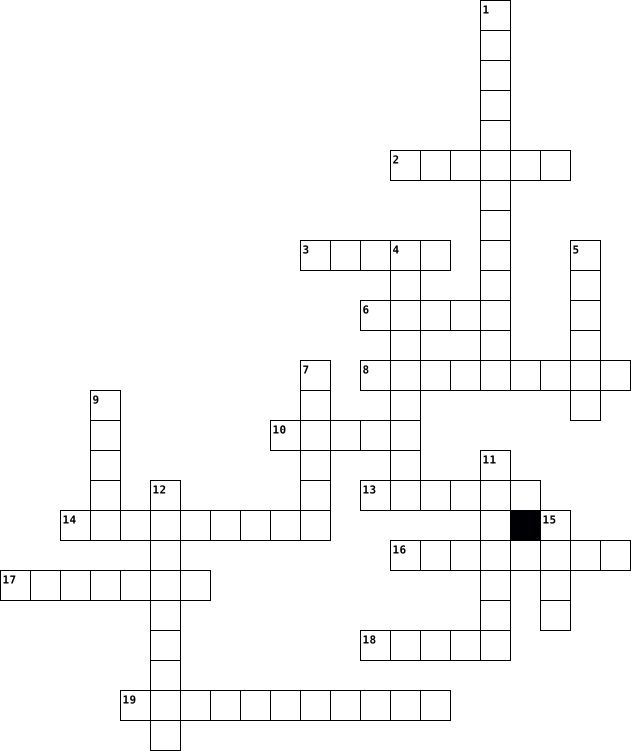
Across
- Powerful city in Greece
- Home of the pharaohs
- Island home to the Minoans
- home of the purple dye people
- Land of the rising sun
- Ocean below India
- home to Alexander the Great
- Pharaohs' tombs
- the mountain of the Greek gods
- kingdom below Egypt
- means the land between 2 rivers
Down
- Sea used for trading
- temple to honor Athena
- Empire that attacked Greece
- All citizens were in the military
- civilization along the Yellow and Yangtze Rivers
- early Indian civilization
- the Holy Land
- River in Egypt
19 Clues: the Holy Land • River in Egypt • Pharaohs' tombs • Ocean below India • kingdom below Egypt • Sea used for trading • Home of the pharaohs • temple to honor Athena • Land of the rising sun • Powerful city in Greece • early Indian civilization • Island home to the Minoans • Empire that attacked Greece • home to Alexander the Great • home of the purple dye people • the mountain of the Greek gods • ...
Jannik "E" - extrem grev - 2015-06-15

Across
- Plaid Latin per "perquei"
- Pli ault cuolm sil mund.
- Plaid Latin per detga.
- Tiara egl ost dall'Africa.
- Flum en Mesopotamia.
- "Efeu" per romontsch.
- Tiara ell'america dil sid.
- Scienzia da Nikola Tesla.
- Um che ha inventau il pér d'electrisch.
- Muneida ell'europa.
Down
- In ideogram che vegn druvaus en SMS.
- "kirchlich" per romontsch.
- Nua sesanfla il Tempel da Artemis?
- Gronda sparta da temps.
- Pagina per mirar suenter caussas.
- "gleichgültig" per romontsch.
- Teila che vegn producida ord gummi.
- Tiara cun la capitala Talin.
- Lanthanoid cun "e" all'entschatta.
19 Clues: Muneida ell'europa. • Flum en Mesopotamia. • "Efeu" per romontsch. • Plaid Latin per detga. • Gronda sparta da temps. • Pli ault cuolm sil mund. • Plaid Latin per "perquei" • Scienzia da Nikola Tesla. • "kirchlich" per romontsch. • Tiara egl ost dall'Africa. • Tiara ell'america dil sid. • Tiara cun la capitala Talin. • "gleichgültig" per romontsch. • Pagina per mirar suenter caussas. • ...
Ancient Civilizations 2023-02-10

Across
- A special fabric discovered by Lei Zu, wife of Huang Di, who united the villages of Ancient China into one empire
- The first people of India built cities near the ________ river
- A river in Africa, where Egyptian civilization began
- A person without a permanent home
- A good Babylonian king who created the first written laws
- A word that means “between the rivers” in Greek and describes the area between the Tigris and Euphrates rivers
Down
- The period in Egyptian history when the first pyramids were built
- Statue of a half-man half-lion that guards the pyramids of Giza
- The world’s first fairy tale, told by the people of Mesopotamia, was the story of _________
- The writing system used by Sumerians to write on clay tablets
- A stone with text written in both Greek and Egyptian hieroglyphs, that French and English scholars used to understand hieroglyphs
- The first people of China built cities between the Yangtze River and the ______ River
- Name for an ancient Egyptian king
13 Clues: A person without a permanent home • Name for an ancient Egyptian king • A river in Africa, where Egyptian civilization began • A good Babylonian king who created the first written laws • The writing system used by Sumerians to write on clay tablets • The first people of India built cities near the ________ river • ...
Ancient and Classical Vocabulary 2025-10-13

Across
- a group of soldiers fighting in close formation to protect one another
- a religious offering of a drink or liquid poured out
- a writing system containing 24 phonetic letters developed in Classical Greece
- a logographic writing system of wedge-shaped characters that developed in Ancient Mesopotamia
- a large, rectangular, stepped structure of mud brick, constructed as a temple location in Ancient Mesopotamia
- a large stone structure constructed as a tomb for kings, queens, and other important people in Ancient Egypt
- a pictographic writing system with nearly 1,000 characters that developed in Ancient Egypt
Down
- a symbolic representation of a word that often looks more abstract than representative
- a religious object, often a body part or clothing from a holy person, believed to have supernatural powers
- a pictorial representation of a word that looks like the thing it represents
- a religion with many gods
- a religion with one god
- a hereditary line of rulers passed from one generation to the next
13 Clues: a religion with one god • a religion with many gods • a religious offering of a drink or liquid poured out • a hereditary line of rulers passed from one generation to the next • a group of soldiers fighting in close formation to protect one another • a pictorial representation of a word that looks like the thing it represents • ...
Mesopotamian Crossword Puzzle 2024-11-14

Across
- Water
- What is this Magazine about?
- unfair law
- Fast
Down
- King
- Slow
- story
7 Clues: King • Slow • Fast • Water • story • unfair law • What is this Magazine about?
origini della musica 2021-10-25

Across
- secondo strumento
- fu definita
- teatro doppio
- più voci
- strumento fatto con la pelle di animale
- è entrata nella vita quotidiana
Down
- il periodo della musica
- primo strumento
- una trai primi stati ad aver creato la musica
- era accompagnata avvolte la musica
- la musica divenne un espressione
- potevano essere all'aperto
12 Clues: più voci • fu definita • teatro doppio • primo strumento • secondo strumento • il periodo della musica • potevano essere all'aperto • è entrata nella vita quotidiana • la musica divenne un espressione • era accompagnata avvolte la musica • strumento fatto con la pelle di animale • una trai primi stati ad aver creato la musica
World History Vocab Review 2023-12-01

Across
- rule by a king or queen
- important trading route that connected Asia to Europe
- to train or tame a plant or animal for human use
- state of not having a job
- farmable land; the thing they didn't have in Greece that led to colonization
- belief in MORE THAN ONE god
- a person who is sent to a foreign country to do religious work
- people who wander from place to place in search of food, water, and shelter
- major sea where people traded goods; important to Greece and Rome due to their central location on it
- time of great happiness, success, and peace in a civilization
- willingness to accept feelings, habits, and beliefs that are different to your own (another thing Persia had)
- a way in which people are grouped according to their status in society
- rule by a religious leader (like Egypt)
Down
- tiered temple for the gods in ancient Mesopotamia
- a government where people rule and vote on decisions
- "Old Stone Age" where people were nomadic and traveled in search of food, water, and shelter
- a document, image, or other source of information that relates or discusses information originally presented elsewhere (ex: a textbook)
- to take control of an area and send people to live there; in ancient Greece, they established these to get resources they didn't have
- farmable land; ______ Crescent in Mesopotamia
- rule by a tyrant (like Solon or Draco in Athens)
- ________ Revolution that caused the Neolithic Age as people who to remain in one place to farm
- writing system in ancient Mesopotamia
- "New Stone Age" where people were sedentary and developed agriculture
- a government where people elect representatives to make decisions on their behalf
- an artifact, document, image, or other source of information that was created during the time under study
- staying or living in one place instead of moving around
- rule by the wealthy and nobles
- a government organized into levels and tasks (the thing Persia had)
- belief in ONE god
- the study of places and the relationships between people and their environments
- a continual increase in the prices of goods and services; this was an issue in ancient Rome
31 Clues: belief in ONE god • rule by a king or queen • state of not having a job • belief in MORE THAN ONE god • rule by the wealthy and nobles • writing system in ancient Mesopotamia • rule by a religious leader (like Egypt) • farmable land; ______ Crescent in Mesopotamia • rule by a tyrant (like Solon or Draco in Athens) • to train or tame a plant or animal for human use • ...
Vocab 1 2022-09-12

Across
- a pictorial symbol for a word or phrase. Pictographs were used as the earliest known form of writing, examples having been discovered in Egypt and Mesopotamia from before 3000 BC.
- the period of time before written records.
- denoting or relating to the wedge-shaped characters used in the ancient writing systems of Mesopotamia, Persia, and Ugarit, surviving mainly impressed on clay tablets.
- the early phase of the Stone Age, lasting about 2.5 million years, when primitive stone implements were used.
- a prehistoric monument on Salisbury Plain in Wiltshire, England
- a member of a people having no permanent abode, and who travel from place to place to find fresh pasture for their livestock.
- the arts and other manifestations of human intellectual achievement regarded collectively.
- the radical and important period of change in which humans began cultivating plants, breeding animals for food and forming permanent settlements.
- arrange (laws or rules) into a systematic code.
- (in ancient Mesopotamia) a rectangular stepped tower, sometimes surmounted by a temple. Ziggurats are first attested in the late 3rd millennium BC and probably inspired the biblical story of the Tower of Babel (Gen. 11:1–9).
Down
- by hunting and fishing, and harvesting wild food.
- tame (an animal) and keep it as a pet or for farm produce.
- the stage of human social and cultural development and organization that is considered most advanced.
- Crescent the Fertile Crescent is a crescent-shaped region in the Middle East, spanning modern-day Iraq, Syria, Lebanon, Israel, Palestine and Jordan, together with the northern region of Kuwait, southeastern region of Turkey and the western portion of Iran.
- the later part of the Stone Age, when ground or polished stone weapons and implements prevailed.
- The species to which all modern human beings belong a member of a nomadic people who live chiefly
- the study of human history and prehistory archaeology through the excavation of sites and the analysis of artifacts and other physical remains.
- a worker in a skilled trade, especially one that involves making things by hand.\
- a person who copies out documents, especially one employed to do this before printing was invented.
- an object made by a human being, typically an item of cultural or historical interest.
20 Clues: the period of time before written records. • arrange (laws or rules) into a systematic code. • by hunting and fishing, and harvesting wild food. • tame (an animal) and keep it as a pet or for farm produce. • a prehistoric monument on Salisbury Plain in Wiltshire, England • a worker in a skilled trade, especially one that involves making things by hand.\ • ...
Mesopotamia's Growth and Achievements 2022-09-27

Across
- a long narrative poem recounting the deeds of a legendary or historical figure
- a pyramidal temple built in ancient Mesopotamia
- a form of government in which authority over the people is retained through a ruling family
- a person who believes in or worships more than one god
- a self-governing region (called a state), consisting of a city and surrounding territory
- an extensive group of states or countries under a single supreme authority
Down
- a system of writing developed in Mesopotamia using wedge-shaped characters
- a person skilled at a specialized trade or craft
- a systematic collection of laws or regulations on a subject
9 Clues: a pyramidal temple built in ancient Mesopotamia • a person skilled at a specialized trade or craft • a person who believes in or worships more than one god • a systematic collection of laws or regulations on a subject • a system of writing developed in Mesopotamia using wedge-shaped characters • ...
ancient india 2024-05-08

Across
- peaks rise about _____
- as the lands ___
- styled ___
- subcontinent of _____ (two words)
Down
- then in _____
- around cities emerged
- found records of Harappan __
- which was greater than the lands of __
- monsoons have always been a important ____
- harappon emerged from ___
10 Clues: styled ___ • then in _____ • as the lands ___ • around cities emerged • peaks rise about _____ • harappon emerged from ___ • found records of Harappan __ • subcontinent of _____ (two words) • which was greater than the lands of __ • monsoons have always been a important ____
mesopotamia vocab 2024-10-14

Across
- a mixture of soil
- a way of controlling water
- between two rivers
- to much
- divides people by class
Down
- writing system
- eye for an eye
- religious temple
- fertile farm land
9 Clues: to much • writing system • eye for an eye • religious temple • a mixture of soil • fertile farm land • between two rivers • divides people by class • a way of controlling water
Sumeri 2021-12-16

Across
- Chiamato "Lugàl".
- Scambio di oggetti.
- Costruzione al centro della città.
- Persone senza diritti.
- Aspetto degli dèi.
- Poema più famoso (tre parole).
Down
- Regione in cui vivevano i Sumeri.
- Servivano per conservare l'acqua.
- Circondavano la città.
- Pannello di legno (tre parole).
- Sapevano scrivere e far calcoli.
11 Clues: Chiamato "Lugàl". • Aspetto degli dèi. • Scambio di oggetti. • Persone senza diritti. • Circondavano la città. • Poema più famoso (tre parole). • Pannello di legno (tre parole). • Sapevano scrivere e far calcoli. • Regione in cui vivevano i Sumeri. • Servivano per conservare l'acqua. • Costruzione al centro della città.
sejarah indonesia 2022-09-19

Across
- yang hidup dibumi sebelum manusia
- masa aksara abad ke 5 masehi
- mengenal tulisan sejak 3000 sm
- berlangsung 350 tahun
- belum mengenal tulisan
Down
- nama lain mesozoikum
- zaman belum ada kehidupan
- zaman purba baru
- mamalia, amfibi dan tumbuhan berbunga
- mengenal tulisan sejak 3000 sm
- media menulis jaman dahulu
- tahap neozoikum
12 Clues: tahap neozoikum • zaman purba baru • nama lain mesozoikum • berlangsung 350 tahun • belum mengenal tulisan • zaman belum ada kehidupan • media menulis jaman dahulu • masa aksara abad ke 5 masehi • mengenal tulisan sejak 3000 sm • mengenal tulisan sejak 3000 sm • yang hidup dibumi sebelum manusia • mamalia, amfibi dan tumbuhan berbunga
Mesopotamia 2022-02-21

Across
- The person at the top of society/hierarchy
- The oldest form of writing
- A subject invented with the base 60 number system
- An invention to help transport people or items
Down
- A structure at the center of each major city
- Both men and women wore this on their face
6 Clues: The oldest form of writing • The person at the top of society/hierarchy • Both men and women wore this on their face • A structure at the center of each major city • An invention to help transport people or items • A subject invented with the base 60 number system
Mesopotamia 2023-11-03

Across
- A river or stream flowing into a larger river or stream.
- Land area in southern Mesopotamia
- The use of connected ditches,trenches,canals,and dikes to move water to dry areas. Used in farming.
Down
- A huge mud temple found in the middle of most sumerian cities.
- An extra supply of something (in Mesopotamia-food,grain,and barley)
- One person has complete authority or right to rule.
6 Clues: Land area in southern Mesopotamia • One person has complete authority or right to rule. • A river or stream flowing into a larger river or stream. • A huge mud temple found in the middle of most sumerian cities. • An extra supply of something (in Mesopotamia-food,grain,and barley) • ...
Mesopotamia 2023-11-03

Across
- A river or stream flowing into a larger river or stream.
- Land area in southern Mesopotamia
- The use of connected ditches,trenches,canals,and dikes to move water to dry areas. Used in farming.
Down
- A huge mud temple found in the middle of most sumerian cities.
- An extra supply of something (in Mesopotamia-food,grain,and barley)
- One person has complete authority or right to rule.
6 Clues: Land area in southern Mesopotamia • One person has complete authority or right to rule. • A river or stream flowing into a larger river or stream. • A huge mud temple found in the middle of most sumerian cities. • An extra supply of something (in Mesopotamia-food,grain,and barley) • ...
Mesopotamia 2023-11-03

Across
- A river or stream flowing into a larger river or stream.
- Land area in southern Mesopotamia
- The use of connected ditches,trenches,canals,and dikes to move water to dry areas. Used in farming.
Down
- A huge mud temple found in the middle of most sumerian cities.
- An extra supply of something (in Mesopotamia-food,grain,and barley)
- One person has complete authority or right to rule.
6 Clues: Land area in southern Mesopotamia • One person has complete authority or right to rule. • A river or stream flowing into a larger river or stream. • A huge mud temple found in the middle of most sumerian cities. • An extra supply of something (in Mesopotamia-food,grain,and barley) • ...
Mesopotamia 2023-12-05

Across
- the second Babylonian dynasty
- study of the universe as a whole
- a civilization known for their military power ruled by Sargon
Down
- an organization of people living in an advanced society
- study of celestial bodies influence on the world
- the man who escaped the great flood in the bible
6 Clues: the second Babylonian dynasty • study of the universe as a whole • study of celestial bodies influence on the world • the man who escaped the great flood in the bible • an organization of people living in an advanced society • a civilization known for their military power ruled by Sargon
Mesopotamia 2024-11-08

Across
- -fast flowing river
- -round thing
- -place in the fertile crescent
Down
- -something that flouts on water
- -slow winding river
- -king
6 Clues: -king • -round thing • -fast flowing river • -slow winding river • -place in the fertile crescent • -something that flouts on water
Mesopotamia 2022-10-05

Across
- that ruled over the Babylonian empire
- code
Down
- of many gods
- for worshiping many gods
- system
- able to read and write
6 Clues: code • system • of many gods • able to read and write • for worshiping many gods • that ruled over the Babylonian empire
Mesopotamian Crossword Puzzle 2024-11-14

Across
- Water
- What is this Magazine about?
- unfair law
- Fast
Down
- King
- Slow
- story
7 Clues: King • Slow • Fast • Water • story • unfair law • What is this Magazine about?
origini della musica 2021-10-25

Across
- secondo strumento
- fu definita
- teatro doppio
- più voci
- strumento fatto con la pelle di animale
- è entrata nella vita quotidiana
Down
- il periodo della musica
- primo strumento
- una trai primi stati ad aver creato la musica
- era accompagnata avvolte la musica
- la musica divenne un espressione
- potevano essere all'aperto
12 Clues: più voci • fu definita • teatro doppio • primo strumento • secondo strumento • il periodo della musica • potevano essere all'aperto • è entrata nella vita quotidiana • la musica divenne un espressione • era accompagnata avvolte la musica • strumento fatto con la pelle di animale • una trai primi stati ad aver creato la musica