
mesopotamia Crossword Puzzles
Quiz 4: Four Empire Quiz 2023-12-14

Across
- when a teacher asks students to sit quietly but don't play video games
- when a student shows up to class without a pencil or chromebook
- a way to bring freshwater long distances so that many humans can live in one place
- most famous ruler of the Akkadian empire, figured out military tactics
- and engraving that usually tells a story or dramatic historical event
- when you suggest the opposite of what you mean so that the other person does what you really want
- the city where the government of an empire is located
- wealth that is given from one people group to another people group to show defference
- the most famous law code to come out of Mesopotamia
Down
- a city with walls to protect the people, and they were their own independent country
- that Mr. J would give us a quiz as a crossword puzzle
- cool looking wall sculptures that usually have human heads but animal bodies
- the process you should have completed before you mentioned a corssoword quiz to a guy like Mr. J
- basically any Christmas when Mr. J hooks you up with a crossword puzzle!
- when a military surrounds a city to try and force the people inside to surrender
- long ago they were the first to conquer Sumer, Sargon and his armies in their chariots they rolled by the EUphrates River
16 Clues: the most famous law code to come out of Mesopotamia • that Mr. J would give us a quiz as a crossword puzzle • the city where the government of an empire is located • when a student shows up to class without a pencil or chromebook • and engraving that usually tells a story or dramatic historical event • ...
Prehistory 2024-08-31

Across
- an extinct group of humans that emerged around 400,000 years ago and died off around 40,000 years ago in the current europe
- was invented in the 4th millennium BC in Lower Mesopotamia where the Sumerian people inserted rotating axles into solid discs of wood.
- human practice of seeking, pursuing, capturing, and killing wildlife or feral animals.
- ancient cultural stage of human development, characterized by the use of rudimentary chipped stone tools.
- the vast period of time before written records or human documentation
- the practice of growing crops or raising animals
- final stage of cultural evolution and technological development among prehistoric humans.
- invention that finished prehistory
Down
- animal early humans hunted
- trading systems involved Human settlements exchanging excess food or resources for things they needed
- communities without fixed habitation who regularly move to and from areas.
- period during which stone was widely used to make stone tools with an edge, a point, or a percussion surface
- place where the first homids appeared
- a period in human history that started between 1200 B.C. and 600 B.C., which followed the Stone Age and Bronze Age.
- a period of colder global temperatures and recurring glacial expansion capable of lasting hundreds of millions of years.
- is the middle principal period of the three-age system, between the Stone and Iron Ages, when people used bronze.
16 Clues: animal early humans hunted • invention that finished prehistory • place where the first homids appeared • the practice of growing crops or raising animals • the vast period of time before written records or human documentation • communities without fixed habitation who regularly move to and from areas. • ...
The Indus Valley People 2024-03-14

Across
- This modern day country is home to most of the Indus Valley civilization
- The mythical animal whose image was found on many of the seals discovered by archaeologists
- The name given to a small sculpture found with a beard and robe that was decorated with flower designs
- These mountains are the source of water for the Indus River
- One type of animal that was used as a method of travel over land
- A large gathering place in Mohenjo-Daro that may have been used for religious purposes
- Clean water and sewer systems helped the cities reduce the spreading of _________________
- So far, the writing of the Harappans has yet to be ________________
Down
- A term for lack of rain and water that led to a failure of growing crops
- A type of writing discovered in Mesopotamia made of lines and triangles
- One possible reason that each city was surrounded by thick walls
- One of the two major cities of the Indus Valley people
- Harappan civilization was found to be more populated than this other ancient civilization
- A term meaning "the same" that describes the size of the bricks that were used to build the houses
- This arid landform borders the Harappan region to the southeast
- The lack of these buildings was evidence that the Harappan people did not have a king or queen
16 Clues: One of the two major cities of the Indus Valley people • These mountains are the source of water for the Indus River • This arid landform borders the Harappan region to the southeast • One possible reason that each city was surrounded by thick walls • One type of animal that was used as a method of travel over land • ...
22 chapter voc 2024-04-30

Across
- a wall in Jerusalem where Jews, on certain occasions, assemble for prayer and lamentation
- the Muslims of the branch of Islam that adheres to the orthodox tradition and acknowledges the first four caliphs as rightful successors of Muhammad
- the birthplace of Muhammad and is the holiest city of Islam
- a shrine in Jerusalem at the site from which Muhammad ascended through the seven heavens to the throne of God
- a place of worship for Muslims
- relating to or denoting a system of government in which priests rule in the name of God or a god.
- the Arab prophet who, according to Islam, was the last messenger of Allah
- The Taliban is a Sunni Islamist nationalist and pro-Pashtun movement
- Judaism, monotheistic religion developed among the ancient Hebrews.
Down
- The Palestine Liberation Organization is recognized by the Arab League as "the sole and legitimate representative of the Palestinian people"
- between rivers" in Greek
- The Organization of the Petroleum Exporting Countries
- a movement for (originally) the re-establishment and (now) the development and protection of a Jewish nation in what is now Israel.
- illuminates the fundamental religious idea of Islam
- a member of a pastoral and agricultural people who inhabit a plateau region in adjoining parts of Turkey, Iran, Iraq, Syria, Armenia, and Azerbaijan
- a person who belongs to one of the two main branches of Islam
16 Clues: between rivers" in Greek • a place of worship for Muslims • illuminates the fundamental religious idea of Islam • The Organization of the Petroleum Exporting Countries • the birthplace of Muhammad and is the holiest city of Islam • a person who belongs to one of the two main branches of Islam • Judaism, monotheistic religion developed among the ancient Hebrews. • ...
Prehistory 2024-08-31

Across
- an extinct group of humans that emerged around 400,000 years ago and died off around 40,000 years ago in the current europe
- was invented in the 4th millennium BC in Lower Mesopotamia where the Sumerian people inserted rotating axles into solid discs of wood.
- human practice of seeking, pursuing, capturing, and killing wildlife or feral animals.
- ancient cultural stage of human development, characterized by the use of rudimentary chipped stone tools.
- the vast period of time before written records or human documentation
- the practice of growing crops or raising animals
- final stage of cultural evolution and technological development among prehistoric humans.
- invention that finished prehistory
Down
- animal early humans hunted
- trading systems involved Human settlements exchanging excess food or resources for things they needed
- communities without fixed habitation who regularly move to and from areas.
- period during which stone was widely used to make stone tools with an edge, a point, or a percussion surface
- place where the first homids appeared
- a period in human history that started between 1200 B.C. and 600 B.C., which followed the Stone Age and Bronze Age.
- a period of colder global temperatures and recurring glacial expansion capable of lasting hundreds of millions of years.
- is the middle principal period of the three-age system, between the Stone and Iron Ages, when people used bronze.
16 Clues: animal early humans hunted • invention that finished prehistory • place where the first homids appeared • the practice of growing crops or raising animals • the vast period of time before written records or human documentation • communities without fixed habitation who regularly move to and from areas. • ...
bangkis 2023-03-02

Across
- mengeluarkan uang dan melakukan simpan pinjam merupakan dwifungsi dari…
- motif orang memegang uang menurut Keynes yauti motif…
- peran Bank Indonesia dalam sistem pembayaran yang menyediakan pembayaran non tunai BI-RTGS dan SKNBI adalah…
- istilah ‘Bad money always drives out good money’ hanya berlaku di negara yang menerapkan standar uang bimetalisme. istilah tersebut dikenal dengan…
Down
- uang diperkirakan mulai dipergunakan sejak peradaban…
- syarat uang yang tidak terpenuhi oleh cryptocurrency sehingga tidak dapat digunakan sebagai alay pembayaran yang sah di indonesia adalah…
- uang logam disebut juga dengan uang…
- Sebagai seorang pengusaha Pak Amin membutuhkan mengirim uang kepada rekanan secepat yang ia bisa,selain cepat beliau menginginkan transaksinya berjalan aman dan lancar,karena transaksi yang beliau lakukan selalu berjumlah sangat besar dan terkadang terkendala dengan perbedaan Bank penerima dengan Bank yang Pak Amin tunjuk. Sistem pembayaran yang paling tepat dilakukan pak Amin adalah…
8 Clues: uang logam disebut juga dengan uang… • uang diperkirakan mulai dipergunakan sejak peradaban… • motif orang memegang uang menurut Keynes yauti motif… • mengeluarkan uang dan melakukan simpan pinjam merupakan dwifungsi dari… • peran Bank Indonesia dalam sistem pembayaran yang menyediakan pembayaran non tunai BI-RTGS dan SKNBI adalah… • ...
Vocab #2 2024-09-26

Across
- is an ancient city that is considered to be the birthplace of writing. Also started cities and forms of government.
- is when there is a belief or worship of more than 1 god.
- is when rulers are from the same family
- were what ancient Egyptians called their ruler
- was a pre-Islamic monotheistic religion found in ancient Persia. It was founded by Zoroaster in the 6th Century BC
- is after the Bronze Age. During it it completely changed the humans tools and weapons.
- is believed to be one of the earliest civilizations. Located in southern Egypt and northern Sudan.
- is a city which with its surrounding regions, forms an independent state
Down
- was an ancient writing system found in Ancient Egypt. It contained logos and symbolic characters.
- is when there is belief of only 1 god
- is when people move away or spread away form their homeland
- establish rules of worship. This also forbids murder, theft, etc.
- is a structure in which groups/people are ranked based on authority and status
- is a structure of government that has state officials make decisions rather than elected representatives.
- a bunch of countries ruled by one with supreme authority; emperor/empress
- is a type of government where a priest rules under the name of god.
- is the first 5 books of the Hebrew Bible
- is when there is more than enough or excess
18 Clues: is when there is belief of only 1 god • is when rulers are from the same family • is the first 5 books of the Hebrew Bible • is when there is more than enough or excess • were what ancient Egyptians called their ruler • is when there is a belief or worship of more than 1 god. • is when people move away or spread away form their homeland • ...
Learning Contract #2 Crossword 2022-10-09

Across
- A line of hereditary rulers of a country.
- The region and the ancient kingdom situated between Aswan and Khartoum in northeast Africa, on the Nile River.
- A monotheistic pre-Islamic religion founded by Zoroaster in sixth century B.C.
- The belief in or worship of more than one god.
- An extensive group of states or countries under a single supreme authority (emperor or empress).
- The doctrine or belief that there is only one God.
- (In Judaism) The law of God as revealed to Moses and recorded in the first fice books of the Hebrew scriptures (the Pentateuch).
- A ruler in ancient Egypt.
- A system where people or groups are ranked one above the other according to status or authority.
- An amount left over when requirements have been met; an excess of production.
Down
- An ancient region located between the Tigris and the Euphrates rivers, one of the places where early civilization developed.
- The ethical commands of God given according to biblical accounts to Moses.
- The formal writing system used in ancient Egypt.
- A prehistoric period that followed the Bronze Age, when weapons and tools came to be made of iron.
- The dispersion of Jewish people beyond Israel.
- A system of government where most of the important decisions are are made by state officials instead of elected representatives.
- A system of government in which priests rule in the name of God or a god.
- A city that, with its surrounding territory, forms an independent state.
18 Clues: A ruler in ancient Egypt. • A line of hereditary rulers of a country. • The belief in or worship of more than one god. • The dispersion of Jewish people beyond Israel. • The formal writing system used in ancient Egypt. • The doctrine or belief that there is only one God. • A city that, with its surrounding territory, forms an independent state. • ...
Wedding Trivia 2025-12-11

Across
- Starting in the Roman Empire brides wore this to be protected from evil spirits
- What milestone is known as the “Golden Anniversary”
- The queen popularized the white wedding dress in Western culture
- What hand the wedding ring is traditionally worn on
- The ancient civilization believed a vein ran from the fourth finger of the left hand to the heart, giving rise to the ring on that finger
- the knot Phrase comes from a Celtic tradition of physically binding the couple's hands together to signify their union
- The word honeymoon stems from medieval custom of newlyweds drinking this for one month “moon” after their wedding to bring good luck
- What do you call the list of “something old, something new …”
- Traditional gift for a first wedding anniversary
- US historical purchase on Dec 20th 1803 paving way for westward expansion
- Most popular flower used in American weddings
- Where the first recorded wedding ceremony occurred in 2350 BC
Down
- 1972 musical, Tevye's daughter has a beautiful wedding scene with the classic song "Sunrise, Sunset"
- Title of movie where man crashes a wedding and falls for a bridesmaid played by Rachel McAdams
- The U.S. city called the marriage capital of the world
- Number of dresses worn by Katherine Heigl's character in a wedding movie
- What the bride and groom swap to symbolize eternal love
- Musical comedy featuring ABBA songs and a wedding on a Greek island
18 Clues: Most popular flower used in American weddings • Traditional gift for a first wedding anniversary • What milestone is known as the “Golden Anniversary” • What hand the wedding ring is traditionally worn on • The U.S. city called the marriage capital of the world • What the bride and groom swap to symbolize eternal love • ...
SS crossword 2022-05-05

Across
- - title used by the rulers of Egypt
- Wall - A wall built along the northern border to help defend China
- - A person who moved from place to place without permanent home
- - beliefs, customs, practices, and behaviors of a particular nation or group of people.
- - A house, chamber, or vault for the dead
- - time dating for period before the birth of Christ (Before Christ)
- diffusion - the spread of cultural traits from one region to another (ex/ Happened after the babylonian captivity with the Jews.)
- - The dispersal of the Jews outside of Judah after the Babylonian Captivity
- - the escape of the Israelites from slavery in Egypt
- - a dust-like material that can form soil
- - Group of people who have the power to make and enforce laws for a country or area
- - An imaginary, mythical creature with a human head and the body of a lion that was often shown on Egyptian statues
- - people’s beliefs and practices about existence, nature, and worship of god or gods
- - A philosophy that emphasizes living in harmony with the Dao
- - Ancient Mesopotamian writing.
- - A period of 10 years
- - complex society that has cities, a well-organized government, and workers with specialized job skills.
- - Changing the growth of plants or behavior of animals in ways that are useful to humans
- - began as picture writing to symbols representing sounds and letters
- - laws given to Moses that told the Israelites how to behave towards God and one another.
- - Before Common Era (same as BC)
- - skilled worker who practices a handicraft
- - An Ancient Chinese philosophy stating that a strong leader and a strong legal system, not moral values, are needed to create social order.
- - the art and science of preserving human remains by treating them to hinder decomposition
- - One of the two major rivers of Mesopotamia that sits on top of the other river.
- - belief in one God
- - (two words) having more food than needed
- - A huge triangular tomb built by the Egyptians and other people
- - First Civilization we learned about in Social Studies
- - goods bought from other regions
- - farming
- - the divisions of society by rank or class living in similar economic conditions.
- - A scientist who learns about ancient people by studying the things they left behind.
- - First five books of the Hebrew Bible
- - the time before written records
Down
- - shallow, rocky areas of a river with fast moving water
- - A method of inserting needles into the skin to stop pain and cure disease
- - Sea that connects most of the Civilizations we learned about.
- - A writing surface similar to paper named after the ____ reed that grew along the Nile River in ancient Egypt
- - a period of 100 years
- - One of the major two rivers of Mesopotamia that sits on the bottom of the other river.
- - Tools and skills people use to meet their needs and wants.
- - (two words)people in distant lands who traded goods with each other
- - (two words) Information about a event that does not come directly from a person who experienced that event
- - A way of supplying water to an area of land
- - A process to preserve the body by wrapping in cloth
- - (two words) workers with specialized job skills
- - China’s main export along the silk road and made from silkworms
- - A government ruled by religious authorities
- - Important philosopher and teacher in Chinese history
- - (Two Words) Nomadic people who lived by hunting animals and gathering plants; no permanent home
- - A religion based on the teachings of Siddhartha Gutama, an Indian Spiritual leader.
- - items sent to other regions for trade
- - General study of knowledge (greek word for “love of wisdom”)
- - also known as the Hebrew Bible; describes events believed to have happened hundreds of years before the Bible was written: divided into three sections – the Torah, the Prophets, and the Writings.
- - (Two Words) A huge stone slab inscribed with hieroglyphics, Greek, and a later form of Egyptian writing that allowed historians to understand Egyptian writing.
- often used to make jewelry and art
- - A network of trade routes that stretched across Asia from China to the Mediterranean Sea
- - (three words) In Ancient China, the people decided the right to rule was given to a dynasty by Heaven, the highest force of nature
- - Stands for Common Era
- - (two words) Animal Bones or shells carved with written characters that were used to predict the future.
- - A belief system based on the ideas of the Chinese thinker Confucius
- - (two words) First emperor and leader who unified China
- - Information that comes directly from a person who experienced an event
- - First Mesopotamian civilization
- - gods or goddesses
- - Anno Domoni (In the Year of our Lord) time period after Jesus was born.
- - worshiping or believing in more than one god
- Revolution - (two words) shifted from hunting and gathering to farming
- - A scientist who studies human development and culture.
- - A broad flat area of high land
- - life after death
- - Ancient Egyptian concept of the soul
- - first developed as a religion more than 3.000 years ago in the Fertile Crescent; the world’s first religion based on one God
- - system that a community uses to produce goods and services
75 Clues: - farming • - life after death • - gods or goddesses • - belief in one God • - A period of 10 years • - a period of 100 years • - Stands for Common Era • - Ancient Mesopotamian writing. • - A broad flat area of high land • - First Mesopotamian civilization • - Before Common Era (same as BC) • - the time before written records • often used to make jewelry and art • ...
Geography of Asia and the Middle East 2016-04-05

Across
- large exporter of electronics (e.g., Nintendo, Sony) and cars (e.g., Toyota, Honda, Nissan); birthplace of sumo wrestling and judo; surrendered in WWII after being hit by two atomic bombs; its capital is the most highly-populated metropolitan area in the world
- first king of Israel; went crazy and tried to kill David
- its capital is the second most highly populated metropolitan area in the world; known for its fermented foods, such as kimchi; considered the best country in robotics, and home to the electronics company, Samsung; the most protestant country in Asia
- the event in which Moses led the Hebrews out of Egypt
- called the "graveyard of empires" because of the failure of military powers to retain permanent control; the largest producer of opium; place from which Osama Bin Laden orchestrated the 9/11 attacks
- popular Indian leader who used non-violence to get the British to withdraw from India
- second king of Israel; killed Goliath and wrote many Psalms
- third king of Israel; wise and rich rule who wrote many Proverbs; worshiped the foreign gods of his wives
- its Tigris and Euphrates Rivers fueled Mesopotamia, the center of the Akkadian, Sumerian, Assyrian, and Babylonian Empires; dictator Saddam Hussein was captured by U.S. forces in 2003
- a collection of teachings (religious and philosophical) developed in ancient India characterized by reincarnation, the caste system, and karma
- the belief that one's good or bad actions affects what happens to them later
- a military dictatorship cut off economically and diplomatically from the rest of the world; has reeducation camps and internment camps for political prisoners; citizens have very little freedom and are trained from a young age to idolize their leaders, the Kim family
- a religion that teaches detachment from the world in order to reach the perfect peace of nirvana; begun in India but is most popular today in East Asia
- another term used to refer to South Asia; so-called because of this region's separation from the rest of the Asian continent by the Himalayas
- the most populous Arab country; birthplace of the ancient cradle of civilization on the Nile River; famous for its ancient pyramids
- a strict social class system in which all people are born into one of four groups which dictate their occupation (job) and rules of behavior
- consists mostly of uninhabitable desert; home to Mecca, the birthplace of Muhammad, and Medina, his burial place; largest producer and exporter of oil; uses Sharia law as its criminal code
- cradle of civilization which grew up along the Tigris and Euphrates rivers; means "[land] between the rivers"
- ("enlightened one"); Hindu prince who around 500 B.C. rejected Hinduism and left his family and possessions in order to find enlightenment and peace
- one of the earliest written law codes, written by a Babylonian king
- a person who follows Islam
Down
- birthplace of the ancient cradle of civilization in the Indus River Valley; declared independence from India in 1947; the only Muslim-majority country to possess nuclear weapons
- largest country by population and third by land area; birthplace of Confucianism; governed by the Communist Party today; contains the longest fortification in the world
- military leaders who saved the Jews from their neighboring enemies before Israel had a king
- the most holy book of Islam
- the repeating cycle of birth, life, and death; after one dies, their soul returns in another body as a human, animal, or spirit
- (A.D. 570-632) Arab prophet who founded Islam and gained political and religious power in Arabia
- the largest hot desert in the world; makes up most of North Africa
- the fathers of Israel: Abraham, Isaac, and Jacob
- fourth largest country by population and most populous Muslim-majority country; an archipelago of more than 17,000 islands
- wedge-shaped writing invented by the Mesopotamians
- the most common religion in the Middle East and North Afirca; based on the teachings of Muhammad and stresses belief in one god (Allah); means "submission"
- a philosophy teaching how behave virtuously within one's family and in society
- large, desert peninsula in the Middle East; between the Red Sea, Persian Gulf, and Arabian Sea
- the most important resource in the Middle East
- acts of worship required of all Muslims: declaration of faith, prayer, alms, fasting, and pilgrimage
- second largest country by population; the birthplace of Hinduism, Buddhism, Jainism, and Sikhism; known for its curry powder
- the triangular-shaped mouth of a river where sediment builds up
- historically important rivers in Mesopotamia flowing southeastward from Turkey to the Persian Gulf
- 1,500 miles of mountains forming the northeastern border of the Indian subcontinent; includes Mount Everest, the highest point on Earth
- an area in the Pacific Ocean having a large number of earthquakes and volcanoes
- the longest river in the world; has its source near the equator and its delta in Egypt, emptying into the Mediterranean Sea
- the land of Cyrus the Great's vast Persian Empire; U.S. Embassy and personnel were taken hostage for 444 days in 1979; over 90% Shi'a Islam
43 Clues: a person who follows Islam • the most holy book of Islam • the most important resource in the Middle East • the fathers of Israel: Abraham, Isaac, and Jacob • wedge-shaped writing invented by the Mesopotamians • the event in which Moses led the Hebrews out of Egypt • first king of Israel; went crazy and tried to kill David • ...
CC Mediterranean history dates quiz 2017-10-10

Across
- The Greek games which drew people from across the Mediterranean and are early evidence for a competitive, culturally diverse culture.
- This period of decline in population and trade in the Aegean from 1100-800 BCE is known as the ____ age.
- First discovered by the Phoenicians, this invention made writing so much more efficient!
- Also known as the 'Neolithic revolution', it began around 12-10,000 BCE in the Fertile Crescent
- The land between the Tigris and the Euphrates
- The 'mother' city of the Phoenicians
- Linear A (undeciphered from Crete) and Linear B (Greek language from Mycenae) are both examples of what?
- The evidence suggests that they were first developed around 8-7000 BCE
Down
- This palace culture flourished around 2000-1500 BCE (possibly for longer) on Crete
- This mainland Greek culture flourished around 1600-1100 BCE were the first speakers of Greek, so far as we know.
- The period of ancient Greek history from 510-323 BCE.
- This period of history precedes the Iron Age (when humans discover how to create Iron) and lasts from around 3500 - 1200 BCE.
- This was the first in series of battles between the Greeks and the Persians, and took place in 490 BCE
- The period of ancient Greek history from 776 - 510 BCE.
14 Clues: The 'mother' city of the Phoenicians • The land between the Tigris and the Euphrates • The period of ancient Greek history from 510-323 BCE. • The period of ancient Greek history from 776 - 510 BCE. • The evidence suggests that they were first developed around 8-7000 BCE • This palace culture flourished around 2000-1500 BCE (possibly for longer) on Crete • ...
Ancient peoples I Bak zsombor 2024-01-04

Across
- Which ancient people were known for their scholars, inventors, philosophy, and the establishment of democracy?
- Who were the Etruscans, of unknown origin, living in modern Italy and credited with inventing canalization?
- Which ancient people were North African settlers who fought against the Romans?
- Where did the ancient Persians, who built the largest empire and fought against the Greeks, live?
- Where did the ancient Egyptians, famous for building pyramids, reside along the Nile River?
- Where did the ancient Jews, pioneers of monotheism?
- Which ancient people, known as warriors, submitted to the Romans and lived near the Danube in present-day Romania?
- Which ancient people were led by Alexander the Great and originated from Europe, specifically present-day Greece?
Down
- Where did the Indus Valley Civilization, known for using war elephants, exist in ancient times?
- Which ancient people established an empire spanning Europe, Africa, and Asia, speaking Latin?
- Who were the ancient Sumerians, credited with inventing writing, and where did they establish their first country along a major river?
- Which ancient people built the famous tall tower in Babylon, Mesopotamia?
- Which ancient culture in Asia created paper, gunpowder, and silk?
- Which ancient people were renowned as traders, shipbuilders, and inventors of the alphabet in Asia?
- Which ancient people are known for their militancy and numerous wars, residing in the present-day territory of Iraq?
15 Clues: Where did the ancient Jews, pioneers of monotheism? • Which ancient culture in Asia created paper, gunpowder, and silk? • Which ancient people built the famous tall tower in Babylon, Mesopotamia? • Which ancient people were North African settlers who fought against the Romans? • ...
PBL Crossword Puzzle 2017-10-04

Across
- Red Sea a long arm of the Indian Ocean between northeast Africa and Arabia; linked to the Mediterranean at the north end by the Suez Canal
- Irrigation any watering system that delivers a slow moving supply of water at a gradual rate directly to the soil.
- of Hurmoz a strategically important strait linking the Persian Gulf and the Gulf of Oman
- Distribution a system for the collection, transmission, treatment, storage and distribution of water from source to consumers
- Gas a fossil fuel in the gaseous state
- Gulf a shallow arm of the Arabian Sea between Iran and the Arabian peninsula
- the removal of salt (especially from sea water)
- a liquid fat or fuel.
- Map a representation of a country's territories, boundaries, and capital(s) on paper or other material
Down
- River a river in southwestern Asia; flows into the Persian Gulf; was important in the development of several great civilizations in ancient Mesopotamia
- a long, flowing natural stream of water
- a very dry area of land where few plants and animals can live.
- River an Asian river; a tributary of the Euphrates River
- containing many mountains
- Something that's landlocked is completely surrounded by land, rather than by bodies of water.
- Peninsula a peninsula between the Red Sea and the Persian Gulf; strategically important for its oil resources
- Map A depiction of the identifiable landmarks on DNA, such as genes, and measured in base pairs
- River A river in Palestine that empties into the Dead Sea
18 Clues: a liquid fat or fuel. • containing many mountains • Gas a fossil fuel in the gaseous state • a long, flowing natural stream of water • the removal of salt (especially from sea water) • River an Asian river; a tributary of the Euphrates River • River A river in Palestine that empties into the Dead Sea • a very dry area of land where few plants and animals can live. • ...
Roma 2022-10-26

Across
- conjunto de personas provenientes de un lugar en concreto
- Forma de gobierno en la que el cargo de jefe del Estado está en manos de un presidente temporal que se elige por votación
- actividad socioeconómica que consiste en el intercambio de algunos materiales que sean libres en el mercado de compra y venta de bienes
- Sujeto a la autoridad de un superior con obligación de obedecerlo
- actividad socioeconómica la cual consiste en el intercambio de animales por bienes económicos o producción industrial
- Soberano que gobierna sobre otros reyes o grandes príncipes , o en un extenso territorio
- construcción donde se asientan civiles, normalmente en familia
- fundador de roma
Down
- Material con el que se construyeron muchas construcciones muy útiles para ese momento
- es una ciencia social cuyo ámbito de interés lo constituyen los modos en que una sociedad se organiza a sí misma para satisfacer sus necesidades materiales e inmateriales de consumo
- Edificio o lugar destinado pública y exclusivamente a un culto
- uno de los mares de mesopotamia
- creencia en varios Dioses
- Forma de gobierno en la que la jefatura del Estado reside en una persona, un rey o una reina
- una cordillera que recorre hasta 8 países
- actividad socioeconómica que consiste en la cosecha de diversas siembras y luego su venta
- simbolizaron un pueblo que dominó y ocupó el territorio del Lacio hacia el siglo VI a.C.
- hermano del fundador de roma
18 Clues: fundador de roma • creencia en varios Dioses • hermano del fundador de roma • uno de los mares de mesopotamia • una cordillera que recorre hasta 8 países • conjunto de personas provenientes de un lugar en concreto • Edificio o lugar destinado pública y exclusivamente a un culto • construcción donde se asientan civiles, normalmente en familia • ...
Vocab 2 2023-10-03

Across
- a system of government in which priests rule in the name of God or a god.
- a stylized picture of an object representing a word, syllable, or sound, as found in ancient Egyptian and other writing systems.
- the belief in or worship of more than one God.
- an extensive group of states or countries under a single supreme authority, formerly especially an emperor or empress.
- a never ending battle between good and evil
- the ethical commandments of God given according to biblical accounts to Moses
- region along the Nile river
- the law of God as revealed to Moses and recorded in the first five books of the Hebrew scriptures
Down
- the belief in or worship of one God
- the dispersion or spread of a people from their original homeland.
- historical region of West Asia situated within the Tigris–Euphrates river system, in the northern part of the Fertile Crescent
- a line of hereditary/rulers in a country
- an amount of something left over when requirements have been met; an excess of production or supply over demand.
- a system or organization in which people or groups are ranked one above the other according to status or authority.
- a city that with its surrounding territory forms an independent state.
- final epoch of 3 historical metal ages
- a ruler in ancient Egypt.
- a system of government in which most of the important decisions are made by state officials rather than by elected representatives.
18 Clues: a ruler in ancient Egypt. • region along the Nile river • the belief in or worship of one God • final epoch of 3 historical metal ages • a line of hereditary/rulers in a country • a never ending battle between good and evil • the belief in or worship of more than one God. • the dispersion or spread of a people from their original homeland. • ...
Learning Contract 2# 2024-10-10

Across
- The belief in or worship of more than one god.
- An amount of something left over when requirements have been met; excess.
- A system of government where state officials, not elected representatives, make decisions.
- A large territory or group of territories under the control of a single ruler or government.
- An independent city that has its own government and rules its surrounding area.
- A system of government where priests rule in the name of God or a deity.
- The belief in the existence of only one god.
- One of the world's oldest monotheistic religions, founded in ancient Persia.
Down
- A system of organization in which people or groups are ranked one above the other.
- A system of writing using symbols or pictures, commonly used in ancient Egypt.
- The dispersion of people from their original homeland, especially the Jewish people.
- The title of the rulers of ancient Egypt, often seen as god-kings.
- The central reference of the religious Judaic tradition, containing the law and teachings of Moses.
- An ancient region located along the Nile, south of Egypt.
- A set of biblical laws relating to ethics and worship, given to Moses.
- A series of rulers from the same family or lineage.
- An ancient region between the Tigris and Euphrates rivers, considered the cradle of civilization.
- The period of history following the Bronze Age, characterized by the use of iron tools and weapons.
18 Clues: The belief in the existence of only one god. • The belief in or worship of more than one god. • A series of rulers from the same family or lineage. • An ancient region located along the Nile, south of Egypt. • The title of the rulers of ancient Egypt, often seen as god-kings. • A set of biblical laws relating to ethics and worship, given to Moses. • ...
Vocab #2 2021-10-13

Across
- A succession of people from the same family who rule over a country over a long period of time.
- A set of biblical principles relating to ethics and worship that play a fundamental role in Judaism and Christanity.
- An extensive group of states or countries under a single supreme authority, formerly especially an empire or empress.
- The monarch or ruler based in Ancient Egypt.
- A system of governments ran by a large group of people who are non-elected officials.
- The law of God as revealed to Moses and recorded in the first five books of the Hebrew scriptures.
- A monotheistic pre-Islamic religion of ancient Persia founded by Zoroastar in the 6th century BC.
- A historical region of Western Asia situated within the Tigris and Euphrates river system.
- The belief in or worship of more than one good.
Down
- A prehistoric period when weapons and tools come to be made of iron.
- A system in which people are ranked one above the other according to status or authority.
- The formal writing system used in Ancient Egypt.
- The dispersion of Jewish people beyond Isreal.
- An excess of production or supply over demand.
- A system of government in which priests rule in the name of god.
- A region in southern Egypt and the Sudan along the Nile river.
- The belief that there is only one god.
- An independent city that has surrounding land which has its own government.
18 Clues: The belief that there is only one god. • The monarch or ruler based in Ancient Egypt. • The dispersion of Jewish people beyond Isreal. • An excess of production or supply over demand. • The belief in or worship of more than one good. • The formal writing system used in Ancient Egypt. • A region in southern Egypt and the Sudan along the Nile river. • ...
History Vocab #2 2023-10-06

Across
- An extensive group of states or countries under a single supreme authority
- The belief in or worship of more than one god
- A prehistoric period that followed the Bronze Age, when weapons and tools came to be made of iron
- Emphasizes a never-ending battle between good and evil, an Iranian religion
- A system of government in which most of the important decisions are made by state officials rather than by elected representatives
- A city that with its surrounding territory forms an independent state
- The dispersion or spread of a people from their original homeland
- A system of government in which priests rule in the name of God or a god
- Formal writing system used in Ancient Egypt
Down
- An amount of something left over when requirements have been met; an excess of production or supply over demand
- The law of God as revealed to Moses and recorded in the first five books of the Hebrew scriptures
- A region of western Asia, known as the “cradle of civilization” Western writing first developed there
- A line of hereditary rulers of a country
- Ancient region in northeastern Africa, was later enslaved by Africans
- The ethical commandments of God given according to biblical accounts to Moses
- The belief that there is only one God
- A ruler in ancient Egypt
- A system or organization in which people or groups are ranked one above the other according to status or authority
18 Clues: A ruler in ancient Egypt • The belief that there is only one God • A line of hereditary rulers of a country • Formal writing system used in Ancient Egypt • The belief in or worship of more than one god • The dispersion or spread of a people from their original homeland • Ancient region in northeastern Africa, was later enslaved by Africans • ...
Learning contract 2 2025-10-07

Across
- Having more than what is needed, especially extra food — which allowed early civilizations to grow.
- An ancient region south of Egypt, along the Nile River (in modern Sudan), known for trade and gold.
- The king or ruler of ancient Egypt, believed to be a god on Earth.
- The picture-writing system used by ancient Egyptians.
- A system where people are ranked according to their status or power.
- Belief in only one god.
- The “land between two rivers” (Tigris and Euphrates); one of the first civilizations, located in modern-day Iraq.
- Belief in many gods.
- The scattering of a group of people from their homeland (often refers to the Jewish Diaspora).
- Age The time period when people began to use iron tools and weapons (after the Bronze Age).
- An independent city with its own government and surrounding land, like a small country (example: Sumer).
Down
- A set of religious and moral laws given to Moses in the Hebrew Bible.
- A series of rulers from the same family.
- A system of government with many officials and departments that help run the state.
- A large area of land made up of many territories or peoples, ruled by one person or government.
- A government ruled by religious leaders or based on religious laws.
- An ancient Persian religion that believed in one god and the struggle between good and evil.
- The first five books of the Hebrew Bible; the most sacred text in Judaism.
18 Clues: Belief in many gods. • Belief in only one god. • A series of rulers from the same family. • The picture-writing system used by ancient Egyptians. • The king or ruler of ancient Egypt, believed to be a god on Earth. • A government ruled by religious leaders or based on religious laws. • A system where people are ranked according to their status or power. • ...
Religion vocab 2022-10-17

Across
- specific fundamental set of beliefs and practices generally agreed upon by a number of persons.
- is the belief in many gods (Mesopotamia, Egypt, Greek Mythology, Roman Mythology, and Ancient Americas).
- The way of life propagated by a Chinese philosopher named K'ung Fu-tzu or Confucius
- a religious teaching by Buddha and his followers, which declares that by destroying greed and hatred
- a collection of traditional stories that express the beliefs or values of a group of people.
Down
- the Christian religion, based on the life and teachings of Jesus and on the christian holy book, the Bible.
- a religion based on the messages that Muhammad is believed to have received from God. In Arabic, the word Islam means “to submit to God.”
- The religion of the Israelites of the Bible and of the Jews of today, based on the teachings of the Torah.
- is the belief in one God (Judaism, Christianity and Islam)
- originated in India and can be viewed as both monotheistic and polytheistic.
- a folktale that tries to explain the way the world is or how things came to be
11 Clues: is the belief in one God (Judaism, Christianity and Islam) • originated in India and can be viewed as both monotheistic and polytheistic. • a folktale that tries to explain the way the world is or how things came to be • The way of life propagated by a Chinese philosopher named K'ung Fu-tzu or Confucius • ...
Ancient Egypt 2021-08-29

Across
- ruler of ancient Egypt
- Egyptian paper made from a reed plant that grew wild along the Nile
- a waterfall or rapids in the river
- Kingdom Period in ancient Egyptian history characterized by strong pharaohs who conquered an empire that stretched from Nubia in the south, to the Euphrates River in Mesopotamia.
- a line of rulers from one family
- a fan-shaped area of silt near where a river flows into the sea.
- great stone tomb built for an Egyptian pharaoh
- a bucket attached to a long pole used to transfer river water to storage basins
- a period of order and stability that lasted until about 1750 BC; rise of the MIDDLE class and trade.
- government run by religious leaders
Down
- He signed a peace treaty with the Hittites of Anatolia after a military standoff. He built on a grand scale throughout Egypt.
- female pharaoh who worked to increase trade with places outside of Egypt
- Egyptian pharaoh who died while still a young king. The discovery of his tomb in 1922 has taught archaeologists much about Egyptian culture.
- When the great pyramids were built. Memphis was the capital. Lasted from about 2700 BC to 2200 BC
- father of King Tut; tried to change the religion to monotheism (one god)
- a writing system made up of a combination of pictures and sound symbols
16 Clues: ruler of ancient Egypt • a line of rulers from one family • a waterfall or rapids in the river • government run by religious leaders • great stone tomb built for an Egyptian pharaoh • a fan-shaped area of silt near where a river flows into the sea. • Egyptian paper made from a reed plant that grew wild along the Nile • ...
World History Crossword Puzzle 2014-03-14

Across
- a king of ancient Egypt considered a god as well as a political and military leader
- the process in which a new idea or a product spreads from one culture to another
- a broad marshy triangular area of land formed by deposits of silt at the mouth of the river
- the belief in more than one god
- a plain in the Fertile Crescent that faces the Mediterranean Sea
- the type of government in which rule is based on religious authority
- a massive structure with a triangular base and four triangular sides, like those that were built in Egypt as burial places fir Old Kingdom pharaohs
Down
- first ruler of the Babylonian empire who was known for his strict code of laws
- a process of embalming and drying corpses to prevent them from decaying
- the king of Upper Egypt who united the both kingdoms of Upper and Lower Egypt
- an ancient represent ideas and sounds
- an arc of rich farmland in Southwest Asia, between the Persian Gulf and the Mediterranean Sea
- a city and its surrounding lands functioning as an independent political unit
- a tall reed that grows in the Nile delta used by the ancient Egyptians to make a parerlike material for writing on
- a series of rulers from a single family
- a political unit in which a number of peoples or countries are controlled by a single ruler
16 Clues: the belief in more than one god • an ancient represent ideas and sounds • a series of rulers from a single family • a plain in the Fertile Crescent that faces the Mediterranean Sea • the type of government in which rule is based on religious authority • a process of embalming and drying corpses to prevent them from decaying • ...
22 chapter voc 2024-04-30

Across
- a wall in Jerusalem where Jews, on certain occasions, assemble for prayer and lamentation
- the Muslims of the branch of Islam that adheres to the orthodox tradition and acknowledges the first four caliphs as rightful successors of Muhammad
- the birthplace of Muhammad and is the holiest city of Islam
- a shrine in Jerusalem at the site from which Muhammad ascended through the seven heavens to the throne of God
- a place of worship for Muslims
- relating to or denoting a system of government in which priests rule in the name of God or a god.
- the Arab prophet who, according to Islam, was the last messenger of Allah
- The Taliban is a Sunni Islamist nationalist and pro-Pashtun movement
- Judaism, monotheistic religion developed among the ancient Hebrews.
Down
- The Palestine Liberation Organization is recognized by the Arab League as "the sole and legitimate representative of the Palestinian people"
- between rivers" in Greek
- The Organization of the Petroleum Exporting Countries
- a movement for (originally) the re-establishment and (now) the development and protection of a Jewish nation in what is now Israel.
- illuminates the fundamental religious idea of Islam
- a member of a pastoral and agricultural people who inhabit a plateau region in adjoining parts of Turkey, Iran, Iraq, Syria, Armenia, and Azerbaijan
- a person who belongs to one of the two main branches of Islam
16 Clues: between rivers" in Greek • a place of worship for Muslims • illuminates the fundamental religious idea of Islam • The Organization of the Petroleum Exporting Countries • the birthplace of Muhammad and is the holiest city of Islam • a person who belongs to one of the two main branches of Islam • Judaism, monotheistic religion developed among the ancient Hebrews. • ...
River Valley Vocabulary 2022-08-29

Across
- Spread of ideas or products from one culture to another
- In Chinese history, the divine approval thought to be the basis of royal authority.
- The emperor that took over Mesopotamia and created the Babylonian Empire
- A tall reed that grows in the Nile delta, used by the ancient Egyptians to make paper-like material for writing on.
- Cities that share the same culture they each developed their own government and rulers.
- Another name for the Indus valley civilization that arose along the Indus River.
- An ancient Egyptian writing system in which pictures were used to represent ideas and sounds.
- A succession of people from the same family who play a prominent role in business, politics, or another field.
Down
- A government in which the ruler is viewed as a divine figure or a government controlled by a religious leader.
- An arc of rich farmland in Southwest Asia, between the Persian Gulf and the Mediterranean Sea
- A wind that shifts in direction at certain times of each year.
- A king of Ancient Egypt, considered a god as well as a political and military leader.
- A massive structure with a rectangular base and four triangular sides, like those that were built in Egypt as burial places for Old Kingdom pharaohs.
- Belief in more than one god
14 Clues: Belief in more than one god • Spread of ideas or products from one culture to another • A wind that shifts in direction at certain times of each year. • The emperor that took over Mesopotamia and created the Babylonian Empire • Another name for the Indus valley civilization that arose along the Indus River. • ...
Formation of Israel 2025-04-08

Across
- One of the civilisations in Mesopotamia that consistently attacked Israel. Had a king called Sennacherib
- Holy city to three major Abrahamic religions
- Often portrayed as enemies of the Israelites, with famous figures such as Goliath and Samson
- Continued the policies of his father Omri against Moab, mortally wounded by an arrow
- First king of the divided northern kingdom of Israel, had two golden calves made and placed in Bethel and Dan for people to worship
- Built with cedar from Lebanon and covered in gold
Down
- Last judge and first prophet, trained under Eli, and whose spirit was summoned by a witch in Endor
- Destroyed bronze serpent (Nehushtan), ancient tunnel named after him built to bring water to Jerusalem during a siege still exists today
- Ancient capital of the northern Kingdom of Israel
- Skilled harpist called to soothe King Saul’s troubled spirit, Ruth’s great-grandson
- Known as Jedidiah at birth, built up cities such as Tadmor, Hamath and Baalath
- Became king at age seven, organised priests and Levites to collect funds for the restoration of Temple of God
- Performed unsanctioned sacrifices before battle, spared King Agag instead of destroying him as per God’s command
- Name means “father of peace”, described as the most handsome man in all of Israel, death by getting his hair caught in a tree
14 Clues: Holy city to three major Abrahamic religions • Ancient capital of the northern Kingdom of Israel • Built with cedar from Lebanon and covered in gold • Known as Jedidiah at birth, built up cities such as Tadmor, Hamath and Baalath • Skilled harpist called to soothe King Saul’s troubled spirit, Ruth’s great-grandson • ...
Formation of Israel 2025-04-08

Across
- - Often portrayed as enemies of the Israelites, with famous figures such as Goliath and Samson
- - Became king at age seven, organised priests and Levites to collect funds for the restoration of Temple of God
- - Continued the policies of his father Omri against Moab, mortally wounded by an arrow
- - Name means “father of peace”, described as the most handsome man in all of Israel, death by getting his hair caught in a tree
- - Holy city to three major Abrahamic religions
- - Skilled harpist called to soothe King Saul’s troubled spirit, Ruth’s great-grandson
- - Built with cedar from Lebanon and covered in gold
- - Performed unsanctioned sacrifices before battle, spared King Agag instead of destroying him as per God’s command
Down
- - one of the civilisations in Mesopotamia that consistently attacked Israel. Had a king called Sennacherib
- - First king of the divided northern kingdom of Israel, had two golden calves made and placed in Bethel and Dan for people to worship
- - Known as Jedidiah at birth, built up cities such as Tadmor, Hamath and Baalath
- - Destroyed bronze serpent (Nehushtan), ancient tunnel named after him built to bring water to Jerusalem during a siege still exists today
- - Last judge and first prophet, trained under Eli, and whose spirit was summoned by a witch in Endor
- - Ancient capital of the northern Kingdom of Israel
14 Clues: - Holy city to three major Abrahamic religions • - Ancient capital of the northern Kingdom of Israel • - Built with cedar from Lebanon and covered in gold • - Known as Jedidiah at birth, built up cities such as Tadmor, Hamath and Baalath • - Skilled harpist called to soothe King Saul’s troubled spirit, Ruth’s great-grandson • ...
Prehistory 2024-08-31

Across
- an extinct group of humans that emerged around 400,000 years ago and died off around 40,000 years ago in the current europe
- was invented in the 4th millennium BC in Lower Mesopotamia where the Sumerian people inserted rotating axles into solid discs of wood.
- human practice of seeking, pursuing, capturing, and killing wildlife or feral animals.
- ancient cultural stage of human development, characterized by the use of rudimentary chipped stone tools.
- the vast period of time before written records or human documentation
- the practice of growing crops or raising animals
- final stage of cultural evolution and technological development among prehistoric humans.
- invention that finished prehistory
Down
- animal early humans hunted
- trading systems involved Human settlements exchanging excess food or resources for things they needed
- communities without fixed habitation who regularly move to and from areas.
- period during which stone was widely used to make stone tools with an edge, a point, or a percussion surface
- place where the first homids appeared
- a period in human history that started between 1200 B.C. and 600 B.C., which followed the Stone Age and Bronze Age.
- a period of colder global temperatures and recurring glacial expansion capable of lasting hundreds of millions of years.
- is the middle principal period of the three-age system, between the Stone and Iron Ages, when people used bronze.
16 Clues: animal early humans hunted • invention that finished prehistory • place where the first homids appeared • the practice of growing crops or raising animals • the vast period of time before written records or human documentation • communities without fixed habitation who regularly move to and from areas. • ...
chapter 22 2024-04-30

Across
- an Abrahamic, monotheistic, and ethnic religion
- "Shi'a geopolitics is the combination of the geographical capacities of the Shiite areas with the ideals and teachings of Shi'ite political culture
- western Saudi Arabia, located in the Ṣirāt Mountains, inland from the Red Sea coast.
- The Organization of the Petroleum Exporting Countries
- the largest sect of Islam, making up roughly 85% of all Muslims
- submission, surrender, and peace.
- an organization founded in 1964 with the aim of creating a state for Palestinians
Down
- a covered building, but can be any place where Islamic prayers are performed, such as an outdoor courtyard.
- a movement of religious students (talib) from the Pashtun areas of eastern and southern Afghanistan who were educated in Pakistani traditional Islamic schools.
- "government of a state by immediate divine guidance or by officials who are regarded as divinely guided"
- Oldest existing Islamic monument.
- Muhammad translates to “praiseworthy”
- a historic region of West Asia within the Tigris-Euphrates river system
- a place of prayer and pilgrimage in the Old City of Jerusalem that is sacred to the Jewish people.
- an Iranic ethnic group native to the mountainous region of Kurdistan in Western Asia, which spans southeastern Turkey, northwestern Iran, northern Iraq, and northern Syria.
- Jewish nationalist movement that has had as its goal the creation and support of a Jewish national state in Palestine, the ancient homeland of the Jews
16 Clues: Oldest existing Islamic monument. • submission, surrender, and peace. • Muhammad translates to “praiseworthy” • an Abrahamic, monotheistic, and ethnic religion • The Organization of the Petroleum Exporting Countries • the largest sect of Islam, making up roughly 85% of all Muslims • a historic region of West Asia within the Tigris-Euphrates river system • ...
SS crossword 2022-05-05

Across
- - (two words) shifted from hunting and gathering to farming
- - A scientist who learns about ancient people by studying the things they left behind.
- - Sea that connects most of the Civilizations we learned about.
- - (two words)people in distant lands who traded goods with each other
- - A philosophy that emphasizes living in harmony with the Dao
- - laws given to Moses that told the Israelites how to behave towards God and one another.
- - An imaginary, mythical creature with a human head and the body of a lion that was often shown on Egyptian statues
- - Ancient Mesopotamian writing.
- - complex society that has cities, a well-organized government, and workers with specialized job skills.
- - Before Common Era (same as BC)
- - A broad flat area of high land
- - Tools and skills people use to meet their needs and wants.
- - belief in one God
- - A religion based on the teachings of Siddhartha Gutama, an Indian Spiritual leader.
- - the time before written records
- - title used by the rulers of Egypt
- - One of the two major rivers of Mesopotamia that sits on top of the other river.
- - A period of 10 years
- - system that a community uses to produce goods and services
- - goods bought from other regions
- - (two words) First emperor and leader who unified China
- diffusion - the spread of cultural traits from one region to another (ex/ Happened after the babylonian captivity with the Jews.)
- - the escape of the Israelites from slavery in Egypt
- - China’s main export along the silk road and made from silkworms
- - A process to preserve the body by wrapping in cloth
- - First Mesopotamian civilization
- - beliefs, customs, practices, and behaviors of a particular nation or group of people.
- - A house, chamber, or vault for the dead
- - Important philosopher and teacher in Chinese history
- - the art and science of preserving human remains by treating them to hinder decomposition
- - A belief system based on the ideas of the Chinese thinker Confucius
- - began as picture writing to symbols representing sounds and letters
- - a period of 100 years
- - Stands for Common Era
- - Information that comes directly from a person who experienced an event
- - General study of knowledge (greek word for “love of wisdom”)
- - First Civilization we learned about in Social Studies
- - (Two Words) Nomadic people who lived by hunting animals and gathering plants; no permanent home
- - (two words) workers with specialized job skills
- - Ancient Egyptian concept of the soul
- - also known as the Hebrew Bible; describes events believed to have happened hundreds of years before the Bible was written: divided into three sections – the Torah, the Prophets, and the Writings.
Down
- - shallow, rocky areas of a river with fast moving water
- - (two words) Animal Bones or shells carved with written characters that were used to predict the future.
- - (Two Words) A huge stone slab inscribed with hieroglyphics, Greek, and a later form of Egyptian writing that allowed historians to understand Egyptian writing.
- - items sent to other regions for trade
- - first developed as a religion more than 3.000 years ago in the Fertile Crescent; the world’s first religion based on one God
- - life after death
- - A method of inserting needles into the skin to stop pain and cure disease
- - A scientist who studies human development and culture.
- - (two words) Information about a event that does not come directly from a person who experienced that event
- - (three words) In Ancient China, the people decided the right to rule was given to a dynasty by Heaven, the highest force of nature
- often used to make jewelry and art
- - gods or goddesses
- - One of the major two rivers of Mesopotamia that sits on the bottom of the other river.
- - A way of supplying water to an area of land
- - (two words) having more food than needed
- - Changing the growth of plants or behavior of animals in ways that are useful to humans
- - Group of people who have the power to make and enforce laws for a country or area
- - a dust-like material that can form soil
- - A government ruled by religious authorities
- - the divisions of society by rank or class living in similar economic conditions.
- - time dating for period before the birth of Christ (Before Christ)
- - Anno Domoni (In the Year of our Lord) time period after Jesus was born.
- - A person who moved from place to place without permanent home
- - An Ancient Chinese philosophy stating that a strong leader and a strong legal system, not moral values, are needed to create social order.
- - The dispersal of the Jews outside of Judah after the Babylonian Captivity
- - worshiping or believing in more than one god
- - farming
- - A network of trade routes that stretched across Asia from China to the Mediterranean Sea
- - First five books of the Hebrew Bible
- - A huge triangular tomb built by the Egyptians and other people
- - skilled worker who practices a handicraft
- - people’s beliefs and practices about existence, nature, and worship of god or gods
- Wall - A wall built along the northern border to help defend China
- - A writing surface similar to paper named after the ____ reed that grew along the Nile River in ancient Egypt
75 Clues: - farming • - life after death • - gods or goddesses • - belief in one God • - A period of 10 years • - a period of 100 years • - Stands for Common Era • - Ancient Mesopotamian writing. • - A broad flat area of high land • - Before Common Era (same as BC) • - the time before written records • - First Mesopotamian civilization • often used to make jewelry and art • ...
Mesopotamia/Egypt Crossword Puzzle 🤸 2024-11-24

Across
- created laws to keep Babylonia safe
- where a mummy's body is preserved
- the name of a Babylonian ruler who built the hanging gardens of Babylon
- A long poem about Gilgamesh and Enkidu's adventures
- an eye for an___
Down
- Empire ruled by Sargon the Great
- The name of someone who rules Egypt
- a dead person's body, most likely a pharaoh, preserved in a tomb
8 Clues: an eye for an___ • Empire ruled by Sargon the Great • where a mummy's body is preserved • created laws to keep Babylonia safe • The name of someone who rules Egypt • A long poem about Gilgamesh and Enkidu's adventures • a dead person's body, most likely a pharaoh, preserved in a tomb • the name of a Babylonian ruler who built the hanging gardens of Babylon
Urban Geography 2017-04-11

Across
- In community economic development, a trade area is the geographic area from which a community generates the majority of its customers.
- division of a city into different regions or zones for certain purposes or functions.
- city populations, is a commonly observed statistical relationship between the population sizes and population ranks of a nation's cities.
- refers to a system by which a society ranks categories of people in a hierarchy.
- is a geographical theory that seeks to explain the number, size and location of human settlements in an urban system.
- is the study of the form of human settlements and the process of their formation and transformation
- a region of the United States generally considered to stretch across the Southeast and Southwest
- a point or an area on the Earth's surface or elsewhere. Archaeological site, a place
Down
- a heavily populated city at the center of a large metropolitan area.
- an area or stretch of land having a particular characteristic, purpose, or use, or subject to particular restrictions.
- in, relating to characteristic of a city or town.
- is the commercial and business centre of a city
- a citadel or fortified part of an ancient Greek city, typically built on a hill.
- process by which small, kin-based, nonliterate agricultural villages were transformed into large, socially complex, urban societies
- a point or an area on the Earth's surface or elsewhere.
- a public open space used for assemblies and markets.
- “cradle of civilization”
- A large town
18 Clues: A large town • “cradle of civilization” • is the commercial and business centre of a city • in, relating to characteristic of a city or town. • a public open space used for assemblies and markets. • a point or an area on the Earth's surface or elsewhere. • a heavily populated city at the center of a large metropolitan area. • ...
PBL Crossword Puzzle 2017-10-04

Across
- River A river in Palestine that empties into the Dead Sea
- River a river in southwestern Asia; flows into the Persian Gulf; was important in the development of several great civilizations in ancient Mesopotamia
- Something that's landlocked is completely surrounded by land, rather than by bodies of water.
- containing many mountains
- Map a representation of a country's territories, boundaries, and capital(s) on paper or other material
- Map A depiction of the identifiable landmarks on DNA, such as genes, and measured in base pairs
- Gulf a shallow arm of the Arabian Sea between Iran and the Arabian peninsula
- a long, flowing natural stream of water
- Distribution a system for the collection, transmission, treatment, storage and distribution of water from source to consumers
Down
- River an Asian river; a tributary of the Euphrates River
- Peninsula a peninsula between the Red Sea and the Persian Gulf; strategically important for its oil resources
- the removal of salt (especially from sea water)
- a very dry area of land where few plants and animals can live.
- a liquid fat or fuel.
- Gas a fossil fuel in the gaseous state
- Red Sea a long arm of the Indian Ocean between northeast Africa and Arabia; linked to the Mediterranean at the north end by the Suez Canal
- of Hurmoz a strategically important strait linking the Persian Gulf and the Gulf of Oman
- Irrigation any watering system that delivers a slow moving supply of water at a gradual rate directly to the soil.
18 Clues: a liquid fat or fuel. • containing many mountains • Gas a fossil fuel in the gaseous state • a long, flowing natural stream of water • the removal of salt (especially from sea water) • River an Asian river; a tributary of the Euphrates River • River A river in Palestine that empties into the Dead Sea • a very dry area of land where few plants and animals can live. • ...
Judges 2024-02-18

Across
- Had forty sons and thirty grandsons and judged Israel eight years (Judges 12:13-15)
- Israel cries out to God and He ____________ them
- Son of Puah and judged Israel for twenty-three years (Judges 10:1-2)
- Persuaded Samson to tell her the secret of his strength (Judges 16)
- The son of Anath who also saved Israel (Judges 3: 31)
- A prophetess, the wife of Lappidoth (Judges 4-5)
- The people of Israel ______ out to God to be saved
- Zebulunite who judged Israel for ten years (Judges 12:11-12)
- God allows the nation to be conquered and __________ by a neighboring nation
- The Gileadite who judged Israel for twenty-two years (Judges 10:3-5)
Down
- Had thirty sons and thirty daughters and judged Israel for seven years (Judges 12:8-10)
- God shows grace and sends a ________ to deliver His people
- Son of Jerubbaal, made king after killing his brothers (Judges 9)
- Twelfth and last judge raised up by God to begin to deliver Israel from the Philistines (Judges 13-16)
- Destroyed the altar of Baal and defeated the Midianites (Judges 6-8)
- The Gileadite described as a mighty warrior; defeated the Ammonites; made a foolish vow to God (Judges 11-12:7)
- Judge raised up by the Lord and defeated the king of Mesopotamia (Judges 3:7-11)
- Judge raised up by the Lord to deliver Israel from the king of Moab (Judges 3:12-30)
18 Clues: Israel cries out to God and He ____________ them • A prophetess, the wife of Lappidoth (Judges 4-5) • The people of Israel ______ out to God to be saved • The son of Anath who also saved Israel (Judges 3: 31) • God shows grace and sends a ________ to deliver His people • Zebulunite who judged Israel for ten years (Judges 12:11-12) • ...
Vocab #2 2024-09-26

Across
- is an ancient city that is considered to be the birthplace of writing. Also started cities and forms of government.
- is when there is a belief or worship of more than 1 god.
- is when rulers are from the same family
- were what ancient Egyptians called their ruler
- was a pre-Islamic monotheistic religion found in ancient Persia. It was founded by Zoroaster in the 6th Century BC
- is after the Bronze Age. During it it completely changed the humans tools and weapons.
- is believed to be one of the earliest civilizations. Located in southern Egypt and northern Sudan.
- is a city which with its surrounding regions, forms an independent state
Down
- was an ancient writing system found in Ancient Egypt. It contained logos and symbolic characters.
- is when there is belief of only 1 god
- is when people move away or spread away form their homeland
- establish rules of worship. This also forbids murder, theft, etc.
- is a structure in which groups/people are ranked based on authority and status
- is a structure of government that has state officials make decisions rather than elected representatives.
- a bunch of countries ruled by one with supreme authority; emperor/empress
- is a type of government where a priest rules under the name of god.
- is the first 5 books of the Hebrew Bible
- is when there is more than enough or excess
18 Clues: is when there is belief of only 1 god • is when rulers are from the same family • is the first 5 books of the Hebrew Bible • is when there is more than enough or excess • were what ancient Egyptians called their ruler • is when there is a belief or worship of more than 1 god. • is when people move away or spread away form their homeland • ...
Vocab #2 2024-09-30

Across
- The ten rules given to Moses by God that dictates how humans should live with one another
- A nation that rules many territories and is ruled by a single authority figure
- A succesion of rulers of the same line of descent
- One of the worlds oldest monotheistic religions, having originated in ancient Persia
- A body of non-elected Government Officials
- A large group of people who share a cultural and religional origin but are living away from their traditional homeland
- Government by divine guidance or by officials who are regarded as divinely guide
- The haeds of state and religious leaders of their people
Down
- The belief and worship of multiple gods
- A religious belief that maintains that there is only one god
- A characterused in a system of pictoral writing, particulalry that form used on ancient monuments
- An independent sovereign city which serves as the center of political, economic, and cultural life over its contiguous territory
- A period in human history that started between 1200 B.C. and 600 B.C. and was followed by the Bronze Age
- A region along the Nile river located in what today Northern Sudan and Southern Egypt
- The law or teachings of Judaism
- The amount of a resource that goes over the amount that is activly used
- to the land between the Tigris and Euphrates rivers
- a ranking of positions of authority, often associated with a chain of command and control
18 Clues: The law or teachings of Judaism • The belief and worship of multiple gods • A body of non-elected Government Officials • A succesion of rulers of the same line of descent • to the land between the Tigris and Euphrates rivers • The haeds of state and religious leaders of their people • A religious belief that maintains that there is only one god • ...
Vocab #2: River Valleys Crossword 2025-10-09

Across
- A system of Egyptian writing that involves writing in pictorial characters.
- A succession of leaders of the same descent. EX. father’s son is king’s son is king…
- A sacred scripture of Jewish writing that contains wisdom and law.
- A Persian religion that is about a supreme god called Ahura Mazda, who requires good. deeds to defeat the evil spirit Ahriman.
- The ruler of ancient Egypt who is considered to be a political leader and also a divine person.
- A set of 10 moral principles given to Moses by God on Mt. Sinai.
- The scattering of Jews outside of ancient Palestine.
- A body made up of government officials.
- The belief that there is only one god.
Down
- government of a state where officials say that they have divine guidance
- Belief of more than one god.
- A self-governing state that includes a city and its surrounding territory.
- A governing body it is most likely organized into classes or ranks.
- A political group that has a large amount of territory(ies) and people governed by a single ruler with complete control
- The period of time when humans smelted iron to create tools and weapons.
- An amount of something(crops) that is more than what's needed or required.
- An area in southwest Asia between the Tigris and Euphrates rivers, starting from the. mountains of east Asia Minor to the Persian gulf.
- A region and Ancient Kingdom along the Nile, south of Egypt.
18 Clues: Belief of more than one god. • The belief that there is only one god. • A body made up of government officials. • The scattering of Jews outside of ancient Palestine. • A region and Ancient Kingdom along the Nile, south of Egypt. • A set of 10 moral principles given to Moses by God on Mt. Sinai. • A sacred scripture of Jewish writing that contains wisdom and law. • ...
PBL Crossword Puzzle 2017-10-04

Across
- Gas a fossil fuel in the gaseous state
- Gulf a shallow arm of the Arabian Sea between Iran and the Arabian peninsula
- Irrigation any watering system that delivers a slow moving supply of water at a gradual rate directly to the soil.
- Something that's landlocked is completely surrounded by land, rather than by bodies of water.
- Map A depiction of the identifiable landmarks on DNA, such as genes, and measured in base pairs
- containing many mountains
- River an Asian river; a tributary of the Euphrates River
- River A river in Palestine that empties into the Dead Sea
- Red Sea a long arm of the Indian Ocean between northeast Africa and Arabia; linked to the Mediterranean at the north end by the Suez Canal
- a liquid fat or fuel.
- a very dry area of land where few plants and animals can live.
Down
- a long, flowing natural stream of water
- Peninsula a peninsula between the Red Sea and the Persian Gulf; strategically important for its oil resources
- Distribution a system for the collection, transmission, treatment, storage and distribution of water from source to consumers
- the removal of salt (especially from sea water)
- Map a representation of a country's territories, boundaries, and capital(s) on paper or other material
- River a river in southwestern Asia; flows into the Persian Gulf; was important in the development of several great civilizations in ancient Mesopotamia
- of Hurmoz a strategically important strait linking the Persian Gulf and the Gulf of Oman
18 Clues: a liquid fat or fuel. • containing many mountains • Gas a fossil fuel in the gaseous state • a long, flowing natural stream of water • the removal of salt (especially from sea water) • River an Asian river; a tributary of the Euphrates River • River A river in Palestine that empties into the Dead Sea • a very dry area of land where few plants and animals can live. • ...
Vocab 2 2023-10-04

Across
- A succession of rulers from the same family
- A set of moral and religious principles, primarily found in the Bible
- self-governing city and its surrounding territory, often functioning as an independent political entity in ancient times
- One of the world's oldest known monotheistic religions
- A system of writing used by ancient Egyptians
- An ancient region located between the Tigris and Euphrates rivers, considered one of the cradles of civilization, where early civilizations like Sumer and Babylon emerged
- A system of government or management characterized by hierarchical structures
- The central reference of the Jewish religious tradition, consisting of the first five books of the Hebrew Bible
Down
- A period in human history marked by the widespread use of iron tools and weapons
- A vast political entity often comprised of diverse regions and cultures, usually ruled by an emperor or an imperial government.
- The belief in and worship of a single, supreme deity or god
- A form of government where religious leaders or institutions hold political power, and the state is governed by religious laws or principles.
- A title used in ancient Egypt to refer to the rulers or kings
- The belief in and worship of multiple gods
- The dispersion or scattering of a particular group of people
- A system of organization in which individuals or elements are ranked in levels or classes based on status, authority, or importance
- An excess or extra amount of something
- An ancient region located in what is now Sudan
18 Clues: An excess or extra amount of something • The belief in and worship of multiple gods • A succession of rulers from the same family • A system of writing used by ancient Egyptians • An ancient region located in what is now Sudan • One of the world's oldest known monotheistic religions • The belief in and worship of a single, supreme deity or god • ...
Midterm Review: Vocabulary Part II 2024-01-07

Across
- Type of map that shows measurable data such as elevation, average temperature or population density.
- Type of map that shows the natural features of the Earth's surface such as mountains, rivers and deserts.
- The name geographers give to the land bridge that once connected Asia to North America during the last ice age.
- The Mesopotamian afterlife.
- The first Egyptian Pharaoh.
- Type of map that shows things designated by a government such as national boundaries and capital cities.
- Possibly the world's first emperor, a Mesopotamian king who took over Sumerian city-states by force.
- Persian emperor who united his vast empire with roads, laws, and a postal service.
- Means "great house" and was the title given to ancient Egyptian kings.
Down
- The soul according to the ancient Egyptians.
- A ghost or demon of the ancient Mesopotamian religion who would haunt the living.
- King of Babylon who created the world's first written law code.
- Lines that run vertically on a map and measure the distance east or west of the Prime Meridian.
- Symbolized by a white feather, the perfect order of the universe according to the ancient Egyptian religion.
- Phonetic writing system created by the ancient Sumerians.
- The Chaldean king who, according to legend, built the Hanging Gardens of Babylon for his wife.
- Built by the peoples of ancient Mesopotamia, a large building used as a temple and fortress.
- Lines that run horizontally on a map and measure the distance north or south of the Equator.
18 Clues: The Mesopotamian afterlife. • The first Egyptian Pharaoh. • The soul according to the ancient Egyptians. • Phonetic writing system created by the ancient Sumerians. • King of Babylon who created the world's first written law code. • Means "great house" and was the title given to ancient Egyptian kings. • ...
Vocab 2 2025-10-07

Across
- a system of administration characterized by a hierarchy of authority, division of labor, formal rules, and impersonal procedures designed to implement laws and policies efficiently
- the dispersion or spread of a people from their original homeland.
- enigmatic or incomprehensible symbols or writing.
- Age: a prehistoric period that followed the Bronze Age, when weapons and tools came to be made of iron.
- a system of government in which priests rule in the name of God or a god.
- :A large, multi-ethnic political territory ruled by a single powerful state or ruler.
- the belief in or worship of only one god
- the belief in or worship of more than one god.
- the historical region of Nubia in Northeast Africa
- a succession of rulers from the same family
Down
- an amount that remains when use or need is satisfied
- a system or organization in which people or groups are ranked one above the other according to status or authority.
- a ruler in ancient Egypt.
- The compilation of the first five books of the Hebrew Bible
- an ancient region, primarily in modern-day Iraq, known as the "cradle of civilization" for its significant developments in agriculture
- a city that with its surrounding territory forms an independent state.
- an ancient Persian monotheistic religion founded by the prophet Zarathushtra (Zoroaster) between 1200 and 600 BCE
- Commandments: a set of fundamental religious and ethical laws given by God to the ancient Israelites through Moses at Mount Sinai
18 Clues: a ruler in ancient Egypt. • the belief in or worship of only one god • a succession of rulers from the same family • the belief in or worship of more than one god. • enigmatic or incomprehensible symbols or writing. • the historical region of Nubia in Northeast Africa • an amount that remains when use or need is satisfied • ...
Vocab Set #2 2025-10-08

Across
- the dispersion or spread of a people from their original homeland.
- the historical region of Nubia in Northeast Africa
- an amount that remains when use or need is satisfied
- an ancient region, primarily in modern-day Iraq, known as the "cradle of civilization" for its significant developments in agriculture
- Age a prehistoric period that followed the Bronze Age, when weapons and tools came to be made of iron.
- the belief in or worship of only one god
- a city that with its surrounding territory forms an independent state.
- a system of government in which priests rule in the name of God or a god.
Down
- enigmatic or incomprehensible symbols or writing.
- a ruler in ancient Egypt.
- the belief in or worship of more than one god.
- a set of fundamental religious and ethical laws given by God to the ancient Israelites through Moses at Mount Sinai
- a system or organization in which people or groups are ranked one above the other according to status or authority.
- The compilation of the first five books of the Hebrew Bible
- an ancient Persian monotheistic religion founded by the prophet Zarathushtra (Zoroaster) between 1200 and 600 BCE
- A large, multi-ethnic political territory ruled by a single powerful state or ruler.
- a system of administration characterized by a hierarchy of authority, division of labor, formal rules, and impersonal procedures designed to implement laws and policies efficiently
- a succession of rulers from the same family
18 Clues: a ruler in ancient Egypt. • the belief in or worship of only one god • a succession of rulers from the same family • the belief in or worship of more than one god. • enigmatic or incomprehensible symbols or writing. • the historical region of Nubia in Northeast Africa • an amount that remains when use or need is satisfied • ...
Reference Call Number Crossword 2013-04-23

Across
- Musical British bugs ML102.p66 G84 1998 p.432
- World/earth in Mexico HF1002 .H3444 2005 p.305
- Dinosaur with spiky armor Q121 .M3 2007 vol.5,p.562
- Columbus' origin D228 .G73 2005 p.196
- Oldest of these were located in Mesopotamia and Egypt CB158 .E53 1996 p.559
- Painted the ceiling of the Sistine Chapel N31 .B6 vol.2,p.109
- Instrument that reproduces sound recorded on the grooves of a rotating record: AE5 .E333 2006 vol. 21, p958
- College founded in 1973 L901 .P448 p.240
- City in West Central Ohio AE5 .E333 2006 vol. 22, p. 130
- Greek god of hunting and healing BL473 .J67 2004 p.25
- Last shuttle to be part of the 30 year U.S. Shuttle program AY64 .I55 Plate 10
- Home of an Inuit/Eskimo GN11 .E63 2006 p.839
Down
- August's birthstone BJ1853 .T83 1995 p.254
- California quail lives in this desert QH104.5.W4 m33 1985 plate 548
- Curly-haired film star of the 1930's E169.12 .A50 2011 p.530
- Part lion and part man sculpture DT58 .O94 2001 p.307
- Newest 007 CT100 .C8 p.121 2007
- Tom and Huck thank him HQ781 .B45 1997 p.462
- Master illusionist and escape artist BF1461 .G85 1992 p.168
- Lyndon B's leading lady E176.7 .S36 2005 p.280
- Flower gatherings, maypoles and the crowning of a queen are used to celebrate the first of this month GT3930 .F65 1991 p.262
- This state's statehood was officially approved by congress in 1953 F489 .E5 1994 p.139
22 Clues: Newest 007 CT100 .C8 p.121 2007 • Columbus' origin D228 .G73 2005 p.196 • College founded in 1973 L901 .P448 p.240 • August's birthstone BJ1853 .T83 1995 p.254 • Tom and Huck thank him HQ781 .B45 1997 p.462 • Home of an Inuit/Eskimo GN11 .E63 2006 p.839 • Musical British bugs ML102.p66 G84 1998 p.432 • World/earth in Mexico HF1002 .H3444 2005 p.305 • ...
SEJARAH MINAT 2020-04-16

Across
- Tiga serangkai Antonius, Octavianus dan Lepidus dinamakan
- Bangsa Khaldea menempati wilayang Mesopotamia setelah berhasil mengalahkan bangsa
- Keseimbangan alam diungkapkan oleh Lao Tse dengan sebutan ajaran
- Agama kristen dan Islam masuk ke dataran cina pada masa dinasti
- Dewa Pencipta alam yang disembah dalam agama Hindu yaitu Dewa
- dasar pemerintahan kekaisaran Romawi adalah kaisar
- barang yang tidak diperdagangkan oleh bangsa Yunani adalah
- yang percaya bahwa negara yang baik harus dikuasai oleh imperium adalah
- Peradaban kuno yang pertama kali ditemukan di Eropa adalah
- Raja dari kerajaan mesir tua yang terkenal adalah
- Bapak pengetahuan yunani yang mengambil pelajaran astronomi dari mesir dan persia adalah
- Dewa utama bangsa yunani kuno adalah
- Kekuasaan pemerintahan di lembah Sungai Indus dipimpin oleh
Down
- kelahiran, penerangan agung, dan kematian Sidharta Gautama terjadi pada tanggal yang sama, yakni bulan purnama di bulan Mei. Ketiga peristiwa tersebut dirayakan umat Buddha sebagai hari raya
- Kaisar romawi yang tidak senang dengan perkembangan agama kristen adalah
- Nama dewa perang bangsa yunani kuno adalah
- Bangsa asli yang mendiami yunani adalah
- Dalam agama Hindu terdapat penggolongan yang disebut kasta. Para bangsawan dan prajurit termasuk dalam kasta
- Bangsa persia pertama kali dapat menaklukan dan memasuki wilayah yunani pada abad ke-5 SM yang dipimpin oleh
- penetapan kaisar sebagai penguasa tunggal kerajaan romawi dimulai sejak masa pemerintahan julius
- Dalam mencapai nirwana umat Buddha wajib berusaha sendiri-sendiri adalah ajaran Buddha aliran
- Perang yang diceritakan dalam karya sastra Homerus adalah
- Orang Cina Kuno sudah mengenal goresan pena berupa tanda atau gambar yang disebut
- Raja persia yang melakukan ekspedisi kedua untuk menyerang yunani adalah
- Sudut lingkaran 360 derajat ditemukan oleh bangsa
25 Clues: Dewa utama bangsa yunani kuno adalah • Bangsa asli yang mendiami yunani adalah • Nama dewa perang bangsa yunani kuno adalah • Raja dari kerajaan mesir tua yang terkenal adalah • Sudut lingkaran 360 derajat ditemukan oleh bangsa • dasar pemerintahan kekaisaran Romawi adalah kaisar • Tiga serangkai Antonius, Octavianus dan Lepidus dinamakan • ...
Chapter 3 Vocabulary 2018-09-18

Across
- a pyramid shaped temple in Sumer
- from Syrian Desert;(612 B.C.) destroyed Nineveh and Assyrian Empire, Nebuchadnezzar rebuilt Babylon, they admired sumerian culture, BAbylon became center for astronomy, also created calendar and solved complex geometry problems
- served the king of Kish, rebelled against the Sumerian leader, took over city, and built city (Akkad) into military power
- a picture symbol
- a human-made waterway
- Code a set of 282 laws governing daily life in Babylon; the earliest known collection of written laws
- a city area
- a political unit consisting of a city and its surrounding countryside
- of labor an arrangement in which each worker specializes in a particular task or job
- King of Uruk; became a legendary figure in Sumerian literature
- land with different territories and peoples under a single rule
- a countryside area
Down
- built kingdom in Asia Minor; first people to master ironworking,skillfully used chariots,rule did not last long,
- the world’s first system of writing; developed in Sumer
- ruler of a kingdom or empire
- the most famous Chaldean king; rebuilt Babylon, his palace featured the Hanging Gardens
- a way of supplying water to an area of land
- long poems that tell the stories of heroes
- Crescent an area of rich farmland in Southwest Asia where the first civilizations began
- from Northern Mesopotamia; gained control of Babylon, was overrun by invaders,took 300 years to recover, Had strong army→ conquered parts of Egypt, Fertile Crescent, and Asia Minor/looted villages and burned crops/used iron weapons and chariots
20 Clues: a city area • a picture symbol • a countryside area • a human-made waterway • ruler of a kingdom or empire • a pyramid shaped temple in Sumer • long poems that tell the stories of heroes • a way of supplying water to an area of land • the world’s first system of writing; developed in Sumer • King of Uruk; became a legendary figure in Sumerian literature • ...
Indus Valley 2016-11-16

Across
- Most _____ were made from standard sized mud and baked bricks.
- people that lived near _____ ate fish, molluscs and turtles
- No other _______ in the world at the time took such care too keep its cities clean
- Cleanliness was important. All houses had indoor_________
- farmers raised 2 types of cattle, _____ and horned hump less cattle
- Mohenjo-Daro and _______ were the best planned cities in the world at the time.
- When people died they were buried in a wooden ______ surrounded by pottery
- IT appears that the people were highly _____ and took their civic duties seriously
- women's ________ was made from gold and precious stones
- Indus Valley people were active _______
- some scientists believe that the population reached _________
- those settled near ______ regions hunted wild life
Down
- carved stone _______ have been found with detailed figures of animals and gods
- Mohenjo-Daro and Harappa were the 2 _______ cities
- Although the people had a _______language few samples have been found
- Archeologists have found bowls made of ______ and silver.
- ________ believed that Urbanization of India began after 15BCE
- compared to the information on _____ and Egypt information is sparse when it comes to the Indus Valley
- They produced good ______ pottery
- Jewelry that was made from riches was not found at _______ sites
- They had many gods and ______
- The Indus Valley was probably _______ by a priest-king
- The Indus Valley was in ______ by 1900BCE
- The Indus Valley included a large area that is known as ______ and North-Central India
- they wore bright and colorful____
25 Clues: They had many gods and ______ • They produced good ______ pottery • they wore bright and colorful____ • Indus Valley people were active _______ • The Indus Valley was in ______ by 1900BCE • Mohenjo-Daro and Harappa were the 2 _______ cities • those settled near ______ regions hunted wild life • The Indus Valley was probably _______ by a priest-king • ...
HISTORY OF ART 2017-11-24

Across
- one of the distinctive artistic styles that developed in the Roman Empire.
- a region which located at a mountainous section between modern-day France and Spain.
- the Mesopotamian's invention of a form of communication.
- The type Etruscan's government
- the medieval period encompassed 8 major artistic movements like Byzantine, Islamic, Viking, Celtic, Ottonian, Romanesque and gothic art.
- Instead of prohibiting all religious imagery and art, they prohibited only the most art form.
- underground cemeteries where the Christians and Jews usually bury their dead.
- The playful and dynamic motif was found on pottery buried with the remains.
- of the distinctive artistic styles that developed in the Roman Empire.
- A pharaoh who upon his death becomes the god
- types of Greek columns are Doric, ionic and
Down
- Ancient city of Kanesh
- Horizontal bands
- the Greek art period : the Archaic period, the Classical period and the period.
- First people who records their system of law
- The early Christian culture is a transition between the Roman Empire and the period.
- Greek style in the fine art
- the Egyptians variety images as their written language 6 . underground cemeteries where the Christians and Jews usually bury their dead.
- Book written by hand in the middle ages
- A painting that was painted directly on the wall
- Stone Age figurines usually portray a pregnant woman known as
- known as 'The Cradle of Civilization,
- Material that Greek used in their public places
- Earliest painting in the cave
- Palace of Minos
25 Clues: Palace of Minos • Horizontal bands • Ancient city of Kanesh • Greek style in the fine art • Earliest painting in the cave • The type Etruscan's government • known as 'The Cradle of Civilization, • Book written by hand in the middle ages • types of Greek columns are Doric, ionic and • First people who records their system of law • A pharaoh who upon his death becomes the god • ...
Paleolithic vs. Neolithic & River Valleys Vocab 2023-09-04

Across
- A symbol or icon that is used to represent an item or action
- The customs and collective intellectual achievement of a certain group
- The study of ancient civilizations and humans from the past through artifacts
- Something made by a human from the past that is usually important
- A period in time when humans started using basic stone tools to do tasks
- A written language in the ancient Mesopotamia are in which they used symbols
- The time before history started to be recorded by being written or drawn
- The period of time in which people are the most advanced in technologies and cultures
- A period in time when humans used more refined tools and started living in villages and having new crafts
Down
- A person who wrote as their job. They wrote to keep records
- An area in England where there is a monument made of big rocks
- People who move around constantly that obtain food from animals and wild fruits and vegetables
- A species of primate that is intelligent and includes all humans
- A person that does not have a home and is constantly on the move
- When people stopped being hunter-gatherers and started farming for food
- To have an arranged set of rules in place
- A tower that is usually used for worship. It is a rectangular stepped tower
- To farm crops and tame animals to make a food source or for other uses
- A person who makes things with their hands, usually making something unique
- An area in the Middle East where many ancient civilizations started from
20 Clues: To have an arranged set of rules in place • A person who wrote as their job. They wrote to keep records • A symbol or icon that is used to represent an item or action • An area in England where there is a monument made of big rocks • A species of primate that is intelligent and includes all humans • A person that does not have a home and is constantly on the move • ...
6th Grade Crossword 2023-04-30

Across
- King of Babylon who made a code of laws that applied to all Babylonians
- the state or process of rotting; decay
- A sphere that represents Earth’s entire surface
- organisms that other animals kill for food
- No longer existing or living
- The height above sea level, on the Earth’s surface
- The name of the first Chinese dynasty
- a subject where you learn about animals and plants
- sea that touches Europe, Asia, and Africa; key to
- Halfway between the North Pole and South Pole, the imaginary line that circles Earth
- the variety of plant and animal life in the world or in a particular habitat
- Before the Common Era
- Greek city-state credited with creating democracy
- a biological community of interacting organisms and their physical environment
Down
- A great stone tomb built for an Egyptian pharaoh
- A system of government where people vote for leaders to represent them
- A place where living things are found
- In danger of extinction or no longer living
- belief in multiple gods
- the oldest written language, created in Mesopotamia
- an animal that hunts, kills and eats other animals for food
- lots of numbers you get during a study
- One half of the sphere that make up Earth
- Someone who wanders from place to place continuously
- A class of poor people in the Roman Empire
- The distance in degrees north or south of the equator
- A man-made object that tells us about the past
- A body that has been preserved so it will not decompose
28 Clues: Before the Common Era • belief in multiple gods • No longer existing or living • A place where living things are found • The name of the first Chinese dynasty • the state or process of rotting; decay • lots of numbers you get during a study • One half of the sphere that make up Earth • organisms that other animals kill for food • A class of poor people in the Roman Empire • ...
Islamic Caliphates Xword 2021-11-13

Across
- a follower of the Islamic faith
- A government or state in which God is the supreme ruler, and religious officials govern in God's name.
- The first caliph and first of the 5 "righteous" caliphs
- A distinctive feature of mosque architecture, a tower from which Muslims are called to worship.
- A dynasty of caliphs that ruled during the golden age of Islam
- The city in Arabia where Islam originated; the most important city to the religion of Islam
- A huge peninsula in the Middle East consisting of mostly desert
- Capital of Abbasid dynasty located in Mesopotamia
- the example that Muhammad set for Muslims about how to live
- a man born around 570 C.E. who taught the faith of Islam; founder of Islam.
Down
- the holy book of the religion of Islam
- The search to understand God's law, which relies heavily on teh Qur'an and Sunnah; Islamic law code
- Capital of Muslim Spain, a center of trade and culture during the golden age of Islam
- A black stone building in Mecca that is shaped like a cube and that is the most sacred Muslim pilgrim shrine
- The first dynasty of caliphs who greatly expanded Islamic territory
- a Muslim house of worship
- A city in Arabia where Muhammad went to gather followers after his exile from Mecca
- The religious and secular ruler of Islam, regarded as the successor of Muhammad
- Majority of Muslims; believe that caliphs should be elected
- Minority of Muslims; believe that caliphs should be blood relatives of Muhammad
20 Clues: a Muslim house of worship • a follower of the Islamic faith • the holy book of the religion of Islam • Capital of Abbasid dynasty located in Mesopotamia • The first caliph and first of the 5 "righteous" caliphs • Majority of Muslims; believe that caliphs should be elected • the example that Muhammad set for Muslims about how to live • ...
Crucigrama de Derecho. 2024-11-25

Across
- "Bases fundamentales que rigen un sistema jurídico y político."
- "Individuos con un sistema jurídico especial por no alcanzar la mayoría de edad.",
- "Personas que declaran bajo juramento sobre hechos relevantes en un juicio.",
- "Norma que sanciona conductas típicas y antijurídicas.",
- "Circunstancias específicas que permiten modificar principios legales.",
- "Conjunto de leyes antiguas de Mesopotamia conocido por 'ojo por ojo'.",
- "Relación entre derecho penal y avances científicos para esclarecer hechos.",
- "Grupo de ciudadanos que emite un veredicto en un juicio.",
- "Falsa percepción o desconocimiento de la realidad que afecta la responsabilidad penal.",
- "Conducta sancionada por la ley penal.",
- "Organismo encargado de investigar delitos y promover la acción penal."
- "Enfoque más humano y reintegrador del derecho penal.",
- "Derecho del Estado de imponer sanciones penales.",
- "Conjunto de normas e instituciones que rigen la organización jurídica.",
- "Voluntad consciente de cometer un acto ilícito.",
Down
- "Eximente penal que justifica el uso de la fuerza para protegerse.",
- "Corriente medieval que armonizó fe y razón en el derecho.",
- "Medida excepcional que restringe derechos para garantizar el orden público.",
- "Aplicación de las leyes penales a delitos cometidos en un territorio específico.",
- "Procedimiento de entrega de una persona acusada o condenada a otro Estado.",
- "Principio que prohíbe aplicar una ley penal a hechos previos.",
- "Culpa por actuar sin la diligencia debida.",
- "Acusación formal presentada para iniciar un proceso penal.",
- "Facultad de perseguir y sancionar delitos.",
- "Parte procesal que representa al acusado en un juicio."
- "Delito por no realizar una acción obligatoria.",
- "Autoridad que administra justicia en un tribunal."
27 Clues: "Conducta sancionada por la ley penal.", • "Culpa por actuar sin la diligencia debida.", • "Facultad de perseguir y sancionar delitos.", • "Delito por no realizar una acción obligatoria.", • "Voluntad consciente de cometer un acto ilícito.", • "Autoridad que administra justicia en un tribunal." • "Derecho del Estado de imponer sanciones penales.", • ...
Greece 2022-01-11

Across
- an ancient city on north african coast next to modern Turin
- they lived in ancient Phoenicia and it's colonies
- an anciente galley that has three banks of oars
- a country or area under the full or partial political control of other country and occupied by people of that country
- capital or chief city of a country or legion
- a sea that is between Europe and Western Asia
- it's surrounding territory forms and independent state
- a person that is descended by a particular ancestor
- the act of taking control of an area or a country that is not your own, especially using force, and sending people from your own country to live there
- it's located between the Tigris and Euphrates
- a galley with two banks of oars
- of a country or organization
Down
- person who lacks of freedom because he is under the domination of another
- very old or old-fashioned
- a galley that has one tier of oars
- a member of an aristocracy especially
- Graecia it means Great Greece
- someone that goes to a country where he wasn't born
- large italian island in the Mediterranean Sea
- free from social conventions or traditioanl ideas
- a station of a trader in a sparsely settled region where trade in products of local origin is carried on
- a ship builded or armed for combat purposes
- Greek independent city
- greek coin
- it's used for steering a boat
- someone that leaves his/her country to live in another one small group of people that have
26 Clues: greek coin • Greek independent city • very old or old-fashioned • of a country or organization • it's used for steering a boat • Graecia it means Great Greece • a galley with two banks of oars • a galley that has one tier of oars • a member of an aristocracy especially • a ship builded or armed for combat purposes • capital or chief city of a country or legion • ...
Unit 2 Vocabulary (Ch 1-3) 2022-10-27

Across
- an interconnected system of channels or lines
- to join together
- a military operation in which enemy forces surround a town or building, cutting off essential supplies, with the aim of compelling the surrender of those inside.
- a characteristic of civilization that includes the beliefs and behaviors of a society or group of people
- a society marked by developed arts, sciences, government, and social structure
- a wall of earth built to prevent a river from flooding its banks
- A mixture of rich soil and tiny rocks
- A skilled craftsperson
- wealth sent from one country or ruler to another as a sign that the other is superior
- a person who writes things down
- A person who makes money by selling goods
- a symbol that stands for an object
- a disagreement or fight caused by opposing points of view
- A form of writing developed by the Sumerians using a wedge shaped stylus and clay tablets.
Down
- a skilled way of doing something
- the way a civilization is organized
- A land with different territories and peoples under a single ruler
- the use of tools and other inventions for practical purposes
- a planned approach
- a city that governs itself and its surrounding territory
- a pyramid-shaped structure with a temple at the top
- The process of redirecting water to crops through channels and ditches
- Land between two rivers
- A system by which goods and services are produced and distributed
- a way of life that offers much more than what is necessary
25 Clues: to join together • a planned approach • A skilled craftsperson • Land between two rivers • a person who writes things down • a skilled way of doing something • a symbol that stands for an object • the way a civilization is organized • A mixture of rich soil and tiny rocks • A person who makes money by selling goods • an interconnected system of channels or lines • ...
Semester 2 Topics and Vocabulary 2022-01-05

Across
- A fixed social class into which a person is born. People inherited their caste from their parents and stayed in it their whole lives.
- Discrimination against Jewish people.
- The main religion in India
- Territories containing several countries and ruled by a single government.
- A ruler of a Muslim country.
- A Code of laws established by Hammurabi to govern life in the Babylonian Empire.
- A political and economic system in which the state owns all property and the government makes all economic decisions
- Native peoples of the Pacific Islands like Samoa and Tonga, among others
- A successor of Muhammad.
- The peninsula that includes the countries of Cambodia, Laos, and Vietnam
Down
- These people developed the first phonetic writing system, in which each character corresponded with a spoken word.
- A system of writing using wedge-shaped marks pressed into clay tablets to stand for ideas or sounds.
- The region that lies between the Tigris and Euphrates rivers.
- A state of blissful peace without desire or suffering
- The process by which one group takes on the cultural traits of another
- Islam's holy book, or, their version of the Bible or Torah.
- The first religion based on the belief in one God, who set down laws about right and wrong.
- A series of trade routes that crossed Asia and connected China to the Mediterranean Sea
- A slow, painful Roman method of execution, nailing the victim or tying them to a large wooden cross, most notably happened to Jesus Christ.
- The rebirth of a soul in a new body
20 Clues: A successor of Muhammad. • The main religion in India • A ruler of a Muslim country. • The rebirth of a soul in a new body • Discrimination against Jewish people. • A state of blissful peace without desire or suffering • Islam's holy book, or, their version of the Bible or Torah. • The region that lies between the Tigris and Euphrates rivers. • ...
Chapter 3 Review (Early Humans) 2022-01-13

Across
- The earliest period of the Stone Age
- People taking part in jobs or activities that best-utilized their skills and abilities
- Overall weather conditions in an area over a long period of time
- A large mass of ice that moves slowly over land
- Early humans who appeared before the Paleolithic Age
- A complex, highly organized social order
- Knowledge that people use to make a way of life in their surroundings
- the organization of people within a society into groups according to the work they do or how much power they have
- Holy places decorated with images of Gods and Goddesses
Down
- four groups (Mesopotamia, Egypt, India, and China) that emerged around 3000BC
- A period of extremely cold temperatures when part of the planet's surface was covered with massive ice sheets.
- to tame; to bring plants or animals under human control
- A member of a group that has no permanent home and wanders from place to place in search of food and water
- the period after the Paleolithic Age marked by a shift from hunting-and-gathering to agriculture
- Times between 3000BC and 1200BC in which craftspeople learned to mix copper and tin to make strong tools
- a strip of land that connects two larger landmasses, enabling migration of plants, animals, and people
- any change that has an enormous effect on peoples' way of life
- the science or practice of farming, including the growing of crops and the rearing of animals
- a government ruled by a king or queen
- Beliefs, customs, and traditions of a specific group of people.
20 Clues: The earliest period of the Stone Age • a government ruled by a king or queen • A complex, highly organized social order • A large mass of ice that moves slowly over land • Early humans who appeared before the Paleolithic Age • to tame; to bring plants or animals under human control • Holy places decorated with images of Gods and Goddesses • ...
Mr. Doucette world crossword #1 2022-04-06

Across
- language spoken in Brazil (& Portugal)
- long skinny country in South America
- longest river in South America
- largest country in South America
- our state
- capital of Puerto Rico
- South American country bordering Panama & Venezuela
- country directly north of the United States
- your Social Studies teacher
- language spoken in Mexico (& Spain)
- Central American country between Panama & Nicaragua
- longest mountain range in South America
- largest jungle in South America
- longest river in Africa
- empire that started in the Andes Mountains
- country directly south of the United States
- Caribbean island, capital city is Kingston
- Central American country, starts with "El"
- your science teacher
- capital of Peru
- landlocked South American country, capital is La Paz
- Central American country between Costa Rica & Colombia
Down
- capital of Ecuador
- your ELA teacher
- the first elaborate pre-Columbian civilization of Mesoamerica
- largest island in the Caribbean
- your math teacher
- Central American country, starts with a "G"
- Mesoamerican culture that flourished in central Mexico from 1300 to 1521
- Central American country, starts with a "N"
- The ____ ____ of America (our country)
- Haiti shares an island with this country
- landlocked country in South America, capital is Asuncion
- largest country in Africa
- our town
- Mesoamerican civilization that built pyramids
- first civilization on earth
- world’s highest navigable body of water: Lake ______
- Central American country bordering Mexico & Guatemala
- Central American country, starts with a "H"
- Second largest country in South America
- country bordering Dominican Republic
42 Clues: our town • our state • capital of Peru • your ELA teacher • your math teacher • capital of Ecuador • your science teacher • capital of Puerto Rico • longest river in Africa • largest country in Africa • your Social Studies teacher • first civilization on earth • longest river in South America • largest island in the Caribbean • largest jungle in South America • ...
semiótica 2022-07-19

Across
- la piedra de Ptolomeo V permitió a Jean François Champollion ayudo a descifrar los jeroglíficos
- Tipos de comunicación según la ubicación de los interlocutores?
- el hombre usaba la comunicacion para representar objetos mediante dibujos en una lámina de piedra
- tipo de comunicación que se puede establecer entre dos o más personas.
- elemento de un sistema de escritura eminentemente pictórico
- un ponente lleva a cabo la exposición de los conocimientos
- La voz ha de ir cambiando el ritmo
- no está sometida al espacio ni al tiempo y puede que nunca se de esta comunicación
- templo funerario construido por el faraón Ramsés III
- Los contenidos deben expresarse relacionados entre sí
- ondas sonoras que transportan los sonidos
- Es un tipo de semiótica
Down
- donde se utilizó por primera vez la escritura pictográfica?
- Tanto de la cara como de las manos, ayudan a trasmitir el mensaje
- Hay que hablar de forma clara
- consistía en rayar huesos o utilizar nudos en cuerdas para llevar cuentas o realizar numeraciones.
- contiene la información transmitida
- el emisor y el receptor cambian los roles continuamente
- La primera expresión de los pictogramas se dio con la escritura en?
- el entrevistador emite una serie de cuestiones al entrevistado para que las responda
- una característica de comunicación jeroglífica que la proporción de lo que representan los signos no se corresponde con la realidad.
- En arquitectura cual es el lenguaje mas importante?
- comunicacion que se establece entre dos o más personas
- requiere diversas formas de comunicación para prosperar
24 Clues: Es un tipo de semiótica • Hay que hablar de forma clara • La voz ha de ir cambiando el ritmo • contiene la información transmitida • ondas sonoras que transportan los sonidos • En arquitectura cual es el lenguaje mas importante? • templo funerario construido por el faraón Ramsés III • Los contenidos deben expresarse relacionados entre sí • ...
AWK 7th Grade 2025-05-23

Across
- The picture-based writing system of Ancient Egypt.
- The river that was the lifeblood of Ancient Egypt
- An elected Roman official who represented the interests of the plebeians.
- A Chinese philosopher who emphasized respect, education, and ethics.
- A system of government first developed in Athens where citizens vote.
- A member of the upper class in Ancient Rome.
- A large temple found in Sumerian city-states.
- A trade network that connected China with Europe and the Middle East.
- The sea that was central to trade and travel for many ancient civilizations.
- A military-focused city-state in Ancient Greece.
- A long poem that tells the deeds of a hero, such as The Iliad
- A government ruled by a king or queen
- The Babylonian king known for one of the first written law codes.
- Macedonian leader who created a vast empire and spread Greek culture.
- A series of rulers from the same family, especially in Ancient China.
- The title used for the rulers of Ancient Egypt.
Down
- A system of writing developed by the Sumerians using wedge-shaped marks
- A war fought between Athens and Sparta
- The spreading of cultural traits from one region to another
- A religion that began in India and emphasizes ending suffering through the Eightfold Path
- One of the two major rivers in Mesopotamia.
- Large tombs built for the pharaohs in Ancient Egypt
- The belief in many gods
- A structure used by the Romans to transport water over long distances.
- An open marketplace in ancient Greece, often used for assemblies and trade
25 Clues: The belief in many gods • A government ruled by a king or queen • A war fought between Athens and Sparta • One of the two major rivers in Mesopotamia. • A member of the upper class in Ancient Rome. • A large temple found in Sumerian city-states. • The title used for the rulers of Ancient Egypt. • A military-focused city-state in Ancient Greece. • ...
Ramadan Iftar Crossword 2026-02-27

Across
- The migration from Makkah to Madinah.
- The country with the largest Muslim population.
- The only salah with no ruku or sujood.
- The capital of Nigeria.
- The direction Muslims face during prayer.
- The language with the most native speakers worldwide.
- The imaginary line dividing Earth into two hemispheres.
- The organ that produces insulin.
- The hottest planet in our solar system.
- The only food that never spoils.
- Africa’s highest mountain.
- An Australian marsupial that hops.
- The tyrant king confronted by Prophet Musa.
- The lote tree marking the boundary in the heavens.
- The force that attracts objects toward one another.
- The sacred well located in Makkah.
Down
- The largest hot desert in the world.
- Region of the world’s oldest recorded civilization.
- The angel who delivered revelation to the Prophets.
- The planet currently known to have the most moons.
- The process plants use to convert light into energy.
- According to the Second Law of Thermodynamics, this always increases in an isolated system.
- The heavenly ascension where eight Prophets were met.
- The fastest land animal.
- A nerve cell that transmits impulses.
- The fruit associated with Newton’s discovery story.
- The capital city known for extremely long fasting hours in summer.
- The process of cell division producing identical cells.
- The national fruit of Pakistan.
- The most populous metropolitan city in the world.
- Dry ablution performed when water is unavailable.
- The hormone that regulates blood sugar levels.
- The largest rainforest on Earth.
33 Clues: The capital of Nigeria. • The fastest land animal. • Africa’s highest mountain. • The national fruit of Pakistan. • The organ that produces insulin. • The only food that never spoils. • The largest rainforest on Earth. • An Australian marsupial that hops. • The sacred well located in Makkah. • The largest hot desert in the world. • The migration from Makkah to Madinah. • ...
Formation of Israel 2025-04-08

Across
- - Often portrayed as enemies of the Israelites, with famous figures such as Goliath and Samson
- - Became king at age seven, organised priests and Levites to collect funds for the restoration of Temple of God
- - Continued the policies of his father Omri against Moab, mortally wounded by an arrow
- - Name means “father of peace”, described as the most handsome man in all of Israel, death by getting his hair caught in a tree
- - Holy city to three major Abrahamic religions
- - Skilled harpist called to soothe King Saul’s troubled spirit, Ruth’s great-grandson
- - Built with cedar from Lebanon and covered in gold
- - Performed unsanctioned sacrifices before battle, spared King Agag instead of destroying him as per God’s command
Down
- - one of the civilisations in Mesopotamia that consistently attacked Israel. Had a king called Sennacherib
- - First king of the divided northern kingdom of Israel, had two golden calves made and placed in Bethel and Dan for people to worship
- - Known as Jedidiah at birth, built up cities such as Tadmor, Hamath and Baalath
- - Destroyed bronze serpent (Nehushtan), ancient tunnel named after him built to bring water to Jerusalem during a siege still exists today
- - Last judge and first prophet, trained under Eli, and whose spirit was summoned by a witch in Endor
- - Ancient capital of the northern Kingdom of Israel
14 Clues: - Holy city to three major Abrahamic religions • - Ancient capital of the northern Kingdom of Israel • - Built with cedar from Lebanon and covered in gold • - Known as Jedidiah at birth, built up cities such as Tadmor, Hamath and Baalath • - Skilled harpist called to soothe King Saul’s troubled spirit, Ruth’s great-grandson • ...
VOCABULARY CROSSWORD CHAPTER 4 2023-09-27

Across
- an amount of something left over when requirements have been met; an excess of production or supply over demand.
- denoting or relating to the wedge-shaped characters used in the ancient writing systems
- a principal administrative division of certain countries or empires.
- the belief in or worship of more than one god.
- The duties of a Scribe are to document the physician dictated patient history, physical examination, family, social, and past medical history
- extending beyond the usual or ordinary especially in size or scope
- the artificial application of water to the soil through various systems of tubes, pumps, and sprays.
- fine sand, clay, or other material carried by running water and deposited as a sediment, especially in a channel or harbor.
- a place of worship, dedicated to the moon god Nanna in the Sumerian city of Ur in ancient Mesopotamia.
Down
- an aggregate of many separate states or territories under a supreme ruler or oligarchy
- an expert in or student of astronomy.
- an act, statement, or gift that is intended to show gratitude, respect, or admiration
- a group of people, especially traders or pilgrims, traveling together across a desert in Asia or North Africa.
- a city that with its surrounding territory forms an independent state
14 Clues: an expert in or student of astronomy. • the belief in or worship of more than one god. • extending beyond the usual or ordinary especially in size or scope • a principal administrative division of certain countries or empires. • a city that with its surrounding territory forms an independent state • ...
Agatha Christie 2026-02-11

Across
- L'amato nipote di Miss Marple.
- è una signora sulla sessantina, scrittrice di gialli un po' scadenti, amica di Poirot.
- Opera di Agatha Christie in cui torna ossessivamente la filastrocca per bambini che fa “Dieci poveri negretti/se ne andarono a mangiar:/uno fece indigestione,/solo nove ne restar.”
- La vecchietta dalla mente acuta che vive a Saint Mary Mead
- Opera di Agatha Christie in cui l'enigmatico Shaitana viene pugnalato durante una cena con quattro assassini.
- I protagonisti della raccolta di racconti “In due si indaga meglio”
Down
- Opera di Aghata Christie in cui è contenuto il racconto “La maledizione della tomba egizia”.
- Opera di Agatha Christie in cui figura il personaggio della rumorosa signora Hubbard
- soprannome della famosa scrittrice inglese
- Dove si trova il sito archeologico che fa da sfondo alle vicende narrate in “Non c'è più scampo”?
- libro non molto conosciuto di Agatha Christie in cui il colpevole dell'omicidio è un agente di polizia
- L'investigatore che si occupa del caso del numero 7.
- In “Assassinio sull'Orient Express” la vittima si fa chiamare Ratchett, ma il suo vero nome è...
- Come sull'Orient Express, anche su un altro treno Poirot si trova per caso a dover risolvere un omicidio e a trovare il colpevole; di quale treno si tratta?
14 Clues: L'amato nipote di Miss Marple. • soprannome della famosa scrittrice inglese • L'investigatore che si occupa del caso del numero 7. • La vecchietta dalla mente acuta che vive a Saint Mary Mead • I protagonisti della raccolta di racconti “In due si indaga meglio” • Opera di Agatha Christie in cui figura il personaggio della rumorosa signora Hubbard • ...
Ben-Jose 2016-10-24

Across
- the scientific study of historic or prehistoric peoples and their cultures by analysis of their artifacts
- nomadic lifestyle,supported by large herds of animal
- to prepare and work on,in order to raise crops
- the communities started practicing agriculture
- relating to the time or a period prior to recorded history
- settled,hierarchial urban life supported bby agriculture
- relating to the cultural period of the stone age between the paleolithic and neolithic periods
- to convert animal,plants,etc. uses tame
- period this age is also known as the New Stone Age
- providing nourishment,especially to a high degree nourising:healthful
- east the agricultural revolution took place in the
Down
- a structure of row of hexagonal wax cells formed by bees
- in this age plants were cultivateed and domesticated
- area between the Tigris and Euphrates Rivers
- allowed for complex urban societes,which allowed for the creation of art,science,and religion,and modern society as we know it
- people who existed constantly on the move to feed themselves
- plants were cultivated and domesticated
- sedentary communities,practicing intensive hunting and gathering
- in this age cultures spread across the globe
- a site located in Asia Minor,is the largest and the best preserved Neolithic site known so far
- this culture inhabited Jericho,they had stone blades and grinding stones
- animals were domesticated
- was located in the Levant,in a luch oasis in the Jordan River valley.It was inhabited by Natufians around 11,000-8500 BC
- to leave completely and finally:forsake utterly desert
24 Clues: animals were domesticated • plants were cultivated and domesticated • to convert animal,plants,etc. uses tame • area between the Tigris and Euphrates Rivers • in this age cultures spread across the globe • to prepare and work on,in order to raise crops • the communities started practicing agriculture • period this age is also known as the New Stone Age • ...
EA BL 2016-10-20

Across
- It is the study of human activity through the recovery and analysis of material culture.
- The part of history when writing was not invented.
- A tool we use to record thoughts with symbols on a medium.
- People living in Mesopotamia.
- They terrorised people from China to Rome.
- It began to change around 9000 BC, becoming colder and dryer.
- An adjective describing the food supply after the Neolithic Revolution.
- During this period, all humans were nomadic hunter-gatherers.
- They built the largest contagious empire in human history
- A lifestyle supported by large herds of animals.
- It is the process of adapting wild plants and animals for human use.
- The primary plant domesticated by humans in the South China
- He or she is a social leader in the community.
- Farming, basically.
Down
- The largest and vest preserved Neolithic site known so far.
- A machine invented that allowed for mass-production of pottery.
- It led to the production of food surpluses.
- The primary plant domesticated by humans in the Middle East
- A place located in Levant,m in a lush oasis in the Jordan River valley.
- A person who made pottery for the rest of the population to use.
- An animal which human started to domesticate for hunting and defence around 10000 BC
- A modern day animal which was resulted from selective breading of wolves.
- It is generally defined as "settled, hierarchical urban life supported by agriculture."
- An organisation which is the core of a community.
- Characterised by the domestication of animal.
25 Clues: Farming, basically. • People living in Mesopotamia. • They terrorised people from China to Rome. • It led to the production of food surpluses. • Characterised by the domestication of animal. • He or she is a social leader in the community. • A lifestyle supported by large herds of animals. • An organisation which is the core of a community. • ...
EOC Review 2017-05-31

Across
- Time of roman peace
- Student of philosopher socrates
- The place Columbus thought he discovered
- the treaty that allowed kingdoms to choose their religion
- very tall russian tsar
- Perfect Society
- He tried to invade russia and was banished to two islands
- first tsar of russia
- brought laws of roman empire into a single legal code
- Improvement on Hinduism
- Famous greek philosopher
- Built the palace of versailles
- Oldest complete skeleton
- Scientific Method
- Invented the coordinate plane
- Student of philosopher plato
- Laws of gravity
- rebirth
- architecture style of the middle ages
- Mussolini's secret police force
- organizations of craftsmen
- Ceasefire
Down
- first written laws
- People moving into an area
- first independent African Nation
- Spains powerful navy
- leader of aztec empire
- Natives in central mexico
- night of broken glass
- military campaigns by popes during the middle ages
- best known byzantine architecture
- digging holes during war
- document nailed to church door
- Hitler got arrested
- fasting for rights
- concern with human values
- Guy that said we go around the sun
- Pandemic that killed millions
- First city created
- Sputnik
- a line of latitude splitting north and south korea
- One of the first civilizations
- first satellite, russian
- teen who led french to victory at battle of orleans
- Religion with multiple gods
- Oldest Religion
- Female egyptian pharaoh
- Giant stadium that fits 50000 people
- created the printing press
- North Atlantic Treaty Organization
50 Clues: Sputnik • rebirth • Ceasefire • Perfect Society • Oldest Religion • Laws of gravity • Scientific Method • first written laws • fasting for rights • First city created • Time of roman peace • Hitler got arrested • Spains powerful navy • first tsar of russia • night of broken glass • leader of aztec empire • very tall russian tsar • Improvement on Hinduism • Female egyptian pharaoh • ...
Vocab #1 Learning Contract 2022-09-15

Across
- a member of a culture in which food is obtained by hunting, fishing, and foraging rather than by agriculture or animal husbandry
- the species to which all modern humans belong
- the study of the ancient and recent human past through material remains.
- a prehistoric monument in Salisbury Plain in Wiltshire, England consisting of standing stone boulders
- arrange (laws or rules) into a systematic code
- The later part of the Stone Age when more advanced weapons were made.
- The early period of the Stone Age when stone tools were used.
- a type of massive structure built in ancient Mesopotamia
- a person who copies out documents, especially one employed to do this before printing was invented.
- the period of time before written records
- a pictorial symbol for a word or phrase
Down
- a "wegde-shaped" system of writing used in the ancient Middle East
- the important period of change in which humans began cultivating plants, breeding animals for food and forming permanent settlements
- someone who doesn't have a permanent home and moves frequently for food, water, shelter, and hunting.
- a cresent shaped region in the middle east
- an object made by a human being, typically an item of cultural or historical interest.
- the customary beliefs, social forms, and material traits of a racial, religious, or social group.
- a relatively high level of cultural and technological development
- a worker who practices a trade or handicraft
- to bring animals or plants under human control in order to provide food, power, or company.
20 Clues: a pictorial symbol for a word or phrase • the period of time before written records • a cresent shaped region in the middle east • a worker who practices a trade or handicraft • the species to which all modern humans belong • arrange (laws or rules) into a systematic code • a type of massive structure built in ancient Mesopotamia • ...
Oakmont 2023-08-21

Across
- August is named after him (emperor of Ancient Rome)
- our phones used to have this
- blue jewelry
- flattest state in the us- the highest point in this state is only 345 ft above sea level.
- Archie’s nickname for his son-n-law
- transport found on the most popular brand of cards (playing)
- the world’s favorite number
- The Graduate was filmed here
- Archie and Edith’s daughter
- supersonic airliner
- Sweet Caroline was written in this city
- recommended nap time for adults in minutes
- Neil Diamond wrote Sweet Caroline lyrics in less than a
- oldest civilization
- CA produces 98% of this type of nut
- bold and fearless
- language in oldest civilization
Down
- tennis Arthur
- most difficult language to learn
- Julia Anne’s nickname with family and friends
- sink or
- a hawkins dance
- Lloyd’s favorite animal
- the oldest college in the US
- famous chef
- common item formerly known as besom
- another name for armpit
- Narra’s great granddaughter
- another name for raincoat
- this terrifying water movie was filmed on Martha’s Vineyard
- , most popular girl’s name 2023
- , a famous lion yearns for this
- Elvis never did this on stage
- the Hollywood sign once contained what four additional letters
- where Neil Diamond was when he wrote Sweet Caroline
- another word for rude
- famous diet with low carbs
- two words for drama queen
- it’s illegal to own this pet in 19 states
- type of popular music in 1935
40 Clues: sink or • famous chef • blue jewelry • tennis Arthur • a hawkins dance • bold and fearless • supersonic airliner • oldest civilization • another word for rude • Lloyd’s favorite animal • another name for armpit • another name for raincoat • two words for drama queen • famous diet with low carbs • Narra’s great granddaughter • the world’s favorite number • Archie and Edith’s daughter • ...
SEJARAH MINAT 2020-04-16

Across
- dasar pemerintahan kekaisaran Romawi adalah kaisar
- kelahiran, penerangan agung, dan kematian Sidharta Gautama terjadi pada tanggal yang sama, yakni bulan purnama di bulan Mei. Ketiga peristiwa tersebut dirayakan umat Buddha sebagai hari raya
- Dalam agama Hindu terdapat penggolongan yang disebut kasta. Para bangsawan dan prajurit termasuk dalam kasta
- Dewa Pencipta alam yang disembah dalam agama Hindu yaitu Dewa
- Keseimbangan alam diungkapkan oleh Lao Tse dengan sebutan ajaran
- Kekuasaan pemerintahan di lembah Sungai Indus dipimpin oleh
- Kaisar romawi yang tidak senang dengan perkembangan agama kristen adalah
- penetapan kaisar sebagai penguasa tunggal kerajaan romawi dimulai sejak masa pemerintahan julius
- Peradaban kuno yang pertama kali ditemukan di Eropa adalah
- Raja persia yang melakukan ekspedisi kedua untuk menyerang yunani adalah
- Agama kristen dan Islam masuk ke dataran cina pada masa dinasti
- Dewa utama bangsa yunani kuno adalah
- Bangsa asli yang mendiami yunani adalah
Down
- Bangsa Khaldea menempati wilayang Mesopotamia setelah berhasil mengalahkan bangsa
- Nama dewa perang bangsa yunani kuno adalah
- Perang yang diceritakan dalam karya sastra Homerus adalah
- yang percaya bahwa negara yang baik harus dikuasai oleh imperium adalah
- barang yang tidak diperdagangkan oleh bangsa Yunani adalah
- Bapak pengetahuan yunani yang mengambil pelajaran astronomi dari mesir dan persia adalah
- Tiga serangkai Antonius, Octavianus dan Lepidus dinamakan
- Dalam mencapai nirwana umat Buddha wajib berusaha sendiri-sendiri adalah ajaran Buddha aliran
- Bangsa persia pertama kali dapat menaklukan dan memasuki wilayah yunani pada abad ke-5 SM yang dipimpin oleh
- Orang Cina Kuno sudah mengenal goresan pena berupa tanda atau gambar yang disebut
- Sudut lingkaran 360 derajat ditemukan oleh bangsa
- Raja dari kerajaan mesir tua yang terkenal adalah
25 Clues: Dewa utama bangsa yunani kuno adalah • Bangsa asli yang mendiami yunani adalah • Nama dewa perang bangsa yunani kuno adalah • Sudut lingkaran 360 derajat ditemukan oleh bangsa • Raja dari kerajaan mesir tua yang terkenal adalah • dasar pemerintahan kekaisaran Romawi adalah kaisar • Perang yang diceritakan dalam karya sastra Homerus adalah • ...
ANCIENT EGYPT 2020-11-13

Across
- Menkaura and Queen A piece of a man and woman of the Egyptian culture made in 2490-2472 BCE.
- Small structure which is built above ground in the burial chamber.
- The falcon-headed god.
- The longest river in the world.
- This kingdom existed in c.2686- 2181 BCE.
- for building the Pyramid of Giza. Khufu
- as a professional copyist. Scribe
- creature with the body of a lion and the head of a person. Sphinx
- Philosophical theories of beauty in nature and in all forms of art.
- A long lasting paper like material made from reeds.
- Specially treated bodies wrapped in cloth.
- “Between rivers”.
- tablets that represents the pharoahs life. Amarna
- Rose to power and conquered Lower Egypt in ca. 3100 BC.
- Made by societies whose belief in the afterlife was materialistic.
- Hammurabi This piece is called The Law Code Stele of..?
Down
- What is the name of the Pyramid located in Middle Egypt?
- Incomprehensible symbols or writing.
- What was the Pyramid of Giza used to store?
- Planned Dojoser’s complex.
- Where the remains are housed.
- Continent of Egypt.
- Ankhnes What is the name of a woman who’s son became a king?
- A scale used to visually communicate power in Egyptian.
- The Seated Scribe statue is made of
- ancient city in in upper Egypt that became the capital of the new kingdom. Thebes
- Exterior Facing.
- Who was stored in the tombs?
- last of his royal family to rule during the end of the 18th Dynasty. King Tut
- Used to set guidelines in art.
30 Clues: Exterior Facing. • “Between rivers”. • Continent of Egypt. • The falcon-headed god. • Planned Dojoser’s complex. • Who was stored in the tombs? • Where the remains are housed. • Used to set guidelines in art. • The longest river in the world. • as a professional copyist. Scribe • The Seated Scribe statue is made of • Incomprehensible symbols or writing. • ...
SEJARAH TINGKATAN 1 2024-03-18

Across
- MERUPAKAN SALAH SATU BENUA DI DUNIA (BAB2)
- SALAH SATU TAMADUN AWAL DUNIA (BAB5)
- MESYUARAT YANG DIADAKAN UNTUK MENCAPAI KEPUTUSAN MENGIKUT SUARA AHLI YANG TERBANYAK (BAB8)
- MERUPAKAN SALAH SATU LAUTAN DI DUNIA (BAB2)
- KAUM YANG SELALU BERPINDAH RANDAH DARI SATU TEMPAT KE SATU TEMPAT YANG LAIN (BAB3)
- SIAPAKAH RAJA PADA ZAMAN MESIR PURBA? (BAB4)
- TEMPAT MENGADAKAN PERSEMBAHAN DAN PERTANDINGAN (BAB 6)
- ZAMAN ..... IALAH ZAMAN YANG BERMULA SEJAK 10 000 TAHUN DAHULU (BAB2)
- DALAM BAHASA INGGERIS, SEJARAH BERMAKSUD ....(BAB1)
- TAMADUN YUNANI BERKEMBANG DI SEMENANJUNG .... (BAB 6)
- UTUSAN ALLAH ATAU PESURUH ALLAH (BAB8)
- CIRI-CIRI TAMADUN AWAL DUNIA (BAB4)
- BERFUNGSI MEMBEKALKAN AIR KE RUMAH KEDIAMAN (BAB 6)
- TAHAP PERTAMA PEPERIKSAAN PERKHIDMATAN AWAM DALAM TAMADUN CHINA (BAB7)
- AGAMA INI DIANUTI OLEH BANI ISRAEL (BAB8)
Down
- AHLI FALSAFA YANG MUNCUL PADA ZAMAN DINASTI SHANG & ZHOU (BAB7)
- PERKATAAN TAMADUN DALAM BAHASA YUNANI (BAB4)
- JAHILIAN BERASAL DARI PERKATAAN ARAB IAITU .... (BAB8)
- POKOK DALAM BAHASA ARAB (BAB1)
- SEBUAH GELANGGANG TERBUKA YANG DIGUNAKAN UNTUK MEMBUAT PERSEMBAHAN SENI, PERTUNJUKAN DAN GLADIATOR (BAB6)
- RENTETAN PERISTIWA YANG BERLAKU SECARA TERATUR (BAB1)
- TAMADUN INDUS TERLETAK DI LEMBAH SUNGAI .... (BAB5)
- HASIL CIPTAAN TAMADUN HUANG HE (BAB5)
- FIRMAN(KALAM) ALLAH SWT YANG DIBACAKAN KEPADA NABI DAN RASULNYA YANG DISAMPAIKAN OLEH MALAIKAT(JIBRAIL). (BAB8)
- MERUJUK BIDANG ILMU YANG MENGKAJI PEMBENTUKAN BUMI (BAB2)
- SALAH SATU SUMBER PRIMER (BAB1)
- ZAMAN BATU TERBAHAGI KEPADA 3 IAITU PALEOLITIK, MESOLITIK DAN ..... (BAB3)
- SALAH SATU SUMBER SEKUNDER (BAB1)
- MASYARAKAT ZAMAN PALEOLITIK TINGGAL DI ..... (BAB3)
- PATUNG YANG DIPERBUAT DARIPADA BATU, KAYU DAN LAIN-LAIN (BAB1)
30 Clues: POKOK DALAM BAHASA ARAB (BAB1) • SALAH SATU SUMBER PRIMER (BAB1) • SALAH SATU SUMBER SEKUNDER (BAB1) • CIRI-CIRI TAMADUN AWAL DUNIA (BAB4) • SALAH SATU TAMADUN AWAL DUNIA (BAB5) • HASIL CIPTAAN TAMADUN HUANG HE (BAB5) • UTUSAN ALLAH ATAU PESURUH ALLAH (BAB8) • AGAMA INI DIANUTI OLEH BANI ISRAEL (BAB8) • MERUPAKAN SALAH SATU BENUA DI DUNIA (BAB2) • ...
General Knowledge 2024-07-19

Across
- Apa nama molekul yang menyimpan informasi genetik dalam sel?
- Apa mata uang resmi negara Korea Selatan?
- Siapa penulis novel "War and Peace"?
- Apa nama planet terbesar dalam tata surya kita?
- Apa nama samudra terkecil di dunia?
- Siapa presiden ketiga Indonesia?
- Apa nama lembaga internasional yang bertanggung jawab atas menjaga perdamaian dunia?
- Siapa tokoh utama dalam novel "1984"?
- Apa nama teori yang menyatakan bahwa alam semesta dimulai dari ledakan besar?
- Apa unsur kimia dengan simbol Fe?
- Apa nama proses di mana sel membelah menjadi dua sel anak identik?
- Siapa yang pertama kali mengembangkan teori evolusi melalui seleksi alam?
- Apa nama sungai terpanjang di Amerika Selatan?
- Apa nama ibu kota dari negara Kazakhstan?
- Apa nama alat yang digunakan untuk mengukur tekanan darah?
- Siapa pelukis terkenal dari lukisan "Starry Night"?
- Siapa yang menemukan mesin uap pertama kali?
- Apa nama teknologi yang memungkinkan perangkat untuk terhubung dan bertukar data dalam jarak pendek tanpa kabel?
Down
- Siapa penulis buku "Pride and Prejudice"?
- Siapa penulis naskah drama "Hamlet"?
- Apa nama gurun terbesar di dunia?
- Apa nama kerajaan kuno di Mesopotamia yang dikenal dengan hukum Hammurabi?
- Apa nama sel yang bertanggung jawab untuk membekukan darah?
- Siapa penulis buku "A Brief History of Time"?
- Apa nama senyawa kimia yang menyebabkan perubahan warna dalam larutan asam dan basa?
- Apa nama tarian tradisional dari Sumatera Selatan yang melambangkan kebersamaan?
- Siapa penemu hukum gravitasi?
- Di mana letak Kuil Angkor Wat?
- Apa ibu kota dari negara Kanada?
- Apa ibu kota negara Brazil?
30 Clues: Apa ibu kota negara Brazil? • Siapa penemu hukum gravitasi? • Di mana letak Kuil Angkor Wat? • Siapa presiden ketiga Indonesia? • Apa ibu kota dari negara Kanada? • Apa nama gurun terbesar di dunia? • Apa unsur kimia dengan simbol Fe? • Apa nama samudra terkecil di dunia? • Siapa penulis naskah drama "Hamlet"? • Siapa penulis novel "War and Peace"? • ...
Arabian Peninsula Crossword Puzzle 2023-01-24

Across
- Farmers in northern Iraq that make up 15 to 20 percent of the population
- A series of steps taken to accomplish a task
- largest group of Iraq and make up 75 percent of the population
- The worlds first civilization
- A river that flows across a low, flat plain in Iraq that joins the Tigris River before reaching the Persian Gulf.
- King
- Has the largest sand desert in the world but also huge expanses of bare rock or gravel
- A wet, fertile area in a desert that forms where underground water bubbles to the surface
- Capital of Iran that is in severe relation with the United States
- Water Water that is not being replaced by rainfall
- Sunni Muslims believe in the ability of the majority of the community to interpret Islamic teachings
- Organization of Petroleum Exporting Countries - an international organization whose members work to influence the price of oil on world markets by controlling the supply
Down
- ruler that took over as the president of Iraq in 1979
- A river that flows across a low, flat plain in Iraq that joins the Tigris River before reaching the Persian Gulf.
- Capital of Iraq with 6 million people - severely damaged by war
- Lies in the center of the region of the Arabian Peninsula, Iraq and Iran
- Shia Muslims believe that true interpretation of Islamic teaching can only come from certain religious and political leaders called imams
- One of two rivers that flows across the low, flat plain in Iraq.
- A drastic change in country's government and way of life
- Dry streambed where wells are dug
- Limit on trade
- A government ruled by religious leaders called ayatollahs
22 Clues: King • Limit on trade • The worlds first civilization • Dry streambed where wells are dug • A series of steps taken to accomplish a task • Water Water that is not being replaced by rainfall • ruler that took over as the president of Iraq in 1979 • A drastic change in country's government and way of life • A government ruled by religious leaders called ayatollahs • ...
Unit 9: Asia Vocabulary 2023-04-26

Across
- the general of the Japanese emperor's army
- ethnic group in SW Asia that occupied Mesopotamia
- Mount____; tallest mountain in the world
- the most populated country in Asia
- Where Jews believe Abraham prepared to sacrifice his son, Isaac
- country that had once conquered central Asia under the leadership of Genghis Khan
- a holy site for three major religions
- country with a rapid economic growth due to cheap labor, high technology, and exports
- a ring-like coral island or strings of islands with a lagoon in the center
- seasonal winds, especially in South Asia
- a professional soldier in Japan
- the lowest elevation point on the earth's surface
Down
- workplace where people work long hours under poor conditions
- a set of closely grouped islands
- the holy site for Hindus; one of the most polluted rivers in the world
- removal of salt from ocean water
- River where Jesus was baptized
- river in Bangladesh that often overflowed and caused storm surges until a dam was built
- from of government ruled by religion
- the most commonly practiced religion in India
- the holiest site for the Jews
- the month-long Islamic practice of fasting from sun up til sun down
- the birthplace of Muhammad; Muslims must face here when they pray
- a series of rulers from the same family
- a movement to create and support a Jewish homeland in Palestine
- water stored in underground aquifers
- strict Muslim group imposing rigid rules on society
- an Islamic place of worship
28 Clues: an Islamic place of worship • the holiest site for the Jews • River where Jesus was baptized • a professional soldier in Japan • a set of closely grouped islands • removal of salt from ocean water • the most populated country in Asia • from of government ruled by religion • water stored in underground aquifers • a holy site for three major religions • ...
Chapter 25 Crossword Test 2023-05-01

Across
- Nation founded in 1991 that was a former Soviet republic
- Capital of Iran
- Something given to someone as a recompense for a loss
- Deporting a foreigner from a country
- Act of keeping something from happening
- An area shared by 50 countries
- Official order to do something
- Modern day Iraq
- Nation with capital of Paris
- Peter the Great was the first emperor of this country
- Commonly called Ataturk, or Father Turk
- Modern day Iran
- A political reform movement that wanted to replace the Ottoman Empire
- To make changes to something
- Iranian royal dynasty from 1789 to 1925
- Political system where one rules using strong central power
Down
- Rule of a chief Muslim ruler
- Overly supporting one's own nation
- This country has famous pyramids and the Great Sphinx
- Most widely spoken language of Turkish languages
- Relating to democracy or its principles
- Deliberate killing of a group of people to eliminate them
- Capital of country is Berlin
- Liquid from petroleum used as a fuel or lubricant
- Also known as Persia
- Sending goods to another country
- Became a nation in 1988
- Group of people who make laws in a country
- People originating from Israelites
- Follower of religion of Islam
- System of communication that consists of grammar and vocabulary
- sate in which power is held by people and their elected representatives
- Empire that ended in 1922, lasted more than 200 years
- A Muslim sovereign
- Became a nation in 1932 and uses the Holy Qur'an as its constitution
35 Clues: Capital of Iran • Modern day Iraq • Modern day Iran • A Muslim sovereign • Also known as Persia • Became a nation in 1988 • Rule of a chief Muslim ruler • Capital of country is Berlin • Nation with capital of Paris • To make changes to something • Follower of religion of Islam • An area shared by 50 countries • Official order to do something • Sending goods to another country • ...
Teka-Teki Sejarah 12 MIPA 2024-11-14

Across
- Negara pertama yang mengakui kemerdekaan Indonesia..
- Kerajaan Terakhir pada masa Hindu-Budha..
- Presiden pertama Indonesia..
- kegiatan yang merupakan pengumuman bahwa Indonesia telah merdeka dari penjajah..
- Salah satu peninggalan sejarah berupa tulisan pada benda keras seperti batu/besi..
- nama sungai terbesar di wilayah Mesir..
- Salah satu negara barat yang pernah menjajah Indonesia…
- Pahlawan yang memimpin rakyat Surabaya melawan sekutu..
- Kasta dalam agama Hindu yang beranggotakan para pemuka agama/pendeta..
- Partai Komunis Indonesia..
- Agama tertua di dunia..
- Sebutan untuk politik balas budi…
- Salah satu sumber sejarah berupa tulang berulang manusia atau hewan yang sudah menjadi batu..
- Pendiri kerajaan Singasari..
- Pahlawan emansipasi wanita..
- Selat yang memisahkan pulau Sumatera dengan wilayah Malaysia..
- Kasta dalam agama Hindu yang beranggotakan para pedagang..
- Tokoh pemimpin pemberontakan DI/TII di Barat..
Down
- Negara peserta Perang Dunia II dari blok sentral..
- Kerajaan tertua yang pernah ditemukan di Indonesia..
- 10 November diperingati sebagai hari..
- Kerja paksa pada masa penjajahan Jepang di Indoensia…
- Tokoh pemimpin pemberontakan DI/TII di Jawa Tengah..
- Salah satu peradaban kuno yang ada di Asia..
- Kasta dalam agama Hindu yang beranggoatakan masyarakat istana..
- Candi terbesar di Indonesia peninggalan agama Budha..
- Suku bangsa di India yang datang dari wilayah lain membawa kebudayaan Hindu..
- Negara tempat terjadinya revolusi Industri..
- Dokuritsu Junbi Cosakai nama lain dari..
- salah satu peninggalan dari peradaban Mesir Kuno..
- Salah satu negara pelopor penjelajahan samudera di dunia...
- Kitab dari agama Hindu..
- Perempuan yang pernah menjadi presiden Indonesia..
- Negara Asia yang pernah menjajah Indonesia..
34 Clues: Agama tertua di dunia.. • Kitab dari agama Hindu.. • Partai Komunis Indonesia.. • Presiden pertama Indonesia.. • Pendiri kerajaan Singasari.. • Pahlawan emansipasi wanita.. • Sebutan untuk politik balas budi… • 10 November diperingati sebagai hari.. • nama sungai terbesar di wilayah Mesir.. • Kerajaan Terakhir pada masa Hindu-Budha.. • Dokuritsu Junbi Cosakai nama lain dari.. • ...
Old World History Geography 10132024 2024-10-13

Across
- The mountain on which we believe Noah's Ark came to rest.
- The only completely accurate record of ancient history.
- The southern part of Sumer.
- Most important Sumerian city
- A ruler who comes to power by force
- A belief based on fear and ignorance rather than the truth
- Tall temples built by Sumerians for worshiping their gods.
- Another major river of the Fertile Crescent
- The Sumerians used the _______ in their building construction.
- The powerful ruler of Ur who built its ziggurat was Ur-________.
- Supplying the land with water is called what?
- A type of government whose ruler is often born into office and has complete power is a ____________ monarachy.
- One of the major rivers of the Fertile Crescent
- The way of life of a group of people
- Sumerian moon god
Down
- People who dig up and study the remains of ancient cities.
- A false idea of how man began
- Word that means "between the rivers"
- Man's attempt to put himself in the place of God
- The written record of mankind
- The imaginary line that runs halfway between the North Pole and South Pole.
- The famous citizen of Ur mentioned in the Bible.
- One of the two major inventions
- A large body of people who think of themselves as one, are united under one ruler, and are subject to the same general laws
- The Sumerians' form of wedge-shaped writing
- Type of government found in the United States
- The lady who's tomb revealed much about the Sumerians' beliefs
27 Clues: Sumerian moon god • The southern part of Sumer. • Most important Sumerian city • A false idea of how man began • The written record of mankind • One of the two major inventions • A ruler who comes to power by force • Word that means "between the rivers" • The way of life of a group of people • Another major river of the Fertile Crescent • ...
Pajak & Perdagangan Internasional 2023-04-15

Across
- Alkohol dan tembakau dikenakan pungutan yang disebut
- Pajak dibagi menjadi berapa golongan
- Dalam neraca pembayaran internasional, pinjaman luar negeri dicatat di dalam neraca
- Teori keunggulan absolut dikemukakan oleh
- Pajak muncul bersamaan dengan peradaban
- Neraca perdagangan ketika ekspor lebih besar daripada impor Man's best friend
- Pajak sebagai alat untuk mengatur atau melaksanakan kebijakan pemerintah bidang sosial ekonomi
- Salah satu tujuan perdagangan internasional adalah meningkatkan
- Usaha meringankan beban pajak tanpa melanggar UU disebut tax
- Kebijakan yang bertujuan untuk menekan harga barang produksi lokal
- Pajak yg dikenakan atas perbuatan atau peristiwa
- Devisa yang berasal dari penanaman modal asing, utang, dan tabungan luar negeri
- Stelsel pajak yang berdasarkan pada penghasilan yang diperoleh sesungguhnya
- Tarif pajak semakin menurun seiring meningkatnya nilai objek pajak
- Pajak yang dikenakan atas impor
- Kegiatan memasukkan barang dari luar ke dalam negeri
Down
- Stelsel pemungutan pajak yg dilakukan pada awal tahun pajak
- Pembatasan jumlah barang yang diimpor
- Devisa yang diperoleh tanpa adanya kewajiban untuk mengembalikannya
- Asas pajak yg menekankan pentingnya keseimbangan kemampuan subjek pajak
- Fungsi pajak untuk menjaga stabilitas ekonomi suatu negara
- Penghasilan yang tidak dikenai pajak
- Pedagang utama menitipkan barang dagangannya ke tempat penjualan disebut
- Bank yang mengeluarkan L/C
- Mata uang yang digunakan dalam perdagangan internasional
- Melanggar UU untuk meringankan beban pajak disebut tax
- Pungutan resmi pemerintah kepada importir atas barang yang diimpor dari luar negeri
- Salah satu faktor pendorong perdagangan internasional
- Disebut fungsi utama pajak atau fungsi fiskal
- Pajak yang pemungutannya sesuai dengan kemampuan wajib pajak
- Kegiatan menjual barang ke luar negeri disebut
- Indonesia membeli beras dari Thailand, maka Thailand telah melakukan … terhadap Indonesia.
32 Clues: Bank yang mengeluarkan L/C • Pajak yang dikenakan atas impor • Pajak dibagi menjadi berapa golongan • Penghasilan yang tidak dikenai pajak • Pembatasan jumlah barang yang diimpor • Pajak muncul bersamaan dengan peradaban • Teori keunggulan absolut dikemukakan oleh • Disebut fungsi utama pajak atau fungsi fiskal • Kegiatan menjual barang ke luar negeri disebut • ...
TTS IPS KELOMPOK 4 9A 2025-02-25

Across
- Bentuk kerjasama ekonomi antar negara di Asia Tenggara?
- Perjanjian ekonomi antara Indonesia dan Belanda dalam KMB yang memberikan keuntungan ekonomi bagi Belanda…
- Singkatan dari Perserikat Bangsa-Bangsa…
- Mata uang yang digunakan secara bersamaan di Indonesia setelah Proklamasi Kemerdekaan…
- Kebijakan ekonomi yang dikeluarkan pada 1946 untuk mengatasi inflasi tinggi akibat Uang Jepang yang beredar luas…
- Organisasi yang mengatur perekonomian Indonesia…
- Salah satu sektor utama dalam perekonomian indonesia yang berhubungan dengan pertanian…
- Penyebab utama inflasi tinggi di Indonesia setelah Kemerdekaan akibat perederan uang tak terkendali…
- Program pemerintah untuk membantu usaha kecil dan menengah…
- Catatan interaksi awal antara peradaban ini ditemukan di dalam peninggalan artefak didaerah lembah sungai indus dalam bentuk stempel perdagangan yang menunjukkan bahwa pada saat itu mereka telah melakukan hubungan perdagangan dengan bangsa…
Down
- Program pemerintah untuk meningkatkan kesejahteraan masyarakat melalui bantuan dana adalah…
- Era kolonialisme Eropa dan perkembangan industri kemudian menjadi pemicu yang signifikan bagi semakin terintegrasinya berbagai wilayah dunia dalam sebuah jaringan…
- Sistem ekonomi yang dianut oleh Indonesia berdasarkan Pancasila…
- Pedagang-pedagang membawa logam dan batu semi mulia seperti lapis lazuli dari lembah…
- Badan usaha yang modalnya dimiliki oleh pemerintah…
- Organisasi bentukan pemerintah untuk mengelola ekspor hasil bumi dan mengisi kas negara Pasca Kemerdekaan…
- Kegiatan menanam modal dalam suatu usaha untuk memperoleh keuntungan…
- Sumber daya yang digunakan untuk menghasilkan barang dan jasa…
- Diantara beberapa jalur perdagangan klasik yang sangat ramai dilewati oleh para pedagang adalah sebuah rute yang dikenal dengan nama Jalur Sutra (silk road) yang membentang dari wilayah Asia hingga…
- Salah satu pajak yang dikenakan pada barang dan jasa…
20 Clues: Singkatan dari Perserikat Bangsa-Bangsa… • Organisasi yang mengatur perekonomian Indonesia… • Badan usaha yang modalnya dimiliki oleh pemerintah… • Salah satu pajak yang dikenakan pada barang dan jasa… • Bentuk kerjasama ekonomi antar negara di Asia Tenggara? • Program pemerintah untuk membantu usaha kecil dan menengah… • ...
GREEK CIVILISATIONS VOCABULARY 2022-01-11

Across
- The standard unit of money used in Greece before the introduction of the euro
- Were notable merchants, traders, an colonizers of the mediterranean
- A country or area controlled by a more powerful country
- An ancient historical area in what is now Iraq and surrounding areas, between the Tigris and Euphrates River
- People of high socialrank who belongs to aristocracy
- Was the name used by the Romans to describe the region between the Gulf of Naples to the west and the Gulf of Taranto to the east
- Not following traditional ways of behaving or old ideas
- Independent states of Greece
- (Government by) a small group of powerfull people
- An island in the middle of the western Mediterranean Sea
Down
- One tipe of sea of darck color
- someone who is related to another person who lived a long time ago
- People who comes from another country
- In the ancient world, a city and the area around it with an independent government
- to send people to live in and govern another country
- Carthage was an ancient city in North Africa
- A long pole with a wide, flat part at one end, used for rowing a boa
- A ship supplied with guns, for use in war
- Very old and normaly not suitable for today
- People who is legally owned by someone else and has to work for that person
- A very large city, often the most important city in a large area or country
- Someone who leaves their own country to live in a different one
22 Clues: Independent states of Greece • One tipe of sea of darck color • People who comes from another country • A ship supplied with guns, for use in war • Very old and normaly not suitable for today • Carthage was an ancient city in North Africa • (Government by) a small group of powerfull people • to send people to live in and govern another country • ...
TTS Mei 2014: Edisi 4 2014-05-10

Across
- Bolos, absen
- Gabungan unsur kimia
- Nama nabi yang membawa agama Islam
- Alat musik petik seperti lute
- Tak dikenal, menimbulkan tanya
- Daerah awal peradaban di Irak
- Tanda penghargaan atas pencapaian
- Cuaca berawan
- Membutuhkan kerja manusia
- Rasa gula
- Pusat tata surya
- Tiruan yang diperkecil
- Sakit kepala sebelah
- Menteri Dalam Negeri
- Kerajaan
- Tidak mungkin
- Pembimbing, pengarah
- Nama bulan
- Kabut (Inggris)
- Palu
- Ampuh, manjur
- Hilir sungai yang bertemu laut
- Belum diolah
- Gunung berapi di provinsi DI Yogyakarta
- Lukisan dinding
- Salah satu suku bangsa di Sumatra
- Sejenis kayu tropis
- Kode yang terdiri atas titik dan garis
- Salah satu negara di Asia Tenggara
- Tempat ibadah umat Islam
Down
- Gajah purba raksasa
- Perbandingan dengan kecepatan suara
- pengaturan sumber daya untuk mencapai tujuan
- Dorongan untuk berusaha
- Lukisan terkenal karya Da Vinci
- Rekayasa
- Kekinian, mutakhir
- Senjata khas suku Dayak
- Unsur kimia yang lazim ditemui
- Daerah kepulauan di barat Sumatra
- Produk yang dihasilkan lebah
- Hewan menyusui
- Lumpang, sejenis mangkuk untuk mencampur sesuatu
- Kementrian (Inggris)
- Objek yang memberi kenangan (Inggris)
- Finansial, keuangan
- Tentara, angkatan bersenjata
- Monumen Nasional
- Grup etnis asli Amerika, gaya rambut
- Efektif, berfungsi baik
- Penyesuaian dengan alam sekitar
- Makhluk berkepala ular dari legenda Yunani
- Sungai di provinsi Sumatra Selatan
- Dupa
- Pendarahan di hidung
- Siswa, pelajar
- 60 detik
- Kondisi jiwa
- Pergi ke dalam
- Kacang hijau (Inggris)
60 Clues: Palu • Dupa • Rekayasa • Kerajaan • 60 detik • Rasa gula • Nama bulan • Bolos, absen • Belum diolah • Kondisi jiwa • Cuaca berawan • Tidak mungkin • Ampuh, manjur • Hewan menyusui • Siswa, pelajar • Pergi ke dalam • Kabut (Inggris) • Lukisan dinding • Pusat tata surya • Monumen Nasional • Kekinian, mutakhir • Gajah purba raksasa • Finansial, keuangan • Sejenis kayu tropis • Gabungan unsur kimia • Kementrian (Inggris) • ...
Vocab #1 Learning Contract 2022-09-15

Across
- a member of a culture in which food is obtained by hunting, fishing, and foraging rather than by agriculture or animal husbandry
- the species to which all modern humans belong
- the study of the ancient and recent human past through material remains.
- a prehistoric monument in Salisbury Plain in Wiltshire, England consisting of standing stone boulders
- arrange (laws or rules) into a systematic code
- The later part of the Stone Age when more advanced weapons were made.
- The early period of the Stone Age when stone tools were used.
- a type of massive structure built in ancient Mesopotamia
- a person who copies out documents, especially one employed to do this before printing was invented.
- the period of time before written records
- a pictorial symbol for a word or phrase
Down
- a "wegde-shaped" system of writing used in the ancient Middle East
- the important period of change in which humans began cultivating plants, breeding animals for food and forming permanent settlements
- someone who doesn't have a permanent home and moves frequently for food, water, shelter, and hunting.
- a cresent shaped region in the middle east
- an object made by a human being, typically an item of cultural or historical interest.
- the customary beliefs, social forms, and material traits of a racial, religious, or social group.
- a relatively high level of cultural and technological development
- a worker who practices a trade or handicraft
- to bring animals or plants under human control in order to provide food, power, or company.
20 Clues: a pictorial symbol for a word or phrase • the period of time before written records • a cresent shaped region in the middle east • a worker who practices a trade or handicraft • the species to which all modern humans belong • arrange (laws or rules) into a systematic code • a type of massive structure built in ancient Mesopotamia • ...
Vocab #1 Learning Contract 2022-09-15

Across
- a member of a culture in which food is obtained by hunting, fishing, and foraging rather than by agriculture or animal husbandry
- the species to which all modern humans belong
- the study of the ancient and recent human past through material remains.
- a prehistoric monument in Salisbury Plain in Wiltshire, England consisting of standing stone boulders
- arrange (laws or rules) into a systematic code
- The later part of the Stone Age when more advanced weapons were made.
- The early period of the Stone Age when stone tools were used.
- a type of massive structure built in ancient Mesopotamia
- a person who copies out documents, especially one employed to do this before printing was invented.
- the period of time before written records
- a pictorial symbol for a word or phrase
Down
- a "wegde-shaped" system of writing used in the ancient Middle East
- the important period of change in which humans began cultivating plants, breeding animals for food and forming permanent settlements
- someone who doesn't have a permanent home and moves frequently for food, water, shelter, and hunting.
- a cresent shaped region in the middle east
- an object made by a human being, typically an item of cultural or historical interest.
- the customary beliefs, social forms, and material traits of a racial, religious, or social group.
- a relatively high level of cultural and technological development
- a worker who practices a trade or handicraft
- to bring animals or plants under human control in order to provide food, power, or company.
20 Clues: a pictorial symbol for a word or phrase • the period of time before written records • a cresent shaped region in the middle east • a worker who practices a trade or handicraft • the species to which all modern humans belong • arrange (laws or rules) into a systematic code • a type of massive structure built in ancient Mesopotamia • ...
Social Studies Vocab Terms 2022-12-14

Across
- team that lost to Argentina in the men's World Cup semifinals
- mountain range made up of rock from Europe and Africa
- social system in which men have more power than women
- single family that rules over time
- in ancient China, rulers claimed to have this
- group of people without a permanent home
- main character in "The Nightmare Before Christmas"
- major Chinese desert
- large island at the end of the Italian boot
- ancient name for France
- major Chinese philosopher
- one of the world's large expanses of land
- major city in North Africa, Rome's great rival
- major civilization separated from China by mountains
- one group of people has complete control over a good or its production
- Roman roads and bridges were made of this
- it was her birthday on 12/13
- material that Qin Shi Huang Di's buried army was made of
- rule by those with the most ability
- used to tell the future in ancient China
Down
- twin founders of Rome
- mountain range that runs down the Italian peninsula
- Chinese river with a flat bottom
- land surrounded on three sides by water
- famous snowman
- Chinese emperor who burned books
- LFCDS room that resembles a fish bowl
- land between two rivers
- land surrounded by water
- theme of our 6th grade snowman
- longest Chinese river
- tallest mountain range on earth
- first African team to reach the World Cup semifinals
- sturdy vessels were made of this during the Shang dynasty
34 Clues: famous snowman • major Chinese desert • twin founders of Rome • longest Chinese river • land between two rivers • ancient name for France • land surrounded by water • major Chinese philosopher • it was her birthday on 12/13 • theme of our 6th grade snowman • tallest mountain range on earth • Chinese river with a flat bottom • Chinese emperor who burned books • ...
Hist-Set-10 2017-02-26

Across
- Head of municipal corporations
- a soap-like soft stone used to make tabletops and ornaments
- in a manner that is not in accordance with the principles of equality and justice
- Harappan seals were found in ________(place)
- a decorative design repeated to form a pattern
- The person who heads a nagar panchayat
- plenty
- relating to a city or town
- The person who acts as and the link between municipal corporation and the state government
- Hindi word for self-rule
- a farming tool of Harappan
- The Governor-General who introduced Doctrine of Lapse
- a worker in a skilled trade, especially one that involves making things by hand.
Down
- In 1919, British opened fire at people gathered at the_____ at Amritasar
- Association Represents the interests of the residents of a specific urban locality
- a storehouse for grains or surplus agriculture produce
- payments, salaries
- The person who is the official in-charge of nagar panchayat
- an area with docks and equipment for repairing and maintaining ships
- worker skilled in a particular craft
- failure to meet a particular standard
- After agriculture, this another common occupation of Harappan civilisation
- assembled, got together (more in number), congregated
- Rowlatt Act took away Indians' basic _______
- Under this method British did not allow adopted sons of Indian kings to become the rulers
- officially or legally prohibited, not allowed
- In 1920 Mahatma Gandhi started ____ movement after Jallianwala-Bagh incident
- agricultural workers, small farmers (exploited by British to pay high taxes)
28 Clues: plenty • payments, salaries • Hindi word for self-rule • relating to a city or town • a farming tool of Harappan • Head of municipal corporations • worker skilled in a particular craft • failure to meet a particular standard • The person who heads a nagar panchayat • Harappan seals were found in ________(place) • Rowlatt Act took away Indians' basic _______ • ...
Vocab #1 Crossword 2021-09-20

Across
- The study of human activity through the recovery and analysis of material culture.
- A memeber of a community without fixed habitation.
- The wide-scale transition of many human cultures during the Neolithic period from a lifestyle of hunting and gathering to one of agriculture.
- A craft worker who makes material objects by hand.
- A symbol that represents a concept, word or instruction.
- The stage of human social and cultural development and organization that is considered most advanced.
- Wedge-shaped character used in the ancient writing systems of Mesopotamia, Persia, and Ugarit.
- Final stage of cultural evelution or technological development among prehistoric humans.
- A cresent-shaped region in the Middle East that was home to some of the earliest human civilizations
- A prehistoric monument on Salisbury Plain, Wilshire, England, consisting of a large circle of megaliths.
- A person who serves as a professinal copyist.
Down
- A human living a lifestyle in which most or all food is obtained by foraging and hunting.
- Tame an animal and use it for farm produce.
- the customs, arts, social institutions, and achievements of a particular social group.
- Arrange laws or rules into a systematic code.
- An object made by a human being, typically an item of cultural or historical interest.
- The species of bipedal primates to which modern humans belong.
- A rectangular stepped tower, sometimes surmounted by a temple.
- The period of time before written records.
- A period in human prehistory distinguished by the original development of stone tools.
20 Clues: The period of time before written records. • Tame an animal and use it for farm produce. • Arrange laws or rules into a systematic code. • A person who serves as a professinal copyist. • A memeber of a community without fixed habitation. • A craft worker who makes material objects by hand. • A symbol that represents a concept, word or instruction. • ...
1.1 Intro to History Review Crossword 2021-09-23

Across
- a person who studies and writes about history using primary and secondary sources
- A __________ is used to show events in order.
- In studying history ________ thinking is very important.
- the study and accounts of the past
- A period of ten years
- A source of info about the past written or made by someone after the event/time period
- A source of info about the past written, used, or made by someone who was at the event/lived in the time period
- The calendar widely used today is called the ___________ calendar and was developed by a Pope.
- the study of human history using artifacts found at excavation [dig] sites
Down
- the period of time before written records
- Historians ask many __________ when studying the past.
- The first types of calendars were lunar - based on the ______
- the study of humans and their culture
- The ________ calendar was based on the son and developed by Roman leader Julius Caesar.
- A period of time in history; i.e. the Renaissance era
- early inventions like the ______ led to carts and chariots and now in modern times, cars.
- bonus questions: what is the oldest type of writing, found on clay tablets in Mesopotamia (from our artifact analysis lesson)
- the customs, arts, social institutions, and achievements of a particular nation, people, or other social group.
- things made by humans and used by archaeologists and historians to recreate a picture of the past
- one of the basic units of biological classification; a group of animals, plants, etc that are similar and can reproduce
20 Clues: A period of ten years • the study and accounts of the past • the study of humans and their culture • the period of time before written records • A __________ is used to show events in order. • A period of time in history; i.e. the Renaissance era • Historians ask many __________ when studying the past. • In studying history ________ thinking is very important. • ...
MENA Crossword 2022-04-25

Across
- An intergovernal organization of 13 countries
- Grass cultivated for the edible conponents of its grain
- A nomadic Arab of the desert
- Relating to an earthquake or other vibrations of the earth and its crust
- A mountain range that seperates the Atlantic and the Mediterranean from the Sahara Desert
- A system of writing used in the ancient Middle East
- Pyramidal stepped tower from ancient Mesopotamia
- A chemical obtained from natural gas
- A monotheistic religion based on the teachings of Jesus Christ
- A body of permeable rock which contain or transmit groundwater
- The action of purifiying a liquid
- The region of the first settled agricultural communities
- A peninsula of Western Asia
- A form of animal husbandry
- A monotheistic religion of the Jewish people
- A Muslim place of worship
- A system for transporting water
Down
- The monetary measure of the market value of all the final goods and services produced in a specific time frame for a country
- A business that does work for people
- Also called the Arabian Gulf
- A valley, ravine or channel that's dry except in the rainy season
- A monotheistic religion of Muslims
- The process of removing salt from saltwater
- A landform created by sediment carried by a river
- The modern Persian language
- Differences amongst groups of people and individuals based on different factors
- Material deposited by rivers or other sources of running water
- A person chosen to speak for God and to guide the people of Israel
- A fertile spot in the desert
29 Clues: A Muslim place of worship • A form of animal husbandry • The modern Persian language • A peninsula of Western Asia • Also called the Arabian Gulf • A nomadic Arab of the desert • A fertile spot in the desert • A system for transporting water • The action of purifiying a liquid • A monotheistic religion of Muslims • A business that does work for people • ...
Breakout the Fish - Crossword 2022-08-08
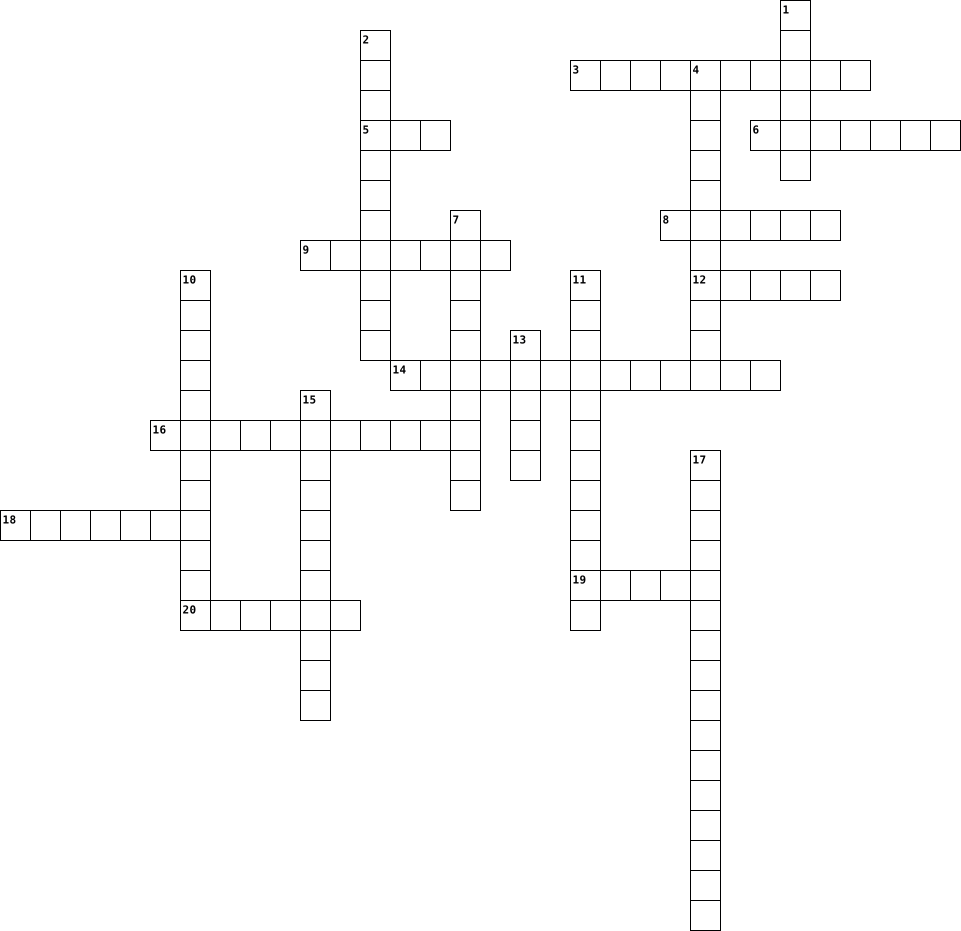
Across
- Syllabus: What do I want you to be in this class?
- Syllabus: Need help? Just do this…
- History - Module 4: The kingdoms of Kush and Aksum, which arose south of Egypt, developed advanced civilizations with large _______ networks.
- Syllabus: If you are absent, it is your responsibility to check the “Weekly Task” document in ______ Classroom.
- English: Last name of the author that gave a review of “The Hunger Games” in Entertainment Weekly.
- History - Module 13: _____ is the most sacred place in the Islamic world.
- English: Winner of the Children’s Book Award from which state?
- History - Module 3: The Sumerians developed the first civilization in ___________.
- Syllabus: Accept is and you will become a better student.
- English: Last name of the person responsible for the cover illustration of Percy Jackson and the Olympians.
- Syllabus: Always give it!
Down
- Syllabus: Bathroom breaks should be taken ______ arriving to class.
- History - Module 20: The growth of wealthy trading cities in Italy led to a new era called the ___________.
- History - Module 2: Prehistoric people learned to adapt to their ___________.
- English: What does Soda try to do more than Darry?
- History - Module 4: The colonies formally declared their ___________ from Great Britain.
- History - Module 18: The Incas built a huge empire in South America and made many great achievements in ____________, art, and oral literature.
- English: Percy Jackson was a student at _____ Academy.
- History - Module 18: ___________ and Union forces faced off in Virginia and at sea.
- History - Module 6: American citizenship involves great privileges and serious ________________.
20 Clues: Syllabus: Always give it! • Syllabus: Need help? Just do this… • Syllabus: What do I want you to be in this class? • English: What does Soda try to do more than Darry? • English: Percy Jackson was a student at _____ Academy. • Syllabus: Accept is and you will become a better student. • English: Winner of the Children’s Book Award from which state? • ...
Ben-Jose 2016-10-24

Across
- this culture inhabited Jericho,they had stone blades and grinding stones
- period this age is also known as the New Stone Age
- relating to the time or a period prior to recorded history
- to convert animal,plants,etc. uses tame
- the communities started practicing agriculture
- in this age cultures spread across the globe
- area between the Tigris and Euphrates Rivers
- allowed for complex urban societes,which allowed for the creation of art,science,and religion,and modern society as we know it
- to leave completely and finally:forsake utterly desert
- a site located in Asia Minor,is the largest and the best preserved Neolithic site known so far
- nomadic lifestyle,supported by large herds of animal
- animals were domesticated
Down
- to prepare and work on,in order to raise crops
- plants were cultivated and domesticated
- providing nourishment,especially to a high degree nourising:healthful
- sedentary communities,practicing intensive hunting and gathering
- people who existed constantly on the move to feed themselves
- was located in the Levant,in a luch oasis in the Jordan River valley.It was inhabited by Natufians around 11,000-8500 BC
- settled,hierarchial urban life supported bby agriculture
- relating to the cultural period of the stone age between the paleolithic and neolithic periods
- the scientific study of historic or prehistoric peoples and their cultures by analysis of their artifacts
- in this age plants were cultivateed and domesticated
- a structure of row of hexagonal wax cells formed by bees
- east the agricultural revolution took place in the
24 Clues: animals were domesticated • plants were cultivated and domesticated • to convert animal,plants,etc. uses tame • in this age cultures spread across the globe • area between the Tigris and Euphrates Rivers • to prepare and work on,in order to raise crops • the communities started practicing agriculture • period this age is also known as the New Stone Age • ...
Ben-Jose 2016-10-24

Across
- was located in the Levant,in a luch oasis in the Jordan River valley.It was inhabited by Natufians around 11,000-8500 BC
- nomadic lifestyle,supported by large herds of animal
- settled,hierarchial urban life supported bby agriculture
- period this age is also known as the New Stone Age
- relating to the time or a period prior to recorded history
- people who existed constantly on the move to feed themselves
- to prepare and work on,in order to raise crops
- in this age plants were cultivateed and domesticated
- to leave completely and finally:forsake utterly desert
- in this age cultures spread across the globe
- allowed for complex urban societes,which allowed for the creation of art,science,and religion,and modern society as we know it
- a structure of row of hexagonal wax cells formed by bees
Down
- providing nourishment,especially to a high degree nourising:healthful
- the communities started practicing agriculture
- a site located in Asia Minor,is the largest and the best preserved Neolithic site known so far
- this culture inhabited Jericho,they had stone blades and grinding stones
- relating to the cultural period of the stone age between the paleolithic and neolithic periods
- sedentary communities,practicing intensive hunting and gathering
- east the agricultural revolution took place in the
- the scientific study of historic or prehistoric peoples and their cultures by analysis of their artifacts
- area between the Tigris and Euphrates Rivers
- plants were cultivated and domesticated
- to convert animal,plants,etc. uses tame
- animals were domesticated
24 Clues: animals were domesticated • plants were cultivated and domesticated • to convert animal,plants,etc. uses tame • area between the Tigris and Euphrates Rivers • in this age cultures spread across the globe • the communities started practicing agriculture • to prepare and work on,in order to raise crops • period this age is also known as the New Stone Age • ...
Ben-Jose 2016-10-24

Across
- to leave completely and finally:forsake utterly desert
- in this age plants were cultivateed and domesticated
- to convert animal,plants,etc. uses tame
- sedentary communities,practicing intensive hunting and gathering
- this culture inhabited Jericho,they had stone blades and grinding stones
- people who existed constantly on the move to feed themselves
- a structure of row of hexagonal wax cells formed by bees
- to prepare and work on,in order to raise crops
- area between the Tigris and Euphrates Rivers
- was located in the Levant,in a luch oasis in the Jordan River valley.It was inhabited by Natufians around 11,000-8500 BC
- period this age is also known as the New Stone Age
Down
- east the agricultural revolution took place in the
- the scientific study of historic or prehistoric peoples and their cultures by analysis of their artifacts
- allowed for complex urban societes,which allowed for the creation of art,science,and religion,and modern society as we know it
- in this age cultures spread across the globe
- the communities started practicing agriculture
- animals were domesticated
- plants were cultivated and domesticated
- settled,hierarchial urban life supported bby agriculture
- nomadic lifestyle,supported by large herds of animal
- a site located in Asia Minor,is the largest and the best preserved Neolithic site known so far
- providing nourishment,especially to a high degree nourising:healthful
- relating to the time or a period prior to recorded history
- relating to the cultural period of the stone age between the paleolithic and neolithic periods
24 Clues: animals were domesticated • plants were cultivated and domesticated • to convert animal,plants,etc. uses tame • in this age cultures spread across the globe • area between the Tigris and Euphrates Rivers • the communities started practicing agriculture • to prepare and work on,in order to raise crops • east the agricultural revolution took place in the • ...
EA BL 2016-10-20

Across
- A person who made pottery for the rest of the population to use.
- An organisation which is the core of a community.
- They built the largest contagious empire in human history
- It is the study of human activity through the recovery and analysis of material culture.
- A modern day animal which was resulted from selective breading of wolves.
- During this period, all humans were nomadic hunter-gatherers.
- An adjective describing the food supply after the Neolithic Revolution.
- The primary plant domesticated by humans in the Middle East
- It is generally defined as "settled, hierarchical urban life supported by agriculture."
- The largest and vest preserved Neolithic site known so far.
- A machine invented that allowed for mass-production of pottery.
- A place located in Levant,m in a lush oasis in the Jordan River valley.
Down
- It led to the production of food surpluses.
- People living in Mesopotamia.
- It began to change around 9000 BC, becoming colder and dryer.
- He or she is a social leader in the community.
- A lifestyle supported by large herds of animals.
- The primary plant domesticated by humans in the South China
- Characterised by the domestication of animal.
- An animal which human started to domesticate for hunting and defence around 10000 BC
- Farming, basically.
- It is the process of adapting wild plants and animals for human use.
- A tool we use to record thoughts with symbols on a medium.
- The part of history when writing was not invented.
- They terrorised people from China to Rome.
25 Clues: Farming, basically. • People living in Mesopotamia. • They terrorised people from China to Rome. • It led to the production of food surpluses. • Characterised by the domestication of animal. • He or she is a social leader in the community. • A lifestyle supported by large herds of animals. • An organisation which is the core of a community. • ...
HISTORY OF ART 2017-11-24

Across
- a region which located at a mountainous section between modern-day France and Spain.
- underground cemeteries where the Christians and Jews usually bury their dead.
- Instead of prohibiting all religious imagery and art, they prohibited only the most art form.
- The playful and dynamic motif was found on pottery buried with the remains.
- Palace of Minos
- of the distinctive artistic styles that developed in the Roman Empire.
- the medieval period encompassed 8 major artistic movements like Byzantine, Islamic, Viking, Celtic, Ottonian, Romanesque and gothic art.
- Book written by hand in the middle ages
- The early Christian culture is a transition between the Roman Empire and the period.
- The type Etruscan's government
- the Greek art period : the Archaic period, the Classical period and the period.
- types of Greek columns are Doric, ionic and
- Ancient city of Kanesh
Down
- A painting that was painted directly on the wall
- Horizontal bands
- known as 'The Cradle of Civilization,
- A pharaoh who upon his death becomes the god
- First people who records their system of law
- Greek style in the fine art
- the Egyptians variety images as their written language 6 . underground cemeteries where the Christians and Jews usually bury their dead.
- Material that Greek used in their public places
- the Mesopotamian's invention of a form of communication.
- Earliest painting in the cave
- Stone Age figurines usually portray a pregnant woman known as
- one of the distinctive artistic styles that developed in the Roman Empire.
25 Clues: Palace of Minos • Horizontal bands • Ancient city of Kanesh • Greek style in the fine art • Earliest painting in the cave • The type Etruscan's government • known as 'The Cradle of Civilization, • Book written by hand in the middle ages • types of Greek columns are Doric, ionic and • A pharaoh who upon his death becomes the god • First people who records their system of law • ...
History Test 1 Practice 2019-12-10

Across
- Faithful companion to Naomi and who married Boaz
- Book of the Bible that explains creation.
- He married Rachel
- A land between the rivers where a tall tower was built
- Howard _____ discovered King Tutankhamen's tomb
- These people had running water in their homes
- The river of Egypt
- Moses was raised by these people
- Mountains, ____, and an ocean made trading and traveling to China hard
- A hero in a famous epic who was supposed to have built an ark
- A circle of large stones that mark the summer and winter solstice
- The island of the Minoans
- The woman that was saved by wooden horse
Down
- The great pyramid of Giza was built for him
- A flat topped, step pyramid.
- The ____ Age exposed land bridges for man to travel on.
- This man crafted bronze and iron.
- Terrible lizard
- Term for a family that rules a country
- Created on Day 4
- Led the Israelites into Canaan
- This man made instruments and taught music.
- Both the Sumerians and the Egyptians believed they should be buried with these for their "afterlife".
- God saved this man from the destruction of the world because he proved himself righteous.
- He traded his birthright for stew
- This person's name means to "draw out" because of where he was found
- Created on Day 7
- A good judge over Israel for 40 years
- A term referring to a long poem
- Hammurabi is best remembered for writing 300 of these
30 Clues: Terrible lizard • Created on Day 4 • Created on Day 7 • He married Rachel • The river of Egypt • The island of the Minoans • A flat topped, step pyramid. • Led the Israelites into Canaan • A term referring to a long poem • Moses was raised by these people • This man crafted bronze and iron. • He traded his birthright for stew • A good judge over Israel for 40 years • ...
Oakmont 2023-08-01

Across
- August is named after him (emperor of Ancient Rome)
- our phones used to have this
- blue jewelry
- flattest state in the us- the highest point in this state is only 345 ft above sea level.
- Archie’s nickname for his son-n-law
- transport found on the most popular brand of cards (playing)
- the world’s favorite number
- The Graduate was filmed here
- Archie and Edith’s daughter
- supersonic airliner
- Sweet Caroline was written in this city
- recommended nap time for adults in minutes
- Neil Diamond wrote Sweet Caroline lyrics in less than a
- oldest civilization
- CA produces 98% of this type of nut
- bold and fearless
- language in oldest civilization
Down
- tennis Arthur
- most difficult language to learn
- Julia Anne’s nickname with family and friends
- sink or
- a hawkins dance
- Lloyd’s favorite animal
- the oldest college in the US
- famous chef
- common item formerly known as besom
- another name for armpit
- Narra’s great granddaughter
- another name for raincoat
- this terrifying water movie was filmed on Martha’s Vineyard
- , most popular girl’s name 2023
- , a famous lion yearns for this
- Elvis never did this on stage
- the Hollywood sign once contained what four additional letters
- where Neil Diamond was when he wrote Sweet Caroline
- another word for rude
- famous diet with low carbs
- two words for drama queen
- it’s illegal to own this pet in 19 states
- type of popular music in 1935
40 Clues: sink or • famous chef • blue jewelry • tennis Arthur • a hawkins dance • bold and fearless • supersonic airliner • oldest civilization • another word for rude • Lloyd’s favorite animal • another name for armpit • another name for raincoat • two words for drama queen • famous diet with low carbs • Narra’s great granddaughter • the world’s favorite number • Archie and Edith’s daughter • ...
Final Review Crossword 2023-12-05

Across
- group which split from the Catholic Church in the 16th century
- this man wrote the 95 Theses and nailed them to a church door
- the religion that uses the Torah as their religious book
- the belief in more than one god
- a system of government in which kings gave land to lords, who then gave land to knights, who then had peasants farm the land, and et cetera
- the government used in Athens during Ancient Greece, in which all land-owning men could vote
- the first emperor of Rome
- the illness that caused 1/3 of Europe to die
- the first dictator of Rome than eventually led to the start of the Roman Empire
Down
- the word Renaissance translates to...
- the city-state in Ancient Greece that focused on military achievements
- the ancient civilization that was formed between the Tigris and Euphrates rivers
- this man said it was better to be feared than loved and that the end justifies the means
- the wars in which the Pope would send Christians to take back the holy land of Jerusalem
- a Greek philosopher that was sentenced to drink hemlock in order to commit suicide
- this man created the printing press, which made books quickly and easily
- the emperor that split Rome in two
- the religion that follows the Eightfold Path and the Four Noble Truths
- the country where the ancient civilization of the Shang dynasty formed
- the ancient civilization that was famous for the Great Pyramids of Giza
20 Clues: the first emperor of Rome • the belief in more than one god • the emperor that split Rome in two • the word Renaissance translates to... • the illness that caused 1/3 of Europe to die • the religion that uses the Torah as their religious book • this man wrote the 95 Theses and nailed them to a church door • group which split from the Catholic Church in the 16th century • ...
2-1 2023-11-21

Across
- funnel Attached to their plows, seeds automatically dropped from funnel to soil
- the Sumerian system of writing, which used symbols to represent basic parts of words
- human-made waterways, form of irrigation
- hierarchy a division of society by rank or class
- A system in which people make, exchange and use things that have value.
- more of something than is needed
- writer
- A worker skilled in a craft
- (n.) an exchange in trade; (v.) to exchange goods
- land with different territories and people under a single rule
- A broad, flat area of land higher than the surrounding land
- a way of supplying water to an area of land
- form of irrigation to keep the flood waters controlled
Down
- picture symbols that represented objects such as trees or animals
- of labor an arrangement in which people specialize in specific tasks
- the planning and act of building
- a mix of rich soil and small rocks
- a political unit consisting of a city and the surrounding countryside. They had their own government, religion and way of life.
- a mixture of copper and tin
- government headed by a king
- area of Mesopotamia where the world's first civilization was developed
- Crescent a large arc of rich farmland extending from the Persian Gulf to the Mediterranean Sea
- to be successful
- a set of letters that can be combined to form written words
- Flat land
- important Mesopotamian city-state near present-day Baghdad
- a pyramid-shaped temple tower which was the most important building in the city state
27 Clues: writer • Flat land • to be successful • a mixture of copper and tin • government headed by a king • A worker skilled in a craft • the planning and act of building • more of something than is needed • a mix of rich soil and small rocks • human-made waterways, form of irrigation • a way of supplying water to an area of land • hierarchy a division of society by rank or class • ...
ANC - Key Terms 2024-07-03

Across
- Zoroastain holy texts.
- A period in history that followed the Stone Age and preceded the Iron Age.
- Flood gates.
- A nickname of Mesopotamia, because the rivers make a bit of a moon shape and the land between the rivers is especially good for agriculture.
- A jewish religious teacher.
- Sacred symbols used in Egypt to represent sound and words.
- The World's oldest living religion; founded in India
- The monotheistic religion of the ancient Hebrews, founded by Abraham.
- A Buddhist concept that encourages believers to identify the cause of suffering so it can be overcome and the believer can work towards the enlightenment.
Down
- A universal truth, sought after by the Buddhist.
- Influential Kush leaders who were sisters of the kush of king and mothers of the future king.
- An agreement or contract that the Hebrew believe exists between their ethnic group and God.
- The spreading out of culture, cultural traits, or a cultural pattern from central point.
- An individual's past actions that determines their status when they are reborn.
- A belief that dead spirits have the ability to affect the lives of the living; form of religion developed during the Shang Dynasty of the Yellow River civilization.
- A religion of India that focuses on reaching enlightenment, founded by Sidharta Gautama.
- An engraved tube containing Persia laws and human rights.
- The Belief that humans make their own decisions.
- The wedge-shaped characters used in the writing of ancient Sumer.
- A society with Urban areas, structured government, advanced technology, for food surplus, specialized labor, and artistic endeavors.
20 Clues: Flood gates. • Zoroastain holy texts. • A jewish religious teacher. • A universal truth, sought after by the Buddhist. • The Belief that humans make their own decisions. • The World's oldest living religion; founded in India • An engraved tube containing Persia laws and human rights. • Sacred symbols used in Egypt to represent sound and words. • ...
Egypt Crossword 2025-05-02

Across
- A UNESCO World Heritage Site and one of the Seven Wonders of the Ancient World
- A royal necropolis on the west bank of the Nile, near Luxor, where pharaohs were buried
- The ancient Egyptian writing system, deciphered in 1822
- An ancient city on the Nile, famous for its temples and tomb
- A major city in northern Egypt, known for its historical harbor and the Bibliotheca Alexandrina
- The last active ruler of the Ptolemaic Kingdom of Egypt, known for her political intrigue and romantic alliances
- became the capital city
- this waterway revolutionized transportation and trade
- Assyrians from Mesopotamia conquered and ruled Egypt.
- A city in southern Egypt known for the Aswan High Dam and the Temple of Philae
Down
- This influential religious and political organization was founded by Hassan al-Banna.
- A massive religious complex in Luxor, dedicated to the Theban Triad
- Founder of the Muslim Brotherhood
- The first dynastic kings consolidated power, establishing Mempis as a capital.
- These iconic structures were built as tombs for pharaohs.
- The ancient capital of Lower Egypt, located near modern-day Cairo
- ll A powerful pharaoh known for his reign and numerous building projects
- Rulers of ancient Egypt, like Tutankhamun, known for their tombs and power
- river Egypt's life-giving river, crucial for agriculture, transportation, and civilization
- A complex of temples on the Nile, renowned for its magnificent statues
- A female pharaoh known for her reign and construction projects.
- .The Nile Valley's fertile land drew settlers, marking the beginning of civilization.
22 Clues: became the capital city • Founder of the Muslim Brotherhood • this waterway revolutionized transportation and trade • Assyrians from Mesopotamia conquered and ruled Egypt. • The ancient Egyptian writing system, deciphered in 1822 • These iconic structures were built as tombs for pharaohs. • An ancient city on the Nile, famous for its temples and tomb • ...
World Wars Crossword Puzzel 2025-10-05

Across
- on pg. 99 who sent his soldiers to become what was known as the Backs to the wall
- on pg. 100 who sent a deadly blow to the German morale
- on pg. 112 who seemed to capture a spirit of duty and willing self-sacrifice
- on pg. 103 where did the Turks divert there depleted manpower away from
- on pg. 113 who was a poet and army officer
- on pg. 111 who found it easier to make discissions without consulting the leaders of smaller nations
- on pg. 101 who did the Kaiser agree it was time to negotiate with
- on pg. 112 what was taken seriously at war times
Down
- on pg. 103 where did the Arabs storm on October 1st
- on pg. 107 who argued on the best way to keep peace
- on pg. 113 who would become one of the most famous poets of W.W.1.
- on pg. 108 who invited diplomats from 32 nations to meet in Paris
- on pg. 105 what General was dismissed from his post
- on pg. 108 why wanted to punish Germany
- on pg. 101 who thought Germany could still end the war
- on pg. 109 where were the Germans summoned to instead of Paris
- on pg. 98 what month did the Germans shell the Allied lines
- on pg. 104 who begged for peace on November 3rd
- on pg. 110 what continent is shown on the map at the bottom of the page
- on pg. 102 who scored one of their most important victories in July 19117
20 Clues: on pg. 108 why wanted to punish Germany • on pg. 113 who was a poet and army officer • on pg. 104 who begged for peace on November 3rd • on pg. 112 what was taken seriously at war times • on pg. 103 where did the Arabs storm on October 1st • on pg. 107 who argued on the best way to keep peace • on pg. 105 what General was dismissed from his post • ...