
periodic table Crossword Puzzles
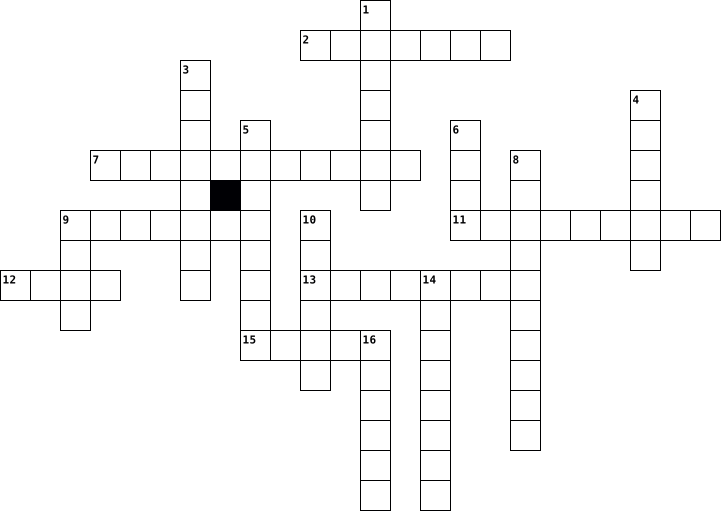
Periodic Table 2024-05-06

Across
- A vertical division of something
- Period 7, group 1
- Period 1, group 1
- Period 4, group 9
- Period 2, group 14
- Period 4, group 6
- Period 4, group 13
Down
- Period 2, group 18
- Period 4, group 8
- Period 4 group 11
- Period 1, group 18
- a number of people or things that are located close together or are considered or classed together.
- Period 4, group 10
- Period 5, group 14
- Period 7, group 2
15 Clues: Period 7, group 1 • Period 4, group 8 • Period 4 group 11 • Period 1, group 1 • Period 4, group 9 • Period 4, group 6 • Period 7, group 2 • Period 2, group 18 • Period 1, group 18 • Period 4, group 10 • Period 5, group 14 • Period 2, group 14 • Period 4, group 13 • A vertical division of something • ...
Periodic Table 2024-05-03

Across
- 8
- 13
- 12
- 2
- 35
- 7
- 65
Down
- 19
- 79
- 22
- 31
- 30
- 1
- 88
- 26
15 Clues: 8 • 2 • 1 • 7 • 19 • 79 • 22 • 13 • 31 • 30 • 12 • 88 • 35 • 26 • 65
Periodic table 2023-08-06

Across
- Clue Ca
- Clue O
- Clue Au
- Clue K
- Clue Ar
- Clue Ag
- Clue Zn
- Clue Sn
- Clue He
Down
- Clue Hg
- Clue Na
- Clue H
- Clue N
- Clue Pb
- Clue Li
15 Clues: Clue H • Clue O • Clue N • Clue K • Clue Ca • Clue Hg • Clue Na • Clue Au • Clue Pb • Clue Li • Clue Ar • Clue Ag • Clue Zn • Clue Sn • Clue He
periodic table 2023-05-19

Across
- 18 going down
- atomic number 33
- atomic number 20
- atomic number 35
- atomic number 82
- biggest element on the periodic table
- element in group 3 period 7
- element 2
- element in group 1 period 3
Down
- 7 going across
- element in group 1 period 1
- atomic mass 28.085
- metal in group 9 period 4
- element in group 2 period 7
- symbol Al
15 Clues: symbol Al • element 2 • 18 going down • 7 going across • atomic number 33 • atomic number 20 • atomic number 35 • atomic number 82 • atomic mass 28.085 • metal in group 9 period 4 • element in group 1 period 1 • element in group 2 period 7 • element in group 3 period 7 • element in group 1 period 3 • biggest element on the periodic table
Periodic table 2023-09-29

Across
- Ag
- Na
- H
- B
- Ar
- C
- K
- Li
Down
- U
- AU
- O
- Ne
- CU
- Ca
- Br
15 Clues: U • H • O • B • C • K • Ag • AU • Na • Ne • CU • Ca • Ar • Br • Li
periodic table 2024-09-18

Across
- a basic metal we use to wrap food
- the first noble gas
- most common element in the universe
- the basis for life on earth
- has an atomic number of 15
- a basic metal which metal cans are made of
- the outermost electrons
- typically has a high electrical conductivity
Down
- used in nuclear bombs
- the halogen in the compound table salt
- most common element on earth's crust
- react with alkali metals
- used in steel, not carbon
- also used in nuclear bombs
- the opposite of base
15 Clues: the first noble gas • the opposite of base • used in nuclear bombs • the outermost electrons • react with alkali metals • used in steel, not carbon • has an atomic number of 15 • also used in nuclear bombs • the basis for life on earth • a basic metal we use to wrap food • most common element in the universe • most common element on earth's crust • ...
Periodic Table 2025-02-23

Across
- He
- makes up the periodic table
- Al
- O
- Be
- C
- N
Down
- Li
- Mg
- H
- Na
- Electrons that occupy the highest levels in an atom
- F
- B
- Ne
15 Clues: H • O • F • B • C • N • He • Li • Mg • Na • Al • Be • Ne • makes up the periodic table • Electrons that occupy the highest levels in an atom
periodic table 2025-04-01

Across
- is directly below calcium
- atomic number 4
- atomic number 54
- radioactive, with no smell
- Lu
- radioactive metal
- Ba
Down
- energy production
- atomic number 109
- radioactive
- element with only one proton
- salt
- dairy
- is liquid at room temperature
- Pm
15 Clues: Lu • Pm • Ba • salt • dairy • radioactive • atomic number 4 • atomic number 54 • energy production • atomic number 109 • radioactive metal • is directly below calcium • radioactive, with no smell • element with only one proton • is liquid at room temperature
Periodic Table 2025-06-30

Across
- Au
- Fe
- N
- C
- S
- O
- W
- Li
- U
Down
- H
- B
- Ge
- Si
- K
- He
15 Clues: H • B • K • N • C • S • O • W • U • Au • Ge • Si • Fe • He • Li
Periodic Table 2025-09-03

Across
- Has properties of both metals and nonmetals.
- Family of metals with two valence electrons, Group 2.
- Energy needed to remove an electron; increases across a period.
- Family of metals with one valence electron, very reactive metals in Group 1.
- Good conductor, malleable, tends to lose electrons.
- Top row of inner transition metals, shiny and reactive.
- Group 18, nonreactive due to full valence shells.
- Bottom row of inner transition metals, mostly radioactive.
Down
- A vertical column on the periodic table.
- Ability of an atom to attract electrons in a bond.
- Block of metals in the middle of the table, variable charges.
- Poor conductor, brittle, tends to gain electrons.
- Group 17 elements, very reactive nonmetals.
- Distance from nucleus to outermost electron; increases down a group.
- A horizontal row on the periodic table.
15 Clues: A horizontal row on the periodic table. • A vertical column on the periodic table. • Group 17 elements, very reactive nonmetals. • Has properties of both metals and nonmetals. • Poor conductor, brittle, tends to gain electrons. • Group 18, nonreactive due to full valence shells. • Ability of an atom to attract electrons in a bond. • ...
periodic table 2025-10-10

Across
- The element for "Co"
- The element for "C"
- The element for "N"
- The element for "Cl"
- The element for "Pt"
- The element for "H"
Down
- The element for "S"
- The element for "Ne"
- The element for "Ar"
- The element for "Na"
- The element for "O"
- The element for "Ca"
- The element for "Al"
- The element for "Cu"
- The element for "Fe"
15 Clues: The element for "S" • The element for "C" • The element for "N" • The element for "O" • The element for "H" • The element for "Ne" • The element for "Co" • The element for "Ar" • The element for "Na" • The element for "Ca" • The element for "Al" • The element for "Cl" • The element for "Cu" • The element for "Pt" • The element for "Fe"
Periodic Table 2026-04-03

Across
- medical life support
- used for medical and dental implants
- insoluble in water
- used to promote relaxation and regulate melatonin
- chemically manufactured for batteries and pigments
- used to make a balloon float
- used as a shielding gas in welding for Al and stainless steel
- hard, brittle, metallic luster
- used as a reducing agent in chemical manufacturing
Down
- colorless and odorless
- extremely reactive, toxic gas
- used in electric wiring and food packaging
- main component of DNA
- used for bone and teeth health
- very soft and reactive
15 Clues: insoluble in water • medical life support • main component of DNA • colorless and odorless • very soft and reactive • used to make a balloon float • extremely reactive, toxic gas • used for bone and teeth health • hard, brittle, metallic luster • used for medical and dental implants • used in electric wiring and food packaging • used to promote relaxation and regulate melatonin • ...
8C1 Keywords 2021-05-24

Across
- What do we call the columns in the Periodic Table?
- A type of reaction where more reactive elements remove less reactive elements from a compound.
- What do we call the rows in the Periodic Table?
- Another name for Group 1.
- A change of state from solid to liquid.
- Which state are most metals at room temperature?
Down
- Elements are organised in the _________ Table.
- A Group 1 element found in table salt.
- A Group 7 element used to treat drinking water and in swimming pools.
- Another name for Group 0 is the _______ gases.
- Another name for Group 7.
- Are metals found on the left or right side of the Periodic Table?
12 Clues: Another name for Group 7. • Another name for Group 1. • A Group 1 element found in table salt. • A change of state from solid to liquid. • Elements are organised in the _________ Table. • Another name for Group 0 is the _______ gases. • What do we call the rows in the Periodic Table? • Which state are most metals at room temperature? • ...
Chem 2013-07-21

Across
- name for group 1
- particle that flows
- solid to gas (vice versa)
- liquid to a solid
- name for group 7
- gas to liquid
- all substances are made of ........
- located around the centre
- rows in periodic table
Down
- liquid to gas
- located in the nucleus, positive charge
- have a definite shape
- columns in periodic table
- solid to liquid
- name for group 8
- can be compressed
- matter has ........
- located in the nucleus, neutral charge
- matter takes up ........
19 Clues: liquid to gas • gas to liquid • solid to liquid • name for group 1 • name for group 8 • name for group 7 • liquid to a solid • can be compressed • particle that flows • matter has ........ • have a definite shape • rows in periodic table • matter takes up ........ • columns in periodic table • solid to gas (vice versa) • located around the centre • all substances are made of ........ • ...
Figure it out 2021-09-16

Across
- it's just fire
- is the symbol of TH on the periodic table
- the most poisonous element
- it's something a blant breathes in
- very precious and are worth more than gold
- this element group consists of fluorine
- second lightest element
Down
- poisonous and the heaviest on the periodic table
- All in this group are radioactive and release energy upon radioactive decay
- symbole of B with the atomic number 5
- most reactive chemical element
- this has the atomic number four with the symbole of BE
- without it, we would die
- 69th element on the periodic table
- used in electric signs and fluorescent lamps
15 Clues: it's just fire • second lightest element • without it, we would die • the most poisonous element • most reactive chemical element • it's something a blant breathes in • 69th element on the periodic table • symbole of B with the atomic number 5 • this element group consists of fluorine • is the symbol of TH on the periodic table • very precious and are worth more than gold • ...
LT 8-11 Chemistry 2022-04-26

Across
- A substance's tendency to stick together
- Located on the left side of the periodic table
- Rule that states most atoms are stable with 8 VE
- Vertical column on the periodic table
- An atom's ability to attract electrons
- Element with one proton
- Second period, 5 Valence electrons(VE)
Down
- Elements in this group have 1 valence electron(VE)
- The outermost electron shell
- bond with an electronegativity difference of 0.4 or less
- Horizontal row on the periodic table
- bond formed between metals and nonmetals
- On the left side of a chemical equation
- bond formed between nonmetals
- On the right side of a chemical equation
15 Clues: Element with one proton • The outermost electron shell • bond formed between nonmetals • Horizontal row on the periodic table • Vertical column on the periodic table • An atom's ability to attract electrons • Second period, 5 Valence electrons(VE) • On the left side of a chemical equation • A substance's tendency to stick together • bond formed between metals and nonmetals • ...
modern periodic table 2017-02-02

Across
- the elements in group zero are called
- group 17 elements are
- classification was based on
- the first element of rare earth metal is
- first nobal gas in table
Down
- modern periodic table is discovered by
- metal which is most reactive
- vertical rows in periodic table is known as
- the first alkali metal is
- the no. Of e- in the valence shell is equal to its
- family of element to which potassium belongs to
- horizontal rows in periodic table is known as
12 Clues: group 17 elements are • first nobal gas in table • the first alkali metal is • classification was based on • metal which is most reactive • the elements in group zero are called • modern periodic table is discovered by • the first element of rare earth metal is • vertical rows in periodic table is known as • horizontal rows in periodic table is known as • ...
Chemistry Study Guide 2016-02-10

Across
- Most elements are this
- Many or few atoms combine into something new or more of it
- Number of proton/electron in element, (two words)
- Brittle, non ductile/malleable poor conductor
- Mass of molecule (two words)
- Reaction occurs when layer of metal is bonded to surface of another substance usually metal
- Positive charge center
- Space outside nucleus where electrons exist
- Far right on table not reactive
- Electrons in outermost orbital, (two words)
- Smallest part of element
- Positive charge in nucleus
- Substance naturally formed or manmade, building block
- Move around nucleus negative charge
- Letters defying the element
Down
- Result of two reactants
- Properties cross of metal and nonmetal conductive
- Creator of periodic table (two words)
- Columns of elements up and down on periodic table
- Neutral charge in nucleus
- Energy released in heat
- Anything can change into the three states of matter
- Rows of elements on periodic table
- Energy absorbed cold
- At least two atoms or different elements combine
- Put together to make something
26 Clues: Energy absorbed cold • Most elements are this • Positive charge center • Result of two reactants • Energy released in heat • Smallest part of element • Neutral charge in nucleus • Positive charge in nucleus • Letters defying the element • Mass of molecule (two words) • Put together to make something • Far right on table not reactive • Rows of elements on periodic table • ...
Chemistry Study Guide 2016-02-10

Across
- At least two atoms or different elements combine
- Number of proton/electron in element, (two words)
- Letters defying the element
- Result of two reactants
- Put together to make something
- Brittle, non ductile/malleable poor conductor
- Energy absorbed cold
- Creator of periodic table (two words)
- Electrons in outermost orbital, (two words)
- Energy released in heat
- Rows of elements on periodic table
- Space outside nucleus where electrons exist
- Neutral charge in nucleus
Down
- Many or few atoms combine into something new or more of it
- Mass of molecule (two words)
- Anything can change into the three states of matter
- Positive charge in nucleus
- Properties cross of metal and nonmetal conductive
- Most elements are this
- Smallest part of element
- Positive charge center
- Far right on table not reactive
- Substance naturally formed or manmade, building block
- Move around nucleus negative charge
- Reaction occurs when layer of metal is bonded to surface of another substance usually metal
- Columns of elements up and down on periodic table
26 Clues: Energy absorbed cold • Most elements are this • Positive charge center • Result of two reactants • Energy released in heat • Smallest part of element • Neutral charge in nucleus • Positive charge in nucleus • Letters defying the element • Mass of molecule (two words) • Put together to make something • Far right on table not reactive • Rows of elements on periodic table • ...
Chemistry 2021-03-04

Across
- the symbol for chromium
- element that has the symbol C
- a compound that is used daily
- 2 or more atoms held together by chemical bonds
- within the air
- 2 or more substances not chemically combined together
- one magnesium atom and two chlorine atoms
Down
- numbers on the left side of the periodic table
- the atomic number is 28
- numbers going across the top of the periodic table
- substance made entirely of one type of atom
- what is hydrogens atomic number
- amount of alkali metals on the periodic table
- group 7, period 2
- 2 or more different element held together by chemical bonds
- atomic mass for oxygen
16 Clues: within the air • group 7, period 2 • atomic mass for oxygen • the atomic number is 28 • the symbol for chromium • element that has the symbol C • a compound that is used daily • what is hydrogens atomic number • one magnesium atom and two chlorine atoms • substance made entirely of one type of atom • amount of alkali metals on the periodic table • ...
S2 Elements, Compounds and Chemical Reactions 2023-02-19

Across
- a sign of a chemical reaction
- the chemical symbol is O
- when atleast two elements are joined together
- the chemical symbol is Na
- All the different elements are arranged in a chart
- found to the left of the periodic table
- group 7 of the periodic table
- when elements fuse/join together
- contains only one type of atom
Down
- metals are good conductors of this
- substances that are formed in a reaction
- found to the right of the periodic table
- physical appearance of a metal when cut into
- meaning they can be bent and shaped without breaking
- the smallest part of an element
- The different substances are not chemically joined together
16 Clues: the chemical symbol is O • the chemical symbol is Na • a sign of a chemical reaction • group 7 of the periodic table • contains only one type of atom • the smallest part of an element • when elements fuse/join together • metals are good conductors of this • found to the left of the periodic table • substances that are formed in a reaction • ...
Chemistry 2026-05-04

Across
- usually has elements on it
- this is on the periodic table
- what everything is made from
- the group between 7 and 14
- the group between 1 and 7
- the study of matter
- the stuff we breath
- strong chemical bonds in one molecule
Down
- H20
- attractive forces between molecules
- an attraction
- structure and properties of atoms
- a group of 2 or more atoms
- is 1 on the periodic table
- defines how matter behaves
- the smallest unit of matter
16 Clues: H20 • an attraction • the study of matter • the stuff we breath • the group between 1 and 7 • usually has elements on it • a group of 2 or more atoms • is 1 on the periodic table • defines how matter behaves • the group between 7 and 14 • the smallest unit of matter • what everything is made from • this is on the periodic table • structure and properties of atoms • ...
Atoms & Periodic Table Crossword 2021-04-19

Across
- gaseous element with an atomic mass of 20amu
- the element with the highest atomic number
- calculated by adding protons and neutrons
- the element with 29 protons
- columns on the periodic table
- element in period 6 with 86 protons
- the negatively-charged subatomic particle
- the element found in group 2, period 6
- the element with atomic number 18
Down
- how we refer to an atom with zero charge
- is always the same as the number of protons
- how many neutrons most sodium atoms will have
- the element with one more proton than sulfur
- the smallest element on the periodic table
- the only metal that is liquid at room temperature
- the element with 26 electrons when it's neutral
- the element found in group 14, period 3
- rows on the periodic table
18 Clues: rows on the periodic table • the element with 29 protons • columns on the periodic table • the element with atomic number 18 • element in period 6 with 86 protons • the element found in group 2, period 6 • the element found in group 14, period 3 • how we refer to an atom with zero charge • calculated by adding protons and neutrons • the negatively-charged subatomic particle • ...
Periodic Trends 2025-10-15

Across
- How well an atom attracts electrons from other atoms
- The largest atom on the periodic table
- This element is an alkali metal and in period 3
- An atom’s ability to attract electrons from other atoms
- The octet rule states atoms are usually most stable with this number of valence electrons
- The only nonmetal on the left side of the periodic table
- The largest alkaline earth metal
- This model only shows an atom’s valence electrons
- The element is in group 2, period 4
Down
- This model shows all the electrons for an atom
- This alkaline earth metal is bigger than barium
- This element has the highest electronegativity of all the elements
- This is what a row going left to right across the periodic table is called
- An atom that has gained or lost electrons
- This family includes fluorine (F) and chlorine (Cl)
- A column (up and down) on the periodic table
16 Clues: The largest alkaline earth metal • The element is in group 2, period 4 • The largest atom on the periodic table • An atom that has gained or lost electrons • A column (up and down) on the periodic table • This model shows all the electrons for an atom • This alkaline earth metal is bigger than barium • This element is an alkali metal and in period 3 • ...
periodic table 2020-07-01

Across
- possuem, com exceção do primeiro membro da família, oito elétrons na camada de valência
- elemento do segundo período com quatro elétrons na camada de valência
- a sua quantidade é igual ao número atômico
- simbolo do estranho
- nome do gás nobre com configuração semelhante ao cátion monovalente do potássio
- elemento de maior eletroafinidade no grupo 16
- nome do elemento de transição externa que é utilizada em jóias fazendo parte de uma liga metálica com prata e cobre
- energia necessária para arrancar um elétron de um átomo neutro e no estado gasoso
Down
- único elemento sem grupo na tabela
- metal alcalino de maior raio
- elemento do quarto período de maior raio
- metal de transição externa com maior raio
- metal alcalino de menor raio
- nome do elemento de número atômico 47
- nome do elemento do terceiro período que necessita de 1 elétrons para adquirir configuração de gás nobre
15 Clues: simbolo do estranho • metal alcalino de maior raio • metal alcalino de menor raio • único elemento sem grupo na tabela • nome do elemento de número atômico 47 • elemento do quarto período de maior raio • metal de transição externa com maior raio • a sua quantidade é igual ao número atômico • elemento de maior eletroafinidade no grupo 16 • ...
Periodic Table 2017-04-24

Across
- a noble gas
- element name for Ca
- element name for K
- element name for B
- features of metals and non-metals
- vertical column in periodic table
Down
- melts at 40 degrees
- relative atomic mass of 4
- horizontal lines
- can be polished
- symbol for gold
- element name for Cl
- atomic number of 15
- element in group 2 and period 2
- symbol for Magnesium
15 Clues: a noble gas • can be polished • symbol for gold • horizontal lines • element name for K • element name for B • melts at 40 degrees • element name for Ca • element name for Cl • atomic number of 15 • symbol for Magnesium • relative atomic mass of 4 • element in group 2 and period 2 • features of metals and non-metals • vertical column in periodic table
Periodic Table 2020-09-29

Across
- This element is in group 1 but is not an alkali metal
- This is the only noble has that doesn't have 8 valence electron
- This element has 5 protons
- This element has the smallest atomic radius in group VA
- this element in group 2 loses 2 electrons to become an ion
- This is the noble gas with the largest atomic radius
- This is below carbon on the periodic table
- This is the lightest alkaline earth metal
- This element has 6 electrons
Down
- This element has the largest radius in period 6
- this element is in period IIIA with 3 valence electrons
- This element is unreactive and period 4
- this halogen has the lowest ionization energy in its group
- this element forms a + charge in period 1
- This element forms a 2- ion and is in period 3
15 Clues: This element has 5 protons • This element has 6 electrons • This element is unreactive and period 4 • this element forms a + charge in period 1 • This is the lightest alkaline earth metal • This is below carbon on the periodic table • This element forms a 2- ion and is in period 3 • This element has the largest radius in period 6 • ...
Periodic Table 2024-05-07

Across
- electrons on outer shell
- elements in the middle
- Horizontal column
- has 11 protons
- number above the element symbol
- periodic table of_____
Down
- first element
- element
- element is family 14 and group 2
- element located in the left
- first family
- last family on the table
- atomic number is 18
- number below the element symbol
- vertical column
15 Clues: element • first family • first element • has 11 protons • vertical column • Horizontal column • atomic number is 18 • elements in the middle • periodic table of_____ • electrons on outer shell • last family on the table • element located in the left • number below the element symbol • number above the element symbol • element is family 14 and group 2
Periodic Table 2023-05-10

Across
- Element responsible for the smell of rotten eggs
- The number of protons and neutrons in an atom
- Building blocks of atoms that effect atomic mass and what element the atom is, but not volume
- Gases that are always stable and cannot react with other elements
- The only noble gas in the 1st period
- Used in fire extinguishers, symbol Bi
- If an element has a full outer shell of electrons, it is ______
- Used to tint windows and ceramics
Down
- The assortment of all of the elements by atomic number by Mendeleev
- The sections on the periodic table that indicate energy levels
- Building blocks of atoms that contribute to the volume of the atom
- Composed of the two elements Sodium and Calcium
- the element notated on the periodic table as "K"
- Building blocks of atoms that only have an effect on atomic mass
- Columns on the periodic table that divides elements into families
15 Clues: Used to tint windows and ceramics • The only noble gas in the 1st period • Used in fire extinguishers, symbol Bi • The number of protons and neutrons in an atom • Composed of the two elements Sodium and Calcium • Element responsible for the smell of rotten eggs • the element notated on the periodic table as "K" • ...
Periodic Table 2022-05-16

Across
- an element or substance that conducts heat and electricity, is malleable
- Shielding A shielding effect that multiple principle energy levels has on a
- level (valence shell)
- an atom that has gained or lost one or more electrons
- describes how likely an element is to form bonds with other elements
- Metals Group 1 metals on the periodic table that contain 1 valence electron
- ductile and has low ionization energy and low electronegativity values
Down
- Electrons electrons that are located in the outermost energy level of an atom
- Nuclear Charge charge of an atoms nucleus resulting from it's number of
- a vertical column (up and down) on the periodic table
- The noble gases (group 18) elements are inert because of a full valence
- Radius The distance between the nucleus of an atom and it's outermost
- elements and/or compounds that when put together are unable to react
- blocking it's attraction for the valence electrons
- a horizontal row (left to right) in the periodic table
- lose their valence electrons the most easily, making them the most reactive
16 Clues: level (valence shell) • blocking it's attraction for the valence electrons • a vertical column (up and down) on the periodic table • an atom that has gained or lost one or more electrons • a horizontal row (left to right) in the periodic table • elements and/or compounds that when put together are unable to react • ...
periodic table 2025-02-23

Across
- 18 going down
- atomic number 33
- atomic number 20
- atomic number 35
- atomic number 82
- biggest element on the periodic table
- element in group 3 period 7
- element 2
- element in group 1 period 3
Down
- 7 going across
- element in group 1 period 1
- atomic mass 28.085
- metal in group 9 period 4
- element in group 2 period 7
- symbol Al
15 Clues: symbol Al • element 2 • 18 going down • 7 going across • atomic number 33 • atomic number 20 • atomic number 35 • atomic number 82 • atomic mass 28.085 • metal in group 9 period 4 • element in group 1 period 1 • element in group 2 period 7 • element in group 3 period 7 • element in group 1 period 3 • biggest element on the periodic table
Periodic table 2025-02-23

Across
- what is Ag
- What is Ta
- what is Fe
- What is Ir
- what is C
- what is K
- what is H
Down
- what is O
- what is F
- WhatisSn
- What is Hs
- Whatis Ti
- what is Au
- what is N
- what is Cu
15 Clues: WhatisSn • what is O • what is F • Whatis Ti • what is N • what is C • what is K • what is H • what is Ag • What is Hs • What is Ta • what is Au • what is Fe • What is Ir • what is Cu
periodic table 2025-02-23

Across
- first element
- fourth element
- Ca
- colim 14 period 2
- Ar
- three element
- Na
Down
- Cu
- second element
- Co
- Zn
- colim 13 period 2
- Ti
- Fe
- Mg
15 Clues: Cu • Co • Zn • Ti • Fe • Ca • Ar • Mg • Na • first element • three element • second element • fourth element • colim 13 period 2 • colim 14 period 2
Periodic Table 2025-02-23

Across
- 15
- 8
- 13
- 12
- 11
- 4
- 7
Down
- 5
- 9
- 14
- 1
- 3
- 2
- 10
- 6
15 Clues: 5 • 9 • 1 • 8 • 3 • 2 • 4 • 6 • 7 • 15 • 14 • 13 • 12 • 11 • 10
Periodic Table 2025-02-23

Across
- The element with atomic symbol K
- The element with 10 electrons
- The element with 2 protons
- The element with 16 neutrons
- The element with 5 electrons
- The element with 7 neutrons
- The element with 13 electrons
Down
- The element with atomic number 20
- The element with 12 protons
- The element with atomic number 15
- The element with 5 neutrons
- The element with atomic symbol Na
- The element that has only 1 proton
- The element with atomic symbol C
- the element with atomic symbol O
15 Clues: The element with 2 protons • The element with 12 protons • The element with 5 neutrons • The element with 7 neutrons • The element with 16 neutrons • The element with 5 electrons • The element with 10 electrons • The element with 13 electrons • The element with atomic symbol K • The element with atomic symbol C • the element with atomic symbol O • The element with atomic number 20 • ...
Periodic table 2025-05-07

Across
- a chemical element; it has symbol Na and atomic number 11.
- a chemical element; it has symbol S and atomic number 16.
- a chemical element; it has symbol O and atomic number 8.
- a chemical element; it has symbol Ar and atomic number 18.
- a chemical element; it has symbol F and atomic number 9.
- a chemical element; it has symbol N and atomic number 7.
- a chemical element; it has symbol Al and atomic number 13
Down
- a chemical element; it has symbol Li and atomic number 3
- a chemical element; it has symbol Si and atomic number 14.
- a chemical element; it has symbol K and atomic number 19
- a chemical element; it has symbol Xe and atomic number 54.
- a chemical element; it has symbol H and atomic number 1
- a chemical element; it has symbol C and atomic number 6.
- a chemical element; it has symbol He and atomic number 2.
- a chemical element; it has symbol B and atomic number 5
15 Clues: a chemical element; it has symbol B and atomic number 5 • a chemical element; it has symbol Li and atomic number 3 • a chemical element; it has symbol K and atomic number 19 • a chemical element; it has symbol O and atomic number 8. • a chemical element; it has symbol H and atomic number 1 • a chemical element; it has symbol C and atomic number 6. • ...
Periodic Table 2022-03-06

Across
- dense group that tend to react with water
- most reactive group in the periodic table
- the smallest unit of a chemical element
- atoms of the same element having the same atomic number but different atomic mass
- A substance that cannot be broken down any further
- negative subatomic partciles
Down
- inert unreactive elements
- number of protons of an atom
- elements which are good conductors, malleable, and lusterous
- very reactive nonmetals
- number of protons and neutrons of an atom
- elements having properties of both metals and nonmetals
- elements which are poor conductors, brittle
- a repeating pattern in the periodic table running horizontally
- a family of elements with similar chemical properties
15 Clues: very reactive nonmetals • inert unreactive elements • number of protons of an atom • negative subatomic partciles • the smallest unit of a chemical element • dense group that tend to react with water • number of protons and neutrons of an atom • most reactive group in the periodic table • elements which are poor conductors, brittle • ...
Periodic table 2025-12-23

Across
- This soft, silvery-white metal
- It is a soft, malleable, and ductile meta
- As with nickel, cobalt is found in the Earth's crust
- It is something yellow and u can get a lot of money for it
- This soft, silvery-white metal is chemically
- It is a metal that belongs to the first transition series
- It is a silvery-white lustrous metal with a slight
- It is a silvery-white post-transition metal
- A soft, whitish-gray, lustrous transition metal,
- It is commonly known as quicksilver
Down
- It is a heavy metal
- It is extremely radioactive
- It is nonmetallic and tetravalent
- It is a dense, malleable, ductile
- something u use everyday
- It is a hard, brittle, silvery metal
- It is a silvery-white post-transition metal
- It is a heavy metal
18 Clues: It is a heavy metal • It is a heavy metal • something u use everyday • It is extremely radioactive • This soft, silvery-white metal • It is nonmetallic and tetravalent • It is a dense, malleable, ductile • It is commonly known as quicksilver • It is a hard, brittle, silvery metal • It is a soft, malleable, and ductile meta • It is a silvery-white post-transition metal • ...
periodic table 2026-05-05

Across
- B
- the stairs on the table elements
- the 1st group
- Li
- P
- the name of the columns
- the elements on the left of the table
- C
- the 17th group
Down
- O
- the 18th group
- the 2nd group
- metals the elements in the middle of the table
- the name of the rows
- the elements on the right of the table
15 Clues: O • B • P • C • Li • the 2nd group • the 1st group • the 18th group • the 17th group • the name of the rows • the name of the columns • the stairs on the table elements • the elements on the left of the table • the elements on the right of the table • metals the elements in the middle of the table
Periodic Table Trends 2022-12-05

Across
- The chemical properties of the elements are periodic functions of their..... (two words)
- Brittle, nonconductive, and not shiny
- The energy required to remove an electron from an atom (two words)
- A group of elements that generally do not chemically react due to their complete valence shell (two words).
- The number of ...... stays the same going down a group (two words)
- Element with the highest Ionization Energy
- The element with the largest atomic radius
- Elements on the Periodic Table that have high melting points, are ductile and malleable, and good conductors of electricity and heat.
Down
- The element with the highest electronegativity
- Share properties of metals and nonmetals, located on/around the stairs (e.g. Silicon)
- Group 1 on the Periodic Table (two words)
- Rearranged the Periodic Table by atomic number, worked with Rutherford
- A measure of how much an atom wants to gain an electron
- The inward force of attraction due to the number of protons in the nucleus (two words)
- Organized the Periodic Table by atomic mass, Predictive Tool
- Otherwise known as the d-block (two words)
- A law stating that the elements, when listed in order of their atomic numbers (originally, atomic masses), fall into recurring groups, so that elements with similar properties occur at regular intervals (two words)
- All elements in this group have seven valence electrons
18 Clues: Brittle, nonconductive, and not shiny • Group 1 on the Periodic Table (two words) • Otherwise known as the d-block (two words) • Element with the highest Ionization Energy • The element with the largest atomic radius • The element with the highest electronegativity • A measure of how much an atom wants to gain an electron • ...
8th staar review chemistry 2023-04-27

Across
- made of subatomic particles
- the columns in the periodic table
- left side of a chemical reaction, what reacts with each.
- atomic ____ is the number of neutrons and protons in a atom
- _____ electrons are the electrons that determine reactivity
- how likely an element is to react with another
- good conductors, shiny and malleable
- electron ______ is where the electrons are located
- the rows in the periodic table
- a chemical _____ shows the amount of specific atoms there are in a compound
Down
- good insulators, no luster and brittle solid
- where protons and neutrons are located
- neutral subatomic particle
- right side of a chemical reaction, what the end results are
- atomic ____ is the number that identifies an element(also tells you the number of protons)
- negative subatomic particle
- semi-conductors, only few found in the periodic table
- what occupies space
- positive subatomic particle
19 Clues: what occupies space • neutral subatomic particle • made of subatomic particles • negative subatomic particle • positive subatomic particle • the rows in the periodic table • the columns in the periodic table • good conductors, shiny and malleable • where protons and neutrons are located • good insulators, no luster and brittle solid • ...
Periodic Table 2025-01-20

Across
- The number of protons in the nucleus of atom.
- A vertical column of elements in the periodic table.
- The non-metallic elements in group 17 that have colored vapors.
- The soft metal elements in group 1 that are very reactive in water.
- The silvery-white elements in group 2 that are somewhat soft and reactive
- The total number of protons and neutrons in the nucleus of an atom
Down
- The metallic elements within groups 3 and 12 in the periodic table.
- The non-flammable, odorless, and nonreactive elements in group 18.
- The name of the elements that do not have properties of a metal.
- Elements such as boron and silicon that are neither metals nor nonmetals
- Matter made up of one kind of atom.
- The elements that are good conductors of heat and electricity.
- A horizontal row of elements in the periodic table
- Devised the periodic law and created framework that became the modern periodic table.
14 Clues: Matter made up of one kind of atom. • The number of protons in the nucleus of atom. • A horizontal row of elements in the periodic table • A vertical column of elements in the periodic table. • The elements that are good conductors of heat and electricity. • The non-metallic elements in group 17 that have colored vapors. • ...
3B 31 Yip Wan Chem hw 2024-11-06

Across
- light metal, third in the periodic table
- alkali metal, found in table salt
- alkaline earth metal, fourth in the periodic table
- alkaline earth metal, important for bones
- alkali metal, essential for plant growth
- element essential for life, found in proteins
- noble gas used in neon signs
- non-metal, basis for organic life
Down
- found in milk
- element used in fertilizers
- noble gas with atomic number 2
- metal used in cans and foil
- halogen used in toothpaste
- halogen, used for disinfecting
- non-metal found in eggs
- the lightest element
- metalloid used in electronics
- essential for respiration
- noble gas, used in light bulbs
19 Clues: found in milk • the lightest element • non-metal found in eggs • essential for respiration • halogen used in toothpaste • element used in fertilizers • metal used in cans and foil • noble gas used in neon signs • metalloid used in electronics • noble gas with atomic number 2 • halogen, used for disinfecting • noble gas, used in light bulbs • alkali metal, found in table salt • ...
Science Review (1-3) 2022-05-23

Across
- middle of periodic table
- left side of periodic table
- replaced in nature
- right side of periodic table
- evenly mixed
- one atom
Down
- unevenly mixed
- hammered into sheets
- substance not blended together
- used faster than replaced
10 Clues: one atom • evenly mixed • unevenly mixed • replaced in nature • hammered into sheets • middle of periodic table • used faster than replaced • left side of periodic table • right side of periodic table • substance not blended together
Periodic table 2023-01-16

Across
- The name for elements in group 1
- The horizontal rows on the periodic table
- The smallest part of an element that exists
- The positive atoms in the nucleus
- The neutral atoms in the nucleus
- A substance made of only one type of atom
Down
- The name of the man who formed the atomic theory of matter in 1803
- The name for elements in group 0
- The vertical columns in the periodic table
- The number found at the top left of each chemical elements
- A combination of two or more elements which are not chemically combined
- something that is composed of two or more elements chemically joined together
- name for elements in group 7
- The negative atoms in the nucleus
- the number of elements on the periodic table that are naturally occurring
15 Clues: name for elements in group 7 • The name for elements in group 0 • The name for elements in group 1 • The neutral atoms in the nucleus • The positive atoms in the nucleus • The negative atoms in the nucleus • The horizontal rows on the periodic table • A substance made of only one type of atom • The vertical columns in the periodic table • ...
Periodic table 2020-02-18

Across
- The fundamental building block of matter
- An element that rarely reacts with other elements
- The smallest element
- The largest naturally occurring element
- An element that reacts easily with other elements
- Atomic number
- In an atom it has a negative charge
- Element number six
Down
- Central core of atom
- Created the first periodic table
- In an atom it has no charge
- Symbol for gold
- The sum of the weights of protons, neutrons, & electrons
- In an atom it has a positive charge
- Symbol for sodium
15 Clues: Atomic number • Symbol for gold • Symbol for sodium • Element number six • Central core of atom • The smallest element • In an atom it has no charge • Created the first periodic table • In an atom it has a positive charge • In an atom it has a negative charge • The largest naturally occurring element • The fundamental building block of matter • ...
Periodic Table 2021-09-30

Across
- what you put in balloons that make them float
- first element
- column
- symbol K
- element 5,14,32,33,51,52
- group 17
- the horizontal rows of the periodic table
- group 1
Down
- group 2
- group 3-12
- any of the series of fifteen metallic elements from actinium (atomic number 89) to lawrencium (atomic number 103) in the periodic table.
- symbol Pr and element 59
- symbol Fe
- group 18
- element 57-71
15 Clues: column • group 2 • group 1 • symbol K • group 17 • group 18 • symbol Fe • group 3-12 • first element • element 57-71 • symbol Pr and element 59 • element 5,14,32,33,51,52 • the horizontal rows of the periodic table • what you put in balloons that make them float • ...
Periodic table 2021-10-26

Across
- 118 of these
- yellowish precious metal
- group of 7 elements e.g iodine
- element forms up to 10 million compounds
- metallic element Mg
- rows on table
- group of gases e.g argon
- 9th most abundant element in earth’s crust
Down
- yellow green gas used to disinfect water
- inventor of table
- chemical sign Ag
- lightest noble gas
- Columns on table
- molecule with atoms of more than one element
- chemical sign Fe
15 Clues: 118 of these • rows on table • chemical sign Ag • Columns on table • chemical sign Fe • inventor of table • lightest noble gas • metallic element Mg • yellowish precious metal • group of gases e.g argon • group of 7 elements e.g iodine • yellow green gas used to disinfect water • element forms up to 10 million compounds • 9th most abundant element in earth’s crust • ...
Periodic table 2023-02-20

Across
- Has an atomic number of 83
- vertical column of elements (there are 18)
- Transition metal used in wires and pipes
- transition metal that is liquid at room temp (dangerous)
- has a symbol of In
- Noble gas that shares a period with Sodium
- period 2 and group 16
- Radioactive element that has an atomic number of 92
- elements in group 17
Down
- Alkali Earth metal that has 12 protons
- horizontal row of elements (there are 7)
- Alkali metal that is in period 6.
- the smallest element
- symbol for osmium
- most of the elements are classified as some type of
15 Clues: symbol for osmium • has a symbol of In • the smallest element • elements in group 17 • period 2 and group 16 • Has an atomic number of 83 • Alkali metal that is in period 6. • Alkali Earth metal that has 12 protons • Transition metal used in wires and pipes • horizontal row of elements (there are 7) • vertical column of elements (there are 18) • ...
Periodic Table 2023-05-02

Across
- High conductivity, shiny, high melting point, malleable, ductile
- Dull, brittle, not malleable, not ductile, and poor conductors of heat and electricity
- Metals that conduct electricity
- Vertical Columns on the Periodic Table
- Negative charge, found in the electron cloud, and 1/1837 AMU
- Horizontal rows on the periodic table
- Neutral or no charge, found in the nucleus, and 1 AMU
- Fairly Reactive with 2 electrons on the outer shell
- A table of the chemical elements
Down
- Very stable (does not react) and full outer shell of electrons
- Semiconductors and found on the zig-zag line on the Periodic Table of elements
- Highly reactive and combine with metals to form salts
- The particles found inside of an atom
- Positive charge, 1 AMU, and determines the identity of an element
- Very Reactive in Water with 1 electron on the outer shell
15 Clues: Metals that conduct electricity • A table of the chemical elements • The particles found inside of an atom • Horizontal rows on the periodic table • Vertical Columns on the Periodic Table • Fairly Reactive with 2 electrons on the outer shell • Highly reactive and combine with metals to form salts • Neutral or no charge, found in the nucleus, and 1 AMU • ...
Periodic Table 2023-04-28

Across
- this element has the second smallest atomic mass
- this element can be found in period 5, group 11
- is a group of elements that are mostly found on the right side of the table
- this is what a row of elements is called
- this is represented by chemical symbols written in red
- this is what a column of elements is called
- this element has 8 as its atomic number
Down
- this is the chemical symbol for Mercury
- this the group of elements that separates metals from nonmetals
- this is represented by a chemical symbol written in white
- is the atomic symbol P
- the element name for K
- this element has the smallest atomic mass
- this the total number of metalloids
- this is represented by a bold chemical symbol
15 Clues: is the atomic symbol P • the element name for K • this the total number of metalloids • this is the chemical symbol for Mercury • this element has 8 as its atomic number • this is what a row of elements is called • this element has the smallest atomic mass • this is what a column of elements is called • this is represented by a bold chemical symbol • ...
periodic table 2023-05-19

Across
- 18 going down
- atomic number 33
- atomic number 20
- atomic number 35
- atomic number 82
- biggest element on the periodic table
- element in group 3 period 7
- element 2
- element in group 1 period 3
Down
- 7 going across
- element in group 1 period 1
- atomic mass 28.085
- metal in group 9 period 4
- element in group 2 period 7
- symbol Al
15 Clues: symbol Al • element 2 • 18 going down • 7 going across • atomic number 33 • atomic number 20 • atomic number 35 • atomic number 82 • atomic mass 28.085 • metal in group 9 period 4 • element in group 1 period 1 • element in group 2 period 7 • element in group 3 period 7 • element in group 1 period 3 • biggest element on the periodic table
periodic table 2023-05-11

Across
- first element
- fourth element
- Ca
- colim 14 period 2
- Ar
- three element
- Na
Down
- Cu
- second element
- Co
- Zn
- colim 13 period 2
- Ti
- Fe
- Mg
15 Clues: Cu • Co • Zn • Ti • Fe • Ca • Ar • Mg • Na • first element • three element • second element • fourth element • colim 13 period 2 • colim 14 period 2
Periodic Table 2023-05-11

Across
- Neutral Charged
- Elements that are great conductors and shiny
- Mass of an Atom
- How to tell how many Valence Electrons there are
- The Elements that are semi-conductors
- Where the Electrons stay
- Holds the Protons and Neutrons.
- The number of Protons and Electrons on the Periodic Table
Down
- Elements that are poor conductors, dull, and brittle
- Negative Charged
- The two letters that name the element
- Positive Charged
- How well electricity can pass through something
- Smallest unit of life
- Tells you how many rings around the nucleus there are
15 Clues: Neutral Charged • Mass of an Atom • Negative Charged • Positive Charged • Smallest unit of life • Where the Electrons stay • Holds the Protons and Neutrons. • The two letters that name the element • The Elements that are semi-conductors • Elements that are great conductors and shiny • How well electricity can pass through something • ...
Periodic Table 2016-12-20

Across
- 15
- 8
- 13
- 12
- 11
- 4
- 7
Down
- 5
- 9
- 14
- 1
- 3
- 2
- 10
- 6
15 Clues: 5 • 9 • 1 • 8 • 3 • 2 • 4 • 6 • 7 • 15 • 14 • 13 • 12 • 11 • 10
Periodic table 2021-12-12

Across
- ur dioxide
- Ur nitro type
- Silly clown
- Ur sliver
- foil
- ur ballon
- Ur pappy
- Ur hard-won
Down
- Ur breath
- America
- Ur glow stick
- toxic air
- superman planet
- toothpaste
- character
15 Clues: foil • America • Ur pappy • Ur breath • toxic air • Ur sliver • ur ballon • character • ur dioxide • toothpaste • Silly clown • Ur hard-won • Ur nitro type • Ur glow stick • superman planet
Periodic Table 2023-09-27

Across
- Rg
- Hs
- Nh
- Mt
- Db
- Cn
- Mc
- Fl
Down
- Ts
- Lv
- Rf
- Sg
- Bh
- Og
- Ds
15 Clues: Ts • Rg • Lv • Rf • Hs • Sg • Nh • Bh • Og • Mt • Db • Ds • Cn • Mc • Fl
PERIODIC TABLE 2023-09-29

Across
- 11TH ELEMENT
- 4TH ELEMENT
- 3RD ELEMENT
- 6TH ELEMENT
- 10TH ELEMENT
- 7TH ELEMENT
- 15TH ELEMENT
Down
- 1ST ELEMENT
- 2ND ELEMENT
- 13TH ELEMENT
- 9TH ELEMENT
- 14TH ELEMENT
- 12TH ELEMENT
- 5TH ELEMENT
- 8TH ELEMENT
15 Clues: 1ST ELEMENT • 2ND ELEMENT • 4TH ELEMENT • 9TH ELEMENT • 3RD ELEMENT • 6TH ELEMENT • 5TH ELEMENT • 7TH ELEMENT • 8TH ELEMENT • 11TH ELEMENT • 13TH ELEMENT • 14TH ELEMENT • 12TH ELEMENT • 10TH ELEMENT • 15TH ELEMENT
Periodic table 2023-10-23

Across
- has an atomic number of 18
- the atomic number is 8
- group 1 period 3
- period 3 group 14
- The atomic mass is 4
- has an atomic number of 80
- group 14 period 5
- Group 18 period 4
Down
- group 14 period 2
- in period 2 group 13
- group 15 period 3
- it is a transition metal
- has an atomic mass of 197
- has an atomic mass of 64
- has an atomic mass of 20
15 Clues: group 1 period 3 • group 14 period 2 • group 15 period 3 • period 3 group 14 • group 14 period 5 • Group 18 period 4 • in period 2 group 13 • The atomic mass is 4 • the atomic number is 8 • it is a transition metal • has an atomic mass of 64 • has an atomic mass of 20 • has an atomic mass of 197 • has an atomic number of 18 • has an atomic number of 80
Periodic table 2023-12-20

Across
- This element is a halogen with 45 neutrons
- The atomic mass of this element is 40
- this element is in group 18 and has 10 protons
- This element is a non metal and has 17 protons
- This elements symbol is Na
- this element has the symbol Ar
- this element has 9 electrons
- this element is found at period 7 group 2
Down
- this element is a metal in the transition metals family and has 27 electrons
- The atomic number of this element is 3
- This element is on period 2 and is a metalloid
- This element is a alkaline earth metal with 12 neutrons
- This element is on period 1 group 18
- This element has 34 protons
- This element has 36 electrons
15 Clues: This elements symbol is Na • This element has 34 protons • this element has 9 electrons • This element has 36 electrons • this element has the symbol Ar • This element is on period 1 group 18 • The atomic mass of this element is 40 • The atomic number of this element is 3 • this element is found at period 7 group 2 • This element is a halogen with 45 neutrons • ...
Periodic Table 2025-02-23

Across
- a noble gas
- element name for Ca
- element name for K
- element name for B
- features of metals and non-metals
- vertical column in periodic table
Down
- melts at 40 degrees
- relative atomic mass of 4
- horizontal lines
- can be polished
- symbol for gold
- element name for Cl
- atomic number of 15
- element in group 2 and period 2
- symbol for Magnesium
15 Clues: a noble gas • can be polished • symbol for gold • horizontal lines • element name for K • element name for B • melts at 40 degrees • element name for Ca • element name for Cl • atomic number of 15 • symbol for Magnesium • relative atomic mass of 4 • element in group 2 and period 2 • features of metals and non-metals • vertical column in periodic table
Periodic Table 2025-02-23

Across
- A vertical division of something
- Period 7, group 1
- Period 1, group 1
- Period 4, group 9
- Period 2, group 14
- Period 4, group 6
- Period 4, group 13
Down
- Period 2, group 18
- Period 4, group 8
- Period 4 group 11
- Period 1, group 18
- a number of people or things that are located close together or are considered or classed together.
- Period 4, group 10
- Period 5, group 14
- Period 7, group 2
15 Clues: Period 7, group 1 • Period 4, group 8 • Period 4 group 11 • Period 1, group 1 • Period 4, group 9 • Period 4, group 6 • Period 7, group 2 • Period 2, group 18 • Period 1, group 18 • Period 4, group 10 • Period 5, group 14 • Period 2, group 14 • Period 4, group 13 • A vertical division of something • ...
periodic table 2025-02-23

Across
- 18 going down
- atomic number 33
- atomic number 20
- atomic number 35
- atomic number 82
- biggest element on the periodic table
- element in group 3 period 7
- element 2
- element in group 1 period 3
Down
- 7 going across
- element in group 1 period 1
- atomic mass 28.085
- metal in group 9 period 4
- element in group 2 period 7
- symbol Al
15 Clues: symbol Al • element 2 • 18 going down • 7 going across • atomic number 33 • atomic number 20 • atomic number 35 • atomic number 82 • atomic mass 28.085 • metal in group 9 period 4 • element in group 1 period 1 • element in group 2 period 7 • element in group 3 period 7 • element in group 1 period 3 • biggest element on the periodic table
PERIODIC TABLE 2025-02-23

Across
- 11TH ELEMENT
- 4TH ELEMENT
- 3RD ELEMENT
- 6TH ELEMENT
- 10TH ELEMENT
- 7TH ELEMENT
- 15TH ELEMENT
Down
- 1ST ELEMENT
- 2ND ELEMENT
- 13TH ELEMENT
- 9TH ELEMENT
- 14TH ELEMENT
- 12TH ELEMENT
- 5TH ELEMENT
- 8TH ELEMENT
15 Clues: 1ST ELEMENT • 2ND ELEMENT • 4TH ELEMENT • 9TH ELEMENT • 3RD ELEMENT • 6TH ELEMENT • 5TH ELEMENT • 7TH ELEMENT • 8TH ELEMENT • 11TH ELEMENT • 13TH ELEMENT • 14TH ELEMENT • 12TH ELEMENT • 10TH ELEMENT • 15TH ELEMENT
periodic table 2025-12-23

Across
- Has 6 neutrons and is in group 14
- in group 9 period 4
- has an atomic # of 27 and is in period 4
- has 12 electrons in group 2 and is also a metal
- A metal in group 12 with 120 neutrons
- a nonmetal in period 1 with 1 proton
Down
- In group 2 with 40 electrons
- A metalloid in period 2
- a metal with 128 neutrons in group 3
- It is a metal in period 3 with 26 neutrons
- has 47 protons in period 4
- It has 20.18 protons and is a non-metal
- With an atomic mass of 196.97 it is a transition metal in group 11
- 32 electrons in period 3
- 18 neutrons in group 17
15 Clues: in group 9 period 4 • A metalloid in period 2 • 18 neutrons in group 17 • 32 electrons in period 3 • has 47 protons in period 4 • In group 2 with 40 electrons • Has 6 neutrons and is in group 14 • a metal with 128 neutrons in group 3 • a nonmetal in period 1 with 1 proton • A metal in group 12 with 120 neutrons • It has 20.18 protons and is a non-metal • ...
Periodic Table 2024-05-13

Across
- What is the element symbol for Americium
- What elements are in the middle
- Where are nonmetals located
- The periodic table is made out of what
- Protons+Neutrons=
- Where are metals located
- The 5th element
- 3rd period, 15th column
- What is the name of the vertical column
- The color of the 1st place trophy
Down
- Which family doesn't react
- Protons are the same as the elements ____________
- Where are metalloids
- Which family is the most reactive
- What is the name of the horizontal row
15 Clues: The 5th element • Protons+Neutrons= • Where are metalloids • 3rd period, 15th column • Where are metals located • Which family doesn't react • Where are nonmetals located • What elements are in the middle • Which family is the most reactive • The color of the 1st place trophy • The periodic table is made out of what • What is the name of the horizontal row • ...
Periodic Table 2024-05-07

Across
- Gold
- Periods
- Groups
- A negatively charged particles that orbit around the outside of the nucleus
- Touches the staircase
- 1rst noble gas element
Down
- First element if halogen group
- A particle with no charge
- located on the right side of the periodic table
- least reactive group
- Most reactive group
- Positive charged particles found in every element
- Left side of the periodic table
- 8 protons
- Only transition metal thats a liquid in room temperature
15 Clues: Gold • Groups • Periods • 8 protons • Most reactive group • least reactive group • Touches the staircase • 1rst noble gas element • A particle with no charge • First element if halogen group • Left side of the periodic table • located on the right side of the periodic table • Positive charged particles found in every element • Only transition metal thats a liquid in room temperature • ...
Periodic Table 2024-11-06

Across
- A horizontal row in the periodic table.
- Refers to the amount of matter in an atom, related to atomic mass.
- Elements that are usually gasses or brittle solids and poor conductors.
- A vertical column in the periodic table.
- A grid where elements are organized by atomic number.
- The central part of an atom, containing protons and neutrons.
- A particle in the nucleus with no electric charge.
- A pure substance made of only one kind of atom.
Down
- Describes something that occurs at regular intervals.
- Elements that are typically shiny and good conductors of electricity.
- The basic unit of a chemical element.
- Number The number of protons in an atom's nucleus.
- A one or two-letter abbreviation for an element.
- A positively charged particle in the nucleus.
- A negatively charged particle orbiting the nucleus.
15 Clues: The basic unit of a chemical element. • A horizontal row in the periodic table. • A vertical column in the periodic table. • A positively charged particle in the nucleus. • A pure substance made of only one kind of atom. • A one or two-letter abbreviation for an element. • A particle in the nucleus with no electric charge. • ...
Chemistry 2024-01-31

Across
- columns on the periodic table
- gases the least reactive family on the periodic table
- anything that takes up space or has mass
- has properties of both metals and non-metals
- after the arrow
- if atoms on both sides are the same
Down
- atoms can only be
- rows on the periodic table
- metals most reactive family on the periodic table
- before the arrow
10 Clues: after the arrow • before the arrow • atoms can only be • rows on the periodic table • columns on the periodic table • if atoms on both sides are the same • anything that takes up space or has mass • has properties of both metals and non-metals • metals most reactive family on the periodic table • gases the least reactive family on the periodic table
chemical periodic table 2023-08-29

Across
- most elements are made of metal
- you can predict a lot about the chemical behavior.
- the periodic table is drawn as a thick staircase
- number on a square above the chemical symbol is the atomic number
- are good conducters of heat
- with a one or 2 letter chemical symbol
- not good conducters of electricity
Down
- you can find them on the left and middle
- the periodic table is really invaluable is its use as a predictive tool.
- except for hydrogen which is on the upper left
- Each element is represented by one square
- table The periodic table is the most powerful tool.
- metallic elements are mostly shiny
- mass bellow the symbol are the full name of the element and its atomic mass
14 Clues: are good conducters of heat • most elements are made of metal • metallic elements are mostly shiny • not good conducters of electricity • with a one or 2 letter chemical symbol • you can find them on the left and middle • Each element is represented by one square • except for hydrogen which is on the upper left • the periodic table is drawn as a thick staircase • ...
Science Assessment 2023-05-16

Across
- an element that lacks most of the properties of a metal; these are found on the right-hand side of the zigzag line on the periodic table
- a negatively charged particle found outside the nucleus of an atom
- the places surrounding the nucleus of an atom where the electrons are most likely to be at any given time
- An element is a pure substance that is made from a single type of atom. Elements are the building blocks for all the rest of the matter in the world
- a one- or two-letter representation of an element on the periodic table
- a small particle in the nucleus of the atom; it has no electrical charge
- the basic particle from which all elements are made
- the number of protons in the nucleus of an atom; this number identifies an element and its location on the periodic table
Down
- a horizontal row of elements in the periodic table
- a chart of the elements showing the repeating pattern of their properties; arranged by atomic numbers of the elements
- "a class of elements characterized by physical properties that include shininess
- elements in the same vertical column of the periodic table; also known as a 'family'
- the central core of the atom made up of protons and neutrons
- an element that has some characteristics of both metals and nonmetals; these are found hugging the zigzag line on the periodic table
- the average mass of all the isotopes of an element; this is the decimal value found on an element card
- a positively charged particle that is part of an atom's nucleus; the number of protons is known as the atomic number
16 Clues: a horizontal row of elements in the periodic table • the basic particle from which all elements are made • the central core of the atom made up of protons and neutrons • a negatively charged particle found outside the nucleus of an atom • a one- or two-letter representation of an element on the periodic table • ...
Year 8 Chemistry Periodic Table 2021-12-13

Across
- What element is in group 1 and period 2?
- This is the name of group 7 in the periodic table.
- This is the name of group 1 in the periodic table.
- This is the name for the rows of the periodic table.
- The elements in the middle of the periodic table are called the ________ metals.
- What element is in group 7 and period 3?
Down
- This is the name of the columns in the periodic table.
- This is the name of group 8/0 in the periodic table.
- The period of an element determines the ________ of electron shells it has.
- The group of an element determines how many electrons are in its _______ shell.
10 Clues: What element is in group 1 and period 2? • What element is in group 7 and period 3? • This is the name of group 7 in the periodic table. • This is the name of group 1 in the periodic table. • This is the name of group 8/0 in the periodic table. • This is the name for the rows of the periodic table. • This is the name of the columns in the periodic table. • ...
Elements and Compounds 2022-02-15

Across
- Smallest piece of matter
- Periodic table column
- Formulated the periodic law
- A group of 2 or more atoms
- From a solid to a liquid
- Sodium Chloride
- Molecule physically intermingled
- Periodic table row
Down
- Disease that star
- A abbreviation of a element name
- Different atoms bonded together
- From a liquid to a solid
- A covering for the face
- A substance that can not be broken down
- A substance that has mass and takes up space
- Quantity of matter in a physical body
16 Clues: Sodium Chloride • Disease that star • Periodic table row • Periodic table column • A covering for the face • Smallest piece of matter • From a liquid to a solid • From a solid to a liquid • A group of 2 or more atoms • Formulated the periodic law • Different atoms bonded together • A abbreviation of a element name • Molecule physically intermingled • ...
Periodic Table Organization 2025-10-16

Across
- The largest atom on the periodic table
- How well an atom attracts electrons from other atoms
- The largest alkaline earth metal
- This model shows all the electrons for an atom
- A column (up and down) on the periodic table
- An atom that has gained or lost electrons
- This element has the highest electronegativity of all the elements
- This alkaline earth metal is bigger than barium
Down
- An atom’s ability to attract electrons from other atoms
- The element is in group 2, period 4
- This element is an alkali metal and in period 3
- The only nonmetal on the left side of the periodic table
- This model only shows an atom’s valence electrons
- The octet rule states atoms are usually most stable with this number of valence electrons
- This family includes fluorine (F) and chlorine (Cl)
- This is what a row going left to right across the periodic table is called
16 Clues: The largest alkaline earth metal • The element is in group 2, period 4 • The largest atom on the periodic table • An atom that has gained or lost electrons • A column (up and down) on the periodic table • This model shows all the electrons for an atom • This element is an alkali metal and in period 3 • This alkaline earth metal is bigger than barium • ...
Chemistry Crossword Game 2024-05-01

Across
- Who arranged the periodic table by atomic number
- Elements that loses electrons
- Salt
- A reaction that means to break apart
- The amount of reactants has to be equal to the amount of
- A noble gas that does not have a valency of 8
- What must be added to balance an equation
Down
- Most reactive element in the periodic table
- We balance an equation to follow the law of conservation of
- A reaction that produces H2O and CO2
- Must never be changed to balance an equation
- The first element in the periodic table
- Has a PH less than 7
- Mainly found in stars
- total number of protons in an atom
- The most common element in the Earth’s crust
- The only metal on Earth that is liquid at room temperature
- The most active elements of the Halogens
- Substance that speeds up the reaction but is not used up in the reaction
19 Clues: Salt • Has a PH less than 7 • Mainly found in stars • Elements that loses electrons • total number of protons in an atom • A reaction that produces H2O and CO2 • A reaction that means to break apart • The first element in the periodic table • The most active elements of the Halogens • What must be added to balance an equation • Most reactive element in the periodic table • ...
Periodic Table Elements 2021-05-10

Across
- a chemical element with the symbol C
- atomic number 1
- the thirteenth and third-last element
- the symbol Te and atomic number 5
- the most common element on Earth
- the symbol Fm and atomic number 1
- rare-earth element with a metallic silver luster
- soft silvery white high;y reactive metal
- group 18 of the periodic table and is a noble gas
- a colorless, odorless, tasteless noble gas
- a soft, silvery metal at standard temperature
Down
- the symbol Cl and atomic number 17
- the sixth element in group 2 of the periodic table
- the most abundant metallic element in Earth's crust
- atomic number 71
- the first in the noble gas group in the periodic table
- atomic number 12
- member of the the chalcogen group, symbol O
- 92 protons and 92 electrons, of which 6 electrons
19 Clues: atomic number 1 • atomic number 71 • atomic number 12 • the most common element on Earth • the symbol Te and atomic number 5 • the symbol Fm and atomic number 1 • the symbol Cl and atomic number 17 • a chemical element with the symbol C • the thirteenth and third-last element • soft silvery white high;y reactive metal • a colorless, odorless, tasteless noble gas • ...
Quarter 1 Physical Science Review (Matter) 2025-10-07

Across
- Has different atoms bonded together
- True or False: The protons, neutrons and electrons in an atom has the same charge
- Has no shape or volume
- The smallest unit of all matter
- Has only one type of atom
- Also called a "Family", this is the vertical columns on the periodic table
- The horizontal rows of the periodic table
- The atomic ________ tells us the number of protons
- Has a pH less than 7
- Malleable, Shiny and a good conductor of heat
Down
- Anything that takes up space
- How packed the matter within an object is
- Very hot and charged gas particles
- The letter(s) that represents the Element
- True or False: The periodic table is organized by the number of proton
- A combination of pure substances
- Particles are close together and vibrates
- Has volume but no shape
- Has a pH more than 7
19 Clues: Has a pH more than 7 • Has a pH less than 7 • Has no shape or volume • Has volume but no shape • Has only one type of atom • Anything that takes up space • The smallest unit of all matter • A combination of pure substances • Very hot and charged gas particles • Has different atoms bonded together • How packed the matter within an object is • ...
Elements and Compounds 2022-02-15
Across
- A substance that can not be broken down
- From a liquid to a gas
- Molecules physically intermingled
- Formulated the periodic law
- Quantity of matter in a physical body
- A group of 2 or more atoms
- Periodic table column
Down
- From a solid to a liquid
- Different atoms bonded together
- A substance that has mass and takes up space
- From a liquid to a solid
- Smallest piece of matter
- From a gas to a liquid
- A covering for the face
- A abbreviation of a element name
- Disease that started in 2019
- Periodic table row
17 Clues: Periodic table row • Periodic table column • From a liquid to a gas • From a gas to a liquid • A covering for the face • From a solid to a liquid • From a liquid to a solid • Smallest piece of matter • A group of 2 or more atoms • Formulated the periodic law • Disease that started in 2019 • Different atoms bonded together • A abbreviation of a element name • ...
LT 8-11 Chemistry 2022-04-26

Across
- bond formed between nonmetals
- bond with an electronegativity difference of 0.4 or less
- Located on the left side of the periodic table
- bond formed between metals and nonmetals
- A substance's tendency to stick together
- Vertical column on the periodic table
- On the left side of a chemical equation
- Elements in this group have 1 valence electron(VE)
Down
- Element with one proton
- An atom's ability to attract electrons
- Second period, 5 Valence electrons(VE)
- On the right side of a chemical equation
- Horizontal row on the periodic table
- Rule that states most atoms are stable with 8 VE
- The outermost electron shell
15 Clues: Element with one proton • The outermost electron shell • bond formed between nonmetals • Horizontal row on the periodic table • Vertical column on the periodic table • An atom's ability to attract electrons • Second period, 5 Valence electrons(VE) • On the left side of a chemical equation • On the right side of a chemical equation • bond formed between metals and nonmetals • ...
Matter and Chemical Change 2013-06-17

Across
- mass of one atom of an element calculated from the total number of protons
- how a substance interacts with other substances
- Formed when more than one element on the periodic table are combine
- a group of 18 elements in the periodic table
- the horizontal row on the periodic table
Down
- number of protons in the nucleus of one atom of an element
- Located on the right side of a periodic table
- The melting of ice is a....
- Can define anything that has mass and occupies space.
- the vertical rows on a periodic table
10 Clues: The melting of ice is a.... • the vertical rows on a periodic table • the horizontal row on the periodic table • a group of 18 elements in the periodic table • Located on the right side of a periodic table • how a substance interacts with other substances • Can define anything that has mass and occupies space. • ...
3-1/3-2 2017-11-15

Across
- The smallest part of an element
- An atom with the same number of protons and a different number of electrons
- Electrons with _____ energy stay close to the nucleus
- The vertical columns on the periodic table
- The electrons on the outermost orbit
- The "shell" that the electrons travels on
- Cannot be broken down into any other substance
- Has a negative charge
- A diagram, mental image, mathematical statement, or object to represent something
Down
- The sum of the protons and neutrons
- The average mass for the isotopes of an element
- The abbreviation of an element
- The number of protons an atom has
- Electrons with _______ energy go far from the nucleus
- Has a negative charge
- The center of an atom
- The last name of the man who made the first periodic table
- Has a positive charge
- When two elements come together
- The horizontal rows on the periodic table
20 Clues: Has a negative charge • The center of an atom • Has a positive charge • Has a negative charge • The abbreviation of an element • The smallest part of an element • When two elements come together • The number of protons an atom has • The sum of the protons and neutrons • The electrons on the outermost orbit • The "shell" that the electrons travels on • ...
Periodic Table 2021-12-23

Across
- He
- makes up the periodic table
- Al
- O
- Be
- C
- N
Down
- Li
- Mg
- H
- Na
- Electrons that occupy the highest levels in an atom
- F
- B
- Ne
15 Clues: H • O • F • B • C • N • He • Li • Mg • Na • Al • Be • Ne • makes up the periodic table • Electrons that occupy the highest levels in an atom
periodic table 2021-12-12

Across
- ur dioxide
- Ur breath
- Ur sliver
- Ur nitro type
- Ur hard-won
- America
- Silly clown
- superman planet
Down
- toothpaste
- foil
- ur ballon
- Ur pappy
- Ur glow stick
- character
- toxic air
15 Clues: foil • America • Ur pappy • ur ballon • Ur breath • Ur sliver • character • toxic air • toothpaste • ur dioxide • Ur hard-won • Silly clown • Ur glow stick • Ur nitro type • superman planet
Periodic Table 2021-12-12

Across
- ur dioxide
- Ur nitro type
- Silly clown
- Ur sliver
- foil
- ur ballon
- Ur pappy
- Ur hard-won
Down
- Ur breath
- America
- Ur glow stick
- toxic air
- superman planet
- toothpaste
- character
15 Clues: foil • America • Ur pappy • Ur breath • toxic air • Ur sliver • ur ballon • character • ur dioxide • toothpaste • Silly clown • Ur hard-won • Ur nitro type • Ur glow stick • superman planet
Periodic Table 2020-06-13

Across
- B
- N
- Na
- Ca
- Al
- Mg
- Ne
Down
- K
- Ar
- Be
- He
- F
- Li
- H
- Cl
15 Clues: K • B • N • F • H • Ar • Be • He • Li • Na • Ca • Cl • Al • Mg • Ne
Periodic Table 2022-03-06

Across
- number of protons and neutrons of an atom
- a family of elements with similar chemical properties
- most reactive group in the periodic table
- number of protons of an atom
- A substance that cannot be broken down any further
- atoms of the same element having the same atomic number but different atomic mass
- elements which are poor conductors, brittle
- elements having properties of both metals and nonmetals
- a repeating pattern in the periodic table running horizontally
Down
- inert unreactive elements
- dense group that tend to react with water
- very reactive nonmetals
- elements which are good conductors, malleable, and lusterous
- negative subatomic partciles
- the smallest unit of a chemical element
15 Clues: very reactive nonmetals • inert unreactive elements • number of protons of an atom • negative subatomic partciles • the smallest unit of a chemical element • number of protons and neutrons of an atom • dense group that tend to react with water • most reactive group in the periodic table • elements which are poor conductors, brittle • ...
Periodic Table 2013-04-08

Across
- A gas with a mass number of 19
- I behave like an alkali metal
- My atomic number is 47
- The most abundant metal in the Earth’s crust
- The 2nd most abundant element in the earth's crust and has 14 protons
- A noble gas with 2 electrons
- Often mistaken for the end of your pencil
Down
- Found in your teeth and bones
- A metal with 28 electrons
- Atomic mass is 35.453
- A gas with 8 protons and 8 neutrons
- Found in bananas
- I have 26 protons
- A silvery white metal used to make salt
- Atomic number is 53
15 Clues: Found in bananas • I have 26 protons • Atomic number is 53 • Atomic mass is 35.453 • My atomic number is 47 • A metal with 28 electrons • A noble gas with 2 electrons • Found in your teeth and bones • I behave like an alkali metal • A gas with a mass number of 19 • A gas with 8 protons and 8 neutrons • A silvery white metal used to make salt • ...
Periodic Table 2013-04-08

Across
- The 2nd most abundant element in the earth's crust and has 14 protons
- Atomic mass is 35.453
- Found in bananas
- A silvery white metal used to make salt
- A metal with 28 electrons
- Often mistaken for the end of your pencil
- A gas with 8 protons and 8 neutrons
- A noble gas with 2 electrons
Down
- I have 26 protons
- Found in your teeth and bones
- I behave like an alkali metal
- A gas with a mass number of 19
- Atomic number is 53
- The most abundant metal in the Earth’s crust
- My atomic number is 47
15 Clues: Found in bananas • I have 26 protons • Atomic number is 53 • Atomic mass is 35.453 • My atomic number is 47 • A metal with 28 electrons • A noble gas with 2 electrons • Found in your teeth and bones • I behave like an alkali metal • A gas with a mass number of 19 • A gas with 8 protons and 8 neutrons • A silvery white metal used to make salt • ...
periodic table 2013-01-30

Across
- something that react to something else is called
- this also mean salt forming
- an element that lack of metal
- the abbreviation of an element is called
- this is just like non-metal but called something else
- its unreactive and also known as noble gases
- repeating pattern of properties
Down
- a metal that chemically reacts
- something that consists of two atoms
- the number at the bottom of an element is
- a substance that can conduct electric current
- carbon-12 is the most common
- this is also known as a family
- your doing a glog on this and it has a physical and chemical property
- a horizontal row of element
15 Clues: this also mean salt forming • a horizontal row of element • carbon-12 is the most common • an element that lack of metal • a metal that chemically reacts • this is also known as a family • repeating pattern of properties • something that consists of two atoms • the abbreviation of an element is called • the number at the bottom of an element is • ...
periodic table 2023-02-13

Across
- 6. Something that is yellow
- 9. Number 30 on the periodic table
- 11. Sodium bicarbonate (Fig. out the formula)
- 3. On the periodic table, Fe
- 1. Something you drink
- 13. Something that is shiny and grey
- 15. Starts with tennissi
- 10. Bottom corner all the way to the left (87)
Down
- 2. Something you breath
- 8. From the state of CA
- 14. begins with Chrom
- 12. (Ba)
- 7.Starts with nept
- 5. Makes this float
- 4. Something that a penny is made from
15 Clues: 12. (Ba) • 7.Starts with nept • 5. Makes this float • 14. begins with Chrom • 1. Something you drink • 2. Something you breath • 8. From the state of CA • 15. Starts with tennissi • 6. Something that is yellow • 3. On the periodic table, Fe • 9. Number 30 on the periodic table • 13. Something that is shiny and grey • 4. Something that a penny is made from • ...
Periodic Table 2021-01-07

Across
- The element with atomic symbol K
- The element with 10 electrons
- The element with 2 protons
- The element with 16 neutrons
- The element with 5 electrons
- The element with 7 neutrons
- The element with 13 electrons
Down
- The element with atomic number 20
- The element with 12 protons
- The element with atomic number 15
- The element with 5 neutrons
- The element with atomic symbol Na
- The element that has only 1 proton
- The element with atomic symbol C
- the element with atomic symbol O
15 Clues: The element with 2 protons • The element with 12 protons • The element with 5 neutrons • The element with 7 neutrons • The element with 16 neutrons • The element with 5 electrons • The element with 10 electrons • The element with 13 electrons • The element with atomic symbol K • The element with atomic symbol C • the element with atomic symbol O • The element with atomic number 20 • ...
Periodic Table 2021-10-19

Across
- can be hammered or rolled into flat sheets or shapes
- can pulled out or drawn into long wires
- have some properties of metal and some of nonmetals
- term for the rows of the periodic table
- element that lacks most properties of metal
- shiny and reflective
- term for the columns of the periodic table also known as families
- particle in the nucleus that has no charge
Down
- ease and speed with which one element combines with another
- substances that can conduct electricity under some conditions
- positively charged particle in the nucleus of an atom
- deterioration of metal due to a chemical reaction
- negatively charged particle that orbits the center of an atom
- means "salt forming" flourine,bromine, chlorine and iodine.
- elements that are good conductors of electricity and heat often shiny and bendable
15 Clues: shiny and reflective • can pulled out or drawn into long wires • term for the rows of the periodic table • particle in the nucleus that has no charge • element that lacks most properties of metal • deterioration of metal due to a chemical reaction • have some properties of metal and some of nonmetals • can be hammered or rolled into flat sheets or shapes • ...
Periodic table 2022-11-02

Across
- Metals: Elements that are soft and shiny, highly reactive with other elements, lose their outermost electron, and can be cut easily. These elements are only found in salts.
- Any of five related nonmetallic elements (fluorine or chlorine or bromine or iodine or astatine) that are all monovalent and readily form negative ions
- These elements do not conduct heat or electricity well, are very brittle, do not reflect light, and have low shine. Oxygen and Carbon are Non-Metals.
- Earth Elements: These elements are referred to as the lanthanide and actinide series, are all synthetic (man made), and are all metals.
- Elements that are in the same horizontal row in the periodic table
- Metals: Elements that are malleable and ductile, are good conductors of heat and electricity, and are very dense. These elements have a high melting and boiling point.
- number of electrons in the outermost energy level
- Gasses: These elements are very stable, almost never react with other elements, are all gasses, and are odorless and colorless. They also have a very low melting and boiling point.
Down
- Materials that can be hammered or rolled into sheets
- Earth Metals: Elements that are shiny and silvery-white, are only somewhat reactive with elements, and easily lose their two outermost electrons. These elements have low density, low melting points, and a low boiling point.
- Elements that are found between the metals and nonmetals, and share similarities with both metals and nonmetals. Most of these are semiconductors.
- Dot Diagram: uses the chemical symbol of an element surrounded by dots to represent
- Elements that are similar and found in vertical columns on the periodic table
- Element: One in which the nucleus breaks down and gives off particles and energy
- Elements that have similar characteristics
- Metals: These metals do not share characteristics with any other metals, highly malleable and ductile, and have a semi-high density. These elements are also solid at room temperature.
16 Clues: Elements that have similar characteristics • number of electrons in the outermost energy level • Materials that can be hammered or rolled into sheets • Elements that are in the same horizontal row in the periodic table • Elements that are similar and found in vertical columns on the periodic table • ...
Periodic table 2022-11-02

Across
- Metals: Elements that are malleable and ductile, are good conductors of heat and electricity, and are very dense. These elements have a high melting and boiling point.
- Metals: These metals do not share characteristics with any other metals, highly malleable and ductile, and have a semi-high density. These elements are also solid at room temperature.
- Earth Metals: Elements that are shiny and silvery-white, are only somewhat reactive with elements, and easily lose their two outermost electrons. These elements have low density, low melting points, and a low boiling point.
- Elements that have similar characteristics
- number of electrons in the outermost energy level
- Gasses: These elements are very stable, almost never react with other elements, are all gasses, and are odorless and colorless. They also have a very low melting and boiling point.
- Element: One in which the nucleus breaks down and gives off particles and energy
- Elements that are found between the metals and nonmetals, and share similarities with both metals and nonmetals. Most of these are semiconductors.
- Elements that are similar and found in vertical columns on the periodic table
- Elements that are in the same horizontal row in the periodic table
Down
- These elements do not conduct heat or electricity well, are very brittle, do not reflect light, and have low shine. Oxygen and Carbon are Non-Metals.
- Dot Diagram: uses the chemical symbol of an element surrounded by dots to represent
- Materials that can be hammered or rolled into sheets
- Any of five related nonmetallic elements (fluorine or chlorine or bromine or iodine or astatine) that are all monovalent and readily form negative ions
- Metals: Elements that are soft and shiny, highly reactive with other elements, lose their outermost electron, and can be cut easily. These elements are only found in salts.
- Earth Elements: These elements are referred to as the lanthanide and actinide series, are all synthetic (man made), and are all metals.
16 Clues: Elements that have similar characteristics • number of electrons in the outermost energy level • Materials that can be hammered or rolled into sheets • Elements that are in the same horizontal row in the periodic table • Elements that are similar and found in vertical columns on the periodic table • ...
Periodic table 2022-11-02

Across
- Metals: Elements that are soft and shiny, highly reactive with other elements, lose their outermost electron, and can be cut easily. These elements are only found in salts.
- Any of five related nonmetallic elements (fluorine or chlorine or bromine or iodine or astatine) that are all monovalent and readily form negative ions
- These elements do not conduct heat or electricity well, are very brittle, do not reflect light, and have low shine. Oxygen and Carbon are Non-Metals.
- Earth Elements: These elements are referred to as the lanthanide and actinide series, are all synthetic (man made), and are all metals.
- Elements that are in the same horizontal row in the periodic table
- Metals: Elements that are malleable and ductile, are good conductors of heat and electricity, and are very dense. These elements have a high melting and boiling point.
- number of electrons in the outermost energy level
- Gasses: These elements are very stable, almost never react with other elements, are all gasses, and are odorless and colorless. They also have a very low melting and boiling point.
Down
- Materials that can be hammered or rolled into sheets
- Earth Metals: Elements that are shiny and silvery-white, are only somewhat reactive with elements, and easily lose their two outermost electrons. These elements have low density, low melting points, and a low boiling point.
- Elements that are found between the metals and nonmetals, and share similarities with both metals and nonmetals. Most of these are semiconductors.
- Dot Diagram: uses the chemical symbol of an element surrounded by dots to represent
- Elements that are similar and found in vertical columns on the periodic table
- Element: One in which the nucleus breaks down and gives off particles and energy
- Elements that have similar characteristics
- Metals: These metals do not share characteristics with any other metals, highly malleable and ductile, and have a semi-high density. These elements are also solid at room temperature.
16 Clues: Elements that have similar characteristics • number of electrons in the outermost energy level • Materials that can be hammered or rolled into sheets • Elements that are in the same horizontal row in the periodic table • Elements that are similar and found in vertical columns on the periodic table • ...
Periodic Table 2018-09-19

Across
- electrons / an electron in the outer most energy level of an atom
- / the elements that are good conductors of heat and electricity
- / the elements that are usually poor conductors of heat and electricity
- / the smallest particle that has the properties of an element
- / a negatively charged subatomic particle found in the energy level of an atom
- / a horizontal row in the periodic table of elements that have varying properties
- / when an atom lose or gain electrons
- Level / any of the possible energies an electron may have in an atom
Down
- number / the total number of protons and neutrons in the nucleus of an atom
- / a neutral subatomic particles in the nucleus of an atom
- number / the number of protons in the nucleus of an atom
- / an element that has properties of both a metal and non-metal
- / a positively charged subatomic particles in the nucleus of an atom
- / the center of an atom, made up of protons and neutrons
- / a vertical column in the periodic table of elements that have similar properties
15 Clues: / when an atom lose or gain electrons • / the center of an atom, made up of protons and neutrons • / a neutral subatomic particles in the nucleus of an atom • number / the number of protons in the nucleus of an atom • / the smallest particle that has the properties of an element • / an element that has properties of both a metal and non-metal • ...
Periodic Table 2023-08-03

Across
- in pencil
- for nuclear power plants and the nuclear reactors
- Lightest atom
- Diamond
- Makes a bright light when combined with Oxygen
- When inhaled your voice is squeaky
- Atomic Symbol
Down
- Marie Curie Created
- One of the elements to make the alloy bronze
- Often in Batteries
- Tinfoil
- Heavest Atom
- We breathe it
- Often Material for swords
- in Jewellery
15 Clues: Tinfoil • Diamond • in pencil • Heavest Atom • in Jewellery • Lightest atom • We breathe it • Atomic Symbol • Often in Batteries • Marie Curie Created • Often Material for swords • When inhaled your voice is squeaky • One of the elements to make the alloy bronze • Makes a bright light when combined with Oxygen • for nuclear power plants and the nuclear reactors
Periodic Table 2026-04-03

Across
- A common primary fuel used for fission
- Produces a distinct white glow under electric current
- Known for emitting a blue/lavender glow when electrified
- Produced at the cathode end during water electrolysis
- Main element used in swimming pools
- The most used element in electric wiring, plumbing, and industrial machinery due to its cheap cost and conductivity
- Element with the lowest melting point
Down
- The most reactive element
- Has the most stable isotopes out of all the elements
- Most abundant element in Earth's atmosphere
- The only metal that is liquid at room temperature
- Primarily used in engineering since it has the best strength-to-weight ratio
- The main element used for shielding x-rays
- Produced at the anode end during water electrolysis
- The fundamental element for life
15 Clues: The most reactive element • The fundamental element for life • Main element used in swimming pools • Element with the lowest melting point • A common primary fuel used for fission • The main element used for shielding x-rays • Most abundant element in Earth's atmosphere • The only metal that is liquid at room temperature • ...
Periodic Table 2025-02-23

Across
- it's in group 15 and period 2
- atomic number of 1
- atomic number of 85
- atomic number of 82
- atomic number of 21
- atomic number 112
- it's in group 2 and period 7
Down
- it's in Group 1 and Period 4
- it's in group 18 and period 1
- it's in group 18 and period 2
- atomic number of 8
- it's in group 4 and period 4
- atomic number of 54
- it's in group 8 and period 6
- it's in group 1 and period 2
15 Clues: atomic number 112 • atomic number of 1 • atomic number of 8 • atomic number of 85 • atomic number of 82 • atomic number of 54 • atomic number of 21 • it's in Group 1 and Period 4 • it's in group 4 and period 4 • it's in group 8 and period 6 • it's in group 1 and period 2 • it's in group 2 and period 7 • it's in group 18 and period 1 • it's in group 15 and period 2 • ...
periodic table 2025-02-23

Across
- Mass number is 4
- Mass number is 226
- Mass number is 16
- Mass number is 65
- Mass number is 14
- Mass number is 19
- Mass number is 85
- Mass number is 35
- Mass number is 269
Down
- Mass number is 201
- Mass number is 39.9
- Mass number is 1
- Mass number is 11
- Mass number is 40
- Mass number is 48
15 Clues: Mass number is 4 • Mass number is 1 • Mass number is 11 • Mass number is 16 • Mass number is 65 • Mass number is 40 • Mass number is 14 • Mass number is 19 • Mass number is 48 • Mass number is 85 • Mass number is 35 • Mass number is 201 • Mass number is 226 • Mass number is 269 • Mass number is 39.9