
periodic table Crossword Puzzles
Up Time 2023-09-21

Across
- Columns on the periodic table
- A table holding the chemical elements organized by atomic number
- The Center of an atom
- the number of protons in the nucleus of an atom, which determines the chemical properties of an element and its place in the periodic table.
- The Basic Unit of a chemical element
Down
- The electrons on the outermost energy level
- Rows on the Periodic Table
- Positive Charged subatomic particle
- Negative Charged Subatomic Particle
- A substance that cannot be broken down into simpler substances by chemical means.
10 Clues: The Center of an atom • Rows on the Periodic Table • Columns on the periodic table • Positive Charged subatomic particle • Negative Charged Subatomic Particle • The Basic Unit of a chemical element • The electrons on the outermost energy level • A table holding the chemical elements organized by atomic number • ...
Chemistry 2023-12-11
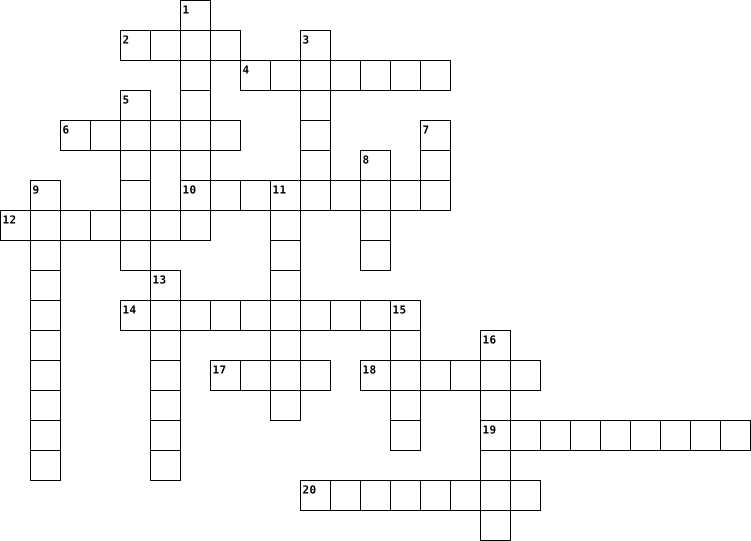
Across
- atomic number
- metals
- anion
- neutrons
- protons
- nonmetals
- periodic table
- alkali metals
- mixture
- hydrogen
Down
- states of matter
- oxidation
- structure
- plasma
- atoms
- sublimation
- monoatomic
- chemical
- liquid
- electronegativity
20 Clues: anion • atoms • metals • plasma • liquid • protons • mixture • neutrons • chemical • hydrogen • oxidation • structure • nonmetals • monoatomic • sublimation • atomic number • alkali metals • periodic table • states of matter • electronegativity
The periodic table! 2021-08-05

Across
- The symbol of the element with atomic number 10 in the periodic table.
- Atoms that have the same number of protons are of the same ____________.
- The name of the element with atomic number 197 in the periodic table.
- The name of the particle that has a positive charge and we can find in the nucleus.
Down
- The mass number of Lithium (symbol Li) in the periodic table.
- The symbol of the element with atomic number 2 in the periodic table.
- The atomic number of Oxygen (symbol O) in the periodic table.
- The name of the element with atomic number 26 in the periodic table.
8 Clues: The mass number of Lithium (symbol Li) in the periodic table. • The atomic number of Oxygen (symbol O) in the periodic table. • The name of the element with atomic number 26 in the periodic table. • The symbol of the element with atomic number 2 in the periodic table. • The name of the element with atomic number 197 in the periodic table. • ...
Chemistry 2017-02-17

Across
- The smallest unit of a chemical compound
- The vertical lines of the Periodic Table
- The element's electrons on the outer rim
- The number that tells how much an atom in the element weighs
- The way that elements are organized in their groups
Down
- The horizontal rows on the Periodic Table
- This rule states that an element has to have 8 valence electrons to make a chemical bond
- Elements that can be found on the left/middle of the Periodic Table
- The number that tells how many protons an element has
- Elements that can be found on the right side of the Periodic Table
10 Clues: The smallest unit of a chemical compound • The vertical lines of the Periodic Table • The element's electrons on the outer rim • The horizontal rows on the Periodic Table • The way that elements are organized in their groups • The number that tells how many protons an element has • The number that tells how much an atom in the element weighs • ...
elements 2022-05-09

Across
- a mixture that never settles and cannot be seen with a microscope
- two+ different elements that combine by a chemical change and create something with new and different physical/chemical characteristics.
- a mixture with larger particles than a solution but still small enough that they will not settle
- substance that cannot be broken down any further while still maintaining its original properties
- the creator of the periodic table
- the columns on the periodic table
Down
- A combination of two or more materials that are not chemically combined
- What forms when two or more atoms combine
- first element on the periodic table
- the rows on the periodic table
10 Clues: the rows on the periodic table • the creator of the periodic table • the columns on the periodic table • first element on the periodic table • What forms when two or more atoms combine • a mixture that never settles and cannot be seen with a microscope • A combination of two or more materials that are not chemically combined • ...
Periodic Table Crossword 2023-03-12

Across
- number Increases from left to right on the table
- Represents a different class of elements
- Located on the right side of the table
- Rows in the periodic table
- He created the first periodic table
Down
- Element with the simplest atom
- All actinides are _______?
- The most reactive nonmetal
- metals Reactive soft, shiny metals not in nature
- The table has this many periods
10 Clues: All actinides are _______? • The most reactive nonmetal • Rows in the periodic table • Element with the simplest atom • The table has this many periods • He created the first periodic table • Located on the right side of the table • Represents a different class of elements • number Increases from left to right on the table • metals Reactive soft, shiny metals not in nature
The Stone Age Perfect 10 Crossword 2022-12-21

Across
- table Table of elements
- mass A Elements mass
- and object that is not a good conductor, easy to break, and dull.
- A shiny and malleable
- Columns on the periodic table
Down
- number A Elements number
- A horizontal line on the periodic table
- the measure of the ease at which an electric charge or heat can pass through a material.
- Easy to bend
- Easily breakable
10 Clues: Easy to bend • Easily breakable • A shiny and malleable • table Table of elements • mass A Elements mass • number A Elements number • Columns on the periodic table • A horizontal line on the periodic table • and object that is not a good conductor, easy to break, and dull. • the measure of the ease at which an electric charge or heat can pass through a material.
Periodic Table and Its Trends 2024-05-08

Across
- poor conductor,not malleable or ductile, brittle
- easily hammered into sheets
- ______ metals; group 1
- another word for breaks easily
- group 18
- have characteristics of both metals and nonmetals
- columns on a periodic table that have similar characteristics
- metalloids are found along this zigzag
- rows on a periodic table
Down
- groups 3-12
- good conductor,malleable,ductile
- ________ _____ metals; group 2
- another word for group (Boron ______)
- group 17
- material that electricity and heat don't pass through very well
- being able to change shape without breaking
- material that electricity and heat pass through
17 Clues: group 17 • group 18 • groups 3-12 • ______ metals; group 1 • rows on a periodic table • easily hammered into sheets • ________ _____ metals; group 2 • another word for breaks easily • good conductor,malleable,ductile • another word for group (Boron ______) • metalloids are found along this zigzag • being able to change shape without breaking • ...
Matter Key Terms 2021-02-16

Across
- The wide spreading of something
- A representative character
- Anything that has mass and volume and takes up space
- The smallest particle that can exist
- A tiny portion of matter
- The total amount of protons and neutrons in a nucleous
- A solid conductive material
- A thing that is composed of 2 or more elements
- An essential part of something molecules A group of atoms
- Any of the elements in group VIIA on the periodic table
- An intermediate property, that has some metallic properties
- Smaller than or occurring in an atom
- A stable particle with positive
- many protons it has
- A capability to perform work
- A metal made by combining 2 or more metallic elements
- An ordered table of the ordered elements
Down
- A dense organelle that contains dna
- Any of the elements in group IA on the periodic table
- A number of things
- A large gathering of things
- The number of protons in an atom nucleus
- The identity of an element depending on
- Any of the elements in group IIA on the periodic table
- A stable particle with negative electricity
- The theory that explains the physical properties of matter
- Movement of solvent molecules through a selective permeable region
- A substance that is not metal
- A particle without an electric charge
- A portion of time
30 Clues: A portion of time • A number of things • many protons it has • A tiny portion of matter • A representative character • A large gathering of things • A solid conductive material • A capability to perform work • A substance that is not metal • The wide spreading of something • A stable particle with positive • A dense organelle that contains dna • The smallest particle that can exist • ...
Chemistry Crossword 2017-11-16

Across
- catalyst involved in chemical reactions in living things
- metal the first column of the periodic table excluding hydrogen,that a really reactive in air and water
- at table in which elements are organized by their physical and chemical properties
- chemical change that occurs when oxygen in the air reacts with a metal
- a pure substance formed when at least on metal and one non metal combine
- ability to pound and roll into flat sheets
- neutral particle in the nucleus of an atom
- workplace hazardous information material system
- the degree to which a specified material conducts electricity
- Mass of Reactants= Mass of Products
- group 18 in periodic table, they are the most stable and nonreactive elements.
- substance that helps a chemical reaction proceed more quickly
- horizontal row of elements in the periodic table
Down
- invisible negatively charged particle that orbits the nucleus of and atom
- a pure substance formed when two non metals combine
- element that has both metallic and non metallic properties
- can be stretched into wire
- the mass of an element measured in amu
- chemical reaction that absorbs energy
- chemical reaction that releases energy
- what everything is made up of
- shininess of a metal
- Irreversible change
- number of protons in the nucleus of one atom of an element
- positively charged particle in the nucleus of an atom
25 Clues: Irreversible change • shininess of a metal • can be stretched into wire • what everything is made up of • Mass of Reactants= Mass of Products • chemical reaction that absorbs energy • the mass of an element measured in amu • chemical reaction that releases energy • ability to pound and roll into flat sheets • neutral particle in the nucleus of an atom • ...
Atomic Structure 2020-06-29

Across
- graphic arranging all elements in a logical order
- rows in the periodic table
- equal to the number of protons
- columns in the period table
- substance containing multiple compounds
- number written below each elemental symbol on the periodic table
- different type of atoms
- equal to the total number of protons and neutrons
Down
- the fundamental unit of all matter
- energy level that negatively charged particles orbit in
- a variant of an element with a different atomic mass
- uncharged particle residing in the nucleus of an atom
- positively charged subatomic particle
- cluster of subatomic particles in the centre of an atom
- orbits the nucleus in particular energy levels
- substance containing multiple elements
16 Clues: different type of atoms • rows in the periodic table • columns in the period table • equal to the number of protons • the fundamental unit of all matter • positively charged subatomic particle • substance containing multiple elements • substance containing multiple compounds • orbits the nucleus in particular energy levels • graphic arranging all elements in a logical order • ...
Periodic Table of Elements 2025-01-28

Across
- What does the chemical symbol H stand for?
- What are the vertical columns on the periodic called?
- The Modern Periodic Table of Elements is arranged by(2)
- Metals are found on the ______________ side of the periodic table.
- What does the chemical symbol Na stand for?
Down
- If there are 8 protons what element does it identify?
- What is the organizational system or chart for elements?
- Which element is found in period 3 group 2?
- This element is in pencils
- What do you call the horizontal row of elements in a periodic table of elements?
10 Clues: This element is in pencils • What does the chemical symbol H stand for? • Which element is found in period 3 group 2? • What does the chemical symbol Na stand for? • If there are 8 protons what element does it identify? • What are the vertical columns on the periodic called? • The Modern Periodic Table of Elements is arranged by(2) • ...
Desrae's Science Puzzle 2021-02-16

Across
- a group in the periodic table consisting of five chemically related elements
- A period in the periodic table is a row of chemical elements
- metal any of the six chemical elements that make up Group 1 (Ia) of the periodic table
- a minute portion of matter
- everything around you
- a chemical substance composed of many identical molecules composed of atoms from more than one element held together by chemical bonds
- a stable subatomic particle occurring in all atomic nuclei, with a positive electric charge equal in magnitude to that of an electron, but of opposite sign
- a stable subatomic particle with a charge of negative electricity, found in all atoms and acting as the primary carrier of electricity in solids.
- smaller than or occurring within an atom
- admixture of metals
Down
- a process by which molecules of a solvent tend to pass through a semipermeable membrane from a less concentrated solution into a more concentrated one
- the capacity of doing work
- earth shiny, silvery-white, and somewhat reactive metals at standard temperature and pressure
- a type of chemical element which has a preponderance of properties in between, or that are a mixture of, those of metals and nonmetals
- a column in the periodic table of the chemical elements
- a pure substance consisting only of atoms that all have the same numbers of protons in their atomic nuclei
- spreading something more widely
- Chemical symbols are abbreviations used in chemistry for chemical elements, functional groups and chemical compounds
- An atom is the smallest unit of ordinary matter that forms a chemical element
- a subatomic particle of about the same mass as a proton but without an electric charge, present in all atomic nuclei except those of ordinary hydrogen
20 Clues: admixture of metals • everything around you • the capacity of doing work • a minute portion of matter • spreading something more widely • smaller than or occurring within an atom • a column in the periodic table of the chemical elements • A period in the periodic table is a row of chemical elements • ...
Chemistry Basics 2025-10-01

Across
- The model of the atom that has electrons orbiting the nucleus.
- This is the last name of the person who had the first widely accepted atomic theory.
- The state that electrons are in when they gain energy and move away from the nucleus.
- The name for rows on the periodic table.
- Some elements located on either side of the "stair step" on the periodic table.
- A solution that is full of solute.
- A positively charged particle in the atom.
- Discovered the nucleus in his famous Gold Foil experiment.
- The scientist who suggested electrons were in energy levels orbiting the nucleus.
- A substance that has one thing that traps and suspends another.
- The smallest subatomic particle, found in energy levels around the nucleus.
- A measure of the amount of mass in a given amount of volume.
Down
- A measure of how fast something will heat up or cool down.
- The name for elements in the first group on the periodic table.
- The name for the electrons in the outermost energy level.
- The model of the atom that describes electrons as being tiny and indivisible.
- This element has 12 protons.
- The state that electrons are in when they are in the lowest energy level possible.
- A process that uses boiling points to separate substances.
- These elements have full outermost shells and do not react.
- Atoms of the same element with a different number of neutrons.
- The model of the atom that is mathematical.
- Like charges do this to each other.
- A place in the atom where pairs of electrons are likely to be found.
- The father of the modern periodic table.
25 Clues: This element has 12 protons. • A solution that is full of solute. • Like charges do this to each other. • The name for rows on the periodic table. • The father of the modern periodic table. • A positively charged particle in the atom. • The model of the atom that is mathematical. • The name for the electrons in the outermost energy level. • ...
Atom and Periodic Table stuff 2025-12-09

Across
- Good for your bones.
- The first element of the periodic table.
- The first man-made element.
- The 4 kinds of matter are made of Platonic solids that can be divided into triangles.
- He conceptualized the mole.
- The last element of the periodic table.
- You can find it in bananas.
- Used in wiring and for making alloys like bronze and brass..
- His atomic model looks like a miniature solar system.
- He became known as the Father of Chemistry.
- 67 Ag
- MSG but no S.
- They perfected the use of steel and iron and manufactured glass, dyes, cement, solutions for textiles, and soap.
- This atomic model resembles a cake with raisins embedded in it.
- They adapted their own processes for metal, ceramic materials and on finding minerals, plants and substance for longer life.
- His periodic table became the basis for the modern periodic table.
- He found a relationship between the wavelengths of x-rays emitted by the element and its atomic number.
Down
- Used to inflate balloons.
- The most abundant element in the atmosphere.
- A metal that is liquid at room temperature.
- Element that rhymes with alimony.
- In the quantum model, there are regions of space where you are likely to find electrons.
- Element named after a dwarf planet.
- An extremely unreactive element.
- They used techniques from the Mesopotamians and perfected the use of bronze, dye, and glass that the Greeks copied later.
- Displayed as the amount of protons in the nucleus of an atom.
- Used to disinfect swimming pools.
- A protoscience. Because of Aristotle's ideas, it became popular in the Western world.
- The middle of an atom.
- Pamplantsa pala 'to?
30 Clues: 67 Ag • MSG but no S. • Good for your bones. • Pamplantsa pala 'to? • The middle of an atom. • Used to inflate balloons. • The first man-made element. • He conceptualized the mole. • You can find it in bananas. • An extremely unreactive element. • Element that rhymes with alimony. • Used to disinfect swimming pools. • Element named after a dwarf planet. • ...
Year 8 End of year Assessment Crossword 2026-05-19

Across
- Elements that take part in lots of chemical reactions
- Organisms that eat other organisms as food
- The way in which living organisms depend on each other to survive, grow , and reproduce
- The area in which an organism lives
- Elements on the left of the stepped line of the periodic table.
- An animal that eats other animals
- The conditions found in a habitat
- When animals move somewhere warmer or with more food
- The collection of the different types of organism present in an ecosystem
- A horizontal row of the Periodic Table
- Elements near the stepped line of the Periodic Table are metalloids
- Organism that makes its own food by photosynthesis
Down
- The build up of toxic chemicals inside organisms in a food chain
- A particular place or role that an organism has in an ecosystem
- Organisms that have lots of characteristics in common, and can mate to produce fertile offspring
- Another name for the group 7 elements
- A vertical column of the periodic table. The elements have similar properties.
- Elements that take part in very few chemical reactions
- The variety of organisms living in an area
- Characteristic that helps an organism to survive in its environment
- Section of DNA that contains the information for a characteristic
- When animals sleep through winter in order to survive
- The mass of a material in a certain volume
- When no more individual species are left anywhere in the world
- Chemical that contains all the information needed to make an organism
- This happens when there are not enough resources available
- An animal that is eaten by another animal
- Long strand of DNA, which contains many genes
28 Clues: An animal that eats other animals • The conditions found in a habitat • The area in which an organism lives • Another name for the group 7 elements • A horizontal row of the Periodic Table • An animal that is eaten by another animal • The variety of organisms living in an area • Organisms that eat other organisms as food • The mass of a material in a certain volume • ...
Science 2021-02-24

Across
- Either positive negative or neutral
- a row in the periodic table
- ion composed of more than one atom
- a collection of chemically connected atoms.
- A bond including a non metal and a metal.
- made of protons, neutrons and electrons, element
- Negatively charged molecule
- positively charged ion
- collections of physically connected atoms.
- a material which is lustrous and has loose electrons
- the outermost shell in an atom
- the structure where atoms reside connected
- Neutral charged molecule in the nucleus
Down
- electron that sits in the valence shell
- a table that organises all the possible elements
- a column in the periodic table
- A bond including a non metal and a non metal.
- Positively charged molecule in the nucleus
- a material that has the opposite properties of metals
- A bond with two metals
- where the electrons orbit the nucleus
- negatively charged ion
22 Clues: A bond with two metals • positively charged ion • negatively charged ion • a row in the periodic table • Negatively charged molecule • a column in the periodic table • the outermost shell in an atom • ion composed of more than one atom • Either positive negative or neutral • where the electrons orbit the nucleus • electron that sits in the valence shell • ...
onic 2025-12-03

Across
- Elements that do not easily react
- Scientist who proposed that electrons move in orbits
- Particles found in the nucleus
- Table organizing elements
- Atoms with different neutron numbers
- Space where electrons are found
- Elements created artificially in labs
- Protons have this type of charge
- Positively charged particle
- Each element has a unique _ number
- Total protons + neutrons
- Organized elements by atomic number (scientist)
- Center of the atom
- Atoms of the same element bonded together (ex: O₂)
Down
- Energy level around nucleus
- Horizontal rows in periodic table
- Combination of two or more atoms
- Vertical columns in periodic table
- Process of creating new elements in stars
- Negatively charged ion
- Smallest particle of a compound
- Neutral particle in an atom
- Number of protons in an atom
- Smallest unit of matter
- Particles orbiting nucleus
- Negatively charged particle
- Discovered the electron
- Tiny solid sphere model scientist (last name)
28 Clues: Center of the atom • Negatively charged ion • Smallest unit of matter • Discovered the electron • Total protons + neutrons • Table organizing elements • Particles orbiting nucleus • Energy level around nucleus • Neutral particle in an atom • Negatively charged particle • Positively charged particle • Number of protons in an atom • Particles found in the nucleus • ...
Nuclear Energy 2023-11-01

Across
- Time required for half of a sample to decay
- Most dangerous type of radiation
- Large atom splits into 2 or more smaller atoms and releases 2 or 3 neutrons
- Positive Charge, amount of this is Atomic Number
- A series of events is caused by the previous one
- Contains protons and neutrons, center of an atom
- Weakest type of radioactive decay emits this
- Neutral Charge
- Nuclei of 2 atoms combine
Down
- When the mass is different than what is shown on the periodic table
- The weight of an atom shown on the periodic table
- How elements are organized and identified on the periodic table
- When an atom emits mass and energy, also called radiation
- Negative charge, when neutron turns into proton, this is released
14 Clues: Neutral Charge • Nuclei of 2 atoms combine • Most dangerous type of radiation • Time required for half of a sample to decay • Weakest type of radioactive decay emits this • Positive Charge, amount of this is Atomic Number • A series of events is caused by the previous one • Contains protons and neutrons, center of an atom • ...
Periodic Table 2023-03-02

Across
- The elements in group 1.
- The elements touching the stairstep line.
- The elements in group 18.
- Something that repeats at regular intervals.
- The elements to the left of the stairstep line.
- The elements to the right of the stairstep line.
- Elements have repeating patterns of properties
Down
- The elements in group 2.
- The elements in group 17.
- The elements in groups 3-12.
- Vertical columns on the periodic table.
- Horizonal rows on the periodic table.
12 Clues: The elements in group 2. • The elements in group 1. • The elements in group 17. • The elements in group 18. • The elements in groups 3-12. • Horizonal rows on the periodic table. • Vertical columns on the periodic table. • The elements touching the stairstep line. • Something that repeats at regular intervals. • Elements have repeating patterns of properties • ...
Periodic Table- Sauter 2019-09-22

Across
- Metalloids, Gases, and Nonmetals- not normally ions unless you put other ions with them, also, they are related to metals.
- and Actinides- they are inner transition metals and are related to group 2 elements.
- Mandeleev- the creator of the periodic table.
- Metals- beryllium, magnesium, calcium, strontium, barium, and radium.
- the vertical columns of elements in the periodic table.
Down
- Gases- helium, neon, argon, krypton, xenon, and randon.
- Metals- elements that are metallic that are the transition between the two sides of the periodic table.
- fluorine, chlorine, bromine, iodine, and astatine.
- the horizontal rows of elements in the periodic table.
- Metals- lithium, sodium, potassium, rubidium, cesium, and francium.
10 Clues: Mandeleev- the creator of the periodic table. • fluorine, chlorine, bromine, iodine, and astatine. • the horizontal rows of elements in the periodic table. • Gases- helium, neon, argon, krypton, xenon, and randon. • the vertical columns of elements in the periodic table. • Metals- lithium, sodium, potassium, rubidium, cesium, and francium. • ...
Unit 4 vocab 2023-11-07

Across
- located on the left side of the periodic table
- vertical column in the periodic table
- a chemical substance that is made up of two or more diffrent kinds of atoms bonded together
- the particle known as the building block of matter
Down
- the groups of elements down
- located in a diagonal line near the middle of the periodic table
- horizontal row on the periodic table
- the smallest particle of any pure element
- smallest particle of a substance that makes up of two o more atoms
9 Clues: the groups of elements down • horizontal row on the periodic table • vertical column in the periodic table • the smallest particle of any pure element • located on the left side of the periodic table • the particle known as the building block of matter • located in a diagonal line near the middle of the periodic table • ...
Nuclear Energy 2023-11-06

Across
- How elements are organized and identified on the periodic table
- When an atom emits mass and energy, also called radiation
- Contains protons and neutrons, center of an atom
- A series of events is caused by the previous one
- Large atom splits into 2 or more smaller atoms and releases 2 or 3 neutrons
- When the mass is different than what is shown on the periodic table
- Time required for half of a sample to decay
- Neutral Charge
Down
- Most dangerous type of radiation
- Nuclei of 2 atoms combine
- Negative charge, when neutron turns into proton, this is released
- Positive Charge, amount of this is Atomic Number
- Weakest type of radioactive decay emits this
- The weight of an atom shown on the periodic table
14 Clues: Neutral Charge • Nuclei of 2 atoms combine • Most dangerous type of radiation • Time required for half of a sample to decay • Weakest type of radioactive decay emits this • Positive Charge, amount of this is Atomic Number • Contains protons and neutrons, center of an atom • A series of events is caused by the previous one • ...
M.P.T of elements 2025-10-06

Across
- the scientist who discovered the protons in the nucleus
- The 18th group which is called inert gases.
- the block which is located below the M.P.T
- The 7th group which is called Halogens.
- the block which is located in the far left of the M.P.T
- elements elements in d-block
- the scientist who made the first true periodic table
Down
- The 2nd group which is called Alkaline Earth metals.
- the block which is located in the middle of the M.P.T
- the horizontal rows in the periodic table
- the vertical columns in the periodic table
- the block which is located in the far right of the M.P.T
- The first group which is called Alkali metals.
- the scientist who arranged elements ascendingly according to atomic number
14 Clues: elements elements in d-block • The 7th group which is called Halogens. • the horizontal rows in the periodic table • the vertical columns in the periodic table • the block which is located below the M.P.T • The 18th group which is called inert gases. • The first group which is called Alkali metals. • The 2nd group which is called Alkaline Earth metals. • ...
The Stone Age Perfect 10 Crossword 2022-12-21

Across
- Columns on the periodic table
- mass A Elements mass
- table Table of elements
- and object that is not a good conductor, easy to break, and dull.
Down
- A horizontal line on the periodic table
- Easy to bend
- the measure of the ease at which an electric charge or heat can pass through a material.
- Easily breakable
- number A Elements number
- A shiny and malleable
10 Clues: Easy to bend • Easily breakable • A shiny and malleable • mass A Elements mass • table Table of elements • number A Elements number • Columns on the periodic table • A horizontal line on the periodic table • and object that is not a good conductor, easy to break, and dull. • the measure of the ease at which an electric charge or heat can pass through a material.
Periodic table 2022-03-28

Across
- essential for cell growth and division, immune function
- a chemical element with the symbol F
- chemical element with the symbol H and atomic number 1
- a lightweight silvery white metal of main Group 13 (IIIa, or boron group) of the periodic table
- used in steels to increase hardness and strength and in lamp filaments
- a naturally-occurring radioactive gas that can cause lung cancer
Down
- The metal itself which is soft, white
- the most abundant mineral in the body
- chemical element with the symbol C
- chemical element, ferromagnetic metal of Group 9 (VIIIb) of the periodic table
- a trace element that is naturally present in some foods
- Group 11, Atomic Number 79, d-block,
12 Clues: chemical element with the symbol C • a chemical element with the symbol F • Group 11, Atomic Number 79, d-block, • The metal itself which is soft, white • the most abundant mineral in the body • chemical element with the symbol H and atomic number 1 • essential for cell growth and division, immune function • a trace element that is naturally present in some foods • ...
Periodic table 2022-03-28

Across
- chemical element with the symbol H and atomic number 1
- a lightweight silvery white metal of main Group 13 (IIIa, or boron group) of the periodic table
- The metal itself which is soft, white
- Group 11, Atomic Number 79, d-block,
- chemical element with the symbol C
- a trace element that is naturally present in some foods
- used in steels to increase hardness and strength and in lamp filaments
Down
- chemical element, ferromagnetic metal of Group 9 (VIIIb) of the periodic table
- a chemical element with the symbol F
- a naturally-occurring radioactive gas that can cause lung cancer
- the most abundant mineral in the body
- essential for cell growth and division, immune function
12 Clues: chemical element with the symbol C • a chemical element with the symbol F • Group 11, Atomic Number 79, d-block, • the most abundant mineral in the body • The metal itself which is soft, white • chemical element with the symbol H and atomic number 1 • essential for cell growth and division, immune function • a trace element that is naturally present in some foods • ...
Periodic Table 2022-02-03

Across
- "____" foil
- Implants are made out of this
- We breathe this.
- Leprecans favorite element
- The chemical symbol is Y
- Salty!
Down
- Many people have an allergy to this element (me)
- Pools are filled with it
- Sounds like what they put on your teeth at the dentist
- The "___" man from the Wizard of Oz
- Has an X as the first letter of the Chemical Number
- Sounds like Gallions from Harry Potter
12 Clues: Salty! • "____" foil • We breathe this. • Pools are filled with it • The chemical symbol is Y • Leprecans favorite element • Implants are made out of this • The "___" man from the Wizard of Oz • Sounds like Gallions from Harry Potter • Many people have an allergy to this element (me) • Has an X as the first letter of the Chemical Number • ...
Periodic Table 2022-01-14

Across
- We need it to live
- the best day of the week
- what pennies are made of
- its a strong metal
- A high school
- everyone's favorite school subject
Down
- can be deadly
- Signs can have it
- A pirates favorite element
- It smells
- a class you take in school
- Not as good as gold but still just as shinny
12 Clues: It smells • can be deadly • A high school • Signs can have it • We need it to live • its a strong metal • the best day of the week • what pennies are made of • A pirates favorite element • a class you take in school • everyone's favorite school subject • Not as good as gold but still just as shinny
periodic table 2021-06-25

Across
- element number 54 (5)
- element number 69 (7)
- element number 94 (9)
- element number 3 (7)
- element number 80 (7)
- element number 47 (6)
Down
- element number 50 (3)
- element number 106 (10)
- element number 79 (4)
- element number 81(8)
- element number 18 (5)
- element number 52 (9)
12 Clues: element number 81(8) • element number 3 (7) • element number 50 (3) • element number 54 (5) • element number 79 (4) • element number 18 (5) • element number 69 (7) • element number 52 (9) • element number 94 (9) • element number 80 (7) • element number 47 (6) • element number 106 (10)
Periodic Table 2020-06-04

Across
- N
- Si
- Ca
- Cu
- Mg
Down
- Cl
- K
- Zn
- H
- Li
- B
- Na
12 Clues: K • H • N • B • Cl • Zn • Si • Li • Na • Ca • Cu • Mg
Periodic table 2020-11-21

Across
- contains 15 protons
- fire expels it
- the symbole means yes in italian
- the symbol is pronounced bee
- look likes metal but it isn’t
- produces red orange color
Down
- breath in
- contains 19 protons
- magnet
- is used to clean water
- has 3 protons
- the symbol is He
12 Clues: magnet • breath in • has 3 protons • fire expels it • the symbol is He • contains 15 protons • contains 19 protons • is used to clean water • produces red orange color • the symbol is pronounced bee • look likes metal but it isn’t • the symbole means yes in italian
Periodic table 2020-11-21

Across
- has 3 protons
- the symbol is He
- produces red orange color
- breath in
- contains 19 protons
Down
- look likes metal but it isn’t
- is used to clean water
- the symbole means yes in italian
- contains 15 protons
- the symbol is pronounced bee
- fire expels it
- magnet
12 Clues: magnet • breath in • has 3 protons • fire expels it • the symbol is He • contains 15 protons • contains 19 protons • is used to clean water • produces red orange color • the symbol is pronounced bee • look likes metal but it isn’t • the symbole means yes in italian
Periodic table 2020-11-21

Across
- the symbol is pronounced bee
- contains 19 protons
- has 3 protons
- contains 15 protons
- the symbole means yes in italian
- produces red orange color
Down
- magnet
- fire expels it
- look likes metal but it isn’t
- is used to clean water
- the symbol is He
- breath in
12 Clues: magnet • breath in • has 3 protons • fire expels it • the symbol is He • contains 19 protons • contains 15 protons • is used to clean water • produces red orange color • the symbol is pronounced bee • look likes metal but it isn’t • the symbole means yes in italian
Periodic Table 2022-12-05

Across
- Group 1, used in salt
- One of the two liquid elements
- Group 1 period 1
- a metal used in making wires and pennies
- Group 18, period 4
Down
- yellow, flaky and poisonous to touch, nonmetal
- nonmetal that is used in blowing up baloons
- metal used in jewelry and glitters white
- used in thermometers
- the first metalloid you look for
- a noble gas used in lighting up signs
- Group 11, period 6
12 Clues: Group 1 period 1 • Group 11, period 6 • Group 18, period 4 • used in thermometers • Group 1, used in salt • One of the two liquid elements • the first metalloid you look for • a noble gas used in lighting up signs • metal used in jewelry and glitters white • a metal used in making wires and pennies • nonmetal that is used in blowing up baloons • ...
Periodic table 2023-07-27

Across
- A lot of Dioxide form of this element is emitted to create pollution
- Found in bananas
- Found in thermometers
- You need it to live
- Makes the balloon go up to the moon
Down
- Gives you strong bones when you drink milk
- Found in pool water
- Found in the air
- A soft silvery metal that you should not consume because of how toxic it is (number 56)
- The first element
- Found in toothpaste
- Chips and salt
12 Clues: Chips and salt • Found in the air • Found in bananas • The first element • Found in pool water • Found in toothpaste • You need it to live • Found in thermometers • Makes the balloon go up to the moon • Gives you strong bones when you drink milk • A lot of Dioxide form of this element is emitted to create pollution • ...
Periodic Table 2025-01-19

Across
- ___ Metals, they constitute Group 1 on the Periodic Table
- ___ Gases, they comprise Group 18 of the Periodic Table
- Elements that have properties of both metals and nonmetals
- The quality of an atom that describes how reactive it is
- Elements form these when they come together and share electrons
- ___ Earth Metals, they make up Group 2 on the Periodic Table
- These are elements that lack metallic qualities and are observed to be anywhere from colorful gases to shiny crystals
Down
- Elemental group whose elements contain 7 valence electrons (F, Cl, I, etc.)
- ___ Electrons located on the outermost shell of an atom
- The series of elements with atomic numbers 89-102
- ___ Metals, they have many favorable properties/uses and some examples are Gold, Silver, Copper, Titanium, and Cobalt
- The series of elements with atomic numbers 57-70
12 Clues: The series of elements with atomic numbers 57-70 • The series of elements with atomic numbers 89-102 • ___ Electrons located on the outermost shell of an atom • ___ Gases, they comprise Group 18 of the Periodic Table • The quality of an atom that describes how reactive it is • ___ Metals, they constitute Group 1 on the Periodic Table • ...
periodic table 2026-02-11

Across
- a column of elements with similar properties on the Periodic Table
- a property used to describe a material that breaks or fractures with a small amount of force
- a material that prevents heat or electricity from easily passing through
- the most reactive metal elements
- an element characterized by physical properties that include shininess, malleability, ductility and conductivity
- a property used to describe a material that can be drawn into a long wire
Down
- A row of the periodic table
- a property used to describe a material that can be pounded into shapes
- an element characterized by physical properties that include dull, brittle, and poor conductivity
- The most reactive nonmetal elements found in group 17 of the periodic table
- the average mass of all the atoms of an element
- the chart of the elements showing the repeating pattern of their properties
12 Clues: A row of the periodic table • the most reactive metal elements • the average mass of all the atoms of an element • a column of elements with similar properties on the Periodic Table • a property used to describe a material that can be pounded into shapes • a material that prevents heat or electricity from easily passing through • ...
Periodic Table 2026-02-11

Across
- material used to help cook
- Source of money
- In a pencil
- Used for baking
- a planet
- What we have in our body
Down
- found out hot springs
- Used for a light
- Rich people use
- Makes your voice sound weird when inhaling
- used to clean pools
- What we breath
12 Clues: a planet • In a pencil • What we breath • Rich people use • Source of money • Used for baking • Used for a light • used to clean pools • found out hot springs • What we have in our body • material used to help cook • Makes your voice sound weird when inhaling
Chemistry Unit 2 Vocab 2022-08-31

Across
- an element that tends to gain one or more valence electrons in a chemical reaction
- no matter is ever created or destroyed in any chemical reaction
- another name for chemical periodicity
- the tiny, positively charged core of an atom, made up of protons and neutrons
- any element in groups IB through VIIIB of the periodic table
- exactly one-twelfth the mass of a Carbon-12 atom and equal to 1.66054x10^-24 grams, a.k.a. dalton
- different forms of an element having the same number of protons but different numbers of neutrons
- a column of the periodic table; these elements have similar valence electron configurations
- any atom or group of atoms carrying either a net negative or a net positive electrical charge
- a general name for any group VIIA element; the most reactive nonmetals that are missing 1 valence electron
- an electron in the outermost shell of an atom
- a subatomic particle that has a mass approximately equal to that of the hydrogen atom, carries zero electrical charge, and is located in the nucleus of an atom
- horizontal rows on the periodic table; these elements typically have the same number of electron shells
- a unit of concentration for solutions, used most frequently for solutions made up of a solid solute dissolved in a liquid solvent (grams solute/grams solution)x100
- a unitless number expressing the mass of a particular atom relative to the mass of an atom of carbon-12, which is arbitrarily assigned a mass of exactly 12
- elements with atomic numbers 90 through 103
- any element in group VIIIA of the periodic table
- a table of the elements arranged in order of increasing atomic number
- the amount of energy needed to remove an electron from the outermost shell of a neutral atom
Down
- the theory of matter with 5 points
- a helium nucleus ejected from some radioactive nuclei during a process known as alpha decay
- elements spaced at periodic intervals based on atomic number have similar chemical properties
- a general name for any element in group VIA
- the amounts of the elements in a compound are determined by the identity of the compound
- an ion with a positive charge
- an ion that has a negative charge
- elements 58-71 on the periodic table, a.k.a. rare earth metals
- a general name for any element in group IA; the most reactive metals that have only 1 valence electron
- a general name for any element in group IIA
- a subatomic particle that has a mass approximately equal to that of the hydrogen atom, carries an electrical charge of +1, and is located in the nucleus of an atom
- an element whose properties are intermediate between those of metals and those of nonmetals; typically the physical properties of metals and chemical properties of nonmetals
- elements arranged on his version of the periodic table have properties similar to those of the elements eight positions to the left and eight positions to the right, a.k.a. the law of octaves
- an element that tends to lose one or more valence elections in chemical reactions
- Any elements in groups IA, IIA, IIIA, IVA, VA, VIA, VIIA, and VIIIA of the periodic table
- the number of protons in the nucleus of an atom
- a subatomic particle that has a mass 1/1836 that of a Hydrogen atom, carries an electric charge of -1, and moves about at high velocity around the nucleus of an atom
- the number of protons plus neutrons in the nucleus of an atom
37 Clues: an ion with a positive charge • an ion that has a negative charge • the theory of matter with 5 points • another name for chemical periodicity • a general name for any element in group VIA • a general name for any element in group IIA • elements with atomic numbers 90 through 103 • an electron in the outermost shell of an atom • ...
leo chemistry project 2022-05-05

Across
- The number in a chemical equation that says how many atoms of an element there is
- Is equal to the atomic number
- A pure substance that cannot be broken down
- mass Is the sum of protons and neutrons
Down
- The rows on a periodic table
- The columns on a periodic table
- Represents an element
- The result of a chemical reaction
- table Organized chart of elements
- reaction A complete new substance
10 Clues: Represents an element • The rows on a periodic table • Is equal to the atomic number • The columns on a periodic table • The result of a chemical reaction • table Organized chart of elements • reaction A complete new substance • mass Is the sum of protons and neutrons • A pure substance that cannot be broken down • ...
Building Blocks of Chemistry 2025-01-29

Across
- What is He on the periodic table
- the periodic table is made up of
- when molecules have 2 or more different types of atoms
- what is H2O?
- all matter can be classified as a mixture or a _________
Down
- atoms that are grouped together
- has mass and takes up space
- what does the formula C6 H12 O6 make
- what is chlorine on the periodic table
- makes up matter
10 Clues: what is H2O? • makes up matter • has mass and takes up space • atoms that are grouped together • What is He on the periodic table • the periodic table is made up of • what does the formula C6 H12 O6 make • what is chlorine on the periodic table • when molecules have 2 or more different types of atoms • all matter can be classified as a mixture or a _________
Chemistry Crossword 2015-12-01

Across
- chemical combination of two or more elements in a specific ratio
- group 17 elements in the periodic table
- change that results when two or more substances react to create a different substance or substances
- group one elements in the periodic table not including hydrogen
- a solution in which water is the solvent
- mass of one atom of an element
- chemical reaction that absorbs energy
- catalyst involved in chemical reactions in living things
- chemical reaction that releases energy
- the smallest part of an element that is representative of that element
- number of protons in the nucleus of one atom of an element
- measure of atomic mass
Down
- a reaction that takes place when two or more substances react to form new substances
- group two elements in the periodic table
- invisible negatively charged particle that orbits the nucleus of an atom
- substance that helps a chemical reaction
- pure substance that cannot be broken down into other substances
- combination of symbols that represent a compound
18 Clues: measure of atomic mass • mass of one atom of an element • chemical reaction that absorbs energy • chemical reaction that releases energy • group 17 elements in the periodic table • group two elements in the periodic table • a solution in which water is the solvent • substance that helps a chemical reaction • combination of symbols that represent a compound • ...
Periodic Trends 2023-09-22

Across
- the distance from the nucleus of an ion up to which it has an influence on its electron cloud
- ions that are negatively charged
- patterns in elements on the periodic table
- characteristic of a substance that may be observed when it participates in a chemical reaction
- any substance that cannot be decomposed into simpler substances by ordinary chemical processes
- vertical division of a page or text
- tendency of an atom to attract electrons in a molecule
- amount of energy required to remove an electron from an isolated atom or molecule
- When an atom has an equal number of electrons and protons
- column in the periodic table of the chemical elements
Down
- arranges the chemical elements into rows and columns
- blocking of valence shell electron attraction by the nucleus, due to the presence of inner-shell electrons
- becoming smaller or fewer in size, amount, intensity, or degree
- measure of the size of an atom
- becoming greater in size, amount, or degree
- ions that are positively charged
- horizontal row of the periodic table
- horizontal arrangement of items
18 Clues: measure of the size of an atom • horizontal arrangement of items • ions that are negatively charged • ions that are positively charged • vertical division of a page or text • horizontal row of the periodic table • patterns in elements on the periodic table • becoming greater in size, amount, or degree • arranges the chemical elements into rows and columns • ...
science project 2023-04-20

Across
- element in group 1
- 1,2,12,13,14,15,16,17,18,horizontal
- 1-8, how many rings there are
- "lewis structure" represents valence electrons
- atoms share 2 pairs of electrons
- bond, shares electrons
- group 18 element
Down
- atoms share 3 pairs of electrons
- 2+ chemically combined electrons
- what is the ______ for carbon? C.
- an atom with a charge
- group 17 element
- Number of protons in nucleus
- bonding between elements opposite side or periodic table
- 1-7, horizontal on periodic table
15 Clues: group 17 element • group 18 element • element in group 1 • an atom with a charge • bond, shares electrons • Number of protons in nucleus • 1-8, how many rings there are • atoms share 3 pairs of electrons • 2+ chemically combined electrons • atoms share 2 pairs of electrons • what is the ______ for carbon? C. • 1-7, horizontal on periodic table • 1,2,12,13,14,15,16,17,18,horizontal • ...
8th 2024-04-08

Across
- negatively charged
- smallest part of the world
- side to side on the periodic table
- outermost electrons
- group of atoms bonded together
- found with electrons
- up and down on the periodic table
Down
- composed of different elements
- basic building blocks of life
- positively charged
- charge is neutral
- found with protons and neutrons
12 Clues: charge is neutral • negatively charged • positively charged • outermost electrons • found with electrons • smallest part of the world • basic building blocks of life • composed of different elements • group of atoms bonded together • found with protons and neutrons • up and down on the periodic table • side to side on the periodic table
The Periodic Table and its Trends 2025-05-05

Across
- It classifies elements based on the number of valence electrons it has, and the number of shells it has.
- These elements are located between groups three through twelve.
- Two or more of these elements form covalent bonds.
- All elements want to try to have this by gaining or losing electrons.
- As the number of valence electrons decreases this increases.
- These elements have a full outer shell.
Down
- These elements have two valence electrons in their outer shell.
- These elements are extremely reactive and contain only nonmetals.
- This feature of the Periodic Table is the amount of protons that an element has.
- Columns of the Periodic Table
- These elements have features of both metals and nonmetals.
- Rows of the Periodic Table
- These elements are great conductors of electricity when dissolved in water.
- The outer most electrons of an element.
- These elements are extremely reactive and contain only metals.
15 Clues: Rows of the Periodic Table • Columns of the Periodic Table • The outer most electrons of an element. • These elements have a full outer shell. • Two or more of these elements form covalent bonds. • These elements have features of both metals and nonmetals. • As the number of valence electrons decreases this increases. • ...
Chem Final Review Cross 1 2024-12-11

Across
- The smallest of the three subatomic particles in an atom
- SI base unit for time
- "His" number is the number of atoms in one mole
- Type of decay that emits only energy/light
- To lose electron(s) during a chemical reaction
Down
- Bond type where one atom takes the electrons of another
- A type III binary compound consists of two of these types of elements
- SI base unit for volume
- Name of group number 17 on the periodic table
- Type of decay that emits an electron
- Type of bond that forms when two atoms share electrons
- Name of the first group/family on the periodic table
- Smallest unit of any element that can exist
- An ion type on the periodic table with a negative charge
14 Clues: SI base unit for time • SI base unit for volume • Type of decay that emits an electron • Type of decay that emits only energy/light • Smallest unit of any element that can exist • Name of group number 17 on the periodic table • To lose electron(s) during a chemical reaction • "His" number is the number of atoms in one mole • ...
S1 Elements and the Periodic Table 2025-11-10

Across
- the element with the atomic number 22
- every element has a different ______ number
- what precious transition metal is used to make expensive jewellery (four letters)
- elements are grouped together in the periodic table because they have similar chemical _________
- if a compound name ends in ate, it must contain ________
- what are found on the periodic table
- a __________ contains different types of atoms which are not chemically joined
Down
- lithium, potassium and sodium belong to the group called the _______ metals
- the __________ are very reactive non-metals
- you can separate a mixture of iron and sulfur using a ______
- is carbon dioxide an element, compound or mixture?
- the element represented by the symbol Li
- carbon conducts electricity in the form of _________
- the rows in the periodic table are called ________
14 Clues: what are found on the periodic table • the element with the atomic number 22 • the element represented by the symbol Li • the __________ are very reactive non-metals • every element has a different ______ number • is carbon dioxide an element, compound or mixture? • the rows in the periodic table are called ________ • ...
Periodic Table Trends 2022-11-10

Across
- Table in which all elements are laid out in certain patterns
- Columns of the periodic table
- Inventor of the periodic table
- An atom or molecule with a net electric charge due to the loss or gain of one or more electrons
- model demonstrating the structure of an atom containing only chemical symbol and valence electrons
Down
- The electrons on the outermost ring of the atom's orbitals
- A model of an atom containing protons, neutrons and electrons organized on the atom's orbitals
- An element in which all life is based on
- Rows of the periodic table
- Tendency of a substance to react during a chemical reaction
10 Clues: Rows of the periodic table • Columns of the periodic table • Inventor of the periodic table • An element in which all life is based on • The electrons on the outermost ring of the atom's orbitals • Tendency of a substance to react during a chemical reaction • Table in which all elements are laid out in certain patterns • ...
Periodic Table Vocab 2020-12-02

Across
- An element in Group 8A of the periodic table
- any metal in Group 2A for the periodic table
- When the elements are arranged in order
Down
- an element that tends to have
- An element in an “A” group in the periodic table
- an element that tends to be a poor conductor of heat and electric current
- A nonmetal in Group 7A
- any metal in Group 1A in the periodic table
- One of a class of elements that are good conductors
9 Clues: A nonmetal in Group 7A • an element that tends to have • When the elements are arranged in order • any metal in Group 1A in the periodic table • An element in Group 8A of the periodic table • any metal in Group 2A for the periodic table • An element in an “A” group in the periodic table • One of a class of elements that are good conductors • ...
Daily Dose of Crossword 2017-04-02

Across
- negative
- found in nucleus, no charge
- vertical on periodic table
- group pf electrons
- contains protons and neutrons
- undergoes change during a reaction
- matter
Down
- electron located outside nucle
- formed from chemical reactions
- positive charge, found in nucleus
- horizontal on periodic table
11 Clues: matter • negative • group pf electrons • vertical on periodic table • found in nucleus, no charge • horizontal on periodic table • contains protons and neutrons • electron located outside nucle • formed from chemical reactions • positive charge, found in nucleus • undergoes change during a reaction
Compounds, elements,mixtures and FUN!! 2021-11-20

Across
- 2 or more substances
- table
- on the periodic table
- like water
- like air
- like ice
Down
- has mass
- 2 or more elements
- group of atoms bonded together
- smallest unit
10 Clues: table • has mass • like air • like ice • like water • smallest unit • 2 or more elements • 2 or more substances • on the periodic table • group of atoms bonded together
Nomenclature Review Crossword 2020-03-05

Across
- An element with a positive charge.
- Two elements mixed to create a substance.
- ZnI
- The parts of the Periodic Table.
- The electrons on the outer most shell.
- The "weird" metals of the Periodic Table.
- Radium Oxide
- Sodium Fluoride
- The words at the end of oxide, mean more than one.
Down
- A metal and nonmetal mixed to make a compound.
- An element with a negative charge.
- Gallium Carbide
- The small particles that make up matter.
- KCl
- BeBr
- A compound of elements that have to or more nonmetals.
- Two nonmetals used to make a compound.
17 Clues: KCl • ZnI • BeBr • Radium Oxide • Gallium Carbide • Sodium Fluoride • The parts of the Periodic Table. • An element with a negative charge. • An element with a positive charge. • The electrons on the outer most shell. • Two nonmetals used to make a compound. • The small particles that make up matter. • Two elements mixed to create a substance. • The "weird" metals of the Periodic Table. • ...
Coulomb’s Law and Periodic Trends 2023-03-21

Across
- this means that a small amount of energy is required to remove an electron
- what occurs to the size of atoms as electrons become more attracted to the nucleus
- the type of force between two like charges
- the size of atoms with low ionization energy
- a predictable change in a particular direction on the periodic table
- attraction for electrons
- affects the electrostatic force between two charges
- what occurs to electronegativity from left to right on the periodic table
- what occurs to the size of an atom from top to bottom on the periodic table
- increases as the number of protons in the nucleus increases
Down
- positively charged particles in the nucleus
- affects the electrostatic force between two charges
- energy required to remove an electron
- increases from left to right on the periodic table
- states that the electrostatic force between two charges increases as the distance between them decreases
- force between charged particles
- this means that a large amount of energy is required to remove an electron
- what inner electrons do to valence electrons to push them further away from the nucleus
- the type of force between two oppositely charged particles
- what occurs to the electrostatic force between two charges when the distance between them increases
- electrons most attracted to the nucleus
21 Clues: attraction for electrons • force between charged particles • energy required to remove an electron • electrons most attracted to the nucleus • the type of force between two like charges • positively charged particles in the nucleus • the size of atoms with low ionization energy • increases from left to right on the periodic table • ...
Final For Science 2024-05-08

Across
- a negatively charged molecule
- a bond formed by shared electrons
- an element used to make car batteries
- a bond formed by opposing electrons,metal and nonmetal
- this element in the periodic table is used as a rocket fuel igniter
Down
- an electrically charged proton
- a positively charged molecule
- an element used to disinfect water
- a vertical row on the periodic table
- a horizontal row on the periodic table
10 Clues: a positively charged molecule • a negatively charged molecule • an electrically charged proton • a bond formed by shared electrons • an element used to disinfect water • a vertical row on the periodic table • an element used to make car batteries • a horizontal row on the periodic table • a bond formed by opposing electrons,metal and nonmetal • ...
Atomic Structure 2020-06-29

Across
- orbits the nucleus in particular energy levels
- substance containing multiple elements
- graphic arranging all elements in a logical order
- number written below each elemental symbol on the periodic table
- positively charged subatomic particle
- a variant of an element with a different atomic mass
- rows in the periodic table
- the fundamental unit of all matter
Down
- equal to the number of protons
- substance containing multiple compounds
- energy level that negatively charged particles orbit in
- cluster of subatomic particles in the centre of an atom
- uncharged particle residing in the nucleus of an atom
- columns in the period table
- equal to the total number of protons and neutrons
- different type of atoms
16 Clues: different type of atoms • rows in the periodic table • columns in the period table • equal to the number of protons • the fundamental unit of all matter • positively charged subatomic particle • substance containing multiple elements • substance containing multiple compounds • orbits the nucleus in particular energy levels • equal to the total number of protons and neutrons • ...
Periodic Table Crossword 2023-02-03

Across
- negative particle
- most abundant mineral in the human body
- form positive ions/has metallic bonds
- the basic unit of a chemical element
- uncharged atomic particle
- 17th group of the periodic table
- light and strong
- yellow-green gas at room temperature
Down
- made the periodic table of chemical elements
- central figure of atomic theory
- a group
- same number of protons/different number of neutrons
- physics particle
- doesn't produce electricity
- controls/regulates the activities of the cell
15 Clues: a group • physics particle • light and strong • negative particle • uncharged atomic particle • doesn't produce electricity • central figure of atomic theory • 17th group of the periodic table • the basic unit of a chemical element • yellow-green gas at room temperature • form positive ions/has metallic bonds • most abundant mineral in the human body • ...
Chemistry Extra credit (By Alejandro Maldonado Juncosa for the wonderful Dr. Fay) 2024-10-29

Across
- neutral particle
- The number of protons in an atom
- e-
- Atoms of the same element with a different number of neutrons
- Dot made the Dot model for valence electrons
- Bohr model of atom
- element organizer
- The horizontal row on the periodic table
Down
- The average mass of an atom of an element
- outermost electron
- basic building block of matter
- p+
- charged atom
- The vertical column the periodic table
- the things that hold the electrons within an atom
15 Clues: p+ • e- • charged atom • neutral particle • element organizer • outermost electron • Bohr model of atom • basic building block of matter • The number of protons in an atom • The vertical column the periodic table • The horizontal row on the periodic table • The average mass of an atom of an element • Dot made the Dot model for valence electrons • ...
Periodic Table 2020-06-04

Across
- K
- Ca
- Na
- Cl
- H
- Mg
Down
- N
- Si
- B
- Li
- Cu
- Zn
12 Clues: N • K • B • H • Si • Ca • Li • Na • Cl • Cu • Zn • Mg
Periodic table 2019-11-13

Across
- Model , The blank is a planetary model in which the negatively-charged electrons orbit a small, positively-charged nucleus similar to the planets orbiting the Sun (except that the orbits are not planar
- Rule , The blank is a chemical rule of thumb that reflects observation that elements tend to bond in such a way that each atom has eight electrons in its valence shell, giving it the same electronic configuration as a noble gas.
- ; A blank in the periodic table is a row of chemical elements. All elements in a row have the same number of electron shells. ... Arranged this way, groups of elements in the same column have similar chemical and physical properties, reflecting the periodic law.
- ; located on the left of the periodic table,
- , the ability of an atom to attract shared electrons in a covalent bond. The higher the value of the blank, the more strongly that element attracts the shared electrons.
Down
- : In chemistry, a family is a column of elements in the periodic table of the chemical elements. There are 18 numbered groups in the periodic table; the f-block columns (between groups 3 and 4) are not numbered.
- , are located on the upper right. They are separated by a diagonal band of semi-metals.
- Table , a table of the chemical elements arranged in order of atomic number, usually in rows, so that elements with similar atomic structure (and hence similar chemical properties) appear in vertical columns.
- Energy ,The blank of the elements increases as one moves up a given group because the electrons are held in lower-energy orbitals, closer to the nucleus and thus more tightly bound (harder to remove).
- Mass , The blank of an element is the average mass of the atoms of an element measured in atomic mass unit (amu, also known as Dalton, D). The blank is a weighted average of all of the isotopes of that element,
- , They are located to the right of the post-transition metals and to the left of the non-metals
- Electron Shell , In chemistry and atomic physics, an electron shell, or a principal energy level, may be thought of as an orbit followed by electrons around an atom's nucleus. The closest shell to the nucleus is called the "1 shell", followed by the "2 shell", then the "3 shell", and so on farther and farther from the nucleus.
12 Clues: ; located on the left of the periodic table, • , are located on the upper right. They are separated by a diagonal band of semi-metals. • , They are located to the right of the post-transition metals and to the left of the non-metals • ...
Periodic Table 2013-11-12

Across
- / Made up of two or more different types of atoms
- / This element is the only metal that is a liquid at room temperature. Also used in themometers
- / A very reactive group 1 metal
- / Made up of one type of atoms
- / A useful gas (element) we breath in to help us live
Down
- / A noble gas used in balloons
- / This element is in every living thing
- / Made up of two or more atoms. The atoms can be the same or different
- / Used in swimming pools to kill germs and stings eyes
- / This element has the chemical symbol Fe, and is used in cars
- / Tiny particles that are far too small to see even with a microscope
- / A noble gas that is used in advertising lights, like New York City
12 Clues: / A noble gas used in balloons • / Made up of one type of atoms • / A very reactive group 1 metal • / This element is in every living thing • / Made up of two or more different types of atoms • / A useful gas (element) we breath in to help us live • / Used in swimming pools to kill germs and stings eyes • / This element has the chemical symbol Fe, and is used in cars • ...
Periodic table 2023-05-09

Across
- the chemical element with the symbol O
- a chemical element with the symbol Ne
- a chemical element with the symbol He
- the chemical element with the symbol N
- a chemical element with the symbol Be
Down
- a chemical element with the symbol F
- the chemical element with the symbol H
- a chemical element with the symbol Li
- a column of elements in the periodic table
- a chemical element with the symbol C
- a row of elements in the periodic table
- a chemical element with the symbol B
12 Clues: a chemical element with the symbol F • a chemical element with the symbol C • a chemical element with the symbol B • a chemical element with the symbol Ne • a chemical element with the symbol Li • a chemical element with the symbol He • a chemical element with the symbol Be • the chemical element with the symbol H • the chemical element with the symbol O • ...
Periodic Table 2024-11-13

Across
- This element is 2nd in the 14th column
- This has 4 valence electrons
- Has a +1 charge
- This a nonmetal and was discovered in 1798
- This element has a mass charge of 10.81
Down
- This element is flammable with 16 protons
- This element has a charge of -3 and sits in the 3rd row
- This element is used in pools
- This element has 3 valence electrons and can be recycled
- Has the most ionization energy
- Is really #1!
- This is the 3rd noble gas
12 Clues: Is really #1! • Has a +1 charge • This is the 3rd noble gas • This has 4 valence electrons • This element is used in pools • Has the most ionization energy • This element is 2nd in the 14th column • This element has a mass charge of 10.81 • This element is flammable with 16 protons • This a nonmetal and was discovered in 1798 • ...
Periodic Table 2025-02-24

Across
- 2nd place metal
- penny
- Bananas
- pool chemical
- a planet
- Atomic #1
- pencil
Down
- Atomic # 112
- Atomic Bomb
- Foil of food
- sounds like random
- 1st place metal
12 Clues: penny • pencil • Bananas • a planet • Atomic #1 • Atomic Bomb • Atomic # 112 • Foil of food • pool chemical • 2nd place metal • 1st place metal • sounds like random
Periodic table 2025-02-24

Across
- HAS AN ATOMIC NUMBER OF 1
- BANANA
- THE PLANET SUPERMAN IS FROM
- MADE FROM LIMESTONE
- THE BURNING STONE
Down
- PIRATES TREASURE
- THE CHEMICAL YOU FIND IN THE POOL
- NOBLE GAS THAT IS CONSIDERD LIGHT
- IN THE SAME GROUP AS GOLD
- THE AIR WE BREATH
- 5 CENTS
- SILVERY WHITE METAL THAT ONLY EXIST IN NATURE
12 Clues: BANANA • 5 CENTS • PIRATES TREASURE • THE AIR WE BREATH • THE BURNING STONE • MADE FROM LIMESTONE • HAS AN ATOMIC NUMBER OF 1 • IN THE SAME GROUP AS GOLD • THE PLANET SUPERMAN IS FROM • THE CHEMICAL YOU FIND IN THE POOL • NOBLE GAS THAT IS CONSIDERD LIGHT • SILVERY WHITE METAL THAT ONLY EXIST IN NATURE
Vocabulary Part 1 Classifying Matter 2023-07-24

Across
- elements with similar properties that create a “staircase” on the periodic table
- pure substances that are composed of two or more types of elements that are chemically combined
- Formula constructed from the symbols of the elements composing the substance.
- Symbol one or two letter abbreviation derived from the element's name.
- table a quick reference for associating the name and symbol of an element.
- Smallest particle in a chemical element or compound that has the chemical properties of that element.
- a subatomic particle with no charge (neutral) found in the nucleus of the atom.
- elements with similar properties found on the left side of the “staircase” on the periodic table
Down
- physical combinations of two or more different substances that retain their own individual properties and are combined physically (mixed together)
- a negatively charged subatomic particle found outside of the nucleus of the atom
- Mixture is uniform throughout, the substances are evenly mixed and cannot be visibly distinguished
- The ability of a material to conduct electricity or heat
- elements with similar properties found on the right side of the “staircase” on the periodic table
- The tendency of a substance to undergo chemical changes
- Simplest form of a pure substance that cannot be broken into anything else by physical or chemical means.
- a positive subatomic particle found in the nucleus of an atom.
- Mixture is not uniform throughout, the component substances can be visibly distinguished
17 Clues: The tendency of a substance to undergo chemical changes • The ability of a material to conduct electricity or heat • a positive subatomic particle found in the nucleus of an atom. • Symbol one or two letter abbreviation derived from the element's name. • table a quick reference for associating the name and symbol of an element. • ...
Elizabeth's Periodic Table 2017-12-15

Across
- A chemical bond formed when two atoms share electrons.
- A horizontal row of elements.
- The gradual wearing away of a metal due to a chemical reaction.
- The average mass of all the isotopes of an element.
- has the atomic number 21
- A class of elements characterized by physical properties that include shininess, malleability, ductility, and conductivity.
- The ability of an object to transfer heat.
- When an element combines or reacts.
- A one or two letter representation of an element.
Down
- The way a mineral reflects light from its surface.
- Elements in the same vertical column.
- The ability of an object to carry electric current.
- A term used to describe a material that can be pulled out into a long wire.
- has the atomic number 11
- A term used to describe materials that can be hammered or rolled into flat sheets.
- has the atomic number
- An element that lacks most properties of a metal.
- An element that has some characteristics of metals and nonmetals.
- An arrangement of the elements.
19 Clues: has the atomic number • has the atomic number 11 • has the atomic number 21 • A horizontal row of elements. • An arrangement of the elements. • When an element combines or reacts. • Elements in the same vertical column. • The ability of an object to transfer heat. • An element that lacks most properties of a metal. • A one or two letter representation of an element. • ...
Periodic Table Quiz 2013-01-09

Across
- this is good for our body
- i have the atomic symbol K
- this was discovered by Antoine J. Balard in France in 1826
- this is the most abundance resource on earth
- this was discovered long time ago and started using this element
- my atomic symbol is Co
- this thing is used in glow sticks
- i am the first one in the second period
- I am used to make fireworks.
- this is always used in pencils
Down
- 1st place in a race will get you a type of medal
- I am second in group 17
- this is very good for phone cases. This is also very cheap
- people used to put this on top of hats.
- this is used for balloon
- I have the atomic symbol Zn
- this is a useful element to create airplane
- This name originates from a combination of words taken from borax and carbon
- this helps people to live
19 Clues: my atomic symbol is Co • I am second in group 17 • this is used for balloon • this is good for our body • this helps people to live • i have the atomic symbol K • I have the atomic symbol Zn • I am used to make fireworks. • this is always used in pencils • this thing is used in glow sticks • people used to put this on top of hats. • i am the first one in the second period • ...
Periodic Table Crossword 2021-09-06

Across
- number of protons in an element
- When one element combines and reacts with another
- particle in the nucleus that has no charge
- can be hammered or rolled in the flat sheets or shapes
- Group of gases that don't form compounds because they don't share electrons
- rows in the periodic table
- shiny and reflective
- subatomic particle with a positive charge
- Most reactive metals, found in Group 1A
- Arrangement of elements showing a repeating pattern
Down
- substances that can conduct electricity under some conditions
- Elements that are very reactive with hydrogen and can form salts
- The number of protons and neutrons in a element
- elements that are good conductors and are often shiny and bendable
- elements that lack the properties of a metal
- metals that are harder and denser and melt at high temperatures
- columns in the periodic table ( famalies)
- Elements that have some properties of metals and nonmetals
- subatomic particle with a negative charge
19 Clues: shiny and reflective • rows in the periodic table • number of protons in an element • Most reactive metals, found in Group 1A • columns in the periodic table ( famalies) • subatomic particle with a positive charge • subatomic particle with a negative charge • particle in the nucleus that has no charge • elements that lack the properties of a metal • ...
Periodic Table Elements 2021-05-11

Across
- the segregation of public schools, public places
- MLK famous speech
- civil rights protest that started in 1960
- groups of protesters occupying some public or forbidden space
- a group of nine African American students enrolled in Little Rock Central High School in 195
- who worked to help end slavery.
- civil rights protest during which African Americans refused to ride city buses
- 'I Have a Dream' speech was not his first at the Lincoln Memorial
Down
- case in which on May 17, 1954
- Blacks and whites who rode buses together
- MLK peaceful protest
- segregation in public places and banned employment discrimination
- a civil rights activist before her arrest
- the state of being equal,
- the policy of racial segregation on the public transit
- his “act to enforce the fifteenth amendment to the Constitution”
- under the “separate but equal” doctrine
- groups of people with differing characteristics
- involves a group of people walking
19 Clues: MLK famous speech • MLK peaceful protest • the state of being equal, • case in which on May 17, 1954 • who worked to help end slavery. • involves a group of people walking • under the “separate but equal” doctrine • Blacks and whites who rode buses together • a civil rights activist before her arrest • civil rights protest that started in 1960 • ...
Periodic Table Crossword 2023-12-05

Across
- makes up batteries
- has 171 neutrons
- noble gas with the lowest atomic number
- the only halogen with a three letter symbol
- alkali metal with the highest atomic number
- second lowest atomic number of the metalloids
- the only metalloid with a singular letter symbol
- has 12 protons
Down
- has a atomic mass of 204.4
- the only symbol with the 23rd letter
- the transition metal with the lowest atomic number
- the only symbol with the 25th letter
- has a atomic mass of 138.9
- atomic mass of 195.1
- the only actinide with a singular letter symbol
- the atomic number of 8
- has 30 neutrons
- the highest atomic number
- symbol of Pb
19 Clues: symbol of Pb • has 12 protons • has 30 neutrons • has 171 neutrons • makes up batteries • atomic mass of 195.1 • the atomic number of 8 • the highest atomic number • has a atomic mass of 204.4 • has a atomic mass of 138.9 • the only symbol with the 23rd letter • the only symbol with the 25th letter • noble gas with the lowest atomic number • the only halogen with a three letter symbol • ...
Periodic Table Crossword 2020-05-19

Across
- Used to treat bipolar disorder
- my atomic number is 5+4
- this element is silver grey metallic in colour
- is a silvery-white metal that is soft enough to be cut with a knife with little force.
- I start and end with the same letter
- it is non-metallic element and the middle letter is R
- my symbol is Na
- is a yellow-green gas at room temperature.
Down
- SI is my Symbol
- It is abundant, multivalent, non-metallic
- Lightest element in the periodic table
- found in milk and it is good for bones
- it starts with p
- is the third-most abundant gas in the Earth's atmosphere, at 0.934%.
- my atomic mass is 24.305
- life giving gas
- my cans are recyclable
- 8 letter word starting with N and finishing with N
- Starting with H and ending with M
19 Clues: SI is my Symbol • life giving gas • my symbol is Na • it starts with p • my cans are recyclable • my atomic number is 5+4 • my atomic mass is 24.305 • Used to treat bipolar disorder • Starting with H and ending with M • I start and end with the same letter • Lightest element in the periodic table • found in milk and it is good for bones • It is abundant, multivalent, non-metallic • ...
periodic table crossword 2024-05-02

Across
- Number what is the number in the top left corner?
- what compound is a primary source of sodium
- symbol what are the big letters called
- batteries have _________ in them
- ______, conductors, malleable, ductile,and solid are all properties of metal
- which element has 24 protons
- what is the most reactive of all the elements
- every period has the same number of _______
- fireworks have __________ in them
- ______is the only nonmetal not on the right of the stairs step line
- fit #57-#102 are on the bottom because they ___________
Down
- what is a primary source of potassium
- on the left of the stairs step line
- _______ is needed for strong bones
- how many valence electrons does lithium have
- step metalloids are along the________ line
- which element is in the 3rd period, 2nd group
- all but which metal becomes solid at room temp.
- do meatless form positive or negative ions
- each________ has the same amount of electrons
20 Clues: which element has 24 protons • batteries have _________ in them • fireworks have __________ in them • _______ is needed for strong bones • on the left of the stairs step line • what is a primary source of potassium • symbol what are the big letters called • do meatless form positive or negative ions • what compound is a primary source of sodium • ...
Periodic Table Crossword 2023-02-02

Across
- used in televison sets and lasers
- causes cancer
- the number of electrons present in the outermost energy shells
- can treat cancer, but also kill you
- a statistical chart consisting of date points plotted on a fairly simple scale
- a central figure in the development of the atomic theory of the universe
- highly radioactive
- cloud a group of electrons circulating around a nucleus or a molecule
- any of the elements fluorine, chlorine, bromine, iodine, and astatine
- is about the same mass as a proton
- a stable subatomic particle occurring in all atomic nuclei
Down
- a table of the chemical elements arranged in order of atomic number
- any group of rare gases that include helium, neon, argon, krypton, and xenon
- the number of protons in the nucleus of an atom
- two or more forms of the same element that contain equal numbers of protons but different number of nuetrons
- the basic unit of a chemical element
- any group of subatomic particles
- a stable subatomic particle
- the structure in a cell that contains the chromosomes
- vital for the human body
20 Clues: causes cancer • highly radioactive • vital for the human body • a stable subatomic particle • any group of subatomic particles • used in televison sets and lasers • is about the same mass as a proton • can treat cancer, but also kill you • the basic unit of a chemical element • the number of protons in the nucleus of an atom • ...
The Periodic Table 2023-07-23

Across
- Atomic Symbol Au
- Atomic number 22
- Toughest metal
- Atomic symbol O
- Atomic number 1
- property of metals to transfer energy and electricity.
- Creator of periodic table
- Atomic number 6
- Atomic number 29
- Atomic symbol He
Down
- Atomic symbol K
- property of metals that can be hammered into shapes
- property of shiny metals
- Atomic symbol S
- Atomic symbol Li
- Metal found in a liquid state at room temperature
- Atomic number 13
- Atomic symbol N
- Atomic symbol Fe
19 Clues: Toughest metal • Atomic symbol K • Atomic symbol S • Atomic symbol O • Atomic symbol N • Atomic number 1 • Atomic number 6 • Atomic Symbol Au • Atomic number 22 • Atomic symbol Li • Atomic number 13 • Atomic symbol Fe • Atomic number 29 • Atomic symbol He • property of shiny metals • Creator of periodic table • Metal found in a liquid state at room temperature • ...
The Periodic Table 2024-10-11

Across
- It's in the top right conner letters are HE
- its letters are CU
- Short word letters SN
- Its initial doesn't go but the letters are AU
- Another common one but also the name of a coin NI
- The first metalloid on the staircase B
- It's on the staircase and its letter is SI
- Most common metal initials are FE
- A planet name but it's a metal know as HG
- Foil, Pretty well known letters AL
Down
- Is a metal initial IN
- the only different one on the left side
- on the staircase
- It's nonmetal and initial is O
- Its initial is N and it's a nonmetal
- Its initial is NE
- The last metalloid on the staircase PO
- The second metalloid initials are SI
- on the left side of the table
- on the right side of the table
20 Clues: on the staircase • Its initial is NE • its letters are CU • Is a metal initial IN • Short word letters SN • on the left side of the table • It's nonmetal and initial is O • on the right side of the table • Most common metal initials are FE • Foil, Pretty well known letters AL • Its initial is N and it's a nonmetal • The second metalloid initials are SI • ...
Periodic Table Crossword 2026-01-22

Across
- an element essential for strong bones and teeth
- a noble gas commonly used in light bulbs
- the element that forms the basis of life
- this element is used in matches and fertilizers
- metal used in rechargeable batteries
- this element has a famous valley named after it
- noble gas used most often in balloons
- a yellow element with a strong odor
- most commonly used to disinfect water
- the gas essential for respiration
Down
- the gas that makes up most of the Earth's atmosphere
- the noble gas used in bright advertising signs
- lightweight metal that is used in cans and foil
- metal used in aerospace materials
- an alkali metal important for nerve function
- the element most commonly found on dining tables
- lightest element
- metal that burns with a bright white flame
- most reactive halogen
19 Clues: lightest element • most reactive halogen • metal used in aerospace materials • the gas essential for respiration • a yellow element with a strong odor • metal used in rechargeable batteries • noble gas used most often in balloons • most commonly used to disinfect water • a noble gas commonly used in light bulbs • the element that forms the basis of life • ...
apt review 2021-11-29

Across
- horizontal row on periodic table
- a neutral particle
- bad heat/electricity conductor
- a particle with a positive charge
- what hold atoms together in molecules
- electron pair between two atoms
- good heat/electricity conductor
- group of atoms bonded together
- particle with a negative charge
Down
- one or more positive/negative charge
- union of separate elements
- atoms together in metallic substance
- column in periodic table
- basic unit of a chemical element
- electron in the outer shell of an atom
- is neutral: contains cations/anions
16 Clues: a neutral particle • column in periodic table • union of separate elements • bad heat/electricity conductor • group of atoms bonded together • electron pair between two atoms • good heat/electricity conductor • particle with a negative charge • horizontal row on periodic table • basic unit of a chemical element • a particle with a positive charge • ...
Finlay's crossword IIIMn 2021-07-09

Across
- plays rocket lauge in lessons
- Fittest dog ever
- Number 1 on the periodic table
- Printagift merchant
- when a light ray bends towards the normal
- symbol is 'K' on the periodic table
- Our science teacher
- Is a silly boy and always gets moved for talking
Down
- Frog! Frog!
- massive natural light source
- best CAM in the championship
- when something bounces off a surface
- What comes out of the mixture
- Target-man for Condor Athletic
- The word for the things that go into a mixture.
- He doesnt recall that moment
16 Clues: Frog! Frog! • Fittest dog ever • Printagift merchant • Our science teacher • massive natural light source • best CAM in the championship • He doesnt recall that moment • plays rocket lauge in lessons • What comes out of the mixture • Number 1 on the periodic table • Target-man for Condor Athletic • symbol is 'K' on the periodic table • when something bounces off a surface • ...
Chemistry Crossword 2022-06-23

Across
- the negative particle in a element
- A free floating electron
- the subject that chemistry is in
- a helium nuclei
- the positive particle in an atom
- the centre of an atom
- the things on the periodic table
- the best known compound
- a element that has a neutral charge
Down
- the first element on the periodic table
- the negative particle in an atom
- a triangular glass tube used for holding chemicals
- My expert subject topic
- any element
- what all the elements are on
- two or more elements bonded together
16 Clues: any element • a helium nuclei • the centre of an atom • My expert subject topic • the best known compound • A free floating electron • what all the elements are on • the negative particle in an atom • the subject that chemistry is in • the positive particle in an atom • the things on the periodic table • the negative particle in a element • a element that has a neutral charge • ...
Chemistry Crossword 2022-06-23

Across
- any element
- a helium nuclei
- A free floating electron
- the first element on the periodic table
- two or more elements bonded together
- the negative particle in a element
Down
- what all the elements are on
- the subject that chemistry is in
- a triangular glass tube used for holding chemicals
- a element that has a neutral charge
- the things on the periodic table
- the positive particle in an atom
- My expert subject topic
- the negative particle in an atom
- the best known compound
- the centre of an atom
16 Clues: any element • a helium nuclei • the centre of an atom • My expert subject topic • the best known compound • A free floating electron • what all the elements are on • the subject that chemistry is in • the things on the periodic table • the positive particle in an atom • the negative particle in an atom • the negative particle in a element • a element that has a neutral charge • ...
Zev's Crossword 2022-10-30

Across
- Book title: How to be Good at ______
- Green mob in Minecraft
- Zev's Superhero instructors name
- The Gruffalo's nemesis
- Song title: Old MacDonald Had A _____
- Book title: Where Is The Green ____?
- Earth 's atmosphere is made up of 78% ________
- Eight plus twelve equals ________
Down
- Song title: Twinkle Twinkle Little _____
- the instrument Ginny plays
- The first element in the Periodic Table
- Zev's favourite branch of Science
- A _____ says "Quack"
- Book Series: _____ and Piggie
- Zev's little brother's name
- The 26th element in the Periodic Table
16 Clues: A _____ says "Quack" • Green mob in Minecraft • The Gruffalo's nemesis • the instrument Ginny plays • Zev's little brother's name • Book Series: _____ and Piggie • Zev's Superhero instructors name • Zev's favourite branch of Science • Eight plus twelve equals ________ • Book title: How to be Good at ______ • Book title: Where Is The Green ____? • ...
Chemistry crossword -Kai 2020-11-06

Across
- Elements that are a mix of the two other types of elements. in general these elements are solid, have a metallic luster, are brittle and semi conductive. Clue 2: One of these elements is very useful for making computers and electronics.
- A number that refers to the mass of one atom relative to the mass of 1/12 of a carbon 12 atom. clue 2: It is generally equal to the amount of protons and neutrons in an atom.
- A group of eight electrons that occupy a single shell in an atom.
- The mass of 6.022x10^23 of a substance usually in grams.
- An electron that is on the outermost energy level/shell of an atom.
- Brittle elements that aren't very good conductors of heat.
- An atom or molecule with a positive charge.
- An atom or molecule with a negative charge.
Down
- The name of a group of unreactive elements that all have full valence shells. clue 2: the elements in this group are all gasses.
- On the periodic table, elements are organized into these, based on how many shells they have. clue 2: The name of the horizontal row on the periodic table.
- The border that separates metals from nonmetals.
- A form used for simplifying very large numbers into something like n*10^x
- On the periodic table, elements are organized into these based on how many valence electrons they have. Clue 2: The name of the vertical columns on the periodic table.
- The name of a group of highly reactive elements that have seven valence electrons.
- The name for the number 6.02214076×10^23 clue 2: It is also the name of a certain mammal.
- Usually shiny, malleable elements that are good conductors of electricity and heat. Clue 2: The majority of the elements on the periodic table are these.
- An atom or molecule that has a net charge due to gaining or losing one or more electrons.
17 Clues: An atom or molecule with a positive charge. • An atom or molecule with a negative charge. • The border that separates metals from nonmetals. • The mass of 6.022x10^23 of a substance usually in grams. • Brittle elements that aren't very good conductors of heat. • A group of eight electrons that occupy a single shell in an atom. • ...
Ionic Bonding 2021-11-22

Across
- Shows only valence(outer)shells
- The outer shell that contain electrons
- a mathematical relationship or rule expressed in symbols
- Atoms that gained or lost an electron
- Right side of the periodic table
Down
- Metals that more than one on charge listed on the periodic table
- consisting of many atoms
- Have a negative charge (ions of nonmetal)
- Have a positive charge (ions of metals)
- characteristic of a unit of matter that expresses the extent to which it has more or fewer electrons than protons
- Left side of the periodic table
11 Clues: consisting of many atoms • Shows only valence(outer)shells • Left side of the periodic table • Right side of the periodic table • Atoms that gained or lost an electron • The outer shell that contain electrons • Have a positive charge (ions of metals) • Have a negative charge (ions of nonmetal) • a mathematical relationship or rule expressed in symbols • ...
Ionic Bonding 2021-11-22

Across
- Atoms that gained or lost an electron
- consisting of many atoms
- Metals that more than one on charge listed on the periodic table
- Shows only valence(outer)shells
- The outer shell that contain electrons
- Right side of the periodic table
Down
- a mathematical relationship or rule expressed in symbols
- characteristic of a unit of matter that expresses the extent to which it has more or fewer electrons than protons
- Left side of the periodic table
- Have a negative charge (ions of nonmetal)
- Have a positive charge (ions of metals)
11 Clues: consisting of many atoms • Left side of the periodic table • Shows only valence(outer)shells • Right side of the periodic table • Atoms that gained or lost an electron • The outer shell that contain electrons • Have a positive charge (ions of metals) • Have a negative charge (ions of nonmetal) • a mathematical relationship or rule expressed in symbols • ...
Chapter 9 Crossword 2019-09-10

Across
- Creator of the periodic table
- Particles in the nucleus with no electrical charge.
- Any of the possible energies an electron may have in an atom.
- Average mass of the naturally occuring isotopes of an element.
- Particles with a positive charge and are located in the nucleus.
- Columns on the periodic table
Down
- Tiny, very light particles with a negative electrical charge.
- Number of protons in the nucleus of an atom.
- Electrons in the outermost energy level of an atom.
- Number of protons plus the number of neutrons.
- Rows on the periodic table
11 Clues: Rows on the periodic table • Creator of the periodic table • Columns on the periodic table • Number of protons in the nucleus of an atom. • Number of protons plus the number of neutrons. • Electrons in the outermost energy level of an atom. • Particles in the nucleus with no electrical charge. • Tiny, very light particles with a negative electrical charge. • ...
Chemistry 2024-06-13

Across
- the neutrons and protons added together
- atoms are organised in rows in the periodic table
- attraction where opposite charges attract and keep the atoms shape
- positive charge subatomic particle located in nucleu
- negatively charged and located outside atom
Down
- electron __________ means located in shells in 2, 8, 8, 2
- shell the outermost layer of the electrons
- atoms are organised in columns in the periodic table
- anything that takes up space and has mass
- no charge subatomic particles located in nucleus
- number of protons and location on periodic table
11 Clues: the neutrons and protons added together • anything that takes up space and has mass • shell the outermost layer of the electrons • negatively charged and located outside atom • no charge subatomic particles located in nucleus • number of protons and location on periodic table • atoms are organised in rows in the periodic table • ...
Periodic Table Crossword Puzzle 2013-09-29

Across
- elements in the same vertical column of the periodic table also called a family
- a class of elements charactrized by physical properties that include shininess, malleability, ductility, and conductivity
- symbol a one or two letter representation of an element
- the destruction of a metal through which process
- are substances that can conduct electricty under some conditions but not under other conditions
- mass the average mass of all of all the isotopes of an element.
- table used today, the properties of the elements repeat in each period or row of the table
- metals the metals in Group 1, from lithium to francium are called
Down
- number the sum of protons and neutrons in the nucleus of an atom.
- gases the elements in Group 18 are known as the ..
- is an element that lacks most of the properties of a metal
- fusion is a process in which two atomic nuclei combine, forming a larger nucleus and releasing huge amounts of energy
- material is one that can be hammered or rolled into flat sheets and other shapes
- material is one that can be puled out or drawn into a long wire
- have some characteristics of both metals and nonmetals
- earth metals Group 2 of the periodic table contains the
- the ability of an object to tansfer heat ot electricty to another object
- metals the elements in Group 3 through 12 are called the
- the ease and speed with which an element combines, or reacts, with other elements and compounds
- molecules consists of two atoms
- the table is organized in horizontal rows
21 Clues: molecules consists of two atoms • the table is organized in horizontal rows • the destruction of a metal through which process • gases the elements in Group 18 are known as the .. • have some characteristics of both metals and nonmetals • earth metals Group 2 of the periodic table contains the • symbol a one or two letter representation of an element • ...
Atomic structure/Periodic Table 2025-12-05

Across
- the change from liquid to gas
- definite shape and volume
- anything with mass/takes up space
- electrons in the outer most shell of an atom in chemical bonding
- definite shape, no definite volume
- mass of an atom
- negatively charged patricals
- electrically charged
- positively charged particles
Down
- gas changing to liquid
- list on elements
- solids changing from liquids due to heat
- left to right on the periodic table
- number of protons in an atom
- the basic unit of an element
- no definite shape, or volume
- up and down on the periodic table
17 Clues: mass of an atom • list on elements • electrically charged • gas changing to liquid • definite shape and volume • number of protons in an atom • the basic unit of an element • negatively charged patricals • no definite shape, or volume • positively charged particles • the change from liquid to gas • anything with mass/takes up space • up and down on the periodic table • ...
matter and its interactions 2024-09-20

Across
- table periodic table
- partical
- element
- motion partical motion
- ion
- energy thermal energy
Down
- compound
- substance pure substance
- molecule
- property chemical property
10 Clues: ion • element • compound • molecule • partical • table periodic table • energy thermal energy • motion partical motion • substance pure substance • property chemical property
Homework Crossword Luca Hurren 2023-10-17

Across
- Liquid to solid
- What element has the symbol "Ca"?
- How many horizontal rows are there in the periodic table?
- What are the metals in group one called?
- Water vapor in the air turns liquid into water
Down
- ________ table
- How many post-transitional metals are there?
- What element in the periodic table has the symbol "V"?
- what element has an atomic number of 12?
- How many elements are in group two?
10 Clues: ________ table • Liquid to solid • What element has the symbol "Ca"? • How many elements are in group two? • what element has an atomic number of 12? • What are the metals in group one called? • How many post-transitional metals are there? • Water vapor in the air turns liquid into water • What element in the periodic table has the symbol "V"? • ...
Elements and parts of atoms 2024-08-30

Across
- The locations outside the nucleus where electrons are found.
- A metal found in milk that helps keep your bones strong.
- This is a positively charged particle found in the nucleus.
- A pungent gas that is used to swimming pools safe.
- This element is named after someone on our good man window, element 106.
- The most abundant element in the universe and the first one on the Periodic Table.
- This element has the symbol Au.
Down
- A metal that reacts explosively with water and has the symbol Na.
- This metal is used in sinkers and was used in Roman plumbing.
- The most common gas on Earth, element number 7.
- This element has the symbol Li.
- A negatively charged particle that circles the nucleus.
- The center of an atom containing protons and neutrons.
- Is used to make bright coloured lights, element 12.
- The horizontal (side to side) part of the Periodic Table.
- This is found in the nucleus, but has no charge.
- Is essential for respiration and has the symbol O.
- The vertical (up and down) part of the Periodic Table.
18 Clues: This element has the symbol Li. • This element has the symbol Au. • The most common gas on Earth, element number 7. • This is found in the nucleus, but has no charge. • Is essential for respiration and has the symbol O. • A pungent gas that is used to swimming pools safe. • Is used to make bright coloured lights, element 12. • ...
Periodic Table, Isotopes & Ions 2024-11-19

Across
- An ion is an atom that has gained or lost ____.
- This element is in group 11, period 5.
- To calculate the atomic mass you multiple mass of isotope times its ______
- An atom with more protons than electrons is called a ____.
- Atoms of the same element with different numbers of neutrons are called ____.
- The vertical columns in the periodic table are known as ____.
- _____ is a neutral atom with 61 protons.
- The particle in the nucleus with no charge is the ____.
- The atomic number is the number of ____.
- The periodic table organizes elements by increasing _______.
Down
- Ions is essentially an unbalanced of _______.
- To find the charge of an atom, you ______ the number of electrons from # of protons.
- ____ is part of the noble gases.
- A neutral atom with 20 protons is _______.
- Elements in Group 17 are called the ______.
- The horizontal rows in the periodic table are called ____.
- The average mass of all the isotopes of an element is called the ____.
- _______ play a role in determining the atomic mass of an element.
- The mass of an atom is primarily determined by the number of neutrons and ____.
- Fluoride has a charge of -1, this type of ion is a ____.
20 Clues: ____ is part of the noble gases. • This element is in group 11, period 5. • _____ is a neutral atom with 61 protons. • The atomic number is the number of ____. • A neutral atom with 20 protons is _______. • Elements in Group 17 are called the ______. • Ions is essentially an unbalanced of _______. • An ion is an atom that has gained or lost ____. • ...
science project 2023-04-20

Across
- what is the ______ for carbon? C.
- atoms share 3 pairs of electrons
- an atom with a charge
- group 17 element
- 1-8, how many rings there are
- 1,2,12,13,14,15,16,17,18,horizontal
- "lewis structure" represents valence electrons
- 2+ chemically combined electrons
- element in group 1
Down
- bond, shares electrons
- atoms share 2 pairs of electrons
- bonding between elements opposite side or periodic table
- group 18 element
- 1-7, horizontal on periodic table
- Number of protons in nucleus
15 Clues: group 18 element • group 17 element • element in group 1 • an atom with a charge • bond, shares electrons • Number of protons in nucleus • 1-8, how many rings there are • atoms share 3 pairs of electrons • atoms share 2 pairs of electrons • 2+ chemically combined electrons • what is the ______ for carbon? C. • 1-7, horizontal on periodic table • 1,2,12,13,14,15,16,17,18,horizontal • ...
8th Grade Science Cross word 2023-11-28

Across
- A negetivly charged partical in an atom
- Group 18 of the periodic table
- Positive ion
- Positivly charged partical in an atom
- Basic chemical unit
- A kind of element that conducts heat and electricity well
- Effects gravity
Down
- Name means "forming salts"
- Held together by ions
- This thing pulls any object with mass
- Everything has it
- One kind of atom
- Heat
- An partical in an atom with no charge
- Element 11 of the periodic table
15 Clues: Heat • Positive ion • Effects gravity • One kind of atom • Everything has it • Basic chemical unit • Held together by ions • Name means "forming salts" • Group 18 of the periodic table • Element 11 of the periodic table • This thing pulls any object with mass • An partical in an atom with no charge • Positivly charged partical in an atom • A negetivly charged partical in an atom • ...
Weather Terms 2024-12-04

Across
- Frozen clumps of rain
- Similar to a snowstorm
- O on the periodic table
- Rotating column of air
- A big storm with winds that go up to 100 mph
- Electricity that connects the sky to the ground
- N on the periodic table
Down
- Measures temperature
- Condensed water droplets
- Frozen Rain-droplets
- Clump of ice crystals
- Moving air from areas of warm to cold air
- Long period without precipitation
- Water droplets that fill the air
- An overflow of water onto dry land
15 Clues: Measures temperature • Frozen Rain-droplets • Clump of ice crystals • Frozen clumps of rain • Similar to a snowstorm • Rotating column of air • O on the periodic table • N on the periodic table • Condensed water droplets • Water droplets that fill the air • Long period without precipitation • An overflow of water onto dry land • Moving air from areas of warm to cold air • ...
Chemistry Crossword 2022-06-23

Across
- a helium nuclei
- what all the elements are on
- the positive particle in an atom
- the negative particle in a element
- My expert subject topic
- the subject that chemistry is in
- any element
- the first element on the periodic table
- a element that has a neutral charge
Down
- a triangular glass tube used for holding chemicals
- the negative particle in an atom
- A free floating electron
- the best known compound
- the centre of an atom
- two or more elements bonded together
- the things on the periodic table
16 Clues: any element • a helium nuclei • the centre of an atom • the best known compound • My expert subject topic • A free floating electron • what all the elements are on • the negative particle in an atom • the positive particle in an atom • the subject that chemistry is in • the things on the periodic table • the negative particle in a element • a element that has a neutral charge • ...
WordCross 2021-02-25

Across
- How likely something is to react
- Not metal, but Not Non-metal
- An element that is shiny and ductile
- sea lots of free electrons
- Bond between non-metal and Metal
- An element with a low melting point, dull
- a positively charged ion
Down
- Bond between two non-metals
- bond Bond between two metals
- A negatively charged ion
- Outer shell
- Positively charged ion
- A neutral ion
- A column in the periodic table
- A row on the periodic table
- Negatively charged ion
- An organized list of elements
17 Clues: Outer shell • A neutral ion • Positively charged ion • Negatively charged ion • A negatively charged ion • a positively charged ion • sea lots of free electrons • Bond between two non-metals • A row on the periodic table • bond Bond between two metals • Not metal, but Not Non-metal • An organized list of elements • A column in the periodic table • How likely something is to react • ...
C4 chemistry revision 2015-03-06

Across
- the colour that potassium burns
- opposite charges..
- this is a soft metal
- the amount of groups in the periodic table
- has no electrical charge and is neutral
- all metals can..
- the middle of an atom
- has a negative electrical charge
- Has a positive electrical charge
Down
- super conductors only work at..
- car fuel
- if ions that are strongly attracted to each other they have an..
- the loss of electrons
- a bond between two metals
- the gaining of electrons
- the name of each different section in the periodic table
16 Clues: car fuel • all metals can.. • opposite charges.. • this is a soft metal • the loss of electrons • the middle of an atom • the gaining of electrons • a bond between two metals • the colour that potassium burns • super conductors only work at.. • has a negative electrical charge • Has a positive electrical charge • has no electrical charge and is neutral • ...