
periodic table Crossword Puzzles
The Periodic Table 2025-05-20

Across
- An element when combined with oxygen and turned into ions help in plant growth
- Needed for the development of bones in the body
- An element in the noble gas criteria who's element symbol is He
- An element starting with I that can exist as a diatomic molecule
Down
- A halogen with the element symbol of Cl
- Is the basic need for cell respiration
- What is the most reactive element in the periodic table
- When turned into ions can help with plants making chlorophyll
- A halogen who's element symbol is Br
- element found in salts in your fries
10 Clues: A halogen who's element symbol is Br • element found in salts in your fries • Is the basic need for cell respiration • A halogen with the element symbol of Cl • Needed for the development of bones in the body • What is the most reactive element in the periodic table • When turned into ions can help with plants making chlorophyll • ...
Periodic Table Crossword 2025-05-20

Across
- The element that bonds with the most other elements, and it’s a key element in diamond
- Gas doesn't usually bond with any metal/gas, and it exsist in Superman movies
- This is an alkali metal that bonds with chlorine to make our everyday salt
- This element is used for filament lamps and it has a high melting point
- What is the heaviest catalyst (atomic mass)
Down
- This is a conductor and it is often used inside wires to conduct electricity, it has 4 electron shells.
- This element has 19 protons and has 1 valence electron
- This element has 117 protons
- This is a part of a solution that is tested for starch
- This element has 2 electron shells and when it bonds with fluorine, the valence electron is all lost.
10 Clues: This element has 117 protons • What is the heaviest catalyst (atomic mass) • This element has 19 protons and has 1 valence electron • This is a part of a solution that is tested for starch • This element is used for filament lamps and it has a high melting point • This is an alkali metal that bonds with chlorine to make our everyday salt • ...
The Periodic Table 2025-05-20

Across
- used in expensive sport cars
- what element makes your voice high
- this element is used in batteries
- what do you out in food to make it taste better
- element used to test starch
Down
- what is used in chlorophyll in plants
- element that makes your bones stronger
- what element makes up most of the gas in the atmosphere
- what do you wrap food with to take away
- first element
10 Clues: first element • element used to test starch • used in expensive sport cars • this element is used in batteries • what element makes your voice high • what is used in chlorophyll in plants • element that makes your bones stronger • what do you wrap food with to take away • what do you out in food to make it taste better • ...
The Periodic Table 2025-05-20

Across
- used in expensive sport cars
- what element makes your voice high
- this element is used in batteries
- what do you out in food to make it taste better
- element used to test starch
Down
- what is used in chlorophyll in plants
- element that makes your bones stronger
- what element makes up most of the gas in the atmosphere
- what do you wrap food with to take away
- first element
10 Clues: first element • element used to test starch • used in expensive sport cars • this element is used in batteries • what element makes your voice high • what is used in chlorophyll in plants • element that makes your bones stronger • what do you wrap food with to take away • what do you out in food to make it taste better • ...
The periodic table 2023-01-17

Across
- least reactive group
- positive charge
- number of periods
- number of protons in the nucleus of an atom
- group 1
Down
- a column
- negative charge
- a row
- neutral charge
- building blocks of the universe
10 Clues: a row • group 1 • a column • neutral charge • negative charge • positive charge • number of periods • least reactive group • building blocks of the universe • number of protons in the nucleus of an atom
The Periodic Table 2019-09-24

Across
- the total number of protons and neutrons in the nucleus of an atom
- an atom or groups of atoms that lose or gain electrons
- an electron in the outermost energy level of an atom
- another name for a period
- a horizontal row of elements in the periodic table
Down
- the number of protons in the nucleus of an atom
- any of the possible energies an electron may have in an atom
- the center of an atom; made up of protons and neutrons
- any atoms having the same number of protons but a different number of neutrons
- a region in an atom where there is a high probability of finding electrons
10 Clues: another name for a period • the number of protons in the nucleus of an atom • a horizontal row of elements in the periodic table • an electron in the outermost energy level of an atom • an atom or groups of atoms that lose or gain electrons • the center of an atom; made up of protons and neutrons • any of the possible energies an electron may have in an atom • ...
The Periodic Table 2019-09-20

Across
- positively charged particle inside the nucleus
- positively charged center of an atom
- The nine basic groups of elements shown in the periodic table. They are the alkali metals, alkaline earth metals, transition metals, other metals, metalloids, non-metals, halogens, noble gases and rare earth elements.
- arrangement of elements into families and rows
- the number of protons in an atom's nucleus
Down
- uncharged particle inside the nucleus
- the number of protons plus the number of neutrons
- abbreviation for an element's name
- The seven rows in the table
- negatively charged particles that surround the nucleus
10 Clues: The seven rows in the table • abbreviation for an element's name • positively charged center of an atom • uncharged particle inside the nucleus • the number of protons in an atom's nucleus • arrangement of elements into families and rows • positively charged particle inside the nucleus • the number of protons plus the number of neutrons • ...
The Periodic Table 2021-01-18

Across
- An element that smells like rotten egg.
- A gas that makes up 78% of the Earth's atmosphere
- An element with the atomic number of 81.
- Finish the sentence:" we use____ to test a leaf for starch."
- An element that Marie Curie discovers that would also eventually kill her :(
Down
- The only element that is named after a fictional planet.
- An element with the chemical symbol of Sr.
- The first element in the halogens group.
- A gas that will make your voice go higher.
- An element that help plants to grow faster.
10 Clues: An element that smells like rotten egg. • The first element in the halogens group. • An element with the atomic number of 81. • An element with the chemical symbol of Sr. • A gas that will make your voice go higher. • An element that help plants to grow faster. • A gas that makes up 78% of the Earth's atmosphere • ...
The Periodic Table 2021-10-15

Across
- Organization of elements
- Electrons that are in the outer-most energy level
- Group 2 metals
- Horizontal rows
- Vertical columns, also called chemical families.
Down
- Metals that have 1 valence electron
- Russian chemist who organized the table by atomic mass
- Conduct heat and electricity; found at the left of the staircase and bottom two rows
- Group 18 gases that are rarely reactive.
- Have 7 valence electrons
10 Clues: Group 2 metals • Horizontal rows • Organization of elements • Have 7 valence electrons • Metals that have 1 valence electron • Group 18 gases that are rarely reactive. • Vertical columns, also called chemical families. • Electrons that are in the outer-most energy level • Russian chemist who organized the table by atomic mass • ...
The Periodic Table 2023-03-07

Across
- labeled as e-
- the number of protons are related to what kind of property
- means "uncuttable", smallest particle still considered an element
- how atomic mass units are labeled
- a one or two letter abbreviation for an element
- Mendeleev first ordered the elements based on what
Down
- in a regular, repeated pattern
- atoms with the same number of protons and different number of neutrons
- dense, positive charge in the center of an atom
- metals, nonmetals, and what are color-coded on the periodic
10 Clues: labeled as e- • in a regular, repeated pattern • how atomic mass units are labeled • dense, positive charge in the center of an atom • a one or two letter abbreviation for an element • Mendeleev first ordered the elements based on what • the number of protons are related to what kind of property • metals, nonmetals, and what are color-coded on the periodic • ...
The Periodic Table 2023-03-07

Across
- the smallest particle that is still considered an element
- an atom with the same number of protons but different number of nuetrons
- a particle that has a negative charge
- the sum of protons and neutrons in an element
- a 1 or 2 letter abbreviation for an element
- a scientist who discovered a set of patterns that applies to all elements
Down
- the average mass of all the isotopes in that element
- a particle in the nucleus with a positive charge
- a chart showing all the elements
- a particle in the nucleus with no electric charge
10 Clues: a chart showing all the elements • a particle that has a negative charge • a 1 or 2 letter abbreviation for an element • the sum of protons and neutrons in an element • a particle in the nucleus with a positive charge • a particle in the nucleus with no electric charge • the average mass of all the isotopes in that element • ...
Periodic Table Families 2023-05-19

Across
- Good conductors of heat and electricity.Located on the center of the periodic table.
- 2 electrons in the outer shell White and malleable
- silvery-white, or gray metals. Conduct electricity
- 6 electrons in the outer shell. Contains metals, metalloids, and non-metals
Down
- 7 electrons in the outer shell. All are non-metals. Very reactive
- Exist as gases. Non-metals,8 electrons in the outer shell = Full
- 1 electron in the outer shell Soft and silvery metals
- 4 electrons in the outer shell. Contains metals, metalloids, and a non-metal
- 3 electrons in the outer shell. Most are metals
- 5 electrons in the outer shell. Can share electrons to form compounds
10 Clues: 3 electrons in the outer shell. Most are metals • 2 electrons in the outer shell White and malleable • silvery-white, or gray metals. Conduct electricity • 1 electron in the outer shell Soft and silvery metals • Exist as gases. Non-metals,8 electrons in the outer shell = Full • 7 electrons in the outer shell. All are non-metals. Very reactive • ...
The Periodic Table 2016-03-03

Across
- Hides behind the name O
- Hides behind the name Fe.
- A radioaktiv material Named U
- Hides behind the Name Hg.
Down
- Hides behind the name Xe
- Hides behind the name Mg
- Hides behind the name Ag
- Was named after the Danish Scientist Niels Bohr
- hides behind the name Zn
- Hides behind the name Au
10 Clues: Hides behind the name O • Hides behind the name Xe • Hides behind the name Mg • Hides behind the name Ag • hides behind the name Zn • Hides behind the name Au • Hides behind the name Fe. • Hides behind the Name Hg. • A radioaktiv material Named U • Was named after the Danish Scientist Niels Bohr
The Periodic Table 2017-03-14

Across
- used in balloons.
- atomic number is 18.
- makes your teeth pretty, used in toothpaste.
- helps us breath.
- used in fluorescent lamps and signs.
Down
- a soft-white reactive metal.
- highly flammable gas, chemical element of atomic number is 1
- a non metal which has 2 forms,diamond and graphite.
- a irritant, pale green gas.
- atomic number is 5.
10 Clues: helps us breath. • used in balloons. • atomic number is 5. • atomic number is 18. • a irritant, pale green gas. • a soft-white reactive metal. • used in fluorescent lamps and signs. • makes your teeth pretty, used in toothpaste. • a non metal which has 2 forms,diamond and graphite. • highly flammable gas, chemical element of atomic number is 1
The Periodic Table 2022-02-24

Across
- a strong, hard magnetic silvery-gray metal, the chemical element of atomic number 26, much used as a material for construction and manufacturing, especially in the form of steel.
- a heavy, bluish-gray, soft, ductile metal, the chemical element of atomic number 82. It has been used in roofing, plumbing, ammunition, storage batteries, radiation shields, etc
- a silvery-white metal, the chemical element of atomic number 28.
- the chemical element of atomic number 76, a hard, dense silvery-white metal of the transition series
- a colorless, odorless, highly flammable gas, the chemical element of atomic number 1.
Down
- the chemical element of atomic number 54, a member of the noble gas series. It is obtained by distillation of liquid air, and is used in some specialized electric lamps.
- the chemical element of atomic number 22, a hard silver-gray metal of the transition series, used in strong, light, corrosion-resistant alloys.
- the chemical element of atomic number 2, an inert gas which is the lightest member of the noble gas series.
- the chemical element of atomic number 36, a member of the noble gas series. It is obtained by distillation of liquid air, and is used in some kinds of electric light.
- he chemical element of atomic number 6, a nonmetal which has two main forms (diamond and graphite) and which also occurs in impure form in charcoal, soot, and coal.
10 Clues: a silvery-white metal, the chemical element of atomic number 28. • a colorless, odorless, highly flammable gas, the chemical element of atomic number 1. • the chemical element of atomic number 76, a hard, dense silvery-white metal of the transition series • ...
Periodic Table Vocab 2023-10-11

Across
- Electrically neutral particles in the nucleus
- the particle in the nucleus with an electric charge of +1
- the smallest particle of an element that retains the element's properties
- a mixture composed of particles that are too small to see.
- the area surrounding the nucleus where the electrons are found
Down
- a pure substance that are composed of a single type of atom
- The small, positively charged center of the atom
- a pure substance composed of two or more different types of elements
- with an electric charge of -1
- particles that protons and neutrons are composed of
10 Clues: with an electric charge of -1 • Electrically neutral particles in the nucleus • The small, positively charged center of the atom • particles that protons and neutrons are composed of • the particle in the nucleus with an electric charge of +1 • a mixture composed of particles that are too small to see. • a pure substance that are composed of a single type of atom • ...
Periodic table elements 2023-12-07

Across
- has symbol Mn, A hard, brittle, silvery metal.
- Discovered in 1803 by William Hyde Wollaston
- A soft, highly reactive metal.
- A soft, silvery-white alkali metal.
- An extremely radioactive element found by Joint Institute for Nuclear Research
Down
- Discovered by the French chemist Paul-Émile in 1875
- softest metal that is not an alkali metal.
- usually in combination with sulfur and metals
- In H20, First element
- lustrous, hard-brittle, grayish-white and similar in appearance to silicon.
10 Clues: In H20, First element • A soft, highly reactive metal. • A soft, silvery-white alkali metal. • softest metal that is not an alkali metal. • Discovered in 1803 by William Hyde Wollaston • usually in combination with sulfur and metals • has symbol Mn, A hard, brittle, silvery metal. • Discovered by the French chemist Paul-Émile in 1875 • ...
Periodic Table Vocab 2024-01-24

Across
- group 1 elements (except Hydrogen) - most reactive metals on the periodic table
- The number of protons in the nucleus of an atom of an element
- The way a substance reflects light; shiny
- able to be hammered into thin sheets
- subatomic particles that are located the farthest shell away from the nucleus- determine bonding
Down
- found along the 'staircase' have properties of both metals and nonmetals
- A subatomic particle that is neutral and that is found in the nucleus of an atom
- created one of the first periodic tables by using atomic mass
- Group 17 nonmetals - all contain 7 valence electrons. highly reactive
- element that maintains the properties of that element
10 Clues: able to be hammered into thin sheets • The way a substance reflects light; shiny • element that maintains the properties of that element • created one of the first periodic tables by using atomic mass • The number of protons in the nucleus of an atom of an element • Group 17 nonmetals - all contain 7 valence electrons. highly reactive • ...
Periodic Table Vocabulary 2024-01-19

Across
- Metals Group 1 elements (except Hydrogen) - most reactive metals on the periodic table
- shiny, malleable, ductile and good conductors
- Found along the 'staircase'. Have properties of both metals and nonmetals
- Positively charged particle in the nucleus of an atom
- A tiny, negatively charged particle that moves around the nucleus of an atom.
Down
- pure substance that consists entirely of one type of atom
- Earth Metals group 2 elements not as reactive as group 1
- brittle , dull, poor conductors of heat and electricity; located on the right side of the periodic table
- A subatomic particle that is neutral and that is found in the nucleus of an atom
- the smallest unit of an element that maintains the properties of that element
10 Clues: shiny, malleable, ductile and good conductors • Positively charged particle in the nucleus of an atom • pure substance that consists entirely of one type of atom • Earth Metals group 2 elements not as reactive as group 1 • Found along the 'staircase'. Have properties of both metals and nonmetals • ...
Atoms & Periodic Table 2023-09-22

Across
- This subatomic particle has a negative charge.
- It is a pure substance that cannot be broken down into simpler substances.
- It is a basic unit of an element.
- The horizontal rows on the periodic table are called ___________.
- This tells you the number of protons in the nucleus of the atom.
- It contains all the information about an element.
Down
- These elements have properties of both metals and non-metals.
- This subatomic particle has a positive charge.
- A short-hand abbreviation for the element name.
- Kr is the symbol for this element.
10 Clues: It is a basic unit of an element. • Kr is the symbol for this element. • This subatomic particle has a negative charge. • This subatomic particle has a positive charge. • A short-hand abbreviation for the element name. • It contains all the information about an element. • These elements have properties of both metals and non-metals. • ...
Periodic Table Review 2023-10-27

Across
- contains one proton and one electron
- metalloid in period 3
- alkali earth metal in period 4
- protons in Fluorine
- period 3 and group 1
Down
- alkali earth metal in period 3
- period 2 and group 13
- group 18 and period 4
- halogen in period 3t
- atomic number 26
10 Clues: atomic number 26 • protons in Fluorine • halogen in period 3t • period 3 and group 1 • period 2 and group 13 • metalloid in period 3 • group 18 and period 4 • alkali earth metal in period 3 • alkali earth metal in period 4 • contains one proton and one electron
Periodic Table Basics 2025-09-25

Across
- Lightest noble gas
- Salt component
- Bright light gas
- Greenish halogen gas
- Light metal used in fireworks
- Common metal in foil
Down
- Found in all living things
- The first element
- Third element, used in batteries
- Essential for breathing
10 Clues: Salt component • Bright light gas • The first element • Lightest noble gas • Greenish halogen gas • Common metal in foil • Essential for breathing • Found in all living things • Light metal used in fireworks • Third element, used in batteries
Periodic Table Crossword 2026-03-13

Across
- air you use to blow up a balloon
- the air
- Lightest halogen
- ------- peroxide
Down
- Glow sticks
- ---- bars
- A alkali metal
- pool water
- what you use to eat
- smallest unit of an element
10 Clues: the air • ---- bars • pool water • Glow sticks • A alkali metal • Lightest halogen • ------- peroxide • what you use to eat • smallest unit of an element • air you use to blow up a balloon
Periodic table - (6) 2026-01-27

Across
- 자신의 부피보다 수백 배 많은 수소를 흡수하는 능력이 있어 수소 정제에 쓰이며, 자동차 배기가스 정화용 촉매로 활용되는 귀금속은?
- 물질이 불에 타는 것을 늦추는 방염제(난연제)나 반도체의 불순물 주입에 쓰이며, 원소 기호가 Sb인 이 준금속은?
- 철강 제조 시 불순물을 제거하고 경도를 높이는 필수 합금 원소이며, 알칼리 건전지의 양극재로 흔히 사용되는 전이 금속은?
- 중성자를 잘 흡수하여 원자력 발전소의 제어봉 재료로 쓰이며, 파이렉스 같은 내열 유리의 화학적 내구성을 높여주는 준금속은?
- 반응성이 매우 큰 알칼리 금속으로, 원자 시계의 진동수 기준이 되어 전 세계 '1초'의 정의를 결정하는 데 사용되는 원소는?
- 스테인리스강에 부식 저항성을 부여하는 핵심 원소로, 자동차 휠이나 수도꼭지의 반짝이는 표면 도금에 주로 사용되는 은백색 금속은?
Down
- 과거 '이타이이타이병'을 유발하여 환경 오염의 위험성을 알렸던 독성 금속으로, 니켈-카드뮴 배터리나 노란색 안료의 원료로 쓰였던 이것은?
- 암석이나 토양에서 자연적으로 발생하는 방사성 기체로, 실내 환기가 부족할 때 농도가 높아져 폐암의 주요 원인이 될 수 있는 무색무취의 원소는?
- 현존하는 가장 강력한 영구자석을 만드는 데 쓰여 전기차 모터, 풍력 발전기, 하드디스크 드라이브의 핵심 소재로 활용되는 희토류 원소는?
- 매우 무거운 비활성 기체로, 고휘도 자동차 전구(HID)나 우주선의 추진력을 얻기 위한 이온 엔진의 연료로 사용되는 원소는?
10 Clues: 물질이 불에 타는 것을 늦추는 방염제(난연제)나 반도체의 불순물 주입에 쓰이며, 원소 기호가 Sb인 이 준금속은? • 철강 제조 시 불순물을 제거하고 경도를 높이는 필수 합금 원소이며, 알칼리 건전지의 양극재로 흔히 사용되는 전이 금속은? • 중성자를 잘 흡수하여 원자력 발전소의 제어봉 재료로 쓰이며, 파이렉스 같은 내열 유리의 화학적 내구성을 높여주는 준금속은? • 매우 무거운 비활성 기체로, 고휘도 자동차 전구(HID)나 우주선의 추진력을 얻기 위한 이온 엔진의 연료로 사용되는 원소는? • 반응성이 매우 큰 알칼리 금속으로, 원자 시계의 진동수 기준이 되어 전 세계 '1초'의 정의를 결정하는 데 사용되는 원소는? • ...
Periodic Table Symbols 2025-02-28

Across
- Cu
- N
- O
- Ca
Down
- H
- Ni
- C
- Kr
- Na
- Au
10 Clues: H • C • N • O • Ni • Kr • Cu • Na • Au • Ca
Periodic Table Basics 2025-09-15

Across
- Only metal that is liquid at room temperature
- Element used in computer chips and sand
- Lightest element and first on the periodic table
- Metal used to make steel, atomic number 26
Down
- Element in table salt, symbol Na
- Element that strengthens bones and teeth
- Element essential for all organic life, atomic number 6
- Precious metal with chemical symbol Au
- Gas essential for respiration, atomic number 8
- Noble gas used in bright advertising signs
10 Clues: Element in table salt, symbol Na • Precious metal with chemical symbol Au • Element used in computer chips and sand • Element that strengthens bones and teeth • Noble gas used in bright advertising signs • Metal used to make steel, atomic number 26 • Only metal that is liquid at room temperature • Gas essential for respiration, atomic number 8 • ...
Minerals, Crystals, Elements 2012-12-04

Across
- Fe
- Black mineral formed by cooling of lava, distinct plane of cleavage
- Diamonds and organic matter are made of this Element
- The 92nd element on the periodic table
- Pencil lead
- 3 inclined axis
- 5 on Mo's hardness scale
- Yellow native mineral with a distinct smell
- six sided cyrstal form
- 10 on Moh's hardness scale
- 1 on Moh's hardness scale
Down
- 1 oxygen atom surrounded by 4 silicon atoms
- Native mineral more valuable than Gold, often mistaken for Silver
- Mineral name of Emerald
- Mineral name of Fertilizer
- Most wires are made of ________
- Crystal form of Halite
- 7 on Moh's hardness scale
- Mineral name of Ruby and Sapphire
- Mineral name of table salt
- Color of powder when a mineral is rubbed against a unglazed porcelain tile
- Name of underground lava
22 Clues: Fe • Pencil lead • 3 inclined axis • Crystal form of Halite • six sided cyrstal form • Mineral name of Emerald • 5 on Mo's hardness scale • Name of underground lava • 7 on Moh's hardness scale • 1 on Moh's hardness scale • Mineral name of Fertilizer • Mineral name of table salt • 10 on Moh's hardness scale • Most wires are made of ________ • Mineral name of Ruby and Sapphire • ...
puzzle 2022-04-13

Across
- can be extended or shaped
- a variable
- subatomic particle that has positive charge
- horizontal columns
- materials that have conductivity
Down
- number used to
- mark or sign
- reflected light
- vertical columns
- easily broken or damaged
- has mass and volume (takes up space)
- table- shows chemical elements organized
12 Clues: a variable • mark or sign • number used to • reflected light • vertical columns • horizontal columns • easily broken or damaged • can be extended or shaped • materials that have conductivity • has mass and volume (takes up space) • table- shows chemical elements organized • subatomic particle that has positive charge
puzzle 2022-04-13

Across
- can be extended or shaped
- a variable
- subatomic particle that has positive charge
- horizontal columns
- materials that have conductivity
Down
- number used to
- mark or sign
- reflected light
- vertical columns
- easily broken or damaged
- has mass and volume (takes up space)
- table- shows chemical elements organized
12 Clues: a variable • mark or sign • number used to • reflected light • vertical columns • horizontal columns • easily broken or damaged • can be extended or shaped • materials that have conductivity • has mass and volume (takes up space) • table- shows chemical elements organized • subatomic particle that has positive charge
puzzle 2022-04-13

Across
- can be extended or shaped
- a variable
- subatomic particle that has positive charge
- horizontal columns
- materials that have conductivity
Down
- number used to
- mark or sign
- reflected light
- vertical columns
- easily broken or damaged
- has mass and volume (takes up space)
- table- shows chemical elements organized
12 Clues: a variable • mark or sign • number used to • reflected light • vertical columns • horizontal columns • easily broken or damaged • can be extended or shaped • materials that have conductivity • has mass and volume (takes up space) • table- shows chemical elements organized • subatomic particle that has positive charge
Lillian Freel 2015-09-09

Across
- Outermost electrons
- Everything consists of this
- Incorrect early model for the energy levels
- Identity of an atom
- No charge
Down
- Number of protons
- Where electrons are found
- Parts of an atom
- Number of protons and neutrons combined
- Rows across the periodic table
- Negative charge
- Center of atom
12 Clues: No charge • Center of atom • Negative charge • Parts of an atom • Number of protons • Outermost electrons • Identity of an atom • Where electrons are found • Everything consists of this • Rows across the periodic table • Number of protons and neutrons combined • Incorrect early model for the energy levels
Periodic Table of Elements 2022-06-09

Across
- It is everywhere
- In your salty chips
- Abbreviation is He
- Atomic number of 3
- Formula is O₂
- It is all through the air
Down
- Comes before carbon in the periodic table
- Abbreviation is Be
- chlorophyll
- For your teeth
- Atomic number of 1
- To light up the sign
12 Clues: chlorophyll • Formula is O₂ • For your teeth • It is everywhere • Abbreviation is Be • Abbreviation is He • Atomic number of 1 • Atomic number of 3 • In your salty chips • To light up the sign • It is all through the air • Comes before carbon in the periodic table
Vocabulary Menu Project 2023-03-28

Across
- plants response to lack of water
- plant response to touch
- Change into a new substance
- 2 or more elements
- plant response to water
- inside
- found on periodic table
- plant response to gravity
Down
- only change the appearance
- balance in the body
- plant response to light
- outside
12 Clues: inside • outside • 2 or more elements • balance in the body • plant response to touch • plant response to light • plant response to water • found on periodic table • plant response to gravity • only change the appearance • Change into a new substance • plants response to lack of water
S.A.D.ist Crossword #1 2024-04-01

Across
- Zeus' 'tears of joy'*
- Ovid's 'Transformations'
- Mother of the Titans*
- Divine being of the Greek Genesis
- G.S.I.A's original name*
- Mother of Apollo and Artemis
- Possible name for a child of Apollo*
Down
- Listed on the periodic table as Pt*
- Roman Eros*
- Golden touch*
- "Hera" Impersonator*
- Uta's 'Transformations'*
12 Clues: Roman Eros* • Golden touch* • "Hera" Impersonator* • Zeus' 'tears of joy'* • Mother of the Titans* • Ovid's 'Transformations' • G.S.I.A's original name* • Uta's 'Transformations'* • Mother of Apollo and Artemis • Divine being of the Greek Genesis • Listed on the periodic table as Pt* • Possible name for a child of Apollo*
Where are the may flowers? 2023-05-03

Across
- Win Coleman x Hans Baurmeister
- Ronald's newest movie
- reach deadline
- eleventh president of the US
- Roman mythology children of
- next year's head writer
Down
- greatly surprised
- expect nothing
- American crime couple
- cereal to eat the day of exams
- Al on periodic table
- the hardest workout at Taft
12 Clues: expect nothing • reach deadline • greatly surprised • Al on periodic table • American crime couple • Ronald's newest movie • next year's head writer • Roman mythology children of • the hardest workout at Taft • eleventh president of the US • Win Coleman x Hans Baurmeister • cereal to eat the day of exams
Year 8 end of year revision 2014-05-21

Across
- This is the process that breaks down rocks.
- The kind of physical weathering caused by rain water and freezing temperatures.
- When a fuel burns in oxygen this is called...
- This is the type of rock that is made from sediments being compacted and cemented together.
- The size of the crystals in a rock that is formed when magma/lava cools slowly.
- The chemical element represented by the symbol Ca.
- weathering This kind of weathering caused by acid rain.
- The number of oxygen atoms in CO2.
- The size of the crystals in a rock that is formed when magma/lava cools quickly.
Down
- This makes metals suitable for use in electrical wires.
- The type of rock formed from other rocks after they have been put under high pressure and temperature.
- The type of weathering caused by plants and animals.
- This is the type of rock that is made from lava or magma cooling down.
- The elements found on the right hand side of the periodic table.
- The elements found on the left hand side of the periodic table.
15 Clues: The number of oxygen atoms in CO2. • This is the process that breaks down rocks. • When a fuel burns in oxygen this is called... • The chemical element represented by the symbol Ca. • The type of weathering caused by plants and animals. • This makes metals suitable for use in electrical wires. • weathering This kind of weathering caused by acid rain. • ...
Chp 16 Properties of Atoms and the Periodic Table 2023-02-01

Across
- -the smallest particle of an element that still retains the properties of the element
- -uses the symbol for an element and dots representing the number of electrons in the element's outer energy level
- -area around the nucleus of an atom where the atom's electrons are most likely found
- -particle in the nucleus with an electric charge of 1+
- -vertical column in the periodic table
- -organized list of all known elements that are arranged by increasing atomic number and by changes in chemical and physical properties
- -the small, positively charged center of an atom, contains protons and neutrons
Down
- -horizontal row in the periodic table
- -number of proton's in an atom's nucleus
- -weighted-average mass of an element's isotopes according to their natural abundance
- -sum of the number of protons and neutrons in an atom's nucleus
- -electrically neutral particle inside the nucleus of an atom
- -atom of an element that has a specific number of neutrons
- -particle of matter that makes up protons and neutrons
- -particle with an electric charge of 1-, surrounds the nucleus of an atom
15 Clues: -horizontal row in the periodic table • -vertical column in the periodic table • -number of proton's in an atom's nucleus • -particle in the nucleus with an electric charge of 1+ • -particle of matter that makes up protons and neutrons • -atom of an element that has a specific number of neutrons • -electrically neutral particle inside the nucleus of an atom • ...
The Periodic Table 2025-04-29

Across
- A neutral particle located in the nucleus of an atom.
- A chart organizing elements by increasing atomic number and similar properties.
- mass The total number of protons and neutrons in an atom’s nucleus.
- A vertical column in the periodic table, indicating elements with similar chemical properties.
Down
- A negatively charged particle that orbits the nucleus.
- A horizontal row in the periodic table.
- The energy level where electrons are found around an atom’s nucleus.
- The smallest unit of matter that retains the properties of an element.
- number The number of protons in the nucleus of an atom.
- A positively charged particle found in the nucleus of an atom.
10 Clues: A horizontal row in the periodic table. • A neutral particle located in the nucleus of an atom. • A negatively charged particle that orbits the nucleus. • number The number of protons in the nucleus of an atom. • A positively charged particle found in the nucleus of an atom. • mass The total number of protons and neutrons in an atom’s nucleus. • ...
Peroidic Classification 2022-10-29

Across
- Metals tend to lose electrons while forming bonds, they are ____ in nature
- Three elements in Dobereiner's triad were written in the order of increasing
- Oxides of metals are
Down
- Scientist who formulated the Periodic Law which states that "the properties of elements are the periodic function of their atomic masses"
- atomic number is the number of ___ in atom
- Newland's Law of Octaves started from Hydrogen and ended at
- Elements with similar chemical properties, but different atomic masses
- Law of Octaves was applicable only up to
- Modern Periodic Table has 18 vertical columns known as
- atomic size refers to the ___ of an atom
10 Clues: Oxides of metals are • Law of Octaves was applicable only up to • atomic size refers to the ___ of an atom • atomic number is the number of ___ in atom • Modern Periodic Table has 18 vertical columns known as • Newland's Law of Octaves started from Hydrogen and ended at • Elements with similar chemical properties, but different atomic masses • ...
Atomic Structure 2023-02-01

Across
- A substance made from one type of atom.
- Two or more different elements chemically combined.
- Change A change that does not result in a new substance being formed. it cannot easily be reversed.
- Change A change where new substances are formed. This cannot easily be reversed.
- Smallest particle of a chemical element that can exist.
Down
- A vertical column of elements on the periodic table.
- Group of atoms bonded togther by sharing electrons.
- Reactions A reactions where a chemical change occurs.
- Change A horizontal row of elements on the periodic table.
- an atom or group of atoms with an electrical charge, formed by the loss or gain of electrons.
10 Clues: A substance made from one type of atom. • Group of atoms bonded togther by sharing electrons. • Two or more different elements chemically combined. • A vertical column of elements on the periodic table. • Reactions A reactions where a chemical change occurs. • Smallest particle of a chemical element that can exist. • ...
Atoms and Compounds; 2.1 2024-09-23

Across
- this is a chemical ______ that is used to describe the atoms found within the compound
- the positive particle found in the nucleus of an atom
- the negative particle found orbiting around the nucleus of an atom
- the letter(s) used on the periodic table to identify elements
Down
- two or more different types of elements chemically combined
- the building blocks of matter
- an atom that has specific properties and can be found on the periodic table of ______
- the neutral particle found in the nucleus of an at
- two or more of the same types of elements combined
9 Clues: the building blocks of matter • the neutral particle found in the nucleus of an at • two or more of the same types of elements combined • the positive particle found in the nucleus of an atom • two or more different types of elements chemically combined • the letter(s) used on the periodic table to identify elements • ...
The Periodic Table 2025-04-29

Across
- A neutral particle located in the nucleus of an atom.
- A chart organizing elements by increasing atomic number and similar properties.
- mass The total number of protons and neutrons in an atom’s nucleus.
- A vertical column in the periodic table, indicating elements with similar chemical properties.
Down
- A negatively charged particle that orbits the nucleus.
- A horizontal row in the periodic table.
- The energy level where electrons are found around an atom’s nucleus.
- The smallest unit of matter that retains the properties of an element.
- number The number of protons in the nucleus of an atom.
- A positively charged particle found in the nucleus of an atom.
10 Clues: A horizontal row in the periodic table. • A neutral particle located in the nucleus of an atom. • A negatively charged particle that orbits the nucleus. • number The number of protons in the nucleus of an atom. • A positively charged particle found in the nucleus of an atom. • mass The total number of protons and neutrons in an atom’s nucleus. • ...
Enviromental Science 2023-09-11

Across
- ____ table of elements
- Smallest substance
- Any substance of atoms
- A great Imagine Dragons song
- Has no shape
- Use of ions
- A bond involving sharing electrons
Down
- Group of atoms
- An arrangement of things to make an organ
- Less neutrons in an atom
- Smallest substance
- An element that makes up water
- Physical substance
- Atoms that are split
- Our surrounding conditions
15 Clues: Use of ions • Has no shape • Group of atoms • Smallest substance • Smallest substance • Physical substance • Atoms that are split • ____ table of elements • Any substance of atoms • Less neutrons in an atom • Our surrounding conditions • A great Imagine Dragons song • An element that makes up water • A bond involving sharing electrons • An arrangement of things to make an organ
Crossword 2023-09-22

Across
- Red lorry adverts at Christmas
- Zainab’s favourite activity
- One of the world’s leading carmaker
- The youngest in the house
- The common surname amongst us
- Ballerina’s skirt
Down
- The school of witchcraft and wizardry
- Our first group outing
- Limb
- Vegetable on the floor
- Element Na on the periodic table
- Wholesale retail
- National animal of Scotland
- Grand house
14 Clues: Limb • Grand house • Wholesale retail • Ballerina’s skirt • Our first group outing • Vegetable on the floor • The youngest in the house • Zainab’s favourite activity • National animal of Scotland • The common surname amongst us • Red lorry adverts at Christmas • Element Na on the periodic table • One of the world’s leading carmaker • The school of witchcraft and wizardry
Parts of an Atom 2025-05-06

Across
- the vertical rows
- neutral charged particle
- Different numbers of neutrons
- electrons last in the energy ring
- negatively charged ion
- table contains all the elements
- bond shares electrons
Down
- positive charged particle
- positively charged ion
- the horizontal rows
- the center of an atom
- negative charged particle
- number amount of protons and electrons
- mass mass of the whole element
- bond takes electrons away
15 Clues: the vertical rows • the horizontal rows • the center of an atom • bond shares electrons • positively charged ion • negatively charged ion • neutral charged particle • positive charged particle • negative charged particle • bond takes electrons away • Different numbers of neutrons • mass mass of the whole element • table contains all the elements • electrons last in the energy ring • ...
A Hughes Chapter 9 test 2017-09-16

Across
- table - a chart in which all known elements are listed in order of atomic number
- - a small, discrete packet of light energy
- gas shell - a region of space around the atomic nucleus within which electrons may reside
- - a positively charged subatomic particle in the atomic nucleus
- - any material that is made up of only one type of atom
Down
- - a vertical column in the periodic table; also known as a family of elements
- model - a representation of an object on the same convenient scale
- model - a representation of a system that helps us predict how the system behaves
- - an electrically neutral subatomic particle in the atomic nucleus
- nucleus - the dense, positively charged center of every atom
10 Clues: - a small, discrete packet of light energy • - any material that is made up of only one type of atom • nucleus - the dense, positively charged center of every atom • - a positively charged subatomic particle in the atomic nucleus • model - a representation of an object on the same convenient scale • ...
A Hughes Chapter 9 test 2017-09-16

Across
- gas shell - a region of space around the atomic nucleus within which electrons may reside
- - an electrically neutral subatomic particle in the atomic nucleus
- table - a chart in which all known elements are listed in order of atomic number
- - a small, discrete packet of light energy
- model - a representation of an object on the same convenient scale
- - a vertical column in the periodic table; also known as a family of elements
Down
- - any material that is made up of only one type of atom
- model - a representation of a system that helps us predict how the system behaves
- nucleus - the dense, positively charged center of every atom
- - a positively charged subatomic particle in the atomic nucleus
10 Clues: - a small, discrete packet of light energy • - any material that is made up of only one type of atom • nucleus - the dense, positively charged center of every atom • - a positively charged subatomic particle in the atomic nucleus • - an electrically neutral subatomic particle in the atomic nucleus • ...
Easter 2026-04-04

Across
- What did the nine actors in the Lord of the Rings,who played the Fellowship, get tattoos of (6-4
- What was Beabadoobie’s first single called (6)
- What is the rarest occurring element on the periodic table (8)
- What sort of farm did Taylor swift grow up on (8-5)
- Who was the creator of MTG cards (7-8)
Down
- Where was Beabadoobie born (11)
- what happened in 1789 (6-10)
- What are the Vertical columns and horizontal rows called on the periodic table (6-3-7)
- Who was the actor who played Saruman in Lord of the rings (11-3)
- How many Guinness World Records has Taylor Swift broken (5-5)
10 Clues: what happened in 1789 (6-10) • Where was Beabadoobie born (11) • Who was the creator of MTG cards (7-8) • What was Beabadoobie’s first single called (6) • What sort of farm did Taylor swift grow up on (8-5) • How many Guinness World Records has Taylor Swift broken (5-5) • What is the rarest occurring element on the periodic table (8) • ...
electricity 2023-02-21

Across
- anion velocity
- mass polar bond atomic radius
- chemical bond force
- periodic table ionic radius
Down
- electron mass electronegativity
- metallic bond molecule
- cation momentum
- number covalent bond
- ionic bond acceleration
- ion weight
10 Clues: ion weight • anion velocity • cation momentum • chemical bond force • number covalent bond • metallic bond molecule • ionic bond acceleration • periodic table ionic radius • mass polar bond atomic radius • electron mass electronegativity
Marshmallow Molecules 2021-09-20

Across
- A column in the periodic table of the chemical elements
- Smallest unit of matter
- The number of a chemical element in the periodic system
- Negative
- A substance made up of different elements joined together by a chemical bond
Down
- A tabular display of the chemical elements
- Neutral
- the building blocks for all the rest of the matter in the world
- Positive
- An electrically neutral group of two or more atoms held together by chemical bonds
- A row of chemical elements
11 Clues: Neutral • Positive • Negative • Smallest unit of matter • A row of chemical elements • A tabular display of the chemical elements • A column in the periodic table of the chemical elements • The number of a chemical element in the periodic system • the building blocks for all the rest of the matter in the world • ...
Chemistry Final Crossword Review 2020-12-10

Across
- small matter ball
- electric
- atoms together
- same as atomic number
- different then proton
- everything with mixture and elements
Down
- together or something combined
- periodic table
- 2 or more atoms
- plus one or minus one
10 Clues: electric • periodic table • atoms together • 2 or more atoms • small matter ball • same as atomic number • plus one or minus one • different then proton • together or something combined • everything with mixture and elements
Chemistry 2023-02-15

Across
- A particle of matter
- Different word for vaporization point
- FIRE, WATER, EARTH, WIND
- Water
- what is used in chemistry?
Down
- A test for something
- Type of chemistry
- Opposite of metals
- A table
- Helium
10 Clues: Water • Helium • A table • Type of chemistry • Opposite of metals • A test for something • A particle of matter • FIRE, WATER, EARTH, WIND • what is used in chemistry? • Different word for vaporization point
Elements, Compounds and Mixtures 2023-12-18

Across
- atoms move most freely
- particular part of matter
- not chemically bonded
- chemically bonded
- atoms move freely
Down
- solid liquid and gas
- a way to measure
- on the periodic table
- building blocks
- atoms are compact
10 Clues: building blocks • a way to measure • atoms are compact • chemically bonded • atoms move freely • solid liquid and gas • on the periodic table • not chemically bonded • atoms move most freely • particular part of matter
Science 2020-12-02

Across
- table
- piatito
- van den burg
- tube
Down
- whitely
- nye
- burner
7 Clues: nye • tube • table • burner • whitely • piatito • van den burg
Never finshed 2021-12-09

Across
- periodic table
- type of elements
- look at the elements
- in the 50's
- row of elements
- a way to see a chemical reaction
- is the number below the letters
- in every living thing
- in the 90's
- everything has them
Down
- side to side row
- near the 56
- give positive charge
- give off negative charges
- change lanes while moving
- lower box
- symbol Si
- a way to tell a physical change happened
- up and down row
- when you roll something
20 Clues: lower box • symbol Si • near the 56 • in the 50's • in the 90's • periodic table • row of elements • up and down row • side to side row • type of elements • everything has them • give positive charge • look at the elements • in every living thing • when you roll something • give off negative charges • change lanes while moving • is the number below the letters • a way to see a chemical reaction • ...
Chemistry crossword puzzle! 2023-12-07

Across
- Nonmetal + Nonmetal
- Used everyday in chemistry
- In plastics
- What blood tastes like
- Decreases as Ionization increases
- Have properties of both metals and nonmetals
- Similar to Ionization
- across the periodic table
- Nonmetal + Metal
Down
- inbetween metals and nonmetals
- Uses the valence electrons to make this diagram
- Alkalai metals would be an example of this
- Metal + Metal
- Noble gases have a full shell of these
- Opposite of metals
- Have full valence shell
- Increases as atomic radius decreases
- In Brazil nuts
- In bananas
- In oranges
20 Clues: In bananas • In oranges • In plastics • Metal + Metal • In Brazil nuts • Nonmetal + Metal • Opposite of metals • Nonmetal + Nonmetal • Similar to Ionization • What blood tastes like • Have full valence shell • across the periodic table • Used everyday in chemistry • inbetween metals and nonmetals • Decreases as Ionization increases • Increases as atomic radius decreases • ...
Second half of Quarter four Crossword 2024-05-23

Across
- used to be a planet
- first element on the periodic table
- variable that scientist changes
- step before a black hole
- star in our solar system
- result of nuclear fusion
- gravity cannot escape
- red planet
- planet with the most rings
- the sun is a kind of
- first planet
- educated guess
Down
- planet on its side
- variable the scientist measures
- not big enough to be a planet
- named after god of the sea
- named after goddess of love
- turning hydrogen into helium
- our planet
- biggest planet
20 Clues: our planet • red planet • first planet • biggest planet • educated guess • planet on its side • used to be a planet • the sun is a kind of • gravity cannot escape • step before a black hole • star in our solar system • result of nuclear fusion • named after god of the sea • planet with the most rings • named after goddess of love • turning hydrogen into helium • not big enough to be a planet • ...
Ch 2 - Biochemistry 2022-09-29

Across
- emergent properties
- charged atom
- designates quantity in chemical formula
- outer most shell
- study of the chemical reactions of life
- C-14
- columns
- result of 2 or more different atoms bonding
- charge of a proton
- increasing atomic #
- zero net charge
- created the Periodic Table
- 2 identical atoms bonded
- # of naturally occurring elements
Down
- atomic number
- heavy atom
- negative charge
- The Big 6
- mass protons + neutrons
- protons + neutrons
- occurs between charged atoms
- 99% of atom's mass
- has volume & mass
- 118
24 Clues: 118 • C-14 • columns • The Big 6 • heavy atom • charged atom • atomic number • negative charge • zero net charge • outer most shell • has volume & mass • protons + neutrons • 99% of atom's mass • charge of a proton • emergent properties • increasing atomic # • mass protons + neutrons • 2 identical atoms bonded • created the Periodic Table • occurs between charged atoms • # of naturally occurring elements • ...
Elements,compounds, and mixtures 2021-03-11

Across
- two or more elements not chemically bonded together
- two or more elements chemically bonded together
- a strong force bonding elements
- atoms of the same type grouped together
Down
- anything with a mass and takes up space
- table, the thing with 118 elements
- The sign for Europium; element
- building blocks of elements
- an abbreviation of table salt; compound
- a group of atoms
10 Clues: a group of atoms • building blocks of elements • The sign for Europium; element • a strong force bonding elements • table, the thing with 118 elements • an abbreviation of table salt; compound • atoms of the same type grouped together • anything with a mass and takes up space • two or more elements chemically bonded together • ...
Elements,compounds, and mixtures 2021-03-11

Across
- a group of atoms
- two or more elements chemically bonded together
- atoms of the same type grouped together
- The sign for Europium; element
- a strong force bonding elements
Down
- building blocks of elements
- two or more elements not chemically bonded together
- an abbreviation of table salt; compound
- anything with a mass and takes up space
- table, the thing with 118 elements
10 Clues: a group of atoms • building blocks of elements • The sign for Europium; element • a strong force bonding elements • table, the thing with 118 elements • an abbreviation of table salt; compound • atoms of the same type grouped together • anything with a mass and takes up space • two or more elements chemically bonded together • ...
Atom 2022-10-04

Across
- an item that can't be easily broken into smaller pieces
- table, a table of chemical elements arranged in order of atomic number
- flammable gas
- No electric charge
- nothing in it
- firm and stable in shape, not liquid or fluid
- goes in cars
Down
- a stable subatomic particle occurring in all atomic nuclei
- a negatively charged subatomic particle that can be either bound to an atom
- the chemical element of atomic number 6
- A positively charged thing
- not a solid or gas
12 Clues: goes in cars • flammable gas • nothing in it • No electric charge • not a solid or gas • A positively charged thing • the chemical element of atomic number 6 • firm and stable in shape, not liquid or fluid • an item that can't be easily broken into smaller pieces • a stable subatomic particle occurring in all atomic nuclei • ...
Chapter 10 Definitions Crossword Puzzle 2015-09-09

Across
- each horizontal row of the periodic table
- the tiny central core of an atom and is composed of protons and neutrons
- the smallest particle of an element that retains its identity in a chemical reaction
- an arrangement of elements in which the elements are separated into groups based on a set of repeating properties
- subatomic particles with no charge but with a mass nearly equal to that of a proton
Down
- each vertical column of the periodic table
- the total number of protons and neutrons in an atom
- an atom that has the same number of protons but a different number of neutrons
- a negatively charged subatomic particle
- positively charged subatomic particles
10 Clues: positively charged subatomic particles • a negatively charged subatomic particle • each horizontal row of the periodic table • each vertical column of the periodic table • the total number of protons and neutrons in an atom • the tiny central core of an atom and is composed of protons and neutrons • ...
Atomic Structure Vocabulary 2015-09-09

Across
- Each vertical column of the periodic table
- Negatively charged subatomic particles
- The number of protons in the nucleus of the atom
- atoms of the same element that have the sam atomic number but different atomic masses due to a different number of neutrons
- Subatomic particles with no charge but with a mass nearly equal to that of a proton
- The smallest particle of an element that retains its identity in a chemical reaction
Down
- Positively charged subatomic particles
- An arrangement of elements in which the elements are separated into groups based on a set of repeating properties
- Each horizontal row of the periodic table
- number The total number of protons and neutrons in an atom
10 Clues: Positively charged subatomic particles • Negatively charged subatomic particles • Each horizontal row of the periodic table • Each vertical column of the periodic table • The number of protons in the nucleus of the atom • number The total number of protons and neutrons in an atom • Subatomic particles with no charge but with a mass nearly equal to that of a proton • ...
Chapter 8, Lesson 1 Vocabulary - 7th Grade Science 2020-10-07

Across
- an arrangement of the elements showing the repeating pattern of their properties
- a tiny, negatively charged particle that moves around the outside of the nucleus of an atom
- the number of protons in the nucleus of an atom
- the central core of an atom which contains protons and neutrons
- the average mass of all the isotopes of an element
- small, positively charged particles that are found in the nucleus of an atom
Down
- a small particle in the nucleus of the atom, with no electrical charge
- a one or two letter representation of an element
- a horizontal row of elements in the periodic table
- elements in the same vertical column of the periodic table; also called a family
10 Clues: the number of protons in the nucleus of an atom • a one or two letter representation of an element • a horizontal row of elements in the periodic table • the average mass of all the isotopes of an element • the central core of an atom which contains protons and neutrons • a small particle in the nucleus of the atom, with no electrical charge • ...
Chapter 9 mckenna babcock 2018-02-01

Across
- an electrically neutral atomic particle in the atomic nucleus
- a vertical column in the periodic table; also known as the family of elements
- any member of a set of atoms of the same element whose nuclei contain the same number of protons but different number of neutrons
- a count of the number of protons in the atomic nucleus
Down
- a positively charged subatomic particle in the atomic nucleus
- any material that is made up of only one type of atom
- a horizontal row on the periodic table
- the dense, positively charged center of every atom
- mass of the elements atoms; sum of the protons and neutrons
- a small, discrete packet of light energy
10 Clues: a horizontal row on the periodic table • a small, discrete packet of light energy • the dense, positively charged center of every atom • any material that is made up of only one type of atom • a count of the number of protons in the atomic nucleus • mass of the elements atoms; sum of the protons and neutrons • ...
Mendeleev's Gift to the world 2019-09-23

Across
- this occupies the left side and middle of the periodic table
- most commonly used in electrical wiring
- a metal that can be found naturally in a pure state and takes up most of the periodic table
- these have a dull appearance, do not conduct electricity well and are brittle
- these hardly ever form compounds with other elements
- elements with similar chemical properties
Down
- the small numbers in the top right corner of each element represent the number of electrons in each energy shell
- small number(s) on the right side of the element
- a gas that emits colored light when electricity passes through it, such as lighted signs
- is commonly used in fertilizers, insecticides, and gunpowder
10 Clues: most commonly used in electrical wiring • elements with similar chemical properties • small number(s) on the right side of the element • these hardly ever form compounds with other elements • this occupies the left side and middle of the periodic table • is commonly used in fertilizers, insecticides, and gunpowder • ...
Nuclear Energy - Jahnavi Chunchu 2023-11-09

Across
- The number that represents an element on the period table
- The mass of an element
- Particle that emits an electron
- A sequence of reactions
- Atoms splitting into into two or more particles
- Located in the Sun and Stars
Down
- Most penetrating type of radiation
- Atom a neutral charge
- The amount of time time it take an element to decrease by half
- Atom with a positive charge
- Emission of radiation
- Particle that consists of 2 protons and neutrons
- Location of protons and neutrons
- An element that has different properties than what is on the periodic table
14 Clues: Atom a neutral charge • Emission of radiation • The mass of an element • A sequence of reactions • Atom with a positive charge • Located in the Sun and Stars • Particle that emits an electron • Location of protons and neutrons • Most penetrating type of radiation • Atoms splitting into into two or more particles • Particle that consists of 2 protons and neutrons • ...
Hazards to health 2016-04-06

Across
- reduce and reuse
- hospitals are regulated
- snake venomous
- dangerous human waste
- security from danger
Down
- drinking and driving
- unused excessive amount
- skull and cross bones
- the periodic table
- where garbage ends up
10 Clues: snake venomous • reduce and reuse • the periodic table • drinking and driving • security from danger • skull and cross bones • where garbage ends up • dangerous human waste • unused excessive amount • hospitals are regulated
Periodic Table Crossword 2022-12-14

Across
- This is the first element on the periodic table
- this element is crucial for humans to survive, you also can't see it
- Can be used to make balloons float
- This elements name is similar to something very important in the last season of Fortnite
- This metal does not occur naturally
Down
- Fe is the scientific symbol for this metal
- _ is a gas that can be used to make light
- Is the most common metal for electric wires
- This is the most common metal used to make nuclear energy
- This element is the sixth most common element on earth
10 Clues: Can be used to make balloons float • This metal does not occur naturally • _ is a gas that can be used to make light • Fe is the scientific symbol for this metal • Is the most common metal for electric wires • This is the first element on the periodic table • This element is the sixth most common element on earth • ...
PERIODIC TABLE CROSSWORD 2020-04-25

Across
- THE ABREVIATION IS Mg
- USED IN FIREWORKS
- THE EARTHS CORE IS MADE OF THIS
- ATOMIC MASS IS 28.086
- MAKES FUNNY VOICES WHEN INHALED
Down
- A SONG BY DAVID GUETTA AND SIA
- FOUND IN SMOKE DETECTORS
- KEY INGREDIENT IN STEEL
- IS REQUIRED FOR FLUID BALANCE
- ATOMIC NUMBER IS 3
10 Clues: USED IN FIREWORKS • ATOMIC NUMBER IS 3 • THE ABREVIATION IS Mg • ATOMIC MASS IS 28.086 • KEY INGREDIENT IN STEEL • FOUND IN SMOKE DETECTORS • IS REQUIRED FOR FLUID BALANCE • A SONG BY DAVID GUETTA AND SIA • THE EARTHS CORE IS MADE OF THIS • MAKES FUNNY VOICES WHEN INHALED
The periodic table 2020-10-12

Across
- Holds all elements
- The vertical columms
- bad conductor
- Small molecules joining together to form much longer molecules
- The common name for group 1
Down
- elements in the middle of the periodic table
- Salt-formers found in group 8
- The group 0 gases are described as this because they are inert.
- Has two or more elements
- Horizontal rows
10 Clues: bad conductor • Horizontal rows • Holds all elements • The vertical columms • Has two or more elements • The common name for group 1 • Salt-formers found in group 8 • elements in the middle of the periodic table • Small molecules joining together to form much longer molecules • The group 0 gases are described as this because they are inert.
Periodic Table Crossword 2021-04-30

Across
- this element is the first of the transition metals
- this transition metal's atomic symbol is Y
- this element is the lightest of the metalloids
- this element has a mass of 1.008u
- this element is fifth in the noble gases
Down
- this element has the highest mass of the alkali metals
- this element is the heaviest of the metalloids
- this element is a liquid at 0 degrees celsius
- this alkali metal was discovered in 1861
- this element has the symbol Sb
10 Clues: this element has the symbol Sb • this element has a mass of 1.008u • this alkali metal was discovered in 1861 • this element is fifth in the noble gases • this transition metal's atomic symbol is Y • this element is a liquid at 0 degrees celsius • this element is the heaviest of the metalloids • this element is the lightest of the metalloids • ...
The Periodic Table 2019-09-25

Across
- elements that are poor conductors of heat and electricity
- elements with properties that fall between those of metals and nonmetals
- elements that are good conductors of electric current and heat
Down
- the most abundant element in earth's crust.
- arranged the elements into rows in order of increasing mass so elements with similar properties were in the same column
- elements in group 8A.
- the most abundant metal in earth's crust.
- helps keep your bones and teeth strong.
- elements in group 7A.
- is in most of the compounds in your body.
10 Clues: elements in group 8A. • elements in group 7A. • helps keep your bones and teeth strong. • the most abundant metal in earth's crust. • is in most of the compounds in your body. • the most abundant element in earth's crust. • elements that are poor conductors of heat and electricity • elements that are good conductors of electric current and heat • ...
Periodic Table Puzzle 2023-05-25

Across
- Numbers- are the positive or negative numbers assigned to an element to show its ability to combine with other elements to form a compound.
- Diagram: Uses a symbol of the element and dots to represent the electrons in the outer level.
- Stable: An atom is stable (will not bond) if its outer level is filled with electrons. An element wants to be stable.
- Atoms: Atoms that covalently bond with
- A way to write a compound with the elements chemical symbols.
Down
- Bond: Atoms can lose, gain, and share electrons in an effort to become stable.
- Bonds: A force between oppositely charged particles.
- Two elements combine chemically to form a new substance.
- A charged particle.
- Bonds: A force of attraction between atoms when they share electrons.
10 Clues: A charged particle. • Atoms: Atoms that covalently bond with • Bonds: A force between oppositely charged particles. • Two elements combine chemically to form a new substance. • A way to write a compound with the elements chemical symbols. • Bonds: A force of attraction between atoms when they share electrons. • ...
periodic table crossword 2024-01-22

Across
- the element with the highest melting point
- this element was once used in thermometers
- this element is necessary for combustion
- this element was named for a US state
- the most positively charged element
- the first element predicted by Dmitri Mendeleev
Down
- the most common element in the universe
- the lab-created element used in atomic bombs
- the element that defines an organic molecule
- this element is named after a European country
10 Clues: the most positively charged element • this element was named for a US state • the most common element in the universe • this element is necessary for combustion • the element with the highest melting point • this element was once used in thermometers • the lab-created element used in atomic bombs • the element that defines an organic molecule • ...
The Periodic Table 2023-12-05

Across
- Which element is the number 27?
- What is the third noble gas? (from the top)
- Which element has an atomic mass of 72.64?
- Which element has the atomic mass 223?
- What is the first halogen? (from the top)
Down
- Which element has the atomic symbol Ta?
- Which element has the atomic symbol Au?
- What is the sixth alkaline earth metal?
- Which element is number 22?
- What is the fifth alkali metal?
10 Clues: Which element is number 22? • Which element is the number 27? • What is the fifth alkali metal? • Which element has the atomic mass 223? • Which element has the atomic symbol Ta? • Which element has the atomic symbol Au? • What is the sixth alkaline earth metal? • What is the first halogen? (from the top) • Which element has an atomic mass of 72.64? • ...
10mo Periodic Table 2023-09-14

Across
- Essential for respiration and a key component of water.
- A dense, corrosion-resistant metal used in catalytic converters.
- A metal that is crucial for the production of hemoglobin in blood.
- Often used in jewelry and has the highest electrical conductivity of any element.
- The lightest and most abundant element in the universe.
Down
- Known for its excellent electrical conductivity and use in wiring.
- Used to fill balloons and as a cooling agent in some applications.
- A non-metal element with a distinctive odor and yellow color.
- The basis of organic chemistry and found in all living things.
- A highly valued precious metal known for its lustrous appearance.
10 Clues: Essential for respiration and a key component of water. • The lightest and most abundant element in the universe. • A non-metal element with a distinctive odor and yellow color. • The basis of organic chemistry and found in all living things. • A dense, corrosion-resistant metal used in catalytic converters. • ...
Periodic Table Crossword 2026-01-21

Across
- You find this in Pools
- Needed to Breathe
- Used to be used in Pencils
- Makes your Voice sound High
Down
- The name of a Fake Planet
- Used in Tinfoil
- Used in Lightning Rods
- Used to make Diamonds
- Found in Bananas
- Extremely Valuable
10 Clues: Used in Tinfoil • Found in Bananas • Needed to Breathe • Extremely Valuable • Used to make Diamonds • Used in Lightning Rods • You find this in Pools • The name of a Fake Planet • Used to be used in Pencils • Makes your Voice sound High
Periodic table Crossword 2026-01-16

Across
- mathematical relationship
- Building blocks of matter that make up everything
- Made up of one type of atom
- put together by using force
- all the elements on a chart
Down
- At least 2 types of atoms physically bonded
- Anything that takes up space or has mass
- interaction of substances
- At least 2 types of atoms chemically bonded
- amount of matter in an object
10 Clues: mathematical relationship • interaction of substances • Made up of one type of atom • put together by using force • all the elements on a chart • amount of matter in an object • Anything that takes up space or has mass • At least 2 types of atoms physically bonded • At least 2 types of atoms chemically bonded • Building blocks of matter that make up everything
Periodic Table Crossword 2026-03-13

Across
- air you use to blow up a balloon
- the air
- Lightest halogen
- ------- peroxide
Down
- Glow sticks
- ---- bars
- A alkali metal
- pool water
- what you use to eat
- smallest unit of an element
10 Clues: the air • ---- bars • pool water • Glow sticks • A alkali metal • Lightest halogen • ------- peroxide • what you use to eat • smallest unit of an element • air you use to blow up a balloon
THE PERIODIC TABLE 2024-10-17

Across
- ANOTHER TERM FOR GROUP
- FAMILY FORM A BACKBONE OF MANY ORGANIC MOLECULES
- FAMILY IT HELPS IN PROTEIN SYNTHESIS, AMINO ACIDS THAT INFLUENCE GROWTH AND DEVELOPMENT
- FAMILY IT IS FOUND IN EVERYDAY PRODUCTS THAT WE USE SUCH AS TOOTHPASTE AND OTHER BABY PRODUCTS
- TABLE OF ELEMENTS IT IS A CHART OF ALL ELEMENTS ARRANGED BY THEIR NORMAL PHYSICAL AND CHEMICAL PROPERTIES
- THESE ARE THE ROWS OF PTE
Down
- GOOD CONDUCTOR OF HEAT
- FAMILY IT IS IMPORTANT FOR GROWTH AND DEVELOPEMNT
- IT IS USE IN THE MANUFACTURE OF VARIOUS ITEMS SUCH AS JEWELRY AND MEDICINE
- THESE ARE THE COLUMNS OF PTE
10 Clues: ANOTHER TERM FOR GROUP • GOOD CONDUCTOR OF HEAT • THESE ARE THE ROWS OF PTE • THESE ARE THE COLUMNS OF PTE • FAMILY FORM A BACKBONE OF MANY ORGANIC MOLECULES • FAMILY IT IS IMPORTANT FOR GROWTH AND DEVELOPEMNT • IT IS USE IN THE MANUFACTURE OF VARIOUS ITEMS SUCH AS JEWELRY AND MEDICINE • ...
Periodic Table Review 2025-04-28

Across
- the outer most electrons of an element
- the number of protons and neutrons an atom has
- These metals have two valance electrons
- negatively charged particle responsible for bonding
Down
- two atoms with the same number of protons but a different number of electrons
- the number of protons an atom has
- the center of an atom where protons and neutrons are found
- Group 17 on the periodic table
- These metals have only one valence electron
- All of the elements in this have the same number of valance electrons
10 Clues: Group 17 on the periodic table • the number of protons an atom has • the outer most electrons of an element • These metals have two valance electrons • These metals have only one valence electron • the number of protons and neutrons an atom has • negatively charged particle responsible for bonding • the center of an atom where protons and neutrons are found • ...
The Periodic Table 2025-05-20

Across
- Which element in Group 1 is the only NON-metal?
- This element is used in chlorophyll in plants.
- Which element makes your voice higher pitched when inhaled?
- To form covalent bonds, the two atoms must come in contact and *blank* their *blank* in the valance shell. Use a comma to seperate your answers. (e.g dog,cat)
Down
- This element is used in batteries.
- What’s the heaviest metal in Period 6?
- The outermost shell is called the *blank* shell, fill in the blank.
- What do elements in the same period all have the same about of?
- Are covalenr bonds generally strong or weak?
- Which meral has the most reactivity in Group 1?
10 Clues: This element is used in batteries. • What’s the heaviest metal in Period 6? • Are covalenr bonds generally strong or weak? • This element is used in chlorophyll in plants. • Which element in Group 1 is the only NON-metal? • Which meral has the most reactivity in Group 1? • Which element makes your voice higher pitched when inhaled? • ...
The Periodic Table 2025-05-20

Across
- what do you wrap food with to take away
- used in expensive sport cars
- what element makes your voice high
- this element is used in batteries
- what do you put in food to make it taste better
Down
- what is used in chlorophyll in plants
- element that makes your bones stronger
- what element makes up most of the gas in the atmosphere
- first element
- element used to test starch
10 Clues: first element • element used to test starch • used in expensive sport cars • this element is used in batteries • what element makes your voice high • what is used in chlorophyll in plants • element that makes your bones stronger • what do you wrap food with to take away • what do you put in food to make it taste better • ...
MATTER 2021-06-21
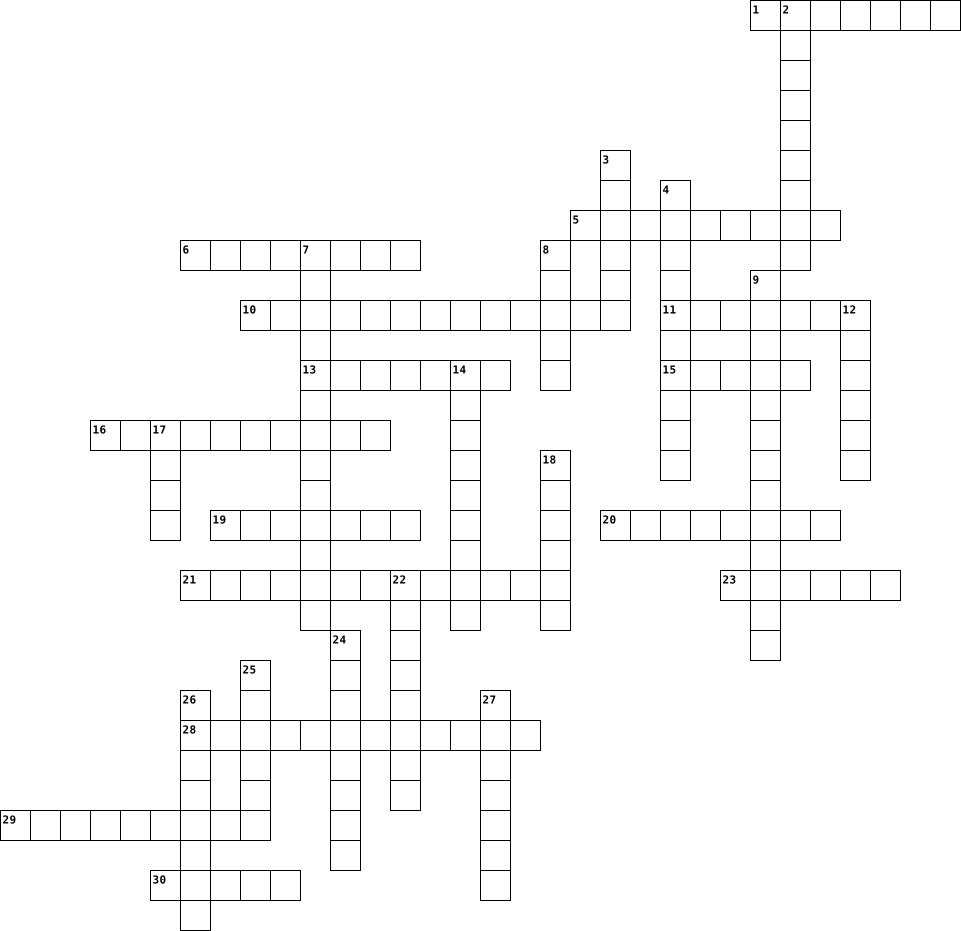
Across
- a process by which molecules of a solvent tend to pass through from a low to a high concentration solution
- an element that have intermediate properties
- a group of atoms bonded together
- The theory that explains the physical properties of matter in motion terms
- the central core of an atom
- a substance that cannot be decomposed into simpler substances
- solid shiny,malleable material
- Group IA(1) of the periodic table
- a subatomic particle of the same mass as a proton but without an electric charge
- the group of fluorine, chlorine, bromine, iodine, astatine
- a table of chemical elements
- a subatomic particle in all atomic nuclei
- the number of protons in the nucleus of an atom
- Movement of anything from a higher concentration to lower concentration
- a metal made of two or more metallic elements
Down
- smaller than a atom
- The ability to do work
- the number of protons and neutrons in a nucleus
- The amount of a substance in a solution in a particular volume of space
- a set of elements with a associative binary operation
- Group IIA(2) of the periodic table
- a mark or character used to represent something
- a element of substance that is not a metal
- the smallest particle of a chemical element
- Any substance that has weight and takes up space
- something that has two or more separate elements
- a subatomic particle with a change of negative electricity
- number another name for atomic number
- small object that has chemical or physical properties
- a interval of time between successive occurrences of the same state
30 Clues: smaller than a atom • The ability to do work • the central core of an atom • a table of chemical elements • solid shiny,malleable material • a group of atoms bonded together • Group IA(1) of the periodic table • Group IIA(2) of the periodic table • number another name for atomic number • a subatomic particle in all atomic nuclei • a element of substance that is not a metal • ...
physical and chemical changes 2018-05-30

Across
- a chemical substance consisting a large molecule
- a state of of changing from solid to a liquid
- a chemical which helps form a chemical reaction
- a molecule that contains two atoms
- a substance which is used at the beginning the start of a chemical reaction
- a pure substance that is made u of a special atom
- a gas that has a strong smell especially to breath in
- when the substance reacts it causes to collide with each other
- a procedure to make a chemical change
- a single atom
- a change straight from a solid to gas
- form of substance that is normally a solid or liquid
- to reach a temperature where the liquid starts to turn into gas.
- a substance obtaining at the end of a chemical reaction
- when a gas is transformed into liquid
- rows of elements in a periodic table
- to change a liquid to gas
Down
- when the atoms are attracted to each other
- a molecule which contains two or more atoms
- an arrangement of particles in a pattern
- an object that makes a chemical reaction change itself quickly
- broken down particles.
- an arrangement of elements into a table
- a substance which is easily turned into gas physical
- an amount of substance in the same area
- the process of corroding, or metal that has been corroded
- a substance thats made up of two or more different atoms with bound together
- groups of two atoms which bound together
- columns of elements that is made up of one atom
29 Clues: a single atom • broken down particles. • to change a liquid to gas • a molecule that contains two atoms • rows of elements in a periodic table • a procedure to make a chemical change • a change straight from a solid to gas • when a gas is transformed into liquid • an arrangement of elements into a table • an amount of substance in the same area • ...
chemistry crossword 2014-11-06

Across
- anything that has mass and occupies space
- number of protons in the nucleus of one atom of an element
- change in the appearance or state of a substance that does not change the composition
- a combination of symbols that represent a compound
- a chemical reaction that takes place in cells
- material that cannot be broken down into any simple substance
- a table in which the elements are organized by their physical and chemical properties
- an experiment in which all reactants and products of a chemical reaction are accounted for
- horizontal row in the periodic table
- cloudy mixture in which tiny particles of one substance are held within another and particles cannot be separated out from the other substances
Down
- chemical reaction that releases energy
- vertical columns in the periodic table
- a reaction that takes place when two or more substances react to form new substances
- pure substance formed when non metals combine
- workplace hazardous materials information system
- positively charged particle in the nucleus of an atom
- substances that help a reaction proceed faster
- chemical reaction that absorbs energy
- change that results when tow or more substance react to create a different substance or substances
- substance made of only one kind of matter, which has a unique set of properties
- an experiment in which one or more products of a chemical reaction can escape
- change of state from a liquid to a gas
- chemical reaction that occurs when oxygen reacts with a substance to form a new substance an give off energy
- when two or more elements combine chemically
- atom that has become electrically charged because it has lost or gained electrons
25 Clues: horizontal row in the periodic table • chemical reaction that absorbs energy • chemical reaction that releases energy • vertical columns in the periodic table • change of state from a liquid to a gas • anything that has mass and occupies space • when two or more elements combine chemically • pure substance formed when non metals combine • ...
Science Think-Tac-Toe 2021-09-29

Across
- Developed the concept of the atom
- A substance in the periodic table is called this
- All matter is made up of atoms
- How many protons are in the nucleus of an atom
- The mass of an atom
- The basic unit of a chemical element
- Subatomic particle with a neutral charge
- An atom or molecule with a net electric charge
- shows what something looks like in a 3D form
Down
- Plum pudding model
- Subatomic particle with a negative charge
- Table of elements arranged in order of atomic number
- Created the first quantum theory atom
- Subatomic particle with a positive charge
- Introduced the atomic theory in chemistry
15 Clues: Plum pudding model • The mass of an atom • All matter is made up of atoms • Developed the concept of the atom • The basic unit of a chemical element • Created the first quantum theory atom • Subatomic particle with a neutral charge • Subatomic particle with a negative charge • Subatomic particle with a positive charge • Introduced the atomic theory in chemistry • ...
Science Think-Tac-Toe 2021-09-29

Across
- Developed the concept of the atom
- A substance in the periodic table is called this
- All matter is made up of atoms
- How many protons are in the nucleus of an atom
- The mass of an atom
- The basic unit of a chemical element
- Subatomic particle with a neutral charge
- An atom or molecule with a net electric charge
- shows what something looks like in a 3D form
Down
- Plum pudding model
- Subatomic particle with a negative charge
- Table of elements arranged in order of atomic number
- Created the first quantum theory atom
- Subatomic particle with a positive charge
- Introduced the atomic theory in chemistry
15 Clues: Plum pudding model • The mass of an atom • All matter is made up of atoms • Developed the concept of the atom • The basic unit of a chemical element • Created the first quantum theory atom • Subatomic particle with a neutral charge • Subatomic particle with a negative charge • Subatomic particle with a positive charge • Introduced the atomic theory in chemistry • ...
chemical reactions 2012-11-25

Across
- poisonus and burns or irritates skin
- used in expermiments to protect eyes
- table table which holds all the elements
- indicator used to indicate the pH of a substance
- used to put solid chemicals in test tubes
- tube rack used to hold test tubes
- used in experiments to protect hands
Down
- the smallest particle on earth
- toxic and poisonus
- burner a tool used to heat things up in experiments, must be connected to gas
- when chemicals mix it forms a
- opposite of acids
- used in experiments to protect clothes
13 Clues: opposite of acids • toxic and poisonus • when chemicals mix it forms a • the smallest particle on earth • tube rack used to hold test tubes • poisonus and burns or irritates skin • used in expermiments to protect eyes • used in experiments to protect hands • used in experiments to protect clothes • table table which holds all the elements • ...
carly 2013-10-20

Across
- Group 2A elements in the modern periodic table
- The weighted average mass of the isotopes of that element
- An ion that has a negative charge
Down
- Radiation that is made up of alpha particles
- The number of protons in an atom
- A particle with two protons and two neutrons, with a 2+ charge
- The number 6.022x10^23, which is the number representative particles in a mole
- Group 1A elements, except for hydrogen, that are on the left side of the modern periodic table
- States that equal volumes of gases at the same temperature and pressure contain equal numbers of particles
9 Clues: The number of protons in an atom • An ion that has a negative charge • Radiation that is made up of alpha particles • Group 2A elements in the modern periodic table • The weighted average mass of the isotopes of that element • A particle with two protons and two neutrons, with a 2+ charge • ...
Vocabulary Menu Project 2023-03-28

Across
- plants response to lack of water
- plant response to touch
- Change into a new substance
- 2 or more elements
- plant response to water
- inside
- found on periodic table
- plant response to gravity
Down
- only change the appearance
- balance in the body
- plant response to light
- outside
12 Clues: inside • outside • 2 or more elements • balance in the body • plant response to touch • plant response to light • plant response to water • found on periodic table • plant response to gravity • only change the appearance • Change into a new substance • plants response to lack of water
puzzle 2022-04-13

Across
- can be extended or shaped
- a variable
- subatomic particle that has positive charge
- horizontal columns
- materials that have conductivity
Down
- number used to
- mark or sign
- reflected light
- vertical columns
- easily broken or damaged
- has mass and volume (takes up space)
- table- shows chemical elements organized
12 Clues: a variable • mark or sign • number used to • reflected light • vertical columns • horizontal columns • easily broken or damaged • can be extended or shaped • materials that have conductivity • has mass and volume (takes up space) • table- shows chemical elements organized • subatomic particle that has positive charge
puzzle 2022-04-13

Across
- can be extended or shaped
- a variable
- subatomic particle that has positive charge
- horizontal columns
- materials that have conductivity
Down
- number used to
- mark or sign
- reflected light
- vertical columns
- easily broken or damaged
- has mass and volume (takes up space)
- table- shows chemical elements organized
12 Clues: a variable • mark or sign • number used to • reflected light • vertical columns • horizontal columns • easily broken or damaged • can be extended or shaped • materials that have conductivity • has mass and volume (takes up space) • table- shows chemical elements organized • subatomic particle that has positive charge
Period of smellements 2025-02-24

Across
- its super silly
- you get this from banannas
- what you breathe
- super boring
- fancy jewelry
Down
- live in word
- used in balloons
- number 29 on periodic table
- 2nd in the olympics
- are we gone?
- man made out of this in wizard of Oz
- used in salt
12 Clues: live in word • are we gone? • used in salt • super boring • fancy jewelry • its super silly • used in balloons • what you breathe • 2nd in the olympics • you get this from banannas • number 29 on periodic table • man made out of this in wizard of Oz
Definitions of models 2021-09-20

Across
- made up of one kind of atom
- row of chemical elements
- subatomic particle with neutral charge
- column of chemical elements
- more than one element bonded together
- substance made up of only one kind of atom
Down
- subatomic particle with negative charge
- more than one different element bonded together
- table of elements- a table of chemical elements in rows and columns
- subatomic particle with a positive charge
- number- charge of the nucleus
11 Clues: row of chemical elements • made up of one kind of atom • column of chemical elements • number- charge of the nucleus • more than one element bonded together • subatomic particle with neutral charge • subatomic particle with negative charge • subatomic particle with a positive charge • substance made up of only one kind of atom • ...
Alex week 6 vocabulary 2022-09-23

Across
- A vertical column of elements in the periodic table
- An arrangement of the elements in order of their atomic number
- A one-, two-, or three-letter abbreviation of the name of an element.
- An element that has properties of both metals and nonmetals.
Down
- The weighted average of the masses of all naturally occurring isotopes of an element.
- An element that conducts heat and electricity poorly.
- An element that is shiny and that conducts heat and electricity well.
- a horizontal row of elements in the periodic table.
8 Clues: A vertical column of elements in the periodic table • a horizontal row of elements in the periodic table. • An element that conducts heat and electricity poorly. • An element that has properties of both metals and nonmetals. • An arrangement of the elements in order of their atomic number • An element that is shiny and that conducts heat and electricity well. • ...
Lucas Lantz Week 6 Vocabulary 2022-09-20

Across
- A horizontal row of elements in the periodic table.
- The weighted average of the masses of all naturally occuring isotopes of an element.
- A one, two, or three letter abbreviation of an element.
- Elements that are listed based on their atomic number.
Down
- An element that has properties of both metals and nonmetals.
- An element that conducts heat and electricity poorly.
- A vertical column of elements in the periodic table.
- Element that is shiny and they conduct heat and energy very well.
8 Clues: A horizontal row of elements in the periodic table. • A vertical column of elements in the periodic table. • An element that conducts heat and electricity poorly. • Elements that are listed based on their atomic number. • A one, two, or three letter abbreviation of an element. • An element that has properties of both metals and nonmetals. • ...
Week 6 vocab Jayden Summers 2022-09-19

Across
- a vertical column of elements in the periodic table
- a horizontal row of elements in the periodic table
- an arrangement of the elements in order of their atomic numbers
- a one two or three letter abbreviation of the name of an element
Down
- the weighted average of the masses of all naturally occuring isotopes of an element
- an element that conducts heat and electricity poorly
- an element that has properties of both metals and nonmetals
- an element that is shiny and that conducts heat and electricity well
8 Clues: a horizontal row of elements in the periodic table • a vertical column of elements in the periodic table • an element that conducts heat and electricity poorly • an element that has properties of both metals and nonmetals • an arrangement of the elements in order of their atomic numbers • a one two or three letter abbreviation of the name of an element • ...
Properties of state and matter 2025-04-30

Across
- About three fourths of the elements are what?
- petroleum is a complex mixture of () what?
- We call the mendeleyev’s table the periodic table after the periodic changes found in element ( ).
- a formula contains numbers below the elements called what?
Down
- the subscripts in chemical formulas tell us the ( ) of particles that combine in a compound.
- The basic building block of all matter are…
- compounds can only be broken apart by…
- the number of ( ) in an atom determines what element it is.
8 Clues: compounds can only be broken apart by… • petroleum is a complex mixture of () what? • The basic building block of all matter are… • About three fourths of the elements are what? • a formula contains numbers below the elements called what? • the number of ( ) in an atom determines what element it is. • ...