
periodic+table Crossword Puzzles
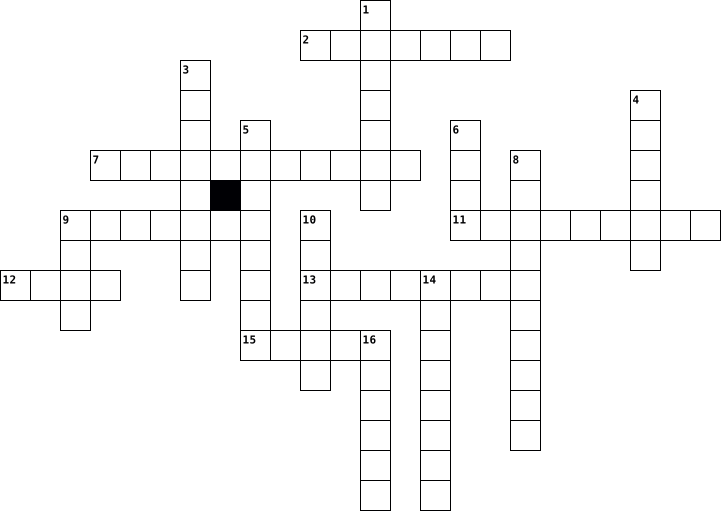
Elements and Compounds 2022-02-15

Across
- Smallest piece of matter
- Periodic table column
- Formulated the periodic law
- A group of 2 or more atoms
- From a solid to a liquid
- Sodium Chloride
- Molecule physically intermingled
- Periodic table row
Down
- Disease that star
- A abbreviation of a element name
- Different atoms bonded together
- From a liquid to a solid
- A covering for the face
- A substance that can not be broken down
- A substance that has mass and takes up space
- Quantity of matter in a physical body
16 Clues: Sodium Chloride • Disease that star • Periodic table row • Periodic table column • A covering for the face • Smallest piece of matter • From a liquid to a solid • From a solid to a liquid • A group of 2 or more atoms • Formulated the periodic law • Different atoms bonded together • A abbreviation of a element name • Molecule physically intermingled • ...
Matter and Chemical Change 2013-06-17

Across
- mass of one atom of an element calculated from the total number of protons
- how a substance interacts with other substances
- Formed when more than one element on the periodic table are combine
- a group of 18 elements in the periodic table
- the horizontal row on the periodic table
Down
- number of protons in the nucleus of one atom of an element
- Located on the right side of a periodic table
- The melting of ice is a....
- Can define anything that has mass and occupies space.
- the vertical rows on a periodic table
10 Clues: The melting of ice is a.... • the vertical rows on a periodic table • the horizontal row on the periodic table • a group of 18 elements in the periodic table • Located on the right side of a periodic table • how a substance interacts with other substances • Can define anything that has mass and occupies space. • ...
Science Assessment 2023-05-16

Across
- an element that lacks most of the properties of a metal; these are found on the right-hand side of the zigzag line on the periodic table
- a negatively charged particle found outside the nucleus of an atom
- the places surrounding the nucleus of an atom where the electrons are most likely to be at any given time
- An element is a pure substance that is made from a single type of atom. Elements are the building blocks for all the rest of the matter in the world
- a one- or two-letter representation of an element on the periodic table
- a small particle in the nucleus of the atom; it has no electrical charge
- the basic particle from which all elements are made
- the number of protons in the nucleus of an atom; this number identifies an element and its location on the periodic table
Down
- a horizontal row of elements in the periodic table
- a chart of the elements showing the repeating pattern of their properties; arranged by atomic numbers of the elements
- "a class of elements characterized by physical properties that include shininess
- elements in the same vertical column of the periodic table; also known as a 'family'
- the central core of the atom made up of protons and neutrons
- an element that has some characteristics of both metals and nonmetals; these are found hugging the zigzag line on the periodic table
- the average mass of all the isotopes of an element; this is the decimal value found on an element card
- a positively charged particle that is part of an atom's nucleus; the number of protons is known as the atomic number
16 Clues: a horizontal row of elements in the periodic table • the basic particle from which all elements are made • the central core of the atom made up of protons and neutrons • a negatively charged particle found outside the nucleus of an atom • a one- or two-letter representation of an element on the periodic table • ...
Periodic table 2023-01-16

Across
- The name for elements in group 1
- The horizontal rows on the periodic table
- The smallest part of an element that exists
- The positive atoms in the nucleus
- The neutral atoms in the nucleus
- A substance made of only one type of atom
Down
- The name of the man who formed the atomic theory of matter in 1803
- The name for elements in group 0
- The vertical columns in the periodic table
- The number found at the top left of each chemical elements
- A combination of two or more elements which are not chemically combined
- something that is composed of two or more elements chemically joined together
- name for elements in group 7
- The negative atoms in the nucleus
- the number of elements on the periodic table that are naturally occurring
15 Clues: name for elements in group 7 • The name for elements in group 0 • The name for elements in group 1 • The neutral atoms in the nucleus • The positive atoms in the nucleus • The negative atoms in the nucleus • The horizontal rows on the periodic table • A substance made of only one type of atom • The vertical columns in the periodic table • ...
Periodic table 2020-02-18

Across
- The fundamental building block of matter
- An element that rarely reacts with other elements
- The smallest element
- The largest naturally occurring element
- An element that reacts easily with other elements
- Atomic number
- In an atom it has a negative charge
- Element number six
Down
- Central core of atom
- Created the first periodic table
- In an atom it has no charge
- Symbol for gold
- The sum of the weights of protons, neutrons, & electrons
- In an atom it has a positive charge
- Symbol for sodium
15 Clues: Atomic number • Symbol for gold • Symbol for sodium • Element number six • Central core of atom • The smallest element • In an atom it has no charge • Created the first periodic table • In an atom it has a positive charge • In an atom it has a negative charge • The largest naturally occurring element • The fundamental building block of matter • ...
Periodic Table 2021-09-30

Across
- what you put in balloons that make them float
- first element
- column
- symbol K
- element 5,14,32,33,51,52
- group 17
- the horizontal rows of the periodic table
- group 1
Down
- group 2
- group 3-12
- any of the series of fifteen metallic elements from actinium (atomic number 89) to lawrencium (atomic number 103) in the periodic table.
- symbol Pr and element 59
- symbol Fe
- group 18
- element 57-71
15 Clues: column • group 2 • group 1 • symbol K • group 17 • group 18 • symbol Fe • group 3-12 • first element • element 57-71 • symbol Pr and element 59 • element 5,14,32,33,51,52 • the horizontal rows of the periodic table • what you put in balloons that make them float • ...
Periodic table 2021-10-26

Across
- 118 of these
- yellowish precious metal
- group of 7 elements e.g iodine
- element forms up to 10 million compounds
- metallic element Mg
- rows on table
- group of gases e.g argon
- 9th most abundant element in earth’s crust
Down
- yellow green gas used to disinfect water
- inventor of table
- chemical sign Ag
- lightest noble gas
- Columns on table
- molecule with atoms of more than one element
- chemical sign Fe
15 Clues: 118 of these • rows on table • chemical sign Ag • Columns on table • chemical sign Fe • inventor of table • lightest noble gas • metallic element Mg • yellowish precious metal • group of gases e.g argon • group of 7 elements e.g iodine • yellow green gas used to disinfect water • element forms up to 10 million compounds • 9th most abundant element in earth’s crust • ...
Periodic table 2023-02-20

Across
- Has an atomic number of 83
- vertical column of elements (there are 18)
- Transition metal used in wires and pipes
- transition metal that is liquid at room temp (dangerous)
- has a symbol of In
- Noble gas that shares a period with Sodium
- period 2 and group 16
- Radioactive element that has an atomic number of 92
- elements in group 17
Down
- Alkali Earth metal that has 12 protons
- horizontal row of elements (there are 7)
- Alkali metal that is in period 6.
- the smallest element
- symbol for osmium
- most of the elements are classified as some type of
15 Clues: symbol for osmium • has a symbol of In • the smallest element • elements in group 17 • period 2 and group 16 • Has an atomic number of 83 • Alkali metal that is in period 6. • Alkali Earth metal that has 12 protons • Transition metal used in wires and pipes • horizontal row of elements (there are 7) • vertical column of elements (there are 18) • ...
Periodic Table 2023-05-02

Across
- High conductivity, shiny, high melting point, malleable, ductile
- Dull, brittle, not malleable, not ductile, and poor conductors of heat and electricity
- Metals that conduct electricity
- Vertical Columns on the Periodic Table
- Negative charge, found in the electron cloud, and 1/1837 AMU
- Horizontal rows on the periodic table
- Neutral or no charge, found in the nucleus, and 1 AMU
- Fairly Reactive with 2 electrons on the outer shell
- A table of the chemical elements
Down
- Very stable (does not react) and full outer shell of electrons
- Semiconductors and found on the zig-zag line on the Periodic Table of elements
- Highly reactive and combine with metals to form salts
- The particles found inside of an atom
- Positive charge, 1 AMU, and determines the identity of an element
- Very Reactive in Water with 1 electron on the outer shell
15 Clues: Metals that conduct electricity • A table of the chemical elements • The particles found inside of an atom • Horizontal rows on the periodic table • Vertical Columns on the Periodic Table • Fairly Reactive with 2 electrons on the outer shell • Highly reactive and combine with metals to form salts • Neutral or no charge, found in the nucleus, and 1 AMU • ...
Periodic Table 2023-04-28

Across
- this element has the second smallest atomic mass
- this element can be found in period 5, group 11
- is a group of elements that are mostly found on the right side of the table
- this is what a row of elements is called
- this is represented by chemical symbols written in red
- this is what a column of elements is called
- this element has 8 as its atomic number
Down
- this is the chemical symbol for Mercury
- this the group of elements that separates metals from nonmetals
- this is represented by a chemical symbol written in white
- is the atomic symbol P
- the element name for K
- this element has the smallest atomic mass
- this the total number of metalloids
- this is represented by a bold chemical symbol
15 Clues: is the atomic symbol P • the element name for K • this the total number of metalloids • this is the chemical symbol for Mercury • this element has 8 as its atomic number • this is what a row of elements is called • this element has the smallest atomic mass • this is what a column of elements is called • this is represented by a bold chemical symbol • ...
periodic table 2023-05-19

Across
- 18 going down
- atomic number 33
- atomic number 20
- atomic number 35
- atomic number 82
- biggest element on the periodic table
- element in group 3 period 7
- element 2
- element in group 1 period 3
Down
- 7 going across
- element in group 1 period 1
- atomic mass 28.085
- metal in group 9 period 4
- element in group 2 period 7
- symbol Al
15 Clues: symbol Al • element 2 • 18 going down • 7 going across • atomic number 33 • atomic number 20 • atomic number 35 • atomic number 82 • atomic mass 28.085 • metal in group 9 period 4 • element in group 1 period 1 • element in group 2 period 7 • element in group 3 period 7 • element in group 1 period 3 • biggest element on the periodic table
periodic table 2023-05-11

Across
- first element
- fourth element
- Ca
- colim 14 period 2
- Ar
- three element
- Na
Down
- Cu
- second element
- Co
- Zn
- colim 13 period 2
- Ti
- Fe
- Mg
15 Clues: Cu • Co • Zn • Ti • Fe • Ca • Ar • Mg • Na • first element • three element • second element • fourth element • colim 13 period 2 • colim 14 period 2
Periodic Table 2023-05-11

Across
- Neutral Charged
- Elements that are great conductors and shiny
- Mass of an Atom
- How to tell how many Valence Electrons there are
- The Elements that are semi-conductors
- Where the Electrons stay
- Holds the Protons and Neutrons.
- The number of Protons and Electrons on the Periodic Table
Down
- Elements that are poor conductors, dull, and brittle
- Negative Charged
- The two letters that name the element
- Positive Charged
- How well electricity can pass through something
- Smallest unit of life
- Tells you how many rings around the nucleus there are
15 Clues: Neutral Charged • Mass of an Atom • Negative Charged • Positive Charged • Smallest unit of life • Where the Electrons stay • Holds the Protons and Neutrons. • The two letters that name the element • The Elements that are semi-conductors • Elements that are great conductors and shiny • How well electricity can pass through something • ...
Periodic Table 2016-12-20

Across
- 15
- 8
- 13
- 12
- 11
- 4
- 7
Down
- 5
- 9
- 14
- 1
- 3
- 2
- 10
- 6
15 Clues: 5 • 9 • 1 • 8 • 3 • 2 • 4 • 6 • 7 • 15 • 14 • 13 • 12 • 11 • 10
Periodic table 2021-12-12

Across
- ur dioxide
- Ur nitro type
- Silly clown
- Ur sliver
- foil
- ur ballon
- Ur pappy
- Ur hard-won
Down
- Ur breath
- America
- Ur glow stick
- toxic air
- superman planet
- toothpaste
- character
15 Clues: foil • America • Ur pappy • Ur breath • toxic air • Ur sliver • ur ballon • character • ur dioxide • toothpaste • Silly clown • Ur hard-won • Ur nitro type • Ur glow stick • superman planet
Periodic Table 2023-09-27

Across
- Rg
- Hs
- Nh
- Mt
- Db
- Cn
- Mc
- Fl
Down
- Ts
- Lv
- Rf
- Sg
- Bh
- Og
- Ds
15 Clues: Ts • Rg • Lv • Rf • Hs • Sg • Nh • Bh • Og • Mt • Db • Ds • Cn • Mc • Fl
PERIODIC TABLE 2023-09-29

Across
- 11TH ELEMENT
- 4TH ELEMENT
- 3RD ELEMENT
- 6TH ELEMENT
- 10TH ELEMENT
- 7TH ELEMENT
- 15TH ELEMENT
Down
- 1ST ELEMENT
- 2ND ELEMENT
- 13TH ELEMENT
- 9TH ELEMENT
- 14TH ELEMENT
- 12TH ELEMENT
- 5TH ELEMENT
- 8TH ELEMENT
15 Clues: 1ST ELEMENT • 2ND ELEMENT • 4TH ELEMENT • 9TH ELEMENT • 3RD ELEMENT • 6TH ELEMENT • 5TH ELEMENT • 7TH ELEMENT • 8TH ELEMENT • 11TH ELEMENT • 13TH ELEMENT • 14TH ELEMENT • 12TH ELEMENT • 10TH ELEMENT • 15TH ELEMENT
Periodic table 2023-10-23

Across
- has an atomic number of 18
- the atomic number is 8
- group 1 period 3
- period 3 group 14
- The atomic mass is 4
- has an atomic number of 80
- group 14 period 5
- Group 18 period 4
Down
- group 14 period 2
- in period 2 group 13
- group 15 period 3
- it is a transition metal
- has an atomic mass of 197
- has an atomic mass of 64
- has an atomic mass of 20
15 Clues: group 1 period 3 • group 14 period 2 • group 15 period 3 • period 3 group 14 • group 14 period 5 • Group 18 period 4 • in period 2 group 13 • The atomic mass is 4 • the atomic number is 8 • it is a transition metal • has an atomic mass of 64 • has an atomic mass of 20 • has an atomic mass of 197 • has an atomic number of 18 • has an atomic number of 80
Periodic table 2023-12-20

Across
- This element is a halogen with 45 neutrons
- The atomic mass of this element is 40
- this element is in group 18 and has 10 protons
- This element is a non metal and has 17 protons
- This elements symbol is Na
- this element has the symbol Ar
- this element has 9 electrons
- this element is found at period 7 group 2
Down
- this element is a metal in the transition metals family and has 27 electrons
- The atomic number of this element is 3
- This element is on period 2 and is a metalloid
- This element is a alkaline earth metal with 12 neutrons
- This element is on period 1 group 18
- This element has 34 protons
- This element has 36 electrons
15 Clues: This elements symbol is Na • This element has 34 protons • this element has 9 electrons • This element has 36 electrons • this element has the symbol Ar • This element is on period 1 group 18 • The atomic mass of this element is 40 • The atomic number of this element is 3 • this element is found at period 7 group 2 • This element is a halogen with 45 neutrons • ...
Periodic Table 2025-02-23

Across
- a noble gas
- element name for Ca
- element name for K
- element name for B
- features of metals and non-metals
- vertical column in periodic table
Down
- melts at 40 degrees
- relative atomic mass of 4
- horizontal lines
- can be polished
- symbol for gold
- element name for Cl
- atomic number of 15
- element in group 2 and period 2
- symbol for Magnesium
15 Clues: a noble gas • can be polished • symbol for gold • horizontal lines • element name for K • element name for B • melts at 40 degrees • element name for Ca • element name for Cl • atomic number of 15 • symbol for Magnesium • relative atomic mass of 4 • element in group 2 and period 2 • features of metals and non-metals • vertical column in periodic table
Periodic Table 2025-02-23

Across
- A vertical division of something
- Period 7, group 1
- Period 1, group 1
- Period 4, group 9
- Period 2, group 14
- Period 4, group 6
- Period 4, group 13
Down
- Period 2, group 18
- Period 4, group 8
- Period 4 group 11
- Period 1, group 18
- a number of people or things that are located close together or are considered or classed together.
- Period 4, group 10
- Period 5, group 14
- Period 7, group 2
15 Clues: Period 7, group 1 • Period 4, group 8 • Period 4 group 11 • Period 1, group 1 • Period 4, group 9 • Period 4, group 6 • Period 7, group 2 • Period 2, group 18 • Period 1, group 18 • Period 4, group 10 • Period 5, group 14 • Period 2, group 14 • Period 4, group 13 • A vertical division of something • ...
periodic table 2025-02-23

Across
- 18 going down
- atomic number 33
- atomic number 20
- atomic number 35
- atomic number 82
- biggest element on the periodic table
- element in group 3 period 7
- element 2
- element in group 1 period 3
Down
- 7 going across
- element in group 1 period 1
- atomic mass 28.085
- metal in group 9 period 4
- element in group 2 period 7
- symbol Al
15 Clues: symbol Al • element 2 • 18 going down • 7 going across • atomic number 33 • atomic number 20 • atomic number 35 • atomic number 82 • atomic mass 28.085 • metal in group 9 period 4 • element in group 1 period 1 • element in group 2 period 7 • element in group 3 period 7 • element in group 1 period 3 • biggest element on the periodic table
PERIODIC TABLE 2025-02-23

Across
- 11TH ELEMENT
- 4TH ELEMENT
- 3RD ELEMENT
- 6TH ELEMENT
- 10TH ELEMENT
- 7TH ELEMENT
- 15TH ELEMENT
Down
- 1ST ELEMENT
- 2ND ELEMENT
- 13TH ELEMENT
- 9TH ELEMENT
- 14TH ELEMENT
- 12TH ELEMENT
- 5TH ELEMENT
- 8TH ELEMENT
15 Clues: 1ST ELEMENT • 2ND ELEMENT • 4TH ELEMENT • 9TH ELEMENT • 3RD ELEMENT • 6TH ELEMENT • 5TH ELEMENT • 7TH ELEMENT • 8TH ELEMENT • 11TH ELEMENT • 13TH ELEMENT • 14TH ELEMENT • 12TH ELEMENT • 10TH ELEMENT • 15TH ELEMENT
periodic table 2025-12-23

Across
- Has 6 neutrons and is in group 14
- in group 9 period 4
- has an atomic # of 27 and is in period 4
- has 12 electrons in group 2 and is also a metal
- A metal in group 12 with 120 neutrons
- a nonmetal in period 1 with 1 proton
Down
- In group 2 with 40 electrons
- A metalloid in period 2
- a metal with 128 neutrons in group 3
- It is a metal in period 3 with 26 neutrons
- has 47 protons in period 4
- It has 20.18 protons and is a non-metal
- With an atomic mass of 196.97 it is a transition metal in group 11
- 32 electrons in period 3
- 18 neutrons in group 17
15 Clues: in group 9 period 4 • A metalloid in period 2 • 18 neutrons in group 17 • 32 electrons in period 3 • has 47 protons in period 4 • In group 2 with 40 electrons • Has 6 neutrons and is in group 14 • a metal with 128 neutrons in group 3 • a nonmetal in period 1 with 1 proton • A metal in group 12 with 120 neutrons • It has 20.18 protons and is a non-metal • ...
Periodic Table 2024-05-13

Across
- What is the element symbol for Americium
- What elements are in the middle
- Where are nonmetals located
- The periodic table is made out of what
- Protons+Neutrons=
- Where are metals located
- The 5th element
- 3rd period, 15th column
- What is the name of the vertical column
- The color of the 1st place trophy
Down
- Which family doesn't react
- Protons are the same as the elements ____________
- Where are metalloids
- Which family is the most reactive
- What is the name of the horizontal row
15 Clues: The 5th element • Protons+Neutrons= • Where are metalloids • 3rd period, 15th column • Where are metals located • Which family doesn't react • Where are nonmetals located • What elements are in the middle • Which family is the most reactive • The color of the 1st place trophy • The periodic table is made out of what • What is the name of the horizontal row • ...
Periodic Table 2024-05-07

Across
- Gold
- Periods
- Groups
- A negatively charged particles that orbit around the outside of the nucleus
- Touches the staircase
- 1rst noble gas element
Down
- First element if halogen group
- A particle with no charge
- located on the right side of the periodic table
- least reactive group
- Most reactive group
- Positive charged particles found in every element
- Left side of the periodic table
- 8 protons
- Only transition metal thats a liquid in room temperature
15 Clues: Gold • Groups • Periods • 8 protons • Most reactive group • least reactive group • Touches the staircase • 1rst noble gas element • A particle with no charge • First element if halogen group • Left side of the periodic table • located on the right side of the periodic table • Positive charged particles found in every element • Only transition metal thats a liquid in room temperature • ...
Periodic Table 2024-11-06

Across
- A horizontal row in the periodic table.
- Refers to the amount of matter in an atom, related to atomic mass.
- Elements that are usually gasses or brittle solids and poor conductors.
- A vertical column in the periodic table.
- A grid where elements are organized by atomic number.
- The central part of an atom, containing protons and neutrons.
- A particle in the nucleus with no electric charge.
- A pure substance made of only one kind of atom.
Down
- Describes something that occurs at regular intervals.
- Elements that are typically shiny and good conductors of electricity.
- The basic unit of a chemical element.
- Number The number of protons in an atom's nucleus.
- A one or two-letter abbreviation for an element.
- A positively charged particle in the nucleus.
- A negatively charged particle orbiting the nucleus.
15 Clues: The basic unit of a chemical element. • A horizontal row in the periodic table. • A vertical column in the periodic table. • A positively charged particle in the nucleus. • A pure substance made of only one kind of atom. • A one or two-letter abbreviation for an element. • A particle in the nucleus with no electric charge. • ...
LT 8-11 Chemistry 2022-04-26

Across
- bond formed between nonmetals
- bond with an electronegativity difference of 0.4 or less
- Located on the left side of the periodic table
- bond formed between metals and nonmetals
- A substance's tendency to stick together
- Vertical column on the periodic table
- On the left side of a chemical equation
- Elements in this group have 1 valence electron(VE)
Down
- Element with one proton
- An atom's ability to attract electrons
- Second period, 5 Valence electrons(VE)
- On the right side of a chemical equation
- Horizontal row on the periodic table
- Rule that states most atoms are stable with 8 VE
- The outermost electron shell
15 Clues: Element with one proton • The outermost electron shell • bond formed between nonmetals • Horizontal row on the periodic table • Vertical column on the periodic table • An atom's ability to attract electrons • Second period, 5 Valence electrons(VE) • On the left side of a chemical equation • On the right side of a chemical equation • bond formed between metals and nonmetals • ...
Periodic Table Organization 2025-10-16

Across
- The largest atom on the periodic table
- How well an atom attracts electrons from other atoms
- The largest alkaline earth metal
- This model shows all the electrons for an atom
- A column (up and down) on the periodic table
- An atom that has gained or lost electrons
- This element has the highest electronegativity of all the elements
- This alkaline earth metal is bigger than barium
Down
- An atom’s ability to attract electrons from other atoms
- The element is in group 2, period 4
- This element is an alkali metal and in period 3
- The only nonmetal on the left side of the periodic table
- This model only shows an atom’s valence electrons
- The octet rule states atoms are usually most stable with this number of valence electrons
- This family includes fluorine (F) and chlorine (Cl)
- This is what a row going left to right across the periodic table is called
16 Clues: The largest alkaline earth metal • The element is in group 2, period 4 • The largest atom on the periodic table • An atom that has gained or lost electrons • A column (up and down) on the periodic table • This model shows all the electrons for an atom • This element is an alkali metal and in period 3 • This alkaline earth metal is bigger than barium • ...
Chemistry Crossword Game 2024-05-01

Across
- Who arranged the periodic table by atomic number
- Elements that loses electrons
- Salt
- A reaction that means to break apart
- The amount of reactants has to be equal to the amount of
- A noble gas that does not have a valency of 8
- What must be added to balance an equation
Down
- Most reactive element in the periodic table
- We balance an equation to follow the law of conservation of
- A reaction that produces H2O and CO2
- Must never be changed to balance an equation
- The first element in the periodic table
- Has a PH less than 7
- Mainly found in stars
- total number of protons in an atom
- The most common element in the Earth’s crust
- The only metal on Earth that is liquid at room temperature
- The most active elements of the Halogens
- Substance that speeds up the reaction but is not used up in the reaction
19 Clues: Salt • Has a PH less than 7 • Mainly found in stars • Elements that loses electrons • total number of protons in an atom • A reaction that produces H2O and CO2 • A reaction that means to break apart • The first element in the periodic table • The most active elements of the Halogens • What must be added to balance an equation • Most reactive element in the periodic table • ...
Periodic Table Elements 2021-05-10

Across
- a chemical element with the symbol C
- atomic number 1
- the thirteenth and third-last element
- the symbol Te and atomic number 5
- the most common element on Earth
- the symbol Fm and atomic number 1
- rare-earth element with a metallic silver luster
- soft silvery white high;y reactive metal
- group 18 of the periodic table and is a noble gas
- a colorless, odorless, tasteless noble gas
- a soft, silvery metal at standard temperature
Down
- the symbol Cl and atomic number 17
- the sixth element in group 2 of the periodic table
- the most abundant metallic element in Earth's crust
- atomic number 71
- the first in the noble gas group in the periodic table
- atomic number 12
- member of the the chalcogen group, symbol O
- 92 protons and 92 electrons, of which 6 electrons
19 Clues: atomic number 1 • atomic number 71 • atomic number 12 • the most common element on Earth • the symbol Te and atomic number 5 • the symbol Fm and atomic number 1 • the symbol Cl and atomic number 17 • a chemical element with the symbol C • the thirteenth and third-last element • soft silvery white high;y reactive metal • a colorless, odorless, tasteless noble gas • ...
Quarter 1 Physical Science Review (Matter) 2025-10-07

Across
- Has different atoms bonded together
- True or False: The protons, neutrons and electrons in an atom has the same charge
- Has no shape or volume
- The smallest unit of all matter
- Has only one type of atom
- Also called a "Family", this is the vertical columns on the periodic table
- The horizontal rows of the periodic table
- The atomic ________ tells us the number of protons
- Has a pH less than 7
- Malleable, Shiny and a good conductor of heat
Down
- Anything that takes up space
- How packed the matter within an object is
- Very hot and charged gas particles
- The letter(s) that represents the Element
- True or False: The periodic table is organized by the number of proton
- A combination of pure substances
- Particles are close together and vibrates
- Has volume but no shape
- Has a pH more than 7
19 Clues: Has a pH more than 7 • Has a pH less than 7 • Has no shape or volume • Has volume but no shape • Has only one type of atom • Anything that takes up space • The smallest unit of all matter • A combination of pure substances • Very hot and charged gas particles • Has different atoms bonded together • How packed the matter within an object is • ...
Elements and Compounds 2022-02-15
Across
- A substance that can not be broken down
- From a liquid to a gas
- Molecules physically intermingled
- Formulated the periodic law
- Quantity of matter in a physical body
- A group of 2 or more atoms
- Periodic table column
Down
- From a solid to a liquid
- Different atoms bonded together
- A substance that has mass and takes up space
- From a liquid to a solid
- Smallest piece of matter
- From a gas to a liquid
- A covering for the face
- A abbreviation of a element name
- Disease that started in 2019
- Periodic table row
17 Clues: Periodic table row • Periodic table column • From a liquid to a gas • From a gas to a liquid • A covering for the face • From a solid to a liquid • From a liquid to a solid • Smallest piece of matter • A group of 2 or more atoms • Formulated the periodic law • Disease that started in 2019 • Different atoms bonded together • A abbreviation of a element name • ...
Periodic Table 2023-12-06

Across
- the most reactive nonmetal elements found in group 17 of the periodic table
- a row of the Periodic Table (there are 7)
- An element with characteristics of both metals and nonmetals
- table the chart of the elements showing the repeating pattern of their properties
- metal elements found in period 6 of the periodic table
- Gases unreactive nonmetal gas elements found in group 18 of the periodic table
Down
- radioactive metal elements found in period 7 of the periodic table
- a material that prevents heat or electricity from easily passing through
- Mass the average mass of all the atoms of an element
- a property used to describe a material that can be pounded into shapes
10 Clues: a row of the Periodic Table (there are 7) • Mass the average mass of all the atoms of an element • metal elements found in period 6 of the periodic table • An element with characteristics of both metals and nonmetals • radioactive metal elements found in period 7 of the periodic table • a property used to describe a material that can be pounded into shapes • ...
3-1/3-2 2017-11-15

Across
- The smallest part of an element
- An atom with the same number of protons and a different number of electrons
- Electrons with _____ energy stay close to the nucleus
- The vertical columns on the periodic table
- The electrons on the outermost orbit
- The "shell" that the electrons travels on
- Cannot be broken down into any other substance
- Has a negative charge
- A diagram, mental image, mathematical statement, or object to represent something
Down
- The sum of the protons and neutrons
- The average mass for the isotopes of an element
- The abbreviation of an element
- The number of protons an atom has
- Electrons with _______ energy go far from the nucleus
- Has a negative charge
- The center of an atom
- The last name of the man who made the first periodic table
- Has a positive charge
- When two elements come together
- The horizontal rows on the periodic table
20 Clues: Has a negative charge • The center of an atom • Has a positive charge • Has a negative charge • The abbreviation of an element • The smallest part of an element • When two elements come together • The number of protons an atom has • The sum of the protons and neutrons • The electrons on the outermost orbit • The "shell" that the electrons travels on • ...
Ionic Vocabulary 2022-10-24

Across
- a substance made of two or more elements bonded together
- a type of electron that's in the outer shell of an atom
- the columns on the periodic table
- a positive ion
- small numbers to the bottom right of an element to show how many atoms are in a compound
- a measure of how strong an element can pull on another element's valence electrons
Down
- the rule that atoms want 8 valence electrons
- a type of compound that involves two ions
- the rows on the periodic table
- to the right on the periodic table, tend to form negative charges
- a negative ion
- a charged atom
- to the left on the periodic table, tend to form positive charges
13 Clues: a negative ion • a positive ion • a charged atom • the rows on the periodic table • the columns on the periodic table • a type of compound that involves two ions • the rule that atoms want 8 valence electrons • a type of electron that's in the outer shell of an atom • a substance made of two or more elements bonded together • ...
periodic table crossword 2023-09-11

Across
- atomic number of 1
- is the name of the atom
- its symbol is Au
- its symbol is Ag
- it has 8 protons
- the table that shows all the elements
- the vertical side of the periodic table
- its symbol is Ar
- its atomic number is 6
- has atomic mass of 32.06
Down
- its symbol is Na
- the top number of the element
- has 17 electrons
- the horizontal side of the periodic table
- atomic mass of 55.845
- has an atomic number of 2
- has 36 protons
- the weight of the atom
- the same value as the atomic number
- the capitalized letter that represents the atom
20 Clues: has 36 protons • its symbol is Na • has 17 electrons • its symbol is Au • its symbol is Ag • it has 8 protons • its symbol is Ar • atomic number of 1 • atomic mass of 55.845 • the weight of the atom • its atomic number is 6 • is the name of the atom • has atomic mass of 32.06 • has an atomic number of 2 • the top number of the element • the same value as the atomic number • ...
Science Vocab 3 Ch. 4 2023-10-18

Across
- Set of Atoms in The Same Periodic Column
- Groups 13-16 Contains Metals, Metalloids, and Non-metals
- Properties of The Elements Vary in a Periodic Way With Their Atomic Numbers
- The Electrons in The Outermost Energy Level of a Neutral Atom
- A Table of The Chemical Elements Arranged in a Way That Displays Their Periodic Properties in Relationship to Their Atomic Numbers
- A Row in The Periodic table
- Elements in Group One That Have One Valence Electron
- The Distance From The Center of The Atom's Nucleus to The Electrons in The Outermost Energy Level
- Typically Have Two Valence Electrons; Under The Main Body of The Periodic Table
Down
- Elements in Group Two That Have Two Valence Electron
- The Measure of an Atom's Ability to Attract and Hold Electrons When Bonded to Other Atoms
- Element's Chemical Symbol Surrounded by The Atom's Valence Electrons
- Have Characteristics Between Metals and Non-Metals
- Elements in Group 3-12 That Have One or Two Valence Electrons
- Group 17 Has Seven Valence Electrons
- Set of Atoms in The Same Periodic Column
- Group 18 Has Eight Valence Electrons
- Have Four or More Valence Electrons Don't Have The Properties of Metal
- Have Few Valence Electrons
19 Clues: Have Few Valence Electrons • A Row in The Periodic table • Group 17 Has Seven Valence Electrons • Group 18 Has Eight Valence Electrons • Set of Atoms in The Same Periodic Column • Set of Atoms in The Same Periodic Column • Have Characteristics Between Metals and Non-Metals • Elements in Group Two That Have Two Valence Electron • ...
CHEM CROSSWORD 2023-05-24

Across
- The study of matter
- Air we need to survive
- The organized chart of elements according to the increasing atomic number
- The amount of matter in an atom of an element
- The subatomic particle of an atom that has a neutral charge
Down
- The chemical element on the periodic table with the atomic number 1
- The subatomic particle of an atom that has a negative charge
- The subatomic particle of an atom that has a positive charge
- Consists of electrically positive protons and neutral neutrons
- Elements located on the left side of the periodic table
- The smallest unit of an element
- Elements located on the right side of the periodic table
- The first metalloid on the periodic table
13 Clues: The study of matter • Air we need to survive • The smallest unit of an element • The first metalloid on the periodic table • The amount of matter in an atom of an element • Elements located on the left side of the periodic table • Elements located on the right side of the periodic table • The subatomic particle of an atom that has a neutral charge • ...
Periodic Table 2021-12-23

Across
- He
- makes up the periodic table
- Al
- O
- Be
- C
- N
Down
- Li
- Mg
- H
- Na
- Electrons that occupy the highest levels in an atom
- F
- B
- Ne
15 Clues: H • O • F • B • C • N • He • Li • Mg • Na • Al • Be • Ne • makes up the periodic table • Electrons that occupy the highest levels in an atom
periodic table 2021-12-12

Across
- ur dioxide
- Ur breath
- Ur sliver
- Ur nitro type
- Ur hard-won
- America
- Silly clown
- superman planet
Down
- toothpaste
- foil
- ur ballon
- Ur pappy
- Ur glow stick
- character
- toxic air
15 Clues: foil • America • Ur pappy • ur ballon • Ur breath • Ur sliver • character • toxic air • toothpaste • ur dioxide • Ur hard-won • Silly clown • Ur glow stick • Ur nitro type • superman planet
Periodic Table 2021-12-12

Across
- ur dioxide
- Ur nitro type
- Silly clown
- Ur sliver
- foil
- ur ballon
- Ur pappy
- Ur hard-won
Down
- Ur breath
- America
- Ur glow stick
- toxic air
- superman planet
- toothpaste
- character
15 Clues: foil • America • Ur pappy • Ur breath • toxic air • Ur sliver • ur ballon • character • ur dioxide • toothpaste • Silly clown • Ur hard-won • Ur nitro type • Ur glow stick • superman planet
Periodic Table 2020-06-13

Across
- B
- N
- Na
- Ca
- Al
- Mg
- Ne
Down
- K
- Ar
- Be
- He
- F
- Li
- H
- Cl
15 Clues: K • B • N • F • H • Ar • Be • He • Li • Na • Ca • Cl • Al • Mg • Ne
Periodic Table 2022-03-06

Across
- number of protons and neutrons of an atom
- a family of elements with similar chemical properties
- most reactive group in the periodic table
- number of protons of an atom
- A substance that cannot be broken down any further
- atoms of the same element having the same atomic number but different atomic mass
- elements which are poor conductors, brittle
- elements having properties of both metals and nonmetals
- a repeating pattern in the periodic table running horizontally
Down
- inert unreactive elements
- dense group that tend to react with water
- very reactive nonmetals
- elements which are good conductors, malleable, and lusterous
- negative subatomic partciles
- the smallest unit of a chemical element
15 Clues: very reactive nonmetals • inert unreactive elements • number of protons of an atom • negative subatomic partciles • the smallest unit of a chemical element • number of protons and neutrons of an atom • dense group that tend to react with water • most reactive group in the periodic table • elements which are poor conductors, brittle • ...
Periodic Table 2013-04-08

Across
- A gas with a mass number of 19
- I behave like an alkali metal
- My atomic number is 47
- The most abundant metal in the Earth’s crust
- The 2nd most abundant element in the earth's crust and has 14 protons
- A noble gas with 2 electrons
- Often mistaken for the end of your pencil
Down
- Found in your teeth and bones
- A metal with 28 electrons
- Atomic mass is 35.453
- A gas with 8 protons and 8 neutrons
- Found in bananas
- I have 26 protons
- A silvery white metal used to make salt
- Atomic number is 53
15 Clues: Found in bananas • I have 26 protons • Atomic number is 53 • Atomic mass is 35.453 • My atomic number is 47 • A metal with 28 electrons • A noble gas with 2 electrons • Found in your teeth and bones • I behave like an alkali metal • A gas with a mass number of 19 • A gas with 8 protons and 8 neutrons • A silvery white metal used to make salt • ...
Periodic Table 2013-04-08

Across
- The 2nd most abundant element in the earth's crust and has 14 protons
- Atomic mass is 35.453
- Found in bananas
- A silvery white metal used to make salt
- A metal with 28 electrons
- Often mistaken for the end of your pencil
- A gas with 8 protons and 8 neutrons
- A noble gas with 2 electrons
Down
- I have 26 protons
- Found in your teeth and bones
- I behave like an alkali metal
- A gas with a mass number of 19
- Atomic number is 53
- The most abundant metal in the Earth’s crust
- My atomic number is 47
15 Clues: Found in bananas • I have 26 protons • Atomic number is 53 • Atomic mass is 35.453 • My atomic number is 47 • A metal with 28 electrons • A noble gas with 2 electrons • Found in your teeth and bones • I behave like an alkali metal • A gas with a mass number of 19 • A gas with 8 protons and 8 neutrons • A silvery white metal used to make salt • ...
periodic table 2013-01-30

Across
- something that react to something else is called
- this also mean salt forming
- an element that lack of metal
- the abbreviation of an element is called
- this is just like non-metal but called something else
- its unreactive and also known as noble gases
- repeating pattern of properties
Down
- a metal that chemically reacts
- something that consists of two atoms
- the number at the bottom of an element is
- a substance that can conduct electric current
- carbon-12 is the most common
- this is also known as a family
- your doing a glog on this and it has a physical and chemical property
- a horizontal row of element
15 Clues: this also mean salt forming • a horizontal row of element • carbon-12 is the most common • an element that lack of metal • a metal that chemically reacts • this is also known as a family • repeating pattern of properties • something that consists of two atoms • the abbreviation of an element is called • the number at the bottom of an element is • ...
periodic table 2023-02-13

Across
- 6. Something that is yellow
- 9. Number 30 on the periodic table
- 11. Sodium bicarbonate (Fig. out the formula)
- 3. On the periodic table, Fe
- 1. Something you drink
- 13. Something that is shiny and grey
- 15. Starts with tennissi
- 10. Bottom corner all the way to the left (87)
Down
- 2. Something you breath
- 8. From the state of CA
- 14. begins with Chrom
- 12. (Ba)
- 7.Starts with nept
- 5. Makes this float
- 4. Something that a penny is made from
15 Clues: 12. (Ba) • 7.Starts with nept • 5. Makes this float • 14. begins with Chrom • 1. Something you drink • 2. Something you breath • 8. From the state of CA • 15. Starts with tennissi • 6. Something that is yellow • 3. On the periodic table, Fe • 9. Number 30 on the periodic table • 13. Something that is shiny and grey • 4. Something that a penny is made from • ...
Periodic Table 2021-01-07

Across
- The element with atomic symbol K
- The element with 10 electrons
- The element with 2 protons
- The element with 16 neutrons
- The element with 5 electrons
- The element with 7 neutrons
- The element with 13 electrons
Down
- The element with atomic number 20
- The element with 12 protons
- The element with atomic number 15
- The element with 5 neutrons
- The element with atomic symbol Na
- The element that has only 1 proton
- The element with atomic symbol C
- the element with atomic symbol O
15 Clues: The element with 2 protons • The element with 12 protons • The element with 5 neutrons • The element with 7 neutrons • The element with 16 neutrons • The element with 5 electrons • The element with 10 electrons • The element with 13 electrons • The element with atomic symbol K • The element with atomic symbol C • the element with atomic symbol O • The element with atomic number 20 • ...
Periodic Table 2021-10-19

Across
- can be hammered or rolled into flat sheets or shapes
- can pulled out or drawn into long wires
- have some properties of metal and some of nonmetals
- term for the rows of the periodic table
- element that lacks most properties of metal
- shiny and reflective
- term for the columns of the periodic table also known as families
- particle in the nucleus that has no charge
Down
- ease and speed with which one element combines with another
- substances that can conduct electricity under some conditions
- positively charged particle in the nucleus of an atom
- deterioration of metal due to a chemical reaction
- negatively charged particle that orbits the center of an atom
- means "salt forming" flourine,bromine, chlorine and iodine.
- elements that are good conductors of electricity and heat often shiny and bendable
15 Clues: shiny and reflective • can pulled out or drawn into long wires • term for the rows of the periodic table • particle in the nucleus that has no charge • element that lacks most properties of metal • deterioration of metal due to a chemical reaction • have some properties of metal and some of nonmetals • can be hammered or rolled into flat sheets or shapes • ...
Periodic table 2022-11-02

Across
- Metals: Elements that are soft and shiny, highly reactive with other elements, lose their outermost electron, and can be cut easily. These elements are only found in salts.
- Any of five related nonmetallic elements (fluorine or chlorine or bromine or iodine or astatine) that are all monovalent and readily form negative ions
- These elements do not conduct heat or electricity well, are very brittle, do not reflect light, and have low shine. Oxygen and Carbon are Non-Metals.
- Earth Elements: These elements are referred to as the lanthanide and actinide series, are all synthetic (man made), and are all metals.
- Elements that are in the same horizontal row in the periodic table
- Metals: Elements that are malleable and ductile, are good conductors of heat and electricity, and are very dense. These elements have a high melting and boiling point.
- number of electrons in the outermost energy level
- Gasses: These elements are very stable, almost never react with other elements, are all gasses, and are odorless and colorless. They also have a very low melting and boiling point.
Down
- Materials that can be hammered or rolled into sheets
- Earth Metals: Elements that are shiny and silvery-white, are only somewhat reactive with elements, and easily lose their two outermost electrons. These elements have low density, low melting points, and a low boiling point.
- Elements that are found between the metals and nonmetals, and share similarities with both metals and nonmetals. Most of these are semiconductors.
- Dot Diagram: uses the chemical symbol of an element surrounded by dots to represent
- Elements that are similar and found in vertical columns on the periodic table
- Element: One in which the nucleus breaks down and gives off particles and energy
- Elements that have similar characteristics
- Metals: These metals do not share characteristics with any other metals, highly malleable and ductile, and have a semi-high density. These elements are also solid at room temperature.
16 Clues: Elements that have similar characteristics • number of electrons in the outermost energy level • Materials that can be hammered or rolled into sheets • Elements that are in the same horizontal row in the periodic table • Elements that are similar and found in vertical columns on the periodic table • ...
Periodic table 2022-11-02

Across
- Metals: Elements that are malleable and ductile, are good conductors of heat and electricity, and are very dense. These elements have a high melting and boiling point.
- Metals: These metals do not share characteristics with any other metals, highly malleable and ductile, and have a semi-high density. These elements are also solid at room temperature.
- Earth Metals: Elements that are shiny and silvery-white, are only somewhat reactive with elements, and easily lose their two outermost electrons. These elements have low density, low melting points, and a low boiling point.
- Elements that have similar characteristics
- number of electrons in the outermost energy level
- Gasses: These elements are very stable, almost never react with other elements, are all gasses, and are odorless and colorless. They also have a very low melting and boiling point.
- Element: One in which the nucleus breaks down and gives off particles and energy
- Elements that are found between the metals and nonmetals, and share similarities with both metals and nonmetals. Most of these are semiconductors.
- Elements that are similar and found in vertical columns on the periodic table
- Elements that are in the same horizontal row in the periodic table
Down
- These elements do not conduct heat or electricity well, are very brittle, do not reflect light, and have low shine. Oxygen and Carbon are Non-Metals.
- Dot Diagram: uses the chemical symbol of an element surrounded by dots to represent
- Materials that can be hammered or rolled into sheets
- Any of five related nonmetallic elements (fluorine or chlorine or bromine or iodine or astatine) that are all monovalent and readily form negative ions
- Metals: Elements that are soft and shiny, highly reactive with other elements, lose their outermost electron, and can be cut easily. These elements are only found in salts.
- Earth Elements: These elements are referred to as the lanthanide and actinide series, are all synthetic (man made), and are all metals.
16 Clues: Elements that have similar characteristics • number of electrons in the outermost energy level • Materials that can be hammered or rolled into sheets • Elements that are in the same horizontal row in the periodic table • Elements that are similar and found in vertical columns on the periodic table • ...
Periodic table 2022-11-02

Across
- Metals: Elements that are soft and shiny, highly reactive with other elements, lose their outermost electron, and can be cut easily. These elements are only found in salts.
- Any of five related nonmetallic elements (fluorine or chlorine or bromine or iodine or astatine) that are all monovalent and readily form negative ions
- These elements do not conduct heat or electricity well, are very brittle, do not reflect light, and have low shine. Oxygen and Carbon are Non-Metals.
- Earth Elements: These elements are referred to as the lanthanide and actinide series, are all synthetic (man made), and are all metals.
- Elements that are in the same horizontal row in the periodic table
- Metals: Elements that are malleable and ductile, are good conductors of heat and electricity, and are very dense. These elements have a high melting and boiling point.
- number of electrons in the outermost energy level
- Gasses: These elements are very stable, almost never react with other elements, are all gasses, and are odorless and colorless. They also have a very low melting and boiling point.
Down
- Materials that can be hammered or rolled into sheets
- Earth Metals: Elements that are shiny and silvery-white, are only somewhat reactive with elements, and easily lose their two outermost electrons. These elements have low density, low melting points, and a low boiling point.
- Elements that are found between the metals and nonmetals, and share similarities with both metals and nonmetals. Most of these are semiconductors.
- Dot Diagram: uses the chemical symbol of an element surrounded by dots to represent
- Elements that are similar and found in vertical columns on the periodic table
- Element: One in which the nucleus breaks down and gives off particles and energy
- Elements that have similar characteristics
- Metals: These metals do not share characteristics with any other metals, highly malleable and ductile, and have a semi-high density. These elements are also solid at room temperature.
16 Clues: Elements that have similar characteristics • number of electrons in the outermost energy level • Materials that can be hammered or rolled into sheets • Elements that are in the same horizontal row in the periodic table • Elements that are similar and found in vertical columns on the periodic table • ...
Periodic Table 2018-09-19

Across
- electrons / an electron in the outer most energy level of an atom
- / the elements that are good conductors of heat and electricity
- / the elements that are usually poor conductors of heat and electricity
- / the smallest particle that has the properties of an element
- / a negatively charged subatomic particle found in the energy level of an atom
- / a horizontal row in the periodic table of elements that have varying properties
- / when an atom lose or gain electrons
- Level / any of the possible energies an electron may have in an atom
Down
- number / the total number of protons and neutrons in the nucleus of an atom
- / a neutral subatomic particles in the nucleus of an atom
- number / the number of protons in the nucleus of an atom
- / an element that has properties of both a metal and non-metal
- / a positively charged subatomic particles in the nucleus of an atom
- / the center of an atom, made up of protons and neutrons
- / a vertical column in the periodic table of elements that have similar properties
15 Clues: / when an atom lose or gain electrons • / the center of an atom, made up of protons and neutrons • / a neutral subatomic particles in the nucleus of an atom • number / the number of protons in the nucleus of an atom • / the smallest particle that has the properties of an element • / an element that has properties of both a metal and non-metal • ...
Periodic Table 2023-08-03

Across
- in pencil
- for nuclear power plants and the nuclear reactors
- Lightest atom
- Diamond
- Makes a bright light when combined with Oxygen
- When inhaled your voice is squeaky
- Atomic Symbol
Down
- Marie Curie Created
- One of the elements to make the alloy bronze
- Often in Batteries
- Tinfoil
- Heavest Atom
- We breathe it
- Often Material for swords
- in Jewellery
15 Clues: Tinfoil • Diamond • in pencil • Heavest Atom • in Jewellery • Lightest atom • We breathe it • Atomic Symbol • Often in Batteries • Marie Curie Created • Often Material for swords • When inhaled your voice is squeaky • One of the elements to make the alloy bronze • Makes a bright light when combined with Oxygen • for nuclear power plants and the nuclear reactors
Periodic Table 2025-02-23

Across
- it's in group 15 and period 2
- atomic number of 1
- atomic number of 85
- atomic number of 82
- atomic number of 21
- atomic number 112
- it's in group 2 and period 7
Down
- it's in Group 1 and Period 4
- it's in group 18 and period 1
- it's in group 18 and period 2
- atomic number of 8
- it's in group 4 and period 4
- atomic number of 54
- it's in group 8 and period 6
- it's in group 1 and period 2
15 Clues: atomic number 112 • atomic number of 1 • atomic number of 8 • atomic number of 85 • atomic number of 82 • atomic number of 54 • atomic number of 21 • it's in Group 1 and Period 4 • it's in group 4 and period 4 • it's in group 8 and period 6 • it's in group 1 and period 2 • it's in group 2 and period 7 • it's in group 18 and period 1 • it's in group 15 and period 2 • ...
periodic table 2025-02-23

Across
- Mass number is 4
- Mass number is 226
- Mass number is 16
- Mass number is 65
- Mass number is 14
- Mass number is 19
- Mass number is 85
- Mass number is 35
- Mass number is 269
Down
- Mass number is 201
- Mass number is 39.9
- Mass number is 1
- Mass number is 11
- Mass number is 40
- Mass number is 48
15 Clues: Mass number is 4 • Mass number is 1 • Mass number is 11 • Mass number is 16 • Mass number is 65 • Mass number is 40 • Mass number is 14 • Mass number is 19 • Mass number is 48 • Mass number is 85 • Mass number is 35 • Mass number is 201 • Mass number is 226 • Mass number is 269 • Mass number is 39.9
Periodic Table 2025-02-23

Across
- 8
- 13
- 12
- 2
- 35
- 7
- 65
Down
- 19
- 79
- 22
- 31
- 30
- 1
- 88
- 26
15 Clues: 8 • 2 • 1 • 7 • 19 • 79 • 22 • 13 • 31 • 30 • 12 • 88 • 35 • 26 • 65
Periodic Table 2025-06-09

Across
- HIBrONClF
- silicon
- 1A
- 5A
- alkaline metal
- 6A
- liquid metal
- atomic number
Down
- horizontal
- radioactive
- zinc
- 2A
- lanthanoid
- neon
- vertical
15 Clues: 2A • 1A • 5A • 6A • zinc • neon • silicon • vertical • HIBrONClF • horizontal • lanthanoid • radioactive • liquid metal • atomic number • alkaline metal
Periodic Table 2026-04-03

Across
- A common primary fuel used for fission
- Produces a distinct white glow under electric current
- Known for emitting a blue/lavender glow when electrified
- Produced at the cathode end during water electrolysis
- Main element used in swimming pools
- The most used element in electric wiring, plumbing, and industrial machinery due to its cheap cost and conductivity
- Element with the lowest melting point
Down
- The most reactive element
- Has the most stable isotopes out of all the elements
- Most abundant element in Earth's atmosphere
- The only metal that is liquid at room temperature
- Primarily used in engineering since it has the best strength-to-weight ratio
- The main element used for shielding x-rays
- Produced at the anode end during water electrolysis
- The fundamental element for life
15 Clues: The most reactive element • The fundamental element for life • Main element used in swimming pools • Element with the lowest melting point • A common primary fuel used for fission • The main element used for shielding x-rays • Most abundant element in Earth's atmosphere • The only metal that is liquid at room temperature • ...
Periodic table 2021-12-08

Across
- what electrons are located in
- how many shells an atom has
- table that has all the elements on it
- how an element behaves during a chemical reaction
- metals the elements in the middle of the periodic table
- electrons on the outermost shell
- depends on how many protons there are
Down
- properties that become evident after a chemical reaction
- columns on the periodic table
- how an atom behaves, feels like, etc
- how an element feels, tastes, etc
- rows on the periodic table
12 Clues: rows on the periodic table • how many shells an atom has • columns on the periodic table • what electrons are located in • electrons on the outermost shell • how an element feels, tastes, etc • how an atom behaves, feels like, etc • table that has all the elements on it • depends on how many protons there are • how an element behaves during a chemical reaction • ...
IAFNR 2023-02-22

Across
- element that lacks most of the properties
- radioactive isotope
- atom with the same number of protons, but a different number of neutrons
- positive electrical charge
- gradual wearing away of a metal element
- class of elements character used by physical properties
Down
- element that has some characteristics of metals and nonmetals
- the way a mineral reflects light from its surface
- elements in the same verticle column of the periodic table
- no electrical charge
- basic/smallest particle
- tiny, negatively charged particle
- element found in group 17 of the periodic table
- horizontal row of elements in the periodic table
- middle of an atom
15 Clues: middle of an atom • radioactive isotope • no electrical charge • basic/smallest particle • positive electrical charge • tiny, negatively charged particle • gradual wearing away of a metal element • element that lacks most of the properties • element found in group 17 of the periodic table • horizontal row of elements in the periodic table • ...
Unit 4: Chemical Reactions 2021-11-13
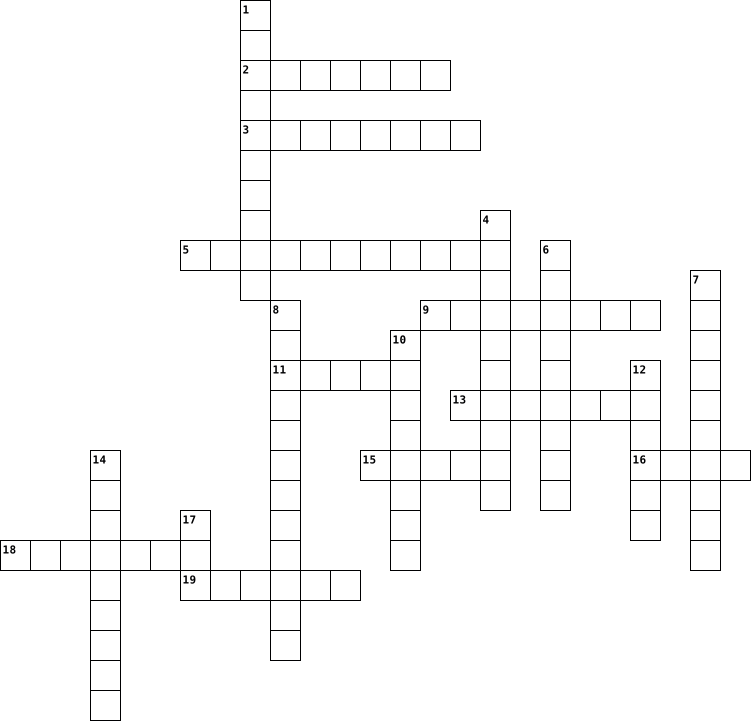
Across
- One capital/shape type; can not break; atoms same
- Change type with substance remaining the same
- Liquid plus liquid makes this solid
- Change type with new substance being formed
- Proportion of number of each atom type
- With >1 type of substance that are not attached
- Shape or letters (& numbers) to represent matter
- Tiny building block has protons, neutrons, electrons
- With >1 chemical symbol touching is a chemical...
- Periodic Table abbreviation is a chemical...
Down
- Type of (color) change in chemical reactions
- Physical change (of state) that can go back
- Chemical reaction with oxygen to change color
- Element types on zig zag line of PTE
- Chemical change type that can't go back
- With >1 capital/shape type; can break chemically
- Element types on left side of Periodic Table
- Element types on right side of Periodic Table
- State of matter produced if fizzing/bubbling occurs
19 Clues: Liquid plus liquid makes this solid • Element types on zig zag line of PTE • Proportion of number of each atom type • Chemical change type that can't go back • Physical change (of state) that can go back • Change type with new substance being formed • Type of (color) change in chemical reactions • Element types on left side of Periodic Table • ...
Elements, Ions and the Periodic table 2025-08-07

Across
- The name of an element is shortened to this "atomic-
- Ion great for your teeth they say
- Burnt wood will leave this behind
- Very light gas that is used to fill balloons
- Charge of an ion that loses electrons
- Neutrally charged particle in the atom's nucleus
- General name for atoms on the left of the periodic table
- The name of the rows in a periodic table
- The general name of the columns in a periodic table
- The lightest element
- Charge of an ion that gains electrons
Down
- Name of the scientist that models electrons in rings around an atom
- Negative particles surrounding the nucleus
- The name of an atom that loses or gains electrons
- Smells like the swimming pool
- Not quite metals!
- Element essential for plants and fills the air
- Gas that is required for us to respire
- Positively charged particle in an atom's nucleus
19 Clues: Not quite metals! • The lightest element • Smells like the swimming pool • Ion great for your teeth they say • Burnt wood will leave this behind • Charge of an ion that loses electrons • Charge of an ion that gains electrons • Gas that is required for us to respire • The name of the rows in a periodic table • Negative particles surrounding the nucleus • ...
Unit 1 crossword 2023-08-29

Across
- A section of the periodic table that comprises nonmetals not forming in nature (they react with metals to form salts)
- purest form of a substance, made up of uniform matter
- The ability of a material to be stretched, pulled, or drawn into thin wire without breaking
- unit of mass used to express atomic and molecular traits
- Particle The particles that make up an atom
- number of atoms in one molecule of an element
- A column on the periodic table in which every element has the same number of valence electrons
- gas A gaseous chemical element that doesn't react with other elements
- A row of the periodic table where every element has the same amount of energy levels
- electrons the electrons residing on the outermost energy level of an atom
Down
- Cloud the place electrons inhabit in an atom
- negatively charged subatomic particle
- Table An organized list of elements based on increasing atomic number
- The capability of an atom/molecule to chemically react with another atom/molecule
- Building blocks of matter
- Radius, total distance from the nucleus to the outermost orbital of its electron
- Representation of an element using 1 or 2 letters
- positively charged subatomic particle
- neutrally charged subatomic particle
- the center of an atom
20 Clues: the center of an atom • Building blocks of matter • neutrally charged subatomic particle • negatively charged subatomic particle • positively charged subatomic particle • Cloud the place electrons inhabit in an atom • Particle The particles that make up an atom • number of atoms in one molecule of an element • Representation of an element using 1 or 2 letters • ...
modern periodic table 2017-02-02

Across
- the elements in group zero are called
- group 17 elements are
- classification was based on
- the first element of rare earth metal is
- vertical rows in periodic table is known as
Down
- first nobal gas in table
- modern periodic table is discovered by
- metal which is most reactive
- the first alkali metal is
- the no. Of e- in the valence shell is equal to its
- family of element to which potassium belongs to
- horizontal rows in periodic table is known as
12 Clues: group 17 elements are • first nobal gas in table • the first alkali metal is • classification was based on • metal which is most reactive • the elements in group zero are called • modern periodic table is discovered by • the first element of rare earth metal is • vertical rows in periodic table is known as • horizontal rows in periodic table is known as • ...
Periodic Table Review B 2017-10-18

Across
- unreactive elements with 8 valence electrons
- a row on the periodic table
- diatomic element; sometimes behaves as a metal, sometimes behaves as a nonmetal
- diatomic element in Group 5A
- metals with 2 valence electrons
- only liquid metal
- name of the group that contains the element Erbium
- type of elements found to the right of the bold, dark line on the periodic table
- arranged the elements into groups of three based on shared properties
- metals that form ions with a +1 charge
- group name of the elements found in the f-block of period 7
- noble gas with only 2 valence electrons
Down
- type of elements that are malleable, ductile and good conductors of electricity
- solid, diatomic element that gains one electron when forming an ion
- diatomic element; only liquid nonmetal
- said that the properties of the elements repeated every seven elements
- element that forms a +2 ion, located in Period 4 of the s-block
- groups labeled with a “B” on the periodic table
- one of the two names for a column on the periodic table
- reordered the elements based on their atomic number rather than atomic weight
- one of the two names for a column on the periodic table
- metalloid with 4 valence electrons
- correctly predicted the existence of elements and their properties
- elements that have properties of both metals and nonmetals
24 Clues: only liquid metal • a row on the periodic table • diatomic element in Group 5A • metals with 2 valence electrons • metalloid with 4 valence electrons • diatomic element; only liquid nonmetal • metals that form ions with a +1 charge • noble gas with only 2 valence electrons • unreactive elements with 8 valence electrons • groups labeled with a “B” on the periodic table • ...
Year 8 Chemical Reactions 2021-03-11

Across
- part of the atom that is negatively charged
- what is the scientific term for burning
- One type of atom. Found in the Periodic Table
- carbon dioxide released into the environment is a pollutant because it is a __________
- In a chemical equation these substances come after the arrow
- this type of combustion only produces carbon dioxide and water
- All matter are made up of this tiny spheres.
- type of elements found on the right of the Periodic Table.
Down
- an insoluble solid can be separated from a liquid using this method; e.g. sand mixed with water.
- the chemistry word for when something reacts with oxygen
- more than one element chemically bonded together
- type of elements found on the left and centre of the Periodic table.
- a dissolved solid can be separated from a liquid using this method; e.g. salt dissolved in water.
- the chemistry word for when something loses oxygen in a reaction
- In a chemical equation these substances come before the arrow
- this type of combustion produces carbon monoxide and soot particles and is less efficient
- Part of the atom in the centre
- chemical equations need to be __________ so there is the same number of atoms in the reactants and products.
- more than one substance not chemically bonded together
- All the elements can be found in The Periodic _______
20 Clues: Part of the atom in the centre • what is the scientific term for burning • part of the atom that is negatively charged • All matter are made up of this tiny spheres. • One type of atom. Found in the Periodic Table • more than one element chemically bonded together • All the elements can be found in The Periodic _______ • ...
Vocabulary Review 2020-11-09

Across
- The only element located to the left of the staircase on the periodic table that is a nonmetal
- Not as good as metals, but not as poor as nonmetals.. its an "okay" conductor.
- The amount of space the object takes up.
- all elements (except one) located to the left of the staircase on the periodic table are
- characteristic of metal: hammered into thin sheets
- characteristic of a nonmetal: break easily
- Heat is transferred by heat waves we can not see with out eyes, but we can certainly feel it.
- The unit for volume if it is a liquid
- ALL elements located to the right of the staircase on the periodic table are
- Tells you how closely compact atoms are in an object.
Down
- heat is transferred in a circular motion caused by differences in temperature and density.
- The unit for mass
- the name of the spectrum that allows you to see the different types of radiation waves we can not see with a naked eye,
- heat is transferred by DIRECT contact
- ALL elements located ON the staircase on the periodic table are
- The unit for volume if it is a solid
- Type of energy that causes atoms to vibrate and collide
- characteristic of a metal: shiny
- characteristic of a metal: stretch into wire
- The amount of matter (atoms) that make up an object.
20 Clues: The unit for mass • characteristic of a metal: shiny • The unit for volume if it is a solid • heat is transferred by DIRECT contact • The unit for volume if it is a liquid • The amount of space the object takes up. • characteristic of a nonmetal: break easily • characteristic of a metal: stretch into wire • characteristic of metal: hammered into thin sheets • ...
The periodic table and atoms crossword 2022-01-05

Across
- relating to atoms
- a particle with a positive charge
- the horizontal numbers that label vertical rows
- a particle with a neutral charge
- everything on the periodic table
- the noble gas with the lowest atomic mass
- the particle that makes up matter
- the letters that abbreviate the element they are placed on
Down
- a particle with a negative charge
- a group of atoms that are together
- the vertical numbers that label horizontal rows
- the elements on the periodic table that aren't metals
- an element with 20 electrons
- the elements on the periodic table that are metals
- the thing in the center of the atom
15 Clues: relating to atoms • an element with 20 electrons • a particle with a neutral charge • everything on the periodic table • a particle with a negative charge • a particle with a positive charge • the particle that makes up matter • a group of atoms that are together • the thing in the center of the atom • the noble gas with the lowest atomic mass • ...
chemistry vocabulary 2023-09-26

Across
- a column in the periodic table of the chemical elements
- radius the internuclear distance between the two hydrogen atoms in an H2 molecule is measured to be 74pm
- an element that has properties that are intermediate between those of metals and nonmetals
- The physical and chemical properties of the elements are periodic functions of their atomic numbers
- elements that have partially filled d orbitals
- Elements in which all the inner shells are complete but outer shell is incomplete
- a horizontal row of the periodic table
- any of the elements fluorine, chlorine, bromine, iodine, and astatine, occupying group VIIA (17) of the periodic table
Down
- Russian chemist and inventor
- any of a class of substances characterized by high electrical and thermal conductivity as well as by malleability, ductility, and high reflectivity of light
- the amount of energy required to remove an electron from an isolated atom or molecule
- any of the six chemical elements that make up Group 1 (Ia) of the periodic table
- a chemical element that lacks the charictoristicts of a metal
- makes bonding between atoms possible.
- a positively charged ion
- an atom or molecule with a net electric charge due to the loss or gain of one or more electrons.
- a negatively charged ion
- Easily ionized
- a group of rare gases that include helium, neon, argon, krypton, xenon, and usually radon and that exhibit great stability and extremely low reaction rates
19 Clues: Easily ionized • a positively charged ion • a negatively charged ion • Russian chemist and inventor • makes bonding between atoms possible. • a horizontal row of the periodic table • elements that have partially filled d orbitals • a column in the periodic table of the chemical elements • a chemical element that lacks the charictoristicts of a metal • ...
Periodic Trends Vocab. 2023-09-22

Across
- A positively charged ion
- A chemical element that exhibits some metal and some nonmetal properties
- When elements are arranged in order of increasing atomic number, there is a periodic repetition of their chemical and physical properties
- A measure of an atom's ability to attract shared electrons to itself
- The total distance from the nucleus of an atom to the outermost orbital of its electron
- The elements present in s- and p-blocks except inert gases
- All of the elements in the second column (2A) of the periodic table
- A horizontal row of the periodic table
Down
- The elements which form negative ions by accepting or gaining electrons
- Elements that have partially filled d orbitals
- The amount of energy required to remove an electron from an isolated atom or molecule
- A chemical element that forms a salt when it reacts with metal
- Any of the elements found in Group 1(A) of the periodic table
- A gaseous chemical element that does not readily enter into chemical combination with other elements
- Russian chemist who developed a periodic table of the chemical elements and predicted the discovery of several new elements
- Any of a class of substances characterized by high electrical and thermal conductivity as well as by malleability, ductility, and high reflectivity of light.
- A group of elements with similar chemical properties
- A negatively charged ion
- An atom or group of atoms that has an electric charge
19 Clues: A positively charged ion • A negatively charged ion • A horizontal row of the periodic table • Elements that have partially filled d orbitals • A group of elements with similar chemical properties • An atom or group of atoms that has an electric charge • The elements present in s- and p-blocks except inert gases • ...
Radioactivity Vocabulary 2022-10-24

Across
- a substance made of two or more elements bonded together
- a type of electron that's in the outer shell of an atom
- the columns on the periodic table
- a positive ion
- small numbers to the bottom right of an element to show how many atoms are in a compound
- a measure of how strong an element can pull on another element's valence electrons
Down
- the rule that atoms want 8 valence electrons
- a type of compound that involves two ions
- the rows on the periodic table
- to the right on the periodic table, tend to form negative charges
- a negative ion
- a charged atom
- to the left on the periodic table, tend to form positive charges
13 Clues: a negative ion • a positive ion • a charged atom • the rows on the periodic table • the columns on the periodic table • a type of compound that involves two ions • the rule that atoms want 8 valence electrons • a type of electron that's in the outer shell of an atom • a substance made of two or more elements bonded together • ...
Gases 2025-04-11

Across
- How hot or cold something is
- Carbon _______________ is a gas that makes the bubbles in soda. The formula is CO2
- Pressure is the ____________ of particles on a container
- A gas that makes balloons float and has an atomic mass of 2
- A gas we need to breathe to stay alive
- When the volume of a gas decreases, the pressure _________________
- A substance that does not have a fixed volume or shape
- ____________ energy is the energy of an object in motion
Down
- A gas that is used to clean swimming pools and has an atomic mass of 35.45 on the periodic table
- The amount of space air takes up
- A gas that is number 7 on the periodic table
- A small amount of matter, like an atom or molecule
- A gas found in rock and soil and number 86 on the periodic table
- The force of particles on the walls of a container
- When temperature of a gas decreases, the speed of the atoms also _________
- A gas that is in some light up signs and number 10 on the periodic table
- How we measure very small particles like atoms and molecules
- Anything that holds things inside it
- A unit for pressure
19 Clues: A unit for pressure • How hot or cold something is • The amount of space air takes up • Anything that holds things inside it • A gas we need to breathe to stay alive • A gas that is number 7 on the periodic table • A small amount of matter, like an atom or molecule • The force of particles on the walls of a container • ...
Random Info 2022-04-11

Across
- Short form of poetry
- Periodic table symbol Ag
- used to be a grocery store before phone
- October 31st
- symbol C
- symbol N
- Jewish holiday
- December 25th
- German word for granny
- Symbol O
- capital of Texas
- weather forecaster
Down
- Periodic table symbol Cu
- Town you live in
- Main cause of salmonella
- City Capital of Missouri
- Scientific name for water
- Capital of Canada
- Town Crystal is from
- what you do when you finish high school
- last Thursday of the month
21 Clues: symbol C • symbol N • Symbol O • October 31st • December 25th • Jewish holiday • Town you live in • capital of Texas • Capital of Canada • weather forecaster • Short form of poetry • Town Crystal is from • German word for granny • Periodic table symbol Cu • Periodic table symbol Ag • Main cause of salmonella • City Capital of Missouri • Scientific name for water • last Thursday of the month • ...
CHEMISTRY CROSSWORD 2022-05-12

Across
- si unit of energy
- unit of temoerature
- solids in a liquid are removed
- type of gas on the periodic table
- name of the class
- turns litmus blue
- technique of heating a liquid
- increases the rate of a reaction
- number of protons
- m
- ion thatis positively charged
Down
- two bonding pairs
- turns into a solid
- turns litmus red
- quantity of matter
- dissolves a solvent
- middle of periodic table
- unit of a element
- salt
- solution with a little solute
20 Clues: m • salt • turns litmus red • two bonding pairs • si unit of energy • name of the class • turns litmus blue • unit of a element • number of protons • turns into a solid • quantity of matter • unit of temoerature • dissolves a solvent • middle of periodic table • technique of heating a liquid • solution with a little solute • ion thatis positively charged • solids in a liquid are removed • ...
Science 2023-04-17

Across
- What is the name of the group of elements in Group 17 of the periodic table?
- What is the process by which a gas changes directly into a solid without passing through the liquid state?
- What type of change results in the formation of a new substance?
- What is the state of matter that has a definite volume but no definite shape?
- What type of change occurs when a substance changes its state of matter without changing its identity?
- What is the state of matter that has both a definite shape and volume?
- What is the basic building block of matter?
- What is anything that has mass and takes up space called?
- What is the process by which a substance changes from a solid to a liquid?
- What is the name of the group of elements in Group 2 of the periodic table?
Down
- What type of change results in the formation of a new substance with different properties?
- What is the process by which liquid water changes into water vapor?
- What is the name of the group of elements in Group 18 of the periodic table?
- What is the state of matter that has a definite shape but no definite volume?
- What is the state of matter that has a definite shape and volume?
- What is the process by which a gas changes directly into a solid?
- What are the elements in Group 1 of the periodic table called?
- What is the process by which a gas changes directly into a liquid?
- What is the name of the group of elements in the middle of the periodic table?
- What is the process by which a liquid changes into a gas at the surface of a liquid?
20 Clues: What is the basic building block of matter? • What is anything that has mass and takes up space called? • What are the elements in Group 1 of the periodic table called? • What type of change results in the formation of a new substance? • What is the state of matter that has a definite shape and volume? • ...
Nuclear Forces 2013-06-21

Across
- The 2nd element on the periodic table
- What has a positive charge which makes an atom?
- What has a negative charge which orbits a nucleus?
- A type of Hydrogen atom with 2 neutrons
- A type of hydrogen atom with 1 neutron
- What is everything made out of?
- The collision of two hydrogen atoms
- The strongest fuel for fission
- The Periodic table lists these
- The plural of the Protons and Neutrons
Down
- The first element on the periodic table
- The process of the extra neutron fired out in a nuclear reaction
- The weaker fuel for fission
- What is the electricity inside a sub-atomic particle called?
- What has no charge which makes an atom?
- The different versions of an element
- What is the process of splitting an atom called?
- Comes out in nuclear reactions
18 Clues: The weaker fuel for fission • The strongest fuel for fission • The Periodic table lists these • Comes out in nuclear reactions • What is everything made out of? • The collision of two hydrogen atoms • The different versions of an element • The 2nd element on the periodic table • A type of hydrogen atom with 1 neutron • The plural of the Protons and Neutrons • ...
Chemistry Mid Term Vocabulary Review 2012-12-18

Across
- difference in electronegativity
- composed of atoms with the same number of protons
- reason the atomic mass on the periodic table is not a whole #
- ability of an atom to attract an electron
- positively charged subatomic particle
- when an atom gains or loses an electron
Down
- vertical column on the Periodic Table
- smallest unit that matter is made of
- negatively charged subatomic particle
- Group 17 elements
- Mass = #protons + #neutrons
- sunatomic particle with no charge
- horizontal row on the Periodic Table
13 Clues: Group 17 elements • Mass = #protons + #neutrons • difference in electronegativity • sunatomic particle with no charge • smallest unit that matter is made of • horizontal row on the Periodic Table • vertical column on the Periodic Table • negatively charged subatomic particle • positively charged subatomic particle • when an atom gains or loses an electron • ...
Do You Know The Periodic Table? 2013-01-14

Across
- This non-metal is liquid, in period 5, has the atomic number of 35 and it’s symbol is “Br”.
- This element is a member of the alkaline earth metals and is in period 3. It has 2 electrons in its valence shell.
- This is the simplest form of matter that cannot be further broken down. The periodic table is used in order to classify this form of matter. An example would be hydrogen.
- These type of metals are located in the first group of the periodic table. They contain one electron in their valence shell.
- This is given to element and is an abbreviation for it. For example, Hydrogen’s ______ is “H”
- This is the table’s 18 columns that are read vertically from top to bottom. All of these elements in each _____ have the same number of electrons orbiting the nucleus in the outermost shell.
- This family of elements are located in the middle of the periodic table. The number of valence electrons for these elements vary. They are very hard and have high melting and boiling points. An example of a metal from this family would be copper.
- This is the number of protons in the nucleus of the atom, which determines the chemical properties of an element and it's place on the periodic table.
- They are located along the "stair case" between the metals and nonmetals. They possess some characteristics of metals and some of nonmetals.
- These are the seven rows in the periodic table. Each element in a single row has the same number of electron shells which surround the atomic nucleus.
Down
- The symbol for this element is “H”. It has one electron in its valence shell and the atomic number of 1. It is a colorless, odorless combustible gas. 75% of the universe’s elemental mass is this element.
- They are located on the left side and the middle of the periodic table. They are shiny, malleable and ductile.
- This is the total mass of protons, neutrons and electrons in a single atom.
- The elements in this family is relatively nonreactive. This is because they have a complete valence shell.
- This alkali metal has the atomic number of 19 and is in period 4. The symbol for this element is “K”.
- They are the elements located in group two of the periodic table.They contain two electrons in their valence shell.
- They are located on the upper right side of the periodic table, above the "stair case". They are poor thermal and electrical conductors and are brittle solids.
- This element is a gas that we use every day in order to survive. It is also found in the molecular compound of water and has the atomic number of 8.
- This element is a member of the noble gases and is in period 2. It has a full valence shell and has the atomic mass of 20.18.
- This family of non-metals are located in group 7 of the periodic table.These reactive nonmetals have seven valence electrons. They are highly reactive, especially with alkali metals and alkaline earths.
20 Clues: This is the total mass of protons, neutrons and electrons in a single atom. • This non-metal is liquid, in period 5, has the atomic number of 35 and it’s symbol is “Br”. • This is given to element and is an abbreviation for it. For example, Hydrogen’s ______ is “H” • ...
Unit 4 Study Guide 2021-12-07

Across
- _____________ is a separation technique that involves the use of a magnet.
- the _______________ side of the periodic table is where you can find the metals.
- substance An element and compound are both a _______________
- _____________ is a technique for separating a solid and a liquid that requires gravity.
- Salt that is COMPLETELY dissolved in water is known as a _______________ mixture.
- Homozygous mixtures are _______________ throughout
- ______________ involves substances with different boiling points and an elaborate setup where one substance will change states of matter (liquid to gas to liquid).
Down
- Group number 18 of the periodic table, also known as the _______________, are the least reactive elements.
- _____________ can involve the use of a special type of paper and is used to identify different dyes or pigments in a substance.
- a bowl of cereal and milk is known as a _______________ mixture.
- _____________ separation involves the use of a tool, like forceps or a strainer.
- On the periodic table, groups 3-12 (the middle section) are known as _______________ metals.
- _______________ consists of 2 or more elements and can be separated, but only by a chemical reaction
- The right side of the periodic table is where you can find the _______________ .
- ______________ can NOT be broken down by physical or chemical means and is located on the periodic table.
15 Clues: Homozygous mixtures are _______________ throughout • substance An element and compound are both a _______________ • a bowl of cereal and milk is known as a _______________ mixture. • _____________ is a separation technique that involves the use of a magnet. • the _______________ side of the periodic table is where you can find the metals. • ...
stuff from last 2 week 2022-09-21

Across
- a chart of the elements arranged into rows and columns according to their physical and chemical properties
- an element in group 328 on the periodic table
- positive charges
Down
- an element in group 1 on the periodic table
- a column on the periodic table
- a small particle that is the building block of matter
- negative charges
- a element in group 17 on the periodic tables
- anything that has mass and volume
- a row on the periodic table
10 Clues: negative charges • positive charges • a row on the periodic table • a column on the periodic table • anything that has mass and volume • an element in group 1 on the periodic table • a element in group 17 on the periodic tables • an element in group 328 on the periodic table • a small particle that is the building block of matter • ...
Periodic Table Review 2022-01-17

Across
- group 1
- symbol As
- the section below the periodic table
- decreases as you go down a group
- upper left corner in an element
- The most reactive nonmetal
- period 18
- the size of an ion
- The staircase down the periodic table
- The densest element
Down
- group 17
- The first element
- d-block
- the ability to attract electrons
- symbol Au
- The most reactive metal
- The only liquid metal
- symbol Ag
18 Clues: group 1 • d-block • group 17 • symbol As • symbol Au • symbol Ag • period 18 • The first element • the size of an ion • The densest element • The only liquid metal • The most reactive metal • The most reactive nonmetal • upper left corner in an element • the ability to attract electrons • decreases as you go down a group • the section below the periodic table • The staircase down the periodic table
Chemistry Mid Term Vocabulary Review 2012-12-18

Across
- smallest unit that matter is made of
- composed of atoms with the same number of protons
- when an atom gains or loses an electron
- positively charged subatomic particle
- sunatomic particle with no charge
- horizontal row on the Periodic Table
- Group 17 elements
- vertical column on the Periodic Table
- negatively charged subatomic particle
Down
- Mass = #protons + #neutrons
- ability of an atom to attract an electron
- reason the atomic mass on the periodic table is not a whole #
- difference in electronegativity
13 Clues: Group 17 elements • Mass = #protons + #neutrons • difference in electronegativity • sunatomic particle with no charge • smallest unit that matter is made of • horizontal row on the Periodic Table • positively charged subatomic particle • vertical column on the Periodic Table • negatively charged subatomic particle • when an atom gains or loses an electron • ...
Compounds and mixtures 2022-05-03

Across
- S on the periodic table
- C on the periodic table
- Fe on the periodic table
- a single type of molecules
- 2 hydrogen and 1 oxygen molecule
- multiple atom that make up a substance
Down
- H on the periodic
- the building blocks for all things
- molecules mixed but with no chemical bond
- chemically bonded molecules
10 Clues: H on the periodic • S on the periodic table • C on the periodic table • Fe on the periodic table • a single type of molecules • chemically bonded molecules • 2 hydrogen and 1 oxygen molecule • the building blocks for all things • multiple atom that make up a substance • molecules mixed but with no chemical bond
MNM 2024-09-24

Across
- a table that holds all elements
- kinda good conductor
- on the zig zag line on the periodic table
- is a bad conductor
- stops the conductivity
- the ability to break easily
- the ability to be hammered into then sheets of metal
Down
- on the right side of the periodic table
- has the ability to be pulled into wire
- on the left side of the periodic table
- is a good conductor
- is a shiny metal when light is shined on it
12 Clues: is a bad conductor • is a good conductor • kinda good conductor • stops the conductivity • the ability to break easily • a table that holds all elements • has the ability to be pulled into wire • on the left side of the periodic table • on the right side of the periodic table • on the zig zag line on the periodic table • is a shiny metal when light is shined on it • ...
Figure it out 2021-09-16

Across
- it's just fire
- is the symbol of TH on the periodic table
- the most poisonous element
- it's something a blant breathes in
- very precious and are worth more than gold
- this element group consists of fluorine
- second lightest element
Down
- poisonous and the heaviest on the periodic table
- All in this group are radioactive and release energy upon radioactive decay
- symbole of B with the atomic number 5
- most reactive chemical element
- this has the atomic number four with the symbole of BE
- without it, we would die
- 69th element on the periodic table
- used in electric signs and fluorescent lamps
15 Clues: it's just fire • second lightest element • without it, we would die • the most poisonous element • most reactive chemical element • it's something a blant breathes in • 69th element on the periodic table • symbole of B with the atomic number 5 • this element group consists of fluorine • is the symbol of TH on the periodic table • very precious and are worth more than gold • ...
Periodic Table 2014-11-16

Across
- The first alkali metal
- The number of periods in the periodic table
- The group the consists of very unreactive gases
- Horizontal rows in a periodic table
- most metals are in this state
Down
- Another name for groups
- Who created the first periodic table
- The number of groups in the periodic table
- The staircase that separates metals from nonmetals begins below this element
- Group 17 elements
10 Clues: Group 17 elements • The first alkali metal • Another name for groups • most metals are in this state • Horizontal rows in a periodic table • Who created the first periodic table • The number of groups in the periodic table • The number of periods in the periodic table • The group the consists of very unreactive gases • ...
Periodic Trends Vocabulary 2025-09-30

Across
- : The distance from the nucleus to the outermost electrons; the size of the atom
- : A negatively charged ion (gains electrons)
- : A measure of how strongly an atom attracts electrons in a bond
- : Elements in Groups 3–12; often form colorful compounds and are good conductors
- : Elements in Group 17; very reactive nonmetals
- : When elements are arranged by increasing atomic number, their properties repeat in a regular pattern
- : Shiny, good conductors of heat and electricity, malleable and ductile
- : Dull, brittle elements that are poor conductors of heat and electricity
- : Elements with properties of both metals and nonmetals
Down
- : Elements in Group 1 of the periodic table; very reactive metals
- : The scientist who created the first periodic table
- : Elements in Group 2; reactive metals but less so than alkali metals
- : Elements in Groups 1, 2, and 13–18; show a wide range of chemical properties
- : Elements in Group 18; unreactive gases because their outer electron shells are full
- : A positively charged ion (loses electrons)
- : An atom or molecule that has gained or lost electrons and has a charge
- : A horizontal row in the periodic table
- : A vertical column in the periodic table; elements in the same group have similar properties
- : The energy needed to remove an electron from an atom
19 Clues: : A horizontal row in the periodic table • : A positively charged ion (loses electrons) • : A negatively charged ion (gains electrons) • : Elements in Group 17; very reactive nonmetals • : The scientist who created the first periodic table • : The energy needed to remove an electron from an atom • : Elements with properties of both metals and nonmetals • ...
Physical Science 5.1. 5.2, and 5.3 Vocab 2021-04-30

Across
- One of the metals that can use the inner shell before using the outer shell to bond
- An atom, radical, or molecule that has gained or lost one or more electrons and has a negative or positive charge
- An element that is shiny and that conducts heat and electricity well
- A vertical column of elements in the periodic table; elements that share chemical properties
- A law that states that the repeating chemical and physical properties of elements change periodically with the atomic numbers of elements
- A horizontal row of elements in the periodic table
- One of the elements of Group 18 of the periodic table, are unreactive
Down
- One of the elements in Group 1 of the periodic table
- One of the elements of Group 2 of the periodic table
- An element or compound that conducts electric current better than an insulator does but not as well as a conductor does
- An element that conducts heat and electricity poorly and that does not form positive ions in an electrolytic solution
- One of the elements of Group 17 of the periodic table, combine with metals to form salts
12 Clues: A horizontal row of elements in the periodic table • One of the elements in Group 1 of the periodic table • One of the elements of Group 2 of the periodic table • An element that is shiny and that conducts heat and electricity well • One of the elements of Group 18 of the periodic table, are unreactive • ...
Chemistry vocab 2022-12-08

Across
- _________ move away
- number above the element
- shiny and glossy
- _________ go toward
- two energy levels 1 valence electron
- elements on the right
- electricity and heat passes
- on the stair case
- the number above the element
- _____ is nor created or destroyed
- up and down on a periodic table
- right side of stair case
Down
- number of atoms
- shatters easily
- groups 1,2,13,14,15,16,17
- left and right on periodic table
- left side of stair case
- not seeable
- less dense and thick
- elements on the left
20 Clues: not seeable • number of atoms • shatters easily • shiny and glossy • on the stair case • _________ move away • _________ go toward • less dense and thick • elements on the left • elements on the right • left side of stair case • number above the element • right side of stair case • groups 1,2,13,14,15,16,17 • electricity and heat passes • the number above the element • ...
Elements 2022-02-25

Across
- close to borax
- used to make alloys
- number 19 on the periodic table
- used to disinfect water
- found in food
- a hard grey metal
- number 18 on the periodic table
- it's a gas
- element with the symbol H
- supports the muscles
- yellow gas
Down
- like a diamond
- used to help make your bones strong
- atomic number is 3
- atomic number 7
- it’s found in your bones
- atomic number 13
- member of the oxygen family
- used for lights
- like air
20 Clues: like air • it's a gas • yellow gas • found in food • like a diamond • close to borax • atomic number 7 • used for lights • atomic number 13 • a hard grey metal • atomic number is 3 • used to make alloys • supports the muscles • used to disinfect water • it’s found in your bones • element with the symbol H • member of the oxygen family • number 19 on the periodic table • number 18 on the periodic table • ...
CHEMISTRY 2022-05-12

Across
- quantity of matter
- number of protons
- increases the rate of a reaction
- si unit of energy
- m
- salt
- technique of heating a liquid
Down
- dissolves a solute
- solids in a liquid are removed
- unit of element
- turn litmus blue
- turns litmus red
- the name of the class
- type of gas on periodic table
- unit of temperature
- two bonds paired together
- ion that is positivly charged
- turns into a solid
- solution with a little solute
- middle of periodic table
20 Clues: m • salt • unit of element • turn litmus blue • turns litmus red • number of protons • si unit of energy • dissolves a solute • quantity of matter • turns into a solid • unit of temperature • the name of the class • middle of periodic table • two bonds paired together • type of gas on periodic table • ion that is positivly charged • solution with a little solute • technique of heating a liquid • ...
Chemistry 2013-10-01

Across
- the element on the periodic table with the atomic number 6
- type of property that describes how a substance interacts with something else
- allows heat and electricity to flow through it
- positively charged particle in an atom
- two or more atoms joined together
- the elements along the 'staircase' of the periodic table
- this number tells you the number of protons in an atom
- every substance found around you
- where the protons and neutrons are found in the atom
Down
- made up of two or more different types of atoms
- name of the table that organizes all of the elements
- the group of the periodic table full of non-reactive gases
- dull, brittle, and non-conductive element
- describes what a substance looks like
- negatively charged particle in an atom
- the element with the atomic number 11
16 Clues: every substance found around you • two or more atoms joined together • describes what a substance looks like • the element with the atomic number 11 • positively charged particle in an atom • negatively charged particle in an atom • dull, brittle, and non-conductive element • allows heat and electricity to flow through it • made up of two or more different types of atoms • ...
chemical periodic table 2023-08-29

Across
- most elements are made of metal
- you can predict a lot about the chemical behavior.
- the periodic table is drawn as a thick staircase
- number on a square above the chemical symbol is the atomic number
- are good conducters of heat
- with a one or 2 letter chemical symbol
- not good conducters of electricity
Down
- you can find them on the left and middle
- the periodic table is really invaluable is its use as a predictive tool.
- except for hydrogen which is on the upper left
- Each element is represented by one square
- table The periodic table is the most powerful tool.
- metallic elements are mostly shiny
- mass bellow the symbol are the full name of the element and its atomic mass
14 Clues: are good conducters of heat • most elements are made of metal • metallic elements are mostly shiny • not good conducters of electricity • with a one or 2 letter chemical symbol • you can find them on the left and middle • Each element is represented by one square • except for hydrogen which is on the upper left • the periodic table is drawn as a thick staircase • ...
What's the Matter? 2017-09-25

Across
- when two substances are spread through each other and can be separated
- the liquid that dissolves the solid
- the 15th element on the periodic table
- the 12th element on the periodic table
- the first name of the NZ scientist who split the atom
- a substance that is made up of only one type of atom
- can dissolve
- when a liquid turns to a gas
- the table where all of the elements are
Down
- the movement that all particles do
- can't dissolve
- when a gas turns to a liquid
- the solid that mixes and dissolves
- when two or more different atoms are joined together
- sub-atomic particle that has a negative charge
- sub-atomic particle that has no charge
- sub-atomic particle that has a positive charge
17 Clues: can dissolve • can't dissolve • when a gas turns to a liquid • when a liquid turns to a gas • the movement that all particles do • the solid that mixes and dissolves • the liquid that dissolves the solid • the 15th element on the periodic table • the 12th element on the periodic table • sub-atomic particle that has no charge • the table where all of the elements are • ...
stuff from last 2 week 2022-09-21

Across
- a chart of the elements arranged into rows and columns according to their physical and chemical properties
- an element in group 328 on the periodic table
- positive charges
Down
- an element in group 1 on the periodic table
- a column on the periodic table
- a small particle that is the building block of matter
- negative charges
- a element in group 17 on the periodic tables
- anything that has mass and volume
- a row on the periodic table
10 Clues: negative charges • positive charges • a row on the periodic table • a column on the periodic table • anything that has mass and volume • an element in group 1 on the periodic table • a element in group 17 on the periodic tables • an element in group 328 on the periodic table • a small particle that is the building block of matter • ...
Periodic Table crosword 2024-11-25

Across
- Alkaline Earth Metals react with water to form___.
- What kind of metals are in groups 3-12 and have multiple oxidation states(charges)?
- When metals and nonmetals chemically bond together,___ are formed from a transfer of electrons.
- How many valence electrons does Chlorine Cl, have?
- what kind of property is shiny, dense,and has a high melting point(usually are solids).
- What is the ionic charge of Oxygen?
- This group has all three phases of matter.
- He did not get credit because his periodic table was "incomplete".
- These are the outermost electrons.
- a table that consists of elements.
- The vertical_____of the periodic table numbered 1A-8A and 1B-8B.
- what year was Mendeleev's table published?
- How many valence electron does Beryllium have?
- The horizontal_______of the periodic table numbered from top to botton #1-7.
- What kind of property contains properties of both metals and nonmetals.
Down
- Metals___electrons
- the two rows that are moved to the bottom to fit on paper.
- What is the ionic charge of Aluminum?
- What kind of property is dull,low density, and low melting points(are usually gases).
- What kind of metal is group two and has a charge of +2?
- What kind of metal is in group one and has a charge of +1?
- What gas is in group 18 and have full valence electron shells?
- Created the first periodic table
- Nonmetals_____electrons
- Alkali metals react with____to make strong bases.
- What is the nonmetal that is group 17 and has a charge of -1?
- Positive ions are called?
- Negative ions are called?
- What is the maximum amount of dots in a Lewis Dot Structure?
29 Clues: Metals___electrons • Nonmetals_____electrons • Positive ions are called? • Negative ions are called? • Created the first periodic table • These are the outermost electrons. • a table that consists of elements. • What is the ionic charge of Oxygen? • What is the ionic charge of Aluminum? • This group has all three phases of matter. • what year was Mendeleev's table published? • ...
Elements and Atoms 2023-09-05

Across
- there are more than 100 known_____.
- particle that has a positive charge
- particle in an atom that has a negative charge
- There are 18 columns or ____ on the periodic table.
- smallest part of an element that can be identified as that element.
- element that lacks most of the properties of a metal.
- able to be drawn into thin wires
- element that has the property of shiny luster, ductility, and malleability.
- a repeating pattern
- the center or core of an atom
Down
- the way a material reflects light
- able to be hammered into different shapes
- has the same number of protons but a different number of neutrons.
- horizontal row of elements in the periodic table.
- elements that make up group 17 in the periodic table.
- particle in the nucleus of an atom that does not have any charge.
16 Clues: a repeating pattern • the center or core of an atom • able to be drawn into thin wires • the way a material reflects light • there are more than 100 known_____. • particle that has a positive charge • able to be hammered into different shapes • particle in an atom that has a negative charge • horizontal row of elements in the periodic table. • ...
Ch. 5 Sec. 1 Quiz Review 2023-02-26

Across
- is arranged by atomic mass
- states that the physical and chemical properties of the elements are periodic functions of their atomic numbers.
- additions to the periodic table after Mendeleev’s version
- means "one"
- repeating patterns
- discovered that the elements fit into patterns better when they were arranged according to atomic number, rather than atomic mass.
Down
- is arranged by atomic number.
- Mendeleev predicted the ____________ of elements that would fill three of the spaces.
- Mendeleev used “eka” to show that the unknown element was ____ _______ _____ from the known element
- Mendeleev placed all the known elements in his periodic table. Several _______ ________ were left.
- The difference in atomic numbers down a group is ____ ______ for each main group.
- created a table of elements so that similar properties were grouped together, called the periodic table of the elements
- an arrangement of the elements in order of their atomic numbers so that elements with similar properties fall in the same column, or group
13 Clues: means "one" • repeating patterns • is arranged by atomic mass • is arranged by atomic number. • additions to the periodic table after Mendeleev’s version • The difference in atomic numbers down a group is ____ ______ for each main group. • Mendeleev predicted the ____________ of elements that would fill three of the spaces. • ...