
photosynthesis Crossword Puzzles
Unit 2 2022-09-27

Across
- Pigment in chloroplasts
- First step of aerobic respiration
- Type of organism that eats other organisms to keep energy
- Situation in which oxygen is present
- Site of steps 2 and 3 of aerobic respiration
- Process of using light energy to make glucose
- The backbone for all macromolecules in living things
- Type of organism that is able to make its own food
- Charged energy storage molecule with 3 phosphorus groups
- Used in proteins and nucleic acids, often limited
- Second step of aerobic respiration, pyruvate is broken down
Down
- Third step of aerobic respiration
- Site of photosynthesis
- First step of photosynthesis, uses sun to split H2O and make ATP and NADPH
- Second step of photosynthesis
- Process of breaking down glucose to make ATP
- Second step of Anaerobic respiration
- Uncharged energy storage molecule with 2 phosphates
- Used in phosphates of nucleic acids and phospholipids of membranes
- Situation in which oxygen is not present.
20 Clues: Site of photosynthesis • Pigment in chloroplasts • Second step of photosynthesis • Third step of aerobic respiration • First step of aerobic respiration • Second step of Anaerobic respiration • Situation in which oxygen is present • Situation in which oxygen is not present. • Process of breaking down glucose to make ATP • Site of steps 2 and 3 of aerobic respiration • ...
Photosynthesis Review 2023-11-01

Across
- The openings in plants where gases can enter or exit.
- The product of photosynthesis that plants release
- Another name for a heterotroph
- Organism that makes food
- A reactant of photosynthesis that is released by heterotrophs
- A reactant of photosynthesis plants can absorb through their roots
- Where nearly all living things obtain energy from (either directly or indirectly)
- Green light capturing pigment found in the chloroplast.
Down
- Process of capturing energy from the sun and using it to make food from carbon dioxide and water
- Another name for an autotroph
- A reactant of photosynthesis plants absorb through the leaves
- The product of photosynthesis that plants use for energy
- Organism that must obtain food from another organism
13 Clues: Organism that makes food • Another name for an autotroph • Another name for a heterotroph • The product of photosynthesis that plants release • Organism that must obtain food from another organism • The openings in plants where gases can enter or exit. • Green light capturing pigment found in the chloroplast. • The product of photosynthesis that plants use for energy • ...
Energy Conversions 2025-05-14

Across
- ENERGY MOLECULE
- THE ORGANELLE IN WHICH CELLULAR RESPIRATION OCCURS
- PROCESS THAT OCCURS IN CYTOPLASM TO CREATE TWO ATP
- THE ORGANELLE IN WHICH PHOTOSYNTHESIS OCCURS
- THE MATERIALS THAT ENTER INTO A REACTION
- THE PROCESS THAT REMOVES CARBON DIOXIDE FROM THE ENVIRONMENT
- A PRODUCT OF PHOTOSYNTHESIS, USED IN AEROBIC RESPIRATION
Down
- THE PROCESS THAT ADDS CARBON DIOXIDE TOTHE ATMOSPHERE
- PROCESS THAT OCCURS ONLY IN EUKARYOTIC ORGANISMS TO CREATE 34 ATP
- THE MATERIALS THAT ARE CREATED FROM A REACTION
- THE TYPE OF ENERGY USED IN CELLULAR RESPIRATION
- MATERIAL RELEASED DURING THE LIGHT DEPENDENT PHASE OF PHOTOSYNTHESIS
- A PRODUCT OF PHOTOSYNTHESIS, USED AS CHEMICAL ENERGY IN CELLULAR RESPIRATION
- THE TYPE OF ENERGY RELEASED BY THE SUN
- THE MATERIAL ABSORBED BY THE ROOTS OF A PLANT AND USED AS A REACTANT IN PHOTOSYNTHESIS
15 Clues: ENERGY MOLECULE • THE TYPE OF ENERGY RELEASED BY THE SUN • THE MATERIALS THAT ENTER INTO A REACTION • THE ORGANELLE IN WHICH PHOTOSYNTHESIS OCCURS • THE MATERIALS THAT ARE CREATED FROM A REACTION • THE TYPE OF ENERGY USED IN CELLULAR RESPIRATION • THE ORGANELLE IN WHICH CELLULAR RESPIRATION OCCURS • PROCESS THAT OCCURS IN CYTOPLASM TO CREATE TWO ATP • ...
Biology Crossword 2025-12-05

Across
- opposite of photosynthesis in energy flow
- site of the chlorophyll in chloroplasts
- photosynthesis site around thylakoids
- organelle where photosynthesis occurs
Down
- site of ATP production in respiration
- gas that gets consumed then gets released through photosynthesis
- process where plants make food using sunlight
- oxygen is one of these from photosynthesis
- reactant with carbon dioxide in photosynthesis
- energy currency of the cell
10 Clues: energy currency of the cell • site of ATP production in respiration • photosynthesis site around thylakoids • organelle where photosynthesis occurs • site of the chlorophyll in chloroplasts • opposite of photosynthesis in energy flow • oxygen is one of these from photosynthesis • process where plants make food using sunlight • ...
Do Now: Photosynthesis Terms Review 2025-10-06

Across
- A reactant of photosynthesis taken in from plant roots.
- The substances made by a chemical reaction, like glucose and oxygen in photosynthesis.
- The green pigment in chloroplasts that captures light energy from the sun.
- A gas that plants release as a byproduct of photosynthesis (very convenient for us).
- The starting materials in a chemical reaction such as water and carbon dioxide in photosynthesis.
- Tiny openings in leaves where gases enter and exit.
- The natural source of energy needed for photosynthesis.
Down
- An organism that makes its own food, like a plant.
- The organelle in plant cells where photosynthesis takes place.
- The sugar that plants produce during photosynthesis for energy.
- A gas plants take IN from the air to use in photosynthesis.
11 Clues: An organism that makes its own food, like a plant. • Tiny openings in leaves where gases enter and exit. • A reactant of photosynthesis taken in from plant roots. • The natural source of energy needed for photosynthesis. • A gas plants take IN from the air to use in photosynthesis. • The organelle in plant cells where photosynthesis takes place. • ...
Cell Terminology 2022-09-01

Across
- Creates energy and water in the form of sugar
- A cell that is strong & found in bones
- Captured by photosynthesis & half then released
- Used to make glucose in photosynthesis
- Gel-like liquid found in cells
- Organelle that surrounds membrane of plant cells
Down
- Small structures inside cells
- The organelle in the cell that created energy
- Made by photosynthesis
- Large storage tank for water inside cell
- Converts light energy into chemical energy with photosynthesis
- Organelle inside cell that contains chromosomes
12 Clues: Made by photosynthesis • Small structures inside cells • Gel-like liquid found in cells • A cell that is strong & found in bones • Used to make glucose in photosynthesis • Large storage tank for water inside cell • Creates energy and water in the form of sugar • The organelle in the cell that created energy • Captured by photosynthesis & half then released • ...
Photosynthesis and Cellular Respiration 2017-01-19

Across
- product of Photosynthesis
- Reactant of Cellular Respiration, and product of Photosynthesis.
- Main reactant of Photosynthesis.
- Organism that relies on other organisms to gain energy.
- Organelle in which Photosynthesis takes place.
- Not requiring Oxygen,
- The main purpose of Cellular Respiration is in order to produce-
Down
- Cycle, Series of chemical reactions used by all aerobic organisms to release stored energy
- Pigment in chloroplast used to capture light energy.
- Type of organism capable of performing Photosynthesis.
- Organelle in which Cellular Respiration takes place.
- Requiring Oxygen
12 Clues: Requiring Oxygen • Not requiring Oxygen, • product of Photosynthesis • Main reactant of Photosynthesis. • Organelle in which Photosynthesis takes place. • Pigment in chloroplast used to capture light energy. • Organelle in which Cellular Respiration takes place. • Type of organism capable of performing Photosynthesis. • ...
PLANT & ANIMAL NUTRITIONS 2022-04-18

Across
- Gives immediate energy
- Deficiency disease causes night blindness
- The gas absorb by plant during photosynthesis
- Give twice the amount of energy compared to carbohydrates and proteins
- The green part in the leaf
Down
- The process plant make food
- The food produced during photosynthesis
- The mineral help to keep bone and teeth healthy
- Deficiency disease causes the swelling and bleeding of gums
- The gas produces during photosynthesis
- The liquid needed in photosynthesis
- Build new cell and repair damaged tissues
12 Clues: Gives immediate energy • The green part in the leaf • The process plant make food • The liquid needed in photosynthesis • The gas produces during photosynthesis • The food produced during photosynthesis • Deficiency disease causes night blindness • Build new cell and repair damaged tissues • The gas absorb by plant during photosynthesis • ...
cellular respiration puzzle 2025-11-06

Across
- organisms that eat other organisms
- a organal that is the reason for photosynthesis
- releases energy
- turned into carbon dioxide during cellular respiration.
- the released from of energy in a cell
- dioxide turned into oxygen during photosynthesis
Down
- turns glucose into atp
- the stored version of energy in a cell
- energy from the sun used in photosynthesis
- a liquid that is necessary for photosynthesis
- uses sunlight and water to make glucose
- a organism that makes its own energy
12 Clues: releases energy • turns glucose into atp • organisms that eat other organisms • a organism that makes its own energy • the released from of energy in a cell • the stored version of energy in a cell • uses sunlight and water to make glucose • energy from the sun used in photosynthesis • a liquid that is necessary for photosynthesis • ...
CELLULAR ENERGY 2024-11-14

Across
- Holds Chlorophyl
- Comes From the Ground, Needed in Photosynthesis
- Power House of the Cell
- The Way Chlorophyl Makes Glucose
- Product of Cellular Respiration, Used in Photosynthesis
Down
- How a Cell Breaks Down Glucose
- Happens With Oxygen
- Source of Energy and Storage
- Key Piece in Photosynthesis, by Chlorophyl
- Processes Sunlight Energy for Photosynthesis
- Happens Without Oxygen
11 Clues: Holds Chlorophyl • Happens With Oxygen • Happens Without Oxygen • Power House of the Cell • Source of Energy and Storage • How a Cell Breaks Down Glucose • The Way Chlorophyl Makes Glucose • Key Piece in Photosynthesis, by Chlorophyl • Processes Sunlight Energy for Photosynthesis • Comes From the Ground, Needed in Photosynthesis • ...
Chapter 3 Crossword Study Guide 2021-10-19

Across
- CO2
- a cell uses energy to make food
- H
- H2O
- break down C6H12O6 to make ATP
- energy used in photosynthesis
- converts C6H12O6 and 6O2 into ATP water and carbon dioxide
- CO2 bubbles in alcoholic drinks are an example of ______
- C6H12O6
- consists of products and reactants
- producer
- consumer
Down
- sugars are a type of _________
- substances going into a chemical equation
- breathing
- ATP is a ______ of cellular respiration
- absorbs sunlight to color plants
- O2
- energy from mitochondria
- what the arrow means in scientific equations
- type of energy-releasing process that makes muscles sore
- release energy without oxygen
- wear cellular respiration occurs (first stage)
- where photosynthesis occurs
24 Clues: H • O2 • CO2 • H2O • C6H12O6 • producer • consumer • breathing • energy from mitochondria • where photosynthesis occurs • energy used in photosynthesis • release energy without oxygen • sugars are a type of _________ • break down C6H12O6 to make ATP • a cell uses energy to make food • absorbs sunlight to color plants • consists of products and reactants • ATP is a ______ of cellular respiration • ...
Biology crossword 2025-08-22

Across
- any living thing is called
- occurs in the mitochondria in aerobic conditions
- stored in the roots,stems or leaves as a form of starch
- factor that affects photosynthesis
- where our energy is stored
- site where photosynthesis happens
- boundry of the cell
- control centre of a cell
- how plants produce energy
- dioxide we breath it out
- we breath it in
Down
- staying stable
- produces proteins
- outerlayer that protects the outside of a plant cell
- series of chemicle reactions
- a regulatory substance produced in an organism
- a condition where your body cant control suger properly
- sugers contain_____
- sugers contain energy locked in the bonds of their_______
- carries our genetics
20 Clues: staying stable • we breath it in • produces proteins • sugers contain_____ • boundry of the cell • carries our genetics • control centre of a cell • dioxide we breath it out • how plants produce energy • any living thing is called • where our energy is stored • series of chemicle reactions • site where photosynthesis happens • factor that affects photosynthesis • ...
Unit 2 vocab 2025-09-18

Across
- takes up space, makes up everything
- Organelle, site of photosynthesis
- Adenosine diphosphate, uncharged energy
- stable, negatively charged
- Sphere, all soil and rocks on Earth
- used in all protiens
- Organelle, site of 2nd and 3rd steps of aerobic cellular respiration
- Pigment in chloroplasts
- Eats other organisms for energy
- 3rd step of aerobic respiration
- Organism that breaks down biotic compounds
Down
- Substance created during chemical reactions
- 2nd step of anaerobic respiration
- sphere, all living things on Earth
- light energy to make glucose
- cycle 2nd step of aerobic respiration
- Oxygen isn't present
- Oxygen is present
- 2nd step of photosynthesis
- Breaks down glucose into pyruvate
20 Clues: Oxygen is present • Oxygen isn't present • used in all protiens • Pigment in chloroplasts • stable, negatively charged • 2nd step of photosynthesis • light energy to make glucose • Eats other organisms for energy • 3rd step of aerobic respiration • 2nd step of anaerobic respiration • Organelle, site of photosynthesis • Breaks down glucose into pyruvate • ...
Baron's photosynthesis and cellular respration 2016-12-07

Across
- adenosine triphosphate
- adenosine diphosphate
- cycle that occurs in photosynthesis
- produces 4 ATP but uses 2 ATP
- cycle that occurs in cellular respiration
- fluid substance within a chloroplast
- organism that makes its own food
- organelle where cellular respiration occurs
- autotrophs which get energy from inorganic substances
- fermentation within animal skeletal muscles
Down
- a single sac like membrane found in chloroplasts
- uses oxygen
- breakdown of molecules to obtain energy
- organism that consumes other organisms to obtain energy
- organelle which carries out photosynthesis
- the pigment found in chloroplasts
- without oxygen
- produces: oxygen and glucos
18 Clues: uses oxygen • without oxygen • adenosine diphosphate • adenosine triphosphate • produces: oxygen and glucos • produces 4 ATP but uses 2 ATP • organism that makes its own food • the pigment found in chloroplasts • cycle that occurs in photosynthesis • fluid substance within a chloroplast • breakdown of molecules to obtain energy • cycle that occurs in cellular respiration • ...
Biology photosynthesis 2011-11-28

Across
- Series of carriers that use high energy electrons to make ATP
- ATP production over a H+ gradient
- One of the products of the light reaction
- Organism that produces its own food
- Photosynthesis pathway used by desert plants
- End product of the Calvin cycle
- Byproduct of photosynthesis
- Fluid filled interior of chloroplast
Down
- Oxidation and reduction reactions combined
- Reaction that occurs in the thylakoid (5,8)
- Green pigment in plant
- Reaction that takes up CO2 (6,5)
- Organelle that carries out photosynthesis
- Energy harnessed by plants for photosynthesis
14 Clues: Green pigment in plant • Byproduct of photosynthesis • End product of the Calvin cycle • Reaction that takes up CO2 (6,5) • ATP production over a H+ gradient • Organism that produces its own food • Fluid filled interior of chloroplast • One of the products of the light reaction • Organelle that carries out photosynthesis • Oxidation and reduction reactions combined • ...
Photosynthesis & Cellular Respiration 2026-01-29

Across
- chemical energy (sugar) that's created during photosynthesis
- organelle where photosynthesis takes place
- organelle where cellular respiration takes place
- process of taking light and converting it into glucose
- chemical symbol for oxygen
Down
- process of taking glucose and converting it into ATP energy
- chemical symbol for glucose
- chemical symbol for carbon dioxide
- cellular energy that's created during cellular respiration
- what comes out of a chemical equation
- the gas that is released during cellular respiration
- chemical symbol for water
- the gas that is released during photosynthesis
- what goes into a chemical equation
14 Clues: chemical symbol for water • chemical symbol for oxygen • chemical symbol for glucose • chemical symbol for carbon dioxide • what goes into a chemical equation • what comes out of a chemical equation • organelle where photosynthesis takes place • the gas that is released during photosynthesis • organelle where cellular respiration takes place • ...
How Plants Grow for Kids 2023-03-28

Across
- carbon dioxide
- healthy
- core
- nitrogen
- bigger
- photosynthesis
- world
Down
- potassium
- oxygen
- phosphorus
- fall
- surprised
- height
- thrive
14 Clues: fall • core • world • oxygen • height • bigger • thrive • healthy • nitrogen • potassium • surprised • phosphorus • carbon dioxide • photosynthesis
Biology 2013-10-10

Across
- Insoluble storage molecule
- what does CO2 stand for
- part of the plant cell which carries out photosynthesis
- food used to make soil more fertile
- an animal that only eats plants
- what do plants need for photosynthesis?
- supports the flower
Down
- added to soil to supply nutrients for the growth of plants
- process plants use to get energy
- the land for plants to grow in
- which part of the flower stores food materials
- an animal which only eats other animals
- the gas that plants give out during photosynthesis
- helps plants to build protein
- helps plants to grow well and be resistant in the sun
- plants are called the what in the start of a food chains
- used to stop bugs from eating plants
17 Clues: supports the flower • what does CO2 stand for • Insoluble storage molecule • helps plants to build protein • the land for plants to grow in • an animal that only eats plants • process plants use to get energy • food used to make soil more fertile • used to stop bugs from eating plants • an animal which only eats other animals • what do plants need for photosynthesis? • ...
Food Chain 2023-07-18

Across
- organism
- carnivore
- consumer
- energy
- photosynthesis
- sun
- secondary
Down
- decomposer
- omnivore
- primary
- herbivore
- food chain
- carbon dioxide
- absorbs
14 Clues: sun • energy • primary • absorbs • omnivore • organism • consumer • herbivore • carnivore • secondary • decomposer • food chain • carbon dioxide • photosynthesis
Photosynthesis Crossword 2024-09-30

Across
- This word means "to save" or to prevent waste.
- This is what energy changes into, since it is never created or destroyed.
- These are at the end of the photosynthesis equation.
- This is the gas in the air that plants make as part of photosynthesis.
- This scientist experimented with plants. He was trying to understand how they increase their mass and where it comes from.
- This is the type of food plants make for themselves.
- These are at the beginning of the photosynthesis equation.
- This is what plants get from the sky in the form of energy to do photosynthesis.
Down
- This is the gas in the air that plants need to do photosynthesis.
- This is what plants need from the ground to do photosynthesis.
- This is the process by which plants make their own food.
- The Law of Conservation of _________: matter cannot be created or destroyed, it just changes forms.
- This is a simpler name for glucose.
13 Clues: This is a simpler name for glucose. • This word means "to save" or to prevent waste. • These are at the end of the photosynthesis equation. • This is the type of food plants make for themselves. • This is the process by which plants make their own food. • These are at the beginning of the photosynthesis equation. • ...
Energy Flow Crossword - The Energy Kitchen 2026-02-04

Across
- The organelle in which respiration occurs
- Substances that are formed as a result of a chemical reaction
- The gas that is released during photosynthesis
- Energy that is created through respiration
- Process in which energy is released from food using oxygen
- The sugar that is created through photosynthesis
- Bacteria and fungi that break down dead organisms, recycling nutrients back into soil
- The gas that is taken in through photosynthesis
- How much energy is passed onto the next trophic level
- Diagram that shows a direction of energy flow
Down
- Substance that enter and are altered during a chemical reaction
- The organelle in which photosynthesis occurs
- Plants and Algae that make their own food through sunlight
- Organisms that get their energy through consuming producers or other consumers
- Process in which light energy is used to make glucose
15 Clues: The organelle in which respiration occurs • Energy that is created through respiration • The organelle in which photosynthesis occurs • Diagram that shows a direction of energy flow • The gas that is released during photosynthesis • The gas that is taken in through photosynthesis • The sugar that is created through photosynthesis • ...
7th Grade Photosynthesis Crossword 2023-10-30

Across
- the organelle in which photosynthesis takes place
- the reactant of photosynthesis absorbed through the roots of the plant
- where the light independent reactions take place
- the gaseous product of photosynthesis plants release through their leaves
- the pigment in a plants leaves that absorbs sunlight
- the energy source plants use in order to perform photosynthesis
- the gaseous reactant of photosynthesis plants "breathe in"
Down
- The process by which plants use sunlight, water, and carbon dioxide to make glucose and oxygen.
- the reaction phase that requires sunlight
- where the light dependent reactions take place
- the sugar plants produce in photosynthesis
11 Clues: the reaction phase that requires sunlight • the sugar plants produce in photosynthesis • where the light dependent reactions take place • where the light independent reactions take place • the organelle in which photosynthesis takes place • the pigment in a plants leaves that absorbs sunlight • the gaseous reactant of photosynthesis plants "breathe in" • ...
Photosynthesis and Cellular Respiration 2020-11-02

Across
- pigment that absorbs sunlight
- process that produces energy in cells
- organism that makes its own food
- site of water absorption in plants
- produced by photosynthesis
- ingredient needed for photosynthesis
Down
- organelle responsible for cellular respiration
- organelle responsible for photosynthesis
- site of photosynthesis in plants
- process that produces food in plant cells
- produced by cellular respiration
11 Clues: produced by photosynthesis • pigment that absorbs sunlight • site of photosynthesis in plants • organism that makes its own food • produced by cellular respiration • site of water absorption in plants • ingredient needed for photosynthesis • process that produces energy in cells • organelle responsible for photosynthesis • process that produces food in plant cells • ...
Cell Processes Review 2022-09-23

Across
- The organelle in which photosynthesis takes place
- The equation for photosynthesis
- The purpose of photosynthesis is to make:
- The type of transport that requires energy
- The process of molecules moving
- One type of Active Transport
Down
- a high to a low concentration
- The other type of Active Transport
- The _______ of photosynthesis is glucose and oxygen
- Permeable Membrane that only allows certain molecules to enter or exit
- The _________ of photosynthesis are carbon dioxide and water
- the process of water moving from a high concentration to a low concentration
- The type of transport that does not require energy
13 Clues: One type of Active Transport • a high to a low concentration • The equation for photosynthesis • The process of molecules moving • The other type of Active Transport • The purpose of photosynthesis is to make: • The type of transport that requires energy • The organelle in which photosynthesis takes place • The type of transport that does not require energy • ...
knowledge test 2013-03-12

Across
- intensity Factor which affects rate of photosynthesis (5,9)
- Part of the plant where water is taken in
- Products of photosynthesis
- Chemical which removes the green pigment from leaves (highly flammable)
- Tissue which carries food from the leaves to other parts of the plant
- A plant loses water through its leaves. This loss of water is called
- By product of photosynthesis
- Upper skin of a leaf which has a layer of wax on it
- system The movement of water and minerals in plants takes place in the (9,6)
- Tissue which carries water and minerals from the roots to the leaves
- Brightly coloured part of a plant which usually smell nice and attract insects
- Can be added to the soil so that more plants can grow
- The energy source needed for the reaction of photosynthesis to take place
Down
- Cells that do the same job group together to make a
- A sign that a plant is not obtaining enough water is that leaves
- cells Found around each stomata (5,5)
- Glucose in converted by plants into
- Small holes on the underside of a leaf (gases move in and out of a plant through these holes)
- Chloroplasts contain this which absorbs the light energy needed for photosynthesis)
- The process by which a plant produces its own food
- There are lots of these in leaves which carry water to the photosynthesizing cells and carry sugar away
- The amount of plant or animal material there is its
- bundles Xylem and phloem tubes are bundled together in (8,7)
- Food factories of plants
- Chemical used to test for starch in leaves
- Keeps the plant upright and holds leaves so they can get sunlight
26 Clues: Food factories of plants • Products of photosynthesis • By product of photosynthesis • Glucose in converted by plants into • cells Found around each stomata (5,5) • Part of the plant where water is taken in • Chemical used to test for starch in leaves • The process by which a plant produces its own food • Cells that do the same job group together to make a • ...
Concept Check #5 Crossword 2023-03-07

Across
- also known as the Calvin Cycle the second step of photosynthesis where ATP and carbon dioxide are converted to glucose
- the organelle where photosynthesis occurs
- space inside chloroplast outside of the thylakoids where the dark reactions occur
- inputs or ingredients in a chemical reaction
- a green pigment that absorbs sunlight during photosynthesis
- the process through which plants create their own food using sunlight, carbon dioxide, and water
- first step of photosynthesis where water and sunlight are converted to ATP and oxygen
- outputs of a chemical reaction
Down
- the chemical reaction for photosynthesis
- an organism that can make its own food
- membranes in the thylakoid where the light reactions occur
- adenosine triphosphate; this is the energy currency of the cell
- an organism that eats other organisms to survive
13 Clues: outputs of a chemical reaction • an organism that can make its own food • the chemical reaction for photosynthesis • the organelle where photosynthesis occurs • inputs or ingredients in a chemical reaction • an organism that eats other organisms to survive • membranes in the thylakoid where the light reactions occur • ...
Biology Crossword - Tommy Prince 2019-11-25

Across
- O2.
- Flattened sacs in a chloroplast.
- A chemical composition for Ethanol.
- The third step in cellular respiration.
- H2O.
- Lactate.
- The action of breathing.
- Adenosine Triphosphate.
- Enzyme mediated reactions.
- Absence of oxygen.
- The breakdown of molecules by bacteria, yeast, etc.
Down
- A connective organelle in blood and tissue.
- Light independent reaction.
- The second step in cellular respiration.
- The breakdown of glucose by enzymes.
- A organelle used to produce energy and respiration.
- Uses light energy for photosynthesis.
- Requires oxygen.
- C6H12O6.
- CO2.
- The making of food through a process in plants.
- Where photosynthesis takes place.
22 Clues: O2. • H2O. • CO2. • Lactate. • C6H12O6. • Requires oxygen. • Absence of oxygen. • Adenosine Triphosphate. • The action of breathing. • Enzyme mediated reactions. • Light independent reaction. • Flattened sacs in a chloroplast. • Where photosynthesis takes place. • A chemical composition for Ethanol. • The breakdown of glucose by enzymes. • Uses light energy for photosynthesis. • ...
cell respiration and photosynthesis 2022-01-24

Across
- process animals use to breakdown food to create energy
- the cell where photosynthesis takes place
- carries energy within cells
- the light plants use to make photosynthesis happen
Down
- created during photosynthesis its sugar and its a food source for the plant
- the powerhouse of the cell
- a part of photosynthesis that is a gas
- a part of the chloroplast where oxygen and glucose are made
- a part of photosynthesis, its taken in through the roots of a plant
- the processes where plants make oxygen and glucose
- created during photosynthesis, its a gass thats released out of the leaves of a plant
11 Clues: the powerhouse of the cell • carries energy within cells • a part of photosynthesis that is a gas • the cell where photosynthesis takes place • the processes where plants make oxygen and glucose • the light plants use to make photosynthesis happen • process animals use to breakdown food to create energy • a part of the chloroplast where oxygen and glucose are made • ...
Energy and Matter in Ecosystems 2022-02-20

Across
- form of carbon in the air and water
- an organism that needs to eat to get energy
- the part of a cell where photosynthesis happens
- all organisms release this
- name for organisms that do photosynthesis
- process that releases carbon
- matter in living things
Down
- form of carbon in living things
- organisms that break down dead matter
- non-living matter
- process that takes in carbon
- a type of atom (a tiny piece) that makes up molecules such as carbon dioxide
- closed ecosystem made by humans
- without this, plants cannot do photosynthesis
- the name for living things
- all living and nonliving factors in an area
- the requirement for photosynthesis
17 Clues: non-living matter • matter in living things • all organisms release this • the name for living things • process that takes in carbon • process that releases carbon • form of carbon in living things • closed ecosystem made by humans • the requirement for photosynthesis • form of carbon in the air and water • organisms that break down dead matter • ...
Food chains 2023-07-13

Across
- photosynthesis
- carbon dioxide
- food chain
- sun
- herbivore
- organism
- decomposer
Down
- secondary
- absorb
- omnivore
- consumer
- energy
- carnivore
- primary
14 Clues: sun • absorb • energy • primary • omnivore • consumer • organism • secondary • carnivore • herbivore • food chain • decomposer • photosynthesis • carbon dioxide
THE ENERGY OF LIFE 2026-04-09

Across
- The green pigment in plants that captures sunlight for photosynthesis.
- The source of energy that plants use to start the process of photosynthesis.
- The "powerhouse" of the cell where cellular respiration is completed to create energy.
- Organisms, like plants, that can produce their own food using light or chemical energy.
- The main "energy molecule" created during cellular respiration.
- The set of triplets to which certain amino acids correspond.
- The gas produced by plants as a waste product, which humans need to breathe.
- The process cells use to get energy from glucose when there is no oxygen.
Down
- The metabolic pathway that breaks down glucose into two molecules of pyruvate.
- The main "organ" of the plant where photosynthesis usually takes place.
- Cell division.
- The main sugar (C6H12O6) produced during photosynthesis and broken down in glycolysis.
- The place in the cell where glycolysis happens.
- The chain formed by amino acids.
- Set of genes.
- Along with CO₂, plants need this liquid to perform photosynthesis.
- The piece of DNA that encodes a certain protein.
17 Clues: Set of genes. • Cell division. • The chain formed by amino acids. • The place in the cell where glycolysis happens. • The piece of DNA that encodes a certain protein. • The set of triplets to which certain amino acids correspond. • The main "energy molecule" created during cellular respiration. • Along with CO₂, plants need this liquid to perform photosynthesis. • ...
Photosynthesis Vocab 2025-01-30

Across
- An organism that can make its own food. (plants, algae, and some bacteria)
- energy energy from the sun that is converted to chemical energy during photosynthesis
- dioxide gas breathed out by humans that is a reactant of photosynthesis
- gas breathed in by humans that is a product of photosynthesis
- the process plants use to convert light energy to chemical energy stored in a glucose (sugar) molecule
- tiny holes on the bottom of the leaves of plants where gases like carbon dioxide and oxygen enter and exit
- a type of simple sugar made during photosynthesis; stores energy and is used by plants and animals as "food"
Down
- organelle found in plants, algae, and some bacteria where photosynthesis takes place
- chemical compound that absorbs light and gives organisms their color
- broad, flat structures in plants that absorb sunlight and are the site of photosynthesis
- An organism that obtains energy by feeding on other organisms.
- green pigment in the chloroplasts of plants, algae, and some bacteria that absorbs the sunlight needed for photosynthesis
12 Clues: gas breathed in by humans that is a product of photosynthesis • An organism that obtains energy by feeding on other organisms. • chemical compound that absorbs light and gives organisms their color • dioxide gas breathed out by humans that is a reactant of photosynthesis • An organism that can make its own food. (plants, algae, and some bacteria) • ...
Magee's Crossword 2016-12-07

Across
- respiration C6H12O6+O2----CO2+H2O
- oxygen is not present
- pigment that makes plants' leaves green
- cycle that occurs in photosynthesis
- organelle in the chloroplast
- CO2+H2O----C6H12O6+O2
- cycle that occurs in cellular respiration
- organism that creates its own food/energy
Down
- involved in fermentation
- splitting sugars
- two phosphates
- organelle that carries out photosynthesis, found in plant leaves
- organelle that breaks down food to get energy (animal cell)
- oxygen is present
- gets energy from inorganic substances
- organism that does not make its own food/energy
- three phosphates
17 Clues: two phosphates • splitting sugars • three phosphates • oxygen is present • oxygen is not present • CO2+H2O----C6H12O6+O2 • involved in fermentation • organelle in the chloroplast • respiration C6H12O6+O2----CO2+H2O • cycle that occurs in photosynthesis • gets energy from inorganic substances • pigment that makes plants' leaves green • cycle that occurs in cellular respiration • ...
Greenhouse 2023-08-22

Across
- where reproduction in plants happens
- leaf stalk
- lawn grass
- nutrients added to media to promote plant growth
- process of the roots
- smallest of the soil textures
- largest of the soil textures
- chemical to remove pests
- the process of life, produces glucose and oxygen
Down
- combination of irrigation and fertilization
- used to grow plants in
- the fertilization of a plant
- sugar produced during photosynthesis
- male part of the flower
- part of plant where photosynthesis happens
- mineral and organic surface of the earth
- female part of the flower
- supports the plant and allows for transport
- most desirable of the 3 soil textures
19 Clues: leaf stalk • lawn grass • process of the roots • used to grow plants in • male part of the flower • chemical to remove pests • female part of the flower • the fertilization of a plant • largest of the soil textures • smallest of the soil textures • where reproduction in plants happens • sugar produced during photosynthesis • most desirable of the 3 soil textures • ...
Plant Parts and Their Functions 2024-01-11

Across
- seed carrying structure
- large center vein of the leaf from which other leaf veins extend
- special cells in the epidermis
- collects light for photosynthesis
- measurement of light energy
- exchange oxygen and carbon dioxide
- anchors the plant, absorbs food, storage
- attracts insects for pollination
- green color in the leaf
Down
- edges of the plant leaf
- sugar produced in photosynthesis
- main support of the plant
- large flat part of the leaf
- small pore that allows the leaf to breathe
- skin of the leaf
- leaf stalk
- sexual propagation of plants
- process of combining oxygen (e.g. rotting)
- process of manufacturing food
19 Clues: leaf stalk • skin of the leaf • edges of the plant leaf • seed carrying structure • green color in the leaf • main support of the plant • large flat part of the leaf • measurement of light energy • sexual propagation of plants • process of manufacturing food • special cells in the epidermis • sugar produced in photosynthesis • attracts insects for pollination • ...
Photosynthesis and Cellular Respiration 2022-12-13

Across
- the breakdown of glucose by enzymes
- where do organism get there energy
- The main product of photosynthesis
- light-independent is also know as what
- a cell organelle that produces energy through photosynthesis
- Part 1 of photosynthesis
- step 2 of cellular respiration
Down
- Part 2 for photosynthesis
- The principal pigment of green plants
- sugar + what is then end product of photosynthesis
- Where do plants get their water from
- the source of energy for use and storage at the cellular level
12 Clues: Part 1 of photosynthesis • Part 2 for photosynthesis • step 2 of cellular respiration • where do organism get there energy • The main product of photosynthesis • the breakdown of glucose by enzymes • Where do plants get their water from • The principal pigment of green plants • light-independent is also know as what • sugar + what is then end product of photosynthesis • ...
bio study guide 2019-11-25

Across
- co2
- a simple alcohol
- liquid inside the chloroplast
- a way to produce ATP without oxygen
- h20
- adenosine triphosphate
- c6h12o6
- the third step in cellular respiration
- a series of enzyme-mediated reactions
- does not need air to produce ATP
- an acid produced by one kind of fermentation
- the first step in cellular respiration
Down
- flattened sacks inside the chloroplast
- the first step in photosynthesis
- light independent reaction
- needs air to produce ATP
- What plants do to produce food
- second step in cellular respiration
- o2
- act of breathing
- powerhouse of the cell
- photosynthesis happens here
22 Clues: o2 • co2 • h20 • c6h12o6 • a simple alcohol • act of breathing • adenosine triphosphate • powerhouse of the cell • needs air to produce ATP • light independent reaction • photosynthesis happens here • liquid inside the chloroplast • What plants do to produce food • the first step in photosynthesis • does not need air to produce ATP • a way to produce ATP without oxygen • ...
Cellular respiration and Photosynthesis 2019-11-25

Across
- 02
- A 2 step version of fermentation
- The reaction in which plants make oxygen
- Often is done when making bread and in yeast
- Powerhouse of the cell
- also called the metabolic cycle
- where light-dependent reaction happens
- The transfer of electrons to NADP
- The breaking down of glucose
- Also known as the citric acid cycle
- Not requiring oxygen
Down
- The reaction in animals make CO2
- Happens in the thylakoid
- CO2
- A product of Alcoholic Fermentation
- C6H12O6
- Requiring oxygen
- energy in a cell
- where light-independent reaction happens
- The second step in photosynthesis
- Where photosynthesis happens
- H2O
22 Clues: 02 • CO2 • H2O • C6H12O6 • Requiring oxygen • energy in a cell • Not requiring oxygen • Powerhouse of the cell • Happens in the thylakoid • The breaking down of glucose • Where photosynthesis happens • also called the metabolic cycle • The reaction in animals make CO2 • A 2 step version of fermentation • The transfer of electrons to NADP • The second step in photosynthesis • ...
Chapter 7 Biology 2023-01-13

Across
- needed for the plant to live
- absorb sunlight, but don't do
- one billionth of a meter
- organisms that go through photosynthesis light dependent
- needs ATP,co2 and hydrogen(fromNADPH)
- a jelly like fluid surrounding
- made up of phospholipids
- microscope holes in leaves
- which open and close the stomata
- Most plants are...
- stack of thylakoids
- the process of using water, sunlight
Down
- the colors the human eye can see
- colors that absorb light
- Plant that doesn't do the Calvin cycle
- organelle where photosynthesis occurs
- usually refers to xanthophyll, carotene
- gas made by plants
- were light dependent occur
- membranes inside where light-reactions
- plants that open there stomata
21 Clues: gas made by plants • Most plants are... • stack of thylakoids • colors that absorb light • one billionth of a meter • made up of phospholipids • were light dependent occur • microscope holes in leaves • needed for the plant to live • absorb sunlight, but don't do • a jelly like fluid surrounding • plants that open there stomata • the colors the human eye can see • ...
Biology crossword 2025-08-22

Across
- any living thing is called
- occurs in the mitochondria in aerobic conditions
- stored in the roots,stems or leaves as a form of starch
- factor that affects photosynthesis
- where our energy is stored
- site where photosynthesis happens
- boundry of the cell
- control centre of a cell
- how plants produce energy
- dioxide we breath it out
- we breath it in
Down
- staying stable
- produces proteins
- outerlayer that protects the outside of a plant cell
- series of chemicle reactions
- a regulatory substance produced in an organism
- a condition where your body cant control suger properly
- sugers contain_____
- sugers contain energy locked in the bonds of their_______
- carries our genetics
20 Clues: staying stable • we breath it in • produces proteins • sugers contain_____ • boundry of the cell • carries our genetics • control centre of a cell • dioxide we breath it out • how plants produce energy • any living thing is called • where our energy is stored • series of chemicle reactions • site where photosynthesis happens • factor that affects photosynthesis • ...
Power Plants Inside a Leaf Crossword 2026-04-29

Across
- – Processes that use light energy
- – Energy-carrying molecule used by cells
- – High-energy particles that move through the system
- – Green pigment that absorbs light
- – What is transferred through electrons
- – Structures that capture light energy
- – Molecules that help absorb light
- – Substances formed during reactions
- – Organelles where photosynthesis occurs
- – Molecule that carries energy and electrons
Down
- – Membrane stacks inside chloroplasts
- – Gas released as a by-product
- – Process plants use to convert sunlight into chemical energy
- – Substance produced as a result of reactions
- – Positive and negative particles kept apart
- – Barriers that separate environments
- – Primary energy source for photosynthesis
- – Molecule converted into NADPH
- – Proteins that transport electrons
- – Molecule converted into ATP
20 Clues: – Molecule converted into ATP • – Gas released as a by-product • – Molecule converted into NADPH • – Processes that use light energy • – Green pigment that absorbs light • – Molecules that help absorb light • – Proteins that transport electrons • – Substances formed during reactions • – Membrane stacks inside chloroplasts • – Barriers that separate environments • ...
photosynthsis 2025-11-20

Across
- the process plants use to make food
- the plant cell organelle where photosynthesis happens
- the gas plants release after photosynthesis
Down
- the green pigment that captures sunlight
- tiny openings on leaves for gas exchange
- another key ingredient absorbed by roots
- the energy source needed for photosynthesis
- dioxide the gas plants take in during photosynthesis
- what plants store in glucose after photosynthesis
- the sugar produced by photosynthesis
10 Clues: the process plants use to make food • the sugar produced by photosynthesis • the green pigment that captures sunlight • tiny openings on leaves for gas exchange • another key ingredient absorbed by roots • the energy source needed for photosynthesis • the gas plants release after photosynthesis • what plants store in glucose after photosynthesis • ...
Photosynthesis crossword 2024-04-16

Across
- a product of photosynthesis
- the outcome of photosynthesis
- the green pigment in plants
- a reactant of photosynthesis
- the thing most plants need to be in to live
- what holds the chlorophyll
Down
- what plants do to make food.
- another name for sugar
- the ingredients of photosynthesis
- the thing every living thing needs to live
- energy from the sun
11 Clues: energy from the sun • another name for sugar • what holds the chlorophyll • a product of photosynthesis • the green pigment in plants • what plants do to make food. • a reactant of photosynthesis • the outcome of photosynthesis • the ingredients of photosynthesis • the thing every living thing needs to live • the thing most plants need to be in to live
Bioenergetics Crossword 2023-11-01

Across
- the energy used to drive photosynthesis
- the final step of cellular respiration
- the first step of cellular respiration
- the gas that is created during cellular respiration
- a process that plants use to produce glucose
- where glycolysis occurs
Down
- where photosynthesis occurs
- where the light dependent reactions occur
- the energy molecule of living organisms
- the second step of cellular respiration
- where glucose is transformed into ATP
- the simple sugar we eat to obtain energy
- the gas that is created during photosynthesis
- where the calvin cycle occurs
14 Clues: where glycolysis occurs • where photosynthesis occurs • where the calvin cycle occurs • where glucose is transformed into ATP • the final step of cellular respiration • the first step of cellular respiration • the energy used to drive photosynthesis • the energy molecule of living organisms • the second step of cellular respiration • the simple sugar we eat to obtain energy • ...
Cycles of Matter & Energy 2024-11-04

Across
- Living things that can create their own food
- One of the products of photosynthesis
- Green pigments that absorb sunlight energy
- Animals use this process to create carbon dioxide and water
- Living things that cannot create their own food
- Non-Living things
- One of the reactants of photosynthesis
Down
- One of the reactants of photosynthesis
- Organelles containing Chlorophyll
- The main energy source for plants
- Living things
- Plants use this process to create oxygen and glucose
- The main place where photosynthesis occurs
- Tubes that distribute water to plants
- Things that let gasses in and out of the plant
- One of the products of photosynthesis
16 Clues: Living things • Non-Living things • Organelles containing Chlorophyll • The main energy source for plants • One of the products of photosynthesis • Tubes that distribute water to plants • One of the products of photosynthesis • One of the reactants of photosynthesis • One of the reactants of photosynthesis • Green pigments that absorb sunlight energy • ...
Respiration 2021-12-14

Across
- The reactants in photosynthesis are carbon dioxide and ________.
- Respiration happens in plant and ________ cells.
- Respiration is a chemical reaction between sugar and ____________.
- Photosynthesis happens happens in the _________ within the cells.
- Gases enter and leave an animal cell through the cell _____________.
- Cells need _________ to function.
- The process where cells use sugar to make ATP.
Down
- True or False: Only plant cells can go through photosynthesis.
- is the main waste product of respiration.
- Respiration occurs in this cell organelle.
- The products of photosynthesis are _________ and oxygen.
- Gases enter and leave the plant cell through the cell _________.
- The kind of energy a cell needs is when sugar is converted into the chemical ___________.
- Plants need to use energy from the _____ with carbon dioxide in photosynthesis.
14 Clues: Cells need _________ to function. • is the main waste product of respiration. • Respiration occurs in this cell organelle. • The process where cells use sugar to make ATP. • Respiration happens in plant and ________ cells. • The products of photosynthesis are _________ and oxygen. • True or False: Only plant cells can go through photosynthesis. • ...
Food chains 2023-07-13

Across
- photosynthesis
- carbon dioxide
- food chain
- sun
- herbivore
- organism
- decomposer
Down
- secondary
- absorb
- omnivore
- consumer
- energy
- carnivore
- primary
14 Clues: sun • absorb • energy • primary • omnivore • consumer • organism • secondary • carnivore • herbivore • food chain • decomposer • photosynthesis • carbon dioxide
Year 8 photosynthesis 2023-05-24

Across
- plants compete for water, space, light and what other factor
- name the green pigment in plants
- this is where photosynthesis occurs inside the cell
- this is where gas exchange occur in plant leaves
- this gas is made in photosynthesis
- this large structure in plant cells stores sap
Down
- these cells regulate the opening and closing of the stomata
- carbon dioxide and light are two limiting factors, what is the third
- this sugar is made in photosynthesis
- this is the name of the vessel that carries water in plants
- the gas used in photosynthesis
- what energy drives photosynthesis
- this substance is used to test for starch
13 Clues: the gas used in photosynthesis • name the green pigment in plants • what energy drives photosynthesis • this gas is made in photosynthesis • this sugar is made in photosynthesis • this substance is used to test for starch • this large structure in plant cells stores sap • this is where gas exchange occur in plant leaves • ...
Photosynthesis and Cellular Respiration 2024-11-25

Across
- the gas given off during photosynthesis and used in cellular respiration
- the organelle in which photosynthesis occurs
- the gas given off during cellular respiration and used in photosynthesis
- solar energy
- an organism that can produce its own food
Down
- an organism that consumes other organisms as food
- the organelle in which cellular respiration occurs
- the location where water enters the plant
- control the size of stomata on the plant leaf
- the energy storing product of photosynthesis
- the tiny pores on plant leaves that are the site of gas exchange
- photosynthesis and cellular respiration are __________ processes
- the high energy product of cellular respiration
13 Clues: solar energy • the location where water enters the plant • an organism that can produce its own food • the energy storing product of photosynthesis • the organelle in which photosynthesis occurs • control the size of stomata on the plant leaf • the high energy product of cellular respiration • an organism that consumes other organisms as food • ...
Seedless Plants 2022-02-25

Across
- The route that spreads water to the rest of the plant
- The most prevalent type of non vascular seedless plants
- The route that spreads glucose to the rest of the plant
- The first resource needed for photosynthesis
- Are spores unicellular or multicellular
- How seedless plants reproduce
- What type of plant is a banana
- A type of fern that stands straight up with small leaves
Down
- A method of reproduction seedless plants do not have
- Earliest seedless plant
- The most prevalent type of vascular seedless plants
- What photosynthesis produces
- Where photosynthesis mostly occurs
- How vascular plants gain nutrients from the ground
- What type of plant is a strawberry
- The second resource needed for photosynthesis
16 Clues: Earliest seedless plant • What photosynthesis produces • How seedless plants reproduce • What type of plant is a banana • Where photosynthesis mostly occurs • What type of plant is a strawberry • Are spores unicellular or multicellular • The first resource needed for photosynthesis • The second resource needed for photosynthesis • ...
Energy in Cells 2023-09-06

Across
- the organelle in which photosynthesis takes place
- the basic unit of life
- movement of water across a semipermeable membrane
- the process of breaking down food molecules when oxygen is not available
- the gas needed for cellular respiration to take place
- the gas needed for photosynthesis to take place
- any process that does not require oxygen to be present
- organisms that make their own food
Down
- green pigment in the chloroplast
- the process that breaks down glucose to make energy
- the food molecule generated from photosynthesis
- the process of using sunlight to make food and energy
- any process that requires oxygen to be present
- organisms that consume food
- movement of participation
- the organelle in which cellular respiration takes place
16 Clues: the basic unit of life • movement of participation • organisms that consume food • green pigment in the chloroplast • organisms that make their own food • any process that requires oxygen to be present • the food molecule generated from photosynthesis • the gas needed for photosynthesis to take place • the organelle in which photosynthesis takes place • ...
ATP/Photosynthesis Crossword 2023-02-21

Across
- output that we breath
- input for photosynthesis that is not H2O
- organelle that aids photosynthesis
- _____ are autotrophs, but not plants.
- process that “feeds” plants
- output similar to sugar
- common name for H2O
Down
- an organism that eats other organisms
- an organism that makes its own food
- main category of things that photosynthesize
- organisms like _______ and fungi do not photosynthesize
- what the sun gives to aid photosynthesis
- _H2O+_CO2=_O2+C6H12O6
13 Clues: common name for H2O • output that we breath • _H2O+_CO2=_O2+C6H12O6 • output similar to sugar • process that “feeds” plants • organelle that aids photosynthesis • an organism that makes its own food • an organism that eats other organisms • _____ are autotrophs, but not plants. • input for photosynthesis that is not H2O • what the sun gives to aid photosynthesis • ...
Photosynthesis Crossword Puzzle 2022-11-18

Across
- the green pigment that is used to absorb sunlight
- the sugar that is the main product of photosynthesis
- a reactant for photosynthesis that is noted as H20 in the chemical equation
- the stage of photosynthesis where plants NEED light
- The main drive of energy to start the reaction of photosynthesis; the "photo" part of the word.
Down
- the stage of photosynthesis where plants do NOT need light
- the overall process to make sugar that translates to "light" "to make"
- the energy molecule used as chemical energy in our bodies
- autotrophs; the primary source of all of our energy
- the organelle in a plant cell, where the process of photosynthesis occurs
- _________ dioxide a reactant in photosynthesis that is used to create the products
11 Clues: the green pigment that is used to absorb sunlight • autotrophs; the primary source of all of our energy • the stage of photosynthesis where plants NEED light • the sugar that is the main product of photosynthesis • the energy molecule used as chemical energy in our bodies • the stage of photosynthesis where plants do NOT need light • ...
Cellular Processes 2021-01-11

Across
- During photosynthesis the cell uses the energy in _____ to make food.
- _____ are organisms that make their own food.
- The stage of respiration that releases most of the energy in glucose occurs in the _____.
- Photosynthesis benefits heterotrophs by providing _____ they can eat.
- _____ cell division is a characteristic of cancer.
- Lactic-acid fermentation is caused by too little oxygen in _____ cells.
- During respiration _____ Is broken down releasing energy.
- The energy from glucose is released in the process of _____.
- Glucose and _____ are the products of photosynthesis.
- The regular cycle of growth and division that cells undergo is called _____ cycle.
Down
- Which term refers to the production of energy by a cell without using oxygen?
- _____ are organisms that do not make their own food.
- A mass of cancer cells is called a _____.
- Almost all living things depend on the process of _____ to supply them with the energy they need.
- Photosynthesis and respiration are _____ equations.
- Chloroplasts contain a pigment called _____ that captures the energy in light.
- Plants make their own food using energy that comes from the_____
17 Clues: A mass of cancer cells is called a _____. • _____ are organisms that make their own food. • _____ cell division is a characteristic of cancer. • Photosynthesis and respiration are _____ equations. • _____ are organisms that do not make their own food. • Glucose and _____ are the products of photosynthesis. • During respiration _____ Is broken down releasing energy. • ...
Gonzalez 2016-12-07

Across
- Glucose turned into Pyruvate acid
- Adenosine Triphosphate
- Space outside of grana filled with fluids
- Chemical energy or inorganic substances
- An organism that can't create its own energy
- Flattened sacs inside the chloroplast arranged in stacks
- When organic molecules are broken down and release energy
- Aerobic respiration
- No oxygen
Down
- The most common pigment
- An organism that can make energy using photosynthesis
- Produces energy
- Uses light energy and converts it into chemical energy
- Causes "burn" sensation in muscles
- Photosynthesis happens here
- Uses oxygen
- Adenosine Diphosphate
- No oxygen
18 Clues: No oxygen • No oxygen • Uses oxygen • Produces energy • Aerobic respiration • Adenosine Diphosphate • Adenosine Triphosphate • The most common pigment • Photosynthesis happens here • Glucose turned into Pyruvate acid • Causes "burn" sensation in muscles • Chemical energy or inorganic substances • Space outside of grana filled with fluids • An organism that can't create its own energy • ...
Vocab Crossword-Jack Nash 2019-11-25

Across
- 1st step in respiration
- Respiration with oxygen
- makes 2 NAD+ and 2 lactate
- This conducts photosynthesis
- chemical reactions inside the chloroplast during photosynthesis
- 3rd step in respiration
- H2O
- 2nd step in respiration
- another term for ethanol
- there are 2 types of this
- Carbon Dioxide+Water+Sunlight=Glucose
- also known as the metabolic pathway
Down
- what we breathe
- Cellular respiration occurs in here
- when light-absorbing pigments such make ATP
- Produces ATP
- The sacs inside a chloroplast
- a sugar (ends with ose)
- the cytoplasm in the chloroplast
- O2
- Respiration without oxygen
- The energy
22 Clues: O2 • H2O • The energy • Produces ATP • what we breathe • 1st step in respiration • Respiration with oxygen • a sugar (ends with ose) • 3rd step in respiration • 2nd step in respiration • another term for ethanol • there are 2 types of this • makes 2 NAD+ and 2 lactate • Respiration without oxygen • This conducts photosynthesis • The sacs inside a chloroplast • the cytoplasm in the chloroplast • ...
Cellular Energy 2022-12-08

Across
- Organelle where photosynthesis occurs
- Type of respiration that makes the most ATP
- Pigment in plant cells that trap light energy
- Sugar made in photosynthesis; stored in roots
- dioxide The gas produced in respiration
- needed for photosynthesis; absorbed by the roots
- Type of respiration that does not require oxygen
Down
- Type of fermentation that humans do
- Blue and ____ color are absorbed best by plants
- Respiration occurs in this organelle
- Energy source for photosynthesis
- Organisms that make their own food
- Gas produced in photosynthesis; exits through stomata
- Another name for anaerobic respiration
- The gas used in respiration
- This color is reflected by plants and not used
- A simple sugar that is broken down for energy
17 Clues: The gas used in respiration • Energy source for photosynthesis • Organisms that make their own food • Type of fermentation that humans do • Respiration occurs in this organelle • Organelle where photosynthesis occurs • Another name for anaerobic respiration • dioxide The gas produced in respiration • Type of respiration that makes the most ATP • ...
photosynthesis and cellular respiration 2024-12-20

Across
- How cells make atp with oxygen
- Stuff we breath that plants produce
- How cells produce energy in aerobic respirations
- gives electrons to the chain
- The kind of fermentations muscles use
- a electron carrier
- an important compnent in photosynthesis that is given from a ball of burning hydrogen in the sky
- Sugar but scientific
Down
- A reaction that needs light
- Where photosynthesis takes place
- The kind of fermentation yeast uses
- A reaction that does not need light
- How plants get energy
- Energy mad through cell resiration and photosynthesis
- How cells and bodies can get energy by breaking down sugar
15 Clues: a electron carrier • Sugar but scientific • How plants get energy • A reaction that needs light • gives electrons to the chain • How cells make atp with oxygen • Where photosynthesis takes place • The kind of fermentation yeast uses • A reaction that does not need light • Stuff we breath that plants produce • The kind of fermentations muscles use • ...
How Plants Make Food 2026-05-01

Across
- The Green pigment in plants that absorbs light
- All living things need _____.
- Organelle where photosynthesis occurs
- What the H stands for in H2o
- A product of photosynthesis is glucose and _____.
- Connects the leaves and roots.
- The stalk that attaches to a leaf.
- Plants need carbon ______ to make food.
Down
- Small opening in a leaf that allows gases to enter and leave
- Simple sugar
- Process in which a plant makes food.
- Source of energy for photosynthesis
- Plant parts that contain many chloroplasts
- Part that holds a plant firmly in the ground
- Annual growth rings tell the age of a ______.
15 Clues: Simple sugar • What the H stands for in H2o • All living things need _____. • Connects the leaves and roots. • The stalk that attaches to a leaf. • Source of energy for photosynthesis • Process in which a plant makes food. • Organelle where photosynthesis occurs • Plants need carbon ______ to make food. • Plant parts that contain many chloroplasts • ...
Plant Cells 2024-05-05

Across
- This is the structure found in plant cell walls
- Cellular _______ takes place in both plants and animals, meaning that plants can actually make their own energy
- This process produces oxygen for us
- This organelle holds the pigment that makes plants green, and is the sight for photosynthesis
- This organelle is where protein synthesis takes place
- Water stored in the vacuole helps with the plants ________ pressure
- This organelle is unique to plant cells, and gives the cell structure
- This organelle allows for selective permeability of things that enter and leave the cell
Down
- This is the organelle that holds DNA and controls the cells functions
- The green pigment in plants
- This organelle detoxifies the cell
- This plus carbon dioxide are needed for photosynthesis to take place
- This is the organelle that cellular respiration takes place in
- This is a product of photosynthesis
- This is absorbed by plants to aide in photosynthesis
- This organelle gives plants their rigidity by holding water
16 Clues: The green pigment in plants • This organelle detoxifies the cell • This process produces oxygen for us • This is a product of photosynthesis • This is the structure found in plant cell walls • This is absorbed by plants to aide in photosynthesis • This organelle is where protein synthesis takes place • This organelle gives plants their rigidity by holding water • ...
All about Plants 2025-10-24

Across
- food for the plant
- an ingredient from the air
- holes in the leaves
- where seeds get made
- takes in water for the plant
- where pollen is made
- this energy makes photosynthesis happen
Down
- where photosynthesis takes place in the plant
- sticky part of the flower
- the green chemical that absorbs sunlight
- an ingredient from photosynthesis that comes up from the roots
- plants release this after photosynthesis
- colorful part of the flower that attracts pollinators
13 Clues: food for the plant • holes in the leaves • where seeds get made • where pollen is made • sticky part of the flower • an ingredient from the air • takes in water for the plant • this energy makes photosynthesis happen • the green chemical that absorbs sunlight • plants release this after photosynthesis • where photosynthesis takes place in the plant • ...
Cellular Respiration and Photosynthesis 2023-12-11

Across
- an element present in carbon dioxide
- a product of fermentation in humans
- an organelle that does photosynthesis
- a key gas that is a product of photosynthesis
- processes with oxygen
- the primary product of photosynthesis
- a subatomic particle that creates a chemical gradient
- an anaerobic type of cellular respiration
Down
- processes without oxygen
- the anaerobic first step of cellular respiration
- a pigment that absorbs light in photosynthesis
- a high energy molecule
- the first step in aerobic respiration that needs oxygen
- an organelle that does cellular respiration
14 Clues: processes with oxygen • a high energy molecule • processes without oxygen • a product of fermentation in humans • an element present in carbon dioxide • an organelle that does photosynthesis • the primary product of photosynthesis • an anaerobic type of cellular respiration • an organelle that does cellular respiration • a key gas that is a product of photosynthesis • ...
Plant Products 2024-03-02

Across
- This process uses glucose to make energy
- Molecules needed for most cellular processes
- Liquid reactant in photosynthesis
- A product of photosynthesis that is a gas
- Where respiration happens in cells
- These molecules are insoluble plant products
- Product of photosynthesis
- Excess glucose is stored as this polymer
Down
- Where photosynthesis takes place
- Green pigment in plant cells
- Growth of a new plant from a seed
- Polymers made up of amino acids
- The waterproof part of a leaf
- The part of the cell made of lipids. The cell _________
- Needed for the plant to make amino acids
15 Clues: Product of photosynthesis • Green pigment in plant cells • The waterproof part of a leaf • Polymers made up of amino acids • Where photosynthesis takes place • Growth of a new plant from a seed • Liquid reactant in photosynthesis • Where respiration happens in cells • This process uses glucose to make energy • Needed for the plant to make amino acids • ...
Photosynthesis & Cellular Respiration 2026-03-30

Across
- The process plants use to convert sunlight into their food (glucose)
- This is the name for the materials made from a chemical reaction (right side of arrow)
- The process in which cells break down glucose (sugar) into energy (ATP)
- This organelle is found in plant cells and is the site for photosynthesis
- This gas is a product of respiration and a reactant needed for photosynthesis
Down
- This type of reaction absorbs energy; photosynthesis is an example
- This type of reaction releases energy; respiration is an example
- This organelle is found in eukaryotic cells and is the site for respiration
- This liquid is a product of respiration and a reactant needed for photosynthesis
- This is the name for the starting materials in a chemical reaction (left side of arrow)
- This is the energy that plants absorb for photosynthesis
- This is the three letter name for the energy cells make
- This sugar is a product of photosynthesis and a reactant needed for respiration
13 Clues: This is the three letter name for the energy cells make • This is the energy that plants absorb for photosynthesis • This type of reaction releases energy; respiration is an example • This type of reaction absorbs energy; photosynthesis is an example • The process plants use to convert sunlight into their food (glucose) • ...
Talanoa Foketi 2016-12-07

Across
- Breaks down glucose into energy
- 6CO2+6H2O+Sunlight=C6H12O6+6O2
- Organelle were energy occurs
- Does not require energy
- Pigment found in plants
- Looks like a stack of pancakes
- Produced in muscles and also in yogurt
Down
- Converts nutrients to ATP
- Make their own food through sunlight and chemical
- Chemical energy
- Requires oxygen
- Adenosine diphosphate
- Depend on autotrophs for food
- The organelle in which photosynthesis occurs
- Multiple reactions in the process of aerobic energy
- Fluid filled space outside of grana
- Adenosine triphosphate
- Reactions in the chloroplast for photosynthesis
18 Clues: Chemical energy • Requires oxygen • Adenosine diphosphate • Adenosine triphosphate • Does not require energy • Pigment found in plants • Converts nutrients to ATP • Organelle were energy occurs • Depend on autotrophs for food • 6CO2+6H2O+Sunlight=C6H12O6+6O2 • Looks like a stack of pancakes • Breaks down glucose into energy • Fluid filled space outside of grana • ...
ACA Cell Energy Vocab Crossword 2022-09-30

Across
- where the LDRs happen
- first step of cellular respiration
- number of phosphates in ATP
- number of ATP fermentation makes
- what a chemical reaction makes
- organism that make their own food
- needs oxygen
- what a chemical reaction starts with
- type of fermentation yeast does
Down
- the gas used in photosynthesis
- organism that cannot make their own food
- gas that photosynthesis makes
- prefix that means light
- organelle where cellular respiration happens
- glucose and ATP are this type of energy
- where the Calvin cycle happens
- organelle where photosynthesis occurs
- doesn't need oxygen
18 Clues: needs oxygen • doesn't need oxygen • where the LDRs happen • prefix that means light • number of phosphates in ATP • gas that photosynthesis makes • the gas used in photosynthesis • where the Calvin cycle happens • what a chemical reaction makes • type of fermentation yeast does • number of ATP fermentation makes • organism that make their own food • ...
Photosynthesis Review 2021-01-15

Across
- first or most of a resource
- O2
- how plants make food
- input side of photosynthesis (water, CO2 and sun)
- waster product from plants
Down
- CO2
- cell organelle responsible for photosynthesis
- type of sugar made by plants for energy
- the primary source of energy on Earth
- pigment that absorbs sunlight
- output side of photosynthesis (glucose and O2)
- H2O, used by plants for photosynthesis
12 Clues: O2 • CO2 • how plants make food • waster product from plants • first or most of a resource • pigment that absorbs sunlight • the primary source of energy on Earth • H2O, used by plants for photosynthesis • type of sugar made by plants for energy • cell organelle responsible for photosynthesis • output side of photosynthesis (glucose and O2) • ...
Plants 2024-03-18

Across
- Plants get these from the soil
- Plants take up water from the ground through the _____
- What does cellular respiration create
- You need ____ to make glucose
- What you make in photosynthesis
- What you give to plants to help it grow
- Water and _____ are used to make glucose in photosynthesis
- Where photosynthesis takes place
- With water and sunlight plants can _____
Down
- The pigment that makes plants green
- Where chlorophyll is found in the plant
- The process of using sunlight and water to create energy
- The process of using glucose and oxygen to create carbon dioxide and water
- What plants start out as
- Where cellular respiration takes place
15 Clues: What plants start out as • You need ____ to make glucose • Plants get these from the soil • What you make in photosynthesis • Where photosynthesis takes place • The pigment that makes plants green • What does cellular respiration create • Where cellular respiration takes place • Where chlorophyll is found in the plant • What you give to plants to help it grow • ...
N5 LOE Crossword 2026-04-07

Across
- Organisms that eat animal material
- Mutations are rare, ______ and spontaenous
- The process of making a new species
- Competition between the same species
- Grid used to sample plants
- Limiting factors of photosynthesis are carbon dioxide conc, light intensity and...
- Equipment used to take temperature
- Non-living factors that impact an ecosystem e.g. pH or temp
- The role of an organism
- Place an organism lives
- All living and non living things in an area
- _______ control is when a predator is introduced to reduce pests
- Traps light for photosynthesis
- Controls photosynthesis
- Competition between different species
- Trap to catch invertebrates
- Living factors that impact an ecosystem e.g. disease and predation
- Plants can be _________ modified to be disease resistant
- All the different species in an area
- The process where the best adapted survive and pass on favourable alleles
- Chemical in fertilisers to increase crop yield
Down
- Organism that eats plant material
- Species that due to presence or absence tells you about pollution levels
- Organism that can create its own energy
- One species in an area
- Organism that has to get its energy from other organisms
- Example of isolation barrier due to physical barrier e.g. ocean
- Used to kill pests that might eat crops
- ________ agents increase rate of mutations e.g. UV rays
- Sugar made from photosynthesis can be converted to this for structure
- Random change to genetic material
- Energy from food chain can be lost as ______, movement or undigested material
- Sugar made can be stored as this from photosynthesis
- Location of photosynthesis
- Group of organisms that can breed to produce fertile offspring
- Organisms that eats animal and plant material
36 Clues: One species in an area • The role of an organism • Place an organism lives • Controls photosynthesis • Grid used to sample plants • Location of photosynthesis • Trap to catch invertebrates • Traps light for photosynthesis • Organism that eats plant material • Random change to genetic material • Organisms that eat animal material • Equipment used to take temperature • ...
Photosynthesis By Cole Bamford 2024-10-31

Across
- Three of these molecules in ATP and only two in ADP.
- The sugar molecule in ATP and ADP.
- Stage of photosynthesis that needs light for create energy.
- Energy source for the Light-dependent stage.
- Makes its own food, another name for autotroph.
- A color molecule that absorbs light in plants and animals cells.
- Product of Calvin cycle, other word for sugar.
- Another name for Calvin cycle and light independent stage.
- Also known as light independent stage and photosystem 1.
- An organism that eats other plants or animals for energy.
- Eats other organisms for food and energy, another name for heterotrophs.
- An organism that makes its own food using photosynthesis.
- Stack of flatLight-dependent stagees called thylakoids.
Down
- Reactant for the light-dependent stage.
- Plants use sunlight energy to convert CO2 and water into sugar/glucose.
- Membrane-bound sac inside of a chloroplast
- Organelle responsible for photosynthesis.
- First molecule in ATP and ADP, nitrogen-containing compound.
- Reactant forthe Calvin cycle, plants absorb it in the photosynthesis process.
- Electron carrier that Calivin cycle usesconvertnver CO2 into glucose/sugar.
- A molecule in the cell that stores and provides energy.
- Converts carbon dioxide and other compounds into glucose/sugar.
- Where the Calvin cycle takes place in the plants.
- Another name for the Light dependent stage.
- What humans breathe, product for light-dependent stage.
- One of the factors of photosynthesis, optimal range of this is 0-35 degrees celcius.
- Green pigment found in plants.
- A molecule that is involved in energy transfer in the cell also provides energy.
28 Clues: Green pigment found in plants. • The sugar molecule in ATP and ADP. • Reactant for the light-dependent stage. • Organelle responsible for photosynthesis. • Membrane-bound sac inside of a chloroplast • Another name for the Light dependent stage. • Energy source for the Light-dependent stage. • Product of Calvin cycle, other word for sugar. • ...
Unit 4 Vocabulary 2024-11-08

Across
- Process where cells break down food to make energy or ATP
- Reactions First part of photosynthesis, light becomes chemical energy, occurs in the thylakoid
- An adaptation some plants use to store CO2 at night for daytime photosynthesis
- Series of reactions in mitochondria that produce energy and CO2 during aerobic respiration
- Tiny openings on leaves that let CO2 in and O2 out
- Molecule in chloroplasts that accepts high-energy electrons
- An organism that makes its own food, like plants, through photosynthesis or chemosynthesis
- Respiration that uses oxygen to produce energy
- Red, Orange, or yellow pigments that help in photosynthesis
- A stack of thylakoid membranes
- Green pigment found in chloroplasts
- Processes that happen without oxygen
- series of molecules found in the mitochondria and chloroplasts that move electrons to make energy
- Process of converting CO2 into organic compounds
- Group of pigments and proteins in chloroplasts that capture light energy
- Organelle in plant cells and some algae where photosynthesis takes place
Down
- a 3-carbon molecule formes during glycosis, important in CR
- Type of fermentation that makes alcohol and CO2
- first stage of CR in which glucose is broken down into pyruvic acid and ATP
- an organism that gets energy by consuming other organism for its energy and nutrition
- Fluid in chloroplasts around the grana, calvin cycle happens
- Process where Carbon is taken from the air by green plants, algae, and some bacteria, it makes glucose from sunlight, water, and carbon dioxide
- A molecule that absorbs light, gives color
- Part of photosynthesis where CO2 is turned into glucose using ATP
- A sac inside chloroplasts where light reactions occur
- Type of fermentation that makes lactic acid
- An anaerobic process that follows glycosis
27 Clues: A stack of thylakoid membranes • Green pigment found in chloroplasts • Processes that happen without oxygen • A molecule that absorbs light, gives color • An anaerobic process that follows glycosis • Type of fermentation that makes lactic acid • Respiration that uses oxygen to produce energy • Type of fermentation that makes alcohol and CO2 • ...
Ch1 The nutritive needs of a plant and autotrophy 2024-09-21

Across
- The plant organ where photosynthesis occurs, producing food for the plant.
- The factor that is measured in an experiment.
- Organic compounds used for long-term energy storage.
- The tissue that makes up the majority of the plant body, responsible for storage, photosynthesis, and support.
- The group in an experiment that receives the treatment.
- A gas produced by plants during photosynthesis.
- An organism that makes its own food, usually through photosynthesis.
- Numerical data that can be measured and counted.
- The factor that is purposely changed in an experiment to observe its effect.
- An organism that eats other organisms for energy.
- Descriptive data that cannot be measured with numbers.
- Organic compounds made of amino acids.
- The process by which plants convert sunlight, carbon dioxide, and water into glucose and oxygen.
- tissue The outer protective layer of a plant, which helps prevent water loss and damage.
Down
- A inorganic material taken in by plants during photosynthesis.
- Organic molecules made of carbon, hydrogen, and oxygen that provide energy.
- The process by which an embryo in a seed begins to grow into a new plant.
- An experiment where only one variable is changed, while all other conditions are kept constant.
- An organism that makes its own food and is the base of the food chain.
- An organism that obtains food by consuming other organisms.
- The group in an experiment that does not receive the treatment, used for comparison.
- The plant organ that anchors it in the ground and absorbs water and nutrients.
- The plant tissue that transports water and nutrients throughout the plant.
- The plant organ that supports leaves and transports water, nutrients, and sugars between organs.
24 Clues: Organic compounds made of amino acids. • The factor that is measured in an experiment. • A gas produced by plants during photosynthesis. • Numerical data that can be measured and counted. • An organism that eats other organisms for energy. • Organic compounds used for long-term energy storage. • Descriptive data that cannot be measured with numbers. • ...
reactions 2024-06-24

Across
- the role an organism has in a habitat
- animals that only eat meat
- organisms that feed on dead animals and plants
- a term for organisms that make their own food
- the energy needed to drive photosynthesis
- the sugar made in photosynthesis
- the process by which plants make their won food
Down
- animals that eta both meat and vegetation
- animals that only eat vegetation
- a gas needed for photosynthesis
- animals that hunt and kill for food
- bacteria and what other organism are decomposers
- what the arrows in a food chain represent
- the place where an animal lives
- animals that are hunted and killed for food
- the predator at the top of the food chain
16 Clues: animals that only eat meat • a gas needed for photosynthesis • the place where an animal lives • animals that only eat vegetation • the sugar made in photosynthesis • animals that hunt and kill for food • the role an organism has in a habitat • animals that eta both meat and vegetation • what the arrows in a food chain represent • the energy needed to drive photosynthesis • ...
Photosynthesis and Cellular respiration Crossword 2023-04-05

Across
- Openings in the leaf that allows for gas to flow in.
- The process of cellular respiration that does not require oxygen.
- The power house of the cell.
- The process in which sugar is turned into energy.
- Where anaerobic respiration takes place. Is also cell juice.
- An organ that transports water throughout a plant.
- The cells that operate stomata.
- The bottommost mesophyll layer in a leaf.
- The uppermost mesophyll layer in a leaf.
Down
- The process of cellular respiration that requires air to function.
- The most basic form of sugar produced by a plant.
- The pigment responsible for photosynthesis.
- The organelle where photosynthesis occurs.
- The process in which light is made into sugar.
- The form of energy usable by the cell.
- Where most of the materials of photosynthesis are gathered and used.
- An organ that transports sugar throughout a plant.
- The location where water is obtained in a plant.
18 Clues: The power house of the cell. • The cells that operate stomata. • The form of energy usable by the cell. • The uppermost mesophyll layer in a leaf. • The bottommost mesophyll layer in a leaf. • The organelle where photosynthesis occurs. • The pigment responsible for photosynthesis. • The process in which light is made into sugar. • ...
Plants 2026-04-13

Across
- plant response to water
- another way that organisms can get energy from abiotic sources
- plant response to gravity
- Male reproductive system in plants and has filament and anther
- flows sugar down
- female reproductive system in plants and has a stigma, style, and ovary
- The ovary produces ____
- product of photosynthesis that the plant uses for energy
- zips water up from the roots
Down
- plant response to light
- Carbon dioxide and water in photosynthesis are both ____
- powerhouse of the cell, has its own DNA
- plant response to touch
- process in which plants take in carbon dioxide, sunlight, and water to make glucose and oxygen
- plant response
- part of the Male reproductive system that makes pollen
- an organelle used in photosynthesis that gives a plant its green color
- part of the female reproductive system that pollen attaches to
18 Clues: plant response • flows sugar down • plant response to light • plant response to water • plant response to touch • The ovary produces ____ • plant response to gravity • zips water up from the roots • powerhouse of the cell, has its own DNA • part of the Male reproductive system that makes pollen • Carbon dioxide and water in photosynthesis are both ____ • ...
photosynthesis and Cellular Respiration 2022-11-01

Across
- Respiration.
- Plants release this product into the atmosphere through Respiration.
- Removes oxygen from the earth's atmosphere.
- The outcome in the process of photosynthesis and cellular respiration.
- Organisms that gain energy from eating other plants or animals.
- This raw material is made when water, carbon and light energy is combined in photosynthesis
Down
- Cellular Respiration without the oxygen
- Materials such as Carbon,water, and sunlight produced in the process of Photosynthesis.
- 6CO2 + 6H2o -> 6o2 + C6 H12 o6
- process in which Autotrophs use the sun's energy to make food.
- Your body decomposing glucose while you run.
- Organisms that produce their own food using energy from the sun.
- the cell in which the process Cellular respiration occurs.
- The raw material used to break down glucose, making it usable for other cells in the
- The cell in which the process of Photosynthesis occurs.
15 Clues: Respiration. • 6CO2 + 6H2o -> 6o2 + C6 H12 o6 • Cellular Respiration without the oxygen • Removes oxygen from the earth's atmosphere. • Your body decomposing glucose while you run. • The cell in which the process of Photosynthesis occurs. • the cell in which the process Cellular respiration occurs. • process in which Autotrophs use the sun's energy to make food. • ...
horticulture 2025-10-09

Across
- The process of taking in water and nutrients through the roots.
- WALLS The rigid outer layer of a plant cell.
- The process used by plants to convert light energy into chemical energy
- The process by which plants create new individuals.
- Inorganic substances absorbed from the soil that are essential for plant growth.
Down
- Substances that provide nourishment for growth and life.
- The primary site of photosynthesis in most plants.
- DIOXIDE A gas taken in by plants from the atmosphere for photosynthesis.
- The organic molecules, primarily sugar, that plants create for energy.
- Living organisms that create their own food through photosynthesis.
- A gas released into the atmosphere by plants.
- The process of water moving across a semipermeable membrane in plant cells.
- The movement of sugars and other substances throughout the plant.
- The reproductive units of a flowering plant.
- A carbohydrate produced by plants during photosynthesis.
15 Clues: WALLS The rigid outer layer of a plant cell. • The reproductive units of a flowering plant. • A gas released into the atmosphere by plants. • The primary site of photosynthesis in most plants. • The process by which plants create new individuals. • Substances that provide nourishment for growth and life. • A carbohydrate produced by plants during photosynthesis. • ...
Photosynthesis and Cellular Respiration 2025-02-04

Across
- The energy from the sun that is captured by chlorophyll and used to power photosynthesis
- The end result of a chemical reaction
- The green pigment in chloroplasts that absorbs light energy for photosynthesis
- The process of using glucose and oxygen to make energy
- Organelle that produces energy through cellular respiration
- The starting materials of a chemical reaction
Down
- A molecule used in photosynthesis and released as a byproduct of cellular respiration
- Organelle that makes food for plant cells through photosynthesis
- The product of cellular respiration that helps organisms live
- A simple sugar that serves as a source of energy for cells
- Gas that is produced in the process of cellular respiration
- Gas that is produced in the process of photosynthesis
- The process of using sunlight, water, and carbon dioxide to make glucose
13 Clues: The end result of a chemical reaction • The starting materials of a chemical reaction • Gas that is produced in the process of photosynthesis • The process of using glucose and oxygen to make energy • A simple sugar that serves as a source of energy for cells • Gas that is produced in the process of cellular respiration • ...
Photosynthesis & Cellular Respiration 2026-04-23

Across
- Gas released during photosynthesis
- Organisms that make their own food
- Green pigment that absorbs sunlight
- Tiny openings in leaves
- Process plants use to make food
- What cells need to function
- Organelle where photosynthesis happens
Down
- DIOXIDE Gas taken in by plants
- Starting materials in a reaction
- Substances made in a reaction
- Sugar made by plants
- Liquid absorbed by roots
- Organelle where respiration occurs
- Energy molecule used by cells
- Main energy source for plants
- Process cells use to release energy
16 Clues: Sugar made by plants • Tiny openings in leaves • Liquid absorbed by roots • What cells need to function • Substances made in a reaction • Energy molecule used by cells • Main energy source for plants • DIOXIDE Gas taken in by plants • Process plants use to make food • Starting materials in a reaction • Gas released during photosynthesis • Organisms that make their own food • ...
Unit 4 Crossword 2025-05-19

Across
- What type of reaction is endothermic and uses carbon dioxide and water to produce glucose?
- In what form do plants store glucose?
- Which alcohol is produced by yeast during anaerobic respiration?
- What substance builds up in muscles during anaerobic respiration in humans?
- synthesis Which metabolic process builds proteins from amino acids?
- What type of molecule speeds up metabolic reactions in cells?
- What environmental factor affects enzyme activity and photosynthesis?
- What sugar is made by plants during photosynthesis?
- What law describes how light intensity decreases with distance?
Down
- What is the term for the extra oxygen needed after exercise to break down lactic acid?
- What organelle carries out aerobic respiration?
- What is the term for something that slows down photosynthesis when in short supply?
- Which part of the leaf allows carbon dioxide to enter?
- What condition results from lactic acid build-up after exercise?
- Which variable can be changed in the photosynthesis practical?
- What sugar is broken down in anaerobic respiration in yeast?
- What word describes all the chemical reactions in the body?
- What green pigment in chloroplasts absorbs light for photosynthesis?
18 Clues: In what form do plants store glucose? • What organelle carries out aerobic respiration? • What sugar is made by plants during photosynthesis? • Which part of the leaf allows carbon dioxide to enter? • What word describes all the chemical reactions in the body? • What sugar is broken down in anaerobic respiration in yeast? • ...
Millers crossword 2016-12-06

Across
- takes place in cellular respiration.
- organisms that make their own food.
- the process that takes place in plants.
- what is made after atp is used.
- chemical energy in organic substances.
- the burn when you do push ups.
- powerhouse of the cell.
- Energy.
- a sac like membrane.
- takes place in photosynthesis.
Down
- uses oxygen
- the breaking down of glucose molecules.
- the space inside a chloroplast.
- rely on others for food.
- the process heterotrophs use to make energy.
- where photosynthesis takes place.
- the pigment that is in plants.
- does not use oxygen in this process.
18 Clues: Energy. • uses oxygen • a sac like membrane. • powerhouse of the cell. • rely on others for food. • the pigment that is in plants. • the burn when you do push ups. • takes place in photosynthesis. • the space inside a chloroplast. • what is made after atp is used. • where photosynthesis takes place. • organisms that make their own food. • takes place in cellular respiration. • ...
Octavio 2016-12-08

Across
- a nucleotide that is made out of adenosine
- Green pigments found inside the cloroplast
- Doesnt need oxygen
- a platid that contains chlorophyll
- photosynthesis
- Sunlight transformed into co2 and o2
- Needs oxygen
- Stack like membrane
Down
- a light dependent reaction that takes place in photosynthesis
- Organism that uses sunlight to make its own food
- Food producer
- Organisms that make its own food using chemicals
- Organisms that rely on Autotrophs for food/energy
- 1st step in cellular respiration
- c3 h6 o3
- biological molecule that provides energy
- tca
- the supportive tissue of a epithelial organ
18 Clues: tca • c3 h6 o3 • Needs oxygen • Food producer • photosynthesis • Doesnt need oxygen • Stack like membrane • 1st step in cellular respiration • a platid that contains chlorophyll • Sunlight transformed into co2 and o2 • biological molecule that provides energy • a nucleotide that is made out of adenosine • Green pigments found inside the cloroplast • ...
Photosynthesis and Cellular Respiration 2023-11-17

Across
- powers photosynthesis
- putting it all together
- "light" in Greek
- the "powerhouse" of the cell where cellular respiration happens
- sugar produced by plants
- in the presence of oxygen
- "H" on the periodic table
- an organelle found only in plant cells
- green pigment that makes plants appear verdant
- without oxygen
Down
- autotrophs are able to do this but heterotrophs cannot
- flattened discs arranged in stacks
- "energy" unit of the cell
- a gas byproduct of photosynthesis
- ___________ blue is a pH indicator
- ______ dioxide
- where the dark reactions occur
17 Clues: ______ dioxide • without oxygen • "light" in Greek • powers photosynthesis • putting it all together • sugar produced by plants • "energy" unit of the cell • in the presence of oxygen • "H" on the periodic table • where the dark reactions occur • a gas byproduct of photosynthesis • flattened discs arranged in stacks • ___________ blue is a pH indicator • ...
Fungi and Plants 2025-09-30

Across
- — A type of fungus that looks like a white or gray powdery growth.
- — Simple plant-like organisms that live in water and make food by photosynthesis.
- — Simple fungi that grow on food or damp surfaces.
- — An organism that makes its own food, usually through photosynthesis.
- — A plant that grows in water or very wet places.
- — The cell part in plants where photosynthesis happens.
- — A protein that speeds up chemical reactions in living things.
- — A tiny reproductive cell that can grow into a new organism.
- — Kingdom of organisms like mushrooms, molds, and yeast that absorb food from their surroundings
- body — The spore-producing structure of a fungus, like a mushroom.
Down
- — A large divided leaf found in ferns and palms.
- — The network of threads (hyphae) that makes up the body of a fungus.
- — Nutrients made of sugar molecules; main source of energy for
- — The green pigment in plants that captures sunlight for photosynthesis.
- — A carbohydrate made by plants to store energy.
- — A flowering plant that produces seeds inside a fruit.
- — Thin, thread-like structures that make up fungi.
- — A type of single-celled fungus used in baking and brewing.
- — The process plants and algae use to make food using sunlight, water, and carbon
19 Clues: — A large divided leaf found in ferns and palms. • — A carbohydrate made by plants to store energy. • — A plant that grows in water or very wet places. • — Simple fungi that grow on food or damp surfaces. • — Thin, thread-like structures that make up fungi. • — A flowering plant that produces seeds inside a fruit. • ...
Carbon Cycle 2026-05-11

Across
- When carbon dioxide, water and sunlight are converted into sugar?
- What type of organisms do respiration?
- Waste product of respiration in gas form?
- What type of organism do photosynthesis?
- Waste product of photosynthesis in gas form?
Down
- Where photosynthesis takes place?
- Where stage two of respiration takes place?
- What all living things are made from?
- Place where carbon is stored for a long time or a short time?
- When sugar and oxygen are converted into useable energy?
- Made from the remains of ancient plants or ancient marine plants and animals?
- The type of gases produced by burning carbon based fuels?
- Where the energy for photosynthesis comes from?
13 Clues: Where photosynthesis takes place? • What all living things are made from? • What type of organisms do respiration? • What type of organism do photosynthesis? • Waste product of respiration in gas form? • Where stage two of respiration takes place? • Waste product of photosynthesis in gas form? • Where the energy for photosynthesis comes from? • ...
Endosymbiosis and Photosynthesis 2021-09-24

Across
- name of cells that do have a nucleus
- where energy is made for the cell
- when water enters a cell and it swells
- the type of energy used by our cells
- type of active where large things enter cell
- the process of cells living together
- absorbed by roots for process of photosynthesis
- type of sugar produced in photosynthesis
- gas needed by plants for photosynthesis
- movement of water in a cell
Down
- name of cells that do not have a nucleus
- where photosynthesis takes place
- type of transport that requires energy(ATP)
- when water leaves a cell and it shrinks
- movement of gas in a cell
15 Clues: movement of gas in a cell • movement of water in a cell • where photosynthesis takes place • where energy is made for the cell • name of cells that do have a nucleus • the type of energy used by our cells • the process of cells living together • when water enters a cell and it swells • when water leaves a cell and it shrinks • gas needed by plants for photosynthesis • ...
The Solar Assembly Line Crossword 2026-05-01

Across
- – Green pigment that absorbs sunlight
- – Molecules in the ETC that help move electrons
- – Series of proteins electrons pass through
- – H⁺ particles produced during water splitting
- – Energy-storing molecule produced using the gradient
- – Gas released as a byproduct of photosynthesis
- – Process of splitting water molecules
Down
- – First step in light reactions that captures light energy
- – Difference in hydrogen ion concentration
- – Organelles where photosynthesis takes place
- – Gas taken in by plants for photosynthesis
- – Tiny particles energized by light
- – Process plants use to convert light energy into chemical energy
- – Molecule split to provide electrons for PS2
- – Membrane structures where light-dependent reactions occur
15 Clues: – Tiny particles energized by light • – Green pigment that absorbs sunlight • – Process of splitting water molecules • – Difference in hydrogen ion concentration • – Gas taken in by plants for photosynthesis • – Series of proteins electrons pass through • – Organelles where photosynthesis takes place • – Molecule split to provide electrons for PS2 • ...
BIO crossword puzzle 2022-12-14

Across
- The fluid portion of the chloroplast outside of the thylakoids
- Sac of photosynthetic pigment
- molecules used by plants to gather the sun's energy
- Reactions in photosynthesis that require light to produce energy
- A raw material used in photosytnehsis
- Reactions in photosynthesis that do not require light
- A compound that looks nearly like ATP except it includes two phosphate groups unlike ATP's 3 phosphate groups
- A 5 carbon sugar
Down
- A series of electron carrying proteins that transport high-energy electrons to during ATP generating Rxns a cluster of proteins that span across the thylakoid membrane which allow H+ to pass through.
- The process in which plants convert sunlight into chemical energy
- light independent reaction of photosynthesis in which high energy compounds are built from ATP and NADPH
- The principle pigment of green plants
- Comes in many forms including light, heat, and electricity
- One of two catalysts of photosynthesis
- A stack of thylakoids
- A cluster of chlorophyll and proteins found in thylakoid
- Accepts and holds two high energy electrons along with a hydrogen ion
- A compound that is used to store and release energy
18 Clues: A 5 carbon sugar • A stack of thylakoids • Sac of photosynthetic pigment • The principle pigment of green plants • A raw material used in photosytnehsis • One of two catalysts of photosynthesis • molecules used by plants to gather the sun's energy • A compound that is used to store and release energy • Reactions in photosynthesis that do not require light • ...
Enzymes and Photosynthesis 2024-08-27

Across
- Membrane-bound structures within chloroplasts that contain chlorophyll and are the site of the light-dependent reactions in photosynthesis.
- The series of reactions in photosynthesis that take place in the stroma of chloroplasts and do not require light; these reactions convert carbon dioxide and other compounds into glucose.
- A stack of thylakoids within the chloroplast of plant cells, where light-dependent reactions of photosynthesis take place.
- The green pigment in plants and algae that absorbs light energy used to carry out photosynthesis.
- An organelle found in plant and algae cells where photosynthesis occurs, containing chlorophyll and other pigments.
- A protein that acts as a catalyst to speed up chemical reactions in the body without being consumed in the process.
- A type of chemical reaction that requires the input of energy to proceed, typically absorbing energy from its surroundings.
Down
- Referring to something that occurs or is located within a cell.
- Energy The minimum amount of energy required to start a chemical reaction.
- The fluid-filled space surrounding the thylakoids in chloroplasts, where the Calvin cycle of photosynthesis takes place.
- Referring to something that occurs or is located outside of a cell.
- An energy carrier molecule produced in the light-dependent reactions of photosynthesis and used in the Calvin cycle to help convert carbon dioxide into glucose.
- The process by which plants, algae, and some bacteria convert light energy, water, and carbon dioxide into glucose and oxygen.
- The primary energy carrier in cells, used to power various cellular processes.
- A type of chemical reaction that releases energy, usually in the form of heat.
15 Clues: Referring to something that occurs or is located within a cell. • Referring to something that occurs or is located outside of a cell. • Energy The minimum amount of energy required to start a chemical reaction. • The primary energy carrier in cells, used to power various cellular processes. • ...
ครอสเวิร์ดเรื่องการดำรงอยู่ของพืช 2023-12-31

Across
- Pollen ละอองเรณู
- Chlorophyll production การผลิตคลอโรฟิลล์
- ovule ออวุล
- Sugar synthesis การสังเคราะห์น้ำตาล
- Water uptake การดูดซึมน้ำ
- Fertilization การผสมเกสร
- Nutrient absorption การดูดซึมสารอาหาร
- Root hair ขนราก
- Atmospheric adaptation การปรับตัวต่อสภาพอากาศ
Down
- Pistil เกสรเพศเมีย
- Stamen เกสรเพศผู้
- Germination การงอก
- Photosynthesis การสังเคราะห์แสง
- Environmental adaptation การปรับตัวต่อสภาพแวดล้อม
- Water storage การเก็บน้ำ
- anther อับเรณู
- petals กลีบดอก
- cuttings การปักชำ
- Calyx กลีบเลี้ยง
- flower stem ก้านดอก
20 Clues: ovule ออวุล • anther อับเรณู • petals กลีบดอก • Root hair ขนราก • Pollen ละอองเรณู • Calyx กลีบเลี้ยง • Stamen เกสรเพศผู้ • cuttings การปักชำ • Pistil เกสรเพศเมีย • Germination การงอก • flower stem ก้านดอก • Water storage การเก็บน้ำ • Fertilization การผสมเกสร • Water uptake การดูดซึมน้ำ • Photosynthesis การสังเคราะห์แสง • Sugar synthesis การสังเคราะห์น้ำตาล • ...
ครอสเวิร์ดของการดำรงอยู่ของพืช 2023-12-31

Across
- Calyx กลีบเลี้ยง
- Germination การงอก
- Sugar synthesis การสังเคราะห์น้ำตาล
- ovule ออวุล
- Nutrient absorption การดูดซึมสารอาหาร
- Chlorophyll production การผลิตคลอโรฟิลล์
- Water storage การเก็บน้ำ
- Environmental adaptation การปรับตัวต่อสภาพแวดล้อม
- Photosynthesis การสังเคราะห์แสง
Down
- cuttings การปักชำ
- Atmospheric adaptation การปรับตัวต่อสภาพอากาศ
- Stamen เกสรเพศผู้
- Water uptake การดูดซึมน้ำ
- anther อับเรณู
- Fertilization การผสมเกสร
- Pistil เกสรเพศเมีย
- Root hair ขนราก
- flower stem ก้านดอก
- petals กลีบดอก
- Pollen ละอองเรณู
20 Clues: ovule ออวุล • anther อับเรณู • petals กลีบดอก • Root hair ขนราก • Calyx กลีบเลี้ยง • Pollen ละอองเรณู • cuttings การปักชำ • Stamen เกสรเพศผู้ • Pistil เกสรเพศเมีย • Germination การงอก • flower stem ก้านดอก • Fertilization การผสมเกสร • Water storage การเก็บน้ำ • Water uptake การดูดซึมน้ำ • Photosynthesis การสังเคราะห์แสง • Sugar synthesis การสังเคราะห์น้ำตาล • ...
H. Bio Unit 3 Vocab Review 2021-10-01

Across
- products of photosynthesis
- light-independent reactions of photosynthesis
- the anaerobic process by which yeasts and other microorganisms break down sugars to form ATP, carbon dioxide and ethanol
- Describes how carbon enters, passes through, and exits an ecosystem.
- In a chemical reaction, the process when one of the reactants has lost electrons. (Hint: LEO)
- Enzyme that catalyzes the synthesis of ATP in both photosynthesis and cellular respiration.
- The process that transfers energy from glucose to ATP.
- Process by which cells release energy in the absence of oxygen
- second stage of cellular respiration, in which pyruvic acid is broken down into carbon dioxide in a series of energy-extracting reactions
- The breakdown of glucose by enzymes, releasing energy and pyruvic acid.
- Innermost compartment of the mitochondrion; location of the Krebs cycle.
- Describes a process that requires oxygen
- Organelle that is the site of ATP (energy) synthesis by oxidative phosphorylation.
- Describes a process that does not require oxygen.
- light-collecting units of the chloroplast made up of clusters of chlorophyll and electron transport proteins
- An organelle found in plant and algae cells where photosynthesis occurs
- organism that is able to capture energy from sunlight of chemicals and use it to produce its own food from inorganic compounds; also called producer
- A series of anaerobic chemical reactions using pyruvic acid that supplies energy when oxygen is scarce
- (ETC) series of electron carrier proteins that shuttle high-energy electrons during ATP-generating reactions
- reactions of photosynthesis in which energy from ATP and NADPH is used to build high-energy compounds such as sugars
- This compound is produced when Coenzyme A is attached to a pyruvate; it then enters the citric acid (krebs) cycle.
- 6CO2 + 6H2O --> light energy --> C6H12O6 + 6O2
Down
- Where (in the cell) glycolysis occurs.
- A gas produced by plants during photosynthesis that animals use for respiration
- reactions of photosynthesis that use energy from light to produce ATP and NADPH
- A gas produced by animals during cellular respiration that plants use for photosynthesis
- organism that obtains energy from the foods it consumes; also called a consumer
- reactants of photosynthesis
- C6H12O6 + 6O2 --> 6CO2 + 6H2O + ATP
- Positively charged hydrogen atoms that have lost an electron.
- main energy source that cells use for most of their work
- In a chemical equation, one of the products gains electrons (hint: GER)
- The end result of a chemical reaction.
- process by which plants and some other organisms use light energy to convert water and carbon dioxide into oxygen and high-energy carbohydrates such as sugars and starches
- reactants of cellular respiration
- A process for synthesizing ATP using the energy of an electrochemical gradient and the ATP synthase enzyme.
- A chemical substance that is present at the start of a chemical reaction
- compound used by cells to store and release energy
- process in which chemical energy is used to produce carbohydrates
- Light-absorbing molecule
- Three-carbon compound that forms as an end product of glycolysis.
- a lower-energy molecule that can be converted into ATP by the addition of a phosphate group
- The folded, inner membrane of a mitochondrion that houses the electron transport chain and the enzyme catalyzing the synthesis of ATP.
- The location of Photosystems I and II.
- Ribulose carboxylase, the enzyme that catalyzes the first step of the Calvin cycle
- electron carrier used in cellular respiration.
- 3 carbon dioxides attach to this molecule to start the Calvin Cycle (this is also the final molecule produced by the Calvin Cycle).
- Green pigment in plants that absorbs light energy used to carry out photosynthesis
- The fluid of the chloroplast surrounding the thylakoid membrane; involved in the Calvin cycle.
- electron carrier used in photosynthesis
50 Clues: Light-absorbing molecule • products of photosynthesis • reactants of photosynthesis • reactants of cellular respiration • C6H12O6 + 6O2 --> 6CO2 + 6H2O + ATP • Where (in the cell) glycolysis occurs. • The end result of a chemical reaction. • The location of Photosystems I and II. • electron carrier used in photosynthesis • Describes a process that requires oxygen • ...
chapter 5 2023-12-06

Across
- autotroph organisms that use energy of inorganic molecules (sulfur and ammonia) like bacteria
- self feeding organisms, they make energy-rich macromolecules like glucose
- the primary pigment protein in plants (absorbs light and transfers its energy)
- building or making
- where the Calvin Cycle occurs
- second part of photosynthesis that occurs in the stroma of the chloroplast
- molecule embedded in the thylakoid membrane that collect light energy and create energized electrons
Down
- organisms that consume other organism to receive energy
- autotroph organisms that use light-energy like plants
- oprganelle in plants that has chlorophyll and is used for photosynthesis
- first part of photosynthesis that occurs in the thylakoid membrane of chloroplast and depends on light
- process used by plants to transform light energy, CO2, and H2O to make glucose
- attaching Carbon atoms to other molecules to create organic macromolecules
- where the photosystems of the light-dependent reactions occur
- plant holes in their leaves where CO2 is absorbed
- the energy source to power photosynthesis
16 Clues: building or making • where the Calvin Cycle occurs • the energy source to power photosynthesis • plant holes in their leaves where CO2 is absorbed • autotroph organisms that use light-energy like plants • organisms that consume other organism to receive energy • where the photosystems of the light-dependent reactions occur • ...
Photosynthesis crossword 2024-04-16

Across
- a product of photosynthesis
- the outcome of photosynthesis
- the green pigment in plants
- a reactant of photosynthesis
- the thing most plants need to be in to live
- what holds the chlorophyll
Down
- what plants do to make food.
- another name for sugar
- the ingredients of photosynthesis
- the thing every living thing needs to live
- energy from the sun
11 Clues: energy from the sun • another name for sugar • what holds the chlorophyll • a product of photosynthesis • the green pigment in plants • what plants do to make food. • a reactant of photosynthesis • the outcome of photosynthesis • the ingredients of photosynthesis • the thing every living thing needs to live • the thing most plants need to be in to live
Processess 2015-04-16

Across
- The liquid reactant for photosynthesis and product of aerobic respiration.
- The waste product of anaerobic respiration that causes cramp in your muscles.
- The process that plants use to make their food.
- The name of the substances used up in a chemical reaction.
- The organelle containing the green pigment in plant leaves. Where photosynthesis takes place.
- A plant is deficient in this mineral when they have yellow leaves.
- The gas reactant of aerobic respiration and product of photosynthesis.
- A plant is deficient in this mineral when they have yellow/dead leaves.
Down
- The process organisms use to form energy.
- The form of respiration that uses oxygen as a reactant.
- A plant is deficient in this mineral when they have a lack of chlorophyll and dead leaves.
- The minerals farmers put on their crops to increase their growth.
- The name of the substances created in a chemical reaction.
- The important product formed during respiration.
- The gas product of respiration and reactant of photosynthesis.
- The form of respiration that does not use oxygen as a reactant.
- The green pigment in plant leaves.
- A plant is deficient in this mineral when they have purple leaves.
18 Clues: The green pigment in plant leaves. • The process organisms use to form energy. • The process that plants use to make their food. • The important product formed during respiration. • The form of respiration that uses oxygen as a reactant. • The name of the substances created in a chemical reaction. • The name of the substances used up in a chemical reaction. • ...
Bioenergetics 2025-11-19

Across
- The type of respiration that occurs without oxygen
- The gas produced in aerobic respiration
- A food product that uses fermentation in it's production
- The organelle that carries out aerobic respiration in humans
- The gas produced in photosynthesis
- The alcohol product made in fermentation
- The amount of oxygen needed to oxidise lactic acid following anaerobic respiration
- The green pigment in chloroplasts that absorb light
- The sugar produced in photosynthesis
- A product of aerobic respiration that is removed from the body via the kidneys
- The name given to anaerobic respiration in yeast
- An effect of lactic acid presence in muscle tissue
- The name of the pores in leaves that allow gas exchange
Down
- The product of anaerobic respiration in humans
- The chemical reaction that converts light energy into chemical energy
- This is released in respiration
- The organ responsible for pumping blood around the body
- The cells in the leaf responsible for photosynthesis
- The sum of all chemical reactions in the cell
19 Clues: This is released in respiration • The gas produced in photosynthesis • The sugar produced in photosynthesis • The gas produced in aerobic respiration • The alcohol product made in fermentation • The sum of all chemical reactions in the cell • The product of anaerobic respiration in humans • The name given to anaerobic respiration in yeast • ...
Plants 2024-03-21
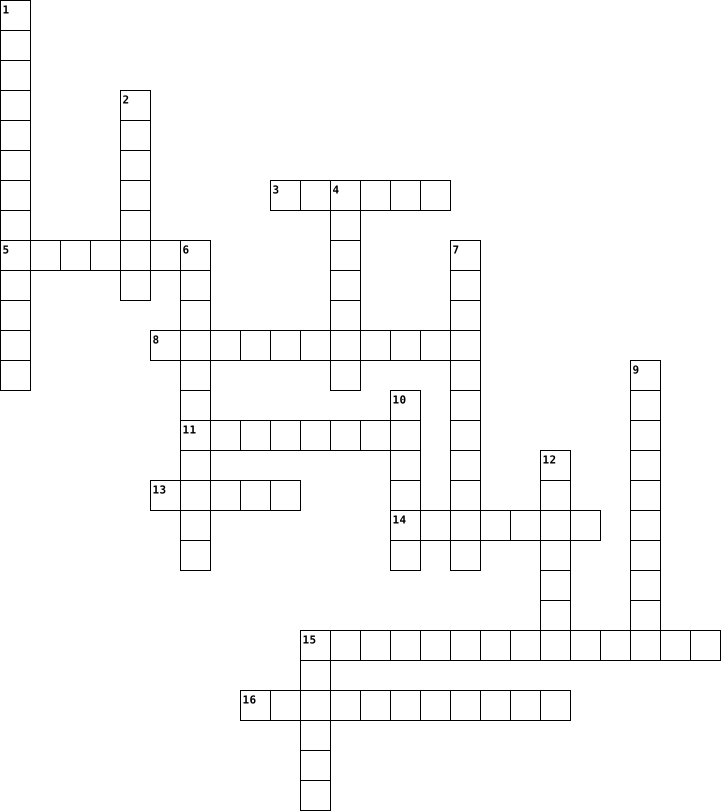
Across
- Living parts of an ecosystem e.g. food, predators
- Non-living parts of an ecosystem e.g. water, oxygen availability
- The process of plants or animals "fighting" over resources.
- the layer of the leaf responsible for photosynthesis.
- Vessel that carries water through a plant.
- Form of reproduction not requiring gametes.
- The chemical reaction by which plants create glucose.
- The organelle in which photosynthesis happens.
Down
- the movement of water through a plant.
- Holes at the bottom of a leaf where gas exchange happens.
- The diffusion of water.
- The green pigment needed for photosynthesis.
- Layer of a leaf with air spaces so gases can freely diffuse.
- Cells that control the size of the stomata (2).
- Form of reproduction requiring the fusion of gametes.
- Metal frame used to measure population size.
- Vessel that carries glucose through a plant.
17 Clues: The diffusion of water. • the movement of water through a plant. • Vessel that carries water through a plant. • Form of reproduction not requiring gametes. • The green pigment needed for photosynthesis. • Metal frame used to measure population size. • Vessel that carries glucose through a plant. • The organelle in which photosynthesis happens. • ...
Biology Chapter 4 Puzzle 2 2023-11-14

Across
- this type of RNA is a copy of a portion of DNA that will code for a particular protein
- these organisms can make their own food
- the process of assembling a protein
- these work along with chlorophyll to absorb wavelengths of light that chlorophyll doesn't - they are also responsible for they different colors in leaves during autumn
- the chemical equation for this is the opposite of photosynthesis
- this is a product of one type of anaerobic respiration
- this phase of photosynthesis combines water and carbon dioxide to form sugar
- this must constantly be supplied to a cell
Down
- process that converts light energy into chemical energy
- the metabolic rate may be affected by this
- breaking down of glucose into ATP
- this type of RNA finds amino acids in the cytoplasm and brings them to ribosome
- all types of cellular respiration begin with this process that actually occurs in the cell's cytoplasm
- rapidly growing organisms will have a ______ metabolic rate
- protein synthesis must be ______ enough to make thousands of different types of proteins
- photosynthesis pathway used by cacti to help reduce water loss
- anaerobic respiration is also called cellular ________
- photosynthesis pathway used by corn and crabgrass to use less water
- protein synthesis must be stable enough to make ______ copies
19 Clues: breaking down of glucose into ATP • the process of assembling a protein • these organisms can make their own food • the metabolic rate may be affected by this • this must constantly be supplied to a cell • anaerobic respiration is also called cellular ________ • this is a product of one type of anaerobic respiration • ...
THE ENERGY OF LIFE 2026-04-09

Across
- The green pigment in plants that captures sunlight for photosynthesis.
- The source of energy that plants use to start the process of photosynthesis.
- The "powerhouse" of the cell where cellular respiration is completed to create energy.
- Organisms, like plants, that can produce their own food using light or chemical energy.
- The main "energy molecule" created during cellular respiration.
- The set of triplets to which certain amino acids correspond.
- The gas produced by plants as a waste product, which humans need to breathe.
- The process cells use to get energy from glucose when there is no oxygen.
Down
- The metabolic pathway that breaks down glucose into two molecules of pyruvate.
- The main "organ" of the plant where photosynthesis usually takes place.
- Cell division.
- The main sugar (C6H12O6) produced during photosynthesis and broken down in glycolysis.
- The place in the cell where glycolysis happens.
- The chain formed by amino acids.
- Set of genes.
- Along with CO₂, plants need this liquid to perform photosynthesis.
- The piece of DNA that encodes a certain protein.
17 Clues: Set of genes. • Cell division. • The chain formed by amino acids. • The place in the cell where glycolysis happens. • The piece of DNA that encodes a certain protein. • The set of triplets to which certain amino acids correspond. • The main "energy molecule" created during cellular respiration. • Along with CO₂, plants need this liquid to perform photosynthesis. • ...
photosythesis 2021-12-15

Across
- beams of light used to convert carbon dioxide and water
- one of the reactants of photosynthesis
- the process in which plants make there food
- what comes out of photosynthesis
- where photosynthesis takes place
Down
- an organism that does photosynthesis, is multi-cellular and has cell walls
- what goes into photosynthesis
- one products of photosynthesis
- what gives plants there green pigment
- what produces the energy that plants use
10 Clues: what goes into photosynthesis • one products of photosynthesis • what comes out of photosynthesis • where photosynthesis takes place • what gives plants there green pigment • one of the reactants of photosynthesis • what produces the energy that plants use • the process in which plants make there food • beams of light used to convert carbon dioxide and water • ...