
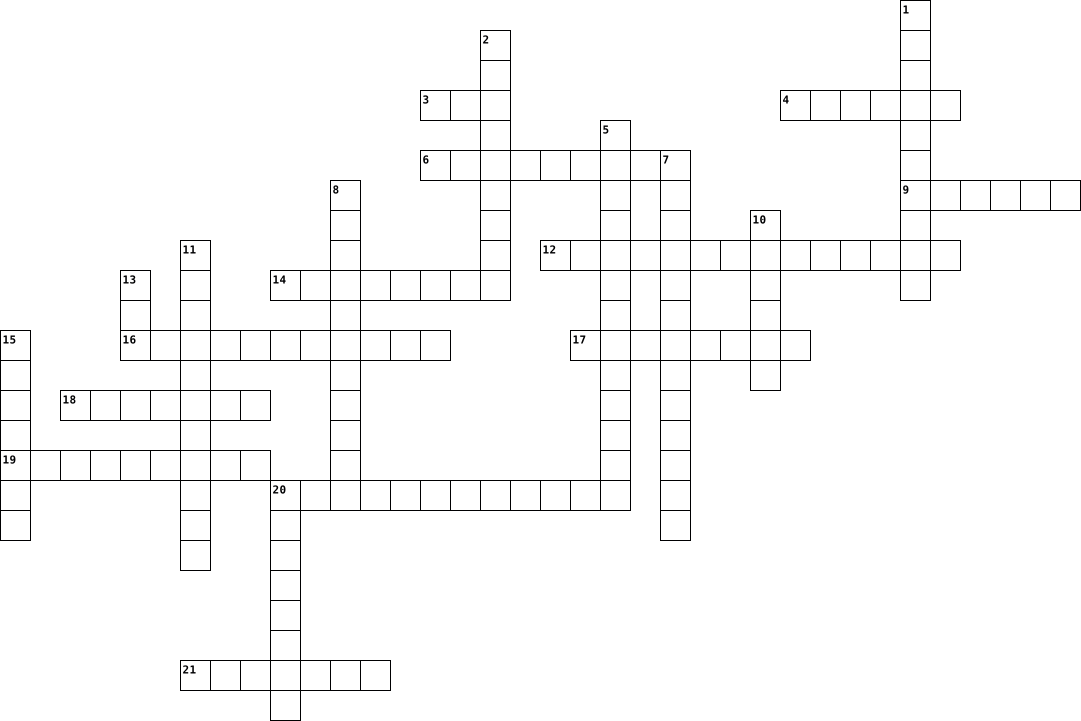
photosynthesis Crossword Puzzles
PHOTOSYNTHESIS by Annabelle Martinez 2020-04-15

Across
- when a plant grows to the light
- what the plant breaths out and we breath in
- the second phase of photosynthesis at night
- a liquid that is vital in the process of photosynthesis
- the fuel for photosynthesis to happen
- what makes chlorophyll
- provides nutrients for the plant
Down
- where plants breath in carbon dioxide
- what stores the sun's energy
- a gas in which plants breath in
- the food that plants make
- where the process of photosynthesis happens
- what absorbs sunlight
13 Clues: what absorbs sunlight • what makes chlorophyll • the food that plants make • what stores the sun's energy • a gas in which plants breath in • when a plant grows to the light • provides nutrients for the plant • where plants breath in carbon dioxide • the fuel for photosynthesis to happen • what the plant breaths out and we breath in • the second phase of photosynthesis at night • ...
crossword 2024-10-04

Across
- stored of glucose in plants with plant roots
- help the photosynthesis occur quickly
- stored from glucose in animals held in the liver
- dioxide input matter a reactant in photosynthesis
- cycle plants absorb carbon dioxide
- output matter that is produced
- input matter that is combined
Down
- energy in the form of light
- wall plant cells bacteria
- make their own food glucose by photosynthesis
- organelle whose function is the process of photosynthesis
- is stored in chemical energy
- controls all cell activities
- waste product
14 Clues: waste product • wall plant cells bacteria • energy in the form of light • is stored in chemical energy • controls all cell activities • input matter that is combined • output matter that is produced • cycle plants absorb carbon dioxide • help the photosynthesis occur quickly • stored of glucose in plants with plant roots • make their own food glucose by photosynthesis • ...
Photosynthesis Crossword Puzzle! 2021-05-24

Across
- pigments found in the chloroplast
- reaction that occurs in the thylakoid membrane
- light-independent reaction named after Dr. Melvin Calvin
- the process that changes inorganic CO2 to organic compounds
- the place in which sunlight enters
- a type of respiration that requires oxygen
- output of photosynthesis, used to make ATP
- a reaction in which the reactants absorb heat to produce products
- the process that occurs in plants to create oxygen and energy in the form of sugar
- chemical compound used by plants for photosynthesis
- the color plants absorb the second best
- compartments found in the chloroplast
- a reaction that occurs in all cells
- the process that moves CO2 through the veins and releases oxygen
- the openings through which gases move
- liquid chemical compound used by plants for photosynthesis
- the color plants appear, also the color plants absorb the least
- the usage of energy (glucose) to build molecules
- a type of respiration that doesn't require oxygen
- means "to make"
Down
- gas compound, an output of photosynthesis
- form of energy that is created during the light-dependent reaction to fuel the calvin cycle
- occurs when there's not enough CO2
- light-independent reaction
- the cells in which chloroplasts are found
- the place in which sunlight enters
- an organelle in which cellular respiration occurs in eukaryotes
- a crucial organelle found in all plant cells that converts light energy to usable energy
- CO2 and H20 are eliminated as - in cellular respiration
- a plant that opens its stomata at night
- the degradation of organic compounds
- the color plants absorb the best
- the origin of all energy
- the place through which water moves
- fluid in which the calvin cycle takes place
- the organisms in which photosynthesis occurs
- these organisms use aerobic respiration
- pigment found in thylakoids
- in these organisms, cellular respiration occurs in the cytoplasm
- a form of energy created in the light-dependent reaction
- component used by plants for photosynthesis derived from the origin of all energy
41 Clues: means "to make" • the origin of all energy • light-independent reaction • pigment found in thylakoids • the color plants absorb the best • pigments found in the chloroplast • occurs when there's not enough CO2 • the place in which sunlight enters • the place in which sunlight enters • the place through which water moves • a reaction that occurs in all cells • ...
Plants and Ecosystems 2022-09-17

Across
- a group of organisms of the same species that live together
- Anchor plants to the ground. Absorb nutrients
- Attracts bees and insects for pollination
- gives plants their green pigment
- a community of organisms
- Supports the plant. Transports nutrients
Down
- dioxide plants take this gas in during photosynthesis
- plants release this gas during photosynthesis
- process that plants use to make their own food
- nonliving things in an environment
- living things in an environment
- a group of organisms living in the same place
- level in the ecosystem where an individual animal or plant is found
- Collect sunlight for photosynthesis
14 Clues: a community of organisms • living things in an environment • gives plants their green pigment • nonliving things in an environment • Collect sunlight for photosynthesis • Supports the plant. Transports nutrients • Attracts bees and insects for pollination • plants release this gas during photosynthesis • Anchor plants to the ground. Absorb nutrients • ...
Nelson's Photosynthesis/Cellular Respiration 2016-12-07

Across
- Stands for adenosin diphosphate
- Does not involve oxygen
- Uses chemosynthesis
- The powerhouse of the cell
- Causes the "Burning" sensation in your muscles
- Needs to eat to get energy
- The cycle that occurs in cellular respiration
- The process of breaking down glucose
Down
- Pancakes inside of the chloroplast
- convert energy from nutrients into ATP
- Green pigment
- A supportive tissue consisting of connective tissue and blood vessels
- Converting sunlight energy into chemical energy
- The cycle that occurs in photosynthesis
- Makes it's own food
- the organelle in which photosynthesis takes place
- Stands for adenosine triphosphate
- Related to or involving oxygen
18 Clues: Green pigment • Uses chemosynthesis • Makes it's own food • Does not involve oxygen • The powerhouse of the cell • Needs to eat to get energy • Related to or involving oxygen • Stands for adenosin diphosphate • Stands for adenosine triphosphate • Pancakes inside of the chloroplast • The process of breaking down glucose • convert energy from nutrients into ATP • ...
Photosynthesis and Ecosystem 2024-11-10

Across
- A plant or animal that breaks down dead organisms to recycle nutrients back into the soil
- The type of energy needed by the plant to start photosynthesis
- The part of the plant that absorbs the water from the soil, which is needed for photosynthesis
- This term describes all the living things in an environment, such as plants and animals
- This gas is released by plants as a result of photosynthesis.
- This gas is taken in by plants during photosynthesis
- The food produced by plants through photosynthesis that provides them with energy
Down
- A community of living organisms and their physical environment, interacting together
- The process by which plants use sunlight, water, carbon dioxide to make their own food
- An animal that hunts and eats other animals
- An animal that is hunted and eaten by predators
- The part of the plant where photosynthesis mainly occurs
12 Clues: An animal that hunts and eats other animals • An animal that is hunted and eaten by predators • This gas is taken in by plants during photosynthesis • The part of the plant where photosynthesis mainly occurs • This gas is released by plants as a result of photosynthesis. • The type of energy needed by the plant to start photosynthesis • ...
Photosynthesis and Cellular Respiration 2022-02-03

Across
- green pigment
- organelle where cellular respiration occurs
- another name for a consumer
- stored food energy
- given off by mitochondria
- an organism that makes its own stored food energy
- chemicals that absorb light energy
- usable energy
- given off as a result of cellular respiration helps maintain body temperature
- organisms that cannot make their own food
Down
- gas that is needed by plants and is given off by the process of cellular respiration
- organelle where photosynthesis occurs
- another name for a producer
- process that makes stored food energy
- provides a plant with the energy that is needed for the process of photosynthesis
- gas that plants give off as a result of photosynthesis
16 Clues: green pigment • usable energy • stored food energy • given off by mitochondria • another name for a producer • another name for a consumer • chemicals that absorb light energy • organelle where photosynthesis occurs • process that makes stored food energy • organisms that cannot make their own food • organelle where cellular respiration occurs • ...
Bio - Sam 2020-10-15

Across
- What is mitosis?
- What type of acid is ATP?
- The thing that comes out after the process of photosynthesis that we need to survive
- If mitosis goes wrong what does it become?
- What is the process of synthesizing
- Where in the plant does photosynthesis happen?
- glutose molecues called?
- IN which cell does Cellular Respiration happen?
Down
- What is the process of when a plant make glucose?
- Why is mitosis important?
- What becomes the reactants in Cellular Respiration that are the products in photosynthesis?
- Why does the process of Cellular Respiration benefit plants and animals?
- energy What does light energy become after the process of photosyntheis?
- How many phases are there in mitosis?
- In which phase do the sister cromatides dived?
- What two things makes ATP?
16 Clues: What is mitosis? • glutose molecues called? • Why is mitosis important? • What type of acid is ATP? • What two things makes ATP? • What is the process of synthesizing • How many phases are there in mitosis? • If mitosis goes wrong what does it become? • In which phase do the sister cromatides dived? • Where in the plant does photosynthesis happen? • ...
Vocab 2025-09-12

Across
- The primary organ of the plant responsible for photosynthesis.
- Cells: Crescent-shaped cells surrounding each stoma that regulate its opening and closing, controlling gas exchange and water loss.
- Plant tissue that transports sugars produced during photosynthesis from the leaves to other parts of the plant where they are needed for growth or storage.
- An organism, typically photosynthetic, that produces its own food, forming the base of a food web.
- The green pigment found in plant cells that absorbs sunlight during photosynthesis.
- Dioxide A gas that enters the stomata of the leaf and is used as a reactant in photosynthesis.
- and Oxygen: The primary products of photosynthesis.
- (tubers, carrots, etc.) and Stems Plant organs where excess sugar is stored as simple sugars or starch.
- A gas that exits the stomata of the leaf as a byproduct of photosynthesis.
- & Spongy Layers: Layers within a leaf where the majority of photosynthesis occurs, containing chlorophyll-rich cells.
- Dioxide, Water, and Nutrients The raw materials or reactants required for photosynthesis.
Down
- & Phytoplankton Photosynthetic organisms found in aquatic environments.
- The process by which plants and plant-like organisms convert light energy into chemical energy, creating sugars and oxygen.
- Plant tissue responsible for transporting water and dissolved minerals from the roots up to the leaves and other parts of the plant.
- A simple sugar (C₆H₁₂O₆) produced during photosynthesis, serving as the primary source of energy for plants and the base of the food chain.
- Microscopic pores on the surface of leaves that facilitate gas exchange (carbon dioxide intake, oxygen release) between the plant and the atmosphere.
16 Clues: and Oxygen: The primary products of photosynthesis. • The primary organ of the plant responsible for photosynthesis. • & Phytoplankton Photosynthetic organisms found in aquatic environments. • A gas that exits the stomata of the leaf as a byproduct of photosynthesis. • The green pigment found in plant cells that absorbs sunlight during photosynthesis. • ...
Photo Synthesis & Cellular Respiration 2025-10-29

Across
- Gas taken in by plants during photosynthesis
- Type of organism that preforms photosynthesis
- Process in which oxygen is made photosystems and sunlight
- Gas released by plants during photosynthesis
Down
- Process that breaks down glucose for energy
- Organelle where cellular respiration occurs
- Organelle where photosynthesis happens
- Both processes involve this molecule
- Main sugar made during photosynthesis
- Energy molecule produced by cellular respiration
10 Clues: Both processes involve this molecule • Main sugar made during photosynthesis • Organelle where photosynthesis happens • Process that breaks down glucose for energy • Organelle where cellular respiration occurs • Gas taken in by plants during photosynthesis • Gas released by plants during photosynthesis • Type of organism that preforms photosynthesis • ...
Variables and limiting factors 2025-04-30

Across
- a common factor of an organism that you should control in an investigation
- the variable you measure
- the pigment that absorbs light (it's green)
- something which, if you increase its availability, will also increase the rate of reaction
- the word describing an organism that can make it's own food
- variables you must keep the same throughout your investigation
- the variable you change and investigate
Down
- the energy source of photosynthesis that can be a limiting factor
- the site of photosynthesis
- a limiting factor of photosynthesis which can also lead to enzymes denaturing
- a gas that can be a limiting factor of photosynthesis
- the site of respiration
- the cell type that carries out photosynthesis
13 Clues: the site of respiration • the variable you measure • the site of photosynthesis • the variable you change and investigate • the pigment that absorbs light (it's green) • the cell type that carries out photosynthesis • a gas that can be a limiting factor of photosynthesis • the word describing an organism that can make it's own food • ...
Photosynthesis Review 2024-02-17

Across
- energy currency of the cell
- gas taken in by plants for photosynthesis
- green pigment inside chloroplast
- fluid surrounding thylakoids
- reactant of photosynthesis
Down
- capture light energy during photosynthesis
- changing light energy to chemical energy
- product of the Calvin Cycle
- membrane containing chlorophyll
- byproduct of photosynthesis
10 Clues: reactant of photosynthesis • energy currency of the cell • product of the Calvin Cycle • byproduct of photosynthesis • fluid surrounding thylakoids • membrane containing chlorophyll • green pigment inside chloroplast • changing light energy to chemical energy • gas taken in by plants for photosynthesis • capture light energy during photosynthesis
Plant Physiology 2025-07-01

Across
- (water absorption)
- (trapping sunlight)
- (photosynthesis product)
- (food manufacture process)
- (gas movement)
Down
- (photosynthesis raw material) Glucose (photosynthesis product)
- (water vessel)
- (manufactured food vessel)
- (gaseous exchange)
- (water movement)
10 Clues: (water vessel) • (gas movement) • (water movement) • (water absorption) • (gaseous exchange) • (trapping sunlight) • (photosynthesis product) • (manufactured food vessel) • (food manufacture process) • (photosynthesis raw material) Glucose (photosynthesis product)
Crossword Puzzle Title - Reed Hanson 2021-11-24

Across
- Its the thingy when likght its the triangle and the colors seperate
- an organism that is able to form nutritional organic substances from simple inorganic substances such as carbon dioxide.
- its the part in photosynthesis when like they absorb light
- I think its the part in photosynthesis when the light gets turned into energy
- one of the lamellar stacks of chlorophyll-containing thylakoids found in plant chloroplasts.
- its the pigmenty things that are liek red and yellow and stuff
Down
- the colorfully things in plants
- each of a number of flattened sacs inside a chloroplast, bounded by pigmented membranes on which the light reactions of photosynthesis take place, and arranged in stacks or grana.
- first step in photosynthesis
- Way plants get energy from sun
- a mass of fungal tissue that has spore-bearing structures either embedded in it or on its surface.
- an organism deriving its
- a plastid that contains chlorophyll and in which photosynthesis takes place.
- The thing that makes plants green
- the change in direction of a wavefront at an interface between two different media so that the wavefront returns into the medium from which it originated
15 Clues: an organism deriving its • first step in photosynthesis • Way plants get energy from sun • the colorfully things in plants • The thing that makes plants green • its the part in photosynthesis when like they absorb light • its the pigmenty things that are liek red and yellow and stuff • Its the thingy when likght its the triangle and the colors seperate • ...
GH Photosynthesis Transport Respiration 2022-10-20

Across
- a type active transport moving something in
- where respiration takes place
- where photosynthesis takes place
- a polar molecule
- where small particles move through in transport
- Energy made in respiration
- gas reactant in respiration
- the energy used in photosynthesis
- Dioxide gas reactant in photosynthesis
- movement of water from high to low
Down
- where transport takes place
- movement of small particles (passive)
- type of diffusion high to low using a protein
- a type of active transport moving something out
- fear of something
- where large molecules move through in transport
- prefix for light
- sugar used in respiration
- the heads and tails of the cell membrane
19 Clues: a polar molecule • prefix for light • fear of something • sugar used in respiration • Energy made in respiration • where transport takes place • gas reactant in respiration • where respiration takes place • where photosynthesis takes place • the energy used in photosynthesis • movement of water from high to low • movement of small particles (passive) • ...
Green Plants 2013-10-10

Across
- Essential for photosynthesis
- Plants grow in this
- This is produced in the plant and released into the air
- This provides energy for the plant
- This helps with photosynthesis to produce food for the plant
- This is transferred when an animal eats another animal or plant
- This moves from the roots, to the leaf through the stem
- The parts inn a plant cell that carry out photosynthesis
- Something added to the soil to help the plant grow
- Plants are called these in the food chain
- The plant absorbs this from the air
Down
- Used to stop slugs, flies ect from eating plants
- This is made in the leaf and it provides the food
- The process that plants use to get energy
- Lots of glucose molecules join together to make this
- This is the sugar made in the plant
- This acts as an anchor for the plant
- A natural fertiliser, usually comes from horses
- The green pigments in the plant
- This attracts bees so the flower can pollinate and reproduce
- This supports the flower and carries the nutrients around the flower
21 Clues: Plants grow in this • Essential for photosynthesis • The green pigments in the plant • This provides energy for the plant • This is the sugar made in the plant • The plant absorbs this from the air • This acts as an anchor for the plant • The process that plants use to get energy • Plants are called these in the food chain • A natural fertiliser, usually comes from horses • ...
Cellular Respiration & Photosynthesis 2014-01-15

Across
- Acid Produced in the muscle during physical activity when oxygen isn't present.
- Transport Chain - 3rd stage in cellular respiration.
- The component of the cytoplasm of a cell.
- Cycle One of the stages in photosynthesis
- Released as waste by plants; one reactants in photosynthesis.
- One byproduct of photosynthesis, and used during animal respiration.
- Reactions Occurs in the stroma. Light gives energy to electrons
- Requires 2 ATP, but make 4 ATP. Doesn't require oxygen.
- Uses UV rays to convert unusable energy to the usable glucose.
- An energy carrier, which stores energy. Adenosine triphosphate.
Down
- A simple sugar; a component of many carbohydrates.
- Dioxide Byproduct of animal respiration; used by plants. Created during alcoholic fermentation.
- An organic acid.
- An enzyme that aids in linking molecules together.
- Byproduct of alcoholic fermentation.
- Found only in plant cells; holds pigments.
- A fungus capable of converting sugar into alcohol and carbon through fermentation
- Light-independent reaction occur here; syrup.
- Reactions ATP and NADPH used to convert carbon to glucose.
- Light-dependent; 1 pancake. contains chlorophyll.
20 Clues: An organic acid. • Byproduct of alcoholic fermentation. • The component of the cytoplasm of a cell. • Cycle One of the stages in photosynthesis • Found only in plant cells; holds pigments. • Light-independent reaction occur here; syrup. • Light-dependent; 1 pancake. contains chlorophyll. • A simple sugar; a component of many carbohydrates. • ...
Cells 2018-02-11
Across
- genetic material stored in the nucleus of eukaryotic cells
- type of cell that has a nucleus, but NO cell wall
- jelly like fluid that fills the cells interior
- molecule required to break down glucose during cellular respiration
- process used to by autotrophs to produce glucose
- substances that are the result of a chemical reaction
- small simple cell with NO nucleus
- organelle where proteins synthesis (making)takes place
- large organelle in plant cells for water storage
- small structures inside cells with unique functions
- selectively permeable outer layer of animal cell
- cell organelle that holds and protects DNA
Down
- complex type of cell that has membrane bound organelles
- substances that go into a chemical reaction
- gas absorbed by plants needed for photosynthesis
- organelle where cellular respiration takes place
- green pigment found inside chloroplast needed for photosynthesis
- type of protein that can speed up a chemical reaction
- plant cell organelle where photosynthesis takes place
- molecule released for energy when glucose is broken down
- simple carbohydrate produced in plants - source of energy
- rigid outer structure made of cellulose in plant cells
22 Clues: small simple cell with NO nucleus • cell organelle that holds and protects DNA • substances that go into a chemical reaction • jelly like fluid that fills the cells interior • gas absorbed by plants needed for photosynthesis • organelle where cellular respiration takes place • process used to by autotrophs to produce glucose • ...
Science crossword puzzle by: Anthanae Clarke 2023-10-04

Across
- Wasted energy is usually taken from
- The organelle is missing in prokaryotic cells by
- A mushroom is known as a_______ in a food web
- An animal that eats both plants and meat
- The cellular organelle that the glycolysis occurs is
- Energy of motion is a
- The energy generated when a speaker vibrates the air is a
- The layer of a cell that protects and supports the plant cell is
- All living things are made of
Down
- The organelle that is used for storage is a
- Plants need ______ for photosynthesis
- The simple sugar that is produced in photosynthesis is
- Mechanical energy is the sum of kinetic and
- When observing cells, the tool you have to use is the
- Heat transfer by electromagnetic waves is known as
- Humans play int eh part in a food web by being a
- Photosynthesis energy is used by
- The type of energy that is stored in a battery is
- A _______ makes its own energy and starts the food chain
- The three things needed for photosynthesis are carbon dioxide, water and
20 Clues: Energy of motion is a • All living things are made of • Photosynthesis energy is used by • Wasted energy is usually taken from • Plants need ______ for photosynthesis • An animal that eats both plants and meat • The organelle that is used for storage is a • Mechanical energy is the sum of kinetic and • A mushroom is known as a_______ in a food web • ...
Ecosystems revision 2025-01-17

Across
- an animal that eats meat only
- how different organisms rely on each other
- the movement of particles from an area of high concentration to low
- the green pigment needed for photosynthesis
- an animal that eats plants only
- anaerobic respiration in plants and yeast is also called this
- respiration is how we release _______ from glucose/food
- the waste gas of aerobic respiration
- the type of energy needed for photosynthesis
- anything that is alive
Down
- this builds up in animal tissues due to anaerobic respiration
- the type of respiration that happens during intense exercise
- the name of the cells where most photosynthesis takes place
- an animal that hunts other animals
- the number of individuals of one type of organism in an area
- the organelle where aerobic respiration takes place
- an animal that eats both plants and animals
- the protein that carries oxygen in the red blood cells
- the gas needed for aerobic respiration
- the process by which plants make glucose
- the part of the lung where gas exchange happens
- an organism that has to eat to take in glucose
22 Clues: anything that is alive • an animal that eats meat only • an animal that eats plants only • an animal that hunts other animals • the waste gas of aerobic respiration • the gas needed for aerobic respiration • the process by which plants make glucose • how different organisms rely on each other • the green pigment needed for photosynthesis • ...
Photosynthesis Crossword 2019-01-30

Across
- ___________________________ is a reactant of photosynthesis and is something that we breathe out.
- Water enters the plants through it's __________________.
- A reactant of photosynthesis that is absorbed through the plant's roots is ___________________.
- Leaf cells contain green ________________________.
- Stage 1: Capturing the sun's ____________________.
- ____________________ need to consume their food, they are consumers.
- __________ the primary source of energy for most living things.
Down
- When we eat plants, we are eating the plants _____________ ____________. (2 words - no space in crossword)
- Stage 2: Using energy to make ________________.
- _______________________ is what happens when plants and some other organisms use energy from the sun to convert carbon dioxide and water into oxygen and sugars.
- ____________________ create their own food, they are producers.
- A product of photosynthesis that the plant uses for food is _____________________.
- The chloroplasts contain green colored pigments called _____________________.
- A product of photosynthesis that we use to breathe is ___________________.
14 Clues: Stage 2: Using energy to make ________________. • Leaf cells contain green ________________________. • Stage 1: Capturing the sun's ____________________. • Water enters the plants through it's __________________. • ____________________ create their own food, they are producers. • __________ the primary source of energy for most living things. • ...
Vocabulary Quiz #5 - Crossword Warm Up 2023-10-09

Across
- Plants use the sun's energy to convert water and carbon dioxide into sugars
- Second step of photosynthesis where chemical energy is used to make sugar (Glucose)
- energy-carrying biological molecule, which, when broken down, drives cellular activities
- Equation for photosynthesis
- Green pigment in plants that absorbs light energy used to carry out photosynthesis
- fluid portion of the chloroplast; outside of the thylakoids
Down
- a substance that takes part in and undergoes change during a reaction.
- An organism that obtains energy by feeding on other organisms
- reactions of photosynthesis that use energy from light to produce ATP and NADPH
- A flattened membrane sac inside the chloroplast, used to convert light energy to chemical energy.
- An organism that can make its own food.
- An organelle found in plant and algae cells where photosynthesis occurs
- A substance produced in a chemical reaction
13 Clues: Equation for photosynthesis • An organism that can make its own food. • A substance produced in a chemical reaction • fluid portion of the chloroplast; outside of the thylakoids • An organism that obtains energy by feeding on other organisms • a substance that takes part in and undergoes change during a reaction. • ...
Cellular processes 2023-11-01

Across
- A factor that affects the rate of photosynthesis because it is too hot or too cold
- A cellular process that allows the cell to make ATP once it runs out of oxygen
- A molecule that is used by cells at the main source of energy
- Principal pigment in plants for photosynthesis
- Requires oxygen
- A cellular process what makes glucose
Down
- Processes to maintain stable conditions in a cell or body
- Another word for sugar
- Reactant for photosynthesis and product of cellular respiration
- Does not require oxygen
- The specific sugar broken down in glycolysis
- The organelle where photosynthesis takes place
12 Clues: Requires oxygen • Another word for sugar • Does not require oxygen • A cellular process what makes glucose • The specific sugar broken down in glycolysis • Principal pigment in plants for photosynthesis • The organelle where photosynthesis takes place • Processes to maintain stable conditions in a cell or body • ...
The Process by which Plants make their own Food 2023-01-23

Across
- site of photosynthesis in a plant
- plants need this for photosynthesis
- gas that plants need in photosynthesis that humans breathe out
- Plants make their own food through ____________
- along with water, this is also absorbed by the plant through their roots
- pigment found in chloroplasts that will give the plant its color
Down
- food produced by plant during the process
- color that chlorophyll is responsible for
- used to test for starch in a plant
- gas that is produced in photosynthesis that humans breathe in
- condition required for the process to take place
- glucose is also known as _____________
12 Clues: site of photosynthesis in a plant • used to test for starch in a plant • plants need this for photosynthesis • glucose is also known as _____________ • food produced by plant during the process • color that chlorophyll is responsible for • Plants make their own food through ____________ • condition required for the process to take place • ...
Photosynthesis and Cellular respiration 2022-12-05

Across
- what makes up the air all around us
- the gas used by plants to make food
- the process in which a plant makes food
- a cell that opens and closes stomata
- absorbed by the roots and plants and needed in photosynthesis
- the sugar made by plants in photosynthesis
Down
- what breaks down glucose in both plants and animals
- green pigment in plants that captures light energy
- small openings on leaves that allows gases to leave and enter
- organelles in plant cells where photosynthesis takes place
- the gas that is a product of photosynthesis
- the ultimate source of energy for life
12 Clues: what makes up the air all around us • the gas used by plants to make food • a cell that opens and closes stomata • the ultimate source of energy for life • the process in which a plant makes food • the sugar made by plants in photosynthesis • the gas that is a product of photosynthesis • green pigment in plants that captures light energy • ...
Photosynthesis and Cellular respiration 2023-12-18

Across
- Organisms that eat other organisms for food
- Used in Photosynthesis
- Organisms that make their own food
- The process of making glucose with sunlight
- The food made from Photosynthesis
- Produced after Cellular Respiration.
Down
- The process of breathing
- The powerhouse of the cell
- A form of energy used for Non-Plants
- Produced after Photosynthesis
- The pigment within Chloroplasts. Makes plants green
- The source of energy for plants
12 Clues: Used in Photosynthesis • The process of breathing • The powerhouse of the cell • Produced after Photosynthesis • The source of energy for plants • The food made from Photosynthesis • Organisms that make their own food • A form of energy used for Non-Plants • Produced after Cellular Respiration. • Organisms that eat other organisms for food • ...
Photosynthesis and Cellular respiration 2023-12-18

Across
- Organisms that eat other organisms for food
- Used in Photosynthesis
- Organisms that make their own food
- The process of making glucose with sunlight
- The food made from Photosynthesis
- Produced after Cellular Respiration.
Down
- The process of breathing
- The powerhouse of the cell
- A form of energy used for Non-Plants
- Produced after Photosynthesis
- The pigment within Chloroplasts. Makes plants green
- The source of energy for plants
12 Clues: Used in Photosynthesis • The process of breathing • The powerhouse of the cell • Produced after Photosynthesis • The source of energy for plants • The food made from Photosynthesis • Organisms that make their own food • A form of energy used for Non-Plants • Produced after Cellular Respiration. • Organisms that eat other organisms for food • ...
photosynthesis and respiration 2019-11-25

Across
- how cells make ATP without oxygen
- The way plants make food
- the inside of a chloroplast
- where photosynthesis happens
- how cells make energy
- the way cells generate energy
- what plants need to photosynthesize
- depends on light energy for photosynthesis
- located inside of chloroplasts (pancake)
- and organic acid used toward the end of fermentation
- a type of fermentation
- cellar resp without oxygen
Down
- support in making ATP in the mitochondria
- breakdown of glucose
- a light-independent reaction
- cellar resp with oxygen
- sugar
- a cells energy
- what we need to breath
- the powerhouse of the cell
- allows molecules to move to certain places.
21 Clues: sugar • a cells energy • breakdown of glucose • how cells make energy • what we need to breath • a type of fermentation • cellar resp with oxygen • The way plants make food • the powerhouse of the cell • cellar resp without oxygen • the inside of a chloroplast • a light-independent reaction • where photosynthesis happens • the way cells generate energy • how cells make ATP without oxygen • ...
how to make energy 2019-11-25

Across
- the powerhouse of the cell
- is the energy
- a series of electron transporters
- acid is an alpha-hydroxy
- relating to involving or requiring an absence of free oxygen
- is a chemical compound
- the breakdown of glucose
- the chemical breakdown of a substance
- photosynthesis takes place in
Down
- by which most living cells generate energy during
- take place in the thylakoid
- colorless, odorless gas produced
- a series of enzyme-mediated reactions
- generates oxygen as a byproduct and sugar
- the release of carbon dioxide from the oxidation
- epithelial organ tumor
- a simple sugar
- photosynthesis takes place
- Water cycle is called RuBisCO
- you breath it
20 Clues: is the energy • you breath it • a simple sugar • epithelial organ tumor • is a chemical compound • the breakdown of glucose • acid is an alpha-hydroxy • the powerhouse of the cell • photosynthesis takes place • take place in the thylakoid • photosynthesis takes place in • Water cycle is called RuBisCO • colorless, odorless gas produced • a series of electron transporters • ...
Respiration and Photosynthesis 2021-02-24

Across
- the gas we inhale to live
- a breath in
- the loss of water from a plant in the form of water vapor
- The opposite process of respiration.
- This tiny holes are used for gas exchange in the leaf
- Anaerobic respiration in animal muscle produce _______ acid.
- Cellular respiration takes place in this cell organelle
- The gas we exhale
- the purpose of respiration is to release?
Down
- The process of inhaling and exhaling.
- This green pigment of leaves can absorb the light energy
- small air sac in the lungs
- the process that moves gases in and out of the blood
- The main organelle where the photosynthesis takes place
- The product of photosynthesis as the plant's food
- The cellular respiration mostly happen in this time.
- The respiration that require oxygen
- trachae splis into 2 ways
- Respiration without oxygen
- This muscle will contract and goes downward when you inhale the air
- this cage-like structure moves in the chest when breathing
- a breath out
- Another raw material besides carbondioxide that is used for photosynthesis.
23 Clues: a breath in • a breath out • The gas we exhale • the gas we inhale to live • trachae splis into 2 ways • small air sac in the lungs • Respiration without oxygen • The respiration that require oxygen • The opposite process of respiration. • The process of inhaling and exhaling. • the purpose of respiration is to release? • The product of photosynthesis as the plant's food • ...
Respiration and Photosynthesis 2021-02-24

Across
- Respiration without oxygen
- The main organelle where the photosynthesis takes place
- Cellular respiration takes place in this cell organelle
- the process that moves gases in and out of the blood
- Anaerobic respiration in animal muscle produce _______ acid.
- small air sac in the lungs
- The process of inhaling and exhaling.
- The respiration that require oxygen
- the loss of water from a plant in the form of water vapor
- trachae splis into 2 ways
Down
- This green pigment of leaves can absorb the light energy
- breath out the air
- The gas we exhale
- This muscle will contract and goes downward when you inhale the air
- The opposite process of respiration.
- This tiny holes are used for gas exchange in the leaf
- breath in the air
- The product of photosynthesis as the plant's food
- the purpose of respiration is to release?
- this cage-like structure moves in the chest when breathing
- Another raw material besides carbondioxide that is used for photosynthesis.
- The cellular respiration mostly happen in this time.
- the gas we inhale to live
23 Clues: The gas we exhale • breath in the air • breath out the air • the gas we inhale to live • trachae splis into 2 ways • Respiration without oxygen • small air sac in the lungs • The respiration that require oxygen • The opposite process of respiration. • The process of inhaling and exhaling. • the purpose of respiration is to release? • ...
Plant nutrition 2014-07-30

Across
- In photosynthesis, light energy is transferred to ________ energy
- Structure within a plant cell which contains CHLOROPHYLL
- A product of photosynthesis
- Used to test for the presence of STARCH
- These change shape to open or close the STOMATA (5,5)
- Transports sugars (mainly sucrose) around the plant
- Used to make DNA
- Layer of elongated cells packed full of chloroplasts
- Upper and lower layer of cells within a leaf
- The rate of photosynthesis plateaus due to _________ factors
- A product of photosynthesis
- Pores in the underside of a leaf which allows for gas exchange
- Required for enzymes
- The main storage carbohydrate in plants
- Transports water and dissolved minerals
Down
- Made from glucose; used in cell walls
- Green pigment which absorbs light
- Waxy; helps to prevent water loss
- Reaction which releases energy
- Required for the production of CHLOROPHYLL
- The middle layer of the leaf (comprising of PALISADE AND SPONGY)
- The movement of water vapour out of a leaf
- Used in the production of amino acids
- Layer of rounded cells with air spaces allowing for gas exchange
- Required for photosynthesis (in addition to CO2)
25 Clues: Used to make DNA • Required for enzymes • A product of photosynthesis • A product of photosynthesis • Reaction which releases energy • Green pigment which absorbs light • Waxy; helps to prevent water loss • Made from glucose; used in cell walls • Used in the production of amino acids • Used to test for the presence of STARCH • The main storage carbohydrate in plants • ...
Crossword Puzzle 2023-03-02

Across
- Process by which both plants and animals create energy
- Conversion of Nitrogen that makes it usable to plants and animals
- Input of cellular respiration, output of photosynthesis
- Movement of Phosphorous through the environments on Earth
- The energy produced during cellular respiration
- The amount of greenhouse gasses let of by a single person during daily activities
- Recycling of the water on Earth
- Solution Solution where cells take water from external environment
- Cellular respiration without oxygen
Down
- Movement of substances through cells not using energy
- Input of photosynthesis, output of cellular respiration
- The sugar produced during photosynthesis
- Cellular respiration with oxygen
- The rapid change in Earth's climate, referring to rise in temperature
- Process by which plants create food
- Movement of substances through cells requiring energy
- Movement of Nitrogen through the environments on Earth
- Form of passive transport in which water passes
- Solution where cell stays the same size
- Solution where the cell gives water to external environment
20 Clues: Recycling of the water on Earth • Cellular respiration with oxygen • Process by which plants create food • Cellular respiration without oxygen • Solution where cell stays the same size • The sugar produced during photosynthesis • Form of passive transport in which water passes • The energy produced during cellular respiration • ...
cellular respiration and photosynthesis 2022-12-20

Across
- variable on the x axis
- ATP has 3 of these
- Polymer of amino acids
- Plant organelles that does photosynthesis
- type of variable we measure
- monomer of carbohydrates
- Groups of two or more atoms bonded
- co2 and h20 for Cellular respiration
Down
- Process that makes sugar from co2, h2o
- need for photosynthesis (not h20 or co2)
- site of cellular respiration
- needed for C.R. (not sugar)
- what goes into a chemical reaction
- type of sugar used for C.R.
- protein, carbs, lipid, nucleic acids
- made of fatty acids and glycerol
- Green pigment in chloroplast
17 Clues: ATP has 3 of these • variable on the x axis • Polymer of amino acids • monomer of carbohydrates • needed for C.R. (not sugar) • type of sugar used for C.R. • type of variable we measure • site of cellular respiration • Green pigment in chloroplast • made of fatty acids and glycerol • what goes into a chemical reaction • Groups of two or more atoms bonded • ...
Plant Science Breakout Box 2021-10-21

Across
- Begin to grow
- Moving a plant to a larger container
- reverse of photosynthesis; produces energy
- Comes from plant or animal matter
- Part of the plant responsible for development of seed
- The process of increasing the number of a species
- Manufactures food for the plant
- Plant roots take water from the soil
Down
- Dissolves in water
- Resting or growing very little
- Supports other plant structures
- Growth of leaves, stems, and roots
- Main product of photosynthesis
- Female part of the flower
- Attract insects for pollination
- Water loss from leaf surface through evaporation
- hormone Substance that speeds root development
- Anchors the plant, and supplies water and nutrients
- By-product of photosynthesis
19 Clues: Begin to grow • Dissolves in water • Female part of the flower • By-product of photosynthesis • Resting or growing very little • Main product of photosynthesis • Supports other plant structures • Attract insects for pollination • Manufactures food for the plant • Comes from plant or animal matter • Growth of leaves, stems, and roots • Moving a plant to a larger container • ...
Cellular respiration 2022-11-15

Across
- uses oxygen in cellular respiration
- used for making energy(ATP)
- gains energy through cellular respiration
- holds the cells that do photosynthesis
- organelle that surrounds a cell
- a process all plants go through
- is used in cellular respiration when oxygen is not present
- the cell that does photosynthesis
- something that animals inhale
- another word for energy
- proccess like burning fossil fuels that contribute to the ___________
Down
- something animals exhale
- the kind of energy food gets turned into
- this is used as energy
- where the oxygen molecules go when entering the body
- abzorbed through a plants roots
- gains energy through cellular respiration
- anaerobic cellular resparation does this
- known as the powerhouse
- needed to move matter
20 Clues: needed to move matter • this is used as energy • known as the powerhouse • another word for energy • something animals exhale • used for making energy(ATP) • something that animals inhale • abzorbed through a plants roots • organelle that surrounds a cell • a process all plants go through • the cell that does photosynthesis • uses oxygen in cellular respiration • ...
Photosynthesis and Cellular Respiration 2024-04-13

Across
- Molecule that stores energy for cellular processes.
- Type of cellular respiration occurring without oxygen.
- Sugar molecule broken down to release energy during cellular respiration.
- Gas absorbed by plants during photosynthesis.
- Tiny pores on plant leaves used for gas exchange.
- Series of chemical reactions occurring in mitochondria to produce energy-rich molecules.
- Series of chemical reactions that produce glucose during photosynthesis.
- Cluster of pigment molecules in chloroplasts that capture light energy.
- Organelle where photosynthesis takes place in plant cells.
Down
- Membrane-bound compartments within chloroplasts where light-dependent reactions occur.
- Type of cellular respiration requiring oxygen.
- Acronym of the series of proteins in mitochondria where electrons are transferred to generate ATP.
- Waste product released during cellular respiration.
- Simple sugar produced by plants during photosynthesis.
- Gas required for aerobic cellular respiration.
- Initial stage of cellular respiration that occurs in the cytoplasm.
- Essential source of energy for photosynthesis.
- Organelles where cellular respiration occurs.
- Green pigment in plants that captures light energy.
- Gas released as a byproduct of photosynthesis.
20 Clues: Gas absorbed by plants during photosynthesis. • Organelles where cellular respiration occurs. • Type of cellular respiration requiring oxygen. • Gas required for aerobic cellular respiration. • Essential source of energy for photosynthesis. • Gas released as a byproduct of photosynthesis. • Tiny pores on plant leaves used for gas exchange. • ...
Cellular R and photosynthesis 2024-12-05

Across
- cycle reactions in photosynthesis that produces glucose
- It captures light energy and converts to chemical energy
- electron carrier that is involved into photosynthesis
- transform light energy into chemical energy
- and organelle where cellular respiration occurs
Down
- energy that of the cell
- chemical reaction that breaks down glucose
- simple sugar produced by photosynthesis
- a by product of photosynthesis
- dioxide gas taken in by plants for photosynthesis
10 Clues: energy that of the cell • a by product of photosynthesis • simple sugar produced by photosynthesis • chemical reaction that breaks down glucose • transform light energy into chemical energy • and organelle where cellular respiration occurs • dioxide gas taken in by plants for photosynthesis • electron carrier that is involved into photosynthesis • ...
Plants Vocabulary (7th) 2026-04-01

Across
- part of the plant that absorbs water and minerals from soil
- gas released from plants after photosynthesis
- this leafy plant uses spores instead of seeds
- a pigment found inside of chloroplasts that absorbs sunlight
- process plants use to make sugar from sunlight
- liquid necessary for plants to perform photosynthesis and other functions
- this type of plant has seeds in flowers and fruits
Down
- gas required by plants to do photosynthesis (no space)
- part of plant where most photosynthesis takes place
- this type of plant keeps seeds inside of cones
- name of the sugar produced by photosynthesis
11 Clues: name of the sugar produced by photosynthesis • gas released from plants after photosynthesis • this leafy plant uses spores instead of seeds • this type of plant keeps seeds inside of cones • process plants use to make sugar from sunlight • this type of plant has seeds in flowers and fruits • part of plant where most photosynthesis takes place • ...
Chapter 6 Biology Crossword 2020-09-16

Across
- a biochemical pathway of photosynthesis in which carbon dioxide is converted into glucose using ATP
- an organism that produces its own nutrients from inorganic substances or from the environment instead of consuming other organisms
- stacks of thylakoids in a chloroplast
- an organelle found in plant and algae cells where photosynthesis occurs
- an organism that obtains organic food molecules by eating other organisms or their byproducts and that cannot synthesize organic compounds from inorganic materials
- a substance that gives another substance or a mixture its color
- in plants, the solution that surrounds the thylakoids in a chloroplast
Down
- in the thylakoid membranes of chloroplasts, a cluster of chlorophyll and other pigment molecules that harvest light energy for the light reactions of photosynthesis
- a series of molecules, found in the inner membranes of mitochondria and chloroplasts, through which electrons pass in a process that causes protons to build up on one side of the membrane
- a water-conserving, carbon-fixing process; CAM plants take in carbon at night and fix it into various organic compounds and release it during the day
- the initial reaction in photosynthesis, which is triggered by the absorption of light by photosystems I and II and includes the passage of electrons along the electron transport chains
- the process by which plants, algae, and some bacteria use sunlight, carbon dioxide, and water to produce carbohydrates and oxygen
- a membrane system found within chloroplasts that contains the components for photosynthesis
- a green pigment that is present in most plant and algae cells and some bacteria, that gives plants their characteristic green color, and that absorbs light to provide energy for photosynthesis
- one of many openings in a leaf or a stem of a plant that enable gas exchange to occur (plural, stomata)
- orange pigment that is present mostly in plants and aids in photosynthesis
16 Clues: stacks of thylakoids in a chloroplast • a substance that gives another substance or a mixture its color • in plants, the solution that surrounds the thylakoids in a chloroplast • an organelle found in plant and algae cells where photosynthesis occurs • orange pigment that is present mostly in plants and aids in photosynthesis • ...
Group 3 2021-06-23

Across
- An important product of the Krebs cycle is
- What is NOT needed for photosynthesis
- in what form is Glucose is stored in plants
- Pair of organs where carbon dioxide and oxygen are exchanged
- A tube that passes urine from the kidney to the urinary bladder
- bone and cartilage are?
- Organ in the excretory system that filters waste from the blood
- the shape of the kidney.
Down
- substance in plant's leaves that helps with photosynthesis?
- What is a nerve cell called?
- where does light reaction take place?
- Filtration of excretory wastes from blood occurs in__________
- what is the opposite reaction of photosynthesis?
- What does the lungs remove from the body
- urea is produced in the ____________
- What is the source of energy for plant photosynthesis?
16 Clues: bone and cartilage are? • the shape of the kidney. • What is a nerve cell called? • urea is produced in the ____________ • where does light reaction take place? • What is NOT needed for photosynthesis • What does the lungs remove from the body • An important product of the Krebs cycle is • in what form is Glucose is stored in plants • ...
Photosynthesis...thus far with C2 2015-09-21

Across
- The end product of photosynthesis
- The site of the light dependent reaction of photosynthesis (9,8)
- NADPH provides this for the conversion of GP to TP (8,5)
- ATP provides this in the regeneration of RuBP
- The process whereby water is split using photons
- The organelle where photosynthesis occurs
- The enzyme that combines CO2 with RuBP
- the final electron acceptor that becomes reduced
Down
- Where CO2 diffuses through to get into the leaf!
- Where energy is released to form ATP (8,9,5)
- The pigment that absorbs sunlight
- The type of reaction that releases energy
- What leaves the chlorophyll when photons of light strike it
- ATP provides this for the conversion of GP to TP
- The site of the light independent reaction of photosynthesis
- GP to TP is an example of this
16 Clues: GP to TP is an example of this • The end product of photosynthesis • The pigment that absorbs sunlight • The enzyme that combines CO2 with RuBP • The type of reaction that releases energy • The organelle where photosynthesis occurs • Where energy is released to form ATP (8,9,5) • ATP provides this in the regeneration of RuBP • ...
Photosynthesis...thus far with C2 2015-09-21

Across
- What leaves the chlorophyll when photons of light strike it
- the final electron acceptor that becomes reduced
- The site of the light independent reaction of photosynthesis
- GP to TP is an example of this
- The process whereby water is split using photons
- Where energy is released to form ATP (8,9,5)
- The enzyme that combines CO2 with RuBP
Down
- Where CO2 diffuses through to get into the leaf!
- The end product of photosynthesis
- The site of the light dependent reaction of photosynthesis (9,8)
- NADPH provides this for the conversion of GP to TP (8,5)
- The organelle where photosynthesis occurs
- The type of reaction that releases energy
- The pigment that absorbs sunlight
- ATP provides this for the conversion of GP to TP
- ATP provides this in the regeneration of RuBP
16 Clues: GP to TP is an example of this • The end product of photosynthesis • The pigment that absorbs sunlight • The enzyme that combines CO2 with RuBP • The organelle where photosynthesis occurs • The type of reaction that releases energy • Where energy is released to form ATP (8,9,5) • ATP provides this in the regeneration of RuBP • ...
Cell Processes 2014-10-28

Across
- humans have 23 pair of these in their cells
- when energy is needed to move particles across membrane
- a product of photosynthesis
- process plants use to make food from sunlight
- movement from high to low concentration
- product of cellular respiration
- when NO energy is needed to move materials across a membrane
- the diffusion of water
Down
- glucose and oxygen are used to make ATP(energy)
- where photosynthesis takes place in the cell
- needed to break down glucose in the mitochondria
- needed by plant for photosynthesis along with water and CO2
- active transport process for moving things out of the cell
- process of cell division that results in 2 new identical cells
- where cellular respiration takes place in the cell
- active transport process for moving things into a cell
16 Clues: the diffusion of water • a product of photosynthesis • product of cellular respiration • movement from high to low concentration • humans have 23 pair of these in their cells • where photosynthesis takes place in the cell • process plants use to make food from sunlight • glucose and oxygen are used to make ATP(energy) • needed to break down glucose in the mitochondria • ...
Respiration and Photosynthesis 2021-02-24

Across
- The main organelle where the photosynthesis takes place
- this cage-like structure moves in the chest when breathing
- The process of inhaling and exhaling.
- Another raw material besides carbondioxide that is used for photosynthesis.
- This muscle will contract and goes downward when you inhale the air
- the process that moves gases in and out of the blood
- small air sac in the lungs
- This tiny holes are used for gas exchange in the leaf
- This green pigment of leaves can absorb the light energy
- The gas we exhale
- breath in the air
- trachae splis into 2 ways
Down
- the loss of water from a plant in the form of water vapor
- Cellular respiration takes place in this cell organelle
- the purpose of respiration is to release?
- breath out the air
- The product of photosynthesis as the plant's food
- The opposite process of respiration.
- Anaerobic respiration in animal muscle produce _______ acid.
- The respiration that require oxygen
- the gas we inhale to live
- The cellular respiration of plant mostly happen at ......
- Respiration without oxygen
23 Clues: The gas we exhale • breath in the air • breath out the air • the gas we inhale to live • trachae splis into 2 ways • small air sac in the lungs • Respiration without oxygen • The respiration that require oxygen • The opposite process of respiration. • The process of inhaling and exhaling. • the purpose of respiration is to release? • ...
Crossword Puzzle 2023-03-02

Across
- Process by which both plants and animals create energy
- Conversion of Nitrogen that makes it usable to plants and animals
- Input of cellular respiration, output of photosynthesis
- Movement of Phosphorous through the environments on Earth
- The energy produced during cellular respiration
- The amount of greenhouse gasses let of by a single person during daily activities
- Recycling of the water on Earth
- Solution Solution where cells take water from external environment
- Cellular respiration without oxygen
Down
- Movement of substances through cells not using energy
- Input of photosynthesis, output of cellular respiration
- The sugar produced during photosynthesis
- Cellular respiration with oxygen
- The rapid change in Earth's climate, referring to rise in temperature
- Process by which plants create food
- Movement of substances through cells requiring energy
- Movement of Nitrogen through the environments on Earth
- Form of passive transport in which water passes
- Solution where cell stays the same size
- Solution where the cell gives water to external environment
20 Clues: Recycling of the water on Earth • Cellular respiration with oxygen • Process by which plants create food • Cellular respiration without oxygen • Solution where cell stays the same size • The sugar produced during photosynthesis • Form of passive transport in which water passes • The energy produced during cellular respiration • ...
Please. Leave. Acorns. Nailed. to Tree. 2024-11-18

Across
- - Seed-producing plants that do not form flowers.
- - A yellow pigment found in leaves.
- - Process of taking in light, usually by plant pigments.
- Carotene - A pigment in plants that reflects orange light.
- - Organelle in plant cells where photosynthesis occurs.
- - Process where light bounces off an object.
- - Green pigment in plants that absorbs light for photosynthesis.
- - A large storage sac within plant cells.
- - The process of a sperm cell joining with an egg cell.
- - Type of plant tissue involved in transporting materials.
Down
- - Rigid structure that provides support to plant cells.
- - The process by which plants make food using sunlight.
- - Plants without vascular tissue; do not have true roots or stems.
- - Flowering plants that produce seeds enclosed in fruit.
- - An organism that makes its own food through photosynthesis.
- - The stage in a plant’s life cycle that produces gametes.
- - The stage in a plant’s life cycle that produces spores.
- - Organism made up of more than one cell.
- - A waxy, waterproof layer that covers the surface of plants.
- - The cell formed after fertilization in plants.
20 Clues: - A yellow pigment found in leaves. • - Organism made up of more than one cell. • - A large storage sac within plant cells. • - Process where light bounces off an object. • - The cell formed after fertilization in plants. • - Seed-producing plants that do not form flowers. • - Rigid structure that provides support to plant cells. • ...
U1: Ecology Vocabulary Review 2024-10-25

Across
- organism that makes its own food
- a molecule needed to make proteins and cycles in the environment
- process that only plants do to make food
- ingredient for photosynthesis that comes through a plant's stem
- Something living or once living
- when organisms of the same species fight over resources
- ingredient for photosynthesis that enters plant through stoma
- Organism that keeps ecosystem from collapsing
- One singular living thing
Down
- population of organisms that an ecosystem can support with all the resources
- process that plants AND animals do to get energy from food
- organism that needs to eat other things for food
- examples are predators, water, food, light, space, mates
- a molecule needed to create DNA and ATP, and cycles in the environment
- Product of photosynthesis we consider "food for plant"
- Something non-living and never lived
- Biotic and abiotic things existing together
- ingredient necessary for cellular respiration that we get when we breathe
- Ecosystem whose lack of oxygen causes all life to die
- where all energy for life originally comes from
20 Clues: One singular living thing • Something living or once living • organism that makes its own food • Something non-living and never lived • process that only plants do to make food • Biotic and abiotic things existing together • Organism that keeps ecosystem from collapsing • where all energy for life originally comes from • organism that needs to eat other things for food • ...
Biology Ch. 8 & 9 2022-10-19

Across
- Main pigment in plants that absorb light energy
- The area within a chloroplast outside of the thylakoid membranes
- Does not require oxygen
- A shortage of this can slow or stop photosynthesis
- Discovered that a plant will only produce oxygen if it is exposed to light
- Scientist that discovered that trees gain most of their mass from water, not soil
- Process that releases energy by breaking down glucose and oxygen
- Saclike photosynthetic membranes
- Where photosynthesis takes place
Down
- Where cellular respiration takes place
- Process that uses energy from the sun to convert water and carbon dioxide into glucose and oxygen
- Cells use this to store and release energy
- Requires oxygen
- Discovered that plants release oxygen by covering a candle with a jar
- Anaerobic process that produces ATP from food molecules
- Organism that produces its own food
- Organism that consumes food to obtain energy
- Reaction during photosynthesis that does not require light
- First step of cellular respiration
- Light-absorbing molecules that gather the sun's energy in plants
20 Clues: Requires oxygen • Does not require oxygen • Saclike photosynthetic membranes • Where photosynthesis takes place • First step of cellular respiration • Organism that produces its own food • Where cellular respiration takes place • Cells use this to store and release energy • Organism that consumes food to obtain energy • Main pigment in plants that absorb light energy • ...
Energy transfers 2026-02-05

Across
- .... bisphosphate Molecule that CO₂ attaches to in the Calvin cycle.
- Feeding by absorbing nutrients from dead organic matter.
- Excess nutrients in water causing algal blooms and oxygen loss.
- Product of glycolysis, used in the Krebs cycle.
- Conversion of nitrates back into nitrogen gas by bacteria.
- Organism that eats other organisms for energy.
- First stage of respiration, breaking glucose into pyruvate.
- Organisms that use light energy to make their own food.
- Series of reactions in mitochondria producing energy carriers.
- Total mass of living material in an ecosystem.
- Fungi that form mutualistic relationships with plant roots.
Down
- Organisms that break down dead material, recycling nutrients.
- Organism that makes its own food, usually by photosynthesis.
- Process where light energy excites electrons in chlorophyll.
- Process of converting nitrogen gas into usable forms for plants.
- Coenzyme that carries electrons during photosynthesis.
- Process by which plants convert light energy into chemical energy.
- Green pigment in plants that absorbs light for photosynthesis.
- Molecule that stores and transfers energy within cells.
- Animal that eats only plants.
20 Clues: Animal that eats only plants. • Organism that eats other organisms for energy. • Total mass of living material in an ecosystem. • Product of glycolysis, used in the Krebs cycle. • Coenzyme that carries electrons during photosynthesis. • Molecule that stores and transfers energy within cells. • Organisms that use light energy to make their own food. • ...
Photosynthesis/ Cellular Respiration 2022-12-02

Across
- where cellular respiration takes place
- undergo photosynthesis
- given off from cellular respiration
- Breaks down glucose using oxygen to make CO2 and H2O.
- another name for something that makes its own food
Down
- Uses light, CO2, and H2O to make glucose and O2.
- where photosynthesis take place
- undergo Cellular Respiration
- needed for photosynthesis to occur
- a simple sugar that is made in photosynthesis.
- the name for something that must eat other living things
11 Clues: undergo photosynthesis • undergo Cellular Respiration • where photosynthesis take place • needed for photosynthesis to occur • given off from cellular respiration • where cellular respiration takes place • a simple sugar that is made in photosynthesis. • Uses light, CO2, and H2O to make glucose and O2. • another name for something that makes its own food • ...
Pauni Photosynthesis/Cellular Respiration Crossword 2016-12-07

Across
- organism that relies on another organism for food/energy
- cellular respiration happens here
- carbon dioxide + water + light = glucose + oxygen
- glucose = carbon dioxide + water + energy
- pigment that makes plants green
- adenosine diphosphate
- organism that creates its own food/energy
- doesn't require oxygen
- set of chemical reactions that take place in chloroplasts during photosynthesis
Down
- adenosine triphosphate
- organism that gets its food from oxidation of inorganic compounds
- sac like membrane
- oraganelle that absorbs light for photosynthesis
- fluid filled space outside of grana
- glucose is converted to pyruvate
- pyruvate is converted to carbon dioxide
- Acid occurs in animal skeletal muscles
- requires oxygen
18 Clues: requires oxygen • sac like membrane • adenosine diphosphate • adenosine triphosphate • doesn't require oxygen • pigment that makes plants green • glucose is converted to pyruvate • cellular respiration happens here • fluid filled space outside of grana • Acid occurs in animal skeletal muscles • pyruvate is converted to carbon dioxide • glucose = carbon dioxide + water + energy • ...
Energy in Cells 2013-03-06

Across
- molecule with two phosphate groups
- molecule with three phosphate groups
- chain with proteins imbedded in the thylakoid membrane
- the first step in cell respiration
- biological process by which alcohol is made
- first set of reactions in photosynthesis
- fermentation process in muscles
- how cell break down sugar
Down
- how plants make sugar
- molecules that absorb sunlight
- cycle here carbon fixation occurs
- the second set of reactions in photosynthesis
- green pigment in plant
- splitting a water molecule
- without oxygen
- uses oxygen
- cycle that breaks down acetyl coA
17 Clues: uses oxygen • without oxygen • how plants make sugar • green pigment in plant • how cell break down sugar • splitting a water molecule • molecules that absorb sunlight • fermentation process in muscles • cycle here carbon fixation occurs • cycle that breaks down acetyl coA • molecule with two phosphate groups • the first step in cell respiration • molecule with three phosphate groups • ...
Photosynthesis and Cellular Respiration tihesi mulzac 2016-10-12

Across
- the green on plants where photosynthesis occurs
- the break down of glucose
- using energy from inorganic chemicals
- Adenosine triphosphate
- a plastid that contains chlorophyl
- involving the absence of oxygen
- ivolving oxygen
Down
- Acid produced in muscle during excercise
- Respiration cells spliting
- process of plants making food
- Cycle the reaction during photosynthesis
- independent reactions can function without light
- the chemical break down of a substance
- power house of the cell
- a saclike membrane in the chloroplast
- Cycle cell generate energy with the aerobic process
- a nucleotide that is composed of adenosine
17 Clues: ivolving oxygen • Adenosine triphosphate • power house of the cell • the break down of glucose • Respiration cells spliting • process of plants making food • involving the absence of oxygen • a plastid that contains chlorophyl • using energy from inorganic chemicals • a saclike membrane in the chloroplast • the chemical break down of a substance • ...
Skyler's Crossword 2016-12-06

Across
- acid that builds up in your muscles "burn"
- cycle that occurs in cellular respiration
- power house of the cell
- the process of turning light energy into chemical energy
- organelle used in photosynthesis
- organisms that make their own food
- stores energy
- cycle that occurs in photosynthesis
- pathway where there is NO oxygen present
Down
- sac like membrane
- chemical energy
- releases energy
- organisms that rely on producers for food
- pigment found in chloroplast
- process where glucose turns into pyruvate acid
- pathway where oxygen is present
16 Clues: stores energy • chemical energy • releases energy • sac like membrane • power house of the cell • pigment found in chloroplast • pathway where oxygen is present • organelle used in photosynthesis • organisms that make their own food • cycle that occurs in photosynthesis • pathway where there is NO oxygen present • cycle that occurs in cellular respiration • ...
Keilene's Cross word 2016-12-06

Across
- Organism that depends on producers for food
- cycle that occurs in cellular respiration
- chemical energy/inorganic
- cycle that occurs in photosynthesis
- stores energy
- organelle that is used in photosynthesis
- pathway where there is NO oxygen present
- releases energy
- power house of the cell
Down
- pathway where oxygen is present
- process where glucose turns into pryuvate acid
- the acid that builds up in your muscles. "burn"
- Process where plants turn sun energy to glucose
- pigment found in chloroplast
- sac like membrane
- organism that make their own food
16 Clues: stores energy • releases energy • sac like membrane • power house of the cell • chemical energy/inorganic • pigment found in chloroplast • pathway where oxygen is present • organism that make their own food • cycle that occurs in photosynthesis • organelle that is used in photosynthesis • pathway where there is NO oxygen present • cycle that occurs in cellular respiration • ...
Plants 2024-03-20

Across
- - storage carbohydrate in plants
- Formula for glucose
- - gas produced by photosynthesis
- Name the main plant growth hormone
- - method of movement of gases
- - tissue transports water and mineral ions
- - tissue that transports sucrose
- - transported with sucrose in phloem
- - evaporation of water from a leaf
- - colour of hydrogen carbonate indicator when plant is photosynthesising
Down
- - pores that allow gas exchange
- Mineral ion need for chlorophyll
- What is a plant growth response called
- - organelle where photosynthesis happens
- - leaf layer with most photosynthesis
- - needed for plant protein production and growth
16 Clues: Formula for glucose • - method of movement of gases • - pores that allow gas exchange • Mineral ion need for chlorophyll • - storage carbohydrate in plants • - gas produced by photosynthesis • - tissue that transports sucrose • Name the main plant growth hormone • - evaporation of water from a leaf • - transported with sucrose in phloem • - leaf layer with most photosynthesis • ...
Photosynthesis...thus far with C2 2015-09-21

Across
- Where CO2 diffuses through to get into the leaf!
- The end product of photosynthesis
- The enzyme that combines CO2 with RuBP
- Where energy is released to form ATP (8,9,5)
- the final electron acceptor that becomes reduced
- The site of the light independent reaction of photosynthesis
- The type of reaction that releases energy
Down
- The site of the light dependent reaction of photosynthesis (9,8)
- ATP provides this for the conversion of GP to TP
- What leaves the chlorophyll when photons of light strike it
- The organelle where photosynthesis occurs
- ATP provides this in the regeneration of RuBP
- The pigment that absorbs sunlight
- NADPH provides this for the conversion of GP to TP (8,5)
- GP to TP is an example of this
- The process whereby water is split using photons
16 Clues: GP to TP is an example of this • The end product of photosynthesis • The pigment that absorbs sunlight • The enzyme that combines CO2 with RuBP • The organelle where photosynthesis occurs • The type of reaction that releases energy • Where energy is released to form ATP (8,9,5) • ATP provides this in the regeneration of RuBP • ...
Sigma puzzle 2024-10-04

Across
- tiny openings present on the epidermis of leaves
- the cycle of enzyme-catalyzed dark reactions of photosynthesis that occurs in the chloroplasts of plants
- Glocose
- a form of electromagnetic radiation.
- Carbon
- O2
- a substance that is present at the end of a chemical reaction.
Down
- Water
- a substance that changes in a chemical reaction.
- The process by which organisms transform light energy into chemical energy.
- responsible for photosynthesis,
- H2O
- CO2
- C6H12O6
- Oxygen
15 Clues: O2 • H2O • CO2 • Water • Carbon • Oxygen • Glocose • C6H12O6 • responsible for photosynthesis, • a form of electromagnetic radiation. • a substance that changes in a chemical reaction. • tiny openings present on the epidermis of leaves • a substance that is present at the end of a chemical reaction. • The process by which organisms transform light energy into chemical energy. • ...
Campos Photosynthesis/Cellular Respiration Crossword 2016-12-07

Across
- cycle that happens in cellular respiration
- occurs in animal skeletal muscles
- carbon dioxide + water + light ---> glucose + oxygen
- organism that creates its own food/energy
- no oxygen
- glucose ---> carbon dioxide + water + energy
- abbreviation for adenosine diphosphate
- abbreviation for adenosine triphosphate
Down
- organism that relies on other organisms for food
- organism that gets energy from the oxidation of inorganic compound
- occurs in cytoplasm
- pigment in plants that makes them green
- cellular respiration happens in this organelle
- cycle that happens in photosynthesis
- sac like membrane
- organelle that absorbs light for photosynthesis
- fluid filled space outside of grana
17 Clues: no oxygen • sac like membrane • occurs in cytoplasm • occurs in animal skeletal muscles • fluid filled space outside of grana • cycle that happens in photosynthesis • abbreviation for adenosine diphosphate • pigment in plants that makes them green • abbreviation for adenosine triphosphate • organism that creates its own food/energy • cycle that happens in cellular respiration • ...
#2 Week of March 25 HW 2024-03-27

Across
- energy source for plants to perform photosynthesis; starting energy source in food chains
- a series of steps in which organisms transfer energy by eating and being eaten
- chain represent the direction of energy transferred from one organism to another (ex. producer → consumer) (ex. herbivore → carnivore)
- a substance that provides nourishment essential for growth and maintenance of life that is returned to the soil by decomposers
- organisms that break down waste and dead organisms that return nutrients to the soil (ex. worms and fungi
- A consumer that eats only plants (ex. cows and rabbits)
- organisms that eat living producers and/or other consumers as a food source (3 types of consumers: carnivore, herbivore, omnivore)
- a gas released by plants during photosynthesis and used by animals
- a living thing (producer, consumer, or decomposer)
- species that enter new ecosystems and multiply, harming native species and their habitats
- the energy produced from food sources which keeps animals warm, helps animals move, and allows animals to grow
Down
- organisms that make their own food through photosynthesis; tropic level with the most energy in it (ex. trees and flowers)
- a gas expelled by animals and used by plants during photosynthesis
- A consumer that eats only animals (ex. lions and eagles)
- Species species that normally live and thrive in a particular ecosystem
- sugar created by plants during photosynthesis to help the plant grow
- process by which plants use light energy to convert water and carbon dioxide into oxygen and glucose
- A consumer that eats both plants and animals (ex. bears and racoons)
18 Clues: a living thing (producer, consumer, or decomposer) • A consumer that eats only plants (ex. cows and rabbits) • A consumer that eats only animals (ex. lions and eagles) • a gas expelled by animals and used by plants during photosynthesis • a gas released by plants during photosynthesis and used by animals • ...
Photosynthesis and cell respiration review 2022-01-24

Across
- used to make glucose
- where cellular respiration takes place
- energy from the sun
- how plants make food
- come through the roots
Down
- process where plants turn food into energy
- where photosynthesis takes place
- released from plants after photosynthesis
- natural figment found in plants
- molecule that carries energy within cells
- created during photosynthesis
11 Clues: energy from the sun • used to make glucose • how plants make food • come through the roots • created during photosynthesis • natural figment found in plants • where photosynthesis takes place • where cellular respiration takes place • released from plants after photosynthesis • molecule that carries energy within cells • process where plants turn food into energy
Photosynthesis and Cellular Respiration 2024-10-24

Across
- The process plants and animals go through to turn food into energy.
- Organisms that need to eat other organisms to get energy.
- The process plants go through to make food.
- The area in the cell where photosynthesis takes place.
- The gas that animals release during cellular respiration.
- During cellular respiration, chemical energy is turned into _______ energy.
Down
- Organisms who make their own food.
- Green pigment that absorbs light.
- During photosynthesis, this energy is turned into chemical energy.
- The sugar that plants and animals turn into energy
- Where cellular respiration takes place.
- The gas that is released during photosynthesis
- Usable energy
- Place where water enters the plant.
14 Clues: Usable energy • Green pigment that absorbs light. • Organisms who make their own food. • Place where water enters the plant. • Where cellular respiration takes place. • The process plants go through to make food. • The gas that is released during photosynthesis • The sugar that plants and animals turn into energy • The area in the cell where photosynthesis takes place. • ...
Photosynthesis KS4 2021-05-20

Across
- small holes allowing gases to move in and out
- the pigment that absorbs light energy
- this molecule is produced by the plant
- gases move in and out of the leaf in this way
- this is absorbed by the roots from the soil.
- this reaction generates food for the plant
- this structure absorbs water
Down
- dioxide this gas is needed for photosynthesis
- this molecule is used for plant growth
- this is the waste gas
- contain a pigment that absorbs light
- a chemical reaction that occurs in all cells
- the main site of photosynthesis
- this provides the energy for photosynthesis
14 Clues: this is the waste gas • this structure absorbs water • the main site of photosynthesis • contain a pigment that absorbs light • the pigment that absorbs light energy • this molecule is used for plant growth • this molecule is produced by the plant • this reaction generates food for the plant • this provides the energy for photosynthesis • ...
Photosynthesis + Cellular Respiration 2021-10-20

Across
- photosynthesis without sunlight
- cell babysistter
- generates 32 ATP for every glucose
- pigment used for photosynthesis
- splits glucose into two pyruvic acids, also produces 4 ATP and two NADH
- cellular respiration without oxygen
- process that uses sunlight to convert sunlight, H2O, and CO2 to glucose
Down
- how organisms convert glucose to energy
- good for long energy storage
- organelle used for photosynthesis
- main energy molecule of the cell
- net gain of ATP from cellular respiration
- pyruvic acid broken down into CO2, NADH, 2 ATP, and FADH2 also produced
13 Clues: cell babysistter • good for long energy storage • photosynthesis without sunlight • pigment used for photosynthesis • main energy molecule of the cell • organelle used for photosynthesis • generates 32 ATP for every glucose • cellular respiration without oxygen • how organisms convert glucose to energy • net gain of ATP from cellular respiration • ...
bens chapter 9 study crossword puzzle vocab chapter 9 puzzle 2024-01-26

Across
- nicotinamide adenine dinocleotide phosphate
- process used by plants and other autotrophs
- saclike photosynthetic membranes found in chloroplasts
- series of electron carrier proteins
- fluid portion of the chloroplasts
- pigment of plants
Down
- set of photosynthesis that do not require light
- light dependant reactions of photosynthesis used to build high energy compounds
- set of reactions in photosynthesis that use energy from the sun
- compound used to store and release energy
- an enzyme for the synthesis of ATP
- cluster of chlorophyll and proteins found in the thylakoids
- light absorbing molocule
13 Clues: pigment of plants • light absorbing molocule • fluid portion of the chloroplasts • an enzyme for the synthesis of ATP • series of electron carrier proteins • compound used to store and release energy • nicotinamide adenine dinocleotide phosphate • process used by plants and other autotrophs • set of photosynthesis that do not require light • ...
Biology Chapter 9 Vocab 2024-01-25

Across
- CO2 + water=oxygen + high-energy carbohydrates
- chlorophyll-containing membranes
- light-absorbing compounds
- carrier molecules that accepts and holds two high-energy electrons and a hydrogen ion
- important compound for storing chemical bonds with 3 phosphate groups
- Cycle aka light-independent reactions
- series of electron carrier proteins
- proteins needed to carry out photosynthesis
- makes plants green
Down
- first set of reactions in photosynthesis
- second set of reactions in photosynthesis
- fluid portion of chloroplast
- protein complex that spans the membrane and allows H+ ions to pass through it
13 Clues: makes plants green • light-absorbing compounds • fluid portion of chloroplast • chlorophyll-containing membranes • series of electron carrier proteins • Cycle aka light-independent reactions • first set of reactions in photosynthesis • second set of reactions in photosynthesis • proteins needed to carry out photosynthesis • CO2 + water=oxygen + high-energy carbohydrates • ...
Photosynthesis and Matter Cycling 2026-04-09

Across
- mechanical energy
- can not get in our out of a system
- we give off this type of energy every single day we are alive
- the "S" in MR CENTS
- A product of Photosynthesis
- to save something
- Energy
Down
- energy of light
- can not be broken
- the main purpose of Photosynthesis
- The main purpose of Cellular Respiration
- this internal organ is the reason why leaves are green
- food for plants
- found in stars and atoms
- (two squared + three squared, - 1) divided by 2
- a reactant of photosynthesis
16 Clues: Energy • energy of light • food for plants • mechanical energy • can not be broken • to save something • the "S" in MR CENTS • found in stars and atoms • A product of Photosynthesis • a reactant of photosynthesis • can not get in our out of a system • the main purpose of Photosynthesis • The main purpose of Cellular Respiration • (two squared + three squared, - 1) divided by 2 • ...
Photosynthesis and Cellular Respiration 2025-12-16

Across
- This is the process plants use to change light energy into chemical energy (food).
- The special word for a living thing that makes its own food, like a plant.
- respiration: The process where a cell uses oxygen to break down food for energy. This happens in the mitochondria.
- The tiny powerhouses inside a cell where cellular respiration takes place to make energy.
- This is a general name for an organism that has to eat other living things to get its energy, like an animal.
- The main part of a plant's food, which is made during photosynthesis. It is rearranged to build new parts. (Hint: Think big, like all the living material).
- The main source of energy for almost all life on Earth.
- A type of fuel, like ethanol, made from living things (like corn or algae).
- A substance in food that stores a lot of energy; butter and oil are examples.
Down
- A sugar, like glucose, that organisms use for energy.
- The tiny green part inside a plant cell where photosynthesis happens.
- A large molecule made of many sugars that forms the strong walls of plant cells.
- A substance in food that helps build and repair muscles and other body parts.
- Any living or non-living thing that takes up space and has weight. All food is made of this.
- The green color in plants that is very important for catching light energy for photosynthesis.
- DIOXIDE A gas plants take in from the air to build sugar during photosynthesis.
- What matter and energy do as they move between living and non-living things.
- The main product of photosynthesis that humans and animals breathe in.
- Tiny hole in a leaf that lets carbon dioxide gas enter and oxygen gas leave.
19 Clues: A sugar, like glucose, that organisms use for energy. • The main source of energy for almost all life on Earth. • The tiny green part inside a plant cell where photosynthesis happens. • The main product of photosynthesis that humans and animals breathe in. • The special word for a living thing that makes its own food, like a plant. • ...
space cross word 2025-01-23

Across
- Population
- footprint Ecological footprint
- precipitation Acid precipitation
- Biosphere
- Abiotic
- Ecosystem
- factors Limiting factors
- Sustainability
- Equilibrium
- Nutrients
Down
- Photosynthesis
- Biomass
- Biotic
- capacity Carrying capacity
- niche Ecological niche
- Sustainability
16 Clues: Biotic • Biomass • Abiotic • Biosphere • Ecosystem • Nutrients • Population • Equilibrium • Photosynthesis • Sustainability • Sustainability • niche Ecological niche • factors Limiting factors • capacity Carrying capacity • footprint Ecological footprint • precipitation Acid precipitation
Bio CK12 2.19 Chloroplast 2025-11-30

Across
- organic molecules, such as glucose, that organisms use for chemical energy
- second stage of photosynthesis in which carbon atoms from carbon dioxide are combined, using the energy in ATP and NADPH, to make glucose
- green pigment in a chloroplast that absorbs light energy during the light reactions of photosynthesis
- energy-carrying molecule that cells use to power their metabolic processes; provides the cell with an immediate usable form of energy
- within the chloroplast, consists of sac-like membranes, known as thylakoid membranes
- common name of a plant-like protist, which contains chloroplasts and makes food by photosynthesis
- single-celled prokaryotic organism that is a member of the Bacteria domain
- third stage of cellular respiration, which occurs on the inner membrane of mitochondria, requires oxygen, and produces up to 34 molecules of ATP
- structure found in all cells that is the site of protein synthesis
- fluid-filled space inside a chloroplast where the second stage of photosynthesis (Calvin cycle) occurs
- series of electron-transport molecules that pass high-energy electrons from molecule to molecule and capture their energy
- a protein that acts as a biological catalyst, increasing the rate of a biochemical reaction
Down
- theory that eukaryotic organelles such as mitochondria evolved from ancient, free-living prokaryotes that invaded primitive eukaryotic cells
- basic unit of structure and function of living things
- a representation of a chemical reaction that displays the reactants and products with chemical formulas; multiple reactants or products are separated with a plus sign, and reactants are separated from the products with a yield arrow
- flattened sac of membrane inside a chloroplast where the first stage of photosynthesis (light reactions) occurs
- molecules that accept and temporarily hold high-energy electrons
- first stage of photosynthesis in which light energy from the sun is captured and changed into chemical energy that is stored in ATP and NADPH
- organism that makes its own food
- structure within the cytoplasm of a cell that is enclosed within a membrane and performs a specific job
- simple sugar that all living things use to store and transport energy
- group of molecules, including chlorophyll, in the thylakoid membrane of a chloroplast that captures light energy
- double-stranded nucleic acid that stores genetic information; also known as deoxyribonucleic acid
- process in which cells use carbon dioxide, water, and light energy to make oxygen and glucose, an energy-storing sugar
- the ability to do work
- short-term energy carrier; temporarily stores energy during photosynthesis
26 Clues: the ability to do work • organism that makes its own food • basic unit of structure and function of living things • molecules that accept and temporarily hold high-energy electrons • structure found in all cells that is the site of protein synthesis • simple sugar that all living things use to store and transport energy • ...
photosynthesis and cellular respiration 2025-01-30

Across
- describes any chemical processes that requires oxygen.
- green sacs
- the process by which cells break down glucose or other nutrients to produce usable energy.
- a series of compounds that transfer electrons from electron donor substances to electron acceptors.
- chemical process that provides energy in a way that does not require oxygen.
- means “light” and “forming”
Down
- the portion of photosynthesis that doesn't requires light energy in order to proceed.
- the portion of photosynthesis that requires light energy.
- the first phase of cellular respiration, in which glucose is broken down into pyruvate.
- The portion of photosynthesis that uses energy captured during the light-dependent phase to convert carbon dioxide and water into sugars.
- a type of asexual reproduction in which new organisms grow from pieces of an original.
- clear fluid
- stack of thylakoids
- a green pigment that absorbs energy from sunlight to energize electrons, kicking off photosynthesis.
- cellular energy
15 Clues: green sacs • clear fluid • cellular energy • stack of thylakoids • means “light” and “forming” • describes any chemical processes that requires oxygen. • the portion of photosynthesis that requires light energy. • chemical process that provides energy in a way that does not require oxygen. • ...
Cellular Respiration & Photosynthesis 2025-03-26

Across
- A Reactant of Cellular Respiration
- The energy produced by Cellular Respiration
- The organelle responsible for Cellular Respiration
- The energy used in Photosynthesis
- A product of Photosynthesis
- Bacteria are these kinds of cells
- The process of changing matter from one thing to another
Down
- A reactant of Photosynthesis
- Cells that have a nucleus
- A product of Cellular Respiration
- The smallest unit of life
- The organelle responsible for Photosynthesis
12 Clues: Cells that have a nucleus • The smallest unit of life • A product of Photosynthesis • A reactant of Photosynthesis • A product of Cellular Respiration • The energy used in Photosynthesis • Bacteria are these kinds of cells • A Reactant of Cellular Respiration • The energy produced by Cellular Respiration • The organelle responsible for Photosynthesis • ...
Plants are pretty cool! 2015-03-26

Across
- This carries water up from the roots to the leaves
- This structure allows gases into and out of leaves
- The organelle that carries out photosynthesis in leaves
- Plants require this gas for photosynthesis
- The carbohydrate used for energy by organisms
- The process by which plants make their food
- The waxy, transparent layer of a leaf
Down
- These cells form the outside of the stomata
- The spongy cells contain lots of these
- These cells do most of the photosynthesis in a leaf
- The cells of the xylem are _______
- This solution goes blue/black in the presence of starch
- This part of the guard cell swells or shrinks to allow stomata to open or close
- Stomata are usually closed at _______
- The process of using oxygen and glucose to make energy
- Water loss from the leaves is called __________
- Root hair cells are adapted to have maximum ________ ______
17 Clues: The cells of the xylem are _______ • Stomata are usually closed at _______ • The waxy, transparent layer of a leaf • The spongy cells contain lots of these • Plants require this gas for photosynthesis • These cells form the outside of the stomata • The process by which plants make their food • The carbohydrate used for energy by organisms • ...
Photosynthesis and Plants 2024-01-30

Across
- Gas that is produced by plants during photosynthesis.
- The type of energy that light is transformed into during photosynthesis.
- The name of the sugar plants create during photosynthesis.
- When plants make too much sugar, they will _______ some for later use!
- Part of a plant cell that makes sugars from light energy.
Down
- _______ dioxide - the gas plants absorb during photosnythesis.
- Part of the plant where photosynthesis takes place.
- Green pigment in plant cells; absorbs light from the sun.
- A type of molecule that absorbs and reflects light.
- Plant part used to absorb water from the ground.
- Openings on the bottom of the leaf that let in/out gases.
- Plant part used to transport water and sugars.
- The type of energy plants absorb during photosynthesis.
13 Clues: Plant part used to transport water and sugars. • Plant part used to absorb water from the ground. • Part of the plant where photosynthesis takes place. • A type of molecule that absorbs and reflects light. • Gas that is produced by plants during photosynthesis. • The type of energy plants absorb during photosynthesis. • ...
Photosynthesis and Cellular Respiration 2024-05-13

Across
- the first step of cellular respiration where glucose is broken in half and 2 ATP energy units are released
- an organelle inside a plant cell only where photosynthesis takes place
- what forms when there is a lack of oxygen present during cellular respiration
- primary light absorbing pigment in autotrophs
- the steps in photosynthesis that occur on the thylakiod membranes of the chloroplast and that convert solar energy to the chemical of ATP and NADPH, evolving oxygen in the process
- the process by which plants use carbon dioxide + energy from the sun to create sugars and oxygen
- cellular respiration that takes place where there is NO oxygen
- where glycolysis takes place in the mitochondria
- where the light dependent reaction of photosynthesis takes place
Down
- organism that can capture energy from sunlight or chemicals and use it to produce its own food from inorganic compounds; also called a producer
- sugars produced by photosynthesis
- short for Adenosine Triphosphate. It is the energy that is released when the mitochondria breaks down the sugars you have eaten
- produces 34 ATP energy units for each sugar molecule broken up
- the second of two major stages in photosynthesis, where the sun is not needed
- cellular respiration that takes place when there is oxygen
- the process of gaining energy without oxygen
- an organism that must eat plants or other animals for food
- the process that takes place inside all eukaryotic cells (both plants and animals) that breaks down sugars to produce energy in the form of ATP
18 Clues: sugars produced by photosynthesis • the process of gaining energy without oxygen • primary light absorbing pigment in autotrophs • where glycolysis takes place in the mitochondria • cellular respiration that takes place when there is oxygen • an organism that must eat plants or other animals for food • produces 34 ATP energy units for each sugar molecule broken up • ...
PHOTOSYNTHESIS CROSSWORD 2021-11-04

Across
- colored chemical compounds that absorb light
- a raw material of photosynthesis
- one of the products of photosynthesis
- the organelle which allows the cell to carry out photosynthesis
- the process of changing sunlight to energy
- the sugar that results from photosynthesis
Down
- another name for a heterotroph
- made up of carbon and oxygen
- the green pigment that absorbs light energy
- another name for a producer
- the ultimate source of energy for all living things
11 Clues: another name for a producer • made up of carbon and oxygen • another name for a heterotroph • a raw material of photosynthesis • one of the products of photosynthesis • the process of changing sunlight to energy • the sugar that results from photosynthesis • the green pigment that absorbs light energy • colored chemical compounds that absorb light • ...
Photosynthesis Cross Word 2022-11-29

Across
- / Another ingredient for photosynthesis
- / A green pigment in the plants that helps with photosynthesis
- / The process which plants make their own food and give off oxygen
- / Process by which cells release energy without oxygen
- / A product of photsynthesis
Down
- / The place where photosynthesis takes place and also captures the sunlight energy from the sun
- / The process by which cells break down simple food molecules to release the energy they contain
- / Another product of photosynthesis
- / The thing that gives energy to the plants needed for photosynthesis
- / An ingredient for photosynthesis
10 Clues: / A product of photsynthesis • / An ingredient for photosynthesis • / Another product of photosynthesis • / Another ingredient for photosynthesis • / Process by which cells release energy without oxygen • / A green pigment in the plants that helps with photosynthesis • / The process which plants make their own food and give off oxygen • ...
Cell Energy 2025-12-04

Across
- second stage of cellular respiration that produces electron carriers
- substances needed for photosynthesis including sunlight carbon dioxide and water
- organism that must consume food to obtain energy
- equation showing glucose and oxygen producing carbon dioxide water and ATP
- organelle where photosynthesis occurs
- molecule that stores and releases usable energy for cells
- green pigment that absorbs sunlight for photosynthesis
- equation showing carbon dioxide and water forming glucose and oxygen
- reactions requiring light that make ATP and NADPH
- process in animals that produces lactic acid when no oxygen is available
Down
- reactions that use ATP and NADPH to make glucose
- process not requiring oxygen to produce ATP
- substances needed for cellular respiration including glucose and oxygen
- substances produced by cellular respiration including carbon dioxide water and ATP
- cells that open and close the stomata
- process that releases energy by breaking down glucose
- lower energy molecule that turns into ATP when energy is added
- openings in leaves that allow gas exchange
- substances produced by photosynthesis including glucose and oxygen
- first step of cellular respiration that breaks glucose into pyruvate
- process requiring oxygen to produce ATP
- sugar used by cells to make ATP
- final stage of cellular respiration that produces large amounts of ATP
- process in yeast that produces alcohol and carbon dioxide without oxygen
- organism that makes its own food using sunlight or chemicals
- process where plants use sunlight to make glucose
26 Clues: sugar used by cells to make ATP • cells that open and close the stomata • organelle where photosynthesis occurs • process requiring oxygen to produce ATP • openings in leaves that allow gas exchange • process not requiring oxygen to produce ATP • reactions that use ATP and NADPH to make glucose • organism that must consume food to obtain energy • ...
Final Review 2021-05-21

Across
- The occurrence of a trait in more that one form. (Example: Roses)
- Energy is _________ at the top of the pyramid
- Photosynthesis begins with this energy
- The number of different species of plants and animals in an area
- A characteristic or quality of an organism
- Process plants go through for food
- the arrows in a food chain/web represent the passage of
- begins with a disturbance
- A process by which organisms with more favorable traits are more likely to survive their environment. (Wild Animals, No Human Interference)
Down
- A process by which a population becomes better suited to its habitat
- breaks down rock into soil
- A process by which human breed plants and animals for their desirable traits (Domestic Animals, Humans control)
- Variety of life
- begins with bare rock and lichens
- Energy is the _____ at the bottom of the pyramid
- A product of photosynthesis
- Photosynthesis creates this energy
- Plants create chemical energy in the form of
18 Clues: Variety of life • begins with a disturbance • breaks down rock into soil • A product of photosynthesis • begins with bare rock and lichens • Process plants go through for food • Photosynthesis creates this energy • Photosynthesis begins with this energy • A characteristic or quality of an organism • Plants create chemical energy in the form of • ...
The Ecosystem 2018-03-08

Across
- a gas needed for photosynthesis.
- an example of a primary consumer
- an example of a tertiary consumer.
- an organism that consumes organisms that feeds on organisms that make their own food.
- the process that allows producers to create their own food.
- an organism that consumes organisms that make their own food.
- an organism that consumes different types of organisms.
Down
- an organism that consumes only one type of food.
- an organism that consumes organisms that feed on organisms that consumes organisms that make their own food.
- an example of a secondary consumer
- a symbol that represents the direction of energy flow within a food chain.
- a gas product of photosynthesis.
- a sequential diagram displaying which organisms feeds on another organism
- an environment of similar living and non-living organisms.
- an energy product of photosynthesis.
- a series of interlocking food chains
- an example of a producer
17 Clues: an example of a producer • a gas needed for photosynthesis. • a gas product of photosynthesis. • an example of a primary consumer • an example of a secondary consumer • an example of a tertiary consumer. • an energy product of photosynthesis. • a series of interlocking food chains • an organism that consumes only one type of food. • ...
Photosynthesis + Cellular Respiration Project 2024-12-06

Across
- Oxygen and ________ are the reactants of Cellular Respiration.
- Water and ______ are the reactants of Photosynthesis.
- Photosynthesis occurs in the what?
- 34 ATP and water are made in this process.
- This reaction happens in the stroma.
- Cellular Respiration occurs in the what?
Down
- This converts chemical energy in food into chemical energy stored in ATP.
- This uses 2 pyruvate molecules to make 2 ATP.
- These are the results in a chemical equation.
- This reaction Happens in the grana.
- This converts light energy into chemical energy.
- These are the ingredients in a chemical equation.
- This is when glucose is broken down into 2 pyruvate.
- The results of photosynthesis are glucose and what?
- Water, carbon dioxide and ___ are products of Cellular Respiration.
15 Clues: Photosynthesis occurs in the what? • This reaction Happens in the grana. • This reaction happens in the stroma. • Cellular Respiration occurs in the what? • 34 ATP and water are made in this process. • This uses 2 pyruvate molecules to make 2 ATP. • These are the results in a chemical equation. • This converts light energy into chemical energy. • ...
energy vocabulary crossword 2026-02-04

Across
- Second step in cellular respiration
- A gas that is released during cellular respiration
- A product of photosynthesis
- Something that makes its own energy source through photosynthesis
- First step in cellular respiration
- A process that occurs in cells when there is a lack of oxygen
- A sugar molecules that stores chemical energy
- The organelle where photosynthesis occurs
- The organelle where most ATP is produced
Down
- A process that releases energy from food using oxygen
- Does not make its own energy and eats things in order to get energy
- An organism that breaks down organic material
- Third step in cellular respiration
- A process that uses energy from the sun to make glucose
- Energy that is made during cellular respiration
15 Clues: A product of photosynthesis • Third step in cellular respiration • First step in cellular respiration • Second step in cellular respiration • The organelle where most ATP is produced • The organelle where photosynthesis occurs • An organism that breaks down organic material • A sugar molecules that stores chemical energy • Energy that is made during cellular respiration • ...
Cell Energy Review 2025-11-07

Across
- storage of cellular energy known as adenosine triphosphate
- organelle that converts glucose into ATP
- an organism that must consume food for energy
- process of creating ATP without oxygen
- number of carbon dioxide and water molecules needed to produce one glucose molecule
- respiration, process of converting energy in sugar into cellular energy known as ATP
- vapor product created during cellular respiration
- gas reactant used in cellular respiration
Down
- dioxide, gas product created during cellular respiration
- process of converting sunlight into glucose
- an organism that makes its own food
- source of energy needed to for photosynthesis
- pigment that captures light energy and reflects green light
- liquid reactant used during photosynthesis
- organelle that converts sunlight into glucose
- gas product created during photosynthesis
- dioxide, gas reactant used in photosynthesis
- number of glucose molecules used with six water molecules during cellular respiration
18 Clues: an organism that makes its own food • process of creating ATP without oxygen • organelle that converts glucose into ATP • gas product created during photosynthesis • gas reactant used in cellular respiration • liquid reactant used during photosynthesis • process of converting sunlight into glucose • dioxide, gas reactant used in photosynthesis • ...
Photosynthesis and Cellular Respiration Crossword 2026-03-21

Across
- A product of photosynthesis that we humans breath in
- The substance inside a chloroplast that gives the plant a green color
- The small pores on a plant that are on the bottom on the leaf that take in carbon dioxide and release oxygen
- The flat broad part of the plant that the photosynthesis takes place in
- How all living organisms process glucose to make energy
Down
- The organelle where photosynthesis takes place
- A product of cellular respiration that we humans breath out
- The organelle where cellular respiration takes place
- The underground system of the plant that takes in water
- The process a plant undergoes to make glucose
- The sugar made from photosynthesis
- The substance that a plant pulls in through its roots that is needed for photosynthesis to occur
12 Clues: The sugar made from photosynthesis • The process a plant undergoes to make glucose • The organelle where photosynthesis takes place • A product of photosynthesis that we humans breath in • The organelle where cellular respiration takes place • The underground system of the plant that takes in water • How all living organisms process glucose to make energy • ...
Plants 2014-03-10

Across
- product of photosynthesis stored in plant cells
- emerges first from the seed
- plants loose 90% of their water by this process
- essential requirement for plants to live
- where chloroplasts are found
Down
- process which uses sunlight
- part of flower that carries pollen
- gas which plants take in for photosynthesis
- gas made by photosynthesis
- where leaves release water and oxygen
- where flower stores its seeds
- holds the plant upright
12 Clues: holds the plant upright • gas made by photosynthesis • process which uses sunlight • emerges first from the seed • where chloroplasts are found • where flower stores its seeds • part of flower that carries pollen • where leaves release water and oxygen • essential requirement for plants to live • gas which plants take in for photosynthesis • ...
Photosynthesis and Cellular Respiration 2024-05-23

Across
- The liquid used in photosynthesis.
- The plant cell structure where photosynthesis occurs.
- Humans breathe it out.
- Adenosine Triphosphate
- Respiration that does not require oxygen.
- Energy from the sun.
Down
- Respiration that does require oxygen.
- The process that plants perform to synthesize food.
- The breaking down of glucose by enzymes.
- Where cellular respiration takes place in eukaryotic cells.
- Humans breathe it in.
- A simple sugar made in photosynthesis.
12 Clues: Energy from the sun. • Humans breathe it in. • Humans breathe it out. • Adenosine Triphosphate • The liquid used in photosynthesis. • Respiration that does require oxygen. • A simple sugar made in photosynthesis. • The breaking down of glucose by enzymes. • Respiration that does not require oxygen. • The process that plants perform to synthesize food. • ...
Photosynthesis and Respiration 2022-05-05

Across
- Green pigment inside plant cells.
- A factor that affects rate of photosynthesis
- Taken in by cellsto get energy from food
- A factor that affects rate of respiration
- A food needed for energy
- Structure inside cells for respiration
Down
- released in respiration
- Structure inside cells for photosynthesis
- How plants make food
- The part of a plant where photosynthesis happens.
- Gas released by cells
- Release of energy from food
12 Clues: How plants make food • Gas released by cells • released in respiration • A food needed for energy • Release of energy from food • Green pigment inside plant cells. • Structure inside cells for respiration • Taken in by cellsto get energy from food • Structure inside cells for photosynthesis • A factor that affects rate of respiration • ...
Crossword Puzzle 2026-01-10

Across
- plant cell wall material
- flowering plants
- plant reproductive dust
- making food with sunlight
- green pigment
- has transport system
- grows into a new plant
- spreading movement
- underground stem
- system transport tubes
- cone plants
Down
- plants with enclosed seeds
- plant sugar
- fan-shaped plants
- food makers
- does photosynthesis
- non vascular rootlike system
- living food makers
- vascular no transport system
- palm-like leaves
20 Clues: plant sugar • food makers • cone plants • green pigment • flowering plants • underground stem • palm-like leaves • fan-shaped plants • living food makers • spreading movement • does photosynthesis • has transport system • grows into a new plant • plant reproductive dust • system transport tubes • plant cell wall material • making food with sunlight • plants with enclosed seeds • ...
Year 7 Biology Crossword 2025-07-16

Across
- a gas produced by plants during photosynthesis
- the part of the cell that controls activities and contains DNA
- a group of similar cells working together to do a specific job
- a space in plant cells that contains cell sap and helps keep the cell firm
- a type of sugar made by plants during photosynthesis
- a protein that speeds up chemical reactions in the body without being used up
- a type of plant tissue that carries water and minerals from the roots
- the joining of a sperm cell and an egg cell
- the genetic material found in the nucleus of cells
Down
- a group of tissues working together to perform a function
- the organ system that breaks down food into smaller molecules for the body to use
- the part of a plant cell where photosynthesis happens
- a strong outer layer found in plant cells that provides support
- the green pigment in chloroplasts that absorbs sunlight for photosynthesis
- the process by which plants make food using sunlight, carbon dioxide and water
- the jelly-like substance inside a cell where chemical reactions happen
- the thin outer layer of a cell that controls what goes in and out
- the organ system that allows gas exchange, including the lungs
18 Clues: the joining of a sperm cell and an egg cell • a gas produced by plants during photosynthesis • the genetic material found in the nucleus of cells • a type of sugar made by plants during photosynthesis • the part of a plant cell where photosynthesis happens • a group of tissues working together to perform a function • ...
History of the Earth 2024-10-18

Across
- improves adaptation
- source of atmosphere
- star orbiter
- photosynthesis product
- cooperating life-forms
- supercontinent
- eon of visible life
- woolly elephant
- crater maker
- earliest life-forms
- terrible lizard
Down
- gas layer around earth
- eating sunlight
- where life originated
- second eon (no oxygen)
- third eon (has oxygen)
- human specie (2 words)
- disk around early sun
- underwater volcano
- eon of hellish earth
20 Clues: star orbiter • crater maker • supercontinent • eating sunlight • woolly elephant • terrible lizard • underwater volcano • improves adaptation • eon of visible life • earliest life-forms • source of atmosphere • eon of hellish earth • where life originated • disk around early sun • gas layer around earth • photosynthesis product • cooperating life-forms • second eon (no oxygen) • third eon (has oxygen) • ...
Photosynthesis Part 1 Vocabulary 2023-11-01

Across
- sac containing pigments used in photosynthesis
- energy storing molecule
- cell in a leaf where chloroplasts are located
- organisms that must eat other organisms for food
- main pigment in plants; green color
- another term for heterotrophs
- stacks of thylakoids
- source of energy for photosynthesis
- fluid inside a chloroplast
Down
- organisms that make their own food
- chemical energy is stored in this molecule in plants
- process used by autotrophs for energy
- group on ATP that is removed for energy
- another term for autotrophs
- organelle containing chlorophyll
- inside of a thylakoid
16 Clues: stacks of thylakoids • inside of a thylakoid • energy storing molecule • fluid inside a chloroplast • another term for autotrophs • another term for heterotrophs • organelle containing chlorophyll • organisms that make their own food • main pigment in plants; green color • source of energy for photosynthesis • process used by autotrophs for energy • ...
Chapter 8 and 9 Crossword- Delaney 2019-01-25

Across
- The process which plants use to make food from sunlight
- The waste from photosynthesis that we need to live
- Make their own food
- The chemical formula for glucose
- get their food from something else and have to eat
Down
- The second stage of photosynthesis
- The color of light that is reflected when you look at plants
- The pigment that allows for photosynthesis
- The first stage of photosynthesis
- The organelle where photosynthesis takes place
10 Clues: Make their own food • The chemical formula for glucose • The first stage of photosynthesis • The second stage of photosynthesis • The pigment that allows for photosynthesis • The organelle where photosynthesis takes place • The waste from photosynthesis that we need to live • get their food from something else and have to eat • ...
Photosynthesis Unit Vocabulary 2021-05-12

Across
- the process of exchanging gases. Animals inhale oxygen and exhale carbon dioxide as a waste; plants absorb carbon dioxide and release oxygen as a waste.
- the process by which carbon dioxide, water, and sunlight are converted into glucose by green plants
- absorbed through the root and a necessary ingredient of photosynthesis
Down
- solar energy absorbed by chlorophyll that is necessary for photosynthesis
- the organelle in a plant cell where photosynthesis happens
- a green pigment in all plants responsible for the absorption of sunlight
- the result of carbon dioxide, water, and sunlight in photosynthesis: the energy for the plant
- a colorless, odorless gas released during photosynthesis
- a colorless, odorless gas absorbed by plants during photosynthesis
- tubes throughout the plant used to transport glucose to all parts of the plant
- tiny openings in the plant used for the exchange of gases and the release of excess water
- tubes in the stem of plants used to transport water throughout the plant
12 Clues: a colorless, odorless gas released during photosynthesis • the organelle in a plant cell where photosynthesis happens • a colorless, odorless gas absorbed by plants during photosynthesis • absorbed through the root and a necessary ingredient of photosynthesis • a green pigment in all plants responsible for the absorption of sunlight • ...
Plants 2016-03-07
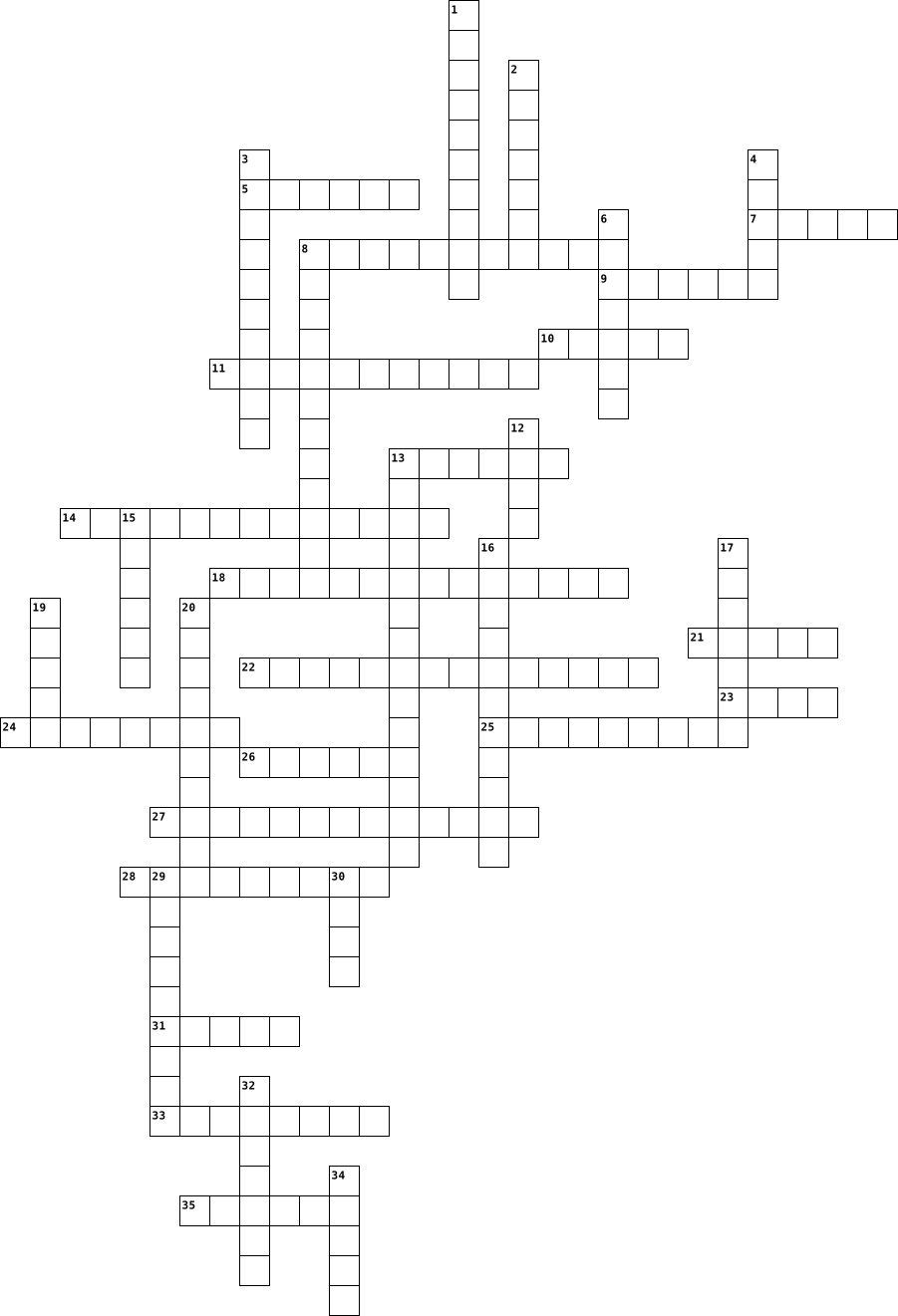
Across
- Given out during respiration
- 1.a part of an organism which is typically self-contained and has a specific vital function
- Where photosynthesis takes place
- O2
- Colour of leaf with iodine which received light
- A green pigment
- Carries Sugar
- to be converted into a fossil
- Carbon dioxide is an example of this
- Sun produces this, a type of energy
- C02
- Has a large surface area to gather sun light
- Long vertical cell
- Allows the movement of gases
- Used to test for starch
- The process of rotting
- An insoluble substance which is the main constituent of plant cell walls
- Provides plant with stability, nutrients and water
- Needed for photosynthesis
- Layer below palisade layer
Down
- Burning
- Removes green chlorophyll
- occurs when part of a plant is deprived of starch
- Colour of leaf with iodine which did not have chlorophyll
- Plural of stoma
- Large group of organic compounds occurring in foods and living tissues and including sugars, starch, and cellulose
- wall Contains cellulose
- Process that creates food for plants
- Stored glucose
- Opposite of photosynthesis
- the top protective layer of a leaf
- The gap in leaf which controls the entry and exit of gases
- Guards the stoma
- The outer layer of cells
- Provides support and food transportation for the plant
- Created during photosynthesis
- Carries water
37 Clues: O2 • C02 • Burning • Carries Sugar • Carries water • Stored glucose • Plural of stoma • A green pigment • Guards the stoma • Long vertical cell • The process of rotting • wall Contains cellulose • Used to test for starch • The outer layer of cells • Removes green chlorophyll • Needed for photosynthesis • Opposite of photosynthesis • Layer below palisade layer • Given out during respiration • ...
Photosynthesis and Cellular Respiration 2023-10-04

Across
- first step of photosynthesis, uses sunlight to split H2O and make ATP and NADPH, O2 is released
- process of using light energy to make glucose, starts with CO2 and H2O and ends with C6H12O6 and O2
- sphere of earth, all the water on earth
- second step of photosynthesis, uses energy in ATP and NADPH to make glucose from CO2
- sphere of earth, all the gases surrounding earth
- adenosine diphosphate, uncharged energy storage molecule with 2 phosphates
- organelle-site of photosynthesis
- nutrient, used in proteins and nucleic acids must be fixed for living things to use, often limited
- adenosine triphosphate,charged energy storage molecule with 3 phosphorus groups
Down
- process of breaking down glucose to make ATP, starts with C6H12O6 and O2 ends with O2 and H2O
- anything that has mass and takes up space; makes up everything
- second step of aerobic respiration, 2 types include alcoholic and lactic acid
- pigment in chloroplasts, used to trap light energy during photosynthesis
- first step of aerobic respiration
- nutrient, used in phosphates of nucleic acids and phospholipids of membranes, often limited
- substances at the beginning of a chemical reaction, changed into products
- sphere of earth, all the soil and rocks on earth
- type of organism that is able to make its own food, base of the food chain
- describes a situation in which oxygen is present
- substances created during a chemical reaction, made from reactants
20 Clues: organelle-site of photosynthesis • first step of aerobic respiration • sphere of earth, all the water on earth • sphere of earth, all the soil and rocks on earth • sphere of earth, all the gases surrounding earth • describes a situation in which oxygen is present • anything that has mass and takes up space; makes up everything • ...
Routt Cells III Mitochondria and Chloroplasts 2024-01-29

Across
- The cristae increase the _____ _____ of the inner membrane.
- _____ are found in eukaryotic cells that perform photosynthesis.
- Mitochondria and chloroplasts are made of a _____ membrane.
- Organelles are made of _____.
- Cell which use more energy have _____ mitochondria.
- Plants and _____ have chloroplasts.
- The matrix contains _____ and DNA.
- The release of energy in cells is called _____ _____.
- Green pigment.
- process where material is wrapped by a piece of membrane as it enters a cell.
- The energy source for photosynthesis.
- What we call the DNA inside a mitochondrion.
- This is the semi-fluid material inside a chloroplast.
- The disc-like sacs of chloroplasts' inner-most membrane are called _____.
- The inner membrane of the mitochondria is for attachment of _____.
Down
- The chloroplasts' double membrane surrounds a _____ inner-most membrane.
- If a cell is like a city, then a chloroplast is like a _____ _____.
- Only _____ cells have organelles.
- The double membranes are arranged _____ and outer.
- _____ gas is a byproduct of photosynthesis.
- Mitochondria and Chloroplasts are _____.
- This is a stack of thylakoids.
- Fat cells have _____ mitochondria than other cells.
- Chloroplasts perform _____.
- A fold in the inner membrane of the mitochondria.
- Mitochondria release _____.
- Organelles are _____ of cells.
- Almost _____ eukaryotic cells have mitochondria.
- situation in which one organism lives inside another organism.
- The mitochondrion is the "_____" of the cell.
- The semi-fluid material inside a mitochondrion.
- What sugar is a product of photosynthesis?
32 Clues: Green pigment. • Chloroplasts perform _____. • Mitochondria release _____. • Organelles are made of _____. • This is a stack of thylakoids. • Organelles are _____ of cells. • Only _____ cells have organelles. • The matrix contains _____ and DNA. • Plants and _____ have chloroplasts. • The energy source for photosynthesis. • Mitochondria and Chloroplasts are _____. • ...
Dissolved Oxygen in Aquatic Ecosystems 2024-08-13

Across
- percentage of the amount of DO that is available in saltwater ecosystems versus freshwater ecosystems
- the surface water has _____ ______
- the DO in water is ___ bonded to any other molecule
- producers use sunlight to synthesize food from carbon dioxide and water while generating oxygen as a by-product.
- is needed in order to complete the process of photosynthesis
- are the organisms that break down dead organsims
- is one molecule needed in the process of photosynthesis
- oxygen needed for the process of decomposition
Down
- important for respiration by aquatic organisms
- the ocean floor where dead phytoplankton, plants, and animals, have fallen to the bottom from the surface water have _____ ______
- the action of water which increases the amount of dissolved oxgyen
- the process where breaking down something to organic matter
- dissolved oxygen come into and out of an aquatic ecosystems by this source
- temperature leads to increased ____ which increases the need for dissolved oxygen
- ____ temperature causes decreased DO
- the energy that is made during the process that occurs in cells of all organisms
- besides glucose, what else is made during photosynthesis
- One factor the causes a fluctuation of dissolved oxygen levels in aquatic ecosystems
- an important factor for dissolved oxygen in aquatic ecosystems
- the type of plankton the produces oxygen through photosynthesis
- how dissolved oxygen moves into and out of the water
- if this factor increases, it decreases the amount of dissolved oxygen
- increased salinity causes _____ DO
23 Clues: the surface water has _____ ______ • increased salinity causes _____ DO • ____ temperature causes decreased DO • important for respiration by aquatic organisms • oxygen needed for the process of decomposition • are the organisms that break down dead organsims • the DO in water is ___ bonded to any other molecule • how dissolved oxygen moves into and out of the water • ...
Plant Kingdom 2025-05-20

Across
- – The tissue that transports sugars and nutrients from the leaves to other parts of the plant.
- – Flowering plants that produce seeds inside fruits.
- – The part of the plant that grows underground and absorbs water and minerals.
- – The green pigment in leaves that absorbs sunlight for photosynthesis.
- wall – A rigid outer layer that protects and supports plant cells.
- – The reproductive part of many plants, often colorful to attract pollinators.
- – A small part of a plant that can grow into a new plant.
- – Vascular plants without flowers that also reproduce with spores.
- – The transfer of pollen from the male part (anther) to the female part (stigma) of a flower.
- – Plants that produce seeds in cones and do not have flowers.
Down
- – Simple, non-vascular plants that live in moist places and reproduce with spores.
- – The flat part of the plant where most photosynthesis takes place.
- – The process by which plants convert sunlight, carbon dioxide, and water into oxygen and glucose.
- – A large part of the plant cell that stores water and nutrients.
- – A living organism that makes its own food using sunlight through photosynthesis.
- – The part of the plant cell where photosynthesis happens.
- – The part of the plant that supports it and transports water and nutrients.
- – The part of a flowering plant that contains the seeds.
- – The process by which plants produce new individuals.
- – The tissue in plants that carries water from the roots to the rest of the plant.
20 Clues: – Flowering plants that produce seeds inside fruits. • – The process by which plants produce new individuals. • – The part of a flowering plant that contains the seeds. • – A small part of a plant that can grow into a new plant. • – The part of the plant cell where photosynthesis happens. • – Plants that produce seeds in cones and do not have flowers. • ...
Photosynthesis Vocab Quiz 2025-02-06

Across
- reaction in photosynthesis that does not require the direct involvement of sunlight
- reactant of light dependent reactions
- organism that captures energy from the sun or inorganic substances to make their own food
- organism that obtains food and energy from consuming living organisms
- site of light independent reactions of photosynthesis
- electron donor; drops off an H to be used in carbon fixation
- stacks of thylakoids found in chloroplasts
- light independent reaction that produces glucose by using ATP, NADPH, and CO2
- the small openings on the leaves through which O2 and CO2 move in and out
- smaller energy molecule composed of two phosphate groups, an adenine base, and a ribose sugar
- process where atmospheric CO2 is converted to a usable form of C
- organism that makes their own food from light energy
- the process where a phosphate group is added to a molecule; ADP forms to ATP
- organelle that captures light energy and converts it to chemical energy
Down
- reaction in photosynthesis that requires direct involvement of sunlight
- site of light dependent reactions of photosynthesis
- main product of light dependent reactions in photosynthesis
- monosaccharide that serves as the primary source of energy
- electron carrier; picks up an H to be used in Calvin Cycle
- organism that makes their own food from chemicals
- basic energy source used by all cells and contains three phosphate groups
- main pigment found in plants that cause them to appear green
22 Clues: reactant of light dependent reactions • stacks of thylakoids found in chloroplasts • organism that makes their own food from chemicals • site of light dependent reactions of photosynthesis • organism that makes their own food from light energy • site of light independent reactions of photosynthesis • monosaccharide that serves as the primary source of energy • ...