
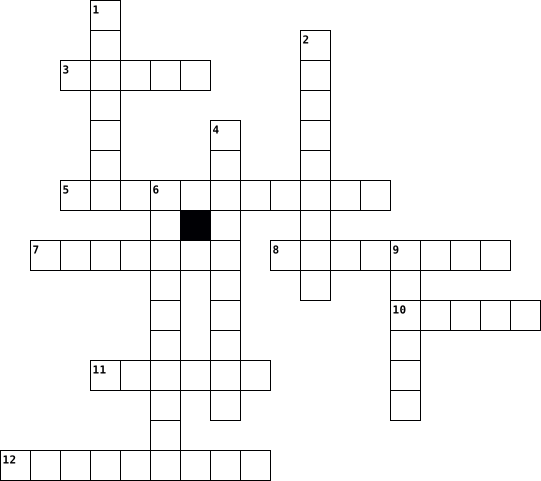
photosynthesis Crossword Puzzles
Unit 2 2024-09-23

Across
- An organism that makes its own food; also called a producer
- the breakdown of glucose by enzymes, releasing energy and pyruvic acid.
- Plants use the sun's energy to convert water and carbon dioxide into sugar
- compound made up of carbon, hydrogen, and oxygen atoms; major source of fast energy for the human body
- (adenosine triphosphate) main energy source that cells use for most of their work
- reactions of photosynthesis in which energy from ATP and NADPH is used to build high-energy compounds such as sugars
Down
- Cycle second stage of cellular respiration, in which pyruvic acid is broken down into carbon dioxide in a series of energy-extracting reactions
- Process that releases energy by breaking down glucose and other food molecules in the presence of oxygen
- reactions of photosynthesis that use energy from light to produce ATP and NADPH
- A green pigment found in the chloroplasts of plants, algae, and some bacteria
- The liquid reactant/input of photosynthesis, something all plants need
- organism that obtains energy from the foods it consumes; also called a consumer
- series of electron carrier proteins that shuttle high-energy electrons during ATP-generating reactions
13 Clues: An organism that makes its own food; also called a producer • The liquid reactant/input of photosynthesis, something all plants need • the breakdown of glucose by enzymes, releasing energy and pyruvic acid. • Plants use the sun's energy to convert water and carbon dioxide into sugar • ...
Chez Carbon 2022-03-24

Across
- reactions of photosynthesis that use energy from light to produce molecules such as ATP and NADPH
- a type of membrane-bound organelle known as a plastid that conducts photosynthesis mostly in plant cells.
- regions outside the thylakoid membranes in the chloroplasts that aid the .calvin cycle
- a process by which cells release energy without oxygen it happens in plants and animals
- a process in which plants and some other organisms use light energy to convert water and carbon-dioxide into oxygen and energy carbohydrates such as sugars and starches
- a green pigment responsible for the absorption of light
Down
- an organism that obtains energy through the foods it consumes
- a process in which cells release energy in the without oxygen
- a process that does not require oxygen to work
- a substance that is formed in result of a chemical equation
- a process that does require oxygen to be completed
- an organism that can capture energy from sunlight or from chemicals and use it in order to produce its own food from inorganic compounds
- reactions of photosynthesis in which energy from ATP and NADPH it is used to build high-energy compounds like sugars
13 Clues: a process that does not require oxygen to work • a process that does require oxygen to be completed • a green pigment responsible for the absorption of light • a substance that is formed in result of a chemical equation • an organism that obtains energy through the foods it consumes • a process in which cells release energy in the without oxygen • ...
Biology 2023-01-06

Across
- set of reactions in photosynthesis that do not require light energy; energy from ATP and NADPH is used to build high-energy compounds such as sugar; also called the Calvin cycle
- clusters of proteins that span the thykloid membrane and allow hydrogen to pass through it
- clusters of chlorophyll and proteins found in thylakoids
- carrier molecule that transfers high-energy electrons from chlorophyll to other molecules
- fluid portion of the chloroplast; outside of the thylakoids
- saclike photosynthetic membranes found in chloroplasts
- principal pigment of plants and other photosynthetic organisms
- the light-dependent reactions of photosynthesis in which energy from ATP and NADPH is used to build high-energy compounds such as sugar
Down
- set of reactions in photosynthesis that use energy from light to produce ATP and NADPH
- light-absorbing molecules used by plants to gather the sun's energy
- compound used by cells to store and release energy
- process used by plants and other autotrophs to capture light energy and use it to power chemical reactions that convert carbon dioxide and water into oxygen and energy-rich carbohydrates such as sugars and starches
- series of electron carrier proteins that shuttle high-energy electrons during ATP generating reactions
13 Clues: compound used by cells to store and release energy • saclike photosynthetic membranes found in chloroplasts • clusters of chlorophyll and proteins found in thylakoids • fluid portion of the chloroplast; outside of the thylakoids • principal pigment of plants and other photosynthetic organisms • light-absorbing molecules used by plants to gather the sun's energy • ...
Biology Game by RogerV 2020-10-15

Across
- How many cells are present at the end of mitosis
- How many cells are present at the beginning of mitosis
- What organelle breaks down a organic compound into energy
- Which carbohydrate gives a plant its energy and helps built its cell walls?
- Is Mitosis when cells Divide or Combine?
- One of the two starting products of photosynthesis is Carbon Dioxide. What is the other?
Down
- What is the process called when plants use sunlight to synthesize food using Carbon dioxide and Water?
- Whats another word for cellulose?
- Where does photosynthesis take place?
- Cellular respiration requires...?
- One of the two end products of photosynthesis is glucose. What is the other?
- What does combining ADP and P make?
12 Clues: Whats another word for cellulose? • Cellular respiration requires...? • What does combining ADP and P make? • Where does photosynthesis take place? • Is Mitosis when cells Divide or Combine? • How many cells are present at the end of mitosis • How many cells are present at the beginning of mitosis • What organelle breaks down a organic compound into energy • ...
Plant Physiology 2024-10-16

Across
- The tissue that transports water in a plant
- The organelle that contains pigments for capturing sunlight
- The process by which a plant loses water
- The large organelle that stores water and maintains the cell's structure
- The organ of a plant that absorbs water and minerals from the soil
- The tissue that transports the products of photosynthesis
Down
- The green pigment in chloroplasts
- Tiny pores on the surface of leaves that allow gas exchange
- The part of the plant responsible for photosynthesis
- The organelle that produces energy for the cell through respiration
- The process that occurs in chloroplasts, providing energy for the plant
11 Clues: The green pigment in chloroplasts • The process by which a plant loses water • The tissue that transports water in a plant • The part of the plant responsible for photosynthesis • The tissue that transports the products of photosynthesis • Tiny pores on the surface of leaves that allow gas exchange • The organelle that contains pigments for capturing sunlight • ...
science 2021-04-06

Across
- one of the lamellar stacks of chlorophyll containing thylakoids found in plant chloroplasts.
- it is also known as a sugar.
- Energy/ in photosynthesis, light energy is converted into chemical energy, which photoautotrophs use to build carbohydrate molecules.
- is the process that converts solar energy into chemical energy that is used by biological systems (that means us.)
- an instrument used that can differentiate which wavelengths of light a substance can absorb.
- any organism of microscopic size, e.g. a microscopic organism, especially a bacterium, virus, or fungus.
- is a site of photochemical or light dependent reaction of photosynthesis.
Down
- is a sheet like membrane, acts as a type of wall at which chloroplasts can be fixed within, achieving the maximum light possible.
- are organelles that conduct photosynthesis, where the photosynthetic pigment chlorophyll captures the energy form the sunlight.
- longest wavelength in absorption of light; less energy.
- is the part of a tissue or organ with a structural or connective role, it contains enzymes necessary for carbon fixation.
- shortest wavelength in absorption of light; more energy.
12 Clues: it is also known as a sugar. • longest wavelength in absorption of light; less energy. • shortest wavelength in absorption of light; more energy. • is a site of photochemical or light dependent reaction of photosynthesis. • one of the lamellar stacks of chlorophyll containing thylakoids found in plant chloroplasts. • ...
Anatomy of the Leaf Cross Section 2023-05-31

Across
- provides support for the leaf and transports water, minerals, and food energy to the rest of the plant
- aids to prevent water loss and provides an extra layer between the outside and inside of the leaf
- transports water and nutrients from the soil to the stems and leaves. Also provides mechanical support and storage
- reduce the amount of required energy for the breathing process and helps the plant save energy in extreme conditions
- produces energy through photosynthesis which aid plant growth
- protects plants against drought, extreme temperatures, UV radiation, chemical attack, mechanical injuries, and pest infection
Down
- allows carbon dioxide to enter the leaf and for oxygen and excess water to leave the leaf
- leaf cell type that forms a tight layer around the veins. It makes photosynthesis more efficient.
- most of photosynthesis occurs here. these cells are close together to increase light absorption
- regulate gas exchange and water loss between the plant and environment
- allows for the interchange of gases needed for photosynthesis
- control gas diffusion by regulating the opening and closing of stomatal pores
12 Clues: allows for the interchange of gases needed for photosynthesis • produces energy through photosynthesis which aid plant growth • regulate gas exchange and water loss between the plant and environment • control gas diffusion by regulating the opening and closing of stomatal pores • ...
Anatomy of the Leaf Cross Section 2023-05-31

Across
- provides support for the leaf and transports water, minerals, and food energy to the rest of the plant
- aids to prevent water loss and provides an extra layer between the outside and inside of the leaf
- transports water and nutrients from the soil to the stems and leaves. Also provides mechanical support and storage
- reduce the amount of required energy for the breathing process and helps the plant save energy in extreme conditions
- produces energy through photosynthesis which aid plant growth
- protects plants against drought, extreme temperatures, UV radiation, chemical attack, mechanical injuries, and pest infection
Down
- allows carbon dioxide to enter the leaf and for oxygen and excess water to leave the leaf
- leaf cell type that forms a tight layer around the veins. It makes photosynthesis more efficient.
- most of photosynthesis occurs here. these cells are close together to increase light absorption
- regulate gas exchange and water loss between the plant and environment
- allows for the interchange of gases needed for photosynthesis
- control gas diffusion by regulating the opening and closing of stomatal pores
12 Clues: allows for the interchange of gases needed for photosynthesis • produces energy through photosynthesis which aid plant growth • regulate gas exchange and water loss between the plant and environment • control gas diffusion by regulating the opening and closing of stomatal pores • ...
Keyword crossword 2022-12-08

Across
- jelly like substance where chemical reactions take place
- an organism made of only one cell
- controls what goes in and out of the cell
- contains the genetic information
- tail-like
Down
- false feet
- made from cellulose
- process that converts light to energy
- an organism made of multiple cells
- used for photosynthesis
- contains sap which gives cell shape
- where cell respiration takes place
12 Clues: tail-like • false feet • made from cellulose • used for photosynthesis • contains the genetic information • an organism made of only one cell • an organism made of multiple cells • where cell respiration takes place • contains sap which gives cell shape • process that converts light to energy • controls what goes in and out of the cell • ...
4.Photosynthesis and Respiration 2022-09-21

Across
- Energy is obtained by this process
- Respiration and Photosynthesis
- Plastids containing cells
- Respiration that does not utilize oxygen
- Chemical energy
Down
- Bean shaped cells on the lower side of the
- Energy is obtained from sunlight
- Transport system of the plants
- transports glucose
- Pores on the lower side of the leaf
- Turns blue-black in presence of Iodine
- Respiring seeds give out carbon di oxide
12 Clues: Chemical energy • transports glucose • Plastids containing cells • Respiration and Photosynthesis • Transport system of the plants • Energy is obtained from sunlight • Energy is obtained by this process • Pores on the lower side of the leaf • Turns blue-black in presence of Iodine • Respiring seeds give out carbon di oxide • Respiration that does not utilize oxygen • ...
Cells/Energy 2023-10-30

Across
- organelle that contains the genetic information of the organism and acts as the "control center" of the cell
- structure known for producing proteins for the cell
- organelle that breaks larger particles to smaller particles and is known as the "recycler" of the cell
- the products of cellular respiration include, water, ATP energy, and ____
- rigid structure that surrounds the cell membrane in some cells
- cellular respiration takes place in ____ plant and animal cells
- during ______, the reactants include sunlight, carbon dioxide, and water
- these types of cells are complex and contain a membrane-bound nucleus and various organelles
- this structure is used to store water and food for the cell
Down
- structure in the cell that allows certain things to enter or leave the cell
- organelle where photosynthesis takes place
- glucose (sugar) and ____ are the direct products of photosynthesis
- during ______, the reactants include glucose and oxygen
- a type of cell that does not contain a nucleus
- organelle that is known as the "powerhouse of the cell"
- a type of chemical reaction in which energy is released
16 Clues: organelle where photosynthesis takes place • a type of cell that does not contain a nucleus • structure known for producing proteins for the cell • during ______, the reactants include glucose and oxygen • organelle that is known as the "powerhouse of the cell" • a type of chemical reaction in which energy is released • ...
The Water Conservation Problem Vocab 2024-03-27

Across
- waxy covering on leaves that reduces water loss
- an organelle containing chlorophyll found in plants
- a green pigment in chloroplasts that captures light energy to make sugars during photosynthesis
- opening on the surface of leaves that allow for gas exchange
- by product of photosynthesis that gets used as energy
- when water changes from a liquid to a gas
- process by which water flows through plants, entering the roots and exiting the stomata
Down
- controls the opening/closing of stomata
- water in its gas phase
- process by which plants use light energy, CO2 and H2O to make sugar
- when water changes from a gas to a liquid
- any structure or behavior of an organism that allows it to survive in its habitat
- underground part of plants that takes up water and minerals, stores food and anchors the plant
13 Clues: water in its gas phase • controls the opening/closing of stomata • when water changes from a gas to a liquid • when water changes from a liquid to a gas • waxy covering on leaves that reduces water loss • an organelle containing chlorophyll found in plants • by product of photosynthesis that gets used as energy • ...
Unit 2 Vocab 2021-09-27

Across
- solar energy plant
- takes place in mitochondria
- when two things give each other something they need
- The power house of the cell
- The other energy
- takes place in chloroplast
- also known as the calvin cycle
Down
- what pants use for energy
- types of these are alcoholic lactate acid and acetic acid
- series of electron transports
- takes place in plants and animals
- One of two energy
- makes two molecules for the next stage of photosynthesis
13 Clues: The other energy • One of two energy • solar energy plant • what pants use for energy • takes place in chloroplast • takes place in mitochondria • The power house of the cell • series of electron transports • also known as the calvin cycle • takes place in plants and animals • when two things give each other something they need • ...
Spelling list #2 2021-10-21

Across
- exoskeleton
- gone
- opposite
- same
- animal
- climate
Down
- flower
- robot
- backbone
- adapt
- weather
- starling
- arctic
- different
- opposite
15 Clues: gone • same • robot • adapt • flower • arctic • animal • weather • climate • backbone • starling • opposite • opposite • different • exoskeleton
science 2021-04-06

Across
- is the part of a tissue or organ with a structural or connective role, it contains enzymes necessary for carbon fixation.
- Energy/ in photosynthesis, light energy is converted into chemical energy, which photoautotrophs use to build carbohydrate molecules.
- any organism of microscopic size, e.g. a microscopic organism, especially a bacterium, virus, or fungus.
- is a site of photochemical or light dependent reaction of photosynthesis.
- it is also known as a sugar.
- are organelles that conduct photosynthesis, where the photosynthetic pigment chlorophyll captures the energy form the sunlight.
- shortest wavelength in absorption of light; more energy.
Down
- an instrument used that can differentiate which wavelengths of light a substance can absorb.
- is a sheet like membrane, acts as a type of wall at which chloroplasts can be fixed within, achieving the maximum light possible.
- is the process that converts solar energy into chemical energy that is used by biological systems (that means us.)
- longest wavelength in absorption of light; less energy.
- one of the lamellar stacks of chlorophyll containing thylakoids found in plant chloroplasts.
12 Clues: it is also known as a sugar. • longest wavelength in absorption of light; less energy. • shortest wavelength in absorption of light; more energy. • is a site of photochemical or light dependent reaction of photosynthesis. • an instrument used that can differentiate which wavelengths of light a substance can absorb. • ...
science 2021-04-06

Across
- shortest wavelength in absorption of light; more energy.
- an instrument used that can differentiate which wavelengths of light a substance can absorb.
- Energy/ in photosynthesis, light energy is converted into chemical energy, which photoautotrophs use to build carbohydrate molecules.
- is a sheet like membrane, acts as a type of wall at which chloroplasts can be fixed within, achieving the maximum light possible.
- one of the lamellar stacks of chlorophyll containing thylakoids found in plant chloroplasts.
- is the process that converts solar energy into chemical energy that is used by biological systems (that means us.)
- longest wavelength in absorption of light; less energy.
Down
- are organelles that conduct photosynthesis, where the photosynthetic pigment chlorophyll captures the energy form the sunlight.
- any organism of microscopic size, e.g. a microscopic organism, especially a bacterium, virus, or fungus.
- is a site of photochemical or light dependent reaction of photosynthesis.
- it is also known as a sugar.
- is the part of a tissue or organ with a structural or connective role, it contains enzymes necessary for carbon fixation.
12 Clues: it is also known as a sugar. • longest wavelength in absorption of light; less energy. • shortest wavelength in absorption of light; more energy. • is a site of photochemical or light dependent reaction of photosynthesis. • an instrument used that can differentiate which wavelengths of light a substance can absorb. • ...
Nutrition in Plants 2017-07-19
Across
- ________ cells control the size of the stomata.
- Factors affecting rate of photosynthesis include light intensity, carbon dioxide concentration and ____________.
- This form of sugar is being transported from the leave to other parts of the plant.
- The mesophyll layer has one or two layers of closely packed, long and cylindrical cells called ____________ mesophyll cells.
- Glucose in leaf reacts with nitrates and other mineral salts absorbed from soil to form ________ acids.
- Photosynthesis is important as it removes carbon dioxide from the air and provides __________.
- Carbon dioxide enters the stomata into the air spaces inside the leaf through the process of ___________.
Down
- This form of sugar is formed by the leaf during photosynthesis.
- The spongy mesophyll cells are ____________ in shape and has numerous large intercellular air spaces between them.
- A leaf which has some parts that contains chlorophyll and some parts without chlorophyll is called a __________ leaf.
- During light-dependent stage of photosynthesis, light energy is used to split water through a process called ___________.
- This form of carbohydrate is stored in the leaves because of excess glucose.
12 Clues: ________ cells control the size of the stomata. • This form of sugar is formed by the leaf during photosynthesis. • This form of carbohydrate is stored in the leaves because of excess glucose. • This form of sugar is being transported from the leave to other parts of the plant. • ...
Biology Words 2013-10-13

Across
- For pollination/reproduction on a plant
- The green pigment in plants
- What is the process used by plants and other organisms to convert light energy into chemical energy that can be used to fuel the organisms' activities.
- What is fertilizer and nutrients in? (For plants)
- When plants are lacking this they get green veins and leaves look yellow
- It supports the flower and feeds the nutrients to the flower in a plant
Down
- Plants turn light green or yellow and the stem goes very thin when it is lacking this
- Plants look patchy yellow when it is lacking this
- Plants leaves turn purple and roots do not grow when they are lacking this
- A gas needed for photosynthesis
- Were photosynthesis happens in a plant
- When plants are lacking this they look stunting and yellow
- Plants grow in this
- This soaks/ absorbs up all the nutrients and water. It is an anchor for a plant
- When plants are lacking this the leaves curl and roll and the end of the leaves go black
- When plants are lacking this they look yellow with dead spots
16 Clues: Plants grow in this • The green pigment in plants • A gas needed for photosynthesis • Were photosynthesis happens in a plant • For pollination/reproduction on a plant • Plants look patchy yellow when it is lacking this • What is fertilizer and nutrients in? (For plants) • When plants are lacking this they look stunting and yellow • ...
Chapter 6 Vocabulary 2023-12-20

Across
- Bodies of water, partly enclosed by land, where fresh water meets ocean or inland sea.
- The amount of salts dissolved in water.
- Climate diagrams that describe conditions in a biome.
- Areas nearest a river's course that are flooded periodically.
- A group of ecosystems with similar abiotic and biotic conditions.
- A deep sleeplike state that an animal enters for most of winter.
- Day-to-day conditions like sunny/humid/cold/snowy.
- The very bottom of a body of water, can be sunlit or dark.
- Trees that lose their leaves and stop photosynthesis during part of the year.
Down
- Organic matter or biomass that remains after cellular respiration.
- Areas of land that are flooded with water at least part of the year.
- The area farther from the shore, no rooted plants.
- The uppermost layer of an aquatic system, enough sunlight for photosynthesis.
- The shallow near-shore portion of the photic zone.
- The average temperature and precipitation over long periods in a given area.
- Where no sunlight penetrates and photosynthesis cannot occur.
16 Clues: The amount of salts dissolved in water. • The area farther from the shore, no rooted plants. • The shallow near-shore portion of the photic zone. • Day-to-day conditions like sunny/humid/cold/snowy. • Climate diagrams that describe conditions in a biome. • The very bottom of a body of water, can be sunlit or dark. • ...
Plants! Diversity, Structures, and Adaptations 2025-11-24

Across
- The category of vascular plants that have flowers and fruit.
- The thing that carnivorous plants digest to supplement the nitrogen that they need.
- The category of vascular plants that don't have their seeds enclosed and have neither flowers nor fruit.
- Typically found on the bottom of leaves, are surrounded by guard cells, and play a role in gas exchange.
- Plants that have xylem, phloem, and true stems, leaves, and roots.
- The way that nonvascular plants obtain water.
- The ability to make sugar from sun light.
- Found in vascular plants and carries water up through a plant.
- Found in vascular plants and carries sugar from the leaves throughout the plant.
Down
- The phylum that includes mosses, liverworts, and hornworts.
- Used by plants in the building of proteins.
- The site of photosynthesis that helps capture light energy.
- Plants without xylem, phloem, and lack true stems, leaves, and roots.
- The pigment inside a chloroplast that plays a role in the absorption of light.
- Essential for life, they are producers meaning that they are the main support for food webs.
- Produced by photosynthesis and breathed in by animals.
16 Clues: The ability to make sugar from sun light. • Used by plants in the building of proteins. • The way that nonvascular plants obtain water. • Produced by photosynthesis and breathed in by animals. • The phylum that includes mosses, liverworts, and hornworts. • The site of photosynthesis that helps capture light energy. • ...
Cell Model Project 2023-11-01

Across
- Pigment/Food
- Photosynthesis
- Holds/Everything
- Water
- Packages/Reships
- Makes/Lipids
- Makes/Ribosomes
- Pouches/Product
- Protein
- Powerhouse
- In/OutNucleus
- control
Down
- Fiber/Structure
- Protects
- Moves/Cell
- Cleans
- Trash
- In/Out
- Cell/Division
- Many/Protein
20 Clues: Water • Trash • Cleans • In/Out • Protein • control • Protects • Moves/Cell • Powerhouse • Pigment/Food • Makes/Lipids • Many/Protein • Cell/Division • In/OutNucleus • Photosynthesis • Fiber/Structure • Makes/Ribosomes • Pouches/Product • Holds/Everything • Packages/Reships
Cells 2024-12-17

Across
- cell without nucleus
- protein synthesis site
- site of photosynthesis in plant cells
- Cells packing and shipping center
- cells powerhouse
- Cells control center
Down
- Storage bubble for the cell
- gel-like substance inside cells
- cells protective barrier
- plants food-making process through sunlight
10 Clues: cells powerhouse • cell without nucleus • Cells control center • protein synthesis site • cells protective barrier • Storage bubble for the cell • gel-like substance inside cells • Cells packing and shipping center • site of photosynthesis in plant cells • plants food-making process through sunlight
Plants! 2022-02-01

Across
- elongated cells of ground tissue with thicker cell walls, make up celery strings
- vascular tissue that moves sugars around
- open and close the stomata
- planned cell death
- what produces the egg in a flower
- plants that live for many years and are constantly growing and reproducing
- contain the majority of vascular tissues
- means "middle leaf"
- waxy waterproof layer of a leaf
- pollen and egg coming together to for a diploid cell
- reproduction that creates genetic copies
- plants that live for 1 year and focus on reproduction
- the sugar that plant cell walls are made of
- plants that move everything via osmosis and diffusion
- the process of converting sunlight, water, and carbon dioxide into sugars
- the goal product of photosynthesis
- "dead" phloem leaves these visible marks behind
- ground tissue with the thickest cell wall
- vascular tissue that moves water up
- all the male reproductive parts of a flower
Down
- plants that live for 2 years
- main pigment used by plants for photosynthesis
- organisms that convert sunlight into usable energy
- can only occur if an outside "force" moves pollen from one plant to another
- process used for plants to grow taller
- structure that produces the pollen
- organelle used for water storage
- all the female reproductive parts of a flower
- colorful attractants for pollinators
- an asexual form of reproduction used by ferns
- reproduction that allows for genetic variation
- control gas and water exchange into the plant
- regulate gas exchange with stomata in most plants
- added chemical to sclerenchyma cell walls
- main place for a plant to store carbohydrates
- the mesophyll more spread out to allow gas exchange
- the most abundant ground tissue of plants
- area where most photosynthesis happens in the leaf
- color reflected back by main pigment of plants
- the sticky receptacle that takes pollen
40 Clues: planned cell death • means "middle leaf" • open and close the stomata • plants that live for 2 years • waxy waterproof layer of a leaf • organelle used for water storage • what produces the egg in a flower • structure that produces the pollen • the goal product of photosynthesis • vascular tissue that moves water up • colorful attractants for pollinators • ...
Plant Physiology Crossword_Edelyne Sugito 2024-10-16

Across
- The water vapor exits the leaf through
- What symbiosis allows nutrient uptake by roots
- In photosynthesis, the reaction where the assimilation of inorganic carbon into organic carbon occurs
- The process of wasting some of the energy produced by photosynthesis
- The dominant charge of soil particles
- The changing conformation of transport is caused by
- The acquisition of nitrogen from the atmosphere through several reactions to produce ammonia or nitrate
- In the Calvin-Benson cycle, the release of CO2 can be assimilated by
- Types of plants that can adapt better to hot, dry, and sunny conditions
- Types of chromatin that are transcribable
- Transporter that needs ATP
- Complex photosynthesis pigments that attach to photosystems
- In CAM, carboxylation by PEPC is ____ with Rubisco carboxylation
- Tissue system in a plant that is composed of the 3-dimensional bulk of the plant
- Diffusion of water
- Cells that build xylem
Down
- In PEP carboxylate, what is the substrate that is being used
- Where does the carbon fixation occur in photosynthesis
- Movement of two molecules in the opposite direction through a protein channel is called
- The mutual attraction between molecules
- Free energy associated with water
- A bacterium found in soil that helps in fixing nitrogen in leguminous plants
- Part of plant cells that can be converted into chemicals and fuels
- Deficiency of Fe and Mn in plants can cause
- A pigment that is more stable to oxidation and acts as an accessory pigment that helps to lower the energy for chlorophyll
- The movement of solutes through both the extracellular space
- Part of the Golgi apparatus that helps to prevent the expansion of plasma membrane by recycling the membrane back to Golgi
- The rate of photorespiration will ___ in hot conditions
- Maximum force per unit area that a continuous column of water can withstand before breaking
- Merismatic cells in the secondary growth
30 Clues: Diffusion of water • Cells that build xylem • Transporter that needs ATP • Free energy associated with water • The dominant charge of soil particles • The water vapor exits the leaf through • The mutual attraction between molecules • Merismatic cells in the secondary growth • Types of chromatin that are transcribable • Deficiency of Fe and Mn in plants can cause • ...
Unit 2 Vocabulary 2025-09-11

Across
- A chemical that causes a reaction
- a plant and algal cell organelle that performs photosynthesis
- organisms that break down dead organisms and release the nutrients from the dead matter
- process involving a series of protein complexes that transfers electrons to create a proton gradient
- ellular organelles, known as the "powerhouses of the cell," that convert nutrients into ATP
- the process by which plants, algae, and some bacteria convert light energy into chemical energy, using sunlight, water, and carbon dioxide to create glucose
- metabolic process in cells that converts chemical energy from nutrients like glucose into adenosine triphosphate (ATP)
- the total sum of water found on, under, and above the Earth's surface
- a nonmetallic element central to life
Down
- The layer of gases surrounding a planet
- the rocky part of Earth, extending from the surface to the core
- Without Oxygen
- A heterotroph is an organism that cannot produce its own food
- a colorless, odorless, nonmetal gas that makes up about 78% of Earth's atmosphere
- Universal energy-carrying molecule essential for cellular processes
- a chemical element; it has symbol P and atomic number 15.
- With Oxygen
- an ancient metabolic process, driven by microorganisms like yeast and bacteria, that breaks down carbohydrates and organic compounds into simpler ones
- pigment that gives plants and algae their green color.
- an organism that can convert abiotic sources of energy into energy stored in organic compounds
- Outcome result of a reaction
- second stage of photosynthesis where carbon dioxide is converted into glucose
- the part of the Earth that supports life
- anything in the universe that has mass and volume
- Glycolysis is the metabolic pathway that converts glucose into pyruvate
- the first stage of photosynthesis, occurring in the chloroplasts'
- Molecule crucial for cellular energy transfer
- a crucial series of metabolic reactions that release energy from nutrient breakdown
28 Clues: With Oxygen • Without Oxygen • Outcome result of a reaction • A chemical that causes a reaction • a nonmetallic element central to life • The layer of gases surrounding a planet • the part of the Earth that supports life • Molecule crucial for cellular energy transfer • anything in the universe that has mass and volume • pigment that gives plants and algae their green color. • ...
Basic Plant Requirements Crossword Puzzle 2025-12-02

Across
- process where water molecules stick together due to hydrogen bonding
- practice of growing plants in the absence of soil
- types of tissues that transport essential substances in a plant
- plants are mostly grown in _____
- process where the pressure pushes the sugar solution through the phloem tubes
- responsible for transporting water and dissolved minerals from the roots UP through the stem and leaves
- process that creates a high concentration of sugars in the phloem, drawing water in through osmosis and creating pressure
- hydroponics typically uses _________ instead of soil
- soilless media is effective because it is _____
- plants must have plenty of this to perform photosynthesis and to live
- plants release ____________
- process which sugars are unloaded at areas where they're needed, such as growing tips, fruits, or storage organs like roots
- light from the sun
- provides water and nutrients for the plant
- light from man-made sources
- all living things, including plants, required _____ to live
Down
- the process by which plants make their energy (food)
- process where water molecules stick to the walls of the xylem vessels
- plants absorb ________________
- location where most photosynthesis occurs in the plant because it has the greatest surface area to collect light
- responsible for transporting sugars and other organic nutrients through the plant
- when water evaporates from the leaves through tiny pores called stomata
- plants require a ____ to anchor the plant & provide minerals
- elements that form tubes which sugars and nutrients can flow through
- plants use ______ to transport minerals & nutrients from the roots to the rest of the plant
- soilless media may contain _______, perlite, vermiculite, sand, and bark
- plants anchor themselves in the soil using their _____
- process where as water evaporates from the leaves, it creates a pulling force or tension that draws water upward
- energy that powers the photosynthetic process
- in greenhouses plants are commonly grown in_______
- process in which sugars produced in the leaves during photosynthesis are actively loaded into the phloem
31 Clues: light from the sun • plants release ____________ • light from man-made sources • plants absorb ________________ • plants are mostly grown in _____ • provides water and nutrients for the plant • energy that powers the photosynthetic process • soilless media is effective because it is _____ • practice of growing plants in the absence of soil • ...
Biology Vocabulary 2025-11-29

Across
- stacks of thylakoids inside chloroplasts
- enzyme that binds CO2 to RuBP
- process that breaks glucose into pyruvate
- membrane sacs where light reactions occur
- anaerobic process producing ethanol and CO2
- electron carrier used in cellular respiration
- cell that opens and closes a stoma
- transport system chain of proteins that move electrons to produce ATP
- electron-carrying proteins in the electron transport chain
- end product of glycolysis
- complex that splits water and begins the electron transport chain
- process where Rubisco binds oxygen instead of CO2
- plants that fix CO2 into four-carbon compounds to reduce photorespiration
- loss of water vapor from leaves
- fermentation anaerobic pathway producing lactic acid
- electron carrier that becomes NADPH when reduced
- respiration occurring without oxygen
- A molecule that helps form acetyl-CoA
- tightly packed leaf cells where most photosynthesis occurs
Down
- loose leaf tissue with air spaces for gas exchange
- respiration requiring oxygen
- plants that use standard three-carbon CO2 fixation
- organisms that require oxygen to survive
- plants that fix CO2 at night to conserve water
- of photosynthesis environmental conditions that restrict photosynthesis
- molecule that stores and releases energy for cellular processes
- three-carbon sugar produced during the Calvin cycle
- organism that consumes other organisms for energy
- organism that produces its own food
- mitochondrial cycle that produces NADH FADH2 and CO2
- graph showing wavelengths of light absorbed by a pigment
- waxy coating on leaves that reduces water loss
- electron carrier that becomes FADH2
- fluid-filled interior of the chloroplast
- light-harvesting complex that produces NADPH
- Cycle light-independent reactions that produce sugar from CO2
- organisms that can live with or without oxygen
- leaf pores for gas exchange
- five-carbon molecule that binds CO2
- electron carrier used in photosynthesis
40 Clues: end product of glycolysis • leaf pores for gas exchange • respiration requiring oxygen • enzyme that binds CO2 to RuBP • loss of water vapor from leaves • cell that opens and closes a stoma • organism that produces its own food • electron carrier that becomes FADH2 • five-carbon molecule that binds CO2 • respiration occurring without oxygen • ...
Plant Nutrition 2024-01-27

Across
- Something present in the environment that limits photosynthesis
- Light energy is converted into this during photosynthesis
- The pigment that absorbs light energy
Down
- The process in which carbon dioxide enters the stomata
- The form of carbohydrate that plants use for transport
- The reagent used to test for glucose
- How plants store carbohydrate
- The positive colour change that indicates the presence of starch
- One of the reactant in photosynthesis
9 Clues: How plants store carbohydrate • The reagent used to test for glucose • One of the reactant in photosynthesis • The pigment that absorbs light energy • The process in which carbon dioxide enters the stomata • The form of carbohydrate that plants use for transport • Light energy is converted into this during photosynthesis • ...
biology chapter 9 Vocab 2024-01-25

Across
- - light absorbing compounds found in a cell
- - light dependant reactions of photosynthesis
- synthase - enzyme for the syntdependentATP
- - fluid portion of the chloroplasts; outside of the thylakoids
- - process used by plants to capture light
- - saclike Photosynthetic chloroplasts found in cloroplasts
- transport chain - series of electron carrier proteins that shuttle high energy electrons during ATP generating reactions
Down
- - set or reactions in photosynthesis that use energy from light to independent reactions that do not require light
- - compound used to store and release energy
- - cluster of chlorophyll and proteins found in the thylakoids
- - carrier molecule that transfers high energy electrons from chlorophyll to other molecules
- - principle pigment of plants and other organisms
12 Clues: - process used by plants to capture light • synthase - enzyme for the syntdependentATP • - light absorbing compounds found in a cell • - light dependant reactions of photosynthesis • - compound used to store and release energy • - principle pigment of plants and other organisms • - saclike Photosynthetic chloroplasts found in cloroplasts • ...
Biology Crossword Puzzle 2018-01-14

Across
- Water
- Product of photosynthesis
- Codes for 1 amino acid
- In what organelle is ATP created.
- Single Strand
Down
- Process where light energy converts to chemical energy.
- What you breathe.
- adenosine triphosphate
- Bi-product in cellular respiration.
- What is found in the nucleus?
10 Clues: Water • Single Strand • What you breathe. • Codes for 1 amino acid • adenosine triphosphate • Product of photosynthesis • What is found in the nucleus? • In what organelle is ATP created. • Bi-product in cellular respiration. • Process where light energy converts to chemical energy.
Plants 2023-05-26

Across
- Plants breathe this in for use in photosynthesis
- A cross between two species or varieties
- One of the 3 main nutrients plants need to grow, chemical symbol P
- Anchors plant to the ground, absorbs water and nutrients from the soil
- Develops into a seed once fertilized
- The lines running through a leaf, vascular tissue
- One of the 3 main nutrients plants need to grow, chemical symbol K
- Outer part of plant cell, animal cells do not have these
- An unwanted plant
- Development of a plant from a seed; sprouting
- The seed from an oak tree
- The main stem of a tree
- Produced by a plant to attract animals to spread seeds
- A word for a baby plant, sprouted recently
- Base of the pistil, contains the ovules (eggs)
- The part of a plant cell where photosynthesis occurs
- Male part of the flower, produces and holds the pollen
Down
- A tree that sheds its leaves in the fall
- Chemical symbol for carbon dioxide
- One of the 3 main nutrients plants need to grow, chemical symbol N
- A tree that does not shed its leaves in the fall
- The small openings on the bottom of leaves, plants breathe through these
- Top of the pistil, sticky so pollen can adhere
- How plants make energy from the sun
- Where photosynthesis occurs
- tube-like structure connecting the stigma and ovary
- A flower before it blooms
- Provides support for the plant, transports water and nutrients
- What a flowering plant produces to make a new plant
- The sweet, sugary fluid made by plants to attract pollinators
- The male parts of a flower
- Colorful modified leaf, attracts pollinators
- Thin stalk, supports the anther
- The green outer part of a flower, encloses the developing bud
- The female parts of a flower
- Grows in the desert, protects itself with thorns
36 Clues: An unwanted plant • The main stem of a tree • A flower before it blooms • The seed from an oak tree • The male parts of a flower • Where photosynthesis occurs • The female parts of a flower • Thin stalk, supports the anther • Chemical symbol for carbon dioxide • How plants make energy from the sun • Develops into a seed once fertilized • A tree that sheds its leaves in the fall • ...
Unit 6: Photosynthesis and Cellular Respiration 2024-01-04

Across
- set of reactions in photosynthesis that do not require light; energy from ATP and NADPH is used to build high-energy compounds such as sugar; also called the Calvin cycle
- Process that does not require oxygen
- second stage of cellular respiration, in which pyruvic acid is broken down into carbon dioxide in a series of energy-extracting reactions; also called the Citric-Acid Cycle
- A metabolic process that breaks down carbohydrates and sugars through a series of reactions to either pyruvic acid or lactic acid and release energy for the body in the form of ATP
- (adenosine triphosphate) main energy source that cells use for most of their work
- Process by which cells release energy in the absence of oxygen
- Process that requires oxygen
- organelles that convert chemical energy stored in food into compounds more convenient
Down
- A flattened membrane sac inside the chloroplast, used to convert light energy to chemical energy.
- reactions of photosynthesis that use energy from light to produce ATP and NADPH
- (Adenosine Diphosphate) The compound that remains when a phosphate group is removed from ATP, releasing energy
- Process that releases energy by breaking down glucose and other food molecules in the presence of oxygen
- series of electron carrier proteins that shuttle (move) high-energy electrons during ATP-generating reactions
- A green pigment found in the chloroplasts of plants, algae, and some bacteria
- Process by which some organisms, such as certain bacteria, use chemical energy to produce carbohydrates
- Conversion of light energy from the sun into chemical energy.
- the form of sugar that circulates in the blood and provides the major source of energy for body tissues. When its level is low, we feel hunger.
- Molecules that absorb, reflect, or transmit light.
- The fluid of the chloroplast surrounding the thylakoid membrane; involved in the synthesis of organic molecules from carbon dioxide and water.
- An organelle found in plant and algae cells where photosynthesis occurs
20 Clues: Process that requires oxygen • Process that does not require oxygen • Molecules that absorb, reflect, or transmit light. • Conversion of light energy from the sun into chemical energy. • Process by which cells release energy in the absence of oxygen • An organelle found in plant and algae cells where photosynthesis occurs • ...
Molecular Biology 2023-11-06

Across
- The process by which plants and other organisms capture the energy in sunlight and use it to make food.
- The process of producing cellular energy involving oxygen.
- An energy-rich organic compound made of the elements carbon, hydrogen and oxygen.
- RxN The initial stage of photosynthesis which traps light energy to produce ATP.
- The process by which the body breaks down substances and gets energy from food.
- Chemical Formula 6CO2 + 6H2O ------> C6H12O6 + 6O2
- Simple sugar that is an important energy source in living organisms; component of many carbohydrates.
- Source of nourishment.
- An organism that makes its own food.
- Makes proteins for the cell.
- Required for the structure, function, repair and regulation of the body's cells, tissues, and organs.
- Energy-rich organic compound, such as a fat, oil, or wax, that is made of carbon, hydrogen and oxygen.
- The basic unit of life.
Down
- The process that breaks down complex molecules of food into smaller molecules so the body can use them.
- (Adenosine Triphosphate) Is the molecule that carries energy to the place where the energy is needed in the body.
- Powerhouse of the cell, organelle that is the site of ATP (energy) production.
- Found in cells of plants and other organisms that performs photosynthesis.
- Process by which cells release energy in the absence of oxygen.
- (Basal Metabolic Rate) The amount of energy required to maintain minimum essential life functions.
- RxN The second step of photosynthesis which utilizes the energy from ATP to produce glucose.
- The process of producing cellular energy without oxygen.
- Major storage form of energy.
- Control center of the cell.
- An organism that cannot make its own food.
- Respiration Process that releases energy by breaking down glucose and other food molecules in the presence of oxygen.
- Combined with or having undergone a chemical reaction with oxygen.
26 Clues: Source of nourishment. • The basic unit of life. • Control center of the cell. • Makes proteins for the cell. • Major storage form of energy. • An organism that makes its own food. • An organism that cannot make its own food. • Chemical Formula 6CO2 + 6H2O ------> C6H12O6 + 6O2 • The process of producing cellular energy without oxygen. • ...
Plant Physiology Crossword_Edelyne Sugito 2024-10-16

Across
- In the Calvin-Benson cycle, the release of CO2 can be assimilated by
- The dominant charge of soil particles
- Complex photosynthesis pigment that attach to photosystem
- A bacterium found in soil that helps in fixing nitrogen in leguminous plants
- Merismatic cells in the secondary growth
- The water vapor exits the leaf through
- Part of plant cells that can be converted into chemicals and fuels
- In PEP carboxylate, what is the substrate that is being used
- The movement of solutes through both the extracellular space
- Transporter that needs ATP
- The rate of photorespiration will ___ in hot conditions
- The acquisition of nitrogen from the atmosphere through several reactions to produce ammonia or nitrate
- Diffusion of water
Down
- In photosynthesis, the reaction where the assimilation of inorganic carbon into organic carbon occurs
- Cells that build xylem
- What symbiosis allows nutrient uptake by roots
- A pigment that is more stable to oxidation and acts as an accessory pigment that helps to lower the energy for chlorophyll
- Deficiency of Fe and Mn in plants can cause
- Types of plants that can adapt better to hot, dry, and sunny conditions
- The mutual attraction between molecules
- The changing conformation of transport is caused by
- The process of wasting some of the energy produced by photosynthesis
- Free energy associated with water
- Part of the Golgi apparatus that helps to prevent the expansion of plasma membrane by recycling the membrane back to Golgi
- Maximum force per unit area that a continuous column of water can withstand before breaking
- Tissue system in a plant that is composed of the 3-dimensional bulk of the plant
- Where does the carbon fixation occur in photosynthesis
- Movement of two molecules in the opposite direction through a protein channel is called
- Types of chromatin that are transcribable
- In CAM, carboxylation by PEPC is ____ with Rubisco carboxylation
30 Clues: Diffusion of water • Cells that build xylem • Transporter that needs ATP • Free energy associated with water • The dominant charge of soil particles • The water vapor exits the leaf through • The mutual attraction between molecules • Merismatic cells in the secondary growth • Types of chromatin that are transcribable • Deficiency of Fe and Mn in plants can cause • ...
5. Cells & Energy 2022-11-02

Across
- Basic unit of life
- smallest part of a biomolecule; what makes up a biomolecule.
- sugars, 36 immediate ATP, example cell walls in plants, exoskeleton of insects
- chemical compounds created by living things (used to make ATP)
- the ability to do work, examples growth, movement, reproduction, and more
- Glucose, a sugar. Reactant of cellular respiration; product of photosynthesis
- site of cellular respiration, converts glucose into ATP, has own DNA, "power house" of the cell
- complex cells with many organelles including a nucleus, example plants, animals, amoeba
- requires oxygen
- Carbon dioxide. Reactant of photosynthesis, product of cellular respiration
- structural components, hair, nails, enzymes, fight infections, transport, not usually used for energy about 36 ATP per molecule, subunit amino acid
- basic cells, only have ribosomes and DNA inside cell, example bacteria
- get their energy by eating other organisms, example animals
Down
- phosphate bonds Releases energy
- Sugar (C6H12O6)
- adenosine triphosphate, a molecule that stores energy
- Fats, protects, insulates, 80% of your energy, 146 ATP per fat molecule, hard to break down, subunit fatty acid tail
- Acid Muscle soreness while working out, caused by anaerobic respiration (lack of oxygen)
- get their energy from the sun, example plants
- place in a eukaryotic cell where the DNA is located
- tiny structure that performs a specific job in a cell
- some organisms make alcohol as a product of anaerobic respiration
- the outer covering of a cell or organelle
- Water. Reactant of photosynthesis, product of cellular respiration
- respiration/aerobic respiration process where food is broken down with oxygen to make energy
- respiration creating ATP without oxygen (make only 2) does not happen in mitochondria
- gel-like substance inside every cell that keeps organelles in their place
- without oxygen
- Oxygen. Reactant of cellular respiration; product of photosynthesis
29 Clues: without oxygen • Sugar (C6H12O6) • requires oxygen • Basic unit of life • phosphate bonds Releases energy • the outer covering of a cell or organelle • get their energy from the sun, example plants • place in a eukaryotic cell where the DNA is located • adenosine triphosphate, a molecule that stores energy • tiny structure that performs a specific job in a cell • ...
Science 2022-07-21

Across
- พืชที่กินเนื้อเป็นอาหาร
- สารสีเขียวที่พืชใช้จับแสงอาทิตย์
- หายใจออก
- รูตามร่างกายแมลง
- พลังงาน
- กระบวนการหายใจ
- แก๊สที่คนใช้หายใจ
- ที่อยู่ของคลอโรฟิลล์
- การหายใจ
- รูที่คนใช้หายใจ
- การเติบโต
- ปุ๋ย
Down
- สิ่งที่อยู่รอบๆเหงือก
- กระบวนการสร้างอาหารของพืช
- รูที่วาฬใช้หายใจ
- ไอน้ำ
- แก๊สที่มากที่สุดในอากาศ
- อวัยวะที่ปลาใช้หายใจ
- แก๊ส
- ถุงลม
- แก๊สที่พืชใช้สร้างอาหาร
- ปากใบ
- ท่อลำเลียงน้ำ
- ท่อลำเลียงอาหาร
- สิ่งที่ใช้วัดค่าไอน้ำ
- หายใจเข้า
26 Clues: แก๊ส • ปุ๋ย • ไอน้ำ • ถุงลม • ปากใบ • พลังงาน • หายใจออก • การหายใจ • หายใจเข้า • การเติบโต • ท่อลำเลียงน้ำ • กระบวนการหายใจ • ท่อลำเลียงอาหาร • รูที่คนใช้หายใจ • รูที่วาฬใช้หายใจ • รูตามร่างกายแมลง • แก๊สที่คนใช้หายใจ • อวัยวะที่ปลาใช้หายใจ • ที่อยู่ของคลอโรฟิลล์ • สิ่งที่อยู่รอบๆเหงือก • สิ่งที่ใช้วัดค่าไอน้ำ • พืชที่กินเนื้อเป็นอาหาร • แก๊สที่มากที่สุดในอากาศ • แก๊สที่พืชใช้สร้างอาหาร • กระบวนการสร้างอาหารของพืช • ...
Energy Transformation, Role of ATP, Photosynthesis 2021-01-16

Across
- it stores energy in the process of photosynthesis
- substances that absorb visible light
- removal of amino nitrogen as urea via Urea cycle
- used to synthesize glucose
Down
- the study of energy transformations that occur in a system
- one of the mains factor where different colors of light affect the rate of photosynthesis
- a process wherein small molecules are combined\
- interconversion of chemical compounds in the body
- process by which autotrophic organisms use light energy to make sugar and oxygen gas from carbon dioxide and water
- the molecule that powers all the work of cells
10 Clues: used to synthesize glucose • substances that absorb visible light • the molecule that powers all the work of cells • a process wherein small molecules are combined\ • removal of amino nitrogen as urea via Urea cycle • it stores energy in the process of photosynthesis • interconversion of chemical compounds in the body • ...
Plants! 2024-04-18

Across
- What plants carry out to produce glucose
- The part of a plant that captures sunlight, is normally wide and flat
- The singular word for stomata
- The part of a plant that sticks into the ground and absorbs water
Down
- A sugar that plants produce
- The layer of a leaf that is full of rectangular cells that do the majority of photosynthesis in the plant
- Organelles in a plant cell that contain green pigment
- The gas given off by photosynthesis
- Small pores on the underside of a leaf
- The green pigment found in plant cells
10 Clues: A sugar that plants produce • The singular word for stomata • The gas given off by photosynthesis • Small pores on the underside of a leaf • The green pigment found in plant cells • What plants carry out to produce glucose • Organelles in a plant cell that contain green pigment • The part of a plant that sticks into the ground and absorbs water • ...
nutrition in plants 2017-05-01

Across
- design on a leaf
- cells of green leaves
- plants pitcher plant
- meaning of photo in photosynthesis
- green pigments
- cell type of cell wall around eachcell
- multicoulored plant
Down
- plants that depend on other plants
- parasites misiltoe
- preparing food with presence of sunligth and air
10 Clues: green pigments • design on a leaf • parasites misiltoe • multicoulored plant • cells of green leaves • plants pitcher plant • plants that depend on other plants • meaning of photo in photosynthesis • cell type of cell wall around eachcell • preparing food with presence of sunligth and air
Nutrition in Plants 2017-05-02

Across
- animals and non-green plants
- gas needed for photosynthesis
- traps and digests insects
- lichens
- process of making food by plants
Down
- plant that is autotrophic and heterotrophic
- kitchen of plant
- process of taking in food by an organism
- green pigment
- fungi and bacteria
10 Clues: lichens • green pigment • kitchen of plant • fungi and bacteria • traps and digests insects • animals and non-green plants • gas needed for photosynthesis • process of making food by plants • process of taking in food by an organism • plant that is autotrophic and heterotrophic
S7L2 PART 2 NAME:____________ 2021-09-23

Across
- the chloroplast's job
- formula for carbon dioxide
- produces energy for the cell
- sugar for plants
- plants produce this
- A material from the sun for photosynthesis
Down
- formula for water
- takes no energy
- a green pigment found in plants
- requires energy to move molecues
10 Clues: takes no energy • sugar for plants • formula for water • plants produce this • the chloroplast's job • formula for carbon dioxide • produces energy for the cell • a green pigment found in plants • requires energy to move molecues • A material from the sun for photosynthesis
Photosynthesis and Cellular Respiration Crossword 2022-10-03

Across
- The opposite of photosynthesis
- Flattened saclike membrane stacks
- plants Water conserving plants
- Photosynthesis mainly occurs in the...
- ATP is made
Down
- Uses the ATP and NADPH to make Glucose
- 2 phosphate groups are joined to...
- No Oxygen needed
- Short-term storage
- Needs Oxygen
10 Clues: ATP is made • Needs Oxygen • No Oxygen needed • Short-term storage • The opposite of photosynthesis • plants Water conserving plants • Flattened saclike membrane stacks • 2 phosphate groups are joined to... • Uses the ATP and NADPH to make Glucose • Photosynthesis mainly occurs in the...
Characteristics of Organisms 2026-01-06

Across
- 2 parents, diverse offspring
- Uses photosynthesis
- Relies on other organisms fro energy
- Advanced cell, Nucleus with DNA
- More than one cell
- Single-celled organism
Down
- converting chemical energy into food
- Converting sunlight into energy
- 1 parent, identical offspring
- No defined nucleus, primitive cell
10 Clues: More than one cell • Uses photosynthesis • Single-celled organism • 2 parents, diverse offspring • 1 parent, identical offspring • Converting sunlight into energy • Advanced cell, Nucleus with DNA • No defined nucleus, primitive cell • converting chemical energy into food • Relies on other organisms fro energy
Ap Biology 2nd 9 Weeks Extra Credit 2021-11-21

Across
- where does the calvin cycle, occur
- molecule that exits glycolysis and needs to be oxidized
- what is the reduced form of photosynthesis electron carriers
- cycle light-independent reactions of photosynthesis are known as
- Glucose becomes this
Down
- membrane where the chlorophyll is located in the chloroplast
- step of cell respiration that occurs in the cytosol
- factory producing energy and sugar in photosynthesis
- matrix where the krebs cycle occurs
9 Clues: Glucose becomes this • where does the calvin cycle, occur • matrix where the krebs cycle occurs • step of cell respiration that occurs in the cytosol • factory producing energy and sugar in photosynthesis • molecule that exits glycolysis and needs to be oxidized • membrane where the chlorophyll is located in the chloroplast • ...
Biology Vocabulary 2025-05-23

Across
- a prokaryotic organism that can perform photosynthesis
- green pigment found in plants and some bacteria
- chemical reaction that plants and bacteria use to make food
- mutually beneficial for two different living things
Down
- a sugar that provides energy for living things
- the organelle that performs photosynthesis
- to make something change
- a flat, green, part of a plant
- the main part of a plant, below or above the ground
9 Clues: to make something change • a flat, green, part of a plant • the organelle that performs photosynthesis • a sugar that provides energy for living things • green pigment found in plants and some bacteria • mutually beneficial for two different living things • the main part of a plant, below or above the ground • a prokaryotic organism that can perform photosynthesis • ...
Role of Light 💡 2021-04-20

Across
- light Drives photosynthesis
- Less than 12 hours of sunlight/darkness
- quantity Intensity of light
- Lack of light/ time in darkness
- Energy measured in
- Intensity of light
- Light duration or period of light exposure
- light Red and orange wavelengths
Down
- Point where rate of photosynthesis flatlines
- light Blue wavelengths
- More than 12 hours of sunlight/darkness
- quality Color or wavelength of light
12 Clues: Energy measured in • Intensity of light • light Blue wavelengths • light Drives photosynthesis • quantity Intensity of light • Lack of light/ time in darkness • light Red and orange wavelengths • quality Color or wavelength of light • Less than 12 hours of sunlight/darkness • More than 12 hours of sunlight/darkness • Light duration or period of light exposure • ...
Chapter 7 Photosynthesis 2025-01-15

Across
- Makes light energy into chemical
- microscopic holes in leaves
- the pigment that makes plants green
- stacks of thylakoids
Down
- organelle where photosynthesis occurs
- colors of light that humans can see
- membranes where light reactions occur
- jelly like fluid surrounding thylakoids
- one billionth of a meter
- Organisms that go through photosynthesis
- colors that absorb light
11 Clues: stacks of thylakoids • one billionth of a meter • colors that absorb light • microscopic holes in leaves • Makes light energy into chemical • colors of light that humans can see • the pigment that makes plants green • organelle where photosynthesis occurs • membranes where light reactions occur • jelly like fluid surrounding thylakoids • Organisms that go through photosynthesis
Plants and animals 2023-02-22

Across
- the product of photosynthesis (sunlight + carbon dioxide + water = oxygen and ?)
- The relationships of populations with each other and the environment.
- a relationship where both organisms prosper
- The role an organism plays in a community.
- a relationship where one organism prospers and the other is unaffected.
- a relationship where one organism prospers and the other is harmed
Down
- member of a ecosystem that eats dead organisms/materials
- the process that plants perform to create their own food
- A group of organisms that can reproduce with one another in nature and produce fertile offspring
- A group of individuals of the same species within a community
- the member of a ecosystem that derives its energy from the sun
- Relationships between groups of populations
- the part of a plant that gives it its green color and where photosynthesis occurs
13 Clues: The role an organism plays in a community. • a relationship where both organisms prosper • Relationships between groups of populations • member of a ecosystem that eats dead organisms/materials • the process that plants perform to create their own food • A group of individuals of the same species within a community • ...
Ecosystem Review 2021-03-25

Across
- both organisms benefit
- without this nothing would grow
- one organism benefits, one is harmed
- an organism that eats plants
- an organism that eats meat
- Makes it's own food using photosynthesis
- An organism that get's energy by eating other organisms
Down
- one organism benefits, one is not harmed
- an organism that eats plants and meat
- means is eaten by
- process of turning light into food
- series of who eats whom
- multiple food chains connected together
13 Clues: means is eaten by • both organisms benefit • series of who eats whom • an organism that eats meat • an organism that eats plants • without this nothing would grow • process of turning light into food • one organism benefits, one is harmed • an organism that eats plants and meat • multiple food chains connected together • one organism benefits, one is not harmed • ...
Deforestation 2022-06-21

Across
- 25% of the atmosphere carbon dioxide from burnt fossil fuels are absorbed by certain area of _____
- Humans overfishing, destroying habitats and over hunting affects this sphere.
- When plants are ________ the carbon and energy moves up the food chain and gets transferred.
- The atmosphere brings the hydrosphere water up for precipitation. These things also help the water cycle.
- This helps give water to plants and trees.
- Deforestation causes the soil to ______ water way less.
- These are taken by the plant from the soil.
- Tropical deforestation causes 20% of the world’s _______________ emision.
- Through this process humans can put carbon dioxide into the atmosphere.
Down
- Humans burn this which makes carbon dioxide go into the atmosphere.
- When plants do this, the carbon from them can go back into the ground.
- This causes soil to erode.
- We pump waste into the ocean threatening this sphere.
- Through this process, plants convert the sunlight, carbon dioxide and water into food for itself.
- Deforestation is ___________ destroying forests.
- This thing is pulled from the air when plants do photosynthesis.
- This thing can take in some of the carbon dioxide exhaled for photosynthesis.
- Humans pile up a lot of trash in the land affecting this earth’s sphere.
- If one of the four major spheres does this, the rest will also be affected.
19 Clues: This causes soil to erode. • This helps give water to plants and trees. • These are taken by the plant from the soil. • Deforestation is ___________ destroying forests. • We pump waste into the ocean threatening this sphere. • Deforestation causes the soil to ______ water way less. • This thing is pulled from the air when plants do photosynthesis. • ...
Unit 5 Vocab - OL 2024-11-13

Across
- The process of using energy stored in food to make ATP.
- Where ATP is produced through the process of cellular respiration.
- Converts light energy to chemical energy in the form of ATP and NADPH; requires water and produces oxygen as waste.
- Metabolic pathway that uses the energy stored in pyruvate to make ATP and NADH, while producing carbon dioxide as waste.
- The metabolic pathway that converts glucose into pyruvate.
- Makes ATP from glucose in the absence of oxygen; produces alcohol as waste.
- Energy stored in the bonds of molecules.
- Location of light reactions in photosynthesis
- The vascular tissue responsible for the transport of water in plants.
- Small openings on the surface of leaves that allow gas exchange.
- A molecule that can be converted into ATP
Down
- does not require oxygen
- Uses energy from ATP and NADPH to fix carbon dioxide into sugar
- Type of fermentation that makes ATP from glucose in the absence of oxygen; produces lactic acid as a waste product.
- The process of converting light energy into chemical energy in autotrophs.
- does require oxygen
- Location of photosynthesis in eukaryotes
- The type of vascular tissue that transports sugars downward from the leaves.
- The primary energy used by the cell
19 Clues: does require oxygen • does not require oxygen • The primary energy used by the cell • Location of photosynthesis in eukaryotes • Energy stored in the bonds of molecules. • A molecule that can be converted into ATP • Location of light reactions in photosynthesis • The process of using energy stored in food to make ATP. • ...
Science Crossword 2023-02-06

Across
- an organism that makes its own food
- is the green pigment that allows the plant to absorb sunlight
- are the organelles were photosynthesis takes place
- is what is needed in order for a reaction to take place
- chemical that is formed when sugars are broken down for energy in the absence oxygen
Down
- cycle when animals breathe out carbon dioxide and plants use it
- the process by which a cell captures energy in sunlight and uses it to make food
- process by which cells obtain ATP energy from glucose
- is an energy releasing process that doesn’t require oxygen
- when plants releases oxygen and animals use it
- obtain food by eating other organisms
- the things that come out of photosynthesis Ex; glucose and oxygen
12 Clues: an organism that makes its own food • obtain food by eating other organisms • when plants releases oxygen and animals use it • are the organelles were photosynthesis takes place • process by which cells obtain ATP energy from glucose • is what is needed in order for a reaction to take place • is an energy releasing process that doesn’t require oxygen • ...
Word Work #2 Part 2 2022-09-19

Across
- the action or process of fertilizing an egg, involving the fusion of male and female gametes (sperm & egg) to form a zygote.
- a protective and waxy or hard layer covering the epidermis of a plant.
- a simple sugar which is an important energy source produced during photosynthesis
- a green pigment, present in all green plants, responsible for the absorption of light to provide energy for photosynthesis.
- pores in the epidermis of the leaf or stem of a plant
- the transfer of pollen to a stigma, ovule, flower, or plant to allow fertilization.
Down
- Respiration a series of chemical reactions that convert the energy in food molecules into a usable form of energy called ATP
- the production of offspring by a sexual or asexual process.
- organelle in a cell that is the site of photosynthesis
- the process by which green plants use sunlight to synthesize foods from carbon dioxide and water.
- spore that forms from tissue in a male reproductive structure of a seed plant.
- evaporation of water vapor through the stomata of a plant
12 Clues: pores in the epidermis of the leaf or stem of a plant • organelle in a cell that is the site of photosynthesis • evaporation of water vapor through the stomata of a plant • the production of offspring by a sexual or asexual process. • a protective and waxy or hard layer covering the epidermis of a plant. • ...
Anatomy of the Leaf Cross Section 2023-05-31

Across
- provides support for the leaf and transports water, minerals, and food energy to the rest of the plant
- aids to prevent water loss and provides an extra layer between the outside and inside of the leaf
- transports water and nutrients from the soil to the stems and leaves. Also provides mechanical support and storage
- reduce the amount of required energy for the breathing process and helps the plant save energy in extreme conditions
- produces energy through photosynthesis which aid plant growth
- protects plants against drought, extreme temperatures, UV radiation, chemical attack, mechanical injuries, and pest infection
Down
- allows carbon dioxide to enter the leaf and for oxygen and excess water to leave the leaf
- leaf cell type that forms a tight layer around the veins. It makes photosynthesis more efficient.
- most of photosynthesis occurs here. these cells are close together to increase light absorption
- regulate gas exchange and water loss between the plant and environment
- allows for the interchange of gases needed for photosynthesis
- control gas diffusion by regulating the opening and closing of stomatal pores
12 Clues: allows for the interchange of gases needed for photosynthesis • produces energy through photosynthesis which aid plant growth • regulate gas exchange and water loss between the plant and environment • control gas diffusion by regulating the opening and closing of stomatal pores • ...
How does a flower whistle? By using its tulips. 2023-04-24

Across
- anchors the plant to the surface and absorbs nutrients
- a simple molecule that stores energy and is considered to be biotic matter
- the part of a cell where photosynthesis happens
- the process by which plants and other producers use energy from sunlight to change carbon dioxide and water into oxygen and glucose
- a type of plant that grows on top of trees and can kill them
- lets in CO2 to be used for photosynthesis
- an organism that needs to eat in order to get energy storage molecules
- (2 words) where producers get their carbon to make glucose
Down
- matter that makes up the living and dead organisms in an ecosystem
- the energy used to create glucose
- a really scary flower that grows in lawns, has a mane, and sharp teeth
- all the living and nonliving things interacting in a particular area
- an example of a producer
- an organism that can make its own energy storage molecules
- matter that makes up the nonliving parts of an ecosystem, such as air, water, and rocks
- living things, such as plants, animals, and bacteria
16 Clues: an example of a producer • the energy used to create glucose • lets in CO2 to be used for photosynthesis • the part of a cell where photosynthesis happens • living things, such as plants, animals, and bacteria • anchors the plant to the surface and absorbs nutrients • an organism that can make its own energy storage molecules • ...
CR & P 2022-11-04

Across
- Where photosynthesis occurs
- sugars
- the process by which green plants and some other organisms use sunlight to synthesize foods from carbon dioxide and water
- the source of energy for use and storage at the cellular level.
- responsible for cellular respiration
- A chemical process in which oxygen is used to make energy from carbohydrates (sugars)
Down
- the result of something chemically changed
- responsible for the absorption of light to provide energy for photosynthesis.
- a colorless and non-flammable gas at normal temperature and pressure
- an organism that is able to form nutritional organic substances from simple inorganic substances such as carbon dioxide.
- an organism that eats other plants or animals for energy and nutrients.
- Energy from the sun
- cell structures in the epidermis of tree leaves and needles that are involved in the exchange of carbon dioxide and water between plants and the atmosphere
- what is produced from the reactants
- a colorless, odorless reactive gas, the chemical element of atomic number 8 and the life-supporting component of the air.
- a substance that takes part in and undergoes change during a reaction
16 Clues: sugars • Energy from the sun • Where photosynthesis occurs • what is produced from the reactants • responsible for cellular respiration • the result of something chemically changed • the source of energy for use and storage at the cellular level. • a colorless and non-flammable gas at normal temperature and pressure • ...
Energy and Ecosystems 2024-02-01

Across
- An organism that breaks down the remains of dead animals and plants.
- _________ is the product of photosynthesis.
- An organism that makes its own food.
- Only ___ percent of energy is transferred when a consumer eats a producer.
- A __________ is a consumer that eats mainly meat.
- The food _______ is the transfer of energy between organisms in an ecosystem.
Down
- The process by which plants make food.
- An energy __________ is a diagram that shows how much food energy is passed to each level in a food chain.
- A community of organisms and the environment in which they live.
- An animal that eats only producers.
- Producers need the sun as a _______ of energy to make food.
- An animal that eats plants or other animals.
- Plants will start to make food through photosynthesis when leaves are exposed to __________.
- Decomposers are the last _________ in every food chain.
- Chlorophyll in plants help water and carbon __________ combine to form sugars as food for plants.
- The substance that enables a plant to use the sun's energy to make food.
16 Clues: An animal that eats only producers. • An organism that makes its own food. • The process by which plants make food. • _________ is the product of photosynthesis. • An animal that eats plants or other animals. • A __________ is a consumer that eats mainly meat. • Decomposers are the last _________ in every food chain. • ...
Advanced Science Semester Exam Review 2024-12-15

Across
- useful for relative dating
- the results of the Miller-Urey experiment
- group that is not exposed to the independent variable
- promotes cell division
- the domain that is covered by a pellicle
- shared by all members of a clade
- contains gymnosperms and seedless plants
- the first word according to binomial nomenclature
- attracts pollinators
- the location of photosynthesis
Down
- life appears out of nowhere
- characteristic of life associated with energy
- the wing of a bat and the wing of a butterfly
- limiting the size of families to protect the earth
- the largest taxon
- needed for light-independent phase of photosynthesis
16 Clues: the largest taxon • attracts pollinators • promotes cell division • useful for relative dating • life appears out of nowhere • the location of photosynthesis • shared by all members of a clade • the domain that is covered by a pellicle • contains gymnosperms and seedless plants • the results of the Miller-Urey experiment • characteristic of life associated with energy • ...
Photosynthesis/Cellular respiration 2020-11-18

Across
- Where cellular respiration takes place.
- Make their own food.
- Part of photosynthesis that takes place in the cytoplasm. Glucose is broken down into pyruvic acid.
- A nucleotide that contains high amounts of energy in its phosphate bonds.
Down
- Depend on others for food and energy.
- Photosynthesis takes place here.
- Part of photosynthesis that takes place in the mitochondria where pyruvic acid is broken down and CO2 is released.
- The amount of ATP produced in the electron transport chain.
- The left side of the chemical equation.
- The right side of the chemical equation.
10 Clues: Make their own food. • Photosynthesis takes place here. • Depend on others for food and energy. • Where cellular respiration takes place. • The left side of the chemical equation. • The right side of the chemical equation. • The amount of ATP produced in the electron transport chain. • A nucleotide that contains high amounts of energy in its phosphate bonds. • ...
making the most of photosynthesis 2013-02-07

Across
- farmers have them to grow their crops inside
- becomes limited when light levels and temperature rises
- when plants are grown in water with a balance of mineral ions
- a factor that can affect the rate of photosynthesis
- can be used to grow plants instead of using soil
Down
- things that are grown in a greenhouse
- is the process plants do to make food
- a place where people grow plants inside
- for photosynthesis to take place plants need light, carbon dioxide and soil
- one of the materials that geenhouses can be made from
10 Clues: things that are grown in a greenhouse • is the process plants do to make food • a place where people grow plants inside • farmers have them to grow their crops inside • can be used to grow plants instead of using soil • a factor that can affect the rate of photosynthesis • one of the materials that geenhouses can be made from • ...
Parts and Functions of a Cell 2025-10-27

Across
- The living material inside a cell
- Command center of the cell; DNA is located here
- Contain green pigments called chlorophyll that trap light energy for photosynthesis
- Uses oxygen to break down food and produces carbon dioxide as a by-product; opposite of photosynthesis
- Large sac bound by membrane
- Mini versions of organs inside the cell
Down
- Convert food into energy through cellular respiration; powerhouse of the cell
- Plants converting solar energy into stored chemical energy
- Many layers made up of cellulose
- Where proteins are processed, sorted or modified
10 Clues: Large sac bound by membrane • Many layers made up of cellulose • The living material inside a cell • Mini versions of organs inside the cell • Command center of the cell; DNA is located here • Where proteins are processed, sorted or modified • Plants converting solar energy into stored chemical energy • ...
Roots 2021-05-28

Across
- the person from the country
- Another Latin word for see
- you know about it
- Something we learn in biology
- A synonym for building
Down
- SOUNDS
- the subject we learned about photosynthesis
- the things on bikes
- born in a certain place
- Viewers in an event
10 Clues: SOUNDS • you know about it • the things on bikes • Viewers in an event • A synonym for building • born in a certain place • Another Latin word for see • the person from the country • Something we learn in biology • the subject we learned about photosynthesis
Photosynthesis Crossword Puzzle 2024-05-24

Across
- green pigment
- what comes from the sun
- substances formed in a chemical reaction
- something that grows from a seed
- part of a plant
- Sugar
Down
- organelle where photosynthesis takes place
- the process of plants making food
- what's needed to create a reaction
- liquid reactant
10 Clues: Sugar • green pigment • liquid reactant • part of a plant • what comes from the sun • something that grows from a seed • the process of plants making food • what's needed to create a reaction • substances formed in a chemical reaction • organelle where photosynthesis takes place
Photosyntesis. 2023-02-21

Across
- Essential electron donor in all organisms.
- composed of protein and lipid and are the sites of the photochemical reactions of photosynthesis.
- CYCLE: Catalyzed dark reactions of photosynthesis that occurs in the chloroplasts of plants.
- the proces by organisms transform ennergy into chemican energy.
- Diverse category of products and are generally large, complex molecules.
- A thin of layer of cell acting as boundary lining or partition in an organism.
Down
- Simple sugar that is important energy for living organisms.
- REACTIONS:eries of chemical reactions in photosynthesis not requiring the presence of light.
- A colorless, odorless gas.
- Is the source of energy for use and storage at the cellular level.
- Make the premier energy.
- Tissues support and given structure of organs.
12 Clues: Make the premier energy. • A colorless, odorless gas. • Essential electron donor in all organisms. • Tissues support and given structure of organs. • Simple sugar that is important energy for living organisms. • the proces by organisms transform ennergy into chemican energy. • Is the source of energy for use and storage at the cellular level. • ...
Photosynthesis and Cellular Respiration 2021-12-09

Across
- Another name for sugars.
- Where do plants absorb water?
- Scientific name for heat.
- A change of substances is called?
- Photosynthesis is a what type of energy?
- We are a heterotroph.
Down
- Powerhouse of the cell
- What cell functions in photosynthesis.
- Cellular respiration is what type of energy?
- What is a plant?
- Besides glucose, what do heterotrophs absorb?
11 Clues: What is a plant? • We are a heterotroph. • Powerhouse of the cell • Another name for sugars. • Scientific name for heat. • Where do plants absorb water? • A change of substances is called? • What cell functions in photosynthesis. • Photosynthesis is a what type of energy? • Cellular respiration is what type of energy? • Besides glucose, what do heterotrophs absorb?
Vocabulary 2022-04-25

Across
- period of rest or metabolic inactivity
- opposite of photosynthesis
- converting light energy into chemical energy
- involved in the exchange of carbon dioxide
- plant cells that control gas exchange
Down
- gives plants its color
- outer most layer of the plant
- things that plants respond to
- adapting to environmental changes
- water movement through plants
- simple sugar
11 Clues: simple sugar • gives plants its color • opposite of photosynthesis • outer most layer of the plant • things that plants respond to • water movement through plants • adapting to environmental changes • plant cells that control gas exchange • period of rest or metabolic inactivity • involved in the exchange of carbon dioxide • converting light energy into chemical energy
Ecosystems revision 2023-12-12

Across
- site for respiration inside cell
- Part of the plant that absorbs minerals
- sugar required for respiration
- cells which contain the most chloroplast
- product of anaerobic respiration
- a reactant for photosynthesis
Down
- gas produced during respiration
- Pigment which captures sunlight energy
- contains the green pigment for photosynthesis
- where gas exchange occurs in the body
- process that produces alcohol
- a reactant in photosynthesis
12 Clues: a reactant in photosynthesis • process that produces alcohol • a reactant for photosynthesis • sugar required for respiration • gas produced during respiration • site for respiration inside cell • product of anaerobic respiration • where gas exchange occurs in the body • Pigment which captures sunlight energy • Part of the plant that absorbs minerals • ...
Lopez's 2016-12-06

Across
- Cycle Energy gets stored in organic molecules
- an organism that makes its own food
- Occurs in Cytoplasm
- light energy that is found in cells
- chemical energy/ inorganic substances
- requiring absence of free oxygen
- light to provide energy for photosynthesis
- Cycle a series of chemical reactions used by all aerobic organisms
- two phosphate groups that is formed in living cells
Down
- relating to, involving, or requiring free oxygen
- Fluid filled space outside of grana
- light energy converted into chemical energy
- an organelle found in large numbers in most cells
- Biological molecules that provide energy
- an organism that rely on autotrophs for food
- Acid occurs in animal cells
- sac the membrane
17 Clues: sac the membrane • Occurs in Cytoplasm • Acid occurs in animal cells • requiring absence of free oxygen • Fluid filled space outside of grana • an organism that makes its own food • light energy that is found in cells • chemical energy/ inorganic substances • Biological molecules that provide energy • light to provide energy for photosynthesis • ...
Horticulture Review 2023-03-22

Across
- Male reproductive parts of the plant
- Tissue that transports food DOWN to the roots
- Openings in the epidermis mainly located on the underside of leaves
- the growing and using of plants for their beauty.
- The process plants use to make food
- Tissue that transports water & nutrients UP from the roots
Down
- Supports the leaves, flower, and fruit
- Supports the anther
- the growing, harvesting, storing, processing, and marketing of vegetables
- the growing, harvesting, storing, processing, and marketing of fruits and nuts
- Holds the pollen grains
- Makes food through photosynthesis
- Supports the stigma
- Stores the ovules that become seeds
- Produces pollen
- Where water and nutrients absorption occurs
- Female reproductive parts of the flower
17 Clues: Produces pollen • Supports the anther • Supports the stigma • Holds the pollen grains • Makes food through photosynthesis • Stores the ovules that become seeds • The process plants use to make food • Male reproductive parts of the plant • Supports the leaves, flower, and fruit • Female reproductive parts of the flower • Where water and nutrients absorption occurs • ...
. Classification, cells and organisms and their environment. 2025-03-17

Across
- no cell wall or chloroplasts, have centriolrs
- no nucleus, have a cell wall,some have flagella
- carbon,water,nitrogen cycles
- Bacteria (unicellular, no nucleus).
- – Part of the cell that makes energy.
- Plants(photosynthesis,autotrophs)
- – Part of the cell that holds the cell’s instructions (DNA)
- – A group of the same kind of animal or plant living together.
- fungí(decomposers,no photosynthesis)
Down
- cell wall,chloroplast, large vacuole
- Protozoa and unicellular algae (with nucleus).
- – An animal that eats only meat.
- – An animal that eats only plants
- producers-consumer-descomposers
- – Group of bugs with six legs, like bees and like bees and butterflies.
- – An organism (usually a plant) that makes its own food with sunlight
- animals( heterotrophs,multicellular)
- Affected by biotic and abiotic factors (climate,water)
18 Clues: carbon,water,nitrogen cycles • producers-consumer-descomposers • – An animal that eats only meat. • – An animal that eats only plants • Plants(photosynthesis,autotrophs) • Bacteria (unicellular, no nucleus). • cell wall,chloroplast, large vacuole • animals( heterotrophs,multicellular) • fungí(decomposers,no photosynthesis) • – Part of the cell that makes energy. • ...
Plants! Diversity, Structures, and Adaptations 2025-11-29

Across
- The pigment inside a chloroplast
- Doesn't have vessels like the xylem & phloem
- Plants that have flowers and fruit
- What do plants produce for breathing?
- Carries sugar throughout a plant
- Informal name for nonvascular plants
- Plant structure used to make sugar
- Plants with vessels like xylem & phloem
- The plants ability to make sugar from sunlight
Down
- Produced in leaves during photosynthesis
- Carries water UP through a plant
- What carnivorous plants supplementing when digesting insects?
- Plant structure that provides support to leaves
- Structures found on the bottom of leaves that play a role in gas exchange
- Open and close stomata
- How nonvascular plants obtain water
- Structure that anchors plants and absorbs water
17 Clues: Open and close stomata • The pigment inside a chloroplast • Carries water UP through a plant • Carries sugar throughout a plant • Plants that have flowers and fruit • Plant structure used to make sugar • How nonvascular plants obtain water • Informal name for nonvascular plants • What do plants produce for breathing? • Plants with vessels like xylem & phloem • ...
Protist Crossword Puzzle 2023-12-07

Across
- How do paramecium move around?
- What controls the paramecium and euglena?
- What fills the space between organelles in protists?
- What protects the protist?
- True or false, euglenas are both heterotrophs and autotrophs
- What process does euglenas get energy from?
- What would a nucleus be for a human?
- What is like the mouth of a paramecium?
- What does the contractile vacuole do?
Down
- What helps euglena perform photosynthesis?
- What protects the nucleus?
- How do euglenas move?
- What does the euglena use to locate light?
- What are paramecium and euglenas?
- True or false: Parameciums have red eye spots\
15 Clues: How do euglenas move? • What protects the nucleus? • What protects the protist? • How do paramecium move around? • What are paramecium and euglenas? • What would a nucleus be for a human? • What does the contractile vacuole do? • What is like the mouth of a paramecium? • What controls the paramecium and euglena? • What helps euglena perform photosynthesis? • ...
Photosynthesis/Cellular Respiration 2023-10-06

Across
- what is missing in this equation ____+ water (sunlight) gulcose+ oxygen
- is another name for Guarde cell
- traps light
- the waste product in photosynthesis
- can not create their own food
- is the location where cellular respiration takes place
- folding inner membrane that increases the surface area
Down
- creates their own food
- without oxygen
- (t/f) The reactants in cellular respiration are carbon and water
- the product that is created in photosynthesis
- The equation for glucose
- with oxygen
- a green pigment
- (t/f) There are 38 ATP in the cellular resignation equation
15 Clues: traps light • with oxygen • without oxygen • a green pigment • creates their own food • The equation for glucose • can not create their own food • is another name for Guarde cell • the waste product in photosynthesis • the product that is created in photosynthesis • is the location where cellular respiration takes place • folding inner membrane that increases the surface area • ...
Science Revision 2020-06-15

Across
- green pigment which makes photosynthesis
- a synonym for circulatory system
- cellular respiration w/ out air
- cellular respiration w/ air
- the "thing" undergoing the chemical reaction
- air sacs in which the human gas exchange happens
Down
- mass mass of a molecule
- concept in chemistry to count small things
- process in which cells make energy
- how plants make their food (glucose)
- enzyme that catalyses the hydrolysis of starch into sugars
- through where does the air travel to lungs?
- speed up chemical reactions
- what is an enzyme?
- the place on an enzyme where the reaction takes place
15 Clues: what is an enzyme? • mass mass of a molecule • speed up chemical reactions • cellular respiration w/ air • cellular respiration w/ out air • a synonym for circulatory system • process in which cells make energy • how plants make their food (glucose) • green pigment which makes photosynthesis • concept in chemistry to count small things • ...
Flora and Fauna 2024-10-25

Across
- lehvästö
- pussieläin
- yhteyttäminen, fotosynteesi
- haihtuminen
- havupuu
- levät
Down
- nisäkäs
- villieläimet
- selkärangallinen
- kädellinen
- eläimistö
- metsätalous
- kasvinsyöjä
- hyönteinen
14 Clues: levät • nisäkäs • havupuu • lehvästö • eläimistö • kädellinen • pussieläin • hyönteinen • metsätalous • kasvinsyöjä • haihtuminen • villieläimet • selkärangallinen • yhteyttäminen, fotosynteesi
Plants 2021-01-15

Across
- the food for plants produced during photosynthesis
- the gas needed for photosynthesis
- gives the energy for photosynthesis
Down
- the gas given out during photosynthesis
- The green substance that makes photosynthesis possible in leaves
- the liquid needed for photosynthesis
6 Clues: the gas needed for photosynthesis • gives the energy for photosynthesis • the liquid needed for photosynthesis • the gas given out during photosynthesis • the food for plants produced during photosynthesis • The green substance that makes photosynthesis possible in leaves
Processes Review 2024-03-07

Across
- Yellow powder that carries the male DNA.
- Holes in leaves that water vapor exits the plant through.
- The gas the is released after photosynthesis is what?
- The process where a plant makes glucose (food) from sunlight.
Down
- Water is absorbed from the soil by the __________.
- The type of sugar that plants and animals make,
- Plants need sunlight, CO2, and __________ for photosynthesis.
- Part of the plant that makes seeds.
- The female part of flower that turns into a seed when mixed with pollen.
- part of the plant that connects the roots to the leaves and transports food/water.
- The name for useable energy made during cellular respiration.
11 Clues: Part of the plant that makes seeds. • Yellow powder that carries the male DNA. • The type of sugar that plants and animals make, • Water is absorbed from the soil by the __________. • The gas the is released after photosynthesis is what? • Holes in leaves that water vapor exits the plant through. • Plants need sunlight, CO2, and __________ for photosynthesis. • ...
Bring Me Sunshine- Photosynthesis 2014-10-28

Across
- Supports the plant.
- The gas produced by plants during photosynthesis
- Attracts insects to the plant for pollination.
- A substance required by plants for photosynthesis.
Down
- The substance used to remove the green pigment from leaves.
- The site of photosynthesis in plants.
- A substance produced by plants during photosynthesis.
7 Clues: Supports the plant. • The site of photosynthesis in plants. • Attracts insects to the plant for pollination. • The gas produced by plants during photosynthesis • A substance required by plants for photosynthesis. • A substance produced by plants during photosynthesis. • The substance used to remove the green pigment from leaves.
Shadd Jones 2016-12-08

Across
- Adenosine diphosphate
- Energy gets solved in organic molecules
- Organisms that captures energy from the sunlight to makes it's own food
- Adenosine triphosphate
- Most common pigment found in plants
- Fluid filled space outside of Grana
- Chemical energy/inorganic substances: vents deep in ocean
- Organisms that relys on Autotrophs for food/energy
- A colorless syrup organic acid formed in sour milk
Down
- Needs oxygen
- A cycle that occurs in Cellular Respiration
- Organic molecules are broken down to release energy
- Plants absorb sunlight to create sugar
- A plastid that contains chlorophyll and in which photosynthesis takes place
- First step in cellular respiration
- Doesn't need oxygen
16 Clues: Needs oxygen • Doesn't need oxygen • Adenosine diphosphate • Adenosine triphosphate • First step in cellular respiration • Most common pigment found in plants • Fluid filled space outside of Grana • Plants absorb sunlight to create sugar • Energy gets solved in organic molecules • A cycle that occurs in Cellular Respiration • Organisms that relys on Autotrophs for food/energy • ...
NUTRITION IN PLANTS 2016-05-27
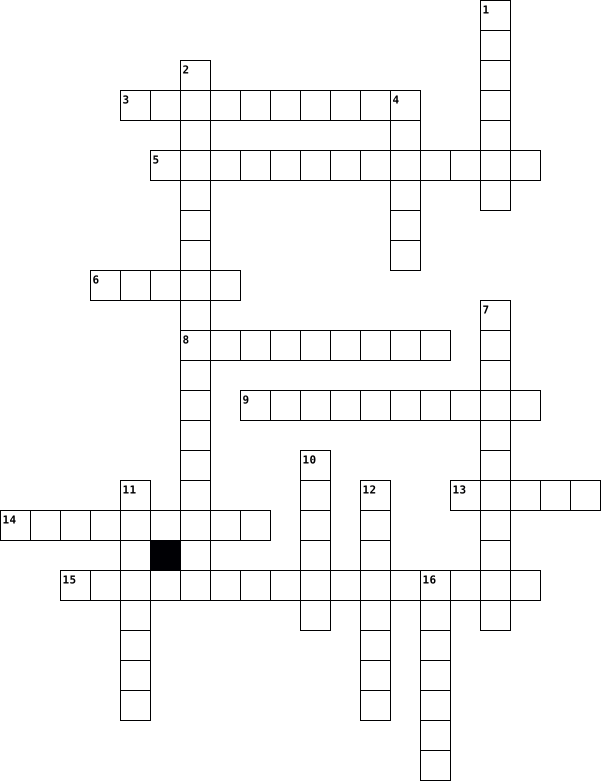
Across
- A NUTRIENT PRESENT IN THE MANURES AND FERTILIZERS WITH THE SYMBOL P.
- A PLANT SYNTHESIZES THIS DURING PHOTOSYNTHESIS.
- A PLANT ON WHICH MISTLETOE GROWS.
- ROOT LIKE STRUCTURES USED BY PARASITES.
- SOIL WHERE VENUS FLYTRAP AND PITCHER PLANT GROW.
- A LIMITING FACTOR FOR PHOTOSYNTHESIS.
- A METHOD OF OBTAINING ENERGY IN PLANTS
- EG:COLEUS AND CROTON.
Down
- ANOTHER NAME OF CUSCUTA.
- ABSORBS CARBON DIOXIDE.
- A FLUID MATRIX IN THE CHLOROPLAST.
- A SUPPORT PLANTS DEVELOP WHEN THEY DROOP.
- A PIPE LIKE STRUCTURE THAT TRANSPORTS FOOD MADE IN THE LEAFS.
- PROTEINS CONTAIN THIS.
- EACH PLANT HAS THIS AROUND IT.
- IT HELPS TO DISSOLVE CHLOROPHYLL IN LEAVES.
16 Clues: EG:COLEUS AND CROTON. • PROTEINS CONTAIN THIS. • ABSORBS CARBON DIOXIDE. • ANOTHER NAME OF CUSCUTA. • EACH PLANT HAS THIS AROUND IT. • A PLANT ON WHICH MISTLETOE GROWS. • A FLUID MATRIX IN THE CHLOROPLAST. • A LIMITING FACTOR FOR PHOTOSYNTHESIS. • A METHOD OF OBTAINING ENERGY IN PLANTS • ROOT LIKE STRUCTURES USED BY PARASITES. • A SUPPORT PLANTS DEVELOP WHEN THEY DROOP. • ...
Cell Energy 2017-12-11

Across
- Produces its own food
- The colorless fluid surrounding the grana within the chloroplast
- Something you drink daily
- Consumes other organisms for food
- ATP
- What plants produce and what humans inhale to breath
- Organic compound that gives plants color
Down
- Produces ATP and NADPH using light energy
- How plants get their food
- What humans exhale and what plants need for photosynthesis
- A reaction that absorbs energy
- Light independent reactions that happen in the stroma
- A simple sugar
- Membrane that holds chlorophyll, stacks of it are called grana
- Nicotinamide adenine dinucleotide phosphate
- Green pigment that absorbs the suns energy
16 Clues: ATP • A simple sugar • Produces its own food • How plants get their food • Something you drink daily • A reaction that absorbs energy • Consumes other organisms for food • Organic compound that gives plants color • Produces ATP and NADPH using light energy • Green pigment that absorbs the suns energy • Nicotinamide adenine dinucleotide phosphate • ...
Carbon Cycle Crossword 2023-03-29

Across
- A member of a large group of unicellular microorganisms which have cell walls but lack organelles and an organized nucleus, allows decomposition to happen; releases CO2.
- The process of burning fossil fuels; releases CO2.
- Carbon Dioxide formula
- The envelope of gases surrounding the Earth or another planet, CO2 is here and is needed for photosynthesis.
- The process by which organisms combine oxygen with foodstuff molecules, diverting the chemical energy in these substances into life-sustaining activities and discarding, as waste products, carbon dioxide and water.
- A natural fuel such as coal or gas, formed in the geological past from the the process by which organisms combine oxygen with foodstuff molecules, diverting the chemical energy in these substances into life-sustaining activities and discarding, as waste products, carbon dioxide and water.
Down
- Carbon present in the atmosphere is absorbed by plants for photosynthesis.
- During this process plants absorb carbon dioxide and sunlight to create fuel (glucose and other sugars).
- A simple sugar which is an important energy source in living organisms and is a component of many carbohydrates; Product of photosynthesis.
- A living organism that feeds on organic matter; its waste will give off CO2.
- The state or process of rotting; decay; needs bacteria in order for the process to work, releases CO2 to the atmosphere.
- A living organism of the kind of exemplified by trees, shrubs, herbs, grasses, ferns, and mosses; goes through cell respiration and photosynthesis; produces oxygen.
- The major pathway for removal of organic carbon from the atmosphere, affecting both atmospheric and landscape processes; makes glucose.
13 Clues: Carbon Dioxide formula • The process of burning fossil fuels; releases CO2. • Carbon present in the atmosphere is absorbed by plants for photosynthesis. • A living organism that feeds on organic matter; its waste will give off CO2. • During this process plants absorb carbon dioxide and sunlight to create fuel (glucose and other sugars). • ...
PHOTOSYNTHESIS AND RESPIRATION 2021-12-11

Across
- ____________ transports water and minerals upwards from roots to leaves.
- the type of respiration taking place in the presence of oxygen.
- splitting up of water molecule using light energy
- type of leaves with white and yellow patches
- Energy currency of cells.
- raw material for photosynthesis.
Down
- The green pigment present in leaves
- Product of anaerobic respiration in yeast.
- guard cells become________, stoma closes.
- Water coming from the veins of the leaves enters the cells by _____.
- _____________ is responsible for cramps in the muscles.
- ________ mesophyll absorbs maximum sunlight.
- glucose is stored in the form of _________.
- Number of molecules of ATP released in anaerobic respiration.
- Guard cells become________, stoma opens.
15 Clues: Energy currency of cells. • raw material for photosynthesis. • The green pigment present in leaves • Guard cells become________, stoma opens. • guard cells become________, stoma closes. • Product of anaerobic respiration in yeast. • glucose is stored in the form of _________. • ________ mesophyll absorbs maximum sunlight. • type of leaves with white and yellow patches • ...
Photosynthesis and Food Chains 2023-10-04

Across
- the process by which energy is released in the cells of living organisms
- These animals eat the animals that only eat plants.
- The gas which makes up 21% of the atmosphere
- The feeding relationship between organisms
- These animals eat food from green plants directly.
- The small opening, found mostly on the underside of the leaf
- Glucose that is produced during photosynthesis, is stored as __________.
Down
- Another word for "replace".
- The process by which green plants make their own food
- A community of interacting organisms and their physical environment
- Organisms that feed on dead plants and animals in order to recycle their nutrients in the environment.
- Plants are called __________ in a food chain.
- The green pigment inside the leaf that is responsible for photosynthesis as well as the green colour of the leaf
13 Clues: Another word for "replace". • The feeding relationship between organisms • The gas which makes up 21% of the atmosphere • Plants are called __________ in a food chain. • These animals eat food from green plants directly. • These animals eat the animals that only eat plants. • The process by which green plants make their own food • ...
Biology Crossword Puzzle 2025-06-04

Across
- All of the organisms that live within a habitat
- all the individuals of a species living within a specific area
- The process where plants convert sunlight into energy to produce sugars and oxygen
- A gas produced by plants during photosynthesis that animals use for respiration
- The process by which a population becomes better suited to its environment
- Community of living organisms interacting with each other and their nonliving environment within a specific area
Down
- A green pigment found in plants, aiding photosynthesis
- A plant's growth response to gravity
- Small structures within a cell, often called the "powerhouse of the cell"
- When a plant bends in the direction of light
- The process of increasing in size and maturity
- A self contained living thing
- Energy-carrying molecule found in the cells of all living things
13 Clues: A self contained living thing • A plant's growth response to gravity • When a plant bends in the direction of light • The process of increasing in size and maturity • All of the organisms that live within a habitat • A green pigment found in plants, aiding photosynthesis • all the individuals of a species living within a specific area • ...
Bill Nye Food Web Crossword 2020-09-23

Across
- Organisms that make their own food.
- The end product of photosynthesis.
- Most plants on earth live here.
- Organism that lives in the soil.
- Plants need this for energy.
- Organisms that eat dead material.
Down
- All living things are connected through this.
- Process where plants make sugar.
- Decomposer that lives on the forest floor.
- Plants make this gas.
- Producers that live in the water (Spongebob's enemy)
- All living things depend on these.
- Animals make this gas.
13 Clues: Plants make this gas. • Animals make this gas. • Plants need this for energy. • Most plants on earth live here. • Process where plants make sugar. • Organism that lives in the soil. • Organisms that eat dead material. • The end product of photosynthesis. • All living things depend on these. • Organisms that make their own food. • Decomposer that lives on the forest floor. • ...
chapter 5 vopcab 2023-09-19

Across
- resource system
- ingest
- water
- dolphin
- place
- death
- horse
- prey
Down
- grouping
- energy
- food
- raccoon
- vegetarian
- patience
- level predators(apex)
15 Clues: food • prey • water • place • death • horse • energy • ingest • raccoon • dolphin • grouping • patience • vegetarian • resource system • level predators(apex)
Unit 3: Trees 2021-04-15

Across
- vacular tissue of a plant that transports water and minerals from the roots to the leaves
- specific type of cell respiration that occurs with oxygen is NOT available; occurs outside of the mitochondria in the cytoplasm
- the acronym for the main elements found in DNA
- type of complex sugar that makes up dietary fiber and provides strength to the stem/stalk/trunk of a plant/tree; also found in cell walls
- the process that converts glucose into energy in the mitochondria of cells
- organelle in both plants and animals that is the location of cellular respiration
- sugar molecules made up of carbon, oxygen and hydrogen
- organelle in plant leaves that is the location for photosynthesis
- gas released by animals and taken in by plants
- the uptake of water by diffusing into cells
- the process used by plants to make glucose
- the energy molecule created by cell respiration
- gas released by plants and taken in by animals
- type of energy required for photosynthesis to occur
- process of dividing the DNA in cell division; used to make identical copies of cells for growth and repair
Down
- the building blocks of protein that are made up of C, O, H, and N
- vascular tissue of a plant the transports glucose to various parts of the tree
- used in the cell division of plants only
- specific type of cell respiration that requires the presense of oxygen; takes place within the mitochondria
- nitrogen, phosphorus, and potassium taken in by the tree with water
- storage of excess glucose
- a fungus which grows in association with the roots of a plant in a symbiotic relationship
- when a concentration of particles within a solution is high
- the result of increased levels of atmospheric carbon dioxide produced by the use of fossil fuels
- a simple sugar made by photosynthesis with the molecular formula of C6H12O6
- the processes of photosynthesis and cellular respiration use the same components, just in a reversed order, so they are said to be exact ____________ of each other
- an additional layer in plant cells that provide strength and rigidity
- holes in leaves that allow for gas exchange
- when a concentration of particles within a solution is low
- when a concentration of particles within a solution in equal both inside and outside of the cell/solution
30 Clues: storage of excess glucose • used in the cell division of plants only • the process used by plants to make glucose • the uptake of water by diffusing into cells • holes in leaves that allow for gas exchange • the acronym for the main elements found in DNA • gas released by animals and taken in by plants • gas released by plants and taken in by animals • ...
Plants & Photosynthesis - GCSE Retrieval 2023-03-30

Across
- caused in ireland by a potato pathogen
- the holes on the bottom of leaves
- plants do this all the time
- add ten degrees of this and the rate doubles
- the organelle responsible for photosynthesis
- a limiting factor not temperature
- on the very top of a leaf
- needed to make chlorophyll
Down
- a species of canadian pondweed on the phone
- the photosynthetic pigment in plants
- on the very bottom of a leaf
- dwarf plants without this
- a virus that can affect plants
- creates air gaps in the leaf
- the formation of glucose from carbon dioxide and water
- the loss of water from leaves
- measures the uptake of water from leaves
17 Clues: dwarf plants without this • on the very top of a leaf • needed to make chlorophyll • plants do this all the time • on the very bottom of a leaf • creates air gaps in the leaf • the loss of water from leaves • a virus that can affect plants • the holes on the bottom of leaves • a limiting factor not temperature • the photosynthetic pigment in plants • ...
Excretion Crossword 2025-05-21

Across
- All the chemical processes in cells
- Main component of urine
- Long chains of amino acids
- Excretory waste containing urea
- Egestion not excretion
- Name of artery going to the kidneys
- Pores in plant leaves where excretory gasses leave
- Place where Carbon Dioxide exits the body
Down
- Place where urine is removed from the blood
- Used for Storing Urine
- Cools down body also contains excretory products
- Waste Product from photosynthesis
- How Humans control the water/solute content of cells
- Produced in liver from excess amino acids
- Condition where blood sugar level is too high
- Removal of the waste products of metabolism
- Example of metabolic processs in plants
17 Clues: Used for Storing Urine • Egestion not excretion • Main component of urine • Long chains of amino acids • Excretory waste containing urea • Waste Product from photosynthesis • All the chemical processes in cells • Name of artery going to the kidneys • Example of metabolic processs in plants • Produced in liver from excess amino acids • Place where Carbon Dioxide exits the body • ...
Spring revision crossword 2026-01-23

Across
- – How particles move when heated
- – A circuit with more than one loop
- – Controls the activities of the cell
- – A substance made of only one type of atom
- – The part of a plant cell where photosynthesis happens
- – Gas produced during photosynthesis
- – Process that uses glucose and oxygen
- – Gas needed for respiration
Down
- – Two or more elements chemically joined together
- – Shiny, strong materials that conduct electricity
- – Movement of gas particles causing pressure
- – How fast breathing happens
- – Substances combined but not chemically joined
- – Force caused by gas particles hitting surfaces
- – Provides energy in an electrical circuit
- – A metal used for electrical wires
- – A circuit with only one loop
- – The amount of mass in a given volume
18 Clues: – How fast breathing happens • – Gas needed for respiration • – A circuit with only one loop • – How particles move when heated • – A circuit with more than one loop • – A metal used for electrical wires • – Gas produced during photosynthesis • – Controls the activities of the cell • – The amount of mass in a given volume • – Process that uses glucose and oxygen • ...
Nutrition 2 2020-03-26

Across
- raw material required to prepare food
- a form of energy source produced by photosynthesis
- an examples of a type saprotroph
- depend on dead organic matter
Down
- the term photosynthesis includes this term which means light
- process of preparing food
- glucoseis a type of this nutrient
- pores thorough which gases enter in plants
8 Clues: process of preparing food • depend on dead organic matter • an examples of a type saprotroph • glucoseis a type of this nutrient • raw material required to prepare food • pores thorough which gases enter in plants • a form of energy source produced by photosynthesis • the term photosynthesis includes this term which means light
photosynthesis and cellular respiration crossword (no spaces in between words 2017-11-13

Across
- what makes the leaves green on a plant
- another word for when a plant can make its own food
- occurs only in plants
- term, when oxygen is needed
- chemical formula for photosynthesis (USE +and = in between each thing Don't use any spaces or numbers spell out the word)
Down
- another word for when an animal has to eat other animals to get food
- where photosynthesis takes place
- occurs in both plants and animals
- chemical formula for cellular respiration (USE +and = in between each thing Don't use any spaces or numbers spell out the word)
- where does cellular respiration occur
- anaerobic process when yeast breaks down sugars to form carbon dioxide
- term, no oxygen is needed
- produced by anaerobic respiration when your muscles don't get enough oxygen
13 Clues: occurs only in plants • term, no oxygen is needed • term, when oxygen is needed • where photosynthesis takes place • occurs in both plants and animals • where does cellular respiration occur • what makes the leaves green on a plant • another word for when a plant can make its own food • another word for when an animal has to eat other animals to get food • ...
Quinn's Photo-Respiration 2016-12-07

Across
- Pathway in Cellular Respiration that Uses Oxygen
- The Pathway That Doesn't Use Oxygen
- Sac-Like Membrane
- Makes its own food
- Produced When Working Out
- Cycle in Photosynthesis
- The Proccess that Converts Light Energy into Chemical Energy
- The Proccess That Breaks Down Organic Molecules to Release Energy for Cells to Use
- Location of Cellular Respiration
Down
- Fluid Filled Space Outside of Grana
- Rely on Autotrophs for Energy
- Uses Chemicals
- Captures Light Energy, Mainly Found in Leaves
- Stores and Supplies Cells With Energy
- The Most Common Pigment in Plants
- The Breakdown of Glucose by Enzymes, Releasing Energy and Pyruvic Acid
- A Nucleotide Composed of Adenosine and Two Phosphate Groups
- Cycle in Cellular Respiration
18 Clues: Uses Chemicals • Sac-Like Membrane • Makes its own food • Cycle in Photosynthesis • Produced When Working Out • Rely on Autotrophs for Energy • Cycle in Cellular Respiration • Location of Cellular Respiration • The Most Common Pigment in Plants • Fluid Filled Space Outside of Grana • The Pathway That Doesn't Use Oxygen • Stores and Supplies Cells With Energy • ...
photosythesis 2022-03-03

Across
- process that turns sunlight into chemical energy
- the stuff created in the calvin cycle
- another word for thylakoids
- an organism that makes its own food
- this is glucose and is produced by the calvin cycle
- they are in the chloroplasts
- compounds that absorb light
- the organelle to which collects sunlight to help the photosynthesis process
Down
- an organism that gets its food from other sources
- the process that does not need light
- a series of molecules in the thylakoid
- this is higher inside the thylakoid
- directly connected with light reactions
- other accessory pigments such has yellow or orange
- the fluid outside the thylakoids
- this is used to create photosyntesis
- accessory pigments
- the element released after photosynthesis
18 Clues: accessory pigments • another word for thylakoids • compounds that absorb light • they are in the chloroplasts • the fluid outside the thylakoids • this is higher inside the thylakoid • an organism that makes its own food • the process that does not need light • this is used to create photosyntesis • the stuff created in the calvin cycle • a series of molecules in the thylakoid • ...
Cell Structures and Functions 2021-09-14

Across
- cell structures with a specific purpose
- digests food and gets rid of wastes
- cell with no nucleus
- gel like material that hold organelles
- contains the genetic info; brain of the cell
- creates and stores energy for the cell
- manufacture proteins
- supports a plant cell
Down
- cell with a nucleus
- determines what can enter and leave the cell
- making food/energy from the sun
- contains chlorophyll; photosynthesis
- stores waterand minerals and supports cell
13 Clues: cell with a nucleus • cell with no nucleus • manufacture proteins • supports a plant cell • making food/energy from the sun • digests food and gets rid of wastes • contains chlorophyll; photosynthesis • creates and stores energy for the cell • cell structures with a specific purpose • gel like material that hold organelles • stores waterand minerals and supports cell • ...
Hopefully You Don't Fail This Test About Photosynthesis + Cellular Respiration 2022-11-29

Across
- Gel-like material that lies between grana
- One of the materials needed for the light reaction
- From Electron Transport Chain
- Stack of thylakoid discs
- Main source of energy for all living organisms
- 3rd step of cellular respiration
- The side of photosynthesis that thylakoids take in light energy
- 2nd Step of cellular respiration
- From Glycolysis and Krebs Cycle
- Doesn't need oxygen
- Process of capturing light energy and converting it to chemical energy (glucose)
Down
- Where Glycolysis takes place
- Process by which food molecules are broken down to release energy
- Molecules that absorb certain wavelengths of light
- Needs oxygen
15 Clues: Needs oxygen • Doesn't need oxygen • Stack of thylakoid discs • Where Glycolysis takes place • From Electron Transport Chain • From Glycolysis and Krebs Cycle • 3rd step of cellular respiration • 2nd Step of cellular respiration • Gel-like material that lies between grana • Main source of energy for all living organisms • One of the materials needed for the light reaction • ...
biology 2020-02-24

Across
- organisms cp-operate to ensure the survival
- +0
- plants get energy from the sun
- normally a plant at the start of a food web
- Any living thing eg: animals and plants
Down
- the opposite to abiotic
- a balance in an ecosystem so that it remains alive
- the cell which photosynthesis occurs
- +-
- can be first second or third-order in a food web
- ++
- non-living things
- the original energy in the ecosystem
- the relationship between two organisms where one of the organism where an organism kills another
- animal being hunted
15 Clues: +- • ++ • +0 • non-living things • animal being hunted • the opposite to abiotic • plants get energy from the sun • the cell which photosynthesis occurs • the original energy in the ecosystem • Any living thing eg: animals and plants • organisms cp-operate to ensure the survival • normally a plant at the start of a food web • can be first second or third-order in a food web • ...
CROSSWORD PUZZLE 2016-12-17

Across
- An animal with a very long neck
- which can travel faster; light or sound
- Comes from the sun and needed photosynthesis
- The process of breathing
- Can come in the form of rain
- A brown coloured insect that protect itself by curling when touched
- This organ lets us breathe
Down
- human sense by using ears
- the biggest flower in the world
- How plants feed respiration
- the third colour of the rainbow
- Present in the air that we breathe
- Animal that can run the fastest
- Plants need this and can be found on earth
- ______ rotates around the earth
15 Clues: The process of breathing • human sense by using ears • This organ lets us breathe • How plants feed respiration • Can come in the form of rain • the biggest flower in the world • An animal with a very long neck • the third colour of the rainbow • Animal that can run the fastest • ______ rotates around the earth • Present in the air that we breathe • ...
Carbon Cycle 2022-04-08

Across
- when things happen over and over again
- one of the main carbon pools on Earth
- this carbon cycle is "short term"
- organism that performs photosynthesis in the ocean
- how do dead things become fossil fuels
- another word for combustion
- this carbon cycle takes the longest
- Happens to carbon when it goes to the ocean
Down
- one way humans impact the carbon cycle
- another word for sugar(s)
- another word for respiration
- coal is an example of this
- gas released during the respiration
- process that remove carbon dioxide from atmosphere
- how dead things become fossils..they get
15 Clues: another word for sugar(s) • coal is an example of this • another word for combustion • another word for respiration • this carbon cycle is "short term" • gas released during the respiration • this carbon cycle takes the longest • one of the main carbon pools on Earth • one way humans impact the carbon cycle • when things happen over and over again • ...