
plants Crossword Puzzles
Characteristics of Plants 2023-05-03

Across
- What does chemotropism deal with
- Growth towards a stimulus
- The development of a plant from a seed or spore
- Responsible for the seasonal cycle
- growth produced directly from vegetative parts
- The process of producing offspring
- What does thermotropism deal with
- Contains both male and female reproductive parts
- Includes poison, oils, and hormones
- What does phototropism deal with
- Includes thorns, bark, silica and spines
- What does thigmotropism deal with
- What does hydrotropism deal with
Down
- How a plant reacts to all things around it
- Two stage process that a plant goes through so we know it is considered living
- Movement or growth towards/away from a stimulus
- What does geotropism deal with
- Responsible for the day/night cycle
- Contains either male or female reproductive parts
- Asexual reproduction when a plant grows into the ground and another plant start growing
- Reproduction where a seed is formed and male and female gametes fuse
- Growth away from a stimulus
- The biological classification of plants
- Hormone that gives a plant a sense of direction
24 Clues: Growth towards a stimulus • Growth away from a stimulus • What does geotropism deal with • What does chemotropism deal with • What does phototropism deal with • What does hydrotropism deal with • What does thermotropism deal with • What does thigmotropism deal with • Responsible for the seasonal cycle • The process of producing offspring • Responsible for the day/night cycle • ...
Animals and Plants 2014-09-27

Across
- Found in sushi
- Clever as a _____
- Their legs are a delicacy in some places
- Very annoying
- Eats ants all day long
- There is a festival about them in Washington D.C.
- Insects, for one
- Jaguar is one
- First in the dictionary
- Freshens your breath
- Lives in the arctic on ice
- Buzz...sting!
- Bird who is an amazing swimmer
- Comes from a bud
- Beautiful red flower
- You can eat them and They come from bushes
Down
- Lots of them in the water
- Producer and Consumer
- Beefy
- Lights up the night
- Crab who switches shells a lot
- You are one
- Largest animal
- Big yellow flower that grows in plains
- Like a frog
- Bacon comes from it
- Prehistoric times
- Provides shade
- Itchy and scratchy
- Annoys you at a picnic
- Usually can fly
- Found in savannas
- Lutz Lake _____
- Flies...but is not a bird
34 Clues: Beefy • You are one • Like a frog • Very annoying • Jaguar is one • Buzz...sting! • Found in sushi • Largest animal • Provides shade • Usually can fly • Lutz Lake _____ • Insects, for one • Comes from a bud • Clever as a _____ • Prehistoric times • Found in savannas • Itchy and scratchy • Lights up the night • Bacon comes from it • Freshens your breath • Beautiful red flower • Producer and Consumer • ...
Nutrition in Plants 2016-02-29
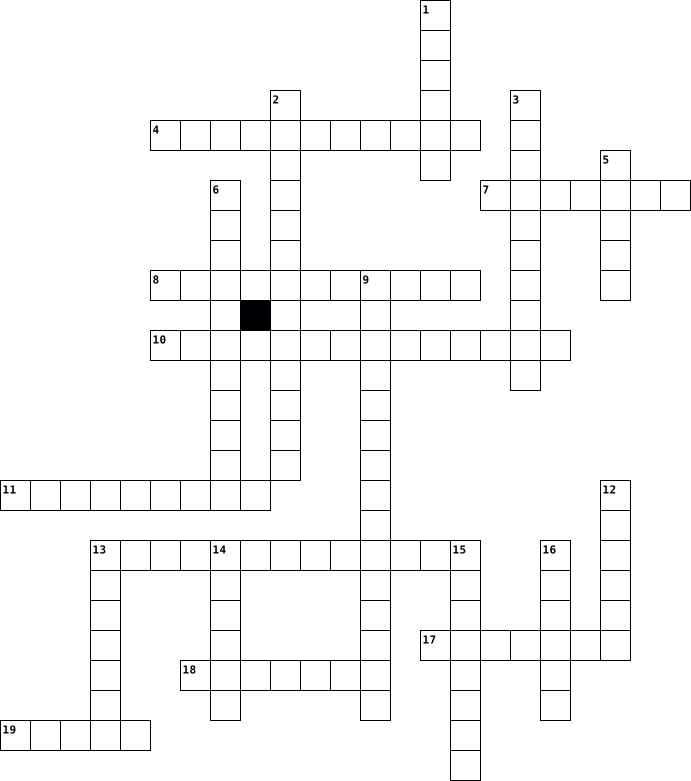
Across
- / Removal of starch
- / Many minute openings in lower epidermis
- / Provides a large surface area for maximum absorbtion of light (2 words)
- / Process in which light energy absorbed by chlorophyll is transformed into chemical energy
- / Lies just between the upper and lower epidermis
- / Simplest energy-rich organic molecules
- / Product of photosynthesis
- / Holds leaf in position to absorb maximum light energy
- / Transports water and mineral salts to mesophyll cells
Down
- / Other name of leaf blade
- / Has chemical formula CO2
- / Used in light energy to split water moleccules into O2 and hydrogen atoms
- / Has chemical formula H2O
- / Pigment in plants that absorbs sunlight
- / Simplest form of carbohydrates
- / Liquid to test whether starch is present or not
- / Waxy and transparent covering the outside of upper epidermis
- / Gas produced during photosynthesis
- / Energy essential for photosynthesis
- / Transports sugar away from leaf
20 Clues: / Removal of starch • / Other name of leaf blade • / Has chemical formula CO2 • / Has chemical formula H2O • / Product of photosynthesis • / Simplest form of carbohydrates • / Transports sugar away from leaf • / Gas produced during photosynthesis • / Energy essential for photosynthesis • / Simplest energy-rich organic molecules • / Pigment in plants that absorbs sunlight • ...
Nutrition In Plants 2016-04-27
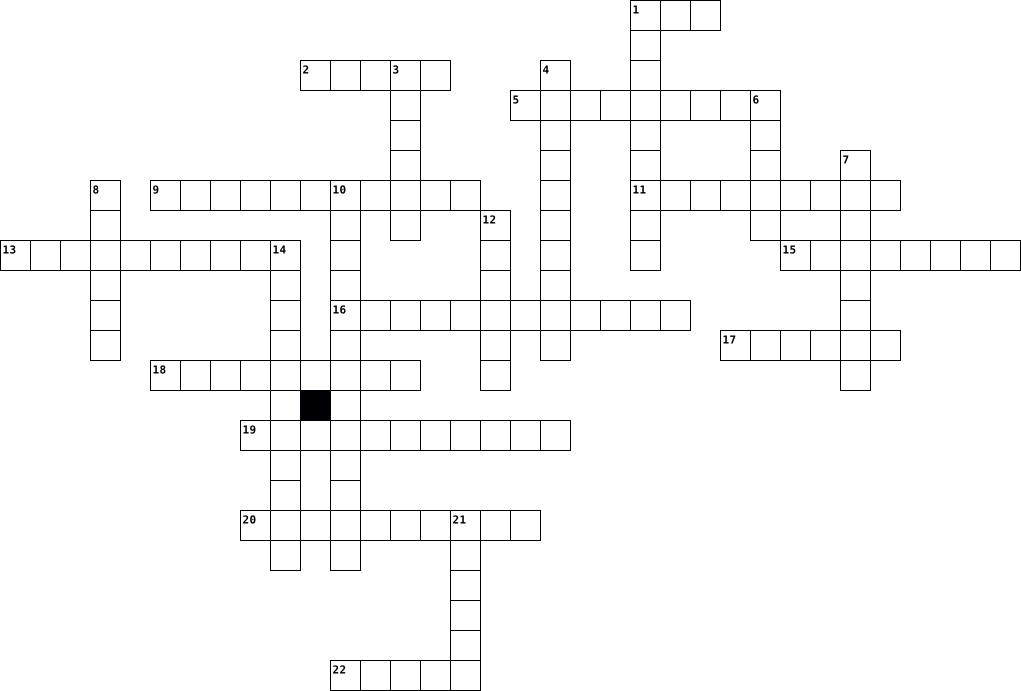
Across
- The ultimate source of energy.
- Oxygen is essential for photosynthesis.True or False?
- Alga is an/a _________.
- Farmers add this to improve the growth of the plant.
- Lichen is an example of _______.
- A grana is made up of a sack of _________.
- Plants that borrow nutrients from another plant.
- The cells of green leaves and young stems of plants contain numerous green structures called _______.
- The common name for Cuscuta.
- The only organism which can trap nitrogen.
- The green pigment needed for photosynthesis.
- The nitrogen-fixing bacteria are found in which type of plants?
- The color of partial parasites are ______.
Down
- A combination of components is called ______.
- Fungi reproduce through ______.
- A stoma is surrounded by _______.
- Fungi grow during warm and _______ weather.
- Protein is a great source of ______.
- Vessels which carry the food from the leaves to other parts of the plant.
- Plants that get nutrients by using ingenious methods.
- The aqueous liquid found inside a chloroplast.
- Organisms that are found near decayed organic matter.
- The end product of photosynthesis which is given out.
23 Clues: Alga is an/a _________. • The common name for Cuscuta. • The ultimate source of energy. • Fungi reproduce through ______. • Lichen is an example of _______. • A stoma is surrounded by _______. • Protein is a great source of ______. • A grana is made up of a sack of _________. • The only organism which can trap nitrogen. • The color of partial parasites are ______. • ...
Crossword about plants 2022-04-03

Across
- an aromatic plant of the mint family, native to tropical Asia. The leaves are used as a culinary herb, especially in Mediterranean dishes. Our classroom has this plant called "Dog".
- a period of the year that is distinguished by special climate conditions.
- a tool resembling a spade with a broad blade and typically upturned sides, used for moving coal, earth, snow, or other material.
- any seed-bearing plant that does not have a woody stem and dies down to the ground after flowering.
- a plant or part of a plant used as food, such as a cabbage, potato, turnip, or bean / a person with a dull or inactive life.
- the process of trying to acquire or develop a quality or skill.
- form (a whole) by ordering or arranging the parts, especially in an artistic way.
- membrane-bound cell organelles that generate most of the chemical energy
- a glass building in which plants that need protection from cold weather are grown.
- plants growing from bulbs on the surface of the water.
- an expert in the science of soil management and crop production.
- cause air to enter and circulate freely
- a tree of a genus that includes citron, lemon, lime, orange, and grapefruit.
- the part of a plant which attaches it to the ground or to a support, typically underground, conveying water and nourishment to the rest of the plant via numerous branches and fibres.
- slightly wet.
- plants with fleshy, thickened leaves and/or swollen stems that store water.
- an implement consisting of a pole with a toothed crossbar or fine tines at the end, used especially for drawing together cut grass or smoothing loose soil or gravel.
- a container in which flowers and other plants are cultivated and displayed.
- a quantity representing the amount of water vapour in the atmosphere or in a gas.
Down
- an implement consisting of a pole with a toothed crossbar or fine tines at the end, used especially for drawing together cut grass or smoothing loose soil or gravel.
- any nutritious substance that people or animals eat or drink or that plants absorb in order to maintain life and growth.
- a particular kind of matter with uniform properties.
- the upper layer of earth in which plants grow a black or dark brown material typically consisting of a mixture of organic remains, clay, and rock particles.
- the ability to be dissolved, especially in water.
- a living organism of the kind exemplified by trees, shrubs, herbs, grasses, ferns, and mosses, typically growing in a permanent site, absorbing water.
- the unit of reproduction of a flowering plant, capable of developing into another such plant.
- a usually leafy herb that is cooked for use as greens also : one (such as mint) used to season food.
- study of the relationships between living organisms, including humans, and their physical environment.
- a substance or matter in a state in which it will expand freely to fill the whole of a container.
- a colourless, transparent, odourless liquid that forms the seas, lakes, rivers, and rain and is the basis of the fluids of living organisms.
- a plant with complex flowers that are often showy or bizarrely shaped, typical orchid seed is merely the size of a speck of dust.
- relating to or derived from living matter.
- plants that derive some or most of their nutrients from trapping and consuming animals.
- process used by plants and other organisms to convert light energy into chemical energy.
- a substance, such as mud or dust, that soils someone or something.
- the sweet and fleshy product of a tree or other plant that contains seed and can be eaten as food.
- a natural or chemical substance that is spread on the land or given to plants, to make plants grow well
- an underlying layer or substance, in particular a layer of rock or soil beneath the surface of the ground.
- an aromatic or pungent vegetable substance used to flavour food, e.g. cloves, pepper, or cumin.
39 Clues: slightly wet. • cause air to enter and circulate freely • relating to or derived from living matter. • the ability to be dissolved, especially in water. • a particular kind of matter with uniform properties. • plants growing from bulbs on the surface of the water. • the process of trying to acquire or develop a quality or skill. • ...
Life Science - Plants 2022-01-07

Across
- dioxide a gas that is exhaled by humans and animals, but absorbed by plants
- produces egg cells
- (verb) to explain how two or more things are the same
- the male and female parts of conifers
- (verb) to explain how two or more things are different
- produces sperm cells
- the process in which plants use sunlight, water, and carbon dioxide to make food
- (verb) to move things to different places
- (noun) the process that creates offspring
- the green substance in plant leaves
- a living thing
- a sugary liquid produced by plants
- a seed plant that reproduces with cones
Down
- the flowering part of a plant that has petals
- (noun)to begin to grow and develop
- (noun)when an egg and sperm cell join together
- a young plant
- a new organism produced by plants, animals or humans
- when the seeds of a plant are carried to a new place
- when offspring receive characteristics passed down from the parents
- one part of a process
- the smallest unit of any living organism
- (noun) when the pollen from one plant reaches the pistil of another plant and fertilization begins
- (verb) to bring things together from different places
- (noun)to put objects in groups based on their properties or characteristics
- (verb) to become fully developed and able to produce offspring
26 Clues: a young plant • a living thing • produces egg cells • produces sperm cells • one part of a process • (noun)to begin to grow and develop • a sugary liquid produced by plants • the green substance in plant leaves • the male and female parts of conifers • a seed plant that reproduces with cones • the smallest unit of any living organism • (verb) to move things to different places • ...
All about plants 2022-02-15

Across
- the ______ support the petals and protect the flower before it opens
- the ability of seeds to germinate under different conditions and still produce healthy seeds.
- embryos of _______ plants have one cotyledon
- the stamen is made of the _______ and the filament
- the ______ endoplasmic reticulum makes the proteins for the cell secretion and cell membranes.
- a seed leaf that stores food in the form of starch and protein, which are used by the embryo.
- a reaction that only occurs in the presence of light
- female part of the flower
- dicot plants have ___ cotyledons
- the most basic unit of life
- a horizontal stem that lies above the ground
- a rhizome with a swollen tip of stored food
- a flower with both male and female parts
- the three primary parts of a seed are the ______, endosperm, and seed coat.
- the _____ endoplasmic reticulum produces lipids and hormones
- male part of the flower
- a root system composed of no single main root, but many primary and secondary roots
Down
- dicots are flowers with flower parts in multiples of four or ______.
- photons are absorbed by __________, making energy
- a thick underground stem that lies horizontally
- stems store ______ that has been made by the plant
- monocots have mutiples of _______.
- a chemical process where plants absorb light and convert solar energy into stored chemical energy
- the ability of seeds to germinate under optimal conditions.
- the command center of the cell
- plastids are organelles that ________ and store food
- the process in which the seed embryo begins to grow.
- a root system that is made of one main primary root and many secondary roots is a ______ system
- if a flower has sepals, ______, pistils, and stamens, it is a complete flower
- roots don't stop ________
- the pistil is made of stigma, style, and _______
- a flattened stem that has several fleshy leaves attached to it
32 Clues: male part of the flower • female part of the flower • roots don't stop ________ • the most basic unit of life • the command center of the cell • dicot plants have ___ cotyledons • monocots have mutiples of _______. • a flower with both male and female parts • a rhizome with a swollen tip of stored food • embryos of _______ plants have one cotyledon • ...
PLANTS`VITAL FUNCTIONS 2022-04-24

Across
- TROPISM THAT GROW TOWARDS THE STIMULUS.
- NASTIC MOVEMENTS ARE ----------- RESPONSES.
- FIRST LEAVES A PLANT HAS.
- MALE REPRODUCTIVE PART OF THE FLOWER.
- IT IS COMPOSED OF WATER AND MINERALS.
- THIGMOTROPISM ARE PERMANENT RESPONSES TO ------.
- MALE AND FEMALE GAMETES JOIN IN THIS PROCESS.
- STRUCTURE CREATED BY THE POLLEN GRAIN TO REACH THE OVARY.
- FLOWERS WHICH LOOK ATTRACTIVE ARE POLLINATED BY--------.
- PART OF THE PLAN WHERE WATER AND MINERALS ARE ABSORBED.
- IT`S THE FEMALE GAMETE.
- IT TAKES PLACE IN THE LEAVES AND ALLOWS THE PLANT TO OBTAIN NUTRIENTS.
- IT CAN HAPPEN BY WIND, ANIMALS, WATER OR EXPLOSION.
- PROCESS WHERE THE SEED ABSORBS WATER AND A NEW PLANT IS CREATED.
- PERMANENT RESPONSES TO WATER.
- TRANSPORTING POLLEN GRAINS FROM THE ANTHER TO THE STIGMA.
Down
- CONTAINS NUTRIENTS THE EMBRYO USES DURING GERMINATION.
- PERMANENT RESPONSES TO LIGHT.
- WE FIND POLLEN GRAINS HERE.
- THE MALE GAMETE GOES DOWN THE POLLEN TUBE TO REACH THE ----------.
- IT IS PRODUCED IN THE LEAVES AND CONTAINS WATER AND SUBSTANCES PRODUCED DURING PHOTOSYNTHESIS.
- IT IS FORMED FROM THE OVARY AND CONTAINS SEEDS.
- TYPE OF NUTRITION PLANTS PERFORM.
- IT IS INSIDE THE SEED AND IT WILL BE THE FUTURE PLANT.
- HOLD THE DIFFERENT STRUCTURES IN THE FLOWER.
- PART OF THE SEED THAT PROTECTS THE STRUCTURE.
- FLOWERS WHICH PRODUCE LARGE AMOUNTS OF POLLEN ARE POLLINATED BY --------.
- PROCESS THAT ALLOWS PLANTS TO OBTAIN ENERGY.
- FEMALE REPRODUCTIVE PART OF THE FLOWER.
- PROTECT THE REPRODUCTIVE ORGANS.
- PART OF THE PISTIL WHICH CONTAINS STICKY SUBSTANCES.
31 Clues: IT`S THE FEMALE GAMETE. • FIRST LEAVES A PLANT HAS. • WE FIND POLLEN GRAINS HERE. • PERMANENT RESPONSES TO LIGHT. • PERMANENT RESPONSES TO WATER. • PROTECT THE REPRODUCTIVE ORGANS. • TYPE OF NUTRITION PLANTS PERFORM. • MALE REPRODUCTIVE PART OF THE FLOWER. • IT IS COMPOSED OF WATER AND MINERALS. • TROPISM THAT GROW TOWARDS THE STIMULUS. • FEMALE REPRODUCTIVE PART OF THE FLOWER. • ...
Poisonous Plants Puzzle 2023-07-07

Across
- to be mixed with powdered root of asphodel?
- loved by quitting smokers and children
- cyanide fries
- might drink this if you eat a bhut jolokia
- cardiotoxic plant that grows from a large bulb
- color of Thevetia peruviana
- word that follows monks or neighbor
- Dieffenbachia toxin
- neurotransmitter affected by the nux vomica seeds
- fruit with antifreeze-like toxicity
- a very small amount, like how much ricin would kill you
- prefix meaning "oil"
- color of cohosh used as an herbal contraceptive
- turns your pond green and kills your liver
- lab value that might go up from eating blue-green algae
- how you might feel after touching poison ivy
- acronym, action of one ingredient of ayahuasca
- not me, punnily
- tree with bi-lobed leaves
- what your horse might become after eating Astragalus spp.
- what might be nearby a Cicuta maculata
- Agatha Christie's first weapon
- describes a mushroom that turns black with decay
- plant that mezcal is fermented from
- Jamaican Vomiting Sickness fruit
- flower that might treat your cancer
- mouth color when eating betel nuts
- smells like carrots, but with tuber roots
- describes your mouth after eating henbane
- plant with zombifying red sap
- Latin describing your brain state after eating water hemlock
- a sweet taste of high altitude flowers
- origin of Ayurveda
Down
- can be a beverage or a rock, a great time either way
- abrin-containing seed of the jequirity variety
- reason that certain kings and queens are poisonous
- spicy hallucinations
- its tree bark and sap contain ficin, toxic to dogs
- Chinese berry in the nightshade family
- Queen Elizabeth's fav flower
- your body after a nicotine overdose
- brand name of vitamin B17
- Moruga scorpion stinger
- origin of a discontinued treatment for nightshade
- Datura weed namesake, casually
- poison for a know-nothing
- organ damaged by extract of pennyroyal
- decaf solution to a coffee problem
- how you might feel after eating any of these plants
- toad with a similar toxicity as foxglove
- bane of English soldiers at Jamestown
- one of the drugs from the poppy
- nuts you chew with a leaf
- plant taken from the mouth of Cerberus
- might be fixed if you eat meadow saffron
- nut that cures your morphine addiction
- what you won't do if you drink a bunch of caffeine
- species, used by 40% of the world daily
- Mexican "caterpillar cocoon" psychedelic
- sweet treat that makes you weak
- where you would go if caught extracting opium from poppies
- could be used by Cupid to take your breath away
- tart half of a great summer dessert
- plant type where urushiol can be found
- bad for dogs but not for me
- Walter and Jesse's secret ingredient
- something with layers, like an onion or parfait
- acid from the Hawaiian baby woodrose
- a flower, or colored part of the eye
69 Clues: cyanide fries • not me, punnily • origin of Ayurveda • Dieffenbachia toxin • spicy hallucinations • prefix meaning "oil" • Moruga scorpion stinger • brand name of vitamin B17 • poison for a know-nothing • nuts you chew with a leaf • tree with bi-lobed leaves • color of Thevetia peruviana • bad for dogs but not for me • Queen Elizabeth's fav flower • plant with zombifying red sap • ...
Plants and Animals 2023-11-03

Across
- a platypus is an example of this type of vertebrate
- mollusks have this type of shell for protection
- developing organism before it is born
- brings water to green leaves in plants with vascular tissue
- grasshoppers shed this as they grow
- very thin in nonvascular plants(two words, no space)
- protects the soft tissue nerve cord in vertebrates
- this category of animals has notochords, fur, and are all endotherms
- delivers nutrients to the plant after the nutrients are created during photosynthesis
- these are beautiful but will sting you in defense as they float through the water
Down
- these animals rely on their surroundings for body heat
- one of the defining characteristics that separates plants and animals
- how most producers create their own food
- sponges are this in relation to how their symmetry is described
- deer eat plants so they are in the category of _______
- amphibians are in their own category based on how they obtain __________ throughout their life
- prevents evaporation of this substance from plant leaves
- use this word if you are talking about one of the holes that is found on the underside of leaves
- category of invertebrates that has a brain, but I still don't want to touch them!
- birds all have feathers but they don't all _________
- because grasshoppers shed their exoskeleton, they fall into this category of invertebrates
- this unique group has gills and develops lungs after birth
22 Clues: grasshoppers shed this as they grow • developing organism before it is born • how most producers create their own food • mollusks have this type of shell for protection • protects the soft tissue nerve cord in vertebrates • a platypus is an example of this type of vertebrate • very thin in nonvascular plants(two words, no space) • ...
Classification of plants 2023-09-06

Across
- only persent in plant cells
- Plants reproduce sexually by___
- example of gymnosperms
- With cell wall
- Plants that mainly grows in water
- A title given to Bryophyta
- Flowers with 5 petals
- Example of Pteridophyta
- conducting tissue for food
- means hidden
Down
- example of hollow stem
- A botanist in 1883
- two cotyledons
- contains chlorophyll
- bear flowers
- what does xylem conduct
- require more than three years to complete their life cycle
- spores are formed on this surface of the leaves
- futher divided into gymnosperm and angiosperms
- evergreen and woody
20 Clues: bear flowers • means hidden • two cotyledons • With cell wall • A botanist in 1883 • evergreen and woody • contains chlorophyll • Flowers with 5 petals • example of hollow stem • example of gymnosperms • what does xylem conduct • Example of Pteridophyta • A title given to Bryophyta • conducting tissue for food • only persent in plant cells • Plants reproduce sexually by___ • ...
Classifying & Plants Review 2023-09-18

Across
- Any tree or flower is part of the _________ Kingdom.
- Algae and slime mold are members of the _________ Kingdom.
- Stored _________ nourishes the young plant inside a seed.
- Mushrooms and mildew are part of the _________ Kingdom.
- Pollen is produced by the ________ (the male part of a flower)
- Germs are part of the _________ Kingdom.
- A plant is ______________ if it has no roots, leaves, or stems.
- ____________ plants have a system of tubes to carry water and nutrients through the plant.
- Eggs are produced by the _______ (the female part of a flower).
- The young plant inside a seed is an _________.
- The embryo within the seed is _________ in color.
- Fungi relies on other organisms for food, while ______ makes its own through photosynthesis. Both can be multicellular.
Down
- __________ can happen through wind, water, or animals.
- Most of the seed is made of _________ food.
- The pistil in found in the _________ of the flower.
- Sloths, wasps, and corgis are all members of the _________ Kingdom.
- Bees, bats, birds, and butterflies are examples of _________.
- The _______ protect the reproductive parts of a flower.
- Photosynthesis takes place in the _________ of a flower.
- The protective outer covering of a seed is its seed ______.
20 Clues: Germs are part of the _________ Kingdom. • Most of the seed is made of _________ food. • The young plant inside a seed is an _________. • The embryo within the seed is _________ in color. • The pistil in found in the _________ of the flower. • Any tree or flower is part of the _________ Kingdom. • __________ can happen through wind, water, or animals. • ...
Plants and tree 2024-03-29

Across
- spcy
- las dergu
- onion flower
- veffies
- smelly fruit
- fatty tees
- this a day keep doc away
- morning glory
- harvested for sugaaaa
- family with pineapples
- fig genus
- pitinty pboy
- fasted growing
- wet salt
- ontario flower
- halloween bro
- largest species of tree
Down
- tree acorns bro
- nost pos crop
- joshua
- peeling bark
- cherry blossom tree
- wattles
- bananana plant
- burns and shtttt
- erete
- taro mak
- from poppies yaaa
- waltuh
- etyhrtryetwrt
- cacus big
- country qwith most grain
- tulip fest
33 Clues: spcy • erete • joshua • waltuh • wattles • veffies • taro mak • wet salt • las dergu • fig genus • cacus big • fatty tees • tulip fest • peeling bark • onion flower • smelly fruit • pitinty pboy • nost pos crop • morning glory • etyhrtryetwrt • halloween bro • bananana plant • fasted growing • ontario flower • tree acorns bro • burns and shtttt • from poppies yaaa • cherry blossom tree • harvested for sugaaaa • family with pineapples • ...
Plants Vs Zombies 2024-02-07

Across
- He used to have a drone, but swapped to a sentry and speed boost pad.
- In the normal games, an attack from below, but the Chomper has repurposed it for setting traps for easy chomps.
- Talk about tanking hits, with a minigun and 200 health to spare.
- One of the elemental variants, which includes attacks that arc to multiple targets.
- Sometimes referred to as Cray-Z, who has a niece and a car named Penny.
- He may not be the GOAT, but you'll still have to get to the end of the rainbow to find him.
- The Imp Punt's older brother, truly made for a punt from afar.
- The gnome with glimmery abilities, fancy pots and bots, and some pretty legendary wear.
- Rapid-fire rifles, jump packs, smoke grenades, and a deadly missile on his back makes this guy a force to be reckoned with.
- What he lacks in range, he makes up for with biting power.
- Variants of this element can slow and freeze targets for easier vanquishes.
- Trust me, that goo gun is far from weak, and he has pretty nice healing power to boot.
- The original plant, earned on the first level.
- The big bad zombie, armed with a whole army and many zombots to take you down.
Down
- An elemental variant with devastating afterburn.
- Where this whole fiasco takes place.
- Triple shot clip variant with a quick reload and a very high damage output.
- No heals from this little pot. Instead, it fires energy at enemies.
- The Cactus's middle attack, which can airstrikes of corn.
- She's not just a support, but a singer as well.
- They're both a hero, and a quick attacker in BFN.
- One word: explodanate.
- Prickly, but she's the sniper of the plants.
- You can deal damage with this variant by simply standing near your enemies, and has a lighter after-effect.
24 Clues: One word: explodanate. • Where this whole fiasco takes place. • Prickly, but she's the sniper of the plants. • The original plant, earned on the first level. • She's not just a support, but a singer as well. • An elemental variant with devastating afterburn. • They're both a hero, and a quick attacker in BFN. • The Cactus's middle attack, which can airstrikes of corn. • ...
NUTRITION IN PLANTS 2025-05-12

Across
- A symbiotic bacteria present in the root nodules of leguminous plants.
- A symbiotic relationship between an algae and fungi.
- Pitcher plant is an ________ plant.
- The carbohydrate synthesized in plants as a result of photosynthesis.
- An essential component of photosynthesis taken by the xylem vessels of the plant.
- Organisms growing on dead and decaying matter.
- The gas required for the production of food in plants.
- Basic structural and functional unit of a living organism.
- An essential nutrient replenished in soil with the application of fertilizers.
- Organisms that can prepare their own food are known as________
- A storage carbohydrate present in plants.
- The process by which green plants synthesize their own food.
Down
- The ultimate and primary source of energy for all living organisms.
- Organisms that depend on other organisms for food.
- A parasitic plant with yellow, slender and tubular stem.
- Process of uptake of food and it's utilization by the body.
- The essential byproduct of photosynthesis used by the living organisms for respiration.
- The green pigment present in leaves that captures sunlight.
- Small pores present on the leaf that participate in gas exchange and transpiration.
- Components of food required for carrying out different metabolic processes in an organism.
20 Clues: Pitcher plant is an ________ plant. • A storage carbohydrate present in plants. • Organisms growing on dead and decaying matter. • Organisms that depend on other organisms for food. • A symbiotic relationship between an algae and fungi. • The gas required for the production of food in plants. • A parasitic plant with yellow, slender and tubular stem. • ...
Reproduction in Plants 2025-05-21

Across
- What the ovary develops into.
- This structure helps seeds to stay afloat in air longer.
- This describes the outer covering of fruits that contains air spaces.
- Flowers pollinated by them are large, brightly-coloured and scented.
- The process where the male and female reproductive cells fuse.
- This describes a fruit that attracts animals to eat it.
- Other than water, plants compete to take in this from the soil.
- They wither and drop off during fruit formation.
- What a seed develops from.
- This is the transfer of pollen grains from the anther to stigma.
Down
- The male cell which moves down the style carries genetic material in this part.
- Seeds which are light with fine hairs are easily lifted by these currents.
- It attracts animals to move into the flower.
- Other than stiff spikes, these allows a seed to attach itself to the fur of an animal.
- Seeds dispersed in this way have pod-like structures that harden when ripe.
- This abiotic factor helps in pollination and fertilisation.
- Seeds are dispersed to reduce the chances of this occurrence.
- Having this allows a plant to spread out its leaves to trap more light.
- Other than being large, the stigma of wind-pollinated plants may be this.
- It supports the anther.
20 Clues: It supports the anther. • What a seed develops from. • What the ovary develops into. • It attracts animals to move into the flower. • They wither and drop off during fruit formation. • This describes a fruit that attracts animals to eat it. • This structure helps seeds to stay afloat in air longer. • This abiotic factor helps in pollination and fertilisation. • ...
Unit 5 Plants 2025-12-18

Across
- Tiny openings in leaves that regulate gas exchange and water loss.
- A seed plant with naked seeds not enclosed in fruit.
- The reproductive structure of angiosperms.
- Root-like structures that anchor nonvascular plants.
- Nutritive tissue that feeds the developing embryo in angiosperms.
- Vascular tissue that transports water and minerals upward.
- (two words) An angiosperm process in which one sperm fertilizes the egg and another forms endosperm.
- The loss of water vapor from plant leaves.
- The diploid stage of a plant that produces spores.
- The process by which plants convert sunlight into chemical energy.
Down
- The haploid stage of a plant that produces gametes.
- Vascular tissue that transports sugars throughout the plant.
- The mature ovary of a flower that encloses and disperses seeds.
- (two words) Specialized tissue that transports water, minerals, and sugars.
- A structure that protects and nourishes a plant embryo.
- A plant hormone that causes cells to elongate and is involved in phototropism.
- A nonvascular plant that lacks true roots, stems, and leaves.
- A flowering plant with seeds enclosed inside a fruit.
- A waxy protective layer that covers leaves and stems and reduces water loss.
- The male gametophyte of seed plants.
20 Clues: The male gametophyte of seed plants. • The reproductive structure of angiosperms. • The loss of water vapor from plant leaves. • The diploid stage of a plant that produces spores. • The haploid stage of a plant that produces gametes. • A seed plant with naked seeds not enclosed in fruit. • Root-like structures that anchor nonvascular plants. • ...
Unit 5 Plants 2025-12-18

Across
- The reproductive structure of angiosperms.
- A flowering plant with seeds enclosed inside a fruit.
- A nonvascular plant that lacks true roots, stems, and leaves.
- Vascular tissue that transports water and minerals upward.
- A plant hormone that causes cells to elongate and is involved in phototropism.
- The process by which plants convert sunlight into chemical energy.
- (two words) An angiosperm process in which one sperm fertilizes the egg and another forms endosperm.
- Tiny openings in leaves that regulate gas exchange and water loss.
- Vascular tissue that transports sugars throughout the plant.
- A structure that protects and nourishes a plant embryo.
Down
- (two words) Specialized tissue that transports water, minerals, and sugars.
- Root-like structures that anchor nonvascular plants.
- A seed plant with naked seeds not enclosed in fruit.
- Nutritive tissue that feeds the developing embryo in angiosperms.
- A waxy protective layer that covers leaves and stems and reduces water loss.
- The haploid stage of a plant that produces gametes.
- The male gametophyte of seed plants.
- The mature ovary of a flower that encloses and disperses seeds.
- The loss of water vapor from plant leaves.
- The diploid stage of a plant that produces spores.
20 Clues: The male gametophyte of seed plants. • The reproductive structure of angiosperms. • The loss of water vapor from plant leaves. • The diploid stage of a plant that produces spores. • The haploid stage of a plant that produces gametes. • Root-like structures that anchor nonvascular plants. • A seed plant with naked seeds not enclosed in fruit. • ...
Plants vs Zombies 2025-12-23

Across
- the “brains” behind the whole battle
- hides under water until it’s time to bite plants
- jumps over all plants unless you take away his stick
- rare white and hairy zombie
- climbs up over plants. Hates magnet-shrooms
- huge zombie with a tiny friend
- shows up to the party to bust a few moves
- brings four friends to the party with his moves
- wears a helmet and runs fast
- jumps over plants, but in the water
- I will steal your plants unless you have an umbrella-leaf
- fires basketballs at plants
Down
- Carries a shield, but it has holes
- this zombie drives a big ice machine
- four of these show up behind the zomboni
- “do you like my orange hat?”
- a zombie that floats in the pool
- if you let the song get to the end, I will explode
- jumps over the first plant
- you need a cactus or blover to defeat me
- goes underneath plants
- loves to read and gets mad when you take away his reading
- takes five times as many hits as a regular zombie
- the tiniest zombie
24 Clues: the tiniest zombie • goes underneath plants • jumps over the first plant • rare white and hairy zombie • fires basketballs at plants • “do you like my orange hat?” • wears a helmet and runs fast • huge zombie with a tiny friend • a zombie that floats in the pool • Carries a shield, but it has holes • jumps over plants, but in the water • this zombie drives a big ice machine • ...
Psychadelics & Sacred Plants 2025-07-05

Across
- Essential posture toward sacred plants
- Indigenous practice tied to altered states
- Where nature and human ritual meet
- Framed as holy rather than recreational
- One half of the ayahuasca combination
- Experiences beyond the seen
- The liminal zone before and after
- Process of isolating plant essence
- Ethical stance toward plants and people
- Term for sacred plant with a will of its own
- Active compound in “magic” mushrooms
- Healer within plant-based traditions
- The often overlooked sacred step
Down
- The human chain of plant teaching
- The brain state plants often invoke
- Underground network that mirrors connection
- Sacred alkaloid in peyote and San Pedro
- Plant that confuses rather than enlightens
- The context that shapes plant encounters
- Of or relating to the plant world
- Inherited form of sacred plant knowledge
- The felt summons toward the plant path
- Alchemical change in plant transformation
- What psychedelics tend to expand
- A common sacred synonym for plant allies
- A substance used to access the divine
- Interdependence of sacred plant systems
- Vine-based brew central to many South American rituals
- Structured space for plant interaction
- The inner echo of the plant’s voice
- Meaning-making after the journey
31 Clues: Experiences beyond the seen • What psychedelics tend to expand • Meaning-making after the journey • The often overlooked sacred step • The human chain of plant teaching • Of or relating to the plant world • The liminal zone before and after • Where nature and human ritual meet • Process of isolating plant essence • The brain state plants often invoke • ...
The Help Plants 2026-03-13

Across
- – Illumina il Bosco Aromatico di notte.
- – Il rimedio fresco applicato da Bee sulla ferita.
- - Il radar di Bat
- - Per raccogliere erbe
- – La poltiglia verde creata schiacciando le foglie.
- - Segnali per orientarsi
- - La stagione della storia
- – Quello che fanno le ali colorate di Bertolda.
- - La dispettosa Bertolda
- - Fanno acrobazie in volo
- - Il protagonista Bat
- – Lo specchio d'acqua dove si ritrovano i protagonisti.
- – Il rigonfiamento sulla testa di Bat dopo lo scontro.
- - Contro cui sbatte Bat
- - Patto per non litigare
Down
- – Lo stato di Bat quando Bertolda vola troppo veloce.
- - Il materiale del cappello
- – Dove Bat si ritrova appollaiato al risveglio.
- – La scelta migliore da fare, invece di essere avversari.
- - La usa per la testa
- – L'erba curativa che cresce vicino alla Biopiscina.
- - Pianta per i bernoccoli
- - Bat non vuole diventarlo
- – Il mestiere speciale di Bee.
- – Quello che c’è nel bosco all'inizio della storia.
- - Di piantaggine e nocciolo
- – Com'è il cielo durante la bella serata di Bat.
- – Il modo silenzioso in cui Bat compare alle spalle di Bertolda.
- - La laboriosa Bee
- – Quando "leva", Bat si sveglia con il mal di testa.
30 Clues: - Il radar di Bat • - La laboriosa Bee • - La usa per la testa • - Il protagonista Bat • - Per raccogliere erbe • - Contro cui sbatte Bat • - Segnali per orientarsi • - La dispettosa Bertolda • - Patto per non litigare • - Pianta per i bernoccoli • - Fanno acrobazie in volo • - Bat non vuole diventarlo • - La stagione della storia • - Il materiale del cappello • - Di piantaggine e nocciolo • ...
Respiration in plants 2026-01-20

Across
- Iron-containing proteins that act as electron carriers in the inner mitochondrial membrane.
- The chemical process of removing a carbon atom in the form of CO2 during the Krebs cycle.
- These enter the respiratory pathway as deaminated amino acids during starvation.
- The electron carrier produced during the oxidation of Succinate in the Citric Acid Cycle.
- The full name of the TCA cycle is the __________ Acid Cycle.
- Respiration that requires the presence of oxygen to yield high amounts of ATP.
- The process of losing electrons or hydrogen; the core chemical reaction in respiration.
- A common fatty acid substrate mentioned in NCERT that has an RQ value of 0.7.
Down
- The specific inner compartment of the mitochondria where the TCA cycle occurs.
- The first enzyme used in glycolysis to phosphorylate glucose.
- The final hydrogen/electron acceptor at the very end of the transport chain.
- The common name for the Citric Acid Cycle, named after the scientist who elucidated it.
- The space between the two mitochondrial membranes where protons (H+) accumulate.
- These molecules enter the respiratory pathway after being broken down into Acetyl CoA.
- Respiration or fermentation that occurs in the absence of oxygen.
- The general term for a compound (like glucose or fats) that is oxidized to release energy.
- A class of enzymes responsible for removing hydrogen atoms from substrates.
- The preferred respiratory substrate for most living organisms.
- The very first 6-carbon product formed in the Krebs cycle.
- Organisms that can only survive in the presence of oxygen are called _______ aerobes.
- A type of fermentation seen in yeast that produces ethanol and CO2.
- The reduced form of Nicotinamide Adenine Dinucleotide that carries electrons to the ETS.
- The specific complex in the ETS known as ATP Synthase.
- A 4-carbon intermediate in the Krebs cycle formed by the hydration of Fumarate.
24 Clues: The specific complex in the ETS known as ATP Synthase. • The very first 6-carbon product formed in the Krebs cycle. • The full name of the TCA cycle is the __________ Acid Cycle. • The first enzyme used in glycolysis to phosphorylate glucose. • The preferred respiratory substrate for most living organisms. • ...
Transport in Plants 2024-05-04

Across
- measure the rate of water absorption by plant
- location of the phloem in the leaf
- the wall of the xylem vessel just above the water surface attract water molecules upward
- transpiration occurs mainly through this
- empty lumen without cytoplasm in xylem vessel
- the phloem lies outside the xylem with tissue
- the stream of water up the plant
- water enters the root hair
- phloem
- other part of the plant that use or store such as food substance
- the transport that root cell absorb mineral ions from the soil
- xylem
- control the open and close of the stomata
- the stem is covered by a layer of cells
- long tubes in phloem
- location of the phloem in the stem
- one of the factors effecting the transpiration
Down
- no chloroplast present in the leaf structure
- the transport of manufactured food substance (sucrose and amino acids)
- a plant to become weak and begin to bend towards the ground,
- location of the xylem in the stem
- the loss of water vapor from the aerial parts of the plant, mainly through the stomata of the leaves
- insect that use in translocation studies
- transport sucrose and amino acid
- thin film on the leaf surface
- location of the xylem in the leaf
- the inner walls of xylem vessel are strengthened by deposit of a substance
- absorb mineral ions from the soil
- cross walls look like a sieve
- supply sucrose and amino acids to the other parts of the plant
- the region between the pit and the epidermis
- the xylem and phloem are grouped together
- a suction force which pulls water up the xylem vessels
- product of photosynthesis
- the force of attraction between water molecules
- vascular bundle are arranged in a ring
- transport water and mineral ions
37 Clues: xylem • phloem • long tubes in phloem • product of photosynthesis • water enters the root hair • thin film on the leaf surface • cross walls look like a sieve • transport sucrose and amino acid • the stream of water up the plant • transport water and mineral ions • location of the xylem in the stem • location of the xylem in the leaf • absorb mineral ions from the soil • ...
Reproduction in Plants 2025-02-01

Across
- Non-flowering plants reproduce from __________.
- Fruits and seeds dispersed by __________ are dry, light, small, have wing-like structure or parachute-like structures.
- After fertilisation, the ovary will become the __________.
- The young plant uses food stored in the seed _________ for energy.
- __________ produces pollen grains.
- Overcrowding can lead to __________ for light, water, nutrients and space.
- Wind pollinated flowers have stigmas that are __________ in order to catch pollen grains in the air.
- Fruits and seeds dispersed by __________ have waterproof outer layer or fibrous husks to help stay afloat in water.
- Seeds need to be dispersed to prevent ________.
- __________ receives pollen grains.
- __________ occurs when pollen grains are transferred from the anther to the stigma.
- Fruits and seeds dispersed by _________ are juicy, fragrant, sweet or brightly coloured, hard seeds, hooks or stiff hair.
- Fruits and seeds dispersed by __________ have fruit walls that split open with a sudden force when ripe, shooting the seeds out in different directions.
Down
- __________ is the process where the male reproductive cell fuses with a female reproductive cell.
- Flowering plants reproduce from __________.
- Seeds need _________ conditions to develop. (water, oxygen, warmth)
- __________ becomes the seed after fertilisation has taken place.
- Wind pollinated flowers are usually small, __________ coloured with no scent.
- When the __________ leaves of the shoot are formed, the young plant can carry out photosynthesis to make its own food.
- Insect pollinated flowers have stigmas that are __________ in order to catch pollen grains.
- __________ connects the stigma to the ovary.
- The __________ appears first, then the shoot.
- __________ holds the anther up.
- Wind pollinated flowers have anther and stigma that __________ over the petals.
- __________ protects the ovule and becomes the fruit after fertilisation has taken place.
- Insect pollinated flowers are usually large, __________ coloured and scented.
- After fertilisation, the ovule will become the __________.
- ___________ is the development of a plant from a seed.
28 Clues: __________ holds the anther up. • __________ produces pollen grains. • __________ receives pollen grains. • Flowering plants reproduce from __________. • __________ connects the stigma to the ovary. • The __________ appears first, then the shoot. • Non-flowering plants reproduce from __________. • Seeds need to be dispersed to prevent ________. • ...
Plants vs Zombies 2025-11-14

Across
- Shoots spikes that hit balloon zombies.
- Zombie that jumps over defenses.
- Upgraded repeater firing four peas.
- Jumps onto the first zombie in reach.
- Fast and tough zombie with armor
- A taller, sturdier defensive plant.
- Produces sun to fuel planting.
- Explodes in a 3x3 area.
- Slows zombies with frozen peas.
Down
- Zombie wearing a cone for armor.
- Shoots two peas at once.
- Shoots fumes through screen doors.
- Zombie with strong metal protection.
- Short-range nighttime shroom.
- Lobs melons causing splash damage.
- Eats zombies whole.
- Removes graves during nighttime levels.
- Basic pea-firing plant.
- Defensive barrier plant
- Explodes when zombies step on it.
20 Clues: Eats zombies whole. • Basic pea-firing plant. • Defensive barrier plant • Explodes in a 3x3 area. • Shoots two peas at once. • Short-range nighttime shroom. • Produces sun to fuel planting. • Slows zombies with frozen peas. • Zombie wearing a cone for armor. • Zombie that jumps over defenses. • Fast and tough zombie with armor • Explodes when zombies step on it. • ...
Plants and animals 2025-05-13

Across
- утка
- олень
- рыба
- нарцисс
- змея
- роза
- лиса
- лягушка
- чайка
- малиновка
- сосна
- дрозд
- медведь
- чертополох
- вяз
Down
- дуб
- бабочка
- гусь
- волк
- заяц
- стрекоза
- пихта
- лебедь
- береза
- бук
- воробей
- кролик
- еж
28 Clues: еж • дуб • бук • вяз • гусь • утка • волк • рыба • заяц • змея • роза • лиса • олень • пихта • чайка • сосна • дрозд • лебедь • береза • кролик • бабочка • нарцисс • лягушка • воробей • медведь • стрекоза • малиновка • чертополох
Reproduction in plants 2025-12-11

Across
- the process where a seed begins to develop into a new plant.
- the cell formed after the fusion of gametes during fertilization.
- the sticky surface that receives pollen grains during pollination.
- the fusion of male and female gametes forming a zygote.
- the transfer of pollen from anther to stigma.
- an insect pollinator attracted to brightly coloured fragrant flowers.
- the flower structure that contains ovules and develops into a fruit after fertilization.
- when pollen is transferred to a flower on a different plant of the same species.
- brightly coloured structure that attracts pollinators.
- an insect pollinator that collects nectar and transfers pollen between flowers.
- produces sugary liquid to attract insects.
- a nocturnal pollinator that visits large pale or white flowers at night.
Down
- when pollen from the same flower fertilizes the ovule.
- leaf like structures that protect the flower bud.
- the structure that develops from the ovary and protects or helps disperse seeds.
- the female reproductive structure of the flower including stigma style and ovary.
- flowers adapted with bright petals scent and sticky pollen grains.
- flowers adapted with feathery stigma and light smooth pollen.
- a tube that grows from a pollen grain down to the ovule.
- the male reproductive part of the flower made of anther and filament.
- the stalk that holds the anther.
- the part of the stamen where pollen grains are produced.
- contains the female gamete and becomes a seed after fertilization.
- the young plant inside a seed.
24 Clues: the young plant inside a seed. • the stalk that holds the anther. • produces sugary liquid to attract insects. • the transfer of pollen from anther to stigma. • leaf like structures that protect the flower bud. • when pollen from the same flower fertilizes the ovule. • brightly coloured structure that attracts pollinators. • ...
Human and plants 2026-05-19

Across
- Muscular organ that pumps blood throughout the body
- Blood vessel that carries blood away from the heart
- The primary energy currency of the cell
- Plant tissue that transports sugars and nutrients
- Blood vessel that returns blood toward the heart
- Occurring without oxygen, as in certain cellular respiration
- Device used to measure blood pressure
- A byproduct of anaerobic respiration in yeast and plants
- Pores on leaf surfaces that regulate gas and water exchange
- Iron-containing protein in red blood cells that carries oxygen
Down
- Loss of water vapor from plant leaves
- Medical instrument used to listen to heart and lung sounds
- Small blood cells that help in clotting
- Dome-shaped muscle beneath the lungs that aids breathing
- Plant tissue that transports water and minerals upward
- Tiny air sacs in the lungs where gas exchange occurs
- Upper chambers of the heart that receive blood
- The first stage of cellular respiration, breaking glucose into pyruvate
- The main artery that carries blood from the heart to the body
- Carbon dioxide, a waste product of respiration and reactant in photosynthesis
20 Clues: Loss of water vapor from plant leaves • Device used to measure blood pressure • Small blood cells that help in clotting • The primary energy currency of the cell • Upper chambers of the heart that receive blood • Blood vessel that returns blood toward the heart • Plant tissue that transports sugars and nutrients • Muscular organ that pumps blood throughout the body • ...
CROSSWORD PUZZLE EXTRAORDINAIRE 2018-03-06

Across
- _________ EAT ONLY MEAT.
- ARE LIKE A STAIGHT LINE OF PREDATORS EATING PREY.
- IS A CYCLE OF PLANTS USING THE SUN TO MAKE FOOD FROM CARBON DIOXIDE AND WATER.
- ARE ANY LIVING THINGS.
- A _________ GIVES.
- TO THE PLANTS COME FROM THE SUN.
- LOT'S OF FOOD CHAINS BECOME A ___________.
Down
- _________ ARE A DANGER TO PREY.
- IS A PLACE WHERE PLANTS, ANIMALS, AND PEOPLE LIVE.
- EAT DEAD PLANTS AND ORGANISMS.
- _________ EAT PLANTS AND MEAT.
- THE _________ GIVES ENERGY TO PLANTS.
- _________ EAT ONLY PLANTS.
- A _________ TAKES.
- IS FOOD FOR PREDATORS.
15 Clues: A _________ TAKES. • A _________ GIVES. • ARE ANY LIVING THINGS. • IS FOOD FOR PREDATORS. • _________ EAT ONLY MEAT. • _________ EAT ONLY PLANTS. • EAT DEAD PLANTS AND ORGANISMS. • _________ EAT PLANTS AND MEAT. • _________ ARE A DANGER TO PREY. • TO THE PLANTS COME FROM THE SUN. • THE _________ GIVES ENERGY TO PLANTS. • LOT'S OF FOOD CHAINS BECOME A ___________. • ...
Nuclear power plants 2015-11-28

Across
- Contain the uranium
- increases the cost of a nuclear plant
- Is formed by neutrons and protons
- Its job is slowing down neutron speed
- The material the nuclear reactor container is made of
- Uncontrolled reaction
- Its job is to recycle steam
- A sub-product of fission reaction
- The major problem of a nuclear plant
- Is connected to a turbine to produce electricity
- One of the most dangerous fission product
Down
- When low, rises the probability of fission reaction
- The action of splitting a nucleus
- After this time radiation is decreased by 50%
- forces liquid to circulate
- Allow to take under control fission reactions
- Difference between initial and final mass
- Is capable to rotate a turbine
- Allows to exchange heating
- Uranium isotope used in nuclear plants
20 Clues: Contain the uranium • Uncontrolled reaction • forces liquid to circulate • Allows to exchange heating • Its job is to recycle steam • Is capable to rotate a turbine • The action of splitting a nucleus • Is formed by neutrons and protons • A sub-product of fission reaction • The major problem of a nuclear plant • increases the cost of a nuclear plant • ...
Plants and animals 2019-10-29

Across
- where fertilised egg will develop to a foetus.
- is a green pigment found in a plant cell.
- where sperm cells are produced.
- system that ensures continuation of the human species.
- is a muscle that contracts to pull lungs downwards during inhalation.
- works together with muscular system to allow movement.
- is a system that breaks down food into smaller pieces.
- protects heart and lungs.
- controls the substances entering and exiting the cell.
- supports the shape of the plant cell.
Down
- controls cell activities and also contains genetic material.
- is where digestion begins.
- make up plants and animals.
- is a system where gaseous exchange takes place.
- pumps blood to the rest of the body.
- where gaseous exchange takes place.
- water is absorbed from undigested food.
- is where digestion ends.
- is carried into the bloodstream at the small intestine.
- where egg cells are produced.
- expands during inhalation and contracts during exhalation.
21 Clues: is where digestion ends. • protects heart and lungs. • is where digestion begins. • make up plants and animals. • where egg cells are produced. • where sperm cells are produced. • where gaseous exchange takes place. • pumps blood to the rest of the body. • supports the shape of the plant cell. • water is absorbed from undigested food. • is a green pigment found in a plant cell. • ...
NUTRITION IN PLANTS 2021-02-13

Across
- act as a cofactor in chlorophyll synthesis
- Growing on other plants which are the host
- coenzyme in photosynthesis
- Consists of parenchyma cells
- important in the equilibrium of osmotic pressure
- form root hair cell
- Have suberin/lignin which form Casparian strip
- Carnivorous plant
- Part of the root connected to the base of the plant stem
- light brown or grey spots in between leaf veins
Down
- Do not harm the host
- act as a cofactor for enzyme
- leaves undergo chlorosis
- vitamin B constituents
- breakdown of urea
- Located at the tip of the root
- involve sucrose translocation
- involve in nitrogen fixation
- red spots on leaf surfaces
- involve in nitrogen metabolism and photosynthesis
- synthesis of auxin
21 Clues: breakdown of urea • Carnivorous plant • synthesis of auxin • form root hair cell • Do not harm the host • vitamin B constituents • leaves undergo chlorosis • coenzyme in photosynthesis • red spots on leaf surfaces • act as a cofactor for enzyme • Consists of parenchyma cells • involve in nitrogen fixation • involve sucrose translocation • Located at the tip of the root • ...
Plants and Animals 2021-02-06

Across
- are any members of the mammalian infraclass Marsupialia
- are ectothermic, tetrapod vertebrates of the class Amphibia
- is the living tissue in vascular plants that transports the soluble organic compounds made during photosynthesis and known as photosynthates, in particular the sugar sucrose, to parts of the plant where needed
- are tetrapod animals in the class Reptilia, a paraphyletic grouping comprising all amniotes except synapsids and birds
- are a group of highly specialised egg-laying predatory mammals, containing the platypus and echidnas
- are elongated metameric creatures with one pair of legs per body segment
- are an informal group consisting of three divisions of non-vascular land plants (embryophytes): the liverworts, hornworts and mosses
- are spiders , harvestmen , mites and ticks , and their relatives like scorpions that don't live in Michigan
- are one of the two groups into which all the flowering plants or angiosperms were formerly divided
- is one of the two types of transport tissue in vascular plants, phloem being the other
- are a group of arthropods that are characterised by having two pairs of jointed legs on most body segments
- are a major group of only marine animals. The name comes from the Greek word for "spiny skin"
- form a large, diverse arthropod taxon which includes such animals as crabs, lobsters, crayfish, shrimps, prawns, krill, woodlice, and barnacles
- form a large group of plants that are defined as land plants that have lignified tissues for conducting water and minerals throughout the plant
Down
- also known as Acrogymnospermae, are a group of seed-producing plants that includes conifers, cycads, Ginkgo, and gnetophytes
- the second-largest phylum of invertebrate animals after the Arthropoda
- s a phylum under kingdom Animalia containing over 11,000 species of aquatic animals found both in freshwater and marine environments, predominantly the latter
- are marked by seeds with a single cotyledon, parallel-veined leaves, scattered vascular bundles in the stem, the absence of a typical cambium, and an adventitious root system
- the members of the phylum Porifera, are a basal Metazoa clade as a sister of the Diploblasts is a condition of the blastula in which there are two primary germ layers: the ectoderm and endoderm
- are a group of vertebrate animals constituting the class Mammalia
- is an animal with a spinal cord surrounded by cartilage or bone.
- are the most diverse group of land plants, with 64 orders, 416 families, approximately 13,000 known genera and 300,000 known species
- are animals that neither possess nor develop a vertebral column, derived from the notochord
23 Clues: are any members of the mammalian infraclass Marsupialia • are ectothermic, tetrapod vertebrates of the class Amphibia • is an animal with a spinal cord surrounded by cartilage or bone. • are a group of vertebrate animals constituting the class Mammalia • the second-largest phylum of invertebrate animals after the Arthropoda • ...
reproduction in plants 2021-02-22

Across
- ovary develops into
- fertilisation occurs inside
- is the transfer of pollen from anther from another flower to the stigma of another flower
- is an example of asexual reproduction
- petals attract insects
- stigma in wind pollinated plant ... outside flower on long styles
- is the transfer of pollen grains from anther to stigma
- is the transfer of pollen grain from anther to stigma in the same flower
- sexual reproduction requires ... parents
- ovule develop into
Down
- reproduction is one parent only
- pollination is when pollen is distributed by insects
- pollination is when pollen is distributed by the wind
- wind pollinated plant produce a large ... of pollen
- protect flower when it is still a bud
- is water dispersal
- is the part of seed that will grow root
- is the female reproductive organ
- is the male part of flower
- wind pollinated plants has no
- the pollen in wind pollinated plant is
- is a process where plants convert light energy to sugar
22 Clues: is water dispersal • ovule develop into • ovary develops into • petals attract insects • is the male part of flower • fertilisation occurs inside • wind pollinated plants has no • reproduction is one parent only • is the female reproductive organ • protect flower when it is still a bud • is an example of asexual reproduction • the pollen in wind pollinated plant is • ...
Chapter 7: Plants 2021-03-01

Across
- The sepal is a leaf-shaped structure found in flowering plants.
- Any material that organisms are made up of.
- Mass of scales or bracts,usually ovate in shape.
- Petals are modified leaves that surround the reproductive parts of flowers.
- Plant structure that develops into a seed when fertilized.
- Any member of a class of signaling molecules in multicellular organisms.
- Once a year.
- The response or orientation of a plant or certain lower animals to a stimulus that acts with greater intensity from one direction than another.
- A plant that only lasts one year.
Down
- The ovule producing part of a flower.
- A membrane-bound cell organelle.
- A mass of micro-spores in a seed plant appearing usually as a fine dust.
- Fertilized egg cell.
- The male reproductive part of a flower.
- One of two groups that flowering plants can be sorted into.
- Hormones that control growth.
- Fuel from the decomposition of organic matter.
- A fruit is a mature, ripened ovary, along with the contents of the ovary.
- A seed is a small embryonic plant enclosed in a covering called the seed coat, usually with some stored food.
- A plant with two growing seasons.
- Enlarged basal portion of the pistil.
21 Clues: Once a year. • Fertilized egg cell. • Hormones that control growth. • A membrane-bound cell organelle. • A plant with two growing seasons. • A plant that only lasts one year. • The ovule producing part of a flower. • Enlarged basal portion of the pistil. • The male reproductive part of a flower. • Any material that organisms are made up of. • ...
Crops and Plants 2017-04-12

Across
- A cultivated plant that is grown as food.
- Green, People usually use it for salad.
- Red and Round.
- Long and yellow
- Red and grow in a field.
- Underground part of a stem or rhizome.
- Has two main functions.
- Returns year after year.
- Round, yellow and Orange/Red.
- Orange and Round.
Down
- Usually under ground.
- Little,Blue and Round.
- Orange,People carve at Halloween.
- The food factory of the plant.
- Long,green and people can use them for making pickles.
- Very small and green.
- Long and Orange
- Red and a type of Berry.
- Makes your eyes tear up when you cut them.
- Yellow.
20 Clues: Yellow. • Red and Round. • Long and Orange • Long and yellow • Orange and Round. • Usually under ground. • Very small and green. • Little,Blue and Round. • Has two main functions. • Red and a type of Berry. • Red and grow in a field. • Returns year after year. • Round, yellow and Orange/Red. • The food factory of the plant. • Orange,People carve at Halloween. • ...
All about Plants 2020-10-20

Across
- The outermost part of a plant cell.
- Contains female gametes
- What develops into a fruit after fertilization
- Sugar is stored in the form of...
- Contains male gametes
- Part of the plant cell that lets substances move in and out of the cell
- Leaves under the flower
- Sweet, sugary substance at the base of the petals
- The most colorful part of the flower
- Part of a plant cell that helps maintain water balance
- Helps to avoid competition with the parent plant
- The ovule grows to form a...
Down
- Another name for sugar
- Long tubes which transport water around the plant
- Male parts of the flower
- Jelly-like substance inside a plant cell.
- Another product of photosynthesis aside from sugar
- Part of the stamen that supports the anther
- The stage after fertilization is...
- One of the reactants of photosynthesis
- A substance inside Chloroplast
- Part of a plant cell that serves as the brain of the cell
- Supports the stigma of a flower
- Transfer of pollen from anther to stigma
- It is needed so that the plant can make proteins
25 Clues: Contains male gametes • Another name for sugar • Contains female gametes • Leaves under the flower • Male parts of the flower • The ovule grows to form a... • A substance inside Chloroplast • Supports the stigma of a flower • Sugar is stored in the form of... • The outermost part of a plant cell. • The stage after fertilization is... • The most colorful part of the flower • ...
All about Plants 2020-10-20

Across
- What develops into a fruit after fertilization
- Long tubes which transport water around the plant
- The ovule grows to form a...
- Contains female gametes
- A substance inside Chloroplast
- Jelly-like substance inside a plant cell.
- The stage after fertilization is...
- One of the reactants of photosynthesis
- The outermost part of a plant cell.
- The most colorful part of the flower
- Part of the stamen that supports the anther
Down
- It is needed so that the plant can make proteins
- Part of a plant cell that helps maintain water balance
- Sugar is stored in the form of...
- Helps to avoid competition with the parent plant
- Sweet, sugary substance at the base of the petals
- Part of the plant cell that lets substances move in and out of the cell
- Transfer of pollen from anther to stigma
- Leaves under the flower
- Male parts of the flower
- Another product of photosynthesis aside from
- Another name for sugar
- Part of a plant cell that serves as the brain of the cell
- Supports the stigma of a flower
- Contains male gametes
25 Clues: Contains male gametes • Another name for sugar • Leaves under the flower • Contains female gametes • Male parts of the flower • The ovule grows to form a... • A substance inside Chloroplast • Supports the stigma of a flower • Sugar is stored in the form of... • The stage after fertilization is... • The outermost part of a plant cell. • The most colorful part of the flower • ...
11BSc Flowering Plants 2021-05-20

Across
- a type of cell found in a leaf which contains lots of chloroplasts.
- an essential catalyst for photosynthesis.
- the embryonic shoot.
- a key product of photosynthesis.
- the site of cellular respiration in a cell.
- trace mineral needed for protein structure and DNA synthesis.
- the requirements for successful germination.
- the third stage of primary growth.
- a type of growth in plants that creates rings.
- a growth response whereby plants grow towards or away from gravity.
- the meristematic tissue which is the site of secondary growth.
- a key product of cellular respiration - without this growth cannot occur.
- the vascular tissue in plants which conducts water and dissolved nutrients upwards from the root.
- movement of water molecules from a high concentration to a low concentration across a semi-permeable membrane.
- the site of photosynthesis in a plant cell.
- the prefix for water.
Down
- the protective coating of a seed.
- an organelle that is enlarged in plant cells and holds water/dissolved trace minerals.
- if this decreases too much photosynthesis and ultimately growth will occur very slowly.
- a hormone that causes cells to elongate and thus drives plant tropisms.
- this might happen to enzymes if they are heated up too much or if they are put in the incorrect pH.
- the vascular tissue in plants which conducts sugars and other metabolic products downwards from the leaves.
- the prefix for touch.
- a type of reproduction that only requires one individual.
- the process whereby the embryonic plant emerges from the seed.
- the process which involves the fusion of male and female gametes to form a zygote.
- an important structure in a flower that makes nectar.
- the process where water moves up the plant against gravity.
- a growth response whereby plants grow towards or away from light.
- the meristematic tissue which is the site of primary growth.
- a process whereby pollen from one flowers anther is transferred to the stigma of another flower.
31 Clues: the embryonic shoot. • the prefix for touch. • the prefix for water. • a key product of photosynthesis. • the protective coating of a seed. • the third stage of primary growth. • an essential catalyst for photosynthesis. • the site of cellular respiration in a cell. • the site of photosynthesis in a plant cell. • the requirements for successful germination. • ...
Plants and Animals 2021-07-14

Across
- An Australian tree with sweet smelling bark
- To remove all the leaves from a plant
- A small parrot with a long tail and a crest on top of its head
- A room or building made of glass, where plants are grown
- A large mammal with thick skin and hooves
- A spotted, leopard like cat of North and South America
- A place of safety
- A North American wild dog that makes a long, sad sound at night
- A large herbivorous dinosaur with heavy bony armour
- Relating to a plant with a life cycle of more than two years
- A kind of spiny grass
Down
- An Australian shrub with large red flowers, also the floral emblem of NSW
- An object sent into orbit around a planet to send information back to Earth
- One of several shrubs or trees with glossy evergreen leaves and white, pink, or red, waxy rose like flowers
- A tall tree with pale purple flowers
- A sea animal with a rounded nose, usually blackish on top and paler beneath
- The science dealing with the classification of types of plants and animals
- A South American burrowing animal with a covering of bony plates
- The science of what substances are made of and the ways they react with one another
- Of a plant, living for two years, or producing seeds in its second year
- An invertebrate with jointed legs and a segmented body
- A type of Australian sport and food fish
- A large fish found in the northern areas of Earth
- The development of a seed into a plant
24 Clues: A place of safety • A kind of spiny grass • A tall tree with pale purple flowers • To remove all the leaves from a plant • The development of a seed into a plant • A type of Australian sport and food fish • A large mammal with thick skin and hooves • An Australian tree with sweet smelling bark • A large fish found in the northern areas of Earth • ...
Plants and Animals 2021-07-14

Across
- An Australian tree with sweet smelling bark
- To remove all the leaves from a plant
- A small parrot with a long tail and a crest on top of its head
- A room or building made of glass, where plants are grown
- A large mammal with thick skin and hooves
- A spotted, leopard like cat of North and South America
- A place of safety
- A North American wild dog that makes a long, sad sound at night
- A large herbivorous dinosaur with heavy bony armour
- Relating to a plant with a life cycle of more than two years
- A kind of spiny grass
Down
- An Australian shrub with large red flowers, also the floral emblem of NSW
- An object sent into orbit around a planet to send information back to Earth
- One of several shrubs or trees with glossy evergreen leaves and white, pink, or red, waxy rose like flowers
- A tall tree with pale purple flowers
- A sea animal with a rounded nose, usually blackish on top and paler beneath
- The science dealing with the classification of types of plants and animals
- A South American burrowing animal with a covering of bony plates
- The science of what substances are made of and the ways they react with one another
- Of a plant, living for two years, or producing seeds in its second year
- An invertebrate with jointed legs and a segmented body
- A type of Australian sport and food fish
- A large fish found in the northern areas of Earth
- The development of a seed into a plant
24 Clues: A place of safety • A kind of spiny grass • A tall tree with pale purple flowers • To remove all the leaves from a plant • The development of a seed into a plant • A type of Australian sport and food fish • A large mammal with thick skin and hooves • An Australian tree with sweet smelling bark • A large fish found in the northern areas of Earth • ...
Reproduction in Plants 2024-05-23

Across
- Flower is the ______ part of plant
- Roots, stem and leaves are ______ part of plants
- Single cell formed by fusion of male and female gamete
- Zygote develops into _________
- Movement of seeds from one place to another
- Reproduction with the formation of seeds
- Leaves of this plant give rise to new plant
- Process of transfer of pollen grains
- Male gamete in plants
- Reproduction without the formation of seeds
- Flowers with either male or female reproductive parts only
Down
- Yeast reproduces by this method
- Ripened ovary after fertilization
- Female reproductive part of flowers
- Fusion of male and female gametes
- The process of production of new organisms from parent organisms
- Scars on eye where new plants arise
- Flowers with both male and female reproductive parts
- Fungus reproduce by formation of _______
- Male reproductive part of flowers
- When new plants are produced but a cut branch
- Algae that reproduce by fragmentation
- Short stem with overlapping small leaves
- Female gamete ovum is found in this swollen part
24 Clues: Male gamete in plants • Zygote develops into _________ • Yeast reproduces by this method • Ripened ovary after fertilization • Fusion of male and female gametes • Male reproductive part of flowers • Flower is the ______ part of plant • Female reproductive part of flowers • Scars on eye where new plants arise • Process of transfer of pollen grains • ...
~Nutrition In Plants~ 2016-04-27
Across
- Oxygen is essential for photosynthesis.True or False?
- The cells of green leaves and young stems of plants contain numerous green structures called _______.
- The color of partial parasites are ______.
- Plants that get nutrients by using ingenious methods.
- The only organism which can trap nitrogen.
- The nitrogen-fixing bacteria are found in which type of plants?
- Alga is an/a _________.
- Vessels which carry the food from the leaves to other parts of the plant.
- Organisms that are found near decayed organic matter.
- Farmers add this to improve the growth of the plant.
- The common name for Cuscuta.
- Fungi reproduce through ______.
Down
- A combination of components is called ______.
- The aqueous liquid found inside a chloroplast.
- Protein is a great source of ______.
- The ultimate source of energy.
- Lichen is an example of _______.
- Plants that borrow nutrients from another plant.
- The green pigment needed for photosynthesis.
- A grana is made up of a sack of _________.
- Fungi grow during warm and _______ weather.
- A stoma is surrounded by _______.
- The end product of photosynthesis which is given out.
23 Clues: Alga is an/a _________. • The common name for Cuscuta. • The ultimate source of energy. • Fungi reproduce through ______. • Lichen is an example of _______. • A stoma is surrounded by _______. • Protein is a great source of ______. • The color of partial parasites are ______. • The only organism which can trap nitrogen. • A grana is made up of a sack of _________. • ...
Classification of plants 2023-09-12

Across
- conducting tissue for food
- example of gymnosperms
- A botanist in 1883
- only present in plant cell
- example of pteridophytes
- spores are formed on this surface of the leaves
- flowers with 5 petals
- a title given to bryophytes
- what does xylem conduct
- present in spirogyra
- plants mainly grow in water
Down
- example of hollow stem
- further divided into gymnosperms and angiosperms
- two cotyledons
- with cell wall
- contains chlorophyll
- plants reproduce sexually by ____
- evergreen and woody
- means hidden
- require more than three years to complete their life cycle
- bear flowers
21 Clues: means hidden • bear flowers • two cotyledons • with cell wall • A botanist in 1883 • evergreen and woody • contains chlorophyll • present in spirogyra • flowers with 5 petals • example of hollow stem • example of gymnosperms • what does xylem conduct • example of pteridophytes • only present in plant cell • a title given to bryophytes • plants mainly grow in water • ...
Chapter 3: Plants 2024-02-13

Across
- type of stem that is hard and rigid
- anchor plants and absorb water
- rootlike structures that anchor nonvascular plants
- where pollen is produced
- connects the stigma to the ovary
- vascular plant that produces flowers
- most common type of nonvascular plant
- male reproductive part of the flower
- type of stem that is soft, like the ones in flowers
- leaflike structures that protect the flower bud
- hollow structure at the base of the pistil that protects seeds as they develop
- sperm cells
- tissue found in the stem that produces new xylem and phloem
- controls where gases enter and leave a leaf
- vascular tissue that moves food through a plant
Down
- animals help with this
- cone bearing plant
- made up of embryo, stored food, seed coat
- two cotyledons
- when a seed cracks open the seed coat and the embryo pushes out of the seed
- vascular tissue that moves water
- the process of water evaporating from the leaves
- used by seedless vascular plants to reproduce
- how seeds get scattered
- "naked seed"
- site of photosynthesis
- young plant that grows from the fertilized egg
- protects the root as it grows through the soil
- female reproductive part of the flower
29 Clues: sperm cells • "naked seed" • two cotyledons • cone bearing plant • animals help with this • site of photosynthesis • how seeds get scattered • where pollen is produced • anchor plants and absorb water • vascular tissue that moves water • connects the stigma to the ovary • type of stem that is hard and rigid • vascular plant that produces flowers • male reproductive part of the flower • ...
Reproduction in Plants 2024-07-10

Across
- half the number of chromosome. nucleus gamete
- process involving the fusion of two gametes to form a zygote
- the normal number of chromosome
- female part of the flower
- the transfer of pollen grains from one plant to the stigma of a flower in another plant of the same species
- the transfer of pollen grains from the anther to the stigma
- a slender shoot that arises from a bud in the parent plant. It grows horizontally over the surface of the soil.
- a stalk that connects the stigma to the ovary. It holds the stigma in a suitable position to trap pollen grain
- modified leaves which enclose and protect the other parts of the flower in the bud stage
- the stalk that holds the anther in a suitable position to disperse the pollent
- nuclear division whereby the daughter nuclei produced contain half the number of chromosomes as the parent nucleus.
- the swollen end of an underground stem
- the fusion of the nucleus of the male gamete with the nucleus of the female gamete to form a zygote
Down
- process resulting in the production of genetically identical offspring from one parent, without the fusion of gametes (reproductive cells)
- contains one or more ovules
- one of the condition necessary for germination
- brightly color to attract insects for pollination, provide a platform for insects to land
- male part of the flower
- an underground storage stem. It bears scale
- form of nuclear division in which a parent cell divides to produce two genetically identical daughter cells
- grows out from each pollen grain. The male gamete enters it.
- the transfer of pollen grains from the anther to the stigma of the same flower or of a different flower on the same plant
- consist two lobes. each lobes contains two pollen's sacs.
- one of the condition necessary for germination
- modified leaves forming the most obvious (con
- is a swollen structure at the end of the style. It receives the pollen grains
- one of the condition necessary for germination
27 Clues: male part of the flower • female part of the flower • contains one or more ovules • the normal number of chromosome • the swollen end of an underground stem • an underground storage stem. It bears scale • half the number of chromosome. nucleus gamete • modified leaves forming the most obvious (con • one of the condition necessary for germination • ...
Animals and Plants 2024-08-11

Across
- daun
- batang
- rumput
- ayam jantan
- kupu kupu
- buah
- biji
- angsa
- merpati
- sapi
Down
- gajah
- beruang
- ular
- jerapah
- akar
- kerbau
- bunga
- ranting
- ayam betina
- bebek
20 Clues: daun • ular • akar • buah • biji • sapi • gajah • bunga • bebek • angsa • batang • rumput • kerbau • beruang • jerapah • ranting • merpati • kupu kupu • ayam jantan • ayam betina
Plants and Flowers 2023-02-15

Across
- Vegetation that consists of typically short plants with long, narrow leaves, growing wild or cultivated on lawns and pasture, and as a fodder crop
- A prickly bush or shrub that typically bears red, pink, yellow, or white fragrant flowers
- A lily that bears large yellow, red, or orange flowers, each flower lasting only one day
- A bulbous spring-flowering plant of the lily family
- It traps flys
- A bulbous plant with large trumpet-shaped, typically fragrant, flowers on a tall, slender stem
- A goosefoot found in the Andes, where it was widely cultivated for its edible starchy seeds before the introduction of Old World grains
- A single stem or trunk growing to a considerable height and bearing lateral branches at some distance from the ground
- A North American plant of the daisy family that has flowers with cone-shaped disks that appear to consist of soft spines
- The evergreen shrub or small tree that produces tea leaves, native to South and eastern Asia and grown as a major cash crop
Down
- A popular cultivated viola with flowers in rich colors, with both summer- and winter-flowering varieties
- A bulbous plant that typically bears bright yellow flowers with a long trumpet-shaped center
- A succulent plant with a thick, fleshy stem that typically bears spines, lacks leaves and has brilliantly colored flowers
- A tall North American plant of the daisy family, with substantial golden-rayed flowers
- An unbranched evergreen tree with a crown of long feathered or fan-shaped leaves, and typically having old leaf scars forming a regular pattern on the trunk
- A succulent plant, typically having a rosette of toothed fleshy leaves and bell-shaped or tubular flowers on long stems
- A herbaceous or shrubby plant of north temperate regions, which has long been cultivated for its showy flowers
- A tree grown for its edible fruit
- A giant woody grass that grows chiefly in the tropics, where it is widely cultivated
- A shrub or small tree of north temperate regions, which yields hard timber and is grown for its decorative foliage, red stems, or colorful berries
- A flowerless plant that has feathery or leafy fronds and reproduces by spores released from the undersides of the fronds
21 Clues: It traps flys • A tree grown for its edible fruit • A bulbous spring-flowering plant of the lily family • A giant woody grass that grows chiefly in the tropics, where it is widely cultivated • A tall North American plant of the daisy family, with substantial golden-rayed flowers • ...
Life of Plants 2023-02-16

Across
- ecstasy
- rapidly
- siblings
- wide
- Leaves
- Delight
- Juicy
- delirious
- Roots
- Weather
- Ground
- Heavily
Down
- expressed
- branched
- Scattered
- ideal
- dismissively
- Flower
- thereafter
- Woe
20 Clues: Woe • wide • ideal • Juicy • Roots • Flower • Leaves • Ground • ecstasy • rapidly • Delight • Weather • Heavily • branched • siblings • expressed • Scattered • delirious • thereafter • dismissively
Plants GCSE Biology 2021-09-23

Across
- plants use glucose for this
- where gas exchange takes place
- when water is lost from the leaves by evcaporation through the stomata
- protective layer on top of the leaf, waterproof
- absorbs and loses water to open and close the stomata
- makes the roots go down and shoots go up
- gas release by plant which controls fruit ripening
- transports water
- seeds germination hormone
- - plant grows towards light
- this and oxygen are products of photosynthesis
- acts as a barrier for plants
Down
- when soluble products of photosynthesis are transported around the plant
- contains guard cells and stomata
- cause of stunted growth
- layer of the leaf which is tightly packed with chloroplasts to absorb light and photosynthesise.
- make the plant unpleasant to eat
- hormone controls growth
- transports substances produced by photosynthesis around the plan
- thin and transparent layer which allows light to enter the palisade layer underneath it
20 Clues: transports water • cause of stunted growth • hormone controls growth • seeds germination hormone • plants use glucose for this • - plant grows towards light • acts as a barrier for plants • where gas exchange takes place • contains guard cells and stomata • make the plant unpleasant to eat • makes the roots go down and shoots go up • this and oxygen are products of photosynthesis • ...
Plants and Microscopy 2024-01-06

Across
- What structure transports water around a plant?
- Water molecules form the transpiration stream because there is _ _ _ _ _ _ _ _ between them caused by hydrogen bonds.
- The movement of water from roots to leaves through the xylem forms the _ _ _ _ _ _ _ _ _ _ _ _ _ stream.
- What focus lens should a student adjust on a microscope to increase the resolution of the image?
- What structure on a leaf is the site of water loss?
- Name the factor affecting the rate of transpiration that begins with a T.
- Name the process of movement of dissolved sugars around a plant.
- What organelle has the role of releasing energy?
Down
- What structure transports food around a plant?
- Majority of stomata are found on the _ _ _ _ _ _ _ _ _ of the leaf.
- What substance is the xylem made of?
- Is the xylem living or dead?
- Dividing the image size by the actual size of an image allows you to calculate what?
- Is the phloem living or dead?
- What process is carried out in palisade cells?
- What objective lens (magnification) should you always use first on a microscope?
- There are two types of microscope, one of them is light, what is the other?
- What can we put on our specimens on a slide to help us see them easier?
- What lens should the student adjust to change the magnification on a microscope?
- What gas diffuses out of the stomata?
20 Clues: Is the xylem living or dead? • Is the phloem living or dead? • What substance is the xylem made of? • What gas diffuses out of the stomata? • What structure transports food around a plant? • What process is carried out in palisade cells? • What structure transports water around a plant? • What organelle has the role of releasing energy? • ...
Plants and Animals 2024-11-08

Across
- Yellow and white flower.
- Youngest frog stage.
- Eggselent farm animals.
- Famously long-necked.
- Begin writing a letter with this animal.
- California's state animal.
- A couple of these might pull your buggy.
- Symbol of the USA.
- Sometimes it rains these.
- California's state bird.
- Tropical trees
- Ice birds.
- Some pop it.
- Shore birds.
- Banana eaters.
Down
- One is on Mr. M's desk.
- Very large snake from South America.
- Classic flowers of love.
- Famously smart but messy farm animals.
- UCSC mascot
- These carry around a musical instrument.
- Black and white ocean dwellers.
- Most bread is made of this.
- They swim in pods.
- They originate as acorns.
- Some mow theirs every weekend.
- Grows on trees and rocks and elsewhere.
- Ocean home for sea otters.
28 Clues: Ice birds. • UCSC mascot • Some pop it. • Shore birds. • Tropical trees • Banana eaters. • Symbol of the USA. • They swim in pods. • Youngest frog stage. • Famously long-necked. • One is on Mr. M's desk. • Eggselent farm animals. • Yellow and white flower. • Classic flowers of love. • California's state bird. • Sometimes it rains these. • They originate as acorns. • California's state animal. • ...
Animals and plants 2021-05-24

Across
- paproć
- polana
- pokrzywa
- brzoza
- wąsy (kocie)
- ropucha
- grzechotnik
- wierzba
- kruk
- wydra
- morświn
- koźlę
- oset
- garb
- bocian
Down
- kaczor
- stado owiec
- pnącze
- ul
- ławica
- łąka
- szkodnik
- łodyga
- chlewik
- wodorosty
- źrebię
- storczyk
- bratek
- goździk
- płatek
- kocur
31 Clues: ul • łąka • kruk • oset • garb • wydra • koźlę • kocur • kaczor • paproć • pnącze • polana • brzoza • ławica • łodyga • źrebię • bratek • płatek • bocian • chlewik • ropucha • wierzba • goździk • morświn • pokrzywa • szkodnik • storczyk • wodorosty • stado owiec • grzechotnik • wąsy (kocie)
...NUTRITION IN PLANTS... 2016-04-27
Across
- A combination of components is called ______.
- Farmers add this to improve the growth of the plant.
- The color of partial parasites are ______.
- Protein is a great source of ______.
- The nitrogen-fixing bacteria are found in which type of plants?
- Organisms that are found near decayed organic matter.
- Vessels which carry the food from the leaves to other parts of the plant.
- Oxygen is essential for photosynthesis.True or False?
- The only organism which can trap nitrogen.
- The aqueous liquid found inside a chloroplast.
- Fungi reproduce through ______.
- Plants that borrow nutrients from another plant.
Down
- A stoma is surrounded by _______.
- Lichen is an example of _______.
- Plants that get nutrients by using ingenious methods.
- The common name for Cuscuta.
- The cells of green leaves and young stems of plants contain numerous green structures called _______.
- Alga is an/a _________.
- The end product of photosynthesis which is given out.
- The ultimate source of energy.
20 Clues: Alga is an/a _________. • The common name for Cuscuta. • The ultimate source of energy. • Fungi reproduce through ______. • Lichen is an example of _______. • A stoma is surrounded by _______. • Protein is a great source of ______. • The color of partial parasites are ______. • The only organism which can trap nitrogen. • A combination of components is called ______. • ...
Transport in Plants 2025-05-22

Across
- Tissue made of ctively dividing, undifferentiated cells responsible for secondary growth in plants, producing secondary xylem (wood) inward and secondary phloem outward.
- Waxy laver on the surface of leaves to reduce transpiration
- Cells in the epidermis of roots to increase surface area
- Evaporation of water followed by diffusion of water vapour
- The movement of substances in phloem tissue from source to sink
- Protein on the cell surface membrane of companion cell that pumps out Hydrogen ions
- Perforated end walls of sieve tube elements
- Tissue with thin cell wall but thickened only at the corner by cellulose deposition
- A pathway of water through cytoplasm and vacuole. Osmosis happens here since the water has to cross cell surface membrane
- Attraction of water molecule to other molecule besides water, by hydrogen bond
- Hairs on the surface of the leaf that reduces transpiration
- Waterproof materials in the cell wall of xylem and schlerenchyma
- A thin tissue, one-cell thick, surrounding vascular bundle in dicot roots. Prevent apoplast.
- Tube-like structures of phloem
- Cells in endodermis that doesn't have the deposition of suberin
- Tissue with thin cell walls made of cellulose, and usually have intracellular cells
Down
- Attraction of water molecule to another water molecule by hydrogen bond
- Protein on the cell surface membrane of companion cell where Hydrogen ions diffuse in, bringing sucrose together with them
- A plant that is adapted to live in an environment where water is in short supply.
- Cells that provide energy for sieve tube elements
- When this factor increases, transpiration rate decreases
- Specialised parenchyma tissues for photosynthesis in the leaf.
- Adaptation of xerophyte, where stomata is located in pits
- Waterproof materials in the cell wall of endodermis
- A pathway of water through cell wall
- Thick, waterproof, waxy band in the cell wall of endodermis
- One-cell thick tissue(usually, in some plants can be more), continuous layer outside of the plant
- Tissue with thick cell walls, mainly due to lignin deposition (it is uniformly deposited). not for transport, but for mechanical support.
28 Clues: Tube-like structures of phloem • A pathway of water through cell wall • Perforated end walls of sieve tube elements • Cells that provide energy for sieve tube elements • Waterproof materials in the cell wall of endodermis • Cells in the epidermis of roots to increase surface area • When this factor increases, transpiration rate decreases • ...
Transport in Plants 2025-06-30

Across
- – A part of the transport system in vascular plants, consisting of xylem and phloem.
- – Organelle in plant cells where photosynthesis takes place.
- – A part of the plant (like roots or fruits) that consumes or stores sugars.
- – A semipermeable membrane surrounding the cytoplasm of a cell, controlling entry and exit of substances
- – Vascular tissue that transports water and minerals from roots to other parts of the plant.
- – The movement of food (sugars) through the phloem from leaves to other parts of the plant.
- – Pores on the underside of leaves that allow gas exchange.
- – The pressure of the cell contents against the cell wall in plant cells.
- – The passive movement of particles from an area of high concentration to low concentration.
- – A measure of the tendency of water to move from one area to another.
- – A part of the plant (like leaves) that produces sugars via photosynthesis.
- – The movement of water across a semipermeable membrane from a region of low solute concentration to high.
- – The process by which plants use sunlight to make food (glucose) from carbon dioxide and water.
- – Loss of turgor pressure in plants, often due to excessive water loss.
- – A simple sugar produced during photosynthesis and used for energy.
- – Specialized cells that control the opening and closing of stomata.
- – A layer of tissue that produces new xylem and phloem cells.
Down
- – The combined effect of cohesion and adhesion that allows water to move upward in narrow spaces.
- – The storage form of glucose in plants.
- – Attraction between water molecules that helps pull water through the xylem.
- – The movement of substances against a concentration gradient using energy.
- – Attraction between water molecules and the walls of xylem vessels.
- – The movement of a fluid driven by pressure differences.
- – The process where water changes from liquid to vapor, helping in transpiration.
- – Inorganic nutrients absorbed from the soil for plant growth and development.
- – Tiny extensions on root epidermal cells that increase surface area for absorption.
- – The loss of water vapor from plant leaves through the stomata.
- – The inner tissue of a leaf where most photosynthesis occurs.
- – The process in which cells lose water in a hypertonic solution.
- – Vascular tissue that transports sugars and nutrients produced by photosynthesis.
30 Clues: – The storage form of glucose in plants. • – The movement of a fluid driven by pressure differences. • – Pores on the underside of leaves that allow gas exchange. • – Organelle in plant cells where photosynthesis takes place. • – A layer of tissue that produces new xylem and phloem cells. • – The inner tissue of a leaf where most photosynthesis occurs. • ...
PLANTS, ATP ,PHOTOSYNTHESIS 2025-10-27

Across
- A protective structure at the tip of a root that helps it penetrate soil.
- The sticky surface at the top of the pistil that captures pollen.
- Organelle in plant cells where photosynthesis occurs.
- The primary site of photosynthesis and gas exchange in most plants.
- An organism that produces its own food.
- Green pigment in plants that absorbs light for photosynthesis.
- The part of the pistil that contains ovules and develops into fruit after fertilization.
- A substance formed as a result of a chemical reaction.
- The movement of energy from one molecule to another.
- The biological process by which new individual organisms are produced.
- A chemical element essential for life and part of ATP.
- Vascular tissue that transports water and minerals from roots to leaves.
- A part of ATP involved in energy transfer.
- Small openings on leaf surfaces that allow gas exchange.
- Tissue with actively dividing cells responsible for plant growth.
- Mature ovaries of flowers that contain seeds.
- A plant embryo enclosed in a protective covering, often with stored food.
- Tissue that transports water, minerals, and sugars throughout the plant.
- The male gamete in plants, found in pollen grains.
- Tiny extensions of root cells that increase surface area for absorption.
- Reproductive structures of angiosperms that produce seeds.
- The female gamete in plants, located within the ovule.
- A substance that gives color and absorbs light.
- A lower-energy molecule that can be converted into ATP.
Down
- The process by which water evaporates from plant leaves, helping with nutrient transport and cooling.
- The outer protective layer of a plant, including the epidermis.
- The stalk that connects the stigma to the ovary in the pistil.
- An organism that consumes other organisms for food.
- Leaf-like structures that protect the developing flower bud.
- A non-flowering plant that produces seeds exposed on cones.
- A molecule that carries energy within cells.
- The stalk that supports the anther in the stamen.
- A layer of actively dividing cells between xylem and phloem that contributes to secondary growth.
- Vascular tissue that transports sugars from leaves to other parts of the plant.
- Underground plant structures that absorb water and nutrients and anchor the plant.
- Often colorful parts of a flower that attract pollinators.
- Cells that surround stomata and regulate their opening and closing.
- The male reproductive part of a flower, consisting of the anther and filament.
- Process by which plants make food using sunlight.
- A flowering plant that produces seeds enclosed within a fruit.
- Support structures that transport water, nutrients, and sugars between roots and leaves.
- A substance that starts a chemical reaction.
- Tissue involved in photosynthesis, storage, and support.
- The female reproductive part of a flower, including the stigma, style, and ovary.
- The part of the stamen that produces and releases pollen.
45 Clues: An organism that produces its own food. • A part of ATP involved in energy transfer. • A molecule that carries energy within cells. • A substance that starts a chemical reaction. • Mature ovaries of flowers that contain seeds. • A substance that gives color and absorbs light. • The stalk that supports the anther in the stamen. • ...
World of Plants 2025-10-15

Across
- fruit that forms from one flower that has one pistil and one ovary. Examples include oranges, grapes, tomatoes, peaches, cherries, and olives
- considered the female part of the flower.
- tissue made up of tubes similar to blood vessels for transporting nutrients and other chemicals throughout a plant
- Plants with bendable stems
- part of the seed which supplies nourishment for the sprouting plant. becomes the first embryonic leaves of the seedling.
- fruit forms one “piece” of fruit from several flowers.
- Arrangement of a leaf’s veins
- anchor the plant to the soil, absorb water and minerals, and store food.
- the beginning of life; when seeds begin to grow
- part of the seed that grows into the stem and leaves of the plant
- One large central root with many smaller roots branching out
- are the parts of the flower that produce pollen. male parts of the flower
- perform reproduction by producing fruits and seeds.
- manufacture food
- the part of the pistil which receives the pollen
- Part of a cell that transforms sunlight into food (glucose)
- some plants continue to grow year after year.
- Green substance in chloroplasts that makes photosynthesis possible
Down
- the uniting of pollen and ovule to form a seed
- Holes on the underside of a leaf
- They protect the flower as it develops by covering the petals until it is ready to bloom
- fruit that forms from a flower that has multiple pistils. Some common fruits are strawberries, blackberries, and raspberries.
- animal such as a bee, wasp, moth, or even a hummingbird transfers pollen.
- plants require two growing seasons to produce seeds
- seeds have two cotyledons
- Process that changes light, water, and carbon dioxide into sugar and oxygen
- Stalk of the stamen that supports the anther
- seeds have just one cotyledon
- Tubes that transport water and nutrients from roots to the rest of the plant
- hold up the plant’s leaves and flowers, transport water and nutrients throughout the plant, and store food.
- produces ovules which are unfertilized seeds or eggs.
- Roots spread out in many directions
- Part of the stamen that produces pollen
- They are the colorful and fragrant part of the flower. Their purpose is to attract pollinating animals through sight and smell.
- Ripened ovary
- Stalk of the pistil that supports the stigma
- Point where leaf attaches to stem
- plants that live for only one growing season
- Tubes that transport food from leaves back down to the roots
39 Clues: Ripened ovary • manufacture food • seeds have two cotyledons • Plants with bendable stems • seeds have just one cotyledon • Arrangement of a leaf’s veins • Holes on the underside of a leaf • Point where leaf attaches to stem • Roots spread out in many directions • Part of the stamen that produces pollen • considered the female part of the flower. • ...
Animals and Plants 2026-02-25

Across
- has a trunk and likes peanuts
- people often ride them
- a slow reptile with a shell on its back
- an insect that drinks from flowers
- has eight legs and spins a web
- barks and wags its tail
- birds use these to fly
- has black and white stripes
- colorful parts of plants
Down
- most plants grow from these
- has fur and says "Meow"
- flies at night and says "Whoo"
- hops and has a fluffy tail
- a reptile with legs that may change colors
- has a fluffy tail and eats acorns
- the color of a male cardinal
- birds hatch from these
- is long and skinny and sometimes has poison
- an insect that makes honey
- hops and is wet and green
20 Clues: people often ride them • birds hatch from these • birds use these to fly • has fur and says "Meow" • barks and wags its tail • colorful parts of plants • hops and is wet and green • hops and has a fluffy tail • an insect that makes honey • most plants grow from these • has black and white stripes • the color of a male cardinal • has a trunk and likes peanuts • ...
REPRODUCTION IN PLANTS 2025-12-26

Across
- Structure containing seeds
- Part of seed that develops into root
- Part of stamen that produces pollen
- Reproductive organ of flowering plants
- Male reproductive part of flower
- Pollen transferred between different flowers
- Pollination carried out by insects
- Part of seed that develops into shoot
- Transfer of pollen from anther to stigma
- Tube connecting stigma to ovary
- Structure formed after fertilization
- Process by which organisms produce offspring
Down
- Pollen transferred within same flower
- Fusion of male and female gametes
- Involves one parent, produces identical offspring
- Young plant inside seed
- Seed leaf providing food for embryo
- Process where seed develops into new plant
- Structure inside ovary containing female gamete
- Grain containing male gamete
- Sweet liquid attracting pollinators
- Spreading of seeds away from parent plant
- Female reproductive organ of flower
- Sticky surface that receives pollen
- Stalk that supports the anther
- Involves two parents, produces variation
- Pollination carried out by wind
- Leaf-like structure protecting flower bud
- Female reproductive part of flower
- Brightly colored structure attracting pollinators
30 Clues: Young plant inside seed • Structure containing seeds • Grain containing male gamete • Stalk that supports the anther • Pollination carried out by wind • Tube connecting stigma to ovary • Male reproductive part of flower • Fusion of male and female gametes • Pollination carried out by insects • Female reproductive part of flower • Seed leaf providing food for embryo • ...
Reproduction in Plants 2026-03-10

Across
- the process of artificial vegetative reproduction that uses a scion and stock
- the process where a part of the plant is cut and planted
- ________ tuber: fibrous adventitious roots (sweet potato)
- an underground swollen stem that grows horizontally (ginger)
- __________ reproduction: the process where male and female gametes fertilize
- Brightly colored structures that attract pollinators
- Supports the anther (stalk)
- the process where a bud forms from the parent cell and then it breaks apart
- a modified underground stem that is totally surrounded by fleshy leaves (onion)
- __________ culture: a part of the leaf is put in a sterile medium for reproduction
- Develop into seeds after fertilization
- Male reproductive organ of a flower
- The tube-like structure that connects the stigma to the ovary
Down
- example that uses this type of vegetative reproduction is strawberry
- a type of asexual reproduction when each fragment grows into a new individual
- The sticky or feathery structure at the top of the pistil
- Produces pollen grains
- ________ tuber: enlarged tip of an underground stem that has buds (Irish potato)
- __________ reproduction: the process where one parent reproduces
- Female reproductive organ of a flower
- Green leaf-like structure that protect the flower bud before it opens
- The swollen base of the pistils that contain ovules
22 Clues: Produces pollen grains • Supports the anther (stalk) • Male reproductive organ of a flower • Female reproductive organ of a flower • Develop into seeds after fertilization • The swollen base of the pistils that contain ovules • Brightly colored structures that attract pollinators • the process where a part of the plant is cut and planted • ...
Plants 61-80 2026-03-16

Across
- this evergreen shrub has beautiful flowers and you should not eat it
- This plant grows 1-3 ft tall and used in drought tolerant gardens
- This popular perennial house plant has cream/tan, green or white flowers. Poisonous characteristics too.
- This tree will not produce its acorns until about 20 years old
- This tree is an invasive species in NC
- Popular perennial with a. purple color. New common name is inch plant.
- These are heat and frost tolerant flowers. Popular on valentines day.
- this tree has slender leaves and is a popular shade tree
- This popular hanging basket flower comes in many colors and has a bell shaped flower
Down
- Grown as a houseplant it seldom flowers. Very small red flowers grow on compound panicles.
- Beautiful colored flowers grown from bulbs. The bulbs can be toxic, but were reported to be cooked and eaten during times of war and starvation.
- These have moderate drought tolerance and showy flowers with a long bloom season.
- These flowers can be many colors. Come in various shapes, including beehive, button, and cactus.
- this small shrub has flowers of many colors that are star shaped and enjoys dappled sun or partial shade
- This is a gold/yellow/orange flower that can be an annual or perennial
- This is a tree with pink flowers
- This is a vine that can have a white flower, a popular choice for a vertical space and likes shade
- This perennial flowers in lots of colors. The genus has over 300 species.
- This can be an annual or perennial.Cuttings are easily rooted in water or clean potting soil.
- One of the most popular bedding plants for cooler weather
20 Clues: This is a tree with pink flowers • This tree is an invasive species in NC • this tree has slender leaves and is a popular shade tree • One of the most popular bedding plants for cooler weather • This tree will not produce its acorns until about 20 years old • This plant grows 1-3 ft tall and used in drought tolerant gardens • ...
Plants and Nutrition 2026-05-21

Across
- A flavorful herb commonly used in pizza sauce
- Nutrients your body needs in small amounts to stay healthy
- A leafy herb often used in salsa and tacos
- Sweet plant food that contains vitamins and fiber
- Mineral that helps build strong bones and teeth
- Nutrients like calcium and iron that help body functions
- A unit used to measure energy in food
- The most important drink for staying hydrated
- Nutrients that give your body quick energy
Down
- Nutrient that helps build and repair muscles
- Plant foods that are important for a healthy diet
- Substances in food that help your body grow and stay healthy
- Mineral found in salt
- A crunchy lettuce commonly used in Caesar salads
- A healthier type of fat usually found in plants and oils
- A dark leafy green vegetable packed with nutrients
- A leafy green vegetable known for iron and vitamins
- Mineral in blood that helps carry oxygen
- Crossword Clue
- Nutrient that stores energy and helps protect organs
20 Clues: Crossword Clue • Mineral found in salt • A unit used to measure energy in food • Mineral in blood that helps carry oxygen • A leafy herb often used in salsa and tacos • Nutrients that give your body quick energy • Nutrient that helps build and repair muscles • A flavorful herb commonly used in pizza sauce • The most important drink for staying hydrated • ...
TRANSPORT IN PLANTS 2026-07-05

Across
- Requires energy.
- Attraction between water molecules.
- Movement from higher to lower concentration.
- Assist sieve tubes.
- Absorbed by roots.
- Positive pressure developed in roots.
- Absorb water and minerals.
- Cells controlling stomata.
- Attraction between water and vessel walls.
- Upward movement of water.
- Movement through a semipermeable membrane.
- Conducts water upward.
Down
- Transport of food in plants.
- Conducts food.
- Food-conducting tubes.
- Helps water rise in narrow tubes.
- Leaf pores.
- Loss of water vapour from leaves.
- Dead water-conducting cells.
- Water-conducting tubes.
20 Clues: Leaf pores. • Conducts food. • Requires energy. • Absorbed by roots. • Assist sieve tubes. • Food-conducting tubes. • Conducts water upward. • Water-conducting tubes. • Upward movement of water. • Absorb water and minerals. • Cells controlling stomata. • Transport of food in plants. • Dead water-conducting cells. • Helps water rise in narrow tubes. • Loss of water vapour from leaves. • ...
annual bedding plants 2024-03-04

Across
- small plants
- soil or media
- fertilizing while irrigating
- basket hanging baskets made from seeds
- basket hanging baskets that contain plants
- plastic containers to divide plants into separate growing compartments
- grow from seed to flower in one season
- ability of seeds to germinate under optimum conditions
- life time plants stay alive on shelf
Down
- salts are washed from a medium
- rate percentage of seeds capable of germinating
- term used to prepare plants for post production environment
- difference in day and night temp
- moving plants
- lateral branches that make a bushy appearance
- planting of seeds
- grown to saleable size
17 Clues: small plants • soil or media • moving plants • planting of seeds • grown to saleable size • fertilizing while irrigating • salts are washed from a medium • difference in day and night temp • life time plants stay alive on shelf • basket hanging baskets made from seeds • grow from seed to flower in one season • basket hanging baskets that contain plants • ...
Ecology 2023-03-16

Across
- scientist who study plants
- the priccess of photo symtheses, plants convert the suns
- structure that contains the male or female reproductive structures of cycads
- Combination of structures and processes
- structures that either store food or her absorb food for the tiny angiosperms
- a plant life spands to years
- a compact cluster of spore bearing structures
- cell the basic unit of plants
- a plant that lives for several years and progresses
Down
- plants plants with vascular tissue
- fern spores form
- A plant structure that contains an embryo
- a plant that lives attached to an object or another plant
- Clusters of sporangia
- sporophyte produces roots and a think underground stem
- openings in the outer layer of leaves
- plants lack of specialized transport tissue
- Completes its life span
- tissue specialized transported tissue
- Thallose stems with flat thin leaf like structures
20 Clues: fern spores form • Clusters of sporangia • Completes its life span • scientist who study plants • a plant life spands to years • cell the basic unit of plants • plants plants with vascular tissue • openings in the outer layer of leaves • tissue specialized transported tissue • Combination of structures and processes • A plant structure that contains an embryo • ...
Plants and Propagation unit one 2024-09-20

Across
- A plant that completes its life in two years
- two copies of each chromosome
- Eukaryotic cells have this
- Plants that bear flowers for reproduction
- Plants without stems, roots, or leaves
- means the organism cant move
- Means the cells have nucleus
- primary component of a cell wall
- A plant that completes its life in one year
Down
- one copy of each chromosome
- Plants that bear cones for reproduction
- involved in the synthesis and storage of food stuffs
- mean they make their own food
- Multiple Cells within the organism
- Plants that have soft stems
- Plants that have rigid lignified stems
- A plant that lives for more than two years
- takes up most of the space in a cell
- Vascular plants that do not use a cone or flower for reproduction
19 Clues: Eukaryotic cells have this • one copy of each chromosome • Plants that have soft stems • means the organism cant move • Means the cells have nucleus • mean they make their own food • two copies of each chromosome • primary component of a cell wall • Multiple Cells within the organism • takes up most of the space in a cell • Plants without stems, roots, or leaves • ...
Reproduction in Plants 2021-01-28

Across
- ___ cell, the female reproductive cell
- the part that attracts insects and animals
- the part that stores pollen
- when it is overcrowded, plants have to compete for ____
- non-flowering plants like ferns reproduce by _____
- seeds are dispersed to avoid _____ with other plants
- light and feather-like seeds are dispersed by _____
- the part that supports the anther
- the process after pollination
- the process of scattering the seeds
Down
- when it is overcrowded, plants have to compete for ____
- the process where a seed becomes a young plant
- the process where pollen grains are transferred to the stigma
- fruits that grow near water are dispersed by ____
- the ovules will develop into ______ after fertilisation
- it contains the egg cell
- the ovary will develop into a ______ after fertilisation
- it connects the stigma to the ovary
- it contains the male reproductive cell
- fruits that become hard when ripe and split open disperse their seeds by _____
- when it is overcrowded, plants have to compete for ____
- the part that receives pollen grains
- fruits which are edible or have hooks are dispersed by _____
- it contains the ovules
24 Clues: it contains the ovules • it contains the egg cell • the part that stores pollen • the process after pollination • the part that supports the anther • it connects the stigma to the ovary • the process of scattering the seeds • the part that receives pollen grains • ___ cell, the female reproductive cell • it contains the male reproductive cell • ...
Reproduction in Plants 2021-02-22

Across
- The function is to hold another.
- Needed in germination for the seed to swell and burst open.
- pollen grains.
- dispersal The type of dispersal that happened to the dandelion.
- it starts to grow.
- It is needed in germination but needs a specific amount.
- The type of reproduction that only have one parent.
- Happens when the seed falls onto a suitable
- The transfer of pollen grains from the anther to the stigma
- Needed for germination for the embryo to respire.
Down
- The example of asexual reproduction and divides itself.
- The process by which the male cell fuses to the female cell to form a single cell called zygote.
- The type of germination that the cotyledon remain in the ground.
- The female part of the plant that does sexual reproduction.
- dispersal The dispersal that use water as a transport.
- The part of the flower that has a function of attracting the insect.
- The type of reproduction that have 2 parents.
- The male part in the plant that does sexual reproduction.
- Sometimes needed or not needed during germination according to the seed.
- dispersal The dispersal that use animals as their transport.
- The female part that contains female gametes – eggs
- The small bag on top of the filaments
22 Clues: pollen grains. • it starts to grow. • The function is to hold another. • The small bag on top of the filaments • Happens when the seed falls onto a suitable • The type of reproduction that have 2 parents. • Needed for germination for the embryo to respire. • The type of reproduction that only have one parent. • The female part that contains female gametes – eggs • ...
Reproduction of Plants 2021-02-25

Across
- part that turn into fruit cover
- a sugary fluid secreted by plants, especially within flowers to encourage pollination by insects and other animals. It is collected by bees to make it into honey.
- base of radicle
- the way strawberry reproduced.
- a reproduction process where a unicellular organism's parent cell divides into 2,4, or 8.
- a type of reproduction that produces identical offsprings
- part that turn into seed
- example of an asexual reproduction that produces potato
- characteristic of insect pollinated flower which attract the insects.
- part that contains food by an embryo plant
- the thing that being transferred during pollination
Down
- female part of a flower
- part that form the embryo plan
- main need in the germination process
- part that turn into fruit
- the type of seed dispersal used by dandelions.
- the act of transferring pollen grains from the male anther of a flower to the female stigma
- movement of water through the partially permeable membrane
- place where fetilisation occurs
- base of plumule
- male part of flowers
21 Clues: base of radicle • base of plumule • male part of flowers • female part of a flower • part that turn into seed • part that turn into fruit • part that form the embryo plan • the way strawberry reproduced. • part that turn into fruit cover • place where fetilisation occurs • main need in the germination process • part that contains food by an embryo plant • ...
water and plants 2021-03-12

Across
- plants whose leaves are thorns
- shortage of water
- food including grains like rice, wheat
- creeper with big yellow-orange fruits
- grows close to the ground
- plants grow from this
- flowing water falling from height
- mummy gets from plants and uses for cooking
- place in desert where water comes
- hard woody stem of trees
- plants like tulsi, neem
- water source which falls from sky
- below the surface of earth
Down
- plant which eats flies
- when water flows other then river
- huge ice thing from where water comes river
- cleanliness of surrounding
- movement of goods from one place to another
- part of tree from where new trees come
- small plants with hard stems
- supply of something which can be used
- making the nature dirty
- man made structure to store water
- largest water source
- cleaning water for drinking
- which we can drink directly
- plant with no stem
27 Clues: shortage of water • plant with no stem • largest water source • plants grow from this • plant which eats flies • making the nature dirty • plants like tulsi, neem • hard woody stem of trees • grows close to the ground • cleanliness of surrounding • below the surface of earth • cleaning water for drinking • which we can drink directly • small plants with hard stems • ...
ALASKA WILDFLOWERS & PLANTS 2020-05-12

Across
- Seeds and stems are used in traditional native cuisine
- Common in wet, poorly drained areas
- False "lily of the valley"
- Peak bloom late July early August
- There are twelve species of this
- Main leaves are lance-shaped but also has flowers
- Fruit deep red, similar to a blackberry
- Fruit similar to a raspberry
- Poisonous and not to be eaten
Down
- Grows in clusters, drooping purple blossom
- Abundant along maritime beaches, spring leaves can be cooked as a vegetable
- Snap dragon like, lower lip has reddish-brownish spots- has an "underbite"
- Most abundant in wet tundra meadows
- Sounds sweet & Bell shaped
- Catches & digests small insects on leaves
- Has healing properties, be careful when you grab it though
- Scorpion grass
- Wispy cream colored blooms, can get up to six feet
- Can be used as tea and potpourri
- Apart of the legume family
20 Clues: Scorpion grass • Sounds sweet & Bell shaped • False "lily of the valley" • Apart of the legume family • Fruit similar to a raspberry • Poisonous and not to be eaten • There are twelve species of this • Can be used as tea and potpourri • Peak bloom late July early August • Most abundant in wet tundra meadows • Common in wet, poorly drained areas • ...
plants by js 2020-09-22

Across
- an organelle found in plant and algae cells where photosynthesis occurs
- Waxy, protective layer that covers the stems, leaves, and flowers of many plants. Helps prevent water loss.
- tough structure that protects a root as it forces its way through the soil
- cell organelle that stores materials such as water, salts, proteins, and carbohydrates
- the insect or animal that carries the pollen to the pistil
- A growth response of a plant toward or away from a stimulus
- a plant having a life cycle that normally takes two seasons from germination to death to complete
- tiny leafy-stemmed flowerless plants, a nonvascular plant that has simple parts
- a fine dust that contains the sperm of seed-producing plants
- chemical messenger
- the fertilized egg; it enters a 2-week period of rapid cell division and develops into an embryo
Down
- reproductive organ of angiosperm plants especially one having showy or colorful parts
- green pigment in plants that absorbs light energy used to carry out photosynthesis
- small openings on the surface layers of the leaf, control when gasses enter and leave the leaf
- the process by which a plant captures energy in sunlight and uses it to make food
- sticky portion at the top of the style where pollen grains frequently land
- the ripened reproductive body of a seed
- a low-growing plant that lacks true vascular tissue
- the joining of a sperm cell and an egg cell
- young plant that develops from the zygote, or fertilized egg
20 Clues: chemical messenger • the ripened reproductive body of a seed • the joining of a sperm cell and an egg cell • a low-growing plant that lacks true vascular tissue • the insect or animal that carries the pollen to the pistil • A growth response of a plant toward or away from a stimulus • a fine dust that contains the sperm of seed-producing plants • ...
Plants & Living Things 2020-10-26

Across
- a group of animals with a backbone
- a gas produced by plants
- the process where plants make their own food from sunlight
- a group of cold-blooded vertebrates that have gills
- an object in the lab that can be used to see small things in much more detail
- the reproductive structure of a plant
- a group of invertebrate creatures which includes a spider or a tick
- a group of vertebrates that feed milk to their young
- where scientists group living things into distinct categories so they can be identified
- the "m" in MRS C GREN
Down
- the "g" in MRS C GREN
- the "n" in MRS C GREN
- a group of cold-blooded vertebrates that live on land and lay eggs
- the part of a plant that absorbs water and provides structure
- the "e" in MRS C GREN
- the green structure on a plant that absorbs sunlight
- the site inside a cell where photosynthesis occurs
- most land mammals are covered in this
- the "c" in MRS C GREN
- most fish are covered in these
- the bright part of a flower which attracts pollinators
- fruits protect these so that they can be dispersed
22 Clues: the "g" in MRS C GREN • the "n" in MRS C GREN • the "e" in MRS C GREN • the "c" in MRS C GREN • the "m" in MRS C GREN • a gas produced by plants • most fish are covered in these • a group of animals with a backbone • the reproductive structure of a plant • most land mammals are covered in this • the site inside a cell where photosynthesis occurs • ...
HYDRO POWER PLANTS 2022-02-13

Across
- (Kraft)werk
- Überlauf
- Reservoir
- erzeugen
- Transformator
- Druckrohr
- fließen
- Einfluss
- Ventile
- Stauung
- freigegeben
- Umleitung
- Einlaufkanal
- Kraftwerkshaus
- Müllabscheider
- Ausfluss
- Wasserentnahmestelle
Down
- Flussumleitung
- Quellen
- Turbine
- Pumpspeicherung
- Umwelt
- Umleitungsstruktur
- gelegen
- Schleusen
- Leitapperat
- nützen
- Hochwasserschutz
- Saugrohr
- Damm
- erneuerbare Energie
- Wasserkreislauf
- produzieren
- antreiben
- Höhenänderung
- nutzen
- Kanal
37 Clues: Damm • Kanal • Umwelt • nützen • nutzen • Quellen • Turbine • gelegen • fließen • Ventile • Stauung • Überlauf • erzeugen • Einfluss • Saugrohr • Ausfluss • Schleusen • Reservoir • Druckrohr • Umleitung • antreiben • (Kraft)werk • Leitapperat • freigegeben • produzieren • Einlaufkanal • Transformator • Höhenänderung • Flussumleitung • Kraftwerkshaus • Müllabscheider • Pumpspeicherung • Wasserkreislauf • Hochwasserschutz • Umleitungsstruktur • ...
Plants and Animals 2021-06-25

Across
- sticky powder found in flowers
- this animal has gills
- animal with feathers
- the bone in your back
- another name for children
- sweet and juicy with seeds inside
- mom and dad
- shared by a parent and its offspring
- first stage in insect and bird life cycles
- plants use them to take in air and sunlight
- animal with six legs and wings
- hot and bright
- you are this animal
Down
- absorb water and minerals from the soil
- a young plant that comes from a seed
- plant part that grows into a new plant
- when an animal blends into its environment
- animal that lives on water and land
- we breathe this to stay alive
- special markings on an animal's skin or fur
- a special way an animal acts or looks
- animal with dry, scaly skin
- transports food and water through the plant
23 Clues: mom and dad • hot and bright • you are this animal • animal with feathers • this animal has gills • the bone in your back • another name for children • animal with dry, scaly skin • we breathe this to stay alive • sticky powder found in flowers • animal with six legs and wings • sweet and juicy with seeds inside • animal that lives on water and land • ...
Plants and Animals 2017-01-22

Across
- kadakas
- leevike
- puukoristaja
- kägu
- kuldnokk
- harakas
- västrik
- mäger
- saarmas
- sõnajalg
- metsjänes
Down
- kuusk
- tuhkur
- ööbik
- raba
- ilves
- kurk
- tamm
- mutt
- pappel
- lõoke
- tuvi
- vaher
- rästik
- toonekurg
25 Clues: raba • kurk • tamm • mutt • kägu • tuvi • kuusk • ööbik • ilves • lõoke • vaher • mäger • tuhkur • pappel • rästik • kadakas • leevike • harakas • västrik • saarmas • kuldnokk • sõnajalg • toonekurg • metsjänes • puukoristaja
Plants and animals 2017-05-20

Across
- Papagei
- Gänseblümchen
- Marienkäfer
- Wellensittich
- Heuschrecke
- Buche
- Eiche
- Käfer
- Tulpe
- Sonnenblume
- Biene
- Osterglocke
- Veilchen
- Spatz
- Birke
Down
- Kanarienvogel
- Taube
- Raupe
- Hummel
- Rose
- Amsel
- Schmetterling
- Wespe
- Stechmücke
- Spinne
- Rotkelchen
26 Clues: Rose • Taube • Raupe • Amsel • Buche • Eiche • Käfer • Tulpe • Biene • Wespe • Spatz • Birke • Hummel • Spinne • Papagei • Veilchen • Stechmücke • Rotkelchen • Marienkäfer • Heuschrecke • Sonnenblume • Osterglocke • Kanarienvogel • Gänseblümchen • Wellensittich • Schmetterling
Plants and animals 2019-09-25

Across
- make up plants and animals.
- water is absorbed from undigested food
- is a muscle that contracts to pull lungs downwards during inhalation
- is carried into the bloodstream at the small intestine.
- is where digestion begins.
- where egg cells are produced
- works together with muscular system to allow movement.
- is a system where gaseous exchange takes place
- where gaseous exchange takes place
- is where digestion ends.
- pumps blood to the rest of the body
- expands during inhalation and contracts during exhalation.
Down
- controls the substances entering and exiting the cell.
- system that ensures continuation of the human species
- where sperm cells are produced
- is a system that breaks down food into smaller pieces
- is a green pigment found in a plant cell.
- a system that contains blood,blood vessels and heart
- supports the shape of the plant cell .
- where fertilised egg will develop to a foetus
- protects heart and lungs
- controls cell activities and also contains genetic material.
22 Clues: protects heart and lungs • is where digestion ends. • is where digestion begins. • make up plants and animals. • where egg cells are produced • where sperm cells are produced • where gaseous exchange takes place • pumps blood to the rest of the body • water is absorbed from undigested food • supports the shape of the plant cell . • is a green pigment found in a plant cell. • ...
Unit 8: Plants 2013-03-10

Across
- anything causes reactor to stimuli
- structures that cover immature flowers
- nonflowering, seed-producing plants
- growth and response to stimuli
- attract pollination to the flower
- change in direction in which plant is growing
- small, hairlike threads of cells that keep mosses grounded
- waxy layer that coats the surface of stems and leaves
- male reproductive structure in flower
- plant ''pipes'' that transport water and materials
Down
- outermost layer of cells that covers roots, stems, leaves, and flower parts
- dust like particles produced in the anthers of flowers
- seed-producing plants with flowers
- seed leaf inside a seed
- plants with specialized tissue to move materials from one part of the plant to another
- spore-producing stage of plant
- part of a flower that contains the ovules
- openings in the endermis of leaf that let CO into the leaves
- tenancy to grow toward light caused by group of hormones
- plant ''pipes'' that transport sugar molecules
20 Clues: seed leaf inside a seed • growth and response to stimuli • spore-producing stage of plant • attract pollination to the flower • anything causes reactor to stimuli • seed-producing plants with flowers • nonflowering, seed-producing plants • male reproductive structure in flower • structures that cover immature flowers • part of a flower that contains the ovules • ...
crossword science: PLANTS 2013-04-29

Across
- how scientists classify organisms
- energy is released from most organisms in this process
- when plant activities stop due to lack of water
- response to touch
- one large main root
- carries glucose, vascular tissue
- early stage of seed growth
- containing the anther and the filaments
- this is a characteristic of animals
- when pollen is transfer from the stamen to the pistil
Down
- when plants grow larger in size
- food storage in the plant
- this is a characteristic of plants
- response to gravity
- response to water
- transports water, vascular tissue
- many roots branching off the main one
- response to light
- when plants become more complex structurally
- containing the stigma, style, ovary, and the ovules
20 Clues: response to water • response to touch • response to light • response to gravity • one large main root • food storage in the plant • early stage of seed growth • when plants grow larger in size • carries glucose, vascular tissue • how scientists classify organisms • transports water, vascular tissue • this is a characteristic of plants • this is a characteristic of animals • ...
Animals and Plants 2013-06-19

Across
- An animal that kills and eats other organisms.
- Varying degrees of dominance within a group.
- Area that is defended by an animal.
- Pigment that absorbs light.
- Plant that flowers when the photoperiod is less than a critical day length.
- Producing and caring for a few number of offspring.
- Ability of an animal to find its way home over unfamiliar territory.
- Production of chemicals by plants to inhibit the growth of competitors.
- When flowering is induced by a period of cold.
- Resetting an internal clock by an environmental cue.
- External difference in the sexes.
- The place where an organism lives.
- An environmental cue that re-sets an internal clock.
- A relationship where one species benefits and the other is unaffected.
- Control of the timing of activities by daylength.
- The shoot of an embryo plant.
- Movement of an organism towards or away from a stimulus.
- An organisms way of life.
- The length of the day.
- Series of signals exchanged between a male and female, culminating in mating.
- Plant movement in response to a non-directional stimulus.
- A rhythm that is free of external influences.
- Orientation resulting from a change in the rate of activity.
- A period of suspended growth.
- A rhythm that has an external origin.
- Mass movement of members of a species, often over long distances.
- Active during the day.
- Male mates with only one female.
- The root of an embryo plant.
Down
- Wheel which can change the direction of gravity.
- An organism that feeds off another organism without killing it.
- Active around dawn and dusk.
- An area an animal covers regularly in search of food and mates.
- Attributing human emotions to an animal.
- Between the same species.
- Prolonged relationship associated with joint parental care.
- Between different species.
- When demand for a resource exceeds supply.
- Active at night.
- Progressive change in the composition of a community over time.
- Plant that flowers when the photoperiod exceeds a critical day length.
- Resemblance to other organisms to deceive.
- A rhythm that has an internal origin.
- Male mates with many females in a given season.
- A plant that lives on another plant for anchorage.
- A relationship where both species benefit.
- Large numbers of offspring with little or no care.
- Plant growth response towards or away from a stimulus.
- Plant growth hormone.
49 Clues: Active at night. • Plant growth hormone. • The length of the day. • Active during the day. • Between the same species. • An organisms way of life. • Between different species. • Pigment that absorbs light. • Active around dawn and dusk. • The root of an embryo plant. • The shoot of an embryo plant. • A period of suspended growth. • Male mates with only one female. • ...
Fungus and Plants 2015-01-29

Across
- organisms that cannot produce their own food
- when a small part of the parent grows into a new organism
- process when a seedling starts to grow
- tree found in California that is so big, cars can drive through them
- structures that help water and minerals flow in a plant
- have only 1 cotyledon
- plants that don't have tissues
- vascular plants with their seeds in cones
- one way fungi reproduce by
- most fungi are...
- have 2 cotyledons
- plants that have tissues
- structures that produce spores at the end of a hyphae
- decomposers
- organisms that get energy from living things
- _______ fungi are: used to make blue cheese, soy sauce, and recyclers
- unicellular fungi, example of a sac fungi
- type of plant that produce spores
Down
- name for kingdom of plants
- the male reproductive organ
- term for process of how plants obtain energy
- transfer of pollen from where it is produced
- vascular plants that produce flowers
- organisms without a nucleus (bacteria)
- are fungi helpful or harmful?
- structures that help food flow in a plant
- term for the seeds of plants
- example of a nonvascular plant
- example of a club fungi
- organisms with a nucleus
- the female reproductive organ
- ______ fungi cause food spoilage, disease, and destroy fabrics
- what shape are cells in plants?
- filamentous bodies
- structure where sperm is found
35 Clues: decomposers • most fungi are... • have 2 cotyledons • filamentous bodies • have only 1 cotyledon • example of a club fungi • organisms with a nucleus • plants that have tissues • name for kingdom of plants • one way fungi reproduce by • the male reproductive organ • term for the seeds of plants • are fungi helpful or harmful? • the female reproductive organ • plants that don't have tissues • ...
Chemistry and plants 2014-03-25

Across
- Number number of protons in an atom
- a factory that contains chlorophyll to carry out photosynthesis
- Contains half the information for a new plant
- tablean arrangement of all known elements in order of their size and structure
- Male part of a flower
- cells Cells that cause the stomata to open & close
- substances containing only one type of atom
- Green chemical in chloroplasts inside cells in the leaves used for photosynthesis
- Small hole under the leaf to allow gas exchange
- how plants are put into groups with similar structures
- or more atoms joined together
- space for storing glucose, water and other nutrients
- a chemical breaks apart into 2 or more chemicals in a reaction
- chemicals made by the equation
- cycle How carbon atoms are used and recycled
- solid produced when 2 liquids react
- study of matter and how it behaves
- bundles Bundle of tubes that are joined from roots to the leaves.
- dispersal how the seeds are designed to be moved away from the parent tree.
- How water moves through a plant
- of reactionhow fast a reaction happens
- or more molecules or compounds
- Living things with roots, stems and leaves that produce their own food
- Female part of the flower
- particles in an atom found in the nucleus
- equationshows what chemical are at the start and at the end of a reaction
- plant material used for building cells
- contains all the recipes and instructions for making new plant chemicals
- Colored parts of the flower to attract insects
- Large molecule made with lots of sugar molecules joining together
Down
- Tubes that carry plant food
- contains lots of small factories to process food, wastes and new chemical for growth
- changechange in appearance, easily reversible
- or more different atoms joined together
- a group of flowering plants eg grasses that have 1 seed leaf
- A way of storing nutrients for the seeds.
- food made by plants ( type of sugar)
- Tubes that carry water up a plant
- Numbernumber of protons plus neutrons in an atom
- contains the egg
- chemicals swap partners in a reaction
- a group of flowering plants eg trees & shrubs that have 2 seed leaves.
- hairs Microscopic tubes that collect water and nutrients from the soil
- process of gaining knowledge by observation and experiment
- particles in an atom found in the nucleus
- 2 smaller chemicals join in a reaction
- + O2 → CO2 + H2O + energy
- negative particles orbiting the nucleus
- How all living things turn food & O2 into energy. Happens 24/7
- Process that plants use to make their own food & oxygen
- reaction with oxygen ( burning )
- chemicals used at the start of the reaction
- changenew chemical formed, not easily reversed
- + CO2 + H2O → Food ( glucose) + O2
- chemicals are made
- of mass mass is always the same at the start and end of a reaction
- effect Gases like water vapor and carbon dioxide trap heat and keep the earth warm.
- atom containing an equal number of protons and electrons is electrically neutral.
- wall rigid wall that supports the cell
- Contains half the information for a new plant
60 Clues: contains the egg • chemicals are made • Male part of a flower • + O2 → CO2 + H2O + energy • Female part of the flower • Tubes that carry plant food • or more atoms joined together • chemicals made by the equation • or more molecules or compounds • How water moves through a plant • reaction with oxygen ( burning ) • Tubes that carry water up a plant • ...
Chemistry and plants 2014-03-25

Across
- neutral particles in an atom found in the nucleus
- two or more atoms joined together
- 2 or more molecules or compounds
- effect Gases like water vapor and carbon dioxide trap heat and keep the earth warm.
- of reactionhow fast a reaction happens
- Green chemical in chloroplasts inside cells in the leaves used for photosynthesis
- plant material used for building cells
- table an arrangement of all known elements in order of their size and structure
- a group of flowering plants eg grasses that have 1 seed leaf
- Living things with roots, stems and leaves that produce their own food
- atom containing an equal number of protons and electrons is electrically neutral.
- of mass mass is always the same at the start and end of a reaction
- when a chemical breaks apart into 2 or more chemicals in a reaction
- how plants are put into groups with similar structures
- when chemicals swap partners in a reaction
- contains all the recipes and instructions for making new plant chemicals
- space for storing glucose, water and other nutrients
- number of protons plus neutrons in an atom
- contains lots of small factories to process food, wastes and new chemical for growth
- + CO2 + H2O → Food ( glucose) + O2
- wall rigid wall that supports the cell
- positive particles in an atom found in the nucleus
- the process of gaining knowledge by observation and experiment
- a group of flowering plants eg trees & shrubs that have 2 seed leaves.
- Tubes that carry plant food
- contains the egg
- hairs Microscopic tubes that collect water and nutrients from the soil
- Tubes that carry water up a plant
- Contains half the information for a new plant
- cells Cells that cause the stomata to open & close
Down
- dispersal how the seeds are designed to be moved away from the parent tree.
- the chemicals used at the start of the reaction
- smaller negative particles orbiting the nucleus
- Male part of a flower
- change new chemical formed, not easily reversed
- A way of storing nutrients for the seeds.
- bundles of tubes that are joined from roots to the leaves.
- Contains half the information for a new plant
- the solid produced when 2 liquids react
- How all living things turn food & O2 into energy. Happens 24/7
- How water moves through a plant
- when 2 smaller chemicals join in a reaction
- equation shows what chemical are at the start and at the end of a reaction
- the chemicals made by the equation
- Process that plants use to make their own food & oxygen
- the study of matter and how it behaves
- a factory that contains chlorophyll to carry out photosynthesis
- pure substances containing only one type of atom
- new chemicals are made
- change in appearance, easily reversible
- a reaction with oxygen ( burning )
- Large molecule made with lots of sugar molecules joining together
- 2 or more different atoms joined together
- number of protons in an atom
- food made by plants ( type of sugar)
- Small hole under the leaf to allow gas exchange
- cycle How carbon atoms are used and recycled
- Female part of the flower
- Colored parts of the flower to attract insects
- + O2 → CO2 + H2O + energy
60 Clues: contains the egg • Male part of a flower • Female part of the flower • + O2 → CO2 + H2O + energy • new chemicals are made • Tubes that carry plant food • number of protons in an atom • How water moves through a plant • Tubes that carry water up a plant • + CO2 + H2O → Food ( glucose) + O2 • food made by plants ( type of sugar) • two or more atoms joined together • ...
Plants and Reproduction 2024-01-24

Across
- contains an egg cell in plants
- grain contains male gametes in plants
- _____ variation is the differences between organisms passed on to offspring by their parents in reproduction
- a set of female reproduction organs in plants
- connects the stigma to the ovary
- the range of different species of organisms in an area
- a type of reproduction where new organisms are produced from one parent only
- a set of male reproductive organs in plants
- when a male gamete and a female gamete fuses together
- transfer of pollen from an anther to a stigma
Down
- organism produced when members of two different species reproduce with each other
- able to produce offspring
- a small part of plant formed by sexual reproduction that can grow into a new plant
- a male reproductive organ in plant that produces pollen grain
- a cell used for sexual reproduction
- same name for fertilised egg cell
- differences between things
- tube a tube that grows from a pollen grain down the stigma and style and into the ovary
- a group of organisms that can reproduce with each to produce offspring that will also be able to produce
- where the pollen lands
- first word in the scientific name for a species
- a type of reproduction that needs two individuals to produce a new organism of the same type
- female reproductive organ in which egg cells are produced
- a part of flower that produces a sweet nectar, on which some animals like to feed
24 Clues: where the pollen lands • able to produce offspring • differences between things • contains an egg cell in plants • connects the stigma to the ovary • same name for fertilised egg cell • a cell used for sexual reproduction • grain contains male gametes in plants • a set of male reproductive organs in plants • a set of female reproduction organs in plants • ...
More about plants 2024-03-06

Across
- These of leaves can be simple or compound.
- Structure of _____: upper & lower epidermis & mesophyll (palisade & spongy)
- Stems with both primary & secondary tissues, no vascular tissue with 3 areas (wood, bark, pith)
- Plant growth toward/away from a one direction stimulus
- Biological rhythms with a 24-hr cycle
- Most abundant cells found in ALL organs of plants within ground tissue
- Hormone promotes root & fruit GROWTH & prevents leaf & fruit loss (positive phototropism)
- Hormone that is a gas where abscission & fruit ripening occur (increase enzymes to soften fruits & produce flavor/smell)
- Movement in response to LIGHT
- Hormones involving STEM ELONGATION to break dormancy of buds & seeds
- Mature, nonwoody stems exhibiting only primary growth
- Roots, stems, & leaves feature are what type of organs?
- Meristems that form at stem/root tips, increasing tissue length & produce 3 tissue types.
Down
- (2 words) Hormone produced by any "green tissue", STRESS hormone that maintains seed/bud dormancy, stomata closure, & abscission (dropping of leaves, fruits, flowers)
- Cells with thicker walls & flexible support for immature plant regions within ground tissue.
- Tissue that forms MOST of the plant, having Parenchyma, Collenchyma, & Sclerenchyma cells
- Plants that live for 3 or more seasons, making vegetative structures for long survival
- (2 words) Contains a shoot tip protected by bud scales of woody twigs
- Chemical signals that coordinate cell responses, enable plant communication to react to environmental stimuli
- Hormones that promote cell division & organ formation & low levels cause color change of leaves & die
- Movement in response to TOUCH
- First cells that form when plant embryo develops
- Movements that do not involve growth & are not dependent on stimulus direction
- Tissue that forms a plant's outer covering containing an epidermis
- Tropism of growth TOWARD the stimulus
- Tropism of growth AWAY from the stimulus
- Plants that live for one growing season, have enough vegetative structures support
- Movement in response to GRAVITY
- Cells with lignin walls that support mature plant areas within ground tissue.
29 Clues: Movement in response to TOUCH • Movement in response to LIGHT • Movement in response to GRAVITY • Biological rhythms with a 24-hr cycle • Tropism of growth TOWARD the stimulus • Tropism of growth AWAY from the stimulus • These of leaves can be simple or compound. • First cells that form when plant embryo develops • Mature, nonwoody stems exhibiting only primary growth • ...
Plants and Seeds 2024-05-02

Across
- A living thing
- Develops into a root
- Fertilized cell with protective layer
- Allows water, oxygen, and carbon dioxide to enter and leave the cell but keeps harmful substances out
- The smallest unit of an organism
- Uses light to produce food for the plant by photosynthesis
- Stores food and other nutrients, or they store waste products
- Rigid structure that surrounds the cell membrane and helps the cell keep its shape
- The attachment between the shoot and true leaves
- The wall of a plant cell is made mostly of this
Down
- Converts food into energy for the cell
- Embryonic leaves, feeds the seed, first leaves
- Located near the center of the cell and controls many cell functions
- Looks the same as adult leaves. Takes over cotyledon leaves
- Hard protective outer layer
- Outermost layer of a fruit, forms the peel
- The study of life
- Helps protect seeds, divides wedges, and distributes seeds
- Fleshy edible portion, middle layer
- Gel-like material
20 Clues: A living thing • The study of life • Gel-like material • Develops into a root • Hard protective outer layer • The smallest unit of an organism • Fleshy edible portion, middle layer • Fertilized cell with protective layer • Converts food into energy for the cell • Outermost layer of a fruit, forms the peel • Embryonic leaves, feeds the seed, first leaves • ...
Vegtable Garden Plants 2024-07-04

Across
- Pungent bulb vegetable that adds flavor to many dishes
- Red fruit often mistaken for a vegetable
- Sweet or spicy, comes in green, red, yellow, and orange
- Leafy green superfood often used in smoothies
- Leafy green or purple head, used in coleslaw and sauerkraut
- Leafy green with colorful stems, used in salads and cooking
- Long, green, crunchy salad favorite
- Starchy tuber often mashed, baked, or fried
- Leafy green Popeye loves
- Small, red root vegetable with a spicy kick
Down
- Large, orange squash often carved for Halloween
- Purple vegetable used in dishes like ratatouille
- White vegetable often used as a low-carb substitute
- Leafy green used in salads and sandwiches
- Slim, crunchy pods often steamed or sautéed
- Small, green seeds found in pods
- Red root vegetable that can be pickled or roasted
- Orange root vegetable loved by rabbits
- Green squash often used in bread and stir-fry
- Green vegetable resembling tiny trees
20 Clues: Leafy green Popeye loves • Small, green seeds found in pods • Long, green, crunchy salad favorite • Green vegetable resembling tiny trees • Orange root vegetable loved by rabbits • Red fruit often mistaken for a vegetable • Leafy green used in salads and sandwiches • Slim, crunchy pods often steamed or sautéed • Starchy tuber often mashed, baked, or fried • ...
All About Plants! 2024-09-29

Across
- holds plant in soil & sucks up water and minerals
- transfer of pollen to stigma, down style, to ovary ,& into ovules
- food supply surrounding embryo
- baby inside seed
- sticky bulb at top of pistil
- case that contains plant life
- female part of the plant
- tube like structure that holds up stigma & leads to ovary
- attracts pollinators & insects
- organ that forms seed of flowering plants
- product of reproduction
- a tough outer covering
- little bulb at top of stem
Down
- male part of the plant
- process when green plants use sunlight to make their own food
- holds anther up
- protects bud of flower
- acts as an elevator and as a spine
- makes seeds
- where pollen is produced
- absorb carbon dioxide & sunlight
- where ovules are produced
22 Clues: makes seeds • holds anther up • baby inside seed • male part of the plant • protects bud of flower • a tough outer covering • product of reproduction • female part of the plant • where pollen is produced • where ovules are produced • little bulb at top of stem • sticky bulb at top of pistil • case that contains plant life • food supply surrounding embryo • attracts pollinators & insects • ...
Plants Crossword Puzzle 2023-05-08

Across
- When a “parent” plant grows another plant from its roots.
- vegetative reproduction using the stem of the plant.
- Supports the tree stored with sugars oils and dyes, made out of dead xylem tissue.
- Eggs produced by the female reproductive organ.
- Affect plants by eating part of it.
- Removing pests from the plant or out of the ground by hand or with machines.
- Using chemicals to remove the pest.
- The embryonic stage of the plant life cycle.
- Produces new phloem and xylem tissue.
- Protects the embryo.
- A plant structure that develops into a seed.
- The main way to store food.
- Male reproductive organ.
- Female reproductive part of the plant.
- A single root with other smaller roots growing from it.
- Taking something from a plant and putting it on another plant.
- A tube connecting the stigma and the ovary.
- The pathway created by the pollen grain.
- The production of seeds and fruits from specialized cells of two plants.
- Insect/mammals that get attracted by brightly colored flowers.
- Increases the number of organisms that become resistant to the pesticide.
- The movement of a substance from an area of high to an area of lower concentration.
- Brightly colored parts of the flower that attracts pollinators.
- The process of improving to promote the growth of healthy plants.
- The tip of the male reproductive organ where pollen grains are developed,stored, and released.
- The development of a plant.
- Plants that are identical to the parent plan.
- Are often toxic to more than one organism.
- The movement of substances through levels of a food chain.
Down
- Occurs as a pesticides washing off on plants.
- The stalk of the male reproductive organ.
- A chemical to remove plants.
- Affect plants by causing infections and damaging parts.
- Transports water from the roots upwards.
- A shallow root system full of similar sized roots.
- Using a pest’s natural enemies to remove it.
- Part of the seed, made up of precursor tissues for the leaves, stem, and roots.
- Choosing specific organisms with particular characteristics and having those organisms reproduce with each other.
- An outer protective layer of the stem.
- A chemical to remove fungi and bacteria.
- The degree of how hot the object/organism is.
- Transports sugars and other metabolic products from the leaves downwards.
- A pollen grain from a specific plant lands on the stigma of another plant.
- A tiny molecule that has no color, taste, or smell.
- F cones contain eggs in small bumps, M cones contain the pollen grains. Wind carries the pollen grains to F cones.
- When a pollen grain from a specific plant lands on the stigma of the same plant.
- The process which organisms produce energy from sugars,by taking in oxygen and releasing carbon dioxide.
- Movement of solute molecules from lower concentration to a higher concentration.
- Tiny particles of pollen containing sperm from the male reproductive organ.
- The sticky tip of the pistil where pollen grains are disposed of.
- Small sections of a parent plant are cut off and planted into the ground or (Leaf and Stem).
- Affect plant by taking sunlight, moisture, space,and nutrients.
- A tiny chamber at the bottom of the style that contains the plants ovules.
- plants release the water inside it in the form of moisture or water vapor.
- An energy force that travels in waves.
- An organism that is causing plants to die or produce less than they would.
- A chemical to remove insects.
- Enclose the petals of the bud and protects the flowers before it opens.
- A plant that blooms brightly colored petals to attract pollinators.
- The process by green plants and other organisms transforms light energy into chemical energy.
- Pollen grains that reach the cone get caught in a sticky substance near the ovule.
61 Clues: Protects the embryo. • Male reproductive organ. • The main way to store food. • The development of a plant. • A chemical to remove plants. • A chemical to remove insects. • Affect plants by eating part of it. • Using chemicals to remove the pest. • Produces new phloem and xylem tissue. • An outer protective layer of the stem. • Female reproductive part of the plant. • ...
Unit 8 - Plants` 2023-01-09

Across
- Spore producing plant.
- Specialized structure which carries nutrients.
- Period of time where the plant does not grow
- Tissue which nourishes a seedling.
- Hollow plant cell in xylem
- Asexual reproduction in plants.
- Angiosperm structure that contains matured ovary
- Angiosperm reproduction - 2 phases.
- Period of time where the plant embryo grows
- Transfer of pollen from the male structure to the female structure
- Gamete producing plant.
- Structure in seed cones where the female gametophyte develops.
Down
- Vascular tissue with transfers water.
- Female gametophyte within the ovule.
- Male reproductive structure in some plants; produces sperm.
- flowering plant
- Plants with specialized reproductive organs, but lack vascular tissue.
- Plant embryo
- Life cycle that has two alternating phases - haploid and diploid.
- Angiosperm with two leaves on the ovary
- Angiosperm with one leaf on the ovary Structure that surrounds and protects the seed
- Vascular tissue which transfers sugars.
- Structure in plants that produces egg cells.
- Seeded plants that produce cones.
- First leaf produced by the embryo of a seeded plant.
25 Clues: Plant embryo • flowering plant • Spore producing plant. • Gamete producing plant. • Hollow plant cell in xylem • Asexual reproduction in plants. • Seeded plants that produce cones. • Tissue which nourishes a seedling. • Angiosperm reproduction - 2 phases. • Female gametophyte within the ovule. • Vascular tissue with transfers water. • Angiosperm with two leaves on the ovary • ...
Plants Summary Notes 2023-01-16

Across
- This is a process which consists of absorbing sunlight for nutrients.
- An appendage on a plant that allows it to get sunlight
- This is when a plant needs another of it's kind to reproduce.
- This appendage on a plant helps it during pollination.
- This is the chemical which makes plants green.
- The process of choosing specific organisms with particular characteristics and having those organisms reproduce with each other.
- These crops are commonly used as food and are farmed to a high extent.
- This process consists of absorbing oxygen and turning it to cO2. This only occurs at night.
- Transports nutrients from the leaves downward
Down
- An appendage that helps plants absorb nutrients and water from soil.
- This plant grows quickly overtime and is usually found on the bark of trees or rocks. It has a taproot system.
- This is when a plant DOES NOT need another of it's kind to reproduce.
- The wood at the center of a tree
- Outer protective layer of stem
- A shallow system of roots that can absorb water quickly.
- These plants are considered pests and take up the water on farms for the crops that really need it.
- Transports water from the root upwards
- Produces new phloem and xylem tissue
- An organism that causes plants to die or reproduce less than they normally would.
- This is a process that occurs in leafs. It involves letting water in and out through the stoma.
- A single major root with smaller branch roots emerging from it, these roots are covered in root hairs.
21 Clues: Outer protective layer of stem • The wood at the center of a tree • Produces new phloem and xylem tissue • Transports water from the root upwards • Transports nutrients from the leaves downward • This is the chemical which makes plants green. • An appendage on a plant that allows it to get sunlight • This appendage on a plant helps it during pollination. • ...
All about plants 2023-01-16

Across
- the stem of a tree
- The gas plants produce
- a young plant that has just started to grow
- the liquid plants need to grow
- Where plants make their food
- where pine trees make seeds
- where mosses produce spores
- Vital function that begins with 'R'
- helps support the branches and leaves and transports nutrients around the plant
- they fix the plant to the soil and help it to absorb water and minerals
Down
- a part of a tree which grows out from the trunk
- the reproductive organ of most plants
- a large area full of trees, usually wild
- the part of a flowering plant that contains the seeds, you can also eat them
- to begin to grow in terms of plants
- the light and energy that plants need to grow
- what mosses and ferns use to reproduce
- the grains of a plant used for sowing or reproduction
- small tubes inside a plant
- a tall plant that can live for a very long time
20 Clues: the stem of a tree • The gas plants produce • small tubes inside a plant • where pine trees make seeds • where mosses produce spores • Where plants make their food • the liquid plants need to grow • to begin to grow in terms of plants • Vital function that begins with 'R' • the reproductive organ of most plants • what mosses and ferns use to reproduce • ...
Plants and flowers 2022-09-26

Across
- roots are planted in soil of the pond or river bottom , while the leaves floats on water.
- some sort of water storage system.
- its root, seeds & young flower stalk is edible.
- vibrant, cheerful, and easy to grow. It is found everywhere on Earth except Antarctica.
- good for repelling insects and pests from garden plants.
- The flower looks and smells like rotting flesh.
- a symbolic flower of the spring, a time of renewal, and the fleeting nature of life. Their life is very short. (around 2 weeks)
- their maximum lifespan is less than a year
- has never been bought and is priceless.
- Titan Arum The tallest flower in the world from the rainforest of Sumatra.
- purple in colour and it's same family with the Olive Tree.
- One of the oldest family of flowering plantsthat have more than 25000 species.It's mature flowers grow upside down.
- rose they develop a caudex, or swollen trunk that
Down
- their flower buds are known for being perfectly symmetrical.
- One of the plant cultivated from China and is called “The Flower Of Death”.
- flower buds are positioned along the length of tightly coiled stems.It is usually small and blue in colour.
- It tracks the sun and some people eat its seed that is located on the flower head.
- is known for its health benefits and it get popular because of its clear scent.
- also called ghost flower usually blooms only once a year, always at night, and is dead before dawn.
- Are funnel-shaped, somewhat two-lipped, and often fragrant.
- known as “The Flower Of God” and is come with almost every colour and is edible.
- is large ,layered flowers & has sweet fragrance. It has incredible staying power that can live for more than 100 years.
- can unclog and clear the skin pores. is also the name of a Disney princess
- is us national flower and can be used in perfume.
- looks like a crane.
25 Clues: looks like a crane. • some sort of water storage system. • has never been bought and is priceless. • their maximum lifespan is less than a year • The flower looks and smells like rotting flesh. • its root, seeds & young flower stalk is edible. • is us national flower and can be used in perfume. • rose they develop a caudex, or swollen trunk that • ...
Plants and Flowers 2022-05-17

Across
- popcorn flowers open starting from the _____
- small butterflies like to sip nectar from the small white flowers
- their scientific name is mimuius which means to mimic
- this grass was once nominated to be the "state grass" of California
- this flower is mainly blue with little white yellow and black spots
- they are a common invasive plant with deep roots
- this flower only opens when the sun is shining
Down
- they are a hemi-parasitic plant that taps into other plants roots
- native Americans used the plant to make hair oil
- it contains both leaves and flowers and is very fuzzy
- spokepod seed pods have patterns that look like
- the grass moving resembles the rattle of a rattlesnake
- this plant is slippery and able to paralyze the gills of fish
- it is harmful to cattle if eaten and irritates human-skin
- you can make scissors out of their seed
- they are favorites of solitary bees
- they contain a mineral commonly found in rocks
- these white flowers are mainly beetle-pollinated
- the white circle with a yellow center is like a bulls-eye to guide pollinators
- their oil is very similar to whale oil
20 Clues: they are favorites of solitary bees • their oil is very similar to whale oil • you can make scissors out of their seed • popcorn flowers open starting from the _____ • they contain a mineral commonly found in rocks • this flower only opens when the sun is shining • spokepod seed pods have patterns that look like • native Americans used the plant to make hair oil • ...
Plants and Flowers 2022-05-10

Across
- they are a hemi-parasitic plant that taps into other plants roots
- it is harmful to cattle if eaten and irritates human-skin
- the white circle with a yellow center is like a bulls-eye to guide pollinators
- this plant is slippery and able to paralyze the gills of fish
- they contain a mineral commonly found in rocks
- these white flowers are mainly beetle-pollinated
- this flower is mainly blue with little white yellow and black spots
- spokepod seed pods have patterns that look like
- they are a common invasive plant with deep roots
- you can make scissors out of their seed
Down
- it contains both leaves and flowers and is very fuzzy
- the grass moving resembles the rattle of a rattlesnake
- native Americans used the plant to make hair oil
- this flower only opens when the sun is shining
- this grass was once nominated to be the "state grass" of California
- their scientific name is mimuius which means to mimic
- their oil is very similar to whale oil
- small butterflies like to sip nectar from the small white flowers
- popcorn flowers open starting from the _____
- they are favorites of solitary bees
20 Clues: they are favorites of solitary bees • their oil is very similar to whale oil • you can make scissors out of their seed • popcorn flowers open starting from the _____ • this flower only opens when the sun is shining • they contain a mineral commonly found in rocks • spokepod seed pods have patterns that look like • native Americans used the plant to make hair oil • ...
Transport in plants 2025-03-12

Across
- Layer of cells between epidermis and vascular tissue in roots.
- Small openings on leaves controlling gas exchange.
- Water molecules sticking to surfaces, aiding capillary action.
- Layer of cells between the epidermis and vascular bundle.
- Waxy layer on leaves that reduces water loss.
- Vascular tissue carrying nutrients and sugars.
- Loss of water vapor from plant surfaces.
- Leaf tissue where photosynthesis occurs.
- Vascular tissue transporting water in plants.
- Movement of substances across membranes using energy.
- Innermost root layer that regulates water entry to the xylem.
- Plant tissue providing structural support with unevenly thickened walls.
- Phloem structures transporting sugars in plants.
Down
- Measure of water’s ability to move from one area to another.
- Specialized phloem cells supporting sieve tubes.
- Membrane-bound structures in chloroplasts where photosynthesis occurs.
- Fundamental plant tissue involved in storage and photosynthesis.
- Internal pressure exerted by water inside plant cells.
- Pair of cells controlling stomatal opening and closing.
- Passive movement of molecules from higher to lower concentration.
- Supporting tissue with thick, lignified cell walls.
- Group of xylem and phloem tissues in stems and leaves.
- Root layer that gives rise to lateral roots.
- Pores in stems for gaseous exchange.
- Water movement across a membrane from high to low concentration.
25 Clues: Pores in stems for gaseous exchange. • Loss of water vapor from plant surfaces. • Leaf tissue where photosynthesis occurs. • Root layer that gives rise to lateral roots. • Waxy layer on leaves that reduces water loss. • Vascular tissue transporting water in plants. • Vascular tissue carrying nutrients and sugars. • Specialized phloem cells supporting sieve tubes. • ...
REPRODUCTION IN PLANTS 2024-09-26

Across
- The result of fertilisation.
- The part of the flower that grows into a fruit after fertilisation.
- A stage in cell division where the chromosomes move to opposite sides of the cell.
- The process of cellular division that results in two identical cells.
- The vegetative propagation method of growing below the ground parallel to the surface.
- A method by which pollen grains reach a flower without the aid of an insect.
- When cells split in two.
- The propagation method of the wild strawberry.
- One of the characteristics of flowering plants needed to attract pollinators.
- A cell with the total amount of chromosomes.
- A bee or a butterfly occupy this specific niche in an ecosystem.
Down
- An example of bulb.
- The female organ of a floer that turns into a pollen tube for fertilisation to occur.
- The dispersal method of pea plants.
- The adaptation mechanism that allows offspring to grow away from the parent plant.
- Male reproductive organ of a flowering plant.
- The result of mixing genetic information from both parents.
- Cells that result from meiosis.
- Part of the male reproductive system of a flowering plant that contains pollen grains.
- The female gametes inside the ovary of a flower.
- Reproduction in flowering plants.
21 Clues: An example of bulb. • When cells split in two. • The result of fertilisation. • Cells that result from meiosis. • Reproduction in flowering plants. • The dispersal method of pea plants. • A cell with the total amount of chromosomes. • Male reproductive organ of a flowering plant. • The propagation method of the wild strawberry. • ...
Plants and animals 2025-05-13

Across
- утка
- вяз
- лягушка
- воробей
- гусь
- дуб
- медведь
- береза
- чайка
- кролик
- еж
- олень
- малиновка
- сосна
- нарцисс
Down
- стрекоза
- дрозд
- змея
- пихта
- бук
- рыба
- волк
- бабочка
- роза
- лебедь
- лиса
- заяц
- чертополох
28 Clues: еж • вяз • бук • дуб • утка • змея • рыба • волк • гусь • роза • лиса • заяц • дрозд • пихта • чайка • олень • сосна • береза • лебедь • кролик • лягушка • воробей • медведь • бабочка • нарцисс • стрекоза • малиновка • чертополох