
plate tectonics Crossword Puzzles
Plate Tectonics Vocaulary 2022-11-05

Across
- a large plume of hot mantle material rising from deep within the earth
- the part of the earth's crust that makes up the seafloor
- a large depression formed when a volcano erupts and collapses
- a dip-slip fault in which the block above the fault has moved downward relative to the block below
- layer of the earth between the solid inner core and lower mantle
- two plates comes together
- comes out of a volcano
- a fracture or zone of fractures between two blocks of rock
- a mixture of molten and semi-molten rock found beneath the surface of the earth
Down
- two tectonic plates move away from each other
- is slid and 90% iron
- the mostly solid bulk of earth's interior
- places where plates slide sideways past each other
- anything thrown into the air during a volcanic eruption
- built from particles and blobs of congealed lava ejected from a single vent
- abroad runded volcano that is built up by successive outpourings of very fluid lava
- sudden movement of the earth's lithosphere
- the eruption of molten rock (magma) onto the surface of a planet
18 Clues: is slid and 90% iron • comes out of a volcano • two plates comes together • the mostly solid bulk of earth's interior • sudden movement of the earth's lithosphere • two tectonic plates move away from each other • places where plates slide sideways past each other • anything thrown into the air during a volcanic eruption • ...
Plate Tectonics Vocabulary 2018-10-02

Across
- Plate ____________: the theory that the Earth's crust and part of the upper mantle are broken into parts, called plates, that move on top of the mantle
- Continental ___________: the hypothesis that states that the continents have moved slowly to their current locations
- molten material that has come out of a volcano
- the instrument that records earthquake data
- Molten material inside the Earth
- the location directly above the focus of an earthquake where the most damage occurs
- A section of the Earth's crust and upper mantle
- ________________ currents: the cycle of heating, rising, cooling and sinking which propels plate movement
- ________ scale: a scale that measures the magnitude of an earthquake from 1-10, with 10 being causing the most destruction
- The sudden shaking of the ground along a fault that is the result of movement within the Earth's crust
- The strength of an earthquake
Down
- The point inside Earth's crust where an earthquake begins
- The layer of the Earth that consist of the crust and the upper mantle
- Seafloor ______________: the theory that continents are moving apart due to the movement of heat and less dense material along faults in the oceans/seas creating mid-ocean ridges and other under water features.
- the plasticlike layer of earth below plates that allows for continental movement
- The place where lava, ash and rock erupt from a volcano
- Using seismograms from at least 3 different seismographs to determine the epicenter of an earthquake
- The name of the landmass that existed when all continents were joined as one
18 Clues: The strength of an earthquake • Molten material inside the Earth • the instrument that records earthquake data • molten material that has come out of a volcano • A section of the Earth's crust and upper mantle • The place where lava, ash and rock erupt from a volcano • The point inside Earth's crust where an earthquake begins • ...
Plate tectonics Crossword 2022-02-10

Across
- a colorful rock found on the crust
- first layer of the earth
- The rigid outer part of the crust and mantle
- A natural occurring substance in earths crust.
- A black volcanic rock
- Relating to vibration made in Earths crust
- third layer of the earth
- Heat transferred through contact with matter
- Heat transferring through empty space
Down
- The reason why the Pacific is getting smaller
- Two tectonic plates collide with each other
- The crust of the earth shaking when the tectonic plates move.
- The second layer of the earth
- Two tectonic plates slide past each other
- super continent
- two tectonic plates move away from each other
- An extended break in a body of rock
- the 4 and last layer of the earth
18 Clues: super continent • A black volcanic rock • first layer of the earth • third layer of the earth • The second layer of the earth • the 4 and last layer of the earth • a colorful rock found on the crust • An extended break in a body of rock • Heat transferring through empty space • Two tectonic plates slide past each other • Relating to vibration made in Earths crust • ...
Plate Tectonics Crosswords 2025-04-09

Across
- The theory that the continents were joined together in one large continent 225 million years ago.
- The area below the lithosfere. It's more 'plastic' than the lithosphere, so it's easier to bend and move.
- The energy is transferred when convection current contacts the ______.
- A mountain range running the length of the Atlantic Ocean.
- One of the two types of crust.
- American geologist who used sonar scans to support Wegener's idea of continental drift.
- One of the two types of crust.
- The Theory of Continental ________.
- Paleontologists noticed that these were the same on different continents even though the continents were separated by oceans.
Down
- Stays around the core and rises to the crust when it gains enough thermal energy.
- The process where the magma around the core gains the thermal energy, rises to the crust, and pushes on the crust before cooling and sinking back down.
- The layer of the Earth below the crust.
- Scientist who first proposed the theory that the continents drifted.
- The outermost solid portion of the planet Earth.
- Alfred Wegener noticed that the coast of South America fit into the coast of this continent, just like a jigsaw puzzle.
- The layer where the tectonic activity occurs.
- Source of heat in the mantle.
- The Earth's _________ field is created in the outer core.
- Plate ________.
19 Clues: Plate ________. • Source of heat in the mantle. • One of the two types of crust. • One of the two types of crust. • The Theory of Continental ________. • The layer of the Earth below the crust. • The layer where the tectonic activity occurs. • The outermost solid portion of the planet Earth. • The Earth's _________ field is created in the outer core. • ...
PLATE TECTONICS 2020-04-22

Across
- A long, deep channel or depression
- Moving in opposite directions
- Moving toward each other
- Structure and movement of the crust
- Hot, fluid material under the Earth's surface
Down
- Rock that moves over the mantle
- Line that marks limits of an area
- Moving under another plate
- Moving past each other
- A long, narrow mountain range
10 Clues: Moving past each other • Moving toward each other • Moving under another plate • Moving in opposite directions • A long, narrow mountain range • Rock that moves over the mantle • Line that marks limits of an area • A long, deep channel or depression • Structure and movement of the crust • Hot, fluid material under the Earth's surface
Theory of Plate Tectonics 2023-04-26

Across
- broken up pieces of Earth's crust
- the remains of an organism
- caused by plate movement; shakes earth
- natural ridges in the middle of the ocean
- a supercontinent; all the continents in one
Down
- the layer under the lithosphere
- when a plate melts (gets recycled) and becomes molten rock
- Earth's outermost layer
- person who first thought of the theory of plate tectonics
- made up of the mantle and crust of earth
10 Clues: Earth's outermost layer • the remains of an organism • the layer under the lithosphere • broken up pieces of Earth's crust • caused by plate movement; shakes earth • made up of the mantle and crust of earth • natural ridges in the middle of the ocean • a supercontinent; all the continents in one • person who first thought of the theory of plate tectonics • ...
Plate tectonics 2022-10-06

Across
- discovered plate tectonics
- when plates pull together
- the thickest layer of the earth
- the thin layer of the earth
- they move on the anthenosphere
- an idea about plate tectoics
Down
- when plates pull apart
- Before all the continets there was this
- when plates slide past each other
- the continents drifting apart
10 Clues: when plates pull apart • when plates pull together • discovered plate tectonics • the thin layer of the earth • an idea about plate tectoics • the continents drifting apart • they move on the anthenosphere • the thickest layer of the earth • when plates slide past each other • Before all the continets there was this
Plate Tectonics, Earthquakes, and Volcanoes Crossword Puzzle 2022-03-02

Across
- a fluid's resistance to flowing.
- a large plume of hot mantle material rising from deep within the earth.
- a large volcanic crater, formed by a major eruption leading to the collapse of the mouth of the volcano.
- the body of intrusive igneous rock.
- the theory the earth's outer shell is divided into large slabs of solid rock.
- the upper layer of the earth's mantle
- a lowland region that forms where Earth tectonic plates move apart.
- a steep conical hill of loose pyroclastic fragments.
- a line on a diagram or map connecting points relating to the same time to equal times.
Down
- the rigid outer part of the earth.
- measures earthquake's magnitude (size).
- when two plate tectonics collide.
- a fracture or zone of fractures between two blocks of rock.
- the point in the crust where a seismic rupture begins.
- layer above the outer core.
- any type of igneous intrusion that has split apart two strata.
- when two plates plate tectonics pull away from each other.
- a very large igneous intrusion extending deep in the earth's crust.
- changers in earth's magnetic field.
- a conical volcano built up by many layers of hardened lava and tephra.
- an volcano with gently slopping slides.
21 Clues: layer above the outer core. • a fluid's resistance to flowing. • when two plate tectonics collide. • the rigid outer part of the earth. • the body of intrusive igneous rock. • changers in earth's magnetic field. • the upper layer of the earth's mantle • measures earthquake's magnitude (size). • an volcano with gently slopping slides. • ...
Plate Tectonic Crossword Puzzle 2022-01-14

Across
- the edge where two plates meet
- discontinuity in a volume of rock across where there has been a lot of displacement from rock-mass movements
- edge of Earth's plates meet at this boundary
- when a rock snaps from stress
- formation of new areas of oceanic crust
- where two or more lithospheric plates collide
- rock gets thin as it pulls apart
- linear shaped lowland between mountain ranges created from a geologic rift
Down
- fault along a plate boundary where motion is mostly horizontal
- chain of volcanoes formed above a subducting plate, positioned in an arc shape
- area of Earth's mantle where hot plumes rise upward, forming a volcano on the crust
- idea that continents havee and are still moving slowly across Earth
- The Earth's crust and upper mantle are broken into sections called
- vertical elevation of the Earth's surface in response to natural causes
- theory that pieces of Earth's lithosphere are in constant motion
- surface shaking on Earth from a sudden release of energy in Earth's lithosphere
- oceanic trench area marginal to a continent
- pieces of Earth's crust and uppermost mantle
- two tectonic plates that are MOVING AWAY from each other
19 Clues: when a rock snaps from stress • the edge where two plates meet • rock gets thin as it pulls apart • formation of new areas of oceanic crust • oceanic trench area marginal to a continent • edge of Earth's plates meet at this boundary • pieces of Earth's crust and uppermost mantle • where two or more lithospheric plates collide • ...
Geography Unit 2 2022-03-09

Across
- Break down rocks into _______
- _________ are huge land masses
- The western ___________ has huge rocky mountains
- the St. Lawrence __________ are around the great lakes
- The Canadian Shield was formed ______ of years ago
- The Canadian _____
- Are in Manitoba and Saskatchewan
- big ice balls that rain down
- If you live on the _______ than you might have different weather than someone inland
- ________ are a result of plate tectonics
- ________ are random rocks dropped by glaciers
- ______ tectonics
- _________ is just below the grass
- _________ plates are in constant motion
- climate graphs use ____ to show precipitation
- ______ carries away rock
- The climate in northern Canada is _____
Down
- Big _________ can sometimes affect climate
- The mega continent
- _________ happen when tectonic plates collide
- _______ is just below topsoil
- _______ are upside-down spoon shaped hills made by glaciers
- climate graphs use ________ to show temperature
- The great ______ were made by an ice sheet
- There are many _______ volcanos on the west coast of Canada
- the ________ ice sheet covered most of Canada
- ______ is molten rock
- Is common on the coast
- There are many volcanos in the ______ ocean
- The ______ nail was worn
- the continents fit _______
- _______ are big masses of ice
- Is white and fluffy
- for below ground
34 Clues: ______ tectonics • for below ground • The mega continent • The Canadian _____ • Is white and fluffy • ______ is molten rock • Is common on the coast • The ______ nail was worn • ______ carries away rock • the continents fit _______ • big ice balls that rain down • Break down rocks into _______ • _______ is just below topsoil • _______ are big masses of ice • _________ are huge land masses • ...
Plate tectonics Crossword 2022-02-10

Across
- The crust of the earth shaking when the tectonic plates move.
- The rigid outer part of the crust and mantle
- Heat transferred through contact with matter
- The reason why the Pacific is getting smaller
- two tectonic plates move away from each other
- super continent
- third layer of the earth
- first layer of the earth
- a colorful rock found on the crust
- the 4 and last layer of the earth
- An extended break in a body of rock
- Relating to vibration made in Earths crust
Down
- A natural occurring substance in earths crust.
- Heat transferring through empty space
- Two tectonic plates collide with each other
- The second layer of the earth
- A black volcanic rock
- Two tectonic plates slide past each other
18 Clues: super continent • A black volcanic rock • third layer of the earth • first layer of the earth • The second layer of the earth • the 4 and last layer of the earth • a colorful rock found on the crust • An extended break in a body of rock • Heat transferring through empty space • Two tectonic plates slide past each other • Relating to vibration made in Earths crust • ...
Plate Tectonics Vocabulary 2020-03-25

Across
- An undersea mountain chain where new ocean floor is produced at a divergent plate boundary
- Where a plate overtakes another and the denser plate goes underneath the less dense plate.
- Earth's thickest layer made of hot rock and is less dense than the core, less hot, and has less pressure on it. Magma like consistency.
- A long, narrow valley formed at a divergent continental boundary
- The name given to the landmass when the continents were all joined as one supercontinent.
- Circular currents in the mantle caused by the magma being heated by the core of the Earth.
- Occur at all plate boundaries.
- The thin outer layer of the earth that contains the earth's continents
- Where two plates slide past each other.
- A rigid layer made up of the uppermost part of the mantle and the crust.
- The soft layer of the mantle on which the lithosphere floats.
Down
- The innermost part of the earth; a dense sphere of solid iron and nickel at the center of Earth
- A boundary where two plates are moving toward each other, going to collide.
- Sections of the Earth's lithosphere that move
- A boundary where two plates are moving away from each other.
- Theory by Alfred Wegener that the continents on tectonic plates move.
- A layer of molten iron and nickel (liquid) that surrounds the inner core of Earth
- The theory that pieces of Earth's lithosphere are in constant motion, driven by convection currents in the mantle.
18 Clues: Occur at all plate boundaries. • Where two plates slide past each other. • Sections of the Earth's lithosphere that move • A boundary where two plates are moving away from each other. • The soft layer of the mantle on which the lithosphere floats. • A long, narrow valley formed at a divergent continental boundary • ...
Plate Tectonics 2022-01-26

Across
- A Geologic Landform formed due to plate tectonic
- This boundary overlaps each other
- to break apart due to plate tectonics
- A dark, dense rock.
- this boundary slides 2 plates.
Down
- Transfer of heat through liquid
- This boundary separates from each other
- When one plate goes under another due to gravity and density
- Convection Currents in molten rock
9 Clues: A dark, dense rock. • this boundary slides 2 plates. • Transfer of heat through liquid • This boundary overlaps each other • Convection Currents in molten rock • to break apart due to plate tectonics • This boundary separates from each other • A Geologic Landform formed due to plate tectonic • When one plate goes under another due to gravity and density
Science Crossword Puzzel 2023-02-19

Across
- if the circulation of material is caused by difference in temperature or density it is called what?
- reversal when the magnetic field reverses direction what is it called?
- pull when a slab sinks and pulls on the rest of the plate it is called what?
- cold rigid outermost rock layer of the mantle is called what?
- plate boundaries when 2 plates separate it is called what?
- drift what causes the continents to separate?
- ridges mountain ranges in the middle of the ocean are called what?
- plate boundary when 2 plates collide it is called what?
- tectonics theory this states that the earth's surface is made of plates that move with respect of each other.
Down
- plates there are 7 of these in total, 6 continental and 1 oceanic, what are they?
- what was the first supercontinent called?
- spreading new crust forms along a mid-ocean ridge is called what?
- polarity when magnetic objects point north is called what?
- what word do geologists use to describe forces shape the earth's surface?
- when the denser plate sinks below the more buoyant plate it is called what?
- plate boundary when 2 plates slide past each other it is called what?
- push when plates move away from the ridge it is called what?
- Wegener who named Pangea?
- Drag when convection currents in the mantle cause a force that causes motion it is called what?
- polarity magnetic objects reverse direction and point south called what?
20 Clues: Wegener who named Pangea? • what was the first supercontinent called? • drift what causes the continents to separate? • plate boundary when 2 plates collide it is called what? • polarity when magnetic objects point north is called what? • plate boundaries when 2 plates separate it is called what? • cold rigid outermost rock layer of the mantle is called what? • ...
Tectonic Crossword Puzzle 2024-03-21

Across
- currents What causes plates to move
- plates Pieces of earth's crust
- The rock in the mantle
- boundary When plates come together
- boundary When plates slide past each other
- zone When one convergent plate is more dense than the other
Down
- When something breaks apart, caused by plate tectonics
- Chains Another thing created by convergent plate boundaries
- boundary When plates split away from each other
- The creation of a convergent boundary
10 Clues: The rock in the mantle • plates Pieces of earth's crust • The creation of a convergent boundary • boundary When plates come together • currents What causes plates to move • boundary When plates slide past each other • boundary When plates split away from each other • When something breaks apart, caused by plate tectonics • ...
TECTONIC PLATES 2025-05-12

Across
- less dense type of crust, that is above sea level
- a type of plate boundary that is characterized by plates pulling apart from each other
- the plate on which Poland is located
- plate tectonics is an example of scientific...
Down
- the outermost shell of our planet
- a type of plate boundary that led to the emergence of the Andes
- the location where two plates meet
- the mechanically weak region of the upper mantle of earth
- convection and conduction are types of heat...
- a type of plate boundary that results in strong earthquakes
10 Clues: the outermost shell of our planet • the location where two plates meet • the plate on which Poland is located • convection and conduction are types of heat... • plate tectonics is an example of scientific... • less dense type of crust, that is above sea level • the mechanically weak region of the upper mantle of earth • ...
Plate Tectonics Crossword Puzzle 2024-10-24

Across
- Created when a more dense plate sinks beneath a less dense plate in a process called Subduction
- To develop in different directions
- The process or state of converging
- A line that marks the limits of an area
- Hot molten rock
Down
- The process in plate tectonics of the edge of one crustal plate descending below the edge of another.
- The hard outer layer of Earth
- A massive slab of solid rock made up of Earth's crust and upper mantle
- The process of being formed
- To make a change in form
10 Clues: Hot molten rock • To make a change in form • The process of being formed • The hard outer layer of Earth • To develop in different directions • The process or state of converging • A line that marks the limits of an area • A massive slab of solid rock made up of Earth's crust and upper mantle • ...
techtonic plates 2021-12-11

Across
- a large part of the earths crust that slowly moves
- a type of plate boundry where the plates slowly move
- ocean mountain ranges split down the middle
- a type of fault where the crust sideways past eachother
- the uppermost solid part of Earths crust
- the process in which crust pushes downward into the mantle at the fault line
- movement of the ocean crust
Down
- first person to build a scientific case to support the theory of the continental drift
- force behind plate movement
- v-shaped valleys that are the deepest parts of the oceans
- a super continent
- the branch of geology that deals with the movement that shapes earths crust
- the preserved remains of anicient, once living organisms
- the plate boundry where the plates slowly collide into each other
14 Clues: a super continent • force behind plate movement • movement of the ocean crust • the uppermost solid part of Earths crust • ocean mountain ranges split down the middle • a large part of the earths crust that slowly moves • a type of plate boundry where the plates slowly move • a type of fault where the crust sideways past eachother • ...
Plate Tectonics 2013-02-05

Across
- primary waves that can pass through solid and liquid
- The driving force behind continental movement
- The connected area of the crust and upper mantle
- The hottest layer of the Earth
- A liquid layer of the Earth made of iron and nickel
- The study of earthquakes
- The thinnest, solid layer of the Earth
- The thickest layer of the Earth
Down
- The supercontinent made of all continents together
- The idea that continents move
- secondary waves that cannot pass through liquid
11 Clues: The study of earthquakes • The idea that continents move • The hottest layer of the Earth • The thickest layer of the Earth • The thinnest, solid layer of the Earth • The driving force behind continental movement • secondary waves that cannot pass through liquid • The connected area of the crust and upper mantle • The supercontinent made of all continents together • ...
Plate Tectonics 2015-01-19

Across
- The point at which two plates release stored energy
- A hypothetical continent
- Hypothetical slabs of rock that move
- An important tool for measuring the intensity of an earthquake
- A result of two plates interacting in some way
Down
- The process that occurs when one object goes under another
- What is the cause of major loss of life
- One of the main things that allows plate tectonics to exist
- The study of earthquake activity
- The area above the point at which two plates release stored energy
- A destructive vent for magma
11 Clues: A hypothetical continent • A destructive vent for magma • The study of earthquake activity • Hypothetical slabs of rock that move • What is the cause of major loss of life • A result of two plates interacting in some way • The point at which two plates release stored energy • The process that occurs when one object goes under another • ...
Plate Tectonics 2017-05-21

Across
- Plate Boundary/ A tectonic boundary where two plates are moving away from each other and new crust is forming from magma that rises to the Earth's surface between the two plates.
- Tectonic / a theory explaining the structure of the earth's crust and many associated phenomena as resulting from the interaction of rigid lithospheric plates that move slowly over the underlying mantle.
- Plate Boundary: are places where plates slide sideways past each other. At transform boundaries lithosphere is neither created nor destroyed. Many transform boundaries are found on the seafloor, where they connect segments of diverging mid-ocean ridges. California's San Andreas fault is a transform boundary.
- / the movement caused within a fluid by the tendency of hotter and therefore less dense material to rise, and colder, denser material to sink under the influence of gravity, which consequently results in transfer of heat.
- /was a supercontinent that existed during the late Paleozoic and early Mesozoic eras. It assembled from earlier continental units approximately 335 million years ago, and it began to break apart about 175 million years ago.
- Drift / was a theory that explained how continents shift position on Earth's surface. Set forth in 1912 by Alfred Wegener, a geophysicist and meteorologist.
- Plate Boundary / also known as a destructive plate boundary (because of subduction), is an actively deforming region where two (or more) tectonic plates or fragments of the lithosphere move toward one another and collide.
Down
- Ridge / is an underwater mountain range, formed by plate tectonics. This uplifting of the ocean floor occurs when convection currents rise in the mantle beneath the oceanic crust and create magma where two tectonic plates meet at a divergent boundary.
- / the rigid outer part of the earth, consisting of the crust and upper mantle.
- Spreading / is a process that occurs at mid-ocean ridges, where new oceanic crust is formed through volcanic activity and then gradually moves away from the ridge.
- Zone / is the biggest crash scene on Earth. These boundaries mark the collision between two of the planet's tectonic plates. The plates are pieces of crust that slowly move across the planet's surface over millions of years.
11 Clues: / the rigid outer part of the earth, consisting of the crust and upper mantle. • Drift / was a theory that explained how continents shift position on Earth's surface. Set forth in 1912 by Alfred Wegener, a geophysicist and meteorologist. • ...
Plate Tectonics 2019-03-06

Across
- crust
- divergent
- pangaea
- convection
- lithosphere
- transform
- core
Down
- convergent
- mantle
- asthenosphere
- igneous
11 Clues: core • crust • mantle • pangaea • igneous • divergent • transform • convergent • convection • lithosphere • asthenosphere
Plate Tectonics 2018-12-02

Across
- tectonics states earth's surface is made up of giant, moving slabs called tectonic plates.
- The process of a less dense plate sinking below a more dense plate.
- plates The lithosphere is divided into large moving pieces
- the layer that is semi-solid and immediately below the lithosphere.
- boundary when tectonic plates move toward each other and collide.
- boundary When 2 tectonic plates moving past one another in opposite direction.
Down
- spreading process of new seafloor forming.
- drift the hypothesis that today's continents were once apart of a single land mass.
- the outermost physical layer of the earth
- boundary When 2 tectonic plates move away from one another
- a system of ideas that explains many related observations about the natural world.
11 Clues: the outermost physical layer of the earth • spreading process of new seafloor forming. • boundary When 2 tectonic plates move away from one another • plates The lithosphere is divided into large moving pieces • The process of a less dense plate sinking below a more dense plate. • the layer that is semi-solid and immediately below the lithosphere. • ...
Plate Tectonics 2023-10-02

Across
- the outermost shell of a terrestrial planet
- plates that slide past one another
- a fracture or zone of fractures between two blocks of rock
- plates that divide
Down
- large, seismically active submarine ridge system
- a place where two plates meet
- hot fluid below the earth's crust
- plates that collide
- slow creeping motion of earth's mantle
- a crack or split in the earth's crust
- a massive irregularly shaped piece of the earth
11 Clues: plates that divide • plates that collide • a place where two plates meet • hot fluid below the earth's crust • plates that slide past one another • a crack or split in the earth's crust • slow creeping motion of earth's mantle • the outermost shell of a terrestrial planet • a massive irregularly shaped piece of the earth • large, seismically active submarine ridge system • ...
Plate Tectonics 2023-02-15

Across
- Hot goes up Cold goes down
- Slide
- Divergent Land
- Convergent Uplift
- Convergent Subduction Continental and Oceananic
- Both plates are same density collide
- Divide
Down
- Collide and One is less dense
- Transform event
- Transorm landform
- Collide
11 Clues: Slide • Divide • Collide • Divergent Land • Transform event • Transorm landform • Convergent Uplift • Hot goes up Cold goes down • Collide and One is less dense • Both plates are same density collide • Convergent Subduction Continental and Oceananic
Plate tectonics 2023-03-14

Across
- When two plates go together
- When two plates move away
- above the mantle
- When magma comes to the surface
- the outside of the core
- Molten rock above the surface
Down
- the layer under the crust
- the inside of the core
- What is the crust made of
- A result of a moving boundary
- When two plates move side by side
11 Clues: above the mantle • the inside of the core • the outside of the core • the layer under the crust • What is the crust made of • When two plates move away • When two plates go together • A result of a moving boundary • Molten rock above the surface • When magma comes to the surface • When two plates move side by side
Plate Tectonics 2021-10-24

Across
- Hot liquid rock below the surface of Earth
- When gas, lava, and ash are pushed out
- Layer of soft, solid rock under plates
- the place where two plates meet
- Hot liquid rock on the surface of Earth
- Moving apart in different directions
Down
- an extinct reptile
- Evidence from life in the past
- Moving towards the same place
- Feature that forms on the planet
- Make up the lithosphere
11 Clues: an extinct reptile • Make up the lithosphere • Moving towards the same place • Evidence from life in the past • the place where two plates meet • Feature that forms on the planet • Moving apart in different directions • When gas, lava, and ash are pushed out • Layer of soft, solid rock under plates • Hot liquid rock on the surface of Earth • ...
Plate Tectonics 2022-04-15

Across
- Areas between two crustal plates that are moving past each other in opposite directions or at different speeds.
- The surface of the Earth's crust found underneath the oceans, forming the ocean floor.
- A term used to describe a liquid substance (eg rock, glass or metal) formed by heating a solid.
- When two tectonic plates move towards one another. The oceanic crust is forced to sink back into the mantle, whilst the continental crust rises above. Volcanoes and earthquakes are found here.
Down
- An area where two tectonic plates are moving away from one another.
- Molten rock that is released from the Earth's core in a volcano or fissure.
- When one crustal plate is forced beneath the other.
- Something that is partly melted.
- Belonging to a continent, eg Africa, Asia, Europe.
- Occurs when older, denser tectonic plates sink into the mantle, pulling newer and less dense sections of plate along behind.
- the outermost layer of the Earth.
11 Clues: Something that is partly melted. • the outermost layer of the Earth. • Belonging to a continent, eg Africa, Asia, Europe. • When one crustal plate is forced beneath the other. • An area where two tectonic plates are moving away from one another. • Molten rock that is released from the Earth's core in a volcano or fissure. • ...
Plate Tectonics 2022-04-05
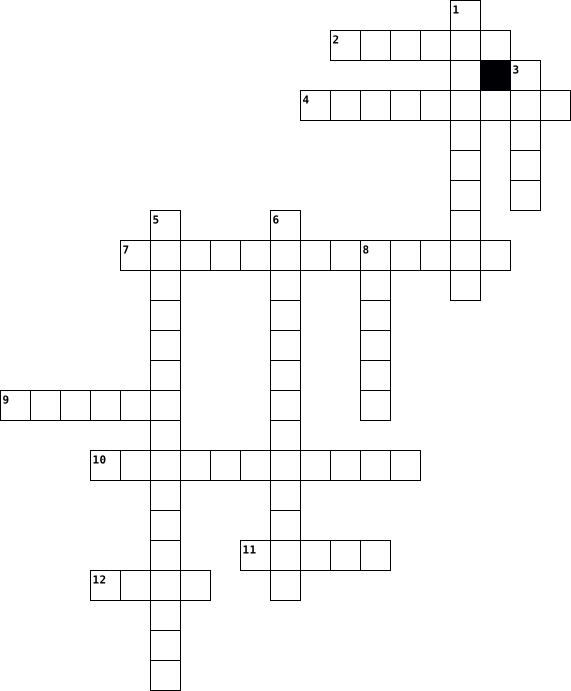
Across
- __________ Wegener was the first person to suspect that the continents may in fact be moving.
- The ____________ is solid. It is made up of the lower part of the chemical mantle.
- _________ layers are also called chemical layers.
- The _________ is the middle layer. It is made up of rocks made mostly of iron and magnesium.
- The _____________ is solid. It is made up of the chemical crust and upper mantle.
- The _________ is the least dense layer. It is made up of rocks made mostly of oxygen, silicon, and aluminum.
- The _______ (inner and outer) is the most dense layer. It is made up of rocks made mostly of iron and nickel.
Down
- ___________ layers
- The ________ is the least dense layer. It is made up of rocks made mostly of oxygen, silicon, and aluminum.
- reason the continents look like puzzle pieces is because they are.
- The ____________ is liquidy. It is made up of the middle part of the chemical mantle.
- To understand the mechanics of moving continents, we’ll have to go ________ the Earth.
12 Clues: ___________ layers • _________ layers are also called chemical layers. • reason the continents look like puzzle pieces is because they are. • The _____________ is solid. It is made up of the chemical crust and upper mantle. • The ____________ is solid. It is made up of the lower part of the chemical mantle. • ...
plate tectonics 2023-12-12

Across
- The broken up pieces of the lithosphere
- places where tectonic plates meet
- regions where subduction occurs
- This occurs when tectonic plates collide
- a place where sea-floor spreading takes place
Down
- boundary between 2 plates moving away from each other
- the outermost layer of Earth
- hot molten rock
- occurs when 2 tectonic plates collide, and one plate moves under the other
- when two tectonic plates scrape each other
- Consists of all of the crust as well as the upper, rigid part of the mantle
11 Clues: hot molten rock • the outermost layer of Earth • regions where subduction occurs • places where tectonic plates meet • The broken up pieces of the lithosphere • This occurs when tectonic plates collide • when two tectonic plates scrape each other • a place where sea-floor spreading takes place • boundary between 2 plates moving away from each other • ...
Plate Tectonics 2023-12-14

Across
- the broken sections of the Earth's crust
- the theory that all the continents were once connected as Pangaea
- the place where one tectonic plate comes into contact with another
- the process when one oceanic plate slides underneath a continental plate
- the German scientist who proposed the theory of Continental Drift
- this type of boundary is when two plates slide past one another
Down
- the supercontinent that included all of the current land masses
- this type of boundary is when two plates separate
- this process forms new oceanic crust
- these drive the movement of the tectonic plates
- this type of boundary is when two plates collide
11 Clues: this process forms new oceanic crust • the broken sections of the Earth's crust • these drive the movement of the tectonic plates • this type of boundary is when two plates collide • this type of boundary is when two plates separate • the supercontinent that included all of the current land masses • this type of boundary is when two plates slide past one another • ...
Plate Tectonics 2022-11-10

Across
- a linear depression produced by faulting; a small narrow valley within a major fault line
- When two tectonic plates moving away from each other in opposite directions
- causes tectonic plates to move
- A convergent plate boundary where one plate goes under the other
- molten rock
Down
- occurs at divergent boundaries
- When two plates slide past each other in opposite directions
- long, narrow ditch
- large slabs of rock that divide Earth's crust
- When two tectonic plates come together and over lap
- a path along the Pacific Ocean characterized by active volcanoes and frequent earthquakes
11 Clues: molten rock • long, narrow ditch • occurs at divergent boundaries • causes tectonic plates to move • large slabs of rock that divide Earth's crust • When two tectonic plates come together and over lap • When two plates slide past each other in opposite directions • A convergent plate boundary where one plate goes under the other • ...
vocab list 2025-11-06

Across
- theory explaining Earth's lithospheric plate movement.
- fracture in Earth's crust where movement occurs.
- plates move toward each other; form mountains/trenches.
- rigid outer layer of the Earth (crust + upper mantle).
Down
- plates move apart; create new crust at ridges.
- process of rock formation and transformation.
- plates slide past each other; cause earthquakes.
- magma is below surface; lava is above surface.
- semi-fluid layer beneath the lithosphere allowing plate movement.
- one plate sinks beneath another into the mantle.
10 Clues: process of rock formation and transformation. • plates move apart; create new crust at ridges. • magma is below surface; lava is above surface. • plates slide past each other; cause earthquakes. • fracture in Earth's crust where movement occurs. • one plate sinks beneath another into the mantle. • theory explaining Earth's lithospheric plate movement. • ...
plate boundrys 2023-10-13

Across
- is a hot substanced
- ridge -
- flow dense, destructive mass of very hot ash, lava
- where two plate move closer to each other
- any of several vast submarine regions thatthe sideways, downward movement of the edge ofplate
- is a hot substance
- move away from each other
Down
- upwelling of magma at midocean ridges and
- system formed by plate tectonics.
- is a underwater canyon
- the process of forming something by forcing
- - an overview | ScienceDirect
- Transform boundaries are places where plates slide sideways past each other
- massive slab of solid rock
- is the upper part of earths mantle
15 Clues: ridge - • is a hot substance • is a hot substanced • is a underwater canyon • move away from each other • massive slab of solid rock • - an overview | ScienceDirect • system formed by plate tectonics. • is the upper part of earths mantle • upwelling of magma at midocean ridges and • where two plate move closer to each other • the process of forming something by forcing • ...
J.gerardo 2023-02-01

Across
- Largest part of the earth on the inside.
- Made of silicon, oxygen, iron, and aluminum, this is produced by volcanoes.
- The innermost layer of the Earth.
- waves These are waves that travel through earthquakes and explosions
- Planetary layers separate due to differing densities.
- A rock that is a fragment of an Igneous rock.
- The region around the Earth filled with its magnetic field
Down
- When two plates move in opposite directions
- tectonics the movement of plates underneath the Earth
- when an oceanic plate runs into a continental plate and slides beneath
- two boundaries converge together
- 100 meters
- Rocks produced by high temperatures.
- The outer layer of the earth.
- structure of the earth and beneath its surface
- wind The energy from the sun that alters the earth’s magnetosphere
- composed of silicon and oxygen common in the continental crust
- Spot The formation of Hawaii was caused by
18 Clues: 100 meters • The outer layer of the earth. • two boundaries converge together • The innermost layer of the Earth. • Rocks produced by high temperatures. • Largest part of the earth on the inside. • Spot The formation of Hawaii was caused by • When two plates move in opposite directions • A rock that is a fragment of an Igneous rock. • ...
Plate tectonics 2021-01-06

Across
- The point at which one tectonic plate touches another
- The boundary between two plates that is moving together
- a theory explaining the structure of the earths crust
- The boundary between two tectonic plates that is moving away from each other
- A Moutan with a crater which lava flows
- the process by which new oceanic lithosphere is formed at a mid ocean ridge as older materials are pulled away from the ridge
- the boundary between two tectonic plates that are sliding past each other horizontally
- hot melted rock
Down
- the boundary between two plates that is moving together
- a disaster where the earth shakes
- The process of one tectonic plate being pushed under another tectonic plate
- move into each other
12 Clues: hot melted rock • move into each other • a disaster where the earth shakes • A Moutan with a crater which lava flows • The point at which one tectonic plate touches another • a theory explaining the structure of the earths crust • the boundary between two plates that is moving together • The boundary between two plates that is moving together • ...
Plate Tectonics 2022-02-09

Across
- The part in between the mantle and the crust
- A mineral found on continents
- A part of the mantle that is tar-like
- A ball of metal held together by pressure
- A dark rock found on the ocean floor
Down
- heat transferred through direct contact
- upper layer of the Earth
- Energy made from the sun and fire
- Heat transferred by fluid
- Largest layer of Earth
- A super continent from the past
11 Clues: Largest layer of Earth • upper layer of the Earth • Heat transferred by fluid • A mineral found on continents • A super continent from the past • Energy made from the sun and fire • A dark rock found on the ocean floor • A part of the mantle that is tar-like • heat transferred through direct contact • A ball of metal held together by pressure • ...
Plate Tectonics 2022-02-25

Across
- When two tectonic plates move towards one another. The oceanic crust is forced to sink back into the mantle, whilst the continental crust rises above. Volcanoes and earthquakes are found here.
- A sudden shaking of the ground which releases energy and results from underground movement along a fault plane.
- A term used to describe a liquid substance (eg rock, glass or metal) formed by heating a solid.
- When one crustal plate is forced beneath the other.
- When two plates slide past each other in different directions or the same direction at different speeds.
- Molten rock that is released from the Earth's core in a volcano or fissure.
Down
- Belonging to a continent, eg Africa, Asia, Europe.
- Where two plates move apart (diverge), causing a release in pressure that results in a volcanic eruption.
- Relating to the ocean.
- Occurs when older, denser tectonic plates sink into the mantle, pulling newer and less dense sections of plate along behind.
- The region where two or more tectonic plates meet. It is a zone of intense seismic activity.
11 Clues: Relating to the ocean. • Belonging to a continent, eg Africa, Asia, Europe. • When one crustal plate is forced beneath the other. • Molten rock that is released from the Earth's core in a volcano or fissure. • The region where two or more tectonic plates meet. It is a zone of intense seismic activity. • ...
Plate tectonics 2022-03-09

Across
- South America's plate.
- when plates move from each other.
- Antarctica's plate.
- Europe's plate.
- Pacific's plates.
- when plate slide past each other.
- Australia's plate.
Down
- uneven slabs that make up the earth.
- Africa's plate.
- North America's plate.
- when plates collide.
11 Clues: Africa's plate. • Europe's plate. • Pacific's plates. • Australia's plate. • Antarctica's plate. • when plates collide. • South America's plate. • North America's plate. • when plates move from each other. • when plate slide past each other. • uneven slabs that make up the earth.
Plate tectonics 2022-03-09

Across
- South America's plate.
- when plates move from each other.
- Antarctica's plate.
- Europe's plate.
- Pacific's plates.
- when plate slide past each other.
- Australia's plate.
Down
- uneven slabs that make up the earth.
- Africa's plate.
- North America's plate.
- when plates collide.
11 Clues: Africa's plate. • Europe's plate. • Pacific's plates. • Australia's plate. • Antarctica's plate. • when plates collide. • South America's plate. • North America's plate. • when plates move from each other. • when plate slide past each other. • uneven slabs that make up the earth.
Plate tectonics 2022-03-09

Across
- South America's plate.
- when plates move from each other.
- Antarctica's plate.
- Europe's plate.
- Pacific's plates.
- when plate slide past each other.
- Australia's plate.
Down
- uneven slabs that make up the earth.
- Africa's plate.
- North America's plate.
- when plates collide.
11 Clues: Africa's plate. • Europe's plate. • Pacific's plates. • Australia's plate. • Antarctica's plate. • when plates collide. • South America's plate. • North America's plate. • when plates move from each other. • when plate slide past each other. • uneven slabs that make up the earth.
Plate Tectonics 2013-07-31

Across
- Hawaii islands are formed.
- Constructive plate boundary.
- New land is created.
- Plate boundaries where plates slide past each other.
- Centre of landmasses where there is a divergent plate boundary.
- One plate moves below another one.
Down
- Land is destroyed.
- Destructive plate boundary.
- Plate boundaries that collide.
- Stable zone in the centre of a plate.
- Plate boundaries that move apart.
11 Clues: Land is destroyed. • New land is created. • Hawaii islands are formed. • Destructive plate boundary. • Constructive plate boundary. • Plate boundaries that collide. • Plate boundaries that move apart. • One plate moves below another one. • Stable zone in the centre of a plate. • Plate boundaries where plates slide past each other. • ...
Plate Tectonics 2023-03-22

Across
- Tectonics Scientific theory that explains how major landforms are created as a result of Earth's subterranean movements
- Boundary Occurs when two tectonic plates move past one another.
- A sudden and violent shaking of the ground, sometimes causing great destruction, as a result of movements within the earth's crust or volcanic action.
- Ancient continental mass in the Northern Hemisphere that included North America, Europe, and Asia (except peninsular India).
- Boundary Occurs when two tectonic plates move away from each other.
Down
- Boundary Where two or more lithospheric plates collide. One plate eventually slides beneath the other, a process known as subduction.
- Finding identical or similar in areas separated by vast distances were some of the first clues that scientists used to reconstruct past plate movement
- Du Toit He suggested the two primordial continents
- Wegener A German meteorologist who proposed that the continent were once one large landmass
- Plates Plates that are located beneath the ocean.
- Known as a single supercontinent
11 Clues: Known as a single supercontinent • Du Toit He suggested the two primordial continents • Plates Plates that are located beneath the ocean. • Boundary Occurs when two tectonic plates move past one another. • Boundary Occurs when two tectonic plates move away from each other. • ...
Plate Tectonics 2022-11-10

Across
- a linear depression produced by faulting; a small narrow valley within a major fault line
- When two tectonic plates moving away from each other in opposite directions
- causes tectonic plates to move
- A convergent plate boundary where one plate goes under the other
- molten rock
Down
- occurs at divergent boundaries
- When two plates slide past each other in opposite directions
- long, narrow ditch
- large slabs of rock that divide Earth's crust
- When two tectonic plates come together and over lap
- a path along the Pacific Ocean characterized by active volcanoes and frequent earthquakes
11 Clues: molten rock • long, narrow ditch • occurs at divergent boundaries • causes tectonic plates to move • large slabs of rock that divide Earth's crust • When two tectonic plates come together and over lap • When two plates slide past each other in opposite directions • A convergent plate boundary where one plate goes under the other • ...
Plate Tectonics 2023-01-19

Across
- these are created by convergent plates
- A tectonic boundary where two plates are moving away from each other and new crust is forming from magma that rises to the Earth's surface between the two plates.
- large landmass that rises above an ocean
- Earth’s thickest layer, found between the core and the crust.
- crack in the Earth’s crust where two tectonic plates meet; prone to earthquakes
Down
- hot melted rock inside the Earth that flows to the surface when a volcano erupts.
- uppermost layer of the Earth.
- A tectonic boundary where two plates are moving toward each other.
- area at the center of the Earth
- sudden and violent movement of the Earths crust that shakes the land
- liquid rock above the Earth's surface
11 Clues: uppermost layer of the Earth. • area at the center of the Earth • liquid rock above the Earth's surface • these are created by convergent plates • large landmass that rises above an ocean • Earth’s thickest layer, found between the core and the crust. • A tectonic boundary where two plates are moving toward each other. • ...
Plate Tectonics 2025-10-15

Across
- Layer of Earth on which tectonic plates float
- The rigid outer layer of Earth
- German scientist who proposed continental drift
- Evidence used by Wegener: ___ found on multiple continents
- Supercontinent proposed by Alfred Wegener
- Underwater mountain chain formed by diverging plates
Down
- When one plate sinks beneath another
- Theory that Earth’s continents have moved over time
- Movement of molten rock in the mantle that drives plate motion
- Large sections of the Earth’s crust that move slowly
- Process that creates new ocean floor at mid-ocean ridges
11 Clues: The rigid outer layer of Earth • When one plate sinks beneath another • Supercontinent proposed by Alfred Wegener • Layer of Earth on which tectonic plates float • German scientist who proposed continental drift • Theory that Earth’s continents have moved over time • Large sections of the Earth’s crust that move slowly • ...
Plate Tectonics 2025-10-22

Across
- a magnetic orientation the same as that of Earth’s current magnetic field
- a relatively small rising column of mantle rock that is hotter than surrounding rock
- the hypothesis proposed by Alfred Wegener that Earth’s continents were once joined together and later split and drifted apart
- the portion of the upper mantle just beneath the lithosphere, extending from about 100–350 kilometers below the surface and consisting of weak, plastic rock where magma may form
- a change in Earth’s magnetic field in which the north magnetic pole becomes the south magnetic pole and vice versa, which has occurred on average every 500,000 years over the past 65 million years
Down
- the hypothesis that segments of oceanic crust are separating at the Mid-Ocean Ridge
- an undersea mountain chain that forms at the boundary between divergent tectonic plates within oceanic crust
- the process in which two lithospheric plates of different densities converge and the denser one sinks into the mantle beneath the other
- a theory stating that the lithosphere is segmented into several plates that move about relative to one another by floating on and sliding over the upper mantle
- the concept of balance between gravity and buoyancy that causes the lithosphere to float on the asthenosphere at different elevations
- the upward and downward flow of fluid material in response to density changes produced by heating and cooling, which occurs slowly in Earth’s mantle and much more quickly in the oceans and atmosphere
11 Clues: a magnetic orientation the same as that of Earth’s current magnetic field • the hypothesis that segments of oceanic crust are separating at the Mid-Ocean Ridge • a relatively small rising column of mantle rock that is hotter than surrounding rock • an undersea mountain chain that forms at the boundary between divergent tectonic plates within oceanic crust • ...
7th grade Ch. 9 Science vocab 2023-01-12

Across
- the circulation of material caused by differences in temperature
- push rising mantle material at Mid-ocean ridge creates the potential for plates to move away from the ridge with a force
- ridges the mountain ranges in the middle of the oceans
- pull as a slab sinks, it pulls the rest of the plate with a force
- spreading is the process by which new oceanic crust forms along a mid-ocean ridge and older oceanic crust moves away from the ridge
- the cold rigid outermost rock layer
- drift which suggested that continents are constantly moving on the surface of earth
- the denser plate sinks below the more buoyant plate in the
Down
- plate boundary forms where two plates separate
- tectonics states that earth’s surface is made of rigid slabs of rock plates that move with respect to each other
- continents where once part of a super continent
- polarity a state which magnetized objects would reverse themselves to point south
- polarity a state in which magnetized objects such as compass needles, will orient themselves to point north
- plate boundary form where two plates collide
- plate boundary forms where two plates slide past each other
- reversal when the magnetic field reverses direction
16 Clues: the cold rigid outermost rock layer • plate boundary form where two plates collide • plate boundary forms where two plates separate • continents where once part of a super continent • reversal when the magnetic field reverses direction • ridges the mountain ranges in the middle of the oceans • the denser plate sinks below the more buoyant plate in the • ...
Plate Tectonics 2025-01-13

Across
- - Type of plate boundary where plates move apart.
- - The process where one plate is forced under another plate.
- - Deep, narrow depressions in the ocean floor formed by subduction.
- - Molten rock beneath the Earth's surface.
- - Type of plate boundary where plates slide past each other.
Down
- - A semi-fluid layer beneath the lithosphere that allows plates to move.
- - Type of plate boundary where plates collide.
- - The rigid outer layer of the Earth, including the crust and upper mantle.
- tectonics - The theory that explains the movement of Earth's plates.
- of fire - A major area in the Pacific Ocean where many volcanoes are located.
10 Clues: - Molten rock beneath the Earth's surface. • - Type of plate boundary where plates collide. • - Type of plate boundary where plates move apart. • - The process where one plate is forced under another plate. • - Type of plate boundary where plates slide past each other. • - Deep, narrow depressions in the ocean floor formed by subduction. • ...
Plate Tectonics 2019-03-06

Across
- crust
- divergent
- pangaea
- convection
- lithosphere
- transform
- core
Down
- convergent
- mantle
- asthenosphere
- igneous
11 Clues: core • crust • mantle • pangaea • igneous • divergent • transform • convergent • convection • lithosphere • asthenosphere
Plate Tectonics 2013-08-01

Across
- Hawaii islands are formed.
- Centre of landmasses where there is a divergent plate boundary.
- Constructive plate boundary.
- New land is created.
- Plate boundaries where plates slide past each other.
- One plate moves below another one.
Down
- Stable zone in the centre of a plate.
- Plate boundaries that move apart.
- Land is destroyed.
- Destructive plate boundary.
- Plate boundaries that collide.
11 Clues: Land is destroyed. • New land is created. • Hawaii islands are formed. • Destructive plate boundary. • Constructive plate boundary. • Plate boundaries that collide. • Plate boundaries that move apart. • One plate moves below another one. • Stable zone in the centre of a plate. • Plate boundaries where plates slide past each other. • ...
Plate Tectonics 2014-10-31

Across
- When oceanic divides from oceanic
- What occurs at transform boundaries
- When continental divides from continental
- The theory that says that pieces of Earth's lithosphere are in constant, slow motion
- Boundaries that come together
Down
- Boundaries that slide past each other
- Where convection currents come from to move the plates
- When oceanic collides with oceanic
- Boundaries that divide or move apart
- When continental collides with continental
- Most geologists think that the movement of Earth's plates is caused by this force.
11 Clues: Boundaries that come together • When oceanic divides from oceanic • When oceanic collides with oceanic • What occurs at transform boundaries • Boundaries that divide or move apart • Boundaries that slide past each other • When continental divides from continental • When continental collides with continental • Where convection currents come from to move the plates • ...
Plate Tectonics 2023-01-25

Across
- map showing the shape and elevation of the land surface using contour lines
- the layer of granitic, sedimentary, and metamorphic rocks
- difference in elevation between any two contour lines on a topographic map
- the outer most layer of the Earth (lithosphere) is divided into contiguous sections (plates) that move relative to each other causing continental drift, seafloor spreading, and the formation of major physical features of the Earth’s surface
- the outermost solid layer of the lithospheric tectonic plates under the oceans that covers much of the Earth's surface
- the shape of the Earth’s surface and the way its physical features are arranged, especially in terms of their positions and elevations
- plates slide past each other
Down
- Alfred Wegner’s explanation of continents slowly moving and changing their positions relative to one another
- plates move together
- plates move apart
- map symbol showing shape and / or change in elevation on a topographic map
11 Clues: plates move apart • plates move together • plates slide past each other • the layer of granitic, sedimentary, and metamorphic rocks • difference in elevation between any two contour lines on a topographic map • map symbol showing shape and / or change in elevation on a topographic map • map showing the shape and elevation of the land surface using contour lines • ...
Plate Tectonics 2023-02-15

Across
- What creates a Volcano.
- What is Alfred wegnors brilliant theory.
- What happens when the plates shift
Down
- A different form of cucumber
- What happens when magma comes up and pushes the ground apart.
- The world's largest rodent
- Its the name of an island also a common food
- when denser things get pushed under
- who came up with the Yee haw brilliant theory..
- rising of different materials due to changes in the enviroment
- How much mass an object has.
11 Clues: What creates a Volcano. • The world's largest rodent • A different form of cucumber • How much mass an object has. • What happens when the plates shift • when denser things get pushed under • What is Alfred wegnors brilliant theory. • Its the name of an island also a common food • who came up with the Yee haw brilliant theory.. • ...
plate tectonics 2022-05-13

Across
- ‐ Part of a grid used for describing positions on earth’s surface, consisting of parallel circles
- Zone ‐ An area where oceanic crust and continental crust are colliding.
- ‐ The point of origin of an earthquake
- ‐ The thick shell of dense, rocky matter that surrounds the earth’s core.
- Core ‐The innermost layer of the earth, an extremely hot, solid sphere of mostly iron and nickel
- Core ‐ This layer of the earth lies between the mantle and the solid inner core.
- ‐A dropped zone where two tectonic plates are pulling apart
Down
- ‐ A deep valley that forms at the edge of a continent when an oceanic plate sinks underneath a
- Scale ‐ A logarithmic scale, ranging from 1 to 10, for indicating the intensity of an earthquake
- plate.
- ‐ Any of various instruments for measuring and recording the vibrations of earthquakes
11 Clues: plate. • ‐ The point of origin of an earthquake • ‐A dropped zone where two tectonic plates are pulling apart • Zone ‐ An area where oceanic crust and continental crust are colliding. • ‐ The thick shell of dense, rocky matter that surrounds the earth’s core. • Core ‐ This layer of the earth lies between the mantle and the solid inner core. • ...
Plate Tectonics 2022-10-18

Across
- area where mantle is hot and burns through crust
- as plates collide,one sinks
- dense with rock like basalt
- causes the movement of plates
- form near trenches
Down
- process of the lithosphere divided into plates
- fluffy with rock like granite
- quartz, feldspar, mica, amphibole, olivine, and calcite.
- a layer of silicate rock in between the crust and core
- where plates are pulling apart
- where the oldest rocks on earth are found
11 Clues: form near trenches • as plates collide,one sinks • dense with rock like basalt • fluffy with rock like granite • causes the movement of plates • where plates are pulling apart • where the oldest rocks on earth are found • process of the lithosphere divided into plates • area where mantle is hot and burns through crust • a layer of silicate rock in between the crust and core • ...
Plate Tectonics 2019-09-09

Across
- Where convection currents occur
- The centre of the Earth
- reason for heat in inner core
- Thickest crust
- Outer layer of Earth, different rocks
- formed when lava cools quickly
Down
- Upper part of the mantle
- magma rising and sinking
- Plate Pieces of Earth's crust, jigsaw
- Outer part of Earth including Crust
- Surrounds the inner core
11 Clues: Thickest crust • The centre of the Earth • Upper part of the mantle • magma rising and sinking • Surrounds the inner core • reason for heat in inner core • formed when lava cools quickly • Where convection currents occur • Outer part of Earth including Crust • Outer layer of Earth, different rocks • Plate Pieces of Earth's crust, jigsaw
Plate tectonics 2023-12-06

Across
- what is broken up into plates?
- largest layer of earth
- crust 3-5 mi thick
- the crust and upper mantle
- includes crust, mantle, and core
Down
- plates that come together
- crust 25 mi thick
- forms new crust
- core composition is liquid nickel and iron
- mantle both solid and liquid composition
- mantle mostly solid rock
11 Clues: forms new crust • crust 25 mi thick • crust 3-5 mi thick • largest layer of earth • mantle mostly solid rock • plates that come together • the crust and upper mantle • what is broken up into plates? • includes crust, mantle, and core • mantle both solid and liquid composition • core composition is liquid nickel and iron
Plate tectonics 2023-12-06

Across
- what is broken up into plates?
- largest layer of earth
- crust 3-5 mi thick
- the crust and upper mantle
- includes crust, mantle, and core
Down
- plates that come together
- crust 25 mi thick
- forms new crust
- core composition is liquid nickel and iron
- mantle both solid and liquid composition
- mantle mostly solid rock
11 Clues: forms new crust • crust 25 mi thick • crust 3-5 mi thick • largest layer of earth • mantle mostly solid rock • plates that come together • the crust and upper mantle • what is broken up into plates? • includes crust, mantle, and core • mantle both solid and liquid composition • core composition is liquid nickel and iron
Plate tectonics 2023-10-03

Across
- a sudden shake at a transform boundary
- when one plate goes under another
- lets out magma when erupts
- land moving on the asthenosphere
- movement of fluid driven by heat
- moving towards
Down
- sliding against
- build up land at a convergent boundary
- floor underwater
- moving away
- fluid plastic like material
11 Clues: moving away • moving towards • sliding against • floor underwater • lets out magma when erupts • fluid plastic like material • land moving on the asthenosphere • movement of fluid driven by heat • when one plate goes under another • a sudden shake at a transform boundary • build up land at a convergent boundary
Plate Tectonics 2025-11-06

Across
- Large underwater mountain ranges where seafloor spreading occurs.
- The process by which new ocean floor is created where two tectonic plates move apart.
- The specific mid-ocean ridge in the Atlantic Ocean that was explored by Project FAMOUS.
- The theory that continents were once connected and have since moved apart over billions of years.
- Acronym for the French-American Mid-Ocean Undersea Study, a research project in the 1970s.
- Vehicles created by experts that can explore the ocean floor because they can hold their shape under high water pressure.
Down
- The theory, based on continental drift, that explains how Earth's surface changes as its crust moves.
- Huge pieces of Earth's crust that fit tightly together and move on the mantle.
- The outer layer of Earth, made of huge pieces called tectonic plates, that is always changing.
- Hot material that rises from Earth's mantle to the seafloor and cools into new crust during seafloor spreading.
- The semi-fluid layer of rock beneath Earth's crust on which the tectonic plates rest.
11 Clues: Large underwater mountain ranges where seafloor spreading occurs. • Huge pieces of Earth's crust that fit tightly together and move on the mantle. • The process by which new ocean floor is created where two tectonic plates move apart. • The semi-fluid layer of rock beneath Earth's crust on which the tectonic plates rest. • ...
Plate Tectonics 2025-11-09

Across
- Plate boundary where two plates are moving apart
- When one plate slides under another at a convergent plate boundary
- Large pieces of the Earth’s crust that move on top of the mantle
Down
- Crust that is denser, thinner, and newer, will subduct at oceanic-continental convergent boundaries
- mainly at convergent and divergent plate boundaries and is the result of hot gasses, magma plumes, and pressure
- that is less dense, thicker, and older
- Result of tectonic plates moving past each other typically at transform and convergent plate boundaries
- Plate boundary where two plates slide past each other
- result of a stationary magma plume from inside the mantle that creates island or mountain chains
- Plate boundary where two plates are moving together
- form of divergent plate boundary where new ocean floor is made
11 Clues: that is less dense, thicker, and older • Plate boundary where two plates are moving apart • Plate boundary where two plates are moving together • Plate boundary where two plates slide past each other • form of divergent plate boundary where new ocean floor is made • Large pieces of the Earth’s crust that move on top of the mantle • ...
Plate Tectonics 2025-10-23

Across
- The process by which new oceanic crust forms along a mid-ocean ridge and older oceanic crust moves away from the ridge until it reaches a trench where it goes back towards the mantle and melts.
- The boundary where two plates slide past each other
- The rigid outermost rock layer made up of the crust and the solid, uppermost mantle
- The circulation of material caused by differences in temperature and density
- The process that occurs when a denser plate sinks below a less dense plate
- The boundary where two plates are moving away from each other or separating
Down
- The name given to a supercontinent that began to break apart approximately 200 million years ago
- he movement of Earth’s continents over time
- The mountain ranges in the middle of the oceans
- The boundary where two plates are colliding or moving toward each other
- The partially melted portion of the mantle below the lithosphere
11 Clues: he movement of Earth’s continents over time • The mountain ranges in the middle of the oceans • The boundary where two plates slide past each other • The partially melted portion of the mantle below the lithosphere • The boundary where two plates are colliding or moving toward each other • The process that occurs when a denser plate sinks below a less dense plate • ...
7th grade Ch. 9 Science vocab 2023-01-12

Across
- the circulation of material caused by differences in temperature
- push rising mantle material at Mid-ocean ridge creates the potential for plates to move away from the ridge with a force
- ridges the mountain ranges in the middle of the oceans
- pull as a slab sinks, it pulls the rest of the plate with a force
- spreading is the process by which new oceanic crust forms along a mid-ocean ridge and older oceanic crust moves away from the ridge
- the cold rigid outermost rock layer
- drift which suggested that continents are constantly moving on the surface of earth
- the denser plate sinks below the more buoyant plate in the
Down
- plate boundary forms where two plates separate
- tectonics states that earth’s surface is made of rigid slabs of rock plates that move with respect to each other
- continents where once part of a super continent
- polarity a state which magnetized objects would reverse themselves to point south
- polarity a state in which magnetized objects such as compass needles, will orient themselves to point north
- plate boundary form where two plates collide
- plate boundary forms where two plates slide past each other
- reversal when the magnetic field reverses direction
16 Clues: the cold rigid outermost rock layer • plate boundary form where two plates collide • plate boundary forms where two plates separate • continents where once part of a super continent • reversal when the magnetic field reverses direction • ridges the mountain ranges in the middle of the oceans • the denser plate sinks below the more buoyant plate in the • ...
plate tectonics 2022-02-04

Across
- slide
- when all the Continents were connected
- highest mountain in the world
- break in plates
- transformation causes:
- divorce
Down
- introduced the theory of plate tectonics
- collide
- core, mantle, crust
- tear
10 Clues: tear • slide • collide • divorce • break in plates • core, mantle, crust • transformation causes: • highest mountain in the world • when all the Continents were connected • introduced the theory of plate tectonics
Science Crossword Puzzle 2013-06-04

Across
- outer planet
- can be minerals
- a step in an experiment
- theory of plate tectonics
- has a nucleus with orbiting electrons
- no change in composition
- theory of evolution
- what aniimals eat
- founder of genetics
Down
- place where life can live
- place where animals live
- change that occurs in composition
- came up with accurate solar system
- transferred from parent to child
- something that changes
- part of an atom
- information collected
- end of an expirement
- on the Periodic table
19 Clues: outer planet • can be minerals • part of an atom • what aniimals eat • theory of evolution • founder of genetics • end of an expirement • information collected • on the Periodic table • something that changes • a step in an experiment • place where animals live • no change in composition • place where life can live • theory of plate tectonics • transferred from parent to child • ...
Earthquakes 2024-01-06

Across
- - Large ocean wave caused by an underwater earthquake.
- - Plate boundary - Plates slide past each other.
- - Plates - Large pieces of the Earth's crust that move.
- - Instrument that records earthquake waves.
- - Process where one tectonic plate moves beneath another.
- - Crack in the Earth's crust where earthquakes originate.
- - Area directly above the earthquake's origin.
- - Measure of the energy released by an earthquake.
Down
- - Primary seismic wave that compresses and expands particles.
- - Tectonics - A rigid segment of the Earth's lithosphere.
- - Measure of the earthquake's effects at specific locations.
- - Study of earthquakes and seismic waves.
- - Saturated soil temporarily loses strength during an earthquake.
- - Related to earthquakes or other vibrations of the Earth.
- - Small earthquakes that precede a larger one.
- - Smaller earthquake that follows the main shock.
- - Scale used to quantify earthquake magnitude.
- - Type of earthquake with a focus near the Earth's surface.
18 Clues: - Study of earthquakes and seismic waves. • - Instrument that records earthquake waves. • - Small earthquakes that precede a larger one. • - Scale used to quantify earthquake magnitude. • - Area directly above the earthquake's origin. • - Plate boundary - Plates slide past each other. • - Smaller earthquake that follows the main shock. • ...
Plate Tectonic Crossword Puzzle 2022-01-14

Across
- area of Earth's mantle where hot plumes rise upward, forming a volcano on the crust
- chain of volcanoes formed above a subducting plate, positioned in an arc shape
- where two or more lithospheric plates collide
- surface shaking on Earth from a sudden release of energy in Earth's lithosphere
- idea that continents havee and are still moving slowly across Earth
- edge of Earth's plates meet at this boundary
- oceanic trench area marginal to a continent
- discontinuity in a volume of rock across where there has been a lot of displacement from rock-mass movements
- fault along a plate boundary where motion is mostly horizontal
Down
- The Earth's crust and upper mantle are broken into sections called
- pieces of Earth's crust and uppermost mantle
- the edge where two plates meet
- theory that pieces of Earth's lithosphere are in constant motion
- two tectonic plates that are MOVING AWAY from each other
- vertical elevation of the Earth's surface in response to natural causes
- linear shaped lowland between mountain ranges created from a geologic rift
- formation of new areas of oceanic crust
17 Clues: the edge where two plates meet • formation of new areas of oceanic crust • oceanic trench area marginal to a continent • pieces of Earth's crust and uppermost mantle • edge of Earth's plates meet at this boundary • where two or more lithospheric plates collide • two tectonic plates that are MOVING AWAY from each other • ...
Earth's Dynamic surface 2025-11-12

Across
- tectonics moving plates
- energy released by an earthquake
- boundary two tectonic plates past each other
- molten rock at or above Earth's surface
- crated by rising and falling heat inside the mantel
- a sudden violent shaking
- between the asthenosphere and the outer core
Down
- uppermost part of the mantel
- molten rock stored beneath Earth's surface
- where convection occurs
- when gas and ash and molten rock are ejected
- boundary when two plates seporate
- one platent moves under another
- boundary two tectonic plate move together and colide
- spreading formation of new oceanic crust
15 Clues: where convection occurs • tectonics moving plates • a sudden violent shaking • uppermost part of the mantel • one platent moves under another • energy released by an earthquake • boundary when two plates seporate • molten rock at or above Earth's surface • spreading formation of new oceanic crust • molten rock stored beneath Earth's surface • ...
module 2 vocabulary puzzle 2022-07-08

Across
- Tectonics
- Plates
- dating
- Wave
- Boundary
- dating
Down
- age
- Boundary
- Boundary
- decay
10 Clues: age • Wave • decay • Plates • dating • dating • Boundary • Boundary • Boundary • Tectonics
Plate Tectonics Crossword Puzzle 2023-03-03

Across
- what we live on
- fractures where the blocks have mostly moved horizontally.
- Volcanic substance
- Caused from a boundary
- A lot of volcanoes at one places
- Has a major fault line
- The plates movement
- Two tectonic plates collide to form this
- the block above the fault moves up relative to the block below the fault.
- Earth is made up of these
- inclined fractures where the blocks have mostly shifted vertically
Down
- multiple volcanoes here
- Stress on the plates
- Two plates collide and there is magma under it that is brought up
- Movement
- Movement in earths plates
- plate
- Stress that squeezes the plates
- Tension where forces are acting on opposite sides
- Two plates horizontally slide next to each other
20 Clues: plate • Movement • what we live on • Volcanic substance • The plates movement • Stress on the plates • Caused from a boundary • Has a major fault line • multiple volcanoes here • Movement in earths plates • Earth is made up of these • Stress that squeezes the plates • A lot of volcanoes at one places • Two tectonic plates collide to form this • ...
Evidence for the Theory of Plate Tectonics 2023-10-05

Across
- Glaciers are typically unbothered but the plates had created _______ _____
- The cycle of movement that forms one large landmass
- What is a result of the plates moving in all different directions?
- Despite extinct animals only being in certain continents, ______ ________ suggests otherwise.
- What happens when the Earth's plates move?
Down
- Plate Tectonics has changed the _____ __ __________
- The man who proposed the theory of plate tectonics
- Large amounts of land seem to be created by volcanos, what form of evidence would this suggest?
8 Clues: What happens when the Earth's plates move? • The man who proposed the theory of plate tectonics • Plate Tectonics has changed the _____ __ __________ • The cycle of movement that forms one large landmass • What is a result of the plates moving in all different directions? • Glaciers are typically unbothered but the plates had created _______ _____ • ...
Plate tectonics 2021-05-05

Across
- magma
- sliding
- come together
- waves
- one stays one goes down
- ground shaking
Down
- A bigger hill
- trench valley in the sea
- plates water moving
- plates land moving
- Spreading away
11 Clues: magma • waves • sliding • A bigger hill • come together • Spreading away • ground shaking • plates land moving • plates water moving • one stays one goes down • trench valley in the sea
Plate Tectonics 2022-12-18

Across
- melted rock on Earths surface
- the sideways and downward movement of the edge of a plate
- hot, semisolid rock and is located directly below the crust
- Shaking of Earth's surface
- crack in Earth's crust
Down
- Seismic body waves
- border between two tectonic plates
- The outermost layer of the Earth
- Super continent
- a long, narrow ditch
- melted rock beneath Earth’s surface
11 Clues: Super continent • Seismic body waves • a long, narrow ditch • crack in Earth's crust • Shaking of Earth's surface • melted rock on Earths surface • The outermost layer of the Earth • border between two tectonic plates • melted rock beneath Earth’s surface • the sideways and downward movement of the edge of a plate • hot, semisolid rock and is located directly below the crust
Plate tectonics 2020-02-25

Across
- The shapes of continents fit together like a _____
- Name of supercontinent
- Plates under water
- Plates that move TOWARDS each other
- Plates under land
- The Earth is made up of many ___ that move
- Big changes only happen to Earth over ___ of years
Down
- Hot liquid from inside the Earth
- Theory that Earth is made up of plates that move
- Plates that move AWAY from each other
- Plate that SLIDE past each other
11 Clues: Plates under land • Plates under water • Name of supercontinent • Hot liquid from inside the Earth • Plate that SLIDE past each other • Plates that move TOWARDS each other • Plates that move AWAY from each other • The Earth is made up of many ___ that move • Theory that Earth is made up of plates that move • The shapes of continents fit together like a _____ • ...
plate tectonics 2021-03-31

Across
- the inside of earth
- moving past
- the thickest layer of the earth
- a fault that is in california
- a disaster that makes the ground shake asthenosphere a molded molten layer of the earth
- the thinnest layer of the earth
Down
- moving towards
- mountains formed by convergent boundaries.
- moving apart
- It happens by divergent boundaries in the ocean
- a plate that sinks in another plate
11 Clues: moving past • moving apart • moving towards • the inside of earth • a fault that is in california • the thickest layer of the earth • the thinnest layer of the earth • a plate that sinks in another plate • mountains formed by convergent boundaries. • It happens by divergent boundaries in the ocean • ...
Plate Tectonics 2021-04-27

Across
- The only liquid layer
- A denser plate sliding beneath a less denser plate
- The thickest part of the Earth
- the land we walk on
Down
- Two plates sliding away from Each other
- Plates sliding back and forth to create an earthquake
- plates formed by divergent plates
- To Continental plates sliding together to make a mountain
- The outer part of the Earth
- The ridged outer part of Earth
- The hottest part of the Earth
11 Clues: the land we walk on • The only liquid layer • The outer part of the Earth • The ridged outer part of Earth • The thickest part of the Earth • The hottest part of the Earth • plates formed by divergent plates • Two plates sliding away from Each other • A denser plate sliding beneath a less denser plate • Plates sliding back and forth to create an earthquake • ...
Plate Tectonics 2012-12-19

Across
- weak pint in earth's crust
- flowing mixture of water and debris
- term used for magma once it has erupted onto the earth's surface
- plates moving in opposite directions
- of or having to do with earthquakes
- cirular depression containing a volcanic vent
Down
- opening at earth's surface through hich volcanic material erupt
- to bend or change direction
- huge sections which make up the earth's crust
- plates moving towards each other
- lava or rock blasted into the air by volcanoe
11 Clues: weak pint in earth's crust • to bend or change direction • plates moving towards each other • flowing mixture of water and debris • of or having to do with earthquakes • plates moving in opposite directions • huge sections which make up the earth's crust • cirular depression containing a volcanic vent • lava or rock blasted into the air by volcanoe • ...
PLATE TECTONICS 2016-04-28

Across
- plates slide past each other
- divergent plate are usually found here
- divergent plates tend to be
- when all continents were joined
- made up of silicon and aluminum
- convergent plates tend to be
- when plates move away from each other
Down
- when plate move towards each other
- the earth’s crust
- ___________ are usually found near fault zones
- thick material made up of silicon and magnesium
11 Clues: the earth’s crust • divergent plates tend to be • plates slide past each other • convergent plates tend to be • when all continents were joined • made up of silicon and aluminum • when plate move towards each other • when plates move away from each other • divergent plate are usually found here • ___________ are usually found near fault zones • ...
plate tectonics 2017-11-30

Across
- a thin lyaer of cool rock that ros on the earth's outer skin both on dry land and in the ocean
- a crust and upper mantle
- caused by the very hot mantle at the deepest part of the mantle
- largest layer of hot rock
- solid because of the pressure of nickel and iron
Down
- crust made of granite 25 miles thick, brittle and not dense
- so hot that the metals are all liquid
- consists of rock and minerals on the earth's surface and below it
- semi rigid part of the middle mantle that flows like hot asphalt under a heavy weight
- a large fraction of the Earth's interior, from a depth about 400 miles to about 1800 miles.
- crust made of basalt 3-5 miles thick
11 Clues: a crust and upper mantle • largest layer of hot rock • crust made of basalt 3-5 miles thick • so hot that the metals are all liquid • solid because of the pressure of nickel and iron • crust made of granite 25 miles thick, brittle and not dense • caused by the very hot mantle at the deepest part of the mantle • ...
Plate tectonics 2022-03-09

Across
- South America's plate.
- when plates move from each other.
- Antarctica's plate.
- Europe's plate.
- Pacific's plates.
- when plate slide past each other.
- Australia's plate.
Down
- uneven slabs that make up the earth.
- Africa's plate.
- North America's plate.
- when plates collide.
11 Clues: Africa's plate. • Europe's plate. • Pacific's plates. • Australia's plate. • Antarctica's plate. • when plates collide. • South America's plate. • North America's plate. • when plates move from each other. • when plate slide past each other. • uneven slabs that make up the earth.
plate tectonics 2023-11-14

Across
- destruction of rock by natural cause
- moves continents
- shaking of the ground
- destruction of rock by natural cause
- place where new seafloor is destroyed
- released from volcano after eruption
Down
- place where new ocean floor is created
- fracture zone
- theory of how major land forms are created
- comes from the ground
- how a volcano explodes
- lava before reaching surface
12 Clues: fracture zone • moves continents • comes from the ground • shaking of the ground • how a volcano explodes • lava before reaching surface • destruction of rock by natural cause • destruction of rock by natural cause • released from volcano after eruption • place where new seafloor is destroyed • place where new ocean floor is created • theory of how major land forms are created
Plate Tectonics 2024-01-29

Across
- , instrument used to measure the magnitude of an earthquake
- , Earth's crust is broken into these types of plate
- , boundary where two plate slide past each other
- , most well known transform plate boundary in the world
- , boundary where two plates move toward each other
Down
- , underwater earthquakes that cause large ocean waves
- , a supercontinent 200 million years ago
- , boundary where two plate move away from each other
- , Divergent plate boundaries cause these
- , cycle begins with continental rifting within a large landmass
- , magma that has erupted onto Earth's surface
11 Clues: , Divergent plate boundaries cause these • , a supercontinent 200 million years ago • , boundary where two plate slide past each other • , most well known transform plate boundary in the world • , boundary where two plates move toward each other • , magma that has erupted onto Earth's surface • ...
PLATE TECTONICS 2024-02-05

Across
- the movement of plates that make up Earth’s surface
- a boundary between plates that are moving toward each other
- the layer of Earth between the crust and the core
- shaking and vibration of Earth’s surface
- an area in a convergent boundary where two continents are colliding
Down
- a convergent boundary where one plate is sliding beneath another
- a boundary between plates that are moving away from each other.
- a rigid section of Earth’s crust that moves very slowly
- the rocky outer layer of Earth.
- a layer of the upper mantle in which rocks can deform like plastic.
- the rigid upper layer of the Earth
11 Clues: the rocky outer layer of Earth. • the rigid upper layer of the Earth • shaking and vibration of Earth’s surface • the layer of Earth between the crust and the core • the movement of plates that make up Earth’s surface • a rigid section of Earth’s crust that moves very slowly • a boundary between plates that are moving toward each other • ...
Plate Tectonics 2025-03-03

Across
- the name of the scientist who drew maps of the ocean floor
- plate boundary where two plates slide alongside each other
- rising magma can produce mountains called
- the name of the scientist who proposed continental drift
- type of energy current in the mantle where hot magma rises and cold rock sinks
- Large layer of partially molten rock underneath the crust of the earth
Down
- tremmors in the crust caused by tectonic plate movement
- when an oceanic plate is pushed underneath a continental plate
- the weight of all the ocean and rock above the mantle
- molten material inside the Earth
- plate boundary where the seafloor is spreading
11 Clues: molten material inside the Earth • rising magma can produce mountains called • plate boundary where the seafloor is spreading • the weight of all the ocean and rock above the mantle • tremmors in the crust caused by tectonic plate movement • the name of the scientist who proposed continental drift • the name of the scientist who drew maps of the ocean floor • ...
Continental Drift 2021-03-01

Across
- drift is what
- Currents, moves plates
- country and continent
- , tall, happens when no subduction zones can occur
- , country in Europe
- Wengener, scientist
- , fossil in both south america and Africa
- America, southern continent
Down
- , cold Continent
- , super continent
- Drift , Alfred's theory
- Sheets , cold, covered the earth
- ,Southern continent near Asia
- prehistoric things buried deep in the ground
- , near Asia
- america, northern continent
- Tectonics , always in motion
17 Clues: , near Asia • drift is what • , cold Continent • , super continent • , country in Europe • Wengener, scientist • country and continent • Currents, moves plates • Drift , Alfred's theory • Tectonics , always in motion • America, southern continent • ,Southern continent near Asia • america, northern continent • Sheets , cold, covered the earth • , fossil in both south america and Africa • ...
science crossword 2026-03-23

Across
- a basin-like depression because a volcano has exploded or the center of the volcano has collapsed
- of fire, an area where many earthquakes and volcanoes occur
- horizontal intrusions
- chamber, large underground pool of molten rock
- currents, what causes the plates to move
- named after the Laurentian shield in Canada
- waves, waves caused by earthquakes and rock movement
- cone, lava that is built up in the shape of a cone
- a fracture or zone or fractures between two blocks of rock
- core, solid ball of nickel and iron densest layer of the earth
Down
- circular basin or depression
- rocks move together
- vertical intrusion
- first waves to reach the seismic station
- named for the Gondwana region in India
- zone, where one tectonic plate moves under another tectonic plate
- Hess, proposed the plate tectonics theory
- next waves to reach the seismic station
- rocks slide past each other
- Wegner, proposed the continental drift theory
20 Clues: vertical intrusion • rocks move together • horizontal intrusions • rocks slide past each other • circular basin or depression • named for the Gondwana region in India • next waves to reach the seismic station • first waves to reach the seismic station • currents, what causes the plates to move • Hess, proposed the plate tectonics theory • ...
Xword_Tectonics 2024-01-12

Across
- Formed by the collision of India end average depth of 4km
- Process by which andesite can be generated from the mantle at a convergent oceanic-oceanic plate margin
- Theory was first proposed by Alfred Wegener
- These values are high over mid-ocean ridges and low over ocean trenches
- Considered for many years to be the main driving force of plate tectonics, but recently called into question
- Rock-type formed at depth by the melting of the continental lithosphere at convergent continental-continental plate margins
Down
- German meteorologist who was right all along so to speak!
- Volcanic rock that is most commonly associated with divergent plate margins
- A low-angle fault associated with convergent plate margins
- Outer layer of the Earth comprises the crust and upper mantle which is solid and rigid
- Process now thought to be responsible for oceanic lithosphere being subducted back into the asthenosphere
- Type of fault associated with conservative and divergent plate margins
- Method used to establish the age of igneous and metamorphic rocks
- Type of plate margins where two plates are moving away from each older
- Type of plate margin where two plates are sliding past each other
15 Clues: Theory was first proposed by Alfred Wegener • German meteorologist who was right all along so to speak! • Formed by the collision of India end average depth of 4km • A low-angle fault associated with convergent plate margins • Method used to establish the age of igneous and metamorphic rocks • Type of plate margin where two plates are sliding past each other • ...
Three Main Types of Plate Toctonic Boundaries 2021-10-07

Across
- movement of a fluid from different densities
- when a piece of crust sinks other another
- also referred to as the lithosphere
- lava before it reaches the earth's surface
- slide against each other to form a boundary
Down
- old crust from a plate is pushed under another
- to move apart to form a boundary
- the outer layer of earth
- to come together to form a boundary
- break or separation caused by plate tectonics
10 Clues: the outer layer of earth • to move apart to form a boundary • to come together to form a boundary • also referred to as the lithosphere • when a piece of crust sinks other another • lava before it reaches the earth's surface • slide against each other to form a boundary • movement of a fluid from different densities • break or separation caused by plate tectonics • ...
Three Main Types of Plate Toctonic Boundaries 2021-10-07

Across
- movement of a fluid from different densities
- when a piece of crust sinks other another
- also referred to as the lithosphere
- lava before it reaches the earth's surface
- slide against each other to form a boundary
Down
- old crust from a plate is pushed under another
- to move apart to form a boundary
- the outer layer of earth
- to come together to form a boundary
- break or separation caused by plate tectonics
10 Clues: the outer layer of earth • to move apart to form a boundary • to come together to form a boundary • also referred to as the lithosphere • when a piece of crust sinks other another • lava before it reaches the earth's surface • slide against each other to form a boundary • movement of a fluid from different densities • break or separation caused by plate tectonics • ...
plate tectonics XD 2021-02-02

Across
- the full name of the plates
- a type of heat waves
- a hot mountain
- part of the earths crust
- the thinnest layer of the earth
- the sea floor
- when the continents moved
- the thickest layer of the earth
Down
- a region of the earths crust
- when two plates move away
- old bones
- a bord zone
- a long part of the ocean
- part of the mantle
- when two plates collide
- when plates of the earth move
- what the crust is made of
17 Clues: old bones • a bord zone • the sea floor • a hot mountain • part of the mantle • a type of heat waves • when two plates collide • a long part of the ocean • part of the earths crust • when two plates move away • what the crust is made of • when the continents moved • the full name of the plates • a region of the earths crust • when plates of the earth move • the thinnest layer of the earth • ...
Plate Tectonics Crossword 2021-10-05

Across
- Cause of volcanoes and earthquakes
- Fire hill
- Evidence for the Continental Drift Theory
- Sphere below lithosphere
- Islands with a volanic chain
- Narrow mountain range
- Evidence for the Continental Drift Theory
- Depression in ocean floor
- Mr. Wegner
- The San Andreas _____ Zone
- Mr. Wilson
Down
- Evidence for the Continental Drift Theory
- Layer of Earth between its core and crust
- Hot material below or within Earth's crust
- Shaking ground
- Evidence for the Continental Drift Theory
- Super-continent
- Sphere above asthenosphere
- Study of physical features of Earth
- Innermost layer of Earth
20 Clues: Fire hill • Mr. Wegner • Mr. Wilson • Shaking ground • Super-continent • Narrow mountain range • Sphere below lithosphere • Innermost layer of Earth • Depression in ocean floor • Sphere above asthenosphere • The San Andreas _____ Zone • Islands with a volanic chain • Cause of volcanoes and earthquakes • Study of physical features of Earth • Evidence for the Continental Drift Theory • ...
Plate Tectonics Review 2025-12-15

Across
- preserved remains or traces of ancient organisms
- plate boundary where plates move apart
- plate boundary where plates slide past each other
- theory explaining how tectonic plates move and shape Earth
- extremely large volcano capable of massive eruptions
- process where new ocean crust forms at mid ocean ridges
- area around the Pacific Ocean with many volcanoes and earthquakes
- landform created when continents collide
- underwater mountain chain formed at divergent boundaries
Down
- theory that continents slowly move over Earth’s surface
- large low area of Earth’s crust that holds ocean water
- process where one plate sinks beneath another
- plate boundary where plates collide
- large moving piece of Earth’s crust
- area where magma rises through the mantle not at a plate boundary
- principle stating older rock layers are below younger layers
- chain of volcanic islands formed as a tectonic plate moves over a hot spot
17 Clues: plate boundary where plates collide • large moving piece of Earth’s crust • plate boundary where plates move apart • landform created when continents collide • process where one plate sinks beneath another • preserved remains or traces of ancient organisms • plate boundary where plates slide past each other • extremely large volcano capable of massive eruptions • ...
Plate Tectonics Crossword 2021-03-11

Across
- Layer consisting of the crust and part of the upper mantle
- The only liquid layer of the Earth.
- To slide past each other.
- Depression in the Earth's surface
- To move towards each other.
- The Earth's outermost layer.
- Responsible for forming ocean basins.
- A shift in tectonic plates.
- An area that is described as abnormally volcanic.
- The layer of the earth between the crust and the core.
Down
- Result of heating of the lower mantle, causing it to expand.
- American Geologist responsible for the sea floor spreading theory.
- German scientist responsible for the continental drift theory.
- To move away from each other.
- 250 million year old super-continent.
- The outer layer of the earth.
- The location where a tectonic plate is pushed down onto the mantle.
17 Clues: To slide past each other. • To move towards each other. • A shift in tectonic plates. • The Earth's outermost layer. • To move away from each other. • The outer layer of the earth. • Depression in the Earth's surface • The only liquid layer of the Earth. • 250 million year old super-continent. • Responsible for forming ocean basins. • ...
Plate Tectonics Crossword 2021-06-18

Across
- a Japanese word meaning harbour wave
- sudden violent shaking in the ground
- earth's outer layer made of minerals
- path in the pacific with frequent disasters
- the cycle that rocks go through
- tend to meet at a point
- breaking down or dissolving of rocks
Down
- rupture in the earth where lave escapes
- layer of earth made of metal
- molten rock
- layer of the earth made of liquid iron
- a system of ideas to explain something
- going in different directions; separating
- facts to support a theory
- a series of mountains close together
- steep depressions in the ocean
- layer of the earth made of silicates
17 Clues: molten rock • tend to meet at a point • facts to support a theory • layer of earth made of metal • steep depressions in the ocean • the cycle that rocks go through • a Japanese word meaning harbour wave • sudden violent shaking in the ground • earth's outer layer made of minerals • a series of mountains close together • layer of the earth made of silicates • ...
Plate Tectonics Vocabulary 2024-11-19

Across
- Boundary where crust is destroyed
- The strongest ones happen at convergent boundaries
- One plate going underneath the other during convergence
- Boundary where crust is neither created nor destroyed
- A chain of volcanoes made at ocean-ocean convergent
- The theorizer of continental drift
- Diverging plates' weight speeds up their separation
- Another name for convergent boundary
- A boundary where plates slide past each other
Down
- Occurs at oceanic divergent boundaries
- A boundary where plates move away from each other
- This is never created at transform boundaries
- How mantle magma moves plates
- A subducting plate's weight speeds up its own descent
- Occurs at continental divergent boundaries
- Are created at all convergent boundaries
- Boundary where crust is created
- A boundary where plates move toward each other
- The location where plates meet
- A deep-sea phenomenon found only at subduction zones involving ocean
20 Clues: How mantle magma moves plates • The location where plates meet • Boundary where crust is created • Boundary where crust is destroyed • The theorizer of continental drift • Another name for convergent boundary • Occurs at oceanic divergent boundaries • Are created at all convergent boundaries • Occurs at continental divergent boundaries • ...
Plate tectonics revision 2025-10-14

Across
- Malta is influenced by the movements of the African and ____________ plates
- this crust is made of basalt and is heavy
- The San Andreas Fault is located in
- This is the name of the boundary where plates seperate
- _____________ currents are responsible for the movement of our tectonic plates
- At this plate boundary, we have no volcanic activity
- At a constructive plate boundary, we have _________ earthquakes and eruptions
- At a destructive plate boundary, we have __________ earthquakes and eruptions
- This country is found on a constructive plate boundary
Down
- The process where the crust is forced downwards into the mantle
- At a destructive plate boundary, we also can get an underwater ___________
- This country is found on a destructive plate boundary
- This is the name of the boundary where plates collide
- This crust is made of granite and is lighter
- This major city is right on top of the San Andreas Fault
- This is responsible for heating up the core
- The Pacific ring of ________ is the most tectonically active place on earth
17 Clues: The San Andreas Fault is located in • this crust is made of basalt and is heavy • This is responsible for heating up the core • This crust is made of granite and is lighter • At this plate boundary, we have no volcanic activity • This country is found on a destructive plate boundary • This is the name of the boundary where plates collide • ...
Tectonic Plates 2023-03-09

Across
- Came up with the theory of continental drift
- Center of the earth
- Large pieces of ice that help prove Pangaea
- Movement of the edge of one tectonic plate under another
- Large separated land masses that make up the Earth
- Large land masses that result from tectonic plates
- One massive continent at the beginning of time
- When tectonic plates move away from each other
- Confirmed tectonic plate theory 50 years after it was proposed
- Remnants of long dead living organism that help prove Pangaea
Down
- When tectonic plates move towards each other
- Large bodies of water in between continents
- Earth's outer shell
- A Natural phenomenon that results from tectonic plates
- A fracture or zone of fractures between two blocks of rock
- The branch of geology studying the folding and faulting of the earth's crust
- Molten rock in the earth's crust
- Gigantic pieces of earth's crust
- Large towering rocks that help prove Pangaea
- Bottom of the ocean
20 Clues: Center of the earth • Earth's outer shell • Bottom of the ocean • Molten rock in the earth's crust • Gigantic pieces of earth's crust • Large bodies of water in between continents • Large pieces of ice that help prove Pangaea • When tectonic plates move towards each other • Came up with the theory of continental drift • Large towering rocks that help prove Pangaea • ...
Geography Landforms term 2026-02-19

Across
- ______plate boundaries where plates move toward one another and collide
- _______Lines are wavy, brown lines on a topographic map representing height
- ________plate boundaries beneath the ocean where tectonic plates move away from each other
- wearing away of Earth's surface by wind, water or glacial action
- a flat rocky region created by land worn down to ancient rock
- a huge, slow-moving river of ice
- earth.
- a broad, predominantly flat land area
- ______ tectonics is a theory that the earth's crust is made up of rigid plates that are pushed by forces
- _______ plate tectonic plate under land
- a long low area often running between hills or mountains
- the breaking down of rocks by physical or chemical processes
Down
- soft layer of semi-molten rock under the lithosphere
- landform created when oceanic plate goes under continental plate
- a large landform that rises steeply above the surrounding terrain
- U-shaped valley filled with water with steep cliffs created by glacier
- ________ plate tectonic plate under ocean or sea
- ________plate boundaries that are sliding past each other.
- distance above sea level
- 2D map that shows the 3D shape of the land
- level average height of the ocean's surface, zero elevation
- hard outer layer of Earth made up of moving plates
- a large, flat area of high land rising above the surrounding land
- the natural features that make up the Earth's surface
24 Clues: earth. • distance above sea level • a huge, slow-moving river of ice • a broad, predominantly flat land area • _______ plate tectonic plate under land • 2D map that shows the 3D shape of the land • ________ plate tectonic plate under ocean or sea • hard outer layer of Earth made up of moving plates • soft layer of semi-molten rock under the lithosphere • ...
Geology 2025-04-21

Across
- an idea
- sudden explosion
- average weather
- heavy dense rock
- red-hot melted rock
Down
- scientist who study geology
- tectonics
- crack over Earth that erupts lava
- preserved remains
- melted rock in Earth's mantle
10 Clues: an idea • tectonics • average weather • sudden explosion • heavy dense rock • preserved remains • red-hot melted rock • scientist who study geology • melted rock in Earth's mantle • crack over Earth that erupts lava