
renaissance Crossword Puzzles
Renaissance Review 2025-05-09

Across
- One of Da Vinci's ideas.
- The way that the Medici family got rich
- The magnificent Dome made in 1436
- The person that discovered the effects of the moon on Earth's tides
- In the late middle ages merchants and___returned with goods and ideas from the east.
- The new way of trading.
Down
- The person that made the world's first telescope.
- The river that Florence was located on.
- The safest way to get to the east in the 13th century.
- Most Art was___and showed people from the bible.
- One of the many Italian cities located on common trade routes.
- The Renaissance began here in the 1300s.
- The rich family that ruled Florence.
13 Clues: The new way of trading. • One of Da Vinci's ideas. • The magnificent Dome made in 1436 • The rich family that ruled Florence. • The river that Florence was located on. • The way that the Medici family got rich • The Renaissance began here in the 1300s. • Most Art was___and showed people from the bible. • The person that made the world's first telescope. • ...
Māori Renaissance 2025-06-22

Across
- Male elder
- The first Māori woman lawyer, Georgina...
- Female elder.
- Caribbean religion adopted by many young Māori in the 1980s.
- What children who were educated in the Māori education system were known as.
- Referring to the power and importance of women in Māori society.
Down
- The process of moving from rural (farmlands) areas into the city.
- A word meaning ordinary or local
- What the growing number of Māori professionals were sometimes called.
- A word first used in the New Zealand Wars, but now means Māori who are against the interests of Māori in general.
- Māori name for 'George' but used by Pākehā in a negative way.
- People of the land
- A jaw tattoo
13 Clues: Male elder • A jaw tattoo • Female elder. • People of the land • A word meaning ordinary or local • The first Māori woman lawyer, Georgina... • Caribbean religion adopted by many young Māori in the 1980s. • Māori name for 'George' but used by Pākehā in a negative way. • Referring to the power and importance of women in Māori society. • ...
harlem renaissance 2025-03-03

Across
- A prominent African American writer and anthropologist, best known for her novel "Their Eyes Were Watching God."
- A music genre developed by African Americans in the early 20th century, characterized by improvisation.
- A style of visual arts and architecture that became popular in the 1920s, known for sleek lines and bold colors.
- The severe worldwide economic downturn that began in 1929 and affected the U.S. during the 1930s.
- A cultural movement that promoted racial pride and rejected stereotypes of African Americans.
- A cultural, artistic, and intellectual movement centered in Harlem during the 1920s.
- A famous Harlem nightclub where African American musicians performed for mostly white audiences.
Down
- A philosopher and leader of the New Negro Movement, known for his promotion of African American cultural identity.
- A period of rebirth or renewal; in this context, the Harlem Renaissance, which was a cultural revival.
- A famous African American poet and leader of the Harlem Renaissance.
- The mass movement of African Americans from the rural South to northern cities in the early 20th century.
- A music genre that expresses melancholy and sorrow, rooted in African American experiences.
- The belief in improving the social and economic status of African Americans, often through education and cultural pride.
13 Clues: A famous African American poet and leader of the Harlem Renaissance. • A cultural, artistic, and intellectual movement centered in Harlem during the 1920s. • A music genre that expresses melancholy and sorrow, rooted in African American experiences. • A cultural movement that promoted racial pride and rejected stereotypes of African Americans. • ...
Renaissance vocabulary 2025-09-30

Across
- to take back
- an era of new art from 1300 to 1600
- the pursuit of individual needs, sometimes ignoring others
- music, art, history, and literature
- the belief that one's fate is already decided
- funny
- a government that follows gods as absolute power
Down
- the way you see something
- secular opinions
- a court-issued document saying a marriage is invalid
- the study of religion, especially between god and the universe
- favors sold by the church
- someone who funds artists looking for a big break
13 Clues: funny • to take back • secular opinions • the way you see something • favors sold by the church • an era of new art from 1300 to 1600 • music, art, history, and literature • the belief that one's fate is already decided • a government that follows gods as absolute power • someone who funds artists looking for a big break • a court-issued document saying a marriage is invalid • ...
Renaissance Crossword 2026-01-13

Across
- Intellectual movement in which thinkers studied classical texts and focused on human potential and achievements.
- The ideal place to live and be a part of as described by Thomas More in his book.
- An artistic technique that creates the appearance of three dimensions on a flat surface.
- Completed works such as “Romeo and Juliet” and “Hamlet".
- A period of European history from around 1300-1600 during which a renewed interest in classical culture led to changes in art and views in the world.
- Completed works such as “The Prince”.
- A person who supports artists, especially financially.
Down
- The everyday language of a people in their region.
- This person invented the printing press.
- Completed works such as “The Mona Lisa” and “The Last Supper”.
- Completed works such as painting the “Sistine Chapel ceiling” and the “Pieta”.
- A philosophy that nothing can be known for certain.
- To be concerned with worldly concerns rather than spiritual concerns.
13 Clues: Completed works such as “The Prince”. • This person invented the printing press. • The everyday language of a people in their region. • A philosophy that nothing can be known for certain. • A person who supports artists, especially financially. • Completed works such as “Romeo and Juliet” and “Hamlet". • Completed works such as “The Mona Lisa” and “The Last Supper”. • ...
Renaissance Y7 2026-05-15

Across
- Martin L_________
- What 'Renaissance' means in English
- The new type of Church
- Catherine of A__________
- Henry's second daughter
Down
- Jane S__________
- The family name of Henry VIII
- What Henry VIII decided to close
- Anne B_______
- The old type of Church
- The King after Henry VIII
- The head of the church in Rome
- ___________ press
13 Clues: Anne B_______ • Jane S__________ • Martin L_________ • ___________ press • The old type of Church • The new type of Church • Henry's second daughter • Catherine of A__________ • The King after Henry VIII • The family name of Henry VIII • The head of the church in Rome • What Henry VIII decided to close • What 'Renaissance' means in English
La Renaissance 2021-07-09

Across
- Légume grillé que l'on met en purée quand on est énervé
- Culottes en haut de ... et collants en bas de ...
- Sous-vêtement qui affine la taille
- Théorie de Nicolas Copernic et Galilée
- bateaux des grands explorateurs du XVème siècle
- Ecrivain anglais, auteur de Roméo et Juliette
Down
- personnage qui bouge mécaniquement
- résidence royale de François Ier
- Portrait connu de Léonard de Vinci
- "à la française" quand il est géométrique
- petits apprentis
- Instrument de navigation en rapport avec les étoiles
- Inventeur de l'imprimerie
13 Clues: petits apprentis • Inventeur de l'imprimerie • résidence royale de François Ier • personnage qui bouge mécaniquement • Portrait connu de Léonard de Vinci • Sous-vêtement qui affine la taille • Théorie de Nicolas Copernic et Galilée • "à la française" quand il est géométrique • Ecrivain anglais, auteur de Roméo et Juliette • bateaux des grands explorateurs du XVème siècle • ...
The Renaissance 2022-12-07

Across
- the quality of being holy, worthy of respect and reverence
- A person, place or object which has a meaning in itself but suggests other meanings as well
- "rebirth"; following the Middle Ages, a movement that centered on the revival of interest in the classical learning of Greece and Rome
- A Renaissance intellectual movement in which thinkers studied classical texts and focused on human potential and achievements
- An artistic technique that creates the appearance of 3 dimensions on a flat surface
- Everyday language of ordinary people
- of or relating to a pope or to the papacy.
Down
- a person with many talents or areas of knowledge.
- a person who provides financial support for the arts
- a perfect society
- the attribute of accepting the facts of life and favoring practicality and literal truth
- cunning and deceitful
- Concerned with worldly rather than spiritual matters; Non-religious
13 Clues: a perfect society • cunning and deceitful • Everyday language of ordinary people • of or relating to a pope or to the papacy. • a person with many talents or areas of knowledge. • a person who provides financial support for the arts • the quality of being holy, worthy of respect and reverence • Concerned with worldly rather than spiritual matters; Non-religious • ...
Renaissance Puzzel 2021-08-21

Across
- middeleeuws idee dat je je moet voorbereiden op het hiernamaals
- De verschillende continenten zijn nu bekend en herkenbaar
- aandacht voor Griekse en Romeinse teksten
- het ontwerpen van gebouwen
- het maken van standbeelden van steen of van brons
- diepte in een schilderij of tekening
- idee uit de renaissance dat je moet genieten van het leven
Down
- onderzoek door zelf dingen uit te proberen
- God staat bovenaan en Jeruzalem staat in het midden
- onderzoek hoe een lichaam in elkaar zit
- leesboeken
- iemand die allerlei verschillende dingen kan
- gemaakt waardoor het net echt lijkt
13 Clues: leesboeken • het ontwerpen van gebouwen • gemaakt waardoor het net echt lijkt • diepte in een schilderij of tekening • onderzoek hoe een lichaam in elkaar zit • aandacht voor Griekse en Romeinse teksten • onderzoek door zelf dingen uit te proberen • iemand die allerlei verschillende dingen kan • het maken van standbeelden van steen of van brons • ...
The Renaissance 2023-05-16

Across
- Added depth to a painting
- Painted the Mona Lisa
- Someone who sponsored artists work
- Shakespeare performed at the ______ theatre
- First female artist to achieve international fame.
- Smokey effect used to add realism to a painting.
Down
- Painting done on wet plaster
- Famous sculpture of Mary holding Jesus
- Johannes Gutenberg created this.
- Hemisphere/ Semi-circular shaped roof
- Where the Renaissance began
- Gave work to Da Vinci/ ruler of Milan.
- Famous scientist who developed the Pendulum clock
13 Clues: Painted the Mona Lisa • Added depth to a painting • Where the Renaissance began • Painting done on wet plaster • Johannes Gutenberg created this. • Someone who sponsored artists work • Hemisphere/ Semi-circular shaped roof • Famous sculpture of Mary holding Jesus • Gave work to Da Vinci/ ruler of Milan. • Shakespeare performed at the ______ theatre • ...
Renaissance Crossword 2016-11-01

Across
- Reasoned; well thought out
- Astronomer and scientist that supported the Copernican Theory that said the Earth revolved around the sun
- The revolution a series of events that led to the birth of modern science
- Physicist and mathematician that discovered Gravity and was very influential in the scientific revolution
- The root being scientia meaning knowledge
- The cultural rebirth that occurred in Europe from roughly the fourteenth through the middle of the seventeenth centuries
Down
- An astronomer that claimed the Earth revolved around the sun
- Theory the earth revolves around the sun
- Improved by Galileo that could magnify 30 times
- Something that goes against the church's teachings
- Invented the Cartesian coordinate system
- The method depends on logic, observation, and reason rather then faith
- Devised the hypothesis for the scientific method
13 Clues: Reasoned; well thought out • Theory the earth revolves around the sun • Invented the Cartesian coordinate system • The root being scientia meaning knowledge • Improved by Galileo that could magnify 30 times • Devised the hypothesis for the scientific method • Something that goes against the church's teachings • ...
Renaissance Crossword 2016-11-01

Across
- An astronomer that claimed the Earth revolved around the sun
- A series of events that led to the birth of modern science
- Devised a method that called for a more inductive approach called the scientific method
- Physicist and mathematician that discovered Gravity and was very influential in the scientific revolution
- Study of the physical and natural world through ovbservation and experiment
- Improved by Galileo that could magnify 30 times
Down
- Reasoned; well thought out
- The cultural rebirth that occurred in Europe from roughly the fourteenth through the middle of the seventeenth centuries
- Theory the earth revolves around the sun
- Something that goes against the church's teachings
- The method or procedure used to preform experiments
- Invented the Cartesian coordinate system
- Astronomer and scientist that supported the Copernican Theory that said the Earth revolved around the sun
13 Clues: Reasoned; well thought out • Theory the earth revolves around the sun • Invented the Cartesian coordinate system • Improved by Galileo that could magnify 30 times • Something that goes against the church's teachings • The method or procedure used to preform experiments • A series of events that led to the birth of modern science • ...
high renaissance 2022-04-21

Across
- symbolize male power and the underdog michelangelo donatello and verrocchioDoors
- book by MachiavelliStatues
- for his art engineering study of anatomy and inventions
- people who are not perfect or good looking realism is the first step away from the high renaissance style
- weight more on one leg than the other to make the statue appear more realistic
- painting on the back wall of the sistine chapel end of the world
- from a larger object or surface ex… gates of paradise and mount rushmore
- stone used for sculptures reductive
- in vatican by raphael of greek roman thinker
- the prince
Down
- Art that shocked people]
- by da vinci la gioconda worth 860 million barrel museum
- statue of mary holding deceased jesus st peter basilica michelangelo
- of the last meal Jesus had with his followers falling apart depicts people with real human emotions
- of the baptistry of florence bronze created by lorenzo
- stone used for sculptures reductive
16 Clues: the prince • Art that shocked people] • book by MachiavelliStatues • stone used for sculptures reductive • stone used for sculptures reductive • in vatican by raphael of greek roman thinker • of the baptistry of florence bronze created by lorenzo • by da vinci la gioconda worth 860 million barrel museum • for his art engineering study of anatomy and inventions • ...
Renaissance Art 2022-05-13

Across
- Using chiaroscuro artists could show more rounded shapes in painting.
- Who painted "School of Athens"?
- Eyck Who painted "Arnolfini Wedding"?
- Who painted "Mona Lisa"?
- it means light/dark in Italian
Down
- Who painted "Birth of Venus"?
- The focus of the painting in a chosen point.
- Who painted "The Last judgement"?
- Who the sclupture "The Ecstasy of St.Theresa"
- Linear perspective used the vanishing point
- What was Da Vinci very intrested in?
- What did Gutenberg invent?
- What sculpture did Michelangelo carve?
13 Clues: Who painted "Mona Lisa"? • What did Gutenberg invent? • Who painted "Birth of Venus"? • it means light/dark in Italian • Who painted "School of Athens"? • Who painted "The Last judgement"? • What was Da Vinci very intrested in? • Eyck Who painted "Arnolfini Wedding"? • What sculpture did Michelangelo carve? • Linear perspective used the vanishing point • ...
Renaissance Review 2025-01-29

Across
- Where Michelangelo born.
- The best 6ft tall soccer player of all time.
- Rule used to create 3D illustrations.
- The object all students use to keep their papers organized.
- Contrast between light & shadow
- David vs...?
Down
- Artemisia's _____ was discovered on the hilt of David's sword.
- Where Michelangelo moved at the age of 6.
- "Renaissance" means?
- The biggest calves at MacNeill.
- One of Leonardo's inventions.
- Leonardo da Vinci's birth month?
- the number of years it took Michelangelo to paint the Sistine Chapel.
13 Clues: David vs...? • "Renaissance" means? • Where Michelangelo born. • One of Leonardo's inventions. • The biggest calves at MacNeill. • Contrast between light & shadow • Leonardo da Vinci's birth month? • Rule used to create 3D illustrations. • Where Michelangelo moved at the age of 6. • The best 6ft tall soccer player of all time. • ...
LATIHAN PEMAHAMAN SEJARAH MINAT 2022-09-18

Across
- slogan aufklarung
- penemuan revolusi industri
- gereja katolik tertinggi
- lokasi revolusi industri
- kelahiran kembali
- reformasi gereja
- pola pikir pembenaran terhadap Tuhan
- bahasa Alkitab
- pola pikir aufklarung
Down
- abad pencerahan
- surat pengampunan dosa
- sebutan lain aufklarung
- gereja kristen Inggris
- abad kegelapan
- memperkaya diri sendiri
- memperkaya negara
16 Clues: abad kegelapan • bahasa Alkitab • abad pencerahan • reformasi gereja • slogan aufklarung • memperkaya negara • kelahiran kembali • pola pikir aufklarung • surat pengampunan dosa • gereja kristen Inggris • sebutan lain aufklarung • memperkaya diri sendiri • gereja katolik tertinggi • lokasi revolusi industri • penemuan revolusi industri • pola pikir pembenaran terhadap Tuhan
Elizabethan World 2016-02-17

Across
- this type of wood was preferred in construction
- job most common for women to have
- houses were typically decorated with these
- developed at the height of the English Renaissance under Queen Elizabeth
- the first gov. sponsored welfare program
- table large dining table
Down
- the monarch who ruled the Elizabethan era for 45 years
- this type of house is still around in England
- made up of knights, squires, gentlemen, and gentlewomen who didn't work with their hands
- it was easy to find jobs in this time period-True or false?
- dispenses herbal remedies to cure illnesses
- this also developed at the height of the English Renaissance
- rural citizens who owned and lived on agricultural land
13 Clues: table large dining table • job most common for women to have • the first gov. sponsored welfare program • houses were typically decorated with these • dispenses herbal remedies to cure illnesses • this type of house is still around in England • this type of wood was preferred in construction • the monarch who ruled the Elizabethan era for 45 years • ...
New Ideas 2026-02-27

Across
- Translated the Bible into English
- Painted the Sistine Chapel ceiling and sculpted David
- Helped develop the scientific method using observation and experimentation
- Wrote the 95 Theses and started the Protestant Reformation
- Painted the Mona Lisa and was a Renaissance inventor
- Created the three laws of motion and the law of gravity
- Combined Christian teachings with Aristotle’s ideas
- Tried to return England to Catholicism and was called Bloody Mary
- Ended the Wars of the Roses and began the Tudor dynasty
Down
- Restored Protestantism and defeated the Spanish Armada
- Wrote famous plays like Romeo and Juliet
- Supported the heliocentric theory and improved the telescope
- Wealthy family that funded Renaissance artists
13 Clues: Translated the Bible into English • Wrote famous plays like Romeo and Juliet • Wealthy family that funded Renaissance artists • Combined Christian teachings with Aristotle’s ideas • Painted the Mona Lisa and was a Renaissance inventor • Painted the Sistine Chapel ceiling and sculpted David • Restored Protestantism and defeated the Spanish Armada • ...
Medicine Keywords Crossword 2013-10-13

Across
- He discovered how the heart worked
- the study of how the Human body works
- The period of time when Greek and Roman ideas became fashionable
- Not allowed to be professional doctors
- The study of what the human body looks like
- Produced a book on anatomy
Down
- The original name for germs when they were first seen under a microscope
- The technical term for the Black Death of 1348
- A treatment for the plague that lasted 28 days
- The inventor of the four humours
- His ideas began to be challenged during the Renaissance
11 Clues: Produced a book on anatomy • The inventor of the four humours • He discovered how the heart worked • the study of how the Human body works • Not allowed to be professional doctors • The study of what the human body looks like • The technical term for the Black Death of 1348 • A treatment for the plague that lasted 28 days • ...
What Was the Renaissance? 2025-02-03

Across
- Everyday spoken language
- Belief that the individual was more important than the larger community
- Renaissance movement that stressed the importance of learning leading to a better earthly life
- Someone who gives money or some other type of support to a person or group
- Having to do with city or town life
- Writing that uses ridicule or sarcasm to criticize
Down
- An imaginary, ideal place
- The city where the Renaissance was thought to have begun
- Respect and admiration from others
- This artist painted the Sistine Chapel
- Related to commerce or trade
11 Clues: Everyday spoken language • An imaginary, ideal place • Related to commerce or trade • Respect and admiration from others • Having to do with city or town life • This artist painted the Sistine Chapel • Writing that uses ridicule or sarcasm to criticize • The city where the Renaissance was thought to have begun • ...
Major Surgery Recovery Crossword 2021-12-04

Across
- Wife's name
- medieval house
- ____ bell
- Festival
- From new barrels
- wise
- Resort ___-____
- Card player
- The lord in Lord of the Rings
- Range
- Fall nuisance
Down
- Cerveza
- Bucking ______
- She calls you this ___-___
- Horse
- Saturday morning round
- Distillery or winery
- ____to a fault
- sweet
- Rhymes with bimbo
- Sports outfit
- _____ country
- Type of furniture
23 Clues: wise • Horse • sweet • Range • Cerveza • Festival • ____ bell • Wife's name • Card player • Sports outfit • _____ country • Fall nuisance • Bucking ______ • medieval house • ____to a fault • Resort ___-____ • From new barrels • Rhymes with bimbo • Type of furniture • Distillery or winery • Saturday morning round • She calls you this ___-___ • The lord in Lord of the Rings
Art and Artists 2023-06-11

Across
- (Abstract expressionist)
- (French Impressionist)
- (Mexican painter Kahlo)
- Gogh (Post-Impressionist painter)
- (Symbolist painter)
- Vinci (Renaissance genius)
- (Japanese woodblock artist)
- (Modernist painter)
- (Dutch master)
Down
- (Cubist painter)
- (Surrealist painter)
- (Baroque master)
- (Pop art icon)
- (Impressionist artist)
- (Sculptor of "The Thinker")
- (Fauvist painter)
- (Mexican painter Frida)
- (Sistine Chapel artist)
- (British contemporary artist)
- (Color field painter)
20 Clues: (Pop art icon) • (Dutch master) • (Cubist painter) • (Baroque master) • (Fauvist painter) • (Symbolist painter) • (Modernist painter) • (Surrealist painter) • (Color field painter) • (Impressionist artist) • (French Impressionist) • (Mexican painter Kahlo) • (Mexican painter Frida) • (Sistine Chapel artist) • (Abstract expressionist) • Vinci (Renaissance genius) • (Sculptor of "The Thinker") • ...
The Medieval Period & Renaissance Period 2014-08-02

Across
- The types of scales used during the Renaissance period?
- Renaissance means?
- The name given to music sung without an accompaniment
- The name given to the early kind of trombone
- Gurdy The string instrument that produces sound by the rotation of a wheel.
- The texture of the music
- The fourth voice part added to choral music
Down
- One of the main forms of church music.
- The earliest method of writing down plainsong
- The key device used by composers
- Music Composers were more interested in writing this type of music
- The name given to early church music
- The name given to the mode starting on the 4th degree of the major scale
13 Clues: Renaissance means? • The texture of the music • The key device used by composers • The name given to early church music • One of the main forms of church music. • The fourth voice part added to choral music • The name given to the early kind of trombone • The earliest method of writing down plainsong • The name given to music sung without an accompaniment • ...
1920s Crossword Puzzle 2026-05-17

Across
- Hollywood "It Girl" actress
- Popular music style that defined much of the decade
- The right to vote, especially won by women in 1920
- National ban on alcohol during the 1920s
- Philosopher known as the "Father of the Harlem Renaissance"
- Popular wooden construction toy
- Secret bars that illegally sold alcohol during Prohibition
Down
- Device that brought music and news into homes
- Young women of the 1920s known for their bobbed hair, short dresses, and rebelling against traditional societal norms
- Cars that became widely available in the 1920s
- Legendary baseball player and the first true modern sports celebrity
- Belief favoring native-born Americans over immigrants
- New York neighborhood that became the center of a major cultural renaissance
13 Clues: Hollywood "It Girl" actress • Popular wooden construction toy • National ban on alcohol during the 1920s • Device that brought music and news into homes • Cars that became widely available in the 1920s • The right to vote, especially won by women in 1920 • Popular music style that defined much of the decade • Belief favoring native-born Americans over immigrants • ...
Italy: origin of Renaissance 2022-01-11

Across
- a social theory favouring freedom of action for individuals over collective or state control.
- a period in European history marking the transition from the Middle Ages to modernity
- a gradual shift from the abstract forms of the medieval period to the representational forms of the 15th century.
- the identification and description of the structures of living things.
Down
- is home to many masterpieces of Renaissance art and architecture.
- a point of view is a specific attitude or manner through which a person thinks about something
- a wealthy family that support arts in the renaissance
- a democratic and ethical lifestance which affirms that human beings have the right and responsibility to give meaning and shape to their own lives.
- This book is considered to be the greatest literary work ever written in the Italian language.
- an Italian poet, writer and philosopher.
10 Clues: an Italian poet, writer and philosopher. • a wealthy family that support arts in the renaissance • is home to many masterpieces of Renaissance art and architecture. • the identification and description of the structures of living things. • a period in European history marking the transition from the Middle Ages to modernity • ...
The Renaissance 2023-11-07

Across
- The ultimate Renaissance man, famous for his art and inventions.Mona Lisa, Vitruvian Man, etc
- meaning "Non-Religious"
- The habit or principle of being independent and self-reliant
- The father of modern science, developed the telescope and proved Copernicus’ Heliocentric Theory
- is the person or group of people paying —who was considered the primary force behind a work’s creation
Down
- is the idea that rational thought is superior to unquestioning faith
- A French theologian who played a significant role in the development of Reformed theology. Wrote Institutes of the Christian Religion
- inventor of the printing press, which revolutionized the spread of knowledge during the Renaissance.
- A sculptor and painter who created some of the most iconic works of art in history. Sistine Chapel
- one of the greatest painters of the Renaissance. Known for his exquisite portraits.
10 Clues: meaning "Non-Religious" • The habit or principle of being independent and self-reliant • is the idea that rational thought is superior to unquestioning faith • one of the greatest painters of the Renaissance. Known for his exquisite portraits. • The ultimate Renaissance man, famous for his art and inventions.Mona Lisa, Vitruvian Man, etc • ...
History of art 2025-10-24

Across
- Wooden sculpture by Donatello showing Mary Magdalene as a penitent woman.
- Bronze equestrian statue made by Donatello in Padua.
- Powerful Florentine family who supported and protected Donatello.
- Italian sculptor from the Renaissance, famous for his realistic statues.
- Period of great artistic and cultural rebirth in Europe.
- City where Donatello was born and died.
Down
- Donatello’s first artistic training before becoming a sculptor.
- Italian city where Donatello worked for several years.
- Artistic style that shows human figures as real people.
- His most famous statue; the first nude male figure made since ancient times.
- Architect and friend who influenced Donatello’s work.
- Material Donatello used for works like David and Gattamelata.
- Donatello’s profession.
13 Clues: Donatello’s profession. • City where Donatello was born and died. • Bronze equestrian statue made by Donatello in Padua. • Architect and friend who influenced Donatello’s work. • Italian city where Donatello worked for several years. • Artistic style that shows human figures as real people. • Period of great artistic and cultural rebirth in Europe. • ...
die Frühe Neuzeit 2025-10-07

Across
- Für den Beginn der Neuzeit können ... Zeitpunkte angegeben werden.
- Welche Epoche folgt auf das Mittelalter?
- Diese Erfindung ermöglicht erst die Entdeckungsfahren.
- Zahlreiche Erfindungen, wie der Kompass oder das Schießpulver gelangen aus ... nach Europa.
- Welches Ereignis steht am Ende der Neuzeit?
- Seit der Neuzeit wird das Mittelalter mit welchem Eigenschaftswort umschrieben?
- Im ... steht der Mensch im Mittelpunkt.
Down
- Nenne den Fachbegriff für den "Wiedergeburt der Antike"
- Eine wichtige Erfindung der Neuzeit
- Ab der Neuzeit kommt es zusehends zu ... an der katholischen Kirche.
- In der Renaissance orientiert man sich wieder an welcher Epoche?
- Im Mittelalter stand das Leben nach dem Tod, das ... Im Mittelpunkt.
- Ab der Neuzeit verliert die ... langsam die Deutungshoheit über das Leben der Menschen.
13 Clues: Eine wichtige Erfindung der Neuzeit • Im ... steht der Mensch im Mittelpunkt. • Welche Epoche folgt auf das Mittelalter? • Welches Ereignis steht am Ende der Neuzeit? • Diese Erfindung ermöglicht erst die Entdeckungsfahren. • Nenne den Fachbegriff für den "Wiedergeburt der Antike" • In der Renaissance orientiert man sich wieder an welcher Epoche? • ...
Allison Boose - World History Review 2022-01-07

Across
- global transfer of plants, animals, and diseases that occurred during European colonialization of America
- transatlantic trade between Europe, Africa, and America
- artists study and use of humans in art
- political hierarchy
- English playwright and actor in the Renaissance Era
Down
- system to print text and information that helped the spread of learning
- release of a person from punishment for a sin
- conquered Aztecs, took control of Mexico for Spain.
- monarchs are God's representatives on Earth
- rebirth
10 Clues: rebirth • political hierarchy • artists study and use of humans in art • monarchs are God's representatives on Earth • release of a person from punishment for a sin • conquered Aztecs, took control of Mexico for Spain. • English playwright and actor in the Renaissance Era • transatlantic trade between Europe, Africa, and America • ...
Humanismus und Renaissance 2025-01-13

Across
- Ereignis, das im Jahr 1525 stattfand
- der Man, dass die Renaissance symbolisiert
- die neue Religion, die Luther gegründete
- Ort, an dem Luther seine Thesen geschlagen hat
- Vergebung aller Sünden ist der Wert der Kirche, den Luther bekämpfen wollte
Down
- Sprache, die Luther bei der Übersetzung der Bibel verwendete
- Was symbolisiert die Bibel?
- wichtigste Eigenschaft des Menschen während der Renaissance
- die griechischen Gelehrten
- Städte, in denen beschlossen wurde, das Prinzip „cuius regio eius religio“ zu übernehmen
10 Clues: die griechischen Gelehrten • Was symbolisiert die Bibel? • Ereignis, das im Jahr 1525 stattfand • die neue Religion, die Luther gegründete • der Man, dass die Renaissance symbolisiert • Ort, an dem Luther seine Thesen geschlagen hat • wichtigste Eigenschaft des Menschen während der Renaissance • Sprache, die Luther bei der Übersetzung der Bibel verwendete • ...
Humanismus und Renaissance 2025-01-14

Across
- Vergebung aller Sünden; das ist eine Entscheidung der Kirche, die Luther bekämpfen wollte.
- Ereignis, das im Jahr 1525 stattfand.
- Die neue Religion, die Luther gegründete.
Down
- Sprache, die Luther bei der Übersetzung der Bibel verwendete.
- Ort, an den Luther seine Thesen geschlagen hat.
- der Mann, der die Renaissance symbolisiert.
- Was symbolisiert die Bibel?
- Die griechischen Gelehrten.
- Die wichtigste Eigenschaft des Menschen während der Renaissance.
- Stadt, in der das Prinzip „cuius regio eius religio“ beschlossen wurde.
10 Clues: Was symbolisiert die Bibel? • Die griechischen Gelehrten. • Ereignis, das im Jahr 1525 stattfand. • Die neue Religion, die Luther gegründete. • der Mann, der die Renaissance symbolisiert. • Ort, an den Luther seine Thesen geschlagen hat. • Sprache, die Luther bei der Übersetzung der Bibel verwendete. • Die wichtigste Eigenschaft des Menschen während der Renaissance. • ...
Art History 2023-10-31

Across
- Beginning of Modern Times
- overly fancy
- Dark, simple colors
- Art expressing emotions
- super elegant
- Better than photography
Down
- Very ancient
- very dramatic
- no time for sketching
- Middle ______
- ________ School
- Dots, dots, and more dots
- _______ Ages
- Tried to look ancient
- _________ & Crafts
15 Clues: Very ancient • _______ Ages • overly fancy • very dramatic • Middle ______ • super elegant • ________ School • _________ & Crafts • Dark, simple colors • no time for sketching • Tried to look ancient • Art expressing emotions • Better than photography • Beginning of Modern Times • Dots, dots, and more dots
The Renaissance 2013-01-13

Across
- This lovely lady was painted by Da Vinci
- He wanted a new form of a religion
- He sailed the ocean blue
- Created the printing press
- Also known as Istanbul
- Painted the Sistine Chapel
- Revival of arts and literature
- Wrote The Prince
Down
- Wrote his 95
- The floating empire
- This man came up with the idea gravity
- She was the first of the Elizabeths
- This is where the Medici lived
13 Clues: Wrote his 95 • Wrote The Prince • The floating empire • Also known as Istanbul • He sailed the ocean blue • Created the printing press • Painted the Sistine Chapel • This is where the Medici lived • Revival of arts and literature • He wanted a new form of a religion • She was the first of the Elizabeths • This man came up with the idea gravity • ...
Team Renaissance 2019-12-16

Across
- How do you say Merry Christmas in Spanish (2 words)?
- What was Tracy’s first car (two words)?
- What is Doreen’s favourite hobby?
- Who is Jessica’s favourite singer (first and last name)?
- Where is Tracy’s dream vacation?
- In the movie Home Alone, what country is the family travelling to for Christmas?
Down
- What is the name of the 1988 Christmas movie featuring Bill Murray as the selfish television executive?
- In The Santa Claus what is the name of the Head Elf?
- Who plays the lead in National Lampoon’s Christmas Vacation (first and last name)?
- What was Jessica’s first competitive sport?
- In the movie Home Alone 2, what American political leader makes a cameo (first and last name)?
- What is the name of Doreen’s childhood street name (one word)?
- Which one of Santa’s reindeer also has the same name as another holiday mascot?
13 Clues: Where is Tracy’s dream vacation? • What is Doreen’s favourite hobby? • What was Tracy’s first car (two words)? • What was Jessica’s first competitive sport? • In The Santa Claus what is the name of the Head Elf? • How do you say Merry Christmas in Spanish (2 words)? • Who is Jessica’s favourite singer (first and last name)? • ...
Renaissance Instruments 2020-09-13

Across
- Predecessor to the modern trombone
- Hollowed wood using cup mouthpiece
- early form of the bassoon
- Predecessor to the oboe
- Natural brass horn with no valves
- Small flute used for military bands
- German predecessor to the oboe designed with a long narrow bore
- cylindrical tube with an upward curve
- tapered bore instrument with a loud, shrill tone quality
Down
- exposed reed; air channel goes up and down the instrument
- Predecessor to the modern flute
- short, thick cylinder of wood; exposed reed
- Whistle flute with a conical bore
13 Clues: Predecessor to the oboe • early form of the bassoon • Predecessor to the modern flute • Natural brass horn with no valves • Whistle flute with a conical bore • Predecessor to the modern trombone • Hollowed wood using cup mouthpiece • Small flute used for military bands • cylindrical tube with an upward curve • short, thick cylinder of wood; exposed reed • ...
Renaissance Crossword 2022-10-27

Across
- a person who journeys to a sacred place for religious purposes
- a historical period in Europe stretching from the fall of Rome to the beginning of the 14th century
- a historical time period
- the skill or tact in handling negotiations, especially in government.
- a medieval Christian military expedition to recover the Holy Land
- based on a belief in one God, as told in the Hebrew Bible
Down
- based on the teachings of Muhammad as revealed in the Qu'ran
- based on classes of status or authority ranked one above the other
- an instrument used to measure the locations of stars and planets as an aid to navigation
- known for the revival of classical art, architecture, literature, and learning
- a formal agreement to cooperate
- a political economic-social system of landholding, in place in much of Europe during the Middle Ages
- as told in the Old Testament, and the teachings of Jesus in the New Testament
13 Clues: a historical time period • a formal agreement to cooperate • based on a belief in one God, as told in the Hebrew Bible • based on the teachings of Muhammad as revealed in the Qu'ran • a person who journeys to a sacred place for religious purposes • a medieval Christian military expedition to recover the Holy Land • ...
High Renaissance 2022-04-22

Across
- painting by da vinci worth 656 million dollars damaged and stolen
- sculptor (david) painter (ceiling of the sistine chapel
- means pity statue of mary holding jesus mary is too young and too large
- statue that symbolizes the power of man and the underdog
- famous architect dome within a dome
Down
- hand estures to guide the viewers eyes
- metal melted to make statue (wax/ clay/pins/turn upside down melt wax leving a crevice fill wuth melted bronze (additive)
- a book about proper manners
- stone (white/clay) chisel chisel away (reductive)
- doors of the baptistry in Florence
- painting vatican by raphael of greek romen thinkers
- painter artist inventor/he was a renaissance man mona lisa last supper the virgin of the rocks
- a new style that focuses on being different and doing something unexpectedcontrapposto a natural pose on a statue/lean to ong side
13 Clues: a book about proper manners • doors of the baptistry in Florence • famous architect dome within a dome • hand estures to guide the viewers eyes • stone (white/clay) chisel chisel away (reductive) • painting vatican by raphael of greek romen thinkers • sculptor (david) painter (ceiling of the sistine chapel • statue that symbolizes the power of man and the underdog • ...
Renaissance Puzzle 2022-05-11

Across
- an organization of people with the same craft
- a terrible sickness that killed half of the population
- a crusade that ended with children being sold as slaves to Muslims
- the lords that were responsible for feudalism
- a Frankish leader that was the greatest of the kings
- farmers
Down
- what spread the Black death
- a series of wars mostly between Christians and Muslims
- army or group of people ready to fight
- one of the many that created the Magna Carta
- started to decline because of the black death
- a legal practice built on classes
- rich person(s)
13 Clues: farmers • rich person(s) • what spread the Black death • a legal practice built on classes • army or group of people ready to fight • one of the many that created the Magna Carta • an organization of people with the same craft • started to decline because of the black death • the lords that were responsible for feudalism • a Frankish leader that was the greatest of the kings • ...
The Renaissance 2026-01-11

Across
- Intellectual movement in which thinkers studied classical texts and focused on human potential and achievements.
- Completed works such as painting the “Sistine Chapel ceiling” and the “Pieta”.
- A philosophy that nothing can be known for certain.
- An artistic technique that creates the appearance of three dimensions on a flat surface.
- The everyday language of a people in their region.
Down
- Completed works such as “Romeo and Juliet” and “Hamlet".
- Completed works such as “The Mona Lisa” and “The Last Supper”.
- This person invented the printing press.
- A person who supports artists, especially financially.
- Completed works such as “The Prince”.
- The ideal place to live and be a part of as described by Thomas More in his book.
- To be concerned with worldly concerns rather than spiritual concerns.
- A period of European history from around 1300-1600 during which a renewed interest in classical culture led to changes in art and views in the world.
13 Clues: Completed works such as “The Prince”. • This person invented the printing press. • The everyday language of a people in their region. • A philosophy that nothing can be known for certain. • A person who supports artists, especially financially. • Completed works such as “Romeo and Juliet” and “Hamlet". • Completed works such as “The Mona Lisa” and “The Last Supper”. • ...
Renaissance/Exploration Vocab 2026-05-06

Across
- an Italian city-state and leading cultural center during the Renaissance
- a Renaissance statesman and historian who wrote <i>The Prince</i>
- portrait painted by Da Vinci
- wealthy family that supported the arts and learning in Florence
Down
- a great flowering of culture, based on classical Greek and Roman ideas and art, that began in Italy in the Late Middle Ages and spread throughout Europe
- a philosophy that tries to balance religious faith with an emphasis on individual dignity and an interest in nature and human society
- refers to the technique of representing 3D depth on a 2D surface
- a particular religious group within a larger faith. For example, Lutheranism is one denomination within Christianity.
- Cathederal in Rome whose ceiling was painted by Michelangelo
- relating to earthly life rather than to religious or spiritual matters
10 Clues: portrait painted by Da Vinci • Cathederal in Rome whose ceiling was painted by Michelangelo • wealthy family that supported the arts and learning in Florence • refers to the technique of representing 3D depth on a 2D surface • a Renaissance statesman and historian who wrote <i>The Prince</i> • relating to earthly life rather than to religious or spiritual matters • ...
The Roaring Twenties 2024-03-08

Across
- klux klan
- ban alchol
- bobbed hair style
- trial
- ford
Down
- system
- renaissance
- line
- harding
- scar
10 Clues: line • ford • scar • trial • system • harding • klux klan • ban alchol • renaissance • bobbed hair style
scientific revolution 2022-03-15

Across
- a new wave of how scientist change how humans viewed the world in the renaissance is called?
- what was science before the renaissance largely based on?
- Galileo said everything falls at the same rate of?
- who invented the modern telescope?
- what was considered a punishment of god?
Down
- Galileo discovered other what?
- what was the third step in the scientific method?
- who discovered inertia?
- who challenged the church about the universe?
- a crime going against the church?
10 Clues: who discovered inertia? • Galileo discovered other what? • a crime going against the church? • who invented the modern telescope? • what was considered a punishment of god? • who challenged the church about the universe? • what was the third step in the scientific method? • Galileo said everything falls at the same rate of? • ...
Renaissance crossword 2023-11-10

Across
- This means being neutral to religion.
- created the most famous statue of David.
- Created "The Last Super"
- Medici The wealthies maFlorencerence
- A tool used by artists to give the illusion of a painting being three dimensional.
- The idea discovered during the Renaissance to enjoy life and not just live for god.
Down
- a political genuis.
- The main city-state of France.
- This word means rebirth
- A person who pays for a piece of art to be created.
10 Clues: a political genuis. • This word means rebirth • Created "The Last Super" • The main city-state of France. • Medici The wealthies maFlorencerence • This means being neutral to religion. • created the most famous statue of David. • A person who pays for a piece of art to be created. • A tool used by artists to give the illusion of a painting being three dimensional. • ...
de Bontekoe kruiswoordpuzzel 2014-06-15

Across
- Welke maand komt het schip de Bontekoe weer aan in Nederland?
- Welk beroep had Willem naast schipper?
- Wat is Willem zijn achternaam?
- In welke stad in Nederland begon de reis?
- Welk land wilde de VOC veroveren?
- Wat is het genre van het boek?
Down
- hoort dit verhaal meer bij de tijd van de middeleeuwen of bij de tijd van de renaissance?
- Hoe heet het onderste puntje van Afrika?
- Welke maand werd Willem geboren?
- Welke ziekte kregen sommige bemanningsleden?
10 Clues: Wat is Willem zijn achternaam? • Wat is het genre van het boek? • Welke maand werd Willem geboren? • Welk land wilde de VOC veroveren? • Welk beroep had Willem naast schipper? • Hoe heet het onderste puntje van Afrika? • In welke stad in Nederland begon de reis? • Welke ziekte kregen sommige bemanningsleden? • Welke maand komt het schip de Bontekoe weer aan in Nederland? • ...
PUZZLE OF THE RENAISSANCE 2025-03-22

Across
- A major theme in Hamlet, involving seeking justice for wrongdoing.
- The female poet who wrote How Do I Love Thee?.
- The country where Hamlet is set.
- The tragic protagonist of a famous Shakespeare play.
Down
- A form of poetry with 14 lines, often used in the Renaissance.
- Gertrude, Hamlet’s mother.
- A theme in How Do I Love Thee?
- A key literary form of the Renaissance, often performed
- Hamlet’s father who was murdered.
- A major theme in Hamlet.
10 Clues: A major theme in Hamlet. • Gertrude, Hamlet’s mother. • A theme in How Do I Love Thee? • The country where Hamlet is set. • Hamlet’s father who was murdered. • The female poet who wrote How Do I Love Thee?. • The tragic protagonist of a famous Shakespeare play. • A key literary form of the Renaissance, often performed • ...
Scientific revolution 2022-03-15

Across
- a new wave of how scientist change how humans viewed the world in the renaissance is called?
- what was science before the renaissance largely based on?
- Galileo said everything falls at the same rate of?
- who invented the modern telescope?
- what was considered a punishment of god?
Down
- Galileo discovered other what?
- what was the third step in the scientific method?
- who discovered inertia?
- who challenged the church about the universe?
- a crime going against the church?
10 Clues: who discovered inertia? • Galileo discovered other what? • a crime going against the church? • who invented the modern telescope? • what was considered a punishment of god? • who challenged the church about the universe? • what was the third step in the scientific method? • Galileo said everything falls at the same rate of? • ...
Scientific revolution 2026-03-30

Across
- what was based on science before the Renaissance
- this orbits the sun
- He created the scientific method
- who changed how humans viewed the world in the renaissance
- he invented the first modern telescope
- he created the laws of motion
Down
- this taught the earth was flat
- Copernieus he taught that the earth was the center of the universe
- this stays unless a new force intervenes
- he proved that planets do not orbit in perfect circles
10 Clues: this orbits the sun • he created the laws of motion • this taught the earth was flat • He created the scientific method • he invented the first modern telescope • this stays unless a new force intervenes • what was based on science before the Renaissance • he proved that planets do not orbit in perfect circles • who changed how humans viewed the world in the renaissance • ...
Renaissance Crossword Puzzle 2026-04-21

Across
- The belief in ones achievements and dignity.
- A popular trading city.
- What Renaissance means.
- An era that lasted from 500 to 1300.
Down
- An Italian City-State that was a republic.
- A person who travels to trade for things.
- A philosophy that encouraged people to see the worth in individuals.
- The rich family that ruled Florence.
- The sea that had many trade routes that went through it.
- One of the cultures that influenced the Renaissance.
10 Clues: A popular trading city. • What Renaissance means. • The rich family that ruled Florence. • An era that lasted from 500 to 1300. • A person who travels to trade for things. • An Italian City-State that was a republic. • The belief in ones achievements and dignity. • One of the cultures that influenced the Renaissance. • ...
Chapter 12 Crossword Puzzle Definition 2022-05-19

Across
- da Vinci
- Spirit
- Seracini
- Divine Comedy
- of Trent
Down
- Gutenberg
- Man
- Borgia Family
- Family
- Vecchio
- Henry VIII
11 Clues: Man • Spirit • Family • Vecchio • da Vinci • Seracini • of Trent • Gutenberg • Henry VIII • Borgia Family • Divine Comedy
Chapter 12 Crossword Puzzle Definition 2022-05-19

Across
- Divine Comedy
- of Trent
- Henry VIII
- Seracini
- Borgia Family
- Family
Down
- Gutenberg
- da Vinci
- Vecchio
- Man
- Spirit
11 Clues: Man • Spirit • Family • Vecchio • of Trent • da Vinci • Seracini • Gutenberg • Henry VIII • Divine Comedy • Borgia Family
Renaissance Corossword 2022-04-22

Across
- What was the job of Donatello?
- Who painted Monalisa?
- Used______To make objects look more life-like.
- Humanism was at the _____ of the renaissance movement.
- He built the ____ of the Florence Cathedral.
Down
- Who invented the printing press?
- Who wrote the Book Of the Courtier?
- What does Renaissance Mean?
8 Clues: Who painted Monalisa? • What does Renaissance Mean? • What was the job of Donatello? • Who invented the printing press? • Who wrote the Book Of the Courtier? • He built the ____ of the Florence Cathedral. • Used______To make objects look more life-like. • Humanism was at the _____ of the renaissance movement.
renaissance key words 2024-06-13

Across
- the time period that came after the black death
- da vinci- an artist who painted the mona lisa
Down
- man- a man during the renaissance who was good at many different things
- family- a family that ruled florence during the renaissance
- things that aren't categorised as religous or spiritual
- a person who gave financial or other support to artists and writers
6 Clues: da vinci- an artist who painted the mona lisa • the time period that came after the black death • things that aren't categorised as religous or spiritual • family- a family that ruled florence during the renaissance • a person who gave financial or other support to artists and writers • man- a man during the renaissance who was good at many different things
The Renaissance 2025-04-15

Across
- What Renaissance means in French
- How long the Renaissance lasted
- Where the Renaissance began
Down
- definition of the renaissance: The rebirth of art and ________
- Where the Renaissance began in the late 15th century
5 Clues: Where the Renaissance began • How long the Renaissance lasted • What Renaissance means in French • Where the Renaissance began in the late 15th century • definition of the renaissance: The rebirth of art and ________
THE RENAISSANCE AND REFORMATION 2016-10-02

Across
- It means foolishness.
- It was a special church court used during the Middle Ages and the Renaissance. It punished people who did not follow the Catholic Church.
- It was a movement during the Renaissance to learn more about human nature, human problems, and life on Earth.
- They were French Protentants during the 1600s and 1700s.
- It is the ending of a marriage.
- It was a meeting during the 1530s at which the Catholic Church made several reforms.
- It is the way objects that are farther away appear smaller than nearby objects.
- It was a time in European history in which people advanced the arts, the sciences, and philosophy. It lasted from the mid-1300s until the 1500s.
- They are members of a special group of priests in the Catholic Church.
Down
- It was a movement by the Catholic Church to slow the spread of the Protestant Reformation in the 1530s.
- It was a list of complaints about the Catholic Church that Marthin Luther nailed to a church door in 1517.
- It is the structure of the body of a human or other animal.
- It is the style in which buildings are designed and built.
- It means banned from the church.
- They were acts of forgiveness that people could by from the Catholic Church until the 1530s.
- It is a machine that uses ink and movable type to press words onto paper.
- They are people who have achieved high levels of education.
- It was a movement during the 1500s to make changes in the practices of the Catholic Church. It resulted in the creation of Protestant churches.
- They are people who believed in Christianity but do not belong to the Catholic Church.
19 Clues: It means foolishness. • It is the ending of a marriage. • It means banned from the church. • They were French Protentants during the 1600s and 1700s. • It is the style in which buildings are designed and built. • It is the structure of the body of a human or other animal. • They are people who have achieved high levels of education. • ...
The Harlem Renaissance 2022-02-05

Across
- movement from one area to the next
- blues and ____ were the most popular music back then
- The ____ Renaissance
- authors wanted a writing that showed their ____
- The last name of the author who wrote "the weary blues"
- in 1865 there were dreams of new _____
Down
- for what did the African Americans get declined
- what was Jacob Lawrence art form
- the Harlem renaissance took place in this state
- the song played by duke Ellington was called take the a ___
10 Clues: The ____ Renaissance • what was Jacob Lawrence art form • movement from one area to the next • in 1865 there were dreams of new _____ • for what did the African Americans get declined • the Harlem renaissance took place in this state • authors wanted a writing that showed their ____ • blues and ____ were the most popular music back then • ...
Renaissance Vocabulary Words 2023-11-09

Across
- Italian Banker of the Medici Family
- German inventor and craftsman
- a technique which allows for the creation of a realistic illusion of depth and perspective in a work of art.
- birthplace of the Renaissance
- a period in European civilization that was marked by a revival of Classical learning and wisdom
- da Vinci Painted the Mona Lisa
Down
- painted Sistine Chapel ceiling
- way of thinking about the world
- the person or group of people paying for the image
- nonreligious
10 Clues: nonreligious • German inventor and craftsman • birthplace of the Renaissance • painted Sistine Chapel ceiling • da Vinci Painted the Mona Lisa • way of thinking about the world • Italian Banker of the Medici Family • the person or group of people paying for the image • a period in European civilization that was marked by a revival of Classical learning and wisdom • ...
8S Revision Crossword 2025-05-14

Across
- man that invented the printing press
- the journey that enslaved people took to the Americas
- Leonardo Da Vinci's most famous painting
- Gallileo used this to look at the solar system
Down
- items that were taking to Africa from Britain during the slave trade
- where the Renaissance happened
- Renaissance
- where enslaved people were taken from
- picked by enslaved and taken to British factories to make clothes
- what became the normal place to work in the industrial revolution
10 Clues: Renaissance • where the Renaissance happened • man that invented the printing press • where enslaved people were taken from • Leonardo Da Vinci's most famous painting • Gallileo used this to look at the solar system • the journey that enslaved people took to the Americas • picked by enslaved and taken to British factories to make clothes • ...
TTS SEJARAH REVOLUSI PENTING EROPA 2022-12-13

Across
- revolusi industri mengakibatkan munculnya kawasan industri yang kerap dijuluki
- Perhatikan pendapat berikut!"Pembaruan dan pencerahan sebaiknya tidak hanya diterapkan pada kehidupan beragama, tetapi juga pada ilmu pengetahuan dan kebudayaan."Tokoh yang mengemukakan pendapat tersebut adalah
- .Meski sama-sama disebut pencerahan, ternyata Renaissance dan Aufklärung berbeda. Di Masa Renaissance, kesadaran akan kemampuan akal manusia sudah berkembang, tetapi hal tersebut hanya menghasilkan kemajuan di bidang humaniora, filsafat, politik, seni, sastra serta hukum. Di masa Aufklarung lebih memaksimalkan kemampuan akal manusia yang kemudian mendorong munculnya berbagai hal berkiut ini kecuali
- Paham yang memandang bahwa untuk meningkatkan perekonomian perlu dibangun sektor-sektor industri yang ditunjang dengan modal besar disebut dengan paham
- Merkantilisme juga diterapkan pemerintah Inggris di Indonesia. Inggris yang berkuasa di Indonesia sejak tahun 1811-1816 menerapkan kebijakan.... yang diterapkan pada masa Gubernur Thomas Stamford Raffles.
- Beliau salah satu Tokoh Renaisance yang memiliki selogan COGITO ERGO SUM. Selogannya mempu mengajak rakyat eropa untuk mulai menggunakan rasional dan logikanya. Tokoh yang dimaksud ialah
- Salah satu faktor munculnya reformasi gereja yaitu adanya surat penebusan dosa yang disebut
- Reinassance berpusat di
- Salah satu negara yang mengembangkan merkantilisme adalah Belanda. Indikator yang menunjukkan pelakasanaan merkantilisme di Belanda adalah.
- Masa Aufklarung melahirkan berbagai pemikiran berikuit ini, kecuali
- EIC adalah kongsi perdagangan Inggris di
- Berkembangnya Revolusi Industri di Inggris dipengaruhi oleh penemuan "Flying Shuttle", oleh
- setelah Inggris, pada abad ke 19 M dan awal abad 20 M revolusi industri terjadi di beberapa negara lain sebagai berikut, kecuali
- Salah satu penemuan George Stephenson pada masa Revolusi Industri adalah penemuan dalam bidang
- Dampak dari berkembangnya merkantilisme adalah terjadinya aktivitas baru yang melahirkan
- Pelaksanaan merkantilisme di Belanda menekankan pada kegiatan monopoli perdagangan Merkantilisme di Belanda dilakukan sejak dibentuknya pada tanggal 20 Maret 160
- Tokoh yang pertama menemukan adanya aliran listrik adalah
- merkantilisme adalah paham ekonomi yang menentukan kekayaan sebuah negara berdasarkan jumlah
- salah satu sumbangan penting George Stephenson pada masa revolusi industri adalah penemuan di bidan
- Paham ekonomi yang memiliki tujuan untuk mendapatkan emas sebanyak-banyaknya dalam rangka mencapai kejayaan disebut dengan
- Revolusi Amerika (1775 – 1783) meliputi serentetan perang bangsa Amerika melawan
- Zaman Renaisans sering diartikan sebagai zaman
- gerakan reformasi gereja pertama kali muncul di
- buku karya thomas paine yang mengilhami semangat rakyat amerika mendapatkan kemerdekaan berjudul
- Agama baru yang muncul di Inggris sehubungan dengan terjadinya reformasi gereja adalah
- Berikut ini adalah tokoh – tokoh Gerakan Renaissance,kecuali
- Tokoh yang berperan besar dalam gerakan reformasi gereja adalah
- Berikut merupakan akibat revolusi industri dalam bidang ekonomi adalah
- Peristiwa sejarah yang terjadi di Eropa dan menandai terbukanya hubungan dagang antara Eropa dengan Indonesia adalah
- Pada masa kolonial Belanda, salah satu pengaruh Revolusi Industri pada akhir abad ke 19 adalah pembangunan jalur kereta api di Jawa. Sedangkan, dampak Revolusi Industri bagi bangsa Indonesia saat ini adalah
- Perubahan radikal dalam cara pembuatan atau memproduksi barang-barang dengan menggunakan mesin-mesin, baik untuk tenaga penggerak maupun untuk tenaga pemproses disebut
Down
- Karya seni yang diciptakan oleh Michaelangelo tersebut berjudul
- Salah satu karya sastra yang bercorak Reinassance yang ditulis oleh Dante Alighieri adalah
- Dampak positif Renaissance yaitu
- Berikut ini yang bukan merupkan ciri-ciri abad pertengahan adalah
- Slogan Abad Pencerahan yang dikemukakan oleh Immanuel Kant seorang Filusuf Jerman adalah
- Kata re dalam Renaissance memiliki arti
- Revolusi industri di kawasan benua Eropa pertama kali berkembang di negara
- Humanisme berasal dari kata“humanus” yang berarti
- merkantilisme lahir di inggris dan prancis yang dipengaruhi oleh semangat renaisans ditandai oleh kepercayaan akan kemampuan manusia, khas intelektual, dan penghargaan atas disiplin intelektual. merkantilisme memicu era penjelajahan samudra sehingga berdampak besar terhadap dunia, salah satunya indonesia . dampak yang dirasakan oleh bangsa indonesia diantaranya adalah
- Gerakan renaissance lahir sebagai pembaharyan pola pikir abad pertengahan dari pengaruh
- Istilah Aufklärung berasal dari Bahasa Jerman yang berarti “pencerahan”, yang dalam Bahasa Inggris dikenal dengan enlightenment. Peristiwa ini terjadi pada 1695-1815. Di masa ini manusia optimis dengan kemampuannya untuk menciptakan kemajuan yang dapat memberikan cahaya baru,berupa
- Tokoh masa Renaisans yang pertama kali yang mengemukakan teori Heliosentris adalah
- filosofis yang menekankan akal budi sebagai sumber utama pengetahuan adalah
- Yang dimaksud “Bapak Revolusi Industri” di Inggris adalah
- Immanuel adalah tokoh yang berupaya mendamaikan pertentangan paham rasionalimse dan empirisme. Paham yang Beliau ciptakan yaitu
- Di bawah ini adalah faktor-faktor yang mendukung Inggris untuk menjadi pelopor Revolusi Industri, kecuali
- Gambar berikut ini adalah lukisan monalisa karya Leonardo da Vinci yang muncul karena pengaruh kebudayaan romawi dan yunani kuno pada masa
- berikut ini yang bukan tokoh penting dalam merkanilisme adalah
- Pelopor gerakan Renaissance adalah kaum humanis yang memiliki ciri-ciri
- Lukisan Monalisa, adalah hasil karya dari
51 Clues: Reinassance berpusat di • Dampak positif Renaissance yaitu • Kata re dalam Renaissance memiliki arti • EIC adalah kongsi perdagangan Inggris di • Lukisan Monalisa, adalah hasil karya dari • Zaman Renaisans sering diartikan sebagai zaman • gerakan reformasi gereja pertama kali muncul di • Humanisme berasal dari kata“humanus” yang berarti • ...
Renaissance Vocab 2023-01-17

Across
- focus put onto people and individual accomplishment.
- a movement to reform the Roman Catholic Church which leads to a split of the church between the Catholics and Protestants
- exchange of money for forgiveness of sin
- Renaissance man who became famous as a painter, architect, inventor, and engineer; painter of the Mona Lisa and The Last Supper
Down
- device used to mass produce books during the renaissance
- started the Protestant Reformation
- a sustained period of renewed interest and remarkable developments in art, literature, science, and learning.
- worldly focus rather than a church centered focus
8 Clues: started the Protestant Reformation • exchange of money for forgiveness of sin • worldly focus rather than a church centered focus • focus put onto people and individual accomplishment. • device used to mass produce books during the renaissance • a sustained period of renewed interest and remarkable developments in art, literature, science, and learning. • ...
The Renaissance 2023-10-24

Across
- emphasized importance and beauty of humanity
- this word means "Rebirth"
- Italian city where the Renaissance began
Down
- painted the Mona Lisa and the Last Supper
- wrote The Prince
- writings of Ancient Greece and Rome
- painted the ceiling of the Sistine Chapel
- wealthy family of bankers in Florence
8 Clues: wrote The Prince • this word means "Rebirth" • writings of Ancient Greece and Rome • wealthy family of bankers in Florence • Italian city where the Renaissance began • painted the Mona Lisa and the Last Supper • painted the ceiling of the Sistine Chapel • emphasized importance and beauty of humanity
FEBRUARY 14TH 2024-02-14

Across
- GRACE'S BEST FRIEND
- GRACE'S COLLEGE
- WHAT YOU ARE
- GRACE'S BREAKFAST OF CHOICE
- FAVORITE FORM OF AFFECTION
- MOVIE WE'RE WATCHING NEXT
- FAVORITE CONDIMENT
- ELIZABETH'S GRANDMA
Down
- SOMETHING WE GO THROUGH FAST
- TALADEGA
- PARENT CAREERS
- CONCERT WE ARE ATTENDING
- GRACE'S GRANDMA
- ELIZABETH'S BEST FRIEND
- ELIZABETH'S COLLEGE
- RENAISSANCE
- GRACE'S DOG
17 Clues: TALADEGA • RENAISSANCE • GRACE'S DOG • WHAT YOU ARE • PARENT CAREERS • GRACE'S COLLEGE • GRACE'S GRANDMA • FAVORITE CONDIMENT • GRACE'S BEST FRIEND • ELIZABETH'S COLLEGE • ELIZABETH'S GRANDMA • ELIZABETH'S BEST FRIEND • CONCERT WE ARE ATTENDING • MOVIE WE'RE WATCHING NEXT • FAVORITE FORM OF AFFECTION • GRACE'S BREAKFAST OF CHOICE • SOMETHING WE GO THROUGH FAST
Renaissance puzzle 2023-05-05

Across
- Currency
- Traders
- Red Turtle
- Painting
- Orange Turtle
- To Be or not to be
Down
- Invention
- Rulers
- Rebirth
- Purple Turtle
- Blue Turtle
11 Clues: Rulers • Traders • Rebirth • Currency • Painting • Invention • Red Turtle • Blue Turtle • Purple Turtle • Orange Turtle • To Be or not to be
hi 2025-11-19

Across
- Guttenberg-a German inventor, goldsmith, and printer who introduced the first European movable-type printing press around 1450
- remembered for his ideas about political leadership and state behaviour
- Family-a powerful Italian family who rose to prominence through banking and commerce in 13th-century Florence
- Lisa-an Italian noblewoman from Florence who married a wealthy silk merchant, Francesco del Giocondo, around 1495.
- an imagined place or state of things in which everything is perfect.
- the language or dialect spoken by the ordinary people in a particular country or region.
- style of painting-a mural painting technique where pigments are mixed with water and applied to wet lime plaster.
- da Vinci- One of the greatest Renaissance artists
- More-Recognized for his great intelligence, impartiality, and wisdom, he rose through the ranks of Parliament and earned King Henry VIII's favor until he became Lord Chancellor in 1529.
Down
- Shakespeare- widely regarded as the greatest writer in the English language and the world's preeminent dramatist.
- Was a sculptor during the Renaissance
- an outlook or system of thought attaching prime importance to human rather than divine or supernatural matters.
- denoting attitudes, activities, or other things that have no religious or spiritual basis.
- revival of art and literature under the influence of classic models.
14 Clues: Was a sculptor during the Renaissance • da Vinci- One of the greatest Renaissance artists • revival of art and literature under the influence of classic models. • an imagined place or state of things in which everything is perfect. • remembered for his ideas about political leadership and state behaviour • ...
Crossword 3 2025-04-30

Across
- A word for a member of the nobility, particularly in medieval Europe, who held land and power under a king or emperor.
- A colored liquid used for writing or printing.
- The French military leader who rose to prominence during the French Revolution and became Emperor of France. He is known for his conquests across Europe.
- A severe worldwide economic downturn that began in 1929 and had widespread effects, including mass unemployment and poverty.
- A navigation tool that became crucial during the Age of Exploration in the Renaissance.
Down
- A Renaissance artist, inventor, and scientist known for works like the Mona Lisa and studies of anatomy.
- A philosophical theory emphasizing knowledge that comes from sensory experience and evidence.
- Armored vehicles used to break through enemy lines during World War I.
- A Renaissance intellectual movement focused on the study of classical texts and the potential of humans.
- The action of opening your mouth wide and inhaling deeply, often due to tiredness or boredom.
- The large body of saltwater that covers much of the Earth.
- Not closed; allowing access or passage.
12 Clues: Not closed; allowing access or passage. • A colored liquid used for writing or printing. • The large body of saltwater that covers much of the Earth. • Armored vehicles used to break through enemy lines during World War I. • A navigation tool that became crucial during the Age of Exploration in the Renaissance. • ...
Practice for the test 2024-11-01

Across
- Protestant follower of Calvin
- Margaret of Parma
- The split from the Catholic Church
- In the eyes of Catholics this is someone who does not believe in the Catholic teachings
- South American civilization in what is now Mexico
- Letter 300 nobles gave to Margaret to ask her to stop the Inquisition
- Person representing the Spanish king in a Dutch province
- The structure of the human body, they studied this to make paintings realistic
- ART ART ART
- A Court prosecuting, torturing and killing Protestants
Down
- Large farm where usually one product was farmed, often by slaves
- A Christian who protests the teaching or behavior of the Catholic Church
- Renaissance artist used this to make depth in a painting
- Protestant follower of Luther
- Fury
- South American civilization in what is now Peru
- Europeans wanted these without having to pay taxes to the Ottomans
- Area outside the mother country that is taken over and ruled by the country
18 Clues: Fury • ART ART ART • Margaret of Parma • Protestant follower of Calvin • Protestant follower of Luther • The split from the Catholic Church • South American civilization in what is now Peru • South American civilization in what is now Mexico • A Court prosecuting, torturing and killing Protestants • Renaissance artist used this to make depth in a painting • ...
The Renaissance 2025-05-05

Across
- a way of showing the relationship between objects in a drawing to give the look of depth or distance
- an emphasis on worldly concerns; belief in the worth of the individual and that reason is the path to knowledge
- a period of European history, roughly spanning the 14th to 17th centuries, marked by a renewed interest in classical art, literature, and philosophy
- a powerful Italian banking dynasty that rose to prominence in Florence during the Italian Renaissance
- someone who provides support, either financially or otherwise, to another person, organization, or cause
Down
- denoting attitudes, activities, or other things that have no religious or spiritual basis
- a German printer and inventor who introduced movable type and the printing press to Europe
- (typically of a form of art) regarded as representing an exemplary standard; traditional and long-established in form or style.
- an Italian sculptor, painter, architect, and poet of the High Renaissance
- having or representing the sun as the center, as in the accepted astronomical model of the solar system.
- ancient trade routes that connected Eurasia and parts of North Africa
- a Venetian merchant, explorer, and writer
12 Clues: a Venetian merchant, explorer, and writer • ancient trade routes that connected Eurasia and parts of North Africa • an Italian sculptor, painter, architect, and poet of the High Renaissance • denoting attitudes, activities, or other things that have no religious or spiritual basis • ...
The Renaissance,Reformation and age Of Exportation 2022-08-31

Across
- was the father of Renaissance Humanism
- conquered the incas in 1532
- painted the Sistine chapel
- Regional language
- perfected the painting press by using movable
- of Worms Luther was made an outlaw Luther was summoned to appear before the immaterial diet
- what was the forced labor system the spanish used against the Native Americans called
- who wrote the ninety five
- ruling of Florence that helped fund the Renaissance
- first explore to draw a map of north and south america
Down
- conquered the Aztecs in 1521
- started a school for navigators in Portugal around 1419
- was the the first European explore to discover the new world in 1492
- taught the doctrine
- was the first Europen exploer to sail around the southern trip of africa
- slavery had existed in Africa and middle-east hundreds of years before the Europeans arrived there
- The sea route that carried enslaves Africans to the new world
- the change of goods between Europe africa before He discoverer the new world
18 Clues: Regional language • taught the doctrine • who wrote the ninety five • painted the Sistine chapel • conquered the incas in 1532 • conquered the Aztecs in 1521 • was the father of Renaissance Humanism • perfected the painting press by using movable • ruling of Florence that helped fund the Renaissance • first explore to draw a map of north and south america • ...
Historical and cultural significance of Italian tourism: 2024-07-15

Across
- - Famous Venetian festival marked by elaborate masks and costumes.
- - A significant form of Italian musical and theatrical culture.
- - Phrase meaning "the sweet life," referring to a lifestyle of pleasure and luxury.
- - Region known for its landscapes, history, and artistic legacy.
- - Expensive, aromatic fungus found in Italian cuisine.
- - Global capital of fashion and design.
- - United Nations Educational, Scientific and Cultural Organization, which designates World Heritage sites.
- - City famous for a freestanding bell tower known for its unintended tilt.
- - Ancient Roman arena, a major tourist attraction.
Down
- - A period of immense artistic and cultural development originating in Italy.
- - City-state enclaved within Rome, significant for its religious and cultural heritage.
- - Circular or oval open-air venue, used during Roman times.
- - Staple of Italian cuisine with a vast variety of regional specialties.
- - Birthplace of the Renaissance.
- - Traditional Italian dining establishment.
- - Traditional Venetian flat-bottomed rowing boat.
- - Ancient city preserved by volcanic ash, providing insights into Roman life.
- - The capital city, rich with historic sites and cultural significance.
18 Clues: - Birthplace of the Renaissance. • - Global capital of fashion and design. • - Traditional Italian dining establishment. • - Traditional Venetian flat-bottomed rowing boat. • - Ancient Roman arena, a major tourist attraction. • - Expensive, aromatic fungus found in Italian cuisine. • - Circular or oval open-air venue, used during Roman times. • ...
Chapter 1 Names and Terms Review 2026-01-15

Across
- new art technique used to show three dimensions
- reform effort by the Catholic Church in response to the Protestant Reformation
- Luther's followers that separated from the Catholic Church
- sold by the Catholic church to pardon or forgive people of their sins
- worldly rather than spiritual or having to do with the church
- followers of John Knox
- gathering of Catholic Church leaders where key doctrines were decided on
- people that financially supported artist throughout the Renaissance
- created the printing press
Down
- means rebirth or the rebirth of art and learning
- an intellectual movement that focused on human potential
- religion based on the teachings of John Calvin
- term given to Christians that did not follow the Catholic Church
- the common language in an area or the native language
- the greatest playwright of all time
- a government controlled by religious leaders
- means no place or the perfect society
- the movement started by Martin Luther
18 Clues: followers of John Knox • created the printing press • the greatest playwright of all time • means no place or the perfect society • the movement started by Martin Luther • a government controlled by religious leaders • religion based on the teachings of John Calvin • new art technique used to show three dimensions • means rebirth or the rebirth of art and learning • ...
SOC 413 2023-01-23

Across
- A 16th-century movement for the reform of abuses in the Roman Catholic Church ending in the establishment of the Reformed and Protestant Churches.
- In the context of the Renaissance, __________ refers specifically to the use of the everyday language of a particular region or country in literature and other forms of artistic expression.
- Mainly used as a way for the Catholic Church to earn enough money to rebuild the Vatican and St. Peters
- A new protestant religion in Switzerland
- The transitional movement in Europe between medieval and modern times beginning in the 14th century in Italy, lasting into the 17th century, and marked by a humanistic revival of classical influence expressed through the arts, literature and modern science.
Down
- This family was an influential and powerful family in Italy during the Renaissance. They were known for their political ambitions, their wealth, and their reputation for corruption and scandal. (The word is their last name)
- Independent political entities that arose during the Middle Ages and continued to play a significant role in Italian politics and culture during the Renaissance.
- Considered the most influential and powerful family in Italy during the Renaissance. They were known for their wealth, their patronage of the arts, and their political ambitions. (The word is their last name)
- Michelangelo created the statue “_____” for Florence, Italy (The people of Florence believed that the statue represented themselves in that they were both small, but could conquer giants.)
9 Clues: A new protestant religion in Switzerland • Mainly used as a way for the Catholic Church to earn enough money to rebuild the Vatican and St. Peters • A 16th-century movement for the reform of abuses in the Roman Catholic Church ending in the establishment of the Reformed and Protestant Churches. • ...
Renaissance 2021-05-21

Across
- He made the Mona Lisa
- One effect of the Renaissance
- The rebirth of interest in Greek and Roman art and learning
Down
- Ancient civilizations that the Renaissance was based on
- He made the Sistine Chapel
- Wrote Romeo and Juliet
6 Clues: He made the Mona Lisa • Wrote Romeo and Juliet • He made the Sistine Chapel • One effect of the Renaissance • Ancient civilizations that the Renaissance was based on • The rebirth of interest in Greek and Roman art and learning
Chapter 11 Religion 2024-03-21

Across
- Elected in 1417 and was accepted by the Western Church.
- The period between the end of the Middle Ages and the start of the Modern Age.
- Two new popes were elected, and everyone picked which was the real pope.
- A disease that originated in Europe.
- A Renaissance philosophy that emphasized the importance of a person.
- The years 1300-1500 A.D.
Down
- Moved the papacy back to Rome in 1377.
- Written by Julian of Norwich.
- not a true pope
- Resided in Avignon during his papacy.
- Muslim Turks took this place over in 1453.
11 Clues: not a true pope • The years 1300-1500 A.D. • Written by Julian of Norwich. • A disease that originated in Europe. • Resided in Avignon during his papacy. • Moved the papacy back to Rome in 1377. • Muslim Turks took this place over in 1453. • Elected in 1417 and was accepted by the Western Church. • A Renaissance philosophy that emphasized the importance of a person. • ...
Harlem 2024-02-03

Across
- music genre originally regented from African Americans
- The national association for the advancement of
- A club that consisted of african americans
- A smooth dance characterized by long, continuous flowing movements across the dance floor.
- an american trumpeter and vocalist
- an American painter, illustrator, and visual arts educator. He was a major figure in the Harlem Renaissance.
Down
- Johnson A boxer, first black world heavyweight boxing champion.
- revival of cultural music, dance, art, fashion, literature, theater, politics and scholarship.
- people
- the decade with fashion and music
- Renaissance Also known as the New Negro Movement
11 Clues: people • the decade with fashion and music • an american trumpeter and vocalist • A club that consisted of african americans • The national association for the advancement of • Renaissance Also known as the New Negro Movement • music genre originally regented from African Americans • Johnson A boxer, first black world heavyweight boxing champion. • ...
Harlem 2024-02-03

Across
- music genre originally regented from African Americans
- The national association for the advancement of
- A club that consisted of african americans
- A smooth dance characterized by long, continuous flowing movements across the dance floor.
- an american trumpeter and vocalist
- an American painter, illustrator, and visual arts educator. He was a major figure in the Harlem Renaissance.
Down
- Johnson A boxer, first black world heavyweight boxing champion.
- revival of cultural music, dance, art, fashion, literature, theater, politics and scholarship.
- people
- the decade with fashion and music
- Renaissance Also known as the New Negro Movement
11 Clues: people • the decade with fashion and music • an american trumpeter and vocalist • A club that consisted of african americans • The national association for the advancement of • Renaissance Also known as the New Negro Movement • music genre originally regented from African Americans • Johnson A boxer, first black world heavyweight boxing champion. • ...
Harlem 2024-02-03

Across
- music genre originally regented from African Americans
- The national association for the advancement of
- A club that consisted of african americans
- A smooth dance characterized by long, continuous flowing movements across the dance floor.
- an american trumpeter and vocalist
- an American painter, illustrator, and visual arts educator. He was a major figure in the Harlem Renaissance.
Down
- Johnson A boxer, first black world heavyweight boxing champion.
- revival of cultural music, dance, art, fashion, literature, theater, politics and scholarship.
- people
- the decade with fashion and music
- Renaissance Also known as the New Negro Movement
11 Clues: people • the decade with fashion and music • an american trumpeter and vocalist • A club that consisted of african americans • The national association for the advancement of • Renaissance Also known as the New Negro Movement • music genre originally regented from African Americans • Johnson A boxer, first black world heavyweight boxing champion. • ...
Genres of Music 2020-06-23

Across
- Langauages
- The Cars
- Ella Fitzgerald
- Bob Marley
- Avett Brothers
- Mozart
- Brahms
- Religious
- Not Religious
- Lady Antebellum
- led Zeppelin
- John Rutter
- duke Ellington
- Seven Nations
- Berlin
Down
- Bach
- Hamilton
- Temptations
- Eagles
- Thomas Tallis
- Eric Whitacre
- william Byrd
- Schumann
- Gershwin
- Queen
- Beethoven
- Floggin Molly
- Donna summer
28 Clues: Bach • Queen • Eagles • Mozart • Brahms • Berlin • Hamilton • The Cars • Schumann • Gershwin • Religious • Beethoven • Langauages • Bob Marley • Temptations • John Rutter • william Byrd • led Zeppelin • Donna summer • Thomas Tallis • Eric Whitacre • Not Religious • Floggin Molly • Seven Nations • Avett Brothers • duke Ellington • Ella Fitzgerald • Lady Antebellum
GINA 2020-03-30
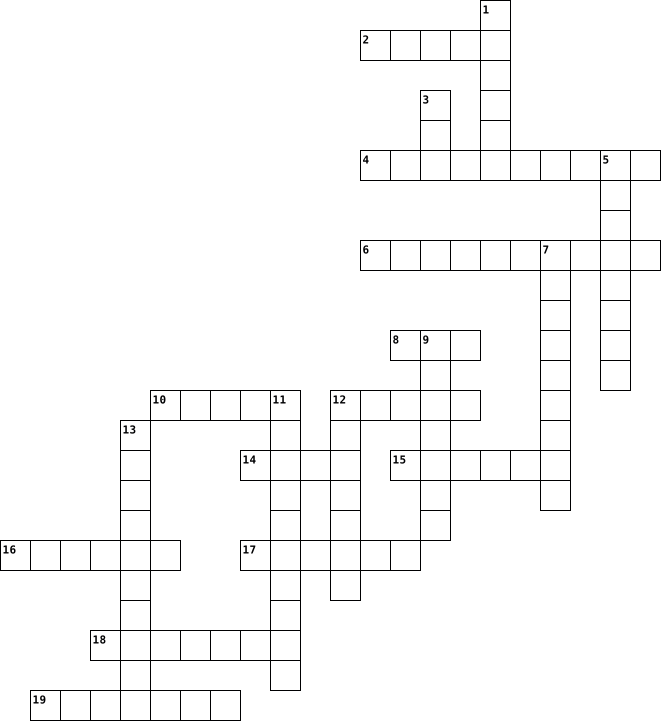
Across
- 43rd state
- Birth of Venus, Renaissance
- Fiery soft drink
- found in wood
- fave jean brand
- The Scream
- First festival
- Gives light
- How I improve my IQ
- Captures memories
- Eighth planet from sun
- billy Joel
Down
- swing restaurant
- Vampire
- smelly bags flower
- Best lip balm ever
- group of trees
- Diva's accessory
- Deo I use
- Fave artist
20 Clues: Vampire • Deo I use • 43rd state • The Scream • billy Joel • Fave artist • Gives light • found in wood • group of trees • First festival • fave jean brand • swing restaurant • Fiery soft drink • Diva's accessory • Captures memories • smelly bags flower • Best lip balm ever • How I improve my IQ • Eighth planet from sun • Birth of Venus, Renaissance
Romeo & Juliet - Key Terminology 2024-06-17

Across
- Medieval social system
- Concentrated authority
- Medieval farmers
- Legislative body
- Period of rebirth
- Making changes
- Respect and admiration
- Faithful allegiance
- Knightly code
- Logical thinking
Down
- belief in human potential and flourishing
- Authority or control
- Aristocratic landowners
- Process of learning
- Made into one
- Community of people
- Government official
- Engaged in conflict
- Kingdom's rule
- Rational argument
- Physical force
21 Clues: Made into one • Knightly code • Kingdom's rule • Making changes • Physical force • Medieval farmers • Legislative body • Logical thinking • Period of rebirth • Rational argument • Process of learning • Community of people • Government official • Engaged in conflict • Faithful allegiance • Authority or control • Medieval social system • Concentrated authority • Respect and admiration • ...
Art History Crossword Puzzle! 2013-03-18

Across
- Famous painting by Leondardo da Vinci
- Sculpted more contemporary and expressive statues of the same subject matter as Donatello
- Painted "Birth of Venus"
- The main goal of followers was to free the soul from the body
- Multi-talented artist who was also a botanist
- Religious panel piece done by Rogier van der Weyden
- Wealthy family from Florence who spurred on the Renaissance with their patronage of the arts
- Early Flemish 12 panel painting by Jan Van Eyck
- A picture or relief carving on three panels, typically hinged together vertically and used as an altarpiece.
- First Western painted portrait in 1000 years with subject looking directly at viewer
- Belgium, Netherlands, Luxemburg, and North France
- Monochrome grey painting used to imitate sculpture
- Association of craftsmen and artists who had considerable power.
Down
- First artist to do a self portrait seated at an easel
- Inhabitants of Flanders
- The use of a strong contrast of lights and darks in a painting
- "Master of Flemalle"
- "The first artist of the Renaissance"
- Colossal David sculptor
- Smokey blending of lines as opposed to harsh, bold lines
20 Clues: "Master of Flemalle" • Inhabitants of Flanders • Colossal David sculptor • Painted "Birth of Venus" • Famous painting by Leondardo da Vinci • "The first artist of the Renaissance" • Multi-talented artist who was also a botanist • Early Flemish 12 panel painting by Jan Van Eyck • Belgium, Netherlands, Luxemburg, and North France • ...
Saint George 2022-04-03

Across
- Quelle est l'œuvre littéraire la plus importante en France ?
- Que symbolise la fleur dans "Le Petit Prince" ?
- : Sur quoi Julio Verne a-t-il écrit ?
- Qui utilise sa littérature pour décrire les conditions humaines et les injustices dans la société
- Quelle est l'œuvre la plus importante de Victor Hugo ?
- Thème principal du roman " Les misérables"
- Un écrivain romantique
- Quel est le mouvement philosophique développé par Jean Paul Sartre?
- Qui a écrit l'œuvre littéraire "L'Étranger"
- De quand date la première littérature française ?
- Quel auteur littéraire a écrit le petit prince ?
Down
- Quel auteur est le plus connu du mouvement littéraire du naturalisme ?
- qui a écrit le religieux
- A quelle époque la poésie religieuse, officielle et amoureuse prédomine-t-elle ?
- Qui a écrit l'ouvrage littéraire "A la recherche du temps perdu"
- Qui a écrit l'ouvrage littéraire "Vingt-mille lieues sous les mers"
- Quel livre a été publié en 1943?
- un écrivain français de la Renaissance
- Quelle est la fleur qui apparaît dans "Le petit Prince" ?
- Quel est le genre littéraire de Papa Goriot ?
20 Clues: Un écrivain romantique • qui a écrit le religieux • Quel livre a été publié en 1943? • : Sur quoi Julio Verne a-t-il écrit ? • un écrivain français de la Renaissance • Thème principal du roman " Les misérables" • Qui a écrit l'œuvre littéraire "L'Étranger" • Quel est le genre littéraire de Papa Goriot ? • Que symbolise la fleur dans "Le Petit Prince" ? • ...
Literature and Poetry in the Harlem Renaissance 2022-03-30

Across
- A black woman who longs to be white
- black cultural mecca staring in the 1910's
- a slave revolt in Virginia
- Primary influence along with Carl Sandburg
- Wallace Truman was uncertain about the impacts of the ______
- Helped the African American Community by showing the raw perspective of their life and history.
- Who wrote a melodrama of Negro Life in Harlem?
- School Principal
- her writings were deemed "too black" and her main theme was ______
- The Golden Age manifests in ______
Down
- Used his mother as motivation for his studies
- first African-American woman to receive a Guggenheim Fellowship.
- one of the earliest innovators of the literary art form called jazz poetry.
- rejects the traditional American standards of writing
- The time and place that a poem or novel takes place
- What place ties all of these writers together?
- Worked at a school in Durham
- Langston Hughes can also be considered an ________
- Used his love for British poetry to influence his writing
- uplifted the culture of African Americans during the Harlem Renaissance
20 Clues: School Principal • a slave revolt in Virginia • Worked at a school in Durham • The Golden Age manifests in ______ • A black woman who longs to be white • black cultural mecca staring in the 1910's • Primary influence along with Carl Sandburg • Used his mother as motivation for his studies • What place ties all of these writers together? • ...
Geography review 2023-12-04

Across
- The Black Death was caused by Yersinia _______
- Capital of Belgium
- It's a famous embroidery, today held in France
- High-pressure areas are created when air ____
- The B in BOLTSS
- The capital of Australia
- This battle saw William become the Conqueror
- A fancy word for rain
- The most famous Renaissance man
- Belgium and Cambodia are both regions with this kind of ruler
- Canada is _____ of the equator
- our continent
- To be counted as this, a city needs 10 million people
- These invisible lines go north to south
Down
- An area defined by its soil, climate, flora and fauna
- Russia is on both the European continent and this
- Low-pressure areas are created when air ____
- how many points does a compass rose have?
- The capital of our state
- Luanda is the capital of this nation
- The biggest line of latitude
- What a compass shows on a map
- the largest ocean
- This continent has 54 countries!
- Australia is _____ of the equator
- The birthplace of the Renaissance
- a product/service produced in one country but sold overseas
27 Clues: our continent • The B in BOLTSS • the largest ocean • Capital of Belgium • A fancy word for rain • The capital of our state • The capital of Australia • The biggest line of latitude • What a compass shows on a map • Canada is _____ of the equator • The most famous Renaissance man • This continent has 54 countries! • Australia is _____ of the equator • The birthplace of the Renaissance • ...
Art and Artists 2 2023-11-26

Across
- HOLBEIN: German Renaissance painter known for his portraits.
- French painter and sculptor, associated with Art Brut.
- American painter and printmaker, a significant figure in minimalism.
- Italian Baroque painter known for his realistic depiction of religious subjects.
- British artist associated with Op Art.
- Russian-French modernist artist known for his dreamlike paintings.
- French Romantic painter known for Liberty Leading the People.
- American abstract expressionist painter known for his color field paintings.
- KUSAMA: Japanese contemporary artist known for her avant-garde work.
- Italian painter and architect from the Gothic and Proto-Renaissance periods.
Down
- Russian painter and art theorist, a pioneer of abstract art.
- American Impressionist painter, known for her depictions of mother and child.
- Spanish Surrealist painter and sculptor.
- Dutch abstract painter, a key figure in De Stijl movement.
- BASQUIAT: American artist and graffiti painter.
- Armenian-American abstract expressionist painter.
- German-French sculptor and painter, a key figure in Dadaism.
- French-American painter and sculptor associated with Dadaism.
- Russian avant-garde artist and art theorist.
- German artist, known for her expressionist prints and sculptures.
20 Clues: British artist associated with Op Art. • Spanish Surrealist painter and sculptor. • Russian avant-garde artist and art theorist. • BASQUIAT: American artist and graffiti painter. • Armenian-American abstract expressionist painter. • French painter and sculptor, associated with Art Brut. • Dutch abstract painter, a key figure in De Stijl movement. • ...
Project #3 2020-10-25

Across
- first name of artist; Mona Lisa, The Last Supper
- What literary genre was popular during the 16th century;used by Erasmus, More and Cervantes?
- location of High Renaissance
- father of literacy form;essay
- In what city did Calvin establish his theocratic state
- gradations of light and shade; gives 3D quality
- artist of Birth of Venus ; La Primavera
- The chorale is primarily associated with?
Down
- Northern Renaissance painter is notable for his limited interest in religious subject matter and preference for scenes of normal people in ordinary situations?
- master printmaker;16th century
- Who did Shakespeare model his own sonnets on?
- first name of artist; David, Moses, The Last Judgement
- artist of Arnolfini Wedding
- pandemic;rats
- Salvation was earned through the performance of good works and _____ mediated by the Church and its priesthood.
- first name of artist The Alba Madonna ; The School of Athens
- last name of creator of Gates of Heaven
- artist of The Explusion of Adam and Eve from Eden; The Holy Trinity
- author of a collection of tales Petrarch humanism,translator; canzoniere
- blurring of contours
20 Clues: pandemic;rats • blurring of contours • artist of Arnolfini Wedding • location of High Renaissance • father of literacy form;essay • master printmaker;16th century • last name of creator of Gates of Heaven • artist of Birth of Venus ; La Primavera • The chorale is primarily associated with? • Who did Shakespeare model his own sonnets on? • ...
Project #3 2020-10-25

Across
- author of a collection of tales
- gradations of light and shade; gives 3D quality
- first name of artist; Mona Lisa, The Last Supper
- Who did Shakespeare model his own sonnets on?
- Northern Renaissance painter is notable for his limited interest in religious subject matter and preference for scenes of normal people in ordinary situations?
- What literary genre was popular during the 16th century;used by Erasmus, More and Cervantes?
- humanism,translator; canzoniere
- father of literacy form;essay
- pandemic;rats
Down
- first name of artist; David, Moses, The Last Judgement
- blurring of contours
- In what city did Calvin establish his theocratic state
- last name of creator of Gates of Heaven
- location of High Renaissance
- artist of The Explusion of Adam and Eve from Eden; The Holy Trinity
- The chorale is primarily associated with?
- artist of Birth of Venus ; La Primavera
- Salvation was earned through the performance of good works and _____ mediated by the Church and its priesthood.
- first name of artist The Alba Madonna ; The School of Athens
- artist of Arnolfini Wedding
- master printmaker;16th century
21 Clues: pandemic;rats • blurring of contours • artist of Arnolfini Wedding • location of High Renaissance • father of literacy form;essay • master printmaker;16th century • author of a collection of tales • humanism,translator; canzoniere • last name of creator of Gates of Heaven • artist of Birth of Venus ; La Primavera • The chorale is primarily associated with? • ...
Crossword clues 2024-05-08

Across
- who created the statue of david?
- when was the printing press made?
- Who discovered gravity?
- A religious reform called the what?
- what country found the most gold in the americas?
- what did the spanish and europeans want from the natives?
- who destroyed the aztec empire?
- could use stars to find their exact location?
- people who broke from the catholic church?
- Guy who made mona lisa?
- what queen helped christopher columbus?
- who created the printing press?
- Who said the earth orbits the sun?
Down
- famous writer of plays?
- period of creativity,insiration,and ideas is what?
- what age did the scientific revolution lead to?
- what year did columbus have his voyage to america?
- series of events that led to modrn science? 1
- series of reforms known as the what?
- is the first person to try to travel around the world?
- where did the renaissance start?
- is to travel all the way around?
- the use of reason in shaping peoples ideas about society and politics defined a period called the what?
- another name for america?
24 Clues: famous writer of plays? • Who discovered gravity? • Guy who made mona lisa? • another name for america? • who destroyed the aztec empire? • who created the printing press? • who created the statue of david? • where did the renaissance start? • is to travel all the way around? • when was the printing press made? • Who said the earth orbits the sun? • ...
Medieval and Renaissance Era 2024-03-07

Across
- "When Adam delved and Eve spanned"
- Inventor, Renaissance man, and artist
- The art of speaking well and being persuasive
- Whipped themselves to avoid God's wrath
- The place where the pop was moved to for 40 years
- Wrote "The Prince" and promoted Real Politik
- "We few, we happy few, we band of brothers"
- English professor and early predecessor to Luther
- A colorful painter
- Re-birth of ancients
Down
- Where a group of peasants on a hill slaughter France's lords
- To make hard things look easy
- The plague that killed one third of Europe
- The greatest sculptor ever?
- A celebration of man's dignity and excellence
- A peasant girls who had visions and led an army
- Father of humanism and first to hike up a hill
- Use to defeat French in every major battle of Hundred Years
- Where a group of peasants in a muddy field slaughter France's lords
- Medieval structure of society
- A rude peasant to the King of England who led revolt
- Someone who pays artists to make art and has a lot of money
22 Clues: A colorful painter • Re-birth of ancients • The greatest sculptor ever? • To make hard things look easy • Medieval structure of society • "When Adam delved and Eve spanned" • Inventor, Renaissance man, and artist • Whipped themselves to avoid God's wrath • The plague that killed one third of Europe • "We few, we happy few, we band of brothers" • ...
Unit 8 Review 2023-01-31

Across
- The _______ R’s (relief, recovery, reform)
- First "true" American music.
- Style of government/economics where private owners regulate the economy
- Severe _____ storms that ravaged the Midwest during the Great Depression
- During the Red Scare, _____ was restricted.
- 19th amendment, ______ suffrage.
- Shantytowns during the Great Depression
- Acronym for the 32nd President, created a "New Deal" to help struggling Americans
- The _____ twenties were a period of rapid social/economic change
- Ford's production of the Model T is revolutionized by the _______ line.
Down
- Secret bars run by the mob during prohibition.
- 18th amendment, alcohol is banned.
- Fear of communism in the U.S. led to the ___ scare.
- An intellectual revival of African American culture was the _______ Renaissance.
- The United States began to form a unified ______ in the 1920s.
- Poet/leader of the Harlem Renaissance, ______ Hughes.
- Violent incidents led to the U.S. government leading the ______ raids against suspected "radicals"
- Henry Ford mass produces the _____ T.
- nationwide campaigns on the radio/magazines.
- Style of government/economics where the state regulates the economy
- Women of the 20s who adopt new attitudes, fashion
- Founder of Communism
22 Clues: Founder of Communism • First "true" American music. • 19th amendment, ______ suffrage. • 18th amendment, alcohol is banned. • Henry Ford mass produces the _____ T. • Shantytowns during the Great Depression • The _______ R’s (relief, recovery, reform) • During the Red Scare, _____ was restricted. • nationwide campaigns on the radio/magazines. • ...
Unit 8 Review 2023-01-31

Across
- The _______ R’s (relief, recovery, reform)
- First "true" American music.
- Style of government/economics where private owners regulate the economy
- Severe _____ storms that ravaged the Midwest during the Great Depression
- During the Red Scare, _____ was restricted.
- 19th amendment, ______ suffrage.
- Shantytowns during the Great Depression
- Acronym for the 32nd President, created a "New Deal" to help struggling Americans
- The _____ twenties were a period of rapid social/economic change
- Ford's production of the Model T is revolutionized by the _______ line.
Down
- Secret bars run by the mob during prohibition.
- 18th amendment, alcohol is banned.
- Fear of communism in the U.S. led to the ___ scare.
- An intellectual revival of African American culture was the _______ Renaissance.
- The United States began to form a unified ______ in the 1920s.
- Poet/leader of the Harlem Renaissance, ______ Hughes.
- Violent incidents led to the U.S. government leading the ______ raids against suspected "radicals"
- Henry Ford mass produces the _____ T.
- nationwide campaigns on the radio/magazines.
- Style of government/economics where the state regulates the economy
- Women of the 20s who adopt new attitudes, fashion
- Founder of Communism
22 Clues: Founder of Communism • First "true" American music. • 19th amendment, ______ suffrage. • 18th amendment, alcohol is banned. • Henry Ford mass produces the _____ T. • Shantytowns during the Great Depression • The _______ R’s (relief, recovery, reform) • During the Red Scare, _____ was restricted. • nationwide campaigns on the radio/magazines. • ...
Discover Italy: Cities, Regions, and Wonders 2025-05-06

Across
- Coastal region with Cinque Terre
- Northern lake with luxury villas
- Ancient Roman amphitheatre in Rome
- Sea cave on the island of Capri
- Mountain range in the north
- Greek temples in Agrigento
- Cluster of five seaside villages
- Home to the Sistine Chapel
- Famous basilica in Vatican City
- Region known for beaches and trulli
- Largest lake in Italy
- Region known for vineyards and art
- Public park and gallery in Rome
- Monumental staircase in Rome
- Fashion capital of Italy
Down
- City of Romeo and Juliet
- City of art and the Renaissance
- Renaissance villa with fountains
- Capital city of Italy
- Roman temple with a massive dome
- Capital city of Sicily
- Region with Naples and Pompeii
- Volcano near Naples
- City near Mount Vesuvius
- City of canals and gondolas
- Ancient city buried by Vesuvius
- City known for food and arcades
- Region with Milan and lakes
- Impressive underground cave system
- Scenic coastline with colourful towns
- Iconic fountain where wishes are made
- Largest island in the Mediterranean
32 Clues: Volcano near Naples • Capital city of Italy • Largest lake in Italy • Capital city of Sicily • City of Romeo and Juliet • City near Mount Vesuvius • Fashion capital of Italy • Greek temples in Agrigento • Home to the Sistine Chapel • City of canals and gondolas • Mountain range in the north • Region with Milan and lakes • Monumental staircase in Rome • Region with Naples and Pompeii • ...
Timeline of reformation, renaissance, and scientific revolution 2024-11-06

Across
- What was the purpose of the Council of Trent?
- What did Andreas Vesalius study to learn more about the human body?
- What did the Peace of Augsburg allow rulers to do in the Holy Roman Empire?
- What is Leonardo da Vinci known for?
- Who wrote The Prince a book about political power?
- What is a Protestant?
- What did Johannes Gutenberg invent?
- Who started the Reformation by posting the 95 Theses?
Down
- What is Humanism
- What did Martin Luther want to change about the Catholic Church?
- What religious group did John Calvin start?
- Who used a telescope to study the stars and got in trouble with the Church?
- What does the word "Renaissance" mean?
- da Vinci Who painted the Mona Lisa?
- How did the printing press help spread Reformation ideas?
- What does the heliocentric theory say about the sun and the planets?
- Where did the Renaissance begin?
- Who developed the scientific method?
- What was the Counter-Reformation?
- What was the main reason King Henry VIII created the Church of England?
20 Clues: What is Humanism • What is a Protestant? • Where did the Renaissance begin? • What was the Counter-Reformation? • da Vinci Who painted the Mona Lisa? • What did Johannes Gutenberg invent? • What is Leonardo da Vinci known for? • Who developed the scientific method? • What does the word "Renaissance" mean? • What religious group did John Calvin start? • ...
Renaissance, Reformation, and Scientific Revolution Crossword Puzzle 2024-11-06

Across
- Discovered the circulation of blood in the human body.
- Who started the Reformation by nailing his ideas onto a church door?
- What invention made it easier to make lots of book copies?
- GEO =_____?
- Discovered the laws of motion and gravity.
- What study looks at the parts of the human body?
- Developed the heliocentric theory.
- Invented the first functional telescope.
Down
- Who included themselves in their painting, “The School of Athens?”
- What did Martin Luter nail to the church door?
- What book was more affordable to people during the Reformation?
- A Revolution is a complete what?
- Which Renaissance artist painted the Mona Lisa and the Last Supper?
- What theory says that the Sun is at the center of our solar system?
- What huge change in religion started new churches?
- What city is considered the birthplace of the Renaissance?
- What did Galileo discover orbiting Jupiter?
- Who says the quote, “I think, therefore I am?”
- What movement focused on human achievements?
- Galileo discovered that objects fall at the same _____?
20 Clues: GEO =_____? • A Revolution is a complete what? • Developed the heliocentric theory. • Invented the first functional telescope. • Discovered the laws of motion and gravity. • What did Galileo discover orbiting Jupiter? • What movement focused on human achievements? • What did Martin Luter nail to the church door? • Who says the quote, “I think, therefore I am?” • ...
The Renaissance chapters 1-5 2025-10-07

Across
- the period in time after the Dark Ages
- watercolor painting done on fresh plaster
- small locations organized by government
- the art and science of designing and building structures
- the leader in a republic
- Sea sea located near Italy
- money paid for forgiveness
- added more than 1,000 books to the Vatican library
- people who make art by carving and chiseling
- during this time work was assigned and bosses took credit for it
- a center of great thinkers and artists
- people of low status who don't take credit for their work
- city built on islands in shallow water
Down
- headquarters of the Roman Catholic church
- people who study the arts and literature
- person whose job was to protect Christian believers
- famous Italian artist
- what people from Venice are called
- a strong military leader
- products traded such as jewelry and glass
- the largest organization during the Renaissance
- son of Giovanni Medici
- wealthy merchant family in Florence that developed banking
- flat-bottomed navy ships
- sea located near Italy
25 Clues: famous Italian artist • son of Giovanni Medici • sea located near Italy • a strong military leader • the leader in a republic • flat-bottomed navy ships • Sea sea located near Italy • money paid for forgiveness • what people from Venice are called • the period in time after the Dark Ages • a center of great thinkers and artists • city built on islands in shallow water • ...
Vocab #i_lost_count 2025-05-07

Across
- age similar to the Renaissance
- To convince someone to do or believe something you said was right or wrong
- Similar to Plateau
- The period of European history between the 14th and 17th centuries marked by a flourishing of art and literature inspired by ancient times and by the beginnings of modern science
- To call to remembrance
- When you combine two things into one
- Composed of elements drawn from various sources
- To make series of changes in direction and position for a specific purpose
- A region of little or no change in a graphic representation
Down
- To have a worry on something
- To waver in mind, will, or feeling
- To gather a bunch of people to make a surprise for a specific event (like a birthday party)
- To determine on something about whether or not its right or wrong
- A state of perplexity or doubt
- Given to, or, characterized by insolent rudeness
- Ninjago
16 Clues: Ninjago • Similar to Plateau • To call to remembrance • To have a worry on something • A state of perplexity or doubt • age similar to the Renaissance • To waver in mind, will, or feeling • When you combine two things into one • Composed of elements drawn from various sources • Given to, or, characterized by insolent rudeness • ...
Firenze: I cibi e le arte 2024-04-05

Across
- Basilico
- art, L’arte occidentale
- Grigliato
- Aglio
Down
- Rinascimento
- Last Supper, L'Ultima Cena
- Mecenatismo
- Biscotti
- Nocciola
- Ritratti
10 Clues: Aglio • Basilico • Biscotti • Nocciola • Ritratti • Grigliato • Mecenatismo • Rinascimento • art, L’arte occidentale • Last Supper, L'Ultima Cena
Interwar Years Vocabulary 2022-01-19

Across
- Tuesday- the day the stock market crashed
- someone who makes and sells illegal alcohol
- liking native born people more than immigrants.
- no private property; usually a dictatorship
- Depression- Period where teh economy collapsed
- Making alcohol illegal.
- changing things so a depression didn't happen again; goal of the New Deal.
- women of the 1920s who dressed and acted more independently.
- fixing the economy; goal of teh depression
- Renaissance- cultural movement in the 1920s; celebrated how hard life was and tried to build a new black identity
Down
- buying up consumer goods like cars and radios
- Hughes- Harlem Renaissance poet
- Armstrong- Jazz musician who put European and African music together.
- wanting to stay out of foreign wars
- helping people struggling from the depression; goal of the New Deal
- Army- World War I veterans who protested loss of bonuses during the Depression. They were attacked in Washington by the Army
- underground bars where illegal alcohol was sold
- Deal: Franklin Delano Roosevelt's plans for fixing the Great Depression.
18 Clues: Making alcohol illegal. • Hughes- Harlem Renaissance poet • wanting to stay out of foreign wars • Tuesday- the day the stock market crashed • fixing the economy; goal of teh depression • someone who makes and sells illegal alcohol • no private property; usually a dictatorship • buying up consumer goods like cars and radios • Depression- Period where teh economy collapsed • ...
Renaissance CrossWord 2025-12-06

Across
- in the ad
- founder of renaissance art/patting
- time period
Down
- Europe,Asia,Afica-others are unknow and uninhabitable
- head church
- Richest,and most powerful family
- black,yellow bile,blood,and phlegm
7 Clues: in the ad • head church • time period • Richest,and most powerful family • black,yellow bile,blood,and phlegm • founder of renaissance art/patting • Europe,Asia,Afica-others are unknow and uninhabitable
Abby Brown - Prologue 2020-09-14

Across
- based on the teachings of prophet Muhammed
- framers divided the powers of the gov
- gov. divided into three branches
- developed by roman christianity
- a cultural movement in italy
- a government ruled by few powerful people
- made up by patricians
- citizen elect reps to make decisions
- international organization
- kings power came from god
- citizens rule and make laws directly
- rulers powers are restricted
- a government ruled by the people
- law work in orderly ways
Down
- a code given to Moses
- agreement among members in society
- turning point in englands consitiution
- nobles gave demands to the king in this
- religion of the Hebrews
- the full bloom of the renaissance
- a system to control the people
- englands national legislature
- summary of rights and libertys of the people
- customs or principles established over time
- a king or queen ruled government
- thinkers applied science to all of society
- a religion founded by jesus
- rule of the people
- the right of life, liberty and property
- citizens elect their leaders
30 Clues: rule of the people • a code given to Moses • made up by patricians • religion of the Hebrews • law work in orderly ways • kings power came from god • international organization • a religion founded by jesus • a cultural movement in italy • citizens elect their leaders • rulers powers are restricted • englands national legislature • a system to control the people • ...
Chapter 12 Crossword Puzzle 2022-05-17

Across
- the native language of the region
- a piece of architecture that symbolism of freedom
- development of many branches
- an early humanist leader
- nonreligious
- to give importance to humans over supernatural beings
- Schism, a split in the church
- Age, the reign of Queen Elizabeth I
- de Vinci, a Renaissance man and painted the Mona Lisa
- a person who supports financial support
- one of the rich families in Florence
- Church of England
- head of the Roman Catholic church
- press, a machine that prints text with types and plates
Down
- of Trent, a meeting of Church officials and scholars
- the movement Martin Luther began
- forgiveness of a sin given by church
- followers of the Society of Jesus
- Henry VII, formed Anglicanism
- Lisa, one of the most famous paintings by Leonardo da Vinci
- a person sent on a religious mission
- Gutenberg, developer of the printing press
- denial of church teachings
- the rebirth of the human spirit
- one who supported Luther’s ideas
- originally from Spain they were the strongest patrons in Rome
- mapmaking
27 Clues: mapmaking • nonreligious • Church of England • an early humanist leader • denial of church teachings • development of many branches • Henry VII, formed Anglicanism • Schism, a split in the church • the rebirth of the human spirit • the movement Martin Luther began • one who supported Luther’s ideas • the native language of the region • followers of the Society of Jesus • ...
1920S Review (Rohan & Brett) 2024-01-31

Across
- Was used to broadcast sports, news, and weather
- Was a writer who captured the struggles and strengths of poor immigrants
- She painted city scenes in her artwork
- What part of the country did the African Americans migrate to
- Played the horn and was known for his gravelly singing voice
- The amendment that made alcohol illegal
- Was used to communicate with other people without being at the same place with them
- The amendment that ended prohibition
Down
- A group of people that own a place and illegally sell alcohol
- One of the most famous jazz musicians
- Getting electricity to homes and businesses
- The time that African Americans expressed themselves by art,music, and dance
- Created by Henry Ford
- Who were expressing themselves during the renaissance
- An African American Poet and Writer
- A group of people who hated and even killed African Americans
- A silent black and white screen
- Laws that African Americans moved to the north because of
- Helps get water inside of your house instead of having to go outside to get water
- What time was the harlem renaissance
20 Clues: Created by Henry Ford • A silent black and white screen • An African American Poet and Writer • What time was the harlem renaissance • The amendment that ended prohibition • One of the most famous jazz musicians • She painted city scenes in her artwork • The amendment that made alcohol illegal • Getting electricity to homes and businesses • ...