
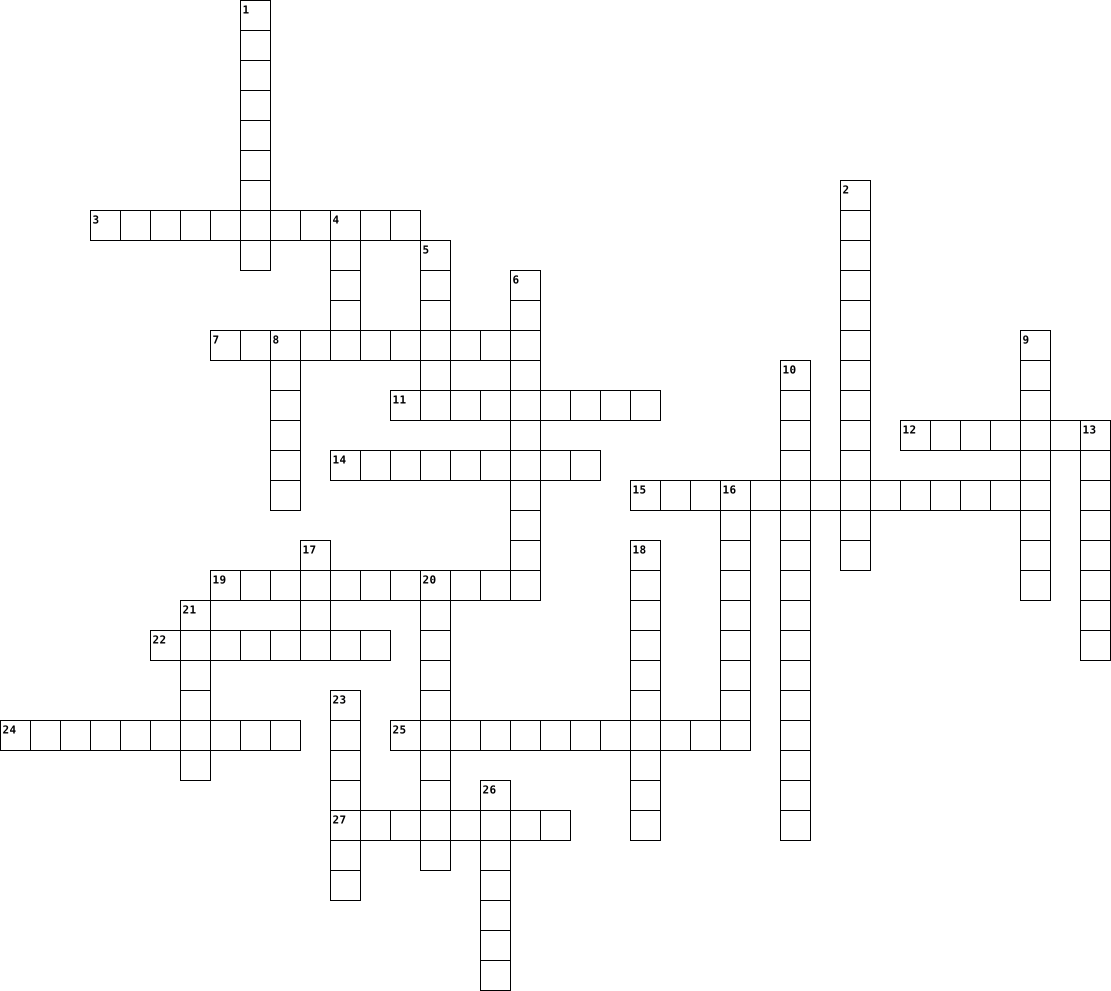
skeletal system Crossword Puzzles
The Skeletal System 2020-11-06

Across
- fracture that is either complete or incomplete but does penetrate the skin
- fracture common in children; usually incomplete
- cells in bone marrow that build/form new bone
- also known as an open fracture that penetrates the skin
- the parts of the skeleton that include the shoulders and pelvis
- injury that occurs when normal position of the joint or part of the body is disturbed
- on average, 206 bones make this up
- main part of the skeleton that include the head and trunk; skull spine, ribs, sternum
- irregular body part
Down
- bone that breaks down bone tissue to repair and remodel the bone structure
- a "break" in the bone caused by too much external force
- fracture that results in shattered bone
- humerus, radius, ulna, metacarpal, phalanges, metatarsal, tibia, fibula, femur
- metabolic process where bone breaks down by osteoclasts
- surgical procedure that issue to repair a fracture or dislocation to the correct alignment
- bones in cranial bones, sternum, scapulae, ribs
- bones that differ in shape and structure
- layer of
18 Clues: layer of • irregular body part • on average, 206 bones make this up • fracture that results in shattered bone • bones that differ in shape and structure • cells in bone marrow that build/form new bone • fracture common in children; usually incomplete • bones in cranial bones, sternum, scapulae, ribs • a "break" in the bone caused by too much external force • ...
Skeletal System 2 2023-04-24

Across
- front teeth on the upper and lower jaw
- teeth that will remain for the majority of the life of the animal
- incomplete break caused by bending of the bone in an arc shape; a break most commonly found in long bones
- bone which breaks and pierces the skin
- break that occurs only a portion of the way through the bone
- the act of leaving one location through a barrier
- break due to the twisting of the shaft of the bone; bone can be broken anywhere and break can lead to oblique, comminuted or fissured breaks, as well
- falling down or falling out, in regards to dental work; non-permanent teeth
- bone which breaks all the way through.
- strong band of connective tissue which connect bone to other bone at joint
Down
- location where two bones meet
- complete break across the bone and perpendicular to the bone
- connective tissues which connect muscles to bones at a joint (When the muscle contracts, the tendon pulls the bone in the direction of the contraction.)
- soft, shock absorbing substance which covers the ends of bones and reduces bone-on-bone injury; also, connective tissue that becomes bone with age
- complete break at multiple points; also known as “shattered”
- incomplete break parallel to the bone and often caused by bones pushing against other bones
- teeth in the back of the mouth, specifically used for grinding
- bone that breaks at any point but does not pierce the skin
18 Clues: location where two bones meet • front teeth on the upper and lower jaw • bone which breaks and pierces the skin • bone which breaks all the way through. • the act of leaving one location through a barrier • bone that breaks at any point but does not pierce the skin • complete break across the bone and perpendicular to the bone • ...
The Skeletal System 2015-02-07

Across
- the everyday name for mandible
- the bones that enclose and protect the spinal cord
- another name for your collarbone
- there are 206 of these in the body
- the name of the unit we are learning
- where two or more bones meet
- the scientific name for kneecap
- another name for your backbone
Down
- ears and tips of noses are made of this
- the scientific name for your upper arm bone
- the scientific name for breastbone
- where new blood cells are made
- the everyday name for your tibia
- tough bands that tie the moveable joints together
- the everyday name for coccyx
- the flat bones on your back that move when you move your shoulder
- the scientific name for thighbone
- protects the brain
18 Clues: protects the brain • the everyday name for coccyx • where two or more bones meet • the everyday name for mandible • where new blood cells are made • another name for your backbone • the scientific name for kneecap • another name for your collarbone • the everyday name for your tibia • the scientific name for thighbone • the scientific name for breastbone • ...
The Skeletal System 2023-11-16

Across
- Round bones are ____ and hard.
- The Skeletal system provides _______ and Protection.
- The only bone in the thigh.
- Flat bones shield vital ______.
- A ball and socket bone that connects your torso to your arms.
- A bunch of bones that work together to protect your brain.
- The first name of the person who made this puzzle. (To show that it's original)
- There are ___ pelvic girdle bones.
Down
- A hinge bone that helps your leg bend.
- Flat bones are ________ so they can bend but not break.
- Flat bones _______ vital organs.
- Ribs and the skull are both ____ bones.
- There are _____ upper and lower limb bones.
- Your limbs have _____ bones in them.
- They have saddle bones and are on your feet.
- Pivot bones in the middle of your back.
- Bones that protect your lungs.
- A Hinge bone that helps your arm bend.
18 Clues: The only bone in the thigh. • Round bones are ____ and hard. • Bones that protect your lungs. • Flat bones shield vital ______. • Flat bones _______ vital organs. • There are ___ pelvic girdle bones. • Your limbs have _____ bones in them. • A hinge bone that helps your leg bend. • A Hinge bone that helps your arm bend. • Ribs and the skull are both ____ bones. • ...
Skeletal/Muscular System 2024-01-10

Across
- The bone in your upper leg/thigh
- Strong skeletal tissue that cushions joints
- The smallest living part of an organism
- The wide, flat bone in your hips
- Bones that connect to sternum and protect heart, lungs, and stomach
- Hard, living tissue
- A place where two or more bones come together
- The small bones in your fingers and toes
- Cord Bundle of nerve tissue that carries messages from the brain
- The kneecap
Down
- The bone in the head that protects your brain
- A tissue that moves a part of the body
- A crack or break in a bone
- The group of bones forming the frame for your body
- A group of cells working together
- Bone in center of chest that protects heart and lungs
- Band of tissue that connects bones at the joint
- Soft material in the center of bones that makes new blood cells
18 Clues: The kneecap • Hard, living tissue • A crack or break in a bone • The bone in your upper leg/thigh • The wide, flat bone in your hips • A group of cells working together • A tissue that moves a part of the body • The smallest living part of an organism • The small bones in your fingers and toes • Strong skeletal tissue that cushions joints • ...
Skeletal System Bones 2023-10-31

Across
- attaches muscle for movement of the hand and elbow
- helps move the legs and protects knee joints
- helps the movement of the arm and wrist
- type of skeleton in the human body
- part of the skull that encloses and protects the brain
- balance and supports the upper half of the body
- form foot arches to bear and support body weight
- helps us balance and running, aka toes
- allows organisms to grip and hold objects
- aids in the stability of the ankle joint
Down
- protects organs in the chest from damage
- support the head and distributes body weight
- allow motion and helps protect the arms from force
- support muscle, nerves, and tendons in the palm
- soft connective tissue found in the spaces of the bones
- flexible tissue on the surface of joints
- place where two or more bones meet
- allows protection, retraction, and rotation of the arm
- main element that makes up the skeletal system
19 Clues: type of skeleton in the human body • place where two or more bones meet • helps us balance and running, aka toes • helps the movement of the arm and wrist • protects organs in the chest from damage • flexible tissue on the surface of joints • aids in the stability of the ankle joint • allows organisms to grip and hold objects • support the head and distributes body weight • ...
The skeletal System 2024-09-09

Across
- This movement is when the angle at the joint has increased
- This type of bone allows for muscle attachment
- This type of joint only allows flexion and extension
- This type of joint is found in the wrist
- This function of the skeletal system reduces the chance of injury
- This type of joint is found in the neck
- This is a flat bone is found in the centre of the chest
- This movement is when the angle at the joint has decreased
- This movement is when the body part moves towards the body
- The bone is in the upper arm
Down
- This is the longest, long bone, in the body
- These bones are in the wrist and responsible for weight bearing
- This joint allows for the greatest amount of movement and is found in the hip
- This connective tissue joins bones to muscles
- This movement is when the body part moves away from the body
- This movement is when the toes are pointing up and the angle at the joint has decreased. It only occurs at the foot
- This connective tissue joins bones to bones
- This bone is a flat bone in the back
18 Clues: The bone is in the upper arm • This bone is a flat bone in the back • This type of joint is found in the neck • This type of joint is found in the wrist • This is the longest, long bone, in the body • This connective tissue joins bones to bones • This connective tissue joins bones to muscles • This type of bone allows for muscle attachment • ...
The Skeletal System 2024-11-08

Across
- hollow spaces that connect with each other
- mass of nerve tissue well protected by membranes and the cranium
- Basic structural unit of the nervous system
- areas where cranial bones have joined together
- combination of many nerve fibers
- collarbones
- three membranes that cover and protect the brain and spinal cord
- wrist
- shoulder bones
Down
- protect spinal cord
- soft spots
- the openings in bones that allow nerves and blood vessels to enter or leave the bone
- regulates and controls the autonomic nervous system
- section located below the midbrain and in the brainstem
- upper arm
- Largest and highest section of the brain
- acts as a relay center
- air spaces in the bones of the skull
18 Clues: wrist • upper arm • soft spots • collarbones • shoulder bones • protect spinal cord • acts as a relay center • combination of many nerve fibers • air spaces in the bones of the skull • Largest and highest section of the brain • hollow spaces that connect with each other • Basic structural unit of the nervous system • areas where cranial bones have joined together • ...
The Skeletal System 2025-09-23

Across
- forms the lower jawbone
- the uppermost and largest bone of the arm
- shoulder blade
- cheekbones
- breastbone
- the smallest and most fragile bones of the face
- an elastic bony cage that serves as a protective framework
- the smaller bone in the forearm on the same side as the thumb
- forms the bridge of the nose
Down
- wrist
- collarbone
- form the upper jaw
- the 7 bones of the top part of the vertebral column
- U-shaped bone at the base of the tongue
- palm
- the inner and larger bone of the forearm
- 12 pairs of bones forming the wall of the thorax
- digits
18 Clues: palm • wrist • digits • collarbone • cheekbones • breastbone • shoulder blade • form the upper jaw • forms the lower jawbone • forms the bridge of the nose • U-shaped bone at the base of the tongue • the inner and larger bone of the forearm • the uppermost and largest bone of the arm • the smallest and most fragile bones of the face • 12 pairs of bones forming the wall of the thorax • ...
Skeletal and Muscular System 2026-02-24

Across
- These muscles control the organs within your body (one of the 3 types of muscles)
- Protects the brain
- Acts as a cushion where bones meet. It is soft, connective tissue on the end of some bones
- Supports framework and protects vital organs (Hint: system
- Protects the heart and lungs
- The Muscular system is made up of muscles and _____.
- Automatically moves without you knowing
Down
- The point where two bones meet
- You control the movements
- Tough fiber that connects bones and muscles together
- Skeletal and Muscular system work together to create _____.
- Made up of muscles and tendons (Hint: system)
- Protects the abdomen
13 Clues: Protects the brain • Protects the abdomen • You control the movements • Protects the heart and lungs • The point where two bones meet • Automatically moves without you knowing • Made up of muscles and tendons (Hint: system) • Tough fiber that connects bones and muscles together • The Muscular system is made up of muscles and _____. • ...
Human body 2025-10-12

Across
- system-that-helps-in-breathing
- where-the-food-goes-after-eating
- system-that-is-voluntary-or-involuntary
- system-that-breaks-down-food
- food-passes-through-me
- system-that-helps-create-new-life
- group-of-tissues
- largest-organ
Down
- system-that-handles-heart-blood
- group-of-cells
- system-that-protects-the-organs
- system-that-helps-remove-waste
- system-that-helps-you-think-blink-feel-hot-or-cold
- pumps-blood
- help-in-breathing-in-and-out
- smallest-building-block
16 Clues: pumps-blood • largest-organ • group-of-cells • group-of-tissues • food-passes-through-me • smallest-building-block • system-that-breaks-down-food • help-in-breathing-in-and-out • system-that-helps-in-breathing • system-that-helps-remove-waste • system-that-handles-heart-blood • system-that-protects-the-organs • where-the-food-goes-after-eating • system-that-helps-create-new-life • ...
Body Systems HW 2023-02-16

Across
- THE TYPE OF MUSCLE THAT MAKES UP YOUR ORGANS
- DIGESTIVE ORGAN THAT ABSORBS WATER AND COMPACTS THE SOLID WASTE
- TISSUE THAT CONNECTS BONE TO BONE
- THE BODIES FIRST LINE OF DEFENSE
- THE OUTSIDE LAYER OF SKIN
- DIGESTIVE ORGAN THAT ABSORBS NUTRIENTS
- COLLETION OF NERVE CELLS
- THE BLOOD VESSEL THAT TAKES BLOOD WITH OXYGEN AWAY FROM THE HEART
- YOUR HEART IS WHAT FORM OF MUSCLE
- THICKEST LAYER OF SKIN THAT HOUSES TISSUE
Down
- THE TYPE OF MUSCLE THAT CONNECTS TO YOUR BONES
- THE FAT LAYER OF SKIN THAT KEEPS BODY WARM ATTACHED TO MUSCLE
- THE POUCH THAT HOLDS URINE
- THE BLOOD VESSEL THAT TAKES BLOOD WITH CARBON DIOXIDE BACK TO THE HEART
- ORGANS OF THE SKELETAL SYSTEM INCLUDE BONES AND -
- THE COMMUNICATION OF NEURONS IS CALLED
- THE ENDOCRINE SYSTEM RELEASES ____ THROUGH GLANDS
- YOUR CENTRAL NERVOUS SYSTEM IS MADE UP OF YOUR BRAIN YOUR ___ ____
- TISSUE THAT CONNECTS MUSCLE TO BONE
- THE ORGAN OF THE EXCRETORY SYSTEM THAT FILTERS BLOOD
- THE MUSCLE THAT HELPS CONTRACT AND EXPAND THE LUNGS FOR BREATHING
21 Clues: COLLETION OF NERVE CELLS • THE OUTSIDE LAYER OF SKIN • THE POUCH THAT HOLDS URINE • THE BODIES FIRST LINE OF DEFENSE • TISSUE THAT CONNECTS BONE TO BONE • YOUR HEART IS WHAT FORM OF MUSCLE • TISSUE THAT CONNECTS MUSCLE TO BONE • THE COMMUNICATION OF NEURONS IS CALLED • DIGESTIVE ORGAN THAT ABSORBS NUTRIENTS • THICKEST LAYER OF SKIN THAT HOUSES TISSUE • ...
Muscular System 2022-05-06

Across
- Location of the skeletal muscle
- Muscle that pumps blood through cardiovascular system
- Location of the cardiac muscle
- Muscle that helps with digestion and nutriend collection
Down
- Muscle you use to move bones
- 2 main Major functions of the muscular system
- Location of the smooth muscle
- Disorder of skeletal muscles
- Syndrome due to muscle injury
9 Clues: Muscle you use to move bones • Disorder of skeletal muscles • Location of the smooth muscle • Syndrome due to muscle injury • Location of the cardiac muscle • Location of the skeletal muscle • 2 main Major functions of the muscular system • Muscle that pumps blood through cardiovascular system • Muscle that helps with digestion and nutriend collection
Body Systems Crossword puzzle 2020-09-25

Across
- this system provides protection for internal organs
- the color of oxygenated blood
- this system is responsible for taking in oxygen and releasing carbon dioxide
- only muscle that is specific to the heart
- the digestive system consists of the mouth, stomach, and the ________
- this system is responsible for the production and secretion of hormones for regulation of body growth
- good for nothing system that attacks the healthy cells in the body
Down
- this organ is responsible for storing urine
- this system is responsible for producing offspring
- this system acts like a barrier to protect the body from the outside world
- there are a total of 206 of these that are a part of the skeletal system
- an involuntary movement; related to the nervous system
12 Clues: the color of oxygenated blood • only muscle that is specific to the heart • this organ is responsible for storing urine • this system is responsible for producing offspring • this system provides protection for internal organs • an involuntary movement; related to the nervous system • good for nothing system that attacks the healthy cells in the body • ...
The body system 2021-09-30

Across
- transports lymph back into our circulatory system
- the brain is one of its major organs
- regulates all biological processes in the body
- the lungs are apart of this system
- supports the organism wait
- produces energy for the organism
Down
- it removes waste which becomes urine
- has another name for it
- contains the largest organ of the body
- works with the skeletal system
- contains the reproductive organs
11 Clues: has another name for it • supports the organism wait • works with the skeletal system • contains the reproductive organs • produces energy for the organism • the lungs are apart of this system • it removes waste which becomes urine • the brain is one of its major organs • contains the largest organ of the body • regulates all biological processes in the body • ...
Human Body Systems 2025-05-06

Across
- Structural support
- Removes waste
- Protects the body externally
- Protects the body internally
- Has lymph vessels
- System, Groups of organs
- A part of the nervous system
Down
- Helps with movement
- The lungs are a major organ in this system
- A part of the cardiovascular system
- Digests nutrients
- Produces an offspring
- Transports molecules
- Sends signals
- Sends hormones
- Transports nutrients and oxygen
16 Clues: Removes waste • Sends signals • Sends hormones • Digests nutrients • Has lymph vessels • Structural support • Helps with movement • Transports molecules • Produces an offspring • System, Groups of organs • Protects the body externally • Protects the body internally • A part of the nervous system • Transports nutrients and oxygen • A part of the cardiovascular system • ...
Musculoskeletal System Review 2017-01-17

Across
- A _____ connects bones to other bones.
- One of the jobs of some of our bones is to produce _____ cells.
- This type of muscle moves our bones.
- A _____ connects a skeletal muscle to a bone.
- This type of muscle is found in your heart.
- One of the jobs of our bones is to protect our _____.
- Both Smooth and Cardiac Muscle are considered ______ because we do not have to think about moving them.
- The job of our muscles is to relax and _____ to create movement within the body.
Down
- One of the jobs of the bones is to provide an _____ site for muscles.
- Skeletal muscle is considered ______ because you control it.
- This type of muscle is found in your digestive system.
- One of the jobs of some of our bones is to store _____.
- One of the jobs of the Skeletal System is to provide shape and _____ for the body.
- This is where two or more bones meet.
14 Clues: This type of muscle moves our bones. • This is where two or more bones meet. • A _____ connects bones to other bones. • This type of muscle is found in your heart. • A _____ connects a skeletal muscle to a bone. • One of the jobs of our bones is to protect our _____. • This type of muscle is found in your digestive system. • ...
The body system 2021-09-30

Across
- has another name for it
- the brain is one of its major organs
- contains the largest organ of the body
- supports the organism wait
Down
- produces energy for the organism
- regulates all biological processes in the body
- works with the skeletal system
- transports lymph back into our circulatory system
- the lungs are apart of this system
- contains the reproductive organs
- it removes waste which becomes urine
11 Clues: has another name for it • supports the organism wait • works with the skeletal system • produces energy for the organism • contains the reproductive organs • the lungs are apart of this system • the brain is one of its major organs • it removes waste which becomes urine • contains the largest organ of the body • regulates all biological processes in the body • ...
The muscular system 2022-04-11

Across
- contains stomach, intestines, blood vessels
- ______muscles result because of improper nutrition
- _______ on other systems to function
- organ system of skeletal, cardiac,and smooth
- are a by-product of pig muscles after processing
- a hereditary condition marked by weak muscle
- this system maintains homestasis
Down
- responsible for the movement of the body
- result of muscular system failing
- pumps blood, found in heart
- the _______ muscle on humans is on pigs too
11 Clues: pumps blood, found in heart • this system maintains homestasis • result of muscular system failing • _______ on other systems to function • responsible for the movement of the body • contains stomach, intestines, blood vessels • the _______ muscle on humans is on pigs too • organ system of skeletal, cardiac,and smooth • a hereditary condition marked by weak muscle • ...
MEDICAL SPECIALITIES 2021-11-18

Across
- skin deseases
- bones, muscles, ligaments, tendons.
- nervous system problems
- known as “ear, nose, and throat”
- These include the lungs and heart
- kidney care and conditions
- cancer
- adjustment of teeth
- rheumatic diseases
- focus on the cardiovascular system
- care for older adults
Down
- children's health
- surgical procedures on many organs
- digestive system
- administering pain medicine
- heart bypass surgery
- care of female reproductive system
- urinary tract problems
- care of eyes
- mental health
- X-rays
- skeletal deformities or injuries
- makes surgeries
- allergies
- endocrine system
25 Clues: X-rays • cancer • allergies • care of eyes • skin deseases • mental health • makes surgeries • digestive system • endocrine system • children's health • rheumatic diseases • adjustment of teeth • heart bypass surgery • care for older adults • urinary tract problems • nervous system problems • kidney care and conditions • administering pain medicine • known as “ear, nose, and throat” • ...
Jayden’s science crossword puzzle 2024-05-21

Across
- a unit used to measure mass
- contains saliva
- a system which digests food into simpler substances so that it can be used by the body
- has mass and occupies space
- produces flowers
- allows light to pass through
- has no definite shape but has definite volume
- absorb sunlight for the plant to make food
- protects the heart and lungs
- keep the plant upright
- burns down easily and is the trunk of a tree
- measured using electronic balance
Down
- has no definite volume
- a system which protects delicate organs in the body
- can be attracted by magnets
- a system which works together with the skeletal system to move the body
- a unit used to measure volume
- occupies space
- have scaly skin
- push away each other
- live underwater and have scales
- does not absorb water
- pull in each other
- no digestion takes place here
- reproduce by giving birth to their young
- has definite shape and volume
- absorb water and mineral salts from the soil
27 Clues: occupies space • contains saliva • have scaly skin • produces flowers • pull in each other • push away each other • does not absorb water • has no definite volume • keep the plant upright • a unit used to measure mass • can be attracted by magnets • has mass and occupies space • allows light to pass through • protects the heart and lungs • a unit used to measure volume • ...
Isabella1 2022-01-31

Across
- attached to bone
- organs work together
- don't control
- connects to spine
- basic unit of life
- organs
- for movement
- does not connect to spine
- smooth outer layer
Down
- can control
- hold muscle to bone
- tissue work together
- supports and protects
- cells work together
- body regulates
- holds bones to bone
- heart
17 Clues: heart • organs • can control • for movement • don't control • body regulates • attached to bone • connects to spine • basic unit of life • smooth outer layer • hold muscle to bone • cells work together • holds bones to bone • organs work together • tissue work together • supports and protects • does not connect to spine
Lillian L 7th 2022-01-31

Across
- does not connect to spine
- Tissue work together
- organs
- Organs work together
- supports and protects
- smooth outer layer
Down
- can control
- connects to spine
- movement
- heart
- Body regulates itself
- attaches bone
- don't control
- holds muscle to bone
- holds bones to bones
- cells work together
16 Clues: heart • organs • movement • can control • attaches bone • don't control • connects to spine • smooth outer layer • cells work together • holds muscle to bone • Tissue work together • holds bones to bones • Organs work together • Body regulates itself • supports and protects • does not connect to spine
Functions of Skeletal System, Tissue Composition, and Classification by Location 2013-11-06

Across
- Function of Skeletal System. What do bones allow the body to do? Explain how.
- Most abundant form of cartilage. Found at the ends of long bones, connects ribs to sternum, in the nose, larynx and trachea. Chondrocytes are in a matrix. Describe the function.
- Function of Skeletal System. What do bones provide the body with? Give an example of how.
- Place where chondrocytes are stored. Knowing that there are no nerves or blood vessels here, explain why cartilage is slow to heal after an injury.
- Function of Skeletal System. Give an example of two things bones house
- Type of cartilage found in intervertebral discs, symphysis pubis, and menisci of the knee. Cartilage is made of parallel rows of chondrocytes in an extracellular matrix filled with thick collagen fibers. Describe the function.
- Type of bone growth also called endochondral ossification. Involves converting hyaline cartilage into bone and results in the formation of the medullary cavity. Explain at what age this begins in a fetus and how chondroblasts, osteoblasts, and osteoclasts work to achieve this.
- Classification of bone by location. Bones of this category are located along the longitudinal axis of the body. Give two examples.
- Type of tissue that makes up skeletal system. Describe.
- Function of Skeletal System. What do bones form? Explain where this occurs.
- Can be elastic or collagen. Make cartilage resilient. Explain how.
Down
- Made of dense irregular tissue, contains blood vessels, acts to resist outward expansion when cartilage is compressed
- Type of bone growth that causes bones to widen. Explain how osteoblasts in the pereosteum and osteoclasts in the endosteum work together to achieve this.
- Function of Skeletal System. What do bones provide the body with? Give an example of how.
- Classification of bone by location. Bones of this category are located in the limbs and girdles that connect limbs to the trunk. Give two examples.
- Type of cartilage found in external ear, epiglottis, eustachian tubes. Chondrocytes are packed together. Describe the function.
16 Clues: Type of tissue that makes up skeletal system. Describe. • Can be elastic or collagen. Make cartilage resilient. Explain how. • Function of Skeletal System. Give an example of two things bones house • Function of Skeletal System. What do bones form? Explain where this occurs. • Function of Skeletal System. What do bones allow the body to do? Explain how. • ...
Body Systems 2022-02-09

Across
- the artery that takes blood to the lungs
- a long tube inside the body where nutrients and food are absorbed
- the front part of your brain that controls memory, emotions, problem solving, and social interaction
- the body system that breaks down food so it can be carried throughout the body
- the bones that make up fingers and toes
- the body system that removes waste products from the body
- the tiny air sacs at the end of the bronchioles in your lungs
- the body system that helps you breathe
- tissue that connects your muscles to other body parts
- the long tube that connect your larynx to your bronchi
- the body system that controls your body and sends signals to cells
- a muscular sac that stores urine
Down
- two bean shaped organs that extract waste from blood
- a muscle that moves your limbs and other parts of the body
- the muscular organ in your mouth that is used to push food around
- one of the three major muscle types, also maintains steady heartbeat
- the body system that carries materials to cells, and wast away from cells
- the body system that provides structure and support for your body
- the cord made of nervous tissue that extends from your brain along your back
- the part of your heart that delivers food to your entire body
- the body system that provides your body’s posture, movement, and temperature
21 Clues: a muscular sac that stores urine • the body system that helps you breathe • the bones that make up fingers and toes • the artery that takes blood to the lungs • two bean shaped organs that extract waste from blood • tissue that connects your muscles to other body parts • the long tube that connect your larynx to your bronchi • ...
7.3 Review 2022-01-11
Across
- Breathing system
- a group of organs working together (2 words)
- MMHGR.R
- Brain system
- Immune system
- Heart system
- M.MHGRR (3 words)
- Muscle system
- MM.HGRR
- Make offspring system
- a group of organ systems working together
Down
- Get rid of waste system
- Skin system
- a group of tissues working together
- a group of cells working together
- MMH.GRR
- MMHG.RR
- Hormone system
- MMHGRR. (3 words)
- Bone system
- Breakdown food system
- basic unit of life
- One of the four tissue types (think of connections between bones and muscles)
- One of the four tissue types (think of your skin)
- One of the four tissue types (think of lifting weights)
- One of the four tissue types (think of your brain)
- study of life
27 Clues: MMH.GRR • MMHG.RR • MMHGR.R • MM.HGRR • Skin system • Bone system • Brain system • Heart system • Immune system • Muscle system • study of life • Hormone system • Breathing system • MMHGRR. (3 words) • M.MHGRR (3 words) • basic unit of life • Breakdown food system • Make offspring system • Get rid of waste system • a group of cells working together • a group of tissues working together • ...
Human Body System 2020-12-12

Across
- System is an organ system in vertebrates that is part of the circulatory system and the immune system.
- System bialogical system consisting of specific organs and structures used for gas exchangein animals and plants
- System consists of the kidneys,ureters, bladder, and the urethra
- System nerve cells and fibers
- System biological system consisting of specific organs and structures used for gas exchange in animals and plants
- System complex network of cells and proteins that defends the body against infecting
Down
- System works as a support structure for your body
- System an organ system consisting of skeletal,smooth, and cardiac muscles
- System maintain blood flow to all parts of the body, to allow it to survive
- System Keeps the Body's temperature in a safe rage
- System releases hormones into the bloodstream
- System consisting of the skin,hair,nails, and exocrine glands
- System made up all the anatomical organs involved in sexual reproduction
13 Clues: System nerve cells and fibers • System releases hormones into the bloodstream • System works as a support structure for your body • System Keeps the Body's temperature in a safe rage • System consisting of the skin,hair,nails, and exocrine glands • System consists of the kidneys,ureters, bladder, and the urethra • ...
SEHS 2026-01-12

Across
- The system responsible for transporting oxygen and nutrients
- The part of the brain responsible for balance and coordination
- The chemical messenger released by endocrine glands
- The body’s ability to maintain a stable internal environment
- A receptor that detects changes in muscle length
- The immediate energy system used for short explosive efforts
- The hormone that lowers blood glucose levels
- The system that controls voluntary skeletal muscle movement
- The measure of how hard the heart works during exercise
Down
- The nervous system division responsible for rest and recovery
- The type of muscle attached to bones
- The ability of a muscle to exert force
- The ability to move a joint through its full range motion
- The phase of respiration where oxygen enters the blood
- The process by which the body produces energy with oxygen
- The hormone responsible for the fight or flight response
- The involuntary response to a stimulus
- A type of muscle that contracts without conscious control
18 Clues: The type of muscle attached to bones • The ability of a muscle to exert force • The involuntary response to a stimulus • The hormone that lowers blood glucose levels • A receptor that detects changes in muscle length • The chemical messenger released by endocrine glands • The phase of respiration where oxygen enters the blood • ...
Anatomy Chapter 1 Review 2024-02-11

Across
- study of the eye
- system that includes liver or stomach
- study of the aging process
- study of newborns
- system that has major function of gas exchange
- system that transports nutrients throughout body
- study of tissues
- study of cancer
- system that filters waste out of blood
Down
- system that has function of movement
- system that includes skin, hair and nails
- system that provides framework and protects organs
- system that sends chemical messages throughout body
- study of the brain
- study of kidneys
- study of blood
- study of the skin
- study of the heart
18 Clues: study of blood • study of cancer • study of the eye • study of kidneys • study of tissues • study of newborns • study of the skin • study of the brain • study of the heart • study of the aging process • system that has function of movement • system that includes liver or stomach • system that filters waste out of blood • system that includes skin, hair and nails • ...
Goggles and Lab Coats Final Review 2022-12-20

Across
- resistance against force
- how compact matter inside an object is
- attractive force between two objects
- the person that used displacement of fluid to explain buoyant force
- ability of fluid to exert an upward force on something
- system that includes cells and tissues that recognize and attack foreign substances in the body
- an upward force
- improvement of an existing technology
- how much matter an object has
- system that transports oxygen, waste, nutrients, hormones, heat,etc
- a downward force of gravity
- the distance an object travels per unit of time
- system that consists of brain, spinal cord, and nerves
- a design that is based on something from nature
Down
- method used to find volume
- push or pull
- branch of physics relating to motion of air
- physical harm or damage to someone's body
- illnesses
- a force that opposes motion
- amount of space an object takes up
- speed and direction
- system that protects and supports the body
- system that includes skeletal muscles, tendons, and ligaments
- how far an object moves
- science of building and using rockets
- the rate at which velocity changes
- push with force
28 Clues: illnesses • push or pull • an upward force • push with force • speed and direction • how far an object moves • resistance against force • method used to find volume • a force that opposes motion • a downward force of gravity • how much matter an object has • amount of space an object takes up • the rate at which velocity changes • attractive force between two objects • ...
The Human Body 2014-01-05

Across
- the "skin" or membrane on the outside of bones
- the lobe responsible for hearing
- smooth and cardiac muscles are _____
- _____ muscles are voluntary
- the central nervous system = _____ + spinal cord
- it is hard to see things up close
- the lobe responsible for concentration
- the lobe responsible for eye sight
- muscles are made mostly of _____
- _____ is very important in keeping our bones strong
- the spinal _____ is part of the nervous system
Down
- the bones that surround and protect your heart and lungs
- it is hard to see things far away
- a tough, elastic tissue that cushions and protects bones from rubbing against each other
- connects muscles to bones
- connects bones to bones
- the _____ nerve takes the message from the ear to the brain
- there are 206 _____ inside the adult human body
- the lens focuses light into the retina upside-_____
- _____ bone is the strong hard part of bones
- the spinal _____ is part of the skeletal system (bones)
- the cells that make up the nervous system
- another word for "heart"
23 Clues: connects bones to bones • another word for "heart" • connects muscles to bones • _____ muscles are voluntary • the lobe responsible for hearing • muscles are made mostly of _____ • it is hard to see things far away • it is hard to see things up close • the lobe responsible for eye sight • smooth and cardiac muscles are _____ • the lobe responsible for concentration • ...
Human Body Systems Crossword 2025-03-26

Across
- System including skin,hair,nails
- System including lymph nodes
- System including thyroid
- System including sexual organs
- System including biceps
Down
- System including stomach
- System including bladder
- System including brain
- System including bones
- System including heart
- System including lungs
11 Clues: System including brain • System including bones • System including heart • System including lungs • System including biceps • System including stomach • System including bladder • System including thyroid • System including lymph nodes • System including sexual organs • System including skin,hair,nails
Ch4 2016-09-20

Across
- Collagen fibers that link the skeletal muscle to bone.
- end plate Ending of a motor nerve at a muscle fiber that delivers neural impulses and in turn activates the fiber.
- Individual threadlike fibers that run lengthwise and parallel to one another within a muscle fiber and contain contractile units, or sarcomeres.
- twitch fiber Type of muscle fiber that is red in appearance, aerobic, small, fatigue resistant, and has a slow speed of contraction.
- nervous system The brain and spinal cord; regarded as the body’s control center.
- Proteins that make up the sarcomere (i.e., actin and myosin).
- A muscle or group of muscles opposing the action.
- muscle The muscle of the heart that has characteristics of both smooth and skeletal muscle and is under involuntary control.
- principle An impulse of a certain magnitude is required to cause the innervated fiber to contract.
- fiber A cylinder-shaped cell that makes up skeletal muscle.
- nervous system Nerve cells and fibers that lie outside the central nervous system; connects the central nervous system to the rest of the body.
Down
- twitch fiber Type of muscle fiber that is white in appearance, anaerobic, large, fatigable, and has high contraction speed.
- The thick myofilament that makes up the sarcomere.
- adaptation During strength training, it is the body’s adaptation that leads to muscular performance improvements as reflected by the body’s increased strength.
- coordination The capacity to activate motor units simultaneously.
- muscle Forms the walls of blood vessels and body organs; under the control of the autonomic nervous system.
- Contractile unit of a skeletal muscle that is organized within a myofibril in series (i.e., attached with other sarcomeres end to end).
- muscle Muscle that is attached to bone; its contraction is responsible for supporting and moving the skeleton, and it is under voluntary control.
- coordination The capacity to activate various muscles or muscle groups simultaneously to produce action.
- The thin myofilament that makes up the sarcomere.
- A muscle’s attachment that is closer to the center of the body; also known as its proximal attachment.
- A connective tissue sheath that surrounds each muscle fiber or cell.
- The muscle that supports or complements the action of a prime mover.
- filament theory The phenomenon of muscle contraction, during which the sliding of the actin filaments over the myosin filaments causes shortening of the muscle to create movement.
- Steadies the joint closer to the body axis so that the desired action can occur.
25 Clues: A muscle or group of muscles opposing the action. • The thin myofilament that makes up the sarcomere. • The thick myofilament that makes up the sarcomere. • Collagen fibers that link the skeletal muscle to bone. • fiber A cylinder-shaped cell that makes up skeletal muscle. • Proteins that make up the sarcomere (i.e., actin and myosin). • ...
HBS Skeletal System 2021-10-04

Across
- Upper lip bone
- The upper arm bone
- The collection of bones separated by cartilage
- Medial bone where true ribs attach
- The shin bone
- Jaw bone
- The skeletal system that consists of the vertebral column and bones directly in the medial region of the body.
- Largest leg bone
Down
- Connects bones to bones
- Connects muscles to bones
- The skeletal system that consists of the appendages.
- Bones that protect your brain
- The triangular shaped bone in your superior posterior
- Forearm bone that attaches to the wrist nearest the thumb
- The location where two bones meet
15 Clues: Jaw bone • The shin bone • Upper lip bone • Largest leg bone • The upper arm bone • Connects bones to bones • Connects muscles to bones • Bones that protect your brain • The location where two bones meet • Medial bone where true ribs attach • The collection of bones separated by cartilage • The skeletal system that consists of the appendages. • ...
chapter 13 2023-10-11

Across
- the plasma membrane skeletal muscles are enclosed in
- the gap which separates the axon of one neurone to the dendrite of another
- long cylindrical organelles made of protein and are specialised for muscle contraction
- the thicker filament
- the thinner filament
- maintaining constant internal body conditions
- convert a energy from one form to another
- a type of neurone which connects sensory neurone to motor neurone
- a type of reflex responsible for involuntary blinking of eyelids
- an electrical insulator, allows impulses to 'jump'
- a type of muscle making up the bulk of the body muscle tissue
- a type of sensory receptor, stimulus-chemicals
Down
- enzyme which hydrolyses acetylcholine into acetyl and choline
- contraction speed of skeletal muscle
- a type of motor system in the NS responsible for fight or flight
- a type of neurotransmitter which prevents an action potential being triggered
- are actively transported out of axon during resting potential
- a type of nervous system under conscious control
- a type of synapse which uses the NT acetycholine
- is stored in muscle, acts as a reserve supply of phosphate
- the are of the brain responsible for posture+balance
21 Clues: the thicker filament • the thinner filament • contraction speed of skeletal muscle • convert a energy from one form to another • maintaining constant internal body conditions • a type of sensory receptor, stimulus-chemicals • a type of nervous system under conscious control • a type of synapse which uses the NT acetycholine • ...
piza 2022-01-31

Across
- attached to bone
- organs work together
- don't control
- connects to spine
- basic unit of life
- organs
- for movement
- does not connect to spine
- smooth outer layer
Down
- can control
- hold muscle to bon
- tissue work together
- supports and protects
- cells work together
- body regulates
- holds bones to bone
- heart
17 Clues: heart • organs • can control • for movement • don't control • body regulates • attached to bone • connects to spine • hold muscle to bon • basic unit of life • smooth outer layer • cells work together • holds bones to bone • organs work together • tissue work together • supports and protects • does not connect to spine
Organ Systems 2021-05-07

Across
- System that contains hormones
- Makes up the organs
- Makes up the organ system
- System that contains hair and nails
- System responsible for fighting infection
- System that contains the lungs
- System responsible for breeding
- System that contains the heart
- Main system that provides movement
Down
- System that contains the stomach
- System that communicates with the body
- System that contains the bones
- System that releases waste
- Makes up the tissue
14 Clues: Makes up the organs • Makes up the tissue • Makes up the organ system • System that releases waste • System that contains hormones • System that contains the bones • System that contains the lungs • System that contains the heart • System responsible for breeding • System that contains the stomach • Main system that provides movement • System that contains hair and nails • ...
MUSCLE TISSUES 2019-12-31

Across
- Thin filaments at either end of the sacromere
- Covers active sites on actin
- What covers individual muscle fibers
- The cell shapes of skeletal tissues
- Muscle tissues that forms the walls of heart
- Attached to bones or for some facial muscle to skin
- Skeletal muscles maintain body?
- Skeletal muscles maintain our body?
- Packaged into organs called skeletal muscles that attach to the skeleton
- The unique of the skeletal muscle tissues
- Regular arrangement of myofibrils
- Thick filaments is the bundle of ___________ fibers
- Cardiac muscles found in?
- Skeletal muscles produce?
- M lines is the ___________ of sacromere
- Skeletal muscles support _________ tissues
- The band of thick filaments
Down
- The cell shapes of smooth tissues
- Skeletal muscles guard entrances and?
- The cell shapes of cardiac tissues
- Smooth muscle tissues found in many organs-abdomen and?
- The connective tissues of skeletal
- The name of thin filaments
- Layer of the serous pericardium
- The speed of cardiac tissues contraction
- Muscle tissues that located primarily in internal organs
- Holds tropomyosin in place
- Skeletal muscles tissues contains connective tissues,blood vessels and ______________
- Myosin have elongate tail and globular
- Attach muscles to bone or muscles
30 Clues: Cardiac muscles found in? • Skeletal muscles produce? • The name of thin filaments • Holds tropomyosin in place • The band of thick filaments • Covers active sites on actin • Skeletal muscles maintain body? • Layer of the serous pericardium • The cell shapes of smooth tissues • Regular arrangement of myofibrils • Attach muscles to bone or muscles • ...
medical terminology 2015-02-09
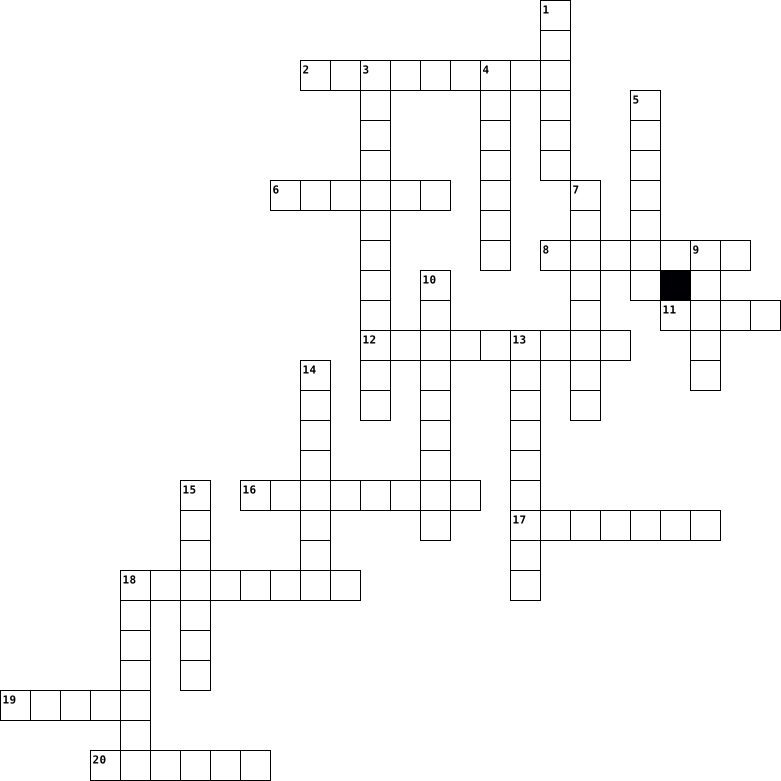
Across
- the long shaft of a long bone
- tendons counter part
- top of the head
- protect the lungs
- the skeletal system depends on
- sternum is a part of this
- these join the parts of the skull together
- jaw bone
- the main facial bone
- face i a part of this
Down
- the bone is made of this tissue
- the outer section of the skeleton
- the middle of the chest
- this allows movement of the skeletal system
- there are two of these bones on each side of the head
- the middle section of the skeleton
- this bone makes up the bottom of the eye socket
- the end of a long bone
- makes up the bones on the side of the head
- one of the main cranial bones
- this word means marrow
21 Clues: jaw bone • top of the head • protect the lungs • tendons counter part • the main facial bone • face i a part of this • the end of a long bone • this word means marrow • the middle of the chest • sternum is a part of this • the long shaft of a long bone • one of the main cranial bones • the skeletal system depends on • the bone is made of this tissue • the outer section of the skeleton • ...
Body Systems 2021-11-12

Across
- Multiple Cells
- Bones
- Stomach
- Skin
- Brain
- Meat
- Lungs
Down
- Blood
- One Cell
- Stage 1 of Organism
- Waste
- Hormones
- Protection
- Kids
- System
15 Clues: Kids • Skin • Meat • Blood • Bones • Waste • Brain • Lungs • System • Stomach • One Cell • Hormones • Protection • Multiple Cells • Stage 1 of Organism
Body Systems Interactions 2021-09-10

Across
- The nervous system interacts with this system to send hunger signals to the body and this system also interacts with the reproductive system to produce hormones for puberty.
- The immune system's WBCs are all produced in this system so that they can go throughout the body and protect it.
- The circulatory system interacts with this system since they both carry fluids throughout the body.
- The circulatory system works with this system to move oxygen into your cells and carbon dioxide out of your cells.
- The skeletal system is attached to this system to allow for movement.
- The nervous system controls the rhythm that the main muscle pumps in this system to bring RBCs and WBCs throughout the body.
- The muscular system helps this system mash up food and the circulatory system then moves the nutrients this system extracted throughout the body.
Down
- The circulatory system and the muscular system get directed what to do by this system to help maintain body temperature during homeostasis.
- The immune system and this system keep pathogens out of the body.
- The circulatory system and skeletal system both interact with this system to produce and spread WBCs and prevent the body from getting ill.
- The muscular system works with this system to store and release liquid wastes that were filtered out from the circulatory system.
- The endocrine system and nervous system interact with this system using hormones during the developmental period called puberty.
12 Clues: The immune system and this system keep pathogens out of the body. • The skeletal system is attached to this system to allow for movement. • The circulatory system interacts with this system since they both carry fluids throughout the body. • The immune system's WBCs are all produced in this system so that they can go throughout the body and protect it. • ...
Body Systems Interactions 2021-09-10

Across
- The endocrine system and nervous system interact with this system using hormones during the developmental period called puberty.
- The circulatory system and the muscular system get directed what to do by this system to help maintain body temperature during homeostasis.
- The immune system and this system keep pathogens out of the body.
- The nervous system interacts with this system to send hunger signals to the body and this system also interacts with the reproductive system to produce hormones for puberty.
- The immune system's WBCs are all produced in this system so that they can go throughout the body and protect it.
Down
- The skeletal system is attached to this system to allow for movement.
- The muscular system works with this system to store and release liquid wastes that were filtered out from the circulatory system.
- The nervous system controls the rhythm that the main muscle pumps in this system to bring RBCs and WBCs throughout the body.
- The circulatory system and skeletal system both interact with this system to produce and spread WBCs and prevent the body from getting ill.
- The circulatory system interacts with this system since they both carry fluids throughout the body.
- The muscular system helps this system mash up food and the circulatory system then moves the nutrients this system extracted throughout the body.
- The circulatory system works with this system to move oxygen into your cells and carbon dioxide out of your cells.
12 Clues: The immune system and this system keep pathogens out of the body. • The skeletal system is attached to this system to allow for movement. • The circulatory system interacts with this system since they both carry fluids throughout the body. • The immune system's WBCs are all produced in this system so that they can go throughout the body and protect it. • ...
Body Systems/Homeostasis BB 2023-03-15

Across
- organs that make substances
- muscle ___ contracts to move muscles
- ___ system allows people to feel
- ___ system is the frame for the human body
- ___ system breaks down food for nutrients
- ___ system lets you breath
- the body's chemical messengers
- ___ system removes waste from the body
- muscle ___ are muscle cells
- the tubes that form a bond between the arterioles and venules.
- ___ feedback inhibits another system
Down
- ___ loop keeps the body systems in check
- ___ feedback strengthens another system
- ___ system allows you to move
- ___ system lets blood flow through the body
- ___ system creates hormones for the body
- ___ system is what creates offspring
- what the body systems are trying to reach
- ___ return used blood to the heart
- ___ distribute blood to other systems
20 Clues: ___ system lets you breath • organs that make substances • muscle ___ are muscle cells • ___ system allows you to move • the body's chemical messengers • ___ system allows people to feel • ___ return used blood to the heart • muscle ___ contracts to move muscles • ___ system is what creates offspring • ___ feedback inhibits another system • ___ distribute blood to other systems • ...
Human Body Systems 02 2023-05-11

Across
- to treat a bacterial infection, you can be prescribed ______
- this stores bile needed to break down fatty foods
- chemical digestion is done with the help of bile and _____
- ringworm is a _____
- when you exercise, your heart rate
- ____ attach muscle to bone
- smooth, skeletal, and ____
- the ____ system helps to keep us healthy
- kidneys filter toxins out of your ____
- this organ produces bile and filters blood from the digestive tract
- movement of the human body is produced when the muscular and ____ system work together
- a virus needs a ____ cell to reproduce
- an infectious agent is something that can cause an ______
- the respiratory and ____ systems remove waste from the body
Down
- When a pathogen causes an infection then it is called an infectious ______
- bacteria can make us sick by producing _____
- the brain and spinal cord make up the ____ nervous system
- which system is responsible for taking in and releasing gasses
- this body system is responsible for movement
- fungi reproduce by forming _____
- this connective tissue holds your body together, connecting bone to bone
- as humans, we cannot cure a ______
- most of the brain is part of the _____
23 Clues: ringworm is a _____ • ____ attach muscle to bone • smooth, skeletal, and ____ • fungi reproduce by forming _____ • when you exercise, your heart rate • as humans, we cannot cure a ______ • most of the brain is part of the _____ • kidneys filter toxins out of your ____ • a virus needs a ____ cell to reproduce • the ____ system helps to keep us healthy • ...
Organ Systems Rachael Souza 2017-08-31

Across
- system that breaks down food
- offspring production
- regulate hormones
- returns fluids to blood vessels
- removes carbon dioxide
- disposes of debris
- system that allows motion
Down
- formation of external body covering
- system that activates muscles and glands
- eliminates wastes
- stores minerals
- protects and supports the body
- system that pumps blood by the heart
- fast acting control system
- helps prevent tissue from injury
15 Clues: stores minerals • eliminates wastes • regulate hormones • disposes of debris • offspring production • removes carbon dioxide • system that allows motion • fast acting control system • system that breaks down food • protects and supports the body • returns fluids to blood vessels • helps prevent tissue from injury • formation of external body covering • ...
MULTICELLULAR ORGANISMS 2023-04-04

Across
- studies the blood
- central organ of the nervous system
- studies the digestive system
- made up of 1 cell
- bone structure of the body
Down
- respiratory system
- follow of blood in the body
- studies the brain
- studies the heart
- groups of cells that work together
- root & shoot system
- nerves
- made up of 1 cell
- eating, food
- group of different tissues performing a function
- organs & tissues working together
16 Clues: nerves • eating, food • studies the brain • studies the heart • studies the blood • made up of 1 cell • made up of 1 cell • respiratory system • root & shoot system • bone structure of the body • follow of blood in the body • studies the digestive system • organs & tissues working together • groups of cells that work together • central organ of the nervous system • ...
Muscular System 2022-11-17

Across
- Smooth muscle is found in the _____ of organs
- Skeletal and Cardiac muscles are arranged in
- Attach skeletal muscles to bone
- Muscles that straighten parts of your body
- If a muscle looks "striped" it is
Down
- Contractions that happen without your control
- Muscles that bend parts of your body
- The muscular system works with this system
- Contractions of smooth muscle are
- An organ that is an example of smooth muscle
- Type of muscle only found in the heart
11 Clues: Attach skeletal muscles to bone • Contractions of smooth muscle are • If a muscle looks "striped" it is • Muscles that bend parts of your body • Type of muscle only found in the heart • The muscular system works with this system • Muscles that straighten parts of your body • Skeletal and Cardiac muscles are arranged in • An organ that is an example of smooth muscle • ...
Systems of the Body 2022-05-25

Across
- The most important organ of the digestive system is the ___
- The ___ system is very important for the human body. It causes movement, stability protection,and temperature regulation
- The ___ system gives support to your body and helps you move.
- ___ are the most important parts of the immune system because they protect the body
- The goal of the ___ system is to get oxygen through out your body and carbon dioxide out.
- The ___ system is the system inside the human body that takes the nutrients, proteins, and vitamins out of the products we eat.
- The purpose of the ___ system is to protect your body from harmful pathogens
- ___ are one of the most important parts of the skeletal system
Down
- ___ are the most important parts of the muscular system
- the ___ is the most important organ of the circulatory system
- ___ are the most important parts of the excretory system
- The purpose of the ___ system is to move blood around the body.
- The most important part of the respiratory system are the ___
- ___ are the most important parts of the nervous system
- The purpouse of the ___ system is for digestive food after it’s ingested
15 Clues: ___ are the most important parts of the nervous system • ___ are the most important parts of the muscular system • ___ are the most important parts of the excretory system • The most important organ of the digestive system is the ___ • the ___ is the most important organ of the circulatory system • The ___ system gives support to your body and helps you move. • ...
Nervous System 2015-04-07

Across
- Link to the spinal cord.
- System responsible for our "fight or flight" reflexes.
- Responsible for carrying nerve impulses in the body.
- Command center of your entire body.
- Receives sensory input in order to send information that moves the skeletal muscles.
- System that contains nerves that take sensory information from the skin, joins, and skeletal muscles.
- The type of neuron that takes nerve impulses from the central nervous system to the muscles.
- This lobe is the primary visual area.
- Tube of neurons that attaches to the brain stem.
- Composed of nerves that conduct nerve impulses between the central nervous system and the rest of the body.
- Generally consists of a nucleus and organelles
Down
- Let us know we feel pain.
- Neurons which are entirely within the central nervous system.
- Lobe is the primary auditory area.
- Short and highly branched and receive signals from the sensory receptors and transmit that information to the body.
- Divided into two halves which contain four lobes.
- Composed of the brain and spinal cord
- responsible for transmitting information from one neuron to another
- Lobe responsible for sensory reception and integration.
- Lobe responsible for movement.
20 Clues: Link to the spinal cord. • Let us know we feel pain. • Lobe responsible for movement. • Lobe is the primary auditory area. • Command center of your entire body. • Composed of the brain and spinal cord • This lobe is the primary visual area. • Generally consists of a nucleus and organelles • Tube of neurons that attaches to the brain stem. • ...
Body Systems 2024-09-09

Across
- System that creates new humans
- System that gives body structure
- System that sends hormones through body
- System that pumps your blood
- System that sends signals
- System that protects you from outside
- part of the digestive system that absorbs nutrients
Down
- System that allows you to move
- System that breathes in oxygen
- part of the nervous system
- part of the circulatory system
- part of the integumentary system
- part of the nervous system that sends signals throughout body
- part of the respiratory system
- System that breaks down food
- System that fights of sickness
16 Clues: System that sends signals • part of the nervous system • System that pumps your blood • System that breaks down food • System that allows you to move • System that creates new humans • System that breathes in oxygen • part of the circulatory system • part of the respiratory system • System that fights of sickness • System that gives body structure • ...
Health 2024-11-25

Across
- is stores minerals and is important so the body functions correctly
- muscles muscles you cant control
- system of muscles
- hard tissue making up the skeletal system
- all bones that make up your body
- something that connects two bones
- muscle in the front of your arm
- muscle only found in the heart
- bones that form your neck
Down
- large bone located in the leg
- muscle on the upper back of your arm
- muscle found in walls of your organs
- muscles in front of the thigh
- bone that protects the brain
- protects organs such as heart
- also called the backbone
- muscle found within organs
- made out of dense tissue
- muscle is a voluntary muscle that you control and helps you move
- type of smooth tissue that covers the tips of bones
20 Clues: system of muscles • also called the backbone • made out of dense tissue • bones that form your neck • muscle found within organs • bone that protects the brain • large bone located in the leg • muscles in front of the thigh • protects organs such as heart • muscle only found in the heart • muscle in the front of your arm • muscles muscles you cant control • ...
Body Systems 2021-11-12

Across
- Multiple Cells
- Bones
- Stomach
- Skin
- Brain
- Meat
- Lungs
Down
- Blood
- One Cell
- Stage 1 of Organism
- Waste
- Hormones
- Protection
- Kids
- System
15 Clues: Kids • Skin • Meat • Blood • Bones • Waste • Brain • Lungs • System • Stomach • One Cell • Hormones • Protection • Multiple Cells • Stage 1 of Organism
Interacting nervous system 2024-05-10

Across
- What system Fight infections along with Integumentary system?
- What system is involved in eating a burger aside from the skeletal and circulatory system?
- What system produces red blood cells besides the skeletal system?
- What system digests the food that the muscular system push through?
- What system regulates the hormones that is produced by the nervous system?
- What system is involved in removing extra salt from your body through sweat glands aside from the muscular system?
Down
- What is defence the body from infections aside from the Immune system?
- What system produce the hormones that is regulated by the Endocrine system?
- Which system allows muscles to contract to push food through?
- What system protects its organs alongside the circulatory system?
10 Clues: What system Fight infections along with Integumentary system? • Which system allows muscles to contract to push food through? • What system produces red blood cells besides the skeletal system? • What system protects its organs alongside the circulatory system? • What system digests the food that the muscular system push through? • ...
Structure Movement and Control 2026-04-17

Across
- controls hormones and metabolic processes.
- needed for absorption of nutrients.
- works with other defense systems to protect or bodies.
- needed for oxygen and carbon dioxide exchange.
- carry oxygen and nutrients throughout the body.
- removal metabolic and digestive waste.
- needed for movement and supports skeletal system.
Down
- the pump and pathways of moving blood and nutrients.
- first line of defense. Also, called skin.
- produces gametes.
- protects us from pathogens.
- includes the brain, spinal cord and peripheral nerves
- support system of the body.
13 Clues: produces gametes. • protects us from pathogens. • support system of the body. • needed for absorption of nutrients. • removal metabolic and digestive waste. • first line of defense. Also, called skin. • controls hormones and metabolic processes. • needed for oxygen and carbon dioxide exchange. • carry oxygen and nutrients throughout the body. • ...
Chapter 14 Vocabulary 2023-11-29

Across
- Which is a type of skeletal muscle that closes a joint?
- a strong flexable connective tissue
- Which type of skeletal muscle opens a joint?
- the second-largest part of the brain; coordinates the movement of skeletal muscles
- a fibrous chord that attaches muscle to the bone
- nerve cells/brain cells
- a disorder of the nervous system that is characterized by recurrent seizures
- a condition involving a progressive loss of bone tissue
Down
- a three-inch-long stalk of nerve cells and fibers that connects the spinal cord to the rest of the brain
- Which type of muscle forms the wall of the heart?
- a lateral or side-to-side curvature of the spine
- the largest and most complex part of the brain; center of conscious thought, learning, and memory
- the process of which bone is formed, renewed, and repaired
- a group of neurological disorders that result from damage to the brain before, during, or just afterbirth or in early childhood
- Which potential problem can result from injury, overuse, or natural aging of the muscular system?
- Which problem commonly occurs in the abdomen from straining to lift a heavy object?
- a band of fibrous, slightly elastic connective tissue that attaches one bone to another bone
- Which type of muscle can be found in the digestive tract and the urinary bladder?
- one thickness or fold spread over or under another
- Which type of muscle tissue has a striated or striped appearance under a microscope?
20 Clues: nerve cells/brain cells • a strong flexable connective tissue • Which type of skeletal muscle opens a joint? • a lateral or side-to-side curvature of the spine • a fibrous chord that attaches muscle to the bone • Which type of muscle forms the wall of the heart? • one thickness or fold spread over or under another • ...
Skeletal system 2022-10-27

Across
- Lower jaw bone
- Fingers and toes
- Non weight bearing
- Collarbone
- # of ribs
Down
- Genital area
- Upper jaw bone
- Wrist bones
- Heel bone
- Thigh bone
- Very top part of body
11 Clues: Heel bone • # of ribs • Thigh bone • Collarbone • Wrist bones • Genital area • Upper jaw bone • Lower jaw bone • Fingers and toes • Non weight bearing • Very top part of body
Skeletal system 2019-05-25

Across
- meeting point of two bones
- it gives shape to our body and protects the internal organs
- muscles muscles which are not under our control
- formed by tissues
- system made up of organs
Down
- marrow the soft, fatty substance that produce blood cells
- formed by cells
- muscles muscles which are under our control
- the strong tissues that help two bones join
- the strong fibres that help muscles to attach with the bones
- muscles muscles that are shaped like voluntary muscles but they are involuntary muscles
11 Clues: formed by cells • formed by tissues • system made up of organs • meeting point of two bones • the strong tissues that help two bones join • muscles muscles which are under our control • muscles muscles which are not under our control • marrow the soft, fatty substance that produce blood cells • it gives shape to our body and protects the internal organs • ...
skeletal system 2020-10-01

Across
- longest bone in the skeletal system
- surrounds the chest and allows lungs to expand
- aka breastbone
- process of bone formation
- the substance enables bones to move without friction
- bones that make up your fingers and toes
Down
- the strong connective tissue that connects bones
- parallel to the tibia
- rotates to allow the hand to pivot at the wrist.
- triangular bone that serves as a joining force between the clavicle and the humerus
- ocated between your elbow and your shoulder
11 Clues: aka breastbone • parallel to the tibia • process of bone formation • longest bone in the skeletal system • bones that make up your fingers and toes • ocated between your elbow and your shoulder • surrounds the chest and allows lungs to expand • the strong connective tissue that connects bones • rotates to allow the hand to pivot at the wrist. • ...
Skeletal System 2020-09-25

Across
- connects muscle to bones
- the femur is this type of bone
- number of bones in the adult body
- strongest bone in the body
- the vertebrae is this type of bone
- the shoulder is this type of bone
Down
- bones of the extremities
- the hands are this type of bone
- the bones that make up your spine
- includes the bones of the spine, thorax, and skull
- the bones that protect your heart and lungs
11 Clues: bones of the extremities • connects muscle to bones • strongest bone in the body • the femur is this type of bone • the hands are this type of bone • the bones that make up your spine • number of bones in the adult body • the shoulder is this type of bone • the vertebrae is this type of bone • the bones that protect your heart and lungs • ...
Skeletal system 2020-09-28

Across
- a tough but flexible tissue that is the main type of connective tissue in the body
- A fibrous connective tissue which attaches bone to bone, and usually serves to hold structures together and keep them stable.
- a bone that's located in the middle of your chest and protects the organs of your torso from injury and also serves as a connection point for other bones and muscles
- a flat triangular bone located at the back of the trunk and resides over the posterior surface of ribs two to seven
- includes the bones that form the skull, laryngeal skeleton, vertebral column, and thoracic cage
- the longest, heaviest, and strongest bone in the human body who’s main function is weight bearing and stability of gait
Down
- a membranous tissue that covers the surfaces of your bones. The only areas it doesn't cover are those surrounded by cartilage and where tendons and ligaments attach to bone.
- includes the bones of the shoulder girdle, the upper limbs, the pelvic girdle, and the lower limbs.
- a set of twelve bones which form the protective 'cage' of the thorax
- the 33 individual bones that interlock with each other to form the spinal column
- the thinner and posteriolaterally situated of the two lower leg bones
11 Clues: a set of twelve bones which form the protective 'cage' of the thorax • the thinner and posteriolaterally situated of the two lower leg bones • the 33 individual bones that interlock with each other to form the spinal column • a tough but flexible tissue that is the main type of connective tissue in the body • ...
Skeletal system 2023-03-12

Across
- These components hold together the top of the vertebrae
- Function of the skeleton
- Another name for the skull
- A part of the axial skeleton
Down
- A disorder associated with the skeletal system
- Make up the spine
- Where two or more bones meet
- Longest bone in the human body
- Smallest bone in the human body
- Connect muscle to bone
- Protects the ends of bones
11 Clues: Make up the spine • Connect muscle to bone • Function of the skeleton • Another name for the skull • Protects the ends of bones • Where two or more bones meet • A part of the axial skeleton • Longest bone in the human body • Smallest bone in the human body • A disorder associated with the skeletal system • These components hold together the top of the vertebrae
Skeletal system 2023-04-17

Across
- One of the bones in your spine.
- The substance inside a bone that makes blood
- Part of the skeleton that includes shoulders, pelvis and the arm and leg bones
- Something that joins bone to bone.
Down
- The largest bone in the human body.
- The place where two bones meet.
- Part of the skeleton that includes ribs, spine and skull
- Something that joins muscles to bone.
- The bone that protects your brains.
- Your backbone.
- The collection of bones that protect your lungs.
11 Clues: Your backbone. • One of the bones in your spine. • The place where two bones meet. • Something that joins bone to bone. • The largest bone in the human body. • The bone that protects your brains. • Something that joins muscles to bone. • The substance inside a bone that makes blood • The collection of bones that protect your lungs. • ...
Skeletal System 2023-06-07

Across
- The lower leg bone located on the pinky side.
- Bony structure in the mouth that holds the teeth.
- Bone that forms the shoulder joint with the scapula.
- Small, flat bone located in the chest, commonly known as the breastbone.
- Strong, flexible tissue that connects bones together.
- The upper arm bone.
Down
- Bones of the fingers and toes.
- Connective tissue that covers the ends of bones at a joint.
- Tiny, interconnected bones in the wrist.
- Curved bone that protects the brain.
- Largest bone in the human body.
11 Clues: The upper arm bone. • Bones of the fingers and toes. • Largest bone in the human body. • Curved bone that protects the brain. • Tiny, interconnected bones in the wrist. • The lower leg bone located on the pinky side. • Bony structure in the mouth that holds the teeth. • Bone that forms the shoulder joint with the scapula. • ...
Skeletal System 2023-09-13

Across
- Metabolically active cells that synthesise and turnover a large volume of extra-cellular matrix (ECM) components such as collagen and glycoproteins
- Cells that play an important role in the formation of cartilage
- Complex structure composed of an outer fibrous layer
- Also known as the shaft of the bone
- Is produced when the epiphyseal plates stop producing bone
- Part of the bone that is hollow and where bone marrow is stored
Down
- Flares out from the Diaphysis (contains cancellous bone)
- Is a strong, flexible and semi-rigid supporting tissue
- The most widespread cartilage in the body
- Is found at the end of the bone
- Structural cartilaginous tissue that is for non-bearing body parts
11 Clues: Is found at the end of the bone • Also known as the shaft of the bone • The most widespread cartilage in the body • Complex structure composed of an outer fibrous layer • Is a strong, flexible and semi-rigid supporting tissue • Flares out from the Diaphysis (contains cancellous bone) • Is produced when the epiphyseal plates stop producing bone • ...
Skeletal System 2020-09-06

Across
- jaw bone
- small bones in the hands
- cranium or head bone
- these people have 206 bones
Down
- the bones that protect teh ehart and lungs
- longest leg bone
- these people have 300 bones
- knee cap bone
- upper arm bone
- shoulder bone
- small bones in the feet
11 Clues: jaw bone • knee cap bone • shoulder bone • upper arm bone • longest leg bone • cranium or head bone • small bones in the feet • small bones in the hands • these people have 300 bones • these people have 206 bones • the bones that protect teh ehart and lungs
Skeletal System 2020-10-02

Across
- a long bone in the arm that runs from the shoulder to the elbow
- the bone that connects the humerus (upper arm bone) with the clavicle (collar bone)
- a dense layer of vascular connective tissue enveloping the bones except at the surfaces of the joints
- 33 individual, interlocking bones that form the spinal column
- one of a series of curved bones that are articulated with the vertebrae and occur in pairs
- a short band of tough, flexible fibrous connective tissue which connects two bones or cartilages or holds together a joint
Down
- a long bone that serves as a strut between the shoulder blade and the sternum
- The bones that make up the fingers of the hand and the toes of the foot
- Bone formation, generally referring to soft tissues becoming calcified and hardened
- covers and protects the anterior articular surface of the knee joint
- It connects to the ribs via cartilage and forms the front of the rib cage, thus helping to protect the heart, lungs, and major blood vessels from injury
11 Clues: 33 individual, interlocking bones that form the spinal column • a long bone in the arm that runs from the shoulder to the elbow • covers and protects the anterior articular surface of the knee joint • The bones that make up the fingers of the hand and the toes of the foot • a long bone that serves as a strut between the shoulder blade and the sternum • ...
Skeletal System 2021-10-04

Across
- What Cell works in teams to build bone
- What protects your organs in your chest
- What body has 300 bones in a body
- what body has 206 Bones
- What helps You sit,stand,walk,twist,and bend
Down
- What Cell responds to the mechanical strains.
- Which part of the Skeletal System protects the Brain
- What has 27 bones in the Skeletal System do?
- What helps you walk and balance
- What Cell is Responsible for the dissolution and absorption of bone
- What Cell Inactives Bone surfaces
11 Clues: what body has 206 Bones • What helps you walk and balance • What Cell Inactives Bone surfaces • What body has 300 bones in a body • What Cell works in teams to build bone • What protects your organs in your chest • What has 27 bones in the Skeletal System do? • What helps You sit,stand,walk,twist,and bend • What Cell responds to the mechanical strains. • ...
Skeletal System 2022-02-09

Across
- The first cervical vertebra
- A projection or raised area
- Long bone of the lower leg that articulates with the pelvis to form the hip
- Shoulder blade
- Area between the unfused bones of an infant’s skull
Down
- The prominent, expanded end of a bone
- Second cervical vertebra
- U-shaped bone between the chin and the larynx
- Immovable joints of the skull
- Slender bone of the lower leg that does not bear any weight
- A round opening, usually a passageway for vessels and nerves
11 Clues: Shoulder blade • Second cervical vertebra • The first cervical vertebra • A projection or raised area • Immovable joints of the skull • The prominent, expanded end of a bone • U-shaped bone between the chin and the larynx • Area between the unfused bones of an infant’s skull • Slender bone of the lower leg that does not bear any weight • ...
Skeletal System 2022-02-02

Across
- an immovable type of joint
- a joint made of cartilage
- a type of fracture in which the bone separates
- a type of bone that protects soft organs
- also known as a hairline fracture
- a type of bone that is longer than it is wide
Down
- the most movable type of joint
- a specialized type of bone such as in the ear
- a type of bone that is equal in width and length
- a fracture in which there is also an open wound
- a type of bone that forms in a tendon
11 Clues: a joint made of cartilage • an immovable type of joint • the most movable type of joint • also known as a hairline fracture • a type of bone that forms in a tendon • a type of bone that protects soft organs • a specialized type of bone such as in the ear • a type of bone that is longer than it is wide • a type of fracture in which the bone separates • ...
Skeletal system 2023-04-17

Across
- One of the bones in your spine.
- The substance inside a bone that makes blood
- Part of the skeleton that includes shoulders, pelvis and the arm and leg bones
- Something that joins bone to bone.
Down
- The largest bone in the human body.
- The place where two bones meet.
- Part of the skeleton that includes ribs, spine and skull
- Something that joins muscles to bone.
- The bone that protects your brains.
- Your backbone.
- The collection of bones that protect your lungs.
11 Clues: Your backbone. • One of the bones in your spine. • The place where two bones meet. • Something that joins bone to bone. • The largest bone in the human body. • The bone that protects your brains. • Something that joins muscles to bone. • The substance inside a bone that makes blood • The collection of bones that protect your lungs. • ...
Skeletal system 2023-01-27

Across
- What is the framework of the body? (6)
- What's the major bone in the chest? (4)
- what is the only bone not connect to anything? (12)
- what is the most commonly broken bone in children? (12)
- hats the bone found in the upper arm? (4)
- What the toughest and most flexible? (9)
Down
- What's the tissue inside the bone? (3)
- Whats the bone that protects the brain? (4)
- diseases were the bone loses bone mineral density. (11)
- What keeps the bone in place? (8)
- What is the strongest and longest bone? (12)
11 Clues: What keeps the bone in place? (8) • What's the tissue inside the bone? (3) • What is the framework of the body? (6) • What's the major bone in the chest? (4) • What the toughest and most flexible? (9) • hats the bone found in the upper arm? (4) • Whats the bone that protects the brain? (4) • What is the strongest and longest bone? (12) • ...
Skeletal system 2022-05-05

Across
- protects vital organs and stores minerals
- back and base of the skull
- bone marrow within bones and produces blood
- bones plate shaped
- example of a long bone
- tissue gradually replaced by osteoblasts
- protects brain,eyes,and nasal cavity
Down
- part of floor of skull
- forehead
- sides and base of skull
- upper sides and roof
11 Clues: forehead • bones plate shaped • upper sides and roof • part of floor of skull • example of a long bone • sides and base of skull • back and base of the skull • protects brain,eyes,and nasal cavity • tissue gradually replaced by osteoblasts • protects vital organs and stores minerals • bone marrow within bones and produces blood
Skeletal System 2025-02-11

Across
- Pectoral and pelvic girdles
- Part of build-up of the bone; not spongy.
- What makes up the skeletal system
- The bone that protects your brain
- The frame of the body that protects, supports and allows the body to move.
Down
- Skull, Backbone, Ribcage
- The tissue that attaches the muscles to muscles
- The tissue that attaches bone to bones
- The bones that protect your lungs and heart
- The tissue that attaches muscles to bones
- Another name for the spinal column and the bones that protect the spinal cord
11 Clues: Skull, Backbone, Ribcage • Pectoral and pelvic girdles • What makes up the skeletal system • The bone that protects your brain • The tissue that attaches bone to bones • Part of build-up of the bone; not spongy. • The tissue that attaches muscles to bones • The bones that protect your lungs and heart • The tissue that attaches the muscles to muscles • ...
Skeletal System 2026-04-17

Across
- a rounded knob; usually fits into a fossa on another bone to form a joint.
- a round opening; usually a passageway for blood vessels and nerves.
- a cavity within a bone.
- a moderately raised ridge
Down
- a large process found only on the femur
- the prominent, expanded end of a bone
- a tunnel through a bone
- a projection or raised area.
- a flat surface
- a tube-like opening
- a rough, raised bump, usually for muscle attachment.
11 Clues: a flat surface • a tube-like opening • a tunnel through a bone • a cavity within a bone. • a moderately raised ridge • a projection or raised area. • the prominent, expanded end of a bone • a large process found only on the femur • a rough, raised bump, usually for muscle attachment. • a round opening; usually a passageway for blood vessels and nerves. • ...
Organ Systems Melissa Hauman 2017-08-31

Across
- this system breaks down food
- the respiratory system removes this
- Muscular system allows this
- this system needs the lungs
- part of the lymphatic system
- the speed of nervous system
- transports oxygen, carbon dioxide, and nutrients
Down
- is responsible for growth and reproduction
- the urinary system eliminates this
- stores minerals
- involved in immunity
- Synthesizes vitamin D
- this system is responsible for the production of offspring
- secretes this in the endocrine system
- respiratory system supplies the body with this
15 Clues: stores minerals • involved in immunity • Synthesizes vitamin D • Muscular system allows this • this system needs the lungs • the speed of nervous system • this system breaks down food • part of the lymphatic system • the urinary system eliminates this • the respiratory system removes this • secretes this in the endocrine system • is responsible for growth and reproduction • ...
Skeletal System 2020-06-11

Across
- Thrusting the head/jaw forward
- Name of bone for fingers at the hand
- Turning the foot so the plantar surfaces faces medially
- is the type of movement when wrist moves from the right to the left
- of the trunk when we want to lift up ball on the ground
- There are _____ categories of vertebrae for the spine
- Skull consists of facial and _____ bones
Down
- Turning the hand so that the palm is upward or facing anteriorly (in anatomical position)
- ankle
- Moving hand in circular direction
- The elbows, knees and phalanges are examples of this type of joint
11 Clues: ankle • Thrusting the head/jaw forward • Moving hand in circular direction • Name of bone for fingers at the hand • Skull consists of facial and _____ bones • There are _____ categories of vertebrae for the spine • Turning the foot so the plantar surfaces faces medially • of the trunk when we want to lift up ball on the ground • ...
Skeletal system 2020-09-28

Across
- a tough but flexible tissue that is the main type of connective tissue in the body
- A fibrous connective tissue which attaches bone to bone, and usually serves to hold structures together and keep them stable.
- a bone that's located in the middle of your chest and protects the organs of your torso from injury and also serves as a connection point for other bones and muscles
- a flat triangular bone located at the back of the trunk and resides over the posterior surface of ribs two to seven
- includes the bones that form the skull, laryngeal skeleton, vertebral column, and thoracic cage
- the longest, heaviest, and strongest bone in the human body who’s main function is weight bearing and stability of gait
Down
- a membranous tissue that covers the surfaces of your bones. The only areas it doesn't cover are those surrounded by cartilage and where tendons and ligaments attach to bone.
- includes the bones of the shoulder girdle, the upper limbs, the pelvic girdle, and the lower limbs.
- a set of twelve bones which form the protective 'cage' of the thorax
- the 33 individual bones that interlock with each other to form the spinal column
- the thinner and posteriolaterally situated of the two lower leg bones
11 Clues: a set of twelve bones which form the protective 'cage' of the thorax • the thinner and posteriolaterally situated of the two lower leg bones • the 33 individual bones that interlock with each other to form the spinal column • a tough but flexible tissue that is the main type of connective tissue in the body • ...
Skeletal System 2018-06-26

Across
- The lowest two pairs of ribs that are joined only to the backbone
- The muscles that are not under our control
- strong tissues that bind the bones at a joint
- The powerful bone that bears the weight of the whole body
- Strong fibres with which muscles are attached to the bones
- A small bone of a vertebral column
Down
- A group of organs together make up
- the soft, spongy material found inside the cavities of long bones
- This bone allows maximum movement
- The framework of bones in our body
- The uppermost vertebra
11 Clues: The uppermost vertebra • This bone allows maximum movement • A group of organs together make up • The framework of bones in our body • A small bone of a vertebral column • The muscles that are not under our control • strong tissues that bind the bones at a joint • The powerful bone that bears the weight of the whole body • ...
Skeletal System 2023-01-26

Across
- Allow for bones to move in different ways.
- The hard, dense outer layer of bone.
- The skeleton determines the ________ of your body like a frame determines the ________ of a building.
- Soft tissue with the spongy bone, makes bloodcells.
- Bones store _______ for later use by the body.
- The framework of bones and other tissues that supports the body.
Down
- Bones like ribs and the skill all _________ vital organs.
- Part of the bone that has holes in it.
- Consists of the appendages of the body.
- Bone marrow makes ______ _____.
- Consists of the head and truck of the body.
11 Clues: Bone marrow makes ______ _____. • The hard, dense outer layer of bone. • Part of the bone that has holes in it. • Consists of the appendages of the body. • Allow for bones to move in different ways. • Consists of the head and truck of the body. • Bones store _______ for later use by the body. • Soft tissue with the spongy bone, makes bloodcells. • ...
skeletal system 2023-11-08

Across
- arm
- feet
- hand
- femur
- shin bone
- cranium
Down
- like tibia
- collar bone
- sternum
- tarsals
- knee
11 Clues: arm • feet • hand • knee • femur • sternum • tarsals • cranium • shin bone • like tibia • collar bone
SKELETAL SYSTEM 2024-11-13

Across
- Biggest bone in body, upper leg
- The backbone, connects to ribs
- Inside bone of lower arm
- Front bone in lower leg
- Protects the brain
- Back bone in lower leg
Down
- In the chest, connected to ribs
- On top of shoulders
- Hip bone
- Protect majority of organs
- Outside bone of lower arm
11 Clues: Hip bone • Protects the brain • On top of shoulders • Back bone in lower leg • Front bone in lower leg • Inside bone of lower arm • Outside bone of lower arm • Protect majority of organs • The backbone, connects to ribs • In the chest, connected to ribs • Biggest bone in body, upper leg
Skeletal System 2025-04-28

Across
- - The bones that form the protective cage around the chest.
- - The bone structure that forms the framework of the mouth and holds the teeth.
- - The bone of the upper arm, extending from the shoulder to the elbow.
- - The bone structure located at the base of the spine, supporting the lower limbs.
- - The slender bone located next to the tibia in the lower leg.
Down
- - The bone structure that forms the backbone.
- - One of the two bones of the forearm, located on the thumb side.
- - The bone structure that forms the head and protects the brain.
- - The other bone of the forearm, located on the side opposite the thumb.
- - The larger and stronger of the two bones in the lower leg, also known as the shinbone.
- - The longest and strongest bone in the human body, located in the thigh.
11 Clues: - The bone structure that forms the backbone. • - The bones that form the protective cage around the chest. • - The slender bone located next to the tibia in the lower leg. • - The bone structure that forms the head and protects the brain. • - One of the two bones of the forearm, located on the thumb side. • ...
Skeletal System 2022-09-16

Across
- Collar bone
- Another name for knee cap
- Shin bone
- Protect the heart and lungs
- Toes/fingers
- Protects the brain
Down
- Shoulder blade
- Longest bone in the body
- Back bones
- Enables us to stand up right
- Wrist bones
11 Clues: Shin bone • Back bones • Collar bone • Wrist bones • Toes/fingers • Shoulder blade • Protects the brain • Longest bone in the body • Another name for knee cap • Protect the heart and lungs • Enables us to stand up right
skeletal system 2025-06-06

Across
- sdfjk
- sadlfkj
- asldfkj
- alskfdj
- lasdkfj
- dlakfj
- lskdfj
- asfdlkj
Down
- fjdklsa
- dslkj
- saldfk
11 Clues: sdfjk • dslkj • saldfk • dlakfj • lskdfj • fjdklsa • sadlfkj • asldfkj • alskfdj • lasdkfj • asfdlkj
Skeletal system 2026-03-17

Across
- The largest and strongest joints in your body.
- The curved bones that form a cage to protect your heart and lungs.
- The upper part of your leg above the knee.
- The joint that connects your foot to your leg.
- The bone that acts like a helmet to protect your brain.
Down
- The joint in the middle of your arm.
- The backbone made of 33 individual bones that helps you bend and twist.
- The front part of your leg located below the knee.
- The joint that connects your leg to your torso.
- The part of your body that connects your head to your shoulders.
- The joint between your hand and your arm.
11 Clues: The joint in the middle of your arm. • The joint between your hand and your arm. • The upper part of your leg above the knee. • The largest and strongest joints in your body. • The joint that connects your foot to your leg. • The joint that connects your leg to your torso. • The front part of your leg located below the knee. • ...
SKELETAL SYSTEM 2018-05-21

Across
- HIND LIMBS
- GIVES RED COLOUR TO BLOOD AND GIVE OXYGEN
- STRONG FIBERS WHICH ATTACH MUSCLES TO THE BONE
- LONGEST BONE IN OUR BODY
Down
- MARROW FATTY,SOFT SUBSTANCE
- STRONG TISSUES WHICH HOLD THE BONES TOGETHER
- PROTECT THE BRAIN
- TWO BONES MEET TOGETHER AT A POINT
- PROTECT THE LUNGS AND HEART
- BLOOD CELLS FIGHT FORGEIN BODY
- FORE LIMBS
11 Clues: HIND LIMBS • FORE LIMBS • PROTECT THE BRAIN • LONGEST BONE IN OUR BODY • MARROW FATTY,SOFT SUBSTANCE • PROTECT THE LUNGS AND HEART • BLOOD CELLS FIGHT FORGEIN BODY • TWO BONES MEET TOGETHER AT A POINT • GIVES RED COLOUR TO BLOOD AND GIVE OXYGEN • STRONG TISSUES WHICH HOLD THE BONES TOGETHER • STRONG FIBERS WHICH ATTACH MUSCLES TO THE BONE
Skeletal System 2020-07-27

Across
- / It makes the joints painful and swollen.
- / Causes bones to shrink
- / Bones protect internal organs such as the brain, heart, lungs.
- / An abnormal condition which the spine is curved to the left or to the right.
Down
- / A condition in which bone density decreases, causing bones to become brittle and easily fractured.
- / Bones that have characteristics rigid, dense, more calcium and less gluten.
- / Joint that allows bones to move in one direction.
- / Joint allows the bones move freely.
- / It causes bones to be an O-shaped or X-shaped.
- / Joint allows bones move forward and backward.
- / A point at which two bones meet.
11 Clues: / Causes bones to shrink • / A point at which two bones meet. • / Joint allows the bones move freely. • / It makes the joints painful and swollen. • / Joint allows bones move forward and backward. • / It causes bones to be an O-shaped or X-shaped. • / Joint that allows bones to move in one direction. • ...
Skeletal System 2020-09-22

Across
- attaches bone to muscles
- protect the heart and lungs
- where blood cells are made
- bones make this for your body
- where bones are connected to one another
- tiny living part
- tissue that holds joints together
Down
- body systems working together
- made up of cells
- protect the spinal cord
- protects the brain
11 Clues: made up of cells • tiny living part • protects the brain • protect the spinal cord • attaches bone to muscles • where blood cells are made • protect the heart and lungs • body systems working together • bones make this for your body • tissue that holds joints together • where bones are connected to one another
skeletal system 2023-04-27

Across
- upper arm
- layne
- thigh
- chest
- calf
- waist
Down
- middle chest
- knee
- lower arm
- jaw
- head
11 Clues: jaw • knee • head • calf • layne • thigh • chest • waist • upper arm • lower arm • middle chest
Skeletal system 2022-10-18

Across
- is a disease - sideways curvature of the spine
- living tissue that is constantly being replaced and
- are involved in the breakdown of bone tissue to release needed minerals or to allow for reshaping and repair
- bulge forward in Cervical and Lumbar Spine
Down
- arc saggy backwards in Thoracic Spine
- the process of destroy bone
- is a slightly movable joint connected by fibrous cartilage
- is an immovable joint held together by fibrous connective tissue, as is found between the bones of the skull
- the cells that produce bone
- throughout life.
- mature bone cells
11 Clues: throughout life. • mature bone cells • the process of destroy bone • the cells that produce bone • arc saggy backwards in Thoracic Spine • bulge forward in Cervical and Lumbar Spine • is a disease - sideways curvature of the spine • living tissue that is constantly being replaced and • is a slightly movable joint connected by fibrous cartilage • ...
Skeletal system 2023-11-12

Across
- a long, flat bone in the center of the chest
- a flat, triangular bone in front of the knee joint
- the eight small bones that make up the wrist
- a type of arthritis caused by a buildup of uric acid crystals in the joints
- a painful swelling on the first joint of the big toe
- surgical reconstruction or replacement of a joint
Down
- ablation a procedure that uses heat or cold to destroy nerve tissue, often used to treat chronic pain
- bones small bones embedded in tendons, such as the patella (kneecap)
- a bone that connects the shoulder blade to the sternum
- pain in a joint
- inflammation of a bursa, a small fluid-filled sac near a joint
11 Clues: pain in a joint • a long, flat bone in the center of the chest • the eight small bones that make up the wrist • surgical reconstruction or replacement of a joint • a flat, triangular bone in front of the knee joint • a painful swelling on the first joint of the big toe • a bone that connects the shoulder blade to the sternum • ...
Skeletal System 2025-02-11

Across
- what connect the bones
- ______ vaccine was made and number of cases dropped.
- what bone protects your head
- which part of the bone gives strength/support
- what is the purpose of the skeletal system
- which part of the bone contains nerves
Down
- wrist and ankles and vertebrae have ________.
- ______ wraps around the skeletal System.
- what is located at the ends of each bone
- _____ produces white and red blood cells.
- what makes up parts of the bone
11 Clues: what connect the bones • what bone protects your head • what makes up parts of the bone • which part of the bone contains nerves • ______ wraps around the skeletal System. • what is located at the ends of each bone • _____ produces white and red blood cells. • what is the purpose of the skeletal system • wrist and ankles and vertebrae have ________. • ...
Skeletal System 2017-01-04

Across
- a strong flexible connective tissue
- your knee cap
- a band of fibrous
- a condition in which progressive loss of bone tissue occurs
- the process by which bone is formed, renewed, and repaired
- vertebrae
Down
- your wrist
- your toes and fingers
- a fibrous cord that attaches muscle to the bone
- a lateral, or side-to-side, curvature of the spine
- your jaw
11 Clues: your jaw • vertebrae • your wrist • your knee cap • a band of fibrous • your toes and fingers • a strong flexible connective tissue • a fibrous cord that attaches muscle to the bone • a lateral, or side-to-side, curvature of the spine • the process by which bone is formed, renewed, and repaired • a condition in which progressive loss of bone tissue occurs
Skeletal System 2018-03-05

Across
- upper leg bone
- backbone
- knee cap bone
- lower inside arm bone
- upper arm bone
- lower larger inside leg bone
Down
- lower outside arm bone
- lower smaller outside leg bone
- finger bones
- skull
- hip bones
11 Clues: skull • backbone • hip bones • finger bones • knee cap bone • upper leg bone • upper arm bone • lower inside arm bone • lower outside arm bone • lower larger inside leg bone • lower smaller outside leg bone
Skeletal system 2015-01-04

Across
- the longest bone in a human skeleton
- one of a bone of a lower part of a leg
- the longest bone in our arm
- place where cartilage is present
- one function of a human skeleton
- type of a skeleton that arthropods have
Down
- one of a bone that protects a spinal cord
- place where RBC are produced
- it protects our brain
- this bone joints the arm with a rib cage
- bone in the front of a rib cage
11 Clues: it protects our brain • the longest bone in our arm • place where RBC are produced • place where cartilage is present • one function of a human skeleton • bone in the front of a rib cage • the longest bone in a human skeleton • one of a bone of a lower part of a leg • type of a skeleton that arthropods have • this bone joints the arm with a rib cage • ...
Skeletal System 2021-10-14

Across
- a shallow depression in the bone surface
- largest most prominent bone
- a smooth flat surface
- a larger prominence on the side of the bone
- a moderate prominence
- a hole through which nerves and blood vessels pass
- a rounded, prominent extension of bone that forms part of a joint
Down
- provides structural support
- a furrow in the bone surface that runs along the length of a vessel or nerve
- a small rounded prominence where connective tissues attach
- segment between the head and the shaft of a bone
11 Clues: a smooth flat surface • a moderate prominence • provides structural support • largest most prominent bone • a shallow depression in the bone surface • a larger prominence on the side of the bone • segment between the head and the shaft of a bone • a hole through which nerves and blood vessels pass • a small rounded prominence where connective tissues attach • ...
SKELETAL SYSTEM 2021-12-24

Across
- first note in carnatic and hindustani music
- Jyotirlinga in Kashmir
- a saying with MORAL
- Famous singer
- linen type fabric
Down
- Inian classical dance
- bASKETBALL producing company
- thought
- Summer fruit
- Hermione Granger's real name
- Printing shortcut
11 Clues: thought • Summer fruit • Famous singer • Printing shortcut • linen type fabric • a saying with MORAL • Inian classical dance • Jyotirlinga in Kashmir • bASKETBALL producing company • Hermione Granger's real name • first note in carnatic and hindustani music
Skeletal system 2022-09-16

Across
- the largest bone in your arm
- bone in charge of twisting your wrist
- another word for collarbone
- bone used for chewing
- protects heart and lungs
Down
- Your shoulderblades
- bones making up your spine
- bone protecting the brain
- your hips
- bone outside of knee
- largest bone in the human
11 Clues: your hips • Your shoulderblades • bone outside of knee • bone used for chewing • protects heart and lungs • bone protecting the brain • largest bone in the human • bones making up your spine • another word for collarbone • the largest bone in your arm • bone in charge of twisting your wrist
Skeletal System 2022-10-09

Across
- calf or leg bone
- creates red cells
- connects the shoulder and elbow
- provide protection and support.
Down
- protects the organs
- make up fingers and toes
- longest bone
- allow movement
- helps us stay straight
- sitting bone
- the part of the skull that encloses the brain
11 Clues: longest bone • sitting bone • allow movement • calf or leg bone • creates red cells • protects the organs • helps us stay straight • make up fingers and toes • connects the shoulder and elbow • provide protection and support. • the part of the skull that encloses the brain
skeletal system 2023-11-08

Across
- arm
- feet
- hand
- femur
- shin bone
- cranium
Down
- like tibia
- collar bone
- sternum
- tarsals
- knee
11 Clues: arm • feet • hand • knee • femur • sternum • tarsals • cranium • shin bone • like tibia • collar bone