
the earth Crossword Puzzles
Plate tectonics 2022-12-20

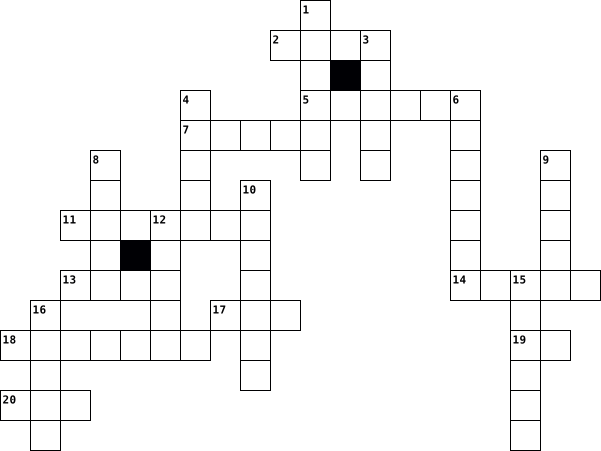
Across
- the upper layer of the earth's mantle
- the outermost shell of a planet
- relating to earthquakes or other vibrations of the earth and its crust.
- molten or semi-molten natural material from which all igneous rocks are formed
- ocean but three letters
- very hot, very dense center of our planet
- type plates that are located beneath the ocean
Down
- when the earth rumbles
- big wave
- large-scale processes affecting the structure of the earth's crust
- study of the lands, features, inhabitants, and phenomena of Earth.
- another word for oceans
- when one plate goes under another
- largest layer of the earth
- the science that deals with the earth's physical structure and substance, its history, and the processes that act on it.
15 Clues: big wave • when the earth rumbles • another word for oceans • ocean but three letters • largest layer of the earth • the outermost shell of a planet • when one plate goes under another • the upper layer of the earth's mantle • very hot, very dense center of our planet • type plates that are located beneath the ocean • ...
Astronomy- Knowianna 2016-10-27

Across
- the largest part of the moons shadow
- the darkest part of the moons shadow
- appears to move from east to west
- the tendency of an object to resist a change in motion
- states that every object in the universe attracts every other object
- occurs when the moon passes directly between earth and the sun
- moves from west to east
Down
- causes day and night
- causes seasons
- occurs at a full moon when earth is directly between the moon and the sun
- an object that orbits a star
- caused by the motions of the moon around earth
- the path of one object as it revolves around another object in space
- an imaginary line that an object rotates on
14 Clues: causes seasons • causes day and night • moves from west to east • an object that orbits a star • appears to move from east to west • the largest part of the moons shadow • the darkest part of the moons shadow • an imaginary line that an object rotates on • caused by the motions of the moon around earth • the tendency of an object to resist a change in motion • ...
Earth's layers 2021-11-02

Across
- Is Mantle solid or liquid
- what is the inner core made of
- what is the hardest layer of earth
- What is the thickness layer of Earth
Down
- what is the largest layer of earth
- what is the lower part of the Mantle
- what is the outer core made of
- how many layers does the Earth have
- what is the outer layer of the Earth?
- core what is the hottest layer of Earth
10 Clues: Is Mantle solid or liquid • what is the outer core made of • what is the inner core made of • what is the largest layer of earth • how many layers does the Earth have • what is the hardest layer of earth • what is the lower part of the Mantle • What is the thickness layer of Earth • what is the outer layer of the Earth? • core what is the hottest layer of Earth
Earth's layers 2021-11-02

Across
- Is Mantle solid or liquid
- what is the inner core made of
- what is the hardest layer of earth
- What is the thickness layer of Earth
Down
- what is the largest layer of earth
- what is the lower part of the Mantle
- what is the outer core made of
- how many layers does the Earth have
- what is the outer layer of the Earth?
- core what is the hottest layer of Earth
10 Clues: Is Mantle solid or liquid • what is the outer core made of • what is the inner core made of • what is the largest layer of earth • how many layers does the Earth have • what is the hardest layer of earth • what is the lower part of the Mantle • What is the thickness layer of Earth • what is the outer layer of the Earth? • core what is the hottest layer of Earth
vocab 2025-03-18

Across
- the top hard part of the earth
- are a thing lava shoots out of it.
- when the earth crust moves against each other.
- the way the earth crust move apart
- it is molten rock
Down
- the way the earth crust moves together
- is when the earth crust goes under another piece of crust.
- is when magma is hardened
- are the shaking of the earth
- it is the end of that tectonic plates.
10 Clues: it is molten rock • is when magma is hardened • are the shaking of the earth • the top hard part of the earth • are a thing lava shoots out of it. • the way the earth crust move apart • the way the earth crust moves together • it is the end of that tectonic plates. • when the earth crust moves against each other. • is when the earth crust goes under another piece of crust.
8th Grade End-of-Year Review -- Space 2022-05-17

Across
- the tide with the least difference between consecutive low and high tides
- a galaxy in which the stars and gas clouds are concentrated mainly in one or more spiral arms.
- a star and all the other objects that revolve around it
- the standard unit that astronomers use to measure the size of stars
- describes phases following a new moon, as more of the Moon's lighted side becomes visible
- Solar system model based on the belief that the sun is the center of the universe
- the time required for Earth to rotate once on its axis
- the spinning motion of a object on its axis
- the tide with the greatest difference between consecutive low and high tides
- phase when the moon is located directly between the earth and sun
- A sudden eruption of intense high-energy radiation from the sun's surface
- line above which polar day (24 hours of daylight) and polar night (24 hours of darkness) are possible
- the distance light travels in one year
- an object that revolves around another object in space
- the blocking of sunlight to Earth that occurs when the moon is directly between the sun and Earth.
- A region of the solar system that is just beyond the orbit of Neptune and that contains small rocky bodies and dwarf planets
- describes phases following the full moon during which the visible surface of the moon decreases
Down
- regions close to the equator which receive direct sunlight nearly all year
- areas of gas on the sun's surface that are cooler than the gases around them
- A galaxy shaped like a round or flattened ball, generally containing only old stars
- The average distance between Earth and the sun, used to measure distances in the solar system
- A force of attraction between objects that is due to their masses.
- the difference in levels of ocean water at high tide and low tide
- An oval shape as opposed to a circular shape
- A model of the universe in which Earth is at the center of the revolving planets and stars.
- phase when the entire side facing Earth is illuminated
- the time or date (twice each year) at which the sun crosses the celestial equator, when day and night are of equal length (about September 22 and March 20).
- A galaxy that has an undefined shape, large numbers of young stars, and greats amounts of gas and dust
- the blocking of sunlight to the moon that occurs when Earth is directly between the sun and the moon
- An object that orbits the sun and is spherical, but has not cleared the area of its orbit.
- A loop of gas that protrudes from the sun's surface, linking parts of sunspot regions
- either of the two times of the year when the sun is at its greatest distance from the celestial equator
- the movement of an object around another object
33 Clues: the distance light travels in one year • the spinning motion of a object on its axis • An oval shape as opposed to a circular shape • the movement of an object around another object • phase when the entire side facing Earth is illuminated • the time required for Earth to rotate once on its axis • an object that revolves around another object in space • ...
nice 2021-02-25

Across
- if is an orange season
- motion of water
- the green season
- a giant rock that orbits the earth.
- the earth is tilted away from the sun
Down
- animals us it to blend in
- the smaller waves
- It happens to everything
- tides that are large
- the earth is tilted towards the sun
- the earth is at an angle
11 Clues: motion of water • the green season • the smaller waves • tides that are large • if is an orange season • It happens to everything • the earth is at an angle • animals us it to blend in • the earth is tilted towards the sun • a giant rock that orbits the earth. • the earth is tilted away from the sun
bible fun 2012-08-11

Across
- Jesus attended this wedding feast
- His blood cried out from the ground
- Jesus's Mother's name in Hebrew
- woman who laughed at what angels said
- Fisherman that Jesus called to be a disciple
- Earth will shake at the last days of earth.
- what early Christians had to display
- an apostle who was a gentile and physician
- Warned Pharaoh
- Eating fruit caused her to wear animal skins
- What angels blow when Jesus comes again
- Jesus loved this apostle
Down
- slept with his father's wife
- Jesus's first miracle
- His name means red earth
- Got a mark of protection from God
- Often killed for telling what God has said.
- Believed GOD his son could be resurrected
- God's day of rest from Genesis became one of the 10 Commandments
- of Galilee Did miracles close to this sea
- The book that foretells what will come
- old testament dreamer-spent time in jail.
- Road to Damascus
- Mediator between God and human beings on earth
- Tax collector whom Jesus called
- new Queen, old queen Vashti
- How all Christians show to others
27 Clues: Warned Pharaoh • Road to Damascus • Jesus's first miracle • His name means red earth • Jesus loved this apostle • new Queen, old queen Vashti • slept with his father's wife • Jesus's Mother's name in Hebrew • Tax collector whom Jesus called • Jesus attended this wedding feast • Got a mark of protection from God • How all Christians show to others • His blood cried out from the ground • ...
Midterm side dish 1 2023-12-12

Across
- when it is hot and easy to breathe
- the degree of the air or anything
- natural weather such as volcanoes, hurricanes,tornados,earthquakes,and floods
- the earth is blank at 23 degrees
- are caused by the tilt of the earth or direct or indirect sunlight
Down
- when it is cold and hard to breathe
- are what happen every month by what part of the sun is reflecting off the moon
- the weather in an area for a long time
- the line through the center of the earth
- what are in the sky that hold rain
- the force that attracts something to the center of it
- the thing caused by the gravitational pull of the moon ( think oceans)
- the line around the earth separating the two hemispheres
- when a hot or cold blank fills up an area
- happens when water is in a cycle
15 Clues: happens when water is in a cycle • the earth is blank at 23 degrees • the degree of the air or anything • what are in the sky that hold rain • when it is hot and easy to breathe • when it is cold and hard to breathe • the weather in an area for a long time • the line through the center of the earth • when a hot or cold blank fills up an area • ...
Geography Crossword Puzzle 2023-09-11

Across
- A nation with its own government/territory
- Ocean farthest south
- Largest continent in the world
- One of the world's large land masses
- An area with similar characteristics
- Continent southeast of Asia
- The United States is in which Continent?
- Ocean on the west coast of North America
Down
- The continent south of the United States
- Ocean on the east coast of the United States
- The study of Earth and how humans interact with it
- Ocean coldest ocean on earth
- Coldest continent on Earth
- Continent south of Europe
- Ocean ocean south of India
- Continent north of Africa
16 Clues: Ocean farthest south • Continent south of Europe • Continent north of Africa • Coldest continent on Earth • Ocean ocean south of India • Continent southeast of Asia • Ocean coldest ocean on earth • Largest continent in the world • One of the world's large land masses • An area with similar characteristics • The continent south of the United States • ...
Layers of the atmosphere/Air pressure & density 2024-01-17

Across
- Works as a shield for living things, protecting them from a lot of the harmful radiation given off by the sun.
- 21% of our atmosphere
- The layer nearest to the Earth (where all weather happens)
- When air pressure shifts while on an airplane,you feel your ears ________.
- This is the third layer where temperatures drop resulting in being the coldest layer of the atmosphere.
- Beautiful curtains of light
- Weight or force of the atmosphere pressing down on any given surface of the Earth.
- As the atmosphere ___________ the further you get from Earth's surface, it becomes less dense and air pressure decreases.
- The hottest layer of the atmosphere as temperatures increases with altitude.
Down
- As an air plane travels higher into the atmosphere, air pressure ___________.
- 78% of our atmosphere
- This is the layer where most airplanes fly and is where the protective ozone layer lies
- Our Earth is surrounded by a mixture of gasses called?
- Distance from the Earth
- Outermost layer of the atmosphere
- How compact molecules are in a solid, liquid, or gas.
- How many layers is our atmosphere organized in?
17 Clues: 78% of our atmosphere • 21% of our atmosphere • Distance from the Earth • Beautiful curtains of light • Outermost layer of the atmosphere • How many layers is our atmosphere organized in? • How compact molecules are in a solid, liquid, or gas. • Our Earth is surrounded by a mixture of gasses called? • The layer nearest to the Earth (where all weather happens) • ...
Rocks, Minerals and the Layers of the Earth 2022-09-29

Across
- Magma that reaches the earth's surface
- Layer of gases that surround the earth
- is the Softest mineral on the Moh scale
- Molten rock inside the mantle
- Solid part of the earth
- Splitting of a mineral into pieces with uneven surfaces
- An item used for scrapping and rubbing
- Scale used to measure a mineral's hardness
- Rives, lakes, ponds, oceans...
- is the Hardest mineral on the Moh scale
Down
- The core is made up of ______ and iron.
- A way a mineral reflects light from a surface, shiny
- Rock that formed from melted minerals
- Hot layer below the earth's crust
- is a natural solid substance that has a definite shape
- What rock is made out of
- Splitting of a mineral into pieces with smooth, flat surfaces.
- The study of the atmosphere
- Surface of the earth is called the ______
19 Clues: Solid part of the earth • What rock is made out of • The study of the atmosphere • Molten rock inside the mantle • Rives, lakes, ponds, oceans... • Hot layer below the earth's crust • Rock that formed from melted minerals • Magma that reaches the earth's surface • Layer of gases that surround the earth • An item used for scrapping and rubbing • ...
Science 2023-12-15

Across
- the angular distance of a place north or south of the earth's equator, or of a celestial object north or south of the celestial equator, usually expressed in degrees and minutes.
- model of the mid-latitude segment of Earth's wind circulation
- the envelope of gases surrounding the earth or another planet.
- the highest layer of the atmosphere in which the gases are all mixed up rather than being layered by their mass.
- the degree of compactness of a substance
- a large-scale atmospheric convection cell in which air rises at the equator and sinks at medium latitudes, typically about 30° north or south.
- in the opposite direction of the way in which the hands of a clock move around.
- the very highest levels of a profession or other sphere, or of prices or other quantities.
- a large plant-eating domesticated mammal with solid hoofs and a flowing mane and tail, used for riding, racing, and to carry and pull loads.
- an equatorial region of the Atlantic Ocean with calms, sudden storms, and light unpredictable winds
- the force exerted on a surface by the air above it as gravity pulls it to Earth
- decrease in size, number, or range
Down
- an imaginary line drawn around the earth equally distant from both poles, dividing the earth into northern and southern hemispheres and constituting the parallel of latitude 0°.
- a constituent of atmospheric circulation
- on the surface of the earth (or of a celestial object) which the northern ends of the axis of rotation.
- the outermost region of a planet's atmosphere.
- a current in a fluid that results from convection.
- in the same direction as the way in which the hands of a clock move around.
- on the surface of the earth (or of a celestial object) which are the southern ends of the axis of rotation.
- measure of hotness or coldness expressed in terms of any of several arbitrary scales, such as Fahrenheit, Celsius, or Kelvin.
- the region of the atmosphere above the mesosphere and below the height at which the atmosphere ceases to have the properties of a continuous medium. The thermosphere is characterized throughout by an increase in temperature with height
- become or make larger or more extensive
- an effect whereby a mass moving in a rotating system experiences a force (the Coriolis force ) acting perpendicular to the direction of motion and to the axis of rotation. On the earth, the effect tends to deflect moving objects to the right in the northern hemisphere and to the left in the southern and is important in the formation of cyclonic weather systems.
- the lowest atmospheric layer; from 4 to 11 miles high (depending on latitude)
24 Clues: decrease in size, number, or range • become or make larger or more extensive • a constituent of atmospheric circulation • the degree of compactness of a substance • the outermost region of a planet's atmosphere. • a current in a fluid that results from convection. • model of the mid-latitude segment of Earth's wind circulation • ...
Solar System Scavenger Hunt 2017-10-27

Across
- How many minutes does it take light to travel from the sun to Earth?
- How many planets have rings?
- How many times faster do the winds blow on Neptune than on Earth?
- What is the hottest planet in our solar system?
- Charon, Nix, and Hydra are the three moons of which dwarf planet?
- Saturn, Jupiter, Uranus, and Neptune are all considered _____ ______(two words)
- One of the first men to walk on the moon was Neil _________.
- The wind storm on Jupiter is sometimes called the? (three words)
- Pluto, Ceres, Haumea, Makemake, and Eris are all what kind of planet?
- How many stars are in our solar system?
Down
- What is the name of the planet people have walked on?
- How many million miles away is the sun from the Earth?
- 1972 was the last time someone walked on the _____.
- Venus has the most __________.
- Phobos and Deimos are the two moons of which planet?
- What is the coldest planet in our solar system?
- Pluto is no longer considered a planet because it is too ______.
- One of the first men to walk on the moon was Buzz _______.
18 Clues: How many planets have rings? • Venus has the most __________. • How many stars are in our solar system? • What is the hottest planet in our solar system? • What is the coldest planet in our solar system? • 1972 was the last time someone walked on the _____. • Phobos and Deimos are the two moons of which planet? • What is the name of the planet people have walked on? • ...
Unit 7 2024-01-30

Across
- top layer of the earth
- plates sliding past eachother
- why pangea separated
- The theory that the world was supercontinent known as pangea and has slowly drifted apart
- plates were originally connected as a supercontinent knows as ___
- made of magnesium and iron
- innermost layer of earth
Down
- second to last layer
- largest layer of the earth
- the top part of the upper mantle
- caused by seafloor spreading
- an objects mass compared to its volume
- plates pulling apart
- "make" the continents
- plates pushing into eachother
15 Clues: second to last layer • plates pulling apart • why pangea separated • "make" the continents • top layer of the earth • innermost layer of earth • largest layer of the earth • made of magnesium and iron • caused by seafloor spreading • plates sliding past eachother • plates pushing into eachother • the top part of the upper mantle • an objects mass compared to its volume • ...
Space and Earth Crossword 2022-12-20

Across
- _______ were not around for 90% of Earth's history.(5)
- There are 79 known moons orbiting _______.(7)
- A year on Venus is _______ than a day on Earth.(7)
- Earth ______ at 1000 miles an hour.(7)
- One _____ Earth's fit in the Sun.(7)
- ______ on Mars are Blue.(7)
Down
- What's the rarest thing in space? Ring _______.(8)
- There are more trees on Earth than _____ in the Milky Way.(5)
- _______ is the only planet not named after a God.(5)
- Every ______ is different.(9)
- Earth isn't perfectly ______.(9)
- ______ has 83 moons.(6)
12 Clues: ______ has 83 moons.(6) • ______ on Mars are Blue.(7) • Every ______ is different.(9) • Earth isn't perfectly ______.(9) • One _____ Earth's fit in the Sun.(7) • Earth ______ at 1000 miles an hour.(7) • There are 79 known moons orbiting _______.(7) • What's the rarest thing in space? Ring _______.(8) • A year on Venus is _______ than a day on Earth.(7) • ...
Space Objects Vocabulary 2024-09-03

Across
- thousands of these can be found between Mars and Jupiter.
- a burning sphere that gives off light and heat energy.
- the path a space object follows as it revolves around another object.
- the outer planets have _______ moons than the inner planets.
- the Earth is about one million times __________ than the Sun.
- Planet in our solar system, these are closest to the sun and are small and rocky.
- these are made of ice, dust, and gas, and when they pass close to the sun, look to have a "tail."
- a group of stars, dust, gas, and planetary objects.
- this is a star at the center of a solar system.
Down
- these orbit a star, and our star has eight revolving it.
- Planet in our solar system, these are furthest from the sun and are large gas giants.
- we see different constellations as the Earth _______ around the Sun.
- the inner planets have a _______ orbit than the outer planets.
- the Earth rotates on its _______.
- The Moon __________ the Sun's light.
- we live in the _______ way galaxy.
- the Sun is the ___________ star to Earth.
- this rocky object orbits around planets.
18 Clues: the Earth rotates on its _______. • we live in the _______ way galaxy. • The Moon __________ the Sun's light. • this rocky object orbits around planets. • the Sun is the ___________ star to Earth. • this is a star at the center of a solar system. • a group of stars, dust, gas, and planetary objects. • a burning sphere that gives off light and heat energy. • ...
Sun Moon & Earth Review 2023-03-01

Across
- The rise and fall of Earth's waters.
- When the moon and sun are at right angles it creates this.
- The sunlight we experience during summer.
- The _____ of the earth on its axis causes us to experience seasons.
- The _____ has the greatest effect on the ocean tides.
- The northern and southern hemispheres experience ________ seasons.
- The earth does this in one year.
Down
- When the sun, moon, and earth are all lined up in a straight line, it creates this.
- The sunlight we experience during winter.
- The earth spinning on its access is also called _____.
- Which direction does the earth revolve around the sun?
- There are this many tide changes in 24 hours.
12 Clues: The earth does this in one year. • The rise and fall of Earth's waters. • The sunlight we experience during winter. • The sunlight we experience during summer. • There are this many tide changes in 24 hours. • The _____ has the greatest effect on the ocean tides. • The earth spinning on its access is also called _____. • ...
Earth's layers 2021-11-02

Across
- Is Mantle solid or liquid
- what is the inner core made of
- what is the hardest layer of earth
- What is the thickness layer of Earth
Down
- what is the largest layer of earth
- what is the lower part of the Mantle
- what is the outer core made of
- how many layers does the Earth have
- what is the outer layer of the Earth?
- core what is the hottest layer of Earth
10 Clues: Is Mantle solid or liquid • what is the outer core made of • what is the inner core made of • what is the largest layer of earth • how many layers does the Earth have • what is the hardest layer of earth • what is the lower part of the Mantle • What is the thickness layer of Earth • what is the outer layer of the Earth? • core what is the hottest layer of Earth
Pages 28-35 2023-02-22

Across
- Made of basalt and gabbro
- The study of the Earth
- form when rock is forced beneath an overlying rock layer
- Responsible for most of earth's feature
- The Earth's outer layer made of solid rock
- A bowl-like structure in the earth's surface
- The tallest mountain on earth
- The barrier between the upper and lower mantle
- The second most common element in the earth
Down
- The barrier that keeps the mantle and the core seperated
- Float like rafts on the plastic rock of the upper mantle
- The most abundant element in earth's crust
- An arch-like structure in the earth's surface
- Elevated landmasses that are higher than hills
- Deposits of sand and mineral fragments
- Reigon beneath the crust
- waves Earthquake vibrations
- Forms by the bending or buckling of rocks under great pressure
18 Clues: The study of the Earth • Reigon beneath the crust • Made of basalt and gabbro • waves Earthquake vibrations • The tallest mountain on earth • Deposits of sand and mineral fragments • Responsible for most of earth's feature • The most abundant element in earth's crust • The Earth's outer layer made of solid rock • The second most common element in the earth • ...
Science: Mid-year review 2024-01-31

Across
- the MASS of a planet increases, the strength of its gravity will: _____________
- This is at the center of the solar system. Holds all the planets in orbit
- Sunlight strikes the surface of the Earth in straight and _________ lines
- describes the speed AND direction an object is moving
- The __________ force is the number you get when you add up all the forces acting on an object. If it is bigger than 0, the forces are unbalanced and the object will accelerate
- A __________ eclipse occurs when the Sun, Moon and Earth line up and the moon's shadow blocks out the sun
- If the net force applied to an object increases, its acceleration will ____________
- The _________ of the sunlight to the Earth determines the season/ temperature/ climate. The ________ of the moon to the Earth and sun determines the phase we see! (same word)
- A CHANGE in speed and/or direction
- The two things that affect how fast an object will accelerate are _________ and force
- This is the variable that you change in a lab. The before/ cause
- Which object, a feather or brick will be easier to accelerate?
- This is the variable that you measure or observe in a lab. The after/ effect
Down
- The only way to accelerate an object is to apply an ____________ force
- Happens twice a year, when night and day are the exact same length
- The most massive planet in the solar system
- Means mass. The more ____________ an object has, the harder it will be to move
- The longest day of the year when the northern hemisphere is tilted directly at the sun is called the summer ___________
- If the mass of an object increases, its acceleration will __________
- When the visible part (lit up) is getting bigger
- What is the independent variable in this question: "What is the effect of MASS on ACCELERATION?"
- The moon lights up because it ___________ sunlight
- The angle of the Sun to the Earth's surface is also called _______
- This can happen when the Sun, Earth and moon line up perfectly
- This is the reason why Earth has seasons and other planets don't
- What is the force that pulls you down and keeps you from floating off into space? It also holds the planets in orbit!
26 Clues: A CHANGE in speed and/or direction • The most massive planet in the solar system • When the visible part (lit up) is getting bigger • The moon lights up because it ___________ sunlight • describes the speed AND direction an object is moving • This can happen when the Sun, Earth and moon line up perfectly • ...
Map Skills 2023-08-29

Across
- A symbol with cardinal and intermediate directions
- Imaginary lines running north and south around the Earth
- Part of a map that lists all of the symbols used on a map and what each symbol represents
- The half of the Earth located south of the equator
- An imaginary line running from the North Pole to the South Pole at 0 degrees longitude
- the four directions N S E W
- imaginary lines running east and west around the Earth
- An imaginary line around the middle of the Earth at 0 degrees latitude
Down
- Shows how the distance between points on a map compares to the actual distance in real life
- The half of the Earth located north of the equator
- located between the 4 cardinal directions, NE NW SE SW
- Two points on Earth equally distant from the equator North and South poles
12 Clues: the four directions N S E W • The half of the Earth located north of the equator • A symbol with cardinal and intermediate directions • The half of the Earth located south of the equator • located between the 4 cardinal directions, NE NW SE SW • imaginary lines running east and west around the Earth • Imaginary lines running north and south around the Earth • ...
Gravity 2025-01-17

Across
- - When objects have greater mass, the gravitational force is this.
- - Gravity on Earth pulls everything toward this part of the planet.
- - A force that pulls objects toward each other.
- - One of the two factors that affect the strength of gravitational force.
- Newton - The scientist who formulated the Law of Universal Gravitation.
- - The planet whose gravity pulls objects toward its center.
- - The celestial body whose gravity keeps planets in orbit.
Down
- - The celestial body that exerts gravitational force causing tides on Earth.
- - The measure of how much gravity pulls on an object's mass.
- - The unit used to measure weight in science.
- - The path an object follows due to gravitational forces.
- Hole - An object with the strongest gravitational pull in the universe.
- - The amount of matter in an object.
- - When objects are farther apart, the gravitational force is this.
- - Another term for the effect of gravity on objects.
- - These are caused by the gravitational pull between the Moon and Earth.
16 Clues: - The amount of matter in an object. • - The unit used to measure weight in science. • - A force that pulls objects toward each other. • - Another term for the effect of gravity on objects. • - The path an object follows due to gravitational forces. • - The celestial body whose gravity keeps planets in orbit. • ...
seasons 2023-12-12

Across
- What season do we carve pumpkins?
- What season is Easter?
- The season that's the hottest time of year?
- an invisible line about which an object rotates or spins
- turning round on a axis
- hemisphere the half of the planet earth that lies west of the prime meridian?
- an object spinning motion about its own axis
Down
- imaginary line drawn down the middle dividing the earth into northern and southern hemispheres?
- hemisphere the part of the planet that is north of the equator?
- a division of the year based on changes on the weather
- hemisphere the half of the earth that is south of the equator?
- hemisphere the half of the planet earth east of the prime meridian and west of the anti-meridian?
- gives us heat and light
- The season when it snows?
- a regular repeating path that one object in space takes around another one
15 Clues: What season is Easter? • gives us heat and light • turning round on a axis • The season when it snows? • What season do we carve pumpkins? • The season that's the hottest time of year? • an object spinning motion about its own axis • a division of the year based on changes on the weather • an invisible line about which an object rotates or spins • ...
Astronomy 2025-10-05

Across
- The 3rd largest moon in the Solar System.
- The supercluster we're in.
- The Latin name for the "Moon".
- The super-super cluster we're in.
- The largest known planet in the Solar System.
- The largest galaxy that orbits the Andromeda Galaxy.
- The Largest moon in the Solar System
Down
- The word for the four major moons of Jupiter.
- A planet about 10% the mass of the Earth, and is commonly known as the "Red Planet"
- The closest star to the Sun. (no spaces)
- The galaxy we're in. (no spaces)
- The only known planet with life
- A planet that is ~85% the mass of the Earth, and is covered in a thick atmosphere.
- A planet ~5% the mass of the Earth, and is an element.
14 Clues: The supercluster we're in. • The Latin name for the "Moon". • The only known planet with life • The galaxy we're in. (no spaces) • The super-super cluster we're in. • The Largest moon in the Solar System • The closest star to the Sun. (no spaces) • The 3rd largest moon in the Solar System. • The word for the four major moons of Jupiter. • ...
Astronomy recap 2024-09-05

Across
- The sun's fuel
- Visualised everything orbiting the Earth in circles upon circles
- The reason we can see the planets (2)
- Type of orbit often used for applications such as Google Earth
- Evidence for expansion of the universe (2)
- A model that places the Sun at the centre of everything
- Alternative hypothesis to the big bang theory (2)
- What is Pluto (2 words)
- Evidence for the big bang
- The shape of an orbit
- Published a paper posthumously suggesting that the Earth orbited the Sun
- Seventh planet from the sun
- A rock between Mars and Jupiter
- Birth place of a star
- A chunk of ice and rock orbiting the sun, often at a great distance
Down
- Reason JWST detects IR (2)
- Gravitational force
- Second planet from the Sun
- Fate of massive stars (2)
- First known person to point a telescope at the night skies
- The stage in a star's lifecycle before nuclear fusion begins
- Resultant force towards the centre of a circular path
- A model that places the Earth at the centre of everything
- Type of orbit used for satellite TV
- How we study composition of a star's atmosphere (2)
- Two factors that affect gravitational field strength of a planet (2 words)
- Next stage for our Sun (2)
- The stage the Sun is at
28 Clues: The sun's fuel • Gravitational force • The shape of an orbit • Birth place of a star • What is Pluto (2 words) • The stage the Sun is at • Fate of massive stars (2) • Evidence for the big bang • Reason JWST detects IR (2) • Second planet from the Sun • Next stage for our Sun (2) • Seventh planet from the sun • A rock between Mars and Jupiter • Type of orbit used for satellite TV • ...
Science crossword 2024-11-13

Across
- tectonic plates slide
- sudden movement
- center of earth
- long narrow path in earth
- Thinnest shell
- forms landmass and continents
- tectonic plates flow above it
- movement of rocks
- tectonic plates come together
- ocean crust
Down
- mountain of lava
- we live in this sphere
- highest point on earth
- largest layer of Earth
- tectonic plates slide away from each other
- layer creates magnetic fields
- breaking down of rocks
- long narrow path in sea
- lowest point on earth
- scale uplift
20 Clues: ocean crust • scale uplift • Thinnest shell • sudden movement • center of earth • mountain of lava • movement of rocks • tectonic plates slide • lowest point on earth • we live in this sphere • highest point on earth • largest layer of Earth • breaking down of rocks • long narrow path in sea • long narrow path in earth • layer creates magnetic fields • forms landmass and continents • ...
Solar System 2023-03-07

Across
- Gives off light in the sky.
- What we can use to look at space from Earth.
- takes people between space and Earth.
- The closest planet to the sun.
- The solar system's star.
- Someone that studies science.
- Someone that travels space.
- The Red Planet.
- We can see it at night in the sky.
- The Icy Giant planet.
- The only planet that has life.
- What keeps us on the ground and not floating into space.
- Word meaning small.
Down
- The word for when we find something new.
- The planet that has the Red Spot.
- The path that the planets take around the sun.
- A group of stars that is found throughout space.
- There are 8 of these in our solar system.
- The 8th planet closest to the sun.
- The second planet.
- Robot that is sent to take pictures of planets.
- Hot or cold.
- The area beyond the Earth's sky.
- The planet that is known for its rings.
24 Clues: Hot or cold. • The Red Planet. • The second planet. • Word meaning small. • The Icy Giant planet. • The solar system's star. • Gives off light in the sky. • Someone that travels space. • Someone that studies science. • The closest planet to the sun. • The only planet that has life. • The area beyond the Earth's sky. • The planet that has the Red Spot. • ...
SPACE PHYSICS INTRO WORKSHEET 2024-04-17

Across
- earth's spin axis is tilted with respect to its orbital plane. AND THIS CAUSES .......
- THE EARTH REVOLVES AROUND THE SUN...... IN 365 DAYS
- THE DAY AND NIGHT ARE CAUSED BY THE EARTH'S....
- SPINS IN ........ DIRECTION
- THE MOVEMENT OF THE EARTH AROUND THE SUN IS CALLED...
Down
- THIS IS WHEN THE HALF OF THE EARTH IS IN THE SHADOW, FACING AWAY FROM THE SUN
- THE EARTH COMPLETES ONE REVOLUTION AROUND THE SUN IN A .....
- THE AERTH IS ..... ON ITS AXIS
- THE EARTH HAVE ...... SEASONS ACROSS THE YEAR
- The earth rotates on its axis from....
10 Clues: SPINS IN ........ DIRECTION • THE AERTH IS ..... ON ITS AXIS • The earth rotates on its axis from.... • THE EARTH HAVE ...... SEASONS ACROSS THE YEAR • THE DAY AND NIGHT ARE CAUSED BY THE EARTH'S.... • THE EARTH REVOLVES AROUND THE SUN...... IN 365 DAYS • THE MOVEMENT OF THE EARTH AROUND THE SUN IS CALLED... • ...
Science Unit 8 Vocab 2022-01-26

Across
- in a liquid when the warmer molecules move up and the cooler ones move down
- the layer above the stratosphere, from 50 km to 80 km.
- amount of matter that can fit inside of a certain space
- contains high concentration of ions and free electrons, reflects radio waves.
- an instrument used to measure wind speed
- the layer above the troposphere, extending about 50 km above.
- an instrument used to measure air pressure
- the lowest region of the atmosphere, from earth’s surface to about 6-10 km above.
- winds winds that blow over a local region
Down
- effect makes things that travel long distances across the earth’s surface appear to move at a curve instead of in a straight line.
- the layer above the mesosphere, contains part of the ionosphere.
- the movement of air and other gases moving across the earth’s surface.
- the protective layers that surrounds earth.
- pressure the pressure of the air around us that is pulled down by gravity.
- the outermost layer of earth.
- effect when the atmosphere absorbs and traps the sun's heat in it to warm earth.
- winds winds that blow across the earth
- energy that comes from a source and can travel at the speed of light, Electromagnetic waves.
- energy energy created by heat.
- the measure of height above sea level
20 Clues: the outermost layer of earth. • energy energy created by heat. • the measure of height above sea level • winds winds that blow across the earth • an instrument used to measure wind speed • winds winds that blow over a local region • an instrument used to measure air pressure • the protective layers that surrounds earth. • ...
Cultural Geography Chapter 2 Vocabulary Quiz 2025-08-28

Across
- Degenerative process leading to the reshaping of rocks
- Large flat area elevated above surrounding land
- A crack in the earth's surface where two pieces of land have moved in different directions
- Theory that large portions of the earths crust moves causing earthquakes and volcanos
- The area drained by a river system
- The whole system of oceans that flow into eachother
Down
- All of the water that exists on or around the earth
- Portion of the earth's interior lying between the crust and the core
- The area of solid matter on the surface of the earth
- A river that flows into and feeds another river
- Seven primary landmasses of the earth's surface
- Layer of gas that surrounds the earth
- Tectonic process by which the relatively thin and dense oceanic crust slowly slides down and under the more massive but less dense continental crust
- A violent upheaval or change in the earth's crust
- Process of heat transfer that occurs in the mantle when particles carry thermal energy as the move from one place to another
- Process where glaciers recede and weep away material, creating U-shaped valleys
- Natural breaking down and removal of materials on the earth's surface
- Central portion of the earth that lies below the mantle
- A level expanse with no visible elevation
- Molten rock that flows because it is subjected to intense pressure and temperature
20 Clues: The area drained by a river system • Layer of gas that surrounds the earth • A level expanse with no visible elevation • A river that flows into and feeds another river • Seven primary landmasses of the earth's surface • Large flat area elevated above surrounding land • A violent upheaval or change in the earth's crust • ...
Science Review 2021-05-25

Across
- energy of motion
- upward force a fluid exerts on an object.
- growing moon phase.
- In space, this encompasses everything.
- This water cycle process requires a loss of heat energy and helps to form clouds.
- These units are based on the distance of Earth from the Sun.
- average weather conditions over a span of 30 years.
- 24 hours on Earth is equal to one________.
- A force that can change the motion of an object.
- When the number of daylight hours are at a
- the time it takes for the Earth to orbit the sun.
- or a minimum.
- This is a small icy body, made of ice and rock, and has a tail.
Down
- This type of potential energy relates to an objects height.
- Law that energy cannot be created or destroyed.
- According to Newton's 3rd law, action/reaction forces are ______ and opposite.
- The unit of measurement for energy
- The resistance of any physical object to any change in its velocity
- A shrinking moon phase.
- A unit of force
- Earth receives different amounts of sunlight due to this.
- A front that occurs when a cold front and a warm front stall.
- a liquid that falls from a cloud
- The movement of air parallel to Earth's surface.
- When land warms the air directly above
- A small rocky body that makes contact with a planet's surface.
26 Clues: or a minimum. • A unit of force • energy of motion • growing moon phase. • A shrinking moon phase. • a liquid that falls from a cloud • The unit of measurement for energy • In space, this encompasses everything. • When land warms the air directly above • upward force a fluid exerts on an object. • 24 hours on Earth is equal to one________. • ...
Astronomy 2024-03-14

Across
- forceful pull
- red planet
- a glowing cloud of gas
- ball of fire
- the study of the univeres
- planet wit rings
- small star
- space shortcut
- icey belt in space
- what a company can put in space
Down
- space rock
- how far away something is
- the rocky planet
- the gasses surrounding the earth
- what you travel to space in
- what u see in the night sky
- where the solar system is at
- the living planet
- the 5 planet
- a small frozen mass
20 Clues: space rock • red planet • small star • ball of fire • the 5 planet • forceful pull • space shortcut • the rocky planet • planet wit rings • the living planet • icey belt in space • a small frozen mass • a glowing cloud of gas • how far away something is • the study of the univeres • what you travel to space in • what u see in the night sky • where the solar system is at • ...
Vocabulary unit 5 2026-03-06

Across
- The crust under the ocean, thinner but heavier than continental crust.
- A large piece of Earth's crust that carries land (continents). These plates move very slowly, like a giant puzzle.
- A place where magma rises from deep inside Earth, forming volcanoes. Hawaii was created by a hot spot!
- The edges where tectonic plates meet. This is where earthquakes and volcanoes often happen.
- A place where two plates slide past each other. causing earthquakes, like San andreas fault in California.
- The soft, flowing layer of the mantle below the lithosphere. It's like warm, stretchy plastic, allowing tectonic plates to move.
- A place where two tectonic plates move apart. It can create a new ocean floor. like in the Mid-atlantic.
Down
- A tectonic plate under the ocean. It's thinner but denser than a continental plate.
- The thin, outermost layer of Earth where we live. It's like the skin of an apple compared to the rest of the planet.
- The rigid outer layer of the Earth, made of the crust and upper mantle. It's like the hard shell of an egg.
- The part of Earth's crust that forms land. It is thicker but lighter than oceanic crust.
- A place where two plates push together. It can form mountains or volcanoes, like the Andes
- The liquid layer around the inner core, also made of iron and nickel. It creates Earth's magnetic field.
- The invisible force around Earth that protects us from the Sun's radiation. It makes compasses point north.
- The solid, super-hot center of the Earth, made mostly of iron and nickel. It's like a metal ball deep inside the planet.
- The thickest layer of Earth, between the crust and core. It has hot, moving rock that slowly circulates, like thick soup.
- A deep valley in the ocean floor, formed when one plate sinks under another. The Mariana Trench is the deepest one.
- A huge piece of the lithosphere that moves on the asthenosphere. Their movement causes earthquakes and volcanoes.
- Something melted due to extreme heat, like lava from a volcano.
19 Clues: Something melted due to extreme heat, like lava from a volcano. • The crust under the ocean, thinner but heavier than continental crust. • A tectonic plate under the ocean. It's thinner but denser than a continental plate. • The part of Earth's crust that forms land. It is thicker but lighter than oceanic crust. • ...
Bible Crossword 2023-06-14

Across
- The supreme being who is believed to have created the world.
- The planet we live on, also known as "the ground" or "land".
- The star that provides light and heat to the Earth.
- Huge balls of gas that emit light and heat in the sky.
- Illumination or brightness that eliminates darkness.
- The solid part of the Earth's surface, including continents.
- Living creatures that are not plants, including mammals, birds, reptiles, etc.
- The Earth's natural satellite that orbits around it.
- The spiritual realm above the Earth, where God resides.
- The expanse of the atmosphere above the Earth.
Down
- Absence of light; the opposite of brightness.
- The act of bringing something into existence.
- Living organisms, including trees, flowers, and grass.
- The first man created by God, according to the Bible.
- The liquid form of H2O, such as oceans, seas, and rivers.
15 Clues: Absence of light; the opposite of brightness. • The act of bringing something into existence. • The expanse of the atmosphere above the Earth. • The star that provides light and heat to the Earth. • Illumination or brightness that eliminates darkness. • The Earth's natural satellite that orbits around it. • The first man created by God, according to the Bible. • ...
Unit 6-1 2018-10-12

Across
- n., an imaginary line around which Earth spins or rotates
- n., the force that keeps Earth in an orbit around the Sun
- n., on order of succession, or one thing after another
- n., the Sun and all of the heavenly bodies that orbit it
- adj., not following the normal pattern
- n., fuzzy clouds made of ice, rock, and dust that look like streaks of light in the night sky
- n., a group of stars that form a figure in the sky
- n., a person whose work is, or who studies, astronomy
Down
- n., a large group of stars
- n., everything that exists, including Earth, the planets, the stars, and the Sun
- n., the changing views of the Moon
- n., the degree of coldness or hotness in an environment
- n., the outside parts or outermost layers of something
- n., a complete circle or turn of Earth around the Sun
- v., revolves around in space
- n., small objects that orbit the Sun
- n., a substance, such as air, that can expand to take the shape of the space available
17 Clues: n., a large group of stars • v., revolves around in space • n., the changing views of the Moon • n., small objects that orbit the Sun • adj., not following the normal pattern • n., a group of stars that form a figure in the sky • n., a complete circle or turn of Earth around the Sun • n., a person whose work is, or who studies, astronomy • ...
Unit 7 2021-06-14

Across
- when two plates slide past each other
- what all of the continents used to be called
- underground lava
- dicovered continental drift
- Alfred Wegener's discovery
- there are this number of major plates in the world
- a current in the mantle
Down
- pieces of the Earth's crust
- when two plates come together
- the innermost layer of the Earth
- the technology Harry Hess used to discover seafloor spreading
- discovered seafloor spreading
- 2nd layer of the Earth
- when two tectonic plates move away from each other
- where seafloor spreading takes place
- most outward layer of the Earth, we live on it
16 Clues: underground lava • 2nd layer of the Earth • a current in the mantle • Alfred Wegener's discovery • pieces of the Earth's crust • dicovered continental drift • when two plates come together • discovered seafloor spreading • the innermost layer of the Earth • where seafloor spreading takes place • when two plates slide past each other • what all of the continents used to be called • ...
NORTON SOUTH DISTRICT PATHFINDERS STAR QUIZ 2019 2019-07-24

Across
- a star in the middle of orion's belt
- a meteor falling from space producing shortlived spark
- when.the tide goes below sea level for hours
- earth's nearest celestial neighbour
- 4.2 light years away from earth
- when the shadow of earth falls on the earth
- morning or evening star
Down
- blue bightest star in orion
- galaxy with solar system
- brightest star
- a celestial body orbiting around a star
- constellation with 7 stars
- a tide arise above sea level for more than an hour
- a constellation visible in the southern hemisphere
- shadow of a celestial falling on another
- 9.4 quantilion km per year
- red orange bright star in orion
- dwarf planet
- wave or falling and rising of sea level
19 Clues: dwarf planet • brightest star • morning or evening star • galaxy with solar system • constellation with 7 stars • 9.4 quantilion km per year • blue bightest star in orion • red orange bright star in orion • 4.2 light years away from earth • earth's nearest celestial neighbour • a star in the middle of orion's belt • a celestial body orbiting around a star • ...
Plate Tectonics Crossword Puzzle SK #17 2017-11-13

Across
- -transfer of heat through direct contact
- -located in the mantle where the convection currents are
- -Boundaries that collide
- -a valley that is very deep
- -Molten that has erupted underneath the earth's surface
- -Believed to be the super continent before the continents separated
- -transfer of heat through space
- -3rd layer of earth, only layer that is a liquid
- -Crust + Mantle=?
- -Plates that move apart from each other
- -Scientist who came up with the hypothesis that the earth's continents moved
Down
- -The theory that continents moved over time
- -The transfer of heat through a liquid
- -The transfer of heat through a liquid
- -4th layer of the Earth and back in the mantle
- -Plates that slide past each other
- -3 layers, upper, middle, and lower, 2nd layer of Earth
- -the ocean floor sinks underneath an ocean trench
- -the force upon an object
- -Molten that has erupted on the earth's surface
20 Clues: -Crust + Mantle=? • -Boundaries that collide • -the force upon an object • -a valley that is very deep • -transfer of heat through space • -Plates that slide past each other • -The transfer of heat through a liquid • -The transfer of heat through a liquid • -Plates that move apart from each other • -transfer of heat through direct contact • ...
Pages 28-35 2023-02-22

Across
- Made of basalt and gabbro
- The study of the Earth
- form when rock is forced beneath an overlying rock layer
- Responsible for most of earth's feature
- The Earth's outer layer made of solid rock
- A bowl-like structure in the earth's surface
- The tallest mountain on earth
- The barrier between the upper and lower mantle
- The second most common element in the earth
Down
- The barrier that keeps the mantle and the core seperated
- Float like rafts on the plastic rock of the upper mantle
- The most abundant element in earth's crust
- An arch-like structure in the earth's surface
- Elevated landmasses that are higher than hills
- Deposits of sand and mineral fragments
- Reigon beneath the crust
- waves Earthquake vibrations
- Forms by the bending or buckling of rocks under great pressure
18 Clues: The study of the Earth • Reigon beneath the crust • Made of basalt and gabbro • waves Earthquake vibrations • The tallest mountain on earth • Deposits of sand and mineral fragments • Responsible for most of earth's feature • The most abundant element in earth's crust • The Earth's outer layer made of solid rock • The second most common element in the earth • ...
Chapter2:weather and soil formation;topographic maps 2014-02-02

Across
- when gravity moves soil or rock
- wind erosion caused soil
- when rocks grind away
- management of soil
- a process that breaks down rocks
- rich or fertile soil
- a measurement to tell how your plants are doing
- used to grow plants outside
- a curved slope
- a dark colored soil
- A ______ weathering breaks rocks threw chemical changes
- crops left on the ground to hold new ones in place
- planting diffrent crops every year in the same place
- connects points of elevation
- a material that is full of tiny
- slits rocks in half to fill in cracks
- a hard layer of earth
Down
- the layer of soil beneath topsoil
- a ______ weathering that rocks are broken into small pieces
- thick mass
- A ______ map that shows surface features
- soil that is the highest layer of earth
- soil that differance in color and texture
- change in earths Past
- layer of dead plant's and stems
- earth uses this to make earth
- a chemical change in a substance
- broken down soil
28 Clues: thick mass • a curved slope • broken down soil • management of soil • a dark colored soil • rich or fertile soil • when rocks grind away • change in earths Past • a hard layer of earth • wind erosion caused soil • used to grow plants outside • connects points of elevation • earth uses this to make earth • when gravity moves soil or rock • layer of dead plant's and stems • ...
Tectonic Plates Crossword Puzzle 2015-03-18

Across
- steep walled depression around a volcanos vent
- point of earths surface directly above the earthquakes focus
- earths outer layer
- theory that magma from below earths crust is forced up torward the seafloor at a midocean ridge
- measure of energy released by an erthquake
- theory that earths crust and upper mantle are broken into sections that move around
- vibrations caused by breaking rocks along faults
- a scientist who studies earthquakes and seismic waves
- location in mantle that is is hotter than most
- plastic like layer of earth
Down
- hypothesis by alfred wegener that states that the continents move
- surface along which rocks break and move
- liquid core that surrounds earth
- enrgy waves that are produced and travel outward from the earhquakes focus
- largest layer inside earth, mostly made of silicon, oxygen, magnesium, and iron
- waves of energy that reach earths surface during an earthquake
- rigid outer most layer of earth
- opening in earths surface where volcanic ash and lava erupt
- a powerful giant wave
- a large super continent
20 Clues: earths outer layer • a powerful giant wave • a large super continent • plastic like layer of earth • rigid outer most layer of earth • liquid core that surrounds earth • surface along which rocks break and move • measure of energy released by an erthquake • steep walled depression around a volcanos vent • location in mantle that is is hotter than most • ...
Space 2020-12-02

Across
- the 1st planet
- the sun is one of these
- the red planet
- the layer that protects earth
- the planet with rings
- the furthest planet from the sun
Down
- the 5th planet
- Earths sister planet
- a little planet that circulates the earth
- the largest star
- the emplaned with live on
- the 7th planet
12 Clues: the 5th planet • the 1st planet • the red planet • the 7th planet • the largest star • Earths sister planet • the planet with rings • the sun is one of these • the emplaned with live on • the layer that protects earth • the furthest planet from the sun • a little planet that circulates the earth
The Earth's Interior and Plate Tectonics 2013-03-04

Across
- located directly below the crust
- the way earths plates move
- the crust that holds the oceans
- movement of the continents
- the sphere that holds our continents and oceans
- a scientist who came up with the idea of continental drift
- the planet that we live on
- super continent
- the layer of the earth we live on
- an extremely hot solid sphere at the center of the earth
- when two plates run into each other
- mount Everest is a ________
Down
- is the result of a sudden release of energy in the Earth's crust
- the zone when the old oceanic crust goes back into the mantel
- when two plates go away from each other
- a zone in the upper mantel directly below the lithosphere
- they hold the continents and oceans
- holds the continents
- mostly made out of iron and nickel just before the inner core
- when two plates rub up against each other
20 Clues: super continent • holds the continents • the way earths plates move • movement of the continents • the planet that we live on • mount Everest is a ________ • the crust that holds the oceans • located directly below the crust • the layer of the earth we live on • they hold the continents and oceans • when two plates run into each other • when two plates go away from each other • ...
Plate tectonics 2023-09-25

Across
- the reason the Lower mantle does not melt
- Weak layer of the mantle that is partially melted
- heat transferred by contact
- Ocean basins form at this
- the name of the super continent
- Mass per unit volume
- uppermost layer of the Earth
- heat transferred without contact
- what is in the center of the Earth?
Down
- the theory that all the Earth's land was once joined into a super continent.
- cool and rigid outer layer of the mantle
- The type of waves that move along the Earth's surface
- the lose of energy through radiation
- waves that are useful in analyzing the Earth's interior surface
- when ocean and continent come together at this boundary
- these plate boundaries slide past each other
- the reason boats float on top of the water and doesn't sink
- Layer of the mantle that does not melt
- the second layer of the Earth
- the crust that is made up of mostly basalt
- the crust made up of mostly granite
21 Clues: Mass per unit volume • Ocean basins form at this • heat transferred by contact • uppermost layer of the Earth • the second layer of the Earth • the name of the super continent • heat transferred without contact • the crust made up of mostly granite • what is in the center of the Earth? • the lose of energy through radiation • Layer of the mantle that does not melt • ...
Science extra credit marking period 3 2022-02-28
Across
- the red planet
- the blue planet
- planets made of mostly gases
- the gas giant
- revolves around planets
- the amount of planets
- what we breath
- the smallest planet
- one of the moons
- what planets revolve around
Down
- planet has visible rings
- bright lights in the sky
- a bright flash across the sky
- this classes name
- no longer a planet
- where we live
- what holds us on earth
- planets with rocks
- where the stars are
- named from greek gods
20 Clues: where we live • the gas giant • the red planet • what we breath • the blue planet • one of the moons • this classes name • no longer a planet • planets with rocks • where the stars are • the smallest planet • the amount of planets • named from greek gods • what holds us on earth • revolves around planets • planet has visible rings • bright lights in the sky • what planets revolve around • ...
2nd Quarter 2015-01-05

Across
- Which scientist is credited with the continental drift hypothesis? Alferd_______________.
- Earthquakes occur when rocks __________.
- Plates move apart at________boundaries.
- The property that peels off in flat sheets.
- Oceanic plates are pushed down into the upper mantle in ______zone.
- What type of forces create mountains?
- Plates move together at ______ boundaries.
- _________can be located based on different speeds of seismic waves.
- The place where an earthquake originates is called the __________.
- Earth's inner core is________.
- Which term refers to the ridged layer of Earth that is about 100 km thick and generally less dense than the material below it?
- Each mineral has a set of properties and specific__________ makeup.
- Changes in the ______of seismic waves were used to determine the location of Earth's layers.
Down
- What is the name of the giant supercontinent.
- an underwater earthquake can cause a wave called a ______.
- What famous strike-slip fault is located in California.
- the largest layer of Earth is the _____?
- The study of Earth and Earth process is called?
- The cycle of heating, rising, cooling, and sinking is called________current.
- The process occurring in the mantle that is thought to be the force behind plate tectonics is an example of a(n)___________current.
- The layer over which the tectonic plates move is the _____________.
- how many parts are in Earth's core?
- _____________boundary has plates sliding past each other.
- The youngest rock in the ocean floor is located at the mid-ocean______.
- continental drift occurs because of _______spreading.
- The fastest traveling seismic waves are____-_______?
26 Clues: Earth's inner core is________. • how many parts are in Earth's core? • What type of forces create mountains? • Plates move apart at________boundaries. • the largest layer of Earth is the _____? • Earthquakes occur when rocks __________. • Plates move together at ______ boundaries. • The property that peels off in flat sheets. • ...
2nd Quarter 2015-01-05

Across
- The property that peels off in flat sheets.
- an underwater earthquake can cause a wave called a ______.
- Plates move together at ______ boundaries.
- The cycle of heating, rising, cooling, and sinking is called________current.
- What is the name of the giant supercontinent.
- Changes in the ______of seismic waves were used to determine the location of Earth's layers.
- The layer over which the tectonic plates move is the _____________.
- The place where an earthquake originates is called the __________.
- _____________boundary has plates sliding past each other.
- Plates move apart at________boundaries.
- What famous strike-slip fault is located in California.
- Each mineral has a set of properties and specific__________ makeup.
Down
- The fastest traveling seismic waves are____-_______?
- _________can be located based on different speeds of seismic waves.
- how many parts are in Earth's core?
- Which term refers to the ridged layer of Earth that is about 100 km thick and generally less dense than the material below it?
- The youngest rock in the ocean floor is located at the mid-ocean______.
- Earthquakes occur when rocks __________.
- What type of forces create mountains?
- Oceanic plates are pushed down into the upper mantle in ______zone.
- Earth's inner core is________.
- Which scientist is credited with the continental drift hypothesis? Alferd_______________.
- The study of Earth and Earth process is called?
- continental drift occurs because of _______spreading.
- the largest layer of Earth is the _____?
25 Clues: Earth's inner core is________. • how many parts are in Earth's core? • What type of forces create mountains? • Plates move apart at________boundaries. • Earthquakes occur when rocks __________. • the largest layer of Earth is the _____? • Plates move together at ______ boundaries. • The property that peels off in flat sheets. • ...
Themes of Geography 2021-08-17

Across
- Part of a map that shows the relationship between distance on the map and real distance on the ground
- Type of location defined with data like coordinates on a map or latitude and longitude
- Imaginary north/south lines that divide the earth, including the prime meridian
- Continent that's home to Brazil, Argentina, and Colombia
- A big idea that shows up repeatedly in a given subject or work
- Part of a map that explains symbols
- The study of the earth, its people, and how they all interact
- Part of a map that states what the map is about
- One of the seven large land masses on the earth
- Long-term patterns of weather in an area over a period of time
- The current or short-term state of the atmosphere
Down
- Symbol on a map used to indicate the four cardinal directions (North, East, South, West)
- The smallest continent
- An area of land with defined boundaries and its own government
- The largest continent
- Type of location defined in relation to other locations or landmarks
- Continent that's home to the U.S., Canada, and Mexico
- The temporary relocation of people; the spread of things and ideas
- The permanent relocation of people
- Imaginary east/west lines that divide the earth, including the equator
- Continent that's home to Germany, the U.K., and Spain
21 Clues: The largest continent • The smallest continent • The permanent relocation of people • Part of a map that explains symbols • Part of a map that states what the map is about • One of the seven large land masses on the earth • The current or short-term state of the atmosphere • Continent that's home to the U.S., Canada, and Mexico • ...
Earth Science Vocabulary Crossword 2024-01-15

Across
- Core Fifth part of the earth from out to in 6000 degrees composed of iron and nickel liquid.
- Currents When gasses or liquids move at the temperature they are at.
- Mantle The third layer of earth from out to in all solid.
- Both plates are on the ocean and meet in the ocean.
- Holds the tectonic plates and is in between the mantle and the crust.
- When one plate goes under another generally ocean crust slides under continental.
- Continental Both plates are on land and meet on land.
- When two plates move past each other in opposite directions.
- Core Most inner part of the earth 9000 degrees and made up of iron and nickel.
- Boundaries The boundaries where plates meet
- The outermost layer of the earth.
Down
- Tectonic events that spits out lava
- In the upper mantle just below the lithosphere (consistency of rubber or cement)
- Events Consequences of continental drift or plates connecting and the reason why volcanoes and earthquakes happen.
- When a plate meets essentially on the beach (island arcs and volcanic mountains.) are features.
- When two plates are pushing against each other.
- Crust Crust on the bottom of the ocean.
- Crust Crust on land.
- Breaks in the earth's crust where rocks have slipped past each other.
- Tectonic events that are caused by movement of the plates
20 Clues: Crust Crust on land. • The outermost layer of the earth. • Tectonic events that spits out lava • When two plates are pushing against each other. • Boundaries The boundaries where plates meet • Crust Crust on the bottom of the ocean. • Both plates are on the ocean and meet in the ocean. • Continental Both plates are on land and meet on land. • ...
The Universe-by Mark Sims 2013-12-02

Across
- how much weight the sun loses per second
- how far the moon drifts away from earth in one year
- the star that gives us natural light and heat
- the 5th planet and the largest planet
- how old the light hitting the earth is
- this planet could float in water
- how and fast earth travels in one second
Down
- dwarf planet
- what the planets were named after
- ice giants
- pictures in the sky
- the closest planet too the sun
- somebody who observes space
- the study of space
- a ring in the universe
15 Clues: ice giants • dwarf planet • the study of space • pictures in the sky • a ring in the universe • somebody who observes space • the closest planet too the sun • this planet could float in water • what the planets were named after • the 5th planet and the largest planet • how old the light hitting the earth is • how much weight the sun loses per second • ...
Space Crossword 2014-05-16

Across
- smallest planet
- rock that in outer space
- rock that enters our atmosphere also known as shooting stars
- second smallest planet
- teal blue planet
- planet farthest from the sun
- the 3rd planet From the sun
- shapes people make from the stars
- gas giant and second largest planet in the solar system
- holds all the planets in place with its gravitational pull
- shortest day of the year
- when the moon covers the suns disk seen from earth
- biggest planet in the solar system
- used to by the ninth planet now a dwarf planet
Down
- rock from space lands on our earth
- second planet from the sun
- the closest planet to the sun
- shape of our earths orbit
- the motion of an object around another object
- has 8 phases
- closets to the sun
- the study of space
- longest day of the year
- when earths shadow falls on the moon
- farthest from the sun
- special not a hot spot on the sun
26 Clues: has 8 phases • smallest planet • teal blue planet • closets to the sun • the study of space • farthest from the sun • second smallest planet • longest day of the year • rock that in outer space • shortest day of the year • shape of our earths orbit • second planet from the sun • the 3rd planet From the sun • planet farthest from the sun • the closest planet to the sun • ...
7th Science Cross word 2022-06-16

Across
- without this, Mr. Miller doesn't function well
- the groups of magnetic atoms in a magnet or magnetic material
- average patterns of temperature and precipitation over a long period of time
- the thinnest layer of the earth
- The study of the earth and its layers
- the movement of water from high concentration to low concentration
- the study of how traits are pass from parent to offspring
- The study of life
- the best science teacher at RHMS
- short term changes in the atmosphere
- a plate boundary where the plates slide past each other
- when energy stays the same type, but moves to a new object
Down
- the bonding in which electrons are shared
- The study of how atoms and molecules interact
- the instruments that Mr. Miller has 2 of behind his desk
- the robot that is hidden in the room
- the most dense layer of the earth
- the bonding in which electrons are given or taken
- the particles dissolved in a solution
- a negatively charged atom
20 Clues: The study of life • a negatively charged atom • the thinnest layer of the earth • the best science teacher at RHMS • the most dense layer of the earth • the robot that is hidden in the room • short term changes in the atmosphere • The study of the earth and its layers • the particles dissolved in a solution • the bonding in which electrons are shared • ...
Earth's layers 2021-11-02

Across
- Is Mantle solid or liquid
- what is the inner core made of
- what is the hardest layer of earth
- What is the thickness layer of Earth
Down
- what is the largest layer of earth
- what is the lower part of the Mantle
- what is the outer core made of
- how many layers does the Earth have
- what is the outer layer of the Earth?
- core what is the hottest layer of Earth
10 Clues: Is Mantle solid or liquid • what is the outer core made of • what is the inner core made of • what is the largest layer of earth • how many layers does the Earth have • what is the hardest layer of earth • what is the lower part of the Mantle • What is the thickness layer of Earth • what is the outer layer of the Earth? • core what is the hottest layer of Earth
Global Systems 2013-05-20

Across
- the land
- air is made up of 78% of this
- a natural fuel such as coal or gas which is millions of years old
- the process which green plants use to grow
- a colorless odorless gas produced by burning organic compounds
- the cycle essential for living on earth
- a source of energy that is renewed
- a warm ocean current that flows along the equator
- The emission of energy as electromagnetic waves
- all the parts of the earth surfaces and the earths atmosphere
- when a gas is released into the air
- the air surrounding the earth
- the daily temperatures
Down
- A fuel that is taken away from living matter
- the density of the ocean
- A thick layer of soil which remains frozen throughout the year
- gases produced by cows
- a radio wave longer than 1 kilometer
- The trapping of the sun's warmth in a planet's
- below the temperature of -1
- when trees have been cleared away
- the process of becoming a vapor
- Water that collects as droplets on a cold surface when humid air is in contact with it
- the weather conditions
- relating to a period of milder climate between two glacial periods.
- all the water on the earth surface
- A biological community of interacting organisms
- a permanent layer of ice covering land
28 Clues: the land • gases produced by cows • the weather conditions • the daily temperatures • the density of the ocean • below the temperature of -1 • air is made up of 78% of this • the air surrounding the earth • the process of becoming a vapor • when trees have been cleared away • all the water on the earth surface • a source of energy that is renewed • when a gas is released into the air • ...
Science So Far 2024-11-21

Across
- Transform boundaries create these due to friction and vibrations
- The inside of the Earth, it's center
- Rock formed from cooled magma/lava
- The middle layer of Earth
- The outer layer of Earth
- Rock formed from extreme heat and pressure
- Information obtained through the use of the 5 senses
- Anything that remains the same throughout an experiment
- Plates moving away from Each other
- The change of a landscape to that of a desert.
- The movement of water downhill
- a piece of scientific knowledge that explains phenomena
- The manipulated variable
- Remains of once living organisms
Down
- Rock composed of sediments
- A inference based prediction
- This form of change results in habitat loss due to human construction.
- the breaking down of rock
- The class you are in
- The idea that younger rocks are up and the older rocks are downward
- The measured variable
- The movement of continents in opposite directions
- The low-point where all runoff is stored; a lake or Oxbow.
- The location where cleaned water is deposited.
- Replacing trees that are cut down
- Plates moving towards one another
- Form of absolute dating using
- All the rock on Earth
- Filter water as it passes through the ground.
- a piece of scientific knowledge that is typically math based
- The cutting down of trees
- The direction all water moves
32 Clues: The class you are in • The measured variable • All the rock on Earth • The outer layer of Earth • The manipulated variable • the breaking down of rock • The middle layer of Earth • The cutting down of trees • Rock composed of sediments • A inference based prediction • Form of absolute dating using • The direction all water moves • The movement of water downhill • ...
Natural Resource 2021-02-24

Across
- burning the natural gas () the air
- from plants and animals
- energy from water
- to re-use or to give a new purpose
- energy from the sun
- a replaceable resource
- (gold, diamond, copper)
- ball of fire
- (power)
Down
- a useful object to create things
- from trees
- not replaceable
- synonym (material)
- heat from the earth
- (coal, gas, oil)
- to protect or keep safe
- the amount of () was harmful to the earth
- in the air
- also in the air
19 Clues: (power) • from trees • in the air • ball of fire • not replaceable • also in the air • (coal, gas, oil) • energy from water • synonym (material) • heat from the earth • energy from the sun • a replaceable resource • from plants and animals • to protect or keep safe • (gold, diamond, copper) • a useful object to create things • burning the natural gas () the air • to re-use or to give a new purpose • ...
Parker Brown, 6th Period - Plate Tentonics 2021-04-28

Across
- second layer of earth
- mountain that creates land
- makes earthquakes
- the upper layer of the earth's mantle
- first layer of earth
Down
- the rigid outer part of the earth
- makes mountains
- makes ocean basin
- fourth layer of earth
- third layer of earth
10 Clues: makes mountains • makes ocean basin • makes earthquakes • third layer of earth • first layer of earth • second layer of earth • fourth layer of earth • mountain that creates land • the rigid outer part of the earth • the upper layer of the earth's mantle
Plate Tonics & Continental Drift Theory 2014-12-02

Across
- the thin outer surface of the Earth
- seven great land masses on the globe
- this happens when the Earth's crust buckles in a wavelike pattern, creating hills or mountains
- the innermost layer of the earth
- the layer of earth on which the crust floats
- portion of the Earth's crust that lies beneath the ocean floor
- a German scientist that developed the theory of continental drift. He did not have any proof although he based his theory on the fact that the continents looked like pieces of a puzzle that fit together
- hot, less dense material below Earth's crust rises toward the surface at the mid-ocean ridge
- a break in the earth's crust where earthquakes can happen
Down
- this is a large wave caused by earthquakes
- current in Earth's mantle that transfers heat in Earth's interior and is the driving force for plate tectonics
- all land
- continents moved slowly to their current location
- to come together
- rigid layer of Earths crust and a part of the upper mantle
- to move apart
- move on a plasticlike layer of the mantle
- Earth's crust and part of the upper mantle are broken into sections
- when denser rock is pushed down into the mantle so that it melts back into magma
- plastic layer of earth on which the lithospheric plates float and move around
20 Clues: all land • to move apart • to come together • the innermost layer of the earth • the thin outer surface of the Earth • seven great land masses on the globe • move on a plasticlike layer of the mantle • this is a large wave caused by earthquakes • the layer of earth on which the crust floats • continents moved slowly to their current location • ...
2nd Quarter 2015-01-05

Across
- The place where an earthquake originates is called the __________.
- The youngest rock in the ocean floor is located at the mid-ocean______.
- The cycle of heating, rising, cooling, and sinking is called________current.
- how many parts are in Earth's core?
- Which term refers to the ridged layer of Earth that is about 100 km thick and generally less dense than the material below it?
- What type of forces create mountains?
- Each mineral has a set of properties and specific__________ makeup.
- _________can be located based on different speeds of seismic waves.
- Which scientist is credited with the continental drift hypothesis? Alferd_______________.
- The fastest traveling seismic waves are____-_______?
- Earthquakes occur when rocks __________.
Down
- Oceanic plates are pushed down into the upper mantle in ______zone.
- Plates move apart at________boundaries.
- Plates move together at ______ boundaries.
- Changes in the ______of seismic waves were used to determine the location of Earth's layers.
- _____________boundary has plates sliding past each other.
- continental drift occurs because of _______spreading.
- The study of Earth and Earth process is called?
- The process occurring in the mantle that is thought to be the force behind plate tectonics is an example of a(n)___________current.
- The layer over which the tectonic plates move is the _____________.
- The property that peels off in flat sheets.
- an underwater earthquake can cause a wave called a ______.
- What famous strike-slip fault is located in California.
- the largest layer of Earth is the _____?
- What is the name of the giant supercontinent.
- Earth's inner core is________.
26 Clues: Earth's inner core is________. • how many parts are in Earth's core? • What type of forces create mountains? • Plates move apart at________boundaries. • the largest layer of Earth is the _____? • Earthquakes occur when rocks __________. • Plates move together at ______ boundaries. • The property that peels off in flat sheets. • ...
Astronomy B Review Crossword Puzzle 2023-12-01

Across
- june 21st is the first day
- a picture in the sky created by joining together groups of stars
- the force that causes tides
- another name for the 4 gas giants
- this movement makes stars appear to move 15’ every hour around polaris
- the direction of its swing appears to change due to Earth’s rotation
- the north star
- takes 365.25 days
- also known as a blood moon
- the theory that the universe started as a single point
- another word for revolution
Down
- phase of the moon where we see a white circle in the night sky
- a huge explosion in space that occurs when a massive star is near the end of its life
- the moon revolves around it
- between march 1st and may 1st days get ___________.
- takes 365.25 days for Earth
- the phase of the moon when it is in between the earth and sun
- the celestial object that causes tides
- the shape of earths orbit
- december 21st is the first day
- the biggest brightest star in your ESRT
- the hottest star in your ESRT
- the approximate length of time of one full lunar phase cycle
- this planet is 227.9 million kilometers from the sun
- seasonal change is partly due to earths tilted ______
- takes 23 hours 56 minutes on Earth
- a rare celestial event that occurs during a new moon
27 Clues: the north star • takes 365.25 days • the shape of earths orbit • june 21st is the first day • also known as a blood moon • the moon revolves around it • the force that causes tides • takes 365.25 days for Earth • another word for revolution • the hottest star in your ESRT • december 21st is the first day • another name for the 4 gas giants • takes 23 hours 56 minutes on Earth • ...
Social Studies Quarter One Vocab 2025-09-26

Across
- To study something closely and carefully
- an object made by a human being, typically an item of cultural or historical interest.
- A drawing on a map showing direction
- A half of the earth
- The line that divides the northern and southern hemisphere
- The part of the earth's surface covered in water.
- The average weather pattern over a long period of time
- a first-hand account or original material that provides direct evidence about an event or topic.
- a document, text, or object that provides information about an event, but is created by someone who was not there
- the study of the physical features of the earth and its atmosphere
Down
- The line that divides the eastern and western hemisphere
- The seven (7) biggest pieces of land on earth
- A natural feature of the earth's surface.
- a coordinate that measures how far north or south a point on Earth's surface is from the equator
- The study of past events.
- and Effect the relationship between an action and its consequences
- Something that a country has or makes that it can use, trade, or sell.
- a measurement of how far east or west a location is from the prime meridian
- the study of human history and prehistory through the digging of sites
- The half of the earth east of the Prime Meridian
20 Clues: A half of the earth • The study of past events. • A drawing on a map showing direction • To study something closely and carefully • A natural feature of the earth's surface. • The seven (7) biggest pieces of land on earth • The half of the earth east of the Prime Meridian • The part of the earth's surface covered in water. • ...
Earth Day 2022-12-22

Across
- A large area covered in trees.
- Trash thrown on the ground.
- Animals that are ___________ include bald eagles, pandas, and killer whales.
- A popular color to wear on Earth Day.
Down
- Together we can _____ the Earth.
- Gasoline, industrial factories/farms, and wildfires ________ the Earth.
- Often planted on Earth Day.
- Our planet.
- To reuse instead of throw away.
- The air that surrounds the Earth.
10 Clues: Our planet. • Trash thrown on the ground. • Often planted on Earth Day. • A large area covered in trees. • To reuse instead of throw away. • Together we can _____ the Earth. • The air that surrounds the Earth. • A popular color to wear on Earth Day. • Gasoline, industrial factories/farms, and wildfires ________ the Earth. • ...
Plate Tectonics 2026-02-05

Across
- the middle of the earth
- liquid second layer of the Earth
- a fracture in the earth
- liquid third layerof the earth
- this boundary 2 plates crash into eachother
Down
- 2 plates sliding against eachother
- the earth shaking
- this boundary moves apart from eachother
- denser plate sliding under eachother
- melted rock
10 Clues: melted rock • the earth shaking • the middle of the earth • a fracture in the earth • liquid third layerof the earth • liquid second layer of the Earth • 2 plates sliding against eachother • denser plate sliding under eachother • this boundary moves apart from eachother • this boundary 2 plates crash into eachother
Plate tectonics and continental drift 2025-06-01

Across
- The theory that Alfred Wegener Proposed
- rock that is transformed from one rock type to another
- Molten material found on the surface of the Earth.
- The supercontinent
- A rock that forms through the cooling of molten material
- When plates move apart
- Formed when two plates collide together
- Mountains that have the capacity to shoot out molten material
- The distribution of fossils was one of Wegener's evidence
- rock that forms from the accumulation of sediment
- When plates come together
Down
- The study of the Rcoks of the Earth and their origins
- melted rock
- The Plate boundary in the middle of the Atlantic Ocean
- Molten material found in the Earth
- When the plates move causing a noticeable shake.
- Formed in the oceans when plates collide
- the circular movement of a fluid due to differences in temperature
- A fossil fuel formed from the accumulation of plant material typically in the tropics
- The formation and destruction of rocks from one type to another
20 Clues: melted rock • The supercontinent • When plates move apart • When plates come together • Molten material found in the Earth • The theory that Alfred Wegener Proposed • Formed when two plates collide together • Formed in the oceans when plates collide • When the plates move causing a noticeable shake. • rock that forms from the accumulation of sediment • ...
What is God's Purpose for the Earth 2021-02-12

Across
- God's government will be firmly ... (Micah 4:1)
- Then shall be a great ... (Matthew 24:21)
- Many false .... will arise (Matthew 24:11)
- no one will make them ... (Micah 4:4)
- There sill be no end to his ... (Isaiah 96:7)
- God will ... up death (Isaiah 25:8)
- The one doing the will of ... will remain forever(1 John 2:17)
- Soon, God will wipe away all ... (Revelation 21:4)
- God will ... among many peoples (Micah 4:3)
- What kind of tree did Adam eat from? (Genesis 2:17)
- The flaming sword guarded the tree of ...(Genesis 3:24)
- Satan is the dragon, the original ... (Revelation 20:2)
- He will sit upon the ... of David (Isaiah 9:7)
- How many trees could they eat from (Genesis 2:16)
- The name of the garden Adam lived in (Genesis 2:15)
- This is God's place (Psalm 115:16)
Down
- for a witness to all the ... (Matthew 24:14)
- how many years will Satan be locked away? (Revelation 20:3)
- Then the ... will come (Matthew 24:14)
- God formed the earth to be ... (Isaiah 45:18)
- These will be wiped away from all faces (Isaiah 25:8)
- These creatures live in heaven (Jude 6)
- Who is in control of earth now? (Job 9:24)
- Follow God's way and inherit the ... (Psalm 37:34)
- Soon, this will be no more (Revelation 21:4)
- no one will say they are .. (Isaiah 33:24)
- How long are people to live on earth for?(Psalm 37:29)
- Man lives on ... (Psalm 115:16)
- we will not ... war anymore (Micah 4:3
- all you ... ones of the earth (Zephaniah 2:3)
30 Clues: Man lives on ... (Psalm 115:16) • This is God's place (Psalm 115:16) • God will ... up death (Isaiah 25:8) • no one will make them ... (Micah 4:4) • Then the ... will come (Matthew 24:14) • we will not ... war anymore (Micah 4:3 • These creatures live in heaven (Jude 6) • Then shall be a great ... (Matthew 24:21) • Many false .... will arise (Matthew 24:11) • ...
Eclipse 2024-03-22

Across
- the darkest part in the shadow casted on the earth
- what is it called when the sun is covered totally by the moon
- the lighter shadow casted on the earth
- what is the longest total solar eclipse ever
- Then sun moon than earth
- The sun earth then the moon
- the most important part of an eclipse
Down
- what you wear when there is an eclipse
- when the sun is blocked partially by the moon
- how many phases are in a total solar eclipse
- how long does a solar eclipse last
- when the moon is full
- eclipses how many eclipse are there
- when the moon is new
14 Clues: when the moon is new • when the moon is full • Then sun moon than earth • The sun earth then the moon • how long does a solar eclipse last • eclipses how many eclipse are there • the most important part of an eclipse • what you wear when there is an eclipse • the lighter shadow casted on the earth • how many phases are in a total solar eclipse • ...
Earth, Moon, and Sun 2024-12-02

Across
- a moon phase that looks like a full circle from Earth
- when the Moon is completely dark
- moon outside our solar system
- the shape of the illuminated part of the Moon as it appears from Earth
- the border between light and dark on the Moon
- a moon phase where the Moon is not visible from the Earth
- something we observe to be similar over and over againquartermoon a moon phase that looks like half a circle from Earthscale the relative size of things
- the sun, the planets that orbit the sun, and other objects that orbit the sun
- the star that is the main source of light at the center of our solar system
Down
- an object, diagram, or computer program that helps us understand something by making it simpler or easier to see
- the amount of time it takes for a planet to complete one orbit around a star or stars
- to shine light on an object and make it visible
- a planet outside our solar system
- a moon phase that looks like less than a half circle from Earth
- the nearly circular path a smaller object (like the Moon) travels around a larger object (like Earth)
- a rocky sphere that travels around a planet
16 Clues: moon outside our solar system • when the Moon is completely dark • a planet outside our solar system • a rocky sphere that travels around a planet • the border between light and dark on the Moon • to shine light on an object and make it visible • a moon phase that looks like a full circle from Earth • a moon phase where the Moon is not visible from the Earth • ...
Lunar Phases 2021-02-10

Across
- visible light is increasing
- one fourth of the way through the lunar cycle
- shape of the light that is about 25% visible and shaped like a banana
- phase opposite of the New Moon
- phase that comes right before the Full Moon
- the time it takes the moon to revolve around the Earth
- the predictable pattern of the moon's orbit around the Earth
Down
- visible light shaped like a football on the LEFT side of the moon
- phase that comes 1 week before the New Moon
- phase that comes after the new moon
- visible light is decreasing
- the light on the LEFT is about 25% visible from Earth
- phase where there is NO visible light seen from earth
- shape of the light that is about 75% visible and shaped like a football
- the movement of one object around another
15 Clues: visible light is increasing • visible light is decreasing • phase opposite of the New Moon • phase that comes after the new moon • the movement of one object around another • phase that comes 1 week before the New Moon • phase that comes right before the Full Moon • one fourth of the way through the lunar cycle • the light on the LEFT is about 25% visible from Earth • ...
History of Rockets - CT Crossword 2020-06-04

Across
- Falcon 9 is a SpaceX _____.
- The International Space Station is 250 (feet, yards, miles, or parsecs) above the earth.
- Which country launched the first artificial earth satellite.
- Which people invented the first rocket?
- The first stage of the SpaceX rocket landed on a _____ in the Atlantic.
- _____ Newton published laws of motion.
- First name of first man to orbit earth.
Down
- Last name of first american to orbit the earth.
- Stan's ____ of the day.
- First private company to launch astronauts into space.
- What brand of electric car did the Spacex astronauts ride to the rocket? (look up online if necessary)
- V-2 rockets were used to bomb this city.
- International Space ______.
- First name of first man to step on the moon.
14 Clues: Stan's ____ of the day. • Falcon 9 is a SpaceX _____. • International Space ______. • _____ Newton published laws of motion. • Which people invented the first rocket? • First name of first man to orbit earth. • V-2 rockets were used to bomb this city. • First name of first man to step on the moon. • Last name of first american to orbit the earth. • ...
Science 2021-10-08

Across
- bending of light
- a push or a pull
- light bounces off an object
- orbit around the sun
- energy an object has due to motion
- spin on axis
Down
- fifth planet from the sun
- breaks it
- a change in position or location
- squeezes it
- revolves around the earth
- force that pulls object towards center of earth
- force that slows or stops motion due to rubbing
- energy that is stored, not moving
- third planet from the sun
15 Clues: breaks it • squeezes it • spin on axis • bending of light • a push or a pull • orbit around the sun • fifth planet from the sun • revolves around the earth • third planet from the sun • light bounces off an object • a change in position or location • energy that is stored, not moving • energy an object has due to motion • force that pulls object towards center of earth • ...
DeHart 2 MC 2025-02-03

Across
- the path an object goes around something
- the slant or angle of an object
- slow wobble of an object's axis
- the spinning of an object
- imaginary middle horizontal line through the earth
- - center of the earth
- complete orbit
- boundary between the crust and mantle
Down
- - the crust beneath oceans
- the outer layer of the earth
- - holds liquid metals
- - Earth's rotation period relative to the Sun
- - slow wobble of an object's axis
- layer between crust and core
14 Clues: complete orbit • - holds liquid metals • - center of the earth • the spinning of an object • - the crust beneath oceans • the outer layer of the earth • layer between crust and core • the slant or angle of an object • slow wobble of an object's axis • - slow wobble of an object's axis • boundary between the crust and mantle • the path an object goes around something • ...
Hitchhiker's Guide to the Galaxy Crossword Puzzle 2020-06-01

Across
- The two mice that were "pets" of Trillian. They reveal that the species of mice have inhabited Earth in order to conduct experiments on humans. The humans had thought it was the other way around.
- Device has the ability to move the user(s) to another location anywhere in the galaxy. This is used by Arthur to save his friends from the missiles.
- He is known as "____________ the Paranoid Robot." He is a very intelligent robot yet also incredibly depressed and pessimistic. He constantly sulks and complains about life. He is also a companion of Arthur.
- Initially Zaphod's only companion until they meet Ford an Arthur. She is another survivor of Earth. It is later revealed that both Zaphod and this person had met Arthur at a party of Earth before the destruction.
- The name of the old man Arthur meets in Magrathea. He mentions that he has taken part in the construction of another Earth. He later helps the crew escape from the planet.
- The device given to Arthur at the beginning of the book. This device would take every language spoken to Arthur and translate it into English (or any other language he could comprehend).
- This is the name of the planet that Ford Prefect and Zaphod Beeblebrox used to live in. This planet was mentioned early in the book after Earth's destruction.
- - The initial setting of the book. Unfortunately, this planet was destroyed early in the book.
- The genre of the book.
- This is a form of poetry used by a race of aliens. This type of poetry is meant to torture anyone who hears it both mentally and physically. Arthur and Ford were subject to this torture when they were caught boarding a ship without paying.
Down
- An alcoholic drink that was created by Zaphod. According to the Hitchhiker's Guide, this drink is considered to be the "Best Drink in Existence."
- This book was given to Arthur by Ford. It provides all the information about everything in the galaxy. You can learn about different planets, food, customs, etc.
- The computer that was created in order to answer "The Ultimate Question of Life, The Universe, and Everything." It was meant to provide the answer in after millions of years. When the time came, the computer said the answer to the question was, none other than, "42."
- The former president of the galaxy. He is one of Arthur's companions. He has two heads and it is later found out that he is the cousin of Ford Prefect.
- Arthur's friend on Earth. Although he lives on Earth, he is actually an alien who has been stranded on Earth for 15 years.
- A planet thought to be abandoned and inhabited by nobody. It was a planet filled with rich people and its existence was considered a myth.
- The main character of the story. The character that is most confused about the concepts surrounding the galaxy.
- The ship that was stolen by Zaphod. This is the most frequent means of transportation that is used by Arthur and his friends.
- A certain alien race that originated from the planet Vogsphere. This race was responsible for the destruction of Earth. They are also a very troublesome and annoying race with a bad temper.
19 Clues: The genre of the book. • - The initial setting of the book. Unfortunately, this planet was destroyed early in the book. • The main character of the story. The character that is most confused about the concepts surrounding the galaxy. • Arthur's friend on Earth. Although he lives on Earth, he is actually an alien who has been stranded on Earth for 15 years. • ...
Vocabulary Sort (terr, terra, geo) 2024-12-13

Across
- a hollow stone found on the earth that is lined on the inside by crystals.
- Almost of completely surrounded by land
- Out of the world; above and beyond what is found on planet earth.
- A raised, flat mound of earth (dirt) that looks like a platform with sloping sides
- The science of the earth that deals with the region or places on the planets surface.
Down
- An area, region, or piece of land
- a person who studies the regions of the earth, including the climates and natural resources.
- Under the surface of the earth; underground
- The study of the earth, specifically rocks and the planets crust.
- Cotta Baked earth; hard, brownish-red pottery.
10 Clues: An area, region, or piece of land • Almost of completely surrounded by land • Under the surface of the earth; underground • Cotta Baked earth; hard, brownish-red pottery. • The study of the earth, specifically rocks and the planets crust. • Out of the world; above and beyond what is found on planet earth. • ...
Earth Science Unit 2 - Earth Climate and Trends 2024-03-11

Across
- the transfer of thermal energy by movement of heated material from one place to another
- the part of earth from it surface to its center
- extensive glacial coverage
- long term average of variation in weather for a particular area
- instrument used to measure air pressure
- all the water on/in earth
- the rise in earth temperatures
- when the water is warmer than normal in the pacific ocean of the coast of south America
- the frozen portion of water on earths surface
Down
- number of organisms that a specific environment can support
- Natural heating of earths Surface by certain atmospheric gasses which helps keep earth warm enough to sustain life.
- all of earths living organisms and all the environments in which they live
- Rain with a PH of less than 5.0 that forms when sulfur dioxide and nitrogen oxides combine with moisture in the atmosphere
- Parentage of sunlight that is reflected by the surface of a planet or a satellite or mineral replacement
- blanket of gases sounding Earth that contains about 78% nitrogen 21% oxygen and 1% other gases
15 Clues: all the water on/in earth • extensive glacial coverage • the rise in earth temperatures • instrument used to measure air pressure • the frozen portion of water on earths surface • the part of earth from it surface to its center • number of organisms that a specific environment can support • long term average of variation in weather for a particular area • ...
Earth's Patterns and Space 2021-03-25

Across
- The partial or total blocking of one object in space by another
- star patterns
- spinning of a planet, moon, or star around its axis
- view
- stages
- effect
- the movement of one object around another
- can be seen
Down
- moon when the moon is less than 1/2 full
- The path of an object as it revolves around another object in space
- one half of the earth
- eclipse the blocking of sunlight to the moon that occurs when Earth is directly between the sun and the moon
- an imaginary line that goes through the center of an object
- eclipse Occurs when the Moon passes directly between the Sun and Earth and casts a shadow over part of Earth
14 Clues: view • stages • effect • can be seen • star patterns • one half of the earth • moon when the moon is less than 1/2 full • the movement of one object around another • spinning of a planet, moon, or star around its axis • an imaginary line that goes through the center of an object • The partial or total blocking of one object in space by another • ...
Moon Stuff 2023-04-28

Across
- When the moon passes between the Sun and Earth but they aren't perfectly aligned.
- When a portion of the moon passes through the earth's umbral shadow.
- When the Earth moon and sun are all aligned
- The motion of one body around another
- A repeating path that one object in space takes around another
Down
- The act of rotating around a center
- A small cake baked in a cup-shaped container and typically iced
- When the moon passes into the earth's shadow
- The center or darkest part of a shadow
- When the moon blocks the light of the sun from getting to the earth
- A type of eclipse when the sun's light is obscured by the moon
- The partially shaded outer region of a shadow
- The natural satellite of the Earth, mostly visible at night
- The dark area or shape made by something blocking light rays
- In a sloping position
15 Clues: In a sloping position • The act of rotating around a center • The motion of one body around another • The center or darkest part of a shadow • When the Earth moon and sun are all aligned • When the moon passes into the earth's shadow • The partially shaded outer region of a shadow • The natural satellite of the Earth, mostly visible at night • ...
The Solar System 2016-11-22

Across
- This planet is known as the red planet.
- travels around the earth
- Planet famous for its rings.
- Planet known as the evening star.
- Planet between Saturn and Neptune.
- Our galaxy.
- An icy rock that has bright tail when it comes close to the sun.
- Our sun is this.
Down
- Star at the center of our solar system.
- force holding us to the earth
- Planet closest to the sun.
- The farthest planet from the sun.
- The largest planet in the solar system.
- Our planet.
- The path that a planet takes around the sun.
15 Clues: Our planet. • Our galaxy. • Our sun is this. • travels around the earth • Planet closest to the sun. • Planet famous for its rings. • force holding us to the earth • The farthest planet from the sun. • Planet known as the evening star. • Planet between Saturn and Neptune. • This planet is known as the red planet. • Star at the center of our solar system. • ...
SCI512 CROSSWORD PUZZLE 2024-09-18

Across
- The variety of life forms in an ecosystem
- The ability to support an ecosystem and its needs
- The frozen part of the Earth
- Anything non-living
- A thin, life-supporting layer on Earths surface
- Anything living
- A community of biotic factors and abiotic factors and their interactions in an area
- The solid and rocky part of the Earth
- The ability to return to one's original state after a disturbance
Down
- The effect organisms have on each other while living in the same ecosystem
- The total amount of water on Earth
- The number of organisms living in a region
- Parts of an environment that are capable of interacting, limiting population growth, or impacting lifeforms
- A mixture of gasses that surrounds the Earth
14 Clues: Anything living • Anything non-living • The frozen part of the Earth • The total amount of water on Earth • The solid and rocky part of the Earth • The variety of life forms in an ecosystem • The number of organisms living in a region • A mixture of gasses that surrounds the Earth • A thin, life-supporting layer on Earths surface • ...
Earth's Surface 2021-06-30

Across
- A metallic element that is common within minerals in Earth’s crust and in its hot core
- thin layer of air
- solid rock part of earth
- Earth’s innermost layer
- all the water on earth
- Earth's thickest layer, semi-solid
Down
- crust that makes up the continents, thick
- all the living things on earth
- core made of liquid, Iron and nickel
- The measure of how condensed some object is,
- outermost shell of Earth
- core intensely hot solid metal ball
- crust crust that underlies the ocean, thin
13 Clues: thin layer of air • all the water on earth • Earth’s innermost layer • outermost shell of Earth • solid rock part of earth • all the living things on earth • Earth's thickest layer, semi-solid • core intensely hot solid metal ball • core made of liquid, Iron and nickel • crust that makes up the continents, thick • crust crust that underlies the ocean, thin • ...
6th Grade Vocabulary 2025-03-18

Across
- careful, painstaking
- the ability to train oneself for improvement
- the control of a product or service by one company
- all, complete, or entire
- someone or something which is put in the place of another.
- the scientific study of the origin and structure of the earth
- a dramatic sketch performed by one person
- railway using a single track
- honesty and moral soundness
Down
- mental state or attitude, particularly one of well-being
- A hollow place or a cavity
- sympathy for the suffering or sorrow of another person, with a desire to help
- a ship designed to operate beneath the surface of the sea.
- honesty and fairness in one’s beliefs and actions
- sharing another person’s feelings
- layer of earth right beneath the surface soil.
- the ability to control oneself
- the scientific study of the surface of the earth
- hard-working, persistent
19 Clues: careful, painstaking • all, complete, or entire • hard-working, persistent • A hollow place or a cavity • honesty and moral soundness • railway using a single track • the ability to control oneself • sharing another person’s feelings • a dramatic sketch performed by one person • the ability to train oneself for improvement • layer of earth right beneath the surface soil. • ...
SES2 Earth Systems Vocabulary 2023-02-15

Across
- the transmission of heat or electricity or sound
- the central part of the earth
- a gradual sinking to a lower level
- lift up from the earth, as by geologic forces
- the outer layer of the earth
- (plate tectonics) a hypothetical continent including all the landmass of the earth prior to the trassic period when it split into laurasia and gondwanaland
- the branch of geology that studies rocks and land forms
- an instrument for measuring movements of the ground
- a stress that produces an elongation of a physical body
- relating to or associated with heat
- (physics) force that produces strain on a physical body
- a geological process that causes a bend in a stratum of rock
- alter the shape of (something) by stress
- the layer of the earth between the crust and the core
- transfer of heat caused by molecular motion in liquid or gas
- Drift the gradual movement of very large land masses
- the formation of crystals
- the atmospheric layer between the stratosphere and the thermosphere
- a long steep-sided depression in the ocean floor
- a hypothetical continent that (according to plate tetonic theory) broke up later into india and austrailia and africa and south america and antartica
- Scale a logarithmic scale of 1 to 10 formerly used to express the magnitude of an earthquake or the basis of the size of seismograph oscillations
- a crack in the earth's crust
Down
- floor the bottom of a sea or ocean
- a hypothetical continent that (according to plate tectonic theory) broke up later into north america and europe and asia
- movement of the edge of one tectonic plate under another
- Fault a geological fault in which one of the adjacent surfaces appears to have moved horizontally
- the exertion of force to a surface
- one of the large landmasses of the earth
- Fault a geological fault in which the upper side appears to have been pushed upward by compression
- an increase in the density of something
- the accumulation of matter deposited by some natural process
- a rigid layer of the earth's crust
- Tectonics the movement or study of the movement of the earth's crust
- Fault an inclined fault in which the hanging wall appears to have slipped downward relative to the footwall
- molten rock in the earth's crust
- a crack in the earth's crust resulting from displacement
- the amount per unit size
- the lower layer of the crust
- the part of the earth consisting of the crust and mantle
- Shelf the relatively shallow seabed surrounding a continent
- vibration from underground movement along a fault plane
- Valley a valley with steep sides
- Movement movement resulting from or causing deformation of the earth's crust
43 Clues: the amount per unit size • the formation of crystals • the outer layer of the earth • the lower layer of the crust • a crack in the earth's crust • the central part of the earth • molten rock in the earth's crust • floor the bottom of a sea or ocean • the exertion of force to a surface • a gradual sinking to a lower level • a rigid layer of the earth's crust • ...
Space Science 2024-02-23

Across
- Nearest large galaxy to the milky way
- The apparent path of the sun around the Earth.
- The brightest star viewed from Earth.
- Proxima Centauri is the nearest ______ to our sun.
- The darker areas in the Earth's shadow.
- The dwarf planet farthest from the sun in our solar system.
- Wandering Star
- The lighter areas in the Earth's shadow.
- 9.46 x 10^12 km
- Fe, a cosmically abundant element
- Location in Danbury were Hubble lenses were made.
Down
- Quasars swirl around these
- A zone with stars that are always viewable from a region.
- One segment of 88 defined sections of space viewed from Earth.
- Has a sidereal period of 4.6 years.
- Our spiral galaxy
- A point directly above an observer.
17 Clues: Wandering Star • 9.46 x 10^12 km • Our spiral galaxy • Quasars swirl around these • Fe, a cosmically abundant element • Has a sidereal period of 4.6 years. • A point directly above an observer. • Nearest large galaxy to the milky way • The brightest star viewed from Earth. • The darker areas in the Earth's shadow. • The lighter areas in the Earth's shadow. • ...
-Harmony (earth science) 2024-05-09

Across
- plates move far away from each other
- force that pulls on the ends of rock causing it to get thinner in the middle
- layer of the core that is mostly liquid
- force that pushes in two opposite horizontal directions
- volcano with wide,gently sloping sides that forms from quiet eruptions
- the study of the earth
- type of rock that forms from sediments
- molten rock below the earths surface
Down
- molten rock is at or above the earths surface
- an opening in a volcano;maybe more than one
- outermost layer of the earth
- igneous rock the forms inside the earth cools slowly which results in larger crystals
- all the water on earth
- fastest seismic wave that can travel through liquids and solids
- type of rock forms from heat and pressure
15 Clues: all the water on earth • the study of the earth • outermost layer of the earth • plates move far away from each other • molten rock below the earths surface • type of rock that forms from sediments • layer of the core that is mostly liquid • type of rock forms from heat and pressure • an opening in a volcano;maybe more than one • ...
VOCABULARY UNIT 9: "Out of this world" 2025-02-08

Across
- A vehicle in which people travel to space came back to Earth.
- The galaxy we live in.
- An astronomical phenomenon in which the moon blocks the view of the sun from Earth.
- Calculate.
- To reduce.
- An astronomical object whose gravity is so big not even light can escape from it.
- The action of following a curved path around a planet or star.
Down
- The layer of gases that surrounds the Earth.
- To completely destroy something.
- A person who studies the universe.
- A Russian astronaut.
- The landing of a spacecraft.
- A man-made object that orbits the Earth used for communications or gathering information. It can also be natural.
- A piece of rock or other matter that produces light as it enters the atmosphere.
- A group of stars that form a distinguishable pattern.
15 Clues: Calculate. • To reduce. • A Russian astronaut. • The galaxy we live in. • The landing of a spacecraft. • To completely destroy something. • A person who studies the universe. • The layer of gases that surrounds the Earth. • A group of stars that form a distinguishable pattern. • A vehicle in which people travel to space came back to Earth. • ...
The Solar System 2012-12-04

Across
- How many moons does mars have?
- Approximately how old is the Universe?
- Which scientists played a major role in overturning the ancient idea of an Earth-centered universe?
- Belt What is it called that has a region of the solar system beginning just beyond the orbit of neptune and contains many icy comets?
- What plant other than earth has been visited by the largest number of robotic spacecraft?
- Once considered a plant, but its now a dwarf plant?
- What is it called that has a trillion or so comets thought to orbit the sun at great distances?
- Rocky space object of varying size?
- and Helium What is the sun mainly made of?
- What is earth's moon called?
Down
- The average distance of Earth from the Sun is called a/an _____________.
- The Huge space which contains all of the matter and energy in existence?
- What has the Similar character to mar's moon?
- The Third closest plant to the sun?
- and Einstein
- The Smallest Plant in our solar system?
- A force that pulls you towards the center of a plant?
- Mar's has the biggest____in the solar system?
18 Clues: and Einstein • What is earth's moon called? • How many moons does mars have? • The Third closest plant to the sun? • Rocky space object of varying size? • Approximately how old is the Universe? • The Smallest Plant in our solar system? • and Helium What is the sun mainly made of? • What has the Similar character to mar's moon? • Mar's has the biggest____in the solar system? • ...
Journey to the centre of the Earth 2023-11-20

Across
- frightened
- in the shape of circles
- the round whole at the top of the vulcano
- something used to fight with
- without a lot of exciting or unusual things happening
- something used to shave with
- strange and mysterious
- to live in a particular place
- to rest and become calm
- small hard pieces of skin (fish, reptile)
Down
- metal clothes worn by soldiers to protect the body
- to dive quickly underwater
- very bad or unpleasant
- someone who studies things from the past: old buildings/objects
- to sleep for a short time
- the top layer of something
- very ugly or frightening
17 Clues: frightened • very bad or unpleasant • strange and mysterious • in the shape of circles • to rest and become calm • very ugly or frightening • to sleep for a short time • to dive quickly underwater • the top layer of something • something used to fight with • something used to shave with • to live in a particular place • the round whole at the top of the vulcano • ...
Unit 1 Vocabulary Words 2023-10-12

Across
- What is a fancy word for Mapmaker?
- The annual weather for an area
- A spherical model of the earth
- The way people adapt and change the world around them
- A 2d Representation of the world
- Where something or someone is on earth
- A type of map that shows different landforms
Down
- The exact or ___________ place on earth
- What is the Study of the earth?
- Theme that says people, goods and ideas go to new places
- A type of map that shows borders of countries
- A group of places that share characteristics
- An area with specific human and physical characteristics
13 Clues: The annual weather for an area • A spherical model of the earth • What is the Study of the earth? • A 2d Representation of the world • What is a fancy word for Mapmaker? • Where something or someone is on earth • The exact or ___________ place on earth • A group of places that share characteristics • A type of map that shows different landforms • ...
Science Final Review Crossword Puzzle 2023-05-18

Across
- Innermost 2 parts of the earth make up the ______
- Largest layer of the earth
- similar in unrelated organisms
- 2 plates slide past each other
- trait that helps an animal survive
- outermost layer of the earth
- deep canyon formed at convergent boundaries
Down
- when all of a specific species die out
- similar in related organisms
- diagram that determines common ancestory
- 2 plates collide
- 2 plates separate
- formed when 2 continental plates collide
- buried bones
- hot liquid found near volcanoes
15 Clues: buried bones • 2 plates collide • 2 plates separate • Largest layer of the earth • similar in related organisms • outermost layer of the earth • similar in unrelated organisms • 2 plates slide past each other • hot liquid found near volcanoes • trait that helps an animal survive • when all of a specific species die out • diagram that determines common ancestory • ...
science vocab 2021-03-04

Across
- middle of earth
- the outermost rigid layer of earth
- the strong lower part of mantle
- tectonics- theory that states Earths outer layer is broken into large ,slowly moving pieces
- top layer of earth
- boundaries- form when two plates move away from each other
- the 2nd layer of earth
Down
- the movement of matter results from density caused by variations in temp.
- the process by which rocks change shape when under stress
- boundaries- a boundary at which two plates move past each other horizontally
- layer of weak or soft mantle that is made of rock that flows slowly
- floor spreading- molten rock rises through cracks along mid ocean ridges
- boundaries- form when two plates collide
- plates- each piece of lithosphere
- super continent
15 Clues: middle of earth • super continent • top layer of earth • the 2nd layer of earth • the strong lower part of mantle • plates- each piece of lithosphere • the outermost rigid layer of earth • boundaries- form when two plates collide • the process by which rocks change shape when under stress • boundaries- form when two plates move away from each other • ...
Plate tectonics 2012-10-22

Across
- spreading new lithosphere is created here
- a squeezing force
- outermost, rigid layer of the Earth
- core solid, dense center of the Earth
- boundary boundary between two colliding plates
- boundary boundary between two plates that are sliding past each other
- a pulling force
- plate piece of the lithosphere that moves on the asthenosphere
Down
- soft layer of the mantle
- a break in the Earth's crust
- the bending of rock layers
- drift theory that continents drift apart
- zone a region where a an oceanic plate sinks down into the athenosphere
- core liquid layer of the Earth's core
- layer between the crust and the core
- boundary boundary between two plates moving away from each other
- outermost layer of the Earth
17 Clues: a pulling force • a squeezing force • soft layer of the mantle • the bending of rock layers • a break in the Earth's crust • outermost layer of the Earth • outermost, rigid layer of the Earth • layer between the crust and the core • core liquid layer of the Earth's core • core solid, dense center of the Earth • drift theory that continents drift apart • ...
Geography Ch.1+2 2020-03-20

Across
- Alfred Wegener's theory
- Huge wave caused by earthquake under sea
- Layer of the earth made of iron and nickel
- Instrument used to measure strength of earthquake
- Type of volcano which erupts regularly
- A sudden tremor or vibration in the Earths crust
- Outside layer of the earth
Down
- Plates with land on top
- Plates with oceans on top
- What do you give first? Eastings or Northings?
- Person who studies earthquake activity
- Afeature formed when plates collide
- Before the eastings what do you give?
- smaller tremors that follow an earthquake
- Layer of Earth beneath the Crust
- Type of volcano which will not erupt again
- The gap at the top of volcano
17 Clues: Plates with land on top • Alfred Wegener's theory • Plates with oceans on top • Outside layer of the earth • The gap at the top of volcano • Layer of Earth beneath the Crust • Afeature formed when plates collide • Before the eastings what do you give? • Person who studies earthquake activity • Type of volcano which erupts regularly • Huge wave caused by earthquake under sea • ...
The Little Prince 2018-03-27

Across
- the prince befriends this fury guy
- the author
- he was sitting on his throne when the prince met him
- look st these to remind yourself of the prince and his laughter
- follows orders- turning on and off once a minute
- how many planets did he visit before earth
- what did the prince ask the narrator to draw first
- what does the plane do in the beginning of the story
- trees
- who wants to forget shame
- where did the prince come from
Down
- the prince loved and nurtured this
- he counts the stars to own them
- what was the profession of the narrator
- who told the prince to visit earth
- why did the prince leave his asteroid
- where did the prince go after he spoke to the geographer
- thing that claimed to have powers to send the prince back home
- who are narrow minded
- where dis the plane crash
20 Clues: trees • the author • who are narrow minded • where dis the plane crash • who wants to forget shame • where did the prince come from • he counts the stars to own them • the prince loved and nurtured this • the prince befriends this fury guy • who told the prince to visit earth • why did the prince leave his asteroid • what was the profession of the narrator • ...
Earth Day Crossward 2023-03-27

Across
- This is the Earths number
- What makes Earth blue
- You are here
- Do this to save the planet
- One of the Earths neighbors
Down
- They're all around Earth
- A 3d map of the Earth
- The month its in
- Earths other neighbor
- A photo of the Earth and all its land
10 Clues: You are here • The month its in • A 3d map of the Earth • What makes Earth blue • Earths other neighbor • They're all around Earth • This is the Earths number • Do this to save the planet • One of the Earths neighbors • A photo of the Earth and all its land
vocab crossword 2019-01-17

Across
- logic cycle/the cycle when water in the hydrosphere moves
- weather/weather that is threatening
- hot or cold something is
- cycle/the cycle pattern in our earth
- layer of the earth's atmosphere
- air in our atmosphere
- transfer of heat energy that is directly transferred
Down
- living things on the earth
- vapor in the air (the amount)
- average of weather over a long time
- between two air masses
- around the earth
- transfer/the transfer of heat
- one factor depends on the other
- to liquid
- stream/bands of high and low speeds around the earths surface
- disaster/when a natural storm or event occurs
17 Clues: to liquid • around the earth • air in our atmosphere • between two air masses • hot or cold something is • living things on the earth • vapor in the air (the amount) • transfer/the transfer of heat • one factor depends on the other • layer of the earth's atmosphere • average of weather over a long time • weather/weather that is threatening • cycle/the cycle pattern in our earth • ...
U4 Earth In Soace 2025-02-06

Across
- the outer part of a shadow such as the shadow cast by Earth or the moon in which sunlight is only partially blocked
- 21
- an imaginary line on which it spins
- Halfway between summer and winter solstice
- The entire Sun is blocked out by the Moon's shadow,
- Halfway between winter and summer solstice: around March 21
Down
- Inner cone shaped part of a shadow when all light is blocked during an eclipse.
- Moon phase that occurs when the Moon is between Earth and the Sun
- Solstice, is the shortest day in the northern hemisphere
- a ring (or annulus) of sunlight is still visible around the Moon's disk.
- occurs when the new moon passes directly between the Earth and the Sun
- move or cause to move in a circle around an axis or center
- spherical shape
- is the Earth's movement around the sun
- Sun's rays directly at the equator
- Solstice, The sun travels directly over the Tropic of Cancer
16 Clues: 21 • spherical shape • Sun's rays directly at the equator • an imaginary line on which it spins • is the Earth's movement around the sun • Halfway between summer and winter solstice • The entire Sun is blocked out by the Moon's shadow, • Solstice, is the shortest day in the northern hemisphere • move or cause to move in a circle around an axis or center • ...
Similarities and differences of the moon and earth 2023-03-13

Across
- How the moon goes around the earth
- Is what the earth and moon do around the sun
- What the sun gives the earth and moon
- Earth is a
- Revolves around the sun
Down
- what the moon does as it revolves around the earth at night
- is Much smaller in size than the earth
- Moon is a
- What the earth and moon
- What earth is called
10 Clues: Moon is a • Earth is a • What earth is called • What the earth and moon • Revolves around the sun • How the moon goes around the earth • What the sun gives the earth and moon • is Much smaller in size than the earth • Is what the earth and moon do around the sun • what the moon does as it revolves around the earth at night
Plate motion 2022-10-19

Across
- big pieces of earths crust
- moving away
- Below the asthenosphere
- crust and uppermantal
- underground currents
- shaking ground
- Under the lithosphere
- layer of ground under the ocean
Down
- plates moving
- 2nd layer of earth
- 2nd layer way from the center
- liquid rock
- where lava comes out
- outermost earths layer
- magma on the surface
- continents when they were together
- moving together
- center of earth
18 Clues: liquid rock • moving away • plates moving • shaking ground • moving together • center of earth • 2nd layer of earth • where lava comes out • magma on the surface • underground currents • crust and uppermantal • Under the lithosphere • outermost earths layer • Below the asthenosphere • big pieces of earths crust • 2nd layer way from the center • layer of ground under the ocean • ...
Global Systems 2013-05-20

Across
- a warm ocean current that flows along the equator
- the daily temperatures
- The emission of energy as electromagnetic waves
- a radio wave longer than 1 kilometer
- the cycle essential for living on earth
- the process which green plants use to grow
- a source of energy that is renewed
- a permanent layer of ice covering land
- a colorless odorless gas produced by burning organic compounds
- Water that collects as droplets on a cold surface when humid air is in contact with it
- A biological community of interacting organisms
- the air surrounding the earth
- when a gas is released into the air
Down
- the weather conditions
- gases produced by cows
- A thick layer of soil which remains frozen throughout the year
- below the temperature of -1
- the density of the ocean
- air is made up of 78% of this
- when trees have been cleared away
- the process of becoming a vapor
- The trapping of the sun's warmth in a planet's
- relating to a period of milder climate between two glacial periods.
- A fuel that is taken away from living matter
- the land
- all the water on the earth surface
- a natural fuel such as coal or gas which is millions of years old
- all the parts of the earth surfaces and the earths atmosphere
28 Clues: the land • the weather conditions • gases produced by cows • the daily temperatures • the density of the ocean • below the temperature of -1 • air is made up of 78% of this • the air surrounding the earth • the process of becoming a vapor • when trees have been cleared away • a source of energy that is renewed • all the water on the earth surface • when a gas is released into the air • ...
2nd Quarter 2015-01-05

Across
- Changes in the ______of seismic waves were used to determine the location of Earth's layers.
- The place where an earthquake originates is called the __________.
- The property that peels off in flat sheets.
- What famous strike-slip fault is located in California.
- Earthquakes occur when rocks __________.
- an underwater earthquake can cause a wave called a ______.
- The cycle of heating, rising, cooling, and sinking is called________current.
- What type of forces create mountains?
- Which term refers to the ridged layer of Earth that is about 100 km thick and generally less dense than the material below it?
- Plates move together at ______ boundaries.
- how many parts are in Earth's core?
- the largest layer of Earth is the _____?
Down
- Earth's inner core is________.
- What is the name of the giant supercontinent.
- _________can be located based on different speeds of seismic waves.
- Oceanic plates are pushed down into the upper mantle in ______zone.
- Which scientist is credited with the continental drift hypothesis? Alferd_______________.
- continental drift occurs because of _______spreading.
- Each mineral has a set of properties and specific__________ makeup.
- The layer over which the tectonic plates move is the _____________.
- The process occurring in the mantle that is thought to be the force behind plate tectonics is an example of a(n)___________current.
- The youngest rock in the ocean floor is located at the mid-ocean______.
- Plates move apart at________boundaries.
- The fastest traveling seismic waves are____-_______?
- The study of Earth and Earth process is called?
- _____________boundary has plates sliding past each other.
26 Clues: Earth's inner core is________. • how many parts are in Earth's core? • What type of forces create mountains? • Plates move apart at________boundaries. • Earthquakes occur when rocks __________. • the largest layer of Earth is the _____? • Plates move together at ______ boundaries. • The property that peels off in flat sheets. • ...
Previous Page 100 of 100