
the plant Crossword Puzzles
vocabulary crossword puzzle 2025-04-30

Across
- system body system that functions as a communication system andincludes the pituitary gland, the thyroid gland, the parathyroid gland, the thymus gland,the pineal gland, the pancreas, the adrenal glands, the ovaries, and the testes.
- - Anything that eats or consumes other living organisms. All heterotrophs: they ingest food containing the sun’s energy. All Herbivores, Carnivores, Omnivores, Decomposers
- - Also called: primary producer, producer, or PLANT. The beginning of a food chain
- - The process of burning something
- - the scientific study of interactions between organisms and their environments, focusing on energy transfer. The science of relationships
- - Ingest (eat) food containing the sun’s energy. All Herbivores, Carnivores, Omnivores, Decomposers
- levels - Each link in a food chain is known as a trophic level. Trophic levels represent a feeding step in the transfer of energy and matter in an ecosystem. Goes from producer to consumer to decomposer
- cell the photosynthetic cells found in leaves of plants.
- - the place in which an organism lives out its life
- gravitropism the growth of plants in respect to gravity; roots are positivebecause they grow down and stems are negative because they grow up against gravity.
- cell one of a pair of cells that function in the opening and closing of a plant’s
- matter - anything that was alive and is now in or on the soil. For it to become organic matter, it must be decomposed into humus.
- system the body’s largest organ that consists of skin, hair, and nails.
- system body system that works to protect the body from infection anddisease and includes the skin, mucus, and white blood cells.
- system body system that removes waste and excess water from the bodyand includes the lungs, skin, kidneys, and urinary bladder.
- system - the above ground part of a plant, including stems, leaves, flowers, andfruits, which is responsible for photosynthesis, nutrient transport, and reproduction.
- by changes in their shape.
- - The total variety of organisms. The more different types of organisms = healthier ecosystem
- - all living organisms inhabiting the Earth
Down
- - The concentration of a toxin (like a pesticide) in the tissues of organisms in a lower trophic level gets passed up to the next level when they get eaten. These toxins cannot be flushed out of the body, so each trophic level ends up with higher amounts of toxic material in their tissues.
- system the body system involved in breathing and gas exchange andincludes the nasal passages, the pharynx, the larynx, the epiglottis, the trachea, bronchi,the lungs, and the diaphragm.Response organism’s reaction to a stimulus (a change in an organism’s environment)
- - Microscopic plants that float among the other plankton in the upper layer of the oceans. Phyto means plant or plant-like. So they go through photosynthesis. Often the primary producer for ocean food webs
- the growth movement of a plant in response to light
- factor - any biotic or abiotic factor that restricts the existence of organisms in a specific environment. Amount of water, food, space, Temperature, Availability of mates
- - nonliving parts of the environment (i.e. temperature, soil, light, moisture, air currents
- - Type of consumer that eats dead plants, animals and other organisms.
- part of the plant that supports leaves, flowers, and fruits, transports water anddissolved substances from the roots to other parts of the plant.
- - all autotrophs (plants), they trap energy from the sun. Beginning of the food chain
- vascular plant tissue that transports water and dissolved minerals away from the roots through the plant.
- - A substance used for destroying insects or other organisms. Overuse can kill beneficial organisms in the soil. Overuse can runoff into rivers and streams killing beneficial organisms in the water.
- a tiny opening on the surface of a plant leaf or stem, surrounded by guard cells, which control the exchange of gases like carbon dioxide and oxygen between the plantand its environment.
- system a network of tissues and vessels that carry blood and lymph throughthe body and includes the heart, arteries, veins and capillaries.
- sink - Anything that absorbs more carbon from the atmosphere than it releases. Examples include: plants, ocean and soil
- the sticky, receptive surface at the top of a flower’s female reproductive organwhere pollen grains land and begin the process of fertilization.
- system the body system that works to control and coordinate all bodilyfunctions and includes nerve cells (neurons), the brain and the spinal cord.Ovule plant structure that develops into a seed when fertilized.
- - the role a species plays in a community; its total way of life
- species - a non-native (from a different part of the world) organism that spreads and harms the environment, economy, or human health. They can be plants, animals, parasites, or diseases.
- organ of a plant that anchors it into the ground and takes in water and nutrients.
- system the body system involved in producing offspring
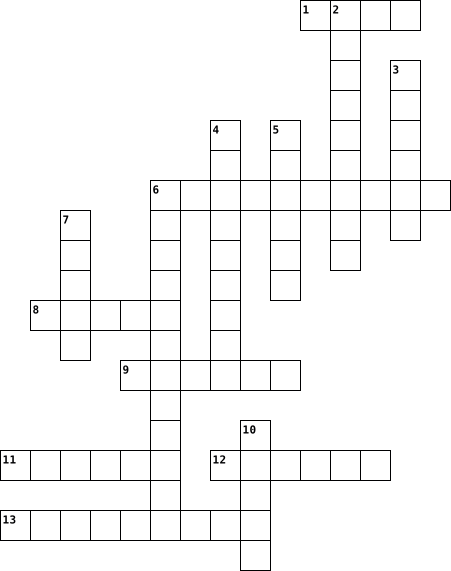
39 Clues: by changes in their shape. • - The process of burning something • - all living organisms inhabiting the Earth • the growth movement of a plant in response to light • - the place in which an organism lives out its life • system the body system involved in producing offspring • cell the photosynthetic cells found in leaves of plants. • ...
Photosynthesis 2022-05-24

Across
- Plant ____ adds “nutrients” like nitrogen and phosphorous to the water in hydroponic systems.
- The main product of photosynthesis is _______, a sugar with the chemical formula C6H12O6.
- The sap of this tree can be tapped and collected as the ingredient to make distinctive syrup.
- Plant _____ have the following structures: mitochondria, nucleus, and a cell wall.
- number of molecules of oxygen produced along with one molecule of sugar in photosynthesis.
- A large molecule made from many glucose molecules joined together.
- Leaves are plant structures that interact with the _____ to exchange matter in and out of the plant.
- This product molecule of photosynthesis stores energy (calories).
- One function of these structures is collect water, usually underground.
- Plants can use the energy in glucose right away or ______ it for later use.
Down
- This output of photosynthesis is one thing plants add to the atmosphere.
- Hydroponic systems are designed to grow plants with water only and no _______.
- Chloroplasts are green to ___________ red and blue light from the sun.
- The plant needs ______ from the sun to re-arrange the inputs molecules of photosynthesis into output molecules.
- Plants get the hydrogen atoms to make glycose from this input of Photosynthesis.
- Little holes in the bottom side of the leaf that can open and close.
16 Clues: This product molecule of photosynthesis stores energy (calories). • A large molecule made from many glucose molecules joined together. • Little holes in the bottom side of the leaf that can open and close. • Chloroplasts are green to ___________ red and blue light from the sun. • One function of these structures is collect water, usually underground. • ...
Spelling Vocab 24 2018-02-23

Across
- scornful
- a spot in the desert that has water
- something unpleasant
- spore producing organism
- plural form of radius
- to ignore
- to reveal
- the plural form of alga
- to send
- a thick plant with prickles
Down
- plural form of fungus
- a non flowering plant like seaweed
- a straight line to the circumference of a circle
- to shame
- to be famous
- a release
- plural form for oasis
- to be twisted
- the plural form of cactus
- to have trouble
20 Clues: to send • scornful • to shame • a release • to ignore • to reveal • to be famous • to be twisted • to have trouble • something unpleasant • plural form of fungus • plural form of radius • plural form for oasis • the plural form of alga • spore producing organism • the plural form of cactus • a thick plant with prickles • a non flowering plant like seaweed • a spot in the desert that has water • ...
Cells and their Organelles 2022-12-12

Across
- is known as the ¨powerhouse¨ of the cell
- green pigment that chloroplasts contain
- microtubules are made here
- the outer most layer of a plant cell that provides structure
- cell organelle that contains DNA
- single-strand material that contains all instruction for creating more bacteria cells
- the process of making proteins is called ________
- rough ER has these on it´s surface while smooth ER does not
- outside the cell nucleus and contains the rest of the organelles
Down
- helps bacteria stick to surfaces
- the layer of the cell that is common in both animal and plant cells that allows materials to pass in and out
- ribosomes produce these
- another name for the cell membrane
- rough ER (endoplasmic reticulum) is connected to this
- this organelle breaks down and recycles worn out cells
- the cell membrane is __________
- stores food, water, and wastes
- the center of the centrosome
- the process that takes place inside chloroplasts
- the central vacuole is the _______ organelle in a plant cell
20 Clues: ribosomes produce these • microtubules are made here • the center of the centrosome • stores food, water, and wastes • the cell membrane is __________ • helps bacteria stick to surfaces • cell organelle that contains DNA • another name for the cell membrane • green pigment that chloroplasts contain • is known as the ¨powerhouse¨ of the cell • ...
Weed Crossword Puzzle 2022-06-07

Across
- most common terpene in weed
- the art of growing plants without the use of soil
- the best dispensary in las vegas (and the world)
- 3.5 grams of marijuana
- dispensary worker
- shorter cannabis plant with broader leaves
- taller cannabis plant with narrow leaves
Down
- 7 grams of marijuana
- glass smoking piece that uses water to filter the smoke
- another word for marijuana
- getting super hungry while high is called the ________
- first state to legalize medical marijuana
- store that legally sells marijuana
- group of substances found in the cannabis plant
- product containing cannabis that you eat or drink
- not sativa, not indica
16 Clues: dispensary worker • 7 grams of marijuana • 3.5 grams of marijuana • not sativa, not indica • another word for marijuana • most common terpene in weed • store that legally sells marijuana • taller cannabis plant with narrow leaves • first state to legalize medical marijuana • shorter cannabis plant with broader leaves • group of substances found in the cannabis plant • ...
Leaves 2026-01-15

Across
- enables a plant to absorb light energy so that it can produce food
- when sunlight provides energy for plants to make food
- to support a plant and enable its lease to take in the sunlight
- to release from leaves after making food
- animals that eat plants or other animals
Down
- the lost of water in throu leaves
- carries food from th leaves and other parts of the plant
- to make food for the plant
- plants make their own food
- when plant root takes in water
- to anchor plants and take in water and nutrients
- carries water and nutrients from the soil to the leaves
12 Clues: to make food for the plant • plants make their own food • when plant root takes in water • the lost of water in throu leaves • to release from leaves after making food • animals that eat plants or other animals • to anchor plants and take in water and nutrients • when sunlight provides energy for plants to make food • ...
Types of Nature 2025-06-16

Across
- White air that makes it hard to see.
- The blue thing above you. Birds fly in it.
- A living thing that grows in soil.
- Water falls from clouds. You need an umbrella!
- Green and flat. It grows on a tree.
- Green and soft. It covers the ground.
- A small, round rise in the land.
Down
- A hard thing you find on the ground.
- It shines in the sky and gives us light.
- White or gray, floating in the sky.
- You can’t see it, but you can feel it blow.
- A tall plant with a trunk, leaves, and branches.
- A pretty plant with petals. Bees love it!
- A small, round plant with many leaves.
14 Clues: A small, round rise in the land. • A living thing that grows in soil. • White or gray, floating in the sky. • Green and flat. It grows on a tree. • A hard thing you find on the ground. • White air that makes it hard to see. • Green and soft. It covers the ground. • A small, round plant with many leaves. • It shines in the sky and gives us light. • ...
Photosynthesis and Cellular respiration crossword! 2023-03-30

Across
- is made when glucose goes through glycolysis
- gas that enter directly through the stomata
- smallest living thing
- usable energy produced by cellular respiration
- supports the plant and holds it up towards the sun
- powerhouse of the cell
- small pores in a leaf that allow gas to diffuse directly in and out
- enters the plant through the roots
- specialized organs for cells
Down
- the second part of cellular respiration requires oxygen
- first step of cellular respiration doesn't require oxygen
- used for reproduction
- fills all cells
- food for plants
- the food factory of the plant
15 Clues: fills all cells • food for plants • used for reproduction • smallest living thing • powerhouse of the cell • specialized organs for cells • the food factory of the plant • enters the plant through the roots • gas that enter directly through the stomata • is made when glucose goes through glycolysis • usable energy produced by cellular respiration • ...
Photosynthesis and Cellular respiration crossword! 2023-03-30

Across
- is made when glucose goes through glycolysis
- gas that enter directly through the stomata
- smallest living thing
- usable energy produced by cellular respiration
- supports the plant and holds it up towards the sun
- powerhouse of the cell
- small pores in a leaf that allow gas to diffuse directly in and out
- enters the plant through the roots
- specialized organs for cells
Down
- the second part of cellular respiration requires oxygen
- first step of cellular respiration doesn't require oxygen
- used for reproduction
- fills all cells
- food for plants
- the food factory of the plant
15 Clues: fills all cells • food for plants • used for reproduction • smallest living thing • powerhouse of the cell • specialized organs for cells • the food factory of the plant • enters the plant through the roots • gas that enter directly through the stomata • is made when glucose goes through glycolysis • usable energy produced by cellular respiration • ...
Photosynthesis and Cellular respiration crossword! 2023-03-30

Across
- is made when glucose goes through glycolysis
- gas that enter directly through the stomata
- smallest living thing
- usable energy produced by cellular respiration
- supports the plant and holds it up towards the sun
- powerhouse of the cell
- small pores in a leaf that allow gas to diffuse directly in and out
- enters the plant through the roots
- specialized organs for cells
Down
- the second part of cellular respiration requires oxygen
- first step of cellular respiration doesn't require oxygen
- used for reproduction
- fills all cells
- food for plants
- the food factory of the plant
15 Clues: fills all cells • food for plants • used for reproduction • smallest living thing • powerhouse of the cell • specialized organs for cells • the food factory of the plant • enters the plant through the roots • gas that enter directly through the stomata • is made when glucose goes through glycolysis • usable energy produced by cellular respiration • ...
Photosynthesis and Cellular respiration crossword! 2023-03-30

Across
- is made when glucose goes through glycolysis
- gas that enter directly through the stomata
- smallest living thing
- usable energy produced by cellular respiration
- supports the plant and holds it up towards the sun
- powerhouse of the cell
- small pores in a leaf that allow gas to diffuse directly in and out
- enters the plant through the roots
- specialized organs for cells
Down
- the second part of cellular respiration requires oxygen
- first step of cellular respiration doesn't require oxygen
- used for reproduction
- fills all cells
- food for plants
- the food factory of the plant
15 Clues: fills all cells • food for plants • used for reproduction • smallest living thing • powerhouse of the cell • specialized organs for cells • the food factory of the plant • enters the plant through the roots • gas that enter directly through the stomata • is made when glucose goes through glycolysis • usable energy produced by cellular respiration • ...
Photosynthesis and Cellular respiration crossword! 2023-03-30

Across
- is made when glucose goes through glycolysis
- gas that enter directly through the stomata
- smallest living thing
- usable energy produced by cellular respiration
- supports the plant and holds it up towards the sun
- powerhouse of the cell
- small pores in a leaf that allow gas to diffuse directly in and out
- enters the plant through the roots
- specialized organs for cells
Down
- the second part of cellular respiration requires oxygen
- first step of cellular respiration doesn't require oxygen
- used for reproduction
- fills all cells
- food for plants
- the food factory of the plant
15 Clues: fills all cells • food for plants • used for reproduction • smallest living thing • powerhouse of the cell • specialized organs for cells • the food factory of the plant • enters the plant through the roots • gas that enter directly through the stomata • is made when glucose goes through glycolysis • usable energy produced by cellular respiration • ...
Mystery Words 2024-10-26

Across
- we___our garden carefully each season.
- A small part of a plant that can grow into a new plant.
- The author___captivating stories for young readers.
- opposite word of 'Easy'.
- he___his team to reach their goals.
- Farmers use___to enrich the soil.
- The planet known as the red planet.
- What nutrient is essential for plant photosynthesis?
Down
- Capital city of France.
- what is the color of the sky on a clear day?
- The earth is the___planet from the sun.
- What is the main currency in Japan?
- Which country is the largest producer of tea?
- The scientist___new technologies in his lab.
- What is the main ingredient in bread?
- The national animal in India.
16 Clues: Capital city of France. • opposite word of 'Easy'. • The national animal in India. • Farmers use___to enrich the soil. • What is the main currency in Japan? • he___his team to reach their goals. • The planet known as the red planet. • What is the main ingredient in bread? • we___our garden carefully each season. • The earth is the___planet from the sun. • ...
ollies puzzle 2024-11-18

Across
- something that is in the skies at night
- transparent but not very transparent
- living things that walk on land
- it has acids which breakdown food
- it pumps blood through out the body
- something you can't see through
- something pretty and colourful on a plant
- it makes seeds
- something that can eat
Down
- a plant part that is in the ground
- if its weak, a plant would fall
- it has many source and it's bright
- something you can see through
- it the part that carries out reproduction on a plant
- something dark that follows you when the sun is out
- the action the roots do when they have to take in water from the soil
- it goes up and down your chest
- sounds like "west"
- something solid
- something your nose consumes
20 Clues: it makes seeds • something solid • sounds like "west" • something that can eat • something your nose consumes • something you can see through • it goes up and down your chest • if its weak, a plant would fall • living things that walk on land • something you can't see through • it has acids which breakdown food • a plant part that is in the ground • it has many source and it's bright • ...
bruhh 2022-05-02

Across
- Intact (not castrated) male pig
- Refers to a trench made in the soil
- Pertaining to poultry and/or fowl
- To plant randomly
- A female of the goat, deer or rabbit family
- soil created from decomposed plant matter
- A place where honeybees are kept
- A young rooster not more than a year old
- The lower the number, the more the soil will be
- A mature female sheep
Down
- The science of crop production
- Of a horse (equine), up to 1 year old.
- A plant capable of withstanding freeze
- To give birth to a litter of pigs
- An adult female chicken or turkey
- A male goat
- The mother or female parent of an animal
- U.S. standard unit of measurement for land
18 Clues: A male goat • To plant randomly • A mature female sheep • The science of crop production • Intact (not castrated) male pig • A place where honeybees are kept • To give birth to a litter of pigs • An adult female chicken or turkey • Pertaining to poultry and/or fowl • Refers to a trench made in the soil • Of a horse (equine), up to 1 year old. • ...
Garden 2025-01-28

Across
- the area that has plants and flowers growing
- Natrual light that helps the plants grow
- pretty plants in the garden
- what you plant in the ground first that the plant grows from
- a plant will do this with time
Down
- things that are healthy that people eat
- use energy to make something happen
- living thing that grows in the garden
- the dirt or the earth that you plant the seed into
- use a shovel to move soil
- things you use to prepare the garden and work in the garden
11 Clues: use a shovel to move soil • pretty plants in the garden • a plant will do this with time • use energy to make something happen • living thing that grows in the garden • things that are healthy that people eat • Natrual light that helps the plants grow • the area that has plants and flowers growing • the dirt or the earth that you plant the seed into • ...
Unit B: Plants for food and fiber 2014-06-12

Across
- The sticky tip of the pistil
- The diffusion of water through a semi-permeable membrane
- The build-up of toxins in higher-level consumers
- The tip of the stamen
- The tube that connects the stigma and the ovary
- The process through which plants use the sun’s light to make their own food
- When a parent plant produces offspring from a tuber, roots, leaves or stems
- The tissues of a plant from the roots, stem, leaves or seeds
- The stalk of the stamen
- Brightly coloured flower parts to attract bees and other pollinators
- Tiny roots that increase the surface area of main roots for better water absorption
- A protective layer for flowers before they bloom
- The exchange of gases in organisms to absorb oxygen
- Nutrient rich, dark coloured top soil
- Different layers in a cross section of soil
- The gradual movement of soil, rocks and minerals from one place to another
- A tiny protective layer holding a plants eggs
- The female part of a flower
- A single prominent plant root with tiny root hairs branching off
- The growth from seed to a new plant
- Choosing parent plants with specific characteristics desired in the offspring
- The ovary of a plant that grows and protects a developing embryo
- A shallow root system adapted for fast water absorption
- Egg
Down
- The tiny living plant that grows inside a seed
- a pigment in plants that makes it green and helps in the process of photosynthesis
- Two individual sets of genetic material create seeds and fruit
- When only one type of crop is grown in a field
- Parts of cells that control an organisms characteristics
- The number of different species in a particular area
- The sexual organ of conifers (cone-bearing trees)
- The exchange of gases in plants to absorb CO2
- Using a pests natural predator to get rid of it.
- The build-up of salt on the surface leeching nutrients from the soil
- Rocks, soil and clay that over time gets turned into soil
- The process of fertilizing the ovule of a plant
- Chemicals and toxins that are washed off and left in the soil
- membrane that only allows certain substances or particles through
- The use of pipes and sprinklers to water a crop (not rain)
- Replacing resources as quickly as they are used and breaking down wastes as quickly as they are made.
- The movement of particles from an area of high concentration to even concentration
- Food that is grown without chemicals
- The top layer of dark nutrient rich humus
- The male part of a flower
44 Clues: Egg • The tip of the stamen • The stalk of the stamen • The male part of a flower • The female part of a flower • The sticky tip of the pistil • The growth from seed to a new plant • Food that is grown without chemicals • Nutrient rich, dark coloured top soil • The top layer of dark nutrient rich humus • Different layers in a cross section of soil • ...
Plant Structure and Function 2016-12-07

Across
- a green pigment found in chloroplast
- grow new plants
- a sugar produced by plants
- Plants use the energy from sunlight to convert (change) carbon dioxide from the air and water taken up from the soil into glucose and oxygen
- a gas that is needed by humans to survive
- supports the plant and contains food and water tubes
- takes in water and anchors the plant
Down
- a gas that is needed by plants to survive
- carries sugar up and down throughout the plant
- where photosynthesis occurs in a plant
- traps sunlight and makes food
- attract animals such as birds and insects
- carries water and nutrients up from the root
- small holes on the underside of the leaf that exchange gas
14 Clues: grow new plants • a sugar produced by plants • traps sunlight and makes food • a green pigment found in chloroplast • takes in water and anchors the plant • where photosynthesis occurs in a plant • a gas that is needed by plants to survive • attract animals such as birds and insects • a gas that is needed by humans to survive • carries water and nutrients up from the root • ...
getting to Know Plants 2023-01-05

Across
- The spines of a cactus plant are modified.
- A medium-size plant with a hard, brown, thin stem describes a
- The tendril in a pea plant is a modified
- These plants climb up with the help of a support.
- Ferns are ____________ plants.
- is the part of the flower, which after pollination turns into a fruit.
- Plants that have fibrous roots generally have
- It is the main root from which several branch roots arise.
Down
- The flat green portion of a leaf is called as_________
- Grasses are_____
- It is formed by thin fibre like roots growing from the bottom of the stem.
- These plants cannot stand upright and spread out in the ground
- Roots that are modified to give support to the plant are called ______
- is called the food factory of the plants
- is the male part of a flower
15 Clues: Grasses are_____ • is the male part of a flower • Ferns are ____________ plants. • The tendril in a pea plant is a modified • is called the food factory of the plants • The spines of a cactus plant are modified. • Plants that have fibrous roots generally have • These plants climb up with the help of a support. • The flat green portion of a leaf is called as_________ • ...
Plant Cell Organelles 2021-11-17

Across
- produce proteins for the rest of the cell to function
- providing energy to carry out biochemical reactions and other cellular processes
- provides tensile strength and protection against mechanical and osmotic stress
- membrane, form the internal membrane system in chloroplasts
- separate and protect the intracellular environment from the extracellular space
- RNA synthesis and ribosome biogenesis
- allow plants to capture the energy of the Sun in energy-rich molecules
- serve as cytoplasmic bridges to facilitate exchange of molecules between neighboring cells
- provides mechanical support to the cell and its cytoplasmic constituents
Down
- vesicles for delivery to targeted destinations
- synthesizes lipids, phospholipids as in plasma membranes
- keeps the contents of the nucleus
- support and suspend organelles and cellular molecules
- sorting many of the cell's proteins and membrane constituents
- grain, store starch which will provide food for the plant
- help maintain water balance; control of cell volume and cell turgor
- sole site of fatty acid β-oxidation
- work to keep the vacuole acidic by bringing in protons
- synthesize proteins from amino acids
19 Clues: keeps the contents of the nucleus • sole site of fatty acid β-oxidation • synthesize proteins from amino acids • RNA synthesis and ribosome biogenesis • vesicles for delivery to targeted destinations • produce proteins for the rest of the cell to function • support and suspend organelles and cellular molecules • work to keep the vacuole acidic by bringing in protons • ...
Plant Cell Organelles 2021-11-17

Across
- allow plants to capture the energy of the Sun in energy-rich molecules
- help maintain water balance; control of cell volume and cell turgor
- vesicles for delivery to targeted destinations
- synthesize proteins from amino acids
- membrane, form the internal membrane system in chloroplasts
- sorting many of the cell's proteins and membrane constituents
- support and suspend organelles and cellular molecules
- serve as cytoplasmic bridges to facilitate exchange of molecules between neighboring cells
- sole site of fatty acid β-oxidation
- keeps the contents of the nucleus
- synthesizes lipids, phospholipids as in plasma membranes
Down
- provides tensile strength and protection against mechanical and osmotic stress
- provides mechanical support to the cell and its cytoplasmic constituents
- providing energy to carry out biochemical reactions and other cellular processes
- produce proteins for the rest of the cell to function
- RNA synthesis and ribosome biogenesis
- grain, store starch which will provide food for the plant
- separate and protect the intracellular environment from the extracellular space
- work to keep the vacuole acidic by bringing in protons
19 Clues: keeps the contents of the nucleus • sole site of fatty acid β-oxidation • synthesize proteins from amino acids • RNA synthesis and ribosome biogenesis • vesicles for delivery to targeted destinations • produce proteins for the rest of the cell to function • support and suspend organelles and cellular molecules • work to keep the vacuole acidic by bringing in protons • ...
Plant Life Cycle 2025-01-21

Across
- Female reproductive part of flower
- Plant transpires more than it takes in
- Process where plants get energy from its stored food
- Site of fertilization in flowers
- Package containing an embryo
- Male reproductive part of flower
- Process of returning water to the air
- Supports the anther
- Connects the stigma to the ovary
- Attracts pollinators and protects the stamen and pistil
Down
- Carbon Dioxide and this are the first part of photosynthesis
- Needs to be in presence of chlorophyll and light
- Indefinite growth
- Process where an embryo changed to a seedling
- Male part that produces pollen
- Outer covering of the flower bud
- Sticky opening of the pistil
- Requires two growing seasons to produce seed
- Completes life cycle in one growing season
19 Clues: Indefinite growth • Supports the anther • Package containing an embryo • Sticky opening of the pistil • Male part that produces pollen • Site of fertilization in flowers • Male reproductive part of flower • Outer covering of the flower bud • Connects the stigma to the ovary • Female reproductive part of flower • Process of returning water to the air • ...
Plant development puzzle 2026-09-21

Across
- GRAS-family TF required for quiescent-centre specification
- Master plant hormone
- Initiation of successive organs around the shoot apex
- E-class floral regulator
- TF moves from the stele & activates SCR
- expressed in the shoot meristem that promotes and maintains stem-cell identity
- Centre "Quiet" heart of root cells
- Auxin Transporters
- Root-derived peptide signal
- A-class floral regulator
- Arrangement of xylem characteristic of stems
- Root meristem regulator
Down
- signalling peptide that provides an inhibitory signal limiting stem-cell accumulation in SAM
- Soft living brick in ground tissue
- rimary meristem that forms vascular tissues
- The outermost primary meristem
- Young developing organ initiated from specified founder cells at the SAM
- B-class floral regulator
- C-class floral regulator
19 Clues: Auxin Transporters • Master plant hormone • Root meristem regulator • E-class floral regulator • B-class floral regulator • A-class floral regulator • C-class floral regulator • Root-derived peptide signal • The outermost primary meristem • Soft living brick in ground tissue • Centre "Quiet" heart of root cells • TF moves from the stele & activates SCR • ...
science revision 2020-11-01

Across
- the leaf edge that looks sharp
- most light can pass through
- this plant part takes up water
- animal group that has scales and lungs
- this system protects the organs in the body
- the system that sends digested food, oxygen, carbon dioxide all over the body
- the leaf edge that looks smooth
- these are found inside fruits
- flowers develop into these
- animal group that has fins and tail, breathes through gills and lays eggs
- digestion ends here
- every object has a _____________.
- Chewing breaks up food into ________ _____________.
- this plant part holds the plant upright to get more sunlight
Down
- the process where the leaf uses sunlight to make food for the plant
- the ability to bend without breaking
- To decide which material should be used to make an object, we have to look at its ________________.
- Digestive juices __________ ___________ food into simpler substances.
- the system that has nose, windpipe and lungs
- light cannot pass through
- a mammal that lays eggs
- water is absorbed here
- the ability to withstand a heavy load without breaking
- animal group in which the young breathe through gills, the adult breathe through lungs and skin
- this protects the brain
- if something is not flexible, it is called ________.
- animal group that gives birth to live young
- this protects the lungs and heart
28 Clues: digestion ends here • water is absorbed here • a mammal that lays eggs • this protects the brain • light cannot pass through • flowers develop into these • most light can pass through • these are found inside fruits • the leaf edge that looks sharp • this plant part takes up water • the leaf edge that looks smooth • every object has a _____________. • ...
Chapter 4 Botany 2026-01-07

Across
- usually green from this organelle
- released into the air
- a root that we eat
- pod that makes pollen
- exchanges with surroundings
- widening of the plant growth
- control the opening and closing of the stomata
- carries sugars, minerals and water up and down
- a leaf that we eat that is dark in color
- wax layer on leaf
- fertilized seeds grow into this
- roots ___ the plant
- type of tissue that forms bark on woody plants
- without plants you would be
- stem cells of the plant
- composed of a leaf, flower and stem
- the process that uses sunlight, water and carbon dioxide to make food
Down
- produces the rings in a tree
- carries water and dissolved minerals up
- small opening on underside of the leaf
- type of energy needed for photosynthesis
- absorb water from soil
- eggs are fertilized by this
- sticky top of the pistil
- roots store this
- can be converted into carbohydrates
- occurs by wind and animals
- transportation network
- occurs on tips of roots and shoots
- tissue of the outermost layer of the plant
- the female portion of the flower
- filler between dermal and vascular tissue
- main function is photosynthesis
- the main purpose is reproduction
- wood and sugar are examples of this
- plants are ______ organisms
- stop plants from moving
- the male portion of the flower
- leaf like
39 Clues: leaf like • roots store this • wax layer on leaf • a root that we eat • roots ___ the plant • released into the air • pod that makes pollen • absorb water from soil • transportation network • stem cells of the plant • stop plants from moving • sticky top of the pistil • occurs by wind and animals • eggs are fertilized by this • exchanges with surroundings • without plants you would be • ...
Growing Plants 2014-11-23

Across
- is the part of the plant that absorbs water
- is a seed plant that does not produce a flower
- are thin branching roots that often cover a wide area
- are roots that never touch the ground
- is a seed plant that produces flowers
Down
- have a main stalk root that goes deep in the ground
- is the process of making food (for a plant)
- moves sugars throughout the plant
- are roots that "prop up" and support a plant
- is a series of tubes that moves water up the stem of a plant
10 Clues: moves sugars throughout the plant • are roots that never touch the ground • is a seed plant that produces flowers • is the part of the plant that absorbs water • is the process of making food (for a plant) • are roots that "prop up" and support a plant • is a seed plant that does not produce a flower • have a main stalk root that goes deep in the ground • ...
Spices 2015-01-20

Across
- A strong-smelling pungent-tasting bulb, used as a flavoring in cookery and in herbal medicine
- A pungent hot-tasting powder prepared from dried and ground peppercorns, used as a spice or condiment to flavour food
- A cultivated plant of the parsley family, with closely packed succulent leaf stalks which are used as a salad or cooked vegetable
- An aromatic plant whose greyish-green leaves are used as a culinary herb, native to southern Europe and the Mediterranean
- An evergreen aromatic shrub of the mint family, native to southern Europe. The narrow leaves are used as a culinary herb, in perfumery, and as an emblem of remembrance
- A powdered spice with a deep orange-red colour and a mildly pungent flavour, made from the dried and ground fruits of certain varieties of pepper
- An orange-yellow flavouring, food colouring, and dye made from the dried stigmas of a crocus
Down
- A white crystalline substance which gives seawater its characteristic taste and is used for seasoning or preserving food
- A hot, fragrant spice made from the rhizome of a plant, which may be chopped or powdered for cooking, preserved in syrup, or candied
- An aromatic plant of the mint family, native to tropical Asia. The leaves are used as a culinary herb, especially in Mediterranean dishes
- fragrant tropical grass which yields an oil that smells of lemon. It is widely used in Asian cooking and in perfumery and medicine
- A low-growing aromatic plant of the mint family. The small leaves are used as a culinary herb and the plant yields a medicinal oil
- An aromatic spice made from the peeled, dried, and rolled bark of a SE Asian tree
- A biennial plant with white flowers and aromatic leaves which are either crinkly or flat and are used as a culinary herb and for garnishing food
- An aromatic Eurasian plant related to marjoram, with small purple flowers and leaves used as a culinary herb
15 Clues: An aromatic spice made from the peeled, dried, and rolled bark of a SE Asian tree • An orange-yellow flavouring, food colouring, and dye made from the dried stigmas of a crocus • A strong-smelling pungent-tasting bulb, used as a flavoring in cookery and in herbal medicine • ...
Living World 1 2014-10-27

Across
- Scientific term for living thing
- Photosynthesis makes this
- Produced by plant to attract insects
- Holds a plant upright
- Large are in middle of plant cell
- Green pigment in plants
- Cold blooded aquatic animal
- Arrow on a food web shows the direction of this transfer
- Male reproductive organ in flower
Down
- waxy protective layer on leaf
- Getting energy from food
- Warm-blooded animal
- Part of plant that attracts pollinators
- Animals that get their temperature from their surroundings
- Photosynthesis mainly occurs here
15 Clues: Warm-blooded animal • Holds a plant upright • Green pigment in plants • Getting energy from food • Photosynthesis makes this • Cold blooded aquatic animal • waxy protective layer on leaf • Scientific term for living thing • Large are in middle of plant cell • Photosynthesis mainly occurs here • Male reproductive organ in flower • Produced by plant to attract insects • ...
AgX 1.1 Vocab 2025-09-23

Across
- - When a seed starts to grow
- - Using resources wisely so they last for the future.
- - Growing plants and raising animals for food, clothing, and other needs.
- - The natural world around, like soil, water, and air.
- - Written notes kept as evidence or proof.
- - A person who works in agriculture, like farmers, teachers, or researchers.
- - A plant or plant part eaten with meals, not as dessert.
Down
- - About money, jobs, and the buying or selling of goods.
- - Getting good results without wasting time or resources.
- - A plant or animal made by mixing two different varieties or species.
- - Having to do with people, society, and community well-being.
- - To eat, drink, or use something up.
- - The number of people living in a place.
- - A space or surface.
- - A person who gets food by hunting, fishing, and gathering plants.
- - Plants grown by farmers, like corn, wheat, or peas.
- - A specific kind of plant or animal.
- - Staying alive, especially during hard situations.
18 Clues: - A space or surface. • - When a seed starts to grow • - To eat, drink, or use something up. • - A specific kind of plant or animal. • - The number of people living in a place. • - Written notes kept as evidence or proof. • - Staying alive, especially during hard situations. • - Plants grown by farmers, like corn, wheat, or peas. • ...
Science 2023-11-27

Across
- the part of the plant that contains the embryo
- a model that demonstrates the transfer of energy between organisms
- the conditions that surround someone or something
- the part of the plant that holds the plant in the ground and takes in water and nutrients from the soil
- Plants use sunlight water and carbon dioxide
Down
- an animal that feeds on smaller, plant eating animals
- a part of the plant that grows from the stem
- the feeding relationships between organisms
- an animal at the top of the food chain that mainly eats secondary consumers
- a diverse group of organisms that live by absorbing and decomposing organic matter
- the mixture of gasses that surrounds a planet
- needing the same limited resources within an environment
12 Clues: the feeding relationships between organisms • a part of the plant that grows from the stem • Plants use sunlight water and carbon dioxide • the mixture of gasses that surrounds a planet • the part of the plant that contains the embryo • the conditions that surround someone or something • an animal that feeds on smaller, plant eating animals • ...
environment 2022-03-30

Across
- Large plant that has stems.
- Action that protects nature.
- something that is blue and there is less than before.
- A living being that is organised and (usually) able to moveings.
- Animals, plant. 🏞
- change Rising in average global temperatures
- dirtying up nature
Down
- The action of recovering waste and reintroducing it, after treatment, into the production cycle.
- little river
- The ecosystem is a whole composed of an environment and the living beings that live there.
- Plant that has petals.
- environmental is a adjective, what is his noun.
- A living being that is you in starts with h.
- A living being that is usually green.
14 Clues: little river • Animals, plant. 🏞 • dirtying up nature • Plant that has petals. • Large plant that has stems. • Action that protects nature. • A living being that is usually green. • A living being that is you in starts with h. • change Rising in average global temperatures • environmental is a adjective, what is his noun. • something that is blue and there is less than before. • ...
environment 2022-03-30

Across
- Large plant that has stems.
- Action that protects nature.
- something that is blue and there is less than before.
- A living being that is organised and (usually) able to moveings.
- Animals, plant. 🏞
- change Rising in average global temperatures
- dirtying up nature
Down
- The action of recovering waste and reintroducing it, after treatment, into the production cycle.
- little river
- The ecosystem is a whole composed of an environment and the living beings that live there.
- Plant that has petals.
- environmental is a adjective, what is his noun.
- A living being that is you in starts with h.
- A living being that is usually green.
14 Clues: little river • Animals, plant. 🏞 • dirtying up nature • Plant that has petals. • Large plant that has stems. • Action that protects nature. • A living being that is usually green. • A living being that is you in starts with h. • change Rising in average global temperatures • environmental is a adjective, what is his noun. • something that is blue and there is less than before. • ...
Cell structure 2019-10-22

Across
- (Only in plant cells) gives a plant its color
- has 2 versions Rough and Smooth ER
- cells divide, or make copies of themselves
- packaging and shipping station for proteins
Down
- (only in plant cells) provides support and protection for plant cell
- (Only in plant cells) photosynthesis
- jelly-like fluid that fills a cell
- stores food, water, and nutrients or anything necessary for the cell to survive
- control what goes in and out of the cell
- makes protein for cell
- control center for the cell
- Is involved with digestion and waste removal
12 Clues: makes protein for cell • control center for the cell • jelly-like fluid that fills a cell • has 2 versions Rough and Smooth ER • (Only in plant cells) photosynthesis • control what goes in and out of the cell • cells divide, or make copies of themselves • packaging and shipping station for proteins • Is involved with digestion and waste removal • ...
七上U5 Plants 看英文解释填单词 2025-11-17

Across
- a plant used to make cloth
- the way of life of a group of people
- to make something go to another place
- to bring things together
- to join or link together
- to put different things together
- to get bigger or to plant
Down
- from nature, not made by people
- something that is made or grown
- a tall plant with yellow seeds we can eat
- to make or create something
- to talk in a friendly way
- to rest and feel calm
- a tall plant with hard hollow stems (一种植物)
- a green part of a plant or tree
15 Clues: to rest and feel calm • to bring things together • to join or link together • to talk in a friendly way • to get bigger or to plant • a plant used to make cloth • to make or create something • from nature, not made by people • something that is made or grown • a green part of a plant or tree • to put different things together • the way of life of a group of people • ...
Science 2023-03-27

Across
- a plastid that contains chlorophll and in which photosynthesis takes place
- helps break down the sugars in plants
- the process by which sunlight makes food in a plant
- the green color of a plant
Down
- the physical energy from electromagnetic radiation
- the vascular tissue in a plant
- the circlar pore with a hole in the middle for gas to enter
- energy for a plant
- is the sugars in a plant
- the tissue that the plant transport water from the soil
10 Clues: energy for a plant • is the sugars in a plant • the green color of a plant • the vascular tissue in a plant • helps break down the sugars in plants • the physical energy from electromagnetic radiation • the process by which sunlight makes food in a plant • the tissue that the plant transport water from the soil • the circlar pore with a hole in the middle for gas to enter • ...
Plant Structure and Function 2016-12-07

Across
- carries sugar up and down throughout the plant
- a gas that is needed by plants to survive
- carries water and nutrients up from the root
- attract animals such as birds and insects
- a green pigment found in chloroplast
- small holes on the underside of the leaf that exchange gas
- grow new plants
Down
- Plants use the energy from sunlight to convert (change) carbon dioxide from the air and water taken up from the soil into glucose and oxygen
- a sugar produced by plants
- where photosynthesis occurs in a plant
- a gas that is needed by humans to survive
- traps sunlight and makes food
- takes in water and anchors the plant
- supports the plant and contains food and water tubes
14 Clues: grow new plants • a sugar produced by plants • traps sunlight and makes food • a green pigment found in chloroplast • takes in water and anchors the plant • where photosynthesis occurs in a plant • a gas that is needed by plants to survive • attract animals such as birds and insects • a gas that is needed by humans to survive • carries water and nutrients up from the root • ...
Exam 2 Vocabulary 2014-10-26

Across
- substance used to kill unwanted plants
- precursor of auxin
- first step in seed development
- light mediated regulation of plant growth and development
- the growing shoot apex’s ability to which the growth of lateral branches further down the stem
- Both STM and WUSCHEL genes encode a ____________.
- the opening where the pollen tube enters the ovule
- which surface of a leaf is light harvesting
- chromophore of phytochrome
- characteristic growth and appearance of plants grown in the absence of light
- outer cell layers of the shoot meristem
- induces fruit ripening
- gene that maintains stem cell population
- male, pollen producing organs of the flower
Down
- what is the name of the red light receptor
- connects a developing plant embryo to the mother plant
- embryo plant embryo at an early stage of development
- what kind of phyllotaxy do leaves form about 137.5 degrees apart
- chromophore of phototropin
- promotes fruit development
- precursor of gibberellins and abscisic acid
- arrangement of leaves around a stem
- inhibit regulation of lead senescence
- gene that maintains the meristem in an indeterminate state
- stalk that attaches a lead blade to the stem
- a response to ethylene that inhibits root and hypocotyl elongation
- where are cytokinin receptors synthesized
- promote stem elongation
- the two layers of cells that surround the ovule
- present in regulatory protein that are degraded in response to gibberellins
30 Clues: precursor of auxin • induces fruit ripening • promote stem elongation • chromophore of phototropin • promotes fruit development • chromophore of phytochrome • first step in seed development • arrangement of leaves around a stem • inhibit regulation of lead senescence • substance used to kill unwanted plants • outer cell layers of the shoot meristem • ...
Exam 2 Vocabulary 2014-10-26

Across
- connects a developing plant embryo to the mother plant
- outer cell layers of the shoot meristem
- inhibit regulation of lead senescence
- light mediated regulation of plant growth and development
- chromophore of phytochrome
- first step in seed development
- stalk that attaches a lead blade to the stem
- present in regulatory protein that are degraded in response to gibberellins
- the two layers of cells that surround the ovule
- gene that maintains the meristem in an indeterminate state
- induces fruit ripening
- characteristic growth and appearance of plants grown in the absence of light
Down
- male, pollen producing organs of the flower
- precursor of auxin
- which surface of a leaf is light harvesting
- precursor of gibberellins and abscisic acid
- the growing shoot apex’s ability to which the growth of lateral branches further down the stem
- Both STM and WUSCHEL genes encode a ____________.
- embryo plant embryo at an early stage of development
- what kind of phyllotaxy do leaves form about 137.5 degrees apart
- what is the name of the red light receptor
- gene that maintains stem cell population
- a response to ethylene that inhibits root and hypocotyl elongation
- chromophore of phototropin
- promotes fruit development
- arrangement of leaves around a stem
- where are cytokinin receptors synthesized
- the opening where the pollen tube enters the ovule
- substance used to kill unwanted plants
- promote stem elongation
30 Clues: precursor of auxin • induces fruit ripening • promote stem elongation • chromophore of phytochrome • chromophore of phototropin • promotes fruit development • first step in seed development • arrangement of leaves around a stem • inhibit regulation of lead senescence • substance used to kill unwanted plants • outer cell layers of the shoot meristem • ...
A Cycle Of A Plant 2014-06-16

Across
- Helps produce the fruit.
- Something in the plant or flower that insects bite on.
- The thing that produces the plant.
- Occurs in a green part of a plant during the day.
- The female part which produces the seeds.
- help the root go down
- Which the roots search for.
Down
- What we breath out from our nose or mouth.
- The part that produces the pollen.
- Helps the get more energy
- Which the thing might be on the plant
- You use it to grow with the seeds.
12 Clues: help the root go down • Helps produce the fruit. • Helps the get more energy • Which the roots search for. • The thing that produces the plant. • The part that produces the pollen. • You use it to grow with the seeds. • Which the thing might be on the plant • The female part which produces the seeds. • What we breath out from our nose or mouth. • ...
B3 Keywords review 2017-07-10

Across
- site – the specific part of an enzyme which connects to the substance to be catalysed
- – the type of cell in a plant which allows water to travel through it (it has no ends, like a tube)
- – a process in which the cells use energy absorbed from the surroundings
- – used to test for starch
- – when the vacuole has some liquid to hold the shape of the cell
- – the movement of sugars and other chemicals made by a plant along the phloem
- – the sugar made by plants during photosynthesis
- – the process in which a plant produces its own energy
- – the movement of a substance with the concentration gradient (from high to low) that is a passive process
- – produces the energy in a cell
- – the type of cell which transports sugars and has a partially permeable membrane on the end.
- – a non-living factor that can affect an ecosystem
- – the green substance in plants which enables photosynthesis to take place
- – the comparison of concentrations between two different concentrations
- – used to test for glucose
- – when the vacuole has shrunk due to lack of water
- – an organism that produces its own food
- – the spread of a substance which requires no energy (it is passive)
- – used to test for protein
- – the movement of water (usually from high to low concentration)
Down
- – a substance which speeds up a chemical reaction
- - a factor which inhibits a process from taking place
- – the stores of the green substance in a plant that is required for photosynthesis
- – a living factor that can affect an ecosystem
- – an organism that cannot produce its own food (it needs to be a consumer)
- – the space in the middle of a plant cell
- – the name given to a membrane that has small holes in it to allow small molecules to pass through it
- – a biological catalyst
- – used to test for fat
- – the movement of a substance agains the concentration gradient (from low to high) which requires energy
- – the movement of water along the xylem in a plant
- – when the vacuole has lots of water in it and the cell has been stretched
- – a tool used to sample an ecosystem
33 Clues: – used to test for fat • – a biological catalyst • – used to test for starch • – used to test for glucose • – used to test for protein • – produces the energy in a cell • – a tool used to sample an ecosystem • – an organism that produces its own food • – the space in the middle of a plant cell • – a living factor that can affect an ecosystem • ...
Stimulus, Response & Homeostasis 2022-03-10

Across
- The force within a plant cell that pushes out against the cell wall
- The response of a plant as it grows in response to light
- The response of the body when trying to fight off infection
- A response that an organism decides to do, it doesn't happen automatically
- How an organism reacts to a stimulus/a change in behavior
- Stimulus: not enough water in a plant. What is the response?
- A stimulus that comes from outside an organism
- The body system that maintains homeostasis by removing toxins from the blood
Down
- The body system that maintains homeostasis by removing carbon dioxide from the lungs
- A response that happens automatically/without conscious control
- Your body's involuntary response to the stimulus of being too cold
- The maintenance of a stable internal environment in an organism
- An animal might _______ if it eats food contaminated with bacteria, viruses or parasites
- Your body's involuntary response to the stimulus of being too hot
- Plural of stimulus
- A stimulus that comes from inside an organism
- The response of a plant as it grows in response to gravity
- A change in an organism's environment that causes it to react
18 Clues: Plural of stimulus • A stimulus that comes from inside an organism • A stimulus that comes from outside an organism • The response of a plant as it grows in response to light • How an organism reacts to a stimulus/a change in behavior • The response of a plant as it grows in response to gravity • The response of the body when trying to fight off infection • ...
Sexual Reproduction in Flowering Plants 2024-10-12

Across
- Male part of the flower
- Transfer of seeds and fruit away from the parent plant
- Type of pollination, requires large, bright petals
- Scientific name for flowering plants
- The union of male and female gametes to form a diploid zygote
- Part of a plant that develops into a seed
- Produces Egg Cells
- Part of the zygote, becomes the first root
- Type of pollination, involves huge numbers of pollen grains
- One seed leaf
Down
- Cell division giving two daughter cells
- Cell division giving four daughter cells
- Resting period where seeds undergo no growth
- Regrowth of an embryo after a period of dormancy
- Female part of the flower
- Produces Pollen
- The transfer of pollen from an anther to a stigma
- Two seed leaves
- Part of the plant that develops into a fruit
- Part of the zygote, becomes the first shoot
20 Clues: One seed leaf • Produces Pollen • Two seed leaves • Produces Egg Cells • Male part of the flower • Female part of the flower • Scientific name for flowering plants • Cell division giving two daughter cells • Cell division giving four daughter cells • Part of a plant that develops into a seed • Part of the zygote, becomes the first root • Part of the zygote, becomes the first shoot • ...
Investigating Australia's Physical Environments 2013-02-03

Across
- a low-growing bushy Australian eucalyptus plant
- a half of a sphere bounded by a great circle.
- someone that studies the branch of geology that is concerned with the structure, origin, and development of the topographical features of the earth's surface
- the amount of water collected in a structure
- protects the plant
- a shoot growing from the stem or branch
- of, containing, resembling, or derived from sediment
Down
- a ridge of high land dividing two areas that are drained by different river systems
- imaginary vertical lines on a map
- a large shaped mass of igneous rock
- altered considerably from their original structure and mineralogy by pressure and heat
- a line on a weather map connecting points
- forces generated from within the earth that result in uplift, movement, or deformation of part of the earth`s crust
- a small, circular or crescent-shaped opening in a vaulted roof.
- the creation of the world through aboriginal stories
- a woody plant with small leathery evergreen leaves
- The angular distance north or south of the earth's equator
- a plant adapted to living in a dry arid habitat
18 Clues: protects the plant • imaginary vertical lines on a map • a large shaped mass of igneous rock • a shoot growing from the stem or branch • a line on a weather map connecting points • the amount of water collected in a structure • a half of a sphere bounded by a great circle. • a low-growing bushy Australian eucalyptus plant • a plant adapted to living in a dry arid habitat • ...
sydney organelles puzzel 2018-11-06

Across
- their is only one in a plant cell.
- dygest the nutrients.
- helps give the cell shape and supports it.
- is in every living object
- very, very thin.
- helps with the growth and reproduction function.
- living organism of the kind exemplified by trees, shrubs, herbs, grasses, ferns, and mosses, typically growing in a permanent site.
- Cilia and flagella are tube-like cells which allow for motion in eukaryotic cells. The cilia has short hairs around it.
- makes protiens
- controlls what enters and what leaves.
- every wear inside a cell.
- helps keep the inside of a cell wet.
- the brain of the cell.
Down
- stores water and food.
- surounded by the membrane.
- the power house of the cell.
- uses ohotosynthese to make energy for the plant.
- network of membranes south packing sysytem.
- follows diractions from the the nucleus
- builds the lysosmes.
- a mammal, as opposed to a bird, reptile, fish, or insect.
- floating free in the cell
22 Clues: makes protiens • very, very thin. • builds the lysosmes. • dygest the nutrients. • stores water and food. • the brain of the cell. • is in every living object • floating free in the cell • every wear inside a cell. • surounded by the membrane. • the power house of the cell. • their is only one in a plant cell. • helps keep the inside of a cell wet. • ...
Transport in the phloem of plants - terminology 2022-09-14

Across
- Part of the plant where sugars and amino acids are loaded into phloem
- Phloem __________________ is the process by which organic xompounds are actively transported into sieve tubes at the source
- A type of plant cell that supports the functioning of the sieve tube cell
- The most prevalent transport form of carbohydrate in phloem sap
- Part of the plant where sugars and amino acids are unloaded and used
Down
- Type of pressure that causes the contents of the phloem to flow towards sinks
- A narrow thread of cytoplasm that passes through the cell walls of adjacent plant cells
- The transport of organic solutes in a plant
- Perforated wall separating two individual sieve tube cells
- Vascular plant tissue which conducts sugars and other organic substances throughout the plant
- A passive process by which water is drawn in and out of sieve tubes
11 Clues: The transport of organic solutes in a plant • Perforated wall separating two individual sieve tube cells • The most prevalent transport form of carbohydrate in phloem sap • A passive process by which water is drawn in and out of sieve tubes • Part of the plant where sugars and amino acids are unloaded and used • ...
environment 2022-03-30
Across
- Large plant that has stems.
- Action that protects nature.
- something that is blue and there is less than before.
- A living being that is organised and (usually) able to moveings.
- Animals, plant. 🏞
- change Rising in average global temperatures
- dirtying up nature
Down
- The action of recovering waste and reintroducing it, after treatment, into the production cycle.
- little river
- The ecosystem is a whole composed of an environment and the living beings that live there.
- Plant that has petals.
- environmental is a adjective, what is his noun.
- A living being that is you in starts with h.
- A living being that is usually green.
14 Clues: little river • Animals, plant. 🏞 • dirtying up nature • Plant that has petals. • Large plant that has stems. • Action that protects nature. • A living being that is usually green. • A living being that is you in starts with h. • change Rising in average global temperatures • environmental is a adjective, what is his noun. • something that is blue and there is less than before. • ...
Final Review 2025-05-20

Across
- Network involved in protein and lipid synthesis.
- Control center of the cell containing DNA.
- Organism that makes its own food via photosynthesis.
- Linear sequence of organisms feeding on each other.
- Ability to maintain ecological balance over time.
- Process of carbon moving through the environment.
- Storage organelle, larger in plant cells.
- Contains digestive enzymes to break down waste.
Down
- Gel-like substance where organelles are suspended.
- Rigid outer layer found in plant cells
- Organelles known as the powerhouse of the cell.
- Semi-permeable membrane surrounding the cell.
- Variety of life in a particular habitat or ecosystem.
- Introduction of harmful substances into the environment.
- Natural environment where an organism lives.
- Site of photosynthesis in plant cells.
- Organism that eats other organisms for energy.
- Site of protein synthesis.
- Resource that can be replenished naturally
- Organism that breaks down dead material.
20 Clues: Site of protein synthesis. • Rigid outer layer found in plant cells • Site of photosynthesis in plant cells. • Organism that breaks down dead material. • Storage organelle, larger in plant cells. • Control center of the cell containing DNA. • Resource that can be replenished naturally • Natural environment where an organism lives. • ...
Water, Light and Energy Plant Chapter 2022-03-15

Across
- a process by which organisms convert glucose into usable energy
- located on roots to take up water
- an aquatic plant that grows in freshwater ponds
- cells control the opening and closing of the stomata
- an organelle containing chlorophyll, found in plant cells and some protists
- tissue within a vascular plant that transports food made in the leaves to all other parts of the plant
Down
- the process by which water flows through plants, entering the roots and exiting the stomata
- the process by which organisms that have chloroplasts use light energy, carbon dioxide and water to make sugar
- the underground part of a plant that functions as an organ to take up water and minerals,store food and anchor the plant
- openings on the surface of leaves that allows for gas exchange
- a green pigment in chloroplasts that captures light energy to make sugars during photosynthesis
- hollow tubes in plants that carry water
12 Clues: located on roots to take up water • hollow tubes in plants that carry water • an aquatic plant that grows in freshwater ponds • cells control the opening and closing of the stomata • openings on the surface of leaves that allows for gas exchange • a process by which organisms convert glucose into usable energy • ...
ecology crossword 2020-01-30

Across
- web community of organisms
- only meat eater
- the attacker
- a place an organism lives
- interdependent relations
- life form
- decaying organism
- nonliving
- branch of biology
- a system of organisms
- the act of populating
- the act of competing for something
- living
Down
- both plant and animal eater
- only plant eater
- chain each member eats the next
- inhabiting the same region
- one benefits one gets damaged
- one benefits one isn't affected
- the area you and other things live
- aim of attack
- they both benefit
- the eater
- the maker
24 Clues: living • life form • nonliving • the eater • the maker • the attacker • aim of attack • only meat eater • only plant eater • decaying organism • branch of biology • they both benefit • a system of organisms • the act of populating • interdependent relations • a place an organism lives • web community of organisms • inhabiting the same region • both plant and animal eater • one benefits one gets damaged • ...
plants 2023-07-04

Across
- It is a tall plant with a large, yellow flower. Its seeds can be eaten and used for oil.
- Tree It is a tall, tropical tree with large leaves at the top. It is often found on beaches and in warm climates.
- It is a plant with delicate, feathery leaves. It likes shady and moist environments.
- It is a tall plant with a trunk and branches. It provides shade and produces oxygen.
- It is a delicate flower known for its exotic and diverse colors and shapes. It requires specific care to bloom.
- It is a green plant that covers the ground. It is often used for lawns and sports fields.
- It is a beautiful flower with vibrant colors. It blooms in spring and is often associated with the Netherlands.
Down
- It is a fleshy plant that stores water in its leaves. It comes in different shapes and sizes.
- It is a colorful plant that blooms and smells nice. It attracts bees and butterflies.
- It is a yellow flower that turns into a fluffy seed head. When blown, the seeds spread in the wind.
- It is a tall plant with hollow stems. It grows quickly and can be used for various purposes.
- It is a fragrant flower with thorns on its stem. It comes in different colors like red and pink.
- It is a desert plant with spiky stems and stores water. It can survive in dry and hot environments.
- It is a climbing plant with clinging stems and leaves. It can grow on walls and trees.
14 Clues: It is a plant with delicate, feathery leaves. It likes shady and moist environments. • It is a tall plant with a trunk and branches. It provides shade and produces oxygen. • It is a colorful plant that blooms and smells nice. It attracts bees and butterflies. • It is a climbing plant with clinging stems and leaves. It can grow on walls and trees. • ...
plants 2021-01-18

Across
- baby root in the seed is called ______________
- bees transfers _____________ flower to flower
- to do with pollen that the bees help with
- world ________________ of the oxygen is provided by amazon rain forest
- jack pine seed get dispersed through _____________
- needs water to turn into food
- root which system forms a dense network of roots that is closer to the soil surface
- I am the part of the plant that needs that
- the most beautiful part of the part
Down
- The green coloring in plants which is needed to make food
- outer covering of a seed is called ___________
- the process in which plant make food
- tiny substance found in the soil and water that plants need to grow
- the skin of the tree
- helps the plant make food and it also gives minerals
- corn, rice, wheat, barley, sorghum, millet, oats are_______________ roots
- tulsi is a ______________
- a dried seed which squirrels like
- climber have ______________ stem
- this holds up the plant to the soil
20 Clues: the skin of the tree • tulsi is a ______________ • needs water to turn into food • climber have ______________ stem • a dried seed which squirrels like • this holds up the plant to the soil • the most beautiful part of the part • the process in which plant make food • to do with pollen that the bees help with • I am the part of the plant that needs that • ...
Mystery words 2024-10-26

Across
- What nutrient is essential for plant photosynthesis?
- opposite word of 'Easy'.
- he___his team to reach their goals.
- what is the color of the sky on a clear day?
- Which country is the largest producer of tea?
- we___our garden carefully each season.
- The national animal in India.
- The earth is the___planet from the sun.
Down
- A small part of a plant that can grow into a new plant.
- Capital city of France.
- The scientist___new technologies in his lab.
- The planet known as the red planet.
- What is the main currency in Japan?
- What is the main ingredient in bread?
- Farmers use___to enrich the soil.
- author___captivating stories for young readers.
16 Clues: Capital city of France. • opposite word of 'Easy'. • The national animal in India. • Farmers use___to enrich the soil. • The planet known as the red planet. • he___his team to reach their goals. • What is the main currency in Japan? • What is the main ingredient in bread? • we___our garden carefully each season. • The earth is the___planet from the sun. • ...
Plants 2017-01-17

Across
- is a water-impervious protective layer covering the epidermal cells of leaves and other parts and limiting water loss.
- contains genetic material to make a new plant, and nourishment for the baby plant as it starts growing.
- Is responsible for the absorption of light to provide energy for photosynthesis.
- A non-flowering seed plant, such as a pine tree, redwood or fir tree.
- A vascular plant in which the seeds are not enclosed by a ripened ovary (fruit).
- indicating growth or turning movement of a biological organism in response to an environmental stimulus.
- The vascular tissue that transports water.
- A pore in the epidermis of a leaf or stem that allows gas exchange.
Down
- structure within the cells of plants and green algae that is the site of photosynthesis, the process by which light energy is converted to chemical energy.
- The tissues of a leaf that are located in between the layers of epidermis and carry on photosynthesis.
- The outermost layer of cells. Humans have this layer too, but ours aren’t green.
- is the process where plants absorb water through the roots and then give off water vapor through pores in their leaves.
- is the process by which a plant grows from a seed.
- The vascular tissue that carries sugars and other nutrients throughout the plant.
14 Clues: The vascular tissue that transports water. • is the process by which a plant grows from a seed. • A pore in the epidermis of a leaf or stem that allows gas exchange. • A non-flowering seed plant, such as a pine tree, redwood or fir tree. • The outermost layer of cells. Humans have this layer too, but ours aren’t green. • ...
Botany Lesson 06 2018-06-27

Across
- Banana-shaped cells that expand and shrink to open and close the stoma of a leaf (put a space between the two words)
- The tiny pores or "mouths" on a leaf or other green part of a plant that take in gases to help make food for the plant.
- The place where a leaf connects to the stem of the plant.
- The invisible gas that plants need from the air to make food for themselves. (put a space between the two words)
- The outside edge of a leaf.
- The green pigment found in all green plants which helps them produce food.
- A living thing that eats other living things to survive.
Down
- The process by which water is released from plants into the air.
- Individual blades on a compound leaf.
- The tip of the leaf.
- The entire leaf blade.
- The process plants use to make food for themselves, using light, water and carbon dioxide.
- An invisible gas that plants "exhale" into the air in the process of making food. Humans inhale this gas in order to breathe.
- A living thing that makes its own food, and does not need to consume another living thing to survive.
- A single leaf attached to a plant (put a space between the two words)
- Several leaflets attached to a single petiole, which is attached to a plant (put a space between the two words)
- Plants that lose their leaves in the fall and winter.
17 Clues: The tip of the leaf. • The entire leaf blade. • The outside edge of a leaf. • Individual blades on a compound leaf. • Plants that lose their leaves in the fall and winter. • A living thing that eats other living things to survive. • The place where a leaf connects to the stem of the plant. • The process by which water is released from plants into the air. • ...
THINGS YOU FIND IN THE GARDEN 2023-06-02

Across
- Container holding plants or flowers within the garden.
- A long and often wooden or metal seat.
- The ground we walk on and where plants grow.
- An insect with colorful wings that flies among flowers.
- A decorative element that contains water and produces water jets.
- A plant with fragrant flowers and delicate petals.
- The green plant that grows in the lawn.
- Furniture used for comfortable seating around a table.
Down
- A piece of furniture used for placing objects or for outdoor dining.
- A wooden or metal structure that provides pleasant shade.
- An object used to protect plants or catch insects.
- Decorative sculpture that enhances the garden.
- A large plant with a trunk and leaves.
- A colorful plant with fragrant petals.
- Defined spaces in the garden where ornamental plants or flowers are grown.
- A seat hung from supports that allows rocking back and forth.
16 Clues: A long and often wooden or metal seat. • A large plant with a trunk and leaves. • A colorful plant with fragrant petals. • The green plant that grows in the lawn. • The ground we walk on and where plants grow. • Decorative sculpture that enhances the garden. • An object used to protect plants or catch insects. • A plant with fragrant flowers and delicate petals. • ...
Chapter 22 Vocab 2018-12-11

Across
- having the male and female reproductive organs in separate individuals
- the fertilized, ovule containing the plant embryo
- a division of vascular land plants containing a single extant class
- vascular plant in which the seeds are not enclosed by a ripened ovary
- single living representative, ginkgo
- coat protective outer coat of a seed
- three genera
- central part of a plant ovule
Down
- palmlike gymnosperms
- grain a microscopic body that contains the male reproductive cell of a plant
- natural covering of an organism (skin, shell)
- a leaf that bears sporangia
- antiseptic and aromatic prevents the development of fungi and deters insects
13 Clues: three genera • palmlike gymnosperms • a leaf that bears sporangia • central part of a plant ovule • single living representative, ginkgo • coat protective outer coat of a seed • natural covering of an organism (skin, shell) • the fertilized, ovule containing the plant embryo • a division of vascular land plants containing a single extant class • ...
3.05 - Life Cycles Part One 2023-01-16

Across
- The final stage of a plant's life cycle, characterized by deterioration and eventual death.
- A state of reduced metabolic activity and growth in plants, characterized by a temporary cessation of growth and development.
- The phase of a plant's life cycle during which it produces flowers and seeds.
- The phase of a plant's life cycle during which it is fully grown and able to reproduce.
- The part of a stem of a germinating seedling that lies below the cotyledons.
- The part of a stem of a germinating seedling that lies above the cotyledons.
- The first leaves of a plant that appear from a germinating seed.
- The process of drying out, typically in reference to plant seeds.
- During the juvenile of phase a plant's life cycle it will focus on growing leaves, stems, and roots. This is called vegetative ______.
Down
- The process by which a plant sprouts from the soil and begins to grow above ground.
- A biological process in which a plant requires a period of cold to break dormancy and initiate growth.
- The phase of a plant's life cycle during which it is not yet reproducing, and is mainly focused on growing leaves, stems, and roots.
- The process by which a seed begins to sprout and grow, typically involving the absorption of water, the initiation of metabolism, and the emergence of the radicle.
- The embryonic root of a plant.
- The process by which a plant changes its morphogenic form and structure. This is called ______.
15 Clues: The embryonic root of a plant. • The first leaves of a plant that appear from a germinating seed. • The process of drying out, typically in reference to plant seeds. • The part of a stem of a germinating seedling that lies below the cotyledons. • The part of a stem of a germinating seedling that lies above the cotyledons. • ...
Plant Structure and Function 2016-12-07

Across
- a green pigment found in chloroplast
- a gas that is needed by humans to survive
- a sugar produced by plants
- Plants use the energy from sunlight to convert (change) carbon dioxide from the air and water taken up from the soil into glucose and oxygen
- attract animals such as birds and insects
- traps sunlight and makes food
Down
- a gas that is needed by plants to survive
- carries water and nutrients up from the root
- where photosynthesis occurs in a plant
- takes in water and anchors the plant
- supports the plant and contains food and water tubes
- small holes on the underside of the leaf that exchange gas
- carries sugar up and down throughout the plant
- grow new plants
14 Clues: grow new plants • a sugar produced by plants • traps sunlight and makes food • a green pigment found in chloroplast • takes in water and anchors the plant • where photosynthesis occurs in a plant • a gas that is needed by plants to survive • a gas that is needed by humans to survive • attract animals such as birds and insects • carries water and nutrients up from the root • ...
Plants parts 2024-07-17

Across
- These are the colorful parts of the flower that attract insects and birds for pollination.
- This green part of the plant captures sunlight to make food through photosynthesis.
- This is the female part of the flower that includes the stigma, style, and ovary.
- This part of the flower receives the pollen during fertilization; it's sticky to catch the pollen.
- This is the part of the plant that blooms and is often colorful; it helps the plant reproduce.
- This part of the flower produces pollen and is found at the tip of the stamen.
Down
- This fine, powdery substance is produced by the anther and is needed to fertilize the ovule in the flower.
- These are the green parts that protect the flower bud before it opens.
- This part of the plant holds it upright and carries water and nutrients between the roots and leaves.
- This is the tube-like part of the flower that connects the stigma to the ovary.
- These are the parts of the plant that grow underground and absorb water and nutrients from the soil.
- This small part of the plant can grow into a new plant when planted in the soil.
12 Clues: These are the green parts that protect the flower bud before it opens. • This part of the flower produces pollen and is found at the tip of the stamen. • This is the tube-like part of the flower that connects the stigma to the ovary. • This small part of the plant can grow into a new plant when planted in the soil. • ...
Chapter 1 Review 2021-10-14

Across
- All the stages in an organisms life.
- Is the passing of characteristics from parent to offspring.
- Is a living thing.
- This is the way organisms make more of their own kind.
- The plant part that supports the plant.
Down
- plants Plants that produce seeds in flowers.
- A young plant beginning to grow.
- The plant part that is the main food-making part.
- A naturally occurring substance that is neither plant nor animal.
- The plant part that grows underground.
10 Clues: Is a living thing. • A young plant beginning to grow. • All the stages in an organisms life. • The plant part that grows underground. • The plant part that supports the plant. • plants Plants that produce seeds in flowers. • The plant part that is the main food-making part. • This is the way organisms make more of their own kind. • ...
Christmas/Yule Crossword 2021-10-29

Across
- Christmas drink
- First reindeer
- Winter drink
- Christmas color
- White frozen precipitation
- Tree topper
- Christmas color
- He hates christmas
- Santa's snacks
- hung on the tree
- Ballet, looks like soldier
- Christmas cookie
- Santa's helpers
- Circular decoration
- Kris ________
- Frozen water drip
- Christmas "kissing" plant
Down
- Red and white striped candy
- Singing door to door
- Last reindeer
- Mail these to your family
- Elf looking for his father
- Last month of the year
- Where does Santa live?
- Who is the most famous snowman?
- Prickly plant with red berries
- What hangs by the chinmey with care?
- "_____" roasting on an open fire
- Which reindeer has a red, shiny nose?
- Other tree topper
- Santa's sleigh pullers
- Where the toys get made
- Red holiday plant/flower
- The little _____ boy
- Silver ______
- "I'm dreaming of a _____ Christmas"
- Cold season
37 Clues: Tree topper • Cold season • Winter drink • Last reindeer • Silver ______ • Kris ________ • First reindeer • Santa's snacks • Christmas drink • Christmas color • Christmas color • Santa's helpers • hung on the tree • Christmas cookie • Other tree topper • Frozen water drip • He hates christmas • Circular decoration • Singing door to door • The little _____ boy • Last month of the year • Where does Santa live? • ...
Chapter 6 - Products, Chemistry, Ingredients & Selection 2024-01-09

Across
- acid skin-brightening agent
- formed by a decomposition of oils or fats
- liquids applied after cleansing to soothe and hydrate
- oil one of the fattiest and heaviest oils used as an emollient
- insoluble pigments made by combining a dye with an inorganic material
- natural enzyme used for exfoliation and in enzyme peels
- anti-irritant used for sensitive skin
- properties include enhancing the penetrative abilities of other substances
- hazel extracted from the bark of the hamanelis shrub
- describes products that do not contain any water
- derived from the root comfrey plant
Down
- helps heal damaged skin
- known as roll-off mask
- anti-inflammatory plant extract
- seaweed derivatives used as thickening agents
- derived from olives
- plant extract with calming and soothing properties
- reduces the activity of oil glands
- natural form of vitamin A
- oil widely used in cosmetics
20 Clues: derived from olives • known as roll-off mask • helps heal damaged skin • natural form of vitamin A • acid skin-brightening agent • oil widely used in cosmetics • anti-inflammatory plant extract • reduces the activity of oil glands • derived from the root comfrey plant • anti-irritant used for sensitive skin • formed by a decomposition of oils or fats • ...
Year 7 Biology Keywords 2026-05-20

Across
- an organism that cannot make it sown food
- small plant-like organisms
- the space inside a plant cell contain sap
- where energy is released in a cell
- the strong, stiff outer covering of plant cells
- part of the cell where reactions happen
- consumers that eat other animals
- red pigment in red blood cells
- branching into two
- being able to produce offspring
- jelly used for growing microorganisms
- the genetic materials in viruses
Down
- organisms made of a very small single cell
- rot
- a group of bacteria
- the substance that makes up cell walls
- very long strand of cytoplasm along which electrical signals travel
- a thin layer on the outside of cells
- an organism that decays dead matter
- tiny, hair-like structures
- organisms such as mushrooms
- having features that help it carry out its function
22 Clues: rot • branching into two • a group of bacteria • small plant-like organisms • tiny, hair-like structures • organisms such as mushrooms • red pigment in red blood cells • being able to produce offspring • consumers that eat other animals • the genetic materials in viruses • where energy is released in a cell • an organism that decays dead matter • a thin layer on the outside of cells • ...
Plant Parts 2012-12-12

Across
- undeveloped shoot
- male part
- central vein of the leaf
- attracts insects for pollination
- bud at the tip of a stem
- female part
- the part of a leaf that attaches to the stem
Down
- flat part of a leaf
- edge of the leaf
- place where leaves or buds are attached
- part of the stem between buds or leaves
- outersection protects developing flower
12 Clues: male part • female part • edge of the leaf • undeveloped shoot • flat part of a leaf • central vein of the leaf • bud at the tip of a stem • attracts insects for pollination • place where leaves or buds are attached • part of the stem between buds or leaves • outersection protects developing flower • the part of a leaf that attaches to the stem
Examen plant 2013-12-16

Across
- plant met schitterende kurklijsten takken en een schitterende herfstverkleuring, de soortnaam is sturaciflua
- boom met witte afschilferende schors, in het voorjaar kan je het sap drinken vanuit een snoeiwonde
- de nederlandse naam van deze boom is een korte meisjes naam
- perfecte boom om te knotten, komt veel voor langs waterkanten
- stam doet denken aan camouflage kleuren, grote bladeren, deze bomen komen veel voor bij zuiderse terrassen
- van deze wilg hangen de takken triestig naar beneden
- de vruchten van deze boom zijn eikels
- stekelige bolsters, vruchten zijn eetbaar
Down
- tulpenboom
- de vruchten zijn beukennootjes
- biloba japanse notelaar laanboom in de winkelstraat van roeselelare
- es
12 Clues: es • tulpenboom • de vruchten zijn beukennootjes • de vruchten van deze boom zijn eikels • stekelige bolsters, vruchten zijn eetbaar • van deze wilg hangen de takken triestig naar beneden • de nederlandse naam van deze boom is een korte meisjes naam • perfecte boom om te knotten, komt veel voor langs waterkanten • ...
PASTURE PLANT 2014-05-26

Across
- most growth occurs in spring, autumn and winter. Suited to soils which are highly fertile and well drained, a grass which you will commonly see on peoples lawns.
- shrubs that have been grown as ornamentals and are now major weeds in coastal and sub-coastal areas,
- native species, most of the species flower from late winter to summer; seeds are generally sharp with long awns, which are usually twisted
- this pasture could be seen as a lovely flower species to those with a lesser knowledge of weed species, commonly known for its beautiful purple flower.
- scientific name is Lolium rigidum, highly nutricous and commonly grows in winter and spring
- provides feed for livestock; this crop provides fertile soil through nitrogen fixation, green pasture with small yellow flowers
- stems are of a redish colour, the flowers are are inconspicuous and surrounded by sharply-pointed, chaff-coloured bracts, occurring in clusters in the axils of the leaves.
- this is a perennial grass which is commonly grown from late autumn, winter, spring. This pasture is better suited to a higher fertile soil
Down
- a perennial drought tolerant year long green native grass. Will tolerate low soil fertility but will respond to fertiliser applications if soil is deficient in nutrients. Sow in late autumn/early winter, no deeper than 0.5 cm, an Australian native pasture
- main growth is in spring, summer and autumn a common fodder crop, crop rotation is essential
- leaves become long and thin as the species matures, the crop does not grow in winter, shares the name with a common Australian animal
- clover it scientific name is Trifolium subterraneum, Grows mainly in autumn, winter and spring. Suited to moderately acid to neutral soils best-suited legume for large areas of southern New South Wales. Resists grazing as seeds are buried.
12 Clues: scientific name is Lolium rigidum, highly nutricous and commonly grows in winter and spring • main growth is in spring, summer and autumn a common fodder crop, crop rotation is essential • shrubs that have been grown as ornamentals and are now major weeds in coastal and sub-coastal areas, • ...
plant cells 2020-04-13

Across
- holds up plant cell
- storing proteins and transportation of things in the cell
- produces energy
- lets things move in the cell
- the center and most important part of a cell
Down
- consist of DNA and protein
- the part that makes a plant green
- stores water
- makes protein
- protects cell
- gives the cell its shape
- the material living in a cell excluding the nucleus
12 Clues: stores water • makes protein • protects cell • produces energy • holds up plant cell • gives the cell its shape • consist of DNA and protein • lets things move in the cell • the part that makes a plant green • the center and most important part of a cell • the material living in a cell excluding the nucleus • storing proteins and transportation of things in the cell
Plant Science 2020-12-11

Across
- the type of reproduction using 2 parents where the offspring is unique
- plants create their own food using this process
- the green pigment that traps sunlight
- the fertilized baby plant
- when pollen enters the stigma and creates seeds
- the energy absorbed through chlorophyll
Down
- the gas required by plants for photosynthesis
- the structure in a plant cell where photosynthesis takes place
- the sugar produced by plants for food
- the liquid required by plants for photosynthesis
- produced as a waste product by plants
- the type of reproduction where the offspring is a clone of the parent
12 Clues: the fertilized baby plant • the sugar produced by plants for food • produced as a waste product by plants • the green pigment that traps sunlight • the energy absorbed through chlorophyll • the gas required by plants for photosynthesis • plants create their own food using this process • when pollen enters the stigma and creates seeds • ...
Plant survival 2019-08-29

Across
- is a territorial division established for various, case-specific purposes (2 words)
- a serious disease that is caused when cells in the body grow in a way that is uncontrolled and not normal
- strong enough to get better quickly after damage, illness, shock, etc (adj)
- to grow or develop well (v)
- something that causes a lot of harm or damage
- to grow very well, or to become very healthy or successful (adj)
Down
- not harmed or affected by something (adj)
- something is dirty or poisonous
- is a power station in which the heat source is a nuclear reactor(2 words)
- to become healthy or happy again after an illness, injury, or period of sadness (v)
- e.g. an area that has a lot of healthy grass, plants, or trees (adj)
- a group of cells in someone's body that are not growing normally
12 Clues: to grow or develop well (v) • something is dirty or poisonous • not harmed or affected by something (adj) • something that causes a lot of harm or damage • a group of cells in someone's body that are not growing normally • to grow very well, or to become very healthy or successful (adj) • e.g. an area that has a lot of healthy grass, plants, or trees (adj) • ...
Plant summative 2024-09-06

Across
- wooden stems
- Lives two years
- 3 flower petals
- soft stems
- lives one year
Down
- 2 seed leaves
- Apples
- bear cones for reproduction
- perfrom photosynthesis
- No stems, roots, or leaves
- support the plant
- don’t need cones or flower for reproduction
12 Clues: Apples • soft stems • wooden stems • 2 seed leaves • lives one year • Lives two years • 3 flower petals • support the plant • perfrom photosynthesis • No stems, roots, or leaves • bear cones for reproduction • don’t need cones or flower for reproduction
plant defense 2023-02-02

Across
- กลุ่มพืชที่ที่สามารถอยู่ในสภาวะแห้งแล้งได้
- โปรตีนที่พืชสร้างขึ้นเพื่อปกป้องโปรตีนหรือเอนไซม์ที่จำเป็นต่อการดำรงชีวิตจากความร้อน (3 คำ คั่นด้วย -)
- การปรับตัวสภาพแบบค่อยเป็นค่อยไป ต่อสภาวะที่ไม่เหมาะสม
- การปรับตัวของพืชจากรุ่นสู่รุ่น
- การที่พืชไม่สามารถทนต่อสิ่งเร้าได้
- สภาวะที่น้ำไม่เพียงพอต่อการเจริญเติบโตของพืช
- ฮอร์โมนพืชที่ช่วยกระตุ้นให้บางเซลล์เกิด apoptosis เป็น air tubes ทำให้พืชปรับตัวต่อสภาพน้ำท่วมขัง
Down
- สารเคมีที่พืชสร้างขึ้นเพื่อมาทำหน้าที่พิเศษทีไม่เกี่ยวข้องกับการเจริญเติบโต (2คำ คั่นด้วย -)
- สารเคมีที่พืชสร้างขึ้นและใช้ดำรงชีพในสภาวะปกติ ได้แก่ คาร์โบไฮเดรต ลิปิด โปรตีน (2คำ คั่นด้วย -)
- ความเสียหายของเซลล์พืชที่เกิดจากการเปลี่ยนแปลงอุณหภูมิที่สูงกว่าจุดเยือกแข็ง (2คำ คั่นด้วย -)
- กลุ่มพืชที่สามารถอยู่ในสภาวะที่มีความเค็มมากกว่าปกติได้
- ฮอร์โมนพืชที่ช่วยให้พืชทนต่อความแห้งแล้ง หรือความร้อนได้โดยกระตุ้นการปิดปากใบไปจนถึงการหลุดร่วงของใบเพื่อลดการคายน้ำ (2คำคั่นด้วย -)
12 Clues: การปรับตัวของพืชจากรุ่นสู่รุ่น • การที่พืชไม่สามารถทนต่อสิ่งเร้าได้ • กลุ่มพืชที่ที่สามารถอยู่ในสภาวะแห้งแล้งได้ • สภาวะที่น้ำไม่เพียงพอต่อการเจริญเติบโตของพืช • การปรับตัวสภาพแบบค่อยเป็นค่อยไป ต่อสภาวะที่ไม่เหมาะสม • กลุ่มพืชที่สามารถอยู่ในสภาวะที่มีความเค็มมากกว่าปกติได้ • สารเคมีที่พืชสร้างขึ้นเพื่อมาทำหน้าที่พิเศษทีไม่เกี่ยวข้องกับการเจริญเติบโต (2คำ คั่นด้วย -) • ...
Plant Terms 2023-02-27

Across
- Man's best friend
- plants that complete their life cycle in two
- Likes to chase mice
- Has a trunk
- an embryonic leaf which become the seed leaf
- seasons
- that feed on plants and plant products
Down
- source the plant or plant products are used by
- source humans use the animal and animal
- Flying mammal
- plants that complete their life cycle in one year
- Large marsupial
12 Clues: seasons • Has a trunk • Flying mammal • Large marsupial • Man's best friend • Likes to chase mice • that feed on plants and plant products • source humans use the animal and animal • plants that complete their life cycle in two • an embryonic leaf which become the seed leaf • source the plant or plant products are used by • plants that complete their life cycle in one year
Plant nutrition 2022-04-01

Across
- Where gas exchange happens in the leaves.
- A mineral used by plants in the production of Chlorophyll
- The process where oxygen is removed from water due to nitrates.
- A mineral used by plants to help with growth.
- the way plants absorb most of their minerals.
- The way plants move oxygen and carbon dioxide in the leaves.
Down
- A gas used in Photosynthesis
- a special cell that becomes flaccid and turgid depending on the amount of water.
- The second thing plants use glucose for.
- one way glucose made in photosynthesis is used for in plants.
- A mineral used by plants for healthy root growth.
- The energy type used by plants
12 Clues: A gas used in Photosynthesis • The energy type used by plants • The second thing plants use glucose for. • Where gas exchange happens in the leaves. • A mineral used by plants to help with growth. • the way plants absorb most of their minerals. • A mineral used by plants for healthy root growth. • A mineral used by plants in the production of Chlorophyll • ...
Plant Classifications 2024-12-05

Across
- The movement and loss of water through evaporation
- seeds that have one Cotyledon
- Roots system with many small roots
- Plants that have soft stems that are killed by frost
- plants that complete their life cycle in 2 growing seasons
- Plants that produce seeds not covered by fruit
Down
- Roots that grow from the stem or leaf of a plant
- Means covered seed in Greek
- Plants that complete their life cycle in one season
- The process of plants using stored energy
- Seedlings that have 2 seed leaves
- The chemical process converting sunlight into energy and food for the plant
12 Clues: Means covered seed in Greek • seeds that have one Cotyledon • Seedlings that have 2 seed leaves • Roots system with many small roots • The process of plants using stored energy • Plants that produce seeds not covered by fruit • Roots that grow from the stem or leaf of a plant • The movement and loss of water through evaporation • ...
Plant diversity 2025-05-15

Across
- – Green pigment used in photosynthesis.
- – A vascular plant that reproduces via spores.
- – Flowering plant with seeds in fruits.
- – Non-vascular plant that includes mosses.
- – Structure that contains an embryo plant.
Down
- – Vascular tissue that transports sugars.
- – Vascular tissue that conducts water.
- – Reproductive cell in non-seed plants.
- – Seed-producing plant without flowers.
- – Reproductive structure in gymnosperms.
- – Openings in leaves for gas exchange.
- – The leaf of a fern.
12 Clues: – The leaf of a fern. • – Vascular tissue that conducts water. • – Openings in leaves for gas exchange. • – Reproductive cell in non-seed plants. • – Seed-producing plant without flowers. • – Green pigment used in photosynthesis. • – Flowering plant with seeds in fruits. • – Reproductive structure in gymnosperms. • – Vascular tissue that transports sugars. • ...
Plant Site 2024-04-01

Across
- The system used to detect gas leaks or fires
- Safety zone where certain operations are not allowed
- Point for loading and unloading LPG
- Water storage facility
- Building for controlling the entire business
- Facility for handling LPG cylinders
Down
- Standard for LPG Installations in North America
- Zone demanding safety distance from operations
- Structure for controlling access to the plant
- Equipment used to control various operations
- Building where administrative tasks are managed
- Facility for filling LPG cylinders
- Place where LPG is stored
13 Clues: Water storage facility • Place where LPG is stored • Facility for filling LPG cylinders • Point for loading and unloading LPG • Facility for handling LPG cylinders • The system used to detect gas leaks or fires • Equipment used to control various operations • Building for controlling the entire business • Structure for controlling access to the plant • ...
Plant Tropisms 2024-03-25

Across
- The effect of a stimulus
- A plant getting bigger and stronger
- Response to touch
- Response to water
- The way a plant responds to a certain external stimulus
- Response to chemicals
Down
- Response to electric waves
- Response to gravity
- Response to light
- Away from stimulus
- The cause of a response
- Towards stimulus
12 Clues: Towards stimulus • Response to light • Response to touch • Response to water • Away from stimulus • Response to gravity • Response to chemicals • The cause of a response • The effect of a stimulus • Response to electric waves • A plant getting bigger and stronger • The way a plant responds to a certain external stimulus
PLANT TISSUE 2021-08-27

Across
- provide flexible support for growing and mature plant organs extra primary wall in the corners
- tissue only meant for growth
- pair of cells that border stomata
- thick, tough secondary walls impregnated with lignin
- conducts dissolved food materials produced by
- tubes with pits rather than openings at the ends
Down
- component of the waxy outer coating of aquatic plant leaves
- certain cells associated with sieve tube
- most abundant of the cell types found in the major parts of higher plants
- parenchyma tissue with connected air spaces
- chief conducting tissue of water and minerals
- Outermost layer of cells
12 Clues: Outermost layer of cells • tissue only meant for growth • pair of cells that border stomata • certain cells associated with sieve tube • parenchyma tissue with connected air spaces • chief conducting tissue of water and minerals • conducts dissolved food materials produced by • tubes with pits rather than openings at the ends • ...
PLANT TISSUE 2021-08-27

Across
- conducts dissolved food materials produced by
- pair of cells that border stomata
- chief conducting tissue of water and minerals
- parenchyma tissue with connected air spaces
- provide flexible support for growing and mature plant organs extra primary wall in the corners
- most abundant of the cell types found in the major parts of higher plants
- certain cells associated with sieve tube
Down
- thick, tough secondary walls impregnated with lignin
- tissue only meant for growth
- component of the waxy outer coating of aquatic plant leaves
- tubes with pits rather than openings at the ends
- Outermost layer of cells
12 Clues: Outermost layer of cells • tissue only meant for growth • pair of cells that border stomata • certain cells associated with sieve tube • parenchyma tissue with connected air spaces • conducts dissolved food materials produced by • chief conducting tissue of water and minerals • tubes with pits rather than openings at the ends • ...
Plant Reproduction 2022-08-13

Across
- Develops into an organism without fertilization
- A reproductive strategy where organisms are primarily haploid. Fungi use this strategy.
- Unpaired chromosomes or 1N
- The "leafy" body of a moss that you see growing on a rock is part of the _______ generation.
- These fuse during sexual reproduction to produce a zygote
- All plants use this reproductive life cycle.
- A reproductive life cycle where organisms are primarily diploid. Animals use this strategy.
Down
- Paired chromosomes or 2N
- Two gametes fuse to form the _________, which develops into an embryo.
- Mature vascular plants represent the _______ generation.
- A reproductive life cycle that produces clones that are identical to the parent plant.
- The division of a cell to form haploid gametes.
12 Clues: Paired chromosomes or 2N • Unpaired chromosomes or 1N • All plants use this reproductive life cycle. • Develops into an organism without fertilization • The division of a cell to form haploid gametes. • Mature vascular plants represent the _______ generation. • These fuse during sexual reproduction to produce a zygote • ...
Plant life 2022-12-12

Across
- Green colour pigment
- Female reproductive part
- Contain ovules
- Coloured part of the flower
- Product of photosynthesis
Down
- Swollen base of the flower
- Edible part of the plant
- Absorbs water
- leaf, Reticulate venation
- Tiny pores on the surface of the leaf
- grain, Male germ cell
- Green whorl of the flower
12 Clues: Absorbs water • Contain ovules • Green colour pigment • grain, Male germ cell • Edible part of the plant • Female reproductive part • leaf, Reticulate venation • Green whorl of the flower • Product of photosynthesis • Swollen base of the flower • Coloured part of the flower • Tiny pores on the surface of the leaf
Amazing Plants 2023-10-31

Across
- the height of a plant
- plants ______ an insect and then eat it
- the width of a plant
- this plant traps the insect inside with its large spines
- tree the world's tallest tree, can grow up to 100 meters tall
- the world's biggest plant, 1 meter wide
Down
- this plant traps insects with its sticky leaves
- this plant looks like a cup
- insects ______ ____ the leaf
- the sundew leaf traps because of its ______ leaf
10 Clues: the width of a plant • the height of a plant • this plant looks like a cup • insects ______ ____ the leaf • plants ______ an insect and then eat it • the world's biggest plant, 1 meter wide • this plant traps insects with its sticky leaves • the sundew leaf traps because of its ______ leaf • this plant traps the insect inside with its large spines • ...
Plants 2025-04-30

Across
- artificially supply water
- energy from sunlight
- plants in controlled environment
- study of plants
- plant embryo
- transfer pollen
Down
- absorb water from soil
- plant trimming
- to sprout from seed
- unwanted plant
- collect fruit and vegetables
- fluid carrying the nutrients
- to plants seeds
- dig
14 Clues: dig • plant embryo • plant trimming • unwanted plant • to plants seeds • study of plants • transfer pollen • to sprout from seed • energy from sunlight • absorb water from soil • artificially supply water • collect fruit and vegetables • fluid carrying the nutrients • plants in controlled environment
AQA Biology Paper 1 2025-05-12

Across
- - Plant tissue that transports water.
- - Movement of water across a semi-permeable membrane.
- - A plant deficient in this ion will have stunted growth due to lack of protein synthesis.
- - Contains genetic material in the cell.
- - Type of cloning which combines a patient's nucleus with a donor denucleated human egg cell.
- - An undifferentiated cell
- - A microbiological technique used to minimise contamination
- - Outer layer of cells in plants and animals.
- - Test for using Benedicts solution
- - Plant tissue that transports nutrients.
- - Site of photosynthesis in the cell.
- - Structure carrying genetic information.
Down
- - A combination of a tumour cell and lymphocyte
- - If a cloudy layer appears, the food is positive for...
- - Site of aerobic respiration in the cell.
- - A plant deficient in this results in chlorosis as chlorophyll cannot be made.
- - Movement of particles from high to low concentration.
- - Cell division for growth and repair.
- - Protein that fights infections.
- - Movement of substances against a concentration gradient.
- - Disease-causing microorganism.
- - Storage form of glucose in plants.
- - Protein molecule that acts as a biological catalyst.
- - Essential nutrient for growth and repair.
- - Protein synthesis location in the cell.
- - Cell division for gamete production.
26 Clues: - An undifferentiated cell • - Disease-causing microorganism. • - Protein that fights infections. • - Test for using Benedicts solution • - Storage form of glucose in plants. • - Plant tissue that transports water. • - Site of photosynthesis in the cell. • - Cell division for growth and repair. • - Cell division for gamete production. • ...
Invasive species 2025-08-12

Across
- 2.6 million of this species occupy 28% of Australia
- removal of bark from a tree, leading to the trees death
- Species of penguin found on Middle Island, that was threatened by foxes
- a lithospheric process that is caused by goats and rabbits overgrazing and/or burrowing
- form of control that relies on using 'natural' products such as predators or diseases
- an invasive plant that chokes waterways
- the system that controls the entry of organic matter (such as plants) into a country
- an invasive herbivore that causes erosion by burrowing
- a dog that is used to hunt invasive species and protect penguin and livestock populations
- a species that is not native to an environment
- a method of controlling invasive animals through poisoning
- form on control where humans actively hunt and remove invasive species
- a plant species that is potentially toxic to horses and other livestock
Down
- invasive plant species that can be controlled by goats, and whose seeds don't usually survive digestion by goats
- the variety of plant and animal species in an ecosystem
- where a species lives
- a species introduced by Europeans that is a predator to many natural species
- the act of completely wiping out an introduced species
- a species that was accidentally transported to another place by boats or another vehicle
- form of control using poisons
- an environment that includes many interconnected plant and animal species
- a species originally introduced to control pests, but become invasive itself
22 Clues: where a species lives • form of control using poisons • an invasive plant that chokes waterways • a species that is not native to an environment • 2.6 million of this species occupy 28% of Australia • the act of completely wiping out an introduced species • an invasive herbivore that causes erosion by burrowing • removal of bark from a tree, leading to the trees death • ...
~Nutrition In Plants~ 2016-04-27

Across
- The only organism which can trap nitrogen.
- The green pigment needed for photosynthesis.
- The ultimate source of energy.
- Organisms that are found near decayed organic matter.
- Vessels which carry the food from the leaves to other parts of the plant.
- Plants that get nutrients by using ingenious methods.
- Lichen is an example of _______.
- Protein is a great source of ______.
- The common name for Cuscuta.
- A combination of components is called ______.
- Oxygen is essential for photosynthesis.True or False?
Down
- Alga is an/a _________.
- The nitrogen-fixing bacteria are found in which type of plants?
- The cells of green leaves and young stems of plants contain numerous green structures called _______.
- Fungi reproduce through ______.
- Farmers add this to improve the growth of the plant.
- The end product of photosynthesis which is given out.
- A stoma is surrounded by _______.
- Plants that borrow nutrients from another plant.
- The aqueous liquid found inside a chloroplast.
- The color of partial parasites are ______.
21 Clues: Alga is an/a _________. • The common name for Cuscuta. • The ultimate source of energy. • Fungi reproduce through ______. • Lichen is an example of _______. • A stoma is surrounded by _______. • Protein is a great source of ______. • The only organism which can trap nitrogen. • The color of partial parasites are ______. • The green pigment needed for photosynthesis. • ...
environment 2022-03-30
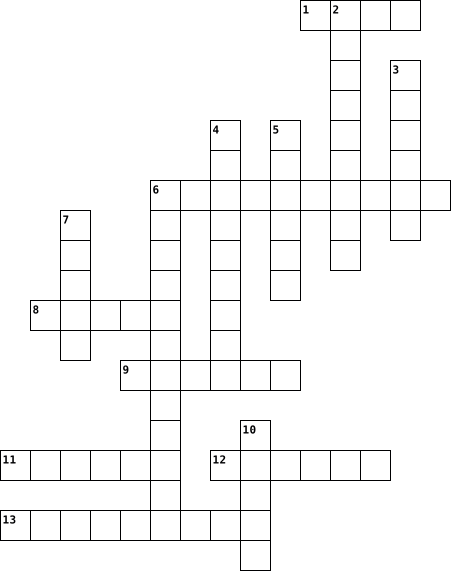
Across
- Large plant that has stems.
- Action that protects nature.
- something that is blue and there is less than before.
- A living being that is organised and (usually) able to moveings.
- Animals, plant. 🏞
- change Rising in average global temperatures
- dirtying up nature
Down
- The action of recovering waste and reintroducing it, after treatment, into the production cycle.
- little river
- The ecosystem is a whole composed of an environment and the living beings that live there.
- Plant that has petals.
- environmental is a adjective, what is his noun.
- A living being that is you in starts with h.
- A living being that is usually green.
14 Clues: little river • Animals, plant. 🏞 • dirtying up nature • Plant that has petals. • Large plant that has stems. • Action that protects nature. • A living being that is usually green. • A living being that is you in starts with h. • change Rising in average global temperatures • environmental is a adjective, what is his noun. • something that is blue and there is less than before. • ...
Chapter 29 Vocabulary Crossword 2016-04-13

Across
- A region that connects two sieve cells and that has one or more sieve areas, which consist of clusters of pores through which the cytoplasm of the cells is connected and through which materials are transported
- waxy layMer that prevents water loss
- A leaf whose blade is divided into leaflets
- Regions of undifferentiated plant cells that are capable of dividing and developing into specialized plant tissue
- Conducting parenchyma cell of angiosperm phloem
- The arrangement of veins in which several main veins are roughly parallel to each other
- In plants, the layer of vertically elongated cells that contains chloroplasts, that is located beneath the upper epidermis of leaves, and that participates in photosynthesis
- Thicker cell walls than parenchyma cells and normally irregular in shape
- A joint between two adjacent sections in the stem of a plant where buds form and leaves or branches start to grow
- An explanation for the movement of carbohydrates in the phloem of plants; holds that carbohydrates are actively transported into sieve tubes
- Outer layer of parenchyma cells of the dermal tissue system
- A root that develops from the radicle of a plant embryo, grows vertically downward, and forms branches called lateral roots
- A ground tissue composed of chloroplast-rich parenchyma cells; the tissue where photosynthesis occurs
- An extension of the epidermis of a root that increases the root's surface area for absorption
- The movement of soluble nutrients from one part of a plant to another
- Elements that plant cells use in smaller amounts (100 mg/kg of dry matter)
- Thin, porous areas of the cell wall in which water moves between tracheids
- Any place where a plant stores or uses organic nutrients, such as sugar or starches
- One segment of a compound leaf
- The protective outside covering of woody plants
- A part of a plant that makes sugars and other organic compounds and from which these compounds are transported to other parts of the plant
- A layer of tissue under the cork layer where cork cells are produced
- A system of adventitious roots of approximately equal diameter that arise from the base of a stem of a plant
- Long tubes that are stacked and allow movement of water
- A leaf that has a single blade
- In secondary xylem (wood), the growth ring formed in one season
- The spaces between nodes
- Secondary xylem produced in gymnosperm and dicot stems
- Modified cells on the leaf epidermis that regulate gas and water exchange
Down
- The darker wood in the center of a tree
- The functional, often lighter-colored wood nearer the outside of a trunk
- The tissue that is located in the center of the stem of most vascular plants and that is used for storage
- Schlerenchyma cell that has either large holes in the top and bottom walls or no end walls at all.
- In plants, the primary tissue located in the epidermis
- Inside a leaf, the tissue that is made up of loosely arranged parenchyma cells that contain chloroplasts and are surrounded by air spaces that promote the diffusion of oxygen, carbon dioxide, and water throughout the leaf
- Modified leaves that form a protective covering for a bud until it opens
- An explanation for the movement of water up the stem xylem of tall plants; states that water is pulled up the xylem vessels by the cohesive force between the water molecules and the adhesion of the water molecules to the rigid vessel walls
- Thick, even rigid cell walls
- The arrangement of veins in which the main vein or veins repeatedly branch to form a conspicuous network of smaller veins
- The stalk the attaches a leaf to the stem of a plant
- Dividing tissue that runs parallel to the long axis of a stem or a root; allow stems and roots to grow in diameter
- The innermost layer of the cortex
- In a plant, the lateral meristem that produces secondary xylem and phloem
- A shoot or flower that has immature leaves folded in the growing tip
- The growing region at the tips of stems and roots in plants
- Specialized roots that grow from uncommon places, such as stems and leaves
- The outermost layer or layers of the central vascular tissues
- Elements that plant cells use in large amounts (1,000 mg/kg of dry matter)
- Loosely packed cube-shaped or elongated cells with a large central vacuole and thin, flexible cell walls.
- A specialized parenchyma cell that assists in transport and that gives rise to sieve tubes in angiosperms
- The process by which plants release water vapor into the air through stomata
- Stacks of sieve tube members
- The wood that forms during spring (if water is plentiful) when the vascular cambium can form new xylem with cells that are wide and thin-walled
- The wood that forms during summer (when water is limited) when the vascular cambium forms xylem which has smaller cells with thicker walls
- Long, thick-walled sclerenchyma cell with tapering end
- The broad, flat portion of a leaf
- The arrangement of veins in a leaf
- An organ of climbing plants that grows in spiral form and wraps around another body to help support the plant
- In plants, a bundle of vascular tissue that transports fluids and nutrients
- The protective layer of cells that covers the tip of a root
60 Clues: The spaces between nodes • Thick, even rigid cell walls • Stacks of sieve tube members • One segment of a compound leaf • A leaf that has a single blade • The innermost layer of the cortex • The broad, flat portion of a leaf • The arrangement of veins in a leaf • waxy layMer that prevents water loss • The darker wood in the center of a tree • ...
Photosynthesis and Cellular respiration crossword! 2023-03-30

Across
- is made when glucose goes through glycolysis
- gas that enter directly through the stomata
- smallest living thing
- usable energy produced by cellular respiration
- supports the plant and holds it up towards the sun
- powerhouse of the cell
- small pores in a leaf that allow gas to diffuse directly in and out
- enters the plant through the roots
- specialized organs for cells
Down
- the second part of cellular respiration requires oxygen
- first step of cellular respiration doesn't require oxygen
- used for reproduction
- fills all cells
- food for plants
- the food factory of the plant
15 Clues: fills all cells • food for plants • used for reproduction • smallest living thing • powerhouse of the cell • specialized organs for cells • the food factory of the plant • enters the plant through the roots • gas that enter directly through the stomata • is made when glucose goes through glycolysis • usable energy produced by cellular respiration • ...
Leaves 2016-11-16

Across
- animals that eat plants or other animals
- when sunlight provides energy for plants to make food
- carries water and nutrients from the soil to the leaves
- plants make their own food
- to support a plant and enable its lease to take in the sunlight
- to anchor plants and take in water and nutrients
- to release from leaves after making food
- carries food from th leaves and other parts of the plant
Down
- when plant root takes in water
- to make food for the plant
- the lost of water in throu leaves
- enables a plant to absorb light energy so that it can produce food
12 Clues: to make food for the plant • plants make their own food • when plant root takes in water • the lost of water in throu leaves • animals that eat plants or other animals • to release from leaves after making food • to anchor plants and take in water and nutrients • when sunlight provides energy for plants to make food • ...
Gardening 2024-09-27

Across
- – Colorful part of the plant that produces seeds
- – The ground where plants grow
- – Large plant with branches and leaves
- – Essential element for plant growth
- – Tool for breaking up the soil
- – Tool used for digging in the garden
Down
- – Substance added to soil to help plants grow
- – The starting point for growing plants
- – Unwanted plant that competes with garden plants
- – Small hand tool for planting
- – Decomposed organic matter used to enrich soil
- – Source of energy for plants
12 Clues: – Source of energy for plants • – The ground where plants grow • – Small hand tool for planting • – Tool for breaking up the soil • – Essential element for plant growth • – Tool used for digging in the garden • – Large plant with branches and leaves • – The starting point for growing plants • – Substance added to soil to help plants grow • ...
Santee Plants Crossword 2026-08-26

Across
- Nut produced by oak trees
- Hardwood tree featured on the Oak Pinolly Trail
- Pine leaves that carpet sections of the trail
- Common evergreen tree in the park's forests
- Colorful blooming plant seen along trails
- Tree noted on the Limestone Nature Trail
- Gray-green plant often hanging from tree branches
Down
- Feather-like plant growing in shady areas
- Flowering shrub found along park trails
- Native tree that produces a tropical-tasting fruit
- Signature tree growing in and around Lake Marion
- Native bamboo-like plant found in wet areas
- South Carolina's state tree
13 Clues: Nut produced by oak trees • South Carolina's state tree • Flowering shrub found along park trails • Tree noted on the Limestone Nature Trail • Feather-like plant growing in shady areas • Colorful blooming plant seen along trails • Native bamboo-like plant found in wet areas • Common evergreen tree in the park's forests • Pine leaves that carpet sections of the trail • ...
The Process by which Plants make their own Food 2023-01-23

Across
- site of photosynthesis in a plant
- plants need this for photosynthesis
- gas that plants need in photosynthesis that humans breathe out
- Plants make their own food through ____________
- along with water, this is also absorbed by the plant through their roots
- pigment found in chloroplasts that will give the plant its color
Down
- food produced by plant during the process
- color that chlorophyll is responsible for
- used to test for starch in a plant
- gas that is produced in photosynthesis that humans breathe in
- condition required for the process to take place
- glucose is also known as _____________
12 Clues: site of photosynthesis in a plant • used to test for starch in a plant • plants need this for photosynthesis • glucose is also known as _____________ • food produced by plant during the process • color that chlorophyll is responsible for • Plants make their own food through ____________ • condition required for the process to take place • ...
Plant Pollination, Fertilization, Seed Production and Growth 2024-03-04

Across
- - Tissue in plants that conducts water and nutrients.
- - Male part of the flower that produces pollen.
- - Directional growth of a plant in response to gravity.
- - When plant cells differentiate to perform unique functions.
- - Plant's reproductive unit capable of developing into another plant.
- - Fine powdery substance containing male gametes of plants.
- - Process by which plants make their own food using sunlight.
- - Seed leaf that provides nutrients to the developing seedling.
- - Part of the flower that captures pollen during pollination.
Down
- - The process by which a plant grows from a seed.
- - Transfer of pollen from male parts to female parts of plants.
- - Union of male and female gametes to form a zygote.
- - Female part of the flower where seeds develop.
- - Reproductive unit in non-flowering plants.
- - Protective outer layer of a seed.
- - The female reproductive part of a flower.
16 Clues: - Protective outer layer of a seed. • - The female reproductive part of a flower. • - Reproductive unit in non-flowering plants. • - Male part of the flower that produces pollen. • - Female part of the flower where seeds develop. • - The process by which a plant grows from a seed. • - Union of male and female gametes to form a zygote. • ...
Crossword 2026-04-07

Across
- A round(圆的) orange fruit.
- The bright(明亮的) thing in the sky.
- A pretty colorful(多彩的) part(部分) of a plant.
- The gas(气体) we breathe(呼吸) every day.
- A big plant with leaves(叶子).
- To want or require(需要) something(某些东西).
- A red or green round(圆的) fruit.
Down
- A place for kids(孩子们) to learn.
- The green short plant on the ground.
- Not old, just got it(刚刚才得到的).
- A place to grow flowers and plants.
- A small sweet fruit in bunches(一串一串的).
- A place with animals and crops(庄稼).
- A clear liquid(液体) we drink.
- A long yellow fruit.
- To grow(种植) things(东西) in the ground(地面).
16 Clues: A long yellow fruit. • A round(圆的) orange fruit. • A clear liquid(液体) we drink. • A big plant with leaves(叶子). • Not old, just got it(刚刚才得到的). • A place for kids(孩子们) to learn. • A red or green round(圆的) fruit. • The bright(明亮的) thing in the sky. • A place to grow flowers and plants. • A place with animals and crops(庄稼). • The green short plant on the ground. • ...
Garden edibles 2018-01-06

Across
- juice is known to assist in curing stomach and intestinal ulcers
- AKA Madagascar bean
- green plant in cabbage family whose large flowering head is eaten as a vegetable
- annual climbing plant of the family Leguminosae
- fruit of the plant Solanum lycopersicum
- just one provides more than 200% of your daily requirement of vitamin A
- biennial also known as "tree-cabbage"
- Brassica oleracea var. botrytis
- One head contains 44% RDA of Omega-3 essential fats.
- folk name sparrow grass
- many people like peanut butter spread on this vegetable
- looks like miniature cabbages
- vampire repellant
- most widely cultivated species of the genus Allium
- Mr. ______ head
- has highest levels of antioxidants of any vegetable
Down
- species of nightshade
- taproot portion of the beet plant
- variety of a species of thistle cultivated as a food
- national symbol of Wales
- reticulated muskmelon
- AKA pear squash
- Popeye's favorite
- yellow, orange, and red are more expensive than the green ones
- Allium schoenoprasum
- Raphanus raphanistrum
- 3 main varieties are: slicing, pickling, and seedless
- Petroselinum crispum
- chickpea
- edible green seed pods also-known-as ladies fingers
30 Clues: chickpea • AKA pear squash • Mr. ______ head • Popeye's favorite • vampire repellant • AKA Madagascar bean • Allium schoenoprasum • Petroselinum crispum • species of nightshade • reticulated muskmelon • Raphanus raphanistrum • folk name sparrow grass • national symbol of Wales • looks like miniature cabbages • Brassica oleracea var. botrytis • taproot portion of the beet plant • ...
Identifying Nouns, Adjectives, and Verbs 2026-01-26

Across
- Identify the NOUN in the following sentence: The noisy child yells.
- Identify the VERB in the following sentence: Our little kitten sleeps a lot.
- Identify the NOUN in the following sentence: We built a large tower.
- Identify the NOUN in the following sentence: A tiny boat sank.
- Identify the NOUN in the following sentence: A loud bell rang.
- Identify the ADJECTIVE in the following sentence: The green plant grows.
- Identify the VERB in the following sentence: We built a large tower.
- Identify the ADJECTIVE in the following sentence: A loud bell rang.
- Identify the ADJECTIVE in the following sentence: A tiny boat sank.
- Identify the VERB in the following sentence: A tiny boat sank.
- Identify the VERB in the following sentence: The noisy child yells.
Down
- Identify the ADJECTIVE in the following sentence: Our little kitten sleeps a lot.
- Identify the ADJECTIVE in the following sentence: We built a large tower.
- Identify the NOUN in the following sentence: The green plant grows.
- Identify the NOUN in the following sentence: Our little kitten sleeps a lot.
- Identify the VERB in the following sentence: The green plant grows.
- Identify the ADJECTIVE in the following sentence: The noisy child yells.
- Identify the VERB in the following sentence: A loud bell rang.
18 Clues: Identify the NOUN in the following sentence: A tiny boat sank. • Identify the NOUN in the following sentence: A loud bell rang. • Identify the VERB in the following sentence: A loud bell rang. • Identify the VERB in the following sentence: A tiny boat sank. • Identify the NOUN in the following sentence: The noisy child yells. • ...
Vegetable Crossword 2018-03-09

Across
- a hardy cabbage of a variety that produces erect stems with large leaves and no compact head
- a cultivated plant of the daisy family, with edible leaves that are a usual ingredient of salads
- a widely cultivated edible Asian plant of the goosefoot family, with large, dark green leaves that are eaten raw or cooked as a vegetable
- a tall plant of the lily family with fine feathery foliage, cultivated for its edible shoots
- a tapering orange-colored root eaten as a vegetable
- an edible bulb with a pungent taste and smell, composed of several concentric layers, used in cooking
- a cabbage of a variety that bears a large immature flower head of small creamy-white flower buds
- a round root with white or cream flesh that is eaten as a vegetable and also has edible leaves
Down
- a cultivated plant of the parsley family, with closely packed succulent leafstalks that are eaten raw or cooked
- a strong-smelling pungent-tasting bulb, used as a flavoring in cooking, and is closely related to the onion
- a spherical green seed that is grown in pods
- a cultivated plant eaten as a vegetable, having thick green or purple leaves surrounding a spherical heart or head of young leaves
- a long, green-skinned fruit with watery flesh, usually eaten raw in salads or pickled
- European plant cultivated for its large thistlelike flower heads
- a cabbage of a variety similar to the cauliflower, bearing heads of green or purplish flower buds
- a North American cereal plant that yields large grains, or kernels, set in rows on a cob, eaten by humans and livestock
- a green variety of smooth-skinned summer squash
- a swollen pungent-tasting edible root, especially a variety that is small, spherical, and red, and eaten raw with salad
18 Clues: a spherical green seed that is grown in pods • a green variety of smooth-skinned summer squash • a tapering orange-colored root eaten as a vegetable • European plant cultivated for its large thistlelike flower heads • a long, green-skinned fruit with watery flesh, usually eaten raw in salads or pickled • ...
Photosynthesis and Respiration 2024-07-19

Across
- Enlarged and swollen with water.
- A green pigment inside chloroplasts which absorbs light energy.
- A plant tissue that contains lots of chloroplasts to carry out photosynthesis.
- A carbohydrate made by plants to store glucose.
- An endothermic reaction in which energy is transferred from the environment to chloroplasts by light. It is represented by the equation: carbon dioxide + water glucose + oxygen
- Tired.
- Respiration that takes place without oxygen to transfer energy. In muscles it is represented by the equation: glucose lactic acid In plant and yeast cells it is represented by the equation: glucose ethanol + carbon dioxide
- A yellow liquid that changes colour to dark blue/black in the presence of starch
- A protective layer that covers the outermost tissue layer of a plant leaf.
- A plant tissue that contains large air spaces and has a large surface area for diffusion.
Down
- A structure inside cells where aerobic respiration occurs; a process which releases energy for the cell.
- A cell which controls the opening and closing of the stomata.
- Small openings in the surface of a leaf that allow gases to diffuse in and out of the leaf.
- A diagram that shows the total number of individual organisms at each trophic level.
- Respiration that involves the use of oxygen to transfer energy. It is represented by the equation: glucose + oxygen carbon dioxide + water
- A representation of the feeding relationships within a community.
- Drooping through lack of water.
- A structure in plant cells that contains the pigment chlorophyll which absorbs light so the plant can carry out photosynthesis.
- A diagram that shows the biomass at each trophic level. It is always a pyramid shape. Trophic level 1 is at the bottom of the pyramid.
- The waste product of anaerobic respiration in muscles.
- A description of the position of an organism within the food chain.
- The process of breaking down sugars by anaerobic respiration in bacteria or yeast, important in the manufacture of bread and alcoholic drinks.
- The mass of living material of an organism. This will include all of the proteins, carbohydrates and lipids that make up that organism. It does not include the water content.
- The amount of extra oxygen the body needs after exercise to react with the accumulated lactic acid and remove it from the cells.
24 Clues: Tired. • Drooping through lack of water. • Enlarged and swollen with water. • A carbohydrate made by plants to store glucose. • The waste product of anaerobic respiration in muscles. • A cell which controls the opening and closing of the stomata. • A green pigment inside chloroplasts which absorbs light energy. • ...
Photosynthesis and Respiration 2024-07-19

Across
- Small openings in the surface of a leaf that allow gases to diffuse in and out of the leaf.
- A diagram that shows the biomass at each trophic level. It is always a pyramid shape. Trophic level 1 is at the bottom of the pyramid.
- A green pigment inside chloroplasts which absorbs light energy.
- The mass of living material of an organism. This will include all of the proteins, carbohydrates and lipids that make up that organism. It does not include the water content.
- A cell which controls the opening and closing of the stomata.
- Enlarged and swollen with water.
- Tired.
- The waste product of anaerobic respiration in muscles.
- An endothermic reaction in which energy is transferred from the environment to chloroplasts by light. It is represented by the equation: carbon dioxide + water glucose + oxygen
- The amount of extra oxygen the body needs after exercise to react with the accumulated lactic acid and remove it from the cells.
- Drooping through lack of water.
- A yellow liquid that changes colour to dark blue/black in the presence of starch
- Respiration that takes place without oxygen to transfer energy. In muscles it is represented by the equation: glucose lactic acid In plant and yeast cells it is represented by the equation: glucose ethanol + carbon dioxide
Down
- A diagram that shows the total number of individual organisms at each trophic level.
- A plant tissue that contains lots of chloroplasts to carry out photosynthesis.
- Respiration that involves the use of oxygen to transfer energy. It is represented by the equation: glucose + oxygen carbon dioxide + water
- A representation of the feeding relationships within a community.
- A carbohydrate made by plants to store glucose.
- A structure in plant cells that contains the pigment chlorophyll which absorbs light so the plant can carry out photosynthesis.
- A plant tissue that contains large air spaces and has a large surface area for diffusion.
- A protective layer that covers the outermost tissue layer of a plant leaf.
- A description of the position of an organism within the food chain.
- A structure inside cells where aerobic respiration occurs; a process which releases energy for the cell.
- The process of breaking down sugars by anaerobic respiration in bacteria or yeast, important in the manufacture of bread and alcoholic drinks.
24 Clues: Tired. • Drooping through lack of water. • Enlarged and swollen with water. • A carbohydrate made by plants to store glucose. • The waste product of anaerobic respiration in muscles. • A cell which controls the opening and closing of the stomata. • A green pigment inside chloroplasts which absorbs light energy. • ...