
the plant Crossword Puzzles
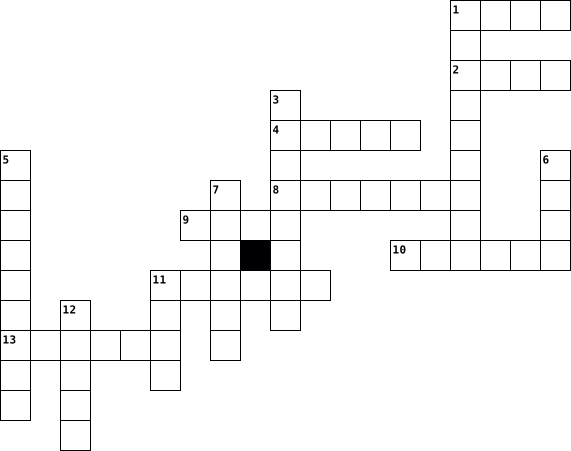
1.3 Plant Structures and Survival Vocabulary Part 2 2022-05-16

Across
- The part of a plant that grows underground. Roots take up water and food from the soil to feed the plant.
- The female parts of a flower.
- Parts of a plant.
- The part of a plant that grows into a new plant.
Down
- To make offspring.
- A fine powdery substance, typically yellow, consisting of microscopic grains discharged from the male part of a flower or from a male cone.
- A type of root that grows straight down and gives off smaller side roots.
- The part of the flower that protects the ovary.
- The part of the plant from which flowers and leaves grow.
- A young plant that has been grown from seed rather than a cutting.
10 Clues: Parts of a plant. • To make offspring. • The female parts of a flower. • The part of the flower that protects the ovary. • The part of a plant that grows into a new plant. • The part of the plant from which flowers and leaves grow. • A young plant that has been grown from seed rather than a cutting. • ...
1 2021-03-10

Across
- a plant or plant product that is grown by farmers
- a tall tropical plant that is grown for sugar
- the activity of growing crops or raising animals
- the main long and thin part of a plant
- a plant people often use for its smell or taste
Down
- the number of people or animals in a certain place
- the part of a plant or tree that grows under the ground
- a type of grain often turned into flour to make cakes, cookies, etc.
- a basic or necessary food item
- a small, hard seed from a plant such as rice
10 Clues: a basic or necessary food item • the main long and thin part of a plant • a small, hard seed from a plant such as rice • a tall tropical plant that is grown for sugar • a plant people often use for its smell or taste • the activity of growing crops or raising animals • a plant or plant product that is grown by farmers • ...
Vegetative Propagation 2022-06-02

Across
- This plant grows small plants, called plantlets, on the edge of its leaves and detaches from the parent plant.
- It is a stem that grows horizontally above the ground. Roots and leaves may develop from the nodes that touch the ground.
- It is an underground stem that grows horizontally near the soil surface. Roots and buds develop at the nodes and grow into new plants.
- It is an enlarged underground stem with "eyes" where buds develop. The buds develop stems and roots that grow into a new plant.
- Onions and garlic are examples of the short, underground stems that contain stored food.
Down
- Banana and pineapple plants are from these new shoots that grow from the plant's main stem.
- It is a mode of plant reproduction where the stem of one plant is joined to the stem of another plant.
- This artificial vegetative propagation involves burying a part of a stem while attached to its mother plant to create a new plant. The plant resulting from this procedure is identical to the mother plant.
- This vegetative propagation is the process of growing plants from different plant parts, such as the stem, the roots, or the leaves.
- It is an underground stem with scaly leaves and a thick stem base containing stored food. An example of this vegetative propagation is the gabi or taro plant.
10 Clues: Onions and garlic are examples of the short, underground stems that contain stored food. • Banana and pineapple plants are from these new shoots that grow from the plant's main stem. • It is a mode of plant reproduction where the stem of one plant is joined to the stem of another plant. • ...
Christmas Mon 15.30 group 2020-12-14

Across
- It is made with white stuff.
- It is a dark green plant and it has red berries in the centre
- When it is Christmas we put a plant with lights in our house
- It is similar to a car but it goes on the snow
- It is a biscuit but also a British table decoration.
- It is one state of water
- You can see it in the sky at night .
- who pulls the sleigh of Santa Claus?
- The helpers of Santa Claus
- They are put on the Christmas Tree
- Father Christmas
Down
- Santa
- What plant is used to decorate at Christmas?
- They are at the bottom of the tree.
- You send this to your friends
- Other people give you this.
- It is delicious
- It is a big sock for presents
- A person with a circle on their head!
- Jingle _______
- You use it to don't have cold on the head.
21 Clues: Santa • Jingle _______ • It is delicious • Father Christmas • It is one state of water • The helpers of Santa Claus • Other people give you this. • It is made with white stuff. • You send this to your friends • It is a big sock for presents • They are put on the Christmas Tree • They are at the bottom of the tree. • You can see it in the sky at night . • ...
Cells 2021-07-07

Across
- Gas used by plants in photosynthesis
- The process by which plants and some bacteria use the energy from sunlight to produce sugar
- Organelle that gives shape to plant cells
- Where photosynthesys happens
- Cells with no nucleus
- Process in which the cytoplasm pinches in the middle and 2 daughter cells are formed
Down
- Phase in cell respiration that involves oxygen
- A plant pigment that absorbs sunlight
- Type of reproduction in which bacteria share genetic material
- Phase in cell respiration that does not involve oxygen
- Where in the cell are proteins made
- The plant can use _____ energy
- The food product of photosynthesis
- Where organelles are found in cells
- Where cell respiration happens
- Where in the cell is DNA found
- Liquid involved in cell respiration
- Research: eukaryotes can reproduce asexually through ______
- Research: The first step in cell division
- A by-product of photosynthesis we need
- Name of energy molecule of cells
- Research: eukaryotes can reproduce sexually through ______
22 Clues: Cells with no nucleus • Where photosynthesys happens • The plant can use _____ energy • Where cell respiration happens • Where in the cell is DNA found • Name of energy molecule of cells • The food product of photosynthesis • Where in the cell are proteins made • Where organelles are found in cells • Liquid involved in cell respiration • Gas used by plants in photosynthesis • ...
4.01 cross word 2023-04-17

Across
- this beign too high or too low will ahev bad effects
- what process in plants produces oxygen
- the tendency of plants to grow toward light
- ____ are located in the ovary
- where plants lose their water from their leaves because of evaporation
- some ______day plants are african violets and spinach
- the other by-product from photosynthesis
- plants consume oxygen and give off carbon dioxide
- plants are placed into 1 through 8 zones depending on average minimum temperature
- plant first growing from a seed
Down
- the process where plants intake water and nutrients
- when a plant doesn't grow very much
- 90% of the plant is made of mostly _____
- the response of plants to differing amounts of light
- plants have _______ types like seeds and fruits
- how nutrients and water enter plants through the cell wall
- ____day plants require long nights to flower
- nutrients being transported elsewhere in the plants body
- asexual and sexual are types of...
- water ______ nutrients throughout the body
20 Clues: ____ are located in the ovary • plant first growing from a seed • asexual and sexual are types of... • when a plant doesn't grow very much • what process in plants produces oxygen • 90% of the plant is made of mostly _____ • the other by-product from photosynthesis • water ______ nutrients throughout the body • the tendency of plants to grow toward light • ...
Ecosystems by max. 2023-12-18

Across
- a habitat where animals and or bugs live and rome around.
- a plant that makes its own food.
- the proses in wich light energy is converted.
- an animal wich looks for its food.
- animal only eats meat.
- animals bloud is cold.
- any liqued or frozen water that formes in the atamsfaer and falls back to earth.
Down
- the whether avreged avregeged over a long time.
- an animal and eats and catches food.
- a hot or cold feling out side.
- a place where difrent types of animals and plant like like the savanna biome.
- a living oranisum like a lion.
- the animal that gets killed by the other animal.
- animls bloud is warm.
- and animal that kills anouther animal.
- the boughtum is the animal that gets eaten alot and top does not.
- the food wich another organisum eats.
- a non living thing like a rock.
- and animal or plant that canges to survie in there biome.
- animal eats meat and plants.
20 Clues: animls bloud is warm. • animal only eats meat. • animals bloud is cold. • animal eats meat and plants. • a hot or cold feling out side. • a living oranisum like a lion. • a non living thing like a rock. • a plant that makes its own food. • an animal wich looks for its food. • an animal and eats and catches food. • the food wich another organisum eats. • ...
Ecosystems by max. 2023-12-18

Across
- a habitat where animals and or bugs live and rome around.
- a plant that makes its own food.
- the proses in wich light energy is converted.
- an animal wich looks for its food.
- animal only eats meat.
- animals bloud is cold.
- any liqued or frozen water that formes in the atamsfaer and falls back to earth.
Down
- the whether avreged avregeged over a long time.
- an animal and eats and catches food.
- a hot or cold feling out side.
- a place where difrent types of animals and plant like like the savanna biome.
- a living oranisum like a lion.
- the animal that gets killed by the other animal.
- animls bloud is warm.
- and animal that kills anouther animal.
- the boughtum is the animal that gets eaten alot and top does not.
- the food wich another organisum eats.
- a non living thing like a rock.
- and animal or plant that canges to survie in there biome.
- animal eats meat and plants.
20 Clues: animls bloud is warm. • animal only eats meat. • animals bloud is cold. • animal eats meat and plants. • a hot or cold feling out side. • a living oranisum like a lion. • a non living thing like a rock. • a plant that makes its own food. • an animal wich looks for its food. • an animal and eats and catches food. • the food wich another organisum eats. • ...
Puzzle 166 2025-06-13

Across
- An explosive weapon
- A grain used as food around the world
- To throw or a group of actors in a play or movie
- A sport played with a bat and ball
- A large primate without a tail
- A social gathering for celebration
- A person or company that prepares books or media for sale
- To move quickly back and forth
- The blooming part of a plant
Down
- A quality that pleases the senses or mind
- The flat, green part of a plant that absorbs sunlight
- Preserved by removing moisture
- A piece of fabric used as a symbol of a country or group
- A country in Southern Africa
- Inflated rubber or plastic used for decoration or celebration
- The ability or capacity to do something or act effectively
- The hard parts of a skeleton
- A solid mineral material forming part of the surface of the earth
- A device for slowing or stopping motion
- The sweet, edible part of a plant
20 Clues: An explosive weapon • A country in Southern Africa • The hard parts of a skeleton • The blooming part of a plant • Preserved by removing moisture • A large primate without a tail • To move quickly back and forth • The sweet, edible part of a plant • A sport played with a bat and ball • A social gathering for celebration • A grain used as food around the world • ...
crossword 2023-02-10

Across
- a type of consumer that only eats plants
- the moving of sediment after its weathered
- a living thing in an ecosystem
- the first succession on rock with no dirt
- the amount of energy passed on in the consumer triangle (spelled with percent)
- eats primary consumer
- physical change weathering
- a type of consumer that only eats meat
- plant growth in response to gravity
- plant growth in response to light
- a type of consumer that eats both plants and animals
Down
- the amount of different organisms in an area
- a process that plants use to make food
- eats secondary consumer
- living things like plants break down rock
- the depositing of sediment after erosion
- the process that breaks down rock into sediment
- the second succession with dirt
- eats producer and is first consumer
- transports water up from the roots in plants
- a nonliviing thing in an ecosystem
- a web of many food chains linked together
- plant growth in response to touch
23 Clues: eats primary consumer • eats secondary consumer • physical change weathering • a living thing in an ecosystem • the second succession with dirt • plant growth in response to touch • plant growth in response to light • a nonliviing thing in an ecosystem • eats producer and is first consumer • plant growth in response to gravity • a process that plants use to make food • ...
Fragile Earth - Food - Crossword 2022-08-24

Across
- The type of energy needed for photosynthesis to occur
- The process by which bread and alcohol is made
- Along with phosphorus and potassium, this is another element used in fertilisers
- The microorganism added to milk to produce yoghurt
- If a plant lacks phosphorus, this part of the plant is damaged
- The gas released by plants during photosynthesis
- These are added to crops to make them grow bigger and faster
- If a plant lacks nitrogen, this part of the plant is damaged
Down
- To germinate, plants need water, oxygen and…
- When a seed grows roots and shoots, this process is called…
- A type of natural fertiliser
- Iodine turns blue-black in the presence of this!
- The microorganism used to make bread and alcohol
- What plants take in during photosynthesis
14 Clues: A type of natural fertiliser • What plants take in during photosynthesis • To germinate, plants need water, oxygen and… • The process by which bread and alcohol is made • Iodine turns blue-black in the presence of this! • The microorganism used to make bread and alcohol • The gas released by plants during photosynthesis • ...
Reproduction & Plant Structures 2024-04-08

Across
- when both traits appear in offspring because both alleles are expressed
- a fertilized egg, results from a sperm or pollen joining an egg
- a trait that only shows if a recessive allele is inherited from each parent
- transfer of pollen from male plant structures to female plant structures
- a characteristic an organism can pass to its offspring
- a trait that is learned from parents or by interacting with the environment
- the structure in flowers that holds the eggs
- a trait that will always show up
- a sequence of DNA that determines a trait
- reproduction where 2 parents combine genetic material to produce genetically different offspring
Down
- reproductive structures of gymnosperms
- when an egg cell and sperm or pollen cell join to form a new cell
- when an embryo of a plant sprouts from a seed
- develops from a ripened ovary of a flower
- reproduction where one parent produces genetically identical offspring
- the process in which offspring receive genes from parents
- scattered about
- a different form of the same gene
18 Clues: scattered about • a trait that will always show up • a different form of the same gene • reproductive structures of gymnosperms • develops from a ripened ovary of a flower • a sequence of DNA that determines a trait • the structure in flowers that holds the eggs • when an embryo of a plant sprouts from a seed • a characteristic an organism can pass to its offspring • ...
4.1 to 4.2 Revision 2026-05-06

Across
- vessel that transports water and minerals around the plant
- plants with little to no wood in their stem
- plants that produce seeds in cones
- the edible flower of a plant that looks like small green trees
- part of the stem between two nodes
- the chemical reaction between carbon dioxide and water to make oxygen and glucose
- the process of water loss from the leaves
- plants that produce seeds in flowers
- the hard fruit of angiosperms
Down
- angiosperm with a taproot that is called a 'horse flower' in Dutch
- mosses produce spores in here
- how ferns store spores
- cell organelle responsible for photosynthesis
- opening at the bottom of the leaf to allow gas exchange
- a phylum of plants that produce cones
- used to increase the surface area of roots
- vessel that transports glucose around the plant
- the root system with one primary root and smaller secondary roots
18 Clues: how ferns store spores • mosses produce spores in here • the hard fruit of angiosperms • plants that produce seeds in cones • part of the stem between two nodes • plants that produce seeds in flowers • a phylum of plants that produce cones • the process of water loss from the leaves • used to increase the surface area of roots • plants with little to no wood in their stem • ...
Soil and Plants 2024-02-22

Across
- something that gives nutrition or healthy food to a plant or animal
- small powder like parts of a plant in the flower
- to blossom;to turn into a flower
- When bees carry pollen from one plant to another
- a very young plant
Down
- the part of a plant that is in the ground
- food that gives nutrients to plants
- when there is no more of a certain type of plant or animal
- the process that changes sun into plant energy
- natural covering on dirt that protects plants
10 Clues: a very young plant • to blossom;to turn into a flower • food that gives nutrients to plants • the part of a plant that is in the ground • natural covering on dirt that protects plants • the process that changes sun into plant energy • small powder like parts of a plant in the flower • When bees carry pollen from one plant to another • ...
Biological Terminology of Horticulture 2020-09-24

Across
- the first year.
- is a stage when a plant rests or grows very little.
- is a plant that is limp because it does not have enough moisture.
- is a plant that lives more than two years. Some perennials will grow and
- refers to plants that lose their leaves during the dormant season.
Down
- is a plant that completes its life cycle in one year.
- season plants grow best in warm temperatures, growing best in the summer and early fall.
- is a plant that completes its life cycle in two years. It usually grows the first year
- is a plant that is swollen or filled with moisture.
- refers to plants that retain their leaves and remain green year round.
- flowers the second year.
- season plants relish cool temperatures, growing best in spring or fall.
12 Clues: the first year. • flowers the second year. • is a stage when a plant rests or grows very little. • is a plant that is swollen or filled with moisture. • is a plant that completes its life cycle in one year. • is a plant that is limp because it does not have enough moisture. • refers to plants that lose their leaves during the dormant season. • ...
Nathaniel Eddie 2021-04-19

Across
- Necessity to Plants
- Plant breathing
- Bacteria turns Nitrate into food
- Non-humanoid, Multi-Cellular Organism
- Lifeform
- Water
- Non renewable
- Source of sustenance
- The chemical make-up of our bodies
Down
- Waterbody
- Necessity to Plants
- Plant Food Maker
- Land
- Life
- Wildlife
- Sky
- Dirt
- Fast flowing body of water
- Food for protein
- Food Cycle
20 Clues: Sky • Land • Life • Dirt • Water • Wildlife • Lifeform • Waterbody • Food Cycle • Non renewable • Plant breathing • Plant Food Maker • Food for protein • Necessity to Plants • Necessity to Plants • Source of sustenance • Fast flowing body of water • Bacteria turns Nitrate into food • The chemical make-up of our bodies • Non-humanoid, Multi-Cellular Organism
Propogation 2022-01-24

Across
- dry or liquid solution used to increase root growth
- slanting “T” shape a single bud is placed into on a stem
- cuttings taken in the growing season
- propagation through cutting a portion of a plant stem and planting the stem in conditions needed for adequate growth
- process of creating new plants from an older plant using a variety of methods
- where the stock and scion join
- graft method of matching angle cuts to the scion and the stock
- removal of top portion above the budding union
Down
- propagation through merging two plants together
- single buds are joined to the stock
- growing layer of cells just under the bark
- place where the leaf is attached
- lower portion of a graft and is also known as root stock
- manipulating a plant to grow a new root section off of the side of another stem
- variation of the splice graft which adds a vertical cut for the scion and stock to be inserted into each other along the main angle cut
- propagation through burying a section of the stem and a root system growing from the buried section
- burying the tip of a plant stem
- portion used to compose the stem or branches in a graft
18 Clues: where the stock and scion join • burying the tip of a plant stem • place where the leaf is attached • single buds are joined to the stock • cuttings taken in the growing season • growing layer of cells just under the bark • removal of top portion above the budding union • propagation through merging two plants together • dry or liquid solution used to increase root growth • ...
Organelle Crossword Puzzle 2022-09-20

Across
- Factories that make protein for DNA
- Made of cells, eat, grow, reproduce and die
- The power plant, makes energy from the food we eat
- The brain, controls all the cell's activities
- In plant cells only, make the plant strong
- Means, "Little Organ"
- Sends materials around the cell, like the post office
- The smallest unit of life
- Transportation system
- Keep the cell clean, like a custodian
Down
- Are not made of cells, never eat, grow or die
- Stores water for later use
- Controls what exerts the cell, like a security guard
- Fluid that fills the cell, like a swimming pool
- All living things are made of cells
- Make food from sunlight in plants only
16 Clues: Means, "Little Organ" • Transportation system • The smallest unit of life • Stores water for later use • Factories that make protein for DNA • All living things are made of cells • Keep the cell clean, like a custodian • Make food from sunlight in plants only • In plant cells only, make the plant strong • Made of cells, eat, grow, reproduce and die • ...
SPRING 2023-05-02
Across
- plant a _____ and wait for a flower to grow
- birds make a ____ to lay eggs
- spring starts during this month
- colourful arc in the sky after the rain
- fly a ____ on a windy day
- a place to plant flowers or plants
- rain gathers in one spot on the ground and makes a _____
- a person whose job is to plant crops
Down
- a yellow flower that faces the sun
- hold this to stay dry when it rains
- a caterpillar turns into a _____
- water falling from the sky
- open the ____ and let fresh air into the house
- children go to the _____ and play
- the colour of grass
15 Clues: the colour of grass • fly a ____ on a windy day • water falling from the sky • birds make a ____ to lay eggs • spring starts during this month • a caterpillar turns into a _____ • children go to the _____ and play • a yellow flower that faces the sun • a place to plant flowers or plants • hold this to stay dry when it rains • a person whose job is to plant crops • ...
Kelp Vocabulary Activity 2022-10-27

Across
- Body of seaweed
- Organisms who obtain their nutrients and energy by feeding on the producers
- Leaf-like structures
- Large brown algae that live in cool, relatively shallow waters close to the shore
- A plant that has flowers and produces seeds enclosed within a carpel
- Substance obtained from kelps that is used as a emulsifier in many food items and in the making of many products
- Organisms that produce food for themselves and other organisms
- Stem-like structure
- The dominant salt-marsh plant in many salt marshes
- The air bladder of certain algae and aquatic plants
Down
- Large algae growing in the sea or on rocks below the high-water mark
- A plant adapted to growing in saline conditions
- Root-like structures
- A polyphyletic group of multicellular primary producers
- Substance harvested from red seaweeds that is used as a thickening agent in dairy products such as yogurt and milkshakes
- A mass of microspores in a seed plant appearing usually as a fine dust
- Dead particulate organic material
- Underwater plants that evolved from land plants
- Substance obtained from red seaweeds is used to culture microorganisms in the healthcare industry, as a thickener in foods, filler in pharmaceuticals and cosmetics, and to protect canned meats
- A root that grows from and supports the stem above the ground
- Organisms that eat other consumers
21 Clues: Body of seaweed • Stem-like structure • Root-like structures • Leaf-like structures • Dead particulate organic material • Organisms that eat other consumers • A plant adapted to growing in saline conditions • Underwater plants that evolved from land plants • The dominant salt-marsh plant in many salt marshes • The air bladder of certain algae and aquatic plants • ...
BIOL 350 SP18 Final 2018-05-17

Across
- biological feedback to a changing environment that is a result of evolution by natural selection
- study of the interrelationships between organisms, and between organisms and their environment
- CO2 is first fixed in this type of cell in C4 plants
- electron transport forms ______and NADPH.
- main force that drives absorption of water, causes negative pressure, and draws water through the plant
- CO2 is fixed during this time in CAM plants
- process where plants use sun's energy
- traits that are relatively easy and quick to quantify
- a very common photosynthetic pigment
- relative measure of the ability of a plant to both survive and reproduce
- small pores, typically on the undersides of leaves
Down
- not needed for the Calvin-Benson cycle to occur
- morpho-physio-phenological traits which impact fitness indirectly via their effects on growth, reproduction and survival
- photosynthesis takes place in this organelle
- water potential of an open beaker of pure water
- the amount of rain, snow, or hail that falls on the watershed
- some G3P is not recycled, but instead, used to make this
- enzyme that accounts for 50% of the soluble proteins in the chloroplast and plays an important role in photosynthesis
- a nutrient is ________ if it is required for a plant to grow from a seed and complete the life cycle
- nutrients are taken up by a plant through these
20 Clues: a very common photosynthetic pigment • process where plants use sun's energy • electron transport forms ______and NADPH. • CO2 is fixed during this time in CAM plants • photosynthesis takes place in this organelle • not needed for the Calvin-Benson cycle to occur • water potential of an open beaker of pure water • nutrients are taken up by a plant through these • ...
BIOL 350 SP18 Final 2018-05-17

Across
- electron transport forms ______and NADPH.
- not needed for the Calvin-Benson cycle to occur
- CO2 is fixed during this time in CAM plants
- the amount of rain, snow, or hail that falls on the watershed
- some G3P is not recycled, but instead, used to make this
- study of the interrelationships between organisms, and between organisms and their environment
- traits that are relatively easy and quick to quantify
- small pores, typically on the undersides of leaves
- main force that drives absorption of water, causes negative pressure, and draws water through the plant
- relative measure of the ability of a plant to both survive and reproduce
- CO2 is first fixed in this type of cell in C4 plants
- nutrients are taken up by a plant through these
Down
- biological feedback to a changing environment that is a result of evolution by natural selection
- photosynthesis takes place in this organelle
- a very common photosynthetic pigment
- process where plants use sun's energy
- morpho-physio-phenological traits which impact fitness indirectly via their effects on growth, reproduction and survival
- water potential of an open beaker of pure water
- a nutrient is ________ if it is required for a plant to grow from a seed and complete the life cycle
- enzyme that accounts for 50% of the soluble proteins in the chloroplast and plays an important role in photosynthesis
20 Clues: a very common photosynthetic pigment • process where plants use sun's energy • electron transport forms ______and NADPH. • CO2 is fixed during this time in CAM plants • photosynthesis takes place in this organelle • not needed for the Calvin-Benson cycle to occur • water potential of an open beaker of pure water • nutrients are taken up by a plant through these • ...
Botany 2024-02-13

Across
- Roots that are deep and uniform
- Waxlike waterproofing
- Plant sperm
- Molecules of water sticking to each other
Down
- Roots that are thin strands and mostly the same size
- Molecules of water sticking to other surfaces like a string or penny
- Plant egg
- Supports the plant by causing the wall of the vascular tissue to become hard
- Carries sugar in the plant
- Carries water for the plant
10 Clues: Plant egg • Plant sperm • Waxlike waterproofing • Carries sugar in the plant • Carries water for the plant • Roots that are deep and uniform • Molecules of water sticking to each other • Roots that are thin strands and mostly the same size • Molecules of water sticking to other surfaces like a string or penny • ...
Drugs 2024-10-26

Across
- subtances found in the opium poppy plant
- - effects the central nervous system
- a slang term for the drug methamphetamine
- addictive stimulant drug made from the leaves of the coca plant
- -the practice of buying goods in small, affordable quantities suitable for one-time use.
- synthetic opioid drug approved by the Food and Drug Administration for use as an analgesic (pain relief) and anesthetic
- one of the most widely used and abused psychoactive drugs in the world
- which is made from the dried leaves and flowers of the hemp plant, and which can be smoked.
- broad class of drugs that increase the activity of the central nervous system
- known as volatile subtances or solvents
- that include synthetic opioids such as fentanyl; pain relievers available legally by prescription,
Down
- (molecule) with the ability to dissolve other substances (solutes) to form a solution.
- used in the management and treatment of pain.
- hydrocarbon radical C5H11 that occurs in various isomeric forms and is derived from pentane. called also pent
- process of disconnecting from one's thoughts, feelings, memories or sense of identity.
- insensibility or stupor due to their depressant effect of the central nervous system.
- alter the user’s perception of reality
- prominent angiotensin-converting enzyme (ACE) inhibitor
- chemicals that people inhale (breath in) to cause a pleasurable feeling of effect(high)
- the dried leaves,flowers,stems, and seeds of cannabis plant
20 Clues: - effects the central nervous system • alter the user’s perception of reality • known as volatile subtances or solvents • subtances found in the opium poppy plant • a slang term for the drug methamphetamine • used in the management and treatment of pain. • prominent angiotensin-converting enzyme (ACE) inhibitor • ...
Drugs 2024-10-26

Across
- alter the user’s perception of reality
- mental process of disconnecting from one's thoughts, feelings, memories or sense of identity.
- a slang term for the drug methamphetamine
- hydrocarbon radical C5H11 that occurs in various isomeric forms and is derived from pentane. called also pent
- - effects the central nervous system
- subtances found in the opium poppy plant
- addictive stimulant drug made from the leaves of the coca plant
- (molecule) with the ability to dissolve other substances (solutes) to form a solution.
- known as volatile subtances or solvents
- drug which is made from the dried leaves and flowers of the hemp plant, and which can be smoked.
Down
- insensibility or stupor due to their depressant effect of the central nervous system.
- broad class of drugs that increase the activity of the central nervous system
- potent synthetic opioid drug approved by the Food and Drug Administration for use as an analgesic (pain relief) and anesthetic
- the dried leaves,flowers,stems, and seeds of cannabis plant
- medications used in the management and treatment of pain.
- a prominent angiotensin-converting enzyme (ACE) inhibitor
- that include synthetic opioids such as fentanyl; pain relievers available legally by prescription,
- chemicals that people inhale (breath in) to cause a pleasurable feeling of effect(high)
- one of the most widely used and abused psychoactive drugs in the world
- the practice of buying goods in small, affordable quantities suitable for one-time use.
20 Clues: - effects the central nervous system • alter the user’s perception of reality • known as volatile subtances or solvents • subtances found in the opium poppy plant • a slang term for the drug methamphetamine • medications used in the management and treatment of pain. • a prominent angiotensin-converting enzyme (ACE) inhibitor • ...
LIVING AND NONLIVING 2016-05-10

Across
- CELL
- ME NOT-PLANT WHEN TOUCH CLOSES ITS LEAVES
- THING WHICH DEPEND ON OTHER LIVING THINGS
- THE STRUCTURAL UNIT OF A LIVING THING
- RESPONSE OF A PLANT TO LIGHT
- OF A PLANT
Down
- THINGS WHICH MAKE THEIR OWN FOOD
- LIVING THINGS SHOW RESPONSE TO
- IN AND OUT
- WHICH PLANTS EXCRETE
- RESPONSE OF ROOTS AND STEMS TOWARD AND AGAINST THE EARTH
- REPRODUCE AMONG THEMSELVES
- CELLS
- UP OF ONE CELL
14 Clues: CELL • CELLS • IN AND OUT • OF A PLANT • UP OF ONE CELL • WHICH PLANTS EXCRETE • REPRODUCE AMONG THEMSELVES • RESPONSE OF A PLANT TO LIGHT • LIVING THINGS SHOW RESPONSE TO • THINGS WHICH MAKE THEIR OWN FOOD • THE STRUCTURAL UNIT OF A LIVING THING • ME NOT-PLANT WHEN TOUCH CLOSES ITS LEAVES • THING WHICH DEPEND ON OTHER LIVING THINGS • ...
Cell Organelles-Sam 2018-11-06

Across
- There is one ____ vacuole in a plant cell
- The lysosome get rid of_________
- The flagella is used for feeding and __________
- The organelle that protects the plant cell.
- The ______ is located in the Nucleus
- Controls what enters and leaves the cell
- This happens in the chloroplasts
- Where cellular respiration happens
- this creates amino acid chains and transfers rna
- The chromosome holds the ______ of the cell
- This contains chlorophyll
- contain hydrolytic enzymes
Down
- A small hair like thing on single cell organisms
- A watery gel that fills the inside of the cell
- there are several small in an animal cell
- The Golgi appuratus is made of a stack of _________.
- there are two types of these organelles
- The control center of the cell
- The Nucleus holds the ________ of the cell
- The cell membrane is in_______types of cells
- The cell wall shapes, protects,and _____, the plant cell.
- The cytoplasm holds _____ for the cell
- The mitochandria has _____ membrane layers.
- apparatus transports and packages proteins and secretory products.
24 Clues: This contains chlorophyll • contain hydrolytic enzymes • The control center of the cell • The lysosome get rid of_________ • This happens in the chloroplasts • Where cellular respiration happens • The ______ is located in the Nucleus • The cytoplasm holds _____ for the cell • there are two types of these organelles • Controls what enters and leaves the cell • ...
Genbio 2025-03-11

Across
- - The process that converts carbon dioxide into glucose.
- - The molecule that carries high-energy electrons to the Calvin cycle.
- - The sugar produced during photosynthesis.
- - The gas absorbed by plants from the atmosphere.
- - Tiny openings on leaves that allow gas exchange.
- - The organelle where photosynthesis occurs.
- - The process by which plants make their own food.
- - Stacks of thylakoids inside a chloroplast.
- - The plant tissue that transports sugars from the leaves to the rest of the plant.
- - A membrane structure inside chloroplasts where the light reactions occur.
Down
- - The plant tissue that transports water from the roots to the leaves.
- - The first stage of photosynthesis that converts solar energy into chemical energy.
- - The molecule absorbed by roots and split during photosynthesis.
- - The main energy source for photosynthesis.
- - The second stage of photosynthesis, also called the Calvin cycle.
- - An organism that produces its own food through photosynthesis.
- - The gas released as a byproduct of photosynthesis.
- - The inner tissue of a leaf where photosynthesis occurs.
- - The green pigment in plants that absorbs light energy.
- - The energy-carrying molecule produced in light reactions.
20 Clues: - The sugar produced during photosynthesis. • - The main energy source for photosynthesis. • - The organelle where photosynthesis occurs. • - Stacks of thylakoids inside a chloroplast. • - The gas absorbed by plants from the atmosphere. • - Tiny openings on leaves that allow gas exchange. • - The process by which plants make their own food. • ...
AGRICULTURE & FARMING TERMS 2022-05-16

Across
- To supply land with water by using pipes or hoses
- Small sticky soil particles with minerals (water often sits)
- The amount of something that is produced by a plant or farm
- The organic component of soils that made of decomposed and very small decomposed organism parts and microorganisms.
- A substance that is added to soil to help the growth of plants; used to add nutrients to the soil that will help the growth of plants. Can be an organic or chemical source.
- A chemical that is used to kill animals or insects that damage plants or crops
- A tool used to prepare land for growing crops
- A soil made of a mix of sand, silt, and clay. Often considered the best soil type for agriculture.
- Government certification given to businesses and farmers who produce products without the use of chemicals.
- A decayed mixture of plants and or animal manure (such as leaves and grass) that is used to improve the soil in a garden
- Small plant grown from a seed that is grown in a greenhouse and will be planted outside in the ground
- Plants that are grown by farmers
- A component of soil that is made up of once-living things (as compared to the majority of soil which is made up of things that are mineral).
- A plan that you make before you begin planting that determines when, what, where and how much of each crop you will plant throughout the growing season.
- A large vehicle that has two large back wheels, two smaller front wheels, and is used
- A substance that is made by humans that is generally used for controlling pests and is often dangerous.
- Removing parts of the plant to reduce disease, increase airflow through the plant, and direct more energy towards the fruit of the plant.
- Agricultural services in each county in the state that provide Training and technical assistance for agricultural producers of all kinds.
- The dry stems of wheat and other grasses; often used as mulch on a farm
- United States Department of Agriculture. Provides grants and technical support for agriculture and conservation.
- Farming with the use of chemical pesticides and fertilizers (not organic).
- Plants that grow very quickly in places they are unwanted and often cover or kill other plants
- A test that can tell you how much fertility is in your soil, and how much (and what kinds) should be added for optimal production.
- The macro nutrients in soil, what crops need the most of. Stands for nitrogen, phosphorous and potassium.
Down
- removing some plants to make room for others to grow
- A structure made of bent poles that is covered in plastic used by farmers to extend the seasons as the structure can be made hotter (plastic) or colder (shade cloth) and about climate control to control humidity and moisture.
- The period of time during the year when you can produce crops (depending on temperature and daylight etc.).
- Animal waste that is rich in nutrients.
- The amount of plant nutrients, and the availability of those nutrients, in your soil.
- Chemicals used to kill plants or stop growth. Usually used on weeds
- A material (such as straw, leaves or pieces of wood) that is spread over the ground in a garden to protect the plants and stop weeds from growing
- The percentage of sand, silt and clay particles in the soil, which determines how water and nutrients move through the soil.
- When a plant begins to grow or sprout
- A fabric material that is installed over crops to exclude pests and / or warm the air around the plant.
- Nutrients for plants that are chemically derived and human-made.
- To plant crops at multiple times during the season so that you can harvest them several times
- A building made of plastic or glass that is used for growing plants
- An engine used for moving water from a water source to where water is needed.
- Moving seedlings into larger containers for healthy root development
- Includes compost, manure, minerals, and other materials from the natural environment
- Things added to the soil (chicken manure, straw, or compost) to make it healthier and make plants grow stronger
- To gather or collect a crop
- Medium size soil smooth soil particle, that can form dust
- A large gritty soil particle that forms loose soil (often drains too fast)
- A flat plastic hose with holes that is used to water plants slowly and directly to the roots without wetting the entire plant to promote plant health. Used to conserve water.
45 Clues: To gather or collect a crop • Plants that are grown by farmers • When a plant begins to grow or sprout • Animal waste that is rich in nutrients. • A tool used to prepare land for growing crops • To supply land with water by using pipes or hoses • removing some plants to make room for others to grow • Medium size soil smooth soil particle, that can form dust • ...
Science Chapter 6 2022-12-02

Across
- to refill
- to rest
- the green material in plants
- the food making process in plants
- the part of the plant that holds and protects seeds
- a forest in tropical climates
- the make more of the same kind
Down
- the lighter rings of wood that carry sap
- the dark rings at the center of a tree trunk
- the protective skin of a tree trunk
- the part of the plant that makes seeds
- a forest with leaves that change by season
- a forest with needled trees
- the part of the plant that makes food
14 Clues: to rest • to refill • a forest with needled trees • the green material in plants • a forest in tropical climates • the make more of the same kind • the food making process in plants • the protective skin of a tree trunk • the part of the plant that makes food • the part of the plant that makes seeds • the lighter rings of wood that carry sap • ...
Transport in Plants 2019-03-23

Across
- The part of a plant where glucose is used up so has a lower concentration
- Another name for dissolved substances that move around plants: a_______
- __-_________ proteins help move sucrose into the phloem (no hyphen)
- This, along with light, temperature and wind, is one of the main factors that affects transpiration rate
- A plant that is adapted to reduce water loss (generic name)
- The movement of dissolves substances (e.g. sugars) around a plant
- _____ _____ the hypothesis that best explains phloem transport (no space)
Down
- plants adapted to dry climates have these on their epidermis to trap moisture
- Cactic have these instead of leaves to reduce their surface area
- ______ grass: a plant that is adapted to a dry climate
- The process by which solutes are loaded into the sieve tube elements (no space)
- Plants that live in aquatic environment
- An area of the plant where glucose is made and has a high concentration
13 Clues: Plants that live in aquatic environment • ______ grass: a plant that is adapted to a dry climate • A plant that is adapted to reduce water loss (generic name) • Cactic have these instead of leaves to reduce their surface area • The movement of dissolves substances (e.g. sugars) around a plant • __-_________ proteins help move sucrose into the phloem (no hyphen) • ...
Homeschool Journeys - Enery Flow 2016-10-19

Across
- Consists of an ovary, a style, and a stigma.
- A mature ovule that contains an embryo.
- System which includes the xylem and phloem.
- An organism that feeds on both plants and animals.
- An organism that only feeds on animals.
- Process by which a cell captures energy from sunlight and generates food.
- Consists of an anther on a filament tip.
- Vascular plant that produces flowers.
- An organism that primarily feeds on plants.
- Type of flower structure that develops into a seed.
- An organism at the start of a food chain that makes its own food.
- Transports water and minerals upwards through a plant.
Down
- The reproductive part of an angiosperm.
- The breakdown of cellulose by bacteria within the digestive tract.
- An organism that feeds on decaying matter.
- An organism that can generate its own food.
- An organism that must take-in or consume food.
- An organism that feeds on another organism in a food chain.
- Part of stamen where pollen grains develop.
- Vascular plant that produces seeds, but no flowers.
- A modification over time to improve an organisms likelihood of survival.
- A product of photosynthesis.
- The structural component in plant's cell walls.
- Vascular tissue which transports glucose throughout a plant.
24 Clues: A product of photosynthesis. • Vascular plant that produces flowers. • The reproductive part of an angiosperm. • A mature ovule that contains an embryo. • An organism that only feeds on animals. • Consists of an anther on a filament tip. • An organism that feeds on decaying matter. • An organism that can generate its own food. • System which includes the xylem and phloem. • ...
Maize parts 2023-06-11

Across
- Part that is underground.
- These generate food for the plant.
- Main stem that provides support .
- Corn seed that can grow into another plant.
- These form above the ground.
- leaflike that wraps around and protects the ear.
Down
- Male part of the plant that contains pollen.
- These are the first long leaves that grow.
- Part of the plant that contains the kermels.
- Female part of the plant.
10 Clues: Part that is underground. • Female part of the plant. • These form above the ground. • Main stem that provides support . • These generate food for the plant. • These are the first long leaves that grow. • Corn seed that can grow into another plant. • Male part of the plant that contains pollen. • Part of the plant that contains the kermels. • ...
Chapter 4 2021-11-16

Across
- The day when daylight and nighttime are equal
- This is the product of photosynthesis
- This word means outside skin
- One way seeds can be spread
Down
- A plant that lives its entire life in one growing season
- 4. A plant that can grow form a part of the parent plant is using _________________________________ reproduction.
- 5. This palm uses water to disperse its seeds and they can travel hundreds of miles on ocean currents
- The food factory of plants
- Horizontal underground stems that send up new shoots
- A drink made from the hard seed of a tree
- To be a true vegetable a plant cannot contain these
- A plant that takes two years to complete its life cycle.
12 Clues: The food factory of plants • One way seeds can be spread • This word means outside skin • This is the product of photosynthesis • A drink made from the hard seed of a tree • The day when daylight and nighttime are equal • To be a true vegetable a plant cannot contain these • Horizontal underground stems that send up new shoots • ...
Science 2025-11-12

Across
- The part of a microscope that illuminates the specimen
- The part of a microscope that allows light to pass, illuminating the specimen
- An explanation supported by evidence of an experiment
- The type of cells that don't have a nucleus
- The barrier of the cell that picks what goes in
- The additional barrier that's part of a plant cell
- The type of cells that have a nucleus
- The jelly-like substance that keeps organelles 'afloat' in the cell
- The organelle in a plant cell that performs photosynthesis
Down
- The manipulated variable in an experiment
- The type of organelle that makes protein in a cell
- A conclusion based of prior knowledge and observations
- The part of a microscope that holds the stage in place
- What's inside/stored in the nucleus of a eukaryotic cell
- The smallest living organism
- The powerhouse of the cell
- The control center of the cell
- The organelle that stores water in a plant cell
- The part of a microscope that you hold to move it
- The part of a microscope that the slide goes on
20 Clues: The powerhouse of the cell • The smallest living organism • The control center of the cell • The type of cells that have a nucleus • The manipulated variable in an experiment • The type of cells that don't have a nucleus • The barrier of the cell that picks what goes in • The organelle that stores water in a plant cell • The part of a microscope that the slide goes on • ...
7A Crossword 2014-10-05

Across
- A large part of a plant or animal that does a very important job. It is made from different tissues.
- Process that plants use to make their own food.It needs light to work.
- Organ that controls what our body does.
- Plant organ used to take water out of the soil.
- Nerve Cell.
- A scientific idea about why something happens, which can be tested with experiments.
- Thin piece of glass used to hold a specimen in place on a slide.
- Plant organ that used to make food by photosynthesis.
Down
- Organ used to make and destroy substances in our bodies.
- Another word for food.
- Organ that helps you to breathe.
- Green discs that contain chlorophyll. Found in plant cells.
- Organ used for protection and feeling.
- Getting rid of waste materials from the body.
- Job.
- More scientific name for 'windpipe'
- Organ that pumps blood.
- When a small piece of tissue is taken from the body to check for certain diseases or problems.
18 Clues: Job. • Nerve Cell. • Another word for food. • Organ that pumps blood. • Organ that helps you to breathe. • More scientific name for 'windpipe' • Organ used for protection and feeling. • Organ that controls what our body does. • Getting rid of waste materials from the body. • Plant organ used to take water out of the soil. • Plant organ that used to make food by photosynthesis. • ...
BIOL 350 SP18 Final 2018-05-17

Across
- water potential of an open beaker of pure water
- CO2 is fixed during this time in CAM plants
- electron transport forms ______and NADPH.
- traits that are relatively easy and quick to quantify
- a very common photosynthetic pigment
- photosynthesis takes place in this organelle
- the amount of rain, snow, or hail that falls on the watershed
- not needed for the Calvin-Benson cycle to occur
- a nutrient is ________ if it is required for a plant to grow from a seed and complete the life cycle
- small pores, typically on the undersides of leaves
Down
- morpho-physio-phenological traits which impact fitness indirectly via their effects on growth, reproduction and survival
- CO2 is first fixed in this type of cell in C4 plants
- biological feedback to a changing environment that is a result of evolution by natural selection
- study of the interrelationships between organisms, and between organisms and their environment
- some G3P is not recycled, but instead, used to make this
- process where plants use sun's energy
- main force that drives absorption of water, causes negative pressure, and draws water through the plant
- enzyme that accounts for 50% of the soluble proteins in the chloroplast and plays an important role in photosynthesis
- relative measure of the ability of a plant to both survive and reproduce
- nutrients are taken up by a plant through these
20 Clues: a very common photosynthetic pigment • process where plants use sun's energy • electron transport forms ______and NADPH. • CO2 is fixed during this time in CAM plants • photosynthesis takes place in this organelle • water potential of an open beaker of pure water • not needed for the Calvin-Benson cycle to occur • nutrients are taken up by a plant through these • ...
BIOL 350 SP18 Final 2018-05-17

Across
- electron transport forms ______and NADPH.
- relative measure of the ability of a plant to both survive and reproduce
- the amount of rain, snow, or hail that falls on the watershed
- biological feedback to a changing environment that is a result of evolution by natural selection
- photosynthesis takes place in this organelle
- not needed for the Calvin-Benson cycle to occur
- study of the interrelationships between organisms, and between organisms and their environment
- CO2 is fixed during this time in CAM plants
- small pores, typically on the undersides of leaves
- water potential of an open beaker of pure water
Down
- process where plants use sun's energy
- a very common photosynthetic pigment
- main force that drives absorption of water, causes negative pressure, and draws water through the plant
- enzyme that accounts for 50% of the soluble proteins in the chloroplast and plays an important role in photosynthesis
- a nutrient is ________ if it is required for a plant to grow from a seed and complete the life cycle
- CO2 is first fixed in this type of cell in C4 plants
- morpho-physio-phenological traits which impact fitness indirectly via their effects on growth, reproduction and survival
- nutrients are taken up by a plant through these
- some G3P is not recycled, but instead, used to make this
- traits that are relatively easy and quick to quantify
20 Clues: a very common photosynthetic pigment • process where plants use sun's energy • electron transport forms ______and NADPH. • CO2 is fixed during this time in CAM plants • photosynthesis takes place in this organelle • nutrients are taken up by a plant through these • not needed for the Calvin-Benson cycle to occur • water potential of an open beaker of pure water • ...
More about plants 2020-09-26

Across
- a plant we get oil from
- coat seed leaves
- a plant that reproduces through leaves
- plants grown for food
- seeds that are dispersed by wind
Down
- ferns reproduce through these
- a plant that we get fibre from
- baby plant in a seed
- a baby plant
- plant that are dispersed by water
- crops crops that are grown in the summer
11 Clues: a baby plant • coat seed leaves • baby plant in a seed • plants grown for food • a plant we get oil from • ferns reproduce through these • a plant that we get fibre from • seeds that are dispersed by wind • plant that are dispersed by water • a plant that reproduces through leaves • crops crops that are grown in the summer
Revision for Plants 2023-09-08

Across
- Makes the plant green
- membrane decides what enters and leaves the cell
- the jelly like fluid inside the cell
- the gas that is the output of photosynthesis
- a sac like structure inside plant cells
Down
- the cell which controls the opening and closing of the stomata
- The cell where most photosynthesis happens
- the controlling part of the cell
- Using sunlight to get energy
- Where gaseous exchange happens in a plant
- inside the chloroplast - makes the plant green
11 Clues: Makes the plant green • Using sunlight to get energy • the controlling part of the cell • the jelly like fluid inside the cell • a sac like structure inside plant cells • Where gaseous exchange happens in a plant • The cell where most photosynthesis happens • the gas that is the output of photosynthesis • inside the chloroplast - makes the plant green • ...
Revision for Plants 2023-09-08

Across
- Where gaseous exchange happens in a plant
- the jelly like fluid inside the cell
- inside the chloroplast - makes the plant green
- Makes the plant green
- the gas that is the output of photosynthesis
- membrane decides what enters and leaves the cell
- the cell which controls the opening and closing of the stomata
Down
- Using sunlight to get energy
- the controlling part of the cell
- The cell where most photosynthesis happens
- a sac like structure inside plant cells
11 Clues: Makes the plant green • Using sunlight to get energy • the controlling part of the cell • the jelly like fluid inside the cell • a sac like structure inside plant cells • Where gaseous exchange happens in a plant • The cell where most photosynthesis happens • the gas that is the output of photosynthesis • inside the chloroplast - makes the plant green • ...
AGRICULTURE & FARMING TERMS 2022-05-16

Across
- To supply land with water by using pipes or hoses
- Small sticky soil particles with minerals (water often sits)
- The amount of something that is produced by a plant or farm
- The organic component of soils that made of decomposed and very small decomposed organism parts and microorganisms.
- A substance that is added to soil to help the growth of plants; used to add nutrients to the soil that will help the growth of plants. Can be an organic or chemical source.
- A chemical that is used to kill animals or insects that damage plants or crops
- A tool used to prepare land for growing crops
- A soil made of a mix of sand, silt, and clay. Often considered the best soil type for agriculture.
- Government certification given to businesses and farmers who produce products without the use of chemicals.
- A decayed mixture of plants and or animal manure (such as leaves and grass) that is used to improve the soil in a garden
- Small plant grown from a seed that is grown in a greenhouse and will be planted outside in the ground
- Plants that are grown by farmers
- A component of soil that is made up of once-living things (as compared to the majority of soil which is made up of things that are mineral).
- A plan that you make before you begin planting that determines when, what, where and how much of each crop you will plant throughout the growing season.
- A large vehicle that has two large back wheels, two smaller front wheels, and is used
- A substance that is made by humans that is generally used for controlling pests and is often dangerous.
- Removing parts of the plant to reduce disease, increase airflow through the plant, and direct more energy towards the fruit of the plant.
- Agricultural services in each county in the state that provide Training and technical assistance for agricultural producers of all kinds.
- The dry stems of wheat and other grasses; often used as mulch on a farm
- United States Department of Agriculture. Provides grants and technical support for agriculture and conservation.
- Farming with the use of chemical pesticides and fertilizers (not organic).
- Plants that grow very quickly in places they are unwanted and often cover or kill other plants
- A test that can tell you how much fertility is in your soil, and how much (and what kinds) should be added for optimal production.
- The macro nutrients in soil, what crops need the most of. Stands for nitrogen, phosphorous and potassium.
Down
- removing some plants to make room for others to grow
- A structure made of bent poles that is covered in plastic used by farmers to extend the seasons as the structure can be made hotter (plastic) or colder (shade cloth) and about climate control to control humidity and moisture.
- The period of time during the year when you can produce crops (depending on temperature and daylight etc.).
- Animal waste that is rich in nutrients.
- The amount of plant nutrients, and the availability of those nutrients, in your soil.
- Chemicals used to kill plants or stop growth. Usually used on weeds
- A material (such as straw, leaves or pieces of wood) that is spread over the ground in a garden to protect the plants and stop weeds from growing
- The percentage of sand, silt and clay particles in the soil, which determines how water and nutrients move through the soil.
- When a plant begins to grow or sprout
- A fabric material that is installed over crops to exclude pests and / or warm the air around the plant.
- Nutrients for plants that are chemically derived and human-made.
- To plant crops at multiple times during the season so that you can harvest them several times
- A building made of plastic or glass that is used for growing plants
- An engine used for moving water from a water source to where water is needed.
- Moving seedlings into larger containers for healthy root development
- Includes compost, manure, minerals, and other materials from the natural environment
- Things added to the soil (chicken manure, straw, or compost) to make it healthier and make plants grow stronger
- To gather or collect a crop
- Medium size soil smooth soil particle, that can form dust
- A large gritty soil particle that forms loose soil (often drains too fast)
- A flat plastic hose with holes that is used to water plants slowly and directly to the roots without wetting the entire plant to promote plant health. Used to conserve water.
45 Clues: To gather or collect a crop • Plants that are grown by farmers • When a plant begins to grow or sprout • Animal waste that is rich in nutrients. • A tool used to prepare land for growing crops • To supply land with water by using pipes or hoses • removing some plants to make room for others to grow • Medium size soil smooth soil particle, that can form dust • ...
afnr_5.2_vocab_2 2021-11-30

Across
- Union of an egg and sperm to produce a seed or fertilized egg.
- The embryo of a plant
- The female element of a flower; composed of stigma, style, and ovary.
- The organ of a flower which bears the pollen consisting of the stalk and the anther.
- The transfer of the pollen from the anther to the stigma of a flower, the first step in producing a fruit or seed
- The receptive surface of the female organ of a flower that receives the pollen.
- In the pistil of a flower, the part between the ovary and the stigma.
- The lower portion of a plant that mostly develops underground and anchors the plant in the soil.
- Stalk, trunk, branch of a plant. Can be vertical or horizontal.
Down
- The making of a new plant or animal.
- The male element that carries the spores in the fertilization of the egg nucleus in the ovule of a flower. Borne by the anthers and is usually a yellowish, dust-like mass of separate grains.
- Designating a flower that has stamens but no pistil and hence is imperfect.
- Small, green, leaf-life structure found at the base of a flower.
- C6H12O6 +6O2 --> 6CO2 +6H2O +Energy
- Designating a flower that has a pistil or pistils but lacks stamens; an imperfect flower.
- Tube formed following the germination of a pollen grain, when the grain resides on the stigma of a flower.
16 Clues: The embryo of a plant • C6H12O6 +6O2 --> 6CO2 +6H2O +Energy • The making of a new plant or animal. • Union of an egg and sperm to produce a seed or fertilized egg. • Stalk, trunk, branch of a plant. Can be vertical or horizontal. • Small, green, leaf-life structure found at the base of a flower. • The female element of a flower; composed of stigma, style, and ovary. • ...
Christmas Crossword 2024-11-11

Across
- A type of deer that Santa Claus uses to pull his sleigh.
- The Christmas season.
- A messenger from God.
- A type of cookie.
- A festive song.
- The annual holiday celebrating the birth of Jesus Christ.
- A decoration for a Christmas tree.
- Santa's reindeer with a red nose.
Down
- A plant with a trunk and branches.
- A mythical creature that helps Santa Claus.
- A plant with white berries that is used for kissing under.
- A jolly old man who brings gifts to children on Christmas Eve.
- The period of four Sundays before Christmas.
- A circular decoration made of flowers or leaves.
- A present.
- Decorations that shine.
- A plant with red berries.
- A white substance that falls from the sky in winter.
18 Clues: A present. • A festive song. • A type of cookie. • The Christmas season. • A messenger from God. • Decorations that shine. • A plant with red berries. • Santa's reindeer with a red nose. • A plant with a trunk and branches. • A decoration for a Christmas tree. • A mythical creature that helps Santa Claus. • The period of four Sundays before Christmas. • ...
Hooray for tea!! 2013-01-29

Across
- A natural sweetener derived from a plant native to Mexico, South America, and the Southwestern United States.
- Most teas contain _____________, which may help reduce the risk of cardiovascular disease, heart attacks, strokes, and high blood pressure if one consumes 4-6 cups/day.
- Black, green, white and oolong teas all come from this plant.
- This type of tea is not oxydized or fermented which gives it it's delicate flavour. The leaves are steamed, rolled and dried.
- This type of tea is processed using oxygen. When tea leaves are oxydized they change colour and flavour.
- Steeped Tea was recently featured on this popular Canadian TV show.
- This rooibos tea contains coffee.
- Get two bags of tea delivered to your mailbox each month with this program.
- This is Christine's favourite green tea... yummy!!
- This tea will help calm you when you're feeling anxious or frustrated.
- This white tea, with it's flavours of grapefruit, is good hot or cold.
- This type of tea is made from partially fermented leaves.
- One of the two Steeped hot chocolate flavour.
- This green tea contains bamboo shoots.
- The Hindi word for tea, a very popular drink in India.
Down
- $1 from the sale of every 100g bag of this tea goes toward the Children's Miracle Network.
- Pu'erh is a dark post-fermented tea produced in _________.
- Canadians drink approximately _____ million cups of tea each year.
- Japanese green tea made from the tips of the youngest tea plants and ground into a fine powder.
- This type of tea is the rarest, and thus the most expensive. It is made from the same plant as black and green tea, but the plant is harvested before the leaves are fully open, giving it a light sweet flavour.
- Steeped Tea's newest teapot.
- This tea comes from a plant found in South Africa. Though the plant is a vivid green colour, when left to ferment in the hot African sun, the tea changes to a deep mahogany red colour, giving this tea the nickname "African Redbush".
- The Brazilian Portuguese name for soursop, a fruit that has a flavour that could be described as a creamy combination of strawberry and pineapple with citrus notes.
- Inspired by this cocktail, this fruity Caribbean tea is sure to make you happy.
24 Clues: Steeped Tea's newest teapot. • This rooibos tea contains coffee. • This green tea contains bamboo shoots. • One of the two Steeped hot chocolate flavour. • This is Christine's favourite green tea... yummy!! • The Hindi word for tea, a very popular drink in India. • This type of tea is made from partially fermented leaves. • ...
Grade 7 Second Semester Words 2016-04-28

Across
- To show wealth. (Doesn’t always mean showing off)
- A skirt that a woman or girl wears under a dress or outer skirt.
- To a very high degrees, level, or amount
- A woody, vascular seed plant whose seeds are not enclosed by an ovary or fruit.
- A natural feature (such as a mountain or valley) of the Earth’s surface
- The sexual form of a plant in the alternation of generations
- To touch or push gently
- A policy or practice by which a country increases its’ power by gaining control over the areas of the world
- plant The three groups of plants (liverworts, hornworts, and mosses) that lack specialized conducting tissues and true roots, stems, and leaves.
- A fungus that looks like wool ar cotton
- A message that is sent by telegraph
- market An outdoor trading market held on one or more days of each week and on the same days of the week
Down
- The mass of fungal and algal cells that grow together in symbiotic relationship and that are usually found on rocks ‘or trees.
- The form of a plant in the alternate generations that produces sexual spores. It’s the dominant stage in vascular plants.
- The place at an airport. Border, etc., where government officers collect taxes on good and look for things that people are trying to bring into a country illegally.
- tissue A specialized tissue that conducts materials from one part of the plant to another
- The process of sewing a design on cloth
- A large farm that grows mainly one crop
- A deep crack or opening in the ground, a rock, etc.
- Having or showing a lot of experience and knowledge about the world and about culture, art, literature, etc.
- A North African food that is made from wheat and is in the form of very small, round pieces and sometimes served with vegetables and meat.
- labor Work that is done by slaves or by people who are treated like slaves
- A flowering plant that produces seeds within a fruit
- To go back and forth between choices or opinions: to be uncertain about what you think about someone or something
- Located on the inside of something
25 Clues: To touch or push gently • Located on the inside of something • A message that is sent by telegraph • The process of sewing a design on cloth • A large farm that grows mainly one crop • A fungus that looks like wool ar cotton • To a very high degrees, level, or amount • To show wealth. (Doesn’t always mean showing off) • A deep crack or opening in the ground, a rock, etc. • ...
Photosynthesis Crossword For Science 2025-11-24

Across
- The Organelles where photosynthesis takes place.
- Let's gasses in and out of the plant.
- The substances that are formed into a chemical reaction.
- Distributes water to the plant.
- Leaf The factory were photosynthesis happens.
- What's needed to make a reaction to take place.
Down
- Energy Comes directly from the sun
- A green pigment that allows the plant to absorb sunlight
- Carries the glucose to the plant.
- The process of making food for the plant.
10 Clues: Distributes water to the plant. • Carries the glucose to the plant. • Energy Comes directly from the sun • Let's gasses in and out of the plant. • The process of making food for the plant. • What's needed to make a reaction to take place. • The Organelles where photosynthesis takes place. • Leaf The factory were photosynthesis happens. • ...
Plants 2026-08-30

Across
- name of the nutrient of the plant.
- female reproductive organ of the flower.
- development of a new plant from a seed.
- part of the plant that transports water.
- part of the stamen that makes pollen.
- part of the plant that makes photoshyntesis.
Down
- example of a pollinating agent.
- male reproductive organ of the flower.
- part of the plant that absorbs water from the soil.
- part of the pistil where the seed starts to grow.
10 Clues: example of a pollinating agent. • name of the nutrient of the plant. • part of the stamen that makes pollen. • male reproductive organ of the flower. • development of a new plant from a seed. • female reproductive organ of the flower. • part of the plant that transports water. • part of the plant that makes photoshyntesis. • ...
Ecology Vocab 2025-04-01

Across
- the position of an organism in the food chain
- natural enviornment
- region of the earth that encompasses all living organisms
- living thing
- number of people or inhabitants in a given area or region
- a linear sequence of organisms through which nutrients and energy pass as one organism eats another
- a community of organisms and their physical environment interacting together
- meat eater
- an organism often bacteria
- a hunted organism that is killed
- organism that helps another organism by providing nourishment and shelter
Down
- living organisms within an ecosystem
- organism hunting prey
- population of living organisms in a specific area that interacts
- an organism that can't produce its own food
- plant and meat eater
- an organism that mostly consumes decaying biomass, such as meat or rotting plant material
- non meat eater (plant eater)
- the study of interactions between an organism and its environment
- animal or plant that gets nutrients by living on or in an organism of another species
- a non-living part of an ecosystem that shapes its environment
- an organism that makes its own food
- an organism that eats the prey
- organism that can produce its own food
- consists of all the food chains in a single ecosystem
25 Clues: meat eater • living thing • natural enviornment • plant and meat eater • organism hunting prey • an organism often bacteria • non meat eater (plant eater) • an organism that eats the prey • a hunted organism that is killed • an organism that makes its own food • living organisms within an ecosystem • organism that can produce its own food • an organism that can't produce its own food • ...
Plants 2023-06-15

Across
- A green, low-growing plant that covers the ground in lawns, meadows, and fields. Grass is soft and often used for playing sports or relaxing outdoors. It needs sunlight and water to grow and stay healthy.
- The edible and often sweet part of a plant that develops from a flower and contains seeds. Fruits come in different colors, sizes, and flavors and are enjoyed by humans and animals alike.
- A low-growing and dense plant with many branches. Bushes are often used for landscaping and can provide privacy or serve as decorative elements in gardens or parks.
- The flat and usually green part of a plant that grows from a stem. Leaves help plants make food through a process called photosynthesis. They come in various shapes, sizes, and textures.
- A beautiful and colorful part of a plant that typically blooms and attracts pollinators like bees and butterflies. Flowers come in various shapes, sizes, and scents, and they brighten up gardens and fields.
- A plant with long, thin stems that climb or trail along surfaces. Vines often use other plants or structures for support as they grow upwards. Some vines, like grapes and ivy, are well-known examples.
- A tall and woody plant that has a trunk, branches, and leaves. Trees provide shade, produce oxygen, and serve as homes for birds and other animals. They come in different types, such as oak, maple, and pine.
- A small and simple flower with a yellow center and white petals. Daisies are often associated with innocence and are commonly found in meadows or as part of floral arrangements.
Down
- An area of land where people grow flowers, vegetables, or other plants. Gardens can be small or large and require care and attention to keep the plants healthy and thriving.
- A tall and bright yellow flower with a large round center that follows the movement of the sun. Sunflowers are known for their seeds, which are edible and often used for snacks or cooking oil.
- A small plant with fragrant leaves that are used for flavoring food, medicine, or other purposes. Common herbs include basil, mint, rosemary, and parsley. They can be grown in gardens or pots.
- A colorful and cup-shaped flower that blooms in the spring. Tulips are known for their vibrant petals and are a popular symbol of beauty and love. They come in various colors, including red, yellow, and pink.
- A type of plant that is adapted to survive in arid environments. Cacti have thick, fleshy stems and spines instead of leaves. They store water and can withstand dry conditions.
- The small, dormant part of a plant that contains the embryo and is capable of growing into a new plant. Seeds are dispersed by wind, water, animals, or humans and are essential for plant reproduction.
- A type of plant with delicate and feathery leaves called fronds. Ferns often grow in shady and moist areas, such as forests or gardens, and add a lush and decorative touch to the surroundings.
15 Clues: A low-growing and dense plant with many branches. Bushes are often used for landscaping and can provide privacy or serve as decorative elements in gardens or parks. • An area of land where people grow flowers, vegetables, or other plants. Gardens can be small or large and require care and attention to keep the plants healthy and thriving. • ...
Earth and Mars Crossword 2022-04-27

Across
- The 3rd plant from the sun
- craters A spot where astroids hit plants
- Water the is found under the serface of Mar
- the Moon; enter interplanetary space; flyby, orbit, or land on other
- The biggest mountain on Mars
- Rock the fly though space
- H2O
- The smaller of Mars’ two moons, orbits furthest from the planet.
- bodies
Down
- A robotic spacecraft that leaves Earth orbit and explores space. It may
- The larger of Mars’ two moons, orbits closest to the planet The lar
- The USA space agency
- A remote control robot car the can send pictures back to its user
- The biggest mountain on the plant Earth
- The red plant
15 Clues: H2O • bodies • The red plant • The USA space agency • Rock the fly though space • The 3rd plant from the sun • The biggest mountain on Mars • The biggest mountain on the plant Earth • craters A spot where astroids hit plants • Water the is found under the serface of Mar • The smaller of Mars’ two moons, orbits furthest from the planet. • ...
CONTROL AND COORDINATION IN PLANTS 2020-09-01

Across
- family of the touch me not plant
- abscisic acid ________ growth
- *insert pic*
- hydrotropism refers to movement wrt water
- Seen in venus fly trap, pitcher plant etc.
- non directional movements
- directional movement
Down
- hormone in plants that promotes cell division
- roots show ________ geotropism
- a plant hormone
- gaseous hormone
- promotes stem elongation in plants
- external disturbance which triggers movement in organisms
- irreversible increase in weight, height
- another name for mimosa pudica
- *insert pic*
- an example of chemotropism
- Shows positive phototropism
- movement due to gravity
19 Clues: *insert pic* • *insert pic* • a plant hormone • gaseous hormone • directional movement • movement due to gravity • non directional movements • an example of chemotropism • Shows positive phototropism • abscisic acid ________ growth • roots show ________ geotropism • another name for mimosa pudica • family of the touch me not plant • promotes stem elongation in plants • ...
Plant Germination 2018-06-06

Across
- something that makes the plant alive
- the second thing that comes out of a seed
- the beautiful part on the plant
- when the plant starts it’s life
- little skinny lines on the leaf
Down
- a long green vertical pipe
- something that is brown and you put the seed in
- another name for shoot
- what the plant breaths out
- a big green thing that grows on the stem
- something clear and wet
11 Clues: another name for shoot • something clear and wet • a long green vertical pipe • what the plant breaths out • the beautiful part on the plant • when the plant starts it’s life • little skinny lines on the leaf • something that makes the plant alive • a big green thing that grows on the stem • the second thing that comes out of a seed • ...
PLanten 2015-10-16

Across
- Zit in de bladoksel
- Stevig bovengronds deel van een boom
- Hiermee kun je de ouderdom van een boom bepalen
- Gas dat vrijkomt bij de fotosynthese
- Gas dat nodig is bij de fotosynthese
- Platte deel van een blad
- Krans van ong. even lange en dikke wortels
- Dit zijn bomen en struiken
- Komt als eerste boven de grond bij een plant
- Lange dunne buisjes in de plant
- Bevatten het reservevoedsel in het zaad
Down
- Stof dat wordt gemaakt door de plant in de bladgroenkorrels
- Ander woord voor veronderstelling
- Wordt vaak in de wortels opgeslagen
- Voor het transport van plantensappen en water in de plant
- Zit tussen de bladnerven
- Hier haalt de plant water en mineralen uit de bodem
- Ander woord voor probleemstelling
- Deel stengel tussen twee knopen
- Verankerd de plant diep in de bodem
- Zit aan het eind van iedere stengel
21 Clues: Zit in de bladoksel • Zit tussen de bladnerven • Platte deel van een blad • Dit zijn bomen en struiken • Deel stengel tussen twee knopen • Lange dunne buisjes in de plant • Ander woord voor veronderstelling • Ander woord voor probleemstelling • Wordt vaak in de wortels opgeslagen • Verankerd de plant diep in de bodem • Zit aan het eind van iedere stengel • ...
Plants In Action 2013-12-01

Across
- - the first stage of the plant
- - germination goes after the seed stage
- - holds the plant up
- - the soil gives the plant nutrients
Down
- - photosynthesis takes place in organelles chrloroplast
- - the water soaks in the soil to give the plant nutrients
- - the stigma is near the style
- - without the leafs the plant will not grow food
- dioxide - the plant breaths out carbon dioxide
9 Clues: - holds the plant up • - the first stage of the plant • - the stigma is near the style • - the soil gives the plant nutrients • - germination goes after the seed stage • dioxide - the plant breaths out carbon dioxide • - without the leafs the plant will not grow food • - photosynthesis takes place in organelles chrloroplast • ...
Plant Life Vocabulary 2026-05-21

Across
- the part of the plant that uses photosynthesis to make energy
- when a seed starts to grow and sprout into a tiny plant
- to be fully grown or to grow up all the way
- strong: can stand up by itself
- something that helps you or is good for you
Down
- the part of a plant that grows underground
- the part of the plant that makes pollen
- the part of a plant that helps it stand up straight
- slowly; little by little
- the part of a plant that holds seeds
10 Clues: slowly; little by little • strong: can stand up by itself • the part of a plant that holds seeds • the part of the plant that makes pollen • the part of a plant that grows underground • to be fully grown or to grow up all the way • something that helps you or is good for you • the part of a plant that helps it stand up straight • ...
Earth and Mars Crossword 2022-04-27

Across
- The 3rd plant from the sun
- craters A spot where astroids hit plants
- Water the is found under the serface of Mar
- the Moon; enter interplanetary space; flyby, orbit, or land on other
- The biggest mountain on Mars
- Rock the fly though space
- H2O
- The smaller of Mars’ two moons, orbits furthest from the planet.
- bodies
Down
- A robotic spacecraft that leaves Earth orbit and explores space. It may
- The larger of Mars’ two moons, orbits closest to the planet The lar
- The USA space agency
- A remote control robot car the can send pictures back to its user
- The biggest mountain on the plant Earth
- The red plant
15 Clues: H2O • bodies • The red plant • The USA space agency • Rock the fly though space • The 3rd plant from the sun • The biggest mountain on Mars • The biggest mountain on the plant Earth • craters A spot where astroids hit plants • Water the is found under the serface of Mar • The smaller of Mars’ two moons, orbits furthest from the planet. • ...
Earth and Mars Crossword 2022-04-27

Across
- The 3rd plant from the sun
- craters A spot where astroids hit plants
- Water the is found under the serface of Mar
- the Moon; enter interplanetary space; flyby, orbit, or land on other
- The biggest mountain on Mars
- Rock the fly though space
- H2O
- The smaller of Mars’ two moons, orbits furthest from the planet.
- bodies
Down
- A robotic spacecraft that leaves Earth orbit and explores space. It may
- The larger of Mars’ two moons, orbits closest to the planet The lar
- The USA space agency
- A remote control robot car the can send pictures back to its user
- The biggest mountain on the plant Earth
- The red plant
15 Clues: H2O • bodies • The red plant • The USA space agency • Rock the fly though space • The 3rd plant from the sun • The biggest mountain on Mars • The biggest mountain on the plant Earth • craters A spot where astroids hit plants • Water the is found under the serface of Mar • The smaller of Mars’ two moons, orbits furthest from the planet. • ...
Fruit and vegetable vocabulary 2022-01-28

Across
- a fruit consisting of a fleshy enlarged receptacle and a tough central core containing the seeds, e.g., an apple or pear.
- a hexose sugar found especially in honey and fruit.
- a poisonous compound which is present in green potatoes and in related plants. It is a steroid glycoside of the saponin group.
- is a French appetizers consisting of sliced or whole raw vegetables
- is an oxidation reaction that takes place in some foods, mostly fruit and vegetables, causing the food to turn brown.
- a colorless crystalline compound which is the basis of a number of white or yellow plant pigments.
- a fleshy fruit with thin skin and a central stone containing the seed, e.g., a plum, cherry, almond, or olive.
- a Japanese dish of fish, shellfish, or vegetables, fried in batter.
Down
- the process by which green plants and some other organisms use sunlight to synthesize foods from carbon dioxide and water.
- a class of vegetables that includes beans, peas and lentils
- is a dessert of fruit cooked in syrup
- a major plant hormone that influences diverse processes in plant growth, development and stress responses throughout the plant life cycle.
- an orange or red plant pigment found in carrots and many other plant structures.
- is a green pigment
- responsible for developing and executing federal laws related to farming, forestry, rural economic development, and food.
15 Clues: is a green pigment • is a dessert of fruit cooked in syrup • a hexose sugar found especially in honey and fruit. • a class of vegetables that includes beans, peas and lentils • a Japanese dish of fish, shellfish, or vegetables, fried in batter. • is a French appetizers consisting of sliced or whole raw vegetables • ...
Life Science Chapter 9: Plant Functions 2022-10-15

Across
- short day plant from Mexico; p. 176
- female part of flower; grows into fruit
- new diploid cell formed after gametes meet
- hormones that cause shoots/stems to grow
- male parts of flower
- plant that doesn't require much sun; mum
- unicellular; mushroom/fern reproduction
- a gaseous plant hormone that ripens fruit
- female parts of flower
- plant that shows positive tropism (p 177)
- plant that requires 12 hours of sun; iris
- a change in an environment
- plant that flowers whenever; cucumber
- "bare seed"; conifers and evergreens
- cell used in reproduction
- process plants use to make food from sun
Down
- stalk that holds anther
- a response toward or away from a stimulus
- hormone that causes cells to divide
- male gamete in flower
- bright parts of flower that attract pollinator animal/element that moves pollen to stigma
- a plant's response to touch
- female gamete where seed grows
- chemicals made by plants that affect growth
- leaf like organ that protects ovary
- plant hormone that helps stems/flowers grow
- multicellular; grows into new plant
- flowering plants
- hormone that inhibits plant growth
- a behavior that results from a stimulus
- most important pollinator
- a plant's response to sunlight
- male part of flower that produces pollen
- a plant's response to gravity
- another word for producer; Ex: plants
- sticky female part of flower
36 Clues: flowering plants • male parts of flower • male gamete in flower • female parts of flower • stalk that holds anther • most important pollinator • cell used in reproduction • a change in an environment • a plant's response to touch • sticky female part of flower • a plant's response to gravity • female gamete where seed grows • a plant's response to sunlight • ...
Crossword Puzzle 2.1-2.2 2021-09-09

Across
- male reproductive cell
- when the ovary is fully developed and ripened
- a plant's future seeds
- vase-shapes structure in the center of the flower
- these surround the pistil and include an anther and a filament
- transfer of pollen from the anther to the stigma
- structures designed for food absorption and storage
- attracts the birds or insects that pollinate the flower
- female reproductive cell
- animals disperse the seeds by eating them or dropping them from the plant
Down
- the enlarged upper portion of a flower's stem
- small root that will develop into the root system
- the transfer of pollen from one flower to another
- tiny shoot that will become the stem and leaves
- occurs when the ripened fruit bursts open and scatters the seeds from the plant
- leaf-like structures that surround the base of the petals
- uniting of a sperm cell from a pollen grain with an egg cell in the ovary
- rounded bottom part of the pistil
- when a flower is pollinated by its own pollen
- the beginning of a new plant
20 Clues: male reproductive cell • a plant's future seeds • female reproductive cell • the beginning of a new plant • rounded bottom part of the pistil • the enlarged upper portion of a flower's stem • when the ovary is fully developed and ripened • when a flower is pollinated by its own pollen • tiny shoot that will become the stem and leaves • ...
Crossword Puzzle 2.1-2.2 2021-09-09

Across
- small root that will develop into the root system
- vase-shapes structure in the center of the flower
- tiny shoot that will become the stem and leaves
- female reproductive cell
- transfer of pollen from the anther to the stigma
- these surround the pistil and include an anther and a filament
- leaf-like structures that surround the base of the petals
- attracts the birds or insects that pollinate the flower
- the beginning of a new plant
- uniting of a sperm cell from a pollen grain with an egg cell in the ovary
- male reproductive cell
- occurs when the ripened fruit bursts open and scatters the seeds from the plant
Down
- the enlarged upper portion of a flower's stem
- the transfer of pollen from one flower to another
- structures designed for food absorption and storage
- a plant's future seeds
- animals disperse the seeds by eating them or dropping them from the plant
- when a flower is pollinated by its own pollen
- rounded bottom part of the pistil
- when the ovary is fully developed and ripened
20 Clues: a plant's future seeds • male reproductive cell • female reproductive cell • the beginning of a new plant • rounded bottom part of the pistil • the enlarged upper portion of a flower's stem • when a flower is pollinated by its own pollen • when the ovary is fully developed and ripened • tiny shoot that will become the stem and leaves • ...
Plant Adaptations Crossword Puzzle Center 2020-11-01

Across
- A type of seed dispersal where seeds float to new locations.
- stage of the life cycle when a plant sprouts through the soil.
- part of the plant that creates the seeds.
- Takes in sunlight to make food for the plant.
- soak up water and nutrients from the ground.
- all plants start as a _____.
Down
- Special feature that helps a plant survive.
- stage of the life cycle when a seed grows bigger and a tiny part of the plant breaks out.
- Plants can grow pretty much anywhere on the ______.
- Carries water and nutrients from the roots to the rest of the plant.
10 Clues: all plants start as a _____. • part of the plant that creates the seeds. • Special feature that helps a plant survive. • soak up water and nutrients from the ground. • Takes in sunlight to make food for the plant. • Plants can grow pretty much anywhere on the ______. • A type of seed dispersal where seeds float to new locations. • ...
Cells 2023-11-04

Across
- Cell that can change its length and so move things.
- A strong plant material used to make cell walls.
- Green discs containing chlorophyll. Found in plant cells. Where the plant makes food using photosynthesis.
- Cell found in roots. It has a large surface area to help the cell absorb water quickly.
- Storage space in plant cells.
- The basic unit of all life. All organisms are made of cells.
- Tough wall around plant cells. Helps to support the cell.
- Small parts in the cytoplasm of all cells, where respiration occurs.
Down
- Watery jelly inside a cell where the cell’s activities take place.
- The ‘control centre’ of a cell.
- Green substance found inside chloroplasts.
- Membrane that controls what goes into and out of a cell.
12 Clues: Storage space in plant cells. • The ‘control centre’ of a cell. • Green substance found inside chloroplasts. • A strong plant material used to make cell walls. • Cell that can change its length and so move things. • Membrane that controls what goes into and out of a cell. • Tough wall around plant cells. Helps to support the cell. • ...
Bio 2023-11-27

Across
- control center
- organ systems work together
- Organelle packages in which need chemicals for the cell
- all animals composed of cells
- tiny cell stuctures
- type of Eukaryotic cell
- discover microorganisms with microscope
- concluded all plant tissues were made of cells
- gel like substance inside of cells
- powerhouse of cell
Down
- spreading molecules around
- outer most layer of an animal cell
- pro dues proteins
- plant cell only
- keeps structure
- movement of molecules across a cell membrane without energy
- has ribosomes
- both plant and animal cell
- stores water in both kinds of cells
- group of tissues that perform similar functions
20 Clues: has ribosomes • control center • plant cell only • keeps structure • pro dues proteins • powerhouse of cell • tiny cell stuctures • type of Eukaryotic cell • spreading molecules around • both plant and animal cell • organ systems work together • all animals composed of cells • outer most layer of an animal cell • gel like substance inside of cells • stores water in both kinds of cells • ...
Reproductive Strategies 2023-05-15

Across
- is made up of two things
- sexual intercourse
- states that the genes of two or more allelesgt sorted into gametes indepently of one another
- is a part of the plant that is place in moist soil to produce new plant
- is genus of small freshwater organism of the phylum
- strawberries plants produce runners these strat roots and produce new plants
- any differences between cells individual organism or group organism of any species
Down
- is the transfer of pollen to a stigma, ovule, flower,or plant to allow fertilization
- is asmall or young plant
- is a cluster of dividing cells from a fertilized egg
- are branches growing underground supplying water and nurishment
- is the egg and sperm released by aquatic animals
- normal growth of appendages
- are tiny single cells living organism
- means medical test and experiment performed outside of the living organism such as atest tube
- any change in the DNA sequence of a cell
16 Clues: sexual intercourse • is made up of two things • is asmall or young plant • normal growth of appendages • are tiny single cells living organism • any change in the DNA sequence of a cell • is the egg and sperm released by aquatic animals • is genus of small freshwater organism of the phylum • is a cluster of dividing cells from a fertilized egg • ...
Barsha and Makayla - Genetics 2026-04-17

Across
- the young born of living organisms(the children)
- thread-like structures in the cell nucleus; made of DNA and protein that carry genetic information
- an organism that always passes down certain traits to its offspring for many generations
- a genetic factor blocked by the presence of a dominant factor
- a genetic factor that blocks another genetic factor
- a distinguishing quality, trait or feature of an individual or thing
Down
- a group of genes
- occurs when pollen of one plant reaches the pistils of a flower from a different plant
- to receive something from someone who came before you
- basic, inherited units of information, made of DNA segments found in the chromosomes inside cells
- occurs when pollen of one plant lands on the pistil of the the flower of the same plant
- the offspring resulting from combining the qualities of two organisms of different breeds
- the passing of traits from parents to offspring
- branch of biology; characteristics that are inherited from one generation to the next
- the molecule that carries genetic information; inside the nucleus
- a distinguishing quality or characteristic
16 Clues: a group of genes • a distinguishing quality or characteristic • the passing of traits from parents to offspring • the young born of living organisms(the children) • a genetic factor that blocks another genetic factor • to receive something from someone who came before you • a genetic factor blocked by the presence of a dominant factor • ...
Crossword Puzzle 2026-01-11

Across
- liverworths and Hornworth are this plant
- system transport water, nutrients, & more
- another word for a light synthesis
- like trees, but smaller
- yellow dust
- includes pine trees
- fan shaped leaves
- sugar in the blood
- underground stem that grows sideways
Down
- gives their plants a green color
- Like roots but moss
- plants, fiber materials
- contains chlorophyll
- movement to high or low
- to create their own food
- a flowering plant
- without this, you won't be able to plant anything
- having vessels that conduct fluids
- seeds that are unprotected
- short stem and palm like leaves
20 Clues: yellow dust • a flowering plant • fan shaped leaves • sugar in the blood • Like roots but moss • includes pine trees • contains chlorophyll • plants, fiber materials • movement to high or low • like trees, but smaller • to create their own food • seeds that are unprotected • short stem and palm like leaves • gives their plants a green color • another word for a light synthesis • ...
Vocabulary Lesson 4 2025-12-11

Across
- The process of pollen entering or being put into a flower or plant so that it produces seeds. * Fertilization : The process of causing a seed to start to develop into a new plant by joining it with a male cell.
- To make something or bring something into existence.
- An animal that has a spine.
- To contain something as a part of something else.
- Giving birth to young that have already developed inside the mother's body.
- To keep someone or something safe from injury, damage, or loss.
- A piece of clothing worn by a person who travels in space.
- The small hard part produced by a plant, from which a new plant can grow.
Down
- The round hole at the top of a volcano.
- To give someone or something a name.
- To own.
- Any animal with no backbone, for example a worm.
- The act of using something in a careless or unnecessary way, causing it to be lost or destroyed.
- Producing eggs that hatch outside the mother's body, as with birds.
- A vehicle used for travel in space.
- Start growing.
- The top part of the pistil; this is the part that collects the pollen. * Style : The part between the stigma and the ovary.
- Air that moves quickly as a result of natural forces.
18 Clues: To own. • Start growing. • An animal that has a spine. • A vehicle used for travel in space. • To give someone or something a name. • The round hole at the top of a volcano. • Any animal with no backbone, for example a worm. • To contain something as a part of something else. • To make something or bring something into existence. • ...
VOCA 11000 LESSON 1 2023-08-17

Across
- a part of a plant that is taken off one plant and placed onto part of another plant so that the two parts will grow together and become one plant
- the repeating an activity many times in order to become good at it
- feeling afraid
- full of or covered by fog
- being something a person likes more than any other things
- something that you get in return for doing something; something that you get in exchange for losing something
- a time when you did not win
- to set up or create; to make for the first time, especially a group of a building
- to make someone else smile or laugh
- one of the rings of a chain; something that connects two things
Down
- main; most important
- a regular or proven way of doing something
- the head of the government of a nation
- an extremely strong love of or enthusiasm for something
- a thin stick with a sharp point on one end, which is shot from a bow
- confused not understanding, or not thinking clearly
- a situation where a person cannot think normally; being crazy or insane
- very disgusting; not good to look at, taste, or smell
- maybe; perhaps
- having courage; having little or no fear; being brave
20 Clues: feeling afraid • maybe; perhaps • main; most important • full of or covered by fog • a time when you did not win • to make someone else smile or laugh • the head of the government of a nation • a regular or proven way of doing something • confused not understanding, or not thinking clearly • very disgusting; not good to look at, taste, or smell • ...
human biology - cells 2015-06-11

Across
- carbohydrate that makes up the cell wall of plants
- respiration in a cell without oxygen
- this occurs when an enzyme is destroyed by too high a temperature
- thin layer of "skin" on the outside of all cells
- respiration in a cell which requires oxygen
- the energy currency of a cell, known as ATP
- produced during anaerobic respiration
- special type of diffusion involving water molecules
- organelles that synthesize proteins and are called the "protein builders" of the cell
- the living material found in all cells
- found in plant cells, they absorb light energy and contain a green pigment
Down
- the green pigment in the chloroplasts
- liquid found in the vacuole of plant cells
- the substance the enzyme acts upon and which attaches itself to the active site
- cell membranes are this, meaning they allow some substances to pass through them but not others
- biological catalysts found in cells which speed up chemical reactions
- movement of particles from an area of high concentration to one of low concentration
- large central space in plant cells
- movement of particles agaisnt a concentration gradient which requires energy
- network of membranes found throughout the cytoplasm
- the largest organelle in a cell which controls the activities of the cell, found in most cells but not all
- small areas on the surface of enzymes where chemical reactions take place
- found outside the cell membrane in plant cells
- orgenelles that release most of the energy from respiration in cells
24 Clues: large central space in plant cells • respiration in a cell without oxygen • the green pigment in the chloroplasts • produced during anaerobic respiration • the living material found in all cells • liquid found in the vacuole of plant cells • respiration in a cell which requires oxygen • the energy currency of a cell, known as ATP • ...
Science Words Crossword Puzzle by Chris Mackley 2014-12-04

Across
- an agent that kills or inhibits the growth of a bacteria
- the organelle that gives the cell structure by storing water and waste
- a part of a plant that grows in the soil and absorbs water and nutrients
- the organelle on plant cells that supports it and gives it shape
- the pigment that give plants their green color
- living things that grow from the ground and go through photosynthesis
- the system of naming species with a scientific name
- has roots, branches, leaves, and an internal watering system
- the organelle in a cell that contains all of its genetic materiel
- the stalk that supports a leaf, flower, or fruit
Down
- a biological preparation that improves immunity to a virus or disease.
- something without a vascular system
- one of the expanded, usually green organs on the stem of a plant.
- the organelle that captures sunlight and stores it to be converted into energy
- the fluid that fills a cell to support the organelles
- the process plants use to convert sunlight into energy
- an infectious non living agent that replicates in a living host to cause sickness
- single celled organisms that can cause disease
- the organelle that protects the cell, lets in nutrients, and lets waste get out
- the science of of dividing living things by their characteristics and naming their groups
- a deadly disease currently out breaking in West Africa that has killed more than 6000 people
21 Clues: something without a vascular system • the pigment that give plants their green color • single celled organisms that can cause disease • the stalk that supports a leaf, flower, or fruit • the system of naming species with a scientific name • the fluid that fills a cell to support the organelles • the process plants use to convert sunlight into energy • ...
crossword activity 2013-11-15

Across
- Part of the plant that provides support and carries the water and nutrients.
- The part of theplant that produces seeds.
- Female part of the plant. Maks the seeds.
- Special green leaves that proct the flower.
Down
- The underground part of the plant that acts as an anchor. Taks in water and nutrients from the soil.
- Made pary of the plant makes the pollen.
- Part of the plant where photosynthesis takes place.
- A tiny grain that looks like yellow powder and is made by seed plants
- Colorful flower leaves that attract pollinators.
- The tiny part of the plant from witch ney plants grow.
10 Clues: Made pary of the plant makes the pollen. • The part of theplant that produces seeds. • Female part of the plant. Maks the seeds. • Special green leaves that proct the flower. • Colorful flower leaves that attract pollinators. • Part of the plant where photosynthesis takes place. • The tiny part of the plant from witch ney plants grow. • ...
Cells 2021-07-04

Across
- Chloroplasts allow ________________________ to take place.
- Genetic material is passed down through _________________________________.
- Cytoplasm is a ____-_____ substance that fills a cell.
- The _____________ microscope allows us to see cells in much greater detail compared to a light microscope.
- A stomach is made of tissues that have ______________ functions.
- A space within a cell that stores liquid, food and waste materials.
- Site where most chemical reactions take place.
- Onion cells and root hair cells lack ___________, unlike typical plant cells.
Down
- Many ________ perform specific functions to form a system.
- The cell wall protects and _____________ the plant cell.
- Amoeba is an example of a ________________ organism.
- Plant cells have few and _____ vacuoles.
- Process where different parts of an organism perform various functions in a coordinated way.
- Regulates movement of substances in both animal and plant cells.
- Site that controls all activities in a cell.
- Cells that perform the _______ function form tissues.
16 Clues: Plant cells have few and _____ vacuoles. • Site that controls all activities in a cell. • Site where most chemical reactions take place. • Amoeba is an example of a ________________ organism. • Cells that perform the _______ function form tissues. • Cytoplasm is a ____-_____ substance that fills a cell. • The cell wall protects and _____________ the plant cell. • ...
Fruit and vegetable vocabulary 2022-01-28

Across
- a fleshy fruit with thin skin and a central stone containing the seed, e.g., a plum, cherry, almond, or olive.
- is a dessert of fruit cooked in syrup
- is a green pigment
- a Japanese dish of fish, shellfish, or vegetables, fried in batter.
- a major plant hormone that influences diverse processes in plant growth, development and stress responses throughout the plant life cycle.
- an orange or red plant pigment found in carrots and many other plant structures.
- is a French appetizers consisting of sliced or whole raw vegetables
- a poisonous compound which is present in green potatoes and in related plants. It is a steroid glycoside of the saponin group.
Down
- the process by which green plants and some other organisms use sunlight to synthesize foods from carbon dioxide and water.
- is an oxidation reaction that takes place in some foods, mostly fruit and vegetables, causing the food to turn brown.
- a hexose sugar found especially in honey and fruit.
- a fruit consisting of a fleshy enlarged receptacle and a tough central core containing the seeds, e.g., an apple or pear.
- responsible for developing and executing federal laws related to farming, forestry, rural economic development, and food.
- a colorless crystalline compound which is the basis of a number of white or yellow plant pigments.
- a class of vegetables that includes beans, peas and lentils
15 Clues: is a green pigment • is a dessert of fruit cooked in syrup • a hexose sugar found especially in honey and fruit. • a class of vegetables that includes beans, peas and lentils • a Japanese dish of fish, shellfish, or vegetables, fried in batter. • is a French appetizers consisting of sliced or whole raw vegetables • ...
Science Vocabulary 2023-05-16

Across
- What something does
- Sand or small pieces of rock broken down by weathering
- An increase in size or abundance
- A part on the inside of a plant/animal
- What a body part normally does
- All the plants found in one particular area
- sight, smell, taste, touch, hear
- Ms. Schabel's favorite color
- The process of staying alive
- The process of moving sediment from one place to another by water, wind, gravity, ice, etc.
Down
- A design or sequence that is repeated
- A part on the outside of a plant/animal
- The process of breaking down rocks into sediment
- Organ that sends and recieves messages to/from other parts of the body
- Things that detect changes in an organisms environment
- Information that supports an idea
- A preserved part or trace of an organism that lived a long time ago
- What month is it?
- What a plant or animal does
- The state Ms. Schabel is from
20 Clues: What month is it? • What something does • What a plant or animal does • Ms. Schabel's favorite color • The process of staying alive • The state Ms. Schabel is from • What a body part normally does • An increase in size or abundance • sight, smell, taste, touch, hear • Information that supports an idea • A design or sequence that is repeated • A part on the inside of a plant/animal • ...
Christmas 2024-12-05

Across
- Thin layer of ice in winter
- Another word for Christmas
- Calendar counting down to Christmas
- Mythical figure opposite of Santa
- Songs sung door to door
- Sparkling strands for the tree
- Frosty the ?
- Bright decorations for trees and houses
- Tree topper or heavenly being
- Traditional term for Christmas season
- Holiday drink with nutmeg
- Festive ballet or holiday figure
- Hung by the chimney with care
- Often tops the Christmas tree
- Santa’s entry point into homes
- Circular door decoration
- Red and green plant of the season
- Santa’s little helper
Down
- Bringer of gifts in a red suit
- These "jingle" all the way
- Hanging frozen water
- Plant for holiday kisses
- Gifts under the tree
- Plant with red berries and green leaves
- Cookie shaped like a little person
- Santa’s mode of transportation
- Animals pulling Santa’s sleigh
- Decoration for the Christmas tree
- Red-and-white peppermint treat
- Decorative greenery for mantels
30 Clues: Frosty the ? • Hanging frozen water • Gifts under the tree • Santa’s little helper • Songs sung door to door • Plant for holiday kisses • Circular door decoration • Holiday drink with nutmeg • These "jingle" all the way • Another word for Christmas • Thin layer of ice in winter • Tree topper or heavenly being • Hung by the chimney with care • Often tops the Christmas tree • ...
Nature quiz 2025-11-13

Across
- – A place where living things and nonliving things exist together
- – Sweet liquid inside flowers
- – Natural solid materials inside rocks
- – A season of heavy rain
- – A thick, rainy forest with many kinds of animals and plants
- – Tiny sea animals that build colorful reefs
- – Very hot water that comes out of the ground
- – The line where the sky seems to meet the land
- – Water that moves in the ocean or rivers
- – Yellow powder from flowers that helps make seeds
Down
- – The natural home of a plant or animal
- – A soft, gentle wind
- – A mountain that can erupt with lava
- – A deep valley with steep sides
- – A very young plant that has just started growing
- – A very cold region near the North Pole
- – An animal that is caught and eaten by another animal
- – When animals travel far during certain seasons
- – An animal that catches other animals for food
- – The part of a plant that grows underground
20 Clues: – A soft, gentle wind • – A season of heavy rain • – Sweet liquid inside flowers • – A deep valley with steep sides • – A mountain that can erupt with lava • – Natural solid materials inside rocks • – The natural home of a plant or animal • – A very cold region near the North Pole • – Water that moves in the ocean or rivers • – Tiny sea animals that build colorful reefs • ...
Life Cycles Traits and Variations (1) 2023-11-06

Across
- They come in all shapes, sizes and colors.
- Some plants have seeds that are not eaten, but instead they have ___.
- This grows after a flower has been pollinated.
- The stage of life when an organism is growing the most.
- The stage of life when an organism first enters the world.
- The stage in a plant life cycle when the plant returns to the soil.
- The process by which new organisms are created.
- A plant will germinate in this in this stage.
Down
- Plants needs this to survive.
- The process of moving pollen is called ____.
- The changes from birth to death are all stages in an animal's _____.
- The stage of life when an animal is capable of starting its own family.
- The end of an organism's life.
- They move from one plant to another.
14 Clues: Plants needs this to survive. • The end of an organism's life. • They move from one plant to another. • They come in all shapes, sizes and colors. • The process of moving pollen is called ____. • A plant will germinate in this in this stage. • This grows after a flower has been pollinated. • The process by which new organisms are created. • ...
Introduction to Plants 2025-04-07

Across
- A system of tube-like tissues used for transporting water and nutrients in plants
- The male reproductive cell in organisms
- The part of the plant that makes food for the plant by photosynthesis
- The process in which plants convert energy into food
- The female reproductive cell organisms
Down
- A green pigment that captures energy from sunlight.
- A type of organism that makes its own food
- The male reproductive structure in a flower
- The female reproductive structure in a flower
- A plant embryo enclosed in a protective coating
- The part of the plant that provides support and transports water and minerals up to the rest of the plant
11 Clues: The female reproductive cell organisms • The male reproductive cell in organisms • A type of organism that makes its own food • The male reproductive structure in a flower • The female reproductive structure in a flower • A plant embryo enclosed in a protective coating • A green pigment that captures energy from sunlight. • ...
5.0 Nutrient Deficiencies Vocab 2020-12-09

Across
- when a plant nutrient is not enough for the plant and the plant suffers.
- nutrients that are too big to move out of the lower leaves to the new.
- the yellowing of the leaf in between the veins
- nutrients that move up and down the plant
Down
- are required by the plant in small amounts
- required by plants in larger quantities than others
- are required by the plant in relatively large amounts
- when a plant nutrient is in high concentrations that is harmful to the plant
- moderately required by plants
9 Clues: moderately required by plants • nutrients that move up and down the plant • are required by the plant in small amounts • the yellowing of the leaf in between the veins • required by plants in larger quantities than others • are required by the plant in relatively large amounts • nutrients that are too big to move out of the lower leaves to the new. • ...
The life Cycle of a conifer tree 2023-03-12

Across
- a new plant will grow from
- dirt or earth in which plants grow
- a young tree
- to make something
- a young plant growth
- fully grown
- where the seed grows
- a series of events that are repeated over and over
- a bush or tree that has green leaves
Down
- breaks food down in the organs so it can be absorbed into the bloodstream
- not fully developed
- an evergreen tree that produces cones
- young plant is grown from a seed
- to rest on water and air
- male cells of flowering plants
- to pass waste matter out of the body
16 Clues: fully grown • a young tree • to make something • not fully developed • a young plant growth • where the seed grows • to rest on water and air • a new plant will grow from • male cells of flowering plants • young plant is grown from a seed • dirt or earth in which plants grow • a bush or tree that has green leaves • to pass waste matter out of the body • ...
Plant, Animal, and Prokaryotic Cell Crossword 2017-10-28

Across
- like material inside the cell membrane
- gel like material within a cell
- wall/structural layer surrounding plant cells
- body/processes an packaged proteins and lipids
- vacuole/small fluid filled sac used for temporary storage in animal cells
- to the nucleus and is located in a prokaryote
- vacuole/large fluid filled sac that provides structural support in plant cells
- by the nuclear envelope
- sacs used to transport substances around cells
- water which protects bacteria from desiccation
- fiber that attaches to a bacteria cells surface
Down
- digestive enzymes
- energy currency through respiration
- of protein synthesis
- DNA and is found in a eukaryotic cell
- envelope/surrounds the gentetic material and nucleolus
- tail like structure found on prokaryotic cells
- green organelle that contains chlorophyll located in plant cells
- reticulum/transports synthesized proteins in vesicles to the golgi body
19 Clues: digestive enzymes • of protein synthesis • by the nuclear envelope • gel like material within a cell • energy currency through respiration • DNA and is found in a eukaryotic cell • like material inside the cell membrane • wall/structural layer surrounding plant cells • to the nucleus and is located in a prokaryote • tail like structure found on prokaryotic cells • ...
Photosynthesis 2025-12-15

Across
- Dioxide Plants intake this
- Where the oxygen from the plant is released
- What plants need to live and photosynthesis helps to creat
- The output of the chemical reaction for photosynthesis
- You use this in math class
- The leaves absorb this to kickstart photosynthesis
- Plants intake this through their roots
- Photosynthesis helps this to make glucose
Down
- Helps plants to make ATP in plants
- It's what makes the plant green
- What chlorophyll makes plants
- A fancy word for light
- Starts with c and can be learned about in Science class
- The input of the chemical equation for photosynthesis
- Plants release this which happens to help humans
15 Clues: A fancy word for light • You use this in math class • Dioxide Plants intake this • What chlorophyll makes plants • It's what makes the plant green • Helps plants to make ATP in plants • Plants intake this through their roots • Photosynthesis helps this to make glucose • Where the oxygen from the plant is released • Plants release this which happens to help humans • ...
Y11 Revision 2018-05-08

Across
- Factor which stops photosynthesis from happening any faster.
- Fibre aids this process.
- Different versions of the same gene.
- The layer of cells found beneath the waxy cuticle on a leaf.
- Contracts and flattens during inhalation.
- Plant cell walls are made of this.
- A biological catalyst.
- Evaporation of water from the plant.
- Hormone produced by the pancreas to lower blood glucose levels.
- A change to the genetic code.
- Vessel that transport sucrose and amino acids in plants.
- Needed by plants to make DNA and cell membranes.
- Catalyses the breakdown of starch to maltose.
Down
- ADH causes these structures to become more permeable.
- Where bile is produced.
- Similar cells working together for the same function.
- Vital protein found inside red blood cells.
- Animals store their carbohydrate in this form.
- Small fragments of cells that helps blood clot.
- Phagocytes _______ pathogens.
- Disease causing organism.
- Vitamin needed to improve vision.
- Proteins are made of these smaller molecules.
- Plant hormone that causes growth responses.
24 Clues: A biological catalyst. • Where bile is produced. • Fibre aids this process. • Disease causing organism. • Phagocytes _______ pathogens. • A change to the genetic code. • Vitamin needed to improve vision. • Plant cell walls are made of this. • Different versions of the same gene. • Evaporation of water from the plant. • Contracts and flattens during inhalation. • ...
Cell Theory 2021-12-14

Across
- converts sugar into energy for the cell
- the process that living things use to maintain stable conditions
- folds and packages proteins?
- makes lipids and cholesterol for use in the cell membrane?
- contains a nucleus and membrane- bound structures
- strong, supportive layer surrounding the cell membrane in plant cells
- what is the object used for?
- stores water and waste products.
- controls all functions of the cell
Down
- makes ribosomes
- smaller units?
- long-term energy storage?
- janitors are examples of?
- sorts cell products for transport throughout and out of the cell
- no nucleus or any other structures with a membrane around them
- only in animal cells?
- In 1665 England, he used an early microscope to observe cork, a plant material.
- only in plant cells,convert light, carbon dioxide, and water into sugar
- living organisms share characteristics of life
- Gel-like material that fills all area around the organelles
- a living thing
21 Clues: smaller units? • a living thing • makes ribosomes • only in animal cells? • long-term energy storage? • janitors are examples of? • folds and packages proteins? • what is the object used for? • stores water and waste products. • controls all functions of the cell • converts sugar into energy for the cell • living organisms share characteristics of life • ...
Gariish 2024-03-27

Across
- You plant things in this
- You put your clothes in this
- You plant a specific plant in this
- You put your dirty clothes in this
- Something on the floor in the living room
- Something covered with grass
- Something in top of your house
- You put food in this to conserve it
- You use this to clean yourself
- You put your food in this
- You lay your head on this when you sleep
- The top of a fireplace
- You cut your food with this
- Something you use to block the sun
- Something in the kitchen
Down
- You place it over the table
- Two people sit on this
- You cover yourself with this
- You park your car there
- The entrance of your home
- You heat food with this
- You place it under your plate
- Something on your bed
- It is for entertainment
- It gives light
- You cook things with it
- Something in the bathroom
27 Clues: It gives light • Something on your bed • Two people sit on this • The top of a fireplace • You park your car there • You heat food with this • It is for entertainment • You cook things with it • You plant things in this • Something in the kitchen • The entrance of your home • You put your food in this • Something in the bathroom • You place it over the table • You cut your food with this • ...
Drugs 2024-10-26

Across
- alter the user’s perception of reality
- mental process of disconnecting from one's thoughts, feelings, memories or sense of identity.
- a slang term for the drug methamphetamine
- hydrocarbon radical C5H11 that occurs in various isomeric forms and is derived from pentane. called also pent
- - effects the central nervous system
- subtances found in the opium poppy plant
- addictive stimulant drug made from the leaves of the coca plant
- (molecule) with the ability to dissolve other substances (solutes) to form a solution.
- known as volatile subtances or solvents
- drug which is made from the dried leaves and flowers of the hemp plant, and which can be smoked.
Down
- insensibility or stupor due to their depressant effect of the central nervous system.
- broad class of drugs that increase the activity of the central nervous system
- potent synthetic opioid drug approved by the Food and Drug Administration for use as an analgesic (pain relief) and anesthetic
- the dried leaves,flowers,stems, and seeds of cannabis plant
- medications used in the management and treatment of pain.
- a prominent angiotensin-converting enzyme (ACE) inhibitor
- that include synthetic opioids such as fentanyl; pain relievers available legally by prescription,
- chemicals that people inhale (breath in) to cause a pleasurable feeling of effect(high)
- one of the most widely used and abused psychoactive drugs in the world
- the practice of buying goods in small, affordable quantities suitable for one-time use.
20 Clues: - effects the central nervous system • alter the user’s perception of reality • known as volatile subtances or solvents • subtances found in the opium poppy plant • a slang term for the drug methamphetamine • medications used in the management and treatment of pain. • a prominent angiotensin-converting enzyme (ACE) inhibitor • ...
Drugs 2024-10-26

Across
- subtances found in the opium poppy plant
- - effects the central nervous system
- a slang term for the drug methamphetamine
- addictive stimulant drug made from the leaves of the coca plant
- -the practice of buying goods in small, affordable quantities suitable for one-time use.
- synthetic opioid drug approved by the Food and Drug Administration for use as an analgesic (pain relief) and anesthetic
- one of the most widely used and abused psychoactive drugs in the world
- which is made from the dried leaves and flowers of the hemp plant, and which can be smoked.
- broad class of drugs that increase the activity of the central nervous system
- known as volatile subtances or solvents
- that include synthetic opioids such as fentanyl; pain relievers available legally by prescription,
Down
- (molecule) with the ability to dissolve other substances (solutes) to form a solution.
- used in the management and treatment of pain.
- hydrocarbon radical C5H11 that occurs in various isomeric forms and is derived from pentane. called also pent
- process of disconnecting from one's thoughts, feelings, memories or sense of identity.
- insensibility or stupor due to their depressant effect of the central nervous system.
- alter the user’s perception of reality
- prominent angiotensin-converting enzyme (ACE) inhibitor
- chemicals that people inhale (breath in) to cause a pleasurable feeling of effect(high)
- the dried leaves,flowers,stems, and seeds of cannabis plant
20 Clues: - effects the central nervous system • alter the user’s perception of reality • known as volatile subtances or solvents • subtances found in the opium poppy plant • a slang term for the drug methamphetamine • used in the management and treatment of pain. • prominent angiotensin-converting enzyme (ACE) inhibitor • ...
Cells 2023-06-07

Across
- Something that's made up of cells
- The most important thing in an organism
- Something that helps make a plant cell produce their own food
- Controls the cell and contains the memory of the cell
- that are barreled shape and are located in the cytoplasm
- The protective outside of the cell that's only contained in plant cells
- The exterior of a cell that isn't a plant cell
Down
- A cell that's inside of a plant
- A organelle that's capable of piecing down protein
- The thing inside of a organism that helps process the body
- A cell that's inside of a animal
- The powerhouse of the cell
- A kind of fluid inside of a cell but outside of the nucleus
- The things inside of a cell that helps it function
14 Clues: The powerhouse of the cell • A cell that's inside of a plant • A cell that's inside of a animal • Something that's made up of cells • The most important thing in an organism • The exterior of a cell that isn't a plant cell • A organelle that's capable of piecing down protein • The things inside of a cell that helps it function • ...
Cells 2023-06-07

Across
- Something that's made up of cells
- The most important thing in an organism
- Something that helps make a plant cell produce their own food
- Controls the cell and contains the memory of the cell
- that are barreled shape and are located in the cytoplasm
- The protective outside of the cell that's only contained in plant cells
- The exterior of a cell that isn't a plant cell
Down
- A cell that's inside of a plant
- A organelle that's capable of piecing down protein
- The thing inside of a organism that helps process the body
- A cell that's inside of a animal
- The powerhouse of the cell
- A kind of fluid inside of a cell but outside of the nucleus
- The things inside of a cell that helps it function
14 Clues: The powerhouse of the cell • A cell that's inside of a plant • A cell that's inside of a animal • Something that's made up of cells • The most important thing in an organism • The exterior of a cell that isn't a plant cell • A organelle that's capable of piecing down protein • The things inside of a cell that helps it function • ...
Cells 2023-06-07

Across
- Something that's made up of cells
- The most important thing in an organism
- Something that helps make a plant cell produce their own food
- Controls the cell and contains the memory of the cell
- that are barreled shape and are located in the cytoplasm
- The protective outside of the cell that's only contained in plant cells
- The exterior of a cell that isn't a plant cell
Down
- A cell that's inside of a plant
- A organelle that's capable of piecing down protein
- The thing inside of a organism that helps process the body
- A cell that's inside of a animal
- The powerhouse of the cell
- A kind of fluid inside of a cell but outside of the nucleus
- The things inside of a cell that helps it function
14 Clues: The powerhouse of the cell • A cell that's inside of a plant • A cell that's inside of a animal • Something that's made up of cells • The most important thing in an organism • The exterior of a cell that isn't a plant cell • A organelle that's capable of piecing down protein • The things inside of a cell that helps it function • ...
Chapter 22 2017-12-07

Across
- a plant that has seeds unprotected by an ovary or fruit. Gymnosperms include the conifers, cycads, and ginkgo
- a leaf that bears sporangia
- the central part of an ovule, containing the embryo sac
- a tough outer protective layer, especially that of an animal or plant.
- palmlike gymnosperm
- (of a plant or invertebrate animal) having the male and female reproductive organs in separate individuals.
Down
- a divison of trees
- a flowering plant's unit of reproduction, capable of developing into another such plant
- a sticky flammable organic substance, insoluble in water, exuded by some trees and other plants (notably fir and pine).
- each of the microscopic particles, typically single cells, of which pollen is composed. Have a tough coat that has a form characteristic of the pollen-producing plant and which can still be recognized in some archaeological deposits
- gymnosperm,cone bearing seed plants
- a coat for the seed
- phylum gymnosperm that resembles angiosperm
13 Clues: a divison of trees • a coat for the seed • palmlike gymnosperm • a leaf that bears sporangia • gymnosperm,cone bearing seed plants • phylum gymnosperm that resembles angiosperm • the central part of an ovule, containing the embryo sac • a tough outer protective layer, especially that of an animal or plant. • ...
Science Vocabulary 1 2023-11-13

Across
- the control center of the cell
- The process of grouping things based on their similarities or differences.
- plant a plant that has tissues made of cells that transport water and nutrients throughout the plant
- a flowering plant that produces seeds within a fruit
- to receive genes from a parent
Down
- a trait influenced by experience or the environment
- found only in a plant cell
- a jellylike fluid inside the cell
- the basic unit of life
- a tiny cell made by some plants that can produce a new plant
10 Clues: the basic unit of life • found only in a plant cell • the control center of the cell • to receive genes from a parent • a jellylike fluid inside the cell • a trait influenced by experience or the environment • a flowering plant that produces seeds within a fruit • a tiny cell made by some plants that can produce a new plant • ...
Cells 2013-09-01

Across
- Carries the genetic information
- Your genes code for these
- Proteins produced by the immune system to fight infections
- Structures found inside the nucleus which contain the genetic information
- The control centre of the cell
- Bacteria, fungi and viruses are examples of these
- A starfish is capable of doing this if it loses a leg
- The carbohydrate that a plant cell wall is made from
- A unicellular fungi
- Protein produced by the body to protect from UV radiation
- A storage facility within plant cells that contains cell sap
- This type of cell has no nucleus
- Hair and nails are made of this protein
Down
- Term for the generation of two identical cells from one parent cell
- A word to describe your DNA unless your an identical twin
- The site of chemical reactions in the cell
- Where photosynthesis occurs in plant cells
- genetic disorder resulting from having an extra chromosome
- Cells formed during mitosis
- Hormone required by body to absorb glucose
- Number of chromosomes in human cells
- Controls the entry and exit of materials to the cell
- Where you get your genetic information from
- Structure found in a plant cell but not in animal cell
- Carries the code (instructions)to make a particular protein
- Uncontrolled cell division
- Proteins that speed up the rate of chemical reactions in the body
- A tail like structure which allow bacteria to move
- The basic unit of all living things
29 Clues: A unicellular fungi • Your genes code for these • Uncontrolled cell division • Cells formed during mitosis • The control centre of the cell • Carries the genetic information • This type of cell has no nucleus • The basic unit of all living things • Number of chromosomes in human cells • Hair and nails are made of this protein • The site of chemical reactions in the cell • ...
Tropism and Cells Crossword 2023-09-20

Across
- a membrane-bound organelle that stores genetic information and controls the activities of a cell
- the turning of all or part of an organism in a particular direction
- where photosynthesis takes place in a plant cell
- organelle that breaks down nutrients to get energy
- a plant or other organism’s response to gravity
- the layer outside the cell membrane that provides support to keep in shape
- water pressure in the vacuoles of plants
Down
- a stimulus that comes from outside an organism
- a plants or other organism’s response to light
- controls what enters and exits the cell
- a stimulus that comes from inside an organism
- a plant or other organism’s response to touch
- a tell-like substance that holds organelles in place within the cell membrane
- a plant or other organism’s response to water
- a membrane-bound organelle that is used for storing water, nutrients, and waste
15 Clues: controls what enters and exits the cell • water pressure in the vacuoles of plants • a stimulus that comes from inside an organism • a plant or other organism’s response to touch • a plant or other organism’s response to water • a stimulus that comes from outside an organism • a plants or other organism’s response to light • ...
Wetland Plants 2025-10-12

Across
- also known as the 'forbidden corndog' of the swamp.
- the outer 'skin' of a tree
- the oxygen-producing parts of plants
- the favorite plant of monarch butterflies.
- this tree's name may have you thinking it's sad.
- cypress the only tree with 'knees'.
- a mushroom is a type of ________.
Down
- parts of a plant that are underground.
- a tiny green plant that floats on the surface of a pond often eaten by waterfowl.
- this tree provides us with sweet syrupy goodness.
- pad you might find a frog sitting on one of these.
- plant-like organisms that grow in water, but have no roots or leaves.
- a flower with big floating leaves found in a pond.
- A crusty organism (two tiny organisms living in symbiosis actually) that grows on rocks and trees and can sometimes look like moss.
- sometimes referred to as nature's carpet.
15 Clues: the outer 'skin' of a tree • a mushroom is a type of ________. • the oxygen-producing parts of plants • cypress the only tree with 'knees'. • parts of a plant that are underground. • sometimes referred to as nature's carpet. • the favorite plant of monarch butterflies. • this tree's name may have you thinking it's sad. • this tree provides us with sweet syrupy goodness. • ...
food 2023-10-25

Across
- A product of a flowering plant, often sweet
- A place where food is prepared and served
- A set of instructions for preparing a dish
- To prepare food through heating
- A store where food and other products are sold
- To cook in an oven
- The distinctive taste of a food or drink
- Sweet course served at the end of a meal
- A seasoning or condiment used to add flavor
- A specific type of food prepared in a particular way
Down
- Feeling a need for food
- The action of consuming food
- Edible plant or part of a plant
- A serving of food eaten at a specific time
- The physical need for food
- A small portion of food eaten between meals
- The process of preparing and making food
- To meet one's food cravings
- The sensation of flavor when eating
19 Clues: To cook in an oven • Feeling a need for food • The physical need for food • To meet one's food cravings • The action of consuming food • Edible plant or part of a plant • To prepare food through heating • The sensation of flavor when eating • The process of preparing and making food • The distinctive taste of a food or drink • Sweet course served at the end of a meal • ...
Parts of the plant 2020-09-20

Across
- A product of photosynthesis
- Plant part that support the plant
- Beside water, plant needs this for photosynthesis
- Green pigment in the leaves that trap sunlight
Down
- Plants seed stay here
- Gases get in and out of the plant through this tiny opening
- The process where plants make its food
- Plant part that absorbs the mineral and water
- Plant part that make the food for plant
9 Clues: Plants seed stay here • A product of photosynthesis • Plant part that support the plant • The process where plants make its food • Plant part that make the food for plant • Plant part that absorbs the mineral and water • Green pigment in the leaves that trap sunlight • Beside water, plant needs this for photosynthesis • ...
Ecosystems 2023-11-06

Across
- all the living and nonliving things in an environment and their interactions with each other
- a sandy or rocky biome with little precipitation and little plant life
- all the members of one species in an area
- a cool forest biome of conifers in the upper Northern Hemisphere
- the role of an organism in an ecosystem
- the struggle among organisms for water, food, and other needs
- too many of at least one kind of living thing in an area compared to the available resources
- a treeless biome in the arctic regions
- a biome where grasses, not trees, are the main plant life
- the adding of harmful substances to the water, air, or land
Down
- a biome with many kinds of trees that lose their leaves each autumn
- all the living things in an ecosystem
- to use something that would be waste to create a new product
- the wise management and use of natural resources
- the process by which new plant and animal populations replace old plant and animal populations over time
- a hot biome near the equator that has much rainfall and a wide variety of life
- the study of how living and nonliving things interact
- the process of restoring areas of forest that once existed but were removed or destroyed
18 Clues: all the living things in an ecosystem • a treeless biome in the arctic regions • the role of an organism in an ecosystem • all the members of one species in an area • the wise management and use of natural resources • the study of how living and nonliving things interact • a biome where grasses, not trees, are the main plant life • ...