
water cycle Crossword Puzzles
Plants Project Choice #4 2020-10-02

Across
- purpose is to reproduce through the production of seeds
- plants that compete their life cycle in two growing seasons
- attract insects and birds for pollination
- support the leaves, flowers, and fruit
- plants that produce for more than two years or growing seasons
- anchor the plant,absorb water and minerals, and store manufactured foods
- the chemical process converting sunlight into energy and food for the plant
- a mature(fertilized) ovary containing the seed or seeds
Down
- the movement and loss of water through evaporation
- plants with hardy stems that can survive winter frost
- plants that have soft stems that are killed by frost
- plants that compete their life cycle in one growing season (or one year)
- the process of plants using stored energy
- plants that produce seeds not protected by fruits
- plants that flower and produce seeds protected by fruit or pods
- produce food for the plant through photosynthesis
16 Clues: support the leaves, flowers, and fruit • the process of plants using stored energy • attract insects and birds for pollination • plants that produce seeds not protected by fruits • produce food for the plant through photosynthesis • the movement and loss of water through evaporation • plants that have soft stems that are killed by frost • ...
Greek and latin root's crossword 2023-02-21

Across
- Latin for “to know”
- Latin for “write”
- Latin for “around”
- Greek for “sound”
- Latin for “say, declare”
- Latin for “water”
- Greek for “name”
- Latin for “mindful, recall”
- Latin for “pull or draw”
- Latin for “to hear”
- Greek for “middle, center”
Down
- Latin for “look, see”
- Greek for “water”
- Greek for “time”
- Greek for “circle”
- Latin for “stretch, give”
- Latin for “guest”
- Greek for “write, draw, describe, record”
- Greek for “study”
- Latin for “move”
- Latin for “sea”
- Latin for “time”
- Latin for “place”
23 Clues: Latin for “sea” • Greek for “time” • Latin for “move” • Latin for “time” • Greek for “name” • Greek for “water” • Latin for “write” • Latin for “guest” • Greek for “sound” • Greek for “study” • Latin for “water” • Latin for “place” • Greek for “circle” • Latin for “around” • Latin for “to know” • Latin for “to hear” • Latin for “look, see” • Latin for “say, declare” • Latin for “pull or draw” • ...
7A - Topic 2 Vocabulary 2022-09-21

Across
- any organism that has to seek out and eat, or consume, other living things for food
- the process by which consumers release energy in the food that they eat
- are consumers that break down dead plants and animals into nutrients
- is a convenient way to show how energy moves among living things in an ecosystem
- is the cycling of carbon dioxide and oxygen through the processes of photosynthesis and cellular respiration
- a consumer that only eats producers
- the process by which producers make food
- a living thing that uses energy from the sun to make its own food
- is something that happens over and over again
Down
- is the recycling of water through precipitation, transpiration and evaporation
- a consumer that does not kill living things for its own food, but eats the remains of already dead living things left by other consumers
- is a way of showing linked food chains
- a consumer that eats both producers and other consumers
- a consumer that only eats other consumers
14 Clues: a consumer that only eats producers • is a way of showing linked food chains • the process by which producers make food • a consumer that only eats other consumers • is something that happens over and over again • a consumer that eats both producers and other consumers • a living thing that uses energy from the sun to make its own food • ...
All About Rivers 2017-05-15

Across
- Where the river starts.
- Where two streams of a river meeet.
- Minerals being carried through the water.
- When water is turned into vapour.
- When rain is formed.
- When minerals and energy is lost from rivers this can happen if there is shallow waters.
- Basin An area that river water is drained.
- The part of a river that meets a bigger supply of water.
Down
- cycle How water gets round our planet.
- When land around river baanks faall away.
- When vapour tuens back to water.
- Water lands on plants and then rises as vapour.
- A area of land that consits many streams that drian into a larger main body river.
- A smaller sort of river that jions a main stream of another river.
- Run Off When the excess water from other types of weather flow down land and back into the main stream.
- water The water that falls to the ground.
16 Clues: When rain is formed. • Where the river starts. • When vapour tuens back to water. • When water is turned into vapour. • Where two streams of a river meeet. • cycle How water gets round our planet. • When land around river baanks faall away. • Minerals being carried through the water. • water The water that falls to the ground. • Basin An area that river water is drained. • ...
Physical Properties of Matter 2020-06-11

Across
- a food _____ shows one path of energy flow through an ecosystem
- a cycle is closely linked to climate change
- needs to be fixed before most living things can use it
- relationship where organism vie for resources
- produced along with sugar by photosynthesis
- required along with CO2 for photosynthesis
- zone around Earth where life can exist
- describes factors that are living things
- all living things in an ecosystem
- relationship where both species benefit
- green plants for example
- layer of gases surrounding Earth
- Earth's solid outer layer
- % of energy that typically gets passed along to the next trophic level
Down
- original source of energy in ecosystems
- _____ capacity is the maximum sustainable population size
- describes factors that are non-living
- all of Earth's water
- a cycle including evaporation and precipitation
- James Lovelock's famous hypothesis
- tape worms are an example of this
- mass of living organisms in a given area
- something that obtains energy by eating other organisms
- all the organisms of one species in an ecosystem
- an organism's roll in an ecosystem
- _____ level describes an organism's position along a food chain
26 Clues: all of Earth's water • green plants for example • Earth's solid outer layer • layer of gases surrounding Earth • tape worms are an example of this • all living things in an ecosystem • James Lovelock's famous hypothesis • an organism's roll in an ecosystem • describes factors that are non-living • zone around Earth where life can exist • original source of energy in ecosystems • ...
Genbio 2025-03-11

Across
- - The process that converts carbon dioxide into glucose.
- - The molecule that carries high-energy electrons to the Calvin cycle.
- - The sugar produced during photosynthesis.
- - The gas absorbed by plants from the atmosphere.
- - Tiny openings on leaves that allow gas exchange.
- - The organelle where photosynthesis occurs.
- - The process by which plants make their own food.
- - Stacks of thylakoids inside a chloroplast.
- - The plant tissue that transports sugars from the leaves to the rest of the plant.
- - A membrane structure inside chloroplasts where the light reactions occur.
Down
- - The plant tissue that transports water from the roots to the leaves.
- - The first stage of photosynthesis that converts solar energy into chemical energy.
- - The molecule absorbed by roots and split during photosynthesis.
- - The main energy source for photosynthesis.
- - The second stage of photosynthesis, also called the Calvin cycle.
- - An organism that produces its own food through photosynthesis.
- - The gas released as a byproduct of photosynthesis.
- - The inner tissue of a leaf where photosynthesis occurs.
- - The green pigment in plants that absorbs light energy.
- - The energy-carrying molecule produced in light reactions.
20 Clues: - The sugar produced during photosynthesis. • - The main energy source for photosynthesis. • - The organelle where photosynthesis occurs. • - Stacks of thylakoids inside a chloroplast. • - The gas absorbed by plants from the atmosphere. • - Tiny openings on leaves that allow gas exchange. • - The process by which plants make their own food. • ...
Watershed crossword 2025-10-31

Across
- Basin A synonym for watershed; the area of land drained by a river and its tributaries.
- A small, narrow river
- A stratum of rock or soil that contains groundwater.
- Water released from clouds in the form of rain, snow, sleet, or hail.
- An area of plant cover, such as trees and shrubs, along the banks of rivers and streams that filters polluted runoff and provides habitat.
- The point where two or more streams or rivers join to create a single, larger stream or river.
- A stream or river that flows into a larger river or a lake.
- Cycle The natural process by which water circulates between the Earth's oceans, atmosphere, and land (also known as the water cycle).
Down
- Divide The ridge of land or high point that marks the boundary between adjacent watersheds.
- Another term used interchangeably with watershed, referring to an area of land where water is collected by the natural landscape.
- The portion of streamflow that is contributed by groundwater sources
- The portion of precipitation that flows off the land into surface waters without having first entered the ground.
- A depression created by constant erosion that carries the stream's flow.
- Water held underground in the soil or in pores in rock, below the water table.
- The process by which water on the ground surface enters the soil.
15 Clues: A small, narrow river • A stratum of rock or soil that contains groundwater. • A stream or river that flows into a larger river or a lake. • The process by which water on the ground surface enters the soil. • The portion of streamflow that is contributed by groundwater sources • Water released from clouds in the form of rain, snow, sleet, or hail. • ...
Science - Zacha 2021-12-08

Across
- It is an invisible force which makes us and all other objects fall towards the Earth.
- a contact force which always pushes in the opposite direction to the way an object is moving
- this sphere includes the earth’s crust, landforms, and rocks, soil. It is mostly solid rock is hard and contains many minerals.
- this sphere includes all the water on the Earth, including oceans, lakes, rivers rain and mist.
- animals that don't have a backbone
- any liquid or frozen water that forms in the atmosphere and falls back to the Earth.
- basic unit of life that is responsible for all of life's processes
- animals that have backbones
- rocks that are formed from pre-existing rocks or pieces of once-living organisms.
- the gradual destruction of something by natural forces
Down
- this sphere includes the area that contains all life.
- a blanket of gases, which surrounds the Earth. It is mostly nitrogen and oxygen, which supports life in Earth.
- a very thick layer of dense rocks
- an organism that is made up of only one cell
- the process of a gas changing to a liquid in a water cycle
- preserved remains, or traces of remains, of ancient organisms
- a thin layer of low density rocks
- the breaking down or dissolving of rocks and minerals on Earths surface.
- a rock that is formed through the cooling and solidification of magma or lava.
- the process by which water changes from a liquid to a gas or vapor in the water cycle
20 Clues: animals that have backbones • a very thick layer of dense rocks • a thin layer of low density rocks • animals that don't have a backbone • an organism that is made up of only one cell • this sphere includes the area that contains all life. • the gradual destruction of something by natural forces • the process of a gas changing to a liquid in a water cycle • ...
Viruses & Plants 2023-02-23

Across
- The part of a virus that is also known as a protein coat
- The structure on the underside of leaves
- The leaves release _____ and water vapor
- Anything above the ground is known as the ____ system
- This structure is used to transport food and water
- Cone bearing plants with wooden stems
- The leaves absorb ____ and sunlight
- What process do plants use to make their own food?
- This structure is used as the reproductive site
- Are viruses considered living organisms?
- This structure absorbs water and stores extra food
- Are plants unicellular or multicellular?
- The virus cycle that is short and shows symptoms
- The stoma stay open during the ____ to allow for gas exchange
- Plants that have fruits & flowers
Down
- This structure is the site for gas exchange and photosynthesis
- Plants make their own food so they are know as _______
- This type of root is found in areas with very little water
- Anything below the ground in known as the _____ system
- What kind of cells (Pro or Eu) make up plants?
- The xylem and phloem are types of _______ tissues
- The virus cycle that is longer without any symptoms present
- This type of root is found deep underground
- The tissue used to transport water up from the roots to the leaves
- The tissue used to transport food down from the leaves to the roots
- Known as the loss of water through the leaves
- The structure on a virus used to attach to the host cell
- The genetic material found inside the virus
28 Clues: Plants that have fruits & flowers • The leaves absorb ____ and sunlight • Cone bearing plants with wooden stems • The structure on the underside of leaves • The leaves release _____ and water vapor • Are viruses considered living organisms? • Are plants unicellular or multicellular? • This type of root is found deep underground • ...
Tic-Tac-Toe Project 2022-04-22

Across
- bouncing back of a wave
- displacement from rersting point
- require a medium to transfer energy
- time/# of cycles
- water waves
- forced vibrations
- nterference of two identical waves travelling in opposite directions
- swing back and forth
- #of cycles/time
- top of cycle
- frequency shift that is the result of relative motion between the observer and the source of sound
Down
- Vibration where the restoring force is proportional to the displacement of a mass
- particals vibrate parallel to a wave
- m/s
- the bending of a wave
- waves that consist of an electric field
- the bending of a wave around a boundary
- two or more waves occupy the same space
- equilibrium point and displacement point
- from crest to crest
- bottom of cycle
21 Clues: m/s • water waves • top of cycle • #of cycles/time • bottom of cycle • time/# of cycles • forced vibrations • from crest to crest • swing back and forth • the bending of a wave • bouncing back of a wave • displacement from rersting point • require a medium to transfer energy • particals vibrate parallel to a wave • waves that consist of an electric field • ...
Cellular Respiration 2013-10-11

Across
- monomer of protein
- NADH and FADH are _________
- a cell's chemical processes make up the cell's ________
- second stage of cellular respiration
- power of hydrogen
- protein structures that act like miniature turbines
- site where glycolysis occurs
- how many macromolecules are there?
- site where the krebs cycle occurs
- stores waste, food, and water
- stores the cells genetic materials and directs all cell's activities
- site of cellular respiration
Down
- the krebs cycle is also called the _________
- last stage of cellular respiration
- the type of attraction between molecules of different kind
- digests old cell parts
- the goal of cellular respiration is to create ________
- result of a 6 carbon glucose molecule split into two 3 carbon molecules
- first stage of cellular respiration
- site where electron transport chain occurs
20 Clues: power of hydrogen • monomer of protein • digests old cell parts • NADH and FADH are _________ • site where glycolysis occurs • site of cellular respiration • stores waste, food, and water • site where the krebs cycle occurs • last stage of cellular respiration • how many macromolecules are there? • first stage of cellular respiration • second stage of cellular respiration • ...
Photosynthesis - Alli banuelos 2024-11-04

Across
- energy source for light dependent
- principal pigment that absorbs light
- light absorbing molecules
- a sugar
- a nitrogen-containing compound
- where thylakoids take place in
- has 2 phosphates
- product made in light dependent
- requires sunlight
- 0 degrees to 35 degrees celsius
- sac like membranes
- calvin cycle takes place here
- light independent stage
- link to one another to make energy
Down
- doesn't need sunlight
- cycle another name for light independent
- food making process in plants
- produces food
- light independent reactant
- consumes food
- has 3 phosphates
- a 5 carbon sugar
- light dependent stage
- make their own food
- can't make their own food
- stack of thylakoids
- energy source created in light dependent
- light dependent reactant
28 Clues: a sugar • produces food • consumes food • has 3 phosphates • a 5 carbon sugar • has 2 phosphates • requires sunlight • sac like membranes • make their own food • stack of thylakoids • doesn't need sunlight • light dependent stage • light independent stage • light dependent reactant • light absorbing molecules • can't make their own food • light independent reactant • food making process in plants • ...
Weeds 2026-03-27

Across
- Cultural
- Completes its life cycle in one year
- Early spring weed with a yellow blossom
- Spraying
- Primary root of some plants able to reach water deep within the soil
- Evergreen parasite; known to be kissed under
- Weeds can be food for these insects
- Common covecrop
- Commonly affects people with allergies in the fall
- Biological
Down
- Plowing
- Invasive vine found all across the south
- World's most commonly used grass herbicide
- Integrated Pest...
- Completes its life cycle over the course of two growing seasons
- Kills all plantlife
- Plant without plowing
- New steps produced by grass
- Can persist for many years
- Leaves of the weed attach in a circle around the base of the stem
- Undesirable plant
- Crustacean grass
22 Clues: Plowing • Cultural • Spraying • Biological • Common covecrop • Crustacean grass • Undesirable plant • Integrated Pest... • Kills all plantlife • Plant without plowing • Can persist for many years • New steps produced by grass • Weeds can be food for these insects • Completes its life cycle in one year • Early spring weed with a yellow blossom • Invasive vine found all across the south • ...
WAVES 2 2021-06-12

Across
- The wavelength of a wave is _________ in deep water than shallow water
- A shallow tray of water often used in experiments to demonstrate the properties of waves
- The unit of period
- - The distance and direction of a vibrating particle from its position of equilibrium
- The shorter the frequency of a wave, the longer its wavelength
- The angle of incidence, reflection and refraction are measured from this line
- The time taken for one complete wave to pass a fixed point
- The least distance between two adjacent vibrating particles with the same displacement and velocity at the same time
- The unit of frequency
Down
- Waves spread out more when they have a _________ wavelength
- The number of cycles of vibration of a particle per second
- During reflection, the angle of ____________ is equal to the angle of reflection
- The unit of wavelength
- The wave phenomena where waves spread out after passing through a gap or around an obstacle
- The fraction of a cycle that has been completed since the start of the cycle
- Waves travel _______ in shallow water than deep water
- Waves spread out more when moving through a more _______ gap
- The maximum displacement of a vibrating particle
- The wave phenomena that sees a wave change speed and direction when approaching a boundary at an angle
- Light waves travel more _________ in glass than air
20 Clues: The unit of period • The unit of frequency • The unit of wavelength • The maximum displacement of a vibrating particle • Light waves travel more _________ in glass than air • Waves travel _______ in shallow water than deep water • The number of cycles of vibration of a particle per second • The time taken for one complete wave to pass a fixed point • ...
Water 2022-11-02

Across
- cycle water goes through
- undrinkable water
- vapor turns into clouds
- water turns into water vapor
Down
- rain, snow,and hail
- body of water
- rain water, melted snow and hail
- drinkable water
8 Clues: body of water • drinkable water • undrinkable water • rain, snow,and hail • vapor turns into clouds • cycle water goes through • water turns into water vapor • rain water, melted snow and hail
Natural Resources Pollution, Water, Trees, and Soil Review 2020-03-17

Across
- The continuous cycle that water goes through
- Top part of the tree that holds branches, leaves, and fruit
- Much like a stem, transports water and nutrients throughout the tree
- Water turns into a gas during this process
- Water is released from leaves during this process
- Absorbs water and nutrients from the soil
- Source of pollution that CAN be identified
- The top layer of soil horizons
Down
- The bottom layer of soil horizons
- Can be replenished or replaced
- Clouds are formed during this process
- Source of pollution that CANNOT be identified
- Rain, Sleet, Snow, etc.
- Cannot be replenished or replaced
- The second layer of soil horizons
15 Clues: Rain, Sleet, Snow, etc. • Can be replenished or replaced • The top layer of soil horizons • The bottom layer of soil horizons • Cannot be replenished or replaced • The second layer of soil horizons • Clouds are formed during this process • Absorbs water and nutrients from the soil • Water turns into a gas during this process • Source of pollution that CAN be identified • ...
Water in the Atmosphere 2024-03-05

Across
- wispy, feathery clouds made of ice crystals
- water molecules in liquid absorb energy. Liquid to gas
- dewpoint above freezing
- Different types of clouds form at different ______________ (elevation).
- Continuous movement of water be surfacetween the atmosphere and Earth's
- condensed water vapor as warm air rises in the atmosphere and temperature decreases.
- clouds in flat layers that produce drizzle, rain, or snow
- clouds near the ground
- amount water vapor in the air
Down
- condensation begins
- If air temperature decreased ______ would go up.
- measures relative humidity
- dewpoint below freezing
- ___________ from the sun, powers the water cycle.
- shape and altitude are used for this
15 Clues: condensation begins • clouds near the ground • dewpoint above freezing • dewpoint below freezing • measures relative humidity • amount water vapor in the air • shape and altitude are used for this • wispy, feathery clouds made of ice crystals • If air temperature decreased ______ would go up. • ___________ from the sun, powers the water cycle. • ...
weather 2022-09-12

Across
- front
- pressure
- chill
- wave
- pressure
- index
- gage
Down
- snap
- flood
- cycle
- storm
- surge
12 Clues: snap • wave • gage • flood • front • chill • cycle • storm • surge • index • pressure • pressure
States of matter: Boiling, Evaporation and Condensation 2021-03-16

Across
- Water can change in ______.
- The temperature at which a liquid boils is known as the _______ point.
- ______ can change from one state to another when it is heated or cooled
- _______ is the process of heating a liquiduntil it changes into gas.
- water can exist in liquid state as _____ ______.
- Matter can undergo a change in state through processes such as freezing, melting, boiling, evaporation and ____________.
- what undergoes a cycle.
- Water can exist in three states- solid, liquid and ___.
Down
- Water vapour is _______ in the air around us.
- The boiling point of water is _______ ______ ______.
- water can exist in gaseous state as _____ ______.
- The air around us is a mixure of _______ gases.
- water can exist in solid state as ___.
- Water changes to water vapour most quickly when it is ______.
- we cannot see water vapour because it is __________ ___.
15 Clues: what undergoes a cycle. • Water can change in ______. • water can exist in solid state as ___. • Water vapour is _______ in the air around us. • The air around us is a mixure of _______ gases. • water can exist in liquid state as _____ ______. • water can exist in gaseous state as _____ ______. • The boiling point of water is _______ ______ ______. • ...
Water systems 2025-03-25

Across
- A body of underground rock/sediment that holds groundwater
- A method of removing water from the ground
- How much heat an object or material can hold or release
- A flowing body of water
- Hold waste water underground
- Water found beneath earth's surface
- A technique to clean water that involves using microorganisms to break down water
- A very large body of water
- Compressed mass of snow rock or sediment
- Place underground after soil
- Removing chemicals from a product
- Make water not suitable for drinking
Down
- A change in weather and temperature
- The method of removing salt from salt water
- Replacing water
- A human made way to supply water to plants
- The way we use resources so we can save some
- Flooded areas of land
- A chemical that is used to keep pool water clean
- The process of water being recycled
- A heavy and thick layer of compact snow covering a large area
- A layer of gasses That surround the earth
- An elevated piece of land that drains water
- A very tiny organism
- A places various temperatures each day
- Small micro organisms that are everywhere
- The amount of salt in water
27 Clues: Replacing water • A very tiny organism • Flooded areas of land • A flowing body of water • A very large body of water • The amount of salt in water • Hold waste water underground • Place underground after soil • Removing chemicals from a product • A change in weather and temperature • The process of water being recycled • Water found beneath earth's surface • ...
Oliver's crossword 2018-05-02

Across
- Water where water occurs beneath the ground that is brought up y wells
- When a stream flows into a lager stream
- when two or more bodies flow in the same river
- changes liquid to gas
- run off when storm water overflows the earths surface
- a river flows into a sea or ocean
- The head of a river or stream that confluences another river
- cycle it is the expected time of a water molecule
- moisture is carried through plants
- material to build new landfoms
Down
- basin where the precipitation collects off into a common outlet
- the volume of water flowing through the chanel
- moving material one place to another
- water vapour is changed into liquid water
- when the water splashes against the meander
- contains common sets of streams and rivers
16 Clues: changes liquid to gas • material to build new landfoms • a river flows into a sea or ocean • moisture is carried through plants • moving material one place to another • When a stream flows into a lager stream • water vapour is changed into liquid water • contains common sets of streams and rivers • when the water splashes against the meander • ...
Water 2019-10-21

Across
- clouds gather in the
- another word for rain
- The name for the water as it rises to the clouds
- The colour of heavy clouds
- What heats up the water
Down
- The constant process of rain and condensation is called the water
- A large body of salty water
- Frozen pellets of rain
- Flowing fresh water is called a
- Where condensation gathers
- What falls from the clouds
11 Clues: clouds gather in the • another word for rain • Frozen pellets of rain • What heats up the water • Where condensation gathers • What falls from the clouds • The colour of heavy clouds • A large body of salty water • Flowing fresh water is called a • The name for the water as it rises to the clouds • The constant process of rain and condensation is called the water
DNA & Cell Cycle 2025-11-25

Across
- segment of DNA that codes for a protein or trait
- nitrogenous base that pairs with guanine
- phase in the cell cycle where two new nuclei form
- phase of the cell cycle where DNA is replicated
- control mechanism that ensures the cell is ready to proceed to the next phase
- nitrogenous base that pairs with adenine
- a mass of cells that form due to uncontrolled cell division
- phase in the cell cycle where the nuclear membrane dissolves
- phase in the cell cycle where the cytoplasm separates into two separate daughter cells
- longest phase of the cell cycle where cells grow & prepare for division
Down
- the type of sugar that makes up DNA
- nitrogenous base that pairs with thymine & uracil
- process where DNA make a copy of itself
- phase in cell cycle where chromosomes line up in the middle of the cell
- cell undifferentiated cell that vies rise to specialized cells
- phase in the cell cycle where chromosomes are separated to opposite ends of the cell
- phase in the cell cycle where a single cell divides into two cells
- disease caused by uncontrollable cell division
- nitrogenous base that pairs with cytosine
- monomer for nucleic acids
20 Clues: monomer for nucleic acids • the type of sugar that makes up DNA • process where DNA make a copy of itself • nitrogenous base that pairs with guanine • nitrogenous base that pairs with adenine • nitrogenous base that pairs with cytosine • disease caused by uncontrollable cell division • phase of the cell cycle where DNA is replicated • ...
Oliver's crossword 2018-05-02

Across
- Water where water occurs beneath the ground that is brought up y wells
- contains common sets of streams and rivers
- cycle it is the expected time of a water molecule
- moving material one place to another
- When a stream flows into a lager stream
- changes liquid to gas
- when two or more bodies flow in the same river
- the volume of water flowing through the chanel
Down
- The head of a river or stream that confluences another river
- moisture is carried through plants
- material to build new landfoms
- water vapour is changed into liquid water
- a river flows into a sea or ocean
- run off when storm water overflows the earths surface
- basin where the precipitation collects off into a common outlet
- when the water splashes against the meander
16 Clues: changes liquid to gas • material to build new landfoms • a river flows into a sea or ocean • moisture is carried through plants • moving material one place to another • When a stream flows into a lager stream • water vapour is changed into liquid water • contains common sets of streams and rivers • when the water splashes against the meander • ...
Hormones 2014-03-27

Across
- Gland that produces thyroxine
- Gland that produces adrenaline
- Converts glycogen to glucose
- Controls the menstrual cycle
- Gland that produces insulin and glucagon
- Regulates the rate of metabolism
Down
- Organ that produces testosterone
- Organ that produces oestrogen and progesterone
- The storage form of glucose
- Involved in the 'flight, fright and fight' response
- Controls the menstrual cycle and is involved in female secondary sexual features
- Involved in development of male secondary features
- Gland involved in controlling other hormones and in water balance. It also produces other hormones.
- Converts glucose to glycogen
14 Clues: The storage form of glucose • Converts glycogen to glucose • Controls the menstrual cycle • Converts glucose to glycogen • Gland that produces thyroxine • Gland that produces adrenaline • Organ that produces testosterone • Regulates the rate of metabolism • Gland that produces insulin and glucagon • Organ that produces oestrogen and progesterone • ...
Cell Respiration Vocab II 2023-11-17

Across
- another name for the Krebs cycle
- number of ATP made from each electron pair that goes through electron transport
- enzyme that makes ATP
- means oxygen is present
- means oxygen is not present
- enzyme that makes citrate
- total number of ATP made in cellular respiration for every glucose
Down
- another word for anaerobic respiration
- the starting chemical for the Krebs cycle
- type of fermentation in yeast
- one of two products of cellular respiration
- type of fermentation in humans
- product of alcoholic fermentation
- one of two products of cellular respiration
- final electron acceptor in the transport chain
15 Clues: enzyme that makes ATP • means oxygen is present • enzyme that makes citrate • means oxygen is not present • type of fermentation in yeast • type of fermentation in humans • another name for the Krebs cycle • product of alcoholic fermentation • another word for anaerobic respiration • the starting chemical for the Krebs cycle • one of two products of cellular respiration • ...
Water in the world 2024-09-22

Across
- Large gulf in northern Australia
- Process of water turning into vapor
- Main tourist and leisure district along Sydney Harbour
- Large body of salt water
- FLOW Water moving through rivers and streams to the oceans
- Precipitation in liquid form
- CYCLE The continuous process of water cycling between the earth and atmosphere
- Large freshwater lake in Africa
- Sea to the north of Australia, near Indonesia
- Water vapor in the air
- Water flowing over the surface of the land
- Ocean to the east of Australia
- Shallow bay on the southern coast of Australia
- Longest river in the world
- Largest river in Australia
Down
- Water falling over a cliff
- The movement of water from plants to the atmosphere
- When water vapor cools and becomes liquid
- This body of water flows into Sydney Harbour
- Ocean to the west of Australia
- Sea to the northeast of Australia
- Falling of water from the sky in forms like rain or snow
- The underground movement of water
- Body of water separating Australia from Papua New Guinea
- Frozen water
- Underground water source
- Body of water between landmasses
- Small island located in Sydney Harbour, known for its convict history
- Sea between Australia and New Zealand
29 Clues: Frozen water • Water vapor in the air • Large body of salt water • Underground water source • Water falling over a cliff • Longest river in the world • Largest river in Australia • Precipitation in liquid form • Ocean to the west of Australia • Ocean to the east of Australia • Large freshwater lake in Africa • Large gulf in northern Australia • Body of water between landmasses • ...
science 2025-05-08

Across
- , a state of matter
- system has a organ
- ,clean
- comes out
- ,organ
- shakes
- than the ocean
- in tissue
- to see and or tell us are weight like a scale
- end of the year
- with the trachea
Down
- wearther
- chain,smaller than food web
- dioxide, dirty
- ,in a organ system
- front, cold fron
- matter
- mass
- to the center of the earth
- ,has a cell
- mearsure temp
- front, warm front
- ,states of matter
- cycle,evaporation
- ,states of matter
- web ,a tun of food
- a system
27 Clues: mass • ,clean • matter • ,organ • shakes • wearther • a system • comes out • in tissue • ,has a cell • mearsure temp • dioxide, dirty • than the ocean • end of the year • front, cold fron • with the trachea • front, warm front • ,states of matter • cycle,evaporation • ,states of matter • system has a organ • ,in a organ system • web ,a tun of food • , a state of matter • to the center of the earth • ...
Science - Zacha 2021-12-08

Across
- preserved remains, or traces of remains, of ancient organisms
- rocks that are formed from pre-existing rocks or pieces of once-living organisms.
- the breaking down or dissolving of rocks and minerals on Earths surface.
- the process of a gas changing to a liquid in a water cycle
- a blanket of gases, which surrounds the Earth. It is mostly nitrogen and oxygen, which supports life in Earth.
- this sphere includes all the water on the Earth, including oceans, lakes, rivers rain and mist.
- basic unit of life that is responsible for all of life's processes
- this sphere includes the earth’s crust, landforms, and rocks, soil. It is mostly solid rock is hard and contains many minerals.
- animals that have backbones
Down
- any liquid or frozen water that forms in the atmosphere and falls back to the Earth.
- animals that don't have a backbone
- a contact force which always pushes in the opposite direction to the way an object is moving
- a rock that is formed through the cooling and solidification of magma or lava.
- the gradual destruction of something by natural forces
- It is an invisible force which makes us and all other objects fall towards the Earth.
- the process by which water changes from a liquid to a gas or vapor in the water cycle
- this sphere includes the area that contains all life.
17 Clues: animals that have backbones • animals that don't have a backbone • this sphere includes the area that contains all life. • the gradual destruction of something by natural forces • the process of a gas changing to a liquid in a water cycle • preserved remains, or traces of remains, of ancient organisms • ...
Classification of plants 2023-09-12

Across
- conducting tissue for food
- example of gymnosperms
- A botanist in 1883
- only present in plant cell
- example of pteridophytes
- spores are formed on this surface of the leaves
- flowers with 5 petals
- a title given to bryophytes
- what does xylem conduct
- present in spirogyra
- plants mainly grow in water
Down
- example of hollow stem
- further divided into gymnosperms and angiosperms
- two cotyledons
- with cell wall
- contains chlorophyll
- plants reproduce sexually by ____
- evergreen and woody
- means hidden
- require more than three years to complete their life cycle
- bear flowers
21 Clues: means hidden • bear flowers • two cotyledons • with cell wall • A botanist in 1883 • evergreen and woody • contains chlorophyll • present in spirogyra • flowers with 5 petals • example of hollow stem • example of gymnosperms • what does xylem conduct • example of pteridophytes • only present in plant cell • a title given to bryophytes • plants mainly grow in water • ...
Science Cross Word Puzzle 2024-11-09

Across
- Force that pulls objects down (5)
- Scientist who studied gravity (6)
- Water cycle process (7)
- Scientific tool (8)
- Type of rock formed from lava (6)
- Process plants make food (9)
- Scientific method step (6)
- Simple machine (4)
- Human skeleton part (5)
- Fossil fuel (5)
- Human body system (6)
- Basic unit of life (4)
Down
- Weather phenomenon (7)
- Ecosystem component (5)
- Atmosphere layer (6)
- Animal's home (5)
- Plant part that absorbs water (5)
- Natural disaster (7)
- Planet we live on (5)
- Type of energy from sunlight (6)
20 Clues: Fossil fuel (5) • Animal's home (5) • Simple machine (4) • Scientific tool (8) • Atmosphere layer (6) • Natural disaster (7) • Planet we live on (5) • Human body system (6) • Weather phenomenon (7) • Basic unit of life (4) • Ecosystem component (5) • Water cycle process (7) • Human skeleton part (5) • Scientific method step (6) • Process plants make food (9) • Type of energy from sunlight (6) • ...
Cell Cycle & Mitosis 2021-01-12

Across
- Last phase of mitosis
- Cell prepares for division
- Cells with a nucleus
- Another name for mitosis
- Something that forms during the cell cycle
- Cells without a nucleus
- Chromosomes move to the center
- This is produced during synthesis
Down
- Dna is replicated in this phase
- Cells that are identical do eachother
- the gatekeeper of the cell cycle
- Chromatids get pulled apart
- This is produced during g1 phase
- Resting period of the cell cycle
- The division of the nucleus
- Condenced chromatids
- The division of the cytoplasm
- Cell that the cell cycle occurs in
- 1st phase of mitosis
- 1st phase of cell cycle
20 Clues: Condenced chromatids • Cells with a nucleus • 1st phase of mitosis • Last phase of mitosis • Cells without a nucleus • 1st phase of cell cycle • Another name for mitosis • Cell prepares for division • Chromatids get pulled apart • The division of the nucleus • The division of the cytoplasm • Chromosomes move to the center • Dna is replicated in this phase • ...
Cell Cycle & Mitosis 2023-03-25

Across
- Last phase of mitosis
- Cell prepares for division
- Cells with a nucleus
- Another name for mitosis
- Something that forms during the cell cycle
- Cells without a nucleus
- Chromosomes move to the center
- This is produced during synthesis
Down
- Dna is replicated in this phase
- Cells that are identical do eachother
- the gatekeeper of the cell cycle
- Chromatids get pulled apart
- This is produced during g1 phase
- Resting period of the cell cycle
- The division of the nucleus
- Condenced chromatids
- The division of the cytoplasm
- Cell that the cell cycle occurs in
- 1st phase of mitosis
- 1st phase of cell cycle
20 Clues: Condenced chromatids • Cells with a nucleus • 1st phase of mitosis • Last phase of mitosis • Cells without a nucleus • 1st phase of cell cycle • Another name for mitosis • Cell prepares for division • Chromatids get pulled apart • The division of the nucleus • The division of the cytoplasm • Chromosomes move to the center • Dna is replicated in this phase • ...
Plants Project Choice #4 2020-10-02
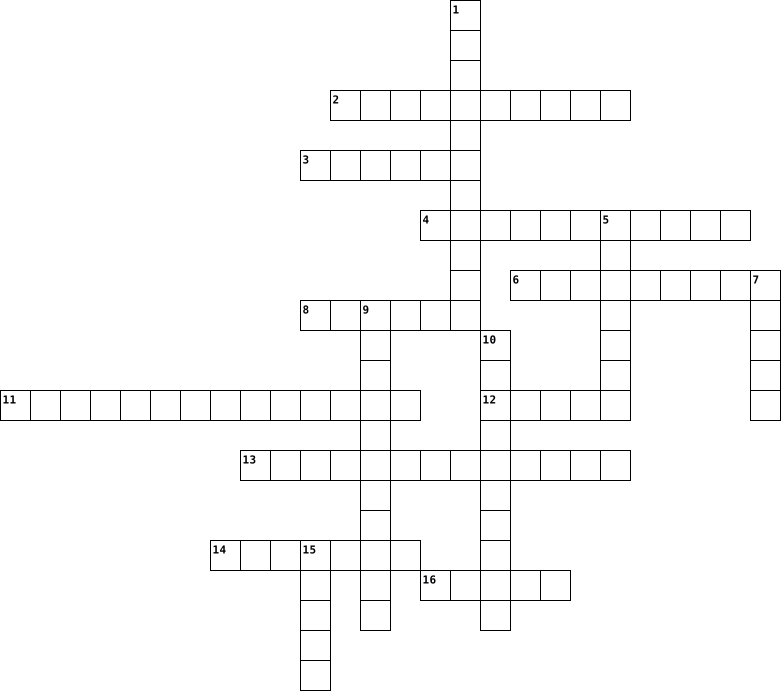
Across
- plants that produce for more than two years or growing seasons
- attract insects and birds for pollination
- the process of plants using stored energy
- plants that compete their life cycle in two growing seasons
- produce food for the plant through photosynthesis
- the chemical process converting sunlight into energy and food for the plant
- anchor the plant,absorb water and minerals, and store manufactured foods
- the movement and loss of water through evaporation
- purpose of flowers is to reproduce through the production of seeds
- a mature(fertilized) ovary containing the seed or seeds
Down
- plants that produce seeds not protected by fruits
- plants that compete their life cycle in one growing season (or one year)
- support the leaves, flowers, and fruit
- plants that flower and produce seeds protected by fruit or pods
- plants that have soft stems that are killed by frost
- plants with hardy stems that can survive winter frost
16 Clues: support the leaves, flowers, and fruit • attract insects and birds for pollination • the process of plants using stored energy • plants that produce seeds not protected by fruits • produce food for the plant through photosynthesis • the movement and loss of water through evaporation • plants that have soft stems that are killed by frost • ...
PUZZLE-Unit 5 2017-10-06

Across
- CYCLE is a reversible cycle.
- Lesser fuel causes the engine speed to
- FUNCTION Thermodynamic properties are
- power enrichment system is also known as
- Free expansion is
- Work done by a system is taken to be
- Venturi tube is also known as
Down
- BOUNDARY The external irreversibility occurs at the
- A simple carburetor supplies rich mixture during
- The slope of the fusion curve for water is
- At higher altitude, power is
- The cyclic integral of entropy is
- The choke in an automobile meant is for supplying
- FUNCTION Work is a
14 Clues: Free expansion is • FUNCTION Work is a • At higher altitude, power is • CYCLE is a reversible cycle. • Venturi tube is also known as • The cyclic integral of entropy is • Work done by a system is taken to be • FUNCTION Thermodynamic properties are • Lesser fuel causes the engine speed to • power enrichment system is also known as • The slope of the fusion curve for water is • ...
Cell Cycle & Mitosis 2022-01-18

Across
- Cells that are identical do eachother
- 1st phase of cell cycle
- This is produced during synthesis
- Chromatids get pulled apart
- Dna is replicated in this phase
- Cell prepares for division
- Cell that the cell cycle occurs in
- Cells without a nucleus
- The division of the nucleus
Down
- Another name for mitosis
- Resting period of the cell cycle
- 1st phase of mitosis
- Last phase of mitosis
- the gatekeeper of the cell cycle
- Something that forms during the cell cycle
- Chromosomes move to the center
- Cells with a nucleus
- Condenced chromatids
- The division of the cytoplasm
- This is produced during g1 phase
20 Clues: 1st phase of mitosis • Cells with a nucleus • Condenced chromatids • Last phase of mitosis • 1st phase of cell cycle • Cells without a nucleus • Another name for mitosis • Cell prepares for division • Chromatids get pulled apart • The division of the nucleus • The division of the cytoplasm • Chromosomes move to the center • Dna is replicated in this phase • ...
All About Rivers 2017-05-15

Across
- Run Off When the excess water from other types of weather flow down land and back into the main stream.
- A smaller sort of river that jions a main stream of another river.
- When water is turned into vapour.
- Where the river starts.
- When rain is formed.
- Water lands on plants and then rises as vapour.
- Basin An area that river water is drained.
Down
- When minerals and energy is lost from rivers this can happen if there is shallow waters.
- The part of a river that meets a bigger supply of water.
- When land around river baanks faall away.
- cycle How water gets round our planet.
- Minerals being carried through the water.
- When vapour tuens back to water.
- A area of land that consits many streams that drian into a larger main body river.
- Where two streams of a river meeet.
- water The water that falls to the ground.
16 Clues: When rain is formed. • Where the river starts. • When vapour tuens back to water. • When water is turned into vapour. • Where two streams of a river meeet. • cycle How water gets round our planet. • When land around river baanks faall away. • Minerals being carried through the water. • water The water that falls to the ground. • Basin An area that river water is drained. • ...
Respiration and Photosynthesis 2024-01-26

Across
- Powerhouse of the cell.
- The attachment of a phosphate group to a molecule or an ion.
- A product in photosynthesis.
- Organisms that need to consume other organisms for energy.
- Pancake like sacs found in chloroplasts.
- Part of respiration that takes place in the cytoplasm.
- A process that releases stored energy.
Down
- Reactant in photosynthesis.
- The process of creating and storing energy.
- Organisms that use photosynthesis.
- The cycle used in photosynthesis.
- A molecule broken down into carbon dioxide and water during respiration.
- Site where photosynthesis takes place.
- The cycle used in cell respiration.
- Adenosine Triphosphate shorthand
15 Clues: Powerhouse of the cell. • Reactant in photosynthesis. • A product in photosynthesis. • Adenosine Triphosphate shorthand • The cycle used in photosynthesis. • Organisms that use photosynthesis. • The cycle used in cell respiration. • Site where photosynthesis takes place. • A process that releases stored energy. • Pancake like sacs found in chloroplasts. • ...
Plant Structure and Function 2024-03-22

Across
- supports height of plant and contains conducting tissue
- increases surface area for roots
- Protects the growing tip of the root
- hormone that promotes side bud growth
- live several years and reproduce a lot
- life cycle in one growing season
- promotes seed germination
- movement of nutrients from one part of the plant to another
- plants response to light (auxin)
- seasonal patterns of flowering, growth, and development
- plants response to touch
- primary place for photosynthesis and gas exchange for a plant
- above ground part of plant that keeps leaves and flowers off ground
Down
- plants response to gravity
- increases stem and root width
- releasing water via the stomates
- hormone that promotes cell elongation
- conducts the by-products out of the plant
- conducts the water up the plant via capillary action
- this layer of epidermis that covers the plant
- where photosynthesis happens, storage, support
- life cycle in two growing seasons
- active area of growth in plant concerned with height
- anchors the plant, stores food, conducts raw materials from soil to plant
- promotes fruit ripening (gas)
25 Clues: plants response to touch • promotes seed germination • plants response to gravity • increases stem and root width • promotes fruit ripening (gas) • increases surface area for roots • releasing water via the stomates • life cycle in one growing season • plants response to light (auxin) • life cycle in two growing seasons • Protects the growing tip of the root • ...
Cellular Respiration 2024-03-07

Across
- When a process requires oxygen
- dioxide Gas product of cellular respiration
- Gas reactant of cellular respiration
- Location where glycolysis takes place
- Liquid product of cellular respiration
- When a process does not require oxygen
Down
- Location where Krebs cycle and ETC take place
- The third stage in cellular respiration
- Energy product of cellular respiration
- The first stage in cellular respiration
- Sugar reactant of cellular respiration
- The process we are observing in our lab
- cycle The second stage in cellular respiration
13 Clues: When a process requires oxygen • Gas reactant of cellular respiration • Location where glycolysis takes place • Energy product of cellular respiration • Sugar reactant of cellular respiration • Liquid product of cellular respiration • When a process does not require oxygen • The third stage in cellular respiration • The first stage in cellular respiration • ...
Classification of plants 2023-09-06

Across
- only persent in plant cells
- Plants reproduce sexually by___
- example of gymnosperms
- With cell wall
- Plants that mainly grows in water
- A title given to Bryophyta
- Flowers with 5 petals
- Example of Pteridophyta
- conducting tissue for food
- means hidden
Down
- example of hollow stem
- A botanist in 1883
- two cotyledons
- contains chlorophyll
- bear flowers
- what does xylem conduct
- require more than three years to complete their life cycle
- spores are formed on this surface of the leaves
- futher divided into gymnosperm and angiosperms
- evergreen and woody
20 Clues: bear flowers • means hidden • two cotyledons • With cell wall • A botanist in 1883 • evergreen and woody • contains chlorophyll • Flowers with 5 petals • example of hollow stem • example of gymnosperms • what does xylem conduct • Example of Pteridophyta • A title given to Bryophyta • conducting tissue for food • only persent in plant cells • Plants reproduce sexually by___ • ...
BIOGEOCHEMICAL CYCLES CROSSWORD PUZZLE 2021-09-10

Across
- A colorless, odorless gas that is formed by the combustion of carbon and organic compounds, as well as by respiration.
- When any organic material is burned in the presence of oxygen, this occurs.
- This process happens when inorganic nitrogen compounds are formed from nitrogen gas.
- Water on the earth's surface penetrates the soil through this process.
- The transformation of a liquid into a gas.
- A nitrogen, oxygen, carbon, and water cycle belongs to this cycle.
- The process when water from the clouds descends as rain, snow, hail, or sleet, it collects in the oceans, rivers, lakes, and streams.
- This is a element that is inhaled by animals in order to allow aerobic respiration and survive.
- The principal process by which bacteria convert reduced organic nitrogen (R–NH2) to reduced inorganic nitrogen (NH4+).
- Evaporation from the land surface plus transpiration from plants represents the total evaporation.
- This process occurs when nitrate and ammonium are taken up by soil organisms and hence become unavailable to crops.
- Precipitation that does not make it to the soil.
- The chemical backbone of all life on Earth is this element.
- The process of organic matter compound degradation or oxidation into available materials to plants.
- Nucleic acids, phospholipids, ATP, and other energy-storing molecules all contain this element.
- The microbial process of converting nitrate and nitrite to gaseous forms of nitrogen is known as?
Down
- The transition from a gaseous to a liquid physical state of matter.
- The process of nitrifying bacteria convert soil ammonia into nitrates (NO3), which plants can use in their tissues.
- When there is more water than the land can absorb, this process occurs.
- Essential for all creatures, and its availability affects the rates at which ecosystem processes occur.
- The process that as water flows through plants, it changes from a liquid to a gas.
- The process by which plants and animals incorporate NO3- and ammonia produced by nitrogen fixation and nitrification..
- The result of atmospheric water vapor condensing under the gravitational pull of clouds.
- Phosphorus, sulfur, and trace elements are all part of this cycle.
- This happens when animals and plants breathe in and out.
- A harmful algal bloom is referred to as this term.
- This process allows Nitrogen to be transformed into different chemical forms as it travels through the atmosphere, terrestrial, and marine ecosystems in a biogeochemical cycle.
- This is the conversion of light energy into chemical energy by plants and other organisms.
- A system that helps oxygen migrate through the Earth's three primary regions: the atmosphere, biosphere, and lithosphere.
- It is a vital component of proteins and nucleic acids, and it is required for life on Earth.
- The process by which groundwater departs the ground is known as?
31 Clues: The transformation of a liquid into a gas. • Precipitation that does not make it to the soil. • A harmful algal bloom is referred to as this term. • This happens when animals and plants breathe in and out. • The chemical backbone of all life on Earth is this element. • The process by which groundwater departs the ground is known as? • ...
Cell Cycle & Mitosis 2021-01-12

Across
- Cell prepares for division
- Something that forms during the cell cycle
- 1st phase of cell cycle
- Resting period of the cell cycle
- 1st phase of mitosis
- Cells that are identical do eachother
- the gatekeeper of the cell cycle
- The division of the nucleus
- Condenced chromatids
- This is produced during g1 phase
- Cells with a nucleus
Down
- Another name for mitosis
- Dna is replicated in this phase
- The division of the cytoplasm
- Cell that the cell cycle occurs in
- Chromatids get pulled apart
- Chromosomes move to the center
- Cells without a nucleus
- Last phase of mitosis
- This is produced during synthesis
20 Clues: 1st phase of mitosis • Condenced chromatids • Cells with a nucleus • Last phase of mitosis • 1st phase of cell cycle • Cells without a nucleus • Another name for mitosis • Cell prepares for division • Chromatids get pulled apart • The division of the nucleus • The division of the cytoplasm • Chromosomes move to the center • Dna is replicated in this phase • ...
The Way Water Works 2023-02-07

Across
- Demand cannot be met
- Demand for freshwater greater than supply
- Large deposit of groundwater
- Virtual water content of product
- Those who have ___ are able to better redirect water
- ____ water is embedded in food and products
Down
- "____ resource"
- Step 6 of Net Zero Consumption Plan
- Water makes up ___ percent of Earth's surface
- ____ cycle, or how does water move through different stages
- Determines a surplus or deficit of water
11 Clues: "____ resource" • Demand cannot be met • Large deposit of groundwater • Virtual water content of product • Step 6 of Net Zero Consumption Plan • Determines a surplus or deficit of water • Demand for freshwater greater than supply • ____ water is embedded in food and products • Water makes up ___ percent of Earth's surface • ...
The concept of the Five Elements and its role in traditional medicine 2025-01-30

Across
- One of the Five Elements associated with the liver and spring season.
- The season related to the Metal element.
- The cycle where each element controls another.
- The element that represents transformation and is linked to the spleen.
- The emotion associated with the Fire element.
- The Five Elements are used in this branch of medicine to diagnose imbalances.
- The organ system connected to the Metal element.
Down
- The element linked to the kidneys and winter.
- The taste associated with the Metal element.
- The taste linked to the Wood element.
- The cycle where each element generates the next one.
- The Five Elements are known as "Wu Xing" in this language.
- The taste linked to the Water element.
- The element associated with fire, the heart, and summer.
- The Five Elements theory originates from this country.
15 Clues: The taste linked to the Wood element. • The taste linked to the Water element. • The season related to the Metal element. • The taste associated with the Metal element. • The element linked to the kidneys and winter. • The emotion associated with the Fire element. • The cycle where each element controls another. • The organ system connected to the Metal element. • ...
Cell Cycle & Mitosis 2023-03-25

Across
- Cells that are identical do eachother
- 1st phase of cell cycle
- This is produced during synthesis
- Chromatids get pulled apart
- Dna is replicated in this phase
- Cell prepares for division
- Cell that the cell cycle occurs in
- Cells without a nucleus
- The division of the nucleus
Down
- Another name for mitosis
- Resting period of the cell cycle
- 1st phase of mitosis
- Last phase of mitosis
- the gatekeeper of the cell cycle
- Something that forms during the cell cycle
- Chromosomes move to the center
- Cells with a nucleus
- Condenced chromatids
- The division of the cytoplasm
- This is produced during g1 phase
20 Clues: 1st phase of mitosis • Cells with a nucleus • Condenced chromatids • Last phase of mitosis • 1st phase of cell cycle • Cells without a nucleus • Another name for mitosis • Cell prepares for division • Chromatids get pulled apart • The division of the nucleus • The division of the cytoplasm • Chromosomes move to the center • Dna is replicated in this phase • ...
MAP Study Guide Crossword Puzzle 2025-06-05

Across
- : The starting phase of the moon
- :the apparent deflection of moving objects caused by the Earth's rotation.
- The approximate age of a rock layer.
- : What drives the water cycle.
Down
- : The heating of water in the water cycle
- :Driven by Earth's internal heat.
- : the periodic rise and fall of sea levels.
- : The law states that in an undisturbed sequence of sedimentary rock layers, the oldest layer is at the bottom and the youngest layer is at the top.
- : any natural activity that alters Earth's structure.
9 Clues: :Driven by Earth's internal heat. • The approximate age of a rock layer. • : The starting phase of the moon • : The heating of water in the water cycle • : What drives the water cycle. • : the periodic rise and fall of sea levels. • : any natural activity that alters Earth's structure. • ...
photosynthesis and cellular respiration 2022-10-27

Across
- example of anarobic respiration
- location of glucose in the cell
- large molecules are broken down into small ones energy is released
- where photosynthesis occurs
- compound that remains a phosphate group is removed from atp , releasing energy
- water broken down and oxygen is released(nospace)
- first step of kreb cycle
- metabolic pathway that break down molecules releasing energy
Down
- small molecules are assembled into large one energy in required
- asbence of oxygen
- where cellular respiration occurs
- green pigment
- abbreviation for try phosphate
- another name fro kreb cycle
- primary filed for cellular respiration
15 Clues: green pigment • asbence of oxygen • first step of kreb cycle • where photosynthesis occurs • another name fro kreb cycle • abbreviation for try phosphate • example of anarobic respiration • location of glucose in the cell • where cellular respiration occurs • primary filed for cellular respiration • water broken down and oxygen is released(nospace) • ...
Cell respiration 2023-02-27

Across
- waste product of the ETC
- The type of acid molecule broken down in the krebs cycle
- product of glycolysis that is not peruvic acid
- powerhouse of the cell
- amount of steps in cellular respiration
- area where glycolysis takes place
- waste product of the Krebs cycle
Down
- Second stage of cellular respiration
- Phase one of cellular respiration
- having or requiring oxygen
- Excess anergy form the ETC escapes as...
- Not having or requiring oxygen
- energy that is created by cellular respiration
13 Clues: powerhouse of the cell • waste product of the ETC • having or requiring oxygen • Not having or requiring oxygen • waste product of the Krebs cycle • Phase one of cellular respiration • area where glycolysis takes place • Second stage of cellular respiration • amount of steps in cellular respiration • Excess anergy form the ETC escapes as... • ...
The Water Cycle 2022-03-11

Across
- Gas to liquid is called?
- the process of brining water back down to earth is know as?
Down
- water that soaks into the ground is called what in the water cycle?
- what is the process of water turning from liquid to gas called?
- which stages is not part of the water cycle?
- , what energy source starts the water cycle?
6 Clues: Gas to liquid is called? • which stages is not part of the water cycle? • , what energy source starts the water cycle? • the process of brining water back down to earth is know as? • what is the process of water turning from liquid to gas called? • water that soaks into the ground is called what in the water cycle?
The Water Cycle Crossword Puzzle 2022-01-28

Across
- Water that does not seep into the ground, rather flows into rivers or streams, and then out into the ocean or lakes
- A state where water vapor cools into water droplets
- An area where water is mostly left off and evaporated afterwards
- An area above land on earth that clouds reach up too, and rest until they are too heavy, and precipitation begins
- A state where water is coming out of a leaf of a plant as water vapor
Down
- Water that rains down on earth and seeps into the ground and get sent into roots of plants, oceans, rivers, streams, lakes, or wells
- A state of water from precipitation but cooled even further and lands on earth, and will melt, continuing the water cycle (this word has an & in between it)
- A state where a cloud get too heavy and pours water droplets, snow, ice, sleet, or hail
- A state where water turns into water vapor
- A star in space that gives the earth heat, and helps the water cycle
10 Clues: A state where water turns into water vapor • A state where water vapor cools into water droplets • An area where water is mostly left off and evaporated afterwards • A star in space that gives the earth heat, and helps the water cycle • A state where water is coming out of a leaf of a plant as water vapor • ...
The concept of the Five Elements and its role in traditional medicine 2025-01-30

Across
- The emotion associated with the Fire element.
- The element linked to the kidneys and winter.
- The element that represents transformation and is linked to the spleen.
- The Five Elements are known as "Wu Xing" in this language.
- The taste linked to the Wood element.
- One of the Five Elements associated with the liver and spring season.
- The organ system connected to the Metal element.
- The taste associated with the Metal element.
- The Five Elements theory originates from this country.
Down
- The element associated with fire, the heart, and summer.
- The cycle where each element controls another.
- The Five Elements are used in this branch of medicine to diagnose imbalances.
- The cycle where each element generates the next one.
- The season related to the Metal element.
- The taste linked to the Water element.
15 Clues: The taste linked to the Wood element. • The taste linked to the Water element. • The season related to the Metal element. • The taste associated with the Metal element. • The emotion associated with the Fire element. • The element linked to the kidneys and winter. • The cycle where each element controls another. • The organ system connected to the Metal element. • ...
Water Systems Crossword - Daniel B 2022-01-29

Across
- underground freshwater reservoir
- an area of land in which all water present eventually drains into one large main water body
- which hemisphere has more ocean
- Name of canadas worst hurricaine
- 97% of earths water
- Area where hurricanes are common
- water that contains only minimal quantities of dissolved salts
- upper surface of ground water
- an area with a small localized climate that differs from the climate around it
Down
- caused by thunderstorms
- closest water shed near Willowdale.
- alot of snow built up
- A sea with 37B tonnes of salt
- occurs when gasses in earth´s atmosphere trap the suns heat
- the ability of a material to absorb heat
- A cycle with no ending or beginning related to earths water
- a gradual increase in the earths temperature mainly due to greenhouse gasses
17 Clues: 97% of earths water • alot of snow built up • caused by thunderstorms • A sea with 37B tonnes of salt • upper surface of ground water • which hemisphere has more ocean • underground freshwater reservoir • Name of canadas worst hurricaine • Area where hurricanes are common • closest water shed near Willowdale. • the ability of a material to absorb heat • ...
All about Water 2016-09-14

Across
- A SOIL,ROCK OR SEDIMENT THAT I FROZEN FOR MORE THAN TWO CONSECUTIVE YEARS
- AVERAGE LENGTH OF TIME SPENT BY WATER MOLECULE IN A RESERVOIR
- IS A WETLAND WITH LUSH TREES AND VEGETATION
- LARGEST RESERVOIR
- PLACES WHERE WATER RESIDES FOR AN AMOUNT OF TIME
- EVAPORATION OF WATER FROM PLANTS
- IS A PARTLY ENCLOSED COASTAL BODY OF WATER WHERE FRESHWATER FROM STREAM MEETS THE SALTWATER FROM THE SEA
- THE SMALLER STREAMS
- ICE DIRECTLY TRANSFORMS INTO WATER
Down
- EXTENDS FROM THE OCEAN SURFACE TO A DEPTH OF 100 METERS
- IS A MOVING BODY OF SURFACE WATER THAT FLOWS DOWNSLOPE TOWARD SEA LEVEL BECAUSE OF GRAVITY
- ALSO KNOWN AS WATER CYCLE
- PROCESS IN WHICH LIQUID WATER CHANGES INTO VAPOR
- CHANGE FROM VAPOR INTO LIQUID OR SOLID
- PERMANENT BODY OF ICE
- IS A SHALLOW WETLAND AROUND LAKES,STREAMS, AND OCEANS
- THE SALTINESS OF SALTWATER
- RAIN THAT FALLS INTO THE LAND SURFACE THAT PENETRATES TO THE SOIL
- LAND AREAS WHERE WATER COVERS THE SURFACE FOR SIGNIFICANT PERIODS
- MASS OF GLACIAL LAND ICE EXTENDING MORE THAN 50000 KM
20 Clues: LARGEST RESERVOIR • THE SMALLER STREAMS • PERMANENT BODY OF ICE • ALSO KNOWN AS WATER CYCLE • THE SALTINESS OF SALTWATER • EVAPORATION OF WATER FROM PLANTS • ICE DIRECTLY TRANSFORMS INTO WATER • CHANGE FROM VAPOR INTO LIQUID OR SOLID • IS A WETLAND WITH LUSH TREES AND VEGETATION • PROCESS IN WHICH LIQUID WATER CHANGES INTO VAPOR • ...
All about Water 2016-09-14

Across
- MASS OF GLACIAL LAND ICE EXTENDING MORE THAN 50000 KM
- ICE DIRECTLY TRANSFORMS INTO WATER
- IS A WETLAND WITH LUSH TREES AND VEGETATION
- THE SMALLER STREAMS
- THE SALTINESS OF SALTWATER
- LAND AREAS WHERE WATER COVERS THE SURFACE FOR SIGNIFICANT PERIODS
- CHANGE FROM VAPOR INTO LIQUID OR SOLID
- EVAPORATION OF WATER FROM PLANTS
- IS A SHALLOW WETLAND AROUND LAKES,STREAMS, AND OCEANS
- EXTENDS FROM THE OCEAN SURFACE TO A DEPTH OF 100 METERS
- A SOIL,ROCK OR SEDIMENT THAT I FROZEN FOR MORE THAN TWO CONSECUTIVE YEARS
Down
- IS A MOVING BODY OF SURFACE WATER THAT FLOWS DOWNSLOPE TOWARD SEA LEVEL BECAUSE OF GRAVITY
- LARGEST RESERVOIR
- PERMANENT BODY OF ICE
- PROCESS IN WHICH LIQUID WATER CHANGES INTO VAPOR
- RAIN THAT FALLS INTO THE LAND SURFACE THAT PENETRATES TO THE SOIL
- AVERAGE LENGTH OF TIME SPENT BY WATER MOLECULE IN A RESERVOIR
- ALSO KNOWN AS WATER CYCLE
- PLACES WHERE WATER RESIDES FOR AN AMOUNT OF TIME
- IS A PARTLY ENCLOSED COASTAL BODY OF WATER WHERE FRESHWATER FROM STREAM MEETS THE SALTWATER FROM THE SEA
20 Clues: LARGEST RESERVOIR • THE SMALLER STREAMS • PERMANENT BODY OF ICE • ALSO KNOWN AS WATER CYCLE • THE SALTINESS OF SALTWATER • EVAPORATION OF WATER FROM PLANTS • ICE DIRECTLY TRANSFORMS INTO WATER • CHANGE FROM VAPOR INTO LIQUID OR SOLID • IS A WETLAND WITH LUSH TREES AND VEGETATION • PROCESS IN WHICH LIQUID WATER CHANGES INTO VAPOR • ...
b31 2026-01-04

Across
- ATP formation
- Cell preparation phase
- Inefficient oxygen reaction
- Final mitosis stage
- Proton-driven ATP synthesis
- Molecule building
- Citric acid cycle
Down
- Chromatid separation
- Electron transport process
- Carbon-fixing enzyme
- Chromosome alignment stage
- Glucose breakdown
- Light water splitting
- Mitosis beginning
- Molecule breakdown
15 Clues: ATP formation • Glucose breakdown • Mitosis beginning • Molecule building • Citric acid cycle • Molecule breakdown • Final mitosis stage • Chromatid separation • Carbon-fixing enzyme • Light water splitting • Cell preparation phase • Electron transport process • Chromosome alignment stage • Inefficient oxygen reaction • Proton-driven ATP synthesis
Bobs Most Awesome Word Puzzle Ever (re & un) 2020-10-26

Across
- not fair
- use again
- cycle again
- take the test again
- view again
- not equal
- tell again
Down
- not finished
- I am not happy
- not unusual
- not stable
- write the letter again
- fill a glass of water again
- build again
- not even
15 Clues: not fair • not even • use again • not equal • not stable • view again • tell again • not unusual • cycle again • build again • not finished • I am not happy • take the test again • write the letter again • fill a glass of water again
Justin Black 2015-01-08

Across
- The process of evaporation and transportation of water.
- Measures how fast the wind blows
- Has the most amount of daylight
- Tornadoes form on it
- Scientist who study the weather
- A big part of the water cycle
- Prediction of the weather
- A famous Leader
- Measures precipitation
- satellites: Important for spotting hurricanes
Down
- Measures air pressure
- Dark clouds gather
- A very harmful Storm
- The path earth takes
- Tells the temperature
- Shows the direction the wind
- Days grow shorter
- Changes day to day
- The weather starts to get warm
- Fewest hours of daylight
20 Clues: A famous Leader • Days grow shorter • Dark clouds gather • Changes day to day • A very harmful Storm • The path earth takes • Tornadoes form on it • Measures air pressure • Tells the temperature • Measures precipitation • Fewest hours of daylight • Prediction of the weather • Shows the direction the wind • A big part of the water cycle • The weather starts to get warm • ...
Justin Black 2015-01-08

Across
- Measures precipitation
- The process of evaporation and transportation of water.
- Changes day to day
- Prediction of the weather
- Scientist who study the weather
- Measures how fast the wind blows
- A big part of the water cycle
- Shows the direction the wind
- The weather starts to get warm
Down
- Has the most amount of daylight
- Dark clouds gather
- Fewest hours of daylight
- Tells the temperature
- satellites: Important for spotting hurricanes
- Measures air pressure
- A very harmful Storm
- Days grow shorter
- A famous Leader
- Tornadoes form on it
- The path earth takes
20 Clues: A famous Leader • Days grow shorter • Dark clouds gather • Changes day to day • A very harmful Storm • Tornadoes form on it • The path earth takes • Tells the temperature • Measures air pressure • Measures precipitation • Fewest hours of daylight • Prediction of the weather • Shows the direction the wind • A big part of the water cycle • The weather starts to get warm • ...
Long Test 2023-10-13

Across
- 50
- 46
- 25
- 26
- 36
- 12
- 42
- 47
- 19
- 15
- 7
- 28
- 21
- 18
- 40
- 13
- 16
- 41
- 45
- 30
- 9
- 48
- 22
- 14
- 38
- 10
Down
- 27
- 24
- 2
- 11
- 37
- 8
- 34
- 4
- 3
- 31
- 35
- 17
- 39
- 32
- 33
- 6
- 49
- 43
- 29
- 1
- 44
- 23
- 5
- 20
50 Clues: 2 • 8 • 4 • 3 • 7 • 6 • 1 • 5 • 9 • 50 • 27 • 24 • 46 • 11 • 37 • 25 • 34 • 26 • 36 • 12 • 42 • 47 • 31 • 19 • 15 • 35 • 17 • 28 • 39 • 32 • 21 • 33 • 18 • 49 • 40 • 13 • 16 • 43 • 29 • 41 • 44 • 45 • 30 • 23 • 48 • 22 • 14 • 38 • 10 • 20
The World Around You 2022-07-25

Across
- 2350 mile long river
- Part of the water cycle
- fish with 100,000 tastebuds
- pink and yellow flower, Iowa
- "Curiosity killed the..."
- golden and sweet
- Madrid Closest fault line
- Never the same
- frozen water vapor
- Iowa state tree
- Largest Raptor in Iowa
Down
- fluffy cloud
- Iowa's only marsupial
- nutty rodent
- Most popular game animal
- Hunted for fur
- Big, Black, Smartest
- Highest Peak
- Man's best friend
- Largest Animal on Earth
- top floor of the forest
- Mosquito hunter
- Iowa's main meat
- Most voluminous tree in Iowa
24 Clues: fluffy cloud • nutty rodent • Highest Peak • Hunted for fur • Never the same • Mosquito hunter • Iowa state tree • golden and sweet • Iowa's main meat • Man's best friend • frozen water vapor • 2350 mile long river • Big, Black, Smartest • Iowa's only marsupial • Largest Raptor in Iowa • Part of the water cycle • Largest Animal on Earth • top floor of the forest • Most popular game animal • ...
Science 2025-01-27

Across
- about 70% of the earths _______ is covered by water
- TORNADOS OVER WATER ARE CALLED _________
- HURRICANES START FROM ___________ OVER THE OCEAN
- A mass of ice overlaying snow
- the upper layer of the groundwater zone is called the water _____
- IF THE WATERSPOUT GETS BIG ENOUGH it turns into a hurricane
- IF THE AIR WITHIN A THUNDERSTORM STARTS SPINNING IT CAN FORM A _______
- what is used to access aquifer
- what has a higher heat capacity than air
- there is no ending or beginning to the water _____
- what was Canada's worst hurricane
Down
- Underground freshwater reservoir
- When a period of warming occurs Earth's glaciers and ice start melting what is this period of warmth called?
- the ________ hemisphere has 81% ocean
- the ________ hemisphere has 61% ocean
- what is in the water that is 97% of the world's water
- what is the imaginary line that decides the earth in half called
- an area of land that causes water to drain into one main body of water
- there are _____ amount of watersheds in Toronto
- What is 76% of the world's freshwater
20 Clues: A mass of ice overlaying snow • what is used to access aquifer • Underground freshwater reservoir • what was Canada's worst hurricane • the ________ hemisphere has 81% ocean • the ________ hemisphere has 61% ocean • What is 76% of the world's freshwater • TORNADOS OVER WATER ARE CALLED _________ • what has a higher heat capacity than air • ...
7th hour water cycle Corban Christensen 2023-11-28

Across
- These are made up of condensed water in the sky
- A large body of water that is connected all around the earth.
- When a lake or body of water seeps into and aquifer.
- The driving force that makes the whole water cycle work.
- Snow, rain, sleet, or hail.
- When liquid water tuns into water vapor.
- A layer of rock that is porous so it can hold water.
Down
- When a solid turns directly into a gas.
- The layers of air above the solid crust of earth.
- When water vapor turns into liquid water.
- When a gas turns directly into a solid.
- When plants release water vapor into the air.
- The chemical compound of water.
- When water runs off of the ground into the oceans.
- A large body of ice that slowly moves and melts.
15 Clues: Snow, rain, sleet, or hail. • The chemical compound of water. • When a solid turns directly into a gas. • When a gas turns directly into a solid. • When liquid water tuns into water vapor. • When water vapor turns into liquid water. • When plants release water vapor into the air. • These are made up of condensed water in the sky • ...
Plant classifications and atonomy 2024-05-06

Across
- source the plant or plant products are used by humans
- (a.k.a. monocots); “mono-” - means “one”
- plants with hardy stems that can survive winter frost
- plants that have soft stems that are killed by frost
- (a.k.a. dicots); “di-” means “two”
- plants that complete their life cycle in one year
- an embryonic leaf which become the seed leaf
- the movement and loss of water through evaporation
Down
- plants that produce for more than two years or growing seasons
- plants that complete their life cycle in two growing seasons
- roots: grow from the stem or leaf of a plant
- transports water and minerals from the roots
- the chemical process converting sunlight into energy and food for the plant
- the process of plants using stored energy
- source humans use the animal and animal products that feed on plants and plant products
15 Clues: (a.k.a. dicots); “di-” means “two” • (a.k.a. monocots); “mono-” - means “one” • the process of plants using stored energy • roots: grow from the stem or leaf of a plant • transports water and minerals from the roots • an embryonic leaf which become the seed leaf • plants that complete their life cycle in one year • the movement and loss of water through evaporation • ...
All about Water 2016-09-14

Across
- A SOIL,ROCK OR SEDIMENT THAT I FROZEN FOR MORE THAN TWO CONSECUTIVE YEARS
- AVERAGE LENGTH OF TIME SPENT BY WATER MOLECULE IN A RESERVOIR
- IS A WETLAND WITH LUSH TREES AND VEGETATION
- LARGEST RESERVOIR
- PLACES WHERE WATER RESIDES FOR AN AMOUNT OF TIME
- EVAPORATION OF WATER FROM PLANTS
- IS A PARTLY ENCLOSED COASTAL BODY OF WATER WHERE FRESHWATER FROM STREAM MEETS THE SALTWATER FROM THE SEA
- THE SMALLER STREAMS
- ICE DIRECTLY TRANSFORMS INTO WATER
Down
- EXTENDS FROM THE OCEAN SURFACE TO A DEPTH OF 100 METERS
- IS A MOVING BODY OF SURFACE WATER THAT FLOWS DOWNSLOPE TOWARD SEA LEVEL BECAUSE OF GRAVITY
- ALSO KNOWN AS WATER CYCLE
- PROCESS IN WHICH LIQUID WATER CHANGES INTO VAPOR
- CHANGE FROM VAPOR INTO LIQUID OR SOLID
- PERMANENT BODY OF ICE
- IS A SHALLOW WETLAND AROUND LAKES,STREAMS, AND OCEANS
- THE SALTINESS OF SALTWATER
- RAIN THAT FALLS INTO THE LAND SURFACE THAT PENETRATES TO THE SOIL
- LAND AREAS WHERE WATER COVERS THE SURFACE FOR SIGNIFICANT PERIODS
- MASS OF GLACIAL LAND ICE EXTENDING MORE THAN 50000 KM
20 Clues: LARGEST RESERVOIR • THE SMALLER STREAMS • PERMANENT BODY OF ICE • ALSO KNOWN AS WATER CYCLE • THE SALTINESS OF SALTWATER • EVAPORATION OF WATER FROM PLANTS • ICE DIRECTLY TRANSFORMS INTO WATER • CHANGE FROM VAPOR INTO LIQUID OR SOLID • IS A WETLAND WITH LUSH TREES AND VEGETATION • PROCESS IN WHICH LIQUID WATER CHANGES INTO VAPOR • ...
Adalyn's Water System Crossword Puzzle 2024-11-19

Across
- small pieces of ice falling form clouds
- an area drier then normal condition
- a river or stream flowing into a larger river or lake
- one of the grate lakes(two words)
- a layer of water under ground
- The largest rain forest in the world
- a large body of saltwater
- an over flow of water above ground
- A big pile of snow and ice that moves like a bulldozer
Down
- The largest ocean(Two Words)
- like a bathtub every thing that goes in drain out thorght one outlet(Two words)
- a cycle of water contuines movement of water(two words)
- the level water is at(two words)
- the change in weather over a long period of time(two words)
- When water falls from the clouds
- a moving body of freashwater
- a dip in the Earth's surface with sides higher then the bottom
- a small area of still, freash water
- a big piece of ice in the water that is mostly under water
- frozen ice crystals falling from clouds or laying of the ground
20 Clues: a large body of saltwater • The largest ocean(Two Words) • a moving body of freashwater • a layer of water under ground • the level water is at(two words) • When water falls from the clouds • one of the grate lakes(two words) • an over flow of water above ground • an area drier then normal condition • a small area of still, freash water • The largest rain forest in the world • ...
Life Cycles 2022-08-29

Across
- Insect development consisting of three stages: egg, nymph, and adult
- an organism that is fully developed. (A butterfly is an adult insect.)
- an increase in size of amount
- a larva of an insect with incomplete metamorphosis
- the third stage in the life cycle of insects
- difference or variety. (A rainforest has a great diversity of animals and plants.)
- to identify how things are alike or different.
- the second stage in the life cycle of insects
- a cold blooded animal that lives on land, lays eggs, and is covered with scales or plates.
Down
- the way organisms make more of their own kind.
- a cold blooded animal that lives both on land and in the water. (Amphibians such as frogs begin life in the water.)
- A plant that produces seeds after making flowers.
- a type of living thing that gets its energy from the sun and it unable to move from place to place on its own
- the first stage in the life cycle of many organisms, including birds, amphibians, reptiles, fish, and insects.
- a living thing that has many cells, can move, reacts to things around it, and eats plants or other animals to live.
- a living thing
- the stages in an organism’s life, egg- larva- pupa, adult
- a change in form from an immature state to an adult stage
18 Clues: a living thing • an increase in size of amount • the third stage in the life cycle of insects • the second stage in the life cycle of insects • the way organisms make more of their own kind. • to identify how things are alike or different. • A plant that produces seeds after making flowers. • a larva of an insect with incomplete metamorphosis • ...
Unit 5 Vocab 2023-11-02

Across
- Drains rainfall into streams and rivers
- Ability of a material to transmit fluids
- Driven by global wind systems on the ocean
- The slope of water surface or pressure
- Cooling of central and eastern pacific ocean surface temps.
- An underwater ecosystem
- Wind that blows from land to the water
- The actions of clinging to another surface
- Moving system of deep-ocean circulation
- Under the surface; makes up 30% of freshwater
- You draw with it on a window
- The sticking together of similar particles
Down
- The boundary between the unsaturated and saturated zone underground
- The continuous movement of water within the earth and atmosphere
- Results from differences in water density
- Holes in an object where liquid or air may pass
- Process in water cycle, water gets to atmosphere
- Amount of salt dissolved in a body of water
- Warming of the central and eastern Pacific Ocean
- Water vapor that has condensed and falls
- The flow of water over the surface
- Wind that blows from water onto land
- A pattern of wet summers and dry winters
- Water underground moving into springs or seepage water
- Allows us to drink saltwater
25 Clues: An underwater ecosystem • Allows us to drink saltwater • You draw with it on a window • The flow of water over the surface • Wind that blows from water onto land • The slope of water surface or pressure • Wind that blows from land to the water • Drains rainfall into streams and rivers • Moving system of deep-ocean circulation • Ability of a material to transmit fluids • ...
Water Systems 2024-02-23

Across
- refers to the ability of a material to absorb heat.
- A place for collecting and storing something
- When water evaporates from oceans, lakes, and rivers, it forms _____.
- Earth is surrounded by an ___________ made up of a mixture of gases, including water vapour.
- used to refer to these big ice masses at poles.
- Liquid water is found on both _____ and _____ the ground.
- process of air to water
- The Sun provides the thermal _____ that drives the whole cycle.
- small localised climate, different form other climates around it.
Down
- All of the solid water on earth is ____
- any frozen or liquid water that forms in the atmosphere and falls back into the earth.
- A mass of ice which movies slowly, due to gravity.
- The upper surface of the groundwater zone
- the process that changes liquid water to gaseous water (water vapour).
- an area of land in which all bodies of water eventually drain into one big body
- The water on earth is always changing ____.
- Underground freshwater reservoir
- long hollow shafts
- How much salt is dissolved in ocean water
- is a particularly large glacier that covers the land.
20 Clues: long hollow shafts • process of air to water • Underground freshwater reservoir • All of the solid water on earth is ____ • The upper surface of the groundwater zone • How much salt is dissolved in ocean water • The water on earth is always changing ____. • A place for collecting and storing something • used to refer to these big ice masses at poles. • ...
Introduction to Weather 2014-01-13

Across
- large clouds known as thunderclouds
- measures how hard the wind is blowing
- water from high ground running into streams, lakes, rivers, and oceans
- water vapor going into the sky
- surrounds the Earth and protects us, like a "blanket"
- puffy white cloud, straight bottom
- thin, wispy clouds, high clouds
- rain, sleet, snow, hail
Down
- low clouds that are like fog
- a scientist who studies the weather and reports it
- shows which way the wind is blowing
- water moving in a continuous cycle
- heats the water
- measures the amount of rain
- warm and cold air colliding, when clouds form
15 Clues: heats the water • rain, sleet, snow, hail • measures the amount of rain • low clouds that are like fog • water vapor going into the sky • thin, wispy clouds, high clouds • water moving in a continuous cycle • puffy white cloud, straight bottom • large clouds known as thunderclouds • shows which way the wind is blowing • measures how hard the wind is blowing • ...
Natural Sciences 2024-11-22

Across
- An animal that eats meat is a ________.
- Food group that includes fruits and ___________.
- One of the three states of matter.
- One thing plants need.
- Forces: Push and ______.
- Water vapour turns into liquid water.
Down
- When rain begins to flow down the mountains.
- Food group that includes milk, yogurt and cheese.
- Group of vertebrates that snakes belong to.
- Food group that includes chocolate, donuts and sweets.
- The stage of the water cycle where water is temporarily collected.
- One of the three states of matter.
- Group of vertebrates that humans belong to.
- Part of a plant.
- When it rains, water falls from the ______.
- Part of a plant.
16 Clues: Part of a plant. • Part of a plant. • One thing plants need. • Forces: Push and ______. • One of the three states of matter. • One of the three states of matter. • Water vapour turns into liquid water. • An animal that eats meat is a ________. • Group of vertebrates that snakes belong to. • Group of vertebrates that humans belong to. • ...
Biology 2020-04-10

Across
- A cell's total hereditary information made up of one or more chromosomes
- The process involving molecules that move into open spaces from areas of high concentration to low concentration
- Cellular process in which the mRNA created from transcription is used to code for specific amino acids that build up into proteins
- The smallest unit of all life
- Stage of the cell cycle when two nuclei are formed, spindle fibers disappear, and the nuclear envelopes reappear
- A genotype that indicates the presence of both a dominant and recessive allele
- A genotype that indicates the presence of 2 of the same allele, either dominant or recessive
- Stage of the cell cycle when the chromosomes line up along the middle of the cell
- The protein coat of a virus which can come in different sizes or sometimes may have an envelope
- Genetic code that is used to copy down DNA instructions to create polypeptides
- Cellular process in which DNA sequences are used to create strands of mRNA
- The process of sexual reproduction in which two parents create unique offspring
Down
- Plant pigment that reflects green and aids a plant during photosynthesis
- A cellular process that breaks down glucose and oxygen to produce water, carbon dioxide and ATP
- Type of cell that contains a nucleus and many membrane bound organelles
- An RNA virus which works backwards, using viral RNA to reverse transcribe into viral DNA before replicating and creating viral proteins
- The chemical processes that an organism uses to manage its energy and materials
- Stage of the cell cycle when the nuclear membrane breaks down and spindle fibers begin to form
- The cellular process of using light, water and carbon dioxide to produce glucose and oxygen
- Stage of the cell cycle when spindle fibers shorten and pull the sister chromatids apart
- An agent that increases the rate of a reaction without getting used up itself
21 Clues: The smallest unit of all life • Type of cell that contains a nucleus and many membrane bound organelles • Plant pigment that reflects green and aids a plant during photosynthesis • A cell's total hereditary information made up of one or more chromosomes • Cellular process in which DNA sequences are used to create strands of mRNA • ...
Life Science Review 2022-10-11

Across
- the structures on the underside of a mushroom
- predictable and orderly changes that occur over time in a community of plants and animals
- an immature salmon that migrates to the ocean
- a mushroom is a type of this
- what did we recreate in a jar with hot water and ice on the lid
- precipitation that flows over the surface soil
- a young, growing salmon
- the nutrient-rich structure in a seed
- the process that releases nitrogen from soil back into the atmosphere
- the temperature fungus likes
- characteristic that can be passed on to an organism's offspring
- one of the four most common elements in living things
- what plant's cells did we look at under a microscope
- flexible outside of cell that controls what goes in and out
- fuel a source of energy made of dead plants and animals
- one of the four most common elements in living things
- what did we hatch in jars with salt water
- rigid outer layer of plant cells
- what is your science teacher's last name
- the stage of the cell cycle when the cytoplasm divides
- a salmon nest
- a mushroom uses this to reproduce
- the molecule that contains our genetic information
- a group of organs within an organism working together
- what class is this
Down
- the stage of the cell cycle when the nucleus divides
- when runoff gathers into a body of water
- what school is this
- the cycling of chemical elements through the biotic and abiotic parts of an ecosystem
- the disease we studied that is spread via mosquitos
- jelly-like substance in cells
- what the bacteria in the legume root nodules do to change nitrogen's form into one that can be used by plants
- one of the four most common elements in living things
- one complete life cycle
- plants do this to make sugar using sunlight, water and carbon dioxide
- a very young salmon hatchling with a yolk sac
- a pollutant released into the atmosphere
- people's cells do this when our body produces energy, carbon dioxide is a biproduct
- a swelling on a plant root that contains nitrogen-fixing bacteria
- where are the sixth graders
- the stage of the cell cycle that takes the most time and the cell is growing
- tiny structures in cells that have jobs
- one of the four most common elements in living things
- segment of DNA located on chromosomes that controls specific traits
- what part of the human body did we look at under a microscope
45 Clues: a salmon nest • what class is this • what school is this • a young, growing salmon • one complete life cycle • where are the sixth graders • a mushroom is a type of this • the temperature fungus likes • jelly-like substance in cells • rigid outer layer of plant cells • a mushroom uses this to reproduce • the nutrient-rich structure in a seed • tiny structures in cells that have jobs • ...
science 2023-04-24

Across
- Fuels-Fuels such as gasoline, oil, and coal contain large amounts of carbon when burned the carbon reacts with oxygen to create carbon dioxide which is then released back into the atmosphere
- Cycle-nitrogen cycles through the environment
- Cycle-The movement carbon from the atmosphere into living organisms, then into the earth, and finally back to the atmosphere
- water in the clouds eventually returns to the earth by falling as precipitation
- process by which a plant uses energy from the sun to turn carbon dioxide and water into into the sugar glucose
Down
- the atmosphere water vapor cools and becomes liquid again in a process called condensation
- leaves the earth through evaporation and enters the atmosphere as a gas called water vapor
- organisms are decomposed by organisms such as bacteria and fungi using oxygen they convert many dead organisms’ carbon based structures into carbon dioxide which is cycled back into the atmosphere
- Respiration-The process in organisms of breaking down molecules to produce ATP
- Cycle-The movement of oxygen from the atmosphere into living organisms and back to the atmosphere
10 Clues: Cycle-nitrogen cycles through the environment • Respiration-The process in organisms of breaking down molecules to produce ATP • water in the clouds eventually returns to the earth by falling as precipitation • the atmosphere water vapor cools and becomes liquid again in a process called condensation • ...
Water systems crossword 2024-02-23

Across
- What direction does most of the water flow in Canada?
- Canada’s worst hurricane dropped 200 _________ of rain in 24 hours.
- Have nightly temperatures been increasing or decreasing?
- Making wells to access underground water is a part of _____________.
- The layer under the groundwater layer is called the ______layer.
- The saltiest sea is the __________.
- A greenhouse is an example of a _________.
- Which hemisphere has more water?
- It is _____ on a summer day closer to the water than inland.
- The _________ river watershed is the biggest watershed in Toronto.
- ____ has a higher heat capacity than air.
Down
- an area that drains into any body of water is called what?
- Most of Canada's fresh water is ______
- What is the layer that ground water resides in?
- Where form does most solid water reside?
- Changes in the size of glaciers and ice sheets affect the local and global _____.
- Water comes down from the sky in the water cycle, this process is known as ________
- When we pump CO2 into the atmosphere what does it cause?
- Water can hold temperatures much better than ____.
- Glaciers change in size depending on the amount of precipitation and ________.
20 Clues: Which hemisphere has more water? • The saltiest sea is the __________. • Most of Canada's fresh water is ______ • Where form does most solid water reside? • ____ has a higher heat capacity than air. • A greenhouse is an example of a _________. • What is the layer that ground water resides in? • Water can hold temperatures much better than ____. • ...
Water Systems 2024-02-23

Across
- refers to the ability of a material to absorb heat.
- A place for collecting and storing something
- When water evaporates from oceans, lakes, and rivers, it forms _____.
- Earth is surrounded by an ___________ made up of a mixture of gases, including water vapour.
- used to refer to these big ice masses at poles.
- Liquid water is found on both _____ and _____ the ground.
- process of air to water
- The Sun provides the thermal _____ that drives the whole cycle.
- small localised climate, different form other climates around it.
Down
- All of the solid water on earth is ____
- any frozen or liquid water that forms in the atmosphere and falls back into the earth.
- A mass of ice which movies slowly, due to gravity.
- The upper surface of the groundwater zone
- the process that changes liquid water to gaseous water (water vapour).
- an area of land in which all bodies of water eventually drain into one big body
- The water on earth is always changing ____.
- Underground freshwater reservoir
- long hollow shafts
- How much salt is dissolved in ocean water
- is a particularly large glacier that covers the land.
20 Clues: long hollow shafts • process of air to water • Underground freshwater reservoir • All of the solid water on earth is ____ • The upper surface of the groundwater zone • How much salt is dissolved in ocean water • The water on earth is always changing ____. • A place for collecting and storing something • used to refer to these big ice masses at poles. • ...
Luis Contreras Crossword 2024-12-17

Across
- What is a superhighway in the sky like a water stream
- when there is water that floats
- it falls from the clouds its cold
- is when the water goes underground
- how does the water go to the cloud
Down
- when the leaves gave water
- when the water goes down to the land surface
- when the water forms into water vapor
- its like a cloud on the floor
- starts the water cycle and gives us warmth
- what is H2O
11 Clues: what is H2O • when the leaves gave water • its like a cloud on the floor • when there is water that floats • it falls from the clouds its cold • is when the water goes underground • how does the water go to the cloud • when the water forms into water vapor • starts the water cycle and gives us warmth • when the water goes down to the land surface • ...
Heat Affects Water 2013-05-29

Across
- suns ray's near the equator are more direct and therefore stronger all year round
- the long term weather conditions over large areas of earth
- a change of state from gas to liquid when heat is removed
- cycle the movement in nature of water from the surface of earth to the atmosphere and back
- strong, spinning columns of air in contact with the ground
Down
- changes state from liquid to gas
- strong spinning weather system over the ocean that has continuous winds exceeding 119km/h
- Current a pattern of movement of the water in a large region of the ocean
- a continuous movement of material in nature that repeats
- water vapour that condenses and falls to earth as rain or snow
- the movement of air and the troposphere
11 Clues: changes state from liquid to gas • the movement of air and the troposphere • a continuous movement of material in nature that repeats • a change of state from gas to liquid when heat is removed • the long term weather conditions over large areas of earth • strong, spinning columns of air in contact with the ground • ...
Bridgets crossword 2024-12-17

Across
- A living and growing thing that needs water,sun and soil to grow
- A stream of water
- Water is moving and coming out of the ground
- the order in which water flows
- Living things that give humans food
- Water that does not get soaked up by the ground
Down
- The opposite of evaporation
- the water that gets soaked into the ground
- A large body of Saltwater
- when the sun heats up water
- The thing that makes water heat up
11 Clues: A stream of water • A large body of Saltwater • The opposite of evaporation • when the sun heats up water • the order in which water flows • The thing that makes water heat up • Living things that give humans food • the water that gets soaked into the ground • Water is moving and coming out of the ground • Water that does not get soaked up by the ground • ...
water systems 2023-02-06

Across
- tank a container that holds water waste
- ice caps a thick layer of snow
- being consivertive with our resources
Down
- i tiny organisms
- replacing water
- cycle water being recycled naturally
- a large amount of water
- a flowing body of water
- the amount of salt in water
9 Clues: replacing water • i tiny organisms • a large amount of water • a flowing body of water • the amount of salt in water • ice caps a thick layer of snow • being consivertive with our resources • cycle water being recycled naturally • tank a container that holds water waste
science choice board 2024-01-03

Across
- water that falls from clouds to the ground
- when gas changes into a liquid
- exchange of carbon dioxide and oxygen
Down
- cycle circulation of nitrogen from air to soil
- movement of water between Earths surface and air
- water that flows over Earths surfaces from a storm
6 Clues: when gas changes into a liquid • exchange of carbon dioxide and oxygen • water that falls from clouds to the ground • cycle circulation of nitrogen from air to soil • movement of water between Earths surface and air • water that flows over Earths surfaces from a storm
The Hydrosphere 2016-11-24

Across
- This chemical is added to water during the treatment process to kill microorganisms
- This category uses water to sustain livestock and water crops
- The continuous movement of water on Earth
- Water in the clouds falls to the ground in the form of rain or snow
- This water is used at home to brush yoru teeth or shower
- This provides energy that is used to power the water cycle
- Liquid water changes to water vapour and creates humidity in the air
- The minimum flow of a river necessary to maintain aquatic life
- Water vapour changes changes to liquid water, forming clouds
- More than 95% of this liquid, found in the body, is made of water
- An underground storage space for water
Down
- This water is safe to drink
- This is an example of dissolved solids that contaminate water
- This type of water is found on land, and most of it comes from melted ice and snow
- The overexploitation of groundwater allows sea water to enter into aquifers
- Water is stored here before it is treated
- This occurs when large amounts of water are used that cannot be fully restored
- This type of water is used to wash dirty dishes at a restaurant
- The contamination of water by organisms or substances
- This type of water comes from the ocean
20 Clues: This water is safe to drink • An underground storage space for water • This type of water comes from the ocean • Water is stored here before it is treated • The continuous movement of water on Earth • The contamination of water by organisms or substances • This water is used at home to brush yoru teeth or shower • ...
The Hydrosphere 2016-11-24

Across
- This occurs when large amounts of water are used that cannot be fully restored
- This water is safe to drink
- Liquid water changes to water vapour and creates humidity in the air
- This type of water is used to wash dirty dishes at a restaurant
- This is an example of dissolved solids that contaminate water
- This water is used at home to brush yoru teeth or shower
- This type of water comes from the ocean
Down
- The continuous movement of water on Earth
- The contamination of water by organisms or substances
- This category uses water to sustain livestock and water crops
- Water vapour changes changes to liquid water, forming clouds
- The overexploitation of groundwater allows sea water to enter into aquifers
- The minimum flow of a river necessary to maintain aquatic life
- Water in the clouds falls to the ground in the form of rain or snow
- An underground storage space for water
- This chemical is added to water during the treatment process to kill microorganisms
- Water is stored here before it is treated
- This type of water is found on land, and most of it comes from melted ice and snow
- More than 95% of this liquid, found in the body, is made of water
- This provides energy that is used to power the water cycle
20 Clues: This water is safe to drink • An underground storage space for water • This type of water comes from the ocean • The continuous movement of water on Earth • Water is stored here before it is treated • The contamination of water by organisms or substances • This water is used at home to brush yoru teeth or shower • ...
Photosynthesis and Cellular Respiration crossword. 2017-10-26

Across
- A liquid required for photosynthesis.
- A byproduct of photosynthesis.
- The process which produces the most ATP.
- Cellular respiration which does not require oxygen.
- _____ Cycle
- Cellular respiration which requires oxygen.
- Te process pyruvate goes through during the Krebs Cycle.
- The energy source that powers photosynthesis.
- The process of adding a phosphate atom to ADP.
Down
- The main product of Glycolysis
- A negatively charged subatomic particle.
- The process through which glucose is produced.
- The first process in producing ATP.
- A gas required for photosynthesis.
- A sac inside the chloroplast where photosynthesis light dependent reaction occurs.
- The main form of energy in cells.
16 Clues: _____ Cycle • The main product of Glycolysis • A byproduct of photosynthesis. • The main form of energy in cells. • A gas required for photosynthesis. • The first process in producing ATP. • A liquid required for photosynthesis. • A negatively charged subatomic particle. • The process which produces the most ATP. • Cellular respiration which requires oxygen. • ...
Chapter 9 Extra Credit 2015-10-12

Across
- transport chain / series of molecules found in the inner membrane
- cycle / 3 steps; carbon fixation, transferring energy, and making sugar
- / membrane system found within the chloroplasts
- / substance that absorbs certain wavelengths
- process / where sunlight, CO2, and water are used to make oxygen
- / without energy
- cycle / series of reactions that produce electron carriers
Down
- / breakdown of carbohydrates by enzymes
- / anaerobic breakdown of glucose to pyruvate
- / green pigment in chloroplasts
- / adensosine triphosphate
- / with energy
- respiration / cells produce energy from carbohydrates
13 Clues: / with energy • / without energy • / adensosine triphosphate • / green pigment in chloroplasts • / breakdown of carbohydrates by enzymes • / anaerobic breakdown of glucose to pyruvate • / substance that absorbs certain wavelengths • / membrane system found within the chloroplasts • respiration / cells produce energy from carbohydrates • ...
CNC MILL Codes 2024-02-21

Across
- SPINDLE ON CW
- RAPID POSITITIONING MOTION
- SPINDLE STOP
- COOLANT ON
- INCREMENTAL POSTITIONING
- WORK OFFSET #1
- MACHINE POSITIONING COORDINATE
- TOOL CHANGE
- TOOL LENGTH COMPENSATION CANCEL
- INCH COORDINATE POSITIONING
- XY PLANE SELECTION
- RETURN TO REFERENCE POINT
- LINEAR INTERPOLATION MOTION
- SUB-PROGRAM CALL
- PROGRAM END & RESET
- ABSOLUTE POSITIONING
- PECK DRILLING CYCLE
- CIRCULAR INTERPOLATION MOTION CW
- COOLANT OFF
Down
- SPINDLE ON CCW
- CANCEL CANNED CYCLE
- PROGRAM STOP
- OPTIONAL PROGRAM STOP
- TAPPING CANNED CYCLE
- TOOL LENGTH COMPENSATION
- CUTTER COMPENSATION CANCEL
- ORIENT SPINDLE
- DWELL
- CUTTER COMPENSATION LEFT
- CUTTER COMPENSATION RIGHT
- DRILL CANNED CYCLE
- CANNED CYCLE R PLANE RETURN
- SECONDARY COOLANT
- PROGRAM END
- CIRCULAR INTERPOLATION MOTION CCW
- SPOT DRILL
- CANNED CYCLE INITIAL POINT RETURN
- SUB-PROGRAM RETURN OR LOOP
38 Clues: DWELL • COOLANT ON • SPOT DRILL • TOOL CHANGE • PROGRAM END • COOLANT OFF • SPINDLE STOP • PROGRAM STOP • SPINDLE ON CW • SPINDLE ON CCW • WORK OFFSET #1 • ORIENT SPINDLE • SUB-PROGRAM CALL • SECONDARY COOLANT • XY PLANE SELECTION • DRILL CANNED CYCLE • CANCEL CANNED CYCLE • PROGRAM END & RESET • PECK DRILLING CYCLE • TAPPING CANNED CYCLE • ABSOLUTE POSITIONING • OPTIONAL PROGRAM STOP • INCREMENTAL POSTITIONING • ...
inventions 2020-06-12

Across
- are a invention that works whit sunligh
- this is a wash machine that use polymers to wash
- its a machine that turn the air in water
- this is a backpack than charge your celphone whit sun ligh
- its a lamp that works whit water
Down
- this cycle give energy when penal in it
- this are a rings that are biodegaradable
- its a machine that filter the waste in the ocean
- this ball accumulates energy when play whit it
- its a barrier that clean the ocean
10 Clues: its a lamp that works whit water • its a barrier that clean the ocean • this cycle give energy when penal in it • are a invention that works whit sunligh • this are a rings that are biodegaradable • its a machine that turn the air in water • this ball accumulates energy when play whit it • its a machine that filter the waste in the ocean • ...
Unit 9 Crossword 2017-02-23

Across
- tides - a tide just after a new or full moon, when there is the greatest difference between high and low water.
- - move or cause to move in a circle around an axis or center.
- solstice - the solstice that marks the onset of summer, at the time of the longest day, about June 21 in the northern hemisphere and December 22 in the southern hemisphere.
- equinox - the equinox in autumn, on about September 22 in the northern hemisphere and March 20 in the southern hemisphere.
- in the opposite direction to the way in which the hands of a clock move around.
- moon – the fifth phase of the moon cycle. The moon’s surface is completely covered with light.
- crescent – a phase of the moon where the light (white part) is on the right and it is taking up 1/4 of the moon’s surface.
- eclipse - an eclipse in which the moon appears darkened as it passes into the earth's shadow. Takes place during a full moon.
- solstice - the solstice that marks the onset of winter, at the time of the shortest day, about December 22 in the northern hemisphere and June 21 in the southern hemisphere.
- quarter moon – The sixth phase of the moon cycle as the light is found on the left. 50% of the moon is covered with light.
Down
- axis - the straight line through all fixed points of a rotating rigid body around which all other points of the body move in circles.
- - a straight central part in a structure to which other parts are connected.
- tide – a state at which the ocean water is at its lowest level.
- equinox - the equinox in spring, on about March 20 in the northern hemisphere and September 22 in the southern hemisphere.
- crescent – a phase of the moon where the light (white part) is on the left and it is taking up 1/4 of the moon’s surface.
- moon – the first phase in the moon cycle. The moon does not reflect light during this phase.
- - move in a circle on a central axis:
- quarter moon – The third phase of the moon cycle as the light is found on the right. The moon’s surface is 50% covered with light.
- tide – a state at which the ocean water is at its highest level.
- tides - a tide just after the first or third quarters of the moon when there is the least difference between high and low water.
20 Clues: - move in a circle on a central axis: • - move or cause to move in a circle around an axis or center. • tide – a state at which the ocean water is at its lowest level. • tide – a state at which the ocean water is at its highest level. • - a straight central part in a structure to which other parts are connected. • ...
challenge it 2021-05-17

Across
- low
- pressure hard and in the plant
- tropical
- dies
Down
- light
- small
- hyper
- water cycle
- high
- isotonic
10 Clues: low • high • dies • light • small • hyper • tropical • isotonic • water cycle • pressure hard and in the plant
Water Cycle Lily Stout pd 6 2023-11-27

Across
- The colder temperatures high in the
- the energy that drives the water cycle.
- feet
- the sun causes liquid water to evaporate
- causes the water vapor to turn back into
- Some runoff even soaks into the ground
Down
- water soaking into the ground
- Lots of water exists in the ground below
- liquid water droplets the clouds.
- liquid water in the atmosphere that runs
10 Clues: feet • water soaking into the ground • liquid water droplets the clouds. • The colder temperatures high in the • Some runoff even soaks into the ground • the energy that drives the water cycle. • Lots of water exists in the ground below • the sun causes liquid water to evaporate • causes the water vapor to turn back into • liquid water in the atmosphere that runs
Forests 2024-09-19

Across
- _____ Forest: Located in BC and Alberta, characterized by dry conditions and are often highly elevated
- _______ Gases: Gases like CO2, that rise to the atmosphere following forest fires
- _________ Cycle: The Cycle of water absorption and release into the atmosphere by forests
Down
- When trees are cleared, soil is washed away into waterways, leading to this
- One of the pollutants filtered out of the water cycle by forests
- Non-living features of forests. Includes Sunlight, Rocks, & Soil
- ____transpiration: When water is recycled to the air from forests
- _____ Forest: The most dominant type of forest in northern regions of Canada
8 Clues: One of the pollutants filtered out of the water cycle by forests • Non-living features of forests. Includes Sunlight, Rocks, & Soil • ____transpiration: When water is recycled to the air from forests • When trees are cleared, soil is washed away into waterways, leading to this • _____ Forest: The most dominant type of forest in northern regions of Canada • ...
Forests 2024-11-24

Across
- _______ Gases: Gases like CO2, that rise to the atmosphere following forest fires
- _______ Cycle: The Cycle of water absorption and release into the atmosphere by forests
- _______ Forest: Located in BC and Alberta, characterized by dry conditions and are often highly elevated
- _____ Forest: The most dominant type of forest in northern regions of Canada
- The non-living features of forests includes sunlight, rocks, and soil are ______
Down
- ____transpiration: When water is recycled to the air from forests
- When trees are cleared, soil is washed away into waterways, leading to ______
- One of the pollutants filtered out of the water cycle by forests is _______
8 Clues: ____transpiration: When water is recycled to the air from forests • One of the pollutants filtered out of the water cycle by forests is _______ • _____ Forest: The most dominant type of forest in northern regions of Canada • When trees are cleared, soil is washed away into waterways, leading to ______ • ...
Growth Factors Crossword 2024-10-24

Across
- process by which roots take in water and air
- plant completes its cycle in one year
- process of increasing plant numbers
- plant that completes its cycle in two years
- plants that retain their leaves and remain green year-round
- process of evaporation through the leaves
- plants that lose their leaves during the dormant season
Down
- process by which water and minerals enter the cell wall
- a stage when a plant rests or grows very little
- process by which food and nutrients are moved from one part of the plant to the other
- Season stage where plants like warm temperatures like in summer or early fall
- food manufacturing process
- process which plants consume CO2 and give off oxygen
- plant that lives more than two years
- Season stage where plants like cool temperatures like spring and fall
15 Clues: food manufacturing process • process of increasing plant numbers • plant that lives more than two years • plant completes its cycle in one year • process of evaporation through the leaves • plant that completes its cycle in two years • process by which roots take in water and air • a stage when a plant rests or grows very little • ...
Forests 2024-12-17

Across
- ____transpiration: When water is recycled to the air from forests
- When trees are cleared, soil is washed away into waterways, leading to ______
- _______ Gases: Gases like CO2, that rise to the atmosphere following forest fires
- _______ Cycle: The Cycle of water absorption and release into the atmosphere by forests
Down
- _______ Forest: Located in BC and Alberta, characterized by dry conditions and are often highly elevated
- The non-living features of forests includes sunlight, rocks, and soil are ______
- One of the pollutants filtered out of the water cycle by forests is _______
- _______ Forest: The most dominant type of forest in northern regions of Canada
8 Clues: ____transpiration: When water is recycled to the air from forests • One of the pollutants filtered out of the water cycle by forests is _______ • When trees are cleared, soil is washed away into waterways, leading to ______ • _______ Forest: The most dominant type of forest in northern regions of Canada • ...
Unit 5 2020-12-27

Across
- opposite of save
- It can clean us.
- water vapor that moves up into the air
- when water comes out of a hole
- something that repeats itself over and over
Down
- look at something closely
- You can open and close it to give you water.
- a small amount of water on the ground
- It sometimes has boats on it.
- to make something into a shape
- ice that falls from the sky
- It holds water in your house
12 Clues: opposite of save • It can clean us. • look at something closely • ice that falls from the sky • It holds water in your house • It sometimes has boats on it. • to make something into a shape • when water comes out of a hole • a small amount of water on the ground • water vapor that moves up into the air • something that repeats itself over and over • ...
water as a Natural resource 2020-03-15

Across
- water is the water that contains the least amount of salts.
- is a solid form can be found in the polar regions
- it is the state of water that exists in the atmosphere
- is a place that gives the water in liquid state
- not man made thing
- is the mass per unit volume of a substance
- is a form of rain fall
- are the water bodies that helps to maintain the water cycle
Down
- it is the season that get the water in solid form
- gives the stored under ground water
- is another term for rain fall
- gives the brackish water that cannot be used to consumption
- is the place that gives words highest salt dissolved water
- is a solid state of water
- is an example for the gaseous state of water
15 Clues: not man made thing • is a form of rain fall • is a solid state of water • is another term for rain fall • gives the stored under ground water • is the mass per unit volume of a substance • is an example for the gaseous state of water • is a place that gives the water in liquid state • it is the season that get the water in solid form • ...
Science 2023-04-24

Across
- leaves the earth through evaporation and enters the atmosphere as a gas called water vapor
- the atmosphere water vapor cools and becomes liquid again in a process called condensation
Down
- organisms are decomposed by organisms such as bacteria and fungi using oxygen they convert many dead organisms’ carbon based structures into carbon dioxide which is cycled back into the atmosphere
- water in the clouds eventually returns to the earth by falling as precipitation
- Respiration-The process in organisms of breaking down molecules to produce ATP
- Cycle-The movement of oxygen from the atmosphere into living organisms and back to the atmosphere
- Cycle-The movement carbon from the atmosphere into living organisms, then into the earth, and finally back to the atmosphere
- Fuels-Fuels such as gasoline, oil, and coal contain large amounts of carbon when burned the carbon reacts with oxygen to create carbon dioxide which is then released back into the atmosphere
- Cycle-nitrogen cycles through the environment
- process by which a plant uses energy from the sun to turn carbon dioxide and water into into the sugar glucose
10 Clues: Cycle-nitrogen cycles through the environment • Respiration-The process in organisms of breaking down molecules to produce ATP • water in the clouds eventually returns to the earth by falling as precipitation • leaves the earth through evaporation and enters the atmosphere as a gas called water vapor • ...
water cycle Bella P4 2023-11-27

Across
- water vapor in the air
- water sinking underground
- water coming off plants
- gas turning into liquid
- large body of water
Down
- falls from the sky (rain, snow, hail, etc)
- liquid turning into gas
- the energy that drives the water cycle
- water running on land
9 Clues: large body of water • water running on land • water vapor in the air • liquid turning into gas • water coming off plants • gas turning into liquid • water sinking underground • the energy that drives the water cycle • falls from the sky (rain, snow, hail, etc)
Brayson vogel p3 crossword puzzle 2022-11-28

Across
- prcess of evaporation of water falling from leaves of plants
- process of rain water soaks into the ground
- liquid to gas
- the real boss that starts the energy for the water cycle
- water absorbing into the ground
Down
- the thing that fills into it holes
- a thing that falling down a hill or something
- a water molecule that has 2 hydrogen atoms and 1 oxygen atom
- the force that pulls stuff down
- it moves freely
- any form of condensed water falling back to earths surface
- when a gas changes to its liquid state
- water moving underground
13 Clues: liquid to gas • it moves freely • water moving underground • the force that pulls stuff down • water absorbing into the ground • the thing that fills into it holes • when a gas changes to its liquid state • process of rain water soaks into the ground • a thing that falling down a hill or something • the real boss that starts the energy for the water cycle • ...
science choice board 2025-12-06

Across
- Underground water storage.
- It’s how the Earth stays warm because certain gases act like a blanket.
- Energy from ancient dead plants and animals.
- Absorbing and using something.
- It’s things sinking to the bottom of a liquid.
- All the water on Earth.
- It’s water forming droplets from vapor, like on a cold glass.
Down
- Stopping movement or activity.
- It’s water soaking through the ground.
- It turns nitrogen in compounds back into gas, completing the nitrogen cycle.
- It’s decay that produces ammonia from dead matter.
- All the solid land and ground of Earth.
- It’s plants “breathing out” water.
- Big changes in the Earth’s weather over time.
- A storage place for water.
15 Clues: All the water on Earth. • Underground water storage. • A storage place for water. • Stopping movement or activity. • Absorbing and using something. • It’s plants “breathing out” water. • It’s water soaking through the ground. • All the solid land and ground of Earth. • Energy from ancient dead plants and animals. • Big changes in the Earth’s weather over time. • ...