
world war 2 Crossword Puzzles
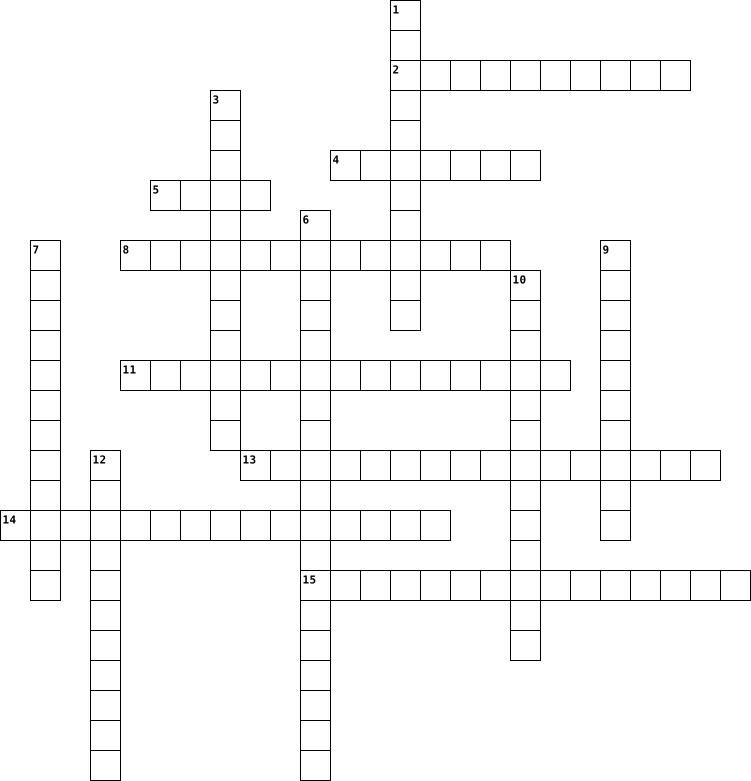
WWI Review 2021-12-13

Across
- _____ helped the war effort by gardening and rationing
- The CPI created pro-war ______ (posters, billboards, etc. meant to change your opinion)
- In 1917, Congress passed the _____ Act, which created procedures for detecting and imprisoning spies.
- Eugene ____ was arrested for giving an anti-war speech.
- The ____ Powers consisted of Britain, France, Russia, and the U.S.
- The Central Powers consisted of ______, Austria-Hungary, and the Ottoman Empire
Down
- Glorification of the military
- The _____ Hellfighters were a renowned African American unit known for its success in WWI.
- Citizens could purchase war _____ to support the war
- The invention of _______ was a great help in reconnaissance during World War I
- The use of gas to kill in war is called _____ warfare
11 Clues: Glorification of the military • Citizens could purchase war _____ to support the war • The use of gas to kill in war is called _____ warfare • _____ helped the war effort by gardening and rationing • Eugene ____ was arrested for giving an anti-war speech. • The ____ Powers consisted of Britain, France, Russia, and the U.S. • ...
Jarid 2024-04-01

Across
- Jarids favourite beer (2 words)
- Jarids favourite series ever (2 words)
- Most beautiful girl in the world
- Jarids favourite beach
- Jarids favourite holiday destination in Aus (2 words)
- Jarids favourite homecooked meal from mum
- Jarids Favourite fruit
- Jarids Shoe Size
- How many Rugby World Cups have the Springboks won
- Jarids favourite healthy snack
- Jarids favourite song ever (4 words)
- Kennels license plate
- The name of Jarids favourite hot sauce
- Jarids favourite spirit
- Out of all of Jarids friends who has he lived with the longest
- Jarids favourite unhealthy snack
- How many subjects did Jarid Fail at university
- Jarid Lucky number
- What colour was Jarids Scooter
- What is Freya (2 words)
Down
- Jarids mums dads name
- Jarids favourite beach pool
- Breed of Jarids childhood dog
- Jarids favourite type of beer
- Jarids favourite animal
- Jarids old sharehouse nickname (2 words)
- Jarids worst food
- Name of Jarids school
- Ritchie Jarids favourite director (2 words)
- Jarids favourite meal from Freya
- What number does Jarid wear in Rugby
- Jarids favourite holiday destination anywhere (2 words)
- Jarids favourite dog breed
- Biggest type of fish Jarid has ever caught
- Jarids favourite sports person of all time ( Full Name)
- Which NRL team does Jarid support (3 words)
- Dave Jarids friend who is in jail (2 words)
- The name of Jarids cricket team (3 words)
- Jarid represented his state in Cricket and which other sport
39 Clues: Jarids Shoe Size • Jarids worst food • Jarid Lucky number • Jarids mums dads name • Name of Jarids school • Kennels license plate • Jarids favourite beach • Jarids Favourite fruit • Jarids favourite animal • Jarids favourite spirit • What is Freya (2 words) • Jarids favourite dog breed • Jarids favourite beach pool • Breed of Jarids childhood dog • Jarids favourite type of beer • ...
Weeding 2019-08-29

Across
- Wie heißt Manus Mama?
- was wird heute gefeiert?
- Was ist Wolfis zweite große Liebe?
- Name eurer Katze?
- was ist Manus Sternzeichen?
- Wo war euer letzter Urlaub?
- Wie heißt Wolfis Mama?
Down
- Wie heitß Manus neuer Küchenhelfer?
- of Warcraft was ist Wolfis Lieblings-Game?
- Wo war eure erste Begegnung?
- Geburtsmonat von Wolfi?
- Was ist Wolfis Lieblingsgetränk?
12 Clues: Name eurer Katze? • Wie heißt Manus Mama? • Wie heißt Wolfis Mama? • Geburtsmonat von Wolfi? • was wird heute gefeiert? • was ist Manus Sternzeichen? • Wo war euer letzter Urlaub? • Wo war eure erste Begegnung? • Was ist Wolfis Lieblingsgetränk? • Was ist Wolfis zweite große Liebe? • Wie heitß Manus neuer Küchenhelfer? • of Warcraft was ist Wolfis Lieblings-Game?
Unit 8 2024-05-08

Across
- Springs: Georgia city that was home to the “Little White House;” site’s warm water mineral springs were used as a rehabilitation center for polio victims.
- D. Roosevelt: the 32nd President of the United States from 1933 until his death at Warm Springs, Georgia in 1945 who is credited with pulling America out of the Great Depression with his New Deal policies.
- Weevil: insect whose larvae feed on cotton crops; decimated cotton production in the southeastern United States.
- of 1924: one of the worst droughts in Georgia’s history; led to a depression in the state that predated the Great Depression.
- Bomber Plant: factory located in Marietta, Georgia, that produced B-29 bombers for the U.S. war effort.
- Conservation Corps (CCC): a New Deal program that hired unemployed young men to work on public works projects.
- in Purchasing: a factor that led to the Great Depression; economic fears caused consumers to stop buying manufactured products, which led to companies losing money and laying off more employees.
- Harbor: American Naval base in Hawaii was hit with a surprise attack by Japanese forces on December 7, 1941, which resulted in the U.S. entering World War II.
- War I (1914-1918): major war primarily between European powers; the U.S. entered the war in 1917.
- Security Act (SSA): New Deal program that provided retirement and unemployment insurance for American taxpayers.
- War II (1939-1945): The most destructive war in human history; America entered the war in 1941.
- Failures: one of the factors that led to the Great Depression; when a bank ran out of reserves to pay customers who wanted to withdraw their deposits.
Down
- and Brunswick Shipyards: Georgia’s two deepwater ports; during World War II, 187 Liberty Ships were constructed there.
- Adjustment Act (AAA): a New Deal program that paid farmers a stipend not to grow crops in order to increase the price of agricultural products.
- Ships: U.S. cargo ships made during World War II. In all 187 of these ships were made in the ports of Georgia.
- Talmadge: four-time Georgia governor that fought against the New Deal policies.
- Market Crash of 1929: a factor that led to the Great Depression. A major stock market collapse that led to investors losing over 40 billion dollars.
- a factor that led to the Great Depression; farmers continued to produce record numbers of crop yield though the demand for agricultural products was limited; this drove the cost of these products down.
- Act (1941): an act that allowed the U.S. government to send billions of dollars in supplies and military equipment to allied countries in exchange for U.S. rights in their military bases.
- Russell: Georgia governor and influential long term U.S. Senator.
- Depression: The worldwide economic crisis and period of low business activity beginning with the stock-market crash in October 1929, and continuing through most of the 1930s.
- Deal: the name given to a series of federal programs spearheaded by President Franklin Roosevelt in order to help the nation recover from the Great Depression.
- Vinson: Georgia Congressman who was an advocate for a strong U.S. military; served 25 terms in the U.S. House of Representatives, making him the longest-serving Congressmen in U.S. history.
- Electrification Act (REA): the New Deal program designed to build the capabilities to bring electricity to rural areas.
24 Clues: Russell: Georgia governor and influential long term U.S. Senator. • Talmadge: four-time Georgia governor that fought against the New Deal policies. • War II (1939-1945): The most destructive war in human history; America entered the war in 1941. • War I (1914-1918): major war primarily between European powers; the U.S. entered the war in 1917. • ...
Unit 8 2024-05-08

Across
- Springs: Georgia city that was home to the “Little White House;” site’s warm water mineral springs were used as a rehabilitation center for polio victims.
- D. Roosevelt: the 32nd President of the United States from 1933 until his death at Warm Springs, Georgia in 1945 who is credited with pulling America out of the Great Depression with his New Deal policies.
- Weevil: insect whose larvae feed on cotton crops; decimated cotton production in the southeastern United States.
- of 1924: one of the worst droughts in Georgia’s history; led to a depression in the state that predated the Great Depression.
- Bomber Plant: factory located in Marietta, Georgia, that produced B-29 bombers for the U.S. war effort.
- Conservation Corps (CCC): a New Deal program that hired unemployed young men to work on public works projects.
- in Purchasing: a factor that led to the Great Depression; economic fears caused consumers to stop buying manufactured products, which led to companies losing money and laying off more employees.
- Harbor: American Naval base in Hawaii was hit with a surprise attack by Japanese forces on December 7, 1941, which resulted in the U.S. entering World War II.
- War I (1914-1918): major war primarily between European powers; the U.S. entered the war in 1917.
- Security Act (SSA): New Deal program that provided retirement and unemployment insurance for American taxpayers.
- War II (1939-1945): The most destructive war in human history; America entered the war in 1941.
- Failures: one of the factors that led to the Great Depression; when a bank ran out of reserves to pay customers who wanted to withdraw their deposits.
Down
- and Brunswick Shipyards: Georgia’s two deepwater ports; during World War II, 187 Liberty Ships were constructed there.
- Adjustment Act (AAA): a New Deal program that paid farmers a stipend not to grow crops in order to increase the price of agricultural products.
- Ships: U.S. cargo ships made during World War II. In all 187 of these ships were made in the ports of Georgia.
- Talmadge: four-time Georgia governor that fought against the New Deal policies.
- Market Crash of 1929: a factor that led to the Great Depression. A major stock market collapse that led to investors losing over 40 billion dollars.
- a factor that led to the Great Depression; farmers continued to produce record numbers of crop yield though the demand for agricultural products was limited; this drove the cost of these products down.
- Act (1941): an act that allowed the U.S. government to send billions of dollars in supplies and military equipment to allied countries in exchange for U.S. rights in their military bases.
- Russell: Georgia governor and influential long term U.S. Senator.
- Depression: The worldwide economic crisis and period of low business activity beginning with the stock-market crash in October 1929, and continuing through most of the 1930s.
- Deal: the name given to a series of federal programs spearheaded by President Franklin Roosevelt in order to help the nation recover from the Great Depression.
- Vinson: Georgia Congressman who was an advocate for a strong U.S. military; served 25 terms in the U.S. House of Representatives, making him the longest-serving Congressmen in U.S. history.
- Electrification Act (REA): the New Deal program designed to build the capabilities to bring electricity to rural areas.
24 Clues: Russell: Georgia governor and influential long term U.S. Senator. • Talmadge: four-time Georgia governor that fought against the New Deal policies. • War II (1939-1945): The most destructive war in human history; America entered the war in 1941. • War I (1914-1918): major war primarily between European powers; the U.S. entered the war in 1917. • ...
Marcus Souza Unit 8 Crossword 2022-02-02

Across
- gave freedom to the colonies
- put a tax on printed items
- Parliament forced him to sign a petition
- quartered troops in the colonies to look over the citzens
- Fought Parliament for money
- written to prevent future conflicts over the land
- drafted the declaration of independence
- met to plead with king george
- war fought between french and british
- the money owed after the war
Down
- established a republican form of government
- criticized christianity
- life,liberty,and property
- War over the complete rule of Charles I
- British soldiers fired into a crowd of citizens
- created peace between them
- People feared his dynasty
- overthrowing of the james rule
- tax on tea
- shot heard round the world
- King Charles II restored the monarchy
- Protected the citizens from government
- overthrew the government
- Established Protestantism in England
- Beheaded the king Charles
25 Clues: tax on tea • criticized christianity • overthrew the government • life,liberty,and property • People feared his dynasty • Beheaded the king Charles • created peace between them • put a tax on printed items • shot heard round the world • Fought Parliament for money • gave freedom to the colonies • the money owed after the war • met to plead with king george • ...
Jon Daci Articles X-Word 2024-02-11

Across
- Why were the minutemen called minutemen?
- When was the Declaration of independence signed?
- Who was the first founding father of the US?
- When was the treaty of paris signed?
- What book did Thomas Paine write?
- What were Loyalists known for?
- What were the resources the he used to have?
- What was Noah Webster writing?
- Who won the revolutionary war?
- What river was controlled by the western land?
- What was the "underlying crsis that had other issues in the US?
Down
- What did Paul Revere say in Lexington?
- Who started the Committee of Correspondence?
- How did the Loyalists felt in Canada?
- What did the patriots want?
- When did the revolutionary war start?
- Alexander ______ hated congress because they would not accept any of his ideas.
- What was the Declaration of independence?
- What started the revolutionary war?
- Where was the shot around the world?
20 Clues: What did the patriots want? • What were Loyalists known for? • What was Noah Webster writing? • Who won the revolutionary war? • What book did Thomas Paine write? • What started the revolutionary war? • When was the treaty of paris signed? • Where was the shot around the world? • How did the Loyalists felt in Canada? • When did the revolutionary war start? • ...
Trojan WAR 253-258 2024-05-03

Across
- king of Sparta
- marked for the fairest
- the evil goddess of discord
- odysseus pretended to be this to not fight in the war
- Helen' sisters
- son of peleus
- kept achilles from joining the fight
- fairest woman in the world
- told the war of the greatest city
- who Paris was living with
- won the golden apple from Paris
- where thetis sent achilles
Down
- asked to judge who was the fairest
- where menelaus went. he left paris with his helen
- a very great city. Second to none
- the real reason the trojan war began
- zeus told the goddesses to go to him for the fairest
- father of paris, King of Troy
- the goddess of love and beauty
- menelaus called on this place to get helen back
- brother of Menelaus
- what goddesses offered Paris to win
- king of the island of ithaca
- Helen's reputaed father
24 Clues: son of peleus • king of Sparta • Helen' sisters • brother of Menelaus • marked for the fairest • Helen's reputaed father • who Paris was living with • fairest woman in the world • where thetis sent achilles • the evil goddess of discord • king of the island of ithaca • father of paris, King of Troy • the goddess of love and beauty • won the golden apple from Paris • ...
History keywords 2023-05-19

Across
- the time spent serving in the army, air force, navy
- a strong attachment to a place
- a agreement between states to support each other in a war
- a video using pictures with people who were involved in real events
- a man that fights in the war
- a view on society
- a war that involves the whole world
- something directly related to the event
- a drawing showing the workings of something
- a system of order for a state, country or another political unit
- the results is done or happens
Down
- arrangements of dates or events i. oder of their occurrence
- when the country is ruled by an emperor
- Overview of multiple primary sources
- something that provides information
- careful management of available resources
- a table listing important dates and events
- a list of sources
- Specific data from a single source
- something that shows the proof
20 Clues: a list of sources • a view on society • a man that fights in the war • a strong attachment to a place • something that shows the proof • the results is done or happens • Specific data from a single source • something that provides information • a war that involves the whole world • Overview of multiple primary sources • when the country is ruled by an emperor • ...
Greece Vocabulary 2025-01-21

Across
- foreigner in a Greek city-state
- this battle saved Athens
- formed to defeat democracy in Athens
- a city state in ancient Greece
- two stage war of Athens vs. Sparta
- stories of gods and heroes to define the world
- farmer who rents where he farms
- inherited government
- political system run by citizens voting
- military formation of soldiers with spears/shields
- a government ran by a few powerful people
- society organized to wage war
Down
- this battle ended the Persian war
- new doctors make this oath
- an educated guess
- Athen alliance against Persians
- highly ranked government official in Sparta
- method of teaching by Socrates
- a method of running government
- spartan slave
- cruel and oppressive government rule
- a person with rights in their specific country
- a fortified hilltop in a Greek city
- citizens rule the government directly
- athletic games held every four years
- military housing
26 Clues: spartan slave • military housing • an educated guess • inherited government • this battle saved Athens • new doctors make this oath • society organized to wage war • a city state in ancient Greece • method of teaching by Socrates • a method of running government • foreigner in a Greek city-state • Athen alliance against Persians • farmer who rents where he farms • ...
Arizona History 2022-03-07

Across
- The Civil War was fought at which Arizona peak?
- Which of the 5 C's brings snowbirds to Arizona?
- Which Natural Wonder of the World is in Arizona?
- What is Arizona's state fish?
- What is Arizona's oldest city?
- Which of the 5 C's moos?
- What is the capital of Arizona?
Down
- Which Arizona civil rights leader created the United Farm Workers Union?
- What river is Arizona's biggest water supply?
- Which of the 5 C's is mined?
- What symbol is in the middle of the Arizona flag?
- Which of the 5 C's includes grapefruit?
- Which Arizona Senator from the 1980's changed conservative politics?
- Native Americans from which tribe helped develop a code in World war II?
- Which of the 5 C's grows in bolls?
15 Clues: Which of the 5 C's moos? • Which of the 5 C's is mined? • What is Arizona's state fish? • What is Arizona's oldest city? • What is the capital of Arizona? • Which of the 5 C's grows in bolls? • Which of the 5 C's includes grapefruit? • What river is Arizona's biggest water supply? • The Civil War was fought at which Arizona peak? • ...
Japanese Internment 2025-12-18

Across
- State of armed conflict between different groups
- What they called the Japanese in the camp
- U.S. born Japanese citizens
- One of the reasons the Japanese internment happened
- One of the ways a detainee could leave the camp
- The Japanese did this to Pearl Harbour on December 7,1941
- The second largest country in the world
- First generation Japanese immigrant
Down
- What the government thought the people of Japanese descent could be
- A person who goes and lives in a foreign country permanently
- This happened to the detainees' homes while they were in camps
- What the president gave to the camp survivors
- This is what the Japanese had to do when Executive Order 9066 was authorized
- What was closed after World War II
- What the Japanese were really good at
15 Clues: U.S. born Japanese citizens • What was closed after World War II • First generation Japanese immigrant • What the Japanese were really good at • The second largest country in the world • What they called the Japanese in the camp • What the president gave to the camp survivors • One of the ways a detainee could leave the camp • ...
Cold War 2016-01-27

Across
- What country falls to communistic forces in 1975
- where was the first cold war atom bomb dropped
- what country did we fight against during this war
- what year did the U.S. and other U.N. members fight North Korean forces(write out word)
- who made this
- what war started in 1945
- what was the main issue for the U.S. during this time
- what year was NATO created (write out word)
- How many presidents were in office during the Cold war
- what country had a missile crisis, the country is south of Florida
- where was the second bomb dropped
- what year did president Nixon visit china
- In 1983 what country did the U.S. invade
- The Soviet Red army crushed who's uprising in 1968
- what city and team name won the world series in 1945
- who crushes the Hungarian Revolution.(They are red)
Down
- What was the last name of the person who started the communist witch hunt?
- What was the last name of the president in office at the start of the cold war
- what golf tournament was called off because of the war
- what year did Fidel Castro become premier of Cuba
- what was the last name of Time Magazines Man of the year
- what Sargent won the U.S. tennis
- what year did china drop their own first bomb
- Who won the NCAA Football championship
- What president was in office during the Cuban missile crisis
25 Clues: who made this • what war started in 1945 • what Sargent won the U.S. tennis • where was the second bomb dropped • Who won the NCAA Football championship • In 1983 what country did the U.S. invade • what year did president Nixon visit china • what year was NATO created (write out word) • what year did china drop their own first bomb • ...
WWI Crossword 2021-11-09

Across
- started 1914 and ended 1918
- britsh king during WWI
- glorification of war
- Germany foreign secretary
- 400-500 miles across Western Europe
- Attacked lungs
- Emperor of Austria during WWI
- government that has a total power of life
- Areas between opposing trenches
- groups of unarmed ships
- German and Austria
- Note from Germany to Mexico
- Blew stuff up
- armenians being massacred by the Turks
- aggrement to stop fighting
- WWI
- got to vote after the war
- 600-1000 rounds per minute
- war ending blaming germany for starting WWI
- Designed to combat trench warfare
Down
- name given between battle lines
- nickname for WWI
- an anti democratic measure
- any speech or action that encourages rebellion
- world organization to keep peace
- US armed its merchant ships
- the media
- French passanger ship
- used in water
- balance of power
- Germany,Italy and Austria
- Countries from all
- disturbing goods to customers in a fixed amount
- lasted four years
- threaten austria
- river in Northeastern france
- payments for damage wars
- Russian ruler during WWI
- Nickname of aerial battles during WWI
- neutral country invaded by the Germans
40 Clues: WWI • the media • used in water • Blew stuff up • Attacked lungs • nickname for WWI • balance of power • threaten austria • lasted four years • Countries from all • German and Austria • glorification of war • French passanger ship • britsh king during WWI • groups of unarmed ships • payments for damage wars • Russian ruler during WWI • Germany foreign secretary • Germany,Italy and Austria • ...
Fallen Angels Cross Word 2014-05-27

Across
- what perry had to walk up to get back to Alpha Company
- what did Lt. Gearhart expose the troop with
- "the Bible i got has an index"
- holes where corporals sit(2 words)
- south Vietnamese army
- when the lady threw who own kid onto GI's who blew up is know as...
- "you remember those cowboy movies when the bad guys ride into town?"
- "is to lay an ambush outside the hamlet." (2 words)
- who Perry writes to all the time
- antitank weapon
- where people back home a fan of the war (yes or no)
- what were tanks called
- month "Fallen Angels" began
- one night, perry spends all night on the _______
- Italian
- Johnson had a different ________ when he is talking to Dongan
- LZ (2 words)
- lived in chicago
- who is supplying Vietcong with their weapons
Down
- HQ
- steps on a mine and dies
- "then why she want to marry you?"
- what does Walowick call Johnson when they are arguing
- in country
- who is the medic
- "he shouldn't have called me no farm boy"
- what is a homemade explosive
- what did Lobel lose in chapter 21
- what they were in when Gearhart shot off the flare
- wanted to be a writer
- who replaced Lt. Carroll
- where does Perry kill his first cong
- where were both Peewee and Perry talk a lieutenant into letting them fly to on their way home (2 words)
- what they call the US or back home
- what literary technique was used when Perry was setting up the claymore
- what do they do when many soldiers are killed at once
- white phosphorous(2 words)
- where was perry shot while getting on the chopper
- Perry made many of these here like Peewee,Monaco,Johnson
- where did Peewee promise Perry he would take some leave at (2 words)
40 Clues: HQ • Italian • in country • LZ (2 words) • antitank weapon • who is the medic • lived in chicago • south Vietnamese army • wanted to be a writer • what were tanks called • steps on a mine and dies • who replaced Lt. Carroll • white phosphorous(2 words) • month "Fallen Angels" began • what is a homemade explosive • "the Bible i got has an index" • who Perry writes to all the time • ...
14 Facts You May Not Know About Contributions of Indigenous Veterans 2025-10-30

Across
- The Yukon community whose Chief Moses walked into Alaska to sell winter furs and donated the money to war relief efforts.
- Recognizing Indigenous veterans’ service is part of our journey toward ______.
- Many were denied land benefits and other forms of ______ offered to non-Indigenous soldiers.
- Joining the military meant losing Indian status because of the policy called ______.
Down
- The first province to officially recognize Aboriginal Veterans Day in 1994.
- Twenty Indigenous veterans were honoured near ______ Beach in France on the 61st anniversary of D-Day.
- After returning home, many Indigenous soldiers faced ______ instead of appreciation.
- Less than five years after the Second World War, several hundred Indigenous Canadians served in the War in ______.
- The National Aboriginal Veterans Monument is located in the city of __________
- Despite many decades of ______ caused by life on reserves and restrictive government policies, Indigenous communities still contributed to war funds.
- Indigenous communities raised and ______ over $44,000 during the First World War and more than $23,500 during the Second.
11 Clues: The first province to officially recognize Aboriginal Veterans Day in 1994. • The National Aboriginal Veterans Monument is located in the city of __________ • Recognizing Indigenous veterans’ service is part of our journey toward ______. • After returning home, many Indigenous soldiers faced ______ instead of appreciation. • ...
Assignment 5.4: Fill-in-the-Blank 2025-10-27

Across
- The United States forces, called the __________, were made up of guardsmen, volunteers, and draftees.
- A __________ resulted from the ... method of fighting on the western front.
- United States President Woodrow Wilson explained his vision for the post-war world in his _________, which included a plan for a...
- German __________ fired on American and ... ships as they crossed the Atlantic Ocean.
- The Germans agreed to sign the __________ on November 11, 1918.
- A ... resulted from the __________ method of fighting on the western front.
- The people of France expected to be paid ... and to gain from the __________ of war.
Down
- The people of France expected to be paid __________ and to gain from the ... of war.
- United States President Woodrow Wilson explained his vision for the post-war world in his ..., which included a plan for a __________.
- In order to raise money for the war effort, the United States government initiated a vigorous campaign selling __________.
- German ... fired on American and __________ ships as they crossed the Atlantic Ocean.
11 Clues: The Germans agreed to sign the __________ on November 11, 1918. • A __________ resulted from the ... method of fighting on the western front. • A ... resulted from the __________ method of fighting on the western front. • The people of France expected to be paid __________ and to gain from the ... of war. • ...
WW2 2017-12-07
Across
- Ideas spread to influence public opinion for or against a cause
- A system of government characterized by strict social and economic control and a strong, centralized government usually headed by a dictator. First found in Italy by Mussolini
- Powers the nations of Germany, Italy, and Japan
- act that allowed America to sell, lend or lease arms or other supplies to nations considered "vital to the defense of the United States."
- enlisted women for non-combat duties like nurses, cartography clerks, and secretaries
- in April 1942 American soldiers were forced to march 65 miles to prison camps by their Japanese captors
- 1941 Pledge signed by US president FDR and British prime minister Winston Churchill not to acquire new territory as a result of WWII
- a government that takes total, centralized control over every aspect of public and private life
Down
- practice of giving in to aggression in order to avoid war
- France, Britain, USSR, United States, and China as well as 45 other countries that opposed the Axis powers in World War II
- created to avoid American involvement in World War II by preventing loans to those countries taking part in the conflict
- policies, views, or actions that harm or discriminate against Jews
- Signed in 1938 between Great Britain, Germany, and France that gave part of Czechoslovakia to Germany
- Signed between the Axis powers in 1940 (Italy, Germany and Japan) where they pledged to help the others in the event of an attack by the US
- US military base on Hawaii that was bombed by Japan bringing the United States into World War II
15 Clues: Powers the nations of Germany, Italy, and Japan • practice of giving in to aggression in order to avoid war • Ideas spread to influence public opinion for or against a cause • policies, views, or actions that harm or discriminate against Jews • enlisted women for non-combat duties like nurses, cartography clerks, and secretaries • ...
Olivia Farrington's Crossword 2023-01-27

Across
- the holiest city of Islam
- what Cubans referred the U.S to
- initiation ceremony for Jewish boys when turning 13
- a meeting place for the Jewish to worship
- German politician, dictator of Germany during world war 2
- a head covering worn by females in the Muslim religion
- first concentration camp built by Nazis for political enemies
Down
- in the indefinite future
- a musical term which means key, it's a repeating rhythmic pattern
- a ruthless, tyrannical leader
- when Nazis caused death and damage to Jewish homes and shops, also known as "The Night of Broken Glass"
- a skullcap worn in public or during prayer by Orthodox Jewish men
- the ability to understand and share feelings of another
13 Clues: in the indefinite future • the holiest city of Islam • a ruthless, tyrannical leader • what Cubans referred the U.S to • a meeting place for the Jewish to worship • initiation ceremony for Jewish boys when turning 13 • a head covering worn by females in the Muslim religion • the ability to understand and share feelings of another • ...
Citizenship Class Review 2024-12-19

Across
- four years
- donkey
- fifty (50)
- dollar bill
- elephant
- April 15th
Down
- one hundred people
- summer fireworks
- printing money
- world war 1 president
- French territory
- border of Canada
- U.S. Territory
13 Clues: donkey • elephant • four years • fifty (50) • April 15th • dollar bill • printing money • U.S. Territory • summer fireworks • French territory • border of Canada • one hundred people • world war 1 president
Berlin Wall 2024-05-21

Across
- The side of Germany ruled by the USSR.
- The side of Germany ruled by the US, UK, and France.
- Russia's old name.
- A place where people or vehicles are stopped and checked, especially in border areas.
- Power to direct or manage.
- Barrier dividing Eastern and Western Europe during the Cold War.
Down
- The other name of Berlin during the Cold War.
- Being held against one's will.
- Area cleared near the Berlin Wall.
- A tower used for watching or guarding.
- Barrier separating East and West Berlin during the Cold War.
- Boundary line separating two areas.
- A system where all property is shared, aiming for a classless society.
- Global tension after World War II.
- An economic system where private individuals own and control property.
15 Clues: Russia's old name. • Power to direct or manage. • Being held against one's will. • Area cleared near the Berlin Wall. • Global tension after World War II. • Boundary line separating two areas. • The side of Germany ruled by the USSR. • A tower used for watching or guarding. • The other name of Berlin during the Cold War. • The side of Germany ruled by the US, UK, and France. • ...
Collins crossword puzzle 2025-03-04

Across
- the one who led the Californian rebellion
- the general during the USA and Mexico war
- ________ million was the amount paid for the land of Mexico
- the one who killed lots at the alamo
- the us gained ______ in the war of Mexico
- the war of ______
Down
- what God wanted for the world
- the president did the westward expansion
- _______ the main reason the USA went to war
- the battle of_____
10 Clues: the war of ______ • the battle of_____ • what God wanted for the world • the one who killed lots at the alamo • the president did the westward expansion • the one who led the Californian rebellion • the general during the USA and Mexico war • the us gained ______ in the war of Mexico • _______ the main reason the USA went to war • ...
Trojan War 2022-10-27

Across
- King of Troy
- great warrior also a demi-god
- He planned the wooden horse trick
- wooden horse used by the Greeks to enter the city of troy
Down
- disguised as achilles to scare away soldiers
- commanded the Greeks during the Trojan war
- She offered Paris the most beautiful woman in the world
- He made the judgment that started the war
- Goddess of war
- where Trojan war took place
10 Clues: King of Troy • Goddess of war • where Trojan war took place • great warrior also a demi-god • He planned the wooden horse trick • He made the judgment that started the war • commanded the Greeks during the Trojan war • disguised as achilles to scare away soldiers • She offered Paris the most beautiful woman in the world • ...
Japan 2015-03-10

Across
- Hokkaido, Honshu, Shikoku,and kyashu
- ancient military leaders
- an extremely large,powerful,and destuctive storm
- Japan's emperor for most of the 1900;he lead changes in government and economy after World War Two
- whole word representation in Japanese language
- the unfitted states navel bad bombed by japan in World War Two
- parts of words in Japanese language
Down
- destructive waves caused by earthquakes under water
- south japan experiences this climate
- the imperial capital of heian
- Japan's early religion
- the native language of japan with teachings of kami
- a place where lots if seafood and fish can be caugh
- the highest maintain in japan that's not part if the alps
- a highly trained warrior that no longer exists in japan
15 Clues: Japan's early religion • ancient military leaders • the imperial capital of heian • parts of words in Japanese language • south japan experiences this climate • Hokkaido, Honshu, Shikoku,and kyashu • whole word representation in Japanese language • an extremely large,powerful,and destuctive storm • destructive waves caused by earthquakes under water • ...
Celebrating Sixty - Who's Who 2023-03-19

Across
- the song lyrics and movie specialist
- the most wonderful son a mother could ever wish for
- the birthday girl who is over-the-moon that you all are here
- the fusioneer (did I just make that up?), good food and wine guru
- the best brother in the world
- the best Jordanian ambassador/friend/wife/Mom in the world
- the beach-loving, traveling musician and fellow sushi(and other foodie) enthusiast
- the old, opera-loving Swiss friend who followed in the footsteps of birthday girl's Dad,
- the adorable better half of the old Swiss friend
Down
- the Swiss artist married to the most lovable Jordanian in the world
- the talented Canadian-Swiss artist and 1/2 of the best neighbors in the world
- the best banker, fellow INSEAD alum and 1/2 of the best neighbors in the world
- the newest member of the near & dear thanks to the oldest friend - welcome!
- the bff-lawyer-engineer-chairperson-mom-wife-daughter-fellow sushi enthusiast who will surprise us yet
- the best roommate and Cannes nightclub partner in the world,
- the reason the birthday girl came to Switzerland in the first place
- the husband and father of birthday girl's dreams
- the oldest bff, co-creator of chocknutoat and fellow Beachboys fanatic
18 Clues: the best brother in the world • the song lyrics and movie specialist • the husband and father of birthday girl's dreams • the adorable better half of the old Swiss friend • the most wonderful son a mother could ever wish for • the best Jordanian ambassador/friend/wife/Mom in the world • the best roommate and Cannes nightclub partner in the world, • ...
Unit 8 2024-05-08

Across
- Springs: Georgia city that was home to the “Little White House;” site’s warm water mineral springs were used as a rehabilitation center for polio victims.
- D. Roosevelt: the 32nd President of the United States from 1933 until his death at Warm Springs, Georgia in 1945 who is credited with pulling America out of the Great Depression with his New Deal policies.
- Weevil: insect whose larvae feed on cotton crops; decimated cotton production in the southeastern United States.
- of 1924: one of the worst droughts in Georgia’s history; led to a depression in the state that predated the Great Depression.
- Bomber Plant: factory located in Marietta, Georgia, that produced B-29 bombers for the U.S. war effort.
- Conservation Corps (CCC): a New Deal program that hired unemployed young men to work on public works projects.
- in Purchasing: a factor that led to the Great Depression; economic fears caused consumers to stop buying manufactured products, which led to companies losing money and laying off more employees.
- Harbor: American Naval base in Hawaii was hit with a surprise attack by Japanese forces on December 7, 1941, which resulted in the U.S. entering World War II.
- War I (1914-1918): major war primarily between European powers; the U.S. entered the war in 1917.
- Security Act (SSA): New Deal program that provided retirement and unemployment insurance for American taxpayers.
- War II (1939-1945): The most destructive war in human history; America entered the war in 1941.
- Failures: one of the factors that led to the Great Depression; when a bank ran out of reserves to pay customers who wanted to withdraw their deposits.
Down
- and Brunswick Shipyards: Georgia’s two deepwater ports; during World War II, 187 Liberty Ships were constructed there.
- Adjustment Act (AAA): a New Deal program that paid farmers a stipend not to grow crops in order to increase the price of agricultural products.
- Ships: U.S. cargo ships made during World War II. In all 187 of these ships were made in the ports of Georgia.
- Talmadge: four-time Georgia governor that fought against the New Deal policies.
- Market Crash of 1929: a factor that led to the Great Depression. A major stock market collapse that led to investors losing over 40 billion dollars.
- a factor that led to the Great Depression; farmers continued to produce record numbers of crop yield though the demand for agricultural products was limited; this drove the cost of these products down.
- Act (1941): an act that allowed the U.S. government to send billions of dollars in supplies and military equipment to allied countries in exchange for U.S. rights in their military bases.
- Russell: Georgia governor and influential long term U.S. Senator.
- Depression: The worldwide economic crisis and period of low business activity beginning with the stock-market crash in October 1929, and continuing through most of the 1930s.
- Deal: the name given to a series of federal programs spearheaded by President Franklin Roosevelt in order to help the nation recover from the Great Depression.
- Vinson: Georgia Congressman who was an advocate for a strong U.S. military; served 25 terms in the U.S. House of Representatives, making him the longest-serving Congressmen in U.S. history.
- Electrification Act (REA): the New Deal program designed to build the capabilities to bring electricity to rural areas.
24 Clues: Russell: Georgia governor and influential long term U.S. Senator. • Talmadge: four-time Georgia governor that fought against the New Deal policies. • War II (1939-1945): The most destructive war in human history; America entered the war in 1941. • War I (1914-1918): major war primarily between European powers; the U.S. entered the war in 1917. • ...
Unit 8 2024-05-08

Across
- Springs: Georgia city that was home to the “Little White House;” site’s warm water mineral springs were used as a rehabilitation center for polio victims.
- D. Roosevelt: the 32nd President of the United States from 1933 until his death at Warm Springs, Georgia in 1945 who is credited with pulling America out of the Great Depression with his New Deal policies.
- Weevil: insect whose larvae feed on cotton crops; decimated cotton production in the southeastern United States.
- of 1924: one of the worst droughts in Georgia’s history; led to a depression in the state that predated the Great Depression.
- Bomber Plant: factory located in Marietta, Georgia, that produced B-29 bombers for the U.S. war effort.
- Conservation Corps (CCC): a New Deal program that hired unemployed young men to work on public works projects.
- in Purchasing: a factor that led to the Great Depression; economic fears caused consumers to stop buying manufactured products, which led to companies losing money and laying off more employees.
- Harbor: American Naval base in Hawaii was hit with a surprise attack by Japanese forces on December 7, 1941, which resulted in the U.S. entering World War II.
- War I (1914-1918): major war primarily between European powers; the U.S. entered the war in 1917.
- Security Act (SSA): New Deal program that provided retirement and unemployment insurance for American taxpayers.
- War II (1939-1945): The most destructive war in human history; America entered the war in 1941.
- Failures: one of the factors that led to the Great Depression; when a bank ran out of reserves to pay customers who wanted to withdraw their deposits.
Down
- and Brunswick Shipyards: Georgia’s two deepwater ports; during World War II, 187 Liberty Ships were constructed there.
- Adjustment Act (AAA): a New Deal program that paid farmers a stipend not to grow crops in order to increase the price of agricultural products.
- Ships: U.S. cargo ships made during World War II. In all 187 of these ships were made in the ports of Georgia.
- Talmadge: four-time Georgia governor that fought against the New Deal policies.
- Market Crash of 1929: a factor that led to the Great Depression. A major stock market collapse that led to investors losing over 40 billion dollars.
- a factor that led to the Great Depression; farmers continued to produce record numbers of crop yield though the demand for agricultural products was limited; this drove the cost of these products down.
- Act (1941): an act that allowed the U.S. government to send billions of dollars in supplies and military equipment to allied countries in exchange for U.S. rights in their military bases.
- Russell: Georgia governor and influential long term U.S. Senator.
- Depression: The worldwide economic crisis and period of low business activity beginning with the stock-market crash in October 1929, and continuing through most of the 1930s.
- Deal: the name given to a series of federal programs spearheaded by President Franklin Roosevelt in order to help the nation recover from the Great Depression.
- Vinson: Georgia Congressman who was an advocate for a strong U.S. military; served 25 terms in the U.S. House of Representatives, making him the longest-serving Congressmen in U.S. history.
- Electrification Act (REA): the New Deal program designed to build the capabilities to bring electricity to rural areas.
24 Clues: Russell: Georgia governor and influential long term U.S. Senator. • Talmadge: four-time Georgia governor that fought against the New Deal policies. • War II (1939-1945): The most destructive war in human history; America entered the war in 1941. • War I (1914-1918): major war primarily between European powers; the U.S. entered the war in 1917. • ...
Unit 8 2024-05-08

Across
- Springs: Georgia city that was home to the “Little White House;” site’s warm water mineral springs were used as a rehabilitation center for polio victims.
- D. Roosevelt: the 32nd President of the United States from 1933 until his death at Warm Springs, Georgia in 1945 who is credited with pulling America out of the Great Depression with his New Deal policies.
- Weevil: insect whose larvae feed on cotton crops; decimated cotton production in the southeastern United States.
- of 1924: one of the worst droughts in Georgia’s history; led to a depression in the state that predated the Great Depression.
- Bomber Plant: factory located in Marietta, Georgia, that produced B-29 bombers for the U.S. war effort.
- Conservation Corps (CCC): a New Deal program that hired unemployed young men to work on public works projects.
- in Purchasing: a factor that led to the Great Depression; economic fears caused consumers to stop buying manufactured products, which led to companies losing money and laying off more employees.
- Harbor: American Naval base in Hawaii was hit with a surprise attack by Japanese forces on December 7, 1941, which resulted in the U.S. entering World War II.
- War I (1914-1918): major war primarily between European powers; the U.S. entered the war in 1917.
- Security Act (SSA): New Deal program that provided retirement and unemployment insurance for American taxpayers.
- War II (1939-1945): The most destructive war in human history; America entered the war in 1941.
- Failures: one of the factors that led to the Great Depression; when a bank ran out of reserves to pay customers who wanted to withdraw their deposits.
Down
- and Brunswick Shipyards: Georgia’s two deepwater ports; during World War II, 187 Liberty Ships were constructed there.
- Adjustment Act (AAA): a New Deal program that paid farmers a stipend not to grow crops in order to increase the price of agricultural products.
- Ships: U.S. cargo ships made during World War II. In all 187 of these ships were made in the ports of Georgia.
- Talmadge: four-time Georgia governor that fought against the New Deal policies.
- Market Crash of 1929: a factor that led to the Great Depression. A major stock market collapse that led to investors losing over 40 billion dollars.
- a factor that led to the Great Depression; farmers continued to produce record numbers of crop yield though the demand for agricultural products was limited; this drove the cost of these products down.
- Act (1941): an act that allowed the U.S. government to send billions of dollars in supplies and military equipment to allied countries in exchange for U.S. rights in their military bases.
- Russell: Georgia governor and influential long term U.S. Senator.
- Depression: The worldwide economic crisis and period of low business activity beginning with the stock-market crash in October 1929, and continuing through most of the 1930s.
- Deal: the name given to a series of federal programs spearheaded by President Franklin Roosevelt in order to help the nation recover from the Great Depression.
- Vinson: Georgia Congressman who was an advocate for a strong U.S. military; served 25 terms in the U.S. House of Representatives, making him the longest-serving Congressmen in U.S. history.
- Electrification Act (REA): the New Deal program designed to build the capabilities to bring electricity to rural areas.
24 Clues: Russell: Georgia governor and influential long term U.S. Senator. • Talmadge: four-time Georgia governor that fought against the New Deal policies. • War II (1939-1945): The most destructive war in human history; America entered the war in 1941. • War I (1914-1918): major war primarily between European powers; the U.S. entered the war in 1917. • ...
Unit 8 2024-05-08

Across
- Weevil: insect whose larvae feed on cotton crops; decimated cotton production in the southeastern United States.
- Conservation Corps (CCC): a New Deal program that hired unemployed young men to work on public works projects.
- War I (1914-1918): major war primarily between European powers; the U.S. entered the war in 1917.
- and Brunswick Shipyards: Georgia’s two deepwater ports; during World War II, 187 Liberty Ships were constructed there.
- Adjustment Act (AAA): a New Deal program that paid farmers a stipend not to grow crops in order to increase the price of agricultural products.
- Vinson: Georgia Congressman who was an advocate for a strong U.S. military; served 25 terms in the U.S. House of Representatives, making him the longest-serving Congressmen in U.S. history.
- Electrification Act (REA): the New Deal program designed to build the capabilities to bring electricity to rural areas.
- Bomber Plant: factory located in Marietta, Georgia, that produced B-29 bombers for the U.S. war effort.
- Deal: the name given to a series of federal programs spearheaded by President Franklin Roosevelt in order to help the nation recover from the Great Depression.
- of 1924: one of the worst droughts in Georgia’s history; led to a depression in the state that predated the Great Depression.
- War II (1939-1945): The most destructive war in human history; America entered the war in 1941.
- Russell: Georgia governor and influential long term U.S. Senator.
- in Purchasing: a factor that led to the Great Depression; economic fears caused consumers to stop buying manufactured products, which led to companies losing money and laying off more employees.
Down
- Act (1941): an act that allowed the U.S. government to send billions of dollars in supplies and military equipment to allied countries in exchange for U.S. rights in their military bases.
- a factor that led to the Great Depression; farmers continued to produce record numbers of crop yield though the demand for agricultural products was limited; this drove the cost of these products down.
- Security Act (SSA): New Deal program that provided retirement and unemployment insurance for American taxpayers.
- D. Roosevelt: the 32nd President of the United States from 1933 until his death at Warm Springs, Georgia in 1945 who is credited with pulling America out of the Great Depression with his New Deal policies.
- Talmadge: four-time Georgia governor that fought against the New Deal policies.
- Market Crash of 1929: a factor that led to the Great Depression. A major stock market collapse that led to investors losing over 40 billion dollars.
- Failures: one of the factors that led to the Great Depression; when a bank ran out of reserves to pay customers who wanted to withdraw their deposits.
- Harbor: American Naval base in Hawaii was hit with a surprise attack by Japanese forces on December 7, 1941, which resulted in the U.S. entering World War II.
- Ships: U.S. cargo ships made during World War II. In all 187 of these ships were made in the ports of Georgia.
- Depression: The worldwide economic crisis and period of low business activity beginning with the stock-market crash in October 1929, and continuing through most of the 1930s.
- Springs: Georgia city that was home to the “Little White House;” site’s warm water mineral springs were used as a rehabilitation center for polio victims.
24 Clues: Russell: Georgia governor and influential long term U.S. Senator. • Talmadge: four-time Georgia governor that fought against the New Deal policies. • War II (1939-1945): The most destructive war in human history; America entered the war in 1941. • War I (1914-1918): major war primarily between European powers; the U.S. entered the war in 1917. • ...
Myths, Religion and Gods. 2025-03-23

Across
- Hindu creator god
- Sacred text of Islam
- Greek messenger god
- Hindu goddess of wealth
- King of the Greek gods
Down
- Norse god of thunder
- Norse end-of-the-world event
- Greek goddess of wisdom and war
- Greek underworld ruler
- Ancient Egyptian sun god
- Roman god of war
11 Clues: Roman god of war • Hindu creator god • Greek messenger god • Norse god of thunder • Sacred text of Islam • Greek underworld ruler • King of the Greek gods • Hindu goddess of wealth • Ancient Egyptian sun god • Norse end-of-the-world event • Greek goddess of wisdom and war
World War I 2021-05-28

Across
- The assassination of this person led to a chain of events that caused this war.
- Austria-Hungary declared war on this country on July 28.
- Other name for World War I.
- How many major alliances of countries were?
- An association formed for mutual benefit, especially between countries or organizations.
Down
- states In 1917 this country joined the war.
- An agreement made by opposing sides in war to stop fighting for a certain time.
- What type of animal did the British families gave to the army so they could carry messages?
- Austria-Hungary and Italy in 1881 agreed to protect each other in the event with this country.
- Country that had a secret alliance with France saying they wouldn't aid Germany.
10 Clues: Other name for World War I. • states In 1917 this country joined the war. • How many major alliances of countries were? • Austria-Hungary declared war on this country on July 28. • The assassination of this person led to a chain of events that caused this war. • An agreement made by opposing sides in war to stop fighting for a certain time. • ...
World War One 2022-09-12

Across
- One of the causes of WWI; build up of armed forces
- Staying out of a war; not picking a side
- During WWI, Germany used unrestricted _________ warfare to attack ships.
- New vehicle technology which provided defense on the battlefield
- Ship sunk by Germany which resulted in the U.S. entering WWI in 1917
- One of the causes of WWI; love and loyalty to your country
Down
- One of the causes of WWI; empire building
- Telegram from Germany to Mexico during WWI
- One of the causes of WWI; teams; partnerships
- Soldiers during WWI primarily fought from these "endzones" separated by "No Man's Land"
10 Clues: Staying out of a war; not picking a side • One of the causes of WWI; empire building • Telegram from Germany to Mexico during WWI • One of the causes of WWI; teams; partnerships • One of the causes of WWI; build up of armed forces • One of the causes of WWI; love and loyalty to your country • New vehicle technology which provided defense on the battlefield • ...
World War I 2022-11-02

Across
- President Wilson developed the ___________ of Nations.
- Allied troops pushed the German forces across the Western _____________.
- ___________ C. York was a WWI hero.
- United States only sold to ____________ and its allies.
- WWI ended on ______________ 11, 1918 at 11 AM.
Down
- January 19, 1917: __________ Telegram intercepted.
- School students were asked to grow "___________ Gardens."
- The Treaty of ____________ is the peace treaty that ended WWI.
- Germany was also forced to pay severe ____________ due to the effects of the war.
- The land between the two opposing sides was called "no man's ________"
10 Clues: ___________ C. York was a WWI hero. • WWI ended on ______________ 11, 1918 at 11 AM. • January 19, 1917: __________ Telegram intercepted. • President Wilson developed the ___________ of Nations. • United States only sold to ____________ and its allies. • School students were asked to grow "___________ Gardens." • ...
World War One 2019-01-28

Across
- A deadlock in fighting
- A plan in which the Germans would invade Belgium and France using a wheel-like flanking procedure
- An english cruise ship
- Germany was forced to pay these for repairs.
Down
- German submarine
- The serbian Terrorist group
- germany pledge to warn ships before sinking
- Most common Fighting style
- A new source of tech.
- An in-groung fortification
10 Clues: German submarine • A new source of tech. • A deadlock in fighting • An english cruise ship • Most common Fighting style • An in-groung fortification • The serbian Terrorist group • germany pledge to warn ships before sinking • Germany was forced to pay these for repairs. • A plan in which the Germans would invade Belgium and France using a wheel-like flanking procedure
World War 1 2019-08-09

Across
- Patriotic feeling, principles, or efforts
- German emperor
- Teams of troops,ships,or equipment
- The heir to the throne of Austria-Hungary
- A ship that was sink in World War 1 by German U-boats
Down
- German airship
- President During WW1
- A formal agreement between two or more nations or powers to cooperate and come to another's defense
- A policy of extending a country's power and influence through diplomacy or military force.
- A rapid firing weapon
10 Clues: German airship • German emperor • President During WW1 • A rapid firing weapon • Teams of troops,ships,or equipment • Patriotic feeling, principles, or efforts • The heir to the throne of Austria-Hungary • A ship that was sink in World War 1 by German U-boats • A policy of extending a country's power and influence through diplomacy or military force. • ...
World War II 2020-09-21

Across
- One of the groups that was involved
- The place attacked by Japan in the Usa
- A city bombed by the Usa in Japan
- she kept a record of the war in her diary
Down
- how the murder of millions of jews was called
- A group of people that was persecuted
- The type of bombs used by the Usa to attack japan
- Another group that was involved
- The leader of Germany
- the party that ruled in Germany
10 Clues: The leader of Germany • Another group that was involved • the party that ruled in Germany • A city bombed by the Usa in Japan • One of the groups that was involved • A group of people that was persecuted • The place attacked by Japan in the Usa • she kept a record of the war in her diary • how the murder of millions of jews was called • ...
World War 1 2021-01-28

Across
- The assassination that caused the war
- country that switched sides
- Serbia, Russia, Britain, France, Italy, and the USA
- Country Germany made an alliance with
- boat that Germany sunk
Down
- country that started the war
- Austria-Hungary, Germany, and the Ottoman Empire
- first country to declare war
- pride in one's country
- Long, narrow ditch
10 Clues: Long, narrow ditch • pride in one's country • boat that Germany sunk • country that switched sides • country that started the war • first country to declare war • The assassination that caused the war • Country Germany made an alliance with • Austria-Hungary, Germany, and the Ottoman Empire • Serbia, Russia, Britain, France, Italy, and the USA
World War II 2021-09-01

Across
- infamous German tank
- great crime against humanity
- a type of bombing
- invented to end the war
- deadly Russian weapon
Down
- great help during battle of Britain
- turning point
- early German strategy
- famous American tank
- hand held explosive
10 Clues: turning point • a type of bombing • hand held explosive • infamous German tank • famous American tank • early German strategy • deadly Russian weapon • invented to end the war • great crime against humanity • great help during battle of Britain
World War I 2021-10-13

Across
- not to take sides
- to support and defend each other
- Germany was part of this Power
- German submarine blew it up
- used to shape the way people think
- USA was part of the Power
- received the blame for WWI
Down
- this treaty ended World War I
- wanting to strengthen the armies and navies
- believing your country deserves more
10 Clues: not to take sides • USA was part of the Power • received the blame for WWI • German submarine blew it up • this treaty ended World War I • Germany was part of this Power • to support and defend each other • used to shape the way people think • believing your country deserves more • wanting to strengthen the armies and navies
World War II 2021-04-27

Across
- a federal socialist state in Northern Eurasia that existed from 1922 to 1991
- political and economic doctrine that aims to replace private property and a profit-based economy with public ownership
- a person who is not in the military
- Airplane that dropped the first nuclear bomb on Hiroshima
- A secret U.S. project for the construction of the atomic bomb.
Down
- City in Japan, the first to be destroyed by an atomic bomb, on August 6, 1945. The bombing hastened the end of World War II.
- a system of government by the whole population or all the eligible members of a state, typically through elected representatives.
- the world's only truly universal global organization
- an economic and political system in which a country's trade and industry are controlled by private owners for profit, rather than by the state.
- North Atlantic Treaty Organization; an alliance made to defend one another if they were attacked by any other country; US, England, France, Canada, Western European countries
10 Clues: a person who is not in the military • the world's only truly universal global organization • Airplane that dropped the first nuclear bomb on Hiroshima • A secret U.S. project for the construction of the atomic bomb. • a federal socialist state in Northern Eurasia that existed from 1922 to 1991 • ...
World War I 2023-01-17

Across
- Good Guys
- Man who started WWI
- Aggressor Nations
- Type of Poison Gas
- Archduke
Down
- Sinking of this ship led US in to War
- New Weapon
- Telegram
- Style of Warfare
- Don't get caught in the middle of
10 Clues: Telegram • Archduke • Good Guys • New Weapon • Style of Warfare • Aggressor Nations • Type of Poison Gas • Man who started WWI • Don't get caught in the middle of • Sinking of this ship led US in to War
world war 1 2023-03-31

Across
- information, especially of a biased or misleading nature, used to promote or publicize a particular political cause or point of view.
- Things used to shoot people
- Armored vehicle used to cross no mans land
- goods that have been imported or exported illegally.
- friends — specifically, friendly nations — you trust
Down
- the belief or desire of a government or people that a country should maintain a strong military capability and be prepared to use it aggressively to defend or promote national interests.
- type of combat
- country
- identification with one's own nation and support for its interests,
- country
- the mandatory enrollment of individuals into the armed forces
- country
12 Clues: country • country • country • type of combat • Things used to shoot people • Armored vehicle used to cross no mans land • goods that have been imported or exported illegally. • friends — specifically, friendly nations — you trust • the mandatory enrollment of individuals into the armed forces • identification with one's own nation and support for its interests, • ...
World War One 2023-05-16

Across
- This along with machine guns were the deadliest weapons of the war.
- Disease that killed 20 million people starting in 1918.
- Air battles were known as this.
- Town on the Marne River northeast of Paris.
- Pilot who shot down five or more enemy aircraft.
Down
- Line of trenches constructed by Germans.
- Rocky, hilly region northwest of Saint-Mihiel.
- Armored, trucklike vehicle that ran on treads.
- Wedge shaped salient on the Western Front.
- America greatest fighter pilot.
10 Clues: Air battles were known as this. • America greatest fighter pilot. • Line of trenches constructed by Germans. • Wedge shaped salient on the Western Front. • Town on the Marne River northeast of Paris. • Rocky, hilly region northwest of Saint-Mihiel. • Armored, trucklike vehicle that ran on treads. • Pilot who shot down five or more enemy aircraft. • ...
World War One 2023-05-16

Across
- This along with machine guns were the deadliest weapons of the war.
- Disease that killed 20 million people starting in 1918.
- Air battles were known as this.
- Town on the Marne River northeast of Paris.
- Pilot who shot down five or more enemy aircraft.
Down
- Line of trenches constructed by Germans.
- Rocky, hilly region northwest of Saint-Mihiel.
- Armored, trucklike vehicle that ran on treads.
- Wedge shaped salient on the Western Front.
- America greatest fighter pilot.
10 Clues: Air battles were known as this. • America greatest fighter pilot. • Line of trenches constructed by Germans. • Wedge shaped salient on the Western Front. • Town on the Marne River northeast of Paris. • Rocky, hilly region northwest of Saint-Mihiel. • Armored, trucklike vehicle that ran on treads. • Pilot who shot down five or more enemy aircraft. • ...
World War I 2012-07-20

Across
- Extreme nationalism that puts the state above all else. People are supposed to give their unflinching commitment to the state and subjugate individuality.
- Competition between countries to achieve superiority in quantity and quality of military arms.
- Power and wealth by establishing colonies
- Devotion and love for one's country
- an agreement between opposing armies to suspend hostilities in order to discuss peace terms; truce
Down
- Armed conflict between two massed enemies or armies
- A theory of government in which a single party controls the economy and production.
- A strong military prepared for war
- To kill suddenly or secretively, especially a politically prominent person
- The act of competing or emulating
10 Clues: The act of competing or emulating • A strong military prepared for war • Devotion and love for one's country • Power and wealth by establishing colonies • Armed conflict between two massed enemies or armies • To kill suddenly or secretively, especially a politically prominent person • ...
World War I 2012-07-20

Across
- The action, position, or relation of a rival
- Policy of extending the rule of an empire
- A governmental system led by a dictator having complete power
- Truce
- The process of military struggle between two nations or groups of nations
- A system of social organization based on the holding of all property in common
Down
- Devotion and loyalty to one's own nation
- To kill suddenly a politically prominent person
- Race Competition between countries to achieve superiority in quantity and quality of military arms
- A strong military spirit or policy
10 Clues: Truce • A strong military spirit or policy • Devotion and loyalty to one's own nation • Policy of extending the rule of an empire • The action, position, or relation of a rival • To kill suddenly a politically prominent person • A governmental system led by a dictator having complete power • The process of military struggle between two nations or groups of nations • ...
World War II 2013-01-28

Across
- a person taken by force to secure the taker's demands
- artillery fire laid on a line close to friendly troops to screen and protect them
- in or into hiding or secret operation
- a firm adherent to a party
- one that flees
Down
- refusal to take part in a war between other powers
- of or relating to the sea
- a light portable antitank weapon
- a small general-purpose motor vehicle
- a weapon for destroying ships
10 Clues: one that flees • of or relating to the sea • a firm adherent to a party • a weapon for destroying ships • a light portable antitank weapon • a small general-purpose motor vehicle • in or into hiding or secret operation • refusal to take part in a war between other powers • a person taken by force to secure the taker's demands • ...
World War 1 2013-04-29

Across
- Affairs
- First Nations
- World War One
- Veteran
Down
- Canadian
- Status Indians
- Mètis
- Citizens
- Okanagan
- Rights
10 Clues: Mètis • Rights • Affairs • Veteran • Canadian • Citizens • Okanagan • First Nations • World War One • Status Indians
World War ll 2013-05-06

Across
- a warlike act by one country against another without just cause
- national socialist german workers party
- practice of giving in to aggresion in order to avoid war
- the slaughter of europes jews by the nazis
- a fleet of 4,000 allied ships carried the invasion force to france
Down
- repayment for losses
- limitations on the amounts of certain goods that people could buy
- a person or group on whom to blame their problems
- extreme nationalism and blind loyalty to the state
- suicide missions where pilots loaded old planes with bombs and then deliberately crashed them into Allied ships
10 Clues: repayment for losses • national socialist german workers party • the slaughter of europes jews by the nazis • a person or group on whom to blame their problems • extreme nationalism and blind loyalty to the state • practice of giving in to aggresion in order to avoid war • a warlike act by one country against another without just cause • ...
world war one 2013-09-24

Across
- a disease that you get from trenches
- fired under water to attack ships and submarines
- various explosive missile fired by artillery
- the space the your trench and the enemys trench
- attack
Down
- limiting foods and goods
- formed by britain, france and russia in 1907
- contains bullets
- a person who fights
- front-line bulge that extends into enemy territory
10 Clues: attack • contains bullets • a person who fights • limiting foods and goods • a disease that you get from trenches • formed by britain, france and russia in 1907 • various explosive missile fired by artillery • the space the your trench and the enemys trench • fired under water to attack ships and submarines • front-line bulge that extends into enemy territory
World war 11 2014-11-28

Across
- The name of the man who invented shelters.8
- Another name for conscription.8,7
- Who is responsible for organizing the evacuees.6,8
- When did the second world war start.18
- It took the evacuees to their new homes.5
Down
- The place you would go when the sirens started.3,5,7
- where does milk come from 3
- When did the second world war end?17
- name for a large group of soldiers.4
- At its height the bombing was referred to as this. 5
10 Clues: where does milk come from 3 • Another name for conscription.8,7 • When did the second world war end?17 • name for a large group of soldiers.4 • When did the second world war start.18 • It took the evacuees to their new homes.5 • The name of the man who invented shelters.8 • Who is responsible for organizing the evacuees.6,8 • ...
World War I 2014-01-30

Across
- Why did Russia withdraw?
- This empire disappeared
- The last year of WWI (spelled out)
- Created the 14 points
Down
- Stopped the Germans from getting to Paris along with America and France
- The right of each people to have its own nation
- The nickname for the US, Great Britain, and France
- Lost much territory like Germany
- The city that was targeted by the New German Offensive
- Germany had to make these at the end of WWI- also known as payments
10 Clues: Created the 14 points • This empire disappeared • Why did Russia withdraw? • Lost much territory like Germany • The last year of WWI (spelled out) • The right of each people to have its own nation • The nickname for the US, Great Britain, and France • The city that was targeted by the New German Offensive • ...
World War One 2014-01-16

Across
- who was the U.S'S preident at the time
- what is a temporary government called
- What does I mean in MAIN
- What does the N stand for in MAIN
- trench warfare was fighting in..
Down
- The germans used them to rtaliate
- What does A stand for in MAIN
- What does the M stand for MAIN
- what was chlorine gas
- how many fronts of war ther were
10 Clues: what was chlorine gas • What does I mean in MAIN • What does A stand for in MAIN • What does the M stand for MAIN • how many fronts of war ther were • trench warfare was fighting in.. • The germans used them to rtaliate • What does the N stand for in MAIN • what is a temporary government called • who was the U.S'S preident at the time
World War I 2015-03-10

Across
- a person who serves in an army
- how many countries were involved in World War I
- moral victory for the Allies as represented by Belgium, the Battle of Liege ran for twelve days from 5-16 August 1914
- the belief or desire of a government or people that a country should maintain a strong military capability and be prepared to use it aggressively to defend or promote national interests.
- a union or association formed between countries for defensive purposes
Down
- bio industries, with many innovative mechanical inventions, had created new firepower that made defense almost invincible and attack almost impossible
- was a global war centered in Europe that began on 28 July 1914 and lasted until 11 November 1918. More than 9 million combatants and 7 million civilians died as a result of the war
- primarily used to demoralize, injure, and kill entrenched defenders, against whom the indiscriminate and generally slow-moving or static nature of gas clouds would be most effective
- bullets or cannon caliber projectiles that are built with a small pyrotechnic charge in their base
- someone opposed to violence as a means of settling disputes
10 Clues: a person who serves in an army • how many countries were involved in World War I • someone opposed to violence as a means of settling disputes • a union or association formed between countries for defensive purposes • bullets or cannon caliber projectiles that are built with a small pyrotechnic charge in their base • ...
World War I 2018-10-24

Across
- in fighting that allows peace talks to begin
- devotion to the interest of one's own country
- was a senior of the united states army officer
- payments to cover war damages
- was an american engineer,businessman and politician who served as 31st president
- to expel from a country
Down
- founder of the Russian communist party
- Type of fighting in which soldiers fire on one another from opposing lines of dugout trenches
- An american socialist,political activist,trade unionist one of the founding members of the industrial workers of the world
- a large group of merchant vessels sailing together
10 Clues: to expel from a country • payments to cover war damages • founder of the Russian communist party • in fighting that allows peace talks to begin • devotion to the interest of one's own country • was a senior of the united states army officer • a large group of merchant vessels sailing together • ...
World War 1 2018-10-21

Across
- deadlock or situation in which neither side wins
- devotion to the interests of ones own country
- false or misleading information that is spread to further a cause or info used to sway public opinion
- halt in fighting that allows peace talks to begin
Down
- type of fighting in which soldiers fire on one another from opposing lines of dugout trenches
- unable to read and write
- glorification of the military
- to prepare for war
- economic and political system in which the state owns the means of production and a single party rules
- a large group of merchant vessels sailing together
10 Clues: to prepare for war • unable to read and write • glorification of the military • devotion to the interests of ones own country • deadlock or situation in which neither side wins • halt in fighting that allows peace talks to begin • a large group of merchant vessels sailing together • ...
World War I 2022-03-23

Across
- The area between the trenches, not controlled by either side.
- His assassination is known to be the official start of the war.
- A UK-registered ocean liner that was torpedoed by an Imperial German Navy U-boat during the First World War on Ma7 7, 1915.
- Competitive situation where neither side can advance.
- A relationship in which people, groups, or countries agree to work together.
- Identification with one's own nation and support for its interests, especially to the exclusion or detriment of the interests of other nations.
Down
- The belief or desire of a government or people that a country should maintain a strong military capability and be prepared to use it aggressively to defend or promote national interests.
- A system of government led by a dictator who typically rules by forcefully and often violently suppressing opposition and criticism, controlling all industry and commerce, and promoting nationalism and often racism.
- A policy or ideology of extending rule over people and other countries.
- A formally concluded and ratified agreement between countries.
10 Clues: Competitive situation where neither side can advance. • The area between the trenches, not controlled by either side. • A formally concluded and ratified agreement between countries. • His assassination is known to be the official start of the war. • A policy or ideology of extending rule over people and other countries. • ...
World War II 2022-03-03

Across
- an instance of invading a country or region with an armed force.
- a state formally cooperating with another for a military or other purpose.
- a reinforced underground shelter, typically for use in wartime.
- remove (someone) from a place of danger to a safer place.
- a ruler with total power over a country, typically one who has obtained control by force.
Down
- a form of far-right, authoritarian ultranationalist characterized by dictatorial power, forcible suppression of opposition, and strong regimentation of society and the economy that rose to prominence in early 20th-century Europe.
- the disguising of military personnel, equipment, and installations by painting or covering them to make them blend in with their surroundings.
- a Japanese aircraft loaded with explosives and making a deliberate suicidal crash on an enemy target.
- craft,a boat specially designed for putting troops and military equipment ashore on a beach.
- mask, a protective mask used to cover a person's face as a defense against poisonous gas.
10 Clues: remove (someone) from a place of danger to a safer place. • a reinforced underground shelter, typically for use in wartime. • an instance of invading a country or region with an armed force. • a state formally cooperating with another for a military or other purpose. • mask, a protective mask used to cover a person's face as a defense against poisonous gas. • ...
World War I 2021-11-29

Across
- A disease that soldiers get when their feet are wet for long periods of time.
- The need for more militaristic power, having pride in the military
- British practice of avoiding permanent alliances
- German attack plan in case of two front war
- Long, narrow ditches dug into the ground where soldiers lived
Down
- A slate of wood laid down to provide soldiers safe footing from muddy ground in trenches
- The area between two trenches
- Alliance between France, Britain and Russia
- The country that the Germans planned on defeating first
- Alliance between Germany, Austria-Hungary, and Italy
10 Clues: The area between two trenches • Alliance between France, Britain and Russia • German attack plan in case of two front war • British practice of avoiding permanent alliances • Alliance between Germany, Austria-Hungary, and Italy • The country that the Germans planned on defeating first • Long, narrow ditches dug into the ground where soldiers lived • ...
world war two 2022-03-29

Across
- bird in a Murmuration, the unit for ionising radiation
- exports none, food gone, precautions added
- ---------- are they right or are they wrong? a rhyme and an assessment.
- found in muscle near Hawaii
- a tag round my neck and a suitcase of stuff, good bye mommy hello country
- bombs, bombs and more bombs,innocent die
Down
- France, Holland and Belgium fall britian is left
- a name: a boy cant do it to a girl and to lead someone astray from there true course.
- turning point for the war, Russian winter wins
- a name: religious building found on rise in earth
10 Clues: found in muscle near Hawaii • bombs, bombs and more bombs,innocent die • exports none, food gone, precautions added • turning point for the war, Russian winter wins • France, Holland and Belgium fall britian is left • a name: religious building found on rise in earth • bird in a Murmuration, the unit for ionising radiation • ...
World War 1 2022-05-13

Across
- Enemies fight each other from trenches.
- military alliance of France, Britain, Russia, Italy and the US.
- a war between the Allied and Central powers.
- racial differences produce an inherent superiority of a particular race.
- A German submarine.
- A law requiring men within the ages of 21-30 of to war.
Down
- military alliance of Germany, Austria-Hungry, Bulgaria, and the Ottoman Empire.
- A strong pride in ones own country.
- a Russian emperor.
- no advancement is possible.
10 Clues: a Russian emperor. • A German submarine. • no advancement is possible. • A strong pride in ones own country. • Enemies fight each other from trenches. • a war between the Allied and Central powers. • A law requiring men within the ages of 21-30 of to war. • military alliance of France, Britain, Russia, Italy and the US. • ...
world war 1 2024-03-19

Across
- a policy of extending counties power and influence through diplomacy or military force
- a union between people, groups countries etc.
- statement of principal for peace that was used for peace negotations
- a leader of the progressive movement
- allowed false statement intended to interfere military action
Down
- naval submarines operated By Germany
- Germany,Austria -hungray central Europe.
- Englad ,France Russia, Serbia, Untied states
- the state or not supporting or helping either side in conflict
- identification with ones own nation
10 Clues: identification with ones own nation • naval submarines operated By Germany • a leader of the progressive movement • Germany,Austria -hungray central Europe. • Englad ,France Russia, Serbia, Untied states • a union between people, groups countries etc. • allowed false statement intended to interfere military action • ...
Second World War 2024-03-08

Across
- William Lyon Mackenzie King was leader of _____ during the war.
- Leader of Italy during the war.
- Elsie MacGill engineered and designed this plane.
- In 1938, this was Britain (and Canada's) policy toward Hitler.
- Name for the British air force.
- Name of the passenger ferry sunk between NS and NFLD by a German U-Boat in 1942.
Down
- This African Canadian pilot flew in 42 missions during the war.
- Name for the German air force.
- This raid failed in 1942.
- In 1941, Canadian soldiers become _______ after surrendering to the Japanese in Hong Kong (3 words).
10 Clues: This raid failed in 1942. • Name for the German air force. • Leader of Italy during the war. • Name for the British air force. • Elsie MacGill engineered and designed this plane. • In 1938, this was Britain (and Canada's) policy toward Hitler. • William Lyon Mackenzie King was leader of _____ during the war. • ...
World War II 2025-03-06

Across
- Person who killed Jews
- Capital of Germany
- The day the allies stormed Omaha beach
- Hitlers soldiers
- The place where the Nazis held the Jews
Down
- A type of tank used during WWII
- The mass killing of Jews
- The people who the Nazis were killing
- The countries that are fighting the Nazis
- Capital of France
10 Clues: Hitlers soldiers • Capital of France • Capital of Germany • Person who killed Jews • The mass killing of Jews • A type of tank used during WWII • The people who the Nazis were killing • The day the allies stormed Omaha beach • The place where the Nazis held the Jews • The countries that are fighting the Nazis
War World II 2024-06-07

Across
- scouts
- Crow Laws
- Louis
- Reorganization Act
- Airmen
- Harbor
Down
- Act
- Camps
- Talkers
- V Campaign
10 Clues: Act • Camps • Louis • scouts • Airmen • Harbor • Talkers • Crow Laws • V Campaign • Reorganization Act
World War 1 2024-06-10

Across
- Baltic Sea North to South
- Also known as the Quadruple Alliance
- Belief of a government needing military
- A temporary agreement to stop fighting
Down
- The nation who started the war
- The second strongest nation
- A type of land warfare in trenches
- A love for ones state
- When two or more nations are teamed up
- A way of using media for war
10 Clues: A love for ones state • Baltic Sea North to South • The second strongest nation • A way of using media for war • The nation who started the war • A type of land warfare in trenches • Also known as the Quadruple Alliance • When two or more nations are teamed up • A temporary agreement to stop fighting • Belief of a government needing military
World War 1 2025-05-15

Across
- Brought World War 1 to an end
- Deadliest battle
- Country enters the last year of the war
- Worked in factories for men in the battle
- Country took massive losses
Down
- Fought mostly with battleships
- First major battle on the Western Front
- treaty made Russia pull out of war
- spreading of ideas to promote a cause or damage an opposing cause
- Took 11 months and no gains
10 Clues: Deadliest battle • Took 11 months and no gains • Country took massive losses • Brought World War 1 to an end • Fought mostly with battleships • treaty made Russia pull out of war • First major battle on the Western Front • Country enters the last year of the war • Worked in factories for men in the battle • spreading of ideas to promote a cause or damage an opposing cause
World War One 2025-05-15

Across
- These countries belong to what power group Britian, France, Japan, Italy
- Military Draft
- The leader of the Russian Revolution
- agreements or promises to defend and help another country
- having pride in your country willing to defend it
- The battle that lasted 11 months
- the battle that 1 million people died
Down
- These countries belong to what power group Germany,A-H Bulgaria Ottoman Empire
- a truce or an agreement to end fighting
- The reliance on Military strength
10 Clues: Military Draft • The battle that lasted 11 months • The reliance on Military strength • The leader of the Russian Revolution • the battle that 1 million people died • a truce or an agreement to end fighting • having pride in your country willing to defend it • agreements or promises to defend and help another country • ...
World War 1 2025-06-22

Across
- The most advanced position of an army in combat
- A system of mandatory enlistment for military service, also known as the draft
- A term used during WWI to describe psychological trauma experienced by soldiers, now recognised as PTSD.
- The term used for soldiers who served in the Australian forces
Down
- Agreement to cease hostilities
- Where Australian troops landed and fought against the Turks.
- Who the ANZACs fought against at Gallipoli
- The location of Gallipoli
- Long, narrow ditch used for defence in warfare
- Nations united against the Central Powers during WWI
10 Clues: The location of Gallipoli • Agreement to cease hostilities • Who the ANZACs fought against at Gallipoli • Long, narrow ditch used for defence in warfare • The most advanced position of an army in combat • Nations united against the Central Powers during WWI • Where Australian troops landed and fought against the Turks. • ...
World War II 2026-02-20

Across
- German dictator during WWII.
- last name of the top ace during WWII.
- last name of most decorated soldier
- First country Hitler invaded.
- last name of Soviet Unions dictator.
- Amount of countries involved on the Allies side.
Down
- Poland's resistance leader last name.
- Deadliest battle during WWII.
- Largest ghetto during WWII.
- killing of many Jews in WWII.
10 Clues: Largest ghetto during WWII. • German dictator during WWII. • Deadliest battle during WWII. • killing of many Jews in WWII. • First country Hitler invaded. • last name of most decorated soldier • last name of Soviet Unions dictator. • Poland's resistance leader last name. • last name of the top ace during WWII. • Amount of countries involved on the Allies side.
World War II 2026-02-24

Across
- Gun Lightweight automatic gun firing pistol ammunition
- Portable rocket launcher used against tanks
- Decoding enemy communications
- Carrier Warship designed to carry and launch aircraft
Down
- Gun Automatic firearm that fires bullets rapidly as long as the trigger is pressed
- Under water navel vessel used heavily by Germans
- Bomb Nuclear weapon developed under the Manhattan Project
- Ship Mass-produced cargo ships used to transport supplies
- Armored combat vehicle with tracks and a large cannon
- Radio detection system used to locate enemy aircraft and ships
10 Clues: Decoding enemy communications • Portable rocket launcher used against tanks • Under water navel vessel used heavily by Germans • Armored combat vehicle with tracks and a large cannon • Carrier Warship designed to carry and launch aircraft • Radio detection system used to locate enemy aircraft and ships • ...
World War I 2024-12-05

Across
- Germany, Austria-Hungary, Bulgaria, and the Ottoman Empire made up the Quadruple Alliance, or __________ Powers.
- A ship sunk by a German U-boat: RMS _____________.
- ________ gas caused temporary blindness, skin blisters, and lung damage.
- Germany agreed to help Mexico get back Texas, New Mexico, and _______________.
- A ________ country, like Switzerland and Spain during World War I, is one that does not take sides in a conflict.
Down
- A __________ is a message sent by telegraph wires.
- The Black Hand ____________ Franz Ferdinand and his wife, Sophie.
- The Triple Entente, or ___________Powers, included Great Britain, France, Russia, and Italy.
- During World War I, Germany had a policy of ____________ submarine warfare, which meant they would attack any merchant ship in the war zone waters.
- President Woodrow ___________ created laws to help protect workers rights.
10 Clues: A __________ is a message sent by telegraph wires. • A ship sunk by a German U-boat: RMS _____________. • The Black Hand ____________ Franz Ferdinand and his wife, Sophie. • ________ gas caused temporary blindness, skin blisters, and lung damage. • President Woodrow ___________ created laws to help protect workers rights. • ...
World War 1 2024-05-08

Across
- Were the ANZAC soldiers landed to help the Alliance
- An alliance between New Zealand a Australia
- The people who fought for there country in the war
- One of the main things used in WW1
Down
- Things used to deliver food and ammunition in WW1
- A truths between many country's to protect each other
- A flower that grew in gallipoli after the war
- A army machine
- A common type of gun used in WW1
- The thing used to help the soldiers survive
10 Clues: A army machine • A common type of gun used in WW1 • One of the main things used in WW1 • An alliance between New Zealand a Australia • The thing used to help the soldiers survive • A flower that grew in gallipoli after the war • Things used to deliver food and ammunition in WW1 • The people who fought for there country in the war • ...
World War 1 2024-04-18

Across
- A conflict involving many countries around the world
- Airplanes used for combat in WWI.
- A type of warfare involving fighting from ditches.
- German leader during WWI.
- What happened to the money during the War
Down
- Alliance that included Germany, Austria-Hungary, and Italy
- Country in which an assassination triggered WWI.
- Treaty signed on June 28, 1919, officially ending WWI.
- Country that killed archduke
- Very big car with weapons created in WW1
10 Clues: German leader during WWI. • Country that killed archduke • Airplanes used for combat in WWI. • Very big car with weapons created in WW1 • What happened to the money during the War • Country in which an assassination triggered WWI. • A type of warfare involving fighting from ditches. • A conflict involving many countries around the world • ...
World War Two 2024-04-29

Across
- Natzis
- World War Two
- 1065 book
- Jet
- Plane Pilot
- Side charachter
Down
- Main character
- Blue paper
- Micheals Family
- German soilders
10 Clues: Jet • Natzis • 1065 book • Blue paper • Plane Pilot • World War Two • Main character • Micheals Family • German soilders • Side charachter
World War I 2024-05-14

Across
- those who work or labor.
- War people in war will do anything and use any resources in order to win in war.
- a truce or agreement between to opponents in agreement to stop fightings.
- advertisement that is untrue or half true which is made to look better to spread ideas.
- free choice and states rights to govern themselves.
Down
- Where no possible advance or movement on a certain thing can be done.
- belief that the government should have a strong government that is glorified.
- process of getting people ready for war.
- agreement between two countries, states, etc.
- informal friendly agreement between fractions
10 Clues: those who work or labor. • process of getting people ready for war. • agreement between two countries, states, etc. • informal friendly agreement between fractions • free choice and states rights to govern themselves. • Where no possible advance or movement on a certain thing can be done. • a truce or agreement between to opponents in agreement to stop fightings. • ...
World War I 2025-02-03

Across
- The weapon introduced by the Germans in 1915 to break the trench stalemate
- Central Powers ally of Germany
- Weapon that fired multiple rounds without reloading
- Major treaty that ended WWI
- Country that declared war on Austria-Hungary, triggering the conflict
Down
- Country that first used poison gas on a large scale in battle
- The type of fighting for which the Western Front was known
- Explosive weapon used to throw into trenches
- France, Great Britain, Russia and the United States made up this alliance
- Country that fought primarily on the Eastern Front
10 Clues: Major treaty that ended WWI • Central Powers ally of Germany • Explosive weapon used to throw into trenches • Country that fought primarily on the Eastern Front • Weapon that fired multiple rounds without reloading • The type of fighting for which the Western Front was known • Country that first used poison gas on a large scale in battle • ...
World War I 2025-02-26

Across
- Where the battle of Guillemont took place.
- In what month did it end?
- In 1915 Italy declared war on Germany and?
- In what month did WWI Begin?
- The alliance between Germany, Austria, and turkey.
Down
- What was the US Position?
- The ____ Empire was captured by Byzantine.
- Extending a country's military.
- Who struggled to keep up with modern military?
- The natural disaster that hit Europe after WWI.
10 Clues: What was the US Position? • In what month did it end? • In what month did WWI Begin? • Extending a country's military. • Where the battle of Guillemont took place. • The ____ Empire was captured by Byzantine. • In 1915 Italy declared war on Germany and? • Who struggled to keep up with modern military? • The natural disaster that hit Europe after WWI. • ...
WORLD WAR 1 2024-10-04

Across
- A German submarine.
- Britain was part of the Triple ________
- Attacked by Austria-Hungary at the start of WWI.
- The Russian Tsar at the start of WWI.
- The German Kaiser at the start of WWI.
Down
- A deadly gas.
- France's ally.
- Germany invaded France through this country.
- An armored vehicle.
- Soldiers hid there for safety.
10 Clues: A deadly gas. • France's ally. • A German submarine. • An armored vehicle. • Soldiers hid there for safety. • The Russian Tsar at the start of WWI. • The German Kaiser at the start of WWI. • Britain was part of the Triple ________ • Germany invaded France through this country. • Attacked by Austria-Hungary at the start of WWI.
World War 1 2025-11-06

Across
- Which country switched sides in the war
- The name of the alliance where Germany was in
- Which country joined Belguim in 1917
- In which city occured the assassination in Serbia.
- The rivalry because of the colonies and resources
Down
- The name of the group of the assissination
- Got assassinated before WW1
- What was Turkey called during WW1
- What is an other name for WW1
- Which abbreviation is used to talk about the cause of WW1
10 Clues: Got assassinated before WW1 • What is an other name for WW1 • What was Turkey called during WW1 • Which country joined Belguim in 1917 • Which country switched sides in the war • The name of the group of the assissination • The name of the alliance where Germany was in • The rivalry because of the colonies and resources • In which city occured the assassination in Serbia. • ...
Unit 8 2024-05-08

Across
- Springs: Georgia city that was home to the “Little White House;” site’s warm water mineral springs were used as a rehabilitation center for polio victims.
- D. Roosevelt: the 32nd President of the United States from 1933 until his death at Warm Springs, Georgia in 1945 who is credited with pulling America out of the Great Depression with his New Deal policies.
- Weevil: insect whose larvae feed on cotton crops; decimated cotton production in the southeastern United States.
- of 1924: one of the worst droughts in Georgia’s history; led to a depression in the state that predated the Great Depression.
- Bomber Plant: factory located in Marietta, Georgia, that produced B-29 bombers for the U.S. war effort.
- Conservation Corps (CCC): a New Deal program that hired unemployed young men to work on public works projects.
- in Purchasing: a factor that led to the Great Depression; economic fears caused consumers to stop buying manufactured products, which led to companies losing money and laying off more employees.
- Harbor: American Naval base in Hawaii was hit with a surprise attack by Japanese forces on December 7, 1941, which resulted in the U.S. entering World War II.
- War I (1914-1918): major war primarily between European powers; the U.S. entered the war in 1917.
- Security Act (SSA): New Deal program that provided retirement and unemployment insurance for American taxpayers.
- War II (1939-1945): The most destructive war in human history; America entered the war in 1941.
- Failures: one of the factors that led to the Great Depression; when a bank ran out of reserves to pay customers who wanted to withdraw their deposits.
Down
- and Brunswick Shipyards: Georgia’s two deepwater ports; during World War II, 187 Liberty Ships were constructed there.
- Adjustment Act (AAA): a New Deal program that paid farmers a stipend not to grow crops in order to increase the price of agricultural products.
- Ships: U.S. cargo ships made during World War II. In all 187 of these ships were made in the ports of Georgia.
- Talmadge: four-time Georgia governor that fought against the New Deal policies.
- Market Crash of 1929: a factor that led to the Great Depression. A major stock market collapse that led to investors losing over 40 billion dollars.
- a factor that led to the Great Depression; farmers continued to produce record numbers of crop yield though the demand for agricultural products was limited; this drove the cost of these products down.
- Act (1941): an act that allowed the U.S. government to send billions of dollars in supplies and military equipment to allied countries in exchange for U.S. rights in their military bases.
- Russell: Georgia governor and influential long term U.S. Senator.
- Depression: The worldwide economic crisis and period of low business activity beginning with the stock-market crash in October 1929, and continuing through most of the 1930s.
- Deal: the name given to a series of federal programs spearheaded by President Franklin Roosevelt in order to help the nation recover from the Great Depression.
- Vinson: Georgia Congressman who was an advocate for a strong U.S. military; served 25 terms in the U.S. House of Representatives, making him the longest-serving Congressmen in U.S. history.
- Electrification Act (REA): the New Deal program designed to build the capabilities to bring electricity to rural areas.
24 Clues: Russell: Georgia governor and influential long term U.S. Senator. • Talmadge: four-time Georgia governor that fought against the New Deal policies. • War II (1939-1945): The most destructive war in human history; America entered the war in 1941. • War I (1914-1918): major war primarily between European powers; the U.S. entered the war in 1917. • ...
Unit 8 2024-05-08

Across
- Springs: Georgia city that was home to the “Little White House;” site’s warm water mineral springs were used as a rehabilitation center for polio victims.
- D. Roosevelt: the 32nd President of the United States from 1933 until his death at Warm Springs, Georgia in 1945 who is credited with pulling America out of the Great Depression with his New Deal policies.
- Weevil: insect whose larvae feed on cotton crops; decimated cotton production in the southeastern United States.
- of 1924: one of the worst droughts in Georgia’s history; led to a depression in the state that predated the Great Depression.
- Bomber Plant: factory located in Marietta, Georgia, that produced B-29 bombers for the U.S. war effort.
- Conservation Corps (CCC): a New Deal program that hired unemployed young men to work on public works projects.
- in Purchasing: a factor that led to the Great Depression; economic fears caused consumers to stop buying manufactured products, which led to companies losing money and laying off more employees.
- Harbor: American Naval base in Hawaii was hit with a surprise attack by Japanese forces on December 7, 1941, which resulted in the U.S. entering World War II.
- War I (1914-1918): major war primarily between European powers; the U.S. entered the war in 1917.
- Security Act (SSA): New Deal program that provided retirement and unemployment insurance for American taxpayers.
- War II (1939-1945): The most destructive war in human history; America entered the war in 1941.
- Failures: one of the factors that led to the Great Depression; when a bank ran out of reserves to pay customers who wanted to withdraw their deposits.
Down
- and Brunswick Shipyards: Georgia’s two deepwater ports; during World War II, 187 Liberty Ships were constructed there.
- Adjustment Act (AAA): a New Deal program that paid farmers a stipend not to grow crops in order to increase the price of agricultural products.
- Ships: U.S. cargo ships made during World War II. In all 187 of these ships were made in the ports of Georgia.
- Talmadge: four-time Georgia governor that fought against the New Deal policies.
- Market Crash of 1929: a factor that led to the Great Depression. A major stock market collapse that led to investors losing over 40 billion dollars.
- a factor that led to the Great Depression; farmers continued to produce record numbers of crop yield though the demand for agricultural products was limited; this drove the cost of these products down.
- Act (1941): an act that allowed the U.S. government to send billions of dollars in supplies and military equipment to allied countries in exchange for U.S. rights in their military bases.
- Russell: Georgia governor and influential long term U.S. Senator.
- Depression: The worldwide economic crisis and period of low business activity beginning with the stock-market crash in October 1929, and continuing through most of the 1930s.
- Deal: the name given to a series of federal programs spearheaded by President Franklin Roosevelt in order to help the nation recover from the Great Depression.
- Vinson: Georgia Congressman who was an advocate for a strong U.S. military; served 25 terms in the U.S. House of Representatives, making him the longest-serving Congressmen in U.S. history.
- Electrification Act (REA): the New Deal program designed to build the capabilities to bring electricity to rural areas.
24 Clues: Russell: Georgia governor and influential long term U.S. Senator. • Talmadge: four-time Georgia governor that fought against the New Deal policies. • War II (1939-1945): The most destructive war in human history; America entered the war in 1941. • War I (1914-1918): major war primarily between European powers; the U.S. entered the war in 1917. • ...
Cold war vocab 2022-03-27

Across
- This meant that either side would respond with a nuclear attack by launching missiles would mean absolute destruction on both sides which this fear would lead to both sides not being willing to use nuclear weapons (MAD)
- A willingness to go to the edge, or to the brink of war. Brinkmanship was used by both sides to deter war since no one wanted to use Nuclear weapons
- a hydrogen bomb, a bomb more powerful than the atomic bomb. Oppenheimer warned against its use.
- This vaccine was for a disease that FDR suffered from and lead to many lives being saved and increasing the life expectancy to 68
- The first planned community in the nation located in long island 20 miles from new york; over 17,447 homes were built in Levittown.
- Committee was formed to investigate subversive organizations (HUAC)
- A trial that involved ethel and Julius Rosenberg and was accused of passing off atomic secrets to the soviet union. They were the only Americans to be executed for espionage
- A system to connect major cities around the country by a network of superhighways
Down
- the administration worked for training citizens to work with armed forces and emergency services during war or natural disaster mainly preparing for nuclear since it was the cold war
- People that believed in the communist ideology but weren't part of the communist party
- Turman’s deal after WW2 was a package of reforms
- This was a boom after world war 2 which, made the population skyrocket since everyone after the war got married
- This case involved an adviser to President Roosevelt and a former Communist named Whittaker chambers that were accused of telling secrets to the soviet union
- This era was called this after the first detonation of the first atomic bomb
- Reckless persecution of innocent people mainly assumed communists basically a witch hunt for communists, which were instigated by senator Joseph McCarthy
15 Clues: Turman’s deal after WW2 was a package of reforms • Committee was formed to investigate subversive organizations (HUAC) • This era was called this after the first detonation of the first atomic bomb • A system to connect major cities around the country by a network of superhighways • ...
logan thomas 2020-10-23

Across
- king Philip
- natives farmed for spanish people
- wanted religious freedom
- Columbus found america
- Cortés landed on the shores of mexico
Down
- colony in the new world
- went away to make own religion
- brought 30000 troops for meeting
- explorers that followed cortes
- Pizarro conqured incan empire
- mixed Spanish and american culture
- land controlled by another country
- French and Indian War war between french and britan
- France France's land in america
- Netherland the netherlands land in merica
15 Clues: king Philip • Columbus found america • colony in the new world • wanted religious freedom • Pizarro conqured incan empire • went away to make own religion • explorers that followed cortes • France France's land in america • brought 30000 troops for meeting • natives farmed for spanish people • mixed Spanish and american culture • land controlled by another country • ...
WW1 2017-03-13

Across
- poisonous gas
- german U boat
- country germany broke neutrality with this country
- principles for peace
- over 400 miles
- world organization to keep the peace
Down
- length of the war
- able to vote after war
- Great Britain, France, Russia, Italy and Japan
- US joined the Allied Powers
- president during WW1
- Germany, Austria-Hungary and Ottoman Empire
- secret diplomatic communication from German foreign office
- member of US Army or Marines
14 Clues: poisonous gas • german U boat • over 400 miles • length of the war • president during WW1 • principles for peace • able to vote after war • US joined the Allied Powers • member of US Army or Marines • world organization to keep the peace • Germany, Austria-Hungary and Ottoman Empire • Great Britain, France, Russia, Italy and Japan • country germany broke neutrality with this country • ...
French and Indian War 2022-11-08

Across
- The treaty of __________ ended the French and Indian War.
- This Native tribe allied with the British, most other Amerindians allied with the French
- The French and Indian War ended the same year that Pontiac's Rebellion began, 176___
- The Proclamation of 1763 was issued to stop and prevent future ______________ with the Native Americans because that cost money and the King did not want to further increase British debt.
- Disputes over ____________ led to the French and Indian War.
- What industry did the French greatly profit off of in North America?
- King ______________ III issued the Proclamation of 1763.
- _______________ Pitt took over the British war effort and turned things around.
Down
- Which side won the French and Indian War?
- The Proclamation of 1763 said that all land _______ of the Appalachian Mountains was Native land and colonists were not allowed to settle there.
- the French and Indian War began in 175__.
- General Jefferey _______________ was in charge of the British military in North America during Pontiac's Rebellion.
- Pontiac and other Natives were upset with the British because they kept __________ on their land and treating the Amerindians with disrespect.
- Pontiac was a Native chief of the ____________ tribe.
- Pitt turned the French and Indian War into a ___________ war- massively expanding British debt.
- The amount of money the British spent on the war nearly _________ their debt.
16 Clues: Which side won the French and Indian War? • the French and Indian War began in 175__. • Pontiac was a Native chief of the ____________ tribe. • King ______________ III issued the Proclamation of 1763. • The treaty of __________ ended the French and Indian War. • Disputes over ____________ led to the French and Indian War. • ...
Roald Dahl 2013-04-11

Across
- Africa Where was Dahl's first job
- what was the name of the older boys at Dahl's school
- how many empty seats were around the table
- What nationality were the girls at the pool
- What color was the umbrella
Down
- of Canterbury what did the headmaster of the school eventually become
- Gremlins what was the name of Dahl's first book
- Which island did the island take place
- What beverage was the author drinking at the beginning of the story
- where was Dahl born
- Pilot what job did Dahl have in World War 2
- Allen Poe Award What was one of the awards Dahl won
- what color was the water
13 Clues: where was Dahl born • what color was the water • What color was the umbrella • Africa Where was Dahl's first job • Which island did the island take place • how many empty seats were around the table • Pilot what job did Dahl have in World War 2 • What nationality were the girls at the pool • Gremlins what was the name of Dahl's first book • ...
prologue 2020-12-08

Across
- where parliament also has some controle
- king of spain
- the cheif tool used
- the reform of the church all over europe
- person put in after over throw
- only hapesburg female ruler
- great king of france
- it makes the kings like gods
- the taking down of the absolute monarchy
- people getting rightfully taken out of prison
- the russian leader who westernized the counry and made petersburg
- the war between all the European countrys
- the building of the west of Russia
- high ranking person in russia
Down
- people in the government positions
- the best Persian ruler.
- the cardinal of france
- the first Russian king to modernized russia
- the changing of the church in england
- when they were questioning things
- monarch there is only the king in controle with no one else
- war between the holy roman empire and france
- laws that are still in place in france
- the king over thrown in England
24 Clues: king of spain • the cheif tool used • great king of france • the cardinal of france • the best Persian ruler. • only hapesburg female ruler • it makes the kings like gods • high ranking person in russia • person put in after over throw • the king over thrown in England • when they were questioning things • people in the government positions • the building of the west of Russia • ...
Road to Revolution Study Guide Crossword 2024-11-18

Across
- A religious movement that broke out during the early colonies
- To have to pay taxes but have no say in how much or what they do
- Document that expressed need for Natural Rights of citizens
- Ended the Revolutionary War
- Divided up land after 7 Years War between the British and
- Introduction to Decl. of Ind.
- Early vigilante group who caused trouble for British officials, started by Sam Adams
- Tax on Paper and many other products
- Battle of turning point in American Revolutionary War
- Time period when people started thinking about Natural Rights
Down
- Who the British fought during the 7 Years War
- Meeting of Reps. from 12 of 13 Colonies to establish ban on British Trade
- Battle called, "A glorious day for America" by Sam Adams
- Commander of the Continental Army
- Part 4 of Decl. of Ind.
- Author of Common Sense
- Part 2 of Decl. of Ind.
- Part 3 of Decl. of Ind.
- A response to the Intolerable Acts
- How British paid for 7 Years War
20 Clues: Author of Common Sense • Part 4 of Decl. of Ind. • Part 2 of Decl. of Ind. • Part 3 of Decl. of Ind. • Ended the Revolutionary War • Introduction to Decl. of Ind. • How British paid for 7 Years War • Commander of the Continental Army • A response to the Intolerable Acts • Tax on Paper and many other products • Who the British fought during the 7 Years War • ...
F 451 Crossword 2022-03-15

Across
- what fire trucks are called in f451
- where montag and mildred met
- a colorless, flammable liquid used to burn books
- The government's eyes
- what society lacks in f451
- what is used to solve a problem
- society's "janitors"
Down
- what society did away with on their own
- advertisement on the train
- an old world idea that's been done away with
- The protagonist
- the suppression or prohibition of any parts of books, films, news, etc. that are considered obscene, politically unacceptable, or a threat to security.
- old world professor
- captain of the firemen
- montag's wife
- the one who opened montag's mind
- what the world is enveloped in
- represents montag's attempt at his goal on a global scale
18 Clues: montag's wife • The protagonist • old world professor • society's "janitors" • The government's eyes • captain of the firemen • advertisement on the train • what society lacks in f451 • where montag and mildred met • what the world is enveloped in • what is used to solve a problem • the one who opened montag's mind • what fire trucks are called in f451 • ...
Collins crossword puzzle 2025-03-04

Across
- the one who led the Californian rebellion
- the general during the USA and Mexico war
- ________ million was the amount paid for the land of Mexico
- the one who killed lots at the alamo
- the us gained ______ in the war of Mexico
- the war of ______
Down
- what God wanted for the world
- the president did the westward expansion
- _______ the main reason the USA went to war
- the battle of_____
10 Clues: the war of ______ • the battle of_____ • what God wanted for the world • the one who killed lots at the alamo • the president did the westward expansion • the one who led the Californian rebellion • the general during the USA and Mexico war • the us gained ______ in the war of Mexico • _______ the main reason the USA went to war • ...
Battle Medics And Nurses In WW2 2017-11-17

Across
- What was a medics priority on the battlefield?
- Could a nursing sister be married?
- Were they allowed to be on the front lines?
- After the war, who did the nursing sisters help?
- How many nursing sisters were there by the end of the war?
Down
- Where was another place the nurses were stationed?
- What did a nurse and medic have to have?
- Where was one place the nurses were stationed?
- When did women join the war to be nurses?
- What was the average age of being a nurse?
- What were the nurses in World War Two called?
- How many nurses were able to keep their jobs after the war?
- What did battle medics use as a sedative?
- What powder could a medic use as a antiseptic?
14 Clues: Could a nursing sister be married? • What did a nurse and medic have to have? • When did women join the war to be nurses? • What did battle medics use as a sedative? • What was the average age of being a nurse? • Were they allowed to be on the front lines? • What were the nurses in World War Two called? • Where was one place the nurses were stationed? • ...
War in the Aeneid 2025-11-23

Across
- Those killed or hurt by war, often depicted by Vergil with great pathos/sympathy
- The city destined to arise through Aeneas' conquering of Italy
- Madness or passion - a driving force of war
- Site of Octavian's final victory over Mark Antony in 31BCE
- A cowardly warrior who unfairly kills Camilla from afar
- The desire to inflict reciprocal pain
- The absence of conflict, often achieved through conflict itself
- Sympathy for suffering, often depicted intensely by Vergil
- A lack or failure of bravery, NOT an admirable quality
- Primary antagonist driven by furor and killed at the end of the epic
- A deceptive Greek spy in book 2
- Prophetess of apollo who predicts the war in Italy
Down
- Advanced organisation of peoples and culture, spread by war (in the Roman view)
- The 'Peace of Rome', established by Augustus at the start of his reign with the end of civil war
- The heroic desire to win glory through great deeds
- Strength or courage, an admirable heroic quality
- Aeneas' father who instructs Romans to "spare the conquered and war down the proud"
- Rule over many nations, established through warfare
- A young man killed symbolically by his greed for spoils
- Famous Homeric poem with war as its central theme, imitated by Vergil
- Amazonian warrior who dies ignobly
- Physical force intended to hurt or kill, often depicted graphically by Vergil (like Homer before him)
- God whose temple doors symbolised the presence or absence of war
- A feeling of sorrow in response to a loss, e.g. as a result of war
24 Clues: A deceptive Greek spy in book 2 • Amazonian warrior who dies ignobly • The desire to inflict reciprocal pain • Madness or passion - a driving force of war • Strength or courage, an admirable heroic quality • The heroic desire to win glory through great deeds • Prophetess of apollo who predicts the war in Italy • Rule over many nations, established through warfare • ...
Treasure Hunt 2022-10-27

Across
- C, C++, C# are not interpreters but are...
- Standalone malware that self replicates
- Signal which is continuous and not digital
- Encryptions used by Germans in world war 2
- Alexa and Siri are examples of this domain of AI
- He originated the concept of digital programable computer(Second name)
- RING, BUS, STAR are types of...
- Strings and tuples in python come under this category
- These files store data in tabulated form in python
- Single point within a digital image
Down
- The algorithm to beat almost any encryption used today
- Brute force, recursive, divide and conquer, back tracking are examples of...
- Free site for website building
- Computer program that supports the main system on a computer when it starts up
- Rules followed by two devices when they communicate
- Firmware used for hardware initialization during booting
- Counter part in quantum computing to the binary digit
- The repetition of a process or utterance
18 Clues: Free site for website building • RING, BUS, STAR are types of... • Single point within a digital image • Standalone malware that self replicates • The repetition of a process or utterance • C, C++, C# are not interpreters but are... • Signal which is continuous and not digital • Encryptions used by Germans in world war 2 • Alexa and Siri are examples of this domain of AI • ...
Iron Curtain 2025-04-14

Across
- U.S. initiative to aid Western Europe post-WWII, seen as anti-communist
- Cold War strategy to contain communism
- British leader who popularized the term “Iron Curtain” in a 1946 speech
- Soviet leader during the height of the Cold War (e.g., Cuban Missile Crisis)
- City split into East and West, symbol of the Cold War divide
- Barrier separating Soviet-controlled countries from West
- Western European military alliance founded in 1949
Down
- The ideology associated with the Soviet Union during the Cold War
- Organization formed in 1955 as the Eastern Bloc’s military alliance
- Country divided by the Iron Curtain and later reunified in 1990
- Soviet leader who introduced glasnost and perestroika
- Crisis in 1962 that brought the world close to nuclear war
- Symbolic and physical wall built in 1961, later torn down in 1989
- Eastern European country that revolted against Soviet control in 1956
- First Eastern European country to break away from Soviet influence, 1989
- City where the famous “Iron Curtain” speech was delivered
16 Clues: Cold War strategy to contain communism • Western European military alliance founded in 1949 • Soviet leader who introduced glasnost and perestroika • Barrier separating Soviet-controlled countries from West • City where the famous “Iron Curtain” speech was delivered • Crisis in 1962 that brought the world close to nuclear war • ...
The Nation Adds Overseas Territories 2015-02-25

Across
- cruised the world in a Great White Fleet
- opened trade in Japan
- Policy of equal trade in China
- Doctrine keeping European nations away from America
- canal
- annexed in 1898
- admiral of US fleet in Manila
Down
- uprising in China against rebels
- fever killing many
- doctor who discovered mosquitoes carried yellow fever
- group of fighters led by T. Roosevelt
- add on
- doctor who ridded areas of yellow fever
- Treaty ending war with Spain
- killed more than battle deaths in Spanish American war
- Philippine city surrendered to Americans
- mysteriously sunk in 1898
- discovered in Alaska after 1890
- Seward's Folly
19 Clues: canal • add on • Seward's Folly • annexed in 1898 • fever killing many • opened trade in Japan • mysteriously sunk in 1898 • Treaty ending war with Spain • admiral of US fleet in Manila • Policy of equal trade in China • discovered in Alaska after 1890 • uprising in China against rebels • group of fighters led by T. Roosevelt • doctor who ridded areas of yellow fever • ...
U.S. Presidents - Noel 2015-02-05

Across
- Served non-consecutive terms
- President during 9/11
- First African American president
- Believed in "Peace Through Strength"
- First President of the USA
- Served as President and Chief Justice
- President curing 1929 stock market crash
- Last Whig president
- Assassinated by John Wilkes Booth
- Youngest President to be elected
- Led Union Army to Victory in Civil War
Down
- Only president to have a Ph.D.
- Remained a bachelor forever
- A Five star World War II General
- First President to win the Nobel Peace Prize
- Second president of the USA
- first predecessor
- Involved with Lewinsky Scandal
- Only President to Resign
19 Clues: first predecessor • Last Whig president • President during 9/11 • Only President to Resign • First President of the USA • Remained a bachelor forever • Second president of the USA • Served non-consecutive terms • Only president to have a Ph.D. • Involved with Lewinsky Scandal • A Five star World War II General • First African American president • Youngest President to be elected • ...
Worl War I 2012-11-13
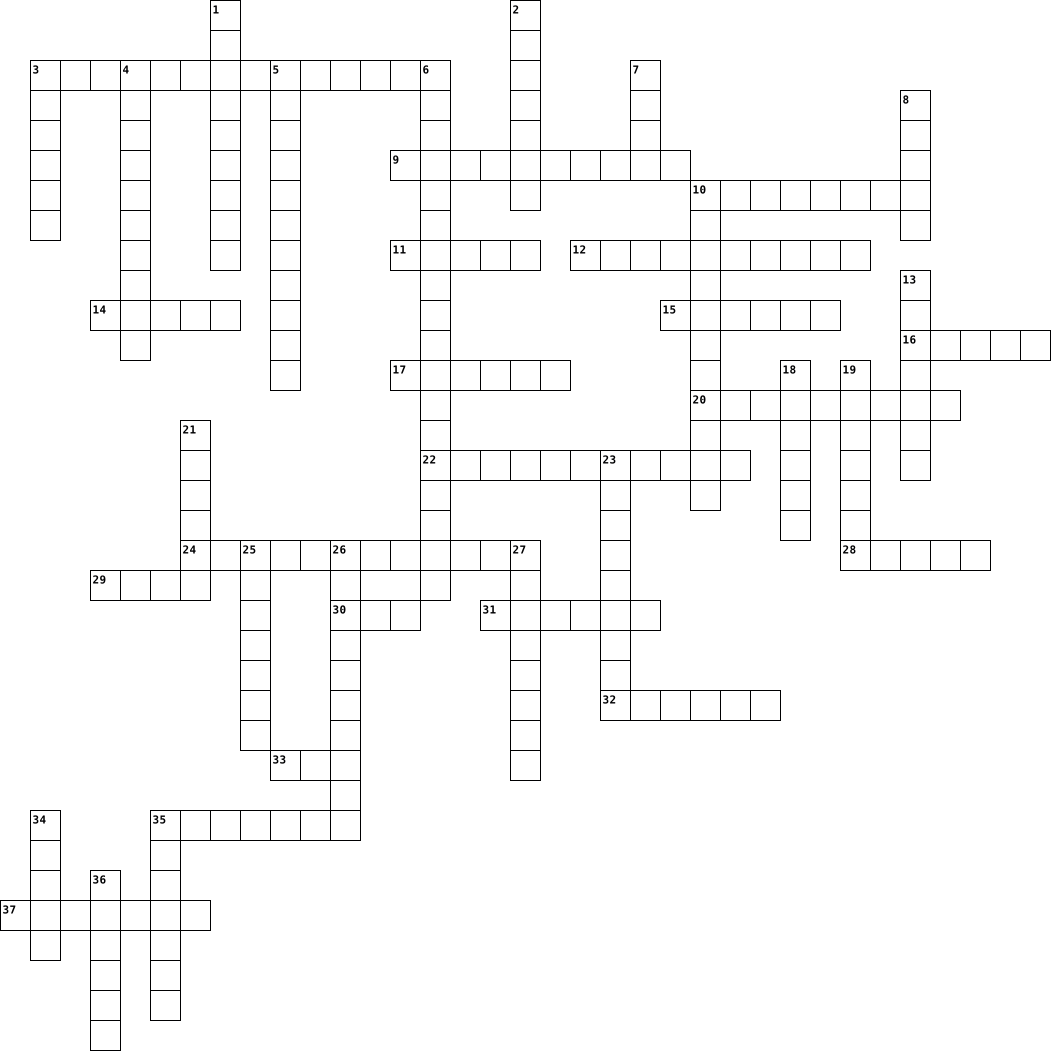
Across
- in the Schenck case the declare that the defendant didnt have a right to express the___________(Schenck v. US)
- Used_________ in the middle of trenches to protect each trench(Types of Warfar)
- 475 miles long from switzerland to the_______(Types of warfare)
- the _____ suffrage emendment wass retified in 1920(evnts leading)
- The belief or desire of a government or people that a country should maintain a strong military capability and be prepared to use it aggressively to defend or promote national interests(causes of WWI)
- in 1921 the US signs a seperate _____ treaty with Germany
- where was Archduke shot and killes? (The Assasination)
- Wilson declares war on April____1917(evnts leading)
- Country that joined the Allies in july 1917 declaring war on central powers (Allied powers vs. Central powers)
- German Uboat sunk the _______- british passenger ship(types of warfare)
- A policy of extending a country's power and influence through diplomacy or military force(causes of WWI)
- 1917, effoort to stop acts of treason(Propaganda)
- the first name of the British Prime Minister(Personalities)
- animal that many times would invaded the trenches(types of warfare)
- country that joined the allies April 1917 declaring war on germany and changing the direction of World War I(Allied powers vs. Central powers)
- congress declare war on April____1917(events leading)
- in 1916 what pledge was issued?(Types of warfare)
- distributied over 75 million pieces of literature for war propaganda(propaganda)
- who changed the "rules" of navel warfare(types of warfare)
- ______31, 1917 Germany ends the succex pledge(events leading)
Down
- name of note that th us recived by acident regarding mexico(events leading up to war)
- __________Schenck was the secratary of the social party of america(scenck v. US)
- August 3 1914 germany declared war on who? (allied and central powerd)
- Plan Name of Germanys plan for war (Types of Warfare)
- One technique of propaganda, no space between words( Propaganda)
- peace settlement signed after World War One had ended in 1918 and in the shadow of the Russian Revolution and other events in Russia(Treaty of Versailles)
- how many main techniques were there for propaganda?(Propaganda)
- Britian entered WW1 in the defense of Belguim and in reaction to Germany's violation of The Treaty of London(1839) (Allied and central powers)
- Patriotic feeling, principles, or efforts(cause of WWI)
- August 1 1914 Germany declared war with who?
- The US president that was in office during the war(events leading)
- and central power)
- The Treaty was signed by the Germans and the_____(the Treay of Versailles)
- A union or association formed for mutual benefit, esp. between countries or organizations( Causes of WWI)
- Last name of man who shot Archduke (The Assasination)
- in 1914 President Wilson declare the US _______(events leading)
- things dug to hid and keed soldiers when there would be battels(Types of warfare)
- a terrifying weapon that the germons would use underwate(types of warfare)
- First name of man who shot Archduke (The Assasination)
- Date of the Assaaination of Archduke (The Assasination)
40 Clues: and central power) • August 1 1914 Germany declared war with who? • 1917, effoort to stop acts of treason(Propaganda) • in 1916 what pledge was issued?(Types of warfare) • Wilson declares war on April____1917(evnts leading) • Last name of man who shot Archduke (The Assasination) • congress declare war on April____1917(events leading) • ...
freedom Writers 2022-09-09

Across
- what Ms G has for her students.
- one who lives through war.
- unwillingness to accept views.
- Difference.
- A 15 yr old that they got to meet.
- what happened to Sharaud in class.
- thousands of people were killed.
Down
- What Ann Frank wrote in.
- teaching.
- Roughstuff.
- How the students felt after speaking to important people.
- heart and mercy.
- Ms Gruwell.
- It has a caused a lot of problems in the world.
14 Clues: teaching. • Roughstuff. • Ms Gruwell. • Difference. • heart and mercy. • What Ann Frank wrote in. • one who lives through war. • unwillingness to accept views. • what Ms G has for her students. • thousands of people were killed. • A 15 yr old that they got to meet. • what happened to Sharaud in class. • It has a caused a lot of problems in the world. • ...
Canada Enters World War One 2024-02-13

Across
- Western territory controlled by germans
- An election that is held either during or right after the war
- A prolonged period od war and conflict where both sides attempt to wear down their enemies and overall win the war or conflict
- The series of attacks by allied troops at the end of the first world war.
- The identification of one's nation and the support for its own interests
- It is the law that says if you are able to fight then you have to fight
- The policy of further extending a countries influence and power through military force or diplomacy
Down
- To secure debt issues so when a country goes into war tax prices are not raised
- It is a prison or confinement camp for people in the war such as enemy alien or political figures
- Canadians rationed things like butter and meat to help with the war
- Information of a biased or misleading nature to a particular cause
- A native to one country who is at war with the one they are currently living in
- A union or association between three powers or states
- An area where there are no rules or regulation or that is does not belong to anyone
- It gave the government the broad authority to maintain the security of the country during war, invasion or insurrection.
- A group of vehicles traveling together with armed forces
- A governments or people belief or desire that a country should maintain a stong and ready military
- Making an unfair profit and or black mailing
18 Clues: Western territory controlled by germans • Making an unfair profit and or black mailing • A union or association between three powers or states • A group of vehicles traveling together with armed forces • An election that is held either during or right after the war • Information of a biased or misleading nature to a particular cause • ...