
animals Crossword Puzzles
ANIMALS 2026-03-11

Across
- ŻÓŁW
- FRETKA
- PAPUŻKA FALISTA
- CHOMIK
- JASZCZURKA
Down
- WĄŻ
- PAPUGA
- PIG ŚWINKA MORSKA
- PAJĄK
- KRÓLIK
- RYBA
- SZCZUR
- INSECT PATYCZAK
13 Clues: WĄŻ • ŻÓŁW • RYBA • PAJĄK • PAPUGA • FRETKA • KRÓLIK • SZCZUR • CHOMIK • JASZCZURKA • PAPUŻKA FALISTA • INSECT PATYCZAK • PIG ŚWINKA MORSKA
Animals 2025-02-16

Across
- HOP WHILE SAMMIE CHASES
- VAMPIRE TURNS INTO
- GIVE ME THAT BANANA
- PAPA FUNNY SOUNDS
- WATER BOWL PET
- GREAT BLUE
- GOBBLE GOBBLE
- SHREK'S FRIEND
Down
- CATERPILLER TURNS INTO
- CREEPY CRAWLY IN BASEMENT
- SAMMIE NO!
- GARFIELD IS A
- EW STINKY WHITE AND BLACK
13 Clues: SAMMIE NO! • GREAT BLUE • GARFIELD IS A • GOBBLE GOBBLE • WATER BOWL PET • SHREK'S FRIEND • PAPA FUNNY SOUNDS • VAMPIRE TURNS INTO • GIVE ME THAT BANANA • CATERPILLER TURNS INTO • HOP WHILE SAMMIE CHASES • CREEPY CRAWLY IN BASEMENT • EW STINKY WHITE AND BLACK
Animals 2024-11-14

Across
- leopard
- kangaroo
- horse
- tiger
- giraffe
- cat
Down
- turtle
- crocodile
- snake
- swan
- lion
- bear
- elephant
13 Clues: cat • swan • lion • bear • snake • horse • tiger • turtle • leopard • giraffe • kangaroo • elephant • crocodile
animals 2024-11-14

Across
- leopard
- kangaroo
- horse
- tiger
- giraffe
- cat
Down
- turtle
- crocodile
- snake
- swan
- lion
- Bear
- elephant
13 Clues: cat • swan • lion • Bear • snake • horse • tiger • turtle • leopard • giraffe • kangaroo • elephant • crocodile
Animals 2024-12-07

Across
- A domesticated animal often kept as a pet
- A small, striped animal often found in the wild
- A black and white bear from China
- A small insect that makes honey
- A large wild animal with a trunk
- A fast-running animal found in Africa
Down
- A small rodent often kept as a pet
- A reptile with a hard shell
- A king of the jungle
- A large animal with a long neck, native to Africa
- A small, hopping mammal
- A large animal that lives in the sea
- A bird known for its colorful feathers
13 Clues: A king of the jungle • A small, hopping mammal • A reptile with a hard shell • A small insect that makes honey • A large wild animal with a trunk • A black and white bear from China • A small rodent often kept as a pet • A large animal that lives in the sea • A fast-running animal found in Africa • A bird known for its colorful feathers • ...
animals 2024-11-01

Across
- Has a trunk
- scary big
- likes carrot
- Likes to chase mice
- Flying mammal
- Large marsupial
- jumping above water
Down
- slow
- cute rodent
- can talk
- long slithery
- Man's best friend
- likes rolling
13 Clues: slow • can talk • scary big • cute rodent • Has a trunk • likes carrot • long slithery • likes rolling • Flying mammal • Large marsupial • Man's best friend • Likes to chase mice • jumping above water
Animals 2024-11-11

Across
- loves beach
- Man’s best friend
- has a trunk
- black and small
- Native to nz
- stings you
Down
- bird
- hold hands
- can swim with
- small and gross
- white thing on neck
- spotty
- rip off duck
13 Clues: bird • spotty • hold hands • stings you • loves beach • has a trunk • rip off duck • Native to nz • can swim with • small and gross • black and small • Man’s best friend • white thing on neck
animals 2024-12-22

Across
- it likes bananas
- we get milk from it
- a big cat
- it is usually green and long
- it gives us eggs
- it is cute and has big ears
- it is big,grey and likes to be in the water
Down
- it lives in the see and has 8 legs
- a big monkey
- it is big and has big ears
- a bird that talks
- it has a long neck
- it is fat and pink
13 Clues: a big cat • a big monkey • it likes bananas • it gives us eggs • a bird that talks • it has a long neck • it is fat and pink • we get milk from it • it is big and has big ears • it is cute and has big ears • it is usually green and long • it lives in the see and has 8 legs • it is big,grey and likes to be in the water
Animals 2025-03-10

Across
- de tierra tortoise
- giraffe
- flies
- mice
- crocodile
- kangaroo
Down
- butterflies
- whale
- dolphin
- shark
- zebra
- beetle
- marina turtle
- sheep
14 Clues: mice • whale • shark • flies • zebra • sheep • beetle • giraffe • dolphin • kangaroo • crocodile • butterflies • marina turtle • de tierra tortoise
Animals 2025-02-17

Across
- Greasy and has a shell on his it's back
- An extinct species of giant mackerel shark
- Slowest animal
- Man's best friend
- Flying mammal
- Has a long neck
- Likes to chase mice
Down
- Large marsupial
- Honey makers
- A insect which can lift a thing more than 10 times heavier than itself
- A bird can fly backward
- Has a trunk
- Fastest running mammal
13 Clues: Has a trunk • Honey makers • Flying mammal • Slowest animal • Large marsupial • Has a long neck • Man's best friend • Likes to chase mice • Fastest running mammal • A bird can fly backward • Greasy and has a shell on his it's back • An extinct species of giant mackerel shark • A insect which can lift a thing more than 10 times heavier than itself
Animals 2025-02-25

Across
- Can give you malaria
- The biggest animal
- Big brown animal that lives in the woods
- Associated with vampires
- King of the savannah
- Is from Australia
Down
- Man's best friend
- Lots of people like to ride this animal
- Has a trunk
- Has white and black stripes
- We eat their eggs
- Likes to chase mice
- Eats carrots
13 Clues: Has a trunk • Eats carrots • Man's best friend • We eat their eggs • Is from Australia • The biggest animal • Likes to chase mice • Can give you malaria • King of the savannah • Associated with vampires • Has white and black stripes • Lots of people like to ride this animal • Big brown animal that lives in the woods
animals 2024-12-26

Across
- They are big and grey. They can swim.
- They are black and white. They can run fast.
- They are brown. They can walk very far.
- They are big and green. They can swim.
- They are black and white. They can climb. They are big.
- They are black and white. They can't fly but they can swim.
- They can talk and fly.
Down
- They are orange, black and white. They can swim, climb and run.
- They are brown and yellow. They have long necks.
- They are brown. They can climb and swing.
- They are brown. They can hop. They live in Australia.
- They are brown. They can run and hunt.
- They are big and grey. They have big ears.
13 Clues: They can talk and fly. • They are big and grey. They can swim. • They are brown. They can run and hunt. • They are big and green. They can swim. • They are brown. They can walk very far. • They are brown. They can climb and swing. • They are big and grey. They have big ears. • They are black and white. They can run fast. • They are brown and yellow. They have long necks. • ...
Animals 2025-03-10

Across
- pływać
- wspinać się
- zebra
- latać
- słoń
- skakać
- papuga
Down
- chodzić
- małpa
- żyrafa
- lew
- hipopotam
- biegać
13 Clues: lew • słoń • małpa • zebra • latać • pływać • żyrafa • skakać • papuga • biegać • chodzić • hipopotam • wspinać się
Animals 2025-04-17

Across
- 猴子
- 鱼
- 河马
- 猫
- 鸟
- 长颈鹿
Down
- 马
- 大象
- 鼠
- 鳄鱼
- 老虎
- 蛇
- 狗
13 Clues: 马 • 鱼 • 鼠 • 猫 • 蛇 • 鸟 • 狗 • 猴子 • 大象 • 鳄鱼 • 河马 • 老虎 • 长颈鹿
Animals 2025-06-10

Across
- many whiskers and says meow
- a baby cow
- a wagging tail and says woof
- where all the animals go to sleep
- has fluffy hair and says baa
- has 4 legs and says moo
- every farmer needs these on their feet
Down
- a baby chicken
- has prickly hair and says oink
- a baby sheep
- was in winnie the pooh and says eeyor
- 2 legs and says cluck
- trots along and says neigh
13 Clues: a baby cow • a baby sheep • a baby chicken • 2 legs and says cluck • has 4 legs and says moo • trots along and says neigh • many whiskers and says meow • a wagging tail and says woof • has fluffy hair and says baa • has prickly hair and says oink • where all the animals go to sleep • was in winnie the pooh and says eeyor • every farmer needs these on their feet
Animals 2025-05-20

Across
- karu
- ahv
- rebane
- kass
- siga
- haikala
- panda
- gorilla
Down
- kapibaara
- hunt
- kana
- koer
- konn
13 Clues: ahv • karu • hunt • kass • kana • siga • koer • konn • panda • rebane • haikala • gorilla • kapibaara
animals 2025-05-16

Across
- Avian intelligent enough to use tools
- THIS IS LITERALLY AN ANIMAL I'M NOT JOKING
- everyone will eventually evolve into this
- Mammal that lives in groups and doesn't like lions
- The main characters sidekick
- The main character
- Secretly evil
- Less cool snail
Down
- So cool they had a shoe named after them
- Insect that literally everyone hates
- Will kill you
- the perfect creature
- Dies after a week you buy them
13 Clues: Will kill you • Secretly evil • Less cool snail • The main character • the perfect creature • The main characters sidekick • Dies after a week you buy them • Insect that literally everyone hates • Avian intelligent enough to use tools • So cool they had a shoe named after them • everyone will eventually evolve into this • THIS IS LITERALLY AN ANIMAL I'M NOT JOKING • ...
animals 2025-10-07

Across
- big cat
- slow animal
- looks like a hugger
- likes meat
- very sharp teeth
- a kind of bird
- pink animal
Down
- animal with four legs
- likes to be an alarm clock
- likes climbing trees
- animal that purs
- very fast animal
- very slow animal
13 Clues: big cat • likes meat • slow animal • pink animal • a kind of bird • animal that purs • very fast animal • very sharp teeth • very slow animal • looks like a hugger • likes climbing trees • animal with four legs • likes to be an alarm clock
Animals 2025-07-19

Across
- tweet
- moo
- carrot
- banana
- fly
- swim
- trunk
Down
- neck
- meow
- woof
- salmon
- stripes
- simba
13 Clues: moo • fly • neck • meow • woof • swim • tweet • simba • trunk • salmon • carrot • banana • stripes
Animals 2025-08-03

Across
- This colorful bird can say a few words.
- It’s the fastest land animal. It runs to catch prey.
- It has no legs, so it can’t run, but it can crawl.
- This fluffy animal is quicker than a turtle and likes carrots.
- This big animal can carry heavy things with its trunk.
- It can swim but can’t walk. People keep it in aquariums.
- It can bark but can’t talk. It’s known as man’s best friend.
- This bird is the strongest flier and can see from very far.
Down
- It can build sticky webs and has eight legs.
- This intelligent sea animal can jump and loves to play.
- One of the strongest and most dangerous animals in the jungle.
- This wild cat is stronger than a house cat.It lives in the savannah
- The biggest animal in the ocean.
- This animal can fly high in the sky and has very sharp eyes.
14 Clues: The biggest animal in the ocean. • This colorful bird can say a few words. • It can build sticky webs and has eight legs. • It has no legs, so it can’t run, but it can crawl. • It’s the fastest land animal. It runs to catch prey. • This big animal can carry heavy things with its trunk. • This intelligent sea animal can jump and loves to play. • ...
Animals 2025-09-28

Across
- lõvi
- nägema
- tulema
- kutsikas
- kirjutama
- koer
Down
- kassipoeg
- magama
- lammas
- minema
- lehm
- kass
- siga
13 Clues: lõvi • lehm • kass • siga • koer • magama • nägema • lammas • minema • tulema • kutsikas • kassipoeg • kirjutama
Animals 2025-11-11

Across
- Spongebob's friend from Texas
- Birds' extinct ancestors
- A type of shoewear was named after this reptile
- Animal that shares its name with a deadly sin
- Heaviest terrestrial animal
- Common friend of an outlaw sailor
Down
- Shares the name with a fruit it eats
- The embodiment of camouflage
- Male animal that gets gives birth
- Santa's horned helpers
- Fastest land animal in the world
- Also known as the killer whale
- Resembles a crosswalk
13 Clues: Resembles a crosswalk • Santa's horned helpers • Birds' extinct ancestors • Heaviest terrestrial animal • The embodiment of camouflage • Spongebob's friend from Texas • Also known as the killer whale • Fastest land animal in the world • Male animal that gets gives birth • Common friend of an outlaw sailor • Shares the name with a fruit it eats • ...
Animals 2025-11-17

Across
- A small pet that looks like a mouse
- Lives in the COWshed
- Has a trunk
- Man's best friend
- King of the birds
- A big animal that jumps around
- Very annoying
Down
- People love to ride them
- Fluffy and lives in a farm
- Likes to chase mice
- A very large fish
- Makes ee-aw sounds!
- King of the jungle
13 Clues: Has a trunk • Very annoying • A very large fish • Man's best friend • King of the birds • King of the jungle • Likes to chase mice • Makes ee-aw sounds! • Lives in the COWshed • People love to ride them • Fluffy and lives in a farm • A big animal that jumps around • A small pet that looks like a mouse
Animals 2026-02-08

Across
- – A small green animal that jumps and lives near water.
- – A farm animal with white wool.
- – A very small animal. It likes cheese.
- – A black and white bear that eats bamboo.
- – A big orange animal with black stripes.
- – An animal that climbs trees and eats bananas.
Down
- – A friendly pet. It says “woof.”
- – An animal that lives in water and swims.
- – A very big animal with a long nose.
- – A big magic animal that can breathe fire.
- – A long animal with no legs.
- – A small pet. It says “meow.”
- – An animal with wings that can fly.
13 Clues: – A long animal with no legs. • – A small pet. It says “meow.” • – A farm animal with white wool. • – A friendly pet. It says “woof.” • – An animal with wings that can fly. • – A very big animal with a long nose. • – A very small animal. It likes cheese. • – A big orange animal with black stripes. • – An animal that lives in water and swims. • ...
Animals 2026-06-09

Across
- Large animal on a farm
- An animal that hops
- A black and white striped animal
- Man's best friend
- This animal can talk
- Has a very long neck
- This animal eats bananas
Down
- Likes to chase mice
- A furry pet
- Has a trunk
- Green and swims
- You can ride this animal
- Orange and black striped animal
13 Clues: A furry pet • Has a trunk • Green and swims • Man's best friend • Likes to chase mice • An animal that hops • This animal can talk • Has a very long neck • Large animal on a farm • You can ride this animal • This animal eats bananas • Orange and black striped animal • A black and white striped animal
ANIMALS 2026-05-30

Across
- An animal that is black
- An animal that is long
- An animal that has a shell
- An animal that goes in water and is grey
- A big monkey
- An animal that is black and white
Down
- The only mammal that can fly
- A big animal
- A type of bird
- A small insect
- An animal that is in the arctic and is black and white
- An animal that hops
- An animal that gallops
13 Clues: A big animal • A big monkey • A type of bird • A small insect • An animal that hops • An animal that is long • An animal that gallops • An animal that is black • An animal that has a shell • The only mammal that can fly • An animal that is black and white • An animal that goes in water and is grey • An animal that is in the arctic and is black and white
kim breur 25dv34b 2025-09-26

Across
- a space for animals, ussualy with bars or bencing
- a place where animals live or kept
- ziekte
- cleacing out stables
- looking after animals health and wellbeing
- dierenambulance
- operatie
Down
- dry stalls use for bedding
- material covering the floor to keep animals comfortable
- giving animals food and water
- behandeling
- small pieces of wood used for bedding
- the environment where animals live in nature
- gezondheid
- removing dirt and waste from animal spaces
15 Clues: ziekte • operatie • gezondheid • behandeling • dierenambulance • cleacing out stables • dry stalls use for bedding • giving animals food and water • a place where animals live or kept • small pieces of wood used for bedding • looking after animals health and wellbeing • removing dirt and waste from animal spaces • the environment where animals live in nature • ...
Shark Saver 2022-12-13

Across
- not feeling guilty or questions
- a way to make animals separate from other animals that harm each other
- susceptible to physical or emotional attack or harm
- your in actual bad danger
- food used to entice fish or other animals as prey
- feeling like someone wants to do something to you
- a species considered to be facing an extremely high risk of extinction in the wild
- when other animals try to attack or another animal feel mistreated
- when you fish so much
- use up the supply or resources of.
Down
- species that no longer live
- there animals that hunt others animals incidental Catch animals that get trap in something
- things that you face for doing something bad
- Powerful body that helps make sharks top ocean predators
- Sense and smell
- any flesh-eating animal that has no natural predators or enemies
- when species vanish much faster than they are replaced
- and type of action
- something you have to do fast
- species are threatened with
- a type of ray
- surviving species
- something that can make a change
- different type or species
24 Clues: a type of ray • Sense and smell • surviving species • and type of action • when you fish so much • your in actual bad danger • different type or species • species that no longer live • species are threatened with • something you have to do fast • not feeling guilty or questions • something that can make a change • use up the supply or resources of. • ...
Shark Saver 2022-12-13

Across
- not feeling guilty or questions
- a way to make animals separate from other animals that harm each other
- susceptible to physical or emotional attack or harm
- your in actual bad danger
- food used to entice fish or other animals as prey
- feeling like someone wants to do something to you
- a species considered to be facing an extremely high risk of extinction in the wild
- when other animals try to attack or another animal feel mistreated
- when you fish so much
- use up the supply or resources of.
Down
- species that no longer live
- there animals that hunt others animals incidental Catch animals that get trap in something
- things that you face for doing something bad
- Powerful body that helps make sharks top ocean predators
- Sense and smell
- any flesh-eating animal that has no natural predators or enemies
- when species vanish much faster than they are replaced
- and type of action
- something you have to do fast
- species are threatened with
- a type of ray
- surviving species
- something that can make a change
- different type or species
24 Clues: a type of ray • Sense and smell • surviving species • and type of action • when you fish so much • your in actual bad danger • different type or species • species that no longer live • species are threatened with • something you have to do fast • not feeling guilty or questions • something that can make a change • use up the supply or resources of. • ...
Producers, Consumers, and Relationships 2025-11-04

Across
- Animals that eat carcasses of animals.
- Relationship that involves fighting for resources.
- Relationship between two animals that benefit one another.
- Relationship between a predator and a prey.
- Organisms that eat others because they cannot make their own food.
- Animals that only eat other animals.
Down
- Relationship between a parasite and a host.
- Relationship where only one animal benefits.
- Process that producers do to grow and develop.
- Organisms that make their own food.
- Animals that break down dead plants and animals.
- Animals that only eat plants.
- Animals that eat plants and animals.
13 Clues: Animals that only eat plants. • Organisms that make their own food. • Animals that eat plants and animals. • Animals that only eat other animals. • Animals that eat carcasses of animals. • Relationship between a parasite and a host. • Relationship between a predator and a prey. • Relationship where only one animal benefits. • Process that producers do to grow and develop. • ...
Animals of different continents 2022-07-15

Across
- Europe, these birds swim rather than fly
- Asia, these birds have large, beautiful tails
- Asia, mongooses like to fight them
- North America, these pack animals hunt together.
- Australia, their joeys live in pouches
- Australia, the largest bird in the world
- Antarctica, these birds swim rather than fly
- Australia, a kind of wild dog
- North America, these animals wash their food before they eat it.
- Europe, these herd animals live in the far north
- South America, this predator has whiskers and spots
- Antarctica, this aquatic predator sometimes hunts 12 down
Down
- Africa, these mammals like to swim in rivers and are actually very dangerous to humans
- Africa, these animals make a noise that sounds like laughing
- Africa, these animals live in prides
- North America, this loud amphibian calls out in a deep voice at night
- South America, this is the heaviest snake in the world
- South America, this slow animal has algae grow in its fur
- Antarctica, these mammals have big teeth and spots
- Europe, these spiky animals can roll up into a ball
- Asia, these animals have to eat for up to 16 hours a day to get enough energy
21 Clues: Australia, a kind of wild dog • Asia, mongooses like to fight them • Africa, these animals live in prides • Australia, their joeys live in pouches • Europe, these birds swim rather than fly • Australia, the largest bird in the world • Antarctica, these birds swim rather than fly • Asia, these birds have large, beautiful tails • ...
Animal breeding, health and welfare 2013-08-28

Across
- A farmer who grazes cattle or sheep for market
- The study of heredity and inherited characteristics or traits
- The activity of controlling the mating and production of offspring of animals
- Capable of being passed from one generation to the next
- The efficiency of a person, animal, etc., in converting inputs into useful outputs
- Lacking horns, either naturally or because of removal
- The quality or state of being muscular
- The use of vaccines to prevent specific diseases
- A group of animals kept for breeding, or a place where breeding animals are kept
- Disease caused by and/or capable of being transmitted by infection e.g. by bacteria
Down
- Person that eats or uses something e.g. meat
- The physical and psychological well-being of animals
- The condition or degree of being fertile i.e. able to produce offspring
- The care and breeding of animals
- A person qualified to treat diseased or injured animals
- A person in physical charge of an animal
- Domestic animals, such as cattle or horses, raised for profit
- Yielding financial gain; able to make a profit
- Genetically determined characteristics
- Type of animal breeding where people select the traits they want the offspring to possess
20 Clues: The care and breeding of animals • The quality or state of being muscular • Genetically determined characteristics • A person in physical charge of an animal • Person that eats or uses something e.g. meat • A farmer who grazes cattle or sheep for market • Yielding financial gain; able to make a profit • The use of vaccines to prevent specific diseases • ...
Year 8 - Animal Farm Crossword 2023-12-15

Across
- What is the name of the farmer that the animals fight in the Battle of the Windmill?
- The first battle that the animals have is called the Battle of the...
- What is the name of the pigs' solicitor?
- What dictator is Napoleon based on?
- Boxer's catchphrase: Napoleon is always...
- All of the animals call themselves what word to make themselves seem equal?
- Which animal tells stories of 'Sugarcane Mountain'?
- The animals sing a song called 'Beasts of...' what?
- How many dogs chased Snowball out of the farm?
- Which animal is the enemy of Snowball?
- What country's revolution inspired the novel?
Down
- What sort of animal is Benjamin?
- What is the term for false/misleading information used to persuade people?
- Which animals constantly repeat 'four legs good, two legs bad'?
- What is the name of Mr. Pilkington's farm?
- What is the term for betraying someone who trusts you?
- The novel was written by George...
- How many Commandments are made to guide the animals?
- What is the name of the pig who writes songs in praise of Napoleon?
- Who does Old Major say is the enemy of all animals?
20 Clues: What sort of animal is Benjamin? • The novel was written by George... • What dictator is Napoleon based on? • Which animal is the enemy of Snowball? • What is the name of the pigs' solicitor? • What is the name of Mr. Pilkington's farm? • Boxer's catchphrase: Napoleon is always... • What country's revolution inspired the novel? • ...
Food Chains and Webs 2025-05-15

Across
- A herbivore whose diet consists almost exclusively of bamboo.
- A herbivore that eats grass and gives us milk.
- A food ____ is the path of the transfer of food energy from one living thing to another.
- An animal that hunts another animal for food.
- An animal that eats both plants and animals.
- Living things that are producers. They produce food through photosynthesis.
- Living things need this to live and to grow.
- Plants are ____.
- A food ____ groups all of the different food chains and how they interact in an ecosystem.
- A living thing that eats other living things as food.
Down
- This supplies the energy that is taken in by plants.
- An animal that eats other animals.
- Animals are ____.
- Animals that eat dead or rotting animal flesh.
- Animals that only eat plants.
- A living thing that feeds on and breaks down dead things or wastes for food.
- A living thing that makes its own food.
- A type of decomposer.
- The animal that is hunted or eaten by other animals.
- Dead or rotting animal flesh that is eaten as food by animals like vultures.
20 Clues: Plants are ____. • Animals are ____. • A type of decomposer. • Animals that only eat plants. • An animal that eats other animals. • A living thing that makes its own food. • An animal that eats both plants and animals. • Living things need this to live and to grow. • An animal that hunts another animal for food. • A herbivore that eats grass and gives us milk. • ...
Enviromental Puzzle 2025-04-01

Across
- A plant that makes its own food.
- A living thing that breaks down dead things.
- One side benefits, the other gets hurt.
- A diagram that shows energy levels in food.
- A close relationship between two living things.
- An animal that eats only other animals.
- A group of the same animals in one place.
- A line that shows who eats who.
- The home of an animal or plant.
- An animal that hunts other animals.
- One side benefits, the other is not hurt.
- A relationship where both sides help each other.
- An animal that eats only plants.
- A non-living thing like water, sunlight, or soil.
Down
- When living things fight for food or space.
- An animal that eats plants or other animals.
- Many food chains connected together.
- An animal that is hunted and eaten.
- The role or job of a living thing.
- The most animals a place can support.
- Something that stops a population from growing.
- An animal that eats both plants and animals.
- A place where animals and plants live together.
- All the living things in one area.
- A living thing in nature, like a plant or animal.
25 Clues: A line that shows who eats who. • The home of an animal or plant. • A plant that makes its own food. • An animal that eats only plants. • The role or job of a living thing. • All the living things in one area. • An animal that is hunted and eaten. • An animal that hunts other animals. • Many food chains connected together. • The most animals a place can support. • ...
Mammals Crossword 2024-11-11

Across
- a protein that breaks down polymeres, e.g. lactase
- animals that digest plant material in a multi-chambered stomach (e.g., cows)
- a glands that produces oil for skin and hair is ...
- egg-laying mammals like the platypus
- a pouch in the intestine that helps digest plant material
- a process where microorganisms break down food, especially in the hindgut of animals like horses and rabbits, to digest fiber
- animals that give birth to live young
- animals with a single-chamber stomach like pig
- an organ that produces and releases substances like hormones
- the tube that carries food from the throat to the stomach
Down
- a temporary female organ that nourishes a developing baby in viviparous mammals
- the fur or hair of a mammal
- the part of the brain responsible for thinking and sensory processing
- plant material that is slowly digested
- the release of substances from cells or glands
- warm-blooded animals with hair and mammary glands
- animals with four limbs
- mammals that carry and nurse their young in a pouch
- animals that lay eggs
- an organ that mixes food with digestive juices with low pH
20 Clues: animals that lay eggs • animals with four limbs • the fur or hair of a mammal • egg-laying mammals like the platypus • animals that give birth to live young • plant material that is slowly digested • the release of substances from cells or glands • animals with a single-chamber stomach like pig • warm-blooded animals with hair and mammary glands • ...
Animal Behaviour Crossword 2023-02-02

Across
- Animals searching for food
- Animals sending and receiving signals to each other
- Animals defending an area from intruders
- Animal ability to blend in with their environment
- Animals looking for food that has been left behind
- Animals reacting with hostility to a perceived threat
- Animal movement from one place to another
Down
- Animals caring for their fur and skin
- Animals engaging in physical and social activities
- Animal sleep during the winter
- Animal ability to imitate other species
- Animals reproducing and forming pair bonds
- Animals helping other animals
13 Clues: Animals searching for food • Animals helping other animals • Animal sleep during the winter • Animals caring for their fur and skin • Animal ability to imitate other species • Animals defending an area from intruders • Animal movement from one place to another • Animals reproducing and forming pair bonds • Animal ability to blend in with their environment • ...
Animal Science Careers 2021-09-02

Across
- They take care of older pigs
- Assist in branding or tagging of animals
- therapist for animals
- They work on a farm and milk cows
- Analyze the genetic makeup of animals in order to discover which genes cause them to behave certain ways.
- they sell meat that is according to standards
- Making sure the mom and baby animals are okay and healthy
- They train horses
- They make all types of animals pretty by brushing fur,clipping nails, cleaning ears and teeth.
Down
- They take care of baby pigs
- reproductive processes impact animal health
- Take care of the animals that are going to be food
- They clean animal stuff with powerful water
- They are responsible for the sickness of animals like dogs, cats, rabbits, caged birds, and other small pets.
- out personnel assist in loading market livestock onto and off of trucks.
- Assist veterinarian in treatments and surgeries
- They takes care of bees
- manages the day- to-day farm operations for the ranch owner.
- They mostly work at the Zoo
19 Clues: They train horses • therapist for animals • They takes care of bees • They take care of baby pigs • They mostly work at the Zoo • They take care of older pigs • They work on a farm and milk cows • Assist in branding or tagging of animals • reproductive processes impact animal health • They clean animal stuff with powerful water • they sell meat that is according to standards • ...
Animal Ethics 2023-02-13

Across
- concerned with distinguishing between good and evil in the world
- a committee of highly educated and skilled people which include veterinarians, scientists and lawyers to create standards for every single experiment and animal study
- to practice minimal to no pain on all beings
- Giving non humans, human feelings/characteristics
- an agency that regulates the treatment of animals in research
- belief animals should be treated humanely
- another name for puppy mills
Down
- word used to explain the stereotypical behavior of animals in captivity
- belief that animals should not be exploited ever
- an animal right activists organization
- quick mass production style of farming
- feelings of pity and sorrow for someone else's misfortune
- a building that houses surrendered animals
- the ability to understand and share the feelings of another
- Inspect & certify slaughterhouses, produce farms, dairy farms and puppy mills factories
- surrendered animals that are placed in temporary foster homes
- an animal friendlier style of farming
- supporting animals in need of help
- an umbrella of the police agency to ensure animal laws are abided
19 Clues: another name for puppy mills • supporting animals in need of help • an animal friendlier style of farming • an animal right activists organization • quick mass production style of farming • belief animals should be treated humanely • a building that houses surrendered animals • to practice minimal to no pain on all beings • belief that animals should not be exploited ever • ...
Jawless Fish Crossword Puzzle 2022-02-24

Across
- (live on ocean but travel to freshwater)
- a species introduced into a new environment which is harmful towards it
- the class of lampreys
- animals that only live in the ocean live in?
- The infraphylum of jawless fish
- a cartilaginous skeletal rod supporting the body in all embryonic and some adult chordate animals.
- the class of hag fish
- animals whom have a backbone
- a type of jawless fish which starts off in saltwater but eventually moves to freshwater areas.
- reproduction, the reproduction of which consists of a male and female partner
- animals who do not have scales
- consisting of no bones
Down
- an organism that drains nutrients from other animals in order to sustain its own.
- Animals that have no jaw are?
- animals that consume dead organisms
- a type of jawless fish which only lives in saltwater.
- chambered heart, the type of heart which a boneless fish has
- an animal of the large phylum Chordata, comprising the vertebrates together with the sea squirts and lancelets.
- a defense mechanism that jawless fish excrete to clog the gills of its predators
- gill pouch, an organ pertaining to jawless fish
- eye, a type of eye which jawless fish contain
21 Clues: the class of lampreys • the class of hag fish • consisting of no bones • animals whom have a backbone • Animals that have no jaw are? • animals who do not have scales • The infraphylum of jawless fish • animals that consume dead organisms • (live on ocean but travel to freshwater) • animals that only live in the ocean live in? • eye, a type of eye which jawless fish contain • ...
The Fur-Bearers' Winter Crossword 2024-12-05

Across
- Another name for the northern lights
- It actually insulates animals' dens in winter
- Many animals do this to get their winter coats
- Their cousin, the woodland caribou, lives in Canada
- The world's largest land carnivore who lives in Canada
- Some animals (and people) do this and head south for winter
- Big paws help keep them on top of snow while hunting
- A type of rabbit known for their snowshoe-like paws
- Where animals keep their food stored for winter
Down
- The long winter's rest for many fur-bearing animals
- Impression left in snow by paws
- Colouring-changing coats provide this to many animals
- Northern fox with a white winter coat
- Many small fur-bearers do this to find food in winter
- The layer of ground frozen year-round
- A snowy, blustery, winter storm
- Known for "chattering" tail flicks
- Canada's arctic is this type of biome
- Not even a mouse was doing this in 'Twas the Night Before Christmas
- A type of hibernation that black bears and raccoons experience
- Where many fur-bearing animals spend their winters
- Canada's vast coniferous forest
- Iconic dam-building rodent
23 Clues: Iconic dam-building rodent • Impression left in snow by paws • A snowy, blustery, winter storm • Canada's vast coniferous forest • Known for "chattering" tail flicks • Another name for the northern lights • Northern fox with a white winter coat • The layer of ground frozen year-round • Canada's arctic is this type of biome • It actually insulates animals' dens in winter • ...
TEKA TEKI HOKI 2023-10-10

Across
- animal in the ground
- bloodsucker
- nest building insect
- invading animal
- Has a trunk
- wild sea animals
- arctic animals
- animals like bananas
Down
- grass eating insect
- leaf eater
- pouncing bird
- clever sea animal
- Flying mammal
- Likes to chase mice
- bamboo eating animals
- rodent
16 Clues: rodent • leaf eater • bloodsucker • Has a trunk • pouncing bird • Flying mammal • arctic animals • invading animal • wild sea animals • clever sea animal • grass eating insect • Likes to chase mice • animal in the ground • nest building insect • animals like bananas • bamboo eating animals
Photosynthesis and Food Webs 2013-11-24

Across
- These animals hunt and eat other animals
- These animals eat plants and other animals
- These are green plants that make their own food from sunlight
- The amount of organic material in an organism
- These animals only eat other animals
- The way plants make their energy
- The type of sugar the plant makes
Down
- The form of energy used by plants to make food
- The plant makes this as a waste product
- The plant used this from the air to help make its food
- These animals have to eat things to get their energy
- The green substance in plant cells that allow them to photosynthesize
- These are little discs in the plant cell. These have the green substance called chlorophyll in them.
- These animals get hunted and eaten by the predators!
- These animals only eat plants
15 Clues: These animals only eat plants • The way plants make their energy • The type of sugar the plant makes • These animals only eat other animals • The plant makes this as a waste product • These animals hunt and eat other animals • These animals eat plants and other animals • The amount of organic material in an organism • The form of energy used by plants to make food • ...
Animal breeding, health and welfare 2013-08-28

Across
- The care and breeding of animals
- A farmer who grazes cattle or sheep for market
- Type of animal breeding where people select the traits they want the offspring to possess
- Domestic animals, such as cattle or horses, raised for profit
- The quality or state of being muscular
- The physical and psychological well-being of animals
- The use of vaccines to prevent specific diseases
- Disease caused by and/or capable of being transmitted by infection e.g. by bacteria
- A person qualified to treat diseased or injured animals
- The activity of controlling the mating and production of offspring of animals
- A person in physical charge of an animal
Down
- Yielding financial gain; able to make a profit
- The study of heredity and inherited characteristics or traits
- The condition or degree of being fertile i.e. able to produce offspring
- A group of animals kept for breeding, or a place where breeding animals are kept
- The efficiency of a person, animal, etc., in converting inputs into useful outputs
- Genetically determined characteristics
- Lacking horns, either naturally or because of removal
- Capable of being passed from one generation to the next
- Person that eats or uses something e.g. meat
20 Clues: The care and breeding of animals • The quality or state of being muscular • Genetically determined characteristics • A person in physical charge of an animal • Person that eats or uses something e.g. meat • Yielding financial gain; able to make a profit • A farmer who grazes cattle or sheep for market • The use of vaccines to prevent specific diseases • ...
Ecosystems 2015-11-03

Across
- A community of organisms and the environment in which they live.
- The transfer of food energy between organisms in an ecosystem.
- All the organisms of the same kind that live together in an ecosystem.
- Nonliving things in the environment.
- A diagram that shows how much energy is passed from one organism to the next at each level in the food chain.
- Animals that eat other animals.
- A living thing that gets energy by breaking down dead organisms.
- Organisms that make their own food.
- Behaviors that an organism inherits and knows how to do without being taught.
Down
- Process that allows plants make food.
- Animals that eat both plants and animals.
- A group of food chains that overlap.
- Living things in the environment.
- A trait or characteristic that helps an organism survive.
- Animals that hunt and eat other animals.
- Animals that are hunted by predators.
- All the living and nonliving things that surround and affect an organism.
- Organisms that only eat plants and plant products.
- Organisms that get energy by eating other organisms.
- A group of organisms that live in the same area and interact with each other.
20 Clues: Animals that eat other animals. • Living things in the environment. • Organisms that make their own food. • A group of food chains that overlap. • Nonliving things in the environment. • Process that allows plants make food. • Animals that are hunted by predators. • Animals that hunt and eat other animals. • Animals that eat both plants and animals. • ...
Intro to Animal Science Terms 2023-10-10

Across
- / Young female Equine
- / Simple stomached animals
- / Bovine Offspring up to one year of age
- / Porcine offspring
- / Parturition in the Caprine species
- / Animals of the cattle species
- / Parturition in the Ovine species
- / Female Ovine
- / Caprine offspring up to one year of age
- / Equine offspring under a year of age
- / In Tact male Bovine
- / Castrated male Bovine
- / Female Bovine has calved
- / In Tact male Equine
- / Animal above one year of age and under two
- / Castrated male Porcine
- / Animals of the goat species
- / In Tact male Ovine
Down
- / Castrated male Equine
- / Parturition in Equine species
- / Animals of the swine species
- / Female Porcine has farrowed
- / Parturition in Porcine species
- / Animals of the sheep species
- / In Tact Male of the Caprine species
- / Female Porcine not yet farrowed
- / Mature female Equine
- / Female Bovine not yet calved
- / Female of the Caprine species
- / In Tact male of the Ovine or Caprine species
- / Animals of the horse species
- / Castrated male Ovine
- / Parturition in Bovine species
- / Ruminant Animals
- / Ovine offspring up to one year of age
- / In Tact male Porcine
36 Clues: / Female Ovine • / Ruminant Animals • / Porcine offspring • / In Tact male Ovine • / Young female Equine • / In Tact male Bovine • / In Tact male Equine • / Mature female Equine • / Castrated male Ovine • / In Tact male Porcine • / Castrated male Equine • / Castrated male Bovine • / Castrated male Porcine • / Simple stomached animals • / Female Bovine has calved • ...
Animal vocabulary Grade 9 2025-04-29

Across
- The soft hair that covers many mammals
- A thick growth of hair around the neck of animals like lions or horses
- The hard feet of animals like horses and deer
- A loud, deep sound made by animals like lions to show power
- A fold of skin where marsupials carry their young
- A hard outer covering that protects animals like turtles and snails
- Long, pointed teeth often used to catch or kill prey
- A flexible, elongated limb used by animals like octopuses
- Limb structures that allow birds, bats, and insects to fly
- Small, flat plates that protect fish and reptiles
Down
- The projecting part of an animal's face, including the nose and mouth
- Coloring or patterns that help animals blend into their surroundings
- Sensitive hairs that help animals detect nearby objects
- A thick layer of fat found in whales and seals for insulation
- The feathers that cover a bird’s body
- An extension of the spine used for balance, communication, or defense
- A hard, pointed mouthpart found on birds
- Sharp, curved nails used for hunting or climbing
- Organs that allow fish and some amphibians to breathe underwater
- Branched horns found on male deer and related species
20 Clues: The feathers that cover a bird’s body • The soft hair that covers many mammals • A hard, pointed mouthpart found on birds • The hard feet of animals like horses and deer • Sharp, curved nails used for hunting or climbing • A fold of skin where marsupials carry their young • Small, flat plates that protect fish and reptiles • ...
Mammals 2026-05-04

Across
- - "tusked rodents" hyraxes
- -the amount of time a mammal Stays in its mother's uterus before birth
- - flying Mammals (bats) with wings
- - jumping back legs teeth like rodents (rabbits, hares, pikas)
- - having a long tongue but no teeth (anteater, sloth, armadillos)
- animals with opposible thumbs (monkeys, lemurs, people)
- -organ that provides food and Oxygen to an unborn baby.
- - mammals that lay eggs (platypus, Spiney ant eaters
- - hunting meat eaters (Cats, dogs, bears Seals)
Down
- - animals that give birth to undeveloped young which mature in pockets (Kangaroo, Wallabies, koalas, opossums
- - Animals with constantly growing incisors. (mice, rats, squirrels, prairie dogs, porcupines)
- mammal with scale like armor (Pangdian)
- -sea living mammals with blowhdes for breathing (Whales, dolphins)
- Animals with trunks (Elephant, Mammoth)
- -flying mammals with skin flaps between arms & legs (flyinglemors)
- - organ that makes
- Sea Cows (Manatee, dugong, seacow)
- - Animals that have hair & produce milk for their young.
- - Animals with an even number of hooves (Sheep, deer, bison, goat, cow, pig)
- -Animals with an odd. number of hooves (horses, zebra, rhino, tapier)
- - mammals that the young develop inside the mother's body
- -Ardovarks
22 Clues: -Ardovarks • - organ that makes • - "tusked rodents" hyraxes • - flying Mammals (bats) with wings • Sea Cows (Manatee, dugong, seacow) • mammal with scale like armor (Pangdian) • Animals with trunks (Elephant, Mammoth) • - hunting meat eaters (Cats, dogs, bears Seals) • - mammals that lay eggs (platypus, Spiney ant eaters • ...
TEKA TEKI HOKI 2023-10-10

Across
- animal in the ground
- bloodsucker
- nest building insect
- invading animal
- Has a trunk
- wild sea animals
- arctic animals
- animals like bananas
Down
- grass eating insect
- leaf eater
- pouncing bird
- clever sea animal
- Flying mammal
- Likes to chase mice
- bamboo eating animals
- rodent
16 Clues: rodent • leaf eater • bloodsucker • Has a trunk • pouncing bird • Flying mammal • arctic animals • invading animal • wild sea animals • clever sea animal • grass eating insect • Likes to chase mice • animal in the ground • nest building insect • animals like bananas • bamboo eating animals
Cattle crossword 2024-06-04

Across
- meat that comes from cows?
- long grass biome?
- bi-product from cows?
- a place where animals are shelter?
- where animals are sent to be killed ?
- the surroundings in which animals and people live?
Down
- what is a cattle farmer called?
- people who tend to animals on a farm?
- foot and mouth is one of these that kill animals?
- a disease that effects animals' hoofs and mouth?
- ability to maintain or support a process over time?
- the practice of growing crops/animals?
- dry dust harsh conditions?
- a group of cattle?
- sound cows make?
15 Clues: sound cows make? • long grass biome? • a group of cattle? • bi-product from cows? • meat that comes from cows? • dry dust harsh conditions? • what is a cattle farmer called? • a place where animals are shelter? • people who tend to animals on a farm? • where animals are sent to be killed ? • the practice of growing crops/animals? • a disease that effects animals' hoofs and mouth? • ...
Feeding Relationships 2021-12-09

Across
- Animals that hunt, kill and eat other animals
- All animals are called ______
- Plants are_______because they make their food
- Begin all food chains
- Group of organisms that feed on dead plants and animals
- Animals that only eat other animals
- A number of food chains that are linked
Down
- Fungi and _______are types of decomposers
- Animals that only feed on plants
- All the energy in a food chain comes from the ____
- Animals that feed on both plants and animals
- Process by which plants make their food
- Animals that are hunted and eaten
13 Clues: Begin all food chains • All animals are called ______ • Animals that only feed on plants • Animals that are hunted and eaten • Animals that only eat other animals • Process by which plants make their food • A number of food chains that are linked • Fungi and _______are types of decomposers • Animals that feed on both plants and animals • ...
Ecosystem loss 2020-10-23

Across
- where many animals that are not domesticated live.
- humans passing their genes in to it.
- Animals that eat other animals
- The aliment that insects, plants, animals and humans eat.
- An ecosystem where many species live.
- When another species Threat another one.
- Wet and Tropical area where there are many species of animals and plants.
Down
- An ecosystem with a lot of hot, sun and sand.
- Make things together like searching for food.
- ecosystem made of water.
- An ecosistem with a little bit of hot and with a lot of water.
- A famous region in the South of Florida.
- They are quite similar to the anacondas and it’s rare and difficult to see one in Florida.
- An estate in the USA
- specie of many species of 4 legs the most of them with fur.
- an animal domesticated by a human
- When someone cannot do something.
- A hole in the undergground with many species inside
- A specie similar to the Hears
- predators of snakes
20 Clues: predators of snakes • An estate in the USA • ecosystem made of water. • A specie similar to the Hears • Animals that eat other animals • an animal domesticated by a human • When someone cannot do something. • humans passing their genes in to it. • An ecosystem where many species live. • A famous region in the South of Florida. • When another species Threat another one. • ...
polar biome 2017-03-03

Across
- which are thicker, trap more air and are white
- and waterproof
- small bulb that breaks off, puts down roots, and grows into a new plant
- insulation by trapping air
- hills
- animals to move over snow and ice much easier
- fat layer between the skin and muscle
- land of sedges, mosses, grasses, and lichens growing in patches
- smaller animals to survive away from the harsh polar conditions
- able to occupy a cave or burrow which protect
- some animals to blend with their environment.
- to rocks, mosses and algae
Down
- and traps a layer of air warmed by the body
- heat loss
- that live for more than two years.
- carcass of a dead animal
- earth
- animals to remove heavy accumulations of snow and ice
- without a backbone
- many animals to maintain their body temperature
20 Clues: earth • hills • heat loss • and waterproof • without a backbone • carcass of a dead animal • insulation by trapping air • to rocks, mosses and algae • that live for more than two years. • fat layer between the skin and muscle • and traps a layer of air warmed by the body • animals to move over snow and ice much easier • able to occupy a cave or burrow which protect • ...
Invertebrates 2019-03-05

Across
- two shells held together by hinges. ex clams
- invertebrates with soft, unsegmented bodies that are often protected by a hard outer outer shell
- chemicals that kill pests
- an organism that lives inside or on another organism
- long,round body
- animals that only eat other animals/meat
- largest group of mollusks. ex snails and slugs
- outer skeleton
- structures or behaviors that allow animal to perform these basic functions in their environments
- a tiny hole or opening that allows the passage of liquid
Down
- feeds on dead plants/animals
- organelle for breathing
- the process of shedding an outgrown exoskeleton
- a process in which an animal’s body undergoes dramatic changes in form during its life cycle
- flexible ribbon of tiny teeth
- immature form of animal that looks different from the adult
- an animal that carries pollen among plants
- animals that only eat plants
- animals that eat both plants and animals
- organism that parasite lives in or on
20 Clues: outer skeleton • long,round body • organelle for breathing • chemicals that kill pests • feeds on dead plants/animals • animals that only eat plants • flexible ribbon of tiny teeth • organism that parasite lives in or on • animals that only eat other animals/meat • animals that eat both plants and animals • an animal that carries pollen among plants • ...
Animal Farm Chapters 1-3 Revision 2024-10-16

Across
- "Nearly the whole of the produce of our labour is ___ from us by human beings."
- The term used by animals to address each other as equals.
- The owner of Manor Farm before the rebellion.
- This pig gradually consolidates power on the farm.
- Napoleon takes control of this resource after the rebellion.
- "The life of an animal is misery and ___."
- This animal is more concerned with luxury than rebellion.
- The task the animals work on immediately after the rebellion.
- The animals destroy these to symbolise the end of their oppression.
Down
- The animals that take leadership roles on the farm.
- Clover’s companion, described as cynical and pessimistic.
- Boxer’s personal motto: “I will work ______.”
- Napoleon’s rival, a more vivacious and inventive pig.
- A raven who tells animals about Sugarcandy Mountain.
- The old boar who inspires the idea of rebellion.
- Mollie loves these, but Snowball says they are a sign of slavery.
- The rules established to guide the animals' behaviour.
- Old Major’s phrase: “All animals are _____.”
- The word Old Major uses to describe humans.
19 Clues: "The life of an animal is misery and ___." • The word Old Major uses to describe humans. • Old Major’s phrase: “All animals are _____.” • Boxer’s personal motto: “I will work ______.” • The owner of Manor Farm before the rebellion. • The old boar who inspires the idea of rebellion. • This pig gradually consolidates power on the farm. • ...
Ecology 101 2022-10-18

Across
- an animal that hunts another animal
- a biome that can be broken into vertical zonation
- when organisms battle over the same resource
- animals that eat both plants and animals
- organism that depends on a host
- one organism is injured while the other is unaffected
- animals that interact with other animals
Down
- organisms waste products
- plants that make their own food
- organisms that swim or drift with the currents
- animals that are hunted by predators
- another name for consumers
- vertical zonation layer of tropical rainforest
- organisms that break down nutrients
- sequencing how energy passes from one organism to another
- animals that eat plants for food
- living matter
17 Clues: living matter • organisms waste products • another name for consumers • plants that make their own food • organism that depends on a host • animals that eat plants for food • an animal that hunts another animal • organisms that break down nutrients • animals that are hunted by predators • animals that eat both plants and animals • animals that interact with other animals • ...
animal classification 2023-11-15

Across
- the opposite of vertebrate
- animals that have scales
- animals that are cold blooded
- not human
- to be awake at night
- a group
- animals that have feathers
- animals that have hair or fur
Down
- animals that have rough skin
- fish have this kind of skin
- cord, another word for column
- all animals belong to the animal ___
- fish use these to breathe underwater
- to separate into groups
- below your head is your
15 Clues: a group • not human • to be awake at night • to separate into groups • below your head is your • animals that have scales • the opposite of vertebrate • animals that have feathers • fish have this kind of skin • animals that have rough skin • animals that are cold blooded • cord, another word for column • animals that have hair or fur • all animals belong to the animal ___ • ...
R.E 2012-11-04

Across
- the act of carrying a child for another mother
- a diet which does not contain meat but contains animal products
- discrimination on the basis of age
- the dying out of a species
- testing on embryos for the development of medical science
- killing animals often for food
- the way in which a belief in the afterlife can comfort the elderly and dying
- institution where animals are on display for the public; often zoos care for injured animals
- the money situation of the elderly
- each type of animal
Down
- places that offer treatment
- copying DNA
- dying to relieve suffering or pain
- the use of animals for their company
- animals living in the wild; in their natural habitats
- taking advantage of animals and harming them
- grieving of the dying
- a place of palliative care
- a diet which does not include any animal product
19 Clues: copying DNA • each type of animal • grieving of the dying • the dying out of a species • a place of palliative care • places that offer treatment • killing animals often for food • dying to relieve suffering or pain • discrimination on the basis of age • the money situation of the elderly • the use of animals for their company • taking advantage of animals and harming them • ...
Science Ecosystem Vocabulary 2022-03-22

Across
- Making more of a living organism
- The place where biotics and abiotics live
- The home of living organisms
- An animal who only eats plants
- A living organism that eats both plants and meat
- The process of killing all of one specific organism
- Adapting meaning changing to fit in an envirnment
- The study of living organisms
Down
- Sleeping to skip Winter and waking up in the Fall
- An animal or plant that is single-celled
- The state of living under difficult circumstances
- Mantain something in its original state
- Blending in with its physical surroundings
- An animal who only eats meat
- Animals that are other animals target to eat
- The movement of animals moving from one environment to another
- The things animals do that are already in there head because from inheriting it from parents
- Animals who eat other animals
- Using trash so it doesn cause pollution
19 Clues: The home of living organisms • An animal who only eats meat • Animals who eat other animals • The study of living organisms • An animal who only eats plants • Making more of a living organism • Mantain something in its original state • Using trash so it doesn cause pollution • An animal or plant that is single-celled • The place where biotics and abiotics live • ...
Animal Farm 1-4 2026-03-23

Across
- The pigs’ helper who explains things to the animals
- The new name of the farm after the rebellion
- The pig who helps organize the farm and teaches others
- The hardworking cart-horse
- The neighboring farmer of Pinchfield
- The wise old pig who inspires the rebellion
- The foolish, vain horse who likes ribbons
- The system of beliefs created by the pigs
Down
- The donkey who is cynical and rarely laughs
- The farm where the animals live at the start
- The pig who takes charge with Snowball
- The black bird who speaks of Sugarcandy Mountain
- The battle where the animals defend their farm
- The farmer who neglects the animals
- The song that becomes the animals’ anthem
- The event when animals drive out Mr. Jones
- The female horse who cares for others
- The neighboring farmer of Foxwood
- The place where the Seven Commandments are written
19 Clues: The hardworking cart-horse • The neighboring farmer of Foxwood • The farmer who neglects the animals • The neighboring farmer of Pinchfield • The female horse who cares for others • The pig who takes charge with Snowball • The song that becomes the animals’ anthem • The foolish, vain horse who likes ribbons • The system of beliefs created by the pigs • ...
Exploring Ag 2025-09-01

Across
- decayed plant matter used to improve soil
- a liquid food produced by cows, goats, and other mammals
- a small part of a plant that can grow into a new plant
- a structure made of glass or plastic where plants are grown
- the process of gathering mature crops from the fields
- a farm building used to store hay or house animals
- farm animals such as cows, pigs, and chickens
- a large farm where cattle or other animals are raised
- a plant grown for food or other use
Down
- a field where animals graze
- the upper layer of earth where plants grow
- a person who grows crops or raises animals for food
- a tool or machine used to turn over the soil before planting
- a barrier used to keep animals in or out of an area
- a small plot of land where vegetables or flowers are grown
- material added to soil to help plants grow better
- dried grass used as food for animals
- a powerful vehicle used for pulling farm equipment
- a grain crop used to make bread, pasta, and cereal
19 Clues: a field where animals graze • a plant grown for food or other use • dried grass used as food for animals • decayed plant matter used to improve soil • the upper layer of earth where plants grow • farm animals such as cows, pigs, and chickens • material added to soil to help plants grow better • a powerful vehicle used for pulling farm equipment • ...
Blue Iris Farm 2025-12-08

Across
- called "mountain climber"
- scoops and moves things
- used when riding horses
- eats carrots
- they make a "quack" sound
- can plow or push things
- they go "bahh"
- many animals eat this
- they go "moo"
Down
- eats hay
- commonly scrapes leaves
- they go "honk"
- pigs roll in it
- animals go in here
- used to guide animals
- lays eggs
- they go "oink"
- keeps animals in an area
18 Clues: eats hay • lays eggs • eats carrots • they go "moo" • they go "honk" • they go "bahh" • they go "oink" • pigs roll in it • animals go in here • used to guide animals • many animals eat this • commonly scrapes leaves • scoops and moves things • used when riding horses • can plow or push things • keeps animals in an area • called "mountain climber" • they make a "quack" sound
Natural science 2016-03-14

Across
- substances that give color to something
- organisms that feed on other organisms
- a group of organisms of the same species living in the same area
- animals that ear plants
- the pigment that gives the plants its green color
- organic matter in soil
- this is where one animal depends on another animal for something
- process during which energy is released from glucose
- a group of similar organisms that produce fertile offspring when breeding with each other
- study of relationships in a ecosytem
- an intergrated system of biotic and abiotic
Down
- different types of soil
- animals that eat other animals or meat
- krganisms that make their own food
- where plants produce their own foods
- organisms that beak down dead animals amd plant materials
- animals that hunt their own foods
- a group of different populations living in a defined area
- animals that eat meat and plants
- the largest biological unit on earth
20 Clues: organic matter in soil • different types of soil • animals that ear plants • animals that eat meat and plants • animals that hunt their own foods • krganisms that make their own food • where plants produce their own foods • the largest biological unit on earth • study of relationships in a ecosytem • animals that eat other animals or meat • ...
2024 Final Exam Review 2024-04-26

Across
- Developmental process in animals.
- Leaves of ferns.
- Hard outer covering in arthropods.
- Fluid-filled skeleton type.
- Structure for storing ingested material.
- Small leaf opening for gas exchange.
- Plants with two-year life cycles.
- All plants produce this simple sugar.
- Rootlike structures in bryophytes for anchoring.
- Cone-bearing seed plants belong to this group.
- Organs for oxygen diffusion in aquatic animals.
- Muscle contractions moving food through the digestive tract.
- Grasses and trees have this tissue for nutrient transport.
- Symmetry type seen in jellyfish.
- Vascular tissue for water transport.
- Animals with backbones.
Down
- Waxy protective layer on leaves, stems, and flowers.
- Phylum including snails and squid.
- Flexible support structure in chordates.
- Wavelike motion in certain animals.
- Vascular tissue for nutrient transport.
- Plants make their own food during this process.
- Muscular pouch for grinding food.
- Measurement of food energy.
- Netlike control system in some animals.
- Layer producing new vascular tissue.
- Animals without backbones.
- Seed structure in gymnosperms.
28 Clues: Leaves of ferns. • Animals with backbones. • Animals without backbones. • Fluid-filled skeleton type. • Measurement of food energy. • Seed structure in gymnosperms. • Symmetry type seen in jellyfish. • Developmental process in animals. • Muscular pouch for grinding food. • Plants with two-year life cycles. • Phylum including snails and squid. • Hard outer covering in arthropods. • ...
Ecology part 1 Jacory P. 2023-03-02

Across
- How unique an ecosystem is
- A species that would drastically affect the ecosystem if removed
- The natural behavior of an animal
- Factors that keep the population of an organism down
- Breaks down organisms into nutrients
- Animals that are eaten by animals higher in the food chain than themselves
- Organisms that invade ecosystems
- Eats other organisms and plants
- Non living things in an ecosystem
Down
- Energy moving from one animal to another
- Plants that make their own food and energy
- How different each animal is from the same organism
- Living things in an ecosystem
- Shows what animals eat what
- What animals have to go against to get common needs
- The most amount of a population that can exist in an ecosystem
- Animals that eat animals lower in the food chain than themselves
- The amount of energy gets smaller and smaller as you get to the top
- A community of organisms
- Quantity of an organism in an ecosystem
20 Clues: A community of organisms • How unique an ecosystem is • Shows what animals eat what • Living things in an ecosystem • Eats other organisms and plants • Organisms that invade ecosystems • The natural behavior of an animal • Non living things in an ecosystem • Breaks down organisms into nutrients • Quantity of an organism in an ecosystem • Energy moving from one animal to another • ...
Science vocab 2023-05-09

Across
- digestive tract has two openings
- Animals with vertebrate
- Plant tissue that conducts water and other materials in some plants
- A scientist that studies animals
- animals that have a notochord
- The young plant that grows into a new sporophyte
- animals that can regulate their body temperature
- A plant that does not bloom until the nights are longer than the critical night length
- A plant that does bot bloom until the nights are shorter than the critical night length
Down
- digestive tract has two openings
- A plant that blooms whenever the conditions are right regardless of the length of the night
- can be divided by one or more imaginary lines
- Animals without vertebrate
- The groups of plants that produces cones
- The groups of plants that produces flowers and fruits
- The group of angiosperms that has vascular bundles in a ring around the outer portion of the stem
- Animals that can’t regulate their body temperature
- A plants growth towards or away from the stimulus
- A flexible rod found in cordate animals
- A small chemical made by some plant tissues that affects how other plant structures grow
20 Clues: Animals with vertebrate • Animals without vertebrate • animals that have a notochord • digestive tract has two openings • digestive tract has two openings • A scientist that studies animals • A flexible rod found in cordate animals • The groups of plants that produces cones • can be divided by one or more imaginary lines • The young plant that grows into a new sporophyte • ...
3rd Year Science Test 2021-11-26

Across
- all the plants and animals in an area interacting with each other and their environment
- a material through which charge can flow
- the ability to do work
- the number of protons in an atom of that element (2 words)
- the study of the relationships between plants, animals and their environment
- animals that get their food by eating plants or other animals
- an animal that eats both plants and animals
- atoms of the same element which have a different number of
- takes place when 2 or more organisms require something that is in short supply
- a material through which charge cannot flow
Down
- the area where a plant or animal lives
- plants that make their own food
- the amount of protons and neutrons in an atom of that element (2 words)
- an animal that eats plants only
- consists of 2 or more elements chemically combined
- the rate at which work is done
- the corrosion of iron
- organisms that feed on dead plants and animals
- an animal that eats other animals only
19 Clues: the corrosion of iron • the ability to do work • the rate at which work is done • plants that make their own food • an animal that eats plants only • the area where a plant or animal lives • an animal that eats other animals only • a material through which charge can flow • an animal that eats both plants and animals • a material through which charge cannot flow • ...
Wildlife Management 2025-12-02

Across
- Plant or animal that may go extinct
- An animal of a domesticated species that now lives without any direct human supervision or control.
- Is a wild animal that are hunted for animal product
- Cold-blooded vertebrate animals that live both in water and on land
- The natural home or environment of an animal, plant, or other organism.
- The category of animals that feed on both plants and animals.
- A group of invertebrate animals with a three-part body and six legs.
- An animal that lives by preying on (consuming) other animals.
- Game species include any wild birds, fish, and mammals that are legally hunted or trapped by humans for food or sport.
- Prevention of wasteful use of a resource.
- A collective term used to describe an assemblage of plants and animals living together.
- Plant or animal that is not native that takes over.
- species – Any species of plant or animal that occurs naturally in an area, not introduced by humans.
- The illegal hunting, shooting, trapping, or taking of a plant or animal from public or private property.
- A biological community of interacting organisms and their physical environment
Down
- A species altered by humans via an evolutionary process with the goal of benefiting humans, though the animals often benefit as well.
- A broad term that includes non-domesticated animals but not exclusively mammals, birds, reptiles, and amphibians. Some definitions may include fish and invertebrates.
- An animal hunted for food by a carnivorous animal.
- Warm-blooded vertebrate animals characterized by hair or fur, and typically giving birth to live young
- The category of animals that prey or feed upon animals and insects.
- Plant or animal that's population is declining rapidly
- The category of animals that feed on plants.
- All animal life in a particular region.
- Birth rate
- amount of different species in a particular area
- Cold-blooded vertebrate animals with scales and typically laying eggs.
- Protection of a natural resource or natural area by severely limiting or eliminating human influence.
- A form of tourism where visitors travel to enjoy, study, and appreciate nature as a way to promote conservation and support the socio-economic status of local human communities.
- A group of living organisms consisting of similar individuals capable of interbreeding.
- Warm-blooded, feathered vertebrates with beaks, wings, and the ability to fly.
- All plant life in a particular region.
- Death rate
32 Clues: Birth rate • Death rate • Plant or animal that may go extinct • All plant life in a particular region. • All animal life in a particular region. • Prevention of wasteful use of a resource. • The category of animals that feed on plants. • amount of different species in a particular area • An animal hunted for food by a carnivorous animal. • ...
Invertebrates 2019-03-05

Across
- an organism that lives inside or on another organism
- animals that eat both plants and animals
- a tiny hole or opening that allows the passage of liquid
- invertebrates with soft, unsegmented bodies that are often protected by a hard outer outer shell
- chemicals that kill pests
- long,round body
- outer skeleton
- immature form of animal that looks different from the adult
- animals that only eat other animals/meat
- structures or behaviors that allow animal to perform these basic functions in their environments
Down
- feeds on dead plants/animals
- flexible ribbon of tiny teeth
- organelle for breathing
- the process of shedding an outgrown exoskeleton
- animals that only eat plants
- organism that parasite lives in or on
- a process in which an animal’s body undergoes dramatic changes in form during its life cycle
- an animal that carries pollen among plants
- largest group of mollusks. ex snails and slugs
- two shells held together by hinges. ex clams
20 Clues: outer skeleton • long,round body • organelle for breathing • chemicals that kill pests • feeds on dead plants/animals • animals that only eat plants • flexible ribbon of tiny teeth • organism that parasite lives in or on • animals that eat both plants and animals • animals that only eat other animals/meat • an animal that carries pollen among plants • ...
Animal Farm 2026-05-22

Across
- Information used to manipulate the animals
- Pig who becomes the leader of the farm
- Animals who take control of the farm
- Animals that repeat slogans
- Hard-working cart-horse
- Horse who likes ribbons and sugar
- Creatures the animals rebel against
- Building project on the farm
- Original owner of the farm
- Raven who talks about Sugarcandy Mountain
- Boxer and Clover’s type of animal
- Cynical donkey
- Pig who spreads propaganda
- The uprising against Mr Jones
- Benjamin’s type of animal
Down
- House where the humans live
- Gathering crops from the fields
- Birds that rebel against Napoleon
- Young dogs trained by Napoleon
- Author of Animal Farm
- Rules created by the pigs
- Major Pig whose speech inspires the rebellion
- Intelligent pig who is chased away
- Kind female horse
- Idea that all animals should be treated the same
- Political system created by the animals
- Building where meetings are held
27 Clues: Cynical donkey • Kind female horse • Author of Animal Farm • Hard-working cart-horse • Rules created by the pigs • Benjamin’s type of animal • Original owner of the farm • Pig who spreads propaganda • House where the humans live • Animals that repeat slogans • Building project on the farm • The uprising against Mr Jones • Young dogs trained by Napoleon • Gathering crops from the fields • ...
Animal testing 2026-05-05

Across
- The genetic material shared by all living organisms, including humans and animals, which allows researchers to study similarities in biology and disease.
- The Animal Welfare Act, a United States law that sets standards for the care and treatment of animals used in research.
- organisms used in research because of their biological similarities to humans, helping scientists study diseases and treatments.
- A belief held by many critics that animal testing involves causing unnecessary pain or suffering to animals.
- Small mammals, such as mice and rats, are commonly used in laboratory research because they reproduce quickly and are easy to study.
- A set of ethical guidelines used in animal research that stands for Reduction, Replacement, and Refinement, aimed at minimizing the use and suffering of animals.
- A physical sensation of discomfort or suffering that is a major concern in discussions about the ethics of animal testing.
- The length of time an organism is expected to live, with shorter-lived animals often used in research to observe results more quickly.
- A key goal of scientific testing, ensuring that drugs or treatments are safe for use before being given to humans.
Down
- TESTING The process of evaluating new drugs, treatments, or procedures, often conducted on animals before human clinical trials.
- The well-being and humane treatment of animals, which laws and guidelines are designed to protect during research.
- A serious medical condition that affects how the body processes blood sugar, often studied through animal research to develop better treatments and management methods.
- A condition that affects the normal functioning of the body in animals and humans, often causing illness and studied through testing to develop treatments.
- A term describing the type of testing conducted on living creatures before treatments are approved for human use.
- A set of research guidelines focused on reducing the number of animals used, refining experimental methods, and seeking replacements when possible.
- Moral principles that guide decisions and debates about whether animal testing is right or wrong.
- The National Institutes of Health, a major organization that funds and supports medical research, including studies involving animals.
- A serious and often life-threatening disease involving uncontrolled cell growth, frequently studied using animals to develop new treatments.
- An organization known as the Animal Welfare Institute that works to promote the humane treatment and protection of animals.
19 Clues: Moral principles that guide decisions and debates about whether animal testing is right or wrong. • A belief held by many critics that animal testing involves causing unnecessary pain or suffering to animals. • The well-being and humane treatment of animals, which laws and guidelines are designed to protect during research. • ...
Food Chain Crossword Puzzle 2025-04-09

Across
- plants that produce or make their own food
- animals that eat only plants
- animals that eat both plants and other animals
- dioxide plant need a gas in the air to make food
- it only eat plants
- the order in which animals eat plants and other animals to get energy
- community of living organisms interacting with their physical environment
- absorbed through roots
Down
- animals that eat meat only
- the final consumer on the food chain
- plants make their own food using energy from the sun
- an animal that preys on other animals
- it’s a carnivore
- any living thing
- a living thing that is unable to make its own food
- the flow from one organism to another as they are consumed
16 Clues: it’s a carnivore • any living thing • it only eat plants • absorbed through roots • animals that eat meat only • animals that eat only plants • the final consumer on the food chain • an animal that preys on other animals • plants that produce or make their own food • animals that eat both plants and other animals • dioxide plant need a gas in the air to make food • ...
Vocab Genre Project (Animal Farm) 2012-09-24

Across
- When Benjamin speaks, he can be _____ sometimes.
- Napoleon's actions seem to almost ____ the seven commandments.
- Snowball was ______ about how the windmill could help them.
- Boxer is very _____.
- Benjamin shows a lot of ____.
- No one wanted to commit _____ against Napoleon, for fear of the dogs.
- The humans felt the "Beasts of England" was ___.
- Mollie was ____.
- Napoleon wanted to _____ with the humans.
- At the meeting where Snowball was banished, all of the animals were _____ about speaking against Napoleon.
- To ____ the necessary materials to survive, Napoleon wants to trade with humans.
- The animals are ______ against society.
Down
- The animals committed _____ against the Jones'
- All the animals are ___ of the dogs.
- The Most cynical character in Animal Farm
- Napoleon's leadership Became _____.
- Napoleon' s actions seemed ____, although none of the animals would speak up.
- After the puppies were born, Napoleon _____ them.
- All the animals felt ____ towards humans.
- Napoleon made a ____ that Sunday meetings were to stop.
20 Clues: Mollie was ____. • Boxer is very _____. • Benjamin shows a lot of ____. • Napoleon's leadership Became _____. • All the animals are ___ of the dogs. • The animals are ______ against society. • The Most cynical character in Animal Farm • Napoleon wanted to _____ with the humans. • All the animals felt ____ towards humans. • The animals committed _____ against the Jones' • ...
Ecology Part 1 Jacory P. 2023-03-02

Across
- How unique an ecosystem is
- The amount of energy gets smaller and smaller as you get to the top
- Shows what animals eat what
- Animals that are eaten by animals higher in the food chain than themselves
- Energy moving from one animal to another
- A community of organisms
- How different each animal is from the same organism
- Breaks down organisms into nutrients
- Living things in an ecosystem
- Plants that make their own food and energy
- Quantity of an organism in an ecosystem
Down
- Non living things in an ecosystem
- Organisms that invade ecosystems
- The most amount of a population that can exist in an ecosystem
- The natural behavior of an animal
- Animals that eat animals lower in the food chain than themselves
- A species that would drastically affect the ecosystem if removed
- Factors that keep the population of an organism down
- Eats other organisms and plants
- What animals have to go against to get common needs
20 Clues: A community of organisms • How unique an ecosystem is • Shows what animals eat what • Living things in an ecosystem • Eats other organisms and plants • Organisms that invade ecosystems • Non living things in an ecosystem • The natural behavior of an animal • Breaks down organisms into nutrients • Quantity of an organism in an ecosystem • Energy moving from one animal to another • ...
Ranch 2021-04-30

Across
- are farm animals that are useful for food.
- is a type of bird that cannot fly.
- fish is one of the profitable livestock.
- Insect animals are useful for food sources.
- hawan which is quite famous for its delicious meat.
- are one type of large livestock.
- animal husbandry is beneficial for the food industry.
- of farm animals that can be used as bird feed.
- animal sources as industrial and food ingredients.
- are a type of livestock that reproduce through eggs.
Down
- livestock can produce goods and services.
- are animals that have thick reeds and horns.
- vertebrates include fish and frogs.
- sheep that have a physique like goats.
- Types of livestock that can use their energy.
- are a type of poultry.
- eels that live in rice fields.
- is a type of animal that lives in water and land.
- are farm animals that give birth very quickly.
- are classified as easy and cheap marine animals.
- is a type of fish that can live without water.
21 Clues: are a type of poultry. • eels that live in rice fields. • are one type of large livestock. • is a type of bird that cannot fly. • vertebrates include fish and frogs. • sheep that have a physique like goats. • fish is one of the profitable livestock. • livestock can produce goods and services. • are farm animals that are useful for food. • ...
Animal science career 2021-09-02

Across
- Manages animals diet for certain outcomes
- Care for animals that will later be used for food production
- Loading sell able livestock on and off trucks
- diagnose diseases by examining animal tissue and body fluids
- and maintains cattle or sheep on a large land area
- Oversees the health of new piglets to ensure healthy growth
- Insect meats to make sure they are okay to be consumed
- animals to help the impregnation to allow more breeding of livestock
Down
- a certain colony of an animal for honey and pollen
- Manages operation of feed yards
- Manages farm operations for farm or ranch owner
- Responsible for researching to impact animal health
- studies the behavior of animals and wildlife
- Monitors and moves cattle
- Analyze genetics of animals
- assisting in the management of the mill and feed crews
- Rehabilitates animals after certain situations
- selling of products that are manufactured by the company that they work for
- Specializes in hoof care
- professionally grooms dogs, cats, and other pets
20 Clues: Specializes in hoof care • Monitors and moves cattle • Analyze genetics of animals • Manages operation of feed yards • Manages animals diet for certain outcomes • studies the behavior of animals and wildlife • Loading sell able livestock on and off trucks • Rehabilitates animals after certain situations • Manages farm operations for farm or ranch owner • ...
Animal Science Fall Review Day 2 2026-01-12

Across
- Disease that can spread from animals to humans.
- The physical and mental well-being of animals.
- Observable traits of an animal.
- Cleaning practices that reduce pathogens.
- Basic standards for animal welfare.
- A disease-causing organism.
- Isolation of animals to prevent disease transmission.
- Breeding animals of the same breed.
- (Heterosis) Improved performance from crossbreeding.
- Proper handling and disposal of animal waste.
- The care and handling of livestock.
- Choosing animals with desired traits to reproduce.
- Passing traits from parents to offspring.
- Responsible management of natural resources.
- Practices that prevent disease spread.
- Planned mating strategy to achieve production goals.
Down
- Breeding animals of different breeds.
- Trait expressed only when two copies are present.
- Using resources without depleting them.
- Area that determines the direction an animal moves.
- Techniques that reduce fear and injury.
- The animal’s personal space that causes movement when entered.
- Trait that masks another trait.
- Study of heredity and traits.
- Genetic makeup of an animal.
25 Clues: A disease-causing organism. • Genetic makeup of an animal. • Study of heredity and traits. • Observable traits of an animal. • Trait that masks another trait. • Basic standards for animal welfare. • Breeding animals of the same breed. • The care and handling of livestock. • Breeding animals of different breeds. • Practices that prevent disease spread. • ...
Animal Farm 2024-10-22

Across
- The pig who got chased off the farm
- The pretty white mare who enjoyed Jones attention
- The pig who took advantage of all the animals
- The building the animals spent years building
- The rules made at the beginning of the rebellion
- The strong carthorse
- The raven who would come to the farm once in a while
- The pig who created the idea of the rebellion
- The type of animal that died in the battle of cowshed
Down
- The retirement age for pigs and horses
- The battle between humans and animals
- The farm owner the animals were working to escape
- The name of their form of goverment
- The pig who spread propaganda
- The carthorse who was close with Boxer
- The human who dealed with the animals trades
- The amount of kids napoleon had
- The donkey who didn't care for the rebellion
- The animal Napoleon trained nine of
- The animals who s
20 Clues: The animals who s • The strong carthorse • The pig who spread propaganda • The amount of kids napoleon had • The pig who got chased off the farm • The name of their form of goverment • The animal Napoleon trained nine of • The battle between humans and animals • The retirement age for pigs and horses • The carthorse who was close with Boxer • ...
Introduction to Biology! 2026-04-20

Across
- the study of origin and decent of organisms
- the study of fungi
- the technique of producing silk by raising silkworm.
- the study of structure and function of animal and plant cells
- the study of animals
- the study of reptiles like lizards, snakes, etc.
- interpreting biological events in terms of molecules in the cell
- the study of geographical distribution of plants and animals
- the study of plants
Down
- the study of insects
- the study of diseases of plants and animals.
- the study of fishes
- a technique of growing fish
- the study of viruses
- the first person to study animals in sufficient detail
- the study of birds
- the study of survival problems of living things in outer space
- the study of prehistoric forms of life through fossils of plants and animals
- the science of naming grouping and classifying plants and animals. It is also called Systematics.
- the science of the transmission of body characteristics (both similarities and differences) from parents to offspring.
20 Clues: the study of fungi • the study of birds • the study of fishes • the study of plants • the study of insects • the study of viruses • the study of animals • a technique of growing fish • the study of origin and decent of organisms • the study of diseases of plants and animals. • the study of reptiles like lizards, snakes, etc. • the technique of producing silk by raising silkworm. • ...
vocab homework 2023-09-13

Across
- living things
- an area with multiple animals
- tiny animals that other animals feed off of
- living or once was living
- an organism that dose not make its own food
- an animal that eats other animals
- things that were not living
- Pyramid a pyramid that shows the flow of energy through a ecosystem
- organisms that feed off of decomposing matter
Down
- durability
- a web that shows the flow of energy through out an ecosystem
- animals that only eat plants
- space,food,predators
- animals that eat meat
- space
- an organism that makes its own food
16 Clues: space • durability • living things • space,food,predators • animals that eat meat • living or once was living • things that were not living • animals that only eat plants • an area with multiple animals • an animal that eats other animals • an organism that makes its own food • tiny animals that other animals feed off of • an organism that dose not make its own food • ...
Wellness Of Vets Crossword 2024-06-08

Across
- What people and animals use to protect themselves
- Likes to chase mice
- Domesticated animals that people own
- Permanent stopping of all the vital bodily activites
- Student who owes someone money
- Science of keeping people healthy and healing the sick
- A gathering of people facing a common issue to share what's troubling them
- Someone's wellbeing
- Putting down animals
- Domesticated animals people can have
- Feeling stressed out about money
- A mental health condition causing people feeling very sad and hopeless
- An animal doctor
Down
- An animal doctor in training
- A person's mental wellbeing
- Feeling bad for others
- Doctor Of Veterinary Medicine
- Living things
- A difficult or dangerous time in need in which a solution is needed quickly
- Man's best friend
- When you're fatigued and overwhelmed
- The activity or field maintaining health
- Someone who takes their own life
- Another word for anxious but a little more severe
- Relating to the diseases, injury, and treatment of animals
25 Clues: Living things • An animal doctor • Man's best friend • Likes to chase mice • Someone's wellbeing • Putting down animals • Feeling bad for others • A person's mental wellbeing • An animal doctor in training • Doctor Of Veterinary Medicine • Student who owes someone money • Someone who takes their own life • Feeling stressed out about money • Domesticated animals that people own • ...
Ecosystem Crossword 2024-04-23

Across
- The remains of dead animals
- To be successful or healthy
- An animal that feeds mainly on plants to derive its energy
- An animal that feeds mainly on other animals to derive its energy
- level Nutrition chain
- Nonliving things in an environment
- The genetic variation within and between species
- To act on one another
- Of the sea
- A living thing
- material Matter that is or was living
Down
- An animal that eats other animals
- A biological community of interacting organisms and their physical environment
- Living things that share a habitat
- A group of the same type of organism
- A place where birds rest or sleep
- An organism that lives in or on a host organism in a way that harms the host
- An animal that feeds on a variety if plants and other animals to derive its energy
- A carnivorous animal that hunts and kills other animals for food
- An organism that feeds on the dead or rotting flesh of animals
20 Clues: Of the sea • A living thing • To act on one another • level Nutrition chain • The remains of dead animals • To be successful or healthy • An animal that eats other animals • A place where birds rest or sleep • Living things that share a habitat • Nonliving things in an environment • A group of the same type of organism • material Matter that is or was living • ...
Animal Science Careers 2021-09-02

Across
- Assists in daily operations on the farm.
- Monitors and moves cattle around a feeding operation
- Studies the behavior of animals and wildlife
- Specializes in the hoof care of equine
- Maintains cattle or sheep on a large land area
- Ensures that meat is safe from contamination
- Doctors of veterinary medicine who diagnose diseases
- Check all aspects of a sow farm where adult female hogs are kept
- Oversees the health of newly weaned piglets
- Providing medical procedures to ensure that animals are healthy
- Management of the mill and feed crews.
- buy and sell horses for breeding and racing
- giving animals a better life
Down
- Responsible for the diagnosis and treatment of small animals
- sells animals at public auctions
- Manages the daily farm operations for a ranch owner
- genetic makeup of animals behavior
- Assuring that accurate grades are placed on livestock
- Conduct research and consult farmers and ranchers
- Reproductive services and research in the areas of embryo
20 Clues: giving animals a better life • sells animals at public auctions • genetic makeup of animals behavior • Specializes in the hoof care of equine • Management of the mill and feed crews. • Assists in daily operations on the farm. • Oversees the health of newly weaned piglets • buy and sell horses for breeding and racing • Studies the behavior of animals and wildlife • ...
Conservation Around the World 2022-10-24
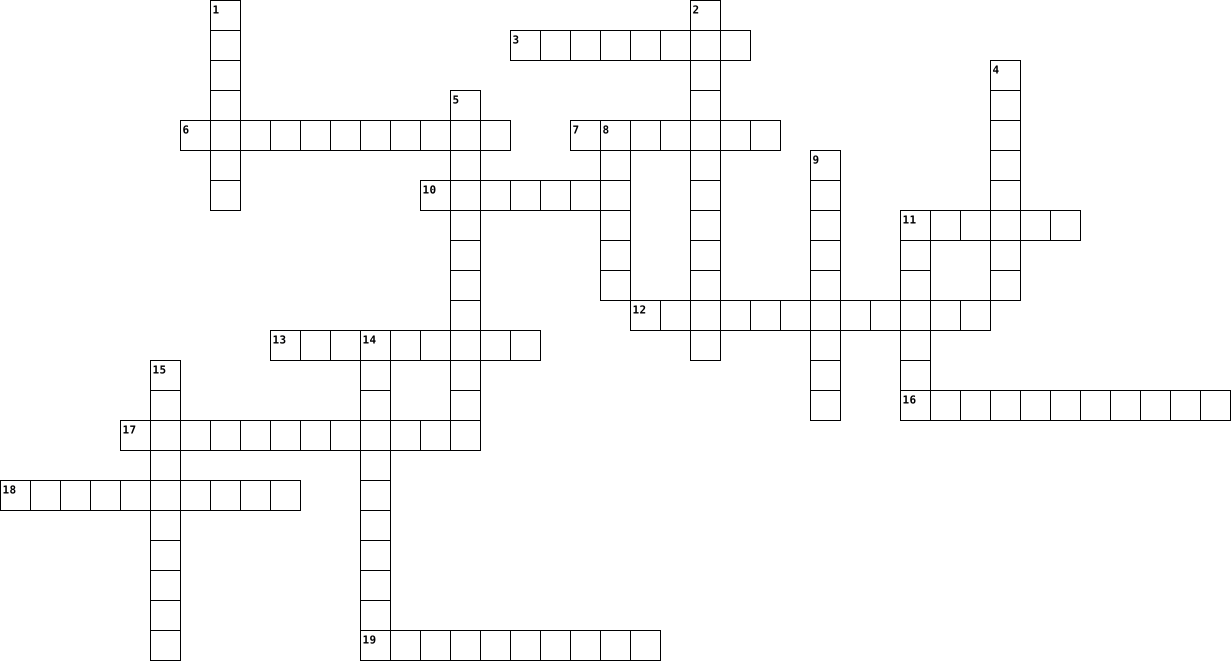
Across
- / kangaroos, wallabies and other marsupials
- / returning resources, ecosystems and structures to near-original condition
- / watercraft such as ships
- / the place where plants or animals live
- pets / animals kept as pets that have not been domesticated
- / genetic variability or living organisms
- / plants, animals and nonliving components that interact in an environment
- / something growing or living on land
- / protecting resources, ecosystems and structures
- / group of plants or animals of the same species that breed with each other
- species / plants or animals whose numbers are decreasing due to changes in it's environment
Down
- / industry dedicated to catching, processing and selling fish and other aquatic species
- / managing environmental resources
- pets / animals that have been bred for living with humans
- / sounds produced for communicating through audio
- / a species represented by living creatures
- / wireless technology where information is measured remotely and reported to a receiving station for analysis
- / species that no longer exist
- use / using resources moderately to not deplete them
- species / a species likely to become endangered
20 Clues: / watercraft such as ships • / species that no longer exist • / managing environmental resources • / something growing or living on land • / the place where plants or animals live • / genetic variability or living organisms • / kangaroos, wallabies and other marsupials • / a species represented by living creatures • ...
Ecosystems Crossword 2025-09-24

Across
- How plants make food using sunlight
- An animal that only eats other animals
- Breaks down dead matter like plants and animals
- Simple green plant-like organisms in water
- Makes its own food in nature
- The main source of energy for life
- An animal that only eats plants
- A group of chains joined together
- What moves through a food chain from the sun
- A green living thing that grows in soil
- Part of a plant that makes food from sunlight
- An animal that is hunted and eaten
- An animal that eats plants and animals
Down
- An animal that hunts other animals
- Water from the sky that helps plants grow
- Where plants grow and get nutrients
- The first level in a food chain
- An animal that eats plants or other animals
- A line that shows who eats who
- Breaks down dead plants and animals
- The next level after primary in a food chain
- The place where an animal or plant lives
22 Clues: Makes its own food in nature • A line that shows who eats who • The first level in a food chain • An animal that only eats plants • A group of chains joined together • An animal that hunts other animals • The main source of energy for life • An animal that is hunted and eaten • How plants make food using sunlight • Where plants grow and get nutrients • ...
Booklet 2024-11-28

Across
- Small, hard pieces on the skin of fish or reptiles.
- Very big hills.
- A place with lots of grass but few trees.
- Animals that live with people, like pets.
Down
- Animals that live in nature, not with people.
- A forest with a lot of trees, rain, and animals.
- A place with lots of water and plants.
- A small forest with trees and animals.
- Soft hair on the body of some animals, like dogs or bears.
- A place where people grow food and keep animals like cows and chickens.
- Animals that have fur and drink milk from their mother.
- A very cold place with snow and ice, near the North Pole.
- A very dry place with a lot of sand and little water.
- Sharp parts on the feet of some animals, like cats or tigers.
- A very big water place with salty water.
- Body parts that birds use to fly.
16 Clues: Very big hills. • Body parts that birds use to fly. • A place with lots of water and plants. • A small forest with trees and animals. • A very big water place with salty water. • A place with lots of grass but few trees. • Animals that live with people, like pets. • Animals that live in nature, not with people. • A forest with a lot of trees, rain, and animals. • ...
Alex's Big Ol' Animal Crossword 2021-02-05

Across
- Cute, furry animals, usually red or orange.
- Big black and white animals from China that like to eat bamboo.
- Very slow animals with no legs and are very slimy.
- A bird that loves the water.
- Very colourful birds that can talk.
- Very strong animals that live in caves.
- A big cat that has even bigger teeth, and a mane.
- Very slow reptiles on land with a shell.
- A huge animal with big ears and a trunk.
- Lazy, loves to plat and purr.
- A sea reptile with a shell.
- A big and strong ape, like King Kong!
- The biggest animals in the world, they live in the sea.
- Little flying bugs that love flowers and buzz.
- Spiky animals that can curl up into a ball when scared.
- Looks like a rat but with a big bushy tail, and lives up trees looking for nuts.
- A long animal that slithers and hisses.
- Lives in the water.
- Scary fish that bite things and have big fins.
- A flying insect with beautiful wings that likes flowers and comes in many colours and patterns.
- Big birds that live in the cold and ice and swim.
Down
- Big green reptiles with big teeth.
- Furry animals from Australia that eat leaves.
- Red animals in the sea with big claws.
- Pink, friendly animal on a farm.
- Animals that jump about on two legs, from Australia.
- A flying animal that comes out at night, and some of them drink blood.
- An animal that loves to be ridden and neighs.
- Bugs with a shiny body, can be many colours but usually black.
- A little insect that is very strong and lives in a nest with thousands of others.
- Flying insects that only come out at night, they love lights and fly towards them.
- Has four legs, makes milk, and eats grass.
- Sea creatures with claws that move sideways.
- Very very slow animals that live up trees.
- Cute little animals that can be pets, they like to eat carrots.
- Loves to wag its tail and bark.
- A big dog that lives in the snow.
- Birds that live on farms and lay eggs.
- Four legged animals with antlers, popular at Christmas.
- An animal that loves bananas and has a long curly tail.
- Very slow animals with a shell and no legs.
- White, fluffy, and lives on a farm.
- A green amphibian that lives in water and ponds.
43 Clues: Lives in the water. • A sea reptile with a shell. • A bird that loves the water. • Lazy, loves to plat and purr. • Loves to wag its tail and bark. • Pink, friendly animal on a farm. • A big dog that lives in the snow. • Big green reptiles with big teeth. • Very colourful birds that can talk. • White, fluffy, and lives on a farm. • A big and strong ape, like King Kong! • ...
Food Chains and Webs 2023-09-11

Across
- Pyramid A diagram showing the flow of energy through an ecosystem.
- Organisms that break down dead plants and animals into nutrients.
- Animals that eat both plants and other animals.
- Living things that make their own food through photosynthesis.
- Factors Living components of an ecosystem, such as plants and animals.
- Chain A series of organisms where each is eaten by the next.
Down
- Animals that eat other animals.
- Animals that eat only plants.
- An animal that hunts and preys on other animals.
- A community of living organisms and their environment.
- Animals that are hunted by other animals.
- The place where an organism lives and obtains food, water, and shelter.
- Factors Non-living components of an ecosystem, like soil and climate.
- Organisms that obtain energy by eating other organisms.
- Web A network of interconnected food chains in an ecosystem.
15 Clues: Animals that eat only plants. • Animals that eat other animals. • Animals that are hunted by other animals. • Animals that eat both plants and other animals. • An animal that hunts and preys on other animals. • A community of living organisms and their environment. • Organisms that obtain energy by eating other organisms. • ...
Animal Reproductive Management 2024-01-09

Across
- any animal not eligible for registry as a purebred
- the evaluation of all factors before breeeding
- the mating of related animals
- a disease that is sexually transmitted during the mating of animals
- The mating of 2 animals from different breeds
- mating animals that are closely related
- Superior traits that result from crossbreeding
Down
- Improved traits in an hybrid offspring
- mating animals of the same breed
- the mating of animals of different families within the same breed
- the mating of purebred sires to grade females
- mating animals that are distantly related
- a disease caused by viruses, bacteria, and parasites
- an animal of a breed
- the physiological evaluation of animals to determine if they are ready to enter a breeding program
15 Clues: an animal of a breed • the mating of related animals • mating animals of the same breed • Improved traits in an hybrid offspring • mating animals that are closely related • mating animals that are distantly related • the mating of purebred sires to grade females • The mating of 2 animals from different breeds • the evaluation of all factors before breeeding • ...
Animals used for transport and work 2013-05-08

Across
- Hindus believe that everyone contains a piece of this in them.
- This Saint showed affection for all living things.
- Many western countries use dogs in airports,etc as...
- Hindus believe every animal is reincarnated in this cycle and are sacred.
- Hindu's don't hurt any life form as they believe in non violence.
- Animals shouldn't be treated in this way.
- Christians think humans have this but animals don't.
Down
- A way that animals are used in work.
- Christians believe that humans should look after animals as they are carers of the Earth.
- Animals can be used if there is a .... cause.
- Every creature should be respected as it God given.
- Christians were created before animals in this story.
- Animals were created after humans and so humans are more important.
- Muslims only eat this kind of meat.
- Jesus cared for every living thing including...
- Many religions allow animals to support humans.
16 Clues: Muslims only eat this kind of meat. • A way that animals are used in work. • Animals shouldn't be treated in this way. • Animals can be used if there is a .... cause. • Jesus cared for every living thing including... • Many religions allow animals to support humans. • This Saint showed affection for all living things. • ...
Chapter 6.1 2026-03-24

Across
- first living organism made of a single cell
- layer, protects Earth from harmful radiation from the sun
- earliest animals that developed from bacteria
- plant parts that absorb water from the ground
- place where the first life originated
- process where organisms use energy from the sun
- soft material that some fish skeletons are made of
- organisms made of more than one cell
- first vertebrates that lived on land
Down
- extinct group of animals that once dominated Earth
- animals that feed their young with milk
- animals with hard-shelled eggs that survive without water
- first animals that moved onto land
- a living being
- animals with a backbone like fish
- place where plants and later animals spread to
16 Clues: a living being • animals with a backbone like fish • first animals that moved onto land • organisms made of more than one cell • first vertebrates that lived on land • place where the first life originated • animals that feed their young with milk • first living organism made of a single cell • earliest animals that developed from bacteria • ...
Unit 9 Animals-3 2020-06-28

Across
- what animals eat for life.(n.)
- how tall animals are.
- how many years can animals live for.
- can’t hurt you.
- sleeps during the day and is awake at night.
- how long the animals’ bodies are.
Down
- how heavy animals are. (n.)
- the most dangerous.
- poison you eat it.
- how fast can animals move.
- can move in water and on land.
- where animals live.
- almost all gone.
- can put poison into you.
14 Clues: can’t hurt you. • almost all gone. • poison you eat it. • the most dangerous. • where animals live. • how tall animals are. • can put poison into you. • how fast can animals move. • how heavy animals are. (n.) • what animals eat for life.(n.) • can move in water and on land. • how long the animals’ bodies are. • how many years can animals live for. • ...
Ecosystems 2023-12-14

Across
- Plants that make their own food.
- Special behaviours or body parts that help a living thing survive in an enviroment.
- Anything that eats other plant and animals.
- The amount of heat meassured in degrees.
- Animals that other animals hunt down.
- The living things in an enviroment.
- A creature that eats other decayed animals and or plants.
- Any type of living creature.
- The certain types of food that animals eat.
- Average weather and temperature in a certain area.
- The non-living things in an enviroment.
Down
- The relationship of what different organisms eat.
- Sleet, snow, rain, or hail that falls from the sky
- The number of a species living in a ecosystem.
- Animals that hunts down other animals for food
- The process of a plant using sunlight and water to produce oxygen.
- A group of living organisms that live an interact with each other in an enviroment
- A specific type of ecosystem such as the tundra.
18 Clues: Any type of living creature. • Plants that make their own food. • The living things in an enviroment. • Animals that other animals hunt down. • The non-living things in an enviroment. • The amount of heat meassured in degrees. • Anything that eats other plant and animals. • The certain types of food that animals eat. • The number of a species living in a ecosystem. • ...
Animal Science Careers 2021-09-01

Across
- Manages bee colonies and cares for them
- Research how different genes cause them to behave in different ways
- helps cows insement to get impregnated
- oversee daily operations of feed yards
- buys and sells horses
- in charge of food production and human consumption
- in charge of researching raw material
- milk producer
- Cares for birds
- auctions animals
- manages fill and mill crew
- Research how certain food or nutrition affect animals
Down
- Make sure animals raised in welfare are being taken care of properly
- In charge of livestock fertilization
- Buys and sells livestock
- Rehabilitates animals after certain procedures or accidents
- cares for cows
- research re-productiveness of livestock animals
- Specializes in hoof care
- daily care for animal livestock on farms
20 Clues: milk producer • cares for cows • Cares for birds • auctions animals • buys and sells horses • Buys and sells livestock • Specializes in hoof care • manages fill and mill crew • In charge of livestock fertilization • in charge of researching raw material • helps cows insement to get impregnated • oversee daily operations of feed yards • Manages bee colonies and cares for them • ...
Animal Farm Book Report Crossword Puzzle 2021-10-19

Across
- followers of napoleon
- the owner of foxwood farm
- the rules they must follow
- loyal hard-working horse
- the author of the book
- a pig who is good with convincing people
- the new feature they were building
- mean pig who takes over animal farm
Down
- a donkey who thinks that life will get worse
- "smartest animals"
- talks about sugar candy mountain
- owner of pinchfield farm
- what animals does napoleon take to train
- pretty horse who runs away
- female horse who is boxer's best friend
- pig who got kicked out by the dogs
- the liqour napoloen drinks
- "all animals are___"
- the idea system of the animals
- owner who got overthrown by his animals
- " 2 legs good. 4 legs ____"
21 Clues: "smartest animals" • "all animals are___" • followers of napoleon • the author of the book • owner of pinchfield farm • loyal hard-working horse • the owner of foxwood farm • pretty horse who runs away • the rules they must follow • the liqour napoloen drinks • " 2 legs good. 4 legs ____" • the idea system of the animals • talks about sugar candy mountain • ...
science 2016-06-10

Across
- for sampling small invertebrates that live in bushes and hedges
- will be on bottles if they can go on fire
- eats animals
- what side of the heart is thicker
- eats plants and animals
- what side of the heart is deoxygenated
- for sampling animals in rivers and lakes
- no more on earth
- on the pH scale above 7
Down
- is the hunted animal
- gets energy/food by eating other animals and plants
- hunts other animals
- eats plants
- on the pH scale is 7
- makes energy from the sun
- what does the G stand for in mrsgren
- this animal is extinct
- this is the units to measure energy
- the hazard symbol for this is !
- on the pH scale below 7
20 Clues: eats plants • eats animals • no more on earth • hunts other animals • is the hunted animal • on the pH scale is 7 • this animal is extinct • eats plants and animals • on the pH scale above 7 • on the pH scale below 7 • makes energy from the sun • the hazard symbol for this is ! • what side of the heart is thicker • this is the units to measure energy • what does the G stand for in mrsgren • ...
science 2016-06-10

Across
- on the pH scale above 7
- will be on bottles if they go on fire easily
- on the pH scale is 7
- for sampling animals that live in rivers and lakes
- eats plants and animals
- is the hunted animal
- eats just plants
- what does the G stand for in Mrgren
- this animal is extinct
- gets energy/food by eating other animals and plants
- hunts other animals
Down
- the hazard symbol for this is
- eats animals
- is no more on earth
- what side of the heart is thicker
- makes energy from the sun
- this is the units to measure energy
- for sampling small invertebrates that live in bushes or hedges
- on the pH scale below 7
- what side of the heart is deoxygenated
20 Clues: eats animals • eats just plants • is no more on earth • hunts other animals • on the pH scale is 7 • is the hunted animal • this animal is extinct • on the pH scale above 7 • eats plants and animals • on the pH scale below 7 • makes energy from the sun • the hazard symbol for this is • what side of the heart is thicker • this is the units to measure energy • ...
Food Chains and Webs 2023-09-11

Across
- The place where an organism lives and obtains food, water, and shelter.
- Organisms that break down dead plants and animals into nutrients.
- Organisms that obtain energy by eating other organisms.
- Factors Living components of an ecosystem, such as plants and animals.
- Web A network of interconnected food chains in an ecosystem.
- Chain A series of organisms where each is eaten by the next.
- Animals that are hunted by other animals.
- Pyramid A diagram showing the flow of energy through an ecosystem.
- An animal that hunts and preys on other animals.
Down
- A community of living organisms and their environment.
- Factors Non-living components of an ecosystem, like soil and climate.
- Animals that eat other animals.
- Animals that eat only plants.
- Living things that make their own food through photosynthesis.
- Animals that eat both plants and other animals.
15 Clues: Animals that eat only plants. • Animals that eat other animals. • Animals that are hunted by other animals. • Animals that eat both plants and other animals. • An animal that hunts and preys on other animals. • A community of living organisms and their environment. • Organisms that obtain energy by eating other organisms. • ...
Animal Farm Crossword 2026-02-12

Across
- Site of the first battle
- Name of the farm after the animals take over
- Neighboring farmer who cheats Napoleon (represents Hitler/Germany)
- A story with a deeper political meaning
- Boxer’s personal motto
- A project meant to modernize the farm
- Followers who repeat slogans without thinking
- The hardworking horse whose motto is “I will work harder”
- "All animals are _____, but some are more _____ than others." (one of the farm's changed commandments)
- Provide milk for the pigs
- Rules originally meant to guide the animals
- Represents industrialization and false promises of progress
- Napoleon’s trained enforcers (represent secret police / KGB)
- Victims of Napoleon’s harsh policies (they rebel)
- Economic plan Napoleon imitates with windmill construction
- The political system that is created by the animals (represents communism)
- The smartest animals, eventually take control of the farm
- Taking unfair advantage of workers
- Name of the farm before the animals took over
- Neighboring farmer who is a rival but more laid-back (represents England/Churchill)
- The wise old pig who inspires the rebellion (represents Marx/Lenin)
- The pig who is chased away by Napoleon (represents Trotsky)
- Napoleon eliminates animals who oppose him
- Hardworking animals on the farm (Boxer and Clover are examples)
- The motherly horse who cares for the other animals
- Author of Animal Farm
- Symbol of animal unity
- Government controlled by one leader or party
Down
- Abuse of power
- Propaganda campaigns to control thoughts
- The revolutionary anthem
- The vain horse who misses ribbons and sugar
- The original ideal that Old Major promotes
- Overthrowing an existing government
- What Mollie loves, symbolizing vanity
- The Russian revolutionaries (like the pigs at first)
- The cynical donkey who sees the corruption but says little
- The ruler overthrown in Russia (who Mr. Jones represents)
- The political system Napoleon’s rule imitates
- The pig who becomes the dictator of Animal Farm (represents Stalin)
- When leaders turn against followers
- Information used to manipulate people
- The animal heaven promised by Moses the raven
- The careless farmer overthrown by the animals (represents Tsar Nicholas II)
- Leaders glorified to keep power
- The animals overthrow Mr. Jones
- The literate goat who reads the Seven Commandments to others
- The pig who spreads propaganda to control the animals
48 Clues: Abuse of power • Author of Animal Farm • Boxer’s personal motto • Symbol of animal unity • Site of the first battle • The revolutionary anthem • Provide milk for the pigs • Leaders glorified to keep power • The animals overthrow Mr. Jones • Taking unfair advantage of workers • Overthrowing an existing government • When leaders turn against followers • ...
Animal Farm Crossword 2022-04-27
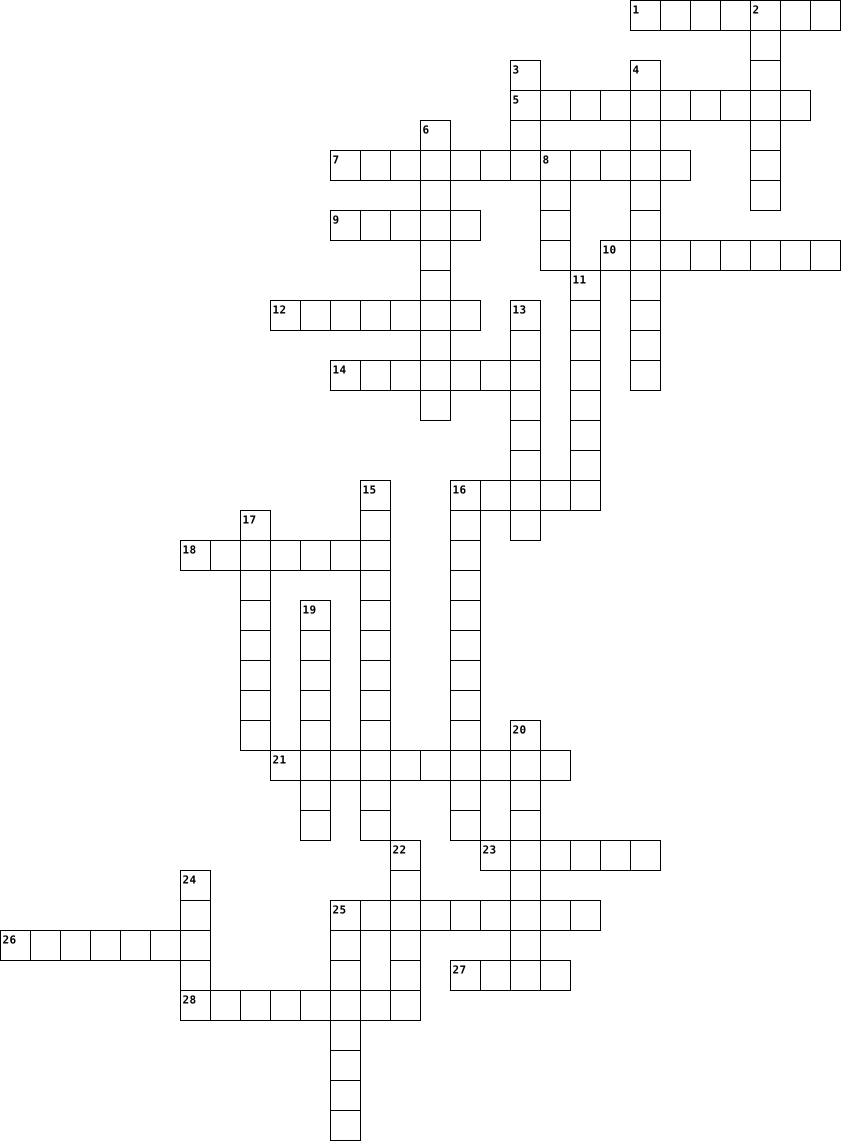
Across
- False hope of ______ is a strong theme in the book Animal Farm.
- Old Major at the beginning of the book had gained a large amount of _____ from the animals as a result of how wise and beautiful he was.
- Mr. Wymper is an _____ to animal farm.
- The tyrannical leader of Animal Farm constantly claims snowball was a _____, despite his heroic acts in the battle of the cowshed.
- An old donkey who carries no opinion on anything. ______
- Animal farm is an ironic Judgement of ______.
- Drunk Foolish Man original owner of the animal farm. ______
- The animals found they had to produce extra product to sell to the humans for ______.
- The sheep in Animal Farm could be described as ______.
- The act of ______ is committed at the beginning of the book when the animals decide Mr. Jones is not a fair leader.
- large stones were collected from this place. ______
- After losing his farm to his animals Mr. Jones gained an excess of _____ from the insane story of a man losing his farm to his animals.
- Many of the animals became _____ after napoleon executed their parents.
- The passage of ______ is a strong storytelling tool in the book to show logical growth in the extremes of each character.
- The most persuasive of all the pigs. ______
Down
- Boxer was _____ to his work, even getting up early to work.
- Clover the horse is an old ______.
- A hard man to argue with who has entered many lawsuits with other farms. ______
- Several times in the book a ______ was deployed in an attempt to retake The Animal Farm.
- Quack____
- The animals tried to create a community full of ______.
- The animals in the book are loosely based on this culture. ______
- Unbeknownst to the reader the pigs had some extreme _____ planned ahead of them from very close to the start.
- An easy-going farmer who enjoys fishing and hunting
- The animals on the animal farm had to rebuild this three times. ______
- A devilish pig who becomes a tyrannical leader. ______
- Animalism imitates this social concept. ______
- After Boxer dies the ______ is doubled for all the animals on the farm.
- The raven in the book who lies about a sugar-candy mountain to entice the animals into giving up. ______
- After injury the animals would apply _____ to each other to prevent inflammation.
30 Clues: Quack____ • Clover the horse is an old ______. • Mr. Wymper is an _____ to animal farm. • The most persuasive of all the pigs. ______ • Animal farm is an ironic Judgement of ______. • Animalism imitates this social concept. ______ • An easy-going farmer who enjoys fishing and hunting • large stones were collected from this place. ______ • ...