
bill of rights Crossword Puzzles
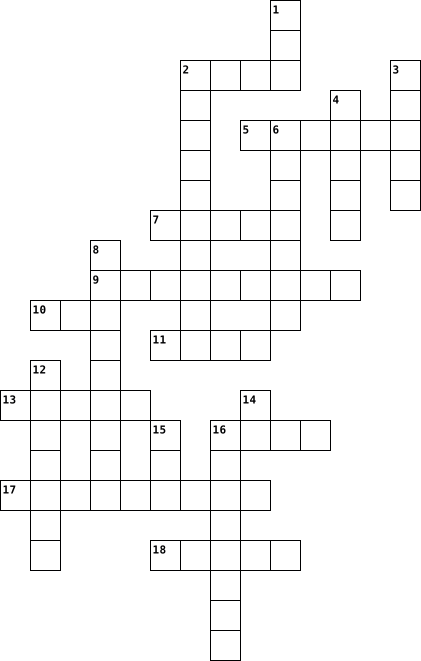
standard 8 american government crossword puzzle 2018-12-11

Across
- Title given to someone in the senate
- Process of trying to influence congressional support of disapproval of legislation
- Person who counts and gets votes
- A senator must be at least_____years old
- Leader of the senate
- The senate can vote to approve or deny the presidents______
- Minimum age to be a US representative
- The head of the house of representatives
- The bill is_____when the bill final form is printed
- When the president refuse to sign a bill into a law
- Permanent committees in the both the House and the Senate
Down
- Composed of members of both the House and the Senate
- This can only be used in the senate
- In the legislative process the first step is to ______the bill
- A senate rule used to limit debate
- This have a total of 435 members
- Legislature with two houses
- Number of years you must be a US citizen to be a US senator
- How many members are in the senate
- Unrelated provisions stuck into a bill
20 Clues: Leader of the senate • Legislature with two houses • Person who counts and gets votes • This have a total of 435 members • A senate rule used to limit debate • How many members are in the senate • This can only be used in the senate • Title given to someone in the senate • Minimum age to be a US representative • Unrelated provisions stuck into a bill • ...
standard 8 american government crossword puzzle 2018-12-11

Across
- A senate rule used to limit debate
- Permanent committees in the both the House and the Senate
- In the legislative process the first step is to ______the bill
- Legislature with two houses
- Composed of members of both the House and the Senate
- Unrelated provisions stuck into a bill
- This have a total of 435 members
- Leader of the senate
- This can only be used in the senate
- The senate can vote to approve or deny the presidents______
- How many members are in the senate
Down
- Title given to someone in the senate
- The head of the house of representatives
- A senator must be at least_____years old
- The bill is_____when the bill final form is printed
- Process of trying to influence congressional support of disapproval of legislation
- Minimum age to be a US representative
- When the president refuse to sign a bill into a law
- Person who counts and gets votes
- Number of years you must be a US citizen to be a US senator
20 Clues: Leader of the senate • Legislature with two houses • This have a total of 435 members • Person who counts and gets votes • A senate rule used to limit debate • How many members are in the senate • This can only be used in the senate • Title given to someone in the senate • Minimum age to be a US representative • Unrelated provisions stuck into a bill • ...
We the People: The Constitution 2013-10-09

Across
- The amendment that says that rights not mentioned in the Constitution should not be assumed not to exist
- The first amendment: ______of speech, assembly, religion, the press, and to petition the government.
- The part of the Constitution that explains how the government works
- What the 13th amendment did to slavery
- The month when the Constitution was put into effect
Down
- Number of Amendments in the Bill of Rights
- The city where the Constitution was signed
- Explains why the framers made our government a republic
- The fathers of the Constitution
- Eighth Amendment: No cruel and _____ punishment
- the type of people who were given the right to vote in the 19th amendment
11 Clues: The fathers of the Constitution • What the 13th amendment did to slavery • Number of Amendments in the Bill of Rights • The city where the Constitution was signed • Eighth Amendment: No cruel and _____ punishment • The month when the Constitution was put into effect • Explains why the framers made our government a republic • ...
government voba 2021-11-16

Across
- newspapers, magazines, news channels, podcasts any other news media. the first amendment right of newspapers, magazines, etc., to report news without being controlled by the government.
- a moral or legal entitlement to have or obtain something or to act in a certain way.
- an amendment is a change or addition to the Constitution. The first 10 amendments are known as the Bill of Rights.
- to study or examine something to find out what it is or what makes it work.
- the highest federal court in the US, consisting of nine justices and taking judicial precedence over all other courts in the nation.
Down
- "miranda warning" refers to the constitutional requirement that once an individual is in custody by the police, there are certain warnings a police officer is required to give to that individual.
- something done or said that may serve as an example or rule to authorize or justify a subsequent act of the same kind
- the Bill of Rights is the first 10 amendments to the U.S. Constitution. These amendments guarantee essential rights and civil liberties, such as the freedom of religion, the right to free speech, the right to bear arms, trial by jury as well as reserving rights to the people and the states.
- to carry a gun. in the second amendment to the Constitution, we have the right to bear arms.
- constitution is the framework for the federal government of the United States. It is the highest form of law in the country. The Constitution creates the branches of government and gives them the power to govern. However, it also protects the citizens of the United States and guarantees their basic rights.
10 Clues: to study or examine something to find out what it is or what makes it work. • a moral or legal entitlement to have or obtain something or to act in a certain way. • to carry a gun. in the second amendment to the Constitution, we have the right to bear arms. • ...
The Amendments 2021-11-17

Across
- To carry a gun.In the second amendment to the Constitution we have the right to bear arms.
- To study or examine something to find out what it is or what makes it work.
- The Constitution is the framework for the federal government of the United States. It is the highest form of law in the country. The Constitution creates the branches of government and gives them the power to govern. However, it also protects the citizens of the United States and guarantees their basic rights
- An amendment is a change or addition to the Constitution. The first 10 amendments are known as the Bill of Rights.
- Newspapers, magazines, news channels, podcasts any other news media. The first amendment right of newspapers magazines, etc., to report news without being controlled by the government.
Down
- Something done or said that may serve as an example or rule to authorize or justify a subsequent act of the same kind
- "Miranda warning" refers to the constitutional requirement that once an individual is in custody by the police, there are certain warnings a police officer is required to give to that
- The highest federal court in the US, consisting of nine justices and taking judicial precedence over all other courts in the nation.
- The Bill of Rights is the first 10 amendments to the U.S. Constitution. These amendments guarantee essential rights and civil liberties, such as the freedom of religion, the right to free speech, the right to bear arms, trial by jury as well as reserving rights to the people and the states.
- a moral or legal entitlement to have or obtain something or to act in a certain way.
10 Clues: To study or examine something to find out what it is or what makes it work. • a moral or legal entitlement to have or obtain something or to act in a certain way. • To carry a gun.In the second amendment to the Constitution we have the right to bear arms. • ...
U.S Constitution 2021-11-16

Across
- Something done or said that may serve as an example or rule to authorize or justify a subsequent act of the same kind
- Newspapers magazines news channels podcasts any other news media The first amendment right of newspapers magazines etc to report news without being controlled by the government.
- To study or examine something to find out what it is or what makes it work.
- the Constitution is the framework for the federal government of the United States. It is the highest form of law in the country. The Constitution creates the branches of government and gives them the power to govern. However, it also protects the citizens of the United States and guarantees their basic rights.
- a moral or legal entitlement to have or obtain something or to act in a certain way.
Down
- "Miranda warning" refers to the constitutional requirement that once an individual is in custody by the police, there are certain warnings a police officer is required to give to that individual.
- The highest federal court in the US, consisting of nine justices and taking judicial precedence over all other courts in the nation.
- To carry a gun. In the second amendment to the Constitution we have the right to bear arms.
- An amendment is a change or addition to the Constitution. The first 10 amendments are known as the Bill of Rights.
- The Bill of Rights is the first 10 amendments to the U.S. Constitution. These amendments guarantee essential rights and civil liberties, such as the freedom of religion, the right to free speech, the right to bear arms, trial by jury as well as reserving rights to the people and the states.
10 Clues: To study or examine something to find out what it is or what makes it work. • a moral or legal entitlement to have or obtain something or to act in a certain way. • To carry a gun. In the second amendment to the Constitution we have the right to bear arms. • ...
Freedom of Expression 2013-04-23

Across
- The 1982 Document that protects all rights and freedoms of Canadian citizens.
- A valued idea that is protected from government meddling.
- If someone becomes upset at an expressed idea, they have taken...
- How people choose to share their ideas.
- Freedom of expression allows us to have and share _____ ideas.
- Why a person chooses to share a story or an opinion.
Down
- An image that can be funny and a form of expression.
- Helps spread news and information to Canadian society.
- The 13th Prime Minister of Canada who protected speech in the 1960 Bill of Rights.
- When certain information is prevented from reaching Canadian citizens.
- A political system that involves the people (Canada is an example).
- Speech that promotes ____ against certain groups is illegal in Canada.
- The TV news, the newspaper and the Internet are examples of this.
13 Clues: How people choose to share their ideas. • An image that can be funny and a form of expression. • Why a person chooses to share a story or an opinion. • Helps spread news and information to Canadian society. • A valued idea that is protected from government meddling. • Freedom of expression allows us to have and share _____ ideas. • ...
Raelee 1B Government 2023-09-18

Across
- chosen by special electors and serve for life
- Bill Of Rights
- Great Compromise
- contributed to drafting the articles of confederation
Down
- advocated for a strong delineation between state and federal government powers
- New Jersey Plan
- helped draft the Northwest Ordinance of 1787
- used his vision for a stronger union while constructing the constitution
- added the 11th amendment
- Wrote the Federalist papers
10 Clues: Bill Of Rights • New Jersey Plan • Great Compromise • added the 11th amendment • Wrote the Federalist papers • helped draft the Northwest Ordinance of 1787 • chosen by special electors and serve for life • contributed to drafting the articles of confederation • used his vision for a stronger union while constructing the constitution • ...
Congress 2016-11-20

Across
- a bill that is approved by a subcommittee and then the standing committee, goes where? House or Senate _______ for a vote (304).
- a _________ 'yes' vote will move a bill from a subcommittee back to the standing committee (304).
- most of the ____________ powers in the Const. were given to Congress (304).
- This Committee meets to reconcile different versions of the same bill (305).
- debate in the Senate, unlike in the House, is _________ timed. (ask if clues do not help)
- if the president, or anyone else, wants to introduce a bill a congressional _________ must be found to introduce it (304).
- checks and balances dictates that Congress makes sure the executive branch carries out the intent of Congress in administering federal programs (309).
- think of committee as functioning like a ___________ (not in text/ask if clues do not help)
- the necessary and proper clause is associated with these powers. (304)
- after a bill reaches its first destination, it is then sent to a __________ (304).
- after a bill is introduced, it is immediately referred to an appropriate ___________ committee (304).
- what determines which committee a bill goes to? ______ of the bill (304).
Down
- only occurs in the Senate; an attempt to "talk a bill to death" (307).
- it is much easier to __________a bill than pass it (304).
- debate in the Senate has __________ rules and procedures. why? (307).
- the process of passing a law, at almost every step, promotes _________ (304).
- according to the author, no more than about ____% of (6 to 9 thousand) introduced bills become laws. (304)
- This type of vote, a 3/5 vote, (only happens in Senate) ENDS debate on a bill. (307)
- only members of _________ can introduce bills (304).
- most bills die in ______________ (304).
- only the House has a ___________ Committee. This is when a time and/or amendment limit is placed on a bill (305).
- _____ bills must be initiated in the House (304).
- the author equates passing a law with running an ______ course. (304)
- this group plays a particularly influential role (indirectly) during the markup stage. (305)
- since the 1920s, the president has prepared the annual ______ (310).
- if the president's party does NOT also control Congress, Congress creates its ____ budget (310).
- during this part of the process, bills are added to or subtracted from. (305)
- __________ votes are needed (in the Senate) in order to end debate (cloture vote). (308)
28 Clues: most bills die in ______________ (304). • _____ bills must be initiated in the House (304). • only members of _________ can introduce bills (304). • it is much easier to __________a bill than pass it (304). • since the 1920s, the president has prepared the annual ______ (310). • debate in the Senate has __________ rules and procedures. why? (307). • ...
Lia Staples - Constitutional Crossword 2022-04-18

Across
- The president lives in the __________.
- The USA's first plan of government.
- The number of votes for Virginia.
- ______ Washington was the First President.
- The ________ branch makes sure the laws are fair.
- The number of states in the USA.
- The number of votes for Calafornia.
- The number of representatives from each state in the Senate.
- ____________ is in the District of Columbia.
Down
- The ___________ branch makes the laws.
- The Whitehouse is _______ in Washington, DC.
- The _________ branch executes the laws.
- The ____________ added the first ten amendments to the Constitution.
- The ____________ is the USA's current plan of government.
- The number of amendments in the Bill of Rights.
15 Clues: The number of states in the USA. • The number of votes for Virginia. • The USA's first plan of government. • The number of votes for Calafornia. • The ___________ branch makes the laws. • The president lives in the __________. • The _________ branch executes the laws. • ______ Washington was the First President. • The Whitehouse is _______ in Washington, DC. • ...
Amanda Texas Histoy 2022-04-21

Across
- First president of the Republic of Texas
- Rancher and farmers of livestock and meat
- Law of ____ 6th
- Very profitable crop in the south
- The sunken ship that caused America to join WW1
- The southern states that left
- Boom town in Texas because of oil
- Receives portion of crops and gives rest as rent
- A non-violent way of disobeying the laws
- WW1 got America out of the great ____
Down
- Country that already claimed land of Fort st. Louis
- The ____ plains have the most rainfall in Texas
- Bill of ____
- Discrimination towards someone of different race
- Border between Mexico and America
- First person to map Texas coast
- Rebellion to overthrow the leading government
- A return to normal state of strength or mind
- Branches of ____
- A financial gain
20 Clues: Bill of ____ • Law of ____ 6th • Branches of ____ • A financial gain • The southern states that left • First person to map Texas coast • Border between Mexico and America • Very profitable crop in the south • Boom town in Texas because of oil • WW1 got America out of the great ____ • First president of the Republic of Texas • A non-violent way of disobeying the laws • ...
washington administration 2020-10-06

Across
- domestic uprising in west pennsylvania from farmers?
- first chief justice of supreme court
- Hamilton wanted more cities in the US to produce more goods
- Hamilton's politial party?
- Hamilton made deal w jefferson to switch the capital from NY to where?
- who printed bad ideas about Hamilton in the national gazette?
- first president of US
Down
- first 10 amendments to constitution?
- Hamilton wanted a bank of the US to monitor the economy
- first vice president of US
- father of bill of rights
- secretary of treasury
- secretary of state
- Hamilton's plan on maintaining small international debt but paying citizens back
- Jefferson's political party?
15 Clues: secretary of state • secretary of treasury • first president of US • father of bill of rights • first vice president of US • Hamilton's politial party? • Jefferson's political party? • first 10 amendments to constitution? • first chief justice of supreme court • domestic uprising in west pennsylvania from farmers? • Hamilton wanted a bank of the US to monitor the economy • ...
Constitutional Crossword 2026-04-29

Across
- of Rights First ten amendments to the Constitution
- supreme law of the land
- government in which people hold the power
- Power shared between national and state governments
Down
- formal approval of a law or amendment
- Branch that interprets laws
- Amendment Amendment that guarantees freedom of speech
- Two house law making body
- of Power Division of three governments into three branches
- opening statement of the constitution
10 Clues: supreme law of the land • Two house law making body • Branch that interprets laws • formal approval of a law or amendment • opening statement of the constitution • government in which people hold the power • Power shared between national and state governments • of Rights First ten amendments to the Constitution • Amendment Amendment that guarantees freedom of speech • ...
Civil Rights - Keywords 2026-05-19

Across
- - Civil rights leader who refused to give up her seat on a bus in 1955.
- - the surname of the family who took the segregation of schools to court
- - Strategy of peaceful protest promoted by Martin Luther King Jr.
- - First name of the student at the centre of the school segregation case in Topeka, Kansas.
- - Group of Black students who integrated a school in Arkansas in 1957.
- - Laws that enforced racial separation in southern US states.
- - Leader of the Montgomery Bus Boycott who promoted non-violent protest.
- - the name of a law
- - the act of killing someone by tying them to a tree with rope
Down
- - A 381-day protest where African Americans refused to use buses after Rosa Parks was arrested.
- - 1963 protests in Alabama involving police dogs and fire hoses.
- - the name given to a group who often use violence and intimidation when they come together
- - Civil rights leader who supported Black empowerment and self-defence.
- - this restricted black voters
- - the name of a proposed law
15 Clues: - the name of a law • - the name of a proposed law • - this restricted black voters • - Laws that enforced racial separation in southern US states. • - the act of killing someone by tying them to a tree with rope • - 1963 protests in Alabama involving police dogs and fire hoses. • - Strategy of peaceful protest promoted by Martin Luther King Jr. • ...
Bill 2021-10-05

Across
- What does Bill pulls out of holster (three words)
- Favorite Guatemalan rum
- Delectable favorite snack
- 2018 Christmas party activity
- Best meeting space in DC
- Team building in the woods
- First overseas trip
- Riveting personality met on latest trip to West Africa
Down
- Initiative launched during past year of civil unrest in U.S.
- The E in PSEA
- Original career
- Final means of transportation during chaotic board trip to India
- Favorite interpreter
- what Bill does more of than any of us (possibly more than all of us combined…..)
- Major RA INGO partner
15 Clues: The E in PSEA • Original career • First overseas trip • Favorite interpreter • Major RA INGO partner • Favorite Guatemalan rum • Best meeting space in DC • Delectable favorite snack • Team building in the woods • 2018 Christmas party activity • What does Bill pulls out of holster (three words) • Riveting personality met on latest trip to West Africa • ...
Legal Heritage 2021-09-27

Across
- This may be made verbally, but doing so can make it more challenging to enforce.
- These historic trials included trial by water and hot iron.
- Laws are a reflection of these.
- These are not legally enforceable by the courts.
- This process transferred control of the Constitution to Canada from Britain.
- This 1931 Statute gave Canada full control of its foreign policy.
- An example of this includes the Criminal Code of Canada.
- Property value that one needs to be appointed to the Senate of Canada is ____ thousand.
- These are also known as judge-made laws and they form the base of the legal hierarchy.
- The presumption of this was enshrined in the Magna Carta and is also guaranteed in the Canadian Charter of Rights and Freedoms.
- This term refers to the individuals in a riding that a Member of Parliament is responsible for representing.
- Members of this are held accountable to the public by virtue of their status as elected representatives.
- This type of law includes family law, tort law, contract law, and wills and estates.
- This king established travelling courts to make law common for all.
- To uphold the rule of law, this branch of government is independent from the others.
- These laws are a federal responsibility and are deemed offences against the state.
- This category of law includes real estate transactions.
- This part of the legislative branch of government is appointed.
- This category of law includes negligence when an individual suffers damages.
- This concept evolved from the concept of stare decisis.
- This Code formed the basis of the Quebec Civil Code.
- Number of readings required by each the House of Commons and the Senate for a bill to become law.
- This legal issue causes controversy in the international community.
- At this reading the bill is debated and then sent off for review in committees.
Down
- The rule of law is supposed to prevent these actions and ensure confidence in the administration of justice.
- This Assent is needed by the Governor General for a bill to become law.
- These laws are passed by elected representatives.
- One of laws primary functions is to resolve these.
- The top of the legal hierarchy.
- First known written legal code.
- These laws outline the legal rights and responsibilities of individuals.
- This legal process (also called judicial interim release hearing) is grounded in the right of habeas corpus.
- Highest court in Canada.
- The meaning of v in a case citation.
- This branch of government includes the Senate.
- Responsibility of the provincial government.
- This English king was forced to sign the Magna Carta.
- The Canadian Charter of Rights and Freedoms is difficult to change because it is _____ in the constitution.
- Responsibility of the municipal level of government.
- This type of law restricts the power of the monarch.
- Legal specialists originated here.
- Juries originated here.
- This type of law includes criminal, administrative, and constitutional.
- This branch of government decides upon the direction of laws and policies.
- Historically, an individual’s case could be helped if friends swore this.
- These laws relate to the enforcement and functioning of the justice system.
46 Clues: Juries originated here. • Highest court in Canada. • The top of the legal hierarchy. • First known written legal code. • Laws are a reflection of these. • Legal specialists originated here. • The meaning of v in a case citation. • Responsibility of the provincial government. • This branch of government includes the Senate. • These are not legally enforceable by the courts. • ...
section 4 review 2013-12-03

Across
- people who opposed the constition
- mason opposed the constition
- of rights 10 of the proposed amendments intended to protect the cticenzes rights
Down
- supporters of the constition
- papersthese essays supporting the constition were anonymously under the name publius
- offical changes
6 Clues: offical changes • supporters of the constition • mason opposed the constition • people who opposed the constition • of rights 10 of the proposed amendments intended to protect the cticenzes rights • papersthese essays supporting the constition were anonymously under the name publius
Canada 2021-12-15

Across
- Canada's official winter sport
- Natural Resources, Service and ______.
- Federal, Provincial, and ______ governments.
- Capital of Saskatchewan
- Last name of the Father of Manitoba
- Upper Canada is known as?
- The eastern ocean
- Capital of Manitoba
- Animal on the five cent coin
- Canada's first Prime Minister
- French speakers
- Last name of Canadian hero in War of 1812
- The western ocean
Down
- Animal on the dollar coin
- Descendants of Europeans and First Nations
- Change to a law
- The Prime Minister's advisors
- The building for Canadian government
- A country rule by a king or queen
- Another name for Canada's birthday
- The Canadian Charter of Rights and ______.
- Capital of British Columbia
- formal discussion of a proposed law
- A draft of a law
- Last name of famous artist from BC
25 Clues: Change to a law • French speakers • A draft of a law • The eastern ocean • The western ocean • Capital of Manitoba • Capital of Saskatchewan • Animal on the dollar coin • Upper Canada is known as? • Capital of British Columbia • Animal on the five cent coin • The Prime Minister's advisors • Canada's first Prime Minister • Canada's official winter sport • A country rule by a king or queen • ...
Real Estate 2025-12-09

Across
- of Frauds Certain contracts must be in writing.
- Right to use land of another (appurtenant or in gross). Ends by merger, release, or abandonment.
- Duties Obedience, Loyalty, Disclosure, Confidentiality, Accounting, Reasonable Care.
- Claim for debt; specific (property) or general (person). Property tax liens usually first.
- Domain Government’s right to take private property for public use with compensation.
- Property Movable items; transfers by bill of sale.
- Judicial or nonjudicial process for loan default.
- Property Land, improvements, and rights; transfers by deed.
Down
- Property reverts to the state when no heirs exist.
- Property taxes and special assessments fund public services.
- Physical intrusion (e.g., fence, driveway); may show on survey.
- Claim, lien, or restriction on property use or ownership.
- Personal → real by attachment; test: MARIA (Method, Adaptability, Relationship, Intention, Agreement). Trade fixtures = tenant’s.
- Power Zoning, building codes, environmental and land-use laws.
- of Rights Possession, Control, Enjoyment, Exclusion, Disposition.
- Transfers ownership; must be signed, delivered, and accepted.
16 Clues: of Frauds Certain contracts must be in writing. • Judicial or nonjudicial process for loan default. • Property reverts to the state when no heirs exist. • Property Movable items; transfers by bill of sale. • Claim, lien, or restriction on property use or ownership. • Property Land, improvements, and rights; transfers by deed. • ...
KIERA YOUNG- HISTORY WEEK 21 CROSSWORD 2025-02-02

Across
- THE _______ BILL WAS VERY SIMILAR TO THE ENGLISH BILL OF 1867 PG. 111
- THE WHIG AND TROY PARTIES WERE LIKE THE MONDERN DAY LIBERAL AND ____________ PARTIES. 105
- THE ________ _____ WAR ATTRACTED GREAT ATTENTION AND AROUSED DEEP PASSIONS IN BRITAIN. PG. 107
- ________ OFFER RUSSIA FREEDOM OF ACTION AND DIPLOMATIC SUPPORT PG. 198
- LORD_____ DESCRIBED THE EXTENSION OF THE FRANCHISE IN BRITAIN AS "A LEAP IN THE DARK" PG. 110
- WHAT REACHED IT'S PEAK IN FRANCE IN MID-1887 AND 1888 PG. 198
- ______ WAS NOT TO GIVE UP ANY OF IT'S RIGHTS TO BULGAVIA THE SRAITS OR ANY PART OF ASIA MINOR PG. 200
Down
- WHO REGARDED THE RATE TREATY AS THE ONLY ALTERNATIVE TO THE "HIGH PROBABILILY OF WAR"? PG. 109
- A ______ ______ ACT ESTABLISHED A CENTRAL DIRECTORATE TO CREATE LOCAL BOARDS OF HEALTH PG. 108
- ON JUNE 18, 1887 A THREE YEAR SECRET TREATY BETWEEN RUSSIA AND _______ WAS SIGNED PG. 198
- FOR BRITISH POLITICS IN THE SECOND HALF OF THE NINETEENTH CENTURY, THE BILL OF 1867 SERVES AS A WATERSHED PG. 104
- WHO COMPLAINED ABOUT THE ELECTION CAMPAIGN OF 1857? PG. 106
- QUEEN ________ RULED BRITAIN AND ITS COLONIES FOR SIXTY-FOUR YEARS PG. 103
- THE FINAL PEACE TREATY BETWEEN FRANCE AND GERMANY WAS SIGNED _________ ON MAY 10, 1871 PG. 102
- WHILE ATTEMPTING TO RELIEVE BAZAINE'S FORCES, A SECOND FRENCH ARMY UNDER MME DE MACMAHON WAS SURROUNDED BY PRUSSIANS AT _____ PG. 101
15 Clues: WHO COMPLAINED ABOUT THE ELECTION CAMPAIGN OF 1857? PG. 106 • WHAT REACHED IT'S PEAK IN FRANCE IN MID-1887 AND 1888 PG. 198 • THE _______ BILL WAS VERY SIMILAR TO THE ENGLISH BILL OF 1867 PG. 111 • ________ OFFER RUSSIA FREEDOM OF ACTION AND DIPLOMATIC SUPPORT PG. 198 • QUEEN ________ RULED BRITAIN AND ITS COLONIES FOR SIXTY-FOUR YEARS PG. 103 • ...
Unit 3 Vocab 2022-03-08

Across
- _____ of Confederation. 1st federal gov in USA
- ______ Douglass: Former slave->Abolitionist
- ____ Amendment. No search/seizure w/o Warrant
- 2 members per state. 1/2 of legislative branch
- 3/5th ______. Counted enslaved people as 3/5
- ____ of Rights. First 10 Amendments to the U.S.C.
Down
- ____ Amendment. No quartering of soldiers
- ______ branch. Writes laws. Can tax/spend
- Another name for The House and Senate
- ______ of Representatives. Based on population
- _______ branch. Enforces laws. Can veto bills
- _____ branch Judges if laws are constitutional
12 Clues: Another name for The House and Senate • ____ Amendment. No quartering of soldiers • ______ branch. Writes laws. Can tax/spend • ______ Douglass: Former slave->Abolitionist • 3/5th ______. Counted enslaved people as 3/5 • ____ Amendment. No search/seizure w/o Warrant • _______ branch. Enforces laws. Can veto bills • _____ of Confederation. 1st federal gov in USA • ...
gabby Desciscio reifel x-word 2024-02-16

Across
- __________ said he "smelled a rat."
- shays _________ took place in Massachusetts.
- Alexander Hamilton saw the United states of Americas ______ ____ ___.
- there are ____ branches of government.
- A ____ _____ was created by the Declaration of independence.
- The major ________ went to Canada after the war.
Down
- in ___________ the rev war started.
- The articles of confederation was the first U.S.___________ passed during the rev war.
- Enforcing laws the most major problem for the _______ ______.
- in 1783 the ____________ _____ ended.
- __________ Hamilton hated the congress.
- _________ drafted the BILL OF RIGHTS.
12 Clues: in ___________ the rev war started. • __________ said he "smelled a rat." • in 1783 the ____________ _____ ended. • _________ drafted the BILL OF RIGHTS. • there are ____ branches of government. • __________ Hamilton hated the congress. • shays _________ took place in Massachusetts. • The major ________ went to Canada after the war. • ...
Government Crossword 30 Words 2015-10-13

Across
- the senior official in the senate and the main ad
- the governments plan for how it will collect and spend money each year
- a person normally a Member of Parliament or a Senator who is chosen by the Prime Minister and appointed by the Governor General
- the set of rules that a country like Canada follows to work as a nation
- part of the Canadian constitutions that states all Canadians have the rights to basic rights and freedoms
- a group of all ministers mostly from the House of Commons and at least one from the Senate
- a proposed law to be considered by Parliament
- a group made up of all Senators
- a person who has full political and civil rights in his or her country
- the agreement by the provinces to join together to form the nation of Canada and create a federal Parliament
- a change that is made to a bill,motion or committee report
- one of the two large rooms in the center block of the parliament buildings.
- a group of Senators, Members of parliament or both selected to study a specific subject or bill write a report about it
- the person in charge of a meeting.
- the city where the countries legislature is located and the government carries out its own business (in Canada its Ottawa)
Down
- made up of two separate Chambers the Senate and The House of Commons
- to change or to improves something such as a law or Act of Parliament
- a discussion in which the arguments for and against a subject are presented according to specific rules.Discussions in the Senate and House of Commons
- a person living in an area in Canada represented by a Member of Parliament
- the government of Canada that acts and speaks for the whole country
- block the parliament buildings have three parts. The House of Commons and the Senate Chambers are in the center block
- the specific geographic area in Canada that a member of the Parliament represents in the House of Commons Syn: riding or electoral district
- this person is responsible for overseeing all federal elections
- the senior official in the house of commons, and the main adviser to the speaker and members of the house of commons regarding house rules and procedures
- a system in which the powers of the Monarch are limited by the written or unwritten constitution of the country.
- the process of choosing a representative by vote
- the political party that forms the Government because more of its members were elected to the House of Commons than from any other party
- the bringing to an end of Parliament, either at the end of its four-year term or if the government is defeated on a motion of non-confidence, by proclamation of the Governor General on the advice of the Prime Minister.
- to pick one person from group of several people by voting. The person with the most votes is elected
- a formal event that follows rules or traditions
30 Clues: a group made up of all Senators • the person in charge of a meeting. • a proposed law to be considered by Parliament • a formal event that follows rules or traditions • the process of choosing a representative by vote • the senior official in the senate and the main ad • a change that is made to a bill,motion or committee report • ...
Civics and citizenship 2025-06-17

Across
- Part of Parliament, such as Representatives or Senate
- The country governed under this system
- Duties citizens are expected to uphold
- Vote to change the Constitution
- Represents a state or territory
- Rules that everyone must follow
- Place where laws are made
- The set of rules for how Australia is governed
- How citizens choose leaders
Down
- Being able to speak or act without restraint
- Freedoms and entitlements all citizens have
- A person elected to speak or act for others
- Legal member of a country
- Fair treatment under the law
- Group that runs the country
- A person who makes decisions in court
- System where citizens vote
- A proposed law
- Rule made by Parliament
19 Clues: A proposed law • Rule made by Parliament • Legal member of a country • Place where laws are made • System where citizens vote • Group that runs the country • How citizens choose leaders • Fair treatment under the law • Vote to change the Constitution • Represents a state or territory • Rules that everyone must follow • A person who makes decisions in court • ...
History Crossword 2022-02-17

Across
- A act passed to make it more difficult for foreign people to vote, as well as putting anyone who made a false or scandalous statement into jail
- The taxation of the production or sale of products
- to encourage people to oppose the law
Down
- The right listed in the second amendment
- The original owners of the landmass that is now the United States
- The first person to sail to the "New world"
- First president of the United States
- Author of the Constitution, also known as the Father of the Constitution
- 10 amendments stating the specific rights of the people
- Number of amendments listed in the Bill of Rights
10 Clues: First president of the United States • to encourage people to oppose the law • The right listed in the second amendment • The first person to sail to the "New world" • Number of amendments listed in the Bill of Rights • The taxation of the production or sale of products • 10 amendments stating the specific rights of the people • ...
Chapter 4 Vocabulary 2023-12-04

Across
- ,speech accompanied by conduct such as sit-ins, picketing, and demonstrations; protection of this form of speech under the First Amendment is conditional, and restrictions imposed by state or local authorities are acceptable if properly balanced by considerations of public order
- ,an oral statement made in "reckless disregard of the truth" that is considered damaging to the victim because it is "malicious, scandalous, and defamatory"
- ,the ability of courts to exclude evidence obtained in violation of the Fourth Amendment
- of rights ,the first 10 amendments to the U.S. Constitution, ratified in 1791; they ensure certain rights and liberties to the people
- ,jury that determines whether sufficient evidence is available to justify a trial; grand juries do not rule on the accused's guilt or innocencedouble jeopardy
- restraint ,an effort by a governmental agency to block the publication of material it deems libelous or harmful in some other way; censorship; in the United States, the courts forbid prior restraint except under the most extraordinary circumstances
- incorporation ,the process by which different protections in the Bill of Rights were incorporated into the Fourteenth Amendment, thus guaranteeing citizens protection from state as well as national governments
- ,the right of government to take private property for public use
- test ,a rule articulated in Lemon v. Kurtzman that government action toward religion is permissible if it is secular in purpose, neither promotes nor inhibits the practice of religion, and does not lead to "excessive entanglement" with religion
Down
- ,a written statement made in "reckless disregard of the truth" that is considered damaging to a victim because it is "malicious, scandalous, and defamatory"
- ,the Fifth Amendment right providing that a person cannot be tried twice for the same crime
- exercise clause ,the First Amendment clause that protects a citizen's right to believe and practice whatever religion they choose
- ,speech that directly incites damaging conduct
- clause ,the First Amendment clause that says "Congress shall make no law respecting an establishment of religion"; this constitutional provision means that a "wall of separation" exists between church and state
- liberties ,areas of personal freedom constitutionally protected from government interference
- corpus ,a court order demanding that an individual in custody be brought into court and shown the cause for detention
- process of law ,the right of every individual against arbitrary action by national or state governments
- ,the right to be left alone, which has been interpreted by the Supreme Court to entail individual access to birth control and abortions
- ,the requirement, articulated by the Supreme Court in Miranda v. Arizona, that persons under arrest must be informed prior to police interrogation of their rights to remain silent and to have the benefit of legal counsel
19 Clues: ,speech that directly incites damaging conduct • ,the right of government to take private property for public use • ,the ability of courts to exclude evidence obtained in violation of the Fourth Amendment • ,the Fifth Amendment right providing that a person cannot be tried twice for the same crime • ...
Bill of Rigths 2025-11-12

Across
- Rights retained by the People
- Search and arrest
- Abolition of slavery
- Rights in criminal cases
- Freedoms, Petitions, Assembly
- Right to a fair trial
- Black suffrage
Down
- Bail, fines, punishment
- Rights in civil cases
- States' rightsAmendment 11 Lawsuits against states
- Right to bear arms
- Presidential elections
- Civil rights
- Quartering of soldiers
14 Clues: Civil rights • Black suffrage • Search and arrest • Right to bear arms • Abolition of slavery • Rights in civil cases • Right to a fair trial • Presidential elections • Quartering of soldiers • Bail, fines, punishment • Rights in criminal cases • Rights retained by the People • Freedoms, Petitions, Assembly • States' rightsAmendment 11 Lawsuits against states
Freedom of Expression Crossword 2013-08-02

Across
- Freedom of expression allows us to have and share ______ ideas.
- The 13th Prime Minister of Canada who protected speech in the 1960 Bill of Rights.
- When certain information is prevented from reaching Canadian citizens.
- The 1983 document that protects all rights and freedoms of Canadian citizens.
Down
- Why a person chooses to share a story or opinion
- How people share their ideas.
- A valued idea that is protected from government meddling
- Helps to spread news and information to Canadian society.
- Speech that promotes ______ against certain groups is illegal in Canada.
- A political system that involves the people (Canada is an example).
- If someone becomes upset at an expressed idea, they have taken...
- An image that can be funny and a form of expression.
- The TV news, the newspaper, and the Internet are examples of this.
13 Clues: How people share their ideas. • Why a person chooses to share a story or opinion • An image that can be funny and a form of expression. • A valued idea that is protected from government meddling • Helps to spread news and information to Canadian society. • Freedom of expression allows us to have and share ______ ideas. • ...
Unit 2 Vocabulary Practice Quiz 2016-10-03

Across
- written by Thomas Paine
- created by James Wilson and Roger Sherman
- proposed by Edmund Randolph
- Put Great Britain in much debt
- supported the Bill of Rights
- 342 crates of tea were dumped into the Boston Harbor
- limited government power
- indirect election
- a weak document that contradicted the laws written
- intellectual movement
- first 10 amendments
- taxed paper goods
- decided on a biomeral legislation (Congress)
Down
- life, liberty, and persuit of happiness
- supported the Constitution
- written on July 7th, 1776
- enforced quartering of troops
- killing three and wounding two
- influenced American government
- two housed Congress
- favored by small states
- king's power was not absolute
- civic virtue
- no taxes without consent
- one housed Congress
25 Clues: civic virtue • indirect election • taxed paper goods • two housed Congress • one housed Congress • first 10 amendments • intellectual movement • written by Thomas Paine • favored by small states • limited government power • no taxes without consent • written on July 7th, 1776 • supported the Constitution • proposed by Edmund Randolph • supported the Bill of Rights • ...
Government Acronyms 2024-10-23

Across
- health, education, welfare
- Fannie Mae
- environmental protection agency
- Freddie Mae
- federal deposit insurance corporation
- federal communication commission
- housing urban development
- American Track
- Food drug administration
- United States department of agriculture
- national institute of standards and tech
- National Aeronautics and Space Administration
- Health human sources
- bill of rights
- Bridge investment program
- Transportation security administration
- Department of homeland security
Down
- Federal emergency management agency
- national oreanic atmospheric administration
- securities and exchange
- federal bureau of investigation
- department of defense
- Central Intelligence Agency
- federal aviation administration
- United States of America
- Record of decision
- department of transportation
- social security administration
- attorney general
- Veteren Assistance
- National institutes of health
- Secret service
- Supreme Court of the United States
- Small business association
- Department of justice
35 Clues: Fannie Mae • Freddie Mae • American Track • Secret service • bill of rights • attorney general • Record of decision • Veteren Assistance • Health human sources • department of defense • Department of justice • securities and exchange • United States of America • Food drug administration • housing urban development • Bridge investment program • health, education, welfare • Small business association • ...
The Constitution 2023-12-11

Across
- Branch that makes laws
- Part of the Constitution that describes the six parts of government
- Number of amendments the bill of rights has
- Number of articles in the Constitution
- Branch that interprets laws
- Powers only the federal government had
Down
- Any change or addition to the Constitution
- Branch that carries out laws
- Powers both federal and state governments have
- Powers only the states have
- A rulebook for a country's government
11 Clues: Branch that makes laws • Powers only the states have • Branch that interprets laws • Branch that carries out laws • A rulebook for a country's government • Number of articles in the Constitution • Powers only the federal government had • Any change or addition to the Constitution • Number of amendments the bill of rights has • Powers both federal and state governments have • ...
Industrial Revolution 2023-05-13

Across
- President at the beginning of the Industrial Revolution
- Famous local canal
- Factory workers lived in ____ houses
- Sneaks factory plans into the USA
- First factory location in the USA
- Paid to have the first factory built in USA
- Famous big NY canal
- Doubled the US peacefully
- Hero of New Orleans
- In the Adams-Onis Treaty, the US gets
- Under the Rush Bagot Treaty, no warships on the
Down
- They forced Madison into war
- Another name for factories
- First factory town in the USA
- First to get factory plans to the USA
- This act went against the Bill of Rights
- Most workers in the factories came from
- Stay out of the Americas
- Main thing made in the factories
- IR is the search for
- SHe saved Washington's famous portrait
21 Clues: Famous local canal • Famous big NY canal • Hero of New Orleans • IR is the search for • Stay out of the Americas • Doubled the US peacefully • Another name for factories • They forced Madison into war • First factory town in the USA • Main thing made in the factories • Sneaks factory plans into the USA • First factory location in the USA • Factory workers lived in ____ houses • ...
1st Semester Review 2022-11-27

Across
- author of Declaration of Independence
- compromise that created a bicameral Congress
- laws by Parliament to punish tea party
- compact that established 1st self government
- colonists were angered about taxes without
- territory that helped set up new states in USA
- ally after Battle of Saratoga
- document inspired limited government
- freedom wanted by Pilgrims, Puritans, Catholics
Down
- a person who wanted to add bill of rights
- neglect type forced colonists to make own govs
- another word for complaint
- principle shares power with states and federal
- mountains from the Proclamation Act
- amendment that represents federalism
- Treaty officially gave America freedom & more land
- only trade with the mother country
- 1st successful British colony in America
- Pennsylvania pacifist group
- who 5th, 6th, 7th, 8th amendments protects
20 Clues: another word for complaint • Pennsylvania pacifist group • ally after Battle of Saratoga • only trade with the mother country • mountains from the Proclamation Act • amendment that represents federalism • document inspired limited government • author of Declaration of Independence • laws by Parliament to punish tea party • 1st successful British colony in America • ...
Unit 2 Vocabulary Practice Quiz 2016-10-03

Across
- created by James Wilson and Roger Sherman
- no taxes without consent
- Put Great Britain in much debt
- king's power was not absolute
- limited government power
- life, liberty, and persuit of happiness
- taxed paper goods
- written on July 7th, 1776
- decided on a biomeral legislation (Congress)
- first 10 amendments
- supported the Bill of Rights
- favored by small states
- enforced quartering of troops
- influenced American government
Down
- proposed by Edmund Randolph
- 342 crates of tea were dumped into the Boston Harbor
- supported the Constitution
- one housed Congress
- written by Thomas Paine
- intellectual movement
- a weak document that contradicted the laws written
- indirect election
- two housed Congress
- civic virtue
- killing three and wounding two
25 Clues: civic virtue • indirect election • taxed paper goods • one housed Congress • two housed Congress • first 10 amendments • intellectual movement • written by Thomas Paine • favored by small states • no taxes without consent • limited government power • written on July 7th, 1776 • supported the Constitution • proposed by Edmund Randolph • supported the Bill of Rights • ...
Revolutions and Inventions 2026-04-22

Across
- This kind of labor was used in the colonies.
- The English Enlightenment thinker, John __________ advocated for limited government and protection of natural rights.
- Element discovered by Marie Curie
- The first ____ amendments are the Bill of Rights.
- These people opposed new technology and destroyed factories because they believed their jobs would be threatened.
- This new source of power revolutionized the transportation, textile, and coal mining industries.
- The French were stuck in an unequal class system called the 1st, 2nd, & 3rd ____________.
Down
- These people arrived on the Mayflower.
- The colonists rebelled against King __________ III of England.
- King ____________ XVI of France was condemned to death and sent to the guillotine.
- After the Battle of Leipzig, Napoleon abdicated and was exiled to the small island of _______.
- This hated British act provoked the Massachusetts colonists to have the Boston Tea Party.
- One of the original 13 colonies
- This battle was Napoleon's final defeat. He never returned again.
- Fearing a military coup, the commoners broke into the _____________ Prison to get weapons and gunpowder.
15 Clues: One of the original 13 colonies • Element discovered by Marie Curie • These people arrived on the Mayflower. • This kind of labor was used in the colonies. • The first ____ amendments are the Bill of Rights. • The colonists rebelled against King __________ III of England. • This battle was Napoleon's final defeat. He never returned again. • ...
Bill Clinton 2023-12-11

Across
- What was Clinton known as when he won the governor election in 1978 at the age of just 32?
- How old is Bill Clinton? Hint: Look at the Trivia Section
- What is the name of the famous cat he had in the White House?
- How many children does Bill Clinton have?
- How tall is Bill Clinton?
- Where did Bill Clinton receive his Law Degree?
- Which hand does Bill Clinton write with?
- He was the first U.S. President after Andrew Johnson to be what?
Down
- Clinton was the first president from which generation?
- What was the name of the jazz trio that Bill Clinton played for in High School?
- Clinton was the Attorney General for what state?
- What was the name of his secretary while in office?
- What type of academic scholar was Bill Clinton?
- What is his wife's name?
- What was his last name at birth?
- What is Bill Clinton's favorite catchphrase?
16 Clues: What is his wife's name? • How tall is Bill Clinton? • What was his last name at birth? • Which hand does Bill Clinton write with? • How many children does Bill Clinton have? • What is Bill Clinton's favorite catchphrase? • Where did Bill Clinton receive his Law Degree? • What type of academic scholar was Bill Clinton? • Clinton was the Attorney General for what state? • ...
Government and state structure of USA. 2025-11-05

Across
- This branch of government is responsible for making laws.
- This document, adopted in 1787, is the supreme law of the United States.
- The Supreme Court is part of this branch of government.
- of Representatives/7. The lower chamber of the U.S. Congress.
- The leader of the U.S. House of Representatives holds this title.
Down
- The number of justices serving on the U.S. Supreme
- of Independence/13. This document declared the American colonies independent from Britain in 1776.
- The division of power between the federal government and the states.
- The upper chamber of the U.S. Congress.
- of Rights/2. The first ten amendments to the U.S. Constitution are collectively known as the ______.
- The U.S. President belongs to this branch of government.
- House/10. The President’s official residence and workplace in Washington, D.C.
- 11. The process by which the President can reject a bill passed by Congress.
- and Balances/8. This system prevents any branch of government from becoming too powerful.
- General15. The highest law officer in the United States, head of the Department of Justice.
15 Clues: The upper chamber of the U.S. Congress. • The number of justices serving on the U.S. Supreme • The Supreme Court is part of this branch of government. • The U.S. President belongs to this branch of government. • This branch of government is responsible for making laws. • of Representatives/7. The lower chamber of the U.S. Congress. • ...
Civil War vocabulary 2026-02-26

Across
- a president excuses someone of their crime
- Feed and cloth war refugies with military supplies
- a term which were African Americans
- law passed that controlled freedmen
- African Americans gained freedom
- charge a public official with misconduct in office
- indirect veto of a bill
- granted citisensship and equal rights to african americans
- Born into poverty in North carolina
Down
- reserved abandoned plantations
- An act of granting a pardon to a large group of people
- occurance of something that may serve as model for some
12 Clues: indirect veto of a bill • reserved abandoned plantations • African Americans gained freedom • a term which were African Americans • law passed that controlled freedmen • Born into poverty in North carolina • a president excuses someone of their crime • Feed and cloth war refugies with military supplies • charge a public official with misconduct in office • ...
Government and state structure of USA. 2025-11-05

Across
- This branch of government is responsible for making laws.
- The upper chamber of the U.S. Congress.
- The U.S. President belongs to this branch of government.
- of Rights/2. The first ten amendments to the U.S. Constitution are collectively known as the ______.
- of Representatives/7. The lower chamber of the U.S. Congress.
- 11. The process by which the President can reject a bill passed by Congress.
- General15. The highest law officer in the United States, head of the Department of Justice.
Down
- The leader of the U.S. House of Representatives holds this title.
- The Supreme Court is part of this branch of government.
- House/10. The President’s official residence and workplace in Washington, D.C.
- The division of power between the federal government and the states.
- of Independence/13. This document declared the American colonies independent from Britain in 1776.
- and Balances/8. This system prevents any branch of government from becoming too powerful.
- This document, adopted in 1787, is the supreme law of the United States.
- The number of justices serving on the U.S. Supreme
15 Clues: The upper chamber of the U.S. Congress. • The number of justices serving on the U.S. Supreme • The Supreme Court is part of this branch of government. • The U.S. President belongs to this branch of government. • This branch of government is responsible for making laws. • of Representatives/7. The lower chamber of the U.S. Congress. • ...
Government and state structure of USA. 2025-11-05

Across
- This branch of government is responsible for making laws.
- This document, adopted in 1787, is the supreme law of the United States.
- The Supreme Court is part of this branch of government.
- of Representatives/7. The lower chamber of the U.S. Congress.
- The leader of the U.S. House of Representatives holds this title.
Down
- The number of justices serving on the U.S. Supreme
- of Independence/13. This document declared the American colonies independent from Britain in 1776.
- The division of power between the federal government and the states.
- The upper chamber of the U.S. Congress.
- of Rights/2. The first ten amendments to the U.S. Constitution are collectively known as the ______.
- The U.S. President belongs to this branch of government.
- House/10. The President’s official residence and workplace in Washington, D.C.
- 11. The process by which the President can reject a bill passed by Congress.
- and Balances/8. This system prevents any branch of government from becoming too powerful.
- General15. The highest law officer in the United States, head of the Department of Justice.
15 Clues: The upper chamber of the U.S. Congress. • The number of justices serving on the U.S. Supreme • The Supreme Court is part of this branch of government. • The U.S. President belongs to this branch of government. • This branch of government is responsible for making laws. • of Representatives/7. The lower chamber of the U.S. Congress. • ...
Unsettled Society 2023-02-06

Across
- / trial that pit modernism versus fundamentalism
- / bill that was named after Emmett Till
- / promoted hate for African Americans
- / defended scopes in his rights to teach evolution
- / widespread fear of suspected communists and radicals
- / banning of alcohol
- / sold illegal alcohol to consumers
- / limited numbers of immigrants allowed in
- / plan that officially enforced the 18th amendment
Down
- / number of immigrants from a given nationality could not be above 2% of the nationality
- / belief that the bible is always right
- / serious of raid in the early 1920's
- / believe science over the bible
- / survival of the fittest
- / people who believed immigrants would destroy political and economic power
15 Clues: / banning of alcohol • / survival of the fittest • / believe science over the bible • / sold illegal alcohol to consumers • / serious of raid in the early 1920's • / promoted hate for African Americans • / belief that the bible is always right • / bill that was named after Emmett Till • / limited numbers of immigrants allowed in • ...
Government Acronyms 2024-10-23

Across
- health, education, welfare
- Fannie Mae
- environmental protection agency
- Freddie Mae
- federal deposit insurance corporation
- federal communication commission
- housing urban development
- American Track
- Food drug administration
- United States department of agriculture
- national institute of standards and tech
- National Aeronautics and Space Administration
- Health human sources
- bill of rights
- Bridge investment program
- Transportation security administration
- Department of homeland security
Down
- Federal emergency management agency
- national oreanic atmospheric administration
- securities and exchange
- federal bureau of investigation
- department of defense
- Central Intelligence Agency
- federal aviation administration
- United States of America
- Record of decision
- department of transportation
- social security administration
- attorney general
- Veteren Assistance
- National institutes of health
- Secret service
- Supreme Court of the United States
- Small business association
- Department of justice
35 Clues: Fannie Mae • Freddie Mae • American Track • Secret service • bill of rights • attorney general • Record of decision • Veteren Assistance • Health human sources • department of defense • Department of justice • securities and exchange • United States of America • Food drug administration • housing urban development • Bridge investment program • health, education, welfare • Small business association • ...
Civics 2023-12-14

Across
- 2 branches
- A pardon towards a group of people
- An official count of population
- the civil employes
- Representation based on population.
- What is the presidents branch in the government?
- A rule or command that has the force of law
- an official action or order
- Talking a bill to death
- What is a pass of a crime?
- An indirect method of election
- a hard no
- An action required by law
Down
- The study of rights a duty's of a citizen
- someone who handles foreign relations between countries
- The minimum number of people of a group that must be present
- A member of a state or nation who owes allegicene to it
- A type of elector strategy
- An action that a citizen should/could do
- People who vote for one for the major candidates
20 Clues: a hard no • 2 branches • the civil employes • Talking a bill to death • An action required by law • A type of elector strategy • What is a pass of a crime? • an official action or order • An indirect method of election • An official count of population • A pardon towards a group of people • Representation based on population. • An action that a citizen should/could do • ...
Gun Crime in the USA 2025-09-26

Across
- Places where young minds grow — and where safety debates often begin.
- Tragic events that reignite debates over gun control and public safety.
- The right to bear arms, enshrined in America's Bill of Rights.
- A hot-button issue aiming to change how firearms are regulated.
- Advocates for firearm rights and minimal restrictions.
Down
- Rules made in Washington that apply from coast to coast.
- The nation's founding document, still shaping rights and laws today.
- Organizations pushing for stricter firearm laws and safer communities.
8 Clues: Advocates for firearm rights and minimal restrictions. • Rules made in Washington that apply from coast to coast. • The right to bear arms, enshrined in America's Bill of Rights. • A hot-button issue aiming to change how firearms are regulated. • The nation's founding document, still shaping rights and laws today. • ...
Government and state structure of USA. 2025-11-05

Across
- This branch of government is responsible for making laws.
- The upper chamber of the U.S. Congress.
- The U.S. President belongs to this branch of government.
- of Rights/2. The first ten amendments to the U.S. Constitution are collectively known as the ______.
- of Representatives/7. The lower chamber of the U.S. Congress.
- 11. The process by which the President can reject a bill passed by Congress.
- General15. The highest law officer in the United States, head of the Department of Justice.
Down
- The leader of the U.S. House of Representatives holds this title.
- The Supreme Court is part of this branch of government.
- House/10. The President’s official residence and workplace in Washington, D.C.
- The division of power between the federal government and the states.
- of Independence/13. This document declared the American colonies independent from Britain in 1776.
- and Balances/8. This system prevents any branch of government from becoming too powerful.
- This document, adopted in 1787, is the supreme law of the United States.
- The number of justices serving on the U.S. Supreme
15 Clues: The upper chamber of the U.S. Congress. • The number of justices serving on the U.S. Supreme • The Supreme Court is part of this branch of government. • The U.S. President belongs to this branch of government. • This branch of government is responsible for making laws. • of Representatives/7. The lower chamber of the U.S. Congress. • ...
Gideon v. Wainwright 2022-04-21

Across
- What amendment did the U.S supreme court rule Florida violated in Gideon v. Wainwright.
- What clause from the fourteenth amendment requires states to ensure citizens' rights are given?
- The decision in favor of Gideon was _________
- Clarence Earl Gideon was charged with Breaking and _______.
- Gideon v. Wainwright resulted in the overturning of ______ v. Brady.
- How did Gideon appeal to the U.S supreme court?
Down
- The U.S supreme court made its ruling in nineteen _____
- In which state did the case originally start
- Gideon was denied the right to ________ guarenteed in the bill of rights.
- What Florida court denied Gideon's appeal?
- The state of Florida denied counsel because Gideon didn't commit a _______ crime.
11 Clues: What Florida court denied Gideon's appeal? • In which state did the case originally start • The decision in favor of Gideon was _________ • How did Gideon appeal to the U.S supreme court? • The U.S supreme court made its ruling in nineteen _____ • Clarence Earl Gideon was charged with Breaking and _______. • ...
Reconstruction 2025-01-08

Across
- The Period after the Civil War
- A bill to abolish Slavery
- Anyone born in the U.S is a U.S. citizen
- This republican group wished to abolish slavery
- Restricted Many Rights for African Americans
- A landlord of farms
- All Races can Vote
Down
- The 17th President
- A northener who went to the South for Money in the Reconstruction
- Assisted freed slaves
- to remove from power
- The first African Senator
- White Southaners who supported the reconstruction
13 Clues: The 17th President • All Races can Vote • A landlord of farms • to remove from power • Assisted freed slaves • A bill to abolish Slavery • The first African Senator • The Period after the Civil War • Anyone born in the U.S is a U.S. citizen • Restricted Many Rights for African Americans • This republican group wished to abolish slavery • ...
Choiceboard Vocab Crossword 2025-03-21

Across
- Said that all men were equal and his writings inspired the US Declaration of Independence, Bill of Rights, and the French Declaration of the Rights of Man and the Citizen
- A style in art that puts an emphasis on the need for charm, grace, and gentle action
- Founder of American and European Women's Rights movements
- Known as Sun King, ruled for 72 years and became the most powerful ruler in France
- Codified France's laws, nickname was "Little Corporal," and was a military genius
- Improved the telescope, discovered the 4 satellites of Jupiter, and was kept under house arrest for most of his life
Down
- A military man who created the New Model Army to help Parliament Win
- Created the Heliocentric System in which the Sun is the center of the universe
- Political System where the ruler holds all power
- Used to describe a person who opposes religious teachings that are established
- Created the Geocentric System where the Earth is the center of the universe
- Created the three laws of motion
- Created the Methodism movement in religion
- Prodigy in the field of music as a child and created many operas and symphonies
14 Clues: Created the three laws of motion • Created the Methodism movement in religion • Political System where the ruler holds all power • Founder of American and European Women's Rights movements • A military man who created the New Model Army to help Parliament Win • Created the Geocentric System where the Earth is the center of the universe • ...
Gideon v. Wainwright 2024-01-31

Across
- What amendment did the U.S supreme court rule Florida violated in Gideon v. Wainwright.
- What clause from the fourteenth amendment requires states to ensure citizens' rights are given?
- The decision in favor of Gideon was _________
- Clarence Earl Gideon was charged with Breaking and _______.
- Gideon v. Wainwright resulted in the overturning of ______ v. Brady.
- How did Gideon appeal to the U.S supreme court?
Down
- The U.S supreme court made its ruling in nineteen _____
- In which state did the case originally start
- Gideon was denied the right to ________ guarenteed in the bill of rights.
- What Florida court denied Gideon's appeal?
- The state of Florida denied counsel because Gideon didn't commit a _______ crime.
11 Clues: What Florida court denied Gideon's appeal? • In which state did the case originally start • The decision in favor of Gideon was _________ • How did Gideon appeal to the U.S supreme court? • The U.S supreme court made its ruling in nineteen _____ • Clarence Earl Gideon was charged with Breaking and _______. • ...
The First Contest Was NO Contest 2017-03-30

Across
- the will of the people
- an addition to the bill of rights
- the branch that contains Congress
- Last name of the first president
- what the president's group of advisors are called
- the blueprint for the government
- the speech made by the loser
- the type of votes needed to be president
Down
- the political duo running for an election
- person running for office
- the process by which someone is elected
- how the number of representatives for a state is determined
- last name of the first vice president
- the name of the war that helped to create the country
- the presidential branch of the federal government
- no dissenting votes
16 Clues: no dissenting votes • the will of the people • person running for office • the speech made by the loser • Last name of the first president • the blueprint for the government • an addition to the bill of rights • the branch that contains Congress • last name of the first vice president • the process by which someone is elected • the type of votes needed to be president • ...
librarian Lil 2016-05-19
Across
- Who was the leader of the motorcycle gang?
- Lil carried so many books she became super______
- Bill hates these, while Lil always loved them
- Bill became Lil's _________ in the library
- Where did Bill go to watch his favorite show
- What did Bill agree to do if Lil could move one of their bikes
- what age did Lil build a tree house
- It's said that librarian Lil had a book in her hand when she was
- What career did Lil choose to follow.
- Lil stacked all the ________ of the motorcycle gang
Down
- She loved to read books and had a wild imagination
- Lil handed out books in a _________
- what age did Lil read every book in the children’s section of the library
- Everyone Chesterville were _________ potatoes
- What day did Bill's favorite TV show come
- Who told Bill that there were no more TVs
- Lils favorite pastime was
- Did people come to the library before the blackout
- She was so strong that she could lift up a
- People started reading books when there was a _______
20 Clues: Lils favorite pastime was • Lil handed out books in a _________ • what age did Lil build a tree house • What career did Lil choose to follow. • What day did Bill's favorite TV show come • Who told Bill that there were no more TVs • Who was the leader of the motorcycle gang? • Bill became Lil's _________ in the library • She was so strong that she could lift up a • ...
History Chapter 6 Crossword 2022-01-27

Across
- an ability the president has to cancel laws Congress has passed.
- People who have moved to the U.S. from a foreign country who now have most of the rights of a U.S. citizen.
- To formally accuse.
- The power to take personal property to benefit the public.
- The government cannot punish anyone without due process of law. This means that the law must be fairly applied.
- or vote to bring charges of serious crimes against a president.
- If found not guilty, someone cannot be tried again for the same crime.
- Gives authorities permission to search someone’s property.
Down
- Federalist that promised that a bill of rights would be added to the Constitution.
- A system of government that divided powers between the states and the federal government.
- To return immigrants to their country of origin.
- Make a request of the government.
- The first female Court justice.
- The idea that the greatest number of people in society can make policies for everyone.
- The first African American Court justice.
15 Clues: To formally accuse. • The first female Court justice. • Make a request of the government. • The first African American Court justice. • To return immigrants to their country of origin. • The power to take personal property to benefit the public. • Gives authorities permission to search someone’s property. • ...
Race to Ratify 2023-11-08

Across
- to make something a law
- written document to help peoples rights
- a paper that should no amend
Down
- you stand for the constitution
- people who are voted for to help the country
- a country who made the constitution
- a bill wrote for citizens rights
- to amend a document
8 Clues: to amend a document • to make something a law • a paper that should no amend • you stand for the constitution • a bill wrote for citizens rights • a country who made the constitution • written document to help peoples rights • people who are voted for to help the country
Race to Ratify 2023-11-08

Across
- to make something a law
- written document to help peoples rights
- a paper that should no amend
Down
- you stand for the constitution
- people who are voted for to help the country
- a country who made the constitution
- a bill wrote for citizens rights
- to amend a document
8 Clues: to amend a document • to make something a law • a paper that should no amend • you stand for the constitution • a bill wrote for citizens rights • a country who made the constitution • written document to help peoples rights • people who are voted for to help the country
Unit 4 Week 3 Spelling Words 2023-01-22

Across
- Did the crew chief _the workers to violence?
- The factory owner had the _ to raise wages because he understood what might happen otherwise.
- It is wrong to fire an employee because he or she has_, or socialized with, a striking worker.
- The president was _ and sworn into office.
- The boss _ our salary for one year.
- The lawyer for her job injury case _ with the factory’s lawyer until the case was finally settled.
- One worker _ that his rights were violated, but it would have been better for him to speak directly.
- During the protest, a worker broke a _ statue in the lobby, and flakes of gold flew into the air.
- He was _ by the workers to uphold their rights.
- Labor laws are strictly _ to protect workers.
- The workers’ rights bill was _,or approved.
Down
- He has _ his life to supporting workers’ rights, so he will always support them.
- The workers were _ then elected.
- The factory president _ the health inspector by secretly giving him money to overlook the violations.
- The workers _ the half-hour break rule to mean two 15-minute breaks, but not everyone agreed.
- Who _ the union president to do that job?
- The company _ workers who had gone on strike, harassing them for months after the strike.
- The workers felt no _ about the strike because there is no shame in protesting against long hours.
- Both sides _ to reach an agreement.
19 Clues: The workers were _ then elected. • The boss _ our salary for one year. • Both sides _ to reach an agreement. • Who _ the union president to do that job? • The president was _ and sworn into office. • The workers’ rights bill was _,or approved. • Did the crew chief _the workers to violence? • Labor laws are strictly _ to protect workers. • ...
The Legislative Branch 2022-10-10

Across
- a suggested new law.
- an indirect veto of a bill by the president not acting on it.
- a charge of wrongful conduct of a public official.
- a part of the Constitution that gives Congress power to make laws as needed.
- to bring a meeting to an end.
Down
- a political party leader in Congress.
- a person given certain rights, duties, and privileges because he or she was born in or chooses to live in a certain place.
- a member of the House of Representatives; a person who is a given the power to act for others.
- the period of time each year when Congress meets.
- a person who lives in a place.
10 Clues: a suggested new law. • to bring a meeting to an end. • a person who lives in a place. • a political party leader in Congress. • the period of time each year when Congress meets. • a charge of wrongful conduct of a public official. • an indirect veto of a bill by the president not acting on it. • ...
US Hist 2024-01-03

Across
- final battle of the revolutionary war
- a civil war battle with no winner and high casualties
- the bill of rights has ten of these
- last name of lincoln’s assassin
Down
- The first name of the first president
- a fortress on an island
- The second president
- Where the witch trials took place
- The best city for a tea party
- the north side of the civil war
10 Clues: The second president • a fortress on an island • The best city for a tea party • the north side of the civil war • last name of lincoln’s assassin • Where the witch trials took place • the bill of rights has ten of these • The first name of the first president • final battle of the revolutionary war • a civil war battle with no winner and high casualties
English and American revolution 2022-02-02

Across
- Return of Charles II as king
- The bill outlined specific constitutional right
- rasied money for Britain
- Rights of life, liberty, and pursuit of happiness
- payments made after a war by the other side
- the satirical novel Candide
- Execution of Charles
- boycott British and goods beginning
- overthrew the catholic king
Down
- attempted to pacify the British
- ended with the Treaty of Paris in 1763
- Queen of England
- Crowned joints rulers
- patriot mob attack against British loyalist
- The high Anglican
- Granted religious minorities the right to worship
- tea exported to the colonies
- start of the American Revolutionary War
- Boundary marked in Appalachian Mountains
- punitive laws passed by Britian
- Recognized U.S. independence
- Lord protector
- Destroyed power of the King
- "King of Great Britain
- father of classical liberalism
25 Clues: Lord protector • Queen of England • The high Anglican • Execution of Charles • Crowned joints rulers • "King of Great Britain • rasied money for Britain • the satirical novel Candide • Destroyed power of the King • overthrew the catholic king • Return of Charles II as king • tea exported to the colonies • Recognized U.S. independence • father of classical liberalism • ...
Government 2023-09-12

Across
- A process where citizens vote to choose their leaders.
- A change or addition to the constitution or a law.
- of Representatives Part of the U.S. Congress with members representing different districts.
- Branch The part of the government that makes and passes laws.
- and Balances A system in which each branch of government has powers that limit the other branches, preventing any one branch from becoming too powerful.
- A set of rules that outlines how a country or organization is governed.
- One of the two parts of the U.S. Congress with two senators representing each state.
- The act of choosing a person or a political party by ballot in an election.
Down
- Branch The part of the government that interprets and applies the laws.
- of Rights The first ten amendments to the U.S. Constitution, which protect the rights and freedoms of citizens.
- The status of being a member of a particular country and having certain rights and responsibilities.
- A system of government where citizens elect leaders to make decisions for the country.
- The leader of a country chosen by the citizens through elections.
- Branch The part of the government responsible for enforcing and implementing laws.
- A group of elected representatives who make and pass laws for the United States.
15 Clues: A change or addition to the constitution or a law. • A process where citizens vote to choose their leaders. • Branch The part of the government that makes and passes laws. • The leader of a country chosen by the citizens through elections. • Branch The part of the government that interprets and applies the laws. • ...
Race to Ratify 2023-11-08

Across
- to make something a law
- written document to help peoples rights
- a paper that should no amend
Down
- you stand for the constitution
- people who are voted for to help the country
- a country who made the constitution
- a bill wrote for citizens rights
- to amend a document
8 Clues: to amend a document • to make something a law • a paper that should no amend • you stand for the constitution • a bill wrote for citizens rights • a country who made the constitution • written document to help peoples rights • people who are voted for to help the country
US Constitution 2024-10-20

Across
- a person who believed that a bill of rights was needed before ratifying the Constitution
- country we beat in the American Revolution
- 1st ten amendments to the Constitution
- a term meaning we elect representatives to speak for us
- where only 3 out of every 5 slaves counted towards representation in the south
- "WE THEE PEOPLE" ; summarizes the Constitution at the beginning of the document
- interprets the laws; constitutional or unconstitutional
- where the delegates met to revise the Articles of Confederation
- supposed to be the most powerful branch; makes laws
- plan for adding addition states to the Union
Down
- a person FOR the ratifying of the Constitution
- America's first form of Government; weak
- a complaint
- rights given to us by our Creator; cannot be taken away
- made up of the President and his Cabinet
- term meaning power is shared between the national gov and the state gov
- farmers tried to take over an arsenal because their farms has been taken away from them
- believed that citizens had a right to overthrow the government if it could not protect them; a person
- the compromise that creates our legislative branch
19 Clues: a complaint • 1st ten amendments to the Constitution • America's first form of Government; weak • made up of the President and his Cabinet • country we beat in the American Revolution • plan for adding addition states to the Union • a person FOR the ratifying of the Constitution • the compromise that creates our legislative branch • ...
Unit 5 Vocab 2025-12-11

Across
- a change or addition to the Constitution
- rights that cannot be taken away
- dividing government power into three branches
- a group of citizens who decide court cases
- the first written plan for the U.S. government
- the idea that people hold the power
- fair steps the government must follow
- the main written plan for how the U.S. government works
- a person who did not support the Constitution
- sharing power between states and the national government
- a group of states joined together
Down
- to house soldiers in your home
- the right to gather peacefully
- something that follows the rules of a constitution
- the area north and west of the original states
- the group that chooses the president
- rights that belong to each person
- the right to vote
- an agreement where each side gives up something
- the first ten amendments that protect rights
- a clause that lets Congress make necessary laws
- a plan that gave more power to big states
- the right to know why you are being held
- an agreement about counting enslaved people
- a rule or law made by a government
- essays written to support the Constitution
- to approve something officially
- a plan that gave equal power to all states
- the idea that government cannot do whatever it wants
- choosing leaders to represent the people
- ways each branch can limit the others
- a person who supported the Constitution
32 Clues: the right to vote • to house soldiers in your home • the right to gather peacefully • to approve something officially • rights that cannot be taken away • rights that belong to each person • a group of states joined together • a rule or law made by a government • the idea that people hold the power • the group that chooses the president • fair steps the government must follow • ...
Constitution 1 2024-08-29

Across
- the first paragraph of the Constitution
- the part of the U.S. government headed by the president and responsible for enforcing federal laws
- a segment of a written document. The constitution is divided into articles dealing with different areas of government
- a proposal for a law to be considered by Congress or a state legislature
- the set of basic laws and rules defining a nation's or state's system of government
- the first ten amendments of the U.S. Constitution. Their common purpose is to protect the American people from abuses of government power
- a lawmaking body with two houses
- a political system that gives significant powers to both national and state governments
Down
- changes in a bill, a law, or a constitution
- the part of government that has responsibility for making the laws
- act of approving or making legal
- the part of government made up of courts, with its function to interpret the laws in specific areas
- to give up a part of one's original demands or desires to reach agreement on an issue
- voting rights
- the division of government into three main parts or branches
15 Clues: voting rights • act of approving or making legal • a lawmaking body with two houses • the first paragraph of the Constitution • changes in a bill, a law, or a constitution • the division of government into three main parts or branches • the part of government that has responsibility for making the laws • ...
Social 6 - Chapter 5 2025-10-20

Across
- : The freedoms and protections that every Canadian has.
- of Commons : The place where Members of Parliament meet to debate ideas and create laws.
- : A person elected by citizens to speak and make decisions for them.
- : A system of government where citizens choose their leaders by voting.
- : The capital city of Canada and home to Parliament Hill.
- : The event in 1867 when Canada officially became a country.
- Tower : The tall tower on Parliament Hill that is a symbol of Canada.
Down
- : The part of the Constitution that protects Canadians’ rights and freedoms.
- : The group that reviews and improves laws before they are passed.
- Minister : The leader of the Canadian government.
- : A rule made by the government that everyone must follow.
- : An idea for a new law that Parliament discusses and votes on.
- : The country where our Parliament is located.
- : The set of rules that guides how Canada is governed.
- : The main place in Ottawa where Canada's laws are made.
15 Clues: : The country where our Parliament is located. • Minister : The leader of the Canadian government. • : The set of rules that guides how Canada is governed. • : The freedoms and protections that every Canadian has. • : The main place in Ottawa where Canada's laws are made. • : The capital city of Canada and home to Parliament Hill. • ...
Influence of Historical Documents 2017-10-20

Across
- Carta a government document that limited the power of the king of England and protected the rights of the nobility; written by the English nobles in 1215
- of law the idea that those who govern must follow the laws; no one is above the law
- a set of things that people believe they should be free to do
- monarchy a system of government in which the king or queen shares authority with an elected legislature and agrees to be bound by a constitution or a set of laws, also known as a constitutional monarchy
- popular or representative system where the people create and run their own government
Down
- Compact an agreement between individuals that created a government that would provide order and protect the rights of the colonists; written by a group of English Puritans in Massachusetts in 1620
- process the right of people accused of crimes to have laws that treat them fairly, so that they cannot lose their life or freedom without having their legal rights protected
- the introduction to the U.S. Constitution
- bill of rights a government document that expanded the powers of the English Parliament and expanded the rights of the people, as well as further limited the rights of the king; written by the members of the English Parliament in 1689
- Sense a pamphlet published by Thomas Paine in 1776 to convince the American colonists to support becoming independent from England
- an official agreement made by two or more parties
11 Clues: the introduction to the U.S. Constitution • an official agreement made by two or more parties • a set of things that people believe they should be free to do • of law the idea that those who govern must follow the laws; no one is above the law • popular or representative system where the people create and run their own government • ...
Congressional Committees 2025-01-14

Across
- Party that selects committee chairmen and holds the most seats on a standing committee
- Abbreviation for Congressional staff agency that provides Congress with recommendations about the effects of Budget proposals
- An association of Congress members created to advance a political ideology or a regional, ethnic, or economic interest
- Abbreviation for Congressional staff agency that oversees and audits all government programs
- Committee in each house that allocates money to every government program
- Personal work done by a member of Congress (or his staff) for his constituents
- How committee chairmen are usually selected
- Committee in the HoR that decides whether and under what conditions the House will vote on a bill
- Smaller division of committees that specialize in a particular aspect of the committee's responsibilities
- If a Bill is granted this in the House, it is scheduled for floor consideration
- A temporary committee designed to create a compromise Bill after the HoR and Senate have passed differing versions of the same Bill
- Committee composed of members of both houses of Congress
- Bill in the HoR cannot be debated or amended on the floor before a vote
- The role of Congressional committees investigating and regulating Federal agencies
- Special, temporary committees set up for a specific purpose
Down
- Leader of a committee
- When members of Congress affect bills in order to provide money and government projects for their constituents; aided by favorable committee placement
- Positive feature of committee work; assigning bills to those members of congress with applicable expertise in a given area
- An attempt to defeat a bill in the Senate by talking indefinitely, thus preventing the Senate from taking action to the bill; can be ended by cloture which requires a vote by 60% of the Senate
- Most powerful member of the Senate
- A Bill in the HoR is allowed limited debate and/or there are strict limits as to who can amend the bill or what types of amendments can be added from the floor
- Most powerful member of the HoR
- Permanent committees that preside over a specific area of expertise
- A Bill in the HoR can be debated and amended freely on the floor before a vote
- Where most work is done in Congress
25 Clues: Leader of a committee • Most powerful member of the HoR • Most powerful member of the Senate • Where most work is done in Congress • How committee chairmen are usually selected • Committee composed of members of both houses of Congress • Special, temporary committees set up for a specific purpose • Permanent committees that preside over a specific area of expertise • ...
Human Rights Puzzle Quest 2025-09-18

Across
- Rights Rights that ensure fair wages, safe work, and social security
- Rights Rights that belong to both individuals and groups
- Human Rights Institutions Independent bodies set up in countries to protect human rights
- The right to be treated fairly in society and under the law
- The 1948 document adopted by the UN that lists basic human rights
- Guiding Principles A 2011 UN framework to guide business and human rights
- The principle that no one can be permanently stripped of their rights
- Principles Principles adopted in 1993 to guide national human rights institutions
- A right that cannot be lawfully taken away, only limited
- The quality of being equal in status, rights, and opportunities
- Rights Rights that must be given without delay
- Rights Rights related to traditions, languages, and heritage of people
- In a FAIR flow chart, the “A” stands for this
- Freedom to express beliefs, ideas, or opinions
- Rights Rights that every person is born with, no matter where they live
- In the UN Guiding Principles, the “A” stands for this
Down
- Politikon Aristotle’s phrase meaning “man is a political animal”
- The city where important human rights principles on sexual orientation and gender identity were agreed
- Nations International organization where the UDHR was adopted in 1948
- Forty-Eight The year the Universal Declaration of Human Rights was adopted
- The principle that human rights apply to everyone everywhere
- of Law The idea that everyone is subject to the same legal rules
- Law A branch of international law that protects people during war
- The first name of your instructor
- The country where the Yogyakarta Principles meeting was held
- Rights Rights that protect people’s participation in government and society
- Rights Rights that exist from nature, not given by law
- Rights Freedoms that protect individuals from unfair treatment by the state
- Rights Rights created and protected by the law
- The principle that all rights are connected and cannot be separated
30 Clues: The first name of your instructor • In a FAIR flow chart, the “A” stands for this • Freedom to express beliefs, ideas, or opinions • Rights Rights that must be given without delay • Rights Rights created and protected by the law • In the UN Guiding Principles, the “A” stands for this • Rights Rights that exist from nature, not given by law • ...
Celebrating Black Excellence 2021-01-31

Across
- The 49th and current Vice President of the United States
- Muslim boxer known for his social message of black pride and black resistance to white domination.
- Civil rights speaker who wrote “I have a dream” speech
- One of the Exonerated Five, co-author of Punching the Air
- The first African American to study and work as a professionally trained nurse in the U.S.
- African American Muslim minister and human rights activist, popular during the civil rights movement.
- Professional tennis player who has won 23 Grand Slam singles titles
- One of the most famous Black female rappers in history
- The first black female publisher in North America.
- Inaugural poet and first National Youth Poet Laureate
- Davis First black woman to achieve the Triple Crown of Acting
- Award-winning American stand-up comedian
- Black woman, songwriter, singer, rapper, and flutist who stands for body positivity and female empowerment.
- Featured on the Canadian $10 bill
- Author of the bestseller The Hate U Give.
Down
- The first black female “computer” working for NASA
- Played for the Lakers with jersey number is 24
- First Black president in American history
- Didn’t stand up to give up her seat on the bus
- Woman who has led hundreds of people through the Underground Railroad.
- Jamaican poet, folklorist, writer, and educator who wrote in Jamaican Patois.
- American agricultural scientist and inventor who promoted alternative crops to cotton and methods to prevent soil depletion.
- Female poet and civil rights activist, author of I Know Why The Caged Bird Sings
- Jamaican Singer, songwriter, and musician known for his Redemption songs
- Slam poet and author of The Poet X
- First Black women to travel into space in 1992
- South African anti-apartheid revolutionary, political leader and philanthropist
- Late actor who portrayed Black Panther
- American rap icon of the 1990s
- American figure skater who won a gold medal in the 1988 Olympics.
30 Clues: American rap icon of the 1990s • Featured on the Canadian $10 bill • Slam poet and author of The Poet X • Late actor who portrayed Black Panther • Award-winning American stand-up comedian • First Black president in American history • Author of the bestseller The Hate U Give. • Played for the Lakers with jersey number is 24 • Didn’t stand up to give up her seat on the bus • ...
How a Bill Becomes a Law 2024-03-05

Across
- The committee holds hearings to gather information and opinions on the bill from experts, stakeholders, and the public.
- Action: If both chambers pass the bill, it is sent to the President for approval or veto.
- The committee prepares a report detailing its findings and recommendations on the bill.
- Committee: If the House and Senate versions of the bill differ, a conference committee is formed to reconcile the differences.
- The bill is referred to a committee for review and consideration.
- The committee may amend, revise, and rewrite the bill during the markup process.
- If approved by the President or if a veto is overridden, the bill becomes law.
Down
- Members of the conference committee negotiate to reach a compromise version of the bill acceptable to both chambers.
- Passage: The compromise bill is sent back to both chambers for a final vote.
- The bill is introduced by a member of Congress in either the House of Representatives or the Senate.
- Members of Congress discuss the bill’s merits, drawbacks, and potential impact during floor debate.
- Override: Congress can override a presidential veto with a two-thirds majority vote in both chambers.
- Amendments may be proposed and added to the bill during floor consideration.
- Consideration: The bill is debated and voted on by the full chamber (House or Senate) in which it was introduced.
- A final vote is taken by the full chamber on whether to pass the bill.
15 Clues: The bill is referred to a committee for review and consideration. • A final vote is taken by the full chamber on whether to pass the bill. • Passage: The compromise bill is sent back to both chambers for a final vote. • Amendments may be proposed and added to the bill during floor consideration. • ...
Foundation Unit 2012-12-10

Across
- government government is not all powerful and may do only those things people have given it the power to do.
- of VA company of london gave colonists the rights of Englishmen.
- in a democratic system of government, the people rule.
- government in a representative system of government people elect public officeholders to make laws and conduct government on their behalf.
- of the governed people are the source of any and all governmental power.
Down
- of law the government and those who govern are bound by law.
- of independence declared us free from Great Britain; affirmed certain "unalienable rights" ("life, liberty, and the pursuit of happiness."), established the idea that all people are equal under the law, stated grievances against the King of Great Britain.
- establish justice, form a union, provide a military, insure peace!
- declaration of rights model for the US Bill of Rights
- of confederation first written form of government for the independent states; maintained that major powers resided with individual states causing a weak central government; replaced by the constitution.
10 Clues: declaration of rights model for the US Bill of Rights • in a democratic system of government, the people rule. • of law the government and those who govern are bound by law. • of VA company of london gave colonists the rights of Englishmen. • establish justice, form a union, provide a military, insure peace! • ...
Constitution puzzle 2014-11-08

Across
- theyve come to suck your blood!
- Maggie is always chillin like a...
- Date that the Bill of Rights was formed.
- number of amendments introduced to the constitution.
- displays the Constitution
- G. Washington made it to give thanks
- how was the Constitution written in?
Down
- Was one of the two future presidents to sign the Constitution
- The coolest bros in town
- one the age of Ben Franklin when he was the oldest fella in the CC squad
- the Constitution was written in this date.
- Twinkle twinkle little...
- of US documents the Constitution is the...
- has 4400 words
14 Clues: has 4400 words • The coolest bros in town • displays the Constitution • Twinkle twinkle little... • theyve come to suck your blood! • Maggie is always chillin like a... • G. Washington made it to give thanks • how was the Constitution written in? • Date that the Bill of Rights was formed. • the Constitution was written in this date. • of US documents the Constitution is the... • ...
Crime Scene to Courtroom 2021-09-26

Across
- The intentional or premeditated death of a person
- First 10 amendments to the US constitution
- To make judgement of guilt
- Article of the Bill of Rights that provides the right to a fair trial
- Discussion between jurors
- Not accepted as valid
- Allows judge to admit expert witnesses
- An individual against whom a lawsuit is filed
Down
- When evidence is insufficient to support a conviction
- Number of jurors in a trial
- Tries a criminal case on behalf of the government
- Allows judge to admit evidence
- The beginnings of a criminal trial
- Information presented to a jury
- Appointed official that makes decisions
- Defendant's statement of guilty or not guilty
16 Clues: Not accepted as valid • Discussion between jurors • To make judgement of guilt • Number of jurors in a trial • Allows judge to admit evidence • Information presented to a jury • The beginnings of a criminal trial • Allows judge to admit expert witnesses • Appointed official that makes decisions • First 10 amendments to the US constitution • ...
How a Bill Becomes a Law 2024-03-05

Across
- Consideration The bill is debated and voted on by the full chamber (House or Senate) in which it was introduced.
- Committee If the House and Senate versions of the bill differ, a conference committee is formed to reconcile the differences.
- The committee may amend, revise, and rewrite the bill during the markup process.
- Members of Congress discuss the bill’s merits, drawbacks, and potential impact during floor debate.
- Override Congress can override a presidential veto with a two-thirds majority vote in both chambers.
- The bill is introduced by a member of Congress in either the House of Representatives or the Senate.
- The bill is referred to a committee for review and consideration.
- The committee holds hearings to gather information and opinions on the bill from experts, stakeholders, and the public.
Down
- The committee prepares a report detailing its findings and recommendations on the bill.
- approved by the President or if a veto is overridden, the bill becomes law.
- A final vote is taken by the full chamber on whether to pass the bill.
- Amendments may be proposed and added to the bill during floor consideration.
- Passage The compromise bill is sent back to both chambers for a final vote.
- Action If both chambers pass the bill, it is sent to the President for approval or veto.
- Members of the conference committee negotiate to reach a compromise version of the bill acceptable to both chambers.
15 Clues: The bill is referred to a committee for review and consideration. • A final vote is taken by the full chamber on whether to pass the bill. • approved by the President or if a veto is overridden, the bill becomes law. • Passage The compromise bill is sent back to both chambers for a final vote. • ...
fourth Amendment 2013-11-13

Across
- that which is morally correct, just, or honorable
- a minor change in a document.
- of Rights- a statement of the rights of a class of people, in particular
- a document issued by a legal or government official authorizing the police or some other body to make an arrest, search premises, or carry out some other action relating to the administration of justice
Down
- the action of capturing someone or something using force
- the action or process of affirming something or being affirmed
- fixed or fastened so as not to give way, become loose, or be lost.
- break or fail
8 Clues: break or fail • a minor change in a document. • that which is morally correct, just, or honorable • the action of capturing someone or something using force • the action or process of affirming something or being affirmed • fixed or fastened so as not to give way, become loose, or be lost. • of Rights- a statement of the rights of a class of people, in particular • ...
Writing the Constitution: Creating a More Perfect Union 2022-10-17

Across
- This constitutional principle divides government into 3 separate branches (Legislative, Executive, and Judicial Branches)
- This amendment gives individuals the right to keep and bear arms
- First 10 amendments added to the Constitution which protect individual freedoms from the federal government
- This group supported ratification of the Constitution and argued that a strong national government would provide order and stability for the country
- This constitutional principle allows for the election of representatives, example- creation of Congress to carry out the will of the people
- An example of this constitutional principle can be found in the Bill of Rights, the first 10 amendments to the US Constitution
- Compromise which delt with the issue of representation, provided a plan for representation of both large and small states
- This amendment states that you can not be forced to quarter troops in your home
- This constitutional principle ensures that no one branch of government becomes too powerful
- This amendment guarantees you the right to a speedy and public trial by jury
Down
- Our nation's first constitution which created a WEAK national government
- This constitutional principle gives PEOPLE the power, power rests with the consent of the PEOPLE
- This amendment protects you from cruel and unusual punishment
- Written in support of the Constitution, published anonymously, argued for a strong national/central government
- Shared powers between the federal/national and state governments, 10th amendment is an example of this constitutional principle
- This amendment protects you from unreasonable search and seizures
- Compromise at the Constitutional Convention which delt with the counting of enslaved people for purposes of determining representation
- This group opposed ratification of the Constitution because they were worried about creating a government too powerful, wanted a Bill of Rights added
- This amendment gives you the freedom of religion, speech, press, petition, and the right to assemble peacefully
19 Clues: This amendment protects you from cruel and unusual punishment • This amendment gives individuals the right to keep and bear arms • This amendment protects you from unreasonable search and seizures • Our nation's first constitution which created a WEAK national government • This amendment guarantees you the right to a speedy and public trial by jury • ...
Gov't & Civics Basics Review Crossword 2024-08-30

Across
- author of the Declaration of Independence
- the most powerful court in the judicial branch
- document that formally severed ties between the British colonies and Great Britain
- a type of democracy where citizens elect politicians to serve as their voice in government; professional politicians study the issues and vote on their constituents' behalf
- the system in the Constitution that gives the branches power while preventing one branch from becoming too powerful
- why some states have more representatives than others
- agreeing to (formally)
- concept that citizens agree to live under a government for protection and order, but that government must also respect inalienable rights
- English philosopher whose designation of life, liberty and property as inalienable rights influenced Jefferson
- this branch of the federal government drafts and passes laws
- amendment that protects your political speech, the press and the ability to worship (or not) any religion you choose
Down
- the body in the legislative branch where Mary Gay Scanlon works
- a change to the constitution; we often interpret them as listing individual citizens' rights
- the dominant economic system in the United States
- the system by which the country elects the President, with different states worth different 'points' roughly based on population
- the smaller body in the legislation branch where John Fetterman and Bob Casey work
- the first ten amendments to the US Constitution the protect citizens individual rights
- this document creates the federal government
- branch of the federal government that interprets the laws, punishes lawbreakers and determines the constitutionality of laws; its justices are NOT elected
- the president's advisors and leaders of the executive branch agencies; must be confirmed by the Senate
- this type of democracy features citizens voting on every proposed bill; very few countries have this type of democracy, as it's not very practical
- this branch of the federal government commands the military
22 Clues: agreeing to (formally) • author of the Declaration of Independence • this document creates the federal government • the most powerful court in the judicial branch • the dominant economic system in the United States • why some states have more representatives than others • this branch of the federal government commands the military • ...
Adrianna's Final Exam Crossword Creation 2021-01-13

Across
- The first paragraphs of the Constitution is called the ___________
- the highest court in the country
- groups of people who share similar beliefs
- people who meet with members of the government and discuss the group’s issues and concerns
- People who lead each department
- but to decide which side’s version of the story is correct.
- The goal is not to find out whether someone is innocent or
- The total authority over the people
- the group of people who are members or citizens of a state
- the idea that the national government shares power with the state governments
- being a member of a nation or country and having full rights and responsibilities under the law
- a group of twelve people listens to the evidence and decides who wins
- people want to be as free as possible to make their own decisions
Down
- the main organizations in the executive branch
- the document that creates our nation’s government
- systems that have three or more political parties
- the process that allows immigrants to become citizens
- A system that has two major political parties that hold all of the power
- to give permission for something
- a government's strategy in dealing with other nations
- ________ legislature because has two houses
- meaning law-making
- A system having one major political party
- guarantees certain rights to United States citizens
- government organizations that also focus on specific issues
- The first amendment has
26 Clues: meaning law-making • The first amendment has • People who lead each department • the highest court in the country • to give permission for something • The total authority over the people • A system having one major political party • groups of people who share similar beliefs • ________ legislature because has two houses • the main organizations in the executive branch • ...
Crime Scene to Courtroom 2021-09-26

Across
- Defendant's statement of guilty or not guilty
- First 10 amendments to the US constitution
- Tries a criminal case on behalf of the government
- Number of jurors in a trial
- Discussion between jurors
- The beginnings of a criminal trial
- To make judgement of guilt
- Information presented to a jury
- Not accepted as valid
Down
- When evidence is insufficient to support a conviction
- Allows judge to admit evidence
- Appointed official that makes decisions
- Allows judge to admit expert witnesses
- The intentional or premeditated death of a person
- An individual against whom a lawsuit is filed
- Article of the Bill of Rights that provides the right to a fair trial
16 Clues: Not accepted as valid • Discussion between jurors • To make judgement of guilt • Number of jurors in a trial • Allows judge to admit evidence • Information presented to a jury • The beginnings of a criminal trial • Allows judge to admit expert witnesses • Appointed official that makes decisions • First 10 amendments to the US constitution • ...
layer unit 2023-12-18

Across
- a suggested new law
- the period of time each year
- a member of the house of representatives
- to bring a meeting to an end
- a period of time something last
Down
- to announce that a person is leaving
- a person given certain rights
- to spend a period of time carrying out a duty
- a person who lives in a place
- to control or direct
10 Clues: a suggested new law • to control or direct • the period of time each year • to bring a meeting to an end • a person given certain rights • a person who lives in a place • a period of time something last • to announce that a person is leaving • a member of the house of representatives • to spend a period of time carrying out a duty
Gibson Dennis 2025-12-03

Across
- the leader of the us
- oppressive government
- each branch of has the power to check each other
- the other part of the government we have
- what you are aloud to do or have
Down
- what limits how long someone can run in the place in the government
- could be a law
- first 10 amendments
- separates the powers of the branches
- part of the government we have
10 Clues: could be a law • first 10 amendments • the leader of the us • oppressive government • part of the government we have • what you are aloud to do or have • separates the powers of the branches • the other part of the government we have • each branch of has the power to check each other • what limits how long someone can run in the place in the government
layer unit 2023-12-18

Across
- a suggested new law
- the period of time each year
- a member of the house of representatives
- to bring a meeting to an end
- a period of time something last
Down
- to announce that a person is leaving
- a person given certain rights
- to spend a period of time carrying out a duty
- a person who lives in a place
- to control or direct
10 Clues: a suggested new law • to control or direct • the period of time each year • to bring a meeting to an end • a person given certain rights • a person who lives in a place • a period of time something last • to announce that a person is leaving • a member of the house of representatives • to spend a period of time carrying out a duty
The basis of the Constitution 2012-01-29

Across
- The ___________ Carta of 1215 placed limits on the power of the British monarch.
- A movement of the 1700s that broke away a little from the church in that it promoted knowledge, reason and science as the means to improve society.
- A British Enlightenment thinker who believed that all people have natural rights, which included the right to life, liberty, and property.
Down
- The framers of the Constitution looked a lot to the English _______________, England's law making body. The king had to rely on them to pay for war and the royal government.
- A System of government in which the people elect representatives to exercise power for them.
- An Enlightenment thinker who wrote the Spirit of Laws, and declared that the powers of the government should be separated and balanced.
- The English Bill of _____________ of 1689 was another important model for Americans. Many Americans thought the Constitution needed a Bill of Rights.
- We must take an ____________ role as citizens in our system in which we elect people to exercise power for us.
- A woman asked Benjamin Franklin, "What kind of government have you given us, Dr. Franklin? A republic or a monarchy?" "A republic, Madam, if _________ can keep it."
9 Clues: The ___________ Carta of 1215 placed limits on the power of the British monarch. • A System of government in which the people elect representatives to exercise power for them. • We must take an ____________ role as citizens in our system in which we elect people to exercise power for us. • ...
Seventh Grade History Review for Chapter 17 Dates 2025-01-20

Across
- signing of the U.S. Declaration of Independence
- England and Scotland united and called Great Britain
- U.S. Civil War
- ratification of the U.S. Constitution
Down
- U.S. War for Independence
- Pilgrims landed at Plymouth
- adoption of the U.S. Bill of Rights
- official beginning of modern missions
8 Clues: U.S. Civil War • U.S. War for Independence • Pilgrims landed at Plymouth • adoption of the U.S. Bill of Rights • official beginning of modern missions • ratification of the U.S. Constitution • signing of the U.S. Declaration of Independence • England and Scotland united and called Great Britain
English and American revolution 2022-02-02

Across
- Return of Charles II as king
- The bill outlined specific constitutional right
- rasied money for Britain
- Rights of life, liberty, and pursuit of happiness
- payments made after a war by the other side
- the satirical novel Candide
- Execution of Charles
- boycott British and goods beginning
- overthrew the catholic king
Down
- attempted to pacify the British
- ended with the Treaty of Paris in 1763
- Queen of England
- Crowned joints rulers
- patriot mob attack against British loyalist
- The high Anglican
- Granted religious minorities the right to worship
- tea exported to the colonies
- start of the American Revolutionary War
- Boundary marked in Appalachian Mountains
- punitive laws passed by Britian
- Recognized U.S. independence
- Lord protector
- Destroyed power of the King
- "King of Great Britain
- father of classical liberalism
25 Clues: Lord protector • Queen of England • The high Anglican • Execution of Charles • Crowned joints rulers • "King of Great Britain • rasied money for Britain • the satirical novel Candide • Destroyed power of the King • overthrew the catholic king • Return of Charles II as king • tea exported to the colonies • Recognized U.S. independence • father of classical liberalism • ...
Government Project 2017-10-18

Across
- powers powers that are not specifically delegated in the Constitution, but are understood to be necessary or allowed. Allowed by the Constitution through the "Elastic Clause"- a section of the Constitution that gives the government the power to do whatever is necessary and proper to carry out its other
- powers all powers not specifically delegated to the Federal Government are to be reserved
- a system of government in which all power remains in the hands of the people
- of powers the division of the government into legislative, executive, and judicial branches
- the balancing of power between the Federal Government and the State Governments
- government Each branch of government has only certain powers
- powers those powers that both the Federal Government and State Governments have simultaneously
Down
- Declaration of Independence a document declaring the new colonies independence from British rule
- powers those powers that are specifically assigned to the Federal Government by the Constitution
- of checks and balances the ways in which one branch of government influences and limits the action of another branch of
- Branch the division of government that enforces the law and administers its daily
- The President serves as the supreme commander of all branches f the U.S. military.
- of Rights the first ten amendments to the U.S Constitution
- a proposal by a legislative body to change a bill or law or a formal change in the Constitution
- S. Constitution a document establishing the framework of the American government and outlining the rights of the people
15 Clues: of Rights the first ten amendments to the U.S Constitution • government Each branch of government has only certain powers • a system of government in which all power remains in the hands of the people • the balancing of power between the Federal Government and the State Governments • ...
CHAPTER 8 HISTORY VOCAB 2021-12-06

Across
- government of the people
- Government with limited powers strictly defined by the law; no person or group is above the law
- Final and supreme authority of the US, SUPREME LAW OF THE LAND
- amendment that gives freedom from excessive bail, cruel and unusual punishments.
- amendment that guarantees to keep no soldier quartered in house unless given consent by owner
- to approve
- the sharing of powers between the national and state governments
- Lawmaking branch of government (consists of Senate & House of Representatives
- Delegates of constitutional convention who shaped constitution
- First 10 amendments to the constitution, stating fundamental rights of citizens
- powers that belong only to the federal government
- power of the court to judge whether or not actions of other branches are unconstitutional
- Executes or carries out the law (president and cabinet)
- England's legislature (law making) body
- Against ratifying constitution, feared power of national government, wanted a Bill of Rights included to protect people's rights
- amendment that gives right to due process of law, freedom from self-incrimination, double jeopardy.
- An official change or addition to the Constitution
- amendment that ensures rights of the people.
- Introduction to the Constitution stating GOALS
- powers shared by state and federal governments
- amendment that gives the right to bear arms
- system in which each branch of government checks, or limits, other branches so no one branch gets too much power
Down
- includes the courts that settle disputes and questions of the law (supreme court & federal courts)
- (republicanism) people rule through elected representatives
- powers that belong only to the state governments
- powers not specifically defined in the constitution, shall be entrusted to congress
- Political theory that government is subject to the will of the people (people have the power)
- amendment that gives rights of accused persons, e.g., right to a speedy and public trial.
- amendment right of trial by jury in civil cases.
- amendment that gives right of speech, press, right to assemble, and petition government
- amendment gives Freedom from unreasonable searches and seizures.
- Based on John Locke, basic rights and freedoms all humans are entitled
- amendment that gives powers reserved to the states.
- movement that promoted the idea that knowledge, reason, and science would improve society
- Legislative, Executive, and Judicial
- based on Monlesquieu- powers are divided among different branches of government to make sure no one branch gets too much power
- supporters of constitution and a stronger national governments feared disorderi without it
37 Clues: to approve • government of the people • Legislative, Executive, and Judicial • England's legislature (law making) body • amendment that gives the right to bear arms • amendment that ensures rights of the people. • Introduction to the Constitution stating GOALS • powers shared by state and federal governments • powers that belong only to the state governments • ...
Colonies 2014-10-14

Across
- Likes to chase mice
- Th
- Has a trunk
- Large marsupial
Down
- Act of 1649 This bill made it a crim to restrict religious rights of christians
- Man's best friend
- Flying mammal
7 Clues: Th • Has a trunk • Flying mammal • Large marsupial • Man's best friend • Likes to chase mice • Act of 1649 This bill made it a crim to restrict religious rights of christians
APUSH Chapters 8-10 2025-09-26

Across
- the northwest ordinance of 1787 abolished __
- controlled the mouth of the Mississippi, allied with Natives, restricted US trade
- aimed to stabilize finance, resolve foreign/domestic debt, facilitate commerce, and establish nationwide currency
- benefited larger states, votes by pop
- president, VP, cabinet, etc - enforces/passes laws, signs/vetoes legislature, "___ of State"
- pirates in ___ terrorized yankee traders in the Mediteranian
- ___ was upset with the US for not paying back their debts from the revolutionary war
- favored state power, France, loose interpretation of constitution
- equal representation
- population based representation
- favored federal power, Britain, strict to constitution (Ham, Adams, etc)
- violent reaction to tax that targeted rural farmers
Down
- congress (house of reps & senate) - makes laws
- the three branches of the gov - no one branch has too much power
- benefited smaller states, 1 vote per state
- impoverished veteran farmers in MA fought the government over taxes and property loss in ___ rebellion
- the supreme law of the US, ratified in 1790. outlines rights and duties of citizens and leaders
- paying gov debts 100% plus inflation (bonds)
- first US constitution, very weak, gave congress very little power (no taxing or regulating commerce), very hard to amend (1777)
- system for surveying and selling land, managing new territories, ensuring orderly expansion/settlement (1785)
- supreme court, district courts, etc - interprets and applies laws,determines constitutionality
- divided NW territory into states, membership to the union at 60k, bill of rights applied (1787)
- Washindeclared neutrality in the conflict between britain and france (1793)
- first 10 amedments in the constitution - guarantees civil rights and liberties
24 Clues: equal representation • population based representation • benefited larger states, votes by pop • benefited smaller states, 1 vote per state • the northwest ordinance of 1787 abolished __ • paying gov debts 100% plus inflation (bonds) • congress (house of reps & senate) - makes laws • violent reaction to tax that targeted rural farmers • ...
How a Bill Become a Law 2013-12-04

Across
- Senators can add unrelated amendments to a bill called....
- Congress can ________ with 2/3rds vote of both houses.
- _______ doesn't have a rules committee, so bill goes directly to floor.
- A bill with many riders is called......
- House and Senate members meet to resolve differences in versions of the bill (4th step).
- Tax and spending bills have to be brought to the _______ first.
- Within how many days does a bill become a law without the president taking action.
- A prolonged speech designed to delay legislative action
Down
- What is a bill?
- When a bill is out of committee of the House it goes to the _______.
- In this step various committees discuss, amend and approve bills( 2nd step).
- Occurs when Congress adjourns within the 10 day period without the President signing the bill
- How many steps are there for a bill to become a law.
- What percentage of the introduced bills become laws.
- Bills can be _______ or not sent on.
15 Clues: What is a bill? • Bills can be _______ or not sent on. • A bill with many riders is called...... • How many steps are there for a bill to become a law. • What percentage of the introduced bills become laws. • Congress can ________ with 2/3rds vote of both houses. • A prolonged speech designed to delay legislative action • ...
Chapter 1. The Nations Beginnings. Lashae Daniels. Period 06 2013-09-11

Across
- exchange The traffic of goods and ideas between Europe and the Americas
- of Rights a list of freedoms guranteed by the state government
- power to decide the constitutionality of a federal law
- Jefferson drafted Declaration
- To prevent the emergence of a single center of power
- European intellectual movement.
- of Burgesses Legislature elected by Virginia planters
- framework for self-government created by the "Puritans" or the Protestants
- invention in 1793 by eli whitney
- Suspended trade by ordering American ships to stay in port
- British seized sailors from u.s ships for the royal navy
Down
- made Louisana purchase
- from Virginia, decided virginia plan
- Officially approved
- Rebellion led in 1786 by this man.
- a division of sovereignty
- defining branches
- extended family
- Spanish invaders
- Washington led patriots of British
20 Clues: extended family • Spanish invaders • defining branches • Officially approved • made Louisana purchase • a division of sovereignty • Jefferson drafted Declaration • European intellectual movement. • invention in 1793 by eli whitney • Rebellion led in 1786 by this man. • Washington led patriots of British • from Virginia, decided virginia plan • ...
The Constitution Review 2021-11-29

Across
- There are 100 in Congress
- Creates Law= the __________ branch
- bring charges of a serious crime against a president
- Popular sovereignty = power comes from the _________
- checks and balances keep any one branch from becoming too _______
- Enforces the law= the __________ branch
- 1st document of self government in America= Mayflower _______
- 1215, limited the power of the king
- official changes to the Constitution
- A proposed law
Down
- The Federalist Papers were a series of _________ supporting the Constitution
- states the rules and powers of the government
- shared power between central and state government
- President's top advisors
- of Rights 1st 10 amendments to the Constitution
- of Representatives House of Congress with 435 members
- _____College casts official vote for president
- Lists the goals of the Constitution
- interprets the law= the ___________ branch
- Congress can make needed laws= ______ clause
- to cancel
21 Clues: to cancel • A proposed law • President's top advisors • There are 100 in Congress • Creates Law= the __________ branch • Lists the goals of the Constitution • 1215, limited the power of the king • official changes to the Constitution • Enforces the law= the __________ branch • interprets the law= the ___________ branch • Congress can make needed laws= ______ clause • ...
Civics Crossword 2025-05-12

Across
- The balance of power between the branches of government
- The 1st President
- A document outlining the structure of the nation
- A vote to decide the winner
- A government where people have a say
- The 16th President
- The bigger house in Congress
- Group of advisors close to the President
- A change to the Constitution
- The building that houses the House and Senate
Down
- Court What the 9 Justices on the Judicial Branch is on
- of Rights The First 10 Amendments
- The ability to act, speak, or think
- A letter declaring America's independence
- Flag The symbol for the country with stars and stripes
- The smaller house in Congress
- A law before it has passed
- Leader of the Nation
- Eagle The animal that is the symbol for the country
- Where the Legislative Branch is
20 Clues: The 1st President • The 16th President • Leader of the Nation • A law before it has passed • A vote to decide the winner • The bigger house in Congress • A change to the Constitution • The smaller house in Congress • Where the Legislative Branch is • of Rights The First 10 Amendments • The ability to act, speak, or think • A government where people have a say • ...
The Constitution 2023-11-28

Across
- To declare laws and actions of all governments
- Money paid in order to vote
- To approve
- The government must follow proper constitutional procedures in trials against individuals
- Powers directly stated in the constitution
- Each branch of government has control of others
- "Necessary and Proper"
- Rights you are born with
- Rejection of a bill
- Government administrators
Down
- Division of power between the branches of government
- Order signed by a judge for an individual to be arrested
- Accuse a public official of misconduct
- Power divided between the nation and state governments
- Formal agreement between two or more countries
- Rule by the people
- Order signed by a judge for a place to be searched
- An appeal
- Power of the government is not absolute
- "The supreme law of the land"
- One relating
21 Clues: An appeal • To approve • One relating • Rule by the people • Rejection of a bill • "Necessary and Proper" • Rights you are born with • Government administrators • Money paid in order to vote • "The supreme law of the land" • Accuse a public official of misconduct • Power of the government is not absolute • Powers directly stated in the constitution • ...
US History 1607-1877 2023-05-11

Across
- Author of the Declaration of Independence
- An economic system in which colonies exist to provide wealth for the mother country
- An English philosopher who influenced the ideas of unalienable rights
- the war fought between the Northern states and the Southern states
- a protest that was a response to the Tea Act
- the war when Washington DC was burned down by the British army
- first permanent English settlement in the New World
- King of Britain during the American Revolution
- A two chamber/house legislature
Down
- the war fought to seek independence from Britain
- winning commander of the Union Army
- Event during Washington's presidency that proved that the federal government had authority
- laws that limited the lives of the former slaves
- a person during the Constitutional Convention who believed in a stronger federal government
- Due to the War of 1812, the US became less reliant of foreign trade and focused more on
- A system in which each branch of government has the power to make there is an equal balance of power
- sharing and dividing of power between the national and state government
- commander of the Confederacy (Army of Northern Virginia
- new innovation that increased the demand of slavery in the South
- author of the US Bill of Rights
20 Clues: author of the US Bill of Rights • A two chamber/house legislature • winning commander of the Union Army • Author of the Declaration of Independence • a protest that was a response to the Tea Act • King of Britain during the American Revolution • the war fought to seek independence from Britain • laws that limited the lives of the former slaves • ...
chapter 8 and 9 Vocab and People 2025-12-09

Across
- sovereignty, a government in which people rule a system
- Franklin, Famous scientist and statesman
- Washington, First president of the U.S.
- Hamilton, Delegate to the Convention from the state of New York; wrote many of the Federalist paper
- of Rights, The first ten amendments in the constitution
Down
- Shays, Massachusetts farmer who led a failed rebellion on a federal arsenal in an attempt to provide debt relief to farmers in his state
- rights, A personal liberty and privilege guaranteed to U.S. Citizen
- Jay, Chosen as the secretary of Foreign Affairs for the Confederation Congress
- Supporter of the Constitution
- Rebellion, An uprising of debt ridden Massachusetts
10 Clues: Supporter of the Constitution • Washington, First president of the U.S. • Franklin, Famous scientist and statesman • Rebellion, An uprising of debt ridden Massachusetts • sovereignty, a government in which people rule a system • of Rights, The first ten amendments in the constitution • rights, A personal liberty and privilege guaranteed to U.S. Citizen • ...
U.S. History Chapter 12 Crossword 2023-04-20

Across
- Were known for their opposition to slavery, their efforts to ensure emancipation and civil rights for Blacks, and their strong opinions on post-war Reconstruction.
- This amendment granted citizenship to all persons "born or naturalized in the United States," including formerly enslaved people, and provided all citizens with “equal protection under the laws,” extending the provisions of the Bill of Rights to the states.
- Provided assistance to tens of thousands of formerly enslaved people and impoverished whites in the Southern States and the District of Columbia in the years following the war
- To formally charge a public official of misconduct committed while in office
- White Southerners who supported Reconstruction policies and efforts after the conclusion of the American Civil War
Down
- The era after the Civil War ended
- Northerners who moved to the South after the war, supposedly in an effort to get rich or acquire political power.
- Laws passed at different periods in the southern United States to enforce racial segregation and curtail the power of Black voters.
- The first African American member of the United States Senate
- Elected as president after Lincoln was assasinated
- A system where poor farmers were granted access to farm small plots of land
- A bill that provided for the admission to representation of rebel states upon meeting certain conditions.
12 Clues: The era after the Civil War ended • Elected as president after Lincoln was assasinated • The first African American member of the United States Senate • A system where poor farmers were granted access to farm small plots of land • To formally charge a public official of misconduct committed while in office • ...
Government 2023-09-28

Across
- number of people in senate
- necessary to conduct business
- maintains order for the US
- gives congress the authority to enact laws that are not in the constitution
- bringing a bill out of committee
- bill that changes to a permanent law
- reports on specific bill
- where different bills are sent
Down
- enables voters to cast direct votes for US senators
- joint committee created to settle differences in versions of a bill passed by each congress
- write laws beyond what's in the constitution
- number of House representatives
- to take a bill
- private meeting run by political parties
- official expression of the opinion or will of legislative body
- senators term
- person designated by government official
- a procedure for ending a debate and taking a vote
18 Clues: senators term • to take a bill • reports on specific bill • number of people in senate • maintains order for the US • necessary to conduct business • where different bills are sent • number of House representatives • bringing a bill out of committee • bill that changes to a permanent law • private meeting run by political parties • person designated by government official • ...
Puzzle 2020-06-23

Across
- only animal with 9 lives
- 1,2,3...
- didnt kill himself
- the bill of rights has 10 of them
Down
- woodys best friend
- little rubber thing that prevents sti's and pregnancy
- your current and future president
- the sound a clock makes, also an app
8 Clues: 1,2,3... • woodys best friend • didnt kill himself • only animal with 9 lives • your current and future president • the bill of rights has 10 of them • the sound a clock makes, also an app • little rubber thing that prevents sti's and pregnancy
Federalist / Anti-Federalist Crossword 2022-02-16

Across
- The Constitutional ______ created the Constitution.
- Federalists wanted a strong _____ government.
- The ____Compromise create our bicameral Congress
- this group was against the Constitution
- This person was a Federalist and has a hit play
- Bill of Rights protect out individual ____
- ____ out of 13 states had to approve the Constitution.
Down
- This group was in favor of the Constitution
- Anti-Federalists wanted strong _____ governments.
- The rules and laws of the country
- This word means to approve
- The _____ of Confederation was the 1st government.
- The Federalist ______ support the Constitution.
- People feared the President may become a ___
14 Clues: This word means to approve • The rules and laws of the country • this group was against the Constitution • Bill of Rights protect out individual ____ • This group was in favor of the Constitution • People feared the President may become a ___ • Federalists wanted a strong _____ government. • The Federalist ______ support the Constitution. • ...
US History 2024-05-15

Across
- who was the only vice president without going to elections
- Which president started the Vietnam War
- first black president
- a nationwide ban on the sale and import of alcoholic beverages
- figure in the American civil rights movement
- National Woman Suffrage Association
- president assassinated in Dallas
Down
- who is in the 1 dollar bill
- young women known for their energetic freedom
- insurance for people with limited income
- resignates as a result of the watergate scandal
- who made the 911 attack
- federal health insurance for anyone age 65 and older
- 32nd president
- president during the Great Depression
15 Clues: 32nd president • first black president • who made the 911 attack • who is in the 1 dollar bill • president assassinated in Dallas • National Woman Suffrage Association • president during the Great Depression • Which president started the Vietnam War • insurance for people with limited income • figure in the American civil rights movement • ...