
bill of rights Crossword Puzzles
Bill Bryson 2025-02-04

Across
- Explains the author's inspiration in writing a recipe
- A feature of travel writing: "______ referencing"
- The country where Bill Bryson now lives (he has dual citizenship!)
- Travel writing will often features pauses for ______ as the author comments on events
- One of Bryson's most famous works is called "Notes From a Small ______"
- An adjective that refers to a story that's not true
- A newspaper article expressing the editor's (or board's) view on an issue
- The capital of Austria
Down
- Book by Bryson that explores science and history in an accessible way: " A Short History of __________".
- The country in which Bill Bryson was born
- The genre of writing Bill Bryson is known for
- The Emperor reigning over the Holy Roman Empire during Mozart's time
- An adjective referring to a style of writing that is highly dramatic, often at the expense of accuracy
- Vienna’s famous palace that was the summer residence of the Habsburgs
- A key characteristic of Bryson’s writing style
- Mozart's alleged rival
- The name of Mozart's wife
- Another word for "command"
- Imagery that appeals to your sense of touch
- Technical vocabulary
- A society with secret handshakes that has supported its members throughout history
21 Clues: Technical vocabulary • Mozart's alleged rival • The capital of Austria • The name of Mozart's wife • Another word for "command" • The country in which Bill Bryson was born • Imagery that appeals to your sense of touch • The genre of writing Bill Bryson is known for • A key characteristic of Bryson’s writing style • A feature of travel writing: "______ referencing" • ...
bill@psogllc.com 2025-12-15

Across
- Santa's helper
- Parasitic evergreen
- Heavenly guide to the Three Wise Men
- Floating on it with no return policy
- Wrote LinkedIn post: "Congratulations! You earned it!" to a blood relative
- Known to cut, stitch, sew, and carve
- Unique ice crystal that falls in Winter
- 90 N Latitude, 0 Longitude (2 words)
- Preferred Reindeer food source
- "Move your XXX" - Famous blue jean commercial
- Alpha Phi International Fraternity Member
- Vehicle built for snowy trails
- Faced East to Receive Vows from the West
- Practices the art of incomplete quilting
Down
- Location for last scenes in the movie Elf
- Ran their first half marathon in 2022
- Location where shepherds received the news of Jesus' birth
- Perfume made from hardened resin from the Boswellia Tree
- Has 599 Facebook Friends
- 2025 award-winner
- Multi-Layer Film with Odor-Locking Barrier Technology
- Famous movie released in 1954 (2 words)
- Likable, Facebook friend to Bryce Harper
- 2016 soccer-based program participant
- Over 1700 Facebook Friends
25 Clues: Santa's helper • 2025 award-winner • Parasitic evergreen • Has 599 Facebook Friends • Over 1700 Facebook Friends • Preferred Reindeer food source • Vehicle built for snowy trails • Heavenly guide to the Three Wise Men • Floating on it with no return policy • Known to cut, stitch, sew, and carve • 90 N Latitude, 0 Longitude (2 words) • Ran their first half marathon in 2022 • ...
social studies crossword 2025-04-22

Across
- the bill of rights is the ___ amendment of the constitution
- how many u.s senators does each state have?
- which right is the right to freedom of religion,speech,press,assembly,and petition?
- the president is part of which branch of the government?
- the president is elected for a ____ year term
- true or false: congress writes and passes bills
- which branch interprets the laws?
- how many justices are in the supreme court of the us?
- what has 435 members in it?
- how long does a supreme court justice serve?
Down
- one example of the us. corts is 94 us courts
- Which branch makes the laws?
- who pays for protecting the country from war? you or the government?
- executive which branch enforces the laws
- Who pays for fixing your family's car? you or the government?
- who has veto power?
- what is the total number of u.s senators?
- branch handles the business?
- true or false: the vice president nominates supreme court justices
- how many branches are there?
20 Clues: who has veto power? • what has 435 members in it? • Which branch makes the laws? • branch handles the business? • how many branches are there? • which branch interprets the laws? • executive which branch enforces the laws • what is the total number of u.s senators? • how many u.s senators does each state have? • one example of the us. corts is 94 us courts • ...
Chapter 9: Transformations in European Culture 2022-02-15
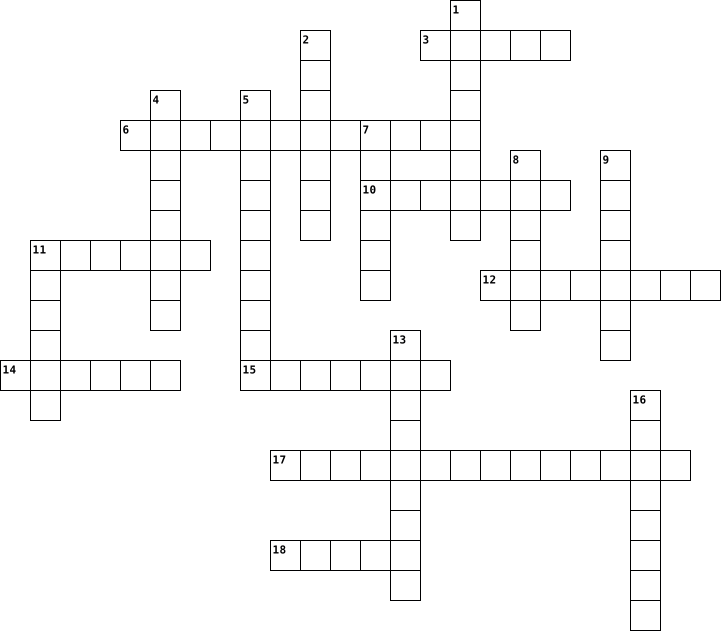
Across
- man who argued for empiricism
- early Greek geographer who devised the lines of latitude and longitude
- system of English government that gradually increased Parliament's power
- studied the body's circulatory system
- studied human anatomy
- studied calculus and the laws of gravity and motion
- term that describes a society free from religion
- husband and wife that signed the English Bill of Rights in exchange for the throne of England
- scientist who wrote "The Sceptical Chymist"
Down
- king who was an absolute ruler and set an example for the rest of Europe
- country that Maria Theresa ruled
- led Parliament's armies during the English Civil War
- theorized that the earth revolves around the sun
- Greek mathematician became the Father of Geometry
- developed a smallpox vaccine
- observed the earth's orbit around the sun with a telescope
- English astronomer for whom a comet is named
- became the Father of Modern Chemistry
- discovered Uranus and made a forty-foot-long telescope
19 Clues: studied human anatomy • developed a smallpox vaccine • man who argued for empiricism • country that Maria Theresa ruled • studied the body's circulatory system • became the Father of Modern Chemistry • scientist who wrote "The Sceptical Chymist" • English astronomer for whom a comet is named • theorized that the earth revolves around the sun • ...
Civics Vocabulary 2016-09-06

Across
- an idea where power is divided between the national and state government
- powers assigned to the states and the people
- was an agreement that large and small states reached during the Constitutional Convention
- wanted a small central government
- government is not all powerful and no one, not even the president is above the law
- population of slaves would be counted as three-fifths in total when apportioning Representatives, as well as Presidential electors and taxes
- limit the power of another and this prevents the majority from having too much power
- wanted a strong central government
Down
- uprising led by a former militia officer
- powers not explicitly named in the Constitution but assumed to exist
- a body of electors chosen or appointed by a larger group
- powers that are shared by both the State and the federal government
- the original constitution of the US
- should follow exactly what was stated and allowed in the document
- powers that the Constitution grants it, subject to the individual rights listed in the Bill of Rights
- was a proposal by Virginia delegates for a bicameral legislative branch
- loose interpretation of the Constitution, which meant they believed that the document permitted everything that it did not expressly forbid
- power comes from the people
- the constitution divides our government into three branches, to avoid tyranny
- unsuccessfully proposed at the Constitutional Convention, providing for a single legislative house with equal representation for each state
20 Clues: power comes from the people • wanted a small central government • wanted a strong central government • the original constitution of the US • uprising led by a former militia officer • powers assigned to the states and the people • a body of electors chosen or appointed by a larger group • should follow exactly what was stated and allowed in the document • ...
Human Rights 2024-10-08

Across
- law
- racial
- promulgate
- politician
- president
- social
- protests
- South Africa
- racial
- towards poverty
- of human rights
Down
- rights
- legalized
- peaceful
- stop
- gender
- frame
- of civil rights
- resistance
- national
20 Clues: law • stop • frame • rights • racial • gender • social • racial • peaceful • national • protests • legalized • president • promulgate • politician • resistance • South Africa • of civil rights • towards poverty • of human rights
Chapter 1 - Jennifer Argelander 2014-09-04

Across
- A supreme power that rests in the hands of colonists.
- Believed in life, liberty and property.
- Compromise dividing congress into two houses.
- Colonists that support the constitution.
- Unified the states under one governing body.
- Used logic and reason to figure things out.
- First permanent English settlement in America.
Down
- Every five enslaved people in a state would count as three free persons.
- A secret group who opposed the Stamp Act.
- Continental Congress declared the colonies be free from the British.
- Three branches of government; checks and balances.
- Colonists who want the Bill of Rights to be added to the Constitution.
- Required colonists to pay a tax on any piece of paper.
- Social contract; agreement between government and people being governed.
14 Clues: Believed in life, liberty and property. • Colonists that support the constitution. • A secret group who opposed the Stamp Act. • Used logic and reason to figure things out. • Unified the states under one governing body. • Compromise dividing congress into two houses. • First permanent English settlement in America. • Three branches of government; checks and balances. • ...
Study Guide 2024-02-29

Across
- What are Judges in Missouri chosen through?
- What is the cut off age for public education
- What is the source of political power and the origin of government?
- What kind of power does the governor have?
- How many sections does the bill of rights contain?
Down
- What is one of the three branches of government?
- What is the highest state court?
- How many years can one serve in the Missouri General Assembly?
- What Does Missouri laws require budgets to be each year?
- How many constitutions has Missouri had?
10 Clues: What is the highest state court? • How many constitutions has Missouri had? • What kind of power does the governor have? • What are Judges in Missouri chosen through? • What is the cut off age for public education • What is one of the three branches of government? • How many sections does the bill of rights contain? • ...
Canadian Democracy Crossword Puzzle 2015-10-08

Across
- Discussion in which the arguments for and against a subject are presented according to specific rules
- Group of all Ministers, mostly from the House of Commons and a few from the Senate
- The upper house of parliament, made up of senators
- The political party with the most members elected to the House of Commons. They make the decisions of the Government's priorities and policies
- Proposal for a law to be considered at Parliament
- The agreement by the provinces to join together to form a the nation of Canada and create a federal Parliament (hint: Happened in 1867)
- A rule for all Canadians made by Senators, Members of Parliament and the Governor General
- All political parties and independent Members who do not belong to a governing party
- A large room in which the Senate meet to discuss business
- Large, heavy, silver and gold covered staff that is a symbol of the power and authority of Parliament
- The periods into which a Parliament is divided
- A Member of the Senate or House of Commons who does not belong to a political party
Down
- Another word for constituency or electoral district
- Person who had full political and civil rights in his or her country
- Bills that are passed by Parliament
- Group of Senators, Members of Parliament, or both, selected to study a specific subject or bill and write a report about it
- A king or queen of a country
- A person who speaks for you
- A university student who works for the Senate of the House of Commons
- To pick one person from a group of several people by voting
20 Clues: A person who speaks for you • A king or queen of a country • Bills that are passed by Parliament • The periods into which a Parliament is divided • Proposal for a law to be considered at Parliament • The upper house of parliament, made up of senators • Another word for constituency or electoral district • A large room in which the Senate meet to discuss business • ...
Constitution Connection by Skylar Dobson 2013-02-12

Across
- To remove or withold something from the enjoyment or possesion.
- The system of basic laws and principals of a government, society, etc.
- Process Fair treatment through the normal judicial system.
- A amendment saying that no matter what race you are, you could still vote.
- An improvement or vision proposed to a bill or law.
- The time after the Civil War when the country was being rebuilt.
Down
- A amendment stating that every citizen is equal and has the same rights.
- The making of laws.
- An official power to make legal decisions.
- Abolished slavery
- The begining of the constitution.
- To sign or give formal consent.
12 Clues: Abolished slavery • The making of laws. • To sign or give formal consent. • The begining of the constitution. • An official power to make legal decisions. • An improvement or vision proposed to a bill or law. • Process Fair treatment through the normal judicial system. • To remove or withold something from the enjoyment or possesion. • ...
Important People of Colonial America 2014-09-18

Across
- king who was forced to sign Magna Carta after a disastrous rule
- Quaker who established Pennsylvania in 1681
- otherwise known as Cecil Calvert, founded Maryland in 1634 for religious freedom
- person who led Pilgrims in 1620- Massachusetts
- followed Williams; established settlement called Portsmouth
- led Puritans in 1630- Massachusetts
- owner of New York who would not allow colonists to elect assembly
Down
- signed English Bill of Rights, giving Parliament power to impose taxes and make laws
- founded Rhode Island in 1656
- previously Duke of York, (unsuccessfully) tried to rule without Parliament
- founded Georgia in 1732 to keep debtors out of prison
- Puritan clergyman who established Connecticut in 1639
12 Clues: founded Rhode Island in 1656 • led Puritans in 1630- Massachusetts • Quaker who established Pennsylvania in 1681 • person who led Pilgrims in 1620- Massachusetts • founded Georgia in 1732 to keep debtors out of prison • Puritan clergyman who established Connecticut in 1639 • followed Williams; established settlement called Portsmouth • ...
Constitution 2024-05-07

Across
- Supreme court is in charge, they overturn laws
- Some power is to the national government
- Helped Create the Bill of Rights and the U.S. Constitution
- Each branch checks the other branch to ensure that one branch has more power than the others
- The government only has the powers that it is given
Down
- A political party that believes in conservatism
- Congress is in charge, they make the laws
- The first 10 Amendments of the United States Constitution
- The beginning of a document
- Creates a balance of powers between the three branches so they have equal power
- A change made
- The President is in charge and can veto laws
12 Clues: A change made • The beginning of a document • Some power is to the national government • Congress is in charge, they make the laws • The President is in charge and can veto laws • Supreme court is in charge, they overturn laws • A political party that believes in conservatism • The government only has the powers that it is given • ...
13th, 14th, and 15th Amendments to the Constitution 2022-05-10

Across
- It was a set of laws that governed African Americans' behavior.
- The war fought between Americans from 1861-1865
- Author of the 14th Amendment
- The rebuilding of the South after the Civil War.
- They were state and local laws that enforced racial segregation in the southern united states.
- It is the condition in which one human being was owned by another.
- Discussed rights that arise from national citizenship
- The amendment in which guaranteed African-American men the right to vote
- The amendment in which Citizens of the United States and the state in which they reside are all persons born or naturalized in the United States and subject to its authority.
Down
- First ten amendments to the constitution
- The thing that enables Hayes to take office in return for the end of Reconstruction. freedmenbureau Government set up schools and hospitals for former slaves.
- a U.S. secret group made up of white people who are opposed to people of other races
- The state in which everyone gets treated the same.
- Author of the 13th Amendment
- president that assumed after Lincoln's death.
- It is a relationship between a person and a government to which the person owes loyalty and is so entitled to protection.
- Parts of the Bill of Rights have been made applicable to states using this doctrine.
- The right to vote in public
- The amendment that abolished slavery in the United States
19 Clues: The right to vote in public • Author of the 13th Amendment • Author of the 14th Amendment • First ten amendments to the constitution • president that assumed after Lincoln's death. • The war fought between Americans from 1861-1865 • The rebuilding of the South after the Civil War. • The state in which everyone gets treated the same. • ...
government 2015-10-02

Across
- a senator or a member of the House of Commons
- The Upper House of the Parliament
- bills that re passed by parliament
- to choose a representative in an election
Down
- a person who has full political and civil rights
- a person living in an area in Canada represented by a member of parliament
- a proposal for a law to be considered by parliament
- a king or queen of a country
- a person who speaks for you
- to pick one person from a group of several people by voting
10 Clues: a person who speaks for you • a king or queen of a country • The Upper House of the Parliament • bills that re passed by parliament • to choose a representative in an election • a senator or a member of the House of Commons • a person who has full political and civil rights • a proposal for a law to be considered by parliament • ...
Causes of the Civil War 2023-11-02

Across
- The rights held by individual states
- An enslaved person, depicted as saintly and dignified, noble and steadfast in his beliefs
- President Lincoln was elected as president
- Maintained a balance between free and slave states
- Dealt with the issue of slavery and territorial expansion
- An attempt to start an armed revolt of enslaved people and destroy the institution of slavery
Down
- A Missouri slave sued for his freedom
- A bill to organize the territory of Nebraska
- Established Georgia's conditional acceptance of the Compromise of 1850
- You can cancel federal laws if they are unconstitutional
10 Clues: The rights held by individual states • A Missouri slave sued for his freedom • President Lincoln was elected as president • A bill to organize the territory of Nebraska • Maintained a balance between free and slave states • You can cancel federal laws if they are unconstitutional • Dealt with the issue of slavery and territorial expansion • ...
Unit 7 Vocabulary 2025-05-12

Across
- the expression of loyalty or support for a particular region of one's country, rather than to the country as a whole
- a member or supporter of the Republican Party
- an advocate or supporter of democracy
- someone who advocates for the end of a specific practice historically referring to those who opposed slavery
Down
- a person who's forced to work against their will
- a person who serves in an army.
- running away in a battle/war
- bill of rights
- a formal choice by voting
- battles between states or countries
10 Clues: bill of rights • a formal choice by voting • running away in a battle/war • a person who serves in an army. • battles between states or countries • an advocate or supporter of democracy • a member or supporter of the Republican Party • a person who's forced to work against their will • ...
Aftermath of WWII 2024-02-26

Across
- Because of this practice, many African American GIs could not access the GI Bill benefits.
- This is the location of the trials for the Japanese leaders who were tried with war crimes, led by the US.
- US President during the years immediately following World War II.
- Roosevelt's plan to fund the return home and transition of veterans - included money for education and access to loans to buy homes.
- After the war, MacArthur was in charge of occupying and leading this nation, though he let citizens of the country have some agency.
- This is the location of the trials for war criminals from Germany, led by the UN.
- This Roosevelt helped establish the Universal Declaration of Human Rights (affirmed rights to life, liberty, equality before the law, religion, expression, & assembly).
- Smaller and more powerful body of the UN that makes decisions about how to act or react.
- After the war, this group returned to jobs in the service sector or stayed home.
Down
- US switched from a foreign policy of isolationism before World War II to this, as we became a world leader.
- The US &43 nations started this to loan money to countries for war recovery & economic development.
- The UN recognized these as rights of all humans: Freedom of speech, expression, and worship & Freedom from fear and want.
- International organization cooperating to promote peace and security.
- At the Yalta Conference, Allied leaders decided to divide this nation into four occupied zones after the war.
- After two world wars, this was the goal of the United States and other allied nations.
15 Clues: US President during the years immediately following World War II. • International organization cooperating to promote peace and security. • After the war, this group returned to jobs in the service sector or stayed home. • This is the location of the trials for war criminals from Germany, led by the UN. • ...
Canadian Democracy Crossword Puzzle 2015-10-08

Across
- Large, heavy, silver and gold covered staff that is a symbol of the power and authority of Parliament
- Bills that are passed by Parliament
- Person who had full political and civil rights in his or her country
- The political party with the most members elected to the House of Commons. They make the decisions of the Government's priorities and policies
- The agreement by the provinces to join together to form a the nation of Canada and create a federal Parliament (hint: Happened in 1867)
- A king or queen of a country
- Proposal for a law to be considered at Parliament
- To pick one person from a group of several people by voting
- The upper house of parliament, made up of senators
- A large room in which the Senate meet to discuss business
Down
- The periods into which a Parliament is divided
- A person who speaks for you
- A Member of the Senate or House of Commons who does not belong to a political party
- Group of Senators, Members of Parliament, or both, selected to study a specific subject or bill and write a report about it
- Discussion in which the arguments for and against a subject are presented according to specific rules
- All political parties and independent Members who do not belong to a governing party
- Another word for constituency or electoral district
- Group of all Ministers, mostly from the House of Commons and a few from the Senate
- A university student who works for the Senate of the House of Commons
- A rule for all Canadians made by Senators, Members of Parliament and the Governor General
20 Clues: A person who speaks for you • A king or queen of a country • Bills that are passed by Parliament • The periods into which a Parliament is divided • Proposal for a law to be considered at Parliament • The upper house of parliament, made up of senators • Another word for constituency or electoral district • A large room in which the Senate meet to discuss business • ...
Canadian Democracy Vocabulary Crossword 2015-10-12

Across
- Another word for constituency or electoral district
- The upper house of parliament, made up of senators
- The agreement by the provinces to join together to form a the nation of Canada and create a federal Parliament (hint: Happened in 1867)
- A Member of the Senate or House of Commons who does not belong to a political party
- Group of all Ministers, mostly from the House of Commons and a few from the Senate
- A rule for all Canadians made by Senators, Members of Parliament and the Governor General
- The political party with the most members elected to the House of Commons. They make the decisions of the Government's priorities and policies
- The periods into which a Parliament is divided
- A large room in which the Senate meet to discuss business
Down
- A university student who works for the Senate of the House of Commons
- All political parties and independent Members who do not belong to a governing party
- A person who speaks for you
- Group of Senators, Members of Parliament, or both, selected to study a specific subject or bill and write a report about it
- Bills that are passed by Parliament
- To pick one person from a group of several people by voting
- Person who had full political and civil rights in his or her country
- Proposal for a law to be considered at Parliament
- Discussion in which the arguments for and against a subject are presented according to specific rules
- Large, heavy, silver and gold covered staff that is a symbol of the power and authority of Parliament
- A king or queen of a country
20 Clues: A person who speaks for you • A king or queen of a country • Bills that are passed by Parliament • The periods into which a Parliament is divided • Proposal for a law to be considered at Parliament • The upper house of parliament, made up of senators • Another word for constituency or electoral district • A large room in which the Senate meet to discuss business • ...
Crossword Puzzle On Politics And Governance 2024-09-06

Across
- A formal accusation against a public official.
- The chief law enforcement officer in the Philippines.
- FAURA The location of the Philippine Supreme Court.
- COURT The highest court in the Philippines.
- The national assembly that holds executive powers.
- The basic framework of laws and principles for governance.
- The department responsible for foreign affairs.
- The city where the Philippine Congress is located.
- The official document that outlines the rights of citizens in the Philippines.
- The legislative branch of the Philippine government.
- BONIFACIO A famous Filipino hero and leader of the 1896 revolution.
- A legislative proposal submitted for approval.
- The legislative house that initiates impeachment proceedings.
- CODE A Filipino law that protects the rights of workers.
- The title given to the mayor of a city.
- The role of this individual is to lead the armed forces.
Down
- The process of changing or amending the Constitution.
- Position held by the highest official in the Philippines.
- The political party founded by President Rodrigo Duterte.
- COURT The constitutional body that reviews the legality of laws.
- The body responsible for overseeing elections in the Philippines.
- A group of advisers to the President.
- The name of the Senate building in Manila.
- The name of the current Senate President.
- The role responsible for local government oversight.
- The process by which a law is enacted.
- The official title of the head of the House of Representatives.
- The official residence of the President of the Philippines.
- A term for laws passed by the legislative branch.
- A title for a member of the national legislature.
30 Clues: A group of advisers to the President. • The process by which a law is enacted. • The title given to the mayor of a city. • The name of the current Senate President. • The name of the Senate building in Manila. • COURT The highest court in the Philippines. • A formal accusation against a public official. • A legislative proposal submitted for approval. • ...
Constitution Crossword! 2022-09-27

Across
- This mob, known as ___ caused us to write the constitution we have today!
- The Great __ is what gave us the House of Representatives, and the Senate
- The Three-fifths Compromise benefited the ________ states
- This amendment protects your freedom of religion, right to protest, and freedom of speech
Down
- These articles were the original US Constitution, but were replaced as it was simply that weak.
- This section of the US Constitution protects your god given rights
- The Quartering Act required colonists to station soldiers in their home if asked, this amendment mostly prevents that.
- The constitution gave us three branches: the Legislative branch, Judicial branch, and the _________ branch.
8 Clues: The Three-fifths Compromise benefited the ________ states • This section of the US Constitution protects your god given rights • This mob, known as ___ caused us to write the constitution we have today! • The Great __ is what gave us the House of Representatives, and the Senate • ...
Constitution Crossword! (Use -'s instead of spaces, please) 2022-09-27

Across
- This mob, known as ___ caused us to write the constitution we have today!
- The Great __ is what gave us the House of Representatives, and the Senate
- The Three-fifths Compromise benefited the ________ states
- This amendment protects your freedom of religion, right to protest, and freedom of speech
Down
- These articles were the original US Constitution, but were replaced as it was simply that weak.
- This section of the US Constitution protects your god given rights
- The Quartering Act required colonists to station soldiers in their home if asked, this amendment mostly prevents that.
- The constitution gave us three branches: the Legislative branch, Judicial branch, and the _________ branch.
8 Clues: The Three-fifths Compromise benefited the ________ states • This section of the US Constitution protects your god given rights • This mob, known as ___ caused us to write the constitution we have today! • The Great __ is what gave us the House of Representatives, and the Senate • ...
Spanish Vocaulary 2013-11-25

Across
- front desk
- to check out
- customer
- registration card
- between
- double room
- hotel clerk
- elevator
- on the right side of
Down
- to pay the bill
- to take the luggage
- inside of
- bellhop
- far from
- on the left side of
- single room
- to reserve
- door
- baggage, luggage
- reservation
- room
- under
- to ask for the bill
- hotel
- key
25 Clues: key • door • room • under • hotel • bellhop • between • far from • customer • elevator • inside of • front desk • to reserve • single room • reservation • double room • hotel clerk • to check out • to pay the bill • baggage, luggage • registration card • to take the luggage • on the left side of • to ask for the bill • on the right side of
US History: The Civil Rights Movement 2024-05-08

Across
- African American teenager lynched
- equal rights for all genders
- ______Luther King Jr.
- American Muslim minister and human rights activist
- black power political organization
- Supreme court case about segregation in schools
- Jim___laws
Down
- American civil rights lawyer
- March for equal voting rights
- A type of disobedience
- advocates for Indigenous rights
- Abv for Equal Rights Amendment
- White supremisist group
- peaceful means of protest
- American labor leader and civil rights activist
- Sat on a bus and Civil rights Activist
16 Clues: Jim___laws • ______Luther King Jr. • A type of disobedience • White supremisist group • peaceful means of protest • American civil rights lawyer • equal rights for all genders • March for equal voting rights • Abv for Equal Rights Amendment • advocates for Indigenous rights • African American teenager lynched • black power political organization • ...
13th, 14th, and 15th Amendments to the Constitution 2022-05-10

Across
- The amendment in which guaranteed African-American men the right to vote
- The thing that enables Hayes to take office in return for the end of Reconstruction. freedmenbureau Government set up schools and hospitals for former slaves.
- Author of the 13th Amendment
- Parts of the Bill of Rights have been made applicable to states using this doctrine.
- a U.S. secret group made up of white people who are opposed to people of other races
- They were state and local laws that enforced racial segregation in the southern united states.
- The right to vote in public
Down
- Discussed rights that arise from national citizenship
- It is a relationship between a person and a government to which the person owes loyalty and is so entitled to protection.
- president that assumed after Lincoln's death.
- First ten amendments to the constitution
- The amendment that abolished slavery in the United States
- It was a set of laws that governed African Americans' behavior.
- Author of the 14th Amendment
- It is the condition in which one human being was owned by another.
- The war fought between Americans from 1861-1865
- The rebuilding of the South after the Civil War.
- The amendment in which Citizens of the United States and the state in which they reside are all persons born or naturalized in the United States and subject to its authority.
- The state in which everyone gets treated the same.
19 Clues: The right to vote in public • Author of the 13th Amendment • Author of the 14th Amendment • First ten amendments to the constitution • president that assumed after Lincoln's death. • The war fought between Americans from 1861-1865 • The rebuilding of the South after the Civil War. • The state in which everyone gets treated the same. • ...
Democracy - 2 2015-10-14

Across
- one of two large rooms in the Centre Block of the Parliament Buildings
- the governent’s plan for how it will collect and spend money each year
- another word for constituency or electoral district
- a rule for all Canadians made by Senators, Members of Parliament and the Governor General through discussion and voting.
- to change or improve something; for example, a law or an Act of Parliament
- a Member of the Senate or House of Commons who does not belong to a political party.
- the daily official record of debates in the Senate and the House of Commons in English and French.
- a discussion in which the arguments for and against a subject are presented according to specific rules
- the bringing to an end of a Parliament
- a formal event that follows rules or traditions
- the process of choosing a representative by vote
Down
- a change that is made to a bill, a motion or a committee report with the intention of improving it
- the person in charge of a meeting
- bills that are passed by Parliament
- a person who has full political and civil rights in his or her country
- to pick one person from a group of several people by voting
- a proposal for a law to be considered by parliament
- a person who speaks for you
- of two chambers or rooms. Canada’s Parliament is made up of two separate Chambers. They are the Senate and the House of Commons
- the Upper House of Parliament by the Governor General on the advice of the Prime Minister. A Senator represents the region of Canada.
20 Clues: a person who speaks for you • the person in charge of a meeting • bills that are passed by Parliament • the bringing to an end of a Parliament • a formal event that follows rules or traditions • the process of choosing a representative by vote • a proposal for a law to be considered by parliament • another word for constituency or electoral district • ...
The 50's Vocab 2023-03-03

Across
- The act of releasing soldiers after a war.
- Salk American physician and medical researcher who developed the first safe and effective vaccine for polio
- Presley US pop singer and guitar player, called the king of rock and roll.
- Marshall American civil rights lawyer. First African American of the Supreme Court.
- Carried out by Senator Joseph McCarthy. Making false accusations against one another.
- The National Aeronautics and Space Administration is responsible for space research and civil space programs.
- Boom Increased birth rate following WWII.
Down
- People who consume more goods and services will more likely be better off.
- Parks Famously known for not giving up her seat to a white person on a bus.
- Riders People would take bus trips through the American South in 1961 to protest segregated bus terminals.
- D. Eisenhower 34th president of the United States. Served from 1953 to 1961.
- Strand of states which stretch from Virginia south through Florida, west to Texas and northwest through California
- Bill Provided World War II veterans with funds for college education, unemployment insurance, and housing
- rights activists. Martin Luther King, Jr He was an American Baptist minister and activist
- Family Consisting of a mother and father in a first-time marriage and their children.
- Truman 33rd president of the United States. Serving from 1945 to 1953
16 Clues: Boom Increased birth rate following WWII. • The act of releasing soldiers after a war. • Truman 33rd president of the United States. Serving from 1945 to 1953 • People who consume more goods and services will more likely be better off. • Presley US pop singer and guitar player, called the king of rock and roll. • ...
Canadian Democracy Vocabulary Crossword 2015-10-12

Across
- Large, heavy, silver and gold covered staff that is a symbol of the power and authority of Parliament
- All political parties and independent Members who do not belong to a governing party
- A university student who works for the Senate of the House of Commons
- Proposal for a law to be considered at Parliament
- A person who speaks for you
- Group of all Ministers, mostly from the House of Commons and a few from the Senate
- Person who had full political and civil rights in his or her country
- The political party with the most members elected to the House of Commons. They make the decisions of the Government's priorities and policies
- A large room in which the Senate meet to discuss business
Down
- A rule for all Canadians made by Senators, Members of Parliament and the Governor General
- The periods into which a Parliament is divided
- Another word for constituency or electoral district
- The upper house of parliament, made up of senators
- Bills that are passed by Parliament
- Discussion in which the arguments for and against a subject are presented according to specific rules
- The agreement by the provinces to join together to form a the nation of Canada and create a federal Parliament (hint: Happened in 1867)
- A Member of the Senate or House of Commons who does not belong to a political party
- Group of Senators, Members of Parliament, or both, selected to study a specific subject or bill and write a report about it
- A king or queen of a country
- To pick one person from a group of several people by voting
20 Clues: A person who speaks for you • A king or queen of a country • Bills that are passed by Parliament • The periods into which a Parliament is divided • Proposal for a law to be considered at Parliament • The upper house of parliament, made up of senators • Another word for constituency or electoral district • A large room in which the Senate meet to discuss business • ...
Canadian Democracy Vocabulary Crossword 2015-10-12

Across
- To pick one person from a group of several people by voting
- A king or queen of a country
- All political parties and independent Members who do not belong to a governing party
- The political party with the most members elected to the House of Commons. They make the decisions of the Government's priorities and policies
- A person who speaks for you
- Proposal for a law to be considered at Parliament
- Another word for constituency or electoral district
- Discussion in which the arguments for and against a subject are presented according to specific rules
- Bills that are passed by Parliament
Down
- A university student who works for the Senate of the House of Commons
- A large room in which the Senate meet to discuss business
- A Member of the Senate or House of Commons who does not belong to a political party
- Large, heavy, silver and gold covered staff that is a symbol of the power and authority of Parliament
- The agreement by the provinces to join together to form a the nation of Canada and create a federal Parliament (hint: Happened in 1867)
- Group of Senators, Members of Parliament, or both, selected to study a specific subject or bill and write a report about it
- The upper house of parliament, made up of senators
- Group of all Ministers, mostly from the House of Commons and a few from the Senate
- Person who had full political and civil rights in his or her country
- The periods into which a Parliament is divided
- A rule for all Canadians made by Senators, Members of Parliament and the Governor General
20 Clues: A person who speaks for you • A king or queen of a country • Bills that are passed by Parliament • The periods into which a Parliament is divided • Proposal for a law to be considered at Parliament • The upper house of parliament, made up of senators • Another word for constituency or electoral district • A large room in which the Senate meet to discuss business • ...
Canadian Democracy Vocabulary Crossword 2015-10-12

Across
- The upper house of parliament, made up of senators
- Proposal for a law to be considered at Parliament
- Discussion in which the arguments for and against a subject are presented according to specific rules
- A king or queen of a country
- Bills that are passed by Parliament
- Another word for constituency or electoral district
- To pick one person from a group of several people by voting
- A person who speaks for you
- Group of Senators, Members of Parliament, or both, selected to study a specific subject or bill and write a report about it
- Large, heavy, silver and gold covered staff that is a symbol of the power and authority of Parliament
Down
- A large room in which the Senate meet to discuss business
- The periods into which a Parliament is divided
- The political party with the most members elected to the House of Commons. They make the decisions of the Government's priorities and policies
- Group of all Ministers, mostly from the House of Commons and a few from the Senate
- A university student who works for the Senate of the House of Commons
- The agreement by the provinces to join together to form a the nation of Canada and create a federal Parliament (hint: Happened in 1867)
- A rule for all Canadians made by Senators, Members of Parliament and the Governor General
- A Member of the Senate or House of Commons who does not belong to a political party
- All political parties and independent Members who do not belong to a governing party
- Person who had full political and civil rights in his or her country
20 Clues: A person who speaks for you • A king or queen of a country • Bills that are passed by Parliament • The periods into which a Parliament is divided • Proposal for a law to be considered at Parliament • The upper house of parliament, made up of senators • Another word for constituency or electoral district • A large room in which the Senate meet to discuss business • ...
Govt Crossword 2023-10-10

Across
- A loosely defined term for action designed to prolong debate and delay or prevent a vote on a bill, resolution, amendment, or other debatable question.
- Authorizes Congress to employ any means that are appropriate and plainly adapted to the permitted end.
- A qualification which is subsidised by the Department of Education.
- The amount of senators.
- A temporary, ad hoc panel composed of House and Senate conferees.
- A person who is represented politically by a designated government official or officeholder.
- Allows for direct votes for senators.
Down
- Established by Senate for investigation or study.
- A procedure meant to bring a debate to a quick end.
- Legislation introduced in either the House of Representatives or the Senate, but unlike bills they may be limited in effect to the Congress or one of its chambers.
- A meeting or grouping of supporters or members of a specific political party or movement.
- A means of bringing a bill out of committee and to the floor for consideration without a report from the committee by "discharging" the committee from further consideration of a bill or resolution.
- The minimum number of members of a deliberative assembly (a body that uses parliamentary procedure, such as a legislature) necessary to conduct the business of that group.
- The limit of people in Congress allowed at any given time.
- Permanent committees established under the standing rules of the Senate and specialize in the consideration of particular subject areas.
- Maximum time someone can be a senator
- Leads the Senate
- A nongermane amendment to a bill or an amendment to an appropriation bill that changes the permanent law governing a program funded by the bill.
18 Clues: Leads the Senate • The amount of senators. • Maximum time someone can be a senator • Allows for direct votes for senators. • Established by Senate for investigation or study. • A procedure meant to bring a debate to a quick end. • The limit of people in Congress allowed at any given time. • A temporary, ad hoc panel composed of House and Senate conferees. • ...
Constitution and Bill Of Rights Crossword 2022-05-04

Across
- what month was the constitution finally signed
- highest court
- how many senates are in each state
- what court comes after the supreme court
- the legislative branch is ran by this group.
Down
- congress can vote to impeach the president of what branch?
- nations top court
- An expression of individual freedoms
- holds all power to make laws for the country.
9 Clues: highest court • nations top court • how many senates are in each state • An expression of individual freedoms • what court comes after the supreme court • the legislative branch is ran by this group. • holds all power to make laws for the country. • what month was the constitution finally signed • congress can vote to impeach the president of what branch?
Bill of Rights Vocabulary Crossword Puzzle 2024-03-06

Across
- permission
- complaints about unfair actions
- lodged
- danger
Down
- formally requested
- required
- limited beyond established boundaries
- established as true
8 Clues: lodged • danger • required • permission • formally requested • established as true • complaints about unfair actions • limited beyond established boundaries
Bill of Rights Vocabulary Crossword Puzzle 2024-03-06

Across
- permission
- complaints about unfair actions
- lodged
- danger
Down
- formally requested
- required
- limited beyond established boundaries
- established as true
8 Clues: lodged • danger • required • permission • formally requested • established as true • complaints about unfair actions • limited beyond established boundaries
Bill of Rights Vocabulary Crossword Puzzle 2024-03-06

Across
- permission
- complaints about unfair actions
- lodged
- danger
Down
- formally requested
- required
- limited beyond established boundaries
- established as true
8 Clues: lodged • danger • required • permission • formally requested • established as true • complaints about unfair actions • limited beyond established boundaries
Gov 12-15 crossword 2026-02-23

Across
- A government organization intended to fulfil a specific government purpose.
- A period of time after the president has been sworn in where the approval poll shows no major changes.
- The inclusion of benefits to a party in a bill that is already set to be passed.
- The relationship among bureaucracies, members of the Congress, and interest groups.
- The process to remove a president from office through the conviction of a crime.
- A collection of members appointed by the president to perform certain tasks.
- The state of policy before it becomes law; a proposal for a law. it must run through the Congress and the president to become a law.
- A system that taxes out of paychecks to fund healthcare and living for people eligible to receive support.
- This type of budget does not exist for the federal government.
- An act that reduced the number of tax brackets, decreased the value of tax deductions, and removed low income individuals from tax rolls.
Down
- Mike Johnson (as of 2/23/26)
- An established set of rules provided to employees to ensure a common experience among several areas.
- A move the president can pull to get rid of a bill by not doing anything about it for 10 business days
- A politician running for reelection.
- A move the president can pull to send a bill back to the Congress; if the Congress likes the bill enough, it will still be passed without the presidential approval.
- A position or promotion provided on the basis of competence and merit.
- the relationship between the military and defence industries; war fills the pockets of the people selling war supplies.
- An order by the president that does not have to be approved by the Congress, however must be reported to the Congress
- Items available to purchase by the public intended to provide the government a source of income. bonds are also promised to increase in value, hence there being an incentive to buy them.
- A move members of the Congress can pull to get rid of bill by talking it to death; holding the floor for so long that no progress in approving the bill can be made, thus killing it.
- This act forbids government employees from participating in partisan politics.
21 Clues: Mike Johnson (as of 2/23/26) • A politician running for reelection. • This type of budget does not exist for the federal government. • A position or promotion provided on the basis of competence and merit. • A government organization intended to fulfil a specific government purpose. • A collection of members appointed by the president to perform certain tasks. • ...
Power Symbols 2017-06-09

Across
- National winter sport of Canada.
- National summer sport of Canada.
- The national colors of Canada.
- Major mountain range that stretches around 3000 miles.
- The largest living member of the deer family.
- The largest living species of bear and are found in the northern reaches of Canada.
- The National flag of Canada.
- The most widely recognized national symbol of Canada.
Down
- A bill of rights entrenched in the Constitution of Canada.
- Sport invented by Canada in 1891 but is popularized by the United States.
- A semiaquatic rodent that is known for building dams, canals, and lodges.
- A monument created by Northwest Coast Indigenous peoples.
- A federal and a national police force of Canada.
- Canada's national anthem.
- A human-made stone landmark used by the Indigenous people living in the Arctic region of Canada.
- A symbol of Quebecois and Canadian cuisine and culture.
16 Clues: Canada's national anthem. • The National flag of Canada. • The national colors of Canada. • National winter sport of Canada. • National summer sport of Canada. • The largest living member of the deer family. • A federal and a national police force of Canada. • The most widely recognized national symbol of Canada. • Major mountain range that stretches around 3000 miles. • ...
USA 2024-11-22

Across
- many amendments are there?
- Establishing credibility
- wrote the bill of rights?
Down
- who wrote the Decleration of independence?
- Appeal to emotion
5 Clues: Appeal to emotion • Establishing credibility • wrote the bill of rights? • many amendments are there? • who wrote the Decleration of independence?
Unit 8 2025-05-08

Across
- Guaranteed citizenship to anyone born in the U.S. and ensured equal protection under the law.
- The U.S. process of reuniting and rebuilding the South after the Civil War.
- The legal or social separation of people based on race.
- A pledge Southerners had to take promising allegiance to the United States to be readmitted.
- Abolished slavery throughout the United States.
- A farming system where freedmen worked a portion of land in return for a share of the crops.
- Laws passed in Southern states to restrict African American freedoms after the Civil War.
Down
- A reading and writing test used to suppress the Black vote during and after Reconstruction.
- U.S. president who took office after Lincoln and implemented a lenient Reconstruction plan.
- A group that used violence and terror to oppose Reconstruction and suppress Black rights.
- Gave African American men the right to vote.
- President who proposed the Ten Percent Plan to bring Southern states back into the Union.
- A president’s rejection of a bill; Johnson often used this to oppose Radical Republican legislation.
- Rights guaranteed to all citizens regardless of race, including voting and equal treatment.
- A farming system where a person rents land and pays with cash or a share of crops.
- A fee required to vote, used to prevent African Americans from voting.
16 Clues: Gave African American men the right to vote. • Abolished slavery throughout the United States. • The legal or social separation of people based on race. • A fee required to vote, used to prevent African Americans from voting. • The U.S. process of reuniting and rebuilding the South after the Civil War. • ...
civics crossword 2024-05-09

Across
- picketing is an example of which freedom
- what amendment protects us from unreasonable search and se
- how many faces cards are in a deck
- Who wrote the Declaration of Independence
- what document was written in 1787
- How long does a president serve
- How many planets are there
- who was the president during U.S attacks on september 11th
- What happened at the Constitutional Convention?
- what is the action of the President when he rejects a bill from congress.
Down
- how many colors are on the rainbow
- when do we celebrate Independence day
- What ocean is on the West Coast of the United States?
- who was first president of the United States.
- What are two rights of everyone living in the United States.
- what is the longest river
- How long do supreme court justices serve
- what branch enforces the laws of the land
- what president served three full terms in office
- What group of people was taken to America and sold as slaves?
- how many are in a dozen
21 Clues: how many are in a dozen • what is the longest river • How many planets are there • How long does a president serve • what document was written in 1787 • how many colors are on the rainbow • how many faces cards are in a deck • when do we celebrate Independence day • picketing is an example of which freedom • How long do supreme court justices serve • ...
Civics review: Spike 2023-04-12

Across
- the highest judicial court in a country or state.
- to reject a decision or proposal made by a law-making body
- interprets the laws
- The branch of the government that has the president
- the rights of citizens to political and social freedom and equality.
- makes all laws, declares war, regulates interstate and foreign commerce and controls taxing and spending policies
- Minnesota's 41st Governor
- first person to sign the Constitution
Down
- There are 94
- hears and reviews the appeals from legal cases that have already been heard and ruled on in a lower court
- judge of the U.S. Supreme Court
- a person who has committed a crime
- altering or amending a law or document
- a draft of a proposed law
- Current US president
- a compulsory contribution to state revenue
- expressed typically through a ballot, a show of hands, or by voice.
- the system of rules
- the supreme law of the United States of America
19 Clues: There are 94 • interprets the laws • the system of rules • Current US president • a draft of a proposed law • Minnesota's 41st Governor • judge of the U.S. Supreme Court • a person who has committed a crime • first person to sign the Constitution • altering or amending a law or document • a compulsory contribution to state revenue • the supreme law of the United States of America • ...
Constitution crossword 2023-05-09

Across
- Supreme Court, other federal courts
- "we the _______ of the United States"
- Senate and House of Representatives
- President,Vice President,Cabinet
- rights retained by the people
- a written plan of government
- freedoms, petitions, assembly
Down
- addition or change to the constitution
- rights in civil cases
- states rights
- rights in criminal cases
- rights to a fair trial
- rights to bear arms
- bails, fines, punishments
- search and arrest
- quartering of soldiers
16 Clues: states rights • search and arrest • rights to bear arms • rights in civil cases • rights to a fair trial • quartering of soldiers • rights in criminal cases • bails, fines, punishments • a written plan of government • rights retained by the people • freedoms, petitions, assembly • President,Vice President,Cabinet • Supreme Court, other federal courts • ...
MONEY 2023-06-22

Across
- This is a small, copper-colored coin. It is worth one cent. People use this to buy small items or save them in a piggy bank.
- This is a type of paper money. It is issued by the government or central bank and represents a specific value. It is commonly used for transactions and can be exchanged for goods and services.
- bill This is a paper bill or banknote. It is worth twenty dollars. It is slightly larger than a ten-dollar bill and has different pictures and symbols on it.
- This refers to the money that is returned to you when you pay more than the required amount for something. It often includes a combination of coins and bills.
- bill This is a paper bill or banknote. It is worth fifty dollars. It is slightly larger than a twenty-dollar bill and has different pictures and symbols on it.
- bill This is a paper bill or banknote. It is worth five dollars. It is slightly larger than a one-dollar bill and has different pictures and symbols on it.
- This is a small, portable case or container used to carry this. It usually has different compartments to organize coins, bills, and cards. People keep their this in their wallets for convenience and security.
Down
- bank This is a small container, often in the shape of a pig, used to store this. Children use it to collect and save their this. They can deposit coins into the piggy bank through a slot and retrieve them when needed.
- This is a larger, silver-colored coin. It is worth twenty-five cents. It is thicker than a penny and has a ridged edge.
- This is a silver-colored coin. It is worth five cents. It is slightly larger than a penny and has a smooth edge.
- This is a small, metallic form of this. It can be made of different metals and has a specific value. People use these to make payments or collect them as a hobby.
- bill This is a paper bill or banknote. It is worth ten dollars. It is slightly larger than a five-dollar bill and has different pictures and symbols on it.
- This is a paper bill or banknote. It is worth one dollar. It has pictures of important people or symbols on it. People use this to buy items of higher value.
- This is a small unit of this. There are one hundred of these in a dollar. It is often represented by the symbol ¢.
- This is a small, silver-colored coin. It is worth ten cents. It is thinner than a penny and has a smooth edge.
15 Clues: This is a small, silver-colored coin. It is worth ten cents. It is thinner than a penny and has a smooth edge. • This is a silver-colored coin. It is worth five cents. It is slightly larger than a penny and has a smooth edge. • This is a small unit of this. There are one hundred of these in a dollar. It is often represented by the symbol ¢. • ...
Reconstruction 2023-08-31

Across
- Southern vigilante group that set out to destroy the Republican Party
- the period of rebuilding the south that occurred from 1865-1877
- withdraw, formally, from something
- A system where land owner divided their land and assigned each head of household a few acres along with seeds and tools. They were allowed to keep a small portion of the crop for themselves but most when to the landowner.
- An agency of the war department set up in 1865 to aid African Americans freed from emancipation
Down
- Northerners who moved south after the war
- no one can be kept from voting because of race or color
- prevented states from denying rights and privileges to any US citizen
- White southerners who joined the Republican Party.
- Johnson Vetoed Bill of Rights and Freedmen's Bureau. He was democrat and anti-slavery. He was Abraham Lincolns sucessor.
10 Clues: withdraw, formally, from something • Northerners who moved south after the war • White southerners who joined the Republican Party. • no one can be kept from voting because of race or color • the period of rebuilding the south that occurred from 1865-1877 • Southern vigilante group that set out to destroy the Republican Party • ...
Human Rights 2024-11-13

Across
- Universal ____________ of Human Rights
- What goes with rights.
- Signed in 1215 and prevented the King from being above the law.
- Eleanor's last name (she oversaw an important document).
- Freedom that allows you to speak your mind.
- All people are created.
- Where human rights begin.
- There are how many human rights.
- Formed in 1945 to protect human rights.
- Laws that people naturally follow
Down
- A watchdog for human rights.
- Everybody has these.
- Invented human rights.
- Lawyer from India.
- What we must do to each other.
- Things to which you are entitled.
- Cyrus wrote down people's rights on this.
- Revolution in 1789.
18 Clues: Lawyer from India. • Revolution in 1789. • Everybody has these. • What goes with rights. • Invented human rights. • All people are created. • Where human rights begin. • A watchdog for human rights. • What we must do to each other. • There are how many human rights. • Things to which you are entitled. • Laws that people naturally follow • Universal ____________ of Human Rights • ...
Civil rights 2022-01-26

Across
- A civil rights organisation established after the Greensboro sit-in.
- Caricature of African Americans, and the nickname given to segregation laws.
- Aggressive white supremacist organisation
- Black teenager brutally murdered in 1955, which shed light on Southern violence.
- A system which permits private ownership, where goods are bought and sold for profit.
- Civil Rights campaign organised after the assassination of JFK, to increase voter registration.
- Capital of the United States.
- The president who signed the Civil Rights Act in 1964.
- A militant civil rights organisation, established in 1966, Black ___________.
Down
- Civil Rights organisation set up by MLK.
- Militant civil rights organisation, behind the assassination of Malcolm X.
- A system which puts forward a classless society, where private ownership is abolished.
- Densely populated and deprived area of a city.
- Nickname of Police Chief Connor, in Alabama.
- Keeping races apart.
- Black student enrolled at Mississippi in 1962, James ___________.
- President after Johnson.
- Civil Rights organisation dedicated to desegregation through legal action.
- The president who signed the Civil Rights Act in 1957.
19 Clues: Keeping races apart. • President after Johnson. • Capital of the United States. • Civil Rights organisation set up by MLK. • Aggressive white supremacist organisation • Nickname of Police Chief Connor, in Alabama. • Densely populated and deprived area of a city. • The president who signed the Civil Rights Act in 1957. • ...
Early Rock 'N' Roll Review 2013-09-18

Across
- “That’ll Be the Day”, “Oh, Boy”, “Peggy Sue”
- Chess, Atlantic, and Sun were the most important ___________________ record companies of the 1950’s.
- Muddy Waters, Bo Diddley, and Howlin’ Wolf were artists on this Chicago-based record label.
- “Rock Around the Clock”
- “Cross Road Blues”
- Elvis’ guitar player.
- Big Joe Turner, Louis Jordan, and Big Mama Thornton are associated with this style of early R & B.
- “Hound Dog” (1952)
- “Blue Moon of Kentucky”, “Heartbreak Hotel”
- This record company bought the rights to Elvis Presley from Sun.
- Elvis Presley was born in _______________, Mississippi.
Down
- Which Elvis hit was originally written by Big Mama Thornton?
- Performed a "cleaned-up" cover versions of rock ‘n’ roll for mainstream audiences not quite yet ready for the real thing.
- Record label based in New York had Big Joe Turner, The Coasters, and Ray Charles.
- Elvis Presley’s manager
- “Shake, Rattle and Roll”
- For a brief time, Elvis Presley, Johnny Cash, Carl Perkins, and Jerry Lee Lewis were signed to this label.
- “Ain’t That a Shame”, “Blue Monday”
- “Roll Over Beethoven”, “Rock and Roll Music”
- This movie featured Bill Haley’s “Rock Around the Clock”.
- Sun Records was founded by _______________________.
- “Caldonia”
- “TuttiFrutti”, “Lucille”, “Ready Teddy”
- Artists associated with this style of music include Jerry Lee Lewis, Buddy Holly and the Crickets, Elvis Presley, and Bill Haley and His Comets.
- Country-Swing artist, sang “Hey, Good Lookin’”.
- Elvis’ bass player.
- “I Got My Mojo Workin’”
- Robert Johnson and Leadbelly are associated with this style of music.
28 Clues: “Caldonia” • “Cross Road Blues” • “Hound Dog” (1952) • Elvis’ bass player. • Elvis’ guitar player. • Elvis Presley’s manager • “Rock Around the Clock” • “I Got My Mojo Workin’” • “Shake, Rattle and Roll” • “Ain’t That a Shame”, “Blue Monday” • “TuttiFrutti”, “Lucille”, “Ready Teddy” • “Blue Moon of Kentucky”, “Heartbreak Hotel” • “That’ll Be the Day”, “Oh, Boy”, “Peggy Sue” • ...
Constitution Unit 2022-12-01

Across
- The courts above a trial court that review cases
- Body that is "in charge" of the judicial branch.
- The ability of the Supreme Court to say if laws are unconstitutional
- Branch of government that enforces laws.
- Minimum age to serve as president
- Introduction to the Constitution
- A rough draft of a law
- The national government shares powers with state governments
- The first 10 Amendments to the Constitution
- This kind of trial is when a judge decides the result, not a jury
- Minimum age to serve as a senator
- This department is responsible with our country's relationship with other countries
- Asking another court to review your court case
- Rule of a country by its own people
Down
- The president's power to reject a bill from becoming a law
- These cases deal with when someone breaks the law
- The system where each branch of government helps control the other branches
- Person who is in charge of the executive branch.
- Body that is "in charge" of the legislative branch.
- The decision of a court case
- This executive department that enforces federal laws and prosecutes criminals
- Number of years for a representative's term in office.
- Number of years for a president's term in office
- A group of twelve people who decide the result of a court case
- Branch of government that interprets laws.
- This executive department keeps the nation safe through the military
- A change to the Constitution
- These cases deal with people's rights
- Minimum age to serve as a representative
- Branch of government that makes laws.
- Number of senators each state gets
- This executive department creates money and collects taxes
- Number of years for a senator's term in office
- This determines how many representatives a state gets
34 Clues: A rough draft of a law • The decision of a court case • A change to the Constitution • Introduction to the Constitution • Minimum age to serve as president • Minimum age to serve as a senator • Number of senators each state gets • Rule of a country by its own people • These cases deal with people's rights • Branch of government that makes laws. • ...
Government Terms Set #2 2022-12-12

Across
- a series of violent attacks on courthouses and other government properties in Massachusetts
- A false verbal accusation of a person's character, reputation, business, or property rights.
- a judge's order authorizing a search
- A procedural rule in the House of Representatives that prohibits any amendments to bills or provides that only members of the committee reporting the bill may offer amendments.
- is the group of presidential electors required by the Constitution to form every four years for the sole purpose of electing the president and vice president
- people who opposed the Constitution
- An officeholder who is seeking reelection.
- Article III
- The principle of a two-house legislature.
- the right to vote
- Process of redrawing legislative boundaries for the purpose of benefiting the party in power.
- To Approve
- Primary election in which any voter, regardless of party, may vote.
Down
- Executive Branch
- the division of power among the legislative, executive, and judicial branches of government
- the action or crime of making a false spoken statement damaging to a person's reputation.
- More than half
- the people who are represented by elected officials
- A requirement that citizens pay a tax in order to register to vote
- A government controlled by religious leaders
- supporters of the Constitution
- Election in which voters choose party nominees.
- A lengthy speech designed to delay or kill the vote on a bill; used only in the Senate
- A false written accusation of a person's character, reputation, business or property rights
- An action by the House of Representatives to accuse the president, vice president, or other civil officers of the United States of committing "Treason, Bribery, or other high Crimes and Misdemeanors."
25 Clues: To Approve • Article III • More than half • Executive Branch • the right to vote • supporters of the Constitution • people who opposed the Constitution • a judge's order authorizing a search • The principle of a two-house legislature. • An officeholder who is seeking reelection. • A government controlled by religious leaders • Election in which voters choose party nominees. • ...
Canadian Democracy Vocabulary Crossword 2015-10-14

Across
- Bills that are passed by Parliament
- Another word for constituency or electoral district
- The periods into which a Parliament is divided
- The agreement by the provinces to join together to form a the nation of Canada and create a federal Parliament (hint: Happened in 1867)
- The political party with the most members elected to the House of Commons. They make the decisions of the Government's priorities and policies
- A Member of the Senate or House of Commons who does not belong to a political party
- A king or queen of a country
- Group of all Ministers, mostly from the House of Commons and a few from the Senate
- A large room in which the Senate meet to discuss business
- To pick one person from a group of several people by voting
- A rule for all Canadians made by Senators, Members of Parliament and the Governor General
- Discussion in which the arguments for and against a subject are presented according to specific rules
Down
- The upper house of parliament, made up of senators
- Proposal for a law to be considered at Parliament
- A person who speaks for you
- Group of Senators, Members of Parliament, or both, selected to study a specific subject or bill and write a report about it
- All political parties and independent Members who do not belong to a governing party
- Large, heavy, silver and gold covered staff that is a symbol of the power and authority of Parliament
- Person who had full political and civil rights in his or her country
- A university student who works for the Senate of the House of Commons
20 Clues: A person who speaks for you • A king or queen of a country • Bills that are passed by Parliament • The periods into which a Parliament is divided • Proposal for a law to be considered at Parliament • The upper house of parliament, made up of senators • Another word for constituency or electoral district • A large room in which the Senate meet to discuss business • ...
Government 2025-03-19

Across
- Formal decision by legislators on the bill’s fate
- Presidential rejection of a bill passed by Congress
- Proposed law introduced in Congress
- Proposed change or addition to the bill’s text
- Deliberation and discussion on the merits of the bill
Down
- Group of legislators who review and refine the bill
- Lower chamber of Congress where the bill is introduced
- Chamber where the bill is debated and voted on
- Final approved bill enacted into law
- Upper chamber of Congress that debates the bill
10 Clues: Proposed law introduced in Congress • Final approved bill enacted into law • Chamber where the bill is debated and voted on • Proposed change or addition to the bill’s text • Upper chamber of Congress that debates the bill • Formal decision by legislators on the bill’s fate • Group of legislators who review and refine the bill • ...
Civil rights 2023-04-03

Across
- Civil Rights organisation dedicated to desegregation through legal action.
- Civil Rights campaign organised after the assassination of JFK, to increase voter registration.
- A system which permits private ownership, where goods are bought and sold for profit.
- Capital of the United States.
- Aggressive white supremacist organisation
- Keeping races apart.
- The president who signed the Civil Rights Act in 1957.
- Densely populated and deprived area of a city.
- The president who signed the Civil Rights Act in 1964.
Down
- A system which puts forward a classless society, where private ownership is abolished.
- Civil Rights organisation set up by MLK.
- Nickname of Police Chief Connor, in Alabama.
- Caricature of African Americans, and the nickname given to segregation laws.
- Black teenager brutally murdered in 1955, which shed light on Southern violence.
- Militant civil rights organisation, behind the assassination of Malcolm X.
- A militant civil rights organisation, established in 1966, Black ___________.
- President after Johnson.
- A civil rights organisation established after the Greensboro sit-in.
- Black student enrolled at Mississippi in 1962, James ___________.
19 Clues: Keeping races apart. • President after Johnson. • Capital of the United States. • Civil Rights organisation set up by MLK. • Aggressive white supremacist organisation • Nickname of Police Chief Connor, in Alabama. • Densely populated and deprived area of a city. • The president who signed the Civil Rights Act in 1957. • ...
5 Priciples of te tiri o waitangi 2024-10-09

Across
- rights - Rights relating to land
- - Principle emphasizing collaboration
- - The concept of honor and responsibility
- - Active involvement in decision-making
- -Māori term for family
- - Protecting cultural heritage
- - Fairness and justice in access
- Reo - Term for the Māori language
- - Māori term for their culture
- rights – Rights of the original inhabitants
- - A gathering place for Māori communities
- - Local marae meeting place
Down
- - Central to Māori identity
- - Collective of iwi
- - Māori term for a group of people
- Whenua - Spiritual connection to land
- - Signatory to the Treaty
- - Historical document signed in 1840
- - A key principle of justice
- - Ensuring Māori rights are upheld
- - Meaningful engagement with Māori
21 Clues: - Collective of iwi • -Māori term for family • - Signatory to the Treaty • - Central to Māori identity • - Local marae meeting place • - A key principle of justice • - Protecting cultural heritage • - Māori term for their culture • rights - Rights relating to land • - Fairness and justice in access • Reo - Term for the Māori language • - Māori term for a group of people • ...
Foundational Documents and Principles of the United States 2023-11-03

Across
- This document by Thomas Jefferson became a model for part of the first Amendment
- We vote for representatives to make our laws
- The level of government at the top in charge of all states and citizens
- The first representative government in the colonies
- This colonial constitution expanded voting rights in its colony
- The first 10 amendments to the constitution established to protect the individual liberties of citizens
- Power of the People
- The level of government in charge of affairs within a single state
- The branch of government that enforces the laws
Down
- The principle that the government is bound by the constitution
- The first constitution of the United States
- Each branch of government can oversee and interact with the other branches to ensure no one branch can overstep its assigned powers
- This document gave justification for the colonies to leave England and become their own country
- The branch of government that makes the laws
- The government principle outlined in the 10th Amendment; 2 levels of gov.(federal & state)
- There are 3 separate branches of government (legislative, executive, & judicial) each with their own powers and responsibilities
- A social contract that became the model of self government in the British Colonies
- This principle is set up in the Bill of Rights
- The part of the AoC that set up a system for new states to join the United States
- The branch of government that interprets the laws
- The current set of principles that guide our country/highest law of the US
21 Clues: Power of the People • The first constitution of the United States • The branch of government that makes the laws • We vote for representatives to make our laws • This principle is set up in the Bill of Rights • The branch of government that enforces the laws • The branch of government that interprets the laws • The first representative government in the colonies • ...
Government 2015-10-12

Across
- a group of all Ministers who make decisions about governmental issues
- a rule for all Canadians made by Senators, Members of Parliament and the Governor General
- formed by the political party with the most members elected to the House of Commons
- a proposal for a law to be considered by Parliament
- a special title given to Senators and Cabinet Ministers for life
- to choose a representative in an election
- a member of the Senate or House of Commons who does not belong to a political party
- the set of rules that a country follows to work as a nation
- the government's plan for how it will collect and spend money each year
- a king or queen of a country
- the bringing to an end of a Parliament
- one of two large rooms in the centre block of the Parliament Buildings
- to change or improve something; a law or an act of Parliament
Down
- the process of choosing a representative by vote
- bills that are passed by Parliament
- to place a document before the Senate, House of Commons or a committee for consideration
- a change that is made to a bill, a motion or a committee report
- to pick one person from a group of several people by voting
- a formal event that follows rules or traditions
- a person who has full political and civil rights in his or her country
- a person who speaks for you
- of two chambers or rooms; for example the Senate and the House of Commons
- another word for constituency or electoral district
- the city where a country's legislature carries out its business
- the periods into which a Parliament is divided
25 Clues: a person who speaks for you • a king or queen of a country • bills that are passed by Parliament • the bringing to an end of a Parliament • to choose a representative in an election • the periods into which a Parliament is divided • a formal event that follows rules or traditions • the process of choosing a representative by vote • ...
Our democratic republic review 2022-02-04

Across
- The branch of government that contains the House of Representatives
- The unfair drawing of congressional districts is known as this
- Cincinnatus offered us an example of this; valuing the common good
- New Hampshire's bordering state that is also worth four electoral votes
Down
- This rebellion highlighted the country's strength under the U.S. Constitution
- The number of amendments in the Bill of Rights
- The number of justices on the U.S. Supreme Court
- This rebellion showed the country's weakness under the Articles of Confederation
- The branch of government that contains President's cabinet
- The number of years in a Senator's term
- The branch of government that contains the U.S. Supreme Court
- ______ of State, ______ of Defense, ______ of Education
12 Clues: The number of years in a Senator's term • The number of amendments in the Bill of Rights • The number of justices on the U.S. Supreme Court • ______ of State, ______ of Defense, ______ of Education • The branch of government that contains President's cabinet • The branch of government that contains the U.S. Supreme Court • ...
Word Wall Quiz 2023-12-01

Across
- The British response to the Boston Tea Party
- Roger Williams started religious tolerant
- Agreement that decided how many representatives large and small states would send to Congress
- Fishing, lumbering, shipbuilding, harbors
- Turning point of war
- Wealth, religion, expand empires, claim territory
- Law establishing a way for admitting new states to the United States
- British controlled colonial trade
Down
- Distance from Britain, Mayflower compact (social contract), Virginia House of Burgesses
- believed it needed a bill of rights
- Agreement over how slaves would count for representation and taxation purposes
- Claimed Florida, Texas, California & built missions
- Claimed land in New World to profit from fur trading
- life, liberty, and pursuit of happiness
- believed it created a more stable Union
- Balances helps to prevent any one branch from becoming too powerful
- Law forbid colonists from moving west of the Appalachian Mountains
17 Clues: Turning point of war • British controlled colonial trade • believed it needed a bill of rights • life, liberty, and pursuit of happiness • believed it created a more stable Union • Roger Williams started religious tolerant • Fishing, lumbering, shipbuilding, harbors • The British response to the Boston Tea Party • Wealth, religion, expand empires, claim territory • ...
civics unit 3 2023-04-17

Across
- this branch makes laws
- (blank) clause gives Congress the right to make an "necessary" laws
- ratifies any executive agreement by at least 2/3 vote
- this chief justice defended both the judicial review and federalism
- (blank) is to be accused of doing something improper
- what articles mentions the elastic clause and the legislative branch
- which branch enterupts the laws
- what article talked about the supremacy clause
- how many amendment in the constitution are included in the Bill of Rights
- how many amendments are there in total
Down
- introduction of the constitution
- (blank) is dividing the government powers between state and national governments
- what amendment repealed the 18th amendemnt
- which article talks about the executive branch
- which branch carryouts and enforces the laws
- what did amendment 18 prohibit
- case of marbury vs. (blank) established the principles of judicial review
17 Clues: this branch makes laws • what did amendment 18 prohibit • which branch enterupts the laws • introduction of the constitution • how many amendments are there in total • what amendment repealed the 18th amendemnt • which branch carryouts and enforces the laws • which article talks about the executive branch • what article talked about the supremacy clause • ...
ap gov unit 4 2023-11-30

Across
- ____ circumstances = something that requires immediate attention; for instances, preventing the destruction of evidence, or preventing the escape of a fleeing felon, or preventing harm to somebody.
- (___ v ___)U.S. Supreme Court ruled that under the 4th and 14th Constitutional amendments, illegally seized evidence could not be used in a state criminal trial.
- (____/____ same meaning)when what you say is false and you know it's false with the intent to harm --> it's unprotected speech
- ____ incorporation is applying the bill of rights to states on a case-by-case basis
- (____ v __ ___)Scotus case that incorporated the 1st amendment freedom of speech to states w reasoning of 14th amendment
- (3)a law that retroactively changes the legal consequences of actions that were committed
- (____ v _____)SCOTUS case ruled that the establishment clause is violated by "excessive entanglement"
- (_____ v _____)Supreme Court ruled that detained criminal suspects, prior to police questioning, must be informed of their constitutional right to an attorney and against self-incrimination.
- (2)5th amendment stops this - ppl can't be charged for a crime twice
Down
- (____ v _._.)ruled under the 1917 Espionage act that by fighting the draft, he was harming national security and
- (2)replaced the clear & present danger test. the government can only restrict speech when it's likely to result in imminent lawless action, such as inciting mob violence
- clause that prohibits the government from making any law “respecting an establishment of religion.”
- bill of ____ is an act of a legislature declaring a person, or a group of people, guilty of some crime, and punishing them, often without a trial
- (#)amendment which gives equal protection of the law
- (__ ___ ___ v _._.)scotus defended the First Amendment right of free press against prior restraint by the government and
- _____ interest test is an element of the strict scrutiny test by which courts exercise judicial review of legislative and executive branch enactments that affect constitutional rights
- _____ rule = law that prohibits the use of illegally obtained evidence in a criminal trial
- free speech is not protected if it(1)is directed to inciting or producing _____ _____ action, and (2) is likely to incite or produce such action
- (____ v _____)SCOTUS case that ruled that the Sixth Amendment of the U.S. Constitution requires U.S. states to provide attorneys to criminal defendants who are unable to afford their own.
19 Clues: (#)amendment which gives equal protection of the law • (2)5th amendment stops this - ppl can't be charged for a crime twice • ____ incorporation is applying the bill of rights to states on a case-by-case basis • (3)a law that retroactively changes the legal consequences of actions that were committed • ...
American Gov. Vocab 2018-03-20

Across
- Closed meeting
- Limits each debate by allowing every senator only one hour for speaking on a bill
- Assistant floor leaders in the house
- Meetings
- Proposed law
- Legislature 2 houses
- Representative seats
- Minimum number of members needed for official legislative action
- The people in the districts they represent
- Members already in office
- Vote of formal disapproval
Down
- Population Count
- Specializes in a subcategory of its standing committee's responsibilities
- Leader Speaker’s top assistant
- Made of members of both house and senate,
- Setting up new district lines after Reapportionment
- Extend debate to prevent a bill
- Drawing district boundaries to give electoral advantages
- Committee Groups that oversee bills that dealt with certain kinds of issues
19 Clues: Meetings • Proposed law • Closed meeting • Population Count • Representative seats • Legislature 2 houses • Members already in office • Vote of formal disapproval • Leader Speaker’s top assistant • Extend debate to prevent a bill • Assistant floor leaders in the house • Made of members of both house and senate, • The people in the districts they represent • ...
GOVERNMENT 2023-02-24

Across
- An official change to a document.
- To decline a law.
- The first ten amendments in the U.S Constitution.
- The system of divided power and levels of a government.
- The part that understands laws and give sentences to those who break them.
- The head of a state.
Down
- To confirm officially.
- The part that creates laws, budgets and amendments in the government.
- A written document that has the country’s rules.
- The part that puts in effect laws, appointing officials and oversees official processes.
- A separated and bordered area in a country.
11 Clues: To decline a law. • The head of a state. • To confirm officially. • An official change to a document. • A separated and bordered area in a country. • A written document that has the country’s rules. • The first ten amendments in the U.S Constitution. • The system of divided power and levels of a government. • ...
Citizenship Crossword 2018-10-11

Across
- fair treatment through the normal judicial system, especially as a citizen's entitlement.
- the position or status of being a citizen of a particular country.
- the action of coming to live permanently in a foreign country.
- a range of different things.
- an amendment to the U.S. Constitution, ratified in 1791 as part of the Bill of Rights, prohibiting Congress from interfering with freedom of religion, speech, assembly, or petition.
- a thing that one is required to do as part of a job, role, or legal obligation.
- the admittance of a foreigner to the citizenship of a country.
Down
- a moral or legal entitlement to have or obtain something or to act in a certain way.
- loyalty or commitment of a subordinate to a superior or of an individual to a group or cause.
- a moral or legal obligation.
- the official power to make legal decisions and judgments.
- reliance on one's own powers and resources rather than those of others.
- (of a person, organization, or institution) required or expected to justify actions or decisions; responsible.
- the system of rules that a particular country or community recognizes as regulating the actions of its members and may enforce by the imposition of penalties.
- a legally recognized subject or national of a state or commonwealth, either native or naturalized.
15 Clues: a moral or legal obligation. • a range of different things. • the official power to make legal decisions and judgments. • the action of coming to live permanently in a foreign country. • the admittance of a foreigner to the citizenship of a country. • the position or status of being a citizen of a particular country. • ...
US History (Exploration thru Reconstruction) 2026-04-27

Across
- fertile soil, warm climate, cash crops; Transatlantic Slave Trade provided slave labor for plantations
- Amendment that granted African American adult males suffrage
- land US acquired after the US-Mexican War in the Treaty of Guadalupe Hidalgo
- growth of cities as people left farms for work in factories
- took control after Lincoln's death; punished Confederate leaders and Southerners following Civil War
- Those who worked to end slavery
- New England Colony; Puritans/Pilgrims founded for religious freedom
- regions' geography impacted its economy; loyalty to ones' region over their country as a whole
- First Amendment- Religion, Assembly, Press, Petition, Speech
- claimed land in New World to profit from fur trading
- law prohibited colonists from moving west of the Appalachian Mountains
- Confederacy surrendered to Union in Virginia; ended Civil War
- rocky soil, cold climate, fishing, lumber, and shipbuilding
- protects individual liberties; inspired by the English Bill of Rights
- Established by Marbury v Madison
- claimed, Florida, Texas, California; built missions
- rich farmland, moderate climate, grew oats, wheat, grain and raised livestock
- British controlled colonial trade; colonies only purpose is to benefit the Mother Country
- California admitted as a Free State; Fugitive Slave Act
- sharing of power between the Federal government and the states
- No political parties; No permanent foreign alliances
Down
- after the Civil War, South in financial ruin and divided into 5 military districts
- invented by Eli Whitney; led to an increase in slavery
- to escape religious persecution, Roger Williams left Massachusetts and founded Rhode Island
- Did South Carolina have the right to overturn a federal law
- against Constitution, wanted more power given to the states
- Mayflower Compact, Virginia House of Burgesses, Fundamental Orders of Connecticut
- belief British should have colonists' permission to pass taxes
- man-made rivers; price of goods decreased
- Amendment that ended slavery
- founded for Catholics seeking religious freedom
- economy with little to no interference from the government
- first Secretary of Treasury; $10 Bill; Financial Plan
- Dorothea Dix helped to improve prison conditions for these people
- first anti-slavery group; lived in Pennsylvania
- Amendment that gave African Americans citizenship
- supported the Constitution, wanted strong central government
- Gave Union command of Mississippi River (Turning Point)
- agreements between differing sides
- rights all people have from birth
40 Clues: Amendment that ended slavery • Those who worked to end slavery • Established by Marbury v Madison • rights all people have from birth • agreements between differing sides • man-made rivers; price of goods decreased • founded for Catholics seeking religious freedom • first anti-slavery group; lived in Pennsylvania • Amendment that gave African Americans citizenship • ...
The Metis 2020-04-08

Across
- People or animals moving within a country.
- A government law created in 1814 that banned the Métis from exporting any meat, fish or vegetables from the Red River settlements.
- A document created by the Métis Provisional Government and presented to the Government of Canada that requested that Métis receive the rights enjoyed by other Canadians.
- A temporary government established by the Métis in 1864.
- The characteristics of the people of a particular place.
Down
- A process by which culture or individual is absorbed into a more dominant culture because of its overwhelming influence.
- The way in which people meet their basic needs, such as food,clothing and shelter.
- the set of characteristics you use to express who you are.
- North West Company employees.,
- a law passed in July 1870 in response to the Metis Bill of Rights; it created the Province of Manitoba
- A vast territory named after Prince Rupert, the first head of the Hudson’s Bay Company.
- A boat used by the Métis to transport furs that replaced the canoe. York boat
- A form of transportation invented by the Métis that hauled goods such as buffalo meat on land and water.
- People of mixed First Nation and European ancestry
14 Clues: North West Company employees., • People or animals moving within a country. • People of mixed First Nation and European ancestry • A temporary government established by the Métis in 1864. • The characteristics of the people of a particular place. • the set of characteristics you use to express who you are. • ...
Constitution Review 2014-01-27

Across
- Delegate from Virginia, author of Virginia plan
- No self incrimination
- Powers not stated in the constitution are reserved for the states
- The first ten amendments in the constitution
- Member of Anti-Federalist Party
- Colonists of a system of courts
- A time where business slows and prices and wages drop
- No cruel and unusual punishment
- Published Federalist papers
- A document stating the rules for the government
- Delegate from Pennsylvania, wanted people to elect legislature
Down
- didn't want people to vote for congress
- Each citizen is entitled to equal protection under the law
- Person who runs the government and makes sure the laws are followed
- uprising of about 1,000 Massachusetts farmers after a depression hit
- Published Federalist papers
- the right to bear arms
- to approve
- responsible for writing intro to constitution
- agreement where each side gives up part of something it wants
20 Clues: to approve • No self incrimination • the right to bear arms • Published Federalist papers • Published Federalist papers • Member of Anti-Federalist Party • Colonists of a system of courts • No cruel and unusual punishment • didn't want people to vote for congress • The first ten amendments in the constitution • responsible for writing intro to constitution • ...
Government 2021-05-10

Across
- Citizenship Rights, Equal Protection, Apportionment, Civil War Debt
- Women's Rights to Vote
- Abolition of Slavery
- Grand Jury, Double Jeopardy, Self Incrimination, Due Process, Talkings
- Rights Reserved to States or People
- Right to Speedy Trial by Jury, Witnesses, Counsel
- Popular Election of Senators
- Suits Against States
- Excessive Fines, Cruel and Unusual Punishment
Down
- Right to Bear Arms
- Income Tax
- Prohibition of Liquor
- Quartering of Soldiers
- Jury Trial in Civil Lawsuits
- Non-Enumerated Rights Retained by People
- Election of President and Vice President
- Search and Seizure
- Rights to Vote Not Denied by Race
- Freedom of Religion, Speech, Press, Assembly, and Petition
19 Clues: Income Tax • Right to Bear Arms • Search and Seizure • Abolition of Slavery • Suits Against States • Prohibition of Liquor • Women's Rights to Vote • Quartering of Soldiers • Jury Trial in Civil Lawsuits • Popular Election of Senators • Rights to Vote Not Denied by Race • Rights Reserved to States or People • Non-Enumerated Rights Retained by People • ...
THE - CONSTITUTION 2019-10-13

Across
- The right to be free, while following the law
- A document or speech to declare a thought, dream, goal, or change
- People who can vote in the event of an election; for example the people voting for a new president in presidential elections
- The ability to do something according to the law
- The group of people that make up the legislative branch
- The pat of the Constitution that was written by James Madison and that stated the rights of the citizens of America
- The document of agreements and goals for America made by our founding fathers in the 1787
Down
- Fair, equal treatment and just behavior
- A group of men set up to fight off predators and enemies as an army
- A suggestion of change sent to Congress to be passed as a law
- A small change made to a law or agreement already in existence
- A fee put on prices that is sent back to the government for national or state purposes
- The action in government in which the majority of Congress agrees on one decision
- To agree and compromise with a document or proclamation
- A group of people that carry out different jobs for the government
- A bill suggested and passed by at least 2 out of the 3 branches of government
- A person who is legally part of a country
- The ability for the people to choose to banish or punishment someone or something for misbehavior
- An event held to settle a vote between two or more sides of an argument
- The buying, selling, and trading of big-time deals between large pieces of land, like states or countries
20 Clues: Fair, equal treatment and just behavior • A person who is legally part of a country • The right to be free, while following the law • The ability to do something according to the law • To agree and compromise with a document or proclamation • The group of people that make up the legislative branch • A suggestion of change sent to Congress to be passed as a law • ...
Civics Crossword Puzzle 2024-05-09

Across
- Who enforces laws
- What does the fifth amendment state
- What must a policeman do before arresting you
- 1st president
- What does the first amendment state
- President in the burning white house fire
- What court case stated the miranda rights
- Who sponsers a bill first
- Who is the commander in chief
- How many people are in the senate
Down
- What does the second amendment state
- What does the third amendment state
- How many people are in the House
- What does the fourth amendment state
- Who overviews laws
- What court case had racial segregation in schools
- 40th president
- Who creates laws
- Presidents wife with a lazy eye
- Which president created peace with north korea
20 Clues: 1st president • 40th president • Who creates laws • Who enforces laws • Who overviews laws • Who sponsers a bill first • Who is the commander in chief • Presidents wife with a lazy eye • How many people are in the House • How many people are in the senate • What does the third amendment state • What does the fifth amendment state • What does the first amendment state • ...
Government Crossword 2026-04-17

Across
- The Legislative branch of government makes ______.
- This group advises the President
- The highest court in the United States is the '_______ Court'
- Serving on this is a civic duty in the judicial system
- Type of government where power is shared between national and state levels
- A change or addition to the Constitution
Down
- System that prevents any one branch of government from becoming too powerful: 'Checks and ________'
- The first ten amendments to the U.S. Constitution: 'Bill of _______'
- The leader of the Executive branch
- Local government leader of a city
- The first part of the Constitution, stating its purpose
- One right and responsibility of citizens is to _______ in elections
- The branch of government that interprets laws.
- The two houses of Congress: the Senate and the ___________
14 Clues: This group advises the President • Local government leader of a city • The leader of the Executive branch • A change or addition to the Constitution • The branch of government that interprets laws. • The Legislative branch of government makes ______. • Serving on this is a civic duty in the judicial system • The first part of the Constitution, stating its purpose • ...
Constitution Review 2014-01-27

Across
- A document stating the rules for the government
- didn't want people to vote for congress
- Published Federalist papers
- Colonists of a system of courts
- The first ten amendments in the constitution
- Powers not stated in the constitution are reserved for the states
- No cruel and unusual punishment
- uprising of about 1,000 Massachusetts farmers after a depression hit
- Delegate from Pennsylvania, wanted people to elect legislature
- Published Federalist papers
- the right to bear arms
- to approve
- agreement where each side gives up part of something it wants
Down
- responsible for writing intro to constitution
- No self incrimination
- Each citizen is entitled to equal protection under the law
- A time where business slows and prices and wages drop
- Person who runs the government and makes sure the laws are followed
- Member of Anti-Federalist Party
- Delegate from Virginia, author of Virginia plan
20 Clues: to approve • No self incrimination • the right to bear arms • Published Federalist papers • Published Federalist papers • Colonists of a system of courts • Member of Anti-Federalist Party • No cruel and unusual punishment • didn't want people to vote for congress • The first ten amendments in the constitution • responsible for writing intro to constitution • ...
Human Rights 2024-11-13

Across
- Universal ____________ of Human Rights
- What goes with rights.
- Signed in 1215 and prevented the King from being above the law.
- Eleanor's last name (she oversaw an important document).
- Freedom that allows you to speak your mind.
- All people are created.
- Where human rights begin.
- There are how many human rights.
- Formed in 1945 to protect human rights.
- Laws that people naturally follow
Down
- A watchdog for human rights.
- Everybody has these.
- Invented human rights.
- Lawyer from India.
- What we must do to each other.
- Things to which you are entitled.
- Cyrus wrote down people's rights on this.
- Revolution in 1789.
18 Clues: Lawyer from India. • Revolution in 1789. • Everybody has these. • What goes with rights. • Invented human rights. • All people are created. • Where human rights begin. • A watchdog for human rights. • What we must do to each other. • There are how many human rights. • Things to which you are entitled. • Laws that people naturally follow • Universal ____________ of Human Rights • ...
Illinois Executive Branch Key Terms 2022-05-13

Across
- bills that permit spending money.
- A veto that proposed a change to a bill
- A veto that lowers spending in a bill
- The Attorney General
- The Lt. Governor
- When the legislature votes to reject a veto
- I forbid, to reject a bill
Down
- The Secretary of State
- The Treasurer
- State employees that are political appointees
- The Comptroller
- The state’s financial plan
- A veto that targets a specific item in a bill
- Nickname given to civil service employees
- The Governor
15 Clues: The Governor • The Treasurer • The Comptroller • The Lt. Governor • The Attorney General • The Secretary of State • The state’s financial plan • I forbid, to reject a bill • bills that permit spending money. • A veto that lowers spending in a bill • A veto that proposed a change to a bill • Nickname given to civil service employees • When the legislature votes to reject a veto • ...
Social 9 Mega Review 2025-02-05

Across
- a result after something bad has been done that is usually unpleasant.
- A judge who makes decisions in the Supreme Court.
- A person that speaks French
- A government when one party does not have more than 51% of the popular vote.
- A lawyer who tries to prove the offender broke the law (guilty).
- The second part of the legislative branch. Senators double-check any new bill after it passes in the House of Commons.
- the part of the government that makes laws.
- Describes what freedoms Canadians are guaranteed.
- Immigrants who come to another country who are escaping danger or war in their original country.
- The first part of the legislative branch. This is where most laws are made in Canada. This is where Members of Parliament (MPs) work.
- A law made by the Canadian government without consulting First Nations. It once banned traditional ceremonies and clothing.
- A smaller part of the country. Canada has 10 provinces, and 3 territories.
- Part of the Charter; Guarantees the rights to vote.
- The leader of a government. The leader of the main political party that makes the government of a country.
- The original people in an area.
- The identity of a group. They have a collective identity because of a shared Language or Culture.
- Guarantees the right to not be arrested without reason, and to a fair trial by a court that assumes you are innocent until proven guilty.
- the part of the government that interprets and applies the law by making legal judgements and decisions
- A person that speaks English
- Laws and rules made by the government. Another word for a law.
- A member of the senate. Senators represent the interests and rights of Canada's regions, and especially Canada's minorities.
- Not responsible (guilty) of a crime or offence
- To talk with another group and make a deal with them
- A law before it becomes official. A "baby" law.
- A Canadian law that treats young offenders differently from adult offenders.
- To have a discussion before doing something.
- The rights guaranteed to 5 different groups in Canada
- A group of people who have similar ideas about how the government should respond to issues in society.
- The name for all other Indigenous peoples in Canada that are NOT Metis and Inuit.
- Official treaties between First Nations groups and the Queen of England.
Down
- The highest court in Canada that makes final decisions about the law.
- A person who tries to influence government decisions.
- To make something the same. When a smaller group's language and culture are taken away, and become part of a larger group.
- Special land for First Nations to live on and use.
- A person who committed an offence.
- a consequence for a crime, such as imprisonment, determined by a court.
- to meet the necessary requirements for a particular task, position, or benefit.
- immigrants who are skilled workers or businesspeople and come to Canada to work.
- Unpaid volunteer work an offender does instead of going to jail.
- An extra tax Chinese immigrants needed to pay to enter Canada.
- Someone without a name. When no one knows the name of a person.
- One of Canada's Indigenous peoples. Inuit live close to the Arctic ocean.
- A lawyer who tries to prove the offender is innocent or lessen their sentence.
- Things you deserve as a human being (clean water, food, shelter, safety...)
- a group of 12 people who make a decision in a legal case based on evidence given to them in court.
- The belief that your culture is superior to all other cultures
- An official list inside the constitution of Canada. It describes the rights and freedoms of all Canadians.
- Treating everyone equally and according to their needs.
- Part of the Charter; Guarantees the rights to move in the country. Guarantees people the ability to move around, in, or out out of Canada.
- Reasons that encourage someone to move to a specific country (peace, freedom, job and education opportunities...).
- Elected officials that represent one area of the country.
- When people vote to choose a leader or a group.
- A government when one party has more than 51% of the popular vote.
- A permanent record of breaking the law.
- One of Canada's Indigenous peoples whose language and culture is a mix of European and Indigenous peoples'.
- A document that lists the most important laws in a country.
- When someone unfairly favours one side over another.
- To bring someone back to a better version of themself. To inspire positive behaviours and attitudes in someone.
- Immigrants who come to Canada to be with their family (Spouses, partners, children, parents and grandparents) living in Canada.
- A king, queen, emperor, or empress who is the head of a country.
- The system used to help determine if economic immigrants can come into Canada or not.
- the process of people establishing a home in a country that is not their original country.
- Schools for Canada's Indigenous people that took away their language and culture.
- Guarantees the right to be free from discrimination based on race, ethnicity, religion, gender, age, or disability.
- the part of the government responsible for putting laws into action.
- The person who represents the Queen or King in Canada.
- The person harmed, injured, or killed because of a crime / offence.
- Responsible for a crime or offence.
- A written law.
- Higher in rank, level, status, or quality.
- Reasons that encourage someone to move out of their country (war, no jobs or education, persecution).
- Being a prisoner, especially for political or military reasons.
72 Clues: A written law. • A person that speaks French • A person that speaks English • The original people in an area. • A person who committed an offence. • Responsible for a crime or offence. • A permanent record of breaking the law. • Higher in rank, level, status, or quality. • the part of the government that makes laws. • To have a discussion before doing something. • ...
Road to the Constitution Review 2021-09-10

Across
- Individual that supported the Ratification of the Constitution
- 1200s document that created the idea of due process
- _____ branch Petition
- Advocated for 3 Branches, separation of powers
- advocated for life, liberty and property
- Rebellion that exposed the weaknesses of the Articles of Confederation
- Act that lowered the cost of a popular hot beverage but still taxed colonists
- Revolution that was a peaceful transfer of power
- Act that levied the first direct tax on colonists
Down
- Compromise that created a bicameral legislature
- advocated for life, liberty and the pursuit of Happiness
- Philosopher that believed all people were bad and needed harsh government
- Faction that demanded a Bill of Rights to be added to the constitution
- Pamphlet that argued it was just logical to separate from Britain
- Philosopher that advocated for freedom of speech
15 Clues: _____ branch Petition • advocated for life, liberty and property • Advocated for 3 Branches, separation of powers • Compromise that created a bicameral legislature • Philosopher that advocated for freedom of speech • Revolution that was a peaceful transfer of power • Act that levied the first direct tax on colonists • 1200s document that created the idea of due process • ...
Constitution Review 2014-01-27

Across
- Delegate from Virginia, author of Virginia plan
- Delegate from Pennsylvania, wanted people to elect legislature
- The first ten amendments in the constitution
- Published Federalist papers
- agreement where each side gives up part of something it wants
- Powers not stated in the constitution are reserved for the states
- No self incrimination
- didn't want people to vote for congress
- uprising of about 1,000 Massachusetts farmers after a depression hit
- responsible for writing intro to constitution
- Published Federalist papers
Down
- Colonists of a system of courts
- the right to bear arms
- Each citizen is entitled to equal protection under the law
- A time where business slows and prices and wages drop
- Person who runs the government and makes sure the laws are followed
- Member of Anti-Federalist Party
- No cruel and unusual punishment
- A document stating the rules for the government
- to approve
20 Clues: to approve • No self incrimination • the right to bear arms • Published Federalist papers • Published Federalist papers • Colonists of a system of courts • Member of Anti-Federalist Party • No cruel and unusual punishment • didn't want people to vote for congress • The first ten amendments in the constitution • responsible for writing intro to constitution • ...
50 Terms in Human Rights Education 2025-04-26

Across
- Rights that are essential for a meaningful life and dignity.
- Rights that cannot be divided or separated.
- Protection for those fleeing danger.
- Smaller group needing rights protection.
- Right to keep life confidential.
- Support among people for a cause.
- Acceptance of differences among people.
- protection.
- Traditions and practices of a group.
- Quality of being honest and moral.
- Ensuring everyone is part of society.
- Fair treatment according to law.
- Coming together for a shared cause.
- A person who escapes conflict or danger.
- System of rules for fairness.
- Valuing others' dignity and feelings.
- Restoration of a person's dignity and rights.
- Law The set of rules that governs the process by which courts apply substantial law to cases.
- State of being treated the same.
- Movement of people for safety.
- Acting without bias or injustice.
- Gaining control over one's life and rights.
- Recognition of different backgrounds and cultures.
- Obligation to explain one’s actions.
- Freedom from oppression or restriction.
- Freedom to express ideas openly.
- Rights that can be limited or suspended in specific situations.
- Freedoms every person should have.
- Power of a country over itself.
Down
- Involvement in decision-making processes.
- Equal treatment regardless of differences.
- Process Fair treatment under the law.
- System where people have the power.
- Right to govern oneself.
- respecting human dignity.
- Understanding and helping suffering people.
- Openness and honesty in actions.
- A solemn promise or vow.
- Ability to act or think freely.
- Rights that cannot be suspended or limited under any circumstances.
- Legal membership in a nation.
- Rights that cannot be lost even if a person fails to use or assert them.
- Protecting future generations’ rights.
- Helping people in crisis.
- Law The part of the law that creates, defines, and regulates rights and duties.
- A statement confirming something.
- Right to travel or relocate freely.
- Rights that apply equally and without discrimination to all people.
- Being responsible for actions taken.
- Freedom to practice any belief.
- Amends for past injustices.
- Compassionate and caring action.
- Inherent worth of every person.
- Absence of conflict and violence.
- Right to fair and safe labor.
- Rights Right to a healthy environment.
- Rights that cannot be taken away except in specific situations.
- Freedom from fear and violence.
- Compensation for past wrongs.
59 Clues: protection. • Right to govern oneself. • A solemn promise or vow. • respecting human dignity. • Helping people in crisis. • Amends for past injustices. • Legal membership in a nation. • System of rules for fairness. • Right to fair and safe labor. • Compensation for past wrongs. • Movement of people for safety. • Ability to act or think freely. • Freedom to practice any belief. • ...
American Government 2016-10-03

Across
- having a single legislative chamber.
- was a proposal by Virginia delegates for a bicameral legislative branch.
- a major English constitutional document that sets out specific liberties of the subject that the king is prohibited from infringing.
- raid on three British ships in Boston Harbor (December 16, 1773) in which Boston colonists, disguised as Indians, threw the contents of several hundred chests of tea into the harbor as a protest against British taxes on tea and against the monopoly granted the East India Company
- a European intellectual movement of the late 17th and 18th centuries emphasizing reason and individualism rather than tradition. It was heavily influenced by 17th-century philosophers such as Descartes, Locke, and Newton, and its prominent exponents include Kant, Goethe, Voltaire, Rousseau, and Adam Smith.
- A series of military engagements between Britain and France in North America between 1754 and 1763.
- the formal statement written by Thomas Jefferson declaring the freedom of the thirteen American colonies from Great Britain.
- American Patriots' term for a series of punitive laws passed by the British Parliament in 1774 after the Boston Tea party.
- having two branches or chambers.
- an act of the British Parliament in 1756 that exacted revenue from the American colonies by imposing a stamp duty on newspapers and legal and commercial documents
- person who opposed the ratification of the Constitution
- compromise reached between delegates from southern states and those from northern states during the 1787 United States Constitutional Convention, counts slaves as people
- an ideology of being a citizen in a state as a republic under which the people hold popular sovereignty
Down
- the first ten amendments to the US Constitution, ratified in 1791 and guaranteeing such rights as the freedoms of speech, assembly, and worship.
- the original constitution of the US, ratified in 1781, which was replaced by the US Constitution in 1789.
- a riot in Boston (March 5, 1770) arising from the resentment of Boston colonists toward British troops quartered in the city, in which the troops fired on the mob and killed several persons.
- was an agreement that large and small states reached during the Constitutional Convention of 1787 that in part defined the legislative structure and representation that each state would have under the United States ...
- The Compromise of 1877 was a purported informal, unwritten deal that settled the intensely disputed 1876 U.S. presidential election.
- was a proposal for the structure of the United States Government presented by William Paterson at the Constitutional Convention ; favored small states
- an advocate or supporter of federalism.
- statute of 1689 confirming, with minor changes, the Declaration of Rights, declaring the rights and liberties of the subjects and settling the succession in William III and Mary II. British Dictionary definitions for Bill of Rights Expand.
- French political philosopher who advocated the separation of executive and legislative and judicial powers
- good sense and sound judgment in practical matters.
- a document constituting a fundamental guarantee of rights and privileges.
- Rights that people supposedly have under natural law
25 Clues: having two branches or chambers. • having a single legislative chamber. • an advocate or supporter of federalism. • good sense and sound judgment in practical matters. • Rights that people supposedly have under natural law • person who opposed the ratification of the Constitution • was a proposal by Virginia delegates for a bicameral legislative branch. • ...
Civil rights 2023-04-03

Across
- Civil Rights organisation dedicated to desegregation through legal action.
- Civil Rights campaign organised after the assassination of JFK, to increase voter registration.
- A system which permits private ownership, where goods are bought and sold for profit.
- Capital of the United States.
- Aggressive white supremacist organisation
- Keeping races apart.
- The president who signed the Civil Rights Act in 1957.
- Densely populated and deprived area of a city.
- The president who signed the Civil Rights Act in 1964.
Down
- A system which puts forward a classless society, where private ownership is abolished.
- Civil Rights organisation set up by MLK.
- Nickname of Police Chief Connor, in Alabama.
- Caricature of African Americans, and the nickname given to segregation laws.
- Black teenager brutally murdered in 1955, which shed light on Southern violence.
- Militant civil rights organisation, behind the assassination of Malcolm X.
- A militant civil rights organisation, established in 1966, Black ___________.
- President after Johnson.
- A civil rights organisation established after the Greensboro sit-in.
- Black student enrolled at Mississippi in 1962, James ___________.
19 Clues: Keeping races apart. • President after Johnson. • Capital of the United States. • Civil Rights organisation set up by MLK. • Aggressive white supremacist organisation • Nickname of Police Chief Connor, in Alabama. • Densely populated and deprived area of a city. • The president who signed the Civil Rights Act in 1957. • ...
Post War Cross Word 2022-02-01

Across
- Created the polio vaccine
- A popular book during the 50s
- A collective of businesses that are controlled by the head company
- The period of increased birth rates in the 50s-60s
- A southern branch of democrats that were opposed to expanding civil rights
Down
- 33rd president of the U.S.
- Bill that pays for education and medical costs for veterans
- Declared that american citizens have health insurance, and that the minimum wage be increased
- Popular TV show
- An area of housing that typically is next to a large city
10 Clues: Popular TV show • Created the polio vaccine • 33rd president of the U.S. • A popular book during the 50s • The period of increased birth rates in the 50s-60s • An area of housing that typically is next to a large city • Bill that pays for education and medical costs for veterans • A collective of businesses that are controlled by the head company • ...
Unit 5 vocab 2022-10-27

Across
- (the ability to send mail by one's signature rather than by postage—date back to the seventeenth-century English House of Commons.
- (describes a government that has a two-house legislative system
- (a joint committee traditionally made up of a three-member committee from each chamber.
- (the creation of electoral districts with divergent ratios of voters to representatives.
- (enacts laws that influence the daily lives of all Americans and is intended to serve as the voice of the people.
- ( was an unofficial alliance of members
- (mainly responsible for counting heads and rounding up party members for votes and quorum calls
- (a law that automatically terminates an agency, a law, or a government program
- ( loosely defined term for action designed to prolong debate and delay or prevent a vote on a bill
- (an employment system that allots to employees rights and benefits according to the length of their employment.
- (a committee whose members are from two or more different organizations, or from both chambers of a bicameral legislative body legislativeoversight ( the review, monitoring, and supervision of federal agencies, programs and policy implementation
- (Senate procedure that limits further consideration of a pending proposal to thirty hours in order to end a filibuster.
- (serves as the parliamentary head of a committee.
- (an official form of approval for something.
- (by manipulating the boundaries of an electoral constituency.
- (pecial orders for the consideration of legislation
- (he minimum number of members of an assembly or society that must be present at any of its meetings to make the proceedings of that meeting valid.
- (The Speaker is simultaneously the House's presiding officer, party leader, and the institution's administrative head, among other duties.
- (provides financial analysis, advice, and oversight of the organizations budget
- (comprised of 33 Democrats and 26 Republicans and organized into 12 subcommittees in the 117th Congress
- (social work involving direct consideration of the problems
Down
- (are created by a resolution to conduct investigations or consider measures, usually on a specific topic
- (bringing a bill out of committee and to the floor for consideration without a report from the committee
- (the action of taking something for one's own use, typically without the owner's permission
- (allowing Congress to make laws not specifically mentioned in the Constitution.
- (any bill, except the Budget Bill(s) and debt bills, that increases or decreases the total revenues available for appropriation, including any sales tax exemption bill.
- (develops the minority position; negotiates with the majority party; directs minority caucus activities on the floor
- (the holding of an office or the period during which one is held.
- (allows any and all event producers or industry organizations to adopt our age grids
- (This officer is charged with scheduling legislation for floor consideration
- (A safe seat is an electoral district
- (they close the underlying bill to being amended on the House floor
- (Both party leaders, also called floor leaders, serve as the spokesperson for their party's positions on the issues and coordinate their respective legislative strategies.
- (a high-ranking senator of the majority party who presides over the US Senate in the absence of the vice president.
- (used to make or amend rules that apply to both houses.
- (a permanent committee that meets regularly.
- (closed meeting of a group of persons
- (assign to a particular category or class, especially in a manner that is too rigid or exclusive.
- (set a legal restriction on the length of time an elected official may hold office.
39 Clues: (A safe seat is an electoral district • (closed meeting of a group of persons • ( was an unofficial alliance of members • (an official form of approval for something. • (a permanent committee that meets regularly. • (serves as the parliamentary head of a committee. • (pecial orders for the consideration of legislation • ...
US Constitution 2021-01-24

Across
- the principle or system of vesting in separate branches the executive, legislative, and judicial powers of a government.
- Right of the supreme court to determine is a law violates the Constitution
- Something added to a document
- Overturn a bill proposed in Congress
- Powers not specifically defined in the Constitution
- Reject a bill and prevent it from becoming a law
- Each branch of government has a check on the other 2 branches so that no one branch becomes too powerful
- To Approve
- Voters hold sovereign power
- Idea that government must follow procedures established by law and guaranteed by the Constitution
- Powers shared by the state and federal governments
- Lawmaking branch of government
- Political theory that government is subject to the will of the people
Down
- Formal plan of government
- governing or controlling body whose power exists only within predefined limits that are established by a constitution
- Carry out the nation’s laws
- a moral or legal entitlement to have or obtain something or to act in a certain way.
- Sharing of power between federal and state governments
- Powers that belong to the state government
- People that members of Congress
- Interprets the laws
- a system of government by the whole population or all the eligible members of a state, typically through elected representatives.
- Formally charge a public official of misconduct in office
- Powers that belong only to the federal government
- formal indication of a choice between two or more candidates or courses of action
- Group of advisors to the president
- Two house legislature
- a person sent or authorized to represent others, in particular an elected representative sent to a conference.
28 Clues: To Approve • Interprets the laws • Two house legislature • Formal plan of government • Carry out the nation’s laws • Voters hold sovereign power • Something added to a document • Lawmaking branch of government • People that members of Congress • Group of advisors to the president • Overturn a bill proposed in Congress • Powers that belong to the state government • ...
Constitution Vocab 2023-11-17

Across
- powers that strictly belong to the states
- the system wheres each branch of government exercises some control over the others
- principle in the fifth amendment stating that the government must follow proper constitutional procedures in trials and in other actions it takes against individuals
- the tax that is levied on individual and corporate earnings.
- statement in article 5 of the constitution that establishes that the constitutions laws passed by congress and treaties of the united states shall be the supreme law of the land
- what does the bill of rights give the people
- powers directly stated in the constitution
- one relating to disputes among two or more individuals or between individuals and the government.
- rejection of a bill.
Down
- an order signed by a judge describing a specific place to be searched for specific items.
- the division of power among the legislative and executive and judicial branches of government.
- rule by the people
- the power of the supreme court to declare laws and actions of local, state or national governments unconstitutional.
- a system in which the power is divided between the national and state governments.
- powers that the government requires to carry out the expressed constitutional powers
- money paid in order to vote.
- to approve
- a law that requires periodic checks of government agencies to see if they are still needed.
- to accuse a public official of misconduct in office
- the concept of a government limited in power.
- clause in article 1 section 8 of the constitution that gives congress the right to make all laws necessary and proper to carry out the powers expressed in the other clauses of the article
21 Clues: to approve • rule by the people • rejection of a bill. • money paid in order to vote. • powers that strictly belong to the states • powers directly stated in the constitution • what does the bill of rights give the people • the concept of a government limited in power. • to accuse a public official of misconduct in office • ...
Legislative Branch 2017-04-04

Across
- Step 4 A house bill goes to the senate or a senate bill goes to the house for a.
- Step 3 The bill goes to the ___ of representatives or to the senate floor for a vote.
- Which part of the legislative branch has 435 members and an age requirement of at least 25 years old, house of _____?
- Which branch of the government consists of the senate and the congress?
- Which part of the legislative branch has 100 members and an age requirement of at least 30 years old.
- What can athe legislative branch do to accuse and possibly remove a government official?
- The legislative branch can override a presidential _______.
Down
- In order for a bill to become a law first people have to have a _________ for representatives to write a bill.
- The legislative branch can raise and collect taxes, print and borrow money, declare war and maintain military, impeach impeach officials and make ______ laws.
- Step 6 The _______ approves or vetos the bill
- Step 5 The ___committee reviews and revises and sends back for the houses approval.
- What step is it when the senate or house of representatives study the bill,table, or release it?
- The Senate can refuse to confirm judicial or presidential appointments and ratify ______________.
- The legislative branch controls the spending of ______.
14 Clues: Step 6 The _______ approves or vetos the bill • The legislative branch controls the spending of ______. • The legislative branch can override a presidential _______. • Which branch of the government consists of the senate and the congress? • Step 4 A house bill goes to the senate or a senate bill goes to the house for a. • ...
civics chapter 1 -7 2026-02-04

Across
- a formal propeset of a new law
- protects people rights to bear arms
- document formed the basis for the first government of the United States.
- someone who believe strong central government
- article 1 section 8 that giver the right to make all laws which is nessecary
- philosopher believed all men were born on with natural rights
- philosopher believed men were basically evil and government need to protect men from themselves
- the father of capitalism
- leader of the Senate in absence of the vice president
- leader of the executive branch
- let to the colonial plan for self-government
- who wrote declaration of independence
- procedural attic used in u.s senate to block or decay vote.
Down
- formal legislature measure that requires approval by both houses
- location of the first shot of the American revolution
- someone who opposed the new constitution
- ability of supreme court to rule on the constitutionality of laws
- two house legislature
- established the precedent of judicial review
- primary role of the judicial branch
- primary role passing laws and is divided into two houses
- protects a person right not to be subjected to a cruel punishment
- necssary for someone as a duty or responsibility
- used to justify power in monarchies
- metting where congressional comitee subcommittee debates
- servere economic hardship after revolutionary war,high taxes, curhsing debt
- who wrote common sense
- power the legislative branch hase over executive branch
- the father of commumism
- term of office for rep
- protects people freedom of speech,press, and religion
31 Clues: two house legislature • who wrote common sense • term of office for rep • the father of commumism • the father of capitalism • a formal propeset of a new law • leader of the executive branch • protects people rights to bear arms • primary role of the judicial branch • used to justify power in monarchies • who wrote declaration of independence • ...
Constitutional Crossword 2015-05-14

Across
- lent his enormous prestige to the preceedings (last name)
- era brought on by the 18th amendment
- "Father of the Constitution" (last name)
- Articles of Confederation offered only this branch
- amendment that led to changing traditional roles of women in the U.S.
- ___ amendment allowed for the direct election of U.S. Senators
Down
- ____ was the only colony to not attend the first Continental Congress
- Virginia Statute for Religious Freedom outlawed one established ______
- ____ of the Confederation; first form of government in the U.S.
- Southern states were appeased by counting slaves as ___ of the population
- The Articles of Confederation presented a ___ national government
- banned in the U.S. by the 13th amendment
- to pass and add an amendment to the Constitution
- The right to _____ was granted to all citizens through the 15th amendment
- Number of amendments the Bill of Rights establishes
15 Clues: era brought on by the 18th amendment • "Father of the Constitution" (last name) • banned in the U.S. by the 13th amendment • to pass and add an amendment to the Constitution • Articles of Confederation offered only this branch • Number of amendments the Bill of Rights establishes • lent his enormous prestige to the preceedings (last name) • ...
CE2a,b,c,d- Quiz on 4/25 or 4/26 2013-04-22

Across
- At the state level the amendment process ends with ratification by Virginia __.
- Served as a model for the Bill of Rights
- The part of the preamble that says we should be fair
- Government is not all powerful, it may only do those things people have given it the power to do
- In this system of government, the people rule
- First form of national government for the independent states
- Where does the power of our government come from?
- In this system of government, people elect officeholders to make laws and conduct government on their behalf
- The part of the preamble that says we should have a central government TOGETHER
- Guaranteed the rights of Englishmen to the colonists
- The government and those that govern are bound by the law
- The part of the preamble that says we should have a military
- The amendment process is complex, so far we have this many amendments.
Down
- The amendment process at the national level begins with action by convention or __.
- Stated freedom of religious beliefs and opinions
- Stated grievances against the king of Great Britain
- First three words of the Constitution
- People are the source of any and all governmental power
- After the Congress or Convention has proposed an amendment, who ratifies it?
- At the state level the amendment process begins with action by the __.
- Established the structure of the US government
- The beginning of the Constitution
- The part of the preamble that says we should be peaceful
23 Clues: The beginning of the Constitution • First three words of the Constitution • Served as a model for the Bill of Rights • In this system of government, the people rule • Established the structure of the US government • Stated freedom of religious beliefs and opinions • Where does the power of our government come from? • Stated grievances against the king of Great Britain • ...
Simeon's Story 2015-01-19

Across
- This woman attended the dedication of Emmett Till Road in Chicago in 1991.
- This bill created a cold case unit at the Justice Department to investigate unsolved cilvi rights murders that happened before 1970.
- The enforced separation of different racial groups.
- The number of brothers and sisters Simeon had.
- He went to Chicago in 1966 to expand the Civil Rights Movement. He was assassinated on April 4, 1968.
- Emmett Till's murder was one of the events that helped start this movement.
- Mother of Emmett Till. She wanted an open casket funeral to show the world what happened to her son.
- The cousin of Emmett Till who tells the story.
- Brother of Carolyn Bryant and one of the men who killed Emmett Till.
- The city where Emmett Till was from
- In 2004, this organization discovered the death bed confession of Lelsie Milam, the brother of J. W. Milam who confessed his part in the murder.
Down
- Segregation group that made it possible for white citizens to intimidate and murder black citizens.
- The name of Simeon's father. He was a religious man.
- Date Month and day Emmett Till died
- Wright The name of Simeon's mother. She left the family after Emmett's death.
- The name of the woman who accused Emmett Till of whistling at her.
- He was kidnapped and murdered in 1955.
- Racial segregation laws in the southern United States.
- The state Emmett Till was visiting when he was murdered.
- Husband of Carolyn Bryant and and one of the men who killed Emmett Till.
- The relationship between Emmett and Simeon.
21 Clues: Date Month and day Emmett Till died • The city where Emmett Till was from • He was kidnapped and murdered in 1955. • The relationship between Emmett and Simeon. • The number of brothers and sisters Simeon had. • The cousin of Emmett Till who tells the story. • The enforced separation of different racial groups. • The name of Simeon's father. He was a religious man. • ...
Government Vocabulary Crossword 2018-11-25

Across
- The __________ branch of our government is in charge of making sure that laws of the United States are obeyed.
- The separation from one group from another.
- rights "Life, Liberty, and The pursuit of happiness"
- A court order that either compels or restrains the preformance of some act by a private individual.
- tax A tax required as a qualification for voting.
- Crow Law A law that separates people on the basis of race, aimed primarily at African Americans.
- Numbered sections of a document.
- gap Measurable differences between the partisan choices of men and women today.
- Hobbes ______________ considered human beings "selfish creatures".
- A way of saying "NO!" to a law.
Down
- President Is an officer in government or business who is below a president in rank.
- Those persons who supported the ratification of the Constitution in 1787-1788.
- Government Basic principle of American government which states that government of is restricted in what they may do, and each individual has rights that government cannot take away.
- It can not become a law until it is passed through the legislature and approved by the executive.
- The hereditary ruler.
- A system of courts that interprets and applies in the law of the name of the state.
- Carta The great charter also know as..
- They belong to the legislative branch of the government, which is the part where they make laws.
- Another title for president is..
- Locke ______________ believed that human nature is characterized by reason and tolerance and that human nature allowed people to be selfish.
20 Clues: The hereditary ruler. • A way of saying "NO!" to a law. • Numbered sections of a document. • Another title for president is.. • Carta The great charter also know as.. • The separation from one group from another. • tax A tax required as a qualification for voting. • rights "Life, Liberty, and The pursuit of happiness" • ...
USI.7 Crossword 2025-02-28

Across
- James __________ became known as the "Father of the Constitution"
- There are two votes per state in this Congressional house.
- Which branch of government carries out the laws?
- Which branch of government interprets the laws?
- The Virginia Plan favored ___________ states.
- Adams Who was the 2nd President of the United States?
- The constitution was ________ at the end of the Constitutional Convention
- The Articles of Confederation provided for a __________ national government
Down
- The Great ____________ decided how many votes each state got in Congress
- The Articles of Confederation gave Congress no power to ______ or regulate commerce
- Which document replaced the Articles of Confederation?
- Which branch of government makes the laws?
- The New Jersey Plan favored ________ states.
- Jefferson He brought Louisiana from France (Louisiana Purchase)
- How many weaknesses did the Articles of Confederation have?
- The Bill of Rights is the first ____ amendments to the Constitution
16 Clues: Which branch of government makes the laws? • The New Jersey Plan favored ________ states. • The Virginia Plan favored ___________ states. • Which branch of government interprets the laws? • Which branch of government carries out the laws? • Adams Who was the 2nd President of the United States? • Which document replaced the Articles of Confederation? • ...
Unit 1.1 - American History CP1 2024-09-04

Across
- what bill was passed in 1864
- who insisted that the confederates had committed crimes by enslaving African Americans
- this amendment guaranteed equality under the law for all citizens
- laws that sought to limit the rights of African Americans
- the house of representatives voted to ______ Johnson
Down
- what act did congress try to overturn
- this amendment forbid any state from denying suffrage on the grounds of race, or color
- Bureau of Refugees, Freedmen, and Abandoned Lands were also known as
- Johnson who was president Lincoln's vice president?
- era of ______ (1865-1877)
10 Clues: era of ______ (1865-1877) • what bill was passed in 1864 • what act did congress try to overturn • Johnson who was president Lincoln's vice president? • the house of representatives voted to ______ Johnson • laws that sought to limit the rights of African Americans • this amendment guaranteed equality under the law for all citizens • ...
Us constitution 2024-09-17

Across
- Fathers—writers and framers of the Constitution; the founders.
- power or authority to hear cases and make decisions.
- shipped to other countries for sale or use.
- and make official.
- branch law-making part of government.
Down
- brought in from other countries for sale or use.
- of ratification of the Constitution
- tax on imported or exported goods or a list or system that describes such
- or addition to a document or plan, such as the Constitution.
- of Rights—first 10 amendments to the Constitution.
10 Clues: and make official. • of ratification of the Constitution • branch law-making part of government. • shipped to other countries for sale or use. • brought in from other countries for sale or use. • of Rights—first 10 amendments to the Constitution. • power or authority to hear cases and make decisions. • or addition to a document or plan, such as the Constitution. • ...
Unit 1 Test Review 2024-09-04

Across
- The buying and selling of goods and services.
- An agriculture crop that is grown to be sold for a profit, rather than for personal use or sustenance.
- Journey African Slaves took across the Atlantic in horrible conditions (chained, starved, disease).
- The act of searching an unfamiliar area in order to learn about it. It often involves the discovery of new information.
- Trade system that sent raw materials to Europe and brought slaves to Americas
- A first-hand account of an event or topic created by a witness or participant
- ability to accept and live with others different from you
- a period of time beginning with some special date or event
- Established in 1607, first permanent English settlement in the New World.
- When one country or power takes control of another country or region, often using force, and establishing a settlement there.
- A principal that supports the freedom of an individual or community to manifest religion or belief in teaching, practice, worship, and observance.
- A system in which the citizens of a country rule themselves and control their own affairs.
- the forced voyage of captive Africans across the Atlantic Ocean to the Americas
- The colonial region with short summers, cold winters, poor soil, and a reliance on shipbuilding, fishing, and whaling.
- An economic policy was based on the idea that the American colonies existed primarily to provide economic benefits for Great Britain.
- First example of self-government in the New World.
- Established in 1620, this settlement was established by Pilgrims seeking Religious Freedom.
- Conformity to a standard of right morality
Down
- Written in 1639, this was the first written Constitution in North America.
- First example of Representative Government in the new world
- Written in 1215, this was the first document that limited the rights of a ruler.
- A political system where citizens elect officials to act on their behalf and lead the community or country.
- attract migrants to a new area
- movement of people to a new area or country in order to find work or better living conditions.
- encourage people to leave their points of origin and settle elsewhere
- A document, text, image, or object that is created about an event by someone who used primary sources as their information.
- Movement of plants, animals, and diseases between the Eastern (Europe) and Western Hemisphere (Americas)
- A large estate that grows cash crops
- First written Bill of Rights and highly influenced the US Bill of Rights.
- The colonial region with warm summers, and cold winters. They had a long growing season and soil that could support bread-like crops.
- Colonies The colonial region with warm summers and mild winters. They relied on a long growing season to produce Cash Crops and Enslaved Africans.
- First Cash Crop in the New World
32 Clues: attract migrants to a new area • First Cash Crop in the New World • A large estate that grows cash crops • Conformity to a standard of right morality • The buying and selling of goods and services. • First example of self-government in the New World. • ability to accept and live with others different from you • a period of time beginning with some special date or event • ...
Gov. Final 2024-05-17

Across
- First 10 Amendments to the Constitution
- Want a smaller government that is less involved in the economy
- Current President of the United States
- Provides that Congress make no law respecting an establishment of religion or prohibiting its free exercise
- The highest judicial court in a country or state and is elected by popular vote
- Rule that says parts of the Bill of Rights (the first ten amendments to the US Constitution) apply to the states through the Fourteenth Amendment's Due Process clause
- System of order for a nation, state, or another political unit
- The rights of citizens to political and social freedom and equality
- A freedom from having a government or individual interfere in one's pursuits unnecessarily
- Plan to protect security and power of small states by limiting each state one vote in Congress
Down
- Landmark federal law enacted in 1965 to remove race-based restrictions on voting
- States the principles on which our government, and out identity as Americans, are based
- Makes and passes federal laws, lower chamber of US Congress
- Fair treatment through the normal judicial system, especially as a citizen's entitlement
- One which renders an act punishable in a manner in which it was not punishable when it was committed
- Acts on bills, resolutions, amendments, and is upper chamber of US Congress
- United the 13 colonies
- Outlines the government into three branches
- Supports a larger government role in economic issues, backing regulations and social welfare programs
19 Clues: United the 13 colonies • Current President of the United States • First 10 Amendments to the Constitution • Outlines the government into three branches • Makes and passes federal laws, lower chamber of US Congress • Want a smaller government that is less involved in the economy • System of order for a nation, state, or another political unit • ...
Government - Coming to ‘Terms” 2021-01-19

Across
- chosen to preside at the Constitutional Convention; he later became the first president of the United States; he set precedent by stepping down after two terms and initiating a peaceful transition of power
- group of people who feared the new government created by Constitution; gave too much power to the national government at the expense of individual rights
- supporters of the new Constitution who believed in a strong central government with limited government and checks and balances
- considered intelligent and decisive, he was a leading supporter of the Constitution and helped write the Federalist Papers
- power is held at the national level, with very little power being held in political subdivisions, such as provinces, states, counties, parishes, or tow
Down
- each branch of government is subject to a number of constitutional restraints, or checks, by the other branches so no single branch becomes too powerful
- the distribution of power between the national government and the states within a union
- first ten amendments to the Constitution, added by the first Congress in 1791; protects the civil rights and liberties of the people
- believed in natural rights- life, liberty and property; strongest influence on Thomas Jefferson, who wrote natural rights into the Declaration of Independence
- “Father of the Constitution” and fourth president of the United States; essential to the writing and ratification of the Constitution; he also wrote the first 10 amendments to the Constitution that were ratified as the Bill of Rights
10 Clues: the distribution of power between the national government and the states within a union • considered intelligent and decisive, he was a leading supporter of the Constitution and helped write the Federalist Papers • supporters of the new Constitution who believed in a strong central government with limited government and checks and balances • ...
CE2a,b,c,d- Quiz on 4/25 or 4/26 2013-04-22

Across
- First form of national government for the independent states
- People are the source of any and all governmental power
- The government and those that govern are bound by the law
- Served as a model for the Bill of Rights
- Guaranteed the rights of Englishmen to the colonists
- After the Congress or Convention has proposed an amendment, who ratifies it?
- Stated grievances against the king of Great Britain
- The part of the preamble that says we should have a military
- The beginning of the Constitution
- The part of the preamble that says we should have a central government TOGETHER
- Government is not all powerful, it may only do those things people have given it the power to do
Down
- Stated freedom of religious beliefs and opinions
- At the state level the amendment process begins with action by the __.
- The amendment process at the national level begins with action by convention or __.
- In this system of government, people elect officeholders to make laws and conduct government on their behalf
- At the state level the amendment process ends with ratification by Virginia __.
- Established the structure of the US government
- First three words of the Constitution
- Where does the power of our government come from?
- In this system of government, the people rule
- The part of the preamble that says we should be peaceful
- The amendment process is complex, so far we have this many amendments.
- The part of the preamble that says we should be fair
23 Clues: The beginning of the Constitution • First three words of the Constitution • Served as a model for the Bill of Rights • In this system of government, the people rule • Established the structure of the US government • Stated freedom of religious beliefs and opinions • Where does the power of our government come from? • Stated grievances against the king of Great Britain • ...
RH Bill 2024-04-30

Across
- 37
- 16
- 11
- 25
- 4
- 32
- 15
- 27
- 39
- 18
- 19
- 14
- 3
- 21
- 26
- 20
- 30
- 31
- 36
- 22
Down
- 40
- 34
- 6
- 5
- 17
- 12
- 24
- 33
- 2
- 10
- 8
- 35
- 7
- 13
- 23
- 9
- 29
- 1
- 28
- 38
40 Clues: 6 • 5 • 2 • 8 • 4 • 7 • 9 • 1 • 3 • 40 • 34 • 37 • 16 • 17 • 12 • 24 • 33 • 10 • 11 • 25 • 35 • 32 • 13 • 15 • 23 • 27 • 39 • 29 • 18 • 19 • 14 • 21 • 26 • 28 • 20 • 38 • 30 • 31 • 36 • 22
Rh bill.. 2024-04-30

Across
- 28
- 33
- 11
- 23
- 37
- 29
- 30
- 32
- 13
- 19
- 8
- 9
- 35
- 17
- 3
- 16
- 24
- 26
- 2
- 18
Down
- 31
- 21
- 6
- 22
- 34
- 1
- 25
- 40
- 4
- 27
- 39
- 36
- 10
- 7
- 5
- 12
- 15
- 38
- 14
- 20
40 Clues: 6 • 1 • 4 • 7 • 8 • 9 • 5 • 3 • 2 • 31 • 28 • 21 • 22 • 34 • 33 • 11 • 23 • 25 • 37 • 40 • 29 • 30 • 32 • 27 • 13 • 19 • 39 • 36 • 10 • 35 • 12 • 17 • 15 • 16 • 24 • 38 • 14 • 26 • 20 • 18
Pure Bill 2023-01-31

Across
- Who is the deer on "Open Season"?
- A very cute cat
- What is the last name of the children in "Narnia"?
- He has cute little seizures in Game of Thrones
- What are Tilly's baby birds' names?
- What is the cat's name in "Princess and the Goblin"?
- He comes from a family of superheroes, but is not one himself
- Another word for Doby
- The best character in Wednesday
- The leading male on High School Musical the Musical the Series
- The evil kid in Care Bears
- Second chances in _________ do they speak
- A bird that eats trash
- The pink Gummi Bear
Down
- A boy from "It"
- He wears long boots, a long yellow shirt, a white cloak with a metal garnish on the shoulder, and he has a scar upon his face
- He likes honey and crackers
- The person Maddie Rooney should have ended up with
- Holy moly the boys in blue, I________ am glad to see you
- What is Joshua Bassett's middle name?
- The song from Free Guy by Mariah Carey
- He might be albino
- What robot does Wall-E love?
- Your favorite dinosaur
- What is a group of crows called?
- He is a red-nosed freak and people bully him for it
- He is a number on two shows
- A term you dislike
28 Clues: A boy from "It" • A very cute cat • He might be albino • A term you dislike • The pink Gummi Bear • Another word for Doby • Your favorite dinosaur • A bird that eats trash • The evil kid in Care Bears • He likes honey and crackers • He is a number on two shows • What robot does Wall-E love? • The best character in Wednesday • What is a group of crows called? • ...
Bill & Michelle 2023-04-02

Across
- Honeymoon destination
- Groom's favorite college bar
- Bride's comfort show
- Bride's job title is mortgage _______
- Groom's favorite NFL team
- Their fur child's name
- Bride lived on this street in college
- How many siblings do the bride & groom have combined
- Bride's favorite holiday
- Street that bride grew up on
- Month the bride and groom started dating
- Bride's degree is in ______ science
- Groom's college degree
Down
- Groom's favorite beer
- Street the bride & groom live on
- Groom's hometown
- Sport the bride played in high school
- First trip together
- Month the bride & groom got engaged
- Favorite sports team to watch together
- Bride went to this elementary school
- Street that groom grew up on
- First date location
23 Clues: Groom's hometown • First trip together • First date location • Bride's comfort show • Groom's favorite beer • Honeymoon destination • Their fur child's name • Groom's college degree • Bride's favorite holiday • Groom's favorite NFL team • Groom's favorite college bar • Street that groom grew up on • Street that bride grew up on • Street the bride & groom live on • ...
Mary & Bill 2023-03-30

Across
- Matron of Honor
- MOB maiden name
- fine stationery and gifts
- wedding ceremony two words
- city on the rise two words
- the tigers den, but not the zoo
- MOG famous recipe
- honeymoon locale
- favorite summer spot
- go bishops abbr.
- April 15 national holiday
Down
- ants and termites be gone
- city of oaks
- MOG beverage of choice
- the groom's favorite NFL
- MOB famous recipe
- best man
- bride's favorite color
- biscuits and burgers
- creator of "Jim's drink"
- the bride's alma matter, high school
- man's best friend
- reception locale., abbr.
23 Clues: best man • city of oaks • Matron of Honor • MOB maiden name • honeymoon locale • go bishops abbr. • MOB famous recipe • MOG famous recipe • man's best friend • biscuits and burgers • favorite summer spot • MOG beverage of choice • bride's favorite color • the groom's favorite NFL • creator of "Jim's drink" • reception locale., abbr. • ants and termites be gone • fine stationery and gifts • ...