
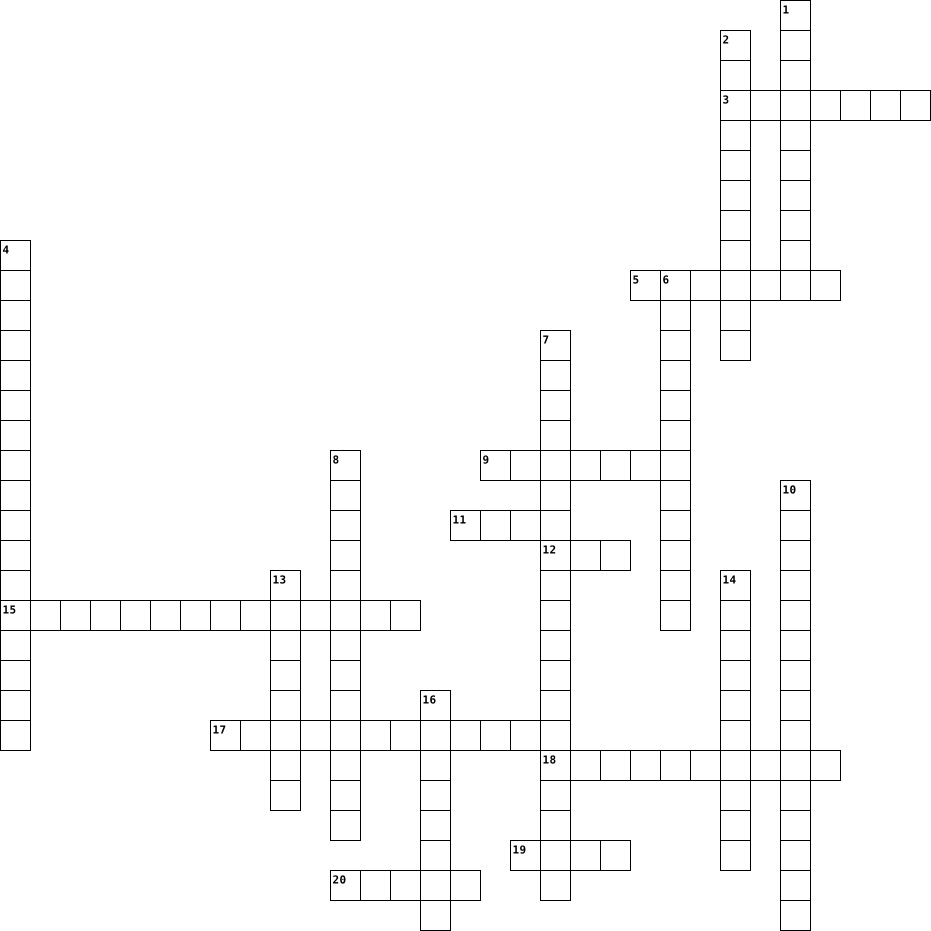
body parts Crossword Puzzles
Parts of the Body 2023-03-01

Across
- SPEEDS UP WHEN YOU EXERCISE
- LET YOU BREATHE, SENDS OXYGEN TO YOUR BLOOD
- GIVE US OXYGEN TO BREATHE
- WORKS WITH THE BONES TO SUPPORT YOU AND LET YOU MOVE
- OUR FOOD GOES HERE AND IS DIGESTED
Down
- WHAT MUST BREATHE IN
- PROTECT YOUR HEART AND LUNGS
- PUMPS BLOOD THROUGH YOUR VEINS TO THE WHOLE BODY
- CONTROLS THE WHOLE BODY
- SUPPORTS YOU AND PROTECTS YOUR SQUISHY
- PROTECTS YOUR BRAIN
11 Clues: PROTECTS YOUR BRAIN • WHAT MUST BREATHE IN • CONTROLS THE WHOLE BODY • GIVE US OXYGEN TO BREATHE • SPEEDS UP WHEN YOU EXERCISE • PROTECT YOUR HEART AND LUNGS • OUR FOOD GOES HERE AND IS DIGESTED • SUPPORTS YOU AND PROTECTS YOUR SQUISHY • LET YOU BREATHE, SENDS OXYGEN TO YOUR BLOOD • PUMPS BLOOD THROUGH YOUR VEINS TO THE WHOLE BODY • ...
CZĘŚCI CIAŁA - BODY PARTS 2020-03-20

Across
- Wąchamy nim kwiaty
- Na ich końcu są dłonie
- Długie, krótkie, proste lub kręcone
- Mamy ich 10 u dłoni
- Bolą nas gdy długo biegamy
- Całe ciało
Down
- Mamy ich 10 u stóp
- Dzięki nim słyszymy
- Można w nie klaskać
- Mogą być niebieskie, zielone lub piwne
- Pełna pomysłów
11 Clues: Całe ciało • Pełna pomysłów • Mamy ich 10 u stóp • Wąchamy nim kwiaty • Dzięki nim słyszymy • Można w nie klaskać • Mamy ich 10 u dłoni • Na ich końcu są dłonie • Bolą nas gdy długo biegamy • Długie, krótkie, proste lub kręcone • Mogą być niebieskie, zielone lub piwne
Parts of the body 2020-11-27

Across
- A chair has four of these, you have two
- These are usually brown, blue, or green
- You have one in your face, you use it to smell
- You have 32 of these and use them to eat
- It can be straight, curly, or wavy
- You usually lie down on this
Down
- Women often paint these
- You put shoes on them
- You use it to speak, eat, and smile
- People often have them pierced
- The part of your body where your hair, nose, mouth, and eyes are
11 Clues: You put shoes on them • Women often paint these • You usually lie down on this • People often have them pierced • It can be straight, curly, or wavy • You use it to speak, eat, and smile • A chair has four of these, you have two • These are usually brown, blue, or green • You have 32 of these and use them to eat • You have one in your face, you use it to smell • ...
parts of the body 2021-05-09

Across
- braccio
- spalla
- testa
- dito
- gamba
Down
- mano
- naso
- bocca
- orecchio
- piede
- occhi
11 Clues: mano • naso • dito • bocca • testa • piede • occhi • gamba • spalla • braccio • orecchio
Parts of the Body 2022-05-06

Across
- in the middle of your stomach
- above each eye I have an ________
- you can brush or comb your ________
- I breath through my two ________
- you brush your ________
Down
- your mask should cover your nose and ________
- you give a hi-five with your ________
- you put socks over your ________
- where you wear earrings
- where you wear your backpack
- where your watch goes
11 Clues: where your watch goes • where you wear earrings • you brush your ________ • where you wear your backpack • in the middle of your stomach • you put socks over your ________ • I breath through my two ________ • above each eye I have an ________ • you can brush or comb your ________ • you give a hi-five with your ________ • your mask should cover your nose and ________
PARTS OF THE BODY 2022-09-08

Across
- he upper joint of each of a person's arms and the part of the body between this and the neck.
- the end part of a person's arm beyond the wrist, including the palm, fingers, and thumb.
- is a limb of the body and a type of digit, an organ of manipulation and sensation found in the hands.
- the front part of a person's head.
- any of the five digits at the end of the human foot.
Down
- each of the two upper limbs of the human body from the shoulder to the hand.
- is the body's largest organ, made of water, protein, fats and minerals.
- the joint connecting the foot with the leg.
- the joint between the thigh and the lower leg in humans.
- the lower extremity of the leg below the ankle, on which a person stands or walks.
- each of the limbs on which a person walks and stands.
11 Clues: the front part of a person's head. • the joint connecting the foot with the leg. • any of the five digits at the end of the human foot. • each of the limbs on which a person walks and stands. • the joint between the thigh and the lower leg in humans. • is the body's largest organ, made of water, protein, fats and minerals. • ...
Parts of a body 2024-03-20

Across
- zapestje
- glezenj
- lasje
- nose
- its behind your chest
- obraz
- its beetwen your eyes
Down
- Its on your feet
- hand
- its under yourhead
- trebuh
11 Clues: hand • nose • lasje • obraz • trebuh • glezenj • zapestje • Its on your feet • its under yourhead • its behind your chest • its beetwen your eyes
body parts (medium level) 2024-03-04

Across
- The area below the waist and above the legs at either side of the body
- Internal organ to which the ait flows into when you breath
- The front of the leg below the knee.
- An internal organ where the food is stored
- Dome-shaped organ that plays a key role in breathing.
Down
- A pair of organ that filtrates urine
- An organ like a bag inside the body where the urine is stored
- Usually thinnest part of the belly.
- The tube in the body that takes food from the mouth to the stomach
- Big tube where the blood throws through
- Little tube where the blood flows through
11 Clues: Usually thinnest part of the belly. • A pair of organ that filtrates urine • The front of the leg below the knee. • Big tube where the blood throws through • Little tube where the blood flows through • An internal organ where the food is stored • Dome-shaped organ that plays a key role in breathing. • Internal organ to which the ait flows into when you breath • ...
Body parts and organs 2023-09-04

Across
- a bone in your mouth that are baby and fall out then turn into adult. It is also used for biting and chewing food. They also have to be brushed everyday.
- something hard in your body that makes your skeleton and can be broken.
- it is hardened plaque. If you don’t effectively remove it from your teeth then it becomes hard over time and needs to be removed by a dentist.
- part of your human body leg and is located between the hip and knee.
- 2 organs remove waste products from the blood and produces urine.
- a pair of organs that you use to breathe oxygen and breathe out carbon dioxide.
Down
- you have 4 in each hand not including thumb. They are used to grab stuff.
- a long tube that you use to swallow liquids and foods. It is also connected to the stomach
- a organ in your mouth that can move food around and help you taste food.
- a organ that pumps blood and is one of the most important organ in your body. Located usually around the chest.
- a organ that is located in your skull and keeps your memories, controls your thoughts, hunger, emotion and many more. It tells your body everything and what you feel.
11 Clues: 2 organs remove waste products from the blood and produces urine. • part of your human body leg and is located between the hip and knee. • something hard in your body that makes your skeleton and can be broken. • a organ in your mouth that can move food around and help you taste food. • you have 4 in each hand not including thumb. They are used to grab stuff. • ...
Parts of the body 2025-04-29

Across
- 7
- 11
- 5
- 8
- 6
- 9
- 1
Down
- 3
- 10
- 2
- 4
11 Clues: 7 • 3 • 5 • 8 • 6 • 2 • 9 • 4 • 1 • 11 • 10
Parts of the body 2025-03-26

Across
- where your brain is
- use it to listen
- use it to fly
- you use it to grab things
- use it to see and watch
Down
- animals have it and can move it
- it can be long or short
- use it to walk and run
- use it to eat and speak
- you smell with it
- birds have it as a mouth
11 Clues: use it to fly • use it to listen • you smell with it • where your brain is • use it to walk and run • it can be long or short • use it to eat and speak • use it to see and watch • birds have it as a mouth • you use it to grab things • animals have it and can move it
Parts of the body 2025-03-23

Across
- голова
- колени
- рука
- на нем расположены глаза, нос, рот
- большой палец на ноге
Down
- чем мы берем предметы
- при помощи чего мы видим
- при помощи чего мы чувствуем запахи
- при помощи чего мы слышим
- чем отбивают мяч
- при помощи чего мы ходим
11 Clues: рука • голова • колени • чем отбивают мяч • чем мы берем предметы • большой палец на ноге • при помощи чего мы видим • при помощи чего мы ходим • при помощи чего мы слышим • на нем расположены глаза, нос, рот • при помощи чего мы чувствуем запахи
Crossword puzzle: Body parts 2025-10-13

Across
- My friend has got long blond...
- My brother has got two blue...
- You have got ten...on two feet.
- My dog has got four...
- We have got 32 white...in our mouth.
- The singular of feet is...
Down
- You have got ten...on two hands.
- We have got one mouth, one nose, two eyes and two...
- You have got one red...in your mouth.
- The singular of teeth is...
- You have got one...on your neck.
11 Clues: My dog has got four... • The singular of feet is... • The singular of teeth is... • My brother has got two blue... • My friend has got long blond... • You have got ten...on two feet. • You have got ten...on two hands. • You have got one...on your neck. • We have got 32 white...in our mouth. • You have got one red...in your mouth. • ...
Ancient Egypt Crossword Puzzle by Isaac Robinson 2016-10-19

Across
- Religious building
- Where body parts are stored for the afterlife
- Beatle in Egypt
- Pictorial writing symbols
- Boy king who died at the age of 19
- River in Egypt
Down
- Egyptian snake
- last egyptian queen
- Art of wrapping and preserving the body
- Jackal, god of the dead
- Egyptian king
- Egyptian sun god
- Ancient egyptian tomb
- Statue of lion's body and human head
14 Clues: Egyptian king • Egyptian snake • River in Egypt • Beatle in Egypt • Egyptian sun god • Religious building • last egyptian queen • Ancient egyptian tomb • Jackal, god of the dead • Pictorial writing symbols • Boy king who died at the age of 19 • Statue of lion's body and human head • Art of wrapping and preserving the body • Where body parts are stored for the afterlife
PARTS 2026-02-20

Across
- CAN FIND HIM ON HIS GOLF CART
- YEAR ADAM GOT SUCKERED INTO A DEALERSHIP
- PARTS MASCOT
- MAX CYCLE TIME IN PARTS
- PREFERS CATS OVER DOGS
- EDM ENTHUSIAST
- FIRST JOB IN DETAIL
- HAS MORE THAN 1 MOTORCYCLE
- BOXER FAN
- CASEY'S HOMETOWN BEFORE TAMPA
- POST THIS WHEN A PART IS NOT AVAILABLE
Down
- ALL RO'S OLDER THAN THIS NEED AN UPDATE
- PREFERS THE FINER THINGS IN LIFE
- LARRY MORGAN'S FAVORITE
- MISSING HIS APPENDIX
- SCREEN TO SEARCH WE OWE HISTORY
- PAYMENTS DONE HERE
- USED EVERYTIME YOU COME AND GO
- GOING BALD AT A YOUNG AGE. SERVICE TO SALES
- HAS 2 KIDS
- NEEDS A GOOD STEAK
- USED TO BE STRONG BUT TRADED STRENGTH FOR TYPING
- LOOK AT DAILY BULLETINS EACH MORNING
- MORE IMPORTANT THAN KNOWLEDGE
24 Clues: BOXER FAN • HAS 2 KIDS • PARTS MASCOT • EDM ENTHUSIAST • PAYMENTS DONE HERE • NEEDS A GOOD STEAK • FIRST JOB IN DETAIL • MISSING HIS APPENDIX • PREFERS CATS OVER DOGS • LARRY MORGAN'S FAVORITE • MAX CYCLE TIME IN PARTS • HAS MORE THAN 1 MOTORCYCLE • CAN FIND HIM ON HIS GOLF CART • MORE IMPORTANT THAN KNOWLEDGE • CASEY'S HOMETOWN BEFORE TAMPA • USED EVERYTIME YOU COME AND GO • ...
Parts of the body 2021-01-25

Across
- Pecho
- Cuello
- Cabeza
- Pie
- Ojo
- Pelo
Down
- Espalda
- Mano
- Hombro
- Pierna
- Oreja
11 Clues: Pie • Ojo • Mano • Pelo • Pecho • Oreja • Hombro • Cuello • Cabeza • Pierna • Espalda
PARTS OF THE BODY 2021-01-24

Across
- You have five on your hand
- You eat with this
- You wash it when you get up
- you listen with these
- i holds up your head
Down
- You smile with these
- You walk with these
- You smell with this
- You clap with these
- You comb it
- You see with these
11 Clues: You comb it • You eat with this • You see with these • You walk with these • You smell with this • You clap with these • You smile with these • i holds up your head • you listen with these • You have five on your hand • You wash it when you get up
Parts of the body 2020-12-27

Across
- Boca
- Ojos
- Pierna
- Mano
- Rodillas
- Dedos
Down
- Nariz
- Pelo
- Homnbres
- Pecho
- Cabeza
11 Clues: Boca • Pelo • Ojos • Mano • Nariz • Pecho • Dedos • Pierna • Cabeza • Homnbres • Rodillas
parts of the body 2020-11-30

Across
- 5
- 2
- 11
- 9
- 7
Down
- 8
- 4
- 6
- 10
- 1
- 3
11 Clues: 8 • 4 • 5 • 6 • 2 • 1 • 3 • 9 • 7 • 10 • 11
PARTS OF THE BODY 2021-01-19

Across
- You use to see
- You put socks on
- You use to blink
- You put pants on
- On your feet
- You have a lot of
Down
- On your hand and feet
- On your hand
- You use to touch
- You use to eat
- You use to smell
11 Clues: On your hand • On your feet • You use to see • You use to eat • You put socks on • You use to blink • You put pants on • You use to touch • You use to smell • You have a lot of • On your hand and feet
Parts of the body 2020-03-19

Across
- arm is attached to it
- you see with them
- you have 10 on both feet
- make her pink
- write with them on your cell phone
Down
- kiss with them
- you wear a shoe on it
- behind it is the brain
- sit on it
- can move your head
- you untangle your hair with that
11 Clues: sit on it • make her pink • kiss with them • you see with them • can move your head • you wear a shoe on it • arm is attached to it • behind it is the brain • you have 10 on both feet • you untangle your hair with that • write with them on your cell phone
Parts of the Body 2020-09-03

Across
- MANOS
- RODILLAS
- PIE
- CUELLO
- PIES
- PIERNAS
Down
- ESPALDA
- BRAZOS
- PECHO
- DEDOS
- CABEZA
11 Clues: PIE • PIES • MANOS • PECHO • DEDOS • BRAZOS • CUELLO • CABEZA • ESPALDA • PIERNAS • RODILLAS
Parts of the body 2020-09-25

Across
- button A human navel
- A caslike expansion of the digestive track located inside your belly
- Small brownish spots in the skin caused by the exposure to sunlight
- The typically narrowed part of the body between the hips and chest or upper back
Down
- The pair respiratory organ
- The ridge over the eye or the hair growing usually in a line or arch on the skin over it
- The point of contact between elements of an animal skeleton with the parts that surround and support it
- The fleshy back part of the leg below the knee
- It´s protecting the upper end of each finger and toe of humans and primates
- The back of the human foot below the ankle and behind the arch
- It consists of 33 vertebras, thin and long in the middle of your back
11 Clues: button A human navel • The pair respiratory organ • The fleshy back part of the leg below the knee • The back of the human foot below the ankle and behind the arch • Small brownish spots in the skin caused by the exposure to sunlight • A caslike expansion of the digestive track located inside your belly • ...
Body parts - Tana a'zolari 2016-07-29

Across
- You use it to smell with
- You have ten of them
- This is where the food goes after they enter your body
- You use them to see with
- It grows on your head
- The first bending part upwards from the ankle
Down
- You use them to hold something
- The name of our Education Center
- Food and drink go into it
- You use them to walk
- You use them to hear with
11 Clues: You have ten of them • You use them to walk • It grows on your head • You use it to smell with • You use them to see with • Food and drink go into it • You use them to hear with • You use them to hold something • The name of our Education Center • The first bending part upwards from the ankle • This is where the food goes after they enter your body
PARTS OF THE BODY 2019-04-11

Across
- YOU SEE WITH IT
- YOU HUG WITH THEM
- YOU TAKE SOMETHING WITH IT
- YOU SMELL WITH IT
- YOU TASTE WITH IT
Down
- YOU KICK WITH THEM
- YOU HEAR WITH IT
- YOU PLAY INSTRUMENTS WITH THEM
- YOU EAT THROUGH IT
- THE BARB GROWS THERE
- IT IS ON YOUR NECK
11 Clues: YOU SEE WITH IT • YOU HEAR WITH IT • YOU HUG WITH THEM • YOU SMELL WITH IT • YOU TASTE WITH IT • YOU KICK WITH THEM • YOU EAT THROUGH IT • IT IS ON YOUR NECK • THE BARB GROWS THERE • YOU TAKE SOMETHING WITH IT • YOU PLAY INSTRUMENTS WITH THEM
Body Parts in French 2015-11-01

Across
- a women's upper private
- bends your legs
- you hear with it
- creates things in front of you
- on top of your head
Down
- helps talk properly
- used to smell
- protects your heart and lungs
- used to walk with everyday
- beneath your waist
- beneath your head but on top of your shoulders
11 Clues: used to smell • bends your legs • you hear with it • beneath your waist • helps talk properly • on top of your head • a women's upper private • used to walk with everyday • protects your heart and lungs • creates things in front of you • beneath your head but on top of your shoulders
2nd grade body parts 2014-06-09

Across
- my arm
- my face
- my fingers
- my shoulders
- my head
- my finger
- my arms
- my body
Down
- my toe
- my toes
- my knees
11 Clues: my toe • my arm • my face • my toes • my head • my arms • my body • my knees • my finger • my fingers • my shoulders
Clothes and Body Parts 2023-11-22

Across
- I wear these on my feet
- I wear these on my hands
- I wear these on my legs
- Sovanarith wears pants on his
- Sambath wears shoes on his
- I wear this when it is cold
Down
- Dythong wear these on her eyes
- I wear this on my head
- I wear these on my feet
- Samono wears this on her body
- I wear this on my neck
- Teacher Daniel wears a tie on his
12 Clues: I wear this on my head • I wear this on my neck • I wear these on my feet • I wear these on my feet • I wear these on my legs • I wear these on my hands • Sambath wears shoes on his • I wear this when it is cold • Samono wears this on her body • Sovanarith wears pants on his • Dythong wear these on her eyes • Teacher Daniel wears a tie on his
function of body parts 2024-01-02

Across
- we can listen with our...
- I use hands for...anything.
- I can ... something with my nose.
- We use brain for ....
Down
- She uses tongue to... some foods.
- What do you use to walk anywhere?
- He uses hands to ... letter.
- we use ....for seeing movie.
- We uses feet for ...
- Mother uses lips for ... her son.
- you use ...for eating some foods.
11 Clues: We uses feet for ... • We use brain for .... • we can listen with our... • I use hands for...anything. • He uses hands to ... letter. • we use ....for seeing movie. • She uses tongue to... some foods. • What do you use to walk anywhere? • Mother uses lips for ... her son. • I can ... something with my nose. • you use ...for eating some foods.
Parts of the body 2024-05-01

Across
- mano
- pierna
- cabello
- ojo
- brazo
- pies
Down
- nariz
- oreja
- cabeza
- boca
- pie
11 Clues: ojo • pie • mano • boca • pies • nariz • oreja • brazo • pierna • cabeza • cabello
parts of the body 2024-07-29

Across
- muka
- gigi
- kepala
- bibir
- telinga
Down
- mulut
- kaki
- lidah
- rambut
- hidung
- mata
11 Clues: muka • kaki • gigi • mata • mulut • lidah • bibir • rambut • hidung • kepala • telinga
Parts of the Body 2024-08-27

Across
- perut
- jari tangan
- paha
- jari kaki
- mata
Down
- lengan
- dada
- kaki
- hidung
- kepala
- leher
11 Clues: dada • kaki • paha • mata • perut • leher • lengan • hidung • kepala • jari kaki • jari tangan
Clothing and body parts 2023-07-03

Across
- B
- h
- j
- c
Down
- e
- d
- f
- A
- I
- k
- g
11 Clues: e • d • f • B • A • h • I • j • k • c • g
Parts of the body 2022-09-02

Across
- We use it to be able to hear the sounds.
- This is what people see us first.
- It is something that often hurts us.
- With these we can pick up and touch many things.
- We use it to be able to breathe.
- We use it every day to consume and talk.
Down
- We use them to be able to see everything around us.
- It is something that many people paint it.
- This helps us to grind our food.
- It is where we can feel objects.
- We flex this every day.
11 Clues: We flex this every day. • This helps us to grind our food. • It is where we can feel objects. • We use it to be able to breathe. • This is what people see us first. • It is something that often hurts us. • We use it to be able to hear the sounds. • We use it every day to consume and talk. • It is something that many people paint it. • ...
PARTS OF THE BODY 2022-09-06

Across
- BODY
- MOUTH
- LEGS
- HEAD
- NOSE
- HAIR
Down
- EYES
- HAND
- TEETH
- ARMS
- EARS
11 Clues: EYES • BODY • HAND • LEGS • HEAD • ARMS • NOSE • EARS • HAIR • MOUTH • TEETH
Parts of the Body 2023-05-22

Across
- "My head is hot"
- This is between your hand and your arm
- This is on your leg
- This is between your leg and your foot
- "My ear hurts"
- This is on your arm
Down
- "My tooth hurts"
- "My stomach hurts"
- These are on your hand
- These are on your feet
- This is the "big finger"
11 Clues: "My ear hurts" • "My tooth hurts" • "My head is hot" • "My stomach hurts" • This is on your leg • This is on your arm • These are on your hand • These are on your feet • This is the "big finger" • This is between your hand and your arm • This is between your leg and your foot
Parts of the body 2023-05-31

Across
- You use your __________ to chew food.
- At the end of a concert, you should __________ the musicians.
- Your __________ let you bend your legs.
- You have ten __________ on your feet.
- If someone is __________, they are happy.
Down
- __________ at other people is rude.
- You use your __________ to write and touch.
- You use your __________ to listen.
- If you agree to something, you will __________.
- You __________ a football.
- You use your __________ to smell.
11 Clues: You __________ a football. • You use your __________ to smell. • You use your __________ to listen. • __________ at other people is rude. • You use your __________ to chew food. • You have ten __________ on your feet. • Your __________ let you bend your legs. • If someone is __________, they are happy. • You use your __________ to write and touch. • ...
foods crossword puzzle 2015-11-11

Across
- helps prevent eye problems
- is part of every cell in the body and helps cells function normally
- helps blood clot
- helps the body keep a balance of water in the blood and body tissues
- is important for normal brain and nerve function
- makes red blood cells
- helps th body make red blood cells
- helps convert carbs to into energy
Down
- helps red blood cells carry oxygen to all parts of the body
- strengthens bones by helping the body absorb calcium
- helps muscles and nerves function
- turns carbs into energy
- found in milk and other dairy products
- helps the body turn food into energy
- an antioxidant that helps individual cells live longer
- a tissue that holds cells together
- keeps your immune system strong and helps heal wounds
17 Clues: helps blood clot • makes red blood cells • turns carbs into energy • helps prevent eye problems • helps muscles and nerves function • a tissue that holds cells together • helps th body make red blood cells • helps convert carbs to into energy • helps the body turn food into energy • found in milk and other dairy products • is important for normal brain and nerve function • ...
BTEC Sport - Joint Movement 2023-08-16

Across
- flexion Extension at the ankle joint
- A movement that starts with the limb abducted and then moves towards the front of the body
- Movement away from the midline of the body such as when moving the arms and legs away from the body during a star jump
- Circular movement that involves a combination of flexion, extension, abduction and adduction
- Flexion at the ankle joint
- The extension of a limb beyond its normal range of movement
Down
- A movement that starts with the limb abducted and in front of you and then moves back towards the side of the body
- flexion A sideways bending movement at the spine or waist
- Another word for the forming of a joint
- Movement towards the midline of the body such as when a diver tucks their arms and legs towards their body
- The turning of a body part around an axis
- The bending of a joint where the angle decreases between two parts of thebody
- The straightening of a joint where the angle increases between two parts ofthe body
13 Clues: Flexion at the ankle joint • flexion Extension at the ankle joint • Another word for the forming of a joint • The turning of a body part around an axis • flexion A sideways bending movement at the spine or waist • The extension of a limb beyond its normal range of movement • The bending of a joint where the angle decreases between two parts of thebody • ...
Human body 2024-02-06

Across
- carries blood away from heart
- holds the pee
- on the hand and bendy
- tube that carries blood
- on the leg and bendy
- different parts of body
- on the head to chew
- not the bean
Down
- strength in the body
- red and carries nutrients
- part of arm/hand that bracelets go
- on the leg
- carries blood to the heart
- the system in the body
- on the arm, bendy
15 Clues: on the leg • not the bean • holds the pee • on the arm, bendy • on the head to chew • strength in the body • on the leg and bendy • on the hand and bendy • the system in the body • tube that carries blood • different parts of body • red and carries nutrients • carries blood to the heart • carries blood away from heart • part of arm/hand that bracelets go
Crossword Puzzle: Body Parts 2014-05-20

Across
- Can help you walk or run
- The body part that pumps blood throughout the body
- You can touch and pick up things with this
- The sturdy parts that hold the body together
- The outer part of the body's substance
- Your area where you see from
Down
- The place where you talk and eat
- The primary part for your thinking and emotions
- Your primary source of breathing
- The place where you hear
- The area where you breathe from
11 Clues: Can help you walk or run • The place where you hear • Your area where you see from • The area where you breathe from • The place where you talk and eat • Your primary source of breathing • The outer part of the body's substance • You can touch and pick up things with this • The sturdy parts that hold the body together • The primary part for your thinking and emotions • ...
Parts of the body 2020-09-25

Across
- Small brownish spots in the skin caused by the exposure to sunlight
- The ridge over the eye or the hair growing usually in a line or arch on the skin over it
- The pair respiratory organ
- The typically narrowed part of the body between the hips and chest or upper back
- The fleshy back part of the leg below the knee The joint in the middle of the leg which can be bended
Down
- The back of the human foot below the ankle and behind the arch
- It consists of 33 vertebras, thin and long in the middle of your back
- The point of contact between elements of an animal skeleton with the parts that surround and support it
- A human navel
- A saclike expansion of the digestive track located inside your belly
- It´s protecting the upper end of each finger and toe of humans and primates
11 Clues: A human navel • The pair respiratory organ • The back of the human foot below the ankle and behind the arch • Small brownish spots in the skin caused by the exposure to sunlight • A saclike expansion of the digestive track located inside your belly • It consists of 33 vertebras, thin and long in the middle of your back • ...
Parts of the body 2023-06-19

Across
- нос
- глаз
- волосы
- рука
- голова
- палец ноги
Down
- палец руки
- нога
- кисть руки
- ухо
- рот
11 Clues: нос • ухо • рот • нога • глаз • рука • волосы • голова • палец руки • кисть руки • палец ноги
parts of the body 2022-04-14

Across
- the thing you see with
- right above the heel of your foot
- helps connect your arms to your body
- stores your food
- helps to bend the leg when you walk
Down
- some mothers use this to feed their babies
- connects to the arm
- you can kiss with this
- helps some people to walk
- the hardest working muscle in your body
- helps you to smell
11 Clues: stores your food • helps you to smell • connects to the arm • you can kiss with this • the thing you see with • helps some people to walk • right above the heel of your foot • helps to bend the leg when you walk • helps connect your arms to your body • the hardest working muscle in your body • some mothers use this to feed their babies
PARTS OF THE BODY 2024-12-03

Across
- - The part of the body used for walking.
- - The part of the face used for smelling.
- - The part of the face used for speaking and eating.
- - The organ we use to see.
- - The part of the body used for hearing.
- - The part of the body with fingers, used to grab things.
- - The joint that connects the thigh to the lower leg.
Down
- - A long, thin part of the hand.
- - The upper part of the body where the brain is located.
- - The rear part of the torso.
- - The part of the body between the hip and the foot.
11 Clues: - The organ we use to see. • - The rear part of the torso. • - A long, thin part of the hand. • - The part of the body used for walking. • - The part of the body used for hearing. • - The part of the face used for smelling. • - The part of the face used for speaking and eating. • - The part of the body between the hip and the foot. • ...
Parts of the body 2024-12-04

Across
- part of the body with which you kick the ball.
- lower body
- is located above the eye
- where do you put your earrings?
- when he's hurt you can't run or jump.
- what do you grab an object with?
Down
- it is used to smell and sneeze
- What do you play the guitar with?
- you use it when you smile
- you use it to see
- where the nose, eyes, mouth and ears are located.
11 Clues: lower body • you use it to see • is located above the eye • you use it when you smile • it is used to smell and sneeze • where do you put your earrings? • what do you grab an object with? • What do you play the guitar with? • when he's hurt you can't run or jump. • part of the body with which you kick the ball. • where the nose, eyes, mouth and ears are located.
family, clothes, body parts 2024-03-04

Across
- a bone above your foot
- flows in your veins
- the dark circle in the middle of your eye
- appear with age f.eg. around your eyes
- sibling born at the same time
- flow from your eyes when you cry
Down
- sometimes called a beauty mark
- you have in your hand, you can 'crack' them
- a child with no siblings
- bottom part of your hand
- usually thinner than your chest and hips
11 Clues: flows in your veins • a bone above your foot • a child with no siblings • bottom part of your hand • sibling born at the same time • sometimes called a beauty mark • flow from your eyes when you cry • appear with age f.eg. around your eyes • usually thinner than your chest and hips • the dark circle in the middle of your eye • you have in your hand, you can 'crack' them
Halloween Body Parts Vocabularies 2022-10-18

Across
- Pumps blood through the circulatory system
- Makes up skeleton in humans
- Processes breathing
- Protects the fingertips
- Bone's internal/external framework
Down
- Centre of intellectual
- Round part of the eye
- Corpse
- Bone of the thigh
- The stomach
- Is in the arteries and veins of human
11 Clues: Corpse • The stomach • Bone of the thigh • Processes breathing • Round part of the eye • Centre of intellectual • Protects the fingertips • Makes up skeleton in humans • Bone's internal/external framework • Is in the arteries and veins of human • Pumps blood through the circulatory system
Parts of the Body 2022-08-09

Across
- Ears
- Hands
- Knee
- Hair
- Head
Down
- Eyebrows
- Stomach
- Elbow
- Arms
- Foot
- Tongue
11 Clues: Arms • Ears • Knee • Hair • Foot • Head • Elbow • Hands • Tongue • Stomach • Eyebrows
Parts of the Body 2022-09-08

Across
- we use it to talk
- we use it to chew
- we use it to hear
- we use it to write
- we use it to see
Down
- we use it to walk
- we use it to grab
- we use them to support the body
- we use it to eat
- we use it to think
- we use it to smell
11 Clues: we use it to eat • we use it to see • we use it to walk • we use it to grab • we use it to talk • we use it to chew • we use it to hear • we use it to think • we use it to write • we use it to smell • we use them to support the body
Parts of the body 2025-11-01

Across
- part of the arm
- part of the leg
- what you hear with
- part of the body where your food goes
- what you use to chew
Down
- part of your body under your neck
- part of the body between the head and the shoulders
- what we stand on (singular)
- what you use to see
- where you chew your food
- what you have on your feet
11 Clues: part of the arm • part of the leg • what you hear with • what you use to see • what you use to chew • where you chew your food • what you have on your feet • what we stand on (singular) • part of your body under your neck • part of the body where your food goes • part of the body between the head and the shoulders
Write the body parts. 2026-01-10

Across
- seno
- adhe
- rea
- thmou
Down
- dhna
- yee
- gle
- cefa
- irah
- foto
- mar
11 Clues: yee • gle • rea • mar • dhna • seno • cefa • adhe • irah • foto • thmou
General Anatomy & Physiology 2014-09-16

Across
- The part of the muscle that does not move.
- The ___________ cranial nerve is the chief motor nerve of the face.
- The largest artery in the human body.
- Digestive __________ are chemicals that can change certain types of food into a soluble form that can be used by the body.
- The muscles at the base of the fingers that draw the fingers together.
- The two bones that form the sides and crown of the cranium.
- The chemical process through which cells are nourished and carry out their activities
- This system serves as a protective coating and helps regulate the body's temperature.
- The connection between two or more bones
- The _____________ is the protoplasm of a cell, except for the protoplasm of the nucleus.
- The organ that controls the body.
- The organ that removes waste created by digestion.
- The organs that control the body's vision.
- Glands that secrete about 30 steroid hormones and control metabolic processes of the body, including the fight-or-flight response.
- The heart is the organ that circulates the body's __________
- Covers the body and is the external protective coating.
- Sensory nerve endings that are located close to the surface of the skin.
- This type of tissue contracts and moves various parts of the body.
- The oval, bony case that protects the brain.
- This system protects the body from disease by developing immunities and destroying disease-causing toxins and bacteria.
Down
- This system forms the physical foundation of the body.
- The study of the human body structures that can be seen with the naked eye and how the body parts are organized.
- This system enables breathing, supplying the body with oxygen and eliminating carbon dioxide as a waste product.
- The basic unit of all living things
- White blood cells are also known as: _______________
- This type of tissue lines the heart and the digestive and respiratory organs.
- The broad muscle that covers the top of the head.
- The constructive phase of metabolism
- This system purifies the body by elimination of waste matter.
- The primary nasal muscle of concern to cosmetologists.
30 Clues: The organ that controls the body. • The basic unit of all living things • The constructive phase of metabolism • The largest artery in the human body. • The connection between two or more bones • The part of the muscle that does not move. • The organs that control the body's vision. • The oval, bony case that protects the brain. • ...
NASM CPT Ch. 20 - Resistance Training 2024-03-05
Across
- increasing or decreasing weight with each set
- training system that enables an individual to continue a set past the point at which it would terminate
- training system that consists of a series of exercises that an individual performs one after another with minimal rest between each exercise
- pain or discomfort often felt 24 to 72 hours after intense exercise
- group of consecutive repetitions
- components that specify how each exercise is to be performed
- training system that involves breaking up the body into parts to be trained on separate days
- one complete movement of an exercise
- principle stating that the body will adapt to specific demands that are placed on it
- force x velocity / time
Down
- the initial reaction to a stressor
- enlargement of skeletal muscle fibers
- performing all sets of an exercise or body part before moving on to the next exercise
- time taken to recuperate between sets
- increasing the intensity or volume of exercise programs using a gradual approach
- body's ability to provide optimal joint support
- alternating body parts trained from set to set
- a maneuver or process that involves expiring against a closed windpipe
- prolonged stress that is intolerable
- system that uses two exercises performed in rapid succession, one after another
20 Clues: force x velocity / time • group of consecutive repetitions • the initial reaction to a stressor • prolonged stress that is intolerable • one complete movement of an exercise • enlargement of skeletal muscle fibers • time taken to recuperate between sets • increasing or decreasing weight with each set • alternating body parts trained from set to set • ...
Body Systems and Cells 2023-05-22

Across
- the body's "slow" chemical communication system; a set of glands that secrete hormones into the bloodstream
- the network of nerve cells and fibers that transmits nerve impulses between parts of the body.
- the system that removes waste from your body and controls water balance
- A tendency to maintain a balanced or constant internal state; the regulation of any aspect of body chemistry, such as blood glucose, around a particular level
- organelle that stores materials such as water, salts, proteins, and carbohydrates
- site of protein synthesis
- A rigid layer of nonliving material that surrounds the cells of plants and some other organisms.
- (aka cardiovascular system) This system works as the transportation highway for the body. It consists of the heart, blood, and blood vessels. It transports substances such as oxygen, carbon dioxide, and nutrients in the body.
- center of the cell
- Breaks down food into absorbable units that enter the blood for distribution to body cells.
- Consists of the skin, mucous membranes, hair, and nail
Down
- group of organs that work together to perform a specific function
- Consists of skeletal muscles, tendons that connect muscles to bones, and ligaments that attach bones together to form joint
- A system of organs, functioning in the process of gas exchange between the body and the environment, consisting especially of the nose, nasal passages, nasopharynx, larynx, trachea, bronchi, and lungs.
- Uses chemicals to break down food and worn out cell parts
- An organelle found in plant and algae cells where photosynthesis occurs
- A cell structure that controls which substances can enter or leave the cell.
- A jellylike fluid inside the cell in which the organelles are suspended
- Protects and supports body organs and provides a framework the muscles use to support movement. Made up of bones and joints
19 Clues: center of the cell • site of protein synthesis • Consists of the skin, mucous membranes, hair, and nail • Uses chemicals to break down food and worn out cell parts • group of organs that work together to perform a specific function • the system that removes waste from your body and controls water balance • ...
Anatomy crossword 2021-12-10

Across
- eye cavity
- toward the front; ventral
- abdomen
- chin
- wrist
- situated near the surface
- a part is above another part, or closer to the head
- toward the side with respect to the imaginary mid-line
- parts that are more internal
- relates to an imaginary mid-line dividing the body into equal right and left sides
Down
- frontal; a section that divides the body into anterior and posterior portions
- toward the back; dorsal
- a part is below another part, or toward the feet
- mouth
- finger or toe
- horizontal; a cut that divides the body into superior and inferior portions
- nose
- eye
- ribs
- lengthwise cut that divides the body into right and left portions
20 Clues: eye • chin • nose • ribs • mouth • wrist • abdomen • eye cavity • finger or toe • toward the back; dorsal • toward the front; ventral • situated near the surface • parts that are more internal • a part is below another part, or toward the feet • a part is above another part, or closer to the head • toward the side with respect to the imaginary mid-line • ...
Vocabulary 2015-08-18

Across
- Organelle that controls the activities of the cell
- Region located just below the sternum
- Abundant in gastric, salivary, and pancreatic glands
- Digest fats and detoxify harmful substances
- Basic unit of life
- Internal framework
- Involves growth or maintenance of cells
- Involves reproduction
- Digest old cells, bacteria, and foreign matter
- Protein synthesis
- "Powerhouse" of the cell
- Upper
- Cavity that contains the brain and spinal cord
Down
- Horizontal cut that divides the body into upper and lower quadrants
- Transports material in and out of nucleus
- Toward the point of attachment to the body
- Plane that divides the body into right and left parts
- Watery environment
- Study of the shape and structure of the body
- Ventral; means front
20 Clues: Upper • Protein synthesis • Basic unit of life • Watery environment • Internal framework • Ventral; means front • Involves reproduction • "Powerhouse" of the cell • Region located just below the sternum • Involves growth or maintenance of cells • Transports material in and out of nucleus • Toward the point of attachment to the body • Digest fats and detoxify harmful substances • ...
Anatomy-Directional Terms and Body Regions 2024-10-14

Across
- Towards the front of the body
- Root word for foot
- Plane that divides the body into right and left portions
- Prefix for white
- Root word for chest or thorax
- Prefix for yellow
- Farther from the point of reference
- Region above the stomach
- Prefix for black or dark
- Suffix for study of
- Prefix for abnormally high or excess
Down
- Term for above or in a higher position
- Plane that divides the body into top and bottom parts
- Suffix for medical specialty
- Term for below or in a lower position
- Towards the back of the body
- Suffix for medical specialty
- Prefix for against
- Prefix for red
- Prefix for blue
- Prefix for abnormally low or decreased
- Closer to a point of reference
22 Clues: Prefix for red • Prefix for blue • Prefix for white • Prefix for yellow • Root word for foot • Prefix for against • Suffix for study of • Region above the stomach • Prefix for black or dark • Suffix for medical specialty • Towards the back of the body • Suffix for medical specialty • Towards the front of the body • Root word for chest or thorax • Closer to a point of reference • ...
Invertebrate 2026-03-25

Across
- — Sea animal with no brain or organs
- — An animal without a backbone
- — Body symmetry where both sides match
- — Body parts used for grabbing or stinging
- — Long, soft-bodied animal (like earthworm)
- — Group including crabs and lobsters
- — Segmented worm group
- — Sea animal that forms reefs
- — A soft-bodied animal like a snail
Down
- — Hard outer covering of some animals
- — Group including jellyfish and corals
- — Body divided into repeating sections
- — Lives where an animal naturally survives
- — Animal that hunts others
- — Ocean animal with stinging tentacles
- — Animals with jointed legs and exoskeletons
- — Body symmetry in a circle pattern
- — Has arms with suction cups
- — Animal that gets hunted
- — Slow-moving animal with a shell
20 Clues: — Segmented worm group • — Animal that gets hunted • — Animal that hunts others • — Has arms with suction cups • — Sea animal that forms reefs • — An animal without a backbone • — Slow-moving animal with a shell • — Body symmetry in a circle pattern • — A soft-bodied animal like a snail • — Sea animal with no brain or organs • — Group including crabs and lobsters • ...
Variety of Life 2014-12-17

Across
- to survive in its environment.
- Arthropods that have three parts of jointed legs,a body made
- any animal that has a backbone.
- has lots of tentacles and lives in the ocean.
- the largest grouping used to classify organisms
- an organisms structures, skills, and abilities that enable
Down
- walks slow and is green. Also it can be found in the ocean
- any animal that doesn't have a backbone
- ___ fly in the sky and lives in a tree
- an invertebrate animal that has jointed legs, a body made
- ___ swim in the ocean and makes a good meal
- of jointed legs, a body made up of three distinct parts, and an
- on land
13 Clues: on land • to survive in its environment. • any animal that has a backbone. • ___ fly in the sky and lives in a tree • any animal that doesn't have a backbone • ___ swim in the ocean and makes a good meal • has lots of tentacles and lives in the ocean. • the largest grouping used to classify organisms • an invertebrate animal that has jointed legs, a body made • ...
Invertebrates 2025-04-11

Across
- "spiny skin"
- polyps that look like flowers
- round and smooth worms; like spagetti
- involves only one parent
- animals without backbones
- symmetry-2 equal parts; mirror images
- internal skeleton
- worms with flat, thin, ribbon-shaped bodies
Down
- live in shallow, clear water
- medusas
- marine animals with stinging bristles
- earthworms and leeches; ring-like segments
- symmetry-organized around a center
- have soft bodies and hard shells
- reproduction involving male and female
- this phylum includes all sponges
- regrowth of lost body parts
17 Clues: medusas • "spiny skin" • internal skeleton • involves only one parent • animals without backbones • regrowth of lost body parts • live in shallow, clear water • polyps that look like flowers • have soft bodies and hard shells • this phylum includes all sponges • symmetry-organized around a center • marine animals with stinging bristles • round and smooth worms; like spagetti • ...
Day14-part2 2025-01-22

Across
- The part of the body where the arm is attached to the body.(手臂与身体相连的部位。)
- The outer covering of the body.(身体的外部覆盖物。)
- The part of the body between the neck and the abdomen, containing the heart and lungs.(脖子和腹部之间的身体部位,包含心脏和肺。)
- The organ that pumps blood around the body.(将血液输送到全身的器官。)
- The organ in the body where food is digested.(身体内消化食物的器官。)
- The part of the body from the hip to the foot.(身体上从臀部到脚的部分。)
- The back part of the foot.(脚的后部。)
- The part at the end of the arm used for grasping.(手臂末端用于抓握的部分。)
- The part of the body at the bottom of the leg, used for standing and walking.(腿底部用于站立和行走的身体部位。)
- One of the two sides of the face below the eyes.(眼睛下方脸的两侧之一。)
- The part of the body between the shoulder and the hand.(身体上肩膀和手之间的部分。)
Down
- The movable organ in the mouth used for tasting, speaking, etc.(嘴里可活动的用于品尝、说话等的器官。)
- The part of the body that connects the head to the shoulders.(身体上连接头部和肩膀的部分。)
- The joint between the thigh and the lower leg.(大腿和小腿之间的关节。)
- A pain in the stomach.(胃部的疼痛。)
- A sudden, noisy expulsion of air from the lungs.(从肺部突然、大声地排出空气。)
- The joint between the upper and lower parts of the arm.(手臂上下部分之间的关节。)
- One of the two soft, outer parts of the mouth.(嘴的两个柔软外部部分之一。)
- One of the five parts at the end of the hand.(手末端的五个部分之一。)
19 Clues: A pain in the stomach.(胃部的疼痛。) • The back part of the foot.(脚的后部。) • The outer covering of the body.(身体的外部覆盖物。) • The organ that pumps blood around the body.(将血液输送到全身的器官。) • The organ in the body where food is digested.(身体内消化食物的器官。) • One of the five parts at the end of the hand.(手末端的五个部分之一。) • The joint between the thigh and the lower leg.(大腿和小腿之间的关节。) • ...
Review (Terminology, Skeletal, Muscular, Circulatory, & Respiratory) 2025-10-09

Across
- body plane that divided animal into dorsal and ventral parts
- maintains cellular maintenance
- farther from the surface
- carrt blood TOWARDS the heart
- system that provides support, aids in movement, provides protection, and is the site of mineral storage
- microscopic blood vessels
- lays down the cartilage for new bone growth
- blood component - responsible for fighting diseases and removing harmful substances from the body
- muscle found only in the heart
- towards the head
- acts like a lid and covers the throat when the animal swallows food
- contains the vocal cords and is commonly called the voice box
- carry blood AWAY from the heart
- release minerals from the bone
- muscle type that is attached to the bones and tendons and is the largest component of red meat animal products
- front of animal
- system that brings oxygen to the entire body via the blood and cells
- rear of animal
- four-chambered, hollow muscle used to pump blood
- part of the limb farthest from the body
Down
- main organ of the respiratory system that provides oxygen to the capillaries so they can oxygenate blood
- body plane that divides the animal into cranial and caudal parts, but not necessarily equal
- attach bones at the joints
- lined with cilia which help filter debris and is commonly windpipe
- closer to the surface
- smooth muscle below the lungs that controls breathing
- pump blood into the arteries
- along the belly/undermost surface
- body plane that is parallel to the median plane
- - structures in the blood that are responsible for clotting
- systems that produces bodily movement, maintains posture, and produces heat
- ending point of the trachea that divides the respiratory system into two parts to separate the lungs
- blood component - liquid substance that all solid materials are suspended in
- bone type that are thin and flat like the scapula, skull, and ribs
- along the back/uppermost surface
- towards the tail
- attach muscle to bones
- system that transports blood, hormones, nutrients, and waste throughout the body
- bone type that serves as a support columns
- uniquely shaped like vertabrae
- part of the limb closest to the body
- chamber of the heart that receieves blood
- blood component - responsible for carrying oxygen from the lungs throughout the circulatory system
- bone type that is shaped like a cube and found in the knee and hock
- body plane that divides the animal into equal, symmentrical right and left halves
- muscle type that is located in the reproductive, digestive, and urinary organs
- commonly called the throat
47 Clues: rear of animal • front of animal • towards the tail • towards the head • closer to the surface • attach muscle to bones • farther from the surface • microscopic blood vessels • attach bones at the joints • commonly called the throat • pump blood into the arteries • carrt blood TOWARDS the heart • maintains cellular maintenance • muscle found only in the heart • ...
medical terminology 2022-08-31

Across
- complete set of individual's genetic information
- in, within, inside
- secrete
- study or formation/structure/function of cells
- abnormal softening of a gland
- above, upon, on
- belly button or navel
- behind the peritoneum
- study of structures of the body
Down
- direction toward the midline
- situated in the front
- situated near the midline
- out of, outside, away from
- inflammation of a gland
- egg or sperm cell, only has 23 chromosomes
- direction toward or near the side of the body
- elbow
- divided into 4 equal parts
- toward the lower part of the body
- toward the head
20 Clues: elbow • secrete • above, upon, on • toward the head • in, within, inside • situated in the front • belly button or navel • behind the peritoneum • inflammation of a gland • situated near the midline • out of, outside, away from • divided into 4 equal parts • direction toward the midline • abnormal softening of a gland • study of structures of the body • toward the lower part of the body • ...
Let's Play 2026-01-12

Across
- – A place to learn
- – You see with these
- – Give support to someone
- – The part in your head that thinks
- – Feeling relaxed
- – A person you like and play with
- – Move up into the air
- – You hold things with this
- – Front part of your head
Down
- – Be kind and look after
- – Know how something is
- – Feeling unhappy
- – The place where you live
- – Feeling good
- – All parts of you together
- – Part of the body from shoulder to hand
- – You walk with this
- – Move fast on your feet
- – Do something fun
- – The top part of your body
20 Clues: – Feeling good • – Feeling unhappy • – Feeling relaxed • – A place to learn • – Do something fun • – You see with these • – You walk with this • – Move up into the air • – Know how something is • – Be kind and look after • – Move fast on your feet • – Give support to someone • – Front part of your head • – The place where you live • – All parts of you together • – You hold things with this • ...
Jazz 2024-07-18

Across
- To leap
- A two beat step of the feet
- To increase or change emphasis or intensity on a movement
- The focus of moving only one part of the body
- To create the correct line with your body parts and their positioning
- Position where feet are together, toes facing forward
- Leg is bent and pointed, sitting on the base of the calf of supporting leg
- Position where feet are together, toes facing outward
- A turn on one leg in retire
- To arch the upper body backward
- Leg is lifted from the hip and returned to the floor, remaining straight
- Where exercises are performed to warm up for centre work
- Change of direction on one foot
Down
- To extend your leg through retire then out
- To kick
- Essential to maintain a turn
- The way that a move is performed
- Turns with two straight legs
- Making a beat with your hands
- The word used for half of a count
- Alignment of body parts to hold the correct _____
- An essential move for all jumps
- A leap with bent legs
- To slide with a bend
- To balance on one leg with the other extended behind you
- To jump with height
26 Clues: To leap • To kick • To jump with height • To slide with a bend • A leap with bent legs • A two beat step of the feet • A turn on one leg in retire • Essential to maintain a turn • Turns with two straight legs • Making a beat with your hands • An essential move for all jumps • To arch the upper body backward • Change of direction on one foot • The way that a move is performed • ...
Body Systems and Homeostasis 2023-03-16

Across
- the process where complex molecules like proteins, fats, and carbohydrates are broken down into smaller pieces that your body can use
- composed of cells that have the special ability to shorten or contract in order to produce movement of the body parts
- any of the fine branching blood vessels that form a network between the arterioles and venules
- an organ that makes one or more substances, such as hormones, digestive juices, sweat, tears, saliva, or milk
- the network of organs and tissues that help you breathe
- tubelike structures that are responsible for the transportation of fluid to and from every organ in the body
- the mechanical breakdown of food
- groups of organs and tissues that work together to perform important jobs for the body
- highly complex part of the body that coordinates its actions and sensory information by transmitting signals to and from different parts of its body
- breaks down food into nutrients such as carbohydrates, fats and proteins
- the system that circulates blood and lymph through the body, consisting of the heart, blood vessels, blood, lymph, and the lymphatic vessels and glands
- a regulatory substance produced in an organism and transported in tissue fluids such as blood or sap to stimulate specific cells or tissues into action
- the state of steady internal, physical, and chemical conditions maintained by living systems
- an organ system consisting of skeletal, smooth, and cardiac muscle. It permits movement of the body, maintains posture, and circulates blood throughout the body
Down
- your body's central framework
- removes excess, unnecessary materials from the body fluids of an organism, so as to help maintain internal chemical homeostasis and prevent damage to the body
- a messenger system comprising feedback loops of the hormones released by internal glands of an organism directly into the circulatory system, regulating distant target organs
- The tissues, glands, and organs involved in producing offspring
- blood vessels located throughout your body that collect oxygen-poor blood and return it to your heart
- a single cylindrical muscle cell
20 Clues: your body's central framework • the mechanical breakdown of food • a single cylindrical muscle cell • the network of organs and tissues that help you breathe • The tissues, glands, and organs involved in producing offspring • breaks down food into nutrients such as carbohydrates, fats and proteins • ...
PE vocab 2025-08-27

Across
- Down, low intensity activity transition from exercise to resting by gradually reducing the heart rate
- Exercise, activity that improves oxygen consumption by the body, moderate intensity for long time
- Fat, the % of your body mass that isn’t composed of lean muscle, water, bones, or vital organs
- Endurance, the ability to sustain muscle contraction over a period of time without fatigue
- the ability to move joints and muscles through their full range of motion
- the time it takes you to move a certain distance
- the ability to change direction of movement quickly while staying in control of your body
- Weights, weights that are not attached to a machine or driven by a cable
- Up, exercises performed at the beginning of a workout to prepare the body for activity
- the degree of difficulty of the exercise
- Skills, motor skills in which the feet move the body from one place to another
- Heart Rate, the number of time your heart beats per minute while at rest
- Stretch, a stretch that goes to the point of tension and is held without moving or bouncing
- the ability to combine movements of various body parts at the same time
Down
- the ability to maintain body equilibrium in different movements
- Training, a combo of aerobic & resistance training target fat loss, build muscle, & heart-lung fitness
- Endurance, the ability of the heart and lungs to supply oxygen to the body
- Stretch, increasing speed of movement and reach involving moving parts of your body
- Composition, the percentage of body fat relative to muscle, bone, and other body tissue
- the duration of the exercise
- how often you exercise
- Heart Rate, the rate you want your heart to beat while doing exercise
- Time, the time between recognizing a stimulus and your body moving in response
- the ability to combine strength and speed
- Training, training that involves high intensity exercise alternated with low intensity exercise
- Training, using different activities into a workout routine to avoid overuse injuries and boredom
- Exercise, activity that produces energy without oxygen, high level of intensity for a short time
- Strength, the ability of the muscles to generate force in a short period of time
- Exercise, an activity that someone can participate in for the duration of his/her life
29 Clues: how often you exercise • the duration of the exercise • the degree of difficulty of the exercise • the ability to combine strength and speed • the time it takes you to move a certain distance • the ability to maintain body equilibrium in different movements • Heart Rate, the rate you want your heart to beat while doing exercise • ...
Science Revision 2021-11-01

Across
- Animals which have hair
- Plant part that supports the plant to grow upright to reach for sunlight
- system that breaks down food into simple substances
- Animals which have dry skin with scales
- Plant part that traps sunlight to make food for the plant
- Living things that can make their own food
- System that carries digested food, water and oxygen in the blood to all parts of the body
Down
- animals which have six legs and 3 body parts
- They can only be seen using a microscope
- The ends of a magnet
- Mushroom and yeast belong to this group of living things
- System which supports the body
- A magnetic material
13 Clues: A magnetic material • The ends of a magnet • Animals which have hair • System which supports the body • Animals which have dry skin with scales • They can only be seen using a microscope • Living things that can make their own food • animals which have six legs and 3 body parts • system that breaks down food into simple substances • ...
Body 2023-06-16
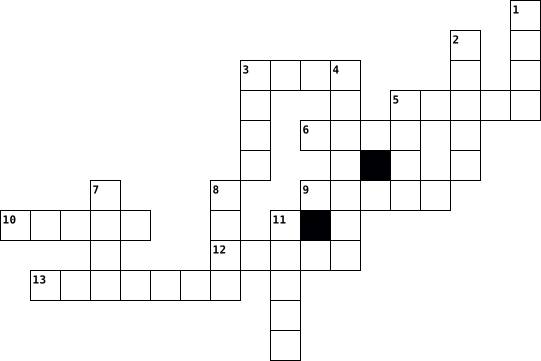
Across
- The organs that allow us to see the world around us. They help us observe and perceive colors, shapes, and objects.
- The organ located in the chest that pumps blood throughout the body, supplying oxygen and nutrients to other body parts.
- The organ located on the face that helps us smell different scents and odors. It also plays a role in our sense of taste.
- The parts at the end of our arms with fingers. They allow us to grasp objects, write, draw, and perform fine motor skills.
- The hard structures that make up our skeleton and give our body shape and support. They protect our organs and allow movement.
- The opening in the face where we eat, speak, and breathe. It contains the tongue, teeth, and helps us communicate.
- The soft tissues in our body that help us move. They work together with the bones to allow us to walk, run, and perform actions.
Down
- The parts at the end of our legs that help us stand, walk, run, and provide stability and balance. They are protected by shoes.
- The organ inside the head that controls our thoughts, feelings, and actions. It helps us think, learn, and solve problems.
- The organs that allow us to hear sounds. They help us listen to music, conversations, and the sounds of nature.
- The organ in the abdomen where food is digested. It breaks down food into nutrients that the body can use for energy.
- The top part of the body that houses the brain, eyes, nose, mouth, and ears. It's where our thoughts and senses are located.
- The lower limbs of the body connected to the hips. They help us walk, run, jump, and support our body weight.
- The upper limbs of the body connected to the shoulders. They help us reach, grab, carry, and perform various tasks.
- The organs located in the chest that help us breathe by taking in oxygen and exhaling carbon dioxide.
15 Clues: The organs located in the chest that help us breathe by taking in oxygen and exhaling carbon dioxide. • The lower limbs of the body connected to the hips. They help us walk, run, jump, and support our body weight. • The organs that allow us to hear sounds. They help us listen to music, conversations, and the sounds of nature. • ...
Human Body Systems 2024-12-01

Across
- Controls and coordinates body activities, processes sensory information, and allows communication between different body parts
- Facilitates the exchange of gases (oxygen and carbon dioxide) between the body and the environment
- Produces and secretes hormones that regulate various bodily functions, including metabolism, growth, and mood
- Provides structure, support, and protection for the body; enables movement and produces blood cells
Down
- Removes waste products from the blood, regulates water and produces urine
- Transports oxygen and nutrients throughout the body
- Enables reproduction by producing, storing, and releasing reproductive cells, and supporting the development of offspring.
- Facilitates movement of the body and its parts, maintains posture, and generates heat
- Breaks down food into nutrients that the body can absorb and use for energy, growth, and repair; eliminates waste products
- Protects the body against infection and disease
- Protects the body from external damage, regulates temperature, and provides sensory information
11 Clues: Protects the body against infection and disease • Transports oxygen and nutrients throughout the body • Removes waste products from the blood, regulates water and produces urine • Facilitates movement of the body and its parts, maintains posture, and generates heat • ...
Cars 2025-05-27

Across
- – Edge detailing or finish
- – Raises car off ground
- – Movement of wiper or hand
- – Series of linked loops
- – Quick change in switch or cover
- – Forward or backward wheel motion
- – Engine stopping suddenly
- – Curve in pipe or body part
Down
- – Leaning or angle shift
- – Engine running without movement
- – Bright clean surface
- – Fastens or secures parts
- – Sudden bright signal
- – Coating on brake parts
- – Slide without traction
15 Clues: – Bright clean surface • – Sudden bright signal • – Raises car off ground • – Leaning or angle shift • – Series of linked loops • – Coating on brake parts • – Slide without traction • – Edge detailing or finish • – Fastens or secures parts • – Engine stopping suddenly • – Movement of wiper or hand • – Curve in pipe or body part • – Engine running without movement • ...
Sarah 2023-11-05

Across
- plural of life
- a female
- one part of a tree
- one
- many bread
- a tiny animal
- a farm animal
- a animal
Down
- bread
- the female partner in a group
- many female partner
- parts of a tree
- a part of the body
- a pare of a part of the body
- a female plural
15 Clues: one • bread • a female • a animal • many bread • a tiny animal • a farm animal • plural of life • parts of a tree • a female plural • one part of a tree • a part of the body • many female partner • a pare of a part of the body • the female partner in a group
Sarah 2023-11-05

Across
- plural of life
- a female
- one part of a tree
- one
- many bread
- a tiny animal
- a farm animal
- a animal
Down
- bread
- the female partner in a group
- many female partner
- parts of a tree
- a part of the body
- a pare of a part of the body
- a female plural
15 Clues: one • bread • a female • a animal • many bread • a tiny animal • a farm animal • plural of life • parts of a tree • a female plural • one part of a tree • a part of the body • many female partner • a pare of a part of the body • the female partner in a group
Brain Dance Crossword Puzzle 2021-11-08

Across
- isolate left and right side of the body
- move close to and far from core of body
- isolate the upper and lower parts of body
- connect head and tailbone to warm up spine
- move through space taking deep breathes
Down
- turning around, body not on center
- touch parts of the body with different dynamics
- connect opposite sides of the body
8 Clues: turning around, body not on center • connect opposite sides of the body • isolate left and right side of the body • move close to and far from core of body • move through space taking deep breathes • isolate the upper and lower parts of body • connect head and tailbone to warm up spine • touch parts of the body with different dynamics
Morphology 2025-07-03

Across
- Countinuos sequence
- Tend to meet at a point
- Someone of blame
- Assenble in proper order
- The non-physical part of a person
- A place where two or more places meet
- Something that looks kind of like a phone
Down
- Performing operations on live animals
- Medically cut up a body
- Make secret plans
- Sweat a lot
- Divide into 3 equal parts
- Divide into 2 equal parts
- Urge to do something
- The x __________ is -8
- Live together without being married
- Breathe
17 Clues: Breathe • Sweat a lot • Someone of blame • Make secret plans • Countinuos sequence • Urge to do something • The x __________ is -8 • Medically cut up a body • Tend to meet at a point • Assenble in proper order • Divide into 3 equal parts • Divide into 2 equal parts • The non-physical part of a person • Live together without being married • Performing operations on live animals • ...
science review g3 2025-12-16

Across
- Food that gives energy
- Needed to live every day
- Bones in the back
- Help the body stay healthy
- Hard parts inside the body
Down
- A young plant or animal
- Food that keeps the body warm
- Food that helps the body grow
- Change place or position
- When a living thing gets bigger
- Helps keep the body strong
- Bone that protects the brain
12 Clues: Bones in the back • Food that gives energy • A young plant or animal • Change place or position • Needed to live every day • Helps keep the body strong • Help the body stay healthy • Hard parts inside the body • Bone that protects the brain • Food that keeps the body warm • Food that helps the body grow • When a living thing gets bigger
Ostad, Ava P.4 Game 2 2022-09-20

Across
- below
- vertical plane going from front to back
- furthest from trunk of body
- back side of body
- above
Down
- nearest to trunk of body
- horizontal plane cutting body in upper and lower parts
- toward midline of body
- front side of body
- body standing erect and upright position
10 Clues: below • above • back side of body • front side of body • toward midline of body • nearest to trunk of body • furthest from trunk of body • vertical plane going from front to back • body standing erect and upright position • horizontal plane cutting body in upper and lower parts
Chapter 11 Vocab 2022-03-07

Across
- animals without a backbone
- structures that extend from the central part of the body
- animals that have a notochord, a nerve cord, a tail, and pharyngeal pouches at some point in its life
- animal body plan where the animal can be divided into two parts through a central axis and produce mirror images
- animal body plant where the animal cannot be divided into any two parts that are mirror images
- flexible, rod-shaped structure that supports the body of a developing chordate
Down
- animals with a backbone
- animal body plant where the animal can be divided into two parts that are nearly mirror images
- thick, hard outer coverings that protect and support animals' bodies
9 Clues: animals with a backbone • animals without a backbone • structures that extend from the central part of the body • thick, hard outer coverings that protect and support animals' bodies • flexible, rod-shaped structure that supports the body of a developing chordate • animal body plant where the animal can be divided into two parts that are nearly mirror images • ...
UNIT 3 - BODY PARTS - GRADE 6 2024-09-08

Across
- The hard and white parts in your mouth used to chew food.
- The part of your face you use to smell and breathe.
- The part of your body that you use to stand and walk.
- The part of your face turns red when you are shy.
- The parts that you stand on.
- Something small and black on your head.
- The part of your head that lets you hear or listen.
Down
- The part of your face that helps you see.
- The part at the end of your arm used to touch and take things.
- The long part is between your head and your body.
- The parts where your arms start.
- The opening on your face where you eat and talk.
- The bottom part of your face, under your mouth.
- The part at the end of your hand.
14 Clues: The parts that you stand on. • The parts where your arms start. • The part at the end of your hand. • Something small and black on your head. • The part of your face that helps you see. • The bottom part of your face, under your mouth. • The opening on your face where you eat and talk. • The long part is between your head and your body. • ...
Unit 2 Vocabulary Review 2021-12-21

Across
- search
- receive money
- valid or right
- believe readily
- shameless
- dead body
- pain or disgust
- intense emotion
- acceptance
- annoy
Down
- misleading
- similar parts
- smother
- involvement in death
- mockery
- narrow crack
- course of events
17 Clues: annoy • search • smother • mockery • shameless • dead body • misleading • acceptance • narrow crack • similar parts • receive money • valid or right • believe readily • pain or disgust • intense emotion • course of events • involvement in death
Unit 2 Vocabulary Review 2021-12-21

Across
- search
- receive money
- valid or right
- believe readily
- shameless
- dead body
- pain or disgust
- intense emotion
- acceptance
- annoy
Down
- misleading
- similar parts
- smother
- involvement in death
- mockery
- narrow crack
- course of events
17 Clues: annoy • search • smother • mockery • shameless • dead body • misleading • acceptance • narrow crack • similar parts • receive money • valid or right • believe readily • pain or disgust • intense emotion • course of events • involvement in death
dxrfgchj 2022-05-16

Across
- using too much of
- under the influence of alcohol
- organ that absorbs alcohol
- severely impaired by alcohol
- vehicle collision
- free of alcohol
- drugs can be an over-the-counter _________
- ability to use different parts of the body efficiently
- driving under the influence
- alcohol and drugs are a _________
Down
- a medication with physical effects on the body
- negatively affected by a substance
- ability to make rational decisions
- a beverage drug that attacks the nervous system
- a substance that relaxes the body
- blood alcohol concentration
- under the influence of drugs
- controlling a motor vehicle
- ingesting a substance
- ingest a liquid
20 Clues: free of alcohol • ingest a liquid • using too much of • vehicle collision • ingesting a substance • organ that absorbs alcohol • blood alcohol concentration • controlling a motor vehicle • driving under the influence • severely impaired by alcohol • under the influence of drugs • under the influence of alcohol • a substance that relaxes the body • alcohol and drugs are a _________ • ...
General Anatomy & Physiology 2014-09-16

Across
- The oval, bony case that protects the brain.
- This system forms the physical foundation of the body.
- This system serves as a protective coating and helps regulate the body's temperature.
- This system protects the body from disease by developing immunities and destroying disease-causing toxins and bacteria.
- The two bones that form the sides and crown of the cranium.
- This type of tissue lines the heart and the digestive and respiratory organs.
- The largest artery in the human body.
- The part of the muscle that does not move.
- Digestive __________ are chemicals that can change certain types of food into a soluble form that can be used by the body.
- Sensory nerve endings that are located close to the surface of the skin.
- Glands that secrete about 30 steroid hormones and control metabolic processes of the body, including the fight-or-flight response.
- The primary nasal muscle of concern to cosmetologists.
- The organs that control the body's vision.
- The connection between two or more bones
Down
- The constructive phase of metabolism
- The broad muscle that covers the top of the head.
- The muscles at the base of the fingers that draw the fingers together.
- White blood cells are also known as: _______________
- This type of tissue contracts and moves various parts of the body.
- The chemical process through which cells are nourished and carry out their activities
- This system enables breathing, supplying the body with oxygen and eliminating carbon dioxide as a waste product.
- The study of the human body structures that can be seen with the naked eye and how the body parts are organized.
- The organ that controls the body.
- The _____________ is the protoplasm of a cell, except for the protoplasm of the nucleus.
- The organ that removes waste created by digestion.
- The heart is the organ that circulates the body's __________
- The basic unit of all living things
- This system purifies the body by elimination of waste matter.
- The ___________ cranial nerve is the chief motor nerve of the face.
- Covers the body and is the external protective coating.
30 Clues: The organ that controls the body. • The basic unit of all living things • The constructive phase of metabolism • The largest artery in the human body. • The connection between two or more bones • The part of the muscle that does not move. • The organs that control the body's vision. • The oval, bony case that protects the brain. • ...
Organs Vocabulary 2024-03-13

Across
- parts of the body that do a special job
- the thicker layer underneath the epidermis
- made of cells and delivers oxygen and food to every part of the body
- breathe in air and take in oxygen
- digest or break down food for the body to use
Down
- sends instructions to other organs
- vessels tubes that deliver blood to all parts of the body
- the top layer of skin
- holds food
- cleans the blood
10 Clues: holds food • cleans the blood • the top layer of skin • breathe in air and take in oxygen • sends instructions to other organs • parts of the body that do a special job • the thicker layer underneath the epidermis • digest or break down food for the body to use • vessels tubes that deliver blood to all parts of the body • ...
General Anatomy & Physiology 2014-09-16

Across
- The primary nasal muscle of concern to cosmetologists.
- The muscles at the base of the fingers that draw the fingers together.
- This system serves as a protective coating and helps regulate the body's temperature.
- The organ that controls the body.
- The organ that removes waste created by digestion.
- The broad muscle that covers the top of the head.
- Digestive __________ are chemicals that can change certain types of food into a soluble form that can be used by the body.
- The connection between two or more bones
- The oval, bony case that protects the brain.
- The constructive phase of metabolism
- The organs that control the body's vision.
- Sensory nerve endings that are located close to the surface of the skin.
- The largest artery in the human body.
- The ___________ cranial nerve is the chief motor nerve of the face.
- The study of the human body structures that can be seen with the naked eye and how the body parts are organized.
- The basic unit of all living things
Down
- This system protects the body from disease by developing immunities and destroying disease-causing toxins and bacteria.
- The heart is the organ that circulates the body's __________
- The _____________ is the protoplasm of a cell, except for the protoplasm of the nucleus.
- The chemical process through which cells are nourished and carry out their activities
- The part of the muscle that does not move.
- This type of tissue lines the heart and the digestive and respiratory organs.
- This system enables breathing, supplying the body with oxygen and eliminating carbon dioxide as a waste product.
- White blood cells are also known as: _______________
- This system purifies the body by elimination of waste matter.
- Glands that secrete about 30 steroid hormones and control metabolic processes of the body, including the fight-or-flight response.
- This system forms the physical foundation of the body.
- The two bones that form the sides and crown of the cranium.
- Covers the body and is the external protective coating.
- This type of tissue contracts and moves various parts of the body.
30 Clues: The organ that controls the body. • The basic unit of all living things • The constructive phase of metabolism • The largest artery in the human body. • The connection between two or more bones • The part of the muscle that does not move. • The organs that control the body's vision. • The oval, bony case that protects the brain. • ...
Muscular System Chloe Shields 2024-03-01

Across
- enables your bones to move
- one function of the human bones
- found in your heart and pumps blood around your body
- muscle action not under your control
- muscle action under your control
Down
- found in the digestive track in the walls of blood vessels
- straightens parts of your body
- the bone of the first part of your arm
- bones at the bottom part of your arm
- bends parts of your body
10 Clues: bends parts of your body • enables your bones to move • straightens parts of your body • one function of the human bones • muscle action under your control • bones at the bottom part of your arm • muscle action not under your control • the bone of the first part of your arm • found in your heart and pumps blood around your body • ...
-tion, sect, flict, de- 2025-01-19

Across
- Divide by crossing through.
- To strike with pain.
- State of moving forward.
- Point where lines divide.
- Cut into two parts.
- Move down from above.
Down
- To strike in disagreement.
- State of gripping firmly.
- Act of dividing parts.
- Act of moving up.
- To strike injury upon someone.
- Take away an amount
- Protect against or push away.
- Tiny creature with divided body.
- Let air go away.
15 Clues: Let air go away. • Act of moving up. • Take away an amount • Cut into two parts. • To strike with pain. • Move down from above. • Act of dividing parts. • State of moving forward. • State of gripping firmly. • Point where lines divide. • To strike in disagreement. • Divide by crossing through. • Protect against or push away. • To strike injury upon someone. • ...
med terms 2025-12-04

Across
- located near the center of the body
- plane a vertical plane that divides the body left and right
- plane a vertical plane that divides the front and back
- recumbent a position where the body is laying on its side
- a position where the body is laying face up
- a movement that increases the angle between two body parts
- towards the back of the body
Down
- a movement away from the midline or middle of the body
- situated near the middle of the body or the midline
- on or to the side of the body
- located away from the center of the body
- plane a horizontal plane that divides the upper and lower part of body
- a position above or closer the the head
- a movement toward the midline or closer to the middle of the body
- near the front of the body or near the head
- a position where the body is laying face down
- a movement that decreases the angle between two bones at a joint
- structures that are towards the feet
18 Clues: towards the back of the body • on or to the side of the body • located near the center of the body • structures that are towards the feet • a position above or closer the the head • located away from the center of the body • near the front of the body or near the head • a position where the body is laying face up • a position where the body is laying face down • ...
Second Grade Science Ch. 3 2017-11-27

Across
- The bones of the body that hold it up and give it shape.
- A muscle that pumps blood to every part of the body.
- The tube that goes from your mouth to your stomach.
- The number of times a heart beats each minute.
- A body part made of muscles that squeeze food and mix it with special juices.
Down
- Body parts that help you breathe the air you need to live.
- New adult teeth that take the place of first teeth.
- The liquid in your mouth that begins to break down food.
- Body parts that move your bones and do other jobs.
- To break down food in the body.
10 Clues: To break down food in the body. • The number of times a heart beats each minute. • Body parts that move your bones and do other jobs. • New adult teeth that take the place of first teeth. • The tube that goes from your mouth to your stomach. • A muscle that pumps blood to every part of the body. • The bones of the body that hold it up and give it shape. • ...
Cars 2025-05-27

Across
- – Edge detailing or finish
- – Raises car off ground
- – Movement of wiper or hand
- – Series of linked loops
- – Quick change in switch or cover
- – Forward or backward wheel motion
- – Engine stopping suddenly
- – Curve in pipe or body part
Down
- – Leaning or angle shift
- – Engine running without movement
- – Bright clean surface
- – Fastens or secures parts
- – Sudden bright signal
- – Coating on brake parts
- – Slide without traction
15 Clues: – Bright clean surface • – Sudden bright signal • – Raises car off ground • – Leaning or angle shift • – Series of linked loops • – Coating on brake parts • – Slide without traction • – Edge detailing or finish • – Fastens or secures parts • – Engine stopping suddenly • – Movement of wiper or hand • – Curve in pipe or body part • – Engine running without movement • ...
Creatures of Mythical Greece 2024-07-28

Across
- Creatures whose songs lure sailors
- Sea monster that creates whirlpools
- Creature with a lion's body and a human head
- Creature with a bull's head and man's body
- Three-headed dog that guards the Underworld
- Bird that is reborn from its ashes
- Beings with a horse's body and a human's upper body
- Lion Invincible lion defeated by Hercules
- Sisters with snakes for hair
Down
- Giant with one eye
- Creature with a lion's body and an eagle's head
- Monstrous giant with many heads
- Half-woman, half-snake monster
- Giants with one hundred arms
- Winged creatures that steal food
- Woman with snake hair who turns people to stone
- Mythical creature with parts of a lion, goat, and snake
- Monster with many heads
- Winged horse in Greek mythology
19 Clues: Giant with one eye • Monster with many heads • Giants with one hundred arms • Sisters with snakes for hair • Half-woman, half-snake monster • Monstrous giant with many heads • Winged horse in Greek mythology • Winged creatures that steal food • Creatures whose songs lure sailors • Bird that is reborn from its ashes • Sea monster that creates whirlpools • ...
Vocabulary choice board crossword puzzle 2024-03-21

Across
- where you can walk
- is where your brain is
- what connects your leg to your thigh
- what connects your foot to your leg
- is where humans eat from
- the part where you see through
- is what connects your foot to your thigh
- the things that hold your body up
- is how blood is pumped through your body
- the farthest part of your ear.
Down
- what connects your hands to your body
- is connected to all your body parts
- is what connects your body to your head
- del pie is a part of your foot
- is where you swollo your food
- a part of your ear
- is a part of your hand
- is a organ in you abdomen
- where you breath and smell things
19 Clues: where you can walk • a part of your ear • is where your brain is • is a part of your hand • is where humans eat from • is a organ in you abdomen • is where you swollo your food • the part where you see through • the farthest part of your ear. • del pie is a part of your foot • the things that hold your body up • where you breath and smell things • ...
Nervous System, So Far... 2025-02-11

Across
- the name of the fatty sheath which coats a nerve cells long body
- when a part of our body works without control
- the number of neck bones in a human and giraffe
- the headquarters of the nervous system
- the nervous system is split in to how many main parts?
- the body system responsible for breathing
- the body system made of all your muscles
- the body system consisting of all your bones
- lots of cells make a
- consists of all the nerves that leave the spinal cord (acronysm)
- the body system responsible for pumping blood around your body
- the bran of a neuron which recieves signals
- the part of the nerve cell which sends the signal to the next nerve
- lots of tissue makes a
Down
- the body systems used to extract nutrients from food
- the long part of the nerve cell body
- a collection of organs make (two words, separated by a -)
- a type of action or bodily process you have control over
- the body system name given to your skin
- the basic building block of life
- consists of the brain and spinal cord (acronym)
- a collection of body systems makes an
22 Clues: lots of cells make a • lots of tissue makes a • the basic building block of life • the long part of the nerve cell body • a collection of body systems makes an • the headquarters of the nervous system • the body system name given to your skin • the body system made of all your muscles • the body system responsible for breathing • the bran of a neuron which recieves signals • ...
Sec 2025-09-24

Across
- 12 letter word for when the point at which two were more lines cut across each other
- one part of society or an area
- eight letter word for it to cut across something
- a couch made up of separate parts for pieces
- a small animal that has three separate parts to their body
Down
- surgery on living animals to study their body parts
- a fraction of something
- seven letter word for cut into three pieces
- call apart for investigation
- six letter word for cut into halves
10 Clues: a fraction of something • call apart for investigation • one part of society or an area • six letter word for cut into halves • seven letter word for cut into three pieces • a couch made up of separate parts for pieces • eight letter word for it to cut across something • surgery on living animals to study their body parts • ...
Fossils Vocabulary 2024-03-20

Across
- A plant fossil that still contains actual pieces of the plant
- Type of rock where most fossils are found
- To keep close to something's original form
- Frozen water that can preserve the soft parts of larger animals
- When a species dies out and is gone forever
- A dark, sticky liquid used to preserve the bones of ancient animals
- Fossil created when the hard part of an organism has dissolved and just the imprint is left over
- Fossils that were hard parts of the body
Down
- A plant fossil that is just the imprint
- Dirt, sand, and crushed rock
- The study of ancient life
- Fossils that show the activities or movements of organisms
- Hardened tree sap that can preserve the soft parts of smaller insects
- Fossil created when water and minerals mix together inside of an imprint and harden
14 Clues: The study of ancient life • Dirt, sand, and crushed rock • A plant fossil that is just the imprint • Fossils that were hard parts of the body • Type of rock where most fossils are found • To keep close to something's original form • When a species dies out and is gone forever • Fossils that show the activities or movements of organisms • ...
Human body system crossword puzzle 2019-05-02

Across
- cord the cylindricle bundle of nerve fibers and associated tissue which is inclosed in the spine and connects nearly all parts of the brain.
- Any of the muscular -walled tubes forming part of the circulatory system by which blood is conveyed from the heart to all parts of the body.
- A short band of tough,flexible fibrous connective tissue which connects 2 bones or cartilage or holds together a joint.
- a thing or event that evokes a specific functional reaction in a organ or tissue.
- system The system that circulates blood and lymph through the body consisting of the heart,blood vessels,blood,lymph,and the lymphatic vessels and glads.
- muscle muscle tissue in which the contractile fibrils are not under highly order.
- The 2 upper cavities of the heart which blood is passed to the ventricles.
- pieces of hard whitish tissue making up the skeleton in humans and other vertebrates
Down
- A structure in humans or animal body at which 2 parts of a skeleton are fitted together.
- A hollow muscular organ that pumps the blood through the circulatory system by rhythmic contraction and dilation.
- any of the fine branching blood vessels that form a network between the arterioles and venules.
- system The framework of the body,consisting of bones and other connective tissue and internal organs.
- The colorless fluid part of the body,lymph,or milk in which corpuscles or fat globules are suspended.
- A hollow part or cavity in an organ.
- A specialized cell transmitting nerve impulses;a nerve cell.
- A muscle that is involuntary:a person cannot control is consciously.also it is a striped muscle in the walls of the heart
- a soft fatty substance in the cavities of bones,in which blood cells are produced.
- A flexible but inelastic cord or strong fibrous collagen tissue that is attaching a muscle to a bone.
- blood cells Removes carbon dioxide from your body,transporting it to the lungs for you to exhale.
- any of the tubes forming part of the blood circulation system
20 Clues: A hollow part or cavity in an organ. • A specialized cell transmitting nerve impulses;a nerve cell. • any of the tubes forming part of the blood circulation system • The 2 upper cavities of the heart which blood is passed to the ventricles. • a thing or event that evokes a specific functional reaction in a organ or tissue. • ...
The Skeleton 2024-05-09

Across
- Our skeletons __________ the main organs of our body.
- jobs
- Our skeleton makes our body __________ so we cannot squash our body easily.
- The skeleton gives our body its __________.
Down
- the parts inside our body like the heart, the lungs, the stomach etc.
- parts of the body that make us move
- Our skeleton is made of 206 __________.
- The bones in our body form a __________ to support our body from the inside.
8 Clues: jobs • parts of the body that make us move • Our skeleton is made of 206 __________. • The skeleton gives our body its __________. • Our skeletons __________ the main organs of our body. • the parts inside our body like the heart, the lungs, the stomach etc. • Our skeleton makes our body __________ so we cannot squash our body easily. • ...
Circulatory System 2023-02-15

Across
- These are used in blood clotting when there's a cut.
- This type of blood vessel carries blood BACK to the heart under low pressure.
- This cells engulf bacteria and protect the body.
- This vein carries oxygenated blood from the lungs to the heart.
- This type of blood vessel carries blood AWAY from heart under high pressure.
- This artery carries deoxygenated blood from the heart to the lungs.
- This component of blood is light yellow liquid containing mostly water with dissolved nutrients.
- The heart has lower chambers called _____________
- tubes that carry blood within the body
- This artery carries oxygenated blood to all parts of the body.
- This side of the heart contains blood with more carbon dioxide (deoxygenated).
Down
- In general, the size of your heart is like your clenched ______.
- This side of the heart contains blood rich in oxygen (oxygenated).
- This cells have biconcave shape and no nucleus.
- This part of the heart ensure blood flows in one direction. It prevent bloods from going backwards.
- it is an organ that pumps blood throughout the body
- This type of blood vessels is only one cell thick and used for exchange of substances between blood and the tissues.
- The left ventricle has thicker and muscular __________ to withstand pressure as blood are pumped blood to all parts of the body.
- The blood circulates around the body and passes through the heart twice hence why it's called __________ circulation.
- This blood vessel leads to right atrium and contain blood rich in carbon dioxide.
- The heart has upper chambers called ___________
- A fluid that transport substances throughout the body
- The right ventricle pump blood to this organ.
23 Clues: tubes that carry blood within the body • The right ventricle pump blood to this organ. • This cells have biconcave shape and no nucleus. • The heart has upper chambers called ___________ • This cells engulf bacteria and protect the body. • The heart has lower chambers called _____________ • it is an organ that pumps blood throughout the body • ...
Functional Processes and Feedback Systems 2025-01-16

Across
- A mechanism that regulates conditions in the body to maintain homeostasis
- The study of cells
- The process by which unspecialized cells become specialized in structure and function
- A structure made of two or more tissue types that performs a specific function
- The component of a feedback loop that analyzes information and coordinates a response
- An increase in the size or number of cells, leading to an increase in size of the organism
- A feedback mechanism that amplifies a change or deviation from the set point
- A feedback mechanism that reverses a deviation from the set point
- The study of large, visible structures in the body
- A substance that takes part in a chemical reaction
- The totality of chemical reactions in the body, including catabolism and anabolism
- A group of similar cells that perform a common function
- The process of building complex molecules from simpler ones
- The study of the functions of body parts
Down
- The process of producing more cells or organisms
- The study of tissues
- A sensor that monitors and responds to changes in the environment
- A group of organs that work together to perform a specific function
- An individual living thing made up of all structural levels working together
- The ability of the body to maintain a stable internal environment
- The process of removing waste products from the body
- The process of breaking down complex molecules into simpler ones
- The study of the structure of body parts and their relationships to each other
- A structure that carries out the response dictated by the control center in a feedback loop
- The basic structural and functional unit of life
25 Clues: The study of cells • The study of tissues • The study of the functions of body parts • The process of producing more cells or organisms • The basic structural and functional unit of life • The study of large, visible structures in the body • A substance that takes part in a chemical reaction • The process of removing waste products from the body • ...