
body parts Crossword Puzzles
Parts of the body 2018-05-02

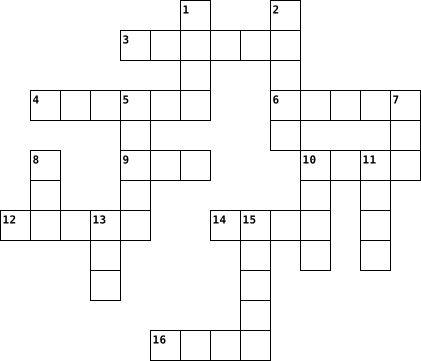
Across
- глаз
- рука
- ступня
- голова
- нос
Down
- нога
- ухо
- рот
- лицо
- ладонь
10 Clues: ухо • рот • нос • нога • глаз • рука • лицо • ступня • ладонь • голова
Parts of the body 2016-06-02

Across
- A szőnyegen lakik
- 4 lába van és megbotlik
- Megeszi a parlagfüvet
- Állatok királya
- Az ember barátja
Down
- Megtaníthatod beszélni
- Megfogja az egeret
- Ágyban fészkel
- Tejet ad
- Lassú állat
10 Clues: Tejet ad • Lassú állat • Ágyban fészkel • Állatok királya • Az ember barátja • A szőnyegen lakik • Megfogja az egeret • Megeszi a parlagfüvet • Megtaníthatod beszélni • 4 lába van és megbotlik
parts of the body 2016-12-05

Across
- you have 5 on each hand
- they help you listen to the teacher!
- the 'fingers' on your feet
- you use it to speak, eat and drink
Down
- just above your neck
- between your hip and your foot
- in the middle of your face
- you have 2 and they are blue, green, grey, brown or black
- between your shoulder and your hand
- you have hair on it!
10 Clues: just above your neck • you have hair on it! • you have 5 on each hand • in the middle of your face • the 'fingers' on your feet • between your hip and your foot • you use it to speak, eat and drink • between your shoulder and your hand • they help you listen to the teacher! • you have 2 and they are blue, green, grey, brown or black
Parts of the body 2012-12-10

Across
- You have two of them at the end of your legs. You can kick with them.
- You have ten of them on your hands. You use them for touching things.
- You have two of them - they can be blue, green, brown or grey.
- You open and close it when you speak. You can smile with it.
- Most people have it on top of their heads.
Down
- Adults have 32 of them, babies don't have any.
- You use it for smelling flowers.
- Some women colour them red or pink.
- You have one on each side of your head. Without them your sunglasses would fall off!
- It thinks, remembers and makes decisions.
10 Clues: You use it for smelling flowers. • Some women colour them red or pink. • It thinks, remembers and makes decisions. • Most people have it on top of their heads. • Adults have 32 of them, babies don't have any. • You open and close it when you speak. You can smile with it. • You have two of them - they can be blue, green, brown or grey. • ...
Parts of the body 2014-05-29

Across
- Part of the body you use to smell things with.
- Title of a song: Head and ___
- Two or more teeth, one ___.
- She has ____ the colour of cherries.
Down
- One of the five long parts of the hand.
- In the middle of your leg, you have your ___
- Is where you can find your heart.
- Is the place that let's your foot move.
- Is what you use to sit upon.
- Covers you eyeball.
10 Clues: Covers you eyeball. • Two or more teeth, one ___. • Is what you use to sit upon. • Title of a song: Head and ___ • Is where you can find your heart. • She has ____ the colour of cherries. • One of the five long parts of the hand. • Is the place that let's your foot move. • In the middle of your leg, you have your ___ • Part of the body you use to smell things with.
Parts of the Body 2023-11-16

Across
- 귀
- 코
- 머리
- 다리
- 발
Down
- 팔
- 손
- 눈썹
- 눈
- 입술
10 Clues: 팔 • 손 • 귀 • 코 • 눈 • 발 • 눈썹 • 머리 • 다리 • 입술
Parts of the Body 2022-07-01

Across
- eyes
- mouth
- shoulders
- head
- knees
Down
- toes
- ears
- face
- leg
- nose
10 Clues: leg • toes • eyes • ears • face • head • nose • mouth • knees • shoulders
Parts of the Body 2022-10-17

Across
- If these don't work well, you need glasses.
- This is where you find the brain.
- This can hurt if you lift heavy objects.
- This connects your head to your body.
- You use this to smell.
- People put headphones in these to listen to music.
- You use these to give someone a kiss.
Down
- These connect your arms to your body.
- This can be brown, blonde, black, or red.
- These are in the middle of your legs.
10 Clues: You use this to smell. • This is where you find the brain. • These connect your arms to your body. • These are in the middle of your legs. • This connects your head to your body. • You use these to give someone a kiss. • This can hurt if you lift heavy objects. • This can be brown, blonde, black, or red. • If these don't work well, you need glasses. • ...
Parts of the body 2022-10-24

Across
- N_S_
- M_U_H
- E_R
- HE_ _
Down
- F_ _ T
- L_G
- _R_
- _AI_R
- E_E
- H_N_
10 Clues: L_G • _R_ • E_R • E_E • N_S_ • H_N_ • M_U_H • _AI_R • HE_ _ • F_ _ T
Parts of the body 2023-03-14

Across
- Yhe part of shoe or sock that covers your toes.
- This part of the body starts with 'C' and ends with'k'.
- A hard substance that covers the tip of finger.
- The hollow part under your arm at your shoulder.
Down
- Part of the body which connect the head and the shoulders.
- The long soft part that moves about inside your mouth.
- The upper root of the mouth.
- This part of the body is used for eating.
- Join together when we speak.
- The flat area from the waist to knees,formed when a person sit down.
10 Clues: The upper root of the mouth. • Join together when we speak. • This part of the body is used for eating. • Yhe part of shoe or sock that covers your toes. • A hard substance that covers the tip of finger. • The hollow part under your arm at your shoulder. • The long soft part that moves about inside your mouth. • This part of the body starts with 'C' and ends with'k'. • ...
parts of the body 2024-03-20

Across
- you chew with them (zobje)
- you smell with it (nos)
- its behind your chest (hrbet)
- its on your hand (prsti)
- you hear with them (ušesa)
Down
- you see with them (
- it connects your foot on your legs (gleženj)
- it can be blonde,dark, any color!(lasje)
- you kiss with them (ustnice)
- it bends your legs over (koleno)
10 Clues: you see with them ( • you smell with it (nos) • its on your hand (prsti) • you chew with them (zobje) • you hear with them (ušesa) • you kiss with them (ustnice) • its behind your chest (hrbet) • it bends your legs over (koleno) • it can be blonde,dark, any color!(lasje) • it connects your foot on your legs (gleženj)
Animal body parts & adjectives 2024-05-20

Across
- doux
- laine
- aiguisé
- vibrisses
- sans poil
- de couleur rousse
Down
- pendant
- rêche
- griffe
- rayé
10 Clues: doux • rayé • rêche • laine • griffe • pendant • aiguisé • vibrisses • sans poil • de couleur rousse
Body parts cross word 2024-05-24

Across
- Found in your mouth, these hard structures are used for biting and chewing food
- A muscle in your mouth that aids in tasting, swallowing, and speaking.
- The largest organ of your body, it acts as a protective barrier.
- This part of the body helps you walk, run, and stand.
- It covers your scalp and can be styled in many ways.
Down
- These organs, which come in pairs, enable you to see and perceive visual information.
- Located in the center of your face, this organ is responsible for your sense of smell.
- These hard coverings protect the tips of your fingers and toes.
- organ, found on either side of your head, allows you to hear sounds.
- Equipped with fingers and a thumb
10 Clues: Equipped with fingers and a thumb • It covers your scalp and can be styled in many ways. • This part of the body helps you walk, run, and stand. • These hard coverings protect the tips of your fingers and toes. • The largest organ of your body, it acts as a protective barrier. • organ, found on either side of your head, allows you to hear sounds. • ...
Parts of Body: Head 2024-09-09

Across
- dahi
- dagu
- telinga
- bibir
- bola mata
Down
- lidah
- leher
- gigi
- pipi
- lubang hidung
10 Clues: gigi • dahi • dagu • pipi • lidah • leher • bibir • telinga • bola mata • lubang hidung
Parts of the body 2023-01-12

Across
- The body part we use to smell objects. Like flowers etc.
- When we listen to music we use our?
- The body part we use to communicate with others.
- When we wave at someone we use our?
Down
- The body part we use to see objects and people
- The body part we often wear shoes on
- The body part we use to run
- The body part that our hand are connected to
- The first thing you see when you look at someone
- The body part we find behind us.
10 Clues: The body part we use to run • The body part we find behind us. • When we listen to music we use our? • When we wave at someone we use our? • The body part we often wear shoes on • The body part that our hand are connected to • The body part we use to see objects and people • The body part we use to communicate with others. • ...
Parts of the body 2023-01-23

Across
- I watch tv with my...
- I kick a ball with my one...
- I hold a ball in my...
- I hug you with my...
Down
- I walk and run with my...
- I eat food with my...
- It is at the top of my back.
- I listen to music with my...
- I smell food with my...
- I sleep on my...
10 Clues: I sleep on my... • I hug you with my... • I eat food with my... • I watch tv with my... • I hold a ball in my... • I smell food with my... • I walk and run with my... • It is at the top of my back. • I listen to music with my... • I kick a ball with my one...
Parts of the body 2023-06-04

Across
- This connects our head to our body
- We use these to bite
- This can be all different colours and lengths
- We use this to smell
- This connects our hand to our arm
Down
- We use these to walk
- We use these to hear
- We use these to clap
- We use these to see
- This can get big if we eat too much
10 Clues: We use these to see • We use these to walk • We use these to bite • We use these to hear • We use these to clap • We use this to smell • This connects our hand to our arm • This connects our head to our body • This can get big if we eat too much • This can be all different colours and lengths
Organs and body parts 2024-10-23

Across
- used to breathe
- you use it to pick up things
- serves to taste
- Has hair on top
- you can't walk without them
Down
- Stores bile
- organ used to pump blood to the body
- used to shell something
- governs the entire body
- serves to see
10 Clues: Stores bile • serves to see • used to breathe • serves to taste • Has hair on top • used to shell something • governs the entire body • you can't walk without them • you use it to pick up things • organ used to pump blood to the body
Parts of the body 2024-09-11

Across
- pé
- olhos
- mão
- boca
- cabeça
- orelhas
Down
- dentes
- ombros
- cabelo
- perna
10 Clues: pé • mão • boca • olhos • perna • dentes • ombros • cabelo • cabeça • orelhas
Parts of the Body 2025-04-02

Across
- The ..... is a muscular organ in the digestive system that helps break down food.
- It allows the arm to bend and straighten, as well as rotate slightly.
- The .......... is a highly mobile joint that connects the arm to the torso
- The ...... is the joint that connects the foot to the lower leg.
- The ..... is a joint that lets your leg bend and straighten.
Down
- The ...... is the passage that connects the mouth and nose to the esophagus, allowing for breathing, swallowing, and speaking.
- The .......... is a highly mobile joint that connects the arm to the torso.
- ...... are soft, flexible structures that frame the mouth.
- The ....... is the part of the body that connects the head to the torso.
- It consists of the spine (vertebral column), muscles, ligaments, and nerves.
10 Clues: ...... are soft, flexible structures that frame the mouth. • The ..... is a joint that lets your leg bend and straighten. • The ...... is the joint that connects the foot to the lower leg. • It allows the arm to bend and straighten, as well as rotate slightly. • The ....... is the part of the body that connects the head to the torso. • ...
Parts of the body 2025-08-12

Across
- cotton clothes are worn in this season
- I help you see things
- woollen clothes are worn in this season
- We have lot of salt and sugar in us
- youcan eat me raw
Down
- I give you energy
- I help you to build muscles
- I keep you dry from the rain
- I cover your bones and muscles
- I help you to bend your
10 Clues: I give you energy • youcan eat me raw • I help you see things • I help you to bend your • I help you to build muscles • I keep you dry from the rain • I cover your bones and muscles • We have lot of salt and sugar in us • cotton clothes are worn in this season • woollen clothes are worn in this season
Alma & Body Parts Vocab 2025-11-07

Across
- Door
- Feet
- Hair
- Doll
- Ankle
Down
- Store Window
- Can't
- Mouth
- Eyes
- Write
10 Clues: Door • Eyes • Feet • Hair • Doll • Can't • Mouth • Write • Ankle • Store Window
Parts of Our Body 2026-01-13

Across
- we have pain when eat spicy too much
- we use to smell
- we use to see
- we use to listen the music
Down
- we use to eat the sweet banana
- we use to walk and run
- we use to write
- We close our eyes when we...
- we use to feel many tastes
- Made uses to kick the ball
10 Clues: we use to see • we use to write • we use to smell • we use to walk and run • we use to feel many tastes • Made uses to kick the ball • we use to listen the music • We close our eyes when we... • we use to eat the sweet banana • we have pain when eat spicy too much
Parts of the body 2026-02-18

Across
- You have two of these. They have your hands at the end.
- You wear shoes on them.
- You use this to talk, smile and eat
- You use these to see.
Down
- You have ten of these, five on each hand.
- After your mouth. Sometimes this part of the body hurts when you are ill.
- You use them to walk
- You use it to smell.
- The part of your body with your hair, eyes, mouth, nose, and ears on.
- You use this part of the body to hear.
10 Clues: You use them to walk • You use it to smell. • You use these to see. • You wear shoes on them. • You use this to talk, smile and eat • You use this part of the body to hear. • You have ten of these, five on each hand. • You have two of these. They have your hands at the end. • The part of your body with your hair, eyes, mouth, nose, and ears on. • ...
Muscle System notes crosswords 2026-01-12

Across
- -Enables the body and its parts to move
- Maintain body position because of the continuous low steenght muscle contraction
- main part of the body
- muscles muscles that help in producing the movement
- -40-50% of body weight
- pointof attachment to the bone that will move when muscle contracts
Down
- nonstriated or visceral
- - most of the heart
- -under conscious control.Like a heart beating
- muscle responsible for producing specific movement
- helps anchor musles to bone
- Attachment to the bone.stays stationary
- muscles that relax during movement,movement is in the opposite direction
13 Clues: - most of the heart • main part of the body • -40-50% of body weight • nonstriated or visceral • helps anchor musles to bone • -Enables the body and its parts to move • Attachment to the bone.stays stationary • -under conscious control.Like a heart beating • muscle responsible for producing specific movement • muscles muscles that help in producing the movement • ...
Elementary to Secondary Physical Education in Texas 2026-01-26

Across
- timing and flow of movement
- Lifetime activities for long-term health
- Cardiovascular heart and lung endurance
- controlling objects throw, catch, kick
- guidelines for play and activities
- using body parts together smoothly
- quick controlled changes in movement
- movement in place
- injury prevention and awareness
- Skills learned movement patterns
Down
- muscle power
- working with others
- maintaining body control
- range of motion
- ability to sustain activity
- Awareness understanding space and position
- respectful behavior
- moving from one place to another
- Setting planning for improvement
- Fitness, overall health-related fitness
20 Clues: muscle power • range of motion • movement in place • working with others • respectful behavior • maintaining body control • timing and flow of movement • ability to sustain activity • injury prevention and awareness • moving from one place to another • Setting planning for improvement • Skills learned movement patterns • guidelines for play and activities • ...
Parts of the body 2014-02-18

Across
- noga
- ogon
- buzia
- oko
- ręka
Down
- zęby
- nos
- ząb
- głowa
- ucho
10 Clues: nos • ząb • oko • zęby • noga • ogon • ucho • ręka • buzia • głowa
Parts of the body 2016-06-02

Across
- Az ember barátja
- Ágyban fészkel
- Megtaníthatod beszélni
- Megeszi a parlagfüvet
Down
- Megfogja az egeret
- Állatok királya
- Tejet ad
- A szőnyegen lakik
- 4 lába van és megbotlik
- Lassú állat
10 Clues: Tejet ad • Lassú állat • Ágyban fészkel • Állatok királya • Az ember barátja • A szőnyegen lakik • Megfogja az egeret • Megeszi a parlagfüvet • Megtaníthatod beszélni • 4 lába van és megbotlik
Parts of the body 2020-02-07

Across
- Did you smell something?
- Part where you hear
- Hair on your eye
- Run!!
- There are fives ______ on your hands
- Ew! Kiss the cat?
Down
- You need to taste these cake
- Look! Its a part
- Head! ____! Knees and toes
- High Five!!
10 Clues: Run!! • High Five!! • Look! Its a part • Hair on your eye • Ew! Kiss the cat? • Part where you hear • Did you smell something? • Head! ____! Knees and toes • You need to taste these cake • There are fives ______ on your hands
Parts of the Body 2020-03-23

Across
- people have them in different colors
- the joints between the upper arm and the forearm
- Used to walk around (plural form)
- it's where our spine is located
- used to smell things, like flowers and perfum
- it supports the head
Down
- they support the arms
- there are teeth in it
- it helps you listen to your favorite music
- the largest joints of the body
10 Clues: it supports the head • they support the arms • there are teeth in it • the largest joints of the body • it's where our spine is located • Used to walk around (plural form) • people have them in different colors • it helps you listen to your favorite music • used to smell things, like flowers and perfum • the joints between the upper arm and the forearm
Parts of the Body 2021-01-19

Across
- A part of your body that has a lot of muscles
- A part of the body that is very ticklish
- Above your eyes
- The thing that is near the top of your head
Down
- they are on the top of your head
- the thing that protects your eyes
- almost everything that is part of your body
- what you use to hold things
- you have ten of them
- What you use to lift things
10 Clues: Above your eyes • you have ten of them • what you use to hold things • What you use to lift things • they are on the top of your head • the thing that protects your eyes • A part of the body that is very ticklish • almost everything that is part of your body • The thing that is near the top of your head • A part of your body that has a lot of muscles
Body Parts (Vücudun Bölümleri) 2021-03-12

Across
- parmağın İngilizcesi
- ağızın İngilizcesi
- gözün İngilizcesi
- saçın İngilizcesi
Down
- bacağın İngilizcesi
- kolun İngilizcesi
- Ayağın İngilizcesi
- burunun İngilizcesi
- elin İngilizcesi
- kulağın İngilizcesi
10 Clues: elin İngilizcesi • kolun İngilizcesi • gözün İngilizcesi • saçın İngilizcesi • Ayağın İngilizcesi • ağızın İngilizcesi • bacağın İngilizcesi • burunun İngilizcesi • kulağın İngilizcesi • parmağın İngilizcesi
Parts of the body 2020-10-24

Across
- They can walk wherever you want
- smells like vanilla
- I have the ability to grip
- tastes something bitter
- I help you chew
Down
- I give you the best view
- They can make the sounds
- I feed my baby...
- I give you the ability to take harmonious turns
- In that part you can wear a hat
10 Clues: I help you chew • I feed my baby... • smells like vanilla • tastes something bitter • I give you the best view • They can make the sounds • I have the ability to grip • They can walk wherever you want • In that part you can wear a hat • I give you the ability to take harmonious turns
PARTS OF THE BODY 2021-04-15

Across
- what part we use to express our opinion, point view,thought, idea.
- We use this part to snap and point something.
- This part is between leg and thigh.
- when we jump rope we use mainly this part.
- we use this part to look, observe the horeography and other things.
Down
- Head, neck, torso and limb are parts of the.
- When we are dancing, we need to move this part very well.
- tennis shoes, shoes, sandals, boots are put on the.
- We use this part to hold things,objects.
- We use this part to listen music.
10 Clues: We use this part to listen music. • This part is between leg and thigh. • We use this part to hold things,objects. • when we jump rope we use mainly this part. • Head, neck, torso and limb are parts of the. • We use this part to snap and point something. • tennis shoes, shoes, sandals, boots are put on the. • When we are dancing, we need to move this part very well. • ...
Parts of the body 2024-05-30

Across
- you put a scarf around it
- you eat with it
- you see with them
- you brush it
- if it hurts you need to do to the dentist
- you wear rings on them
Down
- you wear a shoe on it
- you smell with it
- it is also a symbol of love
- you hear with them
10 Clues: you brush it • you eat with it • you smell with it • you see with them • you hear with them • you wear a shoe on it • you wear rings on them • you put a scarf around it • it is also a symbol of love • if it hurts you need to do to the dentist
Parts of the body 2023-11-16

Across
- the individual hairs located on the edges of the upper and lower eyelids of the eye.
- the joint of the leg connecting the femur with the tibia, as well as the part of the leg from this joint to the pelvis
- the lowest part of the face, located down from the lower lip
- the movable skin folds around the eyes
- the part of the mouth located between the nostrils and the chin
- the area on the human body directly under the joint where the arm connects to the shoulder.
Down
- the area of the human head bounded by the scalp from above and the eyebrows from below
- The front part of the human head
- the paired external openings of the nose of humans and animals, in humans they are placed side by side and separated by a skin - connective tissue membrane.
- the organ designed to perceive sound vibrations.
10 Clues: The front part of the human head • the movable skin folds around the eyes • the organ designed to perceive sound vibrations. • the lowest part of the face, located down from the lower lip • the part of the mouth located between the nostrils and the chin • the individual hairs located on the edges of the upper and lower eyelids of the eye. • ...
Spanish Vocabulario (body parts) 2024-05-14

Across
- bone
- mouth
- arm
- heart
- body
- head
Down
- stomach
- finger
- neck
- throat
10 Clues: arm • bone • neck • body • head • mouth • heart • finger • throat • stomach
body parts YS3 M4 2024-02-23

Across
- farok
- száj
- lábak
- szárnyak
- fülek
Down
- karok
- haj
- hosszú
- orr
- szemek
10 Clues: haj • orr • száj • farok • karok • lábak • fülek • hosszú • szemek • szárnyak
PARTS OF THE BODY 2024-02-24

Across
- Pernas.
- Orelhas.
- Dedos.
- Braços.
- Corpo.
Down
- Dedos dos pés.
- Olhos.
- Pés.
- Nariz.
- Mãos.
10 Clues: Pés. • Mãos. • Olhos. • Dedos. • Nariz. • Corpo. • Pernas. • Braços. • Orelhas. • Dedos dos pés.
Parts of the body 2023-02-28

Across
- Either side of the face below the eye.
- The upper joint of a person's arms.
- The joint between the thigh and the lower leg in humans.
- You have ten of these on your hands.
Down
- You have ten of these on your feet.
- The upper parts of your leg. There is a song by Shakira called "_____s don't lie"
- The joint between the forearm and the upper arm.
- What connects your head to the rest of your body.
- These two help you walk.
- You use this to smell things.
10 Clues: These two help you walk. • You use this to smell things. • You have ten of these on your feet. • The upper joint of a person's arms. • You have ten of these on your hands. • Either side of the face below the eye. • The joint between the forearm and the upper arm. • What connects your head to the rest of your body. • The joint between the thigh and the lower leg in humans. • ...
Parts of the Body 2023-02-28

Across
- the part of the human body that is on the opposite side to the chest, between the neck and the tops of the legs
- the lowest part of the leg, below the ankle, on which a person or an animal stands
- The uppermost or forwardmost part of the body of a vertebrate, containing the brain and the eyes, ears, nose, mouth, and jaws.
- either of the two organs on the face that you see with
- either of the two long parts that stick out from the top of the body and connect the shoulders to the hands
Down
- the opening in the face used for speaking, eating, etc
- the part of the body at the end of the arm, including the fingers and thumb
- the part of the face that sticks out above the mouth, used for breathing and smelling things
- one of the long parts that connect the feet to the rest of the body
- either of the organs on the sides of the head that you hear with
10 Clues: the opening in the face used for speaking, eating, etc • either of the two organs on the face that you see with • either of the organs on the sides of the head that you hear with • one of the long parts that connect the feet to the rest of the body • the part of the body at the end of the arm, including the fingers and thumb • ...
Body Parts Crossword Puzzle 2023-04-21

Across
- The body part that you use to balance and stand
- The body part that connects the shoulder to the hand
- The part of the body that connects the head and the legs
- The body part that connects the ankle to the leg
- The part of the body that contains the brain
- The body part that you use to smell things
Down
- The body part that you use to hear
- The body part that you use to speak and eat
- The body part that you use to grasp and hold things
- The body part that you use to see
10 Clues: The body part that you use to see • The body part that you use to hear • The body part that you use to smell things • The body part that you use to speak and eat • The part of the body that contains the brain • The body part that you use to balance and stand • The body part that connects the ankle to the leg • The body part that you use to grasp and hold things • ...
Parts of the Body 2023-03-21

Across
- - is a muscular pump that pushes blood around the body
- - patella
- - is in the skull
- - pivot joint
- - Gelenke
Down
- - bring blood back to the heart
- - the nose has to breathe
- - you need it to listen something
- - above the eyes
- - filter wastes from the blood
10 Clues: - patella • - Gelenke • - pivot joint • - above the eyes • - is in the skull • - the nose has to breathe • - filter wastes from the blood • - bring blood back to the heart • - you need it to listen something • - is a muscular pump that pushes blood around the body
Parts of the body 2023-04-18

Across
- you should go to the dentist
- some people got their ... pierced
- is the lagerst finger
- under your upper arm
- at the bottom of the foot
Down
- Gaumenbein
- at modern houses you can open your door with a ...
- you can change your coulour
- removed in the nail studio
- at the summer time, most of the girls polish their ...
10 Clues: Gaumenbein • under your upper arm • is the lagerst finger • at the bottom of the foot • removed in the nail studio • you can change your coulour • you should go to the dentist • some people got their ... pierced • at modern houses you can open your door with a ... • at the summer time, most of the girls polish their ...
Parts of the Body 2023-04-01

Across
- Joint that connects the arm to the hand
- 2 large limbs that do most of work when you walk
- Joint connecting the arm to the body
- You put these body parts in gloves
Down
- It has an arch in it
- You have five of them on each hand
- You talk out of it
- Where your brain lives
- You hear with them
- Up for good and down for bad
10 Clues: You talk out of it • You hear with them • It has an arch in it • Where your brain lives • Up for good and down for bad • You have five of them on each hand • You put these body parts in gloves • Joint connecting the arm to the body • Joint that connects the arm to the hand • 2 large limbs that do most of work when you walk
Parts of the body 2023-03-28

Across
- where your foot is attached to
- where your hand is attached to
- where your toes are attached to
- allows you to see
- attached to your arm
Down
- allows you to hear
- allows you to speak
- allows you to smell
- where your brain is
- opposite side to your tummy
10 Clues: allows you to see • allows you to hear • allows you to speak • allows you to smell • where your brain is • attached to your arm • opposite side to your tummy • where your foot is attached to • where your hand is attached to • where your toes are attached to
Parts of the Body 2023-05-24

Across
- Jari kaki
- Punggung
- Mata
- Hidung
- Tangan
Down
- Pundak
- Telinga
- Lutut
- Telunjuk
- Lengan
10 Clues: Mata • Lutut • Pundak • Hidung • Tangan • Lengan • Telinga • Punggung • Telunjuk • Jari kaki
Parts of the body 2022-06-05

Across
- you have got hair on it
- you walk with them
- you kick a ball with your...
- you smell things with it
- you have got 10 in your feet
Down
- you hug people with your...
- you clap them when singing happy birthday
- you see with them
- you speak with it
- you hear with them
10 Clues: you see with them • you speak with it • you walk with them • you hear with them • you have got hair on it • you smell things with it • you hug people with your... • you kick a ball with your... • you have got 10 in your feet • you clap them when singing happy birthday
SENSES AND BODY PARTS 2024-12-17

Across
- IT HAPPENS IN THE MOUTH
- WE CAN WITH OUR NOSE
- ON THE HEAD
- WITHOUT THEM WE CAN'T EAT
- WE CAN FEEL WITH OUR HANDS
- WE HAVE 10
Down
- ONE OF TWO TO WALK
- WE CAN SEE WITH IT
- WE CAN WITH OUR EARS
- ON TOP OF OUR BODY
10 Clues: WE HAVE 10 • ON THE HEAD • ONE OF TWO TO WALK • WE CAN SEE WITH IT • ON TOP OF OUR BODY • WE CAN WITH OUR NOSE • WE CAN WITH OUR EARS • IT HAPPENS IN THE MOUTH • WITHOUT THEM WE CAN'T EAT • WE CAN FEEL WITH OUR HANDS
Body Parts and Animals 2024-09-17

Across
- Man's best friend
- Bird with big eyes.
- They are small felines
- Similar to a Tiger, Misiones's Animal
- Mouse worst enemy
- It produces milk
Down
- A bird. Likes water.
- Eats cheese
- Long nose.
- It wakes you up!
10 Clues: Long nose. • Eats cheese • It wakes you up! • It produces milk • Man's best friend • Mouse worst enemy • Bird with big eyes. • A bird. Likes water. • They are small felines • Similar to a Tiger, Misiones's Animal
The parts of body 2023-11-06

Across
- Observamos todo a nuestro alrededor.
- nos sirven para abrazar.
- La puedes mover en toda dirección.
- Los proteges con medias y zapatos.
- Con el puedes girar tu cabeza.
Down
- Te ponen a correr.
- con ellas escuchamos.
- Con ellas puedes aplaudir.
- En ella están todos nuestros sentidos.
- Te sirve para señalar.
10 Clues: Te ponen a correr. • con ellas escuchamos. • Te sirve para señalar. • nos sirven para abrazar. • Con ellas puedes aplaudir. • Con el puedes girar tu cabeza. • La puedes mover en toda dirección. • Los proteges con medias y zapatos. • Observamos todo a nuestro alrededor. • En ella están todos nuestros sentidos.
Parts of the body 2024-01-29

Across
- it is the most important organ in our chest
- it is going trought our veins
- it is in our mouth
- they are in our chest
- they are on our forehead
- they grow on our fingers
Down
- some People have them on their faces
- it can be everywhere on our body when we Hurt ourselves
- it is on the whole body
- it is in our skull
10 Clues: it is in our mouth • it is in our skull • they are in our chest • it is on the whole body • they are on our forehead • they grow on our fingers • it is going trought our veins • some People have them on their faces • it is the most important organ in our chest • it can be everywhere on our body when we Hurt ourselves
Body Parts Crossword Challenge 2024-12-03

Across
- Used to see.
- Part from shoulder to hand.
- Connects head and body.
- Bottom of the leg.
- Used to hold things.
- Part for walking.
Down
- Used to hear.
- Used to eat and talk.
- Top of the body.
- Used to smell.
10 Clues: Used to see. • Used to hear. • Used to smell. • Top of the body. • Part for walking. • Bottom of the leg. • Used to hold things. • Used to eat and talk. • Connects head and body. • Part from shoulder to hand.
Parts of the body 2024-12-03

Across
- The lower limb of the body used for walking.
- The posterior part of the body, located between the neck and the lower back.
- The upper part of the body that contains the brain,eyes, mouth, and nose.
- The organ that allows you to see.
- The part of the body at the end of the leg that supports weight and allows for walking.
Down
- The part of the body that connects the head to the torso.
- The part of the body at the end of the arm that contains fingers, used for grasping.
- The joint that connects the thigh to the leg.
- The front part of the body that houses the heart and lungs.
- The upper limb of the body that extends from the shoulder to the wrist.
10 Clues: The organ that allows you to see. • The lower limb of the body used for walking. • The joint that connects the thigh to the leg. • The part of the body that connects the head to the torso. • The front part of the body that houses the heart and lungs. • The upper limb of the body that extends from the shoulder to the wrist. • ...
parts of the body 2024-12-03

Across
- The part of your face used to smell and breathe.
- The opening on your face used for eating and talking.
- One of the five small parts attached to your hand.
- The organ you use to see things around you.
Down
- The joint in the middle of your leg that bends.
- The lower part of your leg, used to stand and walk.
- The part between your shoulder and hand, used for lifting.
- The part at the end of your arm used to grab and hold.
- The upper part of your body that holds your brain.
- The front part of your head with eyes, nose, and mouth.
10 Clues: The organ you use to see things around you. • The joint in the middle of your leg that bends. • The part of your face used to smell and breathe. • The upper part of your body that holds your brain. • One of the five small parts attached to your hand. • The lower part of your leg, used to stand and walk. • The opening on your face used for eating and talking. • ...
Parts of the body 2024-12-03

Across
- Back of the torso, from the shoulders to the waist.
- Part of the body where the arms join the torso.
- Extremity at the end of the leg that we use to walk and stand.
- The upper part of the body where the brain, eyes, ears and mouth are located.
- Part of the face we use to smell and breathe.
Down
- Extremity at the end of the arm that we use to grasp and touch.
- Part of the face we use to eat, talk and smile.
- Organ that allows us to see.
- The front part of the head, where the eyes, nose and mouth are.
- Organ we use to hear sounds.
10 Clues: Organ that allows us to see. • Organ we use to hear sounds. • Part of the face we use to smell and breathe. • Part of the face we use to eat, talk and smile. • Part of the body where the arms join the torso. • Back of the torso, from the shoulders to the waist. • Extremity at the end of the leg that we use to walk and stand. • ...
PARTS OF THE BODY 2024-12-03

Across
- watch TV
- We use to walk
- Located between the arm and hand
- Use to write
- The hair is in the
Down
- Listen to music
- Union between arm and hand
- We use to speak
- The hand has
- Breathe for the
10 Clues: watch TV • The hand has • Use to write • We use to walk • Listen to music • We use to speak • Breathe for the • The hair is in the • Union between arm and hand • Located between the arm and hand
parts of the body 2025-05-03

Across
- trunk
- stripes
- mouth
- whiskers
Down
- beak
- tongue
- spots
- wings
- tail
- neck
10 Clues: beak • tail • neck • trunk • spots • wings • mouth • tongue • stripes • whiskers
FUNCTION OF BODY PARTS 2024-02-27

Across
- I EAT WITH MY . . . .
- SANI CHEWS HER FOOD WITH HIS. . .
- I SMELL WITH MY . . . .
- WE HAVE TEN . . .
Down
- DONI KICKS THE BALL WITH HIS . . . .
- WE SMILE WITH OUR . . .
- I HOLD SOMETHING WITH MY . . .
- I TASTE THE FLAVOUR WITH MY . . .
- I LISTEN TO MUSIC WITH MY . . .
- WE CAN SEE WITH OUR . . .
10 Clues: WE HAVE TEN . . . • I EAT WITH MY . . . . • WE SMILE WITH OUR . . . • I SMELL WITH MY . . . . • WE CAN SEE WITH OUR . . . • I HOLD SOMETHING WITH MY . . . • I LISTEN TO MUSIC WITH MY . . . • SANI CHEWS HER FOOD WITH HIS. . . • I TASTE THE FLAVOUR WITH MY . . . • DONI KICKS THE BALL WITH HIS . . . .
PARTS OF THE BODY 2024-04-17

Across
- ZAPESTJE
- GLAVA
- TREBUH
- UŠESA
- HRBET
- KOLENA
Down
- RAMENA
- VRAT
- PRSTI NA NOGAH
- GLEŽENJ
10 Clues: VRAT • GLAVA • UŠESA • HRBET • RAMENA • TREBUH • KOLENA • GLEŽENJ • ZAPESTJE • PRSTI NA NOGAH
Parts of the body 2022-01-27

Across
- some people get bangs to cover it up.
- some people have it protruding.
- after wearing high heels for a long time it hurts a lot.
- some people remove some of them to have a slimmer waist.
- in the winter they can be chapped by the cold.
Down
- people who have chubby ones are adorable.
- some people have to wear braces to correct it.
- smokers have them of a yellowish color.
- during pregnancy they widen.
- if you don't strech well after exercising, the next day you will have stiffness.
10 Clues: during pregnancy they widen. • some people have it protruding. • some people get bangs to cover it up. • smokers have them of a yellowish color. • people who have chubby ones are adorable. • some people have to wear braces to correct it. • in the winter they can be chapped by the cold. • after wearing high heels for a long time it hurts a lot. • ...
Parts of the body 2023-01-17

Across
- You walk with this body part.
- keeps your head attached to your shoulders.
- you smell with this body part.
- It attaches your upperarm to your forearm
- You hear with this body part.
- When you are hungry, you can hear this body part.
Down
- you've got 5 at each hand.
- this attaches your leg to your thigh.
- there are teeth in it.
- You look through them.
10 Clues: there are teeth in it. • You look through them. • you've got 5 at each hand. • You walk with this body part. • You hear with this body part. • you smell with this body part. • this attaches your leg to your thigh. • It attaches your upperarm to your forearm • keeps your head attached to your shoulders. • When you are hungry, you can hear this body part.
Pet Body Parts Crossword 2022-07-15

Across
- I use this to keep my balance
- this pumps through blood through my body
- I use this to listen for treat packages opening
- shake a
- these help me to find my way through tight spaces
- I use these to breathe
Down
- ligament in the leg sounds like cruise ship
- I eat to fill this up
- all my thoughts are here
- I use these to run and jump
10 Clues: shake a • I eat to fill this up • I use these to breathe • all my thoughts are here • I use these to run and jump • I use this to keep my balance • this pumps through blood through my body • ligament in the leg sounds like cruise ship • I use this to listen for treat packages opening • these help me to find my way through tight spaces
Parts of the body 2026-01-04

Across
- клюн
- ръце
- стъпала
- зъби
- крила
Down
- крака
- пера
- мустаци
- козина
- опашка
10 Clues: пера • клюн • ръце • зъби • крака • крила • козина • опашка • мустаци • стъпала
Parts of the body 2025-10-14

Across
- / The thick curved part at the back of the human leg between the knee and the foot.
- / The front of your leg between your foot and your knee.
- / The hard skin at the base of your nails.
- / The rounded back part of the foot.
- / The inside part of your elbow.
Down
- / The small bump on a man's throat.
- / Either of the two openings in the nose through which air moves when you breathe.
- / The joint of your finger.
- / the joint between the foot and the leg.
- / The part of the body where you can feel your heartbeat on the side of your head.
10 Clues: / The joint of your finger. • / The inside part of your elbow. • / The small bump on a man's throat. • / The rounded back part of the foot. • / the joint between the foot and the leg. • / The hard skin at the base of your nails. • / The front of your leg between your foot and your knee. • ...
Parts of the body 2025-10-06

Across
- I lift and carry a heavy things with...
- We bend our legs with...
- You touch the flowers with...
- I eat and digest food with...
- I carry my back with my...
Down
- the fourth finger and used for rings is...
- we use our...to kick a ball
- We use the...to turn our head
- finger the smallest finger is...
- You wear a hat on your...
10 Clues: We bend our legs with... • You wear a hat on your... • I carry my back with my... • we use our...to kick a ball • You touch the flowers with... • We use the...to turn our head • I eat and digest food with... • finger the smallest finger is... • I lift and carry a heavy things with... • the fourth finger and used for rings is...
Chapter 1 2024-06-25

Across
- target value of a physiological measure maintained automatically in the body
- fluid inside cells
- the study of body functions
- lubricating secretion from a serous cell
- organs in a body cavity
- a form of energy
- the most common feedback feedback loop
- a component of homeostatic mechanisms that is the decision-maker and includes a set point
- dynamic state in which the body's internal environment is maintained within a set range
- branch of science dealing with the form and organization of body parts
- an underlying component of the physiological control systems that maintain homeostasis
Down
- conditions inside the body, surrounding the cells
- production of new cells and organisms
- two layers of connective tissue surrounding the lungs
- the region in the thoracic cavity between the lungs
- an application of force to something
- a muscle or gland that effects change in the body
- specialized cell or structure that provides information about the environment; also, cell surface molecule that binds other molecules
- body fluids outside cells
- the sum of all chemical reactions in a living system
20 Clues: a form of energy • fluid inside cells • organs in a body cavity • body fluids outside cells • the study of body functions • an application of force to something • production of new cells and organisms • the most common feedback feedback loop • lubricating secretion from a serous cell • conditions inside the body, surrounding the cells • ...
Science Words 2022-02-15

Across
- chest muscles that help move the shoulder backwards
- inner layer of skin
- filter out waste and digests food
- structure in the body composed of tissue
- lets you move certain parts of your body in different ways
- outer layer of skin
- small bones that make up the backbone
- connect muscle to bone
- what gives skin its color
- help you breathe and oxengate blood
- helps move your shoulders
- extends the elbow
- all the movement in the body is controlled by _________
- pumps blood throughout the body
- breaks down and digests food
- stores bile
Down
- connects bone to bone
- the body's largest organ; protects the inside of the body
- converts nutrients to usable substances
- opens joint
- the body's control center
- made of all the bones in the body
- control muscle and knee extension
- cells that perform the same function
- closes joint
- filter blood and remove waste from the body
- draws scapula upwards
- elevates the shoulder
- helps digest food and convert food to energy
29 Clues: opens joint • stores bile • closes joint • extends the elbow • inner layer of skin • outer layer of skin • connects bone to bone • draws scapula upwards • elevates the shoulder • connect muscle to bone • the body's control center • what gives skin its color • helps move your shoulders • breaks down and digests food • pumps blood throughout the body • filter out waste and digests food • ...
nutrion 2022-03-29

Across
- weighing less than the healthy amount
- balance between calories you take in from food and the calories your body uses
- small units that make up protein
- nutrients built up to build and repair cells
- reminder to eat healthy meals
- extreme eating disorders that can lead to death or illness
- study of nutrients and how your body uses them
- eating disorder in which a strong fear of gaining weight leads to starvation
- physical need for food
Down
- emotional desire for food
- disorder in which someone eats too much food at a time
- substance in food your body needs
- tough stringy parts of raw foods
- elements in food that help your body work properly
- the way you see your body
- produce normal growth and give you energy
- high amount of nutrients relative to their number of calories
- sugar found in foods
- compounds that help regulate body functions
- eating disorder in which someone eats large amounts of food and then purges
- weighing more than the healthy amount
- measures the energy available in food
- method for assessing your body size
23 Clues: sugar found in foods • physical need for food • emotional desire for food • the way you see your body • reminder to eat healthy meals • tough stringy parts of raw foods • small units that make up protein • substance in food your body needs • method for assessing your body size • weighing less than the healthy amount • weighing more than the healthy amount • ...
Fossil Crossword 2023-05-27

Across
- Process where flesh decays and leaves a cavity
- remains Remains of organisms that have been protected from decay
- remains Remains of once living organisms
- Particles of solid material that settle at the bottom of a liquid
- fuels Abundant and accessible fuels formed from the organic remains of prehistoric organisms
- Hollow space or hole
- Solid mineral material
- fossils Type of fossil formed by minerals replacing body parts
Down
- Scientists who specialize in studying fossils
- Process of turning into stone
- The point or place where something begins or is created
- fossils Fossils formed when the mold is filled with minerals
- Preserved remains of living organisms
- form fossils Large body parts of an organism that has been replaced by minerals
- fossils Fossils made by the activity of ancient creatures
15 Clues: Hollow space or hole • Solid mineral material • Process of turning into stone • Preserved remains of living organisms • remains Remains of once living organisms • Scientists who specialize in studying fossils • Process where flesh decays and leaves a cavity • The point or place where something begins or is created • ...
animals 2020-07-20

Across
- a body plan which can be divided anywhere through its central axis into two parts that are nearly mirror images of each other
- animal or living being
- a body which can not be divided into any two parts
- a plant
Down
- a body plan which can be divided into two parts
- a flower
- an animal
7 Clues: a plant • a flower • an animal • animal or living being • a body plan which can be divided into two parts • a body which can not be divided into any two parts • a body plan which can be divided anywhere through its central axis into two parts that are nearly mirror images of each other
Lesson 2 2022-10-21

Across
- Farther from the original of a body part of the point of attachment of a limb to the body trunk
- toward or at the back of the body behind
- toward or at the Body surface
- away from the body surface more internal
- has 2 major subdivisions
- between a more medial and a more lateral structure
- away from the midline of the Body on the outer side
- closer to the origin of the body part or the point of attachment of a limb to the body trunk
- lies in the bony pelvis and contains the bladder some reproductive organ and the rectrum
- towards the head and or upper part of a structure of the body above
- in the skull encases the brain
- aka horizontal plane runs horizontally from right to left dividing the body into superior and inferior parts
- Divides the brain into an interior and posterior portion
Down
- protects the fragile nervous system organs has 2 subvisions
- toward or at the front of the body behind
- toward or at the midline of the body on the inner side
- surrounded by the ribs and muscles of the chest
- contains the stomach intestines spleen liver and other organisms
- away from the head and or toward the lower part of a structure of the body below
- Where a sagittal plane lies exactly in the midline
20 Clues: has 2 major subdivisions • toward or at the Body surface • in the skull encases the brain • toward or at the back of the body behind • away from the body surface more internal • toward or at the front of the body behind • surrounded by the ribs and muscles of the chest • between a more medial and a more lateral structure • ...
Real Reading Level 1 Chapter 1 2022-09-29

Across
- the parts of a person that makes their size and shape
- something you do in the water
- to make heat or fire
- carrying a baby inside your body
- feeling calm, comfortable, not worried
- damage or hurt to your body
- not in danger
- a large room to do exercise or training in
Down
- something that helps you be more successful than other people
- measure how heavy something is
- move your body to stay healthy
- teaching someone how to do something
- power used to make heat
- the ground you walk on
14 Clues: not in danger • to make heat or fire • the ground you walk on • power used to make heat • damage or hurt to your body • something you do in the water • measure how heavy something is • move your body to stay healthy • carrying a baby inside your body • teaching someone how to do something • feeling calm, comfortable, not worried • a large room to do exercise or training in • ...
body 2021-02-24
Across
- any of the long, thin, separate parts of the hand, especially those that are not thumbs
- one of many tissues in the body that can tighten and relax to produce movement
- the line of bones down the centre of the back that provides support for the body and protects the spinal cord
- either of the two organs, one on each side of the head, by which people or animals hear sounds, or the piece of skin and tissue outside the head connected to this organ
- He's broken a .... in his wrist
- the organ in your chest that sends the blood around your body
- the part of the body at the end of the arm that is used for holding, moving, touching, and feeling things
- the part of the face that sticks out above the mouth, through which you breathe and smell
Down
- the middle joint of the leg that allows the leg to bend
- the part of the body between the hand and the arm
- the upper front part of the body of humans and some animals, between the stomach and the neck, containing the heart and lungs
- one of the two organs in your face that are used for seeing
- any of the five separate parts at the end of the foot
- the whole physical structure that forms a person or animal
- the part of the body that joins the head to the shoulders
- a bone that curves round from your back to your chest
- the joint (= place where two bones are connected) between the foot and the leg, or the thin part of the leg just above the foot
17 Clues: He's broken a .... in his wrist • the part of the body between the hand and the arm • any of the five separate parts at the end of the foot • a bone that curves round from your back to your chest • the middle joint of the leg that allows the leg to bend • the part of the body that joins the head to the shoulders • ...
Biomechanics Basic Terminology 2025-01-15

Across
- The study of the spatial and temporal components of motion, such as position and velocity.
- Position Describes movement or location relative to a fixed external frame of reference (e.g., horizontal or vertical axis).
- Motion Movement along a straight or curved path where all points move the same distance at the same time.
- Away from the midline of the body.
- Toward the top of the head.
- Toward the midline of the body.
- Rotating the palm or foot upward.
- Anatomy Study of body components necessary for achieving a goal, with a focus on function.
- The analysis of systems not moving or moving at a constant speed, involving equilibrium with no acceleration.
- of Rotation The point around which movement occurs, perpendicular to the plane of motion.
- Move scapulae apart
- Toward the bottom of the feet.
- A flat, two-dimensional surface where movement occurs.
- of Freedom The number of planes in which a joint can move: Uniaxial (1 degree of freedom, e.g., elbow), Biaxial (2 degrees of freedom, e.g., wrist), Triaxial (3 degrees of freedom, e.g., shoulder).
- DOF In motor control, describes the limited DOF of purposeful, coordinated movements.
- Position Similar to the anatomical position but with relaxed arms and palms facing inward.
- Lift lateral edge of the foot
- Application of mechanical principles to biological systems, more specific than kinesiology.
- Plane Imaginary plane that divides the body into front and back halves, its axis of rotation is anteroposterior. AKA Coronal Plane.
- The scientific study of human movement, encompassing anatomical, physiological, psychological, and biomechanical aspects.
- Rotation Scapulae return to resting position, inferior tip of scapulae moves toward midline.
- Plane Imaginary plane that divides the body into right and left halves, its axis of rotation is mediolateral.
- Study of the structure of the body, with a focus on specific body parts like the biceps brachii.
- Away from the point of attachment or the body.
- Position The standard reference position with palms facing forward.
- Analysis Numerical analysis based on data collection, requiring equipment, with a focus on forces.
- On the opposite side of the body.
Down
- Decreasing the angle of a joint.
- Movement in a cone-shaped arc, often seen in shoulder or hip movements.
- Lift medial edge of the foot
- Toward the point of attachment or the body.
- (Ventral) Toward the front of the body.
- Rotating the palm or foot downward.
- Increasing the angle of a joint.
- (Dorsal) Toward the back of the body.
- Increase angle between the foot and the leg.
- DOF Number of possible positions or motions of a mechanical system in space.
- Rotation Scapulae move away from the trunk, top moves toward.
- Lowering the scapulae.
- On the same side of the body.
- Circular movement around an axis.
- Movement away from the midline of the body.
- Plane Imaginary plane that divides the body into upper and lower halves, its axis of rotation is longitudinal. AKA Horizontal plane.
- The analysis of systems experiencing acceleration.
- Decrease angle between the foot and the leg.
- Object of analysis, made up of two or more bodies.
- Move scapulae together
- Object of Analysis, could be a whole person, part of a person, or an inanimate object.
- Position A way to describe the location of body parts or landmarks in relation to other body parts.
- The study of forces acting on a system.
- Analysis Non-numerical analysis based on direct observation without the need for equipment, focusing on time and space.
- Movement toward the midline of the body.
- Raising the scapulae (shrug).
- Motion Movement around a point or axis, often seen in rotational motions.
- of reference The perspective from which movement is described.
55 Clues: Move scapulae apart • Lowering the scapulae. • Move scapulae together • Toward the top of the head. • Lift medial edge of the foot • On the same side of the body. • Lift lateral edge of the foot • Raising the scapulae (shrug). • Toward the bottom of the feet. • Toward the midline of the body. • Decreasing the angle of a joint. • Increasing the angle of a joint. • ...
Transfer and Positioning 2022-03-03

Across
- laying on right or left side
- to move pt to be more comfortable
- move pt carefully
- without a problem on that part of body
- to turn to the side with feet flat
- move pt from bed to chair
- laying on back
- a medical condition causing paralysis
Down
- on bony parts of body
- keeping your body in straight line
- belt use to move or ambulate pt
- wet area or damp/sweaty
- laying on stomach
- pt is unable to move affected area or body
14 Clues: laying on back • move pt carefully • laying on stomach • on bony parts of body • wet area or damp/sweaty • move pt from bed to chair • laying on right or left side • belt use to move or ambulate pt • to move pt to be more comfortable • keeping your body in straight line • to turn to the side with feet flat • a medical condition causing paralysis • ...
Vocabulary Test 2022-11-03

Across
- a sudden, important change that allows for progress
- reached a firm decision to do something
- exact
- a hard covering that holds a broken bone in place while it heals
- empty inside
- weak or in danger
- to draw back suddenly which is an example of a reflex
- the position in which you hold your body
Down
- smaller body parts attached to the main body
- to move around in a a loop or circle
- to get bigger
- bendable
- tiniest living part of the human body
- safe or protected, opposite of vulnerable
14 Clues: exact • bendable • empty inside • to get bigger • weak or in danger • to move around in a a loop or circle • tiniest living part of the human body • reached a firm decision to do something • the position in which you hold your body • safe or protected, opposite of vulnerable • smaller body parts attached to the main body • a sudden, important change that allows for progress • ...
4.2 FOLLOWTHROUGH AND OVERLAPPING CROSSWORD STEWDIOUS 2026-01-28

Across
- – How clearly actions are communicated to the player.
- – Visual paths that show movement direction.
- – Rig controls for hair, clothing, or accessories.
- / Animation Editor – A tool for refining timing and spacing.
- (VFX) – Added effects that emphasize motion and energy.
- – The portion of motion returning a character to neutral.
- – Smooth, consistent movement across actions or shots.
- – When different parts of a character move and stop at different times.
- – The trailing motion of flexible parts during movement.
- – The arrangement of visual elements in the frame.
- – Motion passing through joints one at a time.
- – The force that keeps motion moving after an action begins or ends.
- – The perceived mass of an object or character shown through motion.
- – Small movements as an object comes to rest.
- – Movement between gameplay poses.
- – Commands given by the player.
- – Simulated hair motion.
- – Separate motion tracks for different body parts.
- – How stiffness or flexibility affects motion.
- – A relationship where one part initiates motion and others respond.
- – A camera view emphasizing full-body follow-through.
- – The perceived power of a move.
- – Visual signals that indicate an action has successfully occurred.
- (UX) – The overall feel of interaction and control.
- – Delayed keyframes for secondary motion.
- – The continuation of motion after an action has completed.
- – Delaying motion between parts to avoid simultaneous movement.
- – Brief moments that allow player decision-making.
Down
- – Automated motion using physics calculations.
- – Motion or effects confirming player input.
- – The imitation of real-world forces in animation.
- – A clear outline that communicates pose and action.
- – Motion that passes the final pose before settling.
- – Manual adjustment of simulated motion.
- – Reactive motion after impact or a stop.
- – How quickly the game reacts to player actions.
- – Physics-driven fabric movement.
- – A camera view showing full or partial body motion.
- – The balance point that motion originates from.
- – Small vibrating movements following motion.
- – A framing that highlights subtle overlapping motion.
- – Flowing movement traveling through connected parts.
- – Framing choices that affect how motion is perceived.
- – Frames that define important positions in an animation.
- – Visual elements such as sparks or trails.
- – Supporting movement caused by the primary action.
- – The main action driving the movement.
- – The ease with which motion can be read by the audience.
48 Clues: – Simulated hair motion. • – Commands given by the player. • – The perceived power of a move. • – Physics-driven fabric movement. • – Movement between gameplay poses. • – The main action driving the movement. • – Manual adjustment of simulated motion. • – Reactive motion after impact or a stop. • – Delayed keyframes for secondary motion. • ...
Unit B: Cells and Systems 2017-01-19

Across
- A series if tube like passages into the lungs
- Optical device used for viewing a very small object
- a membranous sac in humans and other animals, in which urine is collected for excretion
- Made up of more than one cell
- A group of organs that work together to perform a certain task
- Anything that causes a response in organism
- Protects the plant
- Transports water
- This system breaks down the food
- A group of tissues that work together to perform a specific function
- It transports food and water to different parts of the plant
- Structure in cells that perform a certain function
- Common unicellular organisms that live in water
- a band or bundle of fibrous tissue in a human or animal body that has the ability to contract, producing movement in or maintaining the position of parts of the body
- The diffusion of water through a selectively permeable membrane
Down
- any of the tubes forming part of the blood circulation system of the body, carrying in most cases oxygen-depleted blood toward the heart
- Purpose or task
- Produces food for plants (Only found in leaves)
- Substances that provide energy and materials to organisms
- This system removes waste from the body
- The ability to make things move or change
- All the life process that takes place in the cell ; includes energy
- A chemical waste that the body produces when cells break down protein
- The process which moves air in and out of the lungs
- Basic unit of life
- Transports food
26 Clues: Purpose or task • Transports food • Transports water • Protects the plant • Basic unit of life • Made up of more than one cell • This system breaks down the food • This system removes waste from the body • The ability to make things move or change • Anything that causes a response in organism • A series if tube like passages into the lungs • ...
Module Green Phlebotomy Crossword 2015-01-20

Across
- A word part at the beginning of the word that alters the meaning of the word
- Assumes blood and body fluid of ANY patient could be infectious
- Soiled with pathogens or infectious material; nonsterile.
- The destruction of all microorganisms.
- A federal agency committed to workplace safety
- A cleansing process that reduces the number of microorganisms to a safe level as dictated by public health guidelines.
- Referring to disease-causing microorganisms.
- A white blood cell
- This liquid comes from clotted blood
- Pertaining to substances that inhibit the growth of microorganisms on living tissues.
- Carries oxygenated blood away from the heart to the body parts
- Transmission of disease by large drops of fluid coming from the respiratory tract
Down
- Helps to shorten information to be recorded.
- The controlling of blood flow
- A red blood cell
- This liquid comes from unclotted blood
- The removal of disease-causing organisms or the destruction of the organisms after they leave the body.
- The destruction of organisms before they enter the body.
- Carries deoxygenated blood to the heart from the body parts
- The best method of preventing the spread of infection
- The process of killing pathogenic organisms or rendering them inactive.
- A platelet
- A word part at the end of the word that alters the meaning of the word
- Transmission of disease by small fine particles of fluid coming from the respiratory tract
- The most common form of disease transmission
- An animal, usually an insect or tick, that transmits the causative organisms of disease.
26 Clues: A platelet • A red blood cell • A white blood cell • The controlling of blood flow • This liquid comes from clotted blood • This liquid comes from unclotted blood • The destruction of all microorganisms. • Helps to shorten information to be recorded. • Referring to disease-causing microorganisms. • The most common form of disease transmission • ...
Joints 2022-02-12

Across
- the backward bending and contracting of your hand or foot.
- joint fluid, a thick liquid located between your joints.
- moving the bone around its longitudinal axis.
- alow for forward, backward + side- to side- movement, not allowing rotation.
- motion of the limbs or other body parts that pulls away from the midline of the body.
- the area where 2 or more bones meet.
- motion of the limbs or other body parts that pulls away from the midline of the body.
- is a non-vascular type of supporting connective tissue.
- tissue that supports, protects, and gives structure to other tissues and organs in the body.
- when the angle of a joint decreases.
- is the capability of a joint to go through its complex spectrum of movements
- the bone-forming on one part of the joint looks concave.
- Attach muscle to bone.
Down
- a joint in which the rounded surface of a bone moves within a depression on another bone.
- most common type of joint, fluid in the cavities.
- a joint between two bones.
- a freely movable point, also called a rotary joint.
- translucent cartilage found on many joint surfaces
- formed between two bones,surfaces of the bones are flat or nearly flat, enabling the bones to slide over each other.
- the orderly combination of shoulder movements so that the hand traces a circle and the arm traces a cone.
- the movement of the foot in a downward motion away from the body.
- a device that measures an angle or permits the rotation of an object to a definite position.
- increases the angle between body parts.
- bands of tough elastic tissue around your joints.
24 Clues: Attach muscle to bone. • a joint between two bones. • the area where 2 or more bones meet. • when the angle of a joint decreases. • increases the angle between body parts. • moving the bone around its longitudinal axis. • most common type of joint, fluid in the cavities. • bands of tough elastic tissue around your joints. • ...
Science- Body Systems 2024-06-26

Across
- air sacs in which gas exchange takes place
- the other name for white blood cells
- the smallest blood vessels
- it takes out toxins in our body
- the gas we breathe out
- the top two chambers of the heart
- the flap of skin that prevents food going down the trachea
- they filter the waste in our blood
- the pressure of blood flowing through your arteries
- takes blood from the heart to the lungs
- the fluid in our circulatory system that delivers oxygen to cells
- the bottom two chambers of the heart
- they aid in clotting blood
- prevents blood flowing backward
- the other name for red blood cells
- the two pipes that branch out of the trachea
- they carry blood to the heart
- sheet of muscle below your lungs
- it brings deoxygenated blood to the heart from the upper parts of the body
Down
- the branches that have air sacs at the end
- the system that transports dissolved chemicals and gases
- scientific name for windpipe
- they carry blood away from the heart
- the tubes that carry blood all over the body
- breathing out
- takes blood from the lungs to the heart
- breathing in
- it pumps blood to the body
- straw colored liquid that makes up 55% of our blood
- also called voice box
- the scientific name for food pipe
- the gas we breathe in
- it brings deoxygenated blood to the heart from the lower parts of the body
33 Clues: breathing in • breathing out • also called voice box • the gas we breathe in • the gas we breathe out • the smallest blood vessels • it pumps blood to the body • they aid in clotting blood • scientific name for windpipe • they carry blood to the heart • it takes out toxins in our body • prevents blood flowing backward • sheet of muscle below your lungs • ...
Body Systems Crossword 2022-06-01

Across
- Removes wastes from the body\
- Protects the body's organs/makes up the body's structure
- Removes urine
- Delivers oxygen to cells/removes waste gases
Down
- Breaks down and processes food for energy and growth
- Takes in oxygen/allows you to breathe
- Allows different parts of your body to move
- Helps different parts of the body communicate
8 Clues: Removes urine • Removes wastes from the body\ • Takes in oxygen/allows you to breathe • Allows different parts of your body to move • Delivers oxygen to cells/removes waste gases • Helps different parts of the body communicate • Breaks down and processes food for energy and growth • Protects the body's organs/makes up the body's structure
Essentials of Healthcare - Quiz 1 2025-03-04

Across
- a large bone roughly shaped like an elephant’s ear.
- pieces of DNA that are tightly coiled up.
- Living things made out of eukaryotic cells are
- the basic structural and functional unit of all living things.
- Plants that absorb nutrients from the soil and make some of their own nutrients
- a directional term that describes something that is further from the middle of the body than something else when viewed in anatomical position.
- a molecule that initiates or assists other processes in the body.
- an essential gas in the blood throughout the body.
- having a similar, balanced, or proportional form among different parts of a structure.
- organs with thick, hard outer layers and soft, spongy inner layers.
- the abbreviation for an information file specific to a patient and that is collected using software.
- the study of the physical structure of the human body.
- groups of similar cells that work together. audience The intended receiver of information.
Down
- The speaking of each syllable clearly and separately.
- a directional term that describes something that is above something else when viewed in anatomical position.
- the study of how parts of the body function and work together.
- the only bone located in the upper arm.
- acid a long chain molecule containing other distinct molecules that determine its function
- the process of breaking down food into parts that the body can use for energy.
- branch-like extensions of the neuron whose function is to receive nerve impulses, and axons, which carry the impulses down the length of the cell, where they are transmitted to another neuron.
- flap-like structures between each section of the heart that keep blood flowing forward and prevent it from flowing back into the heart.
- ______ bone tissue that forms the soft interior of a bone and consists of cells that are in a honeycomb pattern with spaces for bone marrow in between
- a part of a hemisphere that deals with certain functions, such as the sense of taste or the ability to reason.
- a process during which a cell in an organism divides to form two new cells that each contain chromosome sets that are ready to be split in the meiosis II phase.
- working cooperatively as a team.
25 Clues: working cooperatively as a team. • the only bone located in the upper arm. • pieces of DNA that are tightly coiled up. • Living things made out of eukaryotic cells are • an essential gas in the blood throughout the body. • a large bone roughly shaped like an elephant’s ear. • The speaking of each syllable clearly and separately. • ...
Spooky Crossword 2025-10-20

Across
- To eat something completely and quickly
- To change one’s physical form magically
- The spiritual part of a person that lives after death
- To use teeth to cut or wound
- A woman who uses magic
- When something feels strange and scary
- No longer alive
- The hard parts inside your body
- A long, legless reptile
- A feeling of fear or cold running through your body
- A magical spell that brings bad luck
Down
- A creature that drinks blood to survive
- To take control of someone’s body or mind
- An animal hunted by another
- Happens very quickly — “in the _____ of an eye”
- Used for flying
- To search for and kill another creature for food
- Very bad or cruel
- A flying mammal that hunts at night
- A dead human body
20 Clues: Used for flying • No longer alive • Very bad or cruel • A dead human body • A woman who uses magic • A long, legless reptile • An animal hunted by another • To use teeth to cut or wound • The hard parts inside your body • A flying mammal that hunts at night • A magical spell that brings bad luck • When something feels strange and scary • A creature that drinks blood to survive • ...
Health and Fitness 2026-05-19

Across
- — to rest and feel calm
- — a sweet substance in food
- — exercise that makes the heart work harder
- — extra pills or powders for health
- — ability to move easily
- — time spent doing exercise
- — how the body changes food into energy
- — the food a person eats
Down
- — an exercise where you jump and move your whole body
- — trying to improve your appearance in a negative and extreme way
- — a chemical in the brain that makes people feel good
- — healthy plants people eat
- food — unhealthy food with lots of fat or sugar
- — very strong or very serious
- — food that helps build muscles
- — substances that help the body stay healthy
- — energy to do something for a long time
- — food made without harmful chemicals
- — unhealthy component in junk food
- — all the physical parts of a person
20 Clues: — to rest and feel calm • — ability to move easily • — the food a person eats • — a sweet substance in food • — healthy plants people eat • — time spent doing exercise • — very strong or very serious • — food that helps build muscles • — unhealthy component in junk food • — extra pills or powders for health • — all the physical parts of a person • ...
Body Part 2023-06-22

Across
- They are the long, slender digits on the hands, used for gripping and manipulating objects.
- They are the digits on the feet, providing balance and support during walking and running.
- They are the joints connecting the arms to the rest of the body, allowing movement and flexibility.
- It is the part of the body between the neck and the abdomen, housing the heart and lungs.
- It is the fine thread-like strands that grow from the scalp, providing protection and insulation.
- They are the parts of the body at the end of the arms, used for grasping and manipulating objects.
- They are the organs of hearing, located on the sides of the head.
Down
- They are the lower limbs of the body, used for walking, running, and supporting the body's weight.
- It is the uppermost part of the body, containing the brain, eyes, nose, mouth, and other facial features.
- They are the parts of the body at the end of the legs, used for standing, walking, and balance.
- It is the part of the face that protrudes above the mouth, used for smelling and breathing.
- It is the organ located in the abdomen that receives and digests food.
- It is the opening in the face where food is taken in, and words are formed when speaking.
- It is the rear part of the body, extending from the shoulders to the hips, supporting the spine.
- They are the organs of vision, allowing us to see the world around us.
- They are the upper limbs of the body, extending from the shoulders to the hands.
16 Clues: They are the organs of hearing, located on the sides of the head. • It is the organ located in the abdomen that receives and digests food. • They are the organs of vision, allowing us to see the world around us. • They are the upper limbs of the body, extending from the shoulders to the hands. • ...
The body 2014-12-29

Across
- the part of your body where your hand joins your arm
- the front part of your face below your mouth
- the bones of a person's or animal's head
- one of the two organs in your lower back that separate waste products from your blood and make urine
- the soft part inside your mouth that you can move about and use for eating and speaking
- the small round mark in the middle of your stomach (informal for navel)
- the round coloured part of your eye, that surrounds the black pupil
- the organ in your chest which pumps blood through your body
- the joint between your foot and your leg
- one of the five movable parts at the end of your foot [↪ finger]
Down
- organs in your body that you breathe with
- the organ inside your head that controls how you think, feel, and move
- the part of the back of your leg between your knee and your ankle
- one of the two parts of the body at each side of the neck where the arm is connected
- the line of hair above your eye
- one of the 12 pairs of curved bones that surround your chest
- areas of firm pink flesh at the top and bottom of your mouth, in which your teeth are fixed
- the organ inside your body where food begins to be digested
- the part of your face above your eyes and below your hair
- the joint that bends in the middle of your leg
20 Clues: the line of hair above your eye • the bones of a person's or animal's head • the joint between your foot and your leg • organs in your body that you breathe with • the front part of your face below your mouth • the joint that bends in the middle of your leg • the part of your body where your hand joins your arm • ...
The nervous system 2022-12-07

Across
- The cyndrical bundle of nerve fibres and associated tissue that connects nearly all parts of the body
- The branch of medecine concerned with the treatment of disease and the action of remedial agents
- The network of nerve cells and fibres which transmits nerve impulses between parts of the body
- A specialized cell transmitting nerve impulses
- A room or a bulding equipped for scientific experiments
- The studies of nervous system
- A structure containing a number of nerve cell bodies, typically linked by synapses
- The physical structure, including the bones, flesh and organs
- The part of the brain at the back of the skull in vertebrates which coordinates and regulates muscular activity
Down
- The process of increasing in size
- The intellectual and practical activity encompassing study of the structure and behaviour of the physical and natural world through observation and experiment
- A particular quality or disposition regarded as adversaly affecting a person or a group of people
- A disease of the brain that mainly affects old people and results in the gradual loss of memories
- An organ of soft nervous tissue contained in the skull of vertebrate
- A whitish fibre or bundle or fibre in the body that transmits impulses of sensation to the brain
- system The organs and process of the body that provide resistance to infection and toxins
- The elongated ridges on the floor of each lateral ventricle of the brain
- Ability to perceive
- A group of atoms bonded together
- The outer layer of the cerbrum, composed of folded grey matter and playing an important role in conciousness
20 Clues: Ability to perceive • The studies of nervous system • A group of atoms bonded together • The process of increasing in size • A specialized cell transmitting nerve impulses • A room or a bulding equipped for scientific experiments • The physical structure, including the bones, flesh and organs • An organ of soft nervous tissue contained in the skull of vertebrate • ...
BODY 2022-02-22
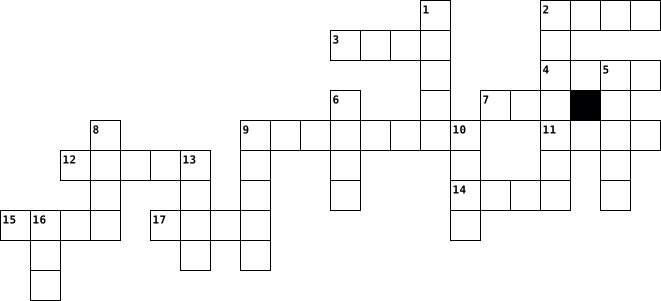
Across
- stopa
- nos
- szyja
- noga
- proste
- uszy
- usta
- oczy
- falowane
- ciemne
Down
- zęby
- palce u ręki
- kręcone
- ręka (dłoń)
- ciało
- nastroszone
- palce u stopy
- głowa
- ramię
19 Clues: nos • zęby • noga • uszy • usta • oczy • stopa • szyja • ciało • głowa • ramię • proste • ciemne • kręcone • falowane • ręka (dłoń) • nastroszone • palce u ręki • palce u stopy
Body 2022-04-17
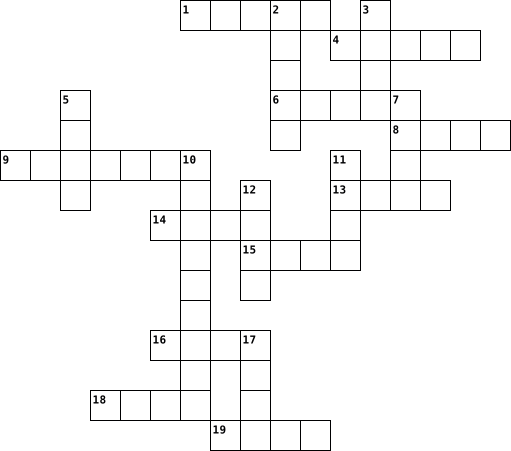
Across
- stomak
- zub
- zubi
- ruka
- prsti
- usi
- nos
- oci
- vrat
- prsti na nozi
- glava
Down
- usta
- stopalo
- saka
- kosa
- ramena
- noge
- stopala
- koleno
19 Clues: zub • usi • nos • oci • usta • saka • zubi • kosa • ruka • noge • vrat • prsti • glava • stomak • ramena • koleno • stopalo • stopala • prsti na nozi
Body 2023-06-19
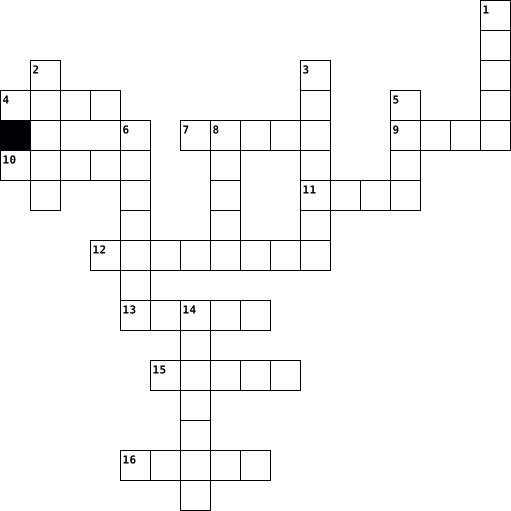
Across
- Detects smells and is used for breathing.
- Vessels Transport blood throughout the body, supplying nutrients and oxygen.
- Allows you to hear and perceive sounds.
- Circulates blood throughout the body.
- Used for seeing, they allow you to perceive colors, shapes, and objects.
- Produces important hormones like insulin.
- Used for grasping and manipulating objects, and for sensing touch.
- Involved in thinking, emotions, memory, and bodily control.
- Used for eating and speaking.
Down
- Involved in respiration, supplying oxygen and removing carbon dioxide.
- Provide support and protection for the body.
- Remove waste from the body and regulate fluids and electrolytes.
- Used for standing, walking, and running, providing support to the body.
- Digests food and absorbs nutrients.
- Processes toxins and stores nutrients.
- System Transmits signals and connects different parts of the body.
16 Clues: Used for eating and speaking. • Digests food and absorbs nutrients. • Circulates blood throughout the body. • Processes toxins and stores nutrients. • Allows you to hear and perceive sounds. • Detects smells and is used for breathing. • Produces important hormones like insulin. • Provide support and protection for the body. • ...
Chapter 11 Vocab Crossword 2014-05-13

Across
- found in all chordate embryos, turns into gills or respiratory systems
- appendages extend from the central body, arm or leg
- internal skeleton similar to vertebrates
- body with two similar halves
- earliest stage of development
- protein that surrounds cells
- combination of two or more tissues
- any animal with a skull and backbone
- hard outer coverings for protection
- protection, reduce friction
- support, turns into vertebrae
- fanlike structures for movement, steering and balance
- organs that remove oxygen from water
Down
- a period of inactivity and decreased body temperature during the winter
- spinal chord filled with spinal fluid
- animals with no backbone
- reduced activity in the summer
- body parts are arranged in a circle around a central point
- no backbone or developed head
- " "
- collection of similar cells
21 Clues: " " • animals with no backbone • protection, reduce friction • collection of similar cells • body with two similar halves • protein that surrounds cells • earliest stage of development • no backbone or developed head • support, turns into vertebrae • reduced activity in the summer • combination of two or more tissues • hard outer coverings for protection • ...
sports recovery and performance terms 2025-05-28

Across
- a health expert who helps you heal
- moving the body to stay healthy
- body's ability to return back to normal after injury
- helps muscles grow and heal
- stretch held for a long period
- a tool or device used to protect injured body parts
- up helps prevent injury
- to help your body recover overnight
Down
- a common cause of sports injury from repetition
- a way to make muscles less tight
- drink crucial to stay hydrated
- muscle tightness caused by tension
- tiny muscle tears caused by heavy effort
- mental state before high-pressure games
- a structured plan to rebuild strength after injury
- reduces swelling and pain when cold is applied
- pain after too much training
- mental focus, and determination
- rebuilding body strength after strain
- taking time off to let injuries heal
20 Clues: up helps prevent injury • helps muscles grow and heal • pain after too much training • drink crucial to stay hydrated • stretch held for a long period • moving the body to stay healthy • mental focus, and determination • a way to make muscles less tight • a health expert who helps you heal • muscle tightness caused by tension • to help your body recover overnight • ...
body 2022-07-14
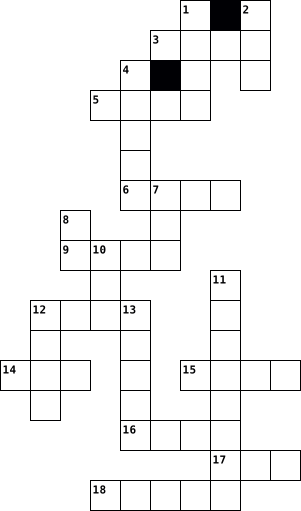
Across
- 游戏
- 鼻子
- 手
- 头
- 脚的复数
- 不
- 玩
- 头发
- 耳朵
- 清洁,清洁的
Down
- 脸
- 腿
- 嘴巴
- 和,并且
- 哦
- 眼睛
- 儿童复数
- 脚
- 触摸
19 Clues: 脸 • 腿 • 手 • 哦 • 头 • 脚 • 不 • 玩 • 游戏 • 嘴巴 • 鼻子 • 眼睛 • 触摸 • 头发 • 耳朵 • 和,并且 • 儿童复数 • 脚的复数 • 清洁,清洁的
Body 2024-03-17
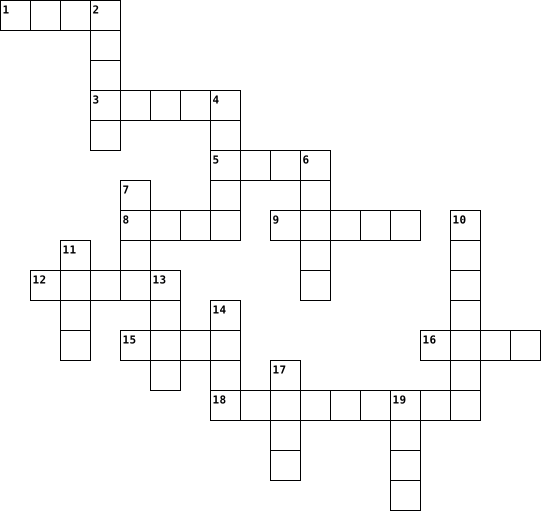
Across
- stopalo
- usta
- vrat
- oči
- zubi
- zub
- kosa
- noge
- ramena
Down
- stomak
- šake
- kolena
- stopala
- prsti
- nos
- glava
- ruke
- prsti na nozi
- uši
19 Clues: oči • nos • zub • uši • usta • šake • vrat • zubi • ruke • kosa • noge • prsti • glava • stomak • kolena • ramena • stopalo • stopala • prsti na nozi
Body 2025-03-27

Across
- teeth
- hair
- shoulder
- mouth
- hand
- stomach
- ear
- knee
- finger
Down
- feet
- neck
- tongue
- ankle
- arm
- head
- elbow
- nose
- leg
- eyes
19 Clues: arm • leg • ear • feet • neck • hair • head • hand • nose • eyes • knee • teeth • ankle • mouth • elbow • tongue • finger • stomach • shoulder
body 2025-11-30

Across
- mouth
- nose
- arm
- heart
- tooth
- shoulder
- leg
- foot
- neck
Down
- head
- lip
- finger
- back
- chest
- hair
- tongue
- eye
- hand
- ear
- face
20 Clues: lip • arm • eye • ear • leg • head • nose • back • hair • hand • face • foot • neck • mouth • chest • heart • tooth • finger • tongue • shoulder
Greek Root Words 2020-11-18

Across
- the examination of tissue from a living body
- a personal account of your own life
- a boat that travels on foils above the water
- a signature especially that of a celebrity
- water
- to write
- capable of being decomposed
- working by itself
- letters presented as a sound
- a form of carbon used in pencils
Down
- the study of water
- powered by water
- having artificial body parts
- a fear of water
- a motor car
- the study of living organisms
- a German motor way
- life
- self
19 Clues: life • self • water • to write • a motor car • a fear of water • powered by water • working by itself • the study of water • a German motor way • capable of being decomposed • having artificial body parts • letters presented as a sound • the study of living organisms • a form of carbon used in pencils • a personal account of your own life • a signature especially that of a celebrity • ...
Animal Crossword Puzzle 2025-03-20

Across
- relies on external sources of heat to regulate its body temperature, rather than internal metabolic processes like mammals and birds.
- an organism that possesses both male and female reproductive organs or tissues, or that can produce both male and female gametes.
- the free-swimming, umbrella-shaped body plan of certain cnidarians, like jellyfish, characterized by a gelatinous body and tentacles used for capturing prey and reproduction.
- a unique, coelomic-derived hydraulic system used for locomotion, feeding, and gas exchange, consisting of canals and tube feet that extend and contract using water pressure.
- symmetry in which similar anatomical parts are arranged on opposite sides of a median axis so that one and only one plane can divide the individual into essentially identical halves.
- lack of equality or equivalence between parts or aspects of something
- a flexible, strong, and specialized connective tissue that cushions joints, supports structures, and facilitates movement
- a gas-filled organ in bony fish that helps them regulate buoyancy, allowing them to stay at a desired depth in the water without expending energy on swimming.
- a sessile, cylindrical body form, often attached to a surface, with a mouth surrounded by tentacles
- a flattened circular organ in the uterus of pregnant eutherian mammals, nourishing and maintaining the fetus through the umbilical cord
- characterized by or formed with absorption of heat: warm-blooded
- an internal skeleton, such as the bony or cartilaginous skeleton of vertebrates
Down
- animals that neither develop nor retain a vertebral column
- shed old feathers, hair, or skin, or an old shell, to make way for a new growth
- animals with a vertebral column (backbone or spine), and a cranium, or skull
- a type of egg that is laid by reptiles, birds, and some mammals
- a hard, external covering that provides support and protection for many invertebrate animals, particularly arthropods like insects, spiders, and crustaceans.
- the milk-producing gland of women or other female mammals.
- plant and animal symmetry in which similar parts are arranged in a balanced way around the center of the body
- a form of asexual reproduction where a new individual develops as an outgrowth or "bud" from the parent organism, which then detaches to become independent.
- anything related to or occurring on the bottom of a body of water, including the sediment surface and sub-surface layers
21 Clues: animals that neither develop nor retain a vertebral column • the milk-producing gland of women or other female mammals. • a type of egg that is laid by reptiles, birds, and some mammals • characterized by or formed with absorption of heat: warm-blooded • lack of equality or equivalence between parts or aspects of something • ...