
body Crossword Puzzles
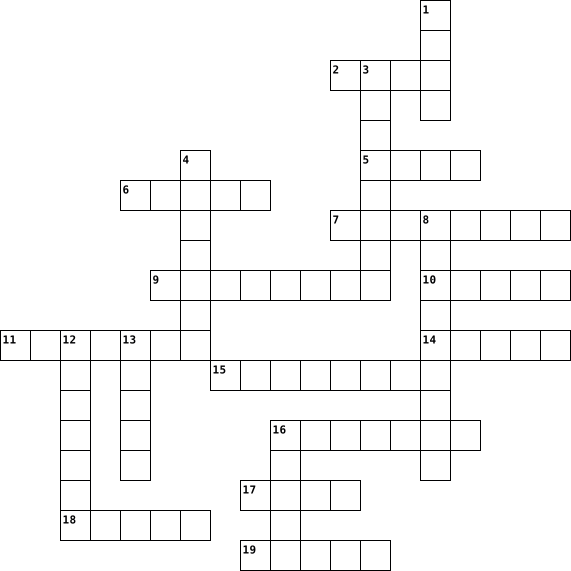
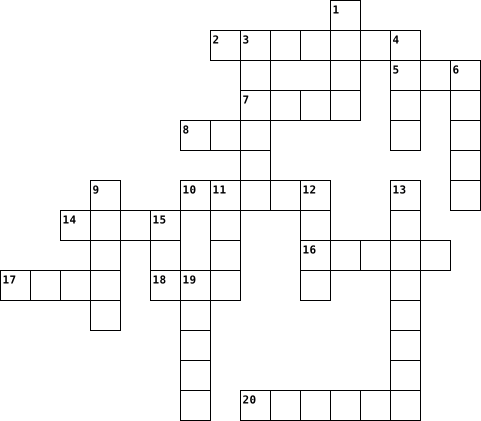
Body Parts 2014-03-05
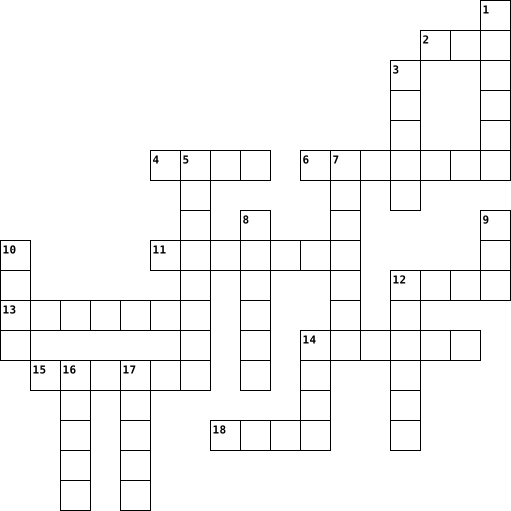
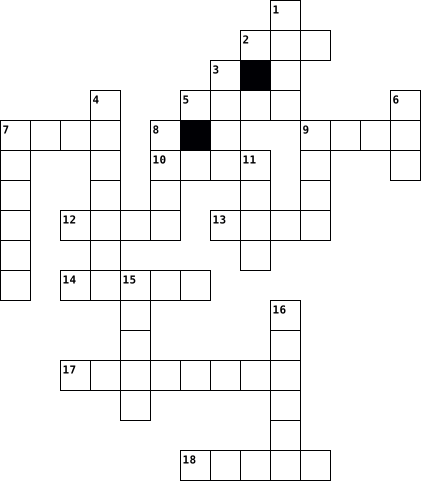
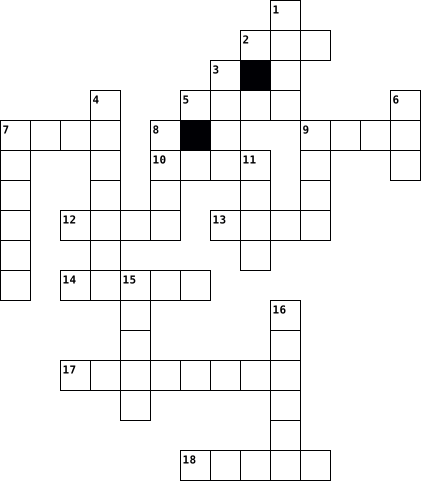
Across
- foot
- finger
- cheek
- knee
- hair
- waist
- head
- shoulder
- hand
Down
- tongue
- nose
- stomach
- back
- tooth
- eye
- mouth
- leg
- elbow
- ear
- arm
20 Clues: eye • leg • ear • arm • foot • nose • back • knee • hair • head • hand • cheek • tooth • mouth • waist • elbow • tongue • finger • stomach • shoulder
body parts 2014-03-21
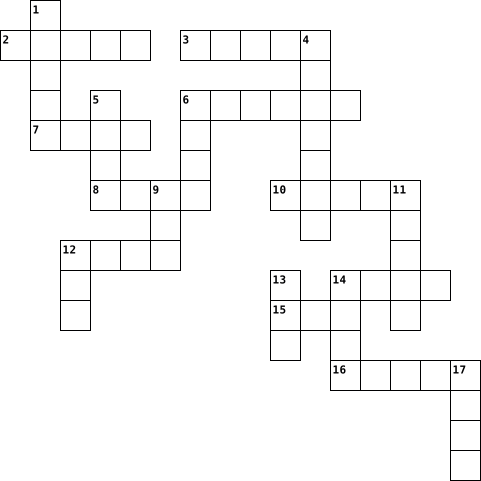
Across
- duim
- enkel
- vinger
- tenen
- knie
- neus
- haar
- voet
- oog
- tanden
Down
- borst
- wenkbrauw
- nek
- gezicht
- oor
- elleboog
- heup
- been
- voeten
- hand
20 Clues: nek • oor • oog • duim • knie • neus • haar • heup • been • voet • hand • borst • enkel • tenen • vinger • voeten • tanden • gezicht • elleboog • wenkbrauw
Body Organization 2014-05-14

Across
- basic unit of life
- ___ section, horizontal cut
- closer to starting point
- ____ plane, also called horizontal plane
- structure separating thoracic and abdominal cavities
- "spine side"
- imaging using computer-aided X-rays in multiple layers
- "Father of Western Medicine"
- chemical reactions for breaking down molecules
- homeostatic feedback where response enhances stimulus
- space between the lungs
- imaging using sound waves
- imaging of metabolic activity using radiolabeled glucose
- imaging using X-rays
- vertical plane on midline
- ___ plane, parallel to the midline
- ___ cavity, surrounds lung
- towards midline
- nose-end
- serous membrane forming cavity wall
- study of cells
- ___ center, determines set-level for a homeostatic condition
- chief physician to Roman gladiators
Down
- away from midline
- simplest level of body organization
- sum of all chemical reactions in the body
- Dutch anatomist studied cadavers
- ___ cavity, surrounds heart
- homeostatic feedback where response opposes stimulus
- organ system that produces hormones
- "back"
- organ that carries out an effect in homeostatic system
- ___ cavity, contains abdominal organs
- structure determines function, "Principle of _"
- ability to maintain stable internal conditions
- study of body function
- organ system that provides active immunity
- imaging of soft tissues using magnetic fields
- "belly-side"
- "front"
- study of tissues
- group of cells with similar structure/function
- serous membrane on surface of organ
- chemical reactions for building molecules
- farther from starting point
- study of body structure
- tail-end
- group of tissues working together
48 Clues: "back" • "front" • nose-end • tail-end • "spine side" • "belly-side" • study of cells • towards midline • study of tissues • away from midline • basic unit of life • imaging using X-rays • study of body function • space between the lungs • study of body structure • closer to starting point • imaging using sound waves • vertical plane on midline • ___ cavity, surrounds lung • ___ section, horizontal cut • ...
Body System 2014-03-31

Across
- breathing in
- necessary to stay alive
- protect your chest
- all of your bones
- Muscle in upper leg
- what the skeletal system is made up of
- Thing that you eat
- breathing out
- be function of the skeletal system
- muscle help you do this
Down
- If you have a big muscle you are...
- tiny microbes that help with digestion
- thing that help you to move
- you breath it in
- where nutrients are absorbs
- Where gas exchange happen in your body
- muscle in your upper arm
- the body system focus on getting nutrients from food
- food is broken down in this
- The longest bone in your body
20 Clues: breathing in • breathing out • you breath it in • all of your bones • protect your chest • Thing that you eat • Muscle in upper leg • necessary to stay alive • muscle help you do this • muscle in your upper arm • thing that help you to move • where nutrients are absorbs • food is broken down in this • The longest bone in your body • be function of the skeletal system • ...
Body parts 2014-09-17
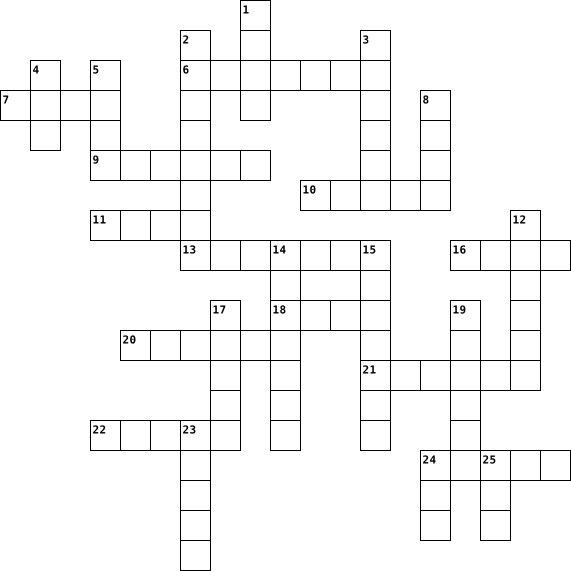
Across
- ear
- cheek
- lips
- knee
- hand
- stomach
- arm
- head
- face
- shoulder
- elbow
- teeth
Down
- foot
- chest
- chin
- neck
- eye
- skin
- waist
- toes
- hair
- leg
- mouth
- finger
- back
- nose
26 Clues: eye • ear • arm • leg • foot • chin • neck • skin • lips • knee • hand • toes • hair • head • face • back • nose • chest • cheek • waist • mouth • elbow • teeth • finger • stomach • shoulder
BODY PARTS 2014-04-18
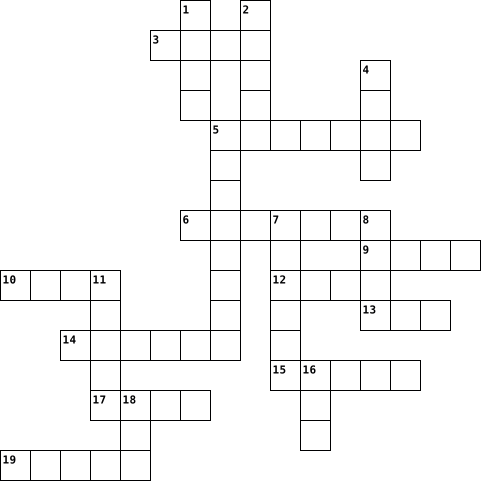
Across
- włosy
- brzuch
- pośladek
- szyja
- stopa
- nos
- ucho
- palec
- łokieć
- głowa
- kostka
Down
- łydka
- nadgarstek
- plecy
- bark
- język
- kolano
- udo
- noga
- oko
20 Clues: udo • nos • oko • bark • ucho • noga • łydka • włosy • plecy • język • szyja • stopa • palec • głowa • brzuch • kolano • łokieć • kostka • pośladek • nadgarstek
Human Body 2014-03-13

Across
- / A part of the body that joins the head with the thorax.
- / The part of the leg that's above the knee.
- / A part of the body that's above the heel.
- / The widest finger.
- / The longest finger.
- / The small hole in the middle of the abs.
- / Facial hair on the jaw.
- / Two pieces of flesh that sorround the mouth.
- / A part of the body that football players cover for protection.
- / A sensitive area at each side of the face that's associated with headaches.
Down
- / The lowest part of the face.
- / Hardened skin at the top of the fingers and toes.
- / The union of a finger and the rest of the hand - more visible in a fist.
- / Brownish little spots on the skin.
- / The small holes in the nose.
- / A stripe of hair that's above the eye.
- / In the thorax, over the hips.
- / The joint of the hand and the arm.
- / The colourful - colorful part of the eye.
- / The joint at the back of an arm.
20 Clues: / The widest finger. • / The longest finger. • / Facial hair on the jaw. • / The lowest part of the face. • / The small holes in the nose. • / In the thorax, over the hips. • / The joint at the back of an arm. • / Brownish little spots on the skin. • / The joint of the hand and the arm. • / A stripe of hair that's above the eye. • / The small hole in the middle of the abs. • ...
Body parts 2014-05-01
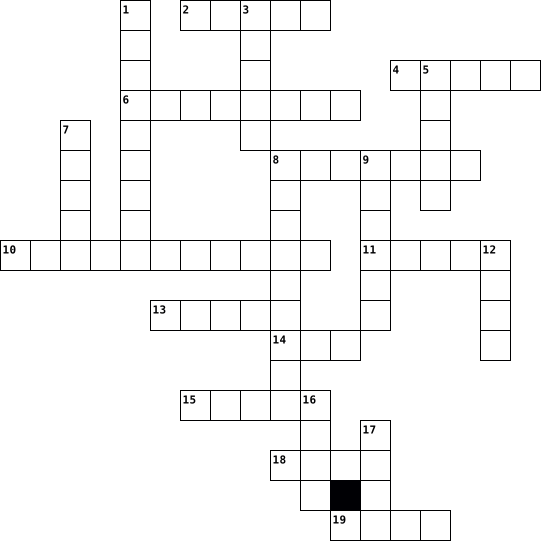
Across
- cabeza
- espalda
- muneca
- Frente
- pecas
- codo
- musculos
- tobillo
- cheeks
- Lengua
- mente
- corazon
- Pecho
Down
- cuerpo
- Cejas
- dedos
- pestanos
- estomago
- pulmones
- muslo
20 Clues: codo • Cejas • dedos • pecas • muslo • mente • Pecho • cuerpo • cabeza • muneca • Frente • cheeks • Lengua • espalda • tobillo • corazon • pestanos • musculos • estomago • pulmones
The body 2014-04-29

Across
- piede
- mano
- orecchio
- stomaco
- costola
- cranio
- testa
- caviglia
- palpebra
- palmo
- pollice
- polmone
- tallone
Down
- guancia
- ginocchio
- gola
- spalla
- gusto
- schiena
- mandibola
- capelli
- cuore
- unghia
- labbro
- odorato
- braccio
- mento
- collo
28 Clues: gola • mano • piede • gusto • testa • cuore • palmo • mento • collo • spalla • cranio • unghia • labbro • guancia • stomaco • costola • schiena • capelli • odorato • braccio • pollice • polmone • tallone • orecchio • caviglia • palpebra • ginocchio • mandibola
Human Body 2015-01-29

Across
- why system removes excess carbon dioxide from the body
- support and transport of substances are examples of
- where you can find the muscle tissue
- why produce the reproductive system in the females
- one structure of the circulatory system
- Group of cells thta perform a single function.
- A group of different types of tissues that works together.
- skin,hair and nails are examples of
- mention one of the functions of the connective tissue
- basic unit of structure and fuction in living things.
- who system breaks down food
- mention one of the functions of the nervous tissue
- means similar standing
- mention one of the functions of the epithelial tissue
Down
- mention one fuction of the muscular system
- one structure of the respiratory system
- the urethra is one structure of the
- group of organs that perform closely related fuctions.
- process in which a stimulus produces a response that opposes the original stimulus
- who system transports oxygen
- helps pretect the body from disease
- is an example of the structure of the nervous system
- where can find out the digestive system
- one structure of the skeletal system
- one fuction of the endocrine system
- works with skeletal system
- support the body
- voluntary and involuntary moments are examples of
- where you can find the nervous tissue?
- is an example of the locations of the epithelial tissue
30 Clues: support the body • means similar standing • works with skeletal system • who system breaks down food • who system transports oxygen • the urethra is one structure of the • helps pretect the body from disease • one fuction of the endocrine system • skin,hair and nails are examples of • where you can find the muscle tissue • one structure of the skeletal system • ...
Human body 2015-01-30

Across
- They help the body to absorb fat-soluble vitamins and other important substances. Can be saturated or unsaturated.
- enzymes break down food into the small molecules the body can use in this process.
- Amount of heat needed to raise the temperature of 1 gram of water by 1 degree Celsius.
- A diet that provides nutrients in adequate amounts and enough energy for a person to maintain a healthy weight.
- a large muscular sac that continues the chemical and mechanical digestion of food.
- the physical breakdown of larger pieces of food into smaller pieces.
- The basic unit of structure and function in living things.
- They supply raw materials for growth and repair of structures.
- Part of the brain that monitor body temperature, both internally and externally.
- Group of organs that perform closely related functions.
- Most important nutrient of the body. Every cell in our body requires this.
- Part of the digestive system that produces bile. It’s one of the most important organs in our body.
Down
- The relatively constant internal physical and chemical conditions that organisms maintain despite changes in internal and external environments.
- A.K.A. negative feedback. Process in which stimulus produces a response that opposes the original stimulus.
- Group of cells that perform a single function.
- a mixture with an oatmeal-like consistency.
- Can be also known as proteins. The body needs 20 different of these to survive.
- a gland that produces hormones that regulates blood sugar levels, produces enzymes that break down carbohydrates, also produces sodium bicarbonate.
- Organic molecules that the body needs. Most of these help the body perform chemical reactions.
- fingerlike projections, covered with tiny projections that absorb nutrients.
- Inorganic molecules that the body needs.
- Major source of energy. Can be either of 2 types: simple or complex.
- Equivalent to 1,000 calories, or 1 kilo-calorie.
- Fat that has been modified to have more hydrogen atoms, thus increasing its shelf life.
- breaks down proteins into smaller polypeptide fragments.
- provide the force that moves food through the esophagus toward the stomach.
- from the mouth it passes through this tube to get to the stomach.
- an enzyme in the saliva that begins to break the chemical bonds in starches, forming sugars.
- group of different types of tissues that work together to do a single function or several related functions.
- Found in food. They provide chemical energy to cells to produce ATP.
30 Clues: Inorganic molecules that the body needs. • a mixture with an oatmeal-like consistency. • Group of cells that perform a single function. • Equivalent to 1,000 calories, or 1 kilo-calorie. • Group of organs that perform closely related functions. • breaks down proteins into smaller polypeptide fragments. • The basic unit of structure and function in living things. • ...
Body parts 2014-01-29
Across
- Organ tat pumps blood around your body
- Hair on or under the chin
- What joins your arm to your body
- Hairy patches over each eye
- Hard coverings on the ends of your fingers
- Normally, you have one of these on each hand
- Two of them put air into your blood
- What joins your leg to your body
- What joins your hand to your arm
- What joins your head to your body
- The joint that lets your leg bend in the middle
Down
- Hair under the nose
- What joins your foot to your leg
- What joins your lower arm to your upper arm
- The organ you think with
- Small hairs on each eyelid
- The bit of your body you sit on!
- Having no hair
- Like fingers, but on the feet
- Organ that covers your whole body!
20 Clues: Having no hair • Hair under the nose • The organ you think with • Hair on or under the chin • Small hairs on each eyelid • Hairy patches over each eye • Like fingers, but on the feet • What joins your foot to your leg • What joins your arm to your body • The bit of your body you sit on! • What joins your leg to your body • What joins your hand to your arm • ...
Human body 2016-01-09

Across
- Holeň
- Loket
- Jazyk
- Hrudník
- Průduška
- Žíla
- Hrdlo
- Pata
- Čelo
- Trup
- Střevo
- Prs
- Paže
- Předloktí
- Ústa, pusa
- Dlaň
- Břicho
- Pas
- Tvář
- Bok
- Ledvina
- Palec
- Plíce
- Koleno
Down
- Brada
- Ret
- Čelist
- Lebka
- Obočí
- Žaludek
- Játra
- Žlučník
- Zápěstí
- Zub
- Hýždě
- Krk
- Tepna
- (bellybutton) Pupek (pupík hovor.)
- Řasa
- Žebro
- Podpaží, podpažní jamka
- Obličej, tvář
- Ruka
- Oční víčko
- Stehno
- Lýtko
- Kotník
- Záda
- Dáseň
49 Clues: Ret • Zub • Krk • Prs • Pas • Bok • Žíla • Pata • Čelo • Trup • Řasa • Paže • Ruka • Dlaň • Tvář • Záda • Brada • Holeň • Lebka • Obočí • Loket • Játra • Jazyk • Hýždě • Hrdlo • Tepna • Žebro • Lýtko • Palec • Plíce • Dáseň • Čelist • Střevo • Břicho • Stehno • Kotník • Koleno • Žaludek • Žlučník • Zápěstí • Hrudník • Ledvina • Průduška • Předloktí • Ústa, pusa • Oční víčko • Obličej, tvář • Podpaží, podpažní jamka • (bellybutton) Pupek (pupík hovor.)
Body Systems 2015-04-08

Across
- stop bleeding
- the most abundant protein in mammals
- promotes settling to equilibrium
- epithelial cells whose height are at least four times their width
- blood cells which are also called leukocytes
- fat
- synthesizes collagen
- produces disease
- muscle tissue which makes up the heart
- makes up the nose
Down
- fluid which circulates around the lymphatic system
- melanin producing cells
- cube-like cells
- flat epithelial cells
- non-neural cells which maintain homeostasis
- promotes exponential growth
- small spaces within bone or cartilage
- stable internal conditions
- blood cells which carry oxygen
- makes up the skeletal system
20 Clues: fat • stop bleeding • cube-like cells • produces disease • makes up the nose • synthesizes collagen • flat epithelial cells • melanin producing cells • stable internal conditions • promotes exponential growth • makes up the skeletal system • blood cells which carry oxygen • promotes settling to equilibrium • the most abundant protein in mammals • small spaces within bone or cartilage • ...
Body Parts 2015-08-08
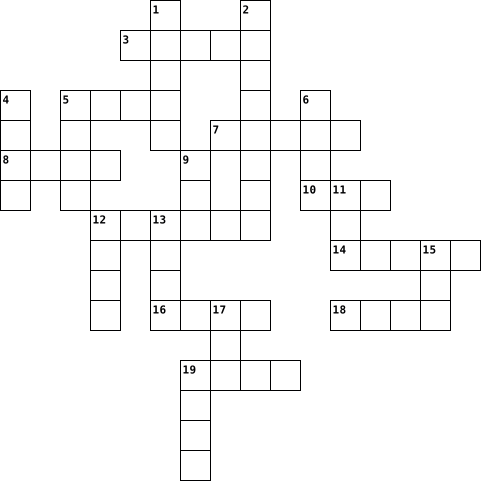
Across
- 이
- 뒤꿈치
- 팔꿈치
- 턱
- 귀
- 손가락
- 입
- 무릎
- 얼굴
- 머리
Down
- 배
- 어깨
- 등
- 머리카락
- 코
- 다리
- 팔
- 발
- 목
- 발가락
- 눈
- 손
22 Clues: 배 • 이 • 등 • 코 • 턱 • 귀 • 팔 • 발 • 목 • 입 • 눈 • 손 • 어깨 • 다리 • 무릎 • 얼굴 • 머리 • 뒤꿈치 • 팔꿈치 • 손가락 • 발가락 • 머리카락
Body 1 2015-11-23

Across
- Hand
- Blod
- Näsa
- Tå
- Arm
- Huvud
- Ben
- Buk
- Lever
- Skelett
- Mage
- Vad
- Käke
- Ben
- Höft
- Baksida
- Bröst
- Hals
- Ryggrad
- Framsida
- Panna
- Handflata
- Muskel
- Nacke
- Lår
- Bröstvårta
- Inälvor
- Finger
- Tand
- Smalben
- Häl
Down
- Fot
- Haka
- Rumpa
- Ansikte
- Mjälte
- Öra
- Ögonbryn
- Märg
- Artär
- Navel
- Lungor
- Axel
- Fotsula
- Armhåla
- Kinder
- Hjärna
- Hjärta
- Ådra
- Ögon
- Blindtarm
- Rygg
- Led
- Knä
- Bröstkorg
- Mun
- Maggrop
- Revben
- Tänder
- Nagel
- Hår
61 Clues: Tå • Fot • Öra • Arm • Ben • Buk • Vad • Ben • Led • Knä • Mun • Lår • Hår • Häl • Haka • Hand • Blod • Näsa • Märg • Axel • Mage • Käke • Höft • Ådra • Hals • Ögon • Rygg • Tand • Rumpa • Huvud • Artär • Navel • Lever • Bröst • Panna • Nacke • Nagel • Mjälte • Lungor • Kinder • Hjärna • Hjärta • Muskel • Finger • Revben • Tänder • Ansikte • Skelett • Fotsula • Armhåla • Baksida • Ryggrad • Inälvor • Maggrop • Smalben • Ögonbryn • Framsida • Blindtarm • Handflata • Bröstkorg • Bröstvårta
BODY SYSTEM 2016-07-12

Across
- a bacterial infections caused by clostridium tetani.
- all the chemical reactions occurring in the cells.
- a pathogen about one hundred times smaller then a bacterium.
- a substance that kills bacteria or prevents the growth of bacteria.
- special cell that detect Stimuli.
- the organism a parasite lives in.
- an organic catalyst.
- isolation to prevent the spread of disease.
- able to make the antibodies to a pathogen before it can make you unwell.
- an infection caused by mosquitos.
- body Part of the neurone that contains the nucleus.
- very easy to spread.
- anything that caused our body to stop working properly.
- single cell with a tough skin that fungi used to spread.
- impulse the electrical message carried by nerve cell.
Down
- chemical substances that act as message in the body.
- the space between two neurones.
- a nerve cell.
- nerve cells that carry messages from the CNS.
- a microscopic, single celled organisms.
- arc the nerve pathway operating in a reflex action.
- nerve the nerve that carries message to the brain.
- a viral disease.
- the lower half of the brain stem.
- any factor that stimulates a receptor and brings about a response.
- stem part of brain where the spinal cord enters the skull.
- cells the cell on which a hormone acts.
27 Clues: a nerve cell. • a viral disease. • an organic catalyst. • very easy to spread. • the space between two neurones. • special cell that detect Stimuli. • the organism a parasite lives in. • the lower half of the brain stem. • an infection caused by mosquitos. • a microscopic, single celled organisms. • cells the cell on which a hormone acts. • ...
body coordination 2016-07-12

Across
- the part of the neurone that contains the necleus
- the nerve pathway operating in a reflex action
- the electrical message carried by a nerve cell
- chemical substances that act as messengers in the body
- the molecule that is going to be changed by a chemical reaction
- a nerve fiber that sends nerve impulses away from the cell body
- organelles where cellular respiration occurs
- endocrine glands situated on the kideys
- quick,automatic actions that protect the body from danger, they are also know as reflexes
- all the endocrine glands of the body
- special cells that detect stimuli
- a nerve cell
- muscles or glands that put the messages into effect
Down
- the lower half of the brain stem
- the nerve that carries messages to the brain from the retina at the back of the eye
- the movement of particles of a substance from an are of high concentration to an area of low concentration
- any factor that stimulates a receptor and brigs about a response
- the insulating layer that covers a neurone
- glands that produce hormones
- nerve cells that carry messages from cells in the sense organs to the CNS
- an organic catalyst
- the endocrine gland that controls the activities of other endocrine glands; it is often called the 'master gland'
- a chemical message released at the end of an axon to be received by the next neurone's dendrites
- the cels on which a hormone acts
- the chemical store of glucose in the liver and muscles
- part of the brain where the spinal cord enters the skull
- a hormone that has the opposite effect to insulin; it releases glucose from stores in the liver and muscles
- branches from the cell body the receive messages from other neurones
- the organelle where proteins are manufactured
- the space between two neurones
30 Clues: a nerve cell • an organic catalyst • glands that produce hormones • the space between two neurones • the lower half of the brain stem • the cels on which a hormone acts • special cells that detect stimuli • all the endocrine glands of the body • endocrine glands situated on the kideys • the insulating layer that covers a neurone • organelles where cellular respiration occurs • ...
BODY PARTS 2016-11-24
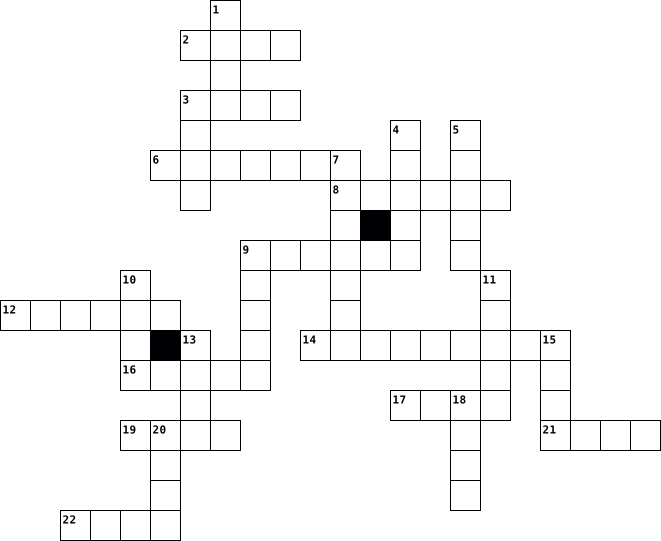
Across
- espalda
- cabeza
- dedos
- lengua
- pulgares
- culo
- hombros
- diente
- dedos de los pies
- pies
- cuello
- piernas
Down
- cara
- pelo
- manos
- boca
- barriga
- dientes
- pie
- rodillas
- nariz
- piel
- orejas
- ojos
24 Clues: pie • cara • pelo • boca • culo • piel • pies • ojos • manos • dedos • nariz • cabeza • lengua • diente • orejas • cuello • espalda • barriga • dientes • hombros • piernas • pulgares • rodillas • dedos de los pies
Body Systems 2016-09-28

Across
- many functions of the skin are there
- where two bones meet
- bone to muscles
- thinner layer of the skin
- largest section of brain; coordinates movement
- that works on its own
- in bone
- that opens a joint
- thicker layer of the skin
- most complex part of the brain
- infection identified by blistery ring like patterns
- organ tissue protrudes through an area of weak muscle
Down
- of discolored skin caused by blood vessels
- as a cushion between bones
- loss of consciousness; Brain bruise
- long stalk of nerve cells that connects the rest of the body to the brain
- by recurring seizures
- that closes a joint
- of pores in skin
- bone in the body
20 Clues: in bone • bone to muscles • of pores in skin • bone in the body • that opens a joint • that closes a joint • where two bones meet • by recurring seizures • that works on its own • thinner layer of the skin • thicker layer of the skin • as a cushion between bones • most complex part of the brain • loss of consciousness; Brain bruise • many functions of the skin are there • ...
Body Parts 2017-01-14
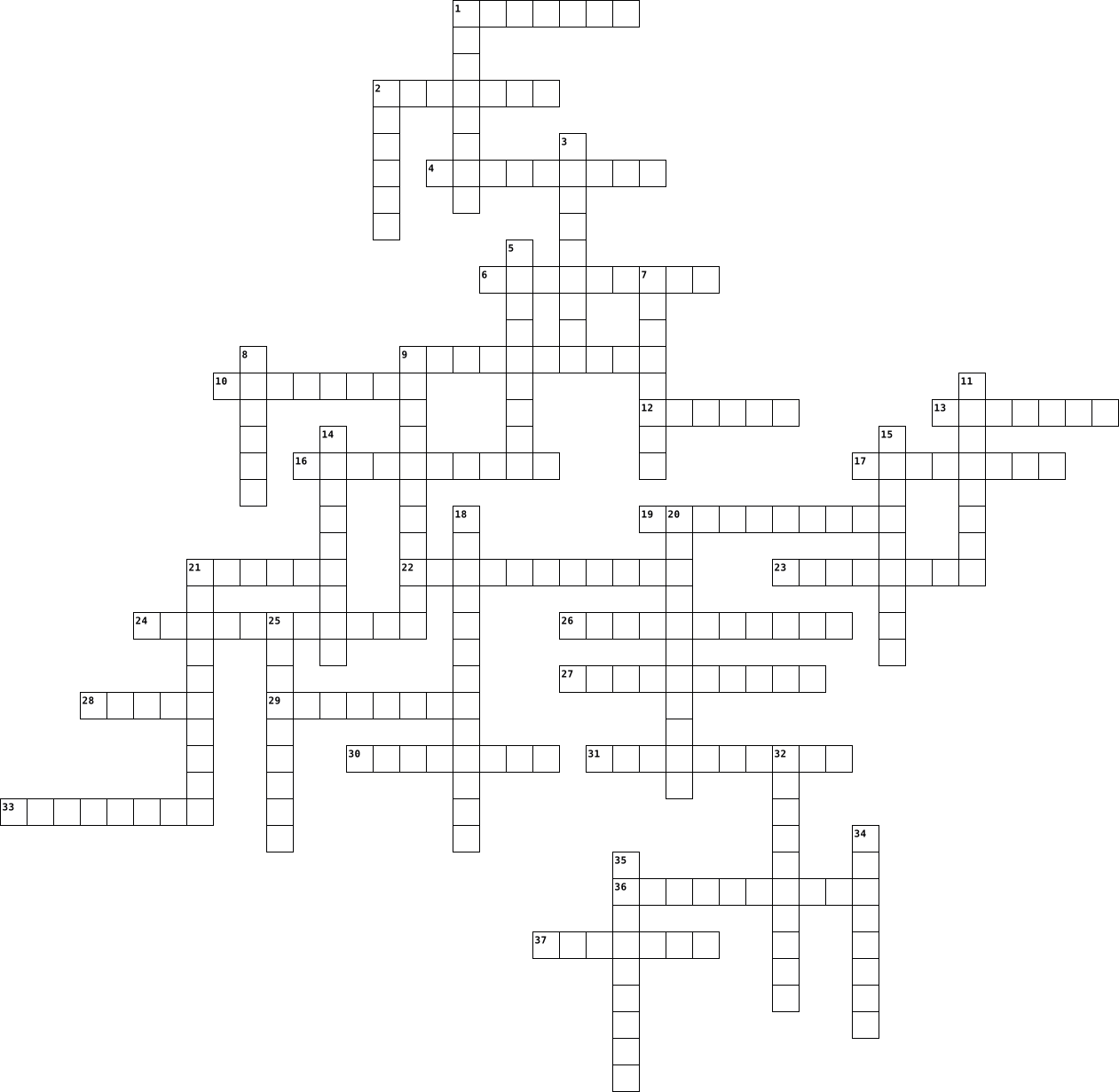
Across
- bones
- nails
- heart
- hair(c)
- throat
- tongue
- hair(p)
- nose
- shoulders
- hands
- stomach
- face
- eyelids
- forehead
- lungs
- eyelashes
- kidneys
- foot
- freckles
- eyebrows
- chin
- elbows
- wrists
- eyes
Down
- neck
- mouth
- back
- brain
- head
- skin
- knees
- blood
- arms
- ears
- toes
- cheeks
- teeth
- lips
- legs
- fingers
- ankle
41 Clues: neck • back • head • skin • nose • arms • ears • toes • face • lips • foot • chin • legs • eyes • bones • nails • mouth • heart • brain • knees • blood • hands • teeth • lungs • ankle • throat • tongue • cheeks • elbows • wrists • hair(c) • hair(p) • stomach • eyelids • kidneys • fingers • forehead • freckles • eyebrows • shoulders • eyelashes
BODY ORGANIZATION 2016-09-26

Across
- Removes wastes from the blood and regulates your body's fluids.
- Your bones provide a frame that protect your body parts.
- Breaks down the food you eat into nutrients that you body can absorb.
- Are found in the wall of the stomach.
- Submicroscopic agents that infects living organisms.
- what form the skeletal system of you body.
- Produce and delivers sperm.
- The fluid that circulates in the principal vascular of your body.
- Any substance that plants or animals need in order to live.
- Your lungs absorb oxygen and realease carbone dioxide.
- Pair of reproductive glands in women.
- What works with the skeletal system that helps you move.
Down
- Blood vessels get rid of.
- The whole physical structure that forms a person or animal.
- Returns leaked fluids to blood vessels and hel get rid of bacteria and viruses.
- Muscular organ that pumps blood into the arteries.
- Break up stomach contents.
- A group of cells that works together.
- Lines the stomach.
- Produce eggs and nourishes and proects the fetus.
- Picks up oxigen from the lungs and carries the oxygen to cells in your body.
- Organs That work together.
- Breathing organs in air-breathing vertebrates.
- The membranes tissue forming the external covering of a person.
- Collection of glands that produces hormones that regulate metabolism.
- Biological units of all known living organisms.
- Recieve and sends electrical messages throughout your body.
- The way your body adapt to something.
- A chemical that is found in the air.
- Two or more tissues working together.
30 Clues: Lines the stomach. • Blood vessels get rid of. • Break up stomach contents. • Organs That work together. • Produce and delivers sperm. • A chemical that is found in the air. • A group of cells that works together. • Are found in the wall of the stomach. • The way your body adapt to something. • Two or more tissues working together. • Pair of reproductive glands in women. • ...
BODY ORGANIZATION 2016-09-26

Across
- Two or more tissues working together.
- Are found in the wall of the stomach.
- Any substance that plants or animals need in order to live.
- Break up stomach contents.
- Produce and delivers sperm.
- Returns leaked fluids to blood vessels and hel get rid of bacteria and viruses.
- Breathing organs in air-breathing vertebrates.
- Picks up oxigen from the lungs and carries the oxygen to cells in your body.
- A chemical that is found in the air.
- Muscular organ that pumps blood into the arteries.
- Organs That work together.
- Lines the stomach.
- Recieve and sends electrical messages throughout your body.
Down
- The way your body adapt to something.
- what form the skeletal system of you body.
- The fluid that circulates in the principal vascular of your body.
- Collection of glands that produces hormones that regulate metabolism.
- The membranes tissue forming the external covering of a person.
- Your bones provide a frame that protect your body parts.
- Produce eggs and nourishes and proects the fetus.
- Blood vessels get rid of.
- What works with the skeletal system that helps you move.
- Your lungs absorb oxygen and realease carbone dioxide.
- Pair of reproductive glands in women.
- Breaks down the food you eat into nutrients that you body can absorb.
- A group of cells that works together.
- Removes wastes from the blood and regulates your body's fluids.
- Submicroscopic agents that infects living organisms.
- The whole physical structure that forms a person or animal.
- Biological units of all known living organisms.
30 Clues: Lines the stomach. • Blood vessels get rid of. • Break up stomach contents. • Organs That work together. • Produce and delivers sperm. • A chemical that is found in the air. • The way your body adapt to something. • Two or more tissues working together. • Are found in the wall of the stomach. • Pair of reproductive glands in women. • A group of cells that works together. • ...
Body Parts 2016-05-24
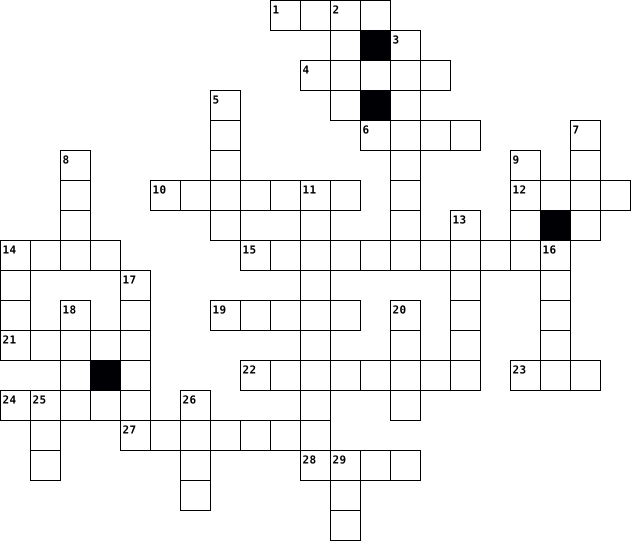
Across
- tooth
- stomach
- mouth
- face
- nose
- hand
- fingernail
- tongue
- forehead
- elbow
- toe
- cheek
- back
- head
Down
- hair
- shoulder
- chest
- foot
- leg
- knee
- wrist
- thumb
- throat/neck
- lip
- finger
- chin
- eye
- arm
- heart
- ear
30 Clues: leg • lip • eye • toe • arm • ear • hair • foot • knee • face • nose • hand • chin • back • head • tooth • chest • mouth • wrist • thumb • elbow • cheek • heart • finger • tongue • stomach • shoulder • forehead • fingernail • throat/neck
Body Talk 2016-04-14

Across
- The opposite of "indoors"
- A very famous vampire
- "beleidigen" in English
- "Zeigefinger" in English
- Another word for "rude"
- Makes things look bigger
- The female form of uncle
- Another word for "crazy"
Down
- In some countries pupils wear it
- Favourite colour of a Goth
- Put your head up and down
- a character in "Goth"
- "Bräutigam" in English
- "kichern" in English
- The world on your desk
- Don't show the soles of your feet there
- The boss of a school
- People smile a lot there
- The "V" sign means...
- "Handfläche" in English
20 Clues: "kichern" in English • The boss of a school • a character in "Goth" • A very famous vampire • The "V" sign means... • "Bräutigam" in English • The world on your desk • "beleidigen" in English • Another word for "rude" • "Handfläche" in English • People smile a lot there • "Zeigefinger" in English • Makes things look bigger • The female form of uncle • Another word for "crazy" • ...
Body Systems 2016-02-07

Across
- muscle that includes heart
- a category of the nervous system that connects the brain to the 5 senses and other parts of the head
- group of bones having peculiar or complex forms
- system that supports organisms with a backbone
- muscle that is also known as the striped muscle
- overall word for small and large intestines
- muscle also known as the involuntary muscle
- a network of specialized cells to communicate information about an organism's surroundings and itself
- anatomical system of a species that allows it to move
- 5 classifications of _____.
Down
- to get the energy food must be what?
- a category of the nervous system that connects sensory neurons to the nerve cord
- a bone that is thin or has a flatten shape
- transforms food into energy
- a category of the nervous system that is the spinal cord and brain
- organisms with backbone
- one of the first things to breakdown food
- produce force to cause motion
- food provides this
- a category of the nervous system that connects the central nervous system to the lungs, heart, stomach, intestines, and bladder
20 Clues: food provides this • organisms with backbone • muscle that includes heart • transforms food into energy • 5 classifications of _____. • produce force to cause motion • to get the energy food must be what? • one of the first things to breakdown food • a bone that is thin or has a flatten shape • overall word for small and large intestines • ...
Our body 2016-02-16

Across
- this is a section of the heat
- tubes the tubes that lead the alveoli
- it carries oxygen thought out the body and back to the lungs again
- it's the protein montecule in the red blood cells
- what body part is in control of retuning deoxygenated blood back to the heat
- blood cells carries oxygen thought out the body and back to the lungs again
- this is the act of breathing
- respiration it bracks down food to release energy for it to survive
- a set of muscles that separates the chest from the abodomen
- strong tubes that carries blood away from the heat
- a yellowish liquwesd that carries nutrients, hormones and proteins though out the body if you cut youself
- what body part gives blood cells oxygen
- what part of the digestion system that comes after the oesophagus
- blood cells helps protec us from disease and infectious
- clean your blood
Down
- it provides air flow from your mouth to your lungs
- tress relies it and we breath it
- they are the body's smallest blood vessels
- what is the process that helps you to brack down food
- what is the part of the digestion system comes after the mouth
- pups deoxygenated blood to the pulmonary valve and thought the palmonary artery to the lungs
- what body part relies enzymes
- a small finger shape pouch that we can live with out
- tiny cells that help clot up blood when you cut yourself and help repaire it
- where the lungs and blood crosses over
- wind pips that goes into the lungs to help with oxygen coming in and carbon going out
- dioxide your blood carries it to your lungs where you exhale it
- it's the same size of your fist
- large intestine what is the part of the digestive system turns food into poo
29 Clues: clean your blood • this is the act of breathing • this is a section of the heat • what body part relies enzymes • it's the same size of your fist • tress relies it and we breath it • tubes the tubes that lead the alveoli • where the lungs and blood crosses over • what body part gives blood cells oxygen • they are the body's smallest blood vessels • ...
Body parts 2017-02-21
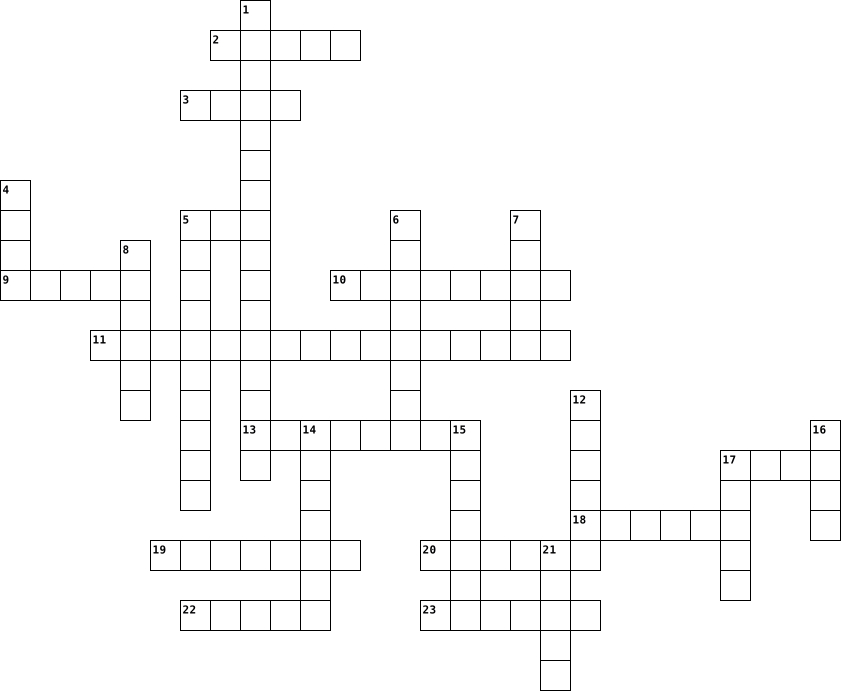
Across
- This body part is where your torso is and it is on the front
- This body part allows you to see
- This is at the bottom of your leg
- This body part allows you to hear different things
- This part of the body consist of the bottom of your face
- This body part is on your hand and allows you to grab things
- This part allows for you to have food stored
- This body part allows for you to eat
- This part of the body is located on your side
- This part of the body is in the middle of the leg and allows for you to bend
- This body part allows for you to walk and run around
- This part connects the Knee and hip together
- This body part is where you would put pads on for football
Down
- This part of the body is on your foot and there is multiple of them
- This part of the body is in the middle of your arm
- This body part is on your leg on the back side
- This body part is where your adams apple is located
- This body part consists of the back of your foot
- This body part is what covers your brain
- This part allows for your hand to twist around
- This part of the body connects the foot and leg
- This part is a whole in the middle of your stomach
- This part of the body has fingers
- This body part is connected with your hands
- This body part is on your face and allows you to smell
25 Clues: This body part allows you to see • This is at the bottom of your leg • This part of the body has fingers • This body part allows for you to eat • This body part is what covers your brain • This body part is connected with your hands • This part allows for you to have food stored • This part connects the Knee and hip together • This part of the body is located on your side • ...
Body Parts 2017-02-21
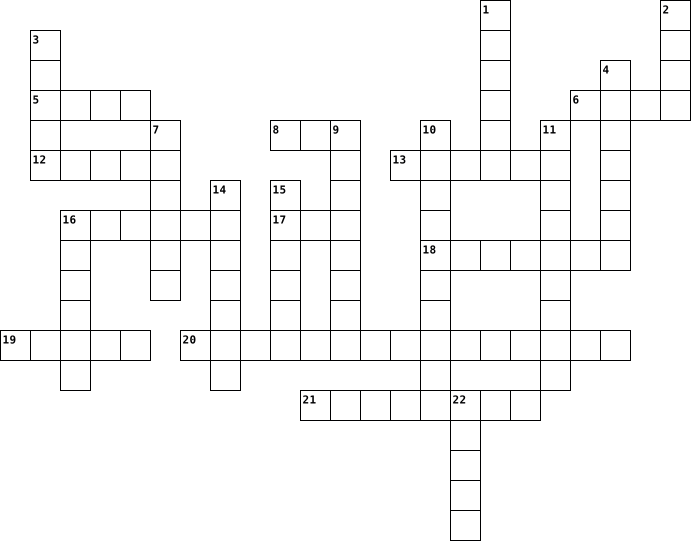
Across
- where your arms bends
- you eat with this
- lowest part of your body
- you hear with this
- attached to the neck
- where you can rotate your hand
- two of them
- center of your stomach
- part of your foot
- many of them on the foot
- attached to the head
Down
- what helps you walk
- what you type with
- comes after the neck
- what separates the leg and foot
- seperation between stomach and legs
- center of your body
- soccer players where yards for them
- end of your face
- middle of the leg
- head ____ knees and toes
- many girls complain they are huge
- you smell with it
23 Clues: two of them • end of your face • you eat with this • middle of the leg • part of your foot • you smell with it • what you type with • you hear with this • what helps you walk • center of your body • comes after the neck • attached to the neck • attached to the head • where your arms bends • center of your stomach • lowest part of your body • head ____ knees and toes • many of them on the foot • ...
Body Parts 2017-03-13
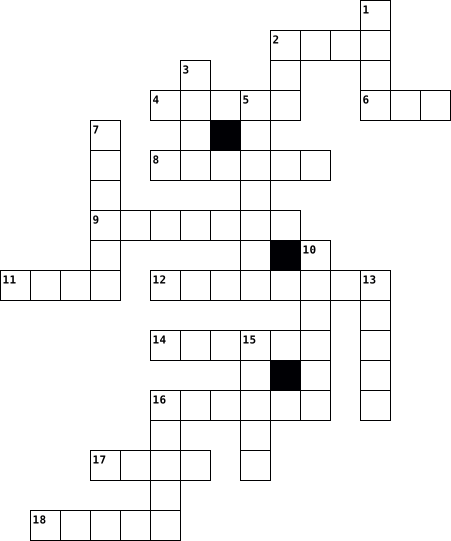
Across
- hair*
- tooth*
- eye
- shoulder*
- knee
- hand
- stomach
- forehead*
- leg
- mouth
- arm
Down
- elbow*
- foot
- finger*
- ankle
- body
- head
- ear
- nose
- chest*
20 Clues: eye • ear • leg • arm • foot • body • knee • head • hand • nose • hair* • ankle • mouth • elbow* • tooth* • chest* • finger* • stomach • shoulder* • forehead*
body parts 2017-05-31
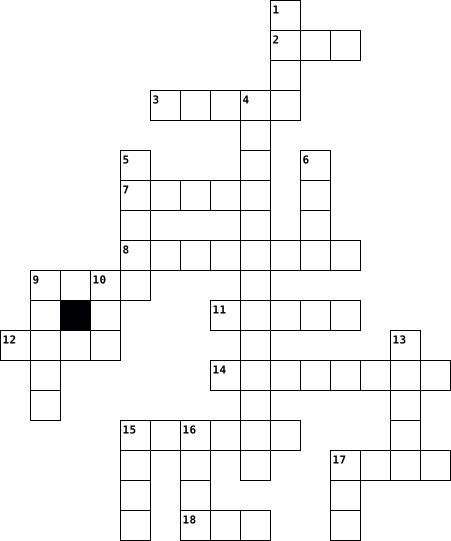
Across
- Ohr
- kurz
- Mund
- linker Arm
- groß/hoch
- Zähne
- lang
- Schulter
- Finger
- Körper
- Auge
Down
- Füße
- Arm
- klein
- Haare
- Zahn
- Bein
- Bart
- Fuß
- Nase
- groß
21 Clues: Ohr • Arm • Fuß • Füße • kurz • Mund • Zahn • Bein • lang • Bart • Nase • groß • Auge • klein • Haare • Zähne • Finger • Körper • Schulter • groß/hoch • linker Arm
Human Body 2017-10-19

Across
- the end part of a person's arm beyond the wrist
- the front surface of a person's or animal's body between the neck and the stomach.
- a powerful stroke with a hand, weapon, or hard object
- to make a hole or wound with a sharp-edged tool or object
- a crack, hole, separation into parts or pieces etc., that is caused by damage, injury, or pressure
- disturbance from a proper, original, or usual place
- the part of your body where your hand joins your arm
- an injury appearing as an area of discoloured skin on the body, caused by a blow or impact rupturing underlying blood vessels
- a serious injury to a person's body
- a flexible but inelastic cord of tissue attaching a muscle to a bone
- to hurt (your ankle, knee, wrist, etc.) by turning it too far
- the lower extremity of the leg below the ankle
- the bony frame formed by the ribs round the chest
- the large bony frame near the base of the spine to which the hindlimbs or legs are attached in humans and many other vertebrates
- a sudden short sound caused by a blow, especially on a door to attract attention or gain entry.
- each of the limbs on which a person or animal walks
- the part of the body containing the digestive and reproductive organs
Down
- the part of your body where your arm is connected
- the part of a person's or animal's body connecting the head to the rest of the body
- wrench or twist the ligaments of (an ankle, wrist, or other joint) violently so as to cause pain and swelling but not dislocation
- a short band of tough, flexible connective tissue which connects two bones or holds together a joint
- the area of the body where your legs come together
- either of the large, flat triangular bones which lie against the ribs in the upper back and provide attachments for the bone and muscles of the upper arm
- temporary unconsciousness or confusion and other symptoms caused by a blow on the head
- each of the two upper limbs
- when it stops working properly because something inside prevents movement
- the part of the human body below the ribs and above the hips, often narrower than the areas above and below
- the trunk of the human body
- each of a series of slender curved bones, protecting inner organs
- the joint connecting the foot with the leg
- a structure in the human or animal body at which two parts of the skeleton are fitted together
- the rear surface of the human body from the shoulders to the hips
32 Clues: each of the two upper limbs • the trunk of the human body • a serious injury to a person's body • the joint connecting the foot with the leg • the lower extremity of the leg below the ankle • the end part of a person's arm beyond the wrist • the part of your body where your arm is connected • the bony frame formed by the ribs round the chest • ...
Human Body 2017-10-05

Across
- these are between your shoulders and your hands
- you see with these
- you lie on this when you are in bed
- we have them over our eyes
- these are the back parts of your feet
- when you are hungry, this makes strange noises
- you have ten on your feet
- it moves when we chew
- you have ten on your hands
- this moves in and out when you breathe
- this part of your face is between your mouth and your neck
Down
- you smell things with this
- these join your feet to your legs
- these are where you arms bend
- you put your food into this
- these are in the middle of your legs
- this gets bigger if you eat too much
- these are between your arms and the main part of your body
- most people have this on their head
- you hear with these
- you wear your watch around this
- you should brush them after you eat
- these are at the end of your legs
- this joins your body and your head
24 Clues: you see with these • you hear with these • it moves when we chew • you have ten on your feet • you smell things with this • we have them over our eyes • you have ten on your hands • you put your food into this • these are where you arms bend • you wear your watch around this • these are at the end of your legs • these join your feet to your legs • this joins your body and your head • ...
Body Systems 2018-02-06

Across
- the endocrine system is made up of a group of ______.
- a battery that helps keep a steady pace in an irregular paced heart.
- your body's metabolism is controlled by the _______ gland.
- ________ muscles move even if you don't think about it.
- what organ removes waste from the blood?
- the action of the esophagus pushing food down.
- a factor that causes sensory receptors to begin to function.
- _________ muscles move when you think about it.
- where digestion begins.
Down
- the ________ is a muscle that causes the lungs to expand and contract.
- what system gets rid of waste?
- a place where two bones come together.
- the liver cleans your ______.
- raises blood sugar.
- in what organ does most absorption take place?
- ________ pump blood to the cells.
- a specialized cell transmitting nerve impulses.
- chemical messengers that are secreted by glands.
- lowers blood sugar.
- ________ supplies your muscles with energy.
20 Clues: raises blood sugar. • lowers blood sugar. • where digestion begins. • the liver cleans your ______. • what system gets rid of waste? • ________ pump blood to the cells. • a place where two bones come together. • what organ removes waste from the blood? • ________ supplies your muscles with energy. • in what organ does most absorption take place? • ...
Body Parts 2018-04-18
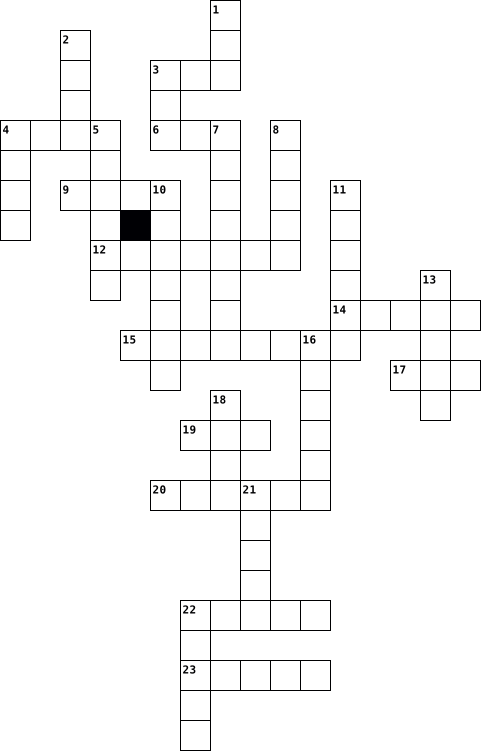
Across
- lèvre
- muscle du mollet
- gencive
- genou
- cil
- l'index
- front
- bras
- mâchoire
- sein
- joue
- coude
Down
- hanche
- talon
- jambe
- menton
- doigt
- moustache
- bouche
- sourcille
- paupière
- barbe
- aisselle
- visage
- cheville
- poitrine
26 Clues: cil • bras • sein • joue • talon • lèvre • jambe • doigt • genou • barbe • front • coude • hanche • menton • bouche • visage • gencive • l'index • paupière • aisselle • mâchoire • cheville • poitrine • moustache • sourcille • muscle du mollet
HUMAN BODY 2018-05-30

Across
- the brain is protected by bones called
- pain what do you mean by angine
- the outer part of ear
- in humans the process digestion begins in the
- what human organ is mainly affected by the cholera bacteria
- on which side of the body does the appendix lie
- what is the membrane the heart in enveloped
- acid building block of proteins
- what do you call the major blood vessel that carries blood away from the heart
- the largest part of the brain is the
Down
- membrane a thin layer covering the outside of cells
- what is the tough substance the finger and toe nails are made of
- which was the first ever antibiotic produced
- what cells organelle produce proteins
- what zodiac sign depicts twins
- type of muscle found in heart
- muscle located under lungs
- bean shaped urinary system organ
- the part of the body mandible
- connects a muscle to a bone
20 Clues: the outer part of ear • muscle located under lungs • connects a muscle to a bone • type of muscle found in heart • the part of the body mandible • what zodiac sign depicts twins • pain what do you mean by angine • acid building block of proteins • bean shaped urinary system organ • the largest part of the brain is the • what cells organelle produce proteins • ...
Body Parts 2022-03-24
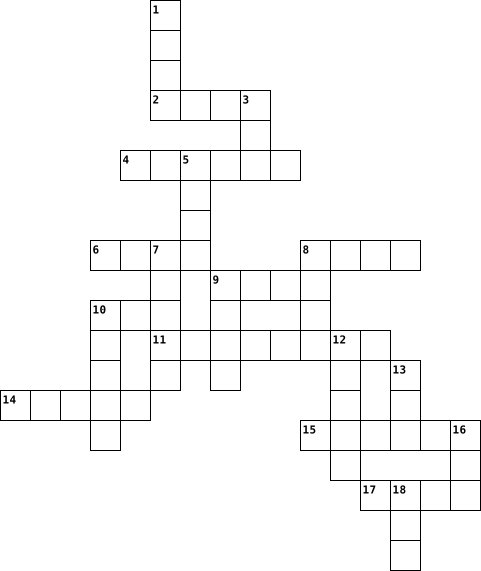
Across
- Knie
- Finger
- Gesicht
- Hand
- Gesicht
- Zeh
- Schulter
- Mund
- Zunge
- Haare
Down
- Rücken
- Auge
- Nase
- Brust
- Kopf
- Fuss
- Zahn
- ellenbogen
- Bein
- Ohr
- Arm
21 Clues: Zeh • Ohr • Arm • Knie • Auge • Nase • Hand • Kopf • Fuss • Zahn • Bein • Mund • Brust • Zunge • Haare • Rücken • Finger • Gesicht • Gesicht • Schulter • ellenbogen
Body vocabulary 2022-04-05

Across
- / menton
- / pieds
- / poignet
- / visage
- / cils
- / mains
- / ongles
- / dos
- / langue
- / jambes
- / tête
- / doigt
Down
- / cou
- / nez
- / sourcils
- / bouche
- / joues
- / oreilles
- / genoux
- / coude
- / cheville
- / épaule
- / cheveux
- / orteil
- / lèvres
- / yeux
26 Clues: / cou • / nez • / dos • / cils • / tête • / yeux • / pieds • / joues • / coude • / mains • / doigt • / menton • / bouche • / visage • / genoux • / épaule • / ongles • / langue • / orteil • / jambes • / lèvres • / poignet • / cheveux • / sourcils • / oreilles • / cheville
Body Parts 2022-04-04
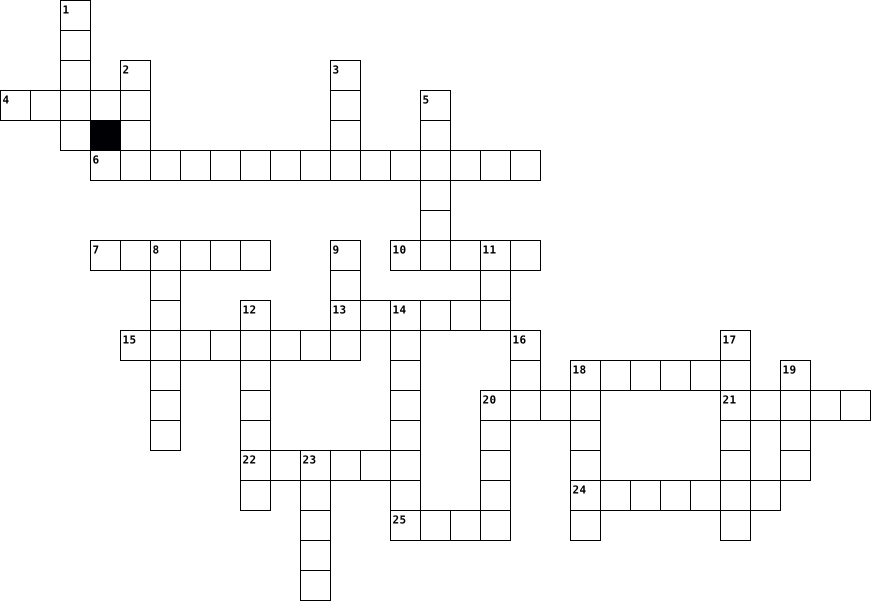
Across
- Ear
- Parts of the body
- Leg
- Fingers
- Neck
- Throat
- Shoulder
- Hair
- Arm
- Tongue
- Knee
- Ear
Down
- Woman
- Face
- Skin
- Tooth
- Back
- Mouth
- Eye
- Hair
- Stomach
- Foot
- Ankle
- Man
- Hand
- Chest
- Nose
27 Clues: Ear • Leg • Eye • Man • Arm • Ear • Face • Skin • Back • Hair • Neck • Foot • Hand • Hair • Nose • Knee • Woman • Tooth • Mouth • Ankle • Chest • Throat • Tongue • Fingers • Stomach • Shoulder • Parts of the body
BODY PARTS 2021-12-08
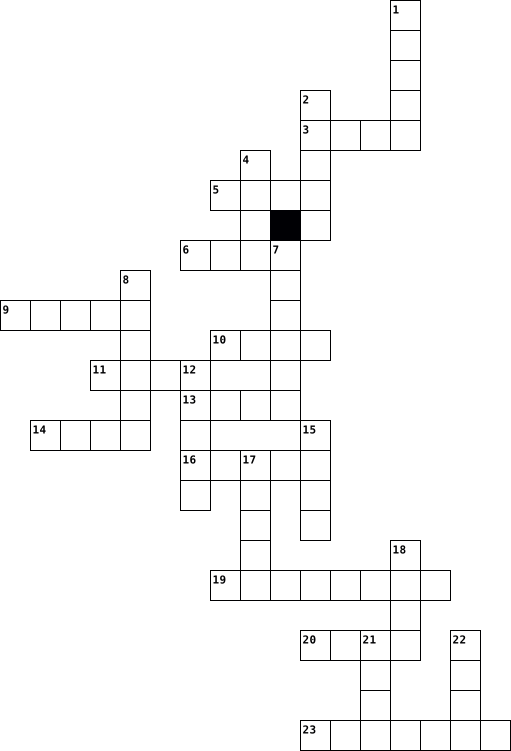
Across
- Arme
- Kopf
- Nase
- Zahn
- Fuß
- Füße
- Ohren
- Zehen
- Bauch
- Schulter
- Rücken
- Finger
Down
- Knie
- Hände
- Beine
- Ellbogen
- Backen
- Zähne
- Augen
- Mund
- Hals
- Kinn
- Haare
23 Clues: Fuß • Knie • Arme • Kopf • Nase • Zahn • Füße • Mund • Hals • Kinn • Hände • Beine • Zähne • Ohren • Zehen • Augen • Bauch • Haare • Backen • Rücken • Finger • Ellbogen • Schulter
BODY PARTS 2021-12-06
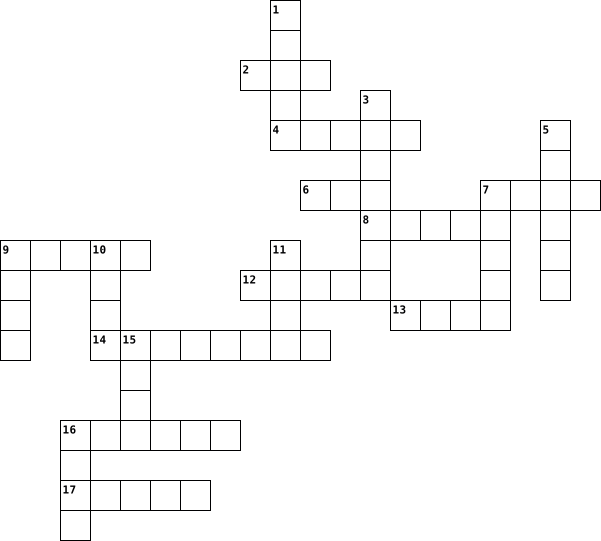
Across
- for walking or running
- one of the hard bony parts attached in a row to each jaw serving to bite and chew food o in animals as weapons
- the upper limb of the human body
- the part at the end of the arm in humans, or in other animals
- the joint between the foot and leg
- a large organ in the humano and animals with backbones located in the upper abdomen releasing bile and cleansing the blood
- the opening through which a person or animal takes in food
- the end of the leg, below the ankle joint on which the body stands and moves
- the part on either side of the body where the arm joins the rest of the body, from the base of the neck to the upper arm
- one of a pair of organs in the rear of the upper abdomen that filter waste from the blood produce uric acid or urea and maintain water balance in the body
- the bend or joint of the arm between the upper arm and forearm
Down
- e front portion of the body enclosed by the ribs; thorax
- a saclike part of the body where food is stored and partially digested
- any of the jointed end members of the hand
- the center of a person's total personality of a person's intuition or sensibilities
- either of the two saclike organs used for breathing in the chest of humans and air breathing animals
- observation and appreciating something
- organs of smell and through which a person breathes
- the upper part of the body, containing the skull with mouth, eyes, ears, nose, and brain
- the joint of the human leg between the thigh and the lower leg
20 Clues: for walking or running • the upper limb of the human body • the joint between the foot and leg • observation and appreciating something • any of the jointed end members of the hand • organs of smell and through which a person breathes • e front portion of the body enclosed by the ribs; thorax • the opening through which a person or animal takes in food • ...
body system 2021-12-16

Across
- - your body chemical messenger
- the coordination of muscles and bones to have balance and posture
- discoloration of the skin from poor circulation
- speed of heartbeat
- abnormal breathing pattern
- occupational safety and health administration
- - muscular tubes that extend from renal pelvis of each kidney to bladder
- fluid from the salivary glands in your mouth
- organ that developes in your uterus during pregnancy
- - abnormal rise of body temperature
- no fever
- metabolism and development of human body
- abnormal rapid breathing
- difficulty breathing
- tube that connects to your bladder to your genitals
- organ below the pelvis
- - coarse rattle you hear when your airway is semi blocked
- - organ of the digestive system in the abdomen
- - brain and spinal cord
Down
- pressure in the arteries when the heart rests between beats
- slow breathing rate
- sleep disorder when your breathing starts and stops
- having/showing symptoms of fever
- discomfort when breathing while lying flat
- system - digesting food
- darts excrete and deposit
- muscular organ in the mouth
- measures pressure in your arteries when your heart beats
- slower than normal heart rate
- small gland that regulates vital body functions
- group of organs to help you breathe
- bean-shaped organs on each side of your spine
- abnormal rattling sound when examining unhealthy lungs
- what causes body to react
- - female reproductive organ where eggs are produced
- your throat or the passageway from mouth and nose to esophagus and larynx
36 Clues: no fever • speed of heartbeat • slow breathing rate • difficulty breathing • organ below the pelvis • system - digesting food • - brain and spinal cord • abnormal rapid breathing • darts excrete and deposit • what causes body to react • abnormal breathing pattern • muscular organ in the mouth • slower than normal heart rate • - your body chemical messenger • ...
Body Regions 2021-12-07

Across
- space in front of the elbow.
- the hip
- shoulder
- the breast
- the finger or toe
- the spinal column
- the perineum
- the chest
- the armpit
- the foot
- the wrist
- the head
- the leg
- the back
- the groin
- region of the lower back
- the forehead
- the forearm
Down
- the area behind the knee
- the thigh
- the reproductive organs
- the neck
- the pelvis
- the cheek
- the ribs
- the ear
- the chin
- the instep of the foot
- the front of the knee
- the eye cavity
- the calf of the leg
- the palm of the hand
- the mouth
- stomach area
- the buttocks
- the arm
- the posterior region between the hipbones
- the elbow
- the sole of the foot
- the lower posterior region of the head
- the navel
- thr nose
42 Clues: the hip • the ear • the arm • the leg • the neck • the ribs • shoulder • the chin • the foot • the head • the back • thr nose • the thigh • the cheek • the mouth • the chest • the wrist • the elbow • the groin • the navel • the pelvis • the breast • the armpit • the forearm • the perineum • stomach area • the buttocks • the forehead • the eye cavity • the finger or toe • the spinal column • the calf of the leg • the palm of the hand • ...
The body... 2021-12-09

Across
- percent of oxygen in the air the body USES
- stops the heart in heart attack situations
- wind pipe
- universal donor of blood
- most of the air is made of this element
- pumps blood to the lungs
- response by body to clear nasal cavities
- red blood cells carry this to all cells
- pressure in atriums
- clear sticky substance as body protects itself
- muscle responsible for breathing, hiccups
Down
- color of oxygenated blood
- happens when vomit gets into lungs, a person..
- responsible for the sound of a heartbeat
- give blood its red color
- why runny nose, response by body
- from cigarette smoke, does not allow O2
- air sacs in lungs where O2 and CO2 exchange
- percent of air that is oxygen
- pumps blood to the whole body
- area behind eyes to warm, moisten and filter air
- redness and swelling in an area of damage
- hair like structures that line airway
- disease where it it hard to breathe out
- condition of narrowing of airway, by exercise?
25 Clues: wind pipe • pressure in atriums • give blood its red color • universal donor of blood • pumps blood to the lungs • color of oxygenated blood • percent of air that is oxygen • pumps blood to the whole body • why runny nose, response by body • hair like structures that line airway • from cigarette smoke, does not allow O2 • most of the air is made of this element • ...
Body Parts 2022-01-17
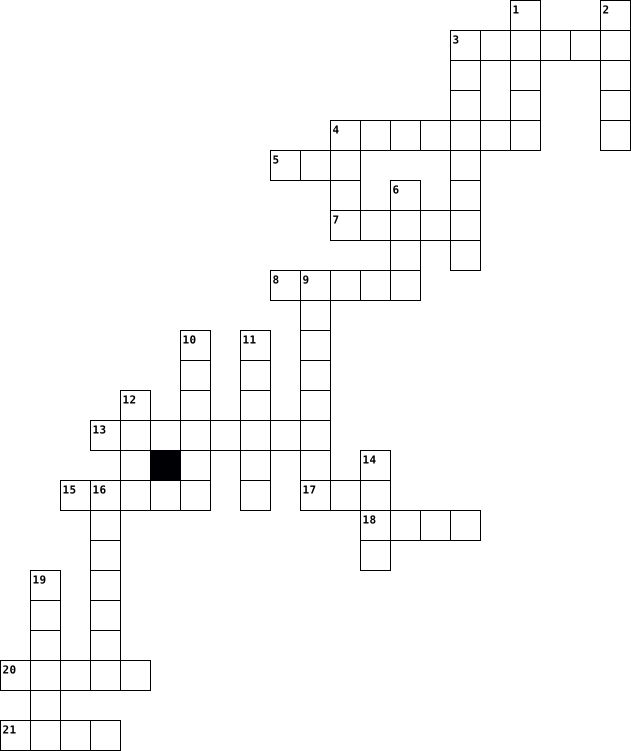
Across
- leg
- teeth
- foot
- ear
- chest
- chin
- arm
- eye
- elbow
- freckles
- hand
Down
- eyebrows
- nose
- eyelashes
- finger
- hair
- stomach
- shoulder
- neck
- face
- mouth
- knee
- head
23 Clues: leg • ear • arm • eye • nose • foot • hair • neck • face • chin • knee • head • hand • teeth • chest • mouth • elbow • finger • stomach • eyebrows • shoulder • freckles • eyelashes
Body Language 2022-01-13

Across
- Leave quickly
- Hit something while walking and start to fall
- Laugh in an uncontrolled way
- Make a low, short sound when angry
- Move your eyebrows in anger or suspicion
- Smile broadly
- Complain annoyingly
- Look at closely
- Look fixedly
- Shout in fear or anger
Down
- Walk slowly, for pleasure
- Raise your shoulders
- Walk with great difficulty,almost falling
- Speak with pauses and repeating sounds
- Say something in a sharp, loud voice
- Give a quick short look
- Close and open one eye quickly
- Look in an angry way
- Move your head in agreement
- Walk noiselessly
20 Clues: Look fixedly • Leave quickly • Smile broadly • Look at closely • Walk noiselessly • Complain annoyingly • Raise your shoulders • Look in an angry way • Shout in fear or anger • Give a quick short look • Walk slowly, for pleasure • Move your head in agreement • Laugh in an uncontrolled way • Close and open one eye quickly • Make a low, short sound when angry • ...
Human Body 2021-12-20

Across
- the size of your thumb and 3 inches long
- back of the brain controls coordination and balance
- system that includes the lungs
- connects one bone to another
- bones that protect the bladder and intestines and are connected to our hips
- bones that protect our heart and lungs
- carries messages throughout our body
- larger of the two leg bones
- - soft tissue found in the ears and nose
- does most of the thinking in the cerebrum
- system that includes that heart (blood flow)
- break down food in the stomach
- largest part of the brain, know as the "thinking brain"
- two bones come together
- muscle movement you can control
- helps move the bones in our body
Down
- muscles that work automatically
- the name of the muscle for the heart
- bones stacked on top of one another to protect the spinal cord
- responsible for involuntary muscle movements
- produce cells to help fight infection and carry oxygen throughout our body and heal broken bones
- tendon in the back of the lower leg
- another name for breast bone or chest
- another name for skull
- system that sends messages in the body
- system that regulates the body waste
- command center for the the body
- attach bone to muscles
- nutrient for bones to be strong and healthy
29 Clues: another name for skull • attach bone to muscles • two bones come together • larger of the two leg bones • connects one bone to another • system that includes the lungs • break down food in the stomach • muscles that work automatically • command center for the the body • muscle movement you can control • helps move the bones in our body • tendon in the back of the lower leg • ...
Body Systems 2022-01-07

Across
- the 4th farthest atmospheric layer away from the surface of the earth that contains the northern lights
- the system responsible for taking food and turning it into nutrients for the body
- the clear liquid that all the blood cells float in
- the blood cells that fight infections
- the unicellular organism that lives in colonies
- the system that disputes waste from the body
- the blood cells that clot up when there is a wound
- the organ that is responsible for transporting things throughout the body
- the unicellular organism that changes its shape to move and find food
- the blood cells that carry oxygen into the blood
- the layer of the atmosphere that is the farthest away from the surface of the earth
Down
- the unicellular organism that uses cilia to move
- the unicellular organism that has an eyespot
- the windpipe
- the powerhouse of the cell
- the brain of the cell
- the organ that mixes acids with the food to make nutrients that the body can use
- the pipe the food travels through to get to the stomach
- the organ that stores urine until it is ready to leave the body
- are the 2 organs that bring in oxygen and dispute carbon dioxide out of the body
20 Clues: the windpipe • the brain of the cell • the powerhouse of the cell • the blood cells that fight infections • the unicellular organism that has an eyespot • the system that disputes waste from the body • the unicellular organism that lives in colonies • the unicellular organism that uses cilia to move • the blood cells that carry oxygen into the blood • ...
Body Systems 2022-01-07

Across
- jaw bone
- cells that protect the body of germs
- knee cap
- middle section of vertebrae
- largest forearm bone
- bones, responsible for the body shape
- system responsible for movement
- largest bone of the skeletal system
- system that allows reproduction of life
- smallest bone of forearm
- carries waste away from the body
- system that breaks down food into nutrients
- bone of the head
- bones that protect the internal organs
- organs that help you breathe
Down
- system that releases hormones
- shoulder blade
- responsible for carrying oxygen to cells
- vertebrae section that is closest to skull
- system that is the skin of your body
- front of collar bone
- bone that ribs are connected to
- bones of the fingers
- lower leg bone
- system that contains brain and spinal cord
- lowest part of the vertebrae
26 Clues: jaw bone • knee cap • shoulder blade • lower leg bone • bone of the head • front of collar bone • largest forearm bone • bones of the fingers • smallest bone of forearm • middle section of vertebrae • lowest part of the vertebrae • organs that help you breathe • system that releases hormones • bone that ribs are connected to • system responsible for movement • carries waste away from the body • ...
Human Body 2022-02-01

Across
- The part of the plant most like our skeleton
- These are the female reproductive organs that produce and release eggs.
- The body's organ that regulates blood-sugar levels and helps digest fats, sugars, and starches
- The spinal cord delivers impulses from the brain to these organs
- The heaviest internal organ that filters blood and helps digest fats and other nutrients
- Plant roots are just like your ____ because this is where water and nutrients are taken in.
- The organs that are responsible for the exchange of oxygen and carbon dioxide or the process of respiration
- The _____ intestines reabsorb water and get rid of solid waste (feces).
- The male reproductive organs that make sperm
- The organs responsible for movement
- A balloon shaped organ that stores urine before it is expelled
- The body's largest organ that is its first defense against pathogens that also regulates temperature, gets rid of waste, and allows sensations
Down
- The organ that carries food from the mouth to the stomach
- The blood ______ are the veins, arteries, and capillaries that carry the blood to different parts of the body.
- The bean-shaped organs that filters all of the body's blood about 40 times a day
- All of the body's bones and connective tissues that are used for support and protection
- A muscular pump that moves the blood throughout the body
- The _____ and phloem of a plant are like our blood vessels
- This part of a plant is just like our reproductive organs
- The ____ intestine is a long tube-like organ that absorbs most of the nutrients during digestion.
- This digestive organ grinds food into smaller particles so they can be easily digested.
- The parts of a plant that are most like our lungs - they also are where the plant makes food.
- This organ is the body's super computer that controls all body organs and functions.
23 Clues: The organs responsible for movement • The part of the plant most like our skeleton • The male reproductive organs that make sperm • A muscular pump that moves the blood throughout the body • The organ that carries food from the mouth to the stomach • This part of a plant is just like our reproductive organs • ...
BODY SYSTEMS 2022-03-21

Across
- tissue They form the covering of all body surfaces, line body cavities and hollow organs, and are the major tissue in glands.
- system the bodily system that protects the body from foreign substances, cells, and tissues
- system of an organism's body that performs the function of excretion, the bodily process of discharging wastes.
- the basic membrane-bound unit that contains the fundamental molecules of life and of which all living things are composed.
- system that circulates blood and lymph through the body
- collects and stores urine from the kidneys before disposal by urination.
- connects to the esophagus, and the lower part leads into the small intestine.
- a part of an organism that is typically self-contained and has a specific vital function, such as the heart or liver in humans.
- tube that connects the larynx to the bronchi of the lungs, allowing the passage of air
Down
- an individual animal, plant, or single-celled life form.
- any of the distinct types of material of which animals or plants are made, consisting of specialized cells and their products.
- canal that connects the throat to the stomach
- system. organ system consisting of skeletal, smooth and cardiac muscles.
- filter waste materials out of the blood and pass them out of the body as urine.
- system the set of organs that allows a person to breathe and exchange oxygen and carbon dioxide throughout the body.
- system or network of nerve cells and fibers which transmits nerve impulses between parts of the body
- tissue composed of cells that have the special ability to shorten or contract in order to produce movement of the body parts.
- the fluid that circulates in the heart, arteries, capillaries, and veins of a vertebrate animal carrying nourishment and oxygen
- system involves organs that turn food into energy
- tissue Tissue that supports, protects, and gives structure to other tissues and organs in the body.
- the part of the nervous system that is inside the skull
21 Clues: canal that connects the throat to the stomach • system involves organs that turn food into energy • system that circulates blood and lymph through the body • the part of the nervous system that is inside the skull • an individual animal, plant, or single-celled life form. • system. organ system consisting of skeletal, smooth and cardiac muscles. • ...
Body Systems 2022-03-14

Across
- aids muscle tissues
- constant eternal environment
- body's central framework
- breakdown food physically
- process of discharging wastes
- chemical messengers
- cells provide movement for body
- main biological system
- breakdown food chemically
- cells and muscle fibers
- steady condition needed for life
- transfer blood to organs
Down
- made from specific organs
- controls actions/sensory info
- blood vessels deliver blood
- breaks down foods
- tissues,glands,and organs
- network of glands and organs
- blood vessels give blood to heart
- made from blood vessels
20 Clues: breaks down foods • aids muscle tissues • chemical messengers • main biological system • made from blood vessels • cells and muscle fibers • body's central framework • transfer blood to organs • made from specific organs • tissues,glands,and organs • breakdown food physically • breakdown food chemically • blood vessels deliver blood • constant eternal environment • ...
Body \ hair 2022-05-15

Across
- нога
- темный
- голова
- пальцы
- рука
- нос
- колючий (торчащий)
- щеки
- волосы
- глаза
Down
- светлый
- рыжий
- кисть
- стопы
- уши
- волнистый
- рот
- зубы
- кудрявый
- прямой
- подбородок
21 Clues: уши • рот • нос • нога • рука • зубы • щеки • рыжий • кисть • стопы • глаза • темный • голова • пальцы • прямой • волосы • светлый • кудрявый • волнистый • подбородок • колючий (торчащий)
Body parts 2023-08-25
Across
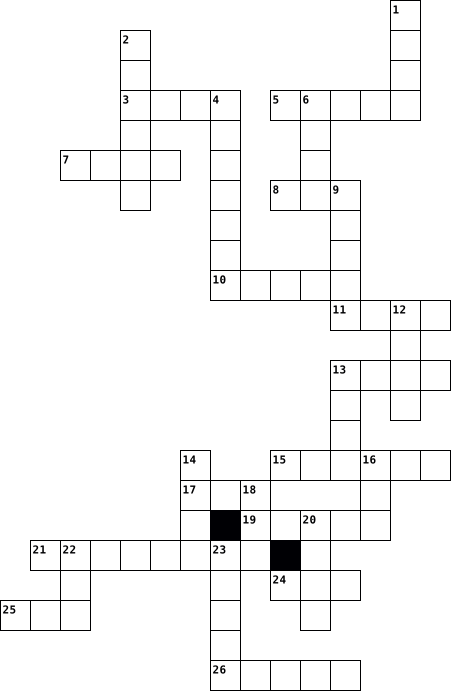
- gle
- akbc
- otof
- ihra
- seon
- acfe
- edha
- etcsh
- udsohlre
- tohmu
Down
- kcne
- sare
- octhasm
- mra
- rgeifn
- enke
- adnh
- yese
- bewlo
- rhatto
20 Clues: gle • mra • kcne • sare • akbc • otof • enke • ihra • adnh • seon • yese • acfe • edha • etcsh • bewlo • tohmu • rgeifn • rhatto • octhasm • udsohlre
Body parts 2023-08-25
Across
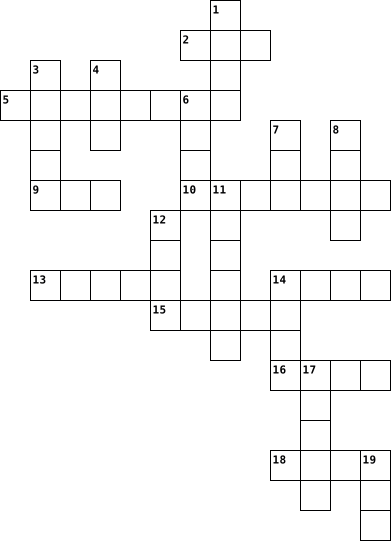
- gle
- akbc
- otof
- ihra
- seon
- acfe
- edha
- etcsh
- udsohlre
- tohmu
Down
- kcne
- sare
- octhasm
- mra
- rgeifn
- enke
- adnh
- yese
- bewlo
- rhatto
20 Clues: gle • mra • kcne • sare • akbc • otof • enke • ihra • adnh • seon • yese • acfe • edha • etcsh • bewlo • tohmu • rgeifn • rhatto • octhasm • udsohlre
body part 2023-10-22

Across
- The upper limb of the body
- The joint that connects the thigh and shin
- The front part of the upper body
- The part connecting the head to the body
- The organ of vision
- The joint connecting the arm to the torso
- The joint connecting the hand to the arm
- The lower part of the leg, used for walking
- The back part of the foot below the ankle
Down
- The joint connecting the foot to the leg
- The rear part of the body
- A digit on the hand
- The part of the body at the end of the arm
- The organ for smelling and breathing
- The opening for eating and speaking
- The organ of hearing
- The lower limb of the body
- The joint that connects the upper and lower arm
- A digit on the foot
- The uppermost part of the body
20 Clues: A digit on the hand • The organ of vision • A digit on the foot • The organ of hearing • The rear part of the body • The upper limb of the body • The lower limb of the body • The uppermost part of the body • The front part of the upper body • The opening for eating and speaking • The organ for smelling and breathing • The joint connecting the foot to the leg • ...
body parts 2023-10-20
Across
- orr
- orca
- sarok
- kar
- derék
- kéz
- arc
- fenék
- szem
- boka
- váll
- lábszár
- ajak
- csukló
Down
- hát
- ujj
- szemöldök
- haj
- száj
- nyak
- láb
- fej
- lábujj
- fül
- térd
- csípő
- könyök
27 Clues: hát • ujj • orr • haj • kar • kéz • arc • láb • fej • fül • orca • száj • nyak • szem • boka • térd • váll • ajak • sarok • derék • fenék • csípő • lábujj • könyök • csukló • lábszár • szemöldök
Body parts 2023-11-14
Across
- - we have 16 teeth in each ...
- - upper part of the trunk
- - five on each foot
- - little children call it belly
- - bones of the head
- - part of the leg
- - entrance to digestive system
- - between trunk and head
- - part of the foot
Down
- - part of the head
- - between breastbone and ribs
- - other word for intestines
- - we need them to hear
- - it covers the base of each tooth
- - many people have problems with the ...
- - part of the mouth
- - part of the hand
- - below the mouth
- - the joint between upper arm and forearm
- - we need it to see
20 Clues: - part of the leg • - below the mouth • - part of the head • - part of the hand • - part of the foot • - five on each foot • - part of the mouth • - bones of the head • - we need it to see • - we need them to hear • - between trunk and head • - upper part of the trunk • - other word for intestines • - between breastbone and ribs • - we have 16 teeth in each ... • ...
Body Full 2023-11-12

Across
- ступня
- нога
- щека
- нос
- глаз
- палец ноги
- кудрявые
- плечо
- ухо
- локоть
- рука
- волосы
- волнистые
- борода
- колено
- кисть руки
- тело
- грудь
- косички
Down
- короткие
- длинные
- лицо
- палец руки
- бровь
- шея
- усы
- прямые
- лоб
- ресница
- большой палец
- темные
- светлые
- подбородок
- голова
34 Clues: шея • усы • нос • лоб • ухо • лицо • нога • щека • глаз • рука • тело • бровь • плечо • грудь • ступня • прямые • темные • локоть • волосы • борода • колено • голова • длинные • ресница • светлые • косички • короткие • кудрявые • волнистые • палец руки • палец ноги • подбородок • кисть руки • большой палец
Body Parts 2024-02-19
Across
- Perut
- Lengan
- Leher
- Tungkai
- Pipi
- Hidung
- Siku
- Kaki
- Telinga
- Jari tangan
Down
- Punggung
- Lidah
- Tangan
- Mulut
- Gigi
- Rambut
- Lutut
- Bahu
- Mata
- Pergelangan Kaki
20 Clues: Gigi • Pipi • Bahu • Mata • Siku • Kaki • Perut • Lidah • Mulut • Leher • Lutut • Tangan • Lengan • Rambut • Hidung • Tungkai • Telinga • Punggung • Jari tangan • Pergelangan Kaki
Human body 2024-01-29

Across
- the part of a person's face below their mouth:
- one of the parts of the body of a human or animal that is used for standing or walking:
- either of the two organs, one on each side of the head, by which people or animals hear sounds, or the piece of skin and tissue outside the head connected to this organ:
- any of the short hairs that grow along the edges of the eye:
- the part of the body at the bottom of the leg on which a person or animal stands:
- the stomach or the front part of the body between your chest and your legs:
- any of the long, thin, separate parts of the hand, especially those that are not thumbs:
- the part of the body between the hand and the arm:
- the joint (= place where two bones are connected) between the foot and the leg, or the thin part of the leg just above the foot:
- the mass of thin thread-like structures on the head of a person, or any of these structures that grow out of the skin of a person or animal:
- the flat part of the face, above the eyes and below the hair:
Down
- one of the two parts of the body at each side of the neck that join the arms to the rest of the body
- the soft part of your face that is below your eye and between your mouth and ear
- the part of the face that sticks out above the mouth, through which you breathe and smell:
- one of the two organs in your face that are used for seeing
- a small, pale brown spot on the skin, usually on the face, especially of a person with pale skin:
- the inside part of your hand from your wrist to the base of your fingers:
- the part of the body at the end of the arm that is used for holding, moving, touching, and feeling things:
- the opening in the face of a person or animal, consisting of the lips and the space between them, or the space behind containing the teeth and the tongue:
- the part of a person's leg above the knee
- the inside part of your hand from your wrist to the base of your fingers:
- either of the two long parts of the upper body that are attached to the shoulders and have the hands at the end:
- the stomach or the front part of the body between your chest and your legs:
23 Clues: the part of a person's leg above the knee • the part of a person's face below their mouth: • the part of the body between the hand and the arm: • one of the two organs in your face that are used for seeing • any of the short hairs that grow along the edges of the eye: • the flat part of the face, above the eyes and below the hair: • ...
HUMAN BODY 2024-01-29

Across
- the flat part of the face, above the eyes and below the hair
- the joint (= place where two bones are connected) between the foot and the leg, or the thin part of the leg just above the foot
- the part of your body that is opposite to the front, from your shoulders to your bottom
- the part of the body that joins the head to the shoulders
- the part of the body between the hand and the arm
- one of the parts of the body of a human or animal that is used for standing or walking
- the circular black area in the centre of an eye, through which light enters
- the opening in the face of a person or animal, consisting of the lips and the space between them, or the space behind containing the teeth and the tongue
- the stomach or the front part of the body between your chest and your legs
- either of the two pieces of skin that can close over each eye
- the hard, slightly curved part that covers and protects the end of a toe
- the longest finger on the hand
- the hollow place under your arm where your arm joins your body
- one of the two parts of the body at each side of the neck that join the arms to the rest of the body
- finger the smallest finger on each hand
- the part of the body above and slightly narrower than the hips
- any of the long, thin, separate parts of the hand, especially those that are not thumbs
- a small, pale brown spot on the skin, usually on the face, especially of a person with pale skin
Down
- the part of the face that sticks out above the mouth, through which you breathe and smell
- any of the short hairs that grow along the edges of the eye
- the part in the middle of the arm where it bends, or the part of a piece of clothing that covers this area
- the part of a person's face below their mouth
- the upper front part of the body of humans and some animals, between the stomach and the neck, containing the heart and lungs
- the short, thick finger on the side of your hand that makes it possible to hold and pick things up easily
- the inside part of your hand from your wrist to the base of your fingers
- the part of the body at the end of the arm that is used for holding, moving, touching, and feeling things
- the largest toe on your foot
- the part of the body above the neck where the eyes, nose, mouth, ears, and brain are
- the mass of thin thread-like structures on the head of a person, or any of these structures that grow out of the skin of a person or animal
- the line of short hairs above each eye in humans
- the coloured circular part of that eye that surrounds the black pupil (= central part)
- the area below the waist and above the legs at either side of the body, or the joint that connects the leg to the upper part of the body
- either of the two long parts of the upper body that are attached to the shoulders and have the hands at the end
- the finger next to the thumb
- the natural outer layer that covers a person, animal, fruit, etc
- either of the two organs, one on each side of the head, by which people or animals hear sounds, or the piece of skin and tissue outside the head connected to this organ
- the rounded back part of the foot
37 Clues: the largest toe on your foot • the finger next to the thumb • the longest finger on the hand • the rounded back part of the foot • finger the smallest finger on each hand • the part of a person's face below their mouth • the line of short hairs above each eye in humans • the part of the body between the hand and the arm • ...
Body Systems 2024-02-13

Across
- the front part of the neck that helps you swallow, breathe, and talk.
- These fight infections; part of the immune system.
- stores urine; releases it from the body.
- carry blood to the heart; they return deoxygenated blood from the body.
- produces ferments from food and helps regulate blood sugar.
- A group of organs that sense, transmit, and process information.
- These carry oxygen to the body; contain hemoglobin.
- the windpipe; connects the throat to the lungs.
- carry blood away from the heart; they supply oxygenated blood to the body.
- muscle under the lungs; helps in breathing by contracting and relaxing.
- voice box; produces sound for speech.
- openings in the nose; allow air to enter and exit.
- tube connecting the mouth to the stomach; transports food.
- A group of organs that work together to produce movement and balance.
- The group of organs that work together to breakdown food by physical and chemical processes into nutrients that the body can use.
- where food is broken down.
- responsible for breathing; they exchange oxygen and carbon dioxide.
- stores bile; helps in fat digestion.
- filters blood; part of the immune system.
- pumps blood throughout the body; the central organ of the circulatory system.
Down
- carries oxygenated blood from the lungs to the heart.
- the liquid part of blood; carries cells and proteins.
- filter blood to remove waste; they create urine.
- part under the right ribs, helpful in detoxification.
- carries blood from the heart to the lungs; it's deoxygenated.
- tiny air sacs in the lungs; where oxygen and carbon dioxide exchange occurs.
- internal organs that look like tubes, which are responsible for breaking down the food and making energy from it.
- the main and largest artery; carries oxygenated blood from the heart to the body.
- Moves the blood throughout the body, transmitting oxygen, nutrients, signals, and wastes.
- air passages in the lungs; connect the trachea to the lungs.
- A process by which animals use oxygen and food to make energy and carbon dioxide.
- A group of organs that allow oxygen and carbon dioxide exchange between the body and the environment.
- tiny blood vessels; that connect arteries and veins and enable nutrient exchange.
- A change in position or location.
- throat area; passage for air and food.
35 Clues: where food is broken down. • A change in position or location. • stores bile; helps in fat digestion. • voice box; produces sound for speech. • throat area; passage for air and food. • stores urine; releases it from the body. • filters blood; part of the immune system. • the windpipe; connects the throat to the lungs. • filter blood to remove waste; they create urine. • ...
Body Regions 2024-02-13

Across
- hip
- finger/toe
- hand
- forehead
- leg
- arm
- lower back
- abdomen
- mouth
- kneecap
- back of head
- spinal column
- thigh
- nose
- elbow
- sole of foot
- neck
Down
- groin
- ankle
- chin
- surrounding the brain
- eye
- buttock
- heal
- ear
- wrist
- shoulder
- back of knee
- cheek
- head
- palm
- calf
- foot
33 Clues: hip • eye • leg • arm • ear • hand • chin • heal • head • palm • nose • calf • foot • neck • groin • ankle • wrist • mouth • cheek • thigh • elbow • buttock • abdomen • kneecap • forehead • shoulder • finger/toe • lower back • back of head • back of knee • sole of foot • spinal column • surrounding the brain
Body Parts 2024-01-31
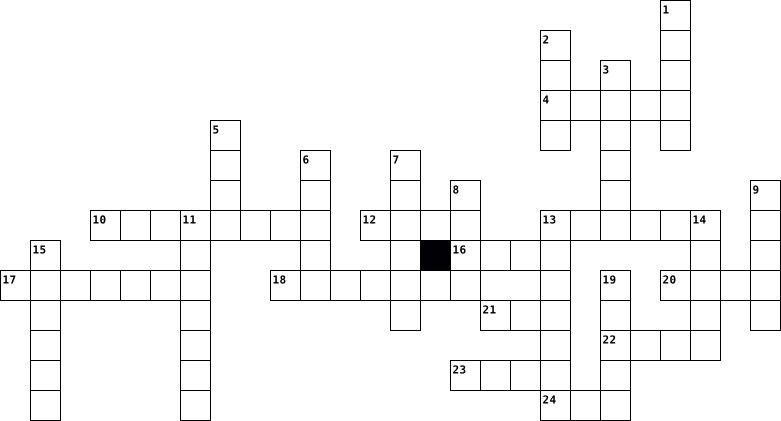
Across
- Nose
- Lungs
- del pie Toe
- Body
- Face
- Teeth
- Knee
- Finger
- Foot
- Eyebrow
- Skin
- Eye
Down
- Arm
- Hand
- Forehead
- Elbow
- Thigh
- Neck
- Mouth
- heel
- Muscle
- Hair
- Ear
- Leg
- Chest
25 Clues: Arm • Ear • Leg • Eye • Hand • Nose • Neck • heel • Body • Hair • Face • Knee • Foot • Skin • Elbow • Thigh • Mouth • Lungs • Teeth • Chest • Muscle • Finger • Eyebrow • Forehead • del pie Toe
The body 2023-12-27

Across
- buildup of plaque in the walls of your arteries
- instrument to measure pressure
- Vessels that carry blood towards the heart
- abnormal heart rhythms
- also known as EKG or ECG
- high blood pressure
- middle
- an artery is weakened, causing it to swell
- Under or insufficient
- ventricle
Down
- portable ECG machine
- Tiny vessels that branch off from the arteries
- pericardial sac around the heart is inflamed
- A organ that pumps the blood
- Surgical removal/excision
- Above/over or excessive
- a test that uses ultrasound to look at the heart and its vessels.
- Blood vessel
- Slow
- Made up of red and white blood cells
- Vessels that carry blood away from the heart
- the patient is asked to walk on a treadmill or ride a bicycle to increase how hard the heart is working
- mediastinum
- lung
- valve
25 Clues: Slow • lung • valve • middle • ventricle • mediastinum • Blood vessel • high blood pressure • portable ECG machine • Under or insufficient • abnormal heart rhythms • Above/over or excessive • also known as EKG or ECG • Surgical removal/excision • A organ that pumps the blood • instrument to measure pressure • Made up of red and white blood cells • Vessels that carry blood towards the heart • ...
Body parts 2024-01-07
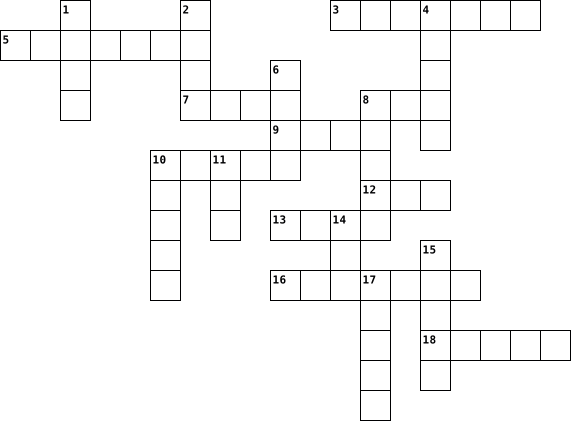
Across
- breathing can be done through this
- protects eyes from dust
- this one smells
- there is a hand at the end of this
- the middle of the lower jaw
- part of the face but this word also means chutzpah
- In English I mean cheeky and in Hebrew I mean language
- you would kneel on this
- I am between the elbow and wrist
- I keep the brain safe
Down
- these are made for walking
- between the ankle and knee
- the big toe of the hand
- I am between the head and shoulder
- I join the foot to the leg
- when I rise and fall, you know there is life
- responsible for vision
- Hearing is what this body part does
- I am between the hand and the lower part of the arm
- the joint of the arm
20 Clues: this one smells • the joint of the arm • I keep the brain safe • responsible for vision • the big toe of the hand • protects eyes from dust • you would kneel on this • these are made for walking • between the ankle and knee • I join the foot to the leg • the middle of the lower jaw • I am between the elbow and wrist • breathing can be done through this • ...
human body 2024-01-12

Across
- бедро
- вухо
- палець
- щиколотка
- грудна клітка
- рука
- нога
- рука, де долоня
- плече
- талія
- спина
- лікоть
Down
- передпліччя
- бедро
- передпліччя
- шия
- палець ноги
- коліно
- зап'ястя
- перший палець на руці
- литка
- голова
- стопа
- прес, живіт
24 Clues: шия • вухо • рука • нога • бедро • бедро • литка • стопа • плече • талія • спина • палець • коліно • голова • лікоть • зап'ястя • щиколотка • передпліччя • передпліччя • палець ноги • прес, живіт • грудна клітка • рука, де долоня • перший палець на руці
Body Parts 2024-01-25
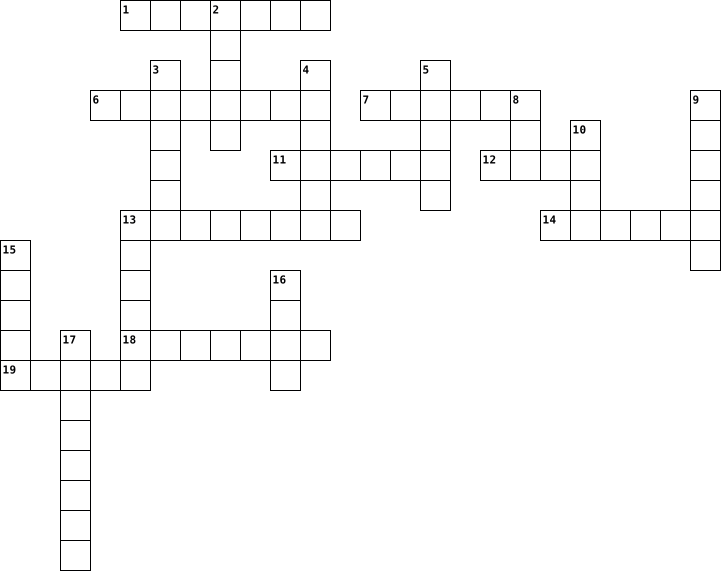
Across
- Se usa para comer
- Está debajo de labios
- The head sits on it
- Está en la boca
- Se usa para hablar
- It is next to the nose
- It connects the arms to the body
- The pants hold on to it
- Se usa para escuchar
Down
- Se usa para oler
- It is above the eyebrows
- Está encima de el cuello
- Está encima de los ojos
- Se usa para ver
- Es debajo de nariz
- It is used to hold things
- It connects the hand and arm
- The hand is attached to it
- It is in the head
- It is on the eyelids
20 Clues: Se usa para ver • Está en la boca • Se usa para oler • Se usa para comer • It is in the head • Es debajo de nariz • Se usa para hablar • The head sits on it • It is on the eyelids • Se usa para escuchar • Está debajo de labios • It is next to the nose • Está encima de los ojos • The pants hold on to it • It is above the eyebrows • Está encima de el cuello • It is used to hold things • ...
Body Parts 2024-01-08
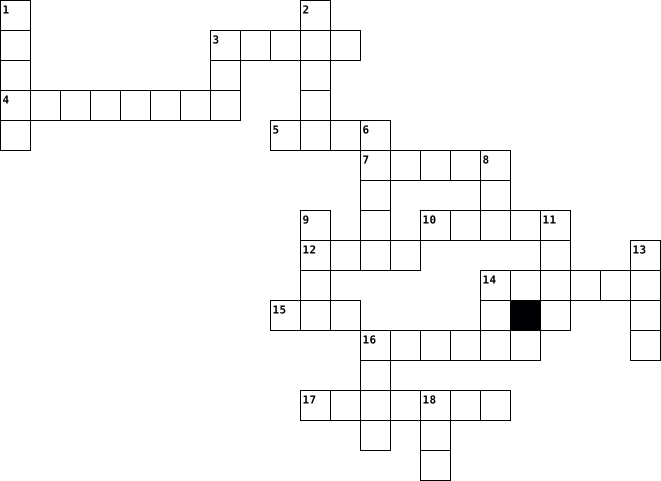
Across
- you bend your arm with this
- you have 2, they are at the top of your arms
- this is at the bottom of you face,
- these connect your feet to your legs
- these are in your mouth, you use them to chew
- it's on your face you use it to smell with
- this is in you mouth, you need it to talk
- you have 2, you use them to walk and run
- you have 5 of them on each hand
- this is where your good digests
Down
- these connect your hands to your arms
- this is on your face, you put food in it to eat
- you have 2, you use them to hear
- these are like claws for humans
- there are 2 on your face you use them to see
- this is in the middle of you leg, you bend your leg with this
- you have 2, you use them to clap
- this connects your head to your body
- you have 5 of them on each foot
- you have 2, they are at the bottom of your legs
- you have 2, you use them to hug
21 Clues: you bend your arm with this • these are like claws for humans • you have 5 of them on each foot • you have 5 of them on each hand • this is where your good digests • you have 2, you use them to hug • you have 2, you use them to hear • you have 2, you use them to clap • this is at the bottom of you face, • these connect your feet to your legs • ...
Body parts 2023-09-18
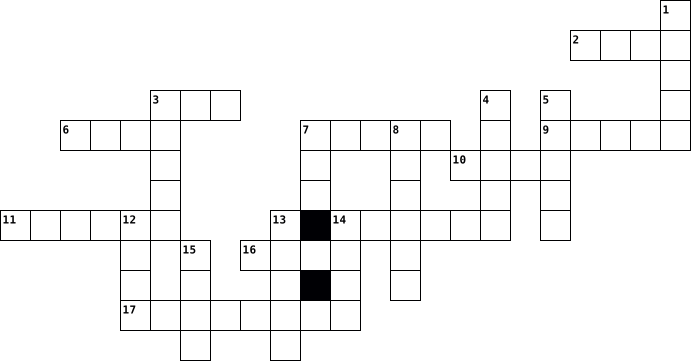
Across
- It grows on the skin of people, especially on the head
- The part of the body from the shoulder to the hand
- The front part of the face below the mouth
- These organs allow you to breath
- This organ pumps blood to your whole body
- The part of the body that contains eyes, a nose, a mouth and ears
- This body part allows you to move your hand.
- This organ is situated in the abdominal cavity
- You wear a necklace around this part of the body
- This part protects your inner organs from injuries
Down
- The part of your hand that bends
- The part of your leg that connects it to your foot
- This organ is located in the skull
- Your heart is inside this organ
- One of two parts of the body used for standing and walking
- An organ in the body, into which food passes when swallowed
- With this part of the body you kiss
- A hard, white, bone-like structures used for biting and chewing food
- Our body is covered with this organ
- Many women apply mascara to these parts of the body
20 Clues: Your heart is inside this organ • The part of your hand that bends • These organs allow you to breath • This organ is located in the skull • With this part of the body you kiss • Our body is covered with this organ • The front part of the face below the mouth • This organ pumps blood to your whole body • This body part allows you to move your hand. • ...
Body Parts 2023-09-14
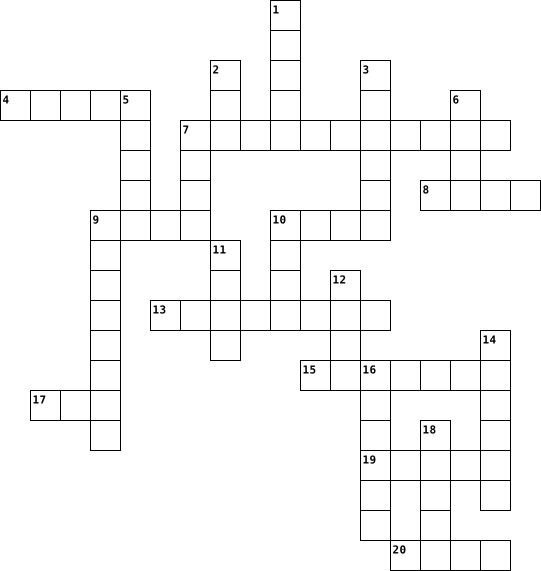
Across
- bone
- toe
- wings
- hand
- face
- lungs
- knee
- eyes
- nose
- mouth
Down
- chest
- foot
- leg
- ear
- skin
- finger
- muscle
- elbow
- tail
- hair
- head
- tooth
- arm
23 Clues: leg • ear • toe • arm • foot • bone • skin • hand • face • tail • hair • head • knee • eyes • nose • chest • wings • elbow • lungs • tooth • mouth • finger • muscle
Body parts 2023-09-17
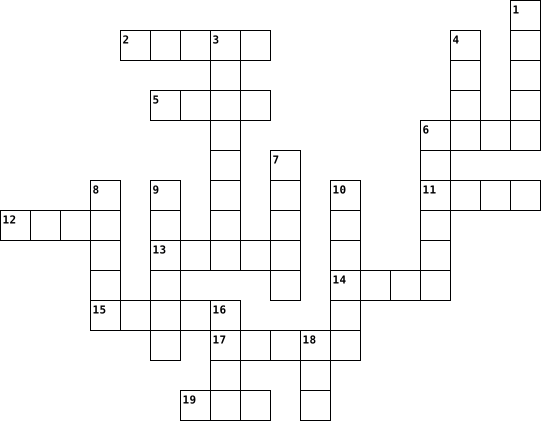
Across
- The part of your hand that bends
- Many women apply mascara to these parts of the body
- Our body is covered with this organ
- With this part of the body you kiss
- The part of the body that contains eyes, a nose, a mouth and ears
- These organs allow you to breath
- The front part of the face below the mouth
- A hard, white, bone-like structures used for biting and chewing food
- The part of your leg that connects it to your foot
- The part of the body from the shoulder to the hand
Down
- This organ is located in the skull
- This part protects your inner organs from injuries
- You wear a necklace around this part of the body
- This organ is situated in the abdominal cavity
- Your heart is inside this organ
- This organ pumps blood to your whole body
- An organ in the body, into which food passes when swallowed
- This body part allows you to move your hand.
- It grows on the skin of people, especially on the head
- One of two parts of the body used for standing and walking
20 Clues: Your heart is inside this organ • The part of your hand that bends • These organs allow you to breath • This organ is located in the skull • Our body is covered with this organ • With this part of the body you kiss • This organ pumps blood to your whole body • The front part of the face below the mouth • This body part allows you to move your hand. • ...
HUman body 2023-09-24

Across
- Cabeça
- Olho
- Calcanhar
- Nádegas
- Ombro
- Costas
- Dedo do pé
- Pé
- Pés
- Mão
- Perna
Down
- Peito
- Barriga
- pescoço
- Cotovelo
- Nariz
- Boca
- Braço
- Ouvido
- Joelho
- Dedo da mão
- Coxa
22 Clues: Pé • Pés • Mão • Olho • Boca • Coxa • Peito • Nariz • Braço • Ombro • Perna • Cabeça • Ouvido • Joelho • Costas • Barriga • pescoço • Nádegas • Cotovelo • Calcanhar • Dedo do pé • Dedo da mão
Body Parts 2024-03-04
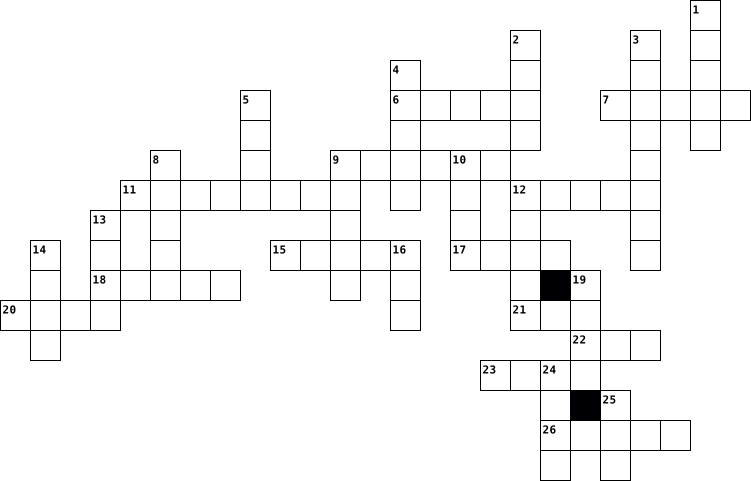
Across
- la cheville
- le ventre
- la poitrine
- l'épaule
- la taille
- la cuisse
- l'ongle
- le coude
- l'os
- l'orteil
- le bras
- la main
- le torse
Down
- le crâne
- les pieds
- le squelette
- le nombril
- le talon
- le pouce
- le cerveau
- le tibia
- le poignet
- le genou
- un pied
- la hanche
- la tête
- le cou
- la jambe
28 Clues: l'os • le cou • un pied • l'ongle • la tête • le bras • la main • le crâne • le talon • le pouce • le tibia • l'épaule • le genou • le coude • l'orteil • la jambe • le torse • les pieds • le ventre • la taille • la cuisse • la hanche • le nombril • le cerveau • le poignet • la cheville • la poitrine • le squelette
Body Parts 2024-03-14
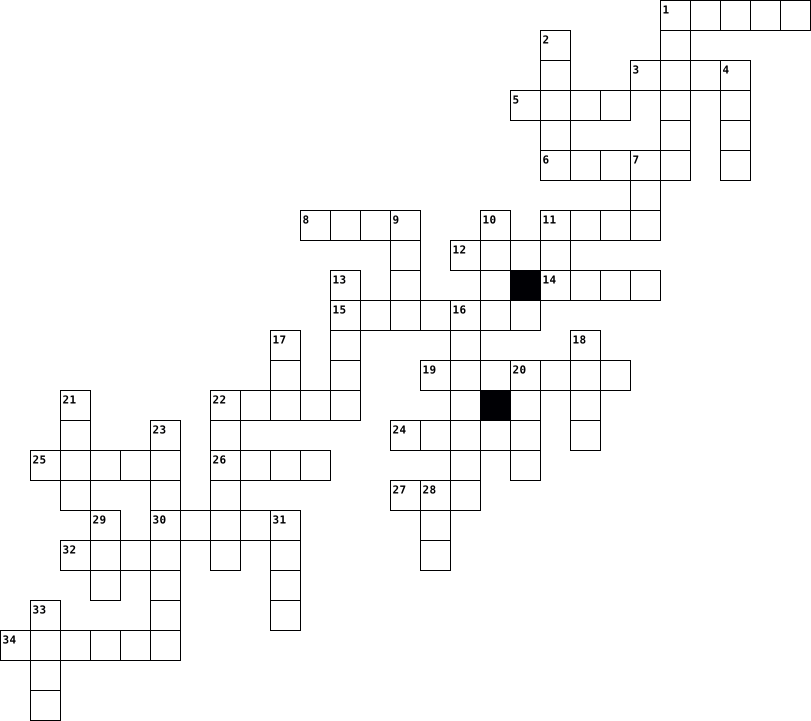
Across
- trompe
- genou
- queue
- écaille
- sabot
- aile
- crinière
- bec
- bois
- plume
- crocs
- corne
- bouche
- cou
- patte
- coquille
- dos
- serres
Down
- langue
- griffe
- yeus
- jambe
- pieds
- cheveux
- palmes
- poils
- sourcil
- nageoire
- tête
- défense
- pied
- doigt
- moustache
- bras
- oreille
- lèvres
- main
37 Clues: bec • cou • dos • yeus • aile • bois • tête • pied • bras • main • genou • queue • jambe • sabot • pieds • poils • plume • crocs • doigt • corne • patte • trompe • langue • griffe • palmes • bouche • lèvres • serres • écaille • cheveux • sourcil • défense • oreille • crinière • nageoire • coquille • moustache
Body parts 2024-03-19
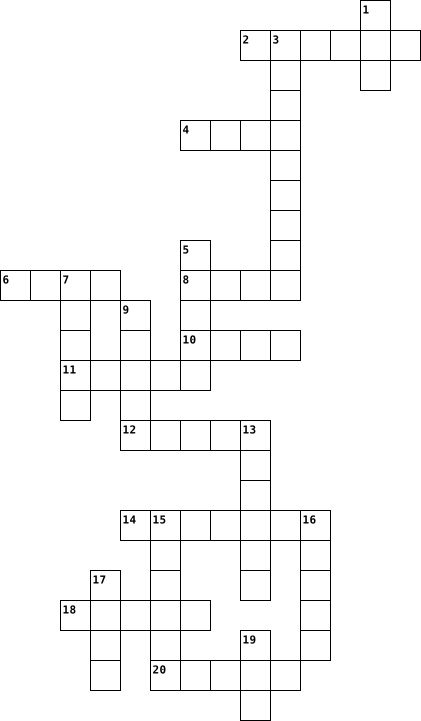
Across
- One of the two organs in your lower back that separates waste products from your blood and makes urine
- Front part of your head, where your eyes, nose and face are
- The part of the body that joins your head and your shoulders
- The back of a person's neck.
- One of the two organs that you breathe with
- The row of bones down the centre of your back that supports your body
- The thickest finger on your hand
- The organ where food begins to be digested
- Top part of your leg between your knee and hip
- The joint where your arm bends
Down
- One of the long parts of your body that your feet are joined to
- Long tube in your body through which food passes after it leaves your stomach
- The joint between your foot and your leg
- The front part of your body between the neck and stomach
- Part of your body where your hand joins your arm
- Glandular organ located on the chest
- Soft part inside the mouth that you can move around and use for eating and speaking
- Organ in your chest that pumps blood through your body
- Ffront part of your face below the mouth
- One of the five moveable parts at the end of your foot
20 Clues: The back of a person's neck. • The joint where your arm bends • The thickest finger on your hand • Glandular organ located on the chest • The joint between your foot and your leg • Ffront part of your face below the mouth • The organ where food begins to be digested • One of the two organs that you breathe with • Top part of your leg between your knee and hip • ...
Body parts 2023-10-28
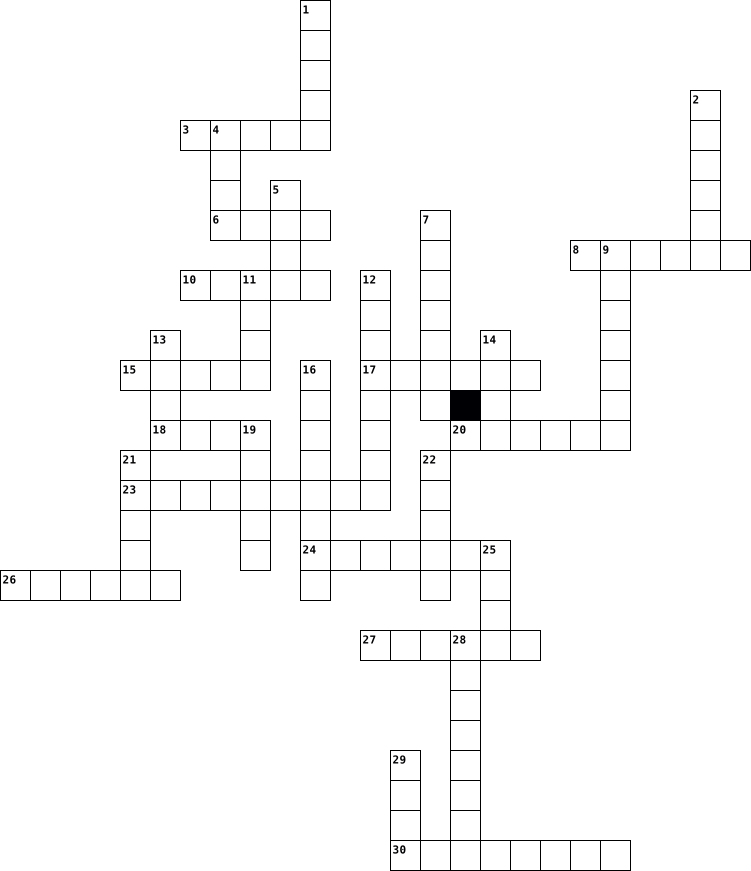
Across
- Front part of the lower leg.
- The body's outer protective layer.
- Joints connecting the shins and feet.
- The front part of the upper body.
- Hard coverings of the fingers and toes.
- The passage for air and food at the back of the mouth.
- Sensory organs for vision.
- The joint connecting the hand to the forearm.
- Fine hairs around the eyes.
- The area between the chest and pelvis.
- The upper part of the leg.
- Fleshy sides of the face.
- Openings of the nose.
Down
- Joints connecting the thighs and lower legs.
- Muscular organ in the mouth used for taste and speech.
- The sides of the lower torso.
- Soft, movable parts of the mouth.
- Digit appendages of the hand.
- Raised areas on the chest, more prominent in females.
- Sensory organs for hearing.
- The rounded portion of the backside.
- Front part of the head, including eyes, nose, and mouth.
- Keratinous filaments on the scalp and body.
- The upper part of the face.
- The skin on top of the head.
- Hard structures in the mouth used for biting and chewing.
- The inner surface of the hand.
- The part connecting the head to the torso.
- Arched hair above the eyes.
- The lower part of the face.
30 Clues: Openings of the nose. • Fleshy sides of the face. • Sensory organs for vision. • The upper part of the leg. • Sensory organs for hearing. • The upper part of the face. • Fine hairs around the eyes. • Arched hair above the eyes. • The lower part of the face. • Front part of the lower leg. • The skin on top of the head. • The sides of the lower torso. • Digit appendages of the hand. • ...
Body Systems 2023-10-24

Across
- Tissues that contract and relax to produce movement in the body.
- A muscular organ in the abdomen that helps with digestion by breaking down food.
- A hard, dense organ that provides support and protection to the body's organs and facilitates movement.
- Tiny air sacs in the lungs where oxygen is absorbed into the bloodstream and carbon dioxide is removed.
- The liquid component of blood that carries blood cells and nutrients throughout the body.
- A flap-like structure in the heart and some blood vessels that ensures blood flows in one direction.
- To separate and remove impurities or waste materials from a fluid
- A group of similar cells that work together to perform a specific function in the body.
- Liquid waste produced by the kidneys that is stored in the bladder before being excreted from the body.
- A gland in the abdomen that produces digestive juices that are delivered to the small intestine.
- A tough band of tissue that connects muscle to bone, allowing for movement.
- A protein that helps speed up chemical reactions in the body, such as the digestion of food.
- A blood vessel that carries oxygenated blood away from the heart to other parts of the body.
Down
- The muscular organ that pumps blood throughout the circulatory system.
- The physical process of breaking down food into smaller pieces in the digestive system.
- A muscle below the lungs that helps with breathing by expanding and contracting the chest cavity.
- An organ that filters waste and excess substances from the blood to create urine.
- Unwanted or unusable substances produced in the body, which need to be removed.
- The measurement of the outer part of an object or organ, which can affect its function.
- A group of related organs that work together to perform a specific function for the body.
- A structure made up of different tissues that serves a particular purpose, such as the heart or the stomach.
21 Clues: Tissues that contract and relax to produce movement in the body. • To separate and remove impurities or waste materials from a fluid • The muscular organ that pumps blood throughout the circulatory system. • A tough band of tissue that connects muscle to bone, allowing for movement. • ...
Body Systems 2024-02-09

Across
- system where the heart pumps blood through your blood vessels
- upper chamber of a heart
- disease where the alveoli have been damaged
- system that gets rid of bacteria and viruses
- tissue thatjoins, supports, protects, and cushions organs
- process where a body gets oxygen and gets rid of carbon dioxide
- lower chamber of a heart
- system that delivers oxygen in your blood to all the parts of the body
- outermost layer of tooth, hardest material in body
- system that breaks down food into nutrients that can be absorbed into your body
Down
- tissue that sends electrical signals through the body
- tissue that is made of cells that contract and relax to produce movement
- a collection of tissues that work together
- your body goes through to keep a stable environment?
- part of brain that controls balance
- soupy mixture after digestion
- part of brain that controls involuntary operations such as breathing, heart rate, and body temperature
- hormone released due to water shortage in body
- tissue that covers and protects underlying tissue
- largest organ in the body, makes bile, filters blood
- process of removing wastes and excess water
21 Clues: upper chamber of a heart • lower chamber of a heart • soupy mixture after digestion • part of brain that controls balance • a collection of tissues that work together • disease where the alveoli have been damaged • process of removing wastes and excess water • system that gets rid of bacteria and viruses • hormone released due to water shortage in body • ...
Body parts 2025-02-13

Across
- You can put a ring on this.
- This helps your arm to bend.
- These are usually brown, blue, green or hazel.
- You usually lie down on this.
- You have 32 of these and you use them to eat.
- Women often paint these.
- A chair has four of these. You have two.
- You use this to talk, eat and smile.
- You put shoes on these.
- It can be straight, curly or wavy.
- This sends blood around your body.
- People often get these pierced.
Down
- They are halfway down your legs.
- You can put a watch on this part of the body.
- This connects your head to your body.
- You have one on your face. You use it to smell.
- You use this part of the body to taste things.
- You have one on each hand. They are short and fat.
- There are five of these on each foot.
- The part of your body with your hair, eyes, nose, mouth and ears on.
- This part of the body is between your eyebrows and hair.
21 Clues: You put shoes on these. • Women often paint these. • You can put a ring on this. • This helps your arm to bend. • You usually lie down on this. • People often get these pierced. • They are halfway down your legs. • It can be straight, curly or wavy. • This sends blood around your body. • You use this to talk, eat and smile. • This connects your head to your body. • ...
HUMAN BODY 2025-02-20

Across
- PIPI
- MATA
- BETIS
- DAHI
- KUKU
- PUNGGUNG
- TELINGA
- JARI JARI
- GIGI
- DAGU
- PAHA
- SIKU -SIKU
- KAKI
- LIDAH
- RAMBUT
Down
- HIDUNG
- DADA
- PUNDAK
- WAJAH
- KULIT
- PERUT
- LEHER
- LENGAN
- KUMIS
- KEPALA
- PARU - PARU
- PINGGANG
- BIBIR
- LUTUT
- ALIS
30 Clues: DADA • PIPI • MATA • DAHI • KUKU • GIGI • DAGU • PAHA • KAKI • ALIS • WAJAH • KULIT • PERUT • BETIS • LEHER • KUMIS • BIBIR • LUTUT • LIDAH • HIDUNG • PUNDAK • LENGAN • KEPALA • RAMBUT • TELINGA • PUNGGUNG • PINGGANG • JARI JARI • SIKU -SIKU • PARU - PARU
body parts 2025-03-14

Across
- It digests food
- It connects your head
- It absorbs food
- You smell with it
- You walk with it
- It moves your hand
- It moves your foot
- You point with it
- You chew with it
- You think with it
- It protects your heart
- You eat with it
Down
- It helps you stand
- It's above your hips
- It covers your body
- You hold something
- It bends your leg
- You see with it
- It bends your arm
- It helps you balance
- It cleans your blood
- It moves your blood
- You breathe with it
- You step on it
- You hear with it
- You taste with it
- It moves your hand
- It helps you move
- It protects your brain
- It holds your brain
30 Clues: You step on it • It digests food • You see with it • It absorbs food • You eat with it • You walk with it • You hear with it • You chew with it • It bends your leg • You smell with it • It bends your arm • You point with it • You taste with it • You think with it • It helps you move • It helps you stand • You hold something • It moves your hand • It moves your foot • It moves your hand • It covers your body • ...
Body Systems 2025-03-12

Across
- ___ system includes the lungs, nose, and trachea
- a group of cells that work together to perform a funciton
- the body's ability to maintain stability
- ___ system includes the heart, veins, and arteries
- blood vessels that bring oxygenated blood throughout the body
- ____ digestion is enzymes breaking down food
- ___ system is your body's support structure
- a body _____ is a group of organs and tissues that work together
- a muscle _____ is a long cell that forms the muscles of the body
- ___ system includes the glands and organs that make hormones
- blood vessels that bring de-oxygenated blood to the heart
Down
- ___ system includes all tissues/organs involved in producing offspring
- ___ system includes the body's network of tissues, mostly muscles
- ____ digestion is mechanical breakdown of food
- ___ system includes the stomach, intestines, and esophagus
- an organ that produces and releases substances in the body
- microscopic blood vessels that connect arteries and veins
- ___ system includes the brain, spinal cord, and nerves
- ___ system removes excess materials/waste from body
- chemical messengers in the body
20 Clues: chemical messengers in the body • the body's ability to maintain stability • ___ system is your body's support structure • ____ digestion is enzymes breaking down food • ____ digestion is mechanical breakdown of food • ___ system includes the lungs, nose, and trachea • ___ system includes the heart, veins, and arteries • ...
Body Systems 2025-09-25

Across
- An electrical signal that travels along a neuron to transmit information.
- muscle: Voluntary muscles attached to bones that allow for conscious movement, such as walking or running.
- The bony framework of the head that protects the brain.
- A place where two or more bones meet, which allows for movement.
- muscle: Involuntary muscles that control movement in the internal organs, like the stomach and blood vessels.
- The internal framework of bones and cartilage that supports the body.
- A tough band of tissue that connects bones to other bones at a joint.
- The bones of the chest that protect the heart and lungs.
- muscle: A muscle that moves automatically without you thinking about it, such as your heart.
- A tough cord of tissue that attaches muscle to bone.
- The small bones that make up the spinal column and protect the spinal cord.
- A tissue composed of fibers that contract and relax to create movement.
- A muscle that increases the angle between two bones, like your tricep when you straighten your arm.
Down
- A muscle that pulls in the opposite direction of another muscle to create balance.
- To shorten or tighten a muscle, causing movement.
- A muscle that decreases the angle between two bones, like your bicep when you bend your arm.
- The soft, fatty tissue inside certain bones where new blood cells are produced.
- The main organ of the nervous system that controls all body functions.
- muscle: A muscle that you can control and move by choice, like the muscles in your arms and legs.
- A flexible, elastic tissue that covers the ends of bones and acts as a shock absorber.
- cord: The bundle of nerves that extends from the brain down the back and is protected by the vertebrae.
- The tiny gap between two neurons where a message is passed.
- A specialized nerve cell that carries electrical messages, or impulses, throughout the body.
- The rigid tissue that makes up the skeleton of the human body.
- muscle: The specialized involuntary muscle found only in the heart that pumps blood.
- A bundle of neurons that transmits impulses.
- Nervous System (PNS): Includes the nerves that branch out from the CNS to all parts of the body.
- Part of a neuron that gathers information and carries it toward the cell body.
- An automatic and quick reaction to a stimulus that is not controlled by choice.
- Part of a neuron that sends information away from the cell body to other neurons.
- Nervous System (CNS): Composed of the brain and spinal cord, it processes and transfers information.
31 Clues: A bundle of neurons that transmits impulses. • To shorten or tighten a muscle, causing movement. • A tough cord of tissue that attaches muscle to bone. • The bony framework of the head that protects the brain. • The bones of the chest that protect the heart and lungs. • The tiny gap between two neurons where a message is passed. • ...
body parts 2025-10-22

Across
- You bend your arm here
- You use these to walk and run
- It helps you digest food after you eat
- It is above your eyes. You show feelings with it (like surprise or thinking)
- You bend your leg here
- You use this part to taste food
- These are white and help you chew food
- This part is in the front of your body, near your heart
- It helps your foot move when you walk or run.
- You have these in your face to see
- These grow on your fingers and toes
- It holds your head and helps you turn it.
Down
- You use this to hear sounds
- It's at the top of your body
- This part helps you smell
- You use these to walk and run
- You lift things with this part
- You use it to hold and grab something
- You wear shoes on this part
- These help protect your eyes
- It is on your face. You smile and feel soft here.
- It is under your mouth. It helps shape your face.
- You have ten of these on your feet
- You have ten of these on your hands
24 Clues: You bend your arm here • You bend your leg here • This part helps you smell • You use this to hear sounds • You wear shoes on this part • It's at the top of your body • These help protect your eyes • You use these to walk and run • You use these to walk and run • You lift things with this part • You use this part to taste food • You have ten of these on your feet • ...
my body 2023-10-02

Across
- rambut
- lidah
- dagu
- kulit
- mata
- telinga
- rahang
- paru paru
- ketiak
- lutut
Down
- hati
- gigi
- pipi
- kening
- lubang hidung
- bibir
- bola mata
- jari
- kuku
- leher
20 Clues: hati • gigi • pipi • dagu • mata • jari • kuku • lidah • bibir • kulit • lutut • leher • rambut • kening • rahang • ketiak • telinga • bola mata • paru paru • lubang hidung
Human Body 2024-04-14

Across
- paže
- žaludek
- oko
- noha
- noha(spodní,ploska)
- bok
- kost
- vlasy
- nos
- ruka
- koleno
- ucho
Down
- obličej
- ústa
- prst(noha)
- srdce
- ret
- prst (ruka)
- krev
- rameno
- mozek
- hlava
- krk
23 Clues: oko • ret • bok • nos • krk • paže • ústa • noha • kost • krev • ruka • ucho • srdce • mozek • vlasy • hlava • rameno • koleno • obličej • žaludek • prst(noha) • prst (ruka) • noha(spodní,ploska)
Body parts 2024-04-08
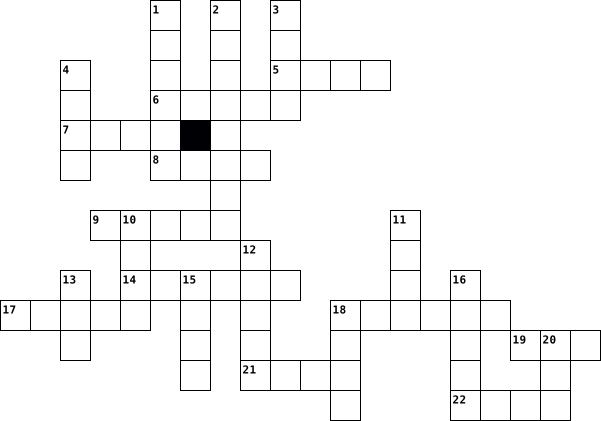
Across
- Under din mun men ovanför din hals
- Där du kanske har en grop när du ler
- Det du har på dina fingrar och tår
- Det du använder för att se
- Den röda väskan i kroppen
- Det du har fem av på din hand
- Den smalaste delen av din kropp
- Det du sitter med
- Det du använder för att röra dig framåt
- Det som är högst upp på din kropp
- Det som täcker ditt huvud
Down
- Det som ger dig styrka
- Den del av ditt ansikte ovanför dina ögon
- Det som är längst back på kroppen
- Det du använder för att greppa saker
- Det motsatta till höger
- Det du använder för att stå på
- Det du använder för att tugga mat
- Där dina ben möter din kropp
- Det du använder för att lukta
- Där du pratar
- Hela kroppen
- det du använder för att höra
23 Clues: Hela kroppen • Där du pratar • Det du sitter med • Det som ger dig styrka • Det motsatta till höger • Den röda väskan i kroppen • Det som täcker ditt huvud • Det du använder för att se • Där dina ben möter din kropp • det du använder för att höra • Det du har fem av på din hand • Det du använder för att lukta • Det du använder för att stå på • Den smalaste delen av din kropp • ...
Body & Pain 2026-01-13

Across
- Bleu
- Genou
- Raide, crispé, courbaturé
- Entraînement, répétition
- Léger (douleur)
- Moyen
- Claquage
- Glisser
- Gonflement
Down
- Pire
- Poignet
- Cheville
- Hanche
- Vif, aigu (douleur)
- Tomber
- Coude
- Atterir
- Blessure
- Entorse
- Irrité, endolori
20 Clues: Pire • Bleu • Genou • Coude • Moyen • Hanche • Tomber • Poignet • Atterir • Entorse • Glisser • Cheville • Blessure • Claquage • Gonflement • Léger (douleur) • Irrité, endolori • Vif, aigu (douleur) • Entraînement, répétition • Raide, crispé, courbaturé
Body Systems 2025-12-15

Across
- Type of germ
- Main control center
- Connects brain to nerves
- Support growth and repair
- Brain injury
- Connect bones and allow movement
- Small blood vessels
- Spread of germs
- Provides structure and support
- Helps digest food
- Type of germ
- Carry messages
- Allows recovery
- Carry blood
- Pumps blood
- Muscles under your control
Down
- Systems depend on each other
- Body repair process
- Muscles tighten to create movement
- Protect organs and give shape
- Broken bone injury
- Muscle injury from overuse
- Protects the body
- Transports blood
- Breaks down food
- Allows the body to move
- Controls communication
- Sign of illness
- Needed for energy
- Made up of many working parts
- Cause disease
- Materials the body cannot use
- Fast protective response
- Groups of parts with specific roles
- Strengthens body systems
35 Clues: Carry blood • Pumps blood • Type of germ • Brain injury • Type of germ • Cause disease • Carry messages • Sign of illness • Spread of germs • Allows recovery • Transports blood • Breaks down food • Protects the body • Needed for energy • Helps digest food • Broken bone injury • Body repair process • Main control center • Small blood vessels • Controls communication • Allows the body to move • ...
Body parts 2026-01-09

Across
- – Organ of respiration
- – Foot
- – Tube for digestion and absorption
- – Collar bone
- – Organ that filters blood (kidney)
- – Neck region connecting head and trunk
- – Finger or toe
- – Kneecap
- – Thigh bone
- – Muscular organ that pumps blood
- – Ankle bone
- – Lower leg between knee and ankle
- – Hand
- – General term for neck
- – Hard structure used for mastication
- – Bone of the upper arm
Down
- – Urinary bladder
- – Muscular organ used for taste and speech
- – Mouth cavity
- – Chest region of the body
- – Organ involved in digestion (stomach)
- – Heel bone
- – Bone of the spinal column
- – Shoulder blade
- – Organ of hearing
- – Largest gland in the body (liver)
- – Organ of vision
- – Elbow region
- – External organ of smell
- – Latin term for the head
30 Clues: – Foot • – Hand • – Kneecap • – Heel bone • – Thigh bone • – Ankle bone • – Collar bone • – Mouth cavity • – Elbow region • – Finger or toe • – Shoulder blade • – Urinary bladder • – Organ of vision • – Organ of hearing • – Organ of respiration • – General term for neck • – Bone of the upper arm • – External organ of smell • – Latin term for the head • – Chest region of the body • ...
Body parts 2026-01-16

Across
- hruď
- žíla
- břicho
- ucho
- pata
- holeň
- nehet
- chodidlo
- řasa
- ledvina
- tvář
Down
- rameno
- koleno
- zápěstí
- mozek
- loket
- prst
- plíce
- kost
- kotník
- krk
- záda
22 Clues: krk • hruď • žíla • ucho • prst • pata • kost • řasa • záda • tvář • mozek • loket • plíce • holeň • nehet • rameno • koleno • břicho • kotník • zápěstí • ledvina • chodidlo
body parts 2025-07-04

Across
- It connects your leg to your body.
- – It connects your head to your shoulders.
- It connects your foot to your leg.
- – The top part of your body where your brain is.
- You have five of these on each hand.
- It helps your hand hold things; it's not a finger!
- – You carry a backpack on this.
- It's above your stomach and under your neck.
- – You use this to see.
- You wear shoes on this.
Down
- You use this to hold things.
- This part of your leg bends.
- – You wave with this part.
- – You wear a watch on this.
- – It has your eyes, nose, and mouth.
- – You use this to smell and breathe.
- You have ten of these on your feet.
- It’s the opposite of your front.
- – This bends in the middle of your arm.
- You use this to walk and run.
20 Clues: – You use this to see. • You wear shoes on this. • – You wave with this part. • – You wear a watch on this. • You use this to hold things. • This part of your leg bends. • You use this to walk and run. • – You carry a backpack on this. • It’s the opposite of your front. • It connects your leg to your body. • It connects your foot to your leg. • You have ten of these on your feet. • ...
Body Parts 2025-06-23

Across
- [5] The long, flexible nose of an elephant.
- [4] A hard, protective covering on the foot of animals like horses or cows.
- [7] A light, flat growth that covers a bird's body.
- [4] A sharp, curved nail on the foot of an animal.
- [5] A sharp claw, especially of a bird of prey.
- [4] The hard, projecting mouth part of a bird.
- [7] Another word for a pig's foot.
- [3] A flat, wing-like part of a fish used for swimming.
- [6] A bony, branching growth on the head of male deer.
- [6] Small, flat, overlapping plates that cover the skin of fish and reptiles.
- [5] Organs that fish use to breathe underwater.
Down
- [3] The soft, thick hair that covers the body of many mammals.
- [5] The projecting nose and mouth of an animal, like a pig or dog.
- [5] A bag of skin on the abdomen of kangaroos and other marsupials.
- [4] A hard, pointed growth on the head of animals like cows or rhinos.
- [9] Long, flexible arms, usually with suckers, found on animals like octopuses.
- [3] A soft foot of a mammal, like a cat or dog.
- [7] Round, sticky pads, often found on octopuses or squids.
- [8] Feelers on the head of insects and crustaceans.
- [4] The part of an animal's body that extends from its rear end.
- [4] A long, pointed tooth, especially from an elephant or walrus.
- [5] A hard, protective outer casing of certain animals, like turtles or snails.
- [4] The body part that birds use to fly.
23 Clues: [7] Another word for a pig's foot. • [4] The body part that birds use to fly. • [5] The long, flexible nose of an elephant. • [4] The hard, projecting mouth part of a bird. • [3] A soft foot of a mammal, like a cat or dog. • [5] A sharp claw, especially of a bird of prey. • [5] Organs that fish use to breathe underwater. • ...
Body parts 2025-07-12

Across
- Đây là nét đặc trưng trên khuôn mặt khiến người đối diện dễ nhớ. Có thể được tạo hình theo nhiều kiểu: mảnh, xoắn, dày,… Người để kiểu này thường thể hiện sự trưởng thành và lịch lãm. Để giữ đẹp, cần phải cạo và tỉa đúng cách thường xuyên. Phù hợp với người làm công việc cần phong cách cá tính. Đôi khi tạo cảm giác hoài cổ hoặc quý ông kiểu châu Âu. Một số người chọn để kiểu này như dấu ấn cá nhân.
- Đây là phần dưới cùng giúp cơ thể đứng vững và di chuyển. Khi đi bộ hoặc chạy, khu vực này chịu toàn bộ trọng lượng của cơ thể. Nếu đi giày không phù hợp, phần này dễ bị đau hoặc mỏi. Trong vệ sinh cá nhân, cần rửa sạch và lau khô khu vực này mỗi ngày. Đây cũng là nơi có nhiều dây thần kinh liên kết với các cơ quan khác trong cơ thể.
- Gương mặt thường hài hòa, nụ cười tươi tắn và đôi mắt có hồn. Khi xuất hiện, thường khiến người khác phải dừng lại để nhìn. Vẻ ngoài cuốn hút nhưng vẫn giữ được nét dịu dàng, thanh lịch. Khi nói chuyện, giọng nói nhẹ nhàng, biểu cảm gương mặt linh hoạt. Dáng đi uyển chuyển, cử chỉ tinh tế và tự nhiên. Thường biết cách chăm sóc bản thân và lựa chọn trang phục phù hợp. Vẻ đẹp này không chỉ nằm ở bề ngoài mà còn thể hiện qua cách cư xử .
- Đây là hai khe nhỏ nằm ở phần dưới của cơ quan khứu giác, cho phép không khí đi vào và ra khỏi cơ thể. Khi hít vào, không khí sẽ đi qua phần này trước khi vào phổi. Nếu bị dị ứng, nơi này có thể ngứa hoặc sưng. Trong một số trường hợp y tế, người ta cần sử dụng dụng cụ để kiểm tra bên trong qua khu vực này. Khi hắt hơi, không khí sẽ thoát ra từ đây với tốc độ rất nhanh.
- Đây là kiểu phổ biến và được coi là trung tính, không quá ngắn cũng không quá dài. Rất dễ tạo kiểu: uốn nhẹ, duỗi thẳng hay buộc lên đều đẹp. Nhiều người cảm thấy thoải mái vì dễ chăm sóc mà vẫn giữ được nét dịu dàng. Dáng này phù hợp với nhiều hình dạng khuôn mặt khác nhau. Trong thời tiết nóng thì vẫn có thể buộc cao để mát mẻ. Khi mặc đồng phục hay trang phục công sở, kiểu này luôn tạo cảm giác lịch sự. Đây là lựa chọn an toàn mà vẫn đẹp.
- Phần này nằm giữa đầu và thân người, có chức năng nâng đỡ và xoay chuyển đầu. Nó còn là nơi có nhiều mạch máu quan trọng đi qua. Khi làm việc với máy tính quá lâu, khu vực này dễ bị đau hoặc mỏi. Một số bạn sử dụng khăn choàng hoặc vòng cổ để giữ ấm và làm đẹp. Trong thể thao, việc khởi động khu vực này là rất quan trọng để tránh chấn thương.
- Thường xuất hiện ở người lớn tuổi, nhưng hiện nay lại trở thành xu hướng thời trang cá tính. Khi phối đồ đúng cách, màu này thể hiện sự sang trọng và độc đáo. Phù hợp với phong cách tối giản, hiện đại. Người trẻ cũng hay chọn nhuộm màu này để tạo ấn tượng. Cần dùng sản phẩm giữ màu để tránh ánh vàng không mong muốn. Khi kết hợp với các kiểu cắt hiện đại sẽ rất thời thượng. Phản chiếu ánh sáng khá đẹp khi được dưỡng kỹ.
- Phần này nằm phía trên đôi mắt, giúp bảo vệ mắt khỏi mồ hôi hoặc bụi rơi xuống. Nó còn góp phần quan trọng trong việc biểu cảm, ví dụ khi ngạc nhiên hoặc tức giận. Một số người chọn chỉnh sửa hoặc tạo hình cho phần này để làm gương mặt trở nên sắc nét hơn. Trong nghệ thuật hóa trang, người ta có thể vẽ đậm hoặc thay đổi hình dạng của nó. Đây cũng là một đặc điểm dễ nhận biết giữa các khuôn mặt khác nhau.
- Khi nhìn từ phía sau, bạn sẽ thấy kiểu này thường bay nhẹ theo gió. Nhiều người chọn để như vậy vì có thể tạo nhiều kiểu. Nó mang lại vẻ dịu dàng, nữ tính. Tuy nhiên, việc chăm sóc thường tốn thời gian và dễ bị rối nếu không chải kỹ. Loại này thường cần dưỡng ẩm thường xuyên để tránh khô xơ. Những người làm trong ngành nghệ thuật rất hay chọn kiểu này. Khi cột gọn lại thì trông gọn gàng, năng động hơn nhiều .
- Đây là bộ phận quan trọng giúp con người quan sát thế giới xung quanh, tiếp nhận hình ảnh và màu sắc. Khi học bài trong ánh sáng yếu hoặc dùng điện thoại quá lâu, cơ quan này sẽ bị mỏi và khô. Một số người cần đeo kính để cải thiện chức năng của nó. Trong giao tiếp, ánh nhìn từ nơi này có thể thể hiện sự quan tâm hoặc cảm xúc. Ngoài ra, đây cũng là nơi thể hiện nét đẹp trên khuôn mặt.
- Kiểu này thường khiến người khác ấn tượng mạnh vì sự khác biệt rõ rệt. Có người lựa chọn như vậy vì cá tính, có người thì do điều kiện sức khỏe. Vào mùa hè, kiểu này tạo cảm giác mát mẻ và thoải mái hơn rất nhiều. Tuy nhiên, vào mùa đông thì cần đội mũ để giữ ấm. Người theo phong cách tối giản thường thích kiểu này. Có khi lại làm nổi bật các đường nét trên khuôn mặt. Một số diễn viên nổi tiếng cũng lựa chọn hình ảnh này để gây chú ý.
- Đây là nơi tiếp nhận mùi hương, giúp phân biệt các mùi khác nhau như thức ăn, hoa, hoặc khói. Khi bị cảm, nơi này có thể bị nghẹt và làm giảm khả năng ngửi. Một số người có hình dáng nơi này cao, làm cho gương mặt trông nổi bật hơn. Trong hội họa, đây là chi tiết được vẽ với nhiều phong cách khác nhau. Nó cũng có vai trò quan trọng trong việc hô hấp.
- Nhìn chung, kiểu này đem lại cảm giác trẻ trung, năng động và dễ chăm sóc. Bạn không cần quá lo lắng về việc gội đầu hay sấy khô mỗi ngày. Phù hợp với những người bận rộn hoặc sống ở nơi khí hậu nóng. Dáng vẻ gọn gàng giúp thể hiện sự mạnh mẽ và cá tính. Nó cũng dễ kết hợp với nhiều phong cách trang phục khác nhau. Một số người thấy tự tin hơn sau khi thay đổi sang kiểu này. Nó rất phổ biến trong giới học sinh và sinh viên .
- Đây là ngón ngắn và to nhất trong số các ngón, giúp tăng lực khi cầm hoặc nắm đồ vật. Khi bấm điện thoại, đây là ngón được sử dụng thường xuyên nhất. Nếu bị trầy xước, các thao tác trong ngày sẽ gặp rất nhiều khó khăn. Trong văn hóa phương Tây, giơ ngón này lên là dấu hiệu thể hiện sự đồng ý. Đây cũng là ngón duy nhất có thể xoay tự do và áp sát các ngón khác.
- Đây là bộ phận được chú ý nhiều nhất khi gặp gỡ người khác, thể hiện rõ nét nhất về cảm xúc. Mỗi người đều có cấu trúc khuôn riêng, tạo nên sự khác biệt và nhận diện. Khi cười, nơi này trở nên rất sinh động và dễ tạo thiện cảm. Trong nghệ thuật trang điểm, đây là vùng được chăm sóc kỹ nhất. Cũng là nơi thể hiện sự mệt mỏi, vui vẻ, buồn bã một cách rõ rệt.
- Dáng người cân đối, gương mặt góc cạnh và ánh mắt mạnh mẽ là đặc điểm thường thấy. Phù hợp với các kiểu trang phục lịch sự như sơ mi, vest hoặc thể thao năng động. Khi đi lại, thường tạo cảm giác tự tin và quyết đoán. Vẻ ngoài thu hút khiến người khác dễ chú ý trong lần đầu gặp gỡ. Giọng nói trầm ấm và cách cư xử ga lăng cũng góp phần tạo nên sức hút. Họ thường xuất hiện trong các vai trò nổi bật như lớp trưởng, người đại diện,... Có thể nói chuyện cuốn hút và biết quan tâm người khác .
- Đây là giai đoạn của sự chín chắn và kinh nghiệm. Dáng vẻ thể hiện sự điềm đạm, tự tin, thường có phong cách ăn mặc lịch sự và trang nhã. Gương mặt có thể bắt đầu xuất hiện vài nếp nhăn nhưng vẫn giữ nét nghiêm túc. Họ thường đảm nhận những vai trò quan trọng trong gia đình hoặc tổ chức. Người như vậy thường nói năng rõ ràng, rành mạch và có tư duy tổ chức tốt. Khi gặp vấn đề, họ biết cách xử lý ổn thỏa nhờ kinh nghiệm sống. Trang phục và cử chỉ luôn thể hiện sự trưởng thành.
- Đây là đơn vị riêng lẻ trong toàn bộ hàm, mỗi cái đều có hình dáng và chức năng khác nhau. Một số cái dùng để cắn, một số khác dùng để nhai hoặc nghiền thức ăn. Nếu bị sâu hoặc sứt, cần điều trị kịp thời để tránh ảnh hưởng đến các bộ phận khác. Khi thay răng sữa, đây là trải nghiệm thú vị với nhiều học sinh tiểu học. Một số người còn giữ làm kỷ niệm.
- Đây là phần bao quanh miệng, mềm mại và dễ bị khô nếu không được dưỡng ẩm đúng cách. Trong giao tiếp, phần này tham gia vào việc phát âm và biểu lộ cảm xúc. Khi cười, đây là nơi đầu tiên thu hút ánh nhìn. Nhiều người dùng son để làm nổi bật nét đẹp của khu vực này. Ngoài ra, đây cũng là vùng rất nhạy cảm với thời tiết.
- Đây là những phần dài và linh hoạt nằm ở đầu bàn tay, giúp thực hiện nhiều công việc chi tiết như viết, gõ máy, vẽ, chơi nhạc cụ. Nếu bị thương, sinh hoạt hàng ngày sẽ rất bất tiện. Trong môn nghệ thuật, mỗi đầu phần này có thể cầm cọ để tạo nên những bức tranh sống động. Đây cũng là nơi đeo nhẫn hoặc trang trí bằng hình dán. Mỗi người đều có dấu vân tay khác biệt nằm ở đây.
- Đây là phần thấp nhất của khuôn mặt, nằm ngay dưới miệng và có thể thay đổi hình dáng tùy theo cơ địa mỗi người. Trong một số biểu cảm như suy nghĩ hoặc tức giận, nơi này có thể nhô ra hoặc căng cứng. Khi chụp ảnh chân dung, đường nét nơi này góp phần tạo sự hài hòa. Một số người có lúm ở vị trí này, tạo điểm nhấn thú vị. Nó cũng là nơi thường được chạm tay vào khi suy tư hoặc ngạc nhiên.
- Màu này rất nổi bật và thường được xem là sáng tạo, cá tính. Người sở hữu thường gây chú ý bởi sự khác biệt. Phù hợp với người có làn da sáng hoặc mắt sáng. Cần chăm sóc kỹ để giữ màu không bị xỉn. Khi kết hợp với kiểu xoăn hoặc uốn nhẹ sẽ rất nổi bật. Trong ánh sáng mạnh, màu này cực kỳ bắt mắt. Có thể cần dùng sản phẩm chuyên biệt để giữ được độ tươi mới.
- Đây là kiểu rất phổ biến vì dễ chăm sóc và phù hợp với nhiều phong cách. Khi đi học hoặc đi làm, nó mang lại vẻ gọn gàng, nghiêm túc. Dễ tạo kiểu như buộc đuôi ngựa, tết hoặc búi cao. Nhìn vào sẽ thấy mượt mà, thanh thoát. Nếu được dưỡng tốt thì luôn óng ả dưới ánh sáng. Phù hợp với thời tiết nóng ẩm vì ít rối hơn. Là lựa chọn hàng đầu của nhiều học sinh và nhân viên văn phòng.
Down
- Đây là cơ quan bên trong, nằm ở vùng giữa thân người, đảm nhiệm chức năng tiêu hóa. Khi ăn no hoặc ăn món lạ, khu vực này dễ bị đau hoặc đầy hơi. Nếu không ăn sáng, nơi này sẽ phát ra âm thanh báo hiệu đói. Trong môn sinh học, đây là một trong những cơ quan được học sớm nhất. Cần giữ gìn để tránh các bệnh như đau dạ dày hay viêm loét.
- Cơ quan này thường nằm ở hai bên đầu, giúp chúng ta tiếp nhận âm thanh xung quanh. Khi có tiếng động lạ hoặc âm thanh lớn bất ngờ, phản xạ đầu tiên thường là quay đầu về hướng đó. Nếu bị nhiễm lạnh hoặc ngồi gần loa quá lớn, cơ quan này có thể bị đau hoặc ù. Khi đeo tai nghe lâu mà không nghỉ ngơi, dễ bị ảnh hưởng đến thính giác. Ở một số nền văn hóa, người ta còn dùng đồ trang sức để làm đẹp cho bộ phận này.
- Dáng vẻ thường rất tươi tắn, năng động và tràn đầy năng lượng. Gương mặt ít nếp nhăn và thường có ánh mắt linh hoạt, sáng rõ. Phù hợp với các hoạt động học tập, vui chơi và thể thao. Trang phục thường mang màu sắc rực rỡ, cá tính hoặc đáng yêu. Dễ thích nghi với các xu hướng thời trang hiện đại. Người như vậy thường có phản xạ nhanh, thích khám phá và học hỏi. Trong lớp học, họ thường là người tham gia tích cực và sôi nổi .
- Đây là những phần cứng nằm bên trong khoang miệng, giúp cắt và nghiền thức ăn. Việc đánh răng thường xuyên là cách tốt nhất để bảo vệ chúng khỏi sâu hoặc ố vàng. Một hàm đều và trắng có thể khiến nụ cười trở nên cuốn hút hơn. Khi ăn các món cứng hoặc ngọt quá nhiều, những phần này có thể bị tổn thương. Trong nha khoa, người ta thường phải chỉnh hình để chúng mọc đúng vị trí.
- Đây là nơi nối giữa cánh tay và thân người, rất quan trọng trong các hoạt động mang vác hoặc chơi thể thao. Nếu mang cặp nặng quá lâu, khu vực này dễ bị mỏi hoặc đau. Trong đồng phục học sinh, đây là phần thường được thiết kế vai áo để giữ dáng. Khi mỏi, học sinh có thể xoay vòng nhẹ để thư giãn phần này. Đây cũng là vị trí thể hiện sự gồng lực khi làm việc căng thẳng.
- Khi cột cao kiểu này sẽ tạo vẻ thể thao, năng động, đặc biệt là trong các hoạt động ngoại khóa. Nếu cột thấp thì lại mang nét dịu dàng, nữ tính. Dễ dàng thực hiện mà không cần nhiều dụng cụ. Phù hợp khi đi học hoặc tập thể dục. Càng đẹp hơn nếu kết hợp cùng nơ hoặc dây buộc màu sắc. Không gây cảm giác nóng nực trong thời tiết oi bức. Dễ thay đổi phong cách chỉ với một vài bước nhỏ.
- Những người như vậy thường nổi bật giữa đám đông và dễ thu hút ánh nhìn. Khi mặc trang phục đơn giản vẫn toát lên sự thanh thoát và lịch thiệp. Trong thể thao, họ thường chiếm ưu thế về sải tay, sải chân. Dáng người này được các thương hiệu thời trang rất ưa chuộng. Tuy nhiên, đôi khi sẽ hơi khó tìm kích cỡ trang phục phù hợp. Thường được giao các vai trò đại diện hoặc lãnh đạo vì tạo cảm giác uy tín. Khi nói chuyện, người khác phải ngẩng đầu lên để nhìn họ .
- Đôi khi tạo ra vẻ chững chạc, từng trải và thu hút sự chú ý. Nhiều người phải chăm sóc kỹ bằng cách cắt tỉa gọn gàng hàng tuần. Nếu được nuôi đúng cách, có thể giúp gương mặt trở nên góc cạnh và nam tính hơn. Người làm nghệ thuật hoặc theo phong cách cổ điển thường để như vậy. Vào mùa đông, nó cũng có thể giúp giữ ấm phần dưới khuôn mặt. Một số người cảm thấy tự tin hơn khi có đặc điểm này. Cần sản phẩm dưỡng chuyên biệt để giữ mềm mượt.
- Đây là khớp nối giữa phần trên và phần dưới của chân, cho phép uốn cong khi đi, ngồi hoặc nhảy. Khi ngã, khu vực này dễ bị trầy xước hoặc bầm tím. Trong các bài tập thể dục, vị trí này cần được bảo vệ kỹ bằng đệm nếu phải quỳ lâu. Đây cũng là nơi phản xạ tự nhiên khi bị gõ nhẹ vào. Việc vận động không đúng cách có thể gây đau hoặc sưng.
- Đây là phần trên cùng của chân, có cơ rất khỏe, giúp thực hiện các động tác như chạy, đá bóng, nhảy cao. Khi leo cầu thang hoặc đi bộ đường dài, khu vực này hoạt động rất nhiều. Trong thể dục thể thao, đây là nơi thường bị căng cơ nếu không khởi động kỹ. Đây cũng là nơi có các nhóm cơ to nhất trong cơ thể. Nhiều vận động viên thường luyện tập phần này để tăng sức mạnh.
- Tạo cảm giác nhẹ nhàng, bay bổng, thường được ưa chuộng trong mùa thu – đông. Khi đi chụp ảnh ngoài trời, kiểu này dễ nổi bật vì độ bồng bềnh. Cần dùng lược chuyên dụng để không làm rối. Có thể kết hợp thêm các phụ kiện như kẹp tóc, băng đô. Người theo phong cách vintage thường chọn kiểu này. Phù hợp với trang phục nữ tính, nhẹ nhàng. Khi nhuộm màu sáng, kiểu này tạo ra hiệu ứng nổi bật hơn.
- Dáng vẻ này thường được nhận ra dễ dàng khi đứng cạnh người khác. Nhiều người có tính cách lanh lợi, nhanh nhẹn và dễ gần. Thường gặp trong lứa tuổi học sinh, thanh thiếu niên. Có thể mặc đồ theo phong cách trẻ trung, năng động để tạo cảm giác cao hơn. Đôi giày có phần đế dày cũng là mẹo hay để tạo sự cân đối. Dáng này thường tạo cảm giác đáng yêu và thân thiện. Trong hoạt động thể thao, họ thường rất nhanh nhẹn và linh hoạt .
- Mỗi lọn xoăn đều tạo nên cá tính và sự đặc biệt cho người sở hữu. Tuy cần nhiều thời gian chăm sóc nhưng lại rất nổi bật trong đám đông. Khi để tự nhiên, nó mang lại cảm giác tự do, phóng khoáng. Người có khuôn mặt tròn thường trông dễ thương hơn khi để kiểu này. Nếu được giữ ẩm đúng cách, kiểu này rất quyến rũ và bồng bềnh. Có thể dùng gel hoặc mousse để giữ nếp lâu hơn. Những người nổi tiếng hay chọn kiểu này để thể hiện cá tính riêng.
- Đây là bộ phận cực kỳ linh hoạt, dùng để cầm, nắm, viết, vẽ và rất nhiều thao tác hàng ngày. Mỗi ngày, học sinh đều dùng phần này để ghi chép, làm bài hoặc sử dụng điện thoại. Khi rửa tay sạch sẽ, giúp tránh được nhiều bệnh truyền nhiễm. Đây cũng là nơi thể hiện sự sáng tạo thông qua hoạt động thủ công mỹ nghệ. Trong ngôn ngữ cử chỉ, bộ phận này có thể “nói chuyện” mà không cần lời.
- Đây là phần dưới cơ thể, gồm nhiều khớp và cơ giúp con người đứng, đi và chạy. Khi chơi các môn thể thao như đá bóng, cầu lông, nơi này hoạt động liên tục. Việc ngồi lâu không vận động sẽ khiến khu vực này bị tê hoặc mỏi. Nhiều bạn học sinh thích đi dạo để giúp khu vực này được thư giãn. Ngoài ra, nơi này còn được sử dụng nhiều trong múa hoặc nhảy hiện đại.
- Đây là nơi thực hiện các hoạt động như ăn, nói và thể hiện cảm xúc. Khi phát âm, mọi âm thanh đều được định hình từ khu vực này. Trong lúc giao tiếp, nét mặt và chuyển động của khu vực này giúp tăng sự biểu cảm. Nếu không vệ sinh cẩn thận, nơi này có thể là nguyên nhân gây ra nhiều bệnh về răng miệng. Ngoài ra, nơi này cũng đóng vai trò trong việc truyền đạt tình cảm.
- Thường được xem là đặc trưng tự nhiên của nhiều người châu Á. Màu sắc này tạo nên vẻ cổ điển, sang trọng và dễ kết hợp với trang phục. Nếu được dưỡng đúng cách, luôn giữ được độ bóng và chắc khỏe. Khi chụp ảnh, dễ làm nổi bật các đường nét khuôn mặt. Không cần nhuộm nên tiết kiệm thời gian chăm sóc. Thích hợp trong mọi hoàn cảnh, từ học tập tới sự kiện trang trọng. Đôi khi chỉ cần cắt gọn là đủ đẹp rồi.
- Gương mặt thường có nhiều dấu hiệu thời gian như nếp nhăn, tóc bạc và dáng đi chậm rãi. Tuy nhiên, họ lại có vẻ đẹp riêng nhờ sự từng trải và hiền hậu. Rất hay chia sẻ những câu chuyện xưa, những bài học quý giá cho người trẻ. Thường được con cháu kính trọng và hỏi ý kiến khi có việc quan trọng. Trong gia đình, họ là biểu tượng của sự kết nối giữa các thế hệ. Họ thường thích sự yên tĩnh và không gian ấm cúng. Khi ngồi nghỉ, dáng ngồi cũng rất nhẹ nhàng và điềm đạm.
- Đây là những sợi rất nhỏ và mảnh nằm dọc theo mí mắt, có tác dụng bảo vệ mắt khỏi bụi và côn trùng bay vào. Khi chớp mắt, các sợi này giúp giữ cho mắt ẩm và sạch. Trong ngành thời trang, nhiều người sử dụng mi giả để làm cho khuôn mặt nổi bật hơn. Trẻ nhỏ thường có những sợi cong và rất dễ thương. Ngoài ra, đây cũng là chi tiết được nhắc tới trong nhiều bài thơ lãng mạn.
- Đây là các phần nhỏ nằm ở đầu bàn chân, giúp giữ thăng bằng và điều chỉnh tư thế khi đứng hoặc di chuyển. Nếu mang giày quá chật, các phần này dễ bị đau hoặc phồng rộp. Khi tập yoga hoặc thể dục, cần chú ý tư thế để không tạo áp lực lên các khớp này. Trong văn hóa phương Đông, người ta thường mát-xa khu vực này để giảm mệt mỏi. Mỗi ngón đều có móng và độ dài khác nhau.
- Màu này mang lại cảm giác ấm áp, thân thiện, rất được học sinh và sinh viên ưa chuộng. Không quá nổi bật nhưng vẫn đủ để gây ấn tượng nhẹ nhàng. Dễ nhuộm từ nền tóc tự nhiên mà không gây hư tổn nhiều. Khi ra ngoài trời nắng, màu sắc này ánh lên đẹp mắt. Phù hợp với làn da ấm hoặc trung tính. Tạo cảm giác hiện đại, phù hợp với nhiều độ tuổi. Có thể kết hợp với các kiểu cắt thời thượng để làm nổi bật cá tính.
- Màu này thể hiện sự táo bạo, mạnh mẽ và rất nổi bật giữa đám đông. Người để màu này thường muốn thể hiện cá tính đặc biệt. Có thể thiên về sắc đồng, rượu vang hoặc ánh tím tùy theo lựa chọn. Khi trang điểm phù hợp sẽ làm khuôn mặt trông sắc sảo hơn. Thường được thấy trong giới nghệ sĩ hoặc người làm sáng tạo. Dễ gây ấn tượng lâu dài trong lần đầu gặp mặt. Cần chăm sóc bằng dầu gội giữ màu để tránh phai nhanh.
- Đây là phần nối từ vai đến bàn tay, cho phép thực hiện các thao tác như viết, vẽ, mang vác hay chơi thể thao. Trong giờ thể dục, khu vực này được khởi động kỹ để tránh bị căng cơ. Nhiều bạn học sinh thích đeo đồng hồ hoặc vòng tay ở khu vực này. Khi mang đồ nặng, nơi này cần được giữ đúng tư thế để không bị chấn thương. Đây là nơi thường được đo huyết áp trong kiểm tra sức khỏe.
- Đây là phần trên cùng của cơ thể, nơi chứa não bộ – trung tâm điều khiển mọi hoạt động. Nó còn là nơi tập trung nhiều cơ quan cảm giác như mắt, tai, mũi và miệng. Khi bị chấn thương ở khu vực này, cần đi khám ngay vì có thể ảnh hưởng nghiêm trọng. Đây cũng là nơi thể hiện cảm xúc rõ nét qua ánh mắt, nét mặt. Trong trang phục truyền thống hoặc hiện đại, nơi này thường được trang trí bằng nón, mũ hoặc khăn.
- Đây là chiều cao phổ biến nhất trong cộng đồng, không quá nổi bật nhưng lại dễ phối hợp với người khác khi làm việc nhóm. Khi chọn trang phục, họ thường không cần quá chú ý đến việc kéo dài cơ thể bằng màu sắc hay thiết kế. Dáng này tạo sự cân đối giữa chiều cao và vóc dáng chung. Rất phù hợp để tham gia biểu diễn hoặc làm mẫu ảnh. Trong các hoạt động xã hội, thường dễ hòa nhập vì không quá khác biệt. Những người có dáng như vậy thường được xem là “vừa vặn” trong mọi hoàn cảnh.
48 Clues: Đây là phần bao quanh miệng, mềm mại và dễ bị khô nếu không được dưỡng ẩm đúng cách. Trong giao tiếp, phần này tham gia vào việc phát âm và biểu lộ cảm xúc. Khi cười, đây là nơi đầu tiên thu hút ánh nhìn. Nhiều người dùng son để làm nổi bật nét đẹp của khu vực này. Ngoài ra, đây cũng là vùng rất nhạy cảm với thời tiết. • ...
Body parts 2025-07-12

Across
- Đây là nơi thực hiện các hoạt động như ăn, nói và thể hiện cảm xúc. Khi phát âm, mọi âm thanh đều được định hình từ khu vực này. Trong lúc giao tiếp, nét mặt và chuyển động của khu vực này giúp tăng sự biểu cảm. Nếu không vệ sinh cẩn thận, nơi này có thể là nguyên nhân gây ra nhiều bệnh về răng miệng. Ngoài ra, nơi này cũng đóng vai trò trong việc truyền đạt tình cảm.
- Gương mặt thường hài hòa, nụ cười tươi tắn và đôi mắt có hồn. Khi xuất hiện, thường khiến người khác phải dừng lại để nhìn. Vẻ ngoài cuốn hút nhưng vẫn giữ được nét dịu dàng, thanh lịch. Khi nói chuyện, giọng nói nhẹ nhàng, biểu cảm gương mặt linh hoạt. Dáng đi uyển chuyển, cử chỉ tinh tế và tự nhiên. Thường biết cách chăm sóc bản thân và lựa chọn trang phục phù hợp. Vẻ đẹp này không chỉ nằm ở bề ngoài mà còn thể hiện qua cách cư xử .
- Khi cột cao kiểu này sẽ tạo vẻ thể thao, năng động, đặc biệt là trong các hoạt động ngoại khóa. Nếu cột thấp thì lại mang nét dịu dàng, nữ tính. Dễ dàng thực hiện mà không cần nhiều dụng cụ. Phù hợp khi đi học hoặc tập thể dục. Càng đẹp hơn nếu kết hợp cùng nơ hoặc dây buộc màu sắc. Không gây cảm giác nóng nực trong thời tiết oi bức. Dễ thay đổi phong cách chỉ với một vài bước nhỏ.
- Đây là ngón ngắn và to nhất trong số các ngón, giúp tăng lực khi cầm hoặc nắm đồ vật. Khi bấm điện thoại, đây là ngón được sử dụng thường xuyên nhất. Nếu bị trầy xước, các thao tác trong ngày sẽ gặp rất nhiều khó khăn. Trong văn hóa phương Tây, giơ ngón này lên là dấu hiệu thể hiện sự đồng ý. Đây cũng là ngón duy nhất có thể xoay tự do và áp sát các ngón khác.
- Đây là nơi nối giữa cánh tay và thân người, rất quan trọng trong các hoạt động mang vác hoặc chơi thể thao. Nếu mang cặp nặng quá lâu, khu vực này dễ bị mỏi hoặc đau. Trong đồng phục học sinh, đây là phần thường được thiết kế vai áo để giữ dáng. Khi mỏi, học sinh có thể xoay vòng nhẹ để thư giãn phần này. Đây cũng là vị trí thể hiện sự gồng lực khi làm việc căng thẳng.
- Khi nhìn từ phía sau, bạn sẽ thấy kiểu này thường bay nhẹ theo gió. Nhiều người chọn để như vậy vì có thể tạo nhiều kiểu. Nó mang lại vẻ dịu dàng, nữ tính. Tuy nhiên, việc chăm sóc thường tốn thời gian và dễ bị rối nếu không chải kỹ. Loại này thường cần dưỡng ẩm thường xuyên để tránh khô xơ. Những người làm trong ngành nghệ thuật rất hay chọn kiểu này. Khi cột gọn lại thì trông gọn gàng, năng động hơn nhiều .
- Phần này nằm giữa đầu và thân người, có chức năng nâng đỡ và xoay chuyển đầu. Nó còn là nơi có nhiều mạch máu quan trọng đi qua. Khi làm việc với máy tính quá lâu, khu vực này dễ bị đau hoặc mỏi. Một số bạn sử dụng khăn choàng hoặc vòng cổ để giữ ấm và làm đẹp. Trong thể thao, việc khởi động khu vực này là rất quan trọng để tránh chấn thương.
- Đây là nơi tiếp nhận mùi hương, giúp phân biệt các mùi khác nhau như thức ăn, hoa, hoặc khói. Khi bị cảm, nơi này có thể bị nghẹt và làm giảm khả năng ngửi. Một số người có hình dáng nơi này cao, làm cho gương mặt trông nổi bật hơn. Trong hội họa, đây là chi tiết được vẽ với nhiều phong cách khác nhau. Nó cũng có vai trò quan trọng trong việc hô hấp.
- Gương mặt thường có nhiều dấu hiệu thời gian như nếp nhăn, tóc bạc và dáng đi chậm rãi. Tuy nhiên, họ lại có vẻ đẹp riêng nhờ sự từng trải và hiền hậu. Rất hay chia sẻ những câu chuyện xưa, những bài học quý giá cho người trẻ. Thường được con cháu kính trọng và hỏi ý kiến khi có việc quan trọng. Trong gia đình, họ là biểu tượng của sự kết nối giữa các thế hệ. Họ thường thích sự yên tĩnh và không gian ấm cúng. Khi ngồi nghỉ, dáng ngồi cũng rất nhẹ nhàng và điềm đạm.
- Đây là những phần dài và linh hoạt nằm ở đầu bàn tay, giúp thực hiện nhiều công việc chi tiết như viết, gõ máy, vẽ, chơi nhạc cụ. Nếu bị thương, sinh hoạt hàng ngày sẽ rất bất tiện. Trong môn nghệ thuật, mỗi đầu phần này có thể cầm cọ để tạo nên những bức tranh sống động. Đây cũng là nơi đeo nhẫn hoặc trang trí bằng hình dán. Mỗi người đều có dấu vân tay khác biệt nằm ở đây.
- Những người như vậy thường nổi bật giữa đám đông và dễ thu hút ánh nhìn. Khi mặc trang phục đơn giản vẫn toát lên sự thanh thoát và lịch thiệp. Trong thể thao, họ thường chiếm ưu thế về sải tay, sải chân. Dáng người này được các thương hiệu thời trang rất ưa chuộng. Tuy nhiên, đôi khi sẽ hơi khó tìm kích cỡ trang phục phù hợp. Thường được giao các vai trò đại diện hoặc lãnh đạo vì tạo cảm giác uy tín. Khi nói chuyện, người khác phải ngẩng đầu lên để nhìn họ .
- Đây là phần trên cùng của chân, có cơ rất khỏe, giúp thực hiện các động tác như chạy, đá bóng, nhảy cao. Khi leo cầu thang hoặc đi bộ đường dài, khu vực này hoạt động rất nhiều. Trong thể dục thể thao, đây là nơi thường bị căng cơ nếu không khởi động kỹ. Đây cũng là nơi có các nhóm cơ to nhất trong cơ thể. Nhiều vận động viên thường luyện tập phần này để tăng sức mạnh.
- Đây là cơ quan bên trong, nằm ở vùng giữa thân người, đảm nhiệm chức năng tiêu hóa. Khi ăn no hoặc ăn món lạ, khu vực này dễ bị đau hoặc đầy hơi. Nếu không ăn sáng, nơi này sẽ phát ra âm thanh báo hiệu đói. Trong môn sinh học, đây là một trong những cơ quan được học sớm nhất. Cần giữ gìn để tránh các bệnh như đau dạ dày hay viêm loét.
- Đây là phần nối từ vai đến bàn tay, cho phép thực hiện các thao tác như viết, vẽ, mang vác hay chơi thể thao. Trong giờ thể dục, khu vực này được khởi động kỹ để tránh bị căng cơ. Nhiều bạn học sinh thích đeo đồng hồ hoặc vòng tay ở khu vực này. Khi mang đồ nặng, nơi này cần được giữ đúng tư thế để không bị chấn thương. Đây là nơi thường được đo huyết áp trong kiểm tra sức khỏe.
- Đây là bộ phận được chú ý nhiều nhất khi gặp gỡ người khác, thể hiện rõ nét nhất về cảm xúc. Mỗi người đều có cấu trúc khuôn riêng, tạo nên sự khác biệt và nhận diện. Khi cười, nơi này trở nên rất sinh động và dễ tạo thiện cảm. Trong nghệ thuật trang điểm, đây là vùng được chăm sóc kỹ nhất. Cũng là nơi thể hiện sự mệt mỏi, vui vẻ, buồn bã một cách rõ rệt.
- Đây là đơn vị riêng lẻ trong toàn bộ hàm, mỗi cái đều có hình dáng và chức năng khác nhau. Một số cái dùng để cắn, một số khác dùng để nhai hoặc nghiền thức ăn. Nếu bị sâu hoặc sứt, cần điều trị kịp thời để tránh ảnh hưởng đến các bộ phận khác. Khi thay răng sữa, đây là trải nghiệm thú vị với nhiều học sinh tiểu học. Một số người còn giữ làm kỷ niệm.
- Màu này thể hiện sự táo bạo, mạnh mẽ và rất nổi bật giữa đám đông. Người để màu này thường muốn thể hiện cá tính đặc biệt. Có thể thiên về sắc đồng, rượu vang hoặc ánh tím tùy theo lựa chọn. Khi trang điểm phù hợp sẽ làm khuôn mặt trông sắc sảo hơn. Thường được thấy trong giới nghệ sĩ hoặc người làm sáng tạo. Dễ gây ấn tượng lâu dài trong lần đầu gặp mặt. Cần chăm sóc bằng dầu gội giữ màu để tránh phai nhanh.
- Đây là bộ phận quan trọng giúp con người quan sát thế giới xung quanh, tiếp nhận hình ảnh và màu sắc. Khi học bài trong ánh sáng yếu hoặc dùng điện thoại quá lâu, cơ quan này sẽ bị mỏi và khô. Một số người cần đeo kính để cải thiện chức năng của nó. Trong giao tiếp, ánh nhìn từ nơi này có thể thể hiện sự quan tâm hoặc cảm xúc. Ngoài ra, đây cũng là nơi thể hiện nét đẹp trên khuôn mặt.
- Đây là phần thấp nhất của khuôn mặt, nằm ngay dưới miệng và có thể thay đổi hình dáng tùy theo cơ địa mỗi người. Trong một số biểu cảm như suy nghĩ hoặc tức giận, nơi này có thể nhô ra hoặc căng cứng. Khi chụp ảnh chân dung, đường nét nơi này góp phần tạo sự hài hòa. Một số người có lúm ở vị trí này, tạo điểm nhấn thú vị. Nó cũng là nơi thường được chạm tay vào khi suy tư hoặc ngạc nhiên.
- Mỗi lọn xoăn đều tạo nên cá tính và sự đặc biệt cho người sở hữu. Tuy cần nhiều thời gian chăm sóc nhưng lại rất nổi bật trong đám đông. Khi để tự nhiên, nó mang lại cảm giác tự do, phóng khoáng. Người có khuôn mặt tròn thường trông dễ thương hơn khi để kiểu này. Nếu được giữ ẩm đúng cách, kiểu này rất quyến rũ và bồng bềnh. Có thể dùng gel hoặc mousse để giữ nếp lâu hơn. Những người nổi tiếng hay chọn kiểu này để thể hiện cá tính riêng.
- Đây là kiểu phổ biến và được coi là trung tính, không quá ngắn cũng không quá dài. Rất dễ tạo kiểu: uốn nhẹ, duỗi thẳng hay buộc lên đều đẹp. Nhiều người cảm thấy thoải mái vì dễ chăm sóc mà vẫn giữ được nét dịu dàng. Dáng này phù hợp với nhiều hình dạng khuôn mặt khác nhau. Trong thời tiết nóng thì vẫn có thể buộc cao để mát mẻ. Khi mặc đồng phục hay trang phục công sở, kiểu này luôn tạo cảm giác lịch sự. Đây là lựa chọn an toàn mà vẫn đẹp.
- Đây là khớp nối giữa phần trên và phần dưới của chân, cho phép uốn cong khi đi, ngồi hoặc nhảy. Khi ngã, khu vực này dễ bị trầy xước hoặc bầm tím. Trong các bài tập thể dục, vị trí này cần được bảo vệ kỹ bằng đệm nếu phải quỳ lâu. Đây cũng là nơi phản xạ tự nhiên khi bị gõ nhẹ vào. Việc vận động không đúng cách có thể gây đau hoặc sưng.
- Đây là các phần nhỏ nằm ở đầu bàn chân, giúp giữ thăng bằng và điều chỉnh tư thế khi đứng hoặc di chuyển. Nếu mang giày quá chật, các phần này dễ bị đau hoặc phồng rộp. Khi tập yoga hoặc thể dục, cần chú ý tư thế để không tạo áp lực lên các khớp này. Trong văn hóa phương Đông, người ta thường mát-xa khu vực này để giảm mệt mỏi. Mỗi ngón đều có móng và độ dài khác nhau.
- Phần này nằm phía trên đôi mắt, giúp bảo vệ mắt khỏi mồ hôi hoặc bụi rơi xuống. Nó còn góp phần quan trọng trong việc biểu cảm, ví dụ khi ngạc nhiên hoặc tức giận. Một số người chọn chỉnh sửa hoặc tạo hình cho phần này để làm gương mặt trở nên sắc nét hơn. Trong nghệ thuật hóa trang, người ta có thể vẽ đậm hoặc thay đổi hình dạng của nó. Đây cũng là một đặc điểm dễ nhận biết giữa các khuôn mặt khác nhau.
- Thường xuất hiện ở người lớn tuổi, nhưng hiện nay lại trở thành xu hướng thời trang cá tính. Khi phối đồ đúng cách, màu này thể hiện sự sang trọng và độc đáo. Phù hợp với phong cách tối giản, hiện đại. Người trẻ cũng hay chọn nhuộm màu này để tạo ấn tượng. Cần dùng sản phẩm giữ màu để tránh ánh vàng không mong muốn. Khi kết hợp với các kiểu cắt hiện đại sẽ rất thời thượng. Phản chiếu ánh sáng khá đẹp khi được dưỡng kỹ.
- Đôi khi tạo ra vẻ chững chạc, từng trải và thu hút sự chú ý. Nhiều người phải chăm sóc kỹ bằng cách cắt tỉa gọn gàng hàng tuần. Nếu được nuôi đúng cách, có thể giúp gương mặt trở nên góc cạnh và nam tính hơn. Người làm nghệ thuật hoặc theo phong cách cổ điển thường để như vậy. Vào mùa đông, nó cũng có thể giúp giữ ấm phần dưới khuôn mặt. Một số người cảm thấy tự tin hơn khi có đặc điểm này. Cần sản phẩm dưỡng chuyên biệt để giữ mềm mượt.
Down
- Nhìn chung, kiểu này đem lại cảm giác trẻ trung, năng động và dễ chăm sóc. Bạn không cần quá lo lắng về việc gội đầu hay sấy khô mỗi ngày. Phù hợp với những người bận rộn hoặc sống ở nơi khí hậu nóng. Dáng vẻ gọn gàng giúp thể hiện sự mạnh mẽ và cá tính. Nó cũng dễ kết hợp với nhiều phong cách trang phục khác nhau. Một số người thấy tự tin hơn sau khi thay đổi sang kiểu này. Nó rất phổ biến trong giới học sinh và sinh viên .
- Dáng vẻ này thường được nhận ra dễ dàng khi đứng cạnh người khác. Nhiều người có tính cách lanh lợi, nhanh nhẹn và dễ gần. Thường gặp trong lứa tuổi học sinh, thanh thiếu niên. Có thể mặc đồ theo phong cách trẻ trung, năng động để tạo cảm giác cao hơn. Đôi giày có phần đế dày cũng là mẹo hay để tạo sự cân đối. Dáng này thường tạo cảm giác đáng yêu và thân thiện. Trong hoạt động thể thao, họ thường rất nhanh nhẹn và linh hoạt .
- Đây là phần trên cùng của cơ thể, nơi chứa não bộ – trung tâm điều khiển mọi hoạt động. Nó còn là nơi tập trung nhiều cơ quan cảm giác như mắt, tai, mũi và miệng. Khi bị chấn thương ở khu vực này, cần đi khám ngay vì có thể ảnh hưởng nghiêm trọng. Đây cũng là nơi thể hiện cảm xúc rõ nét qua ánh mắt, nét mặt. Trong trang phục truyền thống hoặc hiện đại, nơi này thường được trang trí bằng nón, mũ hoặc khăn.
- Kiểu này thường khiến người khác ấn tượng mạnh vì sự khác biệt rõ rệt. Có người lựa chọn như vậy vì cá tính, có người thì do điều kiện sức khỏe. Vào mùa hè, kiểu này tạo cảm giác mát mẻ và thoải mái hơn rất nhiều. Tuy nhiên, vào mùa đông thì cần đội mũ để giữ ấm. Người theo phong cách tối giản thường thích kiểu này. Có khi lại làm nổi bật các đường nét trên khuôn mặt. Một số diễn viên nổi tiếng cũng lựa chọn hình ảnh này để gây chú ý.
- Màu này rất nổi bật và thường được xem là sáng tạo, cá tính. Người sở hữu thường gây chú ý bởi sự khác biệt. Phù hợp với người có làn da sáng hoặc mắt sáng. Cần chăm sóc kỹ để giữ màu không bị xỉn. Khi kết hợp với kiểu xoăn hoặc uốn nhẹ sẽ rất nổi bật. Trong ánh sáng mạnh, màu này cực kỳ bắt mắt. Có thể cần dùng sản phẩm chuyên biệt để giữ được độ tươi mới.
- Đây là phần bao quanh miệng, mềm mại và dễ bị khô nếu không được dưỡng ẩm đúng cách. Trong giao tiếp, phần này tham gia vào việc phát âm và biểu lộ cảm xúc. Khi cười, đây là nơi đầu tiên thu hút ánh nhìn. Nhiều người dùng son để làm nổi bật nét đẹp của khu vực này. Ngoài ra, đây cũng là vùng rất nhạy cảm với thời tiết.
- Đây là giai đoạn của sự chín chắn và kinh nghiệm. Dáng vẻ thể hiện sự điềm đạm, tự tin, thường có phong cách ăn mặc lịch sự và trang nhã. Gương mặt có thể bắt đầu xuất hiện vài nếp nhăn nhưng vẫn giữ nét nghiêm túc. Họ thường đảm nhận những vai trò quan trọng trong gia đình hoặc tổ chức. Người như vậy thường nói năng rõ ràng, rành mạch và có tư duy tổ chức tốt. Khi gặp vấn đề, họ biết cách xử lý ổn thỏa nhờ kinh nghiệm sống. Trang phục và cử chỉ luôn thể hiện sự trưởng thành.
- Màu này mang lại cảm giác ấm áp, thân thiện, rất được học sinh và sinh viên ưa chuộng. Không quá nổi bật nhưng vẫn đủ để gây ấn tượng nhẹ nhàng. Dễ nhuộm từ nền tóc tự nhiên mà không gây hư tổn nhiều. Khi ra ngoài trời nắng, màu sắc này ánh lên đẹp mắt. Phù hợp với làn da ấm hoặc trung tính. Tạo cảm giác hiện đại, phù hợp với nhiều độ tuổi. Có thể kết hợp với các kiểu cắt thời thượng để làm nổi bật cá tính.
- Đây là phần dưới cơ thể, gồm nhiều khớp và cơ giúp con người đứng, đi và chạy. Khi chơi các môn thể thao như đá bóng, cầu lông, nơi này hoạt động liên tục. Việc ngồi lâu không vận động sẽ khiến khu vực này bị tê hoặc mỏi. Nhiều bạn học sinh thích đi dạo để giúp khu vực này được thư giãn. Ngoài ra, nơi này còn được sử dụng nhiều trong múa hoặc nhảy hiện đại.
- Đây là bộ phận cực kỳ linh hoạt, dùng để cầm, nắm, viết, vẽ và rất nhiều thao tác hàng ngày. Mỗi ngày, học sinh đều dùng phần này để ghi chép, làm bài hoặc sử dụng điện thoại. Khi rửa tay sạch sẽ, giúp tránh được nhiều bệnh truyền nhiễm. Đây cũng là nơi thể hiện sự sáng tạo thông qua hoạt động thủ công mỹ nghệ. Trong ngôn ngữ cử chỉ, bộ phận này có thể “nói chuyện” mà không cần lời.
- Đây là nét đặc trưng trên khuôn mặt khiến người đối diện dễ nhớ. Có thể được tạo hình theo nhiều kiểu: mảnh, xoắn, dày,… Người để kiểu này thường thể hiện sự trưởng thành và lịch lãm. Để giữ đẹp, cần phải cạo và tỉa đúng cách thường xuyên. Phù hợp với người làm công việc cần phong cách cá tính. Đôi khi tạo cảm giác hoài cổ hoặc quý ông kiểu châu Âu. Một số người chọn để kiểu này như dấu ấn cá nhân.
- Đây là chiều cao phổ biến nhất trong cộng đồng, không quá nổi bật nhưng lại dễ phối hợp với người khác khi làm việc nhóm. Khi chọn trang phục, họ thường không cần quá chú ý đến việc kéo dài cơ thể bằng màu sắc hay thiết kế. Dáng này tạo sự cân đối giữa chiều cao và vóc dáng chung. Rất phù hợp để tham gia biểu diễn hoặc làm mẫu ảnh. Trong các hoạt động xã hội, thường dễ hòa nhập vì không quá khác biệt. Những người có dáng như vậy thường được xem là “vừa vặn” trong mọi hoàn cảnh.
- Đây là phần dưới cùng giúp cơ thể đứng vững và di chuyển. Khi đi bộ hoặc chạy, khu vực này chịu toàn bộ trọng lượng của cơ thể. Nếu đi giày không phù hợp, phần này dễ bị đau hoặc mỏi. Trong vệ sinh cá nhân, cần rửa sạch và lau khô khu vực này mỗi ngày. Đây cũng là nơi có nhiều dây thần kinh liên kết với các cơ quan khác trong cơ thể.
- Dáng người cân đối, gương mặt góc cạnh và ánh mắt mạnh mẽ là đặc điểm thường thấy. Phù hợp với các kiểu trang phục lịch sự như sơ mi, vest hoặc thể thao năng động. Khi đi lại, thường tạo cảm giác tự tin và quyết đoán. Vẻ ngoài thu hút khiến người khác dễ chú ý trong lần đầu gặp gỡ. Giọng nói trầm ấm và cách cư xử ga lăng cũng góp phần tạo nên sức hút. Họ thường xuất hiện trong các vai trò nổi bật như lớp trưởng, người đại diện,... Có thể nói chuyện cuốn hút và biết quan tâm người khác .
- Đây là hai khe nhỏ nằm ở phần dưới của cơ quan khứu giác, cho phép không khí đi vào và ra khỏi cơ thể. Khi hít vào, không khí sẽ đi qua phần này trước khi vào phổi. Nếu bị dị ứng, nơi này có thể ngứa hoặc sưng. Trong một số trường hợp y tế, người ta cần sử dụng dụng cụ để kiểm tra bên trong qua khu vực này. Khi hắt hơi, không khí sẽ thoát ra từ đây với tốc độ rất nhanh.
- Đây là kiểu rất phổ biến vì dễ chăm sóc và phù hợp với nhiều phong cách. Khi đi học hoặc đi làm, nó mang lại vẻ gọn gàng, nghiêm túc. Dễ tạo kiểu như buộc đuôi ngựa, tết hoặc búi cao. Nhìn vào sẽ thấy mượt mà, thanh thoát. Nếu được dưỡng tốt thì luôn óng ả dưới ánh sáng. Phù hợp với thời tiết nóng ẩm vì ít rối hơn. Là lựa chọn hàng đầu của nhiều học sinh và nhân viên văn phòng.
- Tạo cảm giác nhẹ nhàng, bay bổng, thường được ưa chuộng trong mùa thu – đông. Khi đi chụp ảnh ngoài trời, kiểu này dễ nổi bật vì độ bồng bềnh. Cần dùng lược chuyên dụng để không làm rối. Có thể kết hợp thêm các phụ kiện như kẹp tóc, băng đô. Người theo phong cách vintage thường chọn kiểu này. Phù hợp với trang phục nữ tính, nhẹ nhàng. Khi nhuộm màu sáng, kiểu này tạo ra hiệu ứng nổi bật hơn.
- Cơ quan này thường nằm ở hai bên đầu, giúp chúng ta tiếp nhận âm thanh xung quanh. Khi có tiếng động lạ hoặc âm thanh lớn bất ngờ, phản xạ đầu tiên thường là quay đầu về hướng đó. Nếu bị nhiễm lạnh hoặc ngồi gần loa quá lớn, cơ quan này có thể bị đau hoặc ù. Khi đeo tai nghe lâu mà không nghỉ ngơi, dễ bị ảnh hưởng đến thính giác. Ở một số nền văn hóa, người ta còn dùng đồ trang sức để làm đẹp cho bộ phận này.
- Dáng vẻ thường rất tươi tắn, năng động và tràn đầy năng lượng. Gương mặt ít nếp nhăn và thường có ánh mắt linh hoạt, sáng rõ. Phù hợp với các hoạt động học tập, vui chơi và thể thao. Trang phục thường mang màu sắc rực rỡ, cá tính hoặc đáng yêu. Dễ thích nghi với các xu hướng thời trang hiện đại. Người như vậy thường có phản xạ nhanh, thích khám phá và học hỏi. Trong lớp học, họ thường là người tham gia tích cực và sôi nổi .
- Thường được xem là đặc trưng tự nhiên của nhiều người châu Á. Màu sắc này tạo nên vẻ cổ điển, sang trọng và dễ kết hợp với trang phục. Nếu được dưỡng đúng cách, luôn giữ được độ bóng và chắc khỏe. Khi chụp ảnh, dễ làm nổi bật các đường nét khuôn mặt. Không cần nhuộm nên tiết kiệm thời gian chăm sóc. Thích hợp trong mọi hoàn cảnh, từ học tập tới sự kiện trang trọng. Đôi khi chỉ cần cắt gọn là đủ đẹp rồi.
- Đây là những sợi rất nhỏ và mảnh nằm dọc theo mí mắt, có tác dụng bảo vệ mắt khỏi bụi và côn trùng bay vào. Khi chớp mắt, các sợi này giúp giữ cho mắt ẩm và sạch. Trong ngành thời trang, nhiều người sử dụng mi giả để làm cho khuôn mặt nổi bật hơn. Trẻ nhỏ thường có những sợi cong và rất dễ thương. Ngoài ra, đây cũng là chi tiết được nhắc tới trong nhiều bài thơ lãng mạn.
- Đây là những phần cứng nằm bên trong khoang miệng, giúp cắt và nghiền thức ăn. Việc đánh răng thường xuyên là cách tốt nhất để bảo vệ chúng khỏi sâu hoặc ố vàng. Một hàm đều và trắng có thể khiến nụ cười trở nên cuốn hút hơn. Khi ăn các món cứng hoặc ngọt quá nhiều, những phần này có thể bị tổn thương. Trong nha khoa, người ta thường phải chỉnh hình để chúng mọc đúng vị trí.
48 Clues: Đây là phần bao quanh miệng, mềm mại và dễ bị khô nếu không được dưỡng ẩm đúng cách. Trong giao tiếp, phần này tham gia vào việc phát âm và biểu lộ cảm xúc. Khi cười, đây là nơi đầu tiên thu hút ánh nhìn. Nhiều người dùng son để làm nổi bật nét đẹp của khu vực này. Ngoài ra, đây cũng là vùng rất nhạy cảm với thời tiết. • ...
BODY PARTS 2026-01-27

Across
- kepala
- telinga
- perut
- pipi
- gigi
- mulut
- bahu
- mata
- badan
- lengan
Down
- lutut hingga pergelangan kaki
- leher
- pergelangan kaki ke bawah
- lutut
- dagu
- hidung
- dada
- jari kaki
- tangan
- rambut
20 Clues: dagu • pipi • dada • gigi • bahu • mata • leher • lutut • perut • mulut • badan • kepala • hidung • tangan • rambut • lengan • telinga • jari kaki • pergelangan kaki ke bawah • lutut hingga pergelangan kaki
Human Body 2026-03-05

Across
- Tiny structure inside muscle cells that allows contraction
- Process of removing waste products from the body
- Neuron that connects other neurons within the brain and spinal cord
- Gap where signals pass between neurons
- Nitrogen waste produced from protein breakdown and removed in urine
- artery Blood vessel that carries oxygenated blood to the kidneys
- circulation Circulation that carries oxygenated blood from the heart to the body
- ventilation Movement of air in and out of lung air sacs
Down
- First section of the small intestine where digestion continues
- circulation Blood flow between the heart and lungs for oxygen exchange
- artery Blood vessels that supply the heart muscle with oxygen-rich blood
- Voice box that produces sound and allows airflow
- Throat passageway for both air and food
- fiber A single muscle cell responsible for contraction
- Tiny lung air sacs where oxygen and carbon dioxide are exchanged
- Microscopic kidney unit that filters blood and forms urine
- glands Glands in the mouth that produce saliva to help break down food
- and extensor Muscles that bend and straighten joints
- Wave-like muscle contractions that move food through the digestive tract
- Support cells that protect and assist neurons
20 Clues: Gap where signals pass between neurons • Throat passageway for both air and food • Support cells that protect and assist neurons • Process of removing waste products from the body • Voice box that produces sound and allows airflow • and extensor Muscles that bend and straighten joints • fiber A single muscle cell responsible for contraction • ...
Body Mechanics 2026-03-05

Across
- a small triangular bone forming the lower extremity of the spinal column
- either of two slender bones, each articulating with the sternum and a scapula and forming the anterior part of a shoulder
- a band of connective tissue that connects bone to bone to provide strength & flexibility to a joint.
- any of the tendons that bound the ham of the knee
- a bone or series of bones extending along the middle line of the ventral portion of the body of most vertebrates, consisting in humans of a flat, narrow bone connected with the clavicles and the true ribs
- a natural anatomical joint at which motion occurs around a transverse axis, as that of the knee or a bivalve shell
- turn to face up
- the part of the foot that includes the bones between the ankle and toes.
- a large muscle in front of the thigh, the action of which extends the leg or bends the hip joint.
- bending
Down
- either of two flat, triangular bones, each forming the back part of a shoulder
- a broad, flat muscle on each side of the upper and back part of the neck, shoulders, and back, the action of which raises, or rotates, or draws back the shoulders, and pulls the head backward or to one side.
- A type of supportive & protective tissue which covers the ends of bones that make up a joint.
- a long, flat, narrow MUSCLE extending obliquely from the front of the hip to the inner side of the tibia, assisting in bending the hip or knee joint and in rotating the thigh outward: the longest muscle
- the bone of the lower jaw
- the largest muscle in the calf of the leg, the action of which extends the foot, raises the heel, and assists in bending the knee
- located in the front of the upper arm and assisting in bending the arm
- Moving away from the body
- the flat, movable bone at the front of the knee
- a dense connective tissue that attaches muscle to bone
20 Clues: bending • turn to face up • the bone of the lower jaw • Moving away from the body • the flat, movable bone at the front of the knee • any of the tendons that bound the ham of the knee • a dense connective tissue that attaches muscle to bone • located in the front of the upper arm and assisting in bending the arm • ...