
body Crossword Puzzles
French Body Parts 2015-03-24

Across
- group of hairs above your eyes
- attached to your scalp, you brush this
- feet fingers
- used to help you see better, also if you're stuck on a deserted island they can be used to build a fire with the sun
- used to run
- includes palm, fingers, and thumb, used to grab something
- women put lipstick on these
- connects head to the rest of the body
- used for typing
- leg elbow
- used for smelling
- used to see
- from shoulders to hands, includes elbows and wrists
Down
- men grow this out during hockey playoffs, also a popular women's name in 1964
- men grow this out during November
- used to hear, Thiessens have big ones
- rear surface of the human body from shoulders to hips
- Atlas carried the world on his " "
- women put blush on these
- chin
- a person stands or walks on these, leg hands
- arm knee
- used for chewing foods, get cleaned at dentist
- skull covered in skin, includes all facial features, that is held up by the neck
24 Clues: chin • arm knee • leg elbow • used to run • used to see • feet fingers • used for typing • used for smelling • women put blush on these • women put lipstick on these • group of hairs above your eyes • men grow this out during November • used to hear, Thiessens have big ones • connects head to the rest of the body • attached to your scalp, you brush this • ...
Body & Pastimes Review 2015-03-09

Across
- They are sewing.
- He/she is painting.
- Ear
- You're going to the movies.
- I like to jump.
- Hand
- I'm going shopping.
- They draw.
- Foot
- I play an instrument.
- Eye
- You do exercises.
- She swims.
- Head
- I run.
- Leg
- We dance.
- You're going to the party.
- Arm
Down
- We have to walk.
- He/she likes volleyball.
- You are swimming.
- We're going to the park.
- We write.
- They have to go.
- We like to sing.
- You ride a bike.
- Nose
- They play baseball.
- Knee
30 Clues: Ear • Eye • Leg • Arm • Hand • Foot • Nose • Head • Knee • I run. • We write. • We dance. • They draw. • She swims. • I like to jump. • We have to walk. • They are sewing. • They have to go. • We like to sing. • You ride a bike. • You are swimming. • You do exercises. • He/she is painting. • I'm going shopping. • They play baseball. • I play an instrument. • He/she likes volleyball. • We're going to the park. • ...
NO BODY KNOWS 2015-08-19

Across
- the lower surface of a structure
- situated on the belly surface
- hollow space in the inferior belly
- remote, far away
- repels water
- a hollow space in the body near the hip bones
- nearest to the midline
- referring to a limb
- opposite of posterior
- on the same side
- near the surface
- divides the body into halves
- divides the body into front and back halves
Down
- on the back surface
- divides the body into upper and lower halves
- a hollow space that holds your brain
- divides the body into two parts, right and left
- four points of direction
- near the midline
- tail end
- directed above
- easily absorbs water
- farther away from the middle of the body
23 Clues: tail end • repels water • directed above • near the midline • remote, far away • on the same side • near the surface • on the back surface • referring to a limb • easily absorbs water • opposite of posterior • nearest to the midline • four points of direction • divides the body into halves • situated on the belly surface • the lower surface of a structure • hollow space in the inferior belly • ...
Human Body Crossword 2016-03-23

Across
- Main organ of circulatory system.
- One of the three tiny bones in the middle ear.
- The coloured part of the eye.
- Gas produced in the body and breathed out.
- Main organ of respiration.
- Part of the skeleton housing lungs and heart.
- Organ that controls the body’s functions.
- Part of the eye which allows light in.
- Tubes carrying air into the lungs.
- Muscle which bends the leg.
- Sound makes this vibrate so that we can hear.
- Muscle which straightens the arm.
- Surface at the back of the eye which captures image.
- Gas absorbed from air in respiration.
Down
- Bone of the upper leg.
- Carries signals from the eye to the brain.
- Structures in the inner ear that help us to balance.
- Blood vessel carrying blood towards the heart.
- Muscle which straightens the leg.
- ’Bunch of grapes’ like structure in the lungs.
- Scientific name for the windpipe.
- Part of the body providing support, protection and enabling movement.
- One of the three tiny bones in the middle ear.
- One of the three tiny bones in the middle ear.
- Blood vessel carrying blood away from the heart.
- Muscle which bends the arm.
- Bone of the upper arm.
- Contracts to make bones move.
- Structure in the inner ear that looks a bit like a snail.
29 Clues: Bone of the upper leg. • Bone of the upper arm. • Main organ of respiration. • Muscle which bends the arm. • Muscle which bends the leg. • The coloured part of the eye. • Contracts to make bones move. • Muscle which straightens the leg. • Main organ of circulatory system. • Scientific name for the windpipe. • Muscle which straightens the arm. • Tubes carrying air into the lungs. • ...
ANIMAL BODY PARTS 2016-02-16

Across
- bec
- escates
- tentacles
- cua
- trompa
- plomes
- aletes
- banyes
- les taques
- peülles
- potes
Down
- caballera
- bigoti
- brànquies
- banyes
- closca
- antenes
- urpes
- ullals
- dents
- orelles
- ratlles
- ales
- pèl
- ullals
25 Clues: bec • cua • pèl • ales • urpes • dents • potes • bigoti • banyes • closca • trompa • plomes • ullals • aletes • banyes • ullals • escates • antenes • orelles • ratlles • peülles • caballera • brànquies • tentacles • les taques
Body Parts - German 2016-03-14

Across
- Neck
- Face
- Wrist
- Hair
- Mouth
- Leg
- Knees
- Elbow
- Ankle
- Throat
- Chest
Down
- Eye
- Shoulder
- Fingernail
- Hand
- Ear
- Nose
- Back
- Arm
- Finger
- Teeth
- Body
- Stomach
- Head
24 Clues: Eye • Ear • Arm • Leg • Neck • Face • Hand • Nose • Back • Hair • Body • Head • Wrist • Mouth • Knees • Teeth • Elbow • Ankle • Chest • Finger • Throat • Stomach • Shoulder • Fingernail
Body Systems & Homeostasis 2023-03-17

Across
- The body system that moves the body with the help of the skeletal system.
- A biological occurrence wherein the output of a system amplifies the system or inhibits the system; allows homeostasis to be maintained.
- The body system that provides a mean of producing offspring.
- The chemical messenger of the body.
- The body system that protects the body by forming the body’s outer layer (think skin).
- These are blood vessels located throughout your body that collect oxygen-poor blood and return it to your heart.
- The body system that controls the exchange of gases (think breathing).
- To maintain a stable internal environment despite changes in the external environment.
- The body system that coordinates sensory input with motor output (think brain).
- The body system that breaks down food into essential nutrients (ex. stomach, intestines)
- The body system that controls body functions through hormones.
Down
- The smallest blood vessels in your vascular system; transport blood, nutrients and oxygen to cells in your organs and body systems.
- The breakdown of food into smaller pieces without chemical change to the food molecules.
- The body system that protects the body against invading organisms (think immunity).
- The body system that removes cellular wastes from the body (think bladder).
- A state of balance among all the body systems needed for the body to survive and function correctly.
- These are tubelike structures that are responsible for the transportation of fluid to and from every organ in the body.
- The body system that transports nutrients, fluids, and gases (ex. heart, arteries).
- An organ that makes one or more substances (such as hormones, sweat, or tears).
- The body system that supports the body internally (think bones).
20 Clues: The chemical messenger of the body. • The body system that provides a mean of producing offspring. • The body system that controls body functions through hormones. • The body system that supports the body internally (think bones). • The body system that controls the exchange of gases (think breathing). • ...
Body Positions/Movements 2023-03-28

Across
- Closest point to the center of the body
- Turning on an axis; the turning of a body part on the axis provided by its joint. Example: A thumb is rotated when it is moved to make a circle.
- A body part turning on its axis away from the midline of the body. Example: A leg is rotated externally when it turns outward at the hip and the toes point away from the midline of the body.
- Lateral movement of a body part away from the midline of the body. Example: A person’s arm is abducted when it is moved away from the body.
- Flexion of the foot. Example: A person’s foot is in plantar flexion in the footdrop position.
- Movement or position closest to the center of the body.
- Turning in a circular motion; combines abduction, adduction, extension, and flexion. Example: Circling the arm at the shoulder, as in bowling or a serve in tennis.
- Movement of the sole of the foot inward (occurs at the ankle)
- The state of exaggerated extension. It often results in an angle greater than 180 degrees. Example: A person’s cervical spine is hyperextended when looking overhead, toward the ceiling.
- Furthest point from the center of the body.
- The state of being bent. Example: A person’s cervical spine is flexed when the head is bent forward, chin to chest.
- Lateral movement of a body part toward the midline of the body. Example: A person’s arm is adducted when it is moved from an outstretched position to a position alongside the body.
Down
- The assumption of the supine position. Example: A person is in the supine position when lying on the back; a person’s palm is supine when the forearm is turned so that the palm faces upward.
- Movement or position closest to the side of the body.
- A body part turning on its axis toward the midline of the body. Example: A leg is rotated internally when it turns inward at the hip and the toes point toward the midline of the body.
- The assumption of the prone position. Example: A person is in the prone position when lying on the abdomen; a person’s palm is prone when the forearm is turned so that the palm faces downward.
- The state of being in a straight line. Example: A person’s cervical spine is extended when the head is held straight on the spinal column.
- Rotation of the thumb around its long access (movement of the thumb across the palm to touch each fingertip of the same hand).
- Movement of the sole of the foot outward (occurs at the ankle)
- Backward bending of the hand or foot. Example: A person’s foot is in dorsiflexion when the toes are brought up as though to point them at the knee.
20 Clues: Closest point to the center of the body • Furthest point from the center of the body. • Movement or position closest to the side of the body. • Movement or position closest to the center of the body. • Movement of the sole of the foot inward (occurs at the ankle) • Movement of the sole of the foot outward (occurs at the ankle) • ...
Human Body Systems 2022-09-29

Across
- a system that provides structure and support
- a group of tissues make
- what your blood is in
- the largest organ
- a system that works the oxygen in your body
- a system that works blood
- the bones that protect your your lungs
- a thing or event that causes reaction
- the system that provides movement to the body
- the most important organ of the nerves system
- main organ of the circulatory system
Down
- a group of cells make
- the largest bone
- a change in the position of a object
- the system that removes waste
- the system that breaks down food
- a push or pull the changes the position of some thing
- part of the nervous system used to smell
- a system that produces offspring
- balanced;unchanging
- part of the respiratory system
- protects your organs
22 Clues: the largest bone • the largest organ • balanced;unchanging • protects your organs • a group of cells make • what your blood is in • a group of tissues make • a system that works blood • the system that removes waste • part of the respiratory system • the system that breaks down food • a system that produces offspring • a change in the position of a object • ...
Human Body Systems 2022-09-29

Across
- a system that provides structure and support
- a group of tissues make
- what your blood is in
- the largest organ
- a system that works the oxygen in your body
- a system that works blood
- the bones that protect your your lungs
- a thing or event that causes reaction
- the system that provides movement to the body
- the most important organ of the nerves system
- main organ of the circulatory system
Down
- a group of cells make
- the largest bone
- a change in the position of a object
- the system that removes waste
- the system that breaks down food
- a push or pull the changes the position of some thing
- part of the nervous system used to smell
- a system that produces offspring
- balanced;unchanging
- part of the respiratory system
- protects your organs
22 Clues: the largest bone • the largest organ • balanced;unchanging • protects your organs • a group of cells make • what your blood is in • a group of tissues make • a system that works blood • the system that removes waste • part of the respiratory system • the system that breaks down food • a system that produces offspring • a change in the position of a object • ...
Human Body Systems 2022-09-29

Across
- a system that provides structure and support
- a group of tissues make
- what your blood is in
- the largest organ
- a system that works the oxygen in your body
- a system that works blood
- the bones that protect your your lungs
- a thing or event that causes reaction
- the system that provides movement to the body
- the most important organ of the nerves system
- main organ of the circulatory system
Down
- a group of cells make
- the largest bone
- a change in the position of a object
- the system that removes waste
- the system that breaks down food
- a push or pull the changes the position of some thing
- part of the nervous system used to smell
- a system that produces offspring
- balanced;unchanging
- part of the respiratory system
- protects your organs
22 Clues: the largest bone • the largest organ • balanced;unchanging • protects your organs • a group of cells make • what your blood is in • a group of tissues make • a system that works blood • the system that removes waste • part of the respiratory system • the system that breaks down food • a system that produces offspring • a change in the position of a object • ...
The human body 2022-09-29

Across
- produce offspring
- it transfers blood throughout your body
- all living things are composed of it
- your skeletal system is made of these
- it gets rid of carbon dioxide and takes in oxygen
- when you prosses food you _ it
- you use this to think
- interacting interrelated or interdependent elements forming a more complex whole
- you sneeze into it
- it is what holds your pee
- it gives your body support and is made of bones
- it controls your body's mood and growth
- a place of establishments
Down
- with out this you could die
- the first four letters spells something you give birth to
- you put your hand over it when doing the pledge
- how you feel before a big test
- it consist of you liver and bladder
- your digestive track
- if you are strong you are...
- your food goes to you _ when you swallow it liver it removes toxins from your blood
- you bleed out _
- you use these to breath
- your body is full of them
- the outer layer of your body that is made of tissue
25 Clues: you bleed out _ • produce offspring • you sneeze into it • your digestive track • you use this to think • you use these to breath • it is what holds your pee • your body is full of them • a place of establishments • with out this you could die • if you are strong you are... • how you feel before a big test • when you prosses food you _ it • it consist of you liver and bladder • ...
Human Body Systems 2022-09-29

Across
- the organ that pumps the blood through the circulatory system
- it makes you think :O
- made up of glands that make hormones
- the most basic unit of structure
- ______ stones
- the system that helps you breathe
- BONES
- the internal organ in which the major part of the digestion of food occurs
- all the organ systems joined together
- contains the brain and spinal cord
- when multiple alike tissue join together
- the part of the body that most people breathe through
Down
- your mouth, stomach, small intestine, large intestine, etc
- without this system you would not be able to move at all
- multiple organs formed together to perform a specific function
- fine threadlike strands growing from the skin of humans
- the part of the body that lets you hear
- the organ that supplies the body with oxygen and removes carbon dioxide from the body
- made up of blood vessels that carry blood away from and towards the heart
- hair, skin, and nails
- The systems that excrete wastes from the body
- when multiple alike cells join together
- the largest external organ
- the part of the body that lets you eat
- the part of the body that you see through
25 Clues: BONES • ______ stones • it makes you think :O • hair, skin, and nails • the largest external organ • the most basic unit of structure • the system that helps you breathe • contains the brain and spinal cord • made up of glands that make hormones • all the organ systems joined together • the part of the body that lets you eat • the part of the body that lets you hear • ...
Human body systems 2022-09-29

Across
- A group of organs working together
- gives structure to your nose ears etc.
- A group of systems
- protects the brain
- carrys blood away from heart
- largest organs of the body
- the kneecap
- provides protection and allows movement
- protects and maintains
- filter blood and create urnine as a waste product
- larges organ in the circulatory system
- maain part of the respiratory system
- defends body aganist an infection etc.
- having emotion
- A group of cells
Down
- It drains fluid that has leaked
- helps u breathe
- a cord of flexible tissue similar o rope
- carrys blood towards the heart
- largest organ of nervous system
- the holow tube inside the neck
- made of blood vessels and circualtes blood around the body
- helps you pick up things
- breaks down food
- removes wate from body
- largest solid organ in the body
- produces children
- Basic structure of life
- elastic tissure around your joints
- galnds and organs
- Bones that protect the lungs and heart
- supplies body organs with oxygen
- The part of the nervous system thats helps u breathe
33 Clues: the kneecap • having emotion • helps u breathe • breaks down food • A group of cells • produces children • galnds and organs • A group of systems • protects the brain • removes wate from body • protects and maintains • Basic structure of life • helps you pick up things • largest organs of the body • carrys blood away from heart • carrys blood towards the heart • the holow tube inside the neck • ...
Human Body care 2022-09-14

Across
- How it is called the plasma membrane of the muscle cell?
- Stroke, There are four steps of the contraction cycle:
- layer of connective tissue that surrounds the muscle.
- ATP hydrolosis, Attachment of myosin to actin to form crossbridges, detachment of myosin form acting…What is the other step?
- fifty, How many skeletal muscles are in the human body?
- Cycle, A repeating sequence of events that causes the filaments to slide, and it consists of four steps.
- Organelles that run all the muscle fiber.
- filament theory, What is the name of the movement of the actin filaments in relation to myosin filaments?
- Is a thin sheath of areolar connective tissue that surrounds each individual muscle fiber:
Down
- Tissue, Provides strength and protection to the muscle and surrounds it as well as the muscle fibers.
- junction, A small gap, called a synaptic cleft, separates the axon terminal from the sarcolemma, what does it form?
- ions, What is essential for muscle contraction?
- tissue, It surrounds muscle fibers as well as whole muscles, providing strength and protection to the muscle:
- joints, Type of joint that has freely movable joints, and the two bones are separated by a cavity:
- joints, Type of joint that is immovable, and is held by fibrous tissue.
- When the bone revolves around its own longitudinal axis.
- Are attached to the bones of the skeleton, and the contraction of skeletal muscle causes the bones at a joint to move:
- Movements, Movement thta occurs i the synovial joint. Example of this movements: lexion,extension, lateral flexion, hyperextension, abduction, adduction, and circumduction.
- Synonim of Joint. A point of contact between bones.
- fibers, Skeletal muscle is considered a separate organ, and it is composed of thousands of cells called:
- Movement that occurs in the synovial joint where a flat bone surfaces move back and forth and from side to side with respect to one another. Limited in range.
21 Clues: Organelles that run all the muscle fiber. • ions, What is essential for muscle contraction? • Synonim of Joint. A point of contact between bones. • layer of connective tissue that surrounds the muscle. • Stroke, There are four steps of the contraction cycle: • fifty, How many skeletal muscles are in the human body? • ...
The human body 2022-09-20

Across
- Sughiț
- Gleznă
- Amețit
- Gât (partea interioară)
- Carie
- Vânătaie
- Plămân
- Frisoane
- Coapsă
- Durere de cap
- Ficat
- Vezică urinară
Down
- Rinichi
- Încheietura mâinii
- Sângerare din nas
- Deget de la picior
- Tuse
- Călcâi
- Degetul mare
- Gambă
- Braț
21 Clues: Tuse • Braț • Carie • Ficat • Gambă • Sughiț • Gleznă • Amețit • Plămân • Coapsă • Călcâi • Rinichi • Vânătaie • Frisoane • Degetul mare • Durere de cap • Vezică urinară • Sângerare din nas • Încheietura mâinii • Deget de la picior • Gât (partea interioară)
Body System Terms 2022-09-26

Across
- neck
- tongue
- cheek
- muscle
- skin
- vertebra
- eye
- kidney
- spine
- nose
- heart
- vein
Down
- head
- abdomen
- skin
- protection
- female
- chest
- lung
- small intestine
- stomach
- lymph
- skull
- nerve
- blood vessel
- cartilage
- blood
- tissue
28 Clues: eye • head • skin • neck • lung • skin • nose • vein • chest • cheek • lymph • skull • nerve • blood • spine • heart • female • tongue • muscle • kidney • tissue • abdomen • stomach • vertebra • cartilage • protection • blood vessel • small intestine
Body Systems Review 2022-12-03

Across
- ________ muscle makes up our organs
- ________ system supplies the blood with oxygen from the outside air and removes CO2 from the body
- Connects muscle to bone
- ________ system coordinates and controls all organs and organ systems; detects, processes, and responds to stimuli
- _______ muscle makes up our heart and contracts to pump blood
- The energy of movement
- Organ responsible for making insulin
- __________ systems provides nutrients to the body by the physical and chemical breakdown of food
- ________ system makes and releases hormones
- Smooth layer over the bones at joints, provides cushioning and helps the bones to glide over each other
- _________ system filters out waste from the body. Kidneys help filter the blood.
- Pathway from the nose/mouth to the lungs
- Muscles that cannot be controlled (ex heart and stomach)
- Organelle that converts chemical energy into thermal energy
- Tiny blood vessels that connect arteries to veins
- The main site of gas exchange, tiny sacs in the lungs
- Main organ of the nervous system
Down
- The path from the mouth to the stomach
- Organelle that converts radiant energy into chemical energy
- ________ system works with the skeleton to provide movement
- ________ stimulus that comes from outside the body
- ___________ system helps keep out pathogens and maintain body temp. Main organ is the skin.
- _________ muscle connects to the bone to help with voluntary movement
- __________ system helps keep us healthy by attacking any pathogens within the body.
- Connects bone to bone
- ________ system transports O2, CO2, nutrients & hormones through the body via the blood
- _______ change, example is tearing food into smaller pieces or absorbing materials
- ______ digestion is the breakdown of food particles by enzymes and acids. Ex: saliva
- Muscles that can be controlled
- _________ system provides support, protects vital organs, and makes red blood cells
- ________ stimulus that comes from inside the body
31 Clues: Connects bone to bone • The energy of movement • Connects muscle to bone • Muscles that can be controlled • Main organ of the nervous system • ________ muscle makes up our organs • Organ responsible for making insulin • The path from the mouth to the stomach • Pathway from the nose/mouth to the lungs • ________ system makes and releases hormones • ...
Body Part Terminology 2023-01-10

Across
- Back part of the body or an organ
- Toward the head of the body
- Farthest from the point of reference or origin
- Opposite of inferior
- Pertaining to caudad
- Away from the median plane to the right or left
- Front part of the body or an organ
- At or near the edge of a body part
Down
- Posterior side
- Opposite of lateral
- Outside an organ or the body
- Nearest the point of attachment or origin
- Middle or main part of an organ
- On the opposite side of the body
- Opposite of superior
- Away from the head of the body
- Sole of the foot
- On the same side of the body
- Far from the surface
- Within or on the inside of an organ
20 Clues: Posterior side • Sole of the foot • Opposite of lateral • Opposite of superior • Opposite of inferior • Pertaining to caudad • Far from the surface • Toward the head of the body • Outside an organ or the body • On the same side of the body • Away from the head of the body • Middle or main part of an organ • On the opposite side of the body • Back part of the body or an organ • ...
Body Systems & Homeostasis 2023-03-01

Across
- occurs when a system's output acts to reduce or dampen the processes that lead to the output of that system, resulting in less output
- the breakdown of food into smaller pieces without chemical change to the food molecules
- state of steady internal, physical, and chemical conditions maintained by living systems
- system of organs that includes the heart, blood vessels, and blood
- large multinucleated cells whose most obvious histological feature is cross-striations.
- a complex network of glands and organs
- composed of cells that have the special ability to shorten or contract in order to produce movement of the body parts.
Down
- the body's chemical messengers, sending signals into the bloodstream and tissues
- the tissues, glands, and organs involved in producing offspring
- blood vessels located throughout your body that collect oxygen-poor blood and return it to your heart
- distribute oxygen-rich blood to your body
- an organ that makes one or more substances
- form the connection between the vessels that carry blood away from the heart and the vessels that return blood to the heart.
- your body's central framework.
- made up of the gastrointestinal tract—also called the GI tract or digestive tract—and the liver, pancreas, and gallbladder
- includes organs that facilitate the removal of nitrogenous wastes from the body
- transmits signals between the brain and the rest of the body, including internal organs.
- occurs in nature when the product of a reaction leads to an increase in that reaction.
- composed of specialized cells called muscle fibers.
- when food travels from your mouth into your digestive system, it's broken down by digestive enzymes that turn it into smaller nutrients that your body can easily absorb.
20 Clues: your body's central framework. • a complex network of glands and organs • distribute oxygen-rich blood to your body • an organ that makes one or more substances • composed of specialized cells called muscle fibers. • the tissues, glands, and organs involved in producing offspring • system of organs that includes the heart, blood vessels, and blood • ...
Spanish Body Parts 2023-02-24

Across
- chest
- neck
- elbow
- mouth
- back
- hand
- shoulder
- heart
- leg
- tooth
- throat
Down
- stomach
- eye
- face
- finger, toe
- arm
- tongue
- nose
- ear
- knee
20 Clues: eye • arm • ear • leg • neck • face • nose • back • hand • knee • chest • elbow • mouth • heart • tooth • tongue • throat • stomach • shoulder • finger, toe
"The Body" Crossword 2017-07-06

Across
- Saying the boys used for "ya know"
- This killed Vern Tessio
- Walk took place during this season
- Threw up on everyone
- In charge of dump
- Words with this provide feeling
- Had a drunk for a dad
- The "dumb" one of the four boys
- Narrator of story
- Cashier rang up order wrong
- 21 value card game
- Covered the boys after a swim
- Chris died this way making peace
- Chris allegedly stole this
- Boys smoke these
Down
- Dictionary definition of a word
- This is how Teddy Duchamp died
- This hit Ray in the face and eyes
- "Idea" of the book that the boys go through
- Their way of saying "for real"
- Gordie's career
- Killed in a Jeep accident
- Year story takes place
- Where the story takes place
- Had ears burned by dad
- Dance in the 1960s
- Dead kid by the train tracks
- Dog at dump
- Chris brought this on the walk
- Game Teddy plays
- This almost hit Gordie and Vern
31 Clues: Dog at dump • Gordie's career • Game Teddy plays • Boys smoke these • In charge of dump • Narrator of story • Dance in the 1960s • 21 value card game • Threw up on everyone • Had a drunk for a dad • Year story takes place • Had ears burned by dad • This killed Vern Tessio • Killed in a Jeep accident • Chris allegedly stole this • Where the story takes place • Cashier rang up order wrong • ...
Body Parts II 2017-03-14

Across
- rodilla
- cabeza
- pies
- body
- tobillo
- mano
- brazo
- codo*
- hombro*
- diente*
- pecho*
- orejas
Down
- pierna
- nariz
- pelo*
- frente*
- dedo*
- boca
- estomago
- ojos
20 Clues: pies • body • mano • boca • ojos • nariz • pelo* • dedo* • brazo • codo* • pierna • cabeza • pecho* • orejas • rodilla • frente* • tobillo • hombro* • diente* • estomago
Body Parts II 2017-03-14

Across
- codo*
- dedo*
- hombro*
- diente*
- ojo
- brazo
- estomago
- orejas
- tobillo
Down
- body
- pierna
- mano
- frente*
- nariz
- pecho*
- pelo*
- boca
- cabeza
- pies
- rodilla
20 Clues: ojo • body • mano • boca • pies • codo* • dedo* • nariz • pelo* • brazo • pierna • pecho* • cabeza • orejas • frente* • hombro* • diente* • tobillo • rodilla • estomago
Body Parts - french 2017-07-22

Across
- eyes
- toe
- foot
- head
- thigh
- forehead
- ear
- big toe
- first finger
- eyebrows
- neck
- mouth
- knee
- waist
- ankle
- cheek
- legs
Down
- elbow
- ring finger
- hand
- chin
- tongue
- nose
- thumb
- chest
- eye
- back
- cheekbone
- heel
- leg
- shoulders
- hair
- eyelash
33 Clues: toe • ear • eye • leg • eyes • hand • chin • foot • nose • head • back • neck • heel • hair • knee • legs • elbow • thigh • thumb • chest • mouth • waist • ankle • cheek • tongue • big toe • eyelash • forehead • eyebrows • cheekbone • shoulders • ring finger • first finger
Parts of body 2020-03-23

Across
- orcák
- has
- lábfejek
- áll
- kar
- haj
- vállak
- nyak
- fej
Down
- lábujjak
- száj
- szem
- fogak
- nyelv
- fül
- csípő
- kézfej
- láb
- orr
- térd
20 Clues: has • fül • áll • kar • haj • láb • orr • fej • száj • szem • nyak • térd • orcák • fogak • nyelv • csípő • vállak • kézfej • lábujjak • lábfejek
Body Systems Vocabulary 2020-02-04

Across
- What one does affects the other.
- Separate one substance from another.
- Special chemicals that help the body grow and develop. (made by the endocrine system) (ex. Insulin, testosterone, estrogen)
- Ability to maintain stability in an organism.
- Tiny blood vessels
- Y-shaped proteins that can stick to bacteria and viruses that help protect an organism.
- When two things rely on each other.
- Group of cells that have the same structure and function. (Tissues form organs)
- Quick virus cycle that uses the host to replicate, and then kills the host to release the new viruses.
- One thing becomes a part of another thing.
- Body parts that perform a specific function. (made of groups of tissues working together)
Down
- In a state of inactivity as if in a deep sleep.
- Groups of organs working together.
- Virus can replicate its DNA using a host cell
- Defense response to a foreign substance
- Controlled response to events inside and outside of the body
- Virus that attacks immune cells
- Microscopic living organisms. Every living thing is made of cells.
- Proteins that help speed up chemical reactions.
- Release of a useful substance by a gland or cell.
- Raise activity.
- Invasion of an organism’s body or tissues by disease-causing agents.
22 Clues: Raise activity. • Tiny blood vessels • Virus that attacks immune cells • What one does affects the other. • Groups of organs working together. • When two things rely on each other. • Separate one substance from another. • Defense response to a foreign substance • One thing becomes a part of another thing. • Virus can replicate its DNA using a host cell • ...
Lower Body Assesment 2020-05-13

Across
- where is your horse
- flat foot
- not conclusive
- let me do this
- king of the IT tests
- linda's hip flexor test
- plantar/dorsi
- stand up straight
- crack open
- same as lateral
- breaking out the back
- only if knee is flexed
- try to stop me from doing this
- click and stick
- always opposite to firing
- 30 degrees to the front
- neither too much or too little DTR
- long flight
- initial swing
- stretched tendon
- like grating
- do this
- si or hip flexor
- tailors
- squish or distract
- talus over calcaneus
- don't squeeze the ?????
- eversion stopper
- stability
- close it when you leave the yard
- heel coming in for a landing
- pain isn't getting worse
- hip flexion with a straight leg
- piriformis squeeze
- ASIS back or forth
- baseball bat to head walk
- rectus femoris is apparently that special
- motor nerve root test
- don't do that to me
- not for the ticklish feet
Down
- criss ????
- early morning pain
- front or back
- inversion
- contraction for myotomes and RROM
- toe off
- only good against gravity
- where the pressure builds up
- from one language to another or movement
- drop it over the table
- sore leg
- prying on the meniscus
- creaky deep knee bends
- bloody trap
- cushion
- medial or lateral
- tailors that can't cross
- always the action
- don't exaggerate your accomplishments
- lots of viscous fluid here
- tighten srews
- appendix
- q angle compensation
- just a little swipe
- pot cleaning or circumduction
- tuning fork
- too much Fats Domino dancing
- burning legs
- feel that?
- over the ankle we go
- two heads two actions
- position for muscle grading
- stance phase
- who's tapping their fingers
- stretched ligament
75 Clues: toe off • cushion • do this • tailors • sore leg • appendix • inversion • flat foot • stability • criss ???? • crack open • feel that? • bloody trap • long flight • tuning fork • like grating • burning legs • stance phase • front or back • plantar/dorsi • initial swing • tighten srews • not conclusive • let me do this • same as lateral • click and stick • stretched tendon • si or hip flexor • eversion stopper • stand up straight • ...
kroppen-the Body 2021-02-03

Across
- ansikte
- mun
- tå
- hjärna
- skägg
- hals
- öga
- armbåge
- finger
- hår
- arm
Down
- fot
- näsa
- huvud
- tunga
- kropp
- hand
- knä
- blod
- ben
- öra
- hjärta
22 Clues: tå • fot • mun • knä • öga • ben • öra • hår • arm • näsa • hand • blod • hals • huvud • tunga • kropp • skägg • hjärna • finger • hjärta • ansikte • armbåge
kroppen-the Body 2021-02-03

Across
- ansikte
- mun
- tå
- hjärna
- skägg
- hals
- öga
- armbåge
- finger
- hår
- arm
Down
- fot
- näsa
- huvud
- tunga
- kropp
- hand
- knä
- blod
- ben
- öra
- hjärta
22 Clues: tå • fot • mun • knä • öga • ben • öra • hår • arm • näsa • hand • blod • hals • huvud • tunga • kropp • skägg • hjärna • finger • hjärta • ansikte • armbåge
Body Systems Crossword. 2020-10-14

Across
- System / Responsible to taking oxygen and expelling carbon dioxide
- System / Responsible for controlling all parts of the body, by sending an receiving messages throughout the whole body.
- System / Allows the body to produce and secret hormones.
- System / Allows organisms to produce offspring
- / Part of the Skeletal System.
- / Part of the Respiratory System.
- / Part of the endocrine System.
- / Part of the Excretory System.
- / Part of the Reproductive System.
- / Part of the Circulatory System.
Down
- / Part of the Integumentary System.
- System / Allows blood and nutrients to circulated throughout the body.
- System / Allows eliminates of waste.
- System / Allows the body to move
- System / Provides support and protects parts of the body.
- System / Acts as a barrier to protect the body, helps regulate body temperature and retain body fluids.
- / Part of the Digestive System.
- System / Responsible for breaking down food and adsorbing nutrients.
- / Part of the Nervous System.
- / Part of the Muscular System.
20 Clues: / Part of the Nervous System. • / Part of the Skeletal System. • / Part of the Muscular System. • / Part of the Digestive System. • / Part of the endocrine System. • / Part of the Excretory System. • System / Allows the body to move • / Part of the Respiratory System. • / Part of the Circulatory System. • / Part of the Reproductive System. • ...
The Body Systems 2020-10-15

Across
- Help to control physiological processes such as nutrient absorption, growth, etc.
- to make cells that allow reproduction.Sperm in male and eggs in female
- Type of tissue responsible that is responsible for body movement by contracting to cause motion.
- Smallest unit of life
- to breakdown and absorb nutrients that are necessary for growth and maintenance.
- Male reproductive glands.
- to provide gas exchange between the blood and the environment.
- provide support for the body . protect internal organs and provide attachment sites for the organs
- to provide movement
- Barrier of the body that protects from outside damage
Down
- groups of organs working together to perform a function.
- Maintains a stable internal environment
- to transport nutrients, gases (such as oxygen and CO2), hormones and wastes through the body.
- Tissue that covers the surface of the body
- Type of tissue that protects joints
- to destroy and remove invading microbes and viruses from the body.
- groups of tissues performing a single function
- to relay electrical signals through the body.To control physiological processes such as digestion, circulation, etc
- to filter out cellular wastes, toxins and excess water or nutrients from the circulatory system.
- Tissue that makes up the brain, spinal cord and movement.
- groups of cells performing a single purpose.
21 Clues: to provide movement • Smallest unit of life • Male reproductive glands. • Type of tissue that protects joints • Maintains a stable internal environment • Tissue that covers the surface of the body • groups of cells performing a single purpose. • groups of tissues performing a single function • Barrier of the body that protects from outside damage • ...
Human body crossword 2020-10-27

Across
- the protein that makes up bones
- The heart is a
- air enters through your nose or
- hold the skeleton together
- The walls of the trachea are strengthened by stiff rings of
- the trachea splits into how many air tubes
- how much does the human body weight
- How long is the spinal cord
- Carries blood away from the heart
- the type of muscle found in the heart
- The heart sends
Down
- the lungs are apart of what system
- protects the brain
- the largest part of the brain
- pull on the joints allowing us to move
- Carry blood back to the heart
- the human brain is incredibly
- humans have how many types of muscles
- a pathway for messages between the brain and the body
- protects organs in our body
20 Clues: The heart is a • The heart sends • protects the brain • hold the skeleton together • How long is the spinal cord • protects organs in our body • the largest part of the brain • Carry blood back to the heart • the human brain is incredibly • the protein that makes up bones • air enters through your nose or • Carries blood away from the heart • the lungs are apart of what system • ...
Human body crossword 2020-10-27

Across
- pull on the joints allowing us to move
- how much does the human body weight
- Carries blood away from the heart
- hold the skeleton together
- the human brain is incredibly
- the lungs are apart of what system
- The heart sends
- How long is the spinal cord
Down
- the protein that makes up bones
- the largest part of the brain
- humans have how many types of muscles
- The walls of the trachea are strengthened by stiff rings of
- The heart is a
- a pathway for messages between the brain and the body
- Carry blood back to the heart
- protects the brain
- the type of muscle found in the heart
- air enters through your nose or
- the trachea splits into how many air tubes
- protects organs in our body
20 Clues: The heart is a • The heart sends • protects the brain • hold the skeleton together • protects organs in our body • How long is the spinal cord • the largest part of the brain • Carry blood back to the heart • the human brain is incredibly • the protein that makes up bones • air enters through your nose or • Carries blood away from the heart • the lungs are apart of what system • ...
Ess body thing 2020-10-27

Across
- largest part of the brain (cerebrum, cerebellum)
- muscle that helps your shoulder move
- skeletal muscles provide you with
- the resp.system is made up of trachea,lungs and
- you exhale:
- what is in the center of a bone?
- main control of the nervous system
- how many bones does an adult have
Down
- what element helps our bones get stronger?
- scientific name for abs
- another name for the trachea
- arteries deliver *blank* to the capillaries.
- the root of the cardiovascular system.
- what connects bones together?
- name for air sacs in your lungs
- muscle that pumps blood through your body
- delivers blood back to the heart.
- delivers blood to capillaries.
- part of the brain that keeps you balanced
- the nervous system is made up of three parts. TF
20 Clues: you exhale: • scientific name for abs • another name for the trachea • what connects bones together? • delivers blood to capillaries. • name for air sacs in your lungs • what is in the center of a bone? • skeletal muscles provide you with • delivers blood back to the heart. • how many bones does an adult have • main control of the nervous system • ...
Gym body systems 2020-10-26

Across
- this carries messages from your eyes, ears, nose, and fingers to the cortex
- the mussel that help you move your shoulders
- there are 30,000 of these in each of your lungs and are the same thickness as hair
- this helps you inhale and exhale oxygen and carbon dioxide
- what is the muscle in the back of the arm that has a role in stabilizing the shoulder joint
- this part of the nervous system includes the brain and spinal cord
- your core muscles
- these types of bones are found in the wrists and ankles
- The muscle on the front of your thighs
- this brings blood to the heart
Down
- these types of bones are found in the skull, shoulder blades, sternum and ribs
- this system brings blood from the heart around the body and back to the heart
- this controles what we think, feel and do
- these types of bones are found in the arms, legs, fingers and toes
- this color blood cell carries oxygen through the body
- this part of the nervous system goes through the your whole body
- there are 600 million of these in your lungs
- this brings blood away from the heart
- these types of bones are found in the hands, wrists, feet, ears and knees
- this is your voice box or how you breath
20 Clues: your core muscles • this brings blood to the heart • this brings blood away from the heart • The muscle on the front of your thighs • this is your voice box or how you breath • this controles what we think, feel and do • the mussel that help you move your shoulders • there are 600 million of these in your lungs • this color blood cell carries oxygen through the body • ...
body systems puzzle 2020-10-28

Across
- big artery that leaves the heart carrying this oxygenated blood
- connects the very small artery branches to very small veins
- the valve that separates the left atrium from the left ventricle
- the muscles made up of fibers that have horizontal stripes when viewed under a microscope.
- The cerebellum coordinates the muscle movements ordered by the motor cortex
- the muscle that contracts when you bend your elbow
- the valve that separates the right atrium from the right ventricle
- the solid, hard outside part of the bone
- controls your pulse, thirst, appetite, sleep patterns, and other processes in your body that happen automatically
- middle of the forebrain
Down
- the bone which looks like a sponge, is inside compact bone
- makes new bone and help repair damage
- sits underneath the back end of the cerebrum
- the part of the digestive system as well as the respiratory system because it carries both food and air
- carries messages from the sensory organs like the eyes, ears, nose, and fingers to the cortex
- mature bone cells which help continue new born formation
- the muscle in the heart
- tiny hairs that protect the nasal passageways and other parts of the respiratory tract, filtering out dust and other particles that enter the nose through the breathed air
- a small flap of tissue, covers the air-only passage when we swallow, keeping food and liquid from going into the lungs
- he top part of the air-only pipe
20 Clues: the muscle in the heart • middle of the forebrain • he top part of the air-only pipe • makes new bone and help repair damage • the solid, hard outside part of the bone • sits underneath the back end of the cerebrum • the muscle that contracts when you bend your elbow • mature bone cells which help continue new born formation • ...
Human Body Crossword 2020-10-27

Across
- food goes down it
- The center of the circulatory system
- Carries blood from the heart
- Attached to your Sholder
- Attached by cord like tendons
- looks like a sponge
- center of the nervous system
- In your head
- contains information
Down
- you eat and drink through it
- Found in the heart
- Made of Fibers
- Seperates the left atrium from the ventricle
- Its extremely strong
- the center of the respiratory system
- The structure of your body
- carries messages
- You breathe through it
- Go through the whole body
- bewteen the right ventricle and the pulmonary artey
20 Clues: In your head • Made of Fibers • carries messages • food goes down it • Found in the heart • looks like a sponge • Its extremely strong • contains information • You breathe through it • Attached to your Sholder • Go through the whole body • The structure of your body • you eat and drink through it • Carries blood from the heart • center of the nervous system • Attached by cord like tendons • ...
Human body systems 2020-10-27

Across
- break down bone
- carry blood towards the heart
- the act of breathing in oxygen for it to be used
- the muscles found in the heart
- solid outside part of the bone
- make new bone and help repair
- the system that goes throughout the whole body
- inside the compact bone
- short loop from heart to lungs and back
- Muscles attached by tendons to the bone
Down
- carry blood away from the heart
- controls what you think and feel
- soft tissue that contains protein
- blowing out carbon dioxide because we don’t need to use it
- the system that contains the brain and spinal cord
- contains nerves that branch out into every organ
- allow us to breathe
- where the two openings meet when inhaling
- carry blood away and towards the heart
- muscles we can’t control
20 Clues: break down bone • allow us to breathe • inside the compact bone • muscles we can’t control • carry blood towards the heart • make new bone and help repair • the muscles found in the heart • solid outside part of the bone • carry blood away from the heart • controls what you think and feel • soft tissue that contains protein • carry blood away and towards the heart • ...
body and clothes 2020-09-29

Across
- ssrde
- ram
- heett
- baghand
- spil
- sortsh
- bonnet
- eey
- rea
- skirt
- trsrsoue
- ketjac
Down
- sssaegl
- hnda
- ttshir
- oobt
- tah
- snaej
- ecaf
- sshoe
- shrti
- eetf
- seno
- sscko
- chtwa
- gab
26 Clues: ram • tah • eey • rea • gab • hnda • oobt • ecaf • spil • eetf • seno • ssrde • heett • snaej • sshoe • shrti • skirt • sscko • chtwa • ttshir • sortsh • bonnet • ketjac • sssaegl • baghand • trsrsoue
Body Systems 4A 2020-11-03

Across
- the job or purpose of an object
- voluntary muscle
- involuntary muscle of the inner organs
- basic unit of structure and function in living things
- absorbs most of the water back from digested food
- small series of bubbles in the lungs which exchange gasses
- includes shoulders, hips, arms, and legs
- single structure comprised of many different tissues
- longest digestive organ
- includes spine, ribcage, and skull
- breaking down of food into smaller pieces
- the smallest blood tube where gasses are exchanged
- tube which carries blood
Down
- the shape or build of an object
- breaking down of food into simpler forms
- system which delivers materials for the body
- material containing groups of cells
- the movement of food by smooth muscle contractions
- system which has 5 major functions including making blood cells
- system which is made of 3 major types of tissue; one of which is voluntary and two of which are involuntary
- system that exchanges gasses with the blood
- interior of the skeleton where blood cells are made
- a muscle of the respiratory system
- a byproduct of converting glucose into ATP
- a series of organs working together
- an ingredient used in the process of converting glucose into ATP
- system that provides the body with energy and nutrients
- large tube with valves which carries blood back to the lungs
- an independently living thing
- made of cardiac muscle
30 Clues: voluntary muscle • made of cardiac muscle • longest digestive organ • tube which carries blood • an independently living thing • the shape or build of an object • the job or purpose of an object • a muscle of the respiratory system • includes spine, ribcage, and skull • material containing groups of cells • a series of organs working together • ...
Body systems puzzle 2020-11-24

Across
- your airway
- muscle give body power/strength
- made of calcium
- connects bones to help them move
- box helps you talk
- contains information about you
- front leg muscle
- extract when you use your hands
- helps you breathe
- info collected by five senses
Down
- helps your whole body move
- everywhere in your body
- controls your body
- where food goes
- pumps blood through whole body
- may flex when you move your arm
- you breathe out of this
- carries blood away from the heart
- carries blood back to the heart
- protects your brain
- extract when you bend your arm
- use this everyday put food into it
22 Clues: your airway • where food goes • made of calcium • front leg muscle • helps you breathe • controls your body • box helps you talk • protects your brain • everywhere in your body • you breathe out of this • helps your whole body move • info collected by five senses • pumps blood through whole body • contains information about you • extract when you bend your arm • ...
A Healthy Body 2020-12-07

Across
- Flying mammal
- Has a trunk
- increases risks of obesity and heart disease
- Can affect the immune system and cause inflammation
- Vital to reduce the risks of infection
- Man's best friend
- Become less elastic and have reduced capacity due to inactivity.
- Protects and contains the other organs.
- If too high can cause clogging of the arteries and heart attacks
- Increases risks of obesity and heart disease
- Vital for mental well being and the body's processes
- Large marsupial
- Can improve consumption of vital vitamins and minerals
- can damage the cells DNA and increase the risk of disease
Down
- Can lower blood pressure, control weight and improve a person's mood.
- Increases risks of stroke and heart and kidney damage
- Filters blood and maintain the bodies fluid balance
- Can get clogged by having poor diet and lack of exercise
- There are healthy and unhealthy types
- Likes to chase mice
- System Absorbs nutrients from food and expels waste.
- Too much in processed food or added to food and can cause hypertension
- these can be illegal or prescribed if misused they are toxic
- Causes premature aging, many types of cancers, heart disease and strokes
- Controls thoughts, memory and other organs.
- Essential for digesting food and removes poisons from the blood.
- Can cause tiredness and liver failure
- Can cause diabetes, and increased risks of some cancers and cardiovascular disease
28 Clues: Has a trunk • Flying mammal • Large marsupial • Man's best friend • Likes to chase mice • There are healthy and unhealthy types • Can cause tiredness and liver failure • Vital to reduce the risks of infection • Protects and contains the other organs. • Controls thoughts, memory and other organs. • increases risks of obesity and heart disease • ...
A Healthy Body 2020-12-07

Across
- Controls thoughts, memory and other organs.
- Can affect the immune system and cause inflammation
- There are healthy and unhealthy types
- Can get clogged by having poor diet and lack of exercise
- Essential for digesting food and removes poisons from the blood.
- Increases risks of stroke and heart and kidney damage
- Can cause tiredness and liver failure
- Vital to reduce the risks of infection
- these can be illegal or prescribed if misused they are toxic
- If too high can cause clogging of the arteries and heart attacks
- Become less elastic and have reduced capacity due to inactivity.
Down
- Can lower blood pressure, control weight and improve a person's mood.
- Too much in processed food or added to food and can cause hypertension
- Causes premature aging, many types of cancers, heart disease and strokes
- Filters blood and maintain the bodies fluid balance
- Vital for mental well being and the body's processes
- increases risks of obesity and heart disease
- Can cause diabetes, and increased risks of some cancers and cardiovascular disease
- System Absorbs nutrients from food and expels waste.
- can damage the cells DNA and increase the risk of disease
- Can improve consumption of vital vitamins and minerals
- Increases risks of obesity and heart disease
- Protects and contains the other organs.
23 Clues: There are healthy and unhealthy types • Can cause tiredness and liver failure • Vital to reduce the risks of infection • Protects and contains the other organs. • Controls thoughts, memory and other organs. • increases risks of obesity and heart disease • Increases risks of obesity and heart disease • Can affect the immune system and cause inflammation • ...
Human Body Systems 2021-02-11

Across
- Takes in oxygen and removes carbon dioxide and water
- The digestive system takes in and breaks down the __ we eat
- Provide shape and support
- Collects excess fluid and returns it to blood
- Slow response, long-lasting
- Removes waste products from cellular metabolism
- The mechanics that control homeostasis are activated in response to ______
- The smallest living units in the human body
- Failure of homeostatic regulation
- It takes more muscles to frown than to____________?
- A major organ that is known as the command center of the body
Down
- Brain tissue needs _____ and glucose to function
- Allows organisms to reproduce which prevents their species from coming extinct
- Transport materials to and from cells
- Allows for movement by contracting
- Fights off foreign invaders in the body
- The organ system responsible for protection from environmental hazards and involved in temperature control
- Protects the lungs and other vital organs
- Gathers and interprets information
- These are all Human Body _____
- Digest food into smaller molecules and absorb nutrients
21 Clues: Provide shape and support • Slow response, long-lasting • These are all Human Body _____ • Failure of homeostatic regulation • Allows for movement by contracting • Gathers and interprets information • Transport materials to and from cells • Fights off foreign invaders in the body • Protects the lungs and other vital organs • The smallest living units in the human body • ...
THE BODY. REVIEW 2021-02-12

Across
- The bones in your fingers and toes
- A common name for your "vertebral column"
- A muscle in your shoulder
- The most important muscle in your forehead
- The body part that is in the front of your lower leg
- The bone in your forearm next to the radius
- An abbreviation for your "latissimus dorsi" muscle
- A part of your body where you put your watch or a bracelet
- The back of your neck
- The joint between the forearm and the upper arm
- A bone in your chest
Down
- Another name for your stomach
- The two muscles in the calf
- An important muscle in your lower leg
- The body part where your gluteus maximus is
- The long bone between your shoulders and under your neck
- The group of muscles in the back of your upper leg
- The joint between the lower leg and the foot
- The bone in your lower leg next to your tibia
- The largest bone in your body
20 Clues: A bone in your chest • The back of your neck • A muscle in your shoulder • The two muscles in the calf • Another name for your stomach • The largest bone in your body • The bones in your fingers and toes • An important muscle in your lower leg • A common name for your "vertebral column" • The most important muscle in your forehead • The body part where your gluteus maximus is • ...
body parts, animals 2021-02-17

Across
- test
- ajkak
- fogak
- kézfej
- egér
- egyenes
- csúnya
- állatok
- nyúl
- ujj
- macska
- szemek
- fej
- gyönyörű
Down
- szőke
- denevér
- ijesztő
- papagáj
- hörcsög
- kutya
- farok
- teknős
- pók
- haj
- szárny
- kígyó
- karok
- lábfej
28 Clues: pók • haj • ujj • fej • test • egér • nyúl • szőke • ajkak • fogak • kutya • farok • kígyó • karok • kézfej • teknős • csúnya • szárny • lábfej • macska • szemek • denevér • ijesztő • papagáj • hörcsög • egyenes • állatok • gyönyörű
Part of body 2021-04-30

Across
- lick ice cream
- only in a woman's chest
- appoint someone
- to wearing lipstick
- blush on
- must use a deodorant
- eating food
- bad smell!
- Lean on
Down
- To kick ball
- to get breathe
- listen music
- wearing a hat
- Thinking use
- put make up on
- wear a necklace
- feel something
- sit use
- grasping something
- to view scene
20 Clues: sit use • Lean on • blush on • bad smell! • eating food • To kick ball • listen music • Thinking use • wearing a hat • to view scene • to get breathe • lick ice cream • put make up on • feel something • appoint someone • wear a necklace • grasping something • to wearing lipstick • must use a deodorant • only in a woman's chest
Part of body 2021-04-30

Across
- lick ice cream
- only in a woman's chest
- appoint someone
- to wearing lipstick
- blush on
- must use a deodorant
- eating food
- bad smell!
- Lean on
Down
- To kick ball
- to get breathe
- listen music
- wearing a hat
- Thinking use
- put make up on
- wear a necklace
- feel something
- sit use
- grasping something
- to view scene
20 Clues: sit use • Lean on • blush on • bad smell! • eating food • To kick ball • listen music • Thinking use • wearing a hat • to view scene • to get breathe • lick ice cream • put make up on • feel something • appoint someone • wear a necklace • grasping something • to wearing lipstick • must use a deodorant • only in a woman's chest
Part of body 2021-04-30

Across
- appoint someone
- wear a necklace
- feel something
- Thinking use
- must use a deodorant
- bad smell!
- grasping something
- to view scene
- Lean on
- lick ice cream
Down
- blush on
- listen music
- to wearing lipstick
- wearing a hat
- only in a woman's chest
- To kick ball
- put make up on
- eating food
- sit use
- to get breathe
20 Clues: sit use • Lean on • blush on • bad smell! • eating food • listen music • Thinking use • To kick ball • wearing a hat • to view scene • feel something • put make up on • to get breathe • lick ice cream • appoint someone • wear a necklace • grasping something • to wearing lipstick • must use a deodorant • only in a woman's chest
Part of body 2021-04-30

Across
- must use a deodorant
- eating food
- to view scene
- grasping something
- To kick ball
- put make up on
- to get breathe
- wear a necklace
- appoint someone
- listen music
- feel something
Down
- sit use
- only in a woman's chest
- wearing a hat
- Lean on
- blush on
- lick ice cream
- bad smell!
- to wearing lipstick
- Thinking use
20 Clues: sit use • Lean on • blush on • bad smell! • eating food • To kick ball • Thinking use • listen music • wearing a hat • to view scene • put make up on • lick ice cream • to get breathe • feel something • wear a necklace • appoint someone • grasping something • to wearing lipstick • must use a deodorant • only in a woman's chest
Part of body 2021-05-02

Across
- to store temporary food
- to chewing food
- to feeling hot and cold food
- to bring vegetables or things
- to see and observe things
- to blocking dust and small animals that want to enter the eye
- to hear something
- to walk
- to protect the scalp from direct sunlight
- to helps regulate body posture
Down
- to eat, to drink, and to talk
- to complete facial proportions
- to smell something
- to feel food and drink
- to hold and move objects held
- to helps various sensor functions such as vision, hearing, smell, and taste.
- to eye protection from water and sunlight
- to move the head and as the head support
- to recipient of stimuli
- to make the body stand tall
20 Clues: to walk • to chewing food • to hear something • to smell something • to feel food and drink • to store temporary food • to recipient of stimuli • to see and observe things • to make the body stand tall • to feeling hot and cold food • to eat, to drink, and to talk • to hold and move objects held • to bring vegetables or things • to complete facial proportions • ...
Part of body 2021-04-30

Across
- : to make the body stand tall
- to helps various sensor functions such as vision, hearing, smell, and taste.
- to feel food and drink
- : to helps regulate body posture
- to protect the scalp from direct sunlight
- to hold and move objects held
- to chewing food
- to move the head and as the head support
- to eye protection from water and sunlight
- to feeling hot and cold food
- to complete facial proportions
Down
- to store temporary food
- to eat, to drink, and to talk
- to see and observe things
- to recipient of stimuli
- to blocking dust and small animals that want to enter the eye.
- to walk
- to bring vegetables or things
- to smell something
- to hear something
20 Clues: to walk • to chewing food • to hear something • to smell something • to feel food and drink • to store temporary food • to recipient of stimuli • to see and observe things • to feeling hot and cold food • : to make the body stand tall • to eat, to drink, and to talk • to hold and move objects held • to bring vegetables or things • to complete facial proportions • ...
Body Injuries & Advice 2021-04-16

Across
- stiches
- xray
- got sick
- cough syrup
- injection
- take
- cramp
- caught a cold
- sprained
- peroxide
- ice
- perscription
- cut
- hit
Down
- pills
- broke
- hurt
- band-aid
- rest
- infected
- stay
- stretch
- burned
- ointment
- cast
- swelled up
- put
- broke
- drops
29 Clues: put • ice • cut • hit • hurt • rest • stay • xray • cast • take • pills • broke • cramp • broke • drops • burned • stiches • stretch • band-aid • infected • got sick • ointment • sprained • peroxide • injection • swelled up • cough syrup • perscription • caught a cold
Body and Health 2021-07-15

Across
- __________ use of the drug is known to have harmful sideeffects. Sử dụng thuốc kéo dài được biết là gây ra tác dụng phụ có hại
- Children may develop some _____ behaviour if raised in an ill environment. Trẻ em có thể phát triển một số hành vi bất thường nếu được nuôi dưỡng trong một môi trường không tốt.
- Healthcare should be a right, not a_______. Chăm sóc sức khỏe phải là một quyền lợi, không phải là một đặc quyền.
- Surgeons _________ an emergency operation. Các bác sĩ phẫu thuật đã thực hiện một ca mổ khẩn cấp.
- This ___________ is associated with frequent coughing. Hội chứng này có liên quan đến ho thường xuyên.
- The tests showed that your son does ______ have a hearing problem. Các cuộc kiểm tra cho thấy con trai bạn thực sự có vấn đề về thính giác
- Physical and emotional __________ are closely linked. Sức khỏe thể chất và tình cảm có mối liên hệ chặt chẽ với nhau
- She studied ____________ at Johns Hopkins University. Cô học y khoa tại Đại học Johns Hopkins
- The _______ did everything in her power to save him. Bác sĩ phẫu thuật đã làm mọi thứ trong khả năng của mình để cứu anh ta
- Children normally feel a lot of______ about their first day at school. Trẻ em thường cảm thấy rất lo lắng về ngày đầu tiên đến trường
Down
- Eye colour is genetically _________. Màu mắt được quyết định bởi yếu tố di truyền.
- They left the flat in a terrible ________ - there was mess everywhere. Họ rời đi để lại căn hộ bừa bộn - mọi nơi đều lộn xộn cả lên.
- There were no reports of ___________ injuries. Không có báo cáo về thương tích nghiêm trọng
- Allow me to sit down for a while. I was ______ after climbing the stairs. Cho phép tôi ngồi xuống một lúc. Tôi khó thở sau khi leo lên cầu thang.
- The victim suffered _________ brain damage. Nạn nhân bị tổn thương não nghiêm trọng.
- The cream is available at __________ without a prescription. Kem có bán tại các hiệu thuốc mà không cần toa bác sĩ
- nose I think I am having a cold because I have a _________. Tôi nghĩ rằng tôi đang bị cảm lạnh vì tôi sổ mũi.
- Children of different __________ stages could learn with and from each other. Trẻ em ở các giai đoạn phát triển khác nhau có thể học hỏi lẫn nhau
- The study showed that one in twelve women is _______ to develop breast cancer. Nghiên cứu cho thấy cứ mười hai phụ nữ thì có một người có khả năng bị ung thư vú.
- The adult owls feed their young with food which they've already partly ______. Những con cú trưởng thành nuôi con non của chúng bằng thức ăn mà chúng đã được tiêu hóa một phần.
20 Clues: Eye colour is genetically _________. Màu mắt được quyết định bởi yếu tố di truyền. • The victim suffered _________ brain damage. Nạn nhân bị tổn thương não nghiêm trọng. • There were no reports of ___________ injuries. Không có báo cáo về thương tích nghiêm trọng • ...
Animal Body Parts 2021-06-04

Across
- the hard part of the feet of animals such as horses, sheep, and deer
- a long, sharp tooth
- a horn with parts like branches that grows on the head of a deer
- the hard outer covering of some animals, such as turtles, snails, crabs, etc.
- a small, usually round area of color that is differently colored than the surface around it
- the hair that covers the bodies of some animals
- a pair of long organs that are found on the heads of insects and crustaceans
- the flat part of the body that a bird, insect, or bat uses for flying
- a line on a surface that is a different color from the rest of the surface
- the hard, pointed part of a bird's mouth
- one of the sharp curved nails at the end of each of the toes of some animals and birds
- the hair that grows along the top of a horse's neck or around the face and neck of a lion
Down
- one of the many soft, light things that cover a bird's body
- a long, thin, arm of some sea animals, such as the octopus and jellyfish
- a hard, pointed part on the head of cows, goats, and other animals
- one of the many very small, flat pieces that cover the skin of fish, snakes, etc.
- the foot of an animal that has claws or nails, such as a cat, dog, or bear
- a thin vertical part sticking out of the body of especially a fish they use for swimming
- the hair that grows on an animal’s face, such as cats, dogs, mice, etc.
- either of the two long, pointed teeth of some animals such as elephants
- the organ through which fish and other water creatures breathe
- the long, tube-shaped nose of an elephant
- a part of an animal's body, sticking out from the base of the back
23 Clues: a long, sharp tooth • the hard, pointed part of a bird's mouth • the long, tube-shaped nose of an elephant • the hair that covers the bodies of some animals • one of the many soft, light things that cover a bird's body • the organ through which fish and other water creatures breathe • a horn with parts like branches that grows on the head of a deer • ...
The Human Body 2022-05-06

Across
- diffferent types of tissues working together
- connect muscles to bones
- upper layer ofthe skin
- passage for food
- balance in the body
- basic unit of structure of all living things
- system that gets rid of waste products
- to achive a balanced diet
- connect bones to bones
- a group of similar cells working together
- addictive chemical in smoking products
- a group of organs working together
Down
- takes place in the small intestines
- a product that breaks down foods
- also know as the windpipe
- area where 2 bones meet
- system that includes esophagus and stomach
- oxygen binds to this substance
- a system consisted of heart and vessels
- response when facing stress
- these can be A,B,O or combinations of them
- system that takes in oxygen
22 Clues: passage for food • balance in the body • upper layer ofthe skin • connect bones to bones • area where 2 bones meet • connect muscles to bones • also know as the windpipe • to achive a balanced diet • response when facing stress • system that takes in oxygen • oxygen binds to this substance • a product that breaks down foods • a group of organs working together • ...
Body in spanish 2022-05-12

Across
- tongue
- honey
- i am thankful
- to cough
- its hurt
- flu
- my hurts
- to feel sick
- breath
- back
- stomach
- chamomile tea
Down
- feel pain in
- ginger
- throat
- fever
- its burn
- to sneeze
- its itches
- to have a cold
- i would like to ask
- dear madam
- lungs
- neck
- sincerely
- syrup
26 Clues: flu • neck • back • fever • honey • lungs • syrup • ginger • throat • tongue • breath • stomach • its burn • to cough • its hurt • my hurts • sincerely • its itches • dear madam • feel pain in • to feel sick • i am thankful • chamomile tea • to sneeze • to have a cold • i would like to ask
The human body 2022-05-05

Across
- Used to stop germs from entering the body t through the nose and mouth.
- What humans inhale while breathing.
- Smallest organ in the body.
- Brings oxygen and nutrients to all parts of the body.
- Smallest blood vessels.
- Fist-suzed organ that pumps blood throughout the body.
- The largest gland in the human body.
- dioxide What humans exhale while breathing.
- The largest organ.
- Blood vessels used to bring deoxygenated blood from organs to the heart.
- Commonly know as the most useless organ in the body.
- Organ used to remove waste and extra fluids from the body.
Down
- Anither name for tailbone.
- Most complex organ in the human body.
- Chemicals that control bodily functions.
- Provides main support for the body.
- Organ used to break down food and absorb nutrients.
- Organ used to store bile.
- Protects vital organs found in the chest.
- Organs used for breathing.
20 Clues: The largest organ. • Smallest blood vessels. • Organ used to store bile. • Anither name for tailbone. • Organs used for breathing. • Smallest organ in the body. • Provides main support for the body. • What humans inhale while breathing. • The largest gland in the human body. • Most complex organ in the human body. • Chemicals that control bodily functions. • ...
The human body 2022-06-01

Across
- bones of the head
- you have two of them
- the joint between the foot and the leg
- two of the in excretory system
- side of the face below the eye
- is an organ that serves as the center of the nervous system
- where food and air can go
- with who you kiss
- the part of the human leg between the hip and the knee
- the joint connecting the hand with the forearm
- the back part of the human foot below the ankle
Down
- physical power:strength
- the front of the leg below the knee
- the backbone
- the most important organ
- you have 20 of them
- you have 32-34 of them
- the flat part of the face
- the lower part from the end of the stomach
- is carrying oxygen to and corbon dioxide from the tissues of the body
20 Clues: the backbone • bones of the head • with who you kiss • you have 20 of them • you have two of them • you have 32-34 of them • physical power:strength • the most important organ • where food and air can go • the flat part of the face • two of the in excretory system • side of the face below the eye • the front of the leg below the knee • the joint between the foot and the leg • ...
The human body 2022-06-01

Across
- bones of the head
- you have two of them
- the joint between the foot and the leg
- two of the in excretory system
- side of the face below the eye
- is an organ that serves as the center of the nervous system
- where food and air can go
- with who you kiss
- the part of the human leg between the hip and the knee
- the joint connecting the hand with the forearm
- the back part of the human foot below the ankle
Down
- physical power:strength
- the front of the leg below the knee
- the backbone
- the most important organ
- you have 20 of them
- you have 32-34 of them
- the flat part of the face
- the lower part from the end of the stomach
- is carrying oxygen to and corbon dioxide from the tissues of the body
20 Clues: the backbone • bones of the head • with who you kiss • you have 20 of them • you have two of them • you have 32-34 of them • physical power:strength • the most important organ • where food and air can go • the flat part of the face • two of the in excretory system • side of the face below the eye • the front of the leg below the knee • the joint between the foot and the leg • ...
The Human Body 2022-06-26

Across
- the lungs supply the blood with
- tissue, this type of tissue supports protects and holds the body together
- tissue tissue that contracts when stimulated to produce motion
- a separate body structure composed of two or more different tissues
- the basic units of living matter
- the organ responsible for removing toxic byproducts of digestion
- anatomy the study of structures that can be seen with the naked eye
- most of the ___ take place in the cytoplasm
- another name for microscopic anatomy
- the name of the gel-like substance containing water salt and nutrients that cells are composed of
- the area of science that involves the study of organs and systems of the body
- groups of cells of the same kind make up
- this tissue covers and protects body surfaces and internal organs
Down
- the control center of cell activities
- the three basic parts found in most human cells are the nucleus cell membrane and
- the stomach and which other organ are responsible for digesting food?
- the function of these is to supply the blood with oxygen
- the study of the functions of the organs and systems of the body
- type of tissue that coordinates body functions and carries messages to and from the brain
- the primary function of the excretory system is to eliminate:
- the purpose of this is to circulate blood
- organ that controls all body functions
- the release of energy within a cell necessary for the performance of specific body functions
- the process of the building up larger molecules from small ones
- membrane the outer surface of the cell that encloses the protoplasm
- organs that eliminate water and waste products
- largest organ of the body
- this tissue type carries food and waste products and hormones
28 Clues: largest organ of the body • the lungs supply the blood with • the basic units of living matter • another name for microscopic anatomy • the control center of cell activities • organ that controls all body functions • groups of cells of the same kind make up • the purpose of this is to circulate blood • most of the ___ take place in the cytoplasm • ...
Body Crossword 1 2022-06-22

Across
- female gamete
- can benefit us or cause infection
- Different forms of a gene.
- Largest artery in the body
- An allele that dominates or masks the other allele.
- the leg bone above the knee
- Genetic makeup of an organism
- tiny sac like structure in the lungs
- Made by White Blood Cells
- microscopic blood vessels
- part of DNA that passes on family characteristics
Down
- the tube through which an egg passes
- An organism in the earliest stage of development
- Having two different alleles
- Having two identical alleles
- carries oxygen IN red blood cells.
- An oval, bony case that protects the brain.
- shoulder
- fight against bacteria not viruses
- upper chambers of the heart
- cells need water,oxygen,sugars to function.
- carry blood AWAY from the heart
22 Clues: shoulder • female gamete • Made by White Blood Cells • microscopic blood vessels • Different forms of a gene. • Largest artery in the body • upper chambers of the heart • the leg bone above the knee • Having two different alleles • Having two identical alleles • Genetic makeup of an organism • carry blood AWAY from the heart • can benefit us or cause infection • ...
Human Body Organs 2022-10-13

Across
- another name for the large intestine
- the amount of chambers found in your heart
- the muscle that helps your rob cage expand so air can get into your lungs
- the largest internal organ, can regrow itself and creates bile for digestion
- found in the abdomen that recycles and stores blood cells
- produces insulin to regulate sugar levels in your blood
- found in the walls of the small intestine, worm like projections that grab nutrients from food
- the largest organ of the human body, protects us from the outside world
- the tube where food and water go through to get to the stomach
- what we release during respiration
Down
- where urine is held before it leaves your body
- two organs that work together to exchange gases
- sends electrical signals to all parts of the body to control it
- the tube where air travels through to get to your lungs
- this organ is a muscle that pumps oxygenated blood throughout your body
- in charge or absorbing nutrients out of your food and into the bloodstream
- this is where bile is stored
- filters the waste out of your blood
- responsible for digestion of food, breaking it down into liquid
- the waste that the kidneys take from your blood
- this is the liquid the stomach turns your food into
21 Clues: this is where bile is stored • what we release during respiration • filters the waste out of your blood • another name for the large intestine • the amount of chambers found in your heart • where urine is held before it leaves your body • two organs that work together to exchange gases • the waste that the kidneys take from your blood • ...
2. BODY(2) 2022-11-22

Across
- 위
- 피
- 장
- 뼈
- 뇌
- 간
- 발목
- 팔꿈치
- 허리
- 피부
- 심장
Down
- 목구멍
- 근육
- 췌장
- 혀
- 척추
- 맹장
- 폐
- 손목
- 발가락
20 Clues: 위 • 피 • 장 • 혀 • 뼈 • 뇌 • 간 • 폐 • 근육 • 췌장 • 척추 • 맹장 • 발목 • 손목 • 허리 • 피부 • 심장 • 목구멍 • 팔꿈치 • 발가락
Upper Body Skeleton 2022-11-17

Across
- The ligament that connects the Radius to the Ulna at the elbow.
- Abbreviation for the joint between the shoulder blade and the collarbone.
- S-shaped bone that connects the shoulder blade to the chest.
- Abbreviation for the joint between the collarbone and the breastbone.
- The portion of the shoulder blade that creates a joint with the collarbone.
- Carpal tunnel syndrome is created when the median ______ is compressed due to inflammation from the finger flexor tendons.
- Group of 8 irregular bones which create the wrist joint.
- The upper arm bone, which creates the ball of the shoulder.
- Flat bone which creates the socket of the shoulder and connects to the collarbone.
- The socket of the shoulder is on the _____ aspect of the shoulder blade.
- Medial forearm bone, which creates a "hook" shape at the elbow.
- The ligament on the medial aspect of the elbow.
Down
- The elbow is considered to be which type of joint?
- The ligament on the lateral aspect of the elbow.
- Lateral forearm bone, which spins to produce pronation & supination.
- The socket of the shoulder.
- The five short bones of the palm.
- The _____ tendon connects to the labrum in the shoulder.
- The 14 bones which make up the fingers.
- Ring of cartilage around the rim of the shoulder socket.
20 Clues: The socket of the shoulder. • The five short bones of the palm. • The 14 bones which make up the fingers. • The ligament on the medial aspect of the elbow. • The ligament on the lateral aspect of the elbow. • The elbow is considered to be which type of joint? • The _____ tendon connects to the labrum in the shoulder. • ...
Human Body Systems 2018-02-06

Across
- Cardiac, skeletal, and smooth are all types of this
- This system controls body systems
- This is the tendency to maintain a stable relatively consistent internal environment
- This muscle never gets tired
- These attach each end off a muscle to a bone
- Muscles make up about ____ of your body weight
- Glucose supplies your muscles with this
- This system exchanges gasses with all cells
- This system stores minerals such as calcium and prosphorus
- You can control these muscles
- This system removes wastes
- This muscle lines the walls of hollow organs
- Your gluteus ______ moves your hip into internal rotation
Down
- This system generates warmth, maintains posture, and causes movement
- Smooth muscles are found in the walls of ____ vessels, intestines, and other organs
- Muscles you can't control
- Your ______ socket is made up of the scapula and clavicle
- Tiny balloon like air sacs in the lungs
- Inside the empty spaces of most ____, or spongy bone is bone marrow
- Nerves, neurons, spinal cord, and brain are all parts of this body system
- This organ pumps blood throughout your body
- The endocrine system is made up of a group of these
- Confusion, trouble walking, vision problems, and headache are all symptoms of this
23 Clues: Muscles you can't control • This system removes wastes • This muscle never gets tired • You can control these muscles • This system controls body systems • Tiny balloon like air sacs in the lungs • Glucose supplies your muscles with this • This organ pumps blood throughout your body • This system exchanges gasses with all cells • These attach each end off a muscle to a bone • ...
Human Body Systems 2018-02-06

Across
- Glucose supplies your muscles with this
- This muscle never gets tired
- Nerves, neurons, spinal cord, and brain are all parts of this body system
- This system generates warmth, maintains posture, and causes movement
- The endocrine system is made up of a group of these
- Inside the empty spaces of most ____, or spongy bone is bone marrow
- This system exchanges gasses with all cells
- Confusion, trouble walking, vision problems, and headache are all symptoms of this
- These attach each end off a muscle to a bone
- This muscle lines the walls of hollow organs
- You can control these muscles
- Muscles make up about ____ of your body weight
- This system removes wastes
Down
- Your gluteus ______ moves your hip into internal rotation
- Tiny balloon like air sacs in the lungs
- This system stores minerals such as calcium and prosphorus
- This is the tendency to maintain a stable relatively consistent internal environment
- Muscles you can't control
- Cardiac, skeletal, and smooth are all types of this
- Smooth muscles are found in the walls of ____ vessels, intestines, and other organs
- Your ______ socket is made up of the scapula and clavicle
- This system controls body systems
- This organ pumps blood throughout your body
23 Clues: Muscles you can't control • This system removes wastes • This muscle never gets tired • You can control these muscles • This system controls body systems • Glucose supplies your muscles with this • Tiny balloon like air sacs in the lungs • This system exchanges gasses with all cells • This organ pumps blood throughout your body • These attach each end off a muscle to a bone • ...
Human Body Systems 2018-02-06

Across
- Confusion, trouble walking, vision problems, and headache are all symptoms of this
- This organ pumps blood throughout your body
- This system controls body systems
- This system generates warmth, maintains posture, and causes movement
- Nerves, neurons, spinal cord, and brain are all parts of this body system
- You can control these muscles
- Tiny balloon like air sacs in the lungs
- This muscle never gets tired
- This muscle lines the walls of hollow organs
- Muscles you can't control
- Cardiac, skeletal, and smooth are all types of this
- This system stores minerals such as calcium and prosphorus
Down
- Smooth muscles are found in the walls of ____ vessels, intestines, and other organs
- These attach each end off a muscle to a bone
- Your gluteus ______ moves your hip into internal rotation
- This system exchanges gasses with all cells
- This system removes wastes
- This is the tendency to maintain a stable relatively consistent internal environment
- Inside the empty spaces of most ____, or spongy bone is bone marrow
- Your ______ socket is made up of the scapula and clavicle
- Muscles make up about ____ of your body weight
- Glucose supplies your muscles with this
- The endocrine system is made up of a group of these
23 Clues: Muscles you can't control • This system removes wastes • This muscle never gets tired • You can control these muscles • This system controls body systems • Tiny balloon like air sacs in the lungs • Glucose supplies your muscles with this • This organ pumps blood throughout your body • This system exchanges gasses with all cells • These attach each end off a muscle to a bone • ...
Human Body Systems 2018-02-06

Across
- These attach each end off a muscle to a bone
- You can control these muscles
- This system exchanges gasses with all cells
- This system generates warmth, maintains posture, and causes movement
- Glucose supplies your muscles with this
- Your gluteus ______ moves your hip into internal rotation
- This is the tendency to maintain a stable relatively consistent internal environment
- Cardiac, skeletal, and smooth are all types of this
- Smooth muscles are found in the walls of ____ vessels, intestines, and other organs
- This system removes wastes
- Tiny balloon like air sacs in the lungs
- This muscle never gets tired
- Nerves, neurons, spinal cord, and brain are all parts of this body system
- Muscles make up about ____ of your body weight
Down
- This system controls body systems
- Inside the empty spaces of most ____, or spongy bone is bone marrow
- Muscles you can't control
- The endocrine system is made up of a group of these
- Confusion, trouble walking, vision problems, and headache are all symptoms of this
- This organ pumps blood throughout your body
- This muscle lines the walls of hollow organs
- Your ______ socket is made up of the scapula and clavicle
- This system stores minerals such as calcium and prosphorus
23 Clues: Muscles you can't control • This system removes wastes • This muscle never gets tired • You can control these muscles • This system controls body systems • Glucose supplies your muscles with this • Tiny balloon like air sacs in the lungs • This system exchanges gasses with all cells • This organ pumps blood throughout your body • These attach each end off a muscle to a bone • ...
Human Body Systems 2018-02-06

Across
- Cardiac, skeletal, and smooth are all types of this
- This system stores minerals such as calcium and prosphorus
- This muscle never gets tired
- Muscles you can't control
- The endocrine system is made up of a group of these
- Inside the empty spaces of most ____, or spongy bone is bone marrow
- Confusion, trouble walking, vision problems, and headache are all symptoms of this
- Nerves, neurons, spinal cord, and brain are all parts of this body system
- Your ______ socket is made up of the scapula and clavicle
Down
- This system generates warmth, maintains posture, and causes movement
- Your gluteus ______ moves your hip into internal rotation
- This system removes wastes
- This is the tendency to maintain a stable relatively consistent internal environment
- Glucose supplies your muscles with this
- You can control these muscles
- This system exchanges gasses with all cells
- This organ pumps blood throughout your body
- Tiny balloon like air sacs in the lungs
- This system controls body systems
- This muscle lines the walls of hollow organs
- These attach each end off a muscle to a bone
- Smooth muscles are found in the walls of ____ vessels, intestines, and other organs
- Muscles make up about ____ of your body weight
23 Clues: Muscles you can't control • This system removes wastes • This muscle never gets tired • You can control these muscles • This system controls body systems • Glucose supplies your muscles with this • Tiny balloon like air sacs in the lungs • This system exchanges gasses with all cells • This organ pumps blood throughout your body • This muscle lines the walls of hollow organs • ...
adaptive body defenses 2019-12-07
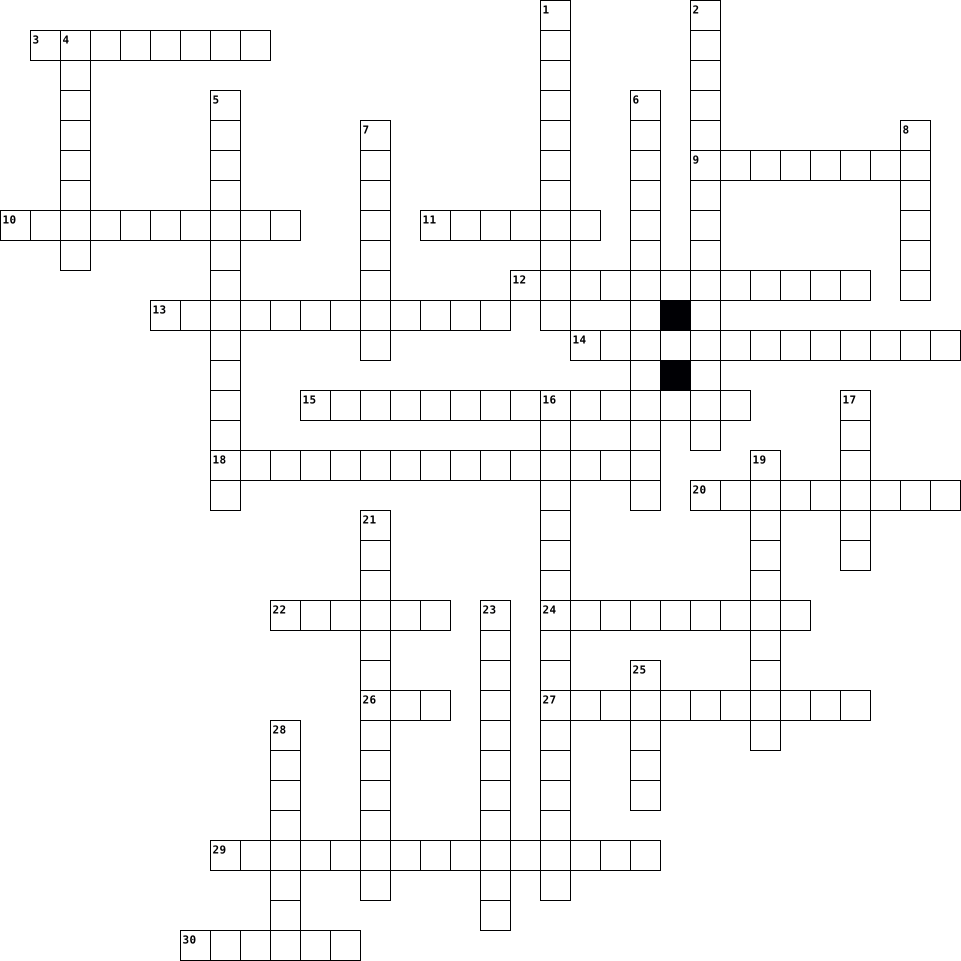
Across
- it contains pathogens that are dead or attenuated
- region that contain heavy and light chain
- antibodies that used to descendants of a single cell
- process where lymphocytes begins to grow and multiplies rapidly
- immunity that prevents an outbreak of the disease or infection
- first types of adaptive immunity
- type of memory that memory cells are responsible for
- others name for antibody mediated immunity
- ability of responding to a specific antigen by binding to it with antigen specific receptors
- called name for IgM antibodies
- Cells that produce antibodies and oversee humoral immunity.
- immune sera that used to treat poisonous snakes bite
- occur in both monomer and dimer
- antibody that contain serum from the surviving animals
- cell that directly attack invading antigen
- the case' name of troublesome small molecules
Down
- major types of cells that acting as APCs
- obtained from the serum of an immune human or animal donor
- Foreign molecules that recognized adaptive immune system
- others name for antibodies
- immunity that acquired when we receives vaccines
- Others name for adaptive body defense
- important aspect of adaptive body defense that can recognizes and mounts even stronger attacks on previously encountered pathogens
- source of natural acquired of passive immunity
- lymphoid organ that place for immature lymphocytes divide rapidly
- Factors that protect our body from future attacks by the same pathogen
- one of the ways for antibodies to inactivate antigens
- it is originate from hemocytoblasts in red bone narrow
- bathe body surface that mainly can found secretory IgA
- essentially identical in different antibodies of the same class
30 Clues: others name for antibodies • called name for IgM antibodies • occur in both monomer and dimer • first types of adaptive immunity • Others name for adaptive body defense • major types of cells that acting as APCs • region that contain heavy and light chain • others name for antibody mediated immunity • cell that directly attack invading antigen • ...
Body Parts 1 2019-10-15

Across
- шея
- губы
- рот
- лицо
- ухо
- лоб
- бровь
- палец
- рука
- грудь
- глаза
- рука
Down
- подбородк
- живот
- плечо
- локоть
- щека
- запястье
- талия
- нос
- голова
21 Clues: шея • рот • ухо • лоб • нос • губы • лицо • щека • рука • рука • живот • плечо • бровь • талия • палец • грудь • глаза • локоть • голова • запястье • подбородк
Body Parts 2 2019-10-15

Across
- волосы
- колено
- щиколотка
- пятка
- пупок
- палец
- нога
- талия
- бедро
- большой палец
- язык
Down
- нога
- стопа
- ноготь
- голень
- палец ноги
- грудь
- сосок
- кулак
- ляжка
- спина
21 Clues: нога • нога • язык • стопа • пятка • пупок • грудь • палец • сосок • кулак • ляжка • талия • бедро • спина • волосы • колено • ноготь • голень • щиколотка • палец ноги • большой палец
Body Systems Review 2023-05-11

Across
- After exercising your heart rate should...
- Which body system has the job of absorbing nutrients for your body?
- These protect the lungs.
- Living organisms that live in water use these to take in oxygen.
- The tiniest blood vessles that carry nutrients and oxygen.
- These begin the process of digestion.
- Arteries carry your blood __________ your heart
- The largest organ ON our bodies.
- Your veins carry blood ____________ your heart.
- The system that holds our bodies upright and moving.
Down
- Blood transports this throughout the body.
- The tube that connects the throat and nose to small tubes leading to the lungs.
- The part of your brain keeps you balanced.
- The largest structure of the body plan.
- The final chmaber of your heart.
- The smallest structure of the body plan.
- Which system has the job of absorbing oxygen for your body?
- Blood is primarily moved around the human body by the
- The blood always leaves the heart and travels directly to the...
- The stretchy sac that holds food.
20 Clues: These protect the lungs. • The final chmaber of your heart. • The largest organ ON our bodies. • The stretchy sac that holds food. • These begin the process of digestion. • The largest structure of the body plan. • The smallest structure of the body plan. • Blood transports this throughout the body. • After exercising your heart rate should... • ...
human body xword 2023-05-06

Across
- The human body
- The Neck
- The Teeth
- The Mouth
- The Face
- The Nostrils
- The Shoulder
- The Chest
- The Nose
- The Cheeks
- The Eyelashes
- The Forehead
- The Lips
- The Tonsils
Down
- The Tongue
- How do you feel?
- The eyelids
- The Mustache
- The Eyebrow
- The Ears
- The Chin
- The Beard
- The Eyes
- The Head
- The Hair
25 Clues: The Neck • The Ears • The Chin • The Face • The Eyes • The Nose • The Head • The Hair • The Lips • The Teeth • The Mouth • The Beard • The Chest • The Tongue • The Cheeks • The eyelids • The Eyebrow • The Tonsils • The Mustache • The Nostrils • The Shoulder • The Forehead • The Eyelashes • The human body • How do you feel?
Japanese body parts 2023-05-07

Across
- まゆ
- はだ
- おしり
- こぶし
- まぶた
- みみ
- むね
- あご
- て
- つめ
- わきのした
- かた
- ほね
- つまさき
- かんぞう
- ふともも
- ひじ
- まつげ
- ちょう
- くち
- かあ
- した
- おやゆび
- ひぎ
- こし
Down
- ぼうこう
- あたま
- てくび
- あしくび
- ひたい
- じんそう
- は
- せなか
- ゆび
- かみ
- はな
- びこう
- うで
- きんにく
- へそ
- くちびる
- め
- ち
- かかと
- あなか
- あし
- くび
- はぐき
- のど
- のう
50 Clues: は • て • め • ち • まゆ • はだ • みみ • むね • ゆび • あご • かみ • はな • つめ • うで • かた • ほね • へそ • ひじ • あし • くち • くび • かあ • した • のど • のう • ひぎ • こし • あたま • てくび • ひたい • おしり • こぶし • まぶた • せなか • びこう • まつげ • かかと • あなか • ちょう • はぐき • ぼうこう • あしくび • じんそう • きんにく • つまさき • かんぞう • くちびる • ふともも • おやゆび • わきのした
Body Systems Overview 2023-05-16

Across
- system that filters blood, includes kidneys
- tube that passes food from mouth to stomach
- gas that we inhale
- system that breaks down of food into nutrients
- bones that protect the brain
- system that allows commication between body parts
- carry blood away from the heart
- system transports nutrients and oxygen to body
- largest artery leaving the heart with oxygenated blood
- part of the respiratory system where gas is exchanges
- specialized nerve cell
- bones that protect the spinal cord
- system that allows movement
- air sacs in the lungs
Down
- part of brain; controls involuntary muscles such as heart and diaphragm
- system provides structure, support and protection
- upper thigh bone
- stretchy material that connects bones to bones
- lower chambers of the heart
- main organ that filters blood
- system in which oxygen is inhaled
- type of neuron the sends impulse from brain to muscles
- largest part of the brain, controls thinking, memory
- another name for windpipe
- longest portion of the digestive system stretchy material connects bones to other bones
- control center of the body
- waste from kidneys
- vessels between arteries and veins
28 Clues: upper thigh bone • gas that we inhale • waste from kidneys • air sacs in the lungs • specialized nerve cell • another name for windpipe • control center of the body • lower chambers of the heart • system that allows movement • bones that protect the brain • main organ that filters blood • carry blood away from the heart • system in which oxygen is inhaled • ...
Animals Body Parts 2023-05-29

Across
- The hard, thickened covering on the feet of certain animals, such as horses, deer, and cows.
- A long, slender appendage found at the hind end of animals, used for balance, communication, or locomotion.
- A small, bag-like structure found in certain animals, such as kangaroos or koalas, used for carrying and protecting their young.
- A flattened, usually vertical appendage found on the back or sides of fish and some marine mammals, used for stability and propulsion.
- The soft, padded feet of certain animals, such as cats, dogs, or bears.
- Sensory organs that animals use to see and perceive their surroundings.
- Sharp, curved nails found on the feet or paws of certain animals, used for grasping, climbing, or hunting.
- Overlapping, hard plates covering the skin of fish, reptiles, and some other animals.
- The elongated, flexible nose or proboscis found in elephants, used for breathing, grabbing objects, and communication.
- The long, thick hair that grows on the neck and back of some animals, such as horses or lions.
- Hard, bony structures in the mouth used for biting, chewing, and grinding food.
- The hard, protective outer covering of certain animals, such as turtles or snails.
- The long, projecting nose or muzzle of certain animals, such as pigs or dogs.
Down
- The opening through which animals eat, drink, and communicate.
- The modified forelimbs of birds, bats, and insects that enable them to fly.
- A pointed, often curved, bony projection on the head of certain animals, such as a rhinoceros or a bull.
- The part of the body that connects the head with the rest of the body.
- Lightweight, flat structures that cover the bodies of birds and help them fly.
- Long, sensitive hairs located on the face of certain mammals, used for sensing the environment.
- The limb structures that support the body and allow animals to walk, run, or jump.
- The hard, pointed mouthpart of a bird or some other animals that is used for feeding and grooming.
- A long, pointed tooth, usually protruding from the mouth of certain animals, such as elephants or walruses.
- Bony structures that grow on the heads of certain animals, typically deer or moose, used for fighting or display.
- A muscular organ in the mouth that animals use for tasting, swallowing, and vocalization.
- The thick coat of hair that covers the bodies of mammals.
25 Clues: The thick coat of hair that covers the bodies of mammals. • The opening through which animals eat, drink, and communicate. • The part of the body that connects the head with the rest of the body. • The soft, padded feet of certain animals, such as cats, dogs, or bears. • Sensory organs that animals use to see and perceive their surroundings. • ...
PART OF BODY 2023-11-03
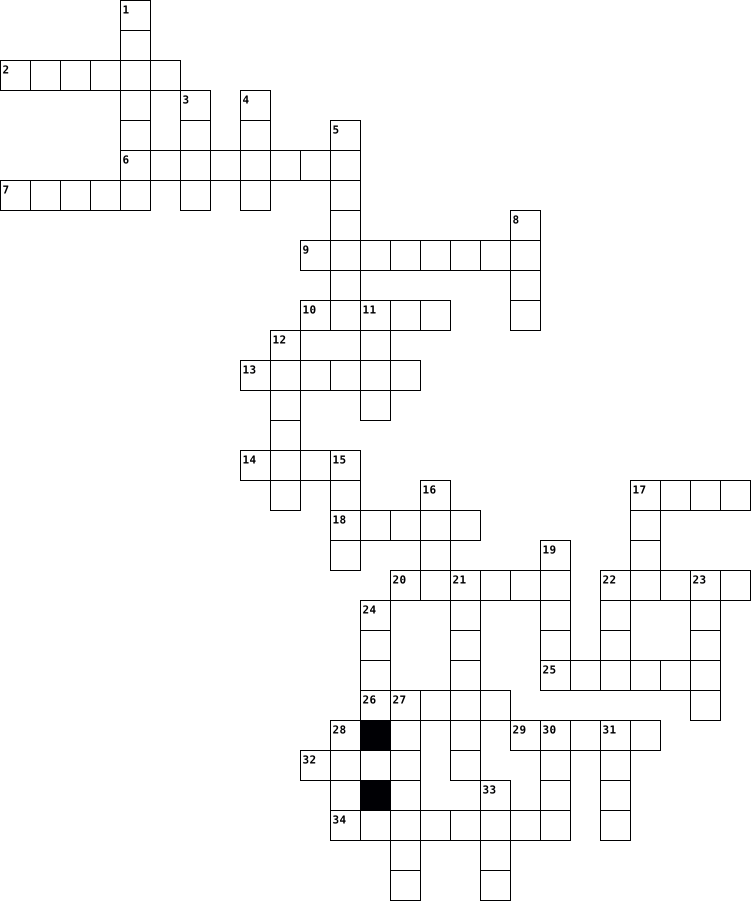
Across
- I have ten.....
- I Have ..... Hair.(Lurus)
- She speaks using my........
- Toes In Indonesia.....
- Pipi In English........
- Short In Indonesia.....
- Punggung In English....
- Badan In English...
- Siku In English..........
- Head In Indonesia....
- Keriting In English....
- I taste my food using my........
- I brush them everyday......
- Dada In English...
- Wajah In English........
- Dahi In English....
Down
- Bulu mata In English....
- I am listening music using my......
- Indonesian people have black........
- Perut In English.....
- Tina uses lipstick for her.....
- I watch TV using my.....
- Arm In Indonesia....
- Lutut In English .........
- I smell something using my.....
- Shoulder In Indonesia......
- Pinggang In English...
- She Has ..... Nose. (Mancung)
- Dagu In English.....
- Neck In Indonesia.....
- I walk using my..........
- in Indonesia is.....
- Betis In Indonesia.....
- Part of body to hold something..........
- Kulit In English.....
- Leher In English.....
36 Clues: I have ten..... • Dada In English... • Badan In English... • Dahi In English.... • Arm In Indonesia.... • Dagu In English..... • in Indonesia is..... • Perut In English..... • Head In Indonesia.... • Kulit In English..... • Leher In English..... • Toes In Indonesia..... • Pinggang In English... • Neck In Indonesia..... • Pipi In English........ • Short In Indonesia..... • Punggung In English.... • ...
Lower Body Muscles 2023-12-07

Across
- Most superficial of the adductor group
- Most superficial of posterior leg muscles
- Everts the foot
- Thigh flexor which runs to lesser trochanter
- Most superficial posteromedial thigh muscle
- Distal attachment to iliotibial tract
- Longest muscle in the body
- Posterior leg muscle which moves toes 2-5
- Opposes action of NN across
- Proximal attachment at anterior inferior iliac spine
- Connects patella to tibial tuberosity
Down
- Abducts thigh at the hip
- Distal attachment to tibial tuberosity
- Deepest and largest of the adductor group
- Anterior thigh muscle with proximal attachment closest to lesser trochanter
- Extends thigh, lateral rotation, flexes leg
- Causes plantarflexion of foot
- Connects anterior thigh muscles to patella
- Distal attachment to superomedial tibia; extends thigh
- Anterior leg muscle to big toe
- Opposes action of NN down
- Intermediate adductor
- Distal attachment to pes anserinus
- Causes dorsiflexion of foot
- Distal attachment to calcaneal tendon
- Anterior thigh muscle with proximal attachment closest to greater trochanter
26 Clues: Everts the foot • Intermediate adductor • Abducts thigh at the hip • Opposes action of NN down • Longest muscle in the body • Causes dorsiflexion of foot • Opposes action of NN across • Causes plantarflexion of foot • Anterior leg muscle to big toe • Distal attachment to pes anserinus • Distal attachment to iliotibial tract • Distal attachment to calcaneal tendon • ...
Body Systems Review 2023-09-15

Across
- "fill your hand with soup"
- the amount of strain your arteries feel as your heart moves your blood around
- section of the brain that controls urination
- _______ bone marrow produces red blood cells
- Angular movements
- features cartilage, ligaments, a joint cavity, synovial fluid, fibrous joint capsule, & sensory nerve fibers/blood vessels
- peak pressure when ventricles of the heart are contracted
- Cardiopulmonary Resuscitation
- how loud a sound is
- detect fine detail & color
- detect a grayscale of black & white
- can identify many different things such as UTI, Diabetes, Pregnancy, or Heart Disease
- all other bones that help us move
- "pour the soup out"
- Microscopic filtering units
- the foundation of the skeleton
- when osteoclasts self destruct when their job is done to avoid doing more damage
- carry blood away from your body
Down
- dominant sense in humans
- when heart is "out of sync"
- Gliding movements
- stimulates bone remodeling & builds better bone strength
- pressure when the ventricles of the heart are relaxed
- carry blood towards the heart
- ___________ bone marrow stores energy as fat
- Body's "pump"
- divides heart laterally (up & down)
- bone breaker cells
- the partial or complete loss of smell & sometimes taste
- Beats Per Minute
- FILTERS OF OUR BODY
- a hollow collapsible sack that temporarily stores urine
- bone maker cells
- meat taste
34 Clues: meat taste • Body's "pump" • Beats Per Minute • bone maker cells • Gliding movements • Angular movements • bone breaker cells • how loud a sound is • FILTERS OF OUR BODY • "pour the soup out" • dominant sense in humans • "fill your hand with soup" • detect fine detail & color • when heart is "out of sync" • Microscopic filtering units • carry blood towards the heart • ...
The Human Body 2023-09-07

Across
- cord moves nerve impulses to and from the brain
- where digestion begins
- breaks down food into smaller pieces
- a group of cells that does a specific job
- the system that takes in oxygen and gives off carbon dioxide (lungs, trachea, nose)
- sends and receives messages between parts of the body and the brain
- transports blood throughout the body
- an organ that pumps blood through the body (circulatory system)
- a basic unit of life
- a pair of organs that help us to breathe
- a collection of tissues that has a specific function
- control center of the body
- a system that allows us to move (muscles)
- the body system that controls all the other body systems (brain, nerves, spinal cord)
- the system that absorbs food into the body (esophagus, intestines, stomach, mouth)
Down
- liquid that circulates through the body carrying oxygen and nutrients and eliminating carbon dioxide and other
- a group of parts that work together
- work with the skeletal system to allow movement
- an organism with many cells
- where oxygen enters your body
- to make more organisms of one's own kind
- an animal, plant, or single-celled life form
- the system that provides our body frame (bones)
- a tube that connects the larynx to the lungs
- the pathway that connects the throat to the stomach
- tubes that absorb nutrients and water
- an organism with only one cell
- hard tissue in the body that gives it structure and support
- the system that circulates blood through the body (blood, heart, vessels)
29 Clues: a basic unit of life • where digestion begins • control center of the body • an organism with many cells • where oxygen enters your body • an organism with only one cell • a group of parts that work together • breaks down food into smaller pieces • transports blood throughout the body • tubes that absorb nutrients and water • to make more organisms of one's own kind • ...
The Human body 2023-09-19

Across
- It grows fast and it is usually on a man's face
- you have two and they have hands
- it is the knee of the arm
- supports the head
- it expands and deflate as you breathe
- synonym of leg
- let air in
- you put mascara on them
- you have 10
- can be strong or gentle. The one of sharks terrifies people
- at the center of you eyes
Down
- pink and above your teeth
- were 'dun' in the a Shakespearean poem
- our ancestors used them to dig the ground
- the bottom of your face
- what keeps your feet connected to your leg
- you can feel the pulse in it
- it is in your leg and gives strength to the lower part of the leg
- you move it when you smile and you can put make-up on it
- the little finger
- can be sore...
- you can have two or a big one above you eyes
- they sweat and sometimes smell. You can shave them or not
23 Clues: let air in • you have 10 • synonym of leg • can be sore... • supports the head • the little finger • the bottom of your face • you put mascara on them • pink and above your teeth • it is the knee of the arm • at the center of you eyes • you can feel the pulse in it • you have two and they have hands • it expands and deflate as you breathe • were 'dun' in the a Shakespearean poem • ...
Human Body C1 2024-01-09

Across
- the gelatinous liquid that fills the inside of a cell.
- the behavior that is manifested by a living organism which is the result of an external or internal stimulus.
- It monitors and regulates the functions of the body.
- a mass of cytoplasm that is bound externally by a cell membrane.
- anything that can trigger a physical or behavioral change.
- a collection of tissues that structurally form a functional unit specialized to perform a particular function.
- a group of cells that have similar structure and that function together as a unit.
- composed of cells that have the special ability to shorten or contract in order to produce movement of the body parts.
- a self-regulating process by which a living organism can maintain internal stability while adjusting to changing external conditions.
- the force acting on the unit area of a material.
- the membrane-enclosed organelle within a cell that contains the chromosomes
- the internal framework of the human body.
Down
- an organ which produces and releases substances that perform a specific function in the body.
- a biological system consisting of a group of organs that work together to perform one or more functions.
- regulates the transport of materials entering and exiting the cell.
- the part of the body where two or more bones meet to allow movement.
- chemical substances that act like messenger molecules in the body.
- a highly organized tissue composed of bundles of muscle fibers called myofibers which contain several myofibrils.
- a thin, continuous, protective layer of compactly packed cells with a little intercellular matrix.
- a substance captures and transforms energy.
- a term given to several body tissues that connect, support, and help bind other tissues.
- chemical substances required by the body to sustain basic functions and are optimally obtained by eating a balanced diet.
22 Clues: the internal framework of the human body. • a substance captures and transforms energy. • the force acting on the unit area of a material. • It monitors and regulates the functions of the body. • the gelatinous liquid that fills the inside of a cell. • anything that can trigger a physical or behavioral change. • ...
Part of Body 2024-01-24

Across
- Halis
- Perut
- Neck
- Kaki
- Hidung
- Tangan
- Mata Kaki
- Dada
- Rambut
- Mata
Down
- Kepala
- Pantat
- Bahu
- Dagu
- Punggung
- Jari
- Mulut
- Pipi
- Telinga
- Lengan
20 Clues: Bahu • Dagu • Neck • Kaki • Jari • Pipi • Dada • Mata • Halis • Perut • Mulut • Kepala • Pantat • Hidung • Tangan • Rambut • Lengan • Telinga • Punggung • Mata Kaki
human body crossword! 2024-03-20

Across
- helps you speak
- transports oxygen and nutrients to tissue
- I hold food while it gets digested
- produces enzymes that digests protien
- the main airway into the lungs
- helps you digest food
- sends messages to the brain
- a filter for the body
- protects you against UV light
- you are seeing this text with your...
Down
- stores urine
- helps you breathe
- allows us to move
- taste buds live here
- it serves a purpose for creating different sounds
- controls thought and memory
- balences the body's fluids
- pumps blood throughout your body
- you hear with this
- helps you smell
20 Clues: stores urine • helps you speak • helps you smell • helps you breathe • allows us to move • you hear with this • taste buds live here • helps you digest food • a filter for the body • balences the body's fluids • controls thought and memory • sends messages to the brain • protects you against UV light • the main airway into the lungs • pumps blood throughout your body • ...
the Human Body 2024-03-18

Across
- rhythm of heartbeat
- carries blood toward the heart
- the skin and its diseases
- A human embryo after 8 weeks
- cord, connects fetus to placenta
- the fingers
- roof of the mouth
- buds. organs assorted with the taste buds
- surround the mouth
Down
- Blackheads and pimples
- associated with the liver
- water output exceeds water intake
- the foot
- opening which light enters the eye
- inner layer of the eye wall
- Receives food
- vessel that transports blood away from heart
- process of childbirth
- cavity, space between the nose
- the ear
20 Clues: the ear • the foot • the fingers • Receives food • roof of the mouth • surround the mouth • rhythm of heartbeat • process of childbirth • Blackheads and pimples • associated with the liver • the skin and its diseases • inner layer of the eye wall • A human embryo after 8 weeks • carries blood toward the heart • cavity, space between the nose • cord, connects fetus to placenta • ...
Human Body Systems 2024-03-22

Across
- An organ that filters the blood and makes urine
- This system provides protection, structure, and helps with movement
- The system that communicates and send signals to the rest of the body
- An Organ that contracts to circulate the blood
- This part of the digestive system absorbs the most nutrients
- The system that provides movement to the body
- The location where red blood cells are made
- A tube that carries food from the mouth to the stomach
- The type of digestion that involves saliva, bile, and enzymes
- The system that brings in oxygen into the body and rids of carbon dioxide
- An Organ that stores urine
Down
- A tube that brings in oxygen into the lungs
- The main muscle that assists with breathing
- Where gas exchange occurs in the lungs
- The connections that send signals between the spinal cord and the rest of the body
- The system that the skin makes up
- This attaches bone and muscle together
- The type of muscle found in the digestive system
- This part of the circulatory system brings oxygenated blood to the cells of the body
- This part of the skeleton protects vital organs such as the heart and lungs
- This is the longest bone in the body
- The flexible tissue between bones
22 Clues: An Organ that stores urine • The system that the skin makes up • The flexible tissue between bones • This is the longest bone in the body • Where gas exchange occurs in the lungs • This attaches bone and muscle together • A tube that brings in oxygen into the lungs • The main muscle that assists with breathing • The location where red blood cells are made • ...
Body parts (TeamA) 2024-03-24

Across
- Related to the bones forming the human wrist
- Scraping of the skin
- Most common type of testicular tumor
- The part of the human leg between the hip and the knee.
- A body tissue consisting of long cells that contract when stimulated and produce motion.
- Relating to the lungs
- An organ that makes substances such as hormones, sweat, tears, saliva, or milk
- The long tube-shaped organ in the abdomen that completes the process of digestion.
Down
- The part or joint connecting the foot with the leg
- The largest organ of our body
- A muscular partition separating the abdominal and thoracic cavities
- Inflammation of the lining of the stomach
- Medical term pertaining to heart
- The fleshy muscular organ in the mouth of a mammal, used for tasting, licking, swallowing, and (in humans) articulating speech.
- Swelling caused by too much fluid trapped in the body’s tissues
- One of a pair of organs in the chest that supplies the body with oxygen and removes carbon dioxide from the body.
- The part of the skull that encloses the brain
- One of a pair of organs in the abdomen.
- The organ inside the head that controls all body functions of a human being.
- The suffix means inflammation
20 Clues: Scraping of the skin • Relating to the lungs • The largest organ of our body • The suffix means inflammation • Medical term pertaining to heart • Most common type of testicular tumor • One of a pair of organs in the abdomen. • Inflammation of the lining of the stomach • Related to the bones forming the human wrist • The part of the skull that encloses the brain • ...
Body Systems Review 2024-03-15

Across
- Deficiency of oxygen in the blood
- Benign tumors in the uterus
- This system breaks down food
- Place where two or more bones join
- No urine production
- The lower jawbone
- Abbreviation is GU
- This system produces, stores and eliminates waste
- This system stores calcium
- The knee cap
- The Endocrine system maintains this
- Inflammation of the ear
Down
- Drugs that lower cholesterol
- The largest part of the brain
- One of the female hormones
- This system includes blood vessels, heart and lungs
- The outer layer of the skin
- Coloured part of the eye
- Inflammation of liver
- Nose bleed
- Device that measures blood glucose
21 Clues: Nose bleed • The knee cap • The lower jawbone • Abbreviation is GU • No urine production • Inflammation of liver • Inflammation of the ear • Coloured part of the eye • One of the female hormones • This system stores calcium • Benign tumors in the uterus • The outer layer of the skin • Drugs that lower cholesterol • This system breaks down food • The largest part of the brain • ...
Parts of Body 2024-02-16

Across
- leher
- lip
- kaki
- lidah
- bulu mata
- Mata
- mulut
- pundak
- tangan
- perut
Down
- punggung
- dagu
- jari
- gigi
- pipi
- telinga
- siku
- rambut
- hidung
- kening
20 Clues: lip • dagu • jari • gigi • pipi • kaki • Mata • siku • leher • lidah • mulut • perut • rambut • hidung • kening • pundak • tangan • telinga • punggung • bulu mata
Body Parts Puzzle 2023-10-09

Across
- - Regulates blood sugar
- - Organ of vision
- - Digests food
- - Stores bile for digestion
- - Absorb nutrients from food
- - Provide support and structure
- - Stores urine
- - Connects the throat to the stomach
- - Used for hearing and balance
- - Body's largest organ
- - Filter waste from the blood
Down
- - Pumps blood throughout the body
- - Allow movement
- - Regulates metabolism
- - Organ for breathing
- - Detoxifies and filters blood
- - Filters blood and stores platelets
- - Helps with taste and speech
- - The body's control center
- - Vestigial organ in the digestive system
20 Clues: - Digests food • - Stores urine • - Allow movement • - Organ of vision • - Organ for breathing • - Regulates metabolism • - Body's largest organ • - Regulates blood sugar • - Stores bile for digestion • - The body's control center • - Absorb nutrients from food • - Helps with taste and speech • - Filter waste from the blood • - Detoxifies and filters blood • - Used for hearing and balance • ...
Human Body Systems 2023-10-25

Across
- removes excess, unnecessary materials from the body fluids of an organism, so as to help maintain internal chemical homeostasis and prevent damage to the body
- The Basic unit of life
- an organ of soft nervous tissue contained in the skull of vertebrates, functioning as the coordinating center of sensation and intellectual and nervous activity
- either of the two large organs of respiration located in the chest cavity and responsible for adding oxygen to and removing carbon dioxide from the blood.
- breaks down food into simple nutrients such as carbohydrates, fats and proteins. These can then be absorbed into your blood, so your body can use them for energy, growth and repair.
- a network of organs, vessels and tissues that move a colorless fluid called lymph back to your bloodstream.
- a hollow muscular organ that pumps the blood through the circulatory system by rhythmic contraction and dilation
- a membranous sac in humans and other animals, in which urine is collected for excretion
- gives the body its shape, allows movement, makes blood cells, provides protection for organs and stores minerals
- the system that helps in gas exchange, breathing, sound production,and olfactory assistance
- the network of nerve cells and fibers which transmits nerve impulses between parts of the body.
Down
- made up of all the body's different hormones, regulates all biological processes in the body from conception through adulthood and into old age
- the system that circulates blood and lymph through the body, consisting of the heart, blood vessels, blood, lymph, and the lymphatic vessels and glands.
- the organ system responsible for the production and fertilization of gametes and, in females, the carrying of a fetus
- the system that protect bones, organs, and other internal structures from harm.
- a part of an organism that is typically self-contained and has a specific vital function, such as the heart or liver in humans.
- permits movement of the body, maintains posture, and circulates blood throughout the body
- a complex network of organs, cells and proteins that defends the body against infection, whilst protecting the body's own cells.
- a group of cells that have similar structure and that function together as a unit
- a large lobed glandular organ in the abdomen of vertebrates, involved in many metabolic processes
- the internal organ in which the major part of the digestion of food occurs, being a pear-shaped enlargement of the alimentary canal linking the esophagus to the small intestine.
21 Clues: The Basic unit of life • the system that protect bones, organs, and other internal structures from harm. • a group of cells that have similar structure and that function together as a unit • a membranous sac in humans and other animals, in which urine is collected for excretion • ...
Parts of Body 2024-05-24

Across
- leher
- siku
- kaki
- bahu
- dagu
- mulut
- mata
- tangan
- pinggang
- wajah
- telinga
- perut
- rambut
Down
- hidung
- dada
- tubuh
- gigi
- jari
- ibu jari
- pipi
- lidah
- lutut
- kuku
- kepala
- dahi
- bibir
- lengan
27 Clues: dada • siku • gigi • kaki • jari • bahu • pipi • dagu • mata • kuku • dahi • leher • tubuh • mulut • lidah • lutut • wajah • bibir • perut • hidung • tangan • kepala • lengan • rambut • telinga • ibu jari • pinggang
The Body Nouns 2024-07-12

Across
- the outer covering of the body.
- one of the pair of organs that filter waste from the blood.
- tissue in the body that can contract to produce movement.
- the hard, structural components of the skeleton.
- one of the five digits at the end of the foot.
- a large organ that processes toxins and produces bile.
- one of the bones in the chest that protect the lungs.
- one of the five digits at the end of the hand.
- the part of the face above the eyebrows.
- the organ that pumps blood through the circulatory system.
Down
- the series of vertebrae extending from the skull to the lower back.
- The joint connecting the foot with the leg. Example: He twisted his ankle while running.
- the organ where food is digested.
- one of two organs used for breathing.
- the organ located in the head that controls thoughts and actions.
- the passage that leads from the back of the mouth to the esophagus and lungs.
- the joint between the forearm and the upper arm. Example: He leaned on his elbow while thinking.
- a blood vessel that carries blood away from the heart.
- a bundle of fibers that transmits impulses of sensation to the brain or spinal cord.
- the organ of hearing.
20 Clues: the organ of hearing. • the outer covering of the body. • the organ where food is digested. • one of two organs used for breathing. • the part of the face above the eyebrows. • one of the five digits at the end of the foot. • one of the five digits at the end of the hand. • the hard, structural components of the skeleton. • ...
CLIL Human body 2024-07-13

Across
- the longest bone of human body
- bone located between the shoulder and the elbow
- they connect two or more bones
- it is carried around by red blood cells
- nutrients that we find in meat and fish
- it contains vocal cords
- muscle that allows respiration
- the biggest artery
- the first tract of small intestine
- joint to which the femur is linked
- joint located between the leg and the foot
- sugar that cells get by the blood
- muscles that we can control
- respiratory tubes that deep into the lungs
- it protects the brain
- it protects our lungs (2)
- it allows communication between the baby and the mum's body
- gland that produces insulin
- the two lower heart cavities
- the smallest blood vessels
- tube that carry food to the stomach
Down
- blood cells that produce antibodies
- we have 32 in our mouth
- it is protected by the vertebral column (2)
- message substances produced by endocrine glands
- enzyme that we find in the saliva
- organ that produces pepsin
- link between two neurons
- in our body there are 33
- cartilage "door" that prevents food to go into the trachea
- it is located between the arm and the hand
- we should drink at least 2 litres per day
- muscle that pumps our blood
- cell that receives and transmits nervous impulse
- tissue that covers our body
- cells that organize blood clotting
- they contract to produce movement
- Organ that produces the bile
38 Clues: the biggest artery • it protects the brain • we have 32 in our mouth • it contains vocal cords • link between two neurons • in our body there are 33 • it protects our lungs (2) • organ that produces pepsin • the smallest blood vessels • muscle that pumps our blood • muscles that we can control • tissue that covers our body • gland that produces insulin • the two lower heart cavities • ...
Human Body Parts 2025-11-29

Across
- Hidung
- Punggung
- Lidah
- Kulit
- Telinga
- Gigi
- Lengan
- Bahu
- Dagu
- Kepala
Down
- Wajah
- Lutut
- Leher
- Kaki
- Tulang
- Mulut
- Perut
- Rambut
- Bibir
- Mata
20 Clues: Kaki • Gigi • Bahu • Mata • Dagu • Wajah • Lutut • Leher • Mulut • Lidah • Kulit • Perut • Bibir • Hidung • Tulang • Rambut • Lengan • Kepala • Telinga • Punggung
The Body - Nouns 2026-02-25

Across
- – Rear surface of the body from neck to hips.
- – Part connecting the head to the shoulders.
- – Body parts at the end of legs; used for standing.
- – Organs for seeing; they can be blue, brown, or green.
- – Muscular organ in the mouth for tasting and speaking.
- – Soft, movable parts around the mouth.
- – Joints connecting arms to the torso.
- – Limbs used for walking and running.
- – Digits on your hand; used for pointing and gripping.
- – Opening for eating and speaking.
- – Limbs from shoulder to wrist; used for hugging.
- – Top part of the body containing the brain.
Down
- – Front part of the head with eyes, nose, and mouth.
- – Joints connecting the thigh and lower leg.
- – Digits at the end of your feet.
- – White, hard structures in the mouth for chewing.
- – Organ for smelling and breathing.
- – Organ where food goes after swallowing; belly.
- – End of arms with four fingers and a thumb.
- – Organs for hearing; often pierced for jewelry.
20 Clues: – Digits at the end of your feet. • – Opening for eating and speaking. • – Organ for smelling and breathing. • – Limbs used for walking and running. • – Joints connecting arms to the torso. • – Soft, movable parts around the mouth. • – Part connecting the head to the shoulders. • – Joints connecting the thigh and lower leg. • – End of arms with four fingers and a thumb. • ...
Human body list 2026-03-04

Across
- junction Connection point between a motor neuron and a muscle fiber
- Membrane that surrounds and cushions the lungs
- reabsorption Process in kidneys that takes back water and useful substances into the blood
- Thick semi liquid food mixture in the stomach
- Tube that carries urine out of the body
- Nerve cell that processes information in the brain and spinal cord
- spinae Back muscles that help straighten and support the spine
- Origin Points where a muscle attaches to bones
- Treatment that removes waste from the blood when kidneys fail
Down
- Gap where neurons send signals to each other
- Large artery that carries oxygen rich blood from the heart to the body
- Support cells in the nervous system that help neurons function
- Protein that helps break down food during digestion
- Throat tube that helps with breathing and swallowing
- artery Blood vessels that supply blood to the heart muscle
- Muscle fiber cell that makes up muscle tissue
- Upper chamber of the heart that receives blood
- Flap that keeps food out of the airway when you swallow
- Small flap that protects the larynx during swallowing
- Voice box that allows air to pass and produces sound
20 Clues: Tube that carries urine out of the body • Gap where neurons send signals to each other • Thick semi liquid food mixture in the stomach • Muscle fiber cell that makes up muscle tissue • Membrane that surrounds and cushions the lungs • Upper chamber of the heart that receives blood • Origin Points where a muscle attaches to bones • ...