
body Crossword Puzzles
Body weight 2025-03-18

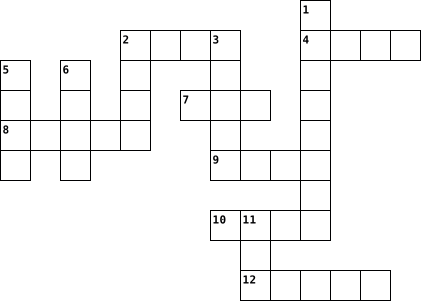
Across
- How many times our hearts beat per minute
- Exercises that involve running and dancing
- Something you need to be able to lift something heavy
- What we do to make our bodies stronger
- A fun activity to play
- We do this by making an exercise more difficult
Down
- The last activity we do
- We do this to decrease our heart rate
- Helps you bend, twist, and stretch without feeling stiff
- Allows our muscles to work for a long time
- Time we use to breathe
- Number of times an exercise is done
- The first activity of a lesson
13 Clues: Time we use to breathe • A fun activity to play • The last activity we do • The first activity of a lesson • Number of times an exercise is done • We do this to decrease our heart rate • What we do to make our bodies stronger • How many times our hearts beat per minute • Exercises that involve running and dancing • Allows our muscles to work for a long time • ...
BODY PARTS 2025-10-15

Across
- przepłukać
- pacha
- wdychać
- cukrzyk
- pośladek
- kłykieć
Down
- atakować, dotykać (o chorobie)
- brodawka sutkowa
- przechylić
- zbadać palpacyjnie
- goleń
- podniebienie
- brzuch
13 Clues: pacha • goleń • brzuch • wdychać • cukrzyk • kłykieć • pośladek • przepłukać • przechylić • podniebienie • brodawka sutkowa • zbadać palpacyjnie • atakować, dotykać (o chorobie)
Body Systems 2023-10-03

Across
- Relating to the organs involved in breathing, such as the lungs and diaphragm.
- A group of organs that work together to perform a specific function in the body.
- Pertaining to the framework of bones that supports and protects the body.
- Pertaining to the body's defense system against diseases and infections.
- Pertaining to the organs and processes involved in producing offspring.
- The process of breaking down food into smaller pieces and absorbing nutrients.
- A part of the body that has a specific function and is made up of different tissues
- Relating to the organs involved in removing waste products from the body.
- The movement of blood through the body, delivering oxygen and nutrients to cells.
Down
- Relating to the skin, hair, and nails, which protect the body from external harm.
- Relating to the glands that produce hormones to regulate various bodily functions.
- Referring to the network of nerves and cells that transmit signals throughout the body.
- Relating to the organs involved in breathing, such as the lungs and diaphragm.
- Relating to the muscles and their ability to contract and produce movement.
14 Clues: Pertaining to the organs and processes involved in producing offspring. • Pertaining to the body's defense system against diseases and infections. • Pertaining to the framework of bones that supports and protects the body. • Relating to the organs involved in removing waste products from the body. • ...
body parts 2026-01-12

Across
- ciało
- noga
- łokieć
- palec u ręki
- palec u stopy
- głowa
- plecy
Down
- ramię
- stopa
- kolano
- szyja
- dłoń
- ręka
13 Clues: noga • dłoń • ręka • ramię • ciało • stopa • szyja • głowa • plecy • kolano • łokieć • palec u ręki • palec u stopy
Body actions 2026-01-09

Across
- to turn part of your body around
- to keep your body in a steady position
- to breathe noisily when you sleep
- to walk slowly around an area
- to hit someone with your fist hard
Down
- to make a movement with your hands or head
- to make food go down your throat
- to be unable to breathe properly because your throat is blocked
- to move or bend your body in a particular position or against the wall
- to make your body as straight as possible
- to move the top part of your body forward and downwards
- to press a part of someone's skin tightly between your finger and thumb
- to move your head up and down
13 Clues: to walk slowly around an area • to move your head up and down • to turn part of your body around • to make food go down your throat • to breathe noisily when you sleep • to hit someone with your fist hard • to keep your body in a steady position • to make your body as straight as possible • to make a movement with your hands or head • ...
Human Body 2026-03-14

Across
- — Organ capable of regenerating itself after damage
- — Structure that actually shrinks slightly during the day from gravity
- — Organs whose surface area is roughly the size of a tennis court
- — Liquid that helps you taste food (without it, flavors are harder to detect)
- — Muscle that can keep beating outside the body briefly under the right conditions
- — Organ that uses about 20% of the body’s total energy
Down
- — Bone that doesn’t fully develop until childhood
- — Hair that helps keep dust out of your eyes
- — Organ that renews itself roughly every month
- — The smallest bone in the human body, located in the ear
- — Muscle that never gets tired the way most others do
- — Organ that produces acid strong enough to dissolve metal (but protects itself)
- — Body structures that you are born with about 270 of, but adults have only 206
13 Clues: — Hair that helps keep dust out of your eyes • — Organ that renews itself roughly every month • — Bone that doesn’t fully develop until childhood • — Organ capable of regenerating itself after damage • — Muscle that never gets tired the way most others do • — Organ that uses about 20% of the body’s total energy • ...
Body Parts 2026-02-14

Across
- - You wear your backpack on your ________.
- - This is between your head and your shoulders.
- - This is the front part of your head with your eyes and mouth.
- - This is in the middle of your arm. It helps you bend.
- - You have five of these on each hand.
- - You have five of these on each foot.
- - This is the long part of your body from your shoulder to your hand.
Down
- - It is in the middle of your leg. It helps you bend.
- - The long part of your body that helps you stand and run.
- - Use this to kick a ball.
- - Use this to smell a flower.
- - Where your food goes after you eat.
- - It is at the end of your arm. You use it to wave hello.
13 Clues: - Use this to kick a ball. • - Use this to smell a flower. • - Where your food goes after you eat. • - You have five of these on each hand. • - You have five of these on each foot. • - You wear your backpack on your ________. • - This is between your head and your shoulders. • - It is in the middle of your leg. It helps you bend. • ...
Body Systems 2024-11-26

Across
- The system that controls and coordinates body activities (7 letters)
- The organ involved in breathing (6 letters)
- The organ that stores urine (7 letters)
- The type of tissue found in the circulatory system (7 letters)
- Type of tissue that is found in the bladder (9 letters)
- The system responsible for breaking down food (8 letters)
- The system that includes the lungs and airways (12 letters)
Down
- The organ that pumps blood (5 letters)
- The system that consists of muscles throughout the body (8 letters)
- The organ that processes food and begins digestion (7 letters)
- Type of tissue that makes up the lungs (10 letters)
- The system that transports blood throughout the body (10 letters)
- The type of muscle that is involuntary and found in the stomach (6 letters)
13 Clues: The organ that pumps blood (5 letters) • The organ that stores urine (7 letters) • The organ involved in breathing (6 letters) • Type of tissue that makes up the lungs (10 letters) • Type of tissue that is found in the bladder (9 letters) • The system responsible for breaking down food (8 letters) • The system that includes the lungs and airways (12 letters) • ...
Body parts 2024-04-24
Across
- pies
- mano
- pierna
- pecho
- cabeza
- cabello
- boca
Down
- hombro
- pie
- dientes
- espalada
- rodilla
- brazo
13 Clues: pie • pies • mano • boca • pecho • brazo • hombro • pierna • cabeza • dientes • rodilla • cabello • espalada
body parts 2025-04-13

Across
- part of the hand
- what you use to eat and talk
- People who do ballet have to point their _____
- the body part that makes you able to hear
- what makes you see
- when you have a question in class you raise your ____
- Giraffes have long _____
Down
- long body part attached to your shoulders
- body part at the bottom of the legs
- in the middle of your face
- when you say yes or no you shake your _____
- what do you mainly use to walk
- Part of your body where your spine is
13 Clues: part of the hand • what makes you see • Giraffes have long _____ • in the middle of your face • what you use to eat and talk • what do you mainly use to walk • body part at the bottom of the legs • Part of your body where your spine is • long body part attached to your shoulders • the body part that makes you able to hear • when you say yes or no you shake your _____ • ...
Body parts 2024-07-19

Across
- You use these to see.
- These are on your hand, and you have ten of them.
- Tiny
- These are on your feet, and you have ten of them.
- This connects your head to your body.
- This grows on your head.
Down
- Large
- You use these to hear sounds.
- You use this to smell things.
- You use this to eat and talk.
- They help you lift things.
- Distant
- Some animals have this at the end of their body.
13 Clues: Tiny • Large • Distant • You use these to see. • This grows on your head. • They help you lift things. • You use these to hear sounds. • You use this to smell things. • You use this to eat and talk. • This connects your head to your body. • Some animals have this at the end of their body. • These are on your hand, and you have ten of them. • ...
Body Parts 2025-07-02

Across
- The opposite of your hand, it touches the ground.
- Round and shiny, helping you see the world clearly.
- Like a tiny mountain, it smells flowers and food.
- Moving fast or slow, they help you walk and run.
- The top part of the body where the brain lives.
- Unlike legs, these help you reach and hold things.
- Long or short, people style it to look nice.
Down
- A joint that bends so you can ( ) and jump.
- Small and thin, they help you grab and point.
- Crunch and chew sounds happen when eating snacks.
- A part with fingers that you use to ( ) objects.
- Opening wide to eat, talk, or smile bright.
- What do you use to hear birds singing nearby?
13 Clues: Opening wide to eat, talk, or smile bright. • A joint that bends so you can ( ) and jump. • Long or short, people style it to look nice. • Small and thin, they help you grab and point. • What do you use to hear birds singing nearby? • The top part of the body where the brain lives. • Moving fast or slow, they help you walk and run. • ...
Body Language 2025-09-07

Across
- Manipulating your clothing often indicates emotional discomfort or
- SECONDS Recommended duration for initial eye contact when meeting someone
- Extended eye contact may suggest possible deception or manipulation
- Body language usually appears in these, not in single gestures
- Distance range more than 12 but less than 25 feet
- Touching this frequently can indicate nervousness or anxiety
Down
- Showing this with your hands suggests honesty and openness
- Primary purpose of personal space is to organize relationships and set GLANCE Best way to maintain eye contact is to alternate between eye contact and this
- Space zone reserved for partners, family, and close friends
- Pointing with this finger can indicate dominance
- Zone where you usually find acquaintances and coworkers
- SPACE Distance reserved for acquaintances and coworkers
- Making small adjustments to your appearance when nervous or embarrassed
- Leaning back with crossed arms can suggest this feeling
14 Clues: Pointing with this finger can indicate dominance • Distance range more than 12 but less than 25 feet • Zone where you usually find acquaintances and coworkers • SPACE Distance reserved for acquaintances and coworkers • Leaning back with crossed arms can suggest this feeling • Showing this with your hands suggests honesty and openness • ...
body parts 2025-11-20

Across
- 尾巴
- 耳朵
- 眼睛
- 手
- 手指
- 肩膀
- 爪子
Down
- 脸
- 腿
- 胳膊
- 眉毛
- 鼻子
- 身体
13 Clues: 脸 • 腿 • 手 • 尾巴 • 胳膊 • 耳朵 • 眼睛 • 眉毛 • 鼻子 • 手指 • 身体 • 肩膀 • 爪子
Body parts 2016-01-17

Across
- / either of the two long parts of the upper body that are attached to the shoulder and have the hands at the end.
- / the oart of the body at the end of the arm that is used for holding, moving, touching, and feeling things.
- / Any of the short hairs that grow along the edges of the eye.
- / one of the parts of the body of a human or animal that is used for standing or walking.
- The part of the face that sticks out above the mouth, through which you breath and smell.
- / The line of short hairs above each eye in humans.
Down
- / the opening in the face of a person or animal, consisting of the lips and the space between them, or the space behind containing the teeth and the tongue.
- The front of the head where the eyes, nose and mouth are/
- / either or the two organs, one on each side of the head, by which people or animals hear sounds.
- / one of the two parts of the body at each side of the neck that join the arms to the rest of the body.
- One of the two organs in your face that are used for seeing/
- the large, soft piece of flesh in the mouth that you can move
- / the part of the body at the bottom of the leg on which a person or animals stands
13 Clues: / The line of short hairs above each eye in humans. • The front of the head where the eyes, nose and mouth are/ • One of the two organs in your face that are used for seeing/ • the large, soft piece of flesh in the mouth that you can move • / Any of the short hairs that grow along the edges of the eye. • ...
body parts 2016-01-10

Across
- nyak
- könyök
- arc
- kéz
- kézujj
- száj
- fej
- fülek
Down
- térdek
- has
- lábfejek
- fog
- szemek
13 Clues: has • arc • kéz • fog • fej • nyak • száj • fülek • térdek • könyök • kézujj • szemek • lábfejek
Body parts 2013-11-12

Across
- hand
- arm
- elbow
- foot
- ears
Down
- fingers
- leg
- stomach
- head
- chest
- nose
- eyes
- mouth
13 Clues: leg • arm • hand • head • nose • foot • eyes • ears • elbow • chest • mouth • fingers • stomach
Body Systems 2014-05-22

Across
- (n) means the upper leg bone.
- (n) means the pump that moves the blood.
- muscle (n) means the muscle that goes from the ribs to the pelvis.
- (n) means the tube that goes from the moouth to the stomach.
- (n) measn the bone that covers the brain.
- (n0 means the very small tubes that connect the arteies and viens.
- (n) means the organ that mixes food with chemicals.
Down
- tubes (n) means the tubes inside the lungs.
- (n) means the organ that lets you think and feel.
- (n) means the muscle that covers the back of the lower leg.
- (n) measn the backbone.
- (n) means the organ that makes chemicals that break food down. Oxygen (n) means a gas taht burning things need.
- (n)means the hip bone.
13 Clues: (n)means the hip bone. • (n) measn the backbone. • (n) means the upper leg bone. • (n) means the pump that moves the blood. • (n) measn the bone that covers the brain. • tubes (n) means the tubes inside the lungs. • (n) means the organ that lets you think and feel. • (n) means the organ that mixes food with chemicals. • ...
Body Parts 2015-01-21

Across
- we kiss with these.
- we smell with these
- a pair of organ of sight
- the upper part of the leg
- where the legs bend
- the baby sucked his ______ .
Down
- used for picking things up
- we walk with these
- we chew with these
- we hear with these
- we taste with this
- muscular body that pumps blood
- attached to the shoulder
13 Clues: we walk with these • we chew with these • we hear with these • we taste with this • we kiss with these. • we smell with these • where the legs bend • a pair of organ of sight • attached to the shoulder • the upper part of the leg • used for picking things up • the baby sucked his ______ . • muscular body that pumps blood
Body Systems 2021-10-05

Across
- Enables body to produce offspring
- Carries needed materials through the body and picks up wastes
- A blood vessel that carries blood back to the heart.
- It is responsible for carrying blood inside our body transporting oxygen and nutrients.
- where the digestive system begins
- breaks down food, absorbs nutrients, and eliminates solid waste
- the body system that facilitates gas exchange (brings in oxygen and releases carbon dioxide)
Down
- Protects internal organs, produces blood cells, gives shape and support
- removes waste products from the body
- blood vessels that carry blood away from the heart
- It is red and carries nutrients, oxygen, white blood cells and it is mostly liquid.
- Enables the body to move
- system Controls the body's activities; responds to internal and external stimuli
13 Clues: Enables the body to move • Enables body to produce offspring • where the digestive system begins • removes waste products from the body • blood vessels that carry blood away from the heart • A blood vessel that carries blood back to the heart. • Carries needed materials through the body and picks up wastes • ...
Body parts 2021-01-26

Across
- it helps our leg bend
- these are on your hands
- they help us stand up
- we use these to see with
- we have five on each foot
- we use this to talk
Down
- we use these to pick things up
- we use this to smell with
- this is where your face is
- we put them in our shoes
- we use these to hear with
- it helps our arm bend
- it keeps our head warm
13 Clues: we use this to talk • it helps our leg bend • they help us stand up • it helps our arm bend • it keeps our head warm • these are on your hands • we put them in our shoes • we use these to see with • we use this to smell with • we use these to hear with • we have five on each foot • this is where your face is • we use these to pick things up
Body party 2021-05-27

Across
- Arm
- Beine
- Zunge
- Hand
- Bart
- Augen
- Bauch
- Zeh
Down
- Gesicht
- Schultern
- Mund
- Füße
- Augenbraue
13 Clues: Arm • Zeh • Mund • Füße • Hand • Bart • Beine • Zunge • Augen • Bauch • Gesicht • Schultern • Augenbraue
Body Systems 2021-11-17

Across
- location where two or more bones meet
- helps the chest expand
- hollow organ in the center of the chest
- connects bone to bone
- structure shape and protection
- provides oxygen to the body
- moves blood throughout the body
Down
- collection of similar cells
- hair skin and nails
- transports oxygen and nutrients
- allows movement
- largest organ of the body
- connects muscle to bone
13 Clues: allows movement • hair skin and nails • connects bone to bone • helps the chest expand • connects muscle to bone • largest organ of the body • collection of similar cells • provides oxygen to the body • structure shape and protection • transports oxygen and nutrients • moves blood throughout the body • location where two or more bones meet • hollow organ in the center of the chest
Human Body 2022-01-17

Across
- Attaches muscle to bones
- System that is the control center of our body
- Type of muscle that makes up the heart
- Site where blood cells are produced
- Attaches bone to bone
- System that allows us to move different parts of our body
Down
- System that breaks down food in our body
- Type of muscle that is voluntary
- System that removes waste materials from our body
- Type of muscle that moves involuntary
- System that is made up of parts that help move substances throughout the body
- A major organ that is known as the command center of the body
- Passage by which food goes from mouth to stomach
13 Clues: Attaches bone to bone • Attaches muscle to bones • Type of muscle that is voluntary • Site where blood cells are produced • Type of muscle that moves involuntary • Type of muscle that makes up the heart • System that breaks down food in our body • System that is the control center of our body • Passage by which food goes from mouth to stomach • ...
Body systems 2022-11-17

Across
- A chemical reaction which releases energy from glucose
- A connection between 2 bones, the most flexible type
- The smaller of the lower leg bones
- Connects bronchi and alveoli
- Where air goes down after it enters the mouth or nose
- The other muscle in an antagonistic muscle pair with the Bicep
Down
- A non-stretchy tissue that connects muscles to bones
- A shock absorber which is found in between bones
- Jaw bone
- There is more of this in inhaled air than exhaled air
- Tough stringy tissue that holds bones together
- The muscle that curves downward to create space in the lungs for air
- Where gaseous exchange occurs
13 Clues: Jaw bone • Connects bronchi and alveoli • Where gaseous exchange occurs • The smaller of the lower leg bones • Tough stringy tissue that holds bones together • A shock absorber which is found in between bones • A non-stretchy tissue that connects muscles to bones • A connection between 2 bones, the most flexible type • There is more of this in inhaled air than exhaled air • ...
Body Systems 2022-09-29

Across
- without this the bodys cells wouldnt be able to get oxygen
- movement,support,protection
- removes waste from the body
- produces offspring
- the organ thats keeps you alive
- nail polish and hair brush
- what breaks down your food to provide nutrients and energy
- a system that removes the waste from your body
Down
- controls and coordinates the body
- largest organ in your body
- regulates the body with hormones
- a system thats helps you breathe
- system what makes you be able to move
13 Clues: produces offspring • nail polish and hair brush • movement,support,protection • largest organ in your body • removes waste from the body • the organ thats keeps you alive • regulates the body with hormones • a system thats helps you breathe • controls and coordinates the body • system what makes you be able to move • a system that removes the waste from your body • ...
Body Parts 2023-11-11

Across
- the lowest part of the face
- the part of the body that has a brain
- individual hairs located on the edges of the upper and lower eyelids of the eye
- An arched narrow bone attached to the back of the spine
- paired folds around the mouth
- the part of the body that is responsible for emotions
Down
- the front part of the human head
- the part of the body formed by the sternum and ribs
- the part of the abdomen between the chest and pelvis
- the back of the foot
- paired external openings
- one of the two lower limbs
- the part of the body that has a reflex
13 Clues: the back of the foot • paired external openings • one of the two lower limbs • the lowest part of the face • paired folds around the mouth • the front part of the human head • the part of the body that has a brain • the part of the body that has a reflex • the part of the body formed by the sternum and ribs • the part of the abdomen between the chest and pelvis • ...
body systems 2023-12-01

Across
- Joins bone to bone, is flexible
- Pair where one muscle contracts while other relaxes
- Related to the heart
- Used to store air for breathing
- Another word for breathing
- Gas used in respiration
- System for ventilation
Down
- Lubricated surface between bones
- muscle between ribs
- Made of 206 bones
- Used in respiration
- Joins muscle to bone
- Contracts and relaxes to make lungs sutible volume
13 Clues: Made of 206 bones • muscle between ribs • Used in respiration • Related to the heart • Joins muscle to bone • System for ventilation • Gas used in respiration • Another word for breathing • Joins bone to bone, is flexible • Used to store air for breathing • Lubricated surface between bones • Contracts and relaxes to make lungs sutible volume • ...
Body Systems 2024-02-06

Across
- energy
- brain
- Blood flow
- skin
- breathing
Down
- Defense against disease
- Removes waste from blood
- Muscles
- hormones
- babys
- Digestion
- Protects us from infections
- Bones
13 Clues: skin • brain • babys • Bones • energy • Muscles • hormones • Digestion • breathing • Blood flow • Defense against disease • Removes waste from blood • Protects us from infections
Body Movements 2024-01-24

Across
- Flexible skeletal tissue, not as hard as bones
- Moves using a muscular, flat foot, gliding on a mucus-lubricated surface
- Modified forelimbs as wings, hollow bones for flight
- Connects the neck to the head, enabling forward/backward and left/right movement
- Lacks internal skeleton, moves through soil by muscle contraction
- Internal structure aiding movement, shaping the body, providing support
Down
- Immovable joints located in the skull
- Lacks legs, relies on a long backbone and muscles for movement
- Joints found in hips and shoulders
- Varied movement patterns in animals based on differences in skeletal structure
- Body parts enabling movements, attached to bones in humans
- Points where skeleton parts connect for movement
- Streamlined body reduces resistance for swimming, uses a tail fin for propulsion
13 Clues: Joints found in hips and shoulders • Immovable joints located in the skull • Flexible skeletal tissue, not as hard as bones • Points where skeleton parts connect for movement • Modified forelimbs as wings, hollow bones for flight • Body parts enabling movements, attached to bones in humans • Lacks legs, relies on a long backbone and muscles for movement • ...
body systems 2023-10-11

Across
- nails hair and skin
- sends neural signals
- gland sends hormones helps body grow
- protects you from disease
- drains and kills toxins
- clean blood and make pee
Down
- turns food into energy
- To remove waste in the form of a solid, liquid or gas.
- makes hormones and BABIES
- uses lungs
- bones support you, protect your organs from things that can hurt you
- blood vessels and heart brings oxygen to body parts
- help your body move
13 Clues: uses lungs • nails hair and skin • help your body move • sends neural signals • turns food into energy • drains and kills toxins • clean blood and make pee • makes hormones and BABIES • protects you from disease • gland sends hormones helps body grow • blood vessels and heart brings oxygen to body parts • To remove waste in the form of a solid, liquid or gas. • ...
My Body 2020-06-25

Across
- FOOT
- HAND
- NOSE
- HEAD
- EARS
- ARM
- MOUTH
Down
- TOES
- SHOULDER
- FINGERS
- EYES
- LEG
- MYBODY
13 Clues: LEG • ARM • TOES • FOOT • HAND • NOSE • EYES • HEAD • EARS • MOUTH • MYBODY • FINGERS • SHOULDER
Body system 2020-10-04

Across
- Immune system
- head
- sketekal system
- you breathe
- strong body
- makes you think
- lungs
Down
- when you do exersise you?
- sketekal system
- fingers
- red
- nervous system
- prtocts from you inside
- runs blood
14 Clues: red • head • lungs • fingers • runs blood • you breathe • strong body • Immune system • nervous system • sketekal system • sketekal system • makes you think • prtocts from you inside • when you do exersise you?
Body parts 2020-12-07

Across
- genou
- main
- oreille
- oeil
- peau
- bouche
- jambe
Down
- tête
- cheveux
- nez
- orteils
- bras
- doigts
13 Clues: nez • tête • main • bras • oeil • peau • genou • jambe • doigts • bouche • cheveux • orteils • oreille
Body language 2023-02-12

Across
- Idioms with this word go as follows: In your/its ... past your/its...
- An adjective with two definitions
- A term to describe something to do with your posture
- This can be a computing term
- A system in which people or things are arranged according to their importance
- Control of someone or something for your own advantage
- A verb which can be used in the following way: The verb, + to + infinitive of another verb
- Can be a countable or uncountable noun
Down
- It's not pronounced as it is spelled
- A word associated with humans, apes, and monkeys
- A three syllable noun
- The ability to deal with
- A countable noun with one syllable
13 Clues: A three syllable noun • The ability to deal with • This can be a computing term • An adjective with two definitions • A countable noun with one syllable • It's not pronounced as it is spelled • Can be a countable or uncountable noun • A word associated with humans, apes, and monkeys • A term to describe something to do with your posture • ...
body idioms 2023-02-09

Across
- cry very hard
- earlier start
- good-luck
- deeply in love
- joke someone
- fully listening
Down
- something is very expensive
- an experienced person
- makes me very angry
- nervous before somethinq
- look after (someone)
- memorize
- help someone
13 Clues: memorize • good-luck • help someone • joke someone • cry very hard • earlier start • deeply in love • fully listening • makes me very angry • look after (someone) • an experienced person • nervous before somethinq • something is very expensive
Human Body 2023-01-24

Across
- a level in the bodys organization system an example of being the heart
- term when the body part is toward or at the body surface
- term for when a part is closer to the origin of the body part or point of attachment
- body system made up of external body covering and protects deeper issues
- term which refers to how the body parts work to produce effects
- a branch of anatomy encompassing a whole body system
Down
- body cavity which has sub cavities of thoracic, abdominal and pelvic cavity
- a branch of anatomy dealing with structures to small to see with the naked eye
- feedback loop where original effect of stimulus is reduced or shut off
- adominopelvic region which contains the bladder
- anatomical plane which splits body in to anterior and posterior
- collective term relating to the structural parts of the body
- feedback loop in which initial response enhances the original stimulus
13 Clues: adominopelvic region which contains the bladder • a branch of anatomy encompassing a whole body system • term when the body part is toward or at the body surface • collective term relating to the structural parts of the body • anatomical plane which splits body in to anterior and posterior • term which refers to how the body parts work to produce effects • ...
Body movements 2023-06-20

Across
- It involves moving swiftly on foot by taking quick steps.
- It involves bending the knees and lowering the body while keeping the heels on the ground.
- It involves turning the body or a body part in a circular motion.
- It involves moving by hopping lightly from one foot to the other.
- It involves maintaining a stable and upright position.
- It involves extending the body or limbs to increase flexibility.
- It involves lowering or curving the body or a body part.
- It involves jumping on one foot while the other foot is raised.
Down
- It involves moving on hands and knees, close to the ground.
- It involves propelling oneself off the ground with both feet and landing on both feet.
- It involves moving rapidly back and forth or up and down.
- It involves rotating the upper body or waist from side to side.
- It involves striking the palms of the hands together to make a sound.
- It involves vibrating or trembling the body or body part.
- It involves lifting and lowering the legs alternately while walking in place.
- It involves extending the muscles to their full length to improve flexibility.
16 Clues: It involves maintaining a stable and upright position. • It involves lowering or curving the body or a body part. • It involves moving swiftly on foot by taking quick steps. • It involves moving rapidly back and forth or up and down. • It involves vibrating or trembling the body or body part. • It involves moving on hands and knees, close to the ground. • ...
BODY PARTS 2023-07-09

Across
- We see with these.
- We smell with this.
- We taste with this.
- The upper part of the leg.
- We hear with these.
- The baby sucks his ___.
Down
- We kiss with these.
- We walk on these.
- We chew with these.
- This covers the body.
- Where the legs bend.
- Used for picking things up.
- Attached to the shoulder.
13 Clues: We walk on these. • We see with these. • We kiss with these. • We chew with these. • We smell with this. • We taste with this. • We hear with these. • Where the legs bend. • This covers the body. • The baby sucks his ___. • Attached to the shoulder. • The upper part of the leg. • Used for picking things up.
body parts 2025-02-04

Across
- stopa
- łokieć
- ramię
- szyja
- głowa
- ciało
Down
- palec u ręki
- palec u stopy
- plecy
- kolano
- noga
- dłoń
- ręka
13 Clues: noga • dłoń • ręka • stopa • plecy • ramię • szyja • głowa • ciało • łokieć • kolano • palec u ręki • palec u stopy
Body System 2024-10-14

Across
- Thick liquid maid of digested food
- oblongata – the lower portion of the brain stem
- muscular contractions that move food
- nerve – a cranial nerve that carries impulses from the retina to the brain
- – the breastbone, located in the middle of the chest
- nerve – a cranial nerve that carries impulses from the inner ear to the brain
- – a nerve cell that sends messages throughout the body
Down
- muscles that are between the stomach and the small intestine
- internal supporting framework
- Microscopic air sack in the lungs
- Finger like things that separate the surface of the small intestine
- – the connective tissue that covers the ends of bones in a joint
- connective tissue that attaches muscle to bone
13 Clues: internal supporting framework • Microscopic air sack in the lungs • Thick liquid maid of digested food • muscular contractions that move food • connective tissue that attaches muscle to bone • oblongata – the lower portion of the brain stem • – the breastbone, located in the middle of the chest • – a nerve cell that sends messages throughout the body • ...
Body Parts 2025-04-03

Across
- End of your leg.
- Connects head to body.
- You use to smell.
- You use to walk.
- Top of your body.
- You use to reach.
- You use to hear.
- Part of your foot.
Down
- Part of your hand.
- You use to hold.
- Grows on your head.
- You use to eat.
- You use to see.
13 Clues: You use to eat. • You use to see. • End of your leg. • You use to hold. • You use to walk. • You use to hear. • You use to smell. • Top of your body. • You use to reach. • Part of your hand. • Part of your foot. • Grows on your head. • Connects head to body.
Body Parts 2025-07-01

Across
- You use it to stand on the ground and wear shoes on it. It has toes that help keep your balance.
- It helps you see colors, shapes, and light all around. It is usually round and can blink to stay wet.
- This part helps you smell flowers or food cooking. It sits in the middle of the face and can feel cold or warm.
- It is a strong part that helps you stand and walk. It bends at the middle to let you run fast or jump high.
- This part holds your brain and helps you think. It has eyes, ears, and a mouth on its front.
- This long part helps you reach and carry things. It bends at the middle so you can bring your hand closer.
- It grows on your head and can be many colors. You can style it long, short, or put it in a ponytail.
Down
- This part connects the upper and lower leg. It bends so you can sit down or climb stairs easily.
- These are small and thin at the end of your hand. They help you pick up tiny things like coins or buttons.
- They are hard and white inside your mouth. They help cut and crush food when you chew.
- It has fingers that help you grab toys or write with a pencil. The skin here can feel soft or rough.
- You use this to talk, eat, and smile. It has lips that open and close like a door.
- You use it to hear sounds like music or someone talking. It sticks out from the side of the head and can move a little.
13 Clues: You use this to talk, eat, and smile. It has lips that open and close like a door. • They are hard and white inside your mouth. They help cut and crush food when you chew. • This part holds your brain and helps you think. It has eyes, ears, and a mouth on its front. • ...
Body Systems 2023-01-09

Across
- A blood vessel that carries blood back to the heart
- Blood cells that carry oxygen from the lungs to the body cells.
- Upper chamber of the heart
- The passages that direct air into the lungs
- Smallest blood vessel; connects arteries and veins- is where stuff is being delivered and picked-up.
- A cell fragment that plays an important part in forming scabs.
- Airways in the lungs that lead from the bronchi to the alveoli.
Down
- A blood cell that fights disease
- tiny sacs of lung tissue specialized for the movement of gases between air and blood
- Lower chamber of the heart
- Allows air to pass to and from lungs (windpipe)
- A blood vessel that carries blood away from the heart.
- Large, flat muscle at the bottom of the chest cavity that helps with breathing
13 Clues: Lower chamber of the heart • Upper chamber of the heart • A blood cell that fights disease • The passages that direct air into the lungs • Allows air to pass to and from lungs (windpipe) • A blood vessel that carries blood back to the heart • A blood vessel that carries blood away from the heart. • A cell fragment that plays an important part in forming scabs. • ...
Body parts 2023-05-15

Across
- the strip of hair growing on the ridge above a person's eye socket.
- used for breathing and smellling
- either side of the face below the eye
- the protruding part of the face below the mouth
- some say they are the window to the soul
- separated from the rest by the neck
- located "dans la bouche"; essential for speech
Down
- eating, talking, singing
- any of the fine threadlike strands growing from the scalp of humans
- area of the face above the eyes and below the hairline
- You have up to 32 of them
- the two fleshy parts which form the upper and lower edges of the opening of the mouth.
- each of the short curved hairs growing on the edges of the eyelids
13 Clues: eating, talking, singing • You have up to 32 of them • used for breathing and smellling • separated from the rest by the neck • either side of the face below the eye • some say they are the window to the soul • located "dans la bouche"; essential for speech • the protruding part of the face below the mouth • area of the face above the eyes and below the hairline • ...
Body Parts 2025-01-16

Across
- The muscle that helps with breathing and is located just below the lungs
- The organ that allows us to see
- The part of the body where the heart is located
- The small joint at the back of the leg, often bent during sitting
- The part of the body that connects the foot to the leg
- The organ responsible for breathing
- The part of the arm that allows rotation and movement of the forearm
Down
- The organ that filters waste from the blood
- The part of the body where food is broken down into nutrients
- The largest organ in the body, often referred to as the "body's coat"
- The body part responsible for pumping blood
- The body part you use to hear
- The bone that protects the brain
- The flexible part of the body between the hand and the shoulder
14 Clues: The body part you use to hear • The organ that allows us to see • The bone that protects the brain • The organ responsible for breathing • The organ that filters waste from the blood • The body part responsible for pumping blood • The part of the body where the heart is located • The part of the body that connects the foot to the leg • ...
body parts 2025-01-11

Across
- it pumps blood
- the bones of the head
- you use them to breathe
- they protect your lungs
- you use it to speak
- you use them to grab things
Down
- you use them to walk
- your upper limbs
- they connect your legs with your feet
- your lower limbs
- it is located inside the skull
- they are white and hard
- you use them to hear sounds
13 Clues: it pumps blood • your upper limbs • your lower limbs • you use it to speak • you use them to walk • the bones of the head • you use them to breathe • they protect your lungs • they are white and hard • you use them to hear sounds • you use them to grab things • it is located inside the skull • they connect your legs with your feet
BODY PARTS 2024-11-25

Across
- – Supports the body and helps it stand.
- – The part of your body that holds food and is used to speak.
- – The part of your body that allows you to bend your arm.
- – You use this part of your body to hear sounds.
- – The part of the body you use to walk.
- – This part of your body holds your face and helps with breathing and eating.
- – The part of the body that protects your brain.
Down
- – Part of the arm between the shoulder and wrist.
- – A part of your body that beats to pump blood.
- – The part of the face used for smelling.
- – You use this part of your body to see things.
- – The organ you breathe with.
- – Used to hold or grab things.
13 Clues: – The organ you breathe with. • – Used to hold or grab things. • – Supports the body and helps it stand. • – The part of the body you use to walk. • – The part of the face used for smelling. • – A part of your body that beats to pump blood. • – You use this part of your body to see things. • – You use this part of your body to hear sounds. • ...
Body Composition 2024-12-09

Across
- measuring tape
- disorders anorexia nervosa, bulimia nervosa, binge eating
- _____ athlete triad
- Density of ___ id 0.901gm/cc
- The gold standard
Down
- determining total body water can predict body fat and lean mass
- developed in agriculture research
- estimating body composition from body density
- bioelectrical impedance
- density of _______ is 1.100gm/cc
- total body water measurement by dilution
- Dual energy X-ray Absorptiometry
- folds uses caliper
13 Clues: measuring tape • The gold standard • folds uses caliper • _____ athlete triad • bioelectrical impedance • Density of ___ id 0.901gm/cc • density of _______ is 1.100gm/cc • Dual energy X-ray Absorptiometry • developed in agriculture research • total body water measurement by dilution • estimating body composition from body density • ...
Body Systems 2025-08-12

Across
- A type of tissue that transmits electrical signals between the brain and body.
- The maintenance of a stable internal environment despite changes in the external environment.
- The body system that provides structural support and protects organs.
- The heart is an organ made of muscle, connective, and epithelial tissue.
- Groups of similar cells that work together to carry out a specific function.
- The complete living being made up of multiple systems.
- A type of tissue that covers body surfaces and lines internal organs and cavities.
- The basic unit of structure and function in all living things.
Down
- The human body is organized into progressively more complex levels of structural organization.
- A structure composed of two or more types of tissues working together for a specific function.
- A type of tissue responsible for producing movement.
- A group of organs working together for a common purpose.
- The body system that transports nutrients, gases, and wastes via the blood.
- Specialized structures inside a cell that perform specific functions.
14 Clues: A type of tissue responsible for producing movement. • The complete living being made up of multiple systems. • A group of organs working together for a common purpose. • The basic unit of structure and function in all living things. • The body system that provides structural support and protects organs. • ...
Body Systems 2026-02-18

Across
- Includes hair, nails, and skin, largest organ system in body
- Uses hormones to control body functions, growth, mood, development
- Protection, storage, movement, blood cell formation
- Work together to form tissues
- Consists of liver, pancreas, and gallbladder. Digest and absorb nutrients from food/drinks
Down
- Contains smooth, cardiac, and skeletal
- Removes waste from the body, balanced fluids, kidneys and bladder
- Responsible for bringing in oxygen and freeing our body of carbon dioxide
- protects from germs, helps fight sickness/disease
- Work together to form organs
- Work together to form organ systems
- Responsible for movement of blood, nutrients, and gases
- Includes brain, spinal cord, and nerves. Sends messages back and forth between brain and body
13 Clues: Work together to form organs • Work together to form tissues • Work together to form organ systems • Contains smooth, cardiac, and skeletal • protects from germs, helps fight sickness/disease • Protection, storage, movement, blood cell formation • Responsible for movement of blood, nutrients, and gases • Includes hair, nails, and skin, largest organ system in body • ...
body parts 2025-09-03

Across
- 8
- 3
- 13
- 9
- 7
- 6
- 10
- 1
Down
- 5
- 12
- 11
- 2
- 4
13 Clues: 5 • 8 • 3 • 2 • 9 • 7 • 4 • 6 • 1 • 12 • 11 • 13 • 10
Body Parts 2025-10-11

Across
- Animals have this at the back of their body.
- Between your leg and your foot — it helps you walk easily.
- The top part of your body with eyes, ears, and a mouth.
- Birds use this to fly.
- The hard part at the bottom of your leg.
- It grows on your head.
- Birds have these on their wings
Down
- You use this to write or hold things.
- You bend this part in the middle of your arm.
- It covers all your body — can be soft or rough.
- You wash this in the morning.
- You have ten of these at the end of your hands.
- The part below your knee.
13 Clues: Birds use this to fly. • It grows on your head. • The part below your knee. • You wash this in the morning. • Birds have these on their wings • You use this to write or hold things. • The hard part at the bottom of your leg. • Animals have this at the back of their body. • You bend this part in the middle of your arm. • It covers all your body — can be soft or rough. • ...
Body & Mind 2025-12-08

Across
- the facts that make you believe that smth is true
- to decided that smth has a particular meaning and to understand it in this way
- the way the parts of smth are connected or organized together
- to change your behaviour in order to deal more successfully with a new situation
- the time when a child develops into an adult
- to send an electronic signal
- the heart or brain is an example of this
Down
- to show smth clearly by giving proof/evidence
- able to change to suit new conditions/situations
- to work in the correct way
- to stop happening or existing
- to become different
- connected with people's feelings
13 Clues: to become different • to work in the correct way • to send an electronic signal • to stop happening or existing • connected with people's feelings • the heart or brain is an example of this • the time when a child develops into an adult • to show smth clearly by giving proof/evidence • able to change to suit new conditions/situations • ...
MY BODY 2025-11-29

Across
- rope
- toes
- hop
- fingers
- wave
- push
- hands
Down
- move
- dance
- shake
- pull
- stamp
- head
13 Clues: hop • move • rope • toes • pull • wave • push • head • dance • shake • stamp • hands • fingers
Human Body 2026-05-19

Across
- Бастың үстінде өсетін түктер.
- Айналамыздағы заттарды көруге көмектесетін мүше.
- Аяқтың жерге тиетін төменгі бөлігі.
- Қолдағы кішкентай бөліктердің бірі.
- Тамақ жеуге және сөйлеуге көмектесетін мүше.
- Жүруге, жүгіруге және секіруге көмектесетін дене мүшесі.
Down
- Иістерді сезуге және тыныс алуға көмектесетін мүше.
- Дыбыстарды естуге көмектесетін мүше.
- Қанды бүкіл денеге айдайтын маңызды мүше.
- Заттарды ұстауға және жазуға көмектесетін дене мүшесі.
- Тамақты шайнауға көмектесетін қатты мүше.
- Иықтан саусаққа дейін созылатын дене мүшесі.
- Көз, мұрын және ауыз орналасқан дене бөлігі.
13 Clues: Бастың үстінде өсетін түктер. • Аяқтың жерге тиетін төменгі бөлігі. • Қолдағы кішкентай бөліктердің бірі. • Дыбыстарды естуге көмектесетін мүше. • Қанды бүкіл денеге айдайтын маңызды мүше. • Тамақты шайнауға көмектесетін қатты мүше. • Иықтан саусаққа дейін созылатын дене мүшесі. • Көз, мұрын және ауыз орналасқан дене бөлігі. • Тамақ жеуге және сөйлеуге көмектесетін мүше. • ...
Aslan Beer Lineup 10/10 2020-10-10

Across
- Medium Body + Citrus + Bitter
- Ripe Coconut + Medium Body + Bitter
- Light Body + Roasted Nuts & Chocolate Notes + Malt Forward
- Ripe Mango + Papaya + Navel Orange
- Dry + Pear Sake + Refreshing
- Full Bodied + Beechwood Smoke + Smooth
- Nutty Bread + Spicy + Medium Body
- Medium Body + Fruity & Piney + Medium Bitterness
- Medium Body + Bright Hops + Earthy Malt
- Apricot + Medium Body + Soft Melon
- Dry + Crisp + Noble Hops
- Medium Body + Pineapple & Mango Notes + Refreshing
- Light Body + Malt Forward + Crisp
Down
- Light Body + Effervescent + Very Tart
- Medium Body + Citrus + Dry
- Medium Body + Ginger & Limes + Approachable
- Medium Body + Malt Forward + Non-Alcoholic
- Ginger + Lemon + Tart
- Medium Body + Malt Forward + Crisp
- Big Body + Coffee & Chocolate Notes + Smooth
- Grapefruit + Peppery + Bitter
- Ripe Coconut + Medium Body + Bitter + Flanders Style Brown Ale
- Medium Body + Fresh Dough + Crisp
- Medium Body + Zippy Citrus + Unfiltered
- Medium Body + Mild + Refreshing
- Lemon Zest + Creamy Mouthfeel + Crisp Finish
- Cherry Cola + Soft Body + Crisp
- Light Body + Zesty Bitterness + Crisp
- Medium Body + Resiny + Juicy
- Light Body + Fresh Pineapple + Biscuit Malt
30 Clues: Ginger + Lemon + Tart • Dry + Crisp + Noble Hops • Medium Body + Citrus + Dry • Dry + Pear Sake + Refreshing • Medium Body + Resiny + Juicy • Medium Body + Citrus + Bitter • Grapefruit + Peppery + Bitter • Medium Body + Mild + Refreshing • Cherry Cola + Soft Body + Crisp • Medium Body + Fresh Dough + Crisp • Nutty Bread + Spicy + Medium Body • Light Body + Malt Forward + Crisp • ...
Body Organization and Body Systems 2025-01-27

Across
- the system that brings oxygen into your body and lets carbon dioxide out.
- the system that transports blood around your body
- the system that breaks down food
- the system that helps you to move
- the system that produces chemicals called hormones
Down
- the system that allows you to make babies
- another name for a living thing
- a group of tissues that work together
- the system made up of your brain, the spine, and nerves
- a group of cells that work together
- helps clean your blood and gets rid of waste
- the system that protects and gives you shape
- the smallest unit of life in your body
13 Clues: another name for a living thing • the system that breaks down food • the system that helps you to move • a group of cells that work together • a group of tissues that work together • the smallest unit of life in your body • the system that allows you to make babies • helps clean your blood and gets rid of waste • the system that protects and gives you shape • ...
Anatomy & Physiology 2023-10-09

Across
- Body parts towards the middle of the body
- Another name for the chest cavity
- Muscle underneath the lungs to aid with breathing
- Cavity containing the eyes
- Position when standing upright and facing forward
- Body parts towards front of body (aka ventral)
- Body parts close to the point of reference
- Body parts towards the side of the body
- Body parts near the "tail" of the body
- Plane when body is divided in top and bottom half
- Divides body into left and right sides
Down
- Body parts towards the back of the body (aka dorsal)
- Body parts above other parts
- Divides the body into front and back
- Continuous cavity on the back of the body
- Cavity on the front of the body
- Body parts near the head
- Cavity containing the teeth and tongue
- Body parts below other parts
- Cavity containing the nose
- Body parts distant from the point of reference
- Cavity beneath the diaphragm
22 Clues: Body parts near the head • Cavity containing the eyes • Cavity containing the nose • Body parts above other parts • Body parts below other parts • Cavity beneath the diaphragm • Cavity on the front of the body • Another name for the chest cavity • Divides the body into front and back • Cavity containing the teeth and tongue • Body parts near the "tail" of the body • ...
Body Organization and Body Systems 2025-01-27

Across
- the system that brings oxygen into your body and lets carbon dioxide out.
- the system that transports blood around your body
- the system that breaks down food
- the system that helps you to move
- the system that produces chemicals called hormones
Down
- the system that allows you to make babies
- another name for a living thing
- a group of tissues that work together
- the system made up of your brain, the spine, and nerves
- a group of cells that work together
- helps clean your blood and gets rid of waste
- the system that protects and gives you shape
- the smallest unit of life in your body
13 Clues: another name for a living thing • the system that breaks down food • the system that helps you to move • a group of cells that work together • a group of tissues that work together • the smallest unit of life in your body • the system that allows you to make babies • helps clean your blood and gets rid of waste • the system that protects and gives you shape • ...
body and clothes 2018-04-16

Across
- нос
- футболка
- блузка
- форма
- пальто
- свитер
- глаза
- шорты
- шляпа
- пальцы на ногах
- зубы
- платье
Down
- рот
- пальцы
- брюки
- юбка
- ботинки
- уши
- ноги
- обувь
- джинсы
- волосы
22 Clues: рот • нос • уши • юбка • ноги • зубы • брюки • форма • глаза • шорты • обувь • шляпа • пальцы • блузка • пальто • свитер • джинсы • волосы • платье • ботинки • футболка • пальцы на ногах
Adjectives and body 2018-04-05

Across
- suur
- kõrvad
- kuum
- pea
- silmad
- pikk
- ilus
- naljakas
- paks
- õhuke
- lühike
- sõbralik
- kole
- külm
Down
- imepisike
- kurb
- väike
- saba
- hambad
- hiigelsuur
- unine
- fantastiline
- suu
- hirmunud
- pikk in.
- kael
26 Clues: pea • suu • kurb • suur • saba • kuum • pikk • ilus • paks • kael • kole • külm • väike • unine • õhuke • kõrvad • hambad • silmad • lühike • hirmunud • naljakas • pikk in. • sõbralik • imepisike • hiigelsuur • fantastiline
Adjectives and body 2018-04-05

Across
- kurb
- ilus
- hambad
- kael
- õhuke
- väike
- kole
- hirmunud
- külm
- kõrvad
- suu
- hiigelsuur
- paks
- saba
Down
- sõbralik
- fantastiline
- unine
- imepisike
- pikk in.
- naljakas
- lühike
- silmad
- pikk
- kuum
- suur
- pea
26 Clues: suu • pea • kurb • ilus • kael • kole • külm • pikk • kuum • suur • paks • saba • unine • õhuke • väike • hambad • lühike • silmad • kõrvad • sõbralik • pikk in. • naljakas • hirmunud • imepisike • hiigelsuur • fantastiline
The Human Body 2022-01-17

Across
- very small airways found throughout the lungs
- the place where separate bones meet and connect
- a connective tissue that attaches muscle to bone
- strong and bendable tissue that attaches connecting bones
- a muscle that becomes longer in length a the fibers of the muscle spread out
- a tube running down the throat that allows air to flow in and out of the lungs
- a part of a living body that has a specific function necessary to the life or activity of the body
- the organ responsible for pumping and circulating blood through the body
- parts of the body that work together to allow the body to live and function correctly
- special strands of tissue that transmit electrical messages out to the body
- to large organs within the chest that help bring in oxygen and distribute it to the body
- a muscle that contracts under the control of the individual
- the cord of nerves running from the brain down the back through which electrical impulse messages are sent from the brain to the nerves throughout the body
Down
- the organ located inside the skull that is responsible for memory, thoughts, actions, the senses, and managing and implementing processes throughout the body
- the special nerves by which the body can touch, taste, see, hear, and smell
- the strong, hard objects that give structure, protection, and support inside a physical body and form of skeleton
- very small air sacs grouped together at the end of the bronchioles
- a muscle that becomes shorter in length as the fibers of the muscle stack on top of each other
- a muscle located directly below the lungs responsible for causing the lungs to expand and contract
- a muscle that contracts naturally without any thought from the individual
- flexible, connective tissue found in various parts of the body It often acts as a cushion between two meeting bones and is also found at the end of the nose and outer ears.
- extremely small units that together form the organs and tissue of the human body Kidney, liver, bones, lungs, brain, blood, heart, muscles, pancreas
- a fibrous, stretchy tissue that gives us the power and ability to move around and makes many of the organs work
23 Clues: very small airways found throughout the lungs • the place where separate bones meet and connect • a connective tissue that attaches muscle to bone • strong and bendable tissue that attaches connecting bones • a muscle that contracts under the control of the individual • very small air sacs grouped together at the end of the bronchioles • ...
Human Body Systems 2022-01-06

Across
- stores bile
- part of the digestive system where nutrients are absorbed
- makes bile
- helps fight disease
- stores urine
- makes digestive enzymes that get added to the small intestines
- acid is added to the food to chemically digest it and produce chyme
- gets added to the food in the mouth
- help with clotting
Down
- the liquid part of blood
- filters blood and produces urine
- blood vessel that is one cell thick
- carries urine out of the body
- carries oxygen throughout the body
- processes information and directs actions in the body
- muscle that contracts and relaxes to allow breathing
- another name for nerve cell
- structure in the lungs that exchanges gases with the blood
- connects the mouth to the stomach
- also known as the windpipe
- directs urine to the bladder
- part of the digestive system that absorbs water
- direct air to each lung
- main organ of the respiratory system
- muscular organ that pumps blood around the body
25 Clues: makes bile • stores bile • stores urine • help with clotting • helps fight disease • direct air to each lung • the liquid part of blood • also known as the windpipe • another name for nerve cell • directs urine to the bladder • carries urine out of the body • filters blood and produces urine • connects the mouth to the stomach • carries oxygen throughout the body • ...
The Human Body 2022-01-11

Across
- la nariz
- el bigote
- el muslo
- el viente
- el pulgar
- el corazon
- la cintura
- el pie
- el tobillo
- la oreja
- la mano
- la cabeza
- la ceja
- el hombro
- la espalda
- la lengua
- la muneca
- la rodilla
Down
- la boca
- el pecho
- la frente
- el pelo
- la cadera
- la pantorrilla
- la barba
- el talon
- los dientes
- la cara
- la garganta
- el cuello
- el codo
- la pierna
- el brazo
- el ojo
34 Clues: el pie • el ojo • la boca • el pelo • la cara • la mano • el codo • la ceja • el pecho • la nariz • el muslo • la barba • el talon • la oreja • el brazo • el bigote • la frente • la cadera • el viente • el pulgar • la cabeza • el cuello • la pierna • el hombro • la lengua • la muneca • el corazon • la cintura • el tobillo • la espalda • la rodilla • los dientes • la garganta • la pantorrilla
The Human Body 2022-03-07

Across
- these carry signals to your body
- your blood travels to your body in these
- this breaks your food down chemically AND mechanically
- protect your lungs, heart, and liver
- this is your cardiac muscle
- this pumps blood through your body
- your brain weighs about ___ pounds
- made in the liver and stored in the gall bladder
- these kind of muscles move when you think about it
- this organ stores your pee
- what your body breathes in
- these two organs help your body get rid of waste
- the point where two bones meet
- actually the shorter intestine
- these muscles move without thinking about them
- the control center of the body
- made up of your brain and nerves
- made of your lungs, trachea, and diaphragm
- your heart is made of four spaces called ____
- fight off infections
- made up of your skeleton
Down
- made of your muscles
- this substance makes red blood cells for your body
- pancreatic juice is made here
- your blood travels back to your heart in these
- transport oxygen around your body
- made up of your heart, veins, arteries
- what your body breathes out
- this organ makes and stores energy
- this connects your brain to the rest of your body
- this part of the brain controls balance
- this smooth muscle helps your lungs
- this removes water from what is left in your food
- this is the largest part of your brain
- digestion begins here
- the mushy mixture that is in your intestines
- also called your windpipe
- actually the longer intestine
- muscles are connected to your bones by these
39 Clues: made of your muscles • fight off infections • digestion begins here • made up of your skeleton • also called your windpipe • this organ stores your pee • what your body breathes in • this is your cardiac muscle • what your body breathes out • pancreatic juice is made here • actually the longer intestine • the point where two bones meet • actually the shorter intestine • ...
Body Parts Game! 2021-11-14

Across
- teeth
- stomach
- feet
- eyes
- knees
- hands
- ears
- forehead
- mouth
- eyebrows
- arms
Down
- tongue
- cheeks
- nose
- legs
- head
- shoulders
- neck
- hair
- hips
20 Clues: nose • legs • head • feet • eyes • neck • ears • hair • hips • arms • teeth • knees • hands • mouth • tongue • cheeks • stomach • forehead • eyebrows • shoulders
Human Body Systems 2021-11-19

Across
- Where bones meet
- system Sends and receives messages
- system Moves parts of the body
- Tiny blood vessels that surround air sacs
- Long tube which connects to the mouth and stomach
- Blood vessels that return blood to the heart
- Vessels that carry blood from the heart
- muscle Kind of muscle that makes up the walls of the heart
- intestine The organ where most food is digested
- Cells of the same type
Down
- system Provides nutrients to the body
- Your heart is the size of this body part
- Nerve cell
- Main organ for the nervous system
- The term for the four sections of the heart
- Groups of neurons that pass along information
- A bag made of smooth muscles that mixes food with digestive juices
- muscle Kind of muscle found in the walls of the stomach
- Main organ for the circulatory system
- muscle Skeletal muscle with light and dark stripes
- Helps soften food and starts the digestion process
- cord Tube of nerves that runs through the backbone
- The main organ of the respiratory system
- system Supports the body and protects organs
24 Clues: Nerve cell • Where bones meet • Cells of the same type • system Moves parts of the body • Main organ for the nervous system • system Sends and receives messages • system Provides nutrients to the body • Main organ for the circulatory system • Vessels that carry blood from the heart • Your heart is the size of this body part • The main organ of the respiratory system • ...
Human Body Systems 2021-11-19

Across
- The term for the four sections of the heart
- Main organ for the circulatory system
- The main organ of the respiratory system
- Tiny blood vessels that surround air sacs
- Blood vessels that return blood to the heart
- Your heart is the size of this body part
- intestine The organ where most food is digested
- Groups of neurons that pass along information
- Long tube which connects to the mouth and stomach
- Where bones meet
- Main organ for the nervous system
- muscle Skeletal muscle with light and dark stripes
Down
- muscle Kind of muscle found in the walls of the stomach
- A system that supports the body and protects organs
- A kind of muscle that makes up the walls of the heart
- Vessels that carry blood from the heart
- A system that provides nutrients to the body
- A system that sends and receives messages
- Helps soften food and starts the digestion process
- A bag made of smooth muscles that mixes food with digestive juices
- A system that helps move parts of the body
- Nerve cell
- Tube of nerves that runs through the backbone
- Cells of the same type
24 Clues: Nerve cell • Where bones meet • Cells of the same type • Main organ for the nervous system • Main organ for the circulatory system • Vessels that carry blood from the heart • The main organ of the respiratory system • Your heart is the size of this body part • A system that sends and receives messages • Tiny blood vessels that surround air sacs • ...
French Body Parts 2021-12-01

Across
- finger
- ankle
- throat
- eyes
- arm
- hand
- shoulder
- nose
- face
- stomach outside
- toe
- chest
- mouth
- foot
- wrist
- knee
Down
- ear
- head
- hair
- an eye
- leg
- stomach organ
- lips
- tongue
- neck
- elbow
- finger of the foot
- back
- teeth
- heart
30 Clues: ear • leg • arm • toe • head • hair • eyes • lips • hand • neck • nose • back • face • foot • knee • ankle • elbow • teeth • chest • mouth • heart • wrist • finger • throat • an eye • tongue • shoulder • stomach organ • stomach outside • finger of the foot
The Body System 2021-12-01

Across
- send signals all around your body
- cord the highway of neurons
- you breathe air in
- The skin system
- removes waste from the body
- system that reproduces
- the layer that protects our inner body
- Pumps blood to the body
- holds the bone together
- allows our body to move
- male reproductive cell
- the system that has a network of vessels
- the bone system
Down
- organ that helps you breathe
- the breathing system
- The middle layer of the skin
- contains an acid that can burn metal
- transform water into urine
- The top layer of the skin
- The system that contains the heart
- female reproductive cell
- the system that helps you digest
- Carries blood in them
- intestine digest food from the stomach
- the most important organ
25 Clues: The skin system • the bone system • you breathe air in • the breathing system • Carries blood in them • system that reproduces • male reproductive cell • Pumps blood to the body • holds the bone together • allows our body to move • female reproductive cell • the most important organ • The top layer of the skin • transform water into urine • removes waste from the body • ...
Body Systems/Homeostasis 2022-03-22

Across
- A stability maintained in the body by various body systems
- Organs that produce one or more substances
- Enzymes that break down food chemicals
- Allows you to breathe
- When the body changes itself to maintain homeostasis
- Bundles of muscle cells that can contract and relax
- Moves blood throughout the body
- A body system that gives the body structure
- A body system responsible for movement
- Carry poorly oxygenated blood back to the heart
- A body system that controls the body
Down
- Connects veins and arteries
- Allows organisms to reproduce
- Regulates hormones in the body
- Signals that tell the body what to produce
- When food is broken down without the use of chemical processes
- Breaks down food and turns it into energy
- A line of muscle cells
- Carry oxygenated blood from the heart to the body
- Removes waste from the body
20 Clues: Allows you to breathe • A line of muscle cells • Connects veins and arteries • Removes waste from the body • Allows organisms to reproduce • Regulates hormones in the body • Moves blood throughout the body • A body system that controls the body • Enzymes that break down food chemicals • A body system responsible for movement • Breaks down food and turns it into energy • ...
Cells & Body Systems 2022-03-24

Across
- Body system that helps you to move around
- Protects/holds a cell together
- a type of sugar
- Body system that transports food and oxygen to all parts of the body
- Made up of many cells
- What cells need in order to function
- Convert food into energy for the cell
- A unicellular fungus
- control center of the cell
- Smallest structural/functional unit of life
Down
- Made of one cell
- Tool to help see things that are really small
- Made of many cells
- Body system that breaks down food
- A waste product given off by cells
- Something that causes a response
- State of existence similar to sleeping
- Tiny food molecules
- Body system that carries messages to all parts of the body
- A substance that can cause elevated heart rate
- A specialized structure in a cell
21 Clues: a type of sugar • Made of one cell • Made of many cells • Tiny food molecules • A unicellular fungus • Made up of many cells • control center of the cell • Protects/holds a cell together • Something that causes a response • Body system that breaks down food • A specialized structure in a cell • A waste product given off by cells • What cells need in order to function • ...
Body and face 2022-02-04

Across
- ступня
- живот
- ухо
- подбородок
- спина
- нос
- щека
- лицо
- ступни
- плечо
- бёдра
- талия
- нога (по всей длине)
Down
- зубы
- рука (от плеча до запястья)
- лодыжка
- голова
- шея
- пальцы на руке
- колено
- рот
- рука (кисть руки)
- грудная клетка
- пальцы на ногах
- глаз
25 Clues: шея • ухо • нос • рот • зубы • щека • лицо • глаз • живот • спина • плечо • бёдра • талия • ступня • голова • колено • ступни • лодыжка • подбородок • пальцы на руке • грудная клетка • пальцы на ногах • рука (кисть руки) • нога (по всей длине) • рука (от плеча до запястья)
Body parts - kehaosad. 2022-04-05

Across
- ear
- tooth
- nägu
- huuled
- tongue
- õlg
- kael
- silm
- hair
- belly
- nose
- käsi
Down
- otsmik
- põsk
- pahkluu
- shin
- kõrv
- suu
- põlv
- kulm
- head
- leg
22 Clues: ear • suu • õlg • leg • põsk • nägu • shin • kõrv • põlv • kulm • kael • head • silm • hair • nose • käsi • tooth • belly • otsmik • huuled • tongue • pahkluu
Body parts/bones 2022-04-13

Across
- not a finger but on your hand
- talk with it
- kiss them
- something you lay on
- hole in your stomach
- hearing
- you sit on it
- on your foot
- carpool tunnel is common
- shoes on them
- on toes and fingers
- above the neck
- medical term for head
- that holds your brain
- wiggle them
- your side
- bone in back
- of your arm
- part of your finger
- beats
- grab things with these
- below your chest
Down
- your heart is
- where your taste buds are
- shake these
- a muscle
- helps you breath
- help you sit up straight
- women have them
- blinking
- smell
- part of leg
- medical term for spine
- type with them
- where your funny bone is
- grab things with this
- food sits
- apart of your hand
- smallest finger on your hand
- part of your face
- largest bone in body
- you walk
- part of your leg
- apart of your face
44 Clues: smell • beats • hearing • a muscle • blinking • you walk • kiss them • food sits • your side • shake these • part of leg • wiggle them • of your arm • talk with it • on your foot • bone in back • your heart is • you sit on it • shoes on them • type with them • above the neck • women have them • helps you breath • below your chest • part of your face • apart of your hand • part of your leg • apart of your face • ...
The Human Body 2013-08-19

Across
- another word for your collar bone
- helps you breath
- helps you hear
- controls your movements, thoughts and speech
- supports your body
- bones that make up your spine
- the group of bones that make up your hand
- pumps blood through the body
- helps you sallow your food
- protects your brain
Down
- helps you move
- your thigh muscles
- the bones that give you hips
- a network to transport blood through the body
- absorbs nutrients from your food
- the food that you swallow goes down it
- organ that helps to cleans your blood
- crushes your food before you swallow it
- supports your lower teeth
- another word for kneecap
- the organ that you see with
- forms a cage around your heart and lungs to protect them
- stores energy from food as sugar
23 Clues: helps you move • helps you hear • helps you breath • your thigh muscles • supports your body • protects your brain • another word for kneecap • supports your lower teeth • helps you sallow your food • the organ that you see with • the bones that give you hips • pumps blood through the body • bones that make up your spine • absorbs nutrients from your food • stores energy from food as sugar • ...
Spanish Body Parts 2013-12-01

Across
- el tobillo
- la garganta
- la cintura
- las cejas
- el carazon
- la frente
- el pelo
- las pestana
- la boca
- el cerebro
- Las mejillas
- button: el ombiligo
- la cara
- la barba
- el brazo
Down
- la rodilla
- el dedo
- la pierna
- el bigote
- el dedo de pie
- los hombros
- los ojojs
- el muslo
- la mano
- las orejas
- el pie
- los labios
- los dientes
- la cabeza
- la coda
- el estomago
- el musculo
- la muneca
- el pulgar
- el cuello
- la espalda
36 Clues: el pie • el dedo • la mano • el pelo • la coda • la boca • la cara • el muslo • la barba • el brazo • la pierna • el bigote • los ojojs • las cejas • la frente • la cabeza • la muneca • el pulgar • el cuello • la rodilla • el tobillo • la cintura • las orejas • el carazon • los labios • el musculo • el cerebro • la espalda • la garganta • los hombros • los dientes • las pestana • el estomago • Las mejillas • el dedo de pie • button: el ombiligo
The Human Body 2014-04-01

Across
- What are phalanges?
- Scientific word for your wind pipe.
- Scientific word for calf muscle.
- What are muscles mostly made of?
- Which organ lets you breathe?
- What do we breath out?
- Scientific word for your food pipe.
- Muscle above your humerus.
- What you breath in which is good for you.
- Which organ creates bile?
- Which organ pumps blood around the body?
Down
- What does your small intestine absorb?
- Where is your tibia bone?
- What is the scientific word for your collar bone?
- On average how many breaths do we take per day?
- Scientific muscle name for you thigh.
- Scientific word for abs.
- Where is your patella?
- What commonly helps you swallow?
- Where is your radius bone?
20 Clues: What are phalanges? • What do we breath out? • Where is your patella? • Scientific word for abs. • Where is your tibia bone? • Which organ creates bile? • Muscle above your humerus. • Where is your radius bone? • Which organ lets you breathe? • Scientific word for calf muscle. • What are muscles mostly made of? • What commonly helps you swallow? • Scientific word for your wind pipe. • ...
Inside the Body 2014-04-28

Across
- Your __________ help you to move.
- __________ take blood back to your heart.
- __________ take blood away from your heart.
- Your __________ hold your body up.
- Your __________ is how food travels down your neck.
- Your __________ is full when you need to urinate (pee).
- Your __________ moves blood around your body.
- Your __________ helps you to speak and eat.
- Your __________ is your back bone.
- Your __________ has your ribcage, heart, and lungs.
Down
- Your __________ help you to breathe.
- Your __________ is the bone in your head.
- Your __________ is made of bones.
- Your __________ take the good things from food.
- Your __________ is for thinking.
- Your __________ protects your lungs.
- Your __________ helps you digest food and controls sugar in your blood.
- Your __________ breaks food down.
- Your __________ remove bad things from your blood and make urine.
- Your __________ cleans the body, helps you digest food, and stores energy.
20 Clues: Your __________ is for thinking. • Your __________ help you to move. • Your __________ is made of bones. • Your __________ breaks food down. • Your __________ hold your body up. • Your __________ is your back bone. • Your __________ help you to breathe. • Your __________ protects your lungs. • Your __________ is the bone in your head. • ...
Body Disharmony - Safin 2014-01-21

Across
- bring electrical signals to the cell body
- Nerves outside brain and spinal cord (2 words)
- A nerve cell found entirely within the central nervous system that acts as a link between sensory neurons and motor neurons. (2 words)
- a molecule usually found on the surface of a cell, that receives chemical signals from outside the cell.
- The actual mass of an atom basically depends on the numbers of protons and neutrons in its nucleus. (3 words)
- a nerve cell that conducts impulses from the periphery of the body to the central nervous system. (2 words)
- Occurs when the result of a process influences the operation of the process itself in such a way as to reduce changes (2 words)
- a reaction to an action
- the highway along which your brain sends and receives information about what is happening in the body and around it. (2 words)
- A signal that is sent throughout the cells in body.
Down
- Nerve fibre that take information away from the cell body
- a small molecule that selectively binds to a protein and regulates its biological activity. (2 words)
- The control room of the human body
- have many processes that extend from the cell body. However, each neuron has only one axon (2 words)
- The object which pumps blood and keeps you alive
- A neuron that conveys impulses from the central nervous system to a muscle, gland, or other effector tissue. (2 words)
- System made of hormones (2 words)
- The relatively constant conditions within organisms, or the physiological processes by which such conditions are maintained in the face of external variation.
- Nerve cell body
- Something that causes a response
20 Clues: Nerve cell body • a reaction to an action • Something that causes a response • System made of hormones (2 words) • The control room of the human body • bring electrical signals to the cell body • Nerves outside brain and spinal cord (2 words) • The object which pumps blood and keeps you alive • A signal that is sent throughout the cells in body. • ...
The Human Body 2014-01-05

Across
- the "skin" or membrane on the outside of bones
- the lobe responsible for hearing
- smooth and cardiac muscles are _____
- _____ muscles are voluntary
- the central nervous system = _____ + spinal cord
- it is hard to see things up close
- the lobe responsible for concentration
- the lobe responsible for eye sight
- muscles are made mostly of _____
- _____ is very important in keeping our bones strong
- the spinal _____ is part of the nervous system
Down
- the bones that surround and protect your heart and lungs
- it is hard to see things far away
- a tough, elastic tissue that cushions and protects bones from rubbing against each other
- connects muscles to bones
- connects bones to bones
- the _____ nerve takes the message from the ear to the brain
- there are 206 _____ inside the adult human body
- the lens focuses light into the retina upside-_____
- _____ bone is the strong hard part of bones
- the spinal _____ is part of the skeletal system (bones)
- the cells that make up the nervous system
- another word for "heart"
23 Clues: connects bones to bones • another word for "heart" • connects muscles to bones • _____ muscles are voluntary • the lobe responsible for hearing • muscles are made mostly of _____ • it is hard to see things far away • it is hard to see things up close • the lobe responsible for eye sight • smooth and cardiac muscles are _____ • the lobe responsible for concentration • ...
Body and Behavior 2012-10-22

Across
- part of the brain that covers the brain's central core
- part of the brain located at the rear base of the skull that is invovled in the basic process of life
- subtances that carry messages through the body in blood
- Gland/produces the hormone thyroxine which stimulates certain chemical reactions that are important for all tissues of the body
- different regions into which the cerebral cortex is divided
- chemicals released by neurons, which determine the rate at which other neurons fire
- basic building blocks of heredity
- Nervous System/the part of the pariphial nervous system that controls internal biological functions
- Twins/twins who come from one fertilized egg
- Nervous System/nerves branching out form the spinal cord
- long, thin cells of nerve tissue along which messages travel to and from the brain
- Nervous Sysytem/refers to the part of the peripheal nervous system that controls voluntary actions
- resonance imaging/an imaging technique used to study brain structure and activity
- Cord/nerves that run down the length of the back and transmit most messages between the body and the brain
Down
- Twins/twins who come from two different eggs fertilized by two different sperm
- Gland/the center of control of the endocrine system that secretes a large number of hormones
- genetic transmission of characters from parent to their offspring
- machine used to record the electrical activity of large portions of the brain
- Axial Tomography/an imaging technique used to study the brain to pinpoint injuries and brain deterioration
- System/a chemical communication system, using hormones, by which messages are sent throguh the bloodstream
- gap the exists between individual nerve cells
- Nervous System/the brain and spinal cord
- small part of the brain above the pons that integrates sensory information and relays it upward
- Emission Tomgraphy/an imaging technique used to see which brain areas are being activated while preforming tasks
- Glands/become active when a person is angry or frightened, they release epinephrine and norepinephrine into the bloodstream
25 Clues: basic building blocks of heredity • Nervous System/the brain and spinal cord • Twins/twins who come from one fertilized egg • gap the exists between individual nerve cells • part of the brain that covers the brain's central core • subtances that carry messages through the body in blood • Nervous System/nerves branching out form the spinal cord • ...
U9 Body Talk 2012-02-29

Across
- Handfläche
- Zeigefinger
- Brautjungfer
- ignorieren
- etwas-weitergeben
- Hochzeitskleid
- kommunizieren
- Ärmel
- verscheuchen
- mit-dem-Kopf-nicken
- Grufti
- Wohnzimmer
- hastig
- blinzeln
- Begrüßung
- durchstochen;gepierct
- beleidigen
- Zeremonie
- Bräutigam
- Wimpern
- begraben
Down
- Arabisch
- religiös
- Hochzeitsanzug
- in-Mode,modisch
- Hebräisch
- Braut
- Begräbnis
- einigermaßen-gut-aussehend
- Daumen
- kichern
- gemein,gemeinsam
- Null
- Gesundheitsrisiko
- verwirrt
- Fernost
- Möglichkeit
- Teufel
- verlegen
- begrüßen
- rebellisch
- Sieg
- Nadel
- Geste
- erstens
- imitieren
- seufzen
- Sohle
48 Clues: Null • Sieg • Braut • Ärmel • Nadel • Geste • Sohle • Daumen • Teufel • Grufti • hastig • kichern • Fernost • erstens • seufzen • Wimpern • Arabisch • religiös • verwirrt • verlegen • begrüßen • blinzeln • begraben • Hebräisch • Begräbnis • Begrüßung • imitieren • Zeremonie • Bräutigam • Handfläche • ignorieren • Wohnzimmer • rebellisch • beleidigen • Zeigefinger • Möglichkeit • Brautjungfer • verscheuchen • kommunizieren • Hochzeitsanzug • Hochzeitskleid • ...
U9 Body talk 2012-02-29

Across
- Arabisch
- Nadel
- gemein,gemeinsam
- verwirrt
- Wimpern
- begrüßen
- in-Mode,modisch
- ignorieren
- Wohnzimmer
- Begrüßung
- kommunizieren
- Daumen
- Hochzeitskleid
- Bräutigam
- blinzeln
- einigermaßen-gut-aussehend
- Ärmel
- Grufti
- Zeremonie
- beleidigen
- Handfläche
- rebellisch
- Fernost
- Zeigefinger
- Teufel
- Hochzeitsanzug
Down
- Braut
- Sieg
- durchstochen;gepierct
- Brautjungfer
- Sohle
- verlegen
- Gesundheitsrisiko
- Möglichkeit
- etwas-weitergeben
- religiös
- begraben
- imitieren
- Geste
- seufzen
- Hebräisch
- mit-dem-Kopf-nicken
- kichern
- verscheuchen
- erstens
- hastig
- Begräbnis
- Null
48 Clues: Sieg • Null • Braut • Nadel • Sohle • Geste • Ärmel • Daumen • Grufti • hastig • Teufel • Wimpern • seufzen • kichern • erstens • Fernost • Arabisch • verwirrt • verlegen • begrüßen • religiös • begraben • blinzeln • imitieren • Begrüßung • Hebräisch • Bräutigam • Zeremonie • Begräbnis • ignorieren • Wohnzimmer • beleidigen • Handfläche • rebellisch • Möglichkeit • Zeigefinger • Brautjungfer • verscheuchen • kommunizieren • Hochzeitskleid • Hochzeitsanzug • ...
U9 Body talks 2012-02-29

Across
- Sohle
- Arabisch
- ignorieren
- Fernost
- begrüßen
- in-Mode,modisch
- Grufti
- verlegen
- gemein,gemeinsam
- imitieren
- einigermaßen-gut-aussehend
- durchstochen;gepierct
- rebellisch
- Teufel
- kichern
- Möglichkeit
- begraben
- Gesundheitsrisiko
- Hochzeitsanzug
- hastig
- verscheuchen
- Geste
- Wimpern
Down
- Null
- Hebräisch
- blinzeln
- Begräbnis
- Ärmel
- verwirrt
- erstens
- Nadel
- Daumen
- seufzen
- etwas-weitergeben
- beleidigen
- Zeremonie
- Bräutigam
- religiös
- Wohnzimmer
- Brautjungfer
- mit-dem-Kopf-nicken
- Handfläche
- Hochzeitskleid
- Zeigefinger
- Sieg
- Braut
- kommunizieren
- Begrüßung
48 Clues: Null • Sieg • Sohle • Ärmel • Nadel • Braut • Geste • Daumen • Grufti • Teufel • hastig • erstens • seufzen • Fernost • kichern • Wimpern • blinzeln • Arabisch • verwirrt • begrüßen • religiös • verlegen • begraben • Hebräisch • Begräbnis • Zeremonie • Bräutigam • imitieren • Begrüßung • ignorieren • beleidigen • Wohnzimmer • Handfläche • rebellisch • Zeigefinger • Möglichkeit • Brautjungfer • verscheuchen • kommunizieren • Hochzeitskleid • Hochzeitsanzug • ...
U9 body talk 2012-02-29

Across
- Sieg
- Brautjungfer
- hastig
- begraben
- kommunizieren
- seufzen
- Begrüßung
- Ärmel
- Arabisch
- Nadel
- ignorieren
- etwas-weitergeben
- Null
- Fernost
- religiös
- Begräbnis
- Wohnzimmer
- Hochzeitskleid
- Sohle
- Zeremonie
- Grufti
- blinzeln
- kichern
- durchstochen;gepierct
Down
- Möglichkeit
- Daumen
- Gesundheitsrisiko
- beleidigen
- begrüßen
- verwirrt
- verlegen
- Hebräisch
- Geste
- verscheuchen
- rebellisch
- Braut
- einigermaßen-gut-aussehend
- imitieren
- Bräutigam
- mit-dem-Kopf-nicken
- erstens
- Wimpern
- gemein,gemeinsam
- in-Mode,modisch
- Zeigefinger
- Hochzeitsanzug
- Teufel
- Handfläche
48 Clues: Sieg • Null • Geste • Ärmel • Braut • Nadel • Sohle • Daumen • hastig • Teufel • Grufti • seufzen • Fernost • erstens • Wimpern • kichern • begrüßen • begraben • verwirrt • verlegen • Arabisch • religiös • blinzeln • Hebräisch • Begrüßung • imitieren • Bräutigam • Begräbnis • Zeremonie • beleidigen • rebellisch • ignorieren • Wohnzimmer • Handfläche • Möglichkeit • Zeigefinger • Brautjungfer • verscheuchen • kommunizieren • Hochzeitsanzug • Hochzeitskleid • ...
Human Body System 2012-08-26

Across
- A collection of components organized to accomplish a specific function or set of functions.
- Science The application of scientific knowledge to questions of civil and criminal law.
- System The transport system of the body responsible for carrying oxygen and nutrients to the body and carrying away carbon dioxide and other wastes; composed of the heart, blood vessels, and blood.
- The smallest structural unit of living matter capable of functioning idependently.
- System The froup of organs that break down foods into chemical components that the body can absord and use for energy, and for building and repairing cells and tissues.
- Source An original document containing the observations, ideas, and conclusions of an individual. It is a firsthand account presented by someone present or actively participating in the event. examples include manusripts, photographs, oral histories, and personal journals.
- System A system of organs, functioning in the process of gas exchange between the body and the environment, consistiong especially of the nose, nasal passages, naspharynx, larynx, trachea, bronchi, and lungs.
- Examiner A physician who performs an autopsy when death may be accidental or violent. He or she may also serve in some jurisdictions as the coroner.
- A written reference to specific work by a particular author or creator which identifies the document in which the work may be found.
Down
- A document showing all the sources used to research infomation.
- Sciences The application of the principles of the natural sciences, especially biology and physiology, to clinical medicine.
- A condensation of a subject or argument into its main points.
- System The bodily system that in vertebrates is made up of the brain and spinal cord, nerves, ganglia, and parts of the receptor organs and that receives and interprets stimuli and transmits impluses to the effector organs.
- The act of creating citations to identify resources used in writing a work.
- Source A secondhand account of an event or a retelling of another person's observations written by someone who did not witness or actually participate in the events. Includes sources that combine, synthesize, and or interpret information from primary sources. Examples include encyclopedias, textbooks, and reviews.
- To steal and pass off as one's own. To use without crediting the source. To commit literary theft or to present as new and original an idea or product derived from and existing source.
- Collection of tissues which performs a particular function or set of functions in an animal's body. The heart, brain, and skin are three organs fond in most animals. Organs are composed of tissues, and may be organized into larger organ systems.
- System The internal system of chemical communication involving hormones, ductless glands that secrete hormones and the receptors on target cells that respond to the hormones.
- An examination of the body after death usually with such dissection as will expose the vital organs for determining the cause of death.
- An integrated group of cells with a common function, structure, or both.
20 Clues: A condensation of a subject or argument into its main points. • A document showing all the sources used to research infomation. • An integrated group of cells with a common function, structure, or both. • The act of creating citations to identify resources used in writing a work. • ...
Human Body System 2012-11-06

Across
- carry oxygenated away from heart
- removes water from undigested food
- fight infection
- helps bones move
- liquid part
- carry deoxygenated blood to heart
- molecules are absorbed into cells
- pushing food into stomach
- air enters here
- coordinates everything in the body
- chews down food
Down
- converts food into simple molecules can be used by cells
- supports the body
- removes waste from the body
- circulatory and respiratory system work together
- sperm cells which combine with eggs to make offspring
- also known as the windpipe
- excahange of oxygen and carbon dioxide between body parts
- acts as a barrier between you and the outside world
- system responsible for producing hormones
- clot blood
- break down food after swallowing
22 Clues: clot blood • liquid part • fight infection • air enters here • chews down food • helps bones move • supports the body • pushing food into stomach • also known as the windpipe • removes waste from the body • carry oxygenated away from heart • break down food after swallowing • carry deoxygenated blood to heart • molecules are absorbed into cells • removes water from undigested food • ...
Human Body Systems 2012-11-08

Across
- hormoneproduct cell and glands regulate our activities
- carry deoxegenated blood back to the heart
- supports the body and protects the organs
- supply cell with the oxygen and nutrients they need
- skin,hair,and nials
- when a person is frighten or anxious a hormone is released
- controls and cordinates everything in the body
- allows organs and bones to move in the body
Down
- ______ are held together by tissue called ligaments
- the liquid part of the blood
- control center of the nervous system and the body
- to make egg and sperm which will combine into a zygote(offspring)
- produces bile wich disolves fat
- air enters through the mouth and the ______
- exchange of oxegen and carbondioxide between blood and tissue
- converts food into simpler molecules that can be used by the body
- carries messages ti and from the brain
- excretes excess water and saltin the form of sweat
- removes waste from the body
- makes the beat of the heart
20 Clues: skin,hair,and nials • removes waste from the body • makes the beat of the heart • the liquid part of the blood • produces bile wich disolves fat • carries messages ti and from the brain • supports the body and protects the organs • carry deoxegenated blood back to the heart • air enters through the mouth and the ______ • allows organs and bones to move in the body • ...
the Human Body 2013-05-02

Across
- rhythm of heartbeat
- carries blood toward the heart
- the skin and its diseases
- A human embryo after 8 weeks
- cord, connects fetus to placenta
- the fingers
- roof of the mouth
- buds. organs assorted with the taste buds
- surround the mouth
Down
- Blackheads and pimples
- associated with the liver
- water output exceeds water intake
- the foot
- opening which light enters the eye
- inner layer of the eye wall
- Receives food
- vessel that transports blood away from heart
- process of childbirth
- cavity, space between the nose
- the ear
20 Clues: the ear • the foot • the fingers • Receives food • roof of the mouth • surround the mouth • rhythm of heartbeat • process of childbirth • Blackheads and pimples • associated with the liver • the skin and its diseases • inner layer of the eye wall • A human embryo after 8 weeks • carries blood toward the heart • cavity, space between the nose • cord, connects fetus to placenta • ...
Body Systems Review 2013-04-05

Across
- Thick-walled blood vessels that take blood away from the heart to the rest of the body.
- Poisonous substance converted from highly toxic ammonia by the liver.
- Two main branches of the trachea that lead that lead to the lungs.
- Physical breakdown of food into small pieces.
- Tissue of the brain, spinal cord, and nerves.
- Long extension of a neuron's cell body that transmits information to neighbouring cells.
- Tiny air-filled sacs in the lungs; the site of gas exchange.
- Tiny blood vessels that connect arteries to veins; one cell layer thick and extremely narrow.
- Removal of waste products from the blood using a machine that functions as a kidney.
- Large muscle below the lungs that helps move air in and out of the lungs.
- Division of the nervous system composed of the cranial and spinal nerves.
- Small branches of a neuron that receive information from neighbouring cells.
- Division of the nervous system composed of the brain and spinal cord.
- Specialized cells of the nervous system that receive and transmit information.
- Tubes that connect the bronchi to the air sacs in the lungs.
- Automatic response to a stimulus; happens very quickly and without conscious control.
- Wave-like muscle contractions along the digestive system.
Down
- Waste removal.
- Division of the peripheral nervous system that controls voluntary responses.
- Large artery carrying blood from the left ventricle to the body.
- Liquid in stomach made of mucus, hydrochloric acid, enzymes, and water; chemically digests food.
- Carry information from the central nervous system to the muscles or other organs.
- Blood cells specialized to fight infection.
- Breakdown of large food particles into smaller particles by enzymes.
- Division of the peripheral nervous system that controls automatic responses in the body, such as heart rate.
- Substance created by the body to carry out chemical digestion.
- Blood vessels that return blood from the body to the heart; have valves.
- Cells that carry information from the body to the central nervous system.
- Cell fragments in the blood that help stop bleeding at cuts.
- Small finger-like projections on the inner surface of the small intestine that absorb nutrients.
- Lower chambers of the heart that pump blood to the body.
- Upper chambers of the heart that receive blood away from the heart.
- Filtering units of the kidney that remove wastes from the blood and produce urine.
33 Clues: Waste removal. • Blood cells specialized to fight infection. • Physical breakdown of food into small pieces. • Tissue of the brain, spinal cord, and nerves. • Lower chambers of the heart that pump blood to the body. • Wave-like muscle contractions along the digestive system. • Tiny air-filled sacs in the lungs; the site of gas exchange. • ...
Body. U. 9 2013-04-07

Across
- vaene
- kaelkirjak
- silm
- valutama, haiget tegema
- sõrm
- orav
- käsivars
- hiired
- õlg
- tooma, saama
- peale, selga panema (...*..)
- aga
- puudutama
- (ämbliku)võrk
Down
- hiir
- või (sidesõna)
- sõrmed
- jalad
- triip
- omama (....*...)
- kael
- tegema
- tugev
- küülik
- laik
- saba
- suu
- siin
28 Clues: õlg • suu • aga • hiir • silm • sõrm • kael • orav • laik • saba • siin • vaene • jalad • triip • tugev • sõrmed • tegema • hiired • küülik • käsivars • puudutama • kaelkirjak • tooma, saama • (ämbliku)võrk • või (sidesõna) • omama (....*...) • valutama, haiget tegema • peale, selga panema (...*..)
The human body 2013-01-31

Across
- /breaks proteins into smaller polypeptide fragments.
- digestion /during it enzymes break down food into the small molecules that the body can use.
- intestine /most of the absorption of the food that you eat occurs here.
- digestion /Physical breakdown of large pieces of food into small pieces.
- /releases bile through a duct into the small intestine.
- /are protected by a coating of mineralized enamel.
- /Converts food into small molecules that can be used by the cells of the body.
- /A round mass.
- /eases the passage if food through the digestive system, also the chemical digestion begins.
- /The ability to digest food.
- /The act or process of absorbing or the condition of being absorbed.
- intestine /absorbs water and several vitamins and prepares waste for elimination from the body.
- /large muscular sac where the digestion continues,
- /assists the pancreas in fat digestion.
- /The thick semifluid mass of partly digested food that is passed from the stomach to the small intestine.
Down
- /A series of actions, changes, or functions bringing about a result
- /muscles in the walls of the esophagus.
- /is where the digestive system begins.
- /To take into the body by the mouth for digestion or absorption
- /When food travel through the large intestine and are eliminated from the body.
- /One of the numerous vascular projections of the small intestine.
- /liquid produced by the liver, loaded with lipids and salts.
- /where the bolus passes through it.
- /first part of small intestine.
- /produce hormones that regulate blood sugar levels.
- /is contained in saliva and breaks the chemical bonds in starches, forming sugar.
26 Clues: /A round mass. • /The ability to digest food. • /first part of small intestine. • /where the bolus passes through it. • /is where the digestive system begins. • /muscles in the walls of the esophagus. • /assists the pancreas in fat digestion. • /are protected by a coating of mineralized enamel. • /large muscular sac where the digestion continues, • ...
Human Body II 2013-01-31

Across
- inhibition Is the process in which a stimulus produces a response that opposes the original stimulus
- With this action begins the process of mechanical digestion
- From the throat the Bolus passes through this tube
- Movements of the body are possible because of this type of tissue
- System that help us breathe
- A fluid that lubricates and protects the stomach wall
- supply raw materials for growth and repair of structures such as skin and muscle
- Which system transports the molecules throughout the body
- Fights infection by digesting the cell walls of many bacteria that may enter the moth with food
- Organic nutrients that the body needs in very small amounts
- What does homeostasis mean?
- Begins to break the Chemicals bonds in starches, forming sugars
- Protein that regulates the level of sugar in the blood
- Breaks proteins into smaller polypeptide fragments
Down
- System that makes human get rid of things that doesn’t need
- System that help humans reproduce
- Inorganic nutrients that the body needs, usually in small amounts
- Help the body absorb fat-soluble vitamins
- Large muscle that continues the chemical and mechanical digestion
- Type of tissue that provides support for the body and connects its parts is..
- One way tube that passes through the body
- In this intestine most of the chemical digestion and absorption of the food you eat occurs
- Type of tissue in which impulses are transmitted throughout the body by
- Amount of heat needed to raise the temperature of 1 gram of water by 1 degree Celsius
- Assisting the pancreas in fat digestion is the ..
25 Clues: System that help us breathe • What does homeostasis mean? • System that help humans reproduce • Help the body absorb fat-soluble vitamins • One way tube that passes through the body • Assisting the pancreas in fat digestion is the .. • Breaks proteins into smaller polypeptide fragments • From the throat the Bolus passes through this tube • ...
The body systems 2013-02-28

Across
- They carry blood from the body to the heart.
- A part of the respiratory system, that contains your vocal chords.
- A strong and flexible tissue that cuisines you joints.
- They connect veins and arteries to the cells in the body.
- The main openings through which air can enter the lungs.
- The exchange of gasses between the body and the air.
- A chronic condition through which small air passages in a persons respiratory system become narrowed or blocked.
- A fluid that softens food in order for a person to easily swallow it.
- The breakdown and changing, into material the body needs, of food.
- The breaking of a bone caused by injury.
- They carry blood from the heart to other parts of the body.
- Soft tissue in the center of certain bones.
Down
- Also called the large intestine.
- A windpipe that leads air to the lungs.
- Another name for high blood pressure.
- A flap tissue which closes over the trachea when you swallow.
- Tissues that are cord like and connect the bones in joints
- A muscle that separates the lungs from the abdomen.
- They bent the arm at the elbow.
- They bend the hand at the wrist.
20 Clues: They bent the arm at the elbow. • Also called the large intestine. • They bend the hand at the wrist. • Another name for high blood pressure. • A windpipe that leads air to the lungs. • The breaking of a bone caused by injury. • Soft tissue in the center of certain bones. • They carry blood from the body to the heart. • A muscle that separates the lungs from the abdomen. • ...
Body Systems-LM 2013-02-28

Across
- the tube like pouch connected to the lower part of the large intestine
- the tube like passage from the mouth to the esophagus
- where your body pumps blood
- the upper part of the trachea which holds the vocal chords; voice box
- this absorbs nutrients and digests things like carbohydrates
- the large tube that leads from the larynx to the bronchi
- the part of the mouth behind the teeth in which food is passed through
- helps break up food with the teeth
Down
- these fill up with air when you breath
- breaks down indigestible food so it can be digested
- produces enzymes for digestion
- stores the bile
- creates a mucus to help with digestion
- this is inside your nose and is lined with mucus membrane to keep moist
- the tube that connects the throat to the stomach
- the main divisions of the tranchea leading to a lung
- a dome-shaped muscular tissue, the most important muscle for breathing
- the place where you hold food and breaks it down
- curved bones, you have twenty four of these and they are in pairs
- produces bile to help digest fat
- breaks up food in the mouth
21 Clues: stores the bile • where your body pumps blood • breaks up food in the mouth • produces enzymes for digestion • produces bile to help digest fat • helps break up food with the teeth • these fill up with air when you breath • creates a mucus to help with digestion • the tube that connects the throat to the stomach • the place where you hold food and breaks it down • ...
Unit 4-body 2014-12-20

Across
- Bart
- Bein
- Hand
- kurz
- Mund
- klein
- hoch/groß
- Finger
- Fuß
- Auge
- Arm
Down
- groß
- lang
- Haare
- Schulter
- Kopf
- Füße
- Nase
- Körper
- Ohr
20 Clues: Fuß • Ohr • Arm • Bart • groß • Bein • lang • Hand • kurz • Mund • Kopf • Füße • Nase • Auge • Haare • klein • Finger • Körper • Schulter • hoch/groß
French Body Parts 2015-03-24

Across
- group of hairs above your eyes
- attached to your scalp, you brush this
- feet fingers
- used to help you see better, also if you're stuck on a deserted island they can be used to build a fire with the sun
- used to run
- includes palm, fingers, and thumb, used to grab something
- women put lipstick on these
- connects head to the rest of the body
- used for typing
- leg elbow
- used for smelling
- used to see
- from shoulders to hands, includes elbows and wrists
Down
- men grow this out during hockey playoffs, also a popular women's name in 1964
- men grow this out during November
- used to hear, Thiessens have big ones
- rear surface of the human body from shoulders to hips
- Atlas carried the world on his " "
- women put blush on these
- chin
- a person stands or walks on these, leg hands
- arm knee
- used for chewing foods, get cleaned at dentist
- skull covered in skin, includes all facial features, that is held up by the neck
24 Clues: chin • arm knee • leg elbow • used to run • used to see • feet fingers • used for typing • used for smelling • women put blush on these • women put lipstick on these • group of hairs above your eyes • men grow this out during November • used to hear, Thiessens have big ones • connects head to the rest of the body • attached to your scalp, you brush this • ...