
cells Crossword Puzzles
Diana 7th 2022-03-25

Across
- disease causing agent
- towards the heart
- spot pathogen
- destroys virus
- inner layer
- cools body
- connects, exchanges
- away from the heart
- "Clothing" of the pathogen
Down
- destroy pathogen
- destroys bacteria
- Skin,Hair,Nails
- outer layer
- weak or dead cells
- moisten skin and hair
- Fights infection
- Redness, swelling, and heat
- Carries O2
- cause scabs
19 Clues: Carries O2 • cools body • outer layer • inner layer • cause scabs • spot pathogen • destroys virus • Skin,Hair,Nails • destroy pathogen • Fights infection • destroys bacteria • towards the heart • weak or dead cells • connects, exchanges • away from the heart • disease causing agent • moisten skin and hair • "Clothing" of the pathogen • Redness, swelling, and heat
Blood and Immunity 2024-05-29

Across
- multiply and produce antibodies (chemical weapons)
- produced in bone marrow, stored in thymus gland
- play a role in blood clotting
- process by which red blood cells are made.
- occur when your immune system mistakes harmless cells for harmful invaders
- are similar to red blood cells in that they do not contain a nucleus and are produced in the bone marrow.
- is a pigment found in red blood cells that increases their capacity to carry oxygen
- proteins formed within the blood that reacts with antigens
- red blood cells
- white blood cells
- phagocytic white blood cells formed in lymph nodes or in the blood
- a substance, usually a protein, that stimulates the formation of antibodies
Down
- produce antibodies that provide protection against invading microbes
- establish osmotic pressure that draws water back into capillaries
- the reduction in blood oxygen due to low levels of hemoglobin or poor red blood cell production
- act as ports along cell membranes for nutrients and hormones
- large chemical complexes composed of carbohydrates and protein found on cell membranes
- a blood clot that seals a blood vessel which prevents local tissues from being supplied with oxygen and nutrients.
- a dislodged blood clot that has potential to become lodged in a vital organ
19 Clues: red blood cells • white blood cells • play a role in blood clotting • process by which red blood cells are made. • produced in bone marrow, stored in thymus gland • multiply and produce antibodies (chemical weapons) • proteins formed within the blood that reacts with antigens • act as ports along cell membranes for nutrients and hormones • ...
Unit 6 Review 2025-02-24

Across
- The condensed structures that contain DNA and are visible during mitosis.
- The stage of the cell cycle where the cell grows and prepares for division.
- Paired chromosomes, one from each parent.
- The phase of mitosis where chromatin condenses into visible chromosomes.
- The type of cells that make up the body, excluding reproductive cells.
- The process that ensures the continuity of life by producing new cells.
- When sperm fuses with an egg to form a zygote.
Down
- The identical copies of a chromosome connected at the centromere.
- The separation of cytoplasm at the end of mitosis or meiosis.
- The final stage of mitosis where the nuclear envelope reforms.
- The phase of mitosis where sister chromatids are pulled apart.
- The complete series of stages that lead to cell growth, DNA replication, and division.
- The process that reduces the chromosome number by half to create gametes.
- The type of nuclear division that results in two identical daughter cells.
- Cells that contain two complete sets of chromosomes, one from each parent.
- Exchange of genetic material between homologous chromosomes during meiosis.
- The phase of mitosis where chromosomes align at the cell’s equator.
- The specialized reproductive cells used in sexual reproduction.
- A type of cell with only one/half set of chromosomes, such as sperm or egg cells.
19 Clues: Paired chromosomes, one from each parent. • When sperm fuses with an egg to form a zygote. • The separation of cytoplasm at the end of mitosis or meiosis. • The final stage of mitosis where the nuclear envelope reforms. • The phase of mitosis where sister chromatids are pulled apart. • The specialized reproductive cells used in sexual reproduction. • ...
Nervous System Crossword Puzzle 2025-09-29

Across
- – The long cytoplasmic process of a neuron that transmits impulses away from the soma.
- – PNS glial cell that forms the myelin sheath around axons.
- – Ciliated epithelial-like cells lining the brain ventricles and spinal canal.
- – Chemical messengers released at synapses for neuron-to-neuron communication.
- – Dense network of dendrites, axons, and glial processes filling spaces between nerve cell bodies.
- – General term for non-neuronal supporting cells in nervous tissue.
- – CNS glial cells responsible for producing myelin sheaths.
- – Small phagocytic glial cells that act as immune defense in the CNS.
Down
- Sheath – Insulating multilayered covering formed by glial cells around certain axons.
- – Branched cellular extensions specialized to receive stimuli.
- – The three protective connective tissue coverings around the brain and spinal cord.
- – Small PNS glial cells surrounding neuron cell bodies in ganglia.
- – Specialized junction where communication occurs between neurons.
- Cord – Elongated structure of the CNS conducting motor and sensory signals to and from the brain.
- – Star-shaped glial cells important in forming the blood-brain barrier.
- – Brain region coordinating movement, balance, and posture.
- – (repeat) Same as clue 1, ventricular lining cells.
- – The functional unit of the nervous system, consisting of soma, dendrites, and axon.
- – Aggregates of neuron cell bodies in the peripheral nervous system.
- – Largest part of the brain, responsible for higher functions like thought and memory.
20 Clues: – (repeat) Same as clue 1, ventricular lining cells. • – PNS glial cell that forms the myelin sheath around axons. • – Brain region coordinating movement, balance, and posture. • – CNS glial cells responsible for producing myelin sheaths. • – Branched cellular extensions specialized to receive stimuli. • ...
Nervous System Crossword Puzzle 2025-09-29

Across
- – (repeat) Same as clue 1, ventricular lining cells.
- – Brain region coordinating movement, balance, and posture.
- – Branched cellular extensions specialized to receive stimuli.
- – The functional unit of the nervous system, consisting of soma, dendrites, and axon.
- – PNS glial cell that forms the myelin sheath around axons.
- – The long cytoplasmic process of a neuron that transmits impulses away from the soma.
- – Star-shaped glial cells important in forming the blood-brain barrier.
- Cord – Elongated structure of the CNS conducting motor and sensory signals to and from the brain.
- – Small phagocytic glial cells that act as immune defense in the CNS.
- – CNS glial cells responsible for producing myelin sheaths.
- – Small PNS glial cells surrounding neuron cell bodies in ganglia.
- – General term for non-neuronal supporting cells in nervous tissue.
- – Specialized junction where communication occurs between neurons.
Down
- – Largest part of the brain, responsible for higher functions like thought and memory.
- – Aggregates of neuron cell bodies in the peripheral nervous system.
- – Ciliated epithelial-like cells lining the brain ventricles and spinal canal.
- Sheath – Insulating multilayered covering formed by glial cells around certain axons.
- – Dense network of dendrites, axons, and glial processes filling spaces between nerve cell bodies.
- – Chemical messengers released at synapses for neuron-to-neuron communication.
- – The three protective connective tissue coverings around the brain and spinal cord.
20 Clues: – (repeat) Same as clue 1, ventricular lining cells. • – Brain region coordinating movement, balance, and posture. • – PNS glial cell that forms the myelin sheath around axons. • – CNS glial cells responsible for producing myelin sheaths. • – Branched cellular extensions specialized to receive stimuli. • ...
Prue Aitchison n6339913 2018-08-06

Across
- Red blood cells are created here
- Process which produces red blood cells
- protein in red blood cells that binds oxygen
- scientific term for red blood cell
- Mature red blood cells lack this DNA containing organelle
- Shape of the Red blood cell
- condition that describes abnormally low red blood cells in the blood
Down
- haemoglobin contains this key element, contained in high levels in red meat
- Red blood cells transmit this molecule to the lungs for exhalation.
- Red blood cells have Nucleus and this organelle before maturation
- genetic disorder characterised by crescent shaped red blood cells
- Life cycle of red blood cell in months
- Mature red blood cells are unable to reproduce by this method
13 Clues: Shape of the Red blood cell • Red blood cells are created here • scientific term for red blood cell • Process which produces red blood cells • Life cycle of red blood cell in months • protein in red blood cells that binds oxygen • Mature red blood cells lack this DNA containing organelle • Mature red blood cells are unable to reproduce by this method • ...
Prue Aitchison n6339913 2018-08-06

Across
- haemoglobin contains this key element, contained in high levels in red meat
- Process which produces red blood cells
- Red blood cells transmit this molecule to the lungs for exhalation.
- Red blood cells have Nucleus and this organelle before maturation
- scientific term for red blood cell
- condition that describes abnormally low red blood cells in the blood
Down
- protein in red blood cells that binds oxygen
- genetic disorder characterised by crescent shaped red blood cells
- Life cycle of red blood cell in months
- Mature red blood cells lack this DNA containing organelle
- Shape of the Red blood cell
- Red blood cells are created here
- Mature red blood cells are unable to reproduce by this method
13 Clues: Shape of the Red blood cell • Red blood cells are created here • scientific term for red blood cell • Life cycle of red blood cell in months • Process which produces red blood cells • protein in red blood cells that binds oxygen • Mature red blood cells lack this DNA containing organelle • Mature red blood cells are unable to reproduce by this method • ...
Key Cells of the Innate Immune System 2026-02-17

Across
- Circulating granulocyte that releases histamine
- Molecular pattern found on microbes but not host cells
- Tissue mast cell mediator responsible for vasodilation
- Circulating cell that differentiates into macrophages
- Granulocyte involved in parasitic defence
- First leukocyte recruited rapidly from blood during infection
- Reactive molecule used by phagocytes to kill microbes
- Innate lymphocyte that kills virus-infected cells
- Cytokine that promotes acute inflammation and vascular leak
- Cytokine responsible for induction of fever
Down
- Vascular change causing redness and heat
- Plasma protein cascade that opsonises microbes
- Coating of microbes to enhance phagocytosis
- Engulfment of particle by immune cells
- Molecules released from damaged host cells
- Physical barrier composed of keratinised cells
- Resident tissue phagocyte that detects pathogens via PRRs
- Lipid mediator derived from arachidonic acid
- Small signalling protein released to coordinate immune responses
19 Clues: Engulfment of particle by immune cells • Vascular change causing redness and heat • Granulocyte involved in parasitic defence • Molecules released from damaged host cells • Coating of microbes to enhance phagocytosis • Cytokine responsible for induction of fever • Lipid mediator derived from arachidonic acid • Plasma protein cascade that opsonises microbes • ...
Rowan P6 2023-11-07

Across
- DNA comes for one organism
- chemicals that control cell functions
- Organism without a nucleus splits
- Add more cells
- regrows missing parts
- Chromosomes for and nucleus disapears
- Cells grows and copies DNA
Down
- The gel in cells split
- Cells with nuclei split
- Organisms grows tiny versions on it's body
- Tightly wound DNA
- Replace cells or cell parts
- Cells become specialized
13 Clues: Add more cells • Tightly wound DNA • regrows missing parts • The gel in cells split • Cells with nuclei split • Cells become specialized • DNA comes for one organism • Cells grows and copies DNA • Replace cells or cell parts • Organism without a nucleus splits • chemicals that control cell functions • Chromosomes for and nucleus disapears • Organisms grows tiny versions on it's body
Micro Chapter 13 2026-03-19

Across
- This immunity is responsible for the ability to recognize traits of pathogens to eliminate them
- Blank immunity is fast acting and treated with antibodies but does not produce memory
- These T cells recognize MCH I and destroy cells they recognize
- Where are B and T cells are produced
- Which lymphocyte uses MHC II molecules
- Where T cells mature
- These cells have heavy and light chains
- These substances are produced and used to produce a response from B or T cells
Down
- These T cells modulate the immune response
- Only these types of organisms have adapted immunity
- Adapted immunity is slower/faster than innate immunity
- This response is what happens when B cells release antibodies to mark a pathogen for elimination
- These cells have alpha and beta chains
- These cells are WBCs responsible for adaptive immunity
- Smallest part of the antigen that binds to the B or T cell
15 Clues: Where T cells mature • Where are B and T cells are produced • These cells have alpha and beta chains • Which lymphocyte uses MHC II molecules • These cells have heavy and light chains • These T cells modulate the immune response • Only these types of organisms have adapted immunity • Adapted immunity is slower/faster than innate immunity • ...
Biology Crossword - ST, CN 2024-10-14

Across
- What is a (mostly) Y shaped protein?
- One type of immune response in mammals.
- What stimulates helper T cells?
- What antibodies (i.e. antibodies to one epitope) can be artificially produced by creating Hybridomas?
- What cell type in the innate immune system releases toxins that kill bacteria and parasites but also cause tissue damage?
- What cells are produced and present in the body and are not activated (dormant/G0 phase)?
- What do activated T-cells interact with?
- Defence system that acts immediately or within hours of a pathogens appearance.
Down
- What serine proteases triggers programmed cell death?
- ... of the Antibodies can inactivate the pathogen in a number of ways.
- What do cells infected with pathogens activate?
- What is the cell that is made specific for a particular antigen?
- What are attenuated virus/bacteria that trigger an immune response and memory cells?
- What is a transmembrane glycoprotein that is a co‐receptor that assists the T cell receptor (TCR) in communicating with an antigen‐presenting cell?
- Another word for antibodies.
- Cells that are derived from undifferentiated stem cells (in bone marrow or fetal liver).
- What is cell division?
17 Clues: What is cell division? • Another word for antibodies. • What stimulates helper T cells? • What is a (mostly) Y shaped protein? • One type of immune response in mammals. • What do activated T-cells interact with? • What do cells infected with pathogens activate? • What serine proteases triggers programmed cell death? • ...
Cells Crossword 2016-08-22

Across
- Makes ribosome
- structures living in a cell
- Apparatus Takes material out of cell
- Reticulum Transfers ribosomes holds proteins
- Gets rid of foreign cells gets rid of dead cells {animals only}
Down
- Makes protein
- The brain of the cell holds DNA
- a multicellular organism
- Wall Adds structure for the plant {Plants only}
- A unicellular organism
- Makes ATP/energy
- Makes Glucose during Photosynthesis {Plants only}
- Liquid the organelles float in
13 Clues: Makes protein • Makes ribosome • Makes ATP/energy • A unicellular organism • a multicellular organism • structures living in a cell • Liquid the organelles float in • The brain of the cell holds DNA • Apparatus Takes material out of cell • Reticulum Transfers ribosomes holds proteins • Wall Adds structure for the plant {Plants only} • ...
Cells transport 2018-10-25

Across
- when molecules are moving in and out of the cells equally
- uses no energy to cross the membrane
- molecules moving from low concentration to high concentration
- lets some things in but not others
- made up of two layers of lipids and proteins
- a process by which molecules tend to pass through a semipermeable membrane
- molecules moving from high concentration to low concentration
Down
- uses energy to cross the cell membrane
- cell membrane is studded with protein and carbohydrates that are in constant motion
- no energy needed and proteins act like tunnels
- taking in of matter by a living cell
- stuff move from ares of high concentration to low concentration
- a process by which molecules the vacuole are released
13 Clues: lets some things in but not others • taking in of matter by a living cell • uses no energy to cross the membrane • uses energy to cross the cell membrane • made up of two layers of lipids and proteins • no energy needed and proteins act like tunnels • a process by which molecules the vacuole are released • when molecules are moving in and out of the cells equally • ...
Cells Organelles 2021-09-01

Across
- I control the cell and I hold DNA.
- I Support and protect plant cells.
- I fill empty space in the cell. I also like to keep organelles where they are.
- I am also right next to the nucleus but I am smooth and I like to make lipids.
- I help with cell division by pulling apart DNA.
- I am like a vehicle. I transport materials around the cell.
- I link amino acids to form proteins. My home is on the Rough ER.
Down
- I process, sort, and deliver proteins. (I am like the post office of a city)
- I am only in plant cells and I help them make energy.
- I break down minerals, food, and waste. (Think of Lysol)
- I am right next to the nucleus and I modify proteins.
- I store water, proteins, and carbs.
- I help make energy for both plant and animal cells.
13 Clues: I control the cell and I hold DNA. • I Support and protect plant cells. • I store water, proteins, and carbs. • I help with cell division by pulling apart DNA. • I help make energy for both plant and animal cells. • I am only in plant cells and I help them make energy. • I am right next to the nucleus and I modify proteins. • ...
Cells Revision 2022-10-18

Across
- Movement of particles from a higher to a lower concentration
- Strengthens the plant cell
- Site of chemical reactions
- Makes proteins
- A chemical reaction which happens in the mitochondria, it needs oxygen and releases energy
- Controls the activities of the cell and contains DNA
Down
- Lots of particles in one area
- Controls the movement of substances in and out of the cell
- Site of respiration to release energy
- Lots of similar cells working together
- Contains cell sap
- Site of photosynthesis
- This cell does not have a vacuole, chloroplasts or cell wall
13 Clues: Makes proteins • Contains cell sap • Site of photosynthesis • Strengthens the plant cell • Site of chemical reactions • Lots of particles in one area • Site of respiration to release energy • Lots of similar cells working together • Controls the activities of the cell and contains DNA • Controls the movement of substances in and out of the cell • ...
GCSE Cells 2023-10-30

Across
- where photosynthesis happens
- this is what bacteria are
- found in the middle of a plant cell
- aerobic respiration happens here
- controls the cell
- controls substances in and out
Down
- where chemical reactions happen
- the diffusion of water
- makes proteins
- small circular dna in a bacteria
- found around a bacterial cell
- oxygen moves in this way
- around the outside of a plant cell
13 Clues: makes proteins • controls the cell • the diffusion of water • oxygen moves in this way • this is what bacteria are • where photosynthesis happens • found around a bacterial cell • controls substances in and out • where chemical reactions happen • small circular dna in a bacteria • aerobic respiration happens here • around the outside of a plant cell • ...
Cells Project 2020-03-31

Across
- The growth in an artificial medium of cells derived from living tissue.
- Less technical term for leukocyte.
- Adenosine 5'-triphosphate
- To distribute into groups of a like kind : classify.
- Each of a pair of curved cells that surround a stoma, becoming larger or smaller according to the pressure within the cells.
- Having cells.
Down
- A neuron.
- Diploid cell resulting from the fusion of two haploid gametes.
- Relating or consisting cells.
- A rigid layer of polysaccharides.
- A specialized cell transmitting nerve impulses; a nerve cell.
- Process of gathering.
- The stage of meiotic or mitotic cell division in which the chromosomes move away from one another to opposite poles of the spindle
13 Clues: A neuron. • Having cells. • Process of gathering. • Adenosine 5'-triphosphate • Relating or consisting cells. • A rigid layer of polysaccharides. • Less technical term for leukocyte. • To distribute into groups of a like kind : classify. • A specialized cell transmitting nerve impulses; a nerve cell. • Diploid cell resulting from the fusion of two haploid gametes. • ...
Plant Cells 2024-09-05

Across
- Colorless plastids that store starch, lipids, and proteins
- Small organelles that are the sites of protein synthesis in the cell
- Structure within the nucleus that manufactures ribosomes and protein-producing structures
- Large, membrane-bound organelle in plant cells that maintains turgor pressure and stores nutrients
- Membrane-bound organelle involved in modifying, sorting, and packaging proteins and lipids
- Organelles with a double membrane known as the powerhouse of the cell, involved in energy production
Down
- Green plastids that contain chlorophyll and are involved in photosynthesis
- Membrane-bound organelle containing digestive enzymes to break down waste materials
- Organelles involved in the synthesis and storage of food and pigments in plant cells
- The outer boundary of the cell, controlling what enters and leaves
- Plastids responsible for pigment synthesis and storage, contributing color to fruits and flowers
- Small holes in the nuclear membrane that allow the passage of proteins and nucleic acids
- The cell organelle that contains genetic material and controls cell activities
13 Clues: Colorless plastids that store starch, lipids, and proteins • The outer boundary of the cell, controlling what enters and leaves • Small organelles that are the sites of protein synthesis in the cell • Green plastids that contain chlorophyll and are involved in photosynthesis • The cell organelle that contains genetic material and controls cell activities • ...
ANIMAL CELLS 2024-11-10

Across
- Stores water
- Breaks down waste
- A coplex cell with a nucleus and other organelles
- Large organell made of membrane sheets
- Animal cells unlike plant cells do not have this
Down
- Fluid that fills the cell
- Makes ATP
- basic unit of life
- Surrounds living cells
- Composed of DNA and RNA
- Make proteins
- Organelle found in most Eukaryotic cells
- Essential for cell growth
13 Clues: Makes ATP • Stores water • Make proteins • Breaks down waste • basic unit of life • Surrounds living cells • Composed of DNA and RNA • Fluid that fills the cell • Essential for cell growth • Large organell made of membrane sheets • Organelle found in most Eukaryotic cells • Animal cells unlike plant cells do not have this • A coplex cell with a nucleus and other organelles
Cells Review 2024-10-21

Across
- genetic material
- cell parts
- the movement of water from high to low concentration
- moves molecules up a concentration gradient with the use of energy
- performs photosynthesis
Down
- the gel like substance that fills the cell
- the movement of molecules from high to low concentration without energy
- control center of the cell contains the cell's DNA
- makes protein
- provides cell support and structure in plant cells
- makes energy for the cell
- energy
- allows substances into and out of the cell
13 Clues: energy • cell parts • makes protein • genetic material • performs photosynthesis • makes energy for the cell • the gel like substance that fills the cell • allows substances into and out of the cell • control center of the cell contains the cell's DNA • provides cell support and structure in plant cells • the movement of water from high to low concentration • ...
Cells & Viruses 2026-04-02

Across
- makes up nucleic acids
- does not have a nucleus
- makes up genetic information
- stores energy long term
- make up carbohydrates
- quick source of energy
- builds and repairs muscle
Down
- has a nucleus
- make up protein
- nonliving
- short viral reproduction
- make up lipids(not glycerol)
- long viral reproduction
13 Clues: nonliving • has a nucleus • make up protein • make up carbohydrates • makes up nucleic acids • quick source of energy • does not have a nucleus • stores energy long term • long viral reproduction • short viral reproduction • builds and repairs muscle • makes up genetic information • make up lipids(not glycerol)
Anatomy of a Cell 2019-11-18

Across
- What recycles waste inside a cell?
- The third part of the cell theory says that all cells come from _______ cells. (hyphenated word)
- Makes food for a plant cell using energy from the sun.
- How many parts are there to the cell theory?
- Apparatus Packages and transports proteins within a cell.
- Which of the two types of cells have no nucleus?
- Breaks down waste and gives the cell it’s shape.
- Endoplasmic Reticulum Processes the proteins that ribosomes make.
- Membrane Surrounds all cells and controls what goes in and out of it.
Down
- Plant cells store water and nutrients in what organelle?
- What is attached to the rough endoplasmic reticulum to make it look like sandpaper?
- Small membrane bound sacs that transport materials around the cell and to the cell membrane.
- The _________ helps the cell to move.
- In what organelle does the process to make energy for the cell, otherwise known as cellular respiration, occur?
- Cell DNA is only found in what type of cell?
- A jelly like substance on the inside of all cells.
- Ribosomes make what for the cell?
- One of the eight characteristics of life states that for something to be alive, it must have what?
- Endoplasmic Reticulum Makes lipids, or fats, for the cell.
19 Clues: Ribosomes make what for the cell? • What recycles waste inside a cell? • The _________ helps the cell to move. • Cell DNA is only found in what type of cell? • How many parts are there to the cell theory? • Which of the two types of cells have no nucleus? • Breaks down waste and gives the cell it’s shape. • A jelly like substance on the inside of all cells. • ...
Cell Division vocabulary 2025-03-03

Across
- Chromosomes two chromosomes, one of paternal origin, the other of maternal origin, that are identical in appearance and pair during meiosis
- a process where a single cell divides twice to produce four cells containing half
- original amount of genetic information
- masses of cells
- homologous chromosomes exchange segments, producing combinations of
- proteins secreted by body cells that stimulate other cells to divide
- have half the normal number of chromosomes
- process by which cytosol, organelles, and cell membrane are physically divided
- If the tumor is encapsulated by other tissue and does not spread
Down
- of DNA
- If part of the tumor is able to break free and spread through the circulatory system of the body to other places to divide
- non-reproductive cells, divide through the process of mitosis
- a part of the cell cycle in which chromosomes in a cell nucleus are separated into
- Cancer cells disregard these normal controls and grow and divide uncontrollably,
- thread-like structures located inside the nucleus made of protein and a single
- contain a full set of 46 chromosomes
- reproductive cells, undergo mitosis then utilize a second process called meiosis
- identical sets of chromosomes, and each set ends up in its own nucleus
- unique to those of the original stem cell
19 Clues: of DNA • masses of cells • contain a full set of 46 chromosomes • original amount of genetic information • unique to those of the original stem cell • have half the normal number of chromosomes • non-reproductive cells, divide through the process of mitosis • If the tumor is encapsulated by other tissue and does not spread • ...
Nervous System Crossword Puzzle 2025-09-29

Across
- Sheath – Insulating multilayered covering formed by glial cells around certain axons.
- – The functional unit of the nervous system, consisting of soma, dendrites, and axon.
- – Brain region coordinating movement, balance, and posture.
- – Star-shaped glial cells important in forming the blood-brain barrier.
- – Small phagocytic glial cells that act as immune defense in the CNS.
- – Small PNS glial cells surrounding neuron cell bodies in ganglia.
- – The three protective connective tissue coverings around the brain and spinal cord.
- – General term for non-neuronal supporting cells in nervous tissue.
- – The long cytoplasmic process of a neuron that transmits impulses away from the soma.
- – Ciliated epithelial-like cells lining the brain ventricles and spinal canal.
Down
- – (repeat) Same as clue 1, ventricular lining cells.
- – Branched cellular extensions specialized to receive stimuli.
- – Chemical messengers released at synapses for neuron-to-neuron communication.
- – Dense network of dendrites, axons, and glial processes filling spaces between nerve cell bodies.
- – Largest part of the brain, responsible for higher functions like thought and memory.
- – CNS glial cells responsible for producing myelin sheaths.
- – PNS glial cell that forms the myelin sheath around axons.
- – Aggregates of neuron cell bodies in the peripheral nervous system.
- – Specialized junction where communication occurs between neurons.
- Cord – Elongated structure of the CNS conducting motor and sensory signals to and from the brain.
20 Clues: – (repeat) Same as clue 1, ventricular lining cells. • – Brain region coordinating movement, balance, and posture. • – CNS glial cells responsible for producing myelin sheaths. • – PNS glial cell that forms the myelin sheath around axons. • – Branched cellular extensions specialized to receive stimuli. • ...
Nervous System 2025-09-29

Across
- – Aggregates of neuron cell bodies in the peripheral nervous system.
- – Specialized junction where communication occurs between neurons.
- – Chemical messengers released at synapses for neuron-to-neuron communication.
- Sheath – Insulating multilayered covering formed by glial cells around certain axons.
- – The functional unit of the nervous system, consisting of soma, dendrites, and axon.
- – Largest part of the brain, responsible for higher functions like thought and memory.
- – CNS glial cells responsible for producing myelin sheaths.
- – Ciliated epithelial-like cells lining the brain ventricles and spinal canal.
- – (repeat) Same as clue 1, ventricular lining cells.
Down
- – Brain region coordinating movement, balance, and posture.
- – Star-shaped glial cells important in forming the blood-brain barrier.
- – Small PNS glial cells surrounding neuron cell bodies in ganglia.
- – The long cytoplasmic process of a neuron that transmits impulses away from the soma.
- – The three protective connective tissue coverings around the brain and spinal cord.
- Cord – Elongated structure of the CNS conducting motor and sensory signals to and from the brain.
- – General term for non-neuronal supporting cells in nervous tissue.
- – Dense network of dendrites, axons, and glial processes filling spaces between nerve cell bodies.
- – Branched cellular extensions specialized to receive stimuli.
- – PNS glial cell that forms the myelin sheath around axons.
- – Small phagocytic glial cells that act as immune defense in the CNS.
20 Clues: – (repeat) Same as clue 1, ventricular lining cells. • – Brain region coordinating movement, balance, and posture. • – PNS glial cell that forms the myelin sheath around axons. • – CNS glial cells responsible for producing myelin sheaths. • – Branched cellular extensions specialized to receive stimuli. • ...
Nervous System Crossword Puzzle 2025-09-29

Across
- – Largest part of the brain, responsible for higher functions like thought and memory.
- – (repeat) Same as clue 1, ventricular lining cells.
- – The functional unit of the nervous system, consisting of soma, dendrites, and axon.
- – The three protective connective tissue coverings around the brain and spinal cord.
- – Small phagocytic glial cells that act as immune defense in the CNS.
- – CNS glial cells responsible for producing myelin sheaths.
- – Ciliated epithelial-like cells lining the brain ventricles and spinal canal.
- – General term for non-neuronal supporting cells in nervous tissue.
- – Small PNS glial cells surrounding neuron cell bodies in ganglia.
- – Star-shaped glial cells important in forming the blood-brain barrier.
Down
- – PNS glial cell that forms the myelin sheath around axons.
- – Chemical messengers released at synapses for neuron-to-neuron communication.
- – Branched cellular extensions specialized to receive stimuli.
- – Aggregates of neuron cell bodies in the peripheral nervous system.
- – Brain region coordinating movement, balance, and posture.
- – Dense network of dendrites, axons, and glial processes filling spaces between nerve cell bodies.
- Cord – Elongated structure of the CNS conducting motor and sensory signals to and from the brain.
- Sheath – Insulating multilayered covering formed by glial cells around certain axons.
- – The long cytoplasmic process of a neuron that transmits impulses away from the soma.
- – Specialized junction where communication occurs between neurons.
20 Clues: – (repeat) Same as clue 1, ventricular lining cells. • – PNS glial cell that forms the myelin sheath around axons. • – Brain region coordinating movement, balance, and posture. • – CNS glial cells responsible for producing myelin sheaths. • – Branched cellular extensions specialized to receive stimuli. • ...
Immune System 2023-04-03

Across
- The actual protection from foreign microorganisms or antigenic substances is known as the body's _____.
- _____ immunity involves a learned immune response due to previous exposure to a specific antigen.
- When white blood cells migrate to the site of inflammation or injury in response to chemical messengers, it is known as _____.
- _____ T-cells release chemicals that kill infected cells.
- ___ is the immunoglobulin associated with secretory, mucosal tissues and is found in high concentrations in mammary secretions.
- A great example of artificially acquired immunity that can produce immunologic memory is _____.
- These proteins are produced by B-cells and can bind to a specific antigen, identifying it as invasive.
- A B-cell can be activated by _____ T-cells through cytokine release.
- When antibodies coat an antigen and mark it for phagocytosis, it is called _____.
- ___ is the predominantly circulating immunoglobulin.
- Adaptive immune defenses exhibit _____, meaning if an antigen is encountered multiple times, the immune response will immediately recognize and defend against it.
- When a cell is invaded by a virus, it produces _____ which signals neighboring cells to increase protection, signal infected cells to die, and stimulate leukocyte activity.
- Innate immune defenses are _____, meaning they attack any antigenic material identified as non-self.
- Interferons can stop viruses from _____ if they have entered and newly infected a cell.
- A _____ is a cell that is responsible for engulfing and digesting pathogens.
- Lymphocytes that are part of the innate immune system and kill cells infected with viruses with cytotoxic granules are called _____ _____ cells. (2 words)
- T lymphocytes mature in the _____.
- This type of adaptive immunity involved the production of antibodies in response to the encounter of a specific antigen.
- The secretion of immunoglobulins into colostrum and their ingestion by the neonate is an example of what type of acquired immunity?
- _____ occurs when a pathogen bypasses an external barrier and causes edema, redness, and heat.
- _____ can either be circulating or present within the cell membrane of B lymphocytes.
Down
- B lymphocytes mature in the _____ _____. (2 words)
- Lymphocytes and monocytes are examples of _____, which are leukocytes that do not contain granules.
- _____ cells are macrophages present in the skin that can act as antigen-presenting cells after phagocytizing a pathogen.
- Leukocytes are produced through the process of _____ from lymphoid stem cells.
- ___ is the least prevalent immunoglobulin and can activate B cell activity along with IgM.
- _____ immunity includes components like the skin and its secretions and inflammation or fever.
- The organelle containing digestive and degradative enzymes that accomplishes pathogen destruction in phagocytes is called a(n) _____.
- ___ is the immunoglobulin associated with allergic responses.
- Eosinophils, neutrophils, and basophils are examples of _____, which are a type of leukocyte containing small secretory particles in the cytoplasm.
- ___ is the largest immunoglobulin and is produced first when the body encounters a new antigen.
- This type of adaptive immunity is typically associated with lymphocytes that kill pathogens or infected cells.
- When an immune cell communicates with other cells during an immune response, what chemicals are released?
- A(n) _____ is a molecule that can activate an immune response targeting itself.
34 Clues: T lymphocytes mature in the _____. • B lymphocytes mature in the _____ _____. (2 words) • ___ is the predominantly circulating immunoglobulin. • _____ T-cells release chemicals that kill infected cells. • ___ is the immunoglobulin associated with allergic responses. • A B-cell can be activated by _____ T-cells through cytokine release. • ...
Mitosis 2021-11-29

Across
- The double-stranded nucleic acid that stores genetic information; also known as deoxyribonucleic acid.
- The repeating series of events that a cell goes through during its life, including growth, DNA replication, and cell division.
- The coiled structure is made of DNA and protein that is present during cell division and visible with a light microscope.
- What stage is it when you have two separate cells each half of the original DNA?
- The multicellular, heterotrophic eukaryote with specialized cells that lack cell walls; member of the animal kingdom.
- What is an individual living thing?
- What stage is when the separation of cells begins?
- What is a reproductive cell produced during meiosis that has the haploid number of chromosomes?
- What is a process occurring before cell division in which DNA is copied.
Down
- The cell that contains a nucleus and other membrane-bound organelles.
- What stage is where the cell gets the idea that it's time to divide?
- What is diploid that forms when two haploid gametes unite during fertilization?
- What is a phase in the cell cycle when DNA is replicated?
- What is an abnormal mass of cells that may be cancerous?
- The division of the nucleus in a eukaryotic cell, which occurs in four phases: prophase, metaphase, anaphase, and telophase.
- The diploid cell that forms when two haploid gametes unite during fertilization. Answer.
- The theory states that all living things are made up of cells, all life functions occur within cells, and all cells come from pre-existing cells.
- Starting cell prior to cell division.
- Type of cell division in which the number of chromosomes is reduced by half and four haploid cells are produced..
- What is a simple duplication of a cell and all its parts?
20 Clues: What is an individual living thing? • Starting cell prior to cell division. • What stage is when the separation of cells begins? • What is an abnormal mass of cells that may be cancerous? • What is a phase in the cell cycle when DNA is replicated? • What is a simple duplication of a cell and all its parts? • ...
Exam 2 Prep 2025-08-05

Across
- Organ where T cells are taught self-tolerance
- A virgin T cell that can no longer perform due to a lack of co-stimulation even though it has recognized its cognate antigen presented on a cell is said to be
- Cells that transport antigen to Peyer’s patches.
- Virgin T cells circulate through the secondary lymphoid organs but are not allowed in the _______.
- _________ selection tests T cells for tolerance of self.
- A group of chemical messengers secreted by helper T cells that serve to provide instructions to the rest of the immune stystem
- Somatic hypermutation and class switching happen in the ______ zone.
- Hypothesis that states that to survive both positive and negative selection in the thymus, T cells must have receptors that are ‘just right’.
- The secondary lymphoid organ that filters blood
Down
- Proteins found on many of the body’s tissues are ______ proteins.
- A lymphoid follicle that has grown and become the center of B cells development is called a _______ center.
- Peyer’s patches are an example of this type of secondary lymphoid organ (acronym).
- transcription factor produced by mTEC that drives expression of about 3000 different tissue specific antigens
- The component produced by CTLs that punches a hole into an infected cell’s membrane
- Receptors on NK surface that recognize class I MHC on healthy cells as a ‘don’t kill’ signal.
- A T cell expressing either CD4 or CD8, but not both is known as a _______ positive T cell.
- _________ selection is the process for testing T cells for MHC restriction.
- The specialized cytokines that choreograph immune cell movement in secondary lymphoid organs.
18 Clues: Organ where T cells are taught self-tolerance • The secondary lymphoid organ that filters blood • Cells that transport antigen to Peyer’s patches. • _________ selection tests T cells for tolerance of self. • Proteins found on many of the body’s tissues are ______ proteins. • Somatic hypermutation and class switching happen in the ______ zone. • ...
CELL STUDY 2020-11-02

Across
- KNOB USED FOR ROUGH FOCUS
- PART OF MICROSCOPE USED TO CONTROL LIGHT AMOUNT
- MATERIAL TO BE VIEWED OR STUDIED
- STATED THAT ALL CELLS COME FROM OTHER CELLS
- INSTRUMENT USED TO SEPARATE CELL PARTS BY WEIGHT
- TO ENLARGE SOMETHING
- MADE OF MANY CELLS
- KNOB USED FOR FINE FOCUS
- PICTURE PRODUCED BY THE MICROSCOPE
- NAMED THE CELL
- STATED THAT ALL PLANTS ARE MADE OF CELLS
Down
- MATERIAL USED TO CHANGE THE COLOR OF CELL PARTS SO THEY ARE EASIER TO SEE
- BASIC UNIT OF STRUCTURE AND FUNCTION
- PART OF SCOPE THAT HOLDS THE SPECIMEN
- TYPE OF MICROSCOPE USED TO VIEW LARGER SPECIMENS
- STATED THAT ALL ANIMALS ARE MADE OF CELLS
- MADE OF ONE CELL
- TYPE OF LENS FOUND ON THE NOSEPIECE
- TYPE OF MICROSCOPE THAT USES ELECTRONS INSTEAD OF LIGHT
19 Clues: NAMED THE CELL • MADE OF ONE CELL • MADE OF MANY CELLS • TO ENLARGE SOMETHING • KNOB USED FOR FINE FOCUS • KNOB USED FOR ROUGH FOCUS • MATERIAL TO BE VIEWED OR STUDIED • PICTURE PRODUCED BY THE MICROSCOPE • TYPE OF LENS FOUND ON THE NOSEPIECE • BASIC UNIT OF STRUCTURE AND FUNCTION • PART OF SCOPE THAT HOLDS THE SPECIMEN • STATED THAT ALL PLANTS ARE MADE OF CELLS • ...
Key Cells of the Innate Immune System 2026-02-17

Across
- Circulating granulocyte that releases histamine
- Molecular pattern found on microbes but not host cells
- Tissue mast cell mediator responsible for vasodilation
- Circulating cell that differentiates into macrophages
- Granulocyte involved in parasitic defence
- First leukocyte recruited rapidly from blood during infection
- Reactive molecule used by phagocytes to kill microbes
- Innate lymphocyte that kills virus-infected cells
- Cytokine that promotes acute inflammation and vascular leak
- Cytokine responsible for induction of fever
Down
- Vascular change causing redness and heat
- Plasma protein cascade that opsonises microbes
- Coating of microbes to enhance phagocytosis
- Engulfment of particle by immune cells
- Molecules released from damaged host cells
- Physical barrier composed of keratinised cells
- Resident tissue phagocyte that detects pathogens via PRRs
- Lipid mediator derived from arachidonic acid
- Small signalling protein released to coordinate immune responses
19 Clues: Engulfment of particle by immune cells • Vascular change causing redness and heat • Granulocyte involved in parasitic defence • Molecules released from damaged host cells • Coating of microbes to enhance phagocytosis • Cytokine responsible for induction of fever • Lipid mediator derived from arachidonic acid • Plasma protein cascade that opsonises microbes • ...
Cellular Organelles 2018-01-17

Across
- A different form of a gene is known as an ________
- The form of cell division that creates gametes
- cylindrical shaped organelles that assist in cell division
- A long strand of DNA that contains many genes
- Also known as DNA, it is the carrier of genetic information
- Fibre Group of microtubules that moves chromosomes during mitosis or meiosis
- responsible for the translation of RNA
- What two chromatids are held together by
- A visual representation of all the chromosomes found in an organism
- a rigid structure that is found on the outside of plant cells
- A molecule manufactured within ribosomes that is very important for cellular activity
- A species'/organism's complete set of genetic information
- A structure found within a cell that carry out specialised functions
- The process of two cells splitting in half and producing two identical cells
Down
- the building block of life that allows us to carry out our normal functions
- Cells that contain a membrane bound nucleus and organelles
- First stage of mitosis. Centrioles start to produce spindle fibres, the nuclear membrane breaks apart and chromosomes are fully formed.
- A process that a cell undergoes that is usually split into three parts: cell growth, DNA replication and growth and preparation for division
- Cells that contain 23 chromosomes
- Cells such as bacteria that don't have a membrane bound nucleus
- Cells that reproduce by meiosis
- Cells that reproduce by mitosis
- Stage of mitosis where the chromosomes line up in the middle of the cell
- The stage where spindle fibres are disassembled, nuclear membranes reform and chromosomes uncoil into chromatids.
- lots are found within DNA and are responsible for coding different proteins
- Controlled cell death
- holds DNA and controls the activity of the cell
- When all body cells contain 46 chromosomes
- A reproductive cell that contains a group of haploid chromosomes
29 Clues: Controlled cell death • Cells that reproduce by meiosis • Cells that reproduce by mitosis • Cells that contain 23 chromosomes • responsible for the translation of RNA • What two chromatids are held together by • When all body cells contain 46 chromosomes • A long strand of DNA that contains many genes • The form of cell division that creates gametes • ...
Histiology 2014-09-25

Across
- a small channel or duct
- a cell that has secreted the matrix of cartilage and become embedded in it
- a large phagocytic cell found in stationary form in the tissues or as a mobile white blood cell, especially at sites of infection
- the long threadlike part of a nerve cell along which impulses are conducted from the cell body to other cells
- a thin, delicate membrane of protein fibers and glycosaminoglycans separating an epithelium from underlying tissue
- one of the red blood cells, white blood cells, or blood platelets as contrasted with the fluid portion of the blood
- relating to, consisting of, or denoting a layer of epithelium that consists of very thin flattened cells.
- used for the storage of fat
- shaped like a cube
- a cavity or depression, especially in bone
Down
- Membranous tissue composed of one or more layers of cells separated by very little intercellular substance and forming the covering of most internal and external surfaces of the body and its organs
- a thin sheath of fibrous tissue enclosing a muscle or other organ
- an amorphous gel-like substance surrounding the cells
- a group of brain cells that are important in the brain's immune response
- the formation and development of blood cells
- the fundamental functional unit of much compact bone
- being, or composed of tall narrow somewhat cylindrical or prismatic epithelial cells
- a bone cell, formed when an osteoblast becomes embedded in the matrix
- any of the minute tubes that form a network in bone and contain blood vessels
- producing, covered with, or of the nature of mucus
- a muscle that is connected at either or both ends to a bone
- a cell in connective tissue that produces collagen and other fibers
- an environment or material in which something develops; a surrounding medium or structure
- specialized cell transmitting nerve impulses; a nerve cell
- the main structural protein found in animal connective tissue
25 Clues: shaped like a cube • a small channel or duct • used for the storage of fat • a cavity or depression, especially in bone • the formation and development of blood cells • producing, covered with, or of the nature of mucus • the fundamental functional unit of much compact bone • an amorphous gel-like substance surrounding the cells • ...
Anatomy Shiz 2022-09-08

Across
- type of epithelial cells that are flat and sheet-like in appearance
- part of the neuron that collects electrical signals
- type of tissue that propagates electrical impulses and carries information
- the four DNA bases
- "father of modern medicine"
- a molecule that can bind to other molecules to form a polymer (is an amino acid)
- a serious disease where your bones are very low density and can have holes in them, this disease is characterized by low bone mineral density
- part of the neuron that sends electrical signals to dendrites of another cell or to an effector cell
- type of tissue that covers exposed surfaces, lives internal passageways and chambers, and produces glandular secretions
- type of tissue that fills internal spaces, provides structural support, and stores energy
Down
- formed by an number of subatomic particles carrying a fractional electrical charge
- the four main biological molecules are carbohydrates, amino acids, lipids and...
- a blue-black dye with basic pH that preferentially binds acid molecules, DNA and cytoplasmic ribosomes darkly stain based on density of material
- red dye with acidic pH which preferentially binds basic molecules, proteins(amines) stain based on density of material
- a large molecule that contains many smaller monomers linked together (is a protein)
- the process of copying a segment of DNA into RNA
- type of epithelial cells that are cube-like in appearance meaning they have equal width, height, and depth
- germ layer that gives rise to skin cells, neurons, and pigment cells
- germ layer that gives rise to cardiac muscle, skeletal muscle, tubule cells, red blood cells, and smooth muscle
- where DNA is stored
- type of tissue that contracts to produce movement
- germ layer that gives rise to lung cells, thyroid cells, and pancreatic cells
- this started spacetime 13.7 billion years ago
- process where ribosomes synthesize proteins from RNA
24 Clues: the four DNA bases • where DNA is stored • "father of modern medicine" • this started spacetime 13.7 billion years ago • the process of copying a segment of DNA into RNA • type of tissue that contracts to produce movement • part of the neuron that collects electrical signals • process where ribosomes synthesize proteins from RNA • ...
Tissues Vocabulary 2022-02-07

Across
- cardiac and smooth muscle are this
- the first stage of tissue repair in which the wound is "walled in" and isolated from other tissue
- the blood cells that play a major role in clotting around an injury
- dark and light bands found on some muscle tissue that give it a textured appearance
- the shape of smooth muscle cells
- puffy swelling of tissue from the accumulation of fluid
- connects bone to bone
- the loss of mass in a tissue
- the second stage of tissue repair in which granulation tissue is formed
- the connective tissue where blood cells are made
- a new or abnormal growth of tissue typically associated with cancer
- type of white blood cells that ingests foreign substances in the body
Down
- the cells that produce fibers in tissues
- _________ are structures found in cardiac muscle that form between cells
- the only type of muscle tissue that has no possibility of regenerating
- the enlargement of a tissue or organ due to the increase in the number of cells (mass)
- the wavelike contractions that occur in the intestines produced by smooth muscle tissue
- the type of fibers that help to form the granulation tissue
- name given to nerve cells
- the connective tissue that has a "weak" potential for regeneration due to its lack of blood flow within the tissue
- the term for a neoplasm that is likely to invade other body tissues and spread through the body
- cardiac and skeletal muscle are this
- the test conducted on a neoplasm in which a portion of the tissue is removed for analysis
- __________ tissue is what normally forms during the early stages of healing of a wound
- the term for a neoplasm that tends to stay localized and are typically not life threatening
- replacement of lost tissue with fibrous connective tissue (Scar)
- replacement of destroyed tissue by the same kind of cells
- connects muscle to bone
28 Clues: connects bone to bone • connects muscle to bone • name given to nerve cells • the loss of mass in a tissue • the shape of smooth muscle cells • cardiac and smooth muscle are this • cardiac and skeletal muscle are this • the cells that produce fibers in tissues • the connective tissue where blood cells are made • puffy swelling of tissue from the accumulation of fluid • ...
Neurodevelopment Crossword 2022-01-30

Across
- passengers are to trains as these are to cells migrating in cortex development
- what the neural tube grows into during vesticulation
- releases signaling molecules that guide neural plate thickening
- what the entire central nervous system originates from in the embryonic state, after evolving from the neural groove
- product, through inside-out formation, of radial glial cells bringing up migrating neural cells from the ventricular zone
- a sort of umbrella term for something that extends from the neural body
- the process that, if disturbed, may lead to a condition called microcephaly where brain size is reduced
- the process through which neural stem cells differentiate into types of nerve cells
- the cortex forms in such a way, as it builds its 6 layers from the center and then up
- forms when part of the ectoderm thickens and becomes a neuroectoderm
Down
- what could cause a response of a cell away from a chemical signal
- what must have happened for two differentiated cells to split from one stem cell
- what must have happened when one differentiated cell is split from one step cell
- the location where cells migrate from on radial glial cells to their destination in the cortex
- what would cause a response of a cell towards a chemical signal
- a process in CNS development where new neuron cells are positioned into the right places to form the correct special patterns
- entire process by which the neural plate folds in on itself to form the neural groove, later to form the CNS, when it fuses. The border of the plate created will give rise to the entire PNS.
- what the entire peripheral nervous system originates from in the embryonic state, after evolving from the boarder of the neural plate
- the outermost layer of the gastrula
- process in development where the growing nerve fibers find their targets
20 Clues: the outermost layer of the gastrula • what the neural tube grows into during vesticulation • what would cause a response of a cell towards a chemical signal • releases signaling molecules that guide neural plate thickening • what could cause a response of a cell away from a chemical signal • forms when part of the ectoderm thickens and becomes a neuroectoderm • ...
Lab Week Crossword 2021-04-13

Across
- An abnormal increase in the number of red cells i the blood due to excess production of these cells by the bone marrow
- A clumping of bacteria or red cells when held together by antibodies
- A diverse group of rod shaped bacteria
- A breakdown of product of creatine that is normally excreted in urine
- An abnormal increase in the number of white blood cells in the blood as a result of infection
- ANTIPH*
- Red blood cell formation
- Vein Large vein on inner side of arm
- CRYOGB*
- K, helps with blood clotting and bone growth
- Q10 COEQ*
- Common bacterial antibiotic given to inpatients
- A sudden obstruction or plugging up of an artery or other blood vessel by an embolis
- Process by which red blood cells disintegrate releasing their contents
- Glomerular Filtration Rate
- Ethyenediamnetetraacetic Acid
- Adrenaline
- PROL*
- Acid MMA*
- The ratio of the volume occupied by packed red blood cells
- Tumor
Down
- Having two copies of the same gene
- Large bone marrow cell with large or multiple nuclei; gives rise to platelets
- CALPRO*
- Having a high fat level
- OSM SER
- Plasma protein that is converted to fibrin in the clotting process
- Into or within a vein
- VAR IG*
- A type of WBC
- Smallest blood vessel; connects arteries and veins
- Growth of microorganisms in a special medium
- Bruise
- The clumping together of red blood cells as in the formation of rouleaux but differing from true agglutination in that the clumped cells can be dispersed by shaking
- requiring oxygen
- Prevents blood clotting
- The excessive variation in size of cells; especially RBC's
- Orange/Red acidic dye used to stain blood smears for microscopic examinations
- Straw-colored fluid part of blood and lymph
39 Clues: PROL* • Tumor • Bruise • CALPRO* • OSM SER • ANTIPH* • VAR IG* • CRYOGB* • Q10 COEQ* • Acid MMA* • Adrenaline • A type of WBC • requiring oxygen • Into or within a vein • Having a high fat level • Prevents blood clotting • Red blood cell formation • Glomerular Filtration Rate • Ethyenediamnetetraacetic Acid • Having two copies of the same gene • Vein Large vein on inner side of arm • ...
Cell structures 2023-12-11

Across
- membrane-enclosed organelles that contain an array of enzymes capable of breaking down all types of biological polymers
- single-celled organism that has neither a distinct nucleus with a membrane
- class of small organelles, such as chloroplasts, in the cytoplasm of plant cells
- a minute cylindrical organelle near the nucleus in animal cells
- having or consisting of many cells.
- is the gelatinous liquid that fills the inside of a cell.
- rigid hollow rods approximately 25 nm in diameter
- a network of membranous tubules within the cytoplasm of a eukaryotic cell, continuous with the nuclear membrane.
- a slender threadlike structure, especially a microsco
- plastid that contains chlorophyll
- an organelle found in large numbers in most cells, in which the biochemical processes of respiration and energy production occur. It has a double membrane, the inner layer being folded inward to form layers (cristae).
Down
- space or vesicle within the cytoplasm of a cell, enclosed by a membrane and typically containing fluid.
- organism consisting of a cell or cells in which the genetic material is DNA
- a rigid layer of polysaccharides lying outside the plasma membrane of the cells of plants, fungi, and bacteria. In the algae and higher plants it consists mainly of cellulose.
- the semipermeable membrane surrounding the cytoplasm of a cell.
- the aqueous component of the cytoplasm of a cell
- a complex of vesicles and folded membranes within the cytoplasm of most eukaryotic cells, involved in secretion and intracellular transport.
- structure that helps cells maintain their shape
- A nucleus is a membrane-bound organelle that contains the cell's chromosomes.
- a minute particle consisting of RNA and associated proteins found in large numbers in the cytoplasm of living cells. They bind messenger RNA and transfer RNA to synthesize polypeptides and proteins.
20 Clues: plastid that contains chlorophyll • having or consisting of many cells. • structure that helps cells maintain their shape • the aqueous component of the cytoplasm of a cell • rigid hollow rods approximately 25 nm in diameter • a slender threadlike structure, especially a microsco • is the gelatinous liquid that fills the inside of a cell. • ...
The Cell and Organic Molecules 2019-03-26

Across
- _________ Endoplasmic reticulum is studded with ribosomes which is the site of protein synthesis
- Organelles that provide the energy a cell needs to move, divide, produce secretory products, contract - in short, they are the power centers of the cell.
- These organelles contain the plant cell's chlorophyll responsible for the plant's green color and the ability to absorb energy from sunlight.
- ____________ cells are simple in structure, with no recognizable organelles.
- the most prominent organelle in a eukaryotic cell. Contains DNA
- __________ fatty acids are liquid at room temperature
- ________ Endoplasmic reticulum is responsible for transporting hormones and other products
- These cells tend to be larger than the cells of bacteria, and have developed specialized packaging and transport mechanisms that may be necessary to support their larger size.
- theory The ______ _________ contains three parts. 1. All living things are made of cells. 2. All cells come from other cells. 3. Cells are the most basic unit of life.
- _________ fatty acids are solid at room temperature
- acid contain instructions for making proteins (e.g. DNA or RNA)
- This is a collective term for the cytosol plus the organelles suspended within the cytosol.
- Carbohydrate produced by plants via photosynthesis
- They are the site of protein synthesis.
Down
- a membrane-bound vesicle that is important in packaging macromolecules for transport elsewhere in the cell.
- acid the monomer of proteins
- Organic molecule used for energy
- Organic molecule used for long term storage of energy
- These cannot "live" or reproduce without getting inside some living cell, whether it's a plant, animal, or bacteria.
- These contain hydrolytic enzymes necessary for intracellular digestion.
- Another term for complex carbohydrate
- an organelle that produces ribosomes
- a membrane-bound sac that plays roles in intracellular digestion and the release of cellular waste products in plant and animal cells. Much larger in plant cells and contain lots of water giving the plant some rigidity
- Organic molecule used for structure and as enzymes
24 Clues: acid the monomer of proteins • Organic molecule used for energy • an organelle that produces ribosomes • Another term for complex carbohydrate • They are the site of protein synthesis. • Organic molecule used for structure and as enzymes • Carbohydrate produced by plants via photosynthesis • _________ fatty acids are solid at room temperature • ...
The Circulatory System 2019-01-14

Across
- line of defence that is specific to a specific invading pathogen (specific antigen)
- virus that attacks the body’s white blood cells (Helper T cells)
- cell fragment in the blood responsible for blood clotting
- another name for red blood cell
- cancer of the white blood cells
- measure of blood pressure during ventricular contraction
- fluid between the cells of tissues
- valve separating the left atrium and left ventricle
- white blood cells attach nervous tissue in the brain and spinal cord
- widening or bulging of the artery
- type 1; antibodies attach the cells of the pancreas; as a result, insulin is not produced
- pathway from heart to lungs and back to heart
- artery that takes oxygenated blood away from the heart to the body
- rate number of heart beats per minute
- name of fluid in lymph vessels
Down
- line of defence with physical barriers such as skin and eyelashes
- “ID tags” on the surface of cells
- pathway from heart to body and back to heart
- measure of blood pressure as heart rests and refills
- sticky threads that cling to a cut trapping red blood cells and forming a scab
- another name for white blood cell
- name of smallest artery
- disorder in which blood does not clot properly
- hardening of arteries due to buildup of plaque
- line of defence with non-specific responses such as the inflammatory response
- procedure used to widen blocked arteries
- valves that cause the “dub” sound of a heartbeat
- vein that returns deoxygenated blood to the right atrium from the upper body
- node that generates nervous signals that cause the heart to contract
- proteins that recognize foreign substances and neutralize them
- interruption of blood flow to the brain
- white blood cells attack the whole body
32 Clues: name of smallest artery • name of fluid in lymph vessels • another name for red blood cell • cancer of the white blood cells • “ID tags” on the surface of cells • another name for white blood cell • widening or bulging of the artery • fluid between the cells of tissues • rate number of heart beats per minute • interruption of blood flow to the brain • ...
Unit The First 2020-04-04

Across
- The study of formed cellular blood elements
- The process by which blood loss is prevented through clot formation and blood flow in the vessels is maintained
- An assay that can determine the presence or absence of an element
- White blood cell
- Cancer of the lymph nodes
- Cancer of the blood or bone marrow
- Flat cells that line the cavities of the blood and lymphatic vessels
- The liquid portion of whole blood containing water, electrolytes, glucose, fats, proteins, coagulation factors, and gases
- Variation in red cell sizes
- An assay that can determine the amount of an element present
- An increase in the number of immature leukocytes in the peripheral blood (2 words)
- Red blood cell
- Breakdown of blood clots
- Stain used to color cells or tissues while they are still living
Down
- A class of white blood cell containing neutrophils, eosinophils, and basophils
- The proportion of red blood cells in whole blood expressed as a percentage
- An immature red blood cell normally found in the peripheral blood that lacks a nucleus
- Erythrocytes that stain with a grayish or bluish tinge with Romanowsky stains from residual RNA
- The process of cells engulfing and destroying a foreign particle
- The destruction of red blood cells
- The process of stopping blood flow from a wound
- The iron-containing pigment of red blood cells that carries oxygen
- A large cell in the bone marrow that produces platelets
- An excess of red blood cells in the peripheral blood
- The formation of a blood clot
- General term used to denote granulocytic cells and their precursors, including basophils, eosinophils, and neutrophils
- A condition with reduced oxygen delivery to the tissues
- The layer of white cells and platelets lying directly on top of the red cell layer after sedimentation or centrifugation (2 words)
- Platelet
29 Clues: Platelet • Red blood cell • White blood cell • Breakdown of blood clots • Cancer of the lymph nodes • Variation in red cell sizes • The formation of a blood clot • The destruction of red blood cells • Cancer of the blood or bone marrow • The study of formed cellular blood elements • The process of stopping blood flow from a wound • ...
Gen Bio 3,4,5 -4 2023-02-21

Across
- Motility structure. Rows like a boat. (Protista)
- All cells have: #4
- All cells have: #2
- Nonmembranous structure involved in production of ribosomes; a nucleus has one or more of these.
- Nuclear ___. Holes in the nuclear membrane.
- ___ junction hold cells together. (Think skin
- All cells have: #3
- All cells have: #1
- Makes ATP by aerobic respiration.
- Organelle with metabolic functions. By product, hydrogen peroxide.
- Nuclear ___. Double membrane enclosing the nucleus; perforated by pores.
- Motility structure. Beats like a whip. (Sperm)
- Pair of these in the Centrosome. Makes cilia and flagella.
- ___ microscope. Uses magnetic lenses and a electron beam. (>250,000X)
- Visible differences in brightness between parts of the sample.
- ___ electron microscope. (T.E.M. - Thin sections)
- Domain Archaea and Bacteria have a ___. (NOT NUCLEUS)
Down
- Photosynthetic organelle. Sunlight to chemical energy.
- DNA is organized into discrete units called ___.
- These make proteins in the cytoplasm.
- Channels through cell walls. (Small holes)
- ___ membrane. Membrane that encloses the cell.
- Material consisting of DNA and proteins; inside the nucleus.
- ___ endoplasmic reticulum. Makes lipids and detoxifies drugs.
- Contains digestive enzymes. "Eats" food and old mitochondria.
- Makes the shape of cell, movement of organelles, and movement of chromosomes.
- The ratio of an object’s image size to its real size.
- ___ is bound in a membrane and different than "part of a cell"
- The measure of the clarity of the image, or the minimum distance of two distinguishable points.
- Region where the cell’s microtubules are.
- Consists of the nuclear envelope enclosing the nucleolus and chromatin.
- "All living things have cells. The cell is the smallest unit of life. All cells come from other cells."
- ___ apparatus. Proteins from RER are sorted here.
- Fluid in a cell but not in the nucleus.
- ___ junction has holes for quick communication or exchange. (Communication)
- ___ junction prevents leakage between cells. (think bladder or digestive)
- ___ endoplasmic reticulum. Ribosomes on the outside make proteins for the endomembrane system.
- ___ light microscope up to 1,000X.
- ___ electron microscope. (S.E.M. - 3D image)
39 Clues: All cells have: #4 • All cells have: #2 • All cells have: #3 • All cells have: #1 • Makes ATP by aerobic respiration. • ___ light microscope up to 1,000X. • These make proteins in the cytoplasm. • Fluid in a cell but not in the nucleus. • Region where the cell’s microtubules are. • Channels through cell walls. (Small holes) • Nuclear ___. Holes in the nuclear membrane. • ...
Angelique Martinez PROKARYOTIC VS EUKARYOTIC 2023-05-30

Across
- paired barrel-shaped organelles located in the cytoplasm cells near the nuclear envelipe
- a sac of tissue and blood vessels that surrounds an organ, joint, or tumor
- a narrow, hollow tube-like found in the cytoplasm of the pant and animal cells
- The firm nonliving layer that encloses and supports the cells of most plants, bacteria, fungi , and algae
- a sac-like compartment inside a cell that has enzymes that can break down cellular components that need to be destroyed
- proteinaceous, filamentous polymeric organelles expressed on the surface of bacteria
- a small structure in a cell that is surrounded by a membrane and has a specific fuction
- the structure in a cell that contains the chromosomes
- a bipedal primate mammal
- small structures in a cell that are found in the cytoplasm
- MEMBRANE the membrane found in all celled that separates the interior of the cell from the outside environment
- tissue cells of most animals and provides the means for locomotion of protozoans of the phylum ciliophora
- The molecule inside cells that contains the genetic information responsible for the development and function of an organism
- associated with the production and metabolism of facts
- hairlike structure that acts primarily as an organelle of locomotion in the cells of many living organisms
Down
- does not experience sexual attraction to anyone
- the second compartment of the stomach of ruminant in which folds of the mucous membrane from hexagonal cells
- VACUOLE within plant cells, there is a large vacuole
- cell movements, cell division, and muscle contration
- a structure found inside cells that is involved making proteins
- The fluid inside a cell but outside the cell's nucleus
- involved in some protein production protein folding quality control
- a network of sac-like structures and tubes in the cytoplasm
- a stack of small plat sacs formed by membranes inside the cell's cytoplasm
24 Clues: a bipedal primate mammal • does not experience sexual attraction to anyone • VACUOLE within plant cells, there is a large vacuole • cell movements, cell division, and muscle contration • the structure in a cell that contains the chromosomes • The fluid inside a cell but outside the cell's nucleus • associated with the production and metabolism of facts • ...
Clinical Immunology Crossword 09/23/25 2025-09-23

Across
- vaccinating the majority reduces infections in unimmunized people
- Hypersensitivity reaction mediated by TH2, IgE, and Mast Cells
- Medication class that suppresses pro-inflammatory cytokines and prostaglandins.
- deletion of autoreactive lymphocytes during development
- One of the mechanisms NK cells use to kill diseased/target cells, involving CD16
- Suppression of autoreactive lymphocytes in peripheral tissues
- Tissue transplantation within the same body
- type of immunosupressive therapy that that attempts to prevent early acute rejection
- Chronic Type 1 Hypersensitivity disease
- TLR9 agonist and vaccine adjuvant, resulting in DC activation and cytokine production
- a vaccine type aimed at the "prevention" of a disease
- STAT3, AP1, and NFkB are examples of this category of gene implicated in cancer
- this type of vaccine may be produced by recombinant DNA technology
Down
- pro-inflammatory lipid mediators that function in leukocyte recruitment, bronchoconstriction and vasodilation
- Determines organ compatibility by measuring T cell reactivity to donor cells
- Term for donor T cells attacking host T cells. (Bone marrow/ stem cell)
- type of graft rejection occurring 24hrs after transplant
- tissue transplantation between different species
- uncontrolled proliferation of abnormal cells due to mutations in genes regulating cell growth and survival.
- A mutation in this gene results in autoreactive T cells that attacks endocrine glands
- p53 and PTEN are examples of this category of gene implicated in cancer
- set of MHC genes inherited together from one parent.
- transplant between same species
- Prophylactic vaccine used to prevent maternal sensitization to fetal blood
- Anti-Rh IgG prophylaxis
- relieves itching, hives, mild symptoms of allergic reactions
- substances added to vaccines improve immune responses against antigens
- Hypersensitivity reaction mediated by TH1 cells and macrophages
- reactions that are adaptive immune responses against allergens or self antigens
- What type of vaccine is used when bacterial toxins cause disease
30 Clues: Anti-Rh IgG prophylaxis • transplant between same species • Chronic Type 1 Hypersensitivity disease • Tissue transplantation within the same body • tissue transplantation between different species • set of MHC genes inherited together from one parent. • a vaccine type aimed at the "prevention" of a disease • deletion of autoreactive lymphocytes during development • ...
Organisms p1 2026-02-24

Across
- Organisms that require an organic supply of carbon, such as carbohydrates, lipids, or proteins.
- Organisms composed of multiple specialized cells that collaborate for survival and can often be seen with the naked eye.
- An unspecialized cell capable of dividing without limit and differentiating into specialized cells under specific conditions.
- Cells with the potential to differentiate into any cell needed for an organism to grow, including extraembryonic tissues like the placenta.
- A fully specialized cell that can only produce more of its own specific cell type.
- A substance with a jelly-like consistency within the cell.
- Cells that can differentiate into different types of cells within a specific cell lineage, such as blood cells.
- An anaerobic pathway where pyruvate acts as a hydrogen acceptor and is converted to lactate, allowing glycolysis to continue without oxygen.
- Molecular switches that drive cellular differentiation by binding to specific DNA sequences and regulating gene expression.
- Organisms consisting of a single cell that performs all life functions (e.g., bacteria, amoeba).
Down
- The process by which unspecialized cells become specialized to carry out distinct functions.
- The lysis (splitting) of glucose, occurring in 10 steps.
- Known as the "energy currency" of the cell; it is a small, water-soluble universal intermediary molecule.
- Cells that can differentiate into any type of human tissue but cannot support the full development of an organism (cannot form extraembryonic tissues).
- Cells limited to becoming one of only a few different cell types.
- The process in which organic molecules act as fuel and are broken down in stages to release electrons (chemical potential energy).
- Small structures within a cell, often described as "small organs".
- Organisms that can use an inorganic carbon source, such as CO2.
- A "bag" in which the chemistry of life occurs, partially separated from the outside environment.
- An anaerobic pathway where glucose is converted to ethanol; pyruvate is decarboxylated to ethanal, which is then reduced to ethanol.
20 Clues: The lysis (splitting) of glucose, occurring in 10 steps. • A substance with a jelly-like consistency within the cell. • Organisms that can use an inorganic carbon source, such as CO2. • Cells limited to becoming one of only a few different cell types. • Small structures within a cell, often described as "small organs". • ...
Cell Structures and Functions 2026-02-25

Across
- Form of DNA during most of a cell's existence
- Organelle that breaks down wastes and old cell parts mainly in animal cells
- Modifies and sorts materials and packages them into secretory vesicles for export from the cell
- The cell membrane allows only certain substances to pass; it is selectively ______
- Openings where copies of DNA (mRNA) and ribosomes exit the nucleus
- Stores water nutrients and waste and is large in plant cells
- Cell with a nucleus and membrane-bound organelles
- Organelle that breaks down glucose to produce ATP energy
- Structures that build proteins and are found in all cells
- Genetic material that contains instructions for making proteins and is found in all cells
- Structure inside the nucleus that makes ribosomes
- Structures that help separate chromosomes during cell division in animal cells
- Organelle that uses light energy and chlorophyll to make glucose
- Simple cell without a nucleus or membrane-bound organelles
- Monosaccharide produced during photosynthesis and used for energy
Down
- Process that uses light energy to make glucose in chloroplasts
- Membrane network that makes lipids and detoxifies chemicals
- Jelly-like material that surrounds organelles and supports many chemical reactions
- Theory explaining how ancient cells evolved into modern plant and animal cells
- All cells have ribosomes a cell membrane cytoplasm and ______
- Selectively permeable boundary that controls what enters and exits the cell
- Polysaccharide that provides strength and support in plant cell walls
- Network of fibers that provides shape and internal support
- Chemical formula for the sugar produced during photosynthesis
- Molecule that stores and transfers usable energy in cells
- Membrane network covered with ribosomes that prepares proteins for transport
- Control center that stores DNA and directs cell activities
- Membrane-bound sac for transport including transport vesicles and secretory vesicles
- Rigid outer layer that provides support in plant cells
- Working copy of DNA used by ribosomes as the recipe to make proteins
30 Clues: Form of DNA during most of a cell's existence • Cell with a nucleus and membrane-bound organelles • Structure inside the nucleus that makes ribosomes • Rigid outer layer that provides support in plant cells • Organelle that breaks down glucose to produce ATP energy • Molecule that stores and transfers usable energy in cells • ...
Daniel Collins n10259791 2018-08-08

Across
- cancer cells are not prokaryotic, instead they are __________
- how a cancer cell is sustained
- the most common type of cancer cell
- they ignore these chemical messages from other cells
- cancer cells do not repair themselves or die instead they _____________
Down
- the surface molecules become lost and the cancer cell becomes ________
- cancer cells do not become ___________ like ordinary (e.g. blood cells, neurons, etc.)
- cancer cells do not require this molecule that is used in respiration
- unlike regular cells which are structured and systematic, cancer cells are ____________
- invisible to ______ cells (white blood cells)
- uncontrolled division of abnormal cells
- have multiple of this organelle
12 Clues: how a cancer cell is sustained • have multiple of this organelle • the most common type of cancer cell • uncontrolled division of abnormal cells • invisible to ______ cells (white blood cells) • they ignore these chemical messages from other cells • cancer cells are not prokaryotic, instead they are __________ • ...
Differences Between Plant and Animal Cells 2017-10-12

Across
- Where is the nucleus located in an animal cell?
- Do plant cells have a regular or irregular shape?
- The semifluid substance between other organelles in the cell
- membrane What does the animal cell have in replacement of a cell wall?
- What variation of the animal cell has more mitochondria to burn sugars for making more energy?
- What do plant cell vacuoles store?
- Are plant cells smaller or larger than animal cells?
- An organelle that converts sugars into usable energy; also known as the "powerhouse of the cell"
- What organelle stores materials? (There is one large one in plant cells and multiple small ones in animal cells)
- What are the small disk-shaped compartments inside the chloroplasts?
Down
- Which organelles help manufacture proteins? (These are made of RNA and proteins)
- Organelles that capture light energy and convert it to chemical energy (Only found in plant cells)
- The organelle that digests bacteria and excess inside animal cells
- What organelle in animal cells is made up of microtubules and functions only during cell division?
- What is the inflexible barrier that protects plant cells?
15 Clues: What do plant cell vacuoles store? • Where is the nucleus located in an animal cell? • Do plant cells have a regular or irregular shape? • Are plant cells smaller or larger than animal cells? • What is the inflexible barrier that protects plant cells? • The semifluid substance between other organelles in the cell • ...
Nervous Tissue 2019-12-10

Across
- Nervous tissue also includes cells that do not________impulses, but instead support the activities of the neurons.
- The Schwann cells are underlain by the_______sheath.
- The axons are responsible for transmitting impulses over_______distances from cell body.
- It stimulates________contraction, creates an awareness of the environment, and plays a major role in emotions, memory, and reasoning.
- integration and________are the two major functions of nervous tissue.
- Supporting, or glia, cells bind neurons together and_______the neurons.
- In the peripheral nervous system, Schwann cells are neuroglia cells that_______neuronal function by increasing the speed of impulse propagation.
- _______are supporting cells that provide physical sport, remove debris, and provide electrical insulation.
- Nervous tissue responsible for coordinating and________many body activities.
- When a neuron is sufficiently stimulated, it generates an action________that propagates down the axon towards the synapse.
- _______are highly specialized nerve cells that generate and conduct nerve impulses.
- The cell body is like a_______for the neuron.
Down
- The axon is surrounded by a whitish, fatty layer called the_______sheath.
- If enough neurotransmitters are released at the synapse to_________the next neuron.
- The signal is transmitted across the synapse by chemical compounds known as_________.
- Unipolar neurons have only a single process_________out from the cell body.
- The medullary sheath is interrupted at intervals by the_______of Ranvier.
- irritability and conductivity are their two major________characteristics.
- The main part of the cell, the part that carries on the_________functions, is the cell body.
- The________is the gap between nerve cells, or between a nerve cell and its target.
- Neurons categorized as________neurons have several dendrites and a single prominent axon.
- Dendrites are extensions, or processes, of the_________that carry impulses to the cell body.
- Outside the myelin sheath there is a cellular layer called the________.
- There are_______types of neuroglia.
- A typical neuron displays a distinctive_________.
- A typical neuron consists of dendrites, the cell body, and an_______.
- Dendrites are responsible for responding to_______.
- nervous tissue contains_______categories of cells.
28 Clues: There are_______types of neuroglia. • The cell body is like a_______for the neuron. • A typical neuron displays a distinctive_________. • nervous tissue contains_______categories of cells. • Dendrites are responsible for responding to_______. • The Schwann cells are underlain by the_______sheath. • ...
Bio-Homework-Crossword 2018-01-27

Across
- has a nucleus, sexual reproduction and are organelles
- contains 2 sets of 23 pairs of chromosomes to have a total of 43
- the second stage of cell division, between prophase and anaphase
- long strands of DNA
- During mitosis, the ______ are called the mitotic spindle.
- during this phase the cell copies its DNA in preparation for mitosis.
- DNA
- the segment of DNA that codes for a trait
- these are suspended in the cytoplasm of a eukaryotic cell
- During mitosis, spindle fibers attach to the ______ via the kinetochore
- contains 1 set of 23 of chromosomes
- only containing one set of dissimilar chromosomes in a cell or only have the genetic material necessary to form a complete an organism
- the final phase of cell division between anaphase and interphase
- the building blocks of life
Down
- is a visual representation of all the chromosomes found in an organism
- aids with all divisions in animal cells
- the death of cells which occurs as a normal and controlled part of an organism’s growth and development
- these compounds are essential part of life they make up structural components like hair
- has no nucleus, non membrane bound and is binary fission
- any cell of a living organism other than the reproductive cells.
- often mistaken for mitosis, this process is a type of cell division that results in four daughter cells
- creates the proteins that the cell need to help repair damage to the cell
- genetic material of an organism
- also known as germ cells
- only found in plant cells and is a structural layer
- parent cells reproduce two identical daughter cells
- the control center of the cell
- a gene that that controls one function, can exist in many different forms or variants are called…?
- first phase of mitosis
29 Clues: DNA • long strands of DNA • first phase of mitosis • also known as germ cells • the building blocks of life • the control center of the cell • genetic material of an organism • contains 1 set of 23 of chromosomes • aids with all divisions in animal cells • the segment of DNA that codes for a trait • only found in plant cells and is a structural layer • ...
cell-ebrate 2018-10-02

Across
- Stacks of flat membranous sacs used to modify, store, and route cell contents
- Site of cellular respiration in eukaryotic cells
- The outer membrane of the cell
- A thin polar membrane made of two layers of lipid molecules.
- Bag of hydrolytic enzymes found in eukaryotic cells
- Sac in mature plant cells; takes up most of the cell space
- Regular increase or decrease in the intensity or density of a substance
- Type of endocytosis involving large substances
- Solutions of equal solute concentration
- The movement of a substance against its gradient; energy required
- cell with internal membrane structures
- Cellular secretion of macromolecules
- Organelle found only in plants and photosynthetic protists
- Network of microtubules, microfilaments, and intermediate filaments
- gene-carrying structure
- All living things are made up of cells, cells make more cells
- Animal cells usually have a pair of these required for cell division
- Formed from various chromosomes and synthesizes ribosomes.
Down
- Substance moving down its concentration gradient
- The spontaneous passage of molecules and ions bound to carrier proteins
- No further net change is occurring
- The entire contents of the cell (not including nucleus)
- The wall formed of cellulose fibers
- The complex of DNA and proteins
- cell lacking internal membrane structures
- Membrane bound compartment houses DNA
- Membrane in eukaryotes that encloses the nucleus
- A specialized structure in the nucleus active in making ribosomes
- A solution with a lesser solute concentration than another
- Formed bodies with a specialized function
- Type of endocytosis when cells “drink” fluid and its dissolved solutes
- Membranous network in eukaryotic cells (rough or smooth)
- basic unit of living things
- The diffusion of water across a selectively permeable membrane.
- Uptake of substances by the plasma membrane by a vessicle
- A solution with a greater solute concentration than another
- Inner compartment of mitochondrion contains enzymes and substrates for the Krebs cycle
37 Clues: gene-carrying structure • basic unit of living things • The outer membrane of the cell • The complex of DNA and proteins • No further net change is occurring • The wall formed of cellulose fibers • Cellular secretion of macromolecules • Membrane bound compartment houses DNA • cell with internal membrane structures • Solutions of equal solute concentration • ...
Lesson 4 Crossword - Cell structure, function & transport 2016-05-26

Across
- The _____ complex sorts, packs and ships proteins for export from the cell
- Diffusion of water
- Organelle responsible for digestion
- Type of equipement used to see cells
- Sum total of all chemical reactions within an organism
- Type of cell with a nucleus
- Theory of how the organelles mitochondria and chloroplast evolved
- Organism that is made of a single cell
- Composed of microtubules, microfilaments and intermediate filaments
- All plasma membranes allow certain molecules through and not others, this is known as _____ permeable
- Type of diffusion that requires a channel protein
- Type of cell without a nucleus
- Type of transport where cells secrete molecules out of the cell by fusing a vesicle membrane to the cell membrane
- Appendage used for movement in eukaryotic cells
- Type of transport where cells wrap their cell membrane around fluid and brings it inside the cell in a vesicle
- Area of a prokaryotic cell that contains DN
- Layer that surrounds the cell wall in prokaryotes
Down
- Structure within a cell that synthesizes proteins
- Appendages used for movement in eukaryotic cells
- Biological membranes are a bilayer of _____
- Solution that has more solute than inside the cell, causing the cell to shrivel
- Membrane-bound compartments that separate chemcial reactions within a eukaryotic cell
- Organism that conatins many cells
- Organelle that goes through aerobic respiration
- Type of transport that requires energy
- Type of transport where cells wrap their cell membrane around large molecules or pieces of cells and brings them inside the cell in a vesicle
- Organelle that goes through photosynthesis
- Lipid molecule found in biological membranes
- Water-based internal envrionment of a cell
- Solution that has equal amount of solute as inside the cell
- Organelle within a eukaryotic cell that houses the DNA
- Appendage used for attachment in prokayotic cells
32 Clues: Diffusion of water • Type of cell with a nucleus • Type of cell without a nucleus • Organism that conatins many cells • Organelle responsible for digestion • Type of equipement used to see cells • Type of transport that requires energy • Organism that is made of a single cell • Organelle that goes through photosynthesis • Water-based internal envrionment of a cell • ...
Lesson 4 Crossword - Cell structure, function & transport 2016-05-26

Across
- Appendage used for movement in eukaryotic cells
- Membrane-bound compartments that separate chemical reactions within a eukaryotic cell
- Appendage used for attachment in prokayotic cells
- Type of equipment used to see cells
- Organelle that goes through photosynthesis
- Type of cell without a nucleus
- Sum total of all chemical reactions within an organism
- Layer that surrounds the cell wall in prokaryotes
- Organelle that goes through aerobic respiration
- Structure within a cell that synthesizes proteins
- Water-based internal environment of a cell
- Biological membranes are a bilayer of _____
- Type of transport where cells secrete molecules out of the cell by fusing a vesicle membrane to the cell membrane
- Organelle within a eukaryotic cell that houses the DNA
Down
- Solution that has equal amount of solute as inside the cell
- Type of cell with a nucleus
- The _____ complex sorts, packs and ships proteins for export from the cell
- Area of a prokaryotic cell that contains DNA
- All plasma membranes allow certain molecules through and not others, this is known as _____ permeable
- Type of diffusion that requires a channel protein
- Type of transport that requires energy
- Appendages used for movement in eukaryotic cells
- Type of transport where cells wrap their cell membrane around fluid and brings it inside the cell in a vesicle
- Type of transport where cells wrap their cell membrane around large molecules or pieces of cells and brings them inside the cell in a vesicle
- Theory of how the organelles mitochondria and chloroplast evolved
- Organism that is made of a single cell
- Organism that contains many cells
- Composed of microtubules, microfilaments and intermediate filaments
- Organelle responsible for digestion
- Solution that has more solute than inside the cell, causing the cell to shrivel
- Lipid molecule found in biological membranes
- Diffusion of water
32 Clues: Diffusion of water • Type of cell with a nucleus • Type of cell without a nucleus • Organism that contains many cells • Type of equipment used to see cells • Organelle responsible for digestion • Type of transport that requires energy • Organism that is made of a single cell • Organelle that goes through photosynthesis • Water-based internal environment of a cell • ...
Biology Chapters 1-3 2023-10-11

Across
- Fat burned by the baby when born to maintain body temperature
- The blood type called the universal donor
- The moment the sperm fertilizes the egg
- Bodily system responsible for moving blood around the body
- What Catholics call the moment of fertilization
- Provides nutrients to the baby in the womb and removes waste
- A biological catalyst that reduces the activation energy required for chemical reactions in the body
- A collection or group of tissues
- Responsible for providing immune memory, enabling rapid production of specific antibodies
- The hole in the top of the baby’s skull that will close around 18 months old
- Fat Insulative fat, like blubber
- Composed of amino acids
- The group of heart cells also known as the pacemaker of the heart
Down
- A key atomic component of all living cells
- Part of the circulatory system, and an important piece of the body’s immune response
- Specialized cells that target cancerous cells in the body
- The genetic code
- The name for large blood vessels that carry deoxygenated blood back to the heart
- The chambers in the heart that pump blood to either the lungs or the rest of the body
- The blood type called the universal recipient
- Another name for sugar
- The process by which cells consume food
- The vessels that make up the Lymphatic System
- Cells within the blood responsible for initiating the chemical reaction to clot the blood
- Unique to each person and develops in utero
- The center of the cells, contains the genetic code
- What do we call the first time the mother feels the baby move?
- The name for large blood vessels that carry oxygenated blood
- Latin for young one
- The chambers in the heart that collect blood and pump it into the ventricles
30 Clues: The genetic code • Latin for young one • Another name for sugar • Composed of amino acids • A collection or group of tissues • Fat Insulative fat, like blubber • The moment the sperm fertilizes the egg • The process by which cells consume food • The blood type called the universal donor • A key atomic component of all living cells • Unique to each person and develops in utero • ...
Veterinary Medical Practices: Blood Samples 2023-02-10

Across
- deficiency of hemoglobin reducing the number of red blood cells; causes body weakness
- prevents bleeding when a blood vessel is injured
- used to determine the portion, or percentage, of the whole volume of blood occupied by red blood cells
- gland masses of tissue which contain cells
- number of red blood cells in a unit volume of blood and can be used to detect a problem with red blood cell production
- carries oxygen to the red blood cells and helps move them to other tissues
- arrangement of blood cells within the body
- immune response which attacks an animals own tissues and cells
- determines the number and type of blood cells present
- small hole on the needle which allows the blood to blow into the syringe
- also known as erythrocytes; are produced in bone marrow and carry oxygen to the lungs
- redness, swelling or pain on an area of the body
- two large veins near the thigh on the hind leg
Down
- defend the body from invading organisms
- injection within the vein
- decreased blood flow
- soft, fatty tissue within the bone which is a major area for blood cell production
- vein located on the front leg
- opening at the top of the thoracic cavity
- liquid portion of blood
- any of the three large veins in the neck
- small vein located on the inside hind leg
- relating to the thorax which is the cavity enclosed within the ribs and sternum
- determination of the cause or nature of a condition
- also known as thrombocytes; are responsible for clotting and increase with injury
- loss of water from the body
- form of cancer of the bone marrow which prevents an animal from producing a normal level of red and white blood cells and platelets
27 Clues: decreased blood flow • liquid portion of blood • injection within the vein • loss of water from the body • vein located on the front leg • defend the body from invading organisms • any of the three large veins in the neck • opening at the top of the thoracic cavity • small vein located on the inside hind leg • gland masses of tissue which contain cells • ...
Bio 2024-09-01

Across
- These are ovoid cells in the CNS that can transform into a phagocytic macrophage to clean neuronal debris and wastes.
- includes all the communities interacting with one another and with their environment
- tissue characterized by the presence of ground substances and fibers that support, bind, and protect organs.
- a junction between two nerve cells, consisting of a minute gap across which impulses pass by diffusion of a neurotransmitter.
- a short branched extension of a nerve cell, along which impulses received from other cells at synapses are transmitted to the cell body.
- includes all the different kinds of ecosystem
- cambium that gives rise to secondary xylem and phloem.
- also reflects excess light.
- the long threadlike part of a nerve cell along which impulses are conducted from the cell body to other cells.
Down
- located at the root tips (right) are responsible for the primary growth of plants.
- the basic unit of the nervous system, consists of structures that can conduct electrochemical signals as a form of information.
- formed by different organ systems that create complex interactions with one another to maintain balance or homeostasis, and sustain life
- These are star-shaped cells that support and control the chemical environment around the neurons.
- are epidermal outgrowths responsible for protecting the plants from water loss.
- are composed of nondividing cells.
- groups of cells that work together to perform a specialized function
- are found in the growing areas of plants.
- distinct and specialized subcellular structures that contribute to the cell’s maintenance and reproduction; membrane-bound structures in eukaryotic cells
- organisms that belong to the same species and live in the same area
- tissue that contain networks of nerve cells that possess irritability and conductivity to allow the transmission and reception of electrochemical impulses.
- type of animal tissue that forms the inner and outer lining of organs, the covering in surfaces, and the primary glandular tissue of the body.
21 Clues: also reflects excess light. • are composed of nondividing cells. • are found in the growing areas of plants. • includes all the different kinds of ecosystem • cambium that gives rise to secondary xylem and phloem. • organisms that belong to the same species and live in the same area • groups of cells that work together to perform a specialized function • ...
Unit 5 vocab 2025-01-15

Across
- form of reproduction that requires two parents and results in offspring that are genetically unique when compared to the parents and each other
- surrounds the nucleus, regulates movement into and out of the nucleus
- disease of cell division, body loses ability to regulate cell growth and division
- regulate the cell cycle externally, speed up or slow down the cell cycle
- forms during cytokinesis of plant cells separating daughter cells
- prevent cell division when functioning normally, when mutated allow cells to divide out of control
- division of the rest of the cell
- genes that keep the cell division at the normal rate
- division of the nucleus
- fibers attached to the centromeres, shorten to pull sister chromatids apart
- holds sister chromatids together until they are separated in anaphase
- regulate the cell cycle internally, prevent the cell from continuing through the cell cycle until it is ready
Down
- produce spindle fibers in animal cells
- bundles of genetic information, contain DNA and proteins
- two identical chromosomes, produced during the S phase of interphase, held together by a centromere
- part of the cell cycle where the nucleus and the rest of the cell divides
- ability of cancer cells to move to other parts of the body
- complete life cycle of a cell
- form of asexual reproduction used by prokaryotic cells to divide
- identical cells produced at the end of cell division
- programmed cell death
- mutated version of the gene, causes cells to divide out of control
- relaxed form of DNA, present when the cell is in interphase
- mass of cells
- form of reproduction that only requires one parent and results in offspring genetically identical to the parent and each other
- process that splits one cell into two
26 Clues: mass of cells • programmed cell death • division of the nucleus • complete life cycle of a cell • division of the rest of the cell • process that splits one cell into two • produce spindle fibers in animal cells • identical cells produced at the end of cell division • genes that keep the cell division at the normal rate • ...
Cells and Living Thing Review 2025-12-03

Across
- Packages and ships proteins
- Bottom part that supports the microscope
- Rigid outer layer that protects plant cells
- Long-term change in a species over generations
- Chemical reactions that provide energy and remove waste
- Concluded all plants are made of cells
- Chromatids are pulled apart to opposite ends
- Stores water nutrients and waste
- Lens you look through at the top
- The internal balance organisms must maintain
- Jelly-like fluid that holds organelles
- Time from an organism’s birth to its death
- Changes in the environment that organisms respond to
- A feature or behavior that helps an organism survive
- Proposed that all cells come from pre-existing cells
- Slowly sharpens the focus
- Chromosomes line up in the middle of the cell
- Produces energy for the cell
- Controls what enters and leaves the cell
- Provides light so the specimen can be seen
- Observed tiny living organisms called animalcules
- Performs photosynthesis in plant cells
Down
- Two new nuclei form around chromosomes
- Platform that holds the slide
- Lenses that change magnification
- Supports the microscope used for carrying
- The process of making offspring
- Cell fully splits into two daughter cells
- Moves the stage up and down for focusing
- Changes an organism goes through as it matures
- First to see and name cells using cork
- Living things have a complex structure with cells tissues and organs
- Invented the first compound microscope
- Makes ribosomes inside the nucleus
- The control center of the cell that holds DNA
- Controls how much light passes through
- Breaks down waste and old cell parts
- Concluded all animals are made of cells
- Transports materials throughout the cell
- Builds proteins for the cell
- Chromosomes become visible and nucleus breaks down
- When an organism increases in size
42 Clues: Slowly sharpens the focus • Packages and ships proteins • Builds proteins for the cell • Produces energy for the cell • Platform that holds the slide • The process of making offspring • Lenses that change magnification • Stores water nutrients and waste • Lens you look through at the top • Makes ribosomes inside the nucleus • When an organism increases in size • ...
Cell Processes Crossword 2023-04-17

Across
- The type of gas plants use to undergo photosynthesis.
- The type of reproduction that cells undergo, produces offspring from one parent.
- The process through which plant cells generate FOOD from energy.
- The process through which one cell splits into two cells.
- The source of the energy plants use in photosynthesis.
- The process through which a substance passes through a membrane from high to low concentration.
- The number of chromosomes usually found in a human cell.
- The "element of life" found in all biomolecules.
Down
- The process through which cells turn food in the form of sugar into energy.
- Diffusion involving water specifically.
- The state in which the concentration of a substance is equal on both sides of a membrane.
- The cells produced by mitosis are genetically __________ to the original cell.
- The form of sugar created by photosynthesis and used in cellular respiration.
- The process through which one cell splits into 4 cells, each of which contains half the number of chromosomes as normal.
- The type of energy used to power cells.
- The type of gas cells use to undergo cellular respiration.
16 Clues: Diffusion involving water specifically. • The type of energy used to power cells. • The "element of life" found in all biomolecules. • The type of gas plants use to undergo photosynthesis. • The source of the energy plants use in photosynthesis. • The number of chromosomes usually found in a human cell. • The process through which one cell splits into two cells. • ...
Anatomy of an immune response 2024-12-13

Across
- white blood cells, including b- & t-cells
- immune cells that can ingest foreign material, pathogens, and/or dead cells
- cardinal signs of this biological response include heat, redness, and swelling
- within a lymph node, this specialized structure helps B-cells produce high-affinity antibodies
- lymphoid aggregates found specifically in the small intestin
- substance that elicits an immune response
- branch of the immune response that happens swiftly and hinges on broad recognition of self/non-self patterns
Down
- network of vessels and organs complementary to the circulatory system that help make up the immune system
- branch of the immune response is delayed and is highly specific to a given pathogen
- t cells undergo negative selection in this organ
- home of hematopoetic stem cells, amongst others
- one of the body's initial physical and chemical barriers
- abbreviation for organized lymphoid-like aggregations of immune cells in the periphery
- immune organ responsible for helping against bloodborne pathogens
- cascade of plasma proteins that help mark pathogens
- small proteins that act as chemical messengers to activate and regulate the immune response
16 Clues: white blood cells, including b- & t-cells • substance that elicits an immune response • home of hematopoetic stem cells, amongst others • t cells undergo negative selection in this organ • cascade of plasma proteins that help mark pathogens • one of the body's initial physical and chemical barriers • lymphoid aggregates found specifically in the small intestin • ...
A&P 1, Integumentary System Crossword 2025-04-01

Across
- The stratum lucidum is found only in
- The cells of the stratum corneum contain large amounts of the protein___.
- The stratum ___ consists of about 20 to 30 layers of dead,scaly, interlocking keratinized cells.
- layer of cells covering the developing embryonic epithelium.
- Hemangiomas are ___ tumors.
- The main function of melanin pigment is to protect the __ of keratinocytes from UV radiation.
- Keratinocytes of the epidermis are usually present for about how many weeks.
- During what phase does hair USUALLY shed?
Down
- is the major function of merocrine sweat glands.
- When compressed, tactile cells release chemicals that stimulate ___ endings in the dermis.
- fibrous tissue is also known as.
- Covers most of the body except for the palms of the hands and soles of the feet.
- Waterproof protective covering composed of sebum and sloughed-off cells.
- The stratum spinosum contains epidermal cell typer called epidermal ___ cells that help to fight infection
- Scattered along the keratinocytes of the stratum basale are pigment-producing cells.
- an extra layer of epidermal cells in thick skin.
16 Clues: Hemangiomas are ___ tumors. • fibrous tissue is also known as. • The stratum lucidum is found only in • During what phase does hair USUALLY shed? • is the major function of merocrine sweat glands. • an extra layer of epidermal cells in thick skin. • layer of cells covering the developing embryonic epithelium. • ...
Circulatory System - Zoe 2022-10-05

Across
- a fatty, waxy substance made in the liver and found in all cells of the body, helps make tissue and new cells
- small branching pathways from arteries and veins to give oxygen to the needed cells
- most common type of blood cell, carries oxygen around the body
- blood cells without oxygen in them
- a particular microorganism found in blood cells that are responsible for creating blood clots, disc shaped
- a medical condition where there isn't enough blood in the heart, causing tight chest pain
- blood cells with a large amount of oxygen
- the type of blood cell made in bone marrow, helps fight disease
- the pathways for oxygenated blood to travel the body
Down
- the system that delivers oxygen to the cells of the body
- a protein in red blood cells that carries oxygen
- the colourless liquid or fluid in the blood
- muscle the muscles that pumps the heart and never gets tired
- a fatty, waxy substance found on artery walls
- a blood clot that slows or stops blood flow in an area
- the pathway for deoxygenated blood to travel back to the heart
16 Clues: blood cells without oxygen in them • blood cells with a large amount of oxygen • the colourless liquid or fluid in the blood • a fatty, waxy substance found on artery walls • a protein in red blood cells that carries oxygen • the pathways for oxygenated blood to travel the body • a blood clot that slows or stops blood flow in an area • ...
Paige's Oasis of Organelles! 2022-10-04

Across
- Captures sunlight to make food by photosynthesis in plant cells
- Hard outside of plant cells that supports, protects, and gives shape to the cell.
- Stores food, water, and waste in eukaryotic cells.
- a body's internal healthy state of balance
- organisms made of many cells; can only be eukaryotic
- Tunnels/passageways that transport materials around the inside of eukaryotic cells (ER).
- Jelly-like fluid on the inside of all cells that moves and cushions organelles.
- a self-replicating material that is present in nearly all living organisms as the main constituent of chromosomes
Down
- made of only one cell; can be prokaryote or eukaryote
- contain chlorophyll and other light-sensitive pigments that captures solar energy
- Round structure in the center of eukaryotic cells that controls all cell activities.
- cell with a nucleus, so DNA is protected in the nucleus
- cell with no nucleus so DNA floats in the cytoplasm
- Semi-permeable "skin" of all cells that regulates entry and exit of materials into and out of the cell.
- Makes energy by respiration in eukaryotic cells.
15 Clues: a body's internal healthy state of balance • Makes energy by respiration in eukaryotic cells. • Stores food, water, and waste in eukaryotic cells. • cell with no nucleus so DNA floats in the cytoplasm • organisms made of many cells; can only be eukaryotic • made of only one cell; can be prokaryote or eukaryote • ...
Nervous System Crossword Puzzle 2025-09-29

Across
- – General term for non-neuronal supporting cells in nervous tissue.
- – Specialized junction where communication occurs between neurons.
- – Small phagocytic glial cells that act as immune defense in the CNS.
- – Chemical messengers released at synapses for neuron-to-neuron communication.
- – The functional unit of the nervous system, consisting of soma, dendrites, and axon.
- – Small PNS glial cells surrounding neuron cell bodies in ganglia.
- Sheath – Insulating multilayered covering formed by glial cells around certain axons.
- – Ciliated epithelial-like cells lining the brain ventricles and spinal canal.
- – Largest part of the brain, responsible for higher functions like thought and memory.
Down
- – CNS glial cells responsible for producing myelin sheaths.
- – PNS glial cell that forms the myelin sheath around axons.
- – Aggregates of neuron cell bodies in the peripheral nervous system.
- – (repeat) Same as clue 1, ventricular lining cells.
- – The long cytoplasmic process of a neuron that transmits impulses away from the soma.
- – Dense network of dendrites, axons, and glial processes filling spaces between nerve cell bodies.
- – Brain region coordinating movement, balance, and posture.
- – Star-shaped glial cells important in forming the blood-brain barrier.
- Cord – Elongated structure of the CNS conducting motor and sensory signals to and from the brain.
- – The three protective connective tissue coverings around the brain and spinal cord.
- – Branched cellular extensions specialized to receive stimuli.
20 Clues: – (repeat) Same as clue 1, ventricular lining cells. • – CNS glial cells responsible for producing myelin sheaths. • – PNS glial cell that forms the myelin sheath around axons. • – Brain region coordinating movement, balance, and posture. • – Branched cellular extensions specialized to receive stimuli. • ...
Nervous System Crossword Puzzle 2025-09-29

Across
- – The long cytoplasmic process of a neuron that transmits impulses away from the soma.
- – The three protective connective tissue coverings around the brain and spinal cord.
- – The functional unit of the nervous system, consisting of soma, dendrites, and axon.
- – Specialized junction where communication occurs between neurons.
- – Chemical messengers released at synapses for neuron-to-neuron communication.
- – Ciliated epithelial-like cells lining the brain ventricles and spinal canal.
- – Branched cellular extensions specialized to receive stimuli.
- – Dense network of dendrites, axons, and glial processes filling spaces between nerve cell bodies.
- – Small phagocytic glial cells that act as immune defense in the CNS.
Down
- – CNS glial cells responsible for producing myelin sheaths.
- – PNS glial cell that forms the myelin sheath around axons.
- – Aggregates of neuron cell bodies in the peripheral nervous system.
- – Small PNS glial cells surrounding neuron cell bodies in ganglia.
- – Star-shaped glial cells important in forming the blood-brain barrier.
- – (repeat) Same as clue 1, ventricular lining cells.
- Cord – Elongated structure of the CNS conducting motor and sensory signals to and from the brain.
- – Largest part of the brain, responsible for higher functions like thought and memory.
- – Brain region coordinating movement, balance, and posture.
- – General term for non-neuronal supporting cells in nervous tissue.
- Sheath – Insulating multilayered covering formed by glial cells around certain axons.
20 Clues: – (repeat) Same as clue 1, ventricular lining cells. • – CNS glial cells responsible for producing myelin sheaths. • – PNS glial cell that forms the myelin sheath around axons. • – Brain region coordinating movement, balance, and posture. • – Branched cellular extensions specialized to receive stimuli. • ...
Nervous System Crossword Puzzle 2025-09-29

Across
- – Largest part of the brain, responsible for higher functions like thought and memory.
- – (repeat) Same as clue 1, ventricular lining cells.
- – The functional unit of the nervous system, consisting of soma, dendrites, and axon.
- – The three protective connective tissue coverings around the brain and spinal cord.
- – Small phagocytic glial cells that act as immune defense in the CNS.
- – CNS glial cells responsible for producing myelin sheaths.
- – Ciliated epithelial-like cells lining the brain ventricles and spinal canal.
- – General term for non-neuronal supporting cells in nervous tissue.
- – Small PNS glial cells surrounding neuron cell bodies in ganglia.
- – Star-shaped glial cells important in forming the blood-brain barrier.
Down
- – PNS glial cell that forms the myelin sheath around axons.
- – Chemical messengers released at synapses for neuron-to-neuron communication.
- – Branched cellular extensions specialized to receive stimuli.
- – Aggregates of neuron cell bodies in the peripheral nervous system.
- – Brain region coordinating movement, balance, and posture.
- – Dense network of dendrites, axons, and glial processes filling spaces between nerve cell bodies.
- Cord – Elongated structure of the CNS conducting motor and sensory signals to and from the brain.
- Sheath – Insulating multilayered covering formed by glial cells around certain axons.
- – The long cytoplasmic process of a neuron that transmits impulses away from the soma.
- – Specialized junction where communication occurs between neurons.
20 Clues: – (repeat) Same as clue 1, ventricular lining cells. • – PNS glial cell that forms the myelin sheath around axons. • – Brain region coordinating movement, balance, and posture. • – CNS glial cells responsible for producing myelin sheaths. • – Branched cellular extensions specialized to receive stimuli. • ...
The Circulatory System 2019-01-14

Across
- line of defence with non-specific responses such as the inflammatory response
- type 1; antibodies attach the cells of the pancreas; as a result, insulin is not produced
- disorder in which blood does not clot properly
- another name for red blood cell
- cancer of the white blood cells
- white blood cells attach nervous tissue in the brain and spinal cord
- virus that attacks the body’s white blood cells (Helper T cells)
- “ID tags” on the surface of cells
- procedure used to widen blocked arteries
- widening or bulging of the artery
- fluid between the cells of tissues
- pathway from heart to body and back to heart
- name of smallest artery
- cell fragment in the blood responsible for blood clotting
- node that generates nervous signals that cause the heart to contract
- interruption of blood flow to the brain
- proteins that recognize foreign substances and neutralize them
Down
- sticky threads that cling to a cut trapping red blood cells and forming a scab
- measure of blood pressure during ventricular contraction
- artery that takes oxygenated blood away from the heart to the body
- line of defence that is specific to a specific invading pathogen (specific antigen)
- hardening of arteries due to buildup of plaque
- pathway from heart to lungs and back to heart
- white blood cells attack the whole body
- line of defence with physical barriers such as skin and eyelashes
- another name for white blood cell
- measure of blood pressure as heart rests and refills
- vein that returns deoxygenated blood to the right atrium from the upper body
- name of fluid in lymph vessels
- valves that cause the “dub” sound of a heartbeat
- rate number of heart beats per minute
- valve separating the left atrium and left ventricle
32 Clues: name of smallest artery • name of fluid in lymph vessels • another name for red blood cell • cancer of the white blood cells • another name for white blood cell • “ID tags” on the surface of cells • widening or bulging of the artery • fluid between the cells of tissues • rate number of heart beats per minute • white blood cells attack the whole body • ...
Cellular Organelles 2018-01-17

Across
- Stage of mitosis where the chromosomes line up in the middle of the cell
- The process of two cells splitting in half and producing two identical cells
- The form of cell division that creates gametes
- Also known as DNA, it is the carrier of genetic information
- a rigid structure that is found on the outside of plant cells
- the building block of life that allows us to carry out our normal functions
- A long strand of DNA that contains many genes
- A process that a cell undergoes that is usually split into three parts: cell growth, DNA replication and growth and preparation for division
- Fibre Group of microtubules that moves chromosomes during mitosis or meiosis
- A structure found within a cell that carry out specialised functions
- A different form of a gene is known as an ________
- Cells that contain a membrane bound nucleus and organelles
- responsible for the translation of RNA
- A molecule manufactured within ribosomes that is very important for cellular activity
- holds DNA and controls the activity of the cell
Down
- A species'/organism's complete set of genetic information
- What two chromatids are held together by
- Cells that reproduce by meiosis
- Cells that reproduce by mitosis
- cylindrical shaped organelles that assist in cell division
- Cells such as bacteria that don't have a membrane bound nucleus
- When all body cells contain 46 chromosomes
- Cells that contain 23 chromosomes
- The stage where spindle fibres are disassembled, nuclear membranes reform and chromosomes uncoil into chromatids.
- lots are found within DNA and are responsible for coding different proteins
- A visual representation of all the chromosomes found in an organism
- Controlled cell death
- A reproductive cell that contains a group of haploid chromosomes
- First stage of mitosis. Centrioles start to produce spindle fibres, the nuclear membrane breaks apart and chromosomes are fully formed.
29 Clues: Controlled cell death • Cells that reproduce by meiosis • Cells that reproduce by mitosis • Cells that contain 23 chromosomes • responsible for the translation of RNA • What two chromatids are held together by • When all body cells contain 46 chromosomes • A long strand of DNA that contains many genes • The form of cell division that creates gametes • ...
Topic 1.2 Ultrastructure of Cells 2022-02-26

Across
- Substance made of carbohydrate and peptides which makes up bacterial cell wall
- Small circular piece of bacterial DNA, separate to main chromosome
- System of membrane bound flattened sacs connected to nuclear and plasma membranes - cell communication network
- ________ DNA that is not associated with histone proteins found in prokaryotic cells, mitochondria and chloroplasts
- Double membrane bound organelle which is responsible for respiration
- Organ of motility (movement) in cells -simple structure in prokaryotes, complex in eukaryotes
- Organelle which processes molecules prior to transportation from cell
- Organism which has cells that do not have a nucleus or other membrane bound organelles e.g. bacteria
- Region in a prokaryote cell where the DNA is found
- A structure in prokaryotic cells which allows the cell to attach to its substrate (biological or abiological)
- Organism with cells which contain a nucleus and other membrane bound organelles
- So called "coloured bodies" - consist of DNA molecule supported by histone proteins - only found in eukaryotes
Down
- Aqueous material in which all cellular material is suspended - medium for biochemical reactions in the cell
- Membrane separating the cytoplasm from the cell sap in plant cells.
- Attribute of eukaryotic cells where different cell functions are separated from each other by a membrane barrier
- Complex carbohydrate which is the main constituent of plant cell walls
- Protein that organises chromosomes and around which DNA wraps
- Large central section in plant cells which contains a watery solution called the cell sap
- Largest cell organelle - contains all genetic material - only found in eukaryotes
- A functionally and structurally distinct part of a cell
- One of a type of organelle found only in plant cells e.g. chloroplast
- Non-membrane bound organelle which is the site of protein synthesis in prokaryotes and eukaryotes
- Organelle responsible for the breakdown of unwanted cellular structures
23 Clues: Region in a prokaryote cell where the DNA is found • A functionally and structurally distinct part of a cell • Protein that organises chromosomes and around which DNA wraps • Small circular piece of bacterial DNA, separate to main chromosome • Membrane separating the cytoplasm from the cell sap in plant cells. • ...
ERYTHRO👁-SIGHT DISORDERS 2021-10-28

Across
- Immune system attacks your own tissues and organs
- In surgery in hemolytic anemia, it is remove to reduce the fast destruction of red blood cells
- The red blood cells produced by your body don’t function properly
- A member of the herpes virus family
- An inherited red blood cell disorder in which healthy reticulocytes are not enough to carry oxygen.
- the body lacks adequate vitamin B12 to produce enough healthy red blood cells.
- Dark yellow waste product that is created when the body break down hemoglobin
- The stem cells in the bone marrow do not produce enough new blood cells
- This test measures how many immature red blood cells that your body is producing.
- Athletes use others blood with the same blood type
- Slight but persistent blood loss
Down
- This involves a transfusion of the athlete's own blood, which is drawn and then stored for future use.
- Lack of iron in your body that affects the production of hemoglobin.
- Measures levels of protein and liver enzymes
- Named for its characteristics, which include hemolysis, elevated liver enzyme, and low platelet count
- Keeps a child's immune system from functioning properly.
- Causes: high altitude, obstructive sleep apnea, certain types of tumor, heart or lung disease
- Used to stimulate the body into releasing more red blood cells than the normal production to enhance the receiver’s body.
- Types of thalassemia with two mutated genes
- Causes bone marrow to create excess precursor blood cells which develop and function abnormally
- Lack of appetite for food
- Heavy bleeding in women that occur more than 1-2 weeks
- Test to evaluate the cells that circulate in the blood
- Your body produce less hemoglobin than usual.
- Common type of lupus which the immune system attacks its own tissues
- Increasing hemoglobin allows higher amounts of oxygen to reach and fuel an athlete's muscles.
26 Clues: Lack of appetite for food • Slight but persistent blood loss • A member of the herpes virus family • Types of thalassemia with two mutated genes • Measures levels of protein and liver enzymes • Your body produce less hemoglobin than usual. • Immune system attacks your own tissues and organs • Athletes use others blood with the same blood type • ...
Chapter 8 Blood and Blood Splatter 2019-05-12

Across
- any foreign substance or cell in the body that reacts with antibodies
- an elastic characteristic along the outer edge of a liquid caused by the attraction of like molecules
- white blood cells
- similar to salt water in composition; it carries dissolved proteins, such as antibodies hormones, and clotting factors, and nutrients such as glucose, amino acids, salts, and minerals
- can be determined by the mathematical relationship between the width and length of the blood droplets
- donut shaped cells that carry oxygen
- responsible for the red color in blood
- identify the cell; help immune system identify itself and foreign cells
- aid in blood clotting and are involved in repairing damaged blood vessels
- cells that police the body by destroying foreign materials
- platelets
- a two dimensional view of the intersection of lines formed by drawing a line through the main axis of at least two drops of blood that indicates the general area of the source of the blood splatter
Down
- red blood cells
- secretes antibodies; specialized kind of white blood cell
- secondary drop formed when some blood breaks free from the main contact of blood
- specific for human blood
- the force between 2 unlike surfaces, such as blood and the surface of a wall
- protein secreted by white blood cells that attach to antigens
- proteins embedded in the cell membrane
- a force between 2 similar substances
- a test that showed if blood was present, a dark pink color was produced
- stiffening of the joints and muscles of a body a few hours after death, usually lasting from one to four days
- the clumping of molecules or cells caused by an antigen-antibody reaction
- a tissue that circulates through the body
24 Clues: platelets • red blood cells • white blood cells • specific for human blood • donut shaped cells that carry oxygen • a force between 2 similar substances • proteins embedded in the cell membrane • responsible for the red color in blood • a tissue that circulates through the body • secretes antibodies; specialized kind of white blood cell • ...
Nervous Tissue 2019-12-10

Across
- Nervous tissue also includes cells that do not________impulses, but instead support the activities of the neurons.
- The Schwann cells are underlain by the_______sheath.
- The axons are responsible for transmitting impulses over_______distances from cell body.
- It stimulates________contraction, creates an awareness of the environment, and plays a major role in emotions, memory, and reasoning.
- integration and________are the two major functions of nervous tissue.
- Supporting, or glia, cells bind neurons together and_______the neurons.
- In the peripheral nervous system, Schwann cells are neuroglia cells that_______neuronal function by increasing the speed of impulse propagation.
- _______are supporting cells that provide physical sport, remove debris, and provide electrical insulation.
- Nervous tissue responsible for coordinating and________many body activities.
- When a neuron is sufficiently stimulated, it generates an action________that propagates down the axon towards the synapse.
- _______are highly specialized nerve cells that generate and conduct nerve impulses.
- The cell body is like a_______for the neuron.
Down
- The axon is surrounded by a whitish, fatty layer called the_______sheath.
- If enough neurotransmitters are released at the synapse to_________the next neuron.
- The signal is transmitted across the synapse by chemical compounds known as_________.
- Unipolar neurons have only a single process_________out from the cell body.
- The medullary sheath is interrupted at intervals by the_______of Ranvier.
- irritability and conductivity are their two major________characteristics.
- The main part of the cell, the part that carries on the_________functions, is the cell body.
- The________is the gap between nerve cells, or between a nerve cell and its target.
- Neurons categorized as________neurons have several dendrites and a single prominent axon.
- Dendrites are extensions, or processes, of the_________that carry impulses to the cell body.
- Outside the myelin sheath there is a cellular layer called the________.
- There are_______types of neuroglia.
- A typical neuron displays a distinctive_________.
- A typical neuron consists of dendrites, the cell body, and an_______.
- Dendrites are responsible for responding to_______.
- nervous tissue contains_______categories of cells.
28 Clues: There are_______types of neuroglia. • The cell body is like a_______for the neuron. • A typical neuron displays a distinctive_________. • nervous tissue contains_______categories of cells. • Dendrites are responsible for responding to_______. • The Schwann cells are underlain by the_______sheath. • ...
Nervous Tissue 2019-12-10

Across
- Nervous tissue also includes cells that do not________impulses, but instead support the activities of the neurons.
- The Schwann cells are underlain by the_______sheath.
- The axons are responsible for transmitting impulses over_______distances from cell body.
- It stimulates________contraction, creates an awareness of the environment, and plays a major role in emotions, memory, and reasoning.
- integration and________are the two major functions of nervous tissue.
- Supporting, or glia, cells bind neurons together and_______the neurons.
- In the peripheral nervous system, Schwann cells are neuroglia cells that_______neuronal function by increasing the speed of impulse propagation.
- _______are supporting cells that provide physical sport, remove debris, and provide electrical insulation.
- Nervous tissue responsible for coordinating and________many body activities.
- When a neuron is sufficiently stimulated, it generates an action________that propagates down the axon towards the synapse.
- _______are highly specialized nerve cells that generate and conduct nerve impulses.
- The cell body is like a_______for the neuron.
Down
- The axon is surrounded by a whitish, fatty layer called the_______sheath.
- If enough neurotransmitters are released at the synapse to_________the next neuron.
- The signal is transmitted across the synapse by chemical compounds known as_________.
- Unipolar neurons have only a single process_________out from the cell body.
- The medullary sheath is interrupted at intervals by the_______of Ranvier.
- irritability and conductivity are their two major________characteristics.
- The main part of the cell, the part that carries on the_________functions, is the cell body.
- The________is the gap between nerve cells, or between a nerve cell and its target.
- Neurons categorized as________neurons have several dendrites and a single prominent axon.
- Dendrites are extensions, or processes, of the_________that carry impulses to the cell body.
- Outside the myelin sheath there is a cellular layer called the________.
- There are_______types of neuroglia.
- A typical neuron displays a distinctive_________.
- A typical neuron consists of dendrites, the cell body, and an_______.
- Dendrites are responsible for responding to_______.
- nervous tissue contains_______categories of cells.
28 Clues: There are_______types of neuroglia. • The cell body is like a_______for the neuron. • A typical neuron displays a distinctive_________. • nervous tissue contains_______categories of cells. • Dendrites are responsible for responding to_______. • The Schwann cells are underlain by the_______sheath. • ...
Key Information to Understand Cell Communication 2026-06-02

Across
- Signaling substances exchange directly between the _____ of two adjacent cells via channels during direct contact
- Communication by cell-cell contact
- domain inside the cell that transmits a signal
- Protein that recognizes and binds to specific chemical messengers
- Receptor/antigen interaction in the immune system is an example (2 words)
- Signaling cell releases chemical messages that travel a short distance through the extracellular fluid, causing a response in a nearby target cell
- first stage of cell-to-cell signaling
- Macrophage cells releasing cytokines that can signal to the macrophage itself to regulate activity is an example
- Channels connecting adjacent animal cells
- third stage of cell-to-cell signaling
- Insulin being released by the pancreas into the bloodstream where it circulates through the body and binds to target cells is an example (2 words)
- Channels connecting adjacent plant cells
- Binds to the receptor during cell signaling
- enzymes that relay and amplify the message by transferring a phosphate group from ATP to a protein
Down
- Occurs in animal nervous systems, type of paracrine signaling
- Used in long-distance signaling to produce a response in target cells that may be far from the signaling cell
- most common type of receptor involved in signal pathways (3 words, no spaces)
- Specialized animal cells release hormones into the circulatory system where they reach target cells
- domain that interacts with the ligand
- Mast cells releasing histamine upon exposure to allergens that signal for an inflammatory response in nearby cells is an example
- hydrophobic domain that spans the plasma membrane
- second stage of cell-to-cell signaling
- cell surface receptors that activate regulatory proteins known as G proteins
- Complementary cell-surface molecules between adjacent cells can interact and _____ to each other
- A cell signals to itself
- Cell-to-cell communication involves the transmission of _____ from a sending cell to a receiving cell
- enzymes that remove phosphate groups from proteins
27 Clues: A cell signals to itself • Communication by cell-cell contact • domain that interacts with the ligand • first stage of cell-to-cell signaling • third stage of cell-to-cell signaling • second stage of cell-to-cell signaling • Channels connecting adjacent plant cells • Channels connecting adjacent animal cells • Binds to the receptor during cell signaling • ...
biology 2022-12-27
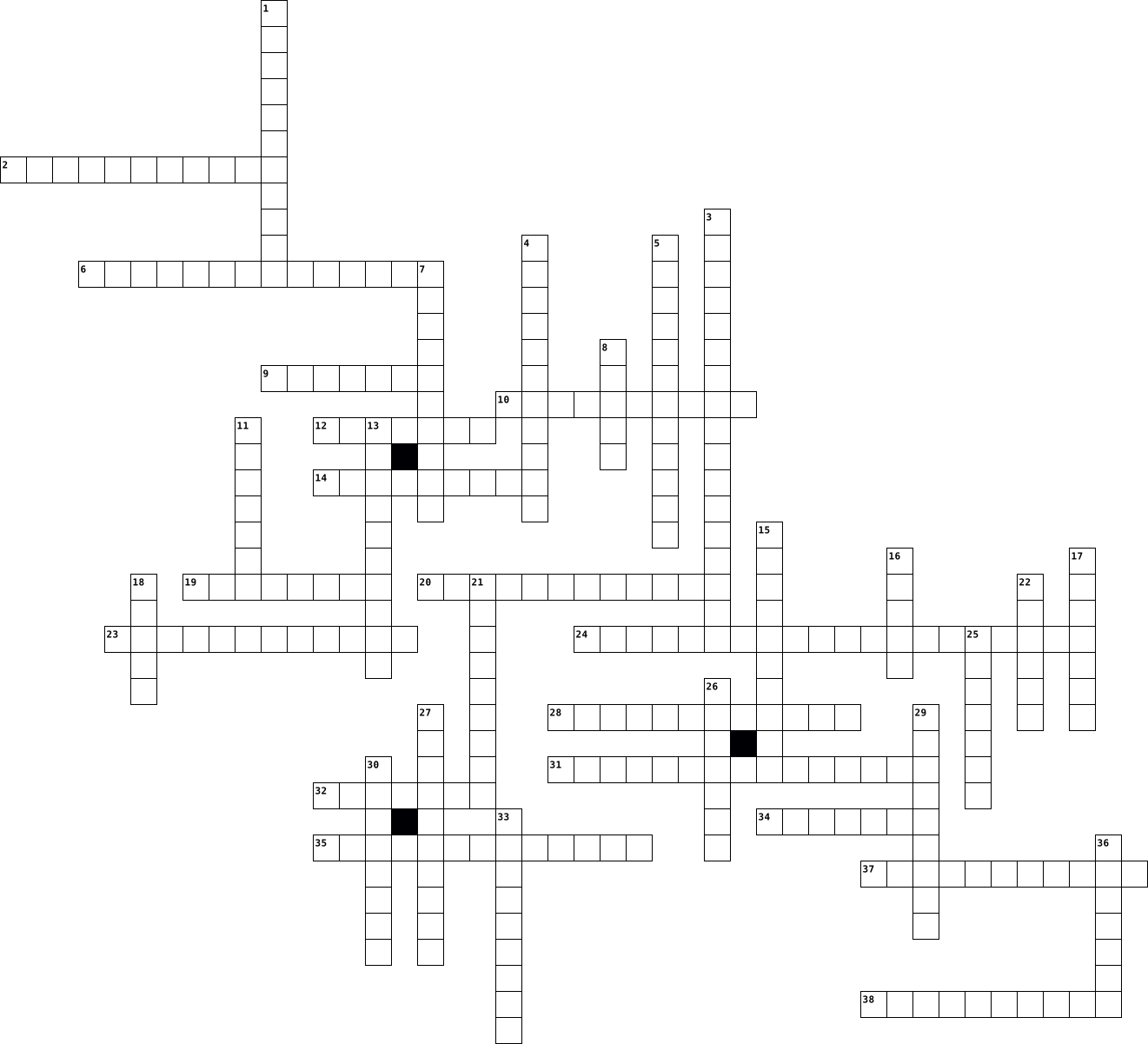
Across
- site of photosynthesis
- makes up the vessels that transport materials
- refers to the temporary conditions of the atmosphere, the layer of air that surrounds the Earth
- which substances cause the cancer
- store water and nutrients
- a strong but flexible material found in some parts of the body (such as the nose, the outer ear, and some joints)
- a large lobulated gland of vertebrates that secretes digestive enzymes and the hormones insulin and glucagon
- Treatment that uses drugs to stop the growth of cancer cells, either by killing the cells or by stopping them from dividing.
- transmit signals to muscle cells or glands to control their functional output.
- tunnels/canals for transporting materials
- covers the outside of plant
- A leaf tissue consisting of loosely arranged, chloroplast-bearing cells, often located on the lower side of the leaf.
- a flexible but inelastic cord of strong fibrous collagen tissue attaching a muscle to a bone.
- any of the many tiny air sacs of the lungs which allow for rapid gaseous exchange.
- is the primary greenhouse gas emitted through human activities.
- made of RNA, make protein
- each of a pair of curved cells that surround a stoma, becoming larger or smaller according to the pressure within the cells.
Down
- is an abnormal but noncancerous collection of cells.
- a layer of columnar cells rich in chloroplasts found beneath the upper epidermis of foliage leaves
- any of the fine branching blood vessels that form a network between the arterioles and venules.
- makes lots of ATP which is like food for the cell
- cells with nucleus
- is the mass of nerve tissue in the anterior end of an organism.
- a substance that has amino acids, compounds and carbon, hydrogen, oxygen, nitrogen and sometimes sulfur and is found in many foods.
- is anything which absorbs significantly more carbon than it produces
- is a word used to describe the spread of cancer
- cells that are hollow and like a tube, transport water/material from root to the rest of the plant
- saclike expansion of the digestive system, between the esophagus and the small intestine
- a colorless unstable toxic gas with a pungent odor and powerful oxidizing properties, formed from oxygen by electrical discharges or ultraviolet light.
- relatively straight muscular tube through which food passes from the pharynx to the stomach.
- they transport nutrients both ways and these cells are alive
- wax that makes the leaf waterproof
- are generally more numerous on the underside of leaves.
- is a thread-like structure located in the nucleus of cells such as plant, animal and human cells.
- collects and processes materials
- electromagnetic radiation) having a wavelength just greater than that of the red end of the visible light spectrum but less than that of microwaves.
- a short band of tough, flexible fibrous connective tissue which connects two bones or cartilages or holds together a joint.
- a process of cell duplication, or reproduction, during which one cell gives rise to two genetically identical daughter cells.
38 Clues: cells with nucleus • site of photosynthesis • store water and nutrients • made of RNA, make protein • covers the outside of plant • collects and processes materials • which substances cause the cancer • wax that makes the leaf waterproof • tunnels/canals for transporting materials • makes up the vessels that transport materials • is a word used to describe the spread of cancer • ...
Cell Organelles 2024-10-07

Across
- – involved in the breakdown and conversion of lipids into sugar
- - region of a prokaryotic cell that contains majority of the genetic material
- – hair like structures on the surface of cells
- – short hair-like structures on the cell surface of prokaryotic cells
- – organelle eukaryotic cells that is responsible for transporting, modifying, and packaging proteins and lipids.
- – is a larger, membrane bound organelle that is where RNA is made from the DNA in the chromosomes
- – in nearly all eukaryotic cells, it is responsible for oxidative reactions generating hydrogen peroxide
- – hair like organelles that help cells move
- - complex molecular structures in the cytoplasm responsible for protein synthesis in the cell
- - fluid that occupies cells serving as a medium for chemical reaction
Down
- – structural layer that surrounds a cell protecting it and preventing over expansion
- – has ribosomes on it, and is a eukaryotic cell organelle that synthesizes proteins, folds them, and modifies them.
- – tube like structure that lacks ribosomes and synthesizes and stores lipids, carbohydrates, and other substances needed by the cell.
- – structure that helps cells maintain their shape and internal organization
- - a space enclosed by a membrane storing nutrients and liquid
- – energy producing structures in the cytoplasm
- – found in plant cells responsible for withholding pigments and carrying out photosynthesis
- – organelle compartment containing enzymes that can break down excess or worn out cellular components
18 Clues: – hair like organelles that help cells move • – energy producing structures in the cytoplasm • – hair like structures on the surface of cells • - a space enclosed by a membrane storing nutrients and liquid • – involved in the breakdown and conversion of lipids into sugar • – short hair-like structures on the cell surface of prokaryotic cells • ...
Immunity 2025-03-20

Across
- a crucial type of white blood cell that plays a vital role in the immune system's adaptive response
- A type of immune cell that is made in the bone marrow
- any immunization with an antigen
- occurs when bacteria evolve and develop the ability to withstand the effects of antibiotics
- protection you develop when your body fights off an infection
- a protein produced by the body's immune system when it detects harmful substances
- develops when your body's immune system encounters a pathogen
- occurs when antibodies are transferred from one person or animal to another
- A type of blood cell that is made in the bone marrow
- injections (shots), liquids, pills, or nasal sprays that you take for your immune system to recognize and defend
- complex network of cells, tissues, and organs that work together to protect the body
Down
- a group of cells, tissues and organs that work together to protect the body
- immune cells that target specific antigens
- specialized cells that defend the body against pathogens
- immediate level of protection
- a type of white blood cell that play a crucial role in the immune system
- A type of white blood cell that surrounds and kills microorganisms
- A type of immune cell that can surround and kill microorganisms
18 Clues: immediate level of protection • any immunization with an antigen • immune cells that target specific antigens • A type of blood cell that is made in the bone marrow • A type of immune cell that is made in the bone marrow • specialized cells that defend the body against pathogens • protection you develop when your body fights off an infection • ...
Digestive System 2021-06-02

Across
- The __________ is a small area near the esophageal opening.
- ________ mainly consists of calcium salts and is the hardest substance in the body
- Tiny, fingerlike projection that extends from the inner lining of the small intestinal into the lumen
- A ________ has two types of secretory cells - serous cells and mucous cells.
- The products of the mucous cells, chief cells, and parietal cells together form ________.
- Chemical process that breaks fatty acids down to form acetyl coenzyme A, which can enter the citric acid cycle
- Role of peritoneal membrane that attaches abdominal organs to the posterior abdominal wall
- The _________, which balloons superior to the cardia, is a temporary storage area.
- Removing amino groups (-NH2) from amino acids
- Digestive secretions of the pancreas
Down
- Nutrients that human cells cannot synthesize, such as certain amino acids, are called ___________.
- Any of the glands in the stomach lining that secretes gastric juice
- Amino acids required for health that body cells cannot synthesize in adequate amounts must be obtained in the diet.
- Provides the acid environment needed for the production and action of pepsin
- Substance that gastric glands produce that promotes intestinal absorption of vitamin B12
- The __________ is the distal portion of the stomach where it approaches the small intestine.
- The _________ canal is a narrowing of the pylorus as it approaches the small intestine. At the end of the _______ canal the muscular wall thickens, forming a powerful circular muscle, the _______ sphincter. This muscle is a valve that controls gastric emptying.
- Tubular gland at the base of villus in the intestinal wall
- Cellular structure that stores inactive forms of protein-splitting enzymes in a pancreatic cell
- Lymphatic capillary associated with a villus of the small intestine
- Fatty acid required for health that body cells cannot synthesize in adequate amounts must be obtained in the diet
21 Clues: Digestive secretions of the pancreas • Removing amino groups (-NH2) from amino acids • Tubular gland at the base of villus in the intestinal wall • The __________ is a small area near the esophageal opening. • Any of the glands in the stomach lining that secretes gastric juice • Lymphatic capillary associated with a villus of the small intestine • ...
Veterinary Medical Practices: Blood Samples 2022-11-03

Across
- prevents bleeding when a blood vessel is injured
- arrangement of blood cells within the body
- decreased blood flow
- used to determine the portion, or percentage, of the whole volume of blood occupied by red blood cells
- liquid portion of blood
- loss of water from the body
- immune response which attacks an animals own tissues and cells
- redness, swelling or pain on an area of the body
- number of red blood cells in a unit volume of blood and can be used to detect a problem with red blood cell production
- opening at the top of the thoracic cavity
- soft, fatty tissue within the bone which is a major area for blood cell production
- gland masses or tissue which contain cells
- carries oxygen to the red blood cells and helps move them to other tissues
- relating to the thorax which is the cavity enclosed within the ribs and sternum
- also known as erythrocytes; are responsible for clotting and increase with injury
Down
- small vein located on the inside hind leg
- vein located in the front leg
- also known as thrombocytes; are responsible for clotting and increase with injury
- any of the three large veins in the neck
- small hole on the needle which allows the blood to blow into the syringe
- determines the number and type of blood cells present
- small vein lovated underneath the cattle's tail
- injection within the vein
- deficiency of hemoglobin reducing the number of red blood cells; causes body weakness
- form of cancer of the bone marrow which prevents an animal from producing a normal level of red a white blood cells and platelets
- defend the body from invading organisms
- two large veins near the thigh on the hind leg
- Determination of the cause or nature of a condition
28 Clues: decreased blood flow • liquid portion of blood • injection within the vein • loss of water from the body • vein located in the front leg • defend the body from invading organisms • any of the three large veins in the neck • small vein located on the inside hind leg • opening at the top of the thoracic cavity • arrangement of blood cells within the body • ...
Blood Samples Vocabulary Crossword 2022-11-04

Across
- small hole on the needle which allow the blood to blow into the syringe
- used to determine the portion, or percentage, of the whole volume of blood occupied by red blood cells
- arrangement of blood cells within the body
- aka thrombocytes; are responsible for clotting and increase with injury
- injection within the vein
- redness, swelling or pain on an area of the body
- liquid portion of blood
- determination of the cause or nature of a condition
- small vein located underneath the cattle's tail
- carries oxygen to the red blood cells and helps move them to other tissues
Down
- number of red blood cells in a unit volume of blood and can be used to detect a problem with red blood cell production
- determines the number and type of blood cells present
- vein located on the front leg
- gland masses of tissue which contain cells
- loss of water from the body
- relating to the thorax which is the cavity enclosed within the ribs and sternum
- defend the body from invading organisms
- small vein located on the inside hind leg
- form of cancer of the bone marrow which prevents an animal from producing a normal level of red and white blood cells and platelets
- decreased blood flow
- also known as erythrocytes; are produced in bone marrow and carry oxygen to the lungs
- deficiency of hemoglobin reducing the number of red blood cells; causes body weakness
- two large veins near the thigh on the hind leg
- immune response which attacks an animals own tissues and cells
- prevents bleeding when a blood vessel is injured
- opening at the top of the thoracic cavity
- any of the three large veins in the neck
- soft, fatty tissue within the bone which is a major area for blood cell production
28 Clues: decreased blood flow • liquid portion of blood • injection within the vein • loss of water from the body • vein located on the front leg • defend the body from invading organisms • any of the three large veins in the neck • small vein located on the inside hind leg • opening at the top of the thoracic cavity • gland masses of tissue which contain cells • ...
Immunological Agents 2020-04-13

Across
- Used to prevent cancer and can be considered specific immunotherapy
- These are drugs that stop or slow the growth of nonspecific drugs that act during any phase of the cell cycle
- Death of cells
- Destroys CD4 t cells or helper t cells
- Drugs that act during a specific phase of the cell cycle
- Host defense system comprising many biological structures and processes
- HIV life cycle where sets of viral protein chains come together
- Interfere w/ various substances needed for normal cell function
- cell cycle; responsible for dna synthesis and metabolism
- Defend against infected cells, cancers and transplant issues
- 1st drug to treat HIV
- These are drugs that damages the cell's DNA by cross linkage of DNA strands, abnormal base pairing and etc.
- Secrete antibodies that defend against extracellular pathogens
- Interfere w/ DNA replication and RNA transcription of cancer cells
- Cells are dividing
- Most important cells in adaptive immunity;required for almost all adaptive immune responses
Down
- HIV life cycle where the virus penetrates the cell
- Other term for nrti
- HIV life cycle where the infected cells divides and long chains of proteins are made
- Standard treatment of HIV infection
- an inhibitor that acts as the end of HIV life cycle by inhibiting the activity of pro tease
- HIV life cycle where viral DNA is combined with the cell's own DNA by the integrase enzyme
- mask the cancer cells to prevent them from using or producing hormones
- HIV life cycle where the free HIV virus binds to a CD4 molecule and one of two co receptors
- the only approved agent in the Fusion Entry Inhibitors
- the only agent in the Chemokine Coreceptor Antagonists
- blocks cell division during M-phase of the cell cycle
- cell cylce that focuses on cell division
- First choice of drug within NNRTI
- Result of HIV
30 Clues: Result of HIV • Death of cells • Cells are dividing • Other term for nrti • 1st drug to treat HIV • First choice of drug within NNRTI • Standard treatment of HIV infection • Destroys CD4 t cells or helper t cells • cell cylce that focuses on cell division • HIV life cycle where the virus penetrates the cell • blocks cell division during M-phase of the cell cycle • ...
Immunological Agents 2020-04-14

Across
- Used to prevent cancer and can be considered specific immunotherapy
- These are drugs that stop or slow the growth of nonspecific drugs that act during any phase of the cell cycle
- Death of cells
- Destroys CD4 t cells or helper t cells
- Drugs that act during a specific phase of the cell cycle
- Host defense system comprising many biological structures and processes
- HIV life cycle where sets of viral protein chains come together
- Interfere w/ various substances needed for normal cell function
- cell cycle; responsible for dna synthesis and metabolism
- Defend against infected cells, cancers and transplant issues
- 1st drug to treat HIV
- These are drugs that damages the cell's DNA by cross linkage of DNA strands, abnormal base pairing and etc.
- Secrete antibodies that defend against extracellular pathogens
- Interfere w/ DNA replication and RNA transcription of cancer cells
- Cells are dividing
- Most important cells in adaptive immunity;required for almost all adaptive immune responses
Down
- HIV life cycle where the virus penetrates the cell
- Other term for nrti
- HIV life cycle where the infected cells divides and long chains of proteins are made
- Standard treatment of HIV infection
- an inhibitor that acts as the end of HIV life cycle by inhibiting the activity of pro tease
- HIV life cycle where viral DNA is combined with the cell's own DNA by the integrase enzyme
- mask the cancer cells to prevent them from using or producing hormones
- HIV life cycle where the free HIV virus binds to a CD4 molecule and one of two co receptors
- the only approved agent in the Fusion Entry Inhibitors
- the only agent in the Chemokine Coreceptor Antagonists
- blocks cell division during M-phase of the cell cycle
- cell cylce that focuses on cell division
- First choice of drug within NNRTI
- Result of HIV
30 Clues: Result of HIV • Death of cells • Cells are dividing • Other term for nrti • 1st drug to treat HIV • First choice of drug within NNRTI • Standard treatment of HIV infection • Destroys CD4 t cells or helper t cells • cell cylce that focuses on cell division • HIV life cycle where the virus penetrates the cell • blocks cell division during M-phase of the cell cycle • ...
Cell Division Crossoword 2023-02-24

Across
- cycle the complete life cycle of a cell: interphase, mitosis, cytokinesis
- the two identical copies of DNA that make up a chromosome during mitosis
- the process by which a cell divides into two smaller cells
- sister chromatids pull apart and move to opposite ends of the cell; chromatids now become chromosomes
- spindle fibers attach to centromeres of chromosomes; chromosomes align down the middle of the cell
- fibers fiber-like structures in a cell that are involved in moving chromosomes during cell division
- having cells with membrane bound nuclei
- chromosomes the two chromosomes from each parent that are similar in size, shape, and genetic content; there are 23 pair of homologous chromosomes in human body cells (23 from our mother, 23 from our father)
- reproduction reproduction in which TWO haploid cells fuse to form a diploid cell; the zygote has a combination of traits (NOT IDENTICAL) compared to its parent cells
- 90% of the life of the cell; cell carries out its normal functions; divided into 3 phases: (G1) First growth, (S) Synthesis, (G2) Second growth
Down
- an organism or cell having the normal amount of DNA per cell
- cell division that produces reproductive cells
- reproductive cells formed by meiosis; sperm and egg; contain the organisms’ haploid number of chromosomes
- final stage of the cell cycle; cytoplasm divides and creates two identical cells
- reproduction reproduction in which a cell makes and IDENTICAL copy of itself; ex: binary fisson, mitosis
- the DNA and its proteins in eukaryotic cells
- two new nuclei form and nuclear envelope surrounds them; chromosomes uncoil; spindles dissolve
- a specialized condensed region of each chromosome that appears during mitosis where the chromatids are held together to form an X shape
- a fertilized egg; the first diploid cell on an individual containing DNA from both parents
- the first stage of meiosis
20 Clues: the first stage of meiosis • having cells with membrane bound nuclei • the DNA and its proteins in eukaryotic cells • cell division that produces reproductive cells • the process by which a cell divides into two smaller cells • an organism or cell having the normal amount of DNA per cell • the two identical copies of DNA that make up a chromosome during mitosis • ...
Lymphatic System 2015-01-12

Across
- Mass of lymphatic tissue
- Immunity that is provided by the antibodies present in the body’s fluids
- A small molecule that is an incomplete antigen
- Things in the lymph nodes that engulf and destroy foreign substances in the lymphatic stream
- Autoimmune disease where white matter of brain and spinal cord are destroyed
- Strands that extend inward into the node to divide it into a number of compartments
- Immune response where our own cells are attacked
- In the wall of the small intestine that capture and destroy bacteria
- Soluble protein secreted by plasma cells and are capable of binding specifically to an antigen
- Second line of defense, ________ response
- Each lymph node is surrounded by a fibrous __________
- Harmful or disease-causing microorganisms
- Lymphocytes that oversee the adaptive defense system
- An enzyme that destroys bacteria
- what the lymphatic system does to body fluids
Down
- Small masses of lymphoid tissue that ring the throat
- Cells that roam the body and kill nonspecific targets like cancer
- Clear water, excess tissue fluid
- Autoimmune disease where joints are damaged and destroyed
- Abnormal accumulation of fluid in body parts or tissues
- Lymphocyte Cells that produce antibodies and oversee humoral immunity
- An inflammatory chemical
- Organ located on the left side of the abdomen, filters blood and destroys worn out blood cells
- First line of defense
- Lymphatic Vessels
- White blood cells that provide immune response to antigens
- Located low in the heart and overlies the heart, produces hormones and T-cells
- Secreted proteins of virus-infected cells that bind to healthy cells to inhibit virus binding
- Stomach ________ secretes hydrochloric acid
- Outer part of the lymph node
- Tubelike offshoot of the first part of the first part of the large intestine
- Part of the efferent lymphatic vessels
32 Clues: Lymphatic Vessels • First line of defense • Mass of lymphatic tissue • An inflammatory chemical • Outer part of the lymph node • Clear water, excess tissue fluid • An enzyme that destroys bacteria • Part of the efferent lymphatic vessels • Second line of defense, ________ response • Harmful or disease-causing microorganisms • Stomach ________ secretes hydrochloric acid • ...
Bio Crossword 2018-01-29

Across
- The stage of meiosis where DNA replication occurs
- The stage of mitosis where the spindle forms and the nuclear membrane breaks down.
- Cell division that produces an identical cell of the same number of chromosomes.
- Cells with one set of chromosomes
- Responsible for storing genetic information
- Organelle of a eukaryotic cell that contains the genetic material DNA
- Organisms where the nucleus of its cells have nuclear envelopes.
- The name given to a cells or organism without a membrane-bound nucleus.
- Cell division where two divisions occur
- The type of cell that is diploid, some examples being muscle cells, skin cells and blood cells.
- Different forms of a gene
- Cellular organelle in the cytoplasm and involved in cellular division.
- The process where if a cell is damaged, it will receive a signal to self-destruct.
- The stage of mitosis where nuclear membranes begin to form around the separated groups of chromosomes.
- The basic units of life and all living organisms.
Down
- The major site of protein production in cells
- Cells with two sets of chromosomes
- The stage of mitosis where the chromosomes line up at the middle of the cell
- Cell in the gonads that have the potential to develop into a gamete
- Clusters of microtubules that grow out of the centriole.
- Thread-like structure composed of DNA and protein
- Macromolecules built of amino acid subunits
- The name of the position by which the chromatids are held together in a chromosome.
- A segment of DNA that codes for a particular protein
- The visual arrangement of all the chromosomes of an organism.
- The complete set of genetic instructions of an organism, encoded in DNA
- Small structures within the cytoplasm that undertake important processes that go on inside a eukaryotic cell
- Egg or sperm cells
28 Clues: Egg or sperm cells • Different forms of a gene • Cells with one set of chromosomes • Cells with two sets of chromosomes • Cell division where two divisions occur • Macromolecules built of amino acid subunits • Responsible for storing genetic information • The major site of protein production in cells • The stage of meiosis where DNA replication occurs • ...
Cancer Cure and Disease Introduction 3-12-24 2024-03-12

Across
- a complex network of organs, cells and proteins that defends the body against infection, whilst protecting the body's own cells.
- “-a doctor who cares for children with cancer—who treated Emily at the Children’s Hospital of Philadelphia in Pennsylvania”
- a specialized body fluid
- “This type of white blood cell normally helps the immune system fight infections.”
- “...carry oxygen to other cells throughout the body, and white blood cells protect the body against disease.”
- a disease caused by abnormal cell growth
- “a disease that causes inflammation throughout the joints of the body”
- “…a machine that helps a patient breathe”
- A type of immune cell that is made in the bone marrow and is found in the blood and in lymph tissue.
- “The immune response triggered by the reprogrammed T-cells caused …in Emily’s body. Her temperature rocketed to 41°C (105°F). Her blood pressure fell, and she had difficulty breathing. Doctors put Emily on a ventilator—a machine that helps a patient breathe”
Down
- “—a state of unconsciousness—to keep her alive”
- The agency also approved a similar therapy to combat blood cancer in adults called … Both therapies could help thousands of people suffering from previously untreatable forms of cancer.
- the molecule that carries genetic information for the development and functioning of an organism.
- This soft tissue within bones makes blood cells (see Blood Breakdown). “In leukemia patients, parts of their blood grow in ways that they shouldn’t,” explains Grupp.
- is a type of cancer that affects your blood cells.
- research studies that test a medical, surgical, or behavioral intervention in people.
- "help to form clots that stop a wound from bleeding."
- is a drug treatment that uses powerful chemicals to kill fast-growing cells in your body
- a large, biological molecule—to recognize cancerous B-cells.
- “…treat some kinds of lymphomas and leukemias, as well as multiple myeloma”
20 Clues: a specialized body fluid • a disease caused by abnormal cell growth • “…a machine that helps a patient breathe” • “—a state of unconsciousness—to keep her alive” • is a type of cancer that affects your blood cells. • "help to form clots that stop a wound from bleeding." • a large, biological molecule—to recognize cancerous B-cells. • ...
6.2 Cellular Structure and Organization 2025-11-20

Across
- group of cells that are bound specialized for one specific function.
- layer that separates the inside of a cell from outside environments, acts as a security guard
- plant and algal cells have what two important structures that animal cells do not have
- unit of all matter
- basic structural unit of life, organisms are made up of 1+ of these
- wall barrier that is rigid outside the cell membrane of prokaryote cells.
- organic molecules, water, and other materials are often stored here.
- group of organs that work in cooperation
- apparatus sacs and membrane arranged in many eukaryotic cells and is the trucker AKA it collects and transports molecules.
- the interior of the cell which has a jelly like feel.
- second major type of cell, organized and complex
- symbiotic relationship when one organism lives inside another most of the time whilst they both benefit.
- tissues organized into structures
Down
- organisms with more than one cell
- singular organisms
- something inside cells made of protein fibers which supports the cell and helps it be able to move, change shape, and divide.
- organelles that synthesize proteins inside a cell
- all populations in a habitat
- a protein filament that extends outside the cell membrane
- one celled organisms
- combinations of atoms that are bounded
- system of reticulum folded membranes in most eukaryotic cells and is extensive.
- community/ies in a large area together with physical environment
- most ancient of the two major types of cells, structurally simplest and smallest, lack most kinds of organelles, bacteria is the best known of this type of cell
- groups of organisms of the same species
- headquarters of a cell, organelle of eukaryotic cells that contain chromosomes (these contain most of the cells DNA)
- respiration in eukaryotes takes place here, power plants by breaking down organic molecules to provide energy, contains small amounts of DNA.
- membrane-bound specialized structure that is INSIDE a cell
28 Clues: singular organisms • unit of all matter • one celled organisms • all populations in a habitat • organisms with more than one cell • tissues organized into structures • combinations of atoms that are bounded • groups of organisms of the same species • group of organs that work in cooperation • second major type of cell, organized and complex • ...
Week 12 Immunology 2022-10-18

Across
- What engulfs the pathogen during the first exposure?
- What cell stays dormant but is produced and present within the body until response?
- The tyrosine kinase Lck activates molecular components through what process?
- Pathogens and other “non-self” organisms are…
- A stem cell matured in the … becomes a T cell
- Leukocytes move out of … into tissues.
- B cells have receptors that directly react with pathogens, giving rise to mitosis. What is the process where the division produces different cells. Ie. plasma cells or memory B cells?
Down
- What is the globular protein associated with the immune system called, alternatively -- they are also commonly known as antibodies
- Does B and T cell response occur at the same time?
- What cell churns out antibodies?
- What serum contains polyclonal antibodies?
- What are the name of the process of rapid cell division and differentiation of plasma cells or memory B cells?
- The antibody-mediated immune response is also known as a … response
- What is one of the names of the cell that T cells stimulate?
- What does an antibody bind to what inactivates?
- What is used to introduce a harmless form of a bacteria or virus in creating prepared immune responses?
- The target cells plasma membrane perforated by cytolytic proteins to create holes in the cell, also know as?
- What are the antigenic determinants called?
18 Clues: What cell churns out antibodies? • Leukocytes move out of … into tissues. • What serum contains polyclonal antibodies? • What are the antigenic determinants called? • Pathogens and other “non-self” organisms are… • A stem cell matured in the … becomes a T cell • What does an antibody bind to what inactivates? • Does B and T cell response occur at the same time? • ...
Immunology and Serology 2025-08-20

Across
- – Cells that produce antibodies (as in plasma cells)
- – Cells that engulf pathogens as part of innate immunity)
- – Primary organ where T cells mature )
- – Natural Killer cell, innate cytotoxic lymphocyte
- – General immunity one is born with (6)
- – Immunity through T cells and direct cell attack
- – (BONE MARROW) Site where B cells develop
Down
- – Acquired immunity, tailored to specific pathogens (8)
- – Immunity developed by exposure or vaccination
- – Antigen-presenting cell linking innate and adaptive systems
- – Immunity via ready-made antibodies from another source
- – Signaling molecule used by immune cells
- – Immunity mediated by antibodies in body fluids
- – Lymphoid organ involved in filtering blood and immune response
14 Clues: – Primary organ where T cells mature ) • – General immunity one is born with (6) • – Signaling molecule used by immune cells • – (BONE MARROW) Site where B cells develop • – Immunity developed by exposure or vaccination • – Immunity mediated by antibodies in body fluids • – Immunity through T cells and direct cell attack • ...
lymphatic system 2023-10-27

Across
- - combat intracellular pathogens
- - a large phagocytic cell that is found in a stationary form in the tissues or as a mobile white blood cell, especially at sites of infection.
- - the condition in which an excessive amount of Interstitial fluid accumulates in the tissue spaces.
- capillaries - tiny vessels in the tissues of most organs which absorb intestinal fluid and transport lymphatic fluid(lymph) to afferent lymphatic vessels
- - part of the lymphatic vessel which ensures a one-way flow of lymph.
- - small organ inside the ribcage just above the stomach
- - Tiny, finger-like projections in the small intestine that absorb fats marrow: part of spongy bone, that produces blood cells (hematopoiesis)
- - a lymphatic tissue where B and T cells carry out immune responses
- - White blood cells responsible for immune response
- - create antibodies
Down
- - Specialized lymphatic vessels found in the small intestine
- - organ primarily responsible for the production and maturation of immune cells
- - two round fleshy masses in the back of your throat (pharynx)
- fluid - Protein-rich fluid that leaks from blood vessels into surrounding tissues
- vessels - thin walled tubes which are structured like blood vessels which carry lymph to lymphatic ducts
- - are small lumps of tissue that contain white blood cells, that fight against infection.
- - is the cancer of lymph tissue in lymph nodes
- - produced by lymph nodes that contains white blood cells
- - it is usually s clear fluid that circulates in the lymphatic vessels, bathes the cells of the body, and consists of white blood cells and a liquid portion resembling blood plasma.
19 Clues: - create antibodies • - combat intracellular pathogens • - is the cancer of lymph tissue in lymph nodes • - White blood cells responsible for immune response • - small organ inside the ribcage just above the stomach • - produced by lymph nodes that contains white blood cells • - Specialized lymphatic vessels found in the small intestine • ...
Science "Cell Cycle" 8.1 2024-09-03

Across
- the final stage cell division when two new "daughter" cells form
- cells that have only one copy of each chromosome
- reproductive cells formed by the union of egg and sperm
- reproduction that produces cell genetically different from either "parent" cell
- the process used to create cells for sexual reproduction
- a form of asexual reproduction, used by some organisms for regrow limbs
- specific section of DNA that code for specific proteins
Down
- made of genes
- contains prophase, metaphase, anaphase, and telophase which is the process of dividing the chromosomes
- reproduction that produces genetically identical cells
- cells that have two of copies of each chromosome
- female gametes
- the longest part of the cell cycle when genes are copied
- special haploid cells used in sexual reproduction
- male gametes
15 Clues: male gametes • made of genes • female gametes • cells that have only one copy of each chromosome • cells that have two of copies of each chromosome • special haploid cells used in sexual reproduction • reproduction that produces genetically identical cells • reproductive cells formed by the union of egg and sperm • specific section of DNA that code for specific proteins • ...
Sponges Vocabulary 2022-10-28

Across
- the phylum that includes pore bearing animals
- the small calcareous or siliceous bodies embedded in the cells of invertebrates such as sponges
- the resistant fibres of sponges
- tube like cells of sponges that form a pore
- animals that don't have a backbone
- an organism that lives attached to a surface
- the large opening of a sponge
- also known as amebocytes, secrete the spicules and spongin
Down
- the release of eggs, or gametes into the water
- has no symmetry
- a marked change in form during embryological development
- animals that feed on particles suspended in the water
- a type of suspension feeder that actively filters filters food particles
- the flagellated, food cells trapping cells of sponges
- free swimming larva inside sponges
15 Clues: has no symmetry • the large opening of a sponge • the resistant fibres of sponges • free swimming larva inside sponges • animals that don't have a backbone • tube like cells of sponges that form a pore • an organism that lives attached to a surface • the phylum that includes pore bearing animals • the release of eggs, or gametes into the water • ...
Mitosis Crossword Puzzle 2024-03-04

Across
- Cells must limit their size because ___________ is not possible in larger cells
- The form DNA takes during interphase
- The process of cell division
- The daughter cells have the ________ number of chromosomes as the parent cell
- The nucleus disappears during this phase
- Cells spend most of their time in this phase
- When the cytoplasm is divided between the daughter cells
- Cells must ______________ the DNA before mitosis
- Grab chromosomes and pull them to opposite ends of the cell
Down
- Location of chromosomes in the cell
- The sister chromatids are pulled to opposite ends of the cell
- The chromosomes line up in the middle of the cell
- A chromosome is made of 2 identical sister __________
- Mitosis produces 2 __________ daughter cells
- Last name of your current biology teacher
15 Clues: The process of cell division • Location of chromosomes in the cell • The form DNA takes during interphase • The nucleus disappears during this phase • Last name of your current biology teacher • Cells spend most of their time in this phase • Mitosis produces 2 __________ daughter cells • Cells must ______________ the DNA before mitosis • ...
The retina & optic nerve 2026-04-07

Across
- line marks termination of the photoreceptor cells of the retina snteriorly
- bipolar cells these project to the parvocellular layer of cells
- where rod and cone cells project their processes into
- allow us to discern color
- where ganglion cells are responsible for yellow and blue color perception
- what neuron type are found in the ganglion cell layer
- Outermost layer of the retina
- convey information to the magnocellular layers of LGN
- junctions found in the ELM
- delimits neural retina from vitreal cavity
Down
- nucleus in thalamus that receives visual information from ganglion cells
- small shallow depression in the center of the macula
- the embryological origin of the RPE & neural retina
- cells that make synapses in the inner plexiform layer
- component of retina that is multilayered and contains photoreceptors
15 Clues: allow us to discern color • junctions found in the ELM • Outermost layer of the retina • delimits neural retina from vitreal cavity • the embryological origin of the RPE & neural retina • small shallow depression in the center of the macula • where rod and cone cells project their processes into • what neuron type are found in the ganglion cell layer • ...
Cells Parts 2021-10-15

Across
- body Thought of as mail room of cell receives information
- an optical instrument used for viewing very small objects, such as mineral samples or animal or plant cells, typically magnified several hundred times.
- cell prokaryotic, contains no nucleus, no membrane bound organelles
- cell organelle filled with enzymes needed to break down certain materials in the cell
- Cell organelle that stores materials such as water, salts, proteins, and carbohydrates
- A jellylike fluid inside the cell in which the organelles are suspended
- Basic unit of life
- Control center of the cell
Down
- Powerhouse of the cell, organelle that is the site of ATP (energy) production
- organelles that capture the energy from sunlight and convert it into chemical energy in a process called photosynthesis
- Makes proteins
- wall A rigid structure that surrounds the cell membrane and provides support to the cell
- Reticulum A cell structure that forms a maze of passageways in which proteins and other materials are carried from one part of the cell to another.
- theory A widely accepted explanation of the relationship between cells and living things
- membrane thin, flexible barrier around a cell; regulates what enters and leaves the cell
- specialized structure that performs important cellular functions within a eukaryotic cell
16 Clues: Makes proteins • Basic unit of life • Control center of the cell • body Thought of as mail room of cell receives information • cell prokaryotic, contains no nucleus, no membrane bound organelles • A jellylike fluid inside the cell in which the organelles are suspended • Powerhouse of the cell, organelle that is the site of ATP (energy) production • ...
SPECIALISED CELLS 2021-08-22

Across
- Small round flat red cell that specialises in carrying oxygen around animals (3,5,4)
- Tiny cell made by males - only contain half the DNA (5,4)
- Describes the shape of red blood cells
- Muscle cells appear shorter when they are this
- Two guard cells have one of these between them
- Sperm cells have one of these to help them swim about
- A technical term that means both egg and sperm cell
- A plant cell that specialises in finding and soaking up water (4,4,4)
Down
- Another word for nerve cell
- Palisade cells are full of these organelles
- Long animal cell that carries electrical impulses from one part of the body to another (5,4)
- Layer of cells that cover the outer surface of a plant
- The biggest cell found in female humans - only contain half the DNA (3,4)
13 Clues: Another word for nerve cell • Describes the shape of red blood cells • Palisade cells are full of these organelles • Muscle cells appear shorter when they are this • Two guard cells have one of these between them • A technical term that means both egg and sperm cell • Sperm cells have one of these to help them swim about • ...
Plant cells 2022-02-09

Across
- is an organelle found in most eukaryotic cells. Part of the endomembrane system in the cytoplasm
- gelatinous liquid that fills the inside of a cell.
- membrane-bound cell organelle that contains digestive enzymes.
- The rough ER, studded with millions of membrane bound ribosomes
- A nucleus is a membrane-bound organelle
Down
- in cell biology a centriole is a cylindrical organelle composed mainly of a protein called tubulin.
- macromolecular machines, found within all cells, that perform biological protein synthesis.
- is a hairlike appendage that protrudes from a wide range of microorganisms termed as flagellates.
- dynamic network of interlinking protein filaments present in the cytoplasm of all cells, excluding bacteria and archaea.
- an organelle found in large numbers in most cells, in which the biochemical processes of respiration and energy production occur.
- present in plant and fungal cells and some protist, animal, and bacterial cells
- an organelle found on eukaryotic cells in the shape of a slender protuberance that projects from the much larger cell body.
- found in all cells and separates the interior of the cell from the outside environment.
13 Clues: A nucleus is a membrane-bound organelle • gelatinous liquid that fills the inside of a cell. • membrane-bound cell organelle that contains digestive enzymes. • The rough ER, studded with millions of membrane bound ribosomes • present in plant and fungal cells and some protist, animal, and bacterial cells • ...
Cells & Organelles 2022-02-15

Across
- The smallest type of cell.
- A cell without a nucleus or membrane-bound organelles.
- The protection from this organelle is the reason DNA doesn't leave.
- A primary organelle in muscle cells.
- The cell ___ controls what goes in and out of a cell.
- Jelly-like material that holds organelles in place.
- ______ do the work of the cells.
Down
- A eukaryotic cell without a cell wall, which is also the largest type of cell.
- Plant and Animal cells are _________.
- The three types are; food, central, and contractile.
- The only eukaryotic cells that have a cell wall.
- The organelles that synthesize proteins and attach to the ER are _______.
- All organisms are made up of one or more _____.
13 Clues: The smallest type of cell. • ______ do the work of the cells. • A primary organelle in muscle cells. • Plant and Animal cells are _________. • All organisms are made up of one or more _____. • The only eukaryotic cells that have a cell wall. • Jelly-like material that holds organelles in place. • The three types are; food, central, and contractile. • ...
cells crossword 2021-08-05

Across
- plants need it to survive
- better view
- has a lot of important jobs
- zooms in
- helps with transport
- hold information on cells
Down
- sugary source of energy
- to do with the process of plants
- wall protection for cells
- need it to breathe
- a liquid everything needs
- takes up a lot of space
- smallest organism
- all cells need it
14 Clues: zooms in • better view • smallest organism • all cells need it • need it to breathe • helps with transport • sugary source of energy • takes up a lot of space • plants need it to survive • wall protection for cells • a liquid everything needs • hold information on cells • has a lot of important jobs • to do with the process of plants
Specialised Cells 2013-06-20

Across
- The name of a type of cell with hairs on it.
- The molecule found in red blood cells that binds to oxygen.
- Sticky substance that is swept up the airways by cillia to trap dirt and pathogens.
- A very long cell.
- Muscle cells contain lots of these.
- Root Hair Cells are designed for this.
- A cell that contains yolk.
Down
- The name of the hairs on the cells that line all the air passages in the lungs.
- A cell that has a sac of enzymes to digest the wall of an egg.
- The organ where eggs are made.
- An organelle needed for photosynthesis.
- A type of cell that contains many chloroplasts.
- An organelle that is usually found in all types of cells but is NOT found in a red blood cell.
13 Clues: A very long cell. • A cell that contains yolk. • The organ where eggs are made. • Muscle cells contain lots of these. • Root Hair Cells are designed for this. • An organelle needed for photosynthesis. • The name of a type of cell with hairs on it. • A type of cell that contains many chloroplasts. • The molecule found in red blood cells that binds to oxygen. • ...