
chemistry/ Crossword Puzzles
SCIENCE 2016-11-27

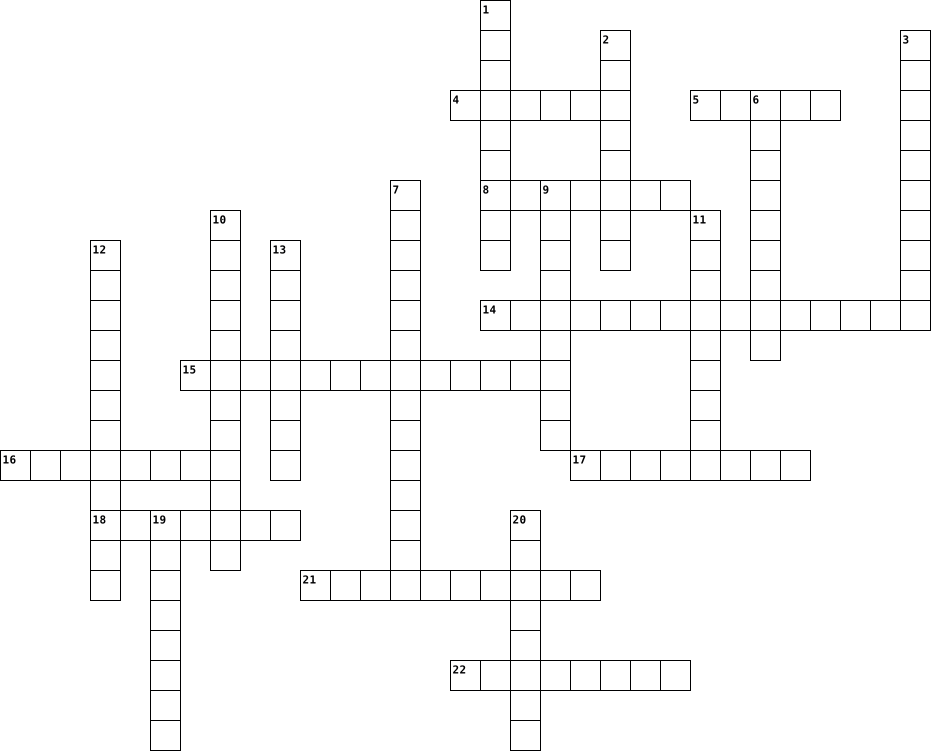
Across
- of or relating to an atom or atoms.
- an airlike fluid substance which expands freely to fill any space available, irrespective of its quantity.
- can exist in a variety of forms, such as electrical, mechanical, chemical, thermal, or nuclear, and can be transformed from one form to another.
- highly ionized particle
- Study of plants.
- study of human behavior
- not consisting of or deriving from living matter.
- the basic unit of a chemical element.
- a pioneer in organic chemistry
- for example; digestion
- is a subatomic particle found in the nucleus of every atom.
- consist of living things
- a specialized cell transmitting nerve impulses; a nerve cell.
- A mixture which has uniform composition and properties throughout.
- the value changes wth the amount of sample
Down
- will change the object. for example; flamavidity, reaction
- irm and stable in shape; not liquid or fluid.
- the branch of science that deals with celestial objects, space, and the physical universe as a whole
- didnt change the object, for example; weight, height, temperature
- the branch of chemistry concerned with the application of the techniques and theories of physics to the study of chemical systems.
- the branch of science concerned with the chemical and physicochemical processes that occur within living organisms.
- is made of different substances that remain physically separate. Heterogeneous mixtures always have more than one phase
- Study of the atmosphere
- is a negatively charged subatomic particle
- Physical substance in general, as distinct from mind and spirit; (in physics) that which occupies space and possesses rest mass, especially as distinct from energy.
- is a nearly incompressible fluid that conforms to the shape of its container but retains a (nearly) constant volume independent of pressure
- is a property of a physical body.
- didnt changes wth the amount of sample
- chemistry is the science of obtaining, processing, and communicating information about the composition and structure of matter
- is a branch of physical science that studies the composition, structure, properties and change of matter
30 Clues: Study of plants. • for example; digestion • highly ionized particle • study of human behavior • Study of the atmosphere • consist of living things • a pioneer in organic chemistry • is a property of a physical body. • of or relating to an atom or atoms. • the basic unit of a chemical element. • didnt changes wth the amount of sample • is a negatively charged subatomic particle • ...
Unit 2 Vocabulary 2023-11-18

Across
- zařízení, vybavení
- dělat si poznámky
- poloha, umístění
- studovat na VŠ
- komunikace
- obdržet, získat
- ztratit
- udělat, složit zkoušku
- neuspět, propadnout
- údolí
Down
- fyzika
- dávat pozor
- rozvrh
- vyrazit na cestu
- chemie
- pravidlo
16 Clues: údolí • fyzika • rozvrh • chemie • ztratit • pravidlo • komunikace • dávat pozor • studovat na VŠ • obdržet, získat • poloha, umístění • vyrazit na cestu • dělat si poznámky • zařízení, vybavení • neuspět, propadnout • udělat, složit zkoušku
Chemistry 2022-11-17

Across
- a sort of recipe that includes symbols
- any form of writing
- pertaining to ions, having a charge
- happening every once in awhile
- to increase
- steady
- when two or more things join together
- to have something in common
Down
- a solid with a
- a visual symbol
- to give power or load with energy
- __________ electrons; "powerful"
12 Clues: steady • to increase • a solid with a • a visual symbol • any form of writing • to have something in common • happening every once in awhile • __________ electrons; "powerful" • to give power or load with energy • pertaining to ions, having a charge • when two or more things join together • a sort of recipe that includes symbols
Chemistry 2022-12-26

Across
- Negatively charged particle.
- Has no net electric charge.
- Combination of two or more atoms.
- An atom or molecule with a net electrical charge
- Hand protection
Down
- Produces OH- ions in solution.
- A substance that cannot be broken down by chemical means.
- Might be calibrated in Fahrenheit or Centigrade.
- Two or more atoms joined together.
- Any liquid, solid or gas.
- Positively charged particle.
- Produces H+ ions in solution
12 Clues: Hand protection • Any liquid, solid or gas. • Has no net electric charge. • Negatively charged particle. • Positively charged particle. • Produces H+ ions in solution • Produces OH- ions in solution. • Combination of two or more atoms. • Two or more atoms joined together. • Might be calibrated in Fahrenheit or Centigrade. • An atom or molecule with a net electrical charge • ...
chemistry 2020-05-26

Across
- tell us the number of atoms of each element in a compound.
- goes across the periodic table
- a table of the chemical elements
- the first letter of an element
- an element that readily forms positive ions and has metallic bonds
- a particle made up of two or more atoms that are chemically bonded together
Down
- an element that doesn't have the characteristics of metal including
- goes down the periodic table
- the second letter of an element
- a substance whose atoms all have the same number of protons
- the smallest particle of a chemical element that can exist.
- a substance formed when two or more chemical elements are chemically bonded together
12 Clues: goes down the periodic table • goes across the periodic table • the first letter of an element • the second letter of an element • a table of the chemical elements • tell us the number of atoms of each element in a compound. • a substance whose atoms all have the same number of protons • the smallest particle of a chemical element that can exist. • ...
Chemistry 2019-10-10

Across
- Sifat yang diamati dari perubahan materi
- NaCl
- Konfigurasi elektron menggunakan prinsip "Membangun"
- Atom yang memiliki jumlah proton yang sama
- Percobaan menggunakan Lempengan emas yang ditembakj dengan sinar alfa
- Atom yang memiliki jumlah neutron yang sama
- Teori atom yang menjelaskan bahwa elektron tidak akan jatuh ke inti atom
Down
- Bilangan kuantum yang menyatakan arah elektron dalam orbital
- Sifat perusak
- Memiliki massa dan ruang
- Teori atom yang menjelaskan bahwa atom berbentuk seperti bola pejal
- Atom yang memiliki massa sama
12 Clues: NaCl • Sifat perusak • Memiliki massa dan ruang • Atom yang memiliki massa sama • Sifat yang diamati dari perubahan materi • Atom yang memiliki jumlah proton yang sama • Atom yang memiliki jumlah neutron yang sama • Konfigurasi elektron menggunakan prinsip "Membangun" • Bilangan kuantum yang menyatakan arah elektron dalam orbital • ...
Chemistry 2020-10-30

Across
- contains polar bonds with a difference in electronegativity between the atoms
- molecule formed by covalent bonds in which the atoms share one or more pairs of electrons
- contains polar bonds with a difference in electronegativity between the atoms
- contains exactly two elements
- the choosing of names for certain things
Down
- in simple terms an atom needs eight valence electrons to form a compound
- the inter atomic linkage that results from sharing an electron pair between two atoms
- in simple terms an atom needs eight valence electrons to form a compound
- formed when two oppositely charged ions create one chemical compound
- the location of the atoms, groups and or ions to one another in a molecule; the number and type of covalent bonds
- the outermost shell containing valence electrons
- a diagram that shows the covalent bonds and lone electrons in a molecule
- compounds that consist of ions and are usually more complicated than just two element compounds
- any hydrogen-containing substance that is capable of donating a proton to another substance
14 Clues: contains exactly two elements • the choosing of names for certain things • the outermost shell containing valence electrons • formed when two oppositely charged ions create one chemical compound • in simple terms an atom needs eight valence electrons to form a compound • in simple terms an atom needs eight valence electrons to form a compound • ...
Chemistry 2020-11-05

Across
- mechanical digestion happens here
- a mixture you can see the parts of
- another name for mechanical mixture
- your body maintaining constant temperature
- a pure substance made of more than one type of atom
Down
- a substance made of only one type of particle
- chemical digestion and absorption happen here
- another name for solution
- a mixture you can't see the parts of
- a substance made of more than one type of particle
- a pure substance made of only one type of atom
- getting nutrients from food
12 Clues: another name for solution • getting nutrients from food • mechanical digestion happens here • a mixture you can see the parts of • another name for mechanical mixture • a mixture you can't see the parts of • your body maintaining constant temperature • a substance made of only one type of particle • chemical digestion and absorption happen here • ...
CHEMISTRY 2021-01-02

Across
- periyodik tablodaki yatay sıraların her biri için kullanılan terimdir.
- kuantum sayısı belirli bir orbitalin uzaydaki yönelimini açıklamak için kullanılır.
- gaz veya sıvı akışkanların basıncını ölçmek için kullanılan alettir.
- maddenin 16 hâlinden biridir. Bu haldeyken maddenin yoğunluğu çok az, akışkanlığı son derece fazladır.
- teori gazların basınç, sıcaklık, hacim gibi makroskopik özelliklerini moleküler bileşim ve hareketlerine bağlı olarak açıklayan teoridir.
Down
- elektronların atom çekirdeği etrafındaki yörüngelerde bulunma olasılığının en fazla olduğu hacimsel bölgelere denir.
- bağ yapımında kullanılan elektronların bağı oluşturan atomlar tarafından çekilme gücüdür.
- ilkesi bu ilkeye göre bir parçacığın momentumu ve konumu aynı anda tam doğrulukla ölçülemez.
- kuralı bir atom veya iyonun temel durumunda elektronların daha yüksek seviyeleri işgal etmeden önce mevcut en düşük enerji seviyelerinin atomik yörüngelerini doldurduğunu belirtir.
- Herhangi bir kap içinde basıncı dış basınçtan daha büyük bir gaz olduğu zaman kapta bulunabilecek çok küçük bir delikten kabın iç basıncı dış basınca eşit olana dek gaz dışarıya doğru yayınarak kaçar.
- basınç Bir ideal gaz karışımında hacmi olan her gazın kendine ait bir basıncı vardır.
- kuralı çok elektronlu bir atomun taban durumuna karşılık gelen terim sembolü belirlemek için formüle edilen kurallar dizisi.
12 Clues: gaz veya sıvı akışkanların basıncını ölçmek için kullanılan alettir. • periyodik tablodaki yatay sıraların her biri için kullanılan terimdir. • kuantum sayısı belirli bir orbitalin uzaydaki yönelimini açıklamak için kullanılır. • basınç Bir ideal gaz karışımında hacmi olan her gazın kendine ait bir basıncı vardır. • ...
chemistry 2020-12-16

Across
- two substances that are chemically joined together and cannot be separated
- particles are far apart and move quickly
- table a table that shows all the elements
- name of a metal in group 1, period 3
- name of a gas in group 6, period 2
- method used to separate sand and water
- two substances that can be separated
- particles are close together and vibrate
Down
- when water vapor cools and turns back into water
- very very small particle
- this method is used to separate ink from water
- particles are quite close together and can slide over each other
12 Clues: very very small particle • name of a gas in group 6, period 2 • name of a metal in group 1, period 3 • two substances that can be separated • method used to separate sand and water • particles are far apart and move quickly • particles are close together and vibrate • table a table that shows all the elements • this method is used to separate ink from water • ...
Chemistry 2021-02-27

Across
- the forces that meditate interaction between molecules
- what compound occurs in nature as white to gray metal and has a body centered crystal structure
- Name the typical metal with a face-centered cubic lattice structure, also this metal is the most abundant metal in the earth's crust.
- crystals are composed of alternating positive and negative ions.
- it traduces the ability of a compound to exist as two or more crystalline phases that have different arrangements of the molecules of that compound in the solid state.
- different structural forms of the same element that exhibit quite different physical properties and chemical behaviours.
- In what type of solid the constituent particles such as atoms, ions or molecules are regularly arranged in a definite pattern for long range?
- a grouping of crystal structures according to the axial system.
Down
- The number of atoms the nearest neighbors is __ number of an atom.
- What is the most stable form of carbon at room temperature?
- any noncrystalline solid in which the atoms and molecules are not organized in a definite lattice pattern.
- lattice crystals are composed of atoms which are covalently bonded to one another.
12 Clues: the forces that meditate interaction between molecules • What is the most stable form of carbon at room temperature? • a grouping of crystal structures according to the axial system. • crystals are composed of alternating positive and negative ions. • The number of atoms the nearest neighbors is __ number of an atom. • ...
Chemistry 2021-11-17

Across
- Formed the basis of many synthetic fibres
- Total number of elements in Mendeleev’s table
- Contains penicillin and tetracycline
- Bromine exist as _____(solid/liquid/gas)
- Type of chemists
- Example of pesticide
Down
- Obtained from plants to make paper
- Used in temperature checking
- Used in rubbers for elasticity
- Also known as parametal
- Proposed atomic theory of matter
- Discovered the role of oxygen in respiration
12 Clues: Type of chemists • Example of pesticide • Also known as parametal • Used in temperature checking • Used in rubbers for elasticity • Proposed atomic theory of matter • Obtained from plants to make paper • Contains penicillin and tetracycline • Bromine exist as _____(solid/liquid/gas) • Formed the basis of many synthetic fibres • Discovered the role of oxygen in respiration • ...
Chemistry 2023-01-23

Across
- What we breath
- Part of a element
- Has a positive electric charge
- A basic part of whole
- when a atom loses or gains 1 electron
- Made the periodic table
- firm and stable in shape
Down
- Made up of 1 or more atoms
- The study of substances
- atoms move freely inside it
- When 2 or substances make a new one
- Has a neutral charge
12 Clues: What we breath • Part of a element • Has a neutral charge • A basic part of whole • The study of substances • Made the periodic table • firm and stable in shape • Made up of 1 or more atoms • atoms move freely inside it • Has a positive electric charge • When 2 or substances make a new one • when a atom loses or gains 1 electron
Chemistry 2023-01-23

Across
- What we breath
- Part of a element
- Has a positive electric charge
- A basic part of whole
- when a atom loses or gains 1 electron
- Made the periodic table
- firm and stable in shape
Down
- Made up of 1 or more atoms
- The study of substances
- atoms move freely inside it
- When 2 or substances make a new one
- Has a neutral charge
12 Clues: What we breath • Part of a element • Has a neutral charge • A basic part of whole • The study of substances • Made the periodic table • firm and stable in shape • Made up of 1 or more atoms • atoms move freely inside it • Has a positive electric charge • When 2 or substances make a new one • when a atom loses or gains 1 electron
Chemistry 2023-01-23

Across
- What we breath
- Part of a element
- Has a positive electric charge
- A basic part of whole
- when a atom loses or gains 1 electron
- Made the periodic table
- firm and stable in shape
Down
- Made up of 1 or more atoms
- The study of substances
- atoms move freely inside it
- When 2 or substances make a new one
- Has a neutral charge
12 Clues: What we breath • Part of a element • Has a neutral charge • A basic part of whole • The study of substances • Made the periodic table • firm and stable in shape • Made up of 1 or more atoms • atoms move freely inside it • Has a positive electric charge • When 2 or substances make a new one • when a atom loses or gains 1 electron
Chemistry 2023-01-23

Across
- What we breath
- Part of a element
- Has a positive electric charge
- A basic part of whole
- when a atom loses or gains 1 electron
- Made the periodic table
- firm and stable in shape
Down
- Made up of 1 or more atoms
- The study of substances
- atoms move freely inside it
- When 2 or substances make a new one
- Has a neutral charge
12 Clues: What we breath • Part of a element • Has a neutral charge • A basic part of whole • The study of substances • Made the periodic table • firm and stable in shape • Made up of 1 or more atoms • atoms move freely inside it • Has a positive electric charge • When 2 or substances make a new one • when a atom loses or gains 1 electron
Chemistry 2023-03-24

Across
- The twenty-eighth element on the periodic table
- The third element on the periodic table
- The thirty-first element on the periodic table
- The thirtieth element on the periodic table
- The last element on the periodic table
Down
- The sixty-fifth element on the periodic table
- The first element on the periodic table
- The second element on the periodic table
- The twenty-seventh element on the periodic table
- The hundred and eighth element on the periodic table
- The twenty-sixth element on the periodic table
- The tenth element on the periodic table
12 Clues: The last element on the periodic table • The first element on the periodic table • The third element on the periodic table • The tenth element on the periodic table • The second element on the periodic table • The thirtieth element on the periodic table • The sixty-fifth element on the periodic table • The thirty-first element on the periodic table • ...
Chemistry 2023-06-19

Across
- temperature at which the vapor pressure of a liquid equals the external pressure surrounding the liquid.
- it is the ratio of moles of one substance in the mixture to the total number of moles of all substances
- temperature at which a liquid becomes a solid at normal atmospheric pressure.
- a substances that breaks up into ions when it dissolved in water.
- a unit of concentration expressed as the number of moles of dissolved solute per liter of solution.
Down
- a solute that doesn't dissociate, or separate, into ions during dissolving process.
- it is capable of dissolving one or several substances, thus creating a solution.
- is a mass of one mole per single element
- it is known as molal concentration.
- it is a atomic weight of a molecule of the chemical in gram.
- substances that dissolves in a solvent to produce homogeneous mixture.
- it is dimensionless quantity representing the amount of matter in a particle or object.
12 Clues: it is known as molal concentration. • is a mass of one mole per single element • it is a atomic weight of a molecule of the chemical in gram. • a substances that breaks up into ions when it dissolved in water. • substances that dissolves in a solvent to produce homogeneous mixture. • temperature at which a liquid becomes a solid at normal atmospheric pressure. • ...
Chemistry 2023-06-19

Across
- temperature at which the vapor pressure of a liquid equals the external pressure surrounding the liquid.
- it is the ratio of moles of one substance in the mixture to the total number of moles of all substances
- temperature at which a liquid becomes a solid at normal atmospheric pressure.
- a substances that breaks up into ions when it dissolved in water.
- a unit of concentration expressed as the number of moles of dissolved solute per liter of solution.
Down
- a solute that doesn't dissociate, or separate, into ions during dissolving process.
- it is capable of dissolving one or several substances, thus creating a solution.
- is a mass of one mole per single element
- it is known as molal concentration.
- it is a atomic weight of a molecule of the chemical in gram.
- substances that dissolves in a solvent to produce homogeneous mixture.
- it is dimensionless quantity representing the amount of matter in a particle or object.
12 Clues: it is known as molal concentration. • is a mass of one mole per single element • it is a atomic weight of a molecule of the chemical in gram. • a substances that breaks up into ions when it dissolved in water. • substances that dissolves in a solvent to produce homogeneous mixture. • temperature at which a liquid becomes a solid at normal atmospheric pressure. • ...
Chemistry 2023-06-19

Across
- temperature at which the vapor pressure of a liquid equals the external pressure surrounding the liquid.
- it is the ratio of moles of one substance in the mixture to the total number of moles of all substances
- temperature at which a liquid becomes a solid at normal atmospheric pressure.
- a substances that breaks up into ions when it dissolved in water.
- a unit of concentration expressed as the number of moles of dissolved solute per liter of solution.
Down
- a solute that doesn't dissociate, or separate, into ions during dissolving process.
- it is capable of dissolving one or several substances, thus creating a solution.
- is a mass of one mole per single element
- it is known as molal concentration.
- it is a atomic weight of a molecule of the chemical in gram.
- substances that dissolves in a solvent to produce homogeneous mixture.
- it is dimensionless quantity representing the amount of matter in a particle or object.
12 Clues: it is known as molal concentration. • is a mass of one mole per single element • it is a atomic weight of a molecule of the chemical in gram. • a substances that breaks up into ions when it dissolved in water. • substances that dissolves in a solvent to produce homogeneous mixture. • temperature at which a liquid becomes a solid at normal atmospheric pressure. • ...
Chemistry 2023-06-19

Across
- temperature at which the vapor pressure of a liquid equals the external pressure surrounding the liquid.
- it is the ratio of moles of one substance in the mixture to the total number of moles of all substances
- temperature at which a liquid becomes a solid at normal atmospheric pressure.
- a substances that breaks up into ions when it dissolved in water.
- a unit of concentration expressed as the number of moles of dissolved solute per liter of solution.
Down
- a solute that doesn't dissociate, or separate, into ions during dissolving process.
- it is capable of dissolving one or several substances, thus creating a solution.
- is a mass of one mole per single element
- it is known as molal concentration.
- it is a atomic weight of a molecule of the chemical in gram.
- substances that dissolves in a solvent to produce homogeneous mixture.
- it is dimensionless quantity representing the amount of matter in a particle or object.
12 Clues: it is known as molal concentration. • is a mass of one mole per single element • it is a atomic weight of a molecule of the chemical in gram. • a substances that breaks up into ions when it dissolved in water. • substances that dissolves in a solvent to produce homogeneous mixture. • temperature at which a liquid becomes a solid at normal atmospheric pressure. • ...
Chemistry 2023-06-19

Across
- temperature at which the vapor pressure of a liquid equals the external pressure surrounding the liquid.
- it is the ratio of moles of one substance in the mixture to the total number of moles of all substances
- temperature at which a liquid becomes a solid at normal atmospheric pressure.
- a substances that breaks up into ions when it dissolved in water.
- a unit of concentration expressed as the number of moles of dissolved solute per liter of solution.
Down
- a solute that doesn't dissociate, or separate, into ions during dissolving process.
- it is capable of dissolving one or several substances, thus creating a solution.
- is a mass of one mole per single element
- it is known as molal concentration.
- it is a atomic weight of a molecule of the chemical in gram.
- substances that dissolves in a solvent to produce homogeneous mixture.
- it is dimensionless quantity representing the amount of matter in a particle or object.
12 Clues: it is known as molal concentration. • is a mass of one mole per single element • it is a atomic weight of a molecule of the chemical in gram. • a substances that breaks up into ions when it dissolved in water. • substances that dissolves in a solvent to produce homogeneous mixture. • temperature at which a liquid becomes a solid at normal atmospheric pressure. • ...
Chemistry 2023-06-19

Across
- temperature at which the vapor pressure of a liquid equals the external pressure surrounding the liquid.
- it is the ratio of moles of one substance in the mixture to the total number of moles of all substances
- temperature at which a liquid becomes a solid at normal atmospheric pressure.
- a substances that breaks up into ions when it dissolved in water.
- a unit of concentration expressed as the number of moles of dissolved solute per liter of solution.
Down
- a solute that doesn't dissociate, or separate, into ions during dissolving process.
- it is capable of dissolving one or several substances, thus creating a solution.
- is a mass of one mole per single element
- it is known as molal concentration.
- it is a atomic weight of a molecule of the chemical in gram.
- substances that dissolves in a solvent to produce homogeneous mixture.
- it is dimensionless quantity representing the amount of matter in a particle or object.
12 Clues: it is known as molal concentration. • is a mass of one mole per single element • it is a atomic weight of a molecule of the chemical in gram. • a substances that breaks up into ions when it dissolved in water. • substances that dissolves in a solvent to produce homogeneous mixture. • temperature at which a liquid becomes a solid at normal atmospheric pressure. • ...
Chemistry 2023-06-19

Across
- temperature at which the vapor pressure of a liquid equals the external pressure surrounding the liquid.
- it is the ratio of moles of one substance in the mixture to the total number of moles of all substances
- temperature at which a liquid becomes a solid at normal atmospheric pressure.
- a substances that breaks up into ions when it dissolved in water.
- a unit of concentration expressed as the number of moles of dissolved solute per liter of solution.
Down
- a solute that doesn't dissociate, or separate, into ions during dissolving process.
- it is capable of dissolving one or several substances, thus creating a solution.
- is a mass of one mole per single element
- it is known as molal concentration.
- it is a atomic weight of a molecule of the chemical in gram.
- substances that dissolves in a solvent to produce homogeneous mixture.
- it is dimensionless quantity representing the amount of matter in a particle or object.
12 Clues: it is known as molal concentration. • is a mass of one mole per single element • it is a atomic weight of a molecule of the chemical in gram. • a substances that breaks up into ions when it dissolved in water. • substances that dissolves in a solvent to produce homogeneous mixture. • temperature at which a liquid becomes a solid at normal atmospheric pressure. • ...
Chemistry 2023-06-19

Across
- temperature at which the vapor pressure of a liquid equals the external pressure surrounding the liquid.
- it is the ratio of moles of one substance in the mixture to the total number of moles of all substances
- temperature at which a liquid becomes a solid at normal atmospheric pressure.
- a substances that breaks up into ions when it dissolved in water.
- a unit of concentration expressed as the number of moles of dissolved solute per liter of solution.
Down
- a solute that doesn't dissociate, or separate, into ions during dissolving process.
- it is capable of dissolving one or several substances, thus creating a solution.
- is a mass of one mole per single element
- it is known as molal concentration.
- it is a atomic weight of a molecule of the chemical in gram.
- substances that dissolves in a solvent to produce homogeneous mixture.
- it is dimensionless quantity representing the amount of matter in a particle or object.
12 Clues: it is known as molal concentration. • is a mass of one mole per single element • it is a atomic weight of a molecule of the chemical in gram. • a substances that breaks up into ions when it dissolved in water. • substances that dissolves in a solvent to produce homogeneous mixture. • temperature at which a liquid becomes a solid at normal atmospheric pressure. • ...
Chemistry 2023-06-21

Across
- is a mass of one mole per single element
- it is way to express amount of reactants and amounts of product.
- ratio of the a mass of a solute that is present in solution, relative to the mass of a solution, as a whole.
- a temperature at which boiling occurs for a specific liquid.
- a substance that enables a chemical reaction to proceed at a usually faster rate or under different conditions (as at a lower temperature) than otherwise possible.
- a measure of the concentration of a substance in a solution.
Down
- it is capable of dissolving one or several substances, thus creating a solution.
- substances that dissolves in a solvent to produce homogeneous mixture.
- the number of the unit of mass of a contaminant per million units of total mass.
- a temperature at which a liquid becomes a solid at normal aspheric pressure.
- a measure of amount of matter in an object
- an atom or group of atoms that has electric charge.
12 Clues: is a mass of one mole per single element • a measure of amount of matter in an object • an atom or group of atoms that has electric charge. • a temperature at which boiling occurs for a specific liquid. • a measure of the concentration of a substance in a solution. • it is way to express amount of reactants and amounts of product. • ...
Chemistry 2015-10-07

Across
- An invisible collection of certain molecules
- Has a definite volume, but no definite shape
- A piece of equipment that produces a single flame
- A gas you breath in
- A collection of particals
- In most dairy products
- Something that is used to indicate the acidity or alkalinity of a substance
Down
- To protect your eyes
- Has the atomic number 16
- A strong silvery-grey metal, much used as a material for construction and manufacturing
- A table with all the elements on
- Collection of atoms
12 Clues: A gas you breath in • Collection of atoms • To protect your eyes • In most dairy products • Has the atomic number 16 • A collection of particals • A table with all the elements on • An invisible collection of certain molecules • Has a definite volume, but no definite shape • A piece of equipment that produces a single flame • ...
Chemistry 2016-01-28

Across
- A Diagram that shows the number of valence electrons that an element has.
- Pb
- When an atom loses or gains an electron, it becomes charged and forms this.
- A negatively charged particle in an atom.
- W
- The number of electrons in an atom.
- Fe
- An particle without a charge in the center of an atom.
Down
- Br
- A Diagram that shows the total number of electrons and rings that an element has.
- The negatively charged particles in the outer ring of an atom.
- A positively charged particle in the center of an atom.
12 Clues: W • Br • Pb • Fe • The number of electrons in an atom. • A negatively charged particle in an atom. • An particle without a charge in the center of an atom. • A positively charged particle in the center of an atom. • The negatively charged particles in the outer ring of an atom. • A Diagram that shows the number of valence electrons that an element has. • ...
Chemistry 2016-06-14

Across
- unit of a chemical element
- group of atoms bonded together
- of compactness of a substance
- freely but of a constant volume
- substance of The Periodic Table of Elements
- with a neutral charge
- freely to fill any space available
Down
- thing that is composed of two or more seperate elements
- and stable in shape
- with a positive charge
- chemical element with the atomic number 6
- with a negative charge
12 Clues: and stable in shape • with a neutral charge • with a positive charge • with a negative charge • unit of a chemical element • of compactness of a substance • group of atoms bonded together • freely but of a constant volume • freely to fill any space available • chemical element with the atomic number 6 • substance of The Periodic Table of Elements • ...
Chemistry 2018-06-12

Across
- substance that dissolves in a mixture
- combination of two or more substances
- a scientist that studies plants
- using a chemical to clean dirty water
- using a magnet to separate mixtures
- substance that does not dissolve in a mixture
- separating a mixtures by pouring slowly
- using a scooping motion to remove floating material
Down
- two or more substances mixed and they don't separate
- dirty water with visible sediment layers
- using a spinning motion to separate mixtures
- use a sieve or funnel to separate a mixture
12 Clues: a scientist that studies plants • using a magnet to separate mixtures • substance that dissolves in a mixture • combination of two or more substances • using a chemical to clean dirty water • separating a mixtures by pouring slowly • dirty water with visible sediment layers • use a sieve or funnel to separate a mixture • using a spinning motion to separate mixtures • ...
Chemistry 2022-03-04

Across
- Is a way of expressing information about the proportions of atoms that constitute a particular chemical compound using numbers and symbols.
- A formula which shows the arrangement of atoms in the molecule of a compound.
- is a family of hydrocarbons with similar chemical properties who share the same general formula.
- an organic compound in which all the carbon atoms are connected by single bonds.
- a chemical formula that gives the total number of atoms of each element in each molecule of a substance.
- is a branch of chemistry that studies carbon base compounds known as organic compounds.
- is the series of atoms bonded together that form the essential structure of the compound.
Down
- Is the formula where the symbols of atoms are listed in order as they appear in the molecule's structure.
- Is a specific group of atoms or bonds within a compound that is responsible for the characteristic chemical reactions of that compound.
- This are carbon based compounds that derives the decomposition of plants and animals.
- are hydrocarbons that have double or triple covalent bonds.
- a formula giving the proportions of the elements present in a compound but not the actual numbers or arrangement of atoms.
12 Clues: are hydrocarbons that have double or triple covalent bonds. • A formula which shows the arrangement of atoms in the molecule of a compound. • an organic compound in which all the carbon atoms are connected by single bonds. • This are carbon based compounds that derives the decomposition of plants and animals. • ...
Chemistry 2022-03-03

Across
- a family of hydrocarbons with similar properties
- containing carbon atoms connected by double or triple bonds
- only contain single bonds
- the study of structure, properties and reactions
- specific groupings of atoms within molecules that have their own characteristics
- a large class of chemical compounds in which one or more atoms of carbon are linked
- expressing information symbolically
Down
- gives the total number of each element
- shows the skeleton of a molecule
- a graphic representation of the molecular structure
- formula where the symbol of atoms are listed
- showing the simplest ratio of elements in a compound
12 Clues: only contain single bonds • shows the skeleton of a molecule • expressing information symbolically • gives the total number of each element • formula where the symbol of atoms are listed • a family of hydrocarbons with similar properties • the study of structure, properties and reactions • a graphic representation of the molecular structure • ...
Chemistry 2024-01-05

Across
- Bonds Compounds
- Can see the parts of a Mixture
- Small building Blocks of Matter
- Uniform Mixture
- Chemically Bonded together
- Bonds Mixtures
Down
- Physically Bonded together
- Positive Charge
- Neutral Charge
- Outside the Nucleus
- Made of Atoms
- Together either Chemically or Physically
12 Clues: Made of Atoms • Neutral Charge • Bonds Mixtures • Bonds Compounds • Positive Charge • Uniform Mixture • Outside the Nucleus • Physically Bonded together • Chemically Bonded together • Can see the parts of a Mixture • Small building Blocks of Matter • Together either Chemically or Physically
Chemistry 2023-09-12

Across
- Apakah yang digunakan oleh kenderaan yang menggunakan enjin diesel?
- Apakah tindak balas yang menghasilkan sabun?
- Kehadiran ikatan ganda dua menyebabkan lemak tak tepu mempunyai takat lebur yang _______.
- Apakah tindak balas menukarkan lemak tak tepu kepada lemak tepu
- Gliserol ialah _________ dengan tiga kumpulan hidroksil, -OH
- Minyak dan lemak merupakan ______ yang terhasil melalui tindak balas antara asid lemak dan gliserol
Down
- (Minyak sawit + alkali pekat = bahan X + sabun) Apakah bahan X?
- Apakah sifat fizik minyak pada suhu bilik?
- Apakah bahan utama digunakan untuk membuat sabun?
- _______ ialah garam natrium bagi asid sulfonik
- Berapakah atom karbon dalam formula stuktur benzena?
- Apakah proses hidrolisis minyak atau lemak oleh alkali?
12 Clues: Apakah sifat fizik minyak pada suhu bilik? • Apakah tindak balas yang menghasilkan sabun? • _______ ialah garam natrium bagi asid sulfonik • Apakah bahan utama digunakan untuk membuat sabun? • Berapakah atom karbon dalam formula stuktur benzena? • Apakah proses hidrolisis minyak atau lemak oleh alkali? • Gliserol ialah _________ dengan tiga kumpulan hidroksil, -OH • ...
Chemistry 2024-03-15

Across
- a chemical reaction in which a substance loses electrons.
- means more molecules in a given space, increasing the chance of collisions and speeding up reactions.
- reactions are common endothermic reactions.
- a chemical reaction in which a substance gains electrons.
- the process when energy is released to the surroundings
- is one or more forms of a chemical element that can exist in the same physical state.
- speed up reactions without getting used up themselves.
- reaction is a chemical reaction in which the product can react to produce the original reactant. It can move in both forward and backward directions.
Down
- the approximate percentage of argon in air
- means using electricity to coat one metal with another.
- generates electrons in the reaction and is oxidized. It reduces another substance by generating electrons.
- a chemical reaction that uses nitrogen gas and hydrogen gas to create the chemical compound ammonia.
12 Clues: the approximate percentage of argon in air • reactions are common endothermic reactions. • speed up reactions without getting used up themselves. • means using electricity to coat one metal with another. • the process when energy is released to the surroundings • a chemical reaction in which a substance loses electrons. • ...
Chemistry 2024-03-15

Across
- a special gas used to fill balloons is unable to be burnt
- the point of temp which a substance melts
- the non metal which has a yellow color
- the type of compunds which sodium chloride is in
- the type of compounds which co2 is in
- the charge of common magnesium ions
- h2o
Down
- gas with relative atomic mass of 35
- each bromine atom has 45
- the gas that can be the main cause of global warming
- a substance which has one carbon and one oxegen atom in each molecule
- the device used for measuring temp
12 Clues: h2o • each bromine atom has 45 • the device used for measuring temp • gas with relative atomic mass of 35 • the charge of common magnesium ions • the type of compounds which co2 is in • the non metal which has a yellow color • the point of temp which a substance melts • the type of compunds which sodium chloride is in • the gas that can be the main cause of global warming • ...
Chemistry 2024-04-02

Across
- to remove scale
- acid weak organic acid that occurs naturally in citrus fruits
- chemical analysis or experiment used to determine the presence or concentration of carbonate ions
- weak acid with the chemical formula H2CO3
- refers to the concentration of dissolved minerals
- polyatomic ion with the chemical formula CO3^2
- substance that can donate a proton (H⁺ ion) to another substance in a chemical reaction
Down
- strong, highly corrosive acid that is colorless and has a pungent odor
- ability of a buffer solution to resist changes in pH when small amounts of acid or base are added to it
- process by which ions or molecules separate or break apart into smaller components
- measure of the acidity or alkalinity of a solution
- sedimentary rock primarily composed of calcium carbonate
12 Clues: to remove scale • weak acid with the chemical formula H2CO3 • polyatomic ion with the chemical formula CO3^2 • refers to the concentration of dissolved minerals • measure of the acidity or alkalinity of a solution • sedimentary rock primarily composed of calcium carbonate • acid weak organic acid that occurs naturally in citrus fruits • ...
Chemistry 2024-08-09

Across
- Two or more atoms connected
- Smallest part of a substance
- A list of all the elements
- Positive charge
- The centre of an atom
Down
- Solid becoming a liquid
- Most dense state of matter
- Two or more elements connected
- What very hot water does
- Negative charge
- Liquid becoming a solid
- State of matter that has no volume
12 Clues: Negative charge • Positive charge • The centre of an atom • Solid becoming a liquid • Liquid becoming a solid • What very hot water does • Most dense state of matter • A list of all the elements • Two or more atoms connected • Smallest part of a substance • Two or more elements connected • State of matter that has no volume
chemistry 2024-08-09

Across
- two or more elements not chemically combined
- negative charge
- two or more elements chemically combined
- a grid like structure of atoms
- positive charge
Down
- two or more atoms chemically combines
- byproduct of iron oxide forming
- atomic number 1
- unique atom
- makes up over 70% of air
- neutral charge
- single atom
12 Clues: unique atom • single atom • neutral charge • atomic number 1 • negative charge • positive charge • makes up over 70% of air • a grid like structure of atoms • byproduct of iron oxide forming • two or more atoms chemically combines • two or more elements chemically combined • two or more elements not chemically combined
chemistry 2024-09-08

Across
- Anything that has mass and occupies space
- the transition of a substance directly from the solid to the gas state, without passing through the liquid state.
- the passage of water and small molecules across a semipermeable membrane with a net flow from a less concentrated solution to a more concentrated solution.
- a sugar composed of glucose and fructose subunits.
- the process through which the physical state of matter changes from the gaseous phase into the liquid phase.
- a line graph that represents the change of phase of matter, typically from a gas to a solid or a liquid to a solid.
Down
- process by which an element or compound transitions from its liquid state to its gaseous state below the temperature at which it boils
- a representation of a chemical reaction using symbols of the elements to indicate the amount of substance, usually in moles, of each reactant and product.
- a solution in which a small amount of solute is dissolved in a large amount of solvent
- a system that involves water.
- a homogeneous mixture of one or more solutes dissolved in a solvent.
- the process by which a liquid turns into a vapor when it is heated to its boiling point.
12 Clues: a system that involves water. • Anything that has mass and occupies space • a sugar composed of glucose and fructose subunits. • a homogeneous mixture of one or more solutes dissolved in a solvent. • a solution in which a small amount of solute is dissolved in a large amount of solvent • ...
Chemistry 2025-09-08

Across
- element number 1 on the periodic table
- the change of state from gas to liquid
- chemical that changes colour in an acid or base
- property of a substance that causes burns to skin and eyes and damages other materials
- can be formed into different shapes
Down
- insoluble solid formed when soluble substances react together
- another word for basic
- calcium hydroxide, a clear and colourless liquid that turns milky when carbon dioxide is added
- a space that contains no particles
- substance that dissolves to form a solution
- a substance that contains atoms of more than one element strongly held together
- the highest and lowest values in a set of data
12 Clues: another word for basic • a space that contains no particles • can be formed into different shapes • element number 1 on the periodic table • the change of state from gas to liquid • substance that dissolves to form a solution • the highest and lowest values in a set of data • chemical that changes colour in an acid or base • ...
chemistry 2025-12-16

Across
- the shape of the pathway the electron takes
- The building block for matter
- state of matter with no definite shape but definite volume
- the distance from the crest
- process that involves one or more substances changing into new substances
Down
- energy electron fills
- 2 elements physically combined
- change that alters a substance without changing its composition
- 2 elements chemically combined
- state of matter with no definite shape or volume
- how often the crest hits
- state of matter with definite shape and definite volume
12 Clues: energy electron fills • how often the crest hits • the distance from the crest • The building block for matter • 2 elements physically combined • 2 elements chemically combined • the shape of the pathway the electron takes • state of matter with no definite shape or volume • state of matter with definite shape and definite volume • ...
koulusanastoa 2022-08-21
Across
- Swedish
- chemistry
- religion
- social studies
- an autumn term
- music
- physics
- handcraft
- home economics
- English
Down
- a term
- physical education
- native/mother language
- geography
- a spring term
- visual art
- health education
- a school year
- maths
- a report card
- a mid-autumn break
- biology
22 Clues: maths • music • a term • Swedish • physics • biology • English • religion • chemistry • geography • handcraft • visual art • a spring term • a school year • a report card • social studies • an autumn term • home economics • health education • physical education • a mid-autumn break • native/mother language
Days of the Week/Subjects 2022-12-02

Across
- week
- journalism
- wednesday
- sciences
- physics
- art
- What day is it?
- Sunday
- When?
- geography
- biology
- English
- economics
- Tuesday
- music
- Saturday
- Today is
Down
- mathematics
- computer science
- Spanish
- psychology
- literature
- history
- chemistry
- Thursday
- humanities
- Monday
- Friday
28 Clues: art • week • When? • music • Sunday • Monday • Friday • Spanish • history • physics • biology • English • Tuesday • sciences • Thursday • Saturday • Today is • wednesday • chemistry • geography • economics • journalism • psychology • literature • humanities • mathematics • What day is it? • computer science
Echidnas crosswords 2020-08-04

Across
- a 3D shape
- a month
- explaining
- a drink
- an injury
- unable to do anything
- space
- chemistry
- achievement
- have as belonging to one
- very likely
Down
- without thought
- a company
- east
- a medical vehicle
- 1000 years
- subjects
- quite
- someone on board
- natural
20 Clues: east • quite • space • a month • a drink • natural • subjects • a company • an injury • chemistry • a 3D shape • 1000 years • explaining • achievement • very likely • without thought • someone on board • a medical vehicle • unable to do anything • have as belonging to one
FR I Au lycée 2021-01-06

Across
- music
- French
- easy
- recess, break
- German
- dismissal, exit
- subject
- art
- interesting
- chemistry
- worthless, no good
- test
- physics
- gym
Down
- biology
- math
- history
- course, class
- homework
- English
- hard, difficult
- fascinating
- geography
- because
- Spanish
- computers, technology
- boring
27 Clues: art • gym • math • easy • test • music • French • German • boring • biology • history • English • subject • because • Spanish • physics • homework • geography • chemistry • fascinating • interesting • course, class • recess, break • hard, difficult • dismissal, exit • worthless, no good • computers, technology
Annis crossword 2023-03-24

Across
- kemi
- uppgift
- läxor
- experiment
- läsk
- färgkritor
- bit
- nyttig
- bildkonst
- skåp
- besöka
- tråkig
- förbättra
- lim
Down
- frågesport
- hålslagare
- smaka
- bekant
- jordklot
- avsluta
- ämne
- obligatorisk
- delta
- skippa
- medge
- ätbar
- portfolio
- fortsätta
- gräns
- årskurs
30 Clues: bit • lim • kemi • ämne • läsk • skåp • smaka • läxor • delta • medge • ätbar • gräns • bekant • skippa • nyttig • besöka • tråkig • uppgift • avsluta • årskurs • jordklot • bildkonst • portfolio • fortsätta • förbättra • frågesport • hålslagare • experiment • färgkritor • obligatorisk
Lecon 2A 2023-04-19

Across
- to eat
- to share
- to meet
- to draw
- to love
- to think
- to speak
- useful
- difficult
- to begin
- to look for
Down
- to look
- to meet up with
- chemistry
- to live (in)
- to work
- to study
- easy
- to forget
- to give
20 Clues: easy • to eat • useful • to look • to work • to meet • to draw • to love • to give • to share • to think • to study • to speak • to begin • chemistry • difficult • to forget • to look for • to live (in) • to meet up with
SP 7 - Obair Dhian - Torthaí Maithe don Ardteistiméireacht 2023-04-25

Across
- Sensible
- Registering
- Eventually
- Guidance counsellor
- Invitation
- University
- Bookshelf
- She refused
- The cinema
- Essay
- She decided
- Science
Down
- Chemistry
- Eventually
- The autumn
- To want/ need
- Attending
- Leaving Cert (long word)
- Film
- Hard (adverb - diligent)
- Worried
- Over
- Leaving Cert (short word)
- Results
24 Clues: Film • Over • Essay • Worried • Results • Science • Sensible • Chemistry • Attending • Bookshelf • Eventually • The autumn • Eventually • Invitation • University • The cinema • Registering • She refused • She decided • To want/ need • Guidance counsellor • Leaving Cert (long word) • Hard (adverb - diligent) • Leaving Cert (short word)
School and Education By Daniele Ramberti 2014-02-24

Across
- matita
- porfessore
- storia
- matematica
- banco
- studente
- diritto
- preside
- biologia
- scuola
- sedia
- insegnante
- tecnologia
- scienze
- zaino
Down
- allievo
- righello
- temperino
- religione
- educazione fisica
- chimica
- gesso
- bidello
- diario
- materia
- geografia
- fisica
- astuccio
- quaderno
- gomma
30 Clues: banco • gesso • sedia • zaino • gomma • matita • storia • diario • fisica • scuola • allievo • chimica • bidello • diritto • materia • preside • scienze • righello • studente • biologia • astuccio • quaderno • temperino • religione • geografia • porfessore • matematica • insegnante • tecnologia • educazione fisica
school education 2014-02-19

Across
- STUDENTE
- ZAINO
- GESSO
- CALCOLATRICE
- CHIMICA
- COLLA
- AULA
- PRESIDE
- ALUNNO
- MENSA
- SEDIA
- BIDELLO
- RIGHELLO
- PALESTRA
- BAGNI
Down
- MATERIA
- BANCO
- MAPPAMONDO
- LAVAGNA
- CARTELLA
- DIZIONARIO
- SEGRETARIO
- BIBLIOTECARIO
- INSEGNANTE
- MATITA
- PENNA
- BIBLIOTECA
- ARMADIETTO
- CLASSE
- INTERVALLO
30 Clues: AULA • BANCO • ZAINO • GESSO • COLLA • PENNA • MENSA • SEDIA • BAGNI • MATITA • ALUNNO • CLASSE • MATERIA • LAVAGNA • CHIMICA • PRESIDE • BIDELLO • STUDENTE • CARTELLA • RIGHELLO • PALESTRA • MAPPAMONDO • DIZIONARIO • SEGRETARIO • INSEGNANTE • BIBLIOTECA • ARMADIETTO • INTERVALLO • CALCOLATRICE • BIBLIOTECARIO
Capitulo 1B 2017-07-24

Across
- chemistry
- there is
- small (b)
- easy
- biology
- physics
- spanish
- social studies
- same (b)
- class
- a lot (boys)
- all (girls)
- difficult
Down
- course
- boring (b)
- math
- french
- english
- big
- teacher (g)
- sciences
- history
- few (girls)
- german
- hard
25 Clues: big • math • easy • hard • class • course • french • german • english • biology • physics • spanish • history • there is • sciences • same (b) • chemistry • small (b) • difficult • boring (b) • teacher (g) • few (girls) • all (girls) • a lot (boys) • social studies
Vocabulario de Educaccion 2021-12-15

Across
- counselor
- alarm clock
- locker(holds books)
- page
- shut off
- building
- erase
- quiz
- paperclip
- to get to know
- wall
Down
- pencil sharpener
- review
- understand
- hand in
- stapler
- chemistry
- chapter
- close
- language
- waste paper
- board
- recorder
- teacher's desk
- roof; ceiling
25 Clues: page • quiz • wall • close • board • erase • review • hand in • stapler • chapter • language • shut off • building • recorder • counselor • chemistry • paperclip • understand • alarm clock • waste paper • roof; ceiling • teacher's desk • to get to know • pencil sharpener • locker(holds books)
School Subjects 2024-01-10

Across
- biology
- school
- language
- geometry
- Spanish
- assembly
- history
- class
- chemistry
- orchestra
- schoolsubject
- science
- recess
- English
- language
Down
- algebra
- computerscience
- lunchtime
- mathematics
- socialstudies
- geography
- schoolsubject
- physicaleducation
- band
- civics
- literature
- art
- finearts
- socialscience
- studyhall
- choir
- technology
32 Clues: art • band • class • choir • school • civics • recess • algebra • biology • Spanish • history • science • English • language • geometry • assembly • finearts • language • lunchtime • geography • chemistry • orchestra • studyhall • literature • technology • mathematics • socialstudies • schoolsubject • socialscience • schoolsubject • computerscience • physicaleducation
Vocabulario: La vida escolar (asignaturas y útiles) 2023-09-07

Across
- orchestra
- algebra
- fifth
- health
- desk (student)
- English/literature class
- second
- physical education
- marker
- principal
- the garbage can
- eighth
- personal finance
Down
- world history
- stapler
- student (a-)
- computer science
- study hall
- schedule
- nurse's office
- fashion
- guidance counselor
- chemistry
- calculus
- Latin
25 Clues: fifth • Latin • health • second • marker • eighth • algebra • stapler • fashion • schedule • calculus • orchestra • chemistry • principal • study hall • student (a-) • world history • nurse's office • desk (student) • the garbage can • computer science • personal finance • guidance counselor • physical education • English/literature class
Crucigrama Spanish P. 5 2023-09-21

Across
- Which?
- Physics
- English
- psychology
- totheleftof
- Which ones?
- to arrive
- Where To?
- business administration
- because
Down
- history
- Mathematics
- Biology
- library
- to the right of
- next to;beside
- Why?
- Computer Science
- to have breakfast
- Chemistry
- wastebasket
- to have dinner
- Economy
- library
24 Clues: Why? • Which? • history • Physics • English • Biology • library • Economy • library • because • Chemistry • to arrive • Where To? • psychology • Mathematics • totheleftof • Which ones? • wastebasket • next to;beside • to have dinner • to the right of • Computer Science • to have breakfast • business administration
En la clase- Victoria limon 2023-09-21

Across
- Why?
- Physics
- Psychology
- Because
- Wastebasket
- Biology
- Library
- To arrive
- Bookstore
- History
- To have breakfast
- To the right of
Down
- Chemistry
- To the left of
- Economy
- To have dinner
- Which ones?
- Next to;besides
- English
- Business Administration
- Where to?
- Which?
22 Clues: Why? • Which? • Physics • Economy • Because • Biology • Library • English • History • Chemistry • To arrive • Where to? • Bookstore • Psychology • Wastebasket • Which ones? • To the left of • To have dinner • Next to;besides • To the right of • To have breakfast • Business Administration
Chapter 2 2023-09-21

Across
- to have breakfast
- English
- Why?
- to the right of
- to arrive
- to the left of
- economics
- physiscs
- Mathematicas
- to have dinner
- bookstore
- Biology
- history
Down
- Business administration
- wastebasket
- because
- next to; beside
- chemistry
- psychology
- Library
- Which ones?
- which
- Where to?
- Computer science
24 Clues: Why? • which • English • because • Library • Biology • history • physiscs • chemistry • to arrive • economics • Where to? • bookstore • psychology • wastebasket • Which ones? • Mathematicas • to the left of • to have dinner • next to; beside • to the right of • Computer science • to have breakfast • Business administration
Entre Culturas 1 Unidad 2 vocab 2 (use definite articles) 2024-02-29

Across
- dining hall / cafeteria
- many
- swimming pool
- high school
- Social Studies
- office
- classroom
- Auditorium
- History
- Computer class
- hallway
- Science
Down
- laboratory
- Math
- Chemistry
- sports field
- there is/there are
- Geography
- gym
- some (masc., pl)
- lunch
- library
- a (masc., sing)
23 Clues: gym • Math • many • lunch • office • library • History • hallway • Science • Chemistry • Geography • classroom • laboratory • Auditorium • high school • sports field • swimming pool • Social Studies • Computer class • a (masc., sing) • some (masc., pl) • there is/there are • dining hall / cafeteria
2.7 vocabulario 2023-10-24

Across
- school supplies
- to help
- school
- chemistry
- the class ends at
- seventy
- professor (f)
- principal (m)
- building
- to use
Down
- in the afternoon
- to take
- I have
- one hundred
- backpack
- pool
- I need
- pencil
- forty
- piece of paper
- history
- high school
- notebook
23 Clues: pool • forty • I have • I need • pencil • school • to use • to take • to help • history • seventy • backpack • notebook • building • chemistry • one hundred • high school • professor (f) • principal (m) • piece of paper • school supplies • in the afternoon • the class ends at
English Crossword 2025-02-04

Across
- wierd and fancy
- something out of the ordinary
- big technology
- chemistry
- dopamine
- Massive
- take a trivia
Down
- in the abscence of
- haters
- development
- good looking
- next level
- french
- it works
- improvement
- add
- imagination
- Albert Einsten
- someone who creates
- super verb
20 Clues: add • haters • french • Massive • it works • dopamine • chemistry • next level • super verb • development • improvement • imagination • good looking • take a trivia • big technology • Albert Einsten • wierd and fancy • in the abscence of • someone who creates • something out of the ordinary
Spanish 1 Unit 2 2024-11-13

Across
- chemistry
- school
- 80
- 90
- I have a backpack
- the notebook
- dictionary
- 10
- 40
- scissors
- I am a student
- 50
Down
- the logo
- there are many students
- 70
- 30
- geography
- pen
- folder
- 20
- skirt
- 60
- lunch
- white (masculine)
24 Clues: 70 • 30 • 80 • 90 • 20 • 60 • 10 • 40 • 50 • pen • skirt • lunch • school • folder • the logo • scissors • chemistry • geography • dictionary • the notebook • I am a student • I have a backpack • white (masculine) • there are many students
deutsch II crossword unit 10 2019-10-23

Across
- police
- city hall
- ground floor
- youth canter
- kiosk
- newspaper
- faculty room or teachers lounge
Down
- chemistry room
- post office
- means of transportation
- disco
- bakery
- egg
- bar
- floor
15 Clues: egg • bar • disco • kiosk • floor • police • bakery • city hall • newspaper • post office • ground floor • youth canter • chemistry room • means of transportation • faculty room or teachers lounge
german subjects 2025-02-05

Across
- History
- Computing
- Chemistry
- Art
- Drama
- German
- My favourite subject is
- DT
Down
- Science
- French
- my favourite subjects are
- I like/ don’t like learning
- Geography
- Spanish
- Maths
15 Clues: DT • Art • Drama • Maths • French • German • Science • History • Spanish • Computing • Chemistry • Geography • My favourite subject is • my favourite subjects are • I like/ don’t like learning
Do you Know the CWLT? 2019-03-06

Across
- recently got a shout out for making every chemistry appointment fun!
- double majoring in computer science and art history and minoring in math
- every staff meeting, he reads a few shout-outs
- majors in molecular and cellular biology but not a subject tutor
- when she brings cookies to staff meetings the crowd goes wild
- best hair in the CWLT
- quick! who is the Physics tutor?
- probably the coolest chinese tutor out there
- our favorite German tutor
- french tutor
- Alia Kabir is a writing advisor, but is an ______ subject tutor as well
- biology tutor
- if you give her a stats tutee, you're doing it wrong...
- leads students of color hour
- volunteers at St Joseph's Medical Center when he's not tutoring in biology
- often spotted lying on the ground. very friendly. 10/10
- probably a first-class hacker
Down
- writing advisor AND computer science tutor? man, he does it all!
- pretty sure that is not his dog in his photo but we love it anyways
- when she's not playing soccer, this writing advisor will talk to anyone about middle eastern politics, or her latest religion class!
- blonde hair, great spanish, and a doggo named Willow
- Quick! what subject does Malcolm tutor in??
- President of 4 Horsemen Investments
- spent a gap year volunteering on organic farms all over Japan
- wins for best dressed the minute he puts on a bowtie
- Brynn runs chem review sessions on Sundays in the ____ resource room
- if a student from the Dionysus and Theatre seminar wants a meeting with their liaison, who do you schedule them with?
- Sarah W_______
- her smile makes all the spanish tutees feel better about their upcoming tests!
- new academic consultant!
- particularly interested in how chemistry relates to sustainable processes through his research investigating aspects of Green Chemistry.
- say you get a request for a writing advisor who knows something about biology. Who could you schedule them with?
- Exercise Science tutor
- liaison, psych stats, writing advisor... she does it all!
- covers everything from Math 160-Math 360
35 Clues: french tutor • biology tutor • Sarah W_______ • best hair in the CWLT • Exercise Science tutor • new academic consultant! • our favorite German tutor • leads students of color hour • probably a first-class hacker • quick! who is the Physics tutor? • President of 4 Horsemen Investments • covers everything from Math 160-Math 360 • Quick! what subject does Malcolm tutor in?? • ...
Silent consanants 2025-02-25

Across
- most intense
- not curved
- how heavy
- governing
- studying science
- clamber
- vertical
- large branch
Down
- arrangement
- hold royal office
- ideas
- studied in chemistry
- strong pattern
- destruction
- very small
15 Clues: ideas • clamber • vertical • how heavy • governing • not curved • very small • arrangement • destruction • most intense • large branch • strong pattern • studying science • hold royal office • studied in chemistry
Semester 1 2024-12-01

Across
- Fisika
- Geografi
- ..... High School = SMK
- Kimia
- Sosiologi
- Art and ..... = Seni Budaya
- Biologi
- Matematika
- ..... Science = IPA
Down
- Ekonomi
- Sejarah
- Universitas
- Bachelor's .... = Sarjana S1
- Bahasa Arab
- ..... School = SD
15 Clues: Kimia • Fisika • Ekonomi • Sejarah • Biologi • Geografi • Sosiologi • Matematika • Universitas • Bahasa Arab • ..... School = SD • ..... Science = IPA • ..... High School = SMK • Art and ..... = Seni Budaya • Bachelor's .... = Sarjana S1
jeudi : quelles classes est-ce que vous aimez ? 2022-10-24

Across
- to take
- because
- spanish
- to understand
- history
- math
- to learn
- to study
Down
- study hall
- gym class
- french
- chemistry
- to look at/watch
- why
- to listen
15 Clues: why • math • french • to take • because • spanish • history • to learn • to study • gym class • chemistry • to listen • study hall • to understand • to look at/watch
Spanish 2025-11-19

Across
- Heath Class
- Pass
- (You) Have
- To Teach
- Chemistry class
- Biology Class
- To Talk
- Easy
Down
- Interesting
- Sit Down
- Algebra
- (I) Have
- Hardworking
- To Learn
- To Study
15 Clues: Pass • Easy • Algebra • To Talk • Sit Down • (I) Have • To Learn • To Study • To Teach • (You) Have • Interesting • Heath Class • Hardworking • Biology Class • Chemistry class
CHEMISTRY CROSSWORD 2020-05-30

Across
- Neutral particle also found in the middle of an atom
- a number are digits that carry meaningful contributions to its measurement resolution
- The study of carbon and its compound
- separates mixtures based on differences in solubility
- The branch of chemistry that applies physics to the study of chemistry which commonly includes the applications of thermodynamics and quantum mechanics to chemistry
- it has the same proportions of its components throughout any given sample
- Phase change of Gas to Solid
- Unit for electric current
- This is a more common method of separating an insoluble solid from a liquid
- Units for mass
- Matter can often change from one physical state to another in a process
- Unit for time
- This method is best for separating a liquid from a solution.
- Gas to Plasma
- study of composition structure and properties of a matter
- those that can be observed without changing the identity of the substance
- Unit for amount of substance
- Unit for luminous intensity
- Phase change of Gas to Liquid
- composed of two or more substances combined
- it is used to identify chemicals (coloring agents) in foods or inks.
- Unit for distance
- Unit for Temperature
Down
- Contain two or more atoms
- The study of the chemistry of matter and the development of tools to measure properties of matter
- Scientist that discovered oxygen gas
- Phase change of Liquid to Gas
- Plasma to Gas
- This is best for separating a solution of two miscible liquids.
- particles are packed tightly together
- Positive particle found in nucleus
- Discovered the nucleus
- is any matter that has a fixed chemical composition and characteristic properties
- Mixture that has non-uniform composition
- Phase change of Solid to Liquid
- combination of proton and neutron
- particles are more loosely packed
- ideal for separating mixtures of two solids with one part having magnetic properties.
- is the position with the highest exponent value
- most common state of matter in a universe
- properties that describe how a substance changes into a completely different substance
- is the position with the lowest exponent value
- negative charge particle found orbiting
- Phase change of Liquid to Solid
- a set of approximate rules for roughly maintaining significance throughout a computation
- It occupies space and has mass
- Discover electron
- The study of chemical processes that occur inside of living organisms
- is a measure of amount of a matter in an object
- particles have a great deal of space between them
50 Clues: Plasma to Gas • Unit for time • Gas to Plasma • Units for mass • Discover electron • Unit for distance • Unit for Temperature • Discovered the nucleus • Contain two or more atoms • Unit for electric current • Unit for luminous intensity • Phase change of Gas to Solid • Unit for amount of substance • Phase change of Liquid to Gas • Phase change of Gas to Liquid • It occupies space and has mass • ...
Green Chemistry 2022-08-23

Across
- VOCs are compounds that easily turn into vapours or ()
- The cleanup of pollution i.e. removal of hazardous material from the environment
- Green chemistry applies across the () cycle of a chemical product
- Paul Anastas is the () of green chemistry
Down
- The type of reaction that has a high atom economy
- Green chemistry aims to reduce or () the use or generation of hazardous substances
- The number of green chemistry principles
7 Clues: The number of green chemistry principles • Paul Anastas is the () of green chemistry • The type of reaction that has a high atom economy • VOCs are compounds that easily turn into vapours or () • Green chemistry applies across the () cycle of a chemical product • The cleanup of pollution i.e. removal of hazardous material from the environment • ...
french vocab 2020-12-07

Across
- to sing
- chemistry
- to see a movie
- pencil
- to eat
- biology
- to call
- to read
- french fries
Down
- to sleep
- chocolate
- novel
- ice cream
- math
- to study
15 Clues: math • novel • pencil • to eat • to sing • biology • to call • to read • to sleep • to study • chocolate • ice cream • chemistry • french fries • to see a movie
Harrison 2024-03-06

Across
- truthful
- mixes of substances in a cup
- twice as many
- a specialist in chemistry
Down
- event occurs
- something to do with chemistry
- a repetition of sound
- cause trouble
8 Clues: truthful • event occurs • cause trouble • twice as many • a repetition of sound • a specialist in chemistry • mixes of substances in a cup • something to do with chemistry
Bon Voyage! Level 1 Chapter 2 2011-09-27

Across
- class (number of students)
- le contraire de difficile
- physics
- class (academic course)
- literature
- algebra
- un synonyme d'"ami"
- spanish
Down
- calculus
- chemistry
- strict
- art
- history
- same
- le contraire de facile
- music
- french
- english
- la forme feminine de copain
19 Clues: art • same • music • strict • french • physics • history • algebra • english • spanish • calculus • chemistry • literature • un synonyme d'"ami" • le contraire de facile • class (academic course) • le contraire de difficile • class (number of students) • la forme feminine de copain
School subjects 2020-03-12

Across
- MATEMAATIKA
- SAKSA KEEL
- KEEMIA
- VENE KEEL
- KEHALINE KASVATUS
- BIOLOOGIA
- SOOME KEEL
Down
- KUNST
- MUUSIKA
- EESTI KEEL
- MAATEADUS
- FÜÜSIKA
- ARVUTIÕPETUS
13 Clues: KUNST • KEEMIA • MUUSIKA • FÜÜSIKA • MAATEADUS • VENE KEEL • BIOLOOGIA • SAKSA KEEL • EESTI KEEL • SOOME KEEL • MATEMAATIKA • ARVUTIÕPETUS • KEHALINE KASVATUS
Robert Boyle 2013-05-23

Across
- Boyles law is about pressure and
- Notable person from the
- he invented a test called the
- He is the what modern chemist
- Founder of modern chemistry
Down
- founder of the modern
- he is the ____ to conduct experiments in chemistry
- Boyle is a chemist physicist writer and
- Boyle is most famous for
- Boyle has writings in
10 Clues: founder of the modern • Boyle has writings in • Notable person from the • Boyle is most famous for • Founder of modern chemistry • he invented a test called the • He is the what modern chemist • Boyles law is about pressure and • Boyle is a chemist physicist writer and • he is the ____ to conduct experiments in chemistry
French 11/06/2023 2023-11-06

Across
- to eat
- monday
- to look at
- to hear
- chemistry
- biology
- Tuesday
- to listen
Down
- to sell
- german
- sister
- friday
- to work
- to lose
14 Clues: to eat • german • sister • monday • friday • to sell • to hear • to work • to lose • biology • Tuesday • chemistry • to listen • to look at
crosswords 2020-09-14

Across
- to begin
- to forget
- to give
- to look for
- to eat
- scholarship
- easy
Down
- computer sciences
- useless
- school
- grade
- to share
- chemistry
- law
14 Clues: law • easy • grade • school • to eat • useless • to give • to begin • to share • to forget • chemistry • to look for • scholarship • computer sciences
Fr1aU3Q1 Prep 2025-02-20

Across
- Technology
- Tuesday
- High School
- The hallway
- Fun
- Visual Arts
- Chemistry
- Middle School
Down
- Wonderful
- The Cafeteria
- Thursday
- Meh... (expression of indifference)
- Boring
- Classroom
14 Clues: Fun • Boring • Tuesday • Thursday • Wonderful • Classroom • Chemistry • Technology • High School • The hallway • Visual Arts • The Cafeteria • Middle School • Meh... (expression of indifference)
chemistry 2022-01-16

Across
- one of the elements in salt
- we make cans out of it
- chemical put in pools
- in the second column
- superman is weak around this.
- the abv of peanut butter.
Down
- think of pennies
- milk
- used for immune health
- colorful lights at a party
- we breathe it
- if you are low on this element you could pass out.
12 Clues: milk • we breathe it • think of pennies • in the second column • chemical put in pools • used for immune health • we make cans out of it • the abv of peanut butter. • colorful lights at a party • one of the elements in salt • superman is weak around this. • if you are low on this element you could pass out.
Chemistry 2020-09-09

Across
- Study of substances and processes in living things
- Study of compounds that aren't organic
- Any substance with a definite composition
- Application of knowledge (usually scientific) for practical purposes
- Use of math and computers to understand the chemical behaviours and design new compounds
- Study of changes of matter and their energy
Down
- Done to increase knowledge
- Done to improve quality of life
- Study of compounds containing carbon
- Study of the composition of materials
- Done to solve a problem
- Study of matter and the changes it undergoes
12 Clues: Done to solve a problem • Done to increase knowledge • Done to improve quality of life • Study of compounds containing carbon • Study of the composition of materials • Study of compounds that aren't organic • Any substance with a definite composition • Study of changes of matter and their energy • Study of matter and the changes it undergoes • ...
Chemistry 2021-11-08

Across
- positive
- neutral
- atom
- elements
- separate
- atomic
- radioactivity
Down
- smokedetector
- energy
- positive
- protons
- conversion
- air
13 Clues: air • atom • energy • atomic • neutral • protons • positive • positive • elements • separate • conversion • smokedetector • radioactivity
chemistry 2022-04-13

Across
- contains two or more substances that are not chemically combined
- outer layers of an atom made up of energy levels
- what has a positive charge
- what is two or more atoms bonded together
- substances you end with after the chemical reaction
- the smallest unit of matter
- protons plus neutrons equal
Down
- what has negative charge
- a substance composed of two or more elements
- what has a neutral charge (no charge )
- substance that consist of atoms that have same number of protons
- substances you start with before the chemical reaction
12 Clues: what has negative charge • what has a positive charge • the smallest unit of matter • protons plus neutrons equal • what has a neutral charge (no charge ) • what is two or more atoms bonded together • a substance composed of two or more elements • outer layers of an atom made up of energy levels • substances you end with after the chemical reaction • ...
Chemistry 2013-06-03

Across
- number of electrons
- Bohr model of atom
- neutral particles
- discovered the electron
- Chemical reaction is a rearrangement of atoms
- negatively charged protons
- discovered first neutron
Down
- Positively charged particles
- number of electron shells
- gold foil experiment
- Unit of a Chemical Element
- substance consisting of atoms which have the same number of protons
12 Clues: neutral particles • Bohr model of atom • number of electrons • gold foil experiment • discovered the electron • discovered first neutron • number of electron shells • Unit of a Chemical Element • negatively charged protons • Positively charged particles • Chemical reaction is a rearrangement of atoms • substance consisting of atoms which have the same number of protons
Chemistry 2013-03-25

Across
- Calculations of quantities in chemical reactions
- Reactant that is not completely used up in a reaction
- A chemical equation that does not indicate the relative amounts of reactants and products
- A representation of a chemical reaction
- Each side of the equation has the same number of atoms of each element and mass is conserved
- A substance that speeds up the reaction but is not used up in the reaction
- The actual amount of a product formed when a reaction happens in a laboratory.
Down
- Small whole numbers that are placed in front of the formulas in an equation in order to balance it
- Maximum amount of product that could be formed from given amount of reactants
- Ratio of the actual yield to the theoretical yield expressed as a percent
- Determines the amount of product that can be formed by a reaction.
- Conversion factor derived from the coefficients of a balance chemical equation
12 Clues: A representation of a chemical reaction • Calculations of quantities in chemical reactions • Reactant that is not completely used up in a reaction • Determines the amount of product that can be formed by a reaction. • Ratio of the actual yield to the theoretical yield expressed as a percent • ...
Chemistry 2016-06-14

Across
- unit of a chemical element
- group of atoms bonded together
- of compactness of a substance
- freely but of a constant volume
- substance of The Periodic Table of Elements
- with a neutral charge
- freely to fill any space available
Down
- thing that is composed of two or more seperate elements
- and stable in shape
- with a positive charge
- chemical element with the atomic number 6
- with a negative charge
12 Clues: and stable in shape • with a neutral charge • with a positive charge • with a negative charge • unit of a chemical element • of compactness of a substance • group of atoms bonded together • freely but of a constant volume • freely to fill any space available • chemical element with the atomic number 6 • substance of The Periodic Table of Elements • ...
Chemistry 2023-01-23

Across
- What we breath
- Part of a element
- Has a positive electric charge
- A basic part of whole
- when a atom loses or gains 1 electron
- Made the periodic table
- firm and stable in shape
Down
- Made up of 1 or more atoms
- The study of substances
- atoms move freely inside it
- When 2 or substances make a new one
- Has a neutral charge
12 Clues: What we breath • Part of a element • Has a neutral charge • A basic part of whole • The study of substances • Made the periodic table • firm and stable in shape • Made up of 1 or more atoms • atoms move freely inside it • Has a positive electric charge • When 2 or substances make a new one • when a atom loses or gains 1 electron
Chemistry 2023-01-23

Across
- What we breath
- Part of a element
- Has a positive electric charge
- A basic part of whole
- when a atom loses or gains 1 electron
- Made the periodic table
- firm and stable in shape
Down
- Made up of 1 or more atoms
- The study of substances
- atoms move freely inside it
- When 2 or substances make a new one
- Has a neutral charge
12 Clues: What we breath • Part of a element • Has a neutral charge • A basic part of whole • The study of substances • Made the periodic table • firm and stable in shape • Made up of 1 or more atoms • atoms move freely inside it • Has a positive electric charge • When 2 or substances make a new one • when a atom loses or gains 1 electron
Chemistry 2023-04-11

Across
- a solution/solute that completely, or almost completely, ionizes or dissociates in a solution
- a liquid caused by the attraction of the particles in the surface layer
- a crystalline deposit of salts that can form when water is present in or on brick, concrete, stone, stucco or other building surfaces
- chemical compounds that decrease the surface tension or interfacial tension between two liquids
- a substance that dissolves a solute
- water that contains one or more dissolved substance
Down
- a solution in which only a small fraction of the dissolved solute exists as ions
- a substance that contains water or its constituent elements
- A substance that is dissolved in a solution
- a compound that does not conduct an electric current in either aqueous solution or in the molten state
- the interaction of a solvent with the dissolved solute—in the case of water
- substances that have a natural positive or negative electrical charge when dissolved in water
12 Clues: a substance that dissolves a solute • A substance that is dissolved in a solution • water that contains one or more dissolved substance • a substance that contains water or its constituent elements • a liquid caused by the attraction of the particles in the surface layer • the interaction of a solvent with the dissolved solute—in the case of water • ...
Chemistry 2017-07-03

Across
- type of bond that involves oppositely charged ions in a compound
- a negatively charged ion
- is a substance that is made up of two or more different elements combined together chemically
- has a pH less than 7
- number represents the number of protons and neutrons in the nucleus of an atom
- is a substance which cannot be split into simpler substances by chemical means
Down
- a charged atom or group of atoms
- a positively charged ion
- type of bond that involves the sharing of electrons
- scale used to determine if something is acidic or basic
- has a pH higher than 7
- number represents the number of protons in the nucleus of an atom
12 Clues: has a pH less than 7 • has a pH higher than 7 • a positively charged ion • a negatively charged ion • a charged atom or group of atoms • type of bond that involves the sharing of electrons • scale used to determine if something is acidic or basic • type of bond that involves oppositely charged ions in a compound • ...
Chemistry 2017-08-11

Across
- The basic building block of all matter
- The center of the atom
- These small particles make up neutrons and protons
- These have the same types of atoms
- These particles are positive
- Atom that is in organic molecules
Down
- Covalent ___ share electrons
- These type of bonds share electrons between atoms
- When two or more atoms join together
- Electrons without any charge
- Most common atom in the human body
- These type of bonds donate electrons between atoms
12 Clues: The center of the atom • Covalent ___ share electrons • Electrons without any charge • These particles are positive • Atom that is in organic molecules • These have the same types of atoms • Most common atom in the human body • When two or more atoms join together • The basic building block of all matter • These type of bonds share electrons between atoms • ...
chemistry 2020-10-16

Across
- Is the column of chemical elements in periodic table
- Is the tendency of an atom to attract a bonding pair of electrons to itself.
- Between nucleus and valence electrons of Se is the strongest
- To remove an electron from Se atom because of the strong attraction
- Selenium formed
- Down the group, the atomic radius
Down
- Calcium formed
- Has higher boiling point than strontium
- Has the highest melting point among calcium and selenium
- Is the row of chemical elements in the periodic table
- Across the period, the atomic radius
- Selenium and strontium have same electron
12 Clues: Calcium formed • Selenium formed • Down the group, the atomic radius • Across the period, the atomic radius • Has higher boiling point than strontium • Selenium and strontium have same electron • Is the column of chemical elements in periodic table • Is the row of chemical elements in the periodic table • Has the highest melting point among calcium and selenium • ...
CHEMISTRY 2021-01-02

Across
- elektronların atom çekirdeği etrafındaki yörüngelerde bulunma olasılığının en fazla olduğu hacimsel bölgelere denir.
- bağ yapımında kullanılan elektronların bağı oluşturan atomlar tarafından çekilme gücüdür.
- Herhangi bir kap içinde basıncı dış basınçtan daha büyük bir gaz olduğu zaman kapta bulunabilecek çok küçük bir delikten kabın iç basıncı dış basınca eşit olana dek gaz dışarıya doğru yayınarak kaçar.
- basınç Bir ideal gaz karışımında hacmi olan her gazın kendine ait bir basıncı vardır.
- kuantum sayısı belirli bir orbitalin uzaydaki yönelimini açıklamak için kullanılır.
- periyodik tablodaki yatay sıraların her biri için kullanılan terimdir.
Down
- kuralı çok elektronlu bir atomun taban durumuna karşılık gelen terim sembolü belirlemek için formüle edilen kurallar dizisi.
- teori gazların basınç, sıcaklık, hacim gibi makroskopik özelliklerini moleküler bileşim ve hareketlerine bağlı olarak açıklayan teoridir.
- ilkesi bu ilkeye göre bir parçacığın momentumu ve konumu aynı anda tam doğrulukla ölçülemez.
- gaz veya sıvı akışkanların basıncını ölçmek için kullanılan alettir.
- kuralı bir atom veya iyonun temel durumunda elektronların daha yüksek seviyeleri işgal etmeden önce mevcut en düşük enerji seviyelerinin atomik yörüngelerini doldurduğunu belirtir.
- maddenin 16 hâlinden biridir. Bu haldeyken maddenin yoğunluğu çok az, akışkanlığı son derece fazladır.
12 Clues: gaz veya sıvı akışkanların basıncını ölçmek için kullanılan alettir. • periyodik tablodaki yatay sıraların her biri için kullanılan terimdir. • kuantum sayısı belirli bir orbitalin uzaydaki yönelimini açıklamak için kullanılır. • basınç Bir ideal gaz karışımında hacmi olan her gazın kendine ait bir basıncı vardır. • ...
chemistry 2021-02-24

Across
- Different structural forms of the same element that exhibit quite different physical properties and chemical behaviours
- In what type of solid the constituent particles such as atoms, ions or molecules are regularly arranged in a definite pattern for long range?
- any noncrystalline solid in which the atoms and molecules are not organized in a definite lattice pattern
- the forces that meditate interaction between molecules
Down
- It traduces the ability of a compound to exist as two or more crystalline phases that have different arrangements of the molecules of that compound in the solid state
- The number of atoms the nearest neighbors is __ number of an atom.
- What is the most stable form of carbon at room temperature?
- Name the typical metal with a face-centered cubic lattice structure, also this metal is the most abundant metal in the earth's crust
- What compound occurs in nature as white to gray metal and has a body centered crystal structure
- ___ crystals are composed of alternating positive and negative ions
- a grouping of crystal structures according to the axial system
- ___ crystals are composed of atoms which are covalently bonded to one another
12 Clues: the forces that meditate interaction between molecules • What is the most stable form of carbon at room temperature? • a grouping of crystal structures according to the axial system • The number of atoms the nearest neighbors is __ number of an atom. • ___ crystals are composed of alternating positive and negative ions • ...
Chemistry 2021-02-27

Across
- different structural forms of the same element that exhibit quite different physical properties and chemical behaviours.
- In what type of solid the constituent particles such as atoms, ions or molecules are regularly arranged in a definite pattern for long range?
- any noncrystalline solid in which the atoms and molecules are not organized in a definite lattice pattern.
- the forces that meditate interaction between molecules
Down
- it traduces the ability of a compound to exist as two or more crystalline phases that have different arrangements of the molecules of that compound in the solid state.
- The number of atoms the nearest neighbors is __ number of an atom.
- What is the most stable form of carbon at room temperature?
- Name the typical metal with a face-centered cubic lattice structure, also this metal is the most abundant metal in the earth's crust.
- what compound occurs in nature as white to gray metal and has a body centered crystal structure
- crystals are composed of alternating positive and negative ions.
- a grouping of crystal structures according to the axial system.
- lattice crystals are composed of atoms which are covalently bonded to one another.
12 Clues: the forces that meditate interaction between molecules • What is the most stable form of carbon at room temperature? • a grouping of crystal structures according to the axial system. • crystals are composed of alternating positive and negative ions. • The number of atoms the nearest neighbors is __ number of an atom. • ...
chemistry 2021-05-03

Across
- table table of elements
- to reflect light
- the small unit in matter
- a substance that consists of a atoms that all
- anything that has mass and takes up space
- a chemical reaction reactant are transformed
Down
- study of matter
- a substance composed of two or more elements
- are the species formed from chemical reactions
- the same number if protons.
- contains two or more substance that are not chemically combined.
- both metal and non metal
12 Clues: study of matter • to reflect light • table table of elements • the small unit in matter • both metal and non metal • the same number if protons. • anything that has mass and takes up space • a substance composed of two or more elements • a chemical reaction reactant are transformed • a substance that consists of a atoms that all • are the species formed from chemical reactions • ...
chemistry 2021-05-16

Across
- when small things are in matter
- a substance mix with other chemicals
- when the liquid followed the stick
- its can be turned into a solid, liquid and gas
Down
- when it
- metal cup that has lots of in it
- when it move in a small area
- the force of the metal to other metal
- when a solid evaporate into a liquid
- burner when the safely flame turn into the non safely flame
- its a state of matter that spreads around the room
- when it can not break
12 Clues: when it • when it can not break • when it move in a small area • when small things are in matter • metal cup that has lots of in it • when the liquid followed the stick • a substance mix with other chemicals • when a solid evaporate into a liquid • the force of the metal to other metal • its can be turned into a solid, liquid and gas • ...
Chemistry 2022-05-05

Across
- Speeds up a chemical reaction.
- A group 7 metal that is most reactive.
- Group 7 elements include chlorine, bromine, and iodine.
- The speed at which the amount of reactants decreases or the amount of products increases.
- How electrons are arranged in shells in an atom.
- A symbol used in chemical equations to show if a substance is a solid, a liquid or a gas.
- Group 0 elements include helium, neon, argon, krypton, xenon and radon.
Down
- A chemical reaction in which a more reactive element replaces a less reactive one in its compound.
- When particles collide into each other.
- Its the minimum amount of energy needed for a successful collision to occur.
- In chemistry it can be used to refer to atoms, molecules, ions or subatomic particles, including protons, neutrons and electrons.
- Biological catalysts, usually consist of proteins.
12 Clues: Speeds up a chemical reaction. • A group 7 metal that is most reactive. • When particles collide into each other. • How electrons are arranged in shells in an atom. • Biological catalysts, usually consist of proteins. • Group 7 elements include chlorine, bromine, and iodine. • Group 0 elements include helium, neon, argon, krypton, xenon and radon. • ...
Chemistry 2022-10-12

Across
- sugar alcohol, five OH groups
- C3H5(OH3)
- C2H6
- HCOOH
- CH3OH
- CH4
- C3H8
Down
- C2H4(OH)2
- CH3COOH
- C2H2OH
- 2 carbons, triple bond
- 2 carbons, double bond
12 Clues: CH4 • C2H6 • C3H8 • HCOOH • CH3OH • C2H2OH • CH3COOH • C2H4(OH)2 • C3H5(OH3) • 2 carbons, triple bond • 2 carbons, double bond • sugar alcohol, five OH groups
Chemistry 2023-05-15

Across
- Intermolecular Forces
- Triple Bond
- Metals and metals
- Does not conduct electricity
- Non-metals and metals
- Single Bond
- Strongest IMF
Down
- Shiny
- High boiling point
- Weakest IMF
- compounds that are covalently bonded with NO magnetic properties
- Non-metals and non-metals
- Strong and Weak
- Polar bond
- Compounds that have covalent bonds yet still have magnetic properties
15 Clues: Shiny • Polar bond • Weakest IMF • Triple Bond • Single Bond • Strongest IMF • Strong and Weak • Metals and metals • High boiling point • Intermolecular Forces • Non-metals and metals • Non-metals and non-metals • Does not conduct electricity • compounds that are covalently bonded with NO magnetic properties • Compounds that have covalent bonds yet still have magnetic properties