
chinese Crossword Puzzles
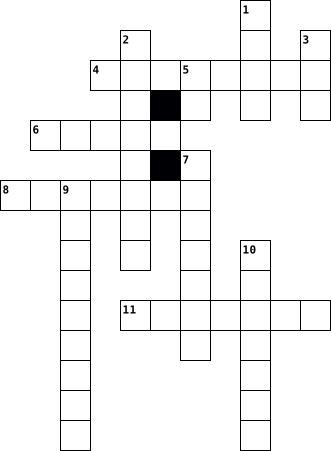
Ancient China 2026-06-29

Across
- Metal used to make weapons and ritual objects.
- Family name of China's first emperor.
- Ancient Chinese invention used for writing.
- Invention used for finding direction.
- Practice of tightly wrapping girls' feet.
- Valuable stone prized in Ancient China.
- Belief that Heaven gave rulers the right to rule.
- Massive structure built to defend China.
- Chinese invention first used for fireworks and weapons.
- Clay used to make Qin Shi Huang's soldiers.
- Chinese philosopher who taught respect and education.
- Valuable fabric traded across Asia.
Down
- Invention that allowed books to be copied more easily.
- Belief system based on the teachings of Confucius.
- Waterway built for transport and trade.
- Bones used to predict the future.
- A line of rulers from the same family.
- The "Mother River" of China.
- Ruler of Ancient China.
- Clay soldiers buried with Qin Shi Huang.
- Trade route linking China to Europe.
- First emperor of a unified China.
22 Clues: Ruler of Ancient China. • The "Mother River" of China. • Bones used to predict the future. • First emperor of a unified China. • Valuable fabric traded across Asia. • Trade route linking China to Europe. • Family name of China's first emperor. • Invention used for finding direction. • A line of rulers from the same family. • Waterway built for transport and trade. • ...
Ancient China 2020-08-23

Across
- a country we are studying right now
- Zodiac sign has stripes and is orangeblackandwhitE
- Zodiac sign like a bull
- fantasy creature breathes fire
- ancient,synonyms are old, a long time ago and the word starts with an A
- Great wall of china, A chinese icon landmark
- Zodiac sign oink oink
- zodiac sign goes neigh
- Servants to the emperor are called...
- Zodiac sign loves to eat bananas andclimbstrees
- A ruler of ancient china is called a ...
Down
- Classification scheme based on a lunarcalendar
- Zodiac sign like a mouse
- Zodiac sign like a chicken
- zodiac sign slithers on the groundandsheds skin
- Zodiac sign woof woof
- like a sheep starts with g
- Celebrating the start of the year
- Chi slow meditative martial arts
- First chinese dynasty
- Chinese animal, black and white
- Zodiac sign big ears fluffy tail
22 Clues: Zodiac sign woof woof • Zodiac sign oink oink • First chinese dynasty • zodiac sign goes neigh • Zodiac sign like a bull • Zodiac sign like a mouse • Zodiac sign like a chicken • like a sheep starts with g • fantasy creature breathes fire • Chinese animal, black and white • Chi slow meditative martial arts • Zodiac sign big ears fluffy tail • Celebrating the start of the year • ...
M13 Review 2021-12-28

Across
- We wear this on Halloween.
- What is this word? Where's the d_______?
- What is 2+2? I need my c________.
- Yoohoo! I got a lot of money in my r___ e_________.
- We sing this on Christmas.
- Just a little money.
- December 25th
- We put up r____ b______ on Chinese New Year.
- I need to cut the paper. We are my s_______?
- Too much money!
- My hair is too long. I will go there.
Down
- We set off f________ on Chinese New Year.
- I like this one the best. It's p_______.
- We say this on Halloween.
- I need pens, pencils and erasers. I can go here.
- I can buy medicine at the d________.
- I don't like this shirt! It looks d________.
- We eat h_______ on Chinese New Year.
- October 31st
- The first day of the first lunar month
20 Clues: October 31st • December 25th • Too much money! • Just a little money. • We say this on Halloween. • We wear this on Halloween. • We sing this on Christmas. • What is 2+2? I need my c________. • I can buy medicine at the d________. • We eat h_______ on Chinese New Year. • My hair is too long. I will go there. • The first day of the first lunar month • ...
S1 Exam Review 2021-12-13

Across
- In 476 Rome fell = "decrease" in Europe
- 1 God
- West African king grew Islamic learning
- Europeans began to trade in this "property"
- Greek cultural ideas spread by Alexander
- people move
- King or queen rule
- Sumerian temple
- Chinese rulers chosen by the gods
- Isolated valleys, Mountains, islands led to the development of Greek?
- The second set of laws...Roman
Down
- Many Gods
- major trade West Africa
- two Islamic groups after Muhammad's death
- This exchange brought new and diverse foods
- Produced a stable food supply
- Sumerian writing
- read between the lines
- 1st Set of standardized laws
- Chinese tri-color glaze
- explained forces of nature & our roles
- Athenian government by the people
- These were bound to show a mans wealth and power
- Chinese boom
- City where Islam started
- Genghis Kahn created panic or this
26 Clues: 1 God • Many Gods • people move • Chinese boom • Sumerian temple • Sumerian writing • King or queen rule • read between the lines • major trade West Africa • Chinese tri-color glaze • City where Islam started • 1st Set of standardized laws • Produced a stable food supply • The second set of laws...Roman • Athenian government by the people • Chinese rulers chosen by the gods • ...
All About Mahathir & Faith 2014-12-05

Across
- The name of Faith's little sister.
- Faith's hobby.
- The name of Faith's mother.
- The ____ of Chinese New Year is the time to have a reunion dinner.
- Faith's favourite drink. (2-word)
- Faith's favourite colour.
- The English word for '喜事' or '喜'.
- Mahathir's favourite colour.
Down
- The month Mahathir and Faith got engaged.
- The number of bags Faith has.
- The date of the first day of Chinese New Year 2015.
- Faith's nephew is ___ year old.
- The name of Faith's nephew.
- The place Mahathir and Faith met. (2-word)
- The Chinese name of the wedding toast. (2-word)
- The year Mahathir and Faith met. (2-word)
- The colour of Faith's spectacles.
- Mahathir's favourite food. (2-word)
- The name of Faith's brother-in-law.
- The first musical instrument she learned to play.
20 Clues: Faith's hobby. • Faith's favourite colour. • The name of Faith's mother. • The name of Faith's nephew. • Mahathir's favourite colour. • The number of bags Faith has. • Faith's nephew is ___ year old. • The colour of Faith's spectacles. • Faith's favourite drink. (2-word) • The English word for '喜事' or '喜'. • The name of Faith's little sister. • Mahathir's favourite food. (2-word) • ...
Vocab #3 2023-11-03

Across
- your destiny is decided by your actions
- Pakistan, India, and Bangladesh
- Cycle that all Chinese dynasties went through
- Main religion in India
- Travelers that settled in Persia, India, and Europe
- Someone who goes places to spread religion
- Main religion of Persia
- Hired government officials
- Another word for soul
- Symbol for Opposites in Asia
- Large wall constructed by the Chinese to protect from the Mongols
- Used by the Chinese to justify their dynasties
Down
- Four truths in Buddhism
- Philosophy based on Lautzu
- Cause of all existence
- fertile soil under the Yellow River
- Being reborn
- The teachings of the Budha
- Social division system
- Ancient Indian Empire after the Mauryan Empire
- Ancient scriptures of the Indus of the Indus Valley
- Desire to end suffering, Buddhist
- released from the cycle of rebirth
- Respect for Elders
- Respect for all loving things
- Summary of Buddhist Beliefs
26 Clues: Being reborn • Respect for Elders • Another word for soul • Cause of all existence • Social division system • Main religion in India • Four truths in Buddhism • Main religion of Persia • Philosophy based on Lautzu • The teachings of the Budha • Hired government officials • Summary of Buddhist Beliefs • Symbol for Opposites in Asia • Respect for all loving things • ...
China review woods 2023-03-01

Across
- books opposing qin shihuangdi were publicly ______
- qin based his rules on the ideas of?
- farmers could plow more using this tool
- which word best describes qin shihuangdi
- confucius believed everyone had a sense of?
- which empire owned the most land
- in this idea people are naturally born evil
- Confucius was china's first great?
Down
- define mandate
- wudi wanted ______ people to fill government posts
- why did the Zhou dynasty fall
- what was the basic building block of chinese society
- scholars hated qin for _______ their writings
- in this idea people are told to be one with nature
- who did the Chinese believe was the link between heaven and earth?
- the proper way a king is supposed to act is called
- this group of people liked legalism the most
- Chinese artist used this material in most of there works
- merchants used this animal to transport there goods
- parents owe their children?
20 Clues: define mandate • parents owe their children? • why did the Zhou dynasty fall • which empire owned the most land • Confucius was china's first great? • qin based his rules on the ideas of? • farmers could plow more using this tool • which word best describes qin shihuangdi • confucius believed everyone had a sense of? • in this idea people are naturally born evil • ...
The Transportation of Goods Along the Routes Hanford Period 7 2024-10-16

Across
- Elements of south east culture implemented into a kingdom
- Largest producer of gold
- People of Chaco having social organization
- A Chinese title for the Mongols'
- secular affairs, receiving gifts from merchants
- Red stone Tower
- A language borrowed from others using Arabic script and metals from China
- Chinese ships build following popularity of the sea route exchange
- The result of the mongols interaction with Europe
- Offer a efficent way of transport across the desert
Down
- Served women in court
- "Black Death"
- Mongol captital
- Major religious center and intellectual life
- Communication across the mongol empire
- Captain in charge of chinese fleet expeditions
- Europe interacting with other empires across the ocean
- Grandson of Chinggis Khan
- State merchants could limit their loses
- Temple expressed the Hindu understanding of Meru
- Visited the Swahili coast as a traveler
- Guest inns that helped caravans transport goods
22 Clues: "Black Death" • Mongol captital • Red stone Tower • Served women in court • Largest producer of gold • Grandson of Chinggis Khan • A Chinese title for the Mongols' • Communication across the mongol empire • State merchants could limit their loses • Visited the Swahili coast as a traveler • People of Chaco having social organization • Major religious center and intellectual life • ...
AP World crossword 2022-06-02

Across
- founder of the Islamic religion
- Nomadic Arab tribes
- His 95 Theses started the Protestant Reformation
- First Emperor of France
- an Islamic state or empire ruled by a religious and political leader
- title of the emperor of Russia
- Elite soldiers of the Ottoman Empire made up of Christian youths
- man-made waterway in Egypt, connecting the Mediterranean Sea to the Red Sea
- large pyramid temples of ancient Mesopotamia
- largest contiguous land empire in history
Down
- First British colony in North America
- Islamic holy site in Mecca
- This resulted in a more industrialized Japan
- social system based on class in India
- City also called the second Rome
- Japanese feudal military leaders
- King of England in the 16th century, famous for his six wives
- The last Chinese dynasty
- Chinese made ship used in the Han dynasty
- Chinese belief system that was first used by the Han dynasty
20 Clues: Nomadic Arab tribes • First Emperor of France • The last Chinese dynasty • Islamic holy site in Mecca • title of the emperor of Russia • founder of the Islamic religion • City also called the second Rome • Japanese feudal military leaders • First British colony in North America • social system based on class in India • Chinese made ship used in the Han dynasty • ...
Lesson 3 Exploration M10 2022-11-18

Across
- chinese dynasty ruling from 1368 to 1644
- spanish conquistador from 1519 to 1521
- chinese fleet visited more than 30 countries
- spanish soldiers,explorers,and fortune hunters
- first European to sail around Africa
- beautiful tomb in Agra, India
- mughal emperor who ruled from 1556 to 1605
- third emperor of the Ming Dynasty
- type of Japanese drama
- Italian explorer, sailing for spain
- chinese emperor from 1661 to 1722
- form of poetry with a set of five, seven, and five
- founder of the mughal empire
Down
- Indian warrior king and founder of Hindu community
- expanded mughal power to greatest extent
- China's last dynasty
- builder of the Taj Mahal
- land controlled by another nation
- conqueror of peru
- first emperor of the Ming Dynasty
- prince of portugal and patron of exploration
- people native to Manchuria
- Japanese feudal lord who commanded private army
- member of a nonviolent religious group
24 Clues: conqueror of peru • China's last dynasty • type of Japanese drama • builder of the Taj Mahal • people native to Manchuria • founder of the mughal empire • beautiful tomb in Agra, India • land controlled by another nation • first emperor of the Ming Dynasty • third emperor of the Ming Dynasty • chinese emperor from 1661 to 1722 • Italian explorer, sailing for spain • ...
TCI Unit 4 Sohum's Defenitions 2023-05-17

Across
- Far from other people or things.
- A large organization that operates under rules.
- When liquid turns to gas.
- A violent act of retaliation to government or law.
- A Chinese philosophy that emphasizes obediance.
- To have a strong power over something.
- A person who works for the government.
- A group of friends or family.
- To make something better quality
- A Chinese philosophy that emphasizes harmony with nature.
- A Chinese philosophy made by Confucius.
Down
- The ability to live forever.
- A person who does physical work.
- To get possession of something.
- A metal made from copper.
- The difference between things when compared.
- To make everything the same.
- Weather conditions of a certain place.
- One of the first dynasties of China from 1750 to 1040 B.C.E.
- A trade route that stretched for over 4,000 miles across Asia.
20 Clues: A metal made from copper. • When liquid turns to gas. • The ability to live forever. • To make everything the same. • A group of friends or family. • To get possession of something. • Far from other people or things. • A person who does physical work. • To make something better quality • Weather conditions of a certain place. • To have a strong power over something. • ...
Exchange across Eurasia and the Indian Ocean 2024-10-21

Across
- Chinese explorer; also a eunuch
- Large minaret for a mosque in Delhi
- Method of transport across the Sahara desert
- Muslim explorer and public servant
- Extremely wealthy West African king
- Diverse groups of people that assisted trade between cultures
- West African storyteller
- School of Buddhism in which you chant "amitabha"
- Eastern ideology blending Buddhism, Daoism and Confucianism
Down
- Common lingua franca of the East African coast
- Largest Hindu temple in the world, located in Cambodia
- Agricultural and botanical flourishing that occurred due to Muslim practices
- Roadside inns that kept Saharan traders resupplied
- School of Buddhism centered around meditation
- Chinese paper cash
- Place of large-scale cultural exchange in West Africa
- Method used by Buddhist monks to gather food
- Chinese merchant ship with high storage capacity
- Empire on the modern day island of Java
- Indian trade ship that can move into the wind
20 Clues: Chinese paper cash • West African storyteller • Chinese explorer; also a eunuch • Muslim explorer and public servant • Large minaret for a mosque in Delhi • Extremely wealthy West African king • Empire on the modern day island of Java • Method of transport across the Sahara desert • Method used by Buddhist monks to gather food • School of Buddhism centered around meditation • ...
Ancient China / Ancient Rome 2024-12-01

Across
- Lasted from 753 to 509 BCE in Ancient Rome
- The people who fought in the colosseum
- Something old
- Chinese philosopher
- The dynasty that went from 221 BCE to 206 BCE
- The people who lived in Rome
- Lasted from 509-27BCE in Ancient Rome
- A job which the Ancient Romans had
- Bought peace
- What Confucius did
- A Roman commoner
- Ruling family
Down
- Lasted from 206BCE to 220CE in Ancient China
- Brought the bronze age
- Lasted from 1600BCE to 1046BCE in Ancient China
- Where the Ancient Romans would live
- created by the Emperor Qin Shi Huang
- The language of Romans
- The people who lived in China
- A famous Roman landmark where people fought
- Created by the Ancient Chinese
- The creator of the the julian calendar
- Invented by the Romans
- Common jobs on the lords land
- The person who inherits something
25 Clues: Bought peace • Something old • Ruling family • A Roman commoner • What Confucius did • Chinese philosopher • Brought the bronze age • The language of Romans • Invented by the Romans • The people who lived in Rome • The people who lived in China • Common jobs on the lords land • Created by the Ancient Chinese • The person who inherits something • A job which the Ancient Romans had • ...
Marco Polo 2025-12-16

Across
- He invented a printing press 120 years after Marco died
- a long canoe-like boat used in the canals of Venice
- Invented by the Chinese for fireworks
- The enormous empire of Kublai Khan
- A Chinese philosopher whose sayings are in fortune cookies
- means ruler
- Marco's nickname because he exaggerated a lot
- The land route that went through mountains and desert
- Invented by the Chinese in 105AD and they made money out of it
Down
- The sea route to Asia that went around India
- Where Marco was born
- the title of Marco's book
- Something people burned for fuel in China
- Silk worm food
- What his father and uncle did for a living
- He helped Marco write his book
- The emperor that Marco worked for
- nomads who lived in yurts and loved their horses
- a 13th century wooden ship
- China
20 Clues: China • means ruler • Silk worm food • Where Marco was born • the title of Marco's book • a 13th century wooden ship • He helped Marco write his book • The emperor that Marco worked for • The enormous empire of Kublai Khan • Invented by the Chinese for fireworks • Something people burned for fuel in China • What his father and uncle did for a living • ...
Chinese New year 2023-02-12

Across
- Chinese lantern
- the money inside of the red envelope
- red envelope
- Chinese caramelised fruits
- fireworks
- Chinese New Year
Down
- gold coins
- handfan
- Happy New Year
- Dragon
10 Clues: Dragon • handfan • fireworks • gold coins • red envelope • Happy New Year • Chinese lantern • Chinese New Year • Chinese caramelised fruits • the money inside of the red envelope
Module 10 Unit 1 Happy New Year! 2023-07-30

Across
- year
- dumpling
- hair
- Christmas
- eat
- dinner
Down
- firecracker
- wish
- present
- have
- Chinese
11 Clues: eat • year • wish • hair • have • dinner • present • Chinese • dumpling • Christmas • firecracker
Module 10 Unit 1 Happy New Year! 2023-07-30

Across
- year
- dumpling
- hair
- Christmas
- eat
- dinner
Down
- firecracker
- wish
- present
- have
- Chinese
11 Clues: eat • year • wish • hair • have • dinner • present • Chinese • dumpling • Christmas • firecracker
CROSSWORD PUZZLE ON ASIAN ART 2022-05-27

Across
- YUAN
- HINDUISM
- TRADITION
- RELIGION
Down
- MUSEUM
- INDONESIA
- LAOS
- BUDDHISM
- CHINESE
- JAPAN
- VIETNAM
11 Clues: YUAN • LAOS • JAPAN • MUSEUM • CHINESE • VIETNAM • BUDDHISM • HINDUISM • RELIGION • INDONESIA • TRADITION
MAPEH 8 2016-02-12

Across
- Japanese Swordsmen
- stress reliever drinks
- Indonesian Theater
- medicinal stuffs
- use to smoke
- Opera theater origin
- residual nicotine and other chemicals left on a variety of indoor surfaces by tobacco smoke
- highly addictive leaf
- Japanese Festival
- open sore on an external or internal surface of the bod
- Indonesian theater influence
- Country of Elephants
- Festival in Thailand
- Baliness Monkey Chant
- Meaning of red face paint in Chinese Theater
Down
- Lungs problem when smoking
- addictive drugs
- Japanese Theater [Actors wear masks]
- Chinese Theater
- reason why we use drugs
- Wayang Stories
- negative effect of smoking
- used most in rituals
- Shadow puppet origin
- The land of Anime
- meaning of white face paint in Chinese Theater
- most dangerous chemical in a cigarette
- The traditional ensemble music of Java and Bali in Indonesia
- Balinese dance
- Japanese Theater [Traditional]
30 Clues: use to smoke • Wayang Stories • Balinese dance • addictive drugs • Chinese Theater • medicinal stuffs • The land of Anime • Japanese Festival • Japanese Swordsmen • Indonesian Theater • Opera theater origin • used most in rituals • Shadow puppet origin • Country of Elephants • Festival in Thailand • highly addictive leaf • Baliness Monkey Chant • stress reliever drinks • reason why we use drugs • ...
CHINA 2013-05-12

Across
- The oldest tree in the world located in China
- During the 2012 Olympics, China won 38 _____ medals
- _____ 2013 was held on February 10
- There are 12 Chinese _____ signs
- China is located here
- China's flag has _____ stars on their flag
- The _____ of China is about 1.344 billion
- _____ is the main religion of China
- The capital of China
- China's flag is the color _____
Down
- 2013 is the year of the _____ in Chinese year zodiac
- The ruler of China today
- An ongoing wall located in northern China
- A ______ is a sequence of rulers from the same family
- China is located in _____ Asia
- 1/5 of the world's population lives in _____
- During the 2012 Olympics, China was ranked _____
- During the 2008 Olympics, China was ranked _____
- The 2008 _____ was held in Beijing, China
- Chinese women used to ____ their feet so men could confine them to the home
20 Clues: The capital of China • China is located here • The ruler of China today • China is located in _____ Asia • China's flag is the color _____ • There are 12 Chinese _____ signs • _____ 2013 was held on February 10 • _____ is the main religion of China • An ongoing wall located in northern China • The _____ of China is about 1.344 billion • The 2008 _____ was held in Beijing, China • ...
JLC Crossword 2022-03-29

Across
- The little child who died
- What An-Mei planted in Rose's gardens
- The song the girl on TV played during Jing-mei
- Jing-Mei's mother
- Jing-mei's piano teacher
- Rose's mother
- Waverly's husband
- Lena's husband
- Lindo's daughter
- Waverly's mother
- The main chinese language
- The number of directions
- Ying-ying's daughter
- The game Waverly is really good at
- How many siblings Rose had
- The number of chapters in the book
Down
- The people Suyuan left behind in China
- Rose's father
- The best type of food
- What symbolizes An-Mei's marriage
- The ethnicity of everyone
- The number of epilogues
- The number of malignant gates
- The second chinese language
- What Jing-Mei was supposed to be
- The worst type of food
- Lena's mother
- Suyuan's daughter
- An-Mei's daughter
- Where Jing-Mei went at the end of the book
30 Clues: Rose's father • Rose's mother • Lena's mother • Lena's husband • Lindo's daughter • Waverly's mother • Jing-Mei's mother • Waverly's husband • Suyuan's daughter • An-Mei's daughter • Ying-ying's daughter • The best type of food • The worst type of food • The number of epilogues • Jing-mei's piano teacher • The number of directions • The little child who died • The ethnicity of everyone • ...
AP World 2022-05-25

Across
- Collection of sacred Hindu poems
- Economic and political relationship between lords and serfs in the Middle Ages
- Fertilizer that comes from birds
- Mughal infantrymen under control of British East India Company
- Series of French Civil Wars
- Dynasty that ruled China from 581 to 618
- The religion of pilgrims to the United States
- The worship of multiple gods
- German diplomat
- High official in Muslim countries
- For a non-Chinese culture to be seemingly made Chinese through Chinese influence
Down
- The first Holy Roman emperor
- Nomadic cattle herders who migrated to India in 1600 B.C.E
- Theory that natural selection was applicable to humans
- Version of Buddhism that emphasizes peace and meditation
- Member of the people of Southern Russia/Ukraine noted for military skill
- The movement of intellectual increase
- A mystic and magical form of Islam
- Political ideology associated with civil liberties
- Creator of the first written law code
20 Clues: German diplomat • Series of French Civil Wars • The first Holy Roman emperor • The worship of multiple gods • Collection of sacred Hindu poems • Fertilizer that comes from birds • High official in Muslim countries • A mystic and magical form of Islam • The movement of intellectual increase • Creator of the first written law code • Dynasty that ruled China from 581 to 618 • ...
China Fowlkes 2022-01-19

Across
- Built to protect China’s Territory
- Power given by a single source?
- 2nd highest of the social triangle.
- Lowest in the family Social Hierarchy
- A government official's exam.
- Used for trade routes throughout the Mediterranean.
- What do you call something that is unable to escape something and is contained?
- Respect for Elders
- Invented by the Chinese for navigation.
- Who works on the farms?
Down
- What do Chinese people think is key?
- What’s a pictogram?
- Spreaded from India into China as a religion.
- an ancient Chinese belief system, which focuses on the importance of personal ethics and morality
- Also known as "Fine China"
- What material is commonly used for tools?
- Where did China start?
- What material do they wear?
- These people were expelled from China.
- A type of powder used for weapons.
- Invented as a form of currency.
21 Clues: Respect for Elders • What’s a pictogram? • Where did China start? • Who works on the farms? • Also known as "Fine China" • What material do they wear? • A government official's exam. • Power given by a single source? • Invented as a form of currency. • Built to protect China’s Territory • A type of powder used for weapons. • 2nd highest of the social triangle. • ...
The Writing on the Wall 2022-10-13

Across
- a person who comes to live permanently in a foreign country.
- what the Chinese poems were inscribed on.
- customs or beliefs from generation to generation.
- The walls were _____ on the walls.
- Leave this as a _______ to encourage fellow souls.
- the name of the Park Superintendent.
- There is no flower beneath my pillow and my ____ are not sweet.
- Where they thought they were going.
- There was Chinese _____ on the wall.
- What they used to write on the walls.
Down
- What they wrote on the wall.
- the authors name.
- a limiting condition or measure, especially a legal one.
- there were over a ______ poems on the wall.
- having one's feelings and expression under control.
- The name of the professor who showcased the poems.
- what they traveled on to get to America.
- the language they spoke.
- The name island where the immigrants were sent to.
- where the people originally came from.
20 Clues: the authors name. • the language they spoke. • What they wrote on the wall. • The walls were _____ on the walls. • Where they thought they were going. • the name of the Park Superintendent. • There was Chinese _____ on the wall. • What they used to write on the walls. • where the people originally came from. • what they traveled on to get to America. • ...
MOBILE DEVICES 2023-12-09

Across
- Microsoft's line of tablet computers
- Former leading mobile phone manufacturer
- Popular for fitness tracking devices
- Chinese electronics company producing smartphones
- Chinese manufacturer of smartphones
- Xiaomi's budget-friendly smartphones
- Known for innovative smartphone features
- Known for high-performance Android phones
- Iconic portable music player
- Bluetooth speakers from JBL
- Google's high-end Chromebook
- Asus' line of Android smartphones
- Lenovo's line of Android tablets
Down
- Amazon's e-reader device
- Sony's line of Android smartphones
- Produces affordable smartphones
- Samsung's line of tablets
- Known for GPS-enabled devices
- Premium headphones by Beats
- Pioneering mobile phone brand
- Taiwanese brand producing Android phones
- Apple's iconic smartphone
- Samsung's line of smartwatches
- Apple's tablet computer
- Leading manufacturer of Android phones
- Known for secure communication smartphones
- Apple's line of smartwatches
- Google's line of Android smartphones
- Electronics company producing smartphones
- Chinese brand known for camera technology
30 Clues: Apple's tablet computer • Amazon's e-reader device • Samsung's line of tablets • Apple's iconic smartphone • Premium headphones by Beats • Bluetooth speakers from JBL • Iconic portable music player • Apple's line of smartwatches • Google's high-end Chromebook • Known for GPS-enabled devices • Pioneering mobile phone brand • Samsung's line of smartwatches • ...
History of China 2019-06-04

Across
- A straight or narrow sea between 2 land masses
- Belief that Chinese Kings rights to rule came from the Gods
- Shang Kings_____ on the warlords to stay in power
- Made of officials who carry out tasks for the government
- Type of character used in chinese writing
- The positions the Aristocrats held were ____
- The first strong emperor of the Han Dynasty
- the Chinese honored their ...
Down
- Class group of people who have the same economic & social position
- A military commander exercising civil power in limite area
- People of noble birth whose wealth came from land they owned
- Characters that represent objects
- Pronounced CHIHN
- type of Money
- used to grind grain & mine salt
- To come into being or become known means
- The Qin & Han Dynasty were in
- relating to soldiers
- Pronounced DOW
- Tenant_____worked lands owned by others
20 Clues: type of Money • Pronounced DOW • Pronounced CHIHN • relating to soldiers • The Qin & Han Dynasty were in • the Chinese honored their ... • used to grind grain & mine salt • Characters that represent objects • Tenant_____worked lands owned by others • To come into being or become known means • Type of character used in chinese writing • The first strong emperor of the Han Dynasty • ...
Ancient China Crossword Puzzle By Billy. K 2019-08-27

Across
- Printing An ancient type of Printing.
- were used to signal warnings.
- A religious, philosophical tradition founded by Lao Tzu.
- The Capital of China.
- A system of thought and behaviour founded by Confucius and developed by Mencius.
- The First Chinese Dynasty.
- Something that is frequently used today.
- The Bronze age of technological advancements and craftsmanship dynasty.
- Army Built statues out of Red Clay and believed in afterLife.
- The oldest canal in the World.
- The last emperor of the Xia Dynasty.
Down
- Soft and smooth fabric.
- used for eating and used for cooking.
- Extremely long wall to defend against invasions.
- The First Chinese Emperor.
- Made from Charcoal, Saltpeter, Sulphur and is used for artillery, fire Works, etc.
- The Golden age of Poetry and Painting dynasty.
- The City of Calligraphy.
- River The biggest river.
- What do the Chinese drink to treat illnesses?
20 Clues: The Capital of China. • Soft and smooth fabric. • The City of Calligraphy. • River The biggest river. • The First Chinese Emperor. • The First Chinese Dynasty. • were used to signal warnings. • The oldest canal in the World. • The last emperor of the Xia Dynasty. • used for eating and used for cooking. • Printing An ancient type of Printing. • ...
Thought Reform and the Anti Campaigns 2020-09-03

Across
- Animal used to describe reactionaries
- Chinese name for Five Antis
- Wrong thinking (i…)
- Process of correcting your own thoughts (2 words)
- Process of being corrected (r…)
- Abusive denunciation (singular)
- Expected of a person who is struggled (c…)
- To remould a person’s character (Re…, no hyphen used)
- Correcting your own thoughts (2 words, no hyphen used)
- Corruption, waste and bureaucratism
- Chinese for work unit level
- Urban Fanshen campaign (2 words)
- Chinese name for Three Antis
Down
- Tax evasion, fraud, cheating, theft and bribery
- A murderous weapon in the hands of an intellectual
- A party target of Three Antis (c…)
- A label describing an unacceptable attitude (b…)
- Terrill describes capitalists as a crustacean that turns red (plural)
- Historian Jack …
- A target of Five Antis (i…)
- Rural Fanshen campaign (2 words)
- Losing face (h…)
- Historian Maurice …
23 Clues: Historian Jack … • Losing face (h…) • Wrong thinking (i…) • Historian Maurice … • Chinese name for Five Antis • A target of Five Antis (i…) • Chinese for work unit level • Chinese name for Three Antis • Process of being corrected (r…) • Abusive denunciation (singular) • Rural Fanshen campaign (2 words) • Urban Fanshen campaign (2 words) • A party target of Three Antis (c…) • ...
Chapter 3/4 Vocab - Ayva Rubenfeld P3 2024-10-15

Across
- a settlement made of people from multiple cultures
- used by Buddhist monks and taken out of hand when Buddhism spread
- the features of Chacoan culture
- a spin on Confucianism using Buddhist ideas
- how the Mongols communicated throughout the large empire
- a city with major Buddhist and Hindu monuments
- associations of merchants where they could pool resources
- a mix of many different cultures into language
- Arab scholar who traveled all over and facilitated Islam
Down
- name for money when it was first introduced
- capital of the Mongol empire
- Chinese explorer who led the Chinese expeditions in the Indian Ocean Basin
- Animal used by caravans and to carry goods
- large Hindu temple with carvings
- inns along trade routes where cultural exchange occured
- ancient Native American society in present day St. Louis
- major trading city and city in Mali
- richest man ever
- Chinese ships used on the sea roads
- Black Death
20 Clues: Black Death • richest man ever • capital of the Mongol empire • the features of Chacoan culture • large Hindu temple with carvings • major trading city and city in Mali • Chinese ships used on the sea roads • Animal used by caravans and to carry goods • name for money when it was first introduced • a spin on Confucianism using Buddhist ideas • ...
AP World - Unit 1 Chapter 3/4 Vocabulary 2025-10-30

Across
- state-approved association of merchants allowing them to limit loss if caravan failed
- animal that made trans-saharan commerce efficient
- form of Buddhism focused on spiritual enlightment
- combination of buddhism w/ confucianism
- form of warfare involving surrounding of enemy forces
- new Chinese ship used along Indian Ocean
- language differentiated Swahili culture from Africa's interior
- inns located along Silk Roads
- ruler of Mali famous for pilgrimage to Mecca
Down
- grandson of Chinggis Khan, first il-khan of Persia
- flourishing commerical city of West Africa
- stations that fostered trade and communication
- paper money making it unnecessary to carry coins
- Javan kingdom known for Borobudur
- castrated man loyal to empower in Ming Dynasty
- Hindu temple built by Angkor kingdom
- north american chiefdom at center of trading network
- Chinese admiral voyaging across Indian Ocean
- Chinese dynastic title adopted by Mongols
- settlement in large pueblos in chaco canyon
20 Clues: inns located along Silk Roads • Javan kingdom known for Borobudur • Hindu temple built by Angkor kingdom • combination of buddhism w/ confucianism • new Chinese ship used along Indian Ocean • Chinese dynastic title adopted by Mongols • flourishing commerical city of West Africa • settlement in large pueblos in chaco canyon • Chinese admiral voyaging across Indian Ocean • ...
AP World Ch 3 & 4 Vocab 2025-10-29

Across
- combination of Buddhism, Confucianism, and Daoism
- advisors to the Chinese emperor
- ruler of Mongol Persia, control of Persia declined because he had no descendants
- Java Kingdom that built the temple of Boroburdur
- Chinese dynastic title that the Mongols adopted
- could survive 10 days without water
- system system that the Mongols used to send messages across long distances
- Muslim ruler of the Mali Empire, made a pilgrimage and spread Islam
- a type of ship
- Mississippi civilization
- what the Europeans were called as they rose in global power
Down
- Bactreia that caused the Black Death
- government insured merchant associations
- the popular & "authentic" Chinese version of Buddhism
- permanent settlements for travelling merchants
- a temple for Hindus in Champa
- a major trading city in the Mali Empire
- capital city of the Mongol empire
- the name of a travelling Muslim judge
- inns/guesthouses for travelling merchants
20 Clues: a type of ship • Mississippi civilization • a temple for Hindus in Champa • advisors to the Chinese emperor • capital city of the Mongol empire • could survive 10 days without water • Bactreia that caused the Black Death • the name of a travelling Muslim judge • a major trading city in the Mali Empire • government insured merchant associations • ...
Marco Polo 2025-12-16

Across
- Marco's nickname because he exaggerated a lot
- the title of Marco's book
- nomads who lived in yurts and loved their horses
- a long canoe-like boat used in the canals of Venice
- The emperor that Marco worked for
- What his father and uncle did for a living
- Something people burned for fuel in China
- Silk worm food
- He invented a printing press 120 years after Marco died
Down
- Invented by the Chinese for fireworks
- The sea route to Asia that went around India
- A Chinese philosopher whose sayings are in fortune cookies
- means ruler
- The enormous empire of Kublai Khan
- Where Marco was born
- He helped Marco write his book
- The land route that went through mountains and desert
- China
- Invented by the Chinese in 105AD and they made money out of it
- a 13th century wooden ship
20 Clues: China • means ruler • Silk worm food • Where Marco was born • the title of Marco's book • a 13th century wooden ship • He helped Marco write his book • The emperor that Marco worked for • The enormous empire of Kublai Khan • Invented by the Chinese for fireworks • Something people burned for fuel in China • What his father and uncle did for a living • ...
Ancient China 2026-06-29

Across
- Metal used to make weapons and ritual objects.
- Family name of China's first emperor.
- Ancient Chinese invention used for writing.
- Invention used for finding direction.
- Practice of tightly wrapping girls' feet.
- Valuable stone prized in Ancient China.
- Belief that Heaven gave rulers the right to rule.
- Massive structure built to defend China.
- Chinese invention first used for fireworks and weapons.
- Clay used to make Qin Shi Huang's soldiers.
- Chinese philosopher who taught respect and education.
- Valuable fabric traded across Asia.
Down
- Invention that allowed books to be copied more easily.
- Belief system based on the teachings of Confucius.
- Waterway built for transport and trade.
- Bones used to predict the future.
- A line of rulers from the same family.
- The "Mother River" of China.
- Ruler of Ancient China.
- Clay soldiers buried with Qin Shi Huang.
- Trade route linking China to Europe.
- First emperor of a unified China.
22 Clues: Ruler of Ancient China. • The "Mother River" of China. • Bones used to predict the future. • First emperor of a unified China. • Valuable fabric traded across Asia. • Trade route linking China to Europe. • Family name of China's first emperor. • Invention used for finding direction. • A line of rulers from the same family. • Waterway built for transport and trade. • ...
Ancient China 2026-06-29

Across
- Metal used to make weapons and ritual objects.
- Family name of China's first emperor.
- Ancient Chinese invention used for writing.
- Invention used for finding direction.
- Practice of tightly wrapping girls' feet.
- Valuable stone prized in Ancient China.
- Belief that Heaven gave rulers the right to rule.
- Massive structure built to defend China.
- Chinese invention first used for fireworks and weapons.
- Clay used to make Qin Shi Huang's soldiers.
- Chinese philosopher who taught respect and education.
- Valuable fabric traded across Asia.
Down
- Invention that allowed books to be copied more easily.
- Belief system based on the teachings of Confucius.
- Waterway built for transport and trade.
- Bones used to predict the future.
- A line of rulers from the same family.
- The "Mother River" of China.
- Ruler of Ancient China.
- Clay soldiers buried with Qin Shi Huang.
- Trade route linking China to Europe.
- First emperor of a unified China.
22 Clues: Ruler of Ancient China. • The "Mother River" of China. • Bones used to predict the future. • First emperor of a unified China. • Valuable fabric traded across Asia. • Trade route linking China to Europe. • Family name of China's first emperor. • Invention used for finding direction. • A line of rulers from the same family. • Waterway built for transport and trade. • ...
Classical China & India 2026-06-24

Across
- Chinese philosophy favoring strict laws and punishments.
- Sacred river in India.
- Religion based on the teachings of Buddha.
- Moral duty or righteous path in Indian religions.
- Mountain range separating India and Tibet.
- The belief that actions affect future outcomes.
- Chinese philosophy focused on living in harmony with nature.
- A line of rulers from the same family.
- A specific caste or social group in India.
- Rebirth of the soul in a new body.
- Major religion of India with many gods and beliefs.
Down
- Study of Earth's physical features and places.
- River that supported an early Indian civilization.
- State of perfect peace and freedom from suffering.
- Founder of Buddhism; means “Enlightened One.”
- One of the main social classes in ancient India.
- Major river in northern China.
- Seasonal wind that brings heavy rains.
- Ancient trade route linking Asia and Europe.
- Chinese philosophy emphasizing morality and respect.
20 Clues: Sacred river in India. • Major river in northern China. • Rebirth of the soul in a new body. • Seasonal wind that brings heavy rains. • A line of rulers from the same family. • Religion based on the teachings of Buddha. • Mountain range separating India and Tibet. • A specific caste or social group in India. • Ancient trade route linking Asia and Europe. • ...
Module 2 My favourite things 2023-06-09

Across
- on
- start
- Chinese
- ticket
- quick
Down
- princess
- art
- minute
- break
- seat
- carefully
11 Clues: on • art • seat • break • start • quick • minute • ticket • Chinese • princess • carefully
subjects 2022-11-25
Across
- computer
- music
- English
- history
Down
- math
- politics
- art
- P.E.
- chinese
- geography
- biology
11 Clues: art • math • P.E. • music • chinese • English • biology • history • politics • computer • geography
Ancient Chinese Society 2021-05-05

Across
- what was Woman’s responsibility to their husband?
- what is there a rising population of?
- Women also often did sewing, weaving and ___
- who's lives did empress wu zhao improve?
- in what dynasty was education difficult for women in ancient china?
- what children had to learn calligraphy?
- Women had to obey their-
- Who was more significant Emperor Shi Huangdi or empress Wu Zhao to improving Ancient Chinese society?
- what did the nobles give to the the emperor?
- how many years of education funded by the government did woman get?
Down
- who has the highest role?
- what dynasty was Emperor Shi Huangdi Emperor of?
- calligraphy was used as a way of com...
- the ancient Chinese believed it was a waste of time to educate girls as their _____ did not matter.
- What did artisans use to make weapons and mirrors?
- What were artisans rated in society?
- what is Calligraphy a form of?
- where did the name mandarins come from?
- Chinese women are su-
19 Clues: Chinese women are su- • Women had to obey their- • who has the highest role? • what is Calligraphy a form of? • What were artisans rated in society? • what is there a rising population of? • calligraphy was used as a way of com... • what children had to learn calligraphy? • where did the name mandarins come from? • who's lives did empress wu zhao improve? • ...
Chinese final project 2016-12-08

Across
- therefore
- book
- to see;to watch
- to play ball
- to sing
- movie
- to like
- to listen
- time moment
- music
Down
- to go
- some
- foreign country
- yesterday
- often
- to dance
- tv
- to treat,to host/pay for a dinner
- weekend
19 Clues: tv • some • book • to go • often • movie • music • to sing • to like • weekend • to dance • therefore • yesterday • to listen • time moment • to play ball • foreign country • to see;to watch • to treat,to host/pay for a dinner
Ancient Chinese Society 2022-05-27

Across
- What was the Chinese symbol for ‘passive and docile’?
- The government officials that ruled over China were called?
- What social class did the scholars fall under?
- Were women allowed to have education? (yes/no)
- How old was Wu Zhao when she became empress (age must be spelt out)?
- What was the Chinese symbol for ‘dominant and masculine’?
- What emperor was Wu Zhao the concubine for?
- What social class did the farmers fall under?
- Fill in the blank. ‘From this, he was not able to possess books that weren’t about agriculture or medicine; thus were ______.’ (Slide six, paragraph one.)
- Who was the first emperor of China (put answer into one word)?
- Between both genders, who was seen as a higher rank? (women/men)
Down
- How old was Qin Shi Huang when he became emperor (age must be spelt out)?
- What symbol often represented the ‘women and men’(put answer into one word)?
- Who was the first female empress of China(put answer into one word)?
- What did Qin Shi Huang have an interest in? (Slide six, paragraph one; “...___ and magic’)
- What was considered the lowest ranking social hierarchy?
- What dynasty did Qin Shi Huang rule over?
- How many social classes were there, excluding the Nobles (number must be spelt out)?
- What dynasty did Wu Zhao overthrow in?
- What social class did the craftspeople fall under?
- What social class was conceived as sub-human?
21 Clues: What dynasty did Wu Zhao overthrow in? • What dynasty did Qin Shi Huang rule over? • What emperor was Wu Zhao the concubine for? • What social class was conceived as sub-human? • What social class did the farmers fall under? • What social class did the scholars fall under? • Were women allowed to have education? (yes/no) • ...
Chinese Y.7 2022-05-25

Across
- sleep
- excuse me
- right
- than
- can not
- beside
- front
- thai
- shower
- to get up
Down
- timetable
- lastname
- back
- back
- french
- name
- do homework
- Chinese
- English
- can
20 Clues: can • back • back • name • than • thai • sleep • right • front • french • beside • shower • can not • Chinese • English • lastname • timetable • excuse me • to get up • do homework
American Born Chinese 2024-12-18

Across
- a type of protector
- to never die
- monkey king's disguise
- a way to end someone's life
- the main character
- wei-chen's girlfriend
- the king of a mountian
- jin's best friend
- always causing it
- another word god
Down
- a wise man
- a certain race
- jin's crush
- wei-cen's original country
- a type of ruler
- the god of creation
- an instructor
- an animal
- a valuable ore
19 Clues: an animal • a wise man • jin's crush • to never die • an instructor • a certain race • a valuable ore • a type of ruler • another word god • jin's best friend • always causing it • the main character • a type of protector • the god of creation • wei-chen's girlfriend • monkey king's disguise • the king of a mountian • wei-cen's original country • a way to end someone's life
JLC Crossword 2022-03-18

Across
- “bone deep”
- chess player, Jing-mei’s rival
- game played at joy luck club meetings
- refugees including Jing’s mom went here to escape the Japanese invasion
- main character of story
- died by drowning, An-mei’s youngest child
- With this __ Lindo & Tyan-yu’s marriage can never be broken
- most of the mothers lived where before going to San Francisco?
- “skin deep”
- two wheeled hooded vehicle pulled by people
- After Chinese New Year dinner, Jing-mei’s mother gave her a ___ necklace
- went through divorce & is indecisive
- mother of Rose
- Chinese paper currency back then
- Waverly’s daughter
- Chinese nationalist party
- daughter of Ying-Ying
- had to marry Huang Tyan-yu
Down
- What did An-mei call her grandma?
- Jing-mei’s mother wanted her daughter to be a Chinese ___
- Many characters in this story make __ for the love of their children or parents
- Rose’s husband
- An-mei’s mother is a number three ___
- an-mei’s mom told her a story about turtles & __
- she wished to the moon lady to be found
- money or property brought by a bride’s family to her husband
- An-mei’s mother & Wu Tsing live here.
- Jing-mei’s father
- “long cherished wish”
- Who is the author of JLC
30 Clues: “bone deep” • “skin deep” • Rose’s husband • mother of Rose • Jing-mei’s father • Waverly’s daughter • “long cherished wish” • daughter of Ying-Ying • main character of story • Who is the author of JLC • Chinese nationalist party • had to marry Huang Tyan-yu • chess player, Jing-mei’s rival • Chinese paper currency back then • What did An-mei call her grandma? • ...
Chapter 1: Chinese Festivals 2021-09-03

Across
- wall
- Chinese New Year's Eve
- to leavea surplus
- Chinese New Year's Eve Dinner
- to paste
- to replace
- yuan to reunite
- residential development
- first month of the lunar year
- happy
- Spring Festival
- first
- alcohol
- shi to count
- mother's brother
- bei to drink a toast
- pyramid-shaped dumplings of gluntinous rice wrapped in bamboo or reed leaves
- with
- firecrcker
- meaning
- to succeed
- blessing
- smooth
- to turn upside down
- environment
- night of the fifteenth of the first lunar month; sweet dumplings made of glutinous rice flour
- atmosphere
- traitional Chinese lunar calendar
Down
- Lantern Festival
- Dragon Boat Festival
- to congratulate
- Mid-Autumn Festival
- wife of mother's brother
- feeling
- to waste
- to surplus
- to make progress
- red envelope containing money to be given as as gift
- cai to get rich
- nian to wish somebody a happy Chinese New Year
- strange
- meal
- mooncake
- to lift
- holiday
- measure word for families and commericial establishments such as restaurant, hotels, shops, companies, etc
- partcle used to emphasize the obvious
- original
- to continue
- to end
- traditional
- enjie Thankgiving
- evening gathering
- lively
54 Clues: wall • meal • with • happy • first • to end • smooth • lively • feeling • strange • alcohol • to lift • holiday • meaning • to paste • to waste • mooncake • original • blessing • to replace • to surplus • firecrcker • to succeed • atmosphere • to continue • traditional • environment • shi to count • to congratulate • yuan to reunite • cai to get rich • Spring Festival • Lantern Festival • to make progress • mother's brother • to leavea surplus • ...
Module 2 My favourite things 2023-06-09

Across
- minute
- art
- break
- seat
- Chinese
Down
- on
- start
- carefully
- princess
- ticket
- quick
11 Clues: on • art • seat • start • break • quick • minute • ticket • Chinese • princess • carefully
Ancient India Vocab 2025-02-12

Across
- philosophy based on ideas by Confucious. Focuses on morality, family order, social harmony, and government
- the Chinese practice of inserting fine needles through the skin at specific points to cure disease or relive pain
- moral values
- a device that uses the position of shadows cast by the sun to tell the time of day
- a device that measures the strength of an earthquake
- Ruler of China, he united China for the first time. He built roads and canals, and began the great wall of china, made system of laws, money, weights, and writing
- A person of high rank who owned land but owed loyalty
Down
- philosophy that developed in China and stressed the belief that one should live in harmony with the Dao, the guiding force of all reality
- A prediction by a wise person, or a person who makes a predicton
- the spread of ideas, goods, and technology from one culture to another
- A hard gemstone often used in jewelry
- Chinese philosopher he emphasized ethical behavior for individuals and governments. He was the most influential teacher in Chinese history
- a soft, light and highly valued fabric developed in China
- a farmer with a small farm
- The Chinese belief that people were bad by nature and needed to be controlled
- Chinese philosopher, most famous Daoist teacher,
- Road a trade of network that was from Asia to China to the Mediterranean Sea
- a barrier made of walls across china's northern frontier
18 Clues: moral values • a farmer with a small farm • A hard gemstone often used in jewelry • Chinese philosopher, most famous Daoist teacher, • a device that measures the strength of an earthquake • A person of high rank who owned land but owed loyalty • a barrier made of walls across china's northern frontier • a soft, light and highly valued fabric developed in China • ...
ancient chinese dynasties 2024-01-26

Across
- saw a huge growth in China's population and general economic prosperity.
- was the last imperial dynasty of China founded by Emperor Shunzhi.
- The blank dynasty period saw the rise and fall of blank unrelated dynasties
- was known as a golden age in Chinese history, with a prolonged period of stability and prosperity.
- It started when Tang took control from the last Xia emperor, Jie.
- In the early 5th century China entered a period known as the blank and blank dynasties
- marked the beginning of the Chinese Empire.
Down
- was an imperial dynasty of China that ruled from 960 to 1279.
- Known as the blank dynasties and Ten Kingdoms period
- With the collapse of blank in 420 AD, China entered the era of the Southern and Northern Dynasties.
- was a Mongol dynasty founded by Kublai Khan who was the grandson of Ghengis Khan.
- was founded by the Yelu Abaoji and ended in Yelu Yanxi.
- is known for its advances in military technology, astronomy, and mathematics.
- was the longest dynasty in the history of China, ruling the region for almost 8 centuries.
- took control from the last Xia emperor, Jie.
- designation for seven or more small feuding Chinese kingdoms whose careers collectively constitute an era in Chinese history.
- establishes China's lasting model of imperial order and imposes a new national consciousness
- The ___ dynasty changed this and reunified the Chinese empire.
18 Clues: marked the beginning of the Chinese Empire. • took control from the last Xia emperor, Jie. • Known as the blank dynasties and Ten Kingdoms period • was founded by the Yelu Abaoji and ended in Yelu Yanxi. • was an imperial dynasty of China that ruled from 960 to 1279. • The ___ dynasty changed this and reunified the Chinese empire. • ...
Ancient Chinese Religion 2012-10-30

Across
- The biggest tourism attraction in China
- An instrument containing a magnetized pointer
- They were burried with the first Emperor
- A small grain
- The Chinese used them when they went into battle
- A person who rules an Empire
Down
- A country of of east ASia
- It was one of the Dynasties
- A desert in central Asia
- It rises in the mountains of western China
- An ancient chinese religion
- They are two sticks that the chinese used for eating
- It is the longest River in Asia
- The owner or manager of a farm
- An Ancient trade Route
15 Clues: A small grain • An Ancient trade Route • A desert in central Asia • A country of of east ASia • It was one of the Dynasties • An ancient chinese religion • A person who rules an Empire • The owner or manager of a farm • It is the longest River in Asia • The biggest tourism attraction in China • They were burried with the first Emperor • It rises in the mountains of western China • ...
Lucas ramirez 2023-03-22
Across
- short name 4 Japanese rock
- Country's traditional music dates back 7000 years
- short name 4 Tibetan rock
- short name 4 Chinese pop
- country has worlds shortest pop hit
- short name 4 Tibetan hip hop
- short name 4 Korean pop
- short name 4 Tibetan pop
Down
- short name 4 Japanese hip hop
- short name 4 Chinese rock
- short name 4 Korean hip hop
- short name 4 Korean rock
- short name 4 Chinese hip hop
- short name 4 Japanese pop
- popular Korean boy band
15 Clues: popular Korean boy band • short name 4 Korean pop • short name 4 Korean rock • short name 4 Chinese pop • short name 4 Tibetan pop • short name 4 Chinese rock • short name 4 Tibetan rock • short name 4 Japanese pop • short name 4 Japanese rock • short name 4 Korean hip hop • short name 4 Chinese hip hop • short name 4 Tibetan hip hop • short name 4 Japanese hip hop • ...
The Cold War 2022-05-18

Across
- USA General for European Theatre
- A Government policy of total control
- Chinese Communist Leader
- the Plan to rebuild England after WWII
- The most destructive bomb created
- Soviet Union Leader during Cold war
- Property and control is held by Government
Down
- Air Lift the dropping of supplies to surrounded
- USA President who eased tensions between China
- Government farms using forced Chinese labor
- War fought on Communism in North East Asia
- USA president at the end of WWII
- USA General for Pacific Theatre Treaty
- Book The little book of Chinese Teachings
- Soviet First Space attempt
- Council for Mutual Economic Assistance
16 Clues: Chinese Communist Leader • Soviet First Space attempt • USA General for European Theatre • USA president at the end of WWII • The most destructive bomb created • Soviet Union Leader during Cold war • A Government policy of total control • the Plan to rebuild England after WWII • USA General for Pacific Theatre Treaty • Council for Mutual Economic Assistance • ...
Intellectual Revolutions 2021-11-21

Across
- the founder of psychoanalysis
- agricultural tool invented by chinese
- Mineral that mayans used in weaving cloth
- Aztec's agricultural technology that they use in farming
- term that algebra derived from
- Charles Darwin's famous work
- the most important invention of chinese
- medication that the aztec use to prevent spasms
- the empire that has paved stone roads
- medical discovery of Egypt
- light narrow boat used for travelling
- a knotted rope that keep records
- used in planning their activities, rituals and planting season
- by-product of cacao that aztecs use
- built hydraulics systems with sophisticated waterways to supply water
- use to measure length to a high degree of accuracy
- they have three types of calendar
- they implemented the mandatory education
- famous for the theory of evolution
Down
- the lunar calendar of african tribe
- they are known for manufacturing iron
- result from the experiment of taoist monks that wanted to create a elixir of life
- Aztec's tribute to their gods
- other medical discovery of Egypt
- known for traditional medicines
- knowledge that traced to indus valley
- Muhammad ibn Musa al-Khwarizmi's mathematic concept
- Author of De revolutionibus orbium coelestium
- one of the reasons India's known for
- traditional medicine practice by the chinese
30 Clues: medical discovery of Egypt • Charles Darwin's famous work • the founder of psychoanalysis • Aztec's tribute to their gods • term that algebra derived from • known for traditional medicines • other medical discovery of Egypt • a knotted rope that keep records • they have three types of calendar • famous for the theory of evolution • the lunar calendar of african tribe • ...
Commerce, Culture, and Trade Bhatt pd 7 2024-10-18

Across
- Became a symbol of monks rather than a daily activity
- Widely traveled Arab scholar, merchant, and public official
- Largest religious structure in the premodern world which sought to express the Hindu understanding of the cosmos
- A time with increased food production, population growth, urbanization, and industrial development across the Islamic world.
- Bacteria responsible for the start of the Black Death
- A kind contract promising payment
- A chinese dynastic title the Mongols gave themselves which suggested a new beginning in Chinese history.
- Major process of settlement and societal organization
- Located in central Java-an agriculturally rich region allied with Srivijaya
Down
- Provided rapid communication across the empire and fostered trade.
- Emphasized salvation by faith, without arduous study or intensive meditation
- Allowed people to make a long trek across the arid Sahara.
- Ruler of Mali, who undertook the hajj accompanied by enormous quantities of gold.
- Foreign merchants came and permanently settled, forming thesecommunities.
- Intellectual center of islamic learning
- Grammatically an African tongue with an Arabic script
- Advanced ships made and used by the Arabs and Chinese
- Inns or guesthouses that large camel caravans stopped at
- Great chinese admiral who commanded a huge fleet of ships in a series of voyages
- Became the center of the trading networks and had highly stratified societies
20 Clues: A kind contract promising payment • Intellectual center of islamic learning • Became a symbol of monks rather than a daily activity • Grammatically an African tongue with an Arabic script • Bacteria responsible for the start of the Black Death • Advanced ships made and used by the Arabs and Chinese • Major process of settlement and societal organization • ...
Moving on the Trade Routes. Yu, k. Pd. 1 2024-10-18

Across
- The ruler that built mosques along his pilgrimage to Mecca
- The Chinese variation of Buddhism
- The Chinese dynastic title that the Mongols used
- A kingdom in central Java that allied with Srivijaya
- The Muslim eunuch who captained the enormous fleet of the Ming dynasty
- The tribe that was located in the Mississippi Valley
- The war strategy that the Mongols acquired from the Chinese
- A religious structure that merged Daoist and Buddhist ideals with the original faith
- A terminus of the Sand Roads commercial network, became the center of Islamic learning
- The association of merchants that express the Mongols support for commerce
Down
- Guesthouses where camel caravans stop to rest or resupply
- A object that Buddhist monks used while they pray to reach nirvana
- The bacteria responsible for the Black Death
- Chinese innovation of paper money
- A herd animal that facilitated trade across the Sahara
- The variation of Buddhism that was popular in Japan especially with the samurai
- West African storytellers that spread oral traditions
- The grandson of Chinggis Khan who became the first il-khan of Persia
- The period of agricultural innovations and spread of various food crops
- Ships that helped facilitate trade across the Indian Ocean
20 Clues: Chinese innovation of paper money • The Chinese variation of Buddhism • The bacteria responsible for the Black Death • The Chinese dynastic title that the Mongols used • A kingdom in central Java that allied with Srivijaya • The tribe that was located in the Mississippi Valley • West African storytellers that spread oral traditions • ...
Factors of Cultural Diffusion, Zhou, Pd 1 2024-10-16

Across
- Mammel that allowed for trans-Saharan trade.
- Eunuch, Muslim, Chinese admiral who commanded naval expeditions.
- Spread of Perisan irrigation tech and diversifying food crops.
- Central Java Kingdom. Constructed Borobudur. Represents spread of Buddhism.
- Bacteria responsible for the Black Plague. Fell the Mongol's, halved Europe's pop.
- Hotels for merchants, became cultural exchange points and some developed into commercial cities.
- State appointed association of merchants, fostered commerence.
- Major African trading city, gathered learned people and wealth.
- Chinese Ships with innovations to handle rough waters.
- Chinese paper money, allowed for efficient transactions.
- Richest man to live, caused gold inflation. Showed prosperity of African trade.
Down
- European nickname, as both had mobility and plundered from wealthier civilizations.
- Center of widespread North American trade network, circulating goods throughout.
- Grandson of Chinggis Khan. Took Persia becoming it's il-khan.
- System Mongolian communication stations, the rapid transfer promoted trade.
- Caused more interactions between Eurasian authorities. Communications with Europe, spreading info on the East. Within, Persia and China grew close.
- Ruler of the Ming, extended Chinese influence through the Indian Ocean by naval expeditions.
- Foreign settlers. Linked trade between regions.
- Traveled Islamic world, spreading culture.
- Mongol Capital. Home to the beginnings of Mongol bureaucracy and translator scribes who turned decrees into various languages.
20 Clues: Traveled Islamic world, spreading culture. • Mammel that allowed for trans-Saharan trade. • Foreign settlers. Linked trade between regions. • Chinese Ships with innovations to handle rough waters. • Chinese paper money, allowed for efficient transactions. • Grandson of Chinggis Khan. Took Persia becoming it's il-khan. • ...
Topic 7 Crossword East Asia 2026-01-14

Across
- a military commander exercising civil power by force, usually in a limited area
- the way of kicking and punching
- having title or possession by reason of birth
- a system of beliefs based on the teachings of Confucius
- long history in Japan; gained negative image in 1700s; represent culture
- a symbol in writing system that is based on pictures
- a single human being; a person
- _______ class: a group of people who are at a similar economic and social level
- to come into being or become known
- China's aristocratic families were _______.
- the study of basic ideas about society, education, and right and wrong
- a symbol in a writing system that represents a thing or an idea
Down
- a group of non-elected government officials
- Chinese system
- The ____ ruled China for more than 800 years-- longer than any other dynasty in Chinese history.
- a person that someone is descended from
- _____ party: the responsibility of children to respect, obey, and care for their parents
- a Chinese philosophy concerned with obtaining long life and living in harmony with nature
- flown in festivals around the world, these first appeared in China and then spread to Korea and Japan.
- a Chinese philosophy that stressed the importance of laws
- a member of an upper class of society
21 Clues: Chinese system • a single human being; a person • the way of kicking and punching • to come into being or become known • a member of an upper class of society • a person that someone is descended from • a group of non-elected government officials • China's aristocratic families were _______. • having title or possession by reason of birth • ...
Unit 4 Vocabulary Review 2021-05-05

Across
- the form of money used in a country
- a highly complex body of workers with many levels of authority
- a ruling class of noble families
- to make quantities of an item by using standardized designs and dividing steps of production among the workers
- Used by the Chinese as a disinfectant
- What medieval Chinese would do to get germs out of clothing and prevent the spread of disease
- type of boat used on lakes and rivers
- a line of rulers descended from one family
- rule by officials of proven merit
- Disease that medieval Chinese tried to prevent with various methods
- the first people to make gunpowder; practiced a blend of science and magic
- An explosive powder made of saltpeter and other materials
Down
- The process of injecting a disease-causing agent to a person, stimulating the body's defensive reactions
- Most popular crop in Imperial China
- The growth of cities
- belonging or relating to an emperor
- political leader of a territory containing several countries or groups of people
- It is known that _ temperatures kill germs
- a nickname given to fine porcelain dishes which actually originated in England
- the buying and selling of goods; business
- The Chinese developed a clock that made one complete turn every _ hours.
21 Clues: The growth of cities • a ruling class of noble families • rule by officials of proven merit • the form of money used in a country • Most popular crop in Imperial China • belonging or relating to an emperor • Used by the Chinese as a disinfectant • type of boat used on lakes and rivers • the buying and selling of goods; business • It is known that _ temperatures kill germs • ...
Unit 2 Summative Assessment Crossword 2021-03-26

Across
- ___ guards; children used by Mao Zedong to spy on China.
- tactic used by Mao Zedong to improve China (lesson 2A)
- Country in which Uyghur people were being held by China (Lesson 6)
- Southern Chinese nationalist party (lesson 1B)
- British colony won over by the Treaty of Nanjing (Lesson 5)
- Dalai ____; leader of the Buddhists.(Lesson 5)
- one of the 4 modernizations associated with science and research (Lesson 3)
Down
- one of the 4 modernizations associated with manufacturing and factories (lesson 3)
- Religion followed largely by Tibetan people (Lesson 5)
- City in China that holds Tiananmen Square (Lesson 4)
- First name of Soviet union leader who came to power in 1985 (lesson 3)
- another word for food shortages caused by the “great leap forward“ (lesson 2A)
- _________ camps used to torture Uyghur people in order to brainwash them. (Lesson 6)
- rally against in action; typically made by the government (lesson 4)
- Considered the Republic of China (lesson 1B)
- last name of Hawaiian Chinese political leader; also leader of the Kuomintang party (Lesson 1B)
- young people trained to work for Mao during the cultural revolution (Lesson 2B)
- Ancient Chinese dynasty originated from the Manchu people. (Lesson 1A)
- ____ March led by Mao Zedong in 1949 (Lesson 2A)
- a drug England got Chinese people addicted to
20 Clues: Considered the Republic of China (lesson 1B) • a drug England got Chinese people addicted to • Southern Chinese nationalist party (lesson 1B) • Dalai ____; leader of the Buddhists.(Lesson 5) • ____ March led by Mao Zedong in 1949 (Lesson 2A) • City in China that holds Tiananmen Square (Lesson 4) • Religion followed largely by Tibetan people (Lesson 5) • ...
Intellectual Revolutions 2021-11-21

Across
- Mineral that mayans used in weaving cloth
- traditional medicine practice by the chinese
- the empire that has paved stone roads
- of evolution Charles Darwin's famous work
- one of the reasons India's known for
- the most important invention of chinese
- medication that the aztec use to prevent spasma
- knowledge that traced to indus valley
- they are known for manufacturing iron
- Frued the founder of psychoanalysis
- Aztec's agricultural technology that they use in farming
- Aztec's tribute to their gods
- bone the lunar calendar of african tribe
- term that algebra derived from
- known for traditional medicines
Down
- a knotted rope that keep records
- Calendar used in planning their activities, rituals and planting season
- by-product of cacao that aztecs use
- Muhammad ibn Musa al-Khwarizmi's mathematic concept
- Anatomy medical discovery of Egypt
- they implemented the mandatory education
- other medical discovery of Egypt
- they have three types of calendar
- light narrow boat used for travelling
- ruler use to measure length to a high degree of accuracy
- Copernicus Author of De revolutionibus orbium coelestium
- result from the experiment of taoist monks that wanted to create a elixir of life
- Darwin famous for the theory of evolution
- ploughagricultural tool invented by chinese
- they built hydraulics systems with sophisticated waterways to supply water
30 Clues: Aztec's tribute to their gods • term that algebra derived from • known for traditional medicines • a knotted rope that keep records • other medical discovery of Egypt • they have three types of calendar • Anatomy medical discovery of Egypt • by-product of cacao that aztecs use • Frued the founder of psychoanalysis • one of the reasons India's known for • ...
Intellectual Revolutions 2021-11-21

Across
- Muhammad ibn Musa al-Khwarizmi's mathematic concept
- known for traditional medicines
- the lunar calendar of african tribe
- famous for the theory of evolution
- Mineral that mayans used in weaving cloth
- agricultural tool invented by chinese
- they are known for manufacturing iron
- by-product of cacao that aztecs use
- used in planning their activities, rituals and planting season
- they have three types of calendar
- one of the reasons India's known for
Down
- Author of De revolutionibus orbium coelestium
- Charles Darwin's famous work
- the founder of psychoanalysis
- use to measure length to a high degree of accuracy
- the empire that has paved stone roads
- other medical discovery of Egypt
- result from the experiment of taoist monks that wanted to create a elixir of life
- medication that the aztec use to prevent spasms
- traditional medicine practice by the chinese
- knowledge that traced to indus valley
- term that algebra derived from
- light narrow boat used for travelling
- medical discovery of Egypt
- they implemented the mandatory education
- built hydraulics systems with sophisticated waterways to supply water
- Aztec's tribute to their gods
- Aztec's agricultural technology that they use in farming
- the most important invention of chinese
- a knotted rope that keep records
30 Clues: medical discovery of Egypt • Charles Darwin's famous work • the founder of psychoanalysis • Aztec's tribute to their gods • term that algebra derived from • known for traditional medicines • other medical discovery of Egypt • a knotted rope that keep records • they have three types of calendar • famous for the theory of evolution • the lunar calendar of african tribe • ...
Intellectual Revolutions 2021-11-21

Across
- a knotted rope that keep records
- medication that the aztec use to prevent spasms
- other medical discovery of Egypt
- the lunar calendar of african tribe
- use to measure length to a high degree of accuracy
- Aztec's tribute to their gods
- they are known for manufacturing iron
- the founder of psychoanalysis
- built hydraulics systems with sophisticated waterways to supply water
- Author of De revolutionibus orbium coelestium
- one of the reasons India's known for
- medical discovery of Egypt
Down
- Aztec's agricultural technology that they use in farming
- known for traditional medicines
- agricultural tool invented by chinese
- Charles Darwin's famous work
- light narrow boat used for travelling
- term that algebra derived from
- result from the experiment of taoist monks that wanted to create a elixir of life
- used in planning their activities, rituals and planting season
- they have three types of calendar
- Mineral that mayans used in weaving cloth
- the empire that has paved stone roads
- knowledge that traced to indus valley
- traditional medicine practice by the chinese
- famous for the theory of evolution
- the most important invention of chinese
- Muhammad ibn Musa al-Khwarizmi's mathematic concept
- by-product of cacao that aztecs use
- they implemented the mandatory education
30 Clues: medical discovery of Egypt • Charles Darwin's famous work • Aztec's tribute to their gods • the founder of psychoanalysis • term that algebra derived from • known for traditional medicines • a knotted rope that keep records • other medical discovery of Egypt • they have three types of calendar • famous for the theory of evolution • the lunar calendar of african tribe • ...
6th Social Studies China Ch. 8 (2024) 2022-05-10

Across
- One of the great rivers of Ancient China.2w
- Son of a minor official
- A deep respect for elders and ancestors.2w
- This connected the empires of the east to the Roman Empire(2w)
- Main highway of the time.2w
- The belief that people are evil and must be punished often.
- He led an uprising against Jie.2w
- Shi Huangdi created this to protect him in the afterlife(3w)
- The breakdown of the Zhou dynasty created this era.3w
- Laozi created this other popular philosophy
Down
- Shi Huangdi created this to protect China.4w
- The collection of Confucius’ teachings
- The Chinese name for the Yellow River.2w
- The earliest known Chinese culture ruled by semi-mythological kings.2w
- A ruler that has heaven on his side is said to have the ___.3w
- He developed "the way" and rode on a buffalo.
- A philosophy started in India but became popular in China.
- Used in Chinese jewelry.
- This Chinese state was well organized and soon consolidated rule over all China
- Used to record predictions.2w
- Needles, no thanks!
- This ruling family expanded the empire, 200 b.c. to 200 a.d. (2w)
- This symbol of the Tao represents balance.2w
- One of the largest deserts in the world.2w
- Rich yellow soil.
25 Clues: Rich yellow soil. • Needles, no thanks! • Son of a minor official • Used in Chinese jewelry. • Main highway of the time.2w • Used to record predictions.2w • He led an uprising against Jie.2w • The collection of Confucius’ teachings • The Chinese name for the Yellow River.2w • A deep respect for elders and ancestors.2w • One of the largest deserts in the world.2w • ...
Reasons for celebration. 2025-05-21

Across
- - What celebration do you fast from sunrise to sunset?
- - What do the lanterns symbolize in this festival?
- - When Jesus was crucified. Zodiac
- - What role does storytelling and oral tradition play in these ceremonies?
- - How do people celebrate the Lantern Festival around the world?
- - What traditional foods are associated with the Lantern Festival?
- - What is the significance of solving lantern riddles?
- - what is celebrated on the 25th of April
- -How do different Aboriginal groups conduct their initiation rituals
- - What role does the color red play in the festivities?
- -What celebration celebrates a person's age?
Down
- -How has the practice of initiation ceremonies changed over time?
- - What is the importance of giving red envelopes (hongbao)?
- - What are some common foods eaten during Chinese New Year, and what do they symbolize?
- -When we celebrate the birth of Jesus.
- -what celebration lasts 8 days?
- - How do families typically prepare for Chinese New Year?
- Day -what celebration held on 26 January.
- - What is the significance of the Chinese zodiac in Chinese New Year celebrations?
- - When does the Lantern Festival take place, and why is it celebrated?
- - What is the purpose of initiation ceremonies in Aboriginal Australian cultures?
- - What are some symbols or markings used in initiation ceremonies?
22 Clues: -what celebration lasts 8 days? • -When we celebrate the birth of Jesus. • Day -what celebration held on 26 January. • - When Jesus was crucified. Zodiac • -What celebration celebrates a person's age? • - what is celebrated on the 25th of April • - What do the lanterns symbolize in this festival? • - What is the significance of solving lantern riddles? • ...
Vocab #3 2025-11-20

Across
- A religion with roots stretching back to 3000 years ago
- Four Fundamental teachings in Buddhism
- A physiographic region of Asia below the Himilayas
- refers to one's duty in indian religions
- A confucian virtue emphasizing respect and obidience
- Ancient sacred hindu texts containing hymns ideas and rituals
- the buddhist concept of extinguishing passions
- A person sent on a mission to spread religion
- the spiritual life principle of the universe
- Yellowishbrown soil found in china
- An ancient Persian Religion
Down
- A buddhist guide to an ethical life and spiritual awakening
- To come alive again after death
- the belief that one's actions effect their life
- the goal of liberation from the cycle of birth death and rebirth
- The principle of nonviolence in hinduism
- A group of people who spoke an Indo-european Language
- A hereditary social group with a fixed rank
- an ancient indian empire who ruled in Indias golden age
- A chinese historical theory describing the rise and fall of ruling families
- A chinese concept that granted approval to rule based on morals
- A chinese philosophy and religion that emphasizes living in harmony with the way
- An ancient chinese philosophy about balance in the universe
- a specific member of the highest hindu caste
- The civilian workforce of government
25 Clues: An ancient Persian Religion • To come alive again after death • Yellowishbrown soil found in china • The civilian workforce of government • Four Fundamental teachings in Buddhism • The principle of nonviolence in hinduism • refers to one's duty in indian religions • A hereditary social group with a fixed rank • a specific member of the highest hindu caste • ...
All About 義娜 2014-10-08

Across
- My zodiac is the ox.
- My hobbies are running and watching television.
- I am American.
- I have taken two years of Chinese.
- I was born in Utah.
- I am in twelfth grade.
- My father is a coach.
- I think Chinese class is excellent.
- My Chinese teacher is Mr. Andersen.
- I have two older brothers and two older sisters.
- I am seventeen years old.
- I like Chinese food.
Down
- My first name is Eliza.
- I am a high school student.
- We are all students.
- I have also taken three years of French but I like Chinese best.
- I like soccer the best.
- I want to go to France.
- My birthday is June sixteenth.
- I have seven people in my family.
- I was born in 1997.
- My last name is Crump
22 Clues: I am American. • I was born in Utah. • I was born in 1997. • My zodiac is the ox. • We are all students. • I like Chinese food. • My father is a coach. • My last name is Crump • I am in twelfth grade. • My first name is Eliza. • I like soccer the best. • I want to go to France. • I am seventeen years old. • I am a high school student. • My birthday is June sixteenth. • ...
Chapter 28 Crossword 2021-03-08

Across
- Villa, a bold man who took robin hood like actions of stealing from the rich and giving to the poor but in Mexico
- Doctrine, a document that states "The American continents. . . are henceforth not to be considered as subject for future colonization by any European powers"
- of Influence, foothold where foreign nation controlled trade and investment
- Díaz, the man who came to power after Juárez's era of reform
- Corollary, right that let the US be "an international police power"
- Japan takes control over Korea
- Era, time when Mutishito reigned over Japan
- Martí, writer who was exiled from Cuba by the Spanish
- Rebellion, a movement in hopes to have no more Chinese people living in poverty
- personalist leader whom has political and military power
- War, four month conflict between the US and the Spanish over Cuba
Down
- War, clash between Britain and China over opium
- War, conflict caused by Japan attacking Russian ships
- Juárez, someone who strongly influenced tho politics of Mexico
- Rebellion, rebellion lead by Chinese citizens to fight back against foreign nations in Chinese trade
- Reforma, a liberal reform movement
- Canal, canal that connects the Pacific and Atlantic ocean
- Rights, foreigners aren't subjected to Chinese law at Guangzhou and other Chinese ports
- Door Policy, proposition by the US to let any nation trade with China
- Zapata, a person who raised a powerful revolutionary army
- Madero, someone who wanted to strengthen the hold of democracy in Mexico
- López de Santa Anna, someone who played a leading role in Mexico's independence from Spain
- of Kanagawa, this let the US trade in two of China's ports
23 Clues: Japan takes control over Korea • Reforma, a liberal reform movement • Era, time when Mutishito reigned over Japan • War, clash between Britain and China over opium • War, conflict caused by Japan attacking Russian ships • Martí, writer who was exiled from Cuba by the Spanish • personalist leader whom has political and military power • ...
#3: East Asia from Sui to Ming 2017-12-06

Across
- Over time, Buddhism was discredited after being favored so highly and _____ was created, a form of Confucianism
- In what dynasty did Silk Road and Indian Ocean trade flourish?
- This not only boosted the economic revolution, but stimulated other inventions in other lands like firearms for Europe and canons for Islamic World
- Which dynasty regained unity after the Han collapsed?
- Which religion became popular because they could pray for the Mandate of Heaven
- Nomadic peoples ruling parts of china _____ Chinese culture and learning
- This country declared independence from china after greatly borrowing culture, for example religion and art/literature styles
- Which country exhausted resources and prompted overthrow of Sui?
- By what dynasty did patriarchal restrictions tighten due to reviving Confucianism and rapid economic growth?
Down
- From 1279-1369, this empire had rule over China under the name of the Yuan Empire
- During the Ming Dynasty, the capital city was relocated to what city?
- The ____ was in theory, a set of practices requiring non-Chinese to acknowledge Chinese superiority
- ____ economy was based on raising livestock and horse riding and remained a constant threat to China
- This Chinese practice emphasized frailty, small size, and deference of women
- Both Japan and Europe both used this gov't structure
- Emperor Yongle himself, of the Ming dynasty led this ______ expedition
- Who was the only female Empress in China's history?
- This country was never invaded/conquered by china but voluntarily borrowed from Chinese culture
- These castrated men were loyal to the emperor and acted with great authority in the Ming dynasty
- Early decades of this dynasty saw all efforts to eliminate all signs of foreign rule (Mongols)
20 Clues: Who was the only female Empress in China's history? • Both Japan and Europe both used this gov't structure • Which dynasty regained unity after the Han collapsed? • In what dynasty did Silk Road and Indian Ocean trade flourish? • Which country exhausted resources and prompted overthrow of Sui? • ...
WH-A Week 2 Quiz 2026-06-14

Across
- person who can communicate with the supernatural
- Strengthened the Qin state through legalism
- Ancient civilization that settled along a river in India
- Founded Buddhism
- The name of the philosophy that teaches harmony with nature
- Founded the Han Dynasty
- Founder of Daoism
- Philosoper who promoted love and was anti-war
- First dynasty in China
- The exchange of ideas, beliefs, and tech between societies
- Desert located in China and Mongolia
- Person who buys and sells goods
- Desert rest stop for traders
- First emperor to unite China
- Legendary Chinee ruler who controlled floods
- When one power controls many territories and places
- A collection of Chinese poems and songs
- Book referred to as "The Way"
- Period where humans began farming
- The mandate that grants rulers the right to govern
Down
- Giant structure that defended China from northern attacks
- Merchants from central Asia who spoke many languages
- A period when the various Chinese states were in conflict
- Along with Mohenjo-Daro, major cities in Indus Valley
- Emphasizes strict laws and harsh punishments
- Society in which people are equal
- Dynasty that removed the Shang from power
- Network of trade routes that connected Asia, Africa, and Europe
- Chinese philsopher who taught duty and respect
- The state that unified China after years of conflict
- Philosopher who believed people are naturally good
- record of the teachings and sayings of Confucious
- A nomadic herder who moves livestock from place to place
- Chinese explorer who helped trade begin with the West
- River in China that frequently floods
- Respect and devotion to one's parents and ancestors
- A family of rulers that passes power from one generation to the next
- Chinese monk who studied Buddhism in India
38 Clues: Founded Buddhism • Founder of Daoism • First dynasty in China • Founded the Han Dynasty • Desert rest stop for traders • First emperor to unite China • Book referred to as "The Way" • Person who buys and sells goods • Society in which people are equal • Period where humans began farming • Desert located in China and Mongolia • River in China that frequently floods • ...
Intellectual Revolutions 2021-11-21

Across
- they implemented the mandatory education
- famous for the theory of evolution
- term that algebra derived from
- medication that the aztec use to prevent spasms
- used in planning their activities, rituals and planting season
- agricultural tool invented by chinese
- traditional medicine practice by the chinese
- Muhammad ibn Musa al-Khwarizmi's mathematic concept
- the most important invention of chinese
- Author of De revolutionibus orbium coelestium
- Mineral that mayans used in weaving cloth
- knowledge that traced to indus valley
- built hydraulics systems with sophisticated waterways to supply water
Down
- the founder of psychoanalysis
- use to measure length to a high degree of accuracy
- the lunar calendar of african tribe
- Charles Darwin's famous work
- Aztec's agricultural technology that they use in farming
- other medical discovery of Egypt
- they are known for manufacturing iron
- Aztec's tribute to their gods
- result from the experiment of taoist monks that wanted to create a elixir of life
- light narrow boat used for travelling
- they have three types of calendar
- one of the reasons India's known for
- the empire that has paved stone roads
- known for traditional medicines
- a knotted rope that keep records
- medical discovery of Egypt
- by-product of cacao that aztecs use
30 Clues: medical discovery of Egypt • Charles Darwin's famous work • the founder of psychoanalysis • Aztec's tribute to their gods • term that algebra derived from • known for traditional medicines • other medical discovery of Egypt • a knotted rope that keep records • they have three types of calendar • famous for the theory of evolution • the lunar calendar of african tribe • ...
APWH: Unit 2 Crossword puzzle 2022-10-31

Across
- Buddhism A religion followed by samurai into meditation.
- Zimbabwe The African state that relied on gold mines for its economy.
- Weather patterns that impact sea routes.
- Technological advancements used to sail.
- Trader hospitality locations
- Caliph al-Mamun The Caliph that the House of Wisdom started under.
- of Malacca The commercially active strait that was used for going into Indonesia.
- The Hindu-Buddhist temple built by the Khmer Kingdom.
- The Chinese Dynasty founded by the Mongols.
- Silk road developed that shows Buddha as a god.
- Communities: Diverse communities of driven out former residents.
- The former capital of Mali
- Green Revolution The agricultural advancement that was made by Africans as a result of Islamic interaction.
- He The Chinese commander of many Chinese ships who sailed through the Indian Ocean.
Down
- Musa The Malian king who made a pilgrimage with many men.
- Stopped Chinese patrol of the Indian Ocean.
- A blend if the Confucian, Buddhist, and Daoist philosophies.
- the kingdom that built Borobudur
- - A faith that includes salvation by faith.
- language The language that was spoken by Eastern Africans.
- Camel The animal that promoted trade across the north-African region.
- Battuta The Moroccan traveler who spread Islam.
22 Clues: The former capital of Mali • Trader hospitality locations • the kingdom that built Borobudur • Weather patterns that impact sea routes. • Technological advancements used to sail. • Stopped Chinese patrol of the Indian Ocean. • - A faith that includes salvation by faith. • The Chinese Dynasty founded by the Mongols. • Silk road developed that shows Buddha as a god. • ...
China on the silk & sea road AP test apocalypse survival kit 2023-10-31

Across
- The Emperor of China who reinstated the society and beliefs of pre-Mongol China
- System of communication used by the mongols that originated in China
- Sails made by the Chinese
- Temple that shows the spread of Buddhism from India and China to southeast Asia
- Brother to the first mongolian emperor of China in the yuan dynasty
- Castrated men loyal to the emperor of China
- Mongols traveled through the sea routes to reach Mongol China from other Mongol occupied territory
- where caravans stop along the silk road
- The combination of both Pure Land Buddhism and Confucianism
- Travaler who visited China especially Hangzhou, by traveling through the strait of Malacca
- Form of Buddhism originating in China based in chanting and praying, instead of meditation
- The major issue China had with Buddhist monks and the reason for Pure Land Buddhism.
Down
- Mongol capital before it was moved to Beijing
- Allowed for Chinese merchants that where apart of these groups receive tax breaks.
- Communities of merchants of different cultures and religions in one area
- The dynastic title of the Mongol ruled dynasty in China
- Captain of the Chinese navy
- Mongol tactic used to penetrate major cities adopted from the Chinese
- a popular currency used in China
- Spread through Mongol trade routes originated in northeastern China
20 Clues: Sails made by the Chinese • Captain of the Chinese navy • a popular currency used in China • where caravans stop along the silk road • Castrated men loyal to the emperor of China • Mongol capital before it was moved to Beijing • The dynastic title of the Mongol ruled dynasty in China • The combination of both Pure Land Buddhism and Confucianism • ...
Diffusion of Different Cultures Through Trade. Pulido Gonzalez. Pd. 7 2024-10-23

Across
- - a widely traveled Arab scholar who commented on the diffusion of Islam to Africa
- - ships designed for travel in the indian ocean basin
- - became major trade and cultural cities
- - a buddhist structure in Saliendra showing diffusion of religion through trade
- - gramatically bantu but written in Arabic script
- - chinese combination of 3 ways of living
- - Muslim Eunuch who captained a Chinese fleet that exerted Chinese power across the Indian Ocean Basin
Down
- - An occurrence where major cities suddenly ceased to exist without reason in the Americas
- - richest man in the world who had a historical pilgrimage
- - cosmopolitan societies formed from settling merchants
- - emphasis on faith only with disregard for study and meditation
- - A city known for it's 4 level terrace pyramid in the Americas
- - japanese form of an south east religion but based on the Chinese adaptation
- - a large Islamic tower in India
- - a HINDU structure that represents the diffusion of religion through trade
- - allowed for set prices
- - African story tellers that kept folklore alive orally
- - animal that cause turning point in cross Saharan trade
- - became symbol for what the Buddhist monks truly stood for over time
- - A Muslim city in Mali that became a intellectual and religious learning center
20 Clues: - allowed for set prices • - a large Islamic tower in India • - became major trade and cultural cities • - chinese combination of 3 ways of living • - gramatically bantu but written in Arabic script • - ships designed for travel in the indian ocean basin • - cosmopolitan societies formed from settling merchants • - African story tellers that kept folklore alive orally • ...
EAL Crossword Puzzle 2024-11-24

Across
- The Chinese meaning is 富有同情心.
- The Chinese word for it is 折扣.
- The Chinese word for it is 傲慢.
- Fill in the blanks- every cloud has a _______ lining.
- Past tense of buy.
- Past participle of see.
Down
- Past _______ tense is used to show the first action of two past actions.
- Present _______ tense is used to show that an action in the past has an impact on the present.
- Fill in the blanks- Hit the _______ on the head.
- Fill in the blanks- piece of _______.
- The Chinese word for it is 逼.
- Past participle of swim.
12 Clues: Past tense of buy. • Past participle of see. • Past participle of swim. • The Chinese meaning is 富有同情心. • The Chinese word for it is 逼. • The Chinese word for it is 折扣. • The Chinese word for it is 傲慢. • Fill in the blanks- piece of _______. • Fill in the blanks- Hit the _______ on the head. • Fill in the blanks- every cloud has a _______ lining. • ...
China in Antiquity 2024-10-08

Across
- Universe divided into two primary forces of good and evil.
- That for which China derives its name.
- Chinese thinking about metaphysical reality.
- Human beings were evil by nature.
- The continent where China belongs.
- ox bones, chicken bones, and turtle shells used for divination.
- What archaeologists call Neolithic societies in China.
- Large structure to keep outside forces from invading.
Down
- Zhou dynasties power or authority of rule.
- Clay soldiers buried to protect a tomb.
- Beginning Chinese civilization.
- Equals, The Way.
- A line of hereditary rulers of a country.
- Rivers where nuclear settlements spread.
- The Second Chinese Dynasty
15 Clues: Equals, The Way. • The Second Chinese Dynasty • Beginning Chinese civilization. • Human beings were evil by nature. • The continent where China belongs. • That for which China derives its name. • Clay soldiers buried to protect a tomb. • Rivers where nuclear settlements spread. • A line of hereditary rulers of a country. • Zhou dynasties power or authority of rule. • ...
Ancient China Crossword 2023-10-11

Across
- Great river in northern China
- The second Chinese dynasty
- The first Chinese dynasty
- ____ Huangdi founded the Qin dynasty
- Most famous Chinese philosopher
- The ____ Road connected China with the Middle East
- The Great ____ separated China from barbarians to the north
Down
- The Yin and ____ is the symbol of Taoism
- Fine windblown yellow soil in China
- A ruler had to have the Mandate of _____ to maintain his rule
- Dynasty for which China is named
- Fabric produced by worms
- Great mountain range that separates China from India
- Confucius taught that there were _____ (a number) key relationships
- Most famous Han emperor
15 Clues: Most famous Han emperor • Fabric produced by worms • The first Chinese dynasty • The second Chinese dynasty • Great river in northern China • Most famous Chinese philosopher • Dynasty for which China is named • Fine windblown yellow soil in China • ____ Huangdi founded the Qin dynasty • The Yin and ____ is the symbol of Taoism • ...
for him 2024-06-11

Across
- my favourite comfort food
- when i have the psych test
- something i want milk to do
- (second word) chinese translation for lemon oolong tea
- (third word) chinese translation for lemon oolong tea
- wedding song
Down
- the guy im studying for 'the outsider'
- the word i use first as my wordle guess
- the grade im expecting to get for chem test
- (first word) chinese translation for lemon oolong tea
- part of my chem test tmr
- something that i want + need
- topic for psych test
- something that i want with ice cream
- something that i cant be bothered doing
15 Clues: wedding song • topic for psych test • part of my chem test tmr • my favourite comfort food • when i have the psych test • something i want milk to do • something that i want + need • something that i want with ice cream • the guy im studying for 'the outsider' • the word i use first as my wordle guess • something that i cant be bothered doing • ...
MAKING A NATION CROSSWORD 2014-08-12

Across
- A popular Chinese gambling game, in which players gambled on the number of coins left
- A potentially deadly disease, the spread of which, in Australia, was blamed on the Chinese.
- A group of government officials that makes laws
- Giving money to corrupt the behaviour of a public official
- Coming to a country of which one is not native, usually for permanent residence
- Confining or keeping within limits
- An official periodic count of a population including information such as age, occupation, etc.
- A document describing the laws by which a country is governed
- Concerned with the production and use of wealth
- The act of making laws
- Aspects of the past that remained the same over certain periods of time
- An allowance paid to a person in consideration of past service, e.g. age, poverty
- This conference in 1893 reignited interest in a second draft of the constitution.
Down
- This judgement awarded a basic minimum wage for unskilled men.
- A popular Chinese gambling game, also known as Chinese lottery
- A direct vote by the electorate on a particular proposal
- Work, usually involving physical effort
- A slump or downturn in economic conditions
- The introductory statement of the constitution
- Raising sheep for wool or cattle for beef are examples of this type of farming industry.
- The act of forming states into a single group with centralized control
- Showing the most typical example of something
- An addictive drug used for smoking which was brought in by many Chinese immigrants
- A settlement in one country controlled by another country.
- Not following the rules of acceptable behaviour
- Government tax on goods crossing borders
26 Clues: The act of making laws • Confining or keeping within limits • Work, usually involving physical effort • Government tax on goods crossing borders • A slump or downturn in economic conditions • Showing the most typical example of something • The introductory statement of the constitution • A group of government officials that makes laws • ...
China 1911-1969 2015-11-18

Across
- military retreat undertaken by the Red Army of the Communist Party of China
- Name of Mao's wife and partner in the Cultural Revolution
- Leader of the KMT during the Chinese Civil War
- Capital city of China
- led the Red Army during the Long March (leader of CCP)
- Treaty after World War One, China was on the allied side
- This was done to find people who disliked Mao and eliminate them
- He was elected President of the Chinese Republic.
- Law that benefitted women that came in 1950
- Drug that many Chinese citizens were addicted to for large periods of time
- Key focus of the Five Year Plan
- died of diabetes because he was refused medical assistance
- system of government in which all the people of a state or polity are involved in making decisions about its affairs
Down
- Groups of young people who were encouraged to do Mao's bidding
- Last emperor of China
- 12th April 1927, was the violent suppression of Communist Party organisations in Shanghai by the KMT.
- Political, Communist ideas of Mao Zedong
- Political party that opposed the Communists
- Land Reforms in early 1950's were beneficial for development
- Type of warfare used by the CCP in the Chinese Civil War (successful)
- Cities that the USA dropped atomic bombs on in the Second World War
- Was declared illegal with all houses registered and visitor lists kept by street committees after Mao came into power in 1949
- also called the Second Five Year Plan and detrimental effects for China
- 1951, replaced the private banks and controlled the issuing of money.
- He took over the Chinese government in 1913
- A monarch, usually the sovereign ruler of an empire or another type of imperial realm
26 Clues: Last emperor of China • Capital city of China • Key focus of the Five Year Plan • Political, Communist ideas of Mao Zedong • Political party that opposed the Communists • Law that benefitted women that came in 1950 • He took over the Chinese government in 1913 • Leader of the KMT during the Chinese Civil War • He was elected President of the Chinese Republic. • ...
Latin America-Italy-China 2016-05-02

Across
- Complex Mexican sauces.
- Starchy root plant eaten as a side dish and used in flour form in cooking and baking through South America.
- Who were the first people to colonize Italy?
- A commonly used condiment that can add high amounts of sodium to the Chinese diets.
- Which tribe made contributions to Mexican cuisine?
- Used because ovens are rare in China.
- What are hot peppers in Latin America?
- The geography of central Italy is ___________________.
- Flat unleavened bread made from cornmeal or wheat flour.
- Eating utensils used in China and Japan.
- Spread made from mashed avocados.
- Chinese cooking method in which uniform pieces of food are cooked quickly in a small amount of hot oil.
- Mexico's major crop.
- When cooking pasta, it should be cooked _______________.
- Whole wheat pasta is high in ________________.
Down
- Other than corn and peppers what is another staple food of Mexico.
- A Chinese staple food that is filling and inexpensive.
- Because of the poor soil in Northern Mexico, that region is known more for raising ________________.
- Satisfying Italian soup.
- A rice dish made with butter, chopped onion, stock or wine, and parmesan cheese.
- Which explorers influenced Latin American cooking?
- In Chinese cooking these help stretch the meat and keep their cooking healthy and economical.
- The appetizer course in Italy?
- The Aztecs introduced many new foods to Latin America including ______________.
- A Chinese cooking utensil that looks like a metal bowl with sloping sides.
- Other than pasta and rice, what is another Italian staple food?
- A typical Southern Italian dish, made of wide noodles, cheese, and meat?
- The most fertile land in Italy is in the __________________.
28 Clues: Mexico's major crop. • Complex Mexican sauces. • Satisfying Italian soup. • The appetizer course in Italy? • Spread made from mashed avocados. • Used because ovens are rare in China. • What are hot peppers in Latin America? • Eating utensils used in China and Japan. • Who were the first people to colonize Italy? • Whole wheat pasta is high in ________________. • ...
halloweeeeen 2023-10-30

Across
- A group of people living in a particular area that have left their homeland to permanently settle in another country
- A sect of Buddhism that was influenced by Japanese culture
- The Chinese dynasty that was under Mongol rule
- A city-state in Southeast Asia that occupied most of Java
- Can only be described as "surrender yourself or die"
- A famous temple in Cambodia that was originally a Hindu place for worship but was later converted into a Buddhist temple
- A battle tactic commonly used by the Mongols where you surround the enemy to cut off their supply to everything
- Ships build by the Arabs and Chinese used to navigate the harsh waters and winds of the Indian Ocean
- The leader of the Mali Empire
- Chinese emperor that sponsored Zheng He's travels
- These were once apart of daily life for Buddhist monks to represent their humbleness but in Chinese Buddhism they became a symbol of their lavish lifestyle
Down
- A nickname for paper money used on the silk road
- The original capital of the Mongol Empire before it was changed to Beijing
- A sect of Buddhism that became popular in China which believed that salvation would be entering heaven and all that was needed was faith
- The new and reformed version of a popular religion in China
- The system used by the Mongols to send messages over large distances
- Alliances between caravans that would allow the merchants to pool their resources and limit their losses
- This animal was used for travel and trade across the Sahara Desert because of its natural adaptations to the desert
- Genghis Khan's grandson
- The commander of a Chinese fleet of ships that sailed the Indian Ocean for years
20 Clues: Genghis Khan's grandson • The leader of the Mali Empire • The Chinese dynasty that was under Mongol rule • A nickname for paper money used on the silk road • Chinese emperor that sponsored Zheng He's travels • Can only be described as "surrender yourself or die" • A city-state in Southeast Asia that occupied most of Java • ...
Ancient china 2026-05-12

Across
- a supreme ruler of an empire typically holding a higher rank than a king
- influential chinese philosopher teacher, and politician whose teachings emphasized morality and social harmony
- an accidental invention by china by taoist during the 9th century (Tang dynasty).
- the longest-lasting dynasty in chinese history, ruling for 789 years.
- the earliest chinese dynasty supported by archeological evidence, ruling in the Yellow River valley
- agricultural workers who made up the majority of the population
- a social class of educated elites, scholars, or knight-scholars who served as administrators and officials.
- system of strict laws and harsh punishments to ensure order, used by the Qin dynasty
- a sequence of rulers, leaders, or powerful figures all originating from the same family, lineage, or household
- valuable fabric production monopolized by Ancient china
- an ancient Chinese belief that a ruler (emperor) was chosen by divine forces to lead
Down
- were a powerful confederation of nomadic warriors who dominated the steppes north of China from the 3rd century BC to the 1st century AD
- ancient chinese philosophical system founded by confucius
- wall a massive, thousands-of-miles-long series of defensive walls and watchtowers built across northern China.
- the second imperial dynasty of China, founded by Liu Bang
- Invented during the Han dynasty, revolutionizing record-keeping
- capital city of china
- the first unified, imperial dynasty of China, founded by Qin Shi Huang after conquering the Warring States.
- a person from whom an individual is directly descended
- phylosophy emphasizing respect for elders, elders, and moral order
- the core moral value in ancient China that requires children to show absolute respect, love, and obedience to their parents and ancestors
21 Clues: capital city of china • a person from whom an individual is directly descended • valuable fabric production monopolized by Ancient china • ancient chinese philosophical system founded by confucius • the second imperial dynasty of China, founded by Liu Bang • Invented during the Han dynasty, revolutionizing record-keeping • ...
Vocab 5 2019-01-30

Across
- He was a Chinese mariner, explorer, diplomat, fleet admiral, and court eunuch during China's early Ming dynasty.
- the military dictator of Japan during the period from 1185 to 1868.
- exclusive possession or control of the supply of or trade in a commodity or service.
- Japanese religion dating from the early 8th century and incorporating the worship of ancestors and nature spirits and a belief in sacred power
- system or stage of economic
- were the military nobility and officer caste of medieval and early-modern Japan.
- founder and first Great Khan of the Mongol Empire
- a title given to rulers and officials in central Asia, Afghanistan,
- first emperor of a unified China
- quality of being particularly good or worthy, especially so as to deserve praise or reward.
- religious practice based on the belief that deceased
- military and judicial branches and elected politicians.
- He was a chinease emporor.
- In Confucian and Chinese Buddhist ethics
- Wall of China.
- Chinese philosophy based on the writings of lao-tzu
- religion from chinese.
Down
- (Zhu Yuan Zheng
- code of honor and morals developed by the Japanese samurai.
- study of nature
- Chinese teacher
- excessive adherence to law or formula.
- inseparable and contradictory opposites.
- handwriting or handwritten lettering
- act, statement, or gift that is intended to show gratitude, respect, or admiration.
- Polo was an Italian merchant, explorer, and writer, born in the Republic of Venice.
- professional branches of a government's administration,
- trade routes that connected the East and West.
- one of the great lords who were vassals of the shogun.
29 Clues: Wall of China. • (Zhu Yuan Zheng • study of nature • Chinese teacher • religion from chinese. • He was a chinease emporor. • system or stage of economic • first emperor of a unified China • handwriting or handwritten lettering • excessive adherence to law or formula. • inseparable and contradictory opposites. • In Confucian and Chinese Buddhist ethics • ...
Part One 2014-09-16

Across
- Indian ________ became kind of a sport for whites, especially in California.
- Development of what increased substantially in the post-Reconstruction years?
- What did the Dawes Act aim to do to the Indians?
- Term used for cities that the Chinese flocked at the time
- Term for hispanic residents in California
- Life in what type of towns had a hectic life style?
- The Chinese Exclusion Act banned Chinese __________.
- Founder and president of the Tuskegee Institute in Alabama
- In Cummings vs. Board of Education, the court upheld that laws establishing separate schools for blacks and whites were __________
- Every Southern state government was _______ by white Democrats.
- A black woman who became the first female bank president in the US
- Another word for farmers
Down
- Through a certain system Southern states leased what group of people for cheap labor?
- What animal provided the economic basis for the Plains Indians' way of life?
- A term for aristocrats used by some of their critics
- Anti-_________ clubs were anti-chinese communities
- Term used to describe farmers promising landlords a large share of the annual crop in return of land
- Farmers faced what in the West?
- Who commanded the US troops during the Mexican War?
- In most area a genuinely _____ ruling class was constituted.
- What act permitted settlers to buy plots of 160 acres for a small fee if they occupied the land they purchased for five years and improvised it?
- The worst violent act performed on blacks
- California tried to exclude the Chinese from mining by have a “foreign ___________” tax
- Editor of the Atlanta Constitution
- Who was atop the caste system of the Pueblo and Spanish?
25 Clues: Another word for farmers • Farmers faced what in the West? • Editor of the Atlanta Constitution • Term for hispanic residents in California • The worst violent act performed on blacks • What did the Dawes Act aim to do to the Indians? • Anti-_________ clubs were anti-chinese communities • Who commanded the US troops during the Mexican War? • ...
Egyptian 2024-11-08

Across
- Social Classes
- Chinese philosophy
- Power or control
- Religon
- Reed Plant
- Major Religion
- Belief in one god
- Interconnected
Down
- Preserving a dead body
- Chinese philosophy that stressed the importance of law
- System of Beliefs
- Left over amount
- Line of Rulers
- Diffusion Spread of Culture
- Activity of buying, selling or exchanging
- Poor or lower income
- Organization of Authority
17 Clues: Religon • Reed Plant • Social Classes • Line of Rulers • Major Religion • Interconnected • Left over amount • Power or control • System of Beliefs • Belief in one god • Chinese philosophy • Poor or lower income • Preserving a dead body • Organization of Authority • Diffusion Spread of Culture • Activity of buying, selling or exchanging • ...
Ancient China Crossword Puzzle 2022-04-26

Across
- the Daoist concept of opposing forces of nature
- a network of roads along which traders traveled
- the dynasty that ruled China from about 206 B.C.E. to 220 C.E., the period following the Qin dynasty
- spreading of cultural traits, such as goods and ideas, from one culture to another, or within one culture
- a network of trade routes that stretched for more than four thousand miles across Asia
- a Chinese philosophy that emphasizes living in harmony with nature
- location where ruins were found from the Shang dynasty, China's first civilization
- a line of rulers in China that ruled after the Shang dynasty
- a power or law believed to be granted by the heavens
Down
- one of the first Chinese dynasties, ruled from 1750 to 1040 B.C.E.
- a stone-and-earth wall about 1,500 miles long, first built during the Qin dynasty to defend China’s northern boundary
- a region in the Huang He River valley, where Chinese civilization began
- a Chinese philosophy that emphasizes proper behavior
- the first emperor to rule a united China, from 221 to 210 B.C.E.
- a piece of bone or shell heated and cracked by holy men to seek advice from a king’s ancestors
- a Chinese philosophy that emphasizes strict obedience to laws
16 Clues: the Daoist concept of opposing forces of nature • a network of roads along which traders traveled • a Chinese philosophy that emphasizes proper behavior • a power or law believed to be granted by the heavens • a line of rulers in China that ruled after the Shang dynasty • a Chinese philosophy that emphasizes strict obedience to laws • ...
East Asia History 2026-02-13

Across
- The name for the Japanese government run by military warriors.
- The family of shoguns who stopped all foreign influence and restricted trade in Japan.
- The dynasty established by the Mongols after they conquered all of China in 1279.
- The emperor who opened Japan to the world and modernized the economy.
- The political movement led by Mao Zedong that won the Chinese Civil War.
- Mao’s failed policy aimed at shifting China from an agricultural to an industrial economy.
- The dynasty considered to be the first in Chinese history, existing between 2070 BC and 1600 BC.
- The leader who created a communist state in North Korea after the Korean War.
- The dynasty that rose to power in 221 BC and created a single Chinese empire.
- A member of the warrior class that rose to power in 12th-century Japan.
- China’s last dynasty, which ended in 1911.
Down
- The policy intended to make Chinese society more traditional by enforcing Mao's ideology.
- The island where the Nationalists fled after being defeated by the Communists in 1949.
- The Chinese doctor who led a movement to free China from foreign powers.
- The tragic result of the Great Leap Forward that killed millions of people.
- The fierce leader of the Mongols who conquered most of China.
16 Clues: China’s last dynasty, which ended in 1911. • The fierce leader of the Mongols who conquered most of China. • The name for the Japanese government run by military warriors. • The emperor who opened Japan to the world and modernized the economy. • A member of the warrior class that rose to power in 12th-century Japan. • ...
China Test Vocab Crossword 2018-03-08

Across
- Type of person who does not settle in one place; they often made great merchants
- Another term for a great market
- Longest Chinese dynasty
- Buddhist term for suffering
- Only Chinese empress; served during Tang dynasty and was a shrewd civic and military leader
- These people were conscripted to build the Great Wall
- Professional civil servants tasked to oversee provinces and carry out the law of the Emperor
- "First" emperor of China; Legalist and former warlord, constructed part of the Great Wall and was buried with effigies
- Type of leaf which silkworms eat
- Confucian principle of duty to one's father
- Venetian trader who traveled to China and served in the Yuan court; his stories were instrumental in shaping the west's opinion of China
- Extremely rare spice that was, at some points, worth more than gold
- First name of the man who would become the Buddha
Down
- The fierce and brilliant Khan who started the Mongol Empire
- The state of Buddhist enlightenment
- Philosopher during Warring States period who advocated civic duty and family ties
- Mongol Khan who also served as Emperor of China in the Yuan dynasty
- Chinese doctrine that assumed all people were stupid and in need of "iron-fisted" guidance
- One of many periods of Chinese civil war, set between Zhou and Qin dynasties
- Massive trade network that spanned from Rome to Indonesia
- Fine clay which made a type of pottery that became synonymous with China
- The art of Chinese handwriting
- "Baked Earth" ceramic; the warriors buried with a famous emperor are made of this
- Second Sui emperor; began construction on the Grand Canal
- Religion based on "the way" as taught by Laozi; primarily concerns nature, simplicity, and balance
25 Clues: Longest Chinese dynasty • Buddhist term for suffering • The art of Chinese handwriting • Another term for a great market • Type of leaf which silkworms eat • The state of Buddhist enlightenment • Confucian principle of duty to one's father • First name of the man who would become the Buddha • These people were conscripted to build the Great Wall • ...
China Test 2014-11-12

Across
- What Chinese philosophy promoted a peaceful society, taught that people should give up worldly desires, and become one with nature?
- Silk, tea, and spices were sent out of China on the _____ _____.
- What did Qin Shihuangdi force farmers to build to protect China from nomads trying to invade?
- Military leaders with their own armies are called ______.
- What principle did the Zhou dynasty claim gave them the right to rule?
- What advancement made during the Han dynasty aided in sailing ships?
- Who was the founder of Daoism?
- What Chinese invention placed needles in people skins along known pressure points to relieve pain?
- In Chinese history, China has been ruled or governed by families of rulers known as _______.
- Who led a rebellion against the Shang dynasty because they were so cruel to the people?
Down
- One way the Qin Shihuangdi controlled his people was to burn any ______ that conflicted with his teachings.
- The core belief of _______ is that you should put the needs of your family and community before your own.
- What is the term for two or more characters that have been combined to represent an idea?
- What is the term for a character that stands for an object?
- What river was also called the Yellow River and China's Sorrow?
- Who was the first Emperor of China?
- What is the time called between the Shang and Zhou dynasty when Chinese states were at war with one another?
- What Chinese belief system taught that people need a strong ruler to maintain order?
- If the king was bad, and brought bad fortune on his kingdom, the people could _______ him.
- What is another name for the Chang Jiang river?
20 Clues: Who was the founder of Daoism? • Who was the first Emperor of China? • What is another name for the Chang Jiang river? • Military leaders with their own armies are called ______. • What is the term for a character that stands for an object? • What river was also called the Yellow River and China's Sorrow? • ...
Physical connections and Interactions 1200-1450. Lysechko. Pd. 6. 2024-10-20

Across
- The most popular expression of Buddhism in China
- The Chinese Chan School of Buddhism which became Zen as it was introduced in Japan
- The technique of siege used by Mongols
- The name of the bacteria which caused the Black death
- Permanent settlements of foreign traders at various points along the Indian Ocean trade cities
- The Mongol Chinese dynastic title which suggested a new beginning in Chinese history
- A major commercial city of West African civilization and a noted center of Islamic scholarship
- The ruler of Mali who was rich and loved gold
- The name given to Europeans due to their sea expansions which were similar to Mongol land ones
- Paper money initially innovated in China, but then moved to other countries
Down
- Animal introduced to North Africa and the Sahara in the Early centuries of the Common Era, could go for 10 days without water
- Kingdom in Central Java, an agriculturally rich region closely allied with Srivijaya
- System of stations about a day's ride apart which was used in Mongol
- Language combination of African tongue and Arabic script
- A widely traveled Arab scholar, merchant, and public official who visited the Swahili coast in 14th century
- Chinese philosophy influenced by Confucianism with aspects of Buddhism and Taoism (word-word)
- The places where caravans used to stop along the trade routes
- New kinds of ships in Indian Ocean trade (word/word)
- Great Chinese admiral who commanded a huge fleet of ships in a series of voyages in Indian Ocean
- Chinggis Khan's grandson who continued his invasions in Persia
20 Clues: The technique of siege used by Mongols • The ruler of Mali who was rich and loved gold • The most popular expression of Buddhism in China • New kinds of ships in Indian Ocean trade (word/word) • The name of the bacteria which caused the Black death • Language combination of African tongue and Arabic script • ...
AP world history 1200-1450(Unit 1&2) review 2026-05-14

Across
- Rivers or states that contribute resources or support to larger powers.
- Chinese philosophy emphasizing hierarchy, family loyalty, and social order.
- Muslim state that ruled much of northern India.
- Religion spread widely through trade routes in Africa and Asia.
- Founder of the Mongol Empire.
- Animal used for transportation and trade across deserts.
- Religion spreading throughout Asia through trade and missionaries.
- Large Hindu-Buddhist temple complex in Cambodia
- System in which inheritance follows the mother’s family line.
- Chinese dynasty known for innovation and commercial expansion
- State that paid tribute to a more powerful empire.
- Deadly epidemic that spread through Afro-Eurasian trade routes during the 14th century.
- Movement or scattering of people away from their homeland.
- Large trade network linking East Asia, the Middle East, and Europe.
Down
- Southeast Asian empire that built Angkor Wat.
- Roadside inn that supported merchants traveling trade routes.
- Chinese dynasty established by the Mongols.
- Political system based on land ownership and loyalty.
- East African coastal culture blending African and Arab influences.
- Chinese admiral who led massive Ming Dynasty naval expeditions
- Nomadic group that created the largest connected land empire in history.
- Chinese system using exams to select government officials.
- Wealthy ruler of Mali known for his pilgrimage to Mecca.
- Traditional Japanese belief system focused on spirits and nature.
- Andean empire known for road systems and mountain agriculture.
- Japanese warrior class that followed a strict code of honor.
- Period of stability and peace across Mongol-controlled Eurasia.
- Moroccan traveler who documented cultures across Africa and Asia.
- Wealthy West African city famous for trade and Islamic scholarship.
- Peasant tied to land under feudal systems.
30 Clues: Founder of the Mongol Empire. • Peasant tied to land under feudal systems. • Chinese dynasty established by the Mongols. • Southeast Asian empire that built Angkor Wat. • Muslim state that ruled much of northern India. • Large Hindu-Buddhist temple complex in Cambodia • State that paid tribute to a more powerful empire. • ...
Ancient China 2022-12-12

Across
- The three most important art forms of Ancient China: painting, poetry, and calligraphy
- Opposites that are balanced throughout nature; like "light and dark" "hot and cold" "male and female"
- It is the color of heaven and was the favorite color of the first emperor of China
- Was often considered a punishment and was sometimes used for prisoners
- Unlucky number because in Chinese it sounds like "death"; elevators don't have any levels with this number
- A type of ceramic invented by the Chinese; it is thin, strong, and beautiful; it is often called "china" in the west.
- Born in Venice, Italy; game named after him
- A type of baked clay ceramic; life-size soldiers were made out of this
- It would guard Shihuangdi when he died
- Another warrior took up the role as khan and kicked Temujin and his family from the tribe
- A trade route that ran from northern China to Europe
- A style of writing that was considered an art form using brushes to paint the characters
Down
- Lucky number in China; considered one of the most unlucky number in the USA
- She placed spies everywhere; loyal people were rewarded and enemies were killed
- The Shang King
- She led some armies
- A type of Chinese sailboat
- An important invention that was used for fireworks and weapons such as bombs and guns
- Stands for immortality
- A religion or philosophy based on the teaching of Confucius
- Not considered a lucky color; was the color worn while mourning
- A fast growing grass that grows very tall and with hollow stems like a tube
- Unlucky number because in Chinese it sounds like "wants to die"
- The Shang Dynasty is here
- If you are the smartest person in the room, then you are in the wrong room
- It symbolizes good luck and happiness
- The Chinese have a saying "Good things come in pairs"
- An ancient Chinese treatment for healing that uses needles placed in various areas of the skin
- Most people wore their hair like this; even men because this was a sign of respect toward their parents
- Said at weddings because it sounds like the Chinese word "long life"
- Only the emperor could wear this color
31 Clues: The Shang King • She led some armies • Stands for immortality • The Shang Dynasty is here • A type of Chinese sailboat • It symbolizes good luck and happiness • It would guard Shihuangdi when he died • Only the emperor could wear this color • Born in Venice, Italy; game named after him • A trade route that ran from northern China to Europe • ...
Early China Review 2025-12-17

Across
- The name for the secretive palace of the Ming Emperors
- Early Chinese often worshipped the spirits in heaven of these dead family members
- This magnetic device allowed Chinese sailors and traders to navigate
- the teachings of Confucius are written down in the ___
- Chinese name for the massive ships built to explore the oceans
- Famous ancient trade route of goods and ideas across Asia
- This philosophy believes in harmony with nature, balance
- This philosophy believes in punishment and rewards
- The Ming emperor accepted the advice of his _______ scholar & official advisors to stop the treasure fleet voyages
- This structure was built to protect China from Northern invaders
- Name for a line of rulers from the same family
- To work for the government, you had to pass one of these confucian exams
- Created by Confucius to organize society in the proper order
- Invented during the Han Dynasty, made from wood pulp
- The dynasty best known for uniting and standardizing China
- Italian trader who visited China during the Yuan Dynasty
- first of two golden age dynasties in China
- The Confucian concept of being a good person
Down
- Prized white and blue Chinese pottery
- The _____ Period was 250 years of civil war at the end of the Zhou but before the Qin Dynasty
- Dynasty that built the forbidden city but then isolated from the rest of the world
- Explorer/admiral sailor who made seven huge voyages with his treasure fleet
- Fertile yellow colored silt deposited by the Yellow River
- Grandson of Ghenghis Khan who ruled China's Yuan Dynasty
- second of two golden age dynasties of China
- Good rulers were given the blessing of the gods to rule
- Mongol invention that allowed them to fire arrows from horseback
- Used by Shang Dynasty priests for fortune telling
- Empire founded by Ghengis Khan in Central Asia
- Term used for when Shi Huangdi made all writing, roads, weights and measures the same
- "Flying _____", invented during the Tang dynasty using paper
- The Chinese name for the dynasty ruled by the Mongols
- Clay _______ Warriors built by Shi Huangdi to guard him in the afterlife
- This Confucian term means 'respect for parents'
- The term for the rise, fall, and rise of dynasties
- important grain crop grown in flooded fields
- Chinese philosopher who wanted to put society back in order the way it used to be
- The first emperor of China who ruled with legalist policies
- Famous Chinese invention that powered fireworks and rockets
39 Clues: Prized white and blue Chinese pottery • first of two golden age dynasties in China • second of two golden age dynasties of China • important grain crop grown in flooded fields • The Confucian concept of being a good person • Empire founded by Ghengis Khan in Central Asia • Name for a line of rulers from the same family • This Confucian term means 'respect for parents' • ...
L11 2021-09-03

Across
- 50.Spring Festival; Chinese New Year
- 40.first month of the lunar year; first moon
- 49.firecracker
- 14.blessing; good fortune
- 22.with
- 46.to get rich; to make a fortune
- 4.mother's brother; maternal uncle
- 15.to turn upside down; to go backwards
- 34.tradition; traditional
- 5.wife of mother's brother
- 12.to paste; to glue
- 3.to continue; to go on with
- 48.(of a place or scene) lively; buzzing with excitement; bustling with activity
- 20.measure word for families and commercial establishments such as restaurants, hotels, shops, companies, etc.
- 28.to drink a toast; cheers!; bottoms up
- 21.atmosphere; ambiance
- 10.feeling; emotion; affection
- 2.to end; to finish
- 13.happy; happiness
- 27.to make progress; progressive
- 17.meaning
- 18.meal
- 29.to succeed; successful
- 44.to wish someone a happy Chinese New Year; to pay a Chinese New Year's call
- 9.Chinese New Year's dinner
- 52.Mid-Autumn Festival; Moon Festival
- 11.wall
- 30.evening gathering; soiree
Down
- 31.to leave a surplus; to be left
- 19.original; originally; at first
- 36.first
- 16.strange; odd
- 6.residential development; residential complex
- 54.Lantern Festival
- 38.moon cake
- 32.to waste; to squander; wasteful
- 33.to surplus; to spare
- 45.to congratulate
- 24.alcohol; liquor
- 51.Dragon Boat Festival
- 1.holiday; festival
- 7.environment; surroundings
- 37.pyramid-shaped dumplings of glutinous rice wrapped in bamboo or reed leaves
- 39.to reunite (as a family)
- 43.to count time
- 8.Chinese New Year's Eve
- 41.night of the fifteenth of the first lunar month; sweet dumplings made of glutinous rice flour
- 26.smooth; successful; without a hitch
- 53.Thanksgiving
- 42.particle used to emphasize the obvious
- 35.traditional Chinese lunar calender
- 47.red envelope containing money to be given as a gift
- 25.to lift; to raise
- 23.to replace; to substitute
54 Clues: 22.with • 18.meal • 11.wall • 36.first • 17.meaning • 38.moon cake • 49.firecracker • 16.strange; odd • 53.Thanksgiving • 43.to count time • 45.to congratulate • 24.alcohol; liquor • 54.Lantern Festival • 1.holiday; festival • 2.to end; to finish • 13.happy; happiness • 12.to paste; to glue • 25.to lift; to raise • 33.to surplus; to spare • 51.Dragon Boat Festival • 21.atmosphere; ambiance • ...
Ancient China 2015-02-05

Across
- An ancient trade route between Europe and China
- warm, wet
- dry
- First civilization in China. Made good bronze work and created China's first writing system
- founder of the Han dynasty
Down
- a political theory of ancient China in which those in power were given the right to rule from a divine source
- Important crop and part of Chinese climate
- Chinese philosopher and teacher; his beliefs,known as Confucianism greatly influenced Chinese life
- statues that represented Shi Huangdi's real army, protected him in the afterlife
- A valuable cloth first made in China
- yellow-brown soil
- imperial dynasty that ruled China (most of the time) from 206 BC to 221 and expanded its boundaries and developed its bureaucracy
- Conquered the Shang. Ruled for almost 1000 years
- the Chinese dynasty (from 246 BC to 206 BC) that established the first centralized imperial government and built much of the Great Wall
- China's longest river
- aka Yellow River. Muddiest river in the world and caused many deaths
- a wall to defend China from barbarians from the North
17 Clues: dry • warm, wet • yellow-brown soil • China's longest river • founder of the Han dynasty • A valuable cloth first made in China • Important crop and part of Chinese climate • An ancient trade route between Europe and China • Conquered the Shang. Ruled for almost 1000 years • a wall to defend China from barbarians from the North • ...
Classical India and China Crossword 2023-09-29

Across
- Indians invented the ______system to help make numbers more advanced/complicated
- female Chinese author who wrote that women should obey men
- India's very harsh ruler who killed enemies and had people spy for him
- Time period that the Greeks, Gupta India, Han Chinese, Roman, and Persians were found in.
- India's entertainment industry largely based on Kalidasa's work
- ______system organized Indian society but went through big changes in this time
- Buddhist shrines where people walked around them as they meditated
- Chinese peasant leader who was assassinated for not following through on promises
- dynasty in China that got rid of legalism
Down
- when one group/person/company/government controls an entire product
- when a minority is absorbed into the majority culture peacefully or by force
- group of nomads who partially took down Classical India and China
- Mixing of Greek, Indian, Persian, and Egyptian cultures.
- expensive rare product the Chinese made
- Indian ruler who was very violent but converted to Buddhism and became 'nicer'
- what the Gupta Indians added to their roads to help travellers
- Classical African civilization on Indian Ocean that got rich from trade
17 Clues: expensive rare product the Chinese made • dynasty in China that got rid of legalism • Mixing of Greek, Indian, Persian, and Egyptian cultures. • female Chinese author who wrote that women should obey men • what the Gupta Indians added to their roads to help travellers • India's entertainment industry largely based on Kalidasa's work • ...
Why the British Wanted Singapore 2026-02-11

Across
- Path used by ships between India and China
- Indian product traded to China
- Threat to ships in the Straits
- Port founded by Raffles in 1819
- British official who established Singapore
- Important trade connection Britain wanted to protect
- Dutch control over the spice trade
- Chinese luxury good traded with Britain
- Exchange of goods between countries
Down
- British port not along the India-China trade route
- Name of a narrow strait crucial to British trade
- Chinese ceramic product valued in Europe
- Dutch trading port near the Sunda Straits
- Straits controlled by the Dutch
- Valuable goods from Southeast Asia sought by Europeans
- Natural sheltered anchorage suitable for ships
- British port too far north to protect trade effectively
- Chinese product traded to Britain
18 Clues: Indian product traded to China • Threat to ships in the Straits • Straits controlled by the Dutch • Port founded by Raffles in 1819 • Chinese product traded to Britain • Dutch control over the spice trade • Exchange of goods between countries • Chinese luxury good traded with Britain • Chinese ceramic product valued in Europe • Dutch trading port near the Sunda Straits • ...
Social Studies 2019-01-15

Across
- Wall of China It is a series of fortifications made of stone, brick, tamped earth, wood, and other materials.
- Dynasty The Dynasty (1046-256 BCE) was the longest-lasting of ancient China's dynasties.
- the exclusive possession or control of the supply of or trade in a commodity or service.
- Dynasty The dynasty was the ruling dynasty of China for 276 years following the collapse of the Mongol-led Yuan dynasty
- Dynasty The dynasty was an imperial dynasty of China,
- It is an instrument that measures ground motions, such as caused by earthquakes, volcanic eruptions, and explosions.
- Huangdi He was the founder of the Qin dynasty and was the first emperor of a unified China.
- He was a Chinese teacher, editor, politician, and philosopher of the Spring and Autumn period of Chinese
- an act, statement, or gift that is intended to show gratitude, respect, or admiration.
- Polo He was an Italian merchant, explorer, and writer, born in the Republic of Venice.
- piety In Confucian and Chinese Buddhist ethics, filial piety is a virtue of respect for one's parents, elders, and ancestors
- The ruthless army that overthrown China
- Dynasty The dynasty was the first dynasty of Imperial China, lasting from 221 to 206 BC. Named for its heartland in Qin state,
Down
- Khan Mongol conqueror who united the Mongol tribes and forged an empire stretching from China to the Danube River and into Persia.
- Dynasty The Han dynasty was the second imperial dynasty of China, preceded by the Qin dynasty and succeeded by the Three Kingdoms period. Spanning over four centuries, the Han period is considered a golden age in Chinese history.
- Compass A compass is an instrument used for navigation and orientation that shows direction relative to the geographic cardinal directions
- Wudi He born Liu Che, courtesy name Tong, was the seventh emperor of the Han dynasty of China, ruling from 141–87 BC. His reign lasted 54 years — a record not broken until the reign of the Kangxi Emperor more than 1,800 years later.
- a system of philosophical and ethical teachings founded by Confucius and developed by Mencius.
- a Chinese philosophy based on the writings of Lao-tzu ( fl. 6th century BC), advocating humility and religious piety.
- Dynasty The dynasty was an era of Chinese history that began in 960 continued until 1279.
- He was a Chinese philosopher credited with founding the philosophical system of Taoism. He is best known as the author of the Tao-Te-Ching, the work which exemplifies his thought.
21 Clues: The ruthless army that overthrown China • Dynasty The dynasty was an imperial dynasty of China, • an act, statement, or gift that is intended to show gratitude, respect, or admiration. • the exclusive possession or control of the supply of or trade in a commodity or service. • ...
Ancient China 2022-12-12

Across
- A site you can go on to help you with this; the site where I got this information
- A style of writing that was considered an art form using brushes to paint the characters
- Another warrior took up the role as khan and kicked Temujin and his family from the tribe
- A type of baked clay ceramic; life-size soldiers were made out of this
- Unlucky number because in Chinese it sounds like "wants to die"
- It symbolizes good luck and happiness
- Born in Venice, Italy; game named after him
- Lucky number in China; considered one of the most unlucky number in the USA
- The Shang Dynasty is here
- The Chinese have a saying "Good things come in pairs"
- Opposites that are balanced throughout nature; like "light and dark" "hot and cold" "male and female"
- An important invention that was used for fireworks and weapons such as bombs and guns
- A type of ceramic invented by the Chinese; it is thin, strong, and beautiful; it is often called "china" in the west.
- An ancient Chinese treatment for healing that uses needles placed in various areas of the skin
- The three most important art forms of Ancient China: painting, poetry, and calligraphy
Down
- It would guard Shihuangdi when he died
- Most people wore their hair like this; even men because this was a sign of respect toward their parents
- Stands for immortality
- A fast growing grass that grows very tall and with hollow stems like a tube
- She placed spies everywhere; loyal people were rewarded and enemies were killed
- If you are the smartest person in the room, then you are in the wrong room
- Said at weddings because it sounds like the Chinese word "long life"
- She led some armies
- Only the emperor could wear this color
- A trade route that ran from northern China to Europe
- Not considered a lucky color; was the color worn while mourning
- The Shang King
- A type of Chinese sailboat
- It is the color of heaven and was the favorite color of the first emperor of China
- A religion or philosophy based on the teaching of Confucius
- Was often considered a punishment and was sometimes used for prisoners
- Unlucky number because in Chinese it sounds like "death"; elevators don't have any levels with this number
32 Clues: The Shang King • She led some armies • Stands for immortality • The Shang Dynasty is here • A type of Chinese sailboat • It symbolizes good luck and happiness • It would guard Shihuangdi when he died • Only the emperor could wear this color • Born in Venice, Italy; game named after him • A trade route that ran from northern China to Europe • ...
Unit 5 World History 2022-02-10

Across
- An empress that backed the rebels during the Boxer Rebellion
- The last dynasty to be ruled by the Han Chinese
- The political party that Sun Yat-Sen started
- The Manchu braid
- The only emperor to have come from peasant origins
- The English translation for the name of China in Mandarin Chinese
Down
- This man thought he was the younger brother of Jesus and started the Taiping Rebellion
- The test that most during the dynastic system had to take to earn governmental positions
- The Chinese philosophy that gave emperors the divine right to rule
- The last emperor of the Chinese dynastic system.
- The last Chinese dynasty
11 Clues: The Manchu braid • The last Chinese dynasty • The political party that Sun Yat-Sen started • The last dynasty to be ruled by the Han Chinese • The last emperor of the Chinese dynastic system. • The only emperor to have come from peasant origins • An empress that backed the rebels during the Boxer Rebellion • ...
CNY Crossword 2023-01-31

Across
- Makes loud noises to chase away evil spirits on Chinese New Year
- A red envelope filled with money, usually given by elders
- Chinese God of Wealth
- A colourful raw fish salad mixed with shredded vegetables and sauces
- A lucky colour for Chinese New Year
- A traditional dance performed on Chinese New Year
- Come in pairs and hung on a door
Down
- Symbolizes prosperity and abundance, usually given in pairs
- This year is the year of the _________.
- A glutinous rice cake; symbolizes a higher income or position as it sounds like 'year high'
- An important meal shared with family members on Chinese New Year's Eve
11 Clues: Chinese God of Wealth • Come in pairs and hung on a door • A lucky colour for Chinese New Year • This year is the year of the _________. • A traditional dance performed on Chinese New Year • A red envelope filled with money, usually given by elders • Symbolizes prosperity and abundance, usually given in pairs • ...
China & Mongol Vocabulary+ 2023-02-19

Across
- Mongols were famous for striking fear in people with violent acts called?
- Grandson of Genghis he conquered the Song Dynasty and ruled all of China.
- Chinese belief incorporated both Buddhist and Daoist teachings with the traditional Chinese philosophy.
- You might find this in your dining room. Fine clay baked at high temps.
- Chinese paintings utilized Daoist beliefs and show the idea of mountains and lakes.
- The trade network that connected Europe and Asia in Medieval Times is called what?
- The dynasty founded by the Mongols in China.
- Temujin united the Mongols to create a vast empire. He took what name?
Down
- This geographical feature is seen across Asia and characterized with large flat grasslands.
- This is a word that means an uncivilized person.
- China was one of the first to print these long types of stories of fiction.
- The Chinese weren't alone in using this form of writing they are famous for it's artistic style.
- Taken every 10 years in the US but the Chinese did it earlier to help in collecting taxes.
- Tang leader famous for building the Grand Canal.
14 Clues: The dynasty founded by the Mongols in China. • This is a word that means an uncivilized person. • Tang leader famous for building the Grand Canal. • Temujin united the Mongols to create a vast empire. He took what name? • You might find this in your dining room. Fine clay baked at high temps. • ...