
civil war Crossword Puzzles
Civil War Era Crossword 2022-03-07

Across
- The compromise between North and South making California a free state and reinforcing a very strict Fugitive Slave Act
- This Amendment gave African Americans the right to vote.
- Battle in South Carolina that started the war
- Battle in which the Union won control of the Mississippi River and cut off Texas and other southern states from the rest of the Confederacy.
- Deadliest battle of the war, where Lincoln afterwards gave a famous speech
- A racist group started by ex confederate soldiers that used violence against African Americans to keep white supremacy.
- Name for the group of slave states Missouri, Kentucky, West Virginia, Maryland and Delaware that did NOT secede from the Union to join the Confederacy.
- Belief that states had the right to ignore certain laws from the federal government if they chose
- The primary cause of the Civil War
- Northern economic system during the Civil War
- An invention that separated the seeds from the cotton fibers, leading to an increase in slave labor on cotton plantations.
- The Union plan to surround the Confederate states and strangle them economically
- The period after the Civil War in which the South was rebuilt and reorganized before being readmitted to the Union.
- Bureau An agency set of to aid former slaves in adjusting themselves to freedom. It provided food, clothing and work for them.
Down
- Amendment that guaranteed the rights of anyone, including African Americans, who were born in America.
- A network of abolitionists who secretly helped slaves reach freedom in the Northern free-states or Canada.
- People who wanted to abolish or do away with slavery.
- Laws designed to enforce segregation of blacks from whites.
- best known African American abolitionist who toured the country talking about the horrors of slavery and started his own abolitionist newspaper called the North Star.
- Southern economic system during The Civil War
- An escaped slave who became a "conductor" in the Underground Railroad and helped to free thousands of slaves.
- A compromise proposed by Senator Henry Clay where Missouri would be admitted as a slave state and Maine as a free state.
- This Amendment abolished slavery, except as punishment for crimes.
- When citizens feel more loyalty toward their state or region than toward their country or other citizens.
- An order by President Lincoln declaring that only slaves in the Confederacy (not in any other states) would be free and could join the Union army.
- General of the Confederacy
26 Clues: General of the Confederacy • The primary cause of the Civil War • Battle in South Carolina that started the war • Southern economic system during The Civil War • Northern economic system during the Civil War • People who wanted to abolish or do away with slavery. • This Amendment gave African Americans the right to vote. • ...
ch 2 2026-01-16

Across
- , Forcing a group to adopt another culture
- , Amendment protecting voting rights for men
- , Shared culture, traditions, and governance of a tribe
- , Law that divided tribal land into individual plots to force assimilation
- , Land set aside for American Indians
- , Amendment granting citizenship and equal protection
- , Laws limiting African American freedom after the Civil War
- , Amendment that ended slavery
- , Taking away the right to vote
Down
- , Division of land into individual parcels
- ,test used to prevent African Americans from voting
- , Fee required to vote
- , State laws enforcing racial segregation
- ,Rule allowing voting only if ancestors voted
- , Separation of races
- , Period after the Civil War to rebuild the South
16 Clues: , Fee required to vote • , Separation of races • , Amendment that ended slavery • , Taking away the right to vote • , State laws enforcing racial segregation • , Amendment protecting voting rights for men • , Land set aside for American Indians • ,Rule allowing voting only if ancestors voted • , Forcing a group to adopt another culture • ...
Origins, Manifest Destiny, & Civil War 2023-08-27

Across
- religious movement that encouraged the belief that people should work towards moral perfection
- author of "Uncle Tom's Cabin"
- president who leads the US through the Civil War and ends slavery (last name only)
- declared that slaves in the southern states were to be freed
- general who led the union to victory of the civil war
- senator who came up with the plan to split Nebraska into two territories
- fervent reformers who sought a gradual or immediate end to slavery
- organized the Seneca Falls Convention (middle and last name only)
- forced march of Native Americans from GA to OK
- northern strategy to starve the Confederacy
- permitted voters to decide whether to allow slavery un their state
Down
- bill that said slavery should not be allowed in the new territories; opening shot of the argument to cause the war
- declaration in which the united states asserted that the monarchies of Europe had no business meddling with American republics
- runaway slave who started the underground railroad
- most respected general of the Civil War for the South
- admitted CA as a free state
- political party that favored a strong federal government to manage and grow the economy
- act passed by Congress in 1830 that allowed the federal government to negotiate land trades with the Indians in the Southeast
- 7th President; responsible for the trail of tears
- leader of women's rights and temperance movement
- idea that the US was destined by God to occupy territory spanning from the atlantic to pacific oceans
- escaped slave turned abolitionist
- slave that sued for his freedom based on the fact that he had traveled with his master into free territory
23 Clues: admitted CA as a free state • author of "Uncle Tom's Cabin" • escaped slave turned abolitionist • northern strategy to starve the Confederacy • forced march of Native Americans from GA to OK • leader of women's rights and temperance movement • 7th President; responsible for the trail of tears • runaway slave who started the underground railroad • ...
Social studies 2025-03-21

Across
- slave of Dr. John Emerson, sued to be free in a complex court case, case concluded that he was not a free man according to the constitution because he was an African American
- made Lincoln famous and made him a presidential candidate Douglas wanted national slavery and lincoln wanted to abolish it
- part of compromise of 1850, required that slaves be returned to their owners
- Revoked the Missouri compromise, created two new territories (Kansas and Nebraska), produced Bleeding Kansas
- guaranteed the citizens the right to own slaves
- On May 24, 1856 along the Pottawatomie creek Brown and his men killed 5 pro slavery men in Kansas
- Native born white Americans made up about ⅔ of the army's population, most died to disease
- little known politician who became the 14th president
Down
- abolitionist author who made Uncle Tom's cabin
- state that joined the union with a compromise in 1850
- two armies met along Antietam creek in Maryland and 12,000 casualties happened, single bloodiest battle of the civil war
- battle in 1856 where Kansas had 2 governments and they went to battle
- John Brown attacked this Ferry in 1858 to attack Virginia and seize weapons there
- part of the army during civil war, slaves who if caught trying to escape were harshly delt with
- wanted slavery, ran against Abe Lincoln
- president in 1860, led the nation through the civil war, assassinated on April 14 1865
- worked in farms and factories, didn't fight in the war, did work that men would usually do
- criticized pro slavery in Kansas and was a Senator
- antislavery novel written Harriet Beecher Stowe
- act that allowed California to join the union and many other things
20 Clues: wanted slavery, ran against Abe Lincoln • abolitionist author who made Uncle Tom's cabin • antislavery novel written Harriet Beecher Stowe • guaranteed the citizens the right to own slaves • criticized pro slavery in Kansas and was a Senator • state that joined the union with a compromise in 1850 • little known politician who became the 14th president • ...
Crossword: Grand Review 2025-11-13

Across
- What group supported banning alcohol in the early 1900s?
- What nickname describes when Georgia gave away land by lottery?
- Which Atlanta mayor helped bring the Olympics to Georgia?
- What crop was Georgia’s main colonial export?
- What invention increased the demand for slavery in Georgia?
- What was Georgia’s first capital city?
- What group of settlers from Austria founded Ebenezer?
- What court case ruled segregation legal in 1896?
- Where did the Civil War officially end?
- What mountain region is located in the northeastern part of Georgia?
- Who led the Union army during the March to the Sea?
- What protected island off Georgia’s coast is a national seashore?
- Who was the U.S. President from Georgia?
- Which Georgia city was burned during Sherman’s March to the Sea?
- Which Georgia city hosted the 1996 Olympic Games?
Down
- What movement fought for equal rights for African Americans in the 1960s?
- What Native American tribe was forced west on the Trail of Tears?
- What document announced that the American colonies were free from Britain?
- What major Native American group lived in Georgia when Europeans arrived?
- Which river forms most of Georgia’s western border?
- What railroad was key to Atlanta’s growth in the 1800s?
- Who founded the colony of Georgia?
- What Civil War prison in Georgia became infamous for poor conditions?
- What system gave land to white men after the Revolution?
- What was the plan to rebuild the South after the Civil War called?
- What World War II military base was located in Columbus, Georgia?
- What New Deal program brought electricity to rural Georgia (abbreviation)?
- Which Georgian signed the Declaration of Independence?
- What river forms Georgia’s eastern border with South Carolina?
- What line divides the Piedmont and Coastal Plain regions?
30 Clues: Who founded the colony of Georgia? • What was Georgia’s first capital city? • Where did the Civil War officially end? • Who was the U.S. President from Georgia? • What crop was Georgia’s main colonial export? • What court case ruled segregation legal in 1896? • Which Georgia city hosted the 1996 Olympic Games? • Which river forms most of Georgia’s western border? • ...
People of the U.S. Government 2025-12-01

Across
- Last name of the Chief Justice of the Supreme Court
- Full name of the Civil and Women's Rights activist who died in 1906.
- Last name of the governor of South Carolina
- Last name of the 16th president, leader of the US during the Civil War, and issuer of the Emancipation Proclamation.
- Last name of one of the authors of the Federalist Papers and served as secretary of the Treasury
- Last name of the U.S. Representative for Lexington County, South Carolina
- In charge of the Executive branch.
- Last name of one of the U.S. Senators for South Carolina
- Last name of the 34th President, who also fought in World War II
- Last name of the Speaker of the House of Representatives
- Last name of the Vice President of the United States
- Last name of the President of the United States
- Full name of the Civil Rights activist who led the March on Washington
- The name used by the three authors of the Federalist papers to hide their identities
Down
- Makes federal laws
- Last name of the "Father of our country" and the first President of the U.S.
- First and last name of the President during the Great Depression and World War II
- Last name of one of the authors of the Federalist Papers and fourth President of the US
- Full name of the main author of the Declaration of Independence
- Last name of the President during World War I
- First postmaster general of the US, helped write the Declaration of Independence, an inventor, and a US diplomat
- Last name of one of the authors of the Federalist Papers and the first Chief Justice of the US
22 Clues: Makes federal laws • In charge of the Executive branch. • Last name of the governor of South Carolina • Last name of the President during World War I • Last name of the President of the United States • Last name of the Chief Justice of the Supreme Court • Last name of the Vice President of the United States • Last name of one of the U.S. Senators for South Carolina • ...
Reconstruction Era 2025-03-26

Across
- Amendment – Granted citizenship and equal protection under the law to all people born in the U.S., including former slaves.
- – The forced separation of races in public places.
- Codes – Laws passed in the South after the Civil War to limit the rights of African Americans.
- – The process of formally charging a government official with misconduct.
- Tax – A fee required to vote, used to prevent African Americans from voting.
- Revels – The first African American to serve in the U.S. Congress, representing Mississippi.
- – Former enslaved people who were freed after the Civil War.
- – Southern whites who supported Reconstruction and the Republican Party.
Down
- – A system where landowners allowed tenants (often freedmen) to use their land in exchange for a share of the crops.
- Amendment – Guaranteed voting rights regardless of race or previous condition of servitude.
- Republicans – A group of Congress members who wanted to punish the South and ensure rights for freedmen.
- – The period after the Civil War when the Southern states were reorganized and reintegrated into the Union.
- – Northerners who moved to the South after the war, often seeking profit or political gain.
- Crow – Laws enforcing racial segregation in the South after Reconstruction.
- – A pardon granted by the government, often given to former Confederate soldiers.
15 Clues: – The forced separation of races in public places. • – Former enslaved people who were freed after the Civil War. • – Southern whites who supported Reconstruction and the Republican Party. • – The process of formally charging a government official with misconduct. • Crow – Laws enforcing racial segregation in the South after Reconstruction. • ...
black historical crossword puzzle 2024-10-30

Across
- First African American child to integrate an all-white school in the South
- Abolitionist and conductor of the Underground Railroad
- Young activist who refused to give up her bus seat months before Rosa Parks
- Influential writer and civil rights activist known for works like "Go Tell It on the Mountain"
- First African American woman to earn a pilot's license
- Historian known as the "Father of Black History" and founder of Black History Month
- Key figure of the Harlem Renaissance known for his jazz poetry
- First African American woman elected to the U.S. Congress
- Former enslaved person who commandeered a Confederate ship during the Civil War
- Legendary boxer known for his "float like a butterfly" quote
- First African American woman in space
Down
- Civil rights leader known for his "I Have a Dream" speech
- Former enslaved person who became a leading abolitionist and orator
- First African American to play in Major League Baseball
- Agricultural scientist known for his work with peanuts and crop rotation
- Influential civil rights leader known for his advocacy of Black nationalism
- Key organizer of the 1963 March on Washington and advocate for civil rights and LGBTQ+ rights
- Renowned photographer and filmmaker known for his work documenting the Civil Rights Movement
- Poet and author of "I Know Why the Caged Bird Sings"
- "Mother of the Civil Rights Movement" who refused to give up her bus seat
20 Clues: First African American woman to earn a pilot's license • First African American woman in space • First African American to play in Major League Baseball • Civil rights leader known for his "I Have a Dream" speech • Legendary boxer known for his "float like a butterfly" quote • Abolitionist and conductor of the Underground Railroad • ...
Civil War Review 2024-01-11

Across
- civil war nurse
- led a slave revolt
- led slaves to freedom
- capital of the confederacy
Down
- state created when VA split
- union general who accepted Lee's surrender
- commander of the armies of northern VA
- president of the union during the civil war
- led a raid at Harpers Ferry
- brave sailor and union captain
10 Clues: civil war nurse • led a slave revolt • led slaves to freedom • capital of the confederacy • state created when VA split • led a raid at Harpers Ferry • brave sailor and union captain • commander of the armies of northern VA • union general who accepted Lee's surrender • president of the union during the civil war
ancient china vocabulary 2025-02-03

Across
- unified china after civil war
- civil war after zhou dynasty
- belief that pharaohs are chosen by gods
- control by dividing land into smaller parts
Down
- idea of respect
- where Chinese settled
- belief babies are born and need control
- wall made by man as protection
- trade network
- studies of basic human life
10 Clues: trade network • idea of respect • where Chinese settled • studies of basic human life • civil war after zhou dynasty • unified china after civil war • wall made by man as protection • belief babies are born and need control • belief that pharaohs are chosen by gods • control by dividing land into smaller parts
Civil War Crossword 2023-05-10

Across
- What does Stephen Douglas create?
- Which side had more factories
- General in Chief of the Armies in Confederate states
- By 1680, the nation was divided on the issues of ______
- What are the black codes?
- What was the name given to unfair laws in the South?
- Which side won the battle of fort Henry
- Which side had more fertile land
Down
- Which side won the battle of fort Sumter
- Killed President Lincoln
- Which side won the battle of bull run
- How many major battles were in the civil war?
- _______ S. Grant defeats the Confederate forces at Vicksburg
- President during the Civil War
- What amendment abolished slavery
15 Clues: Killed President Lincoln • What are the black codes? • Which side had more factories • President during the Civil War • What amendment abolished slavery • Which side had more fertile land • What does Stephen Douglas create? • Which side won the battle of bull run • Which side won the battle of fort Henry • Which side won the battle of fort Sumter • ...
Crossword puzzle of the week 2025-12-11

Across
- (up): To study hard (British origin, used in US).
- To flee or run away quickly (popularized by Civil War).
- Courage, initiative, good sense (also "gumption").
- An exclamation of excitement or joy.
- A foolish or gullible person.
- Run: An exclamation of approval, like "hurrah!" or "good!" (from the battle).
- Someone who doesn't pay debts.
Down
- Confused or bewildered.
- An exclamation of annoyance.
- To deceive or trick someone.
- U.S. paper money (popularized during Civil War).
- A corpse or a person who is stiff/dull.
- the elephant: To gain worldly experience, often through rough situations.
- Nonsense, trickery, or a hoax.
- the make: Ambitious and looking for personal gain.
15 Clues: Confused or bewildered. • An exclamation of annoyance. • To deceive or trick someone. • A foolish or gullible person. • Nonsense, trickery, or a hoax. • Someone who doesn't pay debts. • An exclamation of excitement or joy. • A corpse or a person who is stiff/dull. • U.S. paper money (popularized during Civil War). • (up): To study hard (British origin, used in US). • ...
Civil War 1860s 2025-06-06

Across
- The conflict primarily over slavery and states' rights
- General of the Confederate Army
- Union general known for his 'March to the Sea'
- Battle that marked a turning point in the Civil War, fought in 1863
Down
- The southern states that seceded from the Union
- The famous speech given by Lincoln at the dedication of a cemetery
- President of the United States during the Civil War
- First battle of the Civil War, fought in Virginia
- The document that declared freedom for slaves in Confederate states
9 Clues: General of the Confederate Army • Union general known for his 'March to the Sea' • The southern states that seceded from the Union • First battle of the Civil War, fought in Virginia • President of the United States during the Civil War • The conflict primarily over slavery and states' rights • The famous speech given by Lincoln at the dedication of a cemetery • ...
CH 2-1: Plan Reconstruction 2025-10-27

Across
- ___ was the period of rebuilding the South after the Civil War.
- To grant a pardon or forgiveness is ___.
- Radical means ___.
Down
- The main purpose of the Freedmen's Bureau was to help African Americans adjust to life after ___.
- The North was most commonly called the ___ during the Civil War.
- The South was called the ___ during the Civil War.
- John Wilkes ___ assassinated President Abraham Lincoln.
- The ___ Amendment abolished (outlawed) slavery.
- By the end of 1865, all former confederate states had set up new governments except ___.
9 Clues: Radical means ___. • To grant a pardon or forgiveness is ___. • The ___ Amendment abolished (outlawed) slavery. • The South was called the ___ during the Civil War. • John Wilkes ___ assassinated President Abraham Lincoln. • ___ was the period of rebuilding the South after the Civil War. • The North was most commonly called the ___ during the Civil War. • ...
US History II Review 2024-06-17

Across
- Civil Rights Act of 1964 protected people on this basis
- commander of the United States Army in Japan
- dictator who wanted to unite German people
- Germany's peaceful union with Austria
- Arkansas city federal troops protected African American student in
- Site of Missile Crisis
- Allied meeting for post-war plans
- President who signed the Civil Rights Act of 1964
- willful annihilation of a group of people (race/religion)
Down
- racial separation imposed by law
- British leader who warned about the Nazis
- govt controls all aspects of life
- lightning war
- formal alliance btn Germany/Italy/Austria
- Japanese general who staged attack on Pearl Harbor
- led legal challenges against segregation, later a justice
- US strategy in the Pacific
- Commission Determined Kennedy's assassin acted alone
18 Clues: lightning war • Site of Missile Crisis • US strategy in the Pacific • racial separation imposed by law • govt controls all aspects of life • Allied meeting for post-war plans • Germany's peaceful union with Austria • British leader who warned about the Nazis • formal alliance btn Germany/Italy/Austria • dictator who wanted to unite German people • ...
unit 14 socal studies 2021-01-23

Across
- Slave Law/law
- Turner/person
- state/state
- war/war
- Sumter/Fort
- Railroad/pathway
- state/state
- lincon/person
Down
- Davis/person
- Tubman/persosn
- compromise/compromise
- state/state
- Scott decision/event
13 Clues: war/war • state/state • Sumter/Fort • state/state • state/state • Davis/person • Slave Law/law • Turner/person • lincon/person • Tubman/persosn • Railroad/pathway • Scott decision/event • compromise/compromise
Studebaker and Arch 2021-05-10

Across
- electric current Studebaker cars ran on
- make by hand
- Tallest Monument in US
- Southern army in the Civil War
- Northern army in the Civil War
Down
- tool made for miners
- went to CA in 1853
- hometown of Studebaker
- electric current most houses run on
- the way they used to start cars
10 Clues: make by hand • went to CA in 1853 • tool made for miners • hometown of Studebaker • Tallest Monument in US • Southern army in the Civil War • Northern army in the Civil War • the way they used to start cars • electric current most houses run on • electric current Studebaker cars ran on
CHINA 2025-02-03

Across
- A BARRIPR MADE BY CHINESE
- A TRADE NETWORK
- BELIEF THAT RULER IS CHOSEN BY GODS
- STUDY OF BASIC QUESTIONS
- UNIFIED CHINA AFTER CIVIL WAR
Down
- A CIVIL WAR AFTER THE ZHOU DYNASTY
- DIVIDES LAND INTO SMALL PARTS
- PLACE THE CHINESE FIRST SETTLED
- A PHILOSAPY BASED ON RESPECT
- BELIEF THAT ALL PEOPLE ARE BORN BAD
10 Clues: A TRADE NETWORK • STUDY OF BASIC QUESTIONS • A BARRIPR MADE BY CHINESE • A PHILOSAPY BASED ON RESPECT • DIVIDES LAND INTO SMALL PARTS • UNIFIED CHINA AFTER CIVIL WAR • PLACE THE CHINESE FIRST SETTLED • A CIVIL WAR AFTER THE ZHOU DYNASTY • BELIEF THAT ALL PEOPLE ARE BORN BAD • BELIEF THAT RULER IS CHOSEN BY GODS
US Trivia 2024-06-25

Across
- US President during the Civil War
- Country that gave Colonies support during Revolution War
- Approximate number of battles fought in Revolution
- First US president to declare war
- Presidents helicopter name
- Siege of Boston winners
- Man who warned the British were coming
- First African American and woman to be Vice-president
- Last state admitted to union
- Location Declaration of Independence during WWII
- Last Founding Father to be president
- US Colonies officially declare independence from who
- First Chief Justice of US
- First state to declare July 4th a state holiday
- George Washington crossed this river to surprise British
- Number of signatures on Declaration of Independence
- Alexander Hamilton dueled with this person
Down
- First man on the moon
- The space shuttle that exploded on re-entry
- Pilgrims' ship name
- Samuel Adams founded this revolutionary group
- First African American Major League Baseball player
- Bloodiest single-day battle in American history
- Biggest signature on Declaration of Independence
- Civil rights leader
- Number original printed copies of Declaration of Independence
- Captain of Titanic as it sank
- Continental Army wintered where in 1777–1778
- Native Americans who walked the Trail of Tears
- Number of people killed at Boston Massacre
- Host City to first official Independence Day celebration
- President born on 4th of July
- Confederate president in Civil War
- State that decided 2000 Elections
- Pocahontas's tribe
- Founding Father had dog named Satan in White House as president
- First African American President
- Dumped into Boston Harbor to protest Britain's taxation of Colonies
- Place Japanese first attacked the US
- State that seceded from Virginia
40 Clues: Pocahontas's tribe • Pilgrims' ship name • Civil rights leader • First man on the moon • Siege of Boston winners • First Chief Justice of US • Presidents helicopter name • Last state admitted to union • Captain of Titanic as it sank • President born on 4th of July • First African American President • State that seceded from Virginia • US President during the Civil War • ...
US History 2025-05-19

Across
- Sioux religious awakening movement that they believed would drive white people away
- belief that women should have more rights and education so that they can teach their sons and aide their husbands
- Act that gives elderly people a pension
- a state has the legal right to declare a law null and void within its borders
- Form of transportation that connected the east and west coast
- A law in the Compromise of 1850 that required authorities to returned escaped and runaway slaves in the north to the south
- Anti-immigrant party formed from some former Whigs and unhappy northern democrats
- agreement for bicameral legislature where the house is proportional and the senate is per state
- Idea that white Americans were called by God to expand westward
Down
- Supreme court case that said that slaves had no rights and called the Missouri Compromise unconstitutional, meaning he wasn't actually free
- Included the Civil Rights Act of 1866 and the expansion of the Freedman's Bureau. Time after the civil war when a group of officeholders led racial changes
- Type of journalism where journalists would expose corrupt business practices and poor working conditions
- Name for program where supplies were delivered to Berlin while the Soviet Union blocked all other western contact
- US wouldn't allow further European colonization of the western hemisphere
- General term for racially discriminatory laws passed after the civil war
- Questionable Act where speech against the country was prohibited to help the war effort during WWI
- Shantytowns that were named after a president
- US pacific war strategy in WWII that skipped some islands and focused on others
- Mass movement of African Americans from the south to the North
- Convention in New York where women demanded legal rights and equality
20 Clues: Act that gives elderly people a pension • Shantytowns that were named after a president • Form of transportation that connected the east and west coast • Mass movement of African Americans from the south to the North • Idea that white Americans were called by God to expand westward • Convention in New York where women demanded legal rights and equality • ...
Ariana Parada Unit 3 Crossword Puzzle 2026-01-08

Across
- Order that declared enslaved people free in Confederate states.
- Religious revival emphasizing reform and moral responsibility.
- Invention that increased cotton production and expanded slavery.
- First ten amendments guaranteeing individual freedoms.
- Movement dedicated to ending slavery.
- Post–Civil War labor system that trapped farmers in debt.
- Activist known for her speech “Ain’t I a Woman?”
- War that resulted in major U.S. territorial expansion.
- Conflict between the U.S. and Britain over sovereignty and trade.
- President during the Civil War who issued the Emancipation Proclamation.
- Author of the Declaration of Independence and third president.
- Union general who later served as president during Reconstruction.
- President associated with expanded democracy and Indian removal.
- 1787 meeting where the U.S. Constitution was written.
- Land deal that doubled the size of the United States.
Down
- Founder who promoted a national bank and strong federal government.
- Period of rebuilding the nation after the Civil War.
- Agreement that balanced free and slave states.
- Belief that the U.S. was destined to expand westward.
- Conflict between the Union and Confederacy over slavery and secession.
- Forced removal of Native Americans to western lands.
- Shift from hand production to machines and factories.
- Known as the “Father of the Constitution.”
- First president who set many precedents for the new republic
- Loyalty to regional interests over national unity.
- Former enslaved person who became a leading abolitionist voice.
- Belief that states have authority over the federal government.
- Economic transformation involving industrialization and trade.
- Economic plan involving tariffs, banks, and internal improvements.
- Senator who proposed the American System and multiple compromises.
30 Clues: Movement dedicated to ending slavery. • Known as the “Father of the Constitution.” • Agreement that balanced free and slave states. • Activist known for her speech “Ain’t I a Woman?” • Loyalty to regional interests over national unity. • Period of rebuilding the nation after the Civil War. • Forced removal of Native Americans to western lands. • ...
Civil War: The War 2013-05-09

Across
- Destroy anything of the south could use, to Atlantic
- First major battle of the war
- Dragged out the war, very good general for the south
- Slaves were freed and they could join the army
- Got promoted to commander of whole union army
- Northerners who wanted peace, fought with Canada
Down
- Union victory at Shiloh church
- Got fired after being a failure to the north
- Grant surrounded last Mississippi fort, union gained the Mississippi
- Navy attacked New Orleans
- Bloody battle, lee planed to attack the north
- Drafting citizens for the army
- Grant captured Richmond, Lee surrendered
- Best speech, cemetery to dedicate soldiers that died
14 Clues: Navy attacked New Orleans • First major battle of the war • Union victory at Shiloh church • Drafting citizens for the army • Grant captured Richmond, Lee surrendered • Got fired after being a failure to the north • Bloody battle, lee planed to attack the north • Got promoted to commander of whole union army • Slaves were freed and they could join the army • ...
Rise of the Peoples Republic of China 2022-05-18

Across
- Leader of the Nationalists party during the Civil War
- Military strategy where small groups of people ambushing larger groups.
- Supporters of the PCP during the Civil War against the nationalists.
- The Great Leap Forward resulted in severe _____.
Down
- Groups of people who lived and worked together.
- The ______ Revolution was a campaign to increase support for the PRC through propaganda and other measures.
- A leader of the CPC during the Civil War in China.
- Students that identifies anti-communists.
- The Great _____ Forward was an attempt to modernize China
9 Clues: Students that identifies anti-communists. • Groups of people who lived and worked together. • The Great Leap Forward resulted in severe _____. • A leader of the CPC during the Civil War in China. • Leader of the Nationalists party during the Civil War • The Great _____ Forward was an attempt to modernize China • ...
Rise of the Peoples Republic of China 2022-05-18

Across
- Leader of the Nationalists party during the Civil War
- Military strategy where small groups of people ambushing larger groups.
- Supporters of the PCP during the Civil War against the nationalists.
- The Great Leap Forward resulted in severe _____.
Down
- Groups of people who lived and worked together.
- The ______ Revolution was a campaign to increase support for the PRC through propaganda and other measures.
- A leader of the CPC during the Civil War in China.
- Students that identifies anti-communists.
- The Great _____ Forward was an attempt to modernize China
9 Clues: Students that identifies anti-communists. • Groups of people who lived and worked together. • The Great Leap Forward resulted in severe _____. • A leader of the CPC during the Civil War in China. • Leader of the Nationalists party during the Civil War • The Great _____ Forward was an attempt to modernize China • ...
Movement 2017-05-16

Across
- Expanded his goals in the Civil Rights Movement to include economic equality, equal housing, fair pay, and so forth, for ALL races
- The greatest threat to the internal security of the country
- Assassinated Malcome X
- rights President Johnson signed this Act
- x Grew up in Boston and Chicago and was a local thief in the 1940s
- seale Founded the Black Panther Party
- King opposed this war
- Assassinated King
- smith Won 200 meter dash and gave the black power solute on the medal podium
- Who was on the medal podium when Carlos and Smith raised the Black Power salute
Down
- Organization that monitored King's movements
- Negro Nationalism
- King [is] no longer a good Negro.
- Malcome X campaigned for a new approach to civil rights
- King's death marked the ____ to the modern civil rights movement
- Co-founded the Black panther party
- power Called for a more aggressive form of civil rights protest
- muhammad Militant civil rights movement leader
18 Clues: Negro Nationalism • Assassinated King • King opposed this war • Assassinated Malcome X • King [is] no longer a good Negro. • Co-founded the Black panther party • seale Founded the Black Panther Party • rights President Johnson signed this Act • Organization that monitored King's movements • muhammad Militant civil rights movement leader • ...
World Leaders & Revolutions Challenge 2023-10-10

Across
- - Founder of modern Turkey
- - Key figure in the French Revolution
- gorbachev - Soviet leader during the end of the Cold War
- - Leader of the Russian October Revolution
- - Yugoslav statesman and leader
- - British Prime Minister during World War II
- - American President during the Civil War
- gaulle - French statesman and military leader
- castro - Cuban revolutionary and communist leader
- chi minh - Vietnamese communist revolutionary
- - Founding father of the People's Republic of China
Down
- mussolini - Italian fascist dictator
- - Indian independence activist
- - First President of the United States
- - Co-author of "The Communist Manifesto"
- - French military leader and emperor
- - Soviet leader during World War II
- mandela - South African anti-apartheid revolutionary
- guevara - Argentine revolutionary and guerrilla leader
- - Cuban revolutionary and communist leader
20 Clues: - Founder of modern Turkey • - Indian independence activist • - Yugoslav statesman and leader • - Soviet leader during World War II • mussolini - Italian fascist dictator • - French military leader and emperor • - Key figure in the French Revolution • - First President of the United States • - Co-author of "The Communist Manifesto" • - American President during the Civil War • ...
American History Unit 12 2025-11-12

Across
- Was not nominated by the Republicans because he was perceived as being to strongly against slavery.
- The president of the Confederate States of America was?
- This arm led the north in the American Civil War.5\
- Jesus told Peter to put away his _________ because "all who take up the _________ shall perish by the ___________".
- Who won the 1860 presidential election?
- This army led the south in the American Civil War.
- Who led the Union breakthrough action in the west?
- This city's laws changed prohibiting Christians from serving in the army when the church first started.
Down
- Union forces in Tennessee led by Ulysses S. Grant captured Fort Henry and this Fort
- In the 1860 Democratic National Convention who was nominated for the north?
- In the 1860 Democratic National Convention who was nominated for the south?
- Where was the 1860 Republican convention held?
- The Confederacy was eventually made up of a total of this number of states
- When the Civil War started which side had a large population.
- What state was the Confederate government formed in?
- These laws in both the North and the South allowed men to pay a fee or hire a substitute to fight for them.
16 Clues: Who won the 1860 presidential election? • Where was the 1860 Republican convention held? • This army led the south in the American Civil War. • Who led the Union breakthrough action in the west? • This arm led the north in the American Civil War.5\ • What state was the Confederate government formed in? • The president of the Confederate States of America was? • ...
EOC Crossword 2024-04-24

Across
- advocated for civil disobedience to gain civil rights
- US policy when WWII broke out
- immediate cause of US declaration of war in WWII
- major offensive during Vietnam which resulted in a turning point for public opinion against US involvement in Vietnam
- 1950s authors and poets who were critical of conformity and consumer culture
- Nixon's policy to turn Vietnam conflict over to the Vietnamese
- reason for US decision to enter Vietnam conflict
- executed due to suspicion of spy activities and US fear of communist infiltration in the government
- battle in the Pacific that was a turning point; Navajo Code Talkers influenced
- Soviet Union policy to create a more open society
- Americans who are anti-war
Down
- President Johnson's plan to fight poverty, provide civil rights; compared to FDRs New Deal
- location of a bombing; example of domestic terrorism
- mandatory with coupons/stamps during WWII
- resulted in economic prosperity for large portion of the population following WWII
- US reacted with creation of NASA and the National Defense Education Act
- largest influx of birthrate in US history leading to need for more school and a rise of consumerism
- US foreign policy following WWI
- March which resulted in passage of the Voting Rights Act
- military alliance that formed after WWII to combat the growing influence of the Soviet Union
- post-WWII foreign policy due to fear of spreading influence of Communism
- leader of UFW, fighting for better conditions for migrant farm workers
- series of trials to hold war criminals responsible for war crimes
- supreme court decision which overturned plessy v. ferguson; desegregated public schools
- Clinton's policy to promote economic growth between Canada, the US and Mexico
- led investigations to root out suspected Communists; Hollywood was a main target
- became symbol of women working in factories to support the war effort in WWII
- treaty signed with Soviets to limit arms
28 Clues: Americans who are anti-war • US policy when WWII broke out • US foreign policy following WWI • treaty signed with Soviets to limit arms • mandatory with coupons/stamps during WWII • immediate cause of US declaration of war in WWII • reason for US decision to enter Vietnam conflict • Soviet Union policy to create a more open society • ...
Presidents 2020-04-15

Across
- Was a general during the Civil War
- First African American president of the USA
- "Small Loan of a Million Dollars"
- First President of the USA
Down
- Wrote the Declaration of Independence
- Received a Nobel Prize in 2002
- Second Presdient of the USA
- Was Assassinated in Texas
- President during the Civil War
- Was involved with the Watergate Scandal
- President during the 9/11 Attacks
11 Clues: Was Assassinated in Texas • First President of the USA • Second Presdient of the USA • Received a Nobel Prize in 2002 • President during the Civil War • President during the 9/11 Attacks • "Small Loan of a Million Dollars" • Was a general during the Civil War • Wrote the Declaration of Independence • Was involved with the Watergate Scandal • ...
Unit 4 2021-12-08

Across
- Union army general that believed in total war
- Georgia's response to the Compromise of 1850 which said that Georgia would agree to the compromise if the Fugitive Slave Act was included.
- This event lasted 4 years and took place within the United States between the North and the South.
- This Civil War battle was fought in northern Georgia, near Chattanooga, Tennessee
- The action of cancelling or ignoring a federal law deemed unconstitutional by an individual state.
- Sherman believed in this approach to war
- This person took his owner to court to sue for his freedom. The case ruled that African Americans were not considered citizens and did not have rights.
- Individuals that wanted to end slavery everywhere
- This plan for reconstruction was much more harsh on the Confederate states and sent Union troops to the south to oversee reconstruction.
- The southern states that seceded from the Union during the Civil War were called this
- When the citizens of an individual state vote on the legalization of slavery (two words)
- When union troops blocked the southeastern coastline, preventing southern states from importing or exporting goods
- This act was included in the Compromise of 1850 and required any escaped enslaved person to be returned (3 words)
- The northern and western states that remained united during the Civil War were called this
- Series of battles that took place in Atlanta resulting in the destruction of the city and railroads under William Sherman
- Winner of the Presidential election of 1860.
- This amendment states that all people born or naturalized in the United States are considered citizens and have basic rights, regardless of color.
- another word for taxes
- This compromise brought California into the Union as a free state (three words)
- Sherman and his troops' journey from Atlanta to Savannah
Down
- This declaration from Abraham Lincoln freed slaves, but only in Confederate States
- The south's economy was based on this.
- Black men that served in Georgia's General Assembly until removed from office in 1876
- When a change is made to the constitution it is called an
- Terrorist group developed by Confederate veterans to support white supremacy
- This group was created to assist newly freed people in establishing a new life.
- This amendment ended slavery across the entire United States after the Civil War
- Prison camp in Georgia that inhumanely held Union soldiers
- Under this arrangement, laborers with no land of their own worked farm plots owned by others, but owned their own supplies and kept around 2/3 of their harvest.
- This person became president after Lincoln's assassination.
- governmental power reserved for individual states. Southern states intended to use this to allow slavery.
- These states allowed slavery but did not secede from the Union: Kentucky, Missouri, Delaware, Maryland, and West Virginia
- The plan to surround the seceded states and suffocate or squeeze them of supplies
- To separate from
- Another term for "total war" that involves burning to the ground
- Under this arrangement, laborers with no land of their own worked on farm plots owned by others, and at the end of the season landowners paid workers a share of the crop.
- These plans for reconstruction were considered too lenient or easy on the Confederate states
- The the years immediately following the end of the Civil War are called
- This amendment gave all men the right to vote.
39 Clues: To separate from • another word for taxes • The south's economy was based on this. • Sherman believed in this approach to war • Winner of the Presidential election of 1860. • Union army general that believed in total war • This amendment gave all men the right to vote. • Individuals that wanted to end slavery everywhere • ...
Unit 9 Vocabulary 2018-05-09

Across
- a person from the northern states who went to the South after the Civil War to profit from the Reconstruction
- laws passed by Southern states in 1865 and 1866 in the United States after the American Civil War with the intent and the effect of restricting African Americans' freedom, and of compelling them to work in a labor economy based on low wages or debt
- an agency of the War Department set up in 1865 to assist freed slaves in obtaining relief, land, jobs, fair treatment, and education
- a white Southerner who collaborated with northern Republicans during Reconstruction
- Neither slavery nor involuntary servitude, except as a punishment for crime whereof the party shall have been duly convicted, shall exist within the United States, or any place subject to their jurisdiction
- an informal, unwritten deal that settled the intensely disputed 1876 U.S. presidential election
- the enforced separation of different racial groups in a country, community, or establishment
Down
- the laws that enforced racial segregation in the South between the end of Reconstruction in 1877 and the beginning of the civil rights movement in the 1950s
- required that 50 percent of a state's white males take a loyalty oath to be readmitted to the Union
- a wing of the Republican Party organized around an uncompromising opposition to slavery before and during the Civil War and a vigorous campaign to secure rights for freed slaves during Reconstruction
- a southern state could be readmitted into the Union once 10 percent of its voters swore an oath of allegiance to the Union
- All persons born or naturalized in the United States and subject to the jurisdiction thereof, are citizens of the United States and of the State wherein they reside
- The right of citizens of the United States to vote shall not be denied or abridged by the United States or by any State on account of race, color, or previous condition of servitude
- a post-Civil War American secret society advocating white supremacy
- part of the voter registration process starting in the late 19th century, used to deny suffrage to African Americans
- a tax levied on every adult, without reference to income or resources
- a tenant farmer who gives a part of each crop as rent
17 Clues: a tenant farmer who gives a part of each crop as rent • a post-Civil War American secret society advocating white supremacy • a tax levied on every adult, without reference to income or resources • a white Southerner who collaborated with northern Republicans during Reconstruction • ...
Causes of the Civil War Crossword 2023-03-31

Across
- Name of the act/law that forced all Americans to return any runaway slaves to their owners
- This state's bid to enter the Union in 1820 would upset the balance of power between slave and free
- Author of Uncle Tom's Cabin (last name)
- His election pushed the South the seceed from the United States
- A person who wants to eliminate slavery
- This slave sued for his freedom and lost
- Where John Brown took over a Federal arsenal in Virginia
- This state was the first to break away from the Union on 12/20/1860
- he provided guns to slaves to use against their owners
- Nickname given to Kansas due to the violent fighting that occurred there in 1854
Down
- The breaking away of states from a country
- A major source of tension between the North and the South in the years leading up to the Civil War
- What the South called themselves during the Civil War
- the belief that the states had the right to judge and disregard Federal law that it found unconstitutional
- book that made a big impact on the antislavery movement in America
- First Union fort to be attacked by Confederate troops and started the Civil War
16 Clues: Author of Uncle Tom's Cabin (last name) • A person who wants to eliminate slavery • This slave sued for his freedom and lost • The breaking away of states from a country • What the South called themselves during the Civil War • he provided guns to slaves to use against their owners • Where John Brown took over a Federal arsenal in Virginia • ...
Civil War Puzzle 2023-05-12

Across
- violence broke out between pro-abolitionists and pro-slavery people
- the portion of the country that remained loyal to the Federal government during the Civil War
- major battle of the civil war
- cease resistance to an enemy or opponent and submit to their authority
- included the states of Maine, New York, New Hampshire, Vermont, Massachusetts, Connecticut, Rhode Island, Pennsylvania, New Jersey, Ohio, Indiana, Illinois, Kansas, Michigan, Wisconsin, Minnesota, Iowa, California
- Southerners who supported Reconstruction policies and efforts after the conclusion of the American Civil War
- the state of being a slave
- Texas, Arkansas, Louisiana, Tennessee, Mississippi, Alabama, Georgia, Florida, South Carolina, North Carolina and Virginia.
Down
- where the battle of fort sumter was near
- incorporated the states that seceded from the United States of America to form their own nation.
- withdraw formally from membership of a federal union, an alliance, or a political or religious organization
- was the final major military action
- a soldier that is wounded or killed during battle
- title and rank of a senior army officer
- title and rank of a senior army officer
- formally put an end to (a system, practice, or institution).
- the action or process of reconstructing or being reconstructed
17 Clues: the state of being a slave • major battle of the civil war • was the final major military action • title and rank of a senior army officer • title and rank of a senior army officer • where the battle of fort sumter was near • a soldier that is wounded or killed during battle • formally put an end to (a system, practice, or institution). • ...
Civil War Vocab Capitals fore every answer 2023-04-17

Across
- A legal-tender note
- A theater in the east NO SPACES
- Troops that are stationed on the ground
- The law that required slaves to be returned to their owners
- A northern democrat who apposed the civil war
- An official list
- A messenger usually travelling in haste
- An enslaved black man NO SPACES
- To draft for military or naval service
- A platform or mound that acts like a trench
- The boundary between Pennsylvania and Maryland NO SPACES
- Expressive regard for sectional or local interests
- A person who supported the end of slavery
- A large iron pots
- Groups of soldiers that fight on foot
- A colony or new settlement
- A person who resists any authority
- The premeditated act of killing someone
- The act of emancipating
- To withdraw from alliance
- Isolating or closing of an area
- One of the 2 major political party NO SPACES
Down
- A native or inhabitant of the US
- The act that freed slaves NO Spaces
- One of the 2 major political parties NO SPACES
- The western theater of the civil war NO SPACES
- Before or existing before a war
- To confirm by expressing consent
- A battle that marked the turning point of the civil war NO SPACES
- A large body of troops
- Federal government or police
- A body of troops stationed in a fortified place
- The act of fortifying or strengthening something
- Covered or cased with iron plates
- Rascal
- The act of uniting 2 or more things
- An alliance between states
- A dagger that attaches to the end of the gun
- States that are on the border No spaces
- A storage for weapons and other equipment
40 Clues: Rascal • An official list • A large iron pots • A legal-tender note • A large body of troops • The act of emancipating • To withdraw from alliance • An alliance between states • A colony or new settlement • Federal government or police • A theater in the east NO SPACES • Before or existing before a war • An enslaved black man NO SPACES • Isolating or closing of an area • ...
CW and Recon Vocab 2025-05-05

Across
- Battle where Union leaders cut off supplies to this Mississippi city
- Agency that provided relief to freed people and certain poor people in the South.
- This man sued a railroad company after being arrested for sitting in the “whites only” rail car.
- Slave states that did not join the Confederacy
- Location of Confederate surrender
- This Union victory was the last Confederate attack on northern soil.
- Lincoln orders the freeing of all those enslaved in the Confederacy
- The bloodiest single-day battle of the Civil War
- Laws that greatly limited the freedoms of African-Americans after slavery was outlawed.
- Destroying civilian and economic resources
- Landowners provide land, tools, and supplies, while sharecroppers harvested the land for little reward.
- Location of the first Civil War battle
- Process of readmitting the former Confederate states into the Union
Down
- Union commander who was eager to attack
- Amendment that gave African-American men the right to vote.
- first president to be impeached.
- The freeing of slaves
- Forced separation of whites and African-Americans in public places
- Terrorist group who targeted African-Americans, white Republican voters, and public officials.
- Lincoln’s Speech renewing his commitment to win the war.
- Civil War volunteer who founded the American Red Cross
- to bring charges against a president.
- This Amendment made slavery illegal in the United States
- Confederate General appointed in 1862
- Abe Lincoln’s plan to readmit the southern states
- This Amendment defined all people born or naturalized within the United States, except Native Americans, as citizens.
- Laws that enforced Segregation
- Location of the first Confederate attack
28 Clues: The freeing of slaves • Laws that enforced Segregation • first president to be impeached. • Location of Confederate surrender • to bring charges against a president. • Confederate General appointed in 1862 • Location of the first Civil War battle • Union commander who was eager to attack • Location of the first Confederate attack • Destroying civilian and economic resources • ...
Alaska Atkins 2022-02-09

Across
- founder of the girl scouts
- first to use the phrase "New South". He was an editor/part owner of the Atlanta Constitution and started the Atlanta Ring. Died from Pneumonia. Wrote the speech "The Funeral"
- populist and politician who supported the Farmers Alliance. He got elected by the U.S. House of Representatives and ran for president and vice president.
- in the court case fighting for separate but equal to become a law
- He was a pharmacist who invented Coca Cola as a medicine.
- born as a free black georgian because her father had saved money to buy their freedom. She started the Haines Normal and Technical School in Augusta and served as a principal for 50 years. Started the Augusta chapter of the NAACP
- 1st black government official elected. He was an african american preacher and chaplain in the US Army during the civil war.
- believed 'educate now, protest now'. Wrote "The Souls of Black Folk". He was born free and taught at Atlanta University
- a surviving civil war soldier who created the first rocking chairs
- civil rights leader in the New South and the first african american to be a college president in GA.
- believed 'educate now, protest later'. He was born a slave and wrote the speech "5 Fingers, 1 Hand," and also wrote "Up From Slavery. He was a writer and an african american civil rights leader
Down
- immigrant and entrepreneur who had Rich's department store retail chain
- african american who started/ran the Freedmen's Bureau in GA. He wanted to create a 'colorblind society'.
- progressive president who started the NCAA
- Progressive about technology and Conservative about civil rights. He had a stutter and was a white newspaperman who wrote stories. Known for writing dialects.
- died from tuberculosis at age 36. Was a U.S. Marshal in the Wild West and won the "Gunfight at the O.K. Corral.
- governor of georgia during the civil war and part of the Bourbon Triumvirate.
- became the owner of Jekyll Island in the late 1870's with the millionare's club.
- writer and politician who served in the U.S. Senate for a day. She was for women's rights
- wrote the famous poem, "Thar's More in the Man Than Thar is in the Land".
- first african american millionare in America who owned the Crystal Palace.
21 Clues: founder of the girl scouts • progressive president who started the NCAA • He was a pharmacist who invented Coca Cola as a medicine. • in the court case fighting for separate but equal to become a law • a surviving civil war soldier who created the first rocking chairs • immigrant and entrepreneur who had Rich's department store retail chain • ...
American History 2025-09-16

Across
- To formally withdraw; what Southern states did beginning in 1860, leading to the Civil War.
- The era of tension and competition between the United States and the Soviet Union after World War II.
- The belief that the United States was destined to expand across the North American continent.
- A legislature with two houses, such as the U.S. Congress with the Senate and House of Representatives.
- Taxes placed on imported goods, often used to protect domestic industries.
- A system of racial segregation in South Africa; often compared to segregation in the U.S. during the Civil Rights Movement.
- The period in the early 1950s characterized by accusations of communism and blacklists led by Senator Joseph McCarthy.
- The act of freeing enslaved people; most famously associated with Lincoln’s 1863 proclamation.
- The period after the Civil War when Southern states were reorganized and reintegrated into the Union.
- The nationwide ban on the manufacture, sale, and transportation of alcohol from 1920–1933.
- The process by which a government official is formally charged with misconduct, such as Andrew Johnson or Bill Clinton.
- The growth of factories, machines, and mass production in the 19th century.
- The series of programs and reforms Franklin D. Roosevelt introduced to fight the Great Depression.
Down
- The system of government where power is divided between the national and state governments.
- The principle that each branch of government has powers that limit the powers of the others.
- Someone who opposed ratification of the Constitution and wanted stronger state governments.
- A supporter of the Constitution and a strong central government, such as Alexander Hamilton.
- The political scandal in the 1970s that led to President Richard Nixon’s resignation.
- A person who worked to end slavery in the United States before the Civil War.
- The forced relocation and confinement of Japanese Americans during World War II.
- The 1823 foreign policy statement warning European nations not to interfere in the Western Hemisphere.
- A massive land purchase in 1803 from France that doubled the size of the United States.
- The document written in 1787 in Philadelphia that created the framework for the U.S. government, including separation of powers and checks and balances.
- The right to vote, extended over time to African Americans, women, and 18-year-olds.
24 Clues: Taxes placed on imported goods, often used to protect domestic industries. • The growth of factories, machines, and mass production in the 19th century. • A person who worked to end slavery in the United States before the Civil War. • The forced relocation and confinement of Japanese Americans during World War II. • ...
zach grace 2013-05-22

Across
- to lengthen (in time)
- FREED THE SLAVES IN THE CONFEDERATE STATES
- a white supremisist group that opposed reconstruction and rights for freedmen
- Became president when Abraham Linclon
- northerners who went south after the civil war to help freedmen
- African Americans freed from slavery after the Civil War
Down
- Northern States and the army
- southern states who left the union
- rights granted to all citizens
- the act of setting someone free
- northern republicans and congressmen who supported african american citizenship
- laws that limited the freedom of former slaves
- northern democrats who favored peace with the south
- to free
- southern whites who supported Carpetbaggers and freedmen
15 Clues: to free • to lengthen (in time) • Northern States and the army • rights granted to all citizens • the act of setting someone free • southern states who left the union • Became president when Abraham Linclon • FREED THE SLAVES IN THE CONFEDERATE STATES • laws that limited the freedom of former slaves • northern democrats who favored peace with the south • ...
Reconstruction Era 2023-04-20

Across
- Most ___ voters joined the Republican Party—the party of Lincoln and emancipation.
- was elected with the help of half a million votes cast by Black men.
- President Johnson was accused by Congress of violating the ___ of Office Act.
- change to the Constitution, ratified in 1870, declaring that states cannot deny anyone the right to vote because of race, or because the person was once enslaved.
- In 1870 and 1871, Congress passed three laws to combat violence against Black Americans known as the _____ Acts.
- laws enforcing segregation of Black and White people in the South after the Civil War.
- the Freedman's Bureau built more than 1,000 _____.
- the right to ____ allowed formerly enslaved peoples to keep a family record.
- a change to the Constitution, ratified in 1865, abolishing slavery in the United States
- rented their land from plantation owners.
Down
- The conventions met and wrote new _____ for their states.
- The ____ Act allowed most former Confederates to vote once again.
- an agency established by Congress at the end of the Civil War to help and protect newly freed black Americans
- the period after the Civil War in which Southern states were rebuilt and brought back into the Union as the federal government addressed the impact of slavery
- the rights guaranteed by the Constitution to all people, especially equal treatment under the law.
- About a ____ of the South’s new officeholders were Black men.
- Congress reorganized the South into five military _____.
- a change to the Constitution, ratified in 1868, granting citizenship to anyone born in the United States and guaranteeing all individuals equal protection of the law.
- laws passed in 1865 and 1866 in the former Confederate states to limit the rights and freedoms of Black Americans
19 Clues: rented their land from plantation owners. • the Freedman's Bureau built more than 1,000 _____. • Congress reorganized the South into five military _____. • The conventions met and wrote new _____ for their states. • About a ____ of the South’s new officeholders were Black men. • The ____ Act allowed most former Confederates to vote once again. • ...
Rise of the Peoples Republic of China 2022-05-18

Across
- Leader of the Nationalists party during the Civil War
- Military strategy where small groups of people ambushing larger groups.
- Supporters of the PCP during the Civil War against the nationalists.
- The Great Leap Forward resulted in severe _____.
Down
- Groups of people who lived and worked together.
- The ______ Revolution was a campaign to increase support for the PRC through propaganda and other measures.
- A leader of the CPC during the Civil War in China.
- Students that identifies anti-communists.
- The Great _____ Forward was an attempt to modernize China
9 Clues: Students that identifies anti-communists. • Groups of people who lived and worked together. • The Great Leap Forward resulted in severe _____. • A leader of the CPC during the Civil War in China. • Leader of the Nationalists party during the Civil War • The Great _____ Forward was an attempt to modernize China • ...
Straight Outta Slavery 2023-11-07

Across
- A system of farming where a tenant farmer gires a part of each crop as rent
- Created to help former slaves in adjusting themselves to freedom. It furnished food, clothing, and education to needy blacks and helped them obtain jobs and land.
- A law that requires everyone to return runaway slaves
- Rebuilding of the South after the Civil War
- The amendment that gave all male citizens, including black men, the right to vote
- Legal separation of people based on racial, ethnic, or other differences
Down
- A term applied to Northerners who migrated south during the Reconstruction to take advantage of opportunities
- The amendment that granted citizenship to everyone born in the United States
- Laws that were passed to limit African-American freedoms in the South after Civil War
- Ex-slaves who were freed after the war. Mostly didn't know what to do with freedom and didn't have money or supplies.
- President during Civil War. Reelected, but soon shot and killed at the theater.
- State laws in the South that legalized segregation.
- The derogatory term given to white Southerners who cooperated with northern Reconstruction officials
13 Clues: Rebuilding of the South after the Civil War • State laws in the South that legalized segregation. • A law that requires everyone to return runaway slaves • Legal separation of people based on racial, ethnic, or other differences • A system of farming where a tenant farmer gires a part of each crop as rent • ...
Civil War and Reconstruction 2024-01-08

Across
- created to aid newly emancipated slaves
- Confederate general in command of the Confederate army
- Constitutional amendment that extended civil rights to freedmen and prohibited states from taking away such rights
- landmark battle in the Civil War that essentially ended in a draw but it gave Lincoln the opportunity to declare emancipation
- Union General in command of the Union army from 1861-1862
- bloodiest battle of the Civil War which took place in July of 1863
- Constitutional amendment that ended slavery
- Northern Democrats tho obstructed the war effort by attacking Lincoln, the draft, and emancipation
Down
- declared all slaves in rebelling states to be free
- introduced by President Lincoln, it proposed that a state be readmitted to the Union once 10% of its voters had pledged loyalty to the United States
- first major battle of the war that dispelled northern illusions of a swift victory
- passed in 1866 over Andrew Johnson's veto, the bill aimed to counteract black codes by conferring citizenship to African Americans
- passed by Congress following a wave of KKK violence, banned clan membership
13 Clues: created to aid newly emancipated slaves • Constitutional amendment that ended slavery • declared all slaves in rebelling states to be free • Confederate general in command of the Confederate army • Union General in command of the Union army from 1861-1862 • bloodiest battle of the Civil War which took place in July of 1863 • ...
Civil War crossword 2023-04-27

Across
- Northern Democrat group who opposed abolition
- formally withdraw from the Union
- Period after civil war
- American clerglyman, educator, and politician
- forced separation from different races
- special tax that a person has to pay to vote
Down
- system use in southern farms after the Civil War
- an escaped slave who joins the Union army
- members of congress who felt southern states needed social changes
- agency that helped people in the south
- the laws that put southern states under U.S military
- freeing of slaves
- process to charge a public official.
- A warship heavily armored with iron
14 Clues: freeing of slaves • Period after civil war • formally withdraw from the Union • A warship heavily armored with iron • process to charge a public official. • agency that helped people in the south • forced separation from different races • an escaped slave who joins the Union army • special tax that a person has to pay to vote • Northern Democrat group who opposed abolition • ...
Reconstruction Era 2023-12-13

Across
- A change of legislation
- an agricultural labor system that developed in Georgia and throughout the South
- South side in the civil war
- North Side in the civil war
- Killing someone often by surprise attack
Down
- Lincolns Vice President
- 16th President
- Someone who is forced to work
- Put African Americans into social,political,and labor systems
- To get kicked out of office
- treating people unequally because of race
- A choice by vote of a person of political office
- the rights of citizens to political and social freedom
- Things that let people have freedom
14 Clues: 16th President • Lincolns Vice President • A change of legislation • To get kicked out of office • South side in the civil war • North Side in the civil war • Someone who is forced to work • Things that let people have freedom • Killing someone often by surprise attack • treating people unequally because of race • A choice by vote of a person of political office • ...
Civil war crossward puzzle 2021-10-15

Across
- war
- States
- D.C.
- Lincoln
- Wilkes Booth
- Diplomacy
- of Antietam
- v. Merrimac
Down
- S. Grant
- Sherman
- of Gettysburg
- Plan
- Proclamation
- Court House
- E. Lee
- of Manassas
16 Clues: war • D.C. • Plan • States • E. Lee • Sherman • Lincoln • S. Grant • Diplomacy • Court House • of Manassas • of Antietam • v. Merrimac • Proclamation • Wilkes Booth • of Gettysburg
Crossword Puzzle 2023-05-14

Across
- A military engagement or conflict between opposing forces
- The period following the Civil War when the Union sought to rebuild and restore the Southern states.
- The conscription or compulsory enrollment of individuals into military service.
- speech delivered by President Abraham Lincoln in 1863
- War
Down
- The amendment ratified in 1865 that abolished slavery and involuntary servitude in the United States.
- A person who advocated for the complete abolition of slavery.
- A type of warship with armored plating, often used during the Civil War
- Refers to the United States of America and the Northern states that remained loyal to it during the Civil War.
9 Clues: War • speech delivered by President Abraham Lincoln in 1863 • A military engagement or conflict between opposing forces • A person who advocated for the complete abolition of slavery. • A type of warship with armored plating, often used during the Civil War • The conscription or compulsory enrollment of individuals into military service. • ...
Reconstruction 2016-03-03

Across
- Act that removed voting restrictions
- Amendment to the Constitution declared that "Neither slavery nor involuntary servitude, except as a punishment for crime whereof the party shall have been duly convicted, shall exist within the United States, or any place subject to their jurisdiction." Formally abolishing slavery in the United States, the 13th Amendment was passed by the Congress on January 31, 1865, and ratified by the states on December 6, 1865.
- The 17th President of the United States, serving from 1865 to 1869.
- Was a U.S. politician who represented Mississippi as a Republican in the U.S. Senate from 1875 to 1881; of mixed race, he was the first elected black senator to serve a full term.
- An American lawyer and politician who served as Secretary of War under the Lincoln Administration during most of the American Civil War.
- Was the 18th President of the United States. As Commanding General of the United States Army, Grant worked closely with President Abraham Lincoln to lead the Union Army to victory over the Confederacy in the American Civil War.
- A wing of republican party organized around a uncompromising slavery
- Was an African-American social reformer, abolitionist, orator, writer, and statesman.
- Hiram Rhodes Revels was a minister in the African Methodist Episcopal Church, a Republican politician, and college administrator.
Down
- The name of three distinct past and present movements in the United States that have advocated extremist reactionary currents such as white supremacy, white nationalism, and anti-immigration, historically expressed through terrorism aimed at groups or individuals whom they opposed.
- Amendment to the Constitution granted African American men the right to vote by declaring that the "right of citizens of the United States to vote shall not be denied or abridged by the United States or by any state on account of race, color, or previous condition of servitude.
- The U.S. Bureau of Refugees, Freedmen and Abandoned Lands, popularly known as the Freedmen's Bureau, was established in 1865 by Congress to help former black slaves and poor whites in the South in the aftermath of the U.S. Civil War (1861-65)
- Amendment to the Constitution was ratified on July 9, 1868, and granted citizenship to “all persons born or naturalized in the United States,” which included former slaves recently freed.
- In the United States were laws passed by Southern states in 1865 and 1866, after the Civil War.
- Lincoln's plan during reconstruction
- An American stage actor who assassinated President Abraham Lincoln at Ford's Theatre, in Washington, D.C., on April 14, 1865.
- The Civil Rights Act of 1866 granted citizenship and the same rights enjoyed by white citizens to all male persons in the United States
- A system of agriculture in which a landowner allows a tenant to use the land in return for a share of the crops produced on their portion of land.
- An United States history, scalawags were Southern whites who supported Reconstruction and the Republican Party, after the American Civil War.
19 Clues: Act that removed voting restrictions • Lincoln's plan during reconstruction • The 17th President of the United States, serving from 1865 to 1869. • A wing of republican party organized around a uncompromising slavery • Was an African-American social reformer, abolitionist, orator, writer, and statesman. • ...
The Hog Rider Civil War 2022-03-04

Across
- What made Slavery Illegal
- President of the North
- Year Lincoln was elected
- Leader of the Confederate
- What was the reason for the civil war
- leader of the Union
Down
- Who killed Lincoln
- What did the south Call themselves
- Who won the battle of the civil war
- What Battle made the Union Win
10 Clues: Who killed Lincoln • leader of the Union • President of the North • Year Lincoln was elected • What made Slavery Illegal • Leader of the Confederate • What Battle made the Union Win • What did the south Call themselves • Who won the battle of the civil war • What was the reason for the civil war
Chapter 22 Review 2021-05-12

Across
- President of the Confederacy
- "Unconditional surrender"
- State where Gettysburg was fought
- This city meant control of the Miss. River
- Vicksburg and THIS BATTLE were the turning points of the war
- After this battle, Lincoln believed ending slavery had to be a goal of the war
- Jackson's nickname
- Marched to the Sea; total war
Down
- Leader of the 54th Massachusetts
- Photographer of the war
- This was suspended by Lincoln
- Capturing this city probably saved Lincoln's reelection chances
- General who was eventually fired by Lincoln
- Number of border states who stayed loyal to the US
- Rose, the Confederate spy
- This side had better generals
- First major battle of the Civil War
- Where Lee surrendered
18 Clues: Jackson's nickname • Where Lee surrendered • Photographer of the war • "Unconditional surrender" • Rose, the Confederate spy • President of the Confederacy • This was suspended by Lincoln • This side had better generals • Marched to the Sea; total war • Leader of the 54th Massachusetts • State where Gettysburg was fought • First major battle of the Civil War • ...
Crossword! 2022-12-06

Across
- Soldiers fighting for secession
- _________ Proclamation, signed by Lincoln
- President during the civil war
- A person seeking to get rid of slavery entirely
- Separate, but equal
Down
- The period after the Civil War
- Amendment that granted all men the right to vote
- Soldiers fighting for the North
- ____ Brown,violent abolitionist
- A stereotype depicting a goofy, lazy carefree black man
- Fredrick ________, a famous abolitionist
- Amendment that essentially outlawed slavery except for punishment as a crime
12 Clues: Separate, but equal • The period after the Civil War • President during the civil war • Soldiers fighting for the North • ____ Brown,violent abolitionist • Soldiers fighting for secession • Fredrick ________, a famous abolitionist • _________ Proclamation, signed by Lincoln • A person seeking to get rid of slavery entirely • Amendment that granted all men the right to vote • ...
The Civil War 2022-12-18

Across
- cleaved the south in 2
- purpose given was to keep the union together
- issued the emancipation proclamation
- led to the end of the bloodiest conflict in American history
- marked the turning point of the civil war
- single bloodiest 1-day battle
- greater population, railroads, industry
Down
- marked the beginning of the American Civil War
- defensive fighting, better trained officers, morale
- led the march to the sea
- confederate leader
- opening battle for Sherman's march to the sea
12 Clues: confederate leader • cleaved the south in 2 • led the march to the sea • single bloodiest 1-day battle • issued the emancipation proclamation • greater population, railroads, industry • marked the turning point of the civil war • purpose given was to keep the union together • opening battle for Sherman's march to the sea • marked the beginning of the American Civil War • ...
Reconstruction Crossword Puzzle 2025-05-08

Across
- white supremacist group founded after the civil war
- abolished slavery
- prejudice based on race
- period after the civil war aimed at rebuilding the south
- law designed to protect African americans from KKK violence
- a legal member of a country
- system where farmers worked land owned by someone else
Down
- president after Abraham Lincoln
- 42nd president of the United States
- legislative body with 435 members
- upper chamber of the U.S.
- to bring charges against a public official
12 Clues: abolished slavery • prejudice based on race • upper chamber of the U.S. • a legal member of a country • president after Abraham Lincoln • legislative body with 435 members • 42nd president of the United States • to bring charges against a public official • white supremacist group founded after the civil war • system where farmers worked land owned by someone else • ...
Chapter 18 Section 1: Postwar Changes to Texas Farming 2015-02-16

Across
- Farmers generally grew only enough food to meet their own family's needs called _____ farming.
- the owner of property that is leased or rented to another
- Because most of the Civil War battles were fought in other states, Texas suffered little _____ damage.
- Without a low-cost way to ship these goods, Texans saw little reason to pursue _____ farming.
- The Civil War and the _____ of slaves left Texans providing for themselves on a smaller scale.
- Poorer _____ started out with little more than their own labor and skills.
- to give a lender legal claim to property as security until a debt is repaid
- the Freedmen's _____ tried to help the freed slaves find jobs and establish stable lives.
- These landowners divided their _____ into smaller sections that could be sold to farm families.
Down
- When the Confederacy was broken up, these pieces of paper became worthless.
- Before and during the war, businesses had sold goods to the Confederate government on _____.
- a tenant farmer who receives a share of the value of the crop, minus charges for rent and other expenses
- In addition to owing much of their crop to the landlord, most sharecroppers had to buy food, clothing and other _____ on credit.
- Since most of the African American skills related to farming, many hoped to find work as a _____.
- The practice of renting land for farming is known as ____ farming.
- At the end of the Civil War, an estimated 250,000 African Americans lived in Texas making up about 30 percent of the _____.
- Any extra eggs, milk or vegetables were _____ or sold to neighbors or to merchants in town.
- The war left Texas and its people _____ ruined.
- Taking out a loan was risky even a small loan could put a family in _____ for years.
- The lack of efficient transportation in Texas also made it difficult to send crops to _____.
20 Clues: The war left Texas and its people _____ ruined. • the owner of property that is leased or rented to another • The practice of renting land for farming is known as ____ farming. • Poorer _____ started out with little more than their own labor and skills. • When the Confederacy was broken up, these pieces of paper became worthless. • ...
Empire War Times 2024-01-17

Across
- (a pivotal battle during the Civil War)
- (a term for emancipated slaves)
- (the period following the Civil War aimed at rebuilding the South)
- (a person who advocated for the abolition of slavery)
Down
- (referring to the Emancipation Proclamation)
- (a term for Northern individuals who moved to the South during Reconstruction)
- Klux Klan (a notorious secret society during the Reconstruction era)
- (where General Lee surrendered to General Grant, effectively ending the Civil War)
- Crow (referring to the segregation laws in the Southern states)
9 Clues: (a term for emancipated slaves) • (a pivotal battle during the Civil War) • (referring to the Emancipation Proclamation) • (a person who advocated for the abolition of slavery) • Crow (referring to the segregation laws in the Southern states) • (the period following the Civil War aimed at rebuilding the South) • ...
Confederate States 2023-10-27

Across
- A major waterway that the Confederacy tried to control.
- The act of Southern states leaving the Union.
- The term for the period before the Civil War in the South.
- A turning point in the Civil War with a Union victory.
Down
- DAVIS The President of the Confederate States.
- The capital city of the Confederacy during the Civil War.
- JACKSON A Confederate general known for his brilliant tactics.
- The major cash crop of the Confederacy.
- A contentious issue that played a significant role in the Confederacy's foundation.
9 Clues: The major cash crop of the Confederacy. • The act of Southern states leaving the Union. • DAVIS The President of the Confederate States. • A turning point in the Civil War with a Union victory. • A major waterway that the Confederacy tried to control. • The capital city of the Confederacy during the Civil War. • ...
Movement 2017-05-16

Across
- Negro Nationalism
- Organization that monitored King's movements
- Expanded his goals in the Civil Rights Movement to include economic equality, equal housing, fair pay, and so forth, for ALL races
- Assassinated Malcome X
- The greatest threat to the internal security of the country
- King opposed this war
- rights President Johnson signed this Act
- smith Won 200 meter dash and gave the black power solute on the medal podium
- Assassinated King
Down
- x Grew up in Boston and Chicago and was a local thief in the 1940s
- muhammad Militant civil rights movement leader
- Malcome X campaigned for a new approach to civil rights
- King [is] no longer a good Negro.
- King's death marked the ____ to the modern civil rights movement
- Co-founded the Black panther party
- Who was on the medal podium when Carlos and Smith raised the Black Power salute
- seale Founded the Black Panther Party
- power Called for a more aggressive form of civil rights protest
18 Clues: Negro Nationalism • Assassinated King • King opposed this war • Assassinated Malcome X • King [is] no longer a good Negro. • Co-founded the Black panther party • seale Founded the Black Panther Party • rights President Johnson signed this Act • Organization that monitored King's movements • muhammad Militant civil rights movement leader • ...
Warm Up - 3/15 2023-03-15

Across
- Swearing in of the President
- To break away
- The principles of a political party
- Someone who is on the run
- President of the Union
Down
- The group that broke away during Civil War
- Being able to make your own choices
- President of the Confederacy
- Someone who dies for a cause
- The USA during the Civil War
- Part of a law that bans something
11 Clues: To break away • President of the Union • Someone who is on the run • President of the Confederacy • Swearing in of the President • Someone who dies for a cause • The USA during the Civil War • Part of a law that bans something • Being able to make your own choices • The principles of a political party • The group that broke away during Civil War
US History 2021-06-02
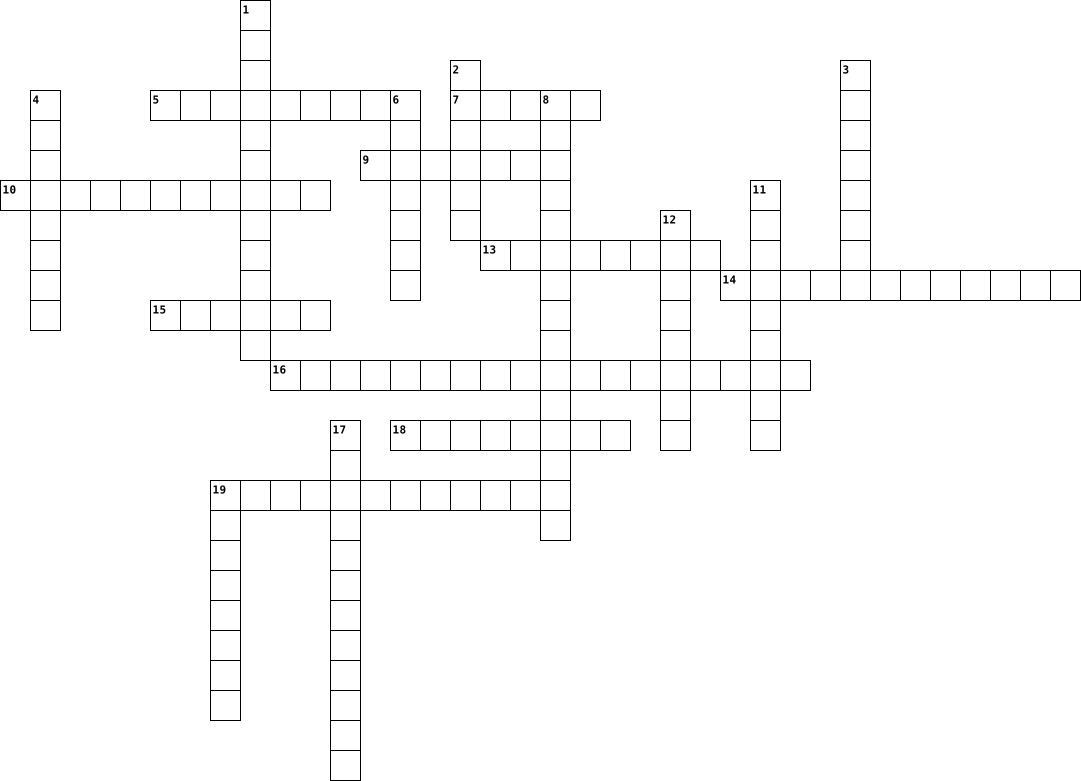
Across
- Encouraged settlement in the west
- 2nd president of US
- 4th president of US
- Winter camp for soldiers during AR
- Intro to the Constitution
- Founded in 1680 by William Penn
- Main cash crop of the South
- War between 13 Colonies and Britain
- Author of Federalist Papers
- supreme law of the land
Down
- 1st 10 amendments of the Constitution
- tax on imports
- Americans who supported independence
- Turning point for American Revolution
- Root cause of the Civil War
- US was to stretch across continent
- Founded in 1607
- 1620 Puritan settlement
- to formally approve
- War between North and South
20 Clues: tax on imports • Founded in 1607 • 2nd president of US • 4th president of US • to formally approve • 1620 Puritan settlement • supreme law of the land • Intro to the Constitution • Root cause of the Civil War • Main cash crop of the South • Author of Federalist Papers • War between North and South • Founded in 1680 by William Penn • Encouraged settlement in the west • ...
US Presidents Jeff He 2015-02-05

Across
- old moral and economic percepts of frugality
- cuban crisis
- Big Stick Policy & Dollar Diplomacy
- Watergate Scandal
- Invasion of Normandy
- the second U.S. president to be impeached
- scapegoat of the Great Depression
Down
- 100-day war
- win Vicksburg
- Good Neighbor Policy
- the Iron Curtain Speech
- American Civil War
- a great society
- proclaimed American entrance into World War I
14 Clues: 100-day war • cuban crisis • win Vicksburg • a great society • Watergate Scandal • American Civil War • Good Neighbor Policy • Invasion of Normandy • the Iron Curtain Speech • scapegoat of the Great Depression • Big Stick Policy & Dollar Diplomacy • the second U.S. president to be impeached • old moral and economic percepts of frugality • proclaimed American entrance into World War I
African Nationalism & Independence 2022-04-26

Across
- the basic physical and organizational structures and facilities (e.g. buildings, roads, power supplies) needed for the operation of a society or enterprise.
- unity of all black africans
- it has been in power since the election of lawyer,
- The Sharpeville massacre occurred on 21 March 1960 at the police station in the township of Sharpeville
- africa African led political group in South Africa
- war The American Civil War was a civil war in the United States between the Union and the Confederacy
- supported africa groups fighting colonialism the policy or practice of acquiring full or partial political control
- first british colony to gain independence
Down
- Jomo Kenyatta was a Kenyan anti-colonial activist and politician who governed Kenya
- leader of ghana
- The Tutsi, or Abatutsi, are an ethnic group of the African Great Lakes region.
- In general, a rural area or a countryside is a geographic area that is located outside towns and citie
- AIDS, is an autoimmune disease that is the final stage of human immunodeficiency virus, or HIV,
- racial segregation
- dishonest or fraudulent conduct by those in power, typically involving bribery.
- leader of independence movement in Ghana
16 Clues: leader of ghana • racial segregation • unity of all black africans • leader of independence movement in Ghana • first british colony to gain independence • it has been in power since the election of lawyer, • africa African led political group in South Africa • The Tutsi, or Abatutsi, are an ethnic group of the African Great Lakes region. • ...
Test 1 Review 2019-09-13

Across
- people who migrated west to live off the land
- Plains tall grasslands located in the west central part of the United State
- sturdy, short tempered breed of cattle
- a vigilante group in the south that used violence and intimidation against African Americans
- This amendment gave protection under the law to slaves
- Last name of the man from Massachusetts who helped lead the Radical Republicans
- a plan under which Native Americans gave up their way of life and beliefs to become part of the white culture
- the major political party in the South prior to the Civil War
- farmers who give up most of their crop in exchange for land to use, tools, and seeds
- The government finally closed this trail after a deadly attack on Fetterman and his company
- Northerners who moved South after the war
- the Indian Chief who had a vision of white man attacking at Custer's Last Stand
- The U.S.Army commander that carried out an attack at Sands Creek
- This bureau supplied money to the newly freed slaves for schools, hospitals, clothing, and food
- a home that was dug into the side of a ravine or small hill
Down
- another term used to identify a confederate solider
- This amendment gave this voting rights to the former slaves
- An animal used by the Native Americans for food, tools, and shelter
- This act offered 160 acres of land free to any citizen who was head of household
- another term to identify a union soldier
- This is a type of farm that is an enormous, single-crop spread of 15,000-50,000 acres
- a home made of prairie turf, that were small and leaked when it rained
- The period of time immediately after the Civil War(1865-1877)
- A white Southerner who joined the Republican party
- the major political party in the North prior to the Civil War
- The battle that became the turning point in the Civil War
- Last name of the man from Pennsylvania who helped lead the Radical Republicans
- This amendment gave freedom to the slaves
- The last name of the vice president to Abraham Lincoln
- overland transport of cattle
- Develop the 10%plan to readmit the southern states into the Union
31 Clues: overland transport of cattle • sturdy, short tempered breed of cattle • another term to identify a union soldier • Northerners who moved South after the war • This amendment gave freedom to the slaves • people who migrated west to live off the land • A white Southerner who joined the Republican party • another term used to identify a confederate solider • ...
People In The Civil War 2023-01-09

Across
- Best known for his tactical prowess and bravery
- Best known for his defeat at the Second Battle of Bull Run
- Major commanding the Union garrison at Fort Sumter in Charleston Harbor, South Carolina when the Civil War began
- Lecturer for the American Anti-Slavery Society
- A printer, newspaper publisher, radical abolitionist, and civil rights activist
- A carpenter and formerly enslaved person, allegedly planned an enslaved insurrection to coincide with Bastille Day in Charleston, South Carolina in 1822
- Known for his leadership in the Mexican-American War
- Playing a crucial role in the victory over the Confederate States and becoming one of the most famous military leaders in U.S. history
- Led 21 men on a raid of the federal arsenal at Harpers Ferry, Virginia
- Played an instrumental role in the founding or expansion of more than 30 hospitals for the treatment of the mentally ill
- Lincolns wife
- Led the Union Armies to victory over the Confederacy in the American Civil War
- Served as the sixth President of the United States
- Leader of the Underground Railroad
Down
- A Southern planter, Democratic politician and hero of the Mexican-American War
- American officer who accepted command of the first all-black regiment in the Northeast
- Wrote Uncle Tom's Cabin
- An American lawyer and statesman who represented New Hampshire and Massachusetts in the U.S. Congress
- Shot Abraham Lincoln
- Best known for the bloody Pickett's Charge during the Battle of Gettysburg
- Prmoted the Kansas-Nebraska Act
- Risked her life to bring supplies and support to soldiers on the battlefield
- Led the South's attempt at secession during the Civil War
- 1845 publication of his first book The Narrative of the Life of Frederick Douglass
- An American attorney and statesman who represented Kentucky in both the U.S.
- An American abolitionist of New York Dutch heritage and a women's rights activist
- Leader of the Southampton Insurrection
- The 16th President of The United States and pushed for the 13th Amendment
- Commanded the Confederate Army of Tennessee at the Battle of Chickamauga and the Battles for Chattanooga
- Sued for his freedom, formerly known as the Dred Scott decision
30 Clues: Lincolns wife • Shot Abraham Lincoln • Wrote Uncle Tom's Cabin • Prmoted the Kansas-Nebraska Act • Leader of the Underground Railroad • Leader of the Southampton Insurrection • Lecturer for the American Anti-Slavery Society • Best known for his tactical prowess and bravery • Served as the sixth President of the United States • ...
civil war 2023-02-01

Across
- who won the civil war
- who killed president lincoln?
- who lost the civil war?
- another name for the south?
Down
- president at the time?
- another name for the north?
- how many years did the civil war last?
7 Clues: who won the civil war • president at the time? • who lost the civil war? • another name for the north? • another name for the south? • who killed president lincoln? • how many years did the civil war last?
Reconstruction Vocab 2025-12-09

Across
- Gave citizenship to anyone born in the United States and promised equal protection under the law.
- The 16th president of the United States who led the nation during the Civil War and helped end slavery.
- The time period after the Civil War when the United States worked to rebuild the South and reunite the country.
- Ku Klux Klan, A violent group that used threats and attacks to keep African Americans from exercising their rights and to maintain white control in the South.
- A change to the Constitution that officially ended slavery in the United States.
- A government agency created after the Civil War to help formerly enslaved people with food, schools, and jobs.
- Membership in a country that gives a person certain rights and responsibilities.
- A fee a person had to pay in order to vote. It was used to stop African Americans and poor people from voting.
- A group of Republicans in Congress who wanted strict rules for rebuilding the South and stronger protections for African Americans.
Down
- Gave African American men the right to vote.
- A test people had to pass to vote. It was used in unfair ways to keep African Americans from voting.
- The rights of citizens to have equal treatment and fairness under the law.
- The legal process through which a person who was not born in the U.S. becomes a U.S. citizen.
- Laws passed in the South after the Civil War that limited the rights of African Americans and tried to keep them in low-paying labor.
- The 17th president who took office after Lincoln was assassinated. He disagreed with many Reconstruction plans and was lenient toward the South.
- Laws that enforced racial segregation in public places and kept African Americans and whites separated.
16 Clues: Gave African American men the right to vote. • The rights of citizens to have equal treatment and fairness under the law. • A change to the Constitution that officially ended slavery in the United States. • Membership in a country that gives a person certain rights and responsibilities. • ...
For Whom the Bell Tolls Crossword 2024-10-29

Across
- The oppressive force the guerrilla fighters are fighting against.
- The first name of the character who embodies both love and duty.
- He is the leader of the guerrilla band whose growing cynicism and reluctance to fight puts him at odds with his comrades.
- A former matador's wife and a fierce supporter of the Republican cause, known for her wisdom and leadership among the guerrilla fighters.
- He is a seasoned fighter in whose commitment to the Republican cause and respect for tradition highlight the complexities of loyalty and sacrifice in war.
- Robert Jordan’s nationality.
- What animal was killed in chapter 14?
- The emotional and physical scars borne by Maria, affecting her relationship with Robert (The term starts with "T").
Down
- A young Spanish woman who embodies resilience and love amidst the turmoil of the Spanish Civil War.
- Robert Jordan gives Maria the nickname "Little ________."
- A minor character who is part of the guerrilla group fighting who often questioning the strategies and motivations of his comrades.
- Type of warfare depicted in the novel (Starts with "G").
- Last name of an American dynamiter who grapples with his beliefs and responsibilities during the Spanish Civil War.
- Robert Jordan's mission involves blowing up this type of structure.
- The Spanish Civil War faction Robert Jordan fights for.
15 Clues: Robert Jordan’s nationality. • What animal was killed in chapter 14? • The Spanish Civil War faction Robert Jordan fights for. • Type of warfare depicted in the novel (Starts with "G"). • Robert Jordan gives Maria the nickname "Little ________." • The first name of the character who embodies both love and duty. • ...
Civil War: People, Battles, and Terms 2020-09-15

Across
- the Pennsylvania location of the most decisive battle of the Civil War, fought July 1-3, 1863
- American Confederate general; he successfully led several major battles until his defeat at Gettysburg, and he surrendered to the Union's Commander General Grant at Appomattox Court House
- American Confederate general; he earned a reputation for bravery at Bull Run and was one of the South's most successful generals before he was killed at Chancellorsville
- the drafting of citizens for military service
- the location of a bloody battle in Tennessee where Ulysses S. Grant led the Union against the Confederacy; nearly 25,000 men were either killed, injured, or captured
- American general; he received a field promotion to lieutenant general in charge of all Union forces during the Civil War and later accepted General Robert E. Lee's surrender at Appomattox Court House, ending the civil war
- Union army officer, his famous March to the Sea captured Atlanta, Georgia, an important turning point in the war
- the holiday celebrating the day Union general Granger arrived in Texas and announced the freedom of slaves
- actor and Confederate supporter who assassinated Abraham Lincoln
Down
- the location in Charleston, South Caroline where the Confederate army seized on April 12, 1861, prompting more unity and volunteers in the North
- town near Appomattox, Virginia, where Lee surrendered to Grant on April 9, 1865, thus ending the Civil War
- an amendment to the U.S. Constitution, adopted in 1865, that has abolished slavery and involuntary servitude
- an executive order issued by Abraham Lincoln on January 1, 1863, freeing the slaves in all regions behind Confederate lines
- the Mississippi location where, in 1863, Ulysses S. Grant fought to control water traffic, and his victory led to the Union finally cutting the Confederacy in two
- the creek near which McClellan and Lee led their troops to fight in the bloodiest single-day battle in American history
- a tax on earnings
16 Clues: a tax on earnings • the drafting of citizens for military service • actor and Confederate supporter who assassinated Abraham Lincoln • the Pennsylvania location of the most decisive battle of the Civil War, fought July 1-3, 1863 • town near Appomattox, Virginia, where Lee surrendered to Grant on April 9, 1865, thus ending the Civil War • ...
American Civil War 2020-02-23

Across
- Famous speech by Abraham Lincoln
- where General Lee surrendered
- more money produced means less value
- battle of the Mississippi River
- freedom and independence
Down
- document that ended slavery
- Killing of President Lincoln
- period after the Civil War
- Most famous battle of the CIvil War
- Split the Mississippi River and divide confederates
10 Clues: freedom and independence • period after the Civil War • document that ended slavery • Killing of President Lincoln • where General Lee surrendered • battle of the Mississippi River • Famous speech by Abraham Lincoln • Most famous battle of the CIvil War • more money produced means less value • Split the Mississippi River and divide confederates
Jefferson Davis 2025-05-21

Across
- best confederate army general
- when states remove themselves from a country
- the southern states
- the northern states
Down
- one of the top cash crops
- Confederacy president during the civil war
- One country fighting against itself
- crops that the southern economy relied on
- the main reason that the civil war started
- union president
10 Clues: union president • the southern states • the northern states • one of the top cash crops • best confederate army general • One country fighting against itself • crops that the southern economy relied on • Confederacy president during the civil war • the main reason that the civil war started • when states remove themselves from a country
US History 2014-06-25
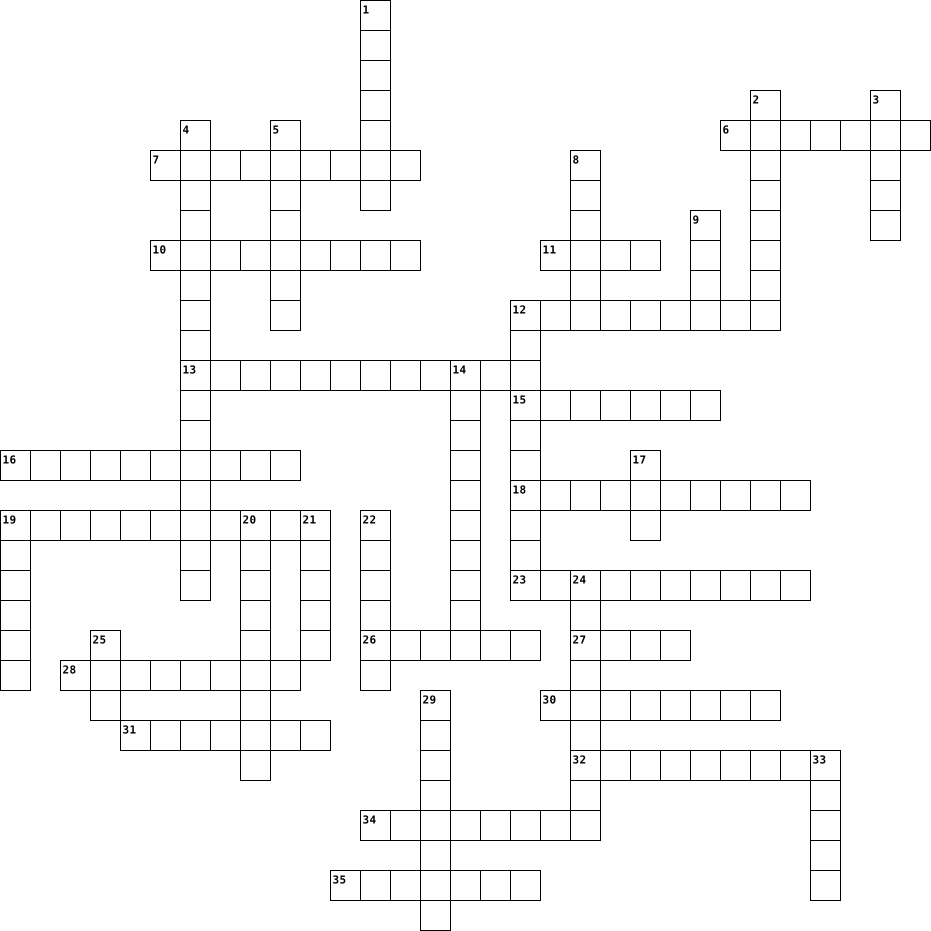
Across
- Born in Illinois.
- Telegram to Mexico from Germany.
- Active since the War for Independence.
- 29th state in the Union.
- State flower is the wood violet.
- Fought for the environment and civil rights.
- First to sign the Declaration.
- Arnie governed here.
- Battle that turned the Civil War.
- Patton went after this señor.
- In 1814 we took a little trip.
- Known as "Seward's Ice Box".
- Probably got stuck in a bathtub.
- Likes to annoy Wisconsin.
- Wanted the turkey for the national bird.
- Forrest Gump went here.
- First on the moon.
- First state in the Union.
- Plan to rebuild Europe after WWII.
Down
- Marched to the sea.
- Two parts, one state.
- Took a trip with Lewis.
- I divide but am a great highway.
- Only Catholic President.
- Coach of the Miracle on Ice team.
- Bay of...
- Warned against foreign entanglements.
- Treaty that backfired.
- Affair that led to a quasi war with France.
- General who was a pioneer of tank warfare.
- Huge purchase for a great price.
- Claimed himself to be obnoxious and disliked.
- Was an actor.
- Nixon's mistake.
- Had a dream. It was realized.
- The Great Crusade.
- Treaty that ended the War of 1812.
37 Clues: Bay of... • Was an actor. • Nixon's mistake. • Born in Illinois. • The Great Crusade. • First on the moon. • Marched to the sea. • Arnie governed here. • Two parts, one state. • Treaty that backfired. • Took a trip with Lewis. • Forrest Gump went here. • Only Catholic President. • 29th state in the Union. • Likes to annoy Wisconsin. • First state in the Union. • Known as "Seward's Ice Box". • ...
American Civil War Eddie Richmond,6 2014-05-14

Across
- a theme by thomas jefferson saying america should spread freedom around the world
- a battle in Gettyburg,PA that held the turning point of the civil war
- a network of abolitionists sneaking slaves to Canada
- escaped slave union spy and known for using the underground railroad to lead slaves to freedom
- the souths transformation from confederate to union territory
- civil war nurse and founder of american red cross
- shutting off an area keeping people from entering or exiting
- a war tactic that involved irregular small groups of soldiers using military tactics to take out a large group
- leading abolitionist who spoke and wrote about his former life as a slave
- the northern antislavery nation
- general of the confederate army
Down
- a paramilitary group who were proslavery and tried to keep the confederacy and make people pro white supremacy
- a famous painting showing a union strategy session in the last war days
- a document by abraham lincoln freeing union slaves
- two acts that made a national bank and banking system
- an agency that helped out freed slaves
- to eliminate something completely
- a large estate that slaves were forced to work on
- the southern proslavery nation
- differences between the north and south
20 Clues: the southern proslavery nation • the northern antislavery nation • general of the confederate army • to eliminate something completely • an agency that helped out freed slaves • differences between the north and south • civil war nurse and founder of american red cross • a large estate that slaves were forced to work on • a document by abraham lincoln freeing union slaves • ...
NAME 2022-05-04

Across
- characterized by malice; intending or intended to do harm.
- an intermittent and remittent fever caused by a protozoan parasite that invades the red blood cells.
- an advantage or profit gained from something.
- having or showing a wish to do evil to others.
- fail to function normally or satisfactorily.
- occurring or existing after a war, in particular the American Civil War.
- the utterance or bestowing of a blessing, especially at the end of a religious service.
- cause or arrange for (something) to take place at a time later than that first scheduled.
- a person who is dissatisfied and rebellious.
- depressing; dreary.
- an additional remark at the end of a letter, after the signature and introduced by “P.S.”.
- coming before in time; earlier.
- coming after in time or order; later.
Down
- ineffective or bungling; clumsy.
- the intention or desire to do evil; ill will.
- well meaning and kindly.
- occurring before noon
- a person who commits a crime or some other wrong.
- precede in time; come before (something) in date.
- a person who gives money or other help to a person or cause.
- favorable or advantageous; resulting in good.
- occurring after noon
- occurring or existing before a particular war, especially the American Civil War.
23 Clues: depressing; dreary. • occurring after noon • occurring before noon • well meaning and kindly. • coming before in time; earlier. • ineffective or bungling; clumsy. • coming after in time or order; later. • fail to function normally or satisfactorily. • a person who is dissatisfied and rebellious. • the intention or desire to do evil; ill will. • ...
An American Story 2025-12-12

Across
- President who won the most disputed election
- Federal agency helping freed slaves
- 1st Confederate victory
- Transportation system that connected regions quickly
- War that added the Southwest to the U.S.
- Led the raid on Harper's Ferry
- Union general known for his "March to the Sea"
- Era that expanded democracy for white men
- Court ruling denying citizenship to enslaved people
- Rules used to control former slaves after the war
- Machine that increased demand for slave labor
- Racial separation laws in the South
- Movement to end slavery
- Turning point of the Civil War
- Proclamation that freed slaves in rebelling states
- President that led the Union
Down
- Third U.S. president
- Court ruling that established judicial review
- Addition that doubled the size of the U.S.
- Southern states leaving the Union
- Political party formed in opposition to slavery in the 1850s
- President known for advocating for the "common man"
- A period of scientific and technological advancements
- Confederate General and military leader
- Era of rebuilding the South after the Civil War
- Conflict with Britain involving trade, borders, etc.
- Union general that became president
- Postwar farming system used in the South
- Created an amnesty plan for Confederates to rejoin the Union
- President of the Confederacy
30 Clues: Third U.S. president • 1st Confederate victory • Movement to end slavery • President of the Confederacy • President that led the Union • Led the raid on Harper's Ferry • Turning point of the Civil War • Southern states leaving the Union • Federal agency helping freed slaves • Union general that became president • Racial separation laws in the South • ...
The End of Reconstruction 2015-04-28

Across
- A group of women which fought for the right for Black and White women to vote.
- The Court restricted the scope of the 14. Amendment.
- President of the U.S after Lincoln got killed.
- The highest judicial court in the U.S. during the civil war, as well as nowadays.
- Compromises which should find common issues that would unite white southerners around the goal of regaining power in Congress.
- A ruling of the Supreme Court which limited the impact of the 14. and 15. Amendment.
- A scandal which plundered millions of dollars of New York's city treasury, accomplished by Democratic Politicians after the civil war.
Down
- Described as a popular hero during the after war era, but a disappointing president.
- Considered by some to be the father of the American political cartoon.
- A law that declared that African Americans were citizens of the United States.
- Leader of the Radical Republican party.
- The Liberal Republicans' presidential candidate and New York times editor after the civil war.
12 Clues: Leader of the Radical Republican party. • President of the U.S after Lincoln got killed. • The Court restricted the scope of the 14. Amendment. • Considered by some to be the father of the American political cartoon. • A group of women which fought for the right for Black and White women to vote. • ...
Topic 8 Civil War 2023-05-04

Across
- a tax on people’s earnings
- a notherner who opposed using force to keep southern states in the Union
- an agreement over slavery by which California joined the Union as a free state and a strict fugitive slave law was passed
- to withdraw from membership in a group
- unable to be changed
- an 1862 Civil War battle in Virginia; one of the Union’s worst defeats
- one of two acts passed in 1793 and 1850 that provided for the capture and return of fugitive slaves
- an 1854 law that established the territories of Nebraska and Kansas, giving the settlers of each territory the right of popular sovereignty to decide on the issue of slavery
- an 1862 Cival War battle in Maryland; also called the Battle of Sharpsburg
- to suggest something for people to consider.
- proslavery bands from Missouri who often battled antislavery forces in Kansas
- Proclamation: an 1863 declaration by President Lincoln freeing enslaved African Americans in Confederate territory
- a betrayal of or action against one’s country
- something that comes before or is introductory to something
- an African American unit in the Union Army
- the first major battle of the Civil War; fought in Virginia in 1861; also called Battle of Manassas
- to suggest something without saying it directly or plainly
- to find an answer or solution to something
- an 1863 Civil War battle in Virginia; important victory for the Confederacy
- a fort in South Carolina that was the site of an attack by the African Americans 54th Massachusetts Regiment in 1863
- the speech made by President Licncoln in 1863 after the Battle of Gettysburg
- a political party established in the United States in 1854 with the goal of keeping slavery out of western territories
Down
- to prove something by being an example of it
- a Virginia town that was the site of the Confederate surrender in 1865
- not eager to do something
- an 1857 Supreme Court case that brought into question the federal power over slavery in the territories
- a rise in prices and a decrease in the value of money
- to be made up of
- government by constant of the government
- an ironclad warship used by the Confederates in an attempt to break the Union blockade
- the failed Confederate charge during the third day of the Battle of Gettysburg
- a place where guns are stored
- an 1863 Civil War battle in Pennsylvannia that ended in a Union victory and stopepd the Confederate invasion of the North
- having to do with the most important part of an idea or something
- to publicily state that some action or person is wrong or bad
- a person who dies for his or her beliefs
- very important
- to keep in an existing state1.
- a war between people of the same country
- making it easy for something to happen
- a law that requires people of a certain age to enlist in the military
- agreeing or accepting something without arguing about it
- to surround and blockade an enemy town or position with troops in order to force it to surrender
- an 1862 Civil War battle in Tennessee that ended in a Union victory
- the bipartisan antislavery party founded in the United States in 1848 to keep slaves out of the western territories
- a type of warfare in which small, infromal military groups use suprise attacks and hit-and-run tactics
- a runaway
- a slave state that remained in the Union during the Civil War
- an agreement, proposed in 1819 by Henry Clay, to keep the number of slave and free states equal
- the right not to be held in prison without first being charged with a specific crime
- an ironclad Union warship
51 Clues: a runaway • very important • to be made up of • unable to be changed • not eager to do something • an ironclad Union warship • a tax on people’s earnings • a place where guns are stored • to keep in an existing state1. • to withdraw from membership in a group • making it easy for something to happen • government by constant of the government • a person who dies for his or her beliefs • ...
topic 8 crosswords 2023-05-05

Across
- the failed Confederate charge during the third day of the battle of Gettysburg
- a Virginia town that was the site of Confederate soldiers
- the government by consent of the governed
- proslavery bands from Missouri who often battled antislavery forces in Kansas
- an 1854 law that established the territories of Nebraska and Kansas giving the settlers of each the right for popular sovereignty to decide on the issue of slavery
- an 1862 civil war battle in Virginia: was one of the Union's worst defeats
- to withdraw membership in a group
- an 1862 civil war battle in Tennesse that ended in a Union victory
- a fort in south carolina that was the site of an attack by the african americans 54th Massachusetts regiment in 1863
- a tax on people's earnings
- a place where guns are stored
- a war between people of the same country
- the bipartisan anit slavery party founded in the united states in 1848 to keep slavery out of the Westen territories
- the right not to be help in prison without first being charged with a specific crime
- one of the two acts passed in 1793 and 1850 that provided the computer and return of fugitive slaves
- very important
- to suggest without saying it directly
- a law that requires people of certain age to enlist in the military
- the unions own ironclad
- a northerner who opposes using force to keep the southern states in the union
- to find an answer or solution to something
- agreeing or accepting something without arguing about it
- in 1863 civil war battle in Pennsylvania ended in a union victory and stopped the Confederate invasion of the North
- a rise in prices and a decrease in value of money
- an 1863 declaration by president lincoln freeing enslaved African Americans in Confederate territory
- 1857 supreme court case that brought into question the federal power over slavery in certain territories
- an 1862 civil war battle in Maryland; also called the Battle of Sharpsburg
- unable to be changed
Down
- an 1862 civil war battle in Virginia was an important victory for the Confederacy
- to be made up of
- to suggest something for people to consider
- confederates modified an abandon union war ship and renamed it
- an agreement proposed by Henry to keep the number of slave states and free states equal
- a political party established in the united states in 184 with the goal of keeping slavery out of western territories
- a betrayal of an action against one's country
- a public state that some action or person is wrong or bad
- the battle of manassa when the confedrate shows how badly both the union and the confedcy need more milarty training
- to surround or blockade an enemy town or to position troops to force to surrender
- a person who dies for his or her beliefs
- an agreement over slavery in which California joined the union as a free state and a strict fugitive law was passed
- african american unit in the union army
- having to do with the most important part of an idea or of something
- a slave state that remained in the union after the civil war
- a runaway convicted of a crime
- a type of warfare in small, informal military groups use surprise attacks and hit-and-run tactics
- something that comes before or is introduction of something
- not eager to do something
- to keep in an existing state
- speech made by president lincoln in 1863 after the battle of Gettysburg
- to prove something by being an example of it
- making it easy for something to happen
51 Clues: very important • to be made up of • unable to be changed • the unions own ironclad • not eager to do something • a tax on people's earnings • to keep in an existing state • a place where guns are stored • a runaway convicted of a crime • to withdraw membership in a group • to suggest without saying it directly • making it easy for something to happen • ...
Unit 5 Test Review 2021-01-11

Across
- a tax on imported goods meant to help the North's economy
- Lincoln's VP who took over after he was assassinated
- when freed blacks worked on farms and stayed trapped in debt, paid rent in crops
- the Union blockade of Southern ports wasn't completely successful due to ___ ___
- bloodiest one-day battle of the Civil War; a draw but claimed as a Union victory
- a fee paid for voting
- Southern laws aimed at racial segregation
- Lincoln's goal in the Civil War was re_____ the Union
- agency created to help freed slaves get back on their feet; food, housing, education
- Lincoln's Emancipation Proclamation freed slaves in the ____ states
- only major Civil War battle fought in GA; Union troops were forced back into Tennessee
- most Southerners were opposed to abolition because they felt it would ruin their ___
- amendment number that allowed all male US citizens to vote, including freed slaves
- elected president as the Republican Party candidate in 1860
- keeping someone from voting
- act which cancelled out the Missouri Compromise line and let states vote on slavery
- president of the Confederate States of America
- city that was the transportation and manufacturing center of the South
- terrorist group in the South formed to keep freed slaves from exercising their rights
- his reconstruction plan was very lenient on the South; pardoned most Confederate leaders
- state that seceded immediately after Lincoln's election
- when pro-slave and free-soilers moved to try and sway the vote on slavery
Down
- law which drew a line at the 36, 30 latitude line; slave states below, free above
- when voters can choose on an issue, such as whether or not to allow slavery
- what South Carolina did to a federal tariff on imported goods
- admitted as a free state in the Missouri Compromise
- to leave the union; SC threatened to do this after nullification of the tariff
- under Lincoln's reconstruction plan ___ percent of the state's voters had to take an oath of loyalty to the US
- a ___ test was given to keep uneducated blacks from voting
- political party formed to stop the spread of slavery
- assassin of Abraham Lincoln
- a Georgian against secession, Alexander ___ became the VP of the Confederacy
- Union strategy to strangle the South, cutting off supplies and trade
- group in Congress who wanted to punish the South in Reconstruction
- Lincoln issued the ___ Proclamation after Antietam
- the ___ States of America was formed by 11 Southern states that seceded from the Union
- city Sherman gave to Lincoln as a Christmas gift; valuable cotton not burned
- what happened to Wirz, the commander of the Andersonville prison, after the war?
- notorious Civil War prison camp in GA; many captured Union soldiers died there
- the Supreme Court ruled against Dred Scott, saying blacks were not even ___
- Civil War battle considered to be the turning point of the war; S goes on the defensive
- laws in the South aimed at limiting the rights of freed slaves
- former slave who sued for his freedom because he had lived in free states
- amendment number that abolished slavery
44 Clues: a fee paid for voting • assassin of Abraham Lincoln • keeping someone from voting • amendment number that abolished slavery • Southern laws aimed at racial segregation • president of the Confederate States of America • Lincoln issued the ___ Proclamation after Antietam • admitted as a free state in the Missouri Compromise • ...
Final Exam Review 2017-06-13

Across
- Consumed by fire
- June 6, 1944
- Korean and Vietnam wars were this type of war
- The code name for D-Day invasion
- My struggle...Hitler's book
- President's plan to pull America out of the Great Depression
- Treaty that ended World War I
- October 1962 when the world almost had a nuclear war
- First satellite launched into outer space
- Intercontinental Ballistic Missile
- Total number of people killed during the Holocaust
Down
- President Woodrow Wilson developed this plan for world peace
- Majority of Holocaust death camps located here
- Hatred towards Jews
- America's government spy agency
- France, Britain, Russia, USA
- Policy to withdraw from world affairs
- Event that pulled America into World War II
- Peace treaty that halted the Korean War
- Conflict between U.S. & Soviet union
20 Clues: June 6, 1944 • Consumed by fire • Hatred towards Jews • My struggle...Hitler's book • France, Britain, Russia, USA • Treaty that ended World War I • America's government spy agency • The code name for D-Day invasion • Intercontinental Ballistic Missile • Conflict between U.S. & Soviet union • Policy to withdraw from world affairs • Peace treaty that halted the Korean War • ...
Sweet and Low 2021-02-23

Across
- civil war erupted when government Berkeley tried to stop farmers from removing Indians.
- Who sailed to America on the ship The Mayflower in 1620.
- A type of press used to extract the juice from apples to make cider.
- The america's democratic institutions began in the same year as slavery which Virginia tax payers organised.
- Tax-supported and government regulated.
- Which meant that he believe in a sort of abstract god, not a bearded Jehovah in the sky.
- The Narragansett Metacomet led a guerrilla war against the whites.
- Trials sent 20 humans and two dog to their death.
- A person who supported Parliament against the King in the English Civil War.
- The throne was restored to.....
- In America the trend could be summed up in two words.
Down
- A written agreement to abide by the rules of the colony.
- When the religious friction between puritans and establishment exploded.
- Become a haven of religious freedom.
- The first black slaves war...
- Someone trying to "purify" the established church.
- It had a tax-supported church with license minister.
- An event or a situation that makes everyone equal whatever their age, importance, etc.
- More that a change of century, it was a change of mind....
- He sells Pennsylvania to a.......
20 Clues: The first black slaves war... • The throne was restored to..... • He sells Pennsylvania to a....... • Become a haven of religious freedom. • Tax-supported and government regulated. • Trials sent 20 humans and two dog to their death. • Someone trying to "purify" the established church. • It had a tax-supported church with license minister. • ...
Civil War Outcomes 2022-09-15

Across
- what "hate group" started as a private club for former Confederate Soldiers
- what right did the 15th amendment guarantee all African-Americans
- what did the 13th amendment prohibit?
- What the government created in response to its growing national debt?
- What it is called when prices increase drastically in a short amount of time?
- What was the paper currency introduced during the civil war?
- what were the laws called that legalized racial segregation in the south?
- What farming method replaced slavery following the end of the civil war?
Down
- Who shot and killed Abraham Lincoln?
- What was the name of the time period following the war while the country attempted to come back together?
- What resource did we stop leading the nation in production following the war?
- what did the 14th amendment grant to all African-Americans
- What medical organization did Clara Barton start following the war?
13 Clues: Who shot and killed Abraham Lincoln? • what did the 13th amendment prohibit? • what did the 14th amendment grant to all African-Americans • What was the paper currency introduced during the civil war? • what right did the 15th amendment guarantee all African-Americans • What medical organization did Clara Barton start following the war? • ...
Places in US History 2022-05-11

Across
- "54'40" or Fight" was a rallying cry related to this territory
- A bus boycott here began with Rosa Parks
- The US gained control of this island during the Spanish-American War (War of 1898)
- Teddy Roosevelt's Rough Riders charged San Juan Hill on this island
- The first state to ratify the Constitution
- President Nixon's trip to this Chinese city was a great foreign relations move
- A women's convention here resulted in a declaration of women's equal rights
- Paul Revere warned of the British departure from this city
- A battle here took place after the War of 1812 had been ended by treaty
- the Alamo is in this Texas city
- The first atomic bomb used in warfare was dropped on this Japanese city
- A treaty outside of this French capital ended World War I
- A march for civil rights ended tragically here
- The "shot heard round the world" was fired here
- This city was burned by Union General William Sherman
- The "Golden Spike" completing the transcontinental railroad was driven into the ground in this state
Down
- a symbolic place in South Dakota representing the maltreatment of the Native Americans
- Joseph McCarthy, the leader of the Red Scare in the 1950's, was from this state
- Where the Second Continental Congress met
- The purchase of this territory was a tremendous real estate deal
- The battleship Maine exploded in the harbor of this city
- A major turning point of the Civil War took place in the Pennsylvania town
- The first woman on the Supreme Court, Sandra Day O'Connor, was from this state
- The Missouri Compromise allowed this state to enter as a free state
- President Reagan challenged the Soviet leader to "take down this wall"
- A Union victory in this Mississippi river town gave the Union control of the Mississippi River
- One of the states where popular sovereignty was attempted to solve the slavery question, but it turned out bloody
- Lewis and Clark left this city on their "Voyage of Discovery"
- The New Deal program constructed the hydroelectricity infrastructure along this southern river
- The firing on Fort Sumter in this state started the Civil War
- Our nation's first capital city
- Riots in this section of Los Angeles were part of the 1960's violence
- An engineering wonder here reduced the travel time from San Francisco to New York City tremendously
- The Democrat National Convention of 1968 in this city was marked by violence and demonstrations against the Vietnam War and civil rights
- Known as "Seward's Folly"
- the last state to enter the Union
36 Clues: Known as "Seward's Folly" • Our nation's first capital city • the Alamo is in this Texas city • the last state to enter the Union • A bus boycott here began with Rosa Parks • Where the Second Continental Congress met • The first state to ratify the Constitution • A march for civil rights ended tragically here • The "shot heard round the world" was fired here • ...
Reconstruction Era 2023-12-13

Across
- A choice by vote of a person of political office
- 16th President
- North Side in the civil war
- treating people unequally because of race
- A change of legislation
Down
- Someone who is forced to work
- an agricultural labor system that developed in Georgia and throughout the South
- Lincolns Vice President
- the rights of citizens to political and social freedom
- Put African Americans into social,political,and labor systems
- South side in the civil war
- To get kicked out of office
- Killing someone often by surprise attack
- Things that let people have freedom
14 Clues: 16th President • Lincolns Vice President • A change of legislation • South side in the civil war • North Side in the civil war • To get kicked out of office • Someone who is forced to work • Things that let people have freedom • Killing someone often by surprise attack • treating people unequally because of race • A choice by vote of a person of political office • ...
xyra Texas History 2022-04-21

Across
- created the G.I forum
- What is one factor that influenced cotton production?
- Power is divided between national and state government
- a long and severe recession in an economy or market
- Known as the Father of Texas
- Period of drought and dust storms in the 1930s
- Abolishes and prohibits slavery
- The action of adding territory to a land or country
- prohibits racial discrimination in voting
- a return to a normal state of health, mind, and strength
Down
- period of economic depression (1920s - 1930s)
- First battle of the Civil War
- Ultimate power rests with the people
- texas president that opposed annexation
- Final battle of the Texas revolution
- Known for his speech "Grito de Dolores"
- What did Texas farmers plant after the Civil War
- became the first president of the republic of Texas
- Texas region with the most rainfall
- Texas region known as the "Sea of Grass"
20 Clues: created the G.I forum • Known as the Father of Texas • First battle of the Civil War • Abolishes and prohibits slavery • Texas region with the most rainfall • Ultimate power rests with the people • Final battle of the Texas revolution • texas president that opposed annexation • Known for his speech "Grito de Dolores" • Texas region known as the "Sea of Grass" • ...
RUSSIAN REVOLUTION (TIMELINE) 2016-04-17

Across
- - Russian civil war begins
- - This happened in St. Petersburg and it began the Russian Revolution
- - Lenin returns from exile
- - Russian civil war ends
- - The month and year the Czar marries Czarina Alexandra Fedorovna
- - Name of the last family ruling Russia
- - An event that deposed the Czar
- - The day the trusted friend was murdered
- - Last ruler of Russia
Down
- - Alexander Kerensky becomes Prime Minister of the Provisional Government
- - Month and day Lenin was arrested
- - The Union of Soviet Socialist Republics (U.S.S.R.) established.
- - Leader of the Bolsheviks
- - the day Nicholas II was crowned Czar of Russia
- - The October Revolution - the Bolsheviks take over Petrogad
- - The father of the last ruler of Russia
- - The date the Bloody Sunday occurred.
- - The man who competed against Trotsky after Lenin's death
- - Trusted friend of the Czar
- - One of the factions that the Russian Social Democratic Labor Party split into
20 Clues: - Last ruler of Russia • - Russian civil war ends • - Russian civil war begins • - Leader of the Bolsheviks • - Lenin returns from exile • - Trusted friend of the Czar • - An event that deposed the Czar • - Month and day Lenin was arrested • - The date the Bloody Sunday occurred. • - Name of the last family ruling Russia • - The father of the last ruler of Russia • ...
The Magna Carta 2025-10-21

Across
- Civil
- Document
- Poor
- 13thCentery
- JudgedBy
- valuable
Down
- chair
- King
- Nobles
- Imprisoned
- Murdered
- Raised
12 Clues: King • Poor • chair • Civil • Nobles • Raised • Document • Murdered • JudgedBy • valuable • Imprisoned • 13thCentery
Across Five Aprils 2012-12-20

Across
- unspoken
- to lerated
- a family member in the war
- people who want no more slavery
- bare
- a name with a j in it
Down
- the name of the dad of the family
- what did the people burn down
- the last name of the family
- war a long lasting war
- the youngest in the family
- a bunch
- indifference
- the boy jenny wants to marry
- an addition or auxiliary building
15 Clues: bare • a bunch • unspoken • to lerated • indifference • a name with a j in it • war a long lasting war • the youngest in the family • a family member in the war • the last name of the family • the boy jenny wants to marry • what did the people burn down • people who want no more slavery • the name of the dad of the family • an addition or auxiliary building
Social Studies 2023-06-14

Across
- A northerner who moved to the South after the American Civil War.
- A bag similar to a knapsack but worn over one shoulder.
- Military weapons that shoot large projectiles.
- Ships that were covered in iron plates that made them stronger and protected them.
- A large farm which is specialized on farming one type of crop.
- The portion of the country that remained loyal to the Federal government during the Civil War.
- An alliance or union of people, groups, states, or nations.
Down
- A piece of U.S. paper money.
- A person who wants to stop or abolish slavery.
- An ankle-high shoe worn by soldiers during the Civil War.
- A branch of an army made up of soldiers trained, armed, and equipped to fight on foot.
11 Clues: A piece of U.S. paper money. • A person who wants to stop or abolish slavery. • Military weapons that shoot large projectiles. • A bag similar to a knapsack but worn over one shoulder. • An ankle-high shoe worn by soldiers during the Civil War. • An alliance or union of people, groups, states, or nations. • ...
Civil War Puzzle 2023-05-12

Across
- was the final major military action
- violence broke out between pro-abolitionists and pro-slavery people
- major battle of the civil war
- the action or process of reconstructing or being reconstructed
- a soldier that is wounded or killed during battle
- the portion of the country that remained loyal to the Federal government during the Civil War
- Texas, Arkansas, Louisiana, Tennessee, Mississippi, Alabama, Georgia, Florida, South Carolina, North Carolina and Virginia.
- title and rank of a senior army officer
Down
- Southerners who supported Reconstruction policies and efforts after the conclusion of the American Civil War
- cease resistance to an enemy or opponent and submit to their authority
- formally put an end to (a system, practice, or institution).
- included the states of Maine, New York, New Hampshire, Vermont, Massachusetts, Connecticut, Rhode Island, Pennsylvania, New Jersey, Ohio, Indiana, Illinois, Kansas, Michigan, Wisconsin, Minnesota, Iowa, California
- where the battle of fort sumter was near
- incorporated the states that seceded from the United States of America to form their own nation.
- withdraw formally from membership of a federal union, an alliance, or a political or religious organization
- the state of being a slave
16 Clues: the state of being a slave • major battle of the civil war • was the final major military action • title and rank of a senior army officer • where the battle of fort sumter was near • a soldier that is wounded or killed during battle • formally put an end to (a system, practice, or institution). • the action or process of reconstructing or being reconstructed • ...
Civil War Puzzle 2023-05-12

Across
- violence broke out between pro-abolitionists and pro-slavery people
- the portion of the country that remained loyal to the Federal government during the Civil War
- major battle of the civil war
- cease resistance to an enemy or opponent and submit to their authority
- included the states of Maine, New York, New Hampshire, Vermont, Massachusetts, Connecticut, Rhode Island, Pennsylvania, New Jersey, Ohio, Indiana, Illinois, Kansas, Michigan, Wisconsin, Minnesota, Iowa, California
- Southerners who supported Reconstruction policies and efforts after the conclusion of the American Civil War
- the state of being a slave
- Texas, Arkansas, Louisiana, Tennessee, Mississippi, Alabama, Georgia, Florida, South Carolina, North Carolina and Virginia.
Down
- where the battle of fort sumter was near
- incorporated the states that seceded from the United States of America to form their own nation.
- withdraw formally from membership of a federal union, an alliance, or a political or religious organization
- was the final major military action
- a soldier that is wounded or killed during battle
- title and rank of a senior army officer
- title and rank of a senior army officer
- formally put an end to (a system, practice, or institution).
- the action or process of reconstructing or being reconstructed
17 Clues: the state of being a slave • major battle of the civil war • was the final major military action • title and rank of a senior army officer • title and rank of a senior army officer • where the battle of fort sumter was near • a soldier that is wounded or killed during battle • formally put an end to (a system, practice, or institution). • ...
Module 3 Crossword 2024-10-22

Across
- Rights that belong to all humans from birth, such as life, liberty, and property
- Supporters of parliament during the English Civil War
- Supporters of King Charles I during the English Civil War
- Common meeting place to discuss Enlightenment ideas in the 18th century
- Liberty, ______, and Fraternity; The slogan of the French Revolution
- Reign of _______; Time period during the French Revolution from September 1793 to July 1794 when people in France were arrested for not supporting the revolution and many were executed
- Believed a government's purpose was to control the people
- Situation in which a government spends more than it takes in
- Italian astronomer who supported Copernicus's theory of a heliocentric, or sun-centered universe
- Absolute ruler who used his or her power to bring about political and social change
- __________ Bonaparte; This person came to power in France following the French Revolution
- Believed the best way to protect liberty was to divide the government into 3 branches
- Simone _____; Leader of the South American Revolutions
Down
- England raised taxes in its colonies following the ______ Years' War
- Informal social gathering at which writers, artists, philosophes, and others exchanged ideas
- Fortress in Paris used as a prison; French Revolution began when Parisians stormed it in 1789
- Earning wealth from colonies and bringing that wealth back to benefit the mother country
- Both the English Civil War and Glorious Revolution were fought over the idea of an _____ monarchy vs. a limited monarchy
- The English Bill of _______; Series of acts passed by the English Parliament in 1689 that limited the rights of the monarchy and ensured the superiority of Parliament
- Puritan who took power in England following the English Civil War
- Maximilien _______, head of the Committee of Public Safety during the French Revolution whose goal was to eliminate everyone against the revolution
- Legislative body made up of representatives of the three estates in pre-revolutionary France
- Famous oath made on a tennis court by members of the Third Estate in France.
- Toussaint L'Overture was the leader of the ______ Revolution
- Believed everyone is born with Natural Rights
- Saint _______; French colony in the Caribbean known for their coffee and sugarcane production
26 Clues: Believed everyone is born with Natural Rights • Supporters of parliament during the English Civil War • Simone _____; Leader of the South American Revolutions • Supporters of King Charles I during the English Civil War • Believed a government's purpose was to control the people • Toussaint L'Overture was the leader of the ______ Revolution • ...
Civil War Vocab #1 2022-04-25

Across
- raised platform to fire artillery from
- a two-wheeled vehicle carrying artillery shells
- former slaves used to steal property
- firing from a protected position
- large caliber guns used on battlefield
- type of cannon used for shore defense
- northern who wanted peace with Confederacy
- secess
- something grown to be sold in mass quantities
- large knife attached at end of rifled musket
- bedding rolled up and carried over shoulder
- temporary structure for encampment
- obstacle with diagonally cut spikes
Down
- person who wanted to end slavery
- isolating and blocking an area of importance
- a surprise attack
- rampart of fallen trees
- leading cause of death in the Civil War
- gunboat that was fortified with cotton bales
- edema
- time period before United States Civil War
- a heavy shoe
- cannonn ammunition filled with many pieces
- soldiers on horseback
24 Clues: edema • secess • a heavy shoe • a surprise attack • soldiers on horseback • rampart of fallen trees • person who wanted to end slavery • firing from a protected position • temporary structure for encampment • obstacle with diagonally cut spikes • former slaves used to steal property • type of cannon used for shore defense • raised platform to fire artillery from • ...
Xyra Texas History 2022-04-21

Across
- - Known for his speech "Grito de Dolores"
- a long and severe recession in an economy or market
- - Known as the Father of Texas
- period of economic depression
- - Texas region with the most rainfall
- - Texas region known as the "Sea of Grass"
- a return to a normal state of health, mind, and strength
- created the G.I forum
- - Power is divided between national and state government
- - What did Texas farmers plant after the Civil War
- - The action of adding territory to a land or country
Down
- - First battle of the Civil War
- prohibits racial discrimination in voting
- - Ultimate power rests with the people
- - Period of drought and dust storms in the 1930s
- -texas president that opposed annexation
- San Jacinto - Final battle of the Texas revolution
- - Abolishes and prohibits slavery
- - became the first president of the republic of Texas
- - What is one factor that influenced cotton production?
20 Clues: created the G.I forum • period of economic depression • - Known as the Father of Texas • - First battle of the Civil War • - Abolishes and prohibits slavery • - Texas region with the most rainfall • - Ultimate power rests with the people • -texas president that opposed annexation • prohibits racial discrimination in voting • - Known for his speech "Grito de Dolores" • ...
Harriet Tubman 2024-02-01

Across
- What month did Harriet die in?
- someone who fights for something the believe in
- She got hit in what body part with a weight?
- What was Harriet's dads name?
- What was the color of Harriet Tubman's eyes?
- Tubman had how many siblings?
- What was the first name of Harriet's first husband?
- What city did Harriet finally settle down in?
- Why did Tubman die?
- About how many times did Tubman go back to Maryland?
- What river that Moses was sent down as a child?
Down
- Tubman escape to what city?
- Her second husband was Nelson _____
- How old was Harriet when she died?
- Who had the nickname Moses?
- What side if the Civil War did Harriet help?
- Tubman was born in
- Harriet helped slaves escape on the _____ railroad?
- What was Harriet's first name?
- What war did Harriet play a part in?
- Tubman was on what dollar bill?
21 Clues: Tubman was born in • Why did Tubman die? • Tubman escape to what city? • Who had the nickname Moses? • What was Harriet's dads name? • Tubman had how many siblings? • What month did Harriet die in? • What was Harriet's first name? • Tubman was on what dollar bill? • How old was Harriet when she died? • Her second husband was Nelson _____ • What war did Harriet play a part in? • ...
The Election of Abraham Lincoln 2024-05-11

Across
- States formed by seceding Southern states
- Party divided between Northern and Southern factions
- Union, site of a famous pre-election speech by Lincoln
- Name for the United States under Lincoln
- Chamber where Lincoln had served
- Series of campaign events between Lincoln and Douglas
- Party that nominated Lincoln
Down
- Republican candidate who won the election
- Sixty, year of the election
- Proclamation issued by Lincoln during the Civil War
- First state to secede after Lincoln's election
- Southern Democratic candidate, John C.
- Lincoln's question to Douglas about slavery in territories
- Vote, Douglas won a plurality in the election
- First battle of the Civil War, after Lincoln's inauguration
- Hamlin, Lincoln's first vice president
- Lincoln's main opponent, Stephen A.
- in the Democratic Party benefited Lincoln
- Address delivered by Lincoln after the pivotal battle
- Votes Lincoln won, 180 out of 303
20 Clues: Sixty, year of the election • Party that nominated Lincoln • Chamber where Lincoln had served • Votes Lincoln won, 180 out of 303 • Lincoln's main opponent, Stephen A. • Southern Democratic candidate, John C. • Hamlin, Lincoln's first vice president • Name for the United States under Lincoln • Republican candidate who won the election • ...
Grant 2nd Hour 2024-04-18

Across
- Who Did cattle drives.
- What made the trails shut down?
- What was going on during 1862?
- Who was the president during the civil war?
- How long did the cowboys work for?
- About how long did cattle drives last?
- When did the civil war start?
- 8000 were killed a day.
- How many people were in Kansas?
Down
- What was past on 1862?
- A famous country song.
- Why did people come to Kansas?
- A famous African American cowboy?
- What transported buffalo hides?
- One example of why some people didn't like cattle drives.
- What month did Kansas become a state?
- What year did we declare independence?
- What did you have to have on your land if you bought it for a 1.25.
- How many acres can you get if you had $200.
- How much was one Acer of land?
- What was the land mostly used for?
21 Clues: What was past on 1862? • Who Did cattle drives. • A famous country song. • 8000 were killed a day. • When did the civil war start? • Why did people come to Kansas? • What was going on during 1862? • How much was one Acer of land? • What made the trails shut down? • What transported buffalo hides? • How many people were in Kansas? • A famous African American cowboy? • ...
undergroundrailroad 2025-05-05

Across
- an agricutral bissnues based off the slaves labor
- the slaves that worked outside on the fields
- what they used to pick
- A famous person who led the Underground Railroad
- these are the poeple that were forced to work
- where the slaves originated
- a group of angry people
- where slaves were bought
- the slaves who work inside on claening the house and taking care of the chlidren
Down
- A famous abolitionist who was president
- what the slaves flowed to go north
- what the slave hunter would use
- what slave used to esacape from houses
- the northern states during the civil war
- what the slaves were brought on
- what slaves would harvest
- where slaves would run to be safe
- people who hunted down slaves for money
- people who fought for slaves rights
- the southern states during the civil war
20 Clues: what they used to pick • a group of angry people • where slaves were bought • what slaves would harvest • where the slaves originated • what the slave hunter would use • what the slaves were brought on • where slaves would run to be safe • what the slaves flowed to go north • people who fought for slaves rights • what slave used to esacape from houses • ...
The Cold War 2025-05-23

Across
- divided at 38th Parallel
- Avoiding WWIII
- last leader of the Soviet Union
- where it all began
- the closest we've come to nuclear warfare
- Revolution of the mind
- Soviet military alliance
- capitalism in the USSR
- Mao's plan to modernize China
- leader of Cuban Revolution
- the basis of the USSR
- divided at 17th parallel
- stopping the spread
- giving money to war torn countries
Down
- won the Chinese Civil War
- competition to build nuclear weapons
- Supporting any country fighting communism
- newspapers that criticize the USSR
- where the Nationalist Army fled
- Countries under Soviet control
- Soviet ruler
- idea that if one country goes communist...
- overthrowing Batista
- Stop, no entering Berlin
- leader of the Vietnamese communists
- very important civil wars
- a divided city
- military alliance meant to stop Russia
- where Berlin was divided
29 Clues: Soviet ruler • Avoiding WWIII • a divided city • where it all began • stopping the spread • overthrowing Batista • the basis of the USSR • Revolution of the mind • capitalism in the USSR • divided at 38th Parallel • Stop, no entering Berlin • Soviet military alliance • where Berlin was divided • divided at 17th parallel • won the Chinese Civil War • very important civil wars • ...
Civil War 2021-04-02

Across
- Northern Union
- War : a war between opposing groups of citizens of the same country.
- Davis Aug 21, 2018 — Jefferson Davis (1808-1889) was a Mexican War hero, U.S. senator from Mississippi, U.S. secretary of war and president of the Confederate States of America for the duration of the American Civil War (1861-1865). ... In February 1861 he was elected president of the Confederacy.
- Richmond, Virginia, was the capital of the Confederate States of America during the Civil War. While it is most notably known for being the capital, Richmond ...
Down
- E Lee A general of the nineteenth century; the commander of Confederate troops during the Civil War. ... In the war, he led the Army of Northern Virginia and won the Battle of Chancellorsville but lost the Battle of Gettysburg.
- the action or fact of joining or being joined, especially in a political context.
- Runners a ship that manages to enter or leave a blockaded port.
- Confederates
- Carolina South Carolina was the first state to secede from the Union in December 1860 and was one of the founding member states of the Confederacy in February 1861 ...
9 Clues: Confederates • Northern Union • Runners a ship that manages to enter or leave a blockaded port. • War : a war between opposing groups of citizens of the same country. • the action or fact of joining or being joined, especially in a political context. • ...
Africa Wars Noa Gordon 2024-05-21

Across
- Rebel Group against Nigeria
- Name of agreement for Congo peace
- Recent conflict between TPLF governments
- Military part of a rebel group
- Conflict between Somali & USA
- Replaced Seko as leader
- Created a buffer zone inside Somali
- President of Tanzania
- Former president of Uganda
- Hailed from southeastern Nigeria
Down
- Origin of Somali civil war
- Task force by the US to provide aid in Somali
- Leader of Christian Extremist group
- Leader of NRA
- Were mined/sold to fund Congo wars
- Humanitarian Aid
- Largest battle of Uganda-Tanzania war
- Extremist group that used Islamic laws
- Military dictatorship Ethiopia
- Origin of Nigeria War
20 Clues: Leader of NRA • Humanitarian Aid • President of Tanzania • Origin of Nigeria War • Replaced Seko as leader • Origin of Somali civil war • Former president of Uganda • Rebel Group against Nigeria • Conflict between Somali & USA • Military part of a rebel group • Military dictatorship Ethiopia • Hailed from southeastern Nigeria • Name of agreement for Congo peace • ...
Civil War and Reconstruction 2020-02-03

Across
- another name for the United States of America; the Northern states
- January 1, 1863; a naval and land battle during the Civil War in Texas; The Confederates expelled occupying Union troops from the city of Galveston
- the practice of owning a slave or the condition of a slave being in bondage
- gave citizenship to African Americans born in the US
- believe that state’s interests are more important than the interests of the national government
- May 12, 1865; the final battle of the Civil War
- focus/loyal on the interests of one’s region
- a tax on imported goods
- 1860-1865; a war between the north and south over state’s rights and slavery
- when a part of a country leaves or breaks off from the rest of the country
Down
- Declared that MALE’S right to vote could not be taken away based on race/color
- someone who joined the movement to abolish, or end, slavery.
- freed slaves everywhere in the United States making slavery illegal
- a collection of 11 states, in the south, that seceded from the United States after the election of President Abraham Lincoln
- 1865-1877; period in US history when the United States began to rebuild the South after the Civil War
- September 8, 1863; Confederate troops prevented the Union troops from invading/occupying part of Texas
16 Clues: a tax on imported goods • focus/loyal on the interests of one’s region • May 12, 1865; the final battle of the Civil War • gave citizenship to African Americans born in the US • someone who joined the movement to abolish, or end, slavery. • another name for the United States of America; the Northern states • ...
civil war 2023-02-01

Across
- who won the civil war
- who killed president lincoln?
- who lost the civil war?
- another name for the south?
Down
- president at the time?
- another name for the north?
- how many years did the civil war last?
7 Clues: who won the civil war • president at the time? • who lost the civil war? • another name for the north? • another name for the south? • who killed president lincoln? • how many years did the civil war last?