
earth day Crossword Puzzles
Creation Crossword 2012-07-16

Across
- The woman in the garden of eden
- The one who created everything in the world
- A very special place you go to after you die
- The book that Christians believe in
- What we drink that is clear
- What is the Milky Way
- Where we go to pray
- The first book of the bible
- Things that grow from the ground
- Something shines in the day
- How the world was created
- When you look up in the daylight
Down
- Comes from stars and the sun
- The garden of
- Creatures that live on Earth
- What planet we all live on
- Gods helpers
- Something we eat that is healthy
- What we live in
- Light that shines at night
20 Clues: Gods helpers • The garden of • What we live in • Where we go to pray • What is the Milky Way • How the world was created • What planet we all live on • Light that shines at night • What we drink that is clear • The first book of the bible • Something shines in the day • Comes from stars and the sun • Creatures that live on Earth • The woman in the garden of eden • ...
Environment 2025-10-01

Across
- Long period with no rain
- common material made from oil, often polluting
- Another word for Earth
- Material we use for power, like solar or wind
- Too much water covering land
- General weather conditions over many years
- Trash or material not needed
- Layer in the atmosphere that protects us from UV rays
- color connected with ecology
- Animals and plants living naturally
Down
- warming Dangerous rise in Earth’s temperature
- Upper layer of the ground
- To use things again to avoid waste
- Gas we breathe every day
- Dirty gases or chemicals released into nature
- Our home in space
- Large area covered with trees
- Gas released when burning fuel
- Liquid essential for life
- All living things around us
20 Clues: Our home in space • Another word for Earth • Long period with no rain • Gas we breathe every day • Upper layer of the ground • Liquid essential for life • All living things around us • Too much water covering land • Trash or material not needed • color connected with ecology • Large area covered with trees • Gas released when burning fuel • To use things again to avoid waste • ...
ECSA CROSSWORD GAME 2025-10-14

Across
- The symbol of Indonesia, the mythical bird
- The country known for the Eiffel Tower
- Likes to chase mice
- The smallest continent on Earth
- Has a trunk
- The capital city of England
- The largest planet in our solar system
- A color made by mixing red and blue
Down
- The gas we breathe
- The legislative institution of Indonesia
- The color of blood
- The direction where the sun rises
- The place where airplanes land
- A place where many wild animals live naturally
- I ___ to music every day.
- The largest continent on Earth
- The plural of child
- Something you use to open a door
- The past form of eat
- The plural of mouse
20 Clues: Has a trunk • The gas we breathe • The color of blood • The plural of child • Likes to chase mice • The plural of mouse • The past form of eat • I ___ to music every day. • The capital city of England • The place where airplanes land • The largest continent on Earth • The smallest continent on Earth • Something you use to open a door • The direction where the sun rises • ...
ECSA CROSSWORD GAME 2025-10-14

Across
- The symbol of Indonesia, the mythical bird
- The country known for the Eiffel Tower
- Likes to chase mice
- The smallest continent on Earth
- Has a trunk
- The capital city of England
- The largest planet in our solar system
- A color made by mixing red and blue
Down
- The gas we breathe
- The legislative institution of Indonesia
- The color of blood
- The direction where the sun rises
- The place where airplanes land
- A place where many wild animals live naturally
- I ___ to music every day.
- The largest continent on Earth
- The plural of child
- Something you use to open a door
- The past form of eat
- The plural of mouse
20 Clues: Has a trunk • The gas we breathe • The color of blood • The plural of child • Likes to chase mice • The plural of mouse • The past form of eat • I ___ to music every day. • The capital city of England • The place where airplanes land • The largest continent on Earth • The smallest continent on Earth • Something you use to open a door • The direction where the sun rises • ...
Space 2017-04-17

Across
- The path one object takes around another.
- An object from outer space falls (eg. a rock) and lands on earth.
- Sometimes known as the "Red Planet"
- Group of stars, dust and gas held together by gravity.
- An object that shines through the release of energy.
- Our galaxy.
- The second largest planet, sixth from the sun.
Down
- The imaginary straight line on which an object rotates.
- Mode of transport from Earth to outer space.
- When our view of one object in the sky is blocked by another.
- The system of planets and other objects orbiting our sun.
- Force exerted from the moon on to earth.
- The amount of time it takes for the earth to spin once on its axis.
13 Clues: Our galaxy. • Sometimes known as the "Red Planet" • Force exerted from the moon on to earth. • The path one object takes around another. • Mode of transport from Earth to outer space. • The second largest planet, sixth from the sun. • An object that shines through the release of energy. • Group of stars, dust and gas held together by gravity. • ...
CREATION OF GOD 2019-10-24

Across
- God created the birds in the sky and ____ in the sea
- God did this on the seventh day
- God created this and He called it day
- God created people and __________ on the sixth day
- God created _______ and water on the second day
Down
- God created the sun, moon, and stars on this day
- God created this and He called it night
- He created everything
- The earth was this before
- This is the creation of God where the plants grew
10 Clues: He created everything • The earth was this before • God did this on the seventh day • God created this and He called it day • God created this and He called it night • God created _______ and water on the second day • God created the sun, moon, and stars on this day • This is the creation of God where the plants grew • God created people and __________ on the sixth day • ...
Genesis Chapter 7 2024-03-12

Across
- - And the ___ of heaven were opened
- - All that was on the ___ land, died.
- - The number of people who were on the ark
- - And the waters ___ on the earth one hundred and fifty days.
- - You shall take with you seven each of every clean ___,
- - So He destroyed all ___ things which were on the face of the ground:
- - The number of unclean animals (male and female) that Noah brought into the ark
- - All the high hills under the whole heaven were ___
Down
- - The waters increased and ___ up the ark,
- - On that day all the fountains of the great deep were ___ up,
- - And I will ___ from the face of the earth all living things that I have made.
- - For after ___ more days I will cause it to rain on the earth...
- - And all flesh died that moved on the earth
- - And the waters prevailed on the earth one hundred and ___ days
- - Only Noah and those who were with him in the ark remained ___
- - And Noah did according to all that the ___ commanded him
16 Clues: - And the ___ of heaven were opened • - All that was on the ___ land, died. • - The waters increased and ___ up the ark, • - The number of people who were on the ark • - And all flesh died that moved on the earth • - All the high hills under the whole heaven were ___ • - You shall take with you seven each of every clean ___, • ...
Genesis Chapter 7 2024-03-12

Across
- - And the ___ of heaven were opened
- - All that was on the ___ land, died.
- - The number of people who were on the ark
- - And the waters ___ on the earth one hundred and fifty days.
- - You shall take with you seven each of every clean ___,
- - So He destroyed all ___ things which were on the face of the ground:
- - The number of unclean animals (male and female) that Noah brought into the ark
- - All the high hills under the whole heaven were ___
Down
- - The waters increased and ___ up the ark,
- - On that day all the fountains of the great deep were ___ up,
- - And I will ___ from the face of the earth all living things that I have made.
- - For after ___ more days I will cause it to rain on the earth...
- - And all flesh died that moved on the earth
- - And the waters prevailed on the earth one hundred and ___ days
- - Only Noah and those who were with him in the ark remained ___
- - And Noah did according to all that the ___ commanded him
16 Clues: - And the ___ of heaven were opened • - All that was on the ___ land, died. • - The waters increased and ___ up the ark, • - The number of people who were on the ark • - And all flesh died that moved on the earth • - All the high hills under the whole heaven were ___ • - You shall take with you seven each of every clean ___, • ...
Creation - Days 3 & 4 2023-02-09

Across
- Green that covers the Earth
- What did God separate from the Seas?
- The light that rules the day
- God saw that it was ????
Down
- Needed to start plants growing
- Countless in the sky
- What did God separate from the Earth?
- Fruit that comes from an orange tree
- the light that rules the night
9 Clues: Countless in the sky • God saw that it was ???? • Green that covers the Earth • The light that rules the day • Needed to start plants growing • the light that rules the night • Fruit that comes from an orange tree • What did God separate from the Seas? • What did God separate from the Earth?
Day 4 Earth Science Review 2021-12-08

Across
- The sun's energy travels through space at the...
- Energy from the sun warms the plant as the energy is _____ by land & water.
- Gases that cover the surface of the Earth
- Energy that travels from the sun.
- Process where wind or water breaks rocks down
- All living things on earth are grouped into this.
Down
- Heat that gets trapped into the atmosphere is known as the...
- Extreme weather, increased wildfires, melting ice cap, and coral bleaching are examples of...
- All rocks, crust, mantle, core are a part of the...
- Solar radiation can be turned into useful energy such as heat and ...
- Process of transporting and depositing broken down rocks.
- Scientists believe temperatures will continue to rise, largely due to...
- Lakes, ocean, rivers, streams, rain, snow, ice are the...
- Some radiation from the sun hits the atmosphere, the ice caps & ice sheets get ___ back into space.
14 Clues: Energy that travels from the sun. • Gases that cover the surface of the Earth • Process where wind or water breaks rocks down • The sun's energy travels through space at the... • All living things on earth are grouped into this. • All rocks, crust, mantle, core are a part of the... • Process of transporting and depositing broken down rocks. • ...
Easter, Earth Day, and Passover 2019-04-20

Across
- a symbol of new life
- directed Exodus movie 1960
- Leon Uris book
- another name for Passover
- in the Bible, raised from the dead by Jesus
- his declaration was the basis for Jewish state
- an ancient symbol for the moon, and a symbol of Easter
Down
- eaten as reminder of tears, death, and life at Passover
- marks beginning of spring
- event celebrated on April 22nd
- an event coming up soon, and which is labor day in many countries
- started Earth Day
- another name for Easter or Resurrection Sunday
- extra seat at the Passover Seder
14 Clues: Leon Uris book • started Earth Day • a symbol of new life • marks beginning of spring • another name for Passover • directed Exodus movie 1960 • event celebrated on April 22nd • extra seat at the Passover Seder • in the Bible, raised from the dead by Jesus • another name for Easter or Resurrection Sunday • his declaration was the basis for Jewish state • ...
random 2015-07-16

Across
- caused by the revolution of the earth around the sun
- the land which was the combination of all continents before they drifted
- smallest continent
- tallest mountain in the world
- the number of years taken for new horizon to reach its planet
- new ocean named in 2000
- hottest planet of the solar system
- a person from another planet
Down
- which planet did new horizons do a fly by off?
- also called the red planet
- continent that has both north and south in its name
- indian woman who won the doubles wimbeldon title
- biggest planet in the solar system
- the animals that ruled the earth 60 Mn years ago
- large land mass that has many countries
- caused by the rotation of the earth on its axis
- deepest point of the earths surface
- first name of the winner of the womens wimbeldon title
18 Clues: smallest continent • new ocean named in 2000 • also called the red planet • a person from another planet • tallest mountain in the world • biggest planet in the solar system • hottest planet of the solar system • deepest point of the earths surface • large land mass that has many countries • which planet did new horizons do a fly by off? • ...
Corey's puzzle 2022-09-12

Across
- theory that life in our galaxy started with an explosion
- spinning on an axis
- rocks and dust collected in space that entered earth's atmosphere
- galaxy of stars
- discovered the geocentric system
- orbiting around something for a certain amount of time
- the force of which how strong the attraction is
Down
- Incorrect model that shows all the planets orbit around earth
- how the earth is facing the sun determines the seasons
- Correct model that shows all the planets orbit around the sun
- the galaxy we live in
- a different side of earth will be pointed to the sun each day
- A place located in the galaxy where there are many different planets and species
- chunks of rock and metal found in the solar system
- creator of the heliocentric model
- chunks of ice and dust that orbit around the sun
- going around something
- Rocks or dust collected in space
18 Clues: galaxy of stars • spinning on an axis • the galaxy we live in • going around something • discovered the geocentric system • Rocks or dust collected in space • creator of the heliocentric model • the force of which how strong the attraction is • chunks of ice and dust that orbit around the sun • chunks of rock and metal found in the solar system • ...
Earth Day Crossword Puzzle 2021-04-22

Across
- last place where trash and waste is put and buried
- the process of reusing materials to not create more waste
- type of material that can be formed into many shapes and sizes
- our physical world including all plants and animals
Down
- a natural fuel like coal or gas that is bad for the environment
- type of material you can write on and can be recycled
- large area covered mostly with trees
- the liquid that is found in all oceans and seas
- the planet we live on
- harmful substance that hurts the environment
10 Clues: the planet we live on • large area covered mostly with trees • harmful substance that hurts the environment • the liquid that is found in all oceans and seas • last place where trash and waste is put and buried • our physical world including all plants and animals • type of material you can write on and can be recycled • ...
Earth Day Crossword Puzzle 2023-03-29

Across
- Taking something no longer in use and transforming it into something new
- Gases that trap heat in the atmosphere and cause climate change
- A personal transportation vehicle that does not emit carbon dioxide into the environment
- A form of advertising to convince consumers the product or service is sustainable
Down
- Designed to be used once
- The LDB recycles over 2,000 metric tonnes of this material throughout the year
- Helps reduce food waste and improves soil health
- This product can only be downcycled because it loses quality through the recycling process
- Taking this action will help keep materials out of the landfill and reduce air and water pollution
- These insects pollinate more than 130 varieties of fruits and vegetables around the globe!
10 Clues: Designed to be used once • Helps reduce food waste and improves soil health • Gases that trap heat in the atmosphere and cause climate change • Taking something no longer in use and transforming it into something new • The LDB recycles over 2,000 metric tonnes of this material throughout the year • ...
Earth Day - Greenhouse effect 2024-04-19

Across
- A gas that is released during breathing and is the main cause of global warming.
- The measure of hotness or coldness expressed in terms of any of several scales, including Fahrenheit and Celsius
- Protective layer of gasses above Earth's surface.
- Heat is trapped in planet's atmosphere. This effect is called __________ effect
Down
- A measurement of how much water falls as rain in a certain period of time, for example, a week or a month.
- The practice of growing crops or raising animals. Farmers work in this field.
- Protective layer of gas that absorbs most of the ultraviolet radiation. It also contributes to the effect mentioned above.
- A star that gives us light and warmth.
- A periods of abnormally high temperatures, more than the normal maximum temperature. They are caused by high atmospheric pressure.
- Process of gasses being released into the air.
10 Clues: A star that gives us light and warmth. • Process of gasses being released into the air. • Protective layer of gasses above Earth's surface. • The practice of growing crops or raising animals. Farmers work in this field. • Heat is trapped in planet's atmosphere. This effect is called __________ effect • ...
Earth Day Vocabulary Crossword 2023-04-27

Across
- of harmful materials into the environment; such a gloppity glop and smogulous smoke
- variety of life in the world or in a particular habitat or ecosystem
- method of resource conservation that involves using products more than once
- natural resource that is not replaced in a useful time frame
Down
- destruction-damage done to a habitat that results in the loss of resources that organisms need to survive, like food, water, and shelter
- excessive use of material things, including food and natural resources
- natural resource that can be replaced at the same rate at which the resource is consumed
- waste into reusable material
- fuels- coal, oil, natural gas, and other fuels that are ancient remains of plants and animals
- use less of something, such as carpooling or limiting how many plastic bottles you use
10 Clues: waste into reusable material • natural resource that is not replaced in a useful time frame • variety of life in the world or in a particular habitat or ecosystem • excessive use of material things, including food and natural resources • method of resource conservation that involves using products more than once • ...
Earth Day Crossword Puzzle 2025-03-25

Across
- Water that falls from the sky.
- A strong feeling of caring for someone or something.
- A tall plant with leaves and a trunk.
- To make something neat and free of dirt.
Down
- To put a seed in the ground so it will grow.
- To get bigger or taller.
- The color of grass and leaves.
- To use something again in a new way.
- The big, bright star in the sky that gives us light and warmth.
- The planet we live on.
10 Clues: The planet we live on. • To get bigger or taller. • The color of grass and leaves. • Water that falls from the sky. • To use something again in a new way. • A tall plant with leaves and a trunk. • To make something neat and free of dirt. • To put a seed in the ground so it will grow. • A strong feeling of caring for someone or something. • ...
Earth Day Crossword Puzzle 2025-04-22

Across
- The natural home or environment of an animal, plant, or other organism.
- The layer of gases that surrounds a planet.
- A natural process where organic materials like food scraps and yard waste decompose into a soil-like material.
- To protect and preserve something from waste, loss, or harm.
- The scientific study of the interactions between living organisms and their environment.
Down
- Something no longer in existence, having no living members or descendants.
- The production and discharge of something, especially gas or radiation.
- Trash or waste that is left on the ground, especially in public places.
- Anything related to or derived from the sun, including its light, energy, or influence.
- A product that is grown or raised using natural substances and practices.
10 Clues: The layer of gases that surrounds a planet. • To protect and preserve something from waste, loss, or harm. • The natural home or environment of an animal, plant, or other organism. • The production and discharge of something, especially gas or radiation. • Trash or waste that is left on the ground, especially in public places. • ...
Earth Day Crossword Puzzle 2025-04-23

Across
- The three r's
- When the forest starts to lose it's trees
- Our first nation
Down
- A way too make life easier
- Something that we can stop using as much
- Bro we live on it
- A place where animals live
- To reuse an old thingy
- When something is full then it decreases
- Use your brain.. it is two words dude
10 Clues: The three r's • Our first nation • Bro we live on it • To reuse an old thingy • A way too make life easier • A place where animals live • Use your brain.. it is two words dude • Something that we can stop using as much • When something is full then it decreases • When the forest starts to lose it's trees
March Huddle 2025-04-03

Across
- Head to the SAS __________ Center for all things SAS
- Our partner in Eco-Friendly Meeting Rooms
- Earth Day is the 22nd Day in ______
Down
- The AVI-SPL ________ Team will be introduced on Earth Day
- SAS 2025 was held in this city
- Microsoft ______ Operations is launching April 2025
- Our SAS 2025 Keynote Speaker works at ________
7 Clues: SAS 2025 was held in this city • Earth Day is the 22nd Day in ______ • Our partner in Eco-Friendly Meeting Rooms • Our SAS 2025 Keynote Speaker works at ________ • Microsoft ______ Operations is launching April 2025 • Head to the SAS __________ Center for all things SAS • The AVI-SPL ________ Team will be introduced on Earth Day
astronomy 2023-11-20

Across
- the earth is a _____
- causes day and night
- the sun is a ____
- the earth ______ the sun
Down
- outer place has very little ______
- 4 different times of the year
- the _____ orbits a planet but isn't a star
- a _______ is when the Earth blocks the moon from the sun.
- the moon _____ at 5 degrees
- phases the moon changes
10 Clues: the sun is a ____ • the earth is a _____ • causes day and night • the earth ______ the sun • phases the moon changes • the moon _____ at 5 degrees • 4 different times of the year • outer place has very little ______ • the _____ orbits a planet but isn't a star • a _______ is when the Earth blocks the moon from the sun.
What's the Time? 2024-11-12

Across
- satellited that travels around Earth
- the Earth takes 365 days to travel around this
- worked out the 'amount' of something
- twelve months
- when the part of Earth we live in is not facing sun
Down
- thing used for measuring
- twenty four hours
- one of the first instruments to measure time
- sixty minutes
9 Clues: twelve months • sixty minutes • twenty four hours • thing used for measuring • satellited that travels around Earth • worked out the 'amount' of something • one of the first instruments to measure time • the Earth takes 365 days to travel around this • when the part of Earth we live in is not facing sun
Chapters 18 and 22 Crossword Puzzle 2024-05-15

Across
- true space begins here
- month that is 27.3 days long
- 2000km thick layer of the sun
- where most weather occurs
- visible, fluid surface of the sun
- year that is 365.2425 days long
- needed in all living things
Down
- impression with steep walls & rim
- suns path through the stars
- from the sun, blows past earth
- darker areas on the moon
- temperature decreases with increased altitude
- outermost layer of the sun
- up to 32% is _________ by clouds and particles
- small dark areas on the sun
- reflects radio communication waves
- develops a hole over Antarctica every spring
- day that is 23 hr and 56 min
- airplanes fly here
- satellites orbit the earth
- earths natural satellite
21 Clues: airplanes fly here • true space begins here • darker areas on the moon • earths natural satellite • where most weather occurs • outermost layer of the sun • satellites orbit the earth • suns path through the stars • small dark areas on the sun • needed in all living things • month that is 27.3 days long • day that is 23 hr and 56 min • 2000km thick layer of the sun • ...
Oceans Review 2023-02-10

Across
- heats ocean water, land, and air during the day
- Tiny organisms that drift with currents
- amount of solid and m
- algaeplankton
- “all the earth”
- layer beneath the surface zone
- produced large amounts of ash, dust, gasses and water vapor that condensed into rain
- deepest parts of the ocean
- 55% of the dissolved material in the ocean
Down
- top layer of the ocean
- major resource from ocean floor
- Smallest Ocean
- forms deep ocean currents
- small underwater research vessel
- animal plankton
- affects ocean temperature
- liquid water that filled the basins
- percentage of water that covers the Earth
- underwater volcanoes
- Largest ocean basin
- Navigation tool scientist use to map the ocean floor
- Saltiest Body of water
22 Clues: algaeplankton • Smallest Ocean • animal plankton • “all the earth” • Largest ocean basin • underwater volcanoes • amount of solid and m • top layer of the ocean • Saltiest Body of water • forms deep ocean currents • affects ocean temperature • deepest parts of the ocean • layer beneath the surface zone • major resource from ocean floor • small underwater research vessel • ...
ECSA CROSSWORD GAME 2025-10-14

Across
- The symbol of Indonesia, the mythical bird
- The country known for the Eiffel Tower
- Likes to chase mice
- The smallest continent on Earth
- Has a trunk
- The capital city of England
- The largest planet in our solar system
- A color made by mixing red and blue
Down
- The gas we breathe
- The legislative institution of Indonesia
- The color of blood
- The direction where the sun rises
- The place where airplanes land
- A place where many wild animals live naturally
- I ___ to music every day.
- The largest continent on Earth
- The plural of child
- Something you use to open a door
- The past form of eat
- The plural of mouse
20 Clues: Has a trunk • The gas we breathe • The color of blood • The plural of child • Likes to chase mice • The plural of mouse • The past form of eat • I ___ to music every day. • The capital city of England • The place where airplanes land • The largest continent on Earth • The smallest continent on Earth • Something you use to open a door • The direction where the sun rises • ...
Daily Routine ... in Space! 2021-01-06

Across
- The Space Station is located above the ...
- Do you want to live in ...?
- They can also ... books.
- People on the Space Station can watch ... in their free time.
- It is ... high above the earth.
- people like to listen to ... in their free time.
- They must be ... because they don't want to use lots of water.
- They don't want their food to ...
Down
- They bring food from Earth so they can eat ... every morning.
- are machines for running and for ...
- They ... for more than two hours every day.
- ... can learn about space on the Space Station.
- People there ... and then brush their teeth.
- They use ... soap and shampoo.
- They exercise so they can have ... bodies.
- The people on the station don't have to take a ... to work.
16 Clues: They can also ... books. • Do you want to live in ...? • They use ... soap and shampoo. • It is ... high above the earth. • They don't want their food to ... • are machines for running and for ... • The Space Station is located above the ... • They exercise so they can have ... bodies. • They ... for more than two hours every day. • ...
Ch. 2 Lesson 1: Planet Earth pg. 42-51 2023-09-20

Across
- rain, snow, hail, sleet, or mist
- average weather conditions in an area
- rocky shell forming the surface of the Earth
- region of reduced rainfall on one side of a high mountain
- is one of two days of the year when the sun reaches its northernmost or southernmost point
- 78% of Earth's atmosphere is made up of this gas
Down
- thin layer of gases that envelops Earth
- complete trip around the sun in 365 1/4 days
- this sphere holds Earth's water
- when day and night in both hemispheres is equal length
- thick layer of hot, dense rock
- melted rock
- all people, animals, and plants live in this sphere
- imaginary line that runs through Earth's center from the North Pole to the South Pole
- move around
- center of Earth
16 Clues: melted rock • move around • center of Earth • thick layer of hot, dense rock • this sphere holds Earth's water • rain, snow, hail, sleet, or mist • average weather conditions in an area • thin layer of gases that envelops Earth • complete trip around the sun in 365 1/4 days • rocky shell forming the surface of the Earth • 78% of Earth's atmosphere is made up of this gas • ...
Facts about Earth 2023-06-23

Across
- 71% of the Earth's surface is covered with -----.
- Earth is the ---- planet from the sun.
- Where is the hottest place on earth? **HINT -- IT IS A TWO WORD ANSWER WITH NO SPACES**
- Our atmosphere is composed of around 78% --------.
- ---------- is home to the largest ice sheet on Earth.
- Earth moves approximately 1,000 ----- per hour or 460 meters per second.
Down
- There are around 15,000 different ----- in the UK. They come in many forms including mould, yeasts and mushrooms.
- The largest known animal on Earth is the Antarctic blue -----.
- Each year on the 22nd of April, we celebrate ----- day.
- The smallest known non-flying mammal in the world is the Etruscan -----.
- A natural disaster that can be caused by shifting tectonic plates
11 Clues: Earth is the ---- planet from the sun. • 71% of the Earth's surface is covered with -----. • Our atmosphere is composed of around 78% --------. • ---------- is home to the largest ice sheet on Earth. • Each year on the 22nd of April, we celebrate ----- day. • The largest known animal on Earth is the Antarctic blue -----. • ...
Chapter 2 Review 2023-07-10

Across
- a flat area that rises above the surrounding land
- a complete trip of Earth around the sun
- a giant wave caused by Earth moving under the ocean floor
- the change of liquid water to water vapor
- process that makes salt water safe to drink
- the subsystem that consists of Earth's water
- the name we call the beginning of summer or winter
Down
- the process by which Earth's surface is worn away by natural forces
- the layer of gases that surrounds Earth
- this causes night and day to occur on Earth
- a place where two tectonic plates grind against each other
- a long, steep cut on the ocean floor
- a narrow strip of land that connects two larger land areas
13 Clues: a long, steep cut on the ocean floor • the layer of gases that surrounds Earth • a complete trip of Earth around the sun • the change of liquid water to water vapor • this causes night and day to occur on Earth • process that makes salt water safe to drink • the subsystem that consists of Earth's water • a flat area that rises above the surrounding land • ...
Environment 2025-09-25

Across
- another word for trash or garbage
- it gives light and energy
- we drink it every day
- dirty air, water or land
- our planet
- a very big sea
- a big area full of trees
- engergy that comes from sun, wind or water
- we breathe it
Down
- gases that make the earth warmer
- something you can use again
- water that flows to the sea
- we need it for light, heat and machines
- the weather in a place over many years
- it has a trunk, branches and leaves
- bottles are often made of this
16 Clues: our planet • we breathe it • a very big sea • we drink it every day • dirty air, water or land • a big area full of trees • it gives light and energy • something you can use again • water that flows to the sea • bottles are often made of this • gases that make the earth warmer • another word for trash or garbage • it has a trunk, branches and leaves • ...
2023-03-30

Across
- The ___ we breathe
- Critically endangered California native
- Methodical study of the material world
- Grass or clean energy
- Energy from the sun
- "Take ___ pictures, leave ___ footprints"
- Earth's UV shield
- Like Don Quixote's foe
- Environmental long-term planning
- 2006 documentary: "Who Killed the ___?"
- Established 1970; _.P.A.
Down
- National Parks' father
- The ___ we drink
- Audobon Society obsession
- Landscape; scenery
- 2023 Earth Day slogan: "___ Our Planet"
- Place to grow plants at home
- The blue marble
- Type of energy, as from Folsom Dam
- Fertilizer, or how to make it
- The ___ that feeds us
- Fuzzy flying pollinators
- Largest river in California
- At the north and south pole
- Reduce, Reuse, ___
- For planting, or giving a hug
26 Clues: The blue marble • The ___ we drink • Earth's UV shield • The ___ we breathe • Landscape; scenery • Reduce, Reuse, ___ • Energy from the sun • Grass or clean energy • The ___ that feeds us • National Parks' father • Like Don Quixote's foe • Fuzzy flying pollinators • Established 1970; _.P.A. • Audobon Society obsession • Largest river in California • At the north and south pole • ...
english summer hw 2024-06-13

Across
- keeping things in use for as long as possible.
- borrow from the future without leaving them with debt.
- source of energy that lights up your day, for free!
- reflectiveness of Earth
- cutting of trees
- weakening of Earth's sun shield
- impact from the greenhouse gasses
- farming
- harmful materials released without proper testing
- Taking the carbon out of "carbon footprint."
- wastes in the ocean
- Large-scale attempts to influence Earth's climate.
Down
- recycling of gases
- SPM
- The ocean's superheroes of carbon storage
- helping a hurt nature heal
- Air pollutant from burning things
- fuels compressed remains of living things.
- Sun's energy in, Earth's energy out
- technology that helps us care for the Earth.
20 Clues: SPM • farming • cutting of trees • recycling of gases • wastes in the ocean • reflectiveness of Earth • helping a hurt nature heal • weakening of Earth's sun shield • Air pollutant from burning things • impact from the greenhouse gasses • Sun's energy in, Earth's energy out • The ocean's superheroes of carbon storage • fuels compressed remains of living things. • ...
The Spheres Of Earth 2023-10-27

Across
- When a liquid evaporates to...
- a green plant that animals like to feed on especially cows
- a large body of water that covers 75 percent of the world
- a living organism that can walk around or hunt
- when someone or something causes something to happen to a person or object
- the planet we live on
- when tectonic plates push up, they form...
- all the water in the world
- a tall organism that can shelter animals
Down
- all the layers of the earth
- the gas that we breathe
- a substance that is not a liquid
- to send something somewhere else
- all the life on earth
- all the gases on the world
- a liquid substance that all organisms need to live
- we eat and sleep to gain______ for the next day
17 Clues: all the life on earth • the planet we live on • the gas that we breathe • all the gases on the world • all the water in the world • all the layers of the earth • When a liquid evaporates to... • a substance that is not a liquid • to send something somewhere else • a tall organism that can shelter animals • when tectonic plates push up, they form... • ...
Patterns of Earth and Sky 2025-02-06

Across
- only star in our solar system
- a description of how something works
- similar over and over again
- a scientist who studies space
- sun, planets, and other objects orbiting the sun
- the pull between earth and other objects
- recorded in an investigation
- something scientist make to answer questions
Down
- make a picture in your mind
- an arrangement of stars
- information that supports an answer
- an attempt to find out about something
- a regular path around something
- gives off heat and light
- a period of 24 hours
- time it take Earth to orbit the sun
16 Clues: a period of 24 hours • an arrangement of stars • gives off heat and light • make a picture in your mind • similar over and over again • recorded in an investigation • only star in our solar system • a scientist who studies space • a regular path around something • information that supports an answer • time it take Earth to orbit the sun • a description of how something works • ...
ELA Crossword 2025-12-18

Across
- Writing that gives facts and information
- When you study information to learn more about a topic
- What a text or piece of writing is mostly about
- The path a planet takes around the sun
- Short pieces of writing you use to remember important information
- Something you can see or notice
- Half of the Earth
- A type or category of writing
Down
- A scientist who studies stars, planets, and space
- The imaginary line the Earth spins around
- To fix spelling, punctuation, and grammar mistakes
- The movement of Earth spinning once each day
- The type of idea that tells the main point of the passage
- To make your writing better by adding or changing ideas
- Everything that exists in space
- The force that pulls objects toward each other
- A large group of stars, dust, and gas
- Something that happens in a way we can expect
18 Clues: Half of the Earth • A type or category of writing • Everything that exists in space • Something you can see or notice • A large group of stars, dust, and gas • The path a planet takes around the sun • Writing that gives facts and information • The imaginary line the Earth spins around • The movement of Earth spinning once each day • ...
Day and Night 2023-12-04

Across
- The path the Earth takes around the sun.
- A large, round body that revolves around a star in a clear orbit.
- Earth spinning on an imaginary line
- Movement of one object around another.
Down
- Earth’s satellite, largest and brightest object in the night sky.
- Huge balls of hot glowing gas
- A star, planets, and other bodies that revolve around it.
- An imaginary line about which a body rotates.
- The closest star to Earth
- The 24 hours it takes for Earth to rotate on its axis
10 Clues: The closest star to Earth • Huge balls of hot glowing gas • Earth spinning on an imaginary line • Movement of one object around another. • The path the Earth takes around the sun. • An imaginary line about which a body rotates. • The 24 hours it takes for Earth to rotate on its axis • A star, planets, and other bodies that revolve around it. • ...
The Earth and its neighbours 2017-11-07

Across
- a constellation that looks like a lion
- smallest planet and also closest to the Sun
- An instrument used to see the celestial bodies
- a fixed path on which the earth goes around the Sun
- natural satellite of the earth
- heavenly bodies that reflect their own light
Down
- second planet from the Sun that has life on it
- this movement of the earth causes day and night
- a dwarf planet which used to be the part of our solar system
- The second largest planets with many rings
10 Clues: natural satellite of the earth • a constellation that looks like a lion • The second largest planets with many rings • smallest planet and also closest to the Sun • heavenly bodies that reflect their own light • second planet from the Sun that has life on it • An instrument used to see the celestial bodies • this movement of the earth causes day and night • ...
Earth Day Crossword Puzzle 2023-05-07

Across
- Speaks for the trees
- The process of making new products from materials that were used in another product
- A method of resource conservation that involves using products more that once
- Convert waste into reusable material
- Cutting down of forests leading to increased erosion and slower soil regeneration
Down
- The excessive use of material things, including food and natural resources
- The total surroundings (living and nonliving) of an organism or a group of organisms
- The disappearance of all members of a species from Earth
- species Species with a small population that are in danger of becoming extinct
- An area that provides an organism with its basic needs for survival
10 Clues: Speaks for the trees • Convert waste into reusable material • The disappearance of all members of a species from Earth • An area that provides an organism with its basic needs for survival • The excessive use of material things, including food and natural resources • A method of resource conservation that involves using products more that once • ...
Earth Day Eco-Cross 2024-03-21

Across
- Term for the preservation of forests and wildlife
- Essential gas for plant photosynthesis
- International agreement to combat climate change
- Practice aimed at balancing environmental, economic, and social considerations to ensure long-term well-being
- Gas emitted from vehicles that contributes to air pollution
Down
- Process of breaking down organic matter into compost
- Renewable energy source from the sun
- Process of reusing old items to create something new
- Chemical element that forms the protective layer in the Earth's atmosphere
- Instead of 'waste' when it comes to resources
10 Clues: Renewable energy source from the sun • Essential gas for plant photosynthesis • Instead of 'waste' when it comes to resources • International agreement to combat climate change • Term for the preservation of forests and wildlife • Process of breaking down organic matter into compost • Process of reusing old items to create something new • ...
Earth day-Nature disasters 2024-04-19

Across
- - Lots of water covers land when it rains too much or snow melts too fast.
- - Fast fires burn in dry forests or fields, sometimes from lightning or people.
- - Huge waves come from big underwater movements like earthquakes or volcanoes.
- - Long times with little or no rain make it hard for plants and people to get water.
- - Snow slides down mountains quickly after heavy snow or people walking on it.
Down
- - Dirt and rocks fall down hills when rain or people make the ground weak.
- - Mountains spit out hot lava, rocks, and ash when they explode.
- - Ground shakes when big pieces under the Earth move suddenly.
- - Big storms start in warm ocean water.
- - Strong winds spin in storms with hot and cold air mixing.
10 Clues: - Big storms start in warm ocean water. • - Strong winds spin in storms with hot and cold air mixing. • - Ground shakes when big pieces under the Earth move suddenly. • - Mountains spit out hot lava, rocks, and ash when they explode. • - Dirt and rocks fall down hills when rain or people make the ground weak. • ...
Earth day crossword puzzle 2025-04-28

Across
- trash left lying in an open or public place
- the whole mass of air surrounding the Earth
- able to be maintained at a certain rate or level
- contaminate with harmful or poisonous substances
- surroundings in wich life exists on Earth
Down
- decayed organic material used as plant fertilizer
- a community of living organisms
- releasing something from a source, such as gas, heat, light, or particals
- Power from the suns radiation
- a place to dispose or refuse and other waste material
10 Clues: Power from the suns radiation • a community of living organisms • surroundings in wich life exists on Earth • trash left lying in an open or public place • the whole mass of air surrounding the Earth • able to be maintained at a certain rate or level • contaminate with harmful or poisonous substances • decayed organic material used as plant fertilizer • ...
Earth and earth subsystems 2024-08-14

Across
- water on earth's surface
- Large areas covered predominantly by trees
- high temperature
- layer of gasses
- dense center of the planet
- flowing body of freshwater
- Large body of saltwater
- long term weather patterns
- Areas where water covers the soil
- smallest body of saltwater
Down
- frozen water on earth
- made by humans
- sudden movement of ground
- earth's plate movements
- living organisms
- lowest layer of atmosphere
- Arid regions with sparse vegetation
- elevated platforms
- solid parts of earth
- inland body of freshwater
20 Clues: made by humans • layer of gasses • living organisms • high temperature • elevated platforms • solid parts of earth • frozen water on earth • earth's plate movements • Large body of saltwater • water on earth's surface • sudden movement of ground • inland body of freshwater • lowest layer of atmosphere • dense center of the planet • flowing body of freshwater • long term weather patterns • ...
Earth and earth subsystem 2024-08-15

Across
- Below is a representation. You would need to create the actual grid on paper or using a digital tool.)
- (A community of living organisms and their environment)
- CYCLE (The continuous movement of water on Earth)
- (Region around Earth influenced by its magnetic field)
- (The frozen water parts of Earth)
- (All living organisms on Earth)
- (Process where liquid water turns into vapor)
- (All the water on Earth's surface)
- LAYER (Protective atmospheric layer absorbing UV radiation)
- (Breaking down of rocks)
- (Process by which plants make food using sunlight)
Down
- (Earth's rigid outer layer)
- CYCLE (Cycle that moves nitrogen through the atmosphere and organisms)
- (Layer of gases surrounding Earth)
- CYCLE (The circulation of carbon among Earth's spheres)
- (Any form of water falling from the sky)
- EFFECT (Warming of Earth due to trapped heat in the atmosphere)
- (The outermost layer of Earth's atmosphere)
- (Movement of soil and rock by wind or water)
- ENERGY (Heat energy derived from Earth's interior)
- Puzzle Grid
- PLATES (Large sections of Earth's crust)
22 Clues: Puzzle Grid • (Breaking down of rocks) • (Earth's rigid outer layer) • (All living organisms on Earth) • (The frozen water parts of Earth) • (Layer of gases surrounding Earth) • (All the water on Earth's surface) • (Any form of water falling from the sky) • PLATES (Large sections of Earth's crust) • (The outermost layer of Earth's atmosphere) • ...
EARTH AND EARTH SUBSYSTEMS 2024-08-14

Across
- the layer of the earth's
- A large mass of ice moving slowly over land
- partially molten layer
- lower layer of the atmosphere
- middle layer of the atmosphere
- water
- long term changes in the earth's climate
- A community of living organisms
- The natural process
- outermost layer, merging with outer space
Down
- living things
- A natural flowing body of water
- the variety of life
- air
- earth's crust
- planets interior
- land
- the earth's ice
- high temperature layer of the atmosphere
- A large, natural elevation of the earth's surface
20 Clues: air • land • water • living things • earth's crust • the earth's ice • planets interior • the variety of life • The natural process • partially molten layer • the layer of the earth's • lower layer of the atmosphere • middle layer of the atmosphere • A natural flowing body of water • A community of living organisms • long term changes in the earth's climate • ...
Astronomy 2017-09-17

Across
- A sphere of plasma held together by it's own gravity that produces light. The nearest to earth is the Sun
- The series of weather patterns caused by the tilt of the earth towards or away from the sun at a particular time in a year
- the collection of the planets and smaller objects orbit the sun.
- The only object in the Universe known to harbor life, formed 4 billion years ago
- The largest planet in our solar system
- A gas giant,composed mainly of hydrogen and helium. It is the coldest planet in our solar system.
- The time when the moon is between the sun and the earth.
- The Maori name for a dwarf planet that was considered the 9th planet from the sun until 2006.
- The farthest planet from the sun.
- The path a planet takes around the sun
- The period of time in which the sun can be seen from a point on Earth
- The astronomical body that orbits planet Earth
- Our nearest star
Down
- The fourth planet from the Sun, scientists are figuring out ways to inhabit it.
- Maori for "eyes of god"
- A group of stars that form a particular shape in the sky
- The smallest and innermost planet in our Solar System
- The period of time in which the sun can not be seen from a point on Earth
- A body of mass that has it's own gravity and orbits the sun
- the Maori name for the sixth planet from the sun
- The rising and falling of coastal sea levels caused by the gravitational pull of the Moon
- The Maori name for the second planet from the sun.
22 Clues: Our nearest star • Maori for "eyes of god" • The farthest planet from the sun. • The largest planet in our solar system • The path a planet takes around the sun • The astronomical body that orbits planet Earth • the Maori name for the sixth planet from the sun • The Maori name for the second planet from the sun. • The smallest and innermost planet in our Solar System • ...
science 2026-02-15

Across
- not healthy
- what we breathe
- large body of salt water
- insect that bites and spreads disease
- soil or ground
- low temperature
- a mountain that erupts lava
- tiny dust from a volcano
- becoming hotter
- tall plant with trunk and leaves
- colorful arc in the sky after rain
- hot melted rock on the surface
- a gas layer that protects earth from sun rays
- melted rock under the earth
- frozen water
- an opening where lava comes out
- to change from solid to liquid
- the star that gives earth light and heat
- water vapor in the sky
- hard natural material from earth
- when air suddenly comes out of the throat
- sickness spread by mosquitoes
- high body temperature when sick
- strong wind and heavy rain
Down
- the area beyond earth
- condition of the body
- too much water covering land
- air-like substance
- common viral sickness
- a bright ball of gas in space
- a circular shape
- large area with many trees
- earth’s natural satellite
- time when the sun is up
- a group of stars shaped like a lion
- a group of stars shaped like a hunter
- high temperature
- flowing water on land
- moving air
- time when it is dark
- water that falls from clouds
- small insect
- moving water in the sea
- the planet we live on
- high temperature
- dirty air from burning
- hole on top of a volcano
- long time without rain
- burning heat and flame
- the space above the earth
50 Clues: moving air • not healthy • small insect • frozen water • soil or ground • what we breathe • low temperature • becoming hotter • a circular shape • high temperature • high temperature • air-like substance • time when it is dark • the area beyond earth • condition of the body • common viral sickness • flowing water on land • the planet we live on • dirty air from burning • water vapor in the sky • ...
Phases of the Moon Video Crossword 2021-06-02

Across
- The force that pulls objects together.
- It only takes about _______ month(s), for the Moon to orbit the Earth.
- The moon orbits the Earth, just like the Earth orbits the _______.
- It takes Earth about 24 hours or 1 day to spin on its ______.
- Rocks that have fallen from space that cause craters on the Moon.
- It is called a _______ Quarter Moon because the Moon has reached the last or third quarter of its orbit around the Earth.
- A _______ Moon happens when the Earth, the Moon, and the Sun all form a line.
Down
- Besides Earth, the only other place in the Universe that people have visited is the _______.
- A ________ Moon happens when a thin sliver of the Moon is visible.
- A New Moon occurs when the Moon is between the Sun and the _______.
- The first phase of the Moon is called a _____ Moon.
- During a _____ Moon (First Quarter Moon), we can see half the Moon while the other half is in darkness.
12 Clues: The force that pulls objects together. • The first phase of the Moon is called a _____ Moon. • It takes Earth about 24 hours or 1 day to spin on its ______. • Rocks that have fallen from space that cause craters on the Moon. • A ________ Moon happens when a thin sliver of the Moon is visible. • The moon orbits the Earth, just like the Earth orbits the _______. • ...
Earth's Moon, Seasons, and Day & Night 2023-09-07

Across
- When the Northern Hemisphere is tilted towards the sun, it is ______.
- A full day on Earth is 24 ______ long.
- What is the name of Earth's moon?
- Waxing means _______.
- The moon travels through 8 _______ during its cycle.
- It takes four weeks for the moon to _______ the Earth.
- When the Northern Hemisphere is tilted away from the sun, it is ______.
- Earth's tilt causes some parts to tilted towards the _____, while other parts are tilted away.
- Earth has ______ seasons.
Down
- Waning means ______.
- Earth's axis is ______. This makes Earth look like its leaning to the side.
- Earth's moon does not make its own light. It ______ light from the sun.
- If it is autumn in the United States, what season is it on the opposite of the world?
- Earth's axis runs from the North Pole to the ______ Pole.
- The United States is in the _______ Hemisphere.
15 Clues: Waning means ______. • Waxing means _______. • Earth has ______ seasons. • What is the name of Earth's moon? • A full day on Earth is 24 ______ long. • The United States is in the _______ Hemisphere. • The moon travels through 8 _______ during its cycle. • It takes four weeks for the moon to _______ the Earth. • Earth's axis runs from the North Pole to the ______ Pole. • ...
Astronomy Crossword Puzzle 2022-03-29

Across
- the amount of time light travels in a year
- the line where sky and the earth appear to meet
- sections of the sky that contain recognizable patterns
- 1687, all objects in the universe attract each other
- Amount of time it takes a planets to rotate on its axis
- 1597, Denmark sun and moon revolve around earth, stars revolve around the sun
- amount of time it takes the moon to revolve around the sun
Down
- the angle between an object in the sky and the horizon
- amount of time it takes for the earth to revolve around the sun
- 1543, poland, believed in sun centered universe
- 1609,Demark,planets revolve around the sun
- 140 CE, Greece, believed in earth centered universe
- the point in the sky directly above an observer
- path an object follows as it travels in space
- to go around another body in space
15 Clues: to go around another body in space • 1609,Demark,planets revolve around the sun • the amount of time light travels in a year • path an object follows as it travels in space • 1543, poland, believed in sun centered universe • the line where sky and the earth appear to meet • the point in the sky directly above an observer • ...
Gravity 2023-05-15

Across
- The scientist who discovered the laws of gravity
- The amount of matter in an object
- Gravity even affects the way your ____________develop
- Toss a ball into the air and it will _________down because of gravity
- Experiences less gravity when they are on the Moon or in space
- Force of attraction between objects
- If objects are closer together, then they will have _______ gravity
- Weighs about one Newton on Earth and 0.2 N on the Moon
- How many high tides happen each day?
Down
- The moon's gravity controls the ocean's ___________
- The gravity of a planet can cause a star to ____________
- The force that holds water in the oceans
- You weigh ___________on the moon than on the earth
- Gravity pulls objects towards the ________of the Earth
- It revolves around the Earth
- The gravitational pull of a planet depends on the _____________to its center
- The planets stay in __________because of gravity
- Gravitational pull is more noticeable in __________than solids
- The greater the mass of an ____________, the stronger its gravitational force
- Is gravity stronger or weaker on Mars?
- Is gravity a push or a pull?
21 Clues: It revolves around the Earth • Is gravity a push or a pull? • The amount of matter in an object • Force of attraction between objects • How many high tides happen each day? • Is gravity stronger or weaker on Mars? • The force that holds water in the oceans • The scientist who discovered the laws of gravity • The planets stay in __________because of gravity • ...
Gravity 2026-02-18

Across
- The scientist who discovered the laws of gravity
- The amount of matter in an object
- Gravity even affects the way your ____________develop
- Toss a ball into the air and it will _________down because of gravity
- Experiences less gravity when they are on the Moon or in space
- Force of attraction between objects
- If objects are closer together, then they will have _______ gravity
- Weighs about one Newton on Earth and 0.2 N on the Moon
- How many high tides happen each day?
Down
- The moon's gravity controls the ocean's ___________
- The gravity of a planet can cause a star to ____________
- The force that holds water in the oceans
- You weigh ___________on the moon than on the earth
- Gravity pulls objects towards the ________of the Earth
- It revolves around the Earth
- The gravitational pull of a planet depends on the _____________to its center
- The planets stay in __________because of gravity
- Gravitational pull is more noticeable in __________than solids
- The greater the mass of an ____________, the stronger its gravitational force
- Is gravity stronger or weaker on Mars?
- Is gravity a push or a pull?
21 Clues: It revolves around the Earth • Is gravity a push or a pull? • The amount of matter in an object • Force of attraction between objects • How many high tides happen each day? • Is gravity stronger or weaker on Mars? • The force that holds water in the oceans • The scientist who discovered the laws of gravity • The planets stay in __________because of gravity • ...
Astronomy Review Crossword 2026-02-20

Across
- It has a ________rotation
- observers always see the same side of the moon.
- the planets revolve around it.
- of Earth on its axis causes the moon to appear to rise and set.
- from the formation of the solar system – since there is no water and wind, the
- The moon is a natural _________.
- Sun and planets revolve around it.
- This is the outer part of the shadow (partial eclipse).
- surface has not changed significantly since its formation.
- The riles are deep running through the maria.
- The maria are ______areas of smooth region that reflect little sun light – they are
- One moon day equals 27.3 Earth ______.
- It is believed that the moon developed in _____stages.
- Because the rotation and revolution of the moon take the amount of
- Craters are bowl shaped _______that formed from bombardment with matter left
- The _________model of the universe, the Earth is the center of the universe, and
- This occurs when one planetary body passes through the shadow of another.
- ____________is the Scientific study of the Universe.
- The highlands are light areas of sloping surfaces which catch and ______sunlight.
- In the ________ model of the universe, the the Sun is the center of the universe
Down
- The ____of the Moon falls upon the Earth, causing a solar eclipse.
- is when the moon is closest to Earth.
- The Moon has a weak gravity which explains its lack of an__________
- is when the moon is farthest from Earth.
- The moon also spins on its
- The _____is a region on the Earth where the Sun’s light is completely
- by the Moon
- The _______material sank to the center, and the least dense went outwards.
- This occurs when the moon is between the Earth and Sun.
- The orbit of the moon around the Earth forms this
- plains of solidified lava;
- Solar and lunar eclipses occur with almost the same ________.
- The Moon revolves around the Earth in _____days;
- The lunar surface is covered by dust and rocks as a result of being bombarded
34 Clues: by the Moon • It has a ________rotation • The moon also spins on its • plains of solidified lava; • the planets revolve around it. • The moon is a natural _________. • Sun and planets revolve around it. • is when the moon is closest to Earth. • One moon day equals 27.3 Earth ______. • is when the moon is farthest from Earth. • The riles are deep running through the maria. • ...
Unit 2 Review - Moon Phases, Eclipses, & Seasons 2020-12-07

Across
- identified based on the time of year, climate conditions, and position of earth around the sun
- the number of seasons we have
- less than 50% of the moon we see is illuminated, but not 0%
- another word used to refer to the fall season
- the illuminated portion of the moon we see ______ during waning phases
- 100% of the moon we see is illuminated
- more than 50% of the moon we see is illuminated, but not 100%
- a _______ eclipse happens when either the moon or earth pass through the most concentrated (darker) shadow region
- imaginary line running north to south dividing the Eastern and Western Hemispheres
- identified by the part of the moon that we can see illuminated at different times of the month
- the moon orbits the ________
- this much of the moon is always illuminated (but we see different portions of this amount throughout the month)
- another word used to refer to the spring season
- 0% of the moon we see is illuminated
- the quarter moon phase when illuminated on the left side
- the season in the Northern Hemisphere is always the ________ of the season in the Southern Hemisphere
- either longer days and shorter nights (summer) or shorter days and longer nights (winter)
- hours of day and night are the same (spring and fall)
- the earth spinning on its axis (determines length of day)
- the illuminated portion of the moon we see _______ during the first half
- the eclipse that can occur during a full moon phase when orbits line up (Sun → Earth → Moon; Earth’s shadow is cast upon moon; moon turns a red color)
- December 21st officially starts our ______ season (Northern Hemisphere is tilted away from the Sun; it would be Summer in the Southern Hemisphere)
- earth orbiting the sun (determines length of year)
Down
- the hemisphere that has summer during our winter season, spring during our fall season, winter during our summer season, and fall during our spring season
- the illuminated portion of the moon we see when its on the left side
- the direction of orbit of the moon and earth
- a _______ eclipse happens when either the moon or earth pass through the less concentrated (lighter) shadow region
- northern hemisphere is ______ to the sun during spring and fall
- the quarter moon phase when illuminated on the right side
- the earth orbits the __________
- northern hemisphere is tilted ______ the sun during summer
- Earth is _______ on its axis; also the moon’s orbit is _______.
- March 21st officially starts our ______ season (Northern Hemisphere is parallel to Sun; it would be fall in the Southern Hemisphere)
- 50% of the moon we see is illuminated
- the moon does not make its own light but instead is __________ by the sun resulting in the parts we see throughout each month
- northern hemisphere is tilted ______ the sun during winter
- results from either the moon passing through the shadow of the earth or the earth passing through the shadow of the moon
- the hemisphere that we live in
- imaginary line running east to west dividing the Northern and Southern Hemispheres
- Earth is tilted 23.5 degrees on its _______ (imaginary line runs straight through the center of Earth from north to south pole)
- the illuminated portion of the moon we see when its on the right side
- the number of moon phases we have
- September 21st officially starts our ______ season (Northern Hemisphere is parallel to Sun; it would be Spring in the Southern Hemisphere)
- the eclipse that can occur during a new moon phase when orbits line up (Sun → Moon → Earth; moon’s shadow is cast upon Earth)
- half of earth (northern, southern, eastern, or western)
- the number of days for a complete moon phase cycle
- June 21st officially starts our ______ season (Northern Hemisphere is tilted towards the Sun; it would be Winter in the Southern Hemisphere)
47 Clues: the moon orbits the ________ • the number of seasons we have • the hemisphere that we live in • the earth orbits the __________ • the number of moon phases we have • 0% of the moon we see is illuminated • 50% of the moon we see is illuminated • 100% of the moon we see is illuminated • the direction of orbit of the moon and earth • ...
Unit 2 Review - Moon Phases, Eclipses, & Seasons 2020-12-07

Across
- identified based on the time of year, climate conditions, and position of earth around the sun
- the number of seasons we have
- less than 50% of the moon we see is illuminated, but not 0%
- another word used to refer to the fall season
- the illuminated portion of the moon we see ______ during waning phases
- 100% of the moon we see is illuminated
- more than 50% of the moon we see is illuminated, but not 100%
- a _______ eclipse happens when either the moon or earth pass through the most concentrated (darker) shadow region
- imaginary line running north to south dividing the Eastern and Western Hemispheres
- identified by the part of the moon that we can see illuminated at different times of the month
- the moon orbits the ________
- this much of the moon is always illuminated (but we see different portions of this amount throughout the month)
- another word used to refer to the spring season
- 0% of the moon we see is illuminated
- the quarter moon phase when illuminated on the left side
- the season in the Northern Hemisphere is always the ________ of the season in the Southern Hemisphere
- either longer days and shorter nights (summer) or shorter days and longer nights (winter)
- hours of day and night are the same (spring and fall)
- the earth spinning on its axis (determines length of day)
- the illuminated portion of the moon we see _______ during the first half
- the eclipse that can occur during a full moon phase when orbits line up (Sun → Earth → Moon; Earth’s shadow is cast upon moon; moon turns a red color)
- December 21st officially starts our ______ season (Northern Hemisphere is tilted away from the Sun; it would be Summer in the Southern Hemisphere)
- earth orbiting the sun (determines length of year)
Down
- the hemisphere that has summer during our winter season, spring during our fall season, winter during our summer season, and fall during our spring season
- the illuminated portion of the moon we see when its on the left side
- the direction of orbit of the moon and earth
- a _______ eclipse happens when either the moon or earth pass through the less concentrated (lighter) shadow region
- northern hemisphere is ______ to the sun during spring and fall
- the quarter moon phase when illuminated on the right side
- the earth orbits the __________
- northern hemisphere is tilted ______ the sun during summer
- Earth is _______ on its axis; also the moon’s orbit is _______.
- March 21st officially starts our ______ season (Northern Hemisphere is parallel to Sun; it would be fall in the Southern Hemisphere)
- 50% of the moon we see is illuminated
- the moon does not make its own light but instead is __________ by the sun resulting in the parts we see throughout each month
- northern hemisphere is tilted ______ the sun during winter
- results from either the moon passing through the shadow of the earth or the earth passing through the shadow of the moon
- the hemisphere that we live in
- imaginary line running east to west dividing the Northern and Southern Hemispheres
- Earth is tilted 23.5 degrees on its _______ (imaginary line runs straight through the center of Earth from north to south pole)
- the illuminated portion of the moon we see when its on the right side
- the number of moon phases we have
- September 21st officially starts our ______ season (Northern Hemisphere is parallel to Sun; it would be Spring in the Southern Hemisphere)
- the eclipse that can occur during a new moon phase when orbits line up (Sun → Moon → Earth; moon’s shadow is cast upon Earth)
- half of earth (northern, southern, eastern, or western)
- the number of days for a complete moon phase cycle
- June 21st officially starts our ______ season (Northern Hemisphere is tilted towards the Sun; it would be Winter in the Southern Hemisphere)
47 Clues: the moon orbits the ________ • the number of seasons we have • the hemisphere that we live in • the earth orbits the __________ • the number of moon phases we have • 0% of the moon we see is illuminated • 50% of the moon we see is illuminated • 100% of the moon we see is illuminated • the direction of orbit of the moon and earth • ...
Katharine-2019-2_09 2019-12-04

Across
- Our "$1.00" store
- Country 89 radio personality
- February 29th year
- On the 5th day of Christmas
- Summer footwear
- How many years in a millennium
- Our backyard visitors, for one
- City with the most people on Earth
- Pizza fundraiser
- Closest hwy.
- Katharine's restaurant go-to
- Water boils at degrees (C)
- Inventory program that Daddy made
- Katharine's locker number (Grade 2)
Down
- Lyric: "I'm going out, I want the ..."
- Smallest country on Earth
- List of days, weeks, months and years
- Celebrated ones in June
- Keys on a piano
- Kids Show: Bob the ...
- "Don't eat ... snow"
- Halloween Costume: "Princess of ..."
- Largest city in Hungary
- One of the four suits
- Celebrated one in May
25 Clues: Closest hwy. • Keys on a piano • Summer footwear • Pizza fundraiser • Our "$1.00" store • February 29th year • "Don't eat ... snow" • One of the four suits • Celebrated one in May • Kids Show: Bob the ... • Celebrated ones in June • Largest city in Hungary • Smallest country on Earth • Water boils at degrees (C) • On the 5th day of Christmas • Country 89 radio personality • ...
Weather 2025-01-29

Across
- global winds near the equator
- causes Earth to have seasons
- created by differences in air pressure
- imaginary line at 0 degrees latitude
- half of earth
- water turns to water vapor due to heat
- wind that blows at the beach during the day
- wind that blows at night at the beach
- measures wind speed
- measures humidity
- height above sea level
Down
- how tightly paced something is
- water vapor turns to water (cooling)
- average weather as studied for a long time
- global winds that affect the U.S.
- prediction of weather
- measures air pressure
- where two different air masses meet
- state of the atmosphere (certain time/place)
- when plants lose water vapor
20 Clues: half of earth • measures humidity • measures wind speed • prediction of weather • measures air pressure • height above sea level • causes Earth to have seasons • when plants lose water vapor • global winds near the equator • how tightly paced something is • global winds that affect the U.S. • where two different air masses meet • water vapor turns to water (cooling) • ...
Did you know it? Amazing facts about planets 2020-06-30

Across
- It used to be treated as a planet
- This planet needs 84 Earth years to make one circuit around the Sun
- This planet has the shortest day of all the planets
- It's the smallest planet that does not have any moons or rings
Down
- This planet has the most extensive rings in the solar system
- One day on this planet is 22 days on the Earth
- It is the most distant planet from the Sun
- This planet was once believed to be center of the universe
- This second-smallest planet in the solar system has two moons
9 Clues: It used to be treated as a planet • It is the most distant planet from the Sun • One day on this planet is 22 days on the Earth • This planet has the shortest day of all the planets • This planet was once believed to be center of the universe • This planet has the most extensive rings in the solar system • ...
Rotation and Revolution 2025-11-06

Across
- when one side of the Earth is facing the Sun.
- movement of one object in an orbit around another, which causes the year.
- caused by Earth's revoluton and tilt on its axis.
- imaginary line through the center of an object that it spins on.
Down
- path one object takes around another.
- 365 days, the time it takes for one revolution around the Sun.
- 24 hours, the time it takes for one rotation.
- spinning of the Earth on its own axis, which causes day and night.
- when one side of the Earth is opposite to the Sun.
9 Clues: path one object takes around another. • when one side of the Earth is facing the Sun. • 24 hours, the time it takes for one rotation. • caused by Earth's revoluton and tilt on its axis. • when one side of the Earth is opposite to the Sun. • 365 days, the time it takes for one revolution around the Sun. • ...
Earth's Seasons: Winter 2024-12-14

Across
- The Earth does this around the sun. It is why we have seasons where we live.
- The Earth is not straight up and down.
- The Earth does this on it's axis. It is why we have Night and day.
- The day of the year north of the Equator that has the least amount of Sunlight.
Down
- The name given to half the Earth either north or south of the Equator.
- The imaginary line that goes around the center of the Earth.
- An imaginary line through the center of the Earth at the North and South Poles.
7 Clues: The Earth is not straight up and down. • The imaginary line that goes around the center of the Earth. • The Earth does this on it's axis. It is why we have Night and day. • The name given to half the Earth either north or south of the Equator. • The Earth does this around the sun. It is why we have seasons where we live. • ...
Daily Routine ... in Space! 2021-01-06

Across
- The Space Station is located above the ...
- It is ... high above the earth.
- They bring food from Earth so they can eat ... every morning.
- People there ... and then brush their teeth.
- They use ... soap and shampoo.
- people like to listen to ... in their free time.
- They can also ... some books.
- There are machines for running and for ...
Down
- They ... for more than two hours every day.
- ... can learn about space on the Space Station.
- Do you want to live in ...?
- The people on the station don't have to take a ... to work.
- They exercise so they can have ... bodies.
- They don't want their food to ...
- People on the Space Station can watch ... in their free time.
- They must be ... because they don't want to use lots of water.
16 Clues: Do you want to live in ...? • They can also ... some books. • They use ... soap and shampoo. • It is ... high above the earth. • They don't want their food to ... • The Space Station is located above the ... • They exercise so they can have ... bodies. • There are machines for running and for ... • They ... for more than two hours every day. • ...
Daily Routine... In Space! 2023-12-11

Across
- Some people like to listen to _____ in their free time.
- ______ can learn about space on the Space Station.
- They exercise so they can have ______ bodies.
- They bring food from Earth so they can eat _________ every morning.
- They can also ____ books.
- They ________ for more than 2 hours every day.
- There are machines for running and for _______.
- They don't want their food to _____.
Down
- People there ____ __ and brush their teeth.
- People on the Space Station can watch ______ in their free time
- They must be _______ because they don't want to use lots of water.
- It is _______ high above the Earth.
- The space station is located above the _____.
- Do you want to live in _____?
- They use _______ soap and shampoo.
- The people on the station don't have to take a ____ to work.
16 Clues: They can also ____ books. • Do you want to live in _____? • They use _______ soap and shampoo. • It is _______ high above the Earth. • They don't want their food to _____. • People there ____ __ and brush their teeth. • The space station is located above the _____. • They exercise so they can have ______ bodies. • They ________ for more than 2 hours every day. • ...
The Earth and its neighbours 2017-11-07

Across
- a constellation that looks like a lion
- this movement of the earth causes day and night
- a dwarf planet which used to be the part of our solar system
- heavenly bodies that reflect their own light
- a fixed path on which the earth goes around the Sun
- smallest planet and also closest to the Sun
Down
- second planet from the Sun that has life on it
- natural satellite of the earth
- An instrument used to see the celestial bodies
- The second largest planets with many rings
10 Clues: natural satellite of the earth • a constellation that looks like a lion • The second largest planets with many rings • smallest planet and also closest to the Sun • heavenly bodies that reflect their own light • second planet from the Sun that has life on it • An instrument used to see the celestial bodies • this movement of the earth causes day and night • ...
Daily Routine ... in Space! 2021-01-06

Across
- People on the Space Station can watch ... in their free time.
- Do you want to live in ...?
- There are machines for running and for ...
- They use ... soap and shampoo.
- They bring food from Earth so they can eat ... every morning.
- They don't want their food to ...
- They can also ... some books.
- ... can learn about space on the Space Station.
Down
- People there ... and then brush their teeth.
- People like to listen to ... in their free time.
- They must be ... because they don't want to use lots of water.
- The people on the station don't have to take a ... to work.
- They exercise so they can have ... bodies.
- The Space Station is located above the ...
- It is ... high above the earth.
- They ... for more than two hours every day.
16 Clues: Do you want to live in ...? • They can also ... some books. • They use ... soap and shampoo. • It is ... high above the earth. • They don't want their food to ... • There are machines for running and for ... • They exercise so they can have ... bodies. • The Space Station is located above the ... • They ... for more than two hours every day. • ...
Crater Clues 2025-06-05

Across
- A small vehicle used to explore the Moon's surface
- The path that the Earth takes around the Sun
- A person who travels in space
- Ocean movement caused by the Moon's gravity
- The U.S. space agency that launches space missions
- The Moon's changing shapes during the month
- What astronauts wear to stay alive in space
- A group of stars that forms a picture
Down
- The force that pulls the Moon towards the Earth
- The path the Moon takes around the Earth
- Tool used to look at stars and planets
- Holes on the Moon's surface caused by impacts
- Earth's only natural satellite
- The first country to land on the moon
- The vehicle made to travel in space
- The closest star to Earth
- Time of day during which the moon is visible
17 Clues: The closest star to Earth • A person who travels in space • Earth's only natural satellite • The vehicle made to travel in space • The first country to land on the moon • A group of stars that forms a picture • Tool used to look at stars and planets • The path the Moon takes around the Earth • Ocean movement caused by the Moon's gravity • ...
Chen CET 15-17 2023-06-09

Across
- surface of the earth not covered by water
- to combine two or more things
- top part of a building
- atmosphere above the earth
- body of salt water
- this evening or night
- vehicle with four wheels
- day after today
- – not moving anymore
- insect with a hard shell
- front of located before something
- small six-legged creature
Down
- watercraft used for transportation
- located below something
- jumping insect that makes chirping noises
- flying vehicle
- higher than something
- come back to a place
- cloth used for drying things
- at a higher position
- building used for living
- located amidst two things
- at the back of something
- travel in a boat using wind power
24 Clues: flying vehicle • day after today • body of salt water • come back to a place • at a higher position • – not moving anymore • higher than something • this evening or night • top part of a building • located below something • vehicle with four wheels • building used for living • insect with a hard shell • at the back of something • located amidst two things • small six-legged creature • ...
The Planets Crossword 2014-10-01
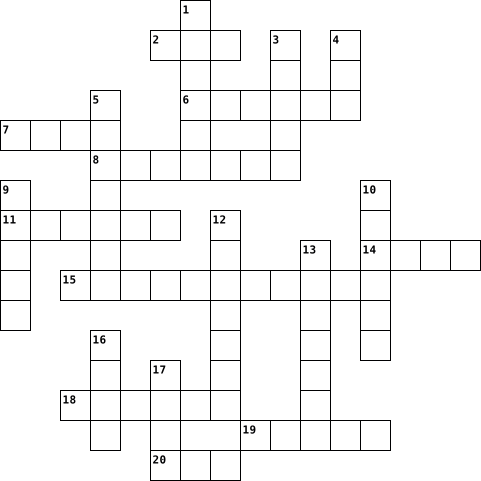
Across
- The time when the sun comes out
- Spins on its side
- All planets vary in
- There are 8 of them
- Water is a form of it
- Comes out at night
- Measured in degrees celcius
- The planets are a part of this
- Where humans live
- At the centre of the solar system
Down
- Has visable rings around it
- Spins the opposite way to earth
- Some of the planets are made up of this
- The planet furthest away from the sun
- A dwaft planet
- Has a tail when it moves through space
- The closest planet to the sun
- The largest of all the planets
- Millions of them in the night sky
- Also known as a type of chocolate
20 Clues: A dwaft planet • Spins on its side • Where humans live • Comes out at night • All planets vary in • There are 8 of them • Water is a form of it • Has visable rings around it • Measured in degrees celcius • The closest planet to the sun • The largest of all the planets • The planets are a part of this • The time when the sun comes out • Spins the opposite way to earth • ...
english summer home work 2024-05-10

Across
- borrow from the future without leaving them with debt.
- Taking the carbon out of "carbon footprint."
- harmful materials released without proper testing
- reflectiveness of Earth
- SPM
- Sun's energy in, Earth's energy out
- source of energy that lights up your day, for free!
- technology that helps us care for the Earth.
- impact from the greenhouse gasses
Down
- fuels compressed remains of living things.
- weakening of Earth's sun shield
- cutting of trees
- recycling of gases
- wastes in the ocean
- farming
- Air pollutant from burning things
- helping a hurt nature heal
- Large-scale attempts to influence Earth's climate.
- keeping things in use for as long as possible.
- The ocean's superheroes of carbon storage
20 Clues: SPM • farming • cutting of trees • recycling of gases • wastes in the ocean • reflectiveness of Earth • helping a hurt nature heal • weakening of Earth's sun shield • Air pollutant from burning things • impact from the greenhouse gasses • Sun's energy in, Earth's energy out • The ocean's superheroes of carbon storage • fuels compressed remains of living things. • ...
ECSA CROSSWORD GAME 2025-10-14

Across
- The symbol of Indonesia, the mythical bird
- The country known for the Eiffel Tower
- Likes to chase mice
- The smallest continent on Earth
- Has a trunk
- The capital city of England
- The largest planet in our solar system
- A color made by mixing red and blue
Down
- The gas we breathe
- The legislative institution of Indonesia
- The color of blood
- The direction where the sun rises
- The place where airplanes land
- A place where many wild animals live naturally
- I ___ to music every day.
- The largest continent on Earth
- The plural of child
- Something you use to open a door
- The past form of eat
- The plural of mouse
20 Clues: Has a trunk • The gas we breathe • The color of blood • The plural of child • Likes to chase mice • The plural of mouse • The past form of eat • I ___ to music every day. • The capital city of England • The place where airplanes land • The largest continent on Earth • The smallest continent on Earth • Something you use to open a door • The direction where the sun rises • ...
Science Summary 2022-12-19

Across
- Imginary line located at 0°latitude that passes through Quito
- Earth's movement around the sun and lasts a year
- Means mid day
- Known as red planet
- Hottest planet due to the amount of CO2 on the atmosphere
- Spherical model of the Earth to locate countries.
- Earth's movement around its axis
- Has a big ring around it and it's visible
- West to East horizontal lines
Down
- Natural satellite that orbits our planet
- Prime Meridian
- 366 Days
- Closest planet to the sun
- Largest planet in solar system
- North South vertcical lines
- Planet we live in
16 Clues: 366 Days • Means mid day • Prime Meridian • Planet we live in • Known as red planet • Closest planet to the sun • North South vertcical lines • West to East horizontal lines • Largest planet in solar system • Earth's movement around its axis • Natural satellite that orbits our planet • Has a big ring around it and it's visible • Earth's movement around the sun and lasts a year • ...
ulangan tata surya_ashla 2026-01-22

Across
- The Solar System is part of what?
- What is the largest planet?
- Where is the asteroid belt located?
- Which planet is the hottest?
- Why do planets stay in orbit?
- How many moons does Earth have?
- Why is Jupiter easy to see?
- What is a telescope used for?
- Which planet is called the Blue Planet?
- Which planet rotates on its side?
- Why do astronauts go to space?
- What tool do scientists use to study space?
- What does the Sun give to Earth?
- What is at the center of the Solar System?
- What are Saturn’s rings made of?
- How many planets are in the Solar System?
- What galaxy do we live in?
- What is the Solar System?
- What are the inner planets?
- What is a dwarf planet?
- What are the outer planets?
- What causes the seasons?
Down
- What is Pluto classified as?
- What is a meteor often called?
- What does the Moon do around Earth?
- Which planet has famous rings?
- What is a comet?
- Which planet is closest to the Sun?
- Why can Earth support life?
- Which planet is farthest from the Sun?
- What is an asteroid?
- What makes Mars look red?
- What is a space probe?
- What force keeps planets moving around the Sun?
- What is gravity?
- What is a meteor called when it hits Earth?
- What is an orbit?
- Which planet is called the Red Planet?
- What causes day and night?
- Why do comets have tails?
40 Clues: What is a comet? • What is gravity? • What is an orbit? • What is an asteroid? • What is a space probe? • What is a dwarf planet? • What causes the seasons? • What makes Mars look red? • What is the Solar System? • Why do comets have tails? • What galaxy do we live in? • What causes day and night? • What is the largest planet? • Why can Earth support life? • Why is Jupiter easy to see? • ...
The Earth Day Crossword 2021-03-23

Across
- Rachel Carson’s book that sparked an environmental movement
- Al Gore did a documentary about Climate Change, but this ‘Al’ is the biofuel of Sara Volz
- river in Cleveland that started to burn because it was so polluted in 1969
- Aaron Claeys is creating these solutions to try and rethink our world
- First name of Time’s 2020 Kid of the Year
Down
- One of the 3 ‘R’s that can help you become an Eco Champ
- Ann Makosinski created a ____________ that runs on heat from human hands
- In 1973, the U.S. passed The ___________ Species Act
- Angad Daryani turned this medical condition into his inspiration
- In 2015, the Climate Agreement was signed in this city
10 Clues: First name of Time’s 2020 Kid of the Year • In 1973, the U.S. passed The ___________ Species Act • In 2015, the Climate Agreement was signed in this city • One of the 3 ‘R’s that can help you become an Eco Champ • Rachel Carson’s book that sparked an environmental movement • Angad Daryani turned this medical condition into his inspiration • ...
International Earth Day 8 2024-01-17

Across
- The smallest planet in our solar system (4)
- The action of cleaning up trash from the environment (7)
- A natural source of light in the sky (3)
- A gentle, slow-moving mammal (5)
- A fragrant flower often associated with love (4)
Down
- The action of saving energy (6)
- A man-made container for waste disposal (3)
- Animals with scales (6)
- The Earth's outer layer (5)
- The liquid inside a lake (4)
10 Clues: Animals with scales (6) • The Earth's outer layer (5) • The liquid inside a lake (4) • The action of saving energy (6) • A gentle, slow-moving mammal (5) • A natural source of light in the sky (3) • A man-made container for waste disposal (3) • The smallest planet in our solar system (4) • A fragrant flower often associated with love (4) • ...
Earth day Crossword Puzzle 2024-04-24

Across
- decayed organic material used as fertilizer
- the place where animals own and live
- the community where all animals live together
- a place to dispose of garbage and other waist
- convert (waste) into reusable material
- capable of being renewed
Down
- containment with harmful of poisonous chemicals
- the thing that surrounds the Earth and other planets and has gases in it
- elating to or derived from living matter
- relating to or determined by the sun
10 Clues: capable of being renewed • the place where animals own and live • relating to or determined by the sun • convert (waste) into reusable material • elating to or derived from living matter • decayed organic material used as fertilizer • the community where all animals live together • a place to dispose of garbage and other waist • ...
earth day by max 2023-04-30

Across
- worms go through
- they have 2 wheels
- what you put your groceries in
- a place that you live in
Down
- edible
- smelly
- what you walk through
- goats eat them
- has lots of water
- pollenators
10 Clues: edible • smelly • pollenators • goats eat them • worms go through • has lots of water • they have 2 wheels • what you walk through • a place that you live in • what you put your groceries in
Earth Day Vocabulary Crossword 2023-04-27

Across
- convert waste into reusable material
- a method of resource conservation that involves using products more than once
- the variety of life in the world or in a particular habitat or ecosystem
- fuels coal, oil, natural gas, and other fuels that are ancient remains of plants and animals
- to use less of something, such as carpooling or limiting how many plastic bottles you use
- destruction-damage done to a habitat that results in the loss of resources that organisms need to survive, like food, water, and shelter
- release of harmful materials into the environment; such a gloppity glop and smogulous smoke
Down
- the excessive use of material things, including food and natural resources
- a natural resource that can be replaced at the same rate at which the resource is consumed
- a natural resource that is not replaced in a useful time frame
10 Clues: convert waste into reusable material • a natural resource that is not replaced in a useful time frame • the variety of life in the world or in a particular habitat or ecosystem • the excessive use of material things, including food and natural resources • a method of resource conservation that involves using products more than once • ...
Earth Day Crossword Puzzle 2025-04-22

Across
- The ___ is the gases surrounding Earth or another planet.
- A product grown or raised without the use of chemical or other artificial agents
- A place to dispose of refuse and other waste material by buying it and covering it over with soil, especially as a method of filling in or extending usable land.
- Decayed organic material used as a plant fertilizer.
- A source of energy that is not depleted by use, such as water, wind, or solar power.
Down
- The natural home or environment of an animal, plant, or other organism.
- The production and discharge of something, especially gas or radiation.
- Convert waste into reusable material.
- The ___ is a biological community of interacting organisms and their physical environment.
- Reuse materials to create a product of higher quality or value than the original.
10 Clues: Convert waste into reusable material. • Decayed organic material used as a plant fertilizer. • The ___ is the gases surrounding Earth or another planet. • The natural home or environment of an animal, plant, or other organism. • The production and discharge of something, especially gas or radiation. • ...
The Earth and its neighbours 2017-11-07

Across
- heavenly bodies that reflect their own light
- a constellation that looks like a lion
- natural satellite of the earth
- An instrument used to see the celestial bodies
- a fixed path on which the earth goes around the Sun
- second planet from the Sun that has life on it
Down
- this movement of the earth causes day and night
- a dwarf planet which used to be the part of our solar system
- smallest planet and also closest to the Sun
- The second largest planets with many rings
10 Clues: natural satellite of the earth • a constellation that looks like a lion • The second largest planets with many rings • smallest planet and also closest to the Sun • heavenly bodies that reflect their own light • An instrument used to see the celestial bodies • second planet from the Sun that has life on it • this movement of the earth causes day and night • ...
Science 2023-03-07

Across
- Earth revolves around the sun once
- Something rotating on an axis
- Moon revolve around the earth
- revolves around the earth
Down
- revolves around the sun
- a star the gives off radiation and is bright
- a single orbit of one object around another or about an axis or center.
- when the earth makes a rotation around its axis
8 Clues: revolves around the sun • revolves around the earth • Something rotating on an axis • Moon revolve around the earth • Earth revolves around the sun once • a star the gives off radiation and is bright • when the earth makes a rotation around its axis • a single orbit of one object around another or about an axis or center.
Chapter 7&8 2019-01-29

Across
- Cloud of gas and dust in outer space
- 60 of these in a degree
- star that ejects brightness due to a catastrophic explosion
- A half of earth
- Reference line for longitude
- Other word for lines of longitude
- Largest ocean and is between Asia and the Americas
- Percentage of Earth covered in ice
- Smallest continent
- When did Earth form
- How many moons does Earth have
- Earth’s galaxy
- Other word for lines of latitude
- Continent that includes, France and Spain
- why do stars twinkle
- Ocean between the Americas and Europe/Africa
- Warmest ocean and trade route between Asia and Africa
Down
- What controls Earth’s tides
- Continent containing the USA, Canada, and Mexico
- 60 of these in a minute
- Continent containing Brazil and Argentina
- Where Prime Meridian passes through
- Line where the date changes by one day
- How long did accretion last.
- Reference line for lines of latitude
- Continent that includes, China and Japan
- Continent bordered by the Indian, Atlantic and Mediterranean Sea
- Ice continent of the south pole
- Most commonly used world map in class rooms.
- Smallest and coldest ocean
30 Clues: Earth’s galaxy • A half of earth • Smallest continent • When did Earth form • why do stars twinkle • 60 of these in a minute • 60 of these in a degree • Smallest and coldest ocean • What controls Earth’s tides • Reference line for longitude • How long did accretion last. • How many moons does Earth have • Ice continent of the south pole • Other word for lines of latitude • ...
space 2023-05-31

Across
- largest modular space station in low Earth orbitinertia
- a group of stars
- an area of such immense gravity that nothing—not even light—can escape from it.
- the third-largest constellation in the sky and the largest constellation in the Northern Hemisphere
- a giant cloud of dust and gas in space
- the earth _______ the sun
- candy
- we live on it
- a moon, planet or machine that orbits a planet or star
- biggest star
- _____ space telescope
- the first spacecraft to cross the heliosphere,
- Newton's Law of Universal Gravitation
- coldest color of the star are _____ ____
Down
- the first element on the periodic table
- buzz
- triple star system in the southern constellation of Centaurus
- barred spiral galaxy and is the closest major galaxy to the Milky Way
- an hour and a half
- doughnut-shaped ring of icy objects around the Sun
- a star in the northern circumpolar constellation of Ursa Minor
- earth
- kg
- little dipper
- is a huge collection of gas, dust, and billions of stars and their solar systems
- self-luminous celestial body of gas
- bright can see in the day not at night
27 Clues: kg • buzz • earth • candy • biggest star • little dipper • we live on it • a group of stars • an hour and a half • _____ space telescope • the earth _______ the sun • self-luminous celestial body of gas • Newton's Law of Universal Gravitation • a giant cloud of dust and gas in space • bright can see in the day not at night • the first element on the periodic table • ...
Earth Day Crossword Puzzle 2014-04-01

Across
- a celestial body moving in an orbit around a star
- the gases that surround the earth or another planet
- a place to dispose of waste by burying it and covering it with soil
- decayed organic material used as plant fertilizer
Down
- the natural environment of a plant or animal
- trash that is left lying in an open or public place
- reduce, reuse and _________
- the month that Earth Day is in
- a substance introduced to an environment that has harmful or poisonous effects
- a very large body of water
10 Clues: a very large body of water • reduce, reuse and _________ • the month that Earth Day is in • the natural environment of a plant or animal • a celestial body moving in an orbit around a star • decayed organic material used as plant fertilizer • trash that is left lying in an open or public place • the gases that surround the earth or another planet • ...
Earth Day Crossword Puzzle 2019-04-30

Across
- / Wild animals collectively; the native fauna (and sometimes flora) of a region.
- / Shock or excite (someone) into taking action.
- / Everything that is around us. It can be living or non-living things. It includes physical, chemical and other natural forces.
- / The weather conditions prevailing in an area in general or over a long period.
Down
- /The action of clearing a wide area of trees.
- Warming / A long-term rise in the average temperature of the Earth's climate system, an aspect of climate change shown by temperature measurements and by multiple effects of the warming
- / The introduction of contaminants into the natural environment that cause adverse change.
- / An uncultivated, uninhabited, and inhospitable region
- / The state or process of a species, family, or larger group dying out
- / Capable of being renewed.
10 Clues: / Capable of being renewed. • /The action of clearing a wide area of trees. • / Shock or excite (someone) into taking action. • / An uncultivated, uninhabited, and inhospitable region • / The state or process of a species, family, or larger group dying out • / Wild animals collectively; the native fauna (and sometimes flora) of a region. • ...
EARTH DAY 2024 CROSSWORD 2024-04-15

Across
- We must work together to _______ our planet.
- Instead of throwing things away, we should ______ them.
- What covers 71% of our planet?
- To help limit waste, we can buy products that are_____.
- One ____, One Future.
Down
- What day are we supporting?
- Our ice caps are melting due to _________.
- R_U__
- This is harmful to our planet.
- R_D___.
10 Clues: R_U__ • R_D___. • One ____, One Future. • What day are we supporting? • This is harmful to our planet. • What covers 71% of our planet? • Our ice caps are melting due to _________. • We must work together to _______ our planet. • Instead of throwing things away, we should ______ them. • To help limit waste, we can buy products that are_____.
Earth Day Eco-Cross 2024-03-21

Across
- Term for the preservation of forests and wildlife
- Essential gas for plant photosynthesis
- International agreement to combat climate change
- Practice aimed at balancing environmental, economic, and social considerations to ensure long-term well-being
- Gas emitted from vehicles that contributes to air pollution
Down
- Process of breaking down organic matter into compost
- Renewable energy source from the sun
- Process of reusing old items to create something new
- Chemical element that forms the protective layer in the Earth's atmosphere
- Instead of 'waste' when it comes to resources
10 Clues: Renewable energy source from the sun • Essential gas for plant photosynthesis • Instead of 'waste' when it comes to resources • International agreement to combat climate change • Term for the preservation of forests and wildlife • Process of breaking down organic matter into compost • Process of reusing old items to create something new • ...
World Earth Day Crossword 2025-03-27

Across
- The natural reservoirs holding about 68% of the Earth's freshwater.
- The practice of turning waste materials into reusable products.
- The process of planting trees to restore forests and absorb CO₂.
Down
- A farming method that avoids synthetic pesticides and fertilizers.
- A material that takes hundreds of years to decompose and pollutes oceans.
- Every minute, deforestation destroys 27 football fields of this type of ecosystem.
- Every year, humans cut down around 15 billion of these vital carbon-absorbing plants.
- A renewable energy source that comes from the sun.
- A major source of pollution caused by cars, factories, and deforestation.
- A marine ecosystem that has lost over 50% of its habitat due to climate change and pollution.
10 Clues: A renewable energy source that comes from the sun. • The practice of turning waste materials into reusable products. • The process of planting trees to restore forests and absorb CO₂. • A farming method that avoids synthetic pesticides and fertilizers. • The natural reservoirs holding about 68% of the Earth's freshwater. • ...
Unit 2 Review - Moon Phases, Eclipses, & Seasons 2020-12-07

Across
- identified based on the time of year, climate conditions, and position of earth around the sun
- the number of seasons we have
- less than 50% of the moon we see is illuminated, but not 0%
- another word used to refer to the fall season
- the illuminated portion of the moon we see ______ during waning phases
- 100% of the moon we see is illuminated
- more than 50% of the moon we see is illuminated, but not 100%
- a _______ eclipse happens when either the moon or earth pass through the most concentrated (darker) shadow region
- imaginary line running north to south dividing the Eastern and Western Hemispheres
- identified by the part of the moon that we can see illuminated at different times of the month
- the moon orbits the ________
- this much of the moon is always illuminated (but we see different portions of this amount throughout the month)
- another word used to refer to the spring season
- 0% of the moon we see is illuminated
- the quarter moon phase when illuminated on the left side
- the season in the Northern Hemisphere is always the ________ of the season in the Southern Hemisphere
- either longer days and shorter nights (summer) or shorter days and longer nights (winter)
- hours of day and night are the same (spring and fall)
- the earth spinning on its axis (determines length of day)
- the illuminated portion of the moon we see _______ during the first half
- the eclipse that can occur during a full moon phase when orbits line up (Sun → Earth → Moon; Earth’s shadow is cast upon moon; moon turns a red color)
- December 21st officially starts our ______ season (Northern Hemisphere is tilted away from the Sun; it would be Summer in the Southern Hemisphere)
- earth orbiting the sun (determines length of year)
Down
- the hemisphere that has summer during our winter season, spring during our fall season, winter during our summer season, and fall during our spring season
- the illuminated portion of the moon we see when its on the left side
- the direction of orbit of the moon and earth
- a _______ eclipse happens when either the moon or earth pass through the less concentrated (lighter) shadow region
- northern hemisphere is ______ to the sun during spring and fall
- the quarter moon phase when illuminated on the right side
- the earth orbits the __________
- northern hemisphere is tilted ______ the sun during summer
- Earth is _______ on its axis; also the moon’s orbit is _______.
- March 21st officially starts our ______ season (Northern Hemisphere is parallel to Sun; it would be fall in the Southern Hemisphere)
- 50% of the moon we see is illuminated
- the moon does not make its own light but instead is __________ by the sun resulting in the parts we see throughout each month
- northern hemisphere is tilted ______ the sun during winter
- results from either the moon passing through the shadow of the earth or the earth passing through the shadow of the moon
- the hemisphere that we live in
- imaginary line running east to west dividing the Northern and Southern Hemispheres
- Earth is tilted 23.5 degrees on its _______ (imaginary line runs straight through the center of Earth from north to south pole)
- the illuminated portion of the moon we see when its on the right side
- the number of moon phases we have
- September 21st officially starts our ______ season (Northern Hemisphere is parallel to Sun; it would be Spring in the Southern Hemisphere)
- the eclipse that can occur during a new moon phase when orbits line up (Sun → Moon → Earth; moon’s shadow is cast upon Earth)
- half of earth (northern, southern, eastern, or western)
- the number of days for a complete moon phase cycle
- June 21st officially starts our ______ season (Northern Hemisphere is tilted towards the Sun; it would be Winter in the Southern Hemisphere)
47 Clues: the moon orbits the ________ • the number of seasons we have • the hemisphere that we live in • the earth orbits the __________ • the number of moon phases we have • 0% of the moon we see is illuminated • 50% of the moon we see is illuminated • 100% of the moon we see is illuminated • the direction of orbit of the moon and earth • ...
Chapter 8 Crossword 2019-01-25

Across
- This galaxy is known as_________
- Stars twinkle because of elements being converted over to other elements, which gives off _____
- how long ago were there at least islands of continental crust on earth
- Earths iron core creates a magnetic field which protects the planet from ________
- what are scientists able to calculate from the radioactive elements found in a meteorite that decay at a particular rate
- If we imagine earth Earth's total 4.5 billion year history to be over the span of one day how long ago did humans begin to walk the earth
- special kind of water scientists look at in the ocean and comets to see if proportions match
- was the moon closer or farther when the earth was younger
- what processes formed the first clouds
- ______is the dominant scientific theory that occured 15 billion years ago that formed the universe
- _____of the clouds made heavy rain fall
- in 6 billion years, the sun will hypothetically turn into a ________
Down
- what are the scientists trying to determine when they look at the age of zircons in australia
- how many years did heavy rain fall before the oceans were formed
- how quickly is the moon moving away from the earth per year
- what name do scientists give to earth when the outer surface was completely molten
- during this time when the earth was liquid rock, what type of elements sank towards the earth's center
- what type of object can give information about the conditions in which the solid planets formed
- the explosion of a star
- what is the name of the small early planets, which formed through gravitational attraction attraction reaching sizes of a few miles to eventually the size of our moon
20 Clues: the explosion of a star • This galaxy is known as_________ • what processes formed the first clouds • _____of the clouds made heavy rain fall • was the moon closer or farther when the earth was younger • how quickly is the moon moving away from the earth per year • how many years did heavy rain fall before the oceans were formed • ...
Science Ch. 6 Review Guide 2024-05-21

Across
- all natural objects in space are called
- the system of stars our solar system is a part of
- Orion, the Big Dipper, and the Little Dipper are all examples of _____.
- Who was the first man to step onto the moon?
- the Red Planet
- It takes the moon about one _____ to orbit Earth.
- large storm on Jupiter's surface
- earth's closest star that produces light and heat energy
- what Saturn's rings are made up of
- What makes the seasons?
- Earth's natural satellite
- a hole on the surface of a moon or planet made by asteroids and meteoroids have hit it
- only planet tipped on its side
- Mercury, Venus, Earth, and Mars all have this common characteristic
- the hottest and brightest planet
- number of planets in our solar system
- the sun's _____ helps all the planets of the solar system orbit it
Down
- planet that is 300 times larger than Earth
- How do we account for the extra 1/4 day that it takes Earth to orbit the sun?
- planet with the longest orbit around the sun
- the earth rotates on its _____
- a tool that tells time by using the sun
- Earth is different from all other planets because it is _____
- What does the gravity of the moon pull that is on Earth?
- a giant ball of hot, glowing gas
- We send ______ to other planets and places that humans cannot explore
- another name for the outer planets
- the first four planets in the solar system
- The moon _____ the sun's light
- smallest planet in the solar system
30 Clues: the Red Planet • What makes the seasons? • Earth's natural satellite • the earth rotates on its _____ • The moon _____ the sun's light • only planet tipped on its side • a giant ball of hot, glowing gas • large storm on Jupiter's surface • the hottest and brightest planet • another name for the outer planets • what Saturn's rings are made up of • ...
Crossword Wk of 12/9 2024-12-08

Across
- She likes to drink (hot, sea, fur) chocolate.
- Please wear a (see, hot, hat) outside during recess.
- May I have some (ice, fur, sea) to cool my drink.
- It is a (bird, play, cool) day to go to the beach.
- We need to take care of this (earth, thr.e, cool).
- The plane will (cold, land, bird) on the runway.
- The boat was rocking on the rough (sea, fur, hat).
- It is (feed, cold, play) outside so wear your jacket.
- Please (play, feed, cool) the fish when I am gone.
Down
- I ate (three, child, earth) cookies today.
- In the cage is a beautiful (play, bird, cold).
- The (earth, three, child) is playing with her mom.
- Our family went to see a funny (bird, cool, play).
- Can you (ice, see, sea) the white board clearly?
- The bear's (hat, hot, fur) is brown
15 Clues: The bear's (hat, hot, fur) is brown • I ate (three, child, earth) cookies today. • She likes to drink (hot, sea, fur) chocolate. • In the cage is a beautiful (play, bird, cold). • The plane will (cold, land, bird) on the runway. • Can you (ice, see, sea) the white board clearly? • May I have some (ice, fur, sea) to cool my drink. • ...
Assess Your Learning 2026-02-12

Across
- Boat built at God’s command to preserve Noah’s family and animals.
- God’s sacred promise made with Noah after the Flood.
- To follow God’s commandments.
- Prophet who found grace in the eyes of the Lord and built the ark.
- City where people attempted to build a tower to reach heaven.
- Protected from destruction because of righteousness and obedience.
- Sinful attitude that motivated the building of the tower.
- What God did to the people across the earth after Babel.
- The spiritual and moral condition of the earth before the Flood.
Down
- The widespread evil that filled the earth in Noah’s day.
- What Noah was sent to do before the Flood came.
- Form of communication that God confounded at Babel.
- The first book of the Old Testament where these events are recorded.
- Faithfully keeping God’s commandments.
- The great deluge sent by God to cleanse the earth.
15 Clues: To follow God’s commandments. • Faithfully keeping God’s commandments. • What Noah was sent to do before the Flood came. • The great deluge sent by God to cleanse the earth. • Form of communication that God confounded at Babel. • God’s sacred promise made with Noah after the Flood. • The widespread evil that filled the earth in Noah’s day. • ...
Daily Routine ... in Space! 2021-01-06

Across
- The Space Station is located above the ...
- Do you want to live in ...?
- They can also ... books.
- People on the Space Station can watch ... in their free time.
- It is ... high above the earth.
- people like to listen to ... in their free time.
- They must be ... because they don't want to use lots of water.
- They don't want their food to ...
Down
- ... They bring food from Earth so they can eat ... every morning.
- are machines for running and for ...
- They ... for more than two hours every day.
- ... can learn about space on the Space Station.
- People there ... and then brush their teeth.
- They use ... soap and shampoo.
- They exercise so they can have ... bodies.
- The people on the station don't have to take a ... to work.
16 Clues: They can also ... books. • Do you want to live in ...? • They use ... soap and shampoo. • It is ... high above the earth. • They don't want their food to ... • are machines for running and for ... • The Space Station is located above the ... • They exercise so they can have ... bodies. • They ... for more than two hours every day. • ...
routines in space 2025-03-29

Across
- There are machines for running and for ____.
- The Space Station is located above the ____.
- They can also ____ books.
- People on the Space Station can watch ____ in their free time.
- People there ____ and then brush their teeth.
- Some people like to listen to ____ in their free time
- Do you want to live in ____?
- ____ can learn about space on the Space Station.
- They must be ____ because they don’t want to use lots of water.
Down
- The people on the station don’t have to take a ____ to work.
- It is ____ high above the earth.
- They exercise so they can have ____ bodies.
- They bring food from Earth so they can eat ____ every morning.
- They ____ for more than two hours every day.
- They use ____ soap and shampoo
- They don’t want their food to ____.
16 Clues: They can also ____ books. • Do you want to live in ____? • They use ____ soap and shampoo • It is ____ high above the earth. • They don’t want their food to ____. • They exercise so they can have ____ bodies. • There are machines for running and for ____. • The Space Station is located above the ____. • They ____ for more than two hours every day. • ...
April 2024-03-19

Across
- Day is observed on April 22 to promote environmental awareness
- One of April's birth flowers, symbolizing innocence
- National Week is celebrated in April
- Festival in Washington, D.C., typically occurs in April
- Appreciation Month is celebrated in April
- Da Vinci, born on April 15, 1452
- Tax Day in the United States typically falls on April 15
- This type of weather is stereotypically associated with April
- Professionals Day is observed on the last full week of April
- Jewish holiday that often falls in April
- Zodiac sign starting in April
- National Month is observed in April in the United States
- Elizabeth II, born on April 21, 1926
Down
- National Cheese Sandwich Day is on April 12
- Shakespeare, died on April 23, 1616, and possibly born on April 23, 1564
- National Month encourages planting and outdoor activities in April
- National Month, highlighting amphibians, observed in April
- Country where the month is celebrated with Hanami, or flower viewing
- The traditional birthstone for this month
- Day on April 25, commemorates Australian and New Zealand war dead
- National Month is observed in April
- Day celebrated with pranks and jokes on the first of this month
- Arbor Day, a day dedicated to planting s, is observed in April in many states
- This ship sank in April 1912
- Awareness Day is celebrated on April 2
- April ___ bring May flowers
- Boston ___ usually held on the third Monday of April
- Christian holiday that can fall in late March or April
- This month is named after the Latin word "aperire," meaning to open (like flowers)
- Zodiac sign ending in early April
30 Clues: April ___ bring May flowers • This ship sank in April 1912 • Zodiac sign starting in April • Da Vinci, born on April 15, 1452 • Zodiac sign ending in early April • National Month is observed in April • National Week is celebrated in April • Elizabeth II, born on April 21, 1926 • Awareness Day is celebrated on April 2 • Jewish holiday that often falls in April • ...
The Earth and Sun 2020-12-08

Across
- the area between the Polar Zone and Tropical Zone (winters are cold, summers are warm - we live here) (the _______ zone)
- an imaginary line that runs through the center of the Earth from North Pole to South Pole
- If it is summer in the Northern Hemisphere, what season is it in the Southern Hemisphere?
- a circular path the Earth takes when moving around the Sun
- northernmost line that gets constant direct sunlight (Tropic of ___)
- the area between the Tropic of Cancer and Tropic of Capricorn (warm all year)
- Areas between the poles and the circles (very little direct sunlight and cold most of the year)
Down
- one full trip the Earth makes around the sun - it takes 365 ¼ days (1 full year)
- southernmost line that gets constant direct sunlight (Tropic of ________)
- Northernmost line that does not receive sun at all on one day a year. (dark for 24 hours straight)
- the Southernmost line where the sun doesn't shine at all for one day a year.(________ Circle)
- This causes different amounts of sunlight to hit Northern and Southern Hemispheres causing the seasons
- If it is fall in the Southern Hemisphere, what season is it in the Northern Hemisphere?
- spinning motion the Earth makes while spinning on its Axis
14 Clues: a circular path the Earth takes when moving around the Sun • spinning motion the Earth makes while spinning on its Axis • northernmost line that gets constant direct sunlight (Tropic of ___) • southernmost line that gets constant direct sunlight (Tropic of ________) • the area between the Tropic of Cancer and Tropic of Capricorn (warm all year) • ...
Moon Phases 2025-04-10

Across
- A phenomena or process that repeats itself such as moon phases or day & night.
- When the lighted part of the moon is getting smaller (light is on the left)
- The motion of an object spilling on its axis.
- The motion of one object as it moves around another object.
- The amount of time a planet takes to make one full revolution around the sun.
Down
- The imaginary line through Earth that extends from the north pole to the south pole and is the center of the Earth's rotation.
- When less than half of the moon is illuminated from our point of view.
- The amount of time a planet takes to complete one full rotation on its axis.
- The shape of the illuminated (lighted) part of the moon as seen by an observer, usually from the perspective of Earth.
- When no part of the illuminated half of the moon is facing Earth (the first phase).
- When all of the illuminated half of the moon is facing Earth.
- When more than half of the moon is illuminated from our point of view.
- When the lighted part of the moon is getting bigger (light is on the right)
- The path an object takes as it revolves around another object.
14 Clues: The motion of an object spilling on its axis. • The motion of one object as it moves around another object. • When all of the illuminated half of the moon is facing Earth. • The path an object takes as it revolves around another object. • When less than half of the moon is illuminated from our point of view. • ...
Science Vocab 2022-04-26

Across
- the path of an object as it revolves around another object in space
- star in the center of our solar system that produces light duing the day
- a natural satellite that revolves around a planet
- the daily rie and fall of earths waters on its coastlines
- the only planet that can support life (planet that we live on)
- a tide that happens when the sun and moon pull at right angles to each other at the first and third quarters of the moon
- pahse of the moon where the whole disk is illuminated
- a dark shape that is formed when and object blocks a source of light
- tide that happens when the sun and the moon are aligned with teh earth at the new moon and the full moon
- a force that pulls objects towards each other
- moon that gets more sunlight on it as the days go by
- the side of the moon that is in shadow faces the earth
- the blocking of sunlight to earth that happens when the moon is directly between the sun and the earth
Down
- he movement of an object around another object
- th eblocking of sunlight to the moon that happens when the earth is directly between the sun and the moon
- phase of the moon which shows only a small sliver of the moon
- the way earth is slanted spining on its axis
- partial or tital blocking of one object in space by another
- the darkest part of a shadow
- the action of rotating around and axis or center
- phase of the moon that is buldging outward but isnt quiet full
- derease in size
- the part of tehe shadow surronding the darkest section
23 Clues: derease in size • the darkest part of a shadow • the way earth is slanted spining on its axis • a force that pulls objects towards each other • he movement of an object around another object • the action of rotating around and axis or center • a natural satellite that revolves around a planet • moon that gets more sunlight on it as the days go by • ...
Moon 2026-04-01

Across
- Another scientific name used for Earth's specific moon.
- The phase occurring after a Full Moon where the left half is lit.
- A moon phase that looks like a thin, curved sliver.
- A natural or artificial body that revolves around a larger planet.
- The spinning of the Moon on its axis, which takes the same amount of time as its orbit.
- The period when the sunlit fraction of the Moon is getting smaller.
- The process where debris from Earth's mantle was blasted into orbit following a massive collision.
- The force that keeps the Moon in orbit and is only 17% as strong as Earth's at the surface.
- The phase where the Moon is between the Earth and Sun, appearing completely dark to us.
Down
- The phase where the entire side of the Moon facing Earth is lit up.
- The stage where clumps of ejected material joined together to create the Moon.
- Large, dark, flat plains on the Moon created by ancient lava flows.
- The initial event 4.6 billion years ago when a Mars-sized object struck the molten Earth.
- The different appearances of the Moon due to its changing position relative to Earth and the Sun.
- The 27.3-day journey the Moon takes to complete one full orbit around Earth.
- A bowl-shaped depression caused by the impact of space objects over billions of years.
- The phase occurring about a week after a New Moon where the right half is lit.
- The period when the sunlit fraction of the Moon we see from Earth is getting larger.
- The layer of Earth that provided much of the rocky material found in lunar samples.
- A moon phase that is more than half lit but not yet a full circle.
20 Clues: A moon phase that looks like a thin, curved sliver. • Another scientific name used for Earth's specific moon. • The phase occurring after a Full Moon where the left half is lit. • A natural or artificial body that revolves around a larger planet. • A moon phase that is more than half lit but not yet a full circle. • ...
2018 science vocab review;Leilani 2018-05-08

Across
- "water planet"
- the circular flow of water, electricity, or wind
- the ability to do work
- Energy of a moving object
- the time it takes for Earth to rotate once on its axis
- the amount of water vapor in the air
- the amount of salinity in the water
- highest high tides, lowest low tides
- the shape of Earth's orbit
- one benefits, the other is harmed
- examples: rain, snow, sleet, hail
- measures pressure
- these have a neutral charge
- the movement of air caused by differences in air pressure
- Anything that ever existed
- nutrient-rich water to t he surface
- these have a positive charge
- biome that has little rainfall and extreme cold temperatures
Down
- collection of stars, dust, and gas, bound together by gravity
- the time it takes for the Earth to revolve around the sun once
- a community of organisms and their environment
- Nonliving; Never lived
- lowest high tides, highest low tides
- Earth's natural satellite
- the closest layer of the atmosphere to Earth
- transfer of energy through Direct Contact
- (sun)
- the study of outer space
- heat transfer through electromagnet waves
- through this, electrons cannot flow easily
30 Clues: (sun) • "water planet" • measures pressure • Nonliving; Never lived • the ability to do work • the study of outer space • Energy of a moving object • Earth's natural satellite • the shape of Earth's orbit • Anything that ever existed • these have a neutral charge • these have a positive charge • one benefits, the other is harmed • examples: rain, snow, sleet, hail • ...
Astrononomy Puzzler 2023-04-18

Across
- one cycle of moon phases
- how many official planets are in the solar system
- third planet from the sun
- the universe is getting ________
- astronauts on the ISS _________ because there is no gravity in space
- planet that orbits on its side
- planet with a large core compared to outer crust
- planet most similar to earth in size
- a group of stars forming a recognizable pattern
- sailed the earth and proved it was round
- one earth cycle around the sun
- planet with the fastest winds in the solar system
- an eclipse in which the sun is obscured by the moon
Down
- only place in our solar system humans have set foot on
- planets made of gasses rather than rocks
- the alternate rising and falling of the sea due to gravity of moon
- a celestial body resembling a small planet but lacking certain technical criteria
- JWST (for short)
- one cycle of a planet
- largest planet in the solar system
- our galaxy name
- the name of the north star
- a planet with iron rocky surface
- our sun is a ________
- a dwarf planet after neptune
25 Clues: our galaxy name • JWST (for short) • one cycle of a planet • our sun is a ________ • one cycle of moon phases • third planet from the sun • the name of the north star • a dwarf planet after neptune • planet that orbits on its side • one earth cycle around the sun • the universe is getting ________ • a planet with iron rocky surface • largest planet in the solar system • ...