
earth day Crossword Puzzles
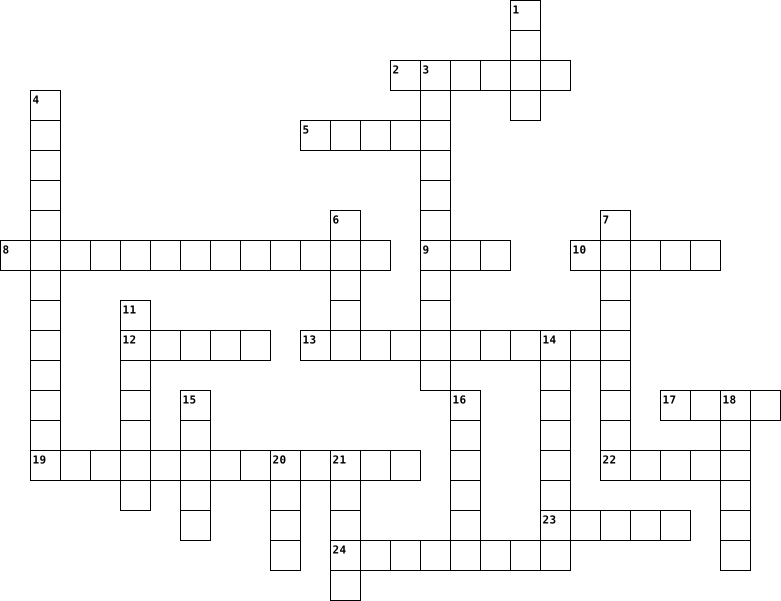
Earth Day Words Crossword 2013-04-23

Across
- a form of oxygen, O 3 , with a peculiar odor suggesting that of weak chlorine, produced when an electric spark or ultraviolet light is passed through air or oxygen. It is found in the atmosphere in minute quantities, especially after a thunderstorm, is a powerful oxidizing agent, and is thus biologically corrosive. In the upper atmosphere, it absorbs ultraviolet rays, thereby preventing them from reaching the surface of the earth. It is used for bleaching, sterilizing water, etc.
- natural no growth hormones
- capable of being sustained
- able to be renewed
- the act of emitting
- to treat or process (used or waste materials) so as to make suitable for reuse
- objects strewn or scattered about; scattered rubbish
- no longer existing
Down
- mixture of various decaying organic substances, as dead leaves or manure, used for fertilizing soil.
- to keep safe from injury, harm, or destruction
- a system formed by the interaction of a community of organisms with their environment
- a system of trash and garbage disposal in which the waste is buried between layers of earth to build up low-lying land
- to keep in a safe or sound state
- the natural environment of an organism; place that is natural for the life and growth of an organism
- the gaseous envelope surrounding the earth
- the area of which you are surrounded
- proceeding from the sun, as light or heat
- to process (used goods or waste material) so as to produce something that is often better than the original
- the act of making dirty
- the branch of biology dealing with the relations and interactions between organisms and their environment, including other organisms
20 Clues: able to be renewed • no longer existing • the act of emitting • the act of making dirty • natural no growth hormones • capable of being sustained • to keep in a safe or sound state • the area of which you are surrounded • proceeding from the sun, as light or heat • the gaseous envelope surrounding the earth • to keep safe from injury, harm, or destruction • ...
TRV Earth Day Trivia 2024-04-01

Across
- what crop was originally grown in the Lodi area before grapes became the staple
- what department had to validate 11,000 work orders in 2023
- planet, “by your powers combined I am”
- Actual salt is used in what Vibe flavor
- the __________ Safe Co., based out of San Francisco, made the safe that is in the Front Office at TRV East
- what area will you get parts from if an emergency break down happens.
- it, what phrase does the cellars like to use
- During the wine fermentation process, there are air _____________ that are regulated by the EPA.
- The world’s leading cork producer is
- what is the name of the Greek god of wine
- box, tetra averages around 90,000 cases a week of what brand
Down
- which machine at TRV West has a maximum processing capacity of 108,000 white wine gallons per day (24 hours)?
- what department does a total of 2450 hours to complete harvest readiness.
- what does the S stand for in the WSE department
- Grigio, TRV is planning to crush 36,000 tons of what varietal
- what does the Gallo Modesto campus and a Tetra team lead have in common
- what plant is used in our ponds as a natural filtration system
- we can fully charge Jim’s tesla once a week for 15,525 years if we install _____
- what is the fear of running out of wine called
- what country is known as the “birth place of wine”
20 Clues: The world’s leading cork producer is • planet, “by your powers combined I am” • Actual salt is used in what Vibe flavor • what is the name of the Greek god of wine • it, what phrase does the cellars like to use • what is the fear of running out of wine called • what does the S stand for in the WSE department • what country is known as the “birth place of wine” • ...
TRV Earth Day Trivia 2024-04-01

Across
- what department does a total of 2450 hours to complete harvest readiness.
- During the wine fermentation process, there are air _____________ that are regulated by the EPA.
- we can fully charge Jim’s tesla once a week for 15,525 years if we install _____
- what is the fear of running out of wine called
- Actual salt is used in what Vibe flavor
- tetra averages around 90,000 cases a week of what brand
- The world’s leading cork producer is
- what is the name of the Greek god of wine
- TRV is planning to crush 36,000 tons of what varietal
Down
- what department had to validate 11,000 work orders in 2023
- what crop was originally grown in the Lodi area before grapes became the staple
- the __________ Safe Co., based out of San Francisco, made the safe that is in the Front Office at TRV East
- “by your powers combined I am” (Cartoon)
- what country is known as the “birth place of wine”
- what plant is used in our ponds as a natural filtration system
- what does the S stand for in the WSE department
- what does the Gallo Modesto campus and a Tetra team lead have in common
- what phrase does the cellars like to use
- what area will you get parts from if an emergency break down happens.
- which machine at TRV West has a maximum processing capacity of 108,000 white wine gallons per day (24 hours)?
20 Clues: The world’s leading cork producer is • Actual salt is used in what Vibe flavor • “by your powers combined I am” (Cartoon) • what phrase does the cellars like to use • what is the name of the Greek god of wine • what is the fear of running out of wine called • what does the S stand for in the WSE department • what country is known as the “birth place of wine” • ...
TRV Earth Day Trivia 2024-04-01

Across
- The world’s leading cork producer is
- what plant is used in our ponds as a natural filtration system
- what does the S stand for in the WSE department
- During the wine fermentation process, there are air _____________ that are regulated by the EPA.
- what department does a total of 2450 hours to complete harvest readiness.
- the __________ Safe Co., based out of San Francisco, made the safe that is in the Front Office at TRV East
- which machine at TRV West has a maximum processing capacity of 108,000 white wine gallons per day (24 hours)?
- TRV is planning to crush 36,000 tons of what varietal
- what does the Gallo Modesto campus and a Tetra team lead have in common
- what country is known as the “birth place of wine”
Down
- we can fully charge Jim’s tesla once a week for 15,525 years if we install _____
- “by your powers combined I am” (Cartoon)
- what phrase does the cellars like to use
- what is the name of the Greek god of wine
- what crop was originally grown in the Lodi area before grapes became the staple
- what area will you get parts from if an emergency break down happens.
- Actual salt is used in what Vibe flavor
- what is the fear of running out of wine called
- what department had to validate 11,000 work orders in 2023
- tetra averages around 90,000 cases a week of what brand
20 Clues: The world’s leading cork producer is • Actual salt is used in what Vibe flavor • “by your powers combined I am” (Cartoon) • what phrase does the cellars like to use • what is the name of the Greek god of wine • what is the fear of running out of wine called • what does the S stand for in the WSE department • what country is known as the “birth place of wine” • ...
Farmers Earth Day Crossword 2024-04-08

Across
- plants with brightly colored petals
- wasted or spoiled food and other refuse, as from a kitchen or household
- trash, such as paper, cans, and bottles, that is left lying in an open or public place.
- convert (waste) into reusable material
- a living organism of the kind characterized by trees, shrubs, herbs, grasses, ferns, and mosses. Sometimes found in a home or office for greenery.
- the surroundings or conditions in which a person, animal, or plant lives or operates.
- The month in which we celebrate Earth Day
- to make smaller in size, amount, or number
- to make less harmful or to be more sensitive to the environment. Many companies are moving to the _____ movement.
- to use again or more than once
Down
- to protect (something, especially an environmentally or culturally important place or thing) from harm or destruction.
- the phenomena of the physical world collectively, including plants, animals, the landscape, and other features and products of the earth
- the introduction into the environment of a substance or thing that has harmful or poisonous effects.
- a colorless, transparent, odorless liquid that forms the seas, lakes, rivers, and rain and is the basis of the fluids of living organisms.
- a large body of salt water that covers ~70.8% of the Earth
- Renewable resources include sunlight, wind, the movement of water, and geothermal heat. Also known as clean ______.
- a mixture of ingredients used as plant fertilizer and to improve soil's physical, chemical, and biological properties.
- a large, rounded astronomical body that is neither a star nor its remnant
- a perennial plant with an elongated stem, or trunk, usually supporting branches and leaves
- the planet on which we live
20 Clues: the planet on which we live • to use again or more than once • plants with brightly colored petals • convert (waste) into reusable material • The month in which we celebrate Earth Day • to make smaller in size, amount, or number • a large body of salt water that covers ~70.8% of the Earth • wasted or spoiled food and other refuse, as from a kitchen or household • ...
Earth's Movement in Space 2021-08-05

Across
- The third planet from the sun (and the one you live on!).
- When the sun is out, it is ____.
- The invisible line that Earth spins on.
- We have four of these, my favourite is Spring!
- The opposite of day.
- This movement makes sure Earth doesn't crash into the sun.
- It gets very hit during this season.
- The action of not sitting still.
- It lights up the night sky.
- It takes one these for Earth to revolve around the sun.
- It gives us light, it gives us seasons.
- This word means to spin.
Down
- This word means to go around.
- This force pulls Earth towards the sun.
- What is that twinkle in the night sky?
- Turn, rotate, ______; they all mean the same thing!
- The leaves change colour during this season.
- It gets very cold during this season.
- There are eight of these in our solar system.
- The flowers bloom during this season.
- It's full of galaxies, planets, stars and much more!
- Earth does this around the sun.
22 Clues: The opposite of day. • This word means to spin. • It lights up the night sky. • This word means to go around. • Earth does this around the sun. • When the sun is out, it is ____. • The action of not sitting still. • It gets very hit during this season. • It gets very cold during this season. • The flowers bloom during this season. • What is that twinkle in the night sky? • ...
Unit 5 Vocabulary 2019-01-16

Across
- what everything is made of
- cause to change from a gas or vapor to a liquid
- a celestial body moving in an elliptical orbit around a star
- all the air on earth
- the layer of the atmosphere which holds the ozone layer
- the ability to do work
- a day to day change
Down
- the process of turning from a liquid into vapor
- the state or quality of being humid
- all the non living organisms on earth
- all the living organisms on earth
- all the frozen water on earth
- all the water on earth
- the star around which we orbit
- over a long period of time
15 Clues: a day to day change • all the air on earth • all the water on earth • the ability to do work • what everything is made of • over a long period of time • all the frozen water on earth • the star around which we orbit • all the living organisms on earth • the state or quality of being humid • all the non living organisms on earth • the process of turning from a liquid into vapor • ...
Earth day crossword puzzle 2020-04-23

Across
- Shields earth from the sun's ultraviolet rays
- A branch of biology that deals with organisms and their surroundings
- Related or meaning the sun
- An environment for animals or humans
- A place where large amounts of organisms live
- Trash
- A product of gas or radiation
- To protect something so it lasts
- Something that can be used more than once
Down
- Disposing of waste and trash
- Rotting organic material to be used as plant fertilizer
- Surroundings that living creatures and grow and sustain themselves in
- A species of animal that has been wiped out
- To reuse an item and is better value than what it once was
- turning trash into reusable material
- Contaminated air, water or, a place
- To be maintained
- To keep something as it is
- An envelope of gasses that encircle the planet
- Something that lives and can decompose
20 Clues: Trash • To be maintained • Related or meaning the sun • To keep something as it is • Disposing of waste and trash • A product of gas or radiation • To protect something so it lasts • Contaminated air, water or, a place • turning trash into reusable material • An environment for animals or humans • Something that lives and can decompose • Something that can be used more than once • ...
Earth Day Crossword Puzzle 2022-04-22

Across
- Mixture of various decaying organic substances
- an environment with air
- Capable of being supported
- To keep something in its original state
- Trash on the ground
- sun energy
- Made without chemicals
- buying or using less
- Human-made gases containing chlorine and fluorine
- an environment without air
Down
- Capable of being broken down by bacteria and other decomposers.
- An energy-rich substance (such as coal, oil, or natural gas)
- To protect something
- restored or replaced by natural process
- A substance discharged into the air
- Layer of gases surrounding a planet
- To make something new out of a used object
- The surroundings or conditions in which a person,animal or plant lives
- a layer in the Earth's atmosphere; O3
- The scientific study that deals with the relations of organisms to one another
- The natural home or environment of an animal,plant or organism
21 Clues: sun energy • Trash on the ground • To protect something • buying or using less • Made without chemicals • an environment with air • Capable of being supported • an environment without air • A substance discharged into the air • Layer of gases surrounding a planet • a layer in the Earth's atmosphere; O3 • To keep something in its original state • ...
TRV Earth Day Trivia 2024-04-01

Across
- The world’s leading cork producer is
- what plant is used in our ponds as a natural filtration system
- what does the S stand for in the WSE department
- During the wine fermentation process, there are air _____________ that are regulated by the EPA.
- what department does a total of 2450 hours to complete harvest readiness.
- the __________ Safe Co., based out of San Francisco, made the safe that is in the Front Office at TRV East
- which machine at TRV West has a maximum processing capacity of 108,000 white wine gallons per day (24 hours)?
- TRV is planning to crush 36,000 tons of what varietal
- what does the Gallo Modesto campus and a Tetra team lead have in common
- what country is known as the “birth place of wine”
Down
- we can fully charge Jim’s tesla once a week for 15,525 years if we install _____
- “by your powers combined I am” (Cartoon)
- what phrase does the cellars like to use
- what is the name of the Greek god of wine
- what crop was originally grown in the Lodi area before grapes became the staple
- what area will you get parts from if an emergency break down happens.
- Actual salt is used in what Vibe flavor
- what is the fear of running out of wine called
- what department had to validate 11,000 work orders in 2023
- tetra averages around 90,000 cases a week of what brand
20 Clues: The world’s leading cork producer is • Actual salt is used in what Vibe flavor • “by your powers combined I am” (Cartoon) • what phrase does the cellars like to use • what is the name of the Greek god of wine • what is the fear of running out of wine called • what does the S stand for in the WSE department • what country is known as the “birth place of wine” • ...
AKP: Happy Earth Day 2024-04-21

Across
- A frozen continent
- Chemical basis of life on earth
- The plant life
- A greenhouse gas
- Organic materials that decompose naturally
- An airy blanket around the earth
- A community of organisms and their surroundings
- Making air dirty
- Earth's tilt causes ______
- Middle of the rainbow
- A period of time when earth cools down
- Rising of earth's temperature due to greenhouse gases
- Pale Blue Dot
- Synthetic compounds made of polymers
- The top layer of the earth where plant life grows
Down
- The animal life
- A natural home of a plant or animal
- Home of polar bears
- Prevention of wasteful use of resources
- Earth's UV shield
- Earth's closest cosmic companion
- Earth, the _____ _____ of solar system
- Sites for the disposal of solid waste
- Planet making clouds of gas and dust
- Age of the earth is around 4.5 _____ years
- Original oxygen producers, blue-green algae
- Destruction of life forms forever
- Naturally replenished resources like sun and wind
- Water reserves of the planet earth
- Variety of life on earth
- A period of time when earth warms up and glaciers melt
- The natural surroundings of a plant or animal
- Wireless battery for earth
- Life forms at the risk of extinction
- Oxygen producers
- Process of life's origin on earth
- "Say no, do refuse; Plastic of ______ ___"
- Largest part of earth's atmosphere
38 Clues: Pale Blue Dot • The plant life • The animal life • A greenhouse gas • Making air dirty • Oxygen producers • Earth's UV shield • A frozen continent • Home of polar bears • Middle of the rainbow • Variety of life on earth • Wireless battery for earth • Earth's tilt causes ______ • Chemical basis of life on earth • Earth's closest cosmic companion • An airy blanket around the earth • ...
Earth Day, April 22nd 2026-04-21

Across
- reusing stuff that is trash
- the production and discharge of something, especially gas or radiation.
- a layer in the atmosphere
- above the sky is the
- place trash goes
- sun
- bigger than a habitat
- bigger than environment
- fresh and nutrients full
Down
- to keep something for a long time
- type of dirt
- signs and cops tell you not to do this
- study of the earth
- lower than the environment
- not here anymore
- car factories and cows do this to the air
- to protect something
- a resource that can be used and reproduced fast
- to withstand something
- one of the 3 rs that you need to do
20 Clues: sun • type of dirt • not here anymore • place trash goes • study of the earth • above the sky is the • to protect something • bigger than a habitat • to withstand something • bigger than environment • fresh and nutrients full • a layer in the atmosphere • lower than the environment • reusing stuff that is trash • to keep something for a long time • one of the 3 rs that you need to do • ...
Earth Day Crossword Puzzle 2026-04-11

Across
- Animals living freely in nature
- A large rounded object in space that orbits a star
- Taking care of and protecting natural resources
- A place where trash is buried in the ground
- Using resources in a way that ensures they will be available for future generations, while also taking care of the environment
- Food scraps and natural materials that break down into rich soil for plants
- Tiny pieces of plastic found in the environment
- Turning used materials into something new
- Where plants and animals live, including all the things around them, both living and nonliving
- A habitat is the natural environment where plants and animals live and grow
- The long-term average of weather conditions in a specific region
- Using something again instead of throwing it away
Down
- The variety of different plants and animals in one place
- When harmful substances are added to the environment
- When a type of plant or animal no longer exists
- The planet we live on
- A community of living things and their environment
- Able to break down naturally over time
- Using less to create less waste
- Everything in the natural world
20 Clues: The planet we live on • Animals living freely in nature • Using less to create less waste • Everything in the natural world • Able to break down naturally over time • Turning used materials into something new • A place where trash is buried in the ground • When a type of plant or animal no longer exists • Taking care of and protecting natural resources • ...
Earth Day Crossword Puzzle 2026-04-11

Across
- A community of living things and their environment
- A habitat is the natural environment where plants and animals live and grow
- Turning used materials into something new
- Tiny pieces of plastic found in the environment
- Using less to create less waste
- Able to break down naturally over time
- The variety of different plants and animals in one place
- A large rounded object in space that orbits a star
- The long-term average of weather conditions in a specific region
Down
- When a type of plant or animal no longer exists
- Taking care of and protecting natural resources
- Using resources in a way that ensures they will be available for future generations, while also taking care of the environment
- Everything in the natural world
- Using something again instead of throwing it away
- When harmful substances are added to the environment
- that break down into rich soil for plants
- Where plants and animals live, including all the things around them, both living and nonliving
- Food scraps and natural
- The planet we live on
- A place where trash is buried in the ground
- Animals living freely in nature
21 Clues: The planet we live on • Food scraps and natural • Everything in the natural world • Using less to create less waste • Animals living freely in nature • Able to break down naturally over time • Turning used materials into something new • that break down into rich soil for plants • A place where trash is buried in the ground • When a type of plant or animal no longer exists • ...
Kaycee's Super Silly Crazy Puzzle 2023-10-30

Across
- An attractive force between any two objects that have mass, On Earth, gravity pulls objects towards Earth's centre.
- A planet made up mostly of gases, such as hydrogen and helium
- Sometimes when the Moon orbits Earth, the Moon moves between the Sun and Earth. When this happens, the Moon blocks the light of the Sun from reaching Earth.
- an invisible line around which an object rotates, or spins
- an object that people have made and launched into orbit using rockets
- Any phase when more than half of the sunlit side of the Moon can be seen
- the length of time it takes the Earth to spin all the way around so that you get a night and a day
- The small portion of the moon visible in the sky on the day next to the new moon day
Down
- A half of the Earth, either north or south of the Equator
- reaches the Earth's surface when there is no cloud cover between the sun and the Earth
- A model of the Solar System in which Earth is at the centre
- the invisible line that runs around the centre of Earth at zero degrees latitude
- a huge collection of gas, dust, and billions of stars and their solar systems, all held together by gravity
- small, rocky objects that orbit the sun
- When the moon appears as a full disc, the entire side facing us is lit up
15 Clues: small, rocky objects that orbit the sun • A half of the Earth, either north or south of the Equator • an invisible line around which an object rotates, or spins • A model of the Solar System in which Earth is at the centre • A planet made up mostly of gases, such as hydrogen and helium • an object that people have made and launched into orbit using rockets • ...
Astronomy 1 review 2017-03-07

Across
- the moon is shrinking in appearance
- another name for revolution
- means "spring"
- sunlight that creates warm weather and summer
- cloud of gas, ice, dust
- the model that states that everything rotates around the sun
- the tilt affects the earth by creating
- how long does it take for the earth to orbit the sun
- is the shortest day of the year
- lunar eclipse affects how light shines on the
- what occurs during the first day of autumn
- when a celestial body spins on center axis
- theory that explains how universe started as single point
Down
- the moon is growing in appearance
- a layer of the sun beneath the atmosphere
- the moon blocks out all light completely
- the center of the sun
- the Earth has a ______ of 23.5 degrees
- what is responsible for pulling particles into matter clumps
- an astronomer who believed in the geocentric model
- it takes 24 _____ for one rotation of earth
- sunlight that creates cold weather and winter
- the movement of Earth around the Sun
- the earth has a _____ and winter solstice
24 Clues: means "spring" • the center of the sun • cloud of gas, ice, dust • another name for revolution • is the shortest day of the year • the moon is growing in appearance • the moon is shrinking in appearance • the movement of Earth around the Sun • the Earth has a ______ of 23.5 degrees • the tilt affects the earth by creating • the moon blocks out all light completely • ...
Earth day crossword puzzle 2020-04-23

Across
- Shields earth from the sun's ultraviolet rays
- A branch of biology that deals with organisms and their surroundings
- Related or meaning the sun
- An environment for animals or humans
- A place where large amounts of organisms live
- Trash
- A product of gas or radiation
- To protect something so it lasts
- Something that can be used more than once
Down
- Disposing of waste and trash
- Rotting organic material to be used as plant fertilizer
- Surroundings that living creatures and grow and sustain themselves in
- A species of animal that has been wiped out
- To reuse an item and is better value than what it once was
- turning trash into reusable material
- Contaminated air, water or, a place
- To be maintained
- To keep something as it is
- An envelope of gasses that encircle the planet
- Something that lives and can decompose
20 Clues: Trash • To be maintained • Related or meaning the sun • To keep something as it is • Disposing of waste and trash • A product of gas or radiation • To protect something so it lasts • Contaminated air, water or, a place • turning trash into reusable material • An environment for animals or humans • Something that lives and can decompose • Something that can be used more than once • ...
Earth Day - Singapore Special! 2020-04-05
Across
- _ footprint
- yellow + blue
- 2020's theme
- we soak this in
- a very good label has 4
- wear away
- what earth day is fighting for
- a sustainable way to get preloved things
- founder
- earth l(it)erally
- circuit breaker
- your birthday happens
Down
- turn over earth
- 50th this year
- goodbye ice caps
- element #5
- happens for an hour on 28 Mar
- 3rd 3 Rs
- title
- author of JttCotE
- a perfect city
- half of the planet's remaining rainforests
- direction of the earth's rotation
- a form of energy
24 Clues: title • founder • 3rd 3 Rs • wear away • element #5 • _ footprint • 2020's theme • yellow + blue • 50th this year • a perfect city • turn over earth • we soak this in • circuit breaker • goodbye ice caps • a form of energy • author of JttCotE • earth l(it)erally • your birthday happens • a very good label has 4 • happens for an hour on 28 Mar • what earth day is fighting for • direction of the earth's rotation • ...
Earth Day Crossword Puzzle 2024-04-22

Across
- To keep something as it is.
- System that's created by animals and plants interactions with each other.
- A place where organisms live and create interactions.
- Type of energy where it can be reused repeatedly without harming the environment.
- Objects that have been thrown out in public places.
- Layer of gas that surrounds Earth's atmosphere.
- Old products get modified to become newer products.
- Decayed organic matter that is used as a fertilizer.
- Place where garbage is thrown out.
- Made from a living thing, lack of chemicals.
Down
- Keep or maintain things
- Substances that have been entered into the air.
- When a species dies out completely in an area.
- Something from the sun, can be a type of energy.
- Type of energy where it can be used and replace by nature.
- Reusing a material or object.
- Place where an organism lives.
- Type of science were you study how living organisms interact with one another and their environment.
- Releasing greenhouse gases, not recycling, and creating problems for the planet.
- Gas composed of only oxygen.
20 Clues: Keep or maintain things • To keep something as it is. • Gas composed of only oxygen. • Reusing a material or object. • Place where an organism lives. • Place where garbage is thrown out. • Made from a living thing, lack of chemicals. • When a species dies out completely in an area. • Substances that have been entered into the air. • ...
Earth day يوم الأرض 2025-04-20

Across
- / إدخال مواد ضارة إلى البيئة تؤثر عليها سلبًا
- / حالة الطقس المتوسطة على مدى فترة زمنية طويلة
- / الكوكب الذي نعيش عليه
- / منطقة كثيفة بالأشجار والحياة البرية
- / إطلاق الغازات أو الجسيمات إلى الهواء من مصدر ما
- / مفهوم يهدف إلى تلبية حاجات الحاضر دون المساس بمستقبل الأجيال
- / خليط من الغازات يحيط بكوكب الأرض
- / المحيط الطبيعي الذي نعيش فيه من ماء وهواء وكائنات
- / نباتات خشبية طويلة العمر تساهم في توازن البيئة
- / كل ما هو غير صناعي في العالم من كائنات وجمادات
- / ظاهرة الاحتفاظ بالحرارة داخل الغلاف الجوي للأرض
Down
- الاستخدام / الاستفادة من المواد نفسها مرة أخرى دون تغيير
- / تفكك المواد العضوية بواسطة الكائنات الحية الدقيقة
- / تقليل الاستهلاك لتحقيق الاستخدام الأمثل للموارد
- / القدرة على إنجاز عمل أو تشغيل آلة
- / سائل شفاف لا لون له، ضروري للحياة
- / طبقة تحيط بكوكب الأرض وتحتوي على الهواء
- / عنصر كيميائي يدخل في تركيب الغازات الدفيئة
- تدوير / معالجة المواد المستخدمة لإنتاج مواد جديدة
- / الحفاظ على شيء من التلف أو الخطر
- / شكل من أشكال الطاقة يُشعرنا بالدفء
- / كل ما يمكن استخدامه لتلبية حاجات البشر
- / جسم فضائي يدور حول نجم مثل الشمس
- / عملية إخماد النار أو إيقاف تشغيل جهاز
- / اختفاء نوع من الكائنات الحية نهائيًا من الأرض
25 Clues: / الكوكب الذي نعيش عليه • / الحفاظ على شيء من التلف أو الخطر • / جسم فضائي يدور حول نجم مثل الشمس • / خليط من الغازات يحيط بكوكب الأرض • / القدرة على إنجاز عمل أو تشغيل آلة • / سائل شفاف لا لون له، ضروري للحياة • / شكل من أشكال الطاقة يُشعرنا بالدفء • / منطقة كثيفة بالأشجار والحياة البرية • / عملية إخماد النار أو إيقاف تشغيل جهاز • / كل ما يمكن استخدامه لتلبية حاجات البشر • ...
2026 Earth Day Crossword 2026-03-16

Across
- Breaking down organic waste
- Breaks down naturally over time
- Grown without synthetic chemicals
- Turning materials into reusable items
- Electricity from moving water
- Cutting down resource use
- Pollutants released into the air
- Community of organisms interacting
- Tiny plastic particles that pollute oceans, soil, and food chains.
- Variety of life in an area
- Restoring natural ecosystems so they can heal, grow, and support life again.
- Natural home of a plant or animal
- Energy from the sun
- Low‑impact travel supporting conservation
- Land area draining into a water source
Down
- Designing systems where materials are reused continuously instead of becoming waste
- Energy sources that replenish naturally
- Reducing carbon emissions by switching to cleaner energy and more efficient systems.
- Turning waste into something better
- Planting trees to restore forests
- Energy generated from wind
- Meeting present needs without harming future generations
- Heat energy from within Earth
- Using items more than once
24 Clues: Energy from the sun • Cutting down resource use • Energy generated from wind • Variety of life in an area • Using items more than once • Breaking down organic waste • Electricity from moving water • Heat energy from within Earth • Breaks down naturally over time • Pollutants released into the air • Grown without synthetic chemicals • Planting trees to restore forests • ...
EARTH DAY CROSSWORD PUZZLE 2017-04-11

Across
- Living and breathing
- Well being
- Effluence
- Tasty greens used for healing and flavor
- Unrestrained
- Native or instinctive
- Simple, natural, and a color
- To be frugal, as with energy
- One of 365 calendar units
- Refresh
- Ecosystem
- Rechargeable
- Natural fertilizer
- Reutilizing
- Brush
- What you Breath
- Air, earth, fire and water
- Another word for environment
- Pure
- Vitality or power
Down
- Scientific study of our ecosystem
- Means or supply
- Preservation practice
- Unadulterated, pure
- Aqua
- Related to environment
- Recycle or refurbish
- Vegetation plot
- Under threat of vanishing
- Create something new with a used item
- Restock
- Unpolluted, innocent
- Verve
- The blue planet
- All things natural
- Re purpose
- Shrink
- Pure and free like the wind
- Strainer
39 Clues: Aqua • Pure • Verve • Brush • Shrink • Refresh • Restock • Strainer • Effluence • Ecosystem • Well being • Re purpose • Reutilizing • Unrestrained • Rechargeable • Means or supply • Vegetation plot • The blue planet • What you Breath • Vitality or power • Natural fertilizer • All things natural • Unadulterated, pure • Living and breathing • Recycle or refurbish • Unpolluted, innocent • Preservation practice • ...
TRV Earth Day Trivia 2024-04-01

Across
- what crop was originally grown in the Lodi area before grapes became the staple
- During the wine fermentation process, there are air _____________ that are regulated by the EPA.
- what is the name of the Greek god of wine
- what area will you get parts from if an emergency break down happens.
- what does the Gallo Modesto campus and a Tetra team lead have in common
- Actual salt is used in what Vibe flavor
- what department does a total of 2450 hours to complete harvest readiness.
- tetra averages around 90,000 cases a week of what brand
- what country is known as the “birth place of wine”
Down
- The world’s leading cork producer is
- what plant is used in our ponds as a natural filtration system
- which machine at TRV West has a maximum processing capacity of 108,000 white wine gallons per day (24 hours)?
- what does the S stand for in the WSE department
- what is the fear of running out of wine called
- the __________ Safe Co., based out of San Francisco, made the safe that is in the Front Office at TRV East
- what phrase does the cellars like to use
- we can fully charge Jim’s tesla once a week for 15,525 years if we install _____
- planet “by your powers combined I am”
- TRV is planning to crush 36,000 tons of what varietal
- what department had to validate 11,000 work orders in 2023
20 Clues: The world’s leading cork producer is • planet “by your powers combined I am” • Actual salt is used in what Vibe flavor • what phrase does the cellars like to use • what is the name of the Greek god of wine • what is the fear of running out of wine called • what does the S stand for in the WSE department • what country is known as the “birth place of wine” • ...
Week 28: Earth Day 2025-03-04

Across
- To have a legal agreement to use something, like a car or an apartment, for a certain period of time in exchange for payment.
- A lightweight, synthetic material that can be shaped into many forms; often used for containers, bags, and toys.
- A solid material that is usually hard and shiny, like iron or aluminum, and is used to make many products.
- To make something dirty or harmful, especially by adding waste or chemicals.
- To collect and process materials like paper, glass, or plastic so they can be made into new products instead of being thrown away.
- A material that can be broken down naturally by bacteria or other living organisms, returning to the environment without harming it.
- The careful use and protection of natural resources, like water, trees, and wildlife, to keep them safe for the future.
- Created or constructed; the past tense of "make."
- A series of actions or steps taken to achieve a particular outcome or result.
- Something designed to be used once and then thrown away.
- Having nothing inside; not filled.
Down
- Unwanted materials or substances that are left over after use.
- The presence of harmful substances in the environment, which can cause problems for plants, animals, and people.
- The smallest amount or degree; the lowest in a group.
- Something that can be used again instead of being thrown away after one use.
- The act of getting rid of something, usually trash or waste.
- To use less of something, which helps to save resources and decrease waste.
- The surrounding conditions where people, animals, and plants live, including air, water, and land.
- The process of cutting down or clearing trees from a forest, which can harm the environment.
- Waste material or things that are no longer wanted, like trash.
- The study of how living things interact with each other and their environment.
- A person whose job is to clean and take care of a house or other building.
22 Clues: Having nothing inside; not filled. • Created or constructed; the past tense of "make." • The smallest amount or degree; the lowest in a group. • Something designed to be used once and then thrown away. • The act of getting rid of something, usually trash or waste. • Unwanted materials or substances that are left over after use. • ...
Story of Creation 2024-08-21

Across
- God _______ the seventh day.
- The first story of ________.
- The ____ separated the water above it and the water below it.
- We live on a planet called _____.
- "Let the water teem with an _________.
- The greater one to ______ the day.
- The _____ shined so bright tonight!
- God made the ______ of Eden.
Down
- The Earth was a former _________.
- There was _____ in the beginning.
- ___ made the Earth.
- God created ___ in his image.
- God created _________ to roam the earth.
- God saw his work and said it was ____.
14 Clues: ___ made the Earth. • God _______ the seventh day. • The first story of ________. • God made the ______ of Eden. • God created ___ in his image. • The Earth was a former _________. • There was _____ in the beginning. • We live on a planet called _____. • The greater one to ______ the day. • The _____ shined so bright tonight! • "Let the water teem with an _________. • ...
Motions in our Solar System 2014-04-21

Across
- The earth tilts directly away or toward the sun
- Responsible for day and night
- The wobble of the earth
- Reason for the seasons
- As the moon heads towards its New Moon phase
- When day and night are the same length
- When the moon appears to be getting more full
- Direct shadow
- Explained by Ptolemy's epicycles, better explained by Kepler(2 words)
- Tides are caused by the moon's __________ as well as inertia
- The tide caused when the sun is in line with the moon on either side of the earth
Down
- Orbital shape
- Orbital Radius is measured in ____________ (2 words)
- The imaginary line that the Earth rotates around
- The area of the Earth that sees a partial lunar eclipse is within this type of shadow cast by the moon
- The type of eclipse caused by the shadow of the earth
- When the Moon is perpendicular to the Sun, this tide occurs
- Responsible for the time of year
- The future north star
- The type of eclipse caused by the shadow of the moon
- The current north star
21 Clues: Orbital shape • Direct shadow • The future north star • Reason for the seasons • The current north star • The wobble of the earth • Responsible for day and night • Responsible for the time of year • When day and night are the same length • As the moon heads towards its New Moon phase • When the moon appears to be getting more full • The earth tilts directly away or toward the sun • ...
Crossword Puzzle 2012-10-04

Across
- Autumn
- where the sunlight doesn't change also Where Santa lives
- Monday- Sunday are _____
- 2010, 2011, 2012 are _____
- Occurs June 21st
- The angle in which Earth is positioned
- day turns to ____
- The bottom half of Earth
- The Earth tilted on it's ____
- The biggest star in our solar system
- January- December are ____
- Occurs twice a year (Around March 22 and September 22)
Down
- February 29th
- The top half part of earth
- Antarctica, sunlight stays the same
- Earth Spins on it's axis and does a______
- Flowers and_____ Break
- Earth is ____ on it's axis
- Occurs December 21st
- Winter, Summer, Spring, Fall
- Going Around The Sun
- The planet we live in
- Imaginary Line in the middle of earth
23 Clues: Autumn • February 29th • Occurs June 21st • day turns to ____ • Occurs December 21st • Going Around The Sun • The planet we live in • Flowers and_____ Break • Monday- Sunday are _____ • The bottom half of Earth • The top half part of earth • 2010, 2011, 2012 are _____ • Earth is ____ on it's axis • January- December are ____ • Winter, Summer, Spring, Fall • The Earth tilted on it's ____ • ...
Earth,Moon and Sun 2025-02-18

Across
- mostly day or mostly night
- planets mostly gassy
- rocky, orbits earth
- atmosphere nitrogen and oxygen
- eclipse moon blocks the sun
- equal amount of hours of day and night
- planets terrestrial
Down
- day and night
- A ball of plasma
- planet that supports life
- visible part of the sun
- eclipse Earth blocks the moon
12 Clues: day and night • A ball of plasma • rocky, orbits earth • planets terrestrial • planets mostly gassy • visible part of the sun • planet that supports life • mostly day or mostly night • eclipse moon blocks the sun • eclipse Earth blocks the moon • atmosphere nitrogen and oxygen • equal amount of hours of day and night
Astronomy 1 review 2017-03-07

Across
- the center of the sun
- the Earth has a ______ of 23.5 degrees
- the movement of Earth around the Sun
- the earth has a _____ and winter solstice
- the moon blocks out all light completely
- theory that explains how universe started as single point
- sunlight that creates warm weather and summer
- the tilt affects the earth by creating
- the model that states that everything rotates around the sun
- what is responsible for pulling particles into matter clumps
- cloud of gas, ice, dust
Down
- when a celestial body spins on center axis
- an astronomer who believed in the geocentric model
- is the shortest day of the year
- the moon is growing in appearance
- lunar eclipse affects how light shines on the
- sunlight that creates cold weather and winter
- the moon is shrinking in appearance
- what occurs during the first day of autumn
- means "spring"
- it takes 24 _____ for one rotation of earth
- a layer of the sun beneath the atmosphere
- another name for revolution
- how long does it take for the earth to orbit the sun
24 Clues: means "spring" • the center of the sun • cloud of gas, ice, dust • another name for revolution • is the shortest day of the year • the moon is growing in appearance • the moon is shrinking in appearance • the movement of Earth around the Sun • the Earth has a ______ of 23.5 degrees • the tilt affects the earth by creating • the moon blocks out all light completely • ...
Astronomy terms 2025-04-29

Across
- when the moon is farthest from Earth
- season in which the earth is tilted toward the sun
- sun-centered model of the solar system
- the position where the planet is closest to the sun
- earth-centered model of the solar system
- when the moon casts a shadow on the earth
- season in which the arc of the sun is lowest
- the moon phase in which the moon is totally dark
Down
- the position where the planet is farthest from the sun
- the darkest part of the shadow of an eclipse
- when a planet spins on its axis
- when the moon is closest to Earth
- moon phase just before the full moon
- the shape of Earth's orbit around the sun
- when just a sliver of the moon is visible
- when the Earth casts a shadow on the moon
- shadow of an eclipse but not the darkest part
- how to calculate the ovalness of an ellipse
- when a planet orbits the sun
- first day of spring or fall
- first day of winter
21 Clues: first day of winter • first day of spring or fall • when a planet orbits the sun • when a planet spins on its axis • when the moon is closest to Earth • when the moon is farthest from Earth • moon phase just before the full moon • sun-centered model of the solar system • earth-centered model of the solar system • the shape of Earth's orbit around the sun • ...
Chapter 1 Crossword 2021-09-07

Across
- cracks in the earth's crust.
- Ancient human or animal remains
- A complete orbit around the sun.
- Giant slow moving sheets of ice.
- Undersea earthquakes which cause massive waves
- the process of breaking down rock.
- A group of satellites travelling the earth.
- A tool to help geographers gather information.
- A layer of rock surrounding the earth's core
- Individual features of the land
- The earth's crust is a series of huge slabs of rock that move.
- The outermost layer of the earth.
- The layer of air surrounding earth.
- ancient tools, pottery, and other items.
Down
- A year that contains one extra day.
- The day that contains the most hours of sunlight or darkness.
- Melted rock found in the mantle.
- The sun, and the thousands of bodies that surround it.
- One of seven massive land areas.
- Violent and sudden movement of the earth's crust.
- Natural Surroundings
- An imaginary line that runs through earth's center from North to South Pole.
- The process of moving weathered material.
- The study of earth in all its variety.
- When day and night are of equal length in both hemispheres.
- The innermost layer of the earth.
- A planet's path around the sun.
27 Clues: Natural Surroundings • cracks in the earth's crust. • Ancient human or animal remains • Individual features of the land • A planet's path around the sun. • Melted rock found in the mantle. • One of seven massive land areas. • A complete orbit around the sun. • Giant slow moving sheets of ice. • The innermost layer of the earth. • The outermost layer of the earth. • ...
EARTH'S MOTION 2023-04-26

Across
- A force that makes an object follow a curved path
- other.
- a path an object follows as it moves around another object
- and the Earth's forward _______.
- The longest day of the year in one hemisphere and the shortest in
- The way the Earth spins if looking at the North Pole
- motion of one object around another object
- the amount of time it takes for the Earth to rotate once. (2
Down
- (2 words)
- The direction in which the sun rises
- rotates (2 words)
- If it is summer in the Northern Hemisphere, what season is it in
- The smallest changes in seasonal temperatures are near the
- spinning motion
- The amount of time it takes for the Earth to revolve around the
- The imaginary line running through the center of Earth on which
- Southern Hemisphere?
- The Earth stays in orbit around the sun because of the sun's
- Earth has 12 hours of daylight and 12 hours of darkness.
- If the earth had no tilt, there would be no _______.
- The day that the sun shines equally on both hemispheres and the
- How many equinoxes are there each year?
22 Clues: other. • (2 words) • spinning motion • rotates (2 words) • Southern Hemisphere? • and the Earth's forward _______. • The direction in which the sun rises • How many equinoxes are there each year? • motion of one object around another object • A force that makes an object follow a curved path • If the earth had no tilt, there would be no _______. • ...
Level 1: Earth Seasons 2025-05-12

Across
- Spinning of one object, standing still in
- The planet that has water, oxygen, and life
- First day of Fall
- Below the equator
- First day of Spring
- Shortest day of the year, longest
Down
- Longest day of the year, shortest
- of the year
- Something moving around another thing
- causing equal hours for both sides of Earth
- Above the equator
- of the year
- place
- When the Sun's rays are directly over the
- The angle of the object
15 Clues: place • of the year • of the year • Above the equator • First day of Fall • Below the equator • First day of Spring • The angle of the object • Longest day of the year, shortest • Shortest day of the year, longest • Something moving around another thing • Spinning of one object, standing still in • When the Sun's rays are directly over the • The planet that has water, oxygen, and life • ...
EARTH'S MOTION 2023-04-26

Across
- A force that makes an object follow a curved path
- other.
- a path an object follows as it moves around another object
- and the Earth's forward _______.
- The longest day of the year in one hemisphere and the shortest in
- The way the Earth spins if looking at the North Pole
- motion of one object around another object
- the amount of time it takes for the Earth to rotate once. (2
Down
- (2 words)
- The direction in which the sun rises
- rotates (2 words)
- If it is summer in the Northern Hemisphere, what season is it in
- The smallest changes in seasonal temperatures are near the
- spinning motion
- The amount of time it takes for the Earth to revolve around the
- The imaginary line running through the center of Earth on which
- Southern Hemisphere?
- The Earth stays in orbit around the sun because of the sun's
- Earth has 12 hours of daylight and 12 hours of darkness.
- If the earth had no tilt, there would be no _______.
- The day that the sun shines equally on both hemispheres and the
- How many equinoxes are there each year?
22 Clues: other. • (2 words) • spinning motion • rotates (2 words) • Southern Hemisphere? • and the Earth's forward _______. • The direction in which the sun rises • How many equinoxes are there each year? • motion of one object around another object • A force that makes an object follow a curved path • If the earth had no tilt, there would be no _______. • ...
Creation 2025-09-26

Across
- made on day 5
- created the heavens and the earth
- were made to walk on land on day 6
- this shines at night
- the world was this before creation
- what God did on day 7
- number of days in a week
Down
- name of the story in Genesis 1
- created from the dust of the earth
- made on day 3
- dwell in the water and made on day 5
- we see God's _____ when we look at the world
- H2O
- darkness covered the face of the _____
14 Clues: H2O • made on day 5 • made on day 3 • this shines at night • what God did on day 7 • number of days in a week • name of the story in Genesis 1 • created the heavens and the earth • created from the dust of the earth • were made to walk on land on day 6 • the world was this before creation • dwell in the water and made on day 5 • darkness covered the face of the _____ • ...
Geographic Vocabulary 2013-09-09

Across
- the point in the orbit of a planet at which it is farthest from the sun.
- one-half of the earth.
- the hemisphere on the Earth containing the largest possible area of water.
- is the hemisphere on the Earth containing the largest possible area of land.
- one of the main landmasses of the globe.
- an imaginary line of latitude 23.5 degrees South of the equator.
- a group of islands.
- a place where water is stored.
- the four directions North, South, East, or West, are the _____________
- a body of salt water that covers almost three fourths of the earth's surface.
- a period of 365 days and 6 hours.
- A part of the desert where there is fresh water and plant life.
Down
- the western half of the earth.
- an imaginary line on the 180th meridian. Everything on the east is one day earlier and on the west is one day later.
- a stream of water that goes into the ocean or lake.
- an imaginary line that goes through the center of the earth. The earth rotates on it.
- an opening through the earth in which lava comes through.
- a sphere of the earth.
- a small area of land completely surrounded by water.
- the four directions Northeast, Southeast, Northwest, and Southwest are the ___________
20 Clues: a group of islands. • one-half of the earth. • a sphere of the earth. • the western half of the earth. • a place where water is stored. • a period of 365 days and 6 hours. • one of the main landmasses of the globe. • a stream of water that goes into the ocean or lake. • a small area of land completely surrounded by water. • ...
El dia de la tierra 2025-05-08

Across
- paper
- plastic
- cardboard
- to protect
- earth day
- recycling
- to prevent
- global warming
- recycling center
- trash
- environment
Down
- to seperate
- to conserve
- oil spill
- to plant trees
- earth
- glass
- pollution
- composting
- reuse
- to reduce
- trash
- organic waste
23 Clues: paper • earth • glass • reuse • trash • trash • plastic • oil spill • pollution • cardboard • earth day • recycling • to reduce • composting • to protect • to prevent • to seperate • to conserve • environment • organic waste • to plant trees • global warming • recycling center
Earth Moon Sun Review 2020-10-19

Across
- When we pass through a tidal bulge we experience a ______.
- The moon ________ around the earth.
- We can only see a lunar eclipse during the ______ time.
- A ___ is a type of tide created when the Earth, moon and sun make a right angle.
- There are ____ high tides every day.
- The sun is blocked out by the moon.
- We experience a _____ when we are in between tidal bulges.
- The phase of the moon during a lunar eclipse.
- The lighter part of the earth or moon’s shadow.
- There are 2-4 eclipses every _______ .
- The phase of the moon during a solar eclipse.
Down
- The moon's _____ pulls on Earth and creates the tides.
- The earth ___________ on its axis.
- The moon is blocked out by the earth’s shadow.
- The word “solar” means ______ .
- A ____ occurs when the Earth, moon, and sun are lined up creating a large tidal range.
- During a lunar eclipse, the ________ is in between the sun and the moon.
- The darkest part of the earth or moon’s shadow.
- The moon’s _______ is tilted by about 5º.
- We can only see a solar eclipse during the _______ time.
- The word lunar means _______ .
- If high tide was 14 ft and low tide 5 ft, the tidal range would be ___ ft.
22 Clues: The word lunar means _______ . • The word “solar” means ______ . • The earth ___________ on its axis. • The moon ________ around the earth. • The sun is blocked out by the moon. • There are ____ high tides every day. • There are 2-4 eclipses every _______ . • The moon’s _______ is tilted by about 5º. • The phase of the moon during a lunar eclipse. • ...
Earth quiz 2024-01-24

Across
- The day of December 21, the shortest day, and the sun sets in the East and West.
- The bending of waves as they pass from material of density to another.
- The day June 21, the longest day during the year, and the sun sets in the East and West.
- 15-40 miles thick and less dense due to the granite, there are elements of oxygen, silicon, and aluminum.
- Extremely hot temperature, and it’s primarily liquid.
- Where volcanoes get their lava.
- There are two types oceanic and continental and has elements of oxygen, silicon, and aluminum or magnesium.
Down
- The point of orbit of a planet or another astronomical body, which is closest to the sun.
- Part of the crust and upper mantle.
- Caused by the iron in the outer core creating an electric current by convection.
- Waves that travel through the earth or along the earths surface.
- The inner most part of the earth, its solid, and untouched by man.
- day 4 minutes shorter than a solar day, and it’s the time until distant stars are in the same position.
- Transverse waves that travel through the earth the slowest.
- Boundary between crust and upper mantle.
- Compressional waves that travel through the earth the fastest.
16 Clues: Where volcanoes get their lava. • Part of the crust and upper mantle. • Boundary between crust and upper mantle. • Extremely hot temperature, and it’s primarily liquid. • Transverse waves that travel through the earth the slowest. • Compressional waves that travel through the earth the fastest. • Waves that travel through the earth or along the earths surface. • ...
Earth Day Challenge Crossword 2020-04-23

Across
- A process that allows the organic material in solid waste to be decomposed and reintroduced into the soil, often as fertilizer.
- The number of people (or other animals) in an area exceeds the capacity of the environment to support life at a decent standard of living.
- The warming of the earth's temperature caused by depletion of the ozone layer and the greenhouse effect; also referred to as Climate Change
- The excessive use of material things, including food and natural resources
- Lliving a life that only uses what is needed and readily available
- The disappearance of all members of a species from Earth
- Species that normally live and thrive in a particular ecosystem
- A species that influences the survival of many other species in an ecosystem
- A day first organized in 1970 about celebrating and caring for the Earth
- Damage done to a habitat either by a natural disaster or human activities
- The solid part of the earth consisting of the crust and outer mantle where many natural resources can be found
- The process of making new products from materials that were used in another product.
- Cutting down of forests leading to increased erosion and slower soil regeneration.
Down
- The increase in chemical concentration in animal tissues as the chemical moves up the food chain to the top-level consumers
- A natural resource that is not replaced in a useful time frame.
- to use less of something, such as carpooling or limiting how many plastic bottles you use
- The variety of life in the world or in a particular habitat or ecosystem.
- Speaks for the trees
- Species with a small population that are in danger of becoming extinct
- Release of harmful materials into the environment; examples include air, water, soil, light, noise
- Coal, oil, natural gas, and other fuels that are ancient remains of plants and animals.
- Author of the book from 1971 that illustrated many harmful effects of industry and humans on ecosystems
- Plants and animals that have migrated to places where they are not native and do not have limiting factors to keep their populations in check
- Natural resource that can be replaced at the same rate at which the resource is consumed
24 Clues: Speaks for the trees • The disappearance of all members of a species from Earth • A natural resource that is not replaced in a useful time frame. • Species that normally live and thrive in a particular ecosystem • Lliving a life that only uses what is needed and readily available • Species with a small population that are in danger of becoming extinct • ...
Earth day crossword puzzle 2020-04-23

Across
- Shields earth from the sun's ultraviolet rays
- A branch of biology that deals with organisms and their surroundings
- Related or meaning the sun
- An environment for animals or humans
- A place where large amounts of organisms live
- Trash
- A product of gas or radiation
- To protect something so it lasts
- Something that can be used more than once
Down
- Disposing of waste and trash
- Rotting organic material to be used as plant fertilizer
- Surroundings that living creatures and grow and sustain themselves in
- A species of animal that has been wiped out
- To reuse an item and is better value than what it once was
- turning trash into reusable material
- Contaminated air, water or, a place
- To be maintained
- To keep something as it is
- An envelope of gasses that encircle the planet
- Something that lives and can decompose
20 Clues: Trash • To be maintained • Related or meaning the sun • To keep something as it is • Disposing of waste and trash • A product of gas or radiation • To protect something so it lasts • Contaminated air, water or, a place • turning trash into reusable material • An environment for animals or humans • Something that lives and can decompose • Something that can be used more than once • ...
TRV Earth Day Trivia 2024-04-01

Across
- what does the Gallo Modesto campus and a Tetra team lead have in common
- During the wine fermentation process, there are air _____________ that are regulated by the EPA.
- what department had to validate 11,000 work orders in 2023
- what country is known as the “birth place of wine”
- what is the name of the Greek god of wine
- The world’s leading cork producer is
- what crop was originally grown in the Lodi area before grapes became the staple
- Actual salt is used in what Vibe flavor
Down
- what department does a total of 2450 hours to complete harvest readiness.
- box, tetra averages around 90,000 cases a week of what brand
- what does the S stand for in the WSE department
- which machine at TRV West has a maximum processing capacity of 108,000 white wine gallons per day (24 hours)?
- what is the fear of running out of wine called
- what plant is used in our ponds as a natural filtration system
- the __________ Safe Co., based out of San Francisco, made the safe that is in the Front Office at TRV East
- we can fully charge Jim’s tesla once a week for 15,525 years if we install _____
- it, what phrase does the cellars like to use
- what area will you get parts from if an emergency break down happens.
- Grigio, TRV is planning to crush 36,000 tons of what varietal
- planet, “by your powers combined I am”
20 Clues: The world’s leading cork producer is • planet, “by your powers combined I am” • Actual salt is used in what Vibe flavor • what is the name of the Greek god of wine • it, what phrase does the cellars like to use • what is the fear of running out of wine called • what does the S stand for in the WSE department • what country is known as the “birth place of wine” • ...
TRV Earth Day Trivia 2024-04-01

Across
- what is the name of the Greek god of wine
- which machine at TRV West has a maximum processing capacity of 108,000 white wine gallons per day (24 hours)?
- what department does a total of 2450 hours to complete harvest readiness.
- what area will you get parts from if an emergency break down happens.
- what country is known as the “birth place of wine”
- what crop was originally grown in the Lodi area before grapes became the staple
- what plant is used in our ponds as a natural filtration system
- Actual salt is used in what Vibe flavor
- what is the fear of running out of wine called
- what does the S stand for in the WSE department
Down
- TRV is planning to crush 36,000 tons of what varietal
- tetra averages around 90,000 cases a week of what brand
- The world’s leading cork producer is
- we can fully charge Jim’s tesla once a week for 15,525 years if we install _____
- the __________ Safe Co., based out of San Francisco, made the safe that is in the Front Office at TRV East
- what department had to validate 11,000 work orders in 2023
- During the wine fermentation process, there are air _____________ that are regulated by the EPA.
- what does the Gallo Modesto campus and a Tetra team lead have in common
- what phrase does the cellars like to use
- planet “by your powers combined I am”
20 Clues: The world’s leading cork producer is • planet “by your powers combined I am” • Actual salt is used in what Vibe flavor • what phrase does the cellars like to use • what is the name of the Greek god of wine • what is the fear of running out of wine called • what does the S stand for in the WSE department • what country is known as the “birth place of wine” • ...
TRV Earth day Trivia 2024-04-04

Across
- This department had to validate 11,000 work orders in 2023
- During the wine fermentation process, there are air _____________ that are regulated by the EPA.
- What plant is used in our ponds as a natural filtration system
- Finance and ___ don’t go together. (Thank you Yuliya)
- The __________ Safe Co., based out of San Francisco, made the safe that is in the Front Office at TRV East
- TRV is planning to crush 36,000 tons of what varietal
- The world’s leading cork producer is this country
- What PPE is required when operation a crane on the crush pad
- This department does a total of 2450 hours to complete harvest readiness.
- We can fully charge Jim’s tesla once a week for 15,525 years if we install _____
- TRV has a positive _______
- What area of TRV will you get parts from if an emergency break down happens.
- Both the Gallo Modesto campus and a Tetra team lead have in common
Down
- What is the name of the Greek god of wine
- What is the fear of running out of wine called
- What crop was originally grown in the Lodi area before grapes became the staple
- Tetra averages around 90,000 cases a week of what brand
- Actual salt is used in what Vibe flavor
- What phrase does the cellars like to use
- “By your powers combined I AM” (Cartoon)
- What does the S stand for in the WSE department
- What color is caution tape
- This machine at TRV West has a maximum processing capacity of 108,000 white wine gallons per day (24 hours)?
- What country is known as the “birth place of wine”
24 Clues: What color is caution tape • TRV has a positive _______ • Actual salt is used in what Vibe flavor • What phrase does the cellars like to use • “By your powers combined I AM” (Cartoon) • What is the name of the Greek god of wine • What is the fear of running out of wine called • What does the S stand for in the WSE department • ...
Astronomy Test Help Puzzle 2025-02-18

Across
- During a solar eclipse, we cannot ___ the sun
- True or false? The Earth is the largest inner planet
- Shortest and longest days of the year
- What are the 4 outer planets classified as?
- A day that has equal hours of day and night
- Earth is the only known planet that supports ____
- What are the 4 inner planets classified as?
Down
- The sun appears to rise in which direction?
- All of our planets _______ around the Sun
- What used to be a planet but is now a dwarf planet?
- The moon appears to be ________ when waning
- What is 93 million miles away from the Earth?
- Which solstice is the longest day of the year?
- Which solstice is the shortest day of the year?
- What planet is the 5th from the sun?
- Earth's seasons are caused by its...?
16 Clues: What planet is the 5th from the sun? • Shortest and longest days of the year • Earth's seasons are caused by its...? • All of our planets _______ around the Sun • The sun appears to rise in which direction? • The moon appears to be ________ when waning • What are the 4 outer planets classified as? • A day that has equal hours of day and night • ...
Words of Creation 2022-10-25

Across
- This appeared after God made the sky.
- In the beginning, God created this along with the earth.
- The earth was ________ and empty
- God called it day, and the darkness night.
- What God did in the end.
- This was put into one place with the water.
- God made these being in his image.
- When everything was made.
- Swimming creatures made on the fifth day
- God made two of these, one for the day, and one for the night.
- God called the vault, ___.
Down
- The lights would be used to mark ______ times.
- This bears fruits and seeds.
- What did the land produce?
- It was formless, and empty.
- There was _______ , and there was morning.
- These went along with the two main lights.
- God said that man would rule over this.
- What was separated from the sky.
- God separated this from the light.
20 Clues: What God did in the end. • When everything was made. • What did the land produce? • God called the vault, ___. • It was formless, and empty. • This bears fruits and seeds. • The earth was ________ and empty • What was separated from the sky. • God separated this from the light. • God made these being in his image. • This appeared after God made the sky. • ...
Genesis 1 - NASB 2025-03-29

Across
- Another name for the sky
- When he was finished, God thought that everything he had made was ___
- Another thing God made on Day 4
- On what day did God create all the animals, and Man?
- Another name for "outer space"
- On Day 5 God made everything that lives in the ___
- What did God create on Day 1?
- What day did God make the dry land appear?
- What appeared on Day 3?
- What did God call the light?
- Who did God make man like?
- What word means to start to grow up out of the dirt?
- What day did God cause the plants to grow?
- On what day did God create light?
- On Day 5 God also made everything that can ___
- What two things did God create on Day 6?
- What else did God make on Day 4 besides the sun and moon?
Down
- What did God call the dry land?
- What is a long word that mean plants?
- What did God want the animals and man to do?
- What did God call the darkness?
- One thing God made on Day 4
- What did God give the animals and man for food?
- Who created us and the heavens and the earth?
- On what day did God create the air we breathe?
- Who was moving over the surface of the waters?
- What did God call the gathering of the waters?
- Where God lives
- What did God create on Day 2?
- What does man rule over?
- What was in the plants and trees?
31 Clues: Where God lives • What appeared on Day 3? • Another name for the sky • What does man rule over? • Who did God make man like? • One thing God made on Day 4 • What did God call the light? • What did God create on Day 1? • What did God create on Day 2? • Another name for "outer space" • What did God call the dry land? • Another thing God made on Day 4 • What did God call the darkness? • ...
Moon - 4th grade 2022-09-23

Across
- an angle of the moon to the earth so it appears differently every day
- the time needed for Earth to complete one rotation (24 hours)
- something that happens in a regular and repeated way
- to make a complete spin on its axis, causing one day
- the moon phase where half of the lighted surface is visible; it is a waning moon
- the moon phase when half of the lighted surface is visible; it is a waxing moon
- the time when the sun is on the other side of the Earth from you and you can’t see it’s light
- the moon phase when the moon appears to be completely illuminated
Down
- the way something looks
- the moon phase when it’s dark side is toward the Earth
- a natural object that revolves around a planet
- one of the twelve parts in which the year is divided into
- when the moon is decreasing in size
- when the moon is increasing in size
- an imaginary line through the center of a planet, such as Earth, that the planet spins around
- to become different
- to move around, or orbit, another object
- the path an object in space takes as it revolves around another object (example: Earth orbits around the sun
18 Clues: to become different • the way something looks • when the moon is decreasing in size • when the moon is increasing in size • to move around, or orbit, another object • a natural object that revolves around a planet • something that happens in a regular and repeated way • to make a complete spin on its axis, causing one day • ...
Science Chapter 9 Review 2022-05-12

Across
- of these, air, sounds, plants, and mountains, which does the moon have?
- 12 important constellations
- the entirety of God's creation
- the group of planets and our sun is called
- the earth is 93 million this from the sun
- we have seasons because the earth tilts on its
- the scientific study of stars and planets
- the movement of earth that gives us a year
- holes on the surface of the moon
- when the earth is between the sun and the room, the moon is this phase
Down
- this constellation is part of the great bear and looks like a ladle
- the red planet
- a star picture
- it takes the earth a __ to travel around the sun
- when facing the North Star, what direction is on your left
- the galaxy we are in
- 24 hours equals one
- the planet with large rings
- the only planet with life
- gravity from the __ keeps the planets circling the sun
- of the sun, earth, and moon, this one is smallest
- the length of our week is determined by
- heavenly body that helps us divide the year into 12 months
- movement of earth that gives us a day
- the sun is made of
- light-colored objects do this to heat and light
26 Clues: the red planet • a star picture • the sun is made of • 24 hours equals one • the galaxy we are in • the only planet with life • 12 important constellations • the planet with large rings • the entirety of God's creation • holes on the surface of the moon • movement of earth that gives us a day • the length of our week is determined by • the earth is 93 million this from the sun • ...
Earth's Motion and Seasons 2024-02-29

Across
- This pole experiences 24 hours of daylight in June.
- Regions near the Equator experience this type of sunlight.
- The imaginary line the divides the Earth into the Northern and Southern Hemispheres.
- This day has the longest daylight hours.
- Earth's axis always points towards this.
- During this, the Earth's axis is tilted as far away from or towards the Sun.
- The imaginary line going from the North Pole to the South Pole; the Earth rotates on this.
- Earth's_______ was caused when a planetary body collided into it a very long time ago; it is also the reason for the seasons.
- This hemisphere experiences daylight first.
- The Earth completes 1 of these each day; this is also responsible for Earth's day and night cycle.
Down
- This day has the shortest daylight hours.
- This is the shape of the Earth.
- Astronomer Copernicus came up with this theory that states that the Sun is the center of our solar system.
- The Earth completes one of these every 365.25 days.
- Regular repeats in temperature occurring each year; there are 4 of them.
- This pole experiences 24 hours of daylight in December.
- During this, there are equal daylight and nighttime hours; Earth's axis does not tilt towards or away from the Sun.
17 Clues: This is the shape of the Earth. • This day has the longest daylight hours. • Earth's axis always points towards this. • This day has the shortest daylight hours. • This hemisphere experiences daylight first. • This pole experiences 24 hours of daylight in June. • The Earth completes one of these every 365.25 days. • ...
Astro Ch 1 Review 2025-09-08

Across
- Moon’s orbit time relative to stars.
- Spinning of a planet on its axis.
- Entire celestial body is obscured.
- Spring day when night and day are equal.
- Sun’s yearly path across the sky.
- Moon phase with no visible light from Earth.
- Distance light travels in one year.
- Time Earth takes to rotate once relative to stars.
- Longest day of the year in the Northern Hemisphere.
- Star groupings that form imaginary patterns.
- Earth casts a shadow on the moon.
- Time from one noon to the next.
- The current North Star.
- Fall day when night and day are equal.
- Slow wobble of Earth’s rotational axis.
- Moon’s growing light phase.
- Sky point directly above Earth’s South Pole.
Down
- Shortest day of the year in the Northern Hemisphere.
- Only part of the celestial body is covered.
- 12-sign belt along the ecliptic.
- Everything that exists—space, time, matter, and energy.
- Sky’s projection of Earth’s equator.
- Earth’s orbit time relative to fixed stars.
- Darkest part of a shadow.
- Imaginary sky dome with stars fixed on it.
- Entire face of the moon is lit.
- Sky point directly above Earth’s North Pole.
- Time between two new moons.
- Thin curved sliver of moon’s light.
- Lighter, outer part of a shadow.
- Time from one vernal equinox to the next.
- Moon’s shrinking light phase.
32 Clues: The current North Star. • Darkest part of a shadow. • Time between two new moons. • Moon’s growing light phase. • Moon’s shrinking light phase. • Entire face of the moon is lit. • Time from one noon to the next. • 12-sign belt along the ecliptic. • Lighter, outer part of a shadow. • Spinning of a planet on its axis. • Sun’s yearly path across the sky. • ...
Solar System Crossword 2026-01-28

Across
- – The spinning of Earth on its axis, causing day and night.
- – The movement of Earth as it travels around the Sun.
- – Earth’s natural satellite that orbits Earth and reflects light from the Sun.
- – The planet we live on that rotates on its axis and revolves around the Sun.
- – An imaginary line through Earth from the North Pole to the South Pole that Earth rotates around.
- – The rise and fall of ocean water caused mainly by the gravity of the Moon and the Sun.
- Tide – When ocean water reaches its highest level along the shore.
- Quarter – The phase when half of the Moon appears lit and is decreasing in size.
- Moon – The phase when the entire face of the Moon is visible from Earth.
Down
- – The curved path an object takes as it moves around another object in space.
- – The time when a place on Earth is facing the Sun.
- Quarter – The phase when half of the Moon appears lit and is increasing in size.
- – Changes in weather patterns during the year caused by Earth’s tilt and revolution around the Sun.
- – A star at the center of our solar system that provides light and heat to Earth.
- Moon – The phase when the Moon is between Earth and the Sun and is not visible from Earth.
- of the Moon – The different shapes of the Moon we see from Earth as it orbits Earth.
- – The time when a place on Earth is facing away from the Sun.
- Tilt – The tilt of Earth’s axis, which helps cause the seasons.
- – A force that pulls objects toward each other; it causes tides and keeps planets in orbit.
- Tide – When ocean water reaches its lowest level along the shore.
20 Clues: – The time when a place on Earth is facing the Sun. • – The movement of Earth as it travels around the Sun. • – The spinning of Earth on its axis, causing day and night. • – The time when a place on Earth is facing away from the Sun. • Tilt – The tilt of Earth’s axis, which helps cause the seasons. • ...
Earth Day Crossword 2022-04-22

Across
- Zat kimia yang dapat mengakibatkan perubahan lingkungan jika dipakai secara berlebihan dan terus-menerus
- Bahan bakar fosil yang dilarang untuk digunakan di Finlandia
- Negara yang paling hijau dan tingkat penggunaan energi terbarukan paling tinggi, serta tingkat emisi karbon rendah
- Kawasan penghasil udara terbanyak yang layak dihirup
- Sektor penyumbang emisi gas rumah kaca terbesar sehubungan dengan perkembangan teknologi
Down
- istilah dari tanah, batuan, atau sedimen yang tetap membeku selama dua tahun berturut atau lebih
- Makna dari Bhumi yang berasal dari Sansekerta
- Gurun nonpolar paling kering di dunia
- Program paling terkenal dari negara Norwegia terkait pengelolaan sampah
- Suatu sistem dari perkembangan teknologi digital yang mempercepat “global warming”
- Nama personifikasi Bumi dalam mitologi yunani dan disebut sebagai “Ibu dari seluruh kehidupan”
- Hewan yang sensitif dengan perubahan lingkungan, pertandanya adalah dengan mengoak dengan lebih nyaring ketika akan turun hujan/badai
- Negara dengan tingkat pengelolaan sampah paling berkelanjutan
13 Clues: Gurun nonpolar paling kering di dunia • Makna dari Bhumi yang berasal dari Sansekerta • Kawasan penghasil udara terbanyak yang layak dihirup • Bahan bakar fosil yang dilarang untuk digunakan di Finlandia • Negara dengan tingkat pengelolaan sampah paling berkelanjutan • Program paling terkenal dari negara Norwegia terkait pengelolaan sampah • ...
Earth Overshoot Day 2026-04-09

Across
- Measuring how fast we consume resources and generate waste compared to how fast nature can absorb our waste and generate resources
- An extended period of abnormally dry weather, causing a significant shortage of water for people, animals, and plants
- The release of carbon compounds, such as carbon dioxide and methane, into the atmosphere
- A way of using resources that could continue forever
- Long-term shifts in temperatures and weather patterns
- The long-term rise in Earth's average temperature, primarily caused by human activities like burning fossil fuels
Down
- The date when humanity’s demand for ecological resources and services in a given year exceeds what Earth can regenerate in that year
- An extended period of abnormally hot, and sometimes humid, weather that lasts for at least two or more days
- An unplanned, uncontrolled fire that burns in natural vegetation, such as forests, grasslands, or prairies
- Materials and energy sources provided by nature that people use to survive and meet their needs
- The insufficient availability of food to meet the dietary needs of populations
- Negative alteration, destruction, or degradation of the natural world caused primarily by human activities
- The overflow of water onto land that is usually dry
13 Clues: The overflow of water onto land that is usually dry • A way of using resources that could continue forever • Long-term shifts in temperatures and weather patterns • The insufficient availability of food to meet the dietary needs of populations • The release of carbon compounds, such as carbon dioxide and methane, into the atmosphere • ...
Choice Board Project Crossword Puzzle 2023-10-25

Across
- The time of year when the Earth reaches the equal amount of day and night time.
- A direction that points straight.
- When a clock hand revolves the opposite way.
- The Earth’s natural satellite.
- The Earth's 23.5 ____.
- We have 4 of them per year.
- The planet we live on.
- A very hot glowing ball made of gas in space.
Down
- The Earth revolves on its ____ once every 24 hours.
- A direction that points slanted.
- The Earth makes one _______ per day.
- When the moon only has a small sliver of light.
- The time of year when the Earth reaches its longest and shortest daylight times
- The Earth makes one ________ around the Sun per year.
- Different forms a matter can exist as.
15 Clues: The Earth's 23.5 ____. • The planet we live on. • We have 4 of them per year. • The Earth’s natural satellite. • A direction that points slanted. • A direction that points straight. • The Earth makes one _______ per day. • Different forms a matter can exist as. • When a clock hand revolves the opposite way. • A very hot glowing ball made of gas in space. • ...
seasons 2014-10-01

Across
- the line around which the earth rotates.
- the longest day of the year or the shortest
- a day when there are the same number of hours in a day as there are in the night.
- the season beginning with solstice in December
- the line around the middle of the earth where its always hot.
- it takes one of these for the earth to travel all the way around the sun
- the hemisphere in which you live
Down
- it takes 24 of these for the earth to spin one time around its axis
- the season that begins with the equinox in September
- the season that begins with the solstice in June
- the number of months in a year
- the hemisphere in which you do not live.
- what makes the seasons change
- the number of months in a season.
- the top and bottom of the earth. Hint: Santa lives on the north one of these
- the season that begins with the equinox in March
16 Clues: what makes the seasons change • the number of months in a year • the hemisphere in which you live • the number of months in a season. • the line around which the earth rotates. • the hemisphere in which you do not live. • the longest day of the year or the shortest • the season beginning with solstice in December • the season that begins with the solstice in June • ...
Astronomy Crossword Puzzle 2023-11-20

Across
- The earth revolves around the sun because the sun has strong _________
- The moon _______ around the earth
- There are 2 low and high each day
- when the half of the moon that has light is growing every day
- The moon has 8 of these
Down
- Every year the earth makes a ____________ around the sun
- the earth is ______ on its axis
- The earths rotation around the sun causes ________
- earth is one of the _______
- when the half of the moon with light is fading every day
- the object that orbits the earth
11 Clues: The moon has 8 of these • earth is one of the _______ • the earth is ______ on its axis • the object that orbits the earth • The moon _______ around the earth • There are 2 low and high each day • The earths rotation around the sun causes ________ • Every year the earth makes a ____________ around the sun • when the half of the moon with light is fading every day • ...
Earth Day Quiz 2020-04-08

Across
- Most rAINForests occur in _______ regions of the world.
- Most environmentALISTS AGRee on four generAL principles: protection of the environment, democrACY, SOCIAL justice, AND _________.
- Much of the world’s AIR, wATer AND LAND is now PARTIALLY poisoned by ___ wASTes.
- _____ACtivities HAVe severely disrupted the rAINForests of the world.
- Ecology EMPHASIZES the dependence of every form of life on other living things AND on the NATURAL __________ in its environment, such AS AIR, soil AND wATer.
- The melting of LAND BASED ice contributes to SEA level rise AND____ EXPANSION of the OCEANS.
- Forests, grASSLANDS, wildlife AND soil ARe exAMPLES of resources.
Down
- EARTH DAy wAS designed AS AN “environmentAL tEACH-IN” THAT would educATe PARTICIPANts in the importANCE of environmentAL ______ .
- Fossil fuels ARe _________ resources.
- The reduction of the EARTH’S resources HAS been closely linked to the rise in HUMAN ________ .
- _____ is study of the wAys in which orgANISMS interACt with their environment.
- One mitigATION strATegy THAT most economists consider essenTIAL to COMBATING GLOBAL wARMING is putting A price on _____.
- ExtERNAL recycling is the _____ of MATERIALS from A product THAT HAS been worn out or rendered obsolete.
13 Clues: Fossil fuels ARe _________ resources. • Most rAINForests occur in _______ regions of the world. • Forests, grASSLANDS, wildlife AND soil ARe exAMPLES of resources. • _____ACtivities HAVe severely disrupted the rAINForests of the world. • _____ is study of the wAys in which orgANISMS interACt with their environment. • ...
Shiseido's Earth Day! 2023-04-06

Across
- use of waste materials to make something new
- 1st of 3 Rs
- grown without the use of human-made materials
- a prefix for Earth
- 71% of Earth is covered in this
- turning off lights can help to conserve ___
Down
- can be broken down and returned to the Earth over time
- renewable energy source from plants and animals
- a resource replaced naturally
- a ___ faucet can waste water
- organic matter used as fertiliser
- popular colour on Earth Day
- the first ___ day was celebrated on 22 April 1970
13 Clues: 1st of 3 Rs • a prefix for Earth • popular colour on Earth Day • a ___ faucet can waste water • a resource replaced naturally • 71% of Earth is covered in this • organic matter used as fertiliser • turning off lights can help to conserve ___ • use of waste materials to make something new • grown without the use of human-made materials • ...
Earth Day Crossword 2026-04-21

Across
- Gases released into the atmosphere from operations
- Byproduct we aim to minimize across sourcing
- Total environmental impact of activities
- Type of report communicates a company's financial and non-financial and information
- What we aim to optimize for efficiency in operations
- Network through which products are sourced and delivered
Down
- Long-term approach to balancing environment, economy, and society
- Key element measured in emissions accounting
- Global ESG laws applicable on textile industry
- Cotton certification promoting better farming practices
- Natural resource critical for textile and production processes
- Process of converting waste into reusable material
- Responsible and fair sourcing practices
13 Clues: Responsible and fair sourcing practices • Total environmental impact of activities • Key element measured in emissions accounting • Byproduct we aim to minimize across sourcing • Global ESG laws applicable on textile industry • Gases released into the atmosphere from operations • Process of converting waste into reusable material • ...
Earth Day 2023 2023-03-21

Across
- Natural or made without chemicals.
- Known for eating ants and termites, this mammal belongs to the suborder Vermilingua, meaning “worm tongue”.
- An estimated 31% of the 430 types of this tree are threatened with extinction.
- This baleen whale is found in all oceans except the Artic.
- The science of organisms and their environment.
- The largest river basin in the world, this area is the world’s richest and most biodiverse region in the world.
- Native to the rainforests of Indonesia and Malaysia, these endangered great apes are now only found in parts or Borneo and Sumatra.
- This flowering plant is a succulent perennial plant that is native through most of the length of North and South America.
- The natural home of an animal, plant, or other organisms.
Down
- The goal of these protected areas is preservation with an emphasis on causing minimal change to the landscape or environment.
- The most abundant element in Earth’s atmosphere.
- The heaviest members of the weasel family, this marine mammal is native to the coasts of the northern and eastern North Pacific Ocean and were sought after for their waterproof coats.
- A planet orbiting a star other than our Sun; also called “extrasolar planet.”
13 Clues: Natural or made without chemicals. • The science of organisms and their environment. • The most abundant element in Earth’s atmosphere. • The natural home of an animal, plant, or other organisms. • This baleen whale is found in all oceans except the Artic. • A planet orbiting a star other than our Sun; also called “extrasolar planet.” • ...
Happy Earth Day! 2022-04-23

Across
- a large area covered chiefly with trees and undergrowth.
- the presence in or introduction into the environment of a substance or thing that has harmful or poisonous effects.
- capable of being decomposed by bacteria or other living organisms.
- make smaller or less in amount, degree, or size.
- use again or more than once.
- woody perennial plant, typically having a single stem or trunk growing to a considerable height and bearing lateral branches at some distance from the ground.
Down
- a colorless, transparent, odorless liquid that forms the seas, lakes, rivers, and rain.
- maintain (something) in its original or existing state.
- trash, such as paper, cans, and bottles, that is left lying in an open or public place.
- a colorless, odorless reactive gas, the chemical element of atomic number 8 and the life-supporting component of the air.
- the fourth month of the year.
- the surroundings or conditions in which a person, animal, or plant lives or operates.
- convert into reusable material.
13 Clues: use again or more than once. • the fourth month of the year. • convert into reusable material. • make smaller or less in amount, degree, or size. • maintain (something) in its original or existing state. • a large area covered chiefly with trees and undergrowth. • capable of being decomposed by bacteria or other living organisms. • ...
Earth Day Crossword 2026-04-08

Across
- - To use something again.
- - To look after something, like our planet.
- - Our home planet.
- - To use less of something to make less waste.
- - To keep safe from harm.
- - Decayed organic material used as plant fertilizer.
- - A container where we put recyclables.
- - Not dirty; what we want our air and water to be.
Down
- - A tall plant that helps clean the air.
- - A material made from trees that can be recycled.
- - To do our part to save the environment.
- - A material that can be recycled, like water bottles.
- - To turn old trash into new products.
13 Clues: - Our home planet. • - To use something again. • - To keep safe from harm. • - To turn old trash into new products. • - A container where we put recyclables. • - A tall plant that helps clean the air. • - To do our part to save the environment. • - To look after something, like our planet. • - To use less of something to make less waste. • ...
Earth Day 2026 2026-04-16

Across
- Energy produced from sunlight
- Environmental awareness day celebrated on April 2
- Turn waste materials into new products
- Speed limit in parking lot in mpg.
- Equipment worn to protect employees
- Power used to operate equipment and facilities
Down
- Natural resource that should be conserved
- Keeping work areas clean and organized
- Something that can cause harm if not controlled
- Cutting down on waste and resource use
- Department responsible for environmental health and safety
- Material that must be properly disposed of
- Using items again instead of throwing them away
13 Clues: Energy produced from sunlight • Speed limit in parking lot in mpg. • Equipment worn to protect employees • Keeping work areas clean and organized • Cutting down on waste and resource use • Turn waste materials into new products • Natural resource that should be conserved • Material that must be properly disposed of • Power used to operate equipment and facilities • ...
CSO April 2023-04-27

Across
- a time which you can see the sun in the sky
- the third planet in the solar system
- eclipse in which the moon appears darkened as it passes into the earth's shadow
- the farthest planet from the sun
- the pattern of the earth's revolution
- the movement of the earth around the sun
- the hottest planet in the solar system
- celestial body that gives off heat and light
Down
- stages of lunar cycle
- pattern that repeats regularly
- celestial body that revolves around the earth
- the movement of the earth its own axis
- eclipse occurs when the moon “eclipses” the sun
- the planet that is closest from the sun
- the biggest planet in the solar system
- a planet with a ring
- the imaginary line passing through the sphere
- how long the earth rotates on its own axis(day)
18 Clues: a planet with a ring • stages of lunar cycle • pattern that repeats regularly • the farthest planet from the sun • the third planet in the solar system • the pattern of the earth's revolution • the movement of the earth its own axis • the biggest planet in the solar system • the hottest planet in the solar system • the planet that is closest from the sun • ...
Earth Day Crossword 2023-03-17

Across
- The founder of Earth Day is a senator from which state?
- Credited with founding Earth Day
- the surrounding or conditions in which a person, animal, or plant lives or operates
- The first Earth Day eventually led to the creation of which government agency?
Down
- material that is not wanted
- Prevention of a wasteful use of a resource
- 2023 Earth Day slogan
- The 'official' Earth Day song?
- to cut back on the amount of trash generated
- the act of keeping something valued alive, intact, or free from damage or decay
10 Clues: 2023 Earth Day slogan • material that is not wanted • The 'official' Earth Day song? • Credited with founding Earth Day • Prevention of a wasteful use of a resource • to cut back on the amount of trash generated • The founder of Earth Day is a senator from which state? • The first Earth Day eventually led to the creation of which government agency? • ...
Science Project 2021-01-11

Across
- This orbits around the sun to cause day and night
- as the earth go's around this different seasons happen
- the moon phases do this to themself for 29.5 days
- gravity pulls you in this direction
- Get longer as the day goes on
- large star made of gas
- there are this amount of moon phases
- without this we would float places
Down
- there are something main seasons each year
- Without gravity we would do this
- there are 12 of this for day time and night time
- Half of the earth faces the sun having daytime and the other side is having
- the sun is the reason that this glows
- shadows can help us know what it is
- we see billions of these in the sky at night
- the earth has seasons because this is tilted
16 Clues: large star made of gas • Get longer as the day goes on • Without gravity we would do this • without this we would float places • shadows can help us know what it is • gravity pulls you in this direction • there are this amount of moon phases • the sun is the reason that this glows • there are something main seasons each year • we see billions of these in the sky at night • ...
Misconceptions 2021-11-19

Across
- ___sunlight causes concentrated areas
- Earth’s ___ is how the Earth goes around the sun
- The ___ zone is both the poles
- Earth's ___ causes seasons
- The Tropic of ___ is in the Northern Hemisphere
- ___ is the source of light
- The Antarctic circle is by the ___ pole
- We have a summer ___ when it is the longest day of the year
- The ___ circle is by the North pole
- When one side of the Earth is experiencing day the other side is experiencing ___
- A concentrated area has a ___ angle
Down
- There is 12 months in a ___
- The ___ changes throughout the year and makes us need to wear warmer or cooler clothes
- Earth’s ___ is hot all year round
- The Earth’s rotation goes ___
- Earth's ___ causes the changing of seasons
- Earth spins on its ___
- The ___ is by the north pole
- We live on ___
- In New Jersey we are closer to the ___ Pole
20 Clues: We live on ___ • Earth spins on its ___ • Earth's ___ causes seasons • ___ is the source of light • There is 12 months in a ___ • The ___ is by the north pole • The Earth’s rotation goes ___ • The ___ zone is both the poles • Earth’s ___ is hot all year round • The ___ circle is by the North pole • A concentrated area has a ___ angle • ___sunlight causes concentrated areas • ...
Kartini Day and Earth Day Commemoration 2026-04-22

Across
- Opposite of “dirty”
- Habis gelap terbitlah terang publish in what language
- Kartini's son profession
- The force that keeps us on the ground
- Tiny plastic pieces smaller than 5 millimeters
- A place for throwing trash
- The natural satellite of Earth
- Traditional outfit often worn on Kartini Day
- Use something again instead of throwing it away
- Kartini's father job
- Trash or garbage
- The season when leaves fall
- Process of turning waste into new products
- A symbol of peace and care for Earth
- The process plants use to make food
- Kartini's husband is a regent in …
- The path a planet follows around the sun
- Unsafe
- Place where students study
- Change in long-term weather patterns
- The red planet
- The season when flowers bloom
- A person who studies nature and science
- Kartini's Mother
- Moving air
- Water falling from the sky
Down
- Kartini's title
- The hottest planet in our solar system
- Equal rights for women and men
- Friendly to nature (two words combined)
- The place where we live
- The season with the hottest weather
- The coldest season of the year
- Strong belief in yourself
- A place with many trees
- Kartini's birth city
- Something we breathe
- Using less of something
- Opposite of "weak"
- A written message sent to someone
- April 22 celebration
- Frozen water that falls in cold weather
- Dirty air caused by harmful substances
- The color of nature
- Water in seas and oceans tastes this way
- Energy from the sun
- The place animals live
- The month Kartini Day is celebrated
- Kartini's son
- Indonesian national heroine who fought for women’s education
50 Clues: Unsafe • Moving air • Kartini's son • The red planet • Kartini's title • Trash or garbage • Kartini's Mother • Opposite of "weak" • Opposite of “dirty” • The color of nature • Energy from the sun • Kartini's birth city • Something we breathe • Kartini's father job • April 22 celebration • The place animals live • The place where we live • A place with many trees • Using less of something • ...
Chapter 1 2024-10-04

Across
- The time when day and night are of equal length
- A line of latitude on a map
- The angular distance east or west of the prime meridian
- A line of longitude
- Shortest day of the year in the Northern Hemisphere
- Earth's zero-degree line of longitude
- The rigid outer layer of the Earth
Down
- Time of the year when day and night are equal
- The global sum of all ecosystems
- Longest day of the year in the Northern Hemisphere
- The layer of gases surrounding the Earth.
- The angular distance north or south of the equator
- All the water on Earth's surface
- The frozen water part of the Earth system
14 Clues: A line of longitude • A line of latitude on a map • The global sum of all ecosystems • All the water on Earth's surface • The rigid outer layer of the Earth • Earth's zero-degree line of longitude • The layer of gases surrounding the Earth. • The frozen water part of the Earth system • Time of the year when day and night are equal • ...
jaimie's crossword 2012-07-26

Across
- another word for our environment?
- a way to remember South?
- who was adams wife?
- what did god do on the 7th day?
- the water on the surface of the earth?
- a planet named after a chocolate bar?
- a way to remember West?
- a way to remember North?
Down
- solid, rocky crust covering the entire planet?
- an object you would use to find your way home?
- fragile layer of gas that surrounds the earth?
- what are we living in?
- another name for climate?
- a way to remember East?
- opposite to North?
- first male god made?
- created in the 4th day?
- what is the biggest star?
- another name for the world?
19 Clues: opposite to North? • who was adams wife? • first male god made? • what are we living in? • a way to remember East? • created in the 4th day? • a way to remember West? • a way to remember South? • a way to remember North? • another name for climate? • what is the biggest star? • another name for the world? • what did god do on the 7th day? • another word for our environment? • ...
Earth and Space Sciences Crossword 2023-11-13

Across
- growing
- March, April, May
- rise and fall of water
- southern-most point
- tilted on
- to turn
- light from the sun on the Earth
- shrinking
- Earth's natural sattelite
- longest/shortest day of the year
- one orbit around the sun
- 0 degree longitude mark
- coldest season
- force that keeps us on the ground
Down
- time in different places
- when the sun is not visible
- when the sun is visible
- lit up
- hottest season
- four of them in a year
- up and down across the Earth
- large number (starts with b)
- left and right across the Earth
- absense of light
- half of a sphere
- September, October, November
- the movement of water around the world
- northern-most point
- celestial object made of hydrogen
- our planet
- higher than low, lower than high
31 Clues: lit up • growing • to turn • tilted on • shrinking • our planet • hottest season • coldest season • absense of light • half of a sphere • March, April, May • southern-most point • northern-most point • rise and fall of water • four of them in a year • when the sun is visible • 0 degree longitude mark • time in different places • one orbit around the sun • Earth's natural sattelite • ...
Celestial Bodies 2022-07-08

Across
- celestial body that revolves around the earth
- eclipse occurs when the moon “eclipses” the sun
- pattern that repeats regularly
- the pattern of the earth's revolution
- eclipse in which the moon appears darkened as it passes into the earth's shadow
- the imaginary line passing through the sphere
- the third planet in the solar system
- the movement of the earth around the sun
- the farthest planet from the sun
- a planet with a ring
Down
- stages of lunar cycle
- the planet that is closest from the sun
- the biggest planet in the solar system
- the movement of the earth its own axis
- a time which you can see the sun in the sky
- celestial body that gives off heat and light
- how long the earth rotates on its own axis(day)
- the hottest planet in the solar system
18 Clues: a planet with a ring • stages of lunar cycle • pattern that repeats regularly • the farthest planet from the sun • the third planet in the solar system • the pattern of the earth's revolution • the biggest planet in the solar system • the movement of the earth its own axis • the hottest planet in the solar system • the planet that is closest from the sun • ...
Blast to the Past (A Quick Journey through the Old Testament) 2022-05-19

Across
- What did God call the dry land that appeared when He drew the waters under the heavens together? (Genesis 1:10)
- Who told Noah to take his family and the animals and to enter the ark? (Genesis 7:1)
- How many priest were each to bear a trumpet before the ark? (Joshua 6:4)
- God did what on the seventh day? (Genesis 2:2)
- Who did Joshua say gave them the city of Jericho? (Joshua 6: 16)
- Who shut the door of the ark? (Genesis 7:16)
- How many days did the waters prevail on the earth? (Genesis 7:24)(3 words)
- On the 3rd day, what sprouted from the earth? (Genesis 1:11)(3 words)
- God said, "Let us make man in our what, after our likeness? (Genesis 1:26)
- Rahab told the spies, "the LORD your God, he is what in the heavens and on the earth beneath?" (Joshua 2:11)
Down
- Jesus fulfilled at least how many prophecies form the Old Testament? (2 words) (Google it!!!)
- How many times where the men of war to march around Jericho for six days? (Joshua 6:3)
- On the 5th day, God created swarms of living what and what that flew in the air? (Genesis 20) (2 words)
- How many spies did Rahab hide? (Joshua 2:1)
- The priest stood on what in the midst of the Jordan as the people passed through the Jordan? (Joshua 3:17) (2 words)
- What did God put between the waters on the 2nd day that he called heaven? (Genesis 1:6
- What was created on the 1st day and separated from the darkness? (Genesis 1:3)
- On what day did God created the animals that roam the earth, man and woman? (Genesis 1:24-31)
- What day did God make the greater and the lesser lights and the stars? (Genesis 1:16, 19)
- The LORD told Joshua He was going to show the Israelites that as the LORD was with whom, so He was with Joshua? (Joshua 3:7)
- God told Noah he would enter the ark because he was what? (Genesis 7:1)
- What were the people to do when they heard the long blast from the ram's horn? (Joshua 6:5)
- How many words were supposed to come out of the people's mouths before they had marched around the city seven times on the seventh day and heard the ram's horn? (Joshua 6:10)
- How many times were they to march around Jericho on the seventh day? (Joshua 6:4)
24 Clues: How many spies did Rahab hide? (Joshua 2:1) • Who shut the door of the ark? (Genesis 7:16) • God did what on the seventh day? (Genesis 2:2) • Who did Joshua say gave them the city of Jericho? (Joshua 6: 16) • On the 3rd day, what sprouted from the earth? (Genesis 1:11)(3 words) • God told Noah he would enter the ark because he was what? (Genesis 7:1) • ...
BG2 Chris Leirer 2025-01-31

Across
- Field of magnetism
- The east and west of a map
- half of a sphere
- the accuracy of an orbit
- the angle of earth of its axis
- The uppermost layer of the Earth
- the shortest day of the year
Down
- (use a dash) September 21st
- The last layer of the Earth
- Fe on the periodic table
- Longest day of the year
- The largest layer of the Earth
- Coordinates 0,0
- The north and south of a map
- a repeating path that an object in space goes around another
15 Clues: Coordinates 0,0 • half of a sphere • Field of magnetism • Longest day of the year • Fe on the periodic table • the accuracy of an orbit • The east and west of a map • (use a dash) September 21st • The last layer of the Earth • The north and south of a map • the shortest day of the year • The largest layer of the Earth • the angle of earth of its axis • The uppermost layer of the Earth • ...
Earth Day 2018 2018-04-14

Across
- a principle, ideal, goal or movement to which a person is dedicated
- the air, water, minerals, & organisms & external factors surrounding it
- expressing objection or disapproval in a public way, usually in a group
- nearby; in a local area
- threatened with extinction or danger
- a product, especially a book, that is more popular in sales than all others of its kind
Down
- the scene of any action
- made dirty, filthy, or contaminated
- to increase, raise or grow in size
- literature dealing with facts & reality, including history, biography, essay, etc.
- to have displayed openly one's feelings about a public policy issue
- the introduction of harmful substances into the environment
- the general weather conditions of a region
13 Clues: the scene of any action • nearby; in a local area • to increase, raise or grow in size • made dirty, filthy, or contaminated • threatened with extinction or danger • the general weather conditions of a region • the introduction of harmful substances into the environment • a principle, ideal, goal or movement to which a person is dedicated • ...
Earth Day Crossword 2025-04-10

Across
- the layer of gases that surround the earth
- renewable ____________does not create air pollution
- 71% of the Earth is covered by the ___________
- ______________dioxide is an odorless gas in the atmosphere
- __________panels generate electricity from the sun
- ______________ vehicles do not use gas for fuel
- instead of throwing something away, it is better to ________ it.
Down
- in photosynthesis, plants convert sunlight and carbon dioxide to sugar and ________
- eating more of these is good for you and for the planet!
- oil, natural gas and coal are made from __________ and animals that lived millions of years ago
- Earth day is held in which month every year?
- hydroelectricity is made from moving ___________
- the movement of air which can generate electricity
13 Clues: the layer of gases that surround the earth • Earth day is held in which month every year? • 71% of the Earth is covered by the ___________ • ______________ vehicles do not use gas for fuel • hydroelectricity is made from moving ___________ • the movement of air which can generate electricity • __________panels generate electricity from the sun • ...
Earth Day Crossword 2022-04-22

Across
- Zat kimia yang dapat mengakibatkan perubahan lingkungan jika dipakai secara berlebihan dan terus-menerus
- Bahan bakar fosil yang dilarang untuk digunakan di Finlandia
- Negara yang paling hijau dan tingkat penggunaan energi terbarukan paling tinggi, serta tingkat emisi karbon rendah
- Kawasan penghasil udara terbanyak yang layak dihirup
- Sektor penyumbang emisi gas rumah kaca terbesar sehubungan dengan perkembangan teknologi
Down
- istilah dari tanah, batuan, atau sedimen yang tetap membeku selama dua tahun berturut atau lebih
- Makna dari Bhumi yang berasal dari Sansekerta
- Gurun nonpolar paling kering di dunia
- Program paling terkenal dari negara Norwegia terkait pengelolaan sampah
- Suatu sistem dari perkembangan teknologi digital yang mempercepat “global warming”
- Nama personifikasi Bumi dalam mitologi yunani dan disebut sebagai “Ibu dari seluruh kehidupan”
- Hewan yang sensitif dengan perubahan lingkungan, pertandanya adalah dengan mengoak dengan lebih nyaring ketika akan turun hujan/badai
- Negara dengan tingkat pengelolaan sampah paling berkelanjutan
13 Clues: Gurun nonpolar paling kering di dunia • Makna dari Bhumi yang berasal dari Sansekerta • Kawasan penghasil udara terbanyak yang layak dihirup • Bahan bakar fosil yang dilarang untuk digunakan di Finlandia • Negara dengan tingkat pengelolaan sampah paling berkelanjutan • Program paling terkenal dari negara Norwegia terkait pengelolaan sampah • ...
Happy Earth Day! 2022-04-23

Across
- a large area covered chiefly with trees and undergrowth.
- the presence in or introduction into the environment of a substance or thing that has harmful or poisonous effects.
- capable of being decomposed by bacteria or other living organisms.
- make smaller or less in amount, degree, or size.
- use again or more than once.
- woody perennial plant, typically having a single stem or trunk growing to a considerable height and bearing lateral branches at some distance from the ground.
Down
- a colorless, transparent, odorless liquid that forms the seas, lakes, rivers, and rain.
- maintain (something) in its original or existing state.
- trash, such as paper, cans, and bottles, that is left lying in an open or public place.
- a colorless, odorless reactive gas, the chemical element of atomic number 8 and the life-supporting component of the air.
- the fourth month of the year.
- the surroundings or conditions in which a person, animal, or plant lives or operates.
- convert into reusable material.
13 Clues: use again or more than once. • the fourth month of the year. • convert into reusable material. • make smaller or less in amount, degree, or size. • maintain (something) in its original or existing state. • a large area covered chiefly with trees and undergrowth. • capable of being decomposed by bacteria or other living organisms. • ...
Social Studies Vocabulary Crossword 2013-09-11

Across
- a flat dry land, which holds a few trees
- a group of islands
- the earth making a full orbit around the sun
- 365 days or when the earth makes a complete revolution around the sun
- the point in a orbit of a planet or comet at which it is farthest from the sun
- either the longest or shortest day of the earth
- a narrow body of water that connects two larger bodies of water
- two days in a year where day and night are equal
- an imaginary line that divides the earth into the Northern and Southern Hemispheres
- when the earth makes a complete spin on its axis
Down
- the point in a orbit of a planet or comet at which it is closest from the sun
- The hemisphere east of the Prime Meridian
- a natural opening in the surface of the Earth where molten, gaseous, and solid material is released
- a narrow stream of water that separates land
- a natural or man-made place where water is gathered and stored for use
- an area of low land usually with a river or stream going through it
- an area with high ground
- a huge body of ice and snow, often found at mountain valleys or the poles, it deforms under its own weight and slowly moves
- a land completely surrounded with water
- a body of water that is near a coast where ships and boats can anchor safely
20 Clues: a group of islands • an area with high ground • a land completely surrounded with water • a flat dry land, which holds a few trees • The hemisphere east of the Prime Meridian • a narrow stream of water that separates land • the earth making a full orbit around the sun • either the longest or shortest day of the earth • two days in a year where day and night are equal • ...
EARTH'S MOTION 2023-04-26

Across
- Imaginary line in the center of Earth on which it rotates (2 words)
- A force that makes an object follow a curved path
- The Earth stays in orbit around the sun because of the sun's
- Smallest changes in seasonal temperatures are near the _______.
- Earth has 12 hours of daylight and 12 hours of darkness.
- a path an object follows as it moves around another object
- Time it takes for the Earth to revolve around the sun.(2 words)
- The direction in which the sun rises
- and the Earth's forward _______.
- The longest day of the year in one hemisphere
Down
- The way the Earth spins if looking at the North Pole
- If the earth had no tilt, there would be no _______.
- the amount of time it takes for the Earth to rotate once. (2
- How many equinoxes are there each year?
- If it is summer in the N Hemisphere, what season in S Hemisphere?
- motion of one object around another object
- spinning motion
- The day that the sun shines equally on both hemispheres and the
18 Clues: spinning motion • and the Earth's forward _______. • The direction in which the sun rises • How many equinoxes are there each year? • motion of one object around another object • The longest day of the year in one hemisphere • A force that makes an object follow a curved path • The way the Earth spins if looking at the North Pole • ...
Motions of the Earth 2023-09-09

Across
- In -- season Christmas is celebrated in Australia
- circle of -- divides the globe into day and night
- Motion of the earth around the sun
- Change of seasons occurs on earth due to
- -- 21 is the longest day and the shortest night occur in the northern hemisphere
Down
- day and night are of equal length
- the source of light on the earth
- Motion of the earth on its axis in about 24 hours
- The period of one rotation of the earth is known as -- day
- Days and nights occur on earth due to
- A year with 366 days
- Who first claimed that the earth revolves spherically around the sun?
12 Clues: A year with 366 days • the source of light on the earth • day and night are of equal length • Motion of the earth around the sun • Days and nights occur on earth due to • Change of seasons occurs on earth due to • In -- season Christmas is celebrated in Australia • Motion of the earth on its axis in about 24 hours • circle of -- divides the globe into day and night • ...
Earth, Sun and Moon CW 1 2022-03-07

Across
- a location’s distance north or south of the equator
- one of the two days of the year in which the length of the day is equal to the length of the night
- when one celestial body blocks light from another
- the part of Earth located north of the equator
- to spin around an axis
- the outermost part of the Sun’s atmosphere that can be seen during a total solar eclipse
- the part of Earth located south of the equator
- type of eclipse that occurs when Earth or the Moon fully blocks light from the Sun
- type of eclipse that occurs when Earth or the Moon partially blocks light from the Sun
- In the Northern Hemisphere, the winter solstice occurs around _________ 21
- Four divisions of the year marked by weather patterns and daylight hours
Down
- the amount of solar energy striking a location in a single hour
- to move around another object
- the state of the atmosphere at a given time and place
- In the Northern Hemisphere, the summer solstice occurs around ________ 21
- amount of energy from the Sun that a location receives in a day.
- the shortest day of the year
- the longest day of the year
- type of eclipse that occurs when the view of the Sun from Earth is blocked by the moon
- type of eclipse that occurs when the moon moves into Earth’s shadow
- the measure of how cold or hot something is
- an imaginary line around which an object rotates
22 Clues: to spin around an axis • the longest day of the year • the shortest day of the year • to move around another object • the measure of how cold or hot something is • the part of Earth located north of the equator • the part of Earth located south of the equator • an imaginary line around which an object rotates • when one celestial body blocks light from another • ...
Introduction to Global Systems 2022-07-05

Across
- any nonliving part of the environment
- all the life on Earth
- sunlit region near the surface of the ocean
- all the organisms living in one enviroment
- day to day changes in temperature, precipitation
- layer of all the gases that surround Earth
- dark ocean zone with no photosynthesis
- average temperature, precipitation over time
- study of interactions between organisms
Down
- any living part of the environment
- biome that has been changed by humans
- group of organisms that produce offspring
- different populations living in the same area
- all the water on, in and around the Earth
- solid earth, rocks, continents, ocean floor
- gases that trap heat in the atmosphere
- wetland formed when a river meets an ocean
- regional climate community on land
- a group of indivieuals in the same species
19 Clues: all the life on Earth • any living part of the environment • regional climate community on land • biome that has been changed by humans • any nonliving part of the environment • gases that trap heat in the atmosphere • dark ocean zone with no photosynthesis • study of interactions between organisms • group of organisms that produce offspring • ...
Días y Meses 2025-09-15

Across
- Middle of the school week (hump day)
- First day of the weekend
- Month with Earth Day 🌍
- Month when summer break begins 😎
- Last month of the year 🎅🏼
- Month with Valentine’s Day ❤️
- Ninth month of the year
- Month when the new school year begins 🏫
- Day before Friday
- Day after Sunday
- Month with St. Patrick's Day 🍀
Down
- Month with Thanksgiving 🦃
- Fifth month of the year 💐
- Month with Halloween 🎃
- Last school day of the week
- Second day of the weekend
- Second day of the week, often for eating Tacos
- Month with USA Independence Day 🎆
- First month of the year 🎉
19 Clues: Day after Sunday • Day before Friday • Month with Halloween 🎃 • Month with Earth Day 🌍 • Ninth month of the year • First day of the weekend • Month with Thanksgiving 🦃 • Fifth month of the year 💐 • Last month of the year 🎅🏼 • Second day of the weekend • First month of the year 🎉 • Last school day of the week • Month with Valentine’s Day ❤️ • Month with St. Patrick's Day 🍀 • ...
Earth Day 2024 2024-04-22

Across
- "Sensibiliser"
- The U.S organisation that was set up thanks to Earth Day
- One of the industries that pollutes the Earth
- Someone who campaigns for political change
Down
- The movement that Earth Day is considered the beginning of
- The month in which Earth Day takes place
- To use objects and materials again instead of throwing them away
- The theme of this year's Earth Day
- The ecological disaster that Earth Day was a response to in 1969
9 Clues: "Sensibiliser" • The theme of this year's Earth Day • The month in which Earth Day takes place • Someone who campaigns for political change • One of the industries that pollutes the Earth • The U.S organisation that was set up thanks to Earth Day • The movement that Earth Day is considered the beginning of • ...
Earth & Space Science 2025-12-12

Across
- How long does it take Earth to make one rotation?
- the motion the earth makes when it orbits the Sun
- a group of stars forming a pattern
- How long does it take the moon to orbit Earth once?
- causes day and night
- What is the motion the moon makes around the Earth?
Down
- How long does it take the Earth to orbit the Sun once?
- What is the force that keeps the planets in orbit around the sun?
- when the entire moon is lit up
- the closest star to Earth
- the season with the shortest amount of daylight
- What is the object in space that does not create its own light?
- What does the Sun provide to Earth?
- the imaginary line that the Earth rotates around
14 Clues: causes day and night • the closest star to Earth • when the entire moon is lit up • a group of stars forming a pattern • What does the Sun provide to Earth? • the season with the shortest amount of daylight • the imaginary line that the Earth rotates around • How long does it take Earth to make one rotation? • the motion the earth makes when it orbits the Sun • ...
EARTH'S MOTION 2023-04-26

Across
- Earth has 12 hours of daylight and 12 hours of darkness.
- motion of one object around another object
- The Earth stays in orbit around the sun because of the sun's
- A force that makes an object follow a curved path
- spinning motion
- Imaginary line in the center of Earth on which it rotates (2 words)
- The day that the sun shines equally on both hemispheres and the
Down
- If the earth had no tilt, there would be no _______.
- How many equinoxes are there each year?
- The direction in which the sun rises
- Time it takes for the Earth to revolve around the sun.(2 words)
- The longest day of the year in one hemisphere
- The way the Earth spins if looking at the North Pole
- Smallest changes in seasonal temperatures are near the _______.
- and the Earth's forward _______.
- the amount of time it takes for the Earth to rotate once.
- If it is summer in the N Hemisphere, what season in S Hemisphere?
- a path an object follows as it moves around another object
18 Clues: spinning motion • and the Earth's forward _______. • The direction in which the sun rises • How many equinoxes are there each year? • motion of one object around another object • The longest day of the year in one hemisphere • A force that makes an object follow a curved path • If the earth had no tilt, there would be no _______. • ...
Gensis Chapter 1 2024-01-12

Across
- The lesser light God made to rule the night
- Which day did God caused dry land to appear?
- The first man created in God's image
- Which day did God create winged birds?
- The animals created to roam the earth on the sixth day
- God called the darkness ___
- The creatures created to fill the waters on the fifth day
- The greater light God made to rule the day
Down
- And God saw that it was ___
- So God created great sea ____
- And God called the firmament ____
- And God called the dry land ___
- God created this on the first day
- Let Us make man in Our ____
- Fruit tree that yields fruit according to its ___
- The number of days God took to create the world
16 Clues: And God saw that it was ___ • Let Us make man in Our ____ • God called the darkness ___ • So God created great sea ____ • And God called the dry land ___ • And God called the firmament ____ • God created this on the first day • The first man created in God's image • Which day did God create winged birds? • The greater light God made to rule the day • ...
Gensis Chapter 1 2024-03-12

Across
- - The lesser light God made to rule the night
- - Which day did God caused dry land to appear?
- - The first man created in God's image
- - Which day did God create winged birds?
- - The animals created to roam the earth on the sixth day
- - God called the darkness ___
- - The creatures created to fill the waters on the fifth day
- - The greater light God made to rule the day
Down
- - And God saw that it was ___
- - So God created great sea ____
- - And God called the firmament ____
- - And God called the dry land ___
- - God created this on the first day
- - Let Us make man in Our ____
- - Fruit tree that yields fruit according to its ___
- - The number of days God took to create the world
16 Clues: - And God saw that it was ___ • - Let Us make man in Our ____ • - God called the darkness ___ • - So God created great sea ____ • - And God called the dry land ___ • - And God called the firmament ____ • - God created this on the first day • - The first man created in God's image • - Which day did God create winged birds? • - The greater light God made to rule the day • ...
Motions of the earth 2019-10-08

Across
- path of a celestial body around the parent body
- the earth is said to be aphelion when the distance from the sun is maximum
- period of diffused light after the sunset
- motion of the earth around the sun
- longest day in the northern hemisphere and shortest day in southern hemisphere,June 21
- the earth is said to be perihelion when the distance from the sun is minimum
Down
- shortest day in the northern hemisphere and longest day in he southern hemisphere ,December 22
- period of diffused light before the sunrise
- equal day and equal night,September 23
- equal day and equal night,March 21
- spinning of the earth on its own axis
11 Clues: motion of the earth around the sun • equal day and equal night,March 21 • spinning of the earth on its own axis • equal day and equal night,September 23 • period of diffused light after the sunset • period of diffused light before the sunrise • path of a celestial body around the parent body • the earth is said to be aphelion when the distance from the sun is maximum • ...
Motions of the earth 2019-10-08

Across
- path of a celestial body around the parent body
- the earth is said to be aphelion when the distance from the sun is maximum
- period of diffused light after the sunset
- motion of the earth around the sun
- longest day in the northern hemisphere and shortest day in southern hemisphere,June 21
- the earth is said to be perihelion when the distance from the sun is minimum
Down
- shortest day in the northern hemisphere and longest day in he southern hemisphere ,December 22
- period of diffused light before the sunrise
- equal day and equal night,September 23
- equal day and equal night,March 21
- spinning of the earth on its own axis
11 Clues: motion of the earth around the sun • equal day and equal night,March 21 • spinning of the earth on its own axis • equal day and equal night,September 23 • period of diffused light after the sunset • period of diffused light before the sunrise • path of a celestial body around the parent body • the earth is said to be aphelion when the distance from the sun is maximum • ...
Puzzle 7 2024-04-07

Across
- - Foundation
- - Nader
- - Movement
- - Control
- - Regulation
- - Air
Down
- - Day
- - Environmental
- - Substances
- - Water
- - Protection
- - Species
- - Campaign
- - Earth
- - Formation
15 Clues: - Day • - Air • - Water • - Nader • - Earth • - Species • - Control • - Campaign • - Movement • - Formation • - Foundation • - Substances • - Protection • - Regulation • - Environmental
Sundials and time 2017-11-21

Across
- It rises here
- It sets here
- Name for the shadow stick
- The opposite of midday
- When the sun appears
- It travels around the earth
- The dark half
- It takes this long for earth to travel around the sun
Down
- Cast by the sun
- As humans we need it to survive
- 24 in every day
- As the sun goes down
- The earth travels around this star
- Half way through a day
- On our sundials midday points in this direction
15 Clues: It sets here • It rises here • The dark half • Cast by the sun • 24 in every day • As the sun goes down • When the sun appears • The opposite of midday • Half way through a day • Name for the shadow stick • It travels around the earth • As humans we need it to survive • The earth travels around this star • On our sundials midday points in this direction • ...
Day and Night/Seasons Vocabulary 2024-12-12

Across
- the time it takes the Earth to complete one rotation around its axis
- The period when the sun is in the sky
- the longest day of the year, and the days get shorter after that day.
- The Earth moving around the sun along its orbit.
- not straight up and down, slanted or sloped
Down
- The time is takes the Earth to complete its orbit around the sun
- the spinning motion of the planet on its own axis. Rotate around the AXIS.
- Winter, Spring, Summer, and Fall
- An imaginary line that runs through the North and South Poles, around which the Earth rotates.
- the shortest day of the year, and the days get longer after that day.
- the curved path that an object takes around another object in space
- Occurs when the sun is directly above the equator. The lengths of the day and night are equal (12 hours each)
- The period when the sun is not out
13 Clues: Winter, Spring, Summer, and Fall • The period when the sun is not out • The period when the sun is in the sky • not straight up and down, slanted or sloped • The Earth moving around the sun along its orbit. • The time is takes the Earth to complete its orbit around the sun • the curved path that an object takes around another object in space • ...
Sundials and time 2017-11-21

Across
- 24 in every day
- Name for the shadow stick
- The opposite of midday
- When the sun appears
- It travels around the earth
- It sets here
- The dark half
- It takes this long for earth to travel around the sun
Down
- As humans we need it to survive
- Cast by the sun
- As the sun goes down
- The earth travels around this star
- Half way through a day
- On our sundials midday points in this direction
- It rises here
15 Clues: It sets here • The dark half • It rises here • 24 in every day • Cast by the sun • As the sun goes down • When the sun appears • The opposite of midday • Half way through a day • Name for the shadow stick • It travels around the earth • As humans we need it to survive • The earth travels around this star • On our sundials midday points in this direction • ...
Earth Day - Take action 2026-02-11

Across
- A situation that is harmful and needs to be solved.
- Men, women, and children.
- The end of life for any living thing.
- To use less of something.
- Living things like whales, turtles, etc.
- To collect materials so they can be turned into new products.
- To do something good for someone or the planet.
- The massive body of salt water where millions.
Down
- A plastic item used at grocery stores.
- To use something again.
- The natural world around us, including the air, water, and land.
- The entire planet Earth that we all share.
- The ideas we use to fix a difficult situation.
- A man-made material that lasts for hundreds of years.
- Another word for garbage.
- When an object breaks down into tiny pieces over a long time.
- Something you do to achieve a goal.
- The color often used to represent nature and the movement to protect the Earth.
- AWAY: The phrase we use when we put something in the trash (two words).
19 Clues: To use something again. • Men, women, and children. • To use less of something. • Another word for garbage. • Something you do to achieve a goal. • The end of life for any living thing. • A plastic item used at grocery stores. • Living things like whales, turtles, etc. • The entire planet Earth that we all share. • The ideas we use to fix a difficult situation. • ...
The Sun, Shadows and Time of Day 2025-09-25

Across
- The star at the center of our solar system, its position determines shadows and time of day/year.
- The warm season with the Sun higher in the sky and shorter midday shadows.
- A test or observation of Sun and shadow patterns to understand time and seasons.
- The direction something faces, used to align with the Sun’s path for shadow tracking.
- A dark shape created when an object blocks sunlight, changing length and direction during
- The time when the Sun is highest in the sky, shadows are shortest.
- A tool showing direction (N, S, E, W) used to track the Sun’s movement and shadow
- Earth spinning on its axis, causing day and night as the Sun appears to move across the sky.
- The direction where the Sun sets, shadows point east in the evening.
- The direction where the Sun rises, shadows point west in the morning.
Down
- The time the Sun first appears in the eastern sky, starting the day and casting long shadows.
- Earth’s yearly trip around the Sun, creating seasons and changing Sun angles.
- The planet that rotates and orbits the Sun, creating changing sunlight and seasons.
- Earth’s satellite reflecting sunlight and affecting tides, visible when the Sun is low or set.
- day.
- The time when a location faces the Sun and receives light, creating shorter shadows at noon.
- The time when a location is turned away from the Sun, resulting in darkness and no shadows.
- The four divisions of the year caused by Earth’s tilt and orbit, affecting Sun angles and
- tracker A device or method to follow the Sun’s movement to measure time or shadow length.
- star A star nearly aligned with Earth’s axis, helping determine direction and orientation.
- An imaginary line around which Earth rotates, tilting affects seasons and shadow lengths.
- The time the Sun disappears in the western sky, ending the day and creating long shadows.
- The path Earth follows around the Sun, causing changes in Sun height and length of day.
- pole The northernmost point on Earth’s axis, used to align observations of the Sun’s path.
24 Clues: day. • The time when the Sun is highest in the sky, shadows are shortest. • The direction where the Sun sets, shadows point east in the evening. • The direction where the Sun rises, shadows point west in the morning. • The warm season with the Sun higher in the sky and shorter midday shadows. • ...
Earth's Rotation 2023-11-08

Across
- The earth takes 1 year/365 days to ________ around the sun.
- The sun rises in the _________.
- The sun is in the east in the morning.
- The earth takes 24 ________ to rotate once.
- Revolve is another word for ___________.
- A dark area created when light is blocked.
- The sun is directly overhead at ________.
- The sun is in the west in the morning.
Down
- The force that keeps everything on Earth.
- The sun sets in the _________.
- The earth takes ________ day to rotate once.
- Earth's ___________ is the cause of day/night, shadows moving, the apparent moving of the sun across the sky.
- The air that surround Earth.
- Earth spins on an invisible line called an ________.
14 Clues: The air that surround Earth. • The sun sets in the _________. • The sun rises in the _________. • The sun is in the east in the morning. • The sun is in the west in the morning. • Revolve is another word for ___________. • The force that keeps everything on Earth. • The sun is directly overhead at ________. • A dark area created when light is blocked. • ...
earth, moon and the sun 2025-09-03

Across
- 2. Motion of Earth around the Sun
- 4. Month of summer solstice in Northern Hemisphere.
- 5. Equal day and night everywhere on Earth
- 3. Number of hours Earth takes to rotate once.
- 6. Shortest day in Northern Hemisphere
- 1. Motion of Earth on its axis
Down
- 2. Result of Earth’s rotation — _____ and _____.
- 4. When the Moon comes between Earth and Sun
- 3. Longest day in Northern Hemisphere
- 7. The axis of Earth is ______.
10 Clues: 1. Motion of Earth on its axis • 7. The axis of Earth is ______. • 2. Motion of Earth around the Sun • 3. Longest day in Northern Hemisphere • 6. Shortest day in Northern Hemisphere • 5. Equal day and night everywhere on Earth • 4. When the Moon comes between Earth and Sun • 3. Number of hours Earth takes to rotate once. • 2. Result of Earth’s rotation — _____ and _____. • ...