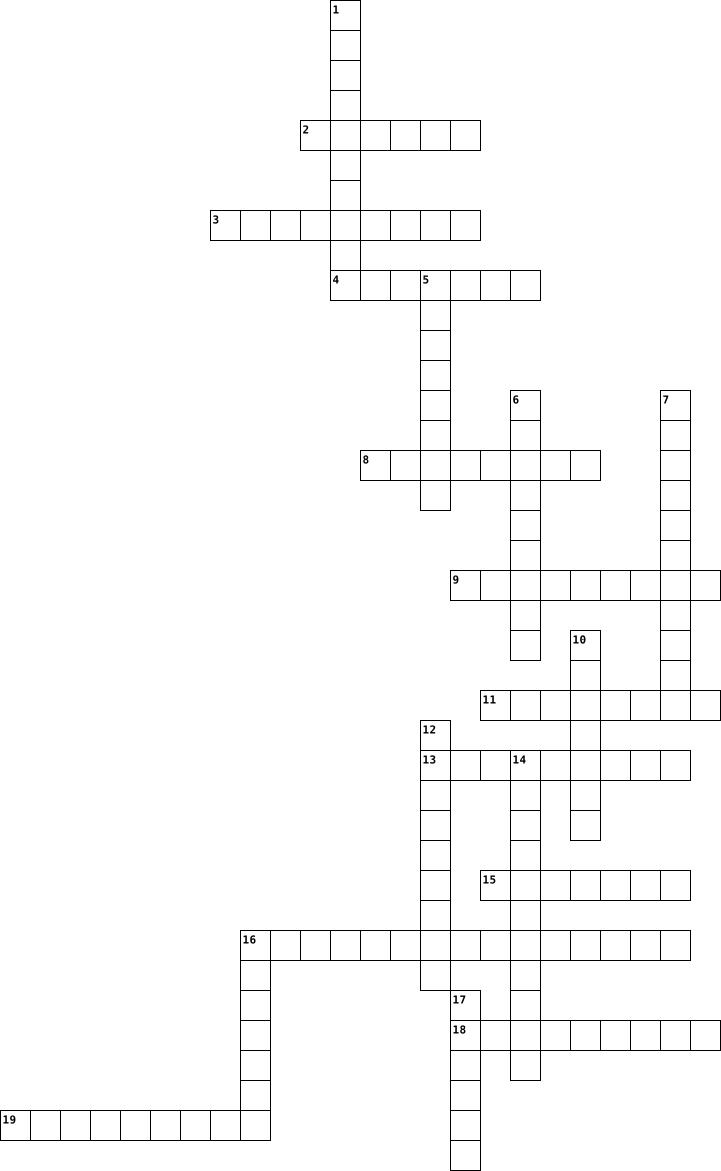
economics Crossword Puzzles
School 2024-09-25
Across
- – Solving problems with numbers and shapes.
- – Study of living organisms and ecosystems.
- – Study of motion, energy, and forces.
- – Creative expression through drawing and sculpture.
- – Reading and analyzing books and poems.
- – Study of money, resources, and business.
Down
- – Learning about past events and civilizations.
- – Study of substances and their reactions.
- Science – Learning coding and technology.
- – Study of the natural world and its processes.
- – Study of the English language and grammar.
- – Study of sounds, rhythms, and instruments.
12 Clues: – Study of motion, energy, and forces. • – Reading and analyzing books and poems. • Science – Learning coding and technology. • – Study of substances and their reactions. • – Study of money, resources, and business. • – Solving problems with numbers and shapes. • – Study of living organisms and ecosystems. • – Study of the English language and grammar. • ...
Basic Economic Language 2018-03-15
Across
- the rivalry among sellers trying to achieve such goals as increasing profits, market share, and sales volume by varying the elements of the marketing mix
- is the broadest quantitative measure of a nation's total economic activity.
- the lowest remuneration that employers can legally pay their workers
- the concept or idea of fairness in economics, particularly in regard to taxation or welfare economics.
- a measure of economical stability
- an economic system consisting of a mixture of either markets and economic planning, public ownership and private ownership, or free markets and economic interventionism.
- the ability of members of a society to undertake economic actions.
Down
- the act of buyers and sellers freely and willingly engaging in market transactions.
- a sustained increase in the general price level of goods and services in an economy over a period of time.
- the situation in an economy where the desires and needs of consumers control the output of producers
- the foundation of economic security for millions of Americans—retirees, disabled persons, and families of retired, disabled or deceased workers.
- a type of investing or budgeting style for which real return rates or periodic income is received at regular intervals and at reasonably predictable levels.
- the motivation of firms that operate so as to maximize their profits.
- a system of measures that uses material means to motivate participants in production to work for the creation of the social product.
14 Clues: a measure of economical stability • the ability of members of a society to undertake economic actions. • the lowest remuneration that employers can legally pay their workers • the motivation of firms that operate so as to maximize their profits. • is the broadest quantitative measure of a nation's total economic activity. • ...
Chapter 1 Concepts in Graphs 2022-07-20
Across
- Your opportunity cost is the highest valued ____ alternative
- items provide everyone
- you should pursue if the marginal ____ is greater than the marginal cost
- A general rise in the level of prices
- productivity affects a nation's standard of ____
- the study of managing scarcity and choice
Down
- getting the most from scarce resources
- It makes everyone better off
- Alternative options for you to pursue
- Principle #7 considers market ____
- Induces people to act
- Think at the margin
12 Clues: Think at the margin • Induces people to act • items provide everyone • It makes everyone better off • Principle #7 considers market ____ • Alternative options for you to pursue • A general rise in the level of prices • getting the most from scarce resources • the study of managing scarcity and choice • productivity affects a nation's standard of ____ • ...
WWI Review 2023-12-14
Across
- This is what happened to Franz Ferdinand
- Domination of another country's politics, economics, or culture
- The process of industrializing
- When a nation uses all its resources to wage war
- Love of one's country
- The competition to militarize quickly
- German plan to defeat France, then Russia
Down
- Preparation of troops for war
- The Serbian nationalist group
- The Serbian nationalist who killed Franz
- The building up of a countries military
- An agreement of mutual protection
12 Clues: Love of one's country • Preparation of troops for war • The Serbian nationalist group • The process of industrializing • An agreement of mutual protection • The competition to militarize quickly • The building up of a countries military • The Serbian nationalist who killed Franz • This is what happened to Franz Ferdinand • German plan to defeat France, then Russia • ...
vocab 2023-01-19
Across
- fraudulent or non fraudulent
- many people want something but there is not enough avalible
- having freedom to sell but regulated by government
- potential gain from a loss
- marginal benifit, marginal cost
Down
- entreprenueur, land, labor, capital
- deals with production and consumption of money
- distribute for a purpose
- what to make, who for, and how
- trading something for money or another product
- used to barter with
- something that makes you want to accomplish what your doing
12 Clues: used to barter with • distribute for a purpose • potential gain from a loss • fraudulent or non fraudulent • what to make, who for, and how • marginal benifit, marginal cost • entreprenueur, land, labor, capital • deals with production and consumption of money • trading something for money or another product • having freedom to sell but regulated by government • ...
Science, Unit 1 2025-09-05
Across
- detention prevention,___________ no goodie
- primate similar to chimps, but endangered
- you test your hypothesis with one of these
- whales and dolphins are not fish, but are these
- a hypothesis must be this
- entomology studies these
Down
- study of how money flows through society
- multicolored flowers in our school garden
- science starts when an observation leads to a
- Musk's company trying to take humans to Mars
- the study of energy
- Spokesperson for science in U.S. African American
12 Clues: the study of energy • entomology studies these • a hypothesis must be this • study of how money flows through society • multicolored flowers in our school garden • primate similar to chimps, but endangered • detention prevention,___________ no goodie • you test your hypothesis with one of these • Musk's company trying to take humans to Mars • ...
THE GREAT ASHOKAN CROSSWORD 2024-09-17
8 Clues: Music club of Ashoka • Dance club of Ashoka • Economics fest of Ashoka • The theater room of Ashoka • The favorite candy of Ashoka • The name of the house cat of Ashoka • Most famous sports league at Ashoka • Place where you can buy contraceptives:
Unit 2 Vocab (government) 2025-02-05
Across
- 2 house legislature
- Change to Constitution
- meeting between delegates
- a body of fundamental principles to which a state or other organization is acknowledged to be governed.
- a person chosen or appointed to act or speak for another or others
- explain the meaning of
- an introduction stating its purpose
Down
- an agreement or a settlement of a dispute
- split powers
- goes against the constitution
- Branch- enforces laws
- a piece of writing included with others in a newspaper
- people on the supreme court
- the study of money and trade
- number of reps equal 2 per state
- a person sent or authorized to represent others
- two houses
- President says no
18 Clues: two houses • split powers • President says no • 2 house legislature • Branch- enforces laws • Change to Constitution • explain the meaning of • meeting between delegates • people on the supreme court • the study of money and trade • goes against the constitution • number of reps equal 2 per state • an introduction stating its purpose • an agreement or a settlement of a dispute • ...
Economics Crossword Puzzle 1 2015-12-07
Across
- Term used by economists to describe the measurement of "useful-ness" that a consumer obtains from any good.
- enterprise An economic system where few restrictions are placed on business activities and ownership.
- An amount of something left over when requirements have been met; an excess of production or supply over demand.
- A state of limited competition, in which a market is shared by a small number of producers or sellers.
- policy The macroeconomic policy laid down by the central bank. It involves management of money supply and interest rate and is the demand side economic policy used by the government of a country to achieve macroeconomic objectives like inflation, consumption, growth and liquidity.
- policy The means by which a government adjusts its spending levels and tax rates to monitor and influence a nation's economy.
- An economic and political system in which a country's trade and industry are controlled by private owners for profit, rather than by the state.
- faire A policy or attitude of letting things take their own course, without interfering.
- Used to identify federal programs that, like Social Security and Medicare, got the name because workers became "entitled" to their benefits by paying into the system.
- The state of being scarce or in short supply; shortage
- ceiling A situation when the price charged is more than or less than the equilibrium price determined by market forces of demand and supply.
- The exclusive possession or control of the supply or trade in a commodity or service.
- A state or situation in which something needed cannot be obtained in sufficient amounts.
Down
- floor A situation when the price charged is more than or less than the equilibrium price determined by market forces of demand and supply.
- A benefit given by the government to groups or individuals usually in the form of a cash payment or tax reduction.
- analysis An examination of the additional benefits of an activity compared to the additional costs of that activity.
- A general increase in prices and fall in the purchasing value of money.
- A political and economic theory of social organization that advocates that the means of production, distribution, and exchange should be owned or regulated by the community as a whole.
- An economic system where the government owns most of the factors of production and decides the allocation of resources and what products and services will be provided.
- An economic measure of output per unit of input.
- Attempts by governments or government agencies to financially stimulate an economy.
- employment The condition in which virtually all who are able and willing to work are employed.
- wage The lowest wage permitted by law or by a special agreement (such as one with a labor union).
- price index An index of the variation in prices paid by typical consumers for retail goods and other items.
- domestic product The total value of goods produced and services provided in a country during one year.
25 Clues: An economic measure of output per unit of input. • The state of being scarce or in short supply; shortage • A general increase in prices and fall in the purchasing value of money. • Attempts by governments or government agencies to financially stimulate an economy. • The exclusive possession or control of the supply or trade in a commodity or service. • ...
Economics Chapters 11-15 2017-11-09
Across
- in a loan, the original amount of money borrowed.
- a bank that provides checking accounts and savings accounts, and makes loans for a variety of purposes.
- banks are not able to meet the demands of their depositors for cash.
- the total dollar value of the final goods and services produced in a country each year.
- unit of value.
- the thing that comes first in order of importance.
- deliberately making a false description of a product to induce a sale.
- a group of representatives of local businesses who meet regularly to promote business in their town or city.
- central bank of the united states.
- a corporation that insures bank deposits up to $100,000.
- bank whose functions include controlling the nations money supply.
- a time period when GDP is increasing.
- a bank that is owed by members who belong to a certain company or group.
- the value of currency in a country.
- the direct exchange of one good for another.
- a long-lasting and severe recession.
- the promise to pay later for the purchase of goods or services without actual transfer of money.
- alternating time periods of expanding and contracting economic activity.
- an illegal form of advertising.
- easily carried.
- a type of time-deposit savings account for a fixed amount of money.
- figure that is collected to get information about a particular subject.
- lasting a long time without wearing.
- without a brand name.
Down
- yearly
- a warranty that promises to pay all or partial replacement costs on certain parts of a specified period of time.
- coins and paper money.
- a time period when GDP is decreasing.
- looking at similarities and differences in features, prices, and quality of competing goods or services.
- the lowest point in the business cycle.
- a checking account.
- GDP adjusted up or down to account for inflation.
- a private organization that helps protect consumers from unfair business practice.
- a time period when GDP decreases for two quarters in a row.
- organization that offers services related to saving or borrowing money.
- interest earned on the deposit and on all previously earned interest.
- a savings account the requires a large minimum deposit.
- an increase in the average price of all goods and services.
- property or cash offered by a borrower as a guarantee that a loan will be repaid.
- a savings account that requires money to be left in the account for a certain period of time.
- a breakdown of how income is used; personal plan for spending money.
- a warranty that promises to replace or repair all parts at no cost at certain period of time.
- illegally reproduced money.
- Federal Reserve transfers checks and money between banks.
- the highest point in the business cycle.
- to take out.
46 Clues: yearly • to take out. • unit of value. • easily carried. • a checking account. • without a brand name. • coins and paper money. • illegally reproduced money. • an illegal form of advertising. • central bank of the united states. • the value of currency in a country. • a long-lasting and severe recession. • lasting a long time without wearing. • a time period when GDP is decreasing. • ...
Economics review/Megan Hudson 2017-03-21
Across
- type of imperfect competition that sell products that are differentiated from one another.
- an organization whose purpose is something other than profit
- a license that gives a inventor of a new product the exclusive right to sell it for a certain period of time
- agreement among firms to charge one price for the same good
- an agreement among firms to divide the market, set prices, etc
Down
- a state of limited competition, shared by a small # of producers
- exclusive possession of the supply or trade in a commodity or service
- simplest business form where one person can operate a business
- capital raised by a business through the issue & subscription of shares
- extra benefits supplementing a salary
- a raw material that can be bought and sold
- share of earnings given as payment
- portion of corporate profits paid out to stockholders
- efforts to make a product/ brand stand out
- money/ valuable belongings to an individual or business
- formal organization of producers that agree to coordinate prices and production
- law in a city or town that designates separate areas for residency and business
- authorization granted by the gov. to a individual/ small group enabling them to carry out commercial activities
- state of being responsible for something
- formal contract to repay borrowed money with interest at fixed intervals
20 Clues: share of earnings given as payment • extra benefits supplementing a salary • state of being responsible for something • a raw material that can be bought and sold • efforts to make a product/ brand stand out • portion of corporate profits paid out to stockholders • money/ valuable belongings to an individual or business • ...
Economics Vocabulary - Ashton Smith 2017-03-21
Across
- Monopoly Exists as a result of the high fixed costs of operatives a business in a specific industry
- The future sacrifices of economic benefits that the entity is obliges to make to other entities as a result of past transactions
- A benefit workers get that come with their job
- A marketable item produced to satisfy wants and needs
- Agreement between two or more parties to limit open competition be deceiving, misleading, or even defrauding others of their legal rights
- The process of a certain product or service form others to make it more attractive
- A monopoly where a government agency/ corporation is the sole provider of a particular good or service and competition is prohibited by law
- A government license that gives the holder exclusive rights to a process, design or a new invention for a designated period of time
- A payment to an owner for the use of a property
- An organization created from a formal agreement between a group of producers of a good or service to regulate supply in an effort to regulate or manipulate prices
Down
- An agreement between owners on the same side in a market to buy or sell a product at a fixed price or maintain market conditions
- A market structure in which a small number of firms has the large majority of market share
- Municipal or local government laws that dictate how property can and can't be used
- A sum of money paid regularly by a company to it's shareholders
- A market structure making sure the five certain criteria are met
- Any item of economic value owned by any individual or corporation, especially that could be converted to cash
- A market structure characterized be a single seller, selling a unique product in the market
- A type of license that a party acquires to allow them to have access to a business's proprietary knowledge
- A type of security that signifies ownership on part of the corporations, assets, and earnings
- A debt investment in which an investor loans money to corporations that borrow money for a period of time, most of the time with an interest
20 Clues: A benefit workers get that come with their job • A payment to an owner for the use of a property • A marketable item produced to satisfy wants and needs • A sum of money paid regularly by a company to it's shareholders • A market structure making sure the five certain criteria are met • ...
MILITARY,HISTORY and ECONOMICS 2013-05-31
Across
- final blow during battle, victory strike
- rebirth of culture
- economic policy
- a commanding offficer
- feeling of solidarity among forces
- a specialized soldier
- in like to take something over
- i am the state
- bastille day, start of french rev
Down
- a social period in euro in 19th century
- fencing term
- middle class during french rev
- easing of diplomatic tension
- big boulevard in paris
- change in government my force
- accomplished fact
- left bank of paris
- a travel document, passport
- a fencing weapon, sword
- without knee breeches
- flower heraldic device
- diplomatic agreement
22 Clues: fencing term • i am the state • economic policy • accomplished fact • rebirth of culture • left bank of paris • diplomatic agreement • a commanding offficer • a specialized soldier • without knee breeches • big boulevard in paris • flower heraldic device • a fencing weapon, sword • a travel document, passport • easing of diplomatic tension • change in government my force • ...
Economics and Geography vocabulary 2014-04-15
Across
- Capital the knowledge that allows a person to make a living by producing goods or services.
- (pure command) An economy in where the government planning team makes the decisions for the workers.
- To pay money out.
- Group A group with a belief system in a god or gods with a specific set of rituals or literature.
- An economy that has characteristics of both a market and command economy.
- Creative and original thinkers who are willing to take risks to create new businesses or products.
- The products that a country makes best and are in high demand in the international market.
- The monetary payment received for that goods, service or from other sources, as rents or investments.
- A type of economy in where most economic decisions are made based o custom, tradition, and the way they were done in the past.
- Something that is used as a medium of exchange; money.
- To put money to use in something offering potential returns, as interest, income, or appreciation in value.
- (distribution) The people living within a a given country.
- Rate The amount of people in a country who have the ability to read or write.
- Resources Something that is in or supplied by the environment and is consumed or used by people.
- A way of limiting the amount of foreign goods from another country.
Down
- A trade barrier that a country places that states they will no longer trade with a specific country in the hopes of damaging or isolating that country's economy.
- A chart that is used to plot where a country is in relation to pure market and pure command economies.
- Barrier Anything that prevents or slows down one country from exchanging goods with another.
- of Living Measure of the quality of life within a country; education,wealth, health care etc.
- the destruction of trees and other vegetation.
- The process of the land becoming a dessert due to drought and/or deforestation.
- The ability to borrow money.
- Farming practices in dry areas used to bring water to crops.
- The state of the atmosphere at a location over a long period of time.
- When the natural environment is changed or altered due to human activity.
- A fundamental set of beliefs.
- A form of wealth used to make more wealth. The factories, machines, or technology that people use to make products for sale.
- The value of all goods and services produced in a country in a year.
- (pure market) An economy in where individuals make the economic decisions and decide what, how, and for whom to produce.
- The money you've not spent after buying what you want.
- A tax on foreign goods.
- Group People who share common history, culture etc.
- The way of life of a group of people (customs, religion, etc).
33 Clues: To pay money out. • A tax on foreign goods. • The ability to borrow money. • A fundamental set of beliefs. • the destruction of trees and other vegetation. • Group People who share common history, culture etc. • Something that is used as a medium of exchange; money. • The money you've not spent after buying what you want. • ...
Economics Unit's 1-6 2013-12-08
Across
- the quantity of a good or service that will be produced or sold at a particular price
- A good or service that is under produced and under consumed e.g. education and healthcare
- A measure of total value of a goods produced in an economy in a particular period
- tax takes a greater proportion of income from a poor person than from a wealthy person
- This is a type of business that produce and sell products in many countries
- A contribution for the support of a government required of people and firms which would be taken from their income/revenue
- This is the next best alternative that is sacrificed in making an economic choice
- A company or group having exclusive control over a commercial activity
- The basic economic problem
- Is a type of economy where the government makes all of the decisions such as allocation of resources
- occurs when there is a balance between demand and supply
- a general rise in prices over a specific period of time
- the quantity of a good or service that will be purchased at a particular price
Down
- takes a greater proportion of income from a wealthy person than from a poor person
- This is one of the 5 characteristics of money
- an agreement by two or more partners to run a business together
- Land, Labour, Capital and Enterprise
- A good or service that is over produced and over consumed e.g. cigarettes
- = percentage change in quantity supplied divided by percentage change in price
- = percentage change in quantity of demand divided by percentage change in price
20 Clues: The basic economic problem • Land, Labour, Capital and Enterprise • This is one of the 5 characteristics of money • a general rise in prices over a specific period of time • occurs when there is a balance between demand and supply • an agreement by two or more partners to run a business together • ...
civics and economics project 2014-05-19
Across
- or relating to Great Britain or the United Kingdom, or to its people or language.
- person who remains loyal to the established ruler or government, especially in the face of a revolt.
- Locke,The English philosopher and political theorist John Locke (1632-1704) laid much of the groundwork for the Enlightenment and made central contributions to the development of liberalism.
- fact or state of being independent
- legislature similar to parliament in other nations and states.
- act,The Tea Act was the final straw in a series of unpopular policies and taxes imposed by Britain on her American colonies.
- particular condition that someone or something is in at a specific time
- papers, A collection of essays written under the pseudonym “publics” by Alexander Hamilton, John Jay, and James Madison, addressed to “The People of the State of New York,” first published in New York City newspapers between October 1787 and August 1788.
- act,a law passed by the British Parliament in 1764 raising duties on foreign refined sugar imported by the colonies so as to give British sugar growers in the West Indies a monopoly on the colonial market.
- of various legislative or governing bodies, in particular
Down
- surrender to American forces at the Battle of Saratoga marked a turning point in the Revolutionary War
- tea party,Colonists boarded vessels in Boston harbor and threw the cargoes of tea into the water in protest at the imposition of a tax on tea by the British Parliament,
- of rights,the first ten amendments to the US Constitution, ratified in 1791 and guaranteeing such rights as the freedoms of speech, assembly, and worship
- compromise,The Connecticut Compromise was an agreement that large and small states reached during the Constitutional Convention of 1787 that in part defined the legislative structure and representation that each state would have under the United States Constitution.
- advocate or supporter of federalism
- jersey plan,unsuccessfully proposed at the Constitutional Convention, providing for a single legislative house with equal representation for each state.
- settler in or inhabitant of a colony
- sense,good sense and sound judgment in practical matters
- rebellion,was an armed uprising that took place in central and western Massachusetts in 1786 and 1787.
- act,an act of the British Parliament in 1756 that exacted revenue from the American colonies by imposing a stamp duty on newspapers and legal and commercial documents
- person who vigorously supports their country and is prepared to defend it against enemies or detractors
- historic village in southeastern Virginia to the north of Newport News; site of the last battle of the American Revolution
- republic in western Europe; the largest country wholly in Europe
- Madison,James Madison (1751-1836) was a founding father of the United States and the fourth American president, serving in office from 1809 to 1817.
24 Clues: fact or state of being independent • advocate or supporter of federalism • settler in or inhabitant of a colony • sense,good sense and sound judgment in practical matters • of various legislative or governing bodies, in particular • legislature similar to parliament in other nations and states. • republic in western Europe; the largest country wholly in Europe • ...
Poor Economics Chapter 4 2021-10-01
Across
- Indian NGO which focuses on teaching kids how to read
- determined grades that students received in a study where teachers simply knew the students names
- type of farmers that earned more during the green revolution.
- Rukimi ______ known as the "dynamo" of Partham
- type of wallah that views schooling as a form of investment
- Robert ____ professor from UCLA who organized
- acronym representing the report released by Pratham
- type of wallah that emphasizes the supply of schooling
- ____ Steele psychologist that demonstrated the "stereotype threat"
- Last name of general that went on a school-building spree
- report led by Jean Dreze focusing on thee state of education in India
- type of school where teachers miss more days than they teach.
- South American country with Bogota as it's capital featured in a Cash Transfer study
Down
- type of school that is more reliable.
- type of curve parents view as representing the education system in developing countries
- art project that asked parents to show what they think education brings to their children
- Pak _____ known as the poorest person in his neighborhood of Bandung.
- Main Topic of The Chapter
- program started by Boston University professor Santiago Levy.
- William _____, Economist that speaks on schooling as an investment
- what does the government give citizens to pay for private school
- sessions throughout northern India.
- City that pratham started in
- Kenyan version of the Education Report
- country that instituted a law mandating 9 years of education
- Island off of the east coast of Africa.
26 Clues: Main Topic of The Chapter • City that pratham started in • sessions throughout northern India. • type of school that is more reliable. • Kenyan version of the Education Report • Island off of the east coast of Africa. • Robert ____ professor from UCLA who organized • Rukimi ______ known as the "dynamo" of Partham • acronym representing the report released by Pratham • ...
Chapter 5 Economics Vocab 2021-09-30
Across
- sum of a variable cost plus fixed cost, all costs associated with production
- business expenses that are not dependent on the level of goods or services produced by the business
- total output or production by a firm
- graphic portrayal showing how a change in amount of a single variable input effects total output
- gives time, money, or effort
- responsiveness of quantity supplied to a change in price
- average price that every unit of output sells for
- a graph that shows the quantities supplied at each and every possible price in the market
- level of production where marginal cost is equal to marginal revenue
- extra output due to the addition of one unit of input
- to bring into existence especially produces or brings into being
Down
- production period so short that only variable inputs (usually labor) can be changed
- stages of production where outputs increases at a decreasing rate as more units of variable input are added
- change in the amount offered for sale in response to a price change; movement along the supply curve
- phases of production that consist of increasing, decreasing and negative returns
- specific amount offered for sale at a given price; point on the Supply curve
- government payment that encourages or protects a certain economic activity
- the full amount of total sales of goods and services
- handled by way
- amount of a product a producer of seller would be willing to offer for sale at all possible prices in a market at a given point
- production cost that varies as output changes; labor, energies and raw materials
- different amounts offered for sale at each and every possible price in the market; shift of the supplycurve
- broad category of fixed costs that includes interest, rent, taxes and executive sales
- extra cost of producing one additional unit of production
- production period long enough to change amount of variable and fixed inputs used in production
- involving or based on a suggested idea or theory; involving or based on a hypothesis
- principle that more will be offered for sale at a high prices than lower prices
- supply curve that shows the quantities offered at various prices by all firms that sell the same product in a given market
- different
- the increase in revenue that results from the sale of one additional unit of output.
- a table showing the quan that would be produced or offered for sale at each and every possible price in the market at a given time
- Production level where total cost equals total revenue; production needed if firm is to recover its costs
- electronic business or exchange conducted over the internet
33 Clues: different • handled by way • gives time, money, or effort • total output or production by a firm • average price that every unit of output sells for • the full amount of total sales of goods and services • extra output due to the addition of one unit of input • responsiveness of quantity supplied to a change in price • ...
Economics XI First Sem 2021-10-09
Across
- indeks harga berimbang
- Konsultan, guru
- fungsi kebijakan fiskal
- motif memegang uang Keynes
- PHK krismon 1998
- Pakan ternak sapi meningkat sehingga harga daging sapi meningkat
- Kebijakan ekonomi yang mengatur uang beredar
- Produk domestik bruto
- kriminalitas tinggi, dampak sosial...
- sistem upah presentase kerja
- NNP – pajak tidak langsung
- inflasi karena kenaikan permintaan
- MxV=Pxt
- Nilai koefisien gini 0,51 ketimpangan?
Down
- instrumen kebijakan moneter
- Penata taman sekolah
- "kuat atau lemahnya nilai uang sangat tergantung pada jumlah uang yang beredar. Apabila jumlah uang berubah menjadi dua kali lipat, maka nilai uang akan menurun menjadi setengah dari semula"
- pendapatan nasional/jumlah penduduk
- uang sekunder
- tersedianya lapangan kerja bagi angkatan kerja
- Periode pendapatan nasional
- NNI+transfer payment - iuran - pajak perseroan
- r+w+i+p
- Sebagai dasar untuk menghitung laju inflasi, adalah ... indeks harga
- inflasi kecepatan sedang
- Komponen pendapatan nasional pendekatan pengeluaran
- pengangguran saat paceklik
27 Clues: r+w+i+p • MxV=Pxt • uang sekunder • Konsultan, guru • PHK krismon 1998 • Penata taman sekolah • Produk domestik bruto • indeks harga berimbang • fungsi kebijakan fiskal • inflasi kecepatan sedang • motif memegang uang Keynes • pengangguran saat paceklik • NNP – pajak tidak langsung • instrumen kebijakan moneter • Periode pendapatan nasional • sistem upah presentase kerja • ...
Economics Crossword Week 1 2021-01-06
Across
- balance of payments is said to be in a _______ when inflows are greater than outflows
- market structure dominated by a small number of firms
- all else remains equal
- when a worker focuses on a specific task in the production process
- according to the keynsian school the financial market is a place for...
- rising share prices characterize what kind of market
- measure of total output produced within a countries borders
- which policy refers to use of government spending and taxes
- firm spending on capital goods
- the best subject in school is _________
- the quantity producers are willing and able to supply at each price
- C+I+G+(X-M)=
- lack of utility
- baked beans can be described as an ________ good
Down
- when capital goods experience reduction in economic value
- largest component of aggregate demand
- measure of total output produced by a country's nationals
- imports are a __________ from the circular flow of income
- sustained increase in general price level
- limited availability of resources
- author of the wealth of nations
- when an asset can be quickly bought/sold it is said to have...
- 19 across is what kind of statement
- exchange of goods & services without money
- which kind of transfers include worker's remittances
- a factor of production
- money functions as a ________ of deferred payment
27 Clues: C+I+G+(X-M)= • lack of utility • all else remains equal • a factor of production • firm spending on capital goods • author of the wealth of nations • limited availability of resources • 19 across is what kind of statement • largest component of aggregate demand • the best subject in school is _________ • sustained increase in general price level • ...
Economics: Fourth Nine Weeks 2021-05-17
Across
- examples include parks and schools, provided for all to use by the government to promote positive externalities
- faces no competition, sole provider of the product
- government payments to diminish the cost of something so it remains obtainable by many
- tax that increases as your income increases, income tax is an example
- having too much
- act that amended the Civil Rights Act, also calls for employers to provide equal employment opportunities to anyone of a protected class.
- confidence in the stock market is low due to steady decline
- taxes on imports, trade barriers
- tax that decreases the more you make.
- tax applied to the sell of an asset for profit
- security largest section of mandatory spending, given as an entitlement to people over 65
- also known as free market economy, factors of production are owned by private individuals, supply and demand are driving factors
- bills that can only start in the House of Representatives, dealing with tax expenditures
- economy ran by the government, all factors of production are owned by the government
- disconnected side effects of an action, can be positive or negative
- Center for Disease Control, administers flu shots
- the lowest point on the business cycle
- an action taken when a product is defective to either fix or replace the product
- responsible for setting safety standards for the products we ingest
- the largest source of revenue for state governments, comes from the federal government
- proposes the initial budget to Congress
- part of the federal budget that is implemented through appropriations bills but is not set by law
- economic structure that focuses on sharing
- temporary economic decline, a natural part of the business cycle, usually lasts about six months
- Federal Trade Commission
- economy based in bartering, follows ancient ways and usually is not very productive
Down
- work to hinder fluctuations in Real GDP
- 1890 act that was the first attempt at outlawing monopolies
- money earned by the success of the company a share owner holds.
- wage replacement and medical benefits for those injured on the job.
- government involvement in the economy that prohibited workplaces from discriminating based on race
- rate that measure those out of work, but are actively seeking a position
- confidence is high in the economy, causing investors to buy stock
- products sent to other countries
- is an example of legislation that increased employment opportunities for people with disabilities through government involvement
- the government's influence on the economy by adjusting tax rates and spending
- expenditures exceed revenue
- another name for economic growth on the business cycle
- trade barrier that limits the amount of a good that can enter a country
- examples include Social Security and interest on the national debt
- the combining of two businesses
- Environmental Protection Agency
- tax that remains at the same rate no matter how much you make
- products brought in from other countries
- world organization that promotes peace and free trade
- another word for income, the money brought in
- antitrust law from 1914 prohibiting monopolies
- increases productivity because you can focus on what you are good at
- partial ownership in a company
- national health insurance for the elderly
- highest point of the business cycle
51 Clues: having too much • Federal Trade Commission • expenditures exceed revenue • partial ownership in a company • the combining of two businesses • Environmental Protection Agency • products sent to other countries • taxes on imports, trade barriers • highest point of the business cycle • tax that decreases the more you make. • the lowest point on the business cycle • ...
Economics by Alex Kriva 2022-04-05
Across
- - a situation in which the country's economy is facing mood swings, sadness and loss of interest
- - UK leaving the European Union
- - the lowest point that most economists probably hates to occur in
- inflation - buying more goods than the economy can even produce
- - the highest point in the business cycle that every economist is dreaming of
- Inflation - a sneaky type of inflation that slowly increases the price rates and is noticed after long time
- - a rich person who can provide some amount of money to people that want to borrow them
- - a situation in which the prices of all goods and services rise up to 50% per month and more
- - a person who wants to buy a new expensive house, but needs to owe money for such a thing
- - “pieces of eight”
- - the father of modern economics
- - the state of being without a regular income or the responsibility of getting up to work in the morning
Down
- - coin money
- System - central bank of the United States
- - a situation where the prices of all goods and services goes down
- - the value of the certain nation's economic production
- - economic system in which money doesn't exist, trading is the center of this system
- - currency divided into ten parts
- - old guy that unfortunately leads our country
- - the best boy, not entirely human
20 Clues: - coin money • - “pieces of eight” • - UK leaving the European Union • - the father of modern economics • - currency divided into ten parts • - the best boy, not entirely human • System - central bank of the United States • - old guy that unfortunately leads our country • - the value of the certain nation's economic production • ...
Y11 ATAR Economics Revision 2022-05-23
Across
- a legislated maximum price that sellers are allowed to charge in a market
- when total surplus is reduced because of either under or overproduction
- the difference between what the producer is willing to receive and what they actually receive
- the responsiveness of quantity demanded to a change in price
- floor a legislated minimum price that sellers are allowed to charge in a market
- An example of market power
- Driving cars that creates pollution and traffic
- the responsiveness of the demand for one good to a change in the price of a related good
- To encourage positive externalities, the govt policy that should be used is a…
- the responsiveness of of quantity supplied to a change in price
- A student paying HECS to attend university and become a productive member of society
Down
- Positive income elastic goods are also known as…
- If PED is greater than 1 it is…
- It is more efficient to tax which type good? Elastic or inelastic
- To reduce negative externalities, the govt policy should be used is a…
- Shifters of the demand and supply curve
- This represents the sellers or producers side of a market
- The buying intentions of consumers
- Public goods (free riders) and Common resources (tragedy of commons) are more examples of
- the responsiveness of demand to a change in consumer income
- the measure of the net benefits to society from the production and consumption of a good
- A good is more elastic if there are more…
- Having unlimited wants but limited resources
- the difference between what a consumer is prepared to pay and what they actually pay
- A market restriction (such as taxi licences) causes a …........ In a market
25 Clues: An example of market power • If PED is greater than 1 it is… • The buying intentions of consumers • Shifters of the demand and supply curve • A good is more elastic if there are more… • Having unlimited wants but limited resources • Driving cars that creates pollution and traffic • Positive income elastic goods are also known as… • ...
Economics Chapter 1 vocab 2022-05-19
Across
- risk-taking individuals who introduce new products or services in search of profits; one of the four factors of production
- good intended for final use by consumers other than businesses
- natural resources or “gifts of nature” not created by human effort; one of the four factors of production
- fundamental economic problem facing all societies resulting from a combination of scarce resources and people's virtually unlimited needs and wants
- cost of the next best alternative use of money, time, or resources, when one choice is made rather than another
- monetary value of all final goods, services, and structures produced within a country’s national borders during a one-year period
- something we would like to have but is not necessary for survival
- apparent contradiction between the high value of a nonessential item and the low value of an essential item
- sum of tangible economic goods that are scarce, useful, and transferable from one person to another; excludes services
- basic requirement for survival, including food, clothing, and shelter
- monetary worth of a good or service as determined by the market
- social science dealing with how people satisfy seemingly unlimited and competing needs and wants with the careful use of scarce resources
Down
- good that lasts for at least three years when used regularly
- item that wears out, is used up, or lasts for fewer than three years when used regularly
- diagram representing all possible combinations of goods and/or services an economy can produce when all productive resources are fully employed
- productive resources needed to produce goods; the four factors are land, capital, labor, and entrepreneurship
- people with all their abilities and efforts; one of the four factors of production; does not include the entrepreneur
- tool, equipment, or other manufactured good used to produce other goods and services; a factor of production
- work or labor performed for someone; economic product that includes haircuts, home repairs, and forms of entertainment
- tools, equipment, and factories used in the production of goods and services; one of the four factors of production
- tangible economic product that is useful, transferable to others, and used to satisfy wants and needs
- ability or capacity of a good or service to be useful and give satisfaction to someone
22 Clues: good that lasts for at least three years when used regularly • good intended for final use by consumers other than businesses • monetary worth of a good or service as determined by the market • something we would like to have but is not necessary for survival • basic requirement for survival, including food, clothing, and shelter • ...
Economics Unit 1/2 2022-09-08
Across
- Cost: The next best alternative foregone (given up) when an economic decision is made, note it is only the next best alternative not a range of alternatives.
- Find new ways to combine resources
- Total planned expenditure in the economy known by the identity C + I + G + (X - M)
- Withdraws from the circular flow
- When total income or revenue for a firm is greater than total cost
- Goods or services sold abroad
- the gap between limited resources and theoretically limitless wants
- A tax levied on the wages, salaries, dividends, interest, and other income a person earns throughout the year. The tax is generally imposed by the state in which the income is earned.
- The price at which demand is equal to supply and there is no tendency for change
- Goods or services purchased from abroad
- A situation where there is a single seller in the market.
- The ability to produce goods anywhere in the world and sell them in any country
- rate The price of a country's money in relation to another country's money.
- A sustained period of weak or negative growth in real GDP (output) that is accompanied by a significant rise in the unemployment rate.
- Money that originates outside the circular flow and so will increase national income/output/expenditure
- The amount that consumers are willing and able to buy at each given price level
- The costs incurred from a company manufacturing a product or providing a service.
Down
- Goods that can be used as alternative to another good, i.e bus and railway services.
- Referred as the reduction of the recorded cost of a fixed asset in a systematic manner until the value of the asset becomes zero or negligible.
- Referred as an statistical value of a data set that represents 20% of a given population
- In a free market is the belief that everyone should have an equal opportunity to become wealthy by investing in and supporting entrepreneurship and employment.
- The end result of production and manufacturing and are what a consumer will see on the store shelf
- It is the phase of the business cycle where real gross domestic product (GDP) grows for two or more consecutive quarters, moving from a trough to a peak
- The use of machines and technology to make processes run on their own without manpower
- A graphical representation of the distribution of income or wealth within a population
- Income remaining after deduction of taxes and social security charges, available to be spent or saved as one wishes.
- An increase in the value of an asset over time. The increase can occur for a number of reasons, including increased demand or weakening supply, or as a result of changes in inflation or interest rates.
- A period in which real GDP is declining. Also associated with declining inflation rates and increasing unemployment rates. Trough - point at which a contractionary phase ends and an expansionary phase begins
- favourable/unfavourable
- Defined as a situation where someone of working age is not able to get a job but would like to be in full-time employment.
- Spending by firms on buildings, machinery and improving the skills of the labour force
31 Clues: favourable/unfavourable • Goods or services sold abroad • Withdraws from the circular flow • Find new ways to combine resources • Goods or services purchased from abroad • A situation where there is a single seller in the market. • When total income or revenue for a firm is greater than total cost • the gap between limited resources and theoretically limitless wants • ...
Economics Credit and Debt 2022-02-11
Across
- term used to explain the increase in the cost of goods over time
- student loans in which the government pays interest
- a number used to signify how trustworthy your credit is
- the largest form of debt you will ever have in your life; house payment
- this is NOT used to affect your credit score
- students need to fill this out to see if they are eligible for financial aid
- you are responsible for the interest on these student loans
- things like cars, appliances, or furniture
- a good rule is never have more than this % on a credit card balance (hint: it is a number)
- the amount something can hold or contain
- school ends this month
- money owed
- how much money you make
Down
- using this takes money directly out of your checking account
- something that must be given up front to ensure a loan is paid off
- the amount borrowed
- period of time in which no payment is due on a credit card
- colleges may award this for good grades
- the amount to pay to borrow money
- capital of nj
- government student loan that parents may use to help pay for child's college
- using a cellphone in class during a test will result in this
- buy now and pay later or over time
- used to investigate applicants income or debts
24 Clues: money owed • capital of nj • the amount borrowed • school ends this month • how much money you make • the amount to pay to borrow money • buy now and pay later or over time • colleges may award this for good grades • the amount something can hold or contain • things like cars, appliances, or furniture • this is NOT used to affect your credit score • ...
Q3 Economics Word Wall 2022-02-16
Across
- The act of taking on greater than normal risk to organize and operate a business
- An economic system in which individual people and companies own and control the factors of production and make economic decisions
- The struggle among producers for the dollars of consumers
- Cost The highest valued option you do not select in an economic decision
- The desire to own something and the ability to pay for it
- Scenario in which consumers want more a of good or service than producers are willing to make available at a particular price
- Those who purchase and utilize finished goods and services
- Any human-made resource that is used to produce other goods and services
Down
- A market structure in which a single seller dominates
- The amount by which supply and demand react to changes in price
- The point at which the supply of a good or service is equal to the demand of that good or service
- Scenario in which producers want to make more of a good or service available than consumers want to buy at a particular price
- A market structure with-in which a few large sellers dominate
- Those responsible for transforming resources into finished goods and services
- Any arrangement that allows producers and consumers to exchange goods and services
- The wealth and resources of a nation
- A legal entity in which the owners have limited liability
- Items which encourage people to take certain actions or refrain from certain actions
- People have unlimited wants and needs but there are limited resources to satisfy those wants and needs
- The amount of a good or service that is available
20 Clues: The wealth and resources of a nation • The amount of a good or service that is available • A market structure in which a single seller dominates • The struggle among producers for the dollars of consumers • A legal entity in which the owners have limited liability • The desire to own something and the ability to pay for it • ...
Micah 6-7 Economics 2022-11-14
Across
- 6v5 The prophet that would not curse Israel.
- 7v9 What does Israel bear for offending the Lord?
- 7v19 What will the Lord show Israel?
- 6v2 Disagreement, argument, quarrel, debate.
- 7v6 Who does a man find in his own home?
- 7v2 Who does every man hunt? (2 words)
- 7v2 Who has perished out of the earth? (3 words)
- 6v8 What should Israel love?
- 6v5 King of Moab.
- 7v5 Who should not be trusted?
- 6v8 How should Israel deal with each other?
Down
- 7v14 Where will the people feed? (3 words)
- 6v10 What is found in the house of the wicked? (3 words)
- 6v8 How should Israel walk with their God?
- 7v16 What will the nations be?
- 6v12 How did the rich get wealthy?
- 6v16 Whose statutes are kept?
- 7v3 What do they want to do with both hands?
- 6v16 What will be made of Israel?
- 6v11 What kind of weights is being condemned?
- 7v8 Where does Israel sit?
- 7v11 What will be far removed?
22 Clues: 6v5 King of Moab. • 7v8 Where does Israel sit? • 6v8 What should Israel love? • 6v16 Whose statutes are kept? • 7v16 What will the nations be? • 7v5 Who should not be trusted? • 7v11 What will be far removed? • 6v16 What will be made of Israel? • 6v12 How did the rich get wealthy? • 7v19 What will the Lord show Israel? • 7v2 Who does every man hunt? (2 words) • ...
Economics Project Riley McCombs 2021-06-09
Across
- What was the most significant period of negative GDP growth in United States History?
- What is the act of exchanging one thing for another?
- In the United States, which area of the economy frequently subtracts from the GDP?
- What type of economic system is the most common?
- What is the impact on “Quantity Supplied” if the number of firms in the market decreases? (Increase or Decrease)
- What is a total of all of the money earned within the United States?
- When people with a higher income are taxed at a higher rate than those with a lower income, what tax is it?
- According to the “Law of Supply”, as the price of a product increases, the quantity supplied will...
- What measure of the economy is the broadest measure of economic growth?
- The cycle of ups and downs in the economy is known as...
Down
- A person who is making rational economic decisions when purchasing a good or service is first considering...
- What is the largest form of debt that most people will have in their lifetime?
- What type of economic system is the least common?
- The theory of Monetarism was most strongly pushed by which economic thinker?
- When all members of the society are taxed at the same rate, what tax is it?
- What is the money that you’re charged for borrowing money?
- What is the greatest cost of taking on credit?
- What is the study of how people, businesses, and nations use their limited resources?
- When people with a lower income are taxed at a higher rate than those with higher income, what tax is it?
- Using Law Of Demand, what factor has the greatest impact on “quantity demanded”?
- What is the impact on “Quantity Supplied” if there is an advancement in technology? (Increase or Decrease)
- What is the basic problem in economics?
- What is the primary responsibility of consumers in our economy?
- Fractional reserve banking, in combination with the “money multiplier'' allows the Fed to increase or decrease...
- What is the impact on “Quantity Supplied” if taxes are increased? (Increase or Decrease)
25 Clues: What is the basic problem in economics? • What is the greatest cost of taking on credit? • What type of economic system is the most common? • What type of economic system is the least common? • What is the act of exchanging one thing for another? • The cycle of ups and downs in the economy is known as... • What is the money that you’re charged for borrowing money? • ...
Consumer Economics Terms Puzzle 2022-09-23
Across
- Purchase Purchase made on a whim
- Ethic Sense of responsibility to do a job well
- Debt Public debt
- Guideline of human behavior
- Deliberate destruction of property
- Experienced coworker who acts as a guide
- Series of related jobs
- Significant decline in the economy
- A tax on imports
- Preference that migh prevent impartial judgment
- Required payment to government
- Science deals with living things/environment
- being a member of a community
- Things you desire, but are not necessary to live
Down
- Government order prohibiting trade
- One who offers services for no pay
- Levels of quality to measure against
- Targets you want to accomplish
- Thinking Applying reasoning strategies
- The fee paid to use someone elses money
- indicators Used to monitor economy's health
- earnings after all costs
- Things you must have in order to live
- Security Insurance program sponsored by govt
- Theft of merchandise from stores
- Natural talents or abilities
26 Clues: A tax on imports • Debt Public debt • Series of related jobs • earnings after all costs • Guideline of human behavior • Natural talents or abilities • being a member of a community • Targets you want to accomplish • Required payment to government • Theft of merchandise from stores • Purchase Purchase made on a whim • Government order prohibiting trade • ...
Unit 4 Economics Vocab 2022-10-12
Across
- untaxed retirement plan account
- savings plan for education/tuition
- To be exempted from a tax or withholding
- Taxes that workers must pay to their social-security Federally funded program
- Public health insurance program paid for by taxes
- retirement plan offered by employers
- money set aside by employer for retirement
- Taxes taken from one's property
- Taxes going directly to the federal govt.
- Mandatory compensation to the govt.
- a sum of money and/or an estate that is given to someone upon the death of another
- Income that is left over, free to spend as one pleases
- income made from goods or services
Down
- indefinite leave from the workforce
- Additional taxes imposed on goods or services, such as gasoline
- account that untaxed money is put into to pay for health care
- Tax on a person's estate after death
- Taxes taken out on purchases
- pre-taxed retirement plan
- form given to new employees that details the number of dependents, marital status, and basic information about the employee
- Taxes taken out on assets and investments
- Taxes that comes out of your paycheck
- Money that can be subtracted from taxes and withholdings
- paperwork due to the IRS that details revenue and income
- non-profit retirement plan offered by employers
25 Clues: pre-taxed retirement plan • Taxes taken out on purchases • untaxed retirement plan account • Taxes taken from one's property • savings plan for education/tuition • income made from goods or services • indefinite leave from the workforce • Mandatory compensation to the govt. • Tax on a person's estate after death • retirement plan offered by employers • ...
IGCSE Economics Definition Review 2022-10-18
Across
- someone who consumed a good or service without paying for it
- A decrease in the quantity demanded or quantity supplied
- The total cost to a society of an economic activity
- The willingness and ability to buy a product
- A product whose demand decreases when income increases
- Human resources including mental and physical human effort
- The willingness and ability to produce and sell a product
- When quantity supplied changes by a smaller percentage than the change in price.
- The study of the behaviour and decisions of households and firms, and the performance of individual markets
- The way the decisions made by households and firms interact to decide the allocation of resources
- A product that is used together with another
- The next best alternative forgone
Down
- Limited resources but/and unlimited wants.
- Scarce resources used in production including land, labour, capital and enterprise
- Moving the ownership and control of an industry from the private sector to the government
- A payment by a government to encourage the production or consumption of a product
- Risk bearing and key decision making in business
- Market forces resulting in an inefficient allocation of resources
- Man-made goods used in production, e.g. machine
- A product that can be used in place of another
- Products which the government considers consumers do not fully appreciate how beneficial they are and so which will be under-consumed if left to market forces. Such goods generate positive externalities.
- A rise in the quantity demanded or quantity supplied
- A numerical measure of the responsiveness of the quantity demanded to a change in price.
- A single seller
- something go bad quickly (especially of food)
- money that a firm receives, equals to price times quantity
- An arrangement which brings buyers into contact with sellers
27 Clues: A single seller • The next best alternative forgone • Limited resources but/and unlimited wants. • The willingness and ability to buy a product • A product that is used together with another • something go bad quickly (especially of food) • A product that can be used in place of another • Man-made goods used in production, e.g. machine • ...
Economics Vocabulary Choice Board 2022-10-27
Across
- IRS tax form that is filled out by employees to indicate their tax situation to their employer; tells the employer the amount of tax to withhold from an employee's paycheck based on their marital status, number of allowances and dependents, and other factors
- the most common official document that U.S. taxpayers use to file their annual income tax return
- cash amounts taken out of the employee’s gross wages that include taxes and contributions
- service that collects income taxes for the federal government
- the time period when individual taxpayers prepare financial statements and reports for the previous year and submit their tax returns
- higher rates of tax on higher levels of income
- the money you earn before any deductions
Down
- form where employers report wage and salary information for employees
- the alternate form for a w-2 form if you are an independent contractor or self-employed where you receive your earnings statement
- a tax that provides for national programs such as national defense, veterans and foreign affairs, social programs, law enforcement, and interest on the national debt
- income receive from taxes by a government
- federal payroll tax that is deducted from each paycheck for Medicare and Social Security
- an illegal activity in which a person or entity deliberately avoids paying a true tax liability.
- money that an individual or business receives, usually in exchange for providing a good or service or through investing capital
- the money you actually get to take home and spend after deductions
- employee compensation that is based on the number of hours worked multiplied by an hourly rate of pay
- a document that is provided with each paycheck and that shows the amount of money that the employee earned and the amount that was removed for deductions
- a required payment to a local, state, or national (federal) government
- employee compensation quoted on an annual basis, such as $50,000 per year
- verifies the identity and employment authorization of individuals hired for employment in the US; all US employers must complete this form for everyone they hire
20 Clues: the money you earn before any deductions • income receive from taxes by a government • higher rates of tax on higher levels of income • service that collects income taxes for the federal government • the money you actually get to take home and spend after deductions • form where employers report wage and salary information for employees • ...
Economics Vocabulary Choice Board 2022-10-27
Across
- employee compensation that is based on the number of hours worked multiplied by an hourly rate of pay
- the most common official document that U.S. taxpayers use to file their annual income tax return
- a tax that provides for national programs such as national defense, veterans and foreign affairs, social programs, law enforcement, and interest on the national debt
- the money you actually get to take home and spend after deductions
- service that collects income taxes for the federal government
- IRS tax form that is filled out by employees to indicate their tax situation to their employer; tells the employer the amount of tax to withhold from an employee's paycheck based on their marital status, number of allowances and dependents, and other factors
- a document that is provided with each paycheck and that shows the amount of money that the employee earned and the amount that was removed for deductions
- verifies the identity and employment authorization of individuals hired for employment in the US; all US employers must complete this form for everyone they hire
- income receive from taxes by a government
- money that an individual or business receives, usually in exchange for providing a good or service or through investing capital
- cash amounts taken out of the employee’s gross wages that include taxes and contributions
- the time period when individual taxpayers prepare financial statements and reports for the previous year and submit their tax returns
Down
- federal payroll tax that is deducted from each paycheck for Medicare and Social Security
- the alternate form for a w-2 form if you are an independent contractor or self-employed where you receive your earnings statement
- higher rates of tax on higher levels of income
- the money you earn before any deductions
- form where employers report wage and salary information for employees
- an illegal activity in which a person or entity deliberately avoids paying a true tax liability.
- employee compensation quoted on an annual basis, such as $50,000 per year
- a required payment to a local, state, or national (federal) government
20 Clues: the money you earn before any deductions • income receive from taxes by a government • higher rates of tax on higher levels of income • service that collects income taxes for the federal government • the money you actually get to take home and spend after deductions • form where employers report wage and salary information for employees • ...
What is Economics - '23 2023-11-28
Across
- the wise use of limited resources used to maximize the greatest output
- The study of the choices made by economic actors such as households, and companies
- of production resources that can be used to produce goods and services
- distribute resources in order to satisfy the greatest number of needs and wants
- A focus on a particular task of skill in an activity or work
- Resources such as tools, equipment and buildings used to produce goods and services
- A person who studies economic choices
- the level of output that results from a given level of input
- Anything that people use to make or obtain what they need or want
- People who make things that satisfy consumers' needs and wants
Down
- Resources provided by human physical or intellectual abilities
- the assignment of different people to different tasks to maximize productivity
- Actions or activities that are performed for a fee
- Goods such as buildings, machines, technology and tools needed to produce goods and services
- The study of the choices that people make to satisfy their needs and wants
- person who is a risk taker who develops new business and products
- Technical knowledge and methods to make existing products more efficiently
- People who decide to buy things
- Physical objects that can be purchased
- Unlimited needs and wants and limited resources3
- Resource that is provided by nature
21 Clues: People who decide to buy things • Resource that is provided by nature • A person who studies economic choices • Physical objects that can be purchased • Unlimited needs and wants and limited resources3 • Actions or activities that are performed for a fee • A focus on a particular task of skill in an activity or work • ...
Economics Crosswords - Group E 2023-09-13
Across
- Does a positive output gap mean that factors of production are being over
- What does it mean when there’s a negative gap (2 words)
- The thing that could make the actual GDP fluctuate and no one can predict them.
- When actual GDP falls or rises below the productive potential of the economy, what does this mean? (2 words)
- What is the other word for spare capacity?
- If an employee is working beyond their working hour this could be classified as a … output gap.
Down
- If there’s a negative output gap, will there be a (2 words)
- A weak demand would result in what type of employment? (2 words)
- In order to reduce demand-pull inflation, what would banks do? (2 words)
- What is the other word for potential output?
- Two types of shocks that cause fluctuations in the economy are? (2 words)
- A natural disaster is a part of what type of shock?
- If the negative output gap is too large, what will the government intervene with so they can boost the AD?
- An increase in world commodity price could both raise the price level in an economy and lead to a rise in import values if demand for the commodity is price inelastic. The rise in import cost will reduce aggregate supply, leading to lower output. What type of cause is this? (2 words)
- If the positive output gap persists, then what would the workers bargain for?
- The fall in recession is a result of what type of shock?
- Gap What is the term used to describe the actual level of real GDP and its estimated long-term value at a point in time?
- What does it mean when there’s a positive gap? (2 words)
- rise An example of demand-side shocks (hint: related to government)
- If there is a decrease in price level, ceteris paribus, what would happen to the GDP?
20 Clues: What is the other word for spare capacity? • What is the other word for potential output? • A natural disaster is a part of what type of shock? • What does it mean when there’s a negative gap (2 words) • The fall in recession is a result of what type of shock? • What does it mean when there’s a positive gap? (2 words) • ...
Economics Unit 4 Vocab 2023-10-05
Across
- a special type of tax-favored retirement plan allowed for nonprofit entities(403(b) plans are only available to nonprofit organizations and government employers)
- Health insurance coverage given to low income people and families.
- Type of savings account that allows employees to put a portion of their pay towards health related costs
- a special individual retirement account (IRA) where you pay taxes on money going into your account, and then all future withdrawals are tax free
- Consumption tax imposed on the sale of goods and services
- Profit gained from the sale of assets(like the resale value of a house)
- A sum you can deduct from your taxable income to lower the the amount of taxes you owe
- Tax on the market value of privately owned property
- Money made through business(like selling a product)
- Portion of a person income that can be spent, invested, or saved(includes things that are nonessential)
- Assets a person owns(money and property)
- tax-advantaged accounts that can be used to pay educational expenses from kindergarten through graduate school
- Collected on the income of each individual earner
- Money taken from your paycheck by the government to pay for government services.
- Assets passed down to individuals after someone dies
- A form employees fill out on their first day at a job. It lists information about the employee and their family so that the employer knows what to withhold and what deductions to give when filing taxes.
Down
- Money given to those who have retired, lost a spouse, or to disabled workers
- Tax taken by the state government
- allows individuals to direct pre-tax income toward investments that can grow tax-deferred
- a legislated tax on specific goods or services at the time they are purchased
- Reduces the amount of income that is subject to income tax
- a retirement savings plan that lets you invest a portion of each paycheck before taxes are deducted depending on the type of contributions made
- Tax taken by and for the federal government
- Someone you claim on your taxes because you financially support them (children/spouses/those who live with you)
- Money left over after taxes and mandatory expenses have been subtracted
- Public insurance program that provides health insurance for to those over 65, people with disabilities, or on dialysis/have kidney failure
- an annual report to the IRS summarizing total income, deductions, and the taxes withheld by employers
- Permanently leaving the workforce
- Retirement plan that requires an employer to regularly contribute money to a worker's funds after retirement
29 Clues: Tax taken by the state government • Permanently leaving the workforce • Assets a person owns(money and property) • Tax taken by and for the federal government • Collected on the income of each individual earner • Tax on the market value of privately owned property • Money made through business(like selling a product) • ...
Unit 9- Economics Vocabulary 2023-10-24
Across
- Economy Economy that relies on customs, history, and time-honored beliefs.
- Anything used to incite or motivate buyers; “Buy one – Get one free”
- Using goods or services
- Materials used in the production of goods and services; Examples - natural, human, capital, and entrepreneurship
- Earnings minus expenses
- of Demand Consumers buy more when the price is low and buy less when the price is high.
- Market Economy Economy that operates with little influence from the government; Capitalism
- Cost Value of what is given up when making a choice
- Rivalry that produces better quality, lower prices, and more choices; “Coke vs. Pepsi”
Down
- Price the point (X) where supply and demand meet
- Combining resources to make goods or services
- of Supply Producers make more when the price is high and make less when the price is low.
- Desire of buyers to purchase a product at given price
- Making a selection from a set of possible alternatives
- Economy Economy where businesses, individuals, and government share the decisions and resources
- Lack of resources to satisfy all wants and needs
- Economy Economy where the government makes all decisions and owns all resources; Communism
- Amount of money exchanged for a product; determined by supply and demand
- Number of items a producer has available to sell at given price
- & Services The result (product) of using resources during production (Items and Activities)
- Sovereignty Power of the buyer (consumer) to determine what goods and services will be produced and consumed
- Money used during production to purchase resources and equipment
22 Clues: Using goods or services • Earnings minus expenses • Combining resources to make goods or services • Price the point (X) where supply and demand meet • Lack of resources to satisfy all wants and needs • Cost Value of what is given up when making a choice • Desire of buyers to purchase a product at given price • Making a selection from a set of possible alternatives • ...
Economics Glossary Revision - A.D 2023-10-30
Across
- - a systematic process that businesses use to analyse which decisions to make and which to forgo. Weighs up the potential costs of a decision versus the potential benefits of it
- - things that bring money into the economy
- - the gradual devaluation of the value of money over time. When inflation gets out of control, money is quickly devalued.
- - the individual’s ability to recognise a profit opportunity and the ability to organise the other factors of production (or resources). The entrepreneur will make a profit if this is done efficiently but also takes all the risks associated with production.
- - what you lose by choosing one alternative over another (includes all real costs of making one choice over another, for example, the loss of time, energy and even the pleasure or utility derived). They involve a trade-off (you give up one thing for another).
- - (Gross Domestic Product) measures the monetary value of final goods and services produced in a country in a given period of time. GDP per capita is an economy’s economic output per person. GDP is difficult to compare against other economies because it is measured in the currency of the specific country
- - goods or services that can be substituted for another brand/type (butter and margarine)
- - International Monetary Fund
- - Businesses make decisions regarding what they will produce/sell, and governments make choices sometimes known as “guns or butter” (do they devote more money to defence vs. agriculture, etc.)
- - A country’s output over a period of time
- - a good sold for production or consumption just as it was found in nature
- - whether the effect was evident or foreseeable during the decision-making process
- - wants that are never satisfied and keep reoccurring (food, water)
- - all activities undertaken for the purpose of the production, distribution and consumption of goods and services in a region or country
- - satisfaction is what comes from the consumption of a commodity (good, service)
- - if something is non-scarce, that is, there is enough to satisfy everyone’s wants even at zero price, then there'd be no reason to charge for it. Such a commodity would be known as a free good.
- - all the things that nature provides and which may be used in the production of things people want
- - the money that is associated with making a decision (the money you pay for a product, service, or good)
- - the inputs used to produce a good or service in order to produce income
- - the number or proportion of unemployed people in an economy. Important when considering the total economic performance of a country.
- - an exchange of money
- - the idea that the world's finite resources are insufficient to satisfy all human needs
Down
- - whether the effect is beneficial or detrimental
- - there is not enough of something (product, service, resource) to satisfy everyone’s wants, at a zero price.
- - limited resources
- - human tastes that are never satisfied with the various goods and services they already have. We always want more.
- - a statistic about an economic activity. Economic Indicators allow for analysis of past/present conditions and future predictions
- - the process of combining various inputs, both material and immaterial in order to create output.
- - goods or services that consumers use together, such as ski boots and ski poles.
- - a system that combines aspects of both capitalism and socialism. A mixed economic system protects private property and allows a level of economic freedom in the use of capital, but also allows for governments to interfere in economic activities in order to achieve social aims.
- - Supply is the amount of a specific good or service that's available in the market. Demand is the amount of the good or service that customers want to buy
- - questions to ask when producing a product, service or good
- - things that are taking money out of the economy, and being used elsewhere
- - capital is any human-made instrument of production (all tools, equipment and factories used to produce goods and services)
- - people with all their efforts and abilities. Economists are concerned with the Quantity of Labour and Quality of Labour which can affect the outcome of production.
35 Clues: - limited resources • - an exchange of money • - International Monetary Fund • - things that bring money into the economy • - A country’s output over a period of time • - whether the effect is beneficial or detrimental • - questions to ask when producing a product, service or good • - wants that are never satisfied and keep reoccurring (food, water) • ...
Inayat Pandher- Economics Crossword 2023-10-30
Across
- Gross domestic product, and economy's economic output per capita (person)
- The ability to initiate the production process by organising all the necessary factors of production.
- Goods or services that can be substituted. e.g. clothes, toys.
- Mixture of public and private enterprises and free markets with some intervention from the government.
- Inputs used to produced income. Factors to determine _____ are 1. Land, 2. Captial, 3. Labour, 4. Enterprise.
- Eductaion and training and the quality of equipment with which the labourer will work.
- Way to compare the costs and benefits of products where they are expressed in monetary units. E.g. superfund C vs B analysis.
- A product that is completely necessary for the consumer's survival.
- All activities undertaken for the purpose of production, distrobution and consumption of goods and services in a region/ country.
- Investment in machinery and equipment.
- The science of how individuals make choices to satisfy wants and needs. Explores how producers and consumers interact with each other in markets.
- the number or proportion of unemploed people in an economy.
- There is only a limited number of resources(time, money etc), to allow unlimted production.
- A consumer gives up one product or service for another.
- Age, size, gender and hours worked by the labourer.
- Withdrawal of income from the economy's flow such as savings, taxation and imports.
- Same as the opportunity cost.
- 1. What are you making, 2. How much of it is to be made, 3. Who is it being made for.
- A product or service that is desired by the consumer however, it is not necessary for survival.
Down
- Consumers will never get enough, there will always be another product or service they want to have.
- The gradual devaluation of money over time. When inflation increased, money is devalued (you need more money to buy product than in the past)
- Money paid for a product or service to satisfy a want or need.
- As wants are unlimited as well as most needs, it is how to satisfy unlimted wants and needs with limited resources.
- What you lose by choosing one alternatve or option over another. Encourages trade off, the choice not taken is the opportunity cost.
- The use of government spending and tax policies to influence economic conditions, especially macroeconomic conditions.
- A person without a job.
- There's not enough of something - a product, service or resource to satisfy every consumer's wants at a zero price.
- Wants that are never satisfied and keep recurring.
- A good whose appeal increases with popularity of its compliment. E.g. phone- phone case, cereal- milk etc.
- Any human service- physical or intellectual.
- The introduction of income into the economy's flow. Such as investment, government expanditure and exports)
- Any natural resources.
- A pointer that provides an indication of something.
33 Clues: Any natural resources. • A person without a job. • Same as the opportunity cost. • Investment in machinery and equipment. • Any human service- physical or intellectual. • Wants that are never satisfied and keep recurring. • Age, size, gender and hours worked by the labourer. • A pointer that provides an indication of something. • ...
Inayat Pandher- Economics Crossword 2023-10-30
Across
- Same as the opportunity cost.
- Inputs used to produced income. Factors to determine _____ are 1. Land, 2. Captial, 3. Labour, 4. Enterprise.
- No "government intervention". Decisions of price and production are made by producers and consumers alone.
- Any natural resources.
- Creator of Keynesian Economics theory.
- Mixture of public and private enterprises and free markets with some intervention from the government.
- The gradual devaluation of money over time. When inflation increased, money is devalued (you need more money to buy product than in the past)
- Combination of command and market systems.
- Way to compare the costs and benefits of products where they are expressed in monetary units. E.g. superfund C vs B analysis.
- A pointer that provides an indication of something.
- Wants that are never satisfied and keep recurring.
- Money paid for a product or service to satisfy a want or need.
- Governments should allow markets to operate as they will with only intervention being monetary policiy that should follow fixed rules to contain inflation.
- Gross domestic product, and economy's economic output per capita (person). The value of Goods and services produced in a nation.
- Bartering and trading. Little surplus produced and if any excess goods are made, they are typically given to a ruilling authority.
- Recourses and businesses are owned by government. Government decides what goods and services will be produced and what price will be charged.
- Withdrawal of income from the economy's flow such as savings, taxation and imports.
- Market should be left alone by the government. Pricing, force of supply and demand are all that are needed to regulate economy.
- Any human service- physical or intellectual.
- Eductaion and training and the quality of equipment with which the labourer will work.
- As wants are unlimited as well as most needs, it is how to satisfy unlimted wants and needs with limited resources.
- Goods or services that can be substituted. e.g. clothes, toys.
- What you lose by choosing one alternatve or option over another. Encourages trade off, the choice not taken is the opportunity cost.
- The government lets the economy be. Self interest and proft motive as well as being better than other shops.
- Was introduced after The Great Depression. During recessions, governments should spend more money on putting money in people hands, driving up demand.
- A person without a job.
Down
- The use of government spending and tax policies to influence economic conditions, especially macroeconomic conditions.
- Governments should intervene strongly in markets to ensure use distrobution of resources, especially when markets are seen to fail.
- 1723-1790. Creator of the Invisible hand theory.
- the number or proportion of unemploed people in an economy.
- Slow down spending.
- Family sector, Firms sector, Financial sector, Government sector, Overseas sector.
- The science of how individuals make choices to satisfy wants and needs. Explores how producers and consumers interact with each other in markets.
- Large amount of buyers and sellers, nobody can control market price.
- The introduction of income into the economy's flow. Such as investment, government expanditure and exports)
- There is only a limited number of resources(time, money etc), to allow unlimted production.
- Economy with no government intervention
- A consumer gives up one product or service for another.
- Age, size, gender and hours worked by the labourer.
- A product that is completely necessary for the consumer's survival.
- Large "government intervention"
- A product or service that is desired by the consumer however, it is not necessary for survival.
- High spending.
- 1. What are you making, 2. How much of it is to be made, 3. Who is it being made for.
- Consumers will never get enough, there will always be another product or service they want to have.
- All activities undertaken for the purpose of production, distrobution and consumption of goods and services in a region/ country.
- A good whose appeal increases with popularity of its compliment. E.g. phone- phone case, cereal- milk etc.
- Controlling cash supply and its effect on interest.
- There's not enough of something - a product, service or resource to satisfy every consumer's wants at a zero price.
- The ability to initiate the production process by organising all the necessary factors of production.
- Investment in machinery and equipment.
51 Clues: High spending. • Slow down spending. • Any natural resources. • A person without a job. • Same as the opportunity cost. • Large "government intervention" • Creator of Keynesian Economics theory. • Investment in machinery and equipment. • Economy with no government intervention • Combination of command and market systems. • Any human service- physical or intellectual. • ...
Economics and Business Crossword 2023-10-27
Across
- the quantity of the same good or service that consumers are willing to buy.
- Rates the cost of borrowing money or the return on investment that lenders receive for providing funds.
- The total amount of money generated by a business
- The financial gain made in a business transaction
- the rate at which the general level of prices for goods and services rises
- amount of money that you need to pay
- financial assests or resources
- provides goods or services to another business.
- inventory of a specific product that a business has available for sale
- A person who starts and operates a business
Down
- money that you owe to someone else
- Market a specific group of people or businesses that a company aims to sell its products or services to.
- act of putting money, time, or resources into something with the expectation of gaining a
- or some other beneficial outcome in the future.
- the quantity of a good or service that producers are willing to offer in the market
- known as shares or equities
- something valuable that a borrower pledges to a lender to secure a loan.
- Money you take out from a bank which you will eventually have to pay back with interest
- the day to day runnings of a business
- the social science that studies the production, distribution, and consumption of goods and services to satisfy human wants.
- a person or entity that promises to take responsibility for a loan or financial obligation if the borrower fails to meet their payment obligations
21 Clues: known as shares or equities • financial assests or resources • money that you owe to someone else • amount of money that you need to pay • the day to day runnings of a business • A person who starts and operates a business • or some other beneficial outcome in the future. • provides goods or services to another business. • The total amount of money generated by a business • ...
UNIT 1 ECONOMICS VOCAB 2024-01-12
Across
- Raw materials from nature that are used to produce goods.
- Land, labor, and capital; the three groups of resources that are used to make all goods and services
- The human-made objects used to create other goods and services
- The cost added by producing one additional unit of a product or service.
- The methods societies use to produce and distribute resources
- An economic system in which the government controls a country's economy.
- Market based economic system with limited government involvement
- The most desirable alternative given up as the result of a decision
- Phrase coined by Adam Smith to refer to the self regulating nature of a free marketplace
- The products and/or services that an organization produces
- The additional benefit associated with an action.
- The specific economic resources used in producing goods and services
- The value of a particular product compared to the amount of labor needed to make it.
Down
- The line on a production possibilities graph that shows the maximum possible output
- A penalty that discourages a behavior
- A person who starts up and takes on the risk of a business
- The limited nature of society's resources
- A reward or other enticement that encourages a behavior
- The development of skills in a specific kind of work; division of labor
- Basic requirements for human survival
- An economic system in which resources are primarily owned and controlled by the private sector
- People who work to produce goods and services
- The study of scarcity and choice
- Desires that can be satisfied by consuming a good or service
- The principle that people may decide what, when, and how they want to buy and sell
25 Clues: The study of scarcity and choice • A penalty that discourages a behavior • Basic requirements for human survival • The limited nature of society's resources • People who work to produce goods and services • The additional benefit associated with an action. • A reward or other enticement that encourages a behavior • ...
economics and business - Remy 2024-03-01
Across
- somebody that uses there skills to provide a service for you
- the total value of goods and services and country sells over a year
- the money you make when all the your products have been sold and all the expenditures have been paid for
- the money you earn for doing a certain amount of labour
- money the government collects from the public to pay for certain goods and services
- a person who buys things to use
- flow model illustrates the interdependent relationship between businesses and consumers in a market economy
- having a job that returns an income for the work provided
- a person who creates things to sell
- the problem of having unlimited wants and needs but limited resources
- the money paid by a tenant to live in a house owned by a landlord
- the skills, knowledge and effort you provide for others
Down
- a place people go to buy/trade or sell things
- a rival buisness who makes and/or produces the same thing you do
- handmade things you can buy and tough or feel
- mechanism the way price can affect the supply and demand of goods and services
- of demand when prices rise the quality demanded decreases when the price falls the quality demanded increases
- the impacts that that economic activities can have on people who are not involved in the activity
- the higher the price that a good or service can be sold for the higher the quantity tht suppliers are willing to produce
- how we distribute scares resources among producers
20 Clues: a person who buys things to use • a person who creates things to sell • a place people go to buy/trade or sell things • handmade things you can buy and tough or feel • how we distribute scares resources among producers • the money you earn for doing a certain amount of labour • the skills, knowledge and effort you provide for others • ...
Year 9 Economics Glossary 2020-04-28
Across
- An organization that sells goods
- Actions done for consumers by producers
- Financial assistance given to people by the Government
- Organization with authority to make decisions for the population
- Place where goods and services are bought and sold.
- All resources provided by nature
- Situation where demand is greater than supply
- Action of only doing one part of the process
- Physical items used by consumer and services for a profit
- A system which allows private ownership of the factors of production
- A company that operates in many countries with independent headquarters in each.(McDonalds)
- Raw materials used to make goods and services (land, labour, capital & enterprise)
- Ability to combine all resources to make something (plan, recipe, system etc)
- Basic necessities for life
- Payment per hour for labour
- A system where all factors of production, distribution and consumption of goods and services are controlled by the government
- Place where goods and services are bought and sold (Coles, Seek.com, Fremantle markets) Same as Market
- An economy where people produce only enough goods and services for their own family
- Equipment used to make goods and services
- Complex group of firms in many countries each producing a component of a final product.
- Payment for use of land
Down
- Income flows which are added to the Circular Flow of Income model (investment, govt. spending, exports)
- Where actions by one party have impacts on another, particularly economically.
- Organisations that make goods and services
- Used to pay for goods and services
- Payment per year for labour
- That part of earnings not spent
- Institution which handles money for households and firms
- The cost of the next-best alternative opportunity
- Place where factors of production are bought and sold.
- All human effort, both physical and intellectual
- Final users of goods and services to satisfy their needs and wants
- Reward for the use of resources
- Goods and services sold overseas
- A system where factors of production are owned by the government
- Goods and services which we desire but don’t need
- A company which operates in several countries with its headquarters in the parent country. (Apple)
- Money paid at a particular rate for the money lent
- Basic units used to make goods and services
- Payment earned by entrepreneurs
- The study of how people use scarce resources to satisfy needs and wants
- Compulsory government levy
- Goods and services bought from overseas
- Income flows that are removed from the Circular Flow model. (savings, tax, imports)
- Purchase of new capital
45 Clues: Purchase of new capital • Payment for use of land • Compulsory government levy • Basic necessities for life • Payment per year for labour • Payment per hour for labour • That part of earnings not spent • Reward for the use of resources • Payment earned by entrepreneurs • An organization that sells goods • All resources provided by nature • Goods and services sold overseas • ...
Year 9 economics glossary 2020-04-28
Across
- Equipment used to make goods and services
- An economy where people produce only enough goods and services for their own family
- Income flows that are removed from the Circular Flow model. (savings, tax, imports)
- Physical items used by consumer and services for a profit
- Income flows which are added to the Circular Flow of Income model (investment, govt. spending, exports)
- Actions done for consumers by producers
- Ability to combine all resources to make something (plan, recipe, system etc)
- Institution which handles money for households and firms
- Organisations that make goods and services
- Goods and services bought from overseas
- Situation where demand is greater than supply
- Basic necessities for life
- Organization with authority to make decisions for the population
- Payment for use of land
- A system where factors of production are owned by the government
- Goods and services which we desire but don’t need
- Where actions by one party have impacts on another, particularly economically.
Down
- Payment per hour for labour
- That part of earnings not spent
- A system which allows private ownership of the factors of production
- The study of how people use scarce resources to satisfy needs and wants
- A system where all factors of production, distribution and consumption of goods and services are controlled by the government
- Basic units used to make goods and services
- All human effort, both physical and intellectual
- Action of only doing one part of the process
- Financial assistance given to people by the Government
- Money paid at a particular rate for the money lent
- An organization that sells goods
- Final users of goods and services to satisfy their needs and wants
- Purchase of new capital
- Payment earned by entrepreneurs
- All resources provided by nature
- Goods and services sold overseas
- Compulsory government levy
- Payment per year for labour
- Reward for the use of resources
- Place where goods and services are bought and sold.
- Used to pay for goods and services
38 Clues: Purchase of new capital • Payment for use of land • Basic necessities for life • Compulsory government levy • Payment per hour for labour • Payment per year for labour • That part of earnings not spent • Payment earned by entrepreneurs • Reward for the use of resources • An organization that sells goods • All resources provided by nature • Goods and services sold overseas • ...
YEAR 9 ECONOMICS CROSSWORD 2020-04-29
Across
- Institution which handles money for households and firms
- Final users of goods and services to satisfy their needs and wants
- A system where all factors of production, distribution and consumption of goods and services are controlled by the government
- Organisations that make goods and services
- Payment earned by entrepreneurs
- Where actions by one party have impacts on another, particularly economically.
- Goods and services which we desire but don’t need
- Income flows that are removed from the Circular Flow model. (savings, tax, imports)
- The cost of the next-best alternative opportunity
- An organization that sells goods
- Raw materials used to make goods and services (land, labour, capital & enterprise)
- Situation where demand is greater than supply
Down
- Reward for the use of resources
- Basic necessities for life
- Basic units used to make goods and services
- Income flows which are added to the Circular Flow of Income model (investment, govt. spending, exports)
- All human effort, both physical and intellectual
- Place where goods and services are bought and sold.
- The study of how people use scarce resources to satisfy needs and wants
- Used to pay for goods and services
- An economy where people produce only enough goods and services for their own family
- Financial assistance given to people by the Government
- Place where factors of production are bought and sold.
- chain Complex group of firms in many countries each producing a component of a final product.
- Physical items used by consumer and services for a profit
- Compulsory government levy
26 Clues: Basic necessities for life • Compulsory government levy • Reward for the use of resources • Payment earned by entrepreneurs • An organization that sells goods • Used to pay for goods and services • Organisations that make goods and services • Basic units used to make goods and services • Situation where demand is greater than supply • ...
Yr 9 Economics Glossary 2020-05-04
Across
- Final users of goods and services to satisfy their needs and wants
- The study of how people use scarce resources to satisfy needs and wants
- A company which operates in several countries with its headquarters in the parent country. (Apple)
- Action of only doing one part of the process
- Basic necessities for life
- Physical items used by consumer and services for a profit
- Payment per year for labour
- Reward for the use of resources
- Income flows that are removed from the Circular Flow model. (savings, tax, imports)
- Payment earned by entrepreneurs
- That part of earnings not spent
- All human effort, both physical and intellectual
- An economy where people produce only enough goods and services for their own family
- Institution which handles money for households and firms
- Payment per hour for labour
- Compulsory government levy
- Money paid at a particular rate for the money lent
- Basic units used to make goods and services
- The cost of the next-best alternative opportunity
- Equipment used to make goods and services
- An organization that sells goods
- Payment for use of land
- Goods and services which we desire but don’t need
Down
- Situation where demand is greater than supply
- Place where goods and services are bought and sold.
- Raw materials used to make goods and services (land, labour, capital & enterprise)
- Financial assistance given to people by the Government
- Organisations that make goods and services
- Actions done for consumers by producers
- A company that operates in many countries with independent headquarters in each.(McDonalds)
- Place where factors of production are bought and sold.
- Goods and services bought from overseas
- All resources provided by nature
- A system where factors of production are owned by the government
- Ability to combine all resources to make something (plan, recipe, system etc)
- Complex group of firms in many countries each producing a component of a final product.
- Goods and services sold overseas
- A system which allows private ownership of the factors of production
- Purchase of new capital
- A system where all factors of production, distribution and consumption of goods and services are controlled by the government
- Where actions by one party have impacts on another, particularly economically.
- Organization with authority to make decisions for the population
- Income flows which are added to the Circular Flow of Income model (investment, govt. spending, exports)
- Used to pay for goods and services
44 Clues: Purchase of new capital • Payment for use of land • Basic necessities for life • Compulsory government levy • Payment per year for labour • Payment per hour for labour • Reward for the use of resources • Payment earned by entrepreneurs • That part of earnings not spent • All resources provided by nature • Goods and services sold overseas • An organization that sells goods • ...
2019 Economics Senior Lunch 2019-05-06
Across
- Difference between prices that asset sellers demand and buyers require
- Akerlof’s paper “The Market for Lemons” describes how asymmetry of information leads to ________ selection
- Co-Author of “Adapting to Climate Change: Evidence from Long-Run Changes in the Temperature-Mortality Relationship in the 20th Century United States
- This sheep was cloned in 1997, the year many of this year’s graduating seniors were born
- Econometric term for the correlation between independent variables and the error terms
- Conditional perfect foresight
- Industry structure in which only one seller provides a good or service that has no close substitutes
- Informal understanding that governs behavior in a society
- Situation in which no one benefits by changing his/her behavior
- Ballot that stockholders use to vote shares
- Risk to the financial system
- When a good/service becomes more valuable the more people use it
Down
- Head of the Economics Program
- A multi-dimensional line
- Process of determining the present value of a payment or a stream of payments that is to be received in the future
- Dean of the Tepper School of Business
- A deviation between the observed data and the restrictions on variables imposed by set of first order conditions of a Pareto optimal competitive equilibrium
- A function that can easily be computed, but whose inverse is very difficult to compute.
- One of the six principles of persuasion, that invokes returning a favor that is owed
- In the Solow Growth Model, production growth rate declines as __________ accumulates
- This faculty member was an Economist with the Ministry of Trade and Industry of Singapore
- A set of assumptions designed to simplify the world and make it more understandable in order to address a specific question
- This faculty member won the 2017 The William H. and Frances S. Ryan Award for Meritorious Teaching?
- Honorary Advisor to the Institute for Monetary and Economic Studies of the Bank of Japan
- a noun formed from another grammatical form that deadens prose; grossly overused in academic writing
- _______ multipliers are interpreted as the imputed value or shadow prices of inputs for production
- Measurement of responsiveness of an economic variable to a change in another variable
- Number of CMU affiliated Nobel Laureates in Economics
- The art of persuasion
29 Clues: The art of persuasion • A multi-dimensional line • Risk to the financial system • Head of the Economics Program • Conditional perfect foresight • Dean of the Tepper School of Business • Ballot that stockholders use to vote shares • Number of CMU affiliated Nobel Laureates in Economics • Informal understanding that governs behavior in a society • ...
Chapter 3-Economics Review 2019-03-11
Across
- a cost that does not change, no matter how much of a good is produced
- goods that you would buy in small quantities, or not at all, if your income were to rise
- additional cost of producing one more unit
- fixed and variable costs added together
- a firm will produce less and less output from each additional unit of labor
- additional income from selling one more unit of a good
- measures how firms will respond to changes in the price of a good or service
- describes how much of a good or service a producer is willing and able to sell at a specific price
- goods that consumers demand more of when their income increases
- producers offer more of a good or service as its price increases and less as its price falls
- table that lists the quantity of good that a person will purchase at various prices in a market
- tax on the production or sale of a good
Down
- if you buy much less of a good after a small price increase
- if you buy the same amount of just a little less of a good after a large price increase
- total cost divided by the quantity produced
- when a consumer reacts to a rise in the price of one good by consuming less of that good and more of a substitute good
- factors that can lead to the shifting of demand up or down
- because specialization increases output per worker, the second worker adds more to output than the first
- when a good's price is lower, consumers will buy more of it
- the amount of a good or service that is available
- cost of operating the facility
- government payment that supports a business or market
- the amount of money the company receives by selling its goods
- if you buy fewer slices of pizza without increasing your purchases of other foods
24 Clues: cost of operating the facility • fixed and variable costs added together • tax on the production or sale of a good • additional cost of producing one more unit • total cost divided by the quantity produced • the amount of a good or service that is available • government payment that supports a business or market • additional income from selling one more unit of a good • ...
Economics Unit 1 Crossword 2020-10-24
Across
- The alternative that must be given up when one choice is made rather than another.
- The study of how people seek to satisfy their needs and wants by making choices.
- Something positive or negative that encourages people to act in a certain predictable way.
- The economic system in which the allocation of scarce resources, and other economic activity is the result of ritual, habit, or custom.
- The extra revenue from the sale of one additional unit of output.
- The productive resources that are used to create a good or service.
- The economic system characterized by a central authority that makes most of the major economic decisions.
- The cost of the next best alternative use of money, time, or resources when one choice is made rather than another.
- Goods that are consumed and are not expected to last.
- Something necessary for survival.
Down
- The economic situation defined by an inefficient distribution of goods and services in the free market.
- The quality of life based on ownership of necessities and luxuries that make life easier.
- Knowledge and skills a worker gains through education and experience.
- Economic products that are consumed collectively.
- The annual dollar income used to determine poverty.
- The economic system that has some combination of traditional, command, and market economies.
- The extra cost of producing one additional unit of production.
- Something desirable but not necessary.
- The driving force that encourages people and organizations to improve their material well-being.
- An uncompensated side effect that affects an uninvolved thirdparty.
20 Clues: Something necessary for survival. • Something desirable but not necessary. • Economic products that are consumed collectively. • The annual dollar income used to determine poverty. • Goods that are consumed and are not expected to last. • The extra cost of producing one additional unit of production. • ...
Ginna Magill Economics Puzzle 2020-10-30
Across
- receiving a good or service
- interest rates and national productivity
- the lack of a product
- the good things that come from businesses
- what you have to pay for
- branch of knowledge about production, consumption, and transfer of wealth
- setting prices competing with other privately owned businesses
- what makes you want to buy or sell product
- where things are sold and bought
- making a product
- how close you are to a profit
Down
- setting up a business
- the accumulation of all that's needed to make a product
- what makes you not want to buy or sell a product
- money
- the loss of potential gain from alternate decisions
- single factors or individual decisions
- giving out a product
- what you put manufacturing plants on
- money made from selling goods or services after expenses
- exchanging goods with other companies
- what is needed to manufacture a product
22 Clues: money • making a product • giving out a product • setting up a business • the lack of a product • what you have to pay for • receiving a good or service • how close you are to a profit • where things are sold and bought • what you put manufacturing plants on • exchanging goods with other companies • single factors or individual decisions • what is needed to manufacture a product • ...
PRMS 6th Grade Economics 2020-11-06
Across
- How much of a good or service producers are willing to make
- Immediate effect from choices we make
- Those who buy goods and services
- How much of a good or service is available
- Actions that people perform for others
- A person who studies how goods and services are made and consumed
- Things that people make
- Goods and services sold by producers in one country to buyers in other countries
- Not enough of a resource
- How much of a good or service consumers are willing to buy at a particular price
Down
- Results from our actions
- Possible future results from your behavior
- Land materials that are used to produce goods such as wood and oil
- Tools and machinery created by people to produce a good
- Goods from foreign countries brought into a country for use and sales
- The best price of a good or service based on supply and demand
- Concentrating on producing one specific product because of available resources
- Exchange of goods between different countries
- Workers needed to produce a good
- Making a choice about how to use our limited resources
- Those who make goods or provide services
- How many people want to purchase a good or service
22 Clues: Things that people make • Results from our actions • Not enough of a resource • Those who buy goods and services • Workers needed to produce a good • Immediate effect from choices we make • Actions that people perform for others • Those who make goods or provide services • Possible future results from your behavior • How much of a good or service is available • ...
Economics Units 1 & 2 2020-09-16
Across
- curve graph allocates income and funds
- income taxable interest, profit and distribution
- disposable household income, money divided by how many people reside in the house
- distribution of income individuals get welfare and cash
- efficiency creates goods that decreases the production fee
- income tax tax percentage and quantity of tax rises
- structures market conflict for goods and services
- income factors of production create goods and services
- of income determine profits and losses
- wage income disposable income and non-cash transfers
- individual has a fortune
- given goods or services
- living standards quality of life factors
Down
- efficiency creates goods for a cheap fee
- policy government controls money they spend and tax
- money earned from working
- living standards real GDP shows growth
- rate how many individuals are not hired
- choose an option over the other for a product or service
- percentage shows five groups
- activity goods and services provided
- factors consumer confidence, disposable income, interest rates substitute products, complement products, population growth tastes and preferences
- household income money that individuals in the house have combined
- factors climatic conditions, labour costs/wages, raw materials exchange rate and technology
- distribution of income giving wages fairly to the public
- efficiency productive efficiency of a business or nation
- where goods and services are
- domestic product price of goods and services
- coefficient graph shows fairness in the income
29 Clues: given goods or services • individual has a fortune • money earned from working • percentage shows five groups • where goods and services are • activity goods and services provided • curve graph allocates income and funds • living standards real GDP shows growth • of income determine profits and losses • rate how many individuals are not hired • ...
Economics Units 1 & 2 2020-09-16
Across
- of income determine profits and losses
- distribution of income giving wages fairly to the public
- efficiency creates goods for a cheap fee
- choose an option over the other for a product or service
- distribution of income individuals get welfare and cash
- percentage shows five groups
- policy government controls money they spend and tax
- living standards quality of life factors
- factors consumer confidence, disposable income, interest rates substitute products, complement products, population growth tastes and preferences
- living standards real GDP shows growth
- income factors of production create goods and services
- rate how many individuals are not hired
- coefficient graph shows fairness in the income
- income tax tax percentage and quantity of tax rises
Down
- income taxable interest, profit and distribution
- structures market conflict for goods and services
- activity goods and services provided
- curve graph allocates income and funds
- where goods and services are
- disposable household income, money divided by how many people reside in the house
- efficiency productive efficiency
- wage income disposable income and non-cash transfers
- efficiency creates goods that decreases the production fee
- factors climatic conditions, labour costs/wages, raw materials exchange rate and technology
- household income money that individuals in the house have combined
- domestic product goods and services price
26 Clues: percentage shows five groups • where goods and services are • efficiency productive efficiency • activity goods and services provided • of income determine profits and losses • curve graph allocates income and funds • living standards real GDP shows growth • rate how many individuals are not hired • efficiency creates goods for a cheap fee • ...
Economics Word Search - Johnson 2020-08-30
Across
- An area of study that looks at the composition of the population and where those people live
- A period of very low rates of growth in production and relatively high rates of unemployment
- An industry where a few firms tend to dominate the industry in terms of market share and volumes sold and there is limited competition
- A process whereby jobs are relocated overseas
- Mental and physical effort exerted by humans in the production process
- The buying and selling of goods and services via the internet
- See goods and services tax
- A good or service that tends to be consumed with another good or service
- A good or service that is needed by consumers
- When borrowers fail to promptly pay interest on a loan or the principal on a loan when it falls due
- Acronym for the Non-Accelerating Inflation Rate of Unemployment
- Developing better processes for goods and services
- The responsiveness of demand or supply to a change in a variable such as price
Down
- / Economic agents who are involved in the production process via the provision of goods or services
- The deprivation of food shelter money and clothing that occurs when people cannot satisfy their basic need
- An industry or market that is dominated by one seller of a product and the product does not have a close substitute
- An entity that provides a good or service for sale with the objective of making a profit
- Private or market income in addition to the direct cash benefits received from governments
- A good or service that is not a necessity and whose demand tends to increase as income increases to high levels
- The addictive pursuit of more and more goods and services
- A period of very high rates of growth in production that is likely to be unsustainable
- Raw materials such as minerals and agricultural products
- Any place that allows buyers and sellers to interact and exchange goods and services
- The basic facilities services and structures of society
- Physical items of value that are traded in markets
- Paid non-personal communication used to persuade consumers to buy products
- All those people aged 15 and over who are willing and able to work
- Where consumers regularly purchase certain types or brands of goods or services using little or no cognitive effort
- Goods and services purchased by Australias that are made overseas
- A place where scarce resources are allocated among competing uses and goods/services are bought and sold
30 Clues: See goods and services tax • A process whereby jobs are relocated overseas • A good or service that is needed by consumers • Physical items of value that are traded in markets • Developing better processes for goods and services • The basic facilities services and structures of society • Raw materials such as minerals and agricultural products • ...
Katelin Manning's economics puzzle 2020-09-10
Across
- the extra or additional cost or benefits of a decision
- an arrangement that allows buyers and sellers to make exchanges
- that highest valued alternative given up as a result of making a choice
- the study of the economy as a whole
- gains
- a process that combines economic resources so the result is a good or service that is available for sale
- positive rewards for making some kind of choice or behaving in a certain way
- a positive difference between total sales and total costs, total sales must be greater than total cost
- the process of getting a product or service to consumers
- the study of individual consumers and businesses
- the imagination, innovation thinking, and management skills needed to start and operate a business
Down
- this kind of resource are the buildings, tools, and machines people create and use to produce final goods and services
- social science that studies people, acting individually and in groups,, decide to use scarce resources to satisfy their wants
- this is what economists call land, labor, and capital resources
- an economy that relies on voluntary trade as the primary means of organizing and coordinating production
- the physical and mental efforts people use to create goods or services
- using a product or service, complete the wants-satisfaction chain
- losses
- an inequality exists between wants and the resources available to satisfy them
- often relate to such things as fines or punishment
- exchanging something for something else
- the resources that encompasses the natural resources used in production
22 Clues: gains • losses • the study of the economy as a whole • exchanging something for something else • the study of individual consumers and businesses • often relate to such things as fines or punishment • the extra or additional cost or benefits of a decision • the process of getting a product or service to consumers • ...
Ava Napier Economics puzzle 2020-09-10
Across
- the process of getting a product or service to consumers.
- a social science that studies how people decide to use scarce resources to satisfy their wants.
- relies on voluntary trade of organizing and coordinating production
- gains
- exchanging something for something else
- study of individual consumers and businesses
- the process that combines economic resources so the result is available for sale.
- negative or withdrawn reward
- positive difference between total sales and total costs
- using a product or service to complete the want-satisfaction chain.
- the extra or additional costs or benefits of a decision
- the resources that are buildings, tools, and machines people create and use to produce final goods and services.
Down
- study of the economy as a whole
- postive rewards of a choice or behavior
- Human resources are the physical and mental efforts people use to create goods or services.
- an inequality exists between wants and the resources available to satisfy them.
- the highest valued
- allows buyers and sellers to make exchanges
- unaltered gifts of nature are natural resources such as soil, fresh water, minerals, and timber.
- losses
- the imagination, innovative thinking, and management skills needed to start and operate a business.
- producing any good or service requires land, labor, and capital.
22 Clues: gains • losses • the highest valued • negative or withdrawn reward • study of the economy as a whole • postive rewards of a choice or behavior • exchanging something for something else • allows buyers and sellers to make exchanges • study of individual consumers and businesses • positive difference between total sales and total costs • ...
Cody Suminski Economics Vocab 2020-09-10
Across
- exchanging something for something else
- a social science that studies how people, acting individually and in groups, decide to use scarce to satisfy their wants
- the physical or mental efforts people use to create goods and services
- a positive difference between total sales and total costs
- the extra or additional costs or benefits of a decision
- as known as a loss
- using a product or service to consumers
- the imagination, innovative thinking, and management skills needed to start and operate a business
- an inequality that exists between wants and the resources available to satisfy them
- a process that combines economic resources so the result is a good or service that is available for sale
- relates to fines or punishment
Down
- positive rewards for making some kind of choice or behaving in a certain way
- what economists called land,labor, and capital resources
- buildings, tools, and machines people create and use to produce final goods and services
- the study of individual consumers and businesses
- the highest valued alternative given up as a result of making a choice
- the study of the economy as a whole
- the process of getting a product or service to consumers
- an arrangement that allows buyers and sellers to make exchanges
- has natural resources such as soil, minerals, timber, and fresh water
- economy an economy that relies on voluntary trade as the primary means of organizing and coordinating production
- as known as a gain
22 Clues: as known as a loss • as known as a gain • relates to fines or punishment • the study of the economy as a whole • exchanging something for something else • using a product or service to consumers • the study of individual consumers and businesses • the extra or additional costs or benefits of a decision • what economists called land,labor, and capital resources • ...
Ayden Hosfelt's Economics Puzzle 2020-09-10
Across
- a social science that studies how people use scarce resources to satisfy their wants.
- using a product or service
- building, tools, and machines people create and use to produce final goods and services
- a process that combines economic resources so that the result is a good or service for sale
- withdrawn or negative rewards for some kind of behavior
- positive difference between total sales and total costs
- physical and mental efforts people use to create goods and services
- an arrangement that allows buyers and sellers to make exchanges
- getting a product or service to the consumer
Down
- the study of individual consumers and businesses
- an in equality between wants and the resources to satisfy them
- the imagination, innovative thinking, and management skills needed to start and operate a business.
- referred to as natural resources
- economy that relies on voluntary trade as the primary means of organizing and coordinating production
- land, labor, and capital resources
- study of the economy as a whole
- positive rewards for making some kind of choice
- the highest valued alternative given up as a result of a choice
- the extra or additional costs or benefits of a decision
- exchanging something for something else
20 Clues: using a product or service • study of the economy as a whole • referred to as natural resources • land, labor, and capital resources • exchanging something for something else • getting a product or service to the consumer • positive rewards for making some kind of choice • the study of individual consumers and businesses • ...
Rylee Curley's Economics Puzzle 2020-09-10
Across
- Buildings, tools, and machines for goods and services
- The extras of a decision
- Resource+Resource=Sale
- Relies on voluntary trade to organize and coordinate production
- Getting a product or service to consumers
- (You) working
- A good motivation, like praise
- Everything in and on the ground around you
- The fourth factor of production
- Something lost for you
Down
- Giving up other options for highest valued option
- Land, labor, and capital resources
- The study of the economy as a whole
- Using a product or service
- Total Sales>Total Costs=Answer
- The study of individual consumers and businesses
- Something gained for you
- Wants>Available Resources=Answer
- Allows everyone to make exchanges
- Study of how scarce resources are used
- A bad punishment; negative
- Nobody has to do this in the US economy, yet everyone does
22 Clues: (You) working • Resource+Resource=Sale • Something lost for you • The extras of a decision • Something gained for you • Using a product or service • A bad punishment; negative • Total Sales>Total Costs=Answer • A good motivation, like praise • The fourth factor of production • Wants>Available Resources=Answer • Allows everyone to make exchanges • Land, labor, and capital resources • ...
Year 10 Economics Revision 2024-07-29
Across
- The type of unemployment that occurs when people lost their jobs due to a fall in sales
- This occurs when quantity demanded and quantity supplied are the same
- A name given to a category of things that can be used to measure living standards that are not based on money or goods
- This occurs when the price of a good is set above equilibrium
- An increase in this will lead to higher prices
- The term used when the Australian Bureau of statistics releases data on a three monthly basis
- These typically rise in a time of economic growth
- This occurs when the price of a good is set below equilibrium
- How often economic growth, unemployment and inflation are typically measured
- This is shown on the circular flow model as a money flow from firms to households
- The type of unemployment when people are between jobs
- This law says as price increases the quantity demanded will fall. It is known as the Law of ?
- The type of unemployment that occurs when people are replaced by technology
- The word placed in the box on the left hand side of a circular flow model
- The main reason for privately owned firms existing
- The word placed in the box on the right hand side of a circular flow model
Down
- Term used when economic data is measured over the course of the year
- This is shown on the circular flow model as a money flow from households to firms
- The term used to describe those people who either have a job or a are looking for one
- The type of unemployment that occurs when people have traits that make them undesirable to hire
- The abbreviation for Gross Domestic Product
- The situation where prices are rising according to figures revealed in the Consumer Price Index
- This law says as price increases the quantity supplied will rise. It is called the Law of ?
- This is typically reduced during times of inflation
- This happens when the amount of goods and services available increase in a given period of time
- The name given to the official rate of interest set by the Reserve Bank
26 Clues: The abbreviation for Gross Domestic Product • An increase in this will lead to higher prices • These typically rise in a time of economic growth • The main reason for privately owned firms existing • This is typically reduced during times of inflation • The type of unemployment when people are between jobs • ...
Economics and History Vocabulary 2023-03-03
Across
- the rate at which one currency is exchanged for another
- the action or process of settling among and establishing control over the indigenous people of an area
- dividing into parts
- a trade barrier that limits an imported good
- focusing or concentrating on a specific range of products and services that can be produced in a cost effective and efficient way
- a policy of extending a country's power and influence through diplomacy or military force
- money that is used within a specific country
- currency of South Africa
- a trade barrier that taxes certain imported or exported goods
- to divide
- a trade barrier that slows or blocks the exchange of goods and/or services between countries
- a war between citizens of the same country
Down
- an action that slows or blocks the exchange of good and/or services between countries
- name given for the invasion, occupation, and division of African territories by Europeans from 1881-1914
- means "apartness"
- goods sent out of a nation in a trade
- currency of Nigeria
- synonym for local; opposite of foreign
- goods brought into a nation in a trade
- currency of Kenya
- a feeling of strong pride in one's own country
21 Clues: to divide • means "apartness" • currency of Kenya • currency of Nigeria • dividing into parts • currency of South Africa • goods sent out of a nation in a trade • synonym for local; opposite of foreign • goods brought into a nation in a trade • a war between citizens of the same country • a trade barrier that limits an imported good • money that is used within a specific country • ...
Economics 9wks Review Activity 2023-03-02
Across
- What to produce? How to produce? For whom to produce?
- choices made from two or more alternatives
- unemployment resulting from industrial reorganization typically due to technological change
- a limit placed on the quantities of a product that can be imported
- A situation in which unlimited wants exceed the limited resources available to fulfill those wants
- the most desireable alternative given up as a result of a decision
- price, majority rule, contest, force, sharing, lottery, authority, first come first served, personal characteristics, need, and merit
- quantity demanded is greater than quantity supplied
- the material well-being of an individual, group, or nation
- quantity supplied is greater than quantity demanded
- tax on imports
- alternative that must be given up when a choice is made
- a business owned and controlled by one person
Down
- unemployment linked to seasonal work
- consumers buy more of a good when its price decreases and less when its price increases
- unemployment caused by workers voluntarily changing jobs
- a business owned by stockholders who share in its profits but are not personally responsible for its debts
- a business owned by two or more people
- a graph that shows alternative ways to use an economy's productive resources for two products
- the point at which quantity demanded and quantity supplied are equal; market clearance price is here
- a sum of money granted by the govt. to assist an industry or business
- land, labor, capital, and entrepreneurship
- payments by the govt. to households
- the additional benefit associated with an action
- the additional cost associated with an action
25 Clues: tax on imports • payments by the govt. to households • unemployment linked to seasonal work • a business owned by two or more people • choices made from two or more alternatives • land, labor, capital, and entrepreneurship • the additional cost associated with an action • a business owned and controlled by one person • the additional benefit associated with an action • ...
1.1 nature of economics 2023-03-06
Across
- Wants are unlimited and resources are finite
- an advocate for free market
- One of the four factors of production; natural resources such as oil, coal, wheat, physical space
- a statement which is objective, can be proven right or wrong
- One of the four factors of production; the willingness and ability to take risks and combine the three other factors of production
- The problem of scarcity; wants are unlimited but resources are finite so choices have to be made
- depict the maximum productive potential of an economy, using a combination of two goods or services when resources are fully and efficiently employed.
- Goods bought and demanded by households and individuals
- all other things being equal
- where governments leave markets to their own devices, so the market forces of supply and demand allocate scarce resources.
Down
- Both the free market mechanism and the government allocate resources
- each worker completes a specific task in a production process
- The study of societies and human behaviour
- exploit the market by charging higher prices for lower-quality goods
- goods which can be used to produce other goods, such as machinery.
- meant to be impartial and fair; a reasonable way of resolving disputes, of apportioning work and co-ordinating organisations.
- When labour becomes specialised during the production process so do a specific task in cooperation with other workers
- Subjective statements based on value judgements and opinions; cannot be proven or disproven
- value of the next best alternative forgone
- hand, in the market which allocated resources to everyone’s advantage, allowing the greatest good f or the greatest number of people.
- Money has to hold its value to be used for payment. It can be kept for a long time without expiring
21 Clues: an advocate for free market • all other things being equal • The study of societies and human behaviour • value of the next best alternative forgone • Wants are unlimited and resources are finite • Goods bought and demanded by households and individuals • a statement which is objective, can be proven right or wrong • ...
Economics 9weeks exam review 2023-03-02
Across
- the point in which GDP declines for at least 6 months in a row
- used in transactions between individuals, businesses, financial institutions, & gov’ts
- the govts Limited amount of money available to spend
- Turn around point in which GDP is not going down
- Point in which the economy returns to its previous peak
- The rate at which the FED pays interest on reserve balances
- Time in which the economy reaches recovery and GDP continues to grow
- the point in which GDP stops going up
- the total amount of money in circulation
- Central bank of the United States; Which conducts Monetary Policy
- a period of recovery from a recession
- the reason money works
- The federal government’s attempt to influence or stabilize the economy through taxing and government spending.
- when GDP begins to go down
Down
- allows us to compare prices & plan for the future.
- Changes in the money supply in order to affect the availability and cost of the credit or interest rates
- The buying and selling of government securities or bonds in financial markets. This is done by the FED / Central Bank
- The interest the Fed Charges on loans to financial institutions
- point in which the GDP begins to go up after hitting a trough
- who controls the money supply?
- official money used by the gov't
- The percentage of every deposit that must be set aside as legal reserves (Protects against bank runs)
- belief that money saved today will purchase a similar amount of goods/services in the future.
- Passing laws that change taxes and government spending to influence the economy
- period between the peak and the trough
- point in which it is sustained, long term, down turn. when a recession becomes severe and a large amount of people are out of work.
26 Clues: the reason money works • when GDP begins to go down • who controls the money supply? • official money used by the gov't • the point in which GDP stops going up • a period of recovery from a recession • period between the peak and the trough • the total amount of money in circulation • Turn around point in which GDP is not going down • ...
Economics Terminology Word Search 2023-02-16
Across
- The police are a ___ resource.
- Work performed by human resource is referred to as ___.
- The stuff people make are called ___.
- Those who consume are called ___.
- Internal motives are referred to as ___.
- Sunlight is a ___ resource.
- A reason to do something is an ___
- (two words) The theory that everything is a game is called ___ ___
- Money is a ___ resource.
- Conceptual assets, things that cannot be seen/touched/heard are ___.
- A products value is usually based on it's ___.
Down
- Value measured by opinion is ___.
- Real objects, things that can be seen/touched/heard are ___.
- The people who make stuff are ___.
- Motivation of reward is an ___ incentive.
- Value measured by fact is ____.
- When there is a lack of a good there is a ___.
- Work that is done for a consumer is called a ___.
- External motives are referred to as ___.
- Motivation of punishment is a ___ incentive.
20 Clues: Money is a ___ resource. • Sunlight is a ___ resource. • The police are a ___ resource. • Value measured by fact is ____. • Value measured by opinion is ___. • Those who consume are called ___. • The people who make stuff are ___. • A reason to do something is an ___ • The stuff people make are called ___. • Internal motives are referred to as ___. • ...
Economics Terminology Word Search 2023-02-16
Across
- The police are a ___ resource.
- Work performed by human resource is referred to as ___.
- The stuff people make are called ___.
- Those who consume are called ___.
- Internal motives are referred to as ___.
- Sunlight is a ___ resource.
- A reason to do something is an ___
- (two words) The theory that everything is a game is called ___ ___
- Money is a ___ resource.
- Conceptual assets, things that cannot be seen/touched/heard are ___.
- A products value is usually based on it's ___.
Down
- Value measured by opinion is ___.
- Real objects, things that can be seen/touched/heard are ___.
- The people who make stuff are ___.
- Motivation of reward is an ___ incentive.
- Value measured by fact is ____.
- When there is a lack of a good there is a ___.
- Work that is done for a consumer is called a ___.
- External motives are referred to as ___.
- Motivation of punishment is a ___ incentive.
20 Clues: Money is a ___ resource. • Sunlight is a ___ resource. • The police are a ___ resource. • Value measured by fact is ____. • Value measured by opinion is ___. • Those who consume are called ___. • The people who make stuff are ___. • A reason to do something is an ___ • The stuff people make are called ___. • Internal motives are referred to as ___. • ...
Economics Terminology Word Search 2023-02-16
Across
- The police are a ___ resource.
- Work performed by human resource is referred to as ___.
- The stuff people make are called ___.
- Those who consume are called ___.
- Internal motives are referred to as ___.
- Sunlight is a ___ resource.
- A reason to do something is an ___
- (two words) The theory that everything is a game is called ___ ___
- Money is a ___ resource.
- Conceptual assets, things that cannot be seen/touched/heard are ___.
- A products value is usually based on it's ___.
Down
- Value measured by opinion is ___.
- Real objects, things that can be seen/touched/heard are ___.
- The people who make stuff are ___.
- Motivation of reward is an ___ incentive.
- Value measured by fact is ____.
- When there is a lack of a good there is a ___.
- Work that is done for a consumer is called a ___.
- External motives are referred to as ___.
- Motivation of punishment is a ___ incentive.
20 Clues: Money is a ___ resource. • Sunlight is a ___ resource. • The police are a ___ resource. • Value measured by fact is ____. • Value measured by opinion is ___. • Those who consume are called ___. • The people who make stuff are ___. • A reason to do something is an ___ • The stuff people make are called ___. • Internal motives are referred to as ___. • ...
Economics Terminology Word Search 2023-02-16
Across
- The police are a ___ resource.
- Work performed by human resource is referred to as ___.
- The stuff people make are called ___.
- Those who consume are called ___.
- Internal motives are referred to as ___.
- Sunlight is a ___ resource.
- A reason to do something is an ___
- (two words) The theory that everything is a game is called ___ ___
- Money is a ___ resource.
- Conceptual assets, things that cannot be seen/touched/heard are ___.
- A products value is usually based on it's ___.
Down
- Value measured by opinion is ___.
- Real objects, things that can be seen/touched/heard are ___.
- The people who make stuff are ___.
- Motivation of reward is an ___ incentive.
- Value measured by fact is ____.
- When there is a lack of a good there is a ___.
- Work that is done for a consumer is called a ___.
- External motives are referred to as ___.
- Motivation of punishment is a ___ incentive.
20 Clues: Money is a ___ resource. • Sunlight is a ___ resource. • The police are a ___ resource. • Value measured by fact is ____. • Value measured by opinion is ___. • Those who consume are called ___. • The people who make stuff are ___. • A reason to do something is an ___ • The stuff people make are called ___. • Internal motives are referred to as ___. • ...
Economics Terminology Word Search 2023-02-16
Across
- The police are a ___ resource.
- Work performed by human resource is referred to as ___.
- The stuff people make are called ___.
- Those who consume are called ___.
- Internal motives are referred to as ___.
- Sunlight is a ___ resource.
- A reason to do something is an ___
- (two words) The theory that everything is a game is called ___ ___
- Money is a ___ resource.
- Conceptual assets, things that cannot be seen/touched/heard are ___.
- A products value is usually based on it's ___.
Down
- Value measured by opinion is ___.
- Real objects, things that can be seen/touched/heard are ___.
- The people who make stuff are ___.
- Motivation of reward is an ___ incentive.
- Value measured by fact is ____.
- When there is a lack of a good there is a ___.
- Work that is done for a consumer is called a ___.
- External motives are referred to as ___.
- Motivation of punishment is a ___ incentive.
20 Clues: Money is a ___ resource. • Sunlight is a ___ resource. • The police are a ___ resource. • Value measured by fact is ____. • Value measured by opinion is ___. • Those who consume are called ___. • The people who make stuff are ___. • A reason to do something is an ___ • The stuff people make are called ___. • Internal motives are referred to as ___. • ...
Lucas, P7, Economics vocab 2023-01-23
Across
- when we use __, we are using another persons money to buy something
- an activity that helps us decide if the cost is worth it
- things we don't need but we would like to have
- organizations or groups who help people in need
- when you borrow money, you pay it back with intrest
- nations around the world rely on each other for products or services.
- protect our resources so we don't lose them
- money earned by workers.
- we can earn intrest by depositing money in the bank
- things that we must have for survival
Down
- decreasing prices
- the money a person receives for the work they do
- laws that stop companies from using unfair practises to gain an advantage over competitors.
- giving money to get more money.
- resources workers or employees
- increasing prices
- money that is owned to someone else.
- products or services sent out of a country to be sold in a different country
- there are atleast two producers who want you to buy their products or services.
- in short supply
- products or services brought into a country for sale
21 Clues: in short supply • decreasing prices • increasing prices • money earned by workers. • resources workers or employees • giving money to get more money. • money that is owned to someone else. • things that we must have for survival • protect our resources so we don't lose them • things we don't need but we would like to have • organizations or groups who help people in need • ...
Paisley P3 Economics vocab 2023-01-23
Across
- a system of dollars and coins
- things you must have for your survival or health
- protect our resources so we don't lose them
- what we get from a choice that we make
- resources that can be used again, and again without help from humans
- a list of imcome and expenses we can use a budget to help meet financial goals
- rising prices
- money that so owed to someone else
- there are limited resources avalible for comsumers while the demand is endless
Down
- thepeople or buisnesses, that make items to sell and provide services
- nations around the worldrely on eachother for products and services
- the economy of a country (nation)
- the creation of products
- farming
- money earned by workers
- in shory supply
- things people do for others
- small peices of a company
- money we pay to the goverment
- prices are falling (decreasing)
- trading for goods and services
21 Clues: farming • rising prices • in shory supply • money earned by workers • the creation of products • small peices of a company • things people do for others • a system of dollars and coins • money we pay to the goverment • trading for goods and services • prices are falling (decreasing) • the economy of a country (nation) • money that so owed to someone else • ...
Braxton,P3,Economics Vocab 2023-01-23
Across
- Workers focus on one type of work or business.
- Taxes paid to the state we live in. The taxes pay for things our state needs.
- There are at least two producers who want you to buy their products or services.
- What we get from a choice that we make.
- Products or services sent out of country.
- our money
- Organizations or groups who help people in need
- A system of making and trading goods and sevices.
- Small pieces of a company.
- A system of dollars and coins.
- Trading for goods and services.
- When money is put into an account and earns money just for being in that account.
Down
- The people,or services,that buy products and services.
- Money we pay to the goverment.
- Giving money to pay for goods and services.
- What we lose when we make a choice
- Protect our resources so we don't lose them.
- Putting money to the side and keeping it for later.
- Taxes paid to our cities or country for things needed locally
- In short supply.
- When we use credit, we are using another person's money to buy something.
21 Clues: our money • In short supply. • Small pieces of a company. • Money we pay to the goverment. • A system of dollars and coins. • Trading for goods and services. • What we lose when we make a choice • What we get from a choice that we make. • Products or services sent out of country. • Giving money to pay for goods and services. • Protect our resources so we don't lose them. • ...
Tierenin P2 Economics vocab 2023-01-24
Across
- when you are using another persons money
- money owed to some one else
- things we must have to survive
- small pieces of a company
- the creation of products
- the money a person revises for the work they do
- what a person gives up when they make a choice
- when products or sirvises are brought out of a country to be sold in another
- things people do for other
- what we get from a choice
- the things we would like to have but we don't need them for survival
Down
- a system of dollars and coins
- the people or businesses that make items to sell and provide services
- when prices rise
- money we pay to the government
- the people or services that buy products and services.
- how money is made and spent in a cretin area.
- products or sirvises bough into a country for sale
- when prices fall
- there are at lest two producers who want you to buy their products
20 Clues: when prices rise • when prices fall • the creation of products • small pieces of a company • what we get from a choice • things people do for other • money owed to some one else • a system of dollars and coins • money we pay to the government • things we must have to survive • when you are using another persons money • how money is made and spent in a cretin area. • ...
Claire, P2, Economics Vocab 2023-01-24
Across
- small pieces of a company
- the money you earn from working
- the people who buy goods and services
- what you must have for survival
- people who sell goods and services
- protect our resources so we don't lose them
- we use another person's money
- what we get from a choice we make
- what you have of something
- money owed to someone
- how money is made and spent in an area
Down
- things we would like to have
- system of buying and selling stocks in a company
- trading for goods and services
- what a person gives up when they make a choice
- workers focusing in one area
- in short supply
- a system of dollars and coins
- how many consumers want a good or services
- when two producers sell the same thing and want you to buy it
20 Clues: in short supply • money owed to someone • small pieces of a company • what you have of something • things we would like to have • workers focusing in one area • a system of dollars and coins • we use another person's money • trading for goods and services • the money you earn from working • what you must have for survival • what we get from a choice we make • ...
WarrenUishney, P2, economics vocab 2023-01-24
Across
- the people, or services, that buys products and services
- items used by a business to produce goods and provide services
- when you borrow money,you have to pay money on the money borrowed
- money earned by workers
- in most states people have to pay taxes on the things they buy
- taxes paid to our cities or countries for things needed locally
- money that is owed to someone else
- things that people do for others
- prices are falling,decreasing
- rising prices
- what a person gives up when they make a choice
Down
- goals for how we will use our money
- products or services that are sent out of a country to be sold in another country
- short in supply
- recovery improving the economy,like how it improved during the new deal era
- money we pay to the
- there are at least two producers who want you to buy there products or services
- the economies of country's all over the world
- how money is maid and spent in a certain area
- small pieces of a company
20 Clues: rising prices • short in supply • money we pay to the • money earned by workers • small pieces of a company • prices are falling,decreasing • things that people do for others • money that is owed to someone else • goals for how we will use our money • the economies of country's all over the world • how money is maid and spent in a certain area • ...
Kaitlyn's, P1, Economics vocab 2023-01-24
Across
- workers or employees
- goals for how we will use our money
- resources that can not be made again or used again, because they can take thousands to millions of years to make
- workers focus on one type of work or business
- when money is put into an account and earns money for being in that account
- protect our recources so we don't lose them
- money we pay to the government
- costs or things we have to buy
- taxes paid to the Federal government for things our country needs
Down
- things from nature that people can use
- taxes paid to the state we live in to pay for things our state needs
- in most states, consumers have to pay sales tax on the things they buy
- in short supply
- putting money to the side to save it for later
- resources that can be made again and used again without the help of humans
- when you own land, a house, or another property, you must pay yearly taxes on it
- items used by a business to produce goods and provide services
- taxes paid to our cities or counties for things needed locally
- the money we earn when we work
- taxes paid on the wages we earn at our jobs
20 Clues: in short supply • workers or employees • the money we earn when we work • money we pay to the government • costs or things we have to buy • goals for how we will use our money • things from nature that people can use • taxes paid on the wages we earn at our jobs • protect our recources so we don't lose them • workers focus on one type of work or business • ...
Kierra,P1,Economics vocab 2023-01-24
Across
- things that we would like to have but don't need them for our survival
- in short supply
- what we get from a choice we make
- farming
- the money a person receives money for the work they do
- when we use credit we are using another person's money
- how many consumers buy a particular product
- a list of income and expenses
- small pieces of a company
- products or services brought into a country for sale
Down
- the creation of products
- money that is owed to someone else
- protecting our resources so we don't lose them
- in most states consumers have to pay for the things we buy
- organizations or groups who help people in needs
- goals for how we will use our money
- the people or services that buy products and services
- when money is put into an account and it earns money just for being in that account
- a system of making trading goods and services
- money we pay to the government
- how much of that product is available for consumers while the demand is endless
21 Clues: farming • in short supply • the creation of products • small pieces of a company • a list of income and expenses • money we pay to the government • what we get from a choice we make • money that is owed to someone else • goals for how we will use our money • how many consumers buy a particular product • a system of making trading goods and services • ...
Lily, P3,Economics vocab 2023-01-24
Across
- Thing we must have for survival or health
- Products or thing we can use, touch or hold
- Resources that can not be made again, or used again because they can take thousands to millions of years to be made
- Taxes paid to the federal government for things needed
- How many consumers want to buy a particular product
- Taxes paid to our cities or counties for things needed locally
- The money we earn when we work
- How much of that is available for consumers while the demand is end less
- Things from nature that people can use
Down
- A list of income and expenses. We can budget to help meet Financial goals.
- Taxes paid to the state we live in. The taxes pay for things our state needs
- Putting money to the side and keeping it for later
- Rising prices
- When you own land, a house or other property, you must pay yearly taxes on it
- What we get from a choice that we make
- Prices are going down
- Resources that can be made again and used again without help from humans
- Thing that we would like to have, but we don't need them for survival
- What a person gives up when they make a choice
- Things people do for others
20 Clues: Rising prices • Prices are going down • Things people do for others • The money we earn when we work • Things from nature that people can use • What we get from a choice that we make • Thing we must have for survival or health • Products or thing we can use, touch or hold • What a person gives up when they make a choice • Putting money to the side and keeping it for later • ...
akaysha p5 ECONOMICS Vocabulary 2023-01-24
Across
- short in supply
- protect our resources so we don't lose them.
- trading for goods and services.
- lowering prices
- putting money to the side
- Taxes paid to our city or country for things needed locally.
- products or things we can see, touch, or hold
- things from nature that people can use
- the money we earn when we work
- Taxes paid to the federal government for things our country needs
- things people do for others
- money we pay to the government
- workers or employees
Down
- businesses setting aside money for charity
- people who buy stuff from producers
- a system of dollars and coins
- farming
- Taxes paid on the income we earn at our jobs.
- small parts of a company
- The money someone earns for the work they do.
- organizations or groups who help people in need
- people who provide a service
- what you have to pay the bank to keep your money there
- increasing prices
24 Clues: farming • short in supply • lowering prices • increasing prices • workers or employees • small parts of a company • putting money to the side • things people do for others • people who provide a service • a system of dollars and coins • the money we earn when we work • money we pay to the government • trading for goods and services. • people who buy stuff from producers • ...
macy p7 economics vocab 2023-01-24
Across
- income
- things from nature people can use
- items used by a buisness to produce goods or provide services
- rising prices
- the people or services that buy products and services
- if you are giving money to someone else
- the people or business that items to see and provide
- there are atleast two producers who want you two buy your product
- how money is made in a certain area
- money in a savings account
- in most states consumers have to pay sales on things they buy
- the creation of products
- taxes paid to the state we live in
- a system of dollars and coins
Down
- or employees
- money we pay to the goverment
- money owed to someone else
- small pieces of products
- farming
- rising prices
- taxes paid on the income we ear at our jobs
- trading for goods and services
22 Clues: income • farming • or employees • rising prices • rising prices • small pieces of products • the creation of products • money owed to someone else • money in a savings account • money we pay to the goverment • a system of dollars and coins • trading for goods and services • things from nature people can use • taxes paid to the state we live in • how money is made in a certain area • ...
Jackson, P7, Economics vocab 2023-01-24
Across
- what a person gives up when they make a choice
- things we want or something we need for survival
- if you are giving money to someone with the hope of getting money back
- a process of giving plants and diseases
- limited resources available for consumers while the demand is endless
- money that is owed to someone
- when we use something we are using another persons money for something.
- products or services sent out of out country to be sold in another country
- things that we would like to have but we don't need for survival
- a system of making and trading goods and services
Down
- the economy of a country or nation
- the economies of countries all over the world
- giving money to spend for goods and services
- How many consumers want to buy that product
- giving money to charity
- How much of that product is available for consumers while the demand is endless
- what we get from a choice we make
- when money is put in another account for being in the account
- products or services being brought into a country
- money earned by a worker
20 Clues: giving money to charity • money earned by a worker • money that is owed to someone • what we get from a choice we make • the economy of a country or nation • a process of giving plants and diseases • How many consumers want to buy that product • giving money to spend for goods and services • the economies of countries all over the world • ...
Atleybausch,P8,Economics vocab 2023-01-24
Across
- a small pieces of a company
- cost of things we buy or have to pay
- a system of exchanging, ideas, animals, plants, and illnesses, among Asia, America, Africa, and Europe
- a system of cash and coins
- products or services sent from a different country to your state/country
- people or businesses that buy a product
- another word for trading
- when there is two or more producers who want you to buy there product
- money we pay to the government
- money earned for working
Down
- rising prices
- something you can't run out of
- putting money from your pay check into your business
- not much of something
- money you pay when you purchase an item
- what you earn from a purchase
- things we have to have to survive
- workers or employees
- someone who focus on one kind of work
- farming
- putting money aside for later
21 Clues: farming • rising prices • workers or employees • not much of something • another word for trading • money earned for working • a system of cash and coins • a small pieces of a company • what you earn from a purchase • putting money aside for later • something you can't run out of • money we pay to the government • things we have to have to survive • cost of things we buy or have to pay • ...
nick pippin,P8,Economics 2023-01-25
Across
- how much of that product is available for consumers while the demand is endless
- the creation of products
- workers focus on one type of work or business
- giving money to someone else with the hope of getting more money back
- there are at least two producers who want you to buy their products or services
- the people, or businesses, that buy products and services
- money earned by workers
- prices rising over time
- protect our resources so we don’t lose them
- money we pay to the government
- a system of dollars and coins
- using another person’s money to buy something
- Market a system of buying and selling stocks, or investments, in companies
- costs or things we have to buy
Down
- there are limited resources available for consumers while the demand is endless
- trading for goods and services
- prices falling over time
- the people, or businesses, that make items to sell and provide services
- small pieces of a company
- how money is made and spent in a certain area
- another word for farming
- how many consumers want to buy a particular product
- a list of income and expenses
- money that is owed to someone else
- products or services sent out of a country to be sold in another country
- in short supply
- the money a person receives for the work they do
- products or services brought into a country for sale
28 Clues: in short supply • money earned by workers • prices rising over time • the creation of products • prices falling over time • another word for farming • small pieces of a company • a list of income and expenses • a system of dollars and coins • trading for goods and services • money we pay to the government • costs or things we have to buy • money that is owed to someone else • ...
Brayden Kirby, P2, Economics 2023-01-25
Across
- workers focused on one type of work
- trading for goods and services
- workers or employees
- things from nature that people can use
- when you own property you must pay yearly taxes
- dollars and coins
- taxes paid to our city or county for things needed locally
- the creation of products
- in most states consumers have to pay taxes on the things they buy
Down
- taxes that we pay to the state
- farming
- resources that can be made again
- taxes paid to the federal government for things our country needs
- small pieces of a company
- the money a person receives for the work they do
- its a resource that is difficult to find
- how money is made and spent in a certain area
- the people, or businesses, that buy products and services
- taxes paid on the income we earn at our jobs
- money we pay to the government
20 Clues: farming • dollars and coins • workers or employees • the creation of products • small pieces of a company • taxes that we pay to the state • trading for goods and services • money we pay to the government • resources that can be made again • workers focused on one type of work • things from nature that people can use • its a resource that is difficult to find • ...
Will, P2, Economics vocab 2023-01-25
Across
- buying something using someone else's money
- money that is owed to someone else
- extra money charged to you when you have borrowed money
- taxes we pay to the state we live in for things our state needs
- the people or businesses that make items to sell or provide services
- the money we earn when we work
- another word for farming
- Workers or employees
- things people do for others
- money earned for the job we do
- laws that stop companies from using unfair practices to gain an advantage over competition. These laws also protect the buys from goods or services that are poor quality, dangerous, or dishonest
Down
- money earned when we put our money in a savings account
- In short supply
- cost of things we have to buy
- money we pay to the government
- the people or services that buy products and services
- small pieces of a company
- trading for goods and services
- prices are falling
- how money is made and spent in a certain area
- rising prices
21 Clues: rising prices • In short supply • prices are falling • Workers or employees • another word for farming • small pieces of a company • things people do for others • cost of things we have to buy • money we pay to the government • trading for goods and services • the money we earn when we work • money earned for the job we do • money that is owed to someone else • ...
jon p1 Economics vocab 2023-01-25
Across
- taxes paid to the state we live in the taxes pay for things our stats needs.
- the money a person receives for the work they perform.
- there are limited resources availaBle for consumers while the demand.
- when you borrow money, you have to pay interest on the money borrowed.
- the people or services that pay producers and services.
- when yow own land, a hause or other property yow must pay yearly taxes on it.
- when we use credit we are using another persons money to buy something.
- now money is made and spent in a certain area.
Down
- in most states,consumers have to pay sales tax en the things they buy.
- prices are falling {decreasing}.
- money we pay to the federar government
- we can earn inteest by depositing money in a savings account.
- taxes paid to the government for things our contray needs.
- taxes paid on the wages we earn at our jobs.
- rising prices.
- the people or Basinesses that make items to sell and provide services.
- how many consamers want to pay a particular product.
- if you are giving money to someone with the hope of getting money back, you are investing.
- taxes paid to oyr cities or counties for things needed locally.
- money that is owed to someone else.
20 Clues: rising prices. • prices are falling {decreasing}. • money that is owed to someone else. • money we pay to the federar government • taxes paid on the wages we earn at our jobs. • now money is made and spent in a certain area. • how many consamers want to pay a particular product. • the money a person receives for the work they perform. • ...
An Overview of Economics 2023-07-05
Across
- the money paid by a borrower for the use of borrowed money
- a continual increase in the price of goods and services
- the study of literature, philosophy, and the arts
- to change (something) in a minor way so that it works better
- having no limits
- to ask for money in return for providing or doing something
- something that is owned by a person, compa
- the amount of something that is available to be use
- the act of giving or delivering something to people
- the fact of being in a particular place, the state of being present
Down
- strong and healthy
- to measure (something) exactly
- of or relating to the present time or the recent past
- the act of using money to earn more money, the act of investing money
- the state of having things that can be easily changed into money
- something that is used as money
- a person or thing that causes something to happen
- a very small supply
- usefulness or importance
- to give attention to (something); to deal with (a matter, issue, problem, etc.)
- an officially accepted set of rules or ideas about what should be done
21 Clues: having no limits • strong and healthy • a very small supply • usefulness or importance • to measure (something) exactly • something that is used as money • something that is owned by a person, compa • the study of literature, philosophy, and the arts • a person or thing that causes something to happen • the amount of something that is available to be use • ...
Chapter 2 - Economics Vocab 2024-12-13
Across
- market in which goods and services are sold illegally (2 words, no space)
- fundamental restructuring of the Soviet economy; policy introduced by Gorbachev
- established in 1993 by the Maastricht Treaty, its 28 member countries make it the largest single unified market in the world in terms of population and output (2 words, no space)
- economic system in which government owns some factors of production and has a role in determining what and how goods are produced
- economic system in which private citizens own and use the factors of production in order to generate profits
- economic system in which supply, demand, and the price system help people allocate resources and make the WHAT, HOW, and FOR WHOM to produce decisions; same as free enterprise economy (2 words, no space)
- comprehensive, centralized economic plan used by the Soviet Union and China to coordinate development of agriculture and industry (3 words, two words separated by a dash, no spaces)
- shift of an economy, or part of an economy, from private ownership to government ownership
- number of people per square mile of land area (2 words, no space)
- economic system in which the allocation of scarce resources, and other economic activity, is the result of ritual, habit, or custom (2 words, no space)
- meeting place or arrangement through which buyers and sellers interact to determine price and quantity of an economic product; may be local, regional, national, or global
- requiring large amounts of capital in relation to labor. (2 words, separated by a dash)
Down
- certificates that could be used to purchase government-owned property during privatization
- economic system that has some combination of traditional, command, and market economies; also see modified free enterprise economy (2 words, no space)
- independently owned group of Japanese firms joined and governed by an external board of directors in order to regulate competition
- forced common ownership of factors of production; used in the former Soviet Union in agriculture and manufacturing
- economic system characterized by a central authority that makes most of the major economic decisions (2 words, no space)
- central planning authority in the former Soviet Union that devised and directed Five-Year Plans
- economic and political system in which factors of production are collectively owned and directed by the state; a theoretically classless society in which everyone works for the common good
- gross domestic product on a per person basis; can be expressed in current or constant dollar (3 words, no spaces)
- independent Polish labor union founded in 1980 by Lech Walesa
- organized way a society provides for the wants and needs of its people (2 words, no space)
- worst period of economic decline in U.S. history, lasting from approximately 1929 to 1939 (2 words, no space)
- conversion of state-owned factories and other property to private ownership
- China’s second Five-Year Plan, begun in 1958, which forced collectivization of agriculture and rapid industrialization (3 words, no spaces)
25 Clues: independent Polish labor union founded in 1980 by Lech Walesa • number of people per square mile of land area (2 words, no space) • market in which goods and services are sold illegally (2 words, no space) • conversion of state-owned factories and other property to private ownership • ...
Economics Chapter 1 Vocabulary 2025-01-06
Across
- fundamental economic problem facing all societies resulting from a combination of scarce resources and people’s virtually unlimited wants
- sum of people’s skills, abilities, health, and motivation
- ability or capacity of a good or service to be useful and give satisfaction to someone
- not physical; something that cannot be touched
- people with all their abilities and efforts; one of the four factors of production; does not include the entrepreneur
- tangible economic product that is useful, transferable to others, and used to satisfy wants and needs
- division of work into a number of separate tasks to be performed by different workers
- monetary value of all final goods, services, and structures produced within a country’s national borders during a one-year period
- sum of tangible economic goods that are scarce, useful, and transferable from one person to another; excludes services
- risk-taking individuals who introduce new products or services in search of profits; one of the four factors of production
- gradual collection of goods
- good intended for final use by consumers other than businesses
- increase in a nation’s total output of goods and services over time
- alternative that must be given up when one choice is made rather than another
- cost of the next best alternative use of money, time, or resources when one choice is made rather than another
- quality of life based on ownership of necessities and luxuries that make life easier
- basic requirement for survival, including food, clothing, and shelter
- item that wears out, is used up, or lasts for fewer than three years when used regularly
Down
- tool, equipment, or other manufactured good used to produce other goods and services; a factor of production
- tools, equipment, and factories used in the production of goods and services; one of the four factors of production
- markets in which productive resources are bought and sold
- natural resources or “gifts of nature” not created by human effort; one of the four factors of production
- measure of the amount of output produced in a specific time period with a given amount of resources; normally refers to labor, but can apply to all factors of production
- apparent contradiction between the high value of a nonessential item and the low value of an essential item
- something we would like to have but is not necessary for survival
- market economy in which privately owned businesses have the freedom to operate for a profit with limited government intervention
- work or labor performed for someone; economic product that includes haircuts, home repairs, and forms of entertainment
- social science dealing with how people satisfy seemingly unlimited and competing needs and wants with the careful use of scarce resources
- monetary worth of a good or service as determined by the market
- good that lasts for at least three years when used regularly
- simplified version of a complex concept or behavior expressed in the form of a graph, figure, equation, or diagram
- meeting place or arrangement through which buyers and sellers interact to determine price and quantity of an economic product; may be local, regional, national, or global
32 Clues: gradual collection of goods • not physical; something that cannot be touched • sum of people’s skills, abilities, health, and motivation • markets in which productive resources are bought and sold • good that lasts for at least three years when used regularly • good intended for final use by consumers other than businesses • ...
Economics Chapter 9 Review 2024-12-18
Across
- process of negotiating between union and management representatives over pay, benefits, and job-related matters
- worst period of economic decline in U.S. history, lasting from approximately 1929 to 1939
- labor union not affiliated with the AFL-CIO or the Change to win Coalition
- Protest in the form of refusal to buy, including attempts to convince others to take their business
- year serving as a point of comparison for other years in a price index or other statistical measure
- temporary government takeover of a company to keep it running during a labor-management dispute
- dollar amounts or prices that are not adjusted for inflation
- process of resolving a dispute by bringing in a neutral third party to help both sides reach a compromise
- arrangement under which workers have the option to join a union after being hired
- wage, fringe, benefit, or work rule given up when renegotiating a contract
- dollar amounts or prices that have been adjusted for inflation
- union-organized work stoppage designed to gain concessions from an employer
- wage rate leaving neither a surplus nor a shortage of workers in the market
- labor union whose members perform different kinds of work in the same industry.
- non institutionalized part of the population, aged 16 and over, either working or looking for a job
- arrangement under which workers must join a union after being hired
- Seemingly invisible barrier hindering Hadvancement of women and minorities in a white male-dominated organization.
- demonstrate or march before a place of business to protest a company's actions or policies
- Court order issued to prevent a company or union from taking or not taking action during a labor dispute
Down
- agreement between union and management to have a neutral third party collect facts about a A dispute and presentnonbinding recommendations
- theory that employers are wiling to pay more for people with certificates, diplomas, degrees, and other indicators of superior ability
- union whose members of the same kind of work; same as trade union.
- guaranteed contract or portion of a contract reserved for a targeted group, usually aminority
- explanation Stating that the supply and demand for a workers is Shills and services determine the wage or salary
- unions organized, supported, or run by an employer
- agreement by two parties to place a dispute before a third party for a binding settlement; also called binding arbitration
- provision in a contract outlining the way future disputes and grievance issues will be resolved
- prevalling pay scale for work performed in an occupation in a given area or region
- explanation of wage rates based on the bargaining strength of organized
- arrangment under which nonunion members must pay union dues
- management refusal to let employees work until company demands are met.
- wage scale paying newer Workers a lower wage than others already on the job
- length of time a person has been on a job
- arrangement under which workers must jain a union before they are hired; usually illegal.
- State law making it legal to require a worker to join a union
- lowest legal wage that can be paid to most workers
36 Clues: length of time a person has been on a job • unions organized, supported, or run by an employer • lowest legal wage that can be paid to most workers • arrangment under which nonunion members must pay union dues • dollar amounts or prices that are not adjusted for inflation • State law making it legal to require a worker to join a union • ...
Economics Chapter 9 Vocab 2024-12-17
Across
- State law making it illegal to require a worker to join a union
- prevailing pay scale for work performed in an occupation in a given area or region
- Worst period of economic decline in U.S. history lasting from approximately 1929 to 1939
- Demonstrate or march before a place of bussiness to protest a company's actions or policies
- process of resolving a dispute by bringing in a neutral third party to help both sides reach a compromise
- temporary government takeover of a company to keep it running during a labor-management dispute
- Arrangement under which worker must join a union after being hired
- Labor union whose members perform the same kind of work; same as trade union
- agreement by two parties to place a dispute before a third party for a binding settlement; also called binding arbitration
- length of time a person has been on a job
- dollar amounts or prices that are not adjusted for inflation
- noninstitutionalized part of the population, aged 16 and over, either working or looking for a job
- lowest legal wage that can be paid to most workers
- explanation of wage rates based on the bargaining strength of organized labor
- dollar amounts or prices that have been adjusted for inflation
- Organized work stoppage designed to gain concessions from an employer
- Arrangement under which workers have the option to join a union after being hired
Down
- provision in a contract outlining the way future disputes and grievance issues will be resolved
- wage scale paying newer workers a lower wage than others already on the job
- seemingly invisible barrier hindering advancement of women and minorities in a white male-dominated organization
- year serving as a point of comparison for other years in a price index or other statistical measure
- guaranteed contract or portion of a contract reserved for a targeted group, usually a minority
- explanation stating that the supply and demand for a worker’s skills and services determine the wage or salary
- Management refusal to let employees work until company demands are met
- theory that employers are willing to pay more for people with certificates, diplomas, degrees, and other indicators of superior ability
- in the form of refusal to buy, including attemps to convince others to take their business elsewhere
- wage, fringe benefit, or work rule given up when renegotiating a contract
- Labor union not affiliated with the AFL-C10 or the change to win coalition
- wage rate leaving neither a surplus nor a shortage of workers in the market
- unions are organized, supported, or run by an employer
- court order issued to prevent a company or union from taking or not taking action during a labor dispute
- Labor union whose members perform different kinds of work in the same industry
- process of negotiating between union and management representatives over pay, benefits, and job-related matters
- Arrangement under which nonunion members must pay union dues
- Agreement between union and management to have a neutral third party collect facts about a dispute and present nonbinding recommendations
- Arrangement under which workers must join a union before they are hired; usually illegal
36 Clues: length of time a person has been on a job • lowest legal wage that can be paid to most workers • unions are organized, supported, or run by an employer • Arrangement under which nonunion members must pay union dues • dollar amounts or prices that are not adjusted for inflation • dollar amounts or prices that have been adjusted for inflation • ...
Chapter 1 Review: Economics 2024-12-13
Across
- good intended for final use by consumers other than businesses
- basic requirement for survival, including food, clothing, and shelter
- item that wears out, is used up, or lasts for fewer than three years when used regularly
- alternative that must be given up when one choice is made rather than another
- simplified version of a complex concept or behavior expressed in the form of a graph, figure, equation, or diagram
- market in which goods and services are bought and sold
- monetary value of all final goods, services, and structures produced within a country’s national borders during a one-year period
- sum of tangible economic goods that are scarce, useful, and transferable from one person to another; excludes services
- natural resources or “gifts of nature” not created by human effort; one of the four factors of production
- tool, equipment, or other manufactured good used to produce other goods and services; a factor of production
- tangible economic product that is useful, transferable to others, and used to satisfy wants and needs
- something we would like to have but is not necessary for survival
- meeting place or mechanism through which buyers and sellers of an economic product come together; may be local, regional, national, or global
- tools, equipment, and factories used in the production of goods and services; one of the four factors of production
- comparison of the cost of an action to its benefits
- markets in which productive resources are bought and sold
- sum of people’s skills, abilities, health, and motivation
- increase in a nation’s total output of goods and services over time
- risk-taking individuals who introduce new products or services in search of profits; one of the four factors of production
Down
- cost of the next best alternative use of money, time, or resources, when one choice is made rather than another
- social science dealing with how people satisfy seemingly unlimited and competing needs and wants with the careful use of scarce resources
- assignment of tasks to the workers, factories, regions, or nations that can perform them most efficiently
- productive resources needed to produce goods; the four factors are land, capital, labor, and entrepreneurship
- measure of the amount of output produced in a specific time period with a given amount of resources; normally refers to labor, but can apply to all factors of production
- monetary worth of a good or service as determined by the market
- diagram representing all possible combinations of goods and/or services an economy can produce when all productive resources are fully employed
- people with all their abilities and efforts; one of the four factors of production; does not include the entrepreneur
- quality of life based on ownership of necessities and luxuries that make life easier
- good that lasts for at least three years when used regularly
- fundamental economic problem facing all societies resulting from a combination of scarce resources and people's virtually unlimited needs and wants
- apparent contradiction between the high value of a nonessential item and the low value of an essential item
- market economy in which privately owned businesses have the freedom to operate for a profit with limited government intervention
- mutual dependence of the economic activities of one person, company, region, or nation on those of another person, company, region, or nation
- division of work into a number of separate tasks to be performed by different workers
- work or labor performed for someone; economic product that includes haircuts, home repairs, and forms of entertainment
- ability or capacity of a good or service to be useful and give satisfaction to someone
- a social movement that was aimed at promoting the interests of consumers
37 Clues: comparison of the cost of an action to its benefits • market in which goods and services are bought and sold • markets in which productive resources are bought and sold • sum of people’s skills, abilities, health, and motivation • good that lasts for at least three years when used regularly • good intended for final use by consumers other than businesses • ...
Chapter 2 Review: Economics 2024-12-13
Across
- economic system in which government owns some factors of production and has a role in determining what and how goods are produced
- worst period of economic decline in U.S. history, lasting from approximately 1929 to 1939
- independently owned group of Japanese firms joined and governed by an external board of directors in order to regulate competition
- gross domestic product on a per person basis; can be expressed in current or constant dollars
- central planning authority in the former Soviet Union that devised and directed Five-Year Plans
- shift of an economy, or part of an economy, from private ownership to government ownership
- economic system in which the allocation of scarce resources, and other economic activity, is the result of ritual, habit, or custom
- independent Polish labor union founded in 1980 by Lech Walesa
- forced common ownership of factors of production; used in the former Soviet Union in agriculture and manufacturing
- fundamental restructuring of the Soviet economy; policy introduced by Gorbachev
- certificates that could be used to purchase government-owned property during privatization
- China’s second Five-Year Plan, begun in 1958, which forced collectivization of agriculture and rapid industrialization
Down
- economic system that has some combination of traditional, command, and market economies; also see modified free enterprise economy
- organized way a society provides for the wants and needs of its people
- number of people per square mile of land area
- economic and political system in which factors of production are collectively owned and directed by the state; a theoretically classless society in which everyone works for the common good
- market in which goods and services are sold illegally
- conversion of state-owned factories and other property to private ownership
- established in 1993 by the Maastricht Treaty, its 28 member countries make it the largest single unified market in the world in terms of population and output
- requiring large amounts of capital in relation to labor.
- economic system characterized by a central authority that makes most of the major economic decisions
- economic system in which private citizens own and use the factors of production in order to generate profits
- meeting place or arrangement through which buyers and sellers interact to determine price and quantity of an economic product; may be local, regional, national, or global
- comprehensive, centralized economic plan used by the Soviet Union and China to coordinate development of agriculture and industry
- economic system in which supply, demand, and the price system help people allocate resources and make the WHAT, HOW, and FOR WHOM to produce decisions; same as free enterprise economy
25 Clues: number of people per square mile of land area • market in which goods and services are sold illegally • requiring large amounts of capital in relation to labor. • independent Polish labor union founded in 1980 by Lech Walesa • organized way a society provides for the wants and needs of its people • ...
Economics and Personal Finance 2025-03-28
Across
- How much of something there is available to sell.
- A business owned by one person
- A minimum price set by the government.
- A business owned by two people.
- A tax on goods coming into the country.
- An economy based on customs and tradition
- An economy where the government makes all the decisions.
- The ups and downs of the economy over time.
- Work that people do to make goods or services
- How much of something there is available to buy.
- When prices go down over time
- Type of unemployment caused by the business cycle.
- The extra good feeling you get from adding one more thing.
- A limit on how many goods can come into a country.
Down
- The next best thing you give up when you make a choice.
- Something necessary for survival, like food or water.
- When something is limited, but people still want it.
- When prices go up over time.
- A ban on goods coming into a country.
- A maximum price set by the government.
- Type of unemployment caused when you don't have the skills.
- Tools, machines, and buildings used to make goods.
- A business that is the only one selling a product.
- Natural resources like water, trees, and minerals.
- Something you would like to have, but don't need to survive.
- A few big companies controlling most of a market.
- When a country's money becomes more valuable.
27 Clues: When prices go up over time. • When prices go down over time • A business owned by one person • A business owned by two people. • A ban on goods coming into a country. • A minimum price set by the government. • A maximum price set by the government. • A tax on goods coming into the country. • An economy based on customs and tradition • ...
Economics Vocab Review Puzzle 2025-04-04
Across
- The total dollar value of all goods and services produced in a country in a year.
- A Tool of the FED to manage the money supply by regulating the interest rate for borrowing money
- The transfer of the ownership, control, and operation of a business from government to private individuals and businesses
- This tax was authorized by the 16th Amendment and is now the largest piece of the US revenue stream
- When a country spends more than it brings in during a year
- An economy in which production, output, and pricing are controlled by the state
- An economic policy controlled by the Federal Reserve to manage the money supply in the US
- A tool the FED uses to control how much money private banks have to hold for their customers.
- An economic policy involving taxing and spending plans of the Congress and the President
- The part of the federal budget that Congress can control
- The central banking system of the US that manages the money supply.
- When a country spenreceivesthan it brings in during a year.
- A health insurance program for the elderly
Down
- An increase in the cost of goods
- The total dollar amount of all money owed by the US
- A tax in which every person pays the same flat percentage of their income in tax.
- The largest part of the US budget made up of payments to individuals that must be made each year.
- A policy document setting out how much money a country will bring in from taxes and how much money it will spend.
- A proposed law that authorizes the spending of money from the US treasury
- Any money that a person or business receives in a year.
- A tax that is based on a person's income and their ability to pay
- An independent regulatory agency that regulates the stock market and financial industry.
- Mandatory spending on Social Security, Medicare, and Medicaid
- The mandatory retirement program run by the US government for its people.
- An economic system based on private ownership of the resources and business while operating for a profit
- Any money that a person or a business pays to the government
- This regressive tax is the biggest source of income for the local governments.
- A tax that is not based on a person's income or ability to pay.
28 Clues: An increase in the cost of goods • A health insurance program for the elderly • The total dollar amount of all money owed by the US • Any money that a person or business receives in a year. • The part of the federal budget that Congress can control • When a country spends more than it brings in during a year • ...
Economics Chapter 10 Vocab 2025-03-17
Across
- a bank that receives its charter from the state in which it operates
- currency that must be accepted for payment by decree of government
- paper currency backed by gold; issued in 1863 and popular until recalled in 1934
- a system in which the basic unit of currency is equivalent to, and can be exchanged for, a specific amount of gold
- money in the form of gold or silver coins
- certificate of ownership in a corporation; can be either common or preferred stock
- paper currency issued by the Fed that eventually replaced all other types of federal currency
- a commercial bank chartered by the National Banking System
- the U.S. government institution that provides deposit insurance on the depositor’s account
- brief period during which all banks or depository institutions are closed to prevent bank runs
- person who owns a share or shares of stock in a corporation; same as stockholders
- money that has an alternative use as an economic good; gunpowder, flour, corn, etc.
Down
- standard unit of currency in a country’s money supply; American dollar, British pound, etc.
- account whose funds can be removed from a bank or other financial institution by writing a check or using a debit card
- moneyless economy that relies on trade or barter
- an overthrow of government
- money by government decree; has no alternative value or use as a commodity
- currency backed by government bonds and issued by commercial banks in the National Banking System
- a stipulation, usually in a legal document
- nonprofit service cooperative that accepts deposits, makes loans, and provides other financial services
- a bank that can lend to other banks in times of need, or a “bankers’ bank”
- privately owned, publicly controlled, central bank of the United States
- form of business organization recognized by law as a separate legal entity with all the rights and responsibilities of an individual, including the right to buy and sell property, enter into legal contracts, and to sue and be sued
- receipt showing that an investor has made an interest-bearing loan to a financial institution
24 Clues: an overthrow of government • money in the form of gold or silver coins • a stipulation, usually in a legal document • moneyless economy that relies on trade or barter • a commercial bank chartered by the National Banking System • currency that must be accepted for payment by decree of government • a bank that receives its charter from the state in which it operates • ...
Humanites Economics and Business 2025-06-09
Across
- what you spend
- the amount or quantity of the product
- an effort to achieve something
- what you can do as a consumer
- The action of doing work for someone
- what we miss out on
- what the amount of money an item is
- the people who buy the product
- People who work in the industry
Down
- Spending money to make more money
- how much you spend
- The cost to borrow money
- the item people are buying
- how much you save
- what you desire
- The supply of the item
- what you can call to complain
- a small establishment that sells goods.
- what is essential to life
- An amount of money that is owed
20 Clues: what you spend • what you desire • how much you save • how much you spend • what we miss out on • The supply of the item • The cost to borrow money • what is essential to life • the item people are buying • what you can call to complain • an effort to achieve something • what you can do as a consumer • the people who buy the product • An amount of money that is owed • ...
Global Economics & Systems Crossword 2025-07-07
Across
- The U.S. imports this type of product frequently from countries like Japan and South Korea.
- The total value of all goods and services produced within a country in a given year.
- This economic system allows individuals to own property and businesses with minimal government interference.
- This Asian country has shifted from a command economy toward more market reforms since the 1990s.
- The organization that influences oil prices globally, including countries like Saudi Arabia and Venezuela.
- This global financial institution provides loans to developing countries for economic growth.
- this large Asian country has a mixed economy with both state-owned and private enterprises.
- The type of economy where traditions, customs, and beliefs shape the goods and services produced.
- An organization that promotes free trade between Canada, the U.S., and Mexico.
- A system where supply and demand drive prices and production, with little central planning.
Down
- A European nation known for its strong social welfare programs and a mixed economy.
- A U.S. partner in the Pacific that has a free-market economy and trades heavily in natural gas and beef.
- This North American country’s economy is highly integrated with that of the U.S., especially in auto manufacturing.
- When a country can produce a good more efficiently than another, it has this advantage.
- The international group of 19 countries and the EU that meets to discuss global economic policies.
- The U.S. has a trade deficit when it does this more than it exports.
- An economic system that blends elements of both capitalism and socialism.
- A nation where the government controls most economic decisions and owns major industries.
- The U.S. often engages in this type of exchange with other countries, sending goods out and bringing others in.
- These are placed by governments on imports to protect domestic industries, but can lead to trade wars.
20 Clues: The U.S. has a trade deficit when it does this more than it exports. • An economic system that blends elements of both capitalism and socialism. • An organization that promotes free trade between Canada, the U.S., and Mexico. • A European nation known for its strong social welfare programs and a mixed economy. • ...