
energy Crossword Puzzles
Heat and Energy 2016-06-22

Across
- What do we call energy that is not used but is transferred to unwanted sound or heat
- Moving objects have this type of energy
- Name given to tiny particles that makes up all organisms
- Used to measure temperature
- Energy ........ describes how well energy is converted into useful energy
- Coal and oil are examples of this form of energy production
- A disadvantage of Coal and Oil energy production
- Heat that moves in waves
- What is stored energy called?
Down
- .....fuels include Coal, Oil and gas.
- Solar and wind are examples of this form of energy production
- Energy stored in a raised object
- Energy produced from heat beneath the Earth's surface
- Heat that transfers through a liquid or a gas
- Heat that moves through a solid
- What form of energy is Petrol?
- Particles that have more energy, move .....?
17 Clues: Heat that moves in waves • Used to measure temperature • What is stored energy called? • What form of energy is Petrol? • Heat that moves through a solid • Energy stored in a raised object • .....fuels include Coal, Oil and gas. • Moving objects have this type of energy • Particles that have more energy, move .....? • Heat that transfers through a liquid or a gas • ...
Physics of My Life Menu Project CW 2023-12-13

Across
- the electricity powers a light bulb
- When you strike flint and steel it causes heat and the heat causes light
- The energy of moving electrons or electric charges
- A person drops a ball off a tower
- The energy stored in wood turns to fire
- A nucular powerplant makes heat to make energy
- The energy that is being exerted on an object
- The energy of moving electrons or electric charges
- The energy locked in the nucleus of an atom
Down
- The energy of heat
- The sun's light hits a solar panel charging a battery
- The energy that is stored in an object
- A person strums a guitar causing sound
- A battery stores energy then that energy is used to power a heat lamp
- Energy stored in the bonds of molecules
- The energy from vibrations in matter
- A battery powers a flashlight
- Energy of light; also referred to as light energy or
- the energy in moving objects
19 Clues: The energy of heat • the energy in moving objects • A battery powers a flashlight • A person drops a ball off a tower • the electricity powers a light bulb • The energy from vibrations in matter • The energy that is stored in an object • A person strums a guitar causing sound • Energy stored in the bonds of molecules • The energy stored in wood turns to fire • ...
Energy Sources and Energy Conversions Crossword 2024-10-18

Across
- The transformation of the kinetic energy of moving water into electric energy (usually in a dam)
- A device with fan blades that turns a generator to create electricity
- ____________ energy is the energy stored in the bonds of atoms (for example the atoms in food)
- _______________ resource: Energy sources that can’t be used up (for example the sun)
- Living things that can use the sun's radiant energy directly in order to grow
- The law of ____________ of energy states that energy cannot be created nor destroyed
- _____________ resource: An energy source that is used up much faster than it can be replaced.
- What is energy continually doing in the world around you?
Down
- A "factory" where the electricity in most of the U.S. homes and schools is created
- __________ fuels (like gasoline) are made from the remains of ancient living things
- A device (found in powerplants) that transforms kinetic energy into electrical energy
- ____________ turbines turn the kinetic energy of wind into electrical energy
- ______________ potential energy is the stored energy due to an object's position
- A nonrenewable energy source used in powerplants and made from the ancient remains of plants
- ___________ energy is energy that is created by breaking atoms apart
- Can energy ever be lost?
16 Clues: Can energy ever be lost? • What is energy continually doing in the world around you? • ___________ energy is energy that is created by breaking atoms apart • A device with fan blades that turns a generator to create electricity • ____________ turbines turn the kinetic energy of wind into electrical energy • ...
How Earth is Changing Vocabulary Crossword 2026-04-07

Across
- renewable energy source that comes from the circulation of air by uneven heating of Earth's surface
- non-renewable energy source, the unprocessed oil that comes from the groud
- energy sources that can be naturally replaced and will not run out
- non-renewable energy source that is combustible sedimentary rock
- renewable energy source that comes from heat from Earth's core
- non-renewable energy sources that are extracted by mining or drilling into the earth
- non-renewable energy source, energy in the nucleus of an atom
- sediments or soil are dropped into a new location by erosion
- the breaking down of rock and minerals over a long period of time
Down
- energy sources that cannot be replaced by nature and will eventually run out
- happens when pollutants get into our air, land, or water
- renewable energy source that comes from the force of moving water
- using resources wisely so they can last longer
- the movement of sediments or soil by means of wind, ice, or water
- non-renewable energy source, is a colorless, odorless, flammable gas or liquid
- renewable energy source that comes from the sun
- harmful things in the environment
- renewable energy source that comes from burning organic materials
- turning old materials into new products
19 Clues: harmful things in the environment • turning old materials into new products • using resources wisely so they can last longer • renewable energy source that comes from the sun • happens when pollutants get into our air, land, or water • sediments or soil are dropped into a new location by erosion • non-renewable energy source, energy in the nucleus of an atom • ...
biology 2021-09-27

Across
- the breakdown of glucose by enzymes, releasing energy and pyruvate
- process that releases energy by breaking down glucose and other food molecules in the presence of oxygen
- Stacks of thylakoids
- a cluster composed of hundreds of chlorophyll molecules and accessory pigments used to harvest light molecules for photosynthesis
- reactions of photosynthesis in which energy from ATP and NADPH is used to build high energy compounds
- one of the carrier molecules that transfers high energy electrons from chlorophyll to other molecules
- electron carrier that provides high energy electrons for photosynthesis
- organelle that is the site of ATP production
- uses the high energy electrons from the Krebs cycle to convert ADP into ATP
- The fluid of the chloroplast surrounding the thylakoid membrane
- respiration that does not require oxygen
Down
- an organelle found only in plant and algae cell
- green pigment in plants that absorbs light energy used to carry out photosynthesis
- reactions of photosynthesis that use energy from light to produce ATP and NADPH
- Respiration that requires oxygen
- second stage of cellular respiration
- process by which plants and some other organisms use light energy to covert water and carbon dioxide into oxygen and high energy carbohydrates such as sugars and starches
- main energy source that cells use for most of their work
- a lower energy molecule that can be converted into ATP by the addition of a phosphate group
- A flattened membrane sac inside the chloroplast
20 Clues: Stacks of thylakoids • Respiration that requires oxygen • second stage of cellular respiration • respiration that does not require oxygen • organelle that is the site of ATP production • an organelle found only in plant and algae cell • A flattened membrane sac inside the chloroplast • main energy source that cells use for most of their work • ...
Science Review Crossword 2021-06-03

Across
- the lowest temperature theoretically attainable
- energy an object possesses because of its position in a gravitational field.
- the energy of an object in motion
- energy in a mechanical form
- changing location rapidly
- electromagnetic radiation that can produce a visual sensation
- the simplest structural unit of an element or compound
- the transmission of heat or electricity or sound
- the fundamental principle of physics that the total energy of an isolated system is constant despite internal changes
- potential energy that is stored when a body is deformed
- energy made available by the flow of electric charge through a conductor
- what makes things happen
- electromagnetic radiation with wavelengths longer than visible light but shorter than radio waves
Down
- radiation lying in the ultraviolet range; wave lengths shorter than light but longer than X rays
- energy that is transmitted in the form of (electromagnetic) radiation
- warming that results when solar radiation is trapped by the atmosphere
- energy made available by the flow of electric charge through a conductor
- the energy released by a nuclearreaction
- the spatial property of being crowded together
- stored energy an object has
- transferring energy that is stored
- when energy is converted to heat
- the degree of hotness or coldness of a body or environment (corresponding to its molecular activity)
- the amount of matter a substance contains
- the transfer of heat through a fluid (liquid or gas) caused by molecular motion
- energy that is radiated or transmitted in the form of rays or waves or particles
26 Clues: what makes things happen • changing location rapidly • stored energy an object has • energy in a mechanical form • when energy is converted to heat • the energy of an object in motion • transferring energy that is stored • the energy released by a nuclearreaction • the amount of matter a substance contains • the spatial property of being crowded together • ...
Force, Motion, and Energy 2026-02-24

Across
- the law of conservation states that energy can be created and destroyed
- a force that opposed the motion of an object
- an object at ______ stays at _____, and an object in motion stays in motion unless an external force acts on them
- potential and kinetic energy together
- this type of energy is produced, but not useful
- the ability to do work or cause change
- energy of movement
- this type of energy is used for a specific purpose
- the first name of the scientist who discovered the laws of motion
- energy that allows us to hear
Down
- stored energy
- any push or pull that causes an object to move, stop, change speed, or direction
- energy that allows us to see color
- how fast an object is moving based on distance and time
- for every action, there is an equal and opposite _______
- in objects that have the same ____, the greater the force, the greater the change in motion
- the ________ of an object depends on its mass and net force
- energy that surges through power lines or can be stored in batteries
- a force acting on an object causing movement
- an object's energy changes when work is done to it
- the higher up and the greater the mass of an object, the ______ the potential energy will be
- heat energy
- the ______ of an object is described by its speed and direction
23 Clues: heat energy • stored energy • energy of movement • energy that allows us to hear • energy that allows us to see color • potential and kinetic energy together • the ability to do work or cause change • a force that opposed the motion of an object • a force acting on an object causing movement • this type of energy is produced, but not useful • ...
Bryan's Energy puzzle 2016-05-20

Across
- tranforming heat by water and gas
- Made by the sun
- used to measure energy
- Energy stored in the nucleus of an atom the energy that holds the nucleus together
- Energy we get from living things or once a tree
- Work=
- breaking down
- Push or pull
- Movement of energy through substances in waves
- A wheel apost/ wheel
- Is any bar that divots around a fixed point or fulcrum
- The movement of a substance from place to a other place motion
- Energy that is stored or waiting to be used
- Longer distance less force
- Energy that moves in waves/sun
Down
- wind moving
- Movement of electrons
- Energy of place or position
- Active energy or energy in motion
- The vibration or movement of atoms and molecules heat
- Made up of one living things
- Meter ( M ) stands for
- Machines that are made up of several simple machines
- A wheel apost and a rope or cable
- Holds things together
- Energy stored in the bones of atoms and molecules
- are used to rise objects and slip objects
- direct touch
28 Clues: Work= • wind moving • Push or pull • direct touch • breaking down • Made by the sun • A wheel apost/ wheel • Movement of electrons • Holds things together • used to measure energy • Meter ( M ) stands for • Longer distance less force • Energy of place or position • Made up of one living things • Energy that moves in waves/sun • tranforming heat by water and gas • ...
Quinn Zeka - Unit 2 Vocab 2023-09-19

Across
- A spectrum of frequencies and wavelengths
- The least amount of energy an atom can attain
- The energy within an energy level
- Particle with two protons and two neutrons
- The electrons that reside in the outermost shell
- The littlest amount of energy lost or gained from an atom
- A particle with no mass that emits quantum energy
- Negative charge due to losing an atom
- Radiation with high energy and no mass
- When a substance emits radiation
- That atoms both gain and share electrons to attain stability
Down
- Equation using mass number and atomic number
- Energy can be described with wavelength and frequency
- Particles with an electron and a negative charge
- The amount of times a substance does something
- Distance between two points in a wave pattern
- The highest amount of energy an atom can attain
- The arrangement of electrons based on the three rules
- Energy that comes off particles
- A ion with a positive charge
- An alternate way of showing the particles inside an element
- An ion that holds a negative charge
22 Clues: A ion with a positive charge • Energy that comes off particles • When a substance emits radiation • The energy within an energy level • An ion that holds a negative charge • Negative charge due to losing an atom • Radiation with high energy and no mass • A spectrum of frequencies and wavelengths • Particle with two protons and two neutrons • ...
Vocab 14-15 2024-05-15

Across
- - the energy stored in chemical bonds
- - the potential energy of an object that is stretched or compressed
- - a simple machine that consists of a rope that fits into a groove in a wheel
- - a simple machine that consists of two rigidly attached disks or cylinders, each one with a different radius
- - the product of distance and the force in the direction an object moves
- - energy that is stored as a result of position or shape
- - energy dealing with temperature
- - the energy an object has due to its motion
Down
- - the energy stored in atomic nuclei
- - a device that changes a force & helps you do work
- - a slanted surface along which a force moves an object to a different elevation
- - potential energy that depends upon an object’s height above a reference point
- - energy that travels in waves
- - the energy associated with the motion and position of everyday objects
- - an inclined plane wrapped around a cylinder
- - the rate of doing work
- - a rigid bar that is free to move around a fixed point
- - the energy associated with electric charges
- - the ability to do work
- - a V-shaped object whose sides are two inclined planes sloped toward each other
20 Clues: - the rate of doing work • - the ability to do work • - energy that travels in waves • - energy dealing with temperature • - the energy stored in atomic nuclei • - the energy stored in chemical bonds • - the energy an object has due to its motion • - an inclined plane wrapped around a cylinder • - the energy associated with electric charges • ...
S1 Physics - Test 1 Crossword 2021-12-14

Across
- Stretched springs or bands have ______________ potential energy
- One method of reducing heat loss from our homes is loft ___________.
- Energy of movement
- Another term for heat energy
- The ability to do work
- 100 degrees Celsius is the temperature of pure _____________ water.
- All hot objects emit heat rays called _________ radiation.
- Energy cannot be created or destroyed, just changed from one form to another. This is called ____________ of energy.
- Metals do this when cooled.
- The unit of temperature is degrees _________.
- The unit of energy
Down
- This type of strip is composed of 2 different types of metal strips stuck together.
- All ____________ are good conductors of heat.
- Objects above ground have ______________ potential energy.
- Heaters should be placed close to the ground because hot air _________.
- Heat energy travels through a solid by ___________.
- This colour is better at absorbing AND emitting radiation.
- Metals do this when heated.
- Different metals expand and contract by different ___________.
- 0 degrees Celsius is the temperature of pure freezing ___________.
- Stored energy
- One method of reducing heat loss from our homes is __________ glazing.
- Heat energy travels through fluids (gas and liquid) by ____________.
23 Clues: Stored energy • Energy of movement • The unit of energy • The ability to do work • Metals do this when heated. • Metals do this when cooled. • Another term for heat energy • All ____________ are good conductors of heat. • The unit of temperature is degrees _________. • Heat energy travels through a solid by ___________. • ...
Energetics 2022-02-22

Across
- The reactions that are taken to reach a specific end result
- The amount of energy lost or gained in a system
- The energy held by an object due to its position or state
- A reaction that releases heat/energy into its surroundings
- A chemical equation that includes the enthalpy change
- An exothermic process creating connections between molecules
- The compounds/elements produced after a reaction
- The minimum energy needed to continue a reaction
Down
- The compounds/elements that are used in a reaction
- An instrument used in measuring the heat of chemical reactions
- An endothermic process breaking the connection between molecules
- the energy required to raise the temperature of one gram of a compound by a degree
- the internal energy of reactant or product
- The energy held by an object due to its motion/movement
- The energy stored in the bonds between molecules
- Any molecule containing a pair or more of electrons in the valence shell capable of independent existence
- Energy transferred between systems/ molecules
- A reaction that absorbs heat/energy from its surroundings
- The sum of a systems internal energy
- The reaction between a reactant and oxygen
20 Clues: The sum of a systems internal energy • the internal energy of reactant or product • The reaction between a reactant and oxygen • Energy transferred between systems/ molecules • The amount of energy lost or gained in a system • The energy stored in the bonds between molecules • The compounds/elements produced after a reaction • ...
Energetics 2022-02-22

Across
- The energy held by an object due to its motion/movement
- An instrument used in measuring the heat of chemical reactions
- An exothermic process creating connections between molecules
- the energy required to raise the temperature of one gram of a compound by a degree
- The energy held by an object due to its position or state
- Energy transferred between systems/ molecules
- The energy stored in the bonds between molecules
Down
- The amount of energy lost or gained in a system
- Any molecule containing a pair or more of electrons in the valence shell capable of independent existence
- A reaction that absorbs heat/energy from its surroundings
- the internal energy of reactant or product
- The minimum energy needed to continue a reaction
- The compounds/elements produced after a reaction
- The reactions that are taken to reach a specific end result
- The sum of a systems internal energy
- A chemical equation that includes the enthalpy change
- The reaction between a reactant and oxygen
- An endothermic process breaking the connection between molecules
- The compounds/elements that are used in a reaction
- A reaction that releases heat/energy into its surroundings
20 Clues: The sum of a systems internal energy • the internal energy of reactant or product • The reaction between a reactant and oxygen • Energy transferred between systems/ molecules • The amount of energy lost or gained in a system • The minimum energy needed to continue a reaction • The compounds/elements produced after a reaction • ...
Chapter 14 and 15 2024-01-03

Across
- - the energy stored in chemical bonds
- - the potential energy of an object that is stretched or compressed
- - a simple machine that consists of a rope that fits into a groove in a wheel
- - a simple machine that consists of two rigidly attached disks or cylinders, each one with a different radius
- - the product of distance and the force in the direction an object moves
- - energy that is stored as a result of position or shape
- - energy dealing with temperature
- - the energy an object has due to its motion
Down
- - the energy stored in atomic nuclei
- - a device that changes a force & helps you do work
- - a slanted surface along which a force moves an object to a different elevation
- - potential energy that depends upon an object’s height above a reference point
- - energy that travels in waves
- - the energy associated with the motion and position of everyday objects
- - an inclined plane wrapped around a cylinder
- - the rate of doing work
- - a rigid bar that is free to move around a fixed point
- - the energy associated with electric charges
- - the ability to do work
- - a V-shaped object whose sides are two inclined planes sloped toward each other
20 Clues: - the rate of doing work • - the ability to do work • - energy that travels in waves • - energy dealing with temperature • - the energy stored in atomic nuclei • - the energy stored in chemical bonds • - the energy an object has due to its motion • - an inclined plane wrapped around a cylinder • - the energy associated with electric charges • ...
Environmental Unit 3 2024-11-20

Across
- 1) energy can not be created or destroyed, only converted from one form to another, 2) each time you convert one form of energy to another, some energy is converted to a non-usable form
- Each step in a food chain or food web
- the process in cells in which oxygen is used to release stored energy by breaking down sugar molecules
- An organism that obtains energy and nutrients by feeding on other organisms or their remains.
- energy of motion
- 10% of the energy is transfered from one level to the next
- two or more atoms joined together
- Anything that has mass and takes up space
Down
- A series of steps in which organisms transfer energy by eating and being eaten
- Positively charged particles
- stored energy
- neutral charge
- the exchange of matter through the biosphere
- Organisms that make their own food
- the ability to do work
- Negatively charged particles
- Plants use the sun's energy to convert water and carbon dioxide into sugars
- Building blocks of matter
- Organisms that break down the dead remains of other organisms
- A pure substance made of only one kind of atom
20 Clues: stored energy • neutral charge • energy of motion • the ability to do work • Building blocks of matter • Positively charged particles • Negatively charged particles • two or more atoms joined together • Organisms that make their own food • Each step in a food chain or food web • Anything that has mass and takes up space • the exchange of matter through the biosphere • ...
light lesson 1 2026-04-14

Across
- chemical raction that happens with in a living organsim that produces light energy
- like fulorestent light just energy is realest over muc longer periods oftime
- heat energy produced by movement
- objects reflects or absorb light
- energy released from the nucleus made up of photons and newtons
- emitting light as a result of being heated
- energy transfer that does not need matter
- things that make their own energy
- light bounces of the object
- object transmits or reflects light rays
- energy genterated by the movment of charged particles such aselerctrons thriugh conducters
- light that occurs naturally
Down
- object transmints all light rays
- the study of the science of light
- a chemical reaction realulting in visade light to be created
- must be a direct conversion from elctrisity to light
- light goes into the object as energy
- kinetic energy formed through movment
- things that just reflect light from luminous objects
- energy created by a chemical reaction
- electric light- uses ultraviolet light from mercory vapor to make a coating called phospher glow
- light passes through the object
- light that does not occur naturally
- a form of energy that is sometimes visible
24 Clues: light bounces of the object • light that occurs naturally • light passes through the object • object transmints all light rays • heat energy produced by movement • objects reflects or absorb light • the study of the science of light • things that make their own energy • light that does not occur naturally • light goes into the object as energy • ...
Unit 4 Vocabulary 2025-11-12

Across
- cell organelle that converts the chemical energy stored in food into compounds that are more convenient for the cell to use
- second stage of cellular respiration in which pyruvic acid is broken down into carbon dioxide in a series of energy-extracting reactions
- first set of reactions in cellular respiration during which one molecule of glucose (a 6 carbon compound) is transformed into 2 molecules of pyruvic acid (a 3 carbon compound)
- process by which cells release energy in the absence of oxygen; produces lactic acid
- organisms that can capture energy from sunlight or chemicals and use it to produce its own food from inorganic compounds; also called a producer
- organelle found in cells of plants and some other organisms that captures the energy from sunlight and converts it into chemical energy
- process used by plants and other autotrophs to capture light energy and use it to power chemical reactions that convert carbon dioxide and water into oxygen and energy-rich carbohydrates such as sugars and starches
- compound used by cells to store and release energy
- light-absorbing molecules used by plants to gather the sun’s energy
- ability to do work
- compound made up of carbon, hydrogen, and oxygen atoms; type of nutrient that is the major source of energy for the body
- series of electron carrier proteins that shuttle high-energy electrons during ATP-generating reactions
- process by which cells release energy in the absence of oxygen; produces carbon dioxide and alcohol
- simple sugar molecule
- set of reactions in photosynthesis that do not require light; energy from ATP and NADPH is used to build high-energy compounds such as sugar; also called the Calvin cycle
Down
- process that does not require oxygen
- process that releases energy from food in the presence of oxygen
- saclike photosynthetic membranes found in chloroplasts
- measure of heat energy in food; equivalent to 1000 calories
- fluid portion of the chloroplast; outside of the thylakoids
- set of reactions in photosynthesis that use energy from light to produce ATP and NADPH
- a complex carbohydrate made up of many monosaccharides
- process that requires oxygen
- organism that obtains food by consuming other living things; also called a consumer
24 Clues: ability to do work • simple sugar molecule • process that requires oxygen • process that does not require oxygen • compound used by cells to store and release energy • saclike photosynthetic membranes found in chloroplasts • a complex carbohydrate made up of many monosaccharides • measure of heat energy in food; equivalent to 1000 calories • ...
Science Review Crossword 2021-06-03

Across
- the transfer of heat through a fluid (liquid or gas) caused by molecular motion
- energy that is transmitted in the form of (electromagnetic) radiation
- the energy released by a nuclear reaction
- transferring energy that is stored
- the fundamental principle of physics that the total energy of an isolated system is constant despite internal changes
- energy an object possesses because of its position in a gravitational field.
- stored energy an object has
- energy that is radiated or transmitted in the form of rays or waves or particles
Down
- energy in a mechanical form
- what makes things happen
- energy made available by the flow of electric charge through a conductor
- the degree of hotness or coldness of a body or environment (corresponding to its molecular activity)
- zero the lowest temperature theoretically attainable
- the transmission of heat or electricity or sound
- the amount of matter a substance contains
- when energy is converted to heat
- potential energy that is stored when a body is deformed
- the energy of an object in motion
18 Clues: what makes things happen • energy in a mechanical form • stored energy an object has • when energy is converted to heat • the energy of an object in motion • transferring energy that is stored • the energy released by a nuclear reaction • the amount of matter a substance contains • the transmission of heat or electricity or sound • ...
thermo 2026-04-25

Across
- energy The energy of motion.
- The study of energy changes during chemical reactions
- energy Stored energy based on position or composition.
- The heat content of a system at constant pressure.
- heat of vaporization Heat required to vaporize one mole of a liquid.
- heat of fusion Heat required to melt one mole of a solid.
- heat Heat required to raise the temperature of 1g of a substance by 1°C.
- The capacity to do work or produce heat.
- required to melt one mole of a solid.
- The precise measurement of heat flow in or out of a system.
Down
- of reaction The change in enthalpy for a specific chemical equation.
- A process that absorbs heat from its surroundings.
- of combustion Heat released by burning one mole of a substance.
- A process that releases heat to its surroundings.
- potential energy Energy stored in the bonds of a chemical substance.
- Measure of the average kinetic energy of particles.
- The standard SI unit of heat and energy.
- Energy transferring from hot to cold objects.
- An insulated device used to measure heat changes.
- Heat needed to raise the temperature of 1g of water by 1°C.
- of conservation of energy Rule stating energy is neither created nor destroyed.
21 Clues: energy The energy of motion. • required to melt one mole of a solid. • The standard SI unit of heat and energy. • The capacity to do work or produce heat. • Energy transferring from hot to cold objects. • A process that releases heat to its surroundings. • An insulated device used to measure heat changes. • A process that absorbs heat from its surroundings. • ...
Energy Unit Test Review 2024-09-26

Across
- energy from moving molecules
- the ability to do work
- "Energy cannot be created or destroyed, only converted from one type to another."
- energy being used
- stored energy
- movement of thermal energy in a solid
Down
- a measurement of thermal energy
- energy from flowing electrons
- movement of thermal energy in a liquid or a gas
- the metric unit for energy, its symbol is "J"
- energy from motion
- energy from waves producing light
- energy from vibrations in the air
- movement of thermal energy from electromagnetic waves
- the movement of thermal energy
15 Clues: stored energy • energy being used • energy from motion • the ability to do work • energy from moving molecules • energy from flowing electrons • the movement of thermal energy • a measurement of thermal energy • energy from waves producing light • energy from vibrations in the air • movement of thermal energy in a solid • the metric unit for energy, its symbol is "J" • ...
Types of Energy 2025-12-15

Across
- Vibrations that travel through a medium and can be heard.
- The total energy in a closed system remains ___ over time.
- Type of potential energy due to an object’s height above the ground.
- Energy of moving electrons in a conductor.
- High-energy EM waves used in medical imaging.
- Maximum kinetic energy in a pendulum occurs at the ___ of the swing.
- Energy an object has due to its motion.
- Energy can be transformed from one form to another but never ___.
- Energy stored in a stretched or compressed spring or elastic material.
Down
- Sum of kinetic and potential energy in a system.
- Energy due to the motion of particles in a substance, felt as heat.
- Energy an object has because it is moving in waves.
- Energy stored in the nucleus of an atom.
- Energy stored in an object because of its position or shape.
- Entire spectrum of waves including radio, microwaves, and gamma rays.
- A system with no external ___ conserves energy perfectly.
- Type of energy stored in fuel that can be transformed into motion.
17 Clues: Energy an object has due to its motion. • Energy stored in the nucleus of an atom. • Energy of moving electrons in a conductor. • High-energy EM waves used in medical imaging. • Sum of kinetic and potential energy in a system. • Energy an object has because it is moving in waves. • Vibrations that travel through a medium and can be heard. • ...
Chapter 15 Energy Crossword 2016-02-04

Across
- potential energy of an object that is stretched or compressed
- the ability to do work
- the process of changing energy from one form to another
- the energy associated with electric charges
- energy stored in atomic nuclei
- potential energy that depends upon an object's height
- energy associated with the motion and position of everyday objects
- energy resource that can be replaced in a short period of time
- the total potential and kinetic energy of all the particles in an object
- the energy stored in chemical bonds
Down
- energy obtained from flowing water
- the energy that is stored as a result of position or shape
- energy resource that exists in limited quantities that cannot be replaced
- a form of energy that travels through space in the form of waves
- the energy of motion
- sunlight that is converted into usable energy
16 Clues: the energy of motion • the ability to do work • energy stored in atomic nuclei • energy obtained from flowing water • the energy stored in chemical bonds • the energy associated with electric charges • sunlight that is converted into usable energy • potential energy that depends upon an object's height • the process of changing energy from one form to another • ...
Forms of energy 2022-10-30

Across
- the ability to cause change
- stored energy due to the interactions between objects or particles
- the transfer of energy to an object by a force that makes the object move in the direction of the force.
- total energy of an object or group of objects due to large-scale motions and interactions like gears
- energy stored between objects and earth
- the energy in moving objects
- energy release when atoms in a molecule rearrange themselves in a chemical reaction
- also called thermal energy
Down
- also called radiant energy
- energy in moving charges or static electric charges, used to charge electronic devices
- stored energy in stretched or compressed objects
- energy contained in a thermodynamic system
- stored in the nuclei of atoms
- stored energy in fuel, food, batteries, and chemical bonds
- energy released by vibrating objects
- the sum of kinetic energy and potential energy of the particles in matter due to their random motion
16 Clues: also called radiant energy • also called thermal energy • the ability to cause change • the energy in moving objects • stored in the nuclei of atoms • energy released by vibrating objects • energy stored between objects and earth • energy contained in a thermodynamic system • stored energy in stretched or compressed objects • ...
Thermodynamics Vocabulary 2021-04-28

Across
- This temperature scale is based on absolute zero.
- The transfer of energy by electromagnetic waves without requiring contact with the source of the energy.
- In condensation, energy is ---.
- The phase change from gas to liquid.
- In melting, energy is --- .
- A --- curve is a graph showing the temperatures and phase changes for the exothermic phase changes.
- The molecules of a substance slow down when they --- energy.
- The --- heat of a substance is the amount of energy needed to raise the temp of 1 kg by 1 C.
- Any process that absorbs energy from the surrounding environment.
- The heat of --- is the amount of energy needed to transform 1 kg of a liquid to a gas.
- The phase change from liquid to solid.
- The transfer of energy through the collisions of molecules in a solid.
- “Dry Ice” does not melt; instead, it goes through a phase change called --- and has no liquid phase.
- This temperature scale is only used in the United States.
- The transfer of energy through movements of mass (currents) in a fluid.
- In a phase change, the temperature is --- .
- The phase change from liquid to gas.
- The phase change from solid to liquid.
Down
- In thermal ---, two objects in contact exchange energy until they reach the same temperature.
- The flow of energy from high temperature to low temperature.
- A --- curve is a graph showing the temperatures and phase changes for the endothermic phase changes.
- Both endothermic and exothermic processes exchange energy with the surrounding ---.
- Any process that releases energy into the surrounding environment.
- Absolute zero is the --- possible temperature at which all motion ceases.
- The molecules of a substance move faster when they --- energy.
- The phase change to solid directly from gas without a liquid phase.
- The heat of --- is the amount of energy needed to melt 1 kg of a substance.
- This temperature scale is based on the freezing point and boiling point of water.
- A substance that allows the rapid transfer of energy, as heat or electrical current, through a substance.
- The average kinetic energy of the molecules of a substance.
- A substance that does not allow the rapid transfer of energy, as heat or electrical current, through a substance.
- One of the advantages of using the Kelvin temperature scale is that is has no --- numbers.
32 Clues: In melting, energy is --- . • In condensation, energy is ---. • The phase change from gas to liquid. • The phase change from liquid to gas. • The phase change from liquid to solid. • The phase change from solid to liquid. • In a phase change, the temperature is --- . • This temperature scale is based on absolute zero. • ...
Physics Concepts Puzzle 2022-05-25

Across
- of motion
- a simple machine made of a rigid beam and a fulcrum
- Every action has an equal an opposite reaction
- energy a type of energy; stored energy
- type of lens that converges light
- the universal force of attraction acting between all matter
- this portion of the electromagnetic spectrum has the lowest frequency
- energy stored in the nucleus of atoms
- force * distance
- this portion of the electromagnetic spectrum is commonly felt as heat
- energy of moving electrons
- the unit of energy
- number of complete cycles of a wave that pass in 1 second
- a device that converts mechanical energy into electrical energy using electromagnetic induction
- color that has the lowest frequency of visible light
- energy a form of energy; energy of an object's motion
- portion of the electromagnetic spectrum that is used in weather radar
- Force = mass * acceleration
- the unit of frequency
- energy energy stored in the bonds of chemical compounds
Down
- the maximum distance of a wave crest or trough from equilibrium
- energy transferred by electromagnetic radiation
- a simple machine composed of a flat surface tilted at an angle
- An object at rest remains at rest, and an object in motion remains in motion at constant speed and in a straight line unless acted on by an unbalanced force
- the rate of change of velocity
- the unit of electrical resistance
- the mass of a substance per unit volume
- type of lens that diverges
- a form of heat transfer in which heat is transferred through direct contact
- the distance between to consecutive crests or troughs of a wave
- the highest frequency color of the visible spectrum
- the ability of a material to conduct heat
- the change in direction of a wave passing from one medium to another that results from a change in speed
- a form of heat transfer in which warm fluid moves up and cold fluid moves down
- the unit of power
- the unit of force
- energy a type of energy; energy of any motion
- work/time
- energy a substance has because of the movement of its molecules
- portion of the electromagnetic spectrum that has the highest frequency
40 Clues: of motion • work/time • force * distance • the unit of power • the unit of force • the unit of energy • the unit of frequency • type of lens that diverges • energy of moving electrons • Force = mass * acceleration • the rate of change of velocity • type of lens that converges light • the unit of electrical resistance • energy a type of energy; stored energy • ...
Kinetic and Potential Energy 2025-11-19

Across
- Potential energy of an object increases with
- What all moving objects have
- Unit of energy
- Energy stored in chemical bonds
- Opposite of stored
- Energy of motion kinetic
- Type of potential energy stored when stretched
- Law of energy _______ (cannot be created or destroyed)
Down
- Vertical distance from ground
- Stored energy due to height
- Force that pulls objects toward Earth
- Energy that depends on position
- Kinetic energy depends on mass and _____
- Energy that is kept for later use
- Energy stored due to shape
- Energy associated with motion
- Rate of motion
- what does m stands for in potential energy equation
- The ability to do work
19 Clues: Unit of energy • Rate of motion • Opposite of stored • The ability to do work • Energy of motion kinetic • Energy stored due to shape • Stored energy due to height • What all moving objects have • Vertical distance from ground • Energy associated with motion • Energy that depends on position • Energy stored in chemical bonds • Energy that is kept for later use • ...
kevin crossword 2025-03-18

Across
- how tall something is
- needs energy
- ability to do work
- forces produced by electric current
- energy stored in something that you push or pull
- energy can't be created or destroyed but transformed
- gasoline
- heat
Down
- something in motion
- stored energy
- to see bones
- bomb
- energy an object has stored due to its position
- radiation
- hammer nailing in a nail
- heat from sun
- lighting
- measurement
- electric
19 Clues: bomb • heat • lighting • gasoline • electric • radiation • measurement • to see bones • needs energy • stored energy • heat from sun • ability to do work • something in motion • how tall something is • hammer nailing in a nail • forces produced by electric current • energy an object has stored due to its position • energy stored in something that you push or pull • ...
Crispy Crossword 2025-04-16

Across
- Energy related to movement of matter
- An electrical device that increases, or decreases, the voltage of an alternating current
- Energy required to raise 1 kilogram of a substance by 1 degree Celcius
- Energy related to the bonds in chemical compounds
- Type of component that varies the reistance given
- Total energy transferred after an object is moved by a force
- Energy related to extension, normally of springs.
- Law stating electric current through a conductor between two points is directly proportional to the voltage
- Circuit with a single loop
- Network that distributes electricity across the country
- Term for area, similar to a wallet, that captures energy at one time for use at a later date
- Type of energy that is the total kinetic and chemical peotential energy in a system
- Item that has resistance to passing current
- Rate of transfer of electrical charge
- Multiple items connected together in a loop
- Scientist that discovered the nucleus of the atom, protons, and the nuclear model
- Capacity to do work derived from the use of physical or chemical resources
- Item that allows energy to move through
- Energy related to position on Earth (think about forces)
- Model JJ Thomson proposed of atoms
- Smallest particle of a chemical element or compound
- Type of component varying resistance on temperature, often used in heating
- Rate of energy transfer
- Property of a body which experiences a force in an electric field in Coulombs
Down
- Type of current that changes in direction and size regularly
- Term for energy that doesn't come from fossil fuels.
- Force that pushes current in a circuit
- Circuit with multiple loops
- Mass per unit of volume
- Useful energy transferred, normally as a percentage
- Scientist that discovered neutrons
- Item connecting devices to mains electricity supply
- Ability for electrical charge to pass through a point
- Any energy that is wasted
- Energy required to change the state of a material
- Scientist that discovered energy levels in atoms
- Type of can used to measure density of irregular objects
- Item that generates electricity for use in the National Grid or for personal use as a backup
- Movement of energy between stores
- Energy released by the nucleus in an atom
- Item that does not allow energy to move through
- Circuit component that abides by Ohm's Law
- Amount of space that the object takes up
- Energy can't be created or destroyed, and the process is the ___________ of energy
- Scientist that discovered electrons
- Type of current that moves in a singular direction only
- Effect of force on an area
47 Clues: Mass per unit of volume • Rate of energy transfer • Any energy that is wasted • Circuit with a single loop • Effect of force on an area • Circuit with multiple loops • Movement of energy between stores • Scientist that discovered neutrons • Model JJ Thomson proposed of atoms • Scientist that discovered electrons • Energy related to movement of matter • ...
Photosynthesis and Cellular Respiration 2020-01-29

Across
- A unit of heat used to measure the energy your body uses and the energy it receives from food.
- A catabolic process that makes a limited amount of ATP from glucose without an electron transport chain and that produces a characteristic end product, such as ethyl alcohol or lactic acid.
- Reactions of photosynthesis in which energy from ATP and NADPH is used to build high-energy compounds such as sugars.
- Process that does not require oxygen.
- Process that releases energy by breaking down glucose and other food molecules in the presence of oxygen.
- The fluid of the chloroplast surrounding the thylakoid membrane; involved in the synthesis of organic molecules from carbon dioxide and water.
- Set of reactions in photosynthesis that do not require light; energy from ATP and NADPH is used to build high-energy compounds such as sugar; also called the Calvin cycle.
- Series of proteins embedded in a membrane along which energized electrons are transported.
- Is a redox cofactor that is created during the Krebs cycle and utilized during the last part of respiration, the electron transport chain.
- cycle Second stage of cellular respiration, in which pyruvic acid is broken down into carbon dioxide in a series of energy-extracting reactions.
- A flattened membrane sac inside the chloroplast, used to convert light energy into chemical energy.
Down
- Process that requires oxygen.
- Conversion of light energy from the sun into chemical energy.
- Reactions of photosynthesis that use energy from light to produce ATP and NADPH.
- Innermost compartment of the mitochondrion.
- The breakdown of glucose by enzymes, releasing energy and pyruvic acid.
- A coenzyme that occurs in many living cells and functions as an electron acceptor.
- A green pigment found in the chloroplasts of plants, algae, and some bacteria.
- Carrier molecule that transfers high-energy electrons from chlorophyll to other molecules.
- Main energy source that cells use for most of their work.
20 Clues: Process that requires oxygen. • Process that does not require oxygen. • Innermost compartment of the mitochondrion. • Main energy source that cells use for most of their work. • Conversion of light energy from the sun into chemical energy. • The breakdown of glucose by enzymes, releasing energy and pyruvic acid. • ...
Work and Energy Vocab Introduction 2024-01-08

Across
- the ability to do work
- a form of energy released from the nucleus of an atom
- transferring energy into an object so that there is some displacement. Creates a changed in energy.
- the amount of energy transferred or converted per unit time
- the energy which is stored in the bonds of chemical compounds (molecules and atoms)
- rate at which an object changes its velocity
- unit of distance or displacement
- the straight line distance an object moves in a particular direction
- a push or pull on an object, which has both magnitude and direction. Can cause acceleration.
- a force that resists sliding motion. Always points opposite the direction of motion.
- the sum of potential energy and gravitational energy
Down
- a type of potential energy related to gravity. Depends on the the mass of an object, and its height above a reference point.
- a quantity with only a magnitude (no direction).
- SI unit of work and energy
- energy in an object or system due to the movement of its molecules and atoms. the energy contained within a system that is responsible for its temperature
- a quantity with both a magnitude and a direction. Represented with an arrow.
- an object's change in position divided by the time of travel
- form of energy that an object has due to its motion
- the energy that is stored in an object due to its position relative to some zero position
- unit of time
- potential energy stored as a result of applying a force to deform an elastic object. Ex. stretching a spring or rubber band.
- a symbol representing an angle
- energy that results from the flow of negatively charged electrons
- unit of mass
- unit of force
- a symbol meaning "change in". Represented by a triangle.
26 Clues: unit of time • unit of mass • unit of force • the ability to do work • SI unit of work and energy • a symbol representing an angle • unit of distance or displacement • rate at which an object changes its velocity • a quantity with only a magnitude (no direction). • form of energy that an object has due to its motion • the sum of potential energy and gravitational energy • ...
Science 4: Chapter 2 Energy Vocabulary 2025-09-25

Across
- An animal that is hunted and eaten by others.
- Energy can never be this; it has always existed.
- An animal that eats both plants and animals.
- An object that uses electrical energy, like a stove or fan.
- An animal that eats only plants.
- A living thing that makes its own food, like a plant.
- What energy does when it moves from one thing to another.
- The type of energy used to ride a bicycle.
- A diagram that shows how energy moves between living things.
Down
- Energy can never be this; it only changes form.
- The energy we hear when a drum is hit.
- The energy that makes things warm or hot.
- A living thing that must eat plants or animals for energy.
- The ability to do work or cause change.
- The energy that helps plants make food.
- The kind of energy that runs a TV or computer.
- An animal that eats only other animals.
- An animal that hunts and eats other animals.
18 Clues: An animal that eats only plants. • The energy we hear when a drum is hit. • The ability to do work or cause change. • The energy that helps plants make food. • An animal that eats only other animals. • The energy that makes things warm or hot. • The type of energy used to ride a bicycle. • An animal that eats both plants and animals. • ...
Energy Transfer Vocab 2020-05-18

Across
- energy of moving matter
- energy released in a nuclear reaction (Fusion or Fission)
- total kinetic energy of all the atoms that make up an object
- a system in which matter and energy can be transferred in and out
- of an object that is moving or has the potential to move
- potential energy due to the position of an object above Earth
- stored energy
- a group of objects that move energy between them
- energy that travels in waves through matter from a vibrating object
- a system that does not interact with its surroundings
- energy of moving electrons
- occurs when energy changesfrom one form to another
Down
- produced by vibrations of electrically charged particles
- energy that is stored in bonds between atoms that make up compounds
- energy is not created or destroyed, it changes form
- the ability to cause change in matter; ability to do work
- energy such as sunlight that travels across or through matter as electric and magnetic waves
17 Clues: stored energy • energy of moving matter • energy of moving electrons • a group of objects that move energy between them • occurs when energy changesfrom one form to another • energy is not created or destroyed, it changes form • a system that does not interact with its surroundings • produced by vibrations of electrically charged particles • ...
Unit 4 Biology Vocab 2025-11-14

Across
- process used by plants and other autotrophs to capture light energy and use it to power chemical reactions that convert carbon dioxide and water into oxygen and energy-rich carbohydrates such as sugars and starches
- process that releases energy from food in the presence of oxygen
- set of reactions in photosynthesis that use energy from light to produce ATP and NADPH
- organism that obtains food by consuming other living things; also called a consumer
- second stage of cellular respiration in which pyruvic acid is broken down into carbon dioxide in a series of energy-extracting reactions
- process by which cells release energy in the absence of oxygen; produces lactic acid
- organism that is able to capture energy from sunlight or chemicals and use it to produce its own food from inorganic compounds; also called a producer
- compound made up of carbon, hydrogen, and oxygen atoms; type of nutrient that is the major source of energy for the body
- process that requires oxygen
- simple sugar molecule
- process that does not require oxygen
- first set of reactions in cellular respiration during which one molecule of glucose (a 6 carbon compound) is transformed into 2 molecules of pyruvic acid (a 3 carbon compound)
- saclike photosynthetic membranes found in chloroplasts
- series of electron carrier proteins that shuttle high-energy electrons during ATP-generating reactions
Down
- measure of heat energy in food; equivalent to 1000 calories
- organelle found in cells of plants and some other organisms that captures the energy from sunlight and converts it into chemical energy
- set of reactions in photosynthesis that do not require light; energy from ATP and NADPH is used to build high-energy compounds such as sugar; also called the Calvin cycle
- ability to do work
- a complex carbohydrate made up of many monosaccharides
- compound used by cells to store and release energy (ATP)
- process by which cells release energy in the absence of oxygen; produces carbon dioxide and alcohol
- cell organelle that converts the chemical energy stored in food into compounds that are more convenient for the cell to use
- light-absorbing molecules used by plants to gather the sun’s energy
- fluid portion of the chloroplast; outside of the thylakoids
24 Clues: ability to do work • simple sugar molecule • process that requires oxygen • process that does not require oxygen • a complex carbohydrate made up of many monosaccharides • saclike photosynthetic membranes found in chloroplasts • compound used by cells to store and release energy (ATP) • measure of heat energy in food; equivalent to 1000 calories • ...
Energetics Crossword 2022-08-16

Across
- quantity equivalent to total heat in a system
- a way of scaling temperature starting at absolute zero
- average internal kinetic energy
- reaction that uses more energy than it exposes
- the act of measuring heat transfer between objects
- the amount of energy it takes to change the temperature of an object
- energy transferred between two objects
- enthalpy change in a system is equivalent to the sum of all the enthalpy changes
- enthalpy of a solute getting dissolved in water
- substance with an unpaired electron
- energy an object possesses due to motion
- a system that can not transfer energy to the environment
Down
- If a reaction will start on its own without the addition of energy
- ozone reacts with bromine or chlorine particles causing the ozone layer to deplete
- energy transfered between two objects
- quantity of unusable energy thermal energy
- a system free to release or take energy from the environment
- amount of heat outputted or observed in a system
- reaction that produces more energy than it absorbs
- Diagrams for different ways a reaction can go
20 Clues: average internal kinetic energy • substance with an unpaired electron • energy transfered between two objects • energy transferred between two objects • energy an object possesses due to motion • quantity of unusable energy thermal energy • quantity equivalent to total heat in a system • Diagrams for different ways a reaction can go • ...
Chapter 1 - Energy 2026-01-21

Across
- A form of energy resulting from the movement of electric charges
- The changing of energy from one form to another
- A form of potential energy stored in objects which are placed at a height above the ground
- A form of potential energy stored in fuels, batteries and food
- A form of potential energy stored in objects that are stretched or compressed
- A form of energy that keeps us warm and allows us to cook food
- The ability to do work
Down
- A form of stored energy
- A transformer that converts electricity from a higher to a lower voltage
- A measure of the degree of hotness of an object
- A form of energy that allows us to see objects
- lines – Wires that distribute electricity from power stations to homes and offices
- A unit of energy
- A unit of power
- A form of energy that moving objects possess
- A transformer that converts electricity from a lower to a higher voltage
- A form of energy that allows us to hear and communicate
- The amount of energy converted and/or transferred in one second
18 Clues: A unit of power • A unit of energy • The ability to do work • A form of stored energy • A form of energy that moving objects possess • A form of energy that allows us to see objects • A measure of the degree of hotness of an object • The changing of energy from one form to another • A form of energy that allows us to hear and communicate • ...
Physics Energy 2019-02-21

Across
- is a path in which electrons from a voltage or current source flow.
- A rigid bar that is free to move around a fixed point
- A result of a force moving an object a certain distance.
- the force exerted on a machine
- stored energy
- a simple machine consisting of two circular objects of different sizes; the wheel is the larger of the two circular objects
Down
- the number of times a machine increases a force exerted on it
- the energy associated with the motion and position of everyday objects
- the force exerted on an object by a machine
- a simple machine that consists of a rope that fits into a groove in a wheel
- a machine that does work with only one movement of the machine
- a flat, sloped surface
- energy of motion
- an inclined plane wrapped around a cylinder
- A device that is thick at one end and tapers to a thin edge at the other end.
15 Clues: stored energy • energy of motion • a flat, sloped surface • the force exerted on a machine • the force exerted on an object by a machine • an inclined plane wrapped around a cylinder • A rigid bar that is free to move around a fixed point • A result of a force moving an object a certain distance. • the number of times a machine increases a force exerted on it • ...
CELL ENERGY 2018-12-08

Across
- First of reaction in cellular respiration during which one molecule of glucose (a 6 carbon compound) is transformed in 2 molecules of pyruvic acid ( a 3 carbon compound)
- Process used by plants and other autotrophs to capture light energy and use it to power chemical reactions that convert carbon dioxide and water into oxygen and energy-rich carbohydrate such as sugar and starches.
- Organelle found in cells of plants and some other organisms that captures the energy from sunlight and converts it into chemical energy.
- Process that energy from food in the presence of oxygen.
- Elements or compounds produced by a chemical reaction.
- Set of reaction in photosynthesis that do not require light; energy from ATP and NADPH is used to build high-energy compounds such as sugar; also called the Calvin Cycle.
- elements or compounds that enter into a chemical reaction.
- Are rod-shaped organelles that can be considered the power generators of the cell, converting oxygen and nutrients into adenosine triphosphate (ATP)
Down
- Set of reaction in photosynthesis that use energy from light to produce ATP and NADPH.
- Second stage of cellular respiration in which pyruvic acid is broken down into carbon dioxide in series of energy-extracting reactions.
- The equation for photosynthesis states that the combination of carbon dioxide, water and light energy produces a carbohydrate (glucose) and oxygen.
- Series of electron carrier proteins that shuttle high-energy electrons during ATP-generating reactions.
- Aerobic respiration takes place in the mitochondria and requires oxygen and glucose, and produces carbon dioxide, water, and energy.
- Breakdown of glucose created ATP, creates enough energy to produce three molecules of ATP (HIGH energy).
- When energy get used it creates ADP (is low energy).
15 Clues: When energy get used it creates ADP (is low energy). • Elements or compounds produced by a chemical reaction. • Process that energy from food in the presence of oxygen. • elements or compounds that enter into a chemical reaction. • Set of reaction in photosynthesis that use energy from light to produce ATP and NADPH. • ...
Energy Sources 2017-05-14

Across
- 4. Can't be destroyed or created.
- 1. A fossil fuel.
- 5.fueled by uranium.
- 6. Will get used up some day.
- 14. They spin.
- 11. Radioactive.
Down
- 16. Comes from the ground.
- 8. Uses the knife tic energy of water.
- 2. Used to collect the suns rays.
- 9. A star.
- 15. Makes electricity with magnets spun by a turbine.
- 12. Opposite to question 6.
- 10. Beam of sunlight.
- 13. Weather
- 3. Dug from the ground.
15 Clues: 9. A star. • 13. Weather • 14. They spin. • 11. Radioactive. • 1. A fossil fuel. • 5.fueled by uranium. • 10. Beam of sunlight. • 3. Dug from the ground. • 16. Comes from the ground. • 12. Opposite to question 6. • 6. Will get used up some day. • 4. Can't be destroyed or created. • 2. Used to collect the suns rays. • 8. Uses the knife tic energy of water. • ...
Solar Energy 2022-01-19

Across
- What Do plants need
- blows air around outside
- Energy that comes from the sun
- the source used to make power
- weather outside
- machines that make power
- outer space
Down
- A type of bomb
- the roof of houses to make energy
- what do you drink
- A type of energy
- Electricity
- comes from the sun
- something to see in the dark
- something that super hero's have
15 Clues: Electricity • outer space • A type of bomb • weather outside • A type of energy • what do you drink • comes from the sun • What Do plants need • blows air around outside • machines that make power • something to see in the dark • the source used to make power • Energy that comes from the sun • something that super hero's have • the roof of houses to make energy
Solar Energy 2022-01-19

Across
- What Do plants need
- blows air around outside
- Energy that comes from the sun
- the source used to make power
- weather outside
- machines that make power
- outer space
Down
- A type of bomb
- the roof of houses to make energy
- what do you drink
- A type of energy
- Electricity
- comes from the sun
- something to see in the dark
- something that super hero's have
15 Clues: Electricity • outer space • A type of bomb • weather outside • A type of energy • what do you drink • comes from the sun • What Do plants need • blows air around outside • machines that make power • something to see in the dark • the source used to make power • Energy that comes from the sun • something that super hero's have • the roof of houses to make energy
Solar Energy 2022-01-19

Across
- the source used to make power
- energy stored in an atom
- where you can find solar panels
- what surrounds the earth
- a renewable source you can use to make generators spin
- a engine that turns movement to energy
- energy from the sun
Down
- something you can drink that is also an energy source
- the thing solar energy needs to work
- what you need to see in the dark
- the energy you get when electrons flow from place to place
- a measure of how hot or cold something is
- the place you live in
- what the sun produces
- what absorbs the suns energy that is usually on peoples roof
15 Clues: energy from the sun • the place you live in • what the sun produces • energy stored in an atom • what surrounds the earth • the source used to make power • where you can find solar panels • what you need to see in the dark • the thing solar energy needs to work • a engine that turns movement to energy • a measure of how hot or cold something is • ...
Solar Energy 2022-01-19

Across
- the source used to make power
- what surrounds the earth
- something you can drink that is also an energy source
- what the sun produces
- energy stored in an atom
- the thing solar energy needs to work
- a renewable source you can use to make generators spin
- the energy you get when electrons flow from place to place
Down
- a engine that turns movement to energy
- a measure of how hot or cold something is
- the place you live in
- where you can find solar panels
- what absorbs the suns energy that is usually on peoples roof
- energy from the sun
- what you need to see in the dark
15 Clues: energy from the sun • the place you live in • what the sun produces • what surrounds the earth • energy stored in an atom • the source used to make power • where you can find solar panels • what you need to see in the dark • the thing solar energy needs to work • a engine that turns movement to energy • a measure of how hot or cold something is • ...
Energy Sources 2021-12-08

Across
- something that is highly flammable is natural gas
- Wind energy is used to generate electricity
- Heat within the earth is geothermal energy
- The ditty's resource is coal
- Non-renewable energy is a sources that will run out and cant be given back in our lifetime
- Nuclear energy also called atomic energy
Down
- another word for photovoltaic is solar cells
- Renewable energy is a sources that might run out but can get back in our lifetime
- Hydroelectric is power formed by water
- the sun is a hot ball of plasma and gas
- Dead animals help make fossil fuels
- Petroleum is used in industry's to power machinery
- Solar heating is like baking cookies in a car window
- fuel Biomass fuel major recourse in developing counties
- Soar power is renewable
15 Clues: Soar power is renewable • The ditty's resource is coal • Dead animals help make fossil fuels • Hydroelectric is power formed by water • the sun is a hot ball of plasma and gas • Nuclear energy also called atomic energy • Heat within the earth is geothermal energy • Wind energy is used to generate electricity • another word for photovoltaic is solar cells • ...
Energy Crossword 2022-03-04

Across
- energy stored in chemical bonds of compounds
- that comes from the sun and light bulbs; used to see as a power source
- energy stored in objects being compressed or stretched
- energy stored in objects that are above Earth's surface
- the total amount of kinetic and potential energy in a system
- comes from outlets and power plants; used to power electrical devices
- ability to cause change
Down
- form of energy that is reflected or emitted in the form of electrical and waves that can travel through
- comes from a variety of sources; used most often for communications
- energy can never be created or destroyed, can only change forms
- comes from releasing energy from the nucleus of an atom; used in nuclear power plants
- the transfer of mechanical energy from one object to another
- stored energy
- heat that comes from fire, sun, etc; used to heat objects
- energy in motion
15 Clues: stored energy • energy in motion • ability to cause change • energy stored in chemical bonds of compounds • energy stored in objects being compressed or stretched • energy stored in objects that are above Earth's surface • heat that comes from fire, sun, etc; used to heat objects • the transfer of mechanical energy from one object to another • ...
Energy Crossword 2022-03-08

Across
- stored energy
- light that comes from the sun and light bulbs used to see as a power source
- transfer of energy that occurs fastest in gases
- transfer that occurs best in liquids and gas
- the transfer of energy from one object to another
- transfer of energy through matter by direct contact of particles
- a measure of the average kinetic energy of particles in an object
- material that allows heat to flow easily
Down
- energy stored in chemical bonds of compounds
- sum of kinetic and potential energy of the particles in an object
- materials that do not allow heat to flow easily
- energy stored in objects that are above the Earth's surface
- total amount of kinetic and potential energy in a system
- energy in motion
- the ability to cause change
15 Clues: stored energy • energy in motion • the ability to cause change • material that allows heat to flow easily • energy stored in chemical bonds of compounds • transfer that occurs best in liquids and gas • materials that do not allow heat to flow easily • transfer of energy that occurs fastest in gases • the transfer of energy from one object to another • ...
Energy Crossword 2022-03-11

Across
- the total amount of kinetic and potential energy in a system
- energy stored in objects being compressed or stretched
- energy stored in objects that are above earths surface
- comes from a variety of sources; used most often for communication
- form of energy that is reflected or emitted in the form of electrical and magnetic waves that can travel through
- law that states energy can never be created or destroyed, it can only change forms
Down
- comes from releasing energy from the nucleus of an atom; used in nuclear power plants
- energy stored in chemical bonds of compounds
- light that comes from the sun and light bulbs; used to heat objects
- the abiltiy to cause change
- comes from outlets and power plants; used to power electrical devices
- stored energy
- heat that comes from fire, sun etc; used to heat objects
- a measure of the average kinetic energy of particles in an object
- energy in motion
15 Clues: stored energy • energy in motion • the abiltiy to cause change • energy stored in chemical bonds of compounds • energy stored in objects being compressed or stretched • energy stored in objects that are above earths surface • heat that comes from fire, sun etc; used to heat objects • the total amount of kinetic and potential energy in a system • ...
Energy Crossword 2022-04-08

Across
- allow solar energy to be directly converted into electricity
- energy generated from photons emitted by the sun is called _____ energy
- energy that is produced from the matter of dead or living organisms is _____ energy
- a barrier constructed to hold back water and raise its level
- the flickering effect caused by wind turbines casting shadows
- with _____ ____ running low, we will keep turning towards renewable energy
- conversion of energy from flowing water into electricity
- energy harnessed from heat within the earth is called ______ energy
Down
- Fields of mirrors that concentrate energy into one central tower
- wind turbines that stand over the water are known as _____ turbines
- energy from a source that is not depleted when used
- Energy that converts the natural rise and fall of ocean tides into electricity
- device that converts the movement of wind into electricity
- type of hydropower that uses the natural flow of water to generate electricity
- Liquid fuels from biomass are known as
15 Clues: Liquid fuels from biomass are known as • energy from a source that is not depleted when used • conversion of energy from flowing water into electricity • device that converts the movement of wind into electricity • allow solar energy to be directly converted into electricity • a barrier constructed to hold back water and raise its level • ...
Energy Generation 2013-06-11

Across
- water that can be replace in a human lifetime
- fuels or uranium that cannot be replace or restocked
- a neutral object to become charged by bringing a charged object
- energy source
- equal numbers of positive charges and negative charges
- a conductor to earth surface so that charges can flow safely to the ground
- not touching
- that supplies electrical energy
- by induction
- of electrical charges that are left behind when negative charges are rubbed off a material
Down
- charges
- charges
- of how easily charges move within a material
- energy source
- neutral
- device that enables you to test an object and find out it is charged
- object losses its excess charge
17 Clues: charges • charges • neutral • not touching • by induction • energy source • energy source • object losses its excess charge • that supplies electrical energy • of how easily charges move within a material • water that can be replace in a human lifetime • fuels or uranium that cannot be replace or restocked • equal numbers of positive charges and negative charges • ...
Wind Energy 2014-03-31

Across
- Energy/Energy that is produced from alternative energy sources such as solar, wind, or nuclear energy that serve as alternative energy forms that produce traditional fossil-fuel sources such as coal, oil, and natural gas.
- Power/A popular term for alternative energy produced from renewable energy resources such as wind energy.
- Scale/A scale used to classify wind speeds, devised in 1805 by Admiral Francis Beaufort of the British Navy.
- capacity for work.
- part of a wind turbine generator where blades and the hub come together.
- large “arms” of wind turbines that extend from the hub of a generator.
- WInd Energy Association/Formed in 1974, American Wind Energy Association (AWEA) is a Washington, D.C.-based national trade association representing wind power project developers, equipment suppliers, service providers, parts manufacturers, utilities, researchers, and others involved in the wind energy industry.
Down
- unit of power equal to 1 billion watts; 1 million kilowatts, or 1,000 megawatts.
- edge/The surface part of a wind turbine blade on a wind farm that first comes into contact with the wind.
- energy of moving electrons, the current of which is used as a source of power
- Wind Speed/The maximum instantaneous wind speed that occurs within a specific period of time.
- A device for converting mechanical energy to electrical energy.
- Energy/ The energy possessed by an object due to its motion (kinetic energy) or its potential energy.
- Pollution/The addition of harmful chemicals to the atmosphere that often result from the burning of fossil fuels, especially in internal-combustion engines.
- Speed Shaft/The shaft within a wind turbine generator that is driven by the rotation of the turbine blades when propelled by wind to convert into wind energy.
15 Clues: capacity for work. • A device for converting mechanical energy to electrical energy. • large “arms” of wind turbines that extend from the hub of a generator. • part of a wind turbine generator where blades and the hub come together. • energy of moving electrons, the current of which is used as a source of power • ...
Energy Types 2014-01-10
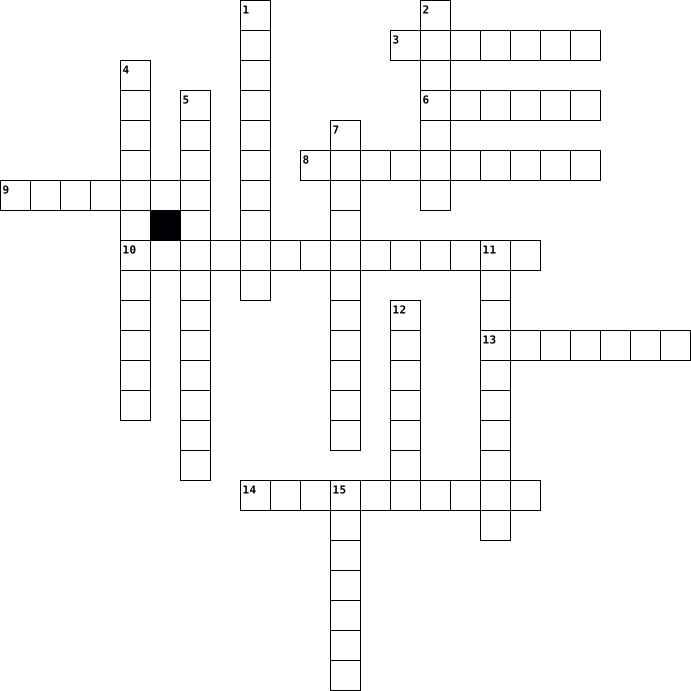
Across
- matter in living organism
- kinetic _________
- formed underground from dead plants and animals
- produced by splitting atoms
- kinetic converting to potential is called _________
- kinetic energy _______'s to potential energy
- uneven heating of earth
Down
- power's windmills
- a ball moving down a hill is ________ energy
- limited supply
- water powered
- energy from the sun
- turbines produce _______ energy
- windmills turn a _______
- fire use ________ energy
15 Clues: water powered • limited supply • power's windmills • kinetic _________ • energy from the sun • uneven heating of earth • windmills turn a _______ • fire use ________ energy • matter in living organism • produced by splitting atoms • turbines produce _______ energy • a ball moving down a hill is ________ energy • kinetic energy _______'s to potential energy • ...
LIGHT ENERGY 2012-10-06

Across
- LUMINOUS OBJECTS
- LIGHT DOES NOT NEED A MEDIUM , IT CAN PASS THROUGH A _______
- THE FORM OF ENERGY WE CAN SEE
- THE TYPE OF LIGHT PRODUCED WHEN A HOT OBJECT GLOWS
- NON-LUMINOUS OBJECT
- WHEN LIGHT PASSES THROUGH A TRANSPARENT OBJECT AND IS BENT ________
- WHEN LIGHT ENTERS A DULL OPAQUE OBJECT BUT DOES NOT PASS THROUGH, IT IS____________
- WHEN LIGHT HITS AN OBJECT THAT IS ROUGH AND OPAQUE, IT REFLECTS _______________
- LIGHT TRAVELS IN STRAIGHT ________________
Down
- WHEN LIGHT STRIKES A SHINY, OPAQUE OBJECT, IT ___________
- THE TYPE OF LIGHT PRODUCTION OF LIGHT FROM A SUBSTANCE THAT IS NOT HEATED
- RED, BLUE, GREEN
- LIGHT IS A FORM OF ELECTROMAGNETIC___________________
- THE __________ OF LIGHT IS 3X10^8 METRES PER SECOND
- AN OBJECT THAT PRODUCES LIGHT
15 Clues: LUMINOUS OBJECTS • RED, BLUE, GREEN • NON-LUMINOUS OBJECT • THE FORM OF ENERGY WE CAN SEE • AN OBJECT THAT PRODUCES LIGHT • LIGHT TRAVELS IN STRAIGHT ________________ • THE TYPE OF LIGHT PRODUCED WHEN A HOT OBJECT GLOWS • THE __________ OF LIGHT IS 3X10^8 METRES PER SECOND • LIGHT IS A FORM OF ELECTROMAGNETIC___________________ • ...
Energy Crossword 2012-09-13

Across
- Needed by humans for chemical energy.
- Needed for tidal/wave energy.
- Energy harvested from heat within the Earth.
- Law of ______ of energy.
- Source of energy that will not run out.
- Clean, non-renewable gas.
- Used to create nuclear energy.
- Fuels derived from organic remains of prehistoric animals.
- Energy utilised by 'tower of power'.
Down
- Potential energy in planes.
- More energy efficient than incandescent.
- A gas harvested from biomass.
- Large structures found on a wind farm.
- Can never happen to energy.
- Origin of all the worlds energy.
15 Clues: Law of ______ of energy. • Clean, non-renewable gas. • Potential energy in planes. • Can never happen to energy. • Needed for tidal/wave energy. • A gas harvested from biomass. • Used to create nuclear energy. • Origin of all the worlds energy. • Energy utilised by 'tower of power'. • Needed by humans for chemical energy. • Large structures found on a wind farm. • ...
Energy Terms 2013-03-09

Across
- Splitting uranium atoms to make energy
- Energy from water
- A negative consequence
- Electric charges
- Energy from the sun
- A different choice
- Reduce! Reuse! _______!
- To change into something else
Down
- Energy from wind
- Energy from burning plant matter
- Energy from the earths natural heat
- Non-renewable source of energy
- Made from nature
- Where coal comes from
- A benefit
15 Clues: A benefit • Energy from wind • Made from nature • Electric charges • Energy from water • A different choice • Energy from the sun • Where coal comes from • A negative consequence • Reduce! Reuse! _______! • To change into something else • Non-renewable source of energy • Energy from burning plant matter • Energy from the earths natural heat • Splitting uranium atoms to make energy
Energy Terms 2013-03-09

Across
- Energy from the sun
- A negative consequence
- Electric charges
- Where coal comes from
- Energy from the earths natural heat
- Energy from wind
Down
- Splitting uranium atoms to make energy
- To change into something else
- Non-renewable source of energy
- A benefit
- A different choice
- Reduce! Reuse! _______!
- Energy from water
- Energy from burning plant matter
- Made from nature
15 Clues: A benefit • Electric charges • Energy from wind • Made from nature • Energy from water • A different choice • Energy from the sun • Where coal comes from • A negative consequence • Reduce! Reuse! _______! • To change into something else • Non-renewable source of energy • Energy from burning plant matter • Energy from the earths natural heat • Splitting uranium atoms to make energy
Waves (Energy) 2014-07-31

Across
- In a transverse wave, particles move at _ angles to the wave.
- The process that happens when a wave hits a solid object, and bounces back is known as _.
- The distance between the crests or troughs of a wave is known as _.
- The minimum point of a wave is known as a _, and the maximum is known as a peak.
- Frequency (Hz) x Wavelength (m) = _ (m/s)(2 words)
Down
- The number of waves produced per second is called _.
- When waves pass from one medium to another, they can change speed and direction. This process is known as _.
- There are two types of waves: longitudinal and _.
- In a longitudinal wave, the particles move in the same _ as the wave.
- The maximum distance that a particle moves away from the centre line of a wave is known as _.
- Waves transfer _, without transferring any matter.
- Frequency is measured in _.
- One type of energy that is transferred by waves is _.
- The angle at which a wave hits a barrier, and the angle at which the wave is reflected is the _.
- Light waves travel through space at 300,000 km/_.
15 Clues: Frequency is measured in _. • There are two types of waves: longitudinal and _. • Light waves travel through space at 300,000 km/_. • Waves transfer _, without transferring any matter. • Frequency (Hz) x Wavelength (m) = _ (m/s)(2 words) • The number of waves produced per second is called _. • One type of energy that is transferred by waves is _. • ...
Energy Vocabulary 2015-01-14
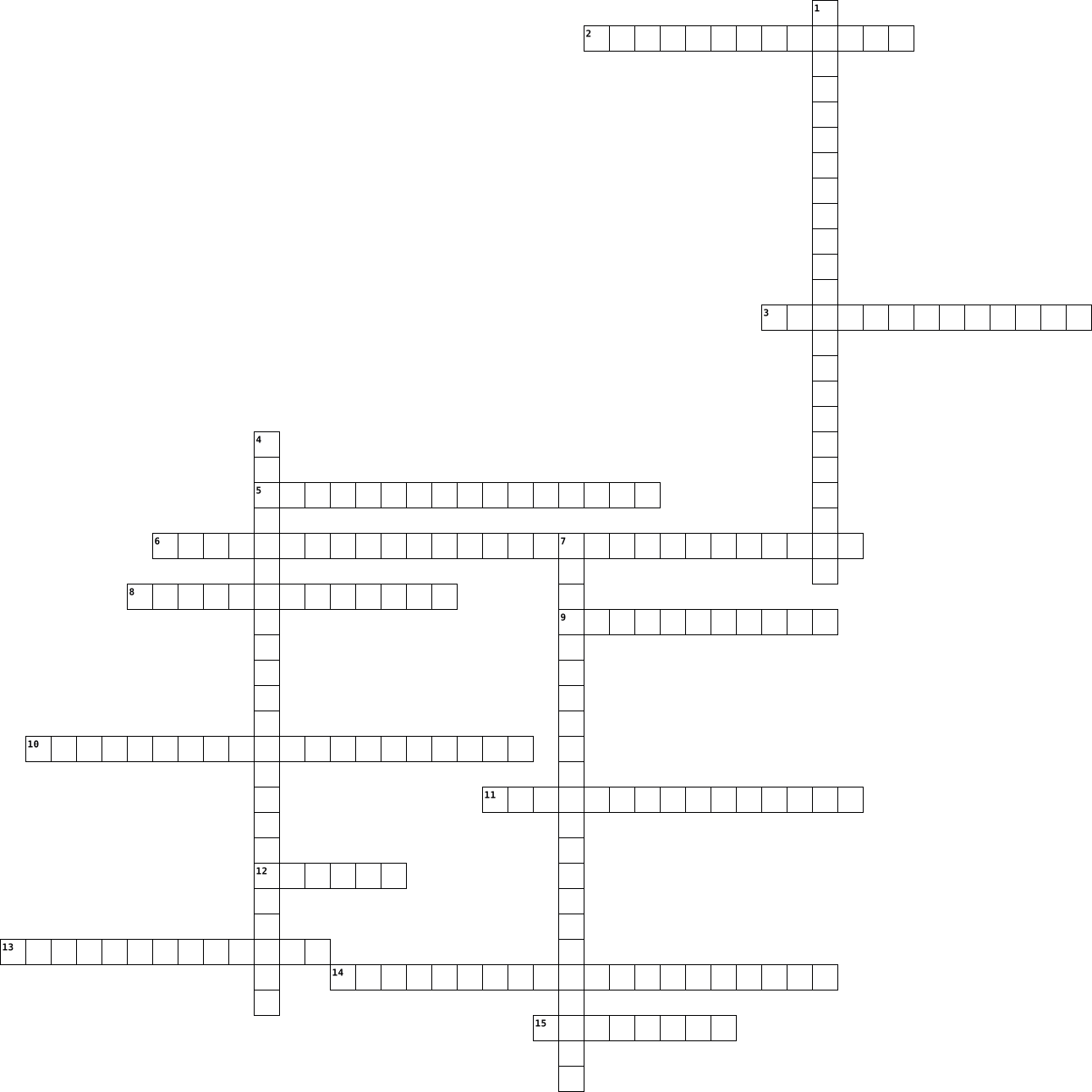
Across
- energy that is classified as a type of light and heat energy
- the energy that is in motion
- movement of electrons
- the energy an object has due to the position of above the earth
- a measure of the number of particles and how fast they are moving
- energy that travels as vibrations through a medium
- occurs when energy changes from one form to another
- stored energy due to position, shape, or chemical makeup
- the ability to do work and cause change
- the energy released when the nucleus of an atom is split or fused
- energy transmitted through EM waves
- the force that opposes motion and causes unwanted or unusable forms of energy
Down
- the energy involved in moving objects
- the energy that is stored in the chemical bonds of a substance
- the energy that is due to the shape of an object
15 Clues: movement of electrons • the energy that is in motion • energy transmitted through EM waves • the energy involved in moving objects • the ability to do work and cause change • the energy that is due to the shape of an object • energy that travels as vibrations through a medium • occurs when energy changes from one form to another • ...
Energy Crossword 2016-05-19

Across
- A form of energy which we receive through our ears.
- The burning of wood releases this form of energy.
- The best conductor of electricity starting with 'M'.
- A machine that uses wind energy to produce electricity is called a wind ______.
- Batteries, plants and food store this kind of energy.
- When power or energy is generated from running or water, it is called (Hyphenated word)
- Type of potential energy in a moving object starting with 'K'.
- A form of energy that travels as waves from the sun to Earth.
Down
- The main source of energy on Earth.
- Equipment used to harvest the sun’s energy(Hyphenated word).
- Type of Energy released by the sun that is used to cook food, create heat sources e.g.hot water and to dry clothes.
- Energy is normally measured in a unit called a ______.
- Lightning is a form of ____ energy.
- Property of Sound Energy starting with 'P'.
- A word used to describe Heat, Sound, Light, Kinetic.....
15 Clues: The main source of energy on Earth. • Lightning is a form of ____ energy. • Property of Sound Energy starting with 'P'. • The burning of wood releases this form of energy. • A form of energy which we receive through our ears. • The best conductor of electricity starting with 'M'. • Batteries, plants and food store this kind of energy. • ...
Energy Sources 2017-01-25

Across
- Energy sources that are replenished in a short amount of time.
- Energy Stored energy and the energy of position
- Energy sources that are limited since it takes longer to replenish than it is does to use it.
- Table Table where elements are organized by increasing atomic number
- Any organic matter that can be used as an energy source such as wood, crops, or yard waste.
- Fuel used by most nuclear power plants to perform fission where atoms are split to release energy.
- A solid, black fossil fuel formed from the remains of plants that lived and died.
Down
- Energy that comes from the force of moving water
- A fossil fuel that looks like a black liquid, also known as crude oil.
- Gas A colorless and odorless fossil fuel made mostly of methane.
- Heat energy from within the earth.
- Substance made up of atoms with the same identity
- Energy Energy of motion; motion of waves, electrons, atoms, molecules, and substances
- Fossil fuel refined from natural gas and petroleum
- Positively charged particle of an atom
15 Clues: Heat energy from within the earth. • Positively charged particle of an atom • Energy Stored energy and the energy of position • Energy that comes from the force of moving water • Substance made up of atoms with the same identity • Fossil fuel refined from natural gas and petroleum • Energy sources that are replenished in a short amount of time. • ...
Energy & Motion 2023-03-07

Across
- a unit of inertial force on the body due to rapid acceleration or gravity
- a measurement of how much matter an object is made of
- force that opposes motion between two surfaces that are connected
- the property of matter that keeps it moving or keeps it at rest
- energy of position or internal structure
- an objects speed in a particular direction
- a line on which an object moves over time
- any change in motion
Down
- push or pull of an object
- a measure of how hard it is to slow or stop an object
- the ability to do work
- the change in position with respect to a reference point
- the measure of distance an object moves in a given amount of time
- energy of motion
- an objects place or location
15 Clues: energy of motion • any change in motion • the ability to do work • push or pull of an object • an objects place or location • energy of position or internal structure • a line on which an object moves over time • an objects speed in a particular direction • a measure of how hard it is to slow or stop an object • a measurement of how much matter an object is made of • ...
Renewable Energy 2023-03-24

Across
- a solar heating method where no equipment is used to block or absorb heat
- largest source of electricity globally
- liquid fuels created from biomass
- organic matter that is burned to produce heat
- burning pollutants indoors my cause respiratory diseases such as worsened asthma and _______________
- carbon that has been stored for millions of years
- Sedimentation is the buildup of _________ behind dams
Down
- (cells) also known as solar panels, generate electricity from the sun
- these wind farms are placed over open water where the wind speeds are stronger
- artificial lake behind dam
- example of a biofuel, known to be less efficient than gasoline from petroleum
- energy resources that can be replenished
- a solar heating method where equipment is used to capture the sun's rays and turn it to electricity
- metal that mined to create solar panels
- carbon that has been recently taken out of the atmosphere
15 Clues: artificial lake behind dam • liquid fuels created from biomass • largest source of electricity globally • metal that mined to create solar panels • energy resources that can be replenished • organic matter that is burned to produce heat • carbon that has been stored for millions of years • Sedimentation is the buildup of _________ behind dams • ...
Energy Crossword 2022-09-23

Across
- the ability to do work
- variety of frequencies of light seen through a spectroscope, emitted by electrons moving from high to low energy orbits
- involves the emission of electrons from a surface by the action of light
- defines the quantum nature of energy and relates energy of a photon and its frequency
- describes the position and wavelike behavior of an electron within an atom; mathematical
- electromagnetic wave with the longest wavelength on the electromagnetic spectrum (300 GHz and below)
- tiny particles that make up waves of electromagnetic radiation
- segment of the electromagnetic spectrum, visible to the human eye
Down
- stable negatively charged component of an atom
- an atom where the total energy of the electrons can not be lowered by moving one or more electrons to different orbitals
- a single packet matter and energy
- concept describing distributing energy among waves in different periods
- the distance between a given point and the same point in the following wave cycle
- displacement of a wave from 0
- higher in energy than the ground state
15 Clues: the ability to do work • displacement of a wave from 0 • a single packet matter and energy • higher in energy than the ground state • stable negatively charged component of an atom • tiny particles that make up waves of electromagnetic radiation • segment of the electromagnetic spectrum, visible to the human eye • ...
Thermal Energy 2022-10-03

Across
- What you are trying to find out when you do an experiment; you make this
- A state of matter where particles are loosely gathered and moving a little bit
- A phase change from liquid to solid
- A state of matter where particles are packed closely together and not moving
- A change in the state of matter
- The energy in temperature
- A phase change from liquid to gas
Down
- The variable "I" change
- A variable that needs to be the same across all experiments
- Tiny particles that make up everything around us
- an element of an experiment that can be changed
- The energy of movement
- A state of matter where particles are moving fast and all over the place, with no specific form
- A phase change from solid to liquid
- The variable that "depends" on the changed independent variable
15 Clues: The energy of movement • The variable "I" change • The energy in temperature • A change in the state of matter • A phase change from liquid to gas • A phase change from liquid to solid • A phase change from solid to liquid • an element of an experiment that can be changed • Tiny particles that make up everything around us • ...
Cellular Energy 2022-12-02

Across
- The energy molecule
- Organelle that produces ATP
- Organisms that must consume other organisms to obtain glucose
- Organelle that produces glucose by photosynthesis
- Organism that can produce its own food
- Holes in the underside of a leaf that allow excess water to escape and CO2 to enter
- First of 3 processes of cellular respiration that breaks down glucose
Down
- Glycolysis reaction that procede without oxygen
- Series of metabolic reactions that use oxygen and glucose to form carbon dioxide and water
- Molecule animals produce from anaerobic fermentation
- Evaporation of water from the leaves of plants
- Metabolic process that uses chemicals such as methane gas to produce energy
- Part of cellular respiration reactions on the mitochondrial membrane that produces the most ATP
- Green pigment in thylakoids of chloroplasts
- C6H12O6
15 Clues: C6H12O6 • The energy molecule • Organelle that produces ATP • Organism that can produce its own food • Green pigment in thylakoids of chloroplasts • Evaporation of water from the leaves of plants • Glycolysis reaction that procede without oxygen • Organelle that produces glucose by photosynthesis • Molecule animals produce from anaerobic fermentation • ...
Cellular Energy 2022-12-08

Across
- Organelle where photosynthesis occurs
- Type of respiration that makes the most ATP
- Pigment in plant cells that trap light energy
- Sugar made in photosynthesis; stored in roots
- dioxide The gas produced in respiration
- needed for photosynthesis; absorbed by the roots
- Type of respiration that does not require oxygen
Down
- Type of fermentation that humans do
- Blue and ____ color are absorbed best by plants
- Respiration occurs in this organelle
- Energy source for photosynthesis
- Organisms that make their own food
- Gas produced in photosynthesis; exits through stomata
- Another name for anaerobic respiration
- The gas used in respiration
- This color is reflected by plants and not used
- A simple sugar that is broken down for energy
17 Clues: The gas used in respiration • Energy source for photosynthesis • Organisms that make their own food • Type of fermentation that humans do • Respiration occurs in this organelle • Organelle where photosynthesis occurs • Another name for anaerobic respiration • dioxide The gas produced in respiration • Type of respiration that makes the most ATP • ...
Nuclear Energy 2023-04-20

Across
- the most powerful type of decay
- spontaneous change to form a more stable isotope
- collective name for protons and neutrons
- number of nucleons in a full shell
- process where lighter nuclei combine to form a heaver one
- waves and particles released from the nucleus
Down
- processes where an atom of one kind of element changes to another element
- discovered x-rays
- weakest type of radiation
- second most powerful decay
- spontaneous emission of penetrating rays
- Extra neutrons split into smaller groups
- radioactive isotope of an element
- five women that suffered from radiation and sued the US radium company for damages.
- SI unit for radiation
15 Clues: discovered x-rays • SI unit for radiation • weakest type of radiation • second most powerful decay • the most powerful type of decay • radioactive isotope of an element • number of nucleons in a full shell • spontaneous emission of penetrating rays • Extra neutrons split into smaller groups • collective name for protons and neutrons • ...
SOLAR ENERGY!!!!! 2023-04-18
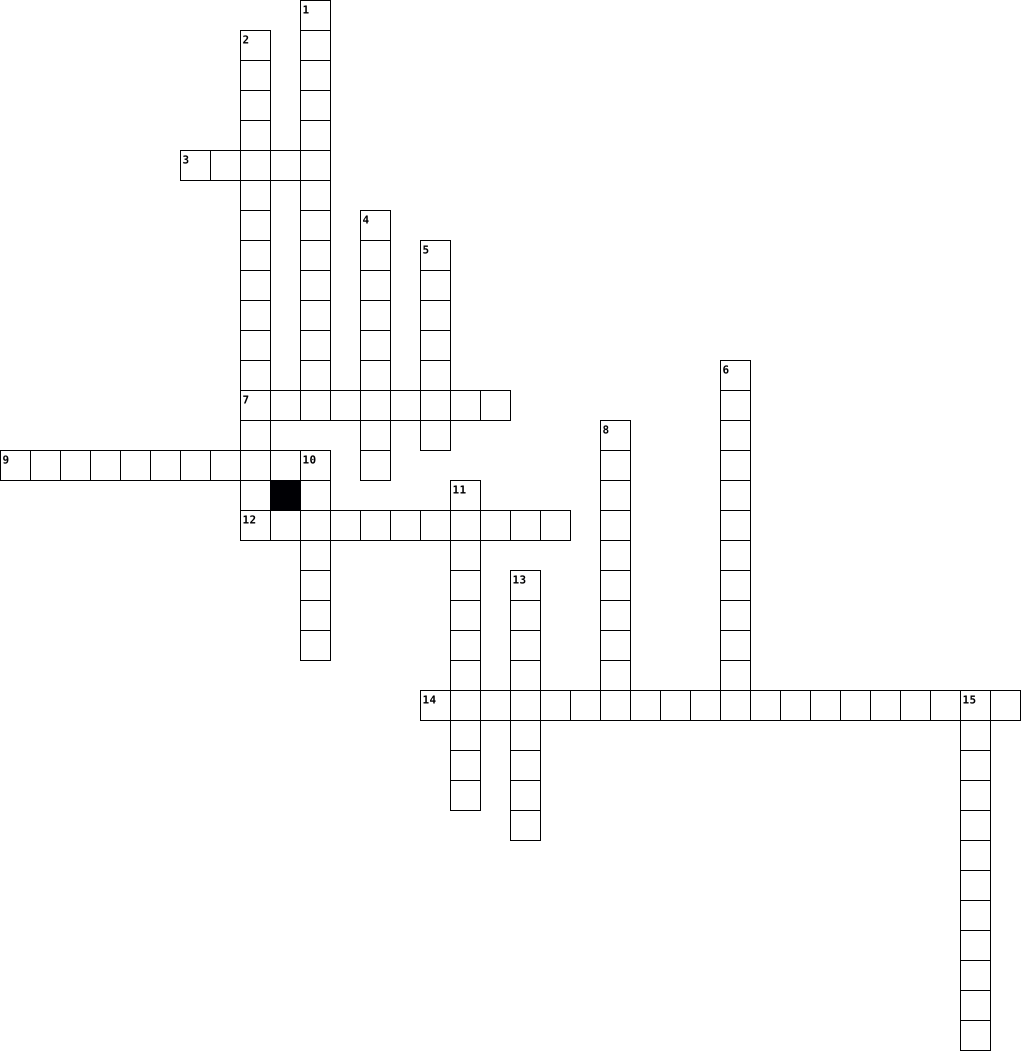
Across
- positive energy solar provides a special meter
- radiation from the sun capable of producing heat
- a thing that absorbs sunlight
- type of energy generated by the sun
- A solar electric or PV system
Down
- sun/energy that comes from the sun
- Devices or applications provides details about a solar power system
- The portion of energy in the form of sunlight that can be converted
- per watt the average cost of solar panels
- they are attached directly to a home's rafters
- a amount of solar radiation reaching a given area
- a type of material in solar panels
- a solar program that provides credit
- a photovoltaic array set in a fixed angle
- a system that delivers electricity from a generators
15 Clues: a thing that absorbs sunlight • A solar electric or PV system • sun/energy that comes from the sun • a type of material in solar panels • type of energy generated by the sun • a solar program that provides credit • a photovoltaic array set in a fixed angle • per watt the average cost of solar panels • positive energy solar provides a special meter • ...
Energy Puzzle 2023-02-08

Across
- object that stretches when forms into its original shape
- A form of energy that flows from hot objects to cool objects
- when an object comes to a stop
- Moving energy
- what hold molecules or atoms together
Down
- the speed of an object and its direction
- The amount of matter in an object
- Energy that is responsible for its temperature
- Energy in the center of an nucleus or an atom
- energy of motion or something that can move objects
- A form of radiation that can be seen with human eyes
- A energy is never created or destroyed
- A invisible force that pulls objects towards each other
- A type of energy that humans can hear
- when an object is moving
15 Clues: Moving energy • when an object is moving • when an object comes to a stop • The amount of matter in an object • A type of energy that humans can hear • what hold molecules or atoms together • A energy is never created or destroyed • the speed of an object and its direction • Energy in the center of an nucleus or an atom • Energy that is responsible for its temperature • ...
All Energy 2021-01-12

Across
- transfer by electromagnetic waves
- transfer by collision
- electric charges
- average kinetic energy
- energy due to motion
- fluids in cycle
- motion/position
Down
- not create/destroy
- total kinetic+potential energy
- position;internal stored
- energy stored in nucleus
- energy stored in bonds
- movement of thermal energy
- transfer by particle movement
- ability to cause change
15 Clues: fluids in cycle • motion/position • electric charges • not create/destroy • energy due to motion • transfer by collision • energy stored in bonds • average kinetic energy • ability to cause change • position;internal stored • energy stored in nucleus • movement of thermal energy • transfer by particle movement • total kinetic+potential energy • transfer by electromagnetic waves
Energy & Me! 2020-12-01

Across
- What I want for Christmas
- My pets
- My best friend
- Energy from the sun
- Energy that uses heat from the earth
- My last name
Down
- Energy that is stored
- Energy that can come back
- Energy we can feel
- Energy that can't come back
- Energy from plants and animals
- Energy we can hear
- Energy we can see
- My favorite God of Olympus
- Energy of motion
15 Clues: My pets • My last name • My best friend • Energy of motion • Energy we can see • Energy we can feel • Energy we can hear • Energy from the sun • Energy that is stored • Energy that can come back • What I want for Christmas • My favorite God of Olympus • Energy that can't come back • Energy from plants and animals • Energy that uses heat from the earth
Energy Sources 2020-12-07

Across
- A renewable energy source that comes from the power of moving water to generate electricity and etc.
- A renewable energy source that comes from plants and animals
- A source from which useful energy can be extracted or recovered (biomass, wind, solar, Natural gas)
- Stored energy waiting to be used
- A nonrenewable energy source that is made up of organic molecules and is a liquid extracted from the ground
- Energy of electromagnetic waves or in other words, light energy
- A nonrenewable energy source that comes from splitting atoms in a reactor to heat water into steam
- A renewable energy source from the sun's light rays
- A nonrenewable energy source that is formed deep beneath the Earth's surface. It contains methane and the remains of plants and animals that lived hundreds of millions of years ago.
Down
- Energy created by motion
- Energy created by the movement of electrons in a current
- In other words, Heat energy
- A renewable energy source that comes from air flows that we use to create electricity and etc.
- A renewable energy source that comes from heat inside the earth
- A nonrenewable energy source that forms in swampy forest and turns into a combustible rock
15 Clues: Energy created by motion • In other words, Heat energy • Stored energy waiting to be used • A renewable energy source from the sun's light rays • Energy created by the movement of electrons in a current • A renewable energy source that comes from plants and animals • A renewable energy source that comes from heat inside the earth • ...
Energy Review 2021-03-19

Across
- energy in the nucleus of an atom which can be used to make electricity
- example of a secondary source
- country with the largest oil reserve in the world
- mountain top removal & strip mining
- energy that can be easily replenished
- atoms are split apart to form smaller atoms releasing energy
Down
- energy forms that can be used directly as they appear in nature
- atomic nuclei are put together to form new atomic nuclei
- road building & soil degradation
- provide 80% of the worlds energy
- example of a primary source
- Oxygen, water and pyrite react and form sulfuric acid
- most abundant fossil fuel
- the ability to do work
- country that consumes the most energy in the world
15 Clues: the ability to do work • most abundant fossil fuel • example of a primary source • example of a secondary source • road building & soil degradation • provide 80% of the worlds energy • mountain top removal & strip mining • energy that can be easily replenished • country with the largest oil reserve in the world • country that consumes the most energy in the world • ...
Energy Notes 2021-03-19

Across
- Nonrenewable source 1.
- Is used from the natural resources that surround us like water, sunlight, wind (etc).
- Renewable energy 5.
- Renewable energy 4.
- Were formed deep in Earth's crust millions of years ago like coal and petrol, hence once used they will disappear forever.
- Energy sources are energy that already has been transformed or stored like electricity and biofuels.
- Renewable energy 3.
Down
- Renewable energy 1.
- Renewable energy 2.
- Nonrenewable source 2.
- Nonrenewable source 4.
- Energy sources are unconverted fuels, for example fossils, biomass, wind, natural gas etc.
- Defined as the capacity to do work.
- Nonrenewable source 3.
- Atmospheric phenomenon where greenhouse gases, such as CO2, trap heat in the planet making it warmer.
15 Clues: Renewable energy 1. • Renewable energy 2. • Renewable energy 5. • Renewable energy 4. • Renewable energy 3. • Nonrenewable source 2. • Nonrenewable source 1. • Nonrenewable source 4. • Nonrenewable source 3. • Defined as the capacity to do work. • Is used from the natural resources that surround us like water, sunlight, wind (etc). • ...
Energy Review 2021-04-07

Across
- This is 76% of the energy consumption in Ecuador
- This nuclear chain releases energy
- This is a resource the will run out eventually
- Wind, Solar, Hydroelectric... are what type of energy source
- This type of fuel provides about 80% of the world's energy
- An energy source that can be easily replenished
- Is the 5th largest producer of oil in South America
- This type of gas located above oil deposits
Down
- Energy form that can be used directly as they appear in nature
- Easy to use as a fuel source
- This was the US main source of energy until 1900
- This type of energy can be harnessed from two different reactions
- The ability to do work
- There are 12 Countries that are a part of this
- Energy in a transformed state
15 Clues: The ability to do work • Easy to use as a fuel source • Energy in a transformed state • This nuclear chain releases energy • This type of gas located above oil deposits • This is a resource the will run out eventually • There are 12 Countries that are a part of this • An energy source that can be easily replenished • This is 76% of the energy consumption in Ecuador • ...
W2K: Energy 2021-09-22

Across
- Energy stored in bonds between protons and neutrons
- Energy from movement of electrons
- mechanical energy due to a spring's stretch or compression
- Work / time
- Energy stored in bonds between atoms
- Force x displacement
- J/s, unit for power
- Electromagnetic wave energy
- N*m, unit for energy and work
Down
- Energy due to mechanical wave vibrations through matter
- mechanical energy based on an object's position
- mechanical energy due to an object's speed
- mechanical energy due to an object's height
- Heat energy
- Energy of motion
15 Clues: Heat energy • Work / time • Energy of motion • J/s, unit for power • Force x displacement • Electromagnetic wave energy • N*m, unit for energy and work • Energy from movement of electrons • Energy stored in bonds between atoms • mechanical energy due to an object's speed • mechanical energy due to an object's height • mechanical energy based on an object's position • ...
W2K: Energy 2021-09-22

Across
- Force x displacement
- Energy from movement of electrons
- mechanical energy due to an object's speed
- mechanical energy due to an object's height
- N*m, unit for energy and work
- J/s, unit for power
- Heat energy
- Energy of motion
Down
- Work / time
- Energy stored in bonds between atoms
- Electromagnetic wave energy
- mechanical energy based on an object's position
- mechanical energy due to a spring's stretch or compression
- Energy due to mechanical wave vibrations through matter
- Energy stored in bonds between protons and neutrons
15 Clues: Work / time • Heat energy • Energy of motion • J/s, unit for power • Force x displacement • Electromagnetic wave energy • N*m, unit for energy and work • Energy from movement of electrons • Energy stored in bonds between atoms • mechanical energy due to an object's speed • mechanical energy due to an object's height • mechanical energy based on an object's position • ...
Energy Soucre 2022-04-22

Across
- relating to internal heat on earth
- cannot be replaced quickly
- use again or more than once
- Atomic Weapons
- can be Replaced Quickly
- generation of electricity
- coldness outside
- NonRenewable
Down
- Relating to the sun
- prevention of wasteful
- convert waste into useable materials
- environment of a substance or thing that
- Degree or size
- Enthanol
- harmful or poisonous effects.
15 Clues: Enthanol • NonRenewable • Atomic Weapons • Degree or size • coldness outside • Relating to the sun • prevention of wasteful • can be Replaced Quickly • generation of electricity • cannot be replaced quickly • use again or more than once • harmful or poisonous effects. • relating to internal heat on earth • convert waste into useable materials • environment of a substance or thing that
Energy Review 2022-07-03

Across
- The energy of moving electric charges
- The energy of motion
- Energy from vibrations in matter
- A force that stops motion
- Materials that do not absorb heat quickly
- The energy stored in an object
- The best conductors of heat
- A force that pulls objects towards Earth
- The ability to do work and cause change
Down
- Materials that absorb heat easily
- Energy that flows from warmer to cooler objects
- Energy that our sense of sight can detect
- The measure of the average speed of particles
- A tool that tells us the temperature of something
- The energy of moving objects
15 Clues: The energy of motion • A force that stops motion • The best conductors of heat • The energy of moving objects • The energy stored in an object • Energy from vibrations in matter • Materials that absorb heat easily • The energy of moving electric charges • The ability to do work and cause change • A force that pulls objects towards Earth • ...
ENERGY SOURCES 2022-11-17

Across
- This is the source used to make turbines
- this is a type of energy produced with
- when burning fossil fuels
- When gasses causes temperature to rise we call it ___________ warming
- This type of power source uses the sun.
- __________ is a fuel that burns quickly
- Petrol is part of a ________ fuel.
Down
- What source of energy do we use to create a fire
- What do you call a source that cannot be and which there is a limited amount of.
- What is meant by this symbol ☢
- What source of energy do we mostly use for electricity
- What gasses are released into the
- What do you call a source that can regenerate itself quickly and can be reused
- This is a _________ gas used for cooking.
- What source of energy is used at a nuclear
15 Clues: when burning fossil fuels • What is meant by this symbol ☢ • What gasses are released into the • Petrol is part of a ________ fuel. • this is a type of energy produced with • This type of power source uses the sun. • __________ is a fuel that burns quickly • This is the source used to make turbines • This is a _________ gas used for cooking. • ...
science - energy 2023-05-21

Across
- SUMBER ENERGI BAGI MANUSIA UNTUK BERAKTIVITAS
- BUNYI PANTUL YANG TERGENGAR SETELAH BUNYI ASLI
- PANCARAN CAHAYA MATAHARI
- CONTOH PERUBAHAN ENERGI ANGIN MENJADI ENERGI LISTRIK
- GETARAN GELOMBANG PER DETIK
- GETARAN FREKUENSI DIATAS 20.000 Hz
- ENERGI YANG DIMILIKI OLEH BENDA BERGERAK
Down
- BUNYI MERAMBAT PADA BENDA ...
- ENERGI YANG BERASAL DARI BAHAN BAHAN ORGANIK
- SALAH SATU SUMBER ENERGI YANG TIDAK DAPAT DIPERBAHARUI
- SUMBER ENERGI MENGHASILKAN ENERGI PANAS DAN CAHAYA
- ENERGI PANAS BUMI
- KEMAMPUAN ATAU TENAGA UNTUK MELAKUKAN KERJA (USAHA)
- SEBUTAN LAIN UNTUK ENERGI PANAS
- ENERGI YANG DIGUNAKAN UNTUK MENGGERAKKAN PERAHU LAYAR
15 Clues: ENERGI PANAS BUMI • PANCARAN CAHAYA MATAHARI • GETARAN GELOMBANG PER DETIK • BUNYI MERAMBAT PADA BENDA ... • SEBUTAN LAIN UNTUK ENERGI PANAS • GETARAN FREKUENSI DIATAS 20.000 Hz • ENERGI YANG DIMILIKI OLEH BENDA BERGERAK • ENERGI YANG BERASAL DARI BAHAN BAHAN ORGANIK • SUMBER ENERGI BAGI MANUSIA UNTUK BERAKTIVITAS • BUNYI PANTUL YANG TERGENGAR SETELAH BUNYI ASLI • ...
Solar Energy 2023-11-01

Across
- Solar power dates to over?
- generates light when sun is shinned. on
- Usually made of silicon or other semiconductor material.
- mirrors reflect sunlight onto receivers that collect solar sunlight and heat, then use it to make electricity which can be stored later.
- used in solar panels.
- largest production of solar energy in the world?
- Solar energy is used to power?
- the energys direct source.
Down
- using heat from sun to generate power.
- generates heat.
- Panels produce energy without?
- another name for solar panels?s
- taking its energy to use it in a heater.
- Panels can last up to?
- what is light?
15 Clues: what is light? • generates heat. • used in solar panels. • Panels can last up to? • Solar power dates to over? • the energys direct source. • Panels produce energy without? • Solar energy is used to power? • another name for solar panels?s • using heat from sun to generate power. • generates light when sun is shinned. on • taking its energy to use it in a heater. • ...
Energy & Force 2023-12-08

Across
- this type of circuit has two or more loops of electricity
- energy of moving parts
- a push or pull that causes an object to move, stop, or change directions
- slows or stops motion when object rub together
- energy produced when an object vibrates
- energy that can be felt as heat
- this happens when light hits a material and bounces back
Down
- the pull or push from magnetic poles
- pulls objects to the Earth
- a force moving away
- energy caused by the movements of electrons
- a force moving towards
- this happens when light passes through a material
- energy that travels in a straight line
- this type of circuit has one loop of electricity
15 Clues: a force moving away • a force moving towards • energy of moving parts • pulls objects to the Earth • energy that can be felt as heat • the pull or push from magnetic poles • energy that travels in a straight line • energy produced when an object vibrates • energy caused by the movements of electrons • slows or stops motion when object rub together • ...
Energy Vocab 2024-01-02

Across
- The energy in moving objects
- Energy of light
- The energy locked in the nucleus of an atom
- Energy stored in bending, twisting, or stretching of an object
- The process of splitting an atom
- Energy cannot be created or destroyed
Down
- This energy gains more potential energy when the height or mass of an object increases
- Two or more atoms violently joined together to make a larger atom
- The energy of heat
- Energy that is in motion
- The energy of moving electrons or electric charges
- The change of energy from one form to another
- This type of energy is in all the food we eat
- Stored energy
- The energy from vibrations in matter
15 Clues: Stored energy • Energy of light • The energy of heat • Energy that is in motion • The energy in moving objects • The process of splitting an atom • The energy from vibrations in matter • Energy cannot be created or destroyed • The energy locked in the nucleus of an atom • The change of energy from one form to another • This type of energy is in all the food we eat • ...
Energy Quiz 2023-12-18

Across
- transmitted through compression of matter
- stored in the bending,stretching, or twisting of an object
- due to the position of the object in a gravitational field
- stored within magnetic fields(attraction and repulsion of objects)
- energy measured in heat and temp
- energy of motion
- total energy of motion(kinetic and potential)
Down
- stored energy
- SI unit of energy
- ability to do work
- Travels and waves and can travel in a vacuum
- 2 main categories of energy
- movement of electrons
- stored within the chemical bonds of a substance
- stored in a subatomic matter
15 Clues: stored energy • energy of motion • SI unit of energy • ability to do work • movement of electrons • 2 main categories of energy • stored in a subatomic matter • energy measured in heat and temp • transmitted through compression of matter • Travels and waves and can travel in a vacuum • total energy of motion(kinetic and potential) • stored within the chemical bonds of a substance • ...
Energy Changes 2024-02-01

Across
- heat transfer that occurs when particles of two objects touching vibrate
- energy can not be created or destroyed it can only change form
- when energy passes from one object to another
- an instrument that measures the temperature
- electromagnetic waves hot objects produce
- is a measure of the average kinetic energy of particles in an object
- materials that conduct heat poorly
- materials that conduct heat easily
Down
- is the amount of energy needed to raise the temperature of 1 g of the substance by 1 degrees celsius
- is heat transfer through a liquid or a gas
- when matter is cooled it shrinks moving particles closer together
- is the transfer of energy through electromagnetic waves
- when energy changes from one form to another
- is the flow of thermal energy from one substance to another
- an increase in volume caused by an increase in temperature
15 Clues: materials that conduct heat poorly • materials that conduct heat easily • electromagnetic waves hot objects produce • is heat transfer through a liquid or a gas • an instrument that measures the temperature • when energy changes from one form to another • when energy passes from one object to another • is the transfer of energy through electromagnetic waves • ...
Thermal Energy 2024-02-02

Across
- _______ is the total kinetic energy of an object.
- a subatomic particle with a positive charge of electricity
- a subatomic particle with a negative charge of electricity
- the act of conducting or conveying
- a substance which does not readily allow the passage of heat or sound
- when something stays mostly the same over a period of time
- energy the energy an object has because it is moving
- the act of moving something or someone to another place
Down
- the moment when two objects hit each other
- a group of atoms joined together in a certain way
- the transfer of heat by this motion
- a subatomic particle with the same mass as a proton with no charge of electricity
- a measure of how hot or cold something is
- a balanced state in which a system is stable,such as two or more samples are at the same temperature
- energy that comes from a source and travels through space at the speed of light
15 Clues: the act of conducting or conveying • the transfer of heat by this motion • a measure of how hot or cold something is • the moment when two objects hit each other • _______ is the total kinetic energy of an object. • a group of atoms joined together in a certain way • energy the energy an object has because it is moving • ...
Supplying Energy 2024-02-26

Across
- Type of digestion involving the chemical breakdown of food
- Nutrients that help the body with chemical reactions Ex: Calcium
- Organ where enzymes and hydrochloric acid start to break down food
- Organ that stores bile
- Process of breaking down food into small nutrient particles
- Essential nutrient needed for survival and cellular respiration
- Substances in food that provide the raw materials that the body's cells need to process
Down
- Type of digestion involving the physical breakdown of food
- The process of removing digestive waste
- Fluid produced in the mouth that aids in chemical digestion
- Organ that produces the enzyme to break down proteins
- Organ where most of the chemical digestion and absorption takes place
- Organ connecting the mouth and stomach
- Organ where water from food is reabsorbed and waste products are compacted
- Organ that produces bile to break down fats
15 Clues: Organ that stores bile • Organ connecting the mouth and stomach • The process of removing digestive waste • Organ that produces bile to break down fats • Organ that produces the enzyme to break down proteins • Type of digestion involving the physical breakdown of food • Type of digestion involving the chemical breakdown of food • ...
Energy & Enzymes 2024-09-19

Across
- Proteins that speed reactions by reducing activation energy
- Spontaneous reaction that has negative delta G
- Thing made at the end of the reaction
- Iron or zinc ions may act as this to help an enzyme work
- Joining together ATP hydrolysis with reaction to drive it
- What a molecule might do to an enzyme to slow or stop its action
- This "site" is were all the action happens in an enzyme
- A chain transports these in photosynthesis
Down
- Non-spontaneous reaction that needs energy input
- Links sugars by removing water, opposite of hydrolysis
- Some vitamins act as this to help an enzyme function
- Reactant that binds to an enzyme to be converted
- Type of energy available to do work, we use G for this
- To speed up a reaction
- We are all made of this!
15 Clues: To speed up a reaction • We are all made of this! • Thing made at the end of the reaction • A chain transports these in photosynthesis • Spontaneous reaction that has negative delta G • Non-spontaneous reaction that needs energy input • Reactant that binds to an enzyme to be converted • Some vitamins act as this to help an enzyme function • ...
biomass energy 2025-11-21

Across
- burning
- a type of alcohol fuel made by plants
- heating biomass in the absense of oxygen
- electricity generated from biomass
- can use it more than once
- things from the environment used for fuel
- plants grown especially for their fuel
Down
- things from the earth
- a thermalochemical process the converts biomass into a gas
- a mixture of hydrogen and carbon
- the raw material used in a conversion process
- any organic matter
- where the plants are grown
- a chemical reaction involving water
- where plants are broken down into chemicals
15 Clues: burning • any organic matter • things from the earth • can use it more than once • where the plants are grown • a mixture of hydrogen and carbon • electricity generated from biomass • a chemical reaction involving water • a type of alcohol fuel made by plants • plants grown especially for their fuel • heating biomass in the absense of oxygen • ...
Energy source 2025-12-01

Across
- The release of gasses
- A network for distributing from producers
- Efficient use and preservation
- fuels. Carbon based energy source
- Meets present needs
- Replenishes a small period of time
- Organic material used as fuel
Down
- Takes long time to Replenish
- Maximizing output from given source
- Sources other than fossile fuels
- Electricity generated by moving water
- energy. Energy derived from atoms
- Harnesses the kinetic energy from the wind
- The maximum power output
- Heat harnessed from the earths core
15 Clues: Meets present needs • The release of gasses • The maximum power output • Takes long time to Replenish • Organic material used as fuel • Efficient use and preservation • Sources other than fossile fuels • energy. Energy derived from atoms • Replenishes a small period of time • Maximizing output from given source • Heat harnessed from the earths core • ...
Energy Transfers 2026-02-24

Across
- when something gives energy to another
- the object possesses due to its position within gravitational fields
- energy stored in the bonds of chemicals like atoms and molecules
- powered from the nucleus core of an atom
- found in electromagnetic waves
- a thorough or a dramatic change in something
- the form of energy resulting from the flow of charged particles such as electrons
Down
- the energy of either an object in motion or the energy that is stored
- the energy of mass in motion
- a force between two surfaces that are sliding or are trying to slide across each other
- the stored energy in an object due to its position forces acting on it
- the internal energy of an object
- the transfer of thermal energy between substances
- a type of kinetic electromagnetic radiation
- the ability to do work
15 Clues: the ability to do work • the energy of mass in motion • found in electromagnetic waves • the internal energy of an object • when something gives energy to another • powered from the nucleus core of an atom • a type of kinetic electromagnetic radiation • a thorough or a dramatic change in something • the transfer of thermal energy between substances • ...
Thermal Energy 2026-01-22

Across
- A material that allows thermal energy to move easily
- Heat transfer through direct contact between particles
- The transfer of thermal energy from a warmer object to a cooler one
- A measure of the average kinetic energy of particles
- A state of matter where particles stay close but can move past each other
- Happens when particles are spaced farther apart than the fluid around them
- A state of matter where particles vibrate in fixed positions
- Happens when particles are packed more closely than the fluid around them
Down
- Heat transfer caused by the movement of liquids or gases
- How closely packed the molecules are in a substance
- Energy an object or particle has because it is moving
- The total energy of particle motion in a substance
- Heat transfer by electromagnetic waves that can travel through empty space
- A state of matter where particles are far apart and move freely
- A material that slows the movement of thermal energy
15 Clues: The total energy of particle motion in a substance • How closely packed the molecules are in a substance • A material that allows thermal energy to move easily • A measure of the average kinetic energy of particles • A material that slows the movement of thermal energy • Energy an object or particle has because it is moving • ...
Energy Flow 2026-01-06

Across
- a release in energy
- substances that speed up reactions without being permanently altered
- breaking a bond requires energy to be
- mostly proteins that speed up biochemical reactions by lowering the activation energy
- requires consuming energy to do it
- break down larger molecules into simpler compounds
- metabolic reactions are controlled by
- substances that are made by a chemical reaction
- slows down reaction
Down
- enzyme's active site gets deformed and loses its specific shape
- substances that are changed during a chemical reaction
- all of the chemical reactions within each cell of an organism
- build larger molecules into simpler compounds
- substances that are changed during a chemical reaction
- forming a bond allows energy to be
- absorbs energy
- releases energy
17 Clues: absorbs energy • releases energy • a release in energy • slows down reaction • forming a bond allows energy to be • requires consuming energy to do it • breaking a bond requires energy to be • metabolic reactions are controlled by • build larger molecules into simpler compounds • substances that are made by a chemical reaction • ...
Energy Vocab 2026-04-01

Across
- The ability to do work
- An electrical circuit that is not complete
- A material that lets energy flow and makes a complete circuit
- The energy objects have because they are moving, such as a rolling ball
- An organized group of objects that work together to form a whole
- A material that does NOT let an electric current flow
- A special form of energy that travels in fast, straight waves and lets us see the world around us
- The place that connections must be made to let electricity flow
Down
- A complete, looping path that lets electricity flow start to finish
- A place where energy comes from, such as batteries
- To move energy from one component to another
- Energy that flows through circuits and can produce heat, light, motion, and sound
- Any type of substance or "stuff" used to make objects, such as wood
- A device that transfers sunlight directly into electricity
- A device that controls the flow of electricity in a circuit by opening or closing it
15 Clues: The ability to do work • An electrical circuit that is not complete • To move energy from one component to another • A place where energy comes from, such as batteries • A material that does NOT let an electric current flow • A device that transfers sunlight directly into electricity • A material that lets energy flow and makes a complete circuit • ...
Cellular Energy 2024-10-23

Across
- reactants are carbon dioxide and water
- the type of radiant energy needed for photosynthesis to occur
- gas needed for photosynthesis
- product of photosynthesis
- the molecule produced during cellular respiration that stores energy
- organelle in which photosynthesis occurs
Down
- reactants are oxygen and glucose
- C6H12O6, a type of sugar
- organelle in which cellular respiration occurs
- taken up by plant roots as a reactant for photosynthesis
- the ultimate source of energy for all living things on Earth
- green pigment in plants
- organisms that perform photosynthesis
- the type of energy stored in ATP
- plants are able to make their own
15 Clues: green pigment in plants • C6H12O6, a type of sugar • product of photosynthesis • gas needed for photosynthesis • reactants are oxygen and glucose • the type of energy stored in ATP • plants are able to make their own • organisms that perform photosynthesis • reactants are carbon dioxide and water • organelle in which photosynthesis occurs • ...
nuclear energy 2024-10-24

Across
- usable power
- consist of carbon dioxide, methane, ozone, nitrous oxide, chlorofluorocarbons, and water vapor
- a carbon compound
- blocked by aluminum
- energy from a source that is not depleted when used, such as wind or solar power
- blocked by lead
- blocked my paper
Down
- a military conflict or prepared political strategy that deploys nuclear weaponry.
- the combining of two atoms
- energy that moves from one place to another in a form that can be described as waves or particles
- waste made by nuclear energy
- the splitting of two atoms
- the introduction of contaminants into the natural environment that cause adverse change
- a place where nuclear energy is made
- any malicious attempt to gain access to a computer,
15 Clues: usable power • blocked by lead • blocked my paper • a carbon compound • blocked by aluminum • the combining of two atoms • the splitting of two atoms • waste made by nuclear energy • a place where nuclear energy is made • any malicious attempt to gain access to a computer, • energy from a source that is not depleted when used, such as wind or solar power • ...
Cellular Energy 2024-10-09

Across
- Reactions use this and energy from the first reactions to produce glucose
- Reactants of Cellular Respiration
- Happens in the mitochondrial
- The light independent reactions happen in here
- When there is no oxygen, organisms can only do glycolysis.
- uses energy from the bonds of glucose to make ATP (power house of the Cell)
- captures light energy
- Reactions use this and H20 to get energy for the next reactions
- This chain happens along the inner membrane and produces ATP
Down
- Products of Cellular Respiration
- Products of Photosynthesis
- Reactants of Photosynthesis
- The light dependent reactions happen in here
- is the energy currency of the cell
- Happens in the cytoplasm and breaks glucose in half into 2 pyruvates
15 Clues: captures light energy • Products of Photosynthesis • Reactants of Photosynthesis • Happens in the mitochondrial • Products of Cellular Respiration • Reactants of Cellular Respiration • is the energy currency of the cell • The light dependent reactions happen in here • The light independent reactions happen in here • When there is no oxygen, organisms can only do glycolysis. • ...
P6 Energy 2025-02-13

Across
- Energy is the ability to do _______.
- Oil, natural gas and ____ are examples of fossil fuels.
- A ____ source of energy can be replenished easily and does not run out.
- Using energy-saving ___ helps to conserve energy.
- Energy can only be _____ from one form to another.
- Energy cannot be _____ or destroyed.
- Gravitational potential energy is the form of energy stored by objects due to their ____ above the ground.
- Solar panels are ineffective in the dark and on ____ days.
Down
- Renewable sources energy do not cause ____.
- Sound energy is produced by ______ objects.
- _____ potential energy is energy that is stored in any kind of food, fuel or batteries.
- A stretched or _____ spring has elastic potential energy.
- Any object that moves has _____ energy.
- All living things depend either directly or ______ on the energy from the Sun.
- Kinetic energy depends on mass and _____ of moving object.
15 Clues: Energy is the ability to do _______. • Energy cannot be _____ or destroyed. • Any object that moves has _____ energy. • Renewable sources energy do not cause ____. • Sound energy is produced by ______ objects. • Using energy-saving ___ helps to conserve energy. • Energy can only be _____ from one form to another. • ...
Energy Transfer 2024-11-08

Across
- the unit for energy
- movement energy
- the kinetic energy that comes from the movement atoms or molecules based on temperature
- the idea that energy cannot be created or destroyed
- the sum of an object's kinetic and potential energy
- the energy that can be released when atoms are split
- the type of energy that travels in the form of electromagnetic waves
Down
- stored energy in a stretched object that wants to go back to its original shape
- energy waves that travel like a ripple in water and air
- the energy an object has due to its position or structure
- stored energy in an object on earth by gravity
- when energy passes from one form to another
- energy stored in the bonds of molecules; food and fuel are great examples
- the energy of particles traveling through a conductor
- energy of particles moving through opposite charges in a field that covers the earth
15 Clues: movement energy • the unit for energy • when energy passes from one form to another • stored energy in an object on earth by gravity • the idea that energy cannot be created or destroyed • the sum of an object's kinetic and potential energy • the energy that can be released when atoms are split • the energy of particles traveling through a conductor • ...
Energy flow 2025-01-03

Across
- process plants use to make glucose using sunlight.
- Organisms that decompose dead plants and animals into smaller pieces.
- Animals like cows, zebras, and rabbits that eat plants.
- Tiny organisms that help break down dead matter during decomposition.
- An example of a carnivore that gets energy indirectly from the Sun.
- Animals like tigers and hawks that eat other animals.
- The primary source of energy for all living things.
Down
- type of energy plants produce during photosynthesis.
- Carnivores that eat herbivores to get energy.
- The process where mushrooms, bacteria, and worms break down dead plants and animals.
- Animals like bears and humans that eat both plants and animals.
- What animals and plants need to grow, originally from the Sun.
- The producers that convert sunlight into energy.
- Herbivores that eat plants to gain energy from the Sun.
- Nutrients return here after decomposition to support plant growth.
15 Clues: Carnivores that eat herbivores to get energy. • The producers that convert sunlight into energy. • process plants use to make glucose using sunlight. • The primary source of energy for all living things. • type of energy plants produce during photosynthesis. • Animals like tigers and hawks that eat other animals. • ...
LIGHT ENERGY 2025-03-19

Across
- A material that lets some light through but not all
- The main natural source of light on Earth
- When light bends as it passes through an object
- When light bounces off a surface
- A smooth surface that reflects light to show an image
- Light travels at a very fast ____
Down
- A material that allows light to pass through completely
- When an object takes in light instead of reflecting or passing it through
- A dark area created when light is blocked
- A material that does not let any light through
- A colorful band of light that forms when light is refracted through water droplets
- The ability to do work or cause change
- The form of energy that helps us see
- A tool that separates white light into a rainbow
- A curved piece of glass or plastic that bends light
15 Clues: When light bounces off a surface • Light travels at a very fast ____ • The form of energy that helps us see • The ability to do work or cause change • A dark area created when light is blocked • The main natural source of light on Earth • A material that does not let any light through • When light bends as it passes through an object • ...